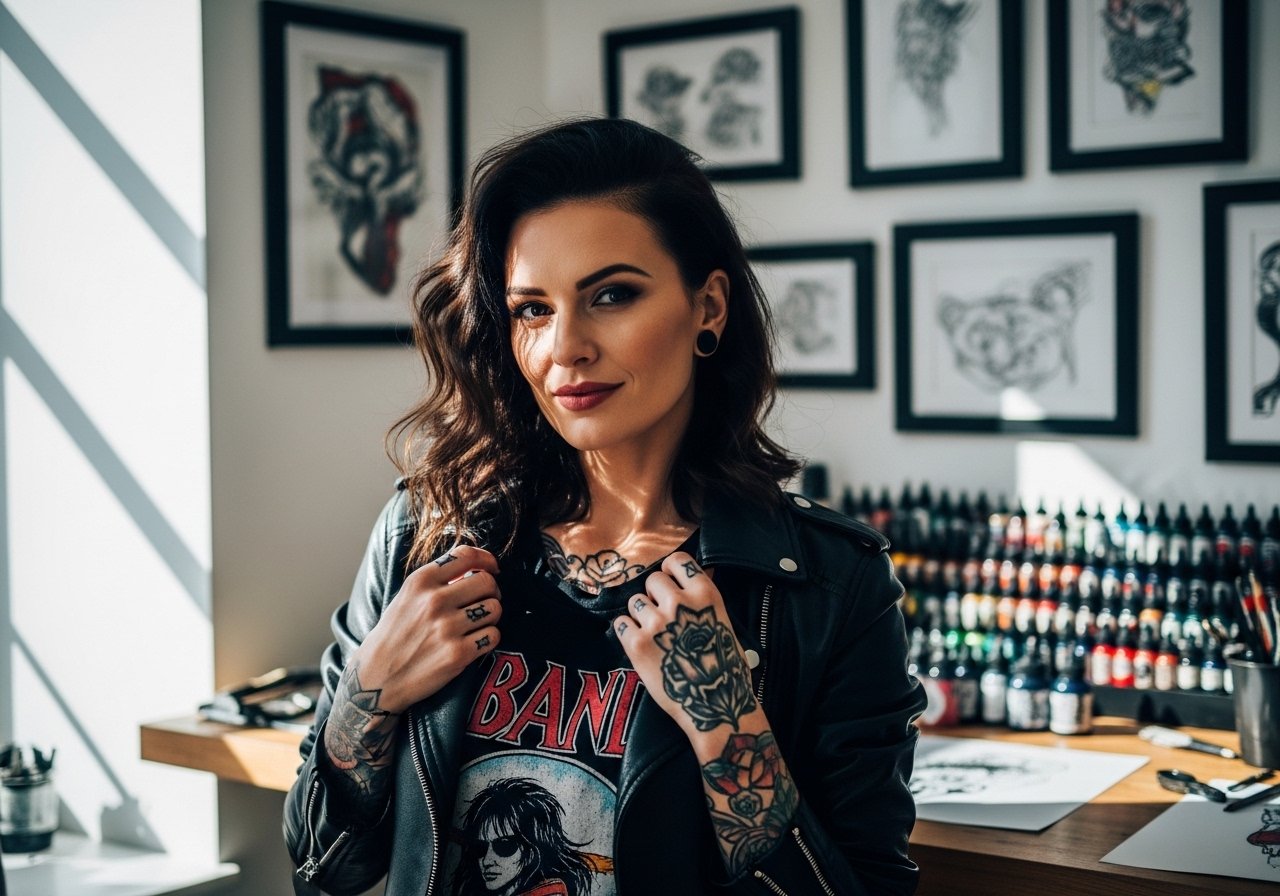
Fine line tattoos dominate Pinterest right now, and the same artists pushing them are quietly booking touch-ups at year two. Longevity, placement that reads bigger in the chair, and how designs fade on high-contact areas are the real choices you need to make. Flip through these vintage geometric tattoo ideas for designs that age well, which placements to favor, and what to ask your artist in that consult before the stencil goes on.
1. Geometric Wolf on Outer Forearm

I've seen this faceted wolf hold up nicely when the facets are given breathing room. Tell your artist you want bold primary linework with varied saturation in the shadow facets, not a single ultra-thin outline that will soften fast. Pain is mild on the outer forearm and a typical session runs two to three hours. A common mistake is packing too many tiny internal triangles into a small piece, which merges at year two. For showing it off, pair the piece with a slim fit crewneck tee and a leather cuff on the opposite wrist to frame the art without covering it.
2. Mandala Back Panel
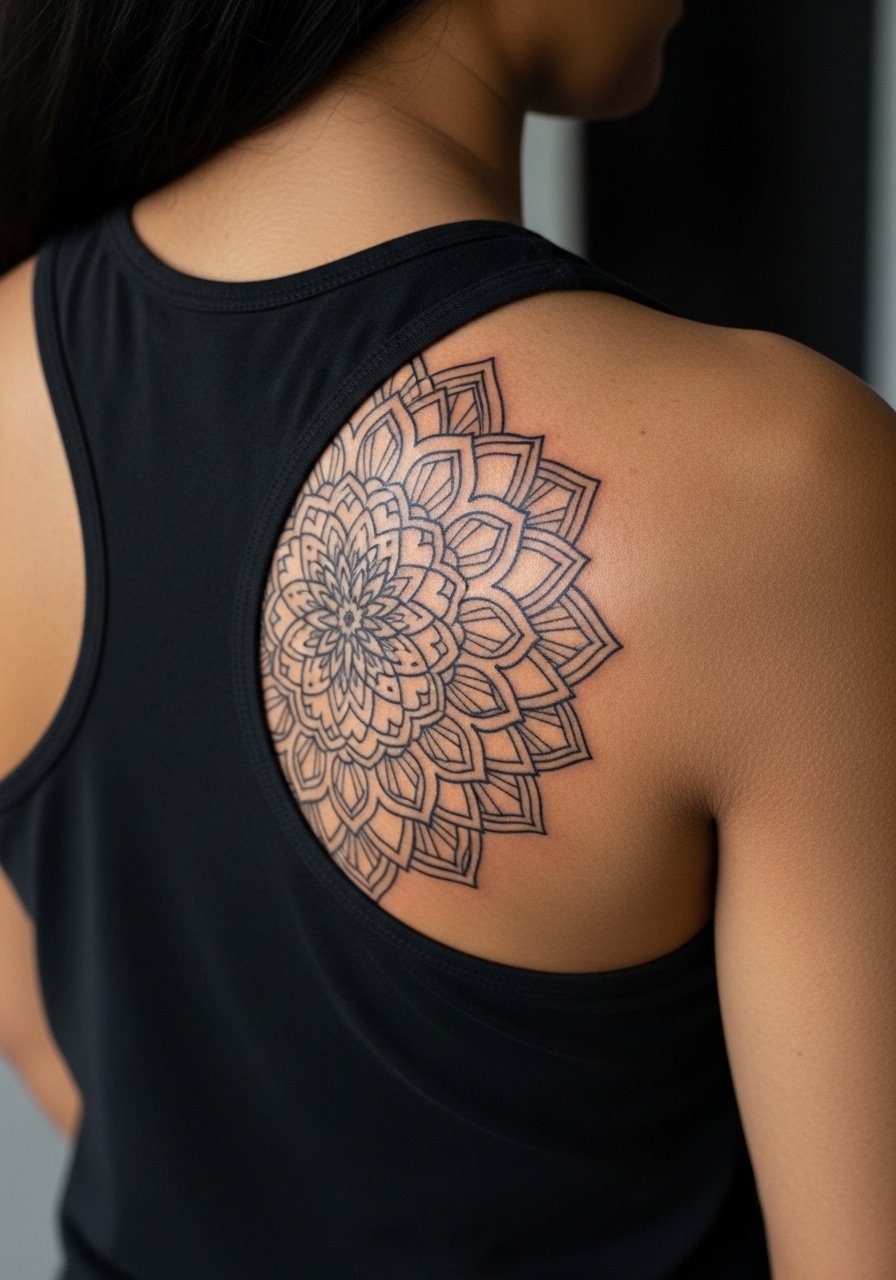
When you want scale and rhythm, a mandala on the back gives that repeat geometry room to breathe. Fair warning, back sessions can be long and require multiple visits, so plan for two to four sessions. During consult, request spacing between concentric rings so dense areas do not turn into a heavy shaded mass over time. The biggest mistake is compressing a full mandala into a size meant for a wrist or sternum. On the back, the piece reads from distance and rewards close inspection, so ask your artist about stipple shading to keep contrast without solid blocks of ink. For session comfort, throw on a loose button down shirt you can pull aside easily.
3. Celtic Knot on Inner Wrist
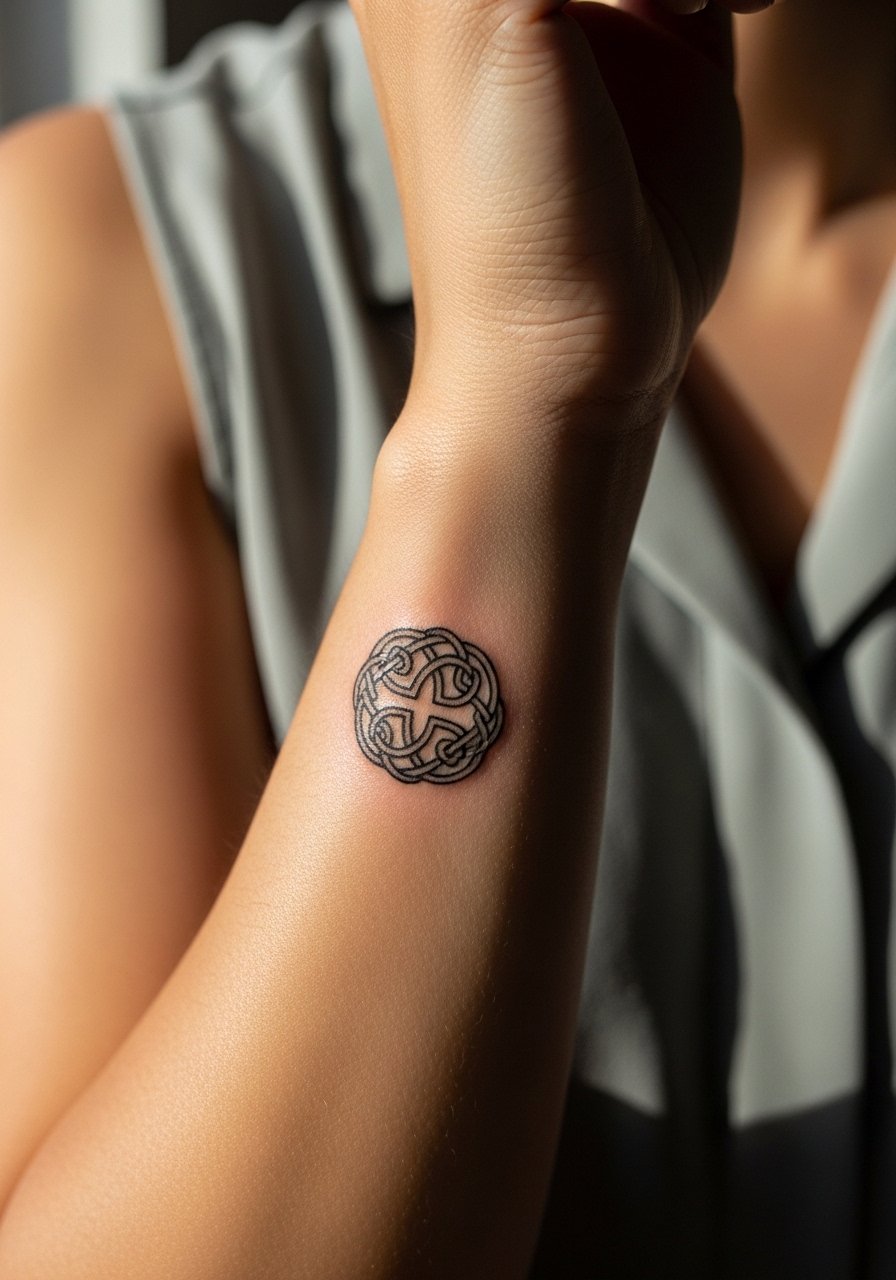
Wrist pieces read intimate and precise, and the wrist is unforgiving for tiny details. Expect a 30- to 60-minute session and a bit more fading over time because of frequent washing and movement. A common failure is requesting ultra-fine knots scaled too small. Ask for slightly heavier linework and more negative space in the knot loops so the pattern stays legible at year three. Pain is low to moderate depending on your tolerance. To keep the wrist uncluttered when showing it off, wear a thin chain bracelet on the opposite wrist rather than stacking jewelry over the tattooed side.
4. Flower of Life Over Sternum
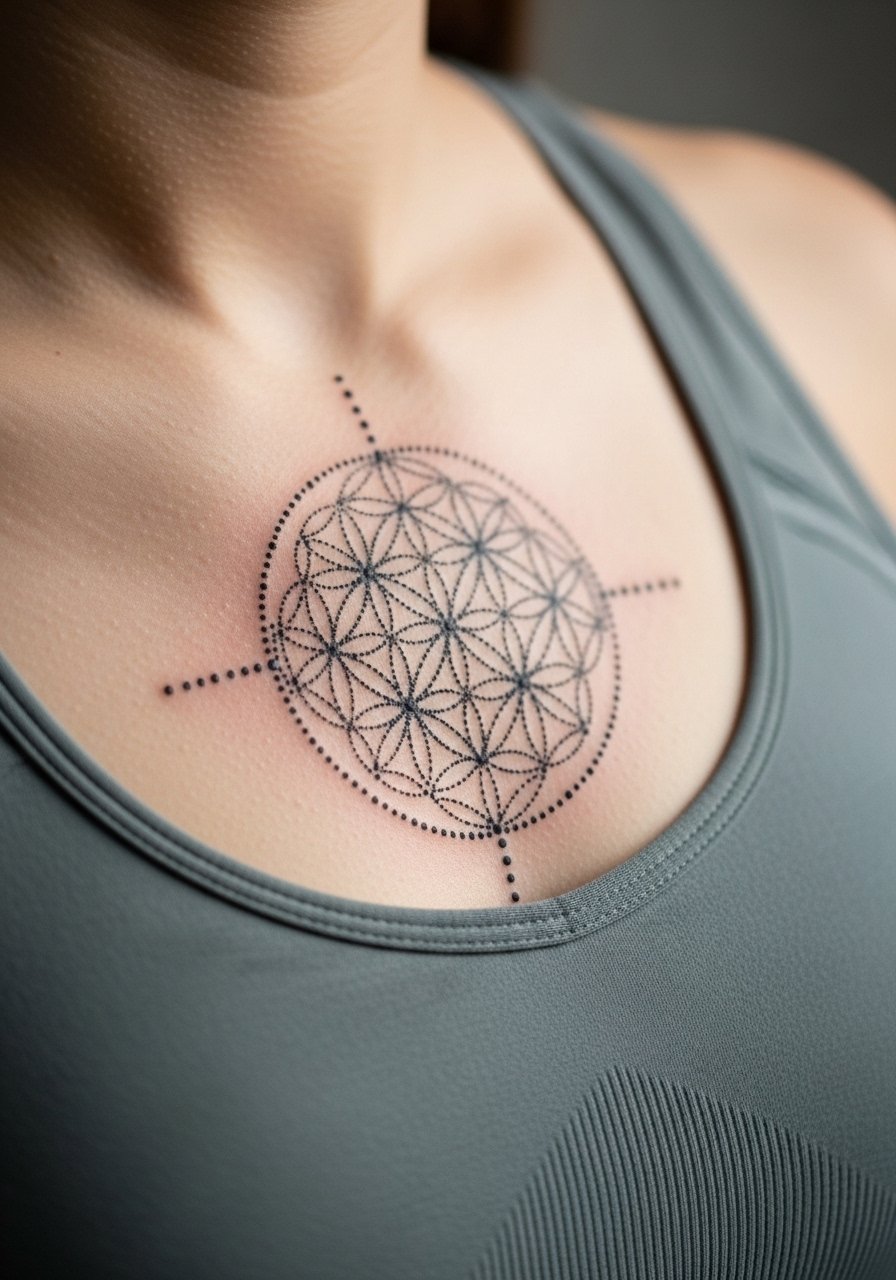
Sternum pieces are gorgeous and demand respect during the consult because chest skin moves with breath. Expect moderate pain and a session split into two shorter visits. The usual mistake is compressing a dense Flower of Life into a narrow sternum area, which leads to merging lines at year two. Tell your artist to prioritize spacing and to use stipple shading rather than full saturation in tight zones. Because the area is sensitive, plan for touch-up at year three depending on exposure. For evenings out, this placement pairs beautifully with a deep v neck tee or an open-collar shirt.
5. Minimalist Triangle Sleeve Start
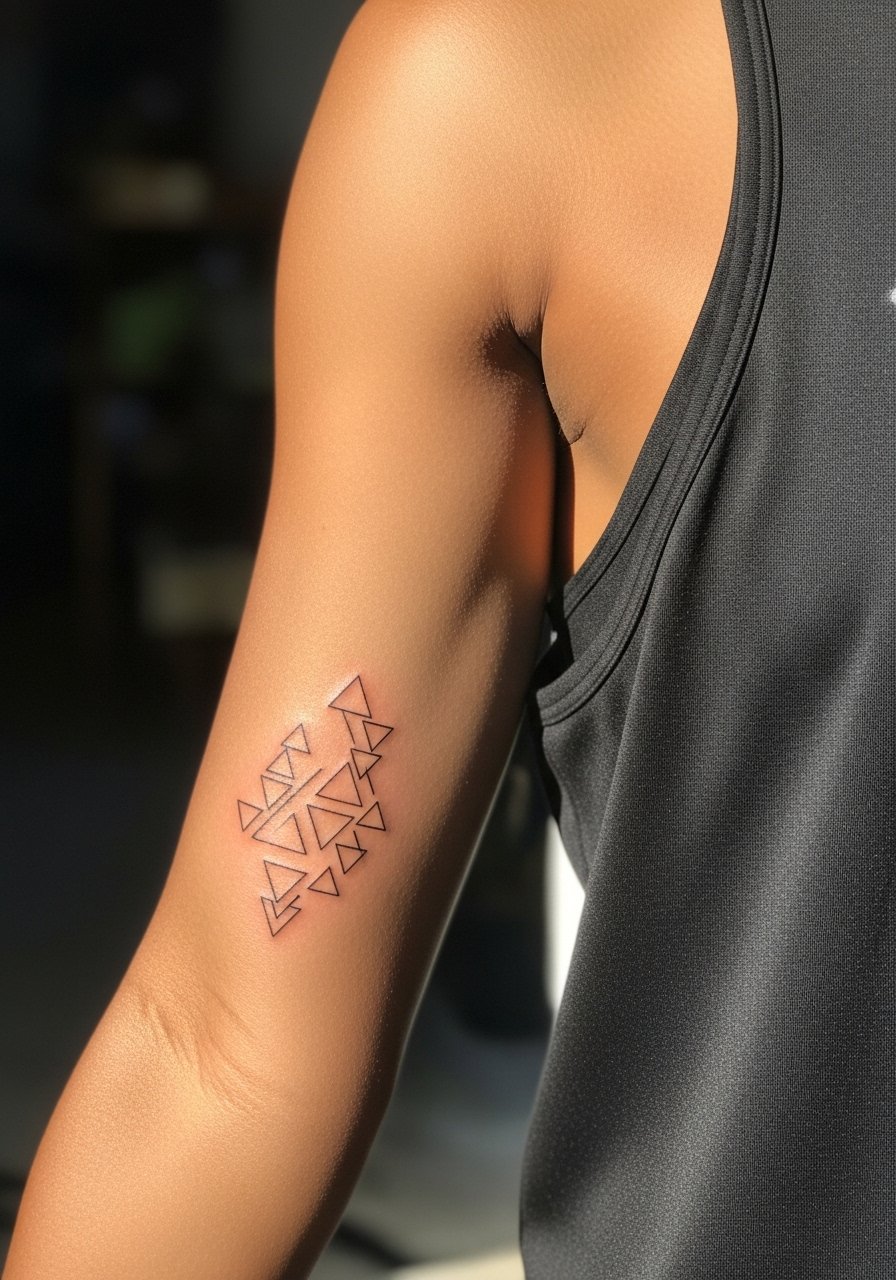
Minimalist geometric sleeves build slowly and live or die by spacing. I've noticed the sleeves that still look sharp at five years were planned as a patchwork, not a single repeating tiny motif. Pain on the inner arm ranges from moderate to high during longer sessions. Session time is typically a series of one- to three-hour appointments over months. A common error is starting too small and then trying to add denser elements, which creates imbalance. For a relaxed daytime look, roll sleeves and wear a athletic tank top to keep the forearm visible without constraining the artist.
6. Metatron's Cube on Outer Thigh
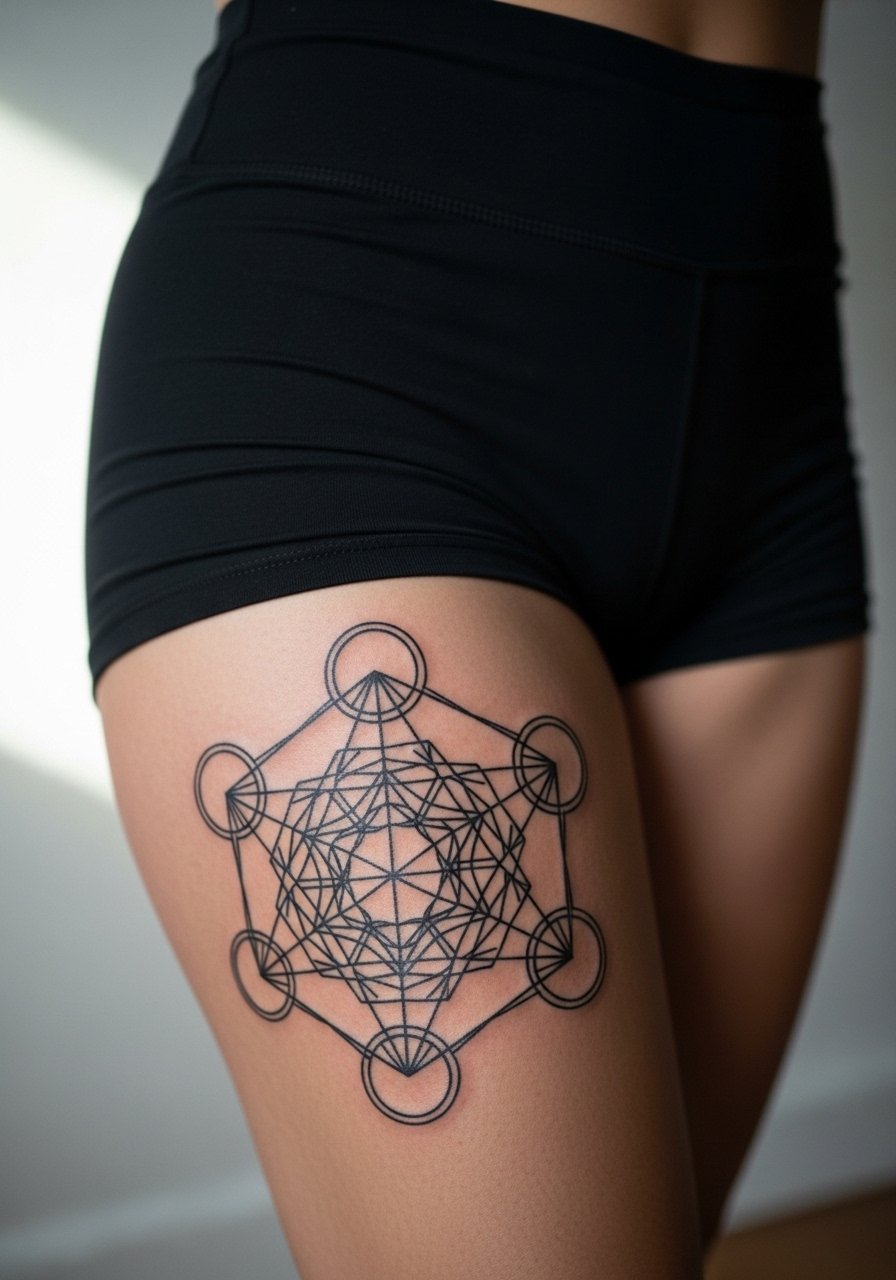
Thigh canvases let Platonic solids breathe and show layered depth beautifully. Sessions are comfortable for most people and usually run two to three hours with easy positioning. The common mistake is over-detailing when the person plans frequent weight changes, since geometry can warp with major body shifts. If you want the layered look, ask for stronger primary lines and lighter internal fills so the structure remains readable at five years. For a summer reveal, pair the thigh piece with high waisted athletic shorts.
Studio Day Picks
The forearm, wrist, chest, and thigh pieces above ask for different prep and first-week care, so a few targeted items smooth the session and the first week.
-
Stencil transfer paper kit. Lets you preview the exact placement on skin before committing, helpful for forearm and chest designs that read larger in person.
-
Topical numbing cream. Applied about 45 minutes before can ease the edge for sensitive sternum or inner arm sessions.
-
Thin protective film roll. Useful for wrist and hand pieces that face friction from frequent washing.
-
Fragrance free gentle body wash. Cleanses healing areas without irritating fine line work on wrists and forearms.
-
Aquaphor healing ointment. A thin layer during the first few days helps protect delicate linework without suffocating the skin.
7. Geometric Back Pattern Full Panel
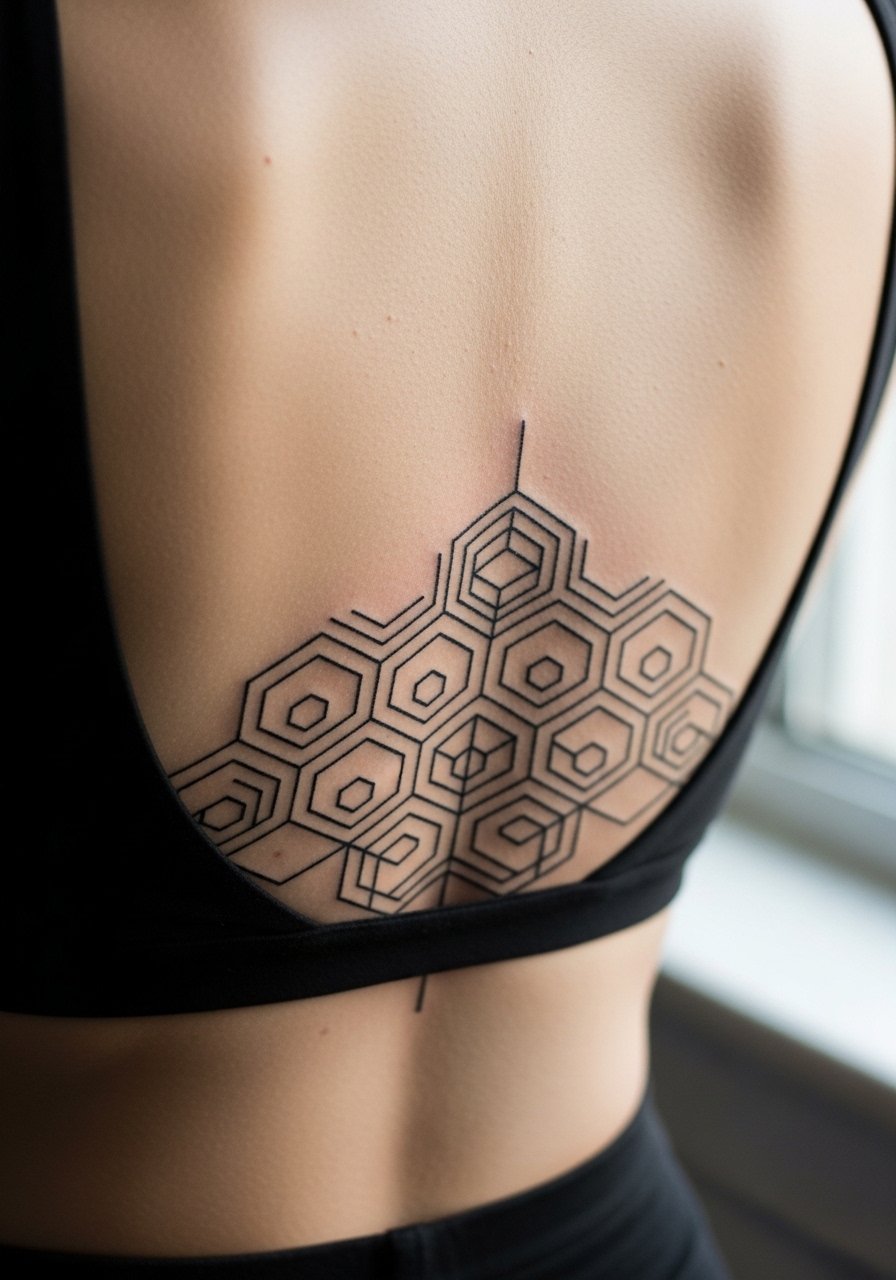
Big back patterns are ambitious and reward patience. Expect multiple long sessions and the piece will develop a rhythmic visual unity from distance. One frequent error is asking for the same density across the whole back; instead, vary the scale so the eye has resting points. On skin exposed to sunlight, heavier saturation in outer rings will hold better. Bring photos that show the exact line weight you want, and discuss touch-up timelines because large blackwork can need follow-up over several years. For showing it off, a low back crop top frames scale without much fabric interference.
8. Faceted Crystal on Back of Hand
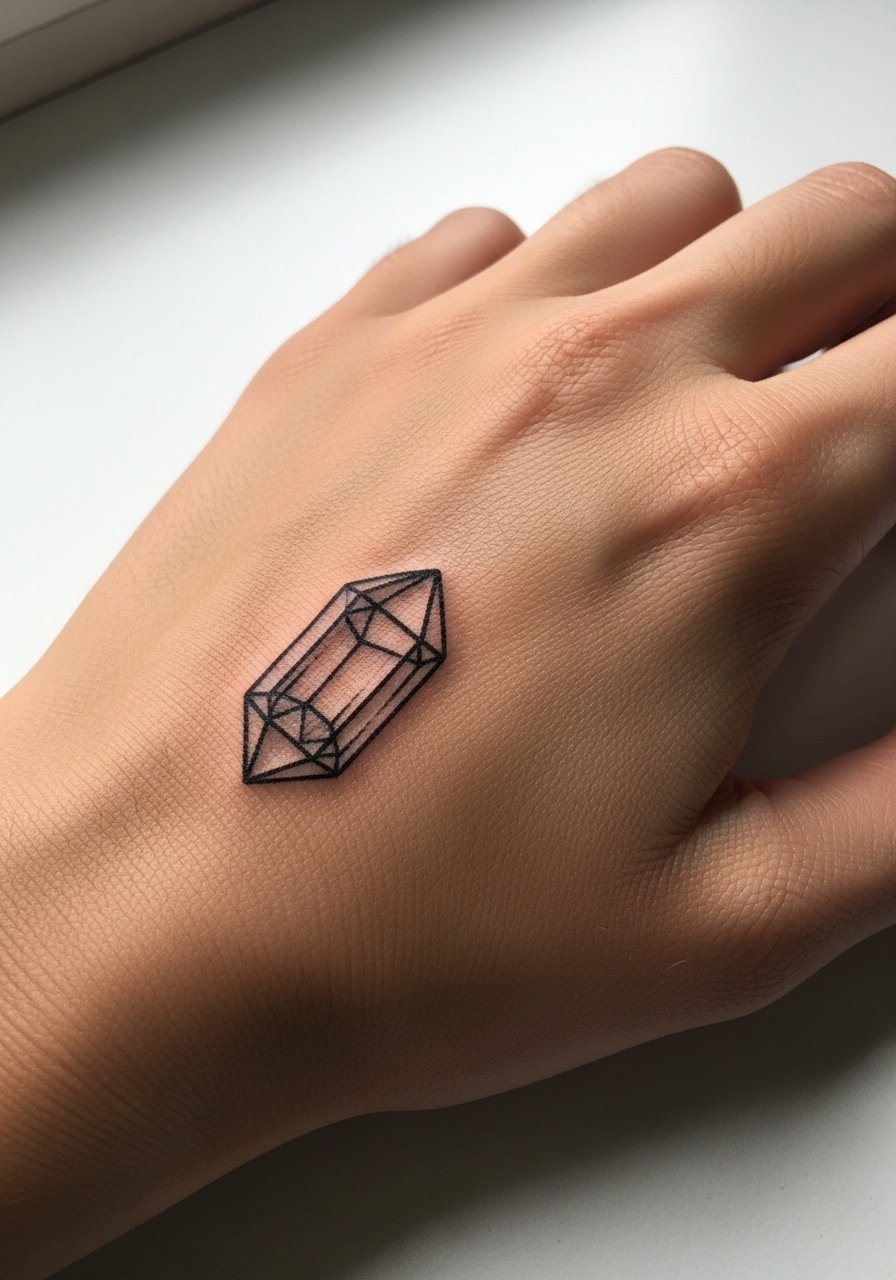
Hand tattoos age differently than other spots and need honesty up front. Pain is sharp and the area is high friction, so expect faster fading and likely touch-ups at year one to three. The mistake is treating hand pieces like wrist designs and asking for ultra-fine detail. For a faceted crystal, opt for bolder facet borders and leave subtle shading to suggest depth rather than micro detail. If career considerations matter, think through visibility before booking. For session day, remove rings and wear short sleeves so the artist has full access.
9. Abstract Line Inner Forearm Sleeve
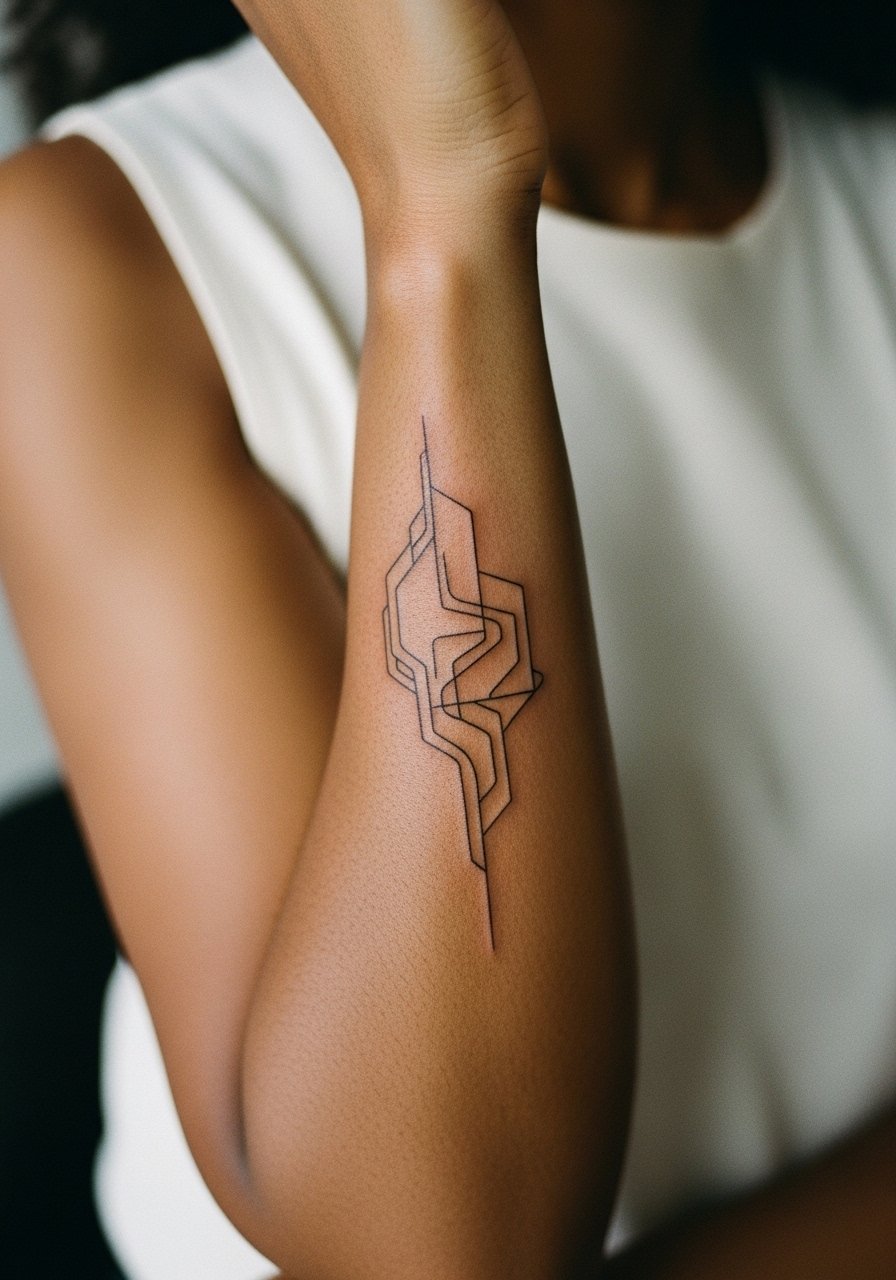
Inner forearm builds are tactile and visible, so line choice matters. Pain is moderate and sessions often come in three visits to build a sleeve gradually. A common failing is starting with too many thin motifs that blur together later. Tell your artist you want a hierarchy of line weights and negative space anchors. For wear during the session, throw on a short sleeve athletic shirt so the arm is accessible without rubbing. Expect light softening of the thinnest lines by year two and plan a small touch-up if needed.
10. Geometric Eagle Shoulder Cap
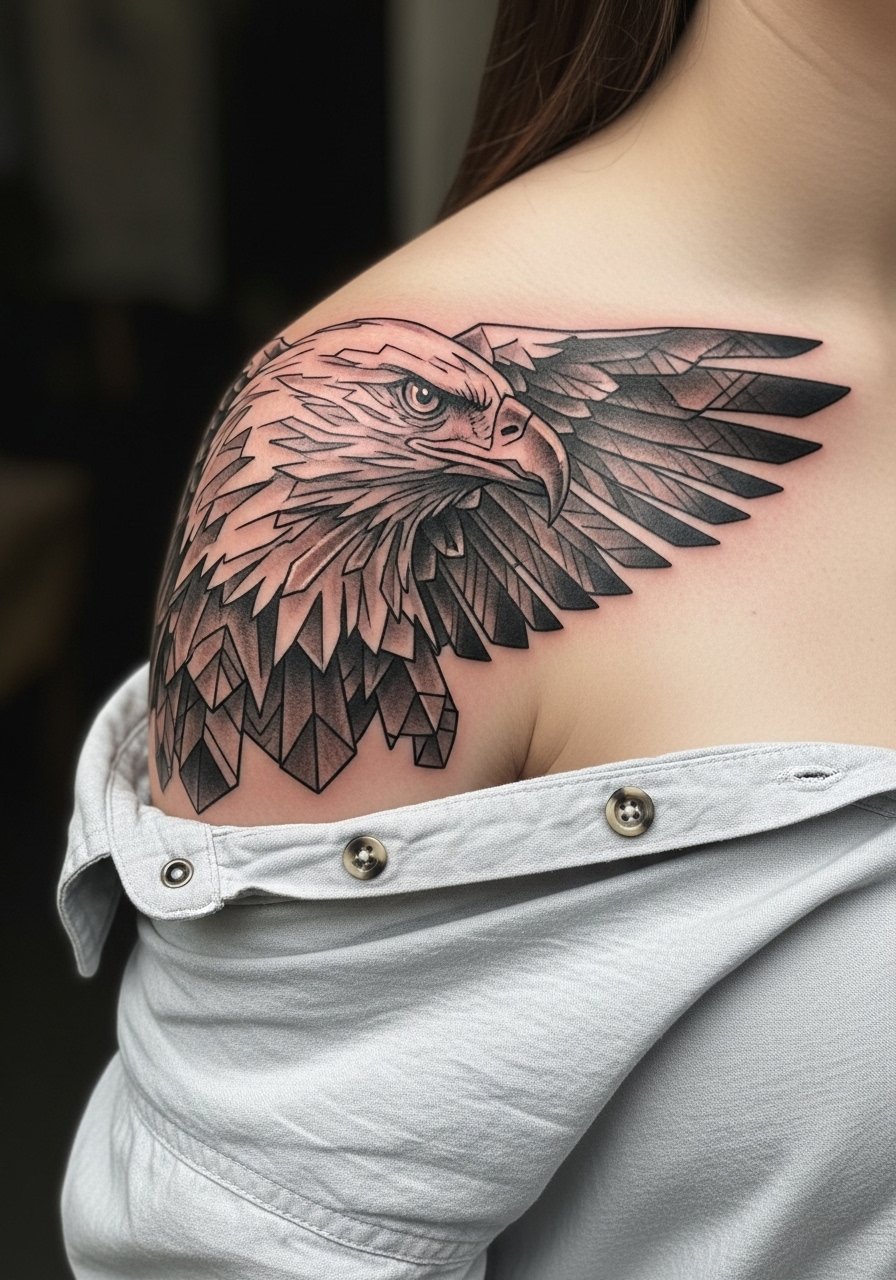
Shoulder caps make good use of curves and motion. Sessions are generally two hours and fairly tolerable. The main mistake is flattening the wing facets to fit a circle; instead let contours wrap the deltoid so the bird reads with body motion. For the session, a loose button down that you can pull aside is ideal. Shoulder geometry takes advantage of the shoulder's rounded surface so plan the design with your artist for the best flow.
11. Repeating Hexagon Calf Wrap
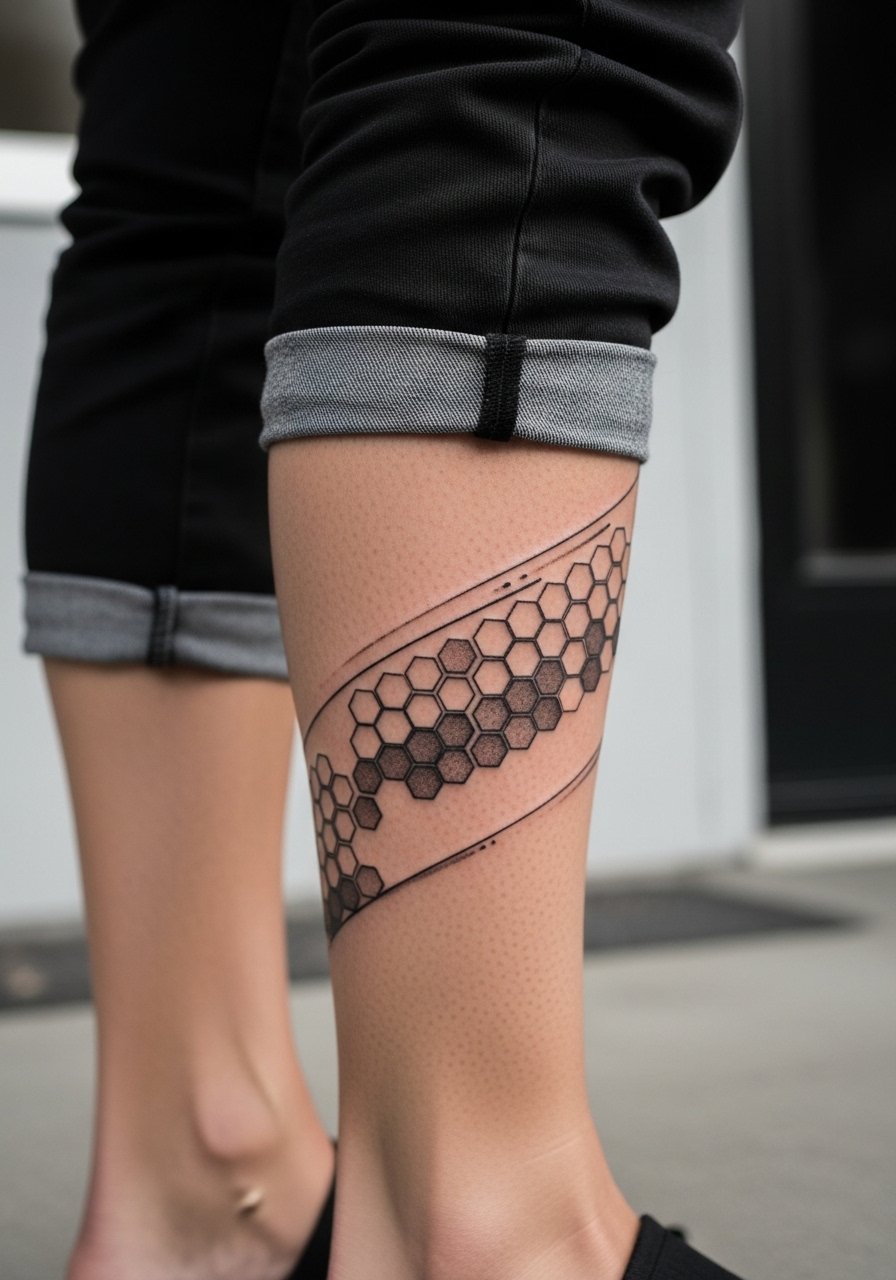
Calf wraps use rhythm and repetition to excellent effect. Sessions tend to be one to two sittings depending on wrap size. Watch for over-detailing in small hexes which can muddy with movement and skin texture changes. Tell your artist you want slight variation in hex sizes so the pattern does not become visually monotonous. For summer styling, rolled slim chinos or cropped jogger pants show the wrap without cutting into the design.
12. Planetary Orbit Ankle Motif

Ankle tattoos are subtle and travel-friendly, but they face rubbing from socks and shoes. Expect a quick single session and plan for touch-up at year two if you wear closed shoes often. The common pitfall is packing too much detail into a tiny orbit; keep the planets simple and add one or two geometric lines for motion. Show off the piece with strappy sandals or rolled pants. For session wear, pick shorts or cropped pants so the artist can work without compressing the area.
13. Art Deco Compass at Sternum Edge
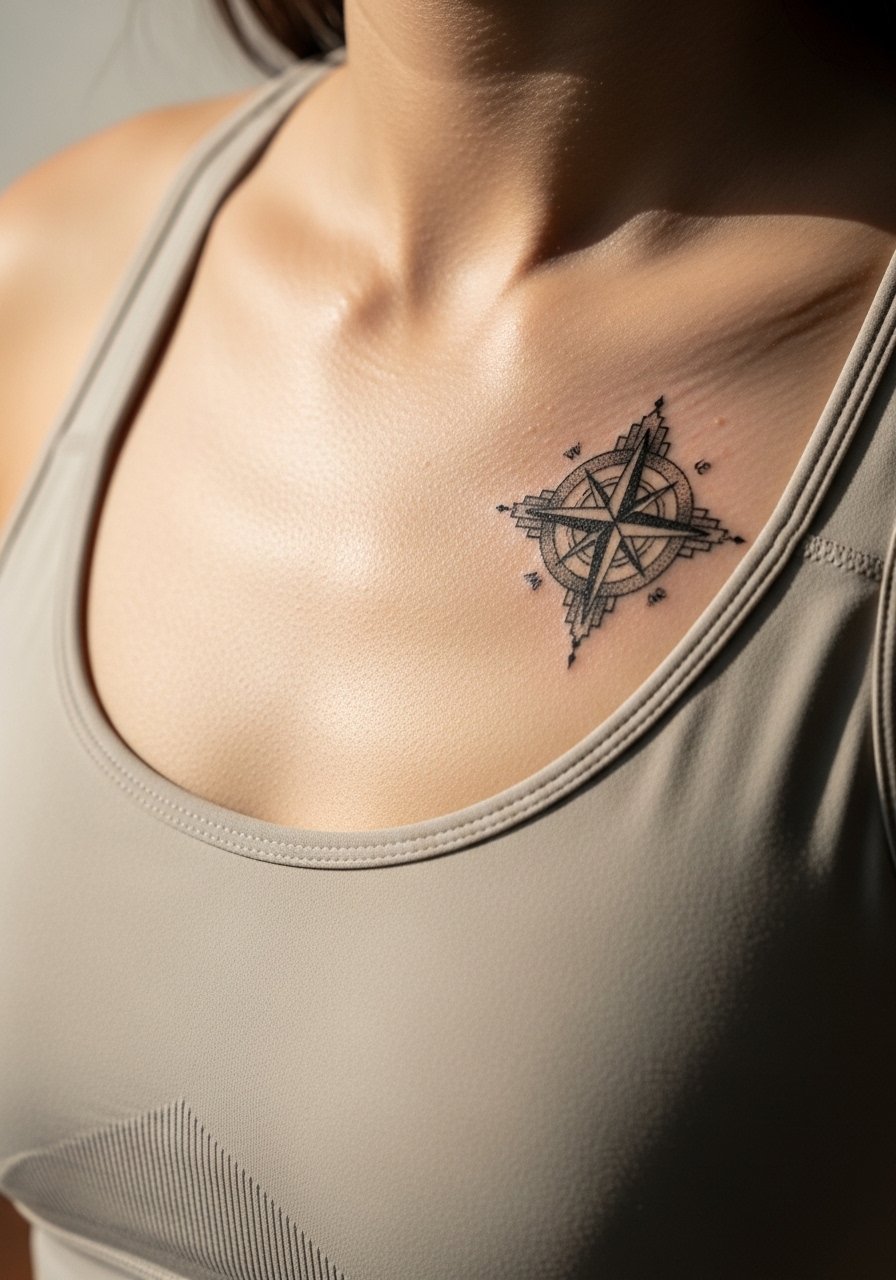
A compass with Art Deco angles benefits from crisp negative space around its points. Sternum proximity increases sensitivity but creates a striking center focal point. One mistake is choosing extremely tight filigree near breath lines, which can blur. Ask for clear main points and minimal micro detailing in the inner joins. Sessions are moderate in pain and usually under two hours. Pair the compass with a fitted sports bra or open collar looks when you want to reveal it.
14. Neo-Victorian Keyhole on Ribcage

Fair warning, the ribcage is a high-pain spot for many and artists split on fine line there. One camp cautions that the skin stretch and movement blurs ultra-fine work within two years. The other camp says with correct needle depth and spacing fine line can settle well. Ask your artist where they stand and request slightly bolder anchor lines to protect detail. Sessions are often short and multiple to manage comfort. For the consult, bring photos that show exact line weight and plan a touch-up timeline.
15. Vintage Compass Collarbone Accent

Collarbone placements read elegant and require clear edges to avoid feathering. Pain is moderate and the area can be sensitive over bone. Avoid asking for soft shading pressed tight against the bone, since it can age into a fuzzy halo. Ask for defined primary lines with sparse stipple accents. For show-off styling, an open collar shirt or a thin chain pendant keeps attention on the collarbone without overwhelming the art.
16. Geometric Sunburst Nape

Nape placements are discreet and seasonal, and they photograph well with pulled-back hair. Pain is low to moderate. The mistake is overfilling the halo area, which can flatten the burst into a gray patch. Ask for crisp radiating lines and negative space between rays. If you plan to show it often, consider haircuts that reveal the nape. For the session, wear a wide-neck shirt you can adjust without exposing other areas.
17. Geometric Rose on Inner Bicep
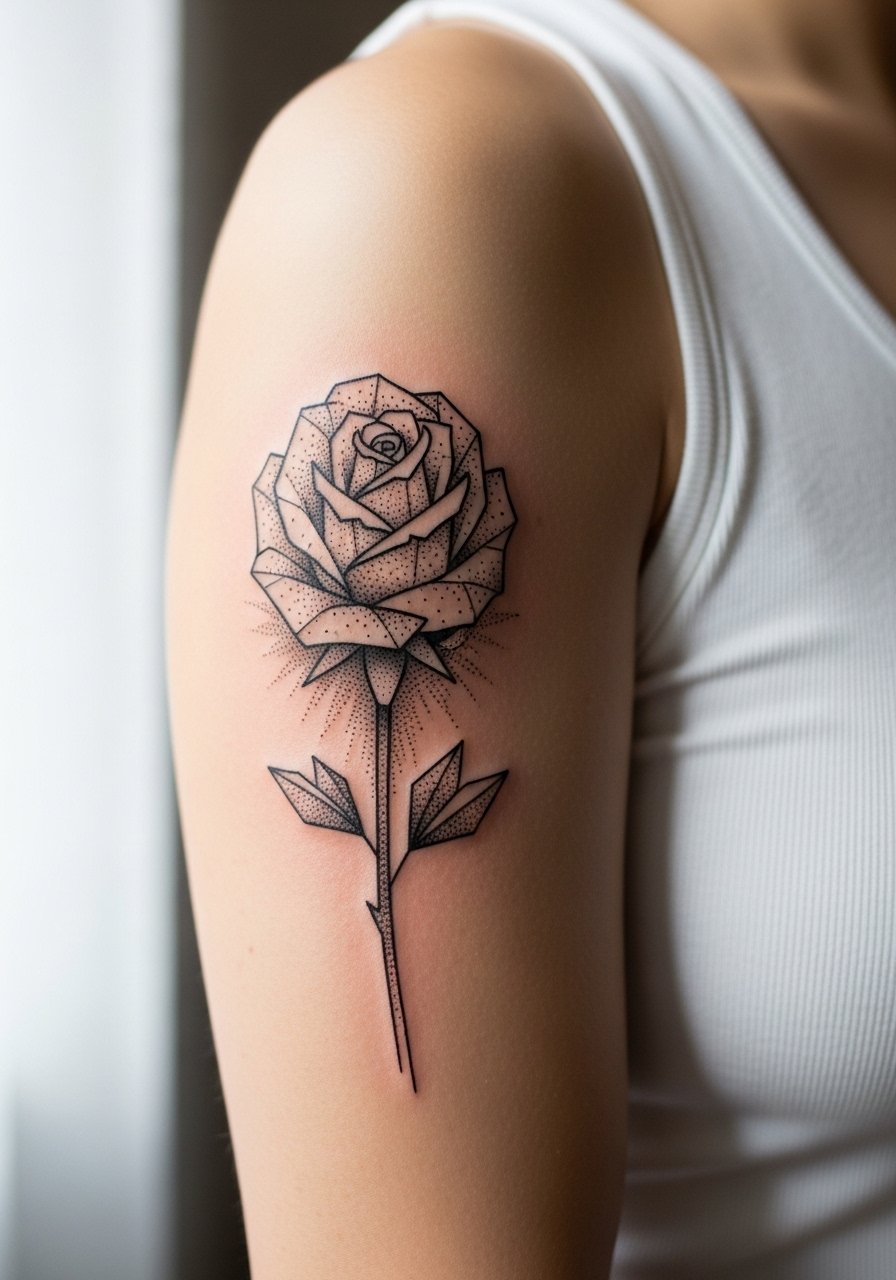
Inner bicep pieces sit where contact and sweat can affect healing. Sessions can be uncomfortable during longer sittings, but results are flattering. The usual error is using too many micro details in tight petals, which the inner arm will soften. Ask for a clear silhouette and stipple fills to suggest volume without dense saturation. For session ease, wear a tank top so the artist has clean access and you stay comfortable.
18. Minimalist Arrow on Inner Forearm
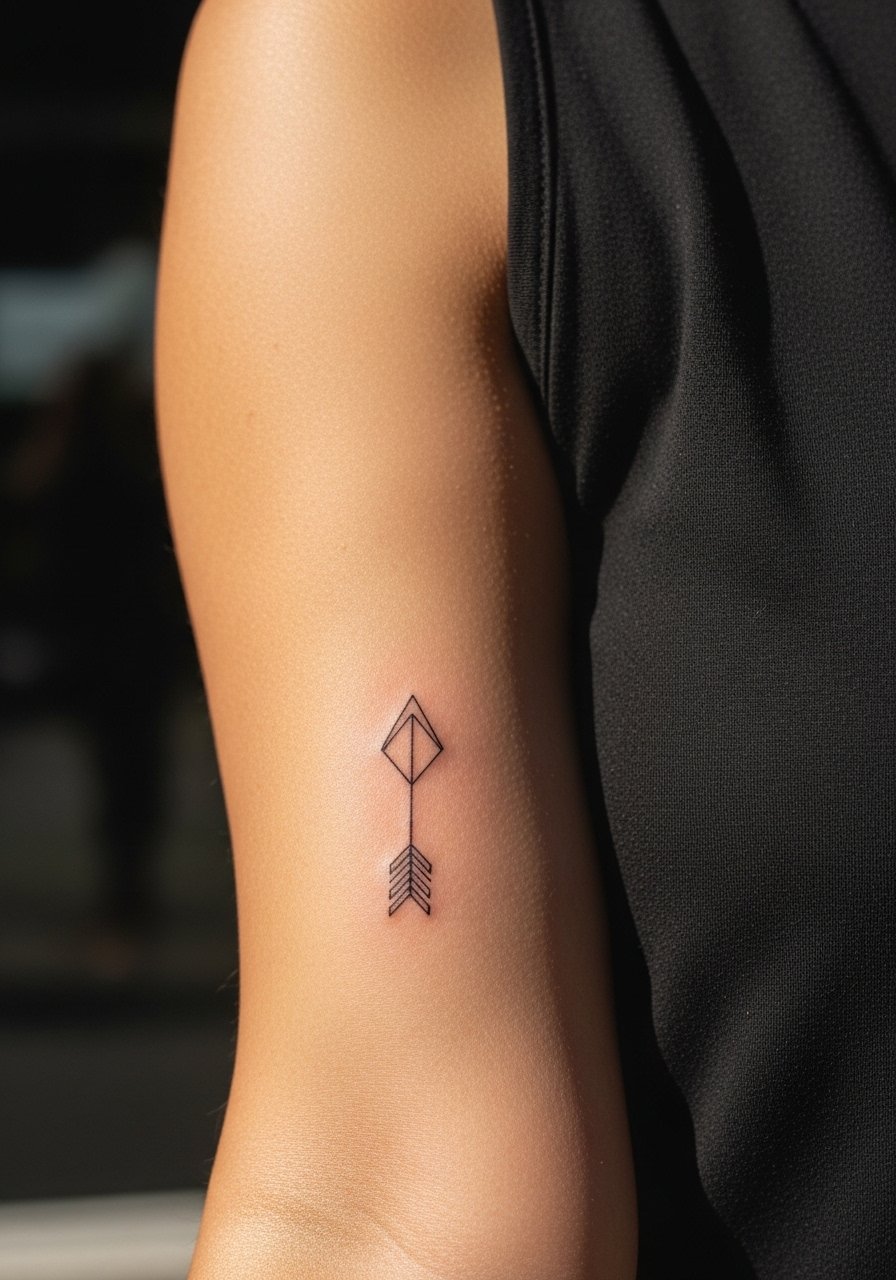
Simple arrows read crisp only when spaced correctly and when the line weight complements the arm's width. I recommend slightly thicker shafts than the slimmest option you find online, because the skin movement will soften thinner lines. Pain is low and sessions are quick. A common mistake is centering the arrow without considering wrist and elbow landmarks, which throws off flow. For a casual look, wear rolled sleeves or a slim fit crewneck tee to show the piece.
19. Geometric Hourglass on Outer Forearm

Hourglasses pair vintage symbolism with geometric restraint. Forearm placement keeps the image visible and less prone to rubbing than hands. Ask the artist for clear frame lines and light stipple inside so the sand effect reads years down the line. Mistakes include using too many micro dots that blend into gray. Expect a two-hour session and mild discomfort. For daytime wear, a fitted crewneck tee keeps the motif on display.
20. Dotwork Mini Mandala on Wrist
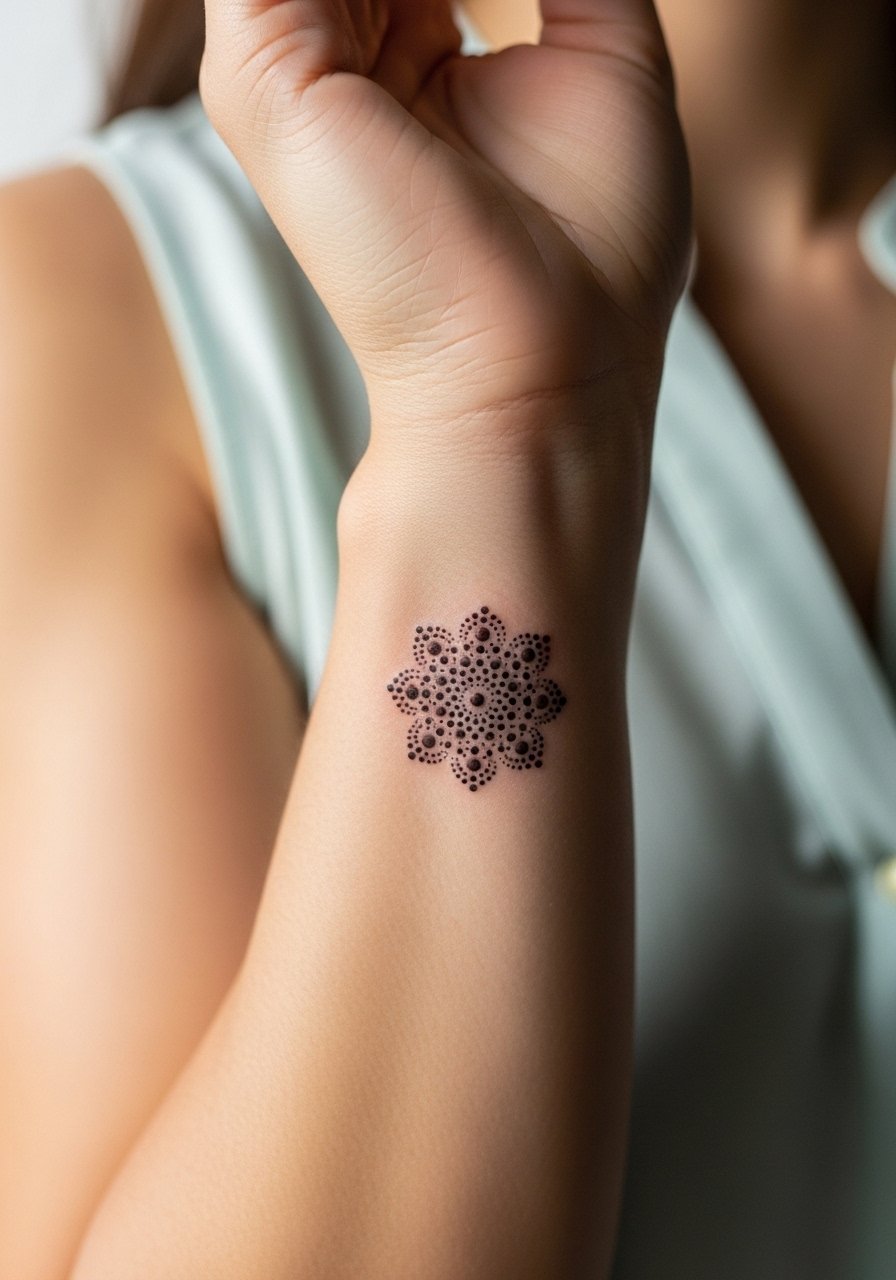
Dotwork on the wrist looks delicate but the skin sees a lot of motion and handwashing. The usual mistake is compressing many dots into a tiny area. Ask for simplified geometry and slightly larger spacing between dot rows. Sessions are short and tolerable. For showing it off, wear a minimalist cuff bracelet on the opposite wrist to balance the look.
21. Geometric Anchor on Calf
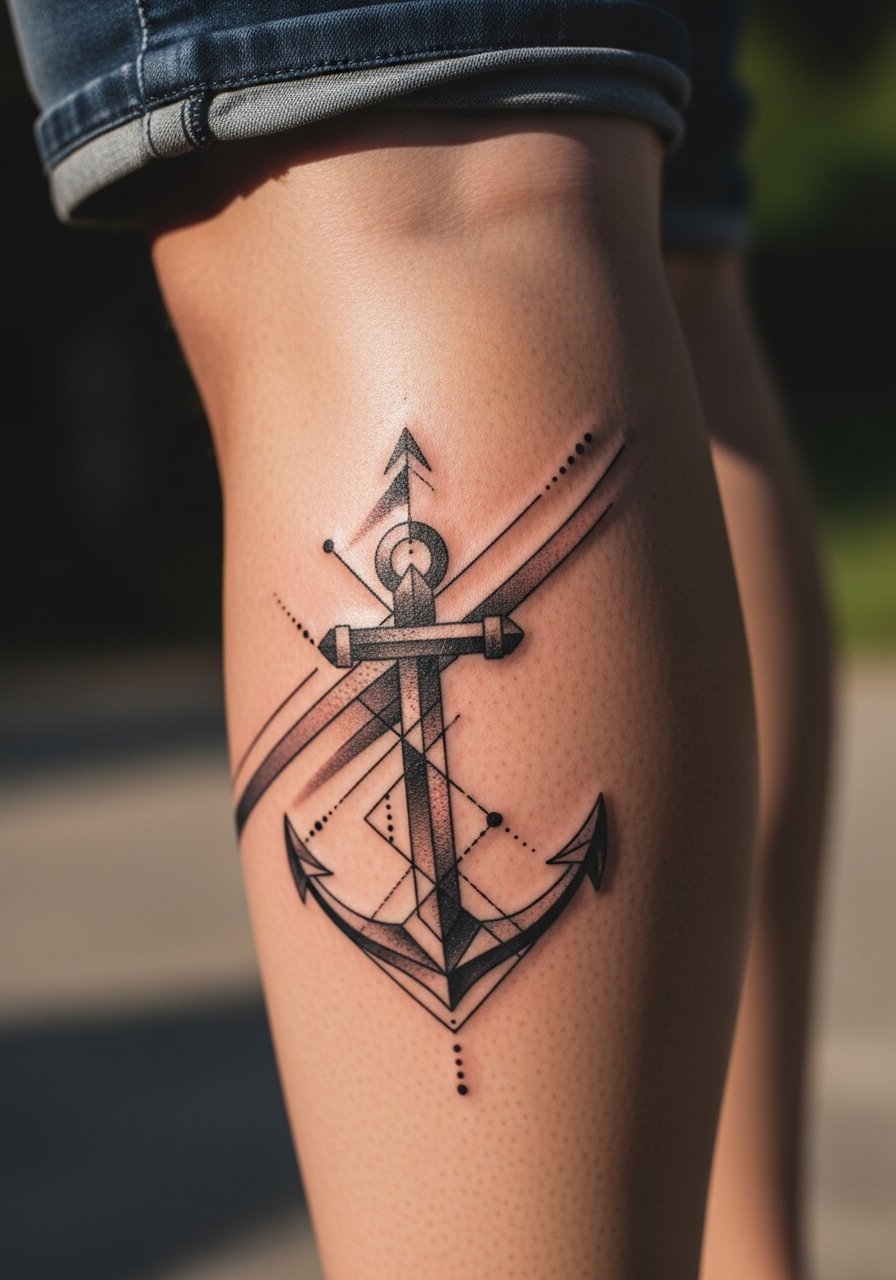
An anchor translates well into angular geometry and benefits from the calf's forgiving surface. Sessions are comfortable and touch-ups are rare unless you wear heels or boots that rub the area. Avoid tiny internal textures that lose clarity on skin with varying hair growth. For a casual reveal, roll chinos or wear athletic shorts so the anchor is visible.
22. Faceted Bear Chest Medallion
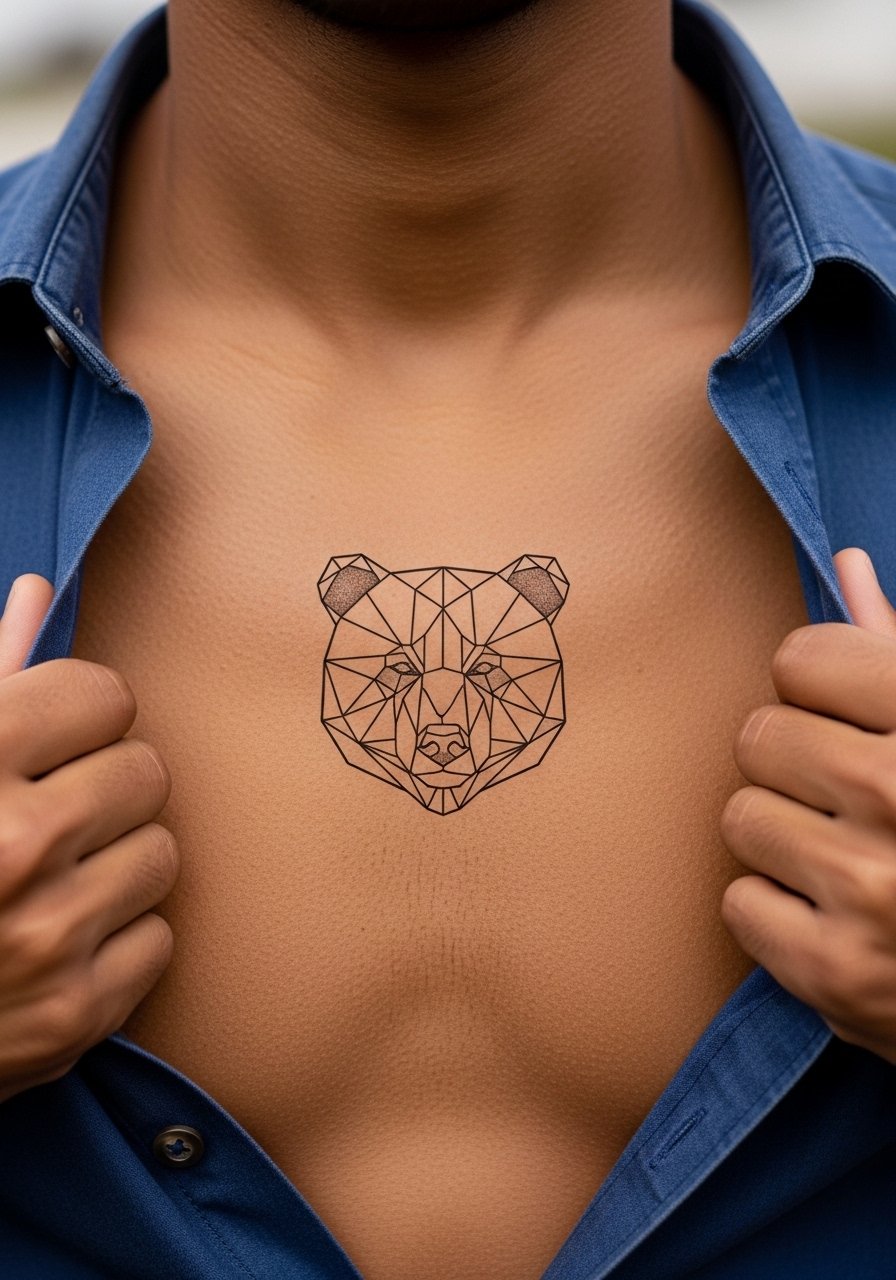
Chest medallions look commanding and read well with bold outlines. Sessions can be moderate in pain depending on proximity to the sternum. A common error is crowding the medallion with competing elements which distract from the geometric facets. Ask for stronger primary outlines and lighter internal shading. For showing it off, an open collar shirt works well and keeps attention on the medallion.
23. Constellation Grid at Back of Neck

Neck pieces are discreet and easy to hide when needed, but the skin there is thin. Keep designs small and avoid dense blocks. Pain varies and sessions are usually short. The main mistake is asking for many tiny stars packed closely. Ask for simple lines with slightly larger dot anchors so the pattern reads cleanly after healing. If you frequently wear collared shirts, a wide-neck shirt offers occasional reveal without risking snagging.
24. Geometric Band on Finger
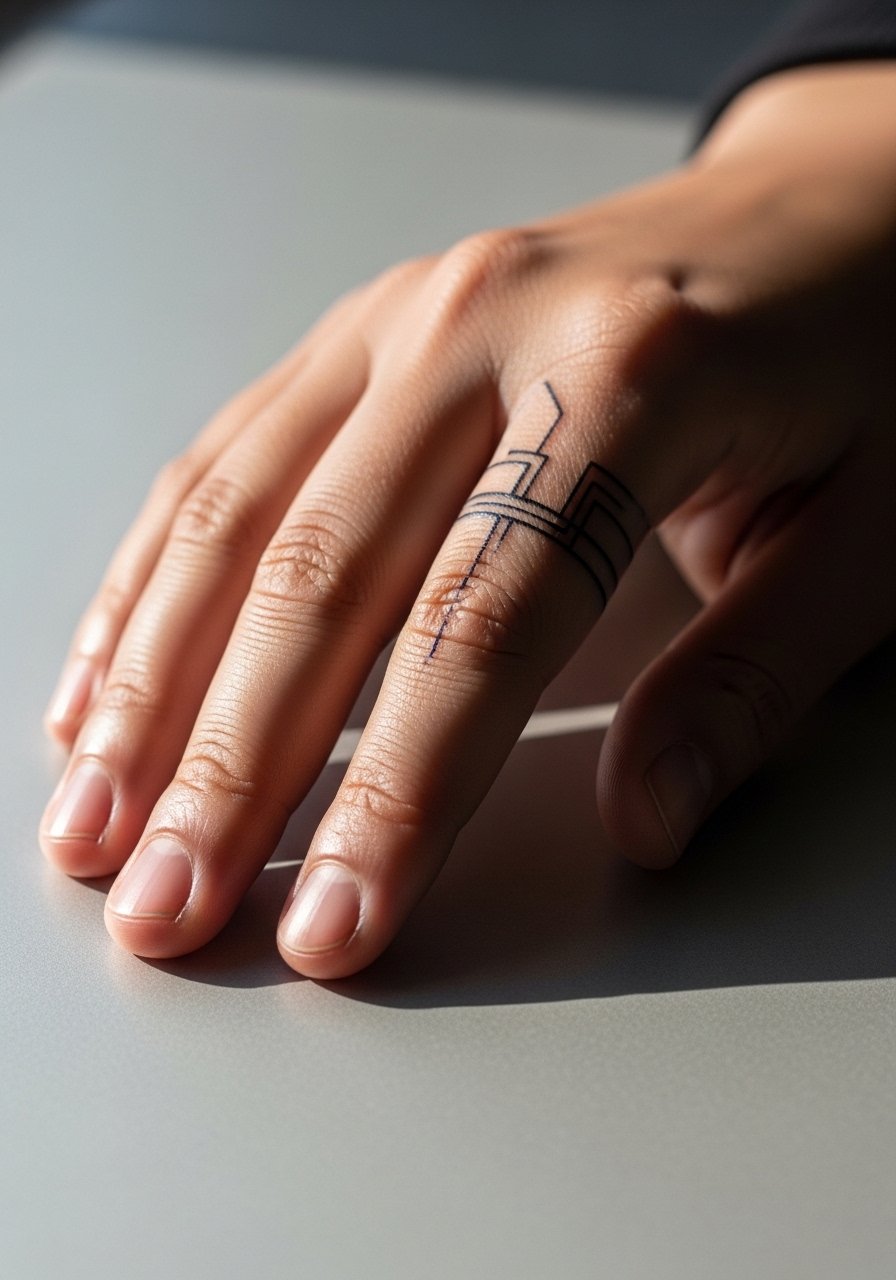
Finger bands fade and blur faster than most areas and need upfront planning. Ask for slightly thicker lines than your reference and accept that touch-ups might be required every couple of years. The error is choosing ultra-fine motifs for a spot that sees constant hand use. Sessions are short but stingy for some. For display, minimalist rings on non-tattooed fingers complement the band without crowding it.
25. Platonic Cube Shoulder Blade Accent
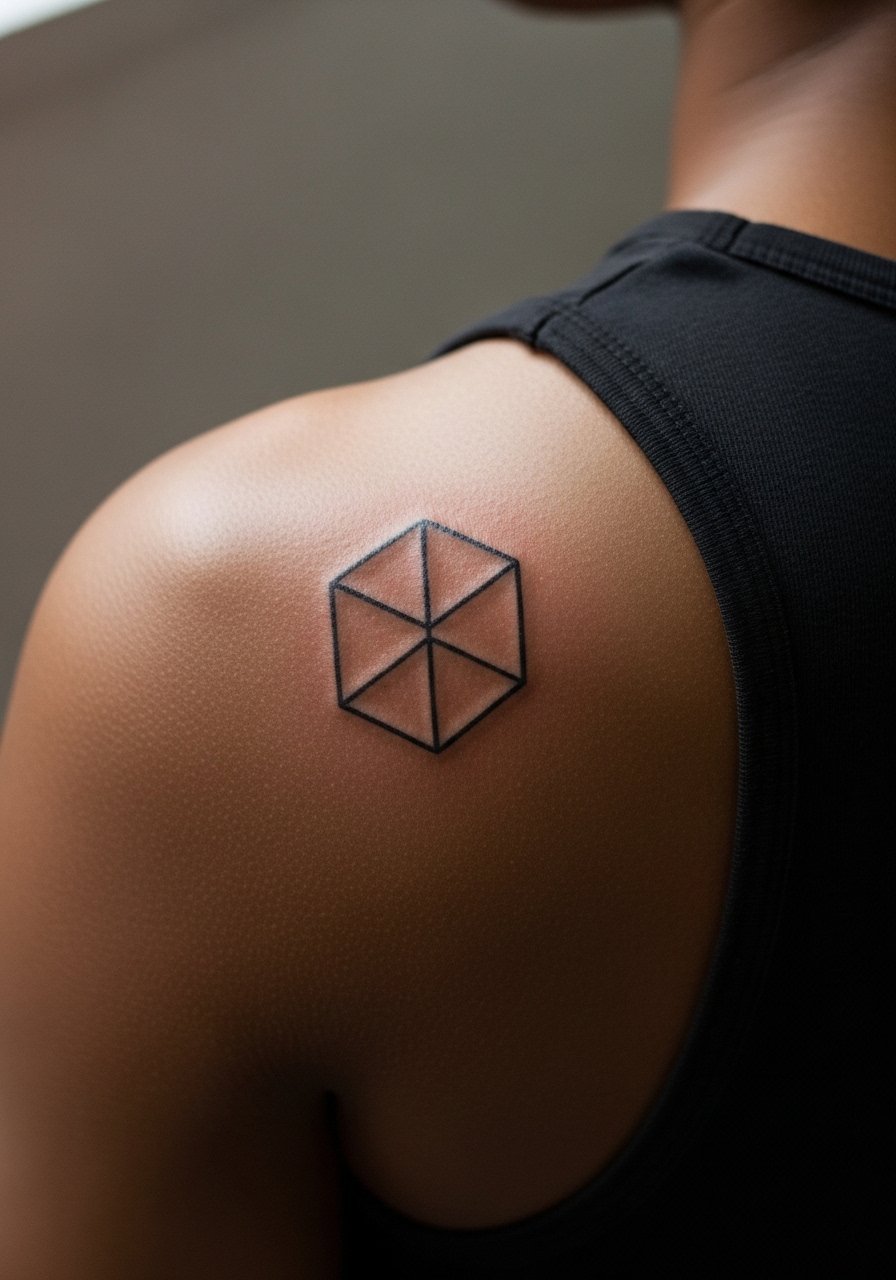
Shoulder blade placements sit flat and photograph well with natural contours. Expect a one- to two-hour session depending on size. A typical mistake is centering the cube without considering how shoulder movement rotates the plane. Ask your artist to orient the cube towards your spine or shoulder depending on whether you want it to read when you turn. For session comfort, wear a loose tank top so you can move freely.
26. Coordinates Ankle Tattoo in Geometric Frame
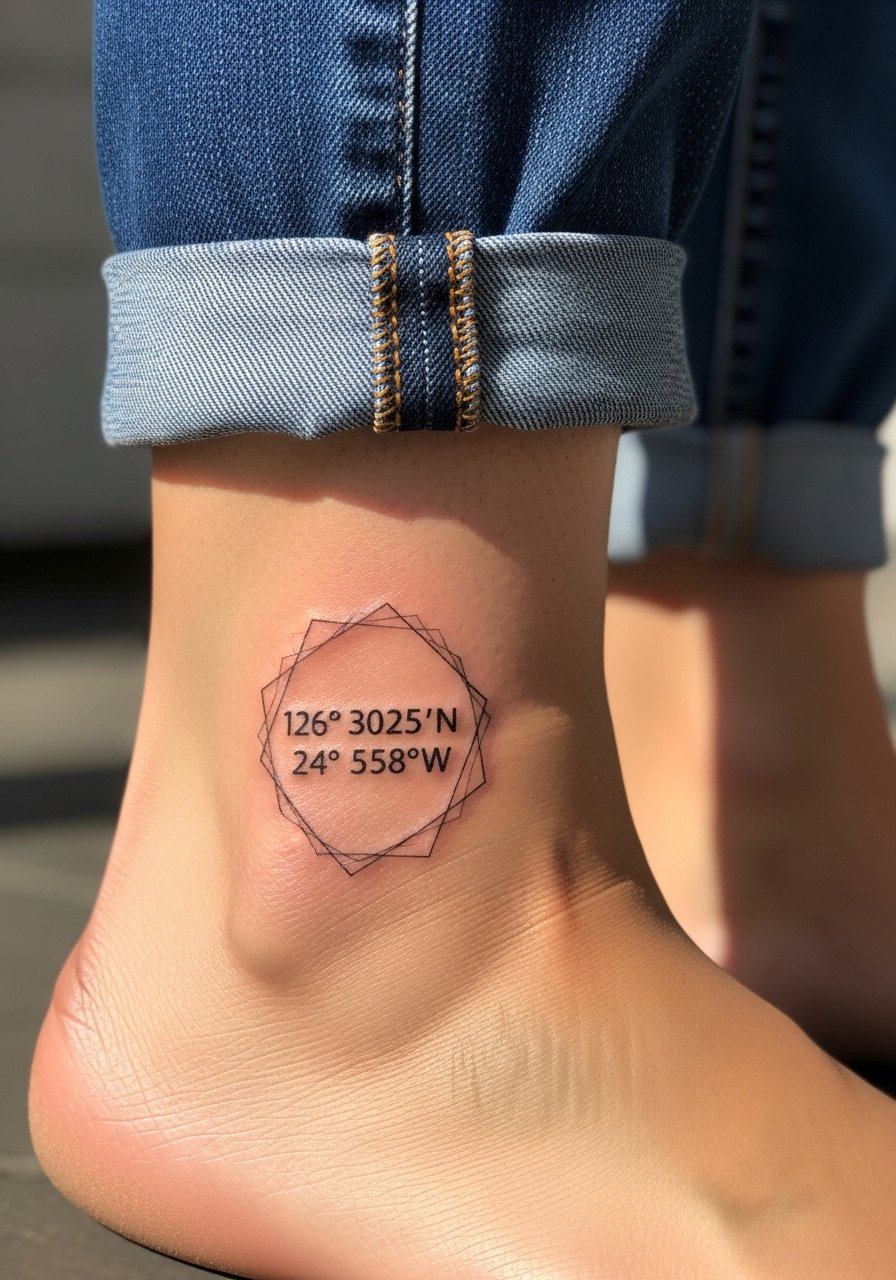
Coordinate tattoos feel personal and scale well on ankles, but keep the frame simple to avoid blurring. Sessions are quick and pain is mild. Mistakes include pairing tiny numerals with ultra-thin frames that disappear with regular wear. Ask for slightly bolder numerals and a minimal geometric border. Show it off with strappy sandals or cropped pants to keep the detail visible.
27. Geometric Baroque Sleeve Accent

Baroque geometry combines ornamental flourishes with strict geometry for a vintage feel. Larger sleeves that include this accent require staging over multiple sessions. The common error is treating the ornate elements with the same tiny fills used in micro tattoos. Ask for layered contrast and negative space fields to prevent the ornament from collapsing into texture. For the session, a short sleeve shirt keeps the upper arm accessible without rubbing.
Frequently Asked Questions
Q: Will fine line geometric sleeves blur into each other after a few years?
A: It depends on placement and initial spacing. Sleeves made as patchworks with deliberate negative space and a hierarchy of lineweights tend to hold better than sleeves built from many identical tiny motifs. Expect some softening at year two to five and plan a touch-up if you want crisp edges restored.
Q: Do hand and finger geometric pieces need special care compared with forearm work?
A: Yes, hands and fingers face more washing, sun exposure, and friction, which accelerates fading. Expect a higher likelihood of early touch-ups and use protective film during the first few days. For session day, remove jewelry and keep the area dry when possible during healing.
Q: How should I prepare clothing-wise for a thigh Metatron's Cube session?
A: Wear loose shorts or a skirt so your artist can access the outer thigh without pressure. A loose jogger pant you can roll up works well for comfort and modesty during longer sittings.
Q: Why do geometric mandalas on the ribcage sometimes lose clarity faster than the same design on the back?
A: Ribcage skin stretches and moves with breathing and can distort tight dense work. The two camps are clear: one says fine line should be avoided on ribs altogether, and the other says carefully spaced lines with proper depth can settle fine. Ask your artist which approach they recommend for your body and plan spacing accordingly.
Q: Are there placements I should avoid for ultra-detailed vintage geometric work if I want longevity?
A: Hands, fingers, and the inner lip are high-contact spots to avoid for ultra-micro detail if longevity is the priority. Choose larger scale and bolder anchors for those zones, or pick lower-friction placements like the outer forearm or thigh.
Q: How often should I expect to schedule touch-ups for geometric blackwork versus minimalist linework?
A: Blackwork with heavier saturation often needs fewer early touch-ups because the density endures, while thin minimalist lines may need touch-ups around year two to three depending on exposure. Your artist can give a timeline based on their technique and your skin type.