Fine line dragons are everywhere on saved boards, but what holds up on a back after two summers of sun and swimsuits is often different from what looks best in a studio photo. Back placements hide healing challenges, booking headaches, and the awkwardness of aftercare checks. Read on for 27 elegant dragon back tattoo designs and the wardrobe and prep notes that actually make them wear well.
1. Serpentine Spine Dragon That Follows the Vertebrae

If you want a tattoo that reads vertical and elegant, the serpentine spine dragon is the obvious pick. I've seen this read best when the head sits between the shoulder blades and the tail tapers toward the lower back. Tell your artist to map scale flow with your spinal curve and to keep the central spine line slightly bolder than the decorative scales so the piece retains clarity at two and five years. Expect face-down sessions with breaks every 90 minutes. For the appointment wear a loose tank top women so the artist can access the spine without straps digging in.
2. Floral Dragon Back Panel for Evening Wear

There's a reason this panel shows up on formal reels. Combine lotuses and peonies into the dragon's body so color sits in defined cells rather than soft watercolor puddles. During consultation ask for color blocks with solid outlines so the piece ages more predictably than pure watercolor. If you want to show it in a gown pick a low back evening gown in black or ivory to let the hues pop. Sessions run multiple sittings, and heavy saturation will need touch-ups in the first three years if you get lots of sun exposure.
3. Minimalist Dragon Silhouette on the Upper Back
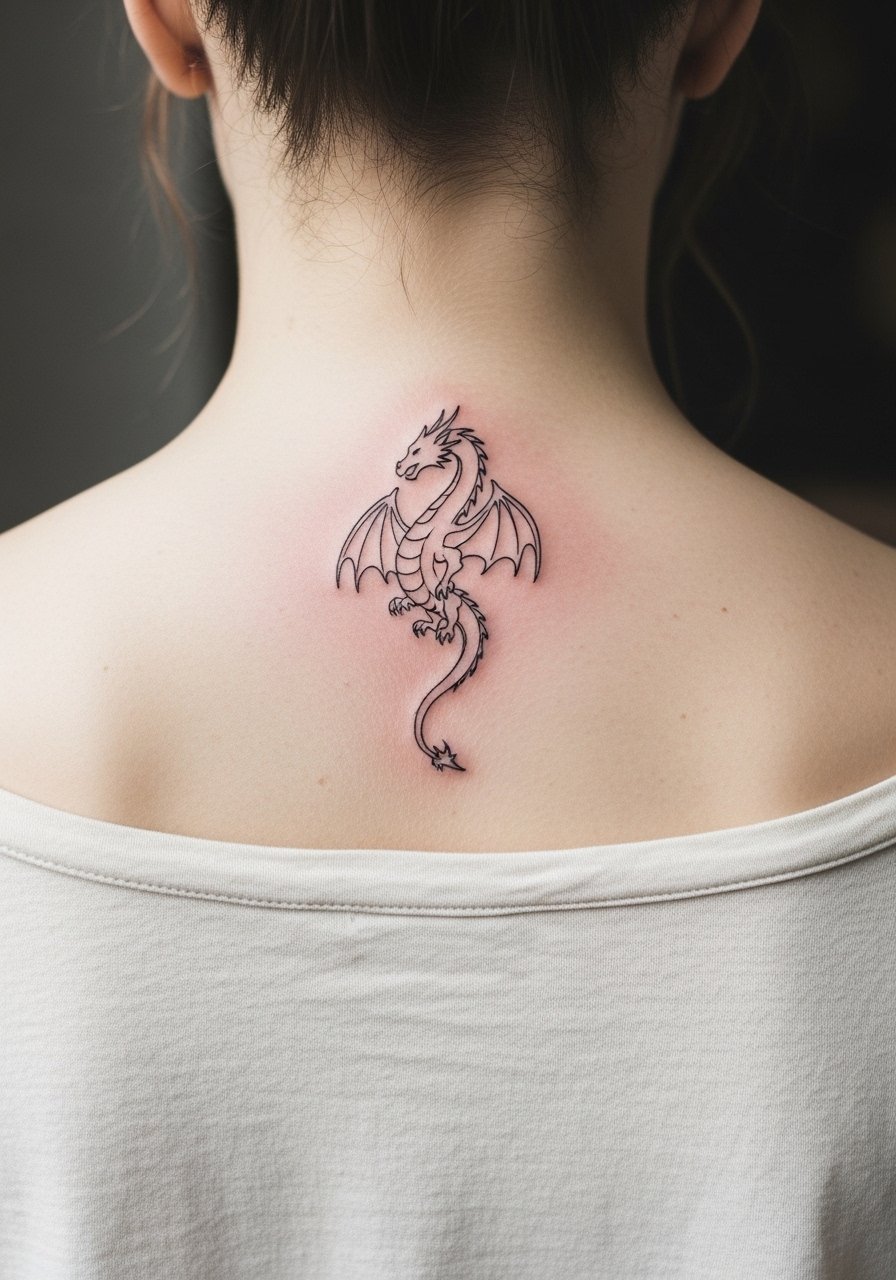
Fair warning, fine line silhouettes can vanish against some skin tones over time. Ask for a slightly heavier outline than the typical single-needle flash so the silhouette keeps its shape at 1 and 3 years. This is a friendly first-back piece because session time is short and pain is moderate near the shoulder blades. For showing it off pair with an off shoulder linen blouse. A common mistake is asking for ultra-skinny lines without discussing your skin tone, which leads to disappointment in photos later.
4. Ornamental Dragon with Mandala Elements, Full Back Panel
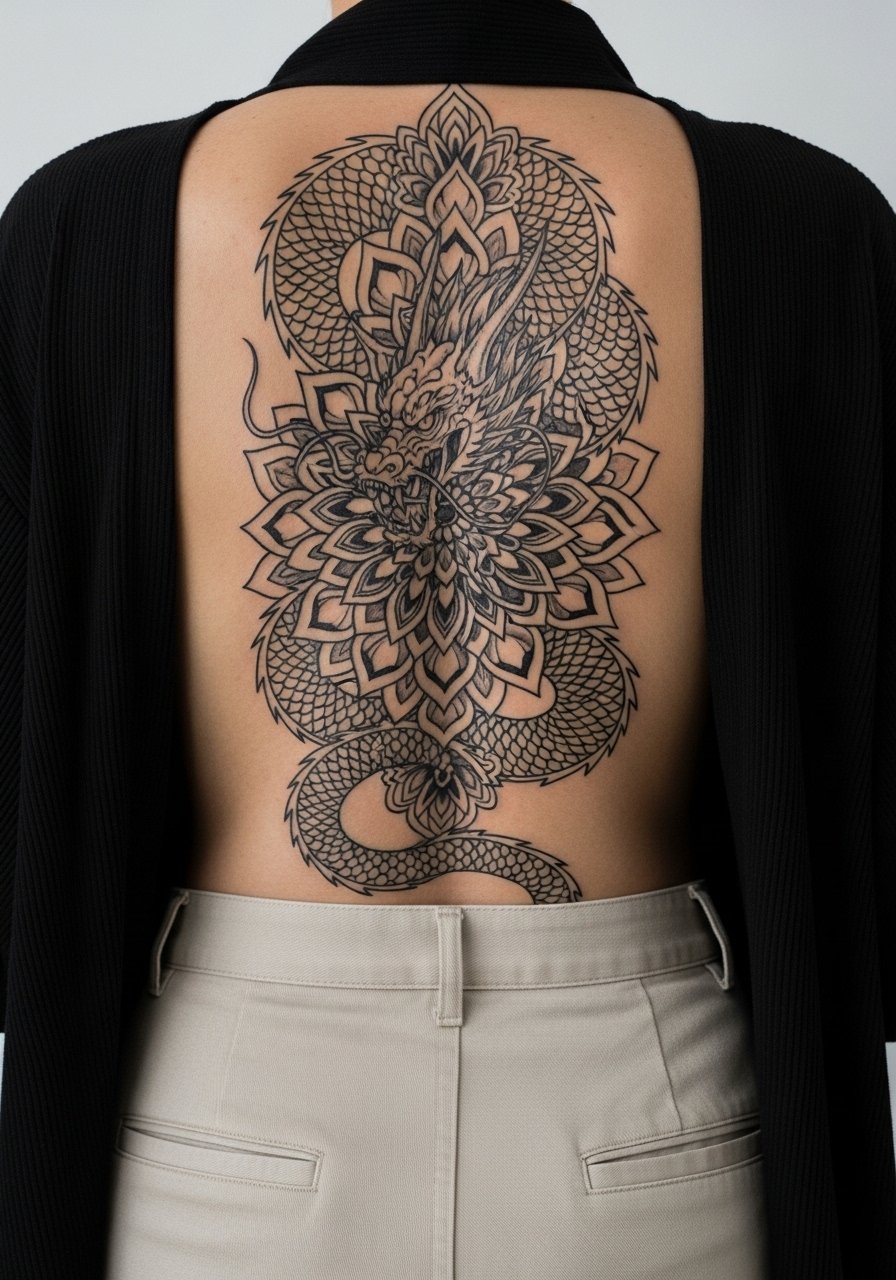
This is the statement piece that frames the whole torso and benefits from symmetry. When you ask for mandala fills, request larger negative spaces inside dense areas so stipple shading does not merge over time. Expect long sessions and plan for touch-ups after complete healing. There's a cultural sensitivity here because mandala patterns have spiritual origins, so many clients opt for variations rather than direct replicas. For the session wear an open back robe so the artist can move freely without fabric creasing the work.
5. Mythical Eastern Dragon Lower Back Wrap

Curved tail wraps across the hip create motion as you walk, but lower back skin changes can distort long-term. If you expect weight fluctuation, shift the focal elements up toward the sacrum and ask the artist about scale spacing that tolerates stretching. Sessions will require position changes and touching around body contours. For show-off pairings consider a red silk wrap skirt or a high-cut bikini at the beach. A common regret is placing fine shading too close to the hip crease where constant movement softens detail.
6. Micro-Realism Dragon Claw on the Shoulder Blade
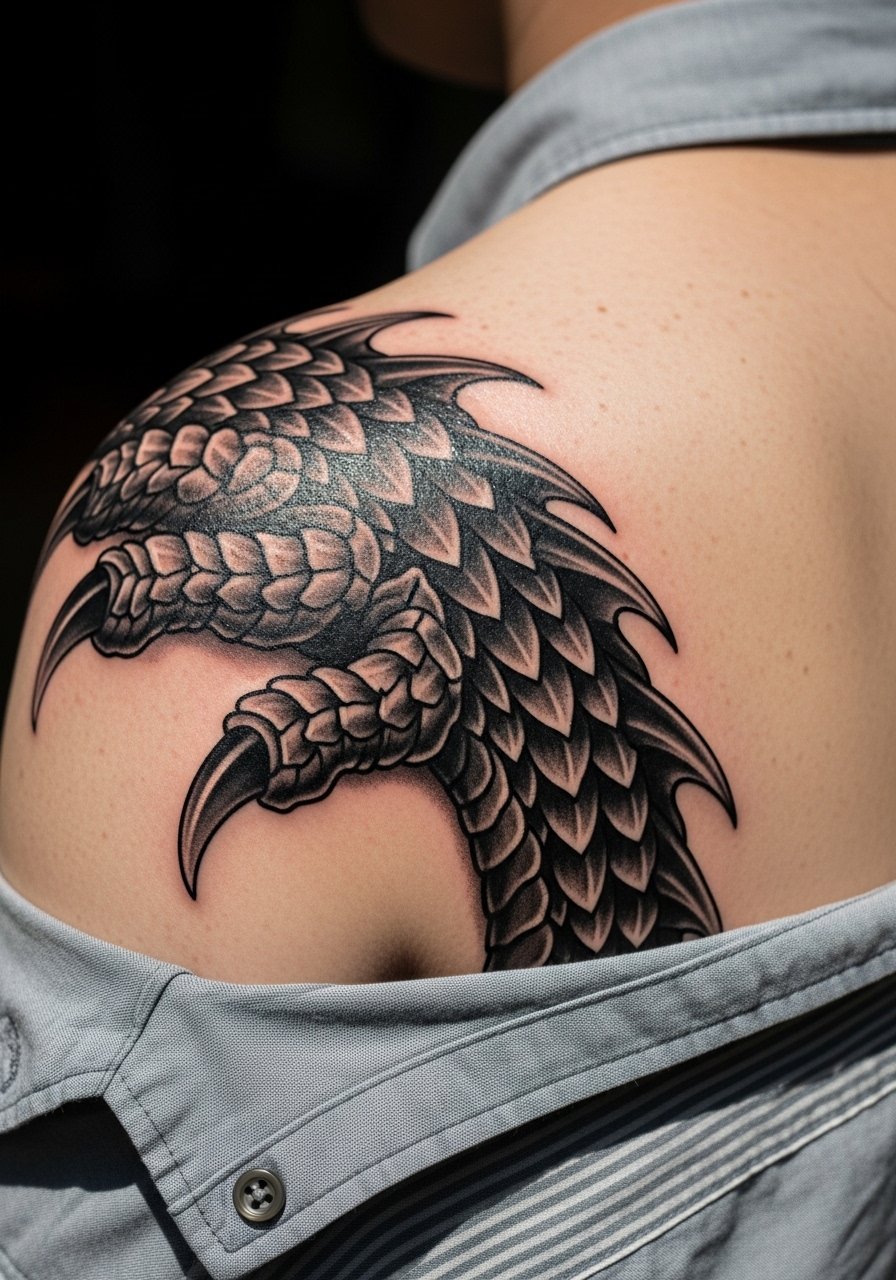
Micro-realism delivers texture that reads up close. Tell your artist you want directionality in the scales and contrast spots so highlights remain visible at 6 months and beyond. Expect two short sessions rather than one marathon. Shoulder blades are forgiving for detail but beware of long sleeves rubbing during the first week. For showing it off, an off shoulder linen blouse or a minimalist chain necklace near the shoulder balances the composition.
Pack Smart
Those first six back designs vary from spine runs to hip wraps, and a few small items make session day and the first week much smoother.
-
Tatt-Life tattoo balm. A thin non-greasy balm many people prefer for back areas where heavy ointments can clump under clothing.
-
Ink Fix salve. Lighter consistency helps you lotion hard-to-reach spots without a heavy residue.
-
Horimono Care aftercare oil. Alcohol-free oil option for color retention on saturated irezumi-style dragons.
-
Second Skin protective film. Conforms to curved back areas and breathes better than plastic wrap during the first 24 to 48 hours.
-
Aquaphor healing ointment. Thin layer on high-friction zones gives short-term moisture without heavy occlusion.
7. Blackwork Dragon Wings Across the Upper Back
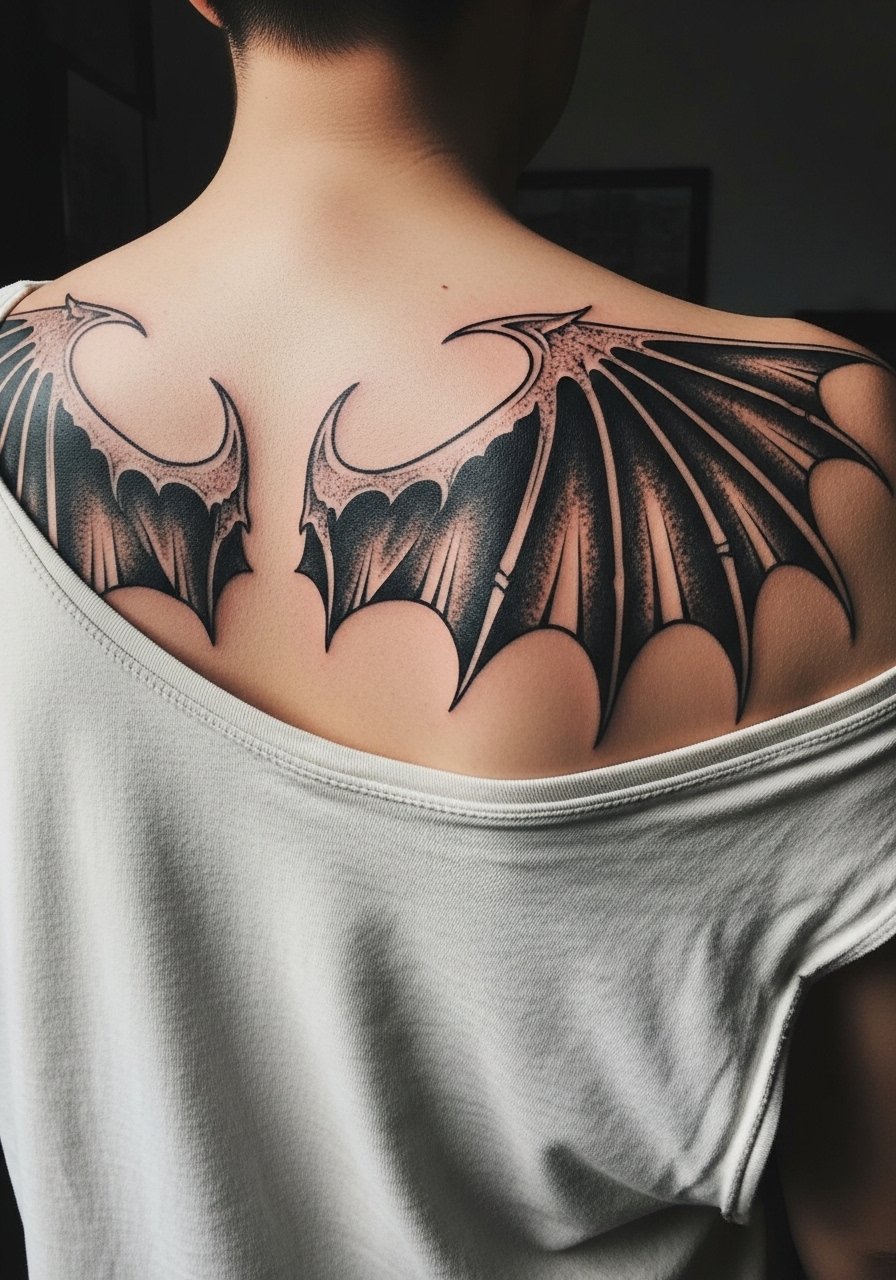
Bold blackwork ages predictably and covers older ink effectively. If you want impact from a distance, ask for solid fills and clear negative space between wing feathers so blowout risk is minimized. Sessions feel heavy where the machine needs consistent saturation, and you should plan for breaks. For outfit pairings, sleeveless vintage tees or a cropped leather jacket slung off one shoulder give an effortless reveal. The trade-off is healing time and potential soreness across the shoulder blade area.
8. Watercolor Dragon Panel with Defined Outlines
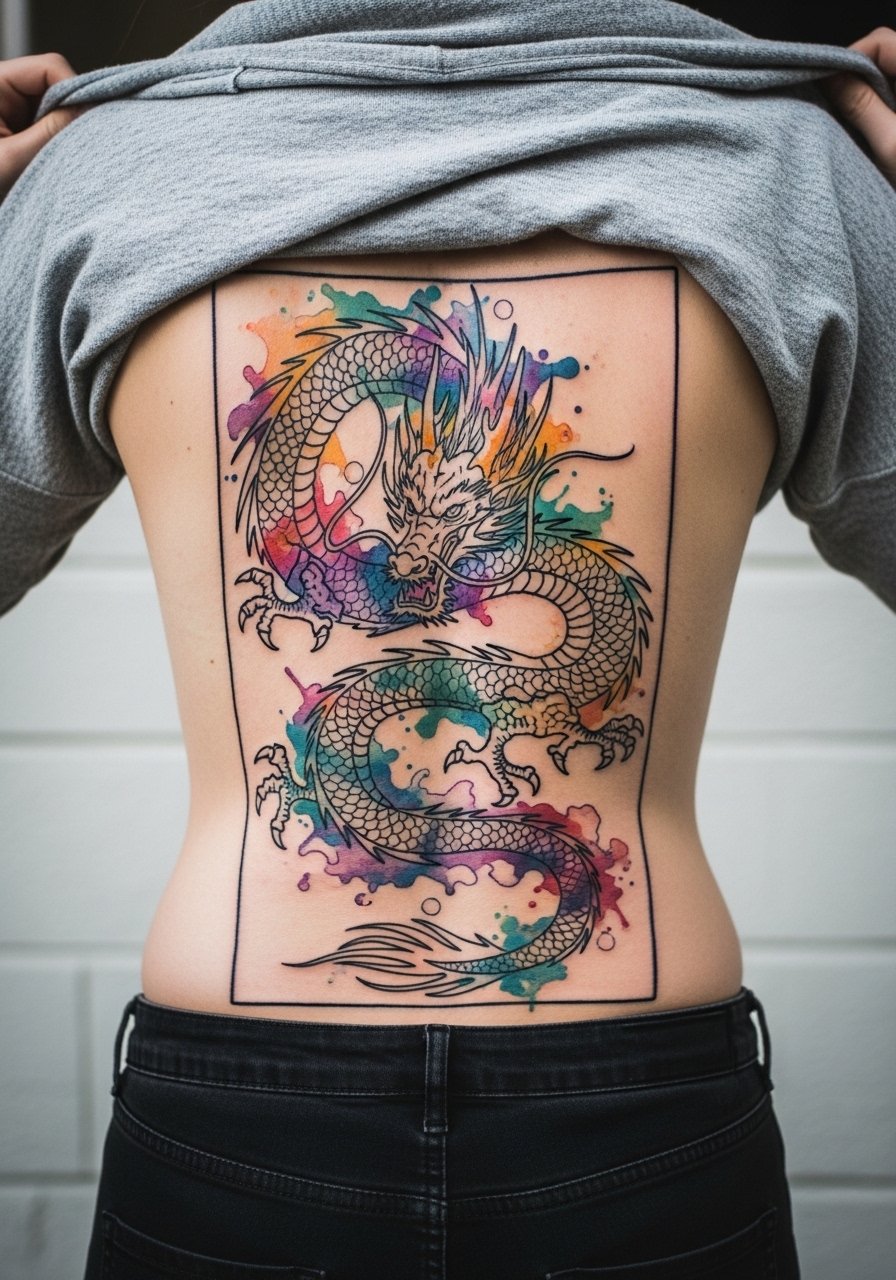
Watercolor textures look luminous but bleed faster when placed on large expanses. Ask for defined outlines around color washes so the design holds into year two. Expect longer sessions and an early touch-up on saturated areas. For formal peeks try a sheer mesh panel top layered over the back so the colors show through fabric. A frequent mistake is asking for loose washes without containment, which leads to muddy blends down the line.
9. Spine Ornamental Dragon with Geometric Fills

This brings the spine flow together with meditative geometry. Tell the artist you want larger geometry units that give the stipple room to breathe, otherwise dense dots can merge after a few years. Pain is moderate to high on the spine, so numbing conversation is reasonable. For show-offs pair with a spine cutout crop top. Be explicit about scale spacing in the consultation to avoid the common mistake of packing too much detail into a narrow vertical strip.
10. Lower Back Dragon Tail That Wraps to the Hip
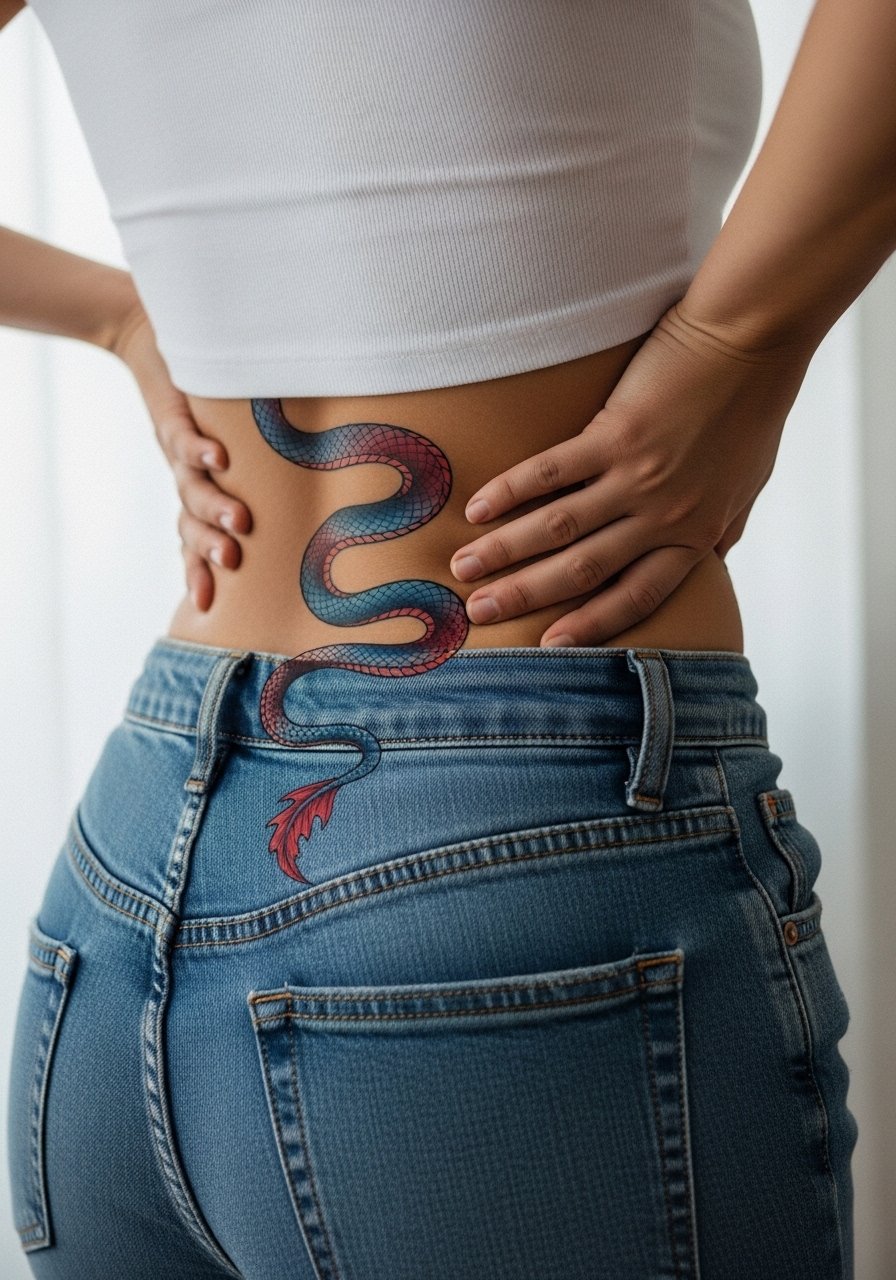
Curved tail wraps create a 3D illusion with motion, especially if the tail follows natural contours where thigh meets hip. Discuss how clothing sits at the waist so the main focal point does not fall under constant elastic pressure. Sessions are positional and may need artist draping. For beach-ready reveals, pair with a high cut bikini bottom. A frequent oversight is not checking how the design reads when sitting, which can distort scale placement.
11. Micro-Scale Dragon Scales Panel for Side Mid-Back

If you love texture, a concentrated panel of micro scales reads beautifully close up. Tell the artist you want directional highlights and varied scale sizes for depth so the area does not flatten over time. Expect longer sittings for dense texture and a likely touch-up at year two to sharpen micro-edges. For session wear a loose tank top women that you can shift without rubbing the fresh ink. Avoid asking for a full photoreal skin texture which tends to lose crispness faster than bold edges.
12. Neo-Traditional Floral Dragon Framing the Shoulder to Back
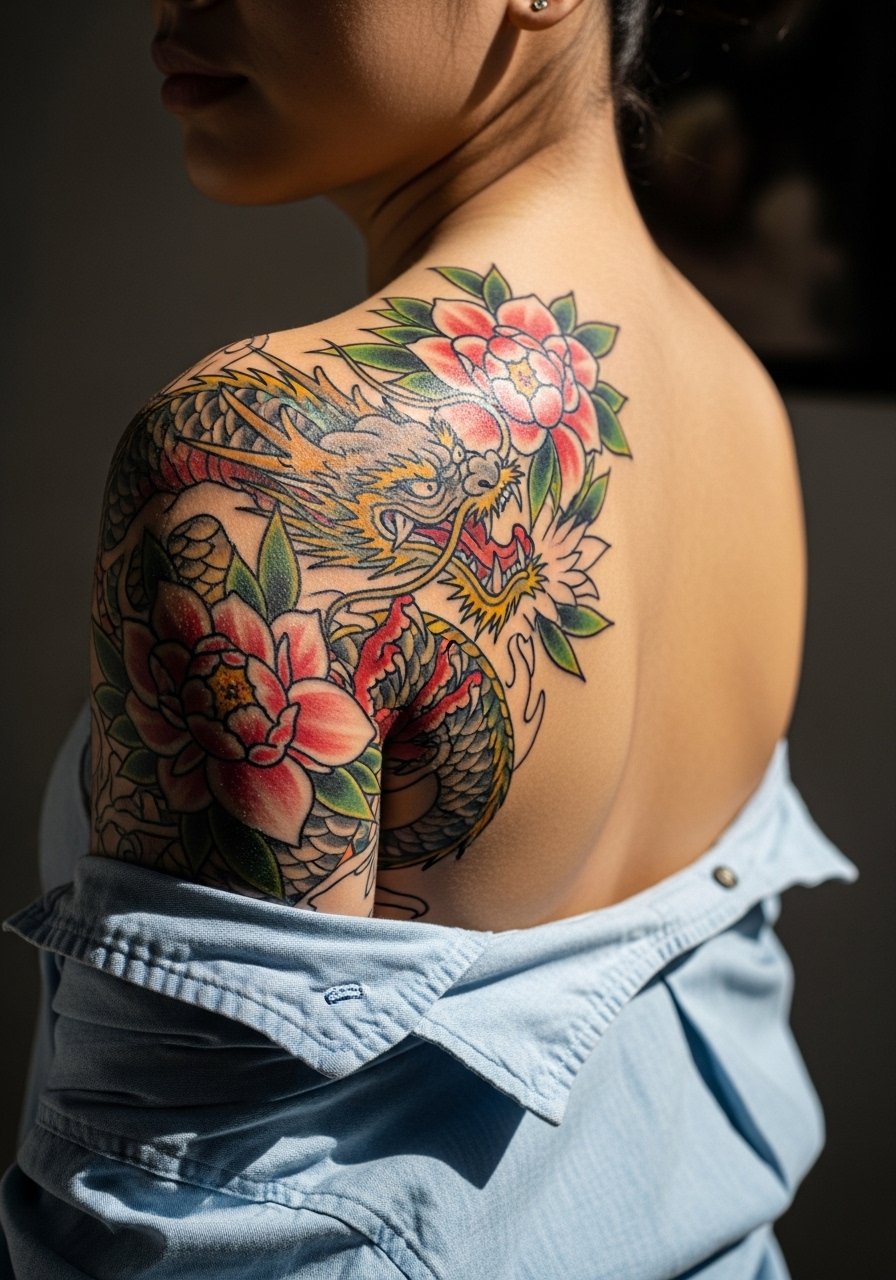
This hybrid keeps feminine floral shapes but gives the dragon body the neo-traditional spacing it needs. Ask for color cells separated by bold black lines so saturation holds in sunlight. Sessions are comfortable since the shoulder area is easy to access, but be ready for a few hours of sustained shading. For outfits pair with an off shoulder linen blouse. A common regret is oversoftening outlines which causes the floral edges to blend after a year.
13. Full Back Dragon Framing Around a Central Mandala

For a balanced full back, anchor the dragon around a mandala so the composition reads cohesive from all angles. Tell the artist you want negative space buffers between dense fills and the dragon body so lines do not merge. This calls for multiple long sessions and a realistic touch-up timeline. If you want formal show-off options, a sheer mesh panel top can reveal the central design without overexposing skin. Respect the mandala's roots by asking whether a stylized variant is preferable to direct replication.
14. Irezumi-Influenced Dragon with Bold Color Gradients
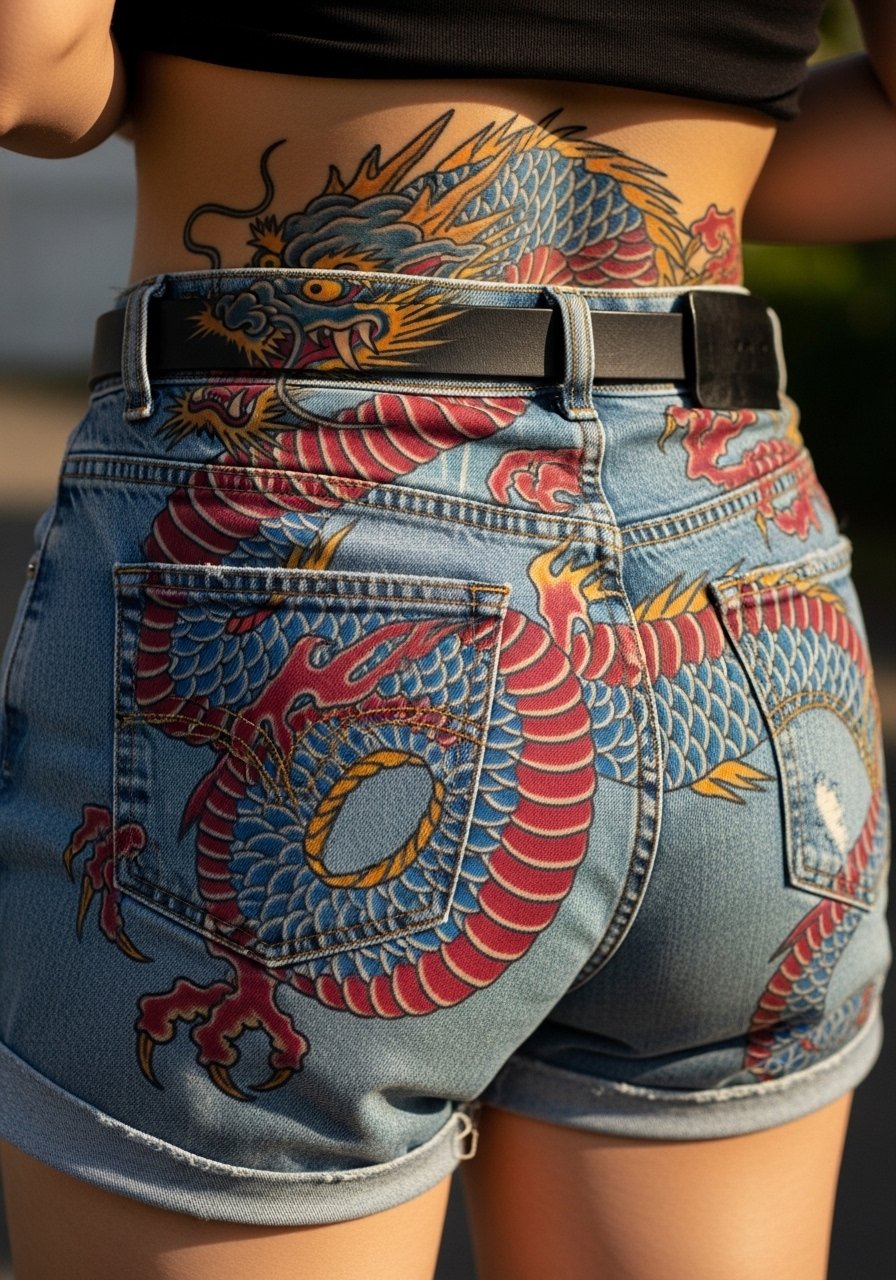
Irezumi color gradients are striking but ask for saturation strategies that will age well, such as layered color cells and clear black anchors. Discuss cultural origin respectfully and consider stylized nods rather than exact religious motifs. Sessions will be intense given large color blocks, and some clients prefer numbing for comfort. For session wear bring an oversized session tee to pull aside easily while staying covered elsewhere. Keep in mind hip motion can blur tiny scales over time.
15. Minimal Upper Back Dragon That Peeks From Necklines
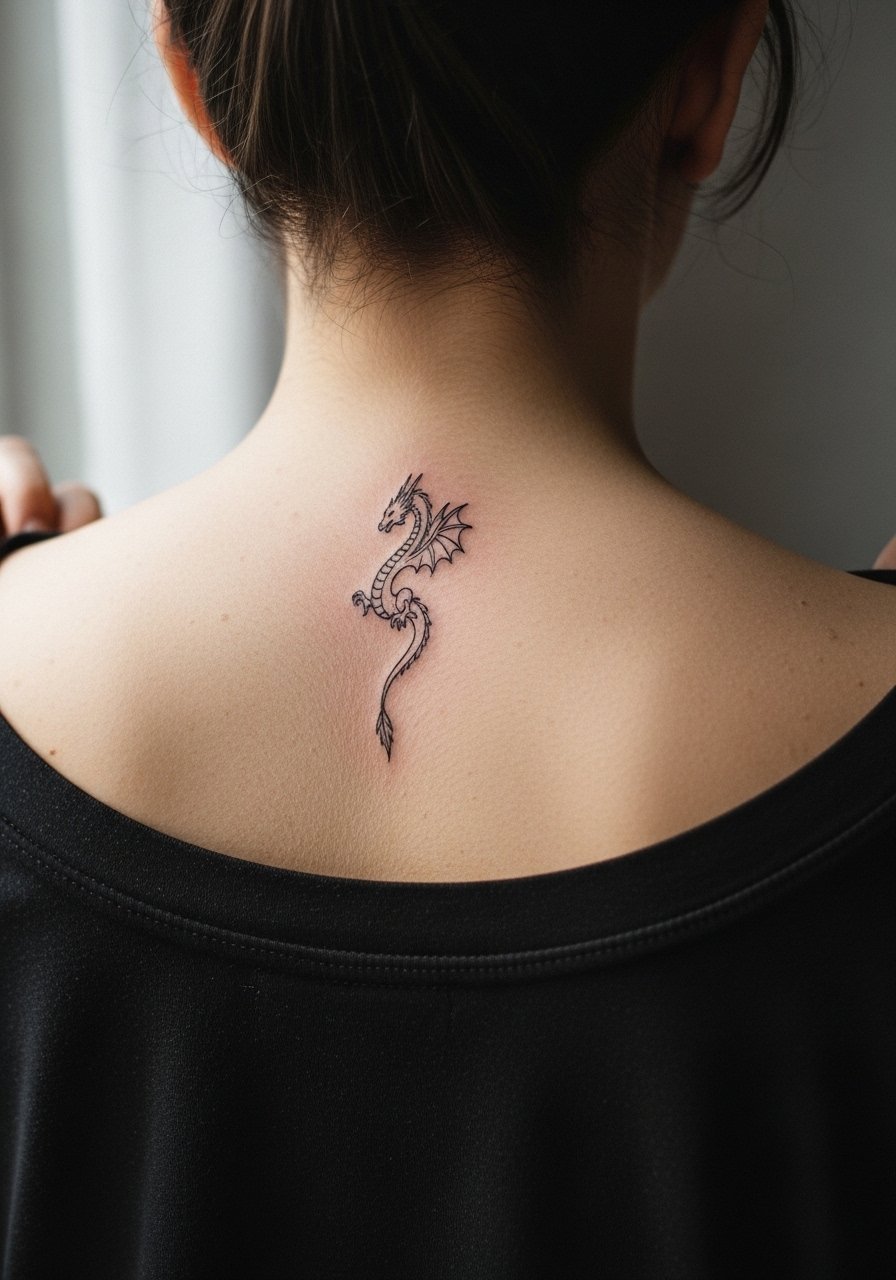
This is the understated pick that shows under certain tops. Ask for compact line weight that is slightly heavier than pure single-needle so it photographs better on dark skin. Session time is short and healing is straightforward, but fine line pieces often need touch-ups by year two. Pair with a thin chain pendant necklace that sits above the nape to frame the look. The most common mistake is expecting single-needle permanence without discussing skin tone.
16. Dragon-Scale Blackwork Panel That Ages Like a Tattoo
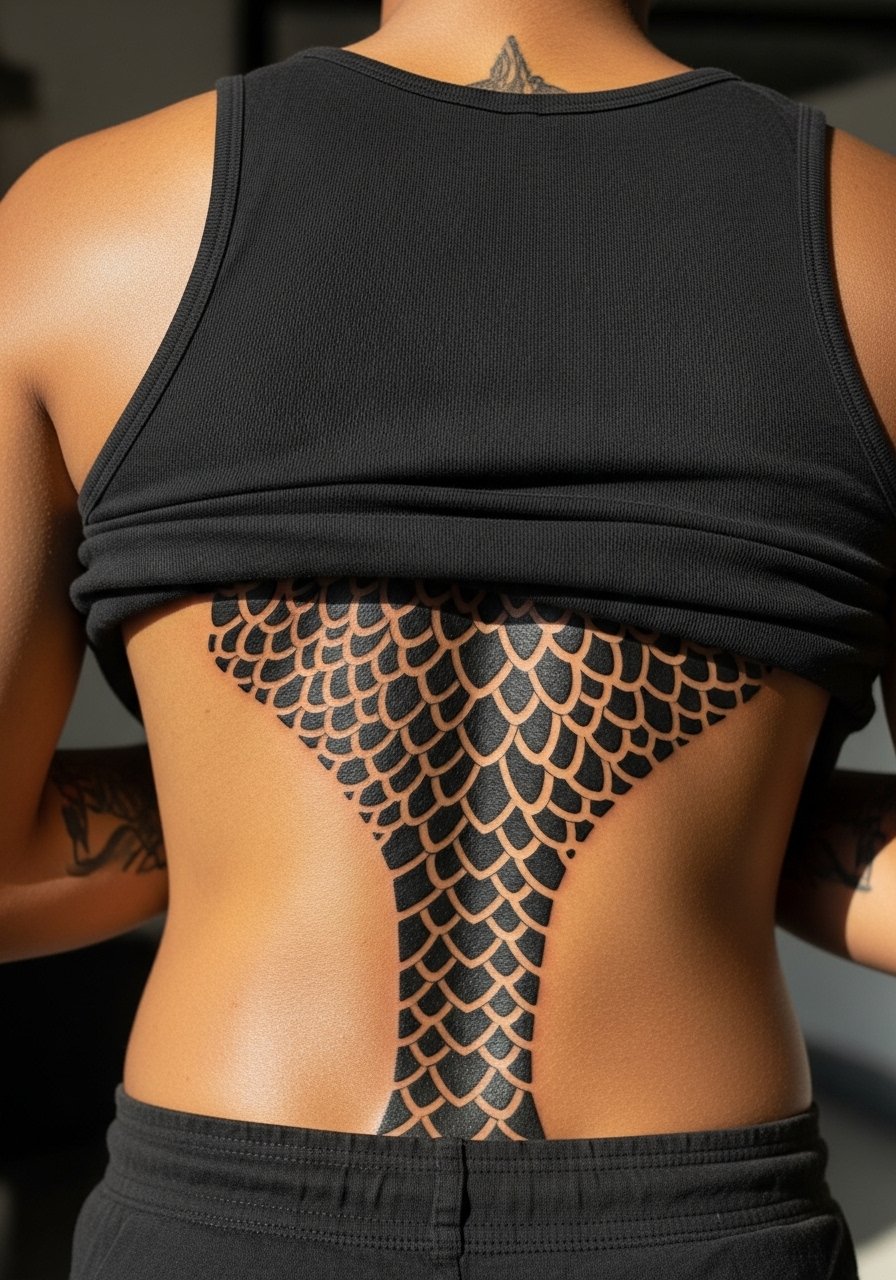
If longevity is your priority, blackwork scales resist fading and blur less than fine shading. Ask for clear negative spaces and consistent saturation so the piece tightens in as it heals. Sessions can be long because solid fills demand time. For casual showing off, a sleeveless vintage tee keeps the panel visible without fuss. Expect minimal touch-ups compared with watercolor styles.
17. Curved Tail That Transitions to Hip and Thigh
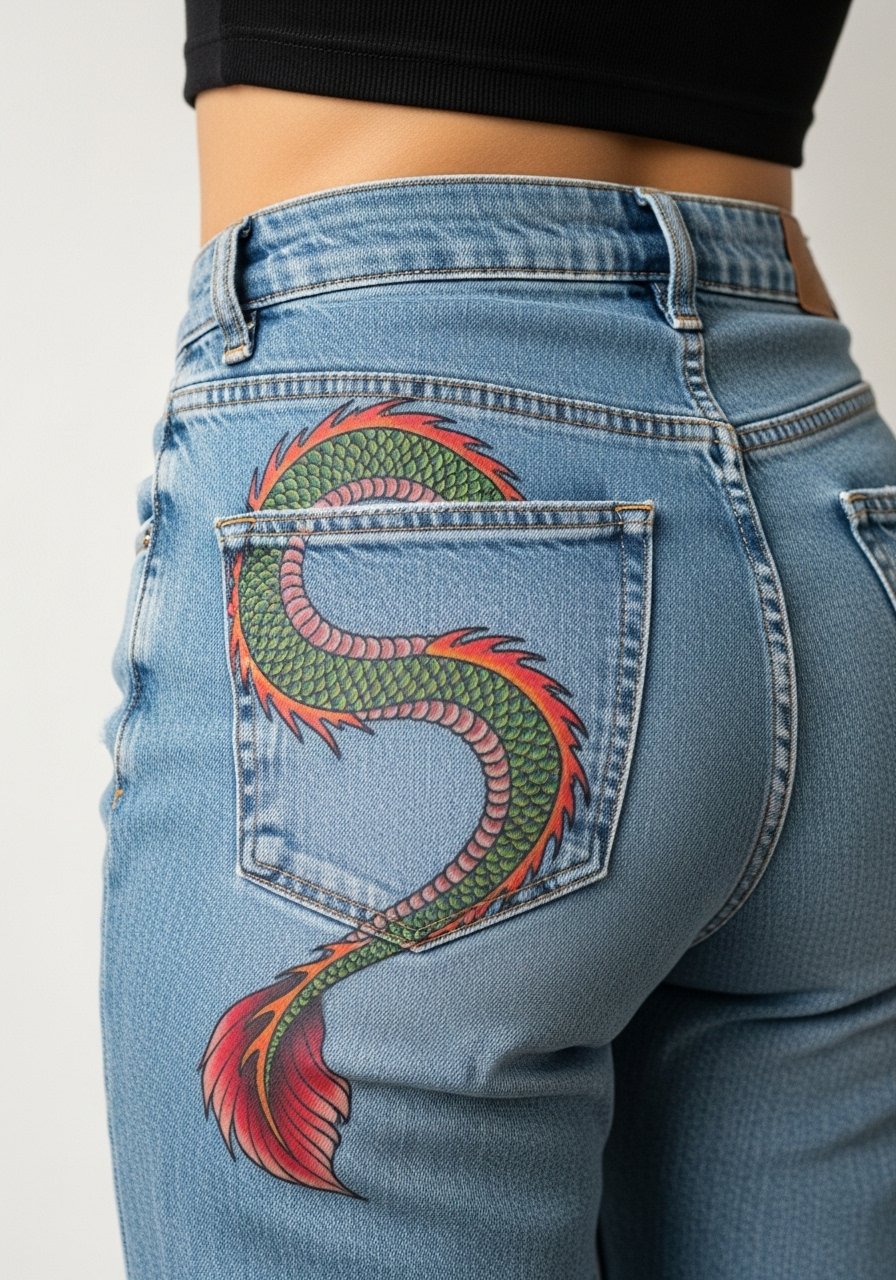
This design leverages movement from the hips and reads as a single motion when you walk. During the consult, mark the exact hip crease so the tail does not disappear under common clothing lines. Session positioning alternates between prone and side-lying, so bring loose pants. For beach or festival outfits, a high cut bikini bottom works well for showing off the sweep. The main caveat is that thigh friction can soften edges if not given spacing.
18. Hybrid Dragon-Phoenix Rebirth Panel Over Scar Tissue
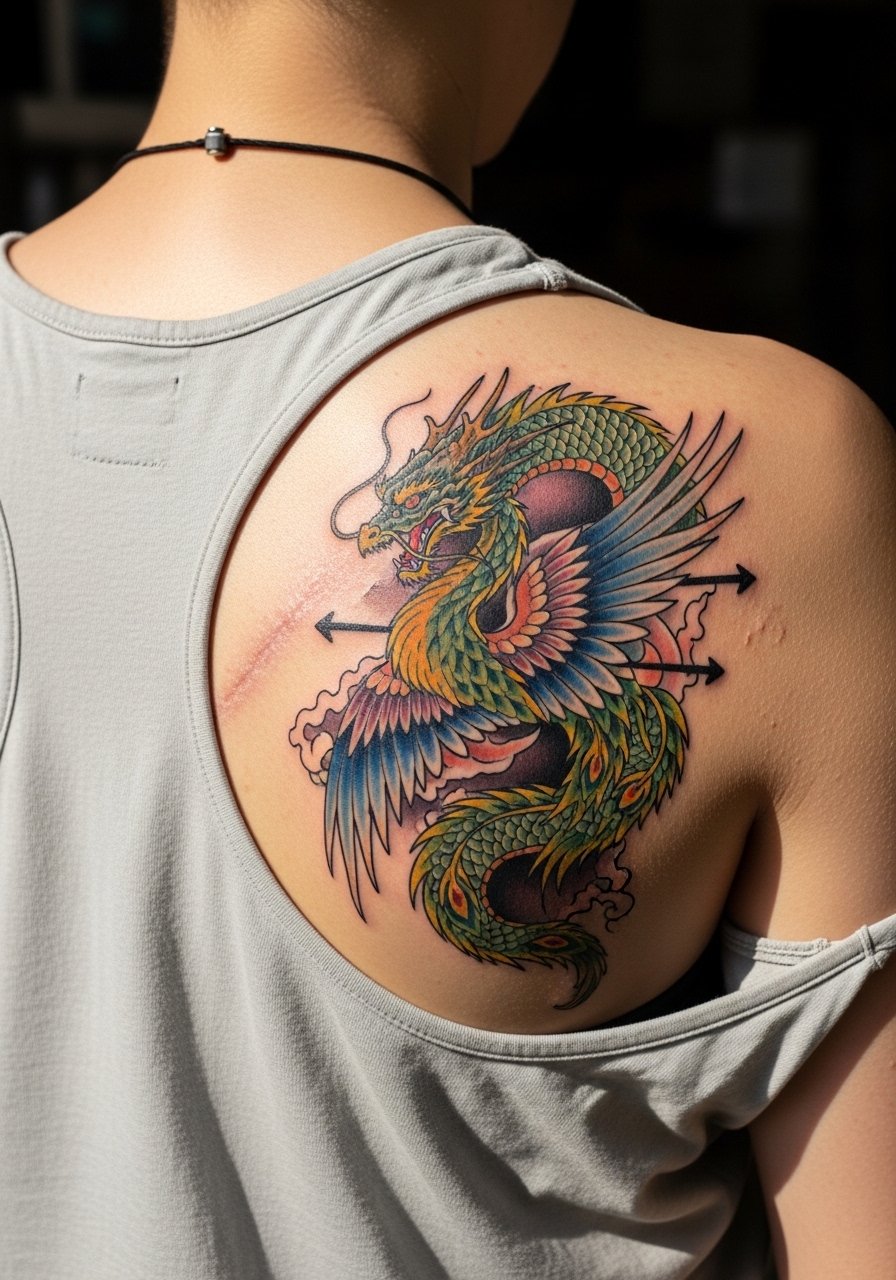
Using a phoenix element over scar tissue can help disguise texture while giving the piece narrative. Be upfront about scar depth and age so the artist can plan needle depth and texture choices. Expect more conservative shading near scar ridges and possibly a staging approach with smaller touch-up sessions. For session wear pick a loose tank top women that does not rub the area. Many artists recommend waiting for mature scarring before committing to full color work.
19. UV-Reactive Dragon for Night Events

UV-reactive ink can be striking at raves and events, but communicate expectations about daytime visibility versus club glow. Not all inks are stable, so ask about long-term fading and touch-up frequency. Sessions often involve test patches. For nights out pair with a spine cutout crop top that reveals the area under club lighting. This is a niche pick and requires an artist experienced with glow pigments.
20. Small Dragon Crescent Along the Shoulder Line

Small curved placements read beautifully when the artist respects the shoulder's motion. Ask for a slightly reinforced outline and clear negative breathing room around scales so the piece keeps contrast. Session time is brief, and healing is typically straightforward. For styling consider a button back shirt for easy reveal. Avoid single-needle extremes if your skin tone tends to soften lines faster.
21. Mandala Centered Dragon With Radial Flow
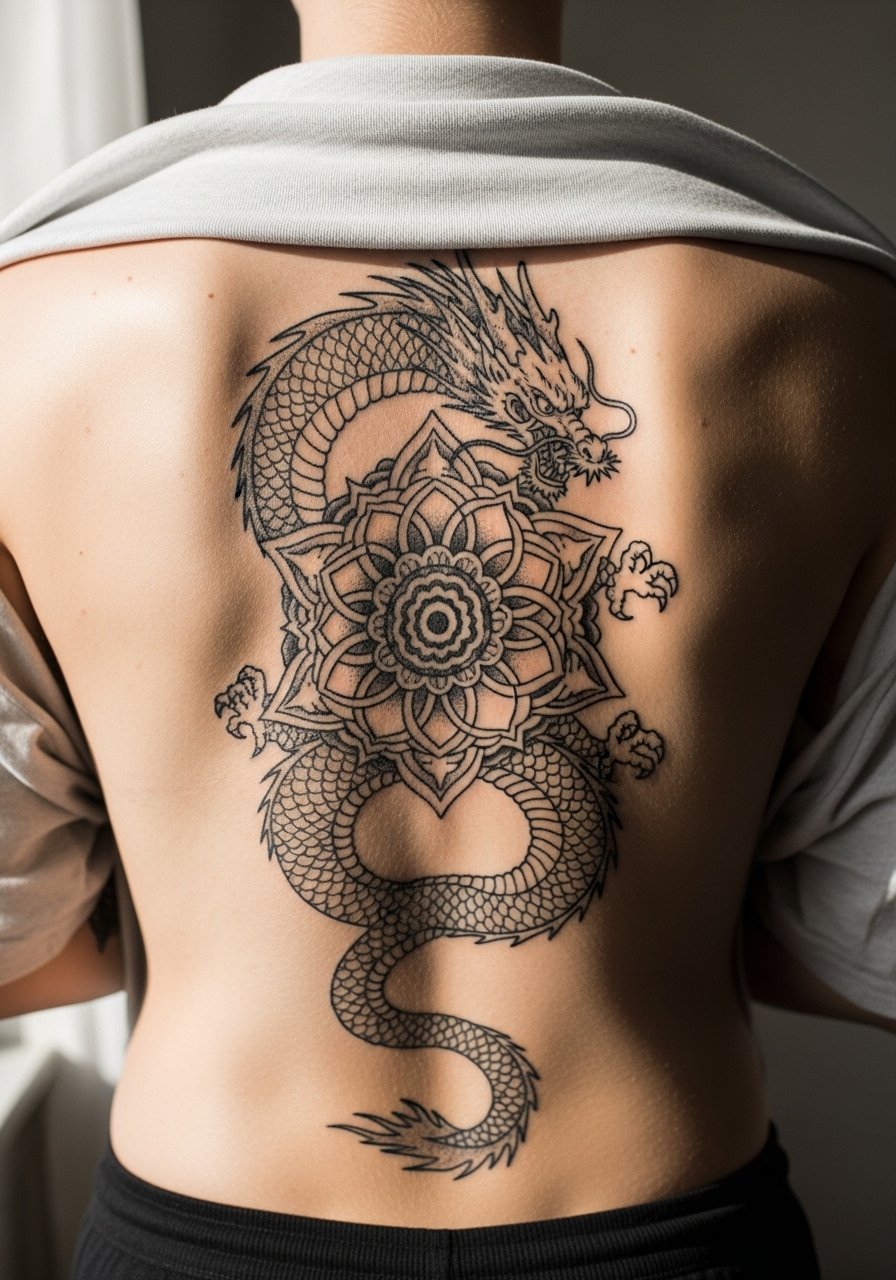
Centering a dragon around a mandala gives a meditative flow that suits symmetrical backs. Specify larger radial segments so stipple shading remains distinct after healing. Sessions require steady positioning and patience. For evening looks, a sheer mesh panel top makes the geometry visible without full exposure. Discuss cultural influences with your artist so designs honor rather than copy sacred motifs.
22. Shoulder Blade Dragon That Looks Good in Cropped Tops

Shoulder blade work sits naturally under cropped tops and off-the-shoulder looks. Ask for directional shading that complements the shoulder blade's contour so the dragon appears to ride the bone. Sessions are artist-friendly and often handled in one to two sittings. For casual wear try a racerback tank. Be cautious about tight straps during healing which can rub the area.
23. Full-Back Narrative Scene With Dragon and Landscape

If you want a story across your back, plan panels within the composition so each element has breathing room. Tell the artist which moments you want readable at arm's length and which can be background texture. These projects often take many sessions and require scheduling stability. For presentation, tailored gowns with low backs highlight the narrative and make photographs easier to stage. A common misstep is cramming too many distinct scenes into one canvas without unified rhythm.
24. Rib-to-Back Dragon That Wraps the Torso
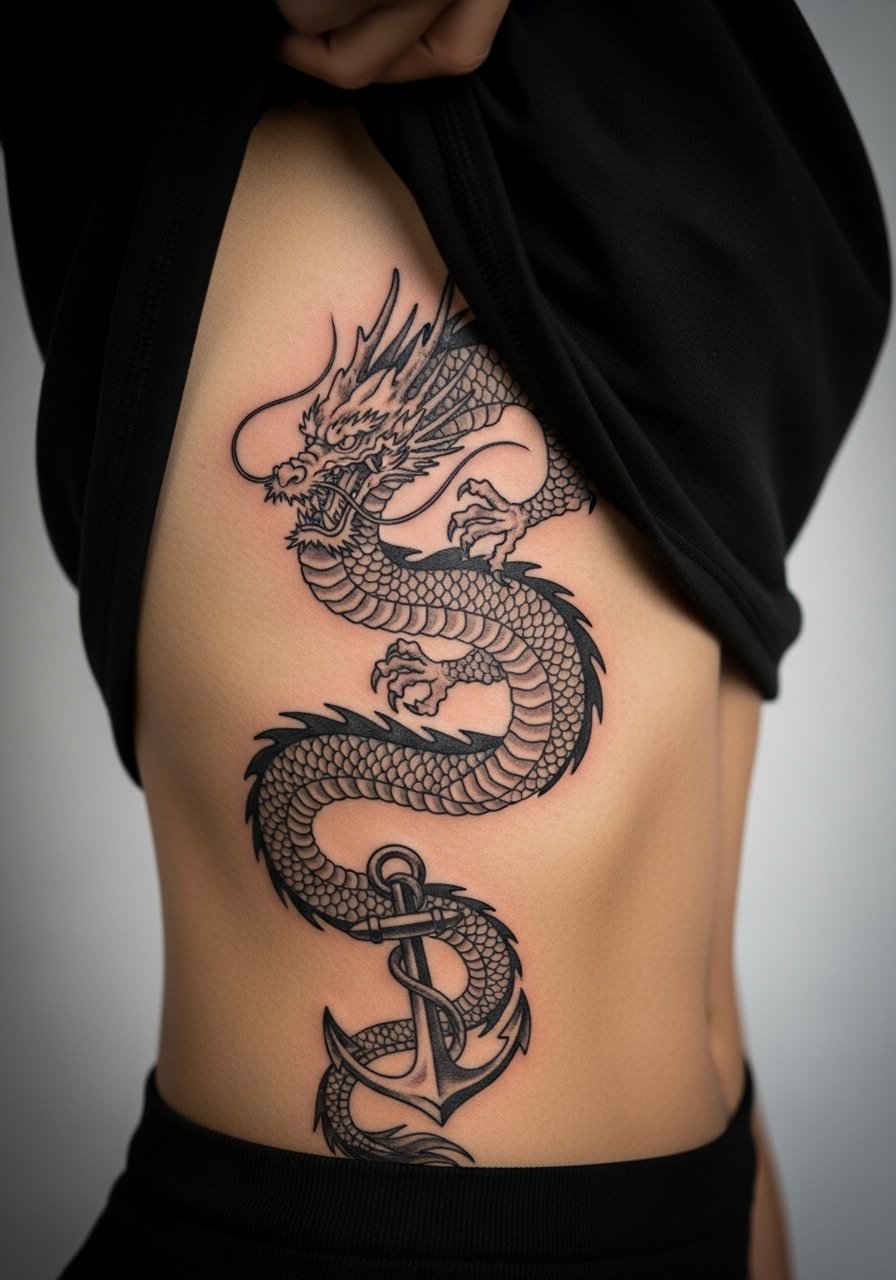
This placement is dramatic but it hits a controversial zone for fine line work. Artists split into two camps. One camp says rib skin stretches and blurs fine lines within two years. The other camp argues that with correct needle depth and spacing, fine line settles fine on the ribs. Ask where your chosen artist stands before booking and be prepared for a conservative line weight if they lean caution. For sessions wear a strapless bralette and request breaks often because rib work is intense.
25. Lower Back Dragon Panel That Peeks Under Strapless Gowns

Designing for formal wear means you should mock how the piece appears under fabric and straps. Ask for the top edge of the design to align with the typical waistband or bra line so it only peeks where you want it to. Sessions are manageable but lower back skin is prone to stretch, so keep major focal points toward the center. For presentation consider pairing with a low back evening gown. Avoid placing tiny detail right at the waistband where clothing rub causes early softening.
26. Subtle Dragon Ribbed Across the Mid-Back Spine Line
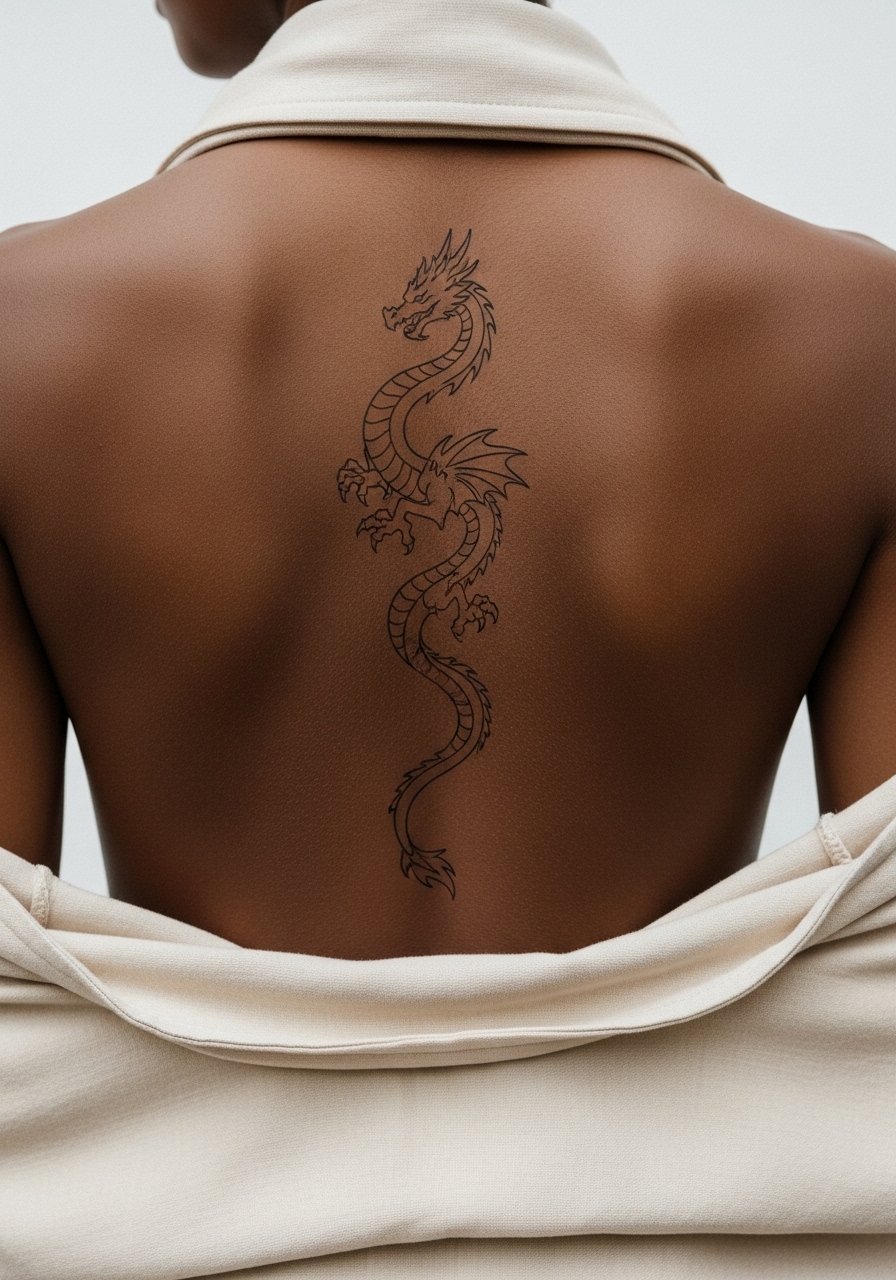
This minimalist vertical concept benefits from carefully planned line weight to avoid fading into a thin blur. During consultation ask the artist for a test stencil worn for a day so you can see how it reads against movement and clothing. Sessions are quick but expect a touch-up at year two for most skin types. For styling, spine-cut tops or halter backs reveal the line elegantly. The common mistake is underestimating how much the spine moves when you sit and twist.
27. Ornamental Dragon With Negative Space Lace on the Lower Back
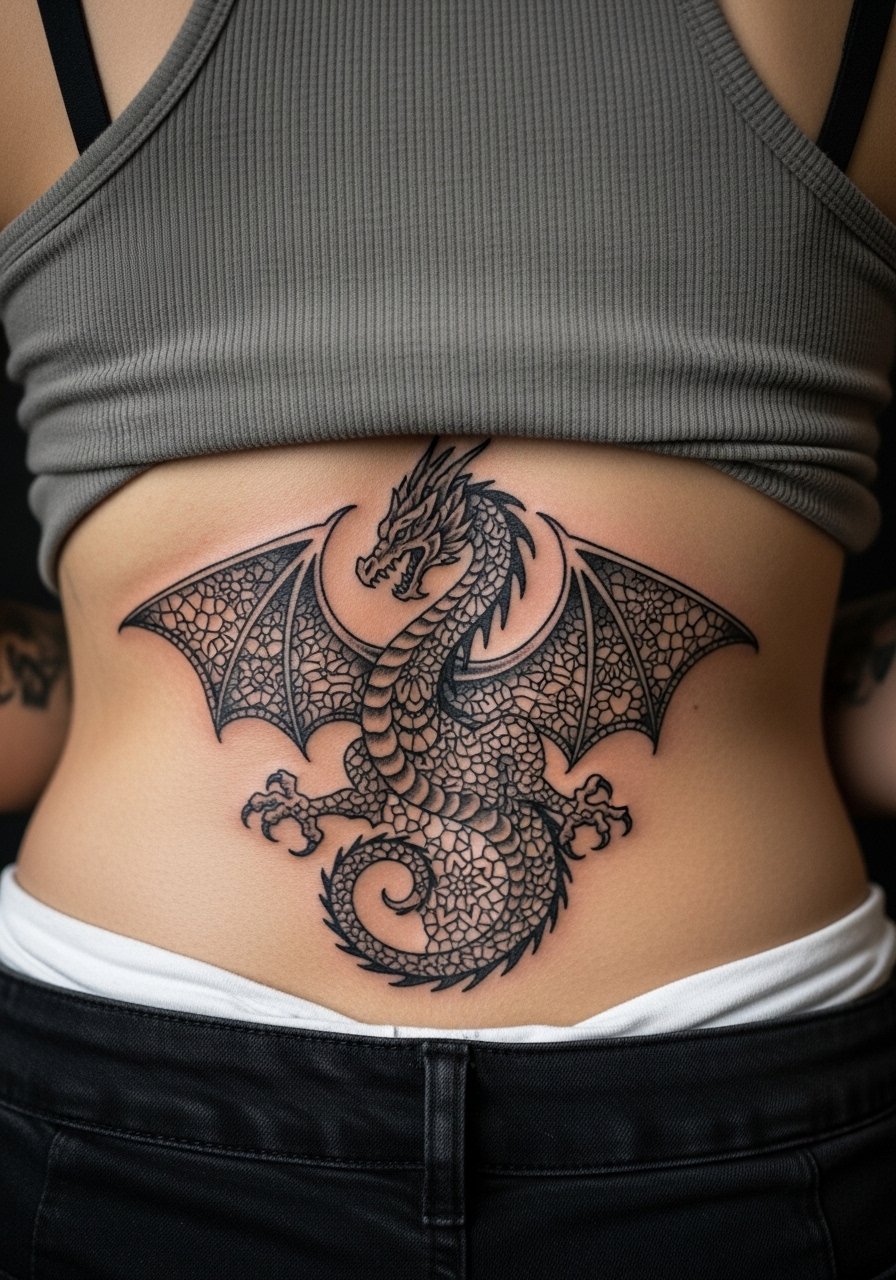
Negative space lace paired with a dragon silhouette creates texture without more ink. Request clear, larger lace openings near zones that will see friction so the pattern remains readable. Sessions can be staged to allow skin to rest between dense black passes. For evening styling a red silk wrap skirt or a well-placed sarong reveals the lower back without full exposure. Keep the lace scale larger than you might think, because tiny filigree tends to fill in with time.
Frequently Asked Questions
Q: Will fine line dragon work on my back blur faster than blackwork?
A: It depends on placement and skin type. Fine line can look gorgeous fresh but often requires touch-ups by year two or three, especially on areas with lots of movement or sun exposure. If longevity matters more than a hairline aesthetic, ask for slightly stronger linework or small black anchors to preserve shape.
Q: How do I handle aftercare on a full back piece that I cannot easily see?
A: Use a long-handled mirror or enlist a partner for daily checks, and apply thin layers of the recommended product with a clean sponge applicator to avoid overloading creases. If you plan to travel for sessions, schedule someone to help during the first week. The product choices I mentioned in the Pack Smart block are geared to back curves.
Q: Artists disagree on Saniderm versus dry healing for back placements. Which camp is right?
A: Both camps make valid points. The Saniderm camp says protective film can reduce friction and contamination on curved areas. The dry healing camp worries that film traps moisture on pronounced curves and increases the risk of issues. Ask your artist how they handle backs and consider a hybrid approach: short-term protective film for the first 24 to 48 hours, then gentle dry care if your skin reacts poorly.
Q: My skin tone is darker. Will a fine line dragon show in photos?
A: On darker skin tones you may want bolder outlines or contrast anchors, because ultra-thin single-needle lines often wash out in photos. Request mockups or stencil tests on your skin tone to see how the line weight reads under different lighting before committing.
Q: How do I avoid booking headaches when seeking a guest spot artist for a big back dragon?
A: Book via platforms with firm cancellation policies, prioritize local shops with waitlists, and get a clear guest spot agreement that covers deposits and reschedules. I've seen people shift across states when a guest spot cancels, so lean into shops that maintain documented calendars.
Q: I want a dragon that wraps to my hip but I plan to gain weight back home. Should I choose a different placement?
A: If you expect body changes, shift focal elements away from the hip crease and toward the center of the lower back. Upper back and shoulder blade placements typically tolerate weight fluctuation better. Discuss realistic stretching with your artist at the consult.
Q: Can clothing choices during the session affect healing or blowout risk?
A: Yes. Wear loose, breathable clothing that can be adjusted without rubbing the fresh ink. For back work choose button-downs, open-back robes, or loose tanks as suggested in the sections above so fabric does not press against the healing area.