Fine line moon phases are everywhere on saved boards, and they look immaculate right after the session, but many soften into blurry dots within a year, some studios charge top-dollar for tiny arcs, and darker skin tones often need bolder work to read in photos. If you want small moons that last and photograph well, these 17 mini moon phases tattoo ideas lean into placement, line weight, and styling that avoid the usual regrets.
1. Mini crescent arc across the wrist

This classic fine line arc is the go-to for first timers who want a low-commitment piece. Fair warning for wrists, the bone is close so expect a sharper sting than soft flesh areas, but session time is short, often under 30 minutes. The common mistake is asking for needle-fine single-needle lines without base weight. Ask your artist for a slightly thicker base line and consistent spacing so the phases have room to settle. At six months this reads crisp, at two years expect some softening, and a touch-up at year two to three keeps it looking intentional. Pair it with a thin silver chain bracelet when you want to show it off, and wear a sleeveless tank on session day for clear access.
2. Micro-realism single gibbous behind the ear
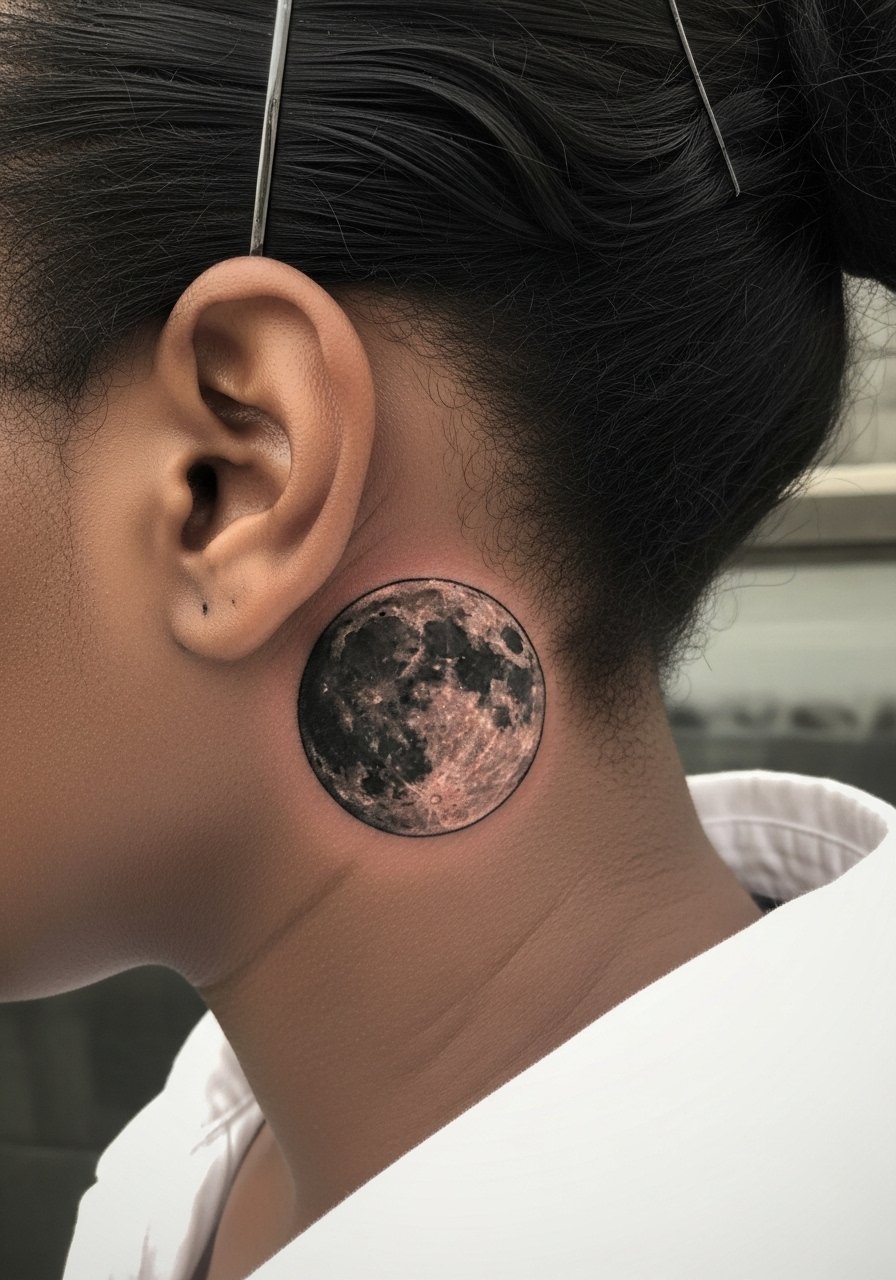
Tiny photorealistic moons behind the ear read delicate and private. Pain is low but the surface area is small so the artist must scale shading carefully. Artists split on fine shading in this spot. One camp says micro shading is fine with tight stippling, the other warns the tiny dots can migrate and blur over time. During the consult ask to see healed examples on similar skin tone. Expect a one-session appointment but plan a touch-up at the six- to twelve-month mark for any lost stipple. For showing it off, half-up hairstyles highlight the area. Pack small small stud earrings for the reveal and tie-back on session day so the artist has clear access.
3. Dotwork moons with geometric dot halo on the collarbone

Dotwork adds depth without relying on heavy linework, and collarbone placement elongates the chest visually. The risk is packing dots too tightly, which causes merging after a few years. Tell your artist you want distinct dot spacing and a lighter outer halo so the negative space ages with the piece. Pain on the collarbone can spike near the bone, so expect pauses for comfort. At six months the dots hold contrast, at two years they'll soften but the halo keeps the composition readable. Pair this with an off shoulder sweater or a V-neck silk blouse when you want the fade-soft color palette to pop.
4. Watercolor phases fading into stars on the shoulder blade

Watercolor moon phases read dreamy and painterly, and the shoulder blade gives the room that style needs. Watercolor on small scales is a trend that can age unevenly, because pale washes sometimes fade into faint bruising tones. If you want color, request deeper saturation at the edges and a subtle black outline to anchor the pigments. Sessions may run longer and sometimes require a second pass. For a lower-risk approach, place the watercolors within a slightly larger composition so touch-ups can refresh without altering the whole piece. Wear a loose tank or open-back top to the appointment so the area is easy to access.
5. Blackwork stacked half-moons down the spine

If longevity is your priority, solid blackwork on the spine holds up well. The spine is a high-contrast placement so bold fills stay legible for years. Pain here ranges high because of proximity to bone, expect multiple short breaks. The main mistake is trying to shrink too many elements into a narrow column. Ask your artist for spacing that allows the fills to breathe. At two years the black will darken into a strong silhouette, and touch-ups are rarely needed unless intentional. Pair with backless dresses or low back halter tops when you want the stack framed.
6. Neo-traditional crescent with floral on the outer thigh

Outer thigh pieces allow a little scale, and neo-traditional work looks strong there because the thicker outlines resist blur. This placement is forgiving if your body changes, but weight fluctuations can subtly alter proportions. Mention during consultation that you prefer slightly larger petals and bolder outlines to avoid loss of detail later. Session time is moderate and often done in one session. For summers out, the tattoo pairs with high-cut shorts and thigh-slits. Show it off with high cut shorts, and wear loose shorts to the appointment so the artist can roll fabric away without pressure.
Pre-Session Essentials
The first six ideas lean heavily on wrists, shoulders, and thighs, which each need slightly different prep. A few targeted items smooth the session and the first week of healing.
- Lush Tattoo Balm. A lightweight, unscented balm that users report doesn't pill on small fine line pieces, useful for the wrist and behind-the-ear minis.
- Australian Gold Antimicrobial Tattoo Kit. Helps soothe sweaty ankle and thigh heals during summer sessions and reduces itch when you need gentler options.
- Fragile Tattoo Serum. Thinner formula suited for micro-realism and micro-dot work so linework doesn't get glossy during early days.
- InkSafe No-Touch Spray. Useful for ankle and foot placements where friction is high and hands-on balms feel messy.
- CeraVe Healing Ointment. A low-cost option for the initial few days to lock in moisture on fine line work without overly greasy residue.
7. Micro moon phases along the finger
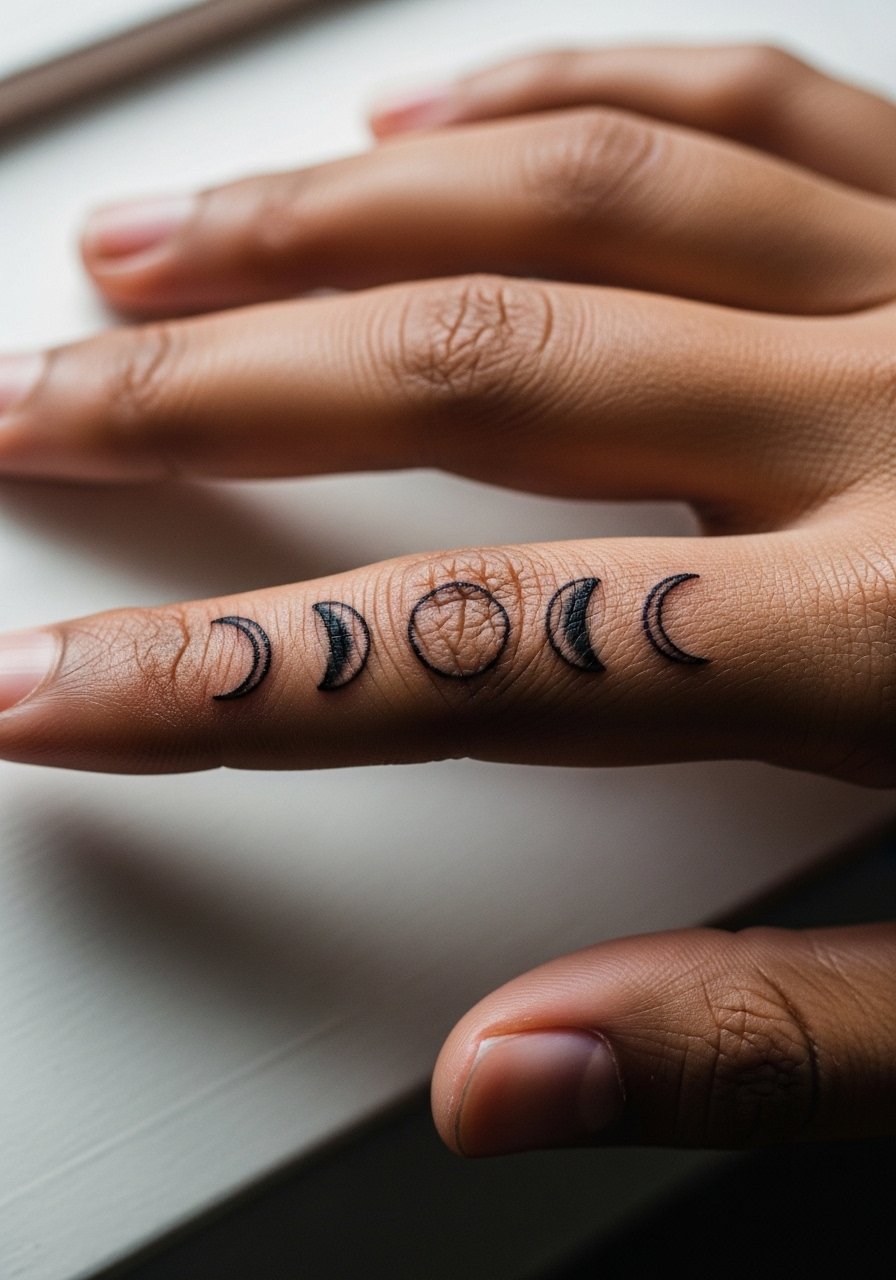
Finger minis are bold choices because hands see constant washing and friction, which accelerates fade. Expect high touch-up needs. The common mistake is compressing too many tiny phases into a narrow finger; give each phase at least 4 to 6 millimeters of space. Pain is sharp and session time is short. At six months the edges may soften and lines can thin. If longevity is crucial, consider thicker outlines or placement just below the knuckle on the side of the finger. Be realistic about the trade-off between visibility and maintenance.
8. Ornamental moons inside the bicep in a mandala frame
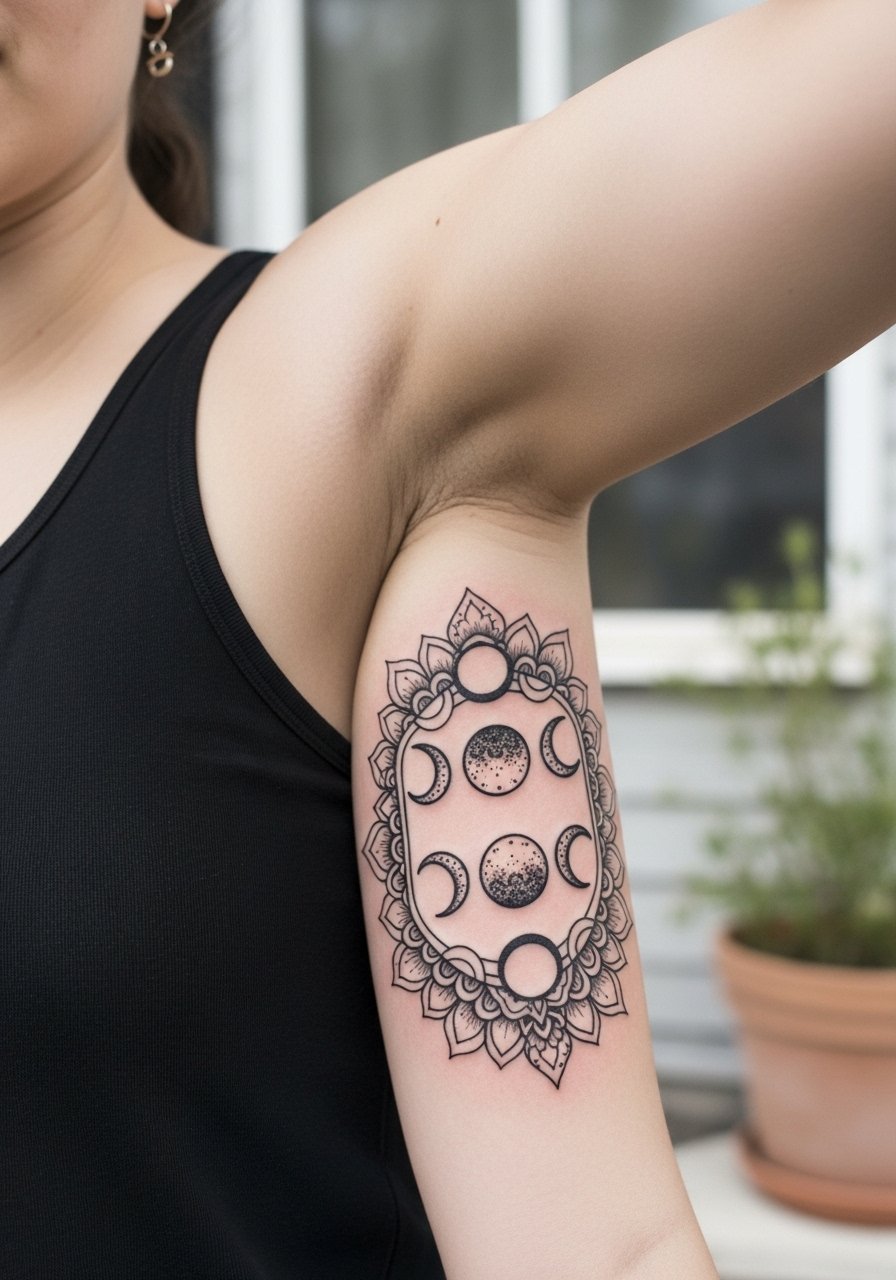
Inner bicep space suits ornamental framing and gives a private canvas for mandala elements. The inner bicep heals differently because of movement; stretching during recovery causes slight scabbing if over-moisturized. Ask for clear line spacing in the mandala to prevent dense black areas from merging. This area is less prone to sun exposure so color holds better than wrists. Session comfort varies; many report moderate pain but a relaxed position helps. If the design references cultural motifs, mention that you want respectful interpretation rather than a direct replica.
9. Minimalist eight-phase forearm line

A full eight-phase line across the inner forearm reads timeless in scale and silhouette. The biggest aging issue is going too small; the eyes blur dense phases into a wash. Tell your artist you want uniform spacing and a base line weight that reads from a distance. At six months the sequence should still read distinct, at two to three years the thinnest marks may need touch-up. This placement pairs perfectly with rolled linen shirts. For the session wear a linen button down shirt you can roll to the elbow so the artist has full access.
10. Dotwork eclipse overlap on the ankle
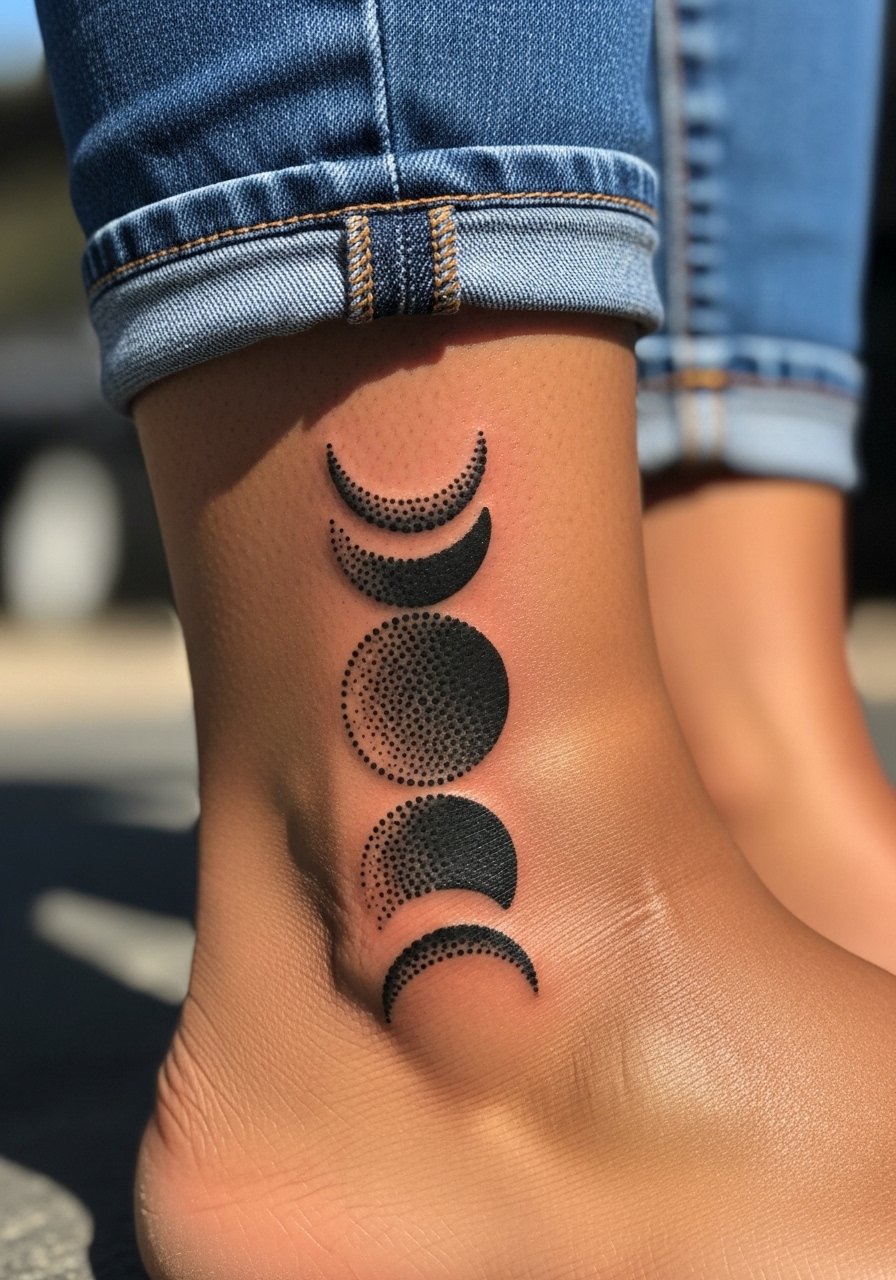
Ankle placements are seasonal show-offs and dotwork reads great in small spaces there. Watch for friction from socks and shoes during the first two weeks. The common error is underestimating swelling and packing too many tiny dots that rub off during early healing. Ask for slightly bolder core dots near the overlap so the eclipse effect survives the first month. Expect one session with careful aftercare. Pair it with strappy sandals to highlight the work once healed.
11. Fine line waning moon merged with ocean wave at the ankle
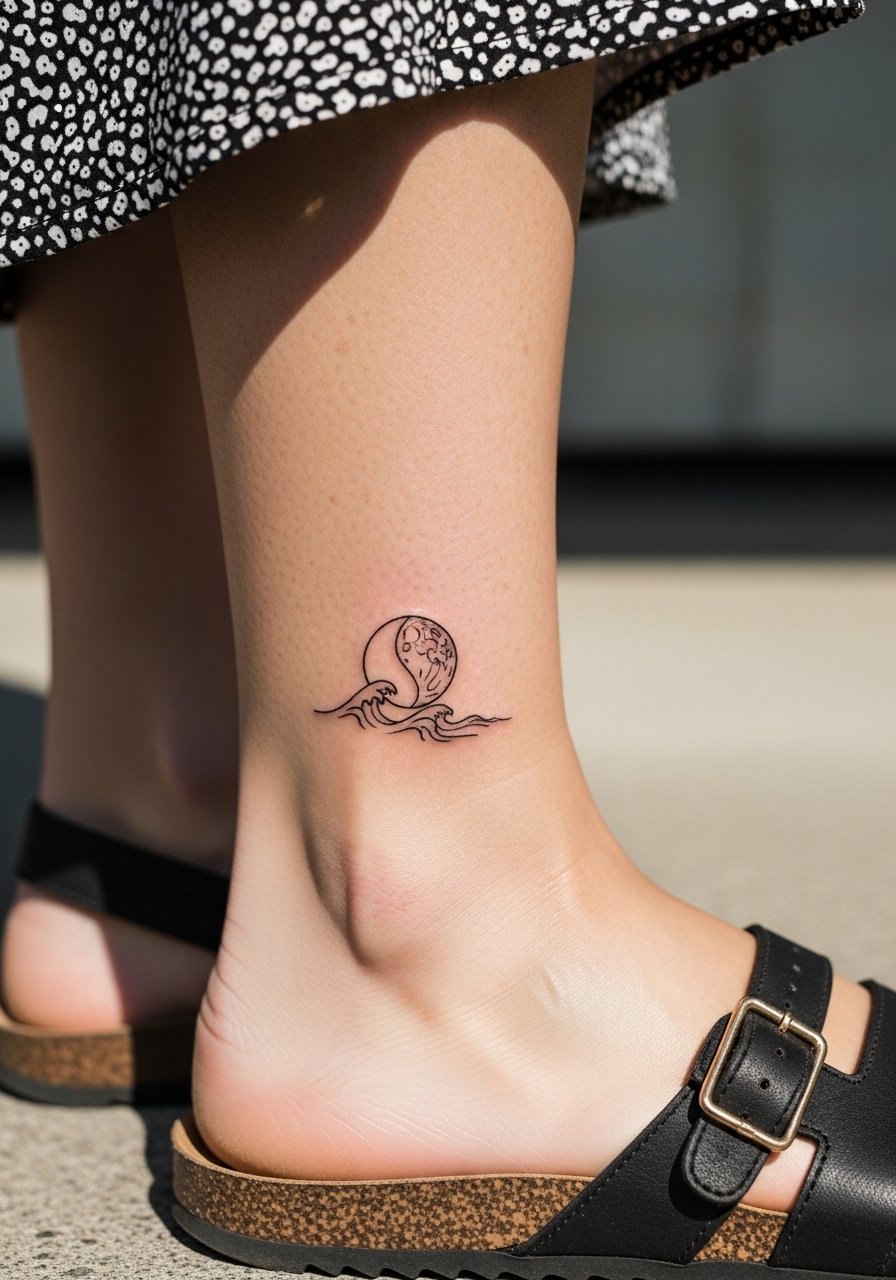
This ocean-celestial fusion works especially well on ankles for people who want subtle symbolism with a summer reveal. The mistake is asking for ultra-fine wave curls that merge after motion and water exposure. Request slightly stronger contour lines around the wave and a clear moon silhouette so the two elements age at similar rates. Expect low session time and mild pain. Keep the area dry around heavy activity for the first two weeks. Stacked anklets or strappy heeled sandals amplify the composition.
12. Black and gray shaded lunar arc on the ribcage

Ribcage arcs allow for gradient shading that ages with depth. Fair warning, ribs are a high-pain area and movement can complicate healing. Artists disagree on fine line ribs. One camp says the constant stretch blurs delicate contours, the other says with correct needle depth and spacing it can hold. Ask where your artist stands and request a sample of healed rib work in their portfolio. Expect one to two sessions and plan a touch-up around the one-year mark if you notice softening. Wear a loose sports bra to the appointment so the artist can access the side without full exposure.
13. Ignorant-style rough moons in a walk-on calf piece
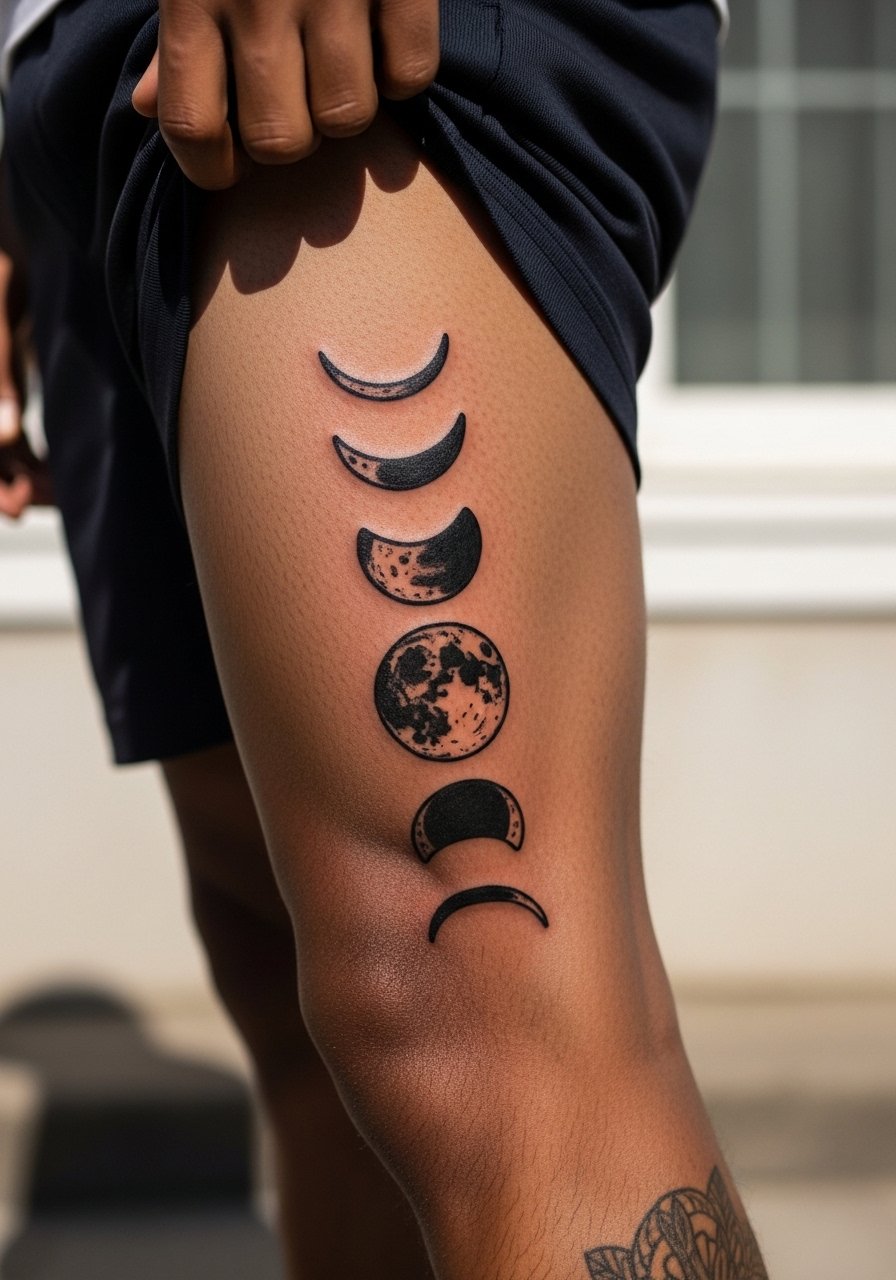
Ignorant style intentionally embraces raw, sketchy lines, and the calf is an ideal canvas for that attitude. The upside is the aesthetic hides early inconsistencies and the bold, uneven strokes age into the look instead of against it. If you want punk-authentic results, request that the artist maintains inconsistent stroke weight rather than smoothing lines. Lower leg healing is straightforward unless you wear tight pants. This is a low-risk route if you like the lived-in, imperfect aesthetic.
14. Inverted sequence on the inner thigh for renewal
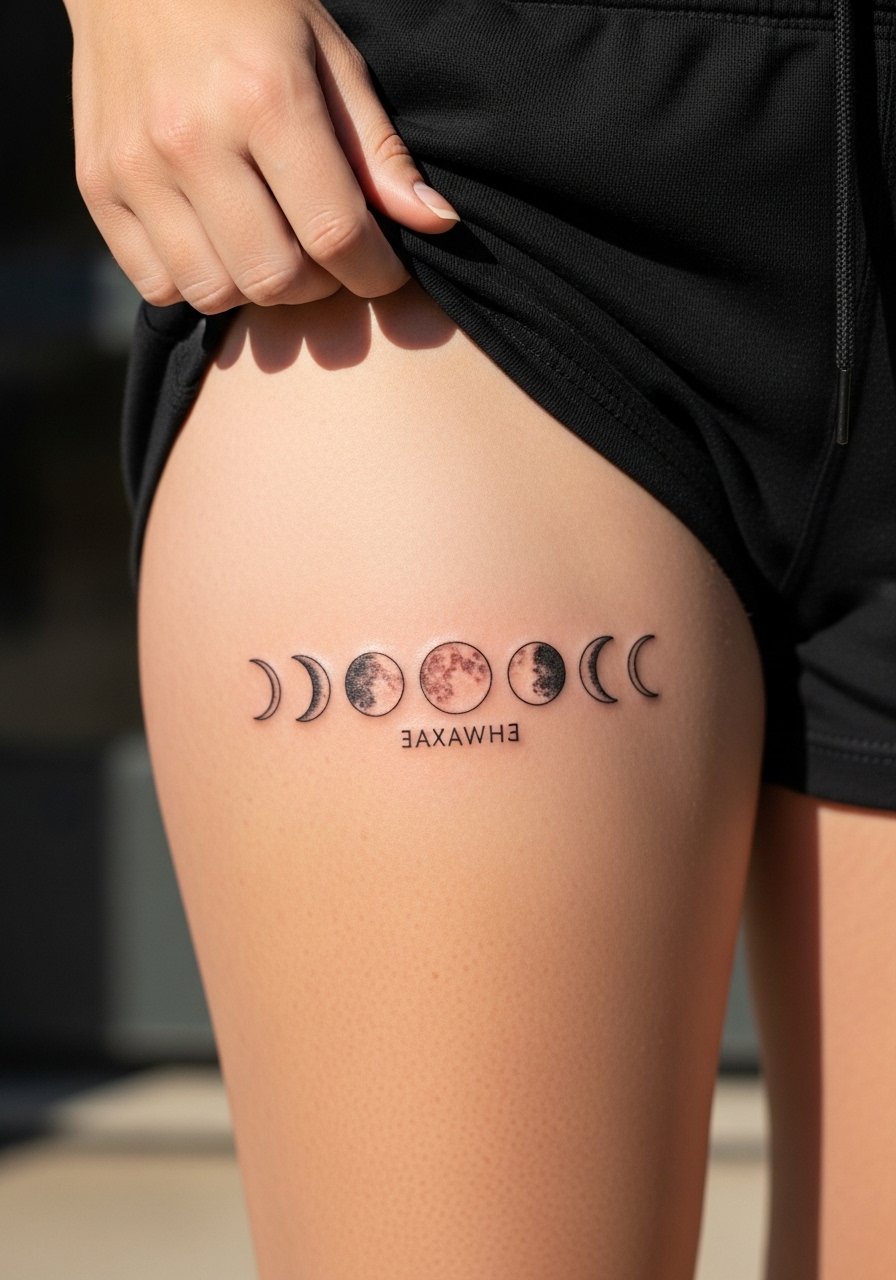
An inner thigh inverted sequence reads intimate and is a fresh take on renewal themes. This placement is private and heals under low sun exposure, but friction from clothing can irritate early scabs. The common mistake is placing the sequence too low where leggings rub. Ask the artist to map the band higher toward the soft upper inner thigh and leave room for expansion if you anticipate body changes. Sessions are usually short but expect tenderness. Because this is a sensitive area, choose a studio comfortable with inner-thigh work and ask about healed examples.
15. Modular single-phase add-ons for yearly expansion

If you like the idea of building over time, modular phases are smart. Start with one phase and add another each year for an intentional collection. The mistake people make is not aligning scale and spacing early, which makes future additions awkward. At your consultation request a layout plan that accommodates expansion. Touch-ups are part of the modular plan, so budget for small sessions each year rather than a big cover. Wear a loose button-down shirt you can pull aside on session day.
16. UV-reactive moons for nightlife visibility
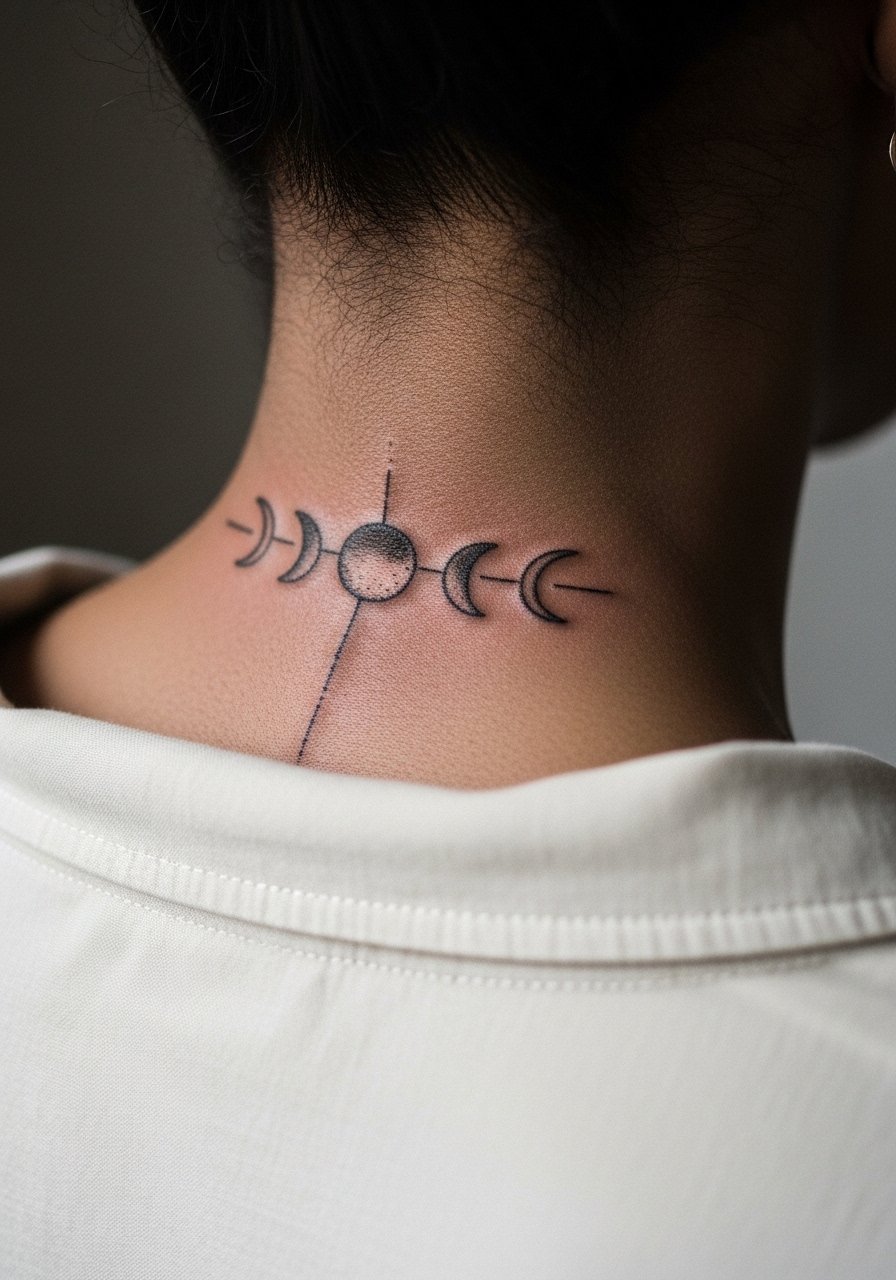
UV-reactive ink opens a playful route for nightlife. The practical issues are that UV pigments can fade differently than standard black ink and not all artists use stable formulations. Ask specifically about the pigment brand and whether they have healed UV examples. Expect the piece to photograph differently in daylight versus blacklight. For a subtle approach, pair a small UV accent with regular black outlines so the daytime read remains strong. This is a niche choice that requires an artist experienced with UV inks and proper aftercare.
17. Birthstone-embedded moons for family mapping on the collarbone
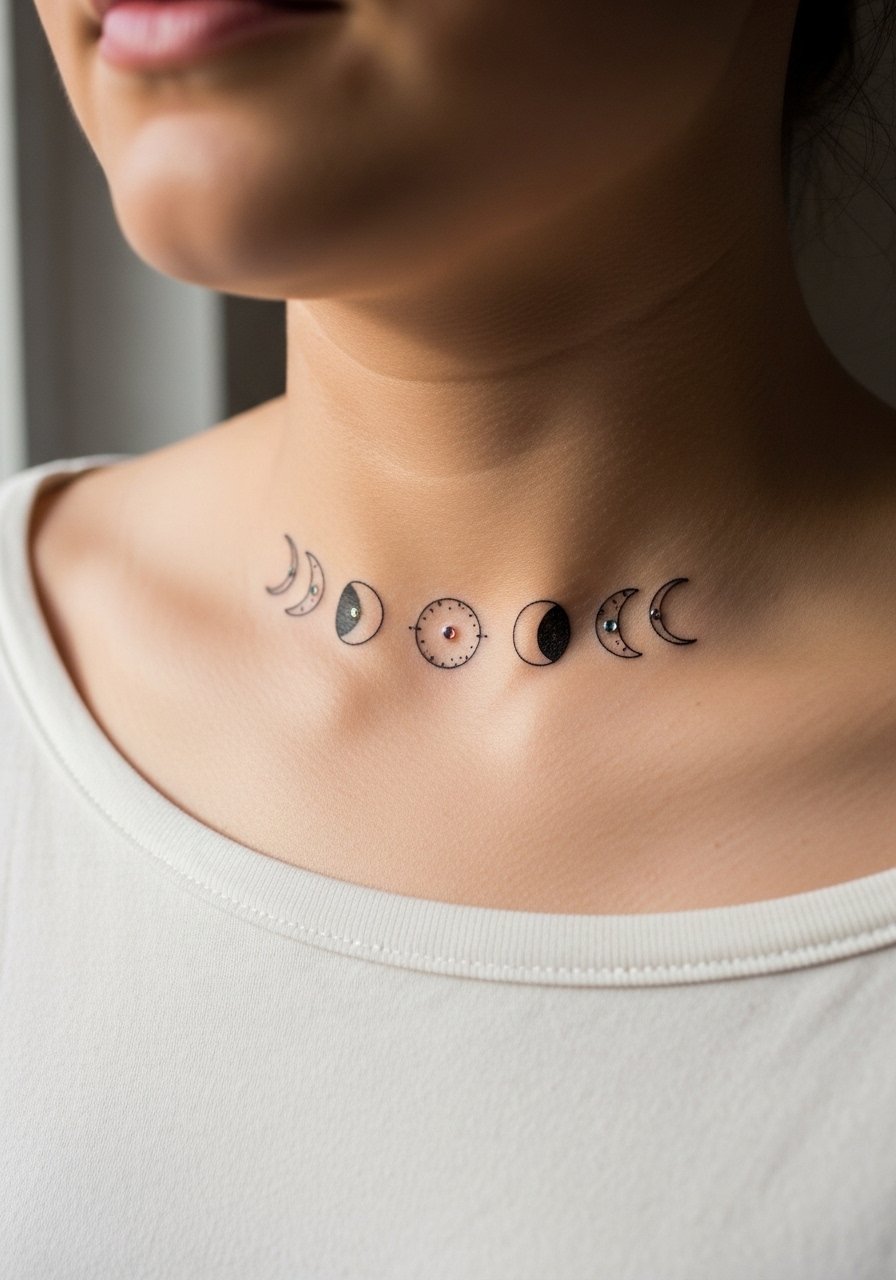
Embedding tiny colored dots to represent family birthstones personalizes the cycle idea without adding heavy composition. The challenge is dot size. Too small and colored pigments may wash out; too large and they overpower the moons. Ask for pigment placement over minor negative space and request healed examples in the artist's portfolio. Color retention near the collarbone is generally decent if you use SPF after healing. For show-off looks, pair with V-neck blouses and a thin chain pendant necklace that sits just above the script.
Frequently Asked Questions
Q: How long will a fine line wrist moon actually last before needing a touch-up?
A: Fine line wrist work often needs touch-ups sooner than bolder styles. From what I've seen, expect the first touch-up anywhere from one to three years depending on sun exposure, how often the area is washed, and your skin type. Ask your artist about a complimentary touch-up window and plan for maintenance rather than assuming one session is forever.
Q: I have darker skin. Should I ask for blackwork instead of fine line for moon phases?
A: Many people with darker tones prefer blackwork or slightly thicker lines for visibility in photos. A middle ground is bold line with negative space or dotwork that contrasts against melanin. Request healed photos on similar skin tones during consultation so you can see real outcomes rather than just fresh pictures.
Q: Are modular moon tattoos a good idea if I want to add phases yearly?
A: Modular phases are a smart plan if you want to expand slowly. The key is having an initial layout that reserves consistent spacing and scale so future additions slot in cleanly. Bring that expansion plan to the consult and ask your artist to sketch how the sequence will look after three to five additions.
Q: What should I wear to a ribcage or sternum session to make it easier for the artist?
A: For ribcage work wear a cropped athletic top or a loose tank you can lift slightly so only the tattoo area is exposed. For sternum pieces a fitted sports bra or bandeau makes access simple and keeps the rest of you covered. Comfort and modesty help you sit still for longer sessions.
Q: How do I avoid getting stung by surprise with guest-spot cancellations when booking minis?
A: Confirm the studio's cancellation policy and pay a deposit that documents your booking. Have two or three local artists you vetted via healed portfolios and discovery pathways like the app filters or community threads so if a guest spot falls through you have alternatives ready.