Fine line tigers are everywhere on saved boards, but what sticks around is a different story. I have seen dozens of tiny Japanese tiger pieces fresh and healed, and the ones that still read crisp at year three usually started with heavier outlines or smart placement. Below are 27 small Japanese tiger ideas that balance delicate aesthetics with realistic aging, outfit pairings, and the exact consultation notes to bring to the chair.
1. Dainty Fine Line Tiger Head on the Wrist
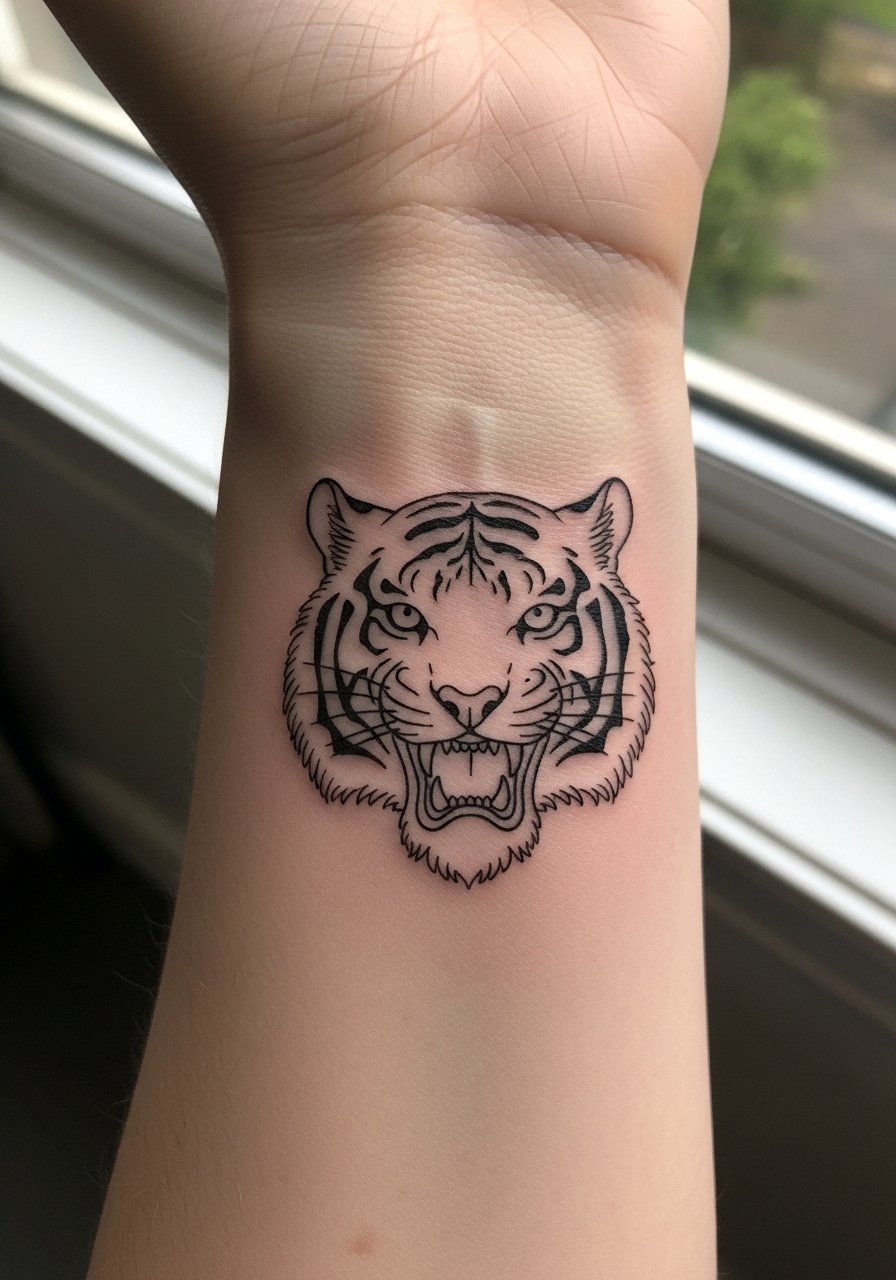
I've seen this wrist placement on people who wanted a subtle protection motif that still reads feminine. Fair warning, the wrist sees constant friction which can blur very thin strokes, so ask for slightly heavier outer linework and a clean negative-space stripe pattern. Tell your artist you want 1-2 inches of clear breathing room around the design and to avoid ultra-dense striping that invites early fading. Pain is low to moderate and a single short session usually does it. For showing it off, layer a thin silver chain bracelet on the opposite wrist, and wear a sheer blouse when it heals to frame the piece.
2. Micro-Realism Tiger Claw on the Inner Forearm

This inner-forearm micro-realism claw ages well because the area moves less than the outer forearm. In consultation, specify that you want subtle irezumi-inspired shading rather than postcard-level detail, which helps the design keep depth after a few years. Common mistake is cramming micro texture into a 1-inch piece. Expect moderate pain and a two-session plan if you want layered gray wash. For styling, roll cuffs on a chambray shirt and wear a minimalist leather cuff on the opposite arm to balance the visual weight.
3. Minimalist Tiger Silhouette at the Ankle

Ankle silhouettes read as jewelry-style pieces and suit people who want a low-visibility talisman. The ankle rubs against socks and shoes, so the aging conversation starts at week two. Ask for bolder outer contouring and a simple interior stripe suggestion to prevent the silhouette from losing definition. Session time is short and the pain is moderate around the bone. For show-off outfits, strappy heels or strappy heeled sandals and cropped jeans frame this placement perfectly.
4. Neo-Traditional Tiger Face on the Collarbone

Collarbone pieces with neo-traditional linework look like curated jewelry when placed just above the clavicle. Tell your artist you want bold outlines around the face and soft gray fills for stripes so the piece keeps structure without needing frequent touch-ups. Pain is on the higher side because of shallow bone, and many artists recommend 2-3 short sessions for precise saturation. Pair this with an off shoulder blouse or a long pendant that sits above the ink without overlapping.
5. Fine Line Tiger Paw with Japanese Wave Accents on the Ribcage
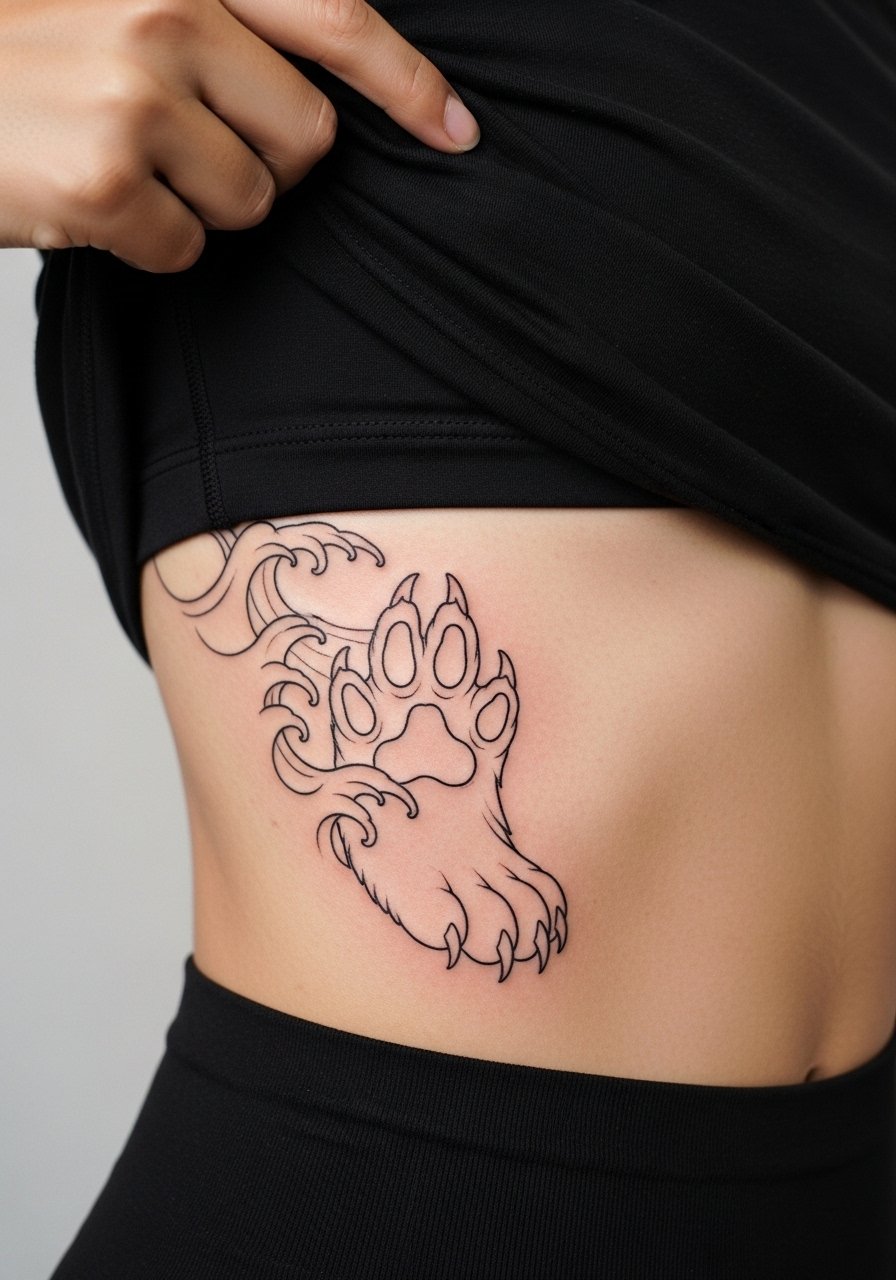
Ribcage is one of the more intimate placements and it hurts, so this design is for people willing to sit through higher pain for a hidden piece. The biggest mistake is asking for extremely tight stipple shading in a small area. For longevity, keep the paw slightly larger than you think and ask for clear negative space between waves and paw pads. Expect a single longer session or two shorter ones, and know that weight fluctuations and sun exposure can change how the wave accents sit over time.
6. Blackwork Tiger Eye with Irezumi Negative Space on the Shoulder Blade
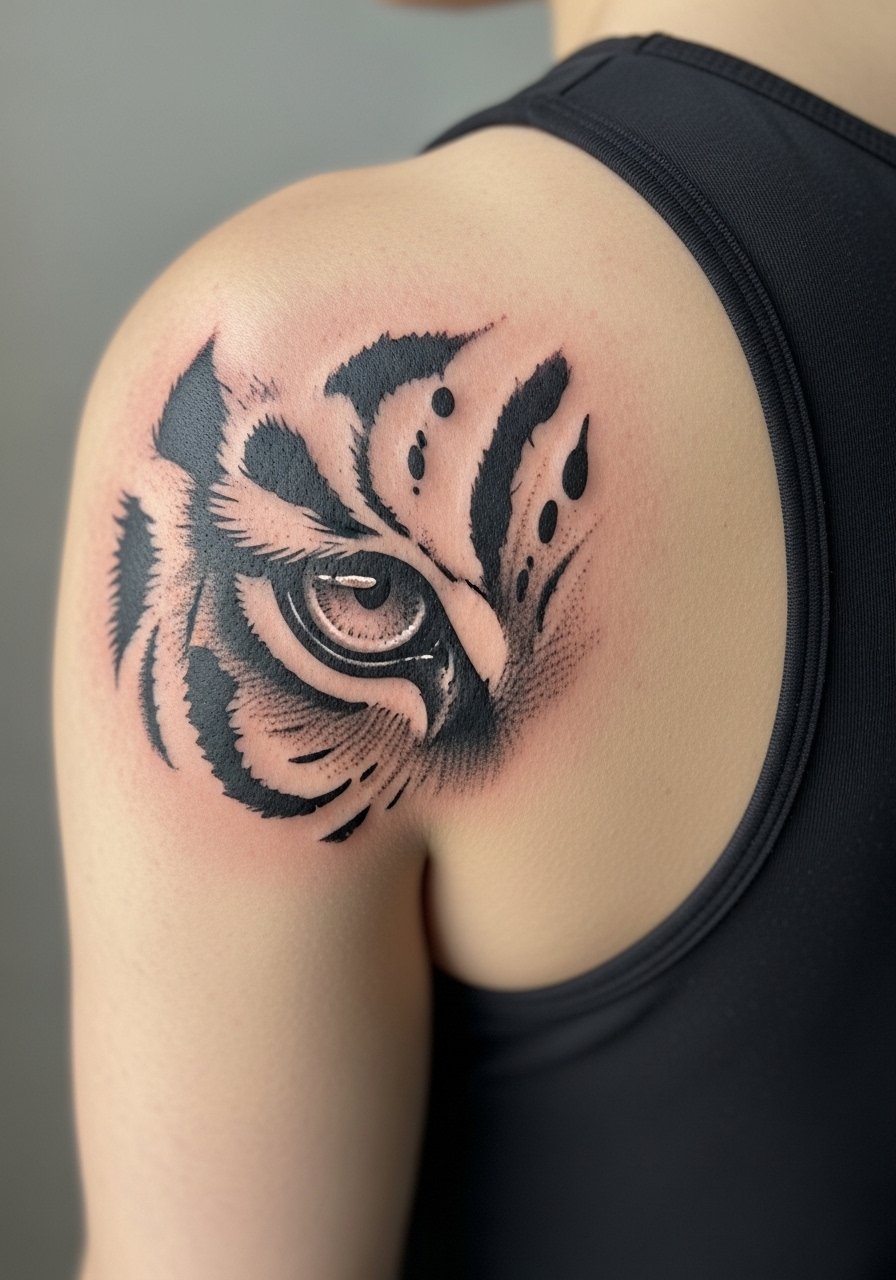
Shoulder-blade blackwork reads boldly without needing large real estate because of the curved canvas. Ask for solid saturation and intentional negative-space stripes to create the irezumi feel without overcomplication. Blowout risk is low on this area but heavy packed black needs careful saturation to avoid future patchiness, so expect multiple sessions for deep black. Show it off with backless halter tops or racerback tanks.
Pre-Session Essentials
The small wrist, ankle, and rib pieces above demand different prep than larger work, so a short kit smooths both the appointment and the first week.
- Hustle Butter Deluxe. A non-greasy, moisturizing option people mention for fine line pieces because it keeps skin supple without heavy residue during healing.
- Japanese rice bran balm. Thinner balm that artists note sits well under irezumi shading, useful for the black-and-gray collarbone and shoulder-blade work.
- Tea tree aftercare spray. Lightweight spray that can help itch and avoid residue on ankle wraps and ribcage lifts during summer heals.
- Cetraben cream. Favored by some with darker skin tones for its low white cast when gently moisturizing linework on hands and wrists.
- Aquaphor healing ointment. A thin initial layer is still used by many for the first 48 hours on small fine line pieces before switching to lighter balms.
7. Watercolor Tiger Stripe Band on the Outer Thigh
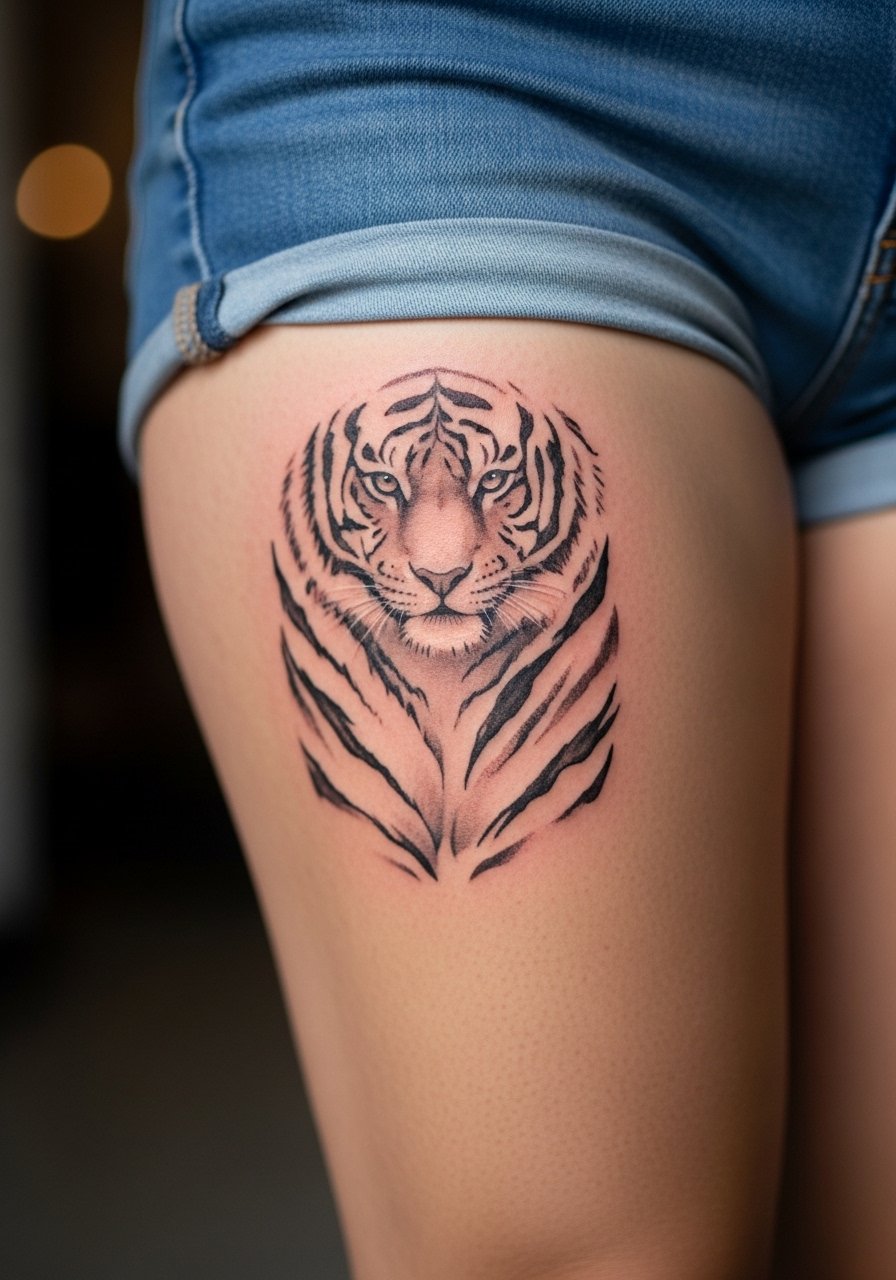
Thigh pieces tolerate soft washes better than thinner skin areas, so a watercolor stripe band keeps its character longer here. During consult, stress you want muted gray washes rather than saturated pigment that will migrate over time. Expect two sessions if the artist layers washes for depth. For summer reveals, high-waisted shorts or a high waisted denim shorts pair well with the fluid stripes.
8. Ignorant-Style Whiskers and Minimalist Jaw on the Neck
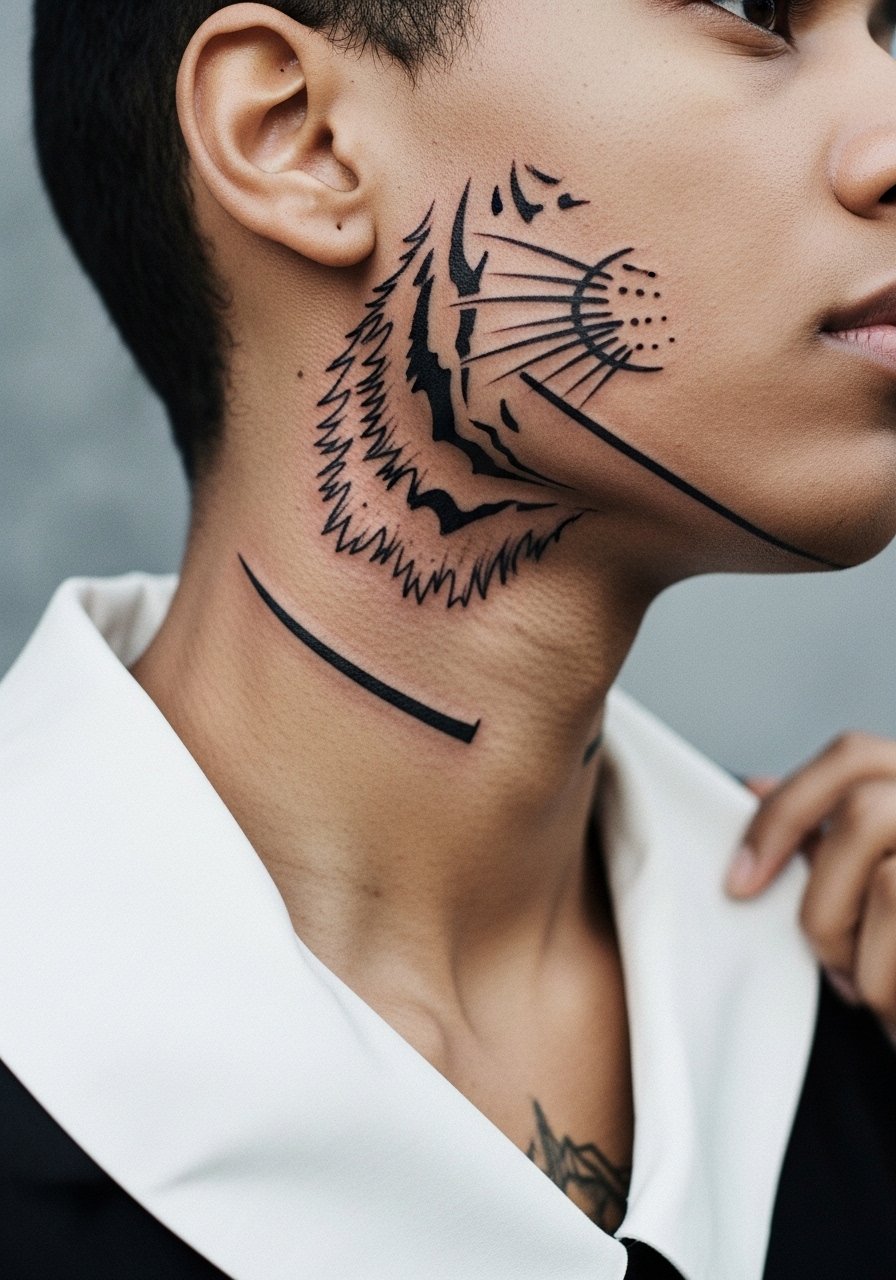
Neck placements demand a deliberate conversation about career impact and visibility. The ignorant style favors raw, hand-drawn strokes that can look striking fresh and gritty when healed. Artists split on aggressive numbing and neck saturation though, so ask about their touch and long-term fading expectations. This is a single, quick session piece for most artists but it will need touch-ups if you want crisp edges after years.
9. Ornamental Tiger Tail Wrapping the Ankle with Peony Hints
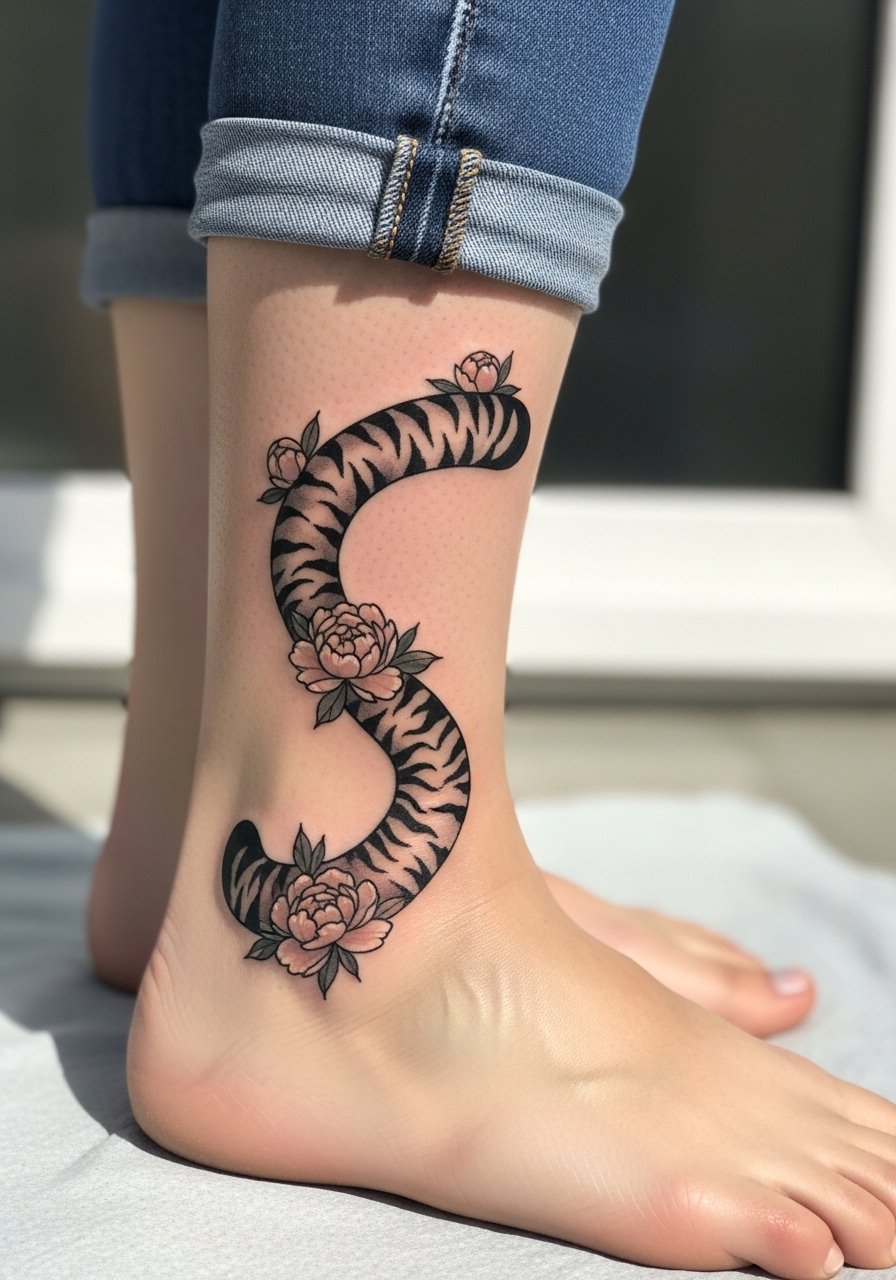
Ankle wraps read like ankle jewelry and can be elongated for a tapered look. Request a linear flow that follows bone contours so the tail does not distort with movement. The peony hints should be open petal shapes rather than dense fills to avoid early blurring. For the session, wear loose joggers or shorts and show it off with a gold anklet chain to set off the wrap.
10. Traditional Irezumi Tiger Snout Micro on the Finger
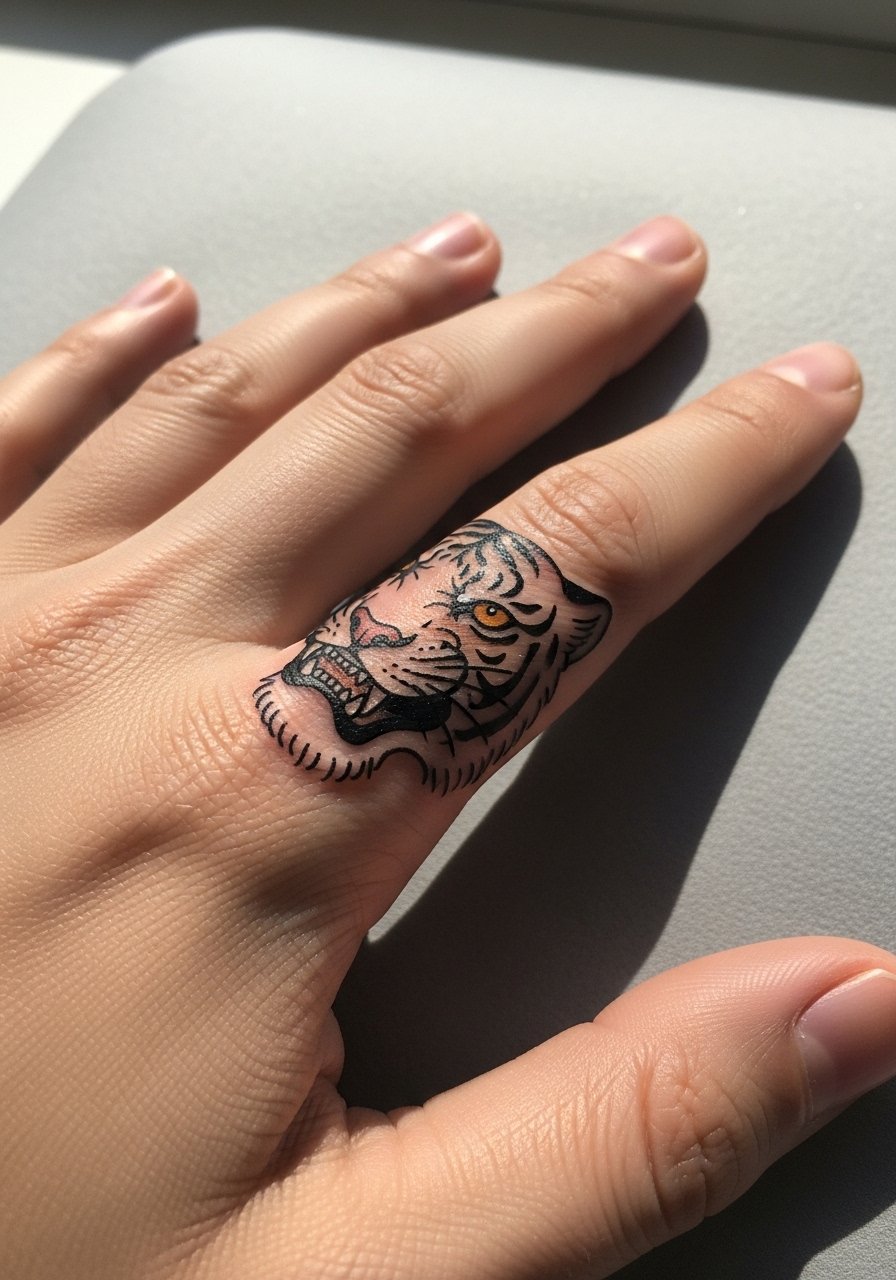
Finger micros are a test of line longevity because the area is high-friction. The common mistake is requesting tiny interior detail instead of relying on bold outline contrast. Ask for thicker outer lines and simplified inner stripes to preserve silhouette through washing and typing. Expect frequent touch-ups; most micro-finger pieces need annual or biennial refresh. Keep expectations realistic about how photos will capture the ink on different skin tones.
11. White Tiger Accent Eye on the Nape
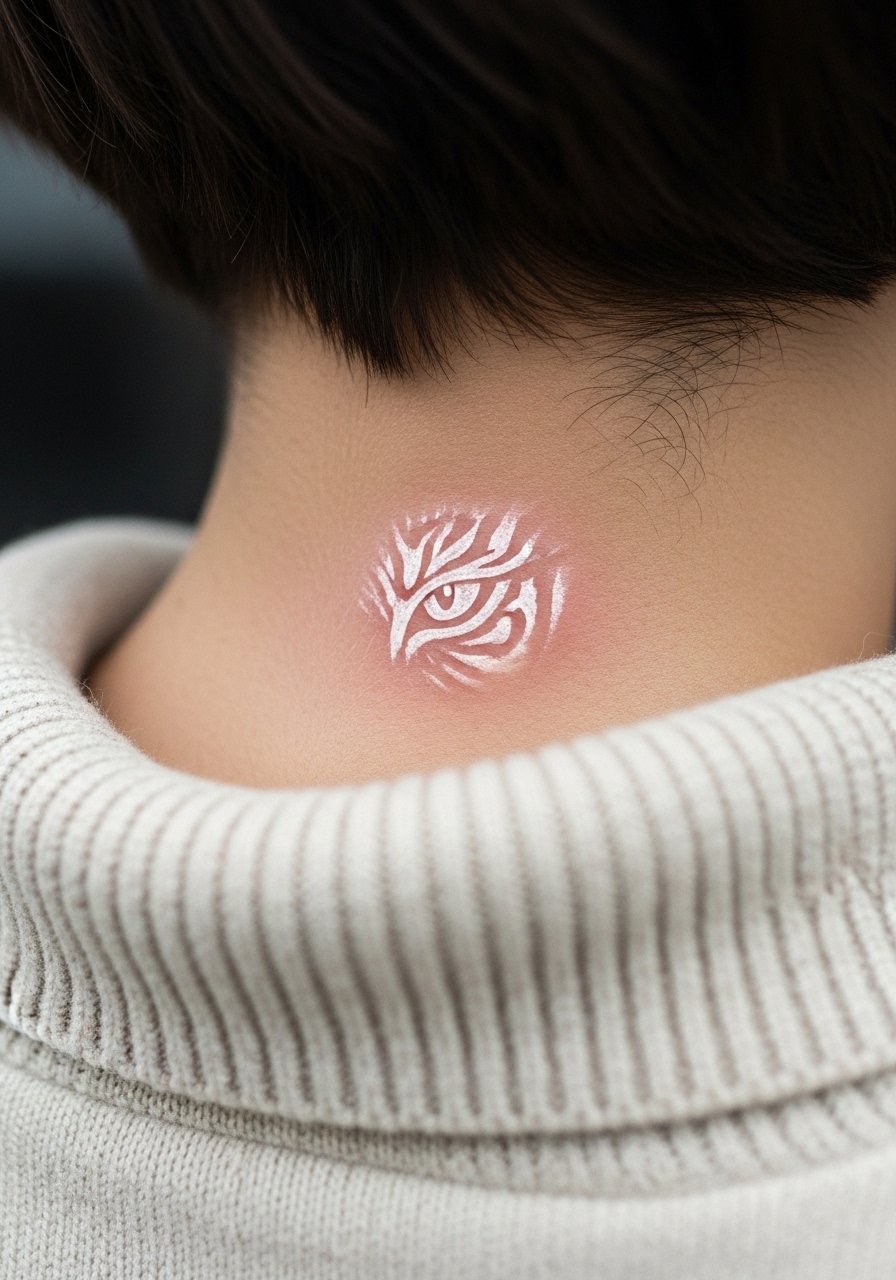
White ink reads differently as it heals and often changes with sun exposure. The big caveat is that white fades to a soft pink or skin tone faster than black, so plan touch-ups. Artists who work with white recommend conservative use as accents not full fills. This placement needs a discussion about long-term color stability and touch-up willingness.
12. Micro Tiger Claw Knuckle Test

Knuckle tattoos are a field test for an artist's healed fine-line control because movement is constant. One mistake is squeezing too many details into the small knuckle pad. Ask for simplified claw marks and confirm healed examples from the artist on knuckles specifically. Also consider career implications and accept that knuckles usually require periodic touch-ups.
13. Tiger Eyebrow-Arc Accent Behind the Ear with Yokai Negative Space
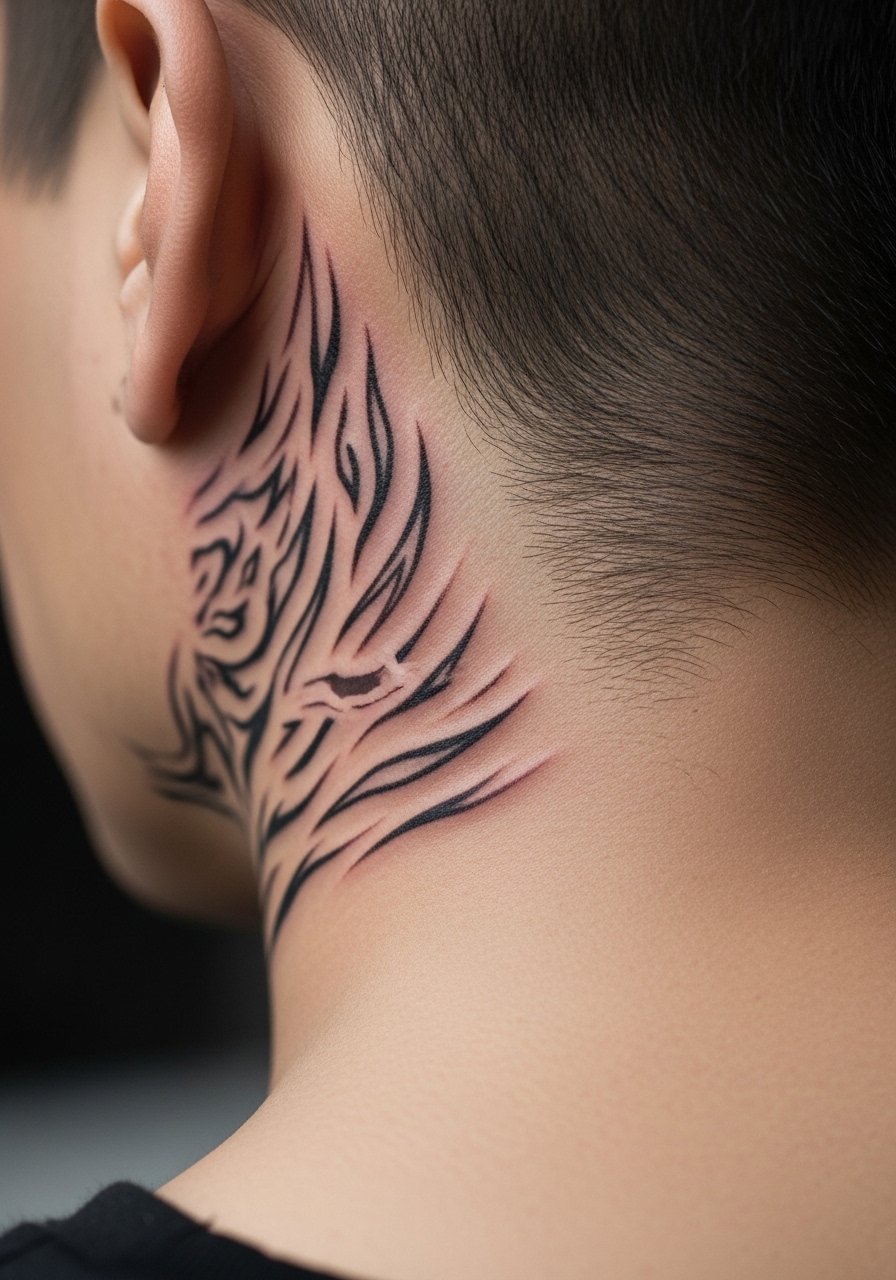
This small behind-the-ear placement is ideal for integrating yokai negative space for layered folklore meaning without being overt. Make clear in consult you want the yokai as suggestion using negative-space contours only rather than literal imagery. Sensitive placement note, the area sits under hairline so work with a skilled artist who understands scalp and neck transitions. Expect a quick session and low visibility unless you tuck hair up.
14. Dainty Collarbone Tiger Stripe with Color Accent
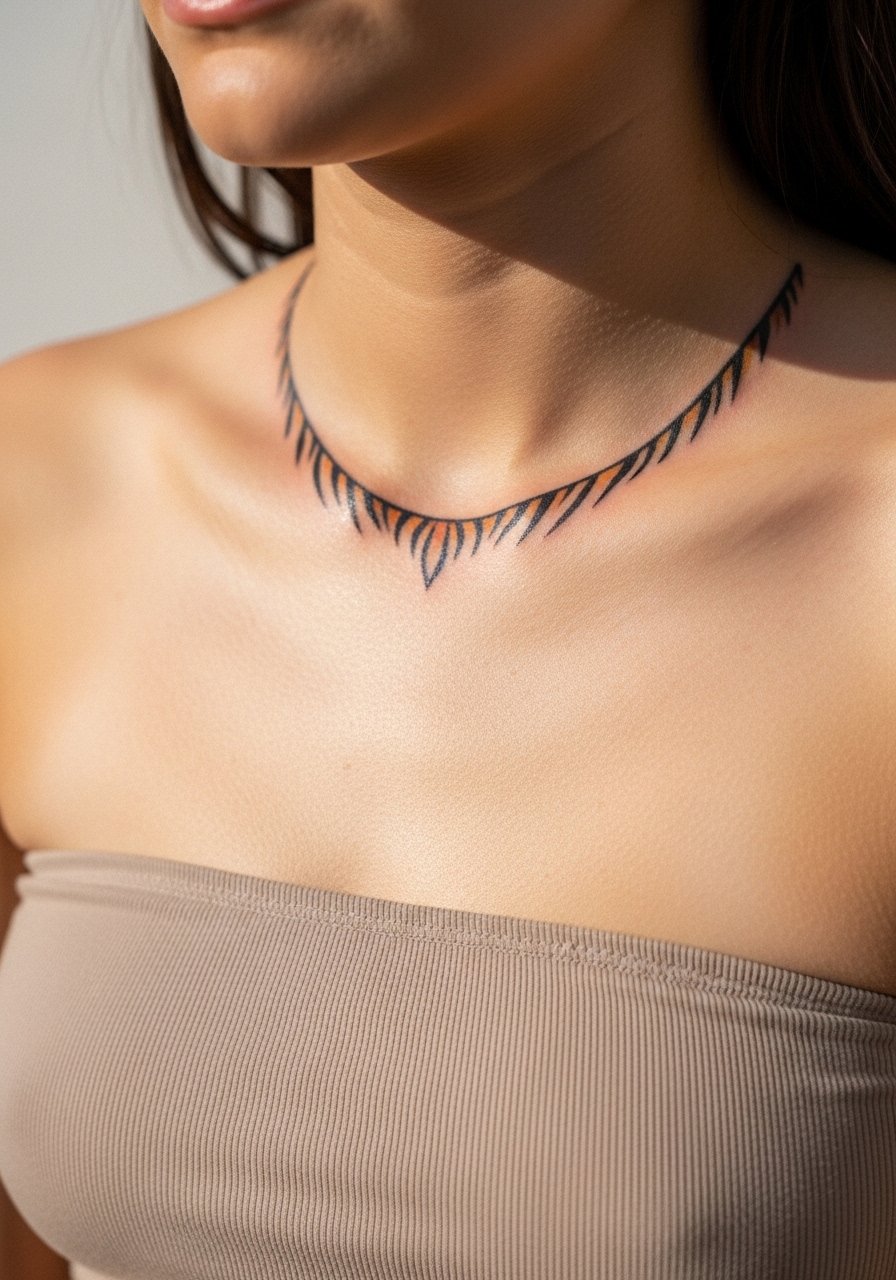
A minimal stripe sitting on the collarbone benefits from a crisp outer stroke and a tiny muted color pop if you want modern flair. Tell your artist which color family you like and ask for a micro-dot accent rather than saturated fills, because the collarbone catches sun and color can drift faster there. Pain is moderate and a single session commonly achieves this look. Pair with a thin chain pendant necklace that sits just above the ink.
15. Tiny Tiger Claw and Birth Flower Hybrid on the Inner Wrist

Combining a small claw motif with a birth flower makes the design personal while staying compact. Consultation tip, bring the exact birth flower reference and ask the artist to scale the flower so it reads at a distance without crowding the claw. The inner wrist is forgiving for detail but light skin tones show more contrast, so discuss shading depth for medium to dark skin. For session wear, choose a sleeveless or loose long-sleeve top.
16. Single-Stripe Watercolor Flick on the Calf
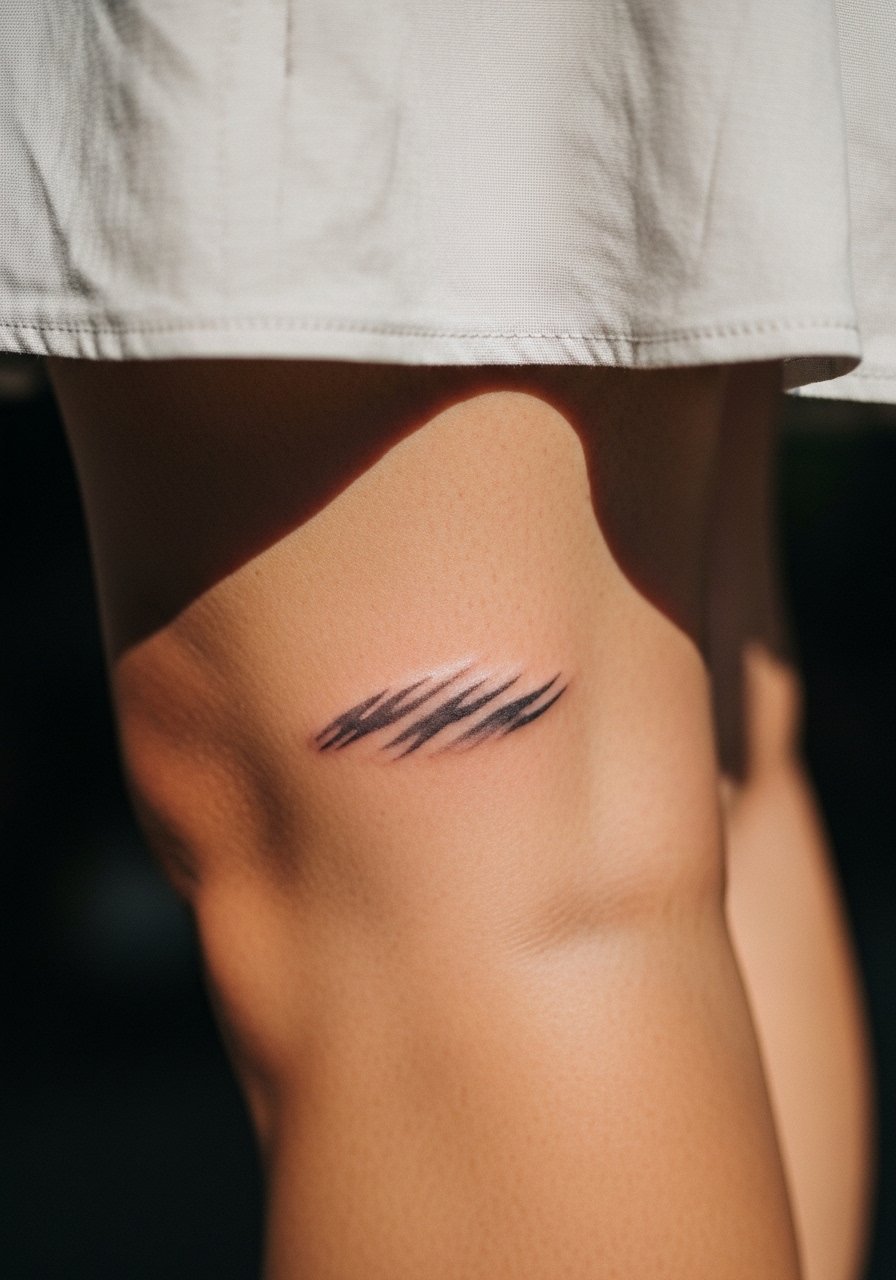
Calf placements handle soft wash techniques well because of thicker muscle and less daily friction. A common error is expecting intense watercolor saturation in a small area. Ask for a single well-placed stripe with gradual wash edges so it ages into a soft shadow rather than a patch. Session time is short and aftercare is straightforward compared to ankle work.
17. Micro-Realism Tiger Eye on the Inner Bicep
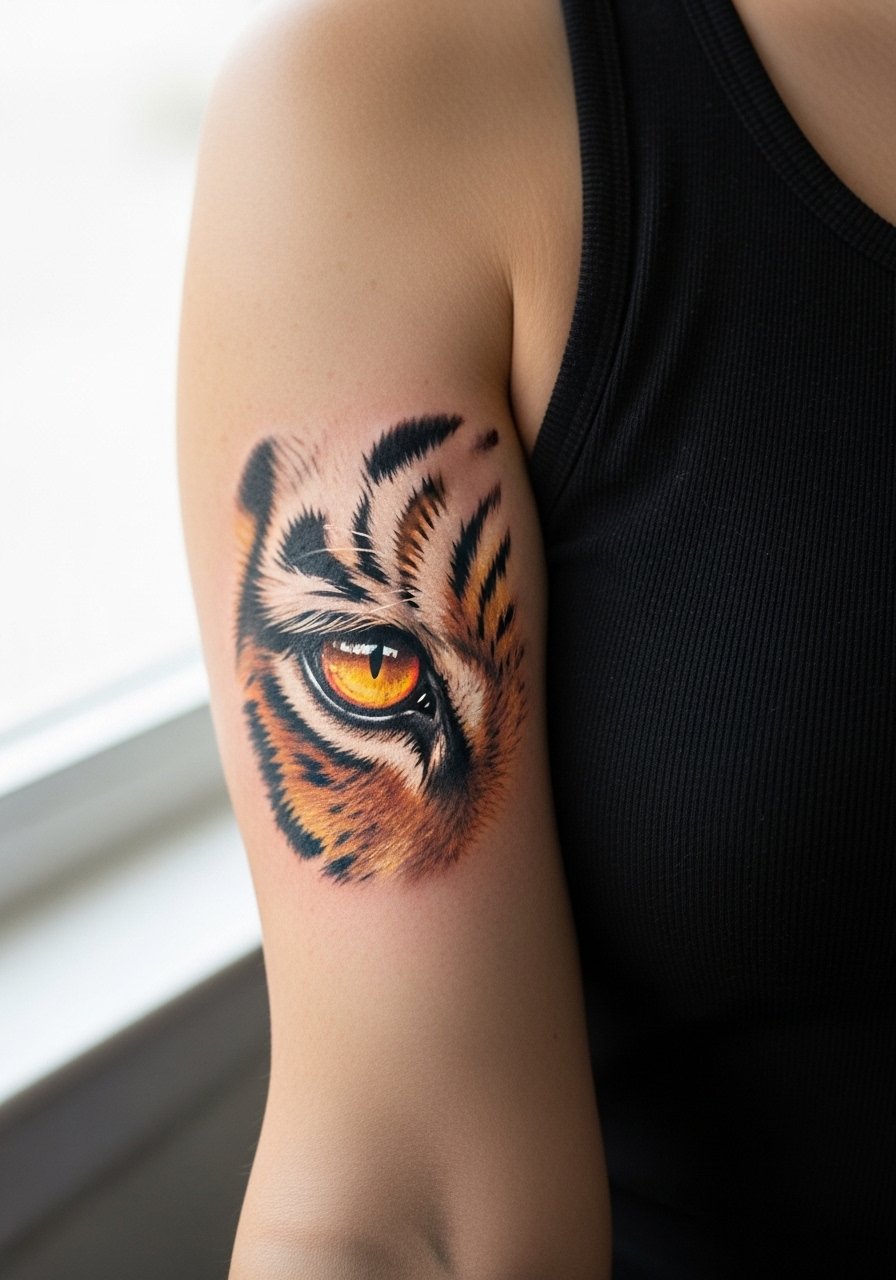
Inner bicep keeps delicate realism safer from sun and abrasion, so a highly detailed eye can retain depth longer here. Consultation note, ask for subtle stipple shading and a touch-up plan in 12-18 months. Pain is moderate and the session may require short breaks. For the appointment, wear a loose tank you can pull aside.
18. Subtle Tiger Snarl Micro on the Back of the Neck
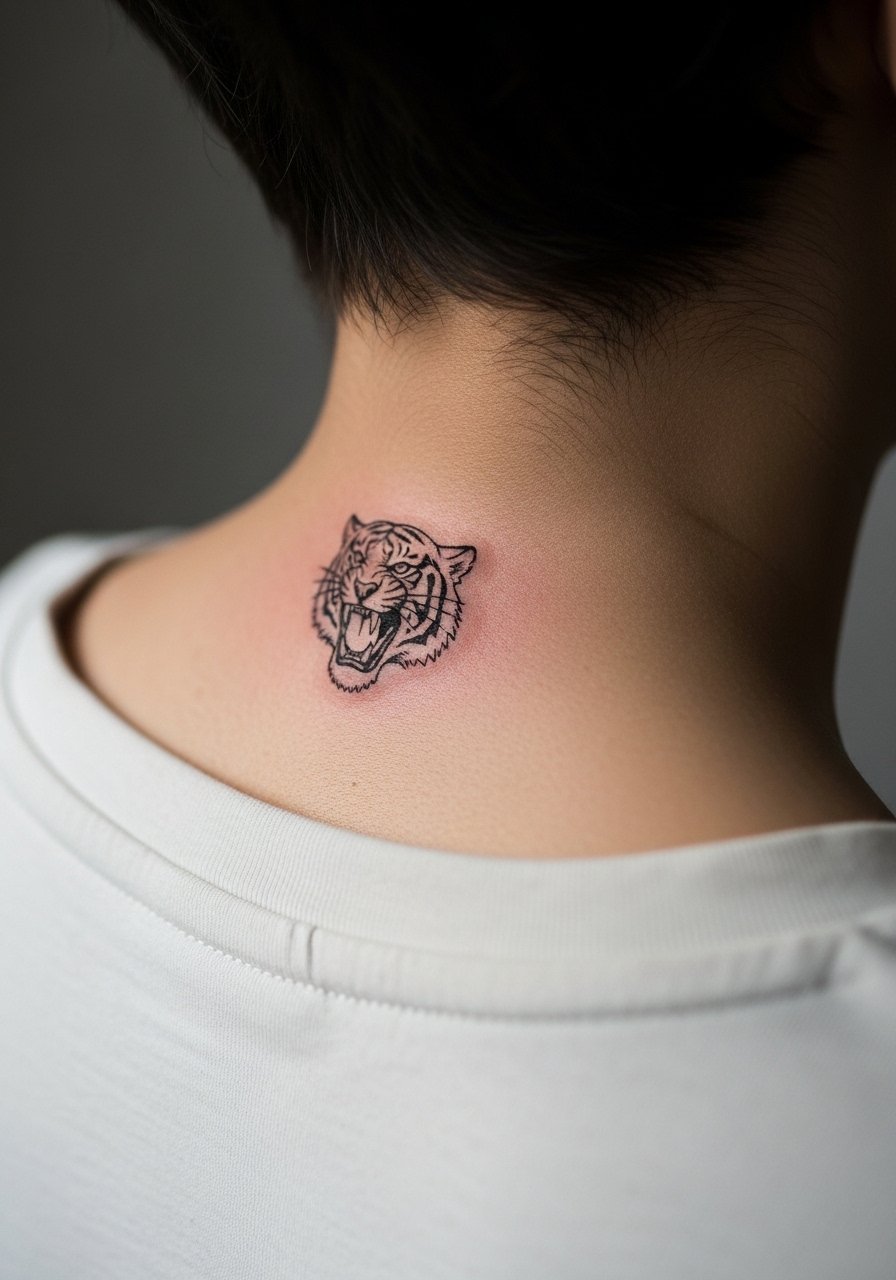
Back-of-neck placements are high-visibility with easy concealment when needed. Keep the snarl compact and avoid dense inner cross-hatching that can merge as the skin moves. Many artists will advise simpler stripes and a clear silhouette for longevity. Session is short and people often book after checking healed neck examples on social platforms and directories.
19. White Tiger Mini on the Sternum Edge
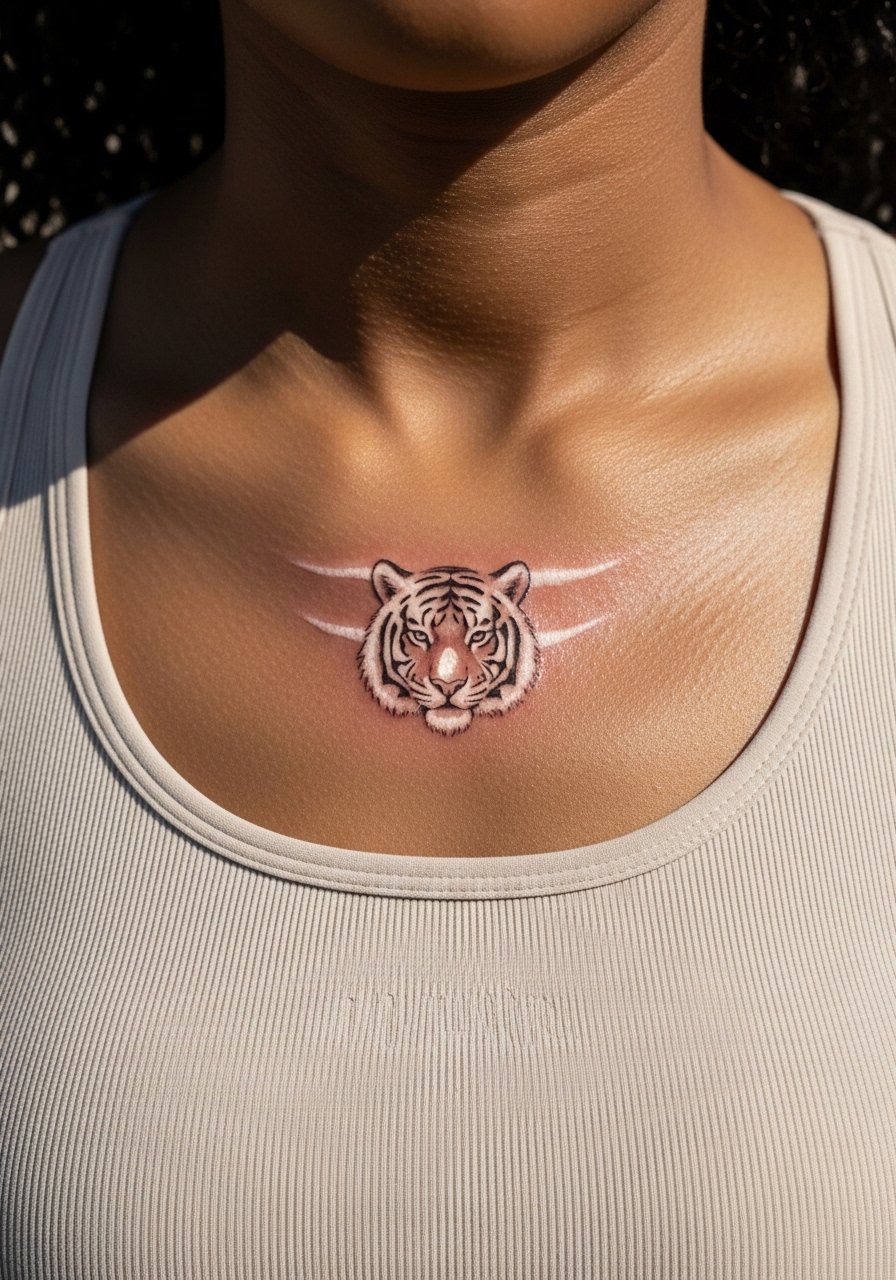
Sternum white ink is a commitment because white can lose opacity quickly. The honest conversation should cover the likelihood of the white softening over 6-12 months and the possible need for refresh work. Artists who do white suggest using it sparingly as an accent against black linework, not as a primary fill. This placement needs a confident artist experienced with white ink on your skin tone.
20. Pocket Tiger Eye for Prosthetic Mockup Adaptation
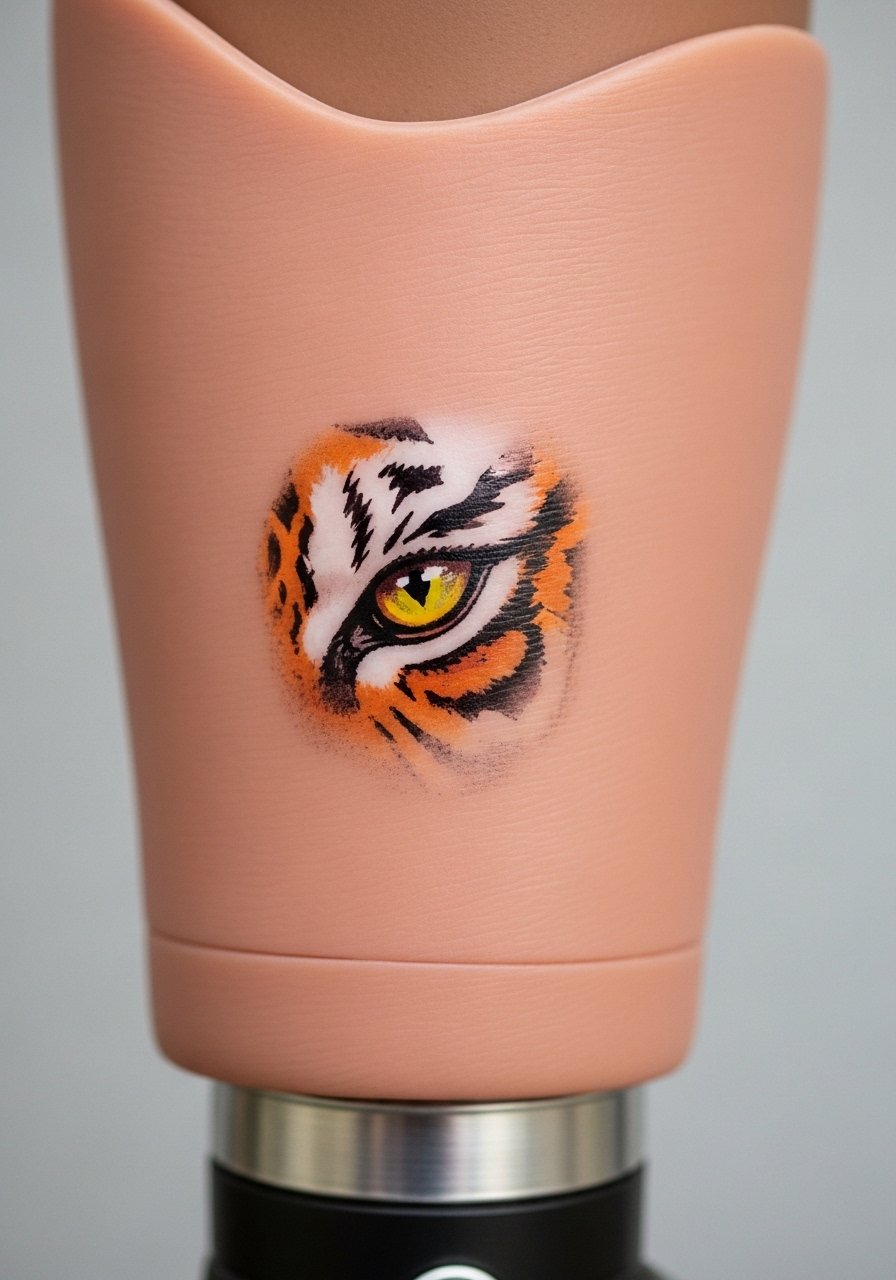
An under-covered idea is planning tattoos on prosthetic limbs. Bring prosthetic mockups to your consult and ask the artist to test stencils on the material so placement reads naturally when the limb moves. The visual language is the same as living skin but the consultation needs to include attachment points and visibility in different wardrobes. This is a great way to adapt folklore motifs for adaptive style.
21. Micro Patchwork Tiger Eye Paired with a Mini Koi
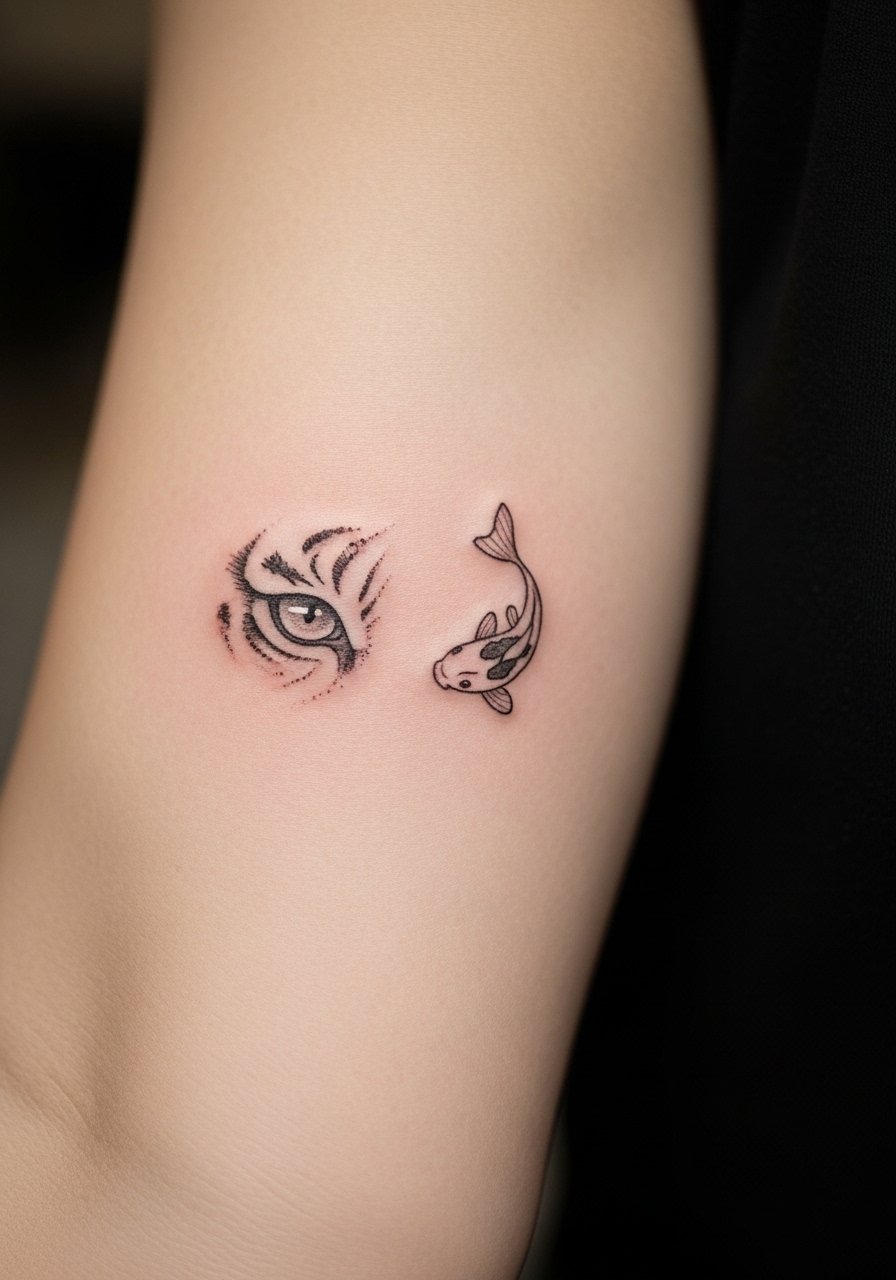
Collectors building patchwork pieces often start with micro motifs that later interlock. If you plan to expand, instruct your artist to leave connective negative space for future fills. A common error is placing micro elements too close, which limits later expansion. This forearm placement benefits from rolled sleeves and a loose button-down shirt to show off the cluster as it grows.
22. Tiny Tiger Claw on the Side of the Finger
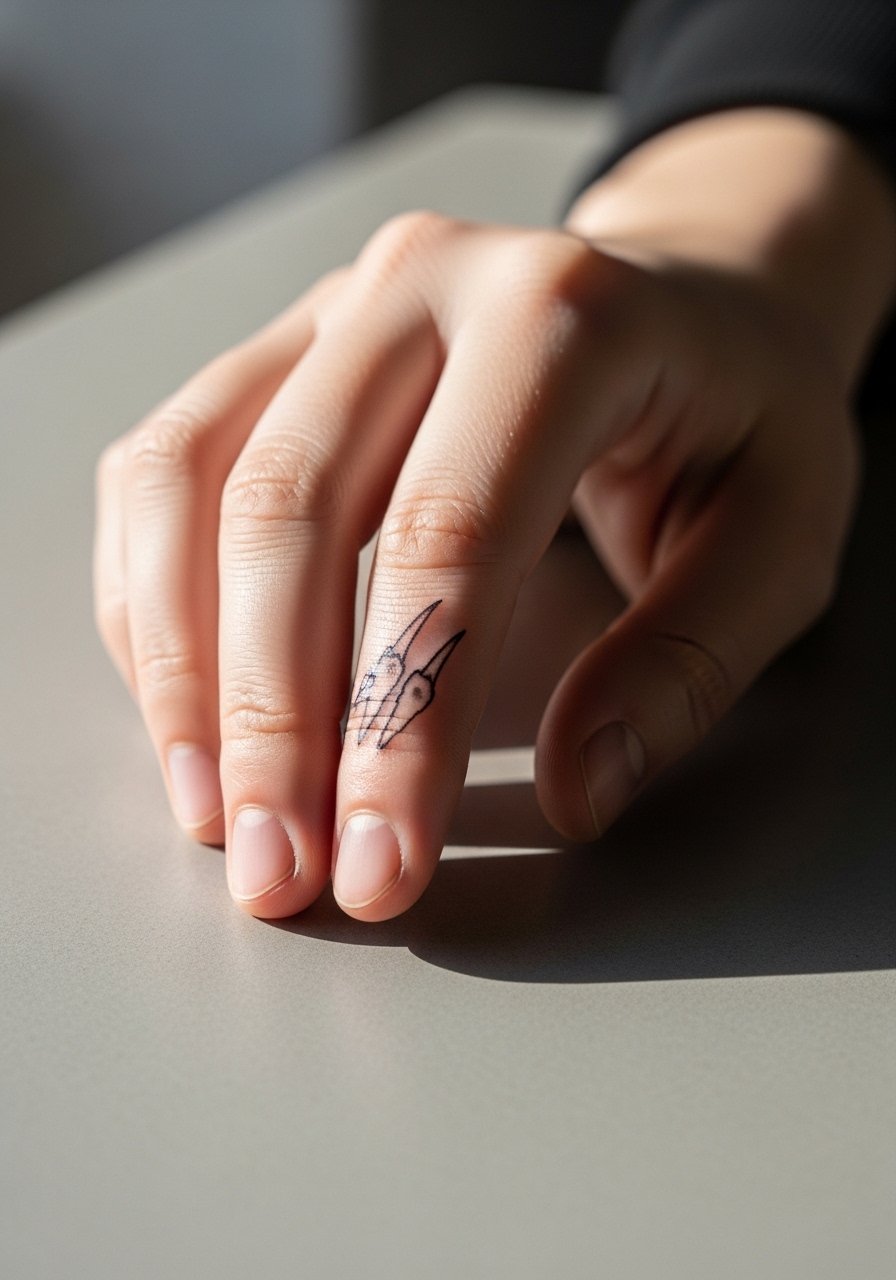
Side-of-finger tattoos are discreet and playful. The main technical ask is thicker outline contrast because the lateral finger skin wears quickly. Note that this area interacts with rings and daily friction. Plan for touch-ups every 12-24 months and avoid intricate interior textures.
23. Ribcage Tiger Stripe with Negative Space Yokai
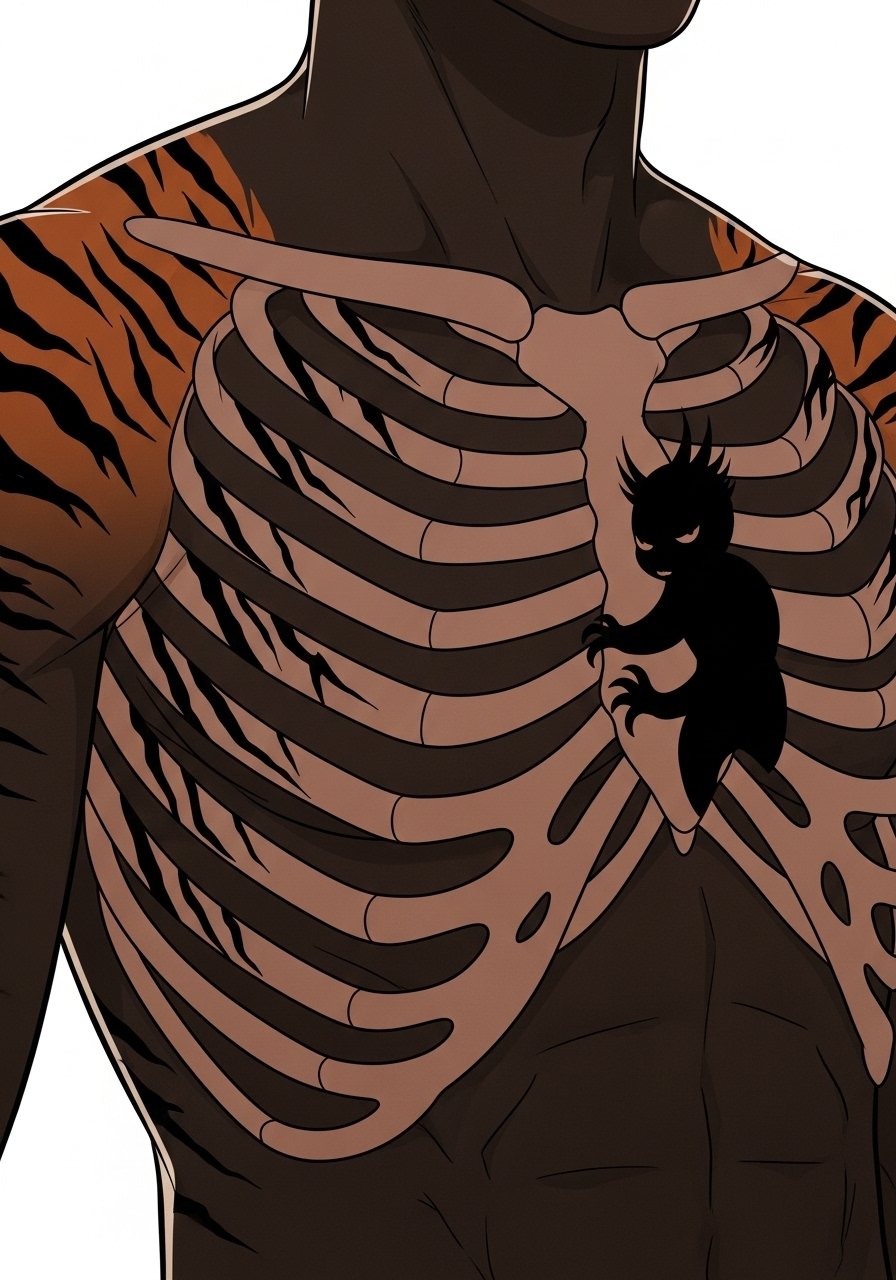
Integrating yokai as negative space on the ribcage layers the folklore without literal depiction. Controversy exists about fine line on ribs. One camp argues the skin stretch blurs lines within two years. The other camp says proper needle depth and spacing settle fine on ribs. Bring this debate up in consultation and ask to see healed ribcage examples from the artist before booking. This placement hurts more but yields private, meaningful work.
24. Micro Tiger Nose on the Upper Lip Border

Lip-border and perioral tattoos require specialized experience. This tiny placement has high distortion risk because of facial movement. Make sure your artist has healed examples of perioral micro work and agree on conservative line weight. Expect a cautious approach and possible touch-ups.
25. Stipple-Shaded Tiger Eye on the Outer Shoulder
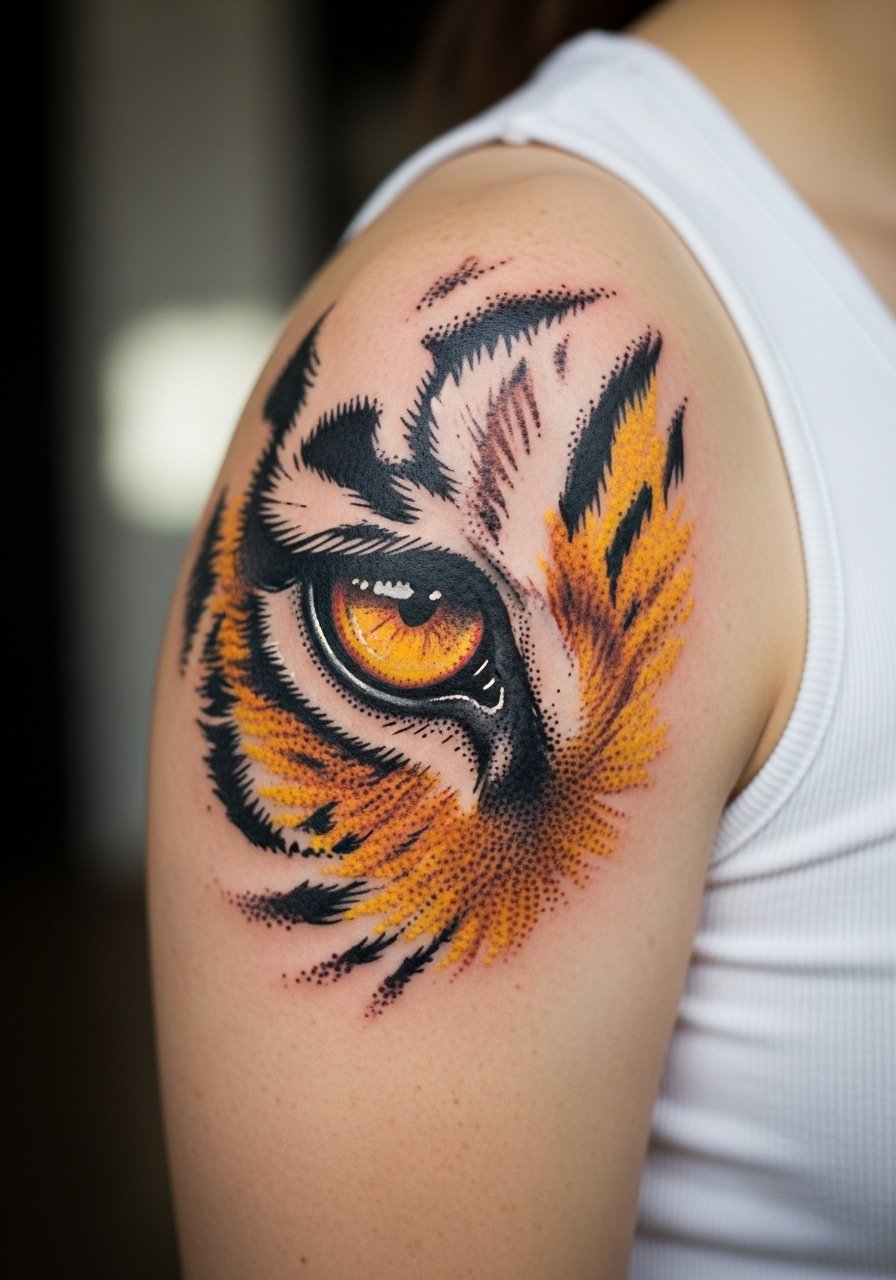
Dot work and stipple shading read well on the outer shoulder because the area tolerates texture without immediate merge. Tell your artist the scale you want to maintain dot spacing over time and avoid pushing dot density too tight in a small piece. Session time is moderate and results age gracefully with sunscreen.
26. Miniature Tiger Paw on the Rib Side Near the Hip
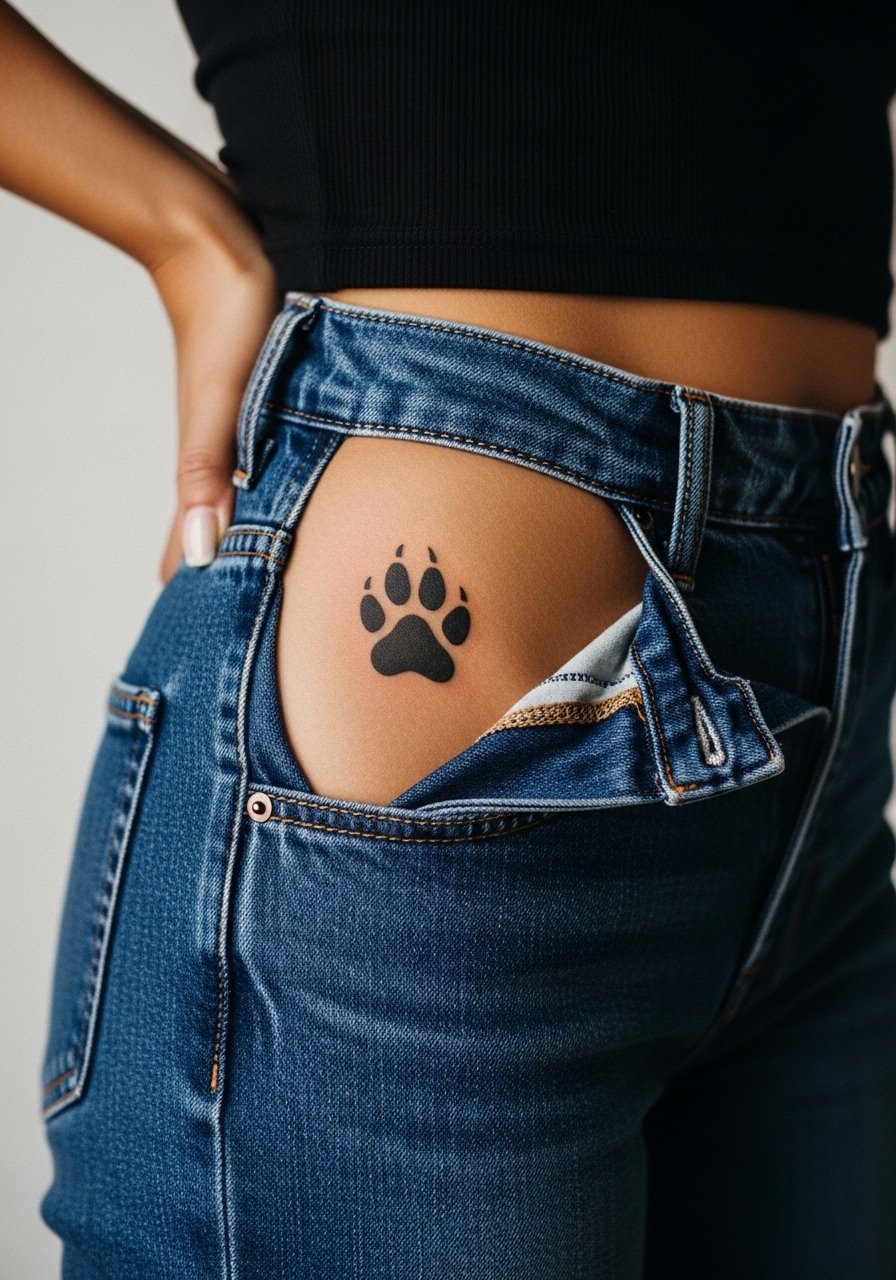
Hip-edge placements let you hide or reveal easily. Keep the paw simple and avoid tight internal stipple. The area shifts with weight changes so discuss future body changes during consultation. Wear high-cut shorts or bikini bottoms for the session so the artist can access the area without pressure.
27. Micro Tiger Eye Necklace Placement Along the Sternum Line
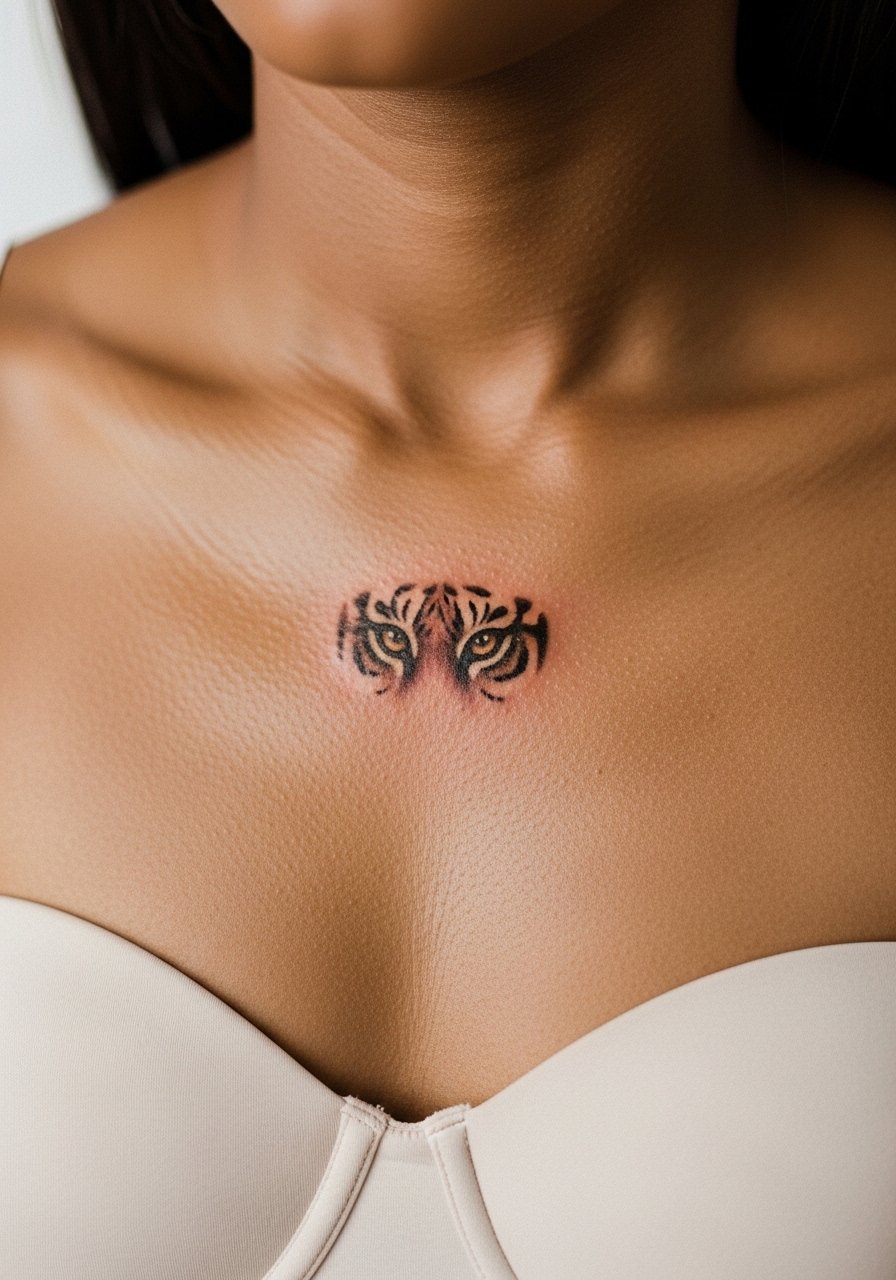
This necklace-line placement acts like a pendant tattoo and suits people who want delicacy with cultural nods. Request clean spacing and avoid over-dense stripes that sit too close to the clavicle. Pain is moderate given proximity to bone. For wardrobe, strapless tops or off-shoulder dresses frame the piece elegantly.
Frequently Asked Questions
Q: Will a fine line wrist tiger blur faster than a black-and-gray micro tiger on the forearm?
A: In my experience fine line wrists do blur sooner because of constant washing and friction. Black-and-gray micro pieces on the forearm often hold contrast longer. Ask your artist for heavier outer lines on wrist work and plan touch-ups at year one or two.
Q: How should I prepare clothing-wise for a collarbone or shoulder-blade tiger session?
A: For collarbone wear a strapless bra or button-up you can pull aside. For shoulder blade choose a racerback or loose tank that can shift without tugging. Try a loose button-down shirt for shoulder sessions so the artist has clear access.
Q: Does Saniderm help ankle tigers heal better than dry healing?
A: Artists and collectors split on this. One camp likes Saniderm for less mess and faster sealed healing. The other prefers dry healing to let scabs set naturally. If you opt for Saniderm, discuss removal timing and follow the artist's protocol precisely.
Q: Are white-ink tiger accents a good idea on darker skin tones?
A: White shows differently across skin tones and can appear muted on darker skin unless used as tiny highlights rather than fills. Many people choose subtle white accents layered over black outlines for contrast. Ask to see healed examples on similar skin tones before committing.
Q: How often should I expect touch-ups for micro finger or knuckle tiger motifs?
A: Plan for touch-ups more often than body pieces. Fingers and knuckles often need refreshes every 12 to 24 months depending on daily wear. A good consultation covers realistic timelines for refreshing small extremity work.
Q: Where should I look for artists who specialize in dainty irezumi adaptations?
A: Search hashtags like #DaintyIrezumi and #FineLineTiger on Instagram, use Tattoodo filters for "irezumi fine line," and check local Booksy listings for guest spots. Forums and weekly r/tattoos threads also point to artists who post healed photos rather than just fresh shots.