Fine line Saint Michael tattoos dominate saved boards right now, but the pieces that hold up are not always the ones that look best fresh. Lines on hands and wrists often need touch-ups, guest artists canceling leaves people scrambling, and delicate work on darker skin can disappear in photos. Read on for 21 ideas that balance current trends with real-life aging, placement risks, and wardrobe tips so you book a piece that still reads clean after a few years.
1. Curved Collarbone Fine Line St. Michael

I recommend this when you want a delicate religious motif that follows body architecture. Tell your artist you want the design to trace the clavicle rather than sit perpendicular to it. That prevents distortion if your weight fluctuates. Expect a one-session touch-up timeline for some clients at year two on exposed collarbones. For the appointment wear a strapless tank or a button-front blouse to give full access. A common mistake is shrinking the figure too small across the curve, which crowds the wings and makes lines merge as it ages.
2. Single-Needle Micro St. Michael on Inner Forearm
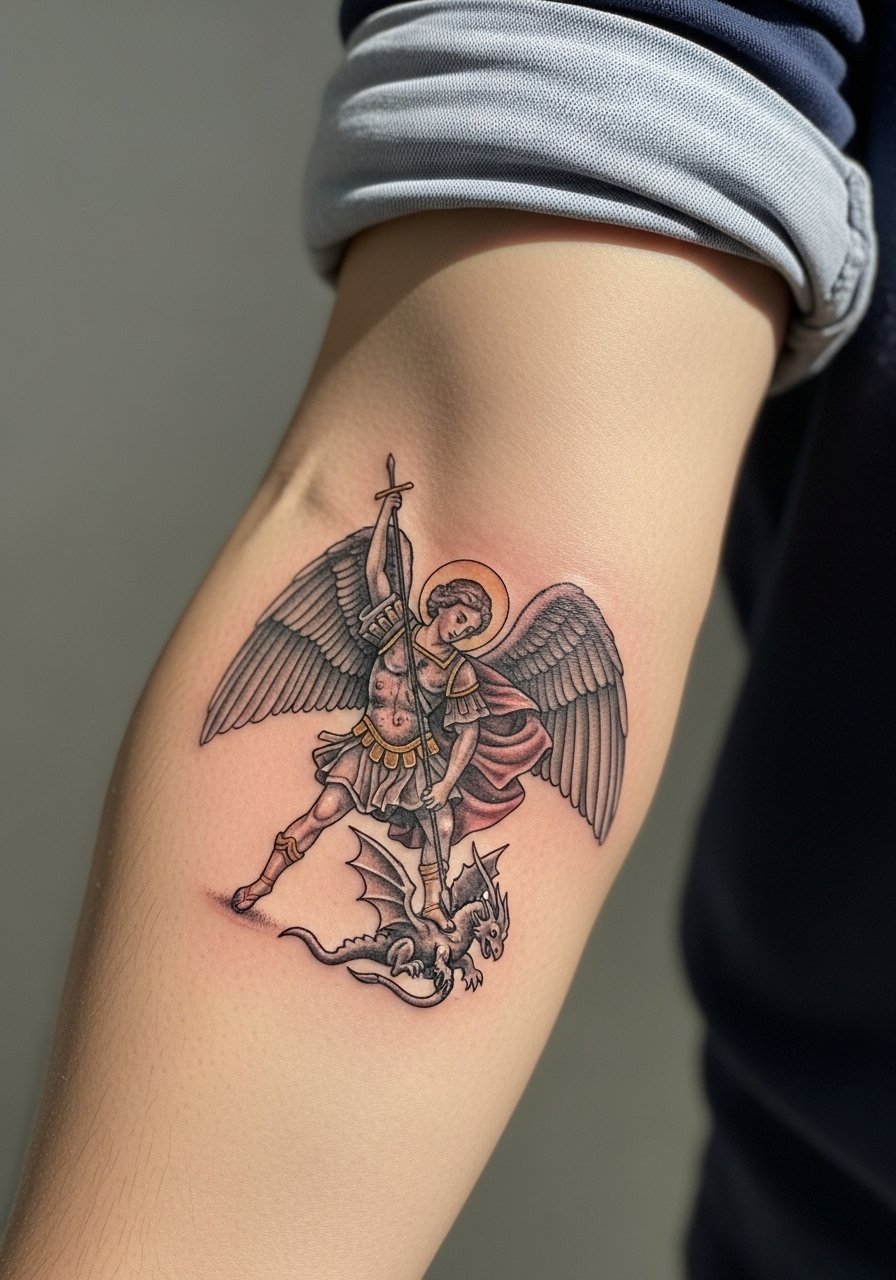
This is a first-timer friendly piece that still reads meaningful up close. Ask for single-needle work sized around one inch and request contrast between the dragon and the angel so the tiny elements remain legible. The inner forearm is middle of the road on pain, and most sessions finish in under an hour. Expect subtle softening by year two, and plan a small touch-up at that point if you want the micro realism crisp. For showing it off wear a rolled cuff chambray shirt to frame the ink. Avoid asking the artist to pack too many tiny dots into the dragon, which tends to blur.
3. Minimalist Sword-Outline on the Ankle
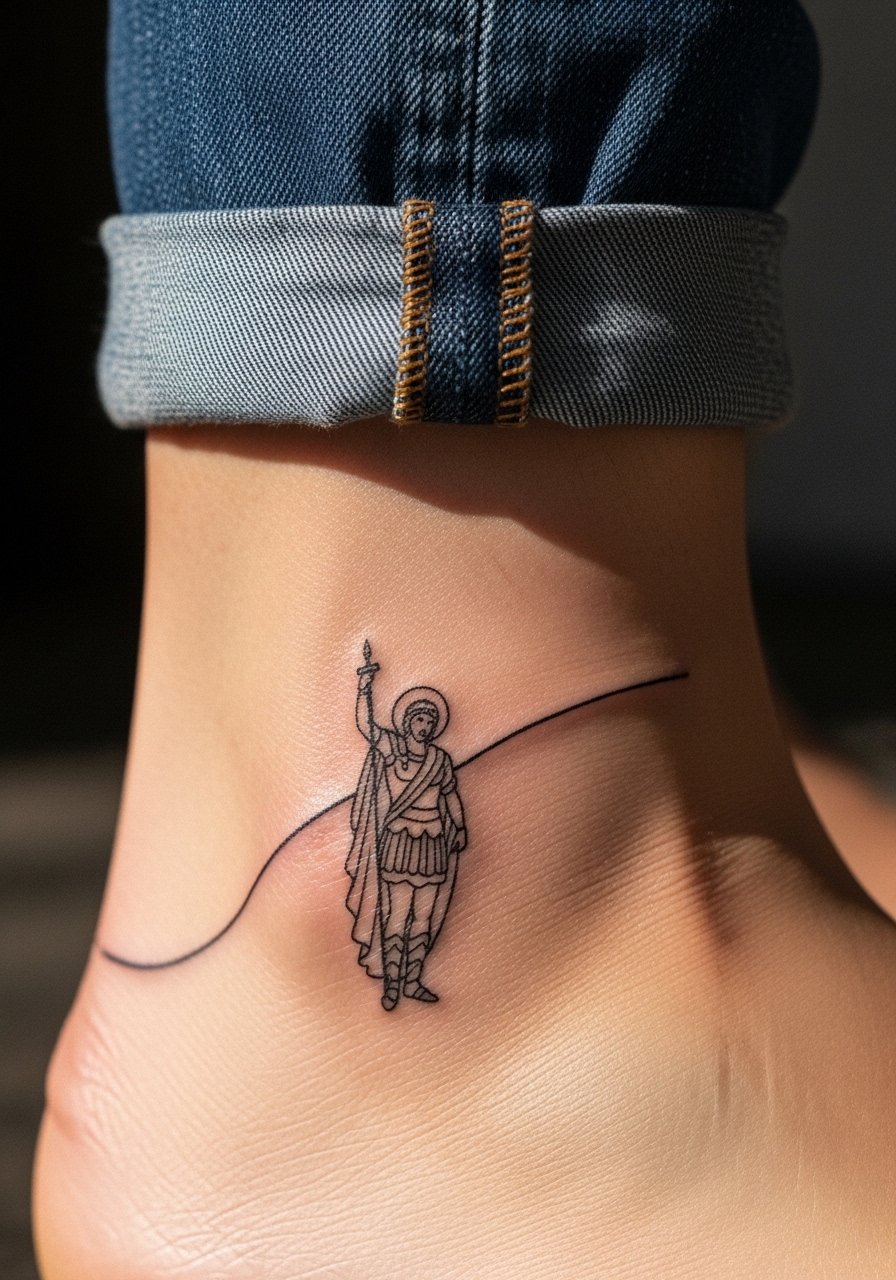
Ankle pieces are low-profile and show-ready in sandals. Pain is modest though the bone area can sting. Ask for slightly thicker line weight than you think you need because ankles experience friction from shoes and socks. Session time is short, usually under 45 minutes, but expect a touch-up within 1 to 3 years if you wear tight footwear. Pair the design with ankle-strap sandals to highlight the composition. A common error is requesting hairline-thin lines that vanish with friction and repeated washing.
4. Script-Integrated Fine Line St. Michael on Ribcage

Fair warning, the ribcage is higher on most pain charts. People who choose this often want a private placement that reads larger than its size. During consultation specify how the script should flow with the angel so letters do not intersect wing feathers. Rib skin stretches with weight changes and pregnancy, so scale the design up slightly to preserve negative space. Artists debate fine line here. One camp says ribs blur fast and recommend bolder lines. The other camp uses precise depth and spacing and reports stable results. Ask your artist where they stand before booking. Session time can run longer when adding script, and a touch-up at two years is not unusual.
5. Micro-Realism Inner Bicep Saint Michael
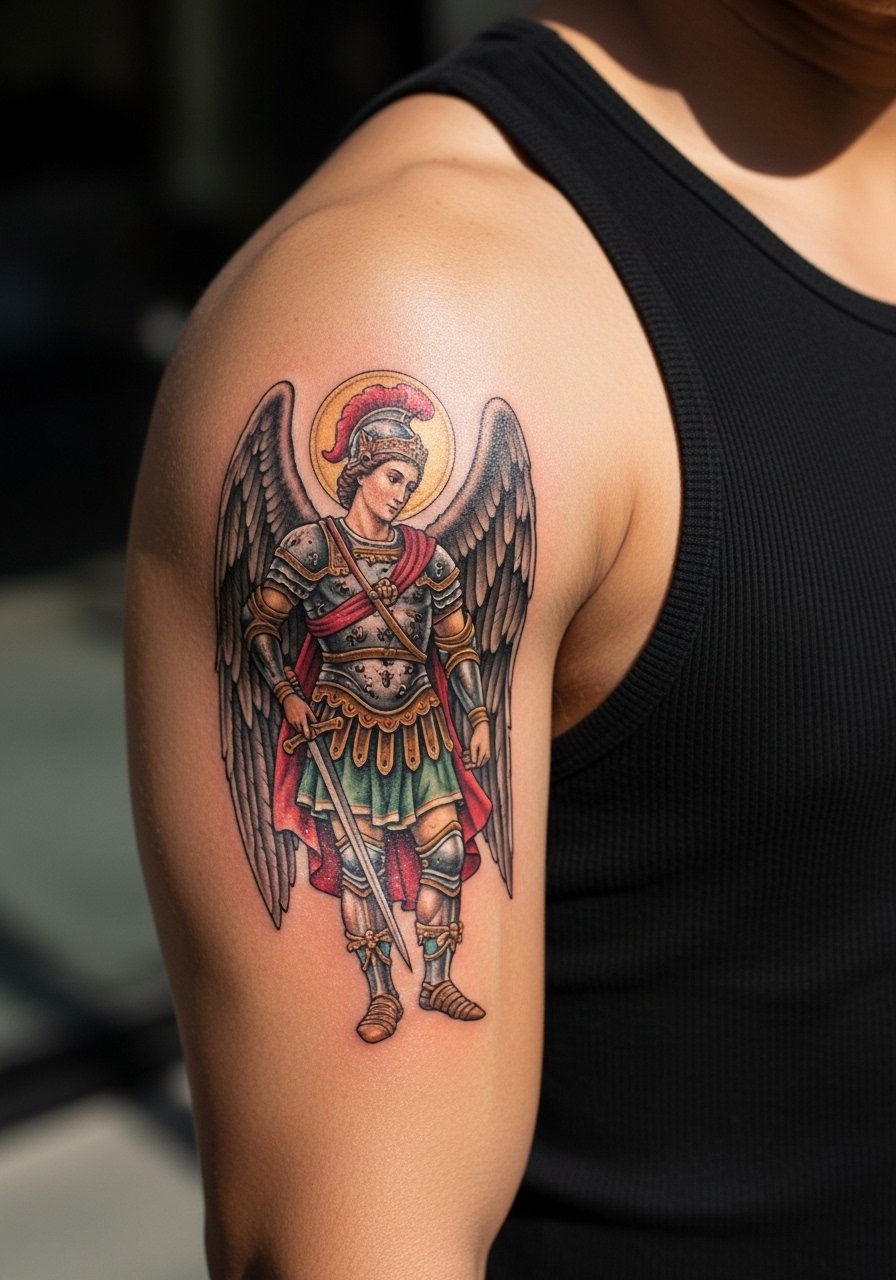
Inner bicep work sits behind a softer skin plane, so the lines can sit gently without harsh blowout. Tell your artist you want the contrast between armor and wings emphasized so the small details read well when the arm hangs. The area is moderately painful and sessions are short for micro pieces. Watch out for placing too much dense shading in a one-inch space, which tends to flatten into a smudge after healing. For the session wear a tank top so the artist can position the arm without fabric bunching.
6. Neo-Traditional Archangel with Bold Wings on Thigh
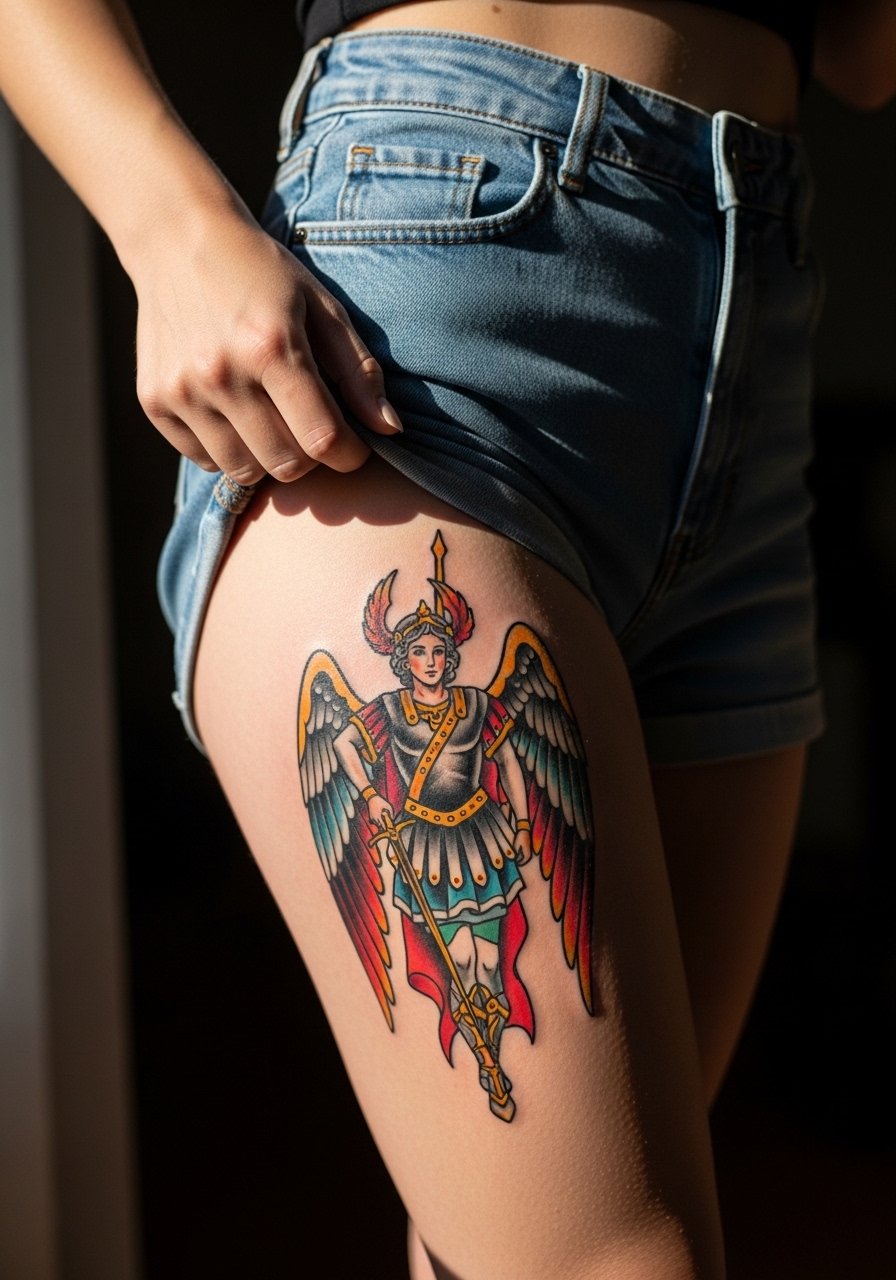
Neo-traditional gives you saturated color and strong silhouette that ages into a graphic statement. Thigh placement tolerates saturation and holds color through sweat seasons better than shoulders. Expect two to three session windows for a 4-6 inch piece. For showing it off pick high-waisted denim shorts or high-slit skirts that reveal the composition. A common mistake is asking for too much tiny color detail in a compact space, which later needs rescues to maintain contrast.
Studio Day Picks
Those collarbone, forearm, and thigh pieces above need different prep from a back plate. Pack a few specific items to smooth sessions and the first healing week.
-
Tea tree salve, indie UK brand search. Reddit users recommend gentle tea tree salves for itchy fine line areas in warm weather, which helps delicate collarbone lines avoid smothering.
-
H2Ocean spray portable bottle. A spray option keeps ribcage and collarbone tattoos clean without touching, which is handy for sensitive areas after short sessions.
-
Japanese rice bran balm search. This kind of balm locks moisture for black and gray pieces without leaving a shiny film, which helps contrast on darker skin tones.
-
Indie mushroom extract lotion search. Lightweight lotions that absorb fast can reduce scabbing on single-needle forearm work and help line clarity during the first month.
-
Hustle Butter Deluxe search. Thin, non-greasy consistency works well in the first week for fine line pieces that need moisture without pore clogging.
7. Black and Gray Armor St. Michael Across the Upper Back

Back pieces allow scale and drama, which helps realism age gracefully. This is low on immediate blowout risk because the skin plane is stable. Tell your artist to focus saturation in core armor contrasts rather than tiny filigree, which often washes out on large surfaces. Sessions commonly span multiple visits and you should plan for two to three appointments. For nights out wear a backless halter top or sheer blouse to show the piece once healed. A typical mistake is crowding the composition with competing elements, which dilutes the central figure.
8. Watercolor Wing Accent on Shoulder
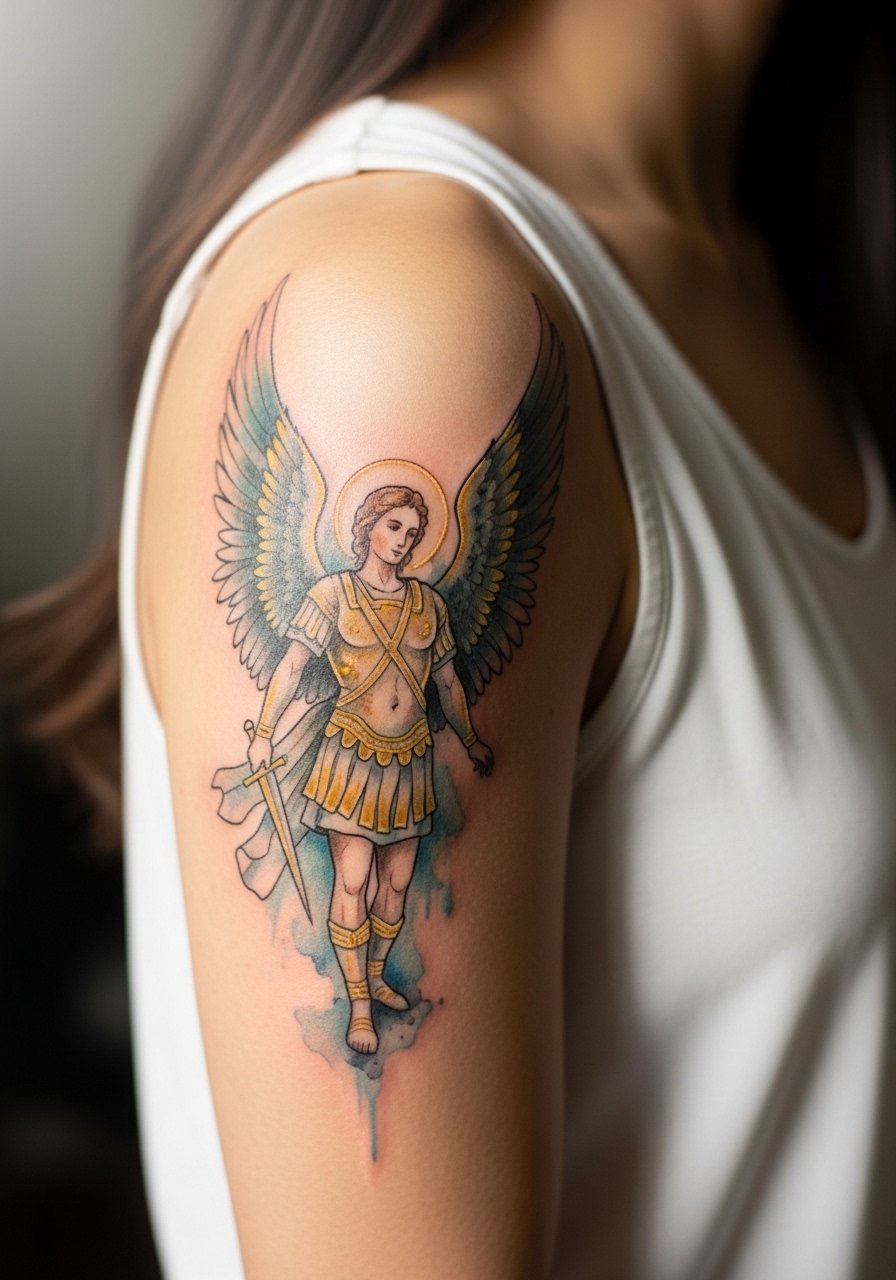
Watercolor wings give an ethereal feel but they fade faster than black and gray. If you like the watercolor look but want longevity, ask the artist to anchor washes with thin black outlines or muted gray shading. Shoulder work tolerates the pigment movement of washes better than hands. Session time is moderate and touch-ups for color can be expected within two to three years. For showing off the flow use a boat neck cotton tee. The biggest pitfall is relying on watercolor alone without any linework, which often turns into a uniform blur in high-sun exposure.
9. Dotwork St. Michael Mandala on Calf

Dotwork plays well on curved surfaces like the calf, where geometry reads from multiple angles. Ask for spacing that gives dots room to breathe so dense sections do not merge later. Calf skin is forgiving and dotwork holds contrast nicely with two sessions for a medium-sized mandala. The session can be meditative with longer pauses as the artist fills dots. A usual mistake is cramming the mandala too small, which kills the intended radial negative space.
10. Ornamental Archangel Mandala on Thigh

Thigh placements let you scale ornamental patterns for long-term legibility. Tell your artist you want breathing room between mandala rings so stipple shading does not collapse. Two to three sessions is common for a five-inch ornamental piece. For show-off looks pair with high-slit maxi skirts or denim shorts. A common misstep is over-detailing the center medallion at small sizes, which muddies with wear.
11. Script-Paired Fine Line on the Sternum
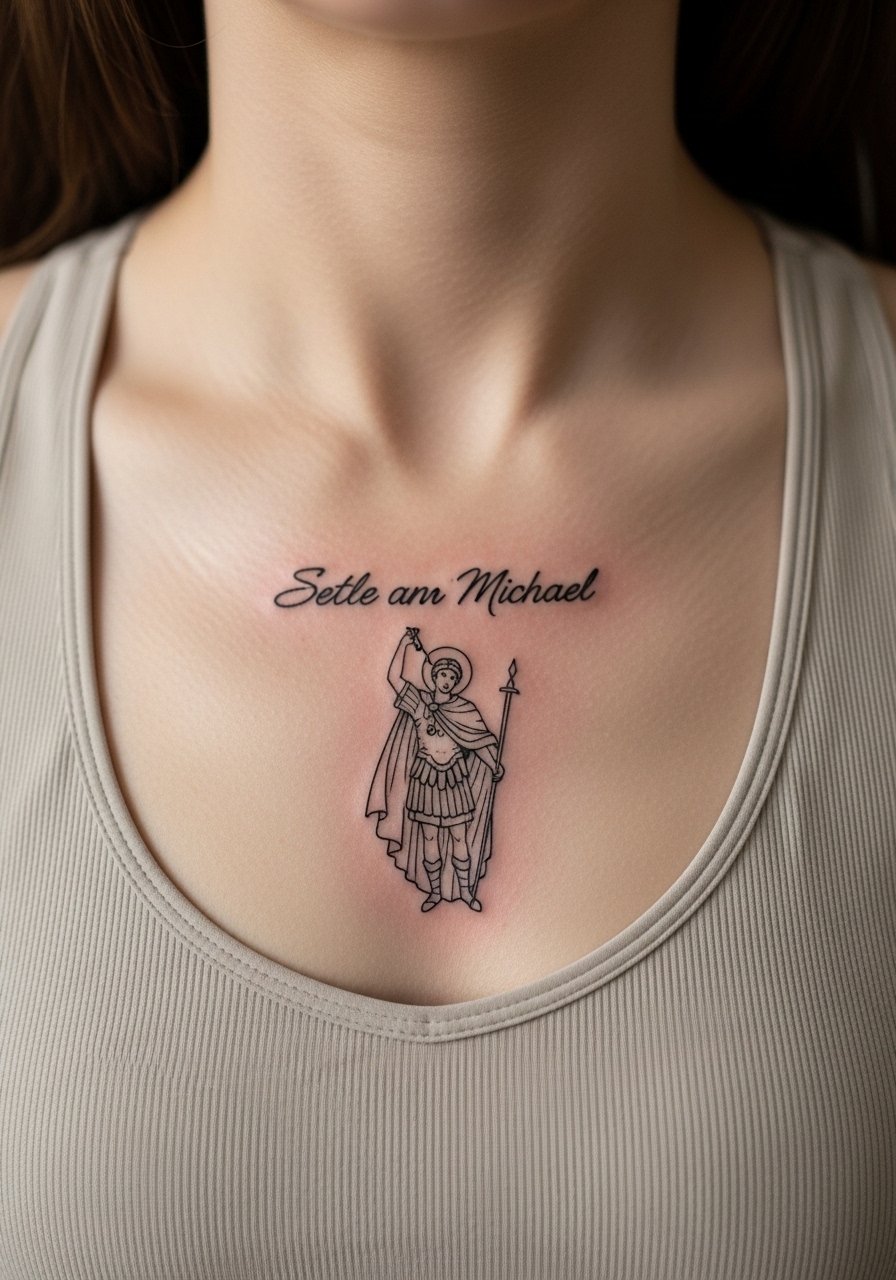
Sternum work sits close to bone and can be high on pain. People choose this when they want a central, intimate placement that pairs personal text with the figure. Ask for slightly larger script spacing than you think you need because chest skin moves and compresses with breathing. Expect a longer healing period where sleeping positions matter. This placement often benefits from an artist experienced with chest contours. Avoid requesting ultra-thin script that sits over the top of wing feathering, which tends to blur.
12. Surreal Abstract Wings on the Side Neck
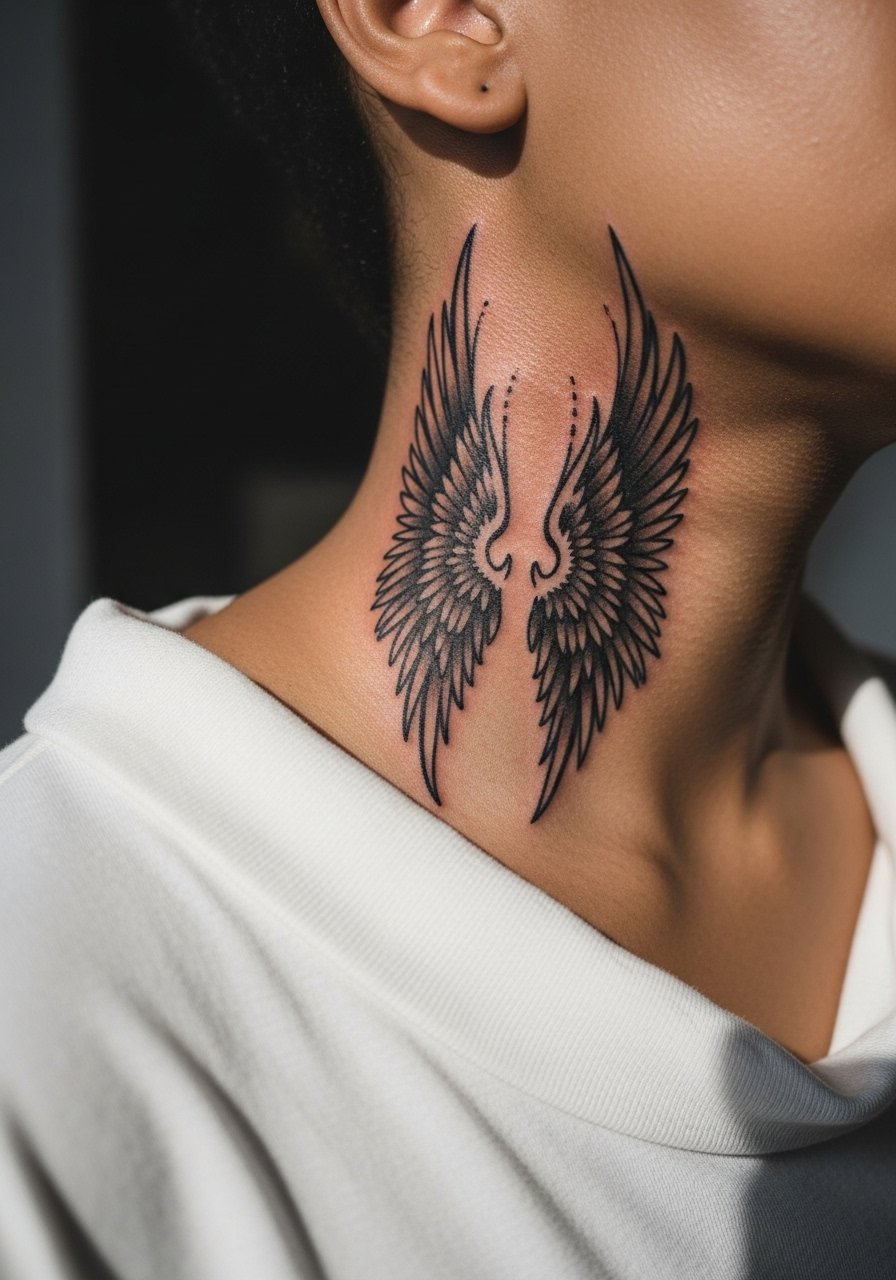
Neck pieces read immediately and create a statement, but they require a precise stencil. The side neck is sensitive and visible, so plan the social and work implications before booking. Artists split on small-scale neck fine line work, with some advising bolder weights to resist fading. Tell your artist how high on the neck you want the top of the wings to sit relative to collars. For styling, a matte black choker or high-neck pieces can echo the composition. A frequent error is making the design too low, which forces clothing to hide key features.
13. Ignorant-Style Chunky Silhouette on Outer Forearm
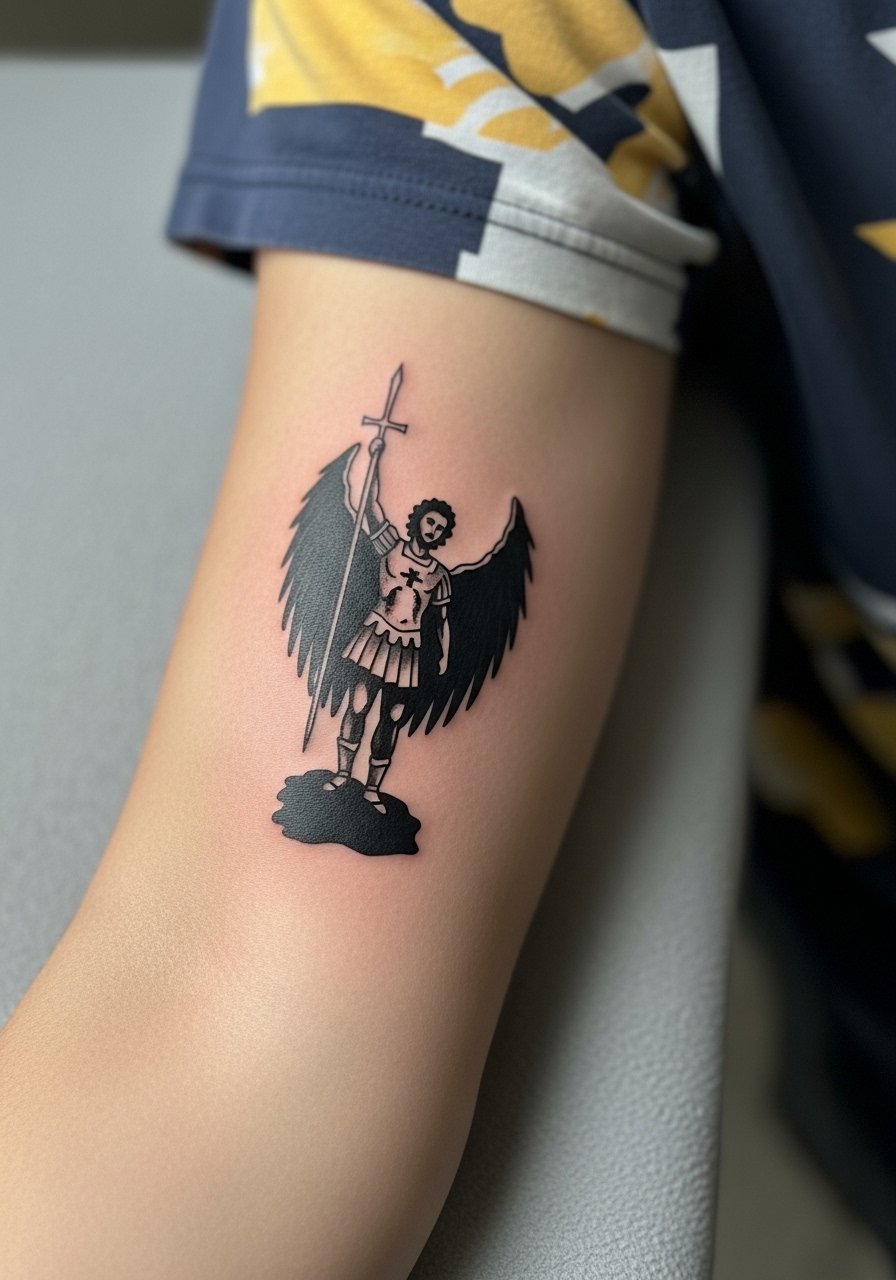
Chunky silhouettes embrace boldness, which works well on forearms where the shape reads from a distance. This style is low on blowout risk because artists use heavy black fill. Session time is often a single appointment unless you add shading. For casual wear pair with a short-sleeve button-up rolled at the cuff to keep focus on the silhouette. A common mistake is shrinking an ignorant piece too small, which negates its visual intent.
14. Minimalist Sword-Wielding Archangel on the Ankle Strap Area

Ankle strap placements are great for tiny guardian motifs you want visible on summer days. Ask for a slightly reinforced outline so the design withstands rubbing from straps. The session is short and usually done in under an hour. Plan a touch-up window at year two for active walkers. Pair with cropped straight jeans or sandals to show it off. Avoid hairline-thin lines or interior dot shading, which fade quickly under constant friction.
15. Collarbones That Follow the Bone for Better Aging

This iteration leans into anatomy so the angel moves with the body. I have seen collarbone designs that distort after weight shifts when artists ignore the clavicle arc. During consult ask the artist to place the figure so the wings radiate along the bone rather than cross it. For a subtle frame choose a dainty gold chain necklace that sits above the piece when healed. A common error is centering the figure over the sternum, which makes the layout look off when you move.
16. Tiny Wrist Micro St. Michael
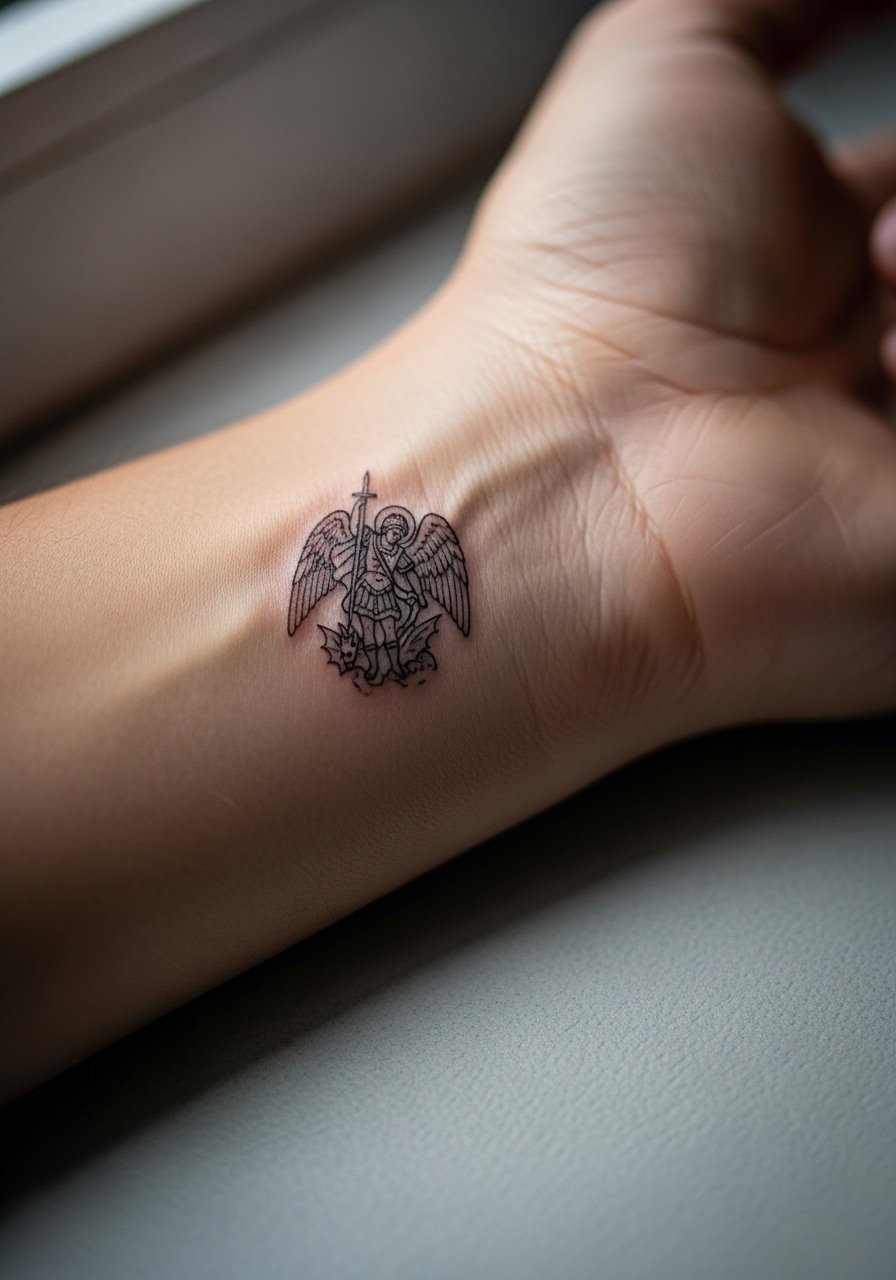
Wrist pieces are visible and flirt with higher fade risk because of washing and sun. I usually advise clients to ask for slightly thicker main lines so the silhouette stays readable. The session is brief, often under 30 minutes. Expect touch-ups sooner than for larger areas, sometimes as early as year one for heavy hand washers. For showing off choose a sleeveless muscle tank that leaves the wrist visible. The most common mistake is insisting on hairline detail that disappears with regular skin contact.
17. Small Saint Michael at the Side Neck with High Collar Styling
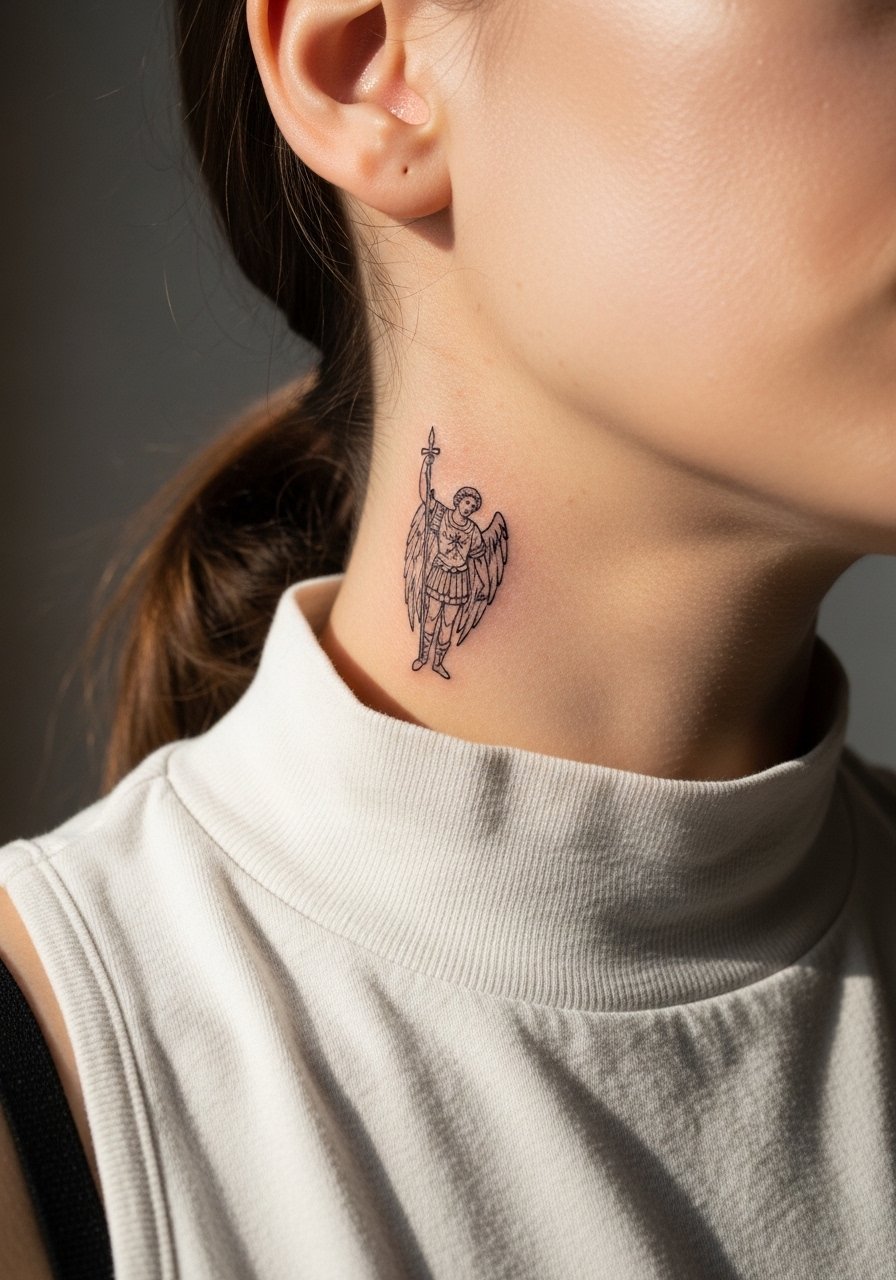
Side neck pieces have a way of framing the jawline and collar. They are more visible than collarbone placements and require clear agreement on height and scale. For session day wear a high neck crop top you can shift so the artist accesses the area without exposing unrelated skin. The area can need a touch-up in two to three years depending on sun exposure. A common error is asking for too much tiny feathering in a small neck piece, which tends to fill in.
18. Black and Gray Realism Shoulder to Upper Arm
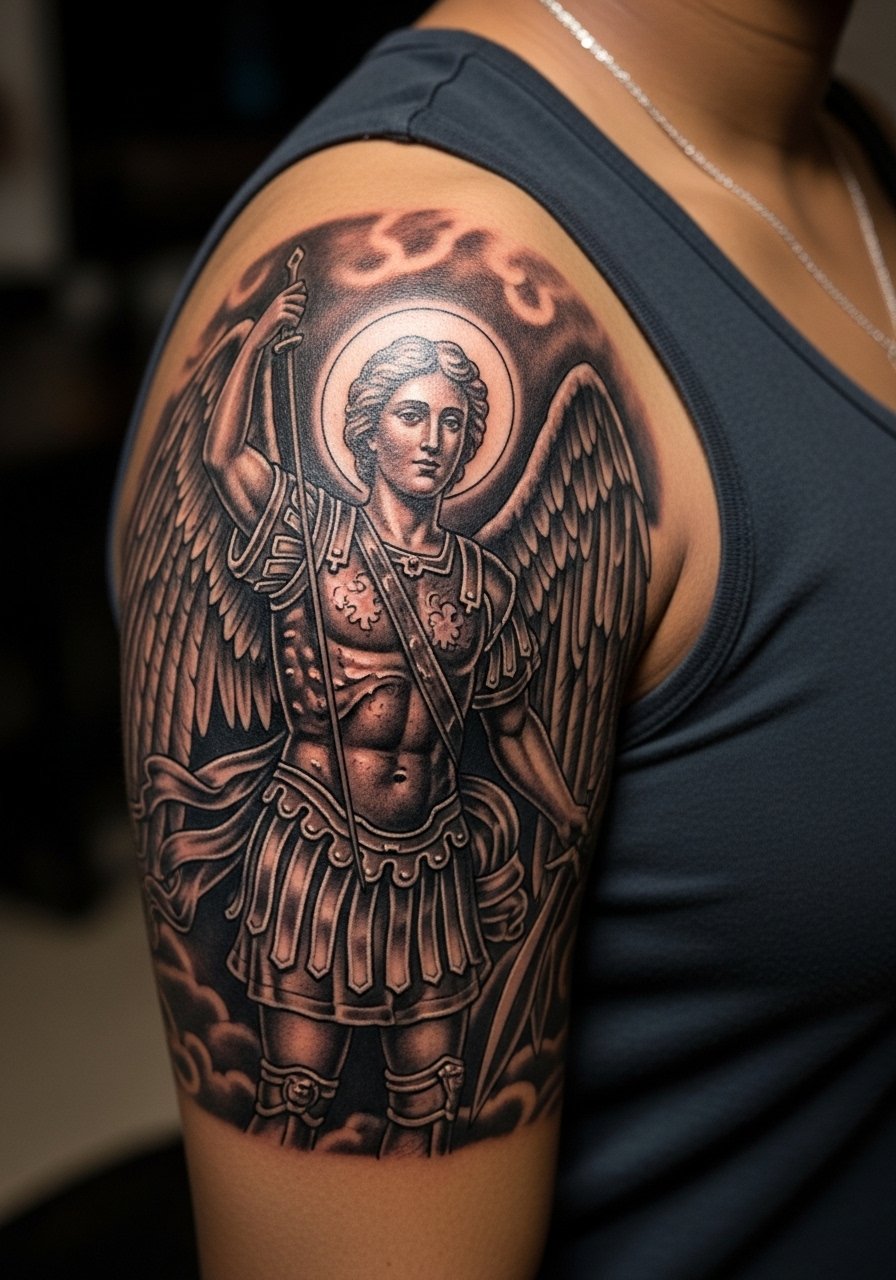
Shoulder to upper arm scopes let realism breathe with room for armor detail and wing flow. The skin here is receptive to shading and saturation, so color retention is solid. Expect multiple sessions for a larger six-inch composition. For the session wear a loose button-down shirt you can pull aside or a tank to lie comfortably. Avoid requesting overly dense micro detail in the wing tips because they blur faster than core shading.
19. Micro St. Michael with Birth Flowers on Inner Forearm

Combining a guardian figure with birth flowers gives a memorial edge without becoming heavy. Inner forearm lets you read both the figure and floral detail. Ask for a clear hierarchy so the botanical elements do not overwhelm the saint. Sessions are short and usually finish in one appointment. For showing the piece try a rolled cuff chambray shirt to balance casual days. A common misstep is requesting identical fine line weight for both the saint and the tiny petals, which blurs the subject boundaries.
20. Dotwork Panel Scaling from Small to Sleeve
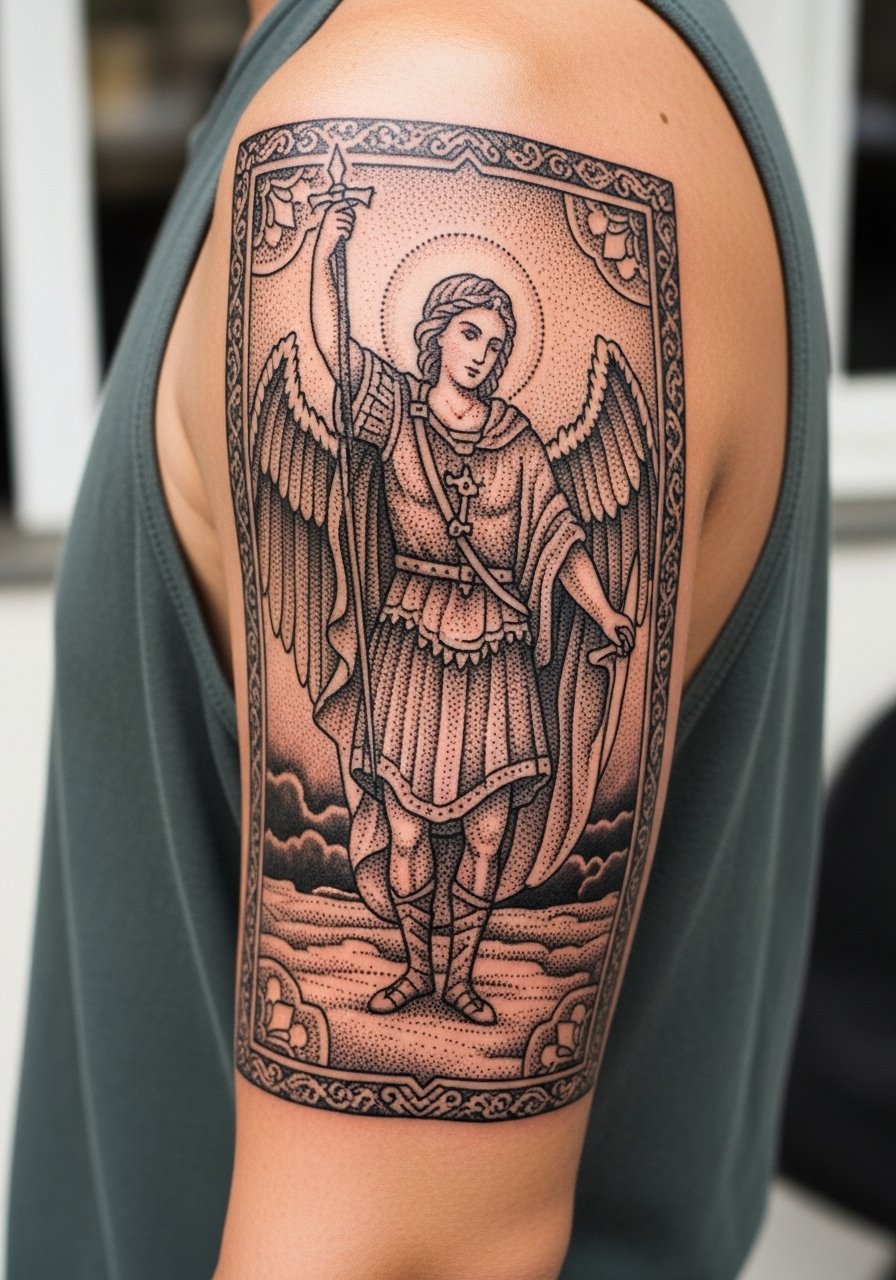
Dotwork panels let you expand a small medallion into a sleeve over time. Start with a three to four inch panel and plan future sessions that add bands of stippling and geometry. The hub of the panel should breathe so later dots do not merge. This process feels like a multi-visit project rather than a one-off. Artists may ask for staged appointments to maintain pattern clarity. The mistake people make is overfilling the first pass, which leaves no room for the sleeve to evolve.
21. Minimalist Sword Outline on the Ankle for Everyday Wear
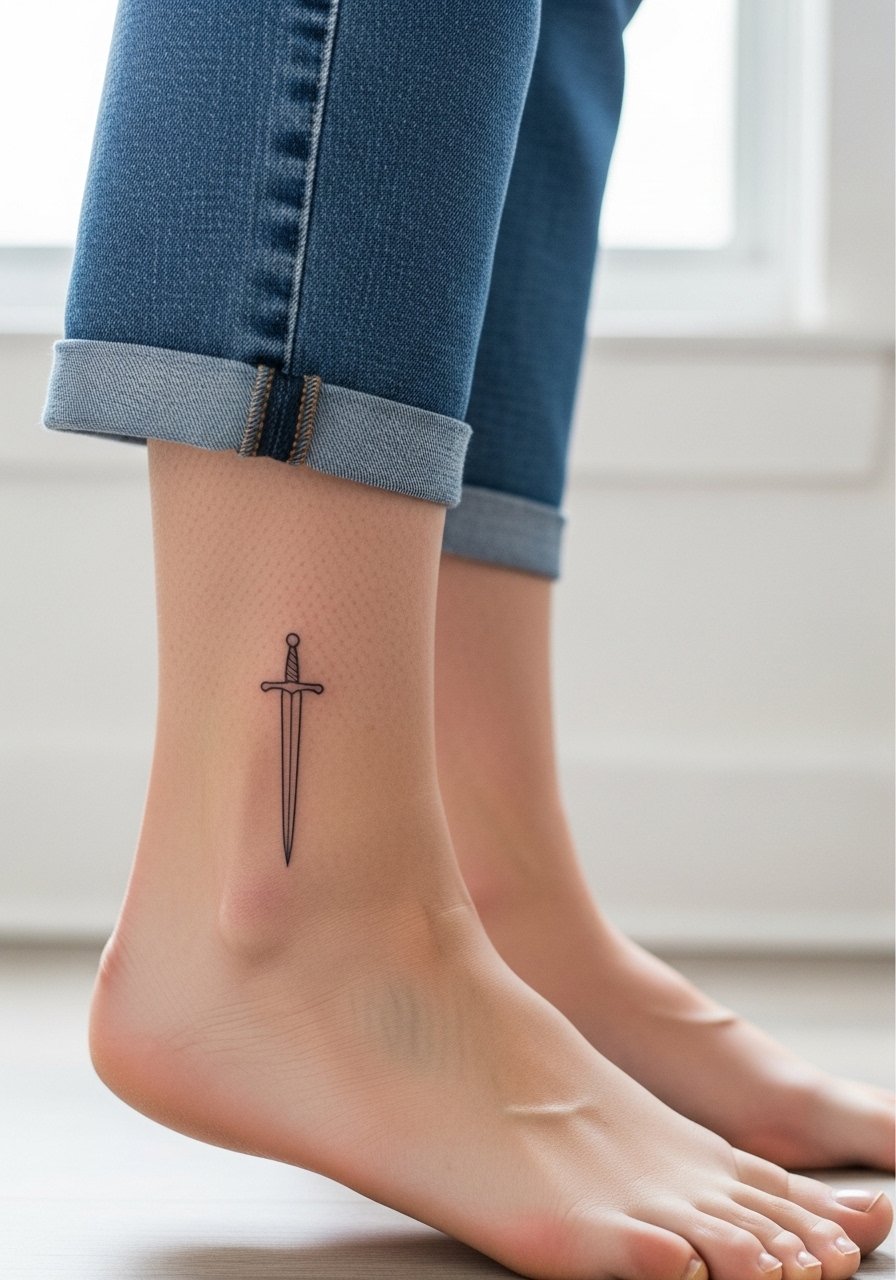
A small sword outline at the ankle is discreet and wearable with many outfits. Keep the linework slightly bolder than a hairline to withstand shoe straps and movement. The session is quick and tolerable. Plan on a touch-up at year two if you wear ankle jewelry regularly. For styling pair with cropped straight jeans or ankle boots. The usual error is asking for super dense interior detail in a two-inch area, which flattens after healing.
Frequently Asked Questions
Q: Does fine line Saint Michael fade faster on wrists and hands than on other placements?
A: From what I have seen, wrists and hands are among the fastest to soften because of frequent washing and sun exposure. If you want a wrist piece to last, ask for slightly heavier linework and budget for a touch-up at year one to three depending on wear. Avoid ultra-thin single-needle weight on high-friction zones.
Q: Should I pick watercolor or black and gray for a shoulder archangel if I care about longevity?
A: Black and gray realism generally holds up better long term than watercolor washes, especially on sun-exposed areas. You can keep a watercolor feel by asking for anchored lines or muted gray outlines so the composition retains form as pigments fade. This approach balances the look you want with durability.
Q: I have darker skin. Will delicate linework disappear in photos, and how can I fix that?
A: Delicate lines can read less in photos on darker tones. Test a slightly bolder fine line or add subtle shading to create contrast. Ask your artist for healed examples on similar skin tones or to do a small stencil test patch. Natural light photos also help the lines show up clearly.
Q: How should I prepare clothing for a collarbone or shoulder session?
A: Bring clothing that gives clear access without exposing unrelated areas, like an off shoulder linen blouse you can shift or a loose tank. Session wear that avoids bra straps or tight seams makes positioning easier and reduces fidgeting during the stencil stage.
Q: Artists disagree on Saniderm versus dry healing. Which camp is right for fine line work?
A: Artists split into two camps. One side prefers protective film because it keeps the area clean and reduces scabbing risk. The other side favors dry healing to let scabs form and fall naturally. For fine line work I have seen both approaches used successfully. Ask the artist what they use for fine lines and follow their specific timing for removal, because technique matters more than the brand name.