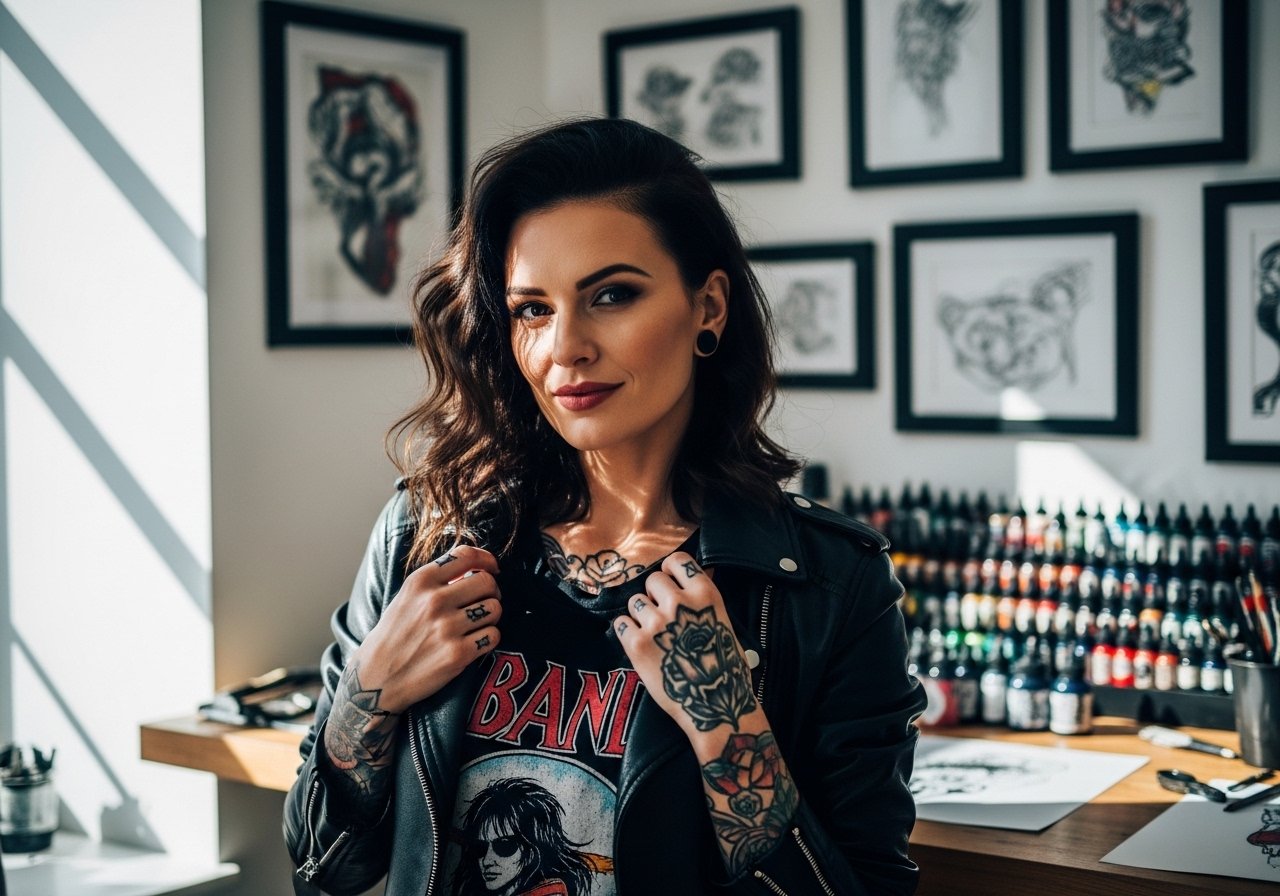
The popular look for neo traditional sun and moon tattoos is sharper than the Instagram hype. Bold outlines and saturated fills age better than delicate, overly-fine detail, yet people still run into three recurring headaches: forearm pieces that blur, colors that read muddy on darker skin tones, and sessions canceled or rescheduled at the last minute. Below are 21 sun-and-moon neo-traditional designs, each with what to ask your artist, how it heals, and smart wardrobe tips to wear during or after the session.
1. Radiant Sun with Crescent Moon and Floral Forearm Wrap

I recommend this for people who want a visible piece that still travels well across seasons. Tell your artist you want bold linework around the rays and thicker outlines where petals meet skin so the saturation holds. Common mistake is asking for too many tiny petals in a small forearm piece, which leads to blurring at year two. Expect a single 2- to 3-hour session for a 4- to 6-inch wrap, with a likely touch-up at 9 to 12 months. For the session wear a vintage crewneck tee you can roll or pull aside, and after the heal show it off with rolled sleeves and a leather cuff on the opposite wrist.
2. Bold Sunburst Eclipsing a Starry Moon Face on the Chest

This large chest piece reads best with exaggerated shading and thick outlines so it still reads from a distance. When consulting, ask for more space between the dense rays so the tattoo can breathe as it heals. Artists are split on line weight here. One camp argues that very fine lines fade fast on the chest, another says skilled depth and spacing make fine detail last. Name both camps in the conversation and ask which approach the artist prefers. Plan for two sessions for a 6- to 8-inch chest piece, and be prepared to protect the area from sun for the first year to retain saturation.
3. Half-Sun, Half-Moon Mandala on the Wrist
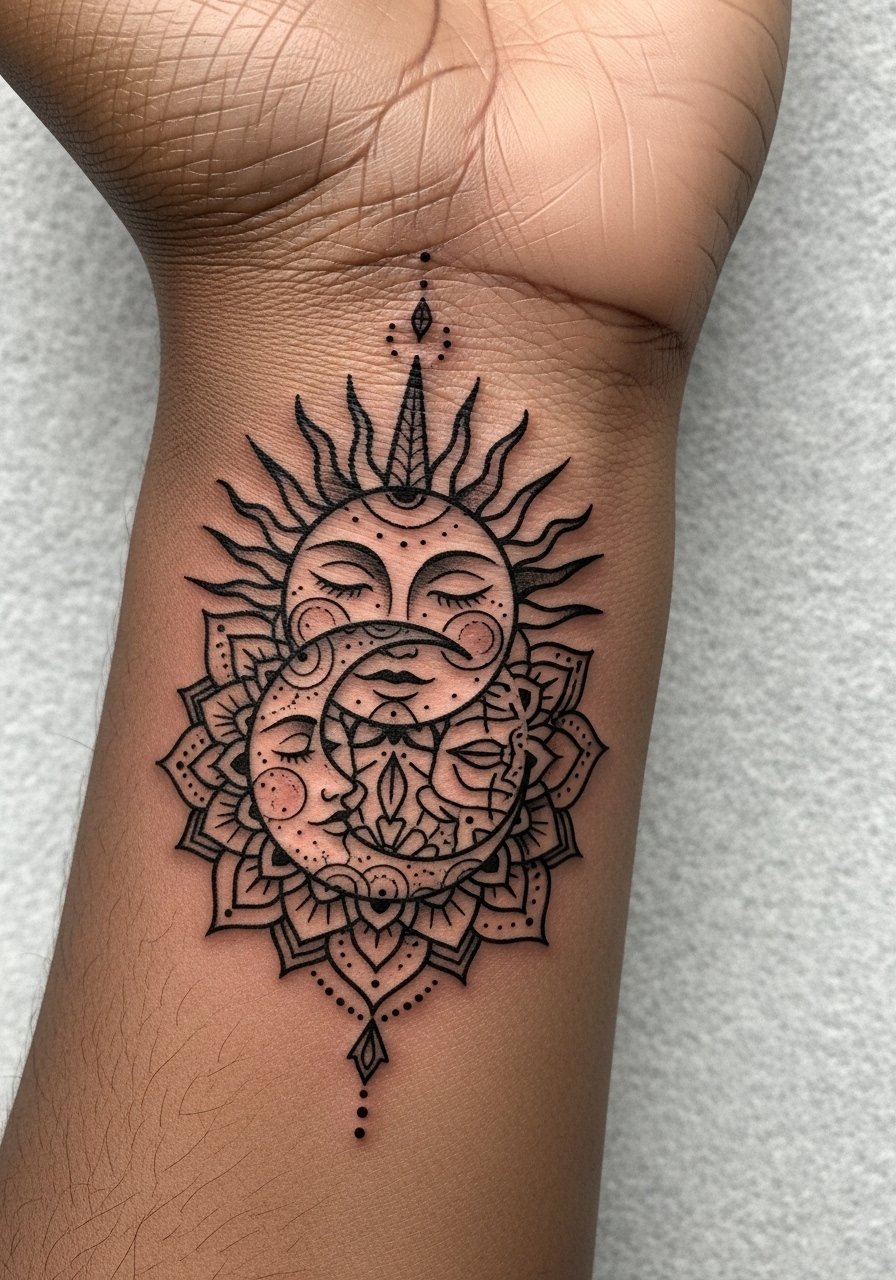
Small geometric pieces on the wrist need breathing room to avoid merging. Tell your artist you want negative space between mandala rings and a heavier outer ring around the sun half to keep contrast. A common failure is packing too much tiny dot work into a three-inch wrist piece; those dots soften over time and the mandala loses clarity. Expect a one-hour session for a 3- to 4-inch piece, with a likely touch-up at six to twelve months. Show-off styling pairs the piece with a wide cuff bracelet on the opposite wrist, and wear short sleeves to the appointment for easy access.
4. Chasing Sun and Moon Through Neo Clouds on the Shoulder
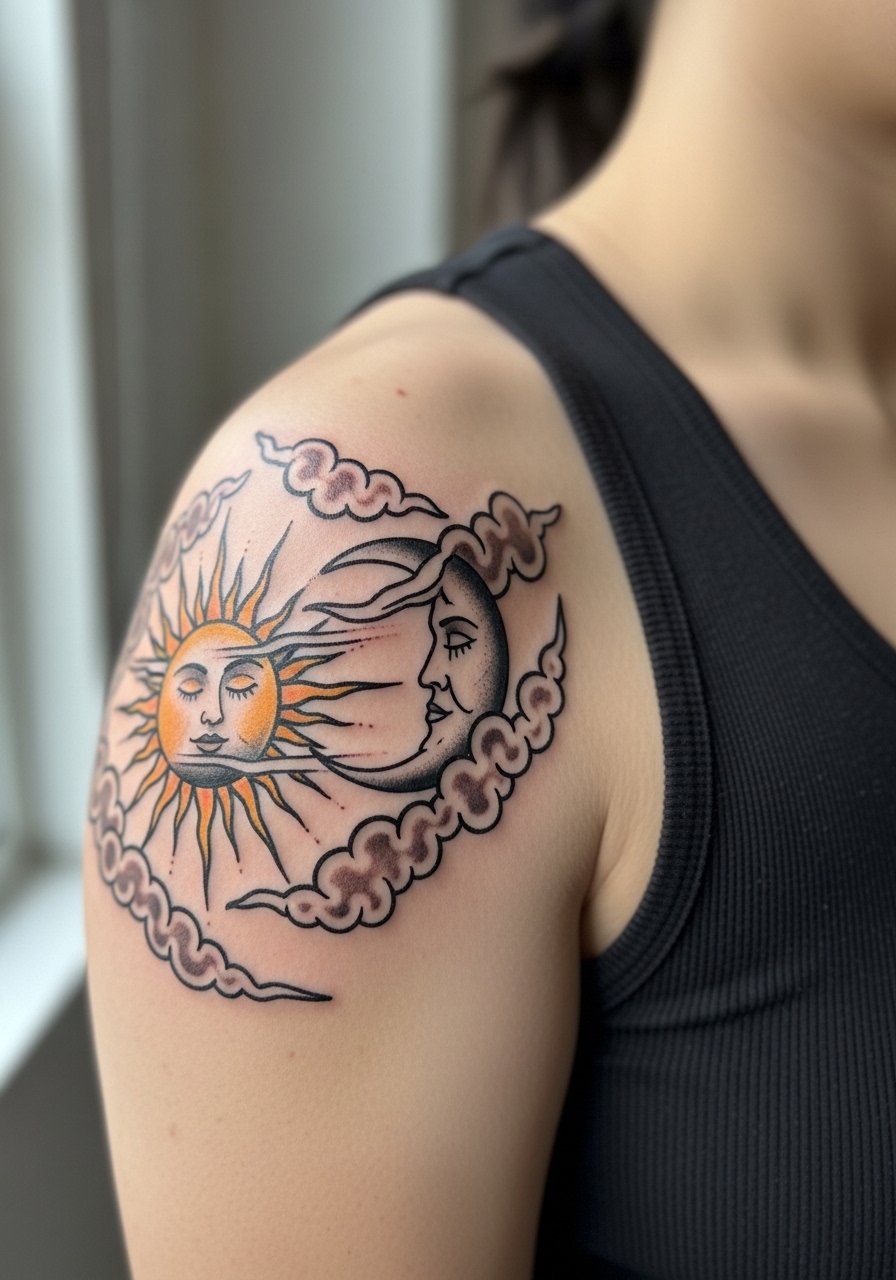
Shoulder placement lets you scale details without crowding. Ask for whip shading in the clouds and saturated color blocks in the sun for longevity. The session feels moderate, a 3- to 4-hour block if you add florals. Blowout risk is low on the shoulder if the artist uses confident linework. For the session wear a sleeveless muscle tank that you can pull aside, and pair the healed piece with off-shoulder tops to frame the work.
5. Dagger-Pierced Moon with Banner Text on Upper Arm
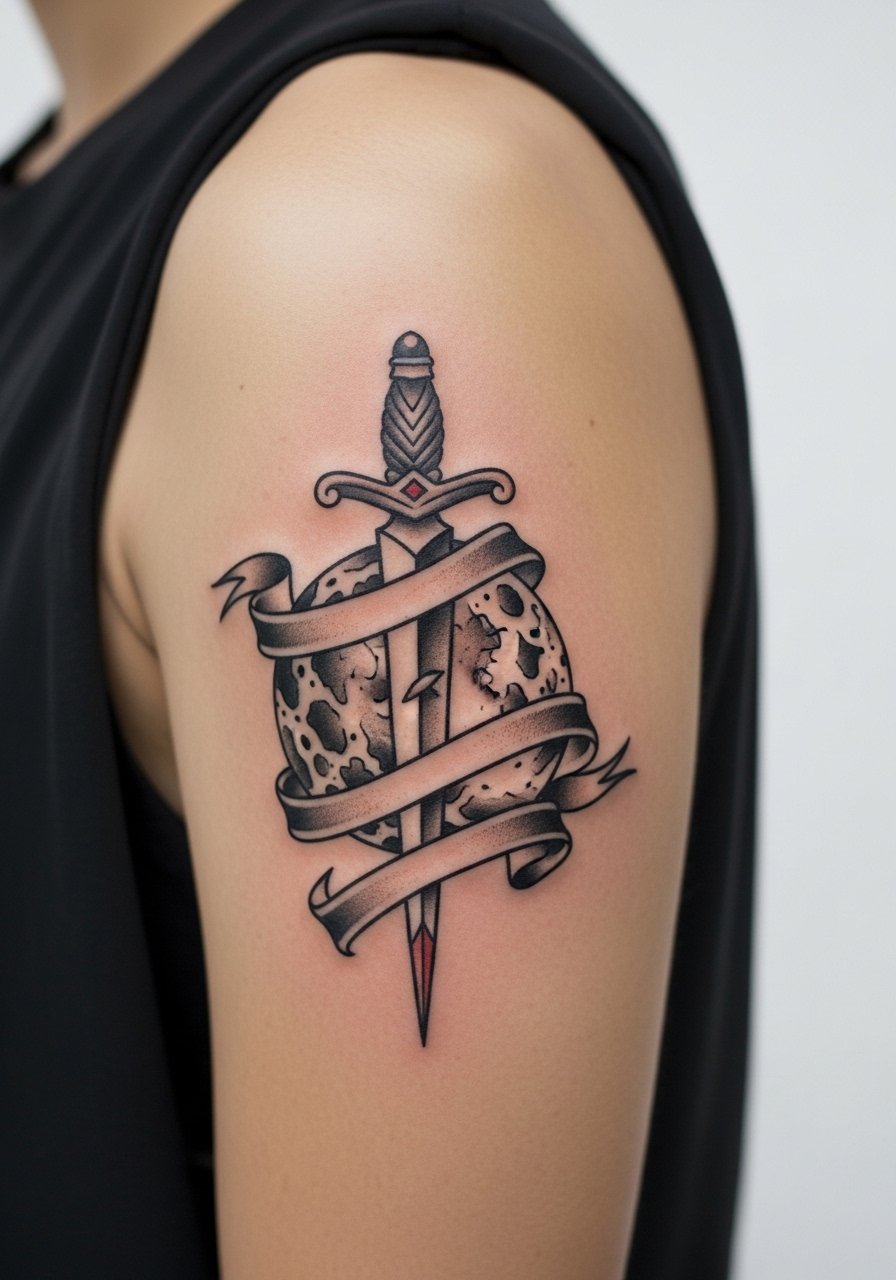
This hybrid leans into classic tattoo motifs updated with neo-traditional saturation and bolder outlines. In consultation, be explicit about banner placement and letter size so text stays legible as the skin moves. The most common error is requesting very thin script in a tight banner, which softens unevenly. Pain is mild to moderate for the upper arm. Plan for a two-hour session and a single touch-up if the banner needs crisp edges. For the session pull on a sleeveless muscle tank so the artist has unobstructed access.
6. Solar Eclipse Portrait with Starry Background on the Back
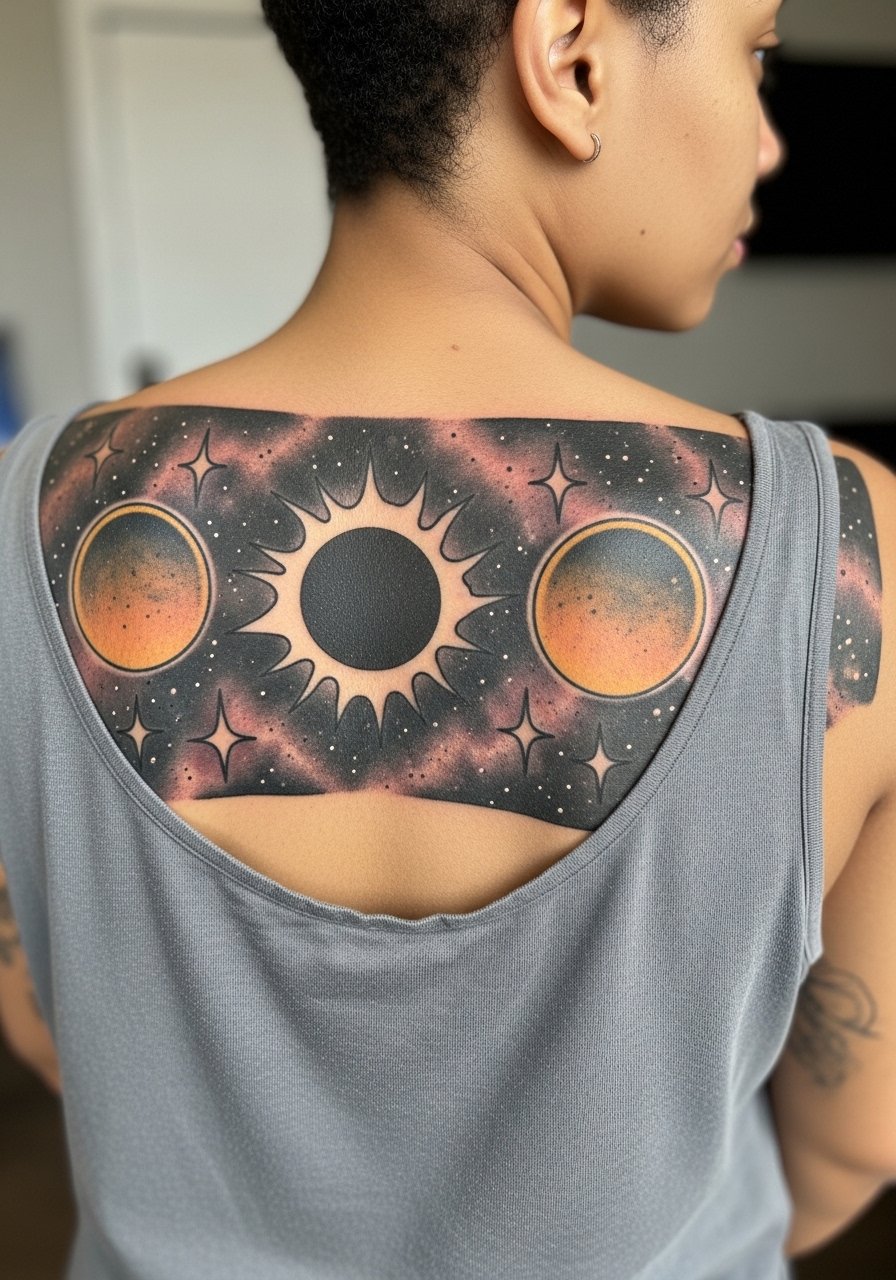
Back pieces give room for scale and dense imagery that would be too tight elsewhere. Ask your artist for exaggerated negative space around the portrait so the moon face keeps contrast over time. Healed at six months this will read crisp, at two years the larger shapes hold while micro texture may soften. Sessions are commonly two parts because of the area and the need to rest. Also plan for a longer healing window since back work can rub against clothing during sleep.
Studio Day Picks
The shoulder and arm work above ask for different prep than wrist and chest pieces, so these items smooth the session and the first week.
- CeraVe Healing Ointment. Lightweight and breathable for areas like the forearm and shoulder where heat and sweat can cause clogging, helpful during summer heals.
- Green Sheep Tattoo Balm. A richer balm that users say preserves saturation on color-heavy pieces like the sunburst and floral fills above.
- Bad Skin Tattoo Soap. Gentle cleanser for the first weeks so detailed mandalas and tight linework stay clean without overdrying.
- Lush Charity Pot Body Lotion. A fragrant option some people use after initial healing for moisturizer, though fragrance can irritate sensitive skin so patch test first.
- Hustle Butter Deluxe. Frequently recommended for color retention on heavy saturation work like the eclipse and sunburst pieces above.
7. Small Ornamental Sun on the Ankle
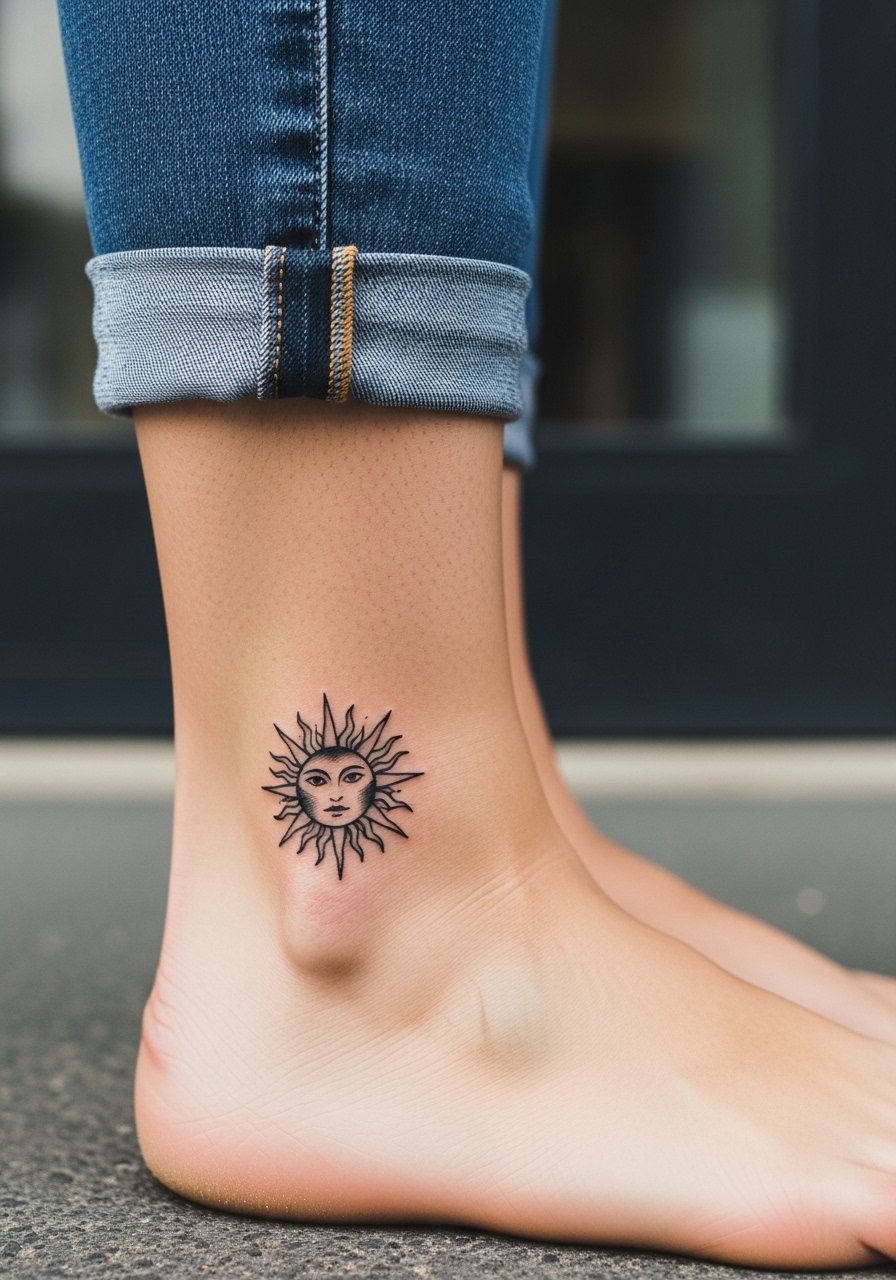
Ankle tattoos need to account for shoe friction and socks. Ask for slightly bolder outer lines and leave negative space under the rays to avoid rubbing out tiny fills. Expect a short session under an hour, and plan a touch-up at around one year if your footwear keeps rubbing the area. For showing it off, roll your jeans and pair the piece with a dainty anklet or sandals, and for the session wear pants you can easily pull up.
8. Collarbone Asymmetric Sun Over Moon
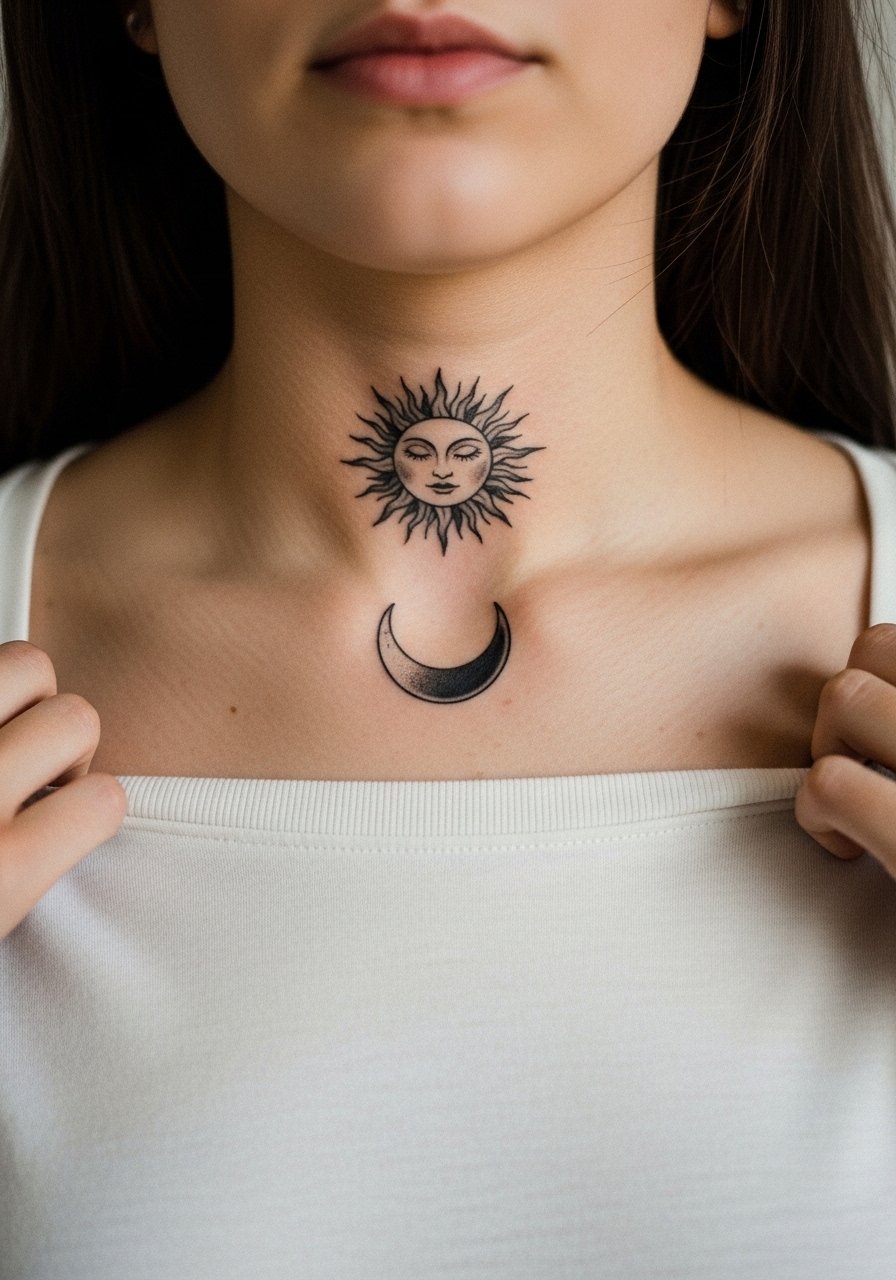
The collarbone accent demands precise placement. Tell your artist how much you want visible at neckline level so they can test the stencil under clothing. A common mistake is centering the piece too high which causes awkward overlap with necklaces. Expect moderate discomfort and a single session for small to medium sizes. Consider neckline-friendly clothing the day after the session to avoid chafing from collars.
9. Black-and-Gray Neo-Traditional Moon with UV Accent on the Hip

This idea keeps the base in black and gray so it photographs clean on darker skin, while a tiny UV accent adds nightlife flair. Discuss UV ink visibility with the artist since it needs placement that won't be sanded by waistbands. The hip area requires careful session wear so bring high-waisted bottoms you can shift. Expect one session and a possible minor touch-up where fabric rub is heavy. For visual longevity ask for high-contrast outer lines to keep the moon readable.
10. Interlocking Sun and Moon with Zodiac Negative Space on the Upper Arm
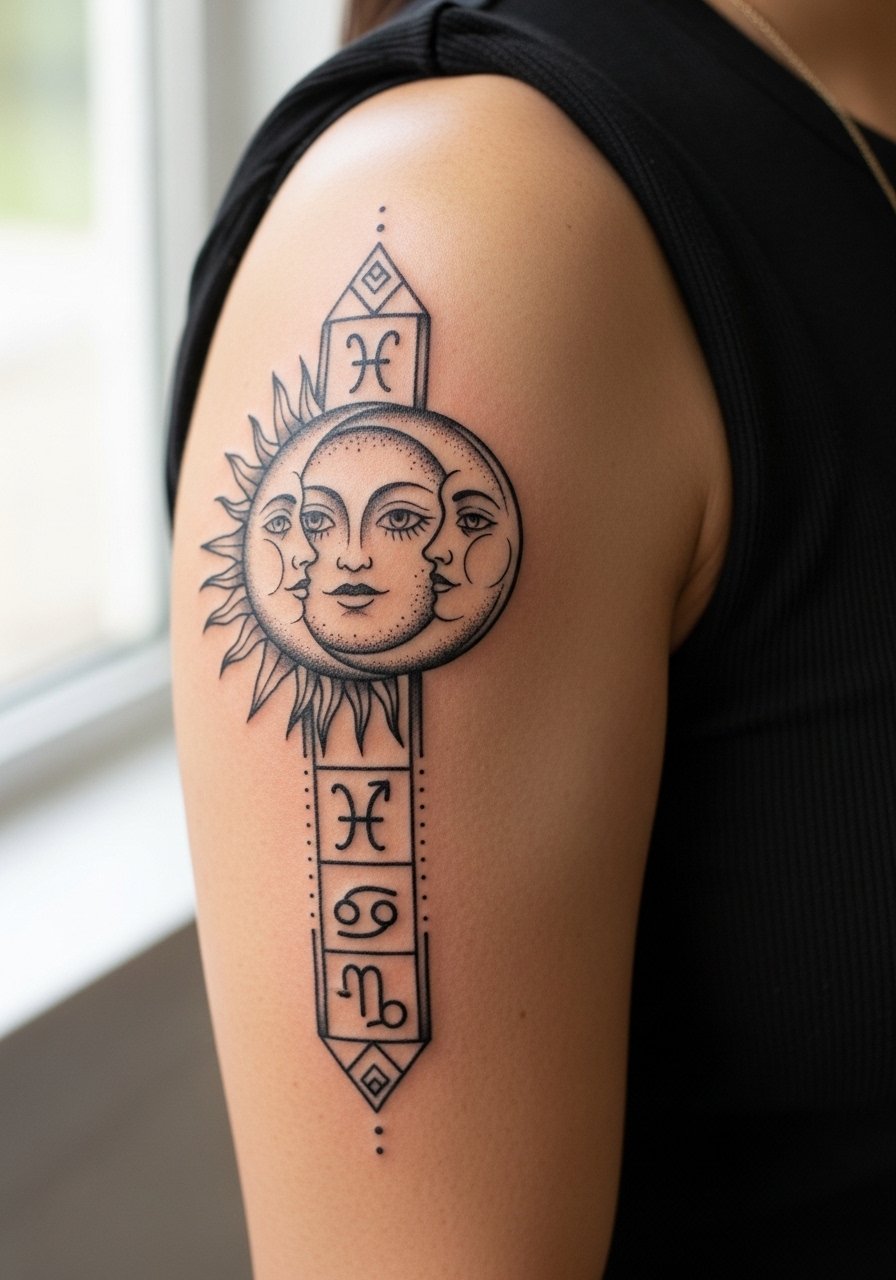
Using negative space to form zodiac glyphs keeps the composition readable and custom without crowding. Tell your artist the exact glyph placement and size so the negative areas remain clear as the skin ages. Upper arm work tolerates denser detail, but thin script inside glyphs tends to blur, so opt for bolder glyph marks. Sessions are usually two hours for medium-sized pieces, and a touch-up at year one keeps the negative shapes crisp.
11. Phase Transition Timeline Across the Ribcage
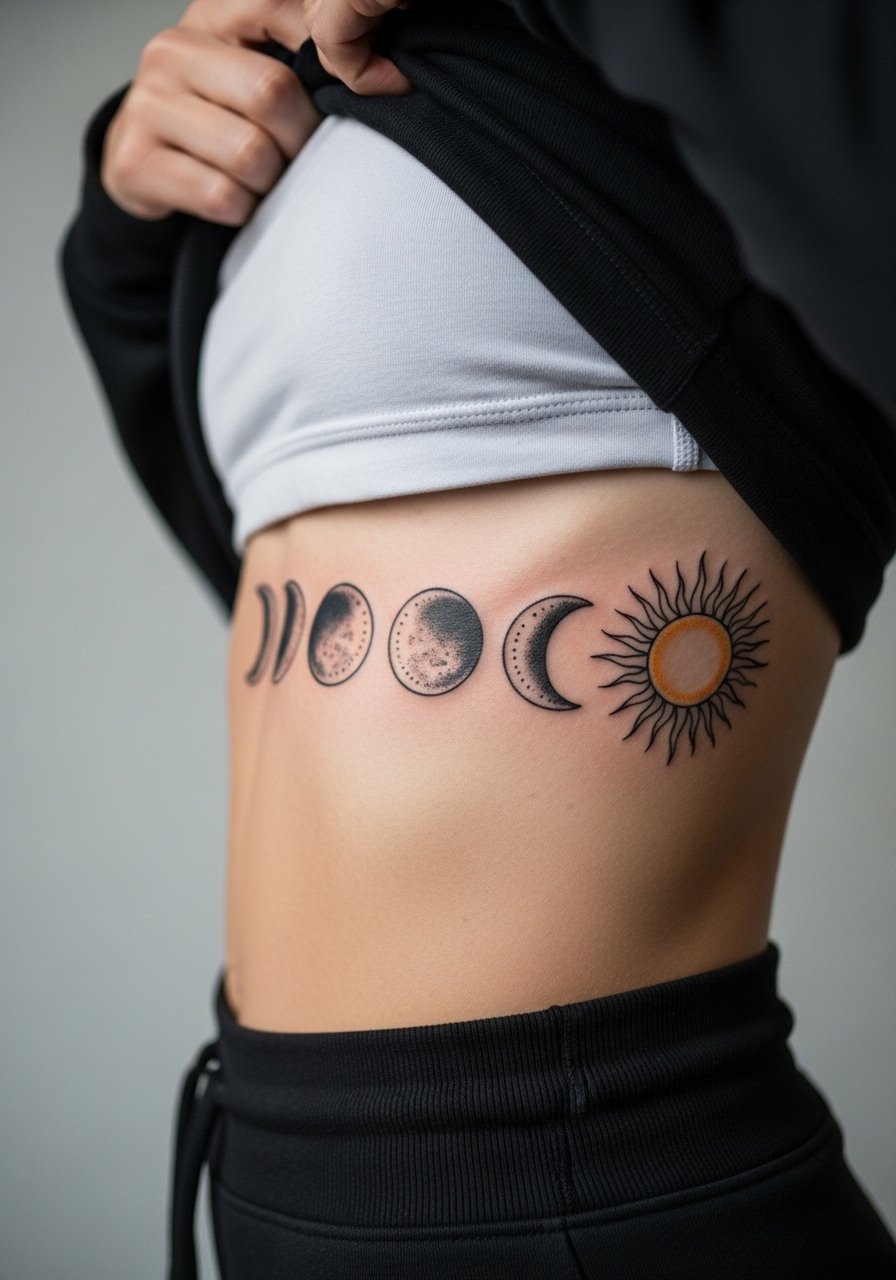
Ribcage tattoos are notorious for their pain and for changes if body shape shifts. Ask your artist to space each phase with consistent gaps so the sequence ages evenly. There is also a heated debate about protective film and dry healing. One group of artists prefers protective film for faster sealing and less mess. The opposing group favors dry healing and believes it yields better scab formation and ink setting. Name both camps when you book and follow your artist's recommended method for this placement.
12. Minimal Neo-Traditional Wrist Outline with Micro-Realism Fill
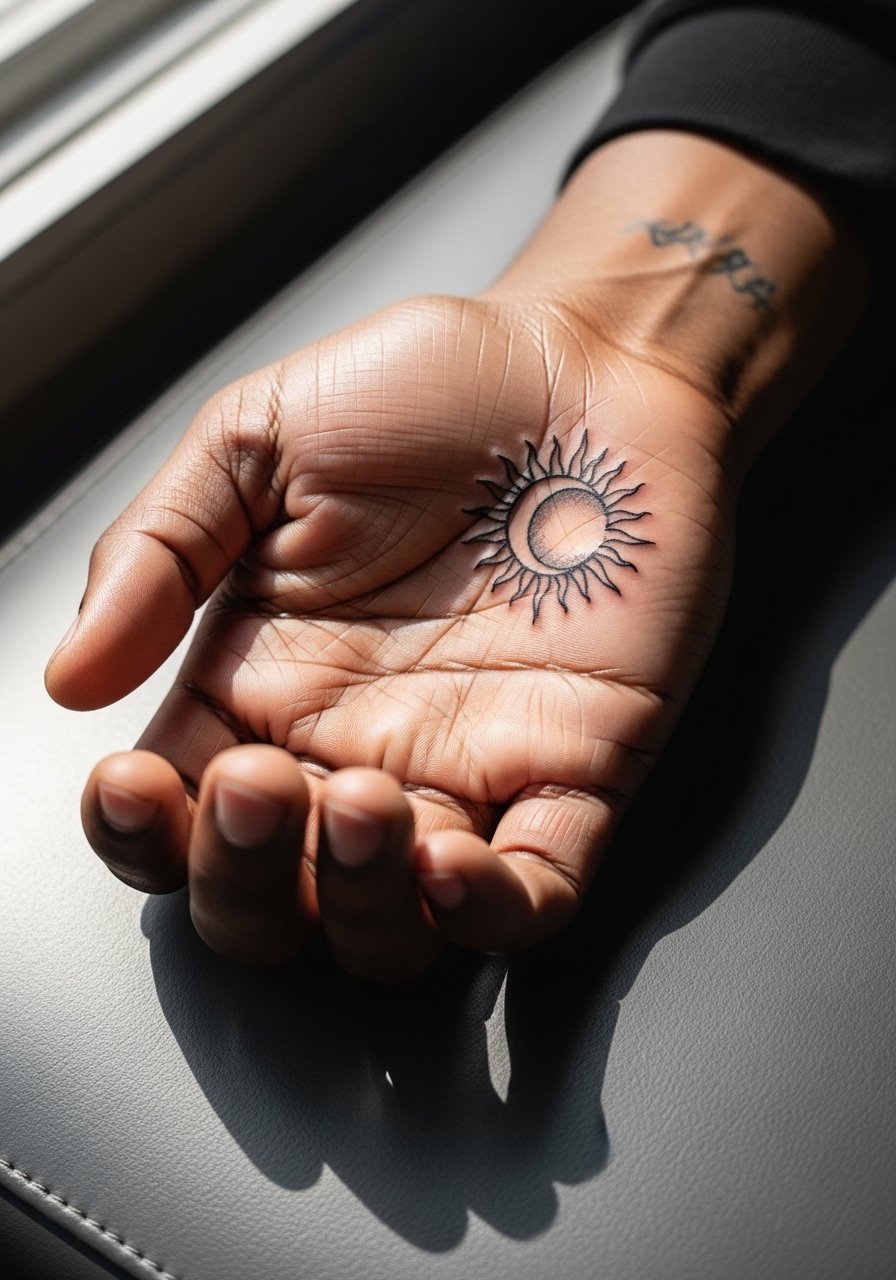
Wrist pieces need line weight that survives frequent washing and movement. Ask for a strong outer outline with softer internal shading so the silhouette stays readable. A common error is requesting ultra-thin internal lines that merge after months. Expect a short session and a touch-up at six to nine months. For showing it off pair the tag with a wide cuff bracelet on the opposite wrist and wear short sleeves to the appointment.
13. Patchwork Sun and Moon Sleeve Collab
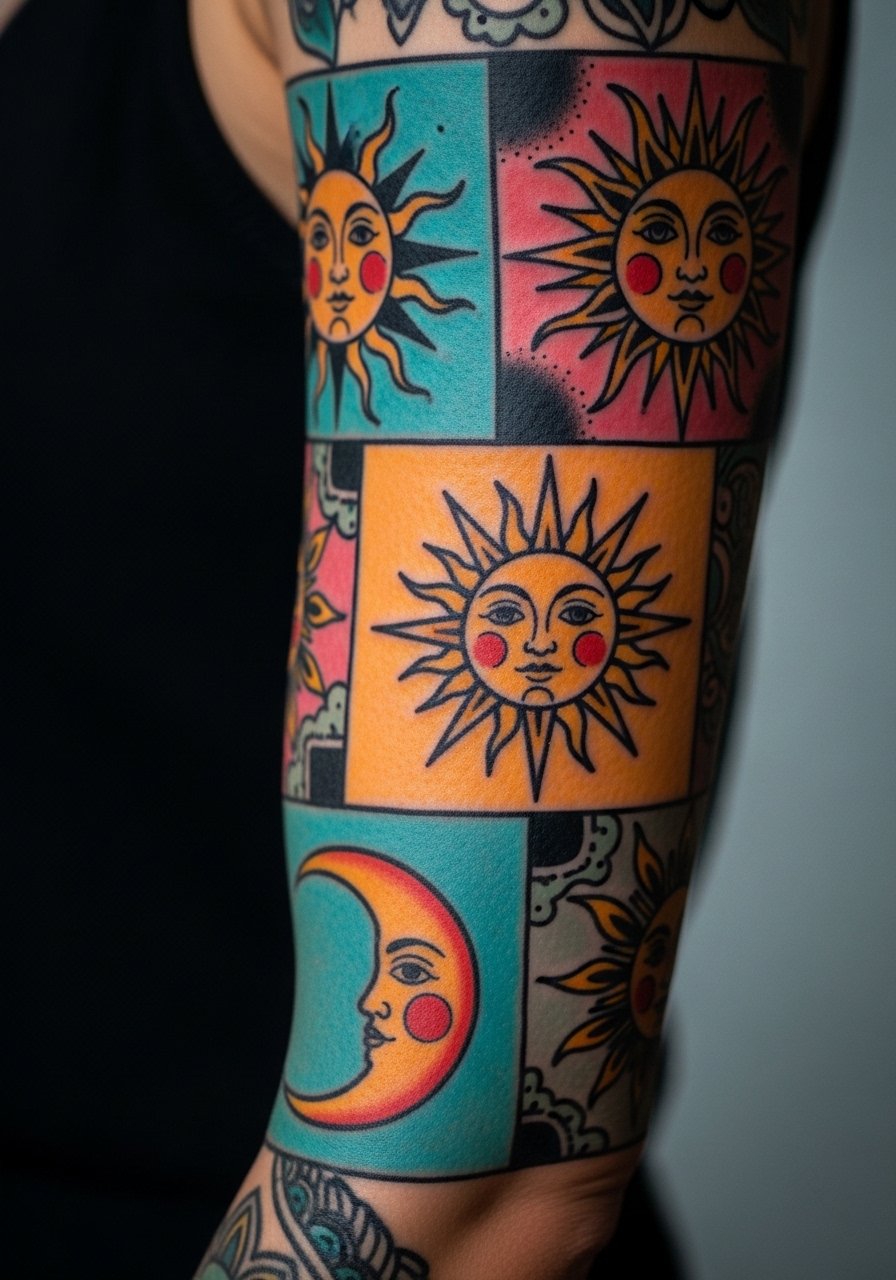
Patchwork sleeves are a great way to mix guest-artist pieces while keeping a cohesive palette. When planning, request a color guide so each artist aligns on saturation and outlines, which prevents mismatched fades later. The sleeve will take multiple sessions and deliberate rest between them. Avoid insisting on identical line weights across many artists; instead ask that each piece uses bold outer lines to match the neo-traditional aesthetic. For finished styling, balance the sleeve with a leather wrist cuff and rolled sleeves.
14. Small Mandala Sun Behind the Ankle

Behind-the-ankle pieces need stronger outer rings to stay readable between shoes and socks. Tell the artist you want slightly thicker outer dots to withstand friction. The area heals quickly but watch for swelling in the first week. Keep footwear soft and non-irritating while it settles. This is a low-time commitment design and works well for someone trying their first neo-traditional ink on a small scale.
15. Sun Face Portrait with Stipple Shading Across the Sternum
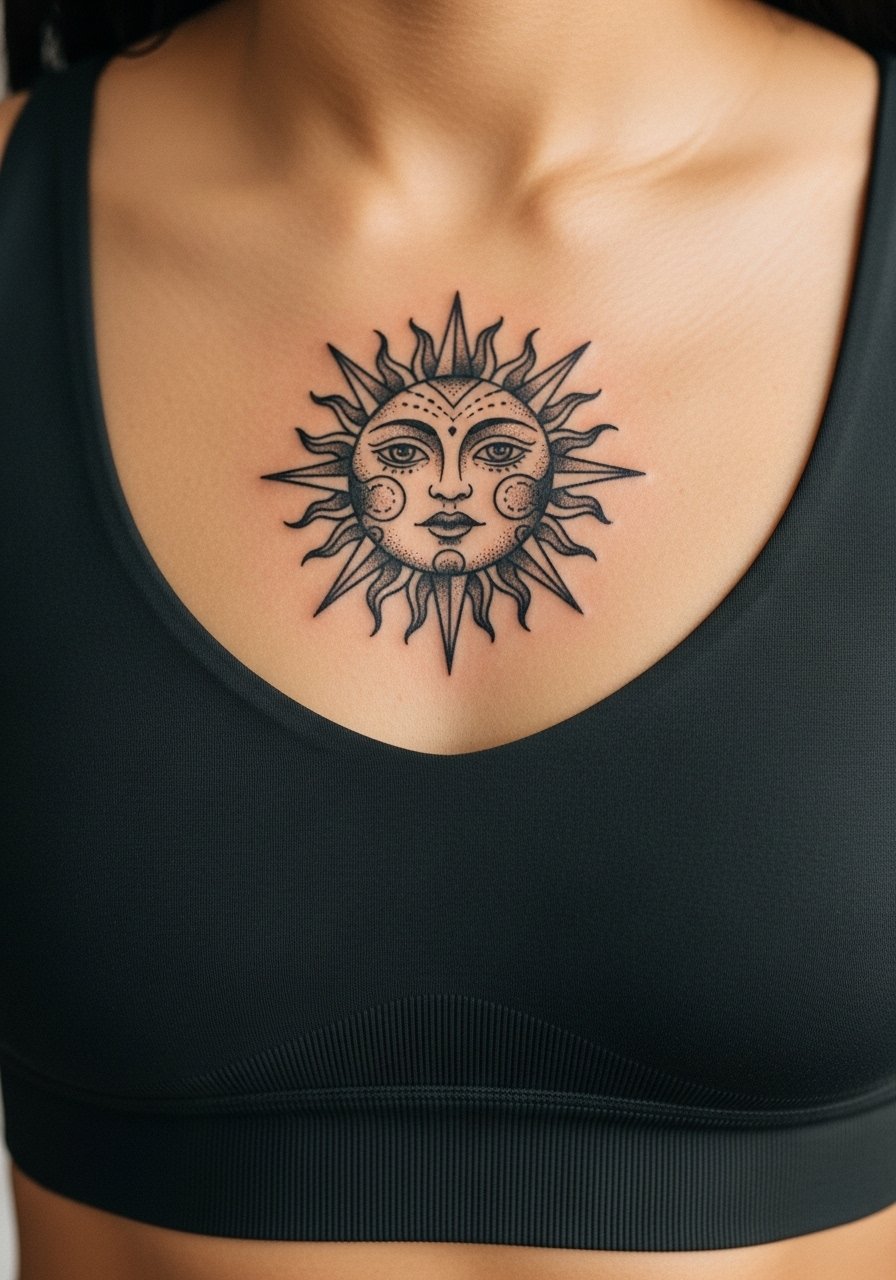
Sternum work benefits from stipple shading to add texture without heavy blocks of color that can bruise easily. Ask for a balance between stipple density and open skin so the portrait keeps depth after healing. The sternum is a sensitive area and sessions can be intense for some. Plan for one longer session and a day of rest. Also discuss breath and positioning with your artist to make the experience smoother.
16. Vertical Forearm Eclipse with Floral Rays
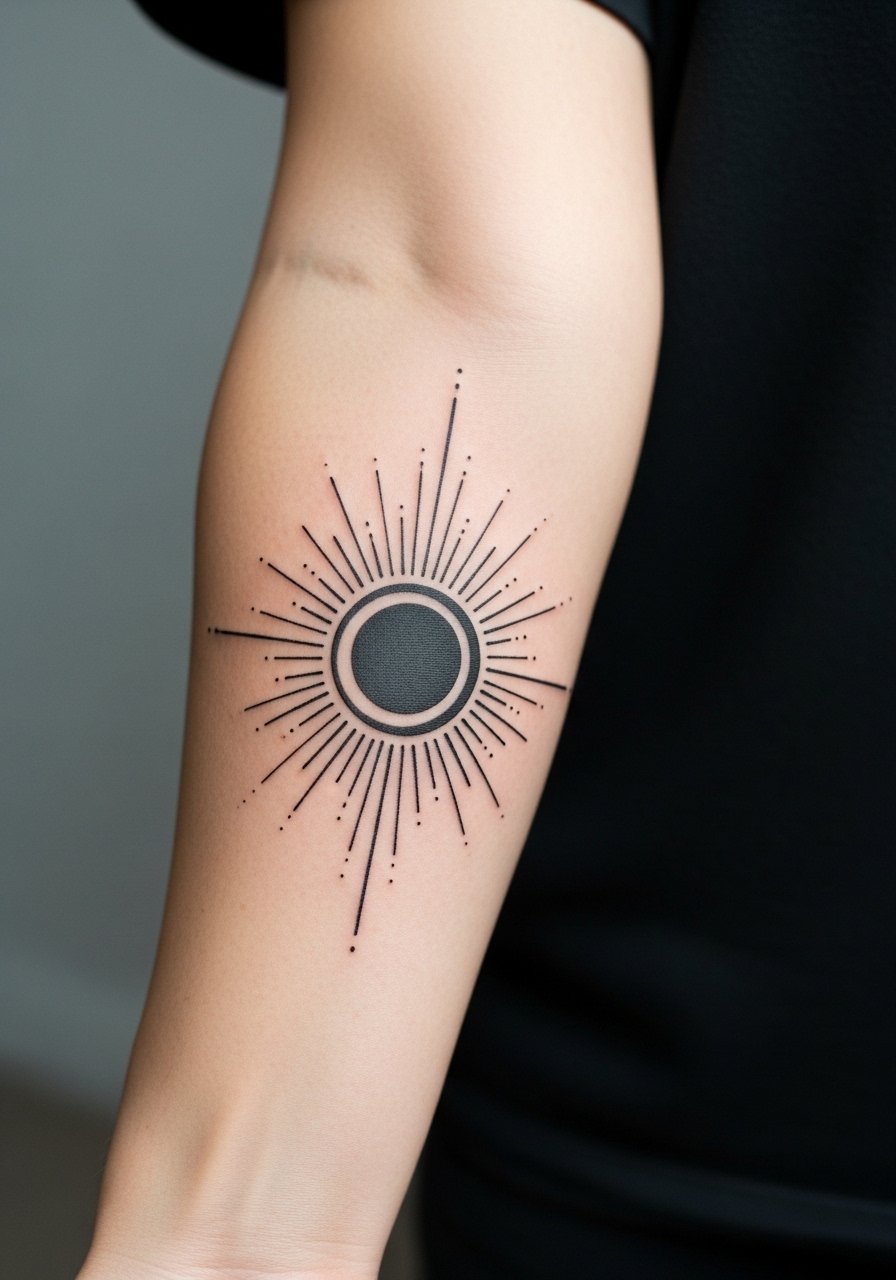
Inner forearm allows a vertically oriented design that reads well when the arm is relaxed. Request stronger outer lines on the eclipse and slightly muted color in the petals to keep the focal point on the moon and sun. A common mistake is making the floral detail too dense near the wrist where movement causes smudging. Expect a two-hour session and a touch-up window at 9 to 12 months. For the appointment wear a vintage crewneck tee you can roll or pull aside for full access.
17. Large Backpiece Sunburst with Decorative Moon Corners
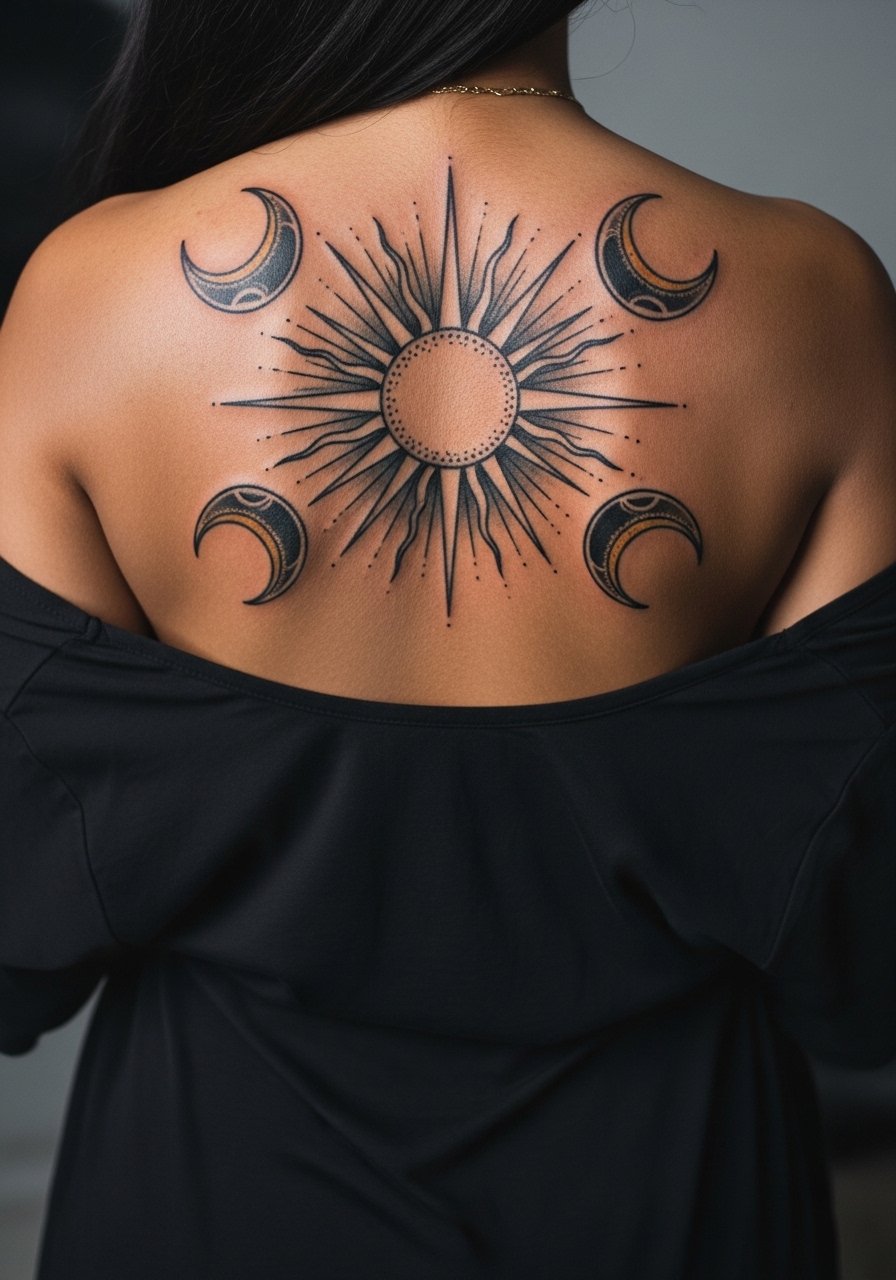
Backpieces let you play with symmetry and negative space. Ask for map-style placement so moons sit where shoulder blades move least, which reduces distortion. Plan multiple sessions and long healing cycles, since large areas can take longer to scab and settle. For showing this off in summer, pair with open-back crop tops that reveal the central piece without tugging at healing edges.
18. Neo-Traditional Mandala Sun on the Shoulder Blade

Shoulder blade placement allows circular mandalas to sit flat and heal evenly. Ask the artist to test the stencil in different arm positions so the mandala does not warp with motion. Sessions are moderate in time and discomfort. Avoid requesting micro-detail in a small radius because stipple and tight dots can soften. Let the artist place the center empirically on the bone landmark for the best visual balance.
19. Tiny Constellation Sun and Moon on the Ankle Side
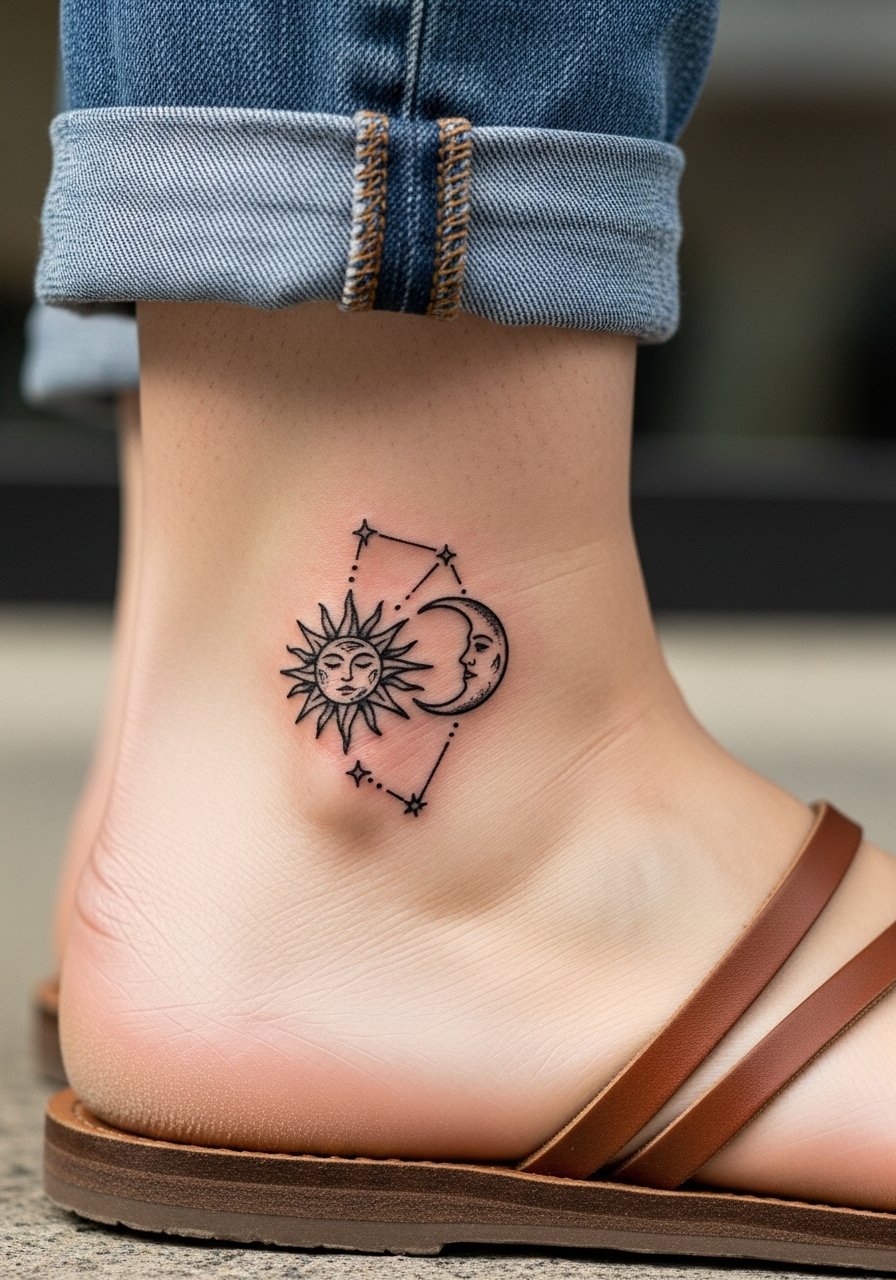
Micro neo-traditional pieces are a test of restraint. Keep the constellation dots spaced and the sun outline slightly thicker for longevity. The ankle tolerates small work but constant friction from footwear can accelerate fading. Expect a quick session and plan for a small touch-up after seasonal wear. Keep socks loose while healing.
20. Chasing Sun and Moon Down the Calf
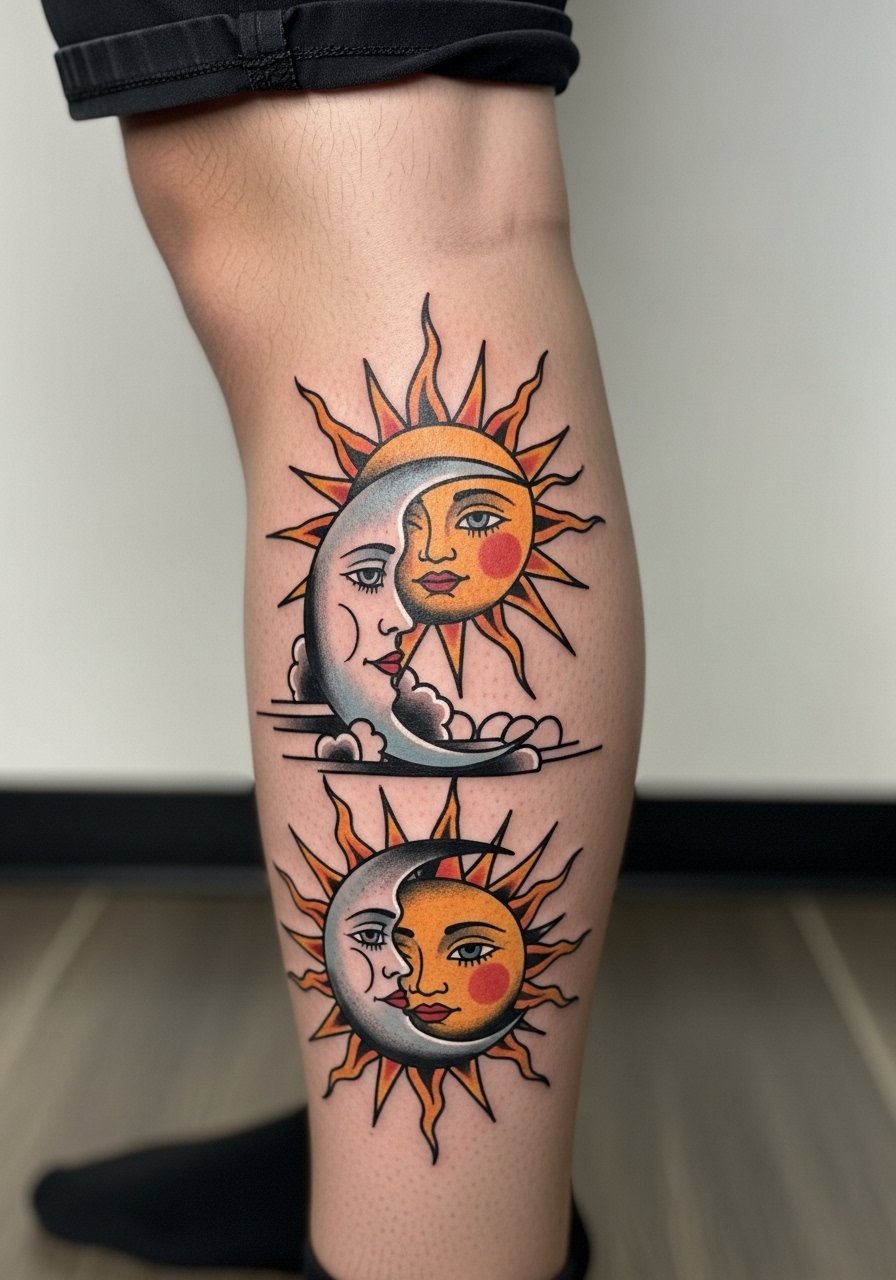
Calf pieces photograph well and age predictably because the skin moves less than the inner thigh. Ask for color blocks in large patches rather than micro gradients to help color retention. Sessions are comfortable for most and usually finish in two to three hours for a medium piece. For showing it off, pair with rugged leather boots and rolled jeans, and for the appointment wear loose shorts you can prop the leg on.
21. Neck-Adjacent Crescent Moon Behind the Ear

Behind-the-ear pieces read as delicate accents but need clear conversation about career implications and visible placement. Always describe exact hairline exposure to your artist so the piece sits where you intend. The area is sensitive and sessions are short. For healing, keep hair tucked and avoid hair products that could irritate fresh ink.
Frequently Asked Questions
Q: My forearm sun and moon blurred after a year. Is that normal and what can I do?
A: It can be normal if the linework was too fine or the piece sat too small for the level of detail. I've seen better longevity when artists use bolder outer lines and leave negative space between dense areas. Plan for a touch-up at 6 to 12 months and protect the area from daily sun exposure.
Q: I have darker skin. How do I keep colors from looking muddy in photos?
A: High-contrast black outlines and selective saturation work best. Ask your artist to prioritize clear silhouettes and to show you healed photos on similar skin tones before booking. Avoid asking for pastel-only palettes, and consider black-and-gray with a single color accent if you want strong photographic clarity.
Q: How should I prepare for a chest or sternum session that might be canceled by the studio?
A: Book with a studio that has clear deposit and cancellation policies and ask about their guest-spot availability. If a session is canceled, use hashtags like #neotraditionalsunmoon or local app filters to find another specialist quickly. Bring a loose button-down or a loose button-down shirt you can pull aside to the appointment so rescheduling stays simple.
Q: Saniderm versus dry healing is confusing for color-heavy neo-traditional work. Which is better?
A: Both approaches have defenders. One camp says protective films reduce scabbing and keep the area clean, the other camp prefers dry healing for natural scab formation and ink settling. For color-heavy pieces I suggest discussing both methods with your artist and following the one they know well for that placement.
Q: How often will a neo-traditional sun and moon need touch-ups?
A: Expect a touch-up window around 6 to 12 months for most medium pieces and another at year 3 for high-motion areas. Bold outlines and larger color blocks generally need fewer interventions than tiny clustered details.
Q: Is UV ink safe for the subtle glow idea at night?
A: UV ink can be a fun accent but it must be placed where friction and sun exposure are minimal. Talk to your artist about long-term visibility and possible fading. Some artists recommend keeping UV as a small highlight rather than a primary color field.