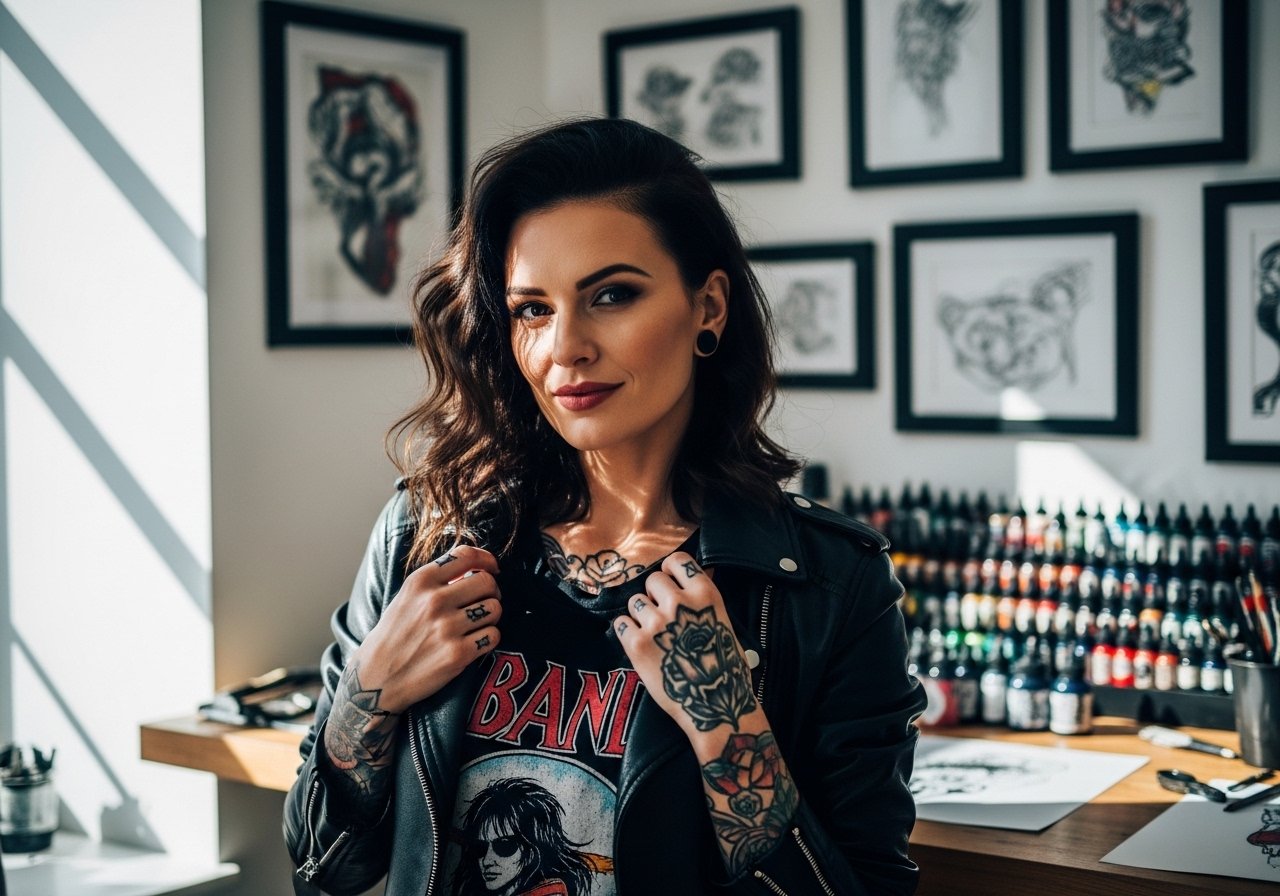
The tattoos that look best the day they are done are often not the ones that read cleanest five years out. Bold blackwork plays to longevity by letting saturation and negative space do the heavy lifting, while tiny illustrative details can soften into a blur. Pick a concept that uses solid shapes, clear edges, and placement that avoids constant friction, and you get a dog tattoo that still reads like itself years from now.
1. Bold Silhouette Dog Head on Outer Forearm
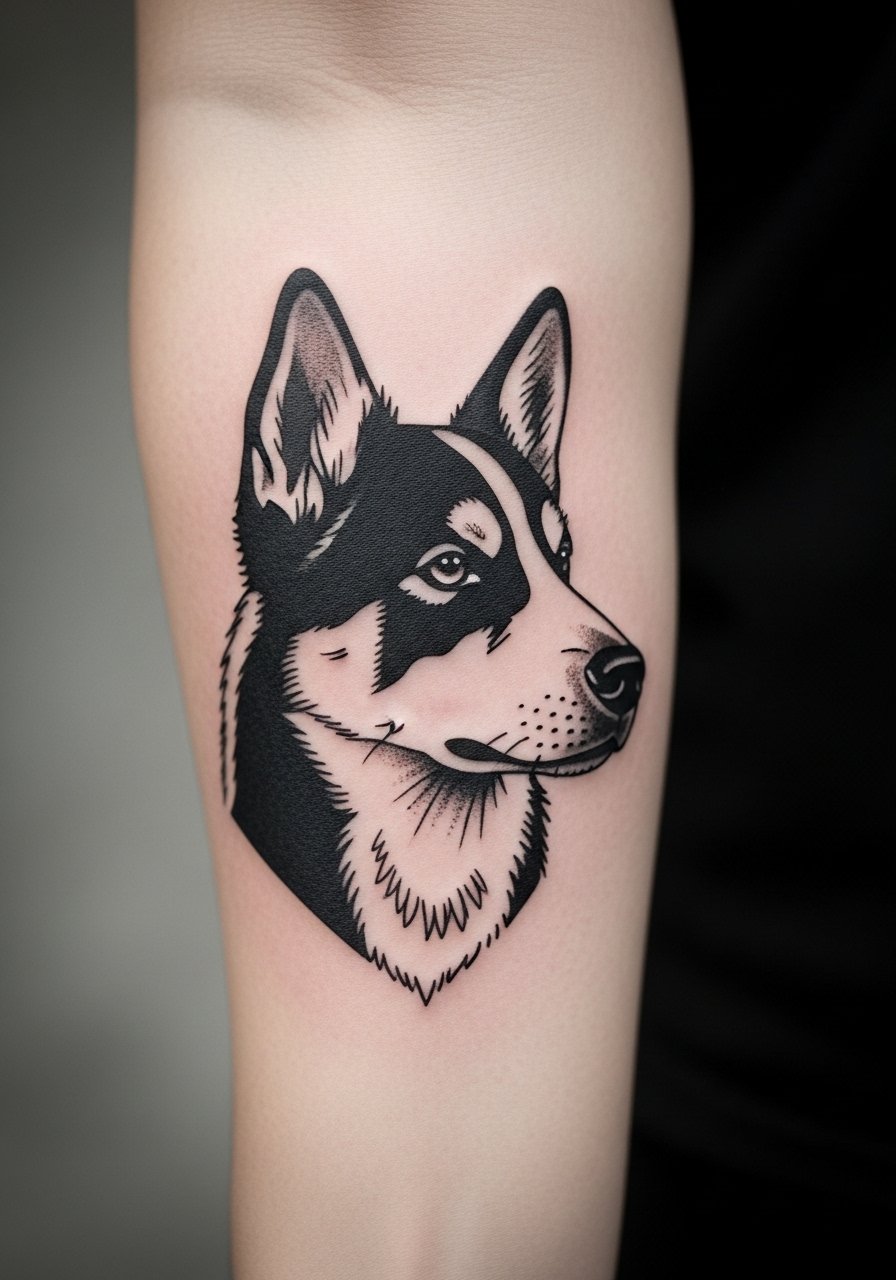
A solid silhouette of a dog head reads from across a room and holds up well because it relies on mass, not tiny detail. I suggest asking the artist for a slightly larger scale than you think you need so the edge can stay crisp as skin expands and contracts. Pain is mild on the outer forearm and a session can be done in one sitting under an hour for a small-to-medium piece. Common mistakes include asking for tiny facial details inside the silhouette. That approach ages poorly. For the consultation, bring photos that show the dog’s profile clearly and mention you want bold saturation and clean negative-space around the jawline.
2. Solid Paw Print on the Inner Wrist
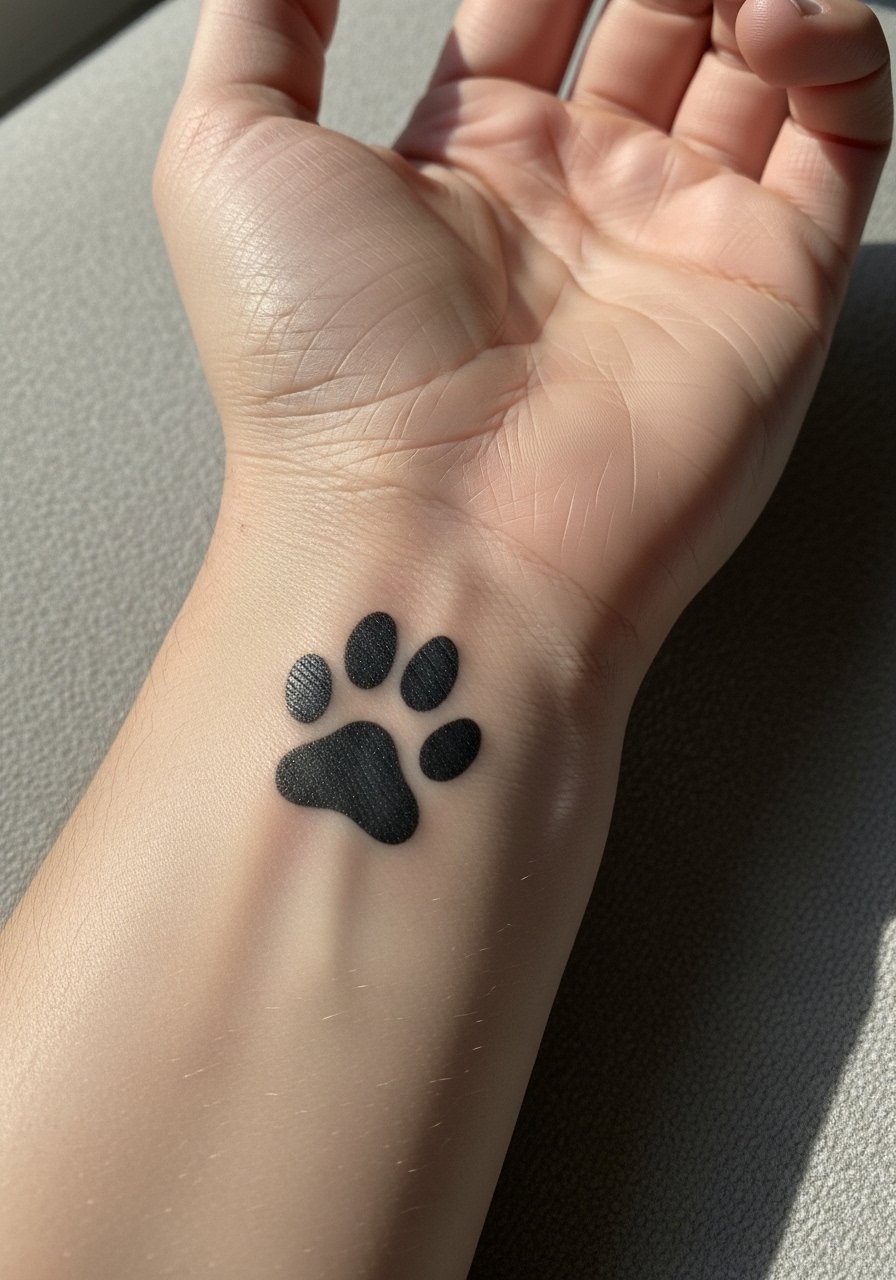
The inner wrist is a high-visibility spot that also sees a lot of hand washing and friction. A single saturated paw works because it reads clearly even as the surface blurs slightly over time. Expect a short session and a touch-up at year two if you are hard on your hands. During consultation say you want dense saturation and a thin clear margin around the print so the shape remains legible. For showing it off, pair the piece with a thin chain pendant necklace that sits above the wrist and keeps attention moving up the arm.
3. Negative-Space Line Dog Portrait on Inner Bicep
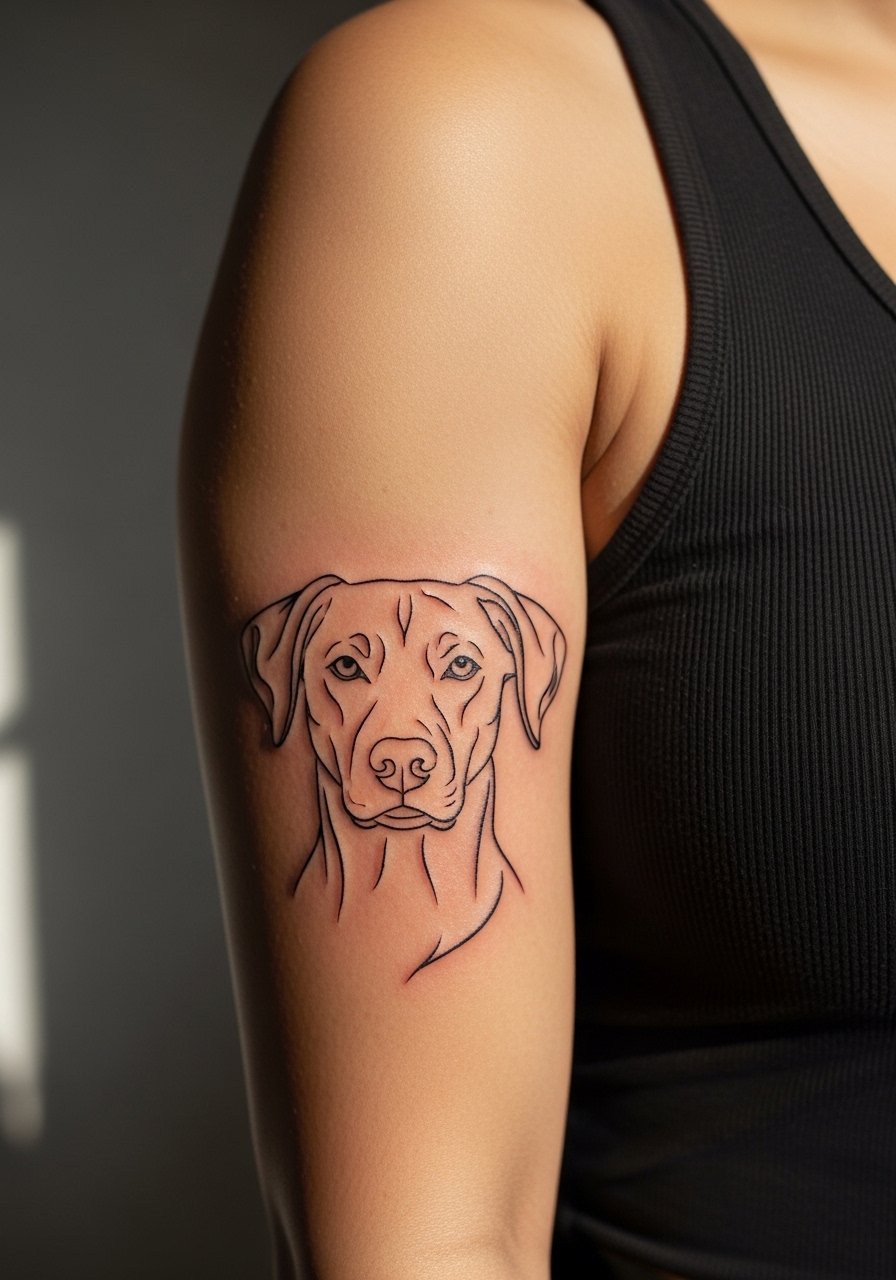
The inner bicep gives room for negative-space portraits that use black panels to suggest fur and light. Fair warning, the inner bicep is more tender than the outer forearm, and sessions can feel sensitive when the arm is raised. The upside is that the thicker black fields protect delicate likeness details from early blur. A common error is compressing a photo-real face into a 2-inch oval. Ask your artist to simplify shapes into planes and stipple edges where needed. For the appointment wear a loose tank top so the artist can access the area without tugging at clothing.
4. Geometric Blackwork Dog Emblem on Chest
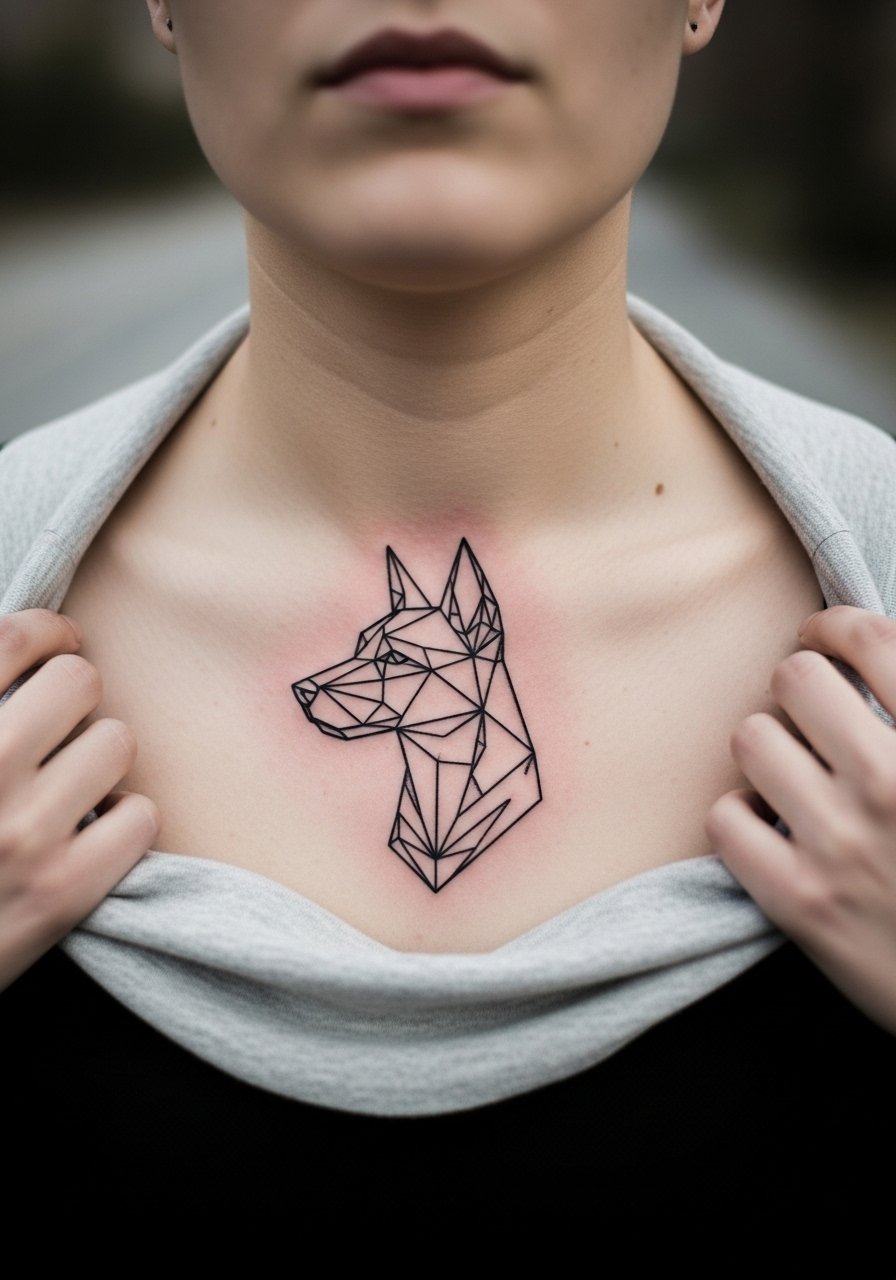
A compact geometric emblem over the upper chest can be a graphic way to honor a dog. The chest sees sun exposure when you wear open collars, so plan for sunscreen later. The sternum and collarbone areas are sensitive for some people. If you want longevity, ask for bold negative space and consistent linework rather than micro-detail inside the triangles. Sessions are moderate in length and may need breaks if the area is tender. A session-day tip is to wear a wide-neck shirt you can pull aside so the artist has clean access without you feeling exposed.
5. Abstract Brushstroke Dog Silhouette on Shoulder Blade

Shoulder blade placements give room for slightly larger, painterly blackwork that reads like a mark rather than a literal portrait. The skin there tends to age well and resist blowout compared with hands or ribs. Sessions can be longer if you want multiple layers of saturation. One mistake is asking for tiny blends inside the brushstrokes; those soften. Tell the artist you want bold saturation with visible brushlike edges and ask about touch-up expectations at year three. For post-session photos and evenings out, pair the placement with an open-back midi dress that frames the blade without rubbing the area.
6. Minimalist Line Dog on Ankle

Ankle tattoos face constant abrasion from shoes and socks so minimalist single-line dogs should be slightly bolder than they look at the stencil stage. Pain is moderate and session time is short. The common mistake is keeping lines too fine. Ask for a clean, slightly heavier line weight and clear spacing from the bone to avoid blowout. For the session wear pants you can roll up easily and for showing the piece pair it with sandals or low sneakers so the ankle sits visible without friction.
Studio Day Picks
Those first six pieces include wrists, ankles, and chest work that need different prep. A few small items smooth the experience and protect fine blackwork during the first week.
- Stencil transfer paper kit. Helps artists preview placement on curved areas like the ankle or chest before committing, which matters for asymmetrical dog profiles.
- Topical numbing cream. Use per the product directions if you are nervous about wrist or inner bicep sensitivity.
- Thin protective film roll. Useful for ankle and wrist tattoos to reduce friction from socks and watches during the initial healing.
- Fragrance-free gentle body wash. Cleans healing blackwork without stripping moisture from dense saturation areas.
- Aquaphor healing ointment. Thin layers protect fresh blackwork in high-movement spots like the inner wrist without suffocating the area.
7. High-Saturation Dog Silhouette on Calf

The calf is forgiving for heavy blackwork and stands up to bold fields because it rarely rubs against garments. Sessions can run longer if you want a larger piece. A common error is crowding the design with unnecessary small accents that blur over time. Ask for high initial saturation and tell the artist you want broad black planes with a clean margin. For session comfort wear loose drawstring shorts so the artist can roll the fabric without pinching the skin.
8. Dot-Work Black Dog Mandala Collarbone
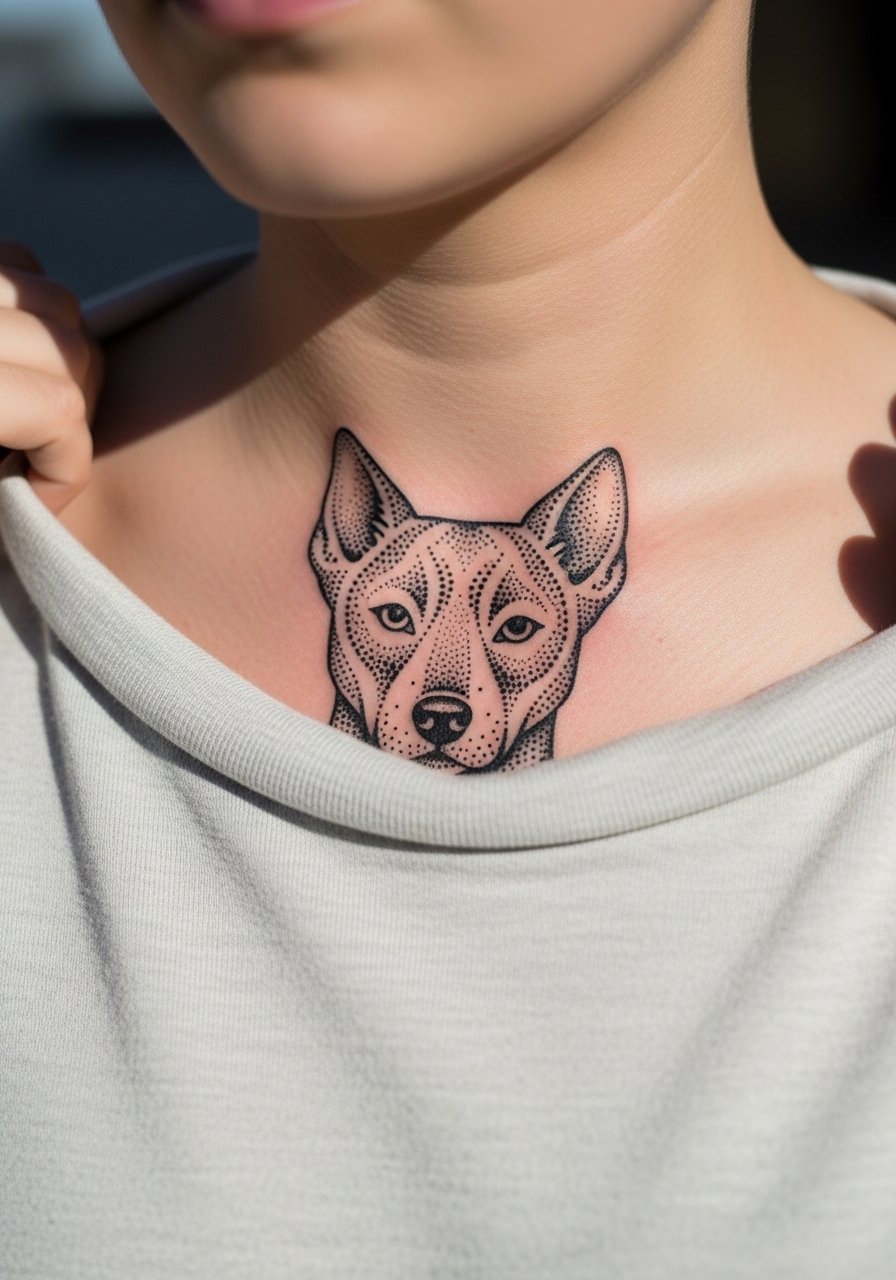
Combining dot work with black fields around a small dog portrait near the collarbone creates texture without tiny strokes that melt over time. The collarbone is a sensitive but highly visible spot. Artists split on how dense dot work should be for longevity. One camp says dense stippling reads beautifully forever. The other camp worries that high-density dots on thin skin can merge. Talk to your artist about spacing and expect a moderate session time with breaks. For showing it off, a thin chain pendant that sits above the design complements the negative space.
9. Solid Back-of-Arm Puppy Silhouette
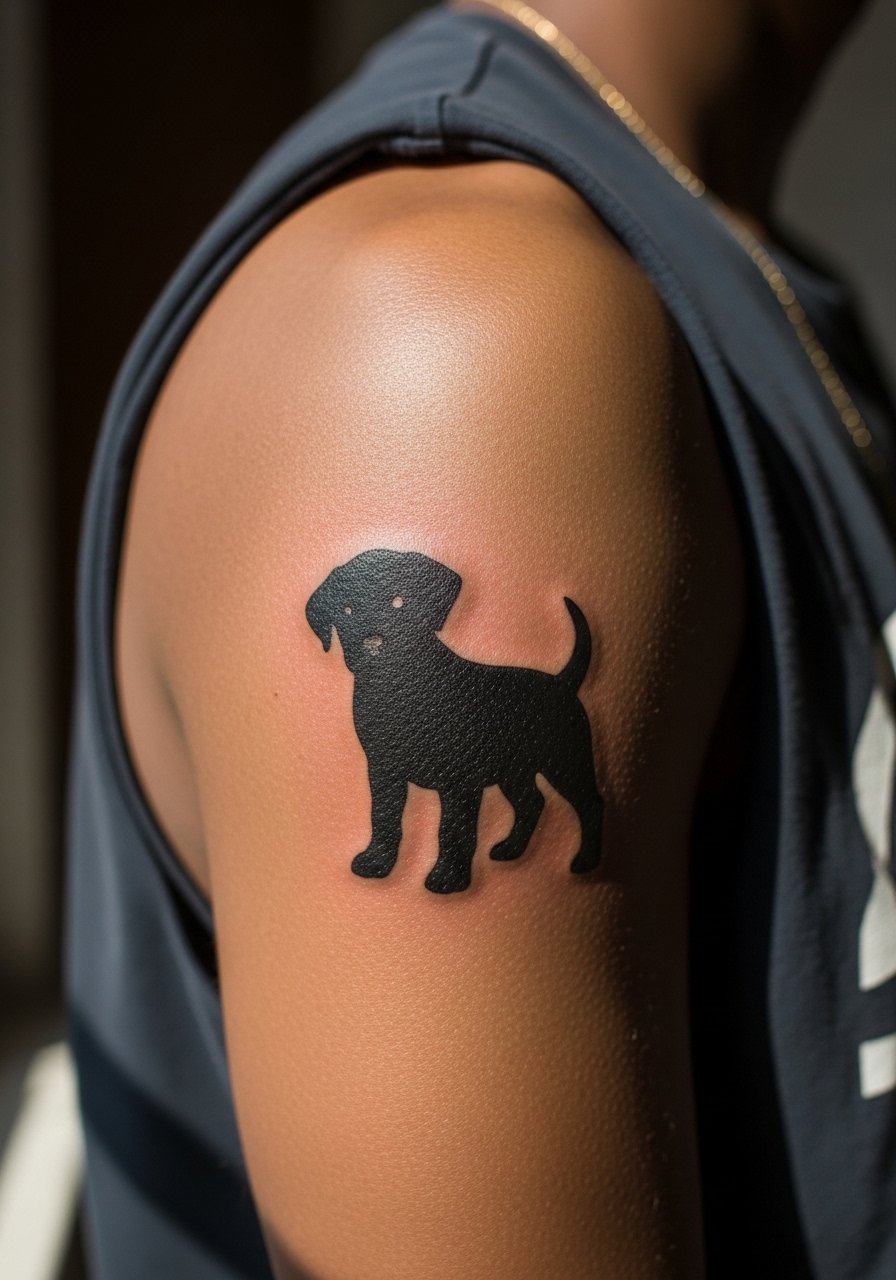
The back of the upper arm is a place that wears well because it rarely gets constant pressure. A small puppy silhouette here will read for years with minimal touch-up. Beware of trying to cram extra detail into a 2-inch space. For the consult, specify scale and ask for a bold outer edge to protect against softening. The session is straightforward and pain is usually low. For the appointment pick a sleeveless button-down you can pull aside so the artist can work without tugging.
10. Negative Space Line Dog on Ribcage
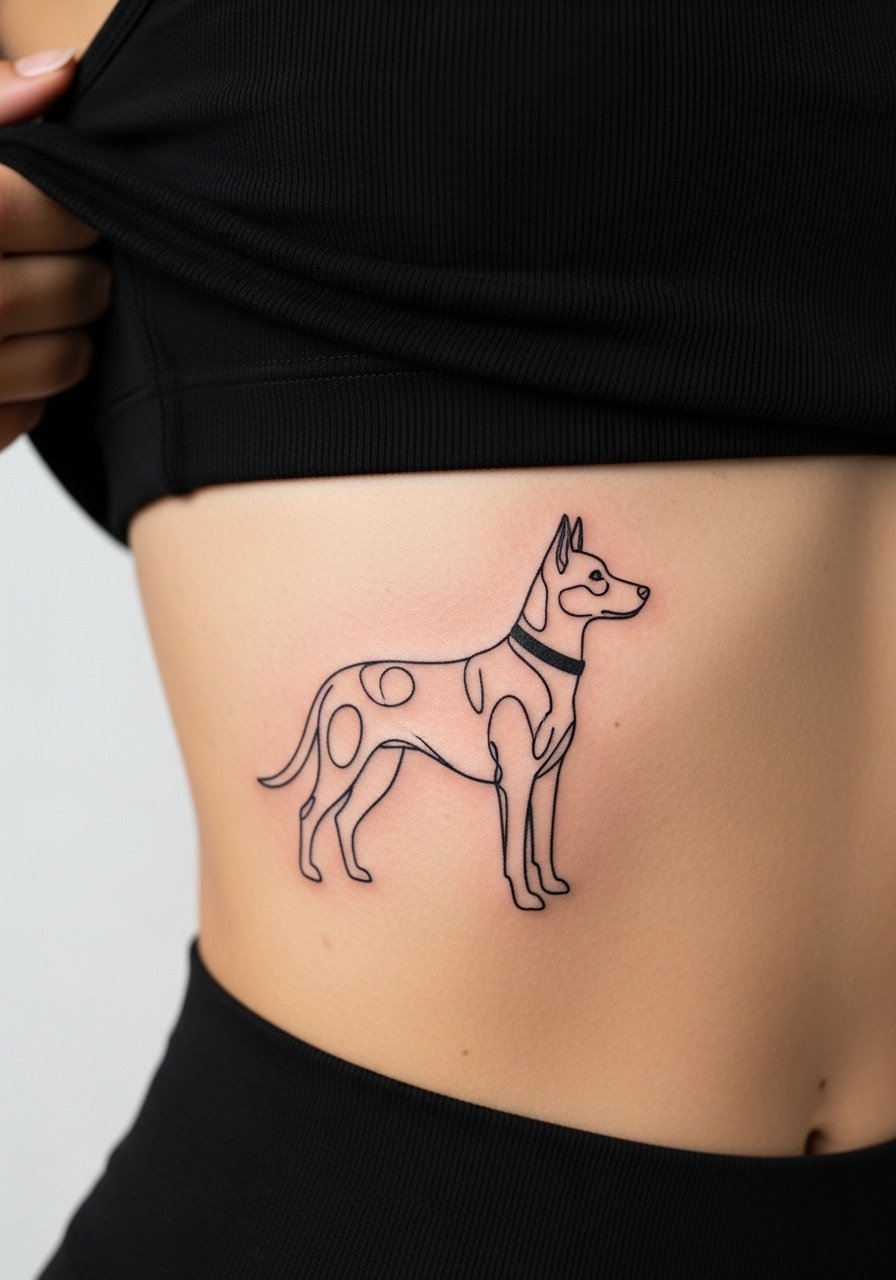
Ribcage tattoos are known for their pain and their aging quirks. The controversy is clear here. One group of artists says fine line work on ribs blurs quickly because the skin stretches and moves. The other group insists proper needle depth and spacing fix that problem. If you choose ribs, favor negative-space black panels over ultra-fine details and expect a longer session with breaks. For the appointment wear a cropped top you can lift slightly so the artist has access and you stay comfortable.
11. Solid Collar Dog Silhouette on Lower Neck
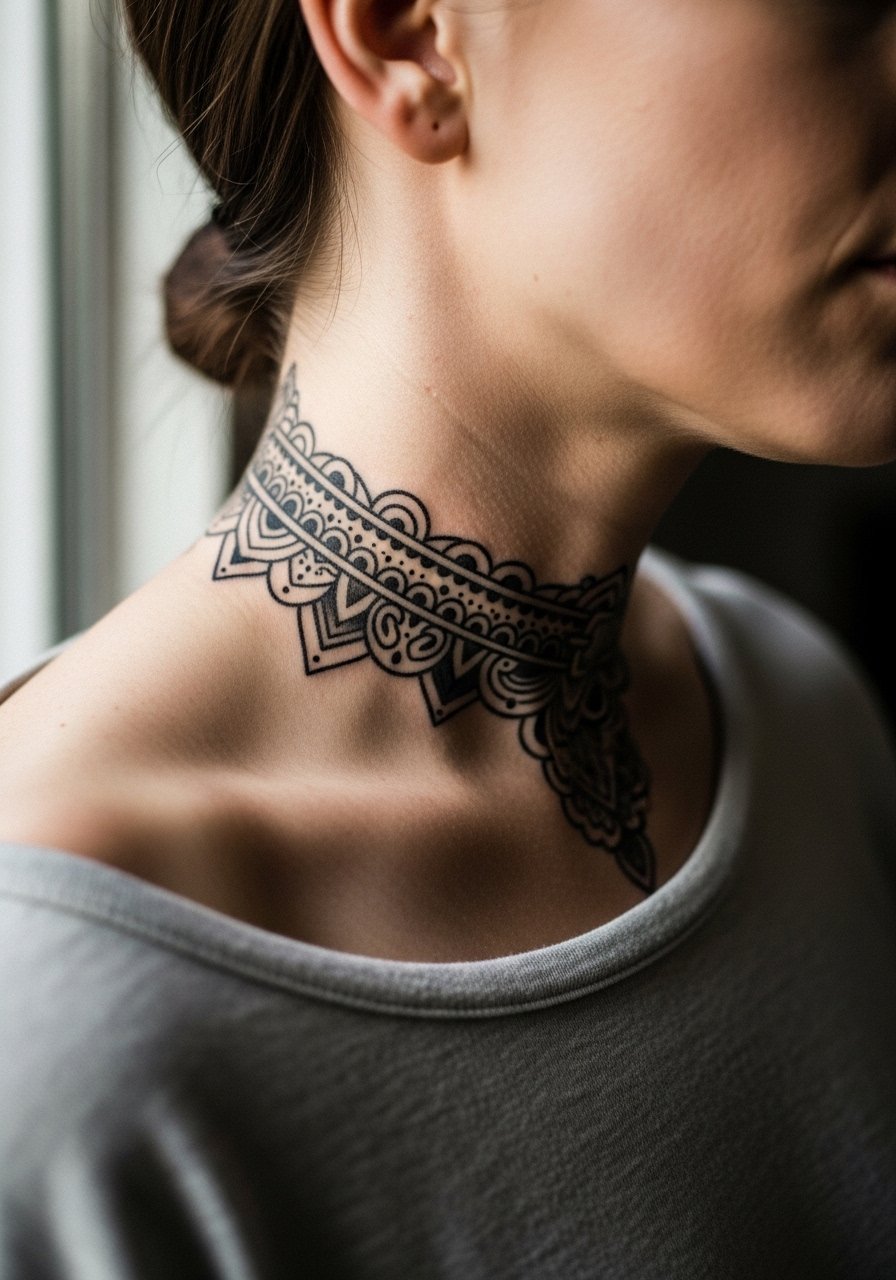
Neck placements are visible and can affect job situations, so consider that before committing. A small solid collar or tag silhouette near the side neck works because it is bold and relies on shape, not minute shading. Sessions are short but can sting. For showing the piece, a thin chain choker that sits below the tattoo can help frame it without covering the work. During the consultation clarify how visible you want it to be and ask about touch-up timelines.
12. Bold Geometric Dog Head on Upper Thigh
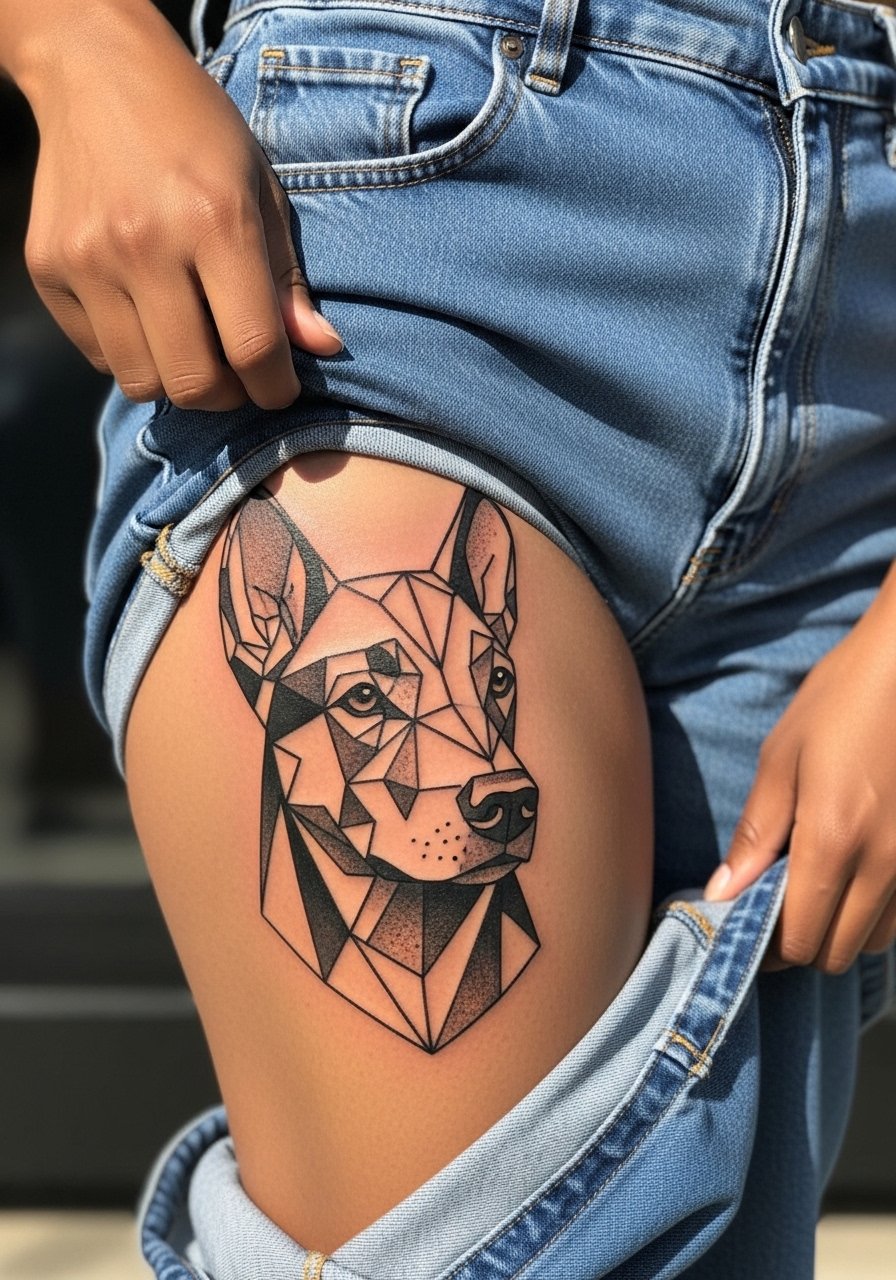
The upper thigh is forgiving and ideal for larger blackwork that uses geometry to suggest a face. It is a good spot if you want a private piece that ages well. Sessions can be long and comfortably done in one sitting for medium sizes. The main mistake is asking for too many tiny internal triangles. Ask for clear planes with decisive negative space so the shapes stay readable. For the session wear high-waisted bottoms that can be lowered a bit so the artist has access without you getting cold.
13. Solid Line Dog on Finger

Finger tattoos are fun but they suffer from rapid fading and frequent touch-ups. Solid black silhouettes on the finger handle wear better than detailed faces because the silhouette remains recognizable even as edges soften. A typical session is quick and slightly painful over bone. If you want longevity, ask for slightly larger negative space and be prepared for touch-ups at year one or two. For showing the piece, stacked minimalist rings work well. Consider a simple stacking ring set that frames the finger without rubbing the tattoo constantly.
14. Blackwork Dog Line on the Side of the Hand
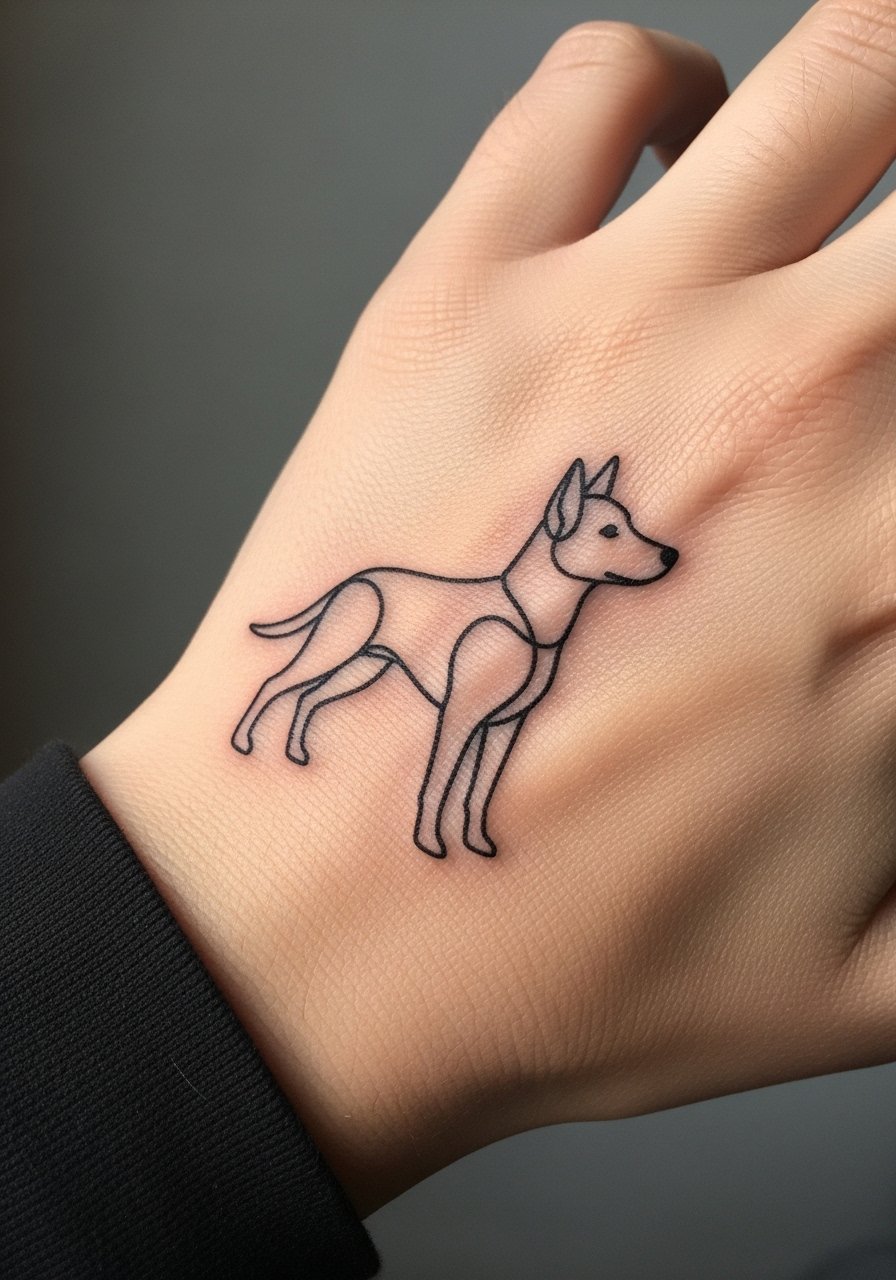
Hand tattoos are high-visibility and high-maintenance. The skin there regenerates fast and ink tends to fade because of constant use. A compact blackline dog on the side of the hand should be bolder than the initial stencil, and you should plan for touch-ups. The session can be uncomfortable because of thin skin and proximity to bone. Before booking, ask the artist about their hand-tattoo portfolio and the expected refresh schedule. For showing it off, clean minimalist bracelets that do not rub the area keep friction low.
15. Block-Fill Dog Portrait on Thigh
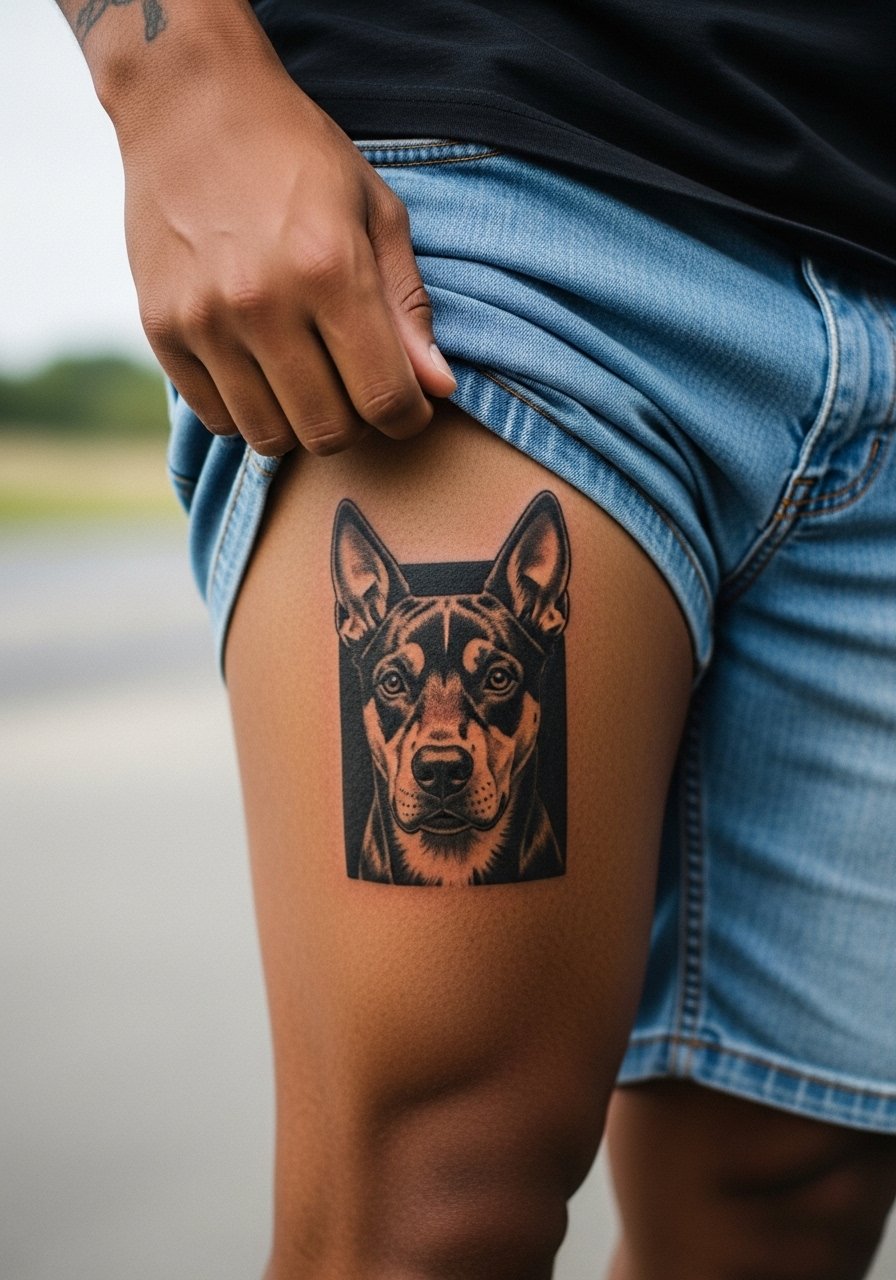
Outer thigh work favors saturated blocks that stay coherent through time. A block-fill portrait can capture expression while avoiding tiny strokes that lose contrast. Sessions may be longer but are usually manageable because the thigh is less painful. The common mistake is asking for photo-real texturing at a small scale. Tell your artist you prefer strong planes and noticeable negative space. For session comfort bring a loose pair of linen drawstring pants so you can make small adjustments without discomfort.
16. Bold Linear Dog Tag on Sternum
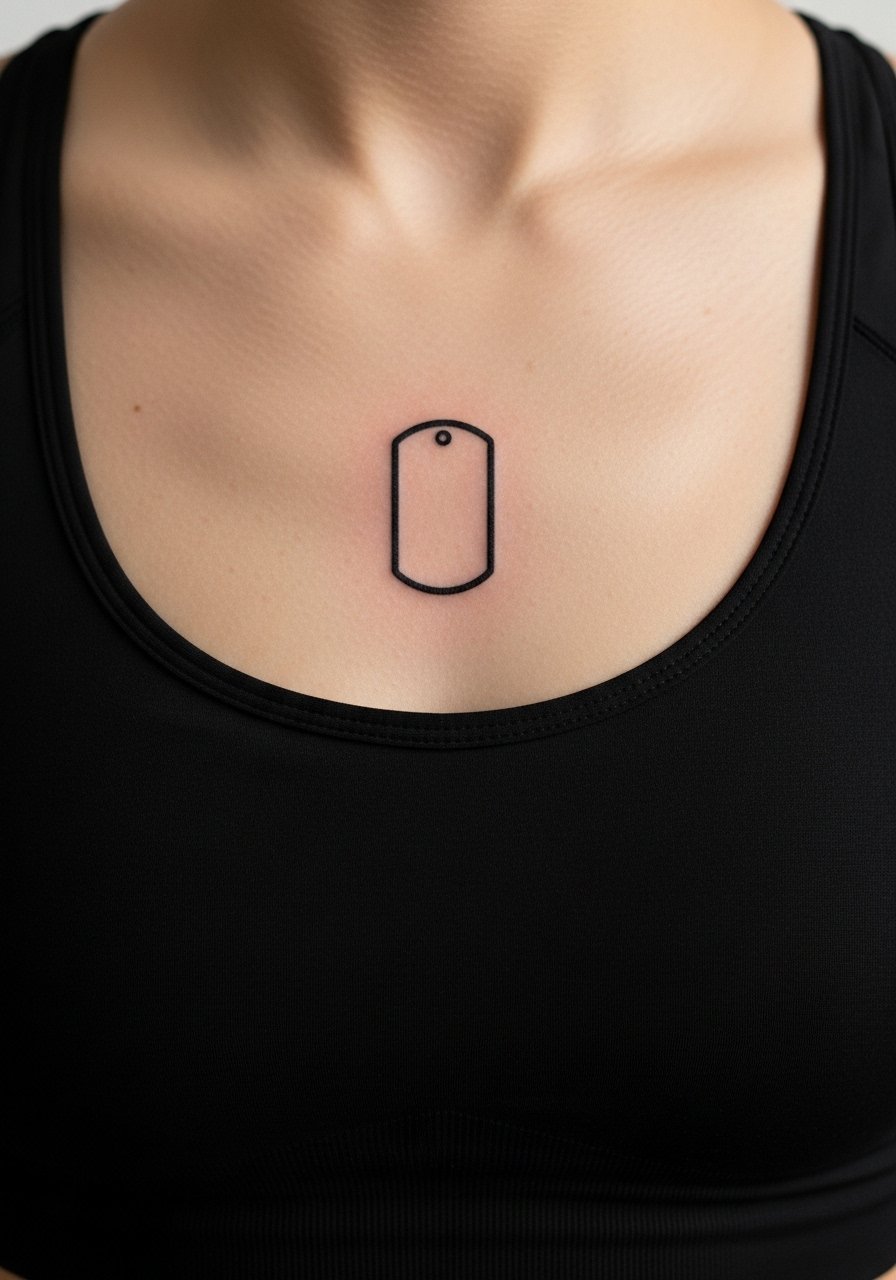
Sternum pieces are intimate and can be sensitive. A bold linear tag or small emblem sits nicely just below the bra line and avoids overly intricate shading that the sternum struggles to hold. Sessions are tender and may require short breaks for breathing. A common mistake is compressing too much detail into the central chest. Ask for confident line weight and expect a touch-up in a few years if you wear low necklines frequently. For the session wear a fitted sports bra so the artist can expose the area neatly.
17. Strong Contrast Dog Silhouette Along Spine
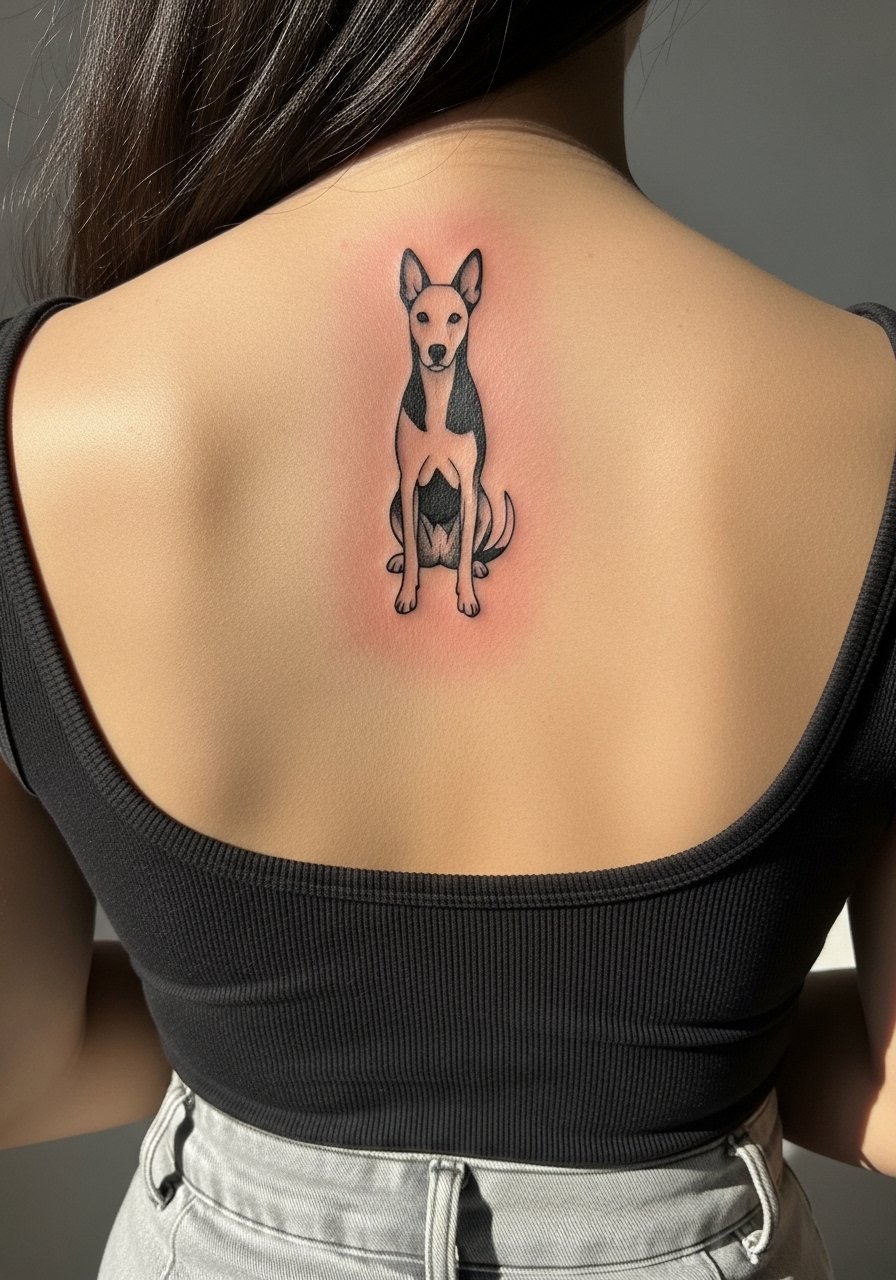
Spine placements allow vertical graphics that read well in black. A strong contrast silhouette down the upper spine carries movement and keeps clear edges. The downside is that the area can sting and may be sensitive to long sessions. Avoid micro-detail along the vertical axis. Tell the artist you want bold negative space to preserve the silhouette over time. For an outfit that shows the piece, consider open-back tops or a halter dress that reveals the spine without rubbing.
18. Heavy Black Paw Band Around the Forearm
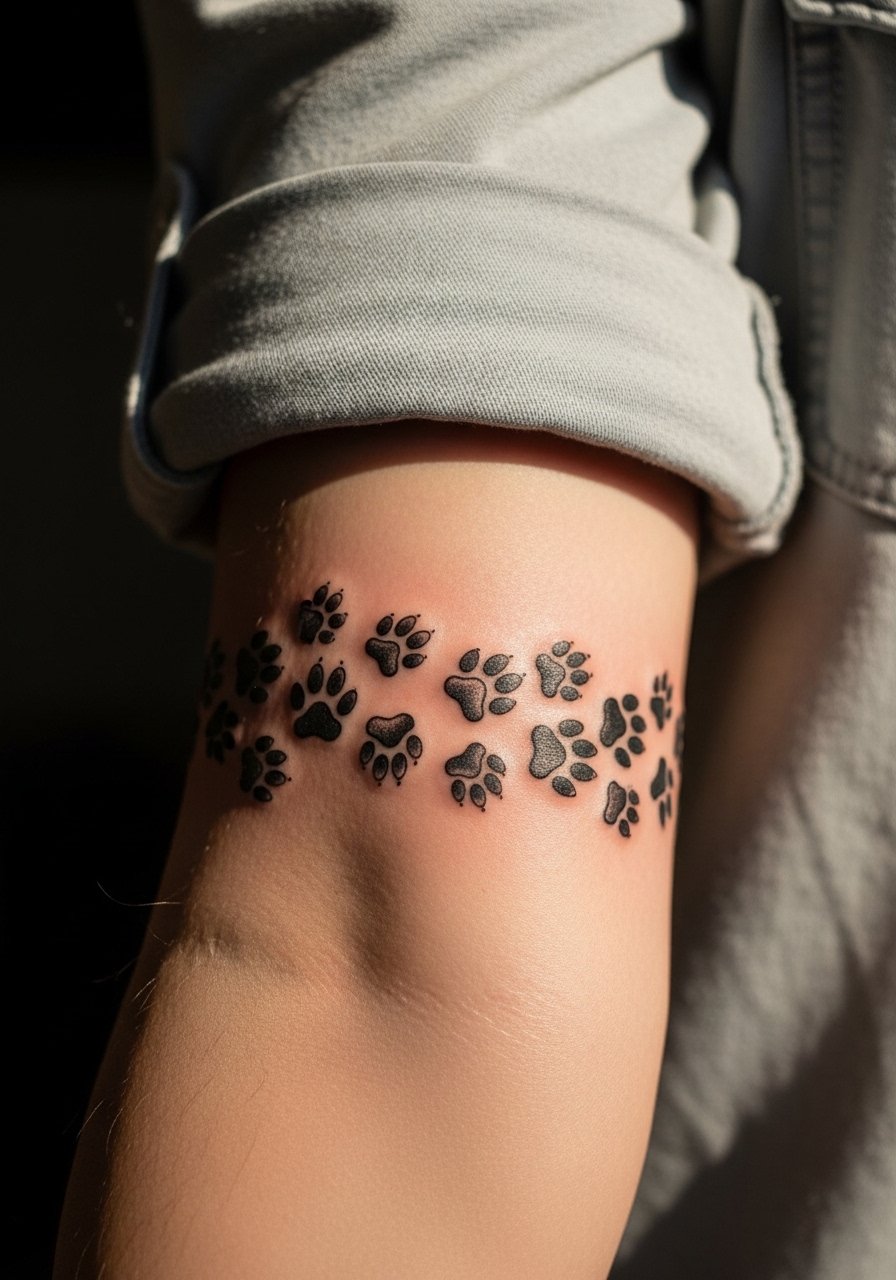
A band that reads as a repeated paw motif around the forearm uses repetition and saturation to stay legible. Bands can be comfortable to sit for and usually finish in one session depending on width. Avoid extremely tight bands that trap ink migration near joints. Ask for a slightly wider band and consistent saturation. This design pairs well with rolled-up sleeves and a loose button-down shirt so it can be shown off without constraint.
19. Blackwork Lined Dog Silhouette Behind the Ear Area
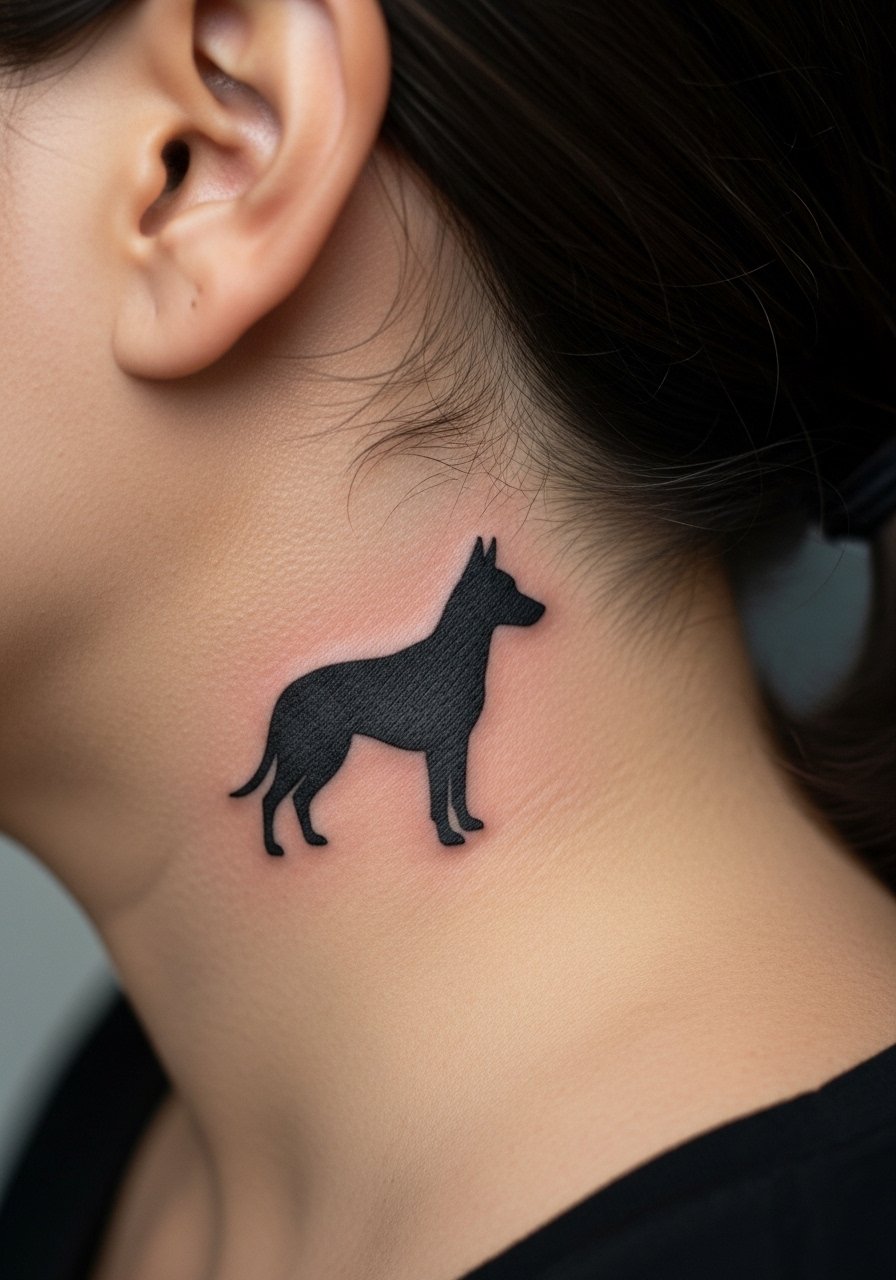
Behind-the-ear placements must be described carefully because of the proximity to hair and neck. These small silhouettes can look discrete and hold up if kept bold. The area requires an artist experienced with small placements near hairlines. Expect quick sessions and potential touch-ups as hair oils and friction affect healing. For a session pick a hairstyle that keeps the hair away from the area and mention that you want a margin of clear skin around the silhouette.
20. Heavy Black Dog Crest on Upper Back
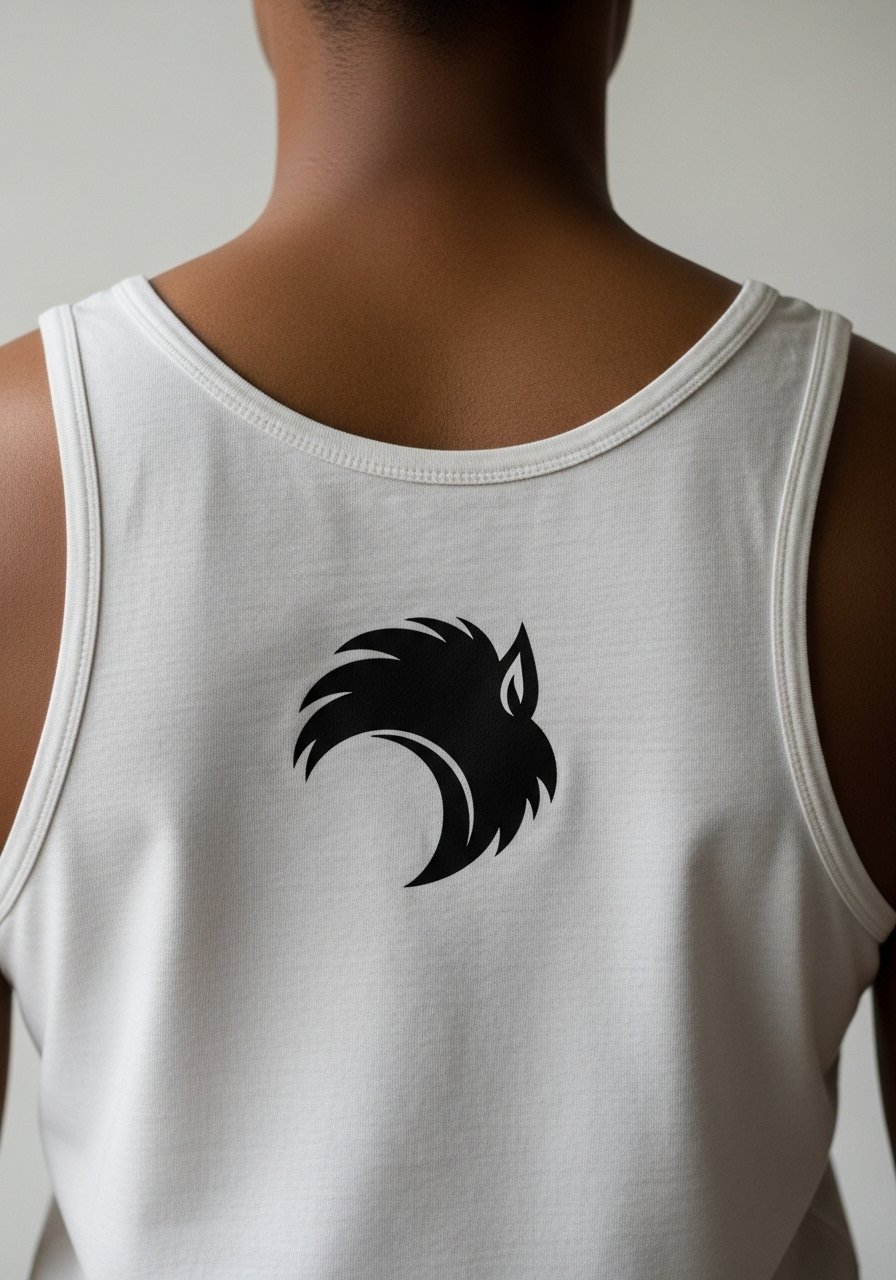
Upper back placements are excellent for larger crests and coat-of-arms style dog emblems. Skin there sits flat and tolerates heavy blackwork well. Sessions can be longer depending on size, and the main mistake is adding too many small internal motifs that age differently. Ask for balanced negative space to keep the crest readable from a distance. For showing the piece, open-back tops or a loose tank top work well without rubbing the area.
21. Bold Silhouette Over the Heart

A small silhouette over the heart is symbolic and sits where it is seldom rubbed by clothing. This location can sting a bit because of sensitivity, and sessions are usually short. The common oversight is requesting micro-detail in such a small, tender spot. Ask for confident saturation and clean outlines so the symbol remains distinct as the skin changes. For the consult mention how visible you want the piece to be and consider clothing that can expose it neatly when you want to show it.
Frequently Asked Questions
Q: Will a solid blackwork dog portrait fade differently than a fine line portrait?
A: From what I have seen, solid blackwork holds contrast longer because it relies on mass. Fine line portraits look gorgeous when fresh but often need touch-ups sooner, especially in high-movement areas. Choose saturation over tiny strokes if you want fewer refresh sessions.
Q: Are there placements I should avoid for detailed dog faces if I want longevity?
A: Yes. Fingers, hands, and the inner wrist see the most wear and usually force tiny details to soften quickly. If you want a detailed face, pick the thigh, upper back, or calf where skin is steadier and the artist can work at a slightly larger scale.
Q: How often should I expect touch-ups for blackwork dog tattoos on visible spots like the wrist or hand?
A: Expect to revisit your artist within one to three years for visible spots that get constant friction. The exact timing depends on your skin type and lifestyle. Plan conservatively and ask during consultation what the artist recommends based on the placement.
Q: Is blackwork better than dot work for darker skin tones when tattooing dog silhouettes?
A: In my experience, solid blackwork provides clearer contrast on darker skin tones if the shapes are decisive. Dot work can be lovely but it needs careful spacing to avoid merging. Talk with the artist about scale and contrast preferences for your skin tone.
Q: What should I wear to my appointment for a chest or sternum placement?
A: Wear a fitted sports bra or a wide-neck shirt you can pull aside easily. That keeps the area accessible while avoiding too much exposure. A breathable layer also helps you stay comfortable during longer sessions.