Fine line black cat pieces are everywhere online, but the dotwork approach changes the rules for how they age and how you show them off. Dotwork's rhythm of tiny dots builds texture without heavy saturation, so placement and spacing become the real longevity levers. Read the first idea and you will see how to translate the dotwork look into something that still reads clearly after several years.
1. Crescent Cat on Inner Forearm with Stipple Shading
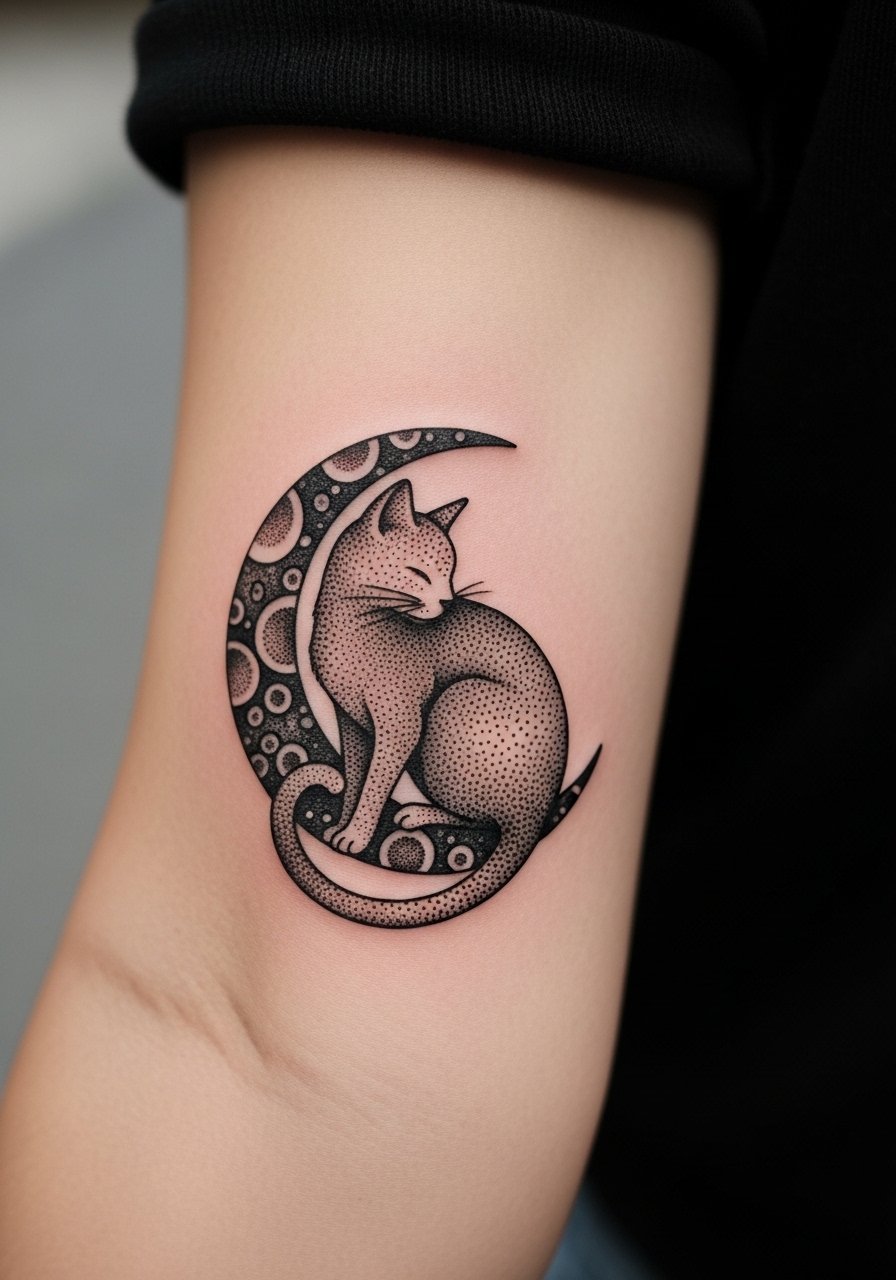
I recommend this when you want a visible piece that ages predictably. Ask your artist for a slightly heavier outer contour and denser stipple in shadow zones so the silhouette reads at three and five years. The inner forearm is forgiving on blowout but not immune. Session feels moderate in pain and often finishes in one to two hours depending on size. Common mistake is going too small for the dot density, which leads to the dots filling in as they heal. For showing it off, roll sleeves and consider a loose button-down shirt you can push back without tugging at the skin.
2. Micro Cat Face Behind the Ear, Subtle Dot Halo
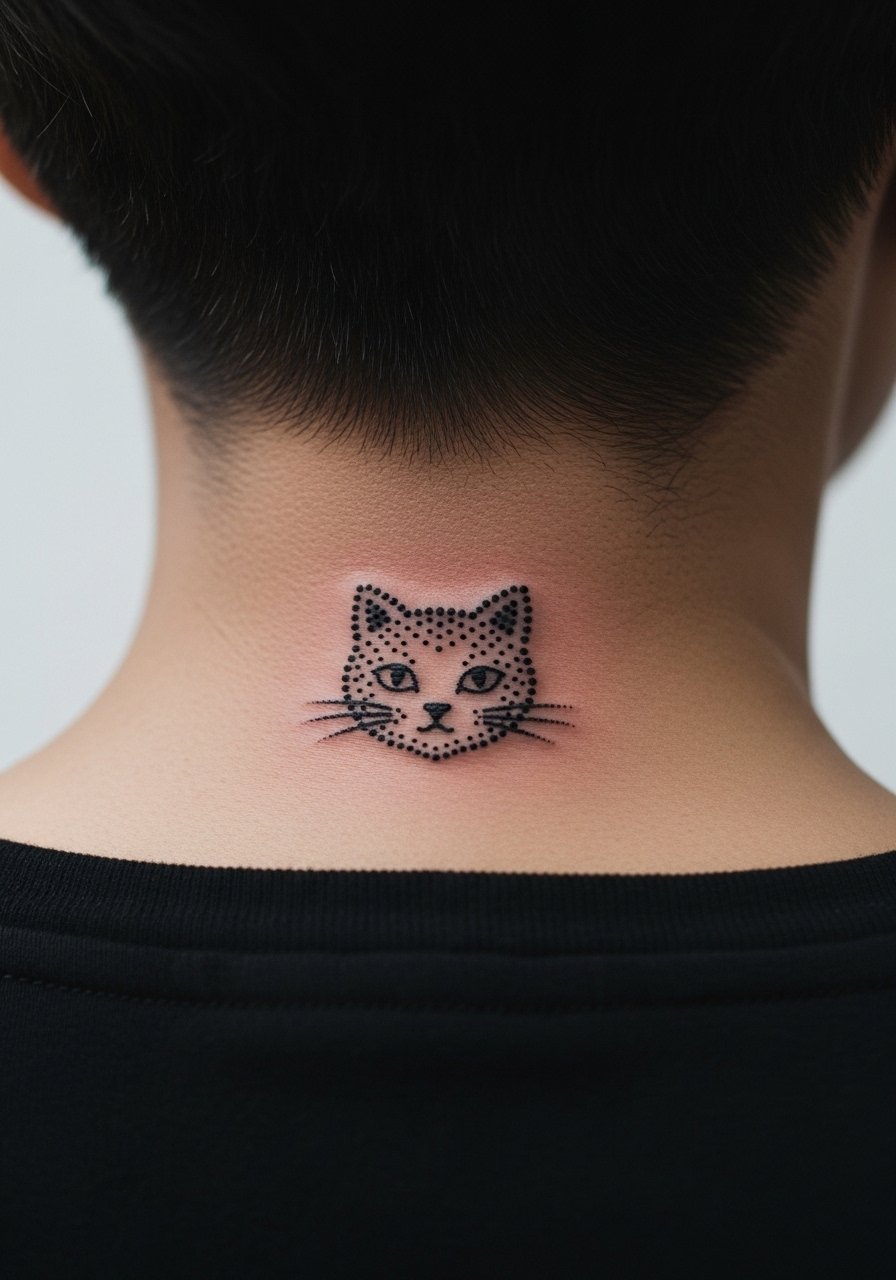
Fair warning about behind-the-ear pieces. The skin there is thin and curved so fine dots can blur faster. Artists split into two camps on tiny dotwork in that spot. One camp says avoid micro detail because lines and dots spread. The other camp says a slightly larger scale with airy spacing holds. Ask where your artist stands and request a test transfer to check how the scale sits. Session is quick but requires precise placement. For visibility, short hair or a pulled-back style highlights the tiny halo.
3. Geometric Black Cat with Mandala Backing on Upper Arm

This one reads like jewelry on the arm and holds well because the mandala spacing prevents dense blotches. In consultation, ask the artist to use stipple shading for midtones and to space the mandala rings wider than in a pure mandala piece. The outer upper arm tolerates saturation nicely and pain is lower here. Expect a one to two hour session for a medium piece. Pair the design with rolled sleeves or a short-sleeve linen shirt for nights out to let the geometry show.
4. Silhouette Cat on the Ribcage, Negative Space Stars
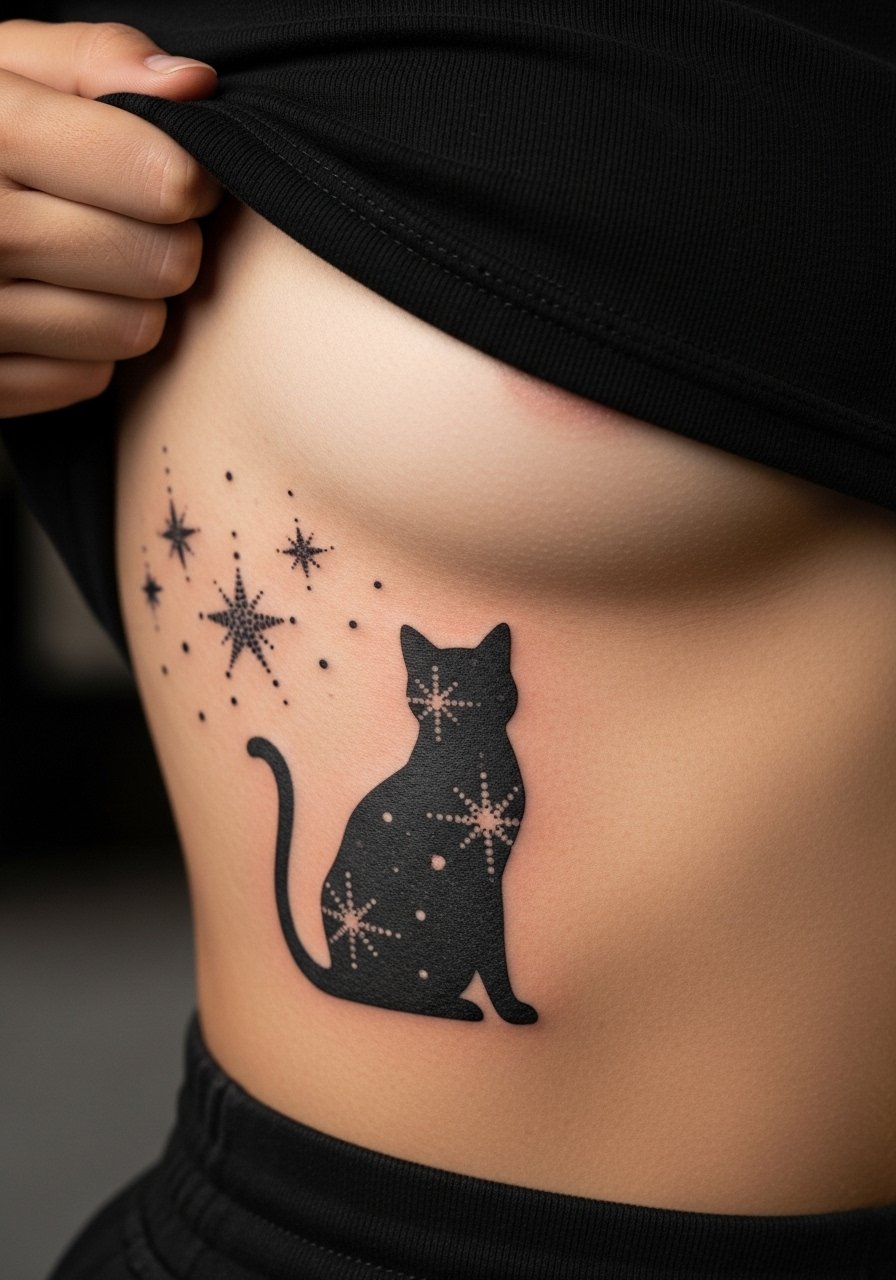
Fair warning: ribcage is a high sensitivity area and a tough place for fine dotwork. The two camps argue loudest here. One side says fine detail on ribs blurs as the skin stretches and breathes. The other side argues that with proper depth and spacing, dotwork can retain texture. If you go for this, size up slightly and accept longer session times. Pain ranges high and touch-ups around year two are common. For the session, wear a cropped tank you can lift without tugging the skin.
5. Minimalist Cat Paw Chain Along the Wrist

Wrist pieces live in friction zones and often need a touch-up sooner than arm work. Keep dots slightly spaced and avoid a dense fill that will wash under constant hand movement. Ask for a thin negative-space contour so the paw shapes keep definition as the skin moves. Session is short and pain is low to moderate. For showing it off, stack with a thin chain bracelet instead of bulky cuffs so the tattoo remains visible.
6. Full-Back Black Cat Silhouette with Gradual Dot Shading
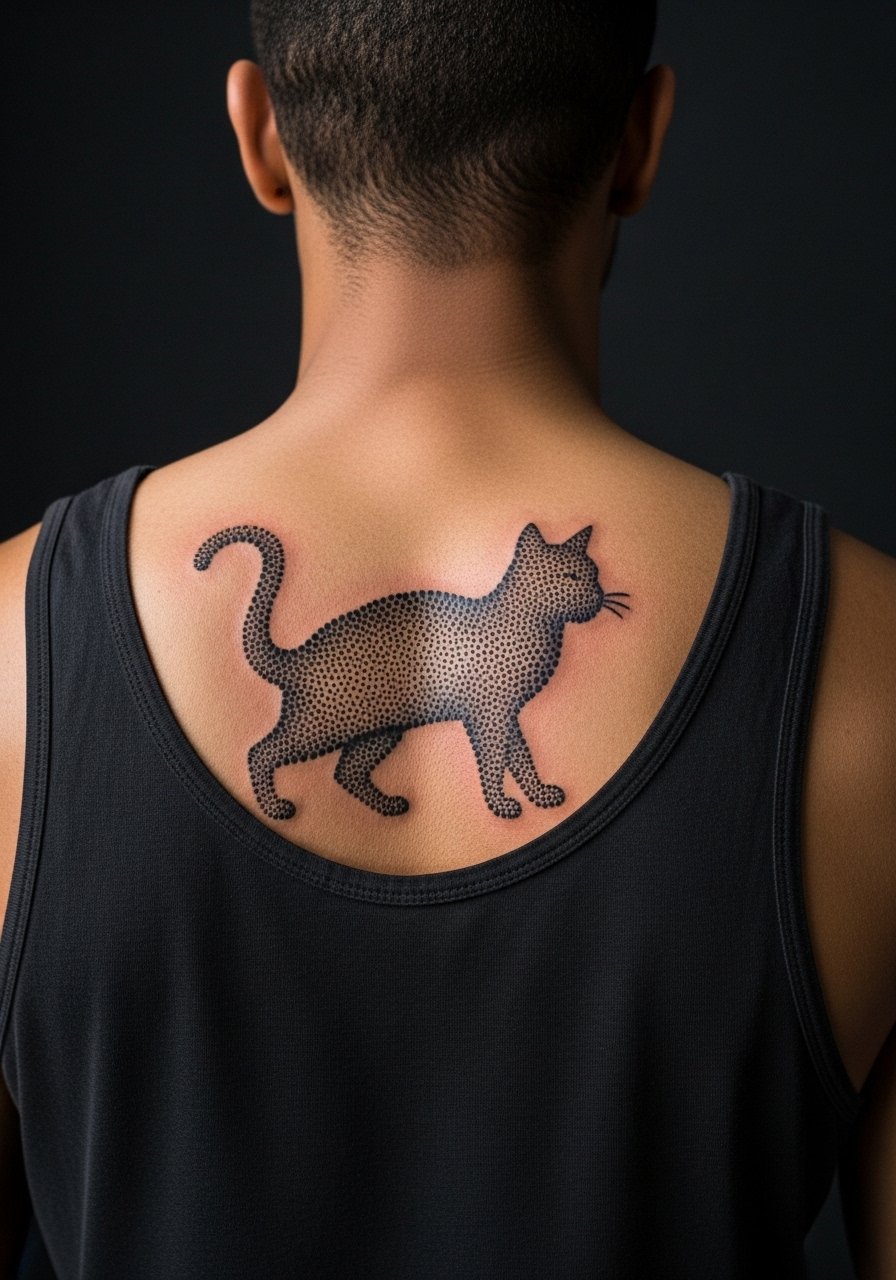
A larger black cat piece on the back favors dot gradients because they let you create depth without heavy saturation. Back skin accepts dotwork well and blowout risk is lower than on thin-skinned zones. Sessions for a sizeable silhouette are multi-hour and may be split across days. A common mistake is compressing too much detail into one sitting, which can stress the skin. For the session, bring a loose button-down shirt to put on without rubbing the fresh ink.
Studio Day Picks
The wrist and rib ideas above ask for different prep than the upper arm and back pieces, so these items smooth the session and the first week.
-
Stencil transfer paper kit. Lets you preview placement and scale for wrist chains and crescent forearm pieces before the needles touch skin.
-
Topical numbing cream. Useful for sensitive rib and sternum sessions when the appointment will stretch past an hour.
-
Thin protective film roll. Helps keep wrist and hand tattoos clean in the first days of heavy handwashing.
-
Fragrance-free gentle body wash. Avoids irritating delicate dot clusters during showers after arm or chest work.
-
Aquaphor healing ointment. A thin layer for the initial healing days helps lock in moisture for dotwork without suffocating the skin.
7. Crescent Moon Cat on the Ankle, Fine Dot Highlighting
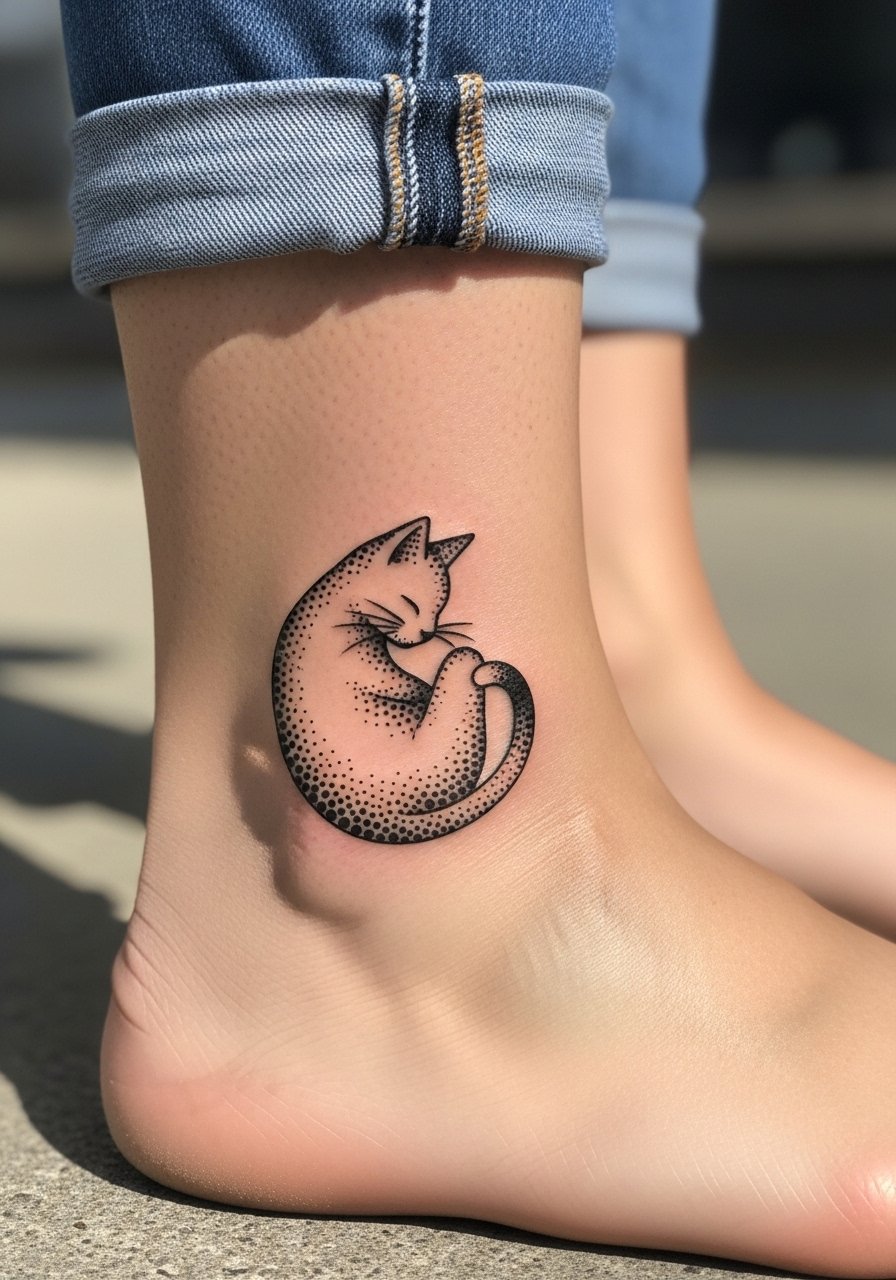
Ankle tattoos are exposed to socks, shoes, and friction. Keep dotwork airy and use slightly bolder outlines to preserve silhouette. The session is short but expect some discomfort due to bone proximity. A common mistake is choosing a scale that is too small, which leads to muddied dots from rubbing. For showing it off with sandals, consider a simple strappy sandal that frames the ankle without covering the design.
8. Negative Space Cat with Constellation on the Collarbone
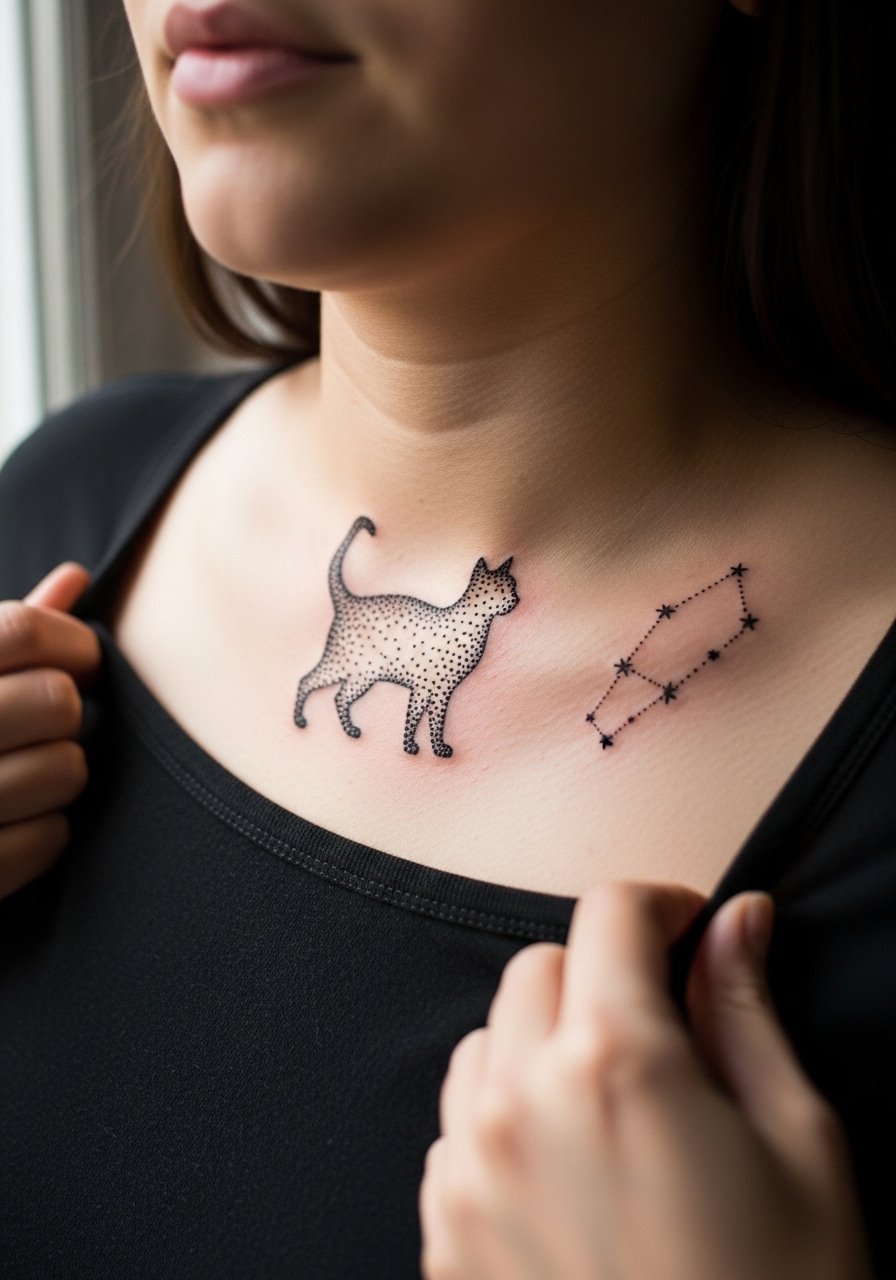
Collarbone work reads well when the negative space sits against skin rather than heavy fill. The area moves with breathing and clothing, so ask for slightly more spacing between dots near the bone. Pain can jump depending on your sensitivity over the collar. Session is brief for a small piece. This placement pairs elegantly with a thin pendant or choker.
9. Single-Line Cat Silhouette on the Side Rib with Dot Accents
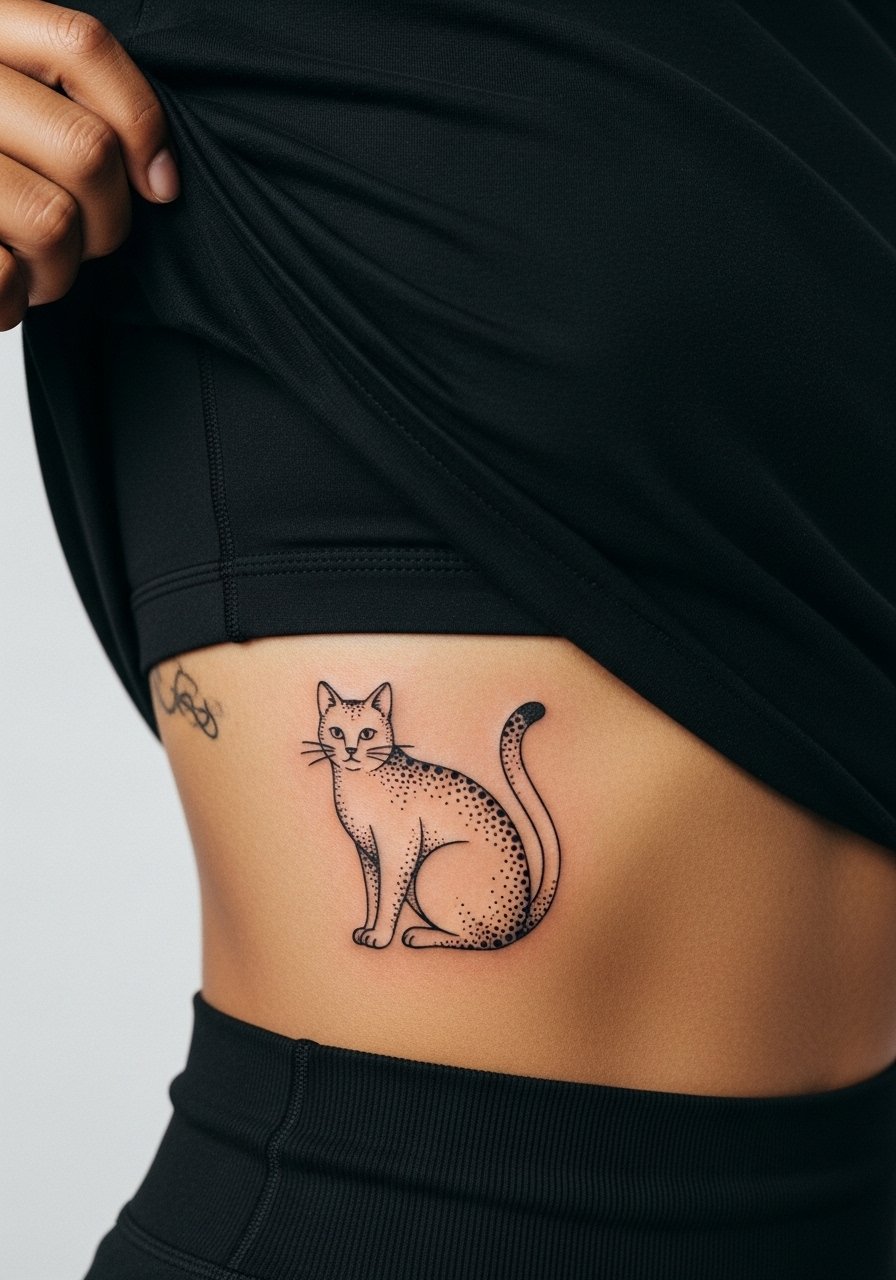
Side rib placements require patience and a clear plan. The single-line silhouette with scattered dot accents preserves readability while avoiding dense shading that fails on the ribs. Pain is high and session times depend on complexity. A frequent error is cramming too much stippling into the ribs. For the appointment, wear a cropped athletic top you can lift without stretching the tattooed skin.
10. Tiny Cat on a Finger with Micro Dot Fur
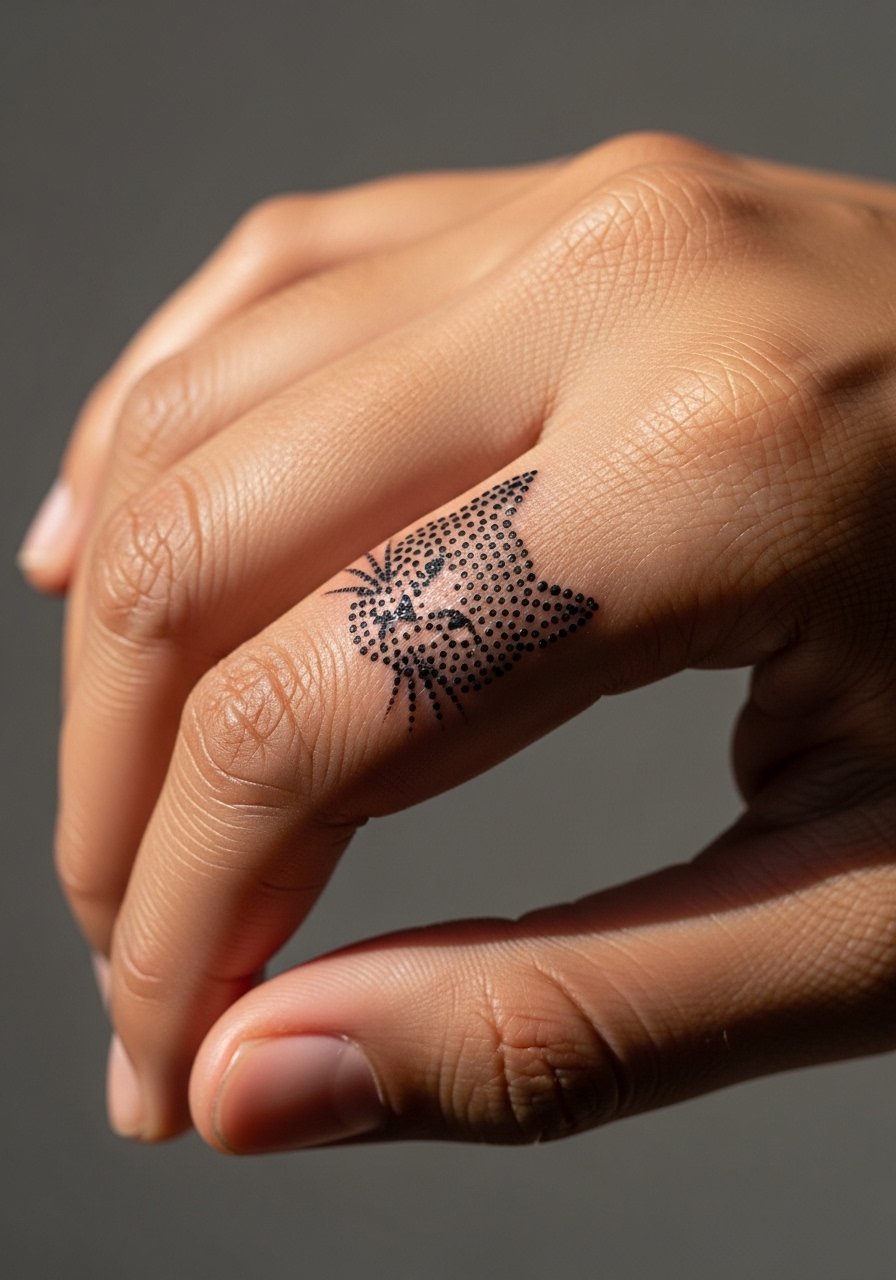
Finger tattoos age differently because of constant washing and use. Micro dot work can wash out faster than on softer skin. Expect touch-ups at year one or two. Ask your artist to avoid dense fills on the finger and to place dots with slightly greater spacing. Sessions are quick but often painful due to thin skin. Also consider career visibility because finger ink remains highly visible. For minimal jewelry that complements finger work, a thin stackable ring set keeps attention on the tattoo.
11. Art Nouveau Cat with Flowing Dot Waves on the Thigh
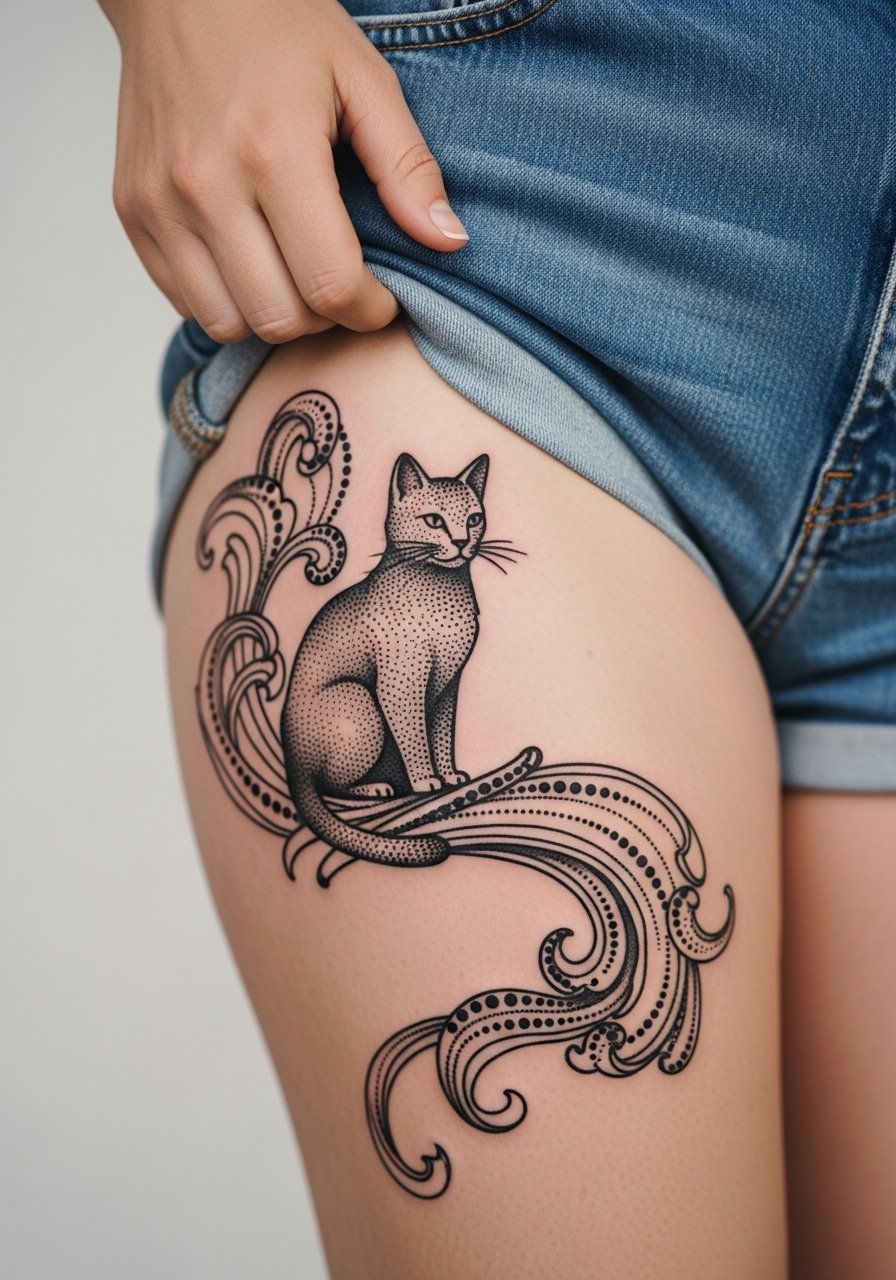
Thighs are forgiving for scale and allow more intricate dot patterns. The heavier you scale the piece, the longer it lasts without losing detail. Pain is moderate and sessions can be split comfortably. Tell your artist you want room between dot clusters so the texture ages into graceful shading rather than a blob. For showing it at the beach, a high-cut swimsuit bottom frames the composition without covering key elements.
12. Back of Hand Cat with Dot Whisker Trails
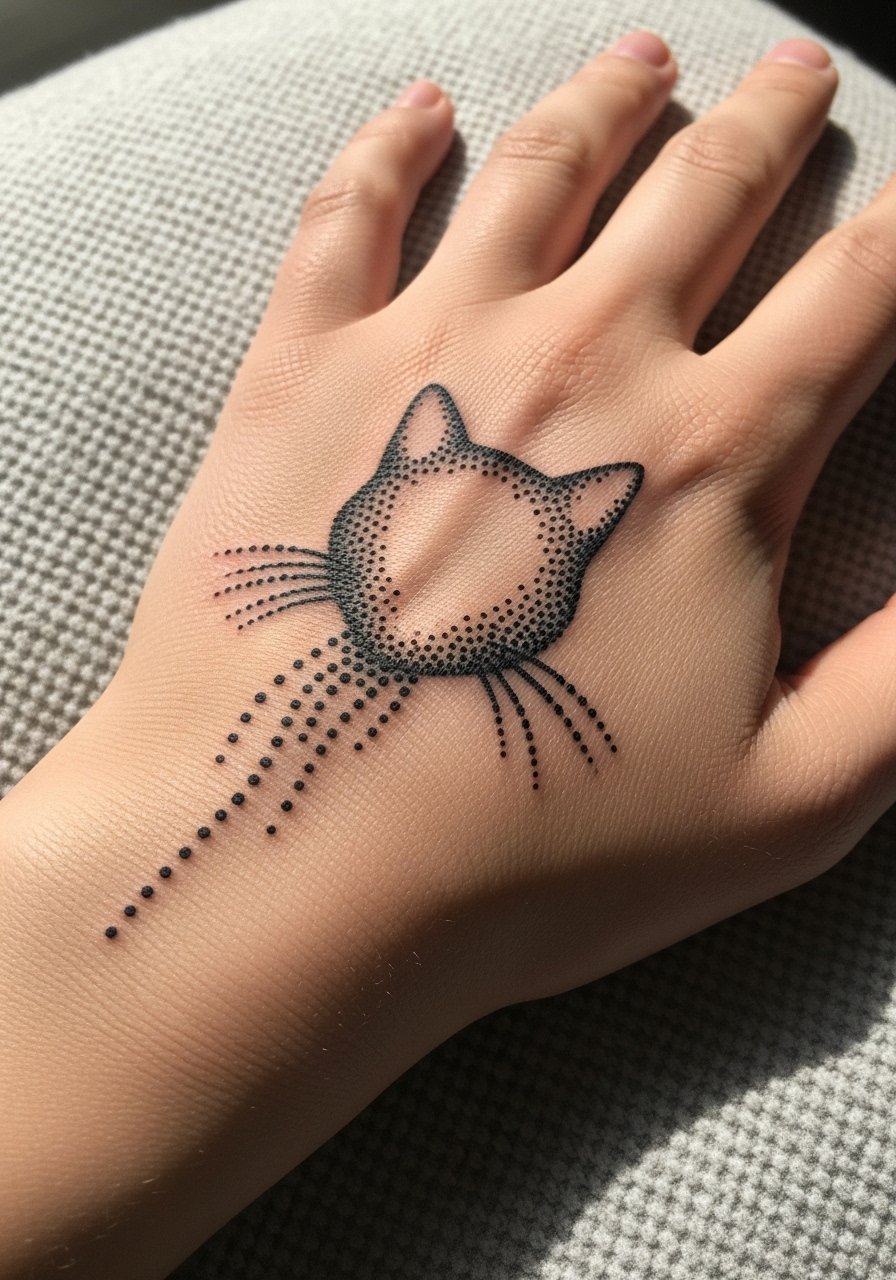
Hand tattoos are controversial in some professional settings. The skin on the back of the hand undergoes constant abrasion so dotwork can lose its crispness. One camp says hands are fine for bold high-contrast work. The other camp warns that detailed dot textures rarely last. If you proceed, keep contrast high and accept earlier touch-ups. Sessions are short and painful. Consider whether this placement fits your job or daily interactions.
13. Spine-Aligned Cat Row with Gradual Dot Density
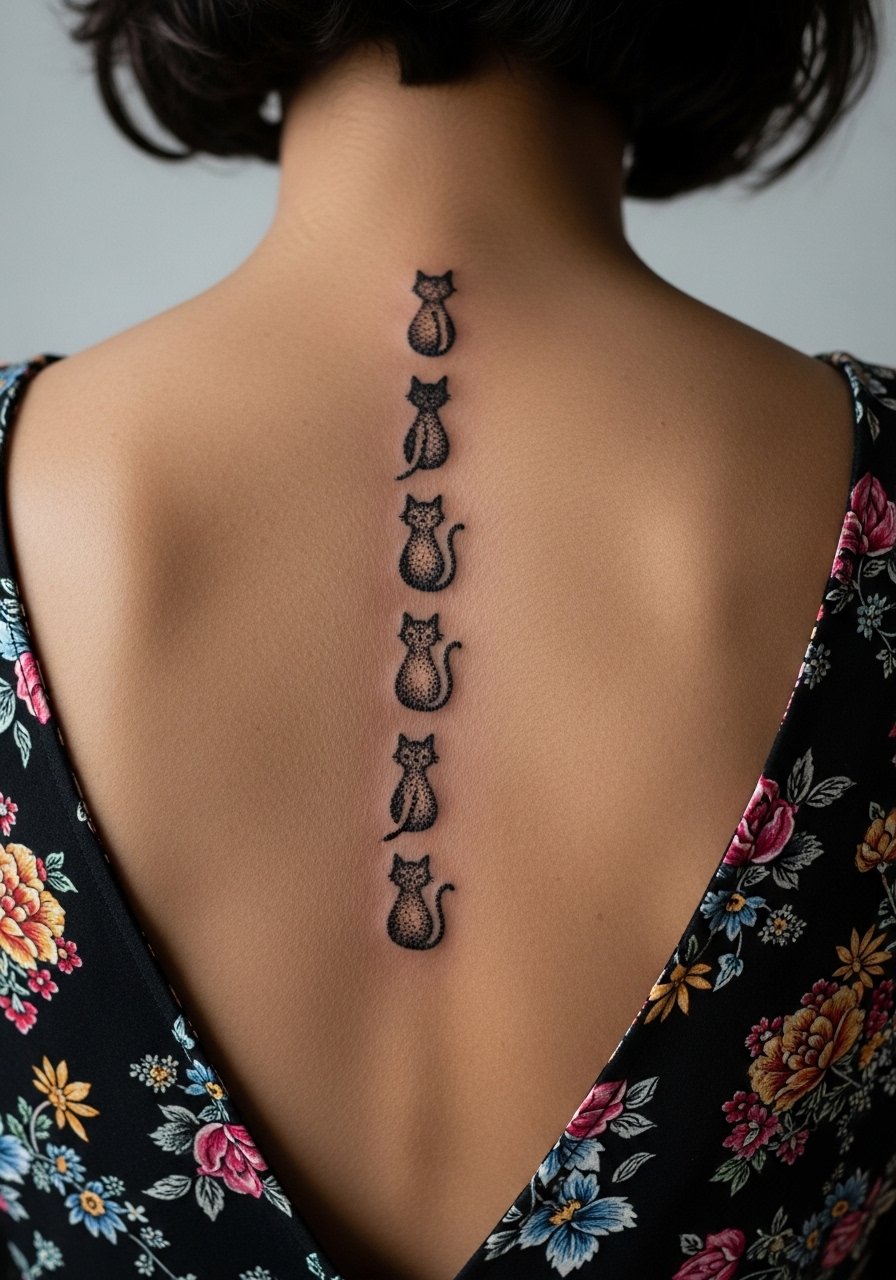
A vertical spine run reads beautifully under open-back clothing and benefits from gradual dot density to suggest movement. The skin along the spine is tight so fine dots can stand up well if spaced properly. Sessions are moderate and may be split. Tell your artist you want a clear primary focal cat and lighter, receding kittens above and below so the eye reads the composition at distance. For evenings out, an open-back dress frames the row without competing.
14. Cat Silhouette with Halo on the Sternum
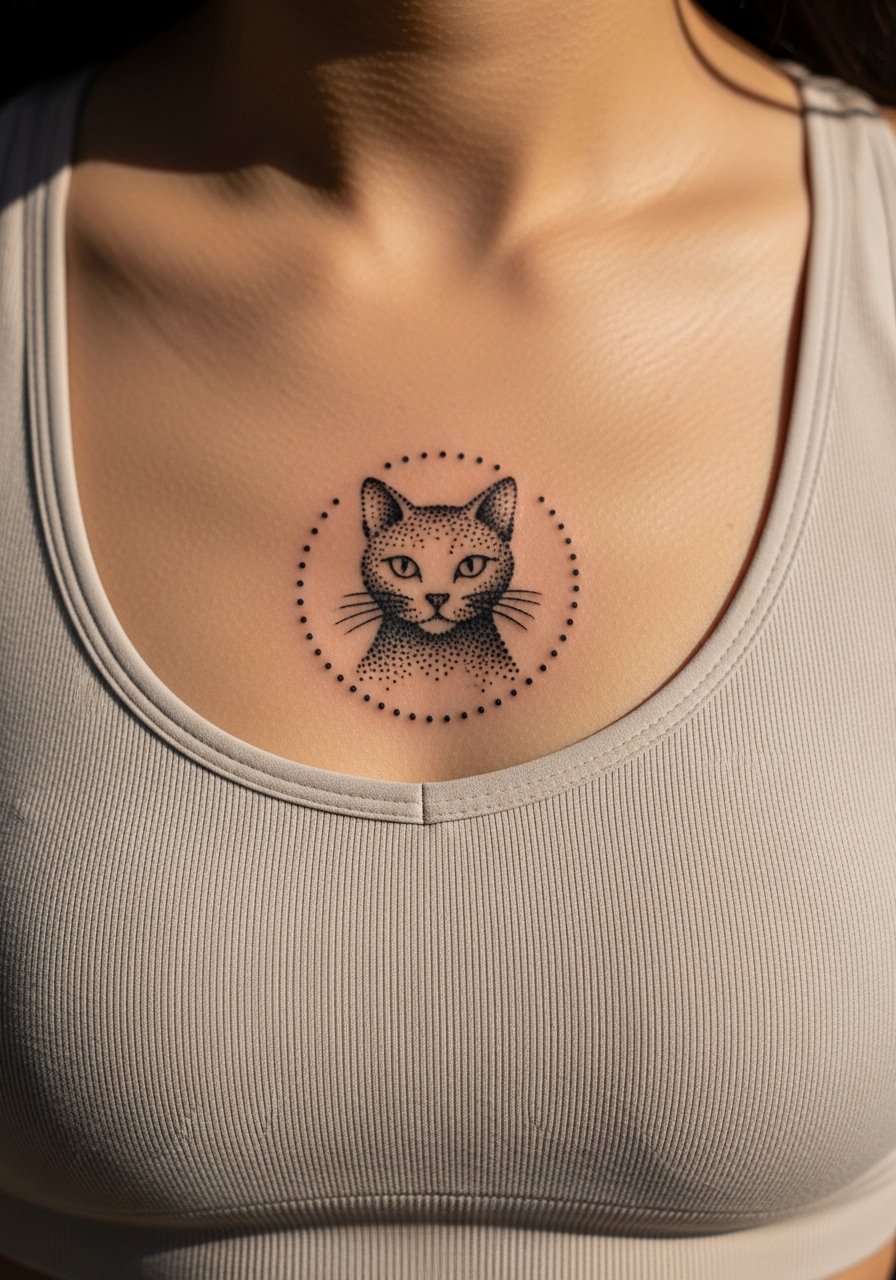
Sternum placements take longer to heal and feel more intense during the session because of bone proximity. Keep dot halos airy to avoid dense packing that can scar. Expect a higher sensitivity and a session that may need breaks. Many artists prefer experienced clients for sternum detail. For the session, wear a fitted sports bra or bandeau so the artist has access without full exposure.
15. Crescent Cat Ankle Wrap with Tiny Stars
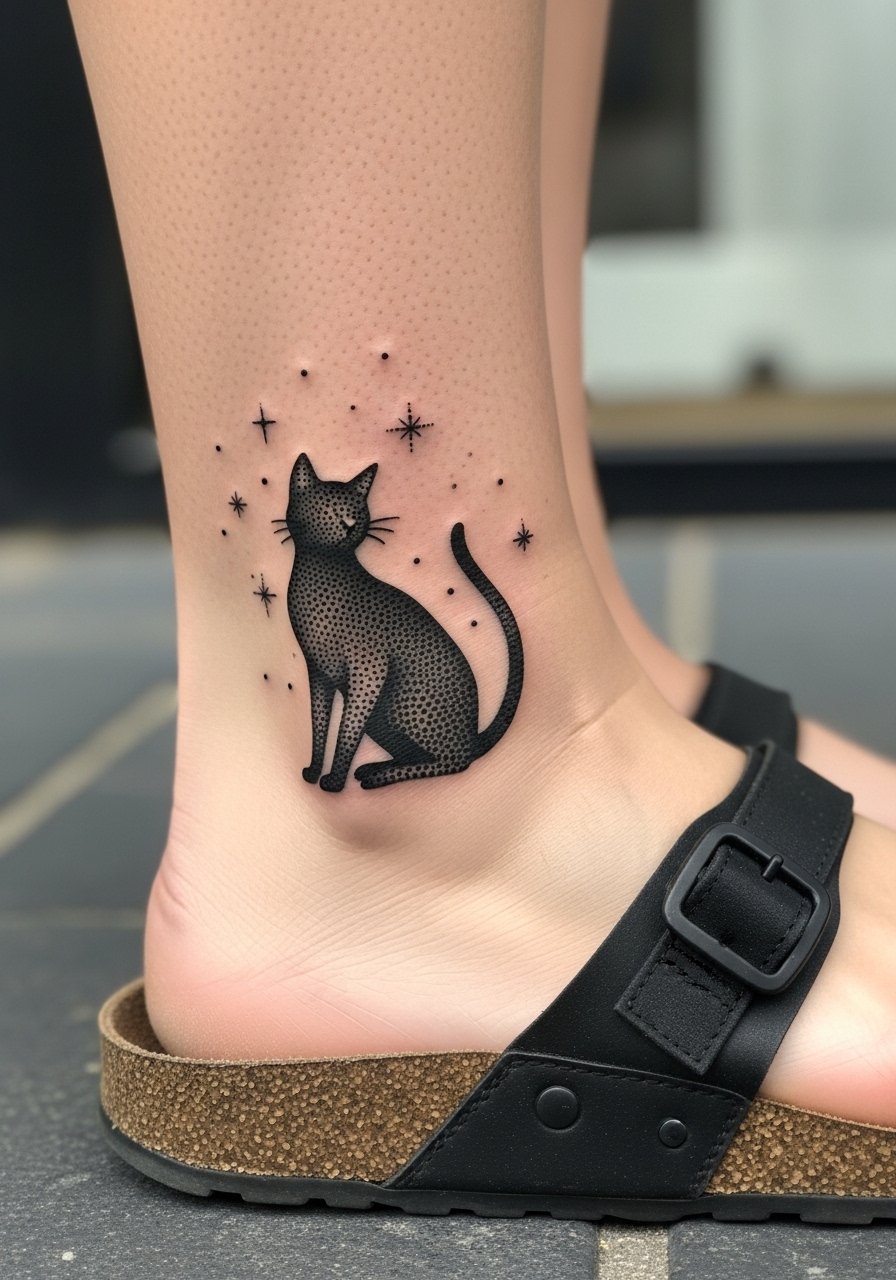
Ankle wrap designs show beautifully when paired with lower-profile footwear. The wrap should avoid extremely tight banding of dots which can blur under socks or straps. Session is short and can be slightly painful near the ankle bone. For footwear that highlights without covering the ink, try low-profile strappy sandals or rolled pant hems.
16. Botanical Cat Blend on the Upper Shoulder
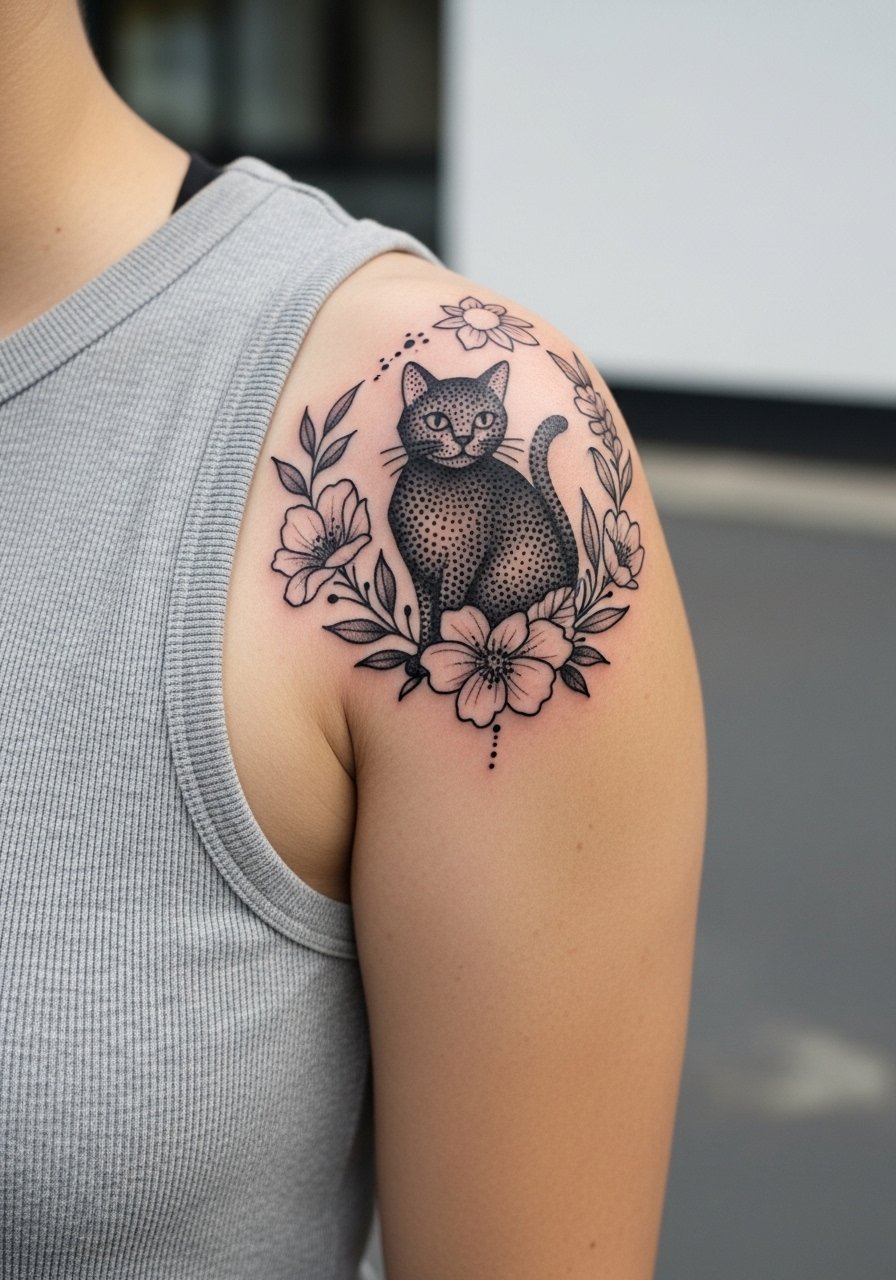
Upper shoulder is one of the most reliable places for dot shading because of lower movement and thicker skin. The session is moderately comfortable and usually finishes in one sitting for medium pieces. Tell your artist to use stipple shading for leaves and lighter dot pressure for the cat's inner details. This placement wears well under casual clothing and ages without dramatic blurring.
17. Tattooed Cat Eye on the Calf with Dot Frames
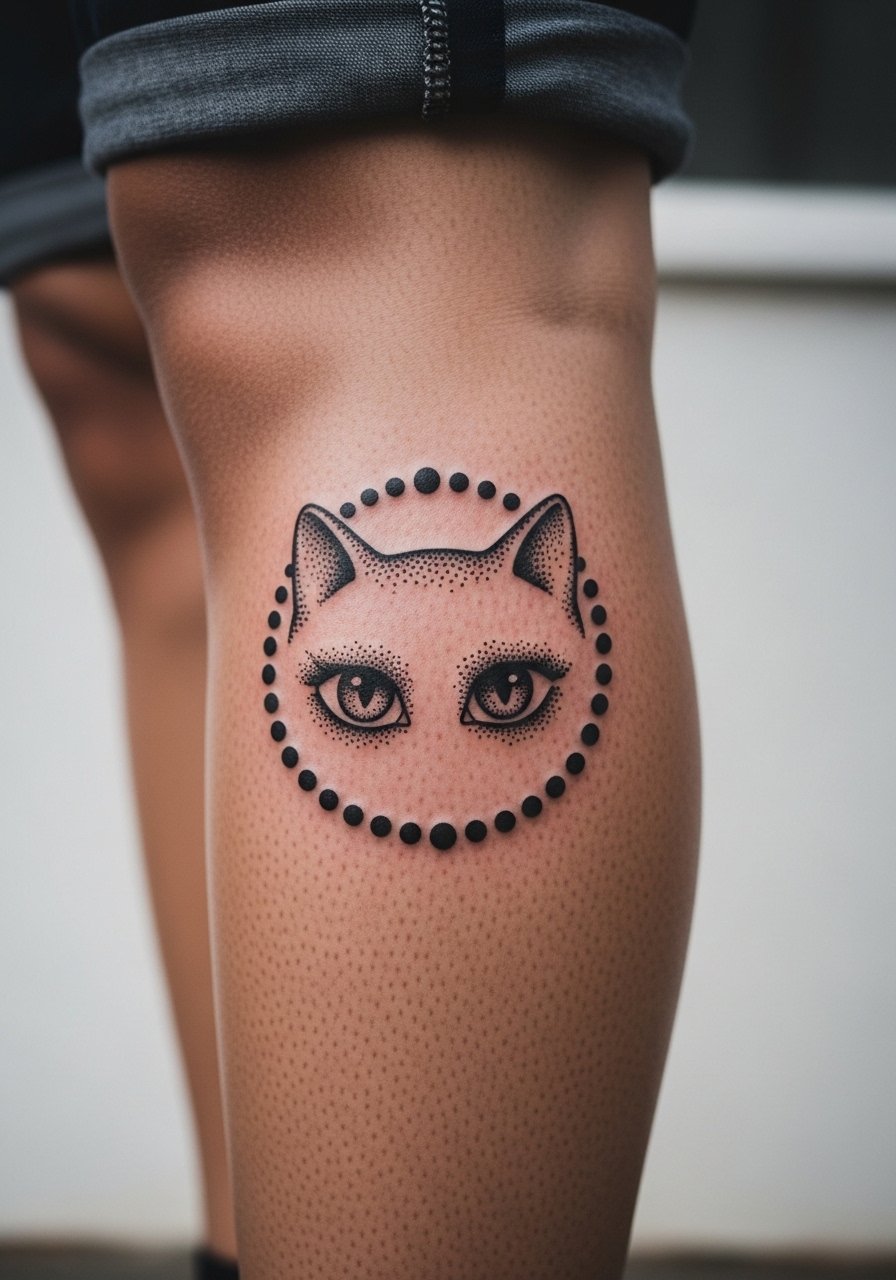
Calf pieces are great for medium-to-large dotwork because they allow scale without constant friction. The session feels moderate and healing is straightforward. Ask for slightly bolder outer dots to keep the eye readable from distance. For casual show-off, rolled shorts or a mid-length skirt complements the vertical placement. Pair with a mid-length skirt that hits above the calf.
18. Micro-Realism Cat Silhouette on the Inner Bicep
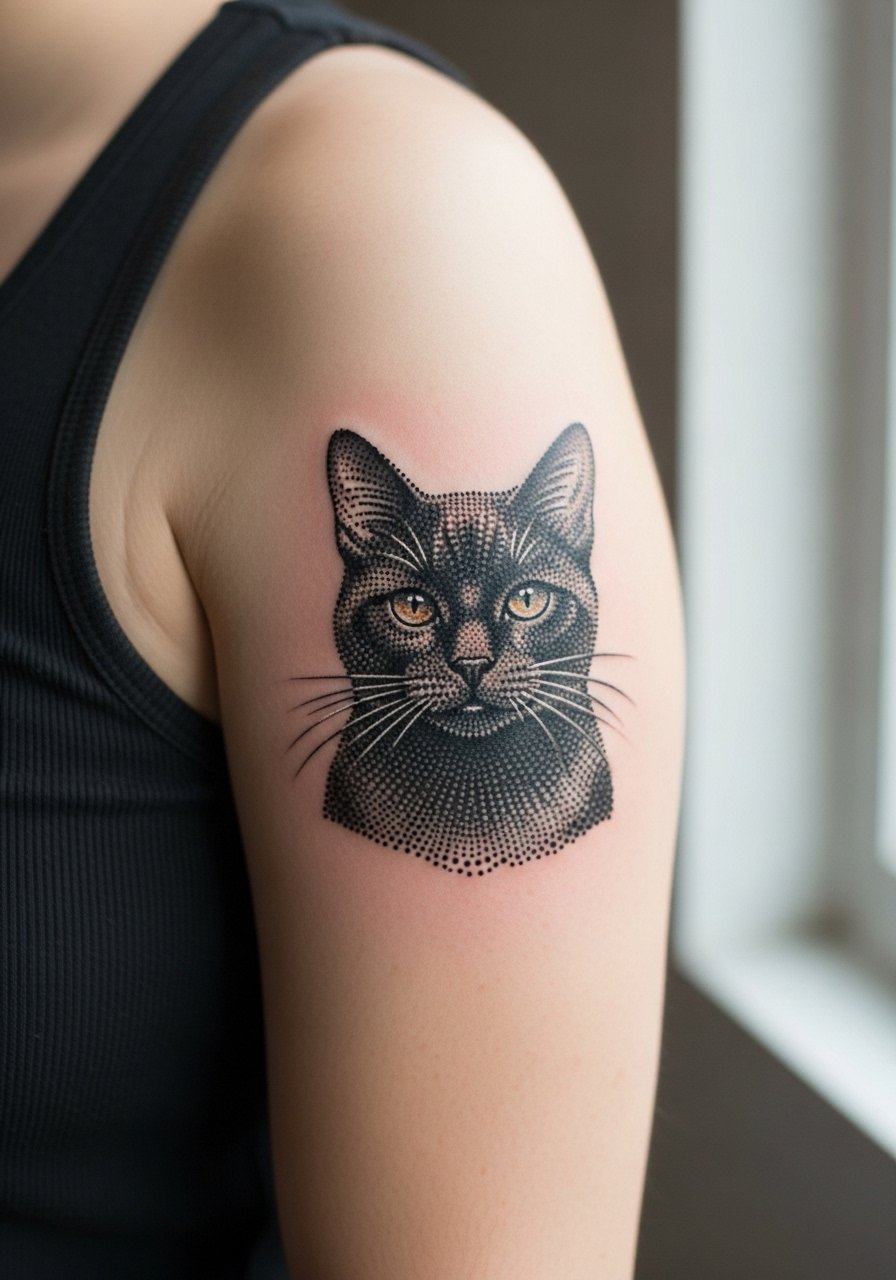
Inner bicep can be a sensitive spot but it accepts fine detail if spacing and depth are right. The skin moves with arm flexing so avoid extremely dense dot clusters near fold lines. Sessions feel moderate and may require careful positioning. Ask the artist how the piece behaves when you bend and straighten your arm. For the session, wear a tank top you can lift without pulling the skin.
19. Interlaced Cat and Moon on the Hip, Soft Dot Fill

Hip tattoos are intimate and often chosen for personal reasons. The hip accepts dotwork but moves with clothing and sleeping positions, so keep fills airy. Sessions are moderate and may be split. For the session wear high-waisted shorts or jeans you can lower slightly for access without full exposure. To show it off, pair it with low-rise or hip-baring tops. Try a high-waisted denim style that lets the design peek out.
20. Stylized Cat with Whip Shading on the Forearm
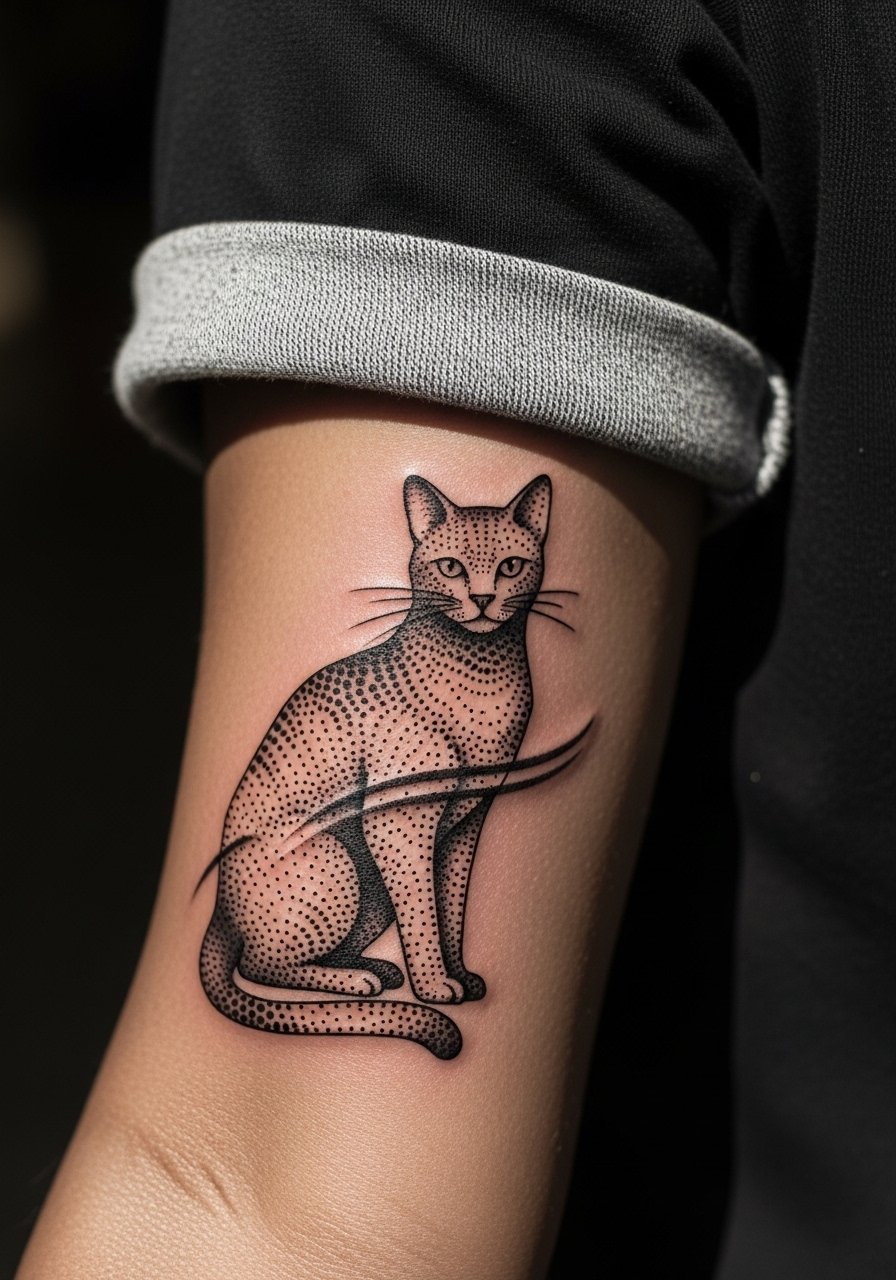
Whip shading adds motion to dotwork and reads well on the forearm. I have seen this approach last longer than heavy packed blacks in the same area because the lighter strokes settle without smudging. Session is comfortable and often completed in a single appointment. Tell the artist you want lighter whip shading around the edges and denser dots in shadow pockets. For dressing, rolled sleeves and a minimalist watch keep attention on the forearm. A minimalist watch pairs neatly without overcrowding the linework.
21. Lined Cat Portrait on the Calf with Soft Dot Background
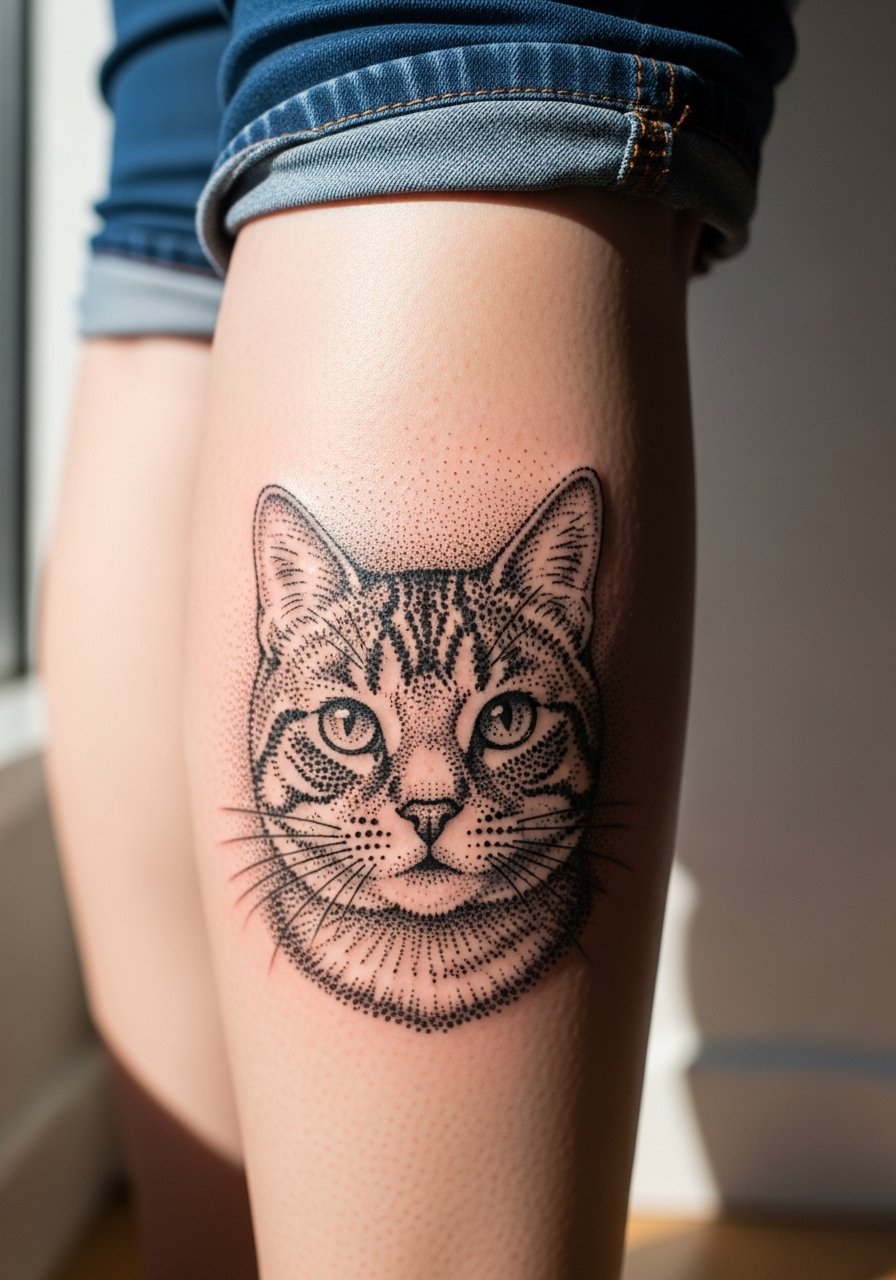
A portrait-style cat in dotwork benefits from a soft stipple background that separates subject from skin tone. Calf skin holds dots well and touch-ups are rarely urgent. Sessions may be longer depending on facial detail. Common mistakes include over-detailing the fur in a tiny scale, which can look like a patch at year three. For comfort during the session, bring something to lean your leg on and wear breathable shorts.
22. Tiny Cat Behind the Knee with Dot Trail
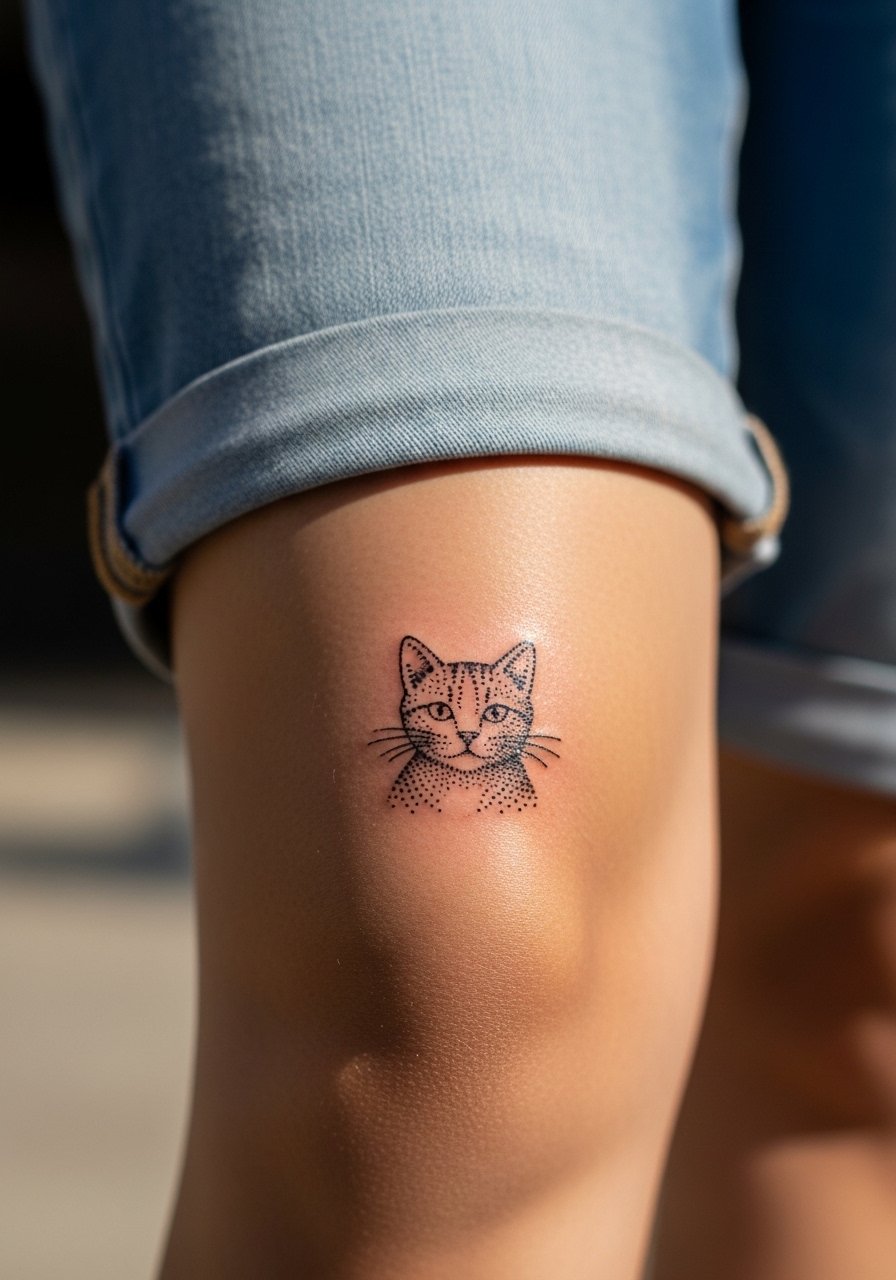
Behind-the-knee work needs a careful call on size because the folding skin can distort fine dot layouts. One camp argues small dots vanish when the knee bends often. The other camp says larger, more spaced dots survive. If you like the placement, increase the scale and accept periodic touch-ups. Sessions are short but require dynamic posing. For the appointment wear loose shorts you can adjust without stretching the skin.
23. Heraldic Cat Chest Piece with Dot Filigree
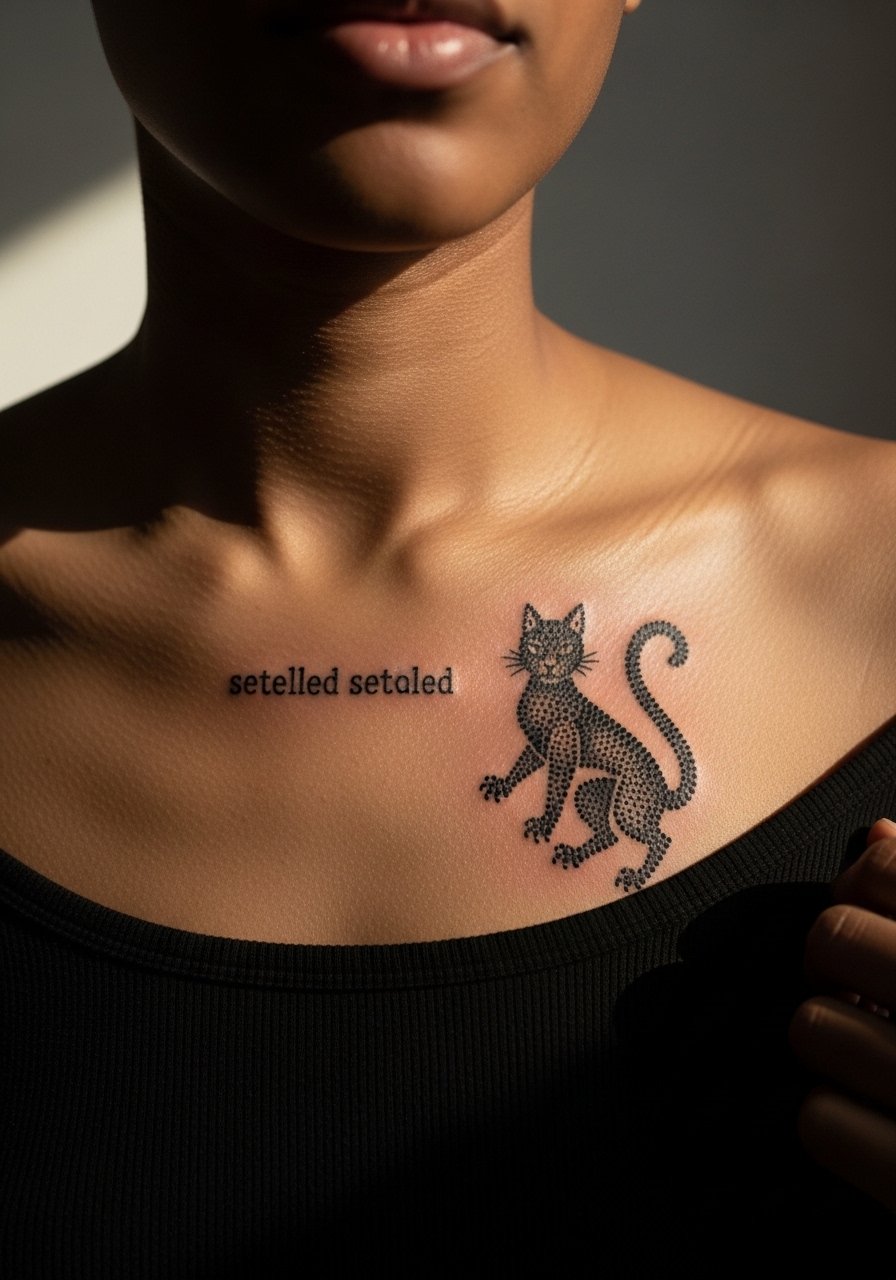
Chest pieces sit on a large canvas but the sternum area is sensitive, so plan spacing carefully. Dense filigree near the sternum can feel intense during the session. Expect a longer appointment and a short break schedule. The chest moves with respiration so larger spacing in dot details helps the piece age gracefully. For showing the chest piece with minimal exposure, wear a wide-neck top.
24. Minimal Cat Tattoo on the Nape with Dot Shadow
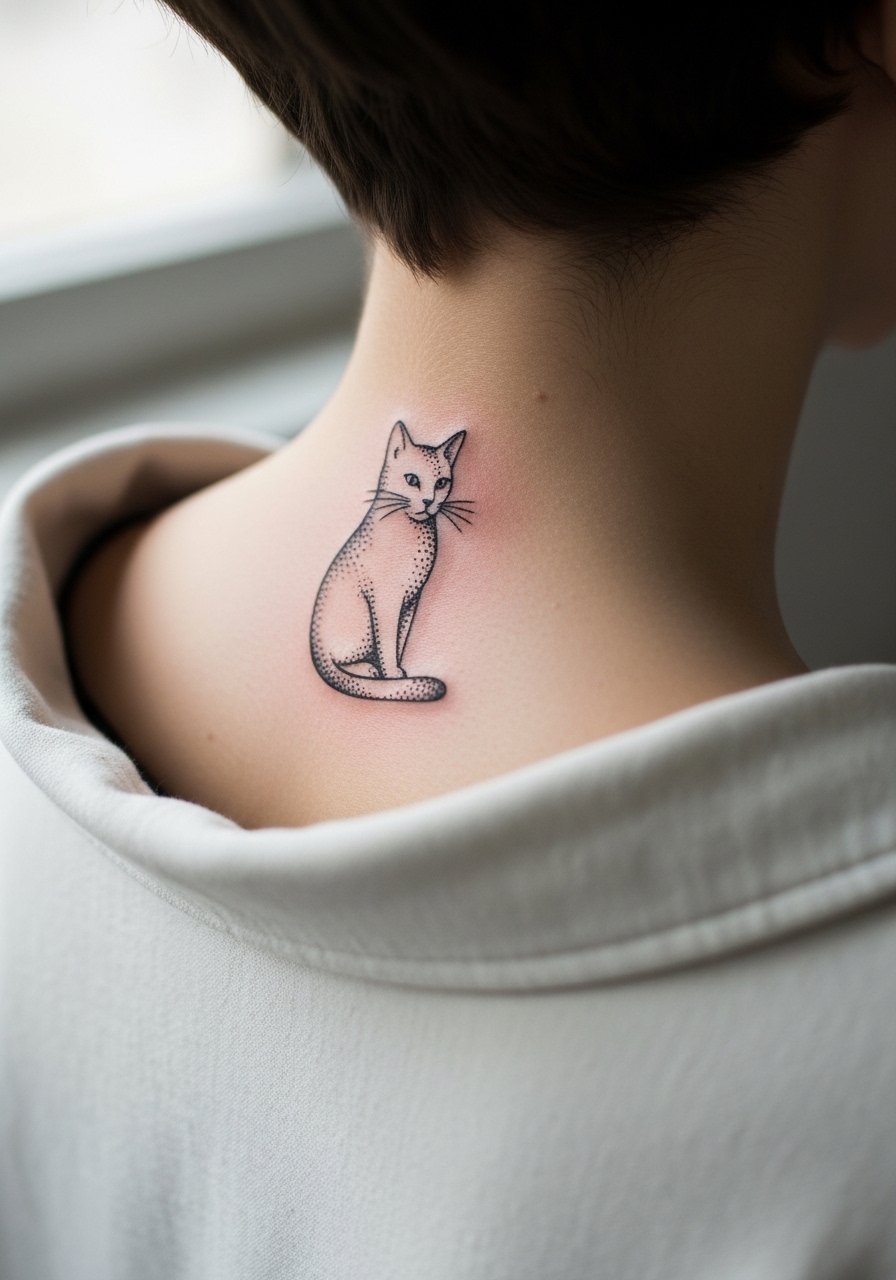
Neck placements are visible and sometimes career-sensitive. The nape handles dotwork well if kept simple and slightly larger than a micro piece. One sentence of professional consideration: neck ink can affect hiring in certain fields, so weigh visibility against job expectations. The session is short and mildly painful. For a discreet reveal, wear a collared shirt with the collar pulled aside.
25. Negative Space Cat with Floral Halo on the Lower Back

Lower back skin accepts dot gradients well and is less prone to daily abrasion. Plan for a scale that matches your body curve so the halo reads as intended. Sessions can be completed in one sitting depending on size. For the session, a tank top you can lift without stretching the area is best. A casual tank top works for easy access.
26. Small Cat with Dot Crown on the Collarbone Band
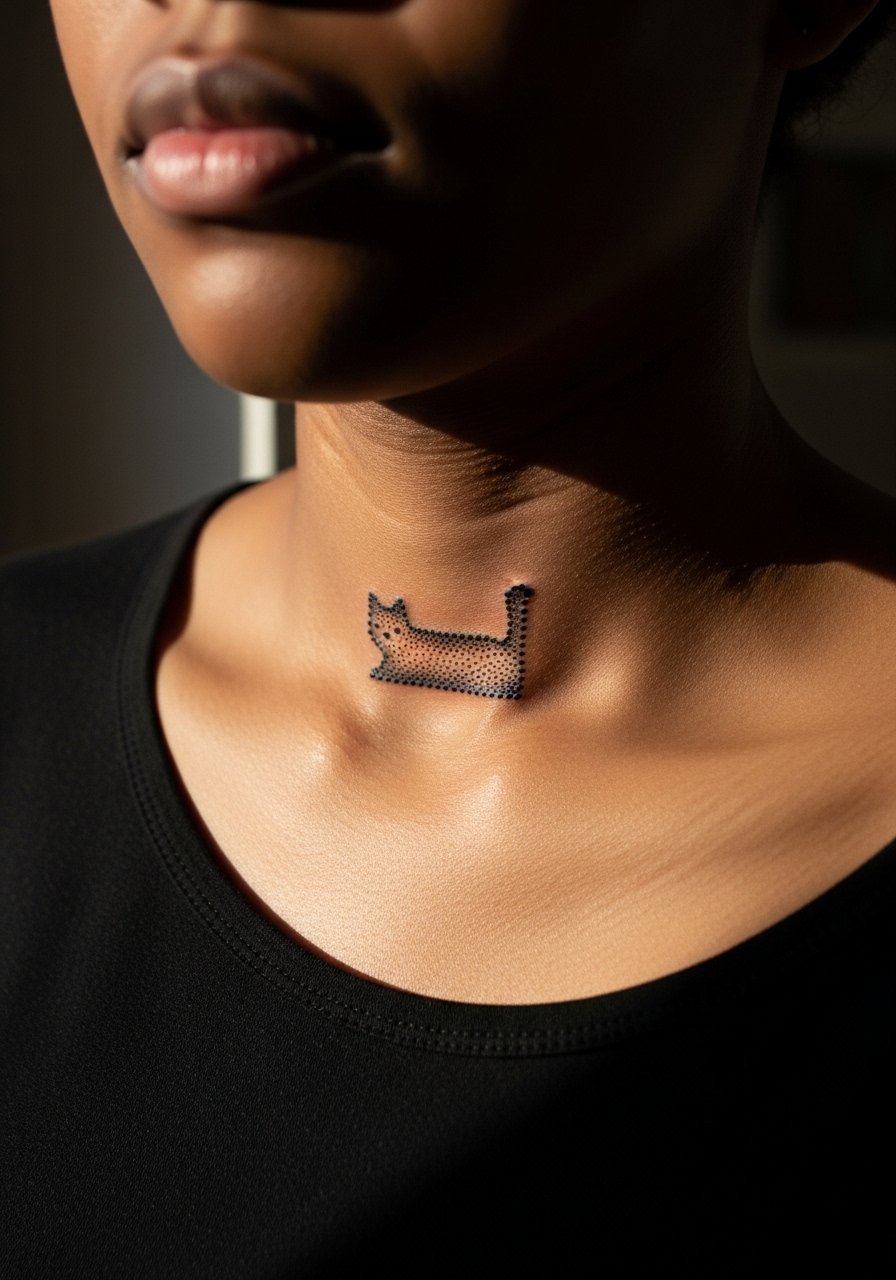
Collarbone bands need negative space to keep the dot crown readable. The skin over the clavicle can be bony so expect spikes of sensitivity during needle work. Ask your artist for a slightly bolder outer edge on the crown so the tiny dots inside remain legible. For styling, a thin chain pendant necklace sits above the band without crowding the line.
27. Cat Silhouette with Concentric Dot Aura on the Shoulder Blade

Shoulder blade pieces age well because the area sees limited abrasion. The concentric aura should have increasing spacing to avoid dense rings that can merge over time. Session pain is moderate and finishes in one appointment for medium sizes. A frequent mistake is starting the aura too close to the silhouette. For visibility, a tank top or thin-strap dress exposes the blade gracefully.
Frequently Asked Questions
Q: Will dotwork black cat tattoos fade faster than solid black pieces?
A: Dotwork can fade in perceived contrast faster than heavily saturated blackwork because it relies on tiny points of ink rather than continuous fills. From what I have seen, that means touch-ups may be needed sooner for small, dense dot clusters. Increasing scale and spacing reduces the risk and keeps the silhouette readable over time.
Q: Can I get a dotwork cat on my ribs and expect it to last?
A: Ribs are one of the trickier spots. Artists split into two camps on fine detail there. The safe approach is to size up slightly, request airy stippling, and plan for a possible touch-up at year two. If you want maximal longevity, consider moving to the upper arm or shoulder blade where skin is more stable.
Q: How should I dress for a sternum or chest session?
A: Wear clothing that gives the artist clean access without full exposure. A fitted sports bra, bandeau, or a wide-neck shirt that you can pull aside works best. For post-session comfort, soft, non-restrictive fabrics reduce friction as the tattoo heals.
Q: Are hand and finger dotwork tattoos worth it if I need them to stay sharp?
A: Finger and hand work will likely need earlier touch-ups because those areas see constant washing and abrasion. If sharpness matters, opt for slightly bolder dots and higher contrast outlines. Also consider minimal jewelry like a thin stackable ring set that highlights the area without rubbing the fresh ink.
Q: How do I find an artist who understands dotwork black cats without relying on Instagram names?
A: Look for portfolios on local shop websites, search convention lineups, check hashtag discovery, and read community threads on tattoo forums. Ask to see healed photos, not just fresh work, and bring a clear brief about scale and spacing so you and the artist are aligned.