Fine line roses look effortless on a mood board and fragile on real skin more often than people expect. The trend favors whisper-thin stems and open petals, but placement and spacing decide whether a tiny rose still reads clear at year three. Read these stencil-forward ideas with sensible notes on aging, consultation lines to quote to your artist, and wardrobe tips that actually help you show the work without forcing a touch-up.
1. Single-Stem Rose on the Inner Forearm
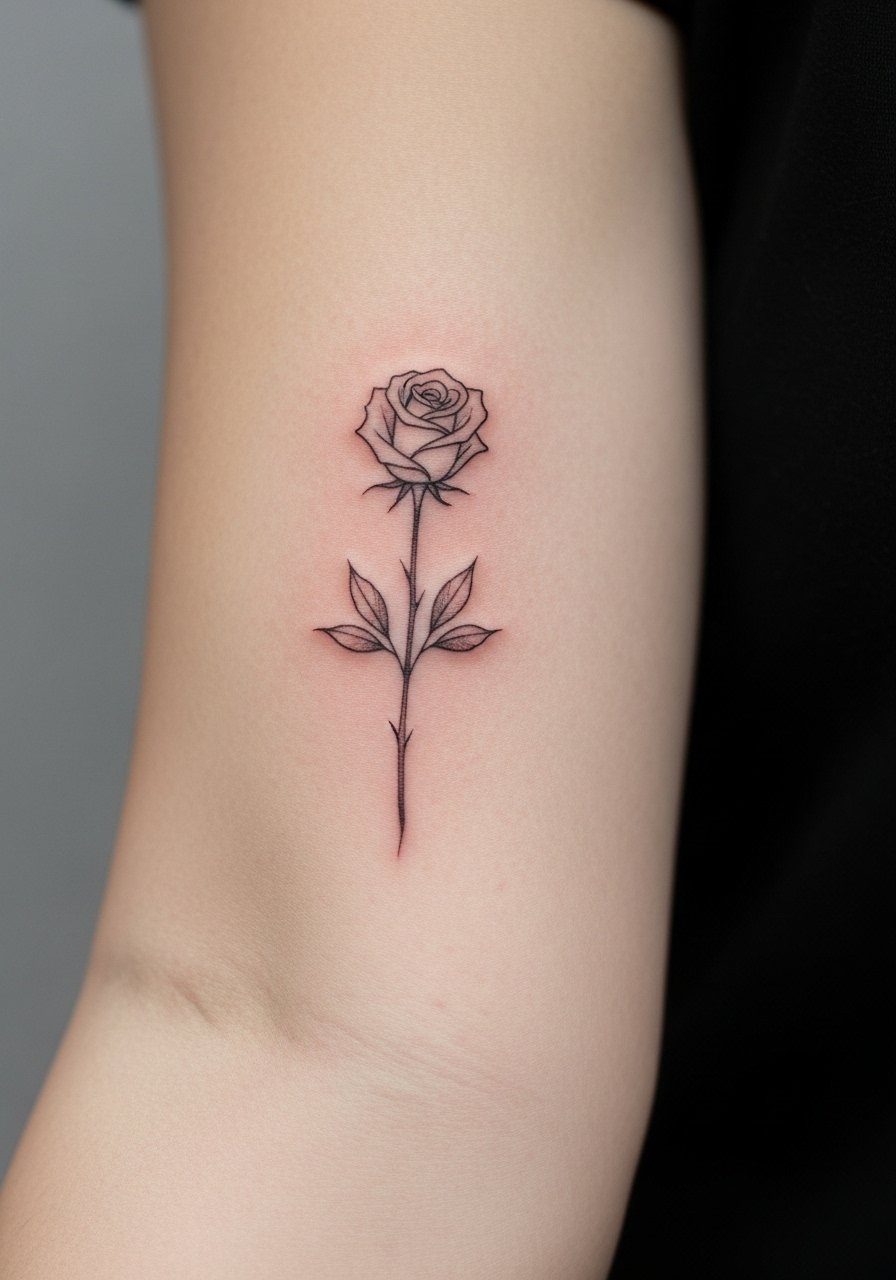
I recommend this when you want a readable piece that looks crisp from day one and at year five. Tell your artist you want slightly heavier contour linework around the petal edges and very light interior strokes so the petals keep definition as the linework softens. A common mistake is asking for ultra-thin stems across the whole design; that disappears faster than expected on active forearms. Expect a low to medium pain level, about a single-session tattoo for most shop setups, and a touch-up window around year two to three for fine details. For showing it off, rolled sleeves pair well with rolled+linen+shirt looks that frame the forearm without overshadowing the linework.
2. Micro Rose on the Wrist
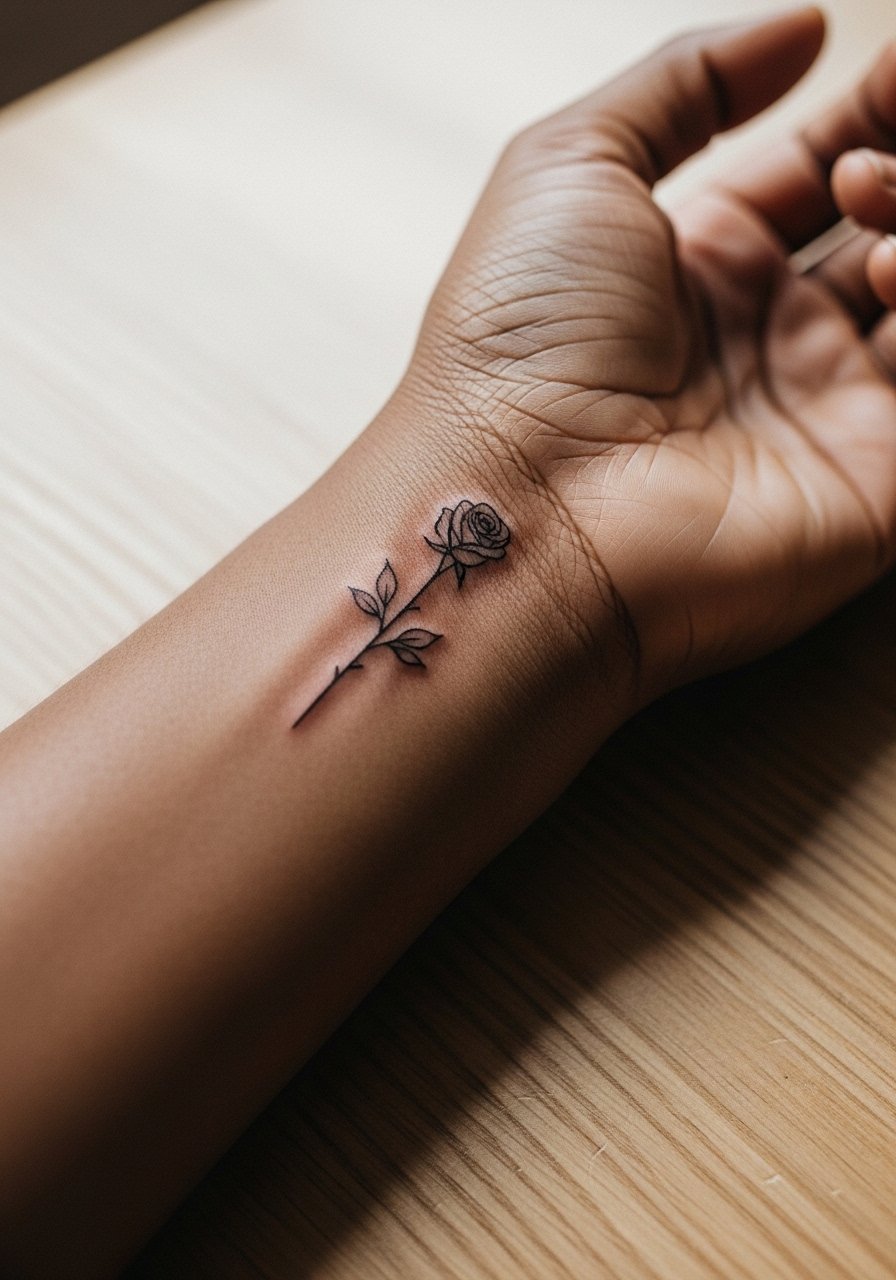
Fair warning: the wrist is a high-friction spot that ages faster than the forearm. Ask for slightly more spacing between key lines and avoid dense stipple shading that will merge over time. The session is quick and feels sharp during the outline passes, then dulls as the artist fills in light details. A common regret is asking for a fully filled black center on such a small tattoo; it becomes a blob within a couple of years. For evenings and casual wear, stack this with a thin minimalist bracelet that sits just below the tattoo so the skin around the lines breathes and the rose stays the focus.
3. Side‑Finger Rose
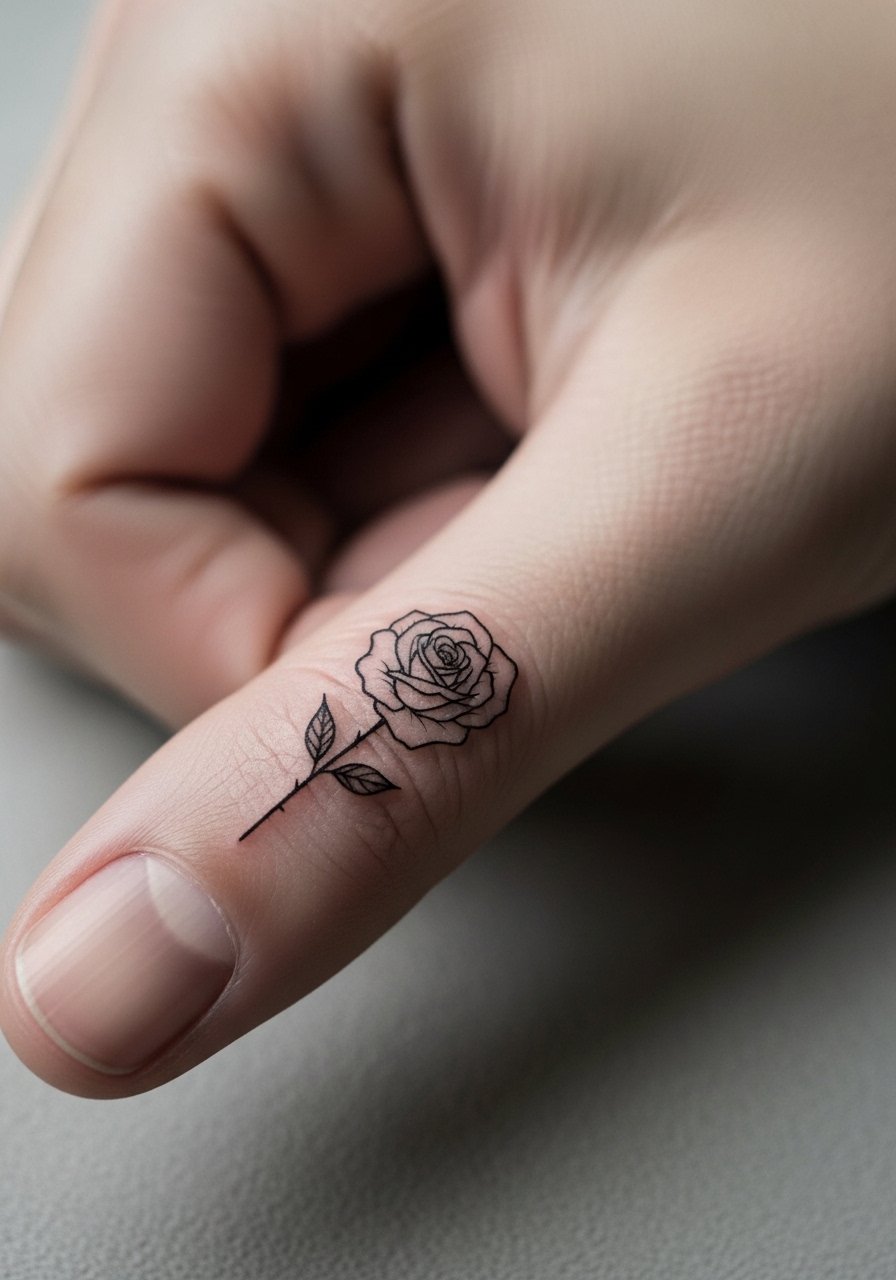
This one is best if you accept a higher chance of early fading and the need for touch-ups. Ask for single-needle work with deliberate spacing and expect that touch-ups might be needed around year one to two in active hands. The biggest mistake is requesting heavy shading at this scale; shading disappears fastest on fingers. Consider career implications for visible hand pieces because some workplaces still react conservatively. For a subtle complement, pair with a delicate stacking ring that draws the eye without covering the tattoo.
4. Floral Rose at the Collarbone
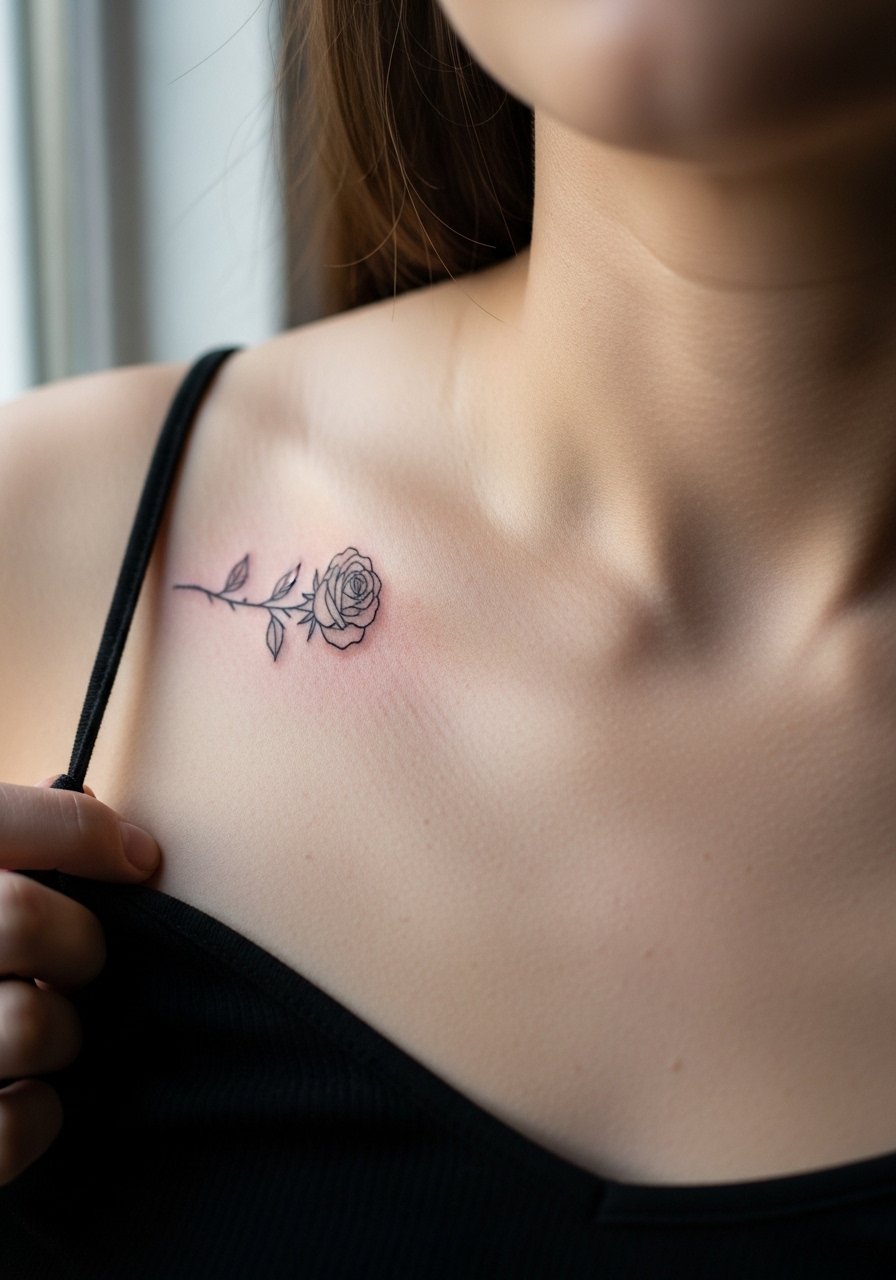
Collarbones lend an airy canvas but the skin there moves with breathing and clothing. Request slightly stronger outer linework and minimal internal crosshatching so the petals keep shape over time. Sessions feel sharp when the needle crosses the bone edge, so budget a short break halfway through for comfort. A common misstep is crowding the piece with other small motifs too close; leave breathing room. For show-off outfits, a thin chain pendant necklace sits just above the tattoo without competing for attention.
5. Behind‑the‑Ear Micro Rose

This placement is tiny and discreet, which makes it perfect for an accent piece that peeks through hair. Artists split on whether the skin behind the ear takes ultra-fine lines well long term, and both camps have valid points. One camp says the thin, softer skin blurs lines faster. The other camp argues that careful depth and spacing keep fine line here readable for years. Ask the artist how their fine line work has fared on similar placements and expect a quick session with a stingier pain curve than the forearm. No styling link here, since this spot is usually covered by hair or small accessories.
6. Clustered Mini Roses on the Ribcage
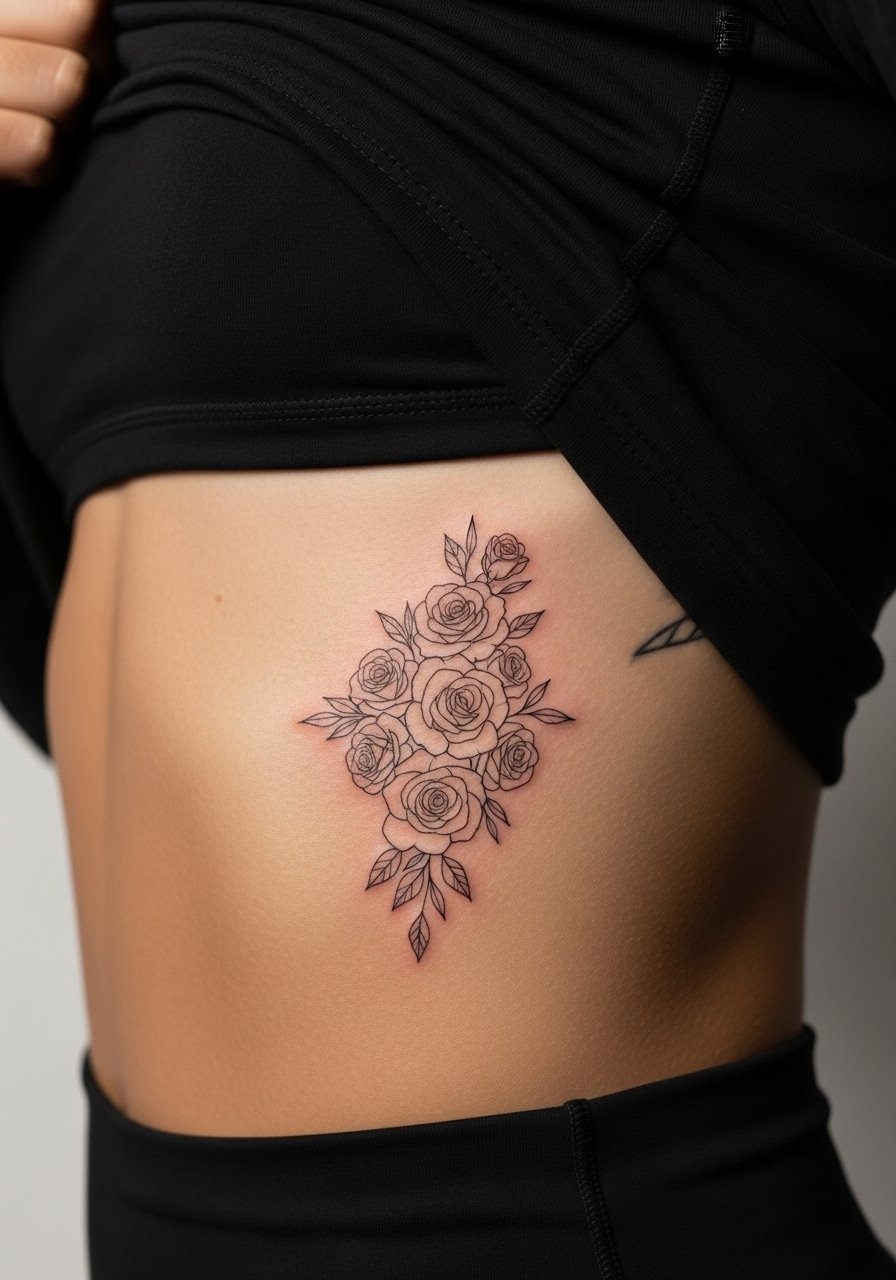
Controversy is real for fine line ribs. One group says the stretching and breathing in this area blur thin lines within two years. The other group says precise needle depth and deliberate spacing make fine line settle fine on the ribs. In practice, expect higher pain, longer sessions, and a greater chance of early softening. Ask for a slightly bolder outline and fewer tightly packed petals if longevity is the priority. For consults, bring images showing the exact scale you want so the artist can advise on spacing and session time. This placement rewards commitment but also honest expectations about touch-ups.
Studio Day Picks
The small, highly visible pieces above require different prep than larger arm work, so a few targeted items smooth the session and the first week.
-
Stencil transfer paper kit. Lets you preview how a fine line rose sits on curved skin before the needle hits, which is especially useful for collarbone and wrist placements.
-
Topical numbing cream. Applied per directions about 45 minutes before reduces the sting on sensitive ribs and inner bicep sessions without changing the artist's work.
-
Thin protective film roll. Keeps tiny wrist and finger pieces clean during the first days when washing and friction are highest.
-
Fragrance free gentle body wash. A mild cleanser that will not aggravate fresh linework or strip natural oils when you shower.
-
Aquaphor healing ointment. A thin layer for the initial days helps keep ink channels moist during early healing on small fine line work.
7. Tiny Rose at the Outer Ankle

Ankle tattoos face constant friction from socks and shoes. Ask for slightly bolder outer lines and avoid heavy internal shading so the piece keeps contrast as it heals into the skin. The session is short but the area feels tender during and after, so plan footwear that is easy to slip on without rubbing the fresh work. A common mistake is placing a very small rose where shoe straps will sit directly over it. For show-off outfits, a simple pair of strappy sandals lets the ankle breath and keeps the tattoo visible without daily abrasion.
8. Geometric Rose Accent on the Outer Upper Arm

This is ideal if you like structure but still want delicate linework. During consultation, ask the artist to map the geometric anchor points first so the rose petals align with muscle contours. The outer arm tolerates fine lines better than inner zones, so blowout risk is low here. The session feels moderate and often fits into a single appointment. A common error is over-complicating the geometry inside a small rose; keep the shapes open so they do not merge as the piece ages. For easy access during the session, bring a loose button-down shirt you can pull aside without arm pressure.
9. Central Sternum Rose
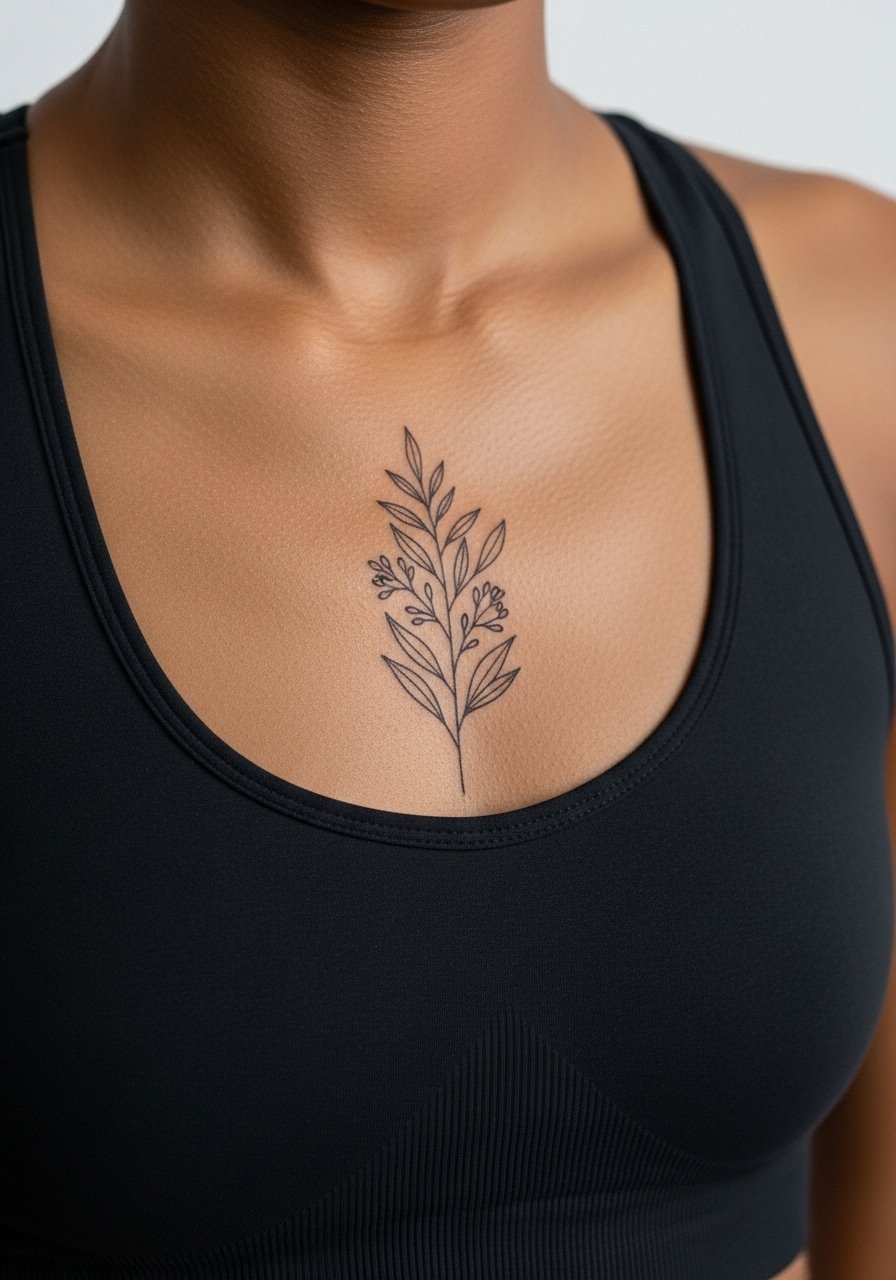
Sternum work is visually rewarding but sits on a challenging canvas. The skin there moves with breathing and often needs slightly bolder contouring than the reference image indicates. Expect a higher pain score and possibly multiple short sessions to maintain placement accuracy. A frequent mistake is packing the midline with tiny details that lose clarity when the skin stretches. Because this area is sensitive, book with an artist experienced in chest pieces and be prepared for a realistic touch-up timeline of two to three years for the finest details.
10. Fine Line Rose on the Inner Bicep
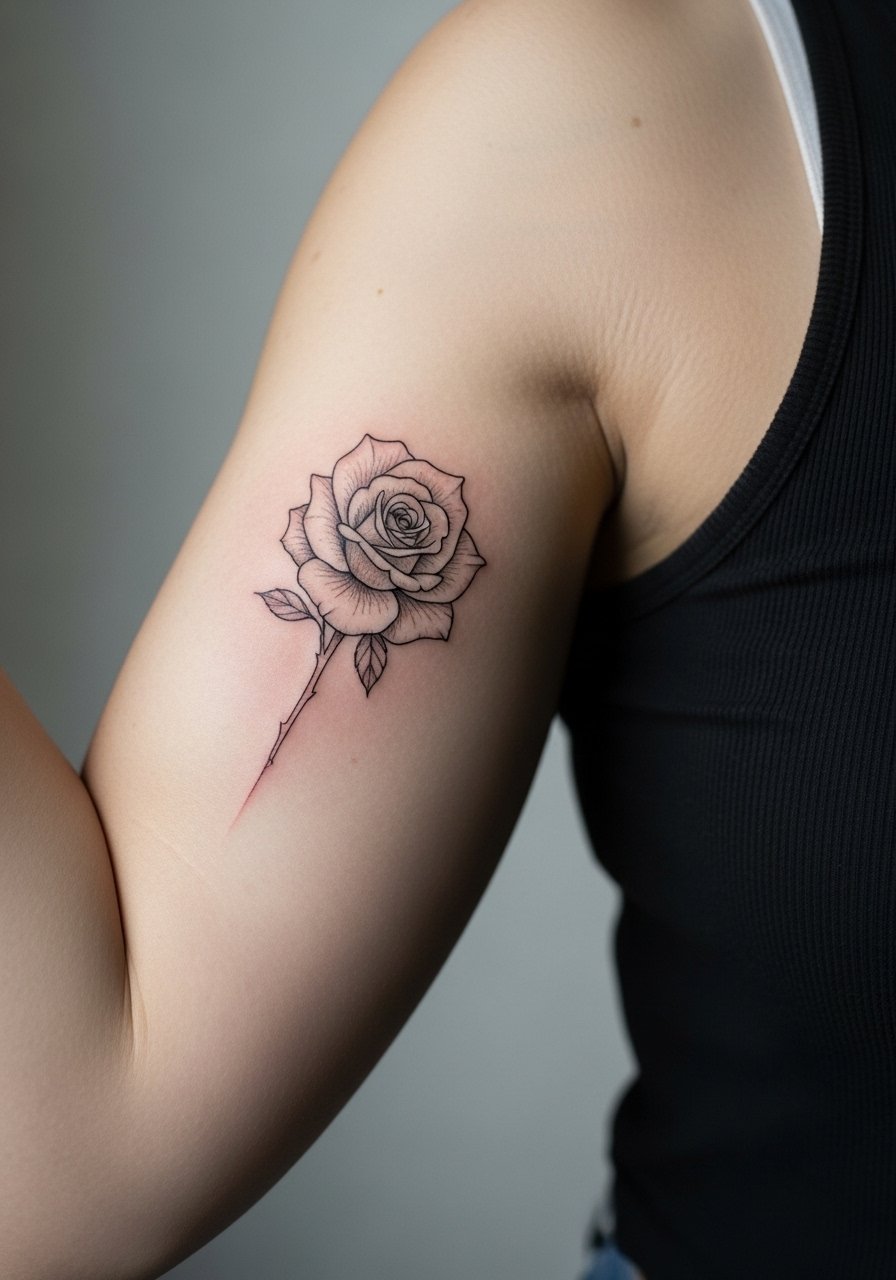
The inner bicep is a tender spot that can take fine lines well when spaced correctly, but it moves a lot and heals differently than outer arm work. For the consult, request open petal interiors and slightly stronger outer lines. Sessions can be more uncomfortable here because the skin is softer, so plan for short breaks. The common error is insisting on dense shading at this scale; that tends to soften into a gray patch. For session-day wear, put on a racerback tank top so the artist has access without you feeling exposed.
11. Small Rose Low on the Lower Back
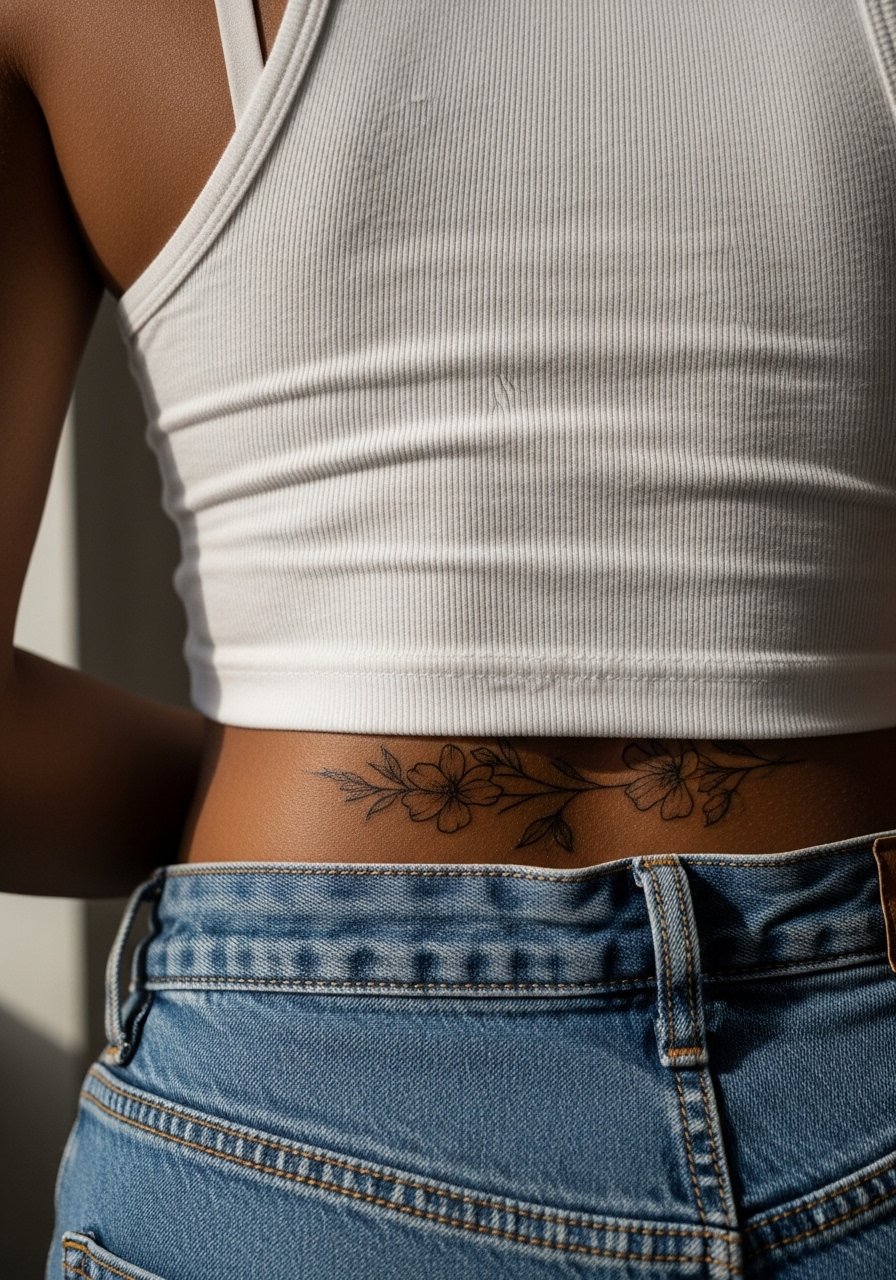
Lower back tattoos age depending on clothing and waistline friction. Ask for spacing that avoids tiny hairlike lines in areas that rub against belts and waistbands. Sessions are tolerable but keep in mind the area sees a lot of movement with sitting and bending, which can soften ultra-fine details faster. A mistake is placing a tiny connected cluster directly where a belt will rest. For evenings out, an open-back or low-rise outfit frames the piece nicely so the rose reads as a deliberate design element rather than an accidental mark.
12. Calf Rose in Subtle Stipple Shading

Calf skin is forgiving and shows fine line work clearly for longer than hands or feet. Ask for gentle stipple shading that gives depth without filling solid black patches. The session is usually comfortable and often completed in a single sitting. Watch out for the common error of overscaling a cluster that climbs too far toward the knee; that can age inconsistently. For durable results, avoid heavy layering of tattoos in the same zone unless you plan for future touch-ups.
13. Shoulder Cap Single Rose
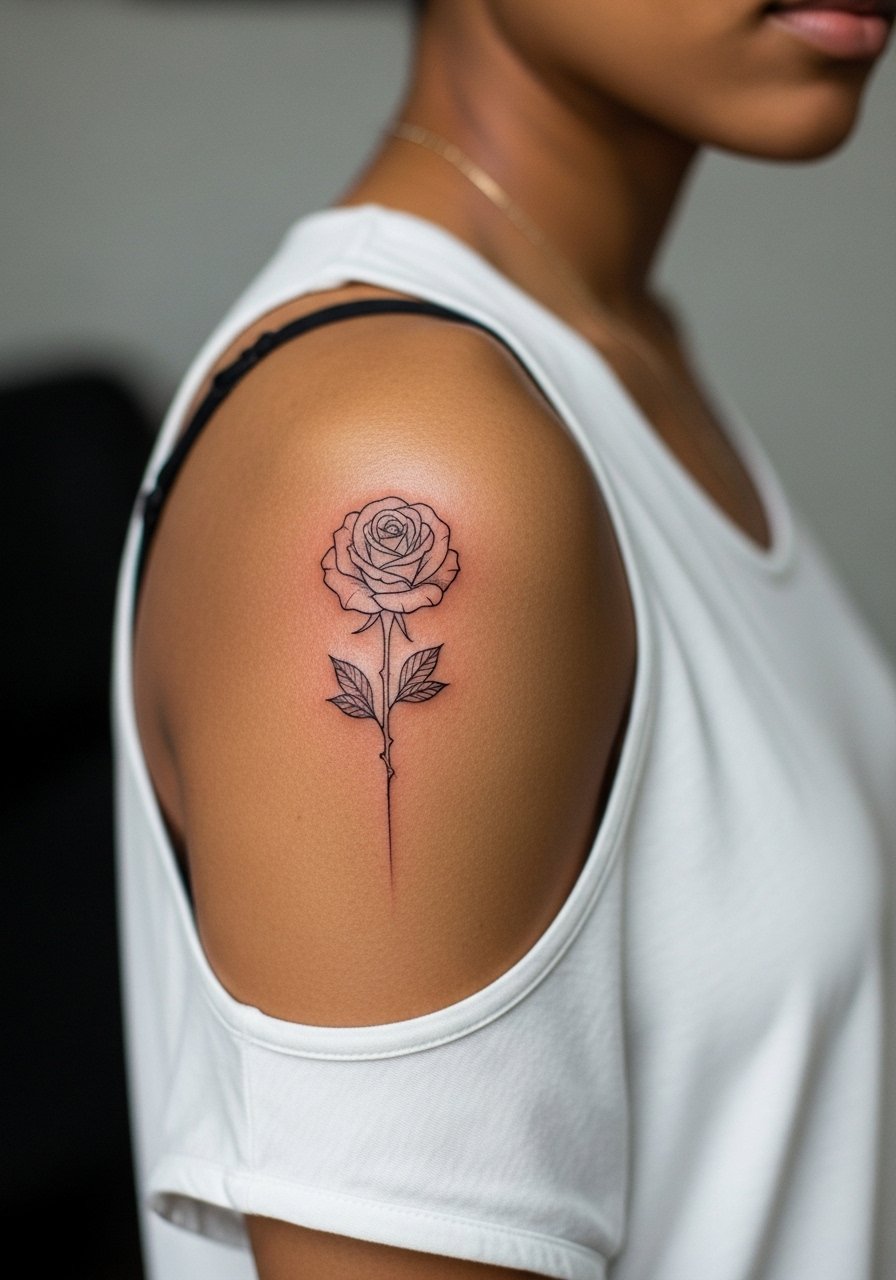
The shoulder cap is forgiving for fine line details and often maintains crisp linework for years. During consults, request the design to follow the curvature of the deltoid so the petals read naturally when the arm moves. Sessions feel moderate because the area is muscular and takes ink reliably. A typical mistake is placing linework too close to the shoulder seam where clothing constantly rubs; leave at least a finger's width from frequent seams. This spot is an excellent anchor piece if you plan future arm work.
14. Hip-Edge Rose

The hip handles fine lines well if you avoid ultra-fine interior crosshatching. Expect the session to be at least moderately uncomfortable for some people, especially near the bone. The biggest mistake is asking for a dense cluster too close to the pelvis where friction from clothing scuffs the area during healing. Plan clothing that sits above or below the design during the first two weeks. Because this is a softer, private area, many people choose the hip for its discretion rather than constant display.
15. Subtle Rose at the Back of the Neck
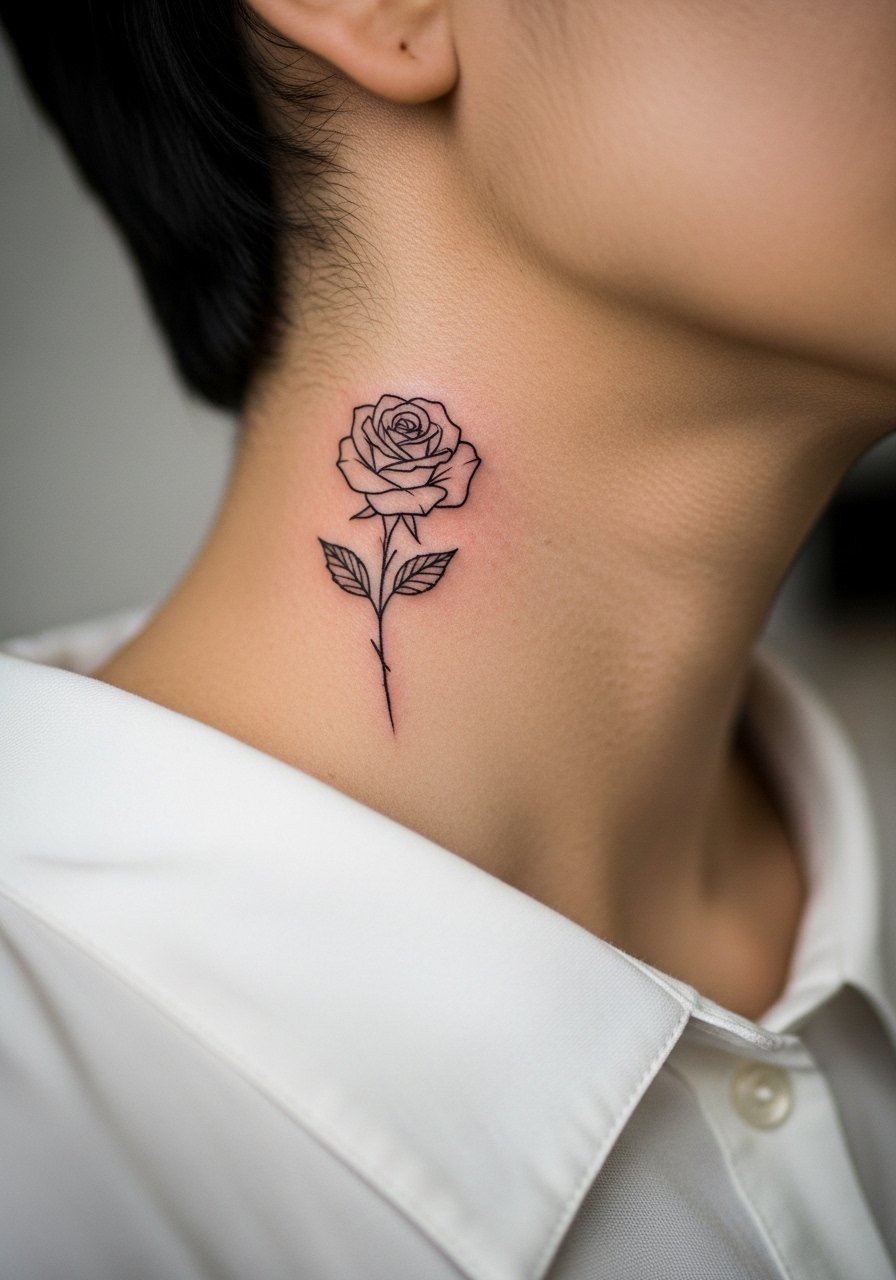
Neck tattoos carry visibility and conversation about longevity. Ask your artist whether their fine line neck pieces have needed touch-ups and what spacing they recommend for your skin. Sessions are sharper here than on the arm but shorter in duration. A common mistake is packing too many tiny details in a small neck piece that will blur into an indistinct mark. If you want jewelry that complements this placement without crowding it, a simple choker or a narrow chain works well.
16. Top‑of‑Foot Rose
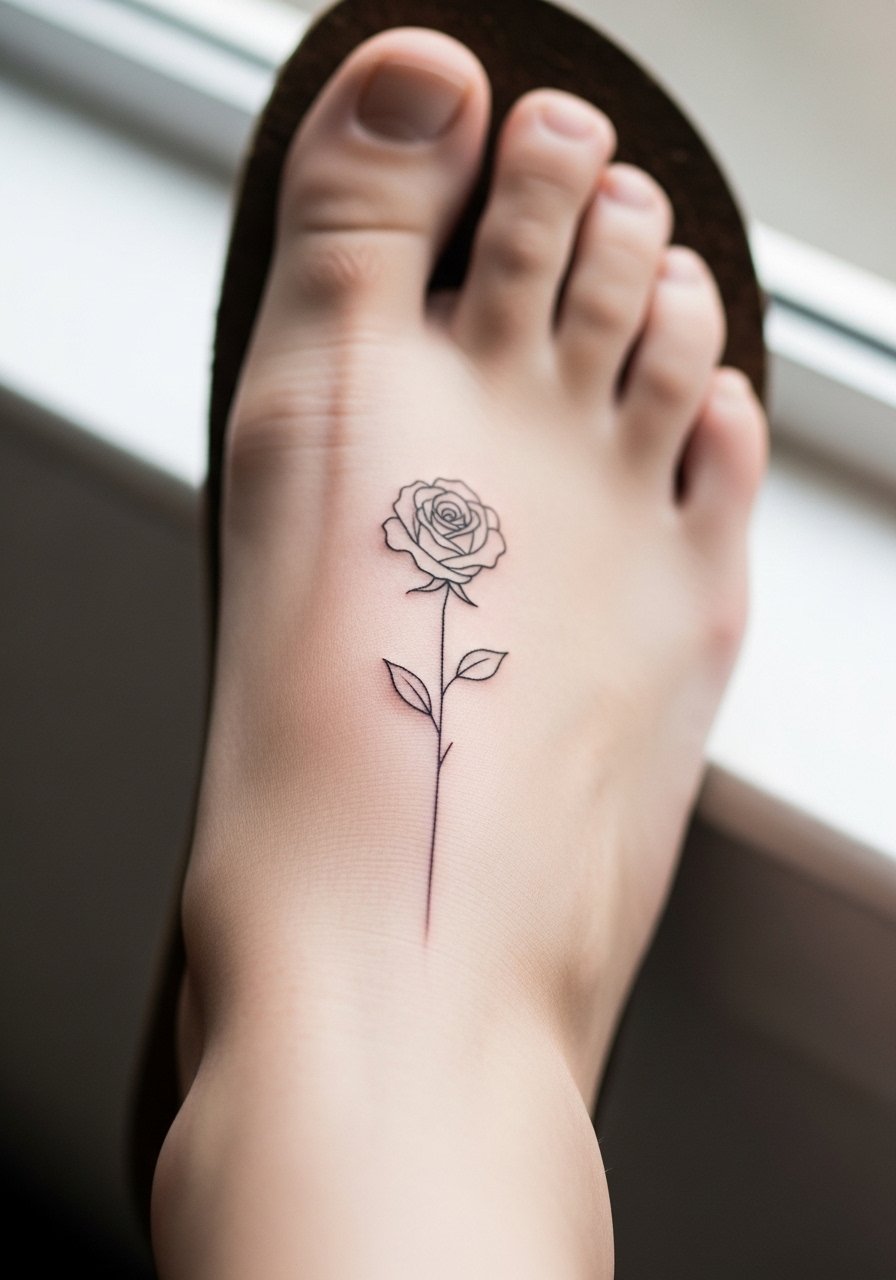
Foot tattoos fade faster because of footwear and constant friction. Ask for bolder outer linework around the petals and avoid dense internal shading so the rose keeps its form. Expect tenderness and swelling after the session and plan shoes that do not press over the tattoo for the first week. A common regret is picking a scale that is too small for the foot's active surface. For beach or warm-weather outfits, simple sandals display the work and reduce friction during the first healing weeks.
17. Behind‑Knee Popliteal Rose

This placement sees a lot of bending and stretching, which can soften the tiniest details. Ask for slightly more open petal spacing and avoid very thin connecting stems that may blur with repeated motion. Sessions can be uncomfortable because of frequent muscle movement while standing. The common mistake is using a dense center for small roses here; that becomes an indistinct dark spot quickly. For clothing during the session, wear loose shorts or a skirt so the artist can access the area without pressure on the skin.
Frequently Asked Questions
Q: Will a fine line rose on my forearm need touch-ups more often than a bold traditional piece?
A: In my experience fine line work generally needs touch-ups sooner than saturated traditional pieces because the tiny channels of ink spread and soften with time. Location matters a lot. A forearm piece tends to hold better than fingers or wrists, but plan to revisit at year two to three for crispness.
Q: Is it safe to get a fine line rose on the ribs if I want it to last?
A: It depends on the artist and the spacing you choose. Some artists say ribs blur quickly, others say careful depth and spacing keep lines readable. Ask to see healed photos of rib work in the artist's portfolio and be prepared for a more painful session and a realistic touch-up timeline.
Q: How should I dress on appointment day for a sternum or collarbone rose?
A: Wear clothing that the artist can move aside without you feeling exposed, such as a wide-neck shirt or a sports bra for sternum work. That makes positioning easier and keeps pressure off the area during the session.
Q: Do finger and hand roses always look blurry after a few years?
A: Many do, because hands are exposed and have thin skin that wears the ink differently. Some small designs hold better with bolder perimeter lines and less interior detail. Expect touch-ups and treat them as part of owning visible hand work.
Q: How much should I change a reference design to make a fine line rose last longer?
A: Small changes like increasing outer line weight, simplifying interior shading, and increasing spacing between petals all help. Mention these specifically in consultation rather than leaving it vague. Artists will tell you what to prioritize for longevity.