Fine line dragonfly tattoos look delicate on camera and fragile on skin over time. The trend momentum is real, but the catches matter more than the stencil you save. Placement, spacing, and how much negative space you leave decide whether the wings stay crisp or merge into a blur. Read the first idea to see a forearm version that balances delicate linework with long-term legibility.
1. Delicate Dragonfly on the Inner Forearm
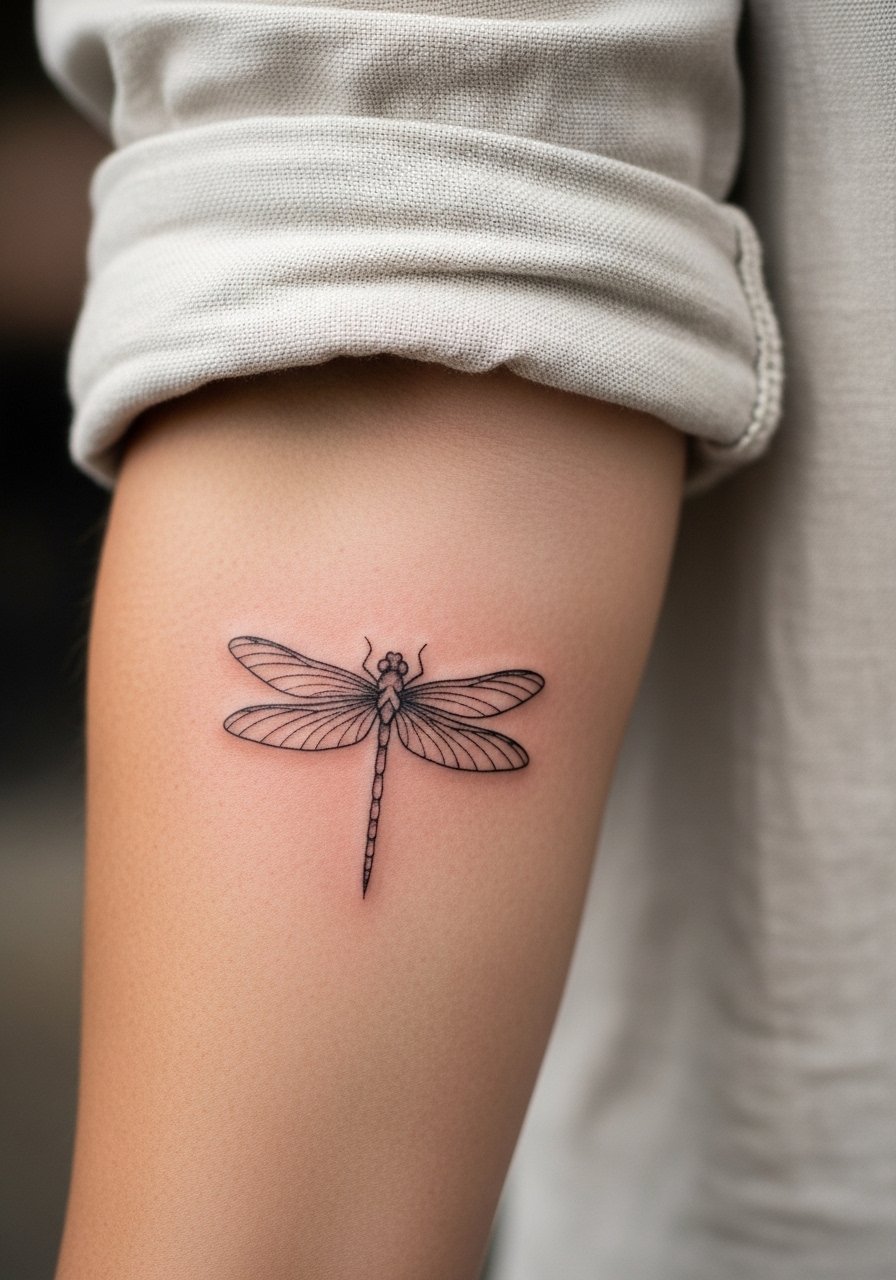
I recommend the inner forearm when you want a dragonfly that reads during daily movement but does not sit in a high-friction zone. Tell your artist you want slightly thicker primary contour lines and airy wing veins so the wings keep definition at year two. A common mistake is requesting hair-thin wing veins across a long span. Those can fade into a gray wash by year three. Expect a mild two to three hour session for a mid-sized piece and a likely touch-up at year three. For showing it off, rolled sleeves work well, and a linen button-down shirt frames the forearm without overwhelming the design.
2. Tiny Dragonfly at the Ankle
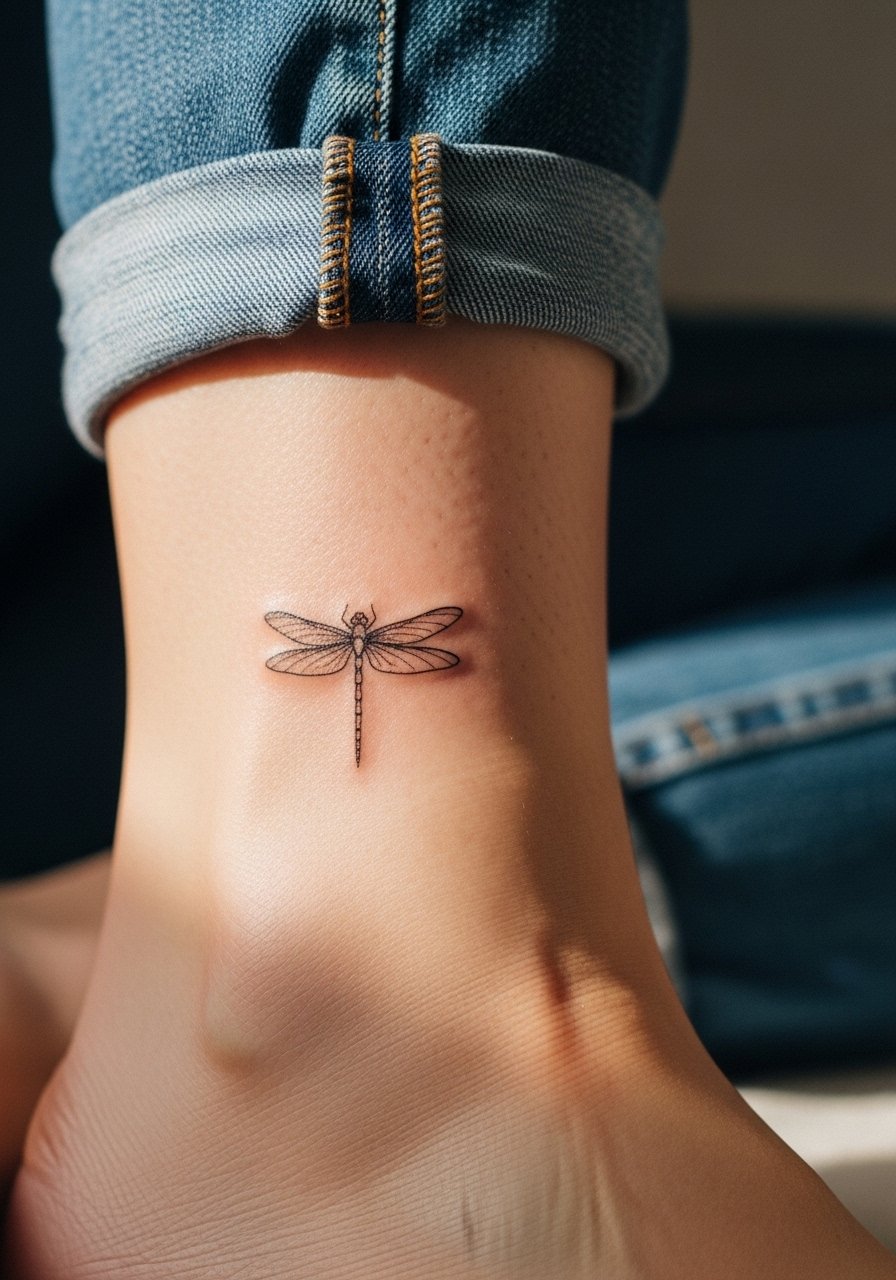
Most people pick the ankle for its discreetness, but the spot takes friction from shoes and socks. I tell clients the biggest surprise is how often the area rubs during the first two weeks. Ask for slightly bolder linework along the body of the dragonfly and taper the wing detail so tiny veins do not merge. The session is short and often done in under an hour. Blowout risk is low if the artist keeps needles shallow and spacing generous. Expect color to soften by year two and plan a touch-up if you want crisp edges.
3. Single-Line Dragonfly Along the Collarbone
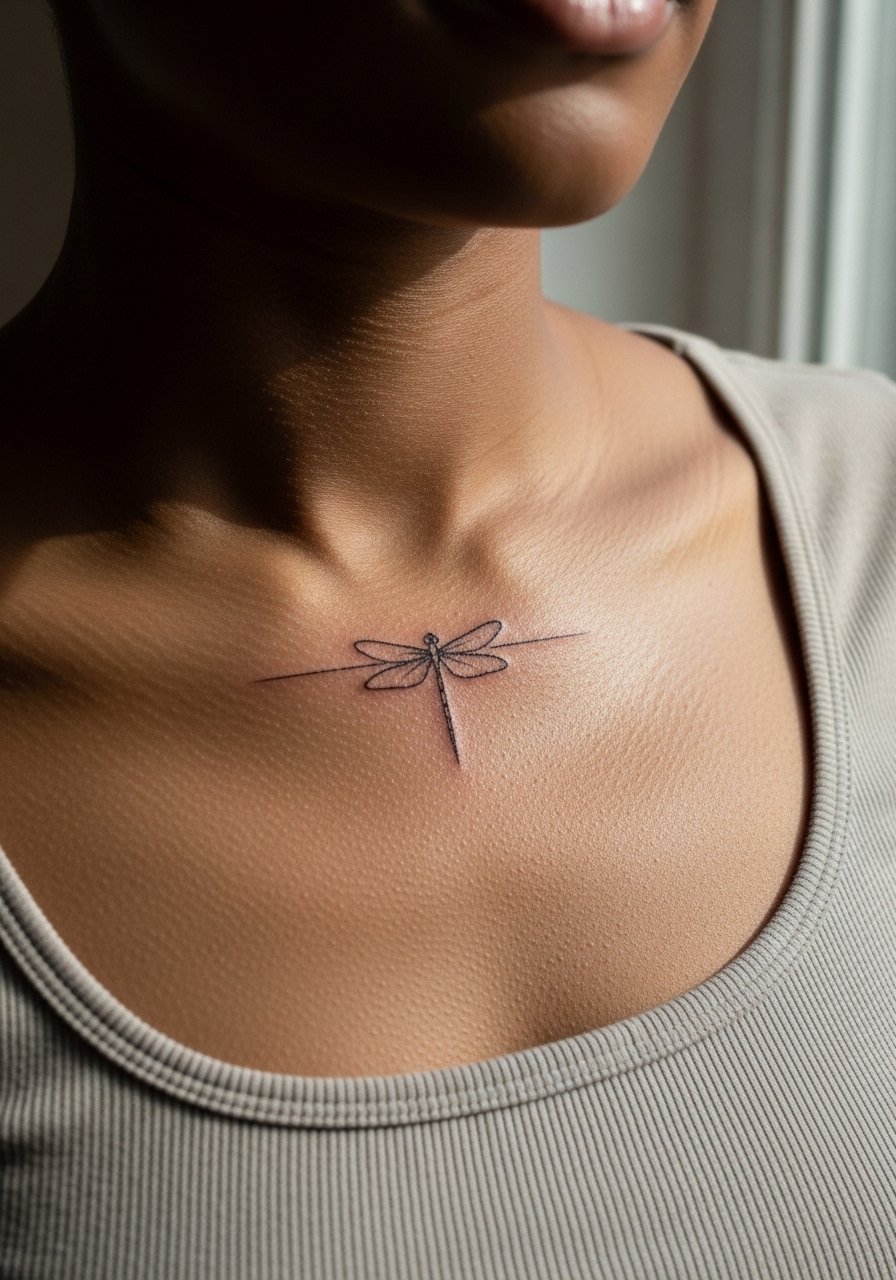
There is a strong visual when a dragonfly follows the collarbone curve. When you sit down with your artist, show exactly where you want the body to sit relative to the bone so the piece flows with movement. The collarbone can make linework look deeper while healed, but shallow placement will blur faster. A common mistake is centering the design over the bone without testing a stencil in motion. The session feel is relaxed though the bony surface is sharper to the touch. For evenings out, a scoop-neck top highlights the wings and keeps attention on that collar area.
4. Tiny Dragonfly Behind the Ear
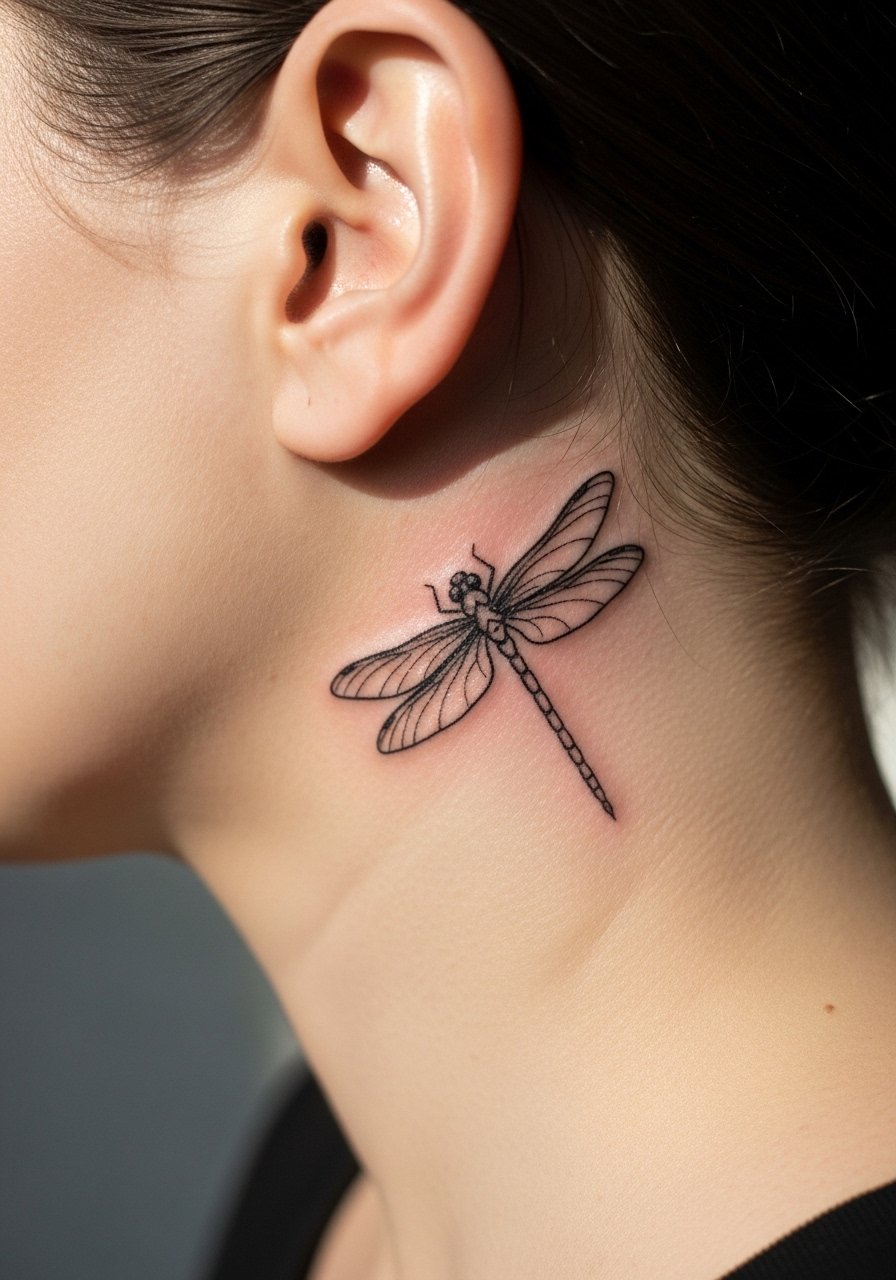
This spot reads like a secret and is ideal for a micro dragonfly with a three-quarter inch wingspan. Ask for gentle wing shading instead of lots of tiny crosshatching. Artists split on whether hairline motion and oil from hair speed fading. One camp says the area is fine for micro work with careful placement. The other camp cautions that constant hair contact will mute detail quickly. If you like hidden pieces, this still works but expect check-ins at year two. Keep your haircare routine in mind when booking.
5. Ribcage Dragonfly with Floral Trail
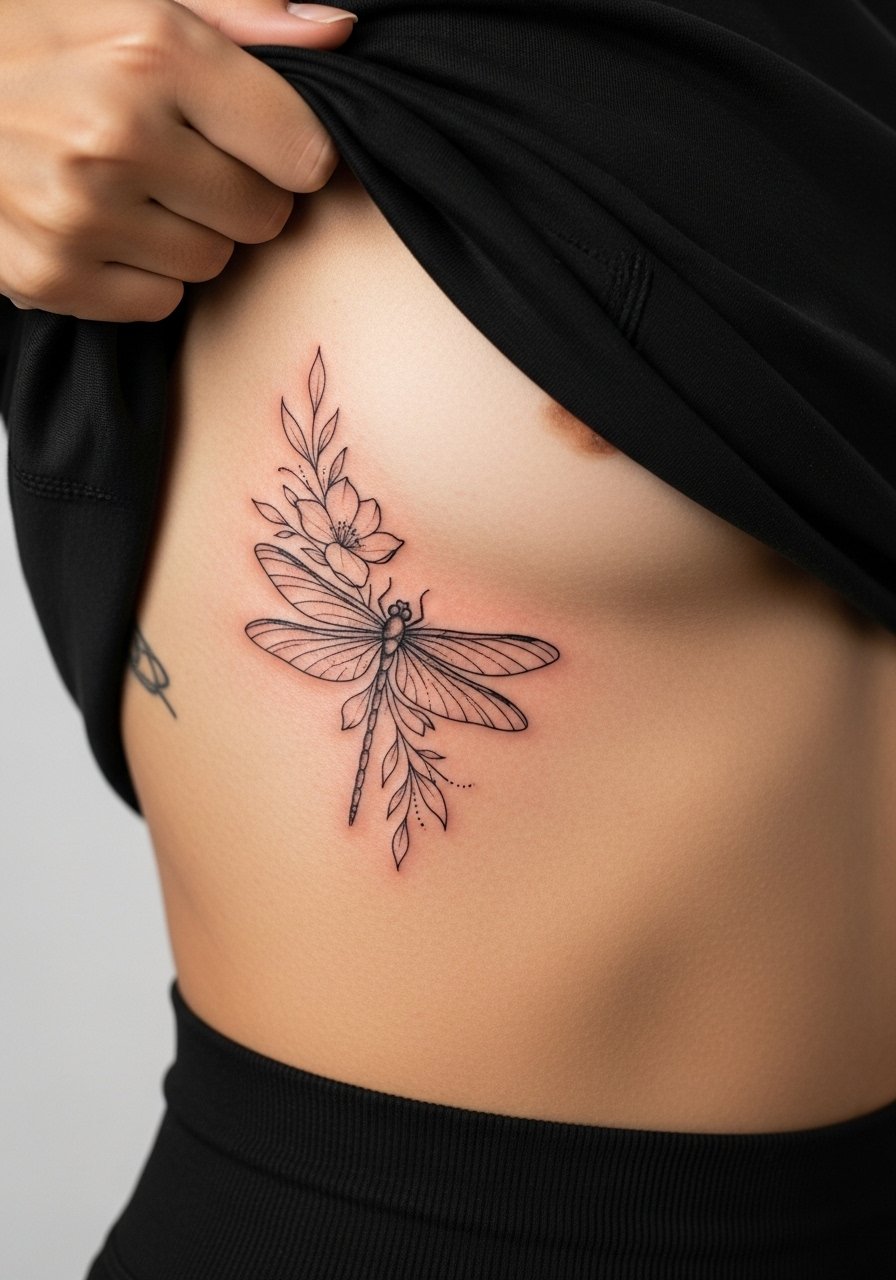
Fair warning. The ribcage is a higher pain area, often a 7 or 8 out of 10 on most scales, but it gives a lot of space for wingspan and floral integration. For this placement, tell your artist you want extra spacing between wing veins and the floral linework so dense areas do not merge while healing. Controversy appears here. One group of artists argues ribs stretch and blur fine line work within two years. The other group says with proper depth and breathing room, fine line can settle well on the ribs. I suggest booking a consult that reviews healed photos from similar placements. Wear a cropped top for the session so access is easy and comfortable.
6. Knuckle or Side-Finger Mini Dragonfly
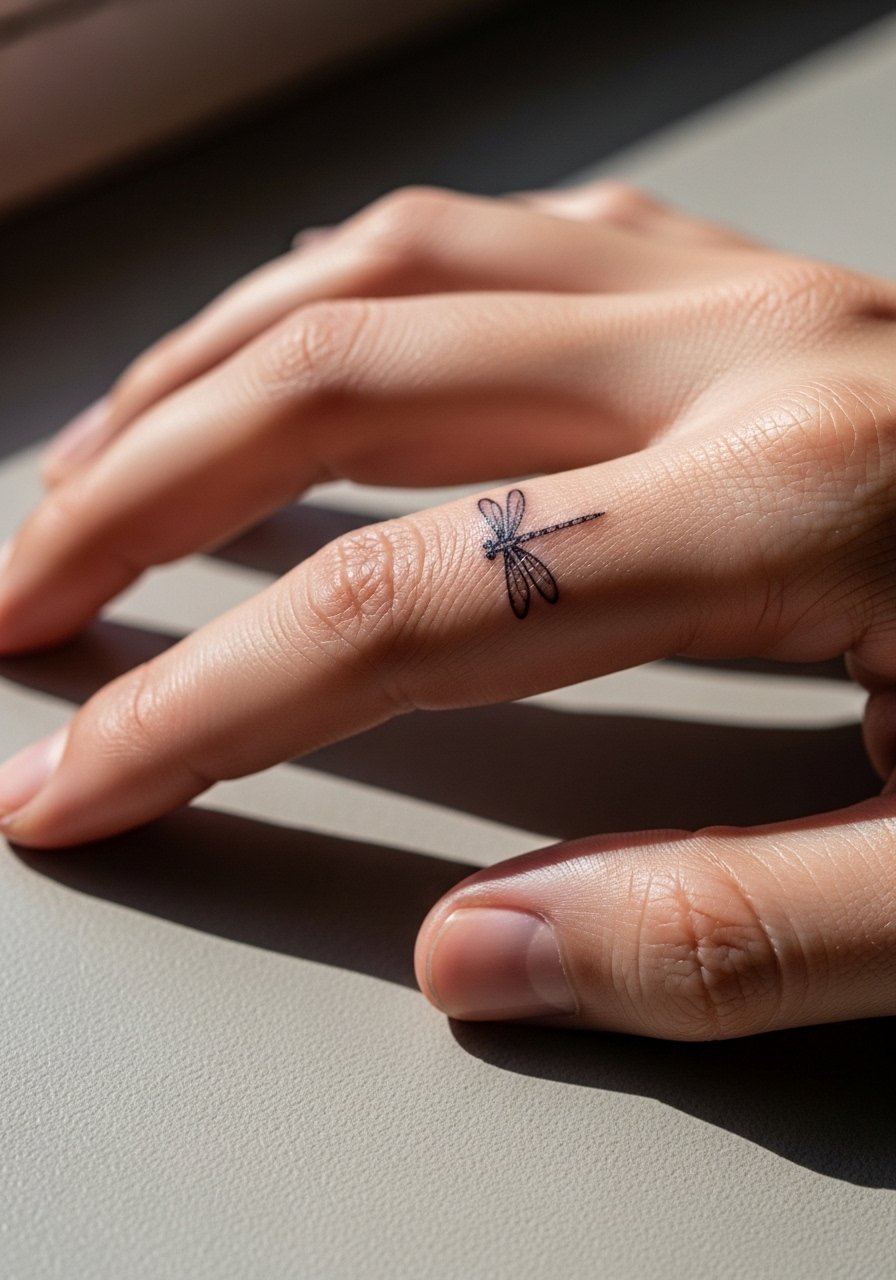
Finger placements are high maintenance and often fade faster than larger areas. I tell people upfront that this spot needs touch-ups more often because skin here regenerates quickly and sees constant washing. Ask your artist to keep the design compact and to prioritize bolder body contour instead of ultra-fine wing veins. The session is quick but can sting more than you expect. Expect visible softening by year one and a likely touch-up by year two. Hand tattoos may affect some work environments so weigh visibility against lifestyle.
Studio Day Picks
The wrist and finger pieces above heal differently from larger work, so a few small things smooth out the session and the first week.
-
Extra-fine stencil transfer paper kit. Lets you preview the exact placement and line density on skin before the machine arrives, which is helpful for small wing details on fingers and wrists.
-
Thin breathable protective film roll. Useful for high-friction zones like the ankle and knuckles where early coverage reduces rubbing during the first day.
-
Fragrance-free gentle body wash. Cleanses healing tattoos without stripping moisture from delicate fine line work on chest and ribs.
-
Low-residue topical ointment balm. A thin layer helps fine lines retain clarity in the initial days without clogging the tiny needle channels.
-
Aquaphor healing ointment. A light application in the first 48 hours keeps fragile linework from drying into flaking that can disturb crisp wing veins.
7. Shoulder Blade Dragonfly in Motion
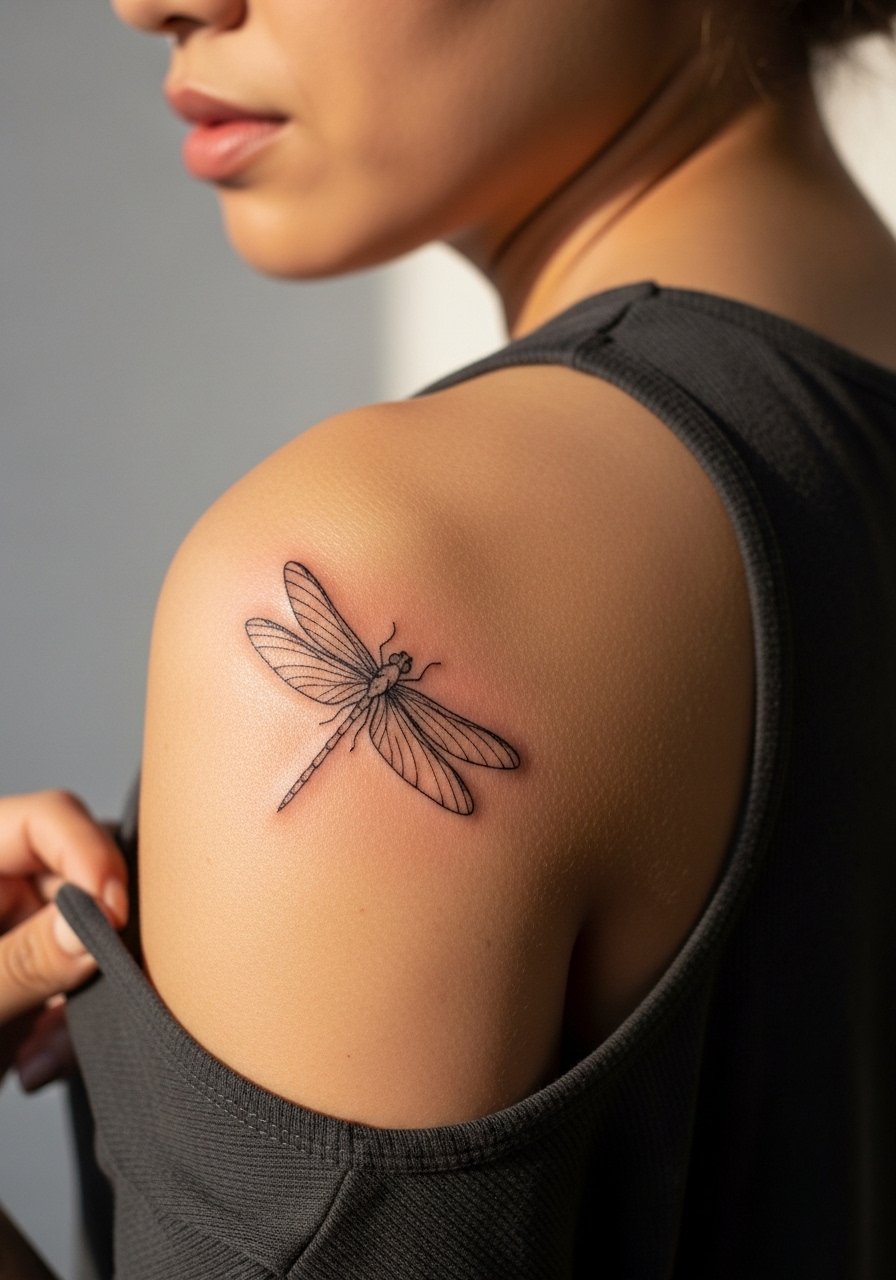
The shoulder blade gives a flat canvas that works well for dragonflies illustrated mid-flight. I have seen these age well when artists leave intentional gaps between wing details. During the consult ask for moderate primary lines and airy transverse veins. The session can be two to three hours, depending on wingspan, and the area settles with low blowout risk. For the session, wear a button-down shirt you can pull aside so the artist has clear access without tugging on skin.
8. Inner Bicep Dragonfly with Dot Work
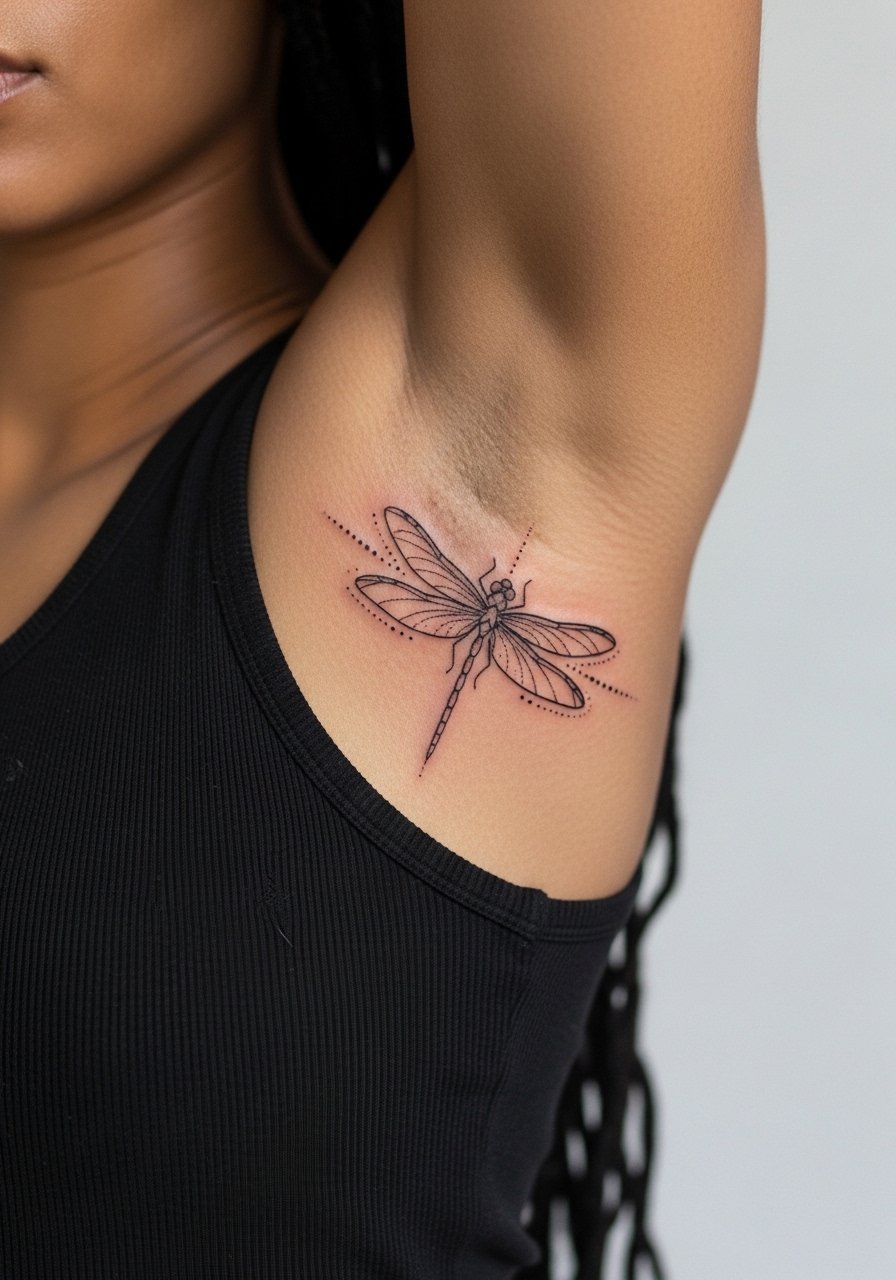
This spot hides well and tolerates delicate dot work around the wings. Tell the artist you want stipple shading instead of dense shading so the dragonfly keeps contrast over time. The inner bicep can bruise slightly during the session and feels tender for a few days. Artists debate whether inner arm skin shifts make fine lines blur faster. My take is that careful spacing and stipple rather than continuous shading reduces blending. Expect a possible touch-up at year three depending on how you wear sleeves.
9. Tiny Ankle Dragonfly with Constellation
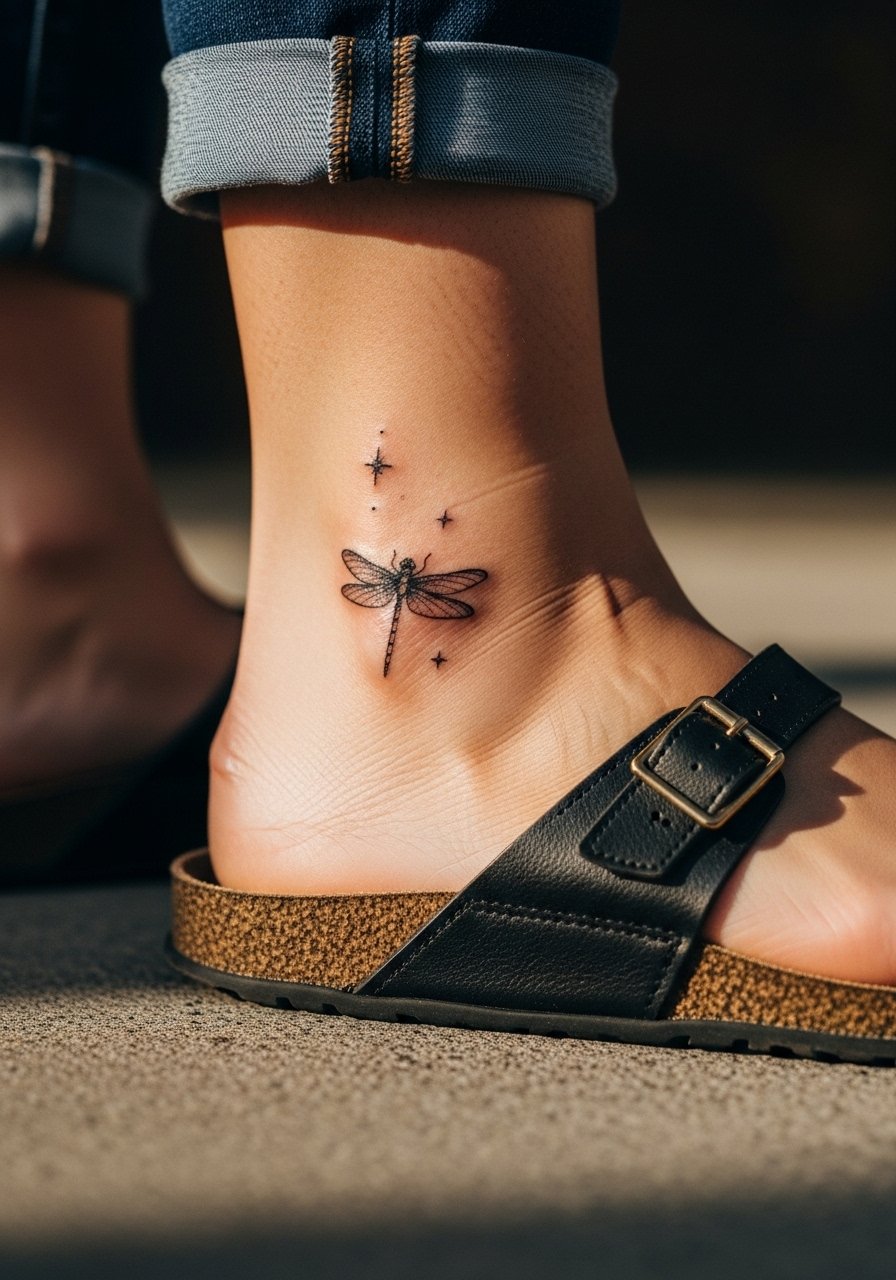
Pairing a dragonfly with micro-constellation dots makes for a whispered look at the ankle. Ask for stronger body outline and reduced wing vein count so the dot work does not compete. The ankle endures shoe friction, so avoid placing the piece where socks will constantly rub. Sessions are short and often under an hour. For showing it off, sandals or rolled jeans make the area visible. A simple pair of leather sandals keeps attention on the tattoo rather than the shoe.
10. Sternum Dragonfly with Symmetric Wings
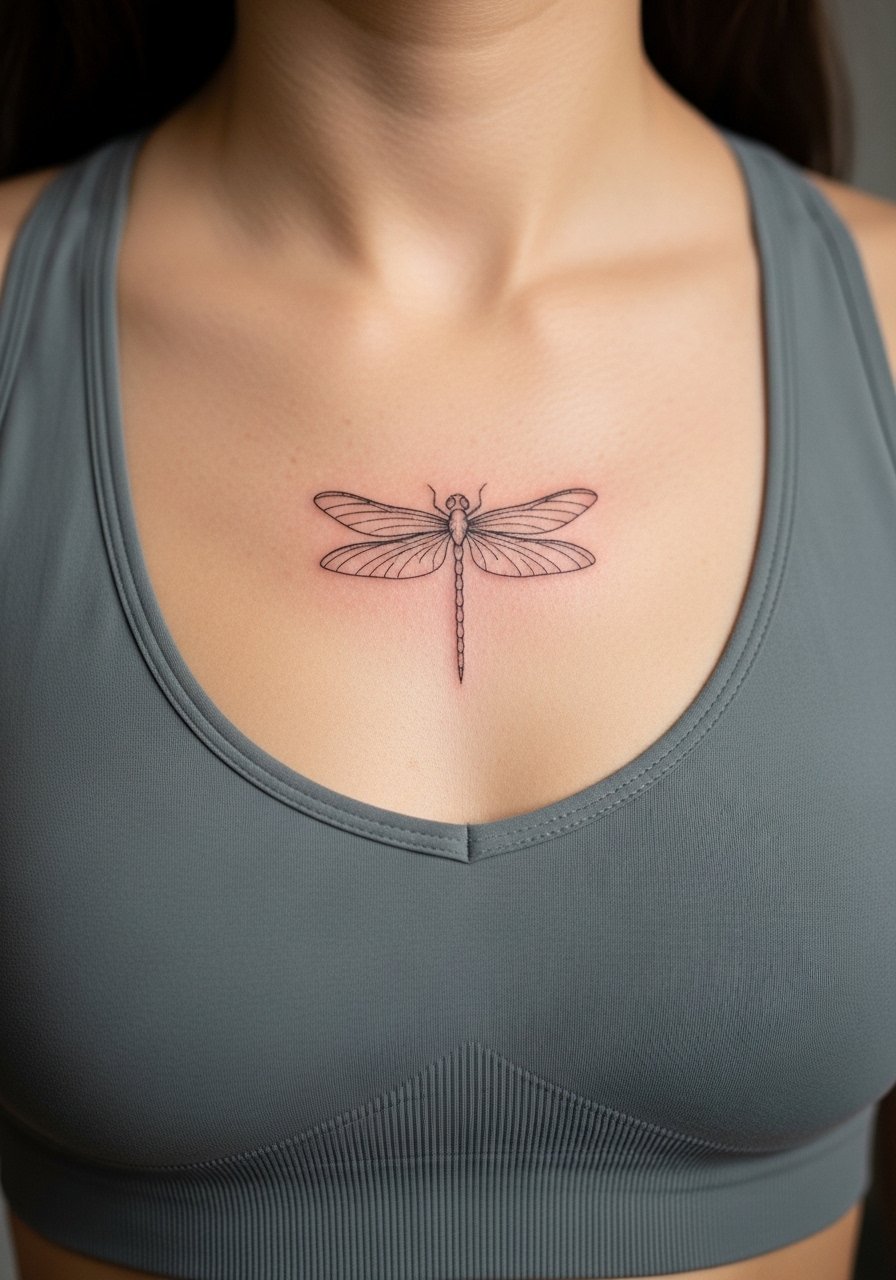
Sternum placements demand a careful balance of symmetry and spacing. When you consult, have the artist show the exact center and how the wings extend relative to the rib curve. This area can be controversial for fine line. One camp warns that the sternum's movement blurs micro detail quickly. The other camp insists symmetric spacing and slightly bolder anchors keep the image readable for years. The session is often longer due to sensitivity, and clothing will matter during the first week. Wear a fitted sports bra so the artist can check placement without full exposure.
11. Small Dragonfly on the Wrist
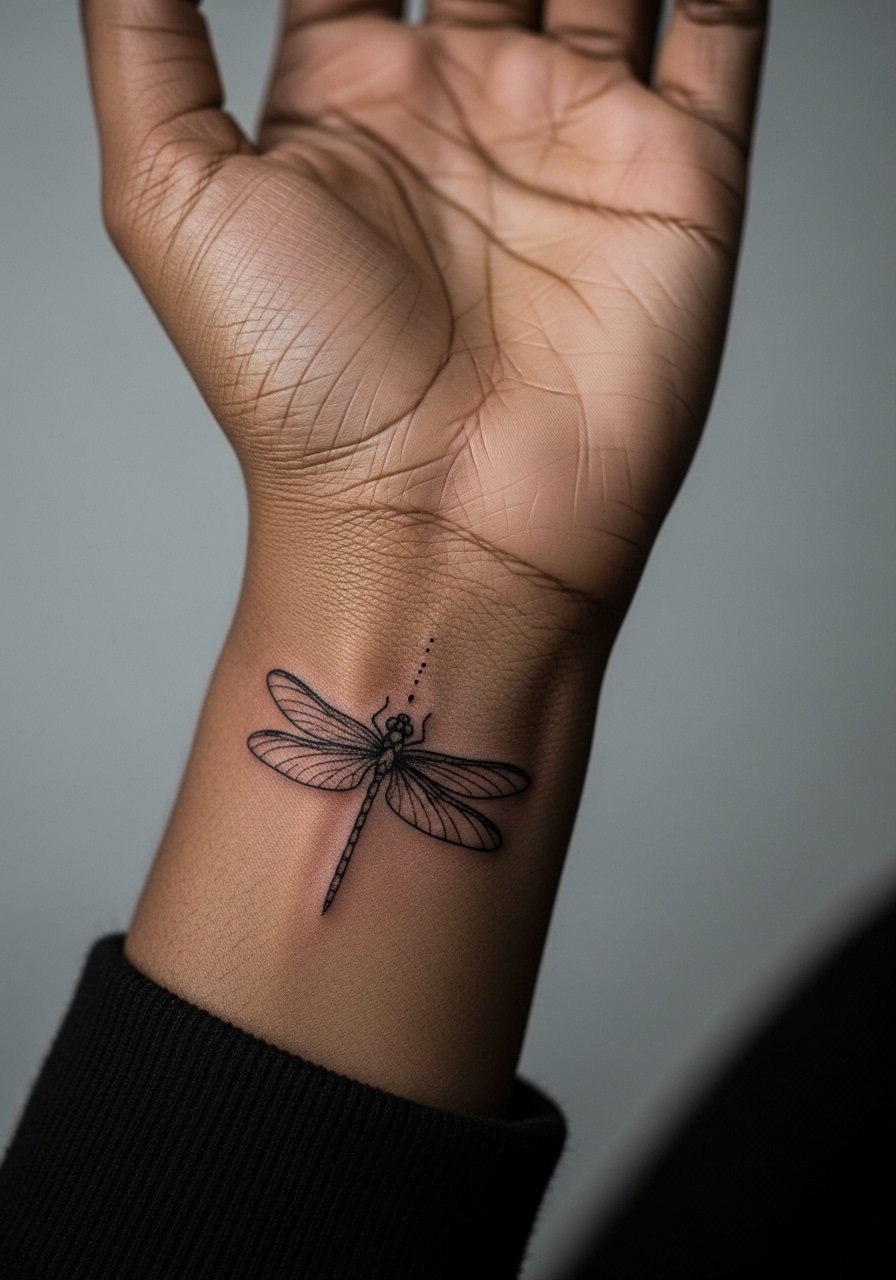
Wrist tattoos need honest expectations. The area gets daily washing and contact, which softens lines faster than forearm work. Ask for a slightly reinforced body line and simplified wing veins. The session is brief and manageable, but expect touch-ups sooner, often by year two. For showing off the piece, thin stacked bracelets can frame the tattoo without covering the wings. Try a minimalist chain bracelet that complements the scale.
12. Calf Dragonfly in Flight Path
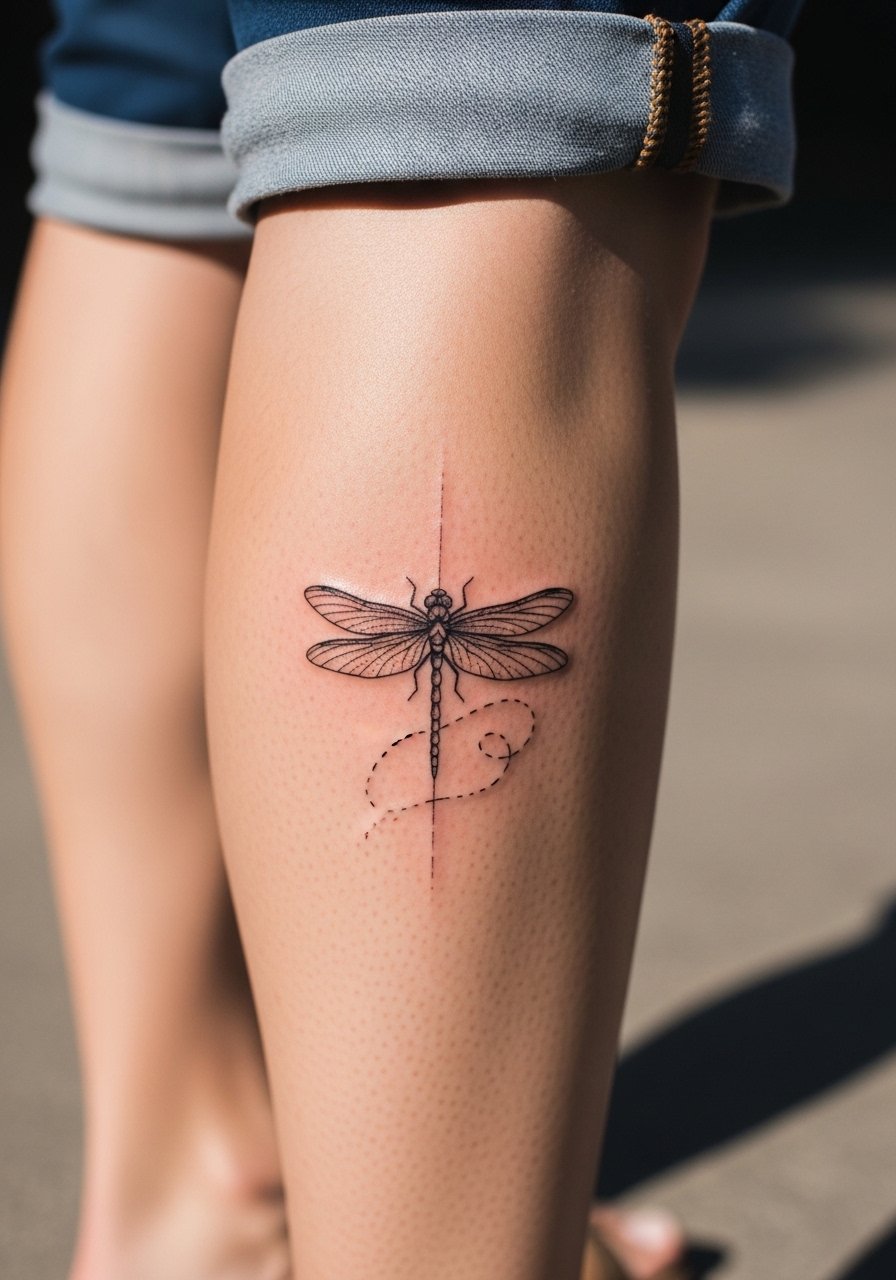
The calf accepts longer compositions and preserves linework well, making it a good choice for a dragonfly mid-flight with trailing dots. Tell your artist you want the wings to curve with the muscle so the design moves with walking. The session can be longer if a full flight path is drawn. Blowout risk is low here, and healed contrast often stays clearer than on hands or ribs. For the appointment, wear loose drawstring shorts to make access easy and avoid fabric pressure on the fresh ink.
13. Micro-Realism Dragonfly Beside a Small Script
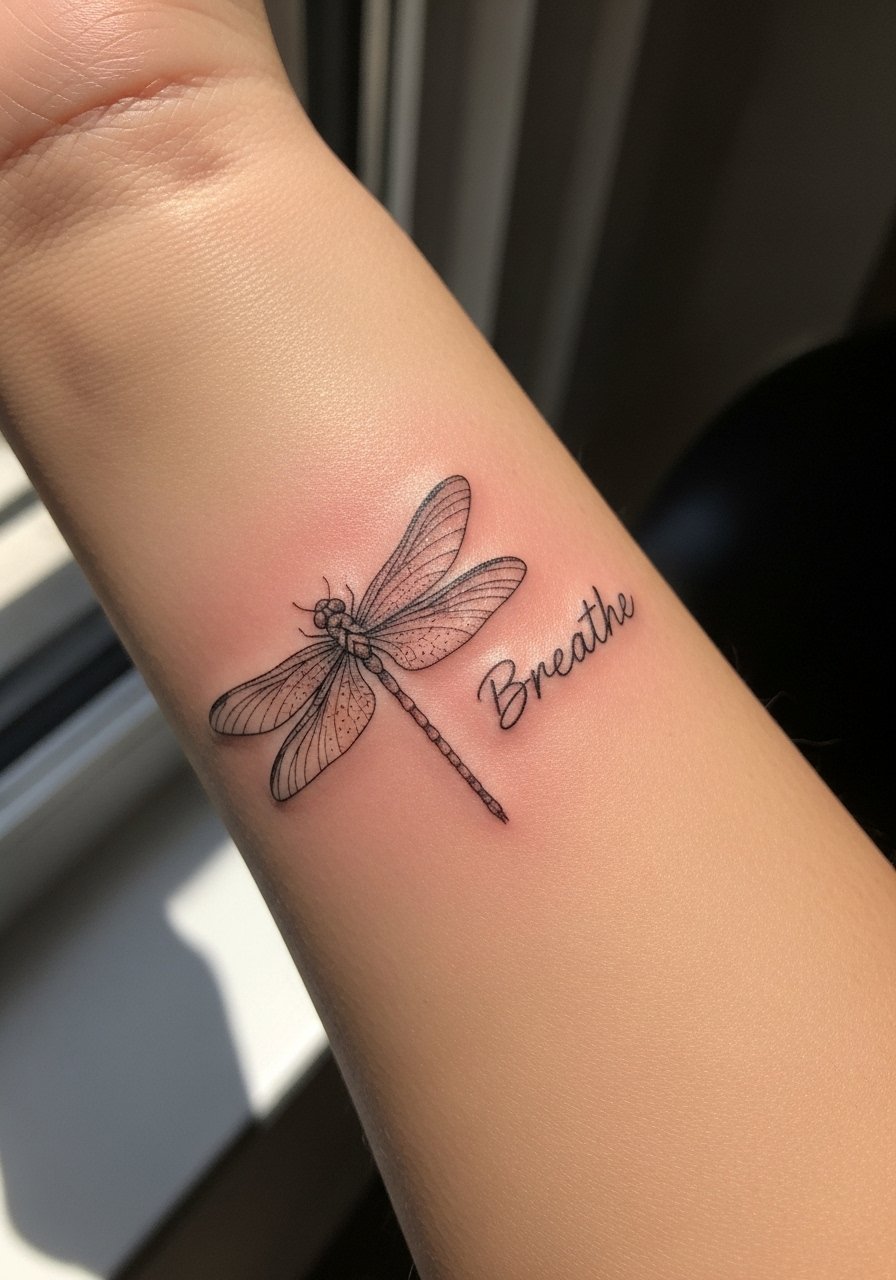
Combining micro-realism with a short word works well on forearms and ribs when spacing is respected. Specify the exact word and font to avoid mismatch between the script and the insect. Micro-realism requires slightly denser ink in the body and feathered wing tips. Expect the wings to soften before the bolder script, so keep wings slightly stronger at the outset. The session often runs a couple of hours. A small note on cultural sensitivity applies if the script uses specific religious phrases.
14. Dragonfly Behind the Shoulder with Geometric Base
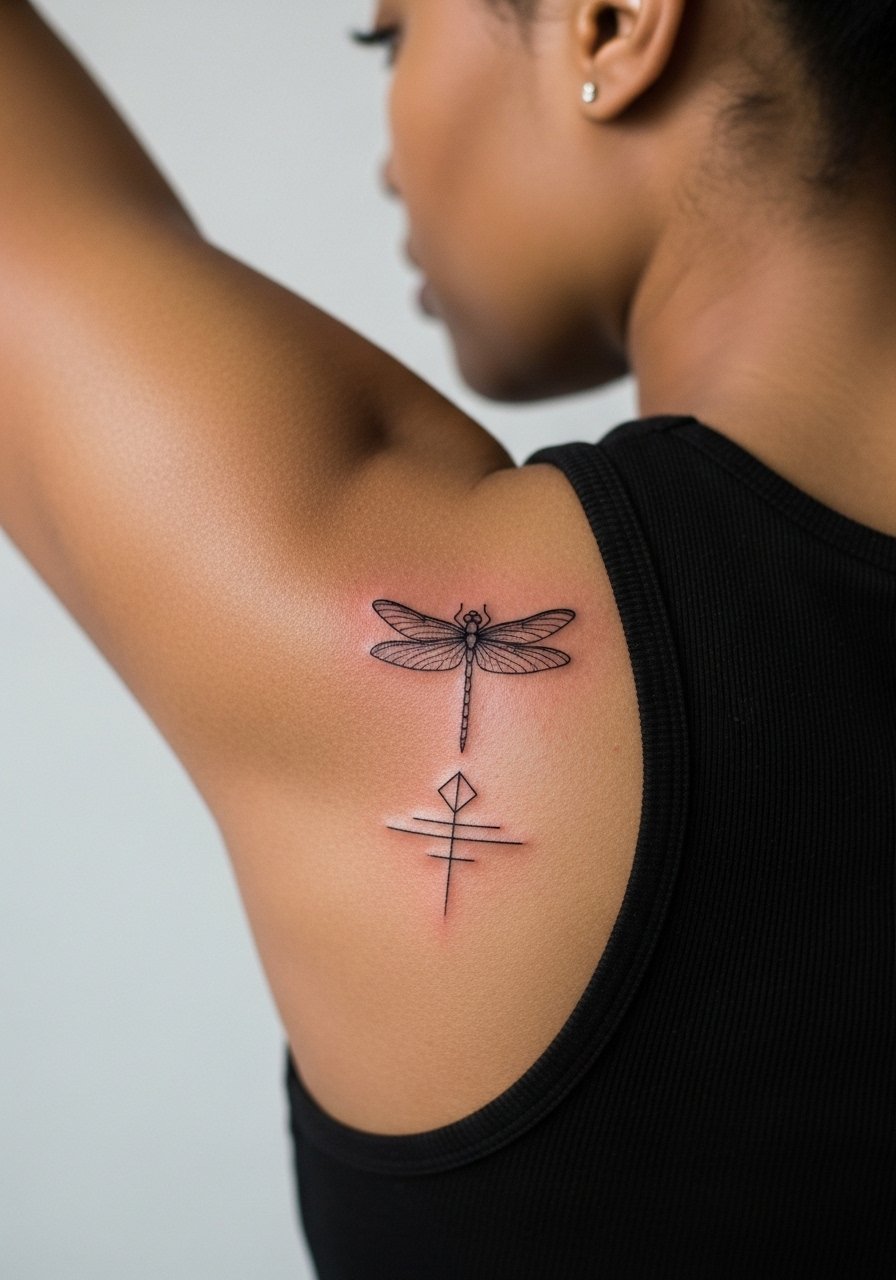
Back-of-shoulder placements let you mix geometry and natural forms and keep the wings crisp by using negative space under the geometry. In consultation, ask that the artist space geometric lines away from wing veins to avoid visual merging. The session can be medium length and feels less painful than ribs. For display, a muscle tank or camisole works well in warmer months to reveal the composition.
15. Spine-Aligned Dragonfly Trail
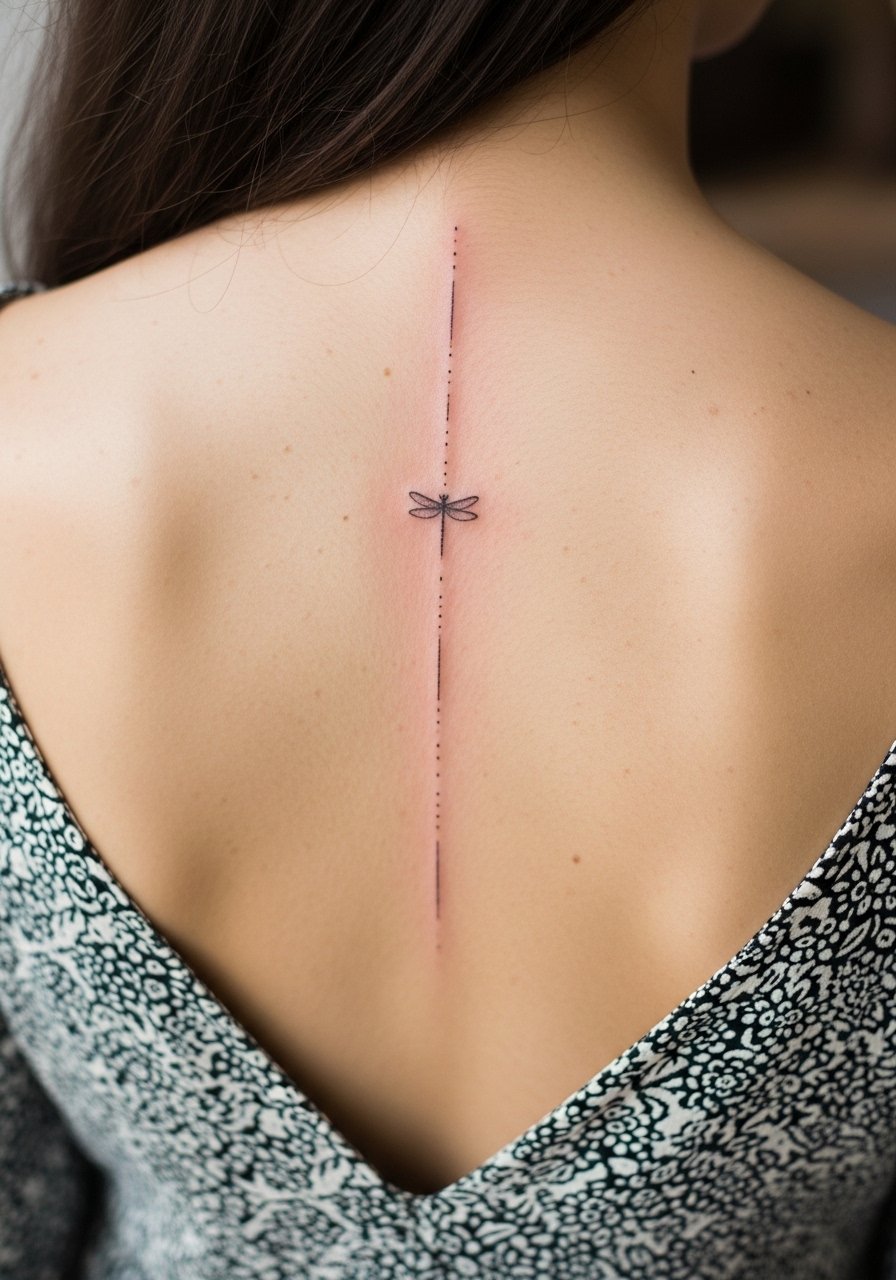
A vertical composition along the spine reads elegant when wings are spaced for aging. Tell your artist you want each wing pair separated by small gaps so density does not create a shaded column once healed. The spine is sensitive but gives a striking read when you wear back-revealing clothing. Session length depends on how many insects or trail elements you add. For evenings out, an open-back dress reveals the linework without clashing with straps.
16. Hip Dragonfly with Peony Accents

Hip placements allow for dramatic wing curves that sit nicely with a peony or two. For sessions, wear high-waisted bottoms so the artist can shift fabric and keep the area private. The skin here can stretch with weight changes, so request slightly bolder contours in the body to maintain shape. Session pain is moderate and usually tolerable. For showing off, high-waisted skirts or bikini bottoms frame the area without covering the work.
17. Mini Dragonfly on the Back of the Neck
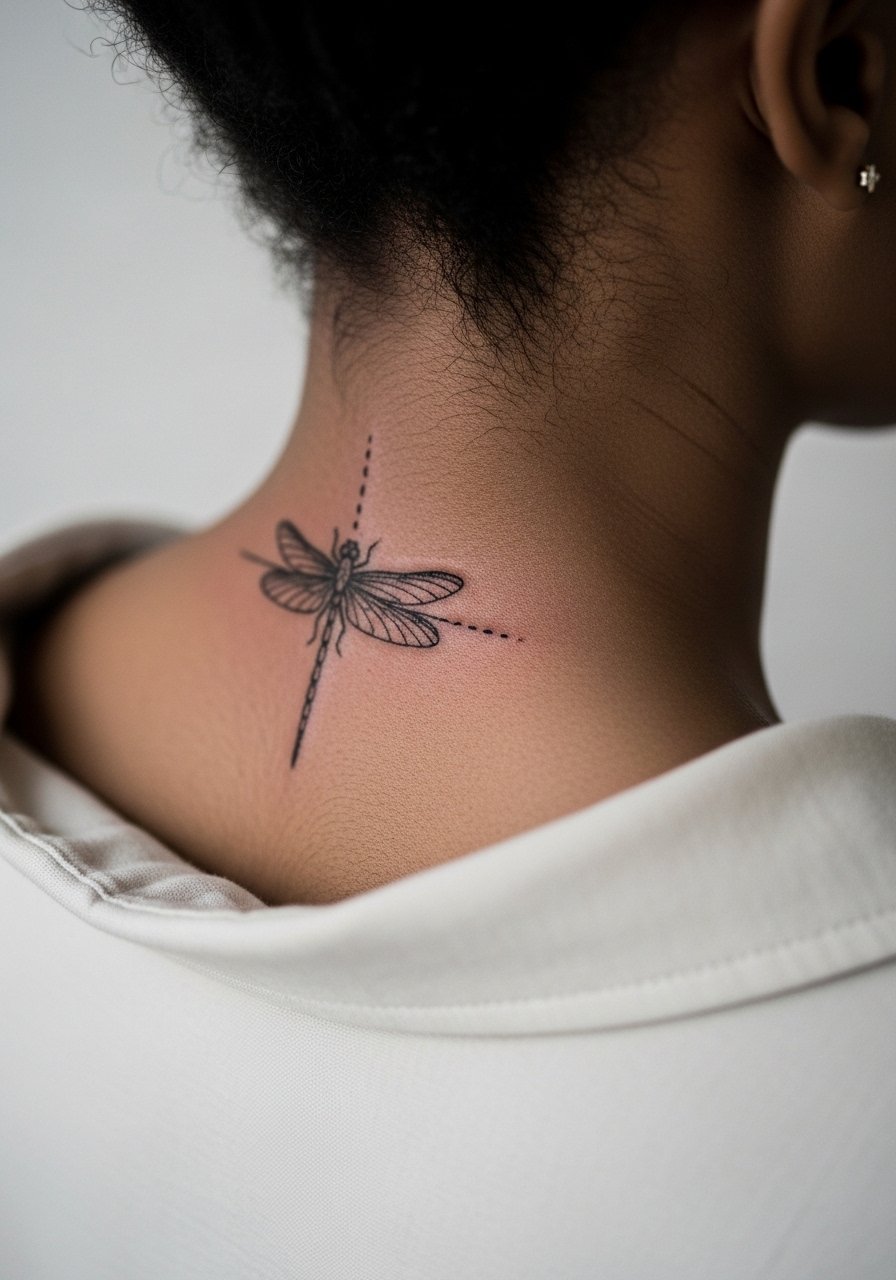
Nape tattoos are visible with hair up and hidden with hair down, which makes them versatile. Ask the artist to avoid overly thin wing veins since neck skin moves a lot and can blur tiny details. The session is short but can feel tender. This placement looks excellent with short necklaces or minimal choker layering. Consider a thin chain pendant necklace that sits above the piece without crowding it.
18. Inner Thigh Dragonfly with Soft Shading
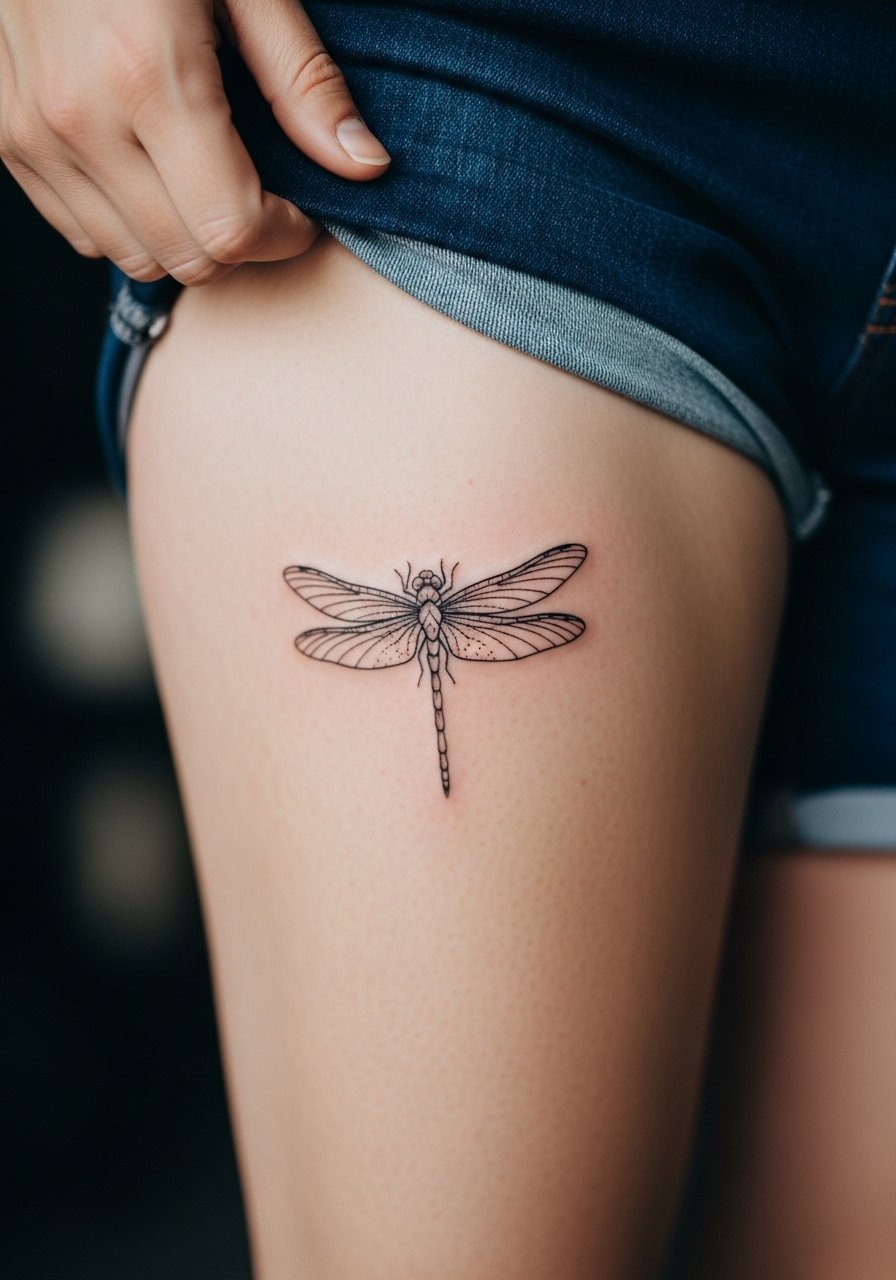
Inner thigh work is intimate and can hold delicate shading because it is sheltered from sunlight. Tell your artist you want stipple shading rather than smooth gradients so the effect breathes as skin shifts. Sessions here are sensitive and may need breaks. This spot often heals well because it is not exposed daily. For privacy and comfort during the session, wear shorts you can adjust easily. Be mindful that exposure of inner thigh tattoos can impact comfort in shared living situations.
19. Tiny Dragonfly Near the Clavicle Curve
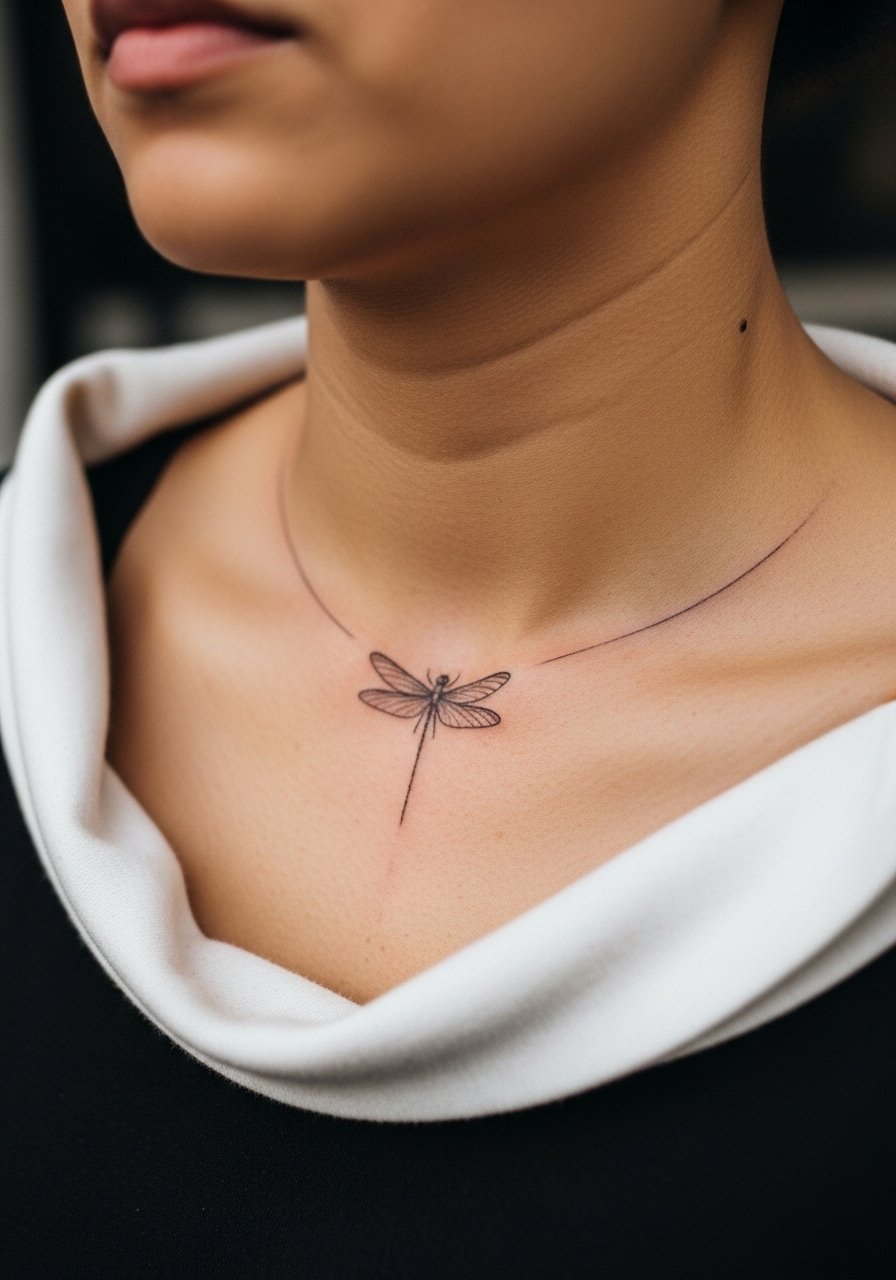
Small dragonflies along the clavicle sit flat against the bone and create a delicate flash of detail. Ask your artist to map the design over the clavicle while you move your shoulder so placement feels natural. The area heals well with low blowout risk when lines are spaced. Sessions are quick. A wide-neck shirt keeps the piece visible without forcing low-cut exposure.
20. Dragonfly on the Lower Back with Botanical Border
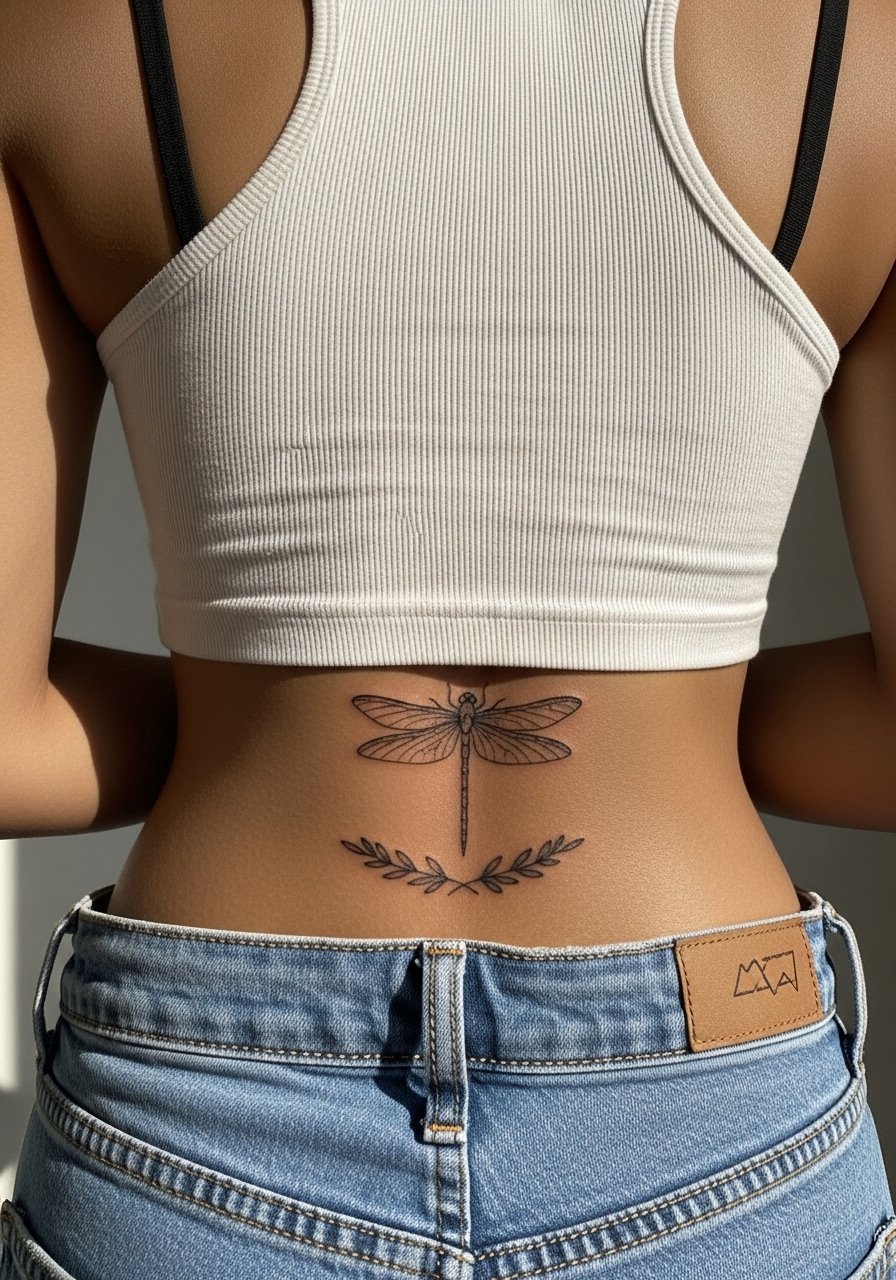
Lower back placements handle wider compositions well and age predictably if you avoid too many tight lines in the border. During consults ask that botanical accents sit away from the main wing veins. The area is forgiving for linework, but avoid very small repeating details that can merge. Wear a tank you can lift slightly for the session. High-waisted jeans or skirts frame the area after healing.
21. Micro Dragonfly on the Side of the Foot
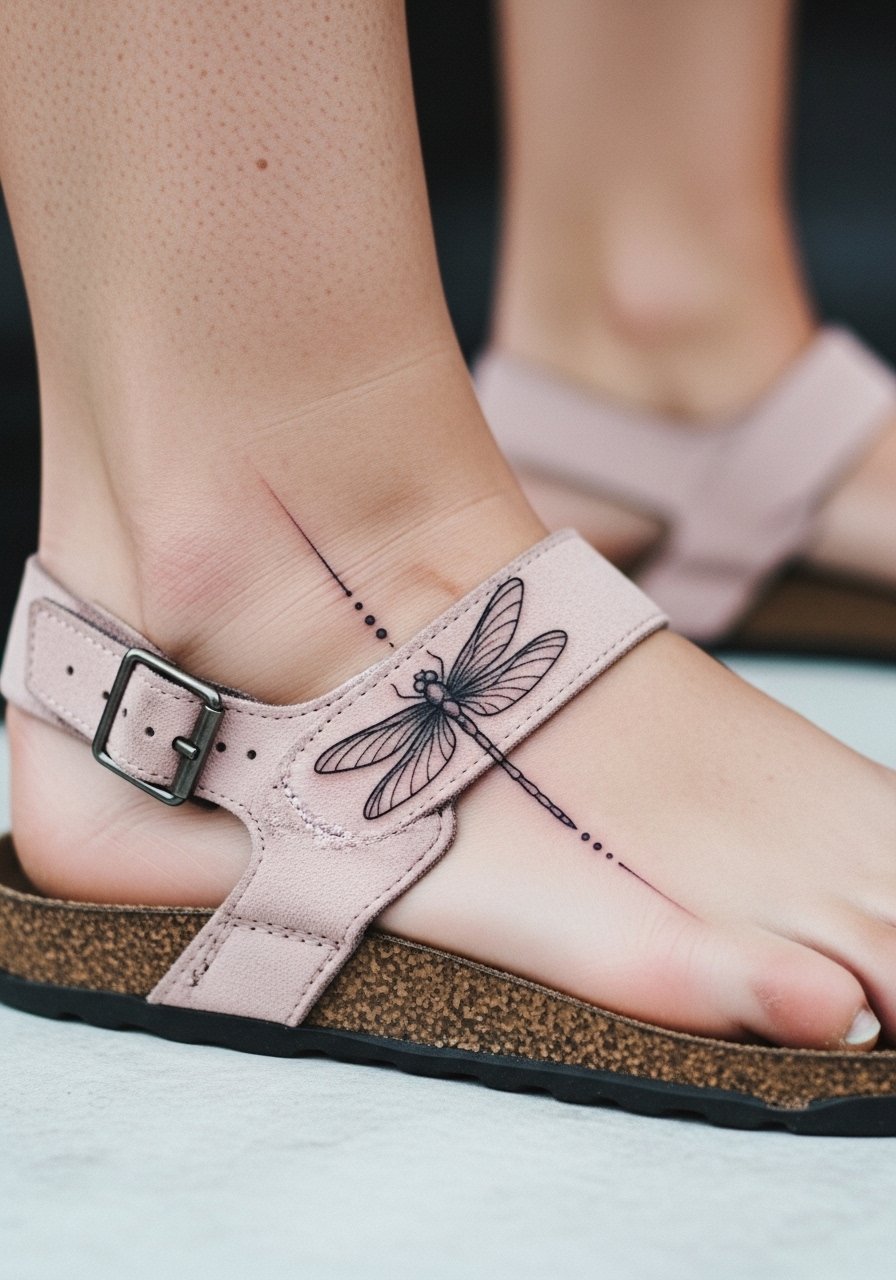
Foot tattoos face serious friction from shoes and frequent exposure to sunlight. If you choose this spot, request stronger primary lines and minimal wing veins so the design reads despite wear. Sessions here sting more and often require the foot to be supported flat for long periods. For display, sandals keep the tattoo visible and reduce rubbing. Consider touch-ups more often than for thigh or back pieces.
22. Delicate Dragonfly on the Upper Arm Wrap
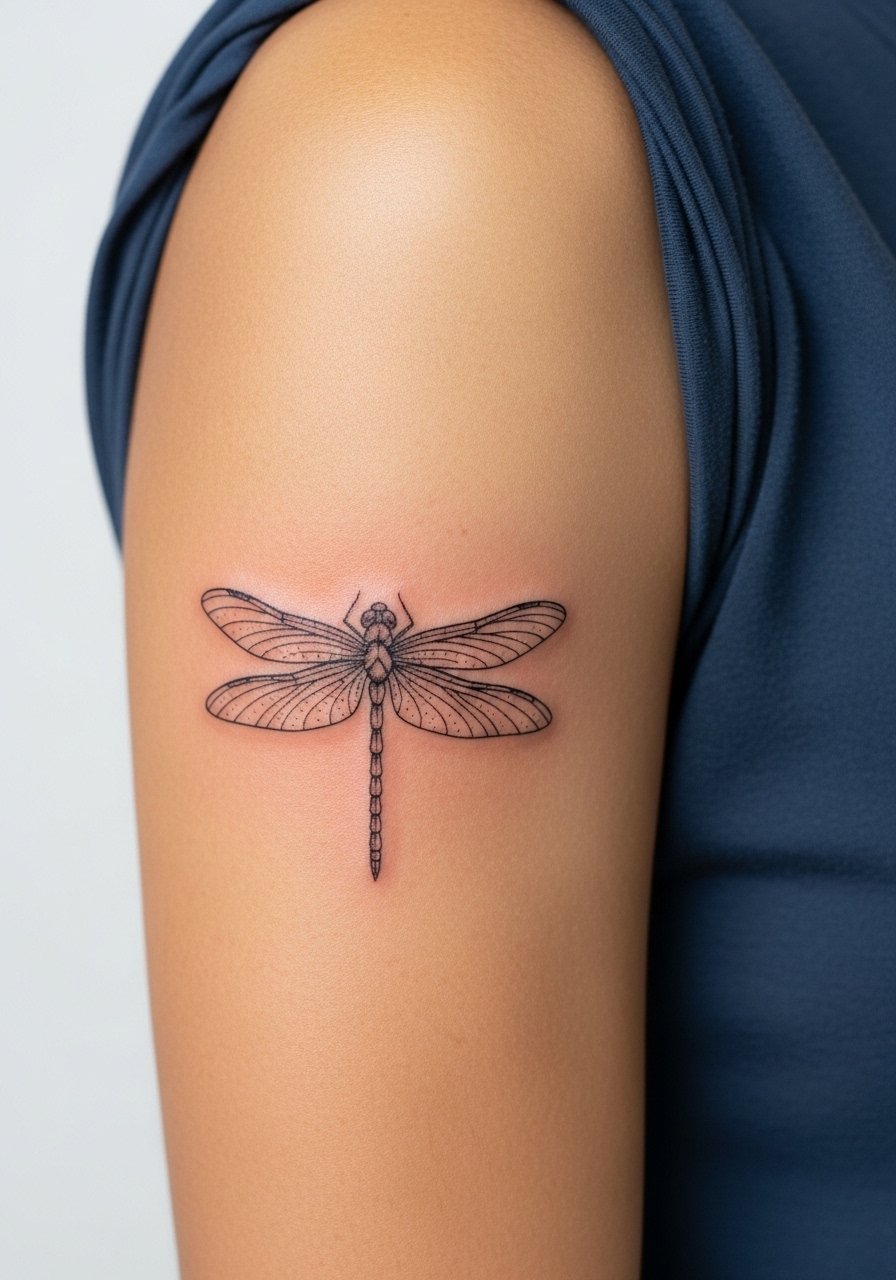
Upper arm placements provide a classic canvas that resists rapid fading. I often recommend this spot for first-time fine line dragonfly clients because the skin is stable and sessions are comfortable. Ask for slightly denser central lines so the wings have anchors that age better. The session time is medium. For casual days, rolled sleeves or short-sleeve shirts frame the piece. A short-sleeve cotton tee pairs well while keeping the piece visible.
23. Dragonfly on the Back of the Hand Edge
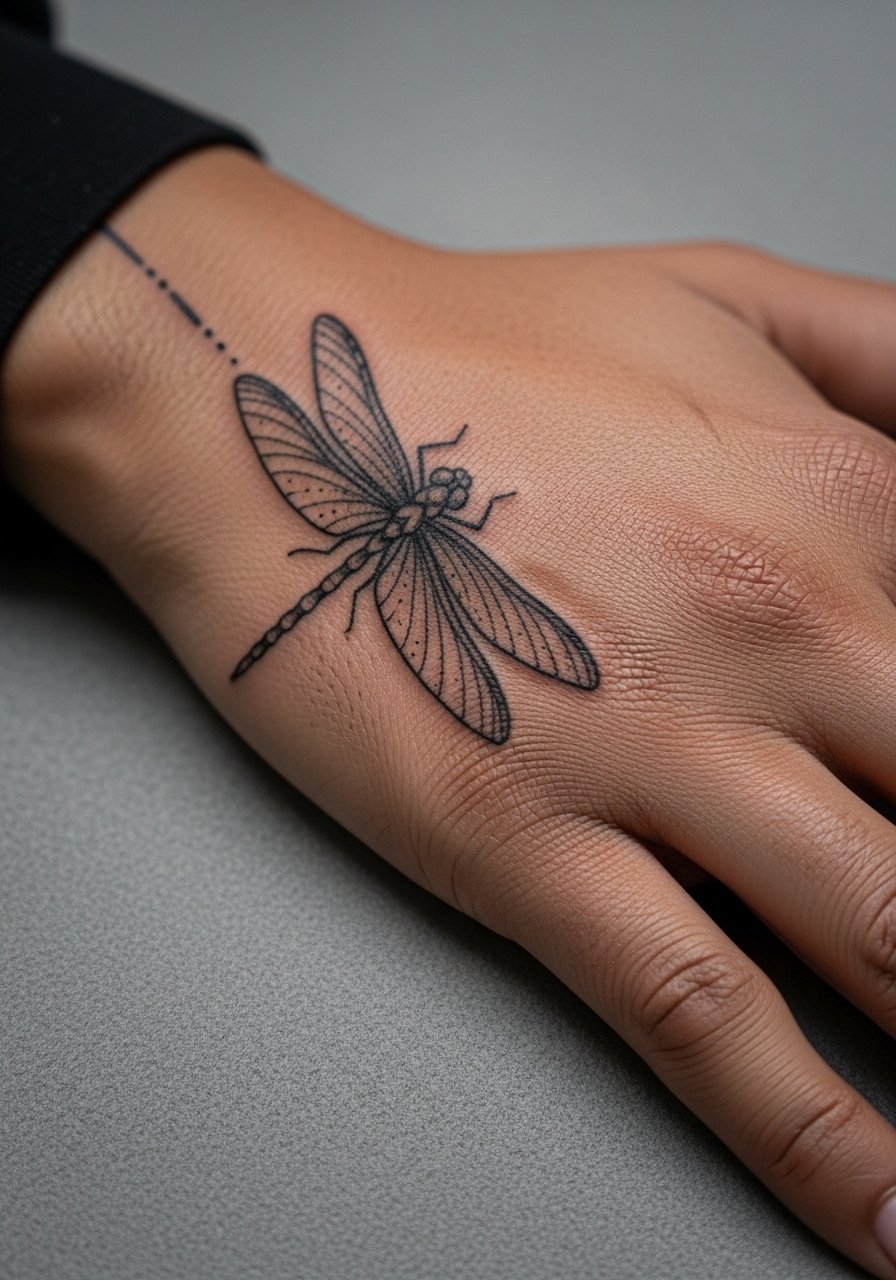
Hand edges take daily wear and frequent washing, so expect this area to lose some crispness quickly. Ask your artist to keep the body slightly bolder than the wings and to avoid ultra-fine crosshatching. The session is quick but can be painful. Controversy exists about hand placements in professional settings, so think through visibility and career implications. For the first week avoid tight gloves or heavy jewelry that rubs the site.
24. Chain of Dragonflies Along the Forearm
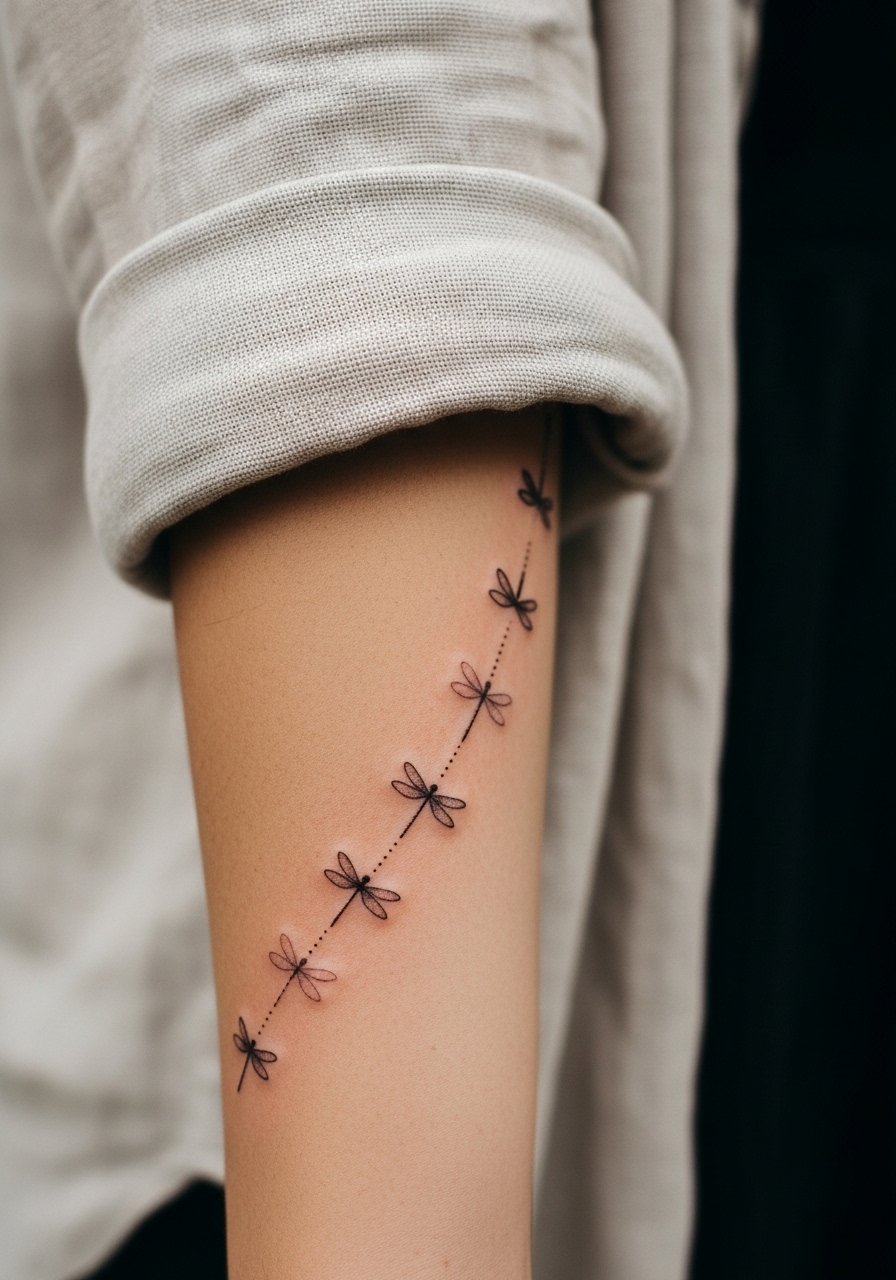
A linked composition looks intentional when spacing is consistent between each insect. In your consultation ask that the artist mock up the chain in motion so it flows with muscle lines. The forearm preserves linework well, but dense repeats will need wider spacing to avoid merging over time. The session can take longer depending on how many dragonflies you add. For a clean reveal, wear a rolled sleeve linen shirt that frames the chain.
25. Minimal Dragonfly Near the Hairline at the Temple
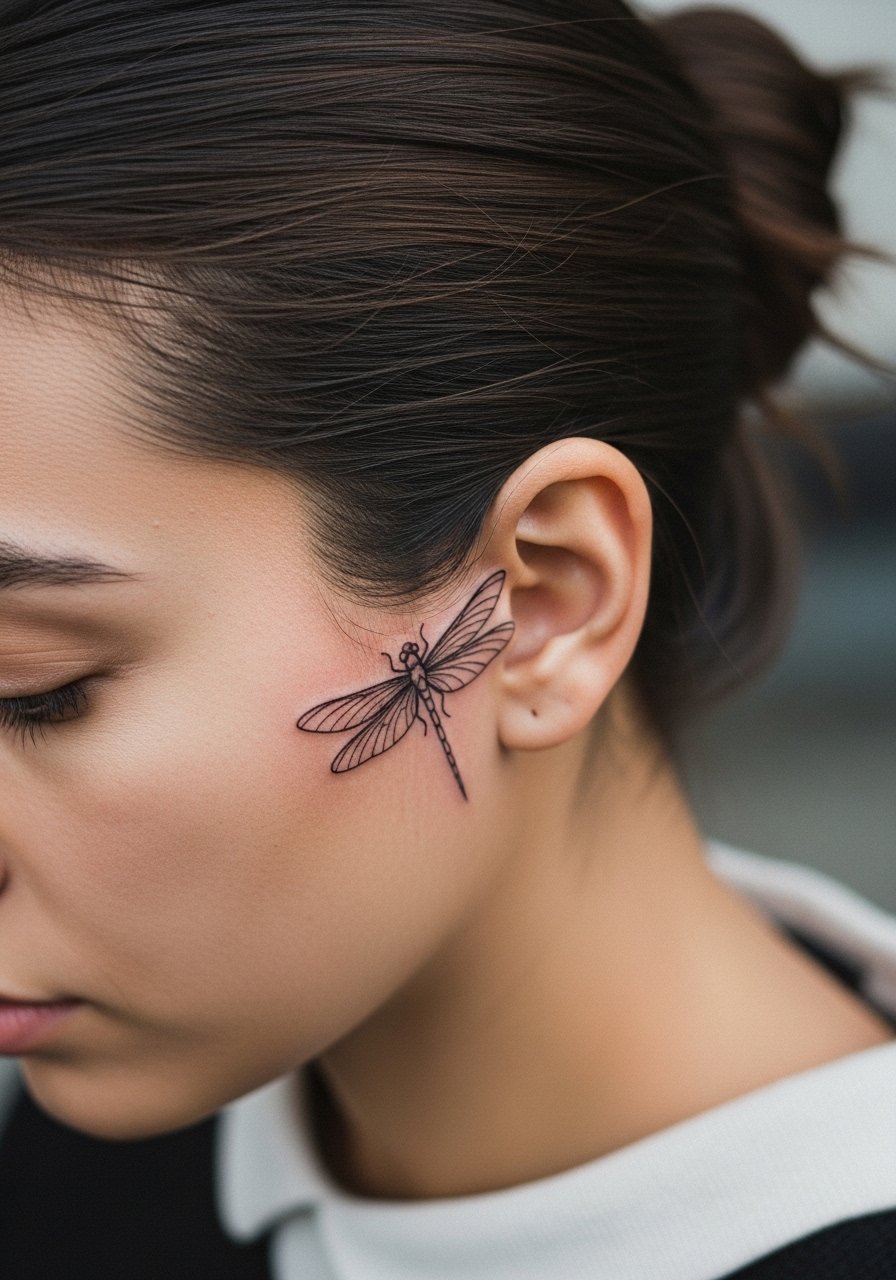
Temple pieces need careful placement because facial movements can distort micro detail. Ask for simple body anchors and minimal wing veins. This area is sensitive and the session is brief but sharp. Artists who do facial-adjacent work often recommend conservative sizing here. If you plan visible hairstyles, think about how bangs or pulled hair will interact with the tattoo in daily life.
26. Dragonfly with Geometric Wings on the Upper Thigh
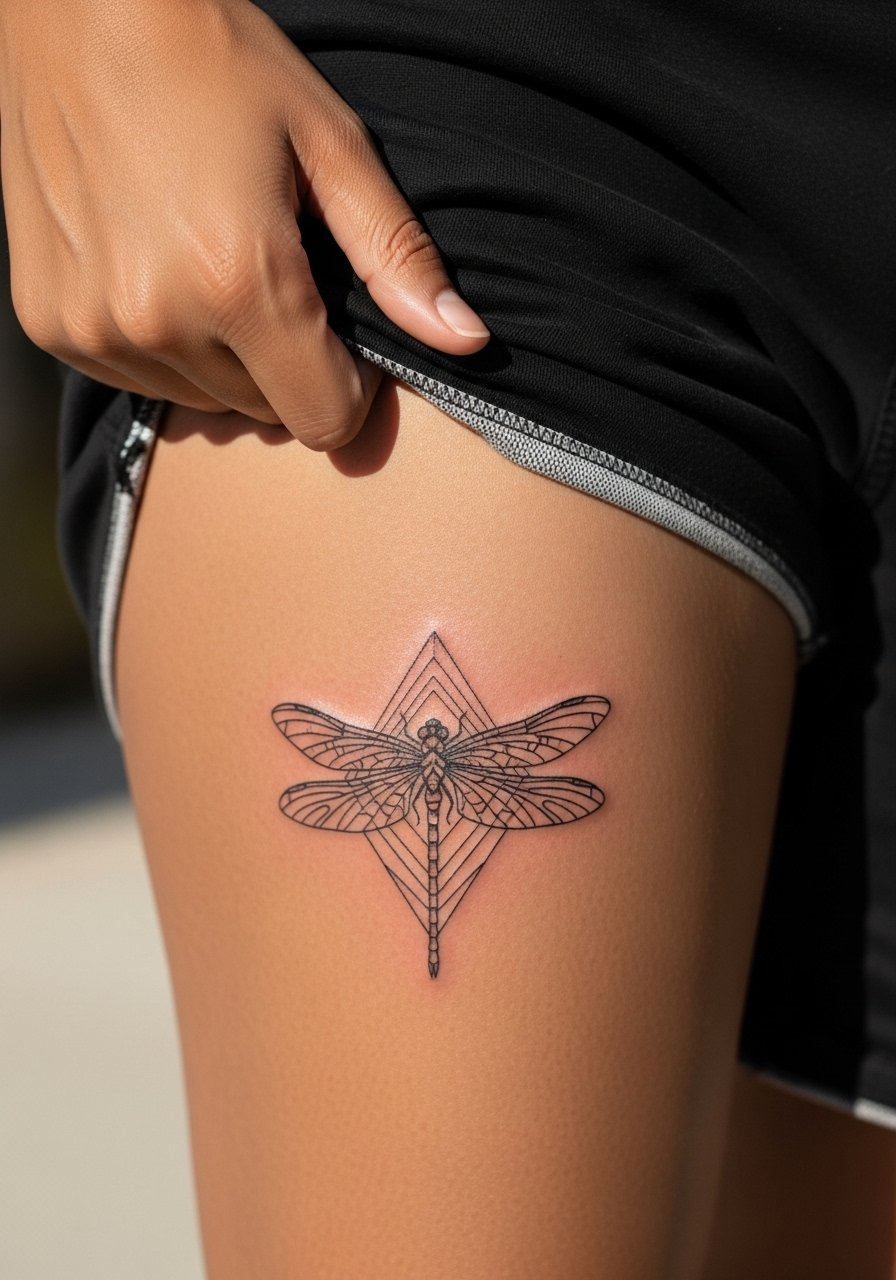
Upper thigh placements are sheltered from constant sun, which helps preserve fine geometric detail. Tell your artist you want the geometric elements spaced to avoid dense line crossings that can blur with weight changes. Sessions here can be longer and feel tender but manageable. For the appointment, wear shorts you can shift easily. A high waist garment after healing can sit comfortably without pressing directly on the tattoo.
27. Neck-Side Dragonfly with Trail of Dots
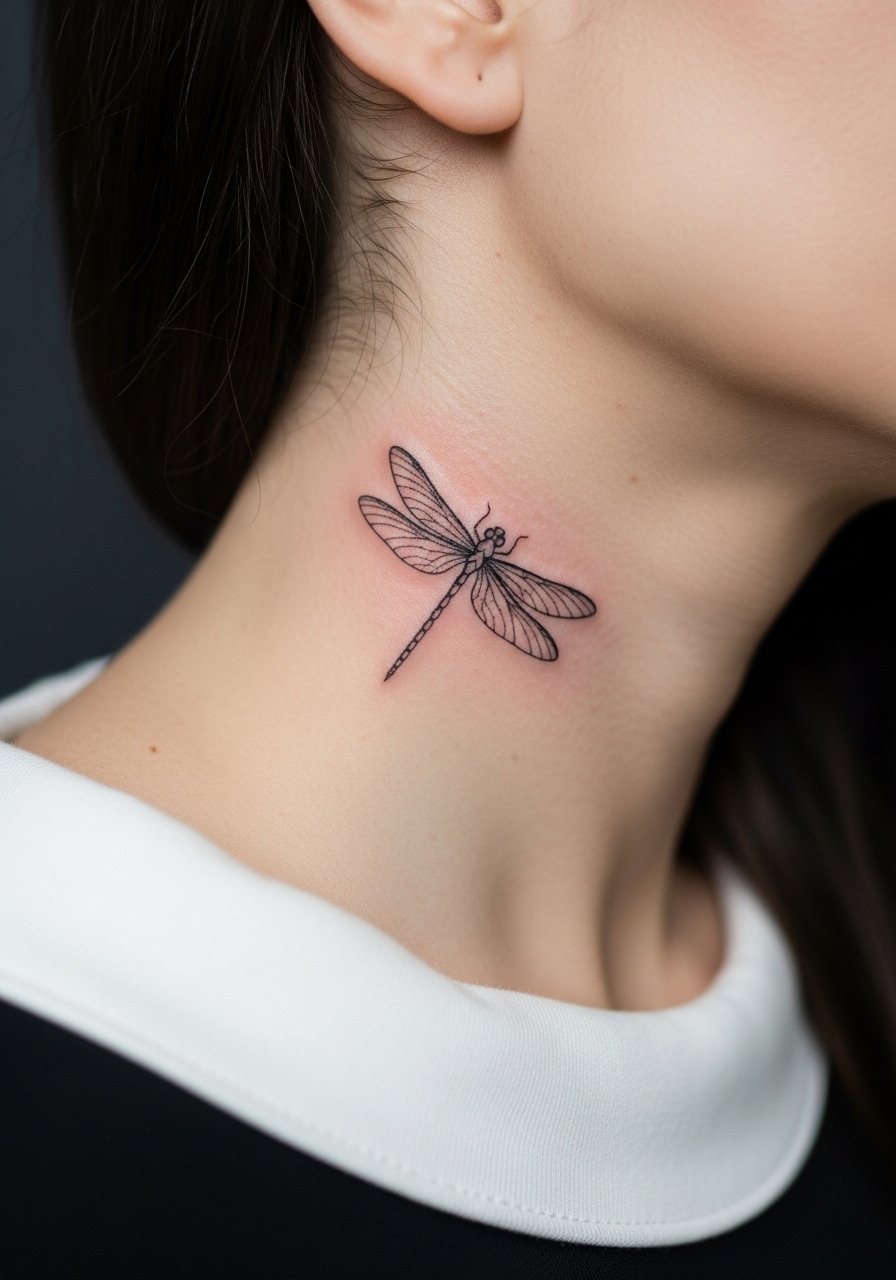
Side-of-neck pieces read bold despite small size because of visibility and movement. When you consult, ask how the artist will space the trail of dots so they do not create a shaded smudge after healing. The neck is sensitive and the session is usually short but intense. Consider how visible you want the piece to be in professional contexts. A thin necklace can sit above a trail without competing with the design.
Frequently Asked Questions
Q: Will fine line dragonfly tattoos blur faster than thicker styles on the ribs and sternum?
A: Yes, fine line is more vulnerable on ribs and sternum because the skin stretches and moves with breathing. Artists split into two camps about how fast it happens. One camp says micro detail blurs within two years. The other camp says careful spacing and slightly stronger primary lines can keep a piece readable longer. Ask to see healed photos from the exact placement during your consult.
Q: How often should I expect touch-ups for finger, wrist, and hand dragonflies?
A: Expect more frequent touch-ups for hands and fingers, often every one to three years, because those areas see heavy washing and friction. Wrists fall in the middle and often need a touch-up around year two depending on your lifestyle. Plan touch-ups into long-term upkeep rather than treating them like a one-and-done procedure.
Q: What should I wear to appointments for ribcage, sternum, and upper thigh pieces?
A: For ribcage wear a cropped athletic top you can lift, for sternum choose a fitted sports bra, and for upper thigh bring loose shorts you can shift. These choices give the artist access while keeping you comfortable. I find people underestimate how much simple clothing makes the session smoother.
Q: Are behind-the-ear and temple dragonflies safe for all skin tones and types?
A: They can work across skin tones, though micro-detail may read differently depending on contrast. On darker tones slightly bolder anchors help the wings remain visible. Talk to an artist experienced with your skin tone and ask to see healed examples from similar placements.
Q: Should I use sunscreen on fine line dragonflies after healing to preserve detail?
A: Yes, regular sunscreen on healed tattoos slows fading and helps maintain contrast. Apply broad-spectrum SPF to exposed pieces like forearms, ankles, and chest. It is one of the most consistent things people and artists agree on for long-term preservation.