Fine line dotwork can read delicate and fierce at the same time, but the choices you make before the chair matter more than the way a design looks on Instagram. I want to help you pick Hanya mask placements and dotwork approaches that hold up, avoid common blowouts, and actually fit your wardrobe. Start with how you move and dress most days, and the first idea below will show a forearm option that plays well with both.
1. Outer Forearm Hanya Mask in Tight Dotwork
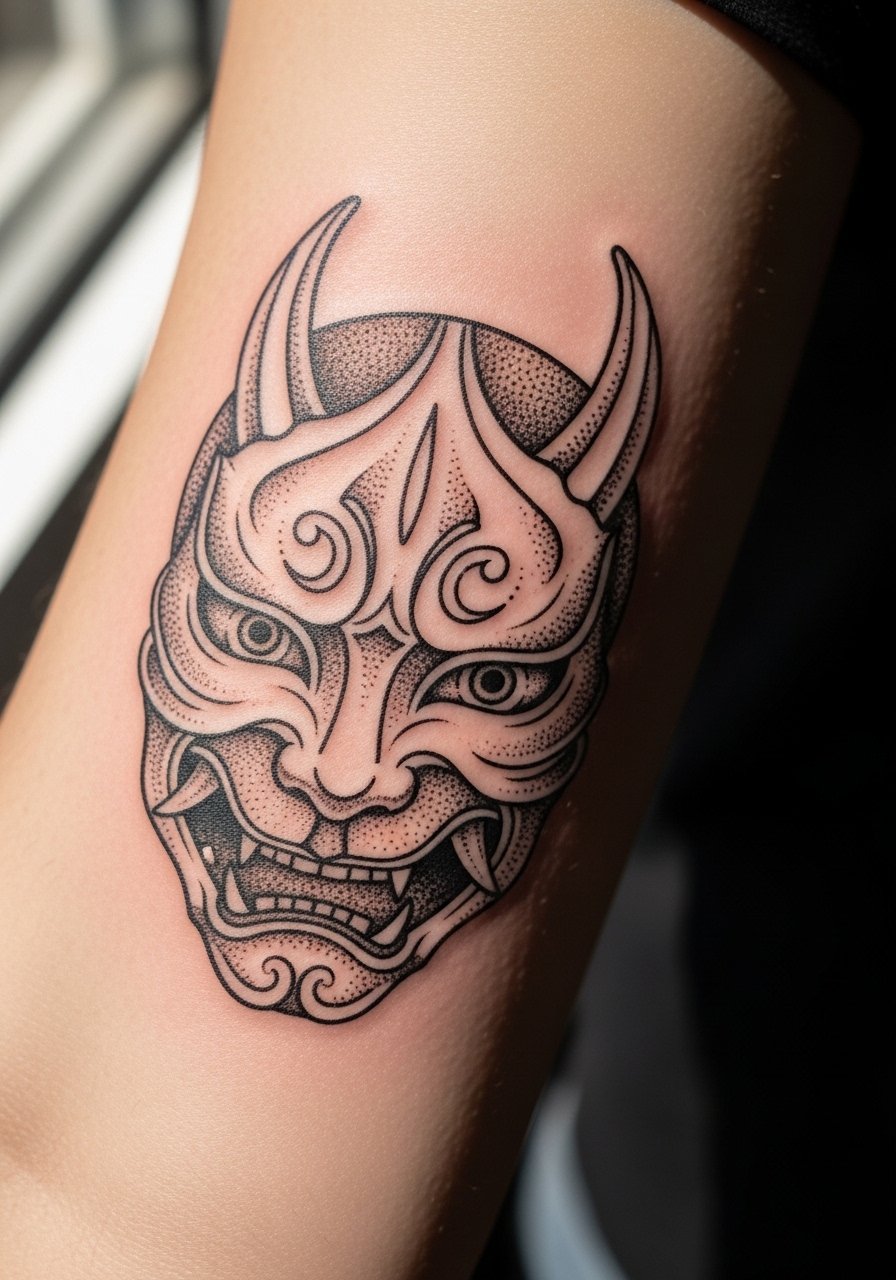
I often recommend the outer forearm for a Hanya mask done in dot work because the artist can give spacing between stipples and keep the linework slightly bolder so it reads at a distance. Tell your artist you want stipple shading with negative-space highlights so the facial features hold up rather than tiny continuous lines that can merge. Expect a moderate pain level and a session of one to two hours. A common mistake is asking for ultra-tiny dot clusters, which look delicate at first and then soften into an undefined gray patch around year three. At six months the stipple will still look crisp, at two years the contrast softens, and a targeted touch-up around year three usually restores the highlights.
2. Half-Sleeve Hanya Mask Wrapped with Floral Dotwork
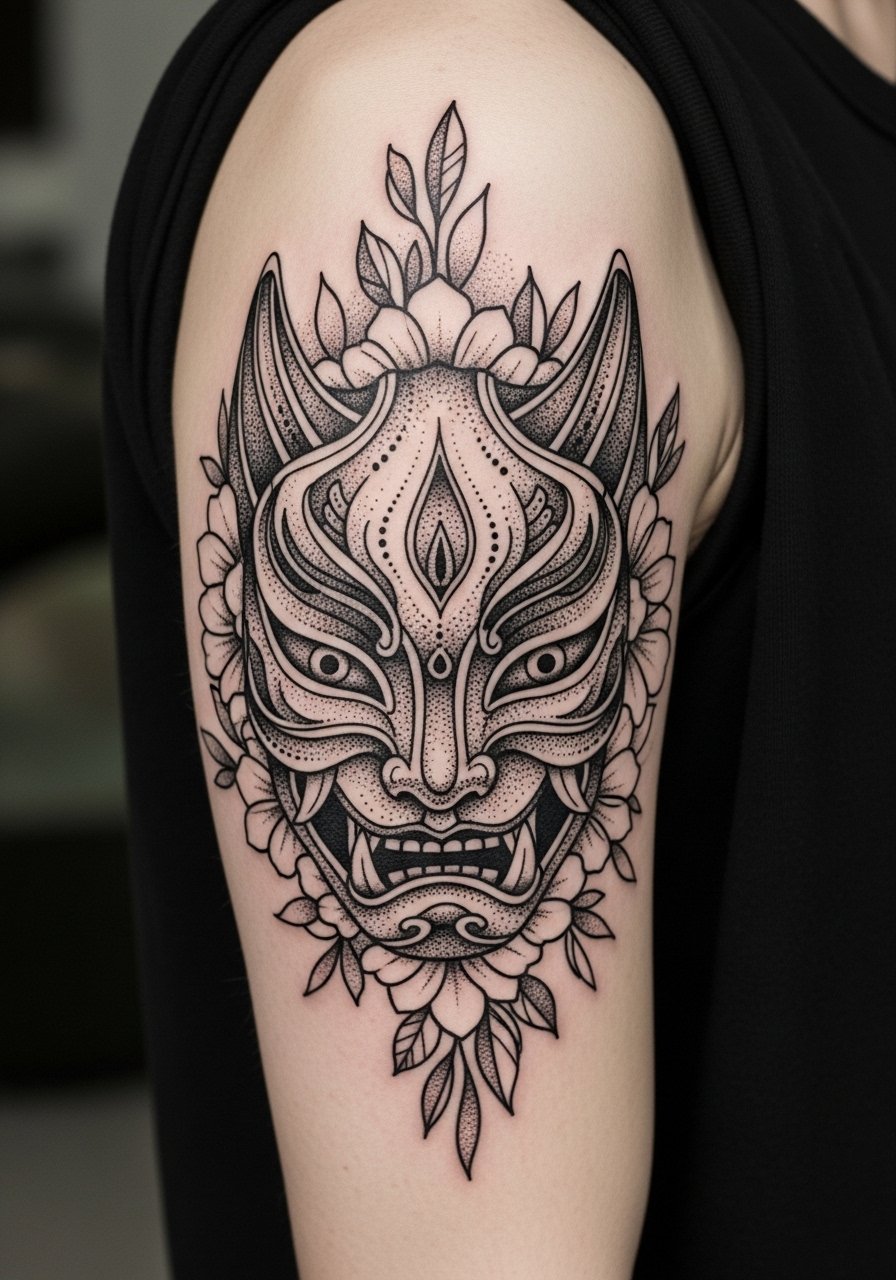
When the Hanya mask is part of a half-sleeve, the trick is spacing. I've seen sleeves where the mask gets lost in nearby motifs because everything shares the same tiny dot pattern. Ask for varied textures, with the mask done in medium-density stipple and surrounding florals in lighter dotwork so the face reads clearly. Expect several sessions totaling four to six hours. If you want to show it off at work events, pair it with a loose button-down shirt you can roll at the cuff, and for evenings a short sleeve linen shirt keeps the arm visible without crowding the design. The sleeve ages like other dense blackwork, meaning saturation stays strong, but tiny dots inside shaded fields can merge over time and may need a fill-in touch-up after a few years.
3. Ribcage Hanya Mask with Deep Stipple Shading
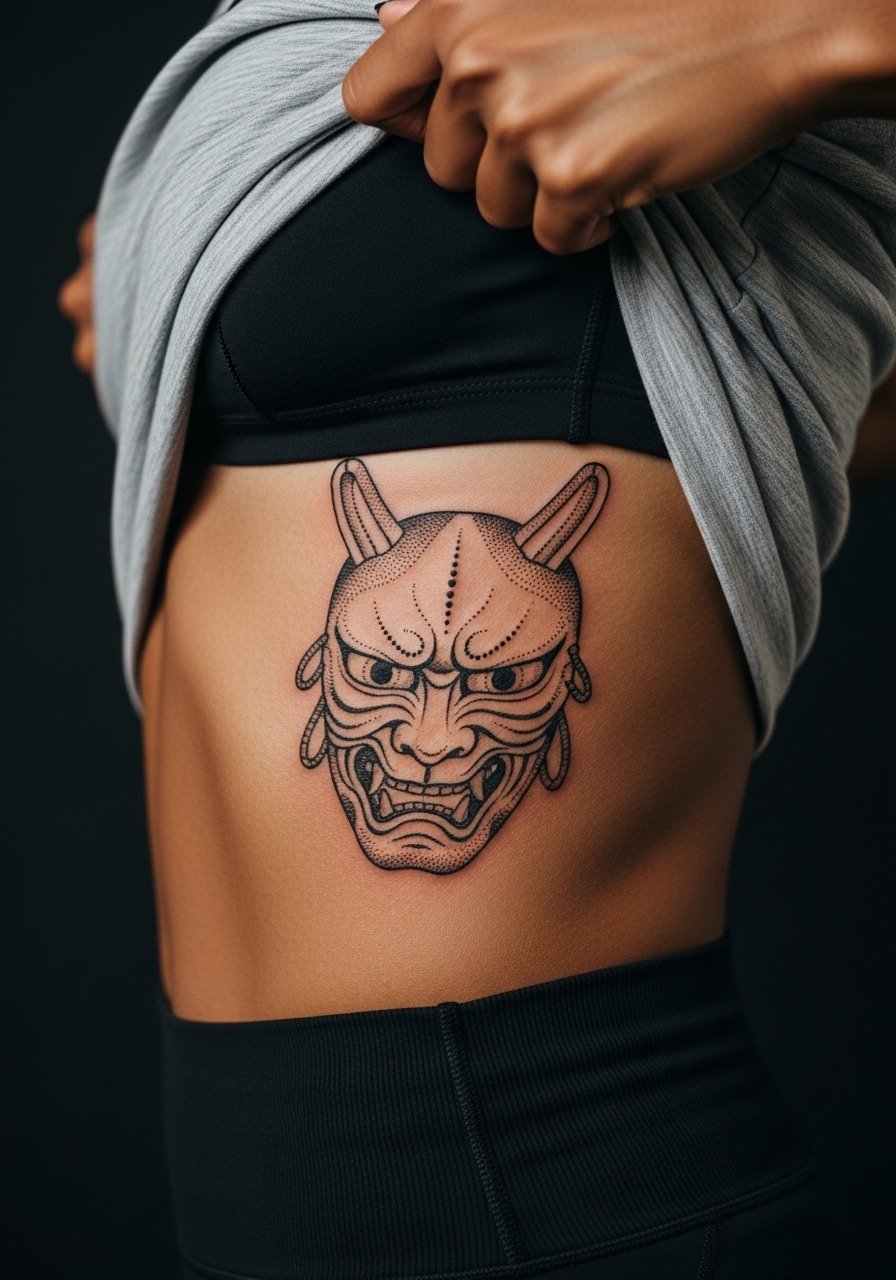
Fair warning: ribs are a sensitive canvas and the skin there moves and stretches differently. Artists split into two camps on fine line and ribs. One camp says the thin lines and tight stippling blur within two years because of skin stretch. The other camp argues that with correct needle depth and more spacing the detail can last much longer. The right approach is to pick an artist comfortable with dot work on torsal areas and agree on slightly larger dots and more negative space. Session-wise this is longer and painful, but the result can be a dramatic, body-contoured piece. Wear a zip-up hoodie or a sports bra to the appointment so the artist can access the area without you being fully exposed.
4. Upper Back Centered Hanya Mask in Radial Dotwork
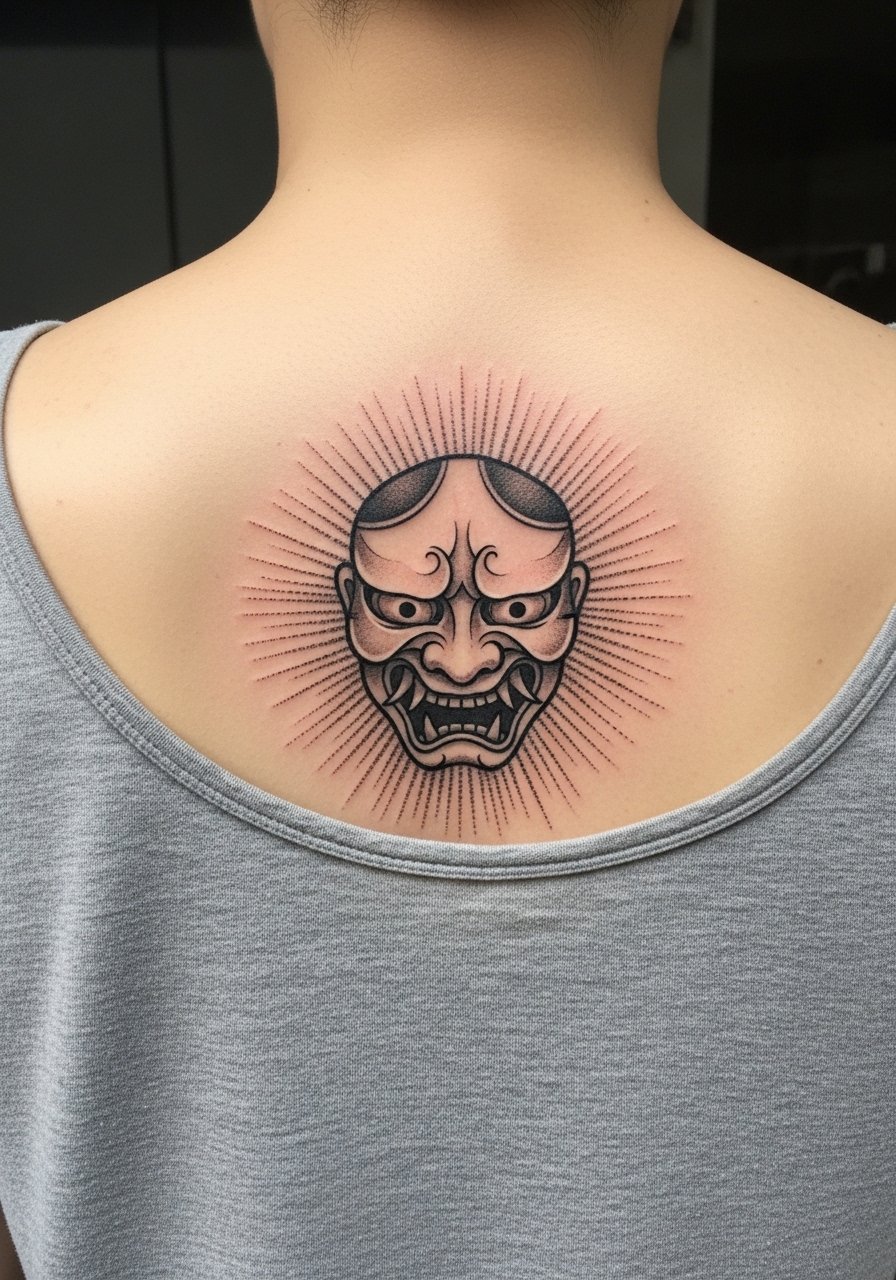
A centered upper back Hanya mask reads like a statement when done in radial dotwork that follows the spine and shoulder blades. The placement lets the artist use larger stippling fields, which age better than micro-dots. In consultation, ask for the mask to be the focal element and for the radial dots to radiate outward rather than crowding the cheeks with texture. For showing this off, an open-back dress or a tank top worn low in the back frames the piece without exposing too much. Healing is straightforward, and because the area sees less sun than forearms, the saturation holds longer with normal sun protection.
5. Calf Wrap Hanya Mask with Stipple Background
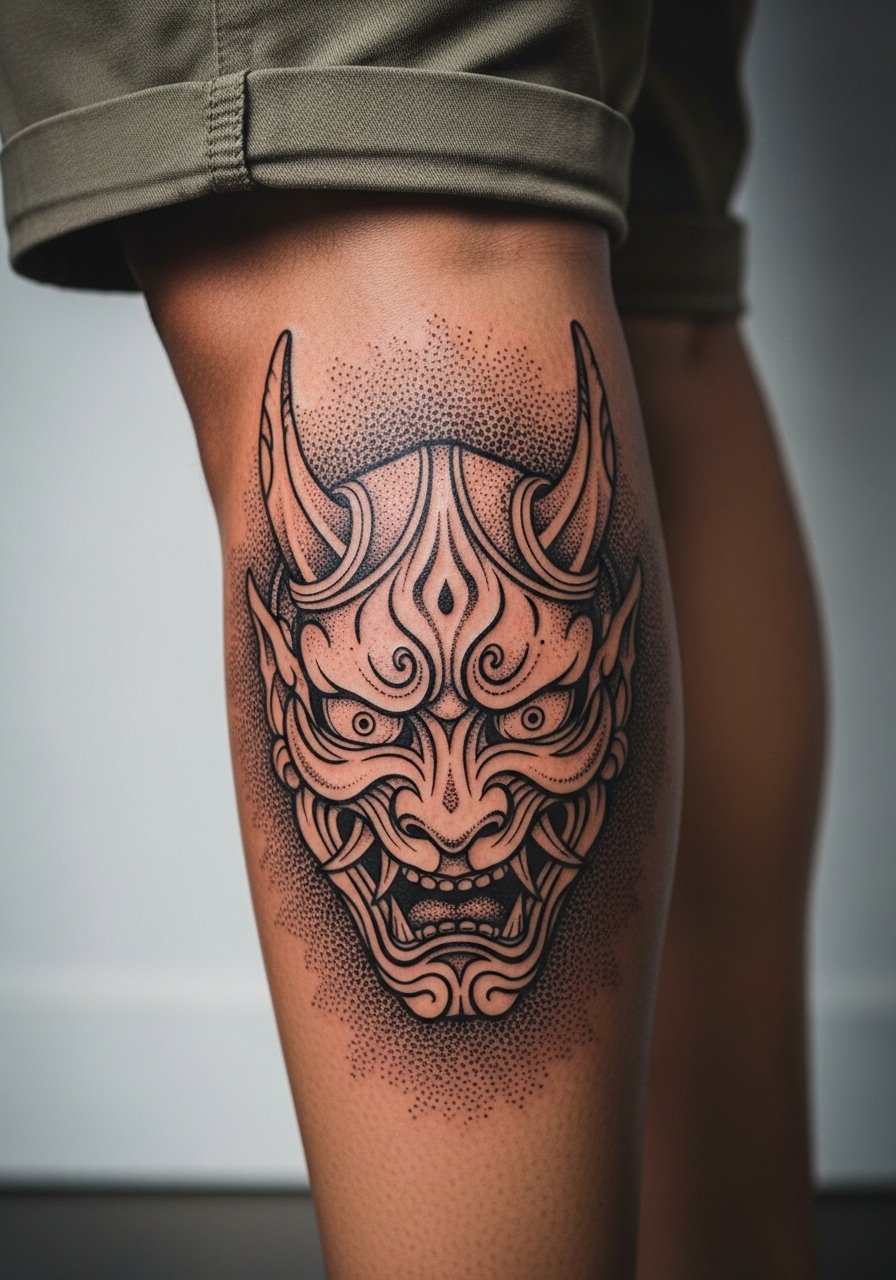
A calf wrap lets the Hanya mask curve with your muscle, which can bring the expression to life in motion. I advise slightly heavier linework around the mask outline and softer stipple in the background so the face remains the visual anchor. Sessions take around two to three hours. A common mistake is making the mask too small on the calf. When the piece wraps, small details can become unreadable from certain angles. The calf is low-risk for blowout compared with hands or ribs, but expect the dotwork to soften a bit by year five and plan a touch-up if you want to keep crisp edges.
6. Small Hand or Finger Hanya Accent with Micro Dotwork
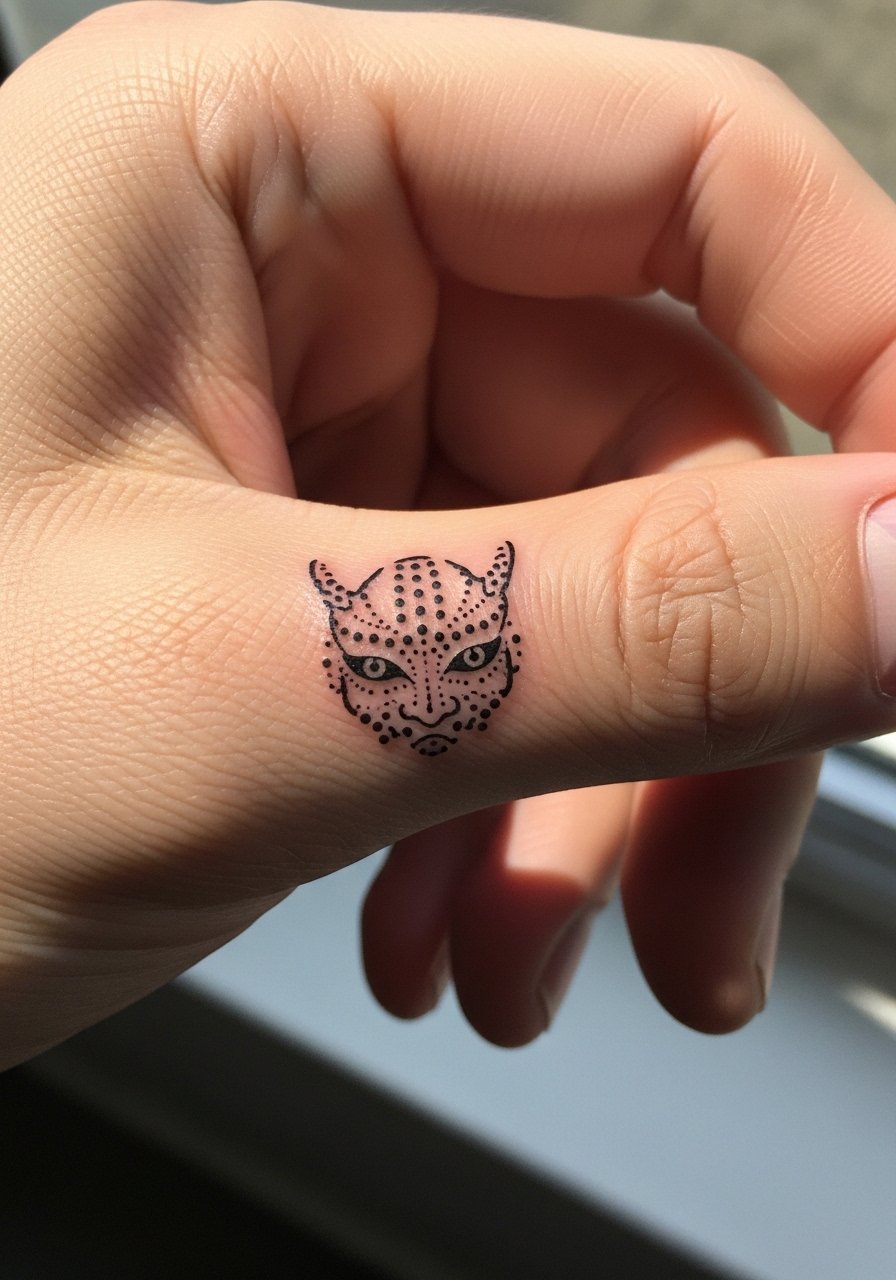
Hand and finger pieces read immediately, but they also age differently because of constant washing and friction. If you want a small Hanya accent on the hand, tell your artist to avoid ultra-fine stippling right at the knuckle line. The biggest mistake is asking for dense dot clusters on fingers where skin movement and daily wear will flatten the pattern into a gray smudge. Expect short sessions but a higher chance of early touch-up, often within the first year. Hand tattoos still affect hiring in some industries, so think about your career path before committing. Pair this with thin stacking rings and a minimalist watch to frame the piece without crowding the skin.
Studio Day Picks
Those first six placements above span easily exposed pieces and high-friction zones, so a small kit tailored to forearm, hand, and torso sessions keeps the day manageable.
-
Stencil transfer paper kit. Lets you preview placement on skin and adjust scale for forearm and calf pieces before the needle hits.
-
Topical numbing cream. Applied per instructions it eases rib and hand sensitivity so the artist can work without you flinching.
-
Thin protective film roll. Handy for covering hand and wrist tattoos during the first few days of heavy use.
-
Fragrance-free gentle body wash. Cleans healing lines without stripping moisture, useful for stomach and ribcage aftercare routines.
-
Aquaphor healing ointment. A thin layer in the first 48 hours locks in moisture for fine dotwork without clogging the channels.
7. Collarbone Hanya Mask in Horizontal Dot Band
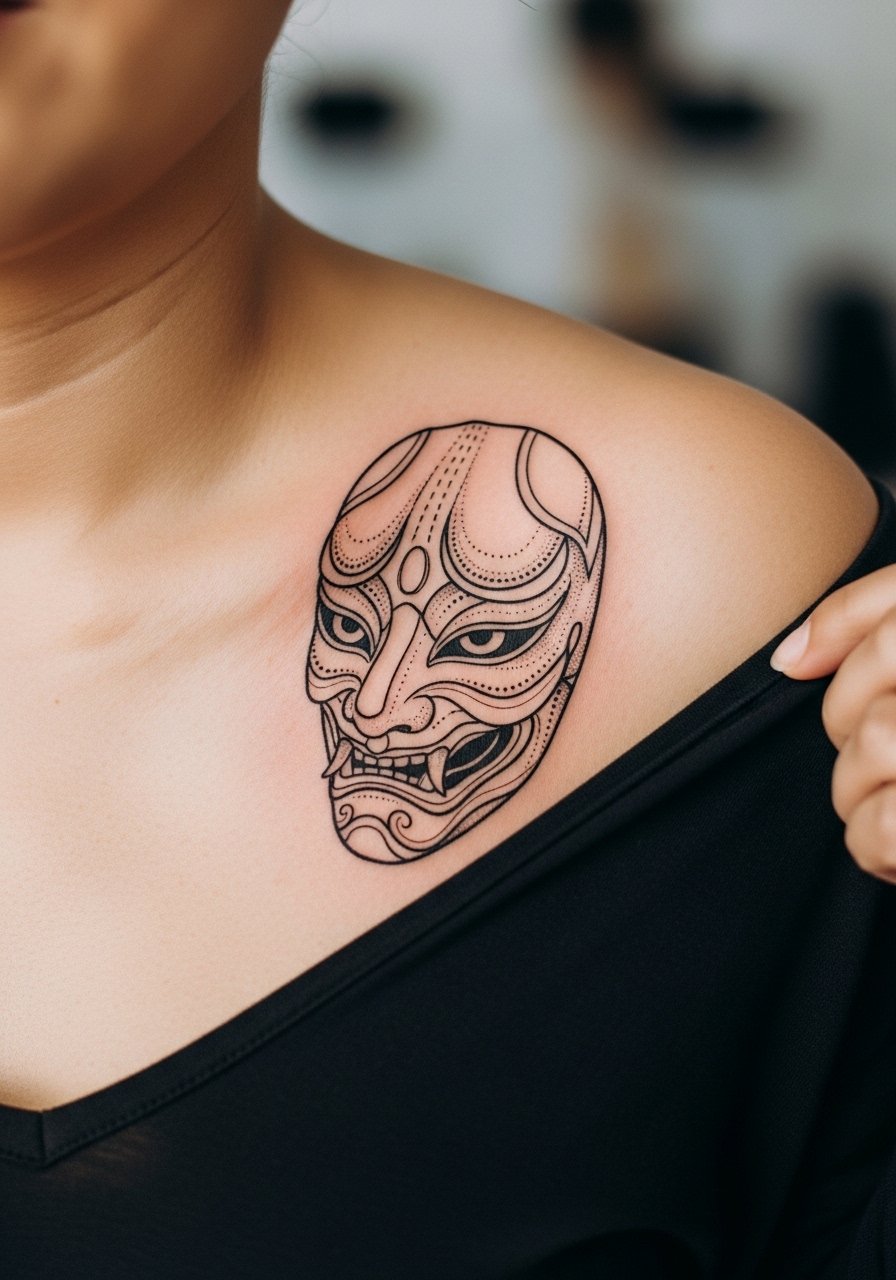
A collarbone placement lets a Hanya mask sit in a horizontal band that reads across the chest. Because the skin is thinner here, ask for slightly stronger linework and restrained stippling so the facial features do not dissolve into texture. Session time is one to two hours and discomfort is moderate. For nights out a thin chain pendant necklace works well because it sits above the design without competing, and a wide-neck top gives you a clean frame for daytime. Expect color retention to be decent but be mindful of sun exposure since this area sees frequent sunlight.
8. Inner Thigh Hanya Mask with Subtle Dot Shading
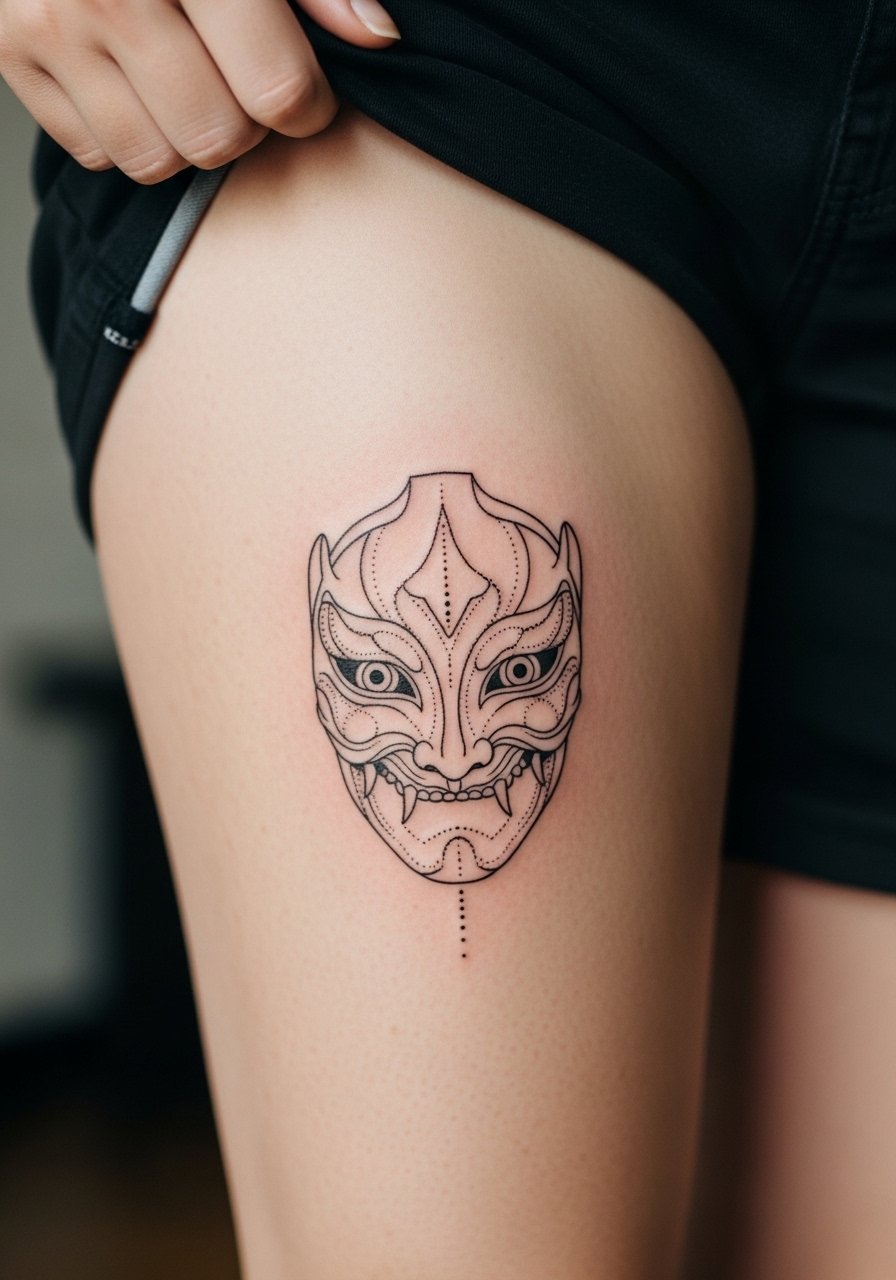
Inner thigh dotwork can look intimate and surprising when revealed. The skin there accepts detail well, but because it is an intimate placement, pick an artist who has experience with thigh work. For the session, wear loose shorts so the artist can roll the leg without removing clothing. Expect low to moderate pain and a calm healing process provided you avoid tight clothing and showery friction. Many people underestimate how friction from jeans or workout tights affects texture during healing, so plan wardrobe accordingly.
9. Sternum Hanya Mask with Concentrated Dot Field
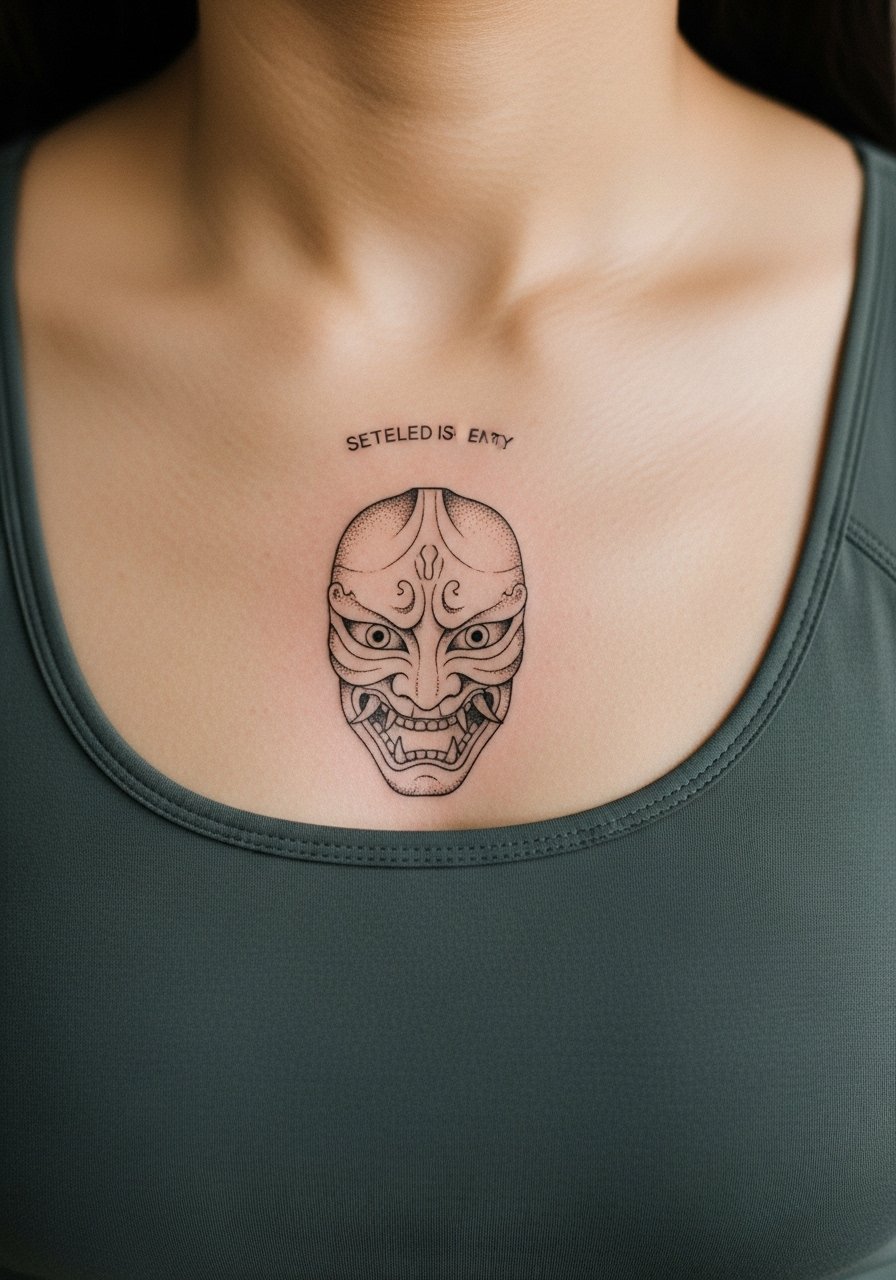
Sternum pieces can be striking when the dotwork uses a concentrated field that fades into the chest. Because the sternum sits near bone, the sensation is sharper and the session can be uncomfortable. I advise asking for a slightly larger scale so dots do not cluster too tightly across the midline. This placement usually needs a longer touch-up window because of movement from breathing. Wear a supportive sports bra to the appointment for easy access and modesty.
10. Integrated Sleeve: Hanya Mask Framed by Dotwork Waves
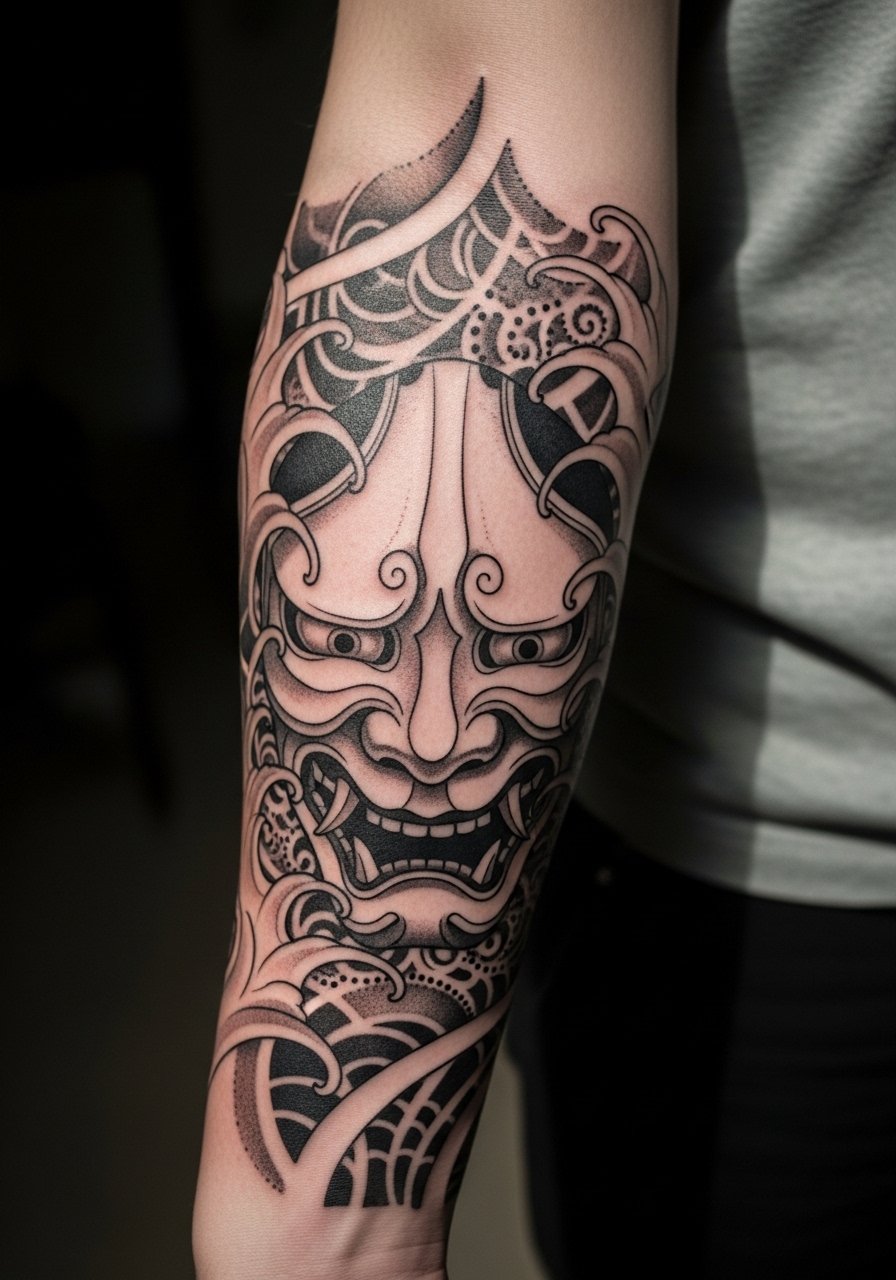
If you want the Hanya mask to live inside a full sleeve, plan the composition so the mask becomes a focal node and the surrounding dotwork reads as motion. I suggest booking a consult where you and the artist map out negative-space corridors to prevent the mask silhouette from being overwhelmed. Sessions for sleeve work span multiple appointments and can total ten hours or more depending on saturation. The common mistake is over-texturing everywhere in the sleeve which gives no visual rest. At two years, dense black waves hold better than ultra-fine dot clusters, so prioritize contrast near the mask for longevity.
11. Minimal Wrist Hanya Motif with Fine Stippling
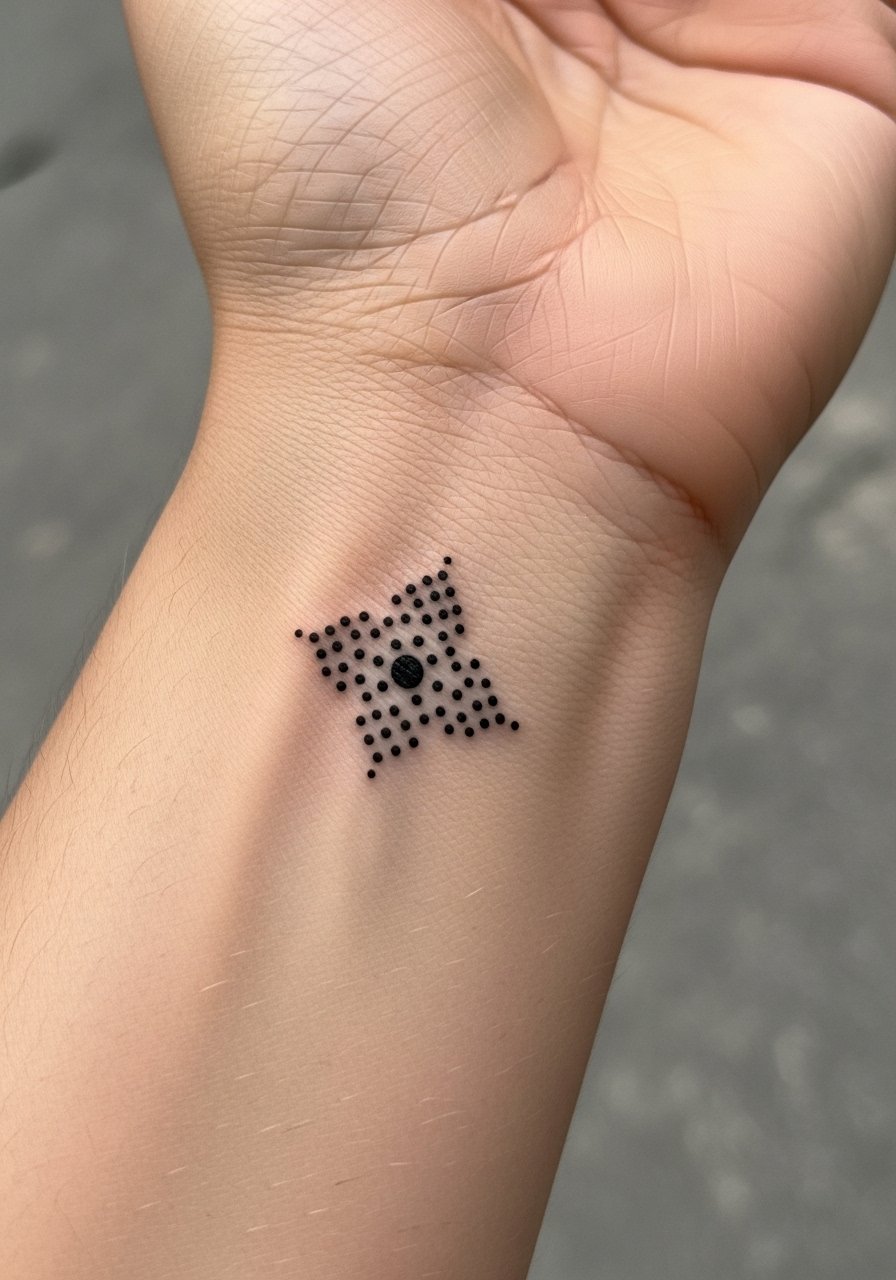
The inner wrist is visible and affects daily wear. For a wrist Hanya motif, ask for simplified facial features and stippling that avoids the side of the wrist where washing causes extra abrasion. Sessions are short but you should expect early fading compared with arm pieces. Pair the design with stacking dainty bracelets that sit just below or above the tattoo so the piece gets framed without rubbing directly on it. A common error is placing the design too close to the wrist crease where lines can blur faster.
12. Behind-the-Ear Micro Hanya Element in Dot Puncta
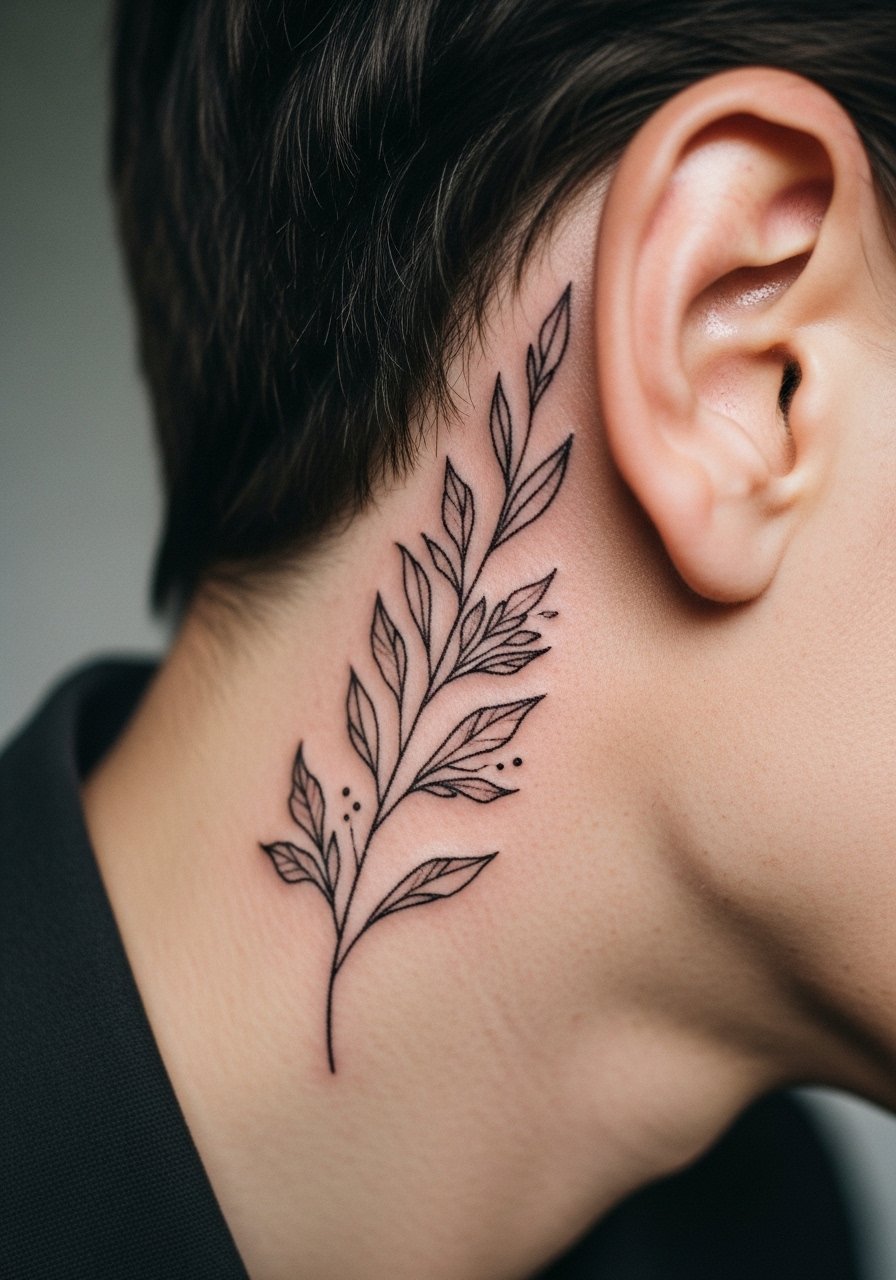
Behind-the-ear elements in dotwork are subtle reveal pieces, and they require careful framing by the artist. Since this area is small, ask for single-point stipple accents rather than continuous fields. The session is short and the pain is low. Tucking hair behind the ear or using wide hair clips during the session helps the artist maintain a clean canvas. This placement is good for people who want an intimate nod to the Hanya motif without a large commitment.
13. Side Neck Hanya Accent with Sparse Dot Shading
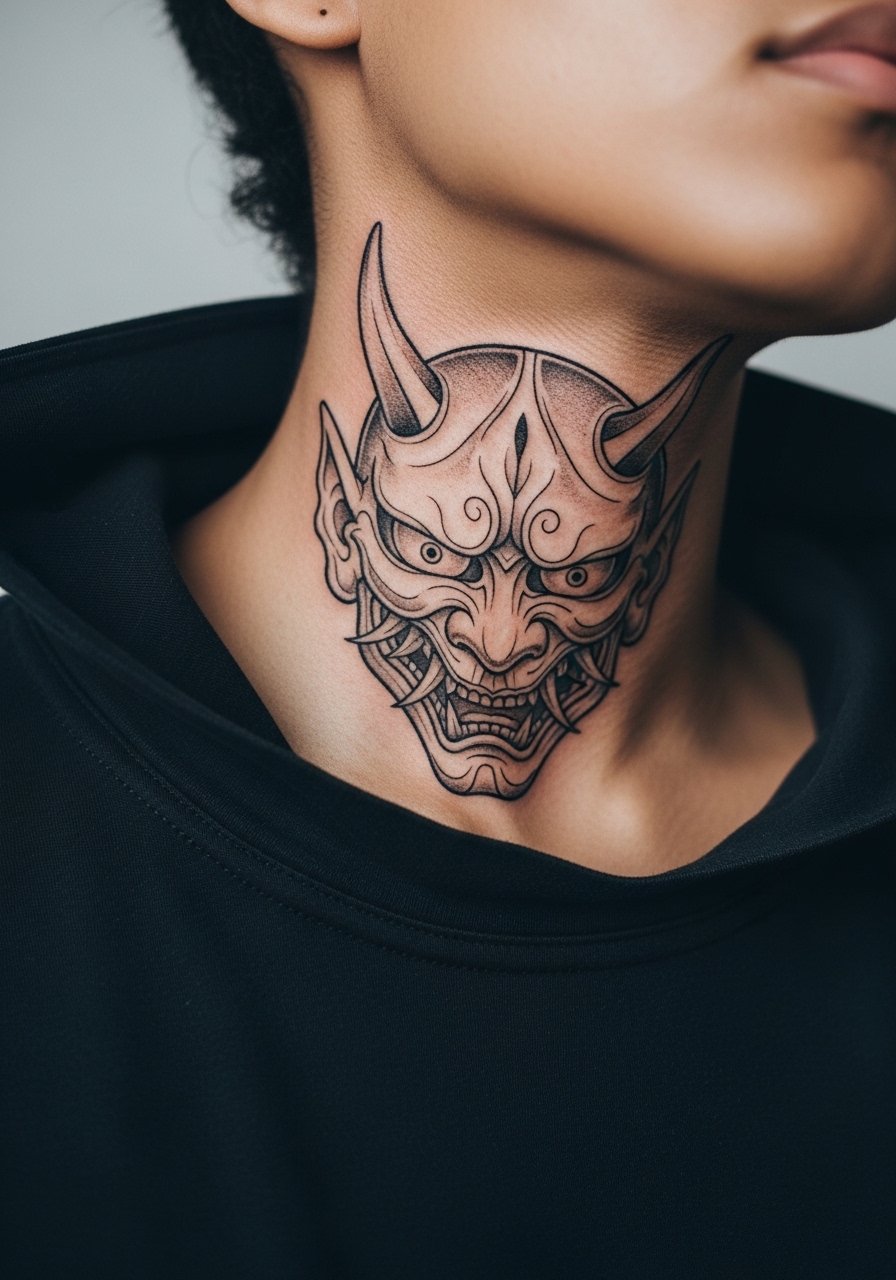
Side neck placements require an honest conversation about visibility and how employers respond. The dotwork should be sparse to prevent early blurring, and the artist should plan for slightly stronger linework so the mask silhouette holds. For styling, a wide-neck top or a turtleneck pulled down slightly frames the piece nicely, and a wide-neck shirt gives you flexible coverage. Expect quick healing if you avoid necklaces that sit directly on the tattoo.
14. Lower Back Hanya Mask with Textured Dot Horizon
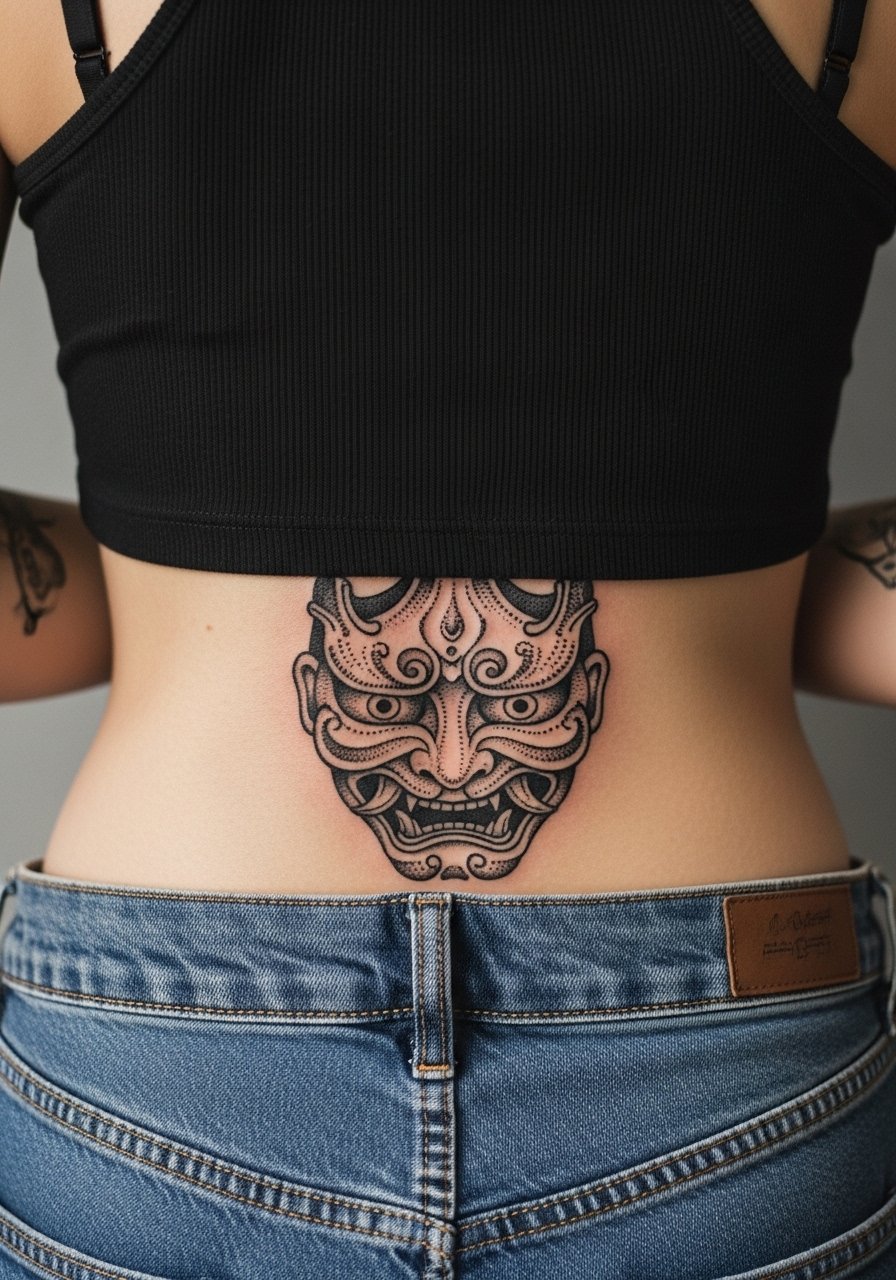
Lower back pieces let the mask sit in a horizontal field that can be hidden or revealed depending on clothing. Ask for a horizon of stipples that fades naturally into negative space to keep the facial features readable. For session comfort, wear a tank top you can pull up so the artist has access without exposing the torso, and consider a high-waisted skirt for nights when you want the tattoo to peek above clothing. The lower back sees less sun, so dotwork here tends to keep contrast longer than wrists or hands.
15. Hip Corner Hanya Accent with Delicate Stippling
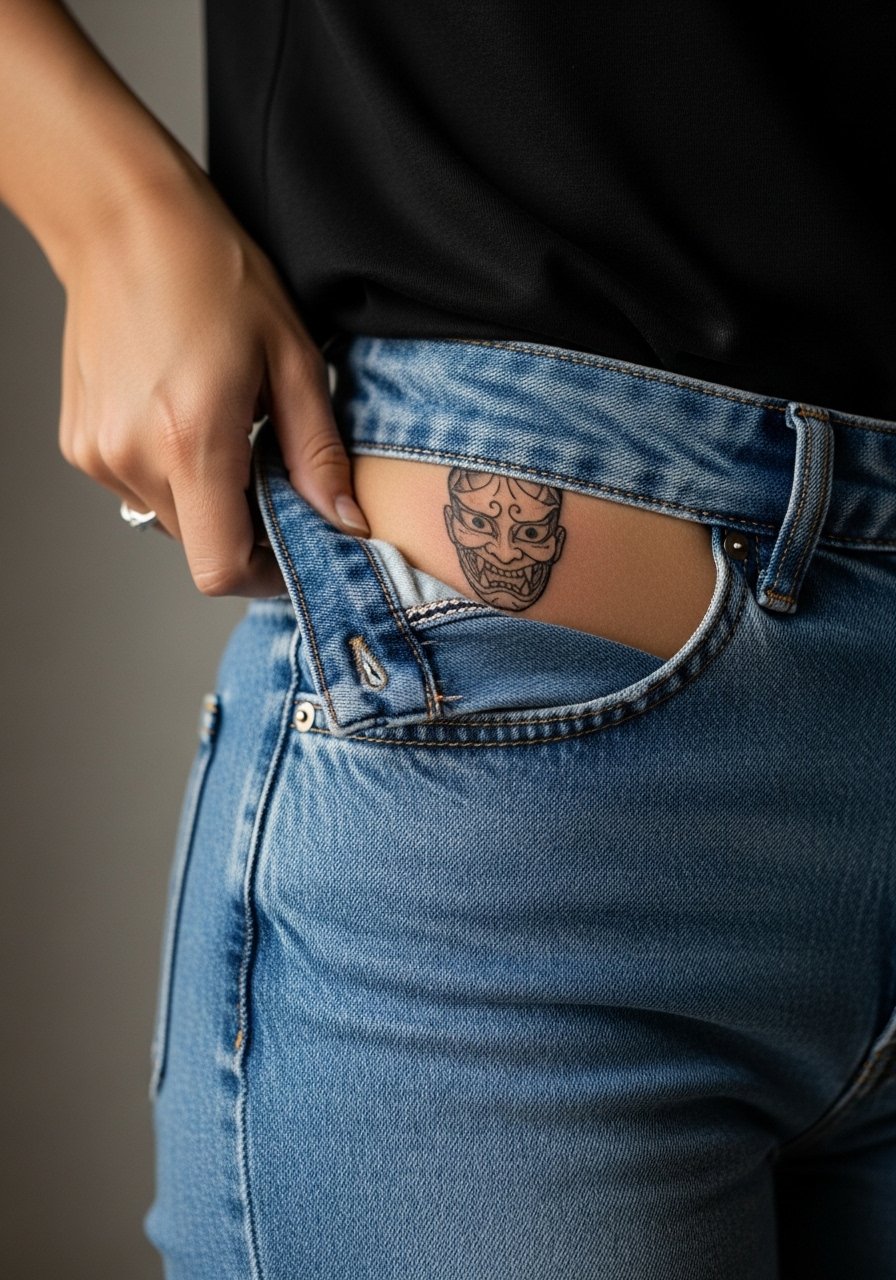
A hip corner Hanya accent can be a private piece that becomes visible at the beach or with certain cuts of clothing. For this intimate spot, session wear is the main styling consideration. Wear high-waisted bottoms so the artist can expose only the narrow strip needed. The hip is forgiving for dotwork, but tight waistbands during healing can irritate the area and make scabbing worse. Plan wardrobe to avoid friction during the first two weeks.
16. Full Calf Portrait Hanya with Layered Dot Fields
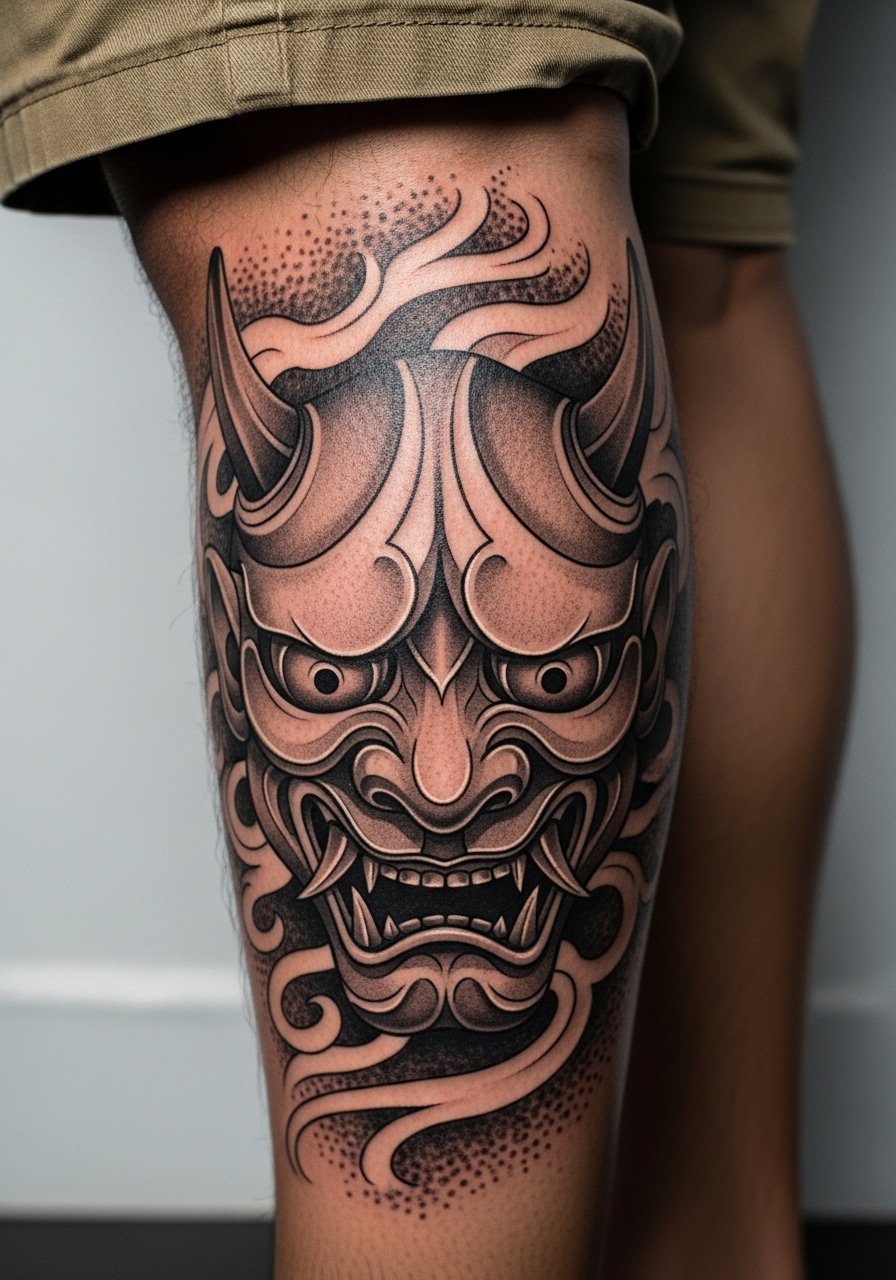
A full calf Hanya portrait gives room for layered dot fields that create depth. I recommend larger stipple patterns in the background and tighter stippling in the mask features. That contrast helps the portrait keep its facial definition as it ages. Sessions run longer and you should plan for multiple sittings. Calf dotwork tends to hold better than forearms for dense fields, but thin lines around the mask should still be monitored for softening over years. For athletic people the calf movement can actually play into the design if the artist maps the pattern along muscle lines.
17. Shoulder Blade Micro Hanya Mask with Negative Space
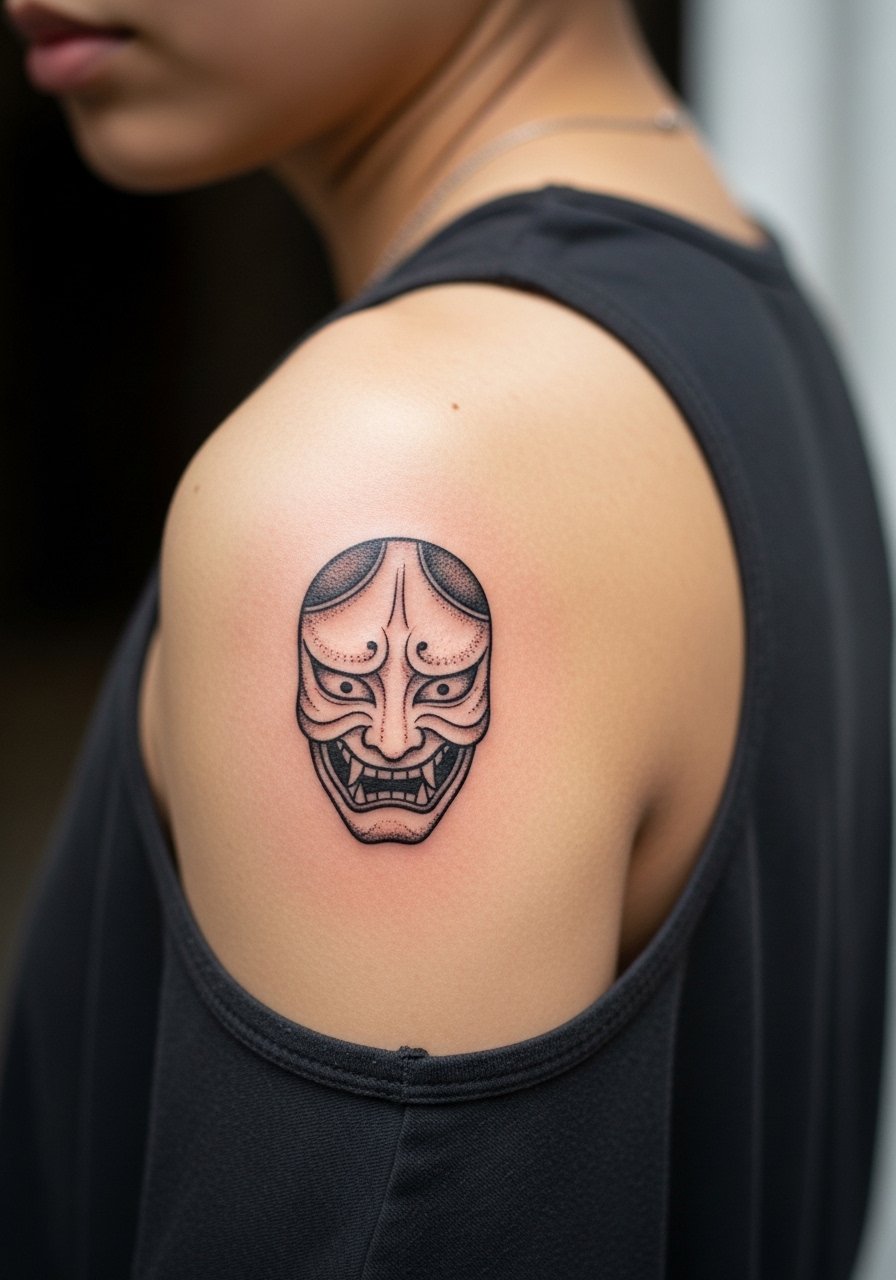
The shoulder blade is ideal for a small Hanya mask that benefits from negative space. Ask the artist to reserve clean skin around the eyes and mouth so the mask keeps its expression rather than becoming a texture block. Sessions are short and healing is straightforward if you avoid backpacks and tight straps during the first week. For showing it off, wear a tank top with the back slightly lowered and a lightweight linen tank that frames the blade without rubbing. Small shoulder pieces age well when negative space is respected.
Frequently Asked Questions
Q: Will dotwork Hanya masks blur faster than solid blackwork if I choose the forearm placement?
A: From what I've seen, fine stipple areas can soften faster than solid fills on the forearm because that area sees sun and frequent friction. Ask your artist to scale up dot sizes slightly and to include negative space around key features so contrast remains readable. Regular sunscreen after healing helps preserve the stippling.
Q: Is it okay to get a culturally inspired Hanya mask if I'm not from the culture where it originated?
A: The Hanya mask comes from Japanese theater and ritual imagery, so many people choose respectful variations rather than literal replications. One approach is to discuss symbolism with the artist, use subtle alterations, and be open about why the design matters to you. That keeps the design thoughtful rather than appropriative.
Q: How often should I expect touch-ups for hand and finger dotwork compared with a calf piece?
A: Hand and finger dotwork commonly needs touch-ups within the first year because of friction and washing. Calf pieces often go longer before a touch-up, sometimes three to five years, because the area experiences less wear. Talk with your artist about realistic timelines for each placement during the consult.
Q: For ribs and sternum Hanya pieces, what should I wear to the appointment?
A: Wear easy-access clothing like a zip-up hoodie for ribs or a fitted sports bra for sternum work so the artist can reach the area without full disrobing. Comfortable, loose bottoms help you sit or lie for longer appointments. Bringing a towel to prop under you can also make long sessions easier.
Q: Can dotwork Hanya masks be combined with color and still hold up?
A: Yes, but color changes the aging profile. Color can help define negative space and maintain contrast, but pigments fade differently. If you add muted color washes behind a black dot mask, plan touch-ups for the color separately from the blackwork touch-up schedule.
Q: Where should I look to find artists who specialize in dotwork Hanya mask designs without naming specific studios?
A: Use discovery pathways like local shop directories, convention lineups, and hashtag searches focused on dotwork and Hanya motifs. Read portfolios carefully to see healed work in the feed, and ask to see healed photos during consults so you know how the artist's dotwork settles on real skin.