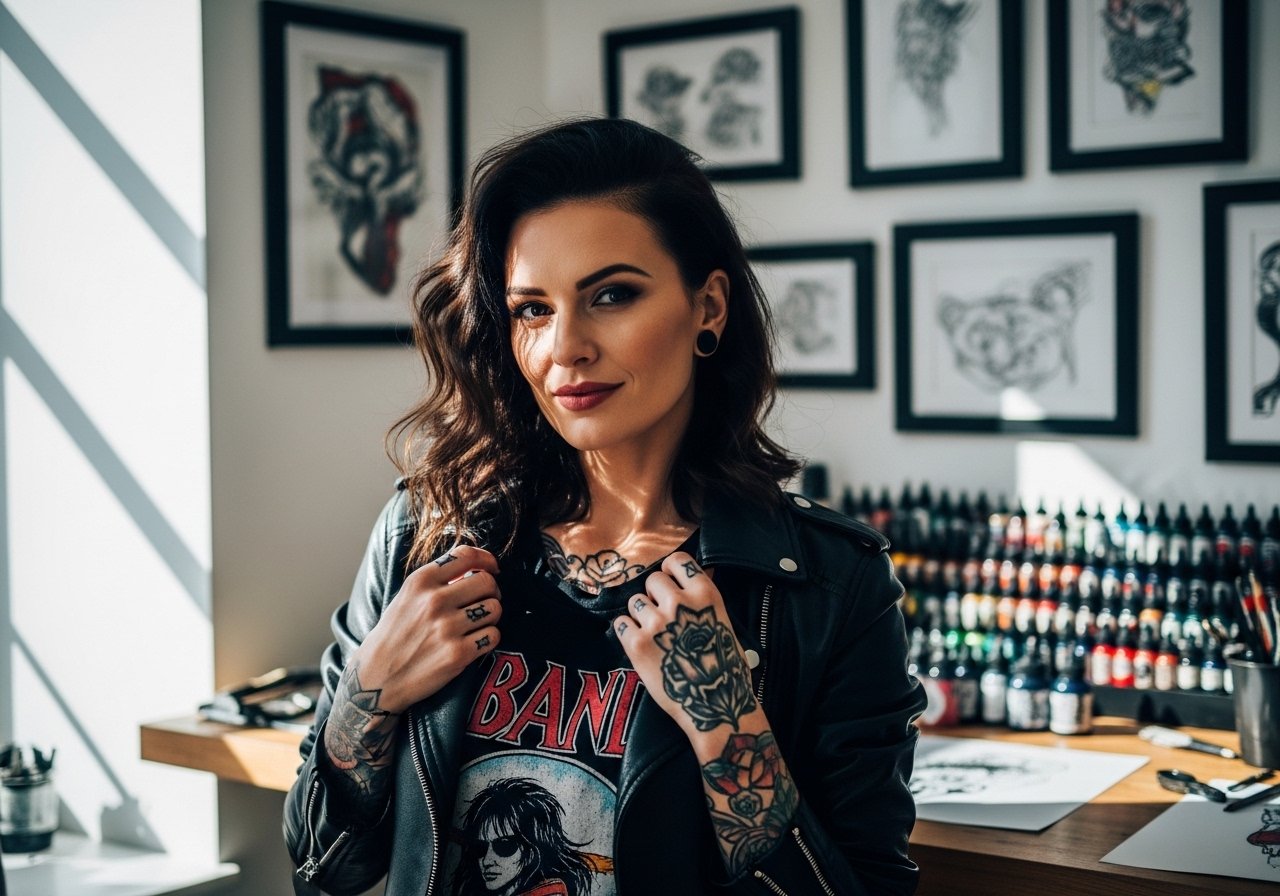
Bold blackwork octopus tattoos read like wearable statements that age into texture, not just color. They hide motion in their tentacles and show shape in negative space, so the choices you make in scale and placement matter more than the tiniest detail on your reference board. Pick a direction that survives sunlight, friction, and the years, and the first section shows a forearm approach that translates well to larger pieces.
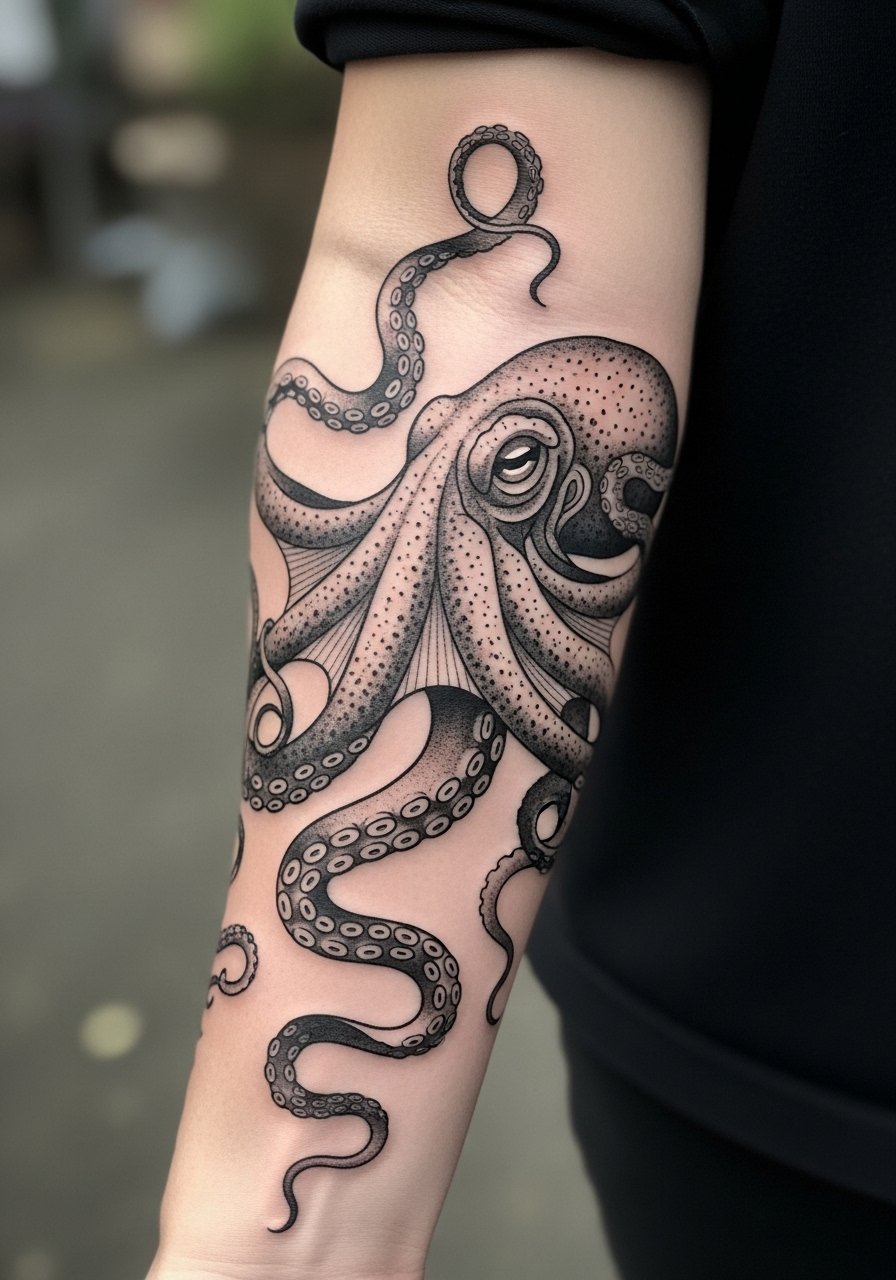
1. Octopus Wrap on the Inner Forearm
I've seen this placement hold up when the artist gives the tentacles room to breathe, and it is forgiving for first-timers. The inner forearm is a 3 to 5 on most pain scales, so you can expect a single two-hour session for a medium-sized wrap. Tell your artist you want bold linework with solid saturation and negative-space gaps so the suckers read clean at year two. A common mistake is asking for too many tiny details; those blur faster than the heavy shapes. For showing it off, roll up a sleeve or wear a loose button-down shirt that frames the forearm without covering the art. Image below captures the finished healed look on medium skin.
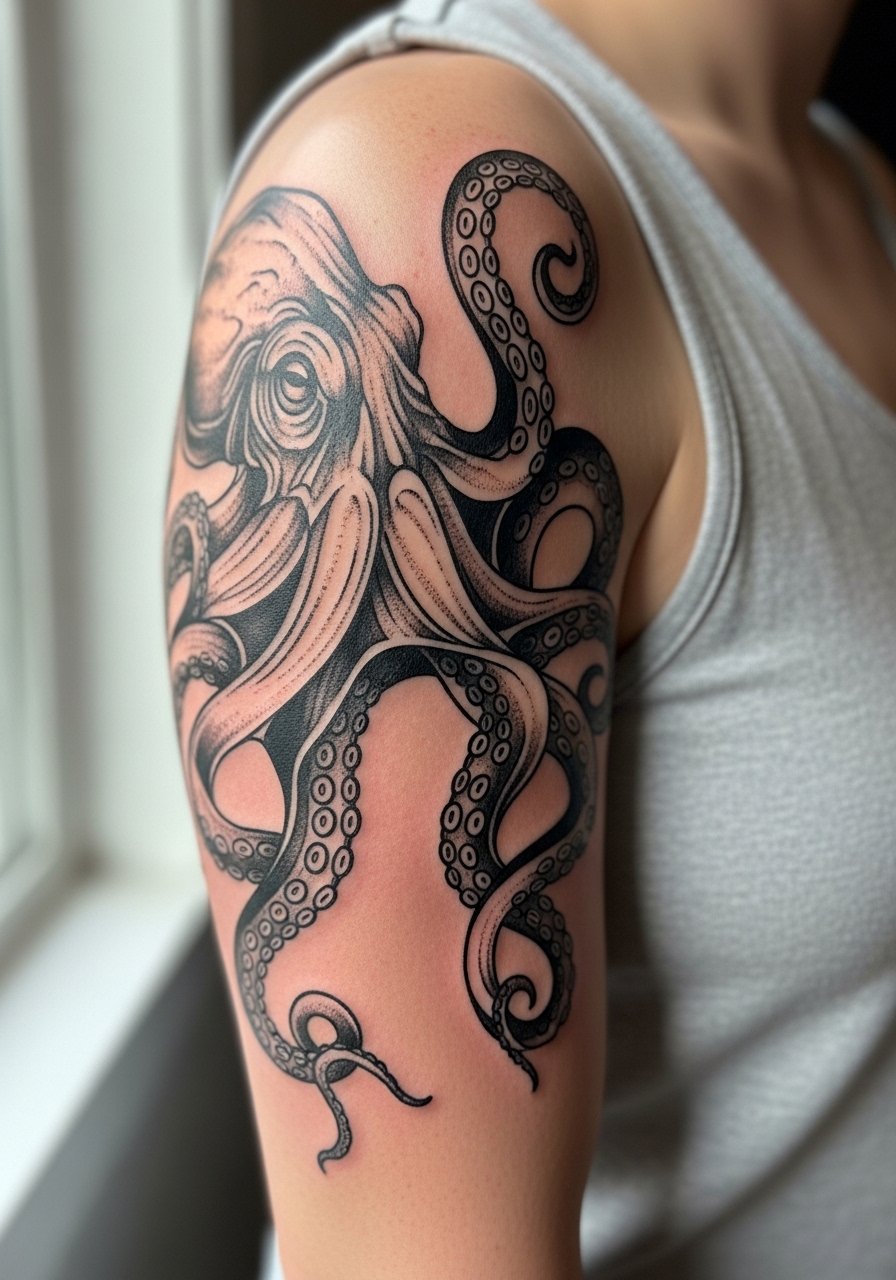
2. Half-Sleeve Tentacle Cluster on the Outer Arm
Fair warning: outer arm sleeves heal differently from forearm wraps because they catch sun more often. This design leans into bold silhouettes with heavy saturation and stipple shading in the background to give depth. Expect two to three sessions depending on detail, and plan for a touch-up around year three if you spend a lot of time outdoors. In consultation, ask the artist for emphasis on saturation over micro detail so the tentacle edges remain crisp. For the session, wear a sleeveless tank top so the artist can work unimpeded. The visual impact reads well from a distance and still reveals texture in close-ups.
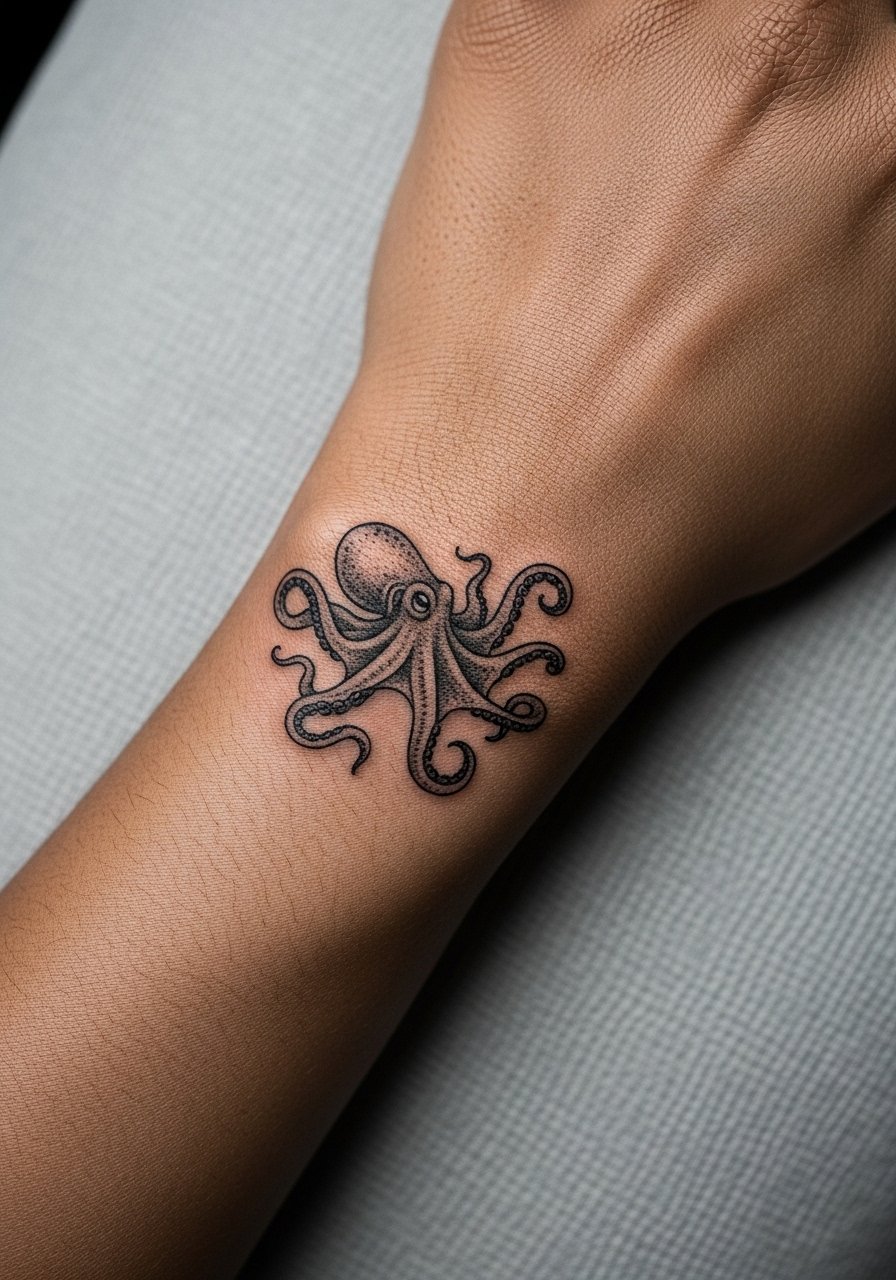
3. Micro Blackwork Octopus on the Wrist
Personal observation: tiny octopi on the wrist look delicate at first but need careful placement to avoid early blur. The wrist is a high-movement, high-friction spot and rates a 4 out of 10 for pain. Keep the design minimal with bold single-shade filling and one clear focal sucker to avoid merging lines at year two. A common mistake is packing in too many tiny suckers. Session time is often under an hour. For showing it off, stack a thin chain bracelet that sits below the tattoo rather than across it so the jewelry frames the art instead of rubbing it. Image shows a healed tiny piece on dark skin.
4. Chest Octopus Spanning the Sternum
Artists split on large chest pieces and fine detail. One camp says the sternum's movement and contour demand bold blackwork and open negative space. The other camp argues that with careful depth and larger line weight, intricate tentacle patterns can sit there too. The sternum feels like a 6 to 7 on most pain scales and usually needs a two to three hour session. I recommend prioritizing saturation and larger shapes so the piece reads from across a room and keeps detail in the negative space. For modest reveal and session access, wear a fitted sports bra so the artist can work without you being uncomfortable. Sensitive-area note: book someone experienced with chest work.
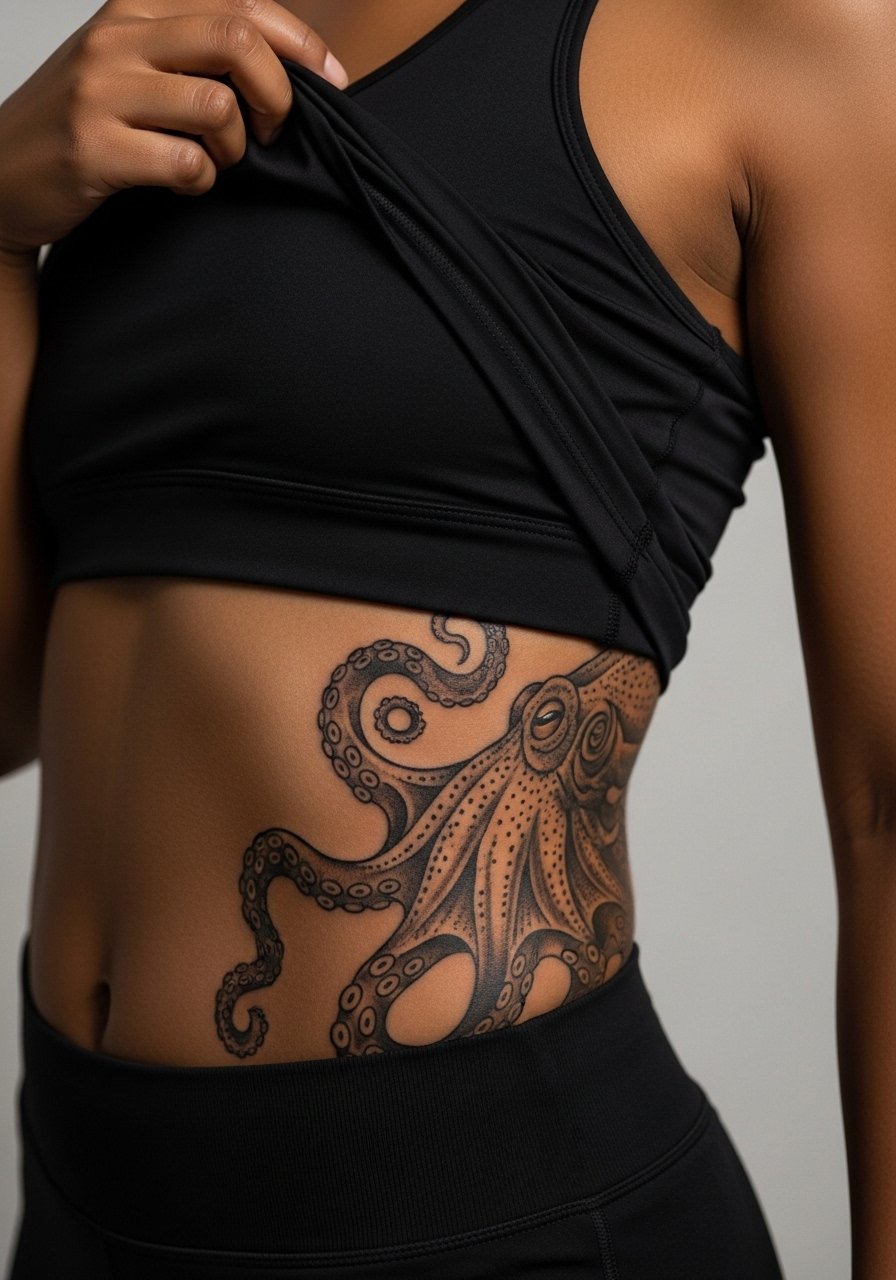
5. Side-Rib Octopus That Flows with the Torso
The biggest mistake for ribcage octopus pieces is making them too fine. The skin there shifts when you breathe and the needle needs room to settle. Pain warning: ribs are often an 8 out of 10. Expect one long session or two shorter ones. Ask your artist for sweeping tentacles with negative-space highlights and stipple shading behind the main forms so the piece keeps its silhouette as it heals. For the appointment, wear a cropped athletic top you can lift slightly to reveal only the tattooed side. Sensitive-area note: ribs age differently; touch-ups are common depending on placement.
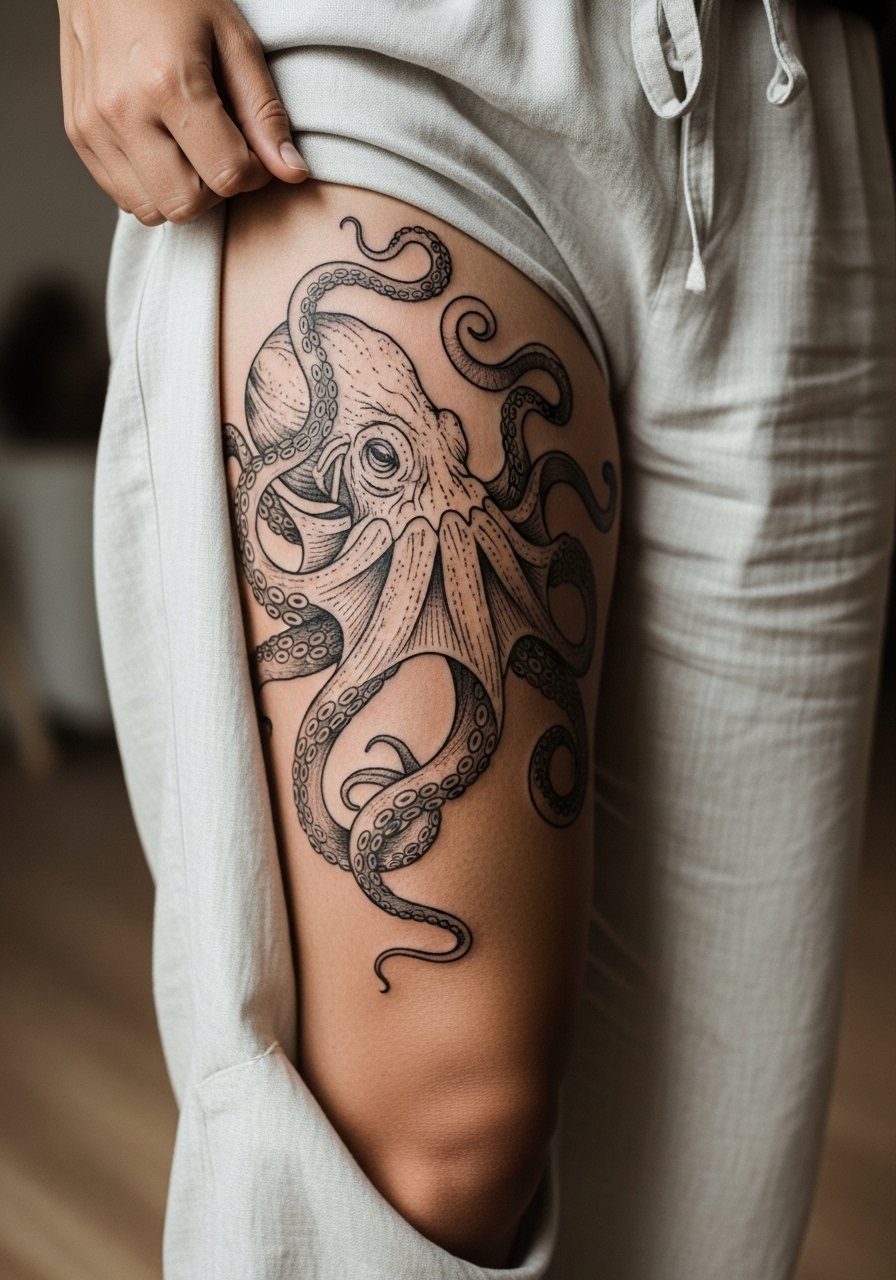
6. Thigh Octopus with Negative-Space Tentacles
Visual impact leads here. Thigh pieces let you play large without worry about blowout, and the skin holds saturation well. Pain is moderate, around a 4 to 6, depending on how close to the bone you go. This design shines when the tentacles use negative space to suggest suckers rather than tiny dots, which keeps the piece readable at year five. Tell the artist you prefer bold fills with areas of skin left open. For the session, throw on a pair of loose drawstring linen pants so you can roll the leg up without pressure on the area. Image shows a healed, bold thigh tattoo on medium skin.
Studio Day Picks
The first six designs above include wrist, forearm, chest, rib, thigh, and outer arm placements, so a few specific items smooth the session and the first week.
-
Stencil transfer paper kit. Lets you preview the linework on skin before the needle hits, which is useful for forearm wraps and wrist pieces that need precise placement.
-
Topical numbing cream. Applied before rib or sternum sessions it can take the edge off without altering linework when used as directed.
-
Thin protective film roll. Helpful for wrist and finger pieces that face constant washing and friction during the first week.
-
Fragrance-free gentle body wash. Cleanses healing areas without irritating delicate linework, particularly on larger blackwork pieces.
-
Aquaphor healing ointment. Thin layers help lock in moisture for dense black fills during the initial days after a session.
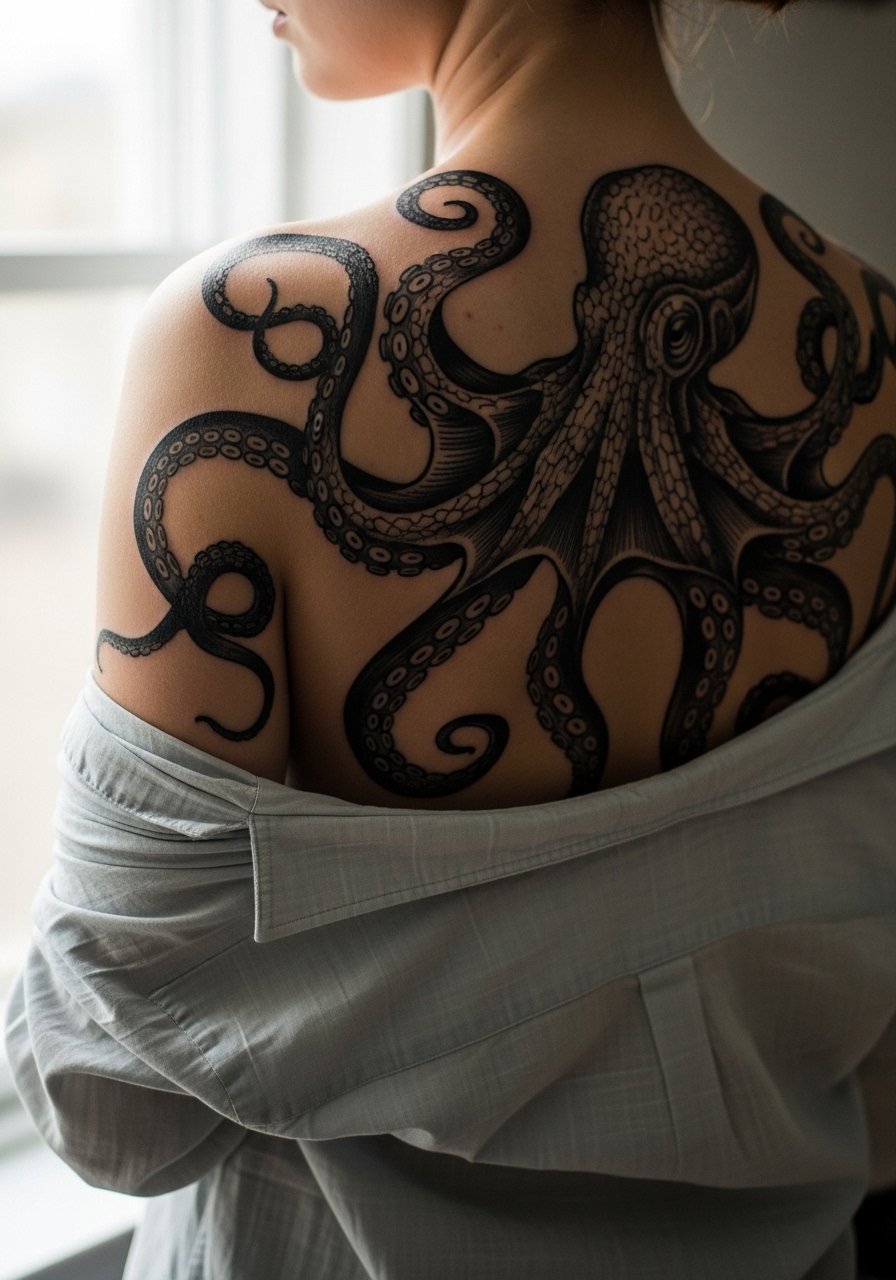
7. Full Back Octopus in Heavy Blackwork
Consultation lead: when you sit with an artist for a back piece, bring references showing scale and negative-space balance. Full-back blackwork lets the octopus be nearly silhouette-level, which reads across a room and ages cleanly. Sessions will come in multiple chunks, often three to six appointments depending on size and shading. Expect touch-ups down the line for edges that see sun. For post-session comfort, plan on loose tops like a button-down you can pull aside that do not rub the area. Large pieces benefit from broader linework and stipple transitions rather than microscopic details that disappear.
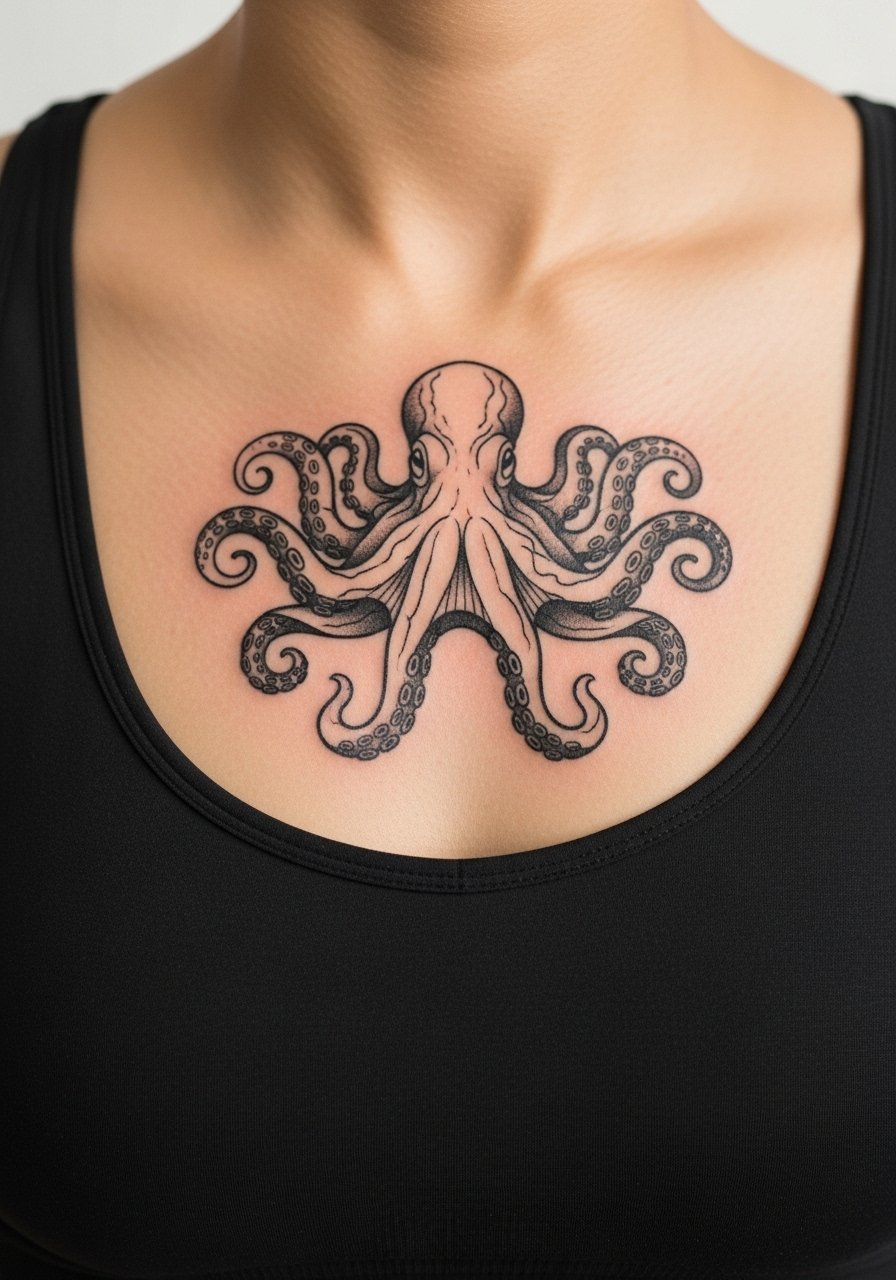
8. Collarbone Octopus Accent with Flowing Tentacles
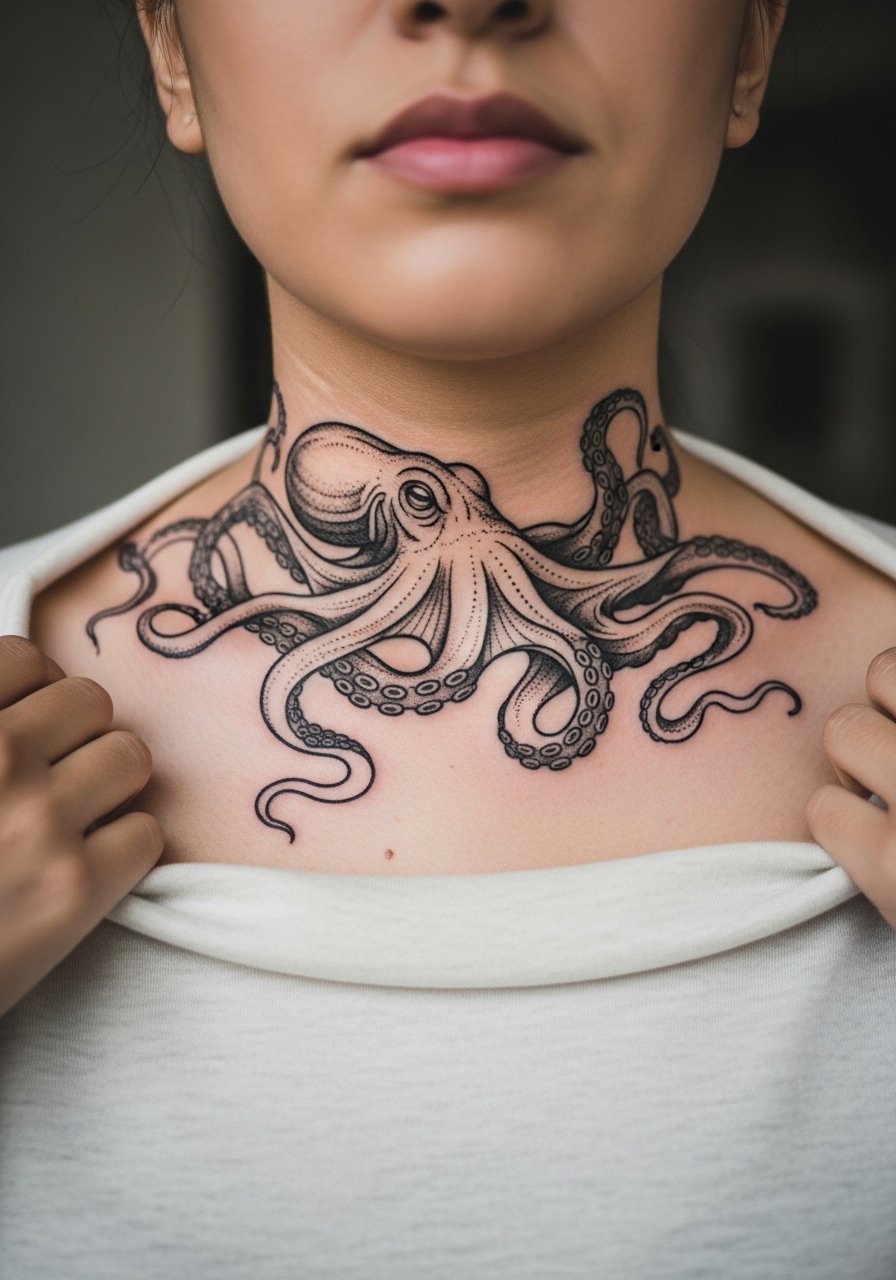
Mistake lead: the collarbone area often gets over-embellished with tiny loops. Keep the tentacles streamlined and use negative space to echo the bone structure. Pain is a 5 to 6 depending on sensitivity. This design benefits from a single session under two hours for a small-to-medium piece. It ages best with bold linework and open areas rather than packed stippling. For showing it off, pair with a wide-neck top or a thin chain pendant that sits above the art without competing. Sensitive-area note: collarbone placements are visible and may affect workplace perceptions.
9. Ankle Octopus with Negative Space Suckers
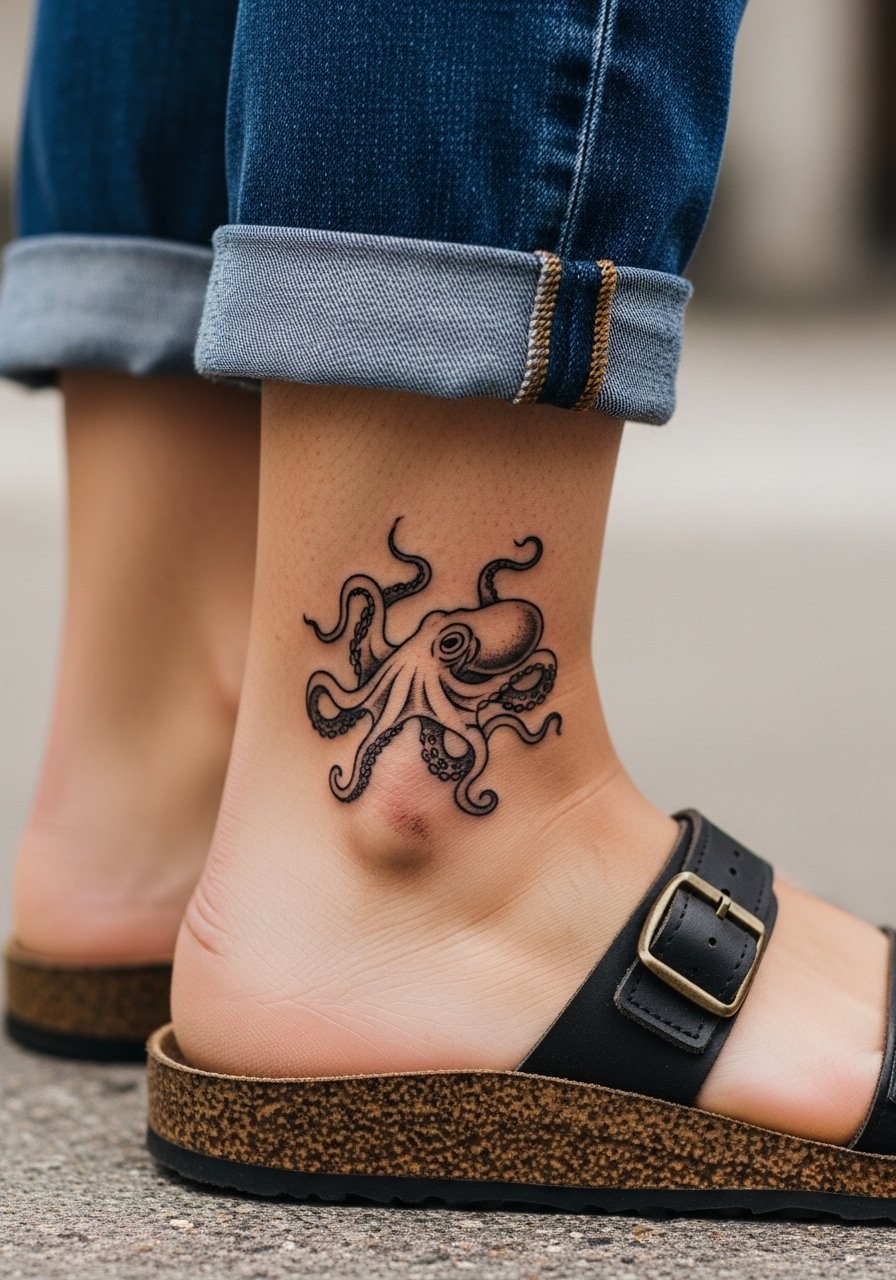
Aging/healing lead: ankle pieces handle bold shapes well but take friction from shoes and socks. Keep the suckers as negative space and the outer tentacle lines heavy so the design stays readable after frequent abrasion. Pain is a 3 to 5 depending on ankle bone proximity. Single-session time is often under an hour. For the appointment and to show off healed work, wear jeans rolled up or a pair of sandals that expose the ankle without rubbing. Image shows a healed blackwork ankle octopus on medium skin.
10. Hand and Finger Octopus Accent
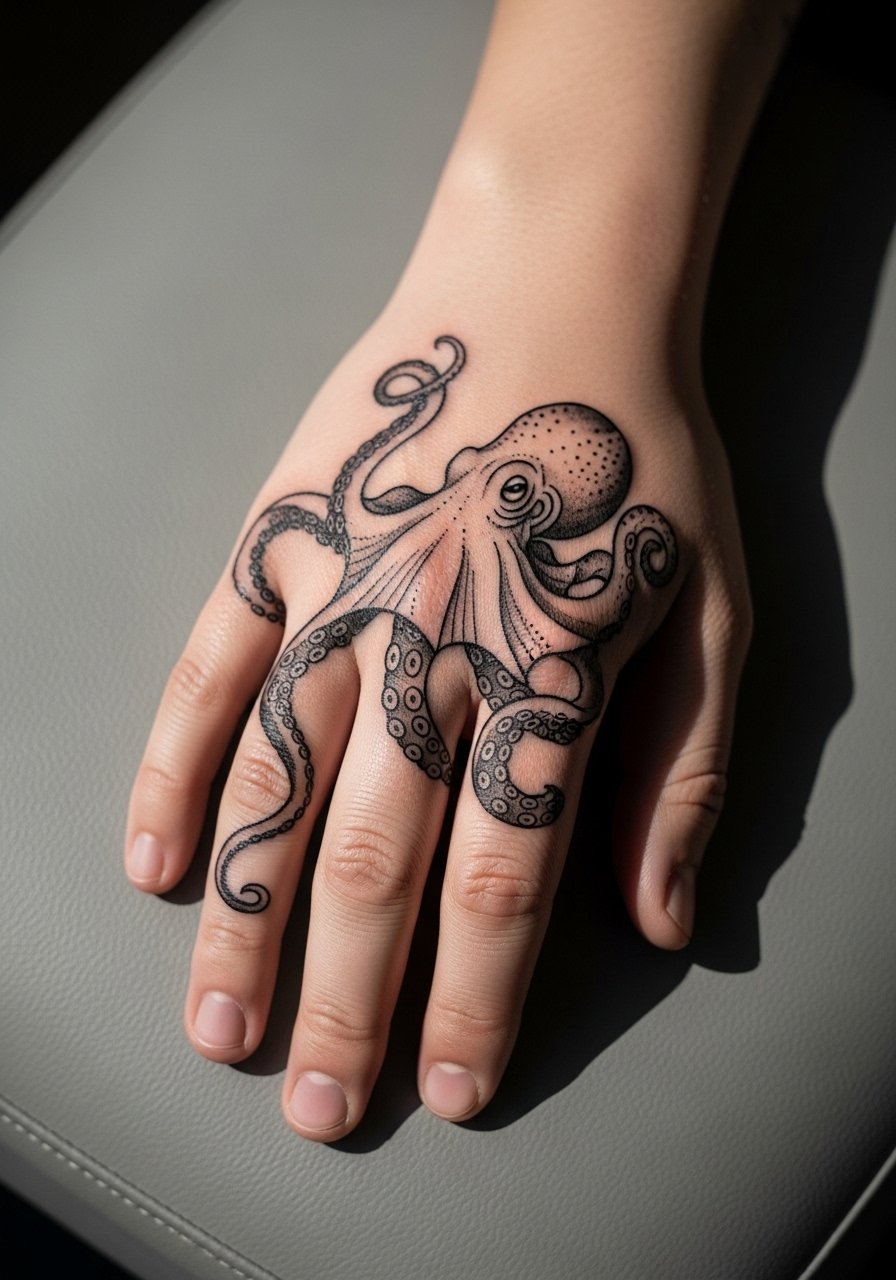
Controversy lead: hand tattoos spark debate in the community. One camp accepts hands as expressive canvases where bold blackwork can last with frequent touch-ups. The other warns of heavy fading and employment bias. Be explicit about this trade-off with your artist. Hands and fingers are high-friction and often need touch-ups every one to three years. Keep designs bold and avoid micro detail. Sessions are short but intense; expect a 6 to 7 pain rating. For showing off, choose ring or bracelet styles that avoid rubbing the ink. Hand placements require a clear discussion about long-term maintenance.
11. Shoulder Blade Octopus with Stipple Background
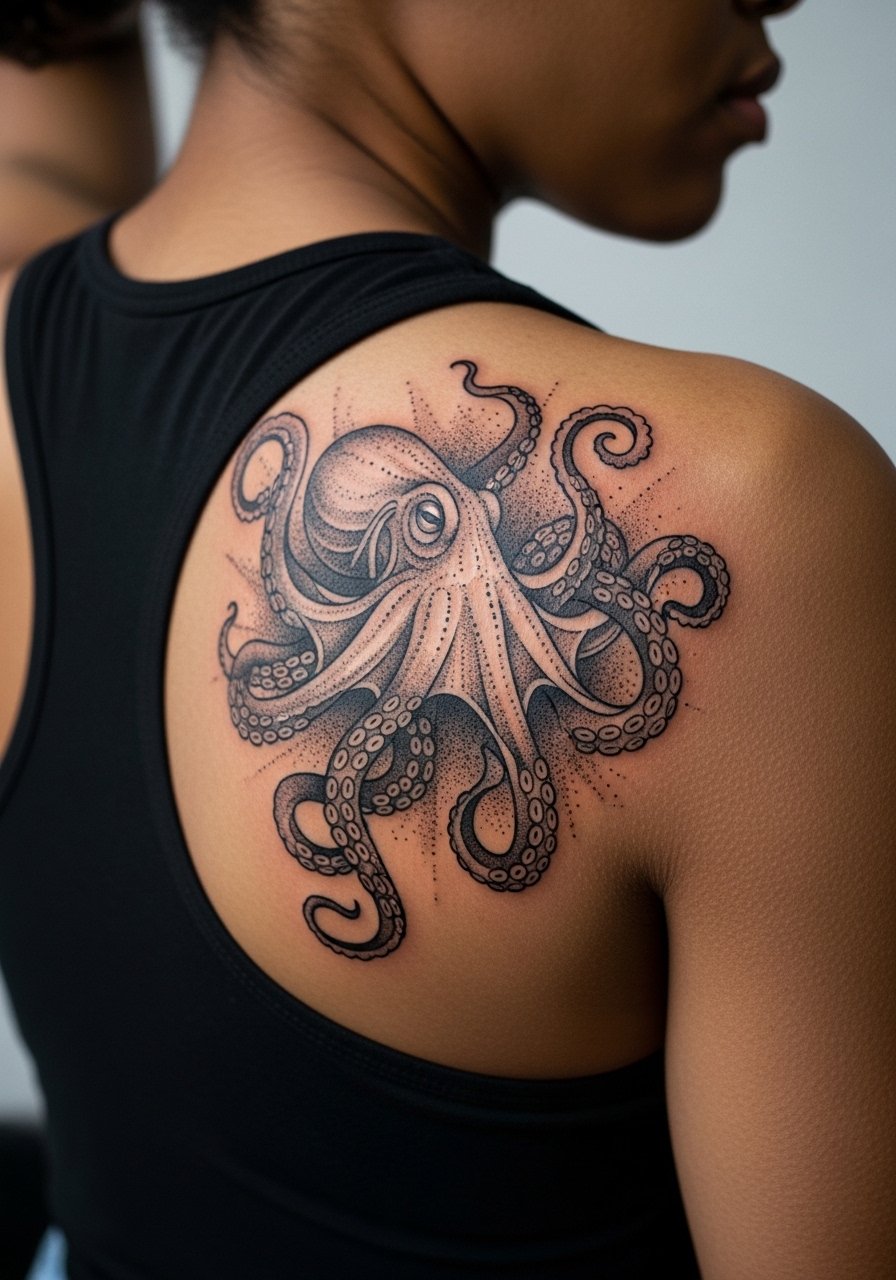
Personal observation: shoulder blades take blackwork well and offer movement without constant sun if you cover up occasionally. The area is a 3 to 5 on pain scales and a single two-hour session can handle a medium design. Ask for stipple shading behind the octopus to separate the tentacles from skin tone and to create depth without tiny line detail. For the studio, wear a tank top you can pull aside so the artist has clean access. This placement ages pleasantly when saturation is prioritized over hairline detail.
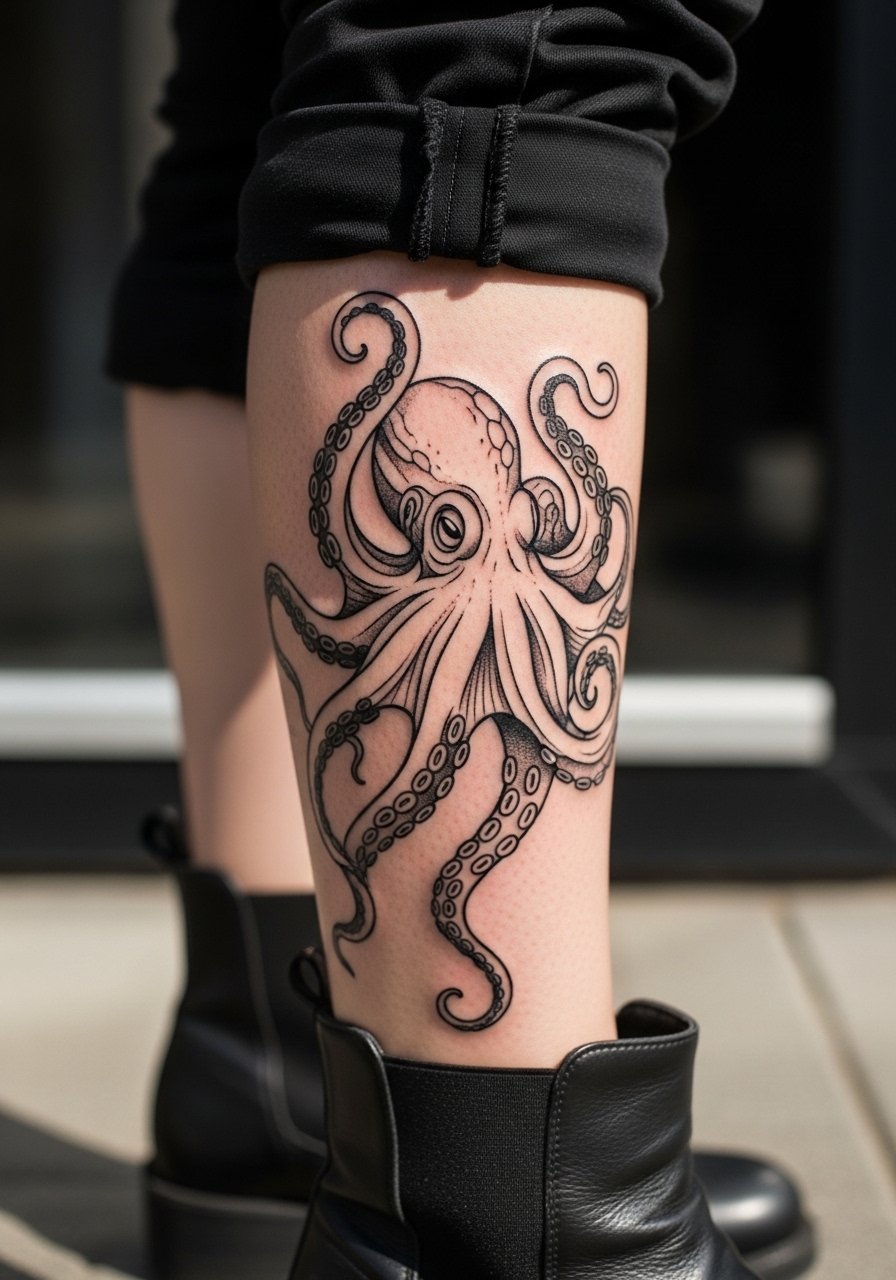
12. Calf Octopus with Bold Silhouette
Visual impact lead: the calf gives a vertical canvas ideal for tentacles that curl along the muscle. Calf skin takes saturation well and is generally a 3 on pain scales. Sessions vary from one to two hours for medium-to-large pieces. Tell your artist you want a silhouette-first approach with minimal inner detail so the tentacles keep their shape from the side. A common mistake is expecting micro realism on this canvas without increased session time. For daytime wear, rolled pants or a mid-calf boot frames the work without hiding it. Image shows the healed calf piece on light skin.
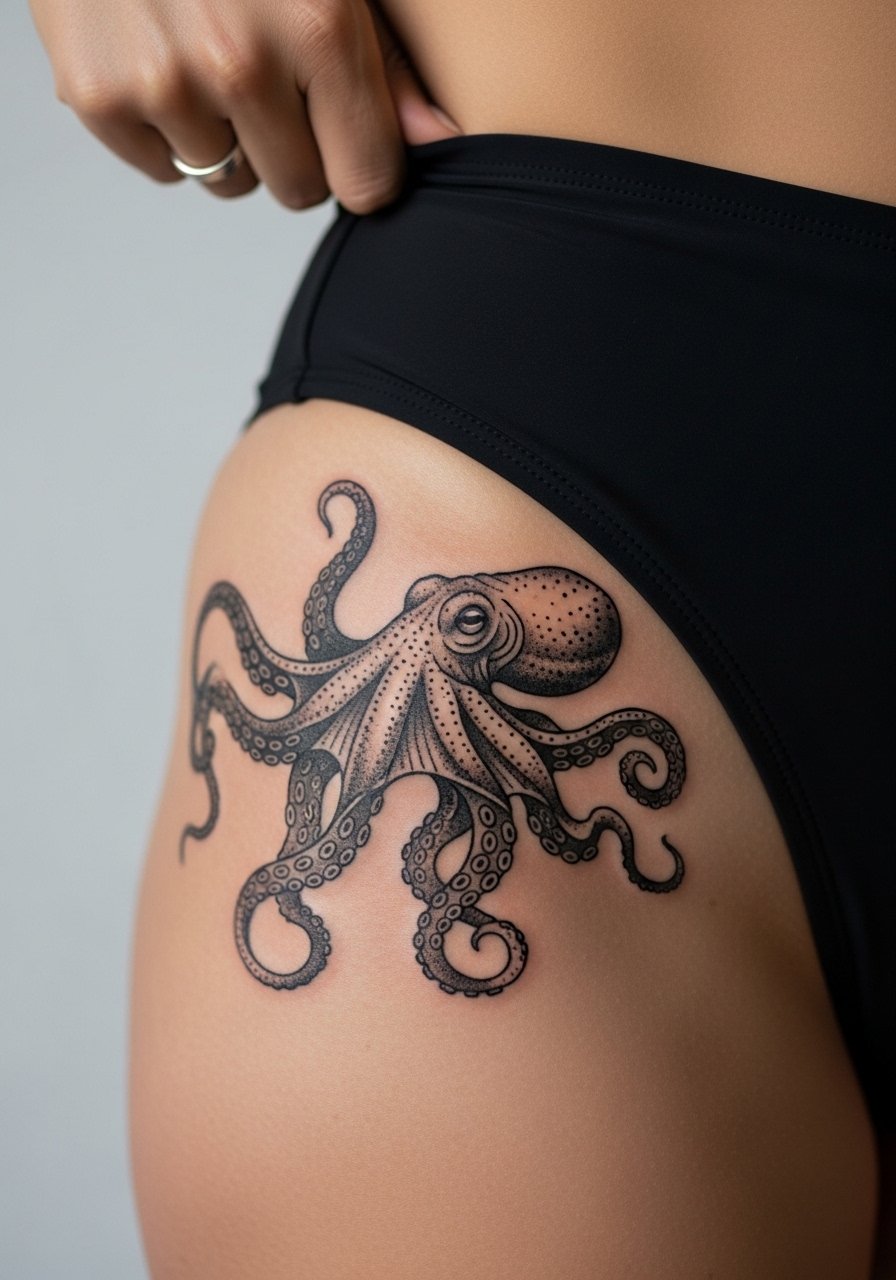
13. Hip Octopus Cresting Over the Pelvis
Consultation lead: hip pieces must account for body shape and how clothing sits. The hip is a moderate pain zone and works best with medium-to-large shapes. Ask for tentacles that follow the hip curve and for negative-space highlights that won't be flattened by waistbands. Session time usually runs one to two hours for a medium tattoo. For the session, wear high-waisted jeans or a swimsuit bottom so the artist can see the area without full exposure. Sensitive-area note: frame the shot with a close crop and confirm comfort with the artist.
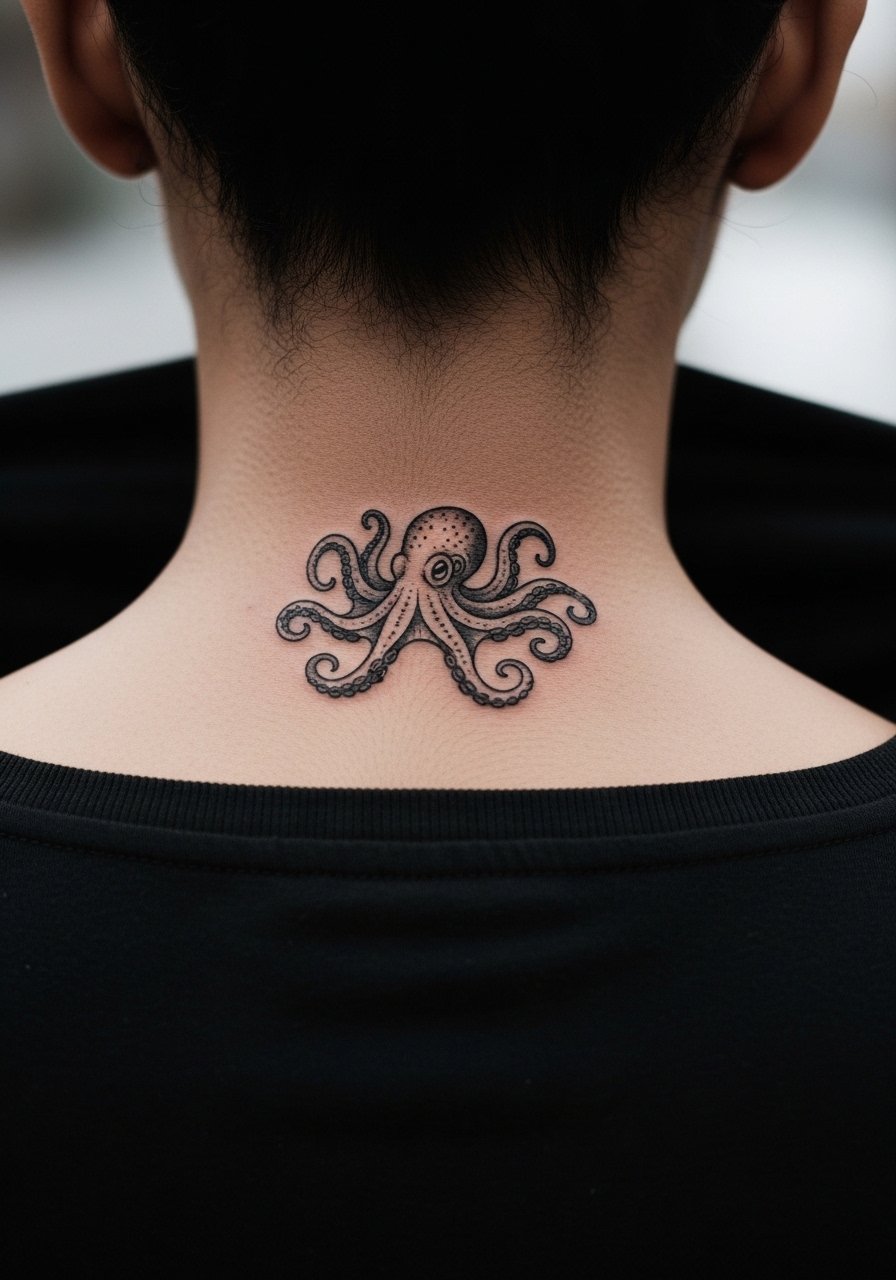
14. Nape Octopus Accent Along the Back of Neck
Mistake lead: hairline placements get lost when the lines are too fine. The nape works best with bold shapes and a short vertical composition that reads even with hair down. Pain is a 4 to 5 for many people. Sessions are generally under two hours. For showing it off, wear wide-neck tops or a collar shirt pulled to one side during the session. Neck placements can have workplace implications and require a frank conversation before booking.
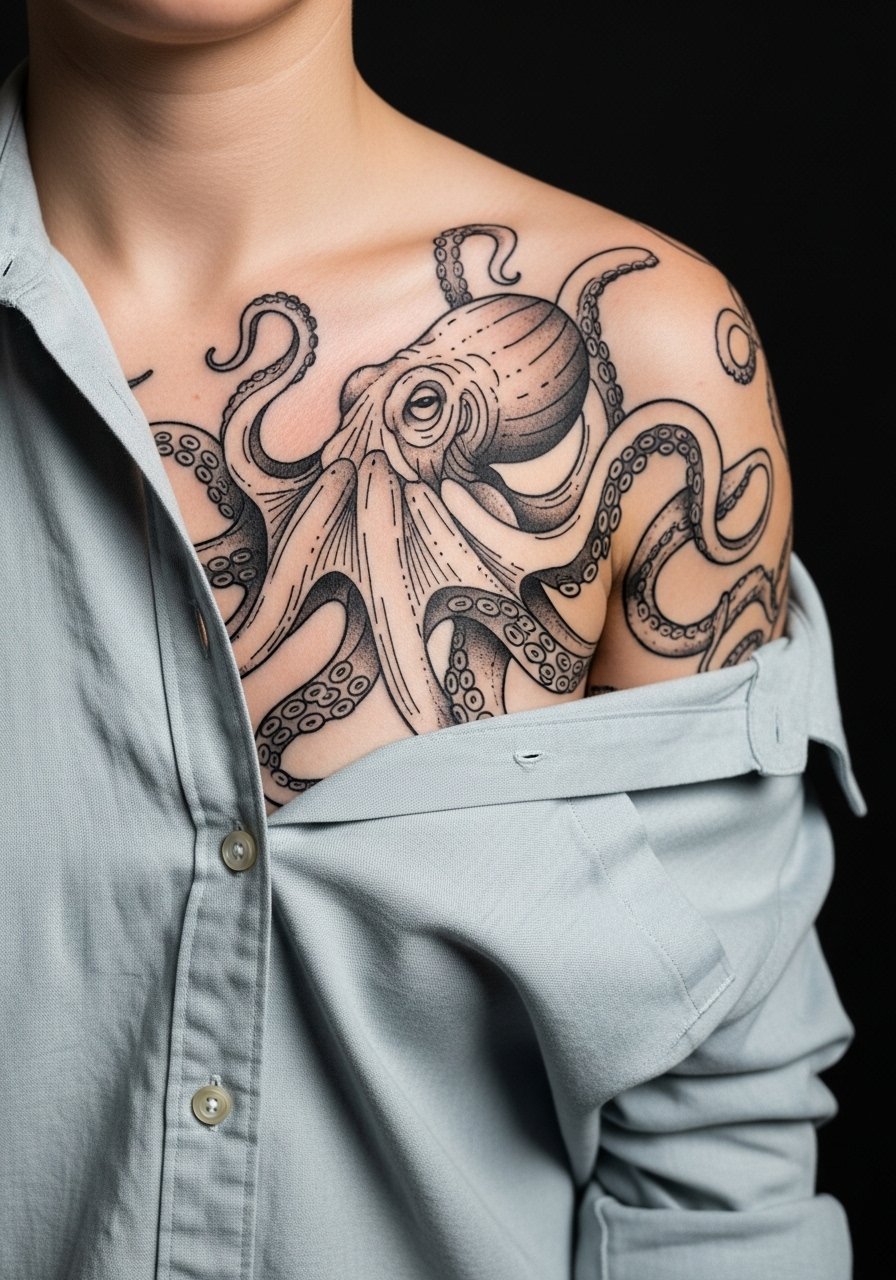
15. Chest-to-Shoulder Octopus Flowing into a Sleeve
Visual impact lead: connecting a chest piece into the shoulder creates motion and continuity. This hybrid approach needs bold linework and a plan for how the tentacles meet existing ink if you have a sleeve. Expect multiple sessions totaling several hours. During a consultation, map out which tentacles anchor on the chest and which flow to the arm so future touch-ups are predictable. For the session, a loose button-down shirt that you can pull aside makes access easier. The design ages well when saturation is consistent across panels.
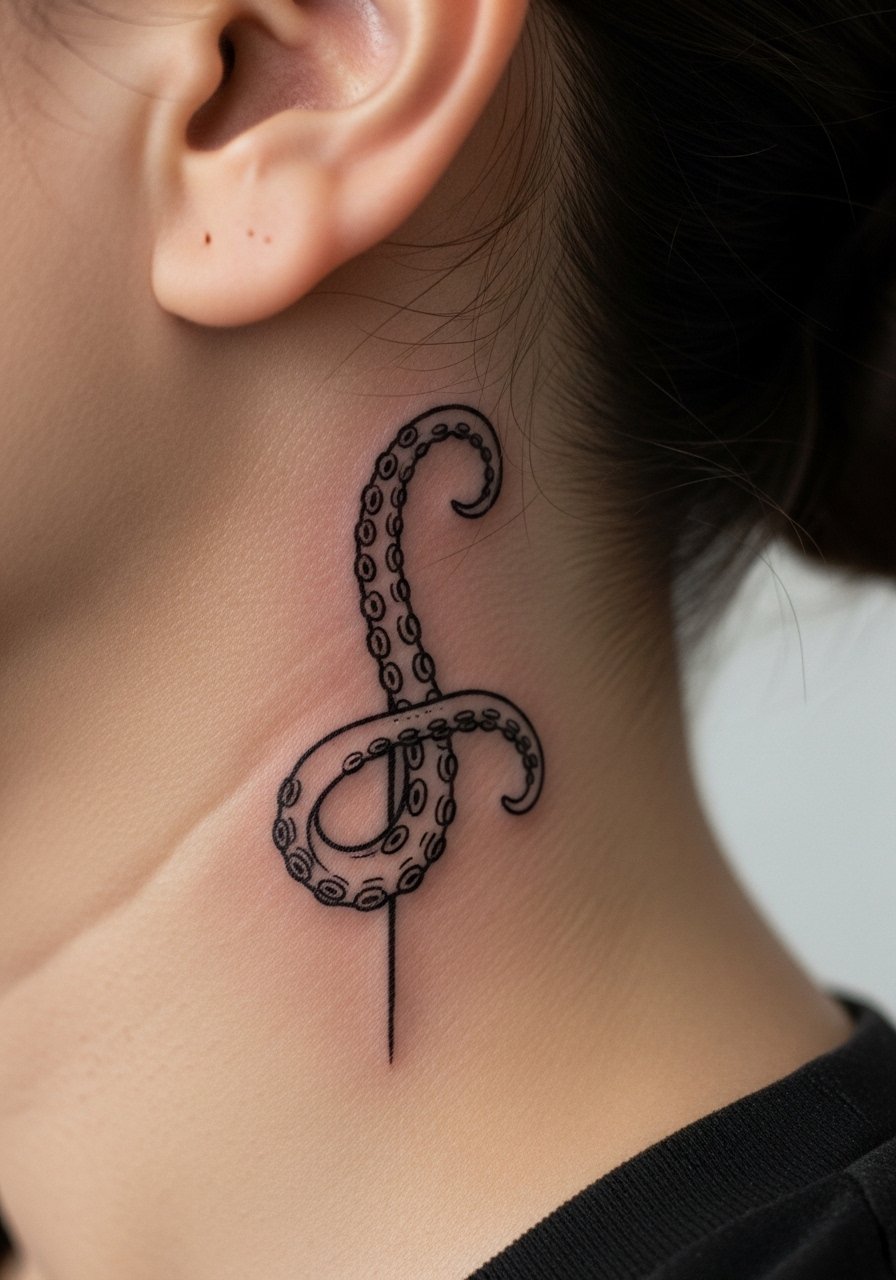
16. Minimalist Single-Tentacle Accent Behind the Ear
Aging/healing lead: tiny accents behind the ear need to be bold enough to read but discreet. The area is sensitive, a 4 to 6 on pain scales depending on proximity to bone. Keep the tentacle short with a few open suckers, and be explicit with your artist about depth so the linework does not migrate. For session access, describe the area as "on the skin behind the ear, below the hairline on the neck" so clothing and hair placement are managed. This placement reads as a subtle accent and can be expanded later if desired.
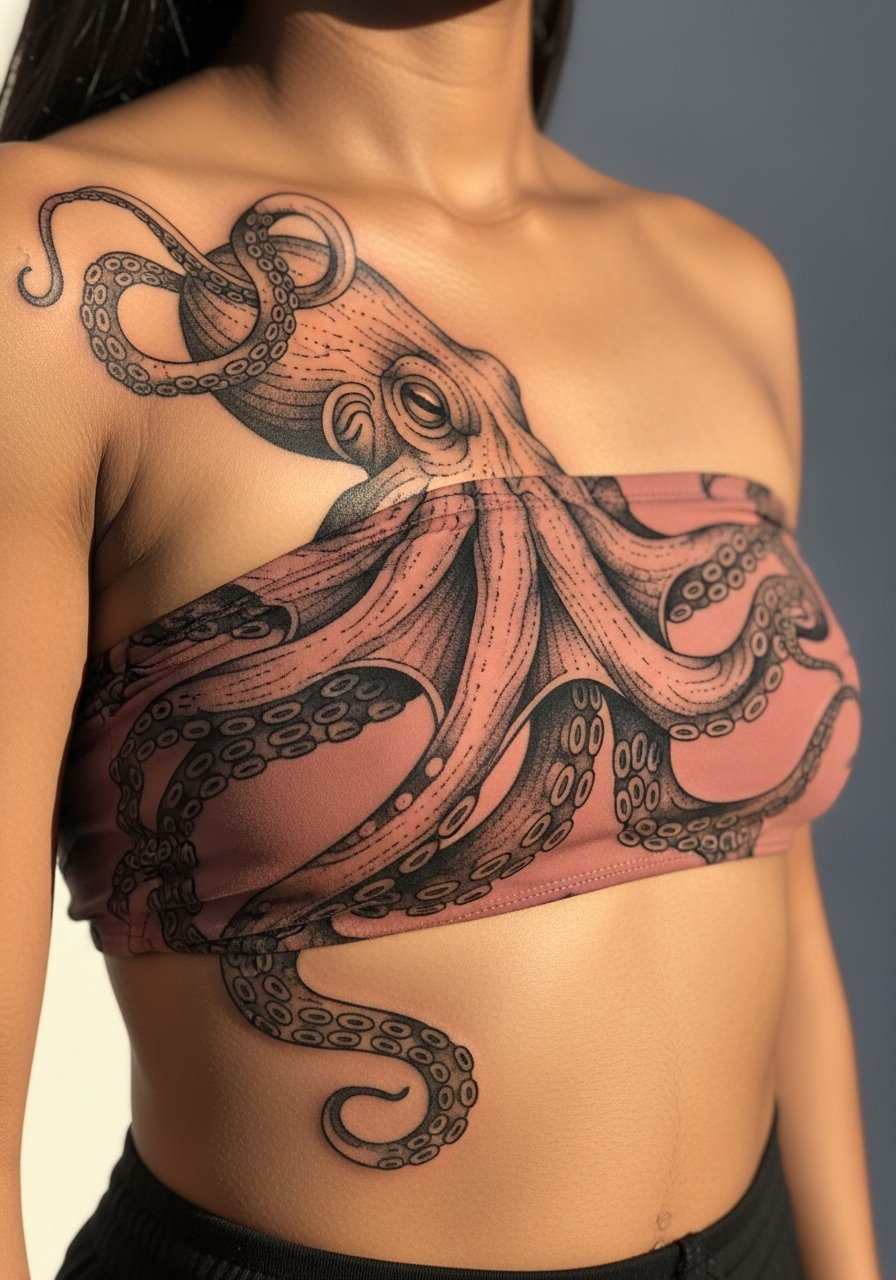
17. Rib-to-Sternum Octopus Collar
Controversy lead: some artists say ribs are too volatile for tight linework, while others believe that with correct spacing and needle depth you can get detailed blackwork there. The truth depends on technique and your skin. Expect a painful session and plan for two shorter appointments rather than one marathon. Ask your artist to show healed examples from ribs so you can judge their track record. For the session, wear a bandeau top so the area is accessible without excess exposure. Touch-ups are more common on ribs because of movement and clothing friction.
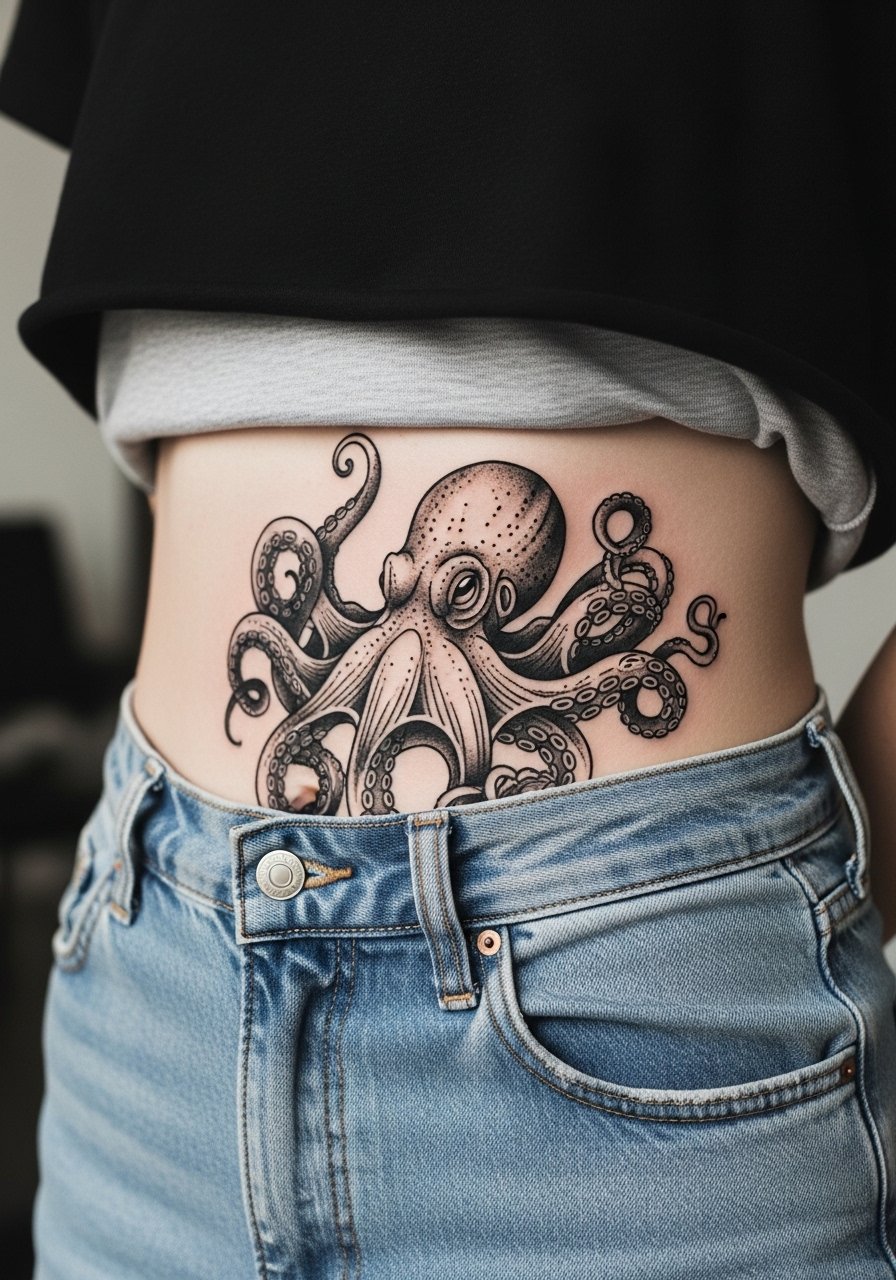
18. Neo-Traditional Blackwork Octopus with Bold Texture
Personal observation: mixing neo-traditional shapes with heavy blackwork creates a readable hybrid that photographs well. The technique uses solid fills and whip shading for texture, avoiding tiny dots in crowded areas. Pain and session length vary by placement, but a medium torso piece often needs two sessions. Ask for defined negative space between tentacles to avoid merging lines over time. For daytime outfits, pair with simple shirts that let the piece stand out rather than compete. This style balances graphic presence with texture and tends to age predictably when saturation is prioritized.
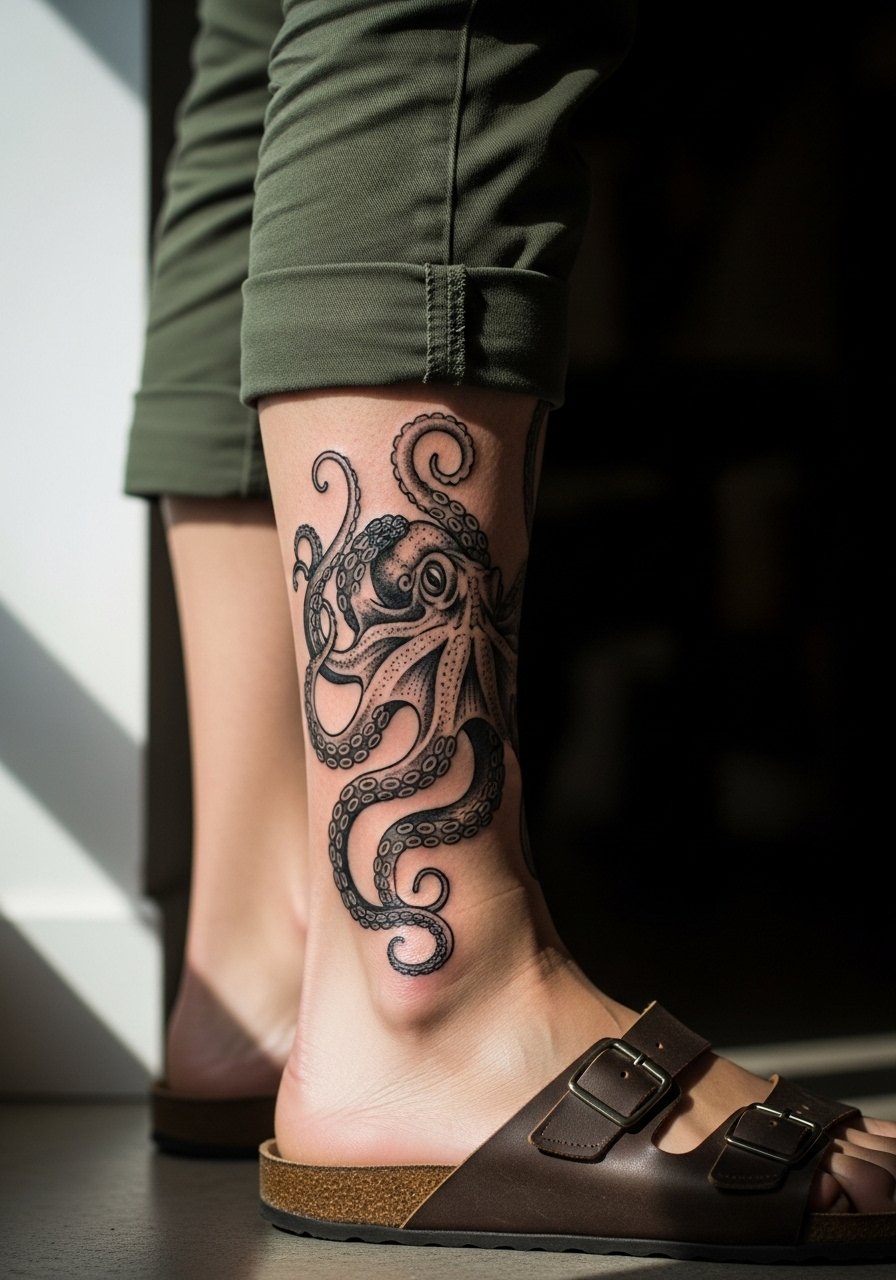
19. Calf-to-Ankle Tentacle Wrap
Consultation lead: when connecting calf and ankle work, think about movement and shoe choices that will rub the ankle area. This elongated design benefits from steady linework and negative-space suckers. Expect one longer session or two shorter ones depending on wrap complexity. For showing it off, wear rolled trousers and sandals or cropped boots that keep friction low. A common mistake is too-narrow tentacles at the ankle where blowout is likelier. Wider shapes reduce that risk.
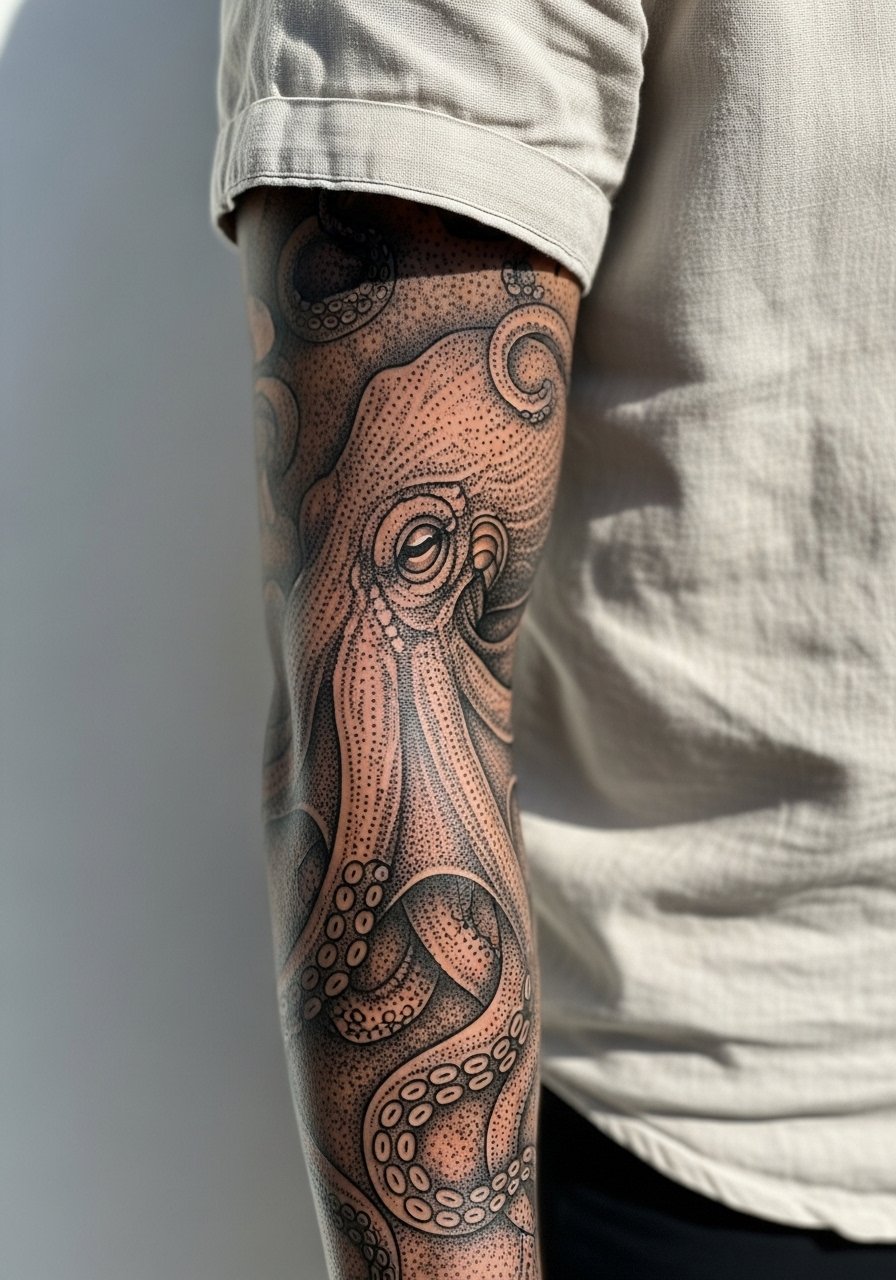
20. Forearm Sleeve Octopus with Dot Work Background
Styling lead: forearm sleeves let the octopus interact with daily dress, and a dot work background can make the bold forms pop. This style takes multiple sessions and an honest talk about how dense you want the background. Expect touch-ups if the sleeve hits the sun often. For the session and to show it off, wear a short-sleeve linen shirt you can roll up so the artist has access and your outfit frames the finished piece. The end result is a graphic forearm that reads from a distance and keeps texture on close inspection.
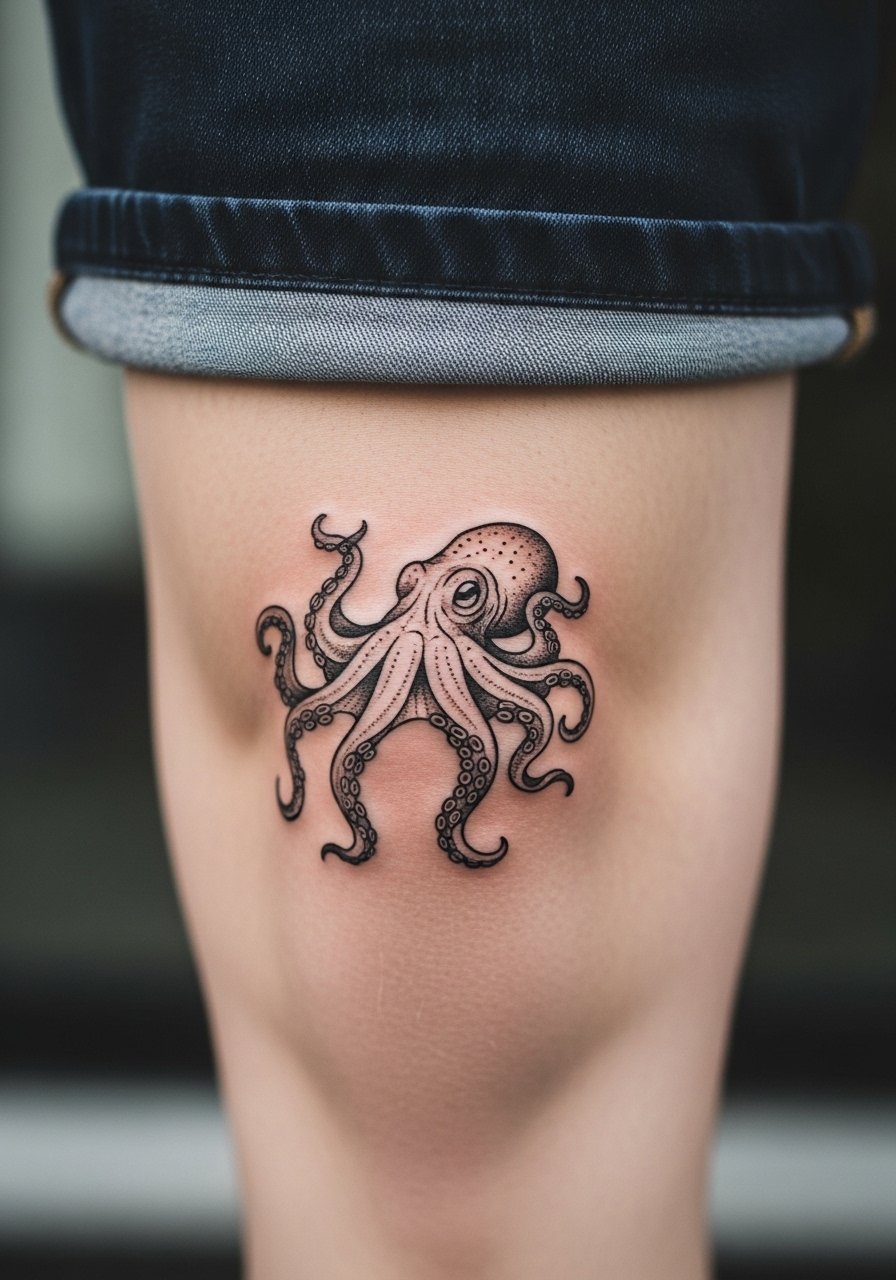
21. Small Behind-the-Knee Octopus Nook
Mistake lead: the area behind the knee sees a lot of movement and can cause fine lines to merge. Keep the design compact with bold outer lines and negative-space details. Pain varies with knee sensitivity and rates around a 5. Sessions are usually short, under two hours. For the appointment, wear shorts or a skirt that you can tie up and a loose drawstring linen pant if you prefer to cover immediately after. Sensitive-area note: behind-the-knee healing needs careful movement management to avoid scabbing in crease zones.
Frequently Asked Questions
Q: Will bold blackwork octopus tattoos fade faster than shaded pieces on sun-exposed areas?
A: In my experience, any tattoo placed in direct sun fades faster. Bold blackwork often holds up better than fine detail because the solid saturation resists blur, but expect some softening over time. Keep sun exposure low and use clothing or a UPF layer on long outdoor days to protect the piece.
Q: How do octopus tentacles age on the ribs versus the forearm?
A: Ribs move and stretch more, so tight linework can blur sooner there. Forearms see sun and abrasion but generally hold saturation well when the shapes are bold. For ribs, ask for larger spacing between lines and heavier fills. For forearms, prioritize even saturation and consider a yearly check for touch-ups.
Q: Are hand and finger octopus tattoos risky for employment and longevity?
A: Yes, hands are visible and require more maintenance. One community camp accepts the trade for personal expression while another cautions about workplace perception and frequent touch-ups. If this matters to you, discuss long-term maintenance with your artist and consider a bolder, simpler motif.
Q: What should I wear to a session for a thigh or hip octopus piece?
A: Wear loose bottoms like drawstring linen pants or high-waisted shorts so the artist can roll fabric without discomfort. A loose drawstring linen pant usually works well and keeps the area accessible while maintaining modesty.
Q: How often do blackwork octopus tattoos need touch-ups?
A: It depends on placement and sun exposure. Visible, high-friction areas like hands, wrists, and ankles may need touch-ups every one to three years. Larger torso or thigh pieces can go much longer between sessions if they get minimal sun and are well saturated initially.