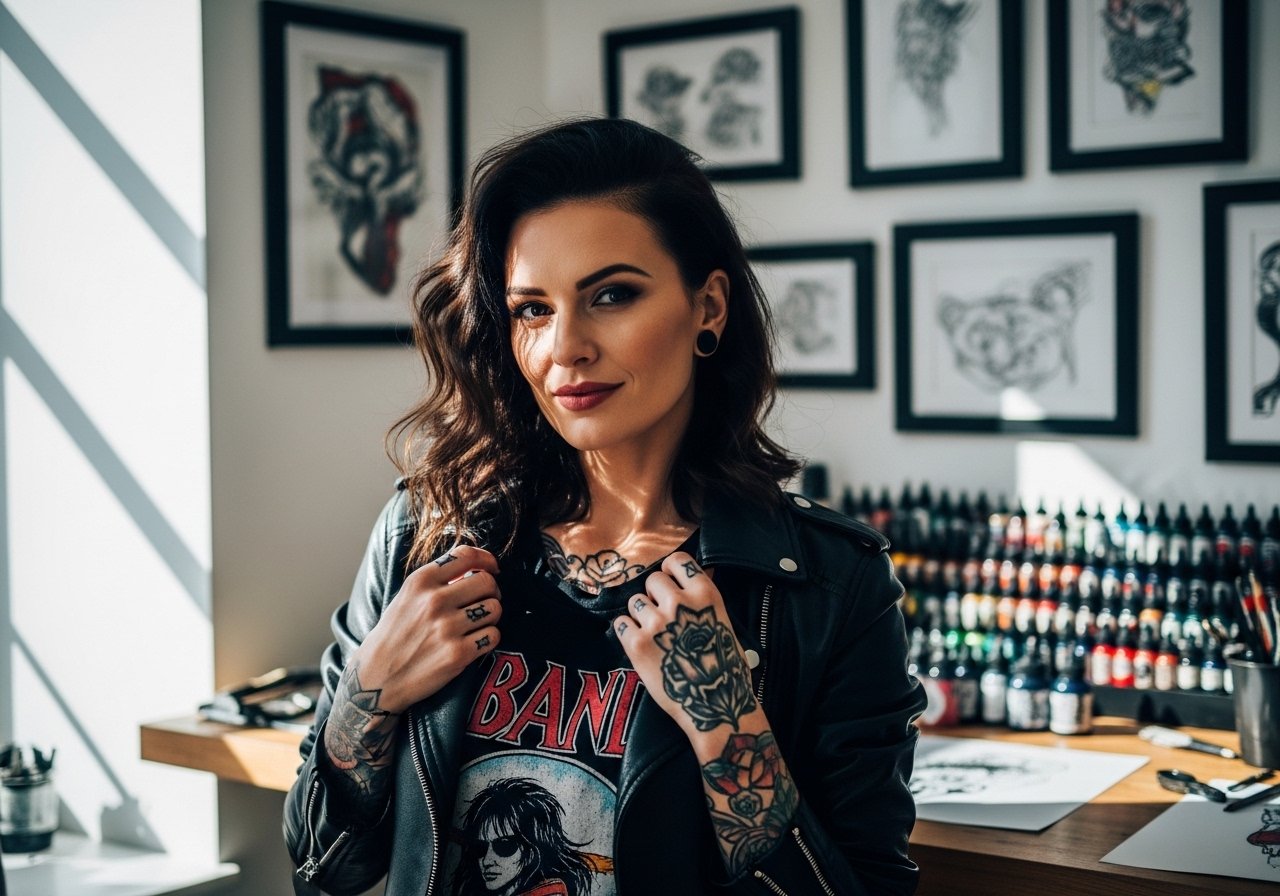
The stencil warmed to the upper thigh and the client shifted their leg a degree. I have seen that tiny change in five shops across Brooklyn and it alters how a mask design flows with fabric and movement. Thigh tattoos live in traffic from skirts and shorts, so scale and placement matter more than flash. The first idea shows the kind of line weight that survives walking, laundry, and summer.
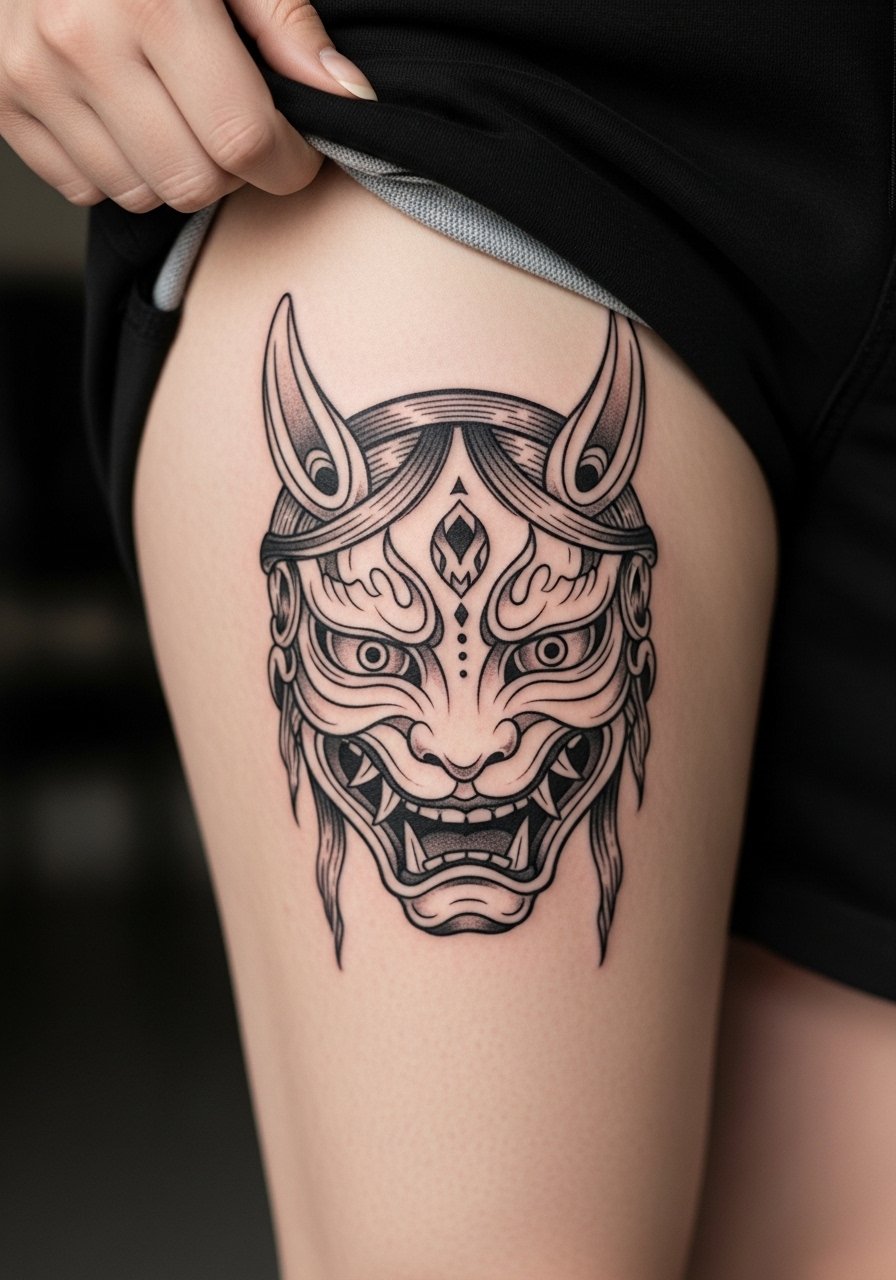
1. Hannya Mask on the Inner Thigh
A finely detailed Hannya-style mask on the inner thigh reads intimate and bold at once. Fair warning, the inner thigh moves with every step and sits in a friction zone, so ask your artist for slightly thicker linework and modest negative space to prevent early blurring. Expect a session that feels tender around the adductor muscles, not unbearable, and plan for a touch-up around year two if you wear tight fabrics often. The common mistake is shrinking the mask down for "subtlety," which loses the facial expression and becomes muddy when healed. For cultural origin respect, note that traditional Japanese Noh motifs carry meaning, so consider adapting elements rather than copying a ritual piece.
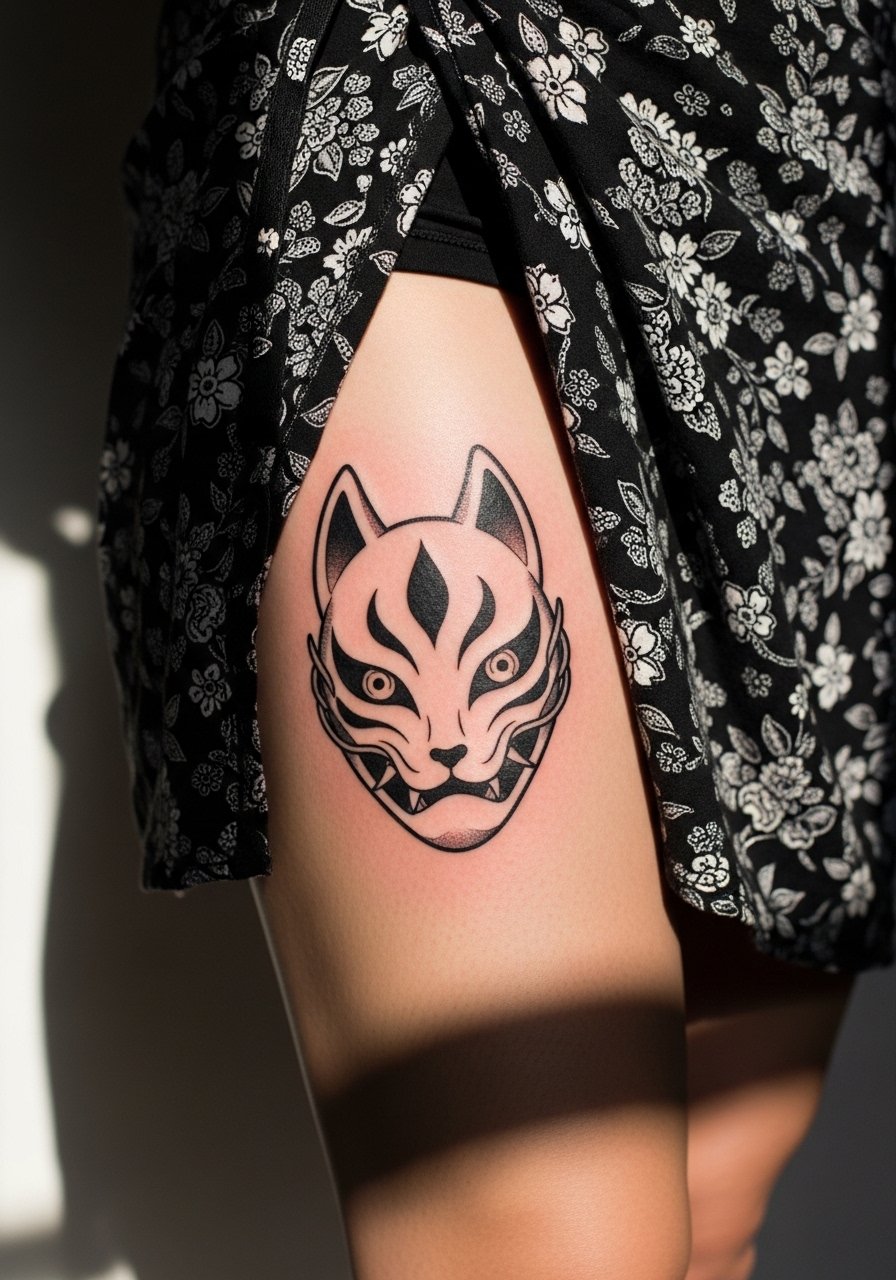
2. Kitsune Mask, Outer Thigh Blackwork
There is a lot of presence in a bold Kitsune mask on the outer thigh. The thicker linework and heavy black saturation here age well because the outer thigh sees less frequent stretching than the inner side. Tell your artist you want strong silhouette first, then texture second, so the mask still reads from a distance when you wear a short skirt. Session feel is steady, moderate pain, and you can expect the piece to need a minor touch-up at year three if you swim or sunbathe a lot. For showing it off, try pairing the piece with a wrap skirt that leaves the outer thigh visible on one side.
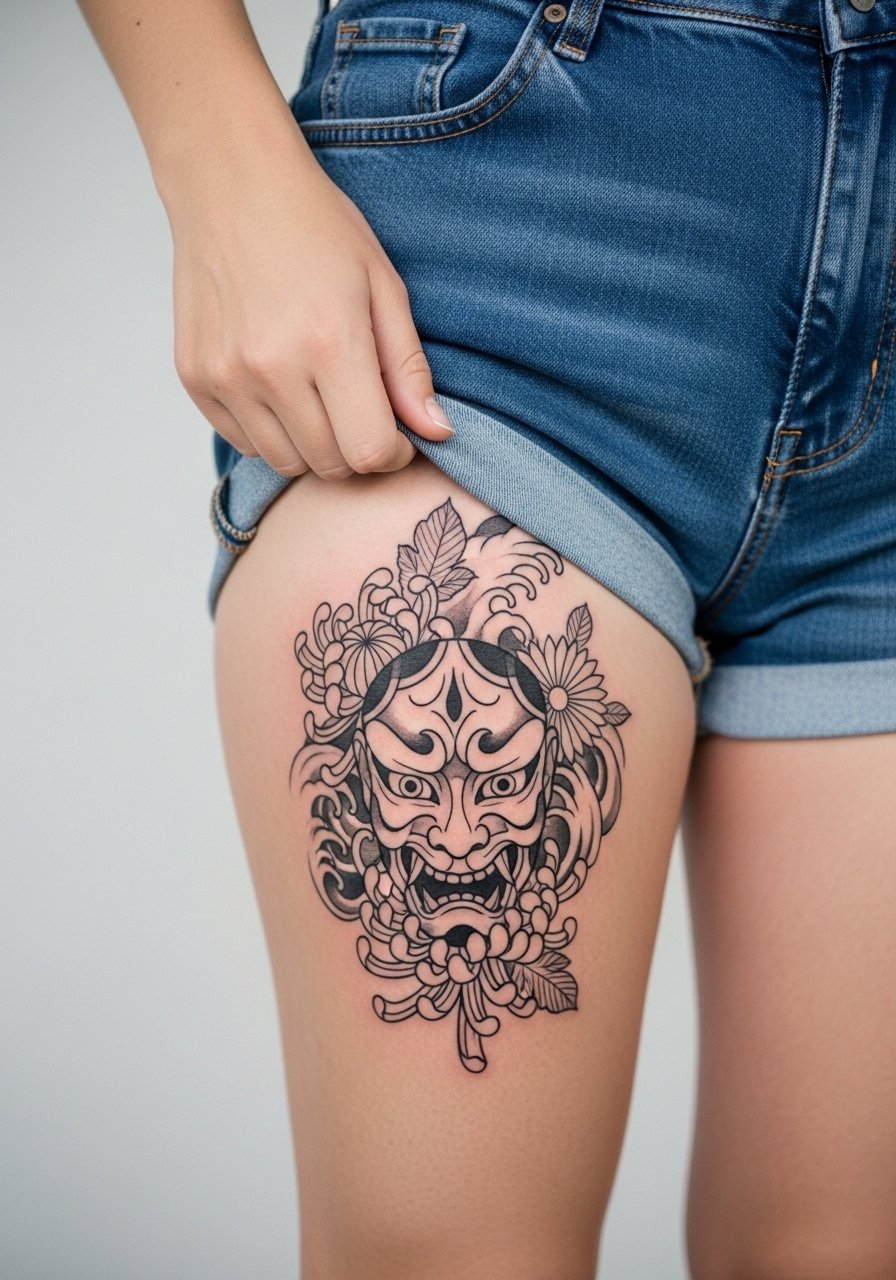
3. Half-Sleeve Thigh Cluster with Mask and Florals
A cluster that wraps from upper thigh toward the hip keeps a mask as the focal point surrounded by chrysanthemums and waves. I recommend this when you want a larger anchor that moves with clothing lines rather than competing with them. In consultation, specify the mask at two-thirds scale and let the florals fade into stipple shading so the central face remains readable over time. The common mistake is crowding too many small details near the jawline, which start merging around year three. For session wear, pull on a high-waisted short you can lower slightly so the artist has clean access while keeping you covered.
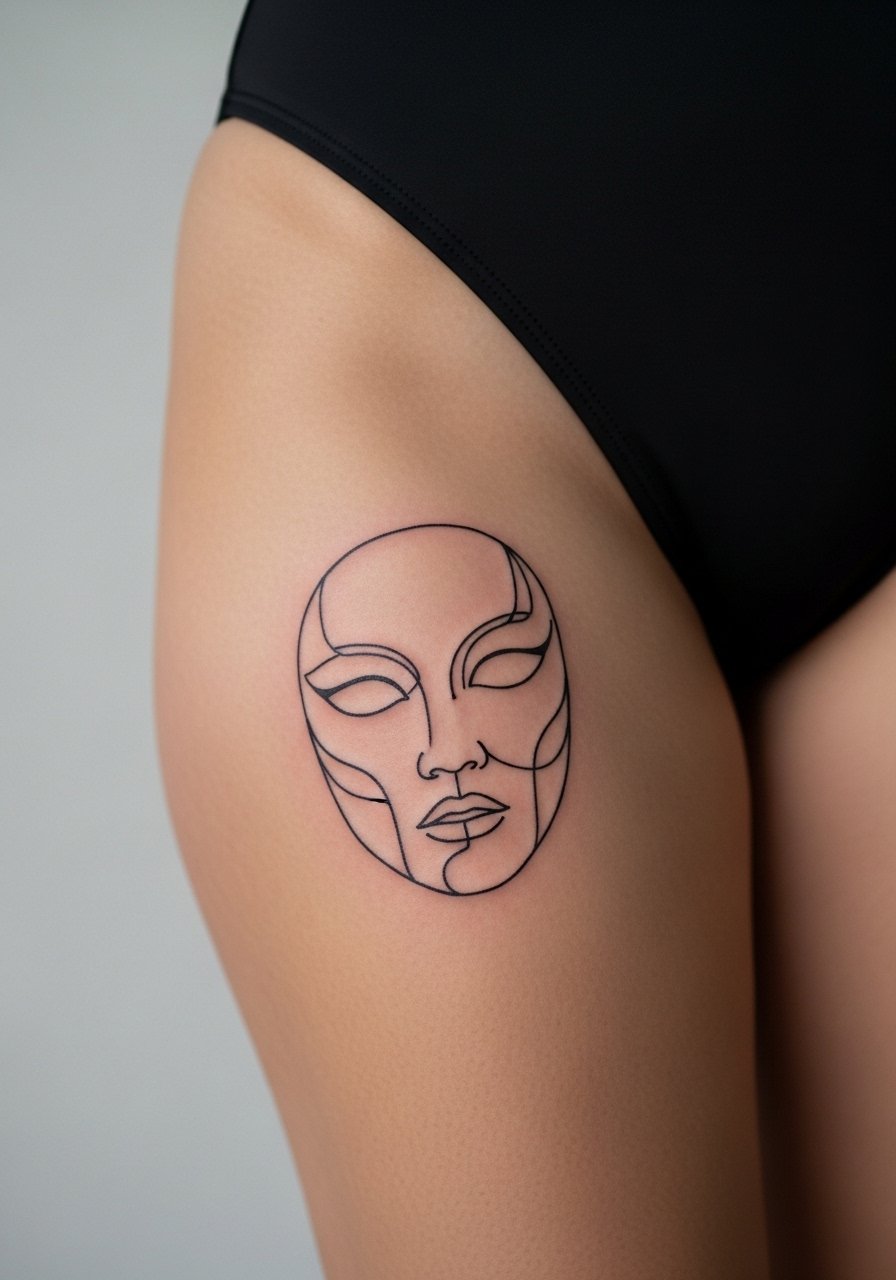
4. Minimalist Mask Linework on Front Thigh
There is a sleekness to a minimalist mask drawn with clean linework across the front thigh. The visual impact comes from confident single lines and careful spacing rather than heavy fill. Tell your artist to plan for breathing room between facial features and to avoid ultra-fine hairlines in high-movement zones. Most people mistake tiny detail for refinement here, and the lines tend to blur if drawn too light. The session is quicker, often a single-hour appointment, and touch-ups are usually just spot fixes after a year. This placement pairs with high-cut swimwear but keep in mind the front thigh will see regular sun exposure.
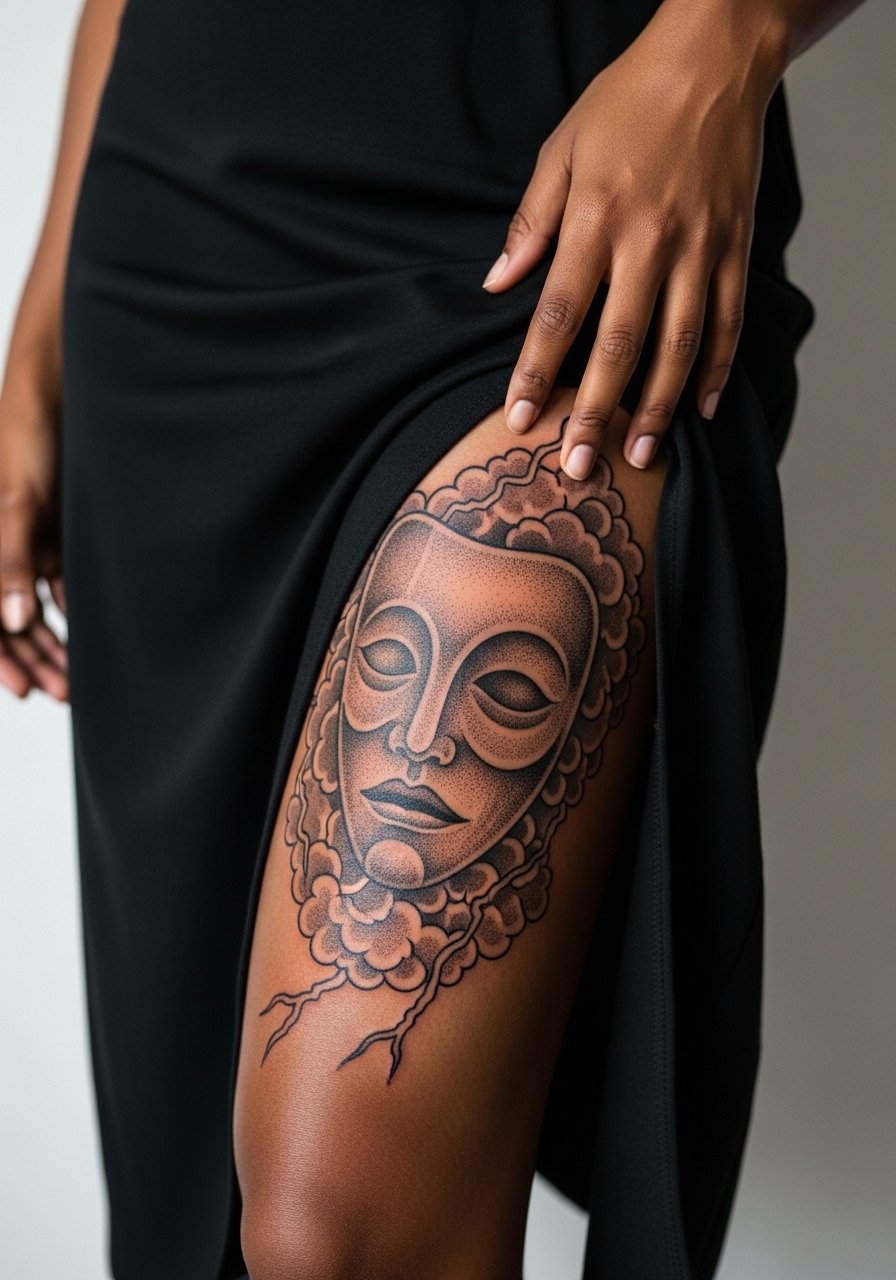
5. Storm-Cloud Background with Mask, Side Thigh
A mask anchored by storm-cloud shading along the side thigh gives motion without overcrowding the face. Use stipple shading and whip shading for the clouds so saturation reads textured rather than flat. When you book the consult, ask for contrast mapping so the artist notes which areas should stay light to keep the mask readable from a distance. Side thigh sessions feel bony at the very edge and softer moving into the leg, so bring a cushion for comfort. For showing this off at night, pair the tattoo with a slit midi dress that lets the side thigh peek as you walk.
Studio Day Picks
The thigh pieces above move between friction zones and open skin, so a few thoughtful items smooth the session and the first week of healing.
-
Disposable razor and petroleum-free shave gel. A clean, gentle shave the morning of the session prevents snagging on stencils and reduces irritation for outer and front thigh designs.
-
Loose drawstring shorts. These let you roll or lower the waistband without pressing fabric into the fresh ink, which helps for upper and side thigh work.
-
Soft travel pillow. Side thigh and inner thigh sessions can last longer than you expect, and a compact pillow helps you stay comfortable during multi-hour blocks.
-
Fragrance-free gentle body wash. A mild wash soothes the first few showers without stripping tender linework from fine-detail mask pieces.
-
Aquaphor healing ointment. A thin layer protects initial scabbing and keeps contrast stronger on fine lines during the early healing window.
6. Full Thigh Panel, Mask as Narrative Centerpiece
A full-thigh panel uses the mask as the narrative heart while detailing flows above and below. This is best when you want a longer-term commitment and a piece that pairs with leg sleeves later. In consultation, request a rough wrap mock-up so the artist can test how the mask's gaze aligns with natural leg flow. Common mistakes include starting the face too low, which shortens the visual length of the panel when you stand. Sessions are longer and broken into two or three appointments, and saturation touch-ups at year three are normal for colored fills. For career considerations, remember large visible thigh work is still personal but can be shown or covered by most wardrobes.
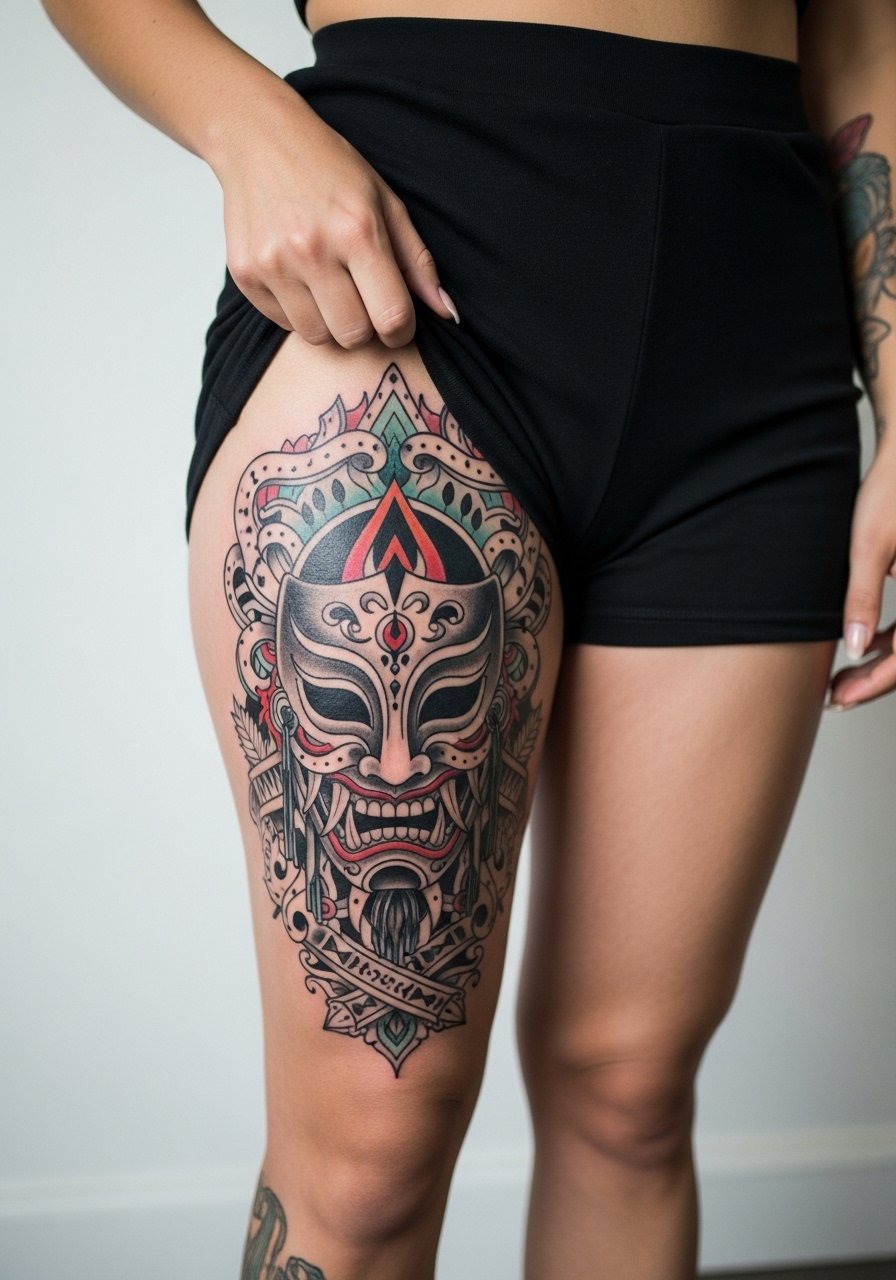
7. Floral-Framed Mask, Upper Outer Thigh
Framing a mask with peonies or chrysanthemums on the upper outer thigh softens the composition and reduces the visual risk of blowout. The outer upper thigh tolerates fine detail better than inner zones, but ask the artist for a slightly bolder line around the face edge so the expression holds up over time. A common error is tiny petals packed too close to delicate features. Expect moderate pain and plan for a single two-hour session for a medium-sized frame. For showing it off, pair this with denim cutoffs that sit above the frame so the floral edges peek naturally.
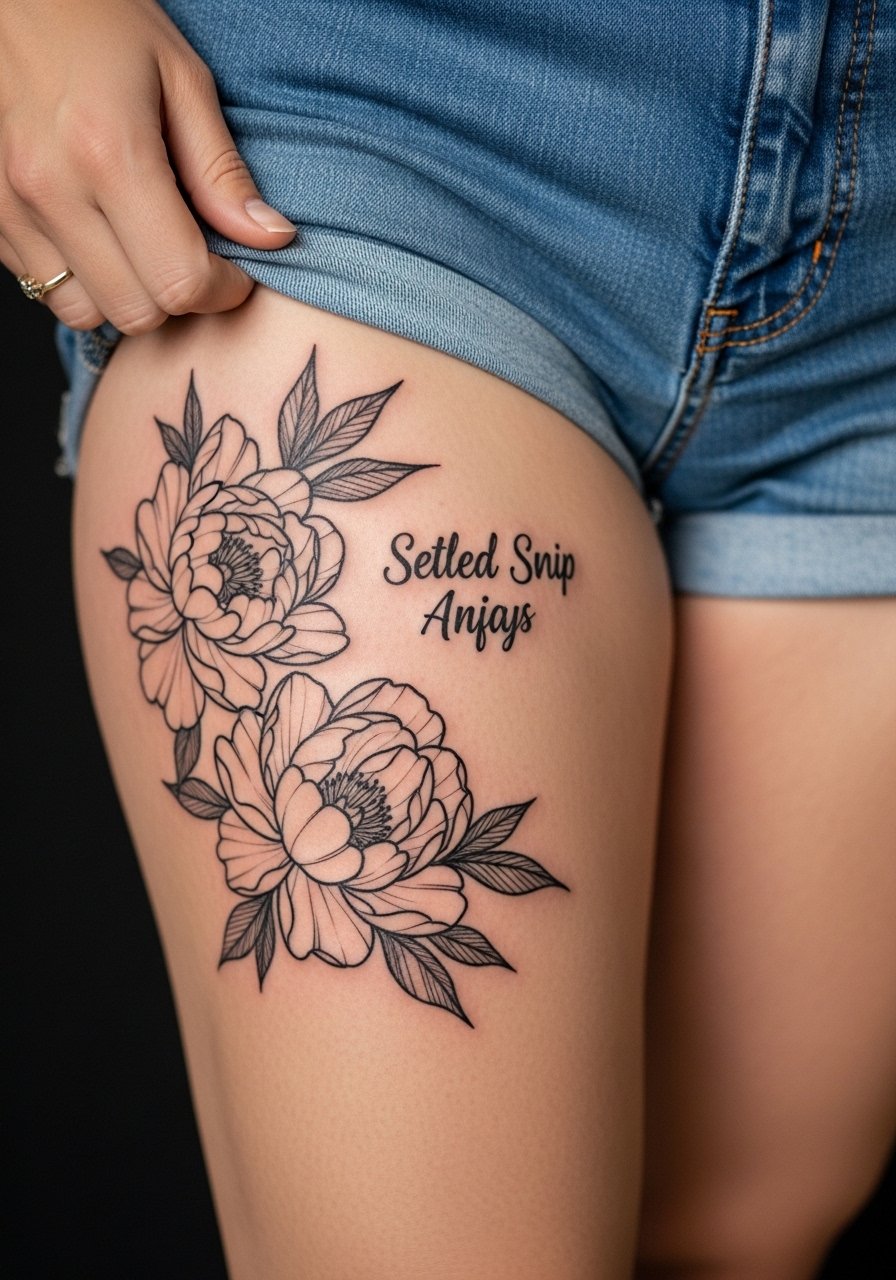
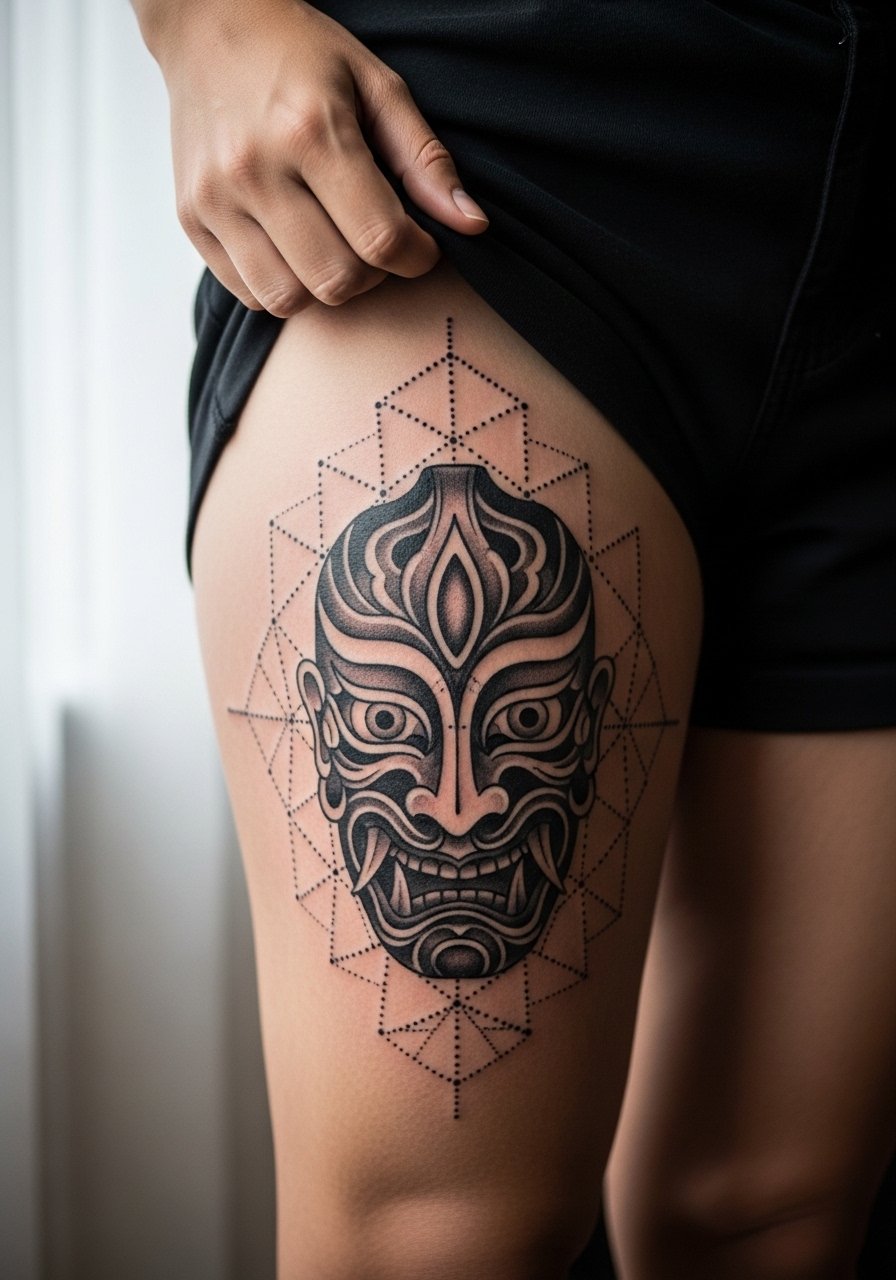
8. Mask with Geometric Backdrop, Mid-Thigh
Combining a theatrical mask with geometric background shapes gives modern structure while preserving the mask's expression. Tell your artist you want the geometry to act like scaffolding, not a competing pattern. The mid-thigh is forgiving for dot work and stippling, and that texture ages into a soft grain rather than smudge if executed with spacing. The usual mistake is making the geometric cells too small, which collapses visually after a couple of years. This placement feels steady during the session and often closes nicely after a single touch-up.
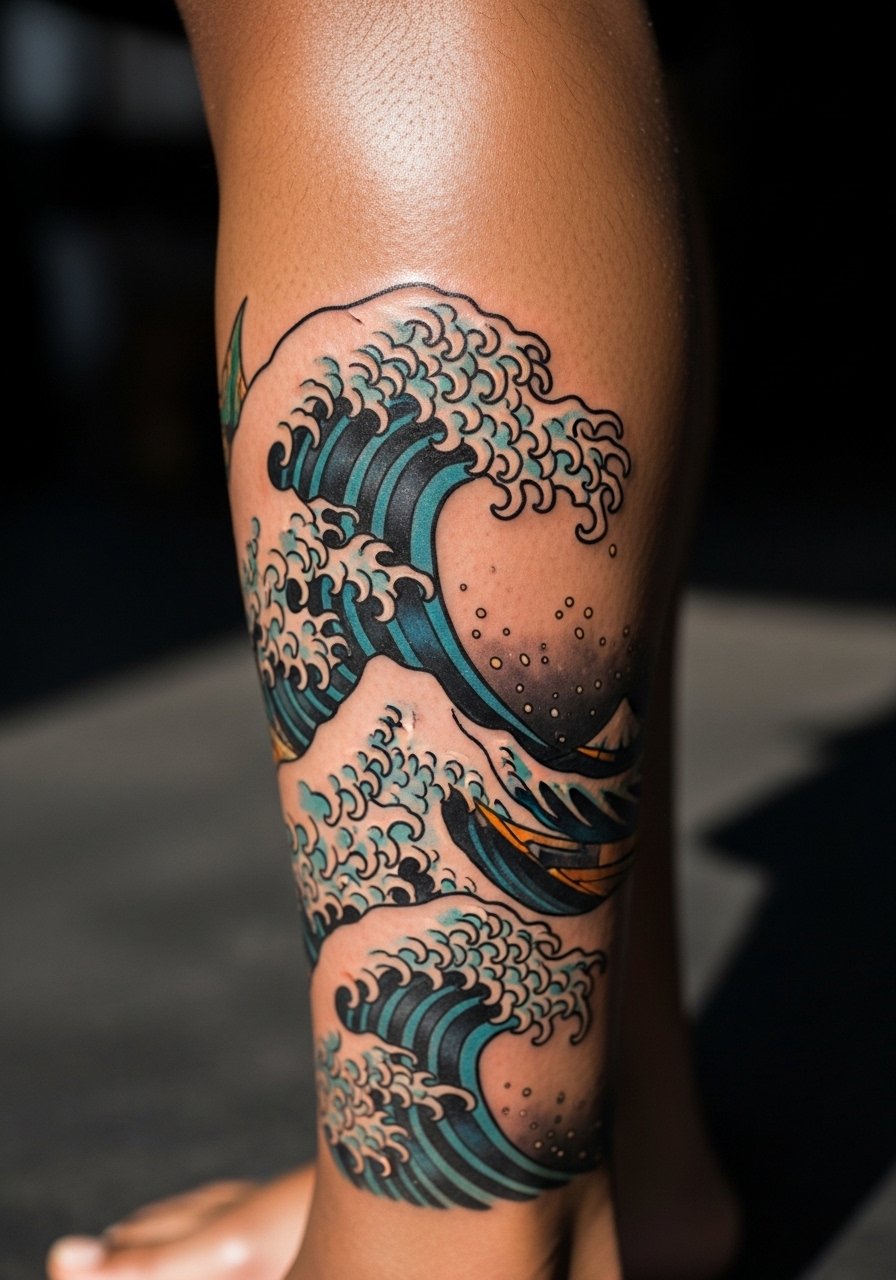
9. Color-Saturated Mask with Wave Motifs, Outer Thigh
Saturated color on the outer thigh reads lively when combined with traditional wave patterns. Ask for heavy black outlines around the mask and moderate saturation inside colors, which helps the pigments withstand sun exposure. A common aging path is color sitting lighter by year five, with blues and reds showing major shifts. Expect a longer session and a recommended touch-up at year two to refresh saturation if you swim or tan a lot. For summer showing, wear a bikini bottom high cut that frames the artwork without stretching the skin.
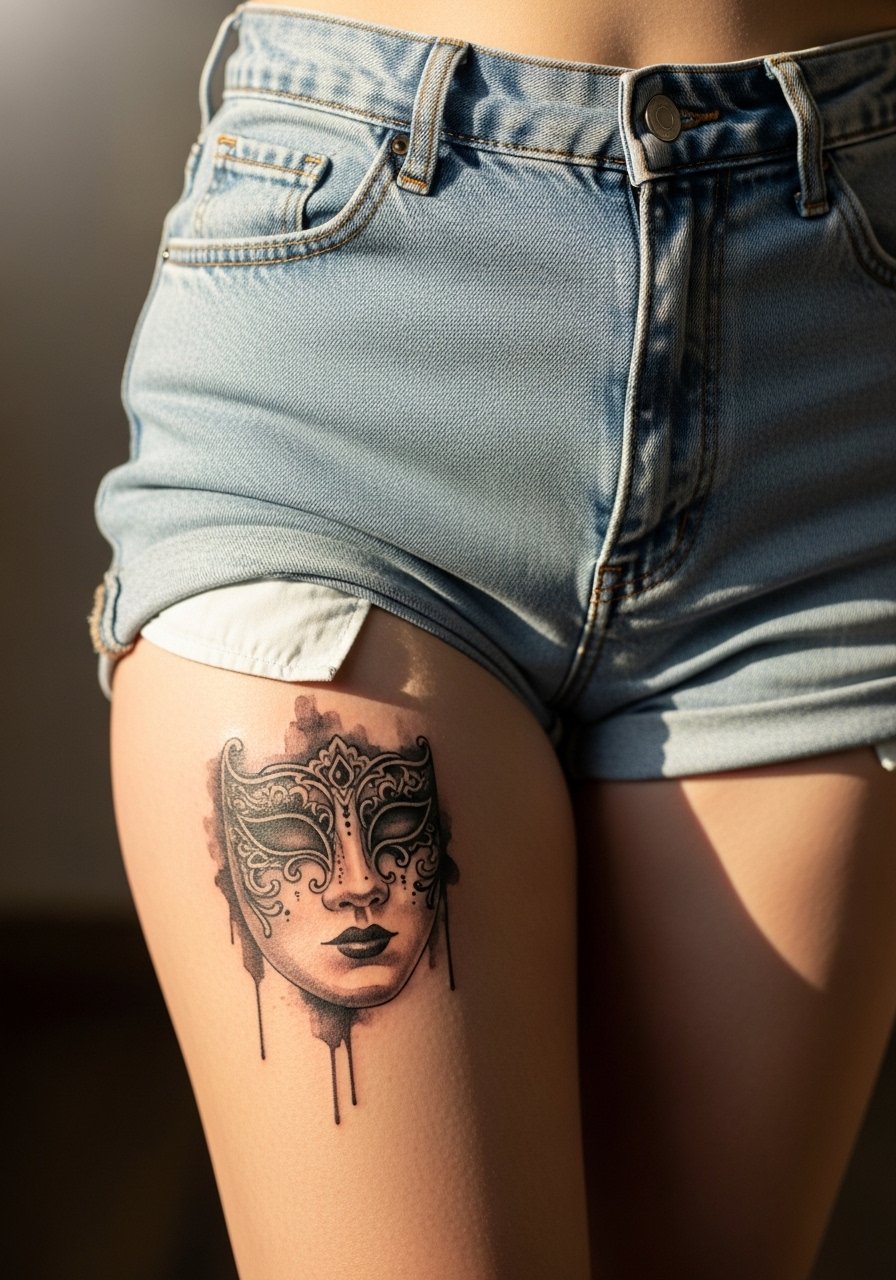
10. Subtle Ink Wash Mask, Upper Thigh
An ink wash treatment softens the mask into the skin for a living, breathing effect. This style uses diluted black and grey to create gradient faces, and it holds up best when the artist spaces the wash with punctuated linework at key points. The biggest mistake is relying solely on wash without anchor lines, which causes the mask to fade into a gray smudge. Session time is moderate and usually comfortable if you keep the leg relaxed. For long-term clarity, plan a gentle touch-up at year three and keep sun protection in mind.
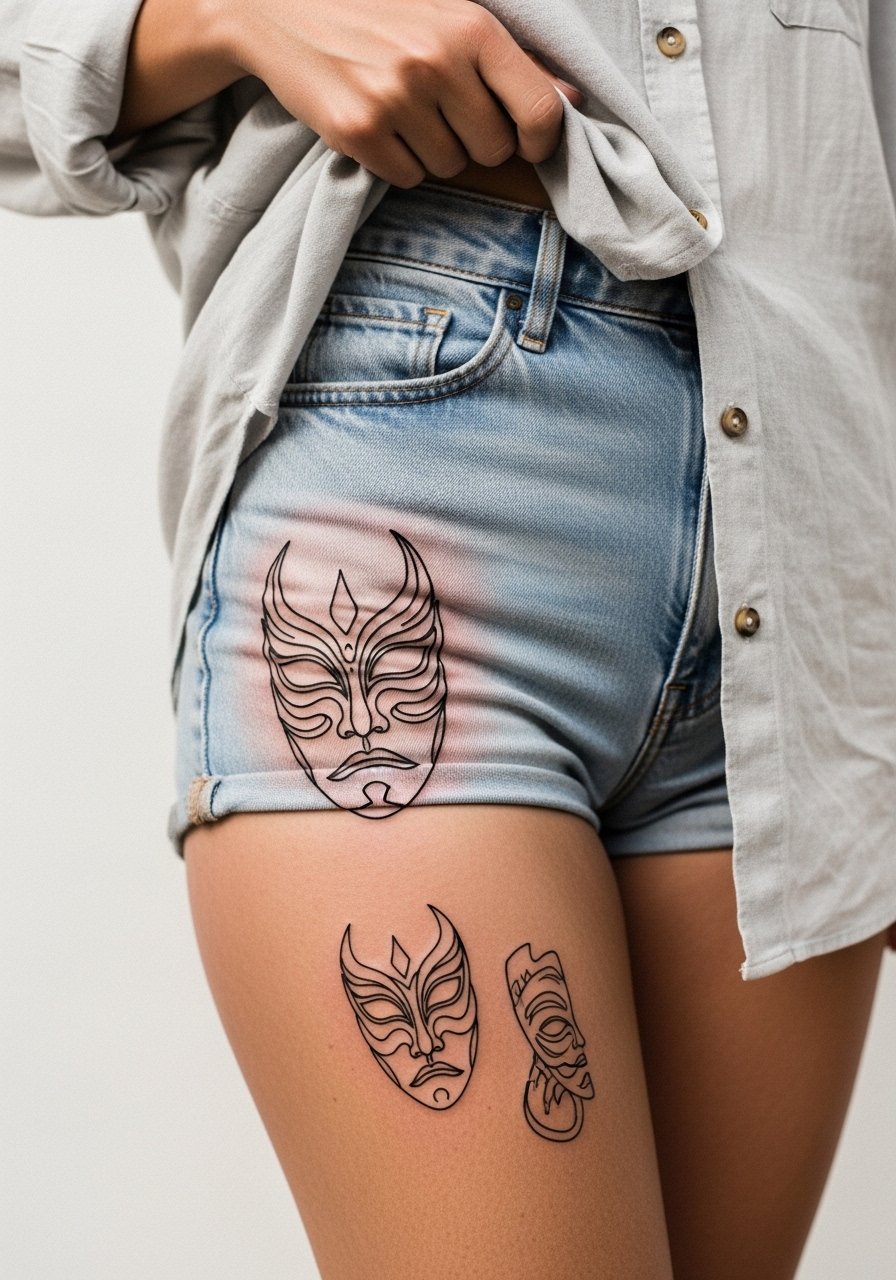
11. Dual Mask Pairing, Thigh and Hip Flow
A paired-mask setup that places one face on the thigh and a smaller complementary mask near the hip plays with asymmetry. When planned correctly the two pieces read as conversation rather than competition. In the consult, ask for scale tests so the hip element retains enough negative space to age cleanly. Hip placements are sensitive to movement from waistbands, so expect tender spots during healing. The usual error is making the hip mask too small. For studio comfort, wear a loose button-down shirt you can pull aside without altering the waistband.
12. Sketch-Style Mask with Motion Lines, Mid-Thigh
A sketch-style mask uses rapid strokes and motion lines to suggest expression without heavy saturation. I recommend this when you want an energetic piece that reads as both modern and handcrafted. Tell the artist to lock in the primary facial contours with slightly stronger lineweight so the sketch strokes can weather without losing the face. The common mistake is overloading the area with micro-hatching, which blurs into noise after healing. Sessions are often quick and forgiving for touch-ups, though you may want a light refresh at year two.
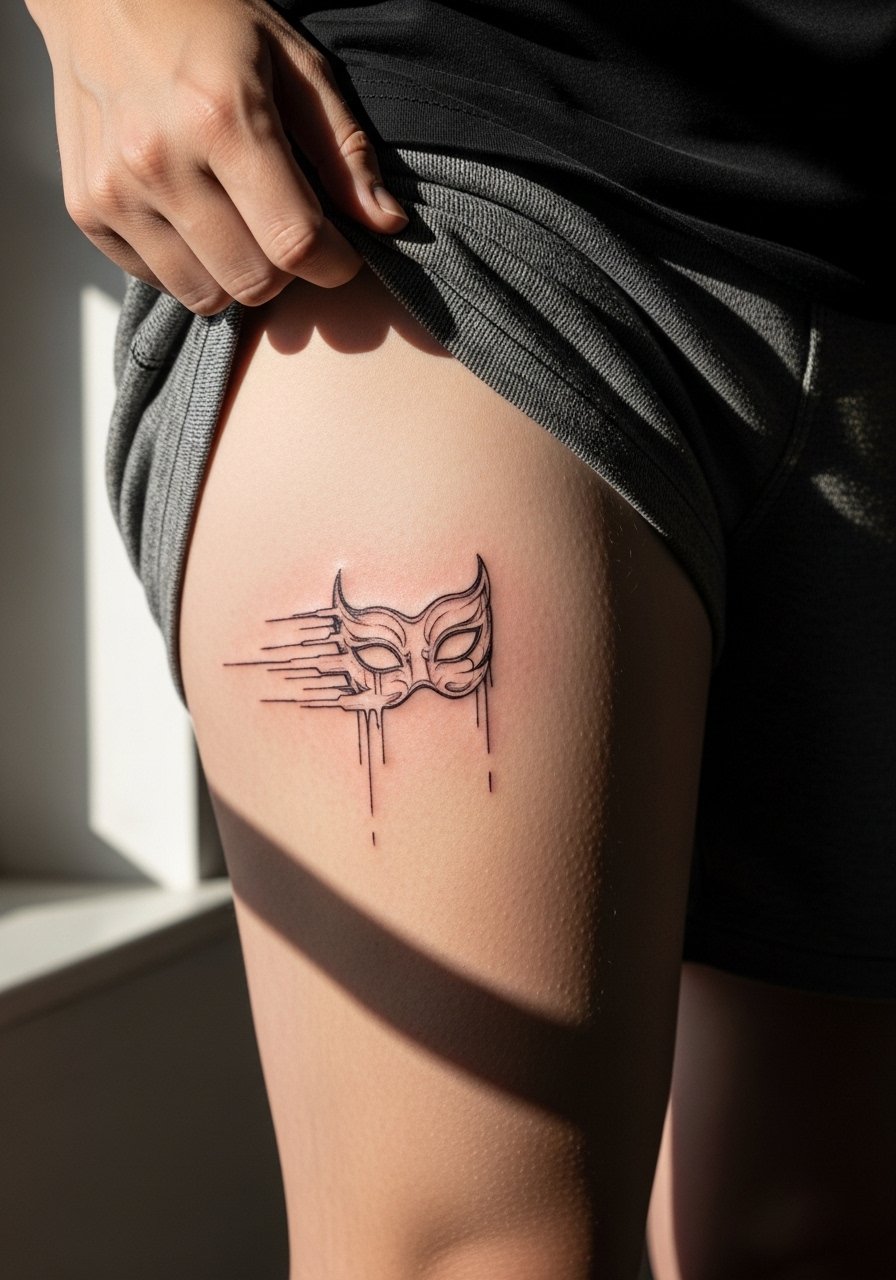
13. White-Highlight Accents on Dark Mask, Outer Thigh
Using white-ink highlights over a dark, filled mask creates depth that reads especially well on the outer thigh. Ask your artist to place highlights where light would naturally hit the face lines, and to keep white minimal so it ages predictably. White can fade faster, so expect it to soften into the surrounding color by year three. This style pairs beautifully with skirts that move, so show it with a flowy mini skirt when you want the mask to peek with motion.
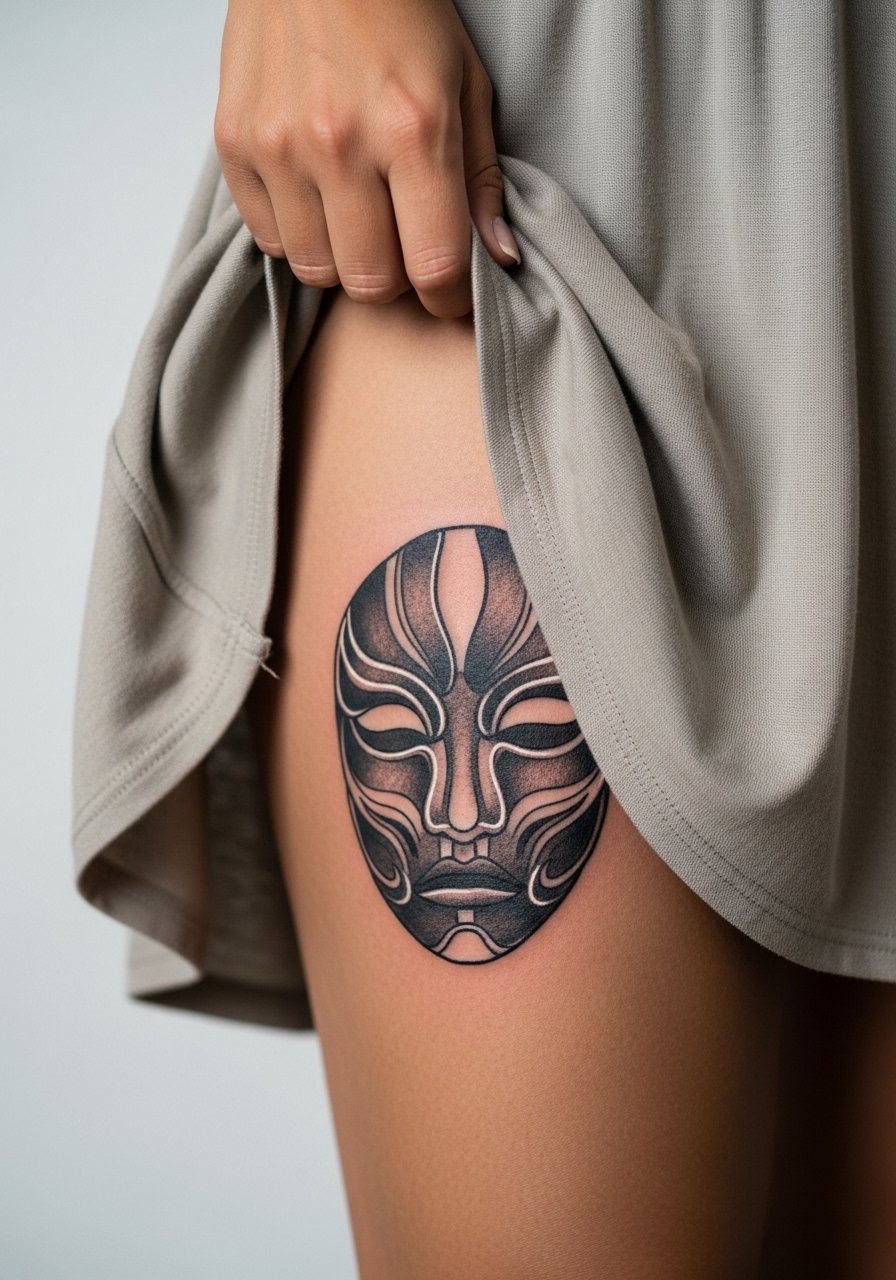
14. Monochrome Dot-Work Mask, Inner-Outer Transition
A dot-work mask that transitions from inner to outer thigh uses density shifts to guide the eye. The technique depends on open spacing to avoid blowout, so require the artist to map density gradients and keep the densest dot-work within a forgiving outer area. Artists disagree on fine detail on inner thigh. One camp says inner skin stretch blurs tight work in two years. The other camp argues that with measured depth and spacing it can settle fine. Ask your artist which side they fall on before booking. Expect the session to have tender patches and schedule a follow-up touch-up.
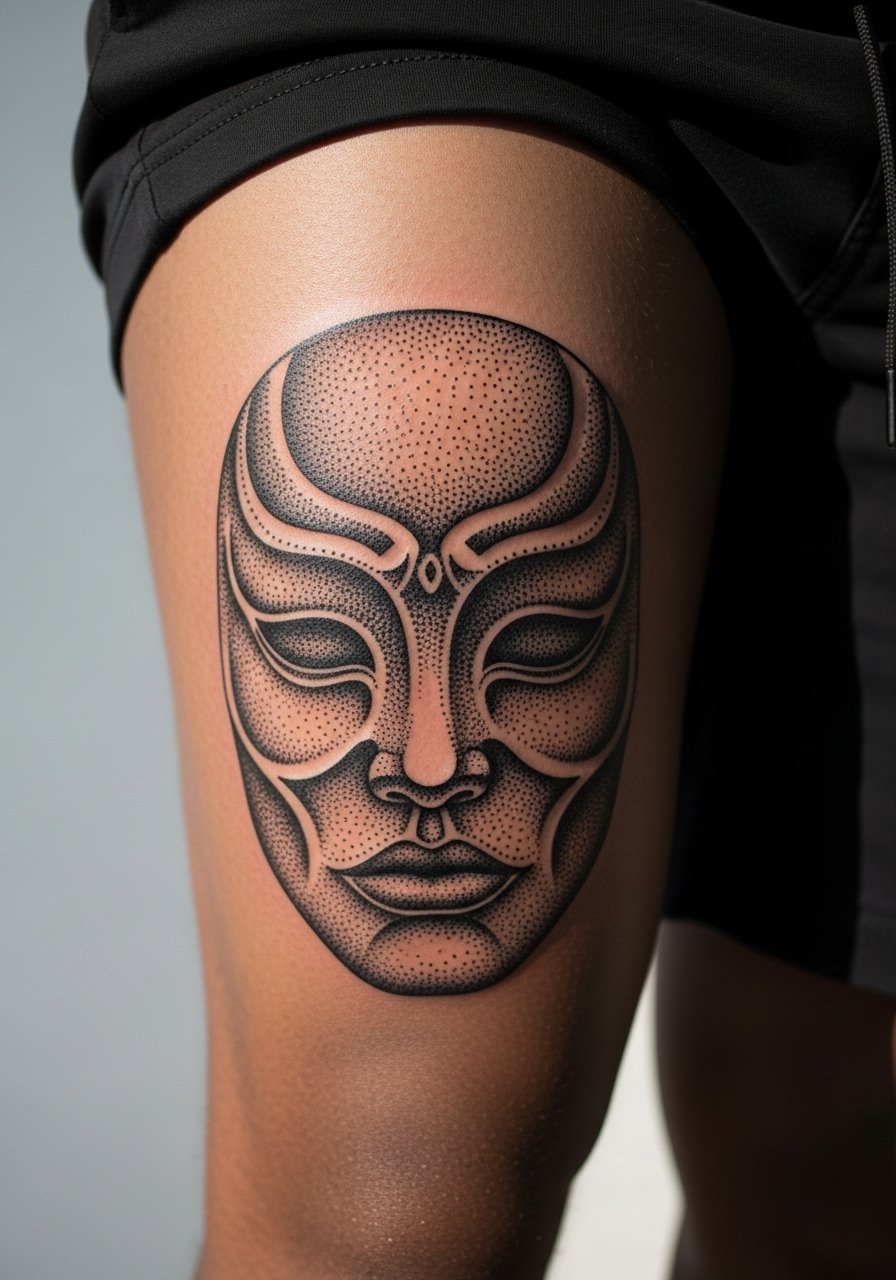
15. Neo-Traditional Mask with Bold Color Bands, Upper Thigh
Neo-traditional treatment uses bold color bands and cleaner contours to modernize a mask motif. Request clear color blocking around facial features and a reserved palette so the piece ages with clarity. The upper thigh allows slightly more saturated palettes than inner zones, but reds and pinks still soften over years. The common mistake is overcomplicating the palette. This placement looks great with a high-waisted skirt that frames the mask and lets the bands show when you sit down.
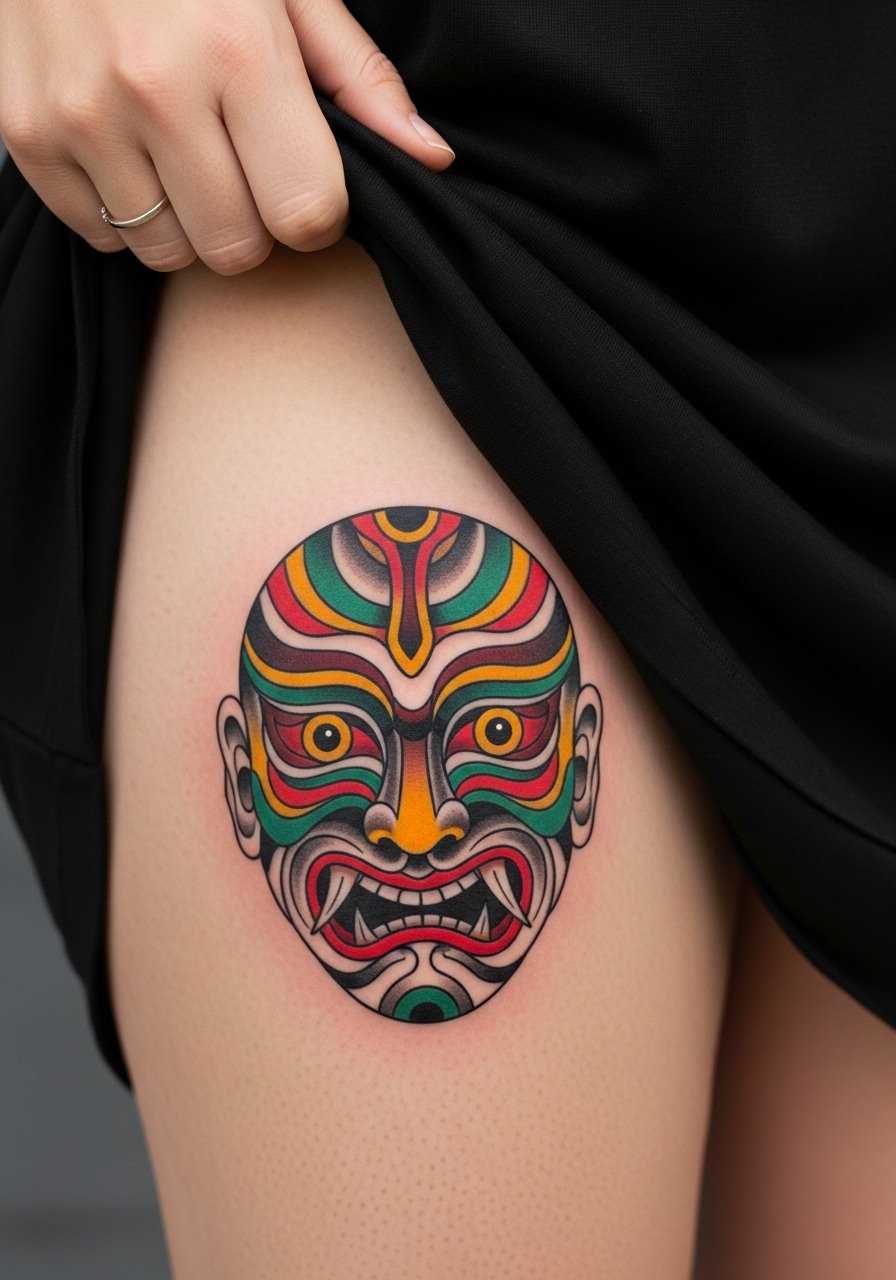
16. Mask Fragment with Negative Space, Mid-Thigh
A fragment approach uses part of a mask and generous negative space to hint at a larger story. This is useful when you want the suggestion of a mask without a full portrait. Tell your artist to prioritize crisp contour lines and leave breathing room so the partial face never reads cramped as it heals. The mistake people make is forcing too many fragments into a small area, which becomes confusing when the skin settles. Sessions are short and often require a single touch-up if edges soften.
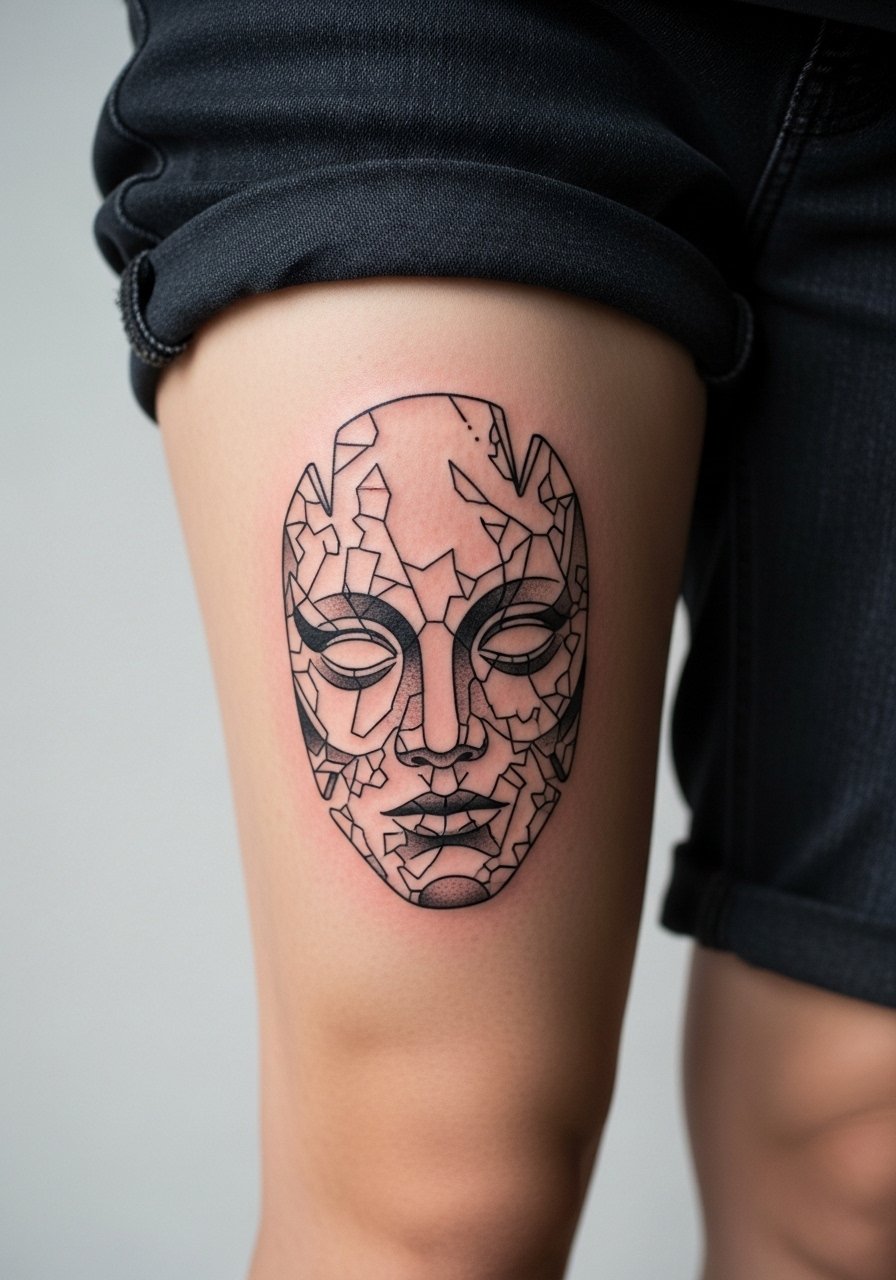
17. Mask with Lace Overlay, Upper Thigh
Overlaying mask imagery with a lace pattern creates contrast between aggression and delicacy. The key is to keep the lace lines a touch lighter than the mask contours so the face remains the focal point. Lace near the seam of underwear or shorts may catch during healing, so plan wardrobe accordingly and wear soft, seamless undergarments for the first week. For showing off, a lace slip dress that exposes just the upper thigh can make the interplay intentional.
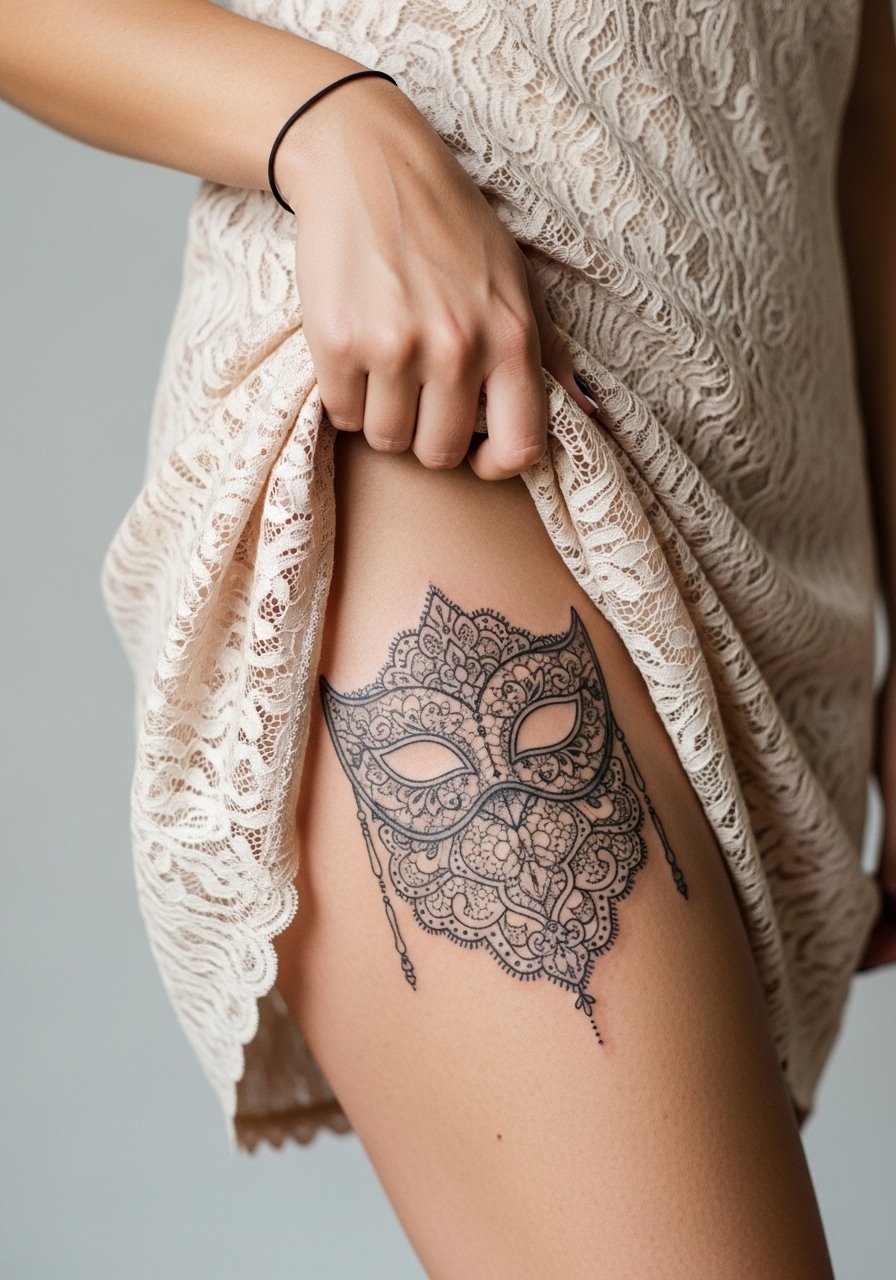
18. Weathered Mask, Faded-Edge Technique, Outer Thigh
A weathered mask uses faded-edge techniques so the piece looks lived-in from the start. Ask your artist to intentionally soften peripheral edges with a stippled fade rather than letting the piece degrade unexpectedly. The outer thigh is good for this because the fading reads aesthetic on purpose rather than as accidental blur. A common error is too much scattering which makes the face lose focus. Plan for a light touch-up at year two to re-anchor the core lines if you want to maintain crispness.
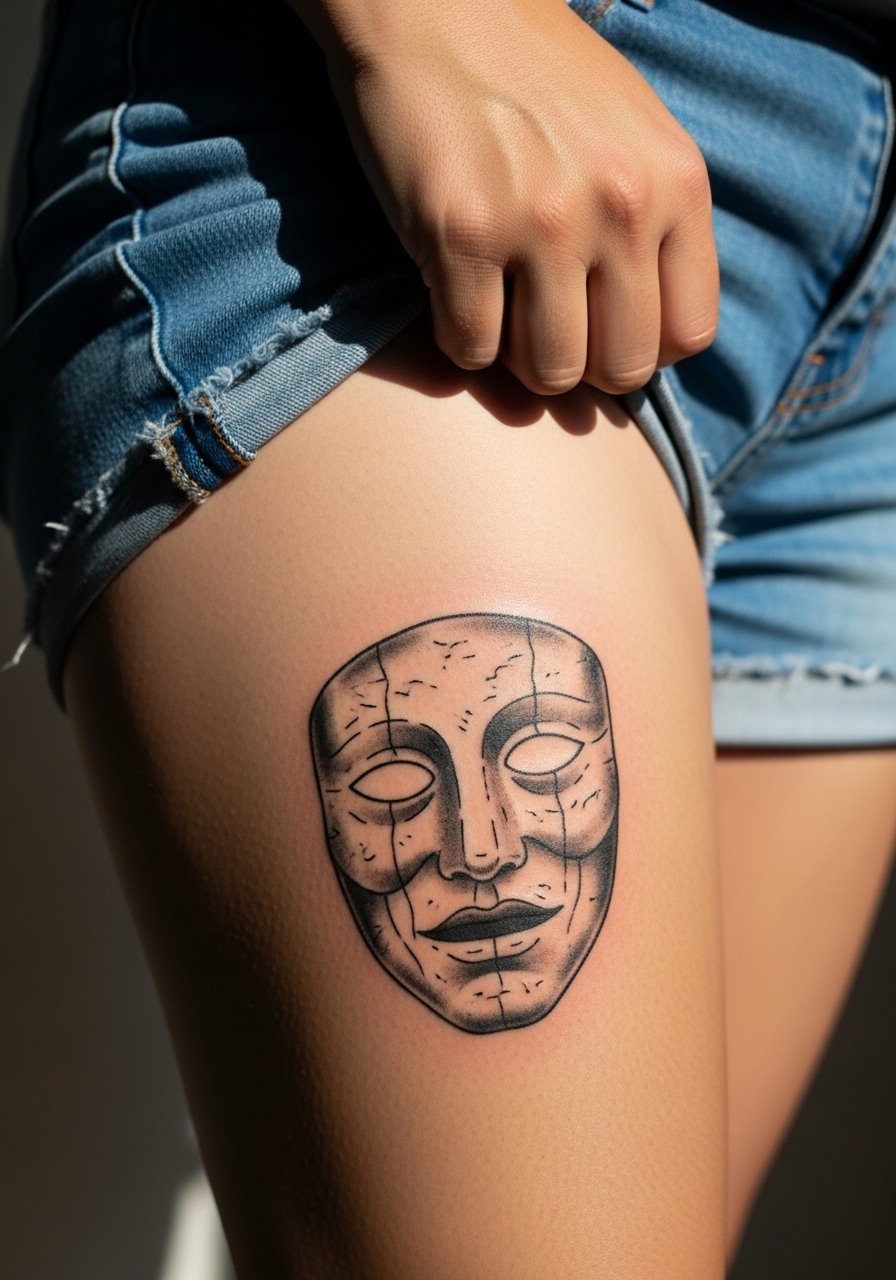
19. Mask with Script Banner, Side Thigh
Adding a short script banner under a mask personalizes the composition, but text must be large enough to age legibly. When you consult, provide exact wording and request a mock-up in the chosen typeface so the artist can scale the letters properly. The most frequent mistake is choosing thin lettering that gaps into illegibility after healing. Side-thigh sessions are moderate in pain and usually finish in a single appointment. For a night out, pair the piece with an open-side dress that frames the banner without compressing it.
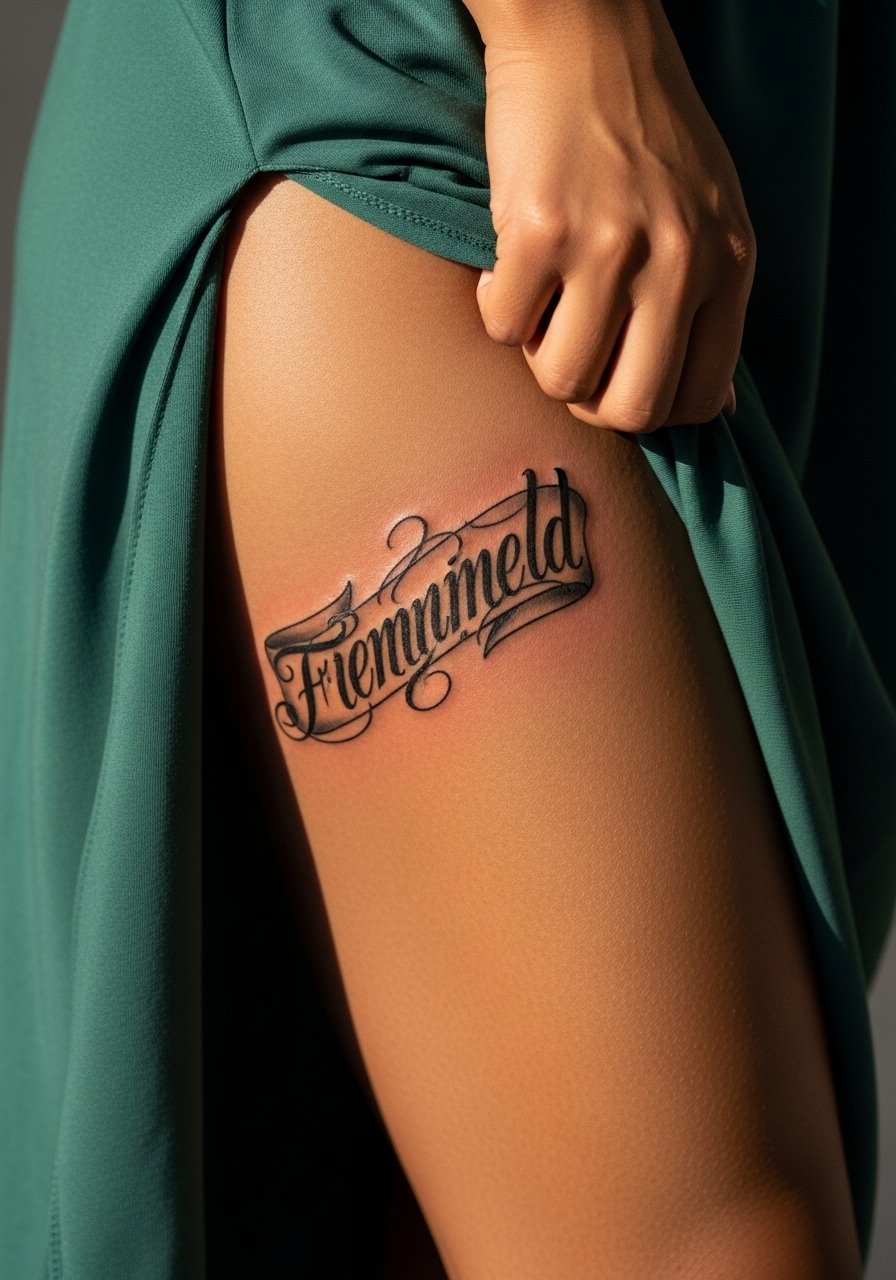
20. Two-Tone Mask, Contrast Striping, Mid-Upper Thigh
Two-tone contrast striping uses a primary dark tone and a lighter complementary tone to give the mask pop without full color saturation. Ask for sample patches in the consult so you can see how contrast appears on your skin tone. The mid-upper thigh is forgiving for this technique, but lighter tones may need more frequent touch-ups. A common complaint is the lighter bands fading unevenly. This placement is comfortable for longer sessions and pairs nicely with high-waisted swim shorts when you want the stripes to show.
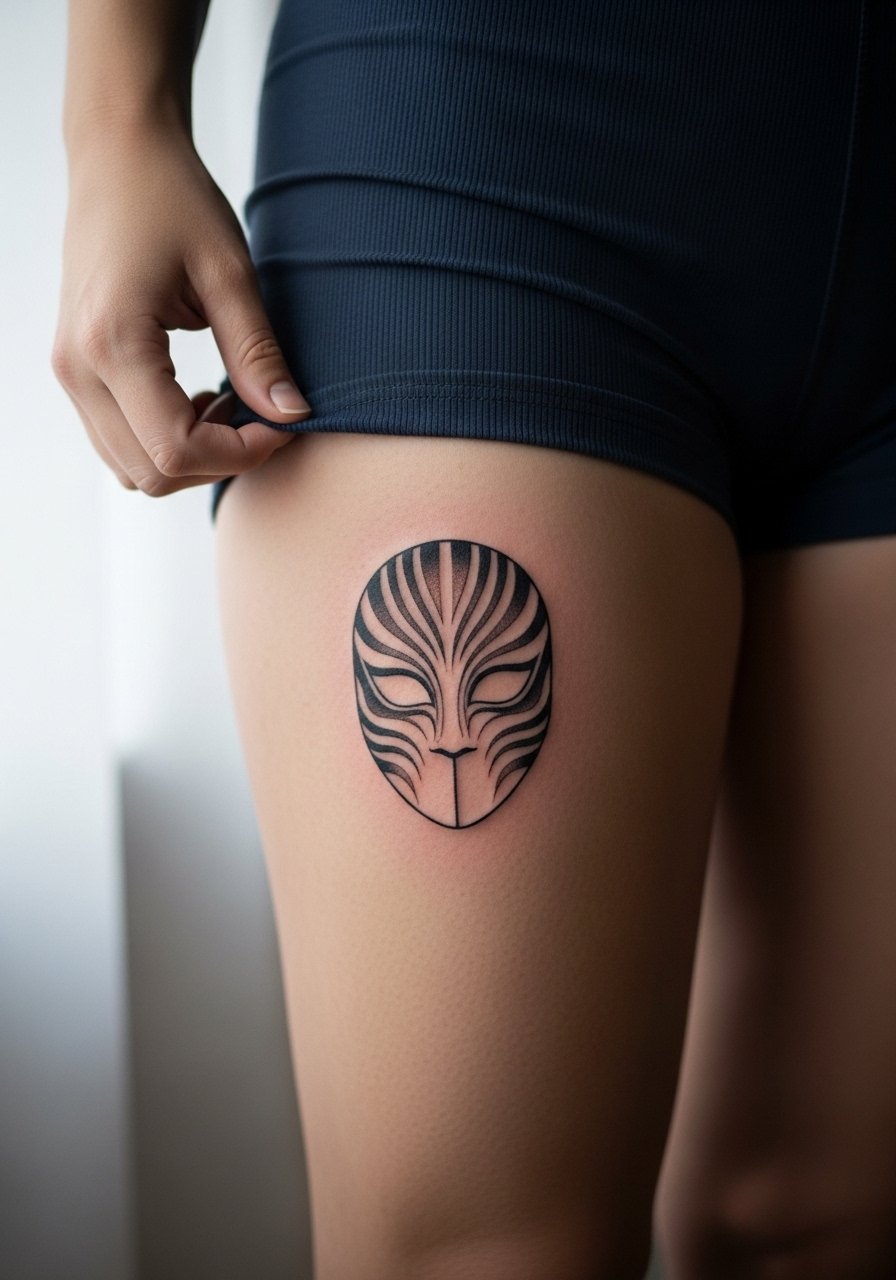
21. Mask Fragment That Peaks from Swimwear, Upper Thigh Edge
A small fragment placed to peek from swimwear is practical for people who want a hint of a mask without a full commitment. Prioritize strong outer contour lines so the fragment reads as intentional and not accidental when the rest is covered. The mistake is making the fragment too decorative and losing any sense of a mask. Session time is minimal and healing is straightforward if you avoid tight bottoms for the first week. For beach days, try a bikini cover-up skirt that reveals the edge in motion.
Frequently Asked Questions
Q: Will a Hannya-style mask on the inner thigh blur faster than one on the outer thigh?
A: In my experience inner-thigh placements face more mechanical stress from walking and fabric rub, which increases blowout risk if lines are too fine. One way to reduce that risk is to ask your artist for slightly bolder primary contours and more negative space around facial features so the mask keeps its expression longer.
Q: How should I prepare wardrobe-wise for a multi-hour upper-thigh session?
A: Wear loose, adjustable bottoms you can lower without tight waistbands pressing on fresh ink, such as loose drawstring shorts. Bring layers and a pillow so you can shift comfortable positions between passes.
Q: Are colored masks worth it on the thigh or do the colors fade too fast?
A: Color on the thigh can look excellent, but expect blues and reds to soften over several years, especially with sun exposure. Planning for a color refresh at year two or three keeps saturation lively if you want long-term vibrancy.
Q: Is it cultural appropriation to get a traditional Japanese mask design if I am not from that background?
A: There are two camps in that debate. One camp urges avoiding ritual pieces or exact replicas out of respect. The other supports respectful adaptation when done thoughtfully and with acknowledgment of origin. A practical path is to adapt motifs rather than copy ceremonial designs, and to discuss cultural context with your artist.
Q: What is a realistic touch-up timeline for detailed mask work on the thigh?
A: For detailed mask portraits I usually tell people to expect a light touch-up around year two to three. Simpler, bolder blackwork often needs less frequent refreshes. The exact timing depends on your skin, sun habits, and how often that area rubs against clothing.