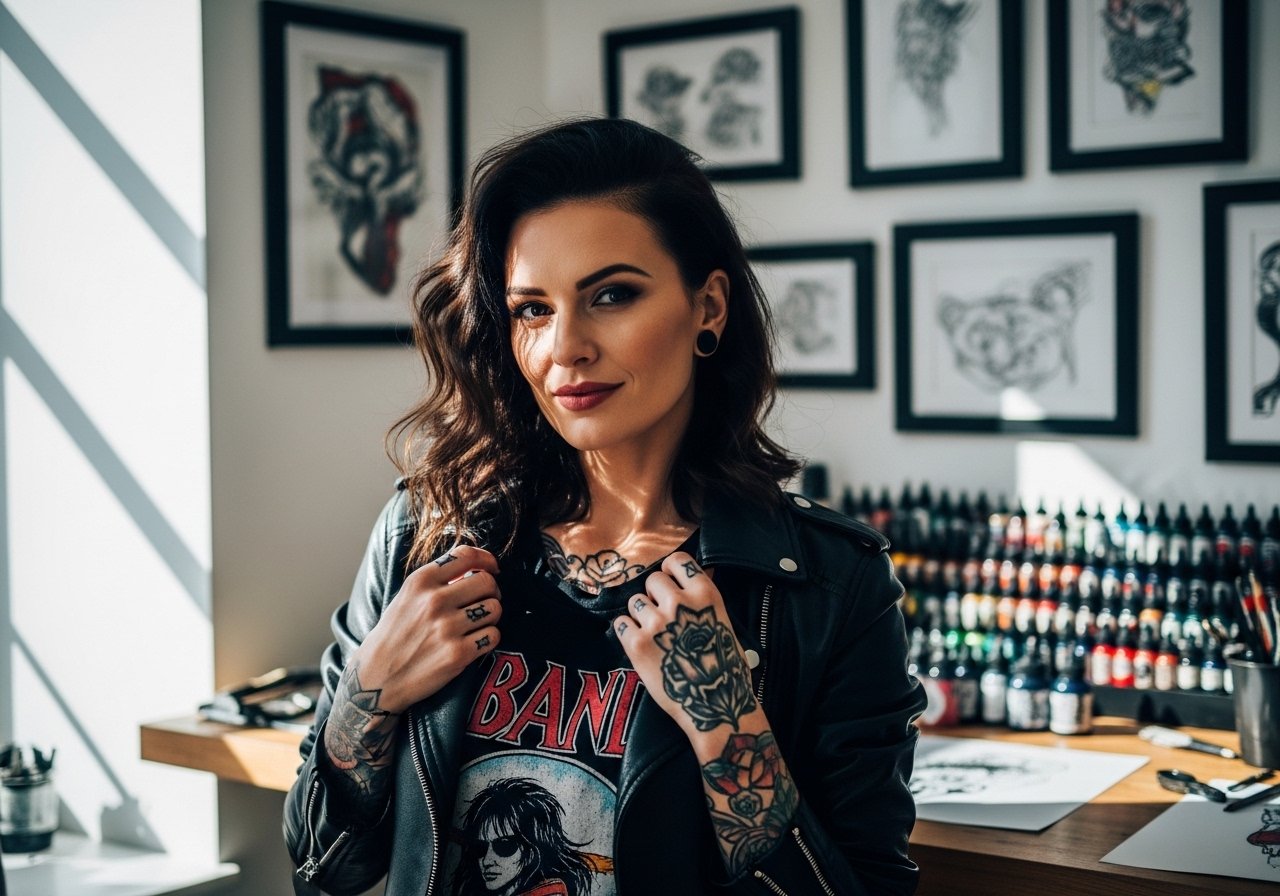
The weight of the glass can sell the whole piece. I say that after seeing the same wine-glass motif work as a tiny wrist wink and as the focal point of a chest piece. Small changes in lineweight, bowl size, or whether the stem is a rose or a dagger decide if it holds up at year three. Start here and you will see how each idea translates to skin and wardrobe.
1. Fine Line Wine Glass on Inner Forearm

I recommend this if you want something discreet that still reads when you roll up a sleeve. Fair warning, the inner forearm needs careful line spacing for fine work or the lines will blur into each other over a few years. Tell your artist you want slightly thicker primary contours with single-needle filler only inside the bowl. The session is mildly uncomfortable but tolerable, and you can expect a single one-hour sitting. For showing it off, pair with a rolled-up linen shirt that frames the forearm without stealing attention. A common mistake is asking for ultra-tiny grapes. Give the elements room and touch-ups become optional rather than mandatory.
2. Traditional Goblet with Rose on the Shoulder

There is something classic about a goblet held by a rose on the shoulder. Pain is low to moderate and sessions usually run one to two hours depending on color saturation. Ask for solid saturation and crisp outlines so the red and green age into a warm patina instead of a muddy blur. In consultation, request the rose petals be staged away from the rim to avoid confusion as the piece softens. For the appointment wear a loose tank top so the artist has clear access. This placement ages well because the shoulder sees less abrasion than the wrist, but expect touch-ups at year three to five if you keep heavy sun exposure.
3. Tiny Stemless Glass on the Finger
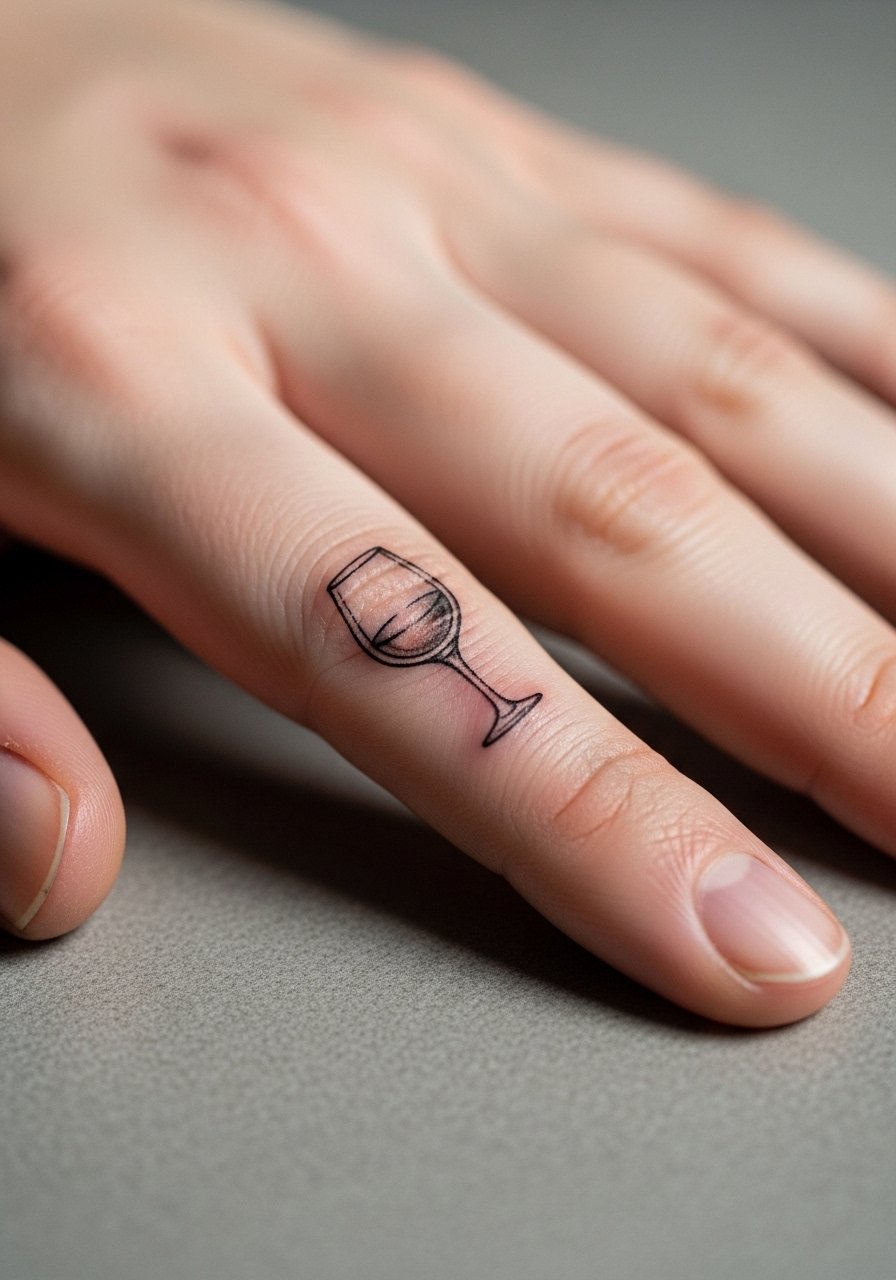
Finger tattoos are a compact way to nod to wine culture but they carry real compromise. The skin here moves constantly and oils speed fading. Expect a short, sharp session and likely a touch-up within a year. One camp argues finger work is mostly a short-term aesthetic, while another camp says with deep, bold linework and careful placement you can get several years of life. Ask your artist which camp they follow and how they handle lining near joints. If you want to keep the look low-key, a tiny stemless glass with bold outline holds better than micro shading. Hand pieces still affect hiring in some industries, so weigh visibility against your work life.
4. Wine Glass with Dripping Ink on the Calf
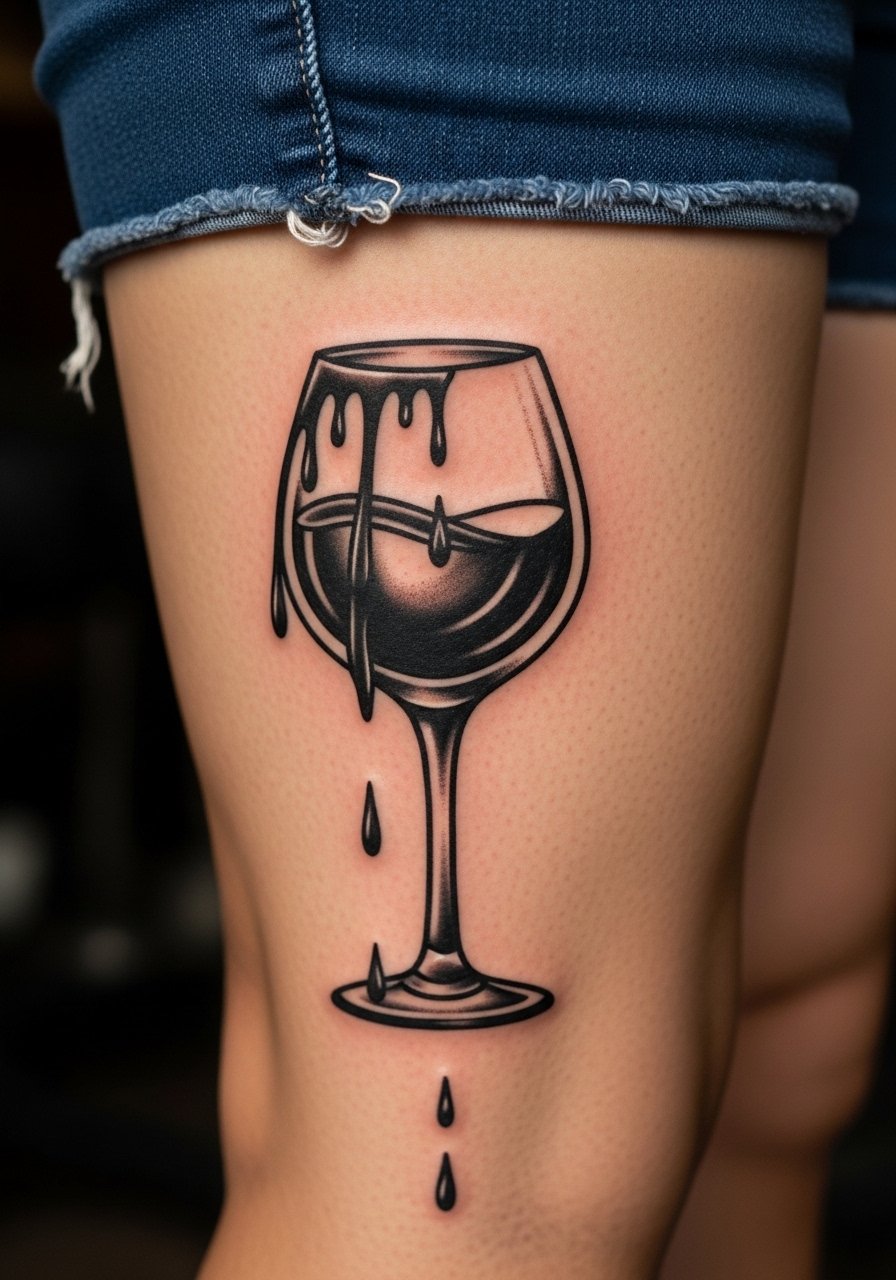
Calf pieces are surprisingly durable and sit in that sweet spot between visibility and concealability. The larger surface lets you go bold with the drip detail without crowding. Sessions take longer than a wrist piece but you can usually finish in one two-hour sitting. A common mistake is compressing too much detail into the drip area. Instead, ask for clear negative space to preserve contrast as the ink settles. For showing it off, pair this with high-waisted shorts or a skirt that lifts to the thigh, so the calf reads cleanly without fabric friction. Expect minimal blowout risk here if the artist avoids overly shallow needles.
5. Stained-Glass Wine Glass on Upper Back
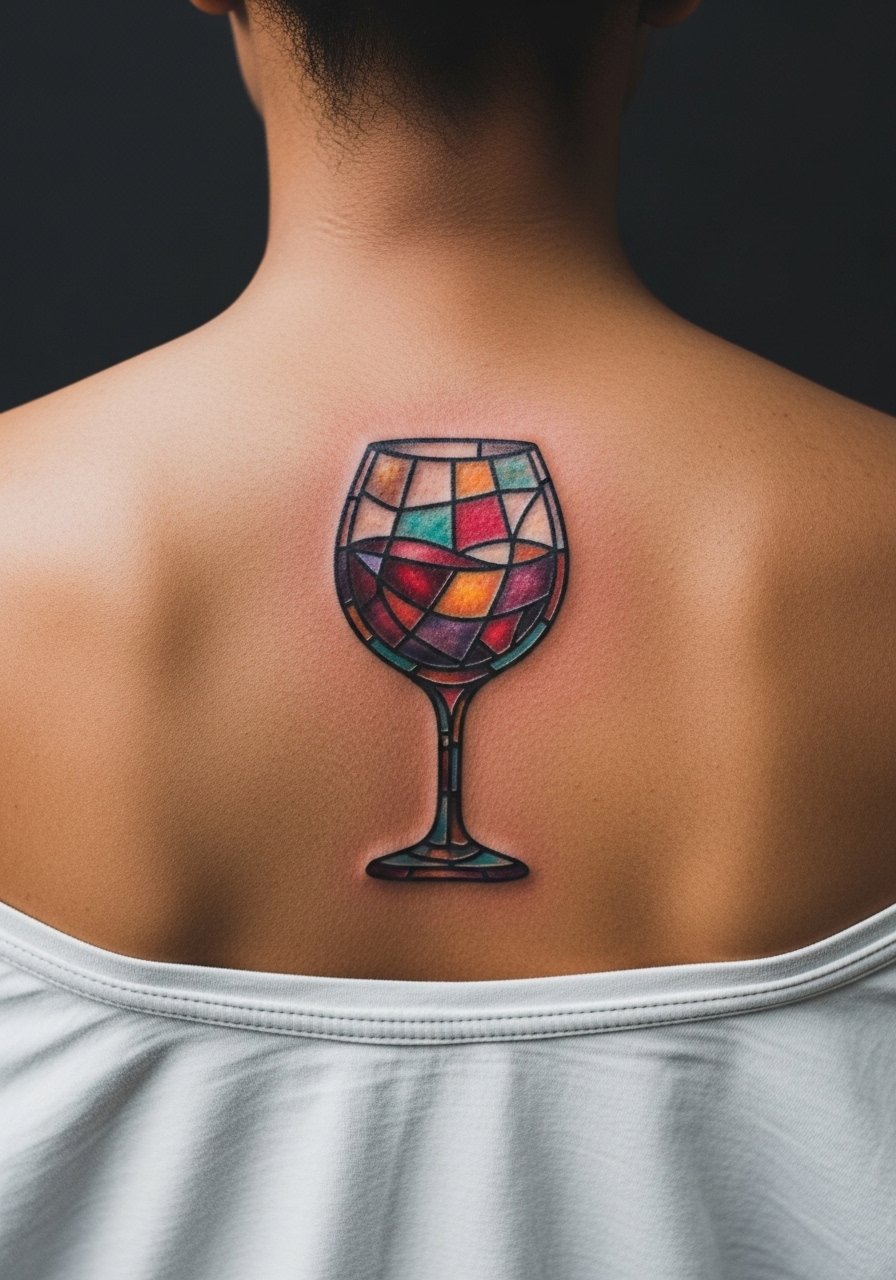
This one plays with negative space and color blocking to mimic panes of glass. The upper back gives room for scale, which helps the geometric panels age without merging. Sessions may stretch into multiple sittings depending on color fill. Tell your artist you want distinct lead lines between panes and to avoid overly tight crosshatching in the shaded areas. For the studio day wear a wide-neck shirt you can pull aside. If you request too much micro detail in small panes, the colors can bleed together after a few years, so prioritize bold shapes over tiny hatch work.
6. Wine Glass with Moon Phases on the Sternum
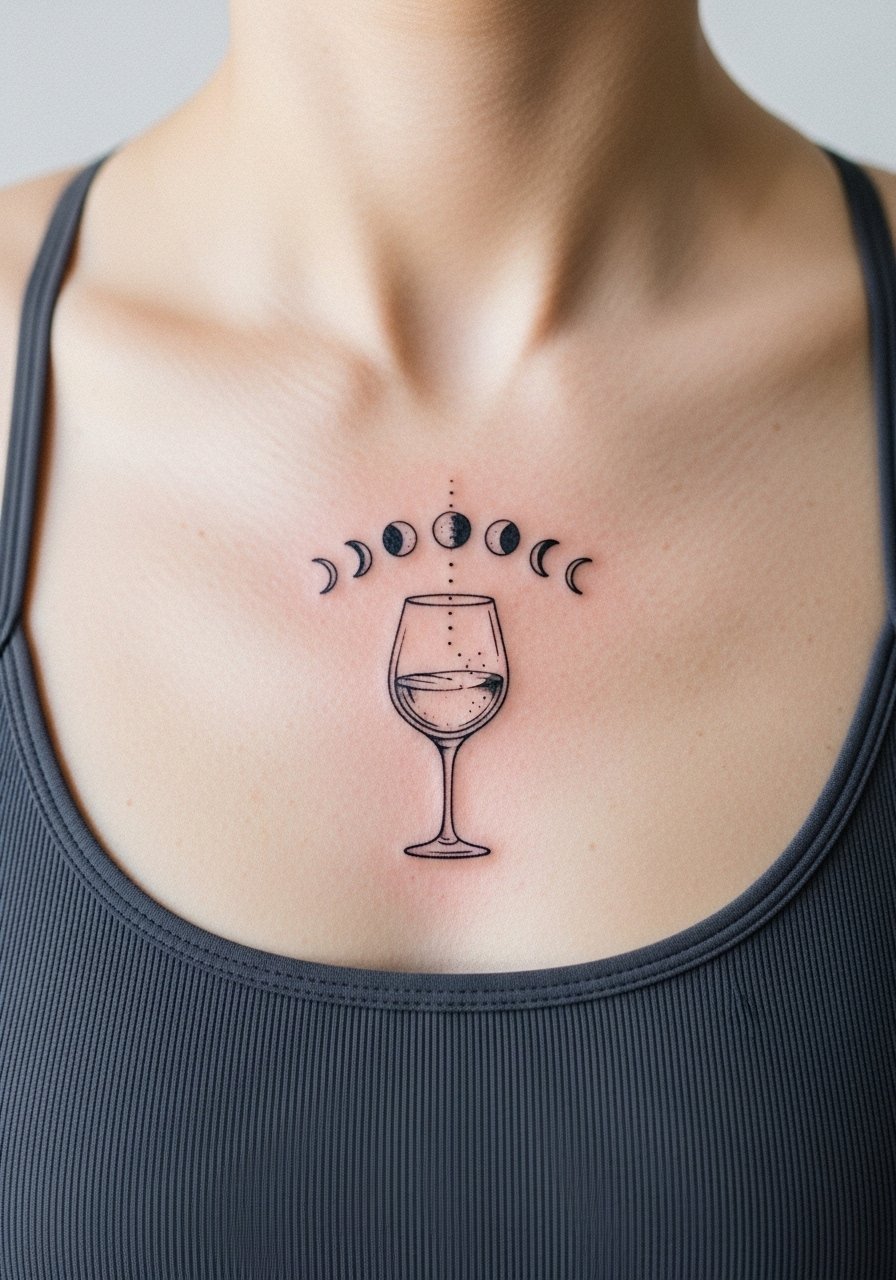
Sternum placement is intimate and can look striking when centered with delicate elements like moon phases. Expect higher pain and a careful consult. Artists are split on how fine you can go here. One camp says the sternum's movement and skin texture will blur ultra-fine lines quickly. The other camp argues that with measured depth and spacing the detail can remain readable for years. Ask the artist which side they fall on and plan for a possible touch-up window around year two. For the session, wear a fitted sports bra so the artist can access the area without exposing more than necessary. The finished piece reads well with low-cut tops that show just the upper sternum.
Studio Day Picks
That stretch of forearm, shoulder, and sternum ideas above need different prep. A few targeted items smooth the session and the first week of healing.
-
Stencil transfer paper kit. Lets you preview positioning and linework on skin, which matters for the forearm and sternum placements above.
-
Topical numbing cream. Use 30 to 45 minutes before a sternum or calf session if you are anxious about pain.
-
Thin protective film roll. Keeps wrist and finger tattoos clean during the first days of heavy hand use and frequent washing.
-
Fragrance-free gentle body wash. Mild cleansing for areas like the upper back and calf without stripping pigment or irritating healing linework.
-
Aquaphor healing ointment. A thin layer is useful for locking moisture on small fine line pieces during the first 48 hours when skin dries out.
7. Broken Wine Glass with Script on the Ribcage

Ribcage work reads as dramatic and personal but carries a strong aging caveat. Pain levels trend high and sessions can be broken into two to three sittings. Artists divide into two camps on fine line here. One camp says the breathing motion and thin skin blur detail within a couple of years. The other camp says careful needle depth and spacing can preserve lines longer. Given that divide, be explicit in consultation and prefer bolder contour lines for long-term clarity. For the session wear a cropped top you can lift so the artist has clean access. A common mistake is cramming long script under the bowl. Short, bold words age better on ribs.
8. Wine Glass Held by a Hand on the Forearm

This motif brings motion and narrative into a small area. The outer forearm is forgiving for saturation and touch-ups are straightforward. During consultation ask the artist to stage the fingers so they do not merge into the stem as the piece softens. The session is comfortable and often done in one sitting. For showing it off, a rolled-up long-sleeve shirt or a short-sleeve tee frames the art without competing. Avoid micro shading inside the hand. Overly detailed knuckles tend to blur with skin movement.
9. Stacked Glasses Sleeve Accent
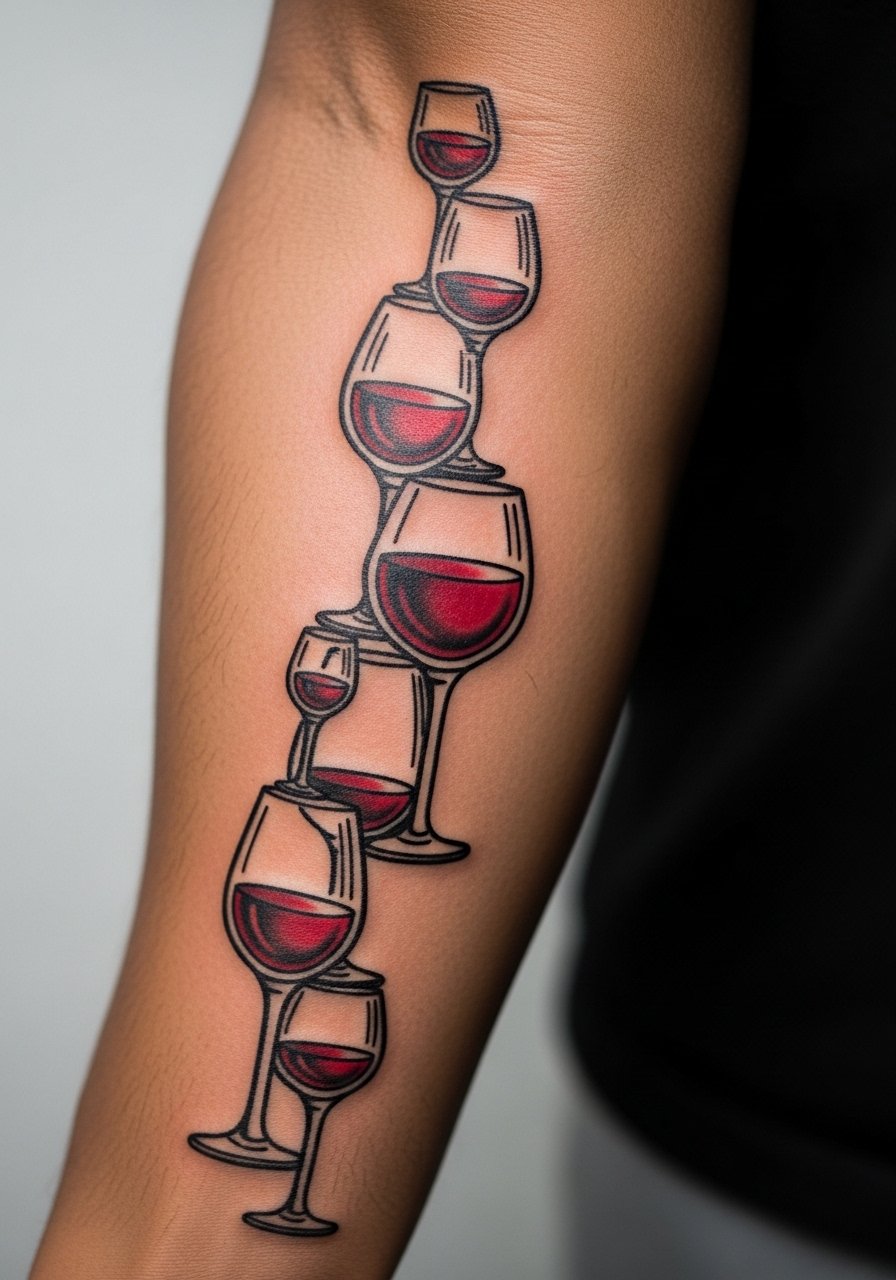
When you want a sleeve or half-sleeve, small repeated glasses form a cohesive column that reads from a distance. The biggest error is making each glass identical in scale. Vary the size and tilt to create depth and to keep the linework from merging. Sessions will be multiple, depending on the sleeve plan, and saturation should be done in stages. In consultation ask for stronger outlines on the top glasses so the bottom ones can soften without losing definition. For styling, a short-sleeve button-down or rolled sleeves show the column while keeping heat and friction low during healing.
10. Micro-Realism Wine Pour on the Wrist
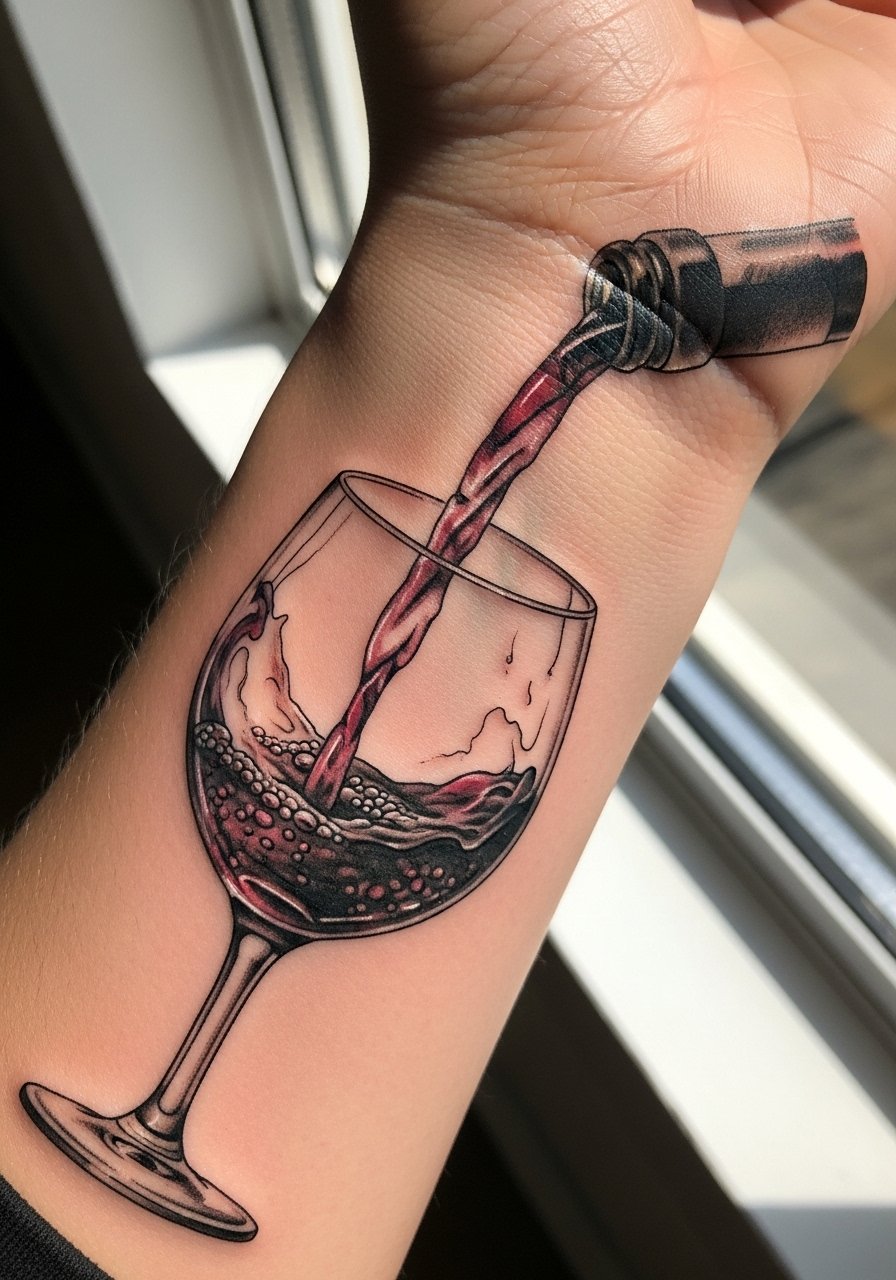
Micro-realism on the wrist looks impressive but the wrist is a high-motion area. The lines and soft gradations are vulnerable to early blurring. Expect a short but detail-focused session and a likely touch-up window around year two. Tell your artist you prefer slightly higher contrast so the pour reads at arm's length after settling. For the appointment pick a slim bracelet or watch you can remove easily to avoid jewelry rubbing during the first week. A common mistake is asking for very subtle shading that disappears under normal wear.
11. Wine Glass with Grapevine Wrap on Thigh
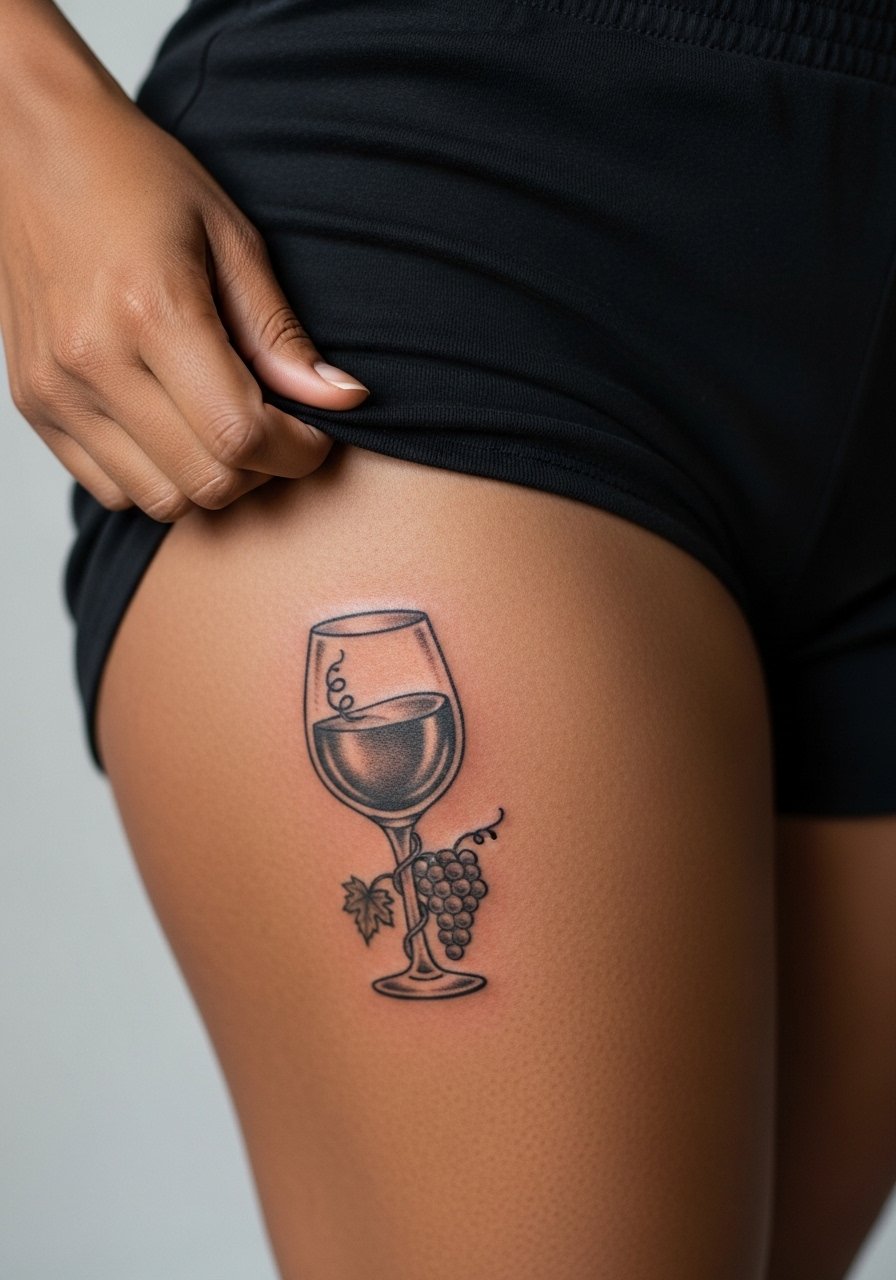
Upper thigh placements allow scale and romantic vine work without constant sun exposure. Sessions are comfortable because the area has more cushion, and you can often finish in a single longer sitting. For the consult specify the vine spacing and leaf placement to avoid overlap with the glass rim as the ink settles. For the session wear high-waisted shorts so the artist can get clean access without full exposure. A common mistake is too many tiny grapes. Keep them stylized and spaced for longevity.
12. Minimalist One-Line Wine Glass Behind the Ear
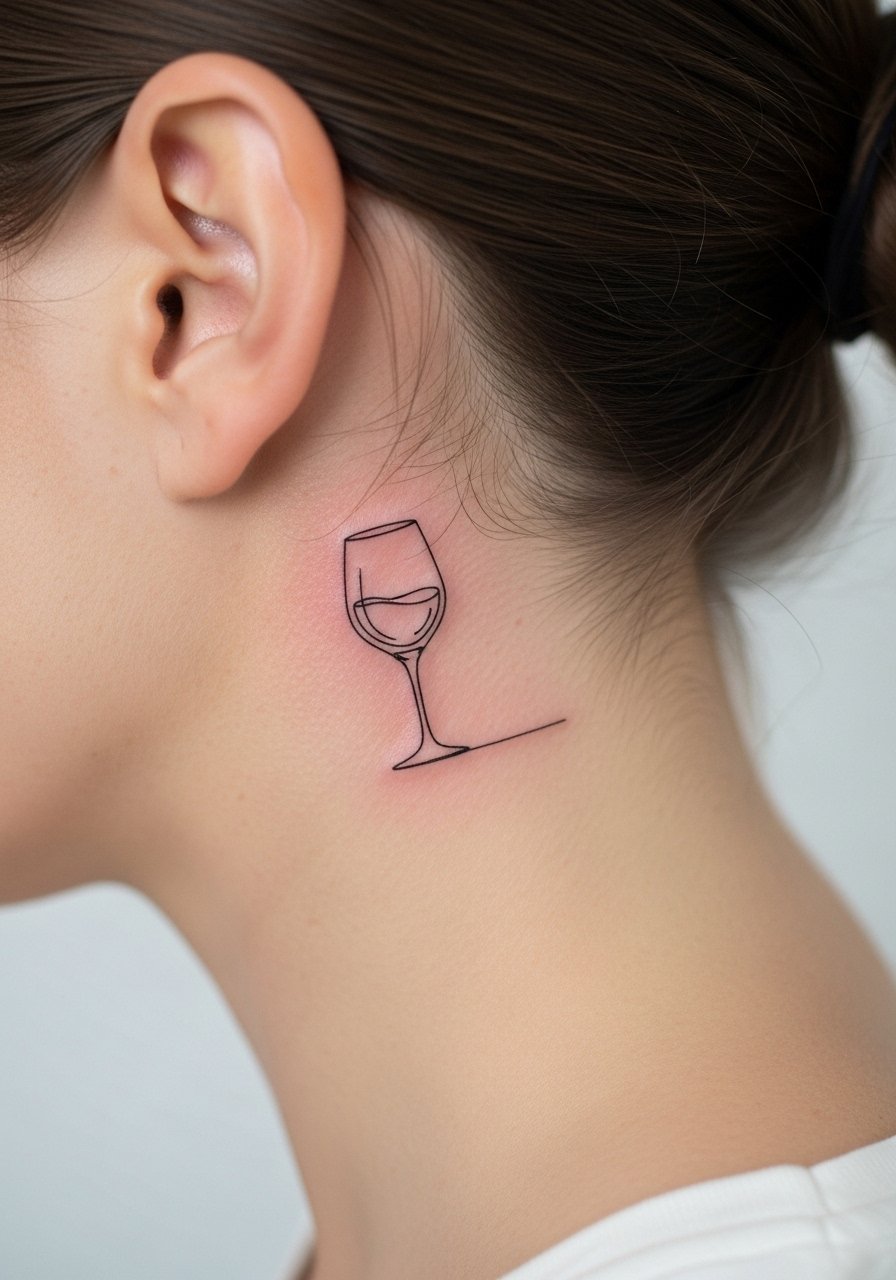
Behind-the-ear work feels playful and discreet. The area requires precise placement because the canvas is small. Sessions are quick and mildly uncomfortable. Ask the artist to position the line below the hairline so the hair can cover it if needed and to make the primary stroke slightly bolder to resist early blurring. For sensitive placements like this I recommend asking about the artist's experience with small neck-area pieces. Keep expectations modest for longevity, since touch-ups are common in year two and three.
13. Wine Glass with Skull Stem on the Upper Arm

This design leans into classic symbolism, mixing celebration with memento mori. The outer upper arm is an easy spot for solid color and strong linework. A one to two-hour session typically covers the piece. Tell your artist you want the skull stylized rather than photoreal, because heavy realism on a small scale can soften into an indistinct mass. For showing the tattoo, a sleeveless shirt highlights the upper arm without crowding the image. Expect minimal blowout risk unless the artist rides too shallow at the contours.
14. Wine Glass with Candle Inside on the Back of Hand
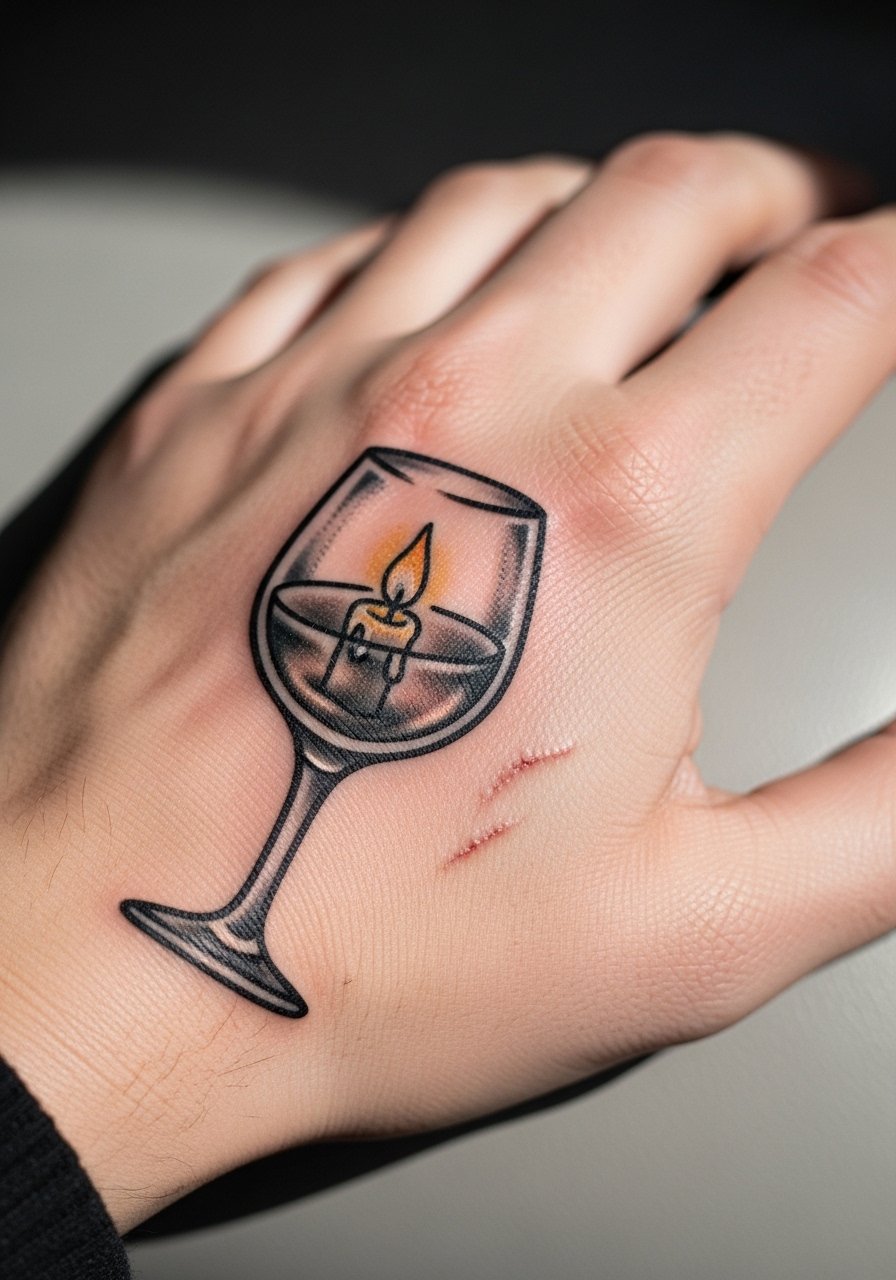
Hand tattoos are immediate and visible. They also fade faster due to frequent washing and constant exposure. Sessions are quick but can sting and require multiple touch-ups over the years. Artists split on whether hand pieces are wise for everyone. One camp points to faster fading and industry stigma. The other camp highlights technique and placement as mitigating factors. If you go forward, ask about their approach to hand longevity and expect to budget for touch-ups. Keep the candle detail bold and avoid tiny flame filigree that will blur.
15. Gothic Chalice with Banners on the Chest

Upper chest offers symmetry and a regal feel when combined with banners or lettering. The chest moves with breathing so strong outlines around the chalice keep the composition readable. Sessions may run multiple hours depending on size and lettering. For the visit wear a wide-neck shirt you can shift to expose the area without larger exposure. A common mistake is requesting tiny script on the banner. Keep letters bold and spaced to avoid merging as the skin ages.
16. Wine Glass with Floral Fill on the Ankle

Ankle tattoos are charming and visible with the right shoes. Expect some discomfort from the bony area and plan a short session. The ankle gets frequent friction from socks and shoes so avoid low-contrast internal patterns. Ask for clear, bold outlines around the glass so the floral fill can soften without losing its silhouette. For showing it off, pair this with sandals or cropped jeans that reveal the ankle without rubbing during healing. A common mistake is too many tiny petals inside a small bowl.
17. Etched Goblet with Coordinates on the Collarbone
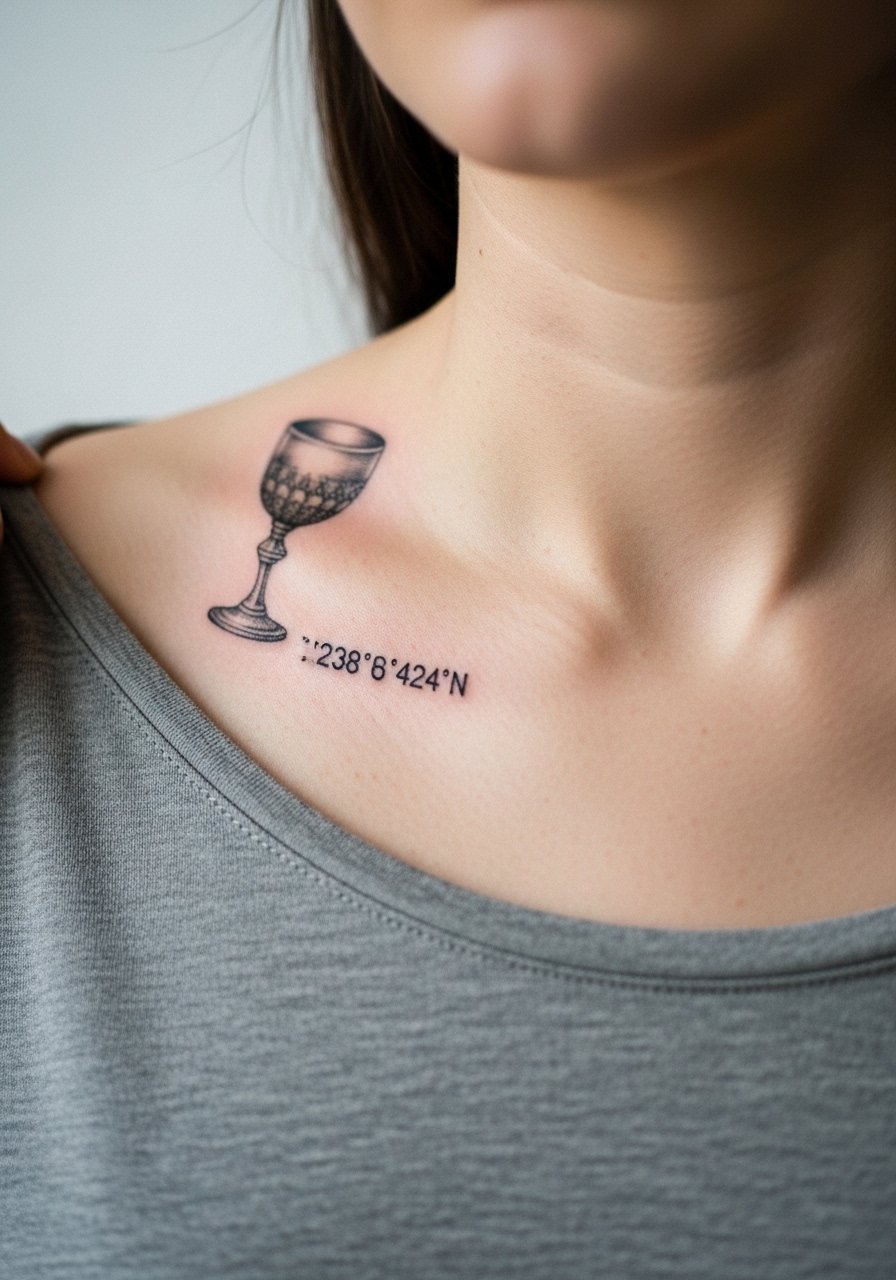
Collarbone pieces read very elegantly when scaled correctly. The skin here can be thin and angular, so line placement must account for bone contours. Sessions are short to moderate in length. If you want text like coordinates, ask the artist to use a slightly bolder type so the numbers stay legible after settling. For outfit pairing, a thin chain pendant necklace sits above the script without crowding it. Watch out for excessively tiny etching around the goblet rim. Heavy detail there tends to melt over time.
18. Wine Glass with Moonlit Landscape Inside on the Thigh
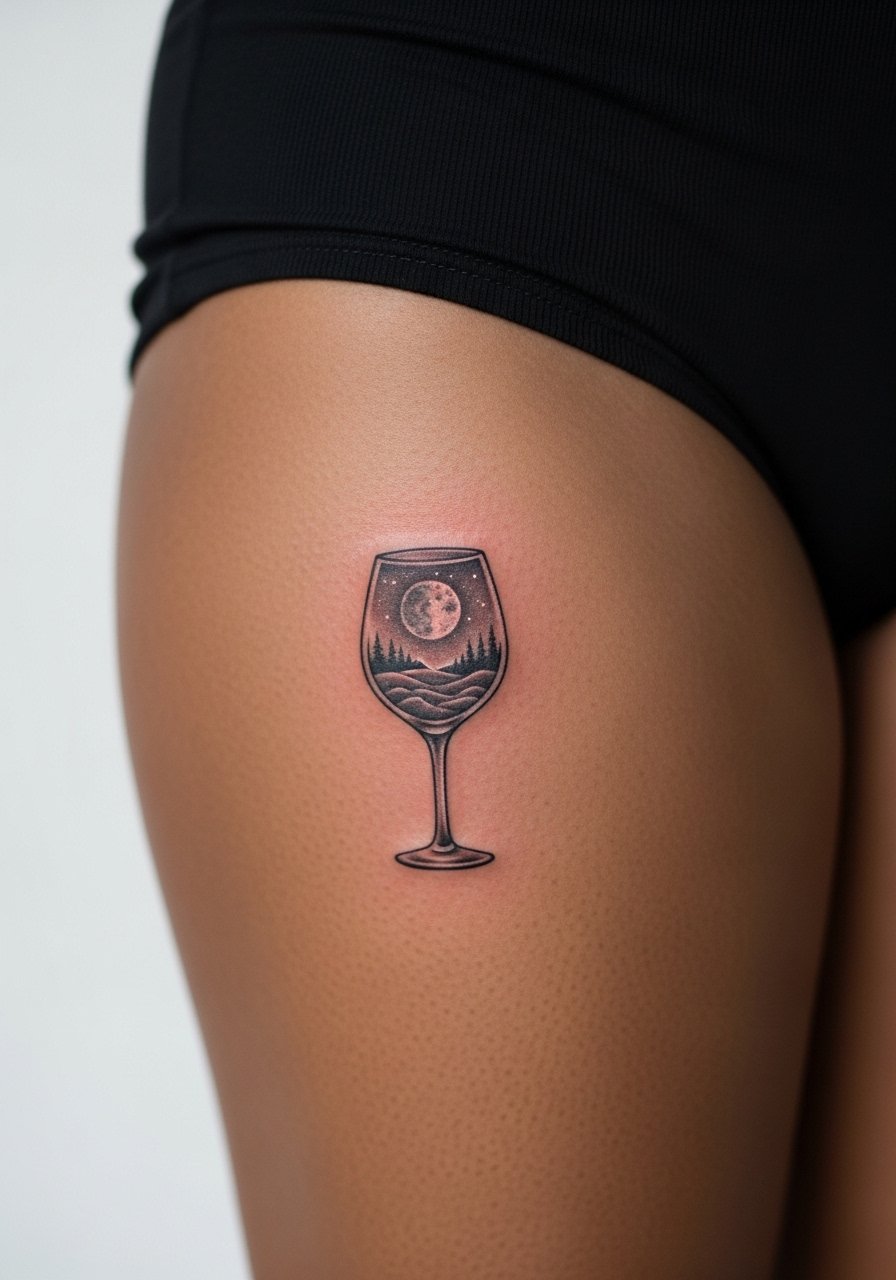
The thigh gives freedom for a scene inside the glass without sacrificing scale. That breathing room preserves tiny landscape elements longer than on the wrist. Expect a longer session for shading and color transitions. In consultation, ask the artist to prioritize contrast between foreground and sky to keep the mini scene readable at arm's length. For the session choose high-waisted bottoms that are easy to shift so the area is accessible without excess exposure. Avoid stuffing too many tiny trees into a narrow bowl; negative space is your friend.
19. Pocket Wine Glass with Chain on the Inner Bicep

Inner bicep pieces are comfortable to tattoo but sensitive during healing because of arm movement. Expect moderate pain and a session that is short to medium in length. If you want the chain detail to stay distinct, ask for heavier linework on the chain links and minimal internal shading. For the appointment wear a loose tank top so the artist can access the inner arm without you exposing the whole torso. A common mistake is asking for too many tiny chains. Space them so each link keeps its shape after settling.
20. Wine Glass with Geometric Reflection on the Calf

Geometric reflections can give a modern twist while staying within traditional linework. The calf is ideal for this because it handles both line density and color. Sessions can be longer. Tell your artist to use clear negative space between geometric shapes so the optical effect survives two to five years of wear. For showing it off, a pair of shorts that lifts above the calf keeps the piece visible without continuous abrasion. Avoid cramming too many small triangles into a narrow bowl.
21. Tiny Single-Needle Wine Glass on the Side Rib
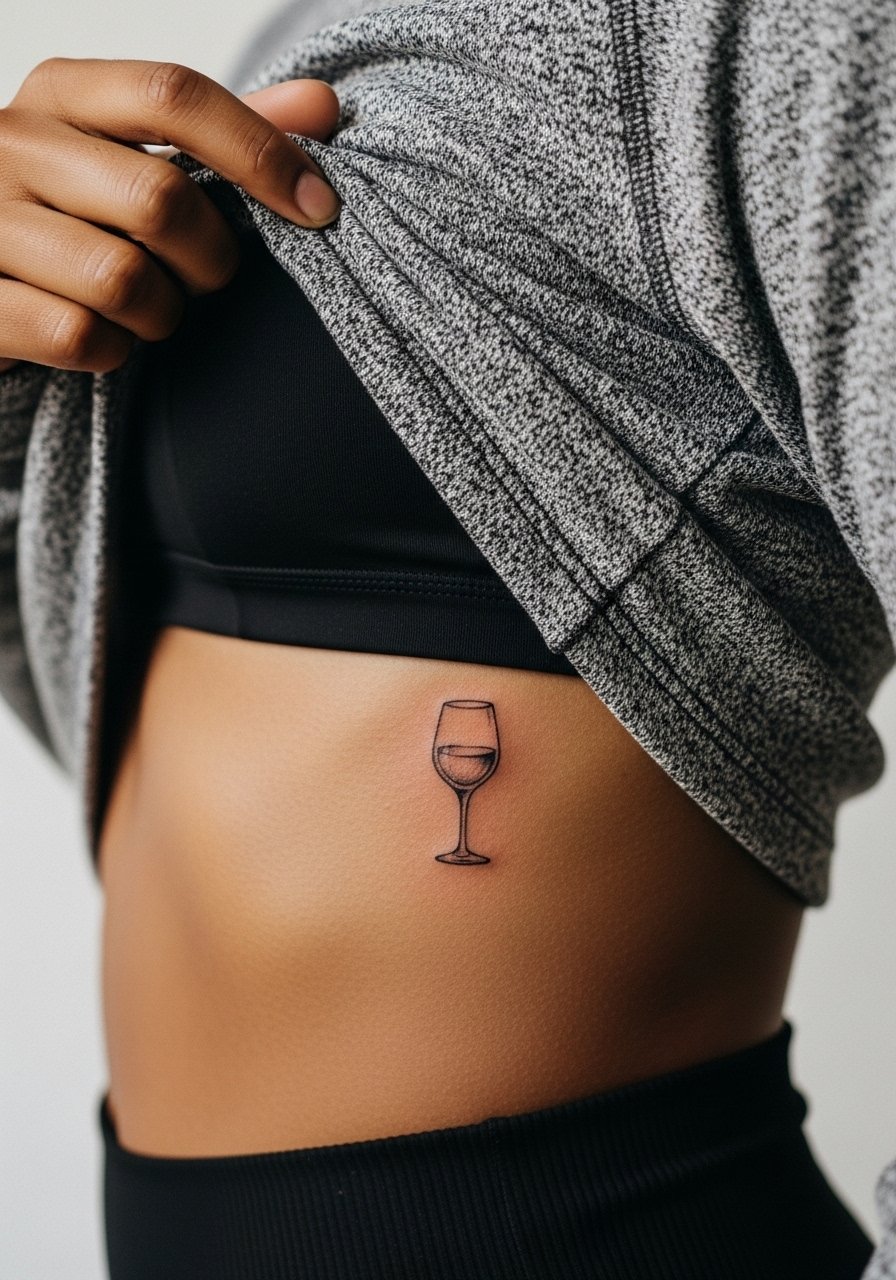
Single-needle pieces on the ribs read delicate and intimate. Expect a sharper pain and a focused consult on depth and spacing. Because the area stretches with breath, ask the artist for slightly stronger primary contours even if you want a delicate look. One common mistake is requesting extreme fineness without accepting a likely touch-up. Plan for a touch-up window and wear a cropped top for the session so the artist has access without exposure beyond the necessary area. If the design includes text, keep it short to remain legible.
Frequently Asked Questions
Q: Will a fine line traditional wine glass blur faster than a bold traditional goblet?
A: From what I've seen, fine line pieces can blur sooner on high-motion areas like the wrist. Bold traditional outlines with saturation tend to age more predictably on places like the shoulder or calf. The real factors are placement, sun exposure, and line spacing, so talk specifics with your artist.
Q: How should I pick an artist for tiny wine-glass work versus a large chest piece?
A: Look for portfolios that show healed photos in the same scale and placement you want. Use local shop directories, convention listings, hashtag searches, and community forums to find artists who post healed work. Ask about their touch-up policy and recent examples of similar-scale pieces.
Q: Do hand or finger wine glass tattoos affect professional opportunities?
A: Hand and finger tattoos are highly visible and some workplaces still consider them in hiring. One camp of artists advises against visible hand work for that reason. Another says technique and placement reduce the issue. Consider your career context before committing, and choose placements you can conceal if needed.
Q: How long after a session can I wear the clothes you suggested for showing the tattoo?
A: Wait until the initial healing crust falls away and your artist clears you, usually around seven to ten days. For the first week go with loose, friction-free clothing like the loose tank tops and wide-neck shirts mentioned earlier, and avoid tight bands or jewelry over the area until fully healed.
Q: Are there wine-glass designs worth avoiding because they never age well?
A: Very tight micro detail inside a tiny bowl and ultra-tiny script under the rim are the usual troublemakers. Designs that rely on minuscule negative space tend to merge over time. If you love the idea, scale up or simplify the internal details so the silhouette survives.
Q: Should I expect touch-ups, and how often for the styles here?
A: Expect touch-ups on high-motion or high-friction areas within two to five years. Visible spots like hands, fingers, and ribs are the most likely to need attention. Lower-friction placements like the shoulder and calf usually stretch the time between touch-ups.
Q: How do I balance wanting a delicate wine glass and long-term legibility?
A: Ask for slightly reinforced primary contours and reserve the ultra-fine work for accents. A touch of stronger lineweight preserves the delicate feel while increasing longevity. Meet your artist halfway on this so the finished result feels both delicate and durable.