Fine line Foo dogs are everywhere on saved boards, but the tattoos that still read clean after five years are the ones that respected spacing, skin movement, and placement. I keep pushing clients away from crowded micro detail on high-motion areas and toward designs that let the linework breathe. Below are 27 illustrative takes on the Foo dog motif, starting with a forearm piece that shows how to get intricate without losing longevity.
1. Fine Line Foo Dog on Inner Forearm
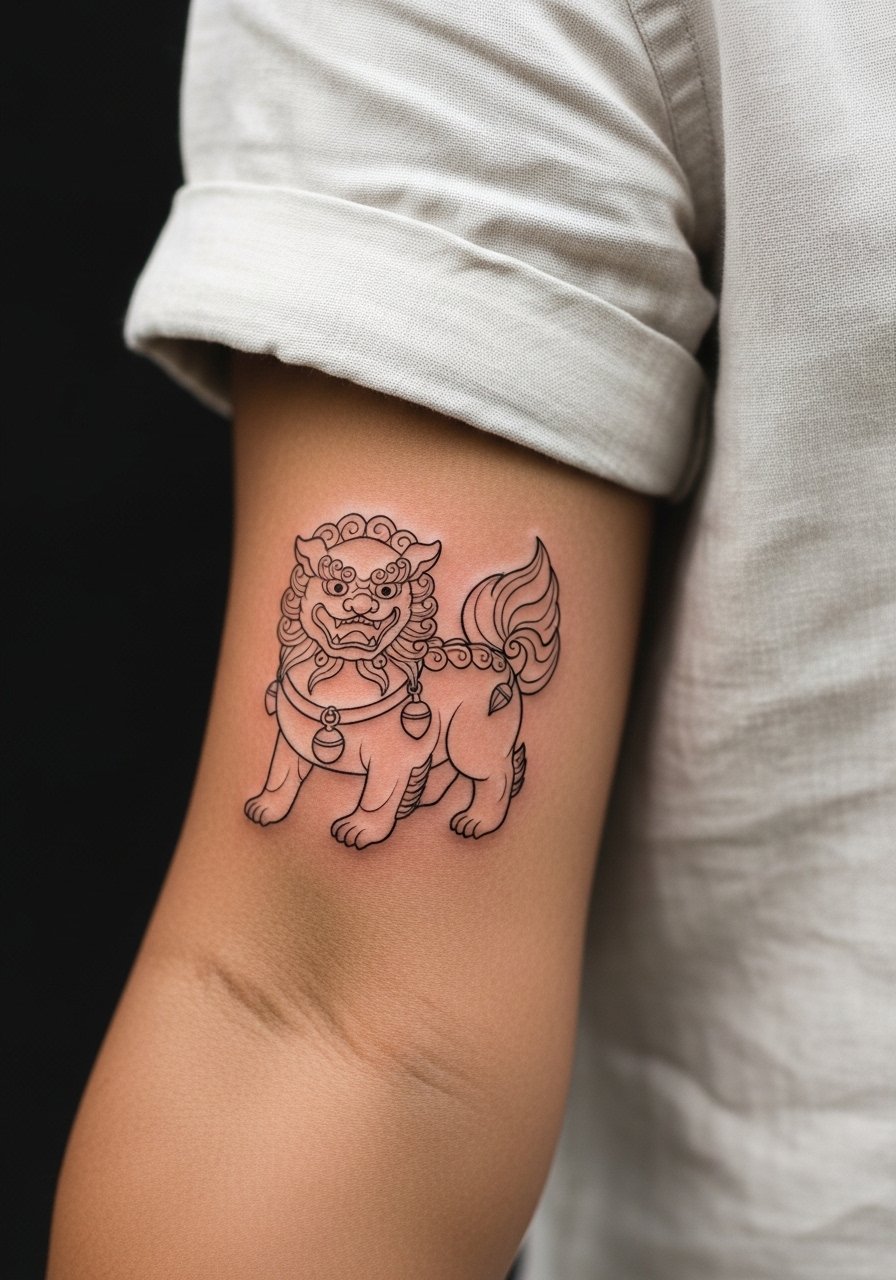
I often recommend the inner forearm when someone wants a detailed illustrative Foo dog without the long-term risk of blowout. Ask your artist to keep the whisker lines and fur stippling slightly open rather than packed, and request a preview stencil to check scale in natural light. Pain is mild to moderate and sessions usually fall under two hours for a medium-sized piece. At six months the linework should still read crisp, at two years expect slight softening, and at five years thin whisker lines may require a touch-up. For showing it off, pair with a rolled-sleeve linen shirt so the tattoo sits front and center without stretching the skin.
2. Micro-Realism Foo Dog on the Ankle
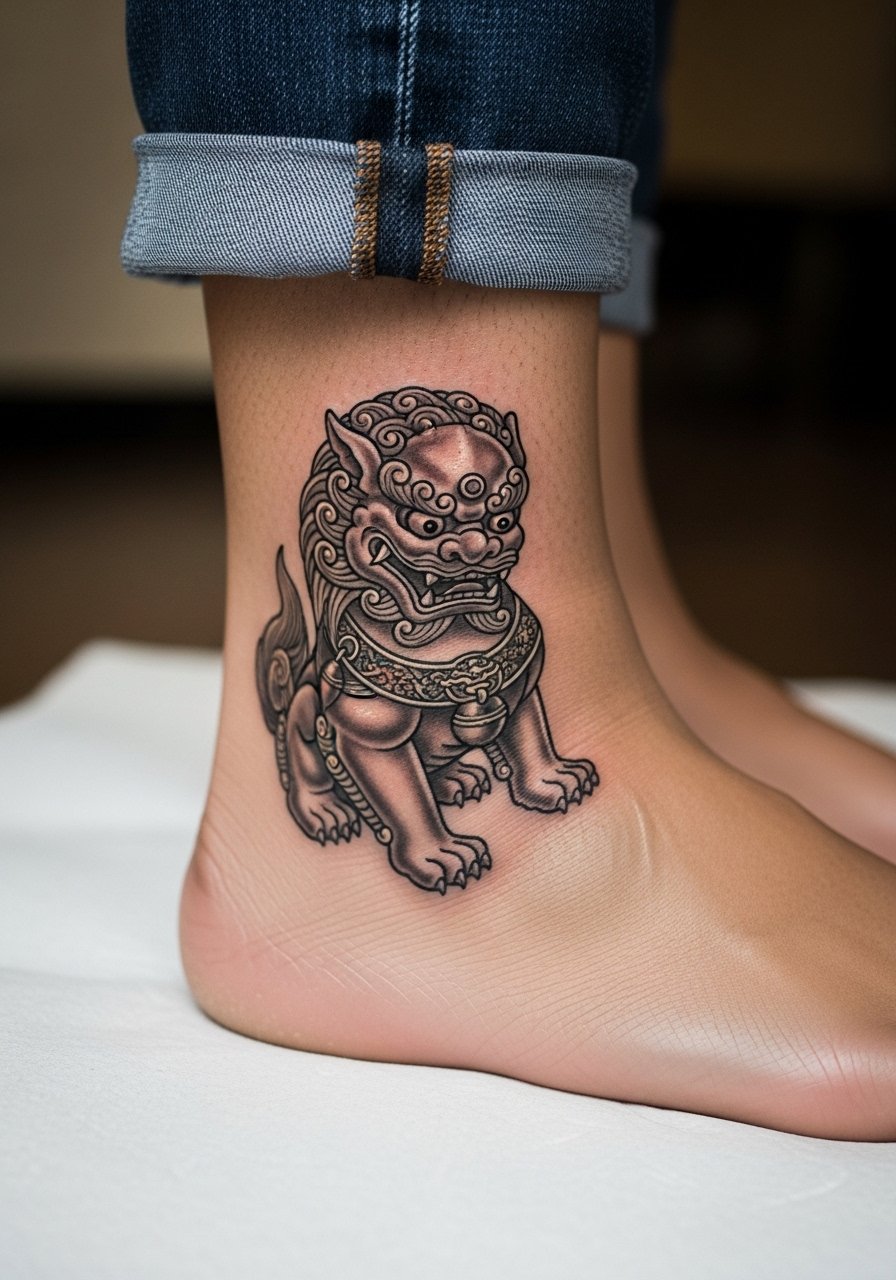
Fair warning: ankles see a lot of movement and friction from socks and shoes, so micro-realism needs extra negative space to avoid early blurring. In consultation, specify you want slightly bolder anchor lines around the muzzle and paws so the tiny shading reads longer. Session time is usually under two hours but expect more visits if you want dense texture. Blowout risk is moderate because the skin is thin near the ankle. For display, try pairing with low-cut sandals or a leather ankle bracelet to frame the piece without rubbing it.
3. Bold Line Foo Dog Shoulder Cap
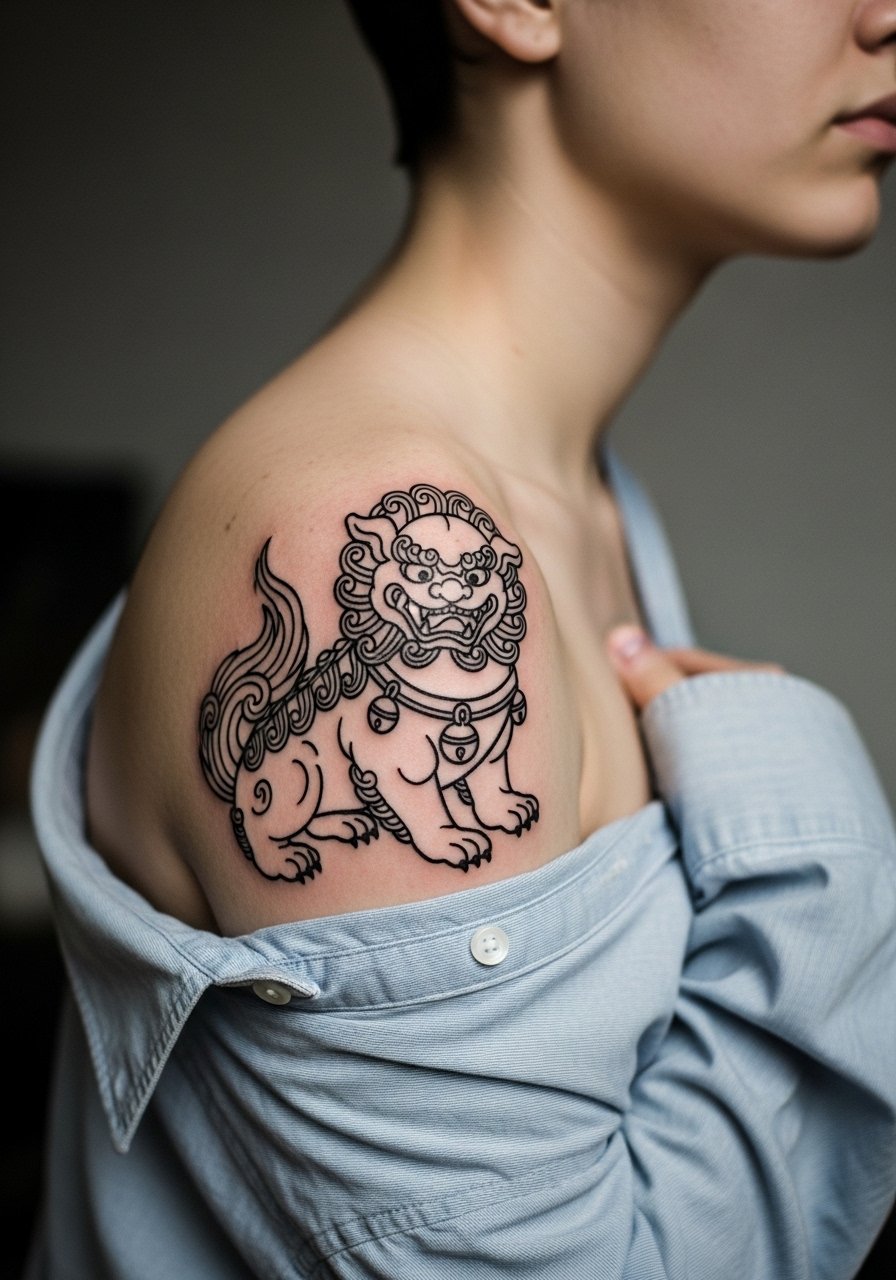
There is something about bold outlines and saturated black that reads from across a room, so I recommend this when you want a Foo dog with presence. Tell your artist to use strong outer linework with internal stipple shading to keep the silhouette readable as the tattoo ages. Shoulder skin is forgiving, pain is low to moderate, and sessions often land around one to three hours. This placement takes color and saturation well so touch-ups are less frequent than delicate fine-line work. For evenings or casual wear, a loose button-down shirt pulled aside frames the shoulder and makes the cap feel intentional.
4. Neo-Traditional Foo Dog on the Calf
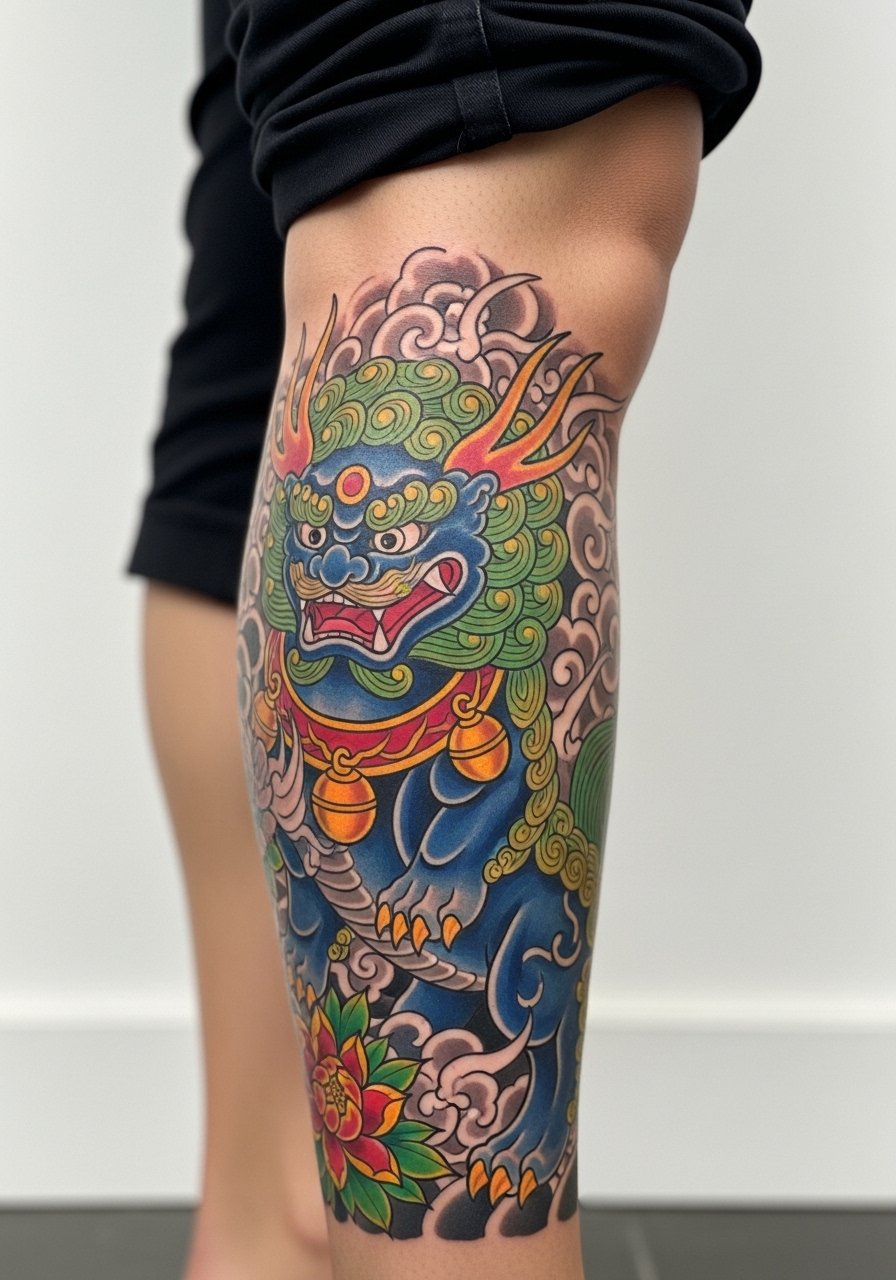
This version leans into saturated fills and bold contrast so it ages into a solid silhouette rather than a blotch. During the consult, ask for mid-tone fills rather than extremely light washes so the color has something to hold onto over time. Calf sessions are moderately painful and comfortable to sit through for one to three hours. A common mistake is asking for tiny details inside large color blocks, which can soften into muddiness. For summer wear, this design pairs nicely with cropped trousers and a classic canvas sneaker so the Foo dog reads while the lower leg stays clean.
5. Linework-Only Mini Foo Dog on the Wrist
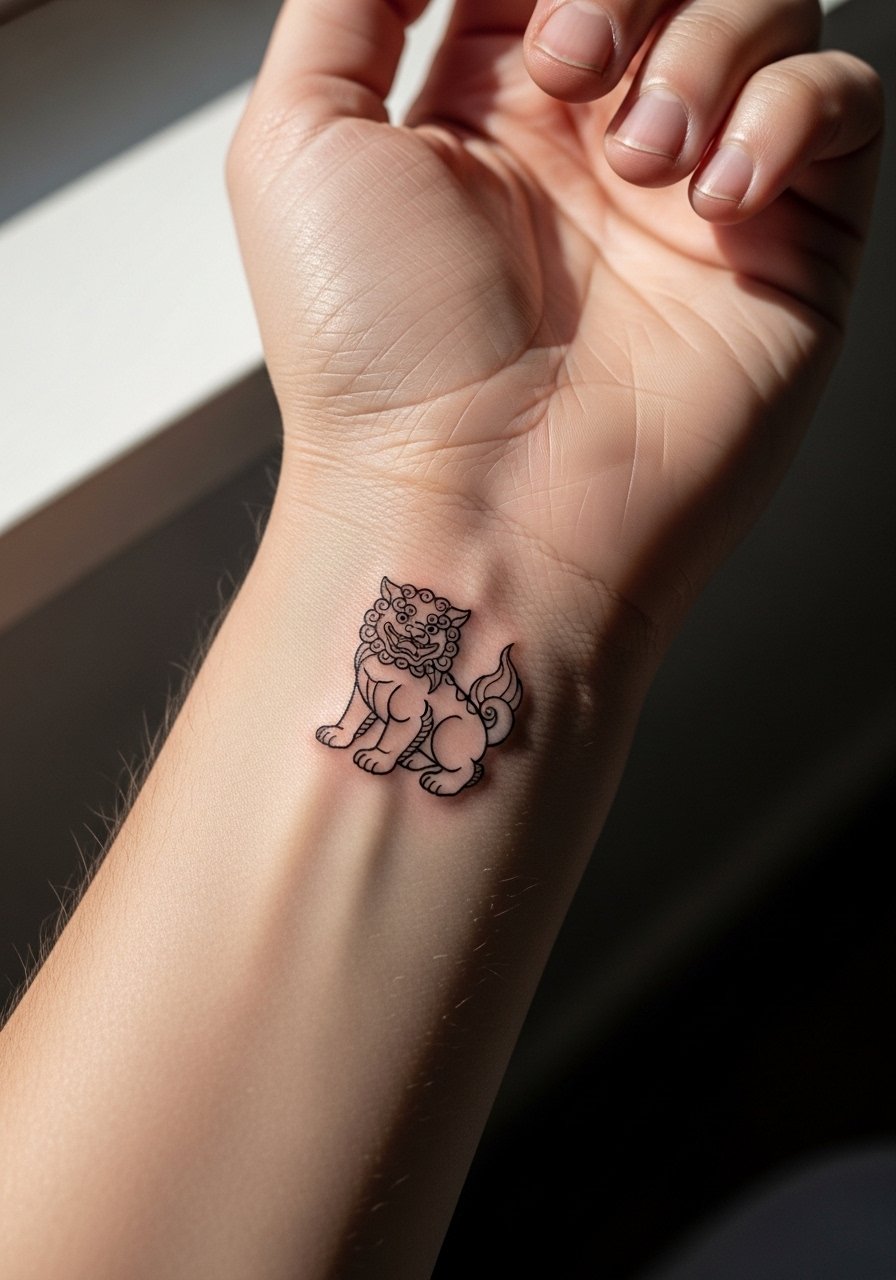
The wrist is a high-motion, high-wash zone so the key is scale. Make this a small but bold outline rather than a crowded miniature. When you sit with your artist, ask for slightly thicker primary contours and airy internal linework so the piece keeps its shape through daily hand washing. Pain can be sharp because the wrist is thin. Expect a touch-up window at year two or three for very fine internal details. For showing it off, stack with a thin chain bracelet that sits below the tattoo so the artwork stays unobstructed.
6. Half-Sleeve Illustrative Foo Dog with Floral Background
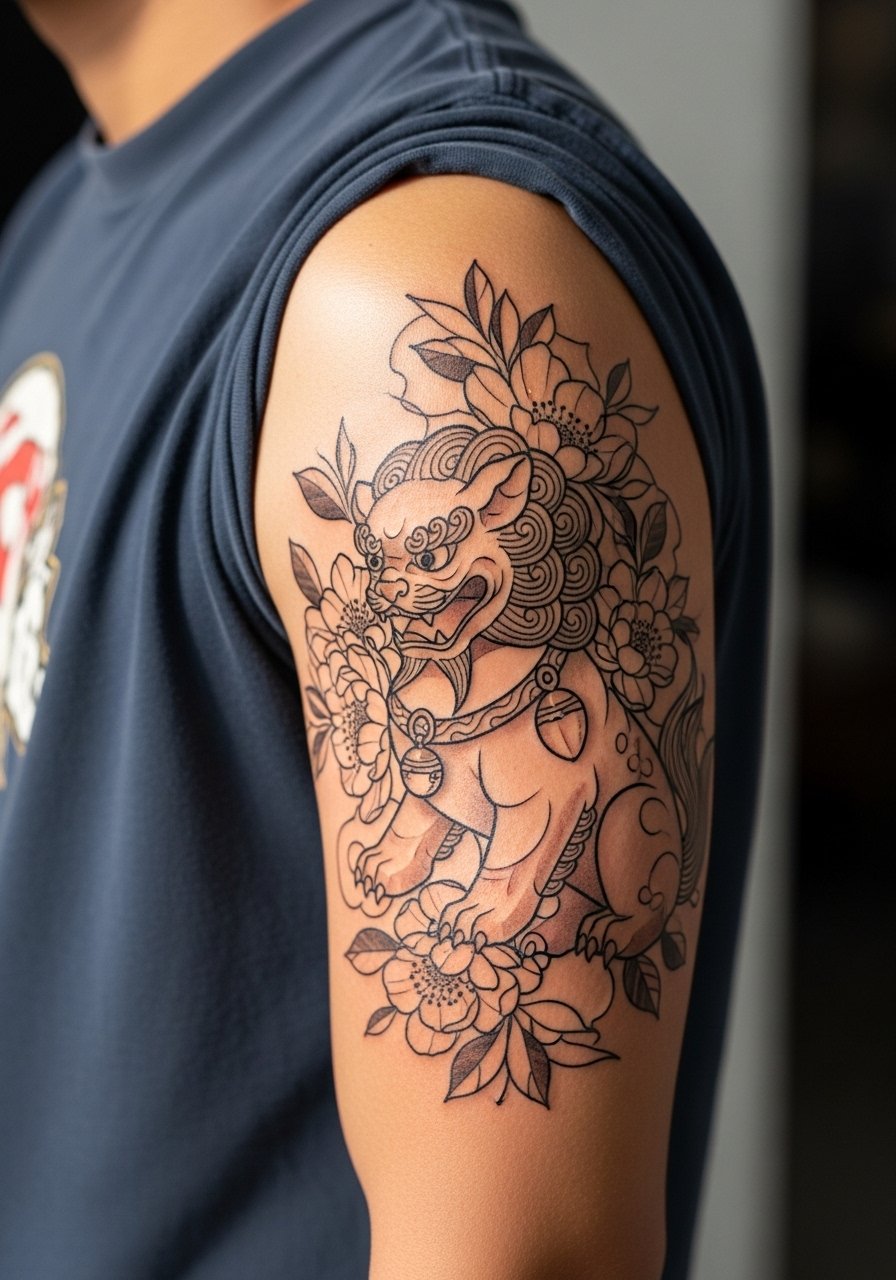
When you want narrative and movement, a half-sleeve lets the Foo dog breathe amid floral elements and scrollwork. In consultation, bring reference photos showing the exact flow you want so the artist places paws and tail to work with the arm's natural curve. Sessions are longer, often split across multiple three-hour blocks. The biggest mistake is compressing too many tiny elements into one band. Expect the dense black outlines to hold well and the stipple shading to soften slightly by year three. For wardrobe, short sleeves and a rolled short-sleeve tee show off the sleeve without stretching the skin.
Studio Day Picks
The forearm, wrist, and upper arm pieces above need different prep than chest or rib work, and a few targeted items make studio time and the first week smoother.
-
Stencil transfer paper kit. Lets you test stencil placement on the forearm and wrist from ideas above so scale and flow read correctly before needles touch skin.
-
Topical numbing cream. Applied as directed before an ankle or wrist session it takes the edge off sensitivity without changing how the artist works.
-
Thin protective film roll. Keeps high-friction zones like the wrist and ankle cleaner during the first week of daily activity.
-
Fragrance-free gentle body wash. Safe for cleansing fresh lines on arms and legs without stripping the settling ink.
-
Aquaphor healing ointment. A thin layer in the first days helps keep fine line edges moist while the skin starts to form a stable healed surface.
7. Foo Dog Sternum Piece with Soft Linework
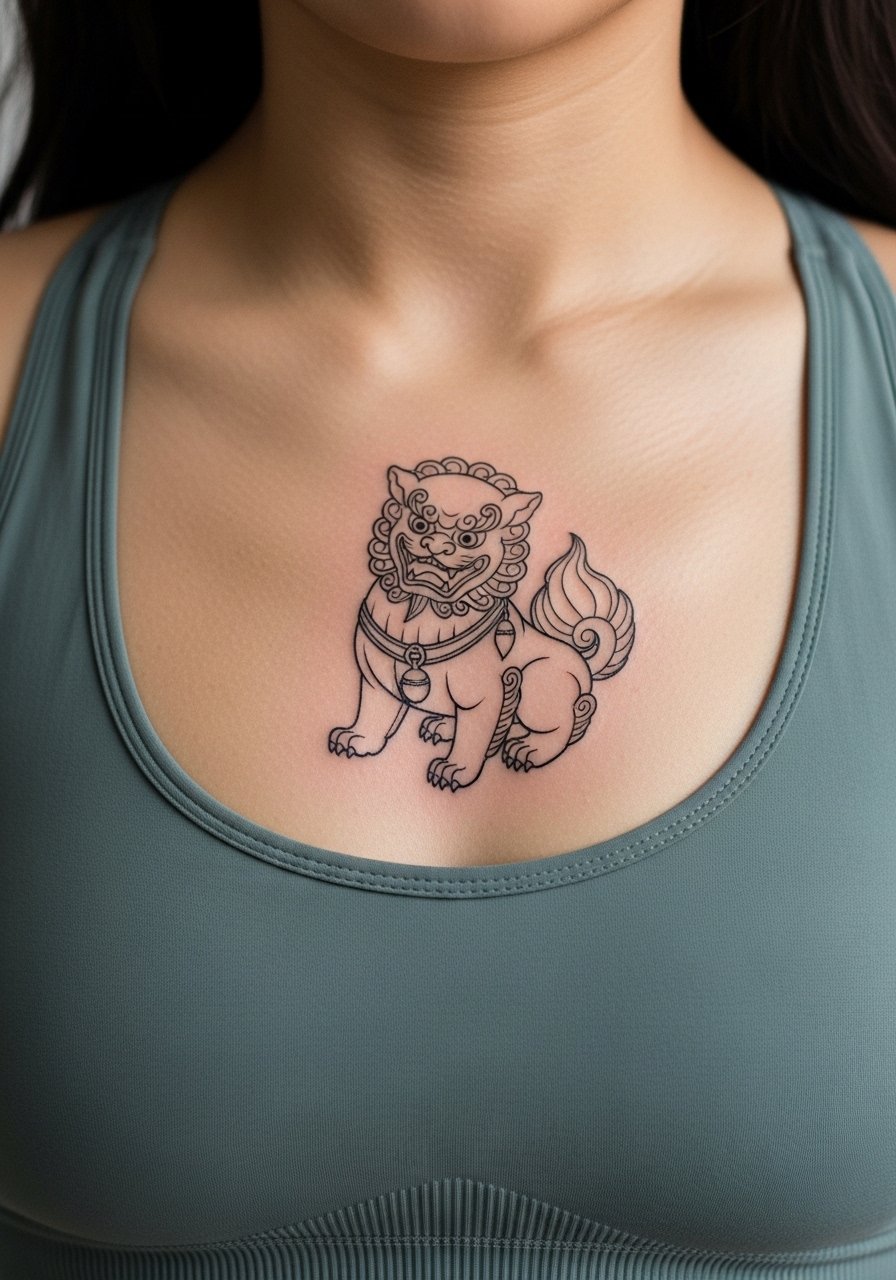
Controversies exist around fine line work on the sternum. One camp argues the stretch and movement in the chest will blur thin lines within two years. The other camp says with proper needle depth and slightly increased spacing, fine lines can hold well. When you book this placement, ask your artist where they stand on that debate and request a conservative line weight. Sternum sessions can be higher on the pain scale. For session wear choose a sports bra or zip-up hoodie you can easily remove and replace without rubbing the fresh lines.
8. Minimalist Dot Work Foo Dog Behind the Ear
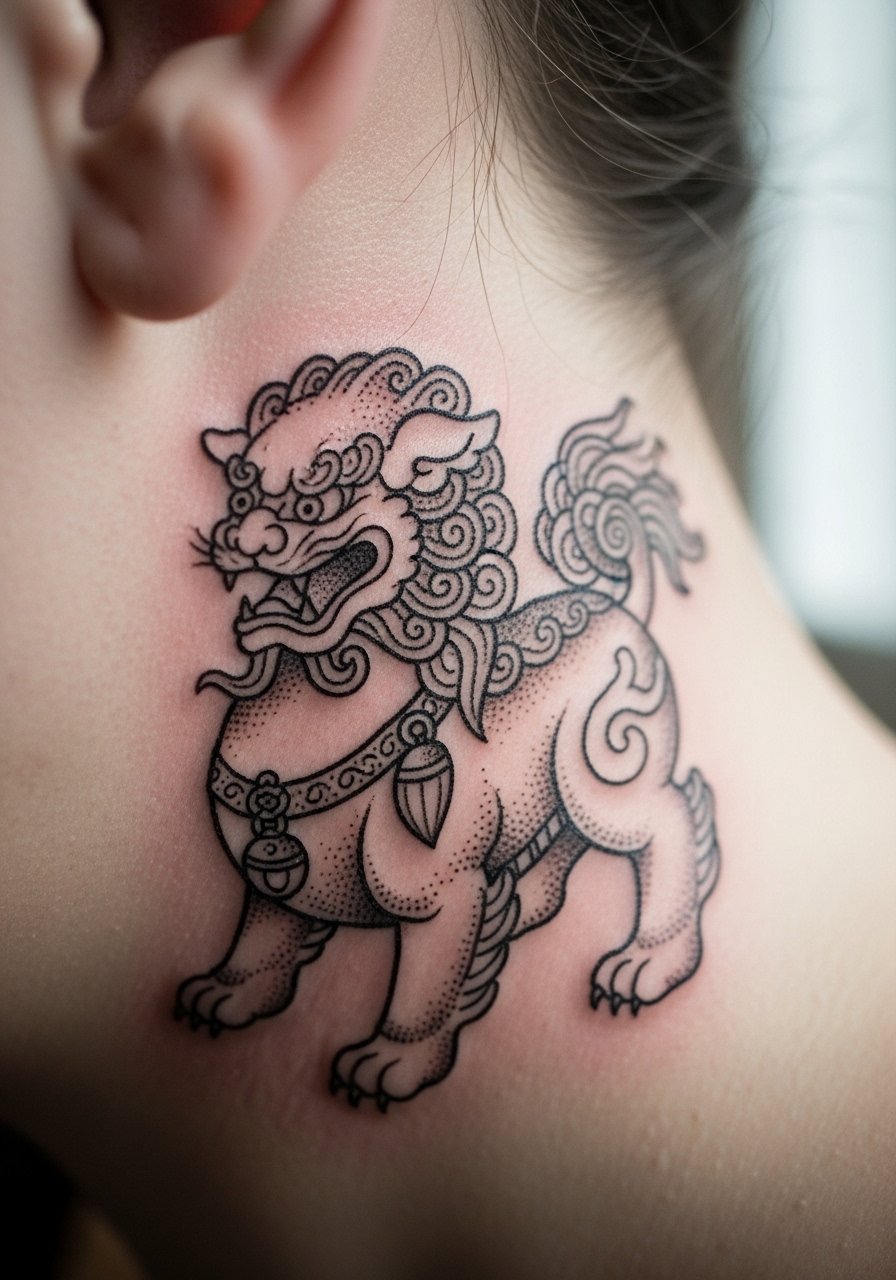
Behind-the-ear placements require delicate scale choices because visibility is limited and hair covers part of the design. Ask for a stencil placement that sits slightly lower along the neck so the motif peeks without crowding. Sessions are short and pain is moderate. Dot work translates well here because small stipple areas age into texture rather than blurs. Note that hair growth can obscure details, so expect occasional touch-ups if you keep the design tiny.
9. Illustrative Foo Dog on the Upper Back
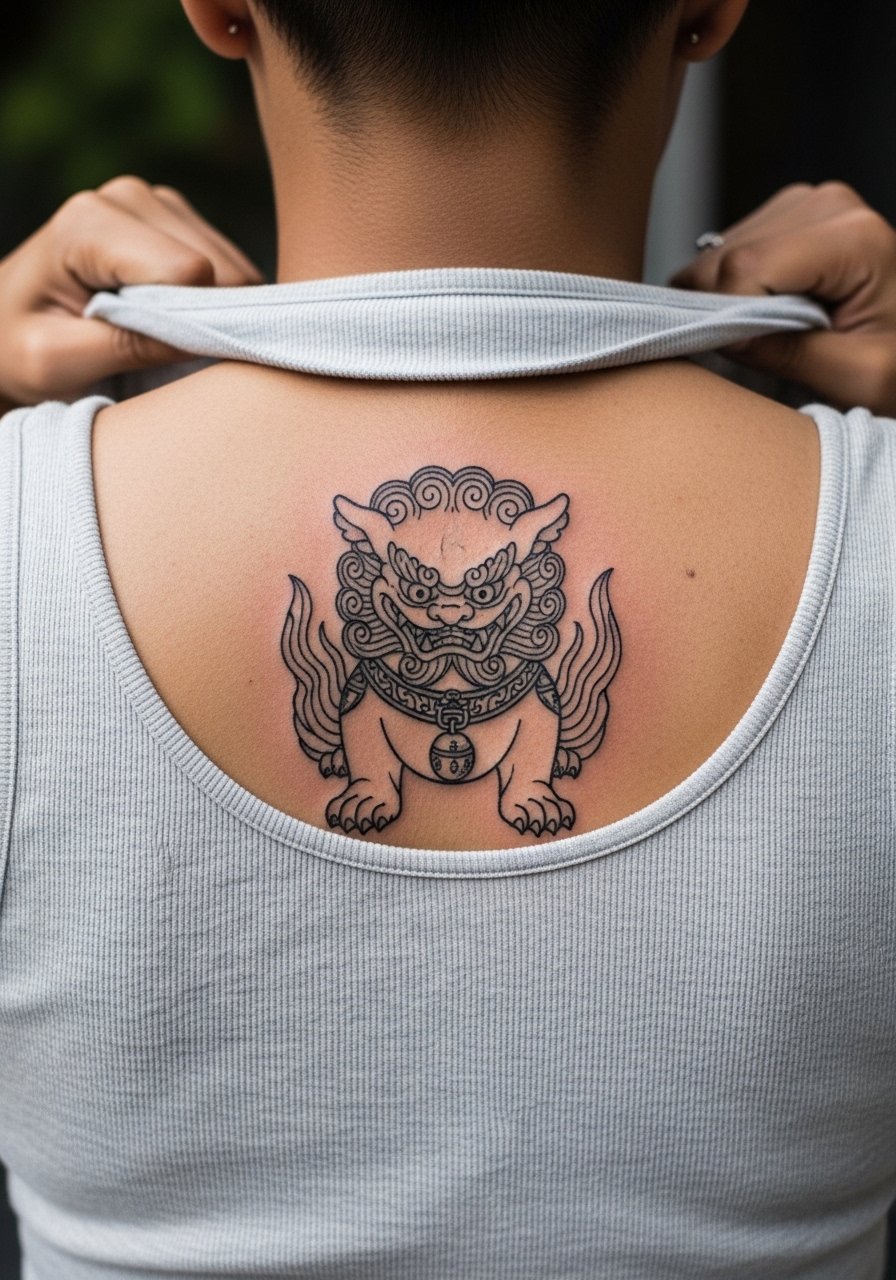
Visual impact leads this one. A centered upper-back Foo dog gives you room for scale and a detailed face without risking stretch. When you consult, discuss symmetry and how the spine line will interact with the design so the head doesn't feel off-center when you move. Pain is low to moderate and session times vary with size. The skin here takes saturation well so dense blacks will hold. For showing it off, open-back tops or a slip dress with low back make the piece readable while keeping it covered for daily life.
10. Small Foo Dog Behind the Knee
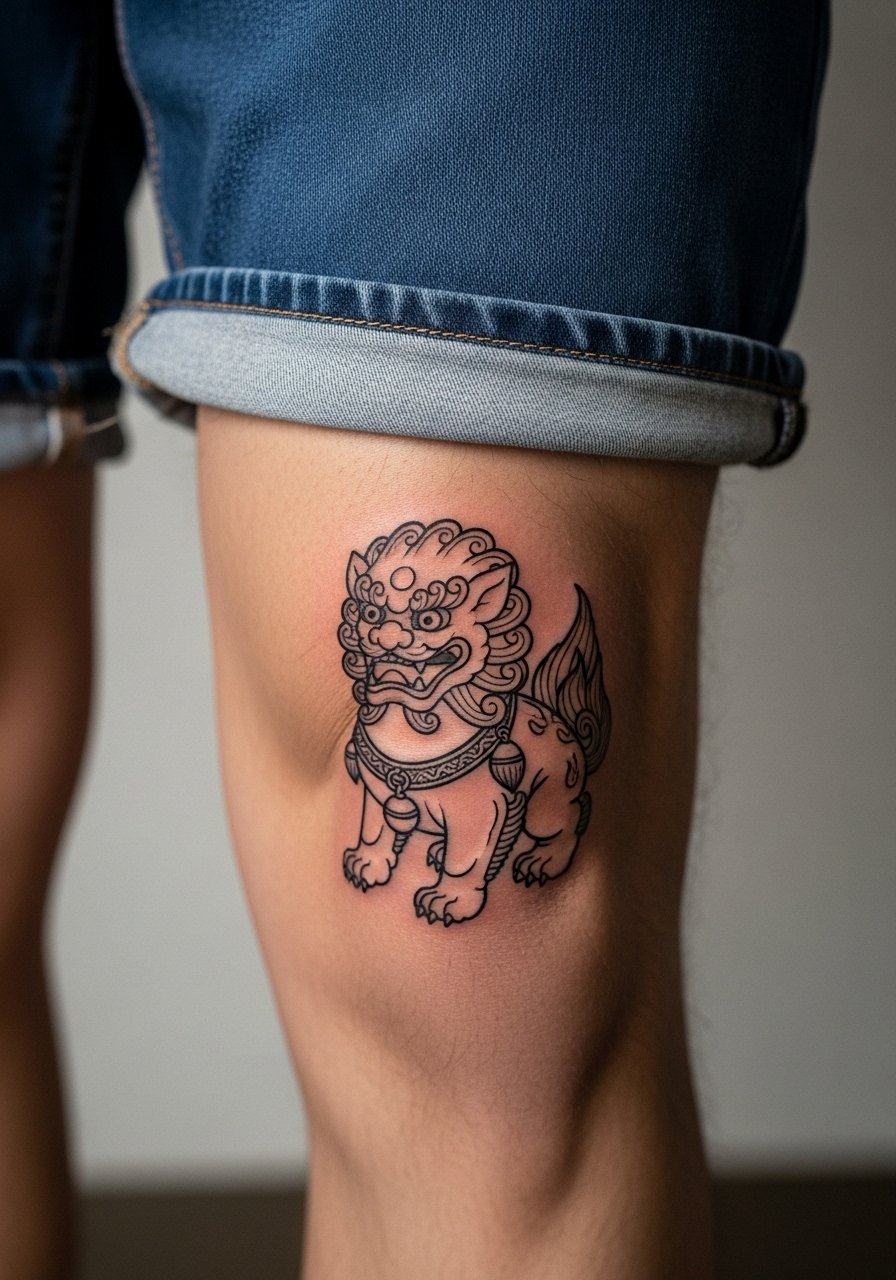
The back of the knee is a high-motion site, and the skin there can stretch a lot. The biggest mistake is packing too much micro detail into that fold. I recommend a slightly larger scale with open negative space so the form stays legible over time. Session discomfort can spike when the knee flexes mid-appointment, so bring flexible clothing. Expect faster softening and a higher chance of touch-up by year three. For session comfort, wear loose shorts or athletic wear that you can easily move without rubbing the area.
11. Neo-Illustrative Foo Dog Collarbone Accent
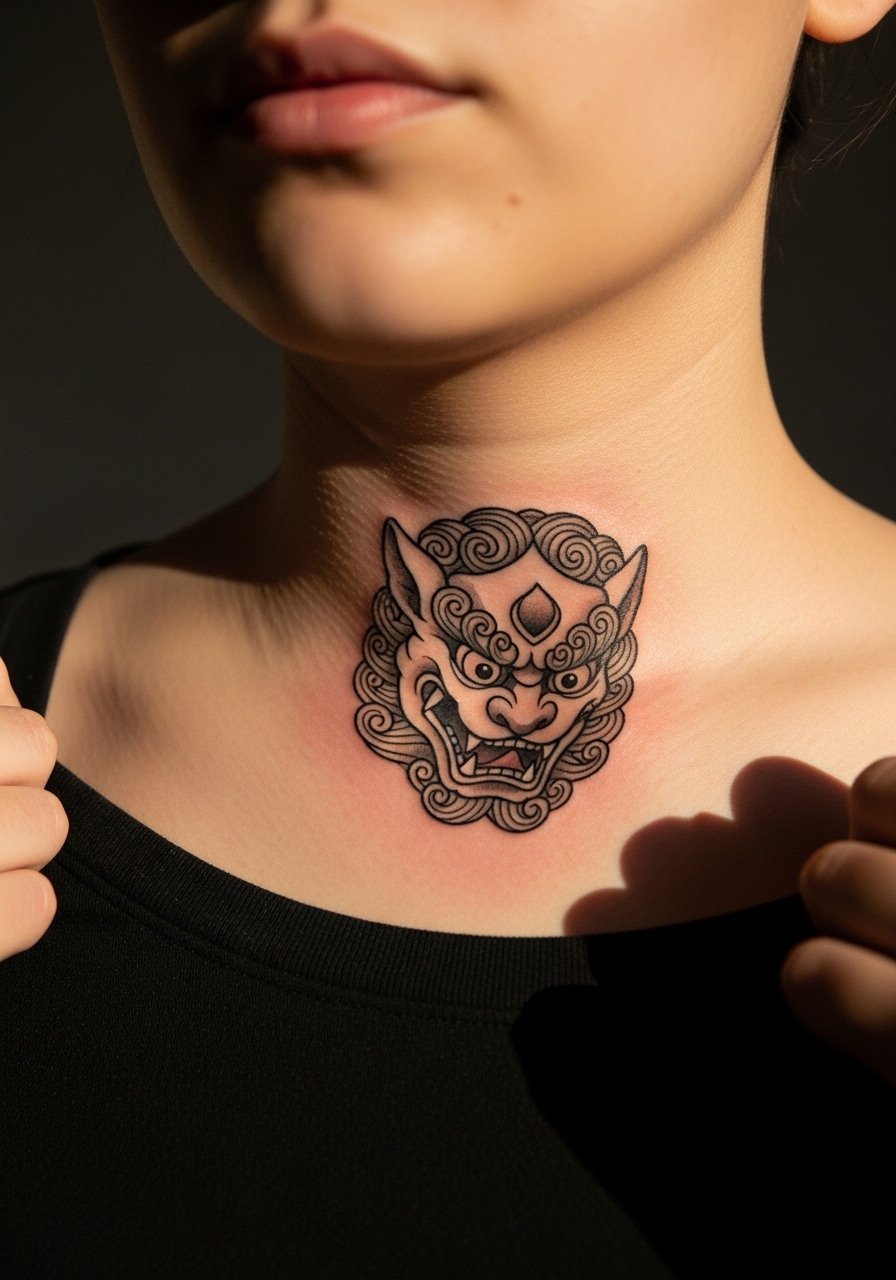
A collarbone Foo dog reads intimate and deliberate. Visual placement matters because collarbones change how lines sit when you lean forward. Tell your artist you want the jawline to follow the bone so the piece looks balanced standing and sitting. Pain here is moderate and the skin can be unforgiving for very thin lines. For showing it off, a thin chain pendant necklace sits just above the piece without crowding the artwork.
12. Illustrative Foo Dog on the Ribcage with Wave Motif
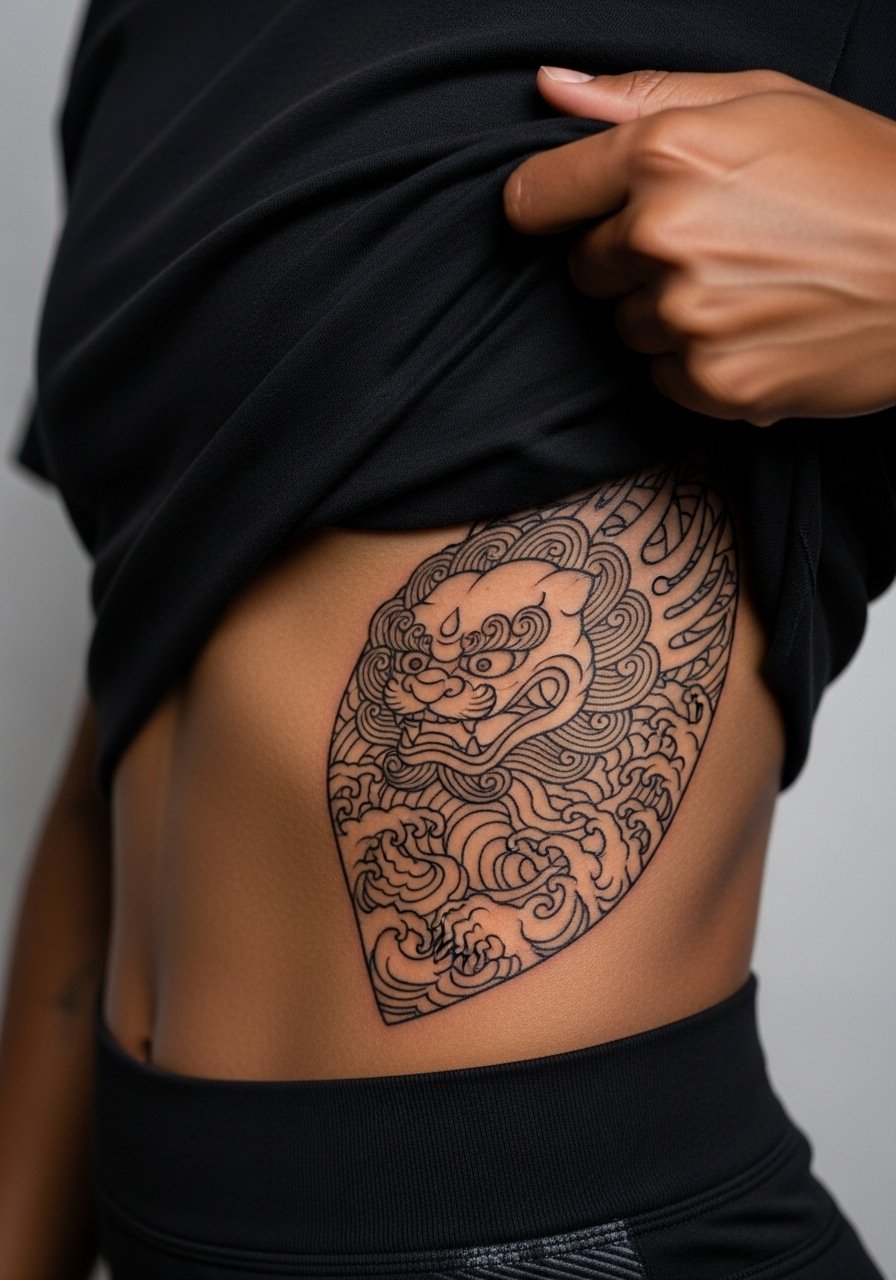
Artists split on fine line on ribs. One group warns that skin stretching and constant expansion cause lines to blur within a few years. The other group says that with proper depth and spacing, fine line can settle just fine on this canvas. When you choose ribs, ask for a slightly more open composition and plan for touch-ups at year two or three. Rib sessions can be among the most painful, so consider shorter sittings and breaks. For the appointment, wear a cropped top or sports bra that you can lift easily without disturbing the area.
13. Foo Dog Finger Outline
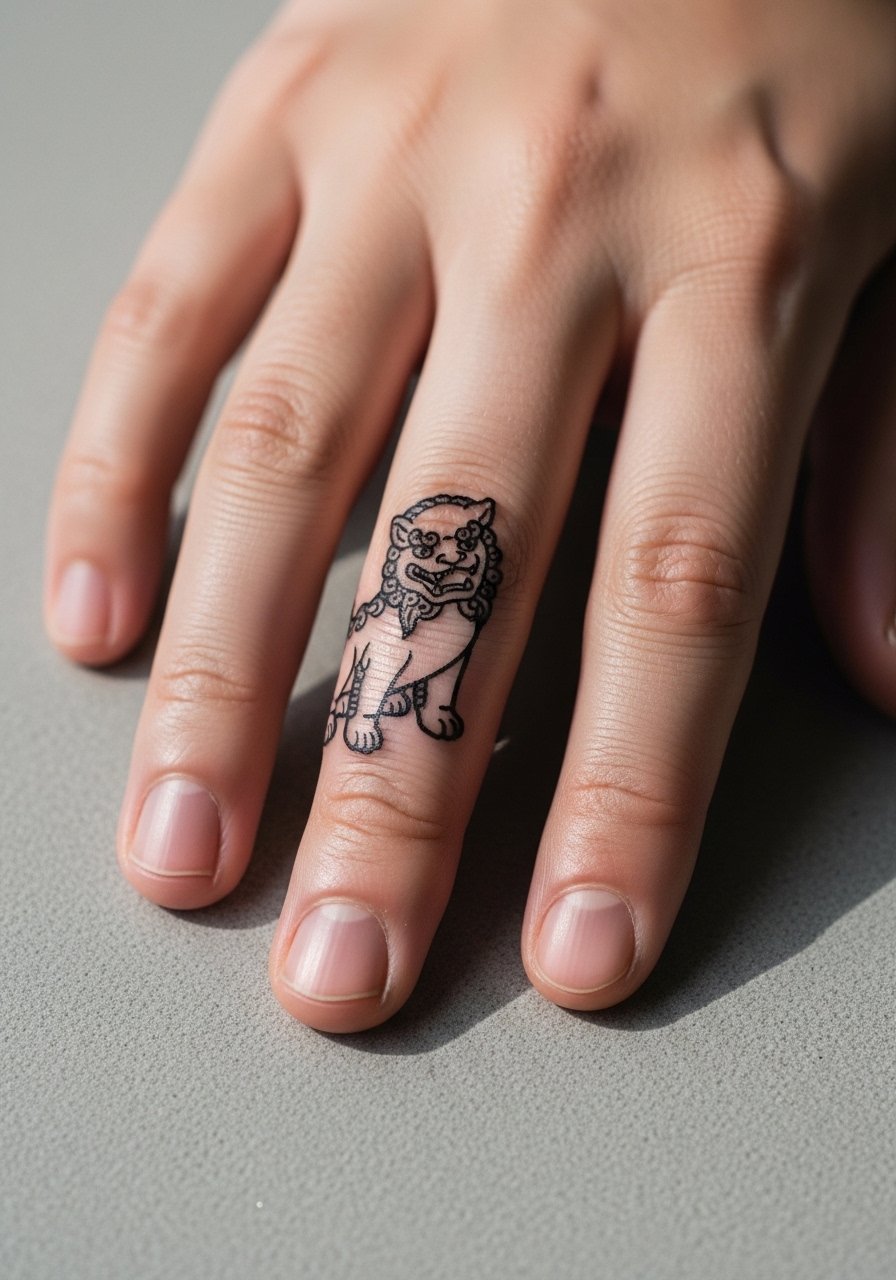
Finger tattoos live hard lives due to constant washing and friction. The most common mistake is asking for intricate interior detail. I recommend a small outline or single-line silhouette with negative space so the form survives daily wear. Sessions are quick but touching up is common by year one to two. For display, keep rings minimal and try a thin band ring set that complements the finger art without adding wear.
14. Foo Dog Thigh Panel with Dot Shading
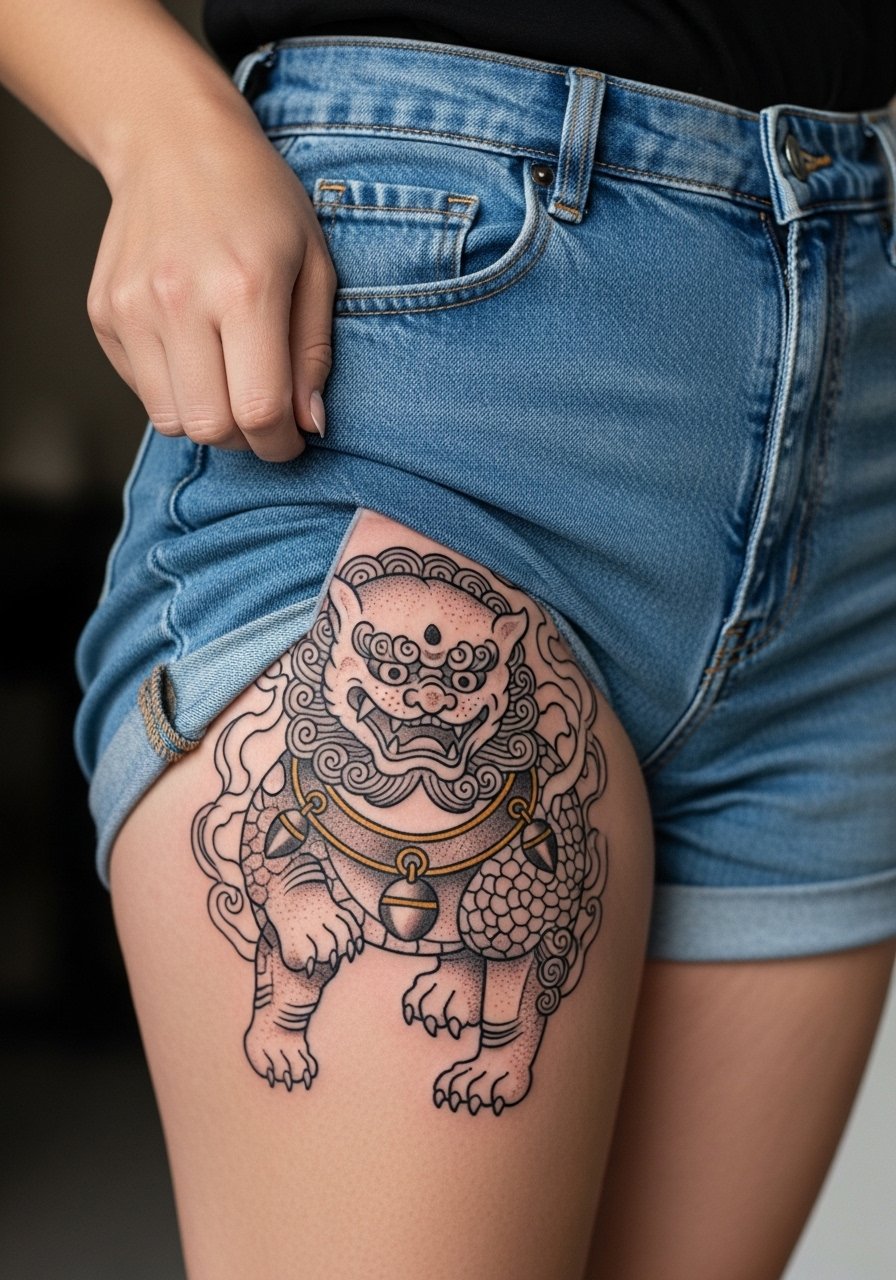
The upper thigh is forgiving for size and gradation, so dot shading and slight tonal work hold nicely. When planning, ask your artist to place heavier contrast toward the outer edge so the piece reads when partially covered. Sessions are comfortable for longer runs, often split into single longer blocks. A common mistake is making the design too low where clothing rubs constantly. For the session, wear loose high-waisted shorts or a skirt that you can shift without pressure on the area.
15. Foo Dog Hand Backpiece with Bold Contour
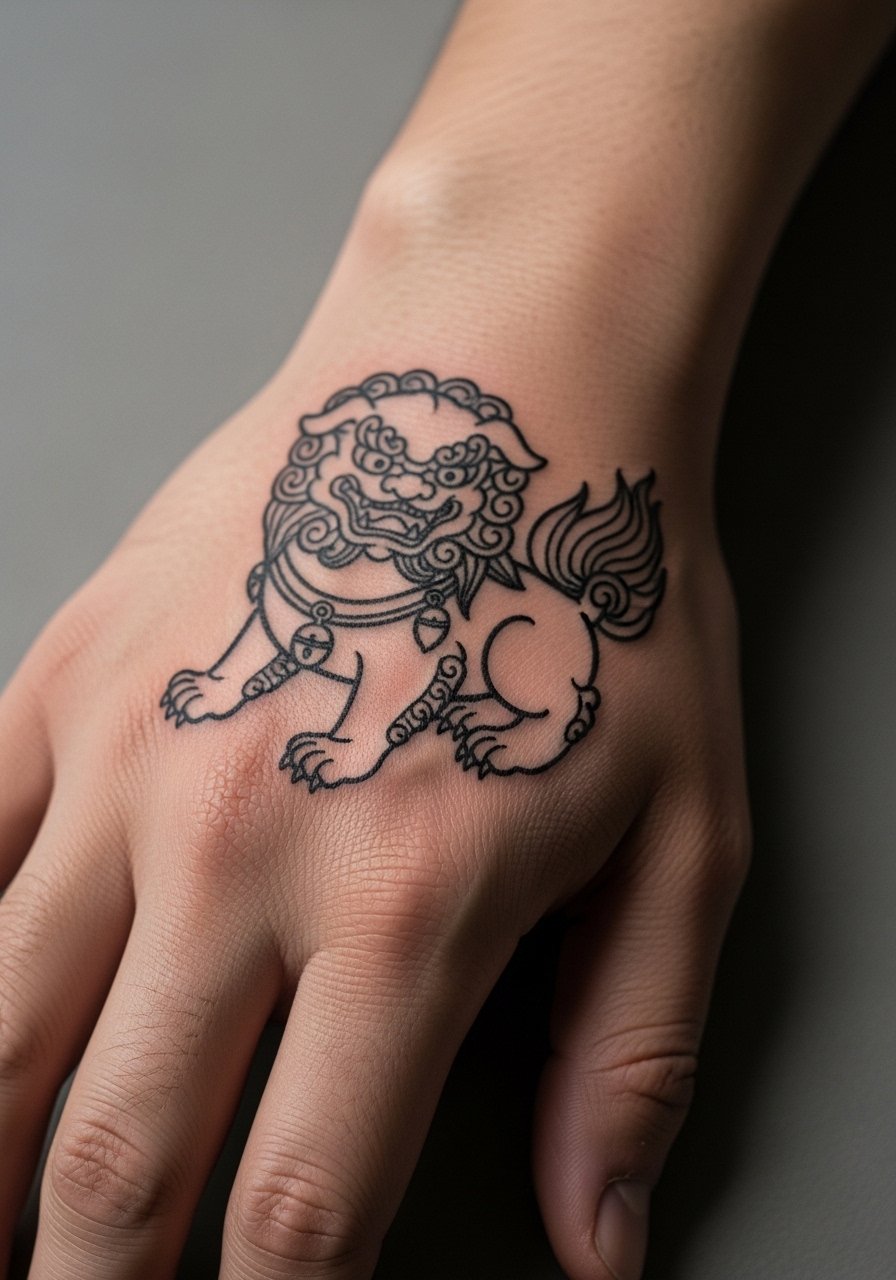
Hand tattoos still affect certain hiring situations, so think through career implications before committing. The skin on the back of the hand is thin and exposed, so go bold on the outer contours and avoid tiny interior strokes that will vanish. Sessions can be sharp and short. Expect a higher likelihood of touch-ups because of sun and frequent washing. For everyday style, consider minimal rings and a simple cuff bracelet that draws attention without rubbing the central art.
16. Watercolor-Accented Foo Dog on the Calf
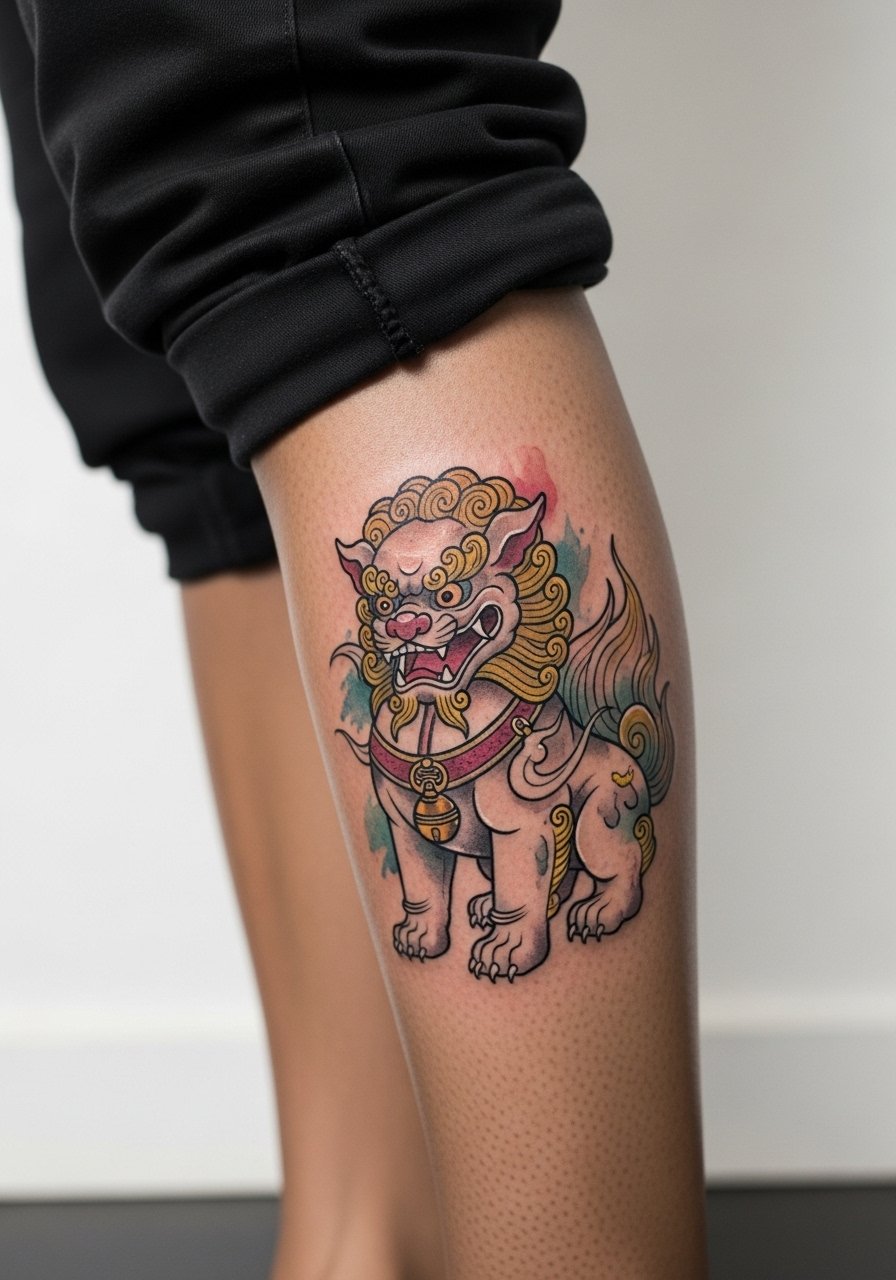
Watercolor accents can look beautiful on the calf because the skin tolerates color washes well. The aging story differs from black linework, so ask for anchor lines to protect the shape as pigments soften. Sessions require careful color layering and usually two passes. A common mistake is asking for very pale washes that disappear quickly. For summer legs, pair with mid-length shorts and a canvas slip-on shoe to keep the piece visible and comfortable.
17. Stylized Foo Dog Neck Nape Piece
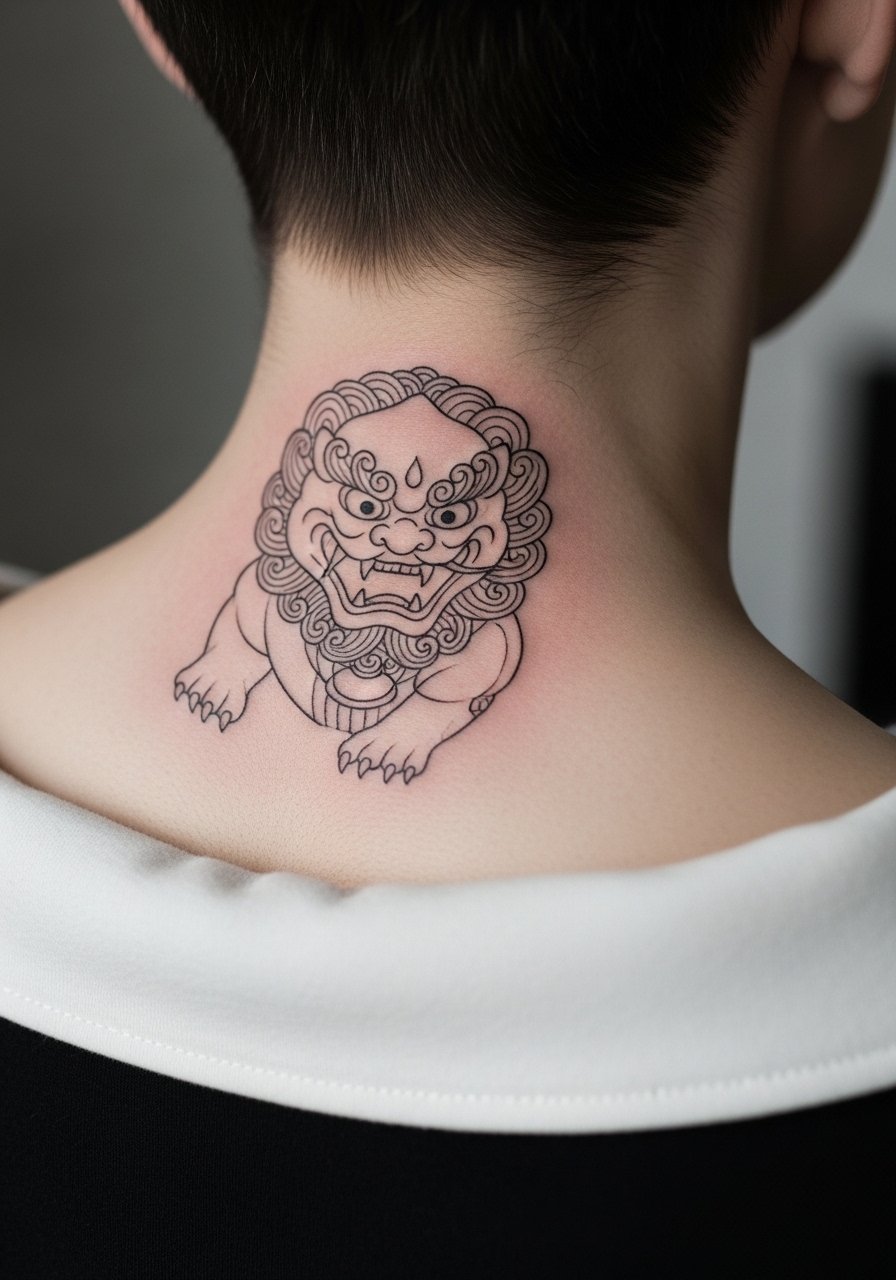
Neck placements age differently depending on how often you tilt and turn. When you consult, discuss whether you want the design low enough to hide beneath collars or centered where it will be visible with short hair. Pain levels are moderate and sessions are short. A mistake is cramming very fine script into the nape zone. For session wear, pick a wide-neck shirt you can adjust without pulling across the fresh ink.
18. Foo Dog Sleeve Tip Near Elbow
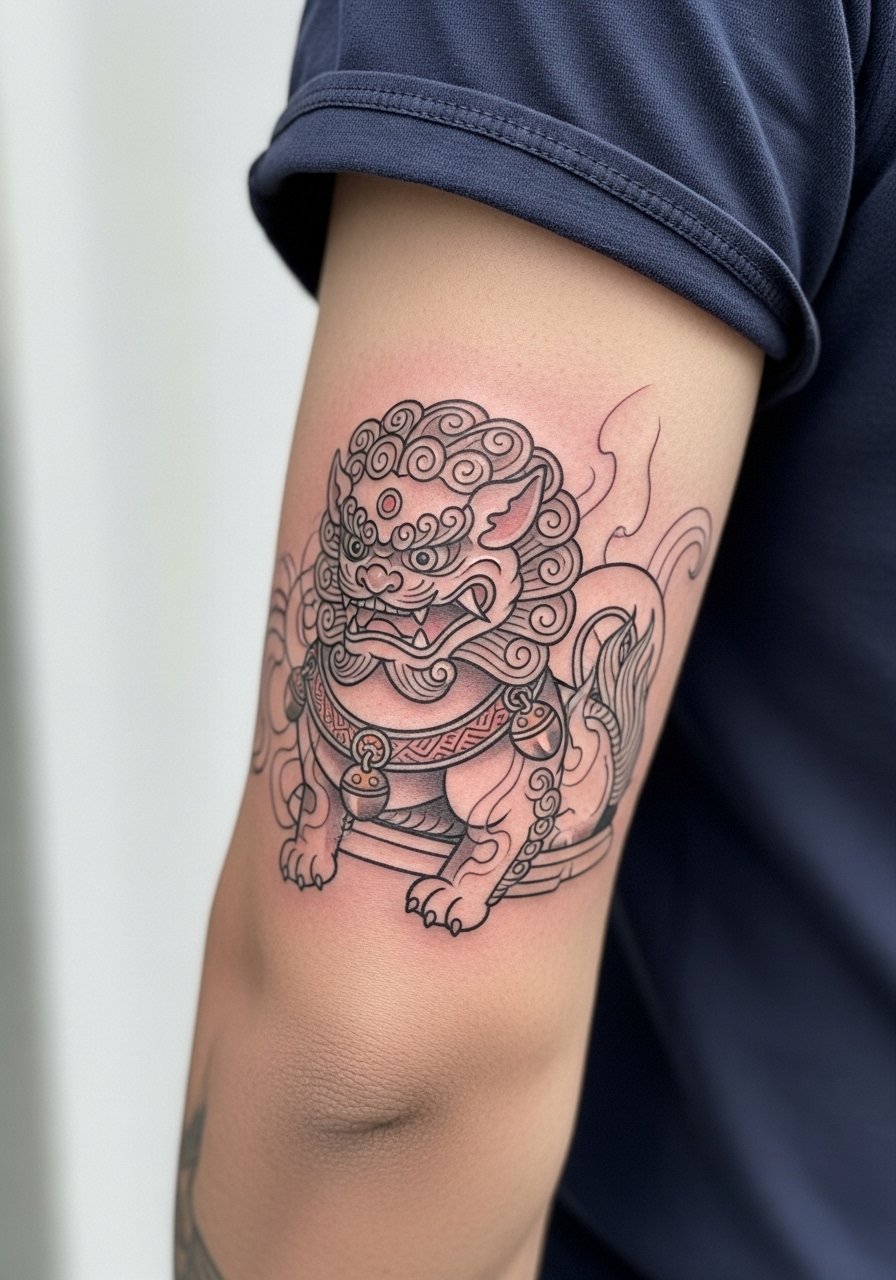
The elbow is a tricky joint because the skin folds and stretches. For longevity, avoid tight concentric detail across the crease. Ask the artist to place heavier elements just above or below the joint so the main features do not sit directly on the fold. Sessions can be uncomfortable over the bone. Expect faster softening on the crease itself and plan touch-ups accordingly. For display, a rolled short-sleeve tee highlights the area without forcing the elbow to flex.
19. Foo Dog Calf-to-Ankle Flow Piece
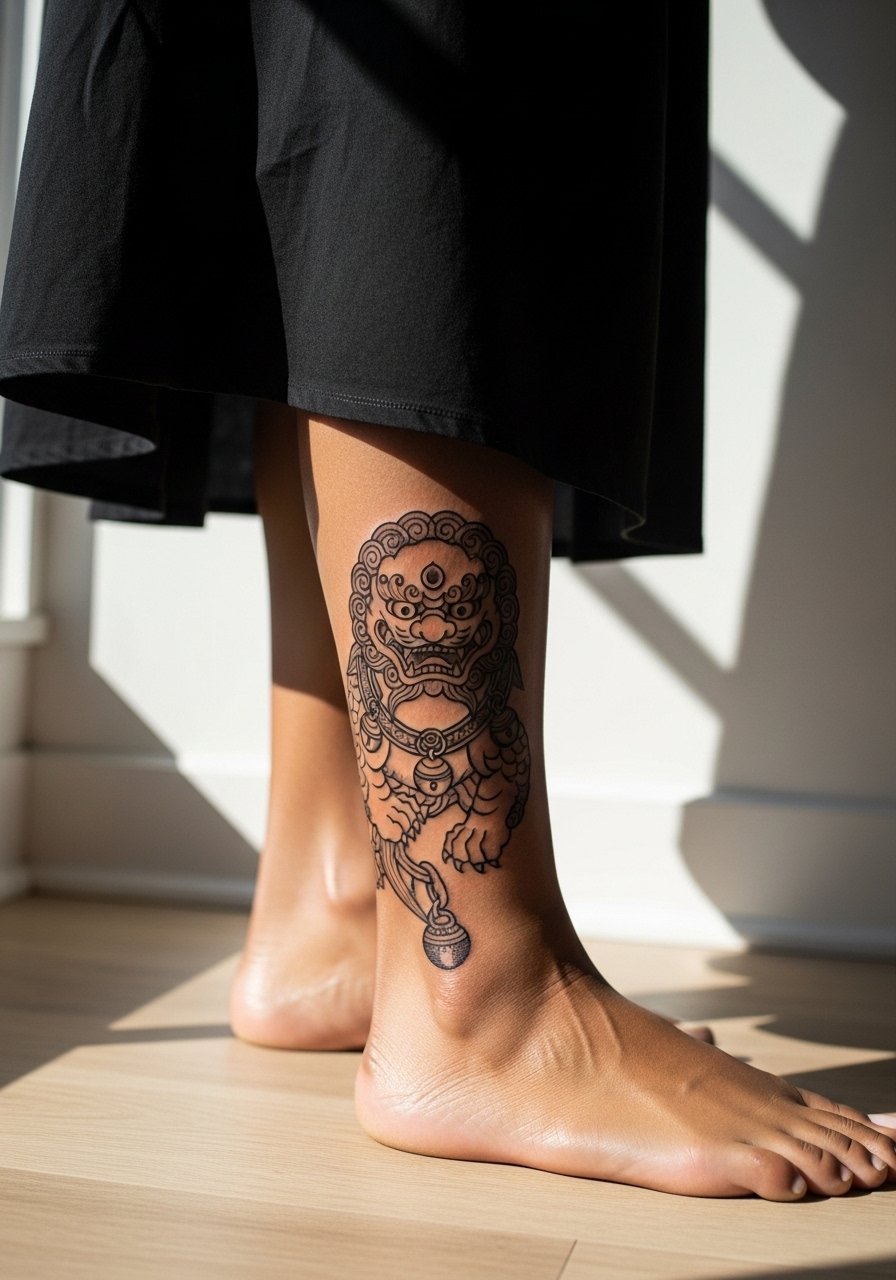
There is a visual rhythm when a Foo dog wraps from calf to ankle, so plan the curvature to follow muscle lines. During consultation, ask to see a mockup that shows how the tail and paws will land when you walk. Sessions are longer and may span multiple appointments. The ankle portion will always blur faster than the upper calf, so expect targeted touch-ups on the lower edge first. For warm months, a split skirt or sandals keep the flow visible and comfortable.
20. Tiny Foo Dog on the Side of the Finger
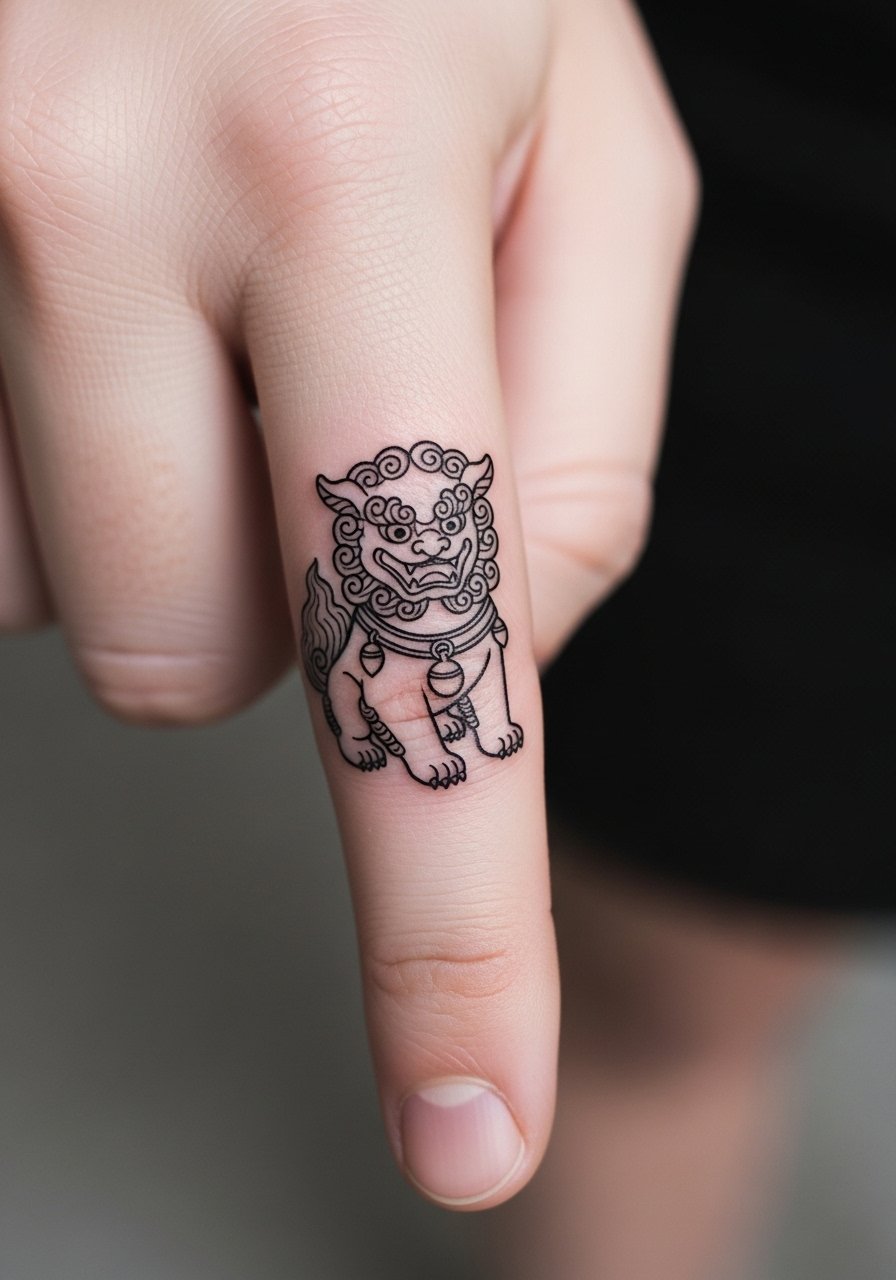
Side-finger placements are delicate and often ask for very simple silhouettes. The mistake is over-detailing. I recommend a single contour line that captures the head or paw rather than a full micro scene. Sessions are brief but expect the highest fade rate of any finger placement. Rings should be kept toward the base of the finger so they do not rub the tattoo. A thin, adjustable ring set complements side finger art without shortening its lifespan.
21. Traditional-Shaded Foo Dog on the Upper Arm
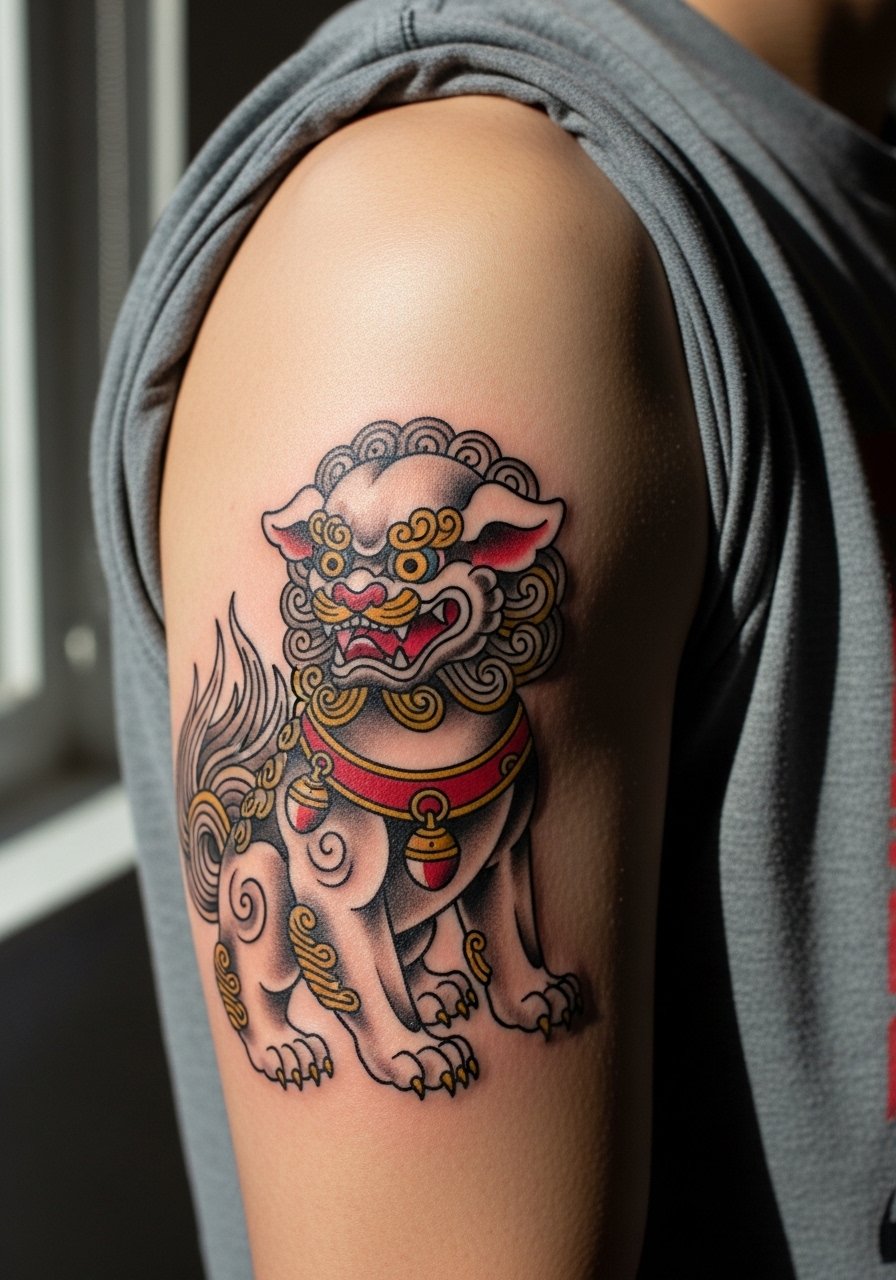
A classic shaded approach pairs strong outlines with solid mid-tone fills so the Foo dog ages into a readable silhouette. During consult, ask which parts will be left open versus saturated so the piece can breathe over time. Upper arm skin is forgiving and sessions feel moderate. The common mistake is tiny internal lines that disappear under color saturation. For showing off, a rolled sleeve and a classic wristwatch let the arm read cleanly while the artwork remains the focal point.
22. Foo Dog Lower Back Accent
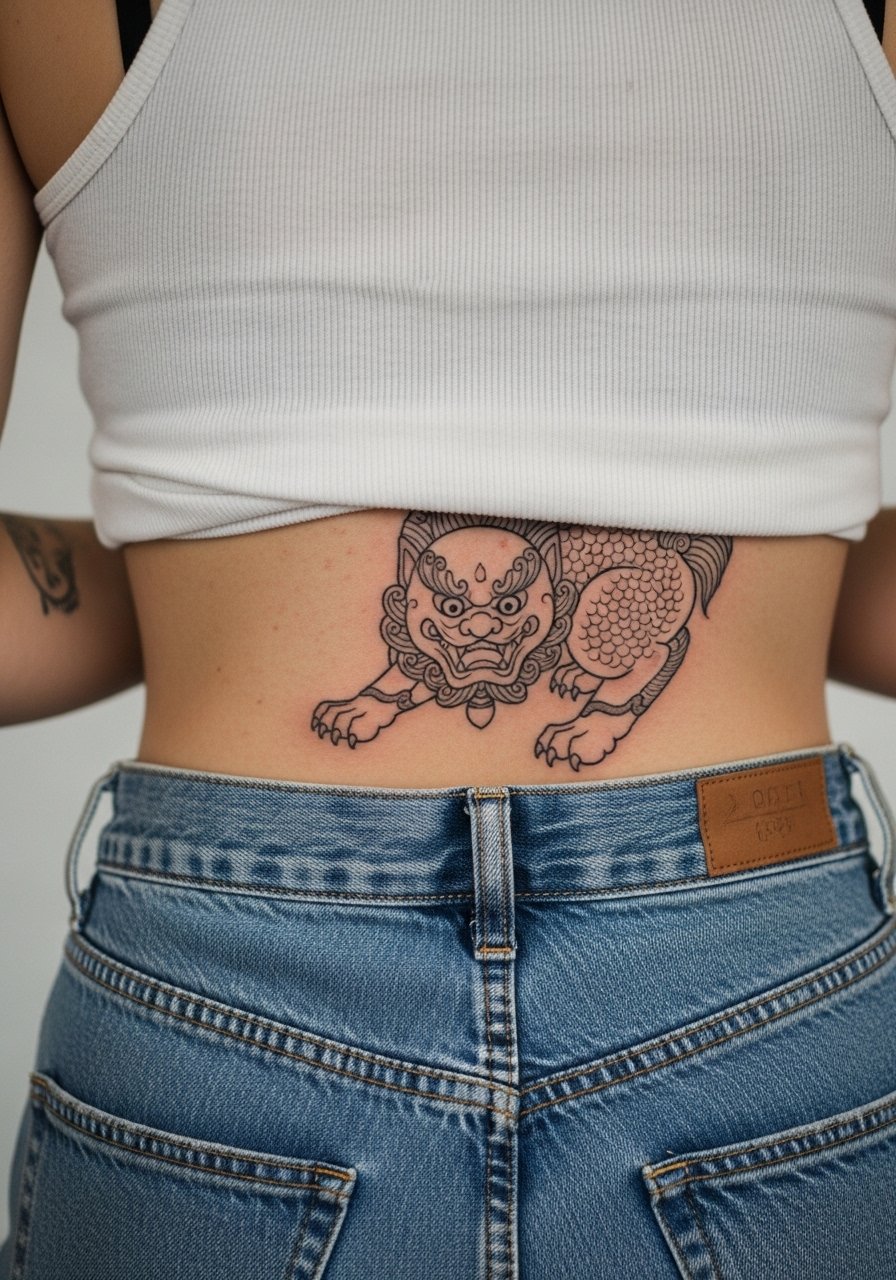
Lower back skin holds detail well, but beware of sitting and waistbands that can rub the area. I recommend placing the main mass slightly above the waistband so everyday clothing does not chafe the fresh work. Sessions are moderate and comfortable. A mistake is placing the piece too low where belts and waistbands cause frequent friction. For summer outfits, low-rise jeans and a cropped tank top allow the artwork to peek without constant rubbing.
23. Foo Dog Chest Plate with Bold Contrast
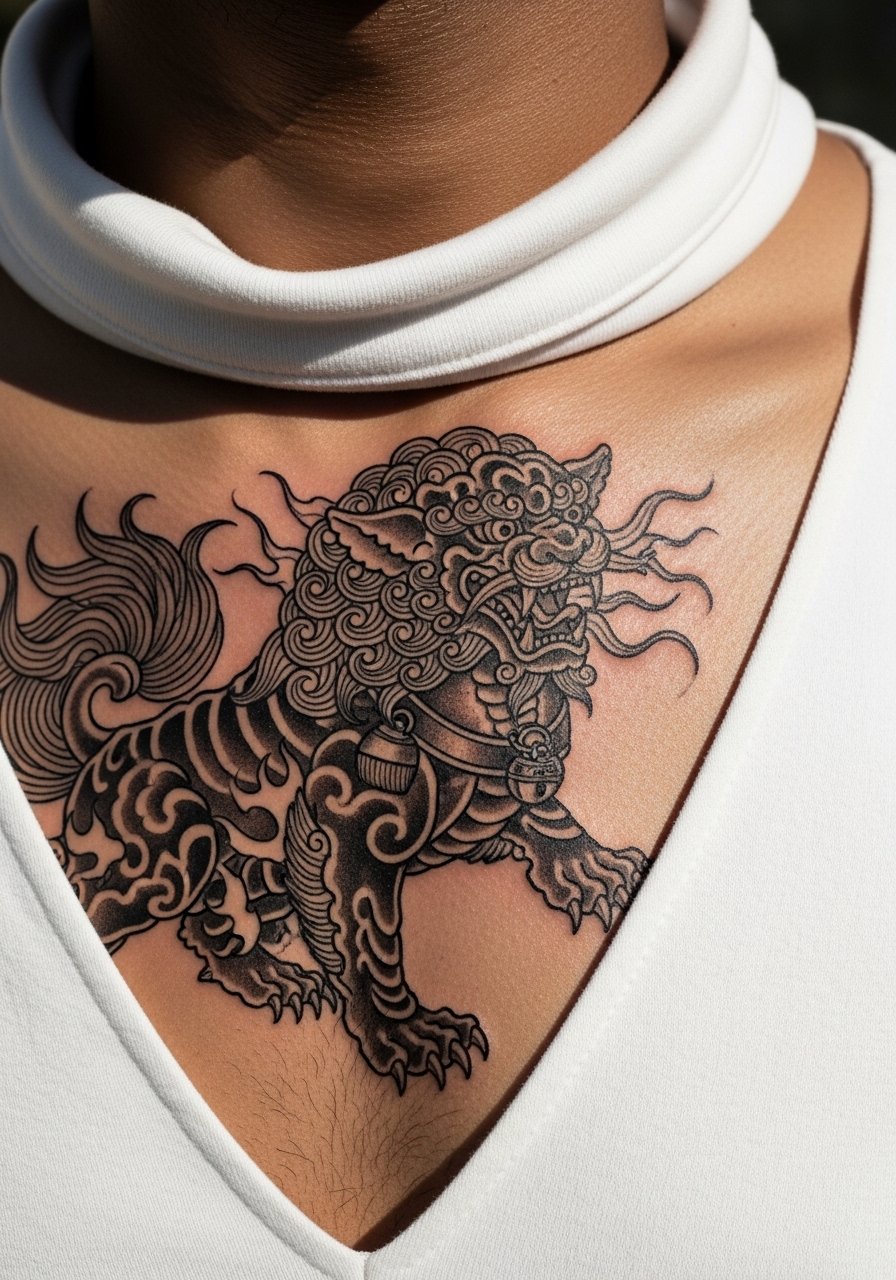
Chest placements give scale and drama, but they also change with breathing and movement. For a chest plate, ask your artist how they plan to balance heavy black with open negative space so the piece does not read heavy when you move. Sessions can be intense depending on proximity to bone and nipples. Touch-ups are usually needed less often if the saturation is strong. For showing it's best with wide-neck or open-collar shirts so the chest art sits intentionally in view.
24. Foo Dog Hip Panel with Floral Frame
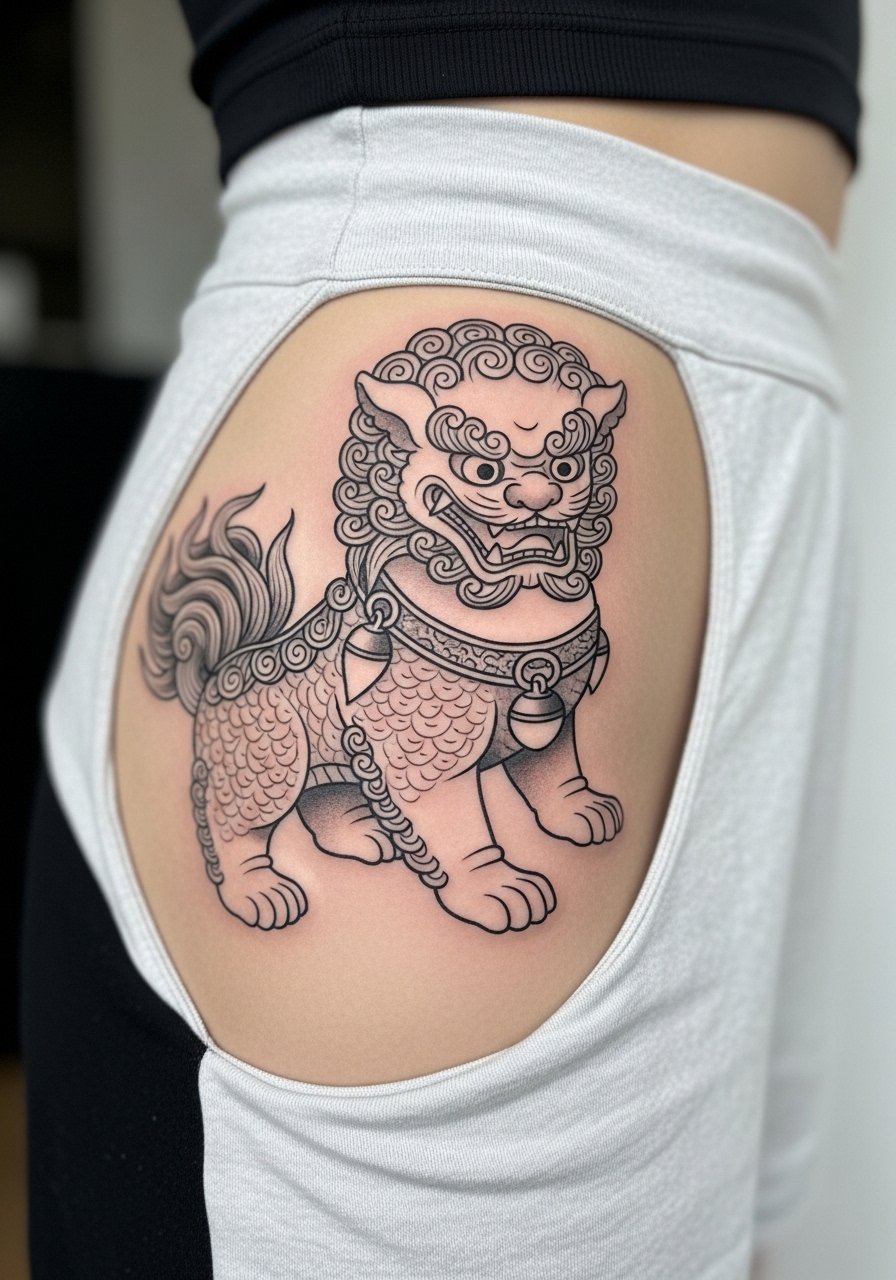
Hip placements are intimate and they handle larger motifs because friction is less constant. The session feel is moderate and you can usually sit for longer blocks. A common mistake is placing the focal point directly at the hip bone where movement distorts it. Ask your artist to center the main motif on the soft tissue area. For the session, wear high-waisted shorts or a skirt that you can adjust without rubbing the fresh tattoo.
25. Small Foo Dog Behind the Ear with Floral Accent
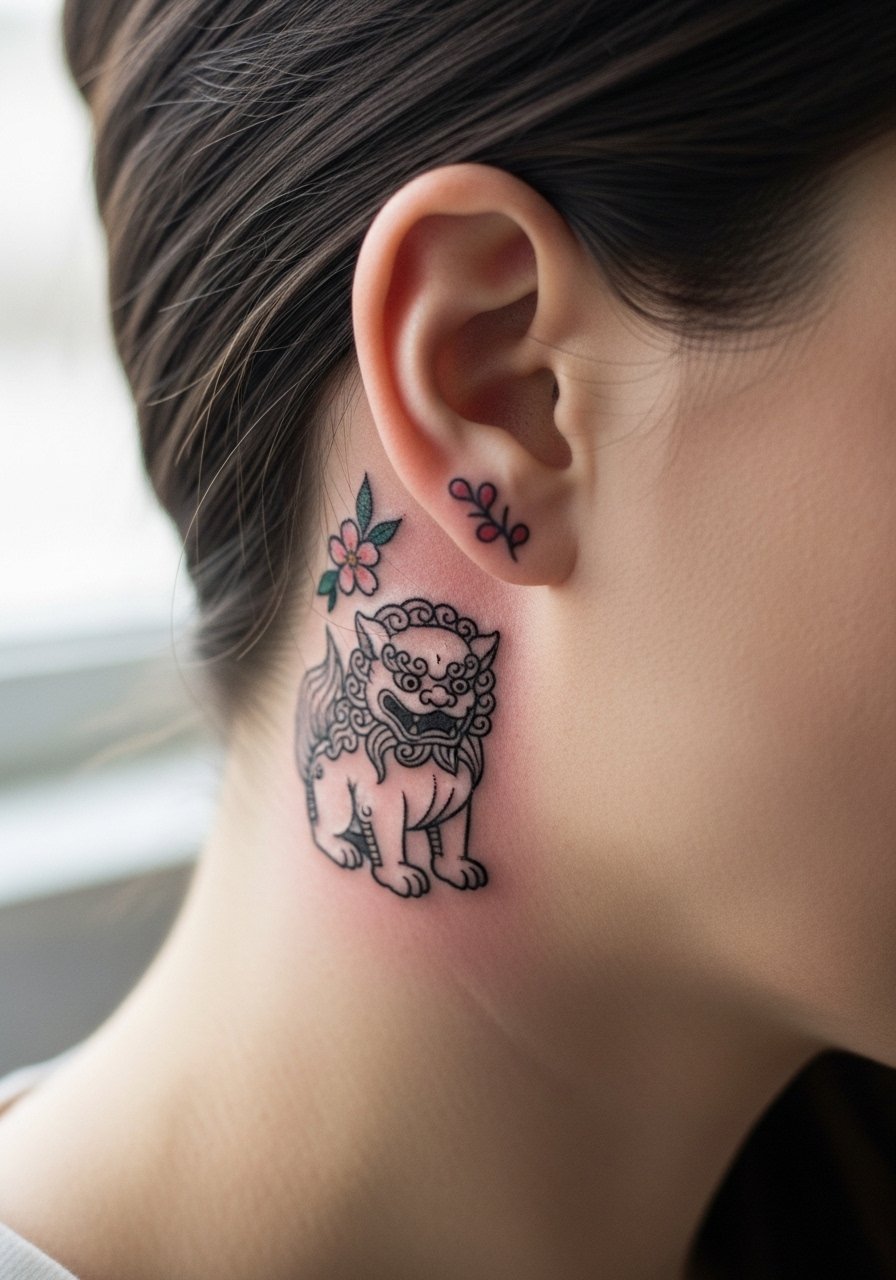
Behind-the-ear pieces are subtle and pair well with tiny floral elements that peek through hair. Keep scale conservative so the motif remains delicate when hair covers parts of it. Sessions are short and relatively low in pain. Think about haircuts and whether you want the design visible regularly. If you want occasional reveal, this placement is ideal.
26. Illustrative Foo Dog on the Rib-to-Side Torso Curve
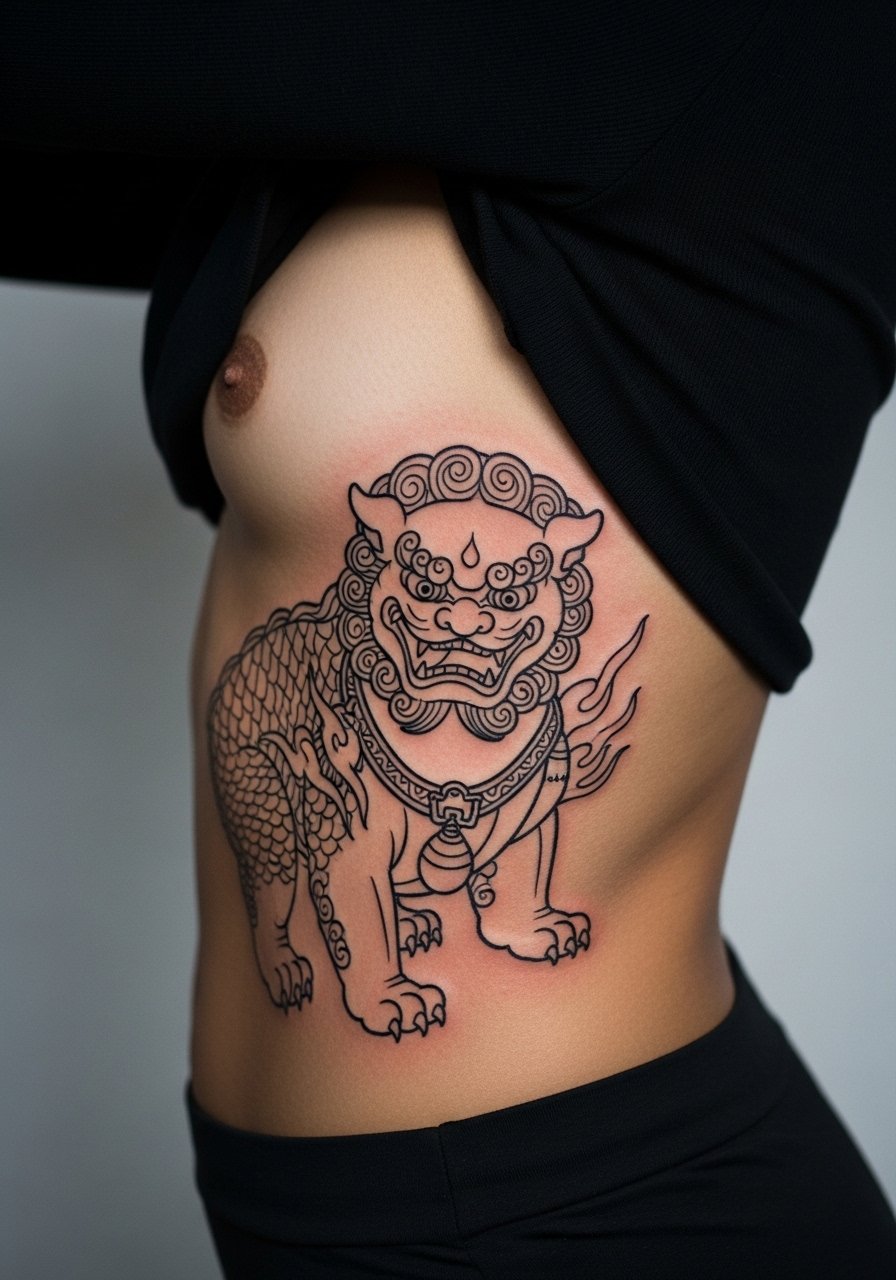
Side-torso pieces need flow to match breathing and posture. Ask your artist to map the piece while you stand and while you twist so the paws and tail move with your contours. This placement is painful and prone to early softening if detail is packed too tightly. Plan for touch-ups and accept that lines may need reinforcement after a couple of years. Consider session pacing with breaks to manage discomfort.
27. Full-Back Illustrative Foo Dog Narrative
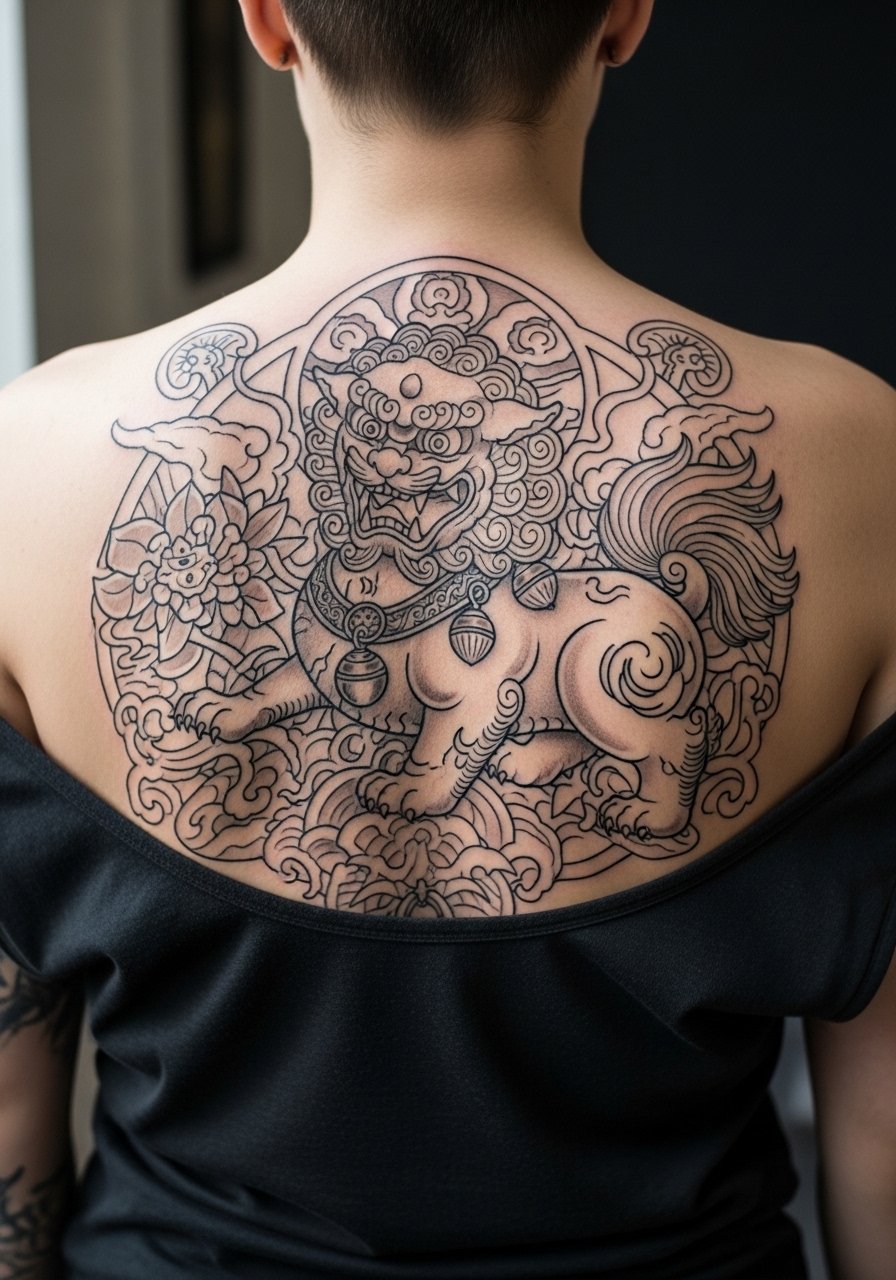
There is a different energy to a full-back narrative because it allows time and space for story elements. During the consultation bring references that show the emotional tone you want and ask the artist to sketch how the Foo dog's movement will read across the spine. Sessions are long and usually split across several multi-hour sittings. Expect a phased healing process and budget for one or two touch-up days in the year that follows.
Frequently Asked Questions
Q: Will fine line Foo dog details blur faster on ribs and sternum compared with the forearm?
A: Yes, ribs and sternum experience more stretch and movement so very thin internal lines can soften quicker than the forearm. If you want fine detail in those areas ask for slightly heavier contour lines and plan for a touch-up at year two or three. Where longevity matters, scale up the primary features so the design reads even as tiny strokes fade.
Q: How should I dress to the studio for a sternum or ribcage session?
A: Wear a fitted sports bra or a cropped top you can lift easily without rubbing the work, and bring a zip-up hoodie for after the session. Comfortable layers help you manage temperature during a longer rib or sternum appointment. A gentle cotton top reduces friction when you leave the studio.
Q: I want a small Foo dog on my wrist and a matching one on my ankle. Will they age the same?
A: No, wrist and ankle tattoos face different stresses. Wrists see constant washing and flex, while ankles endure sock and shoe friction. To match longevity, ask the artist to slightly adjust line weight and negative space on each site so both keep readable form over time.
Q: Are there cultural considerations when adapting Foo dog motifs into illustrative tattoos?
A: The Foo dog roots are in East Asian iconography, so many people choose to adapt motifs respectfully rather than copy sacred or ceremonial variations directly. If origin matters to you, discuss subtle adjustments or recomposed elements with your artist so the piece acknowledges tradition while staying personal.
Q: How long should I expect touch-ups for illustrative Foo dog pieces on high-motion areas like fingers or hands?
A: Fingers and hands require the most frequent reinforcement, often within the first one to three years depending on exposure and care. Plan for a touch-up visit in that window and budget your sessions accordingly. A slightly bolder initial contour helps stretch that window.
Q: Can I pair a chest Foo dog with jewelry without overwhelming the design?
A: Yes, pick delicate pieces that sit above or beside the tattoo rather than across it. A thin chain necklace or a pendant that rests above the collarbone keeps the chest art visible while adding a styling layer. For a subtle option try a thin chain pendant necklace that complements without crowding.