Fine line half sleeves look effortless on scroll feeds, but the real test is how they hold up after a few summers of sun and a few gym sessions. Trends push tiny, dense detail, and that can blur faster than people expect. These 17 minimal line approaches favor spacing, rhythm, and placement so a half sleeve reads clean now and still reads clean in five years.
1. Negative-Space Botanical Band on Outer Forearm
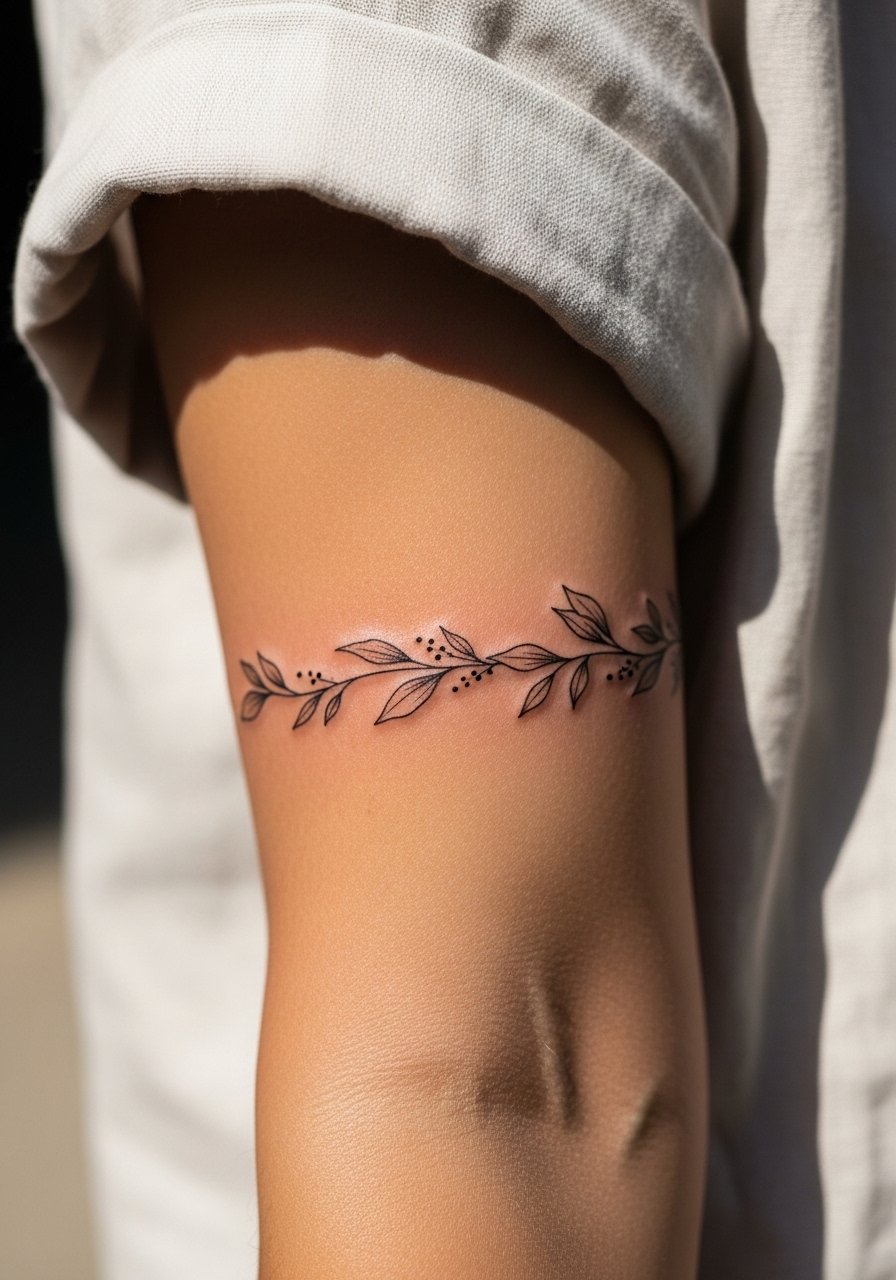
I recommend this when you want a sleeve that breathes. Keep stems and leaves slightly larger than you think so the negative space survives sun exposure. Tell your artist to draw the band with varied spacing instead of repeating identical leaves. A common mistake is packing too many tiny veins into each leaf, which merges into a gray patch after two years. Expect a forearm session to feel like steady vibration with a 3 to 5 out of 10 pain level and run about 90 minutes across a couple of sittings. Pair it with a rolled-up short-sleeve linen shirt when you want to show it off.
2. Micro-Geometric Sleeve Anchor at the Bicep
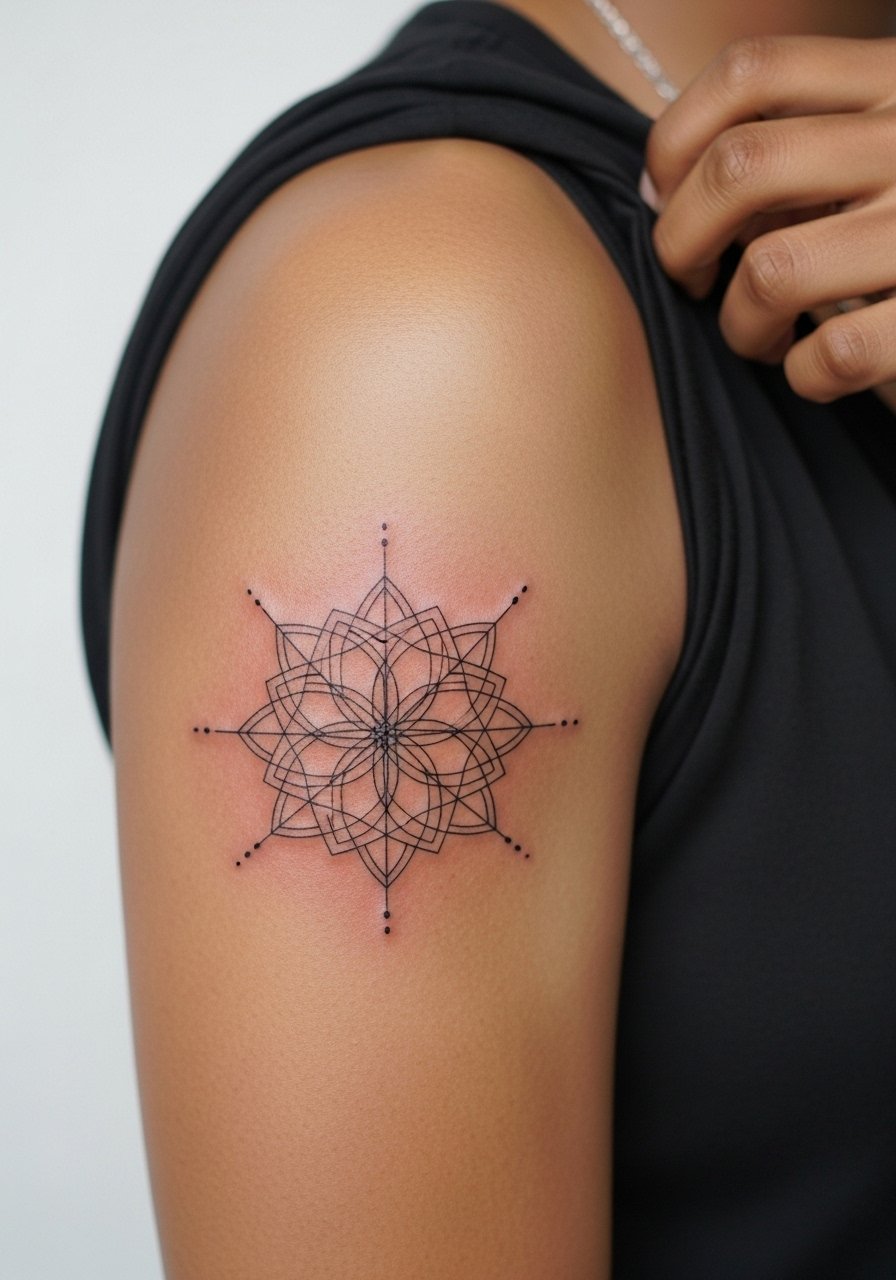
When you want structure without heavy blackwork, use a geometric anchor on the bicep to balance looser linework down the arm. Ask for slightly thicker outer lines and finer interior lines so the shape keeps reading from a distance. The biggest mistake is drawing the mandala too tiny. That forces artists to crowd detail and it blurs over time. Sessions here are moderately painful for some, about 60 to 120 minutes per block, depending on layering. For showing it off, wear a tank top you can pull the strap to one side during the session and afterwards.
3. Minimalist Mountain Range Across the Outer Sleeve
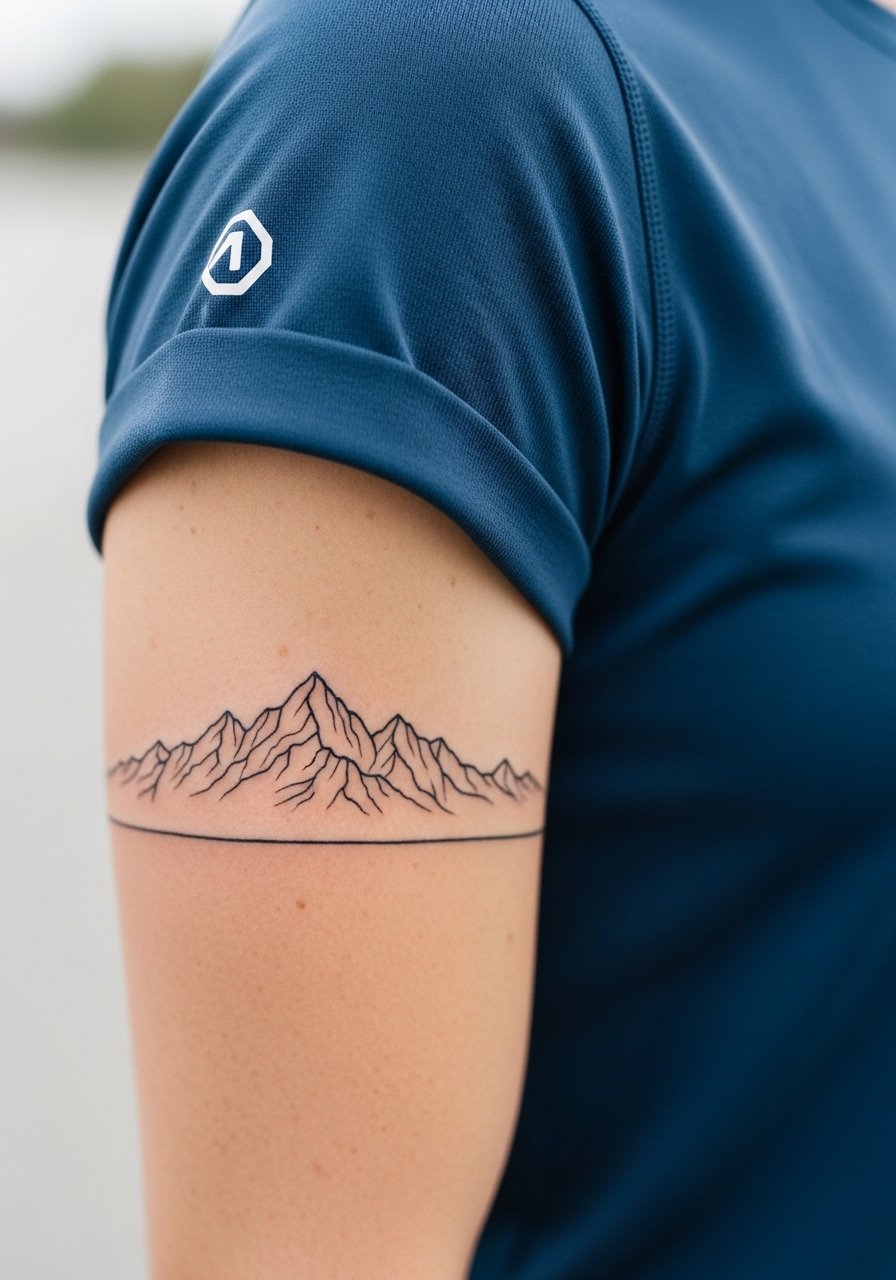
This design plays well across an arm because the peaks guide the eye along the sleeve. In consultation, specify the horizon line and ask for increased spacing between ridges. Most people make the mistake of requesting too many tiny peaks. That causes the midtones to merge after a few years. At six months the linework reads crisp. At two years the valleys start softening, and at five years the silhouette still reads if spacing was preserved. Pain is mild on the outer arm. For session comfort, a technical short-sleeve tee that you can roll up works best.
4. Chain-Link Minimal Sleeve with Negative Space
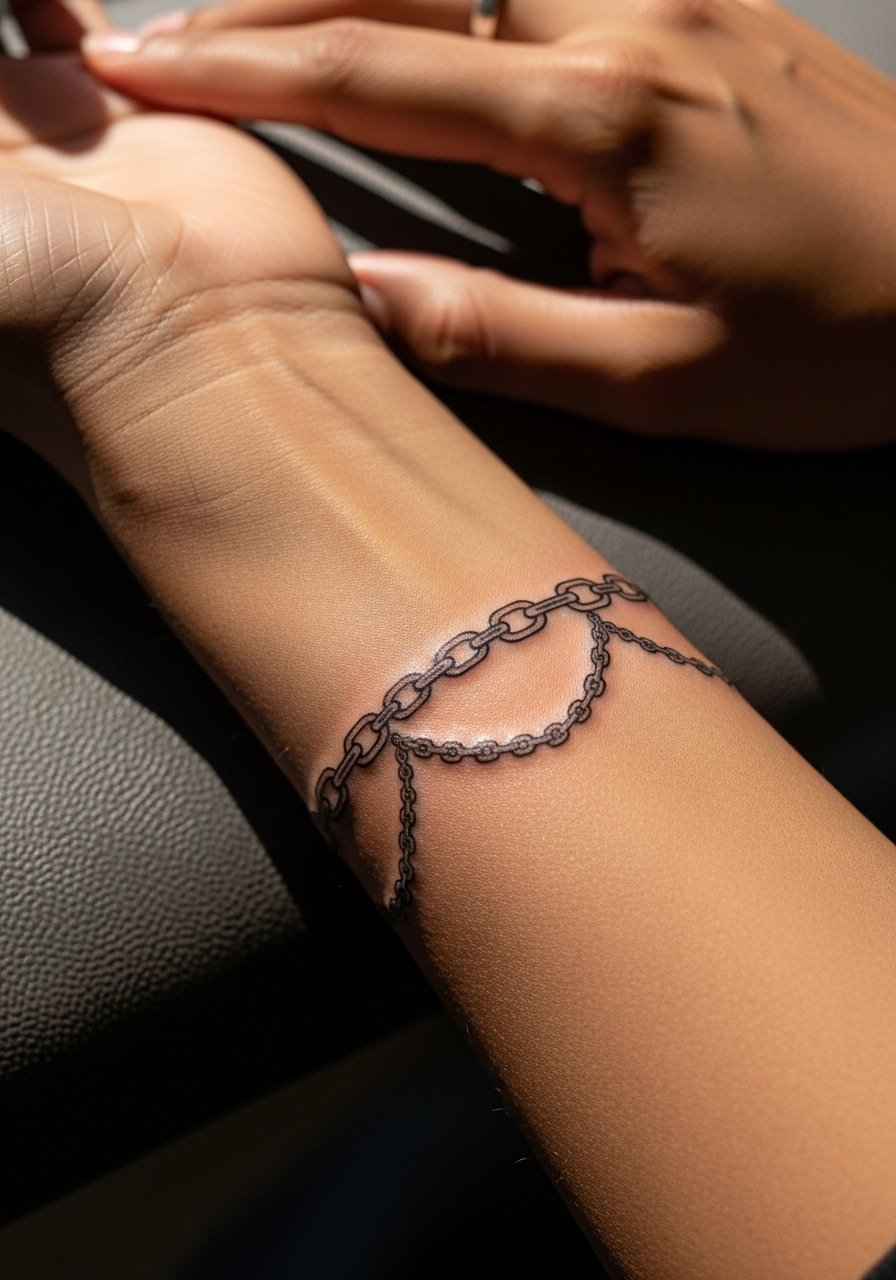
Chain-link repeats can create rhythm without heavy fill. Ask the artist to vary link size and leave intentional gaps. A common error is asking for evenly spaced tiny links. That creates visual noise and speeds up blurring. For wrists and near-elbow zones expect higher friction and slightly faster fading. Touch-ups are common at year two for pieces with narrow gaps. Session time is chunked into shorter runs to let the skin settle. This style shows well with a minimalist watch or stacked thin bracelets. Try pairing it with a minimalist watch when you want the chain to tie into your everyday look.
5. Single-Line Continuous Wave Around the Arm
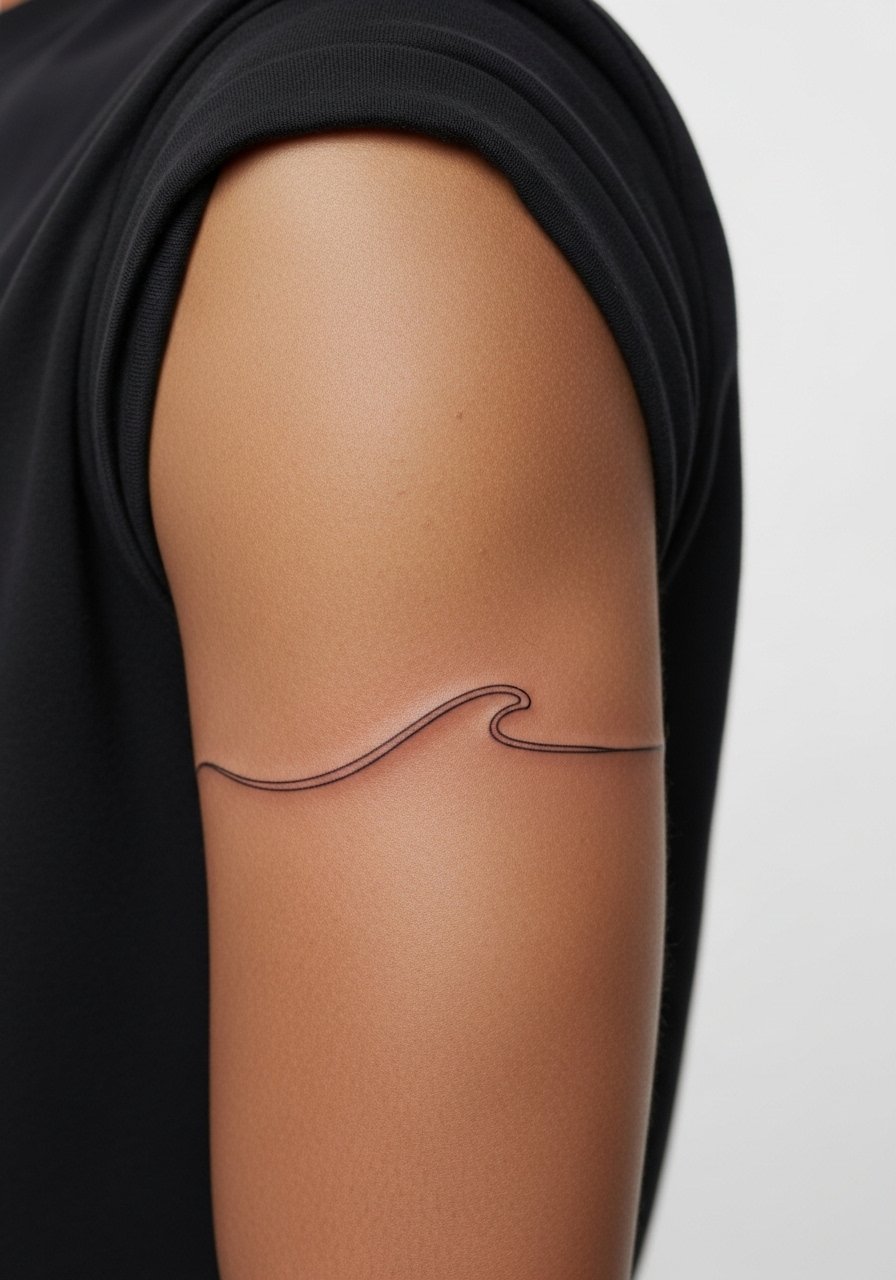
A continuous line piece reads like a visual breath across a half sleeve. Tell your artist you want consistent depth but slight weight variation so the curve has rhythm. The pitfall is asking for the line too close to the skin surface. That can lead to blowout. Expect a touch-up window around year three depending on sun exposure. The session often goes quickly but needs steady hands from the artist. For the appointment, wear a loose button-down so the sleeve slides easily and the artist has full access.
6. Stippled Horizon Linework at the Inner Bicep
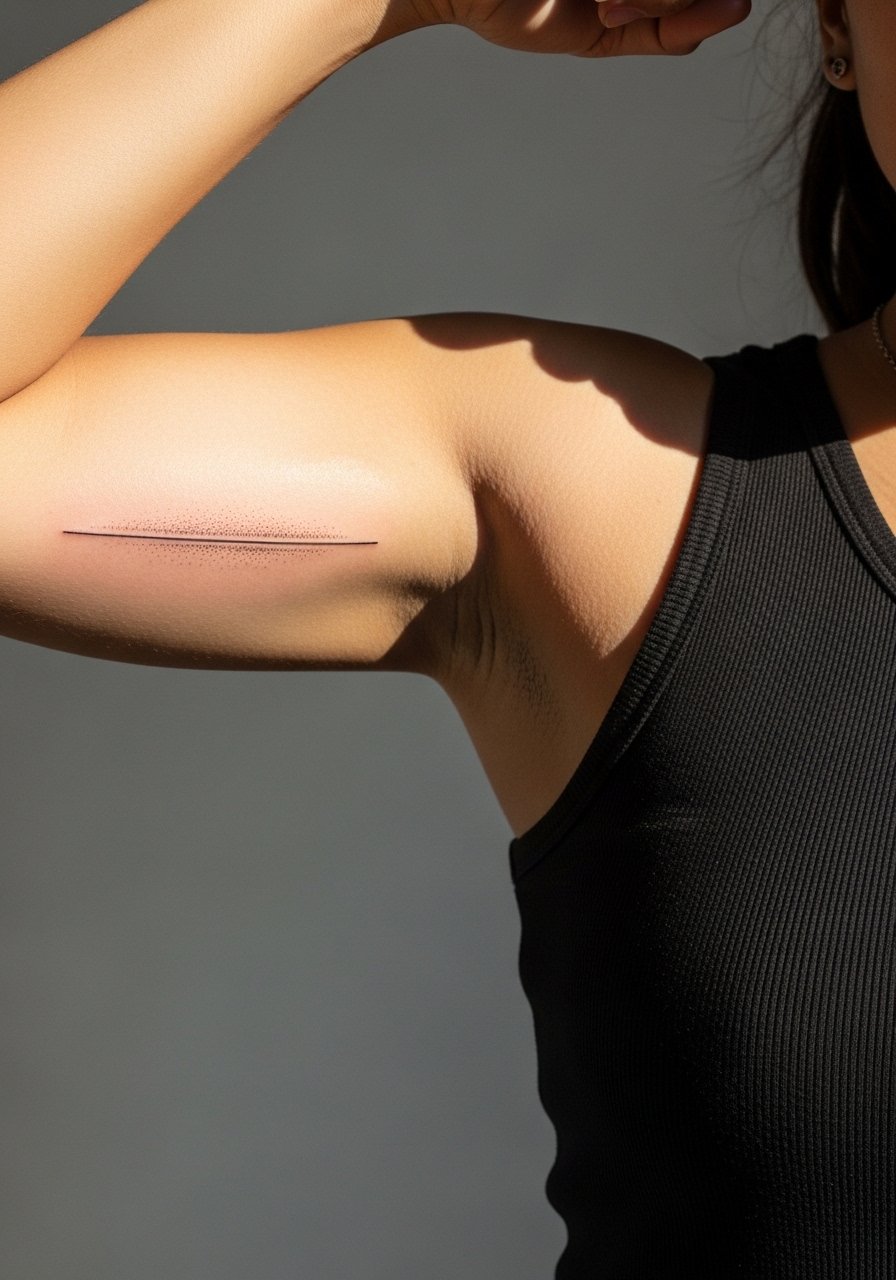
Fair warning, the inner bicep is a more sensitive spot. Stipple shading here gives texture without heavy saturation. Discuss dot density with your artist so the dots have room to breathe. One camp argues that inner bicep linework blurs faster because skin stretches and rubs. The other camp says that careful depth and spaced stippling keeps it stable. Ask your artist which side they are on during consultation. Sessions can be tickly and register a higher pain score for some. For the day of, wear a tank top you can lift cleanly to expose only the inner arm.
Studio Day Picks
The first six half sleeve approaches above cover forearm and inner arm areas that react differently to friction and sun, so a few session and healing items smooth the process.
- Stencil transfer paper kit. Lets you and the artist preview placement on skin, which matters for bands and continuous line pieces above.
- Topical numbing cream. Use as directed before inner bicep or dense stipple sessions to lower discomfort without affecting linework.
- Thin protective film roll. Helpful for wrist-adjacent links and forearm chains that face constant washing and rubbing.
- Fragrance-free gentle body wash. Cleans healing linework without irritating the delicate channels of fine needles.
- Aquaphor healing ointment. A thin initial layer can help lock in moisture for fine line areas during the first few days.
7. Linear Nautical Map Elements for a Half Sleeve
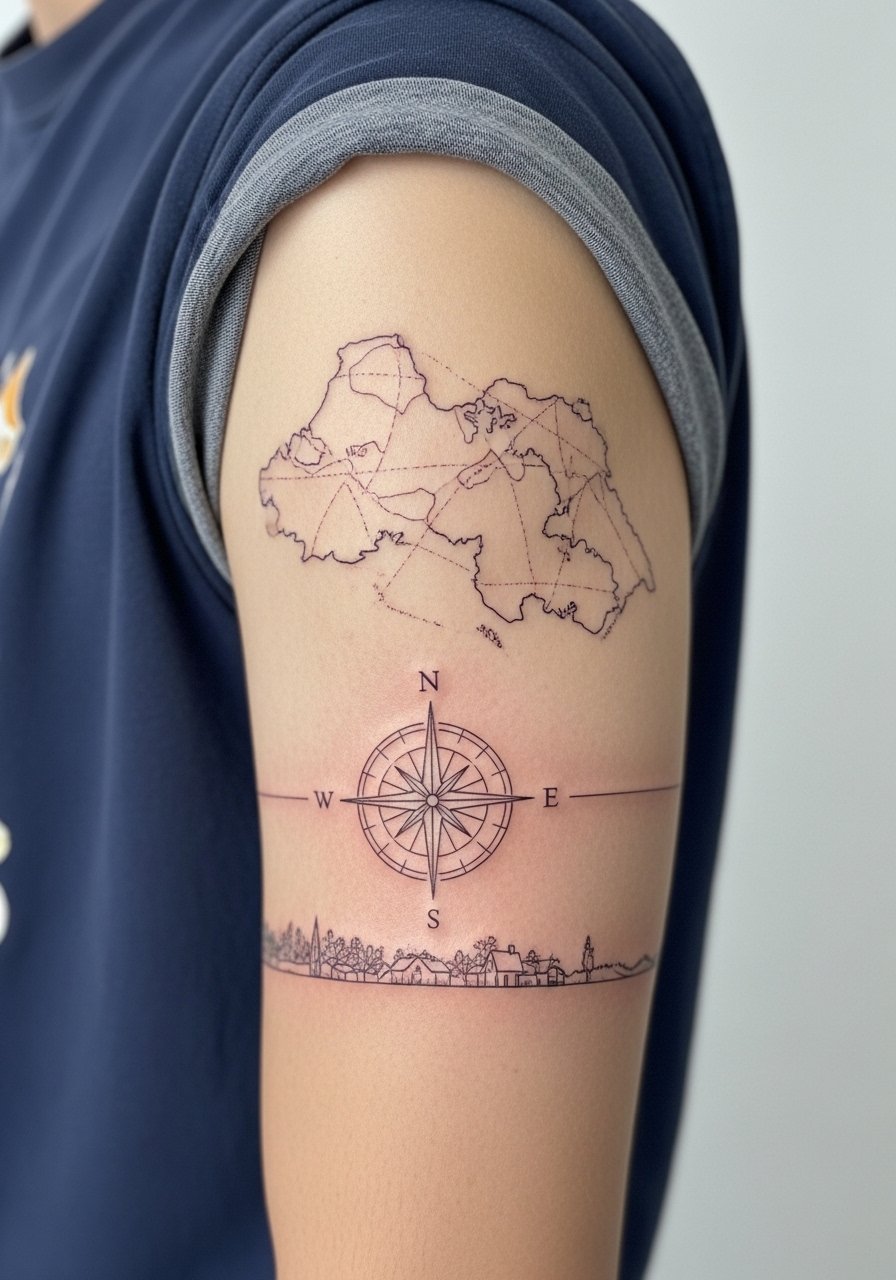
Small compass points and map lines are great anchors for a half sleeve with travel references. Ask for open spacing between contour lines so the map reads at arm length. The mistake is making the map too dense and tiny. That makes reading the linework close up messy after a few years. Expect light pain on the outer arm and session blocks of 60 to 90 minutes. During the session, wear a short-sleeve tee that you can slide up without tugging at the tattoo zone.
8. Fine Line Portrait Silhouette on Upper Arm Panel
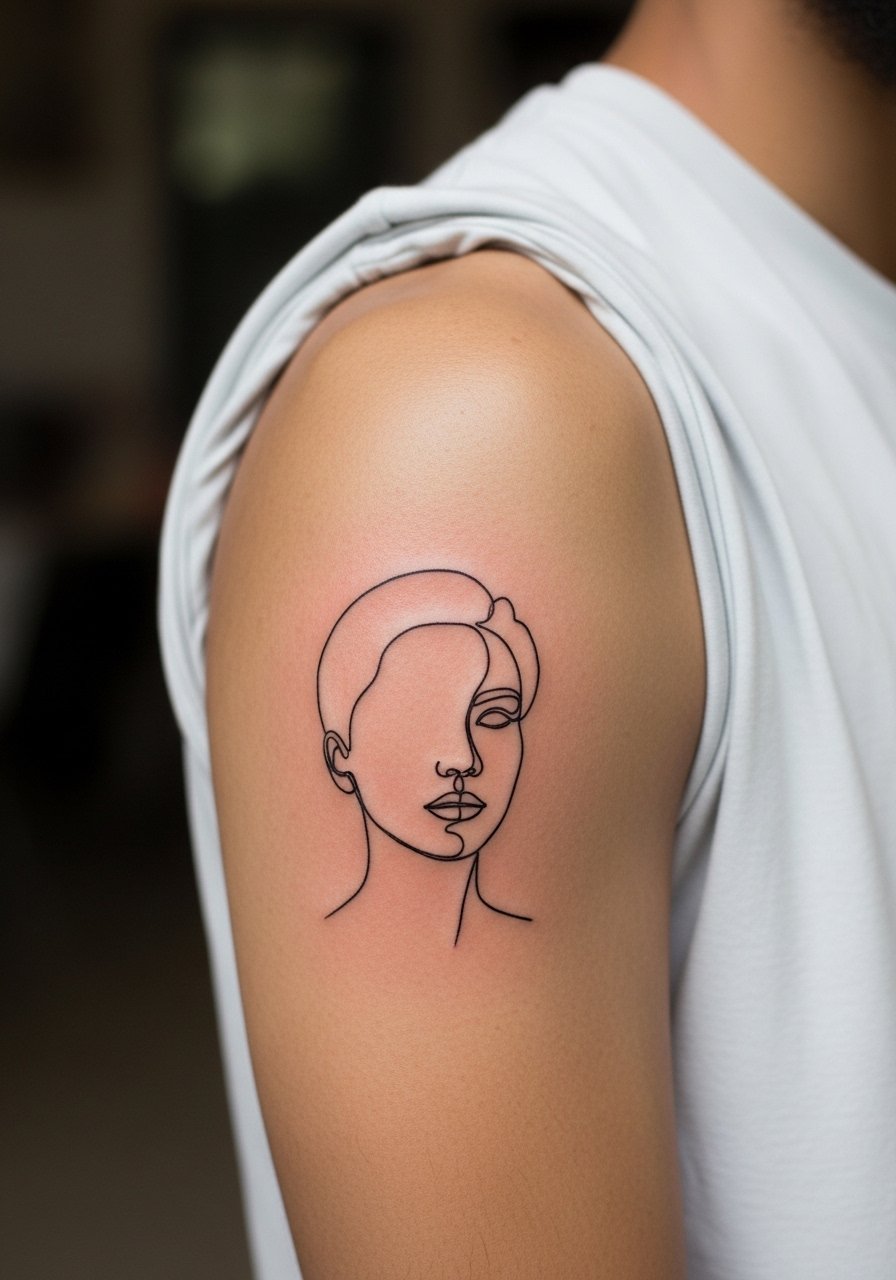
A silhouette uses minimal ink to imply form, which keeps the half sleeve subtle. Tell your artist you want negative space to shape the face rather than heavy contour lines. A common error is asking for too much interior detail. That detail collapses into indistinct gray over time. The session feels like steady vibration over curves and may need multiple pass sessions for perfect flow. For showing off, a sleeveless shirt frames the panel without competing.
9. Architectural Linework Threading the Arm
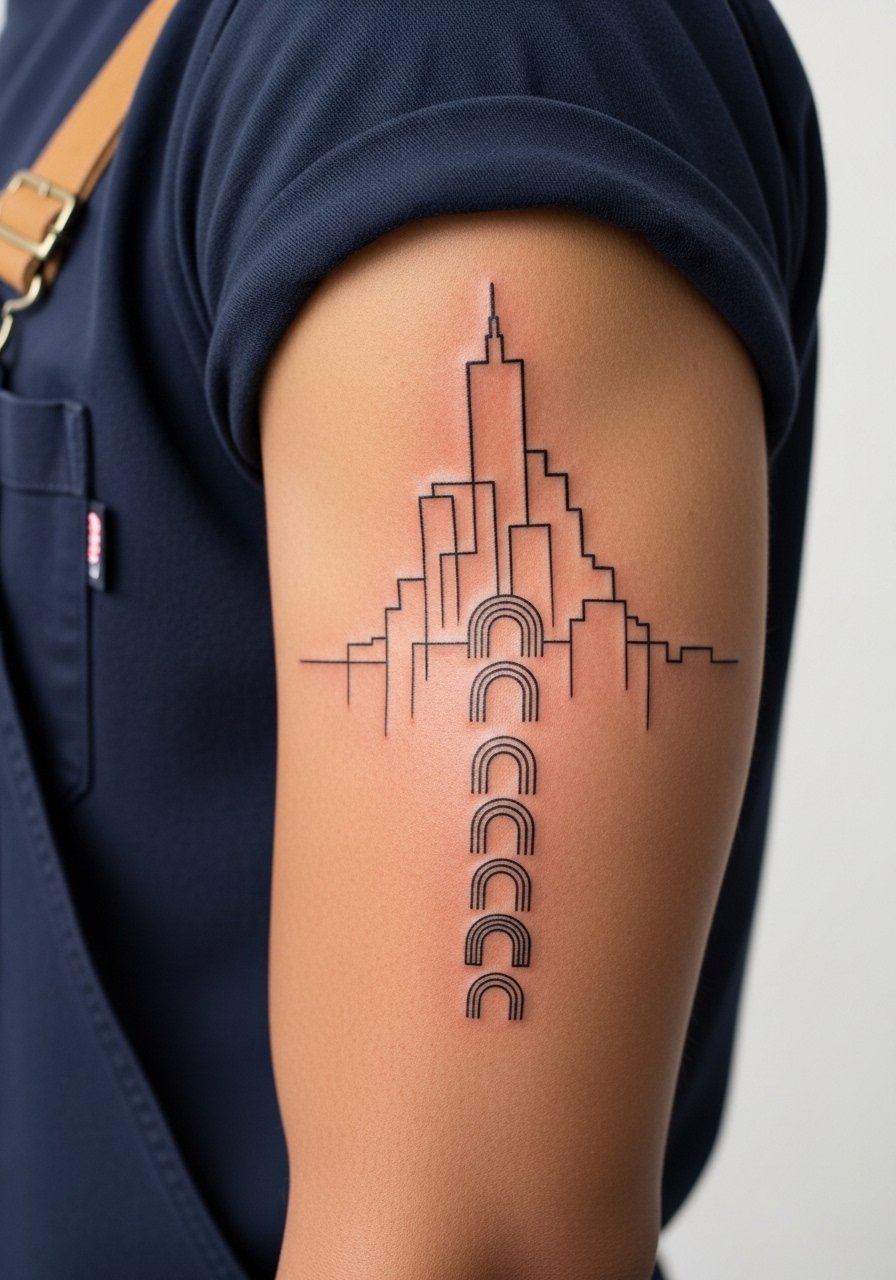
This approach reads like a strip of blueprint across the arm. Tell the artist to prioritize major lines and omit tiny brickwork. The trap is over-detailing, especially in tight arches. At six months the skyline holds. At two to five years the smallest cross-hatches can soften, but the major silhouette stays readable. Sessions vary with complexity and can be in two or three passes. For a tasteful look, roll sleeves or pick a short-sleeve workshirt that lets the arm show when you want it to.
10. Scripted Phrase in Narrow Band Around the Bicep
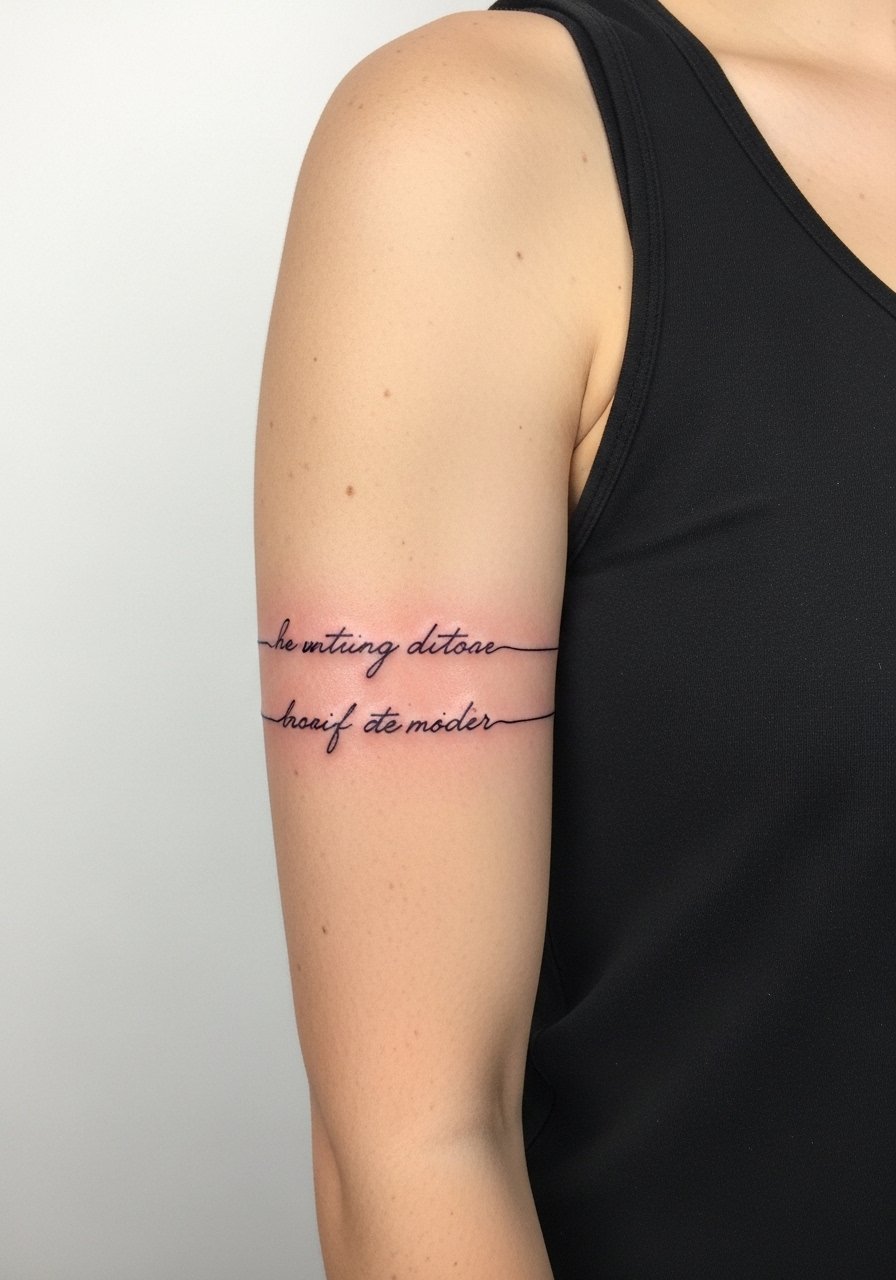
Script bands can anchor a half sleeve or act as a dividing element. Choose a font with clear counters and slightly increased letter spacing. Small, tight script can bleed into a gray line eventually. Expect touch-ups sooner if the letters are very fine. The session is short but requires steady placement to keep the band even around the arm. For the appointment wear a tank top you can adjust so the artist can check wrap and flow.
11. Minimal Botanical Cluster Transitioning to Dot Work
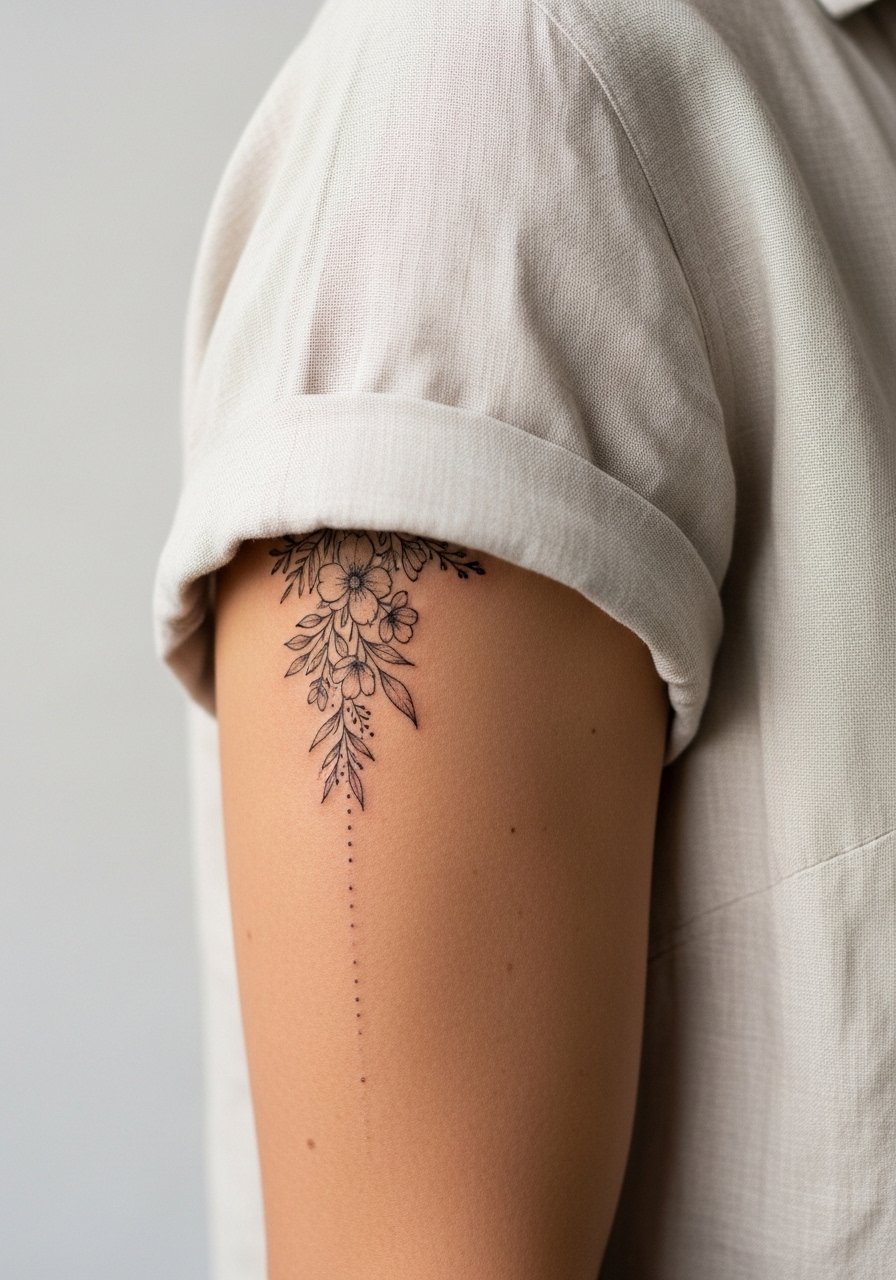
This hybrid adds texture without dense saturation. In consultation, request the dot work to be spaced so the dots do not merge. The common error is asking for high-density stipple close to tight linework. That can make the border look muddy after healing. Sessions may alternate lines then stipple blocks. For showing it off, wear a rolled linen shirt in neutral hues that highlight the subtle contrast.
12. Minimal Nautical Rope Knot Panel Near the Elbow
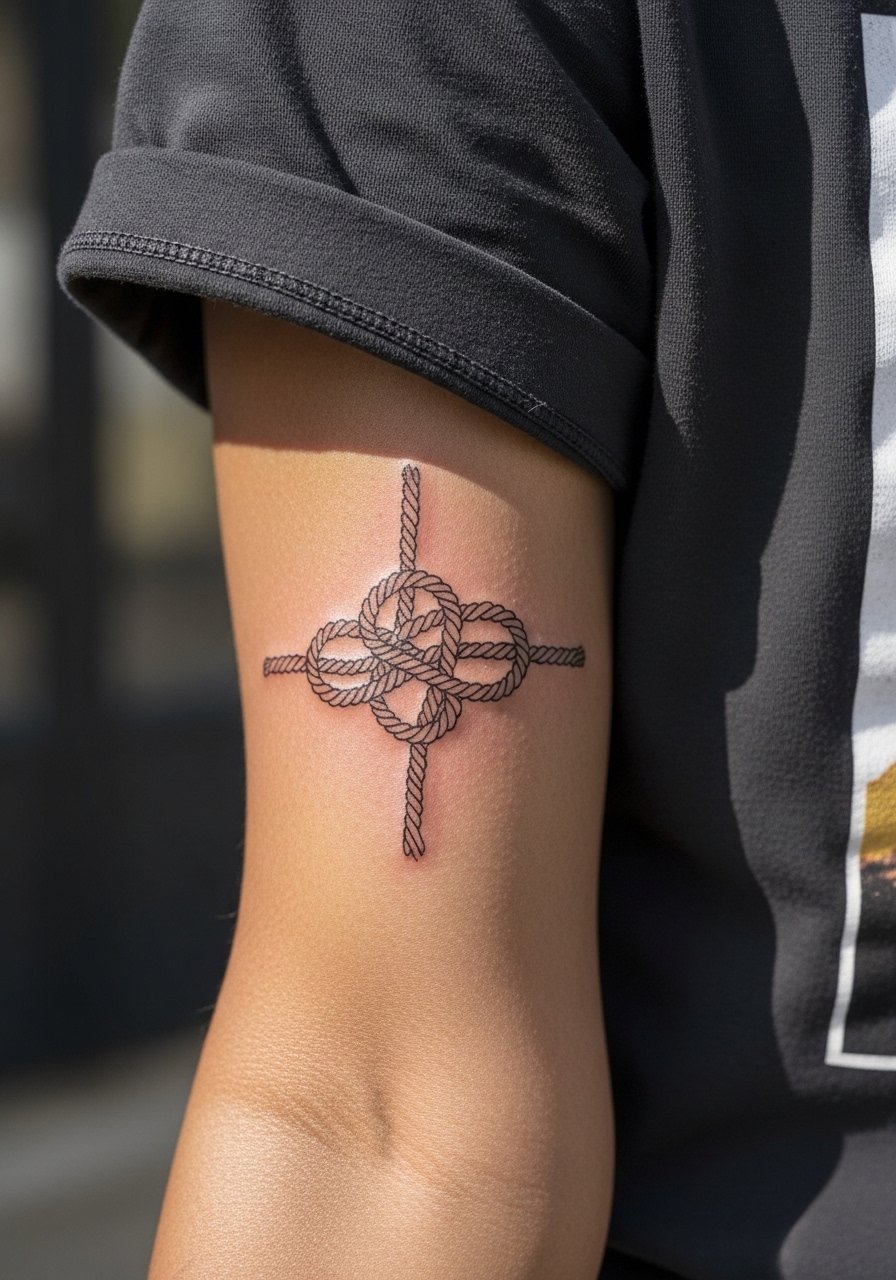
Knots read as textural elements across a half sleeve when scaled properly. Ask the artist to avoid tiny crosshatching inside rope fibers and to indicate twist with light contour lines only. The elbow and crease area face movement and flex, which can accelerate softening. People often request overly small knots and then regret the fill after a year. Sessions around the elbow can sting more and may be split into shorter rounds. A short-sleeve tee that you can roll up smoothly is ideal for both session access and later styling.
13. Sparse Constellation Map Wrapping the Outer Forearm
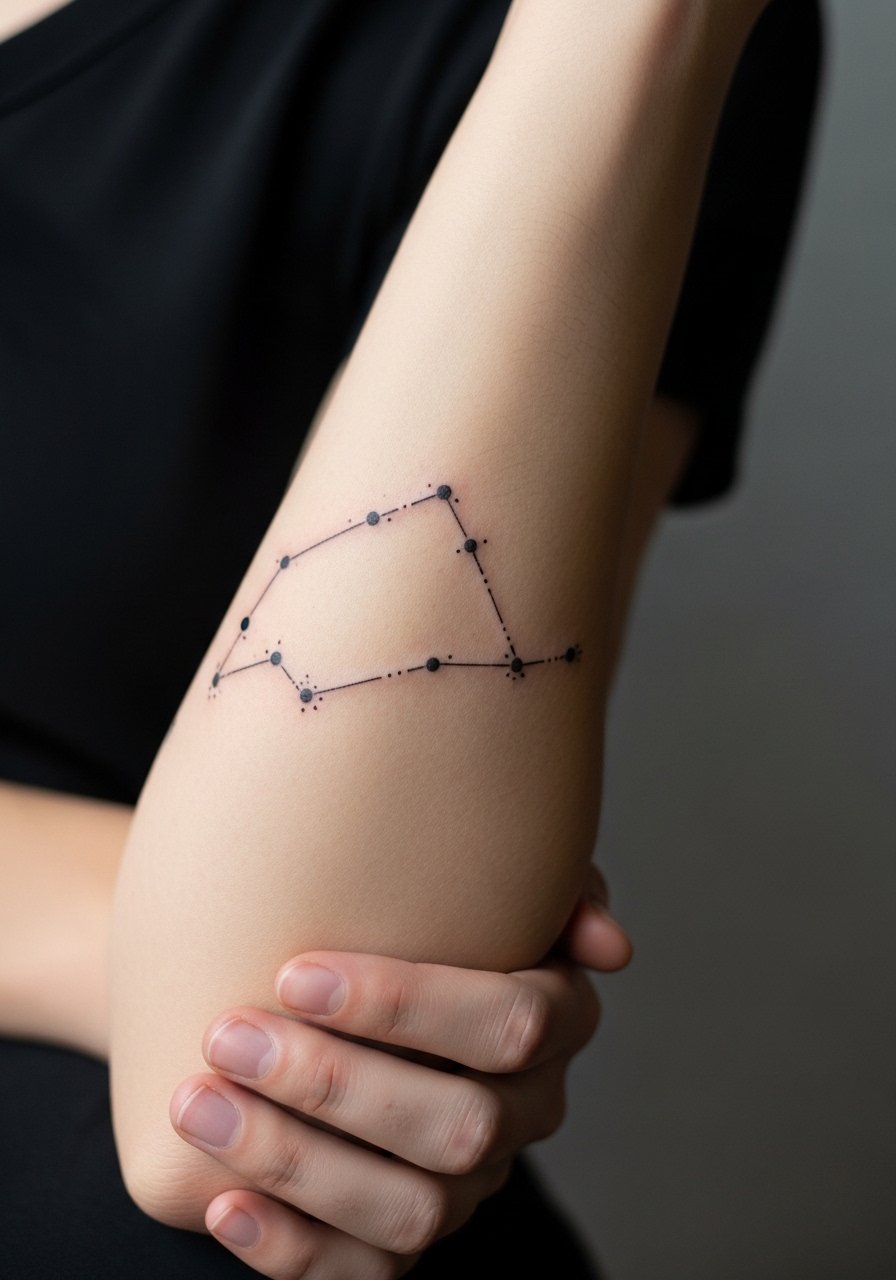
Constellations are delicate but they survive if each dot has breathing room. Tell your artist you want slightly larger dot sizes than pictured. The mistake is tiny pinpricks that merge with lotion and skin texture. At two years expect slight softening where skin tension is highest. Sessions are short and low on pain. Pair this with a slim chain bracelet that sits between designs without crowding the lines.
14. Interlocking Minimal Mechanical Lines for a Tech-Look Sleeve
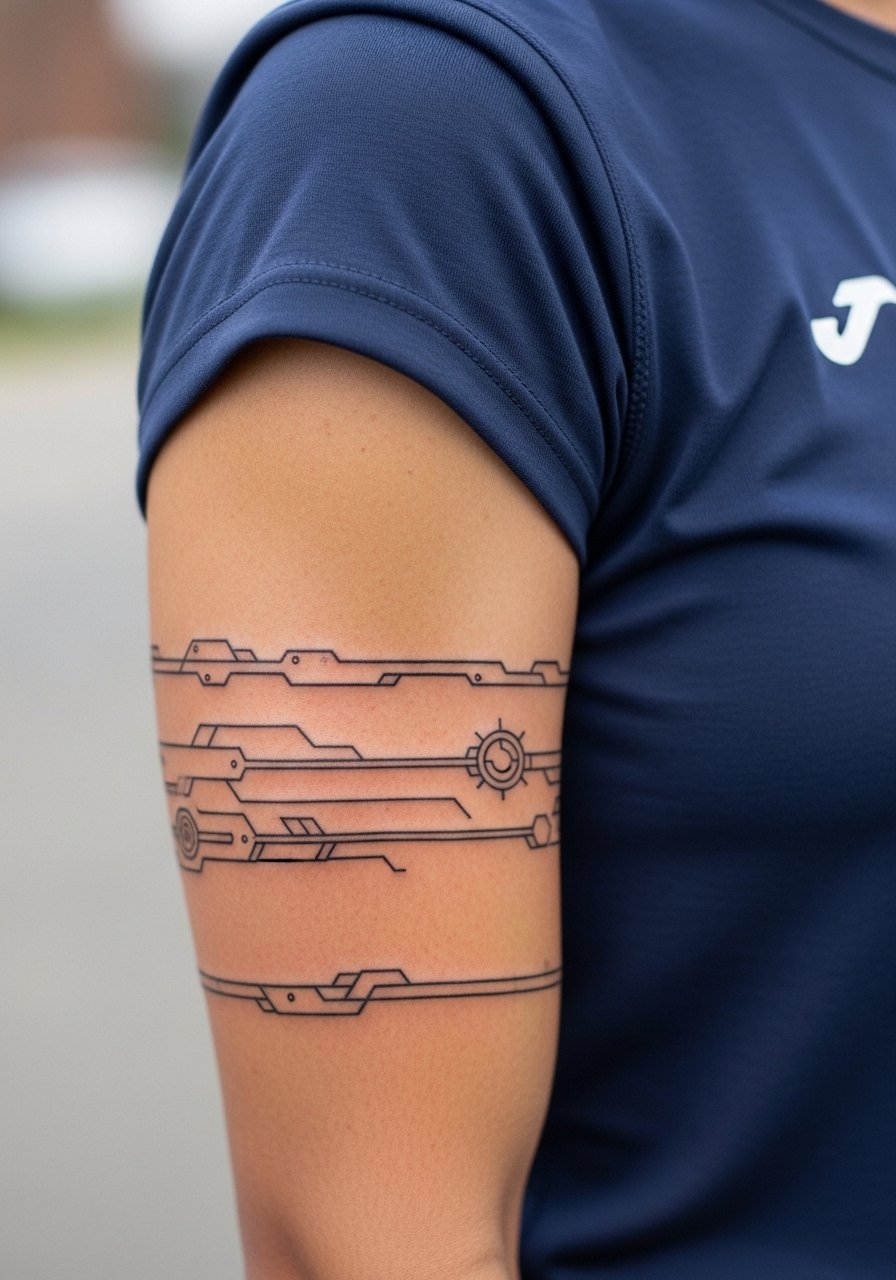
This style borrows from blueprint aesthetics and works when major joints have space. Ask for simple gear outlines with clear negative space. Overcrowding small gears is the typical error. Those small intersections blur into messy gray if not spaced. Expect session times that match the number of distinct panels rather than full saturation hours. For session comfort, wear a technical tee that you can slide up without tugging the tattoo area.
15. Minimal Wave and Wind Lines Flowing Into the Sleeve
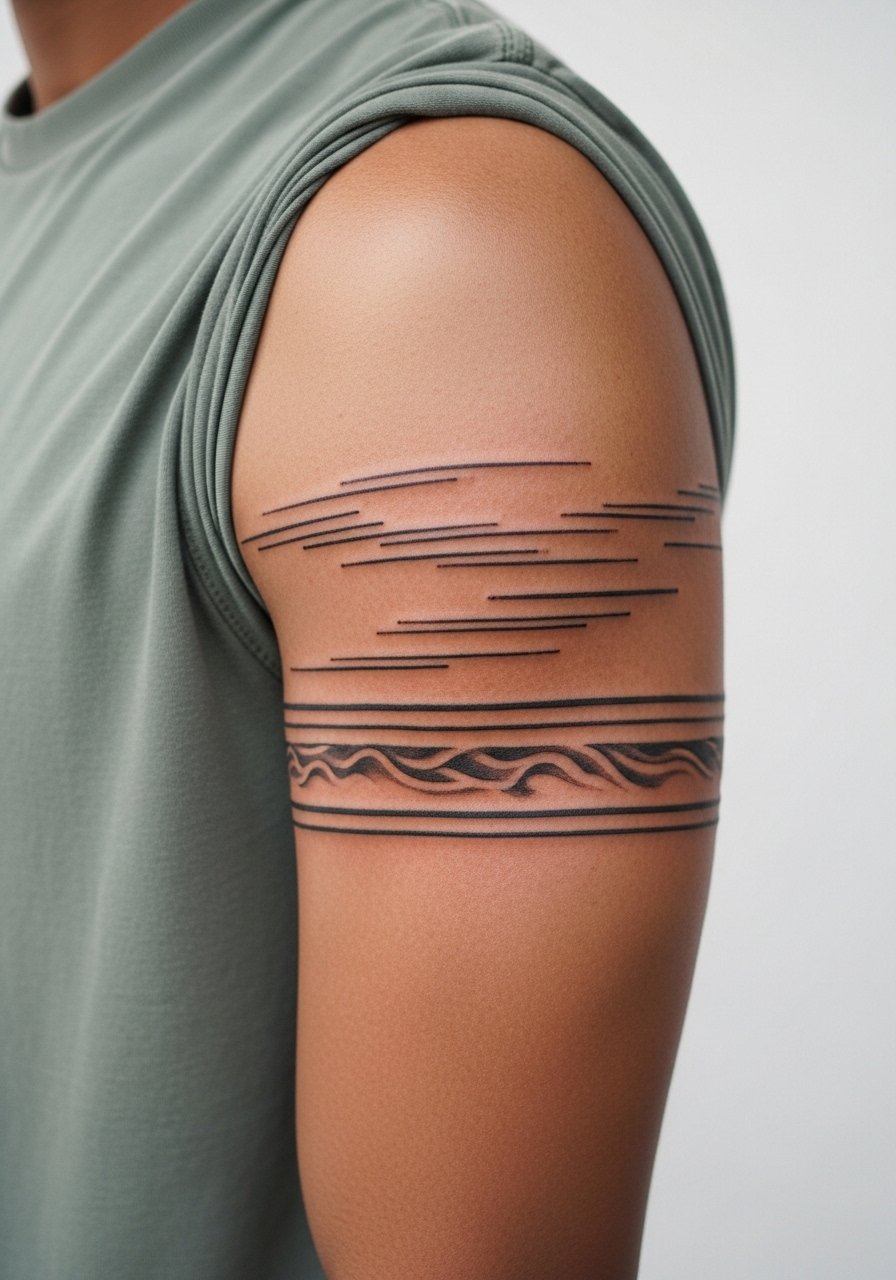
Flow lines guide a half sleeve and prevent a patchwork look. Specify the directionality during consultation so the rhythm works with muscle curves. A frequent mistake is forcing symmetrical waves on an asymmetrical arm, which looks rigid as the skin moves. This design ages gently because it relies on silhouette. Sessions are generally comfortable and can be paced in two passes. For casual wear pick a short-sleeve linen shirt to show the sweep.
16. Single-Needle Minimalist Script Panel Near the Inner Wrist
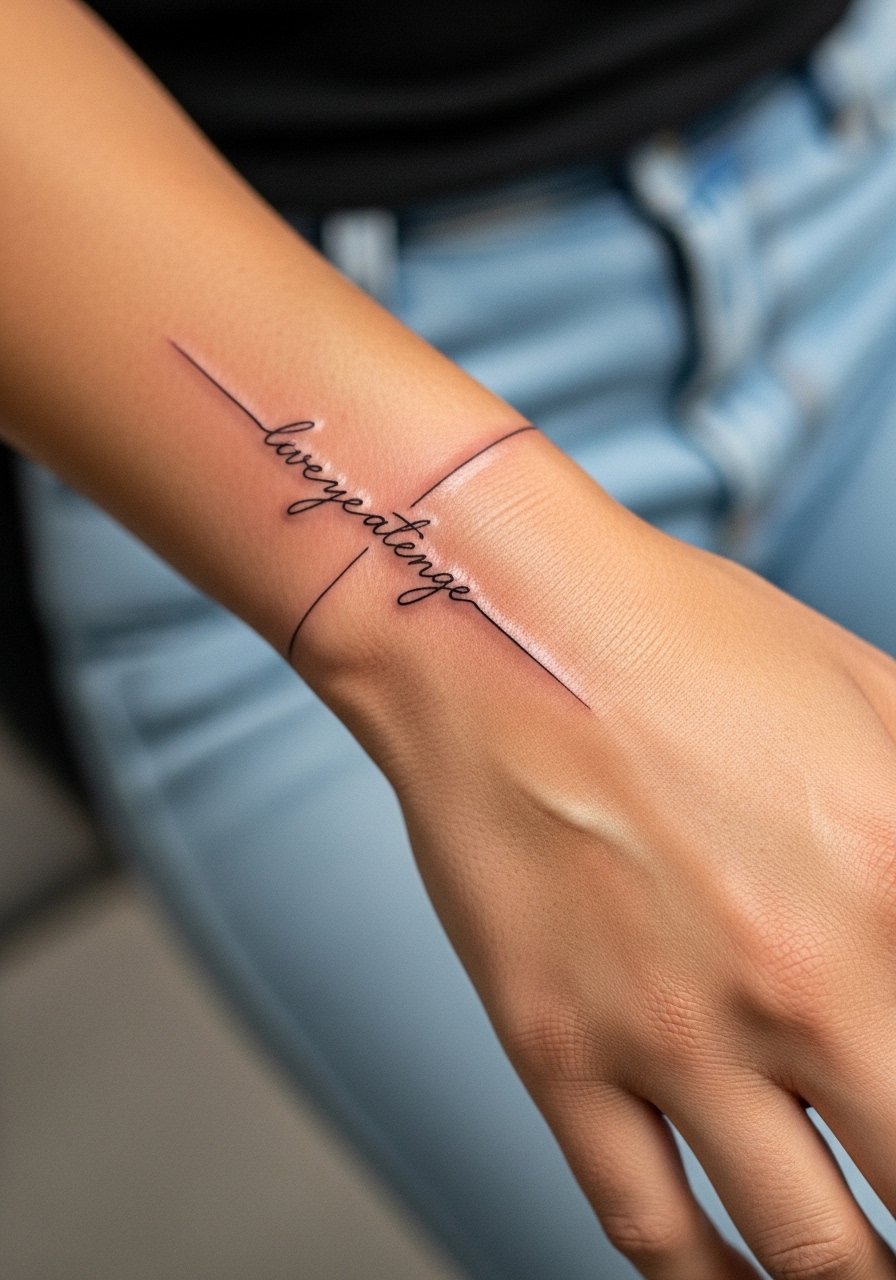
Single-needle script reads fragile and elegant, but that fragility means it needs space. Tell the artist to space letters and keep counters open. The error is packing long phrases into a narrow band, which becomes illegible with time. Expect faster fading near the wrist because of frequent washing and friction. Touch-ups by year two are common for very thin scripts. For sessions and showing off, a slim bracelet can complement the line without touching the letters.
17. Minimalist Animal Silhouette Panel that Wraps the Upper Arm
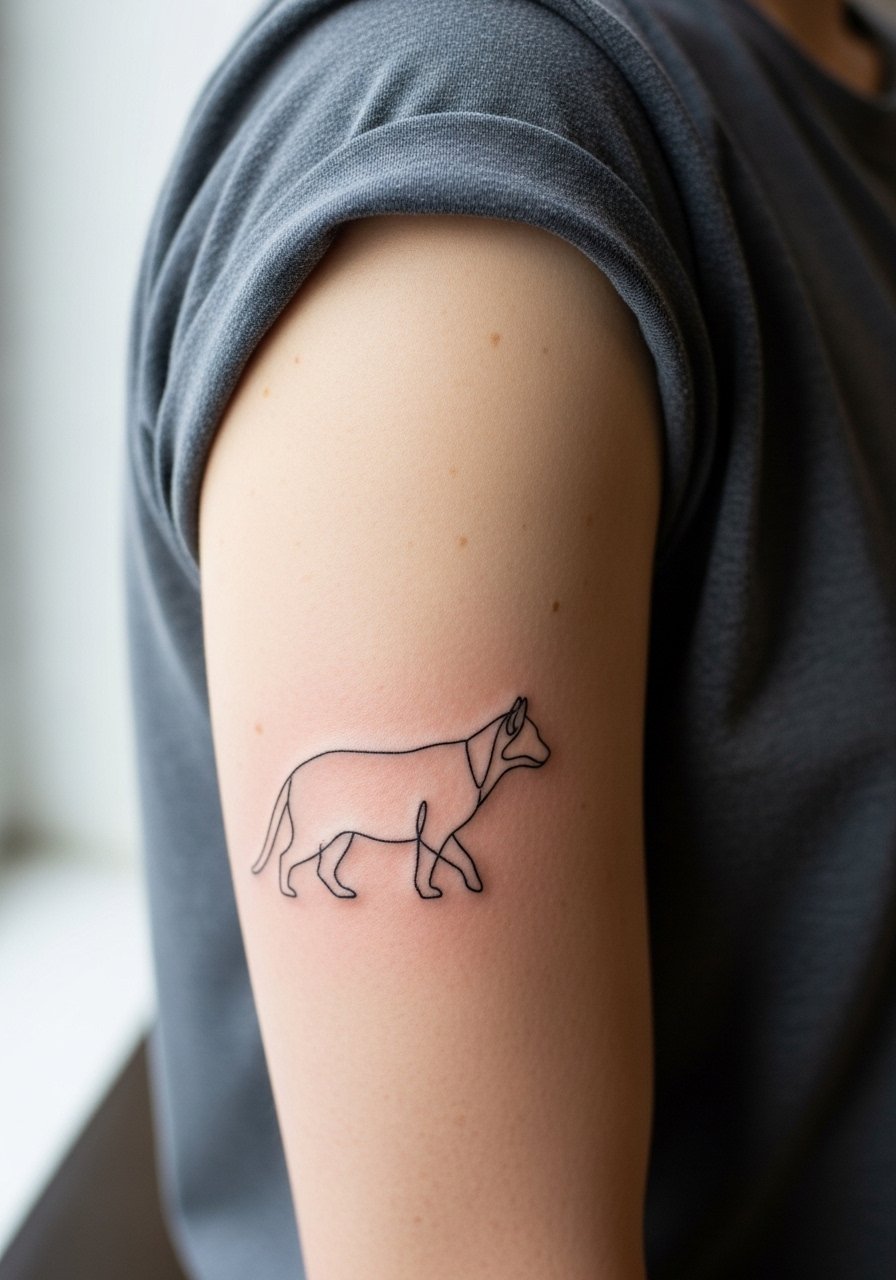
A silhouette works best when scaled to negative space rather than tiny internal detail. Specify the silhouette edge weight so it reads at arm distance. The usual mistake is crowding the silhouette with internal tiny markings. Those fade into smudges. Healing over the curved upper arm is forgiving, but expect slight softening at the edges over years. Sessions are moderate and often part of larger layout work. For the reveal, a short-sleeve tee rolled just right highlights the wrap.
Frequently Asked Questions
Q: Will fine line half sleeves blur faster than traditional bold sleeves?
A: Fine line tends to soften sooner because the individual strokes are thinner and sit in shallower channels. That said, spacing, placement, and sun protection make a bigger difference than the label. Expect touch-ups earlier than bold work, especially on areas with friction.
Q: How should I dress for a long half sleeve session that uses inner bicep and elbow areas?
A: Wear clothing that gives clean access without being restrictive. A tank top layered under a loose button-down or a short-sleeve shirt you can slide up works best. Bring a zip hoodie to stay warm during slower stretches.
Q: Are there placements on half sleeves that artists commonly advise against for single-needle detail?
A: Yes. Zones with thin, mobile skin like the inner elbow crease and the wrist often challenge single-needle detail because movement and washing accelerate blur. Many artists will recommend scaling up line weight in those spots or using slightly more negative space.
Q: How often should I expect touch-ups on a minimal half sleeve?
A: It depends on sun exposure and friction. For most minimal sleeves you can expect a touch-up window around year two to four for the finest lines, and longer for major anchors. Routine sunscreen on exposed skin extends the time between touch-ups.
Q: Do minimalist half sleeves affect job prospects or visible-professional settings?
A: Placement matters. Upper arm and parts of a half sleeve are easy to conceal with long sleeves. Forearm and wrist sections are more visible and can still affect first impressions in conservative settings. Think through visibility and your career context when choosing exact placement.
Q: Can I mix stipple, single-needle, and continuous lines in one half sleeve without it looking messy?
A: Yes, if the composition is planned. Use distinct panels and clear negative space between techniques so each technique has room to read. Ask your artist for mockups that show the transitions at full arm scale so nothing competes when healed.