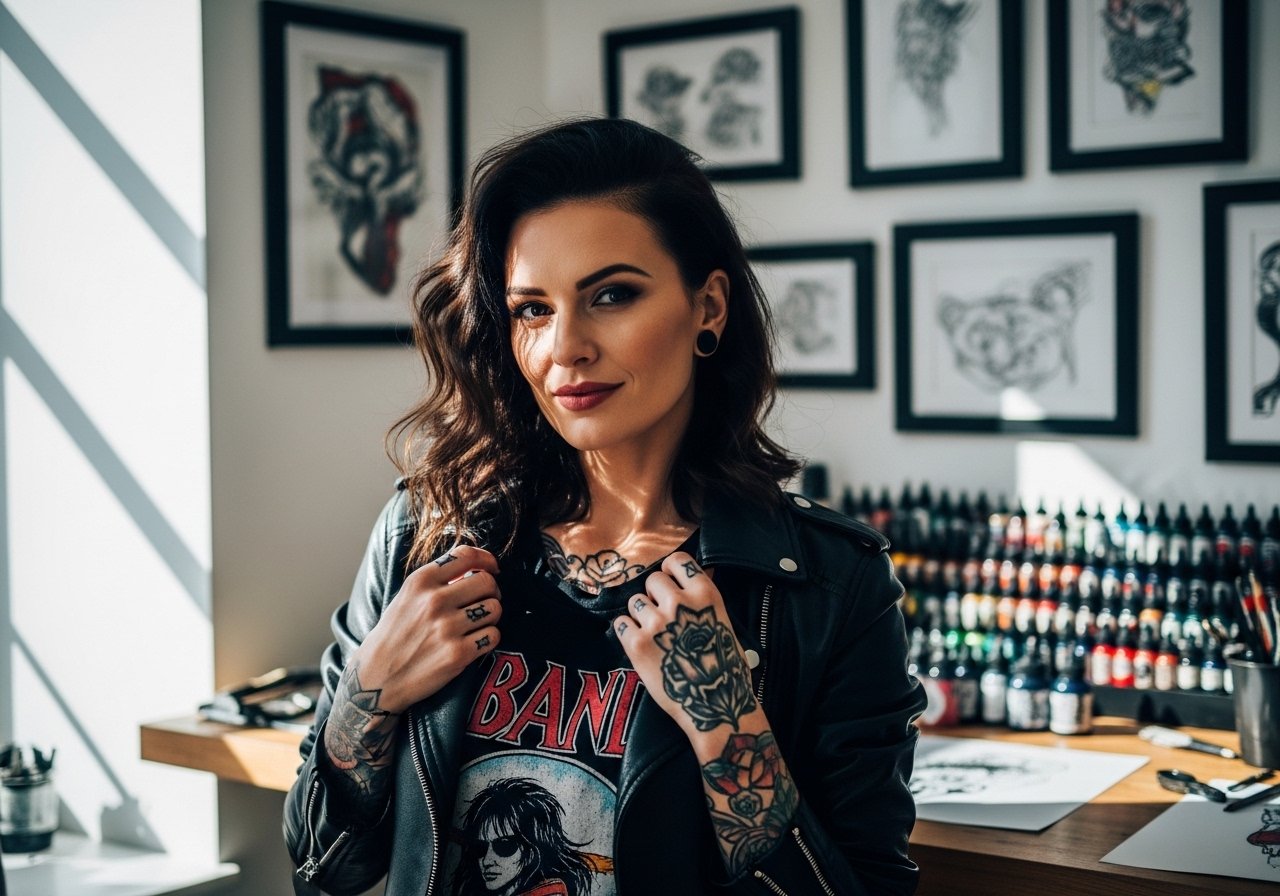
Fine line dragons look incredible fresh, but the reality is that the smallest choices—placement, spacing, and line weight—decide whether your piece reads sharp five years from now or needs a touch-up. Trends push ever thinner strokes, yet longevity often comes from modest adjustments and honest placement choices. Below are 27 minimal line Chinese dragon ideas with what to ask your artist, how they age, and how to style them for real life.
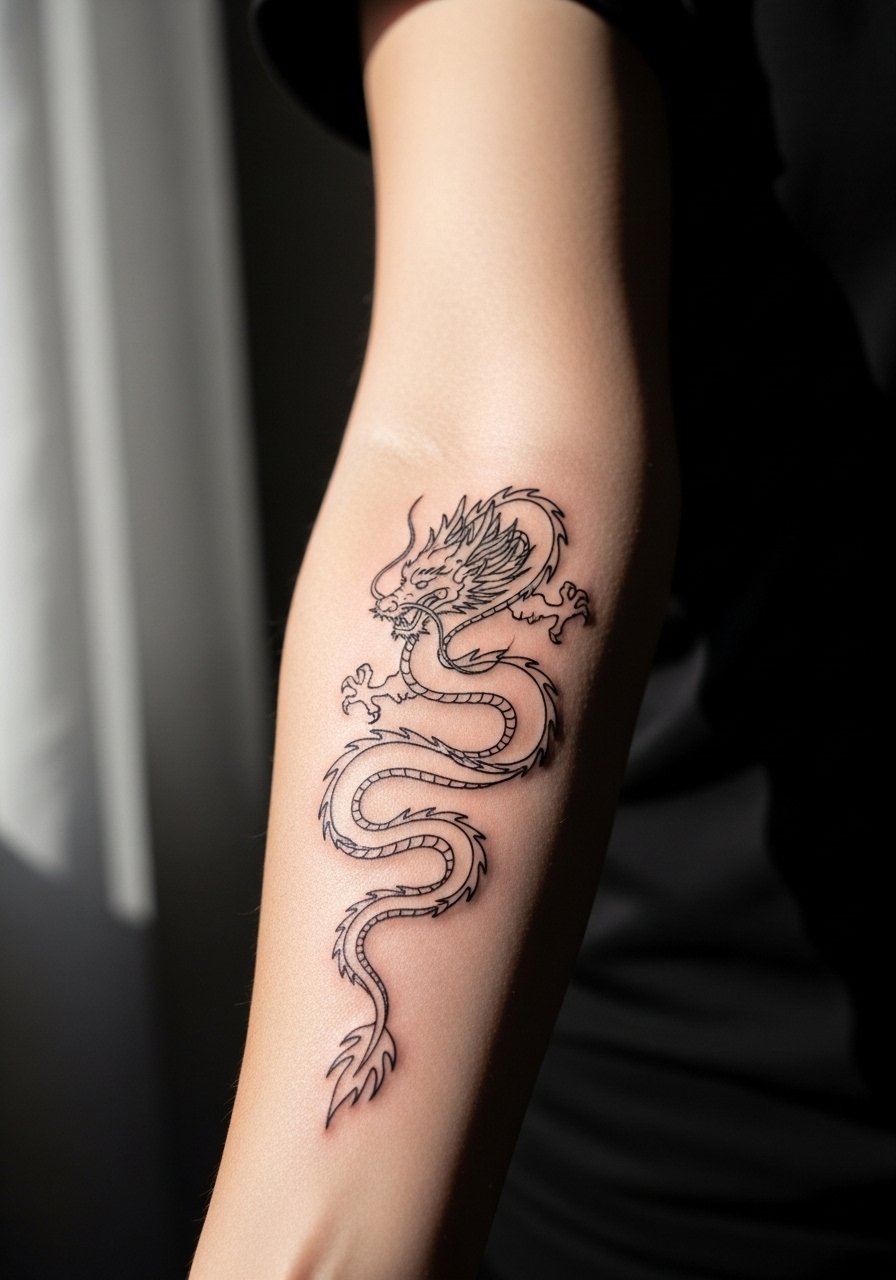
1. Slender Dragon Along the Inner Forearm
I've seen slender dragons on inner forearms keep their character longer than packed micro detail. Ask your artist for slightly heavier outer contour linework so the shape reads even as thinner internal lines soften. Fair warning, the inner forearm is medium pain, easy to sit through in one short session. Expect sharpness at six months, modest softening by year two, and a subtle blur by year five without a touch-up. A common mistake is asking for hairline internal scales, which vanish into a gray wash within a couple of years. For showing it off pair the piece with rolled-up sleeves and a loose linen button-down that frames the forearm.
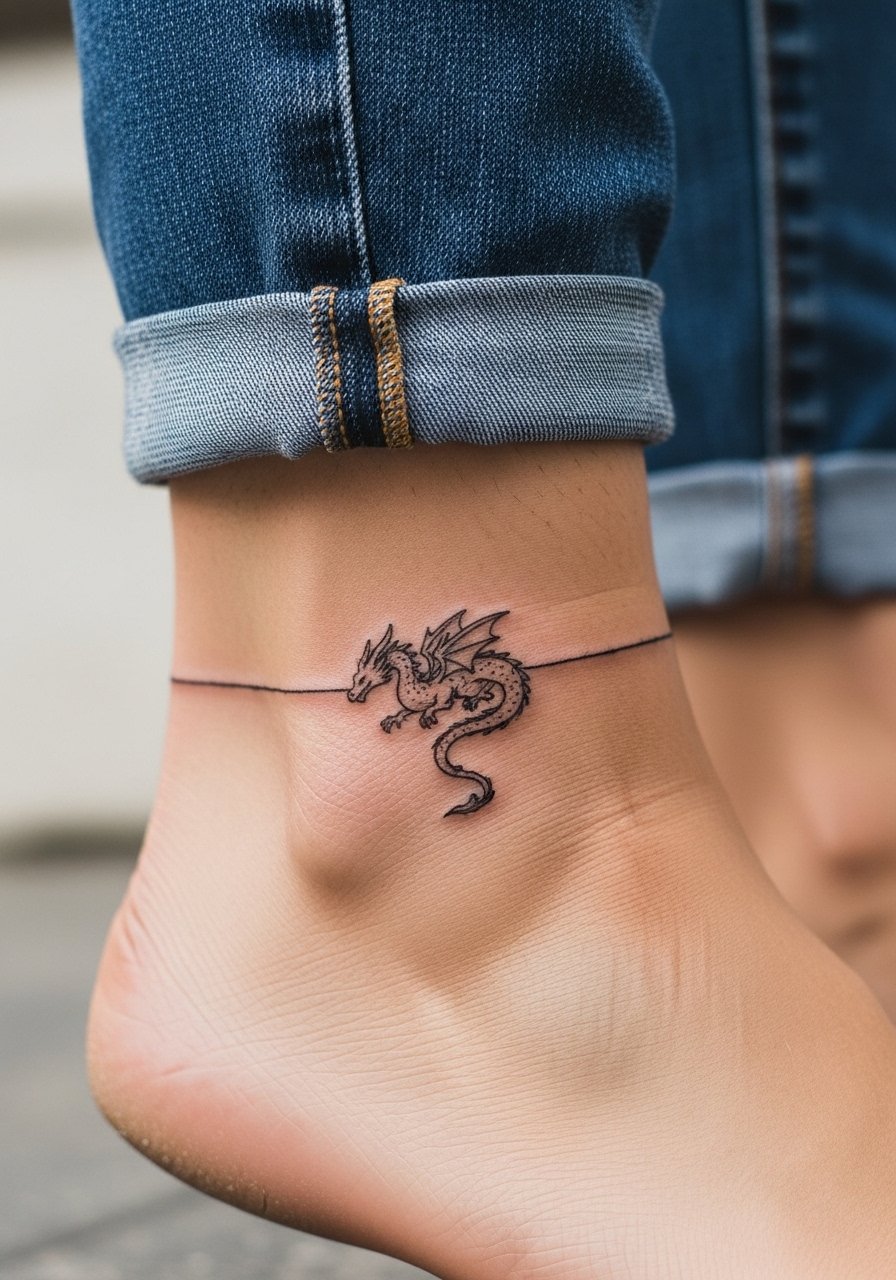
2. Tiny Anklet Dragon Coiling Around the Ankle
When you want subtlety and daily visibility the ankle works well, but expect friction from socks and shoes during the first week. For this placement ask for simplified scales and a single continuous line so touch-ups are straightforward if needed. Pain is low to moderate and most clients take this in a single quick session. Over time the ankle sees some rubbing and color loss, so plan a touch-up around year two if you wear a lot of close-fitting shoes. For sessions wear jeans you can roll up and bring a pair of sandals, and plan to show it off with jeans rolled at the hem.
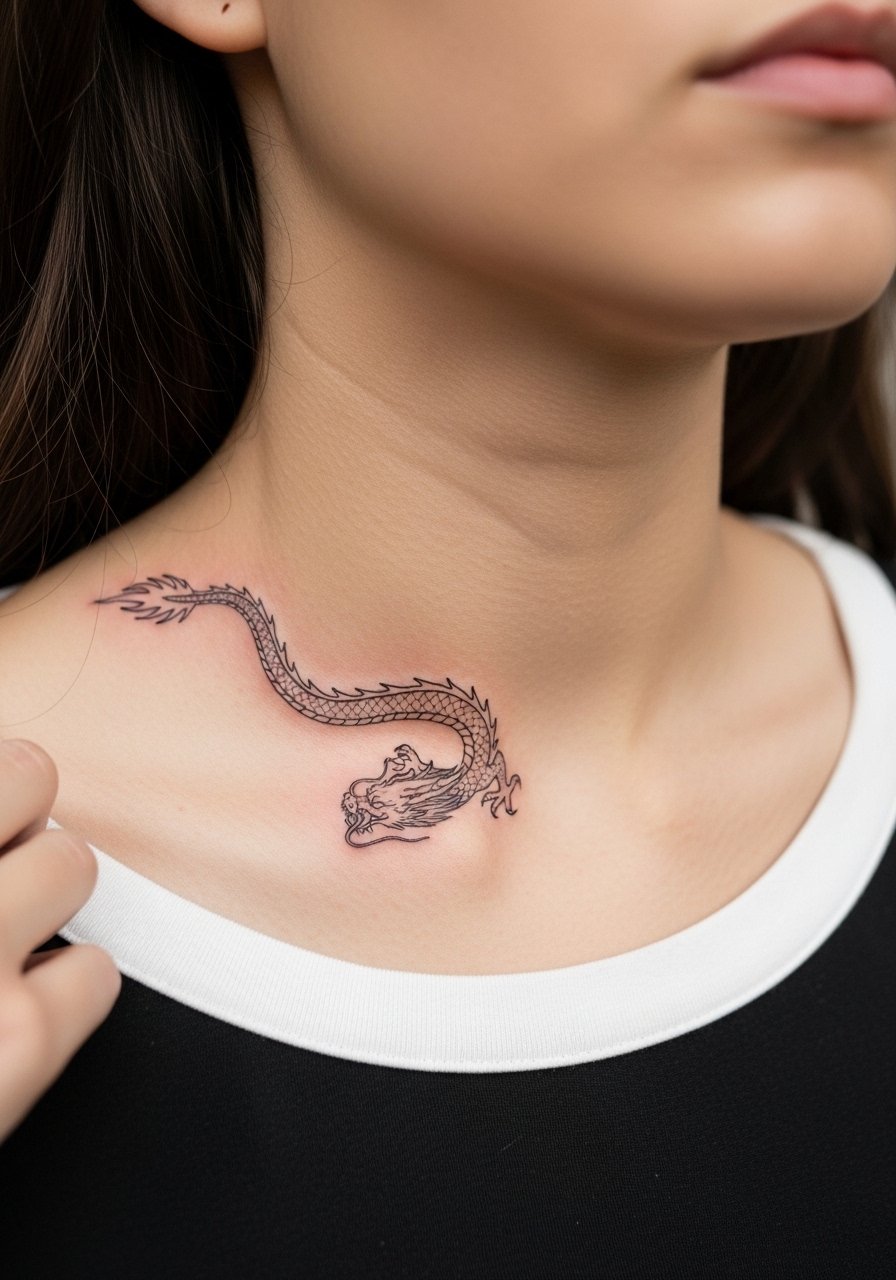
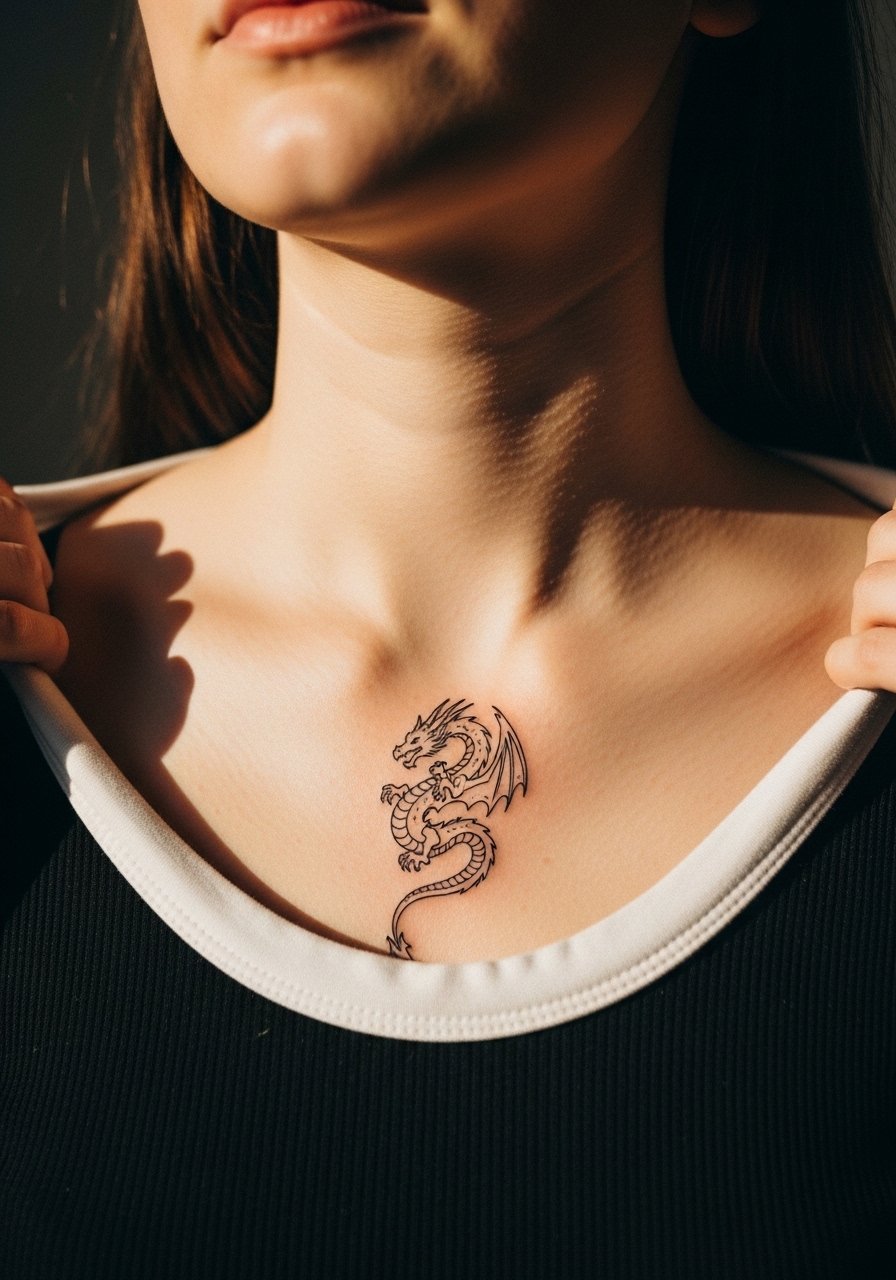
3. Delicate Collarbone Dragon That Follows the Bone
When a design follows the collarbone it reads as a natural accent to the neckline. I recommend slightly more spacing between scales so the piece does not crowd as the skin shifts. Sessions are usually brisk and the collarbone can be sensitive but manageable. Most people see crisp lines at six months, then gentle softening at two years. If you worry about workplace visibility wear a wide-neck top pulled slightly to one side for the appointment. For evenings, an open-back dress or a wide-neck blouse frames the dragon without exposing much skin.
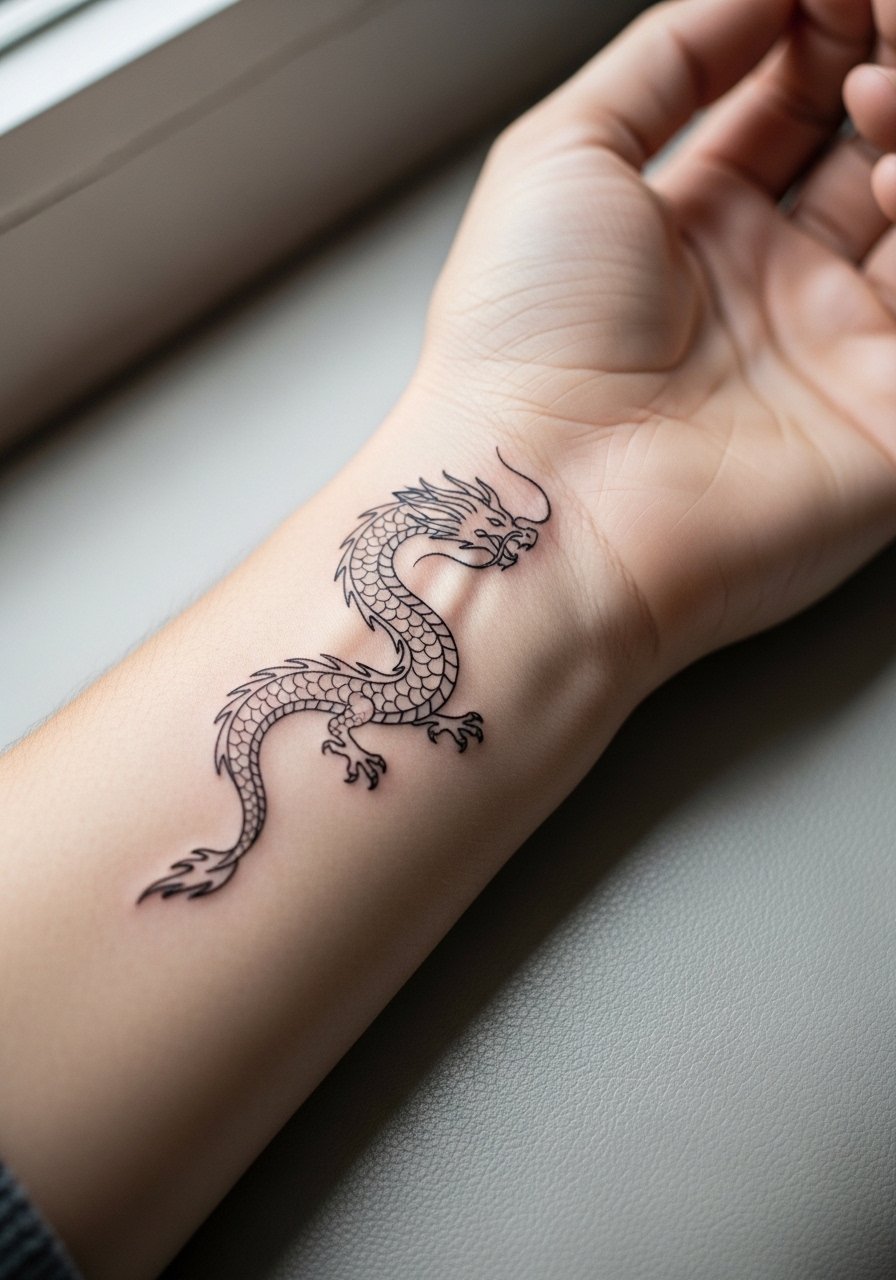
4. Wrist Wrap Dragon That Tucks Under a Watch
Fair warning, wrists are unforgiving for hairline detail, but a tiny wrap that tucks under a watchband can last if the lines are bold enough to begin with. When you consult, ask the artist to draw the dragon so it flows with the wrist's curve and to leave a small margin from joints. Expect sharper contrast at six months and potential softening around two years from repeated washing and friction. The typical mistake is packing too many scales into a tiny band. Pair this with a minimalist watch or stack of thin bracelets and a thin chain bracelet that complements without covering the central motif.
5. Behind-the-Ear Micro Dragon, Below the Hairline
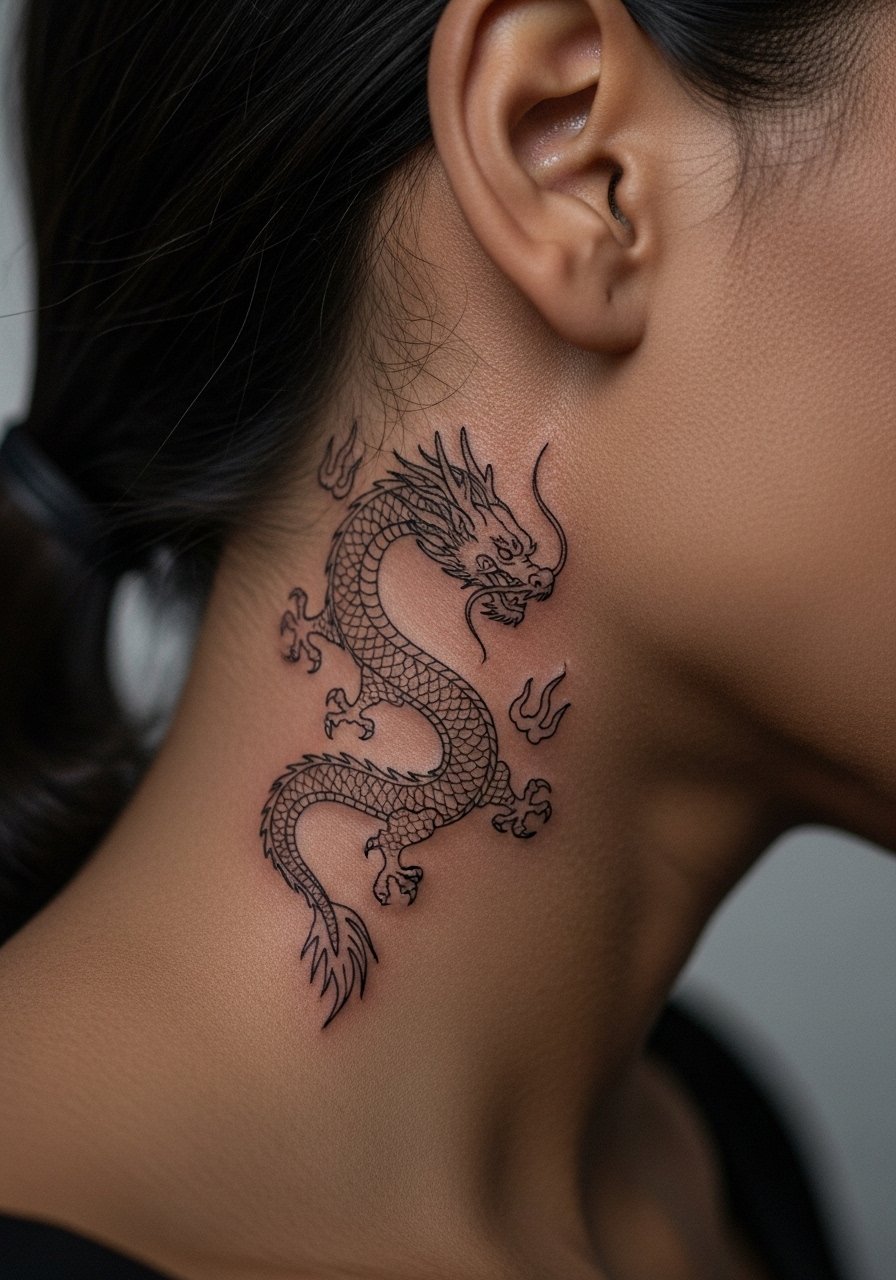
When the dragon is planned for the skin just behind the ear it reads as a private detail that peeks out with certain hairstyles. Artists split on fine line placement here. One camp says the skin in that area moves too much and thin lines blur quickly. The other camp says with deliberate depth and spacing it holds up fine. Ask your artist where they stand before booking. The session is quick and pain is low. For the appointment tuck hair up and wear a loose collar. This placement is easy to hide for conservative workplaces.
6. Ribcage Dragon That Flows With the Torso
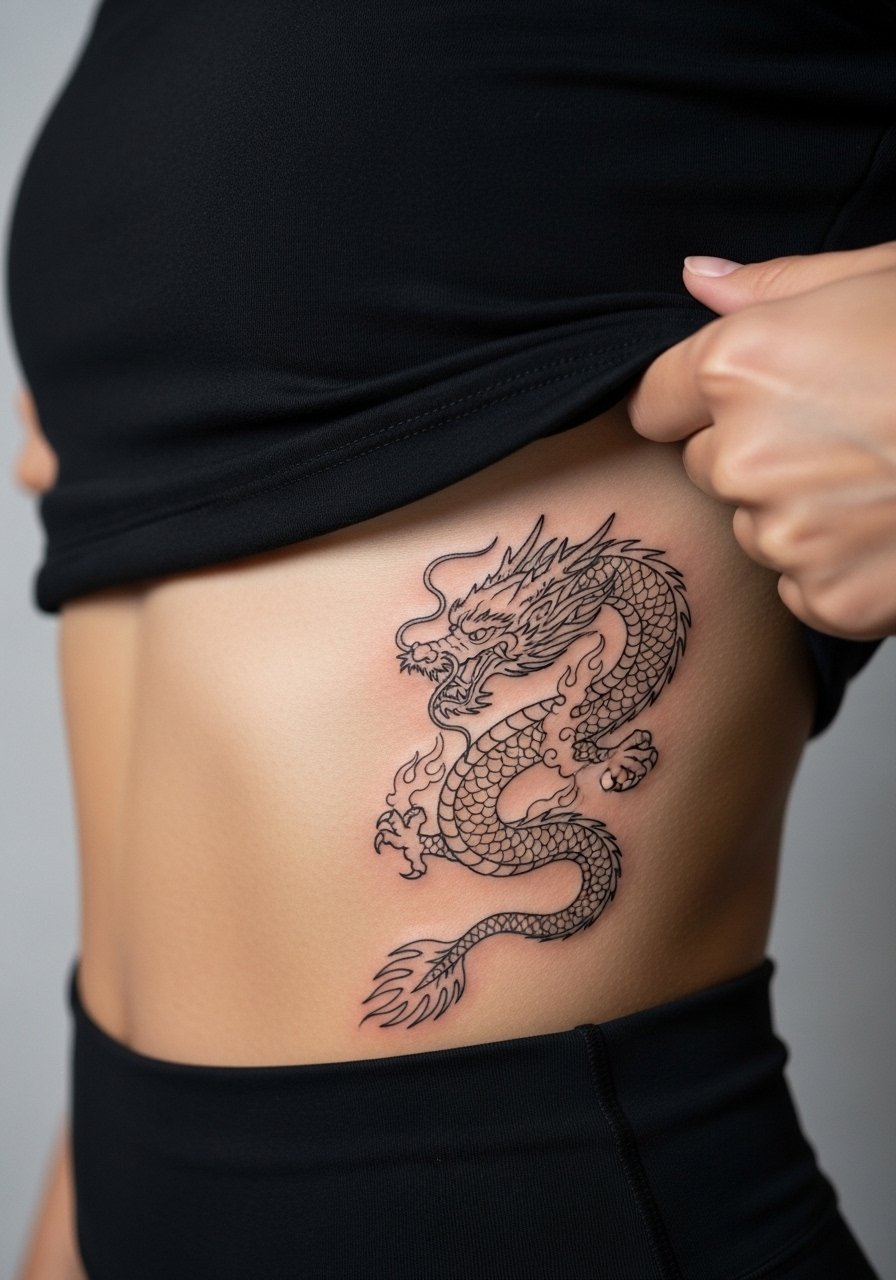
Artists are divided on fine line on ribs. One group argues the stretched skin there blurs lines within two years. The other group says with proper needle depth and spacing fine line settles fine on ribs. I recommend asking an artist who routinely tattoos ribs and showing spaced reference images. The ribcage is higher pain, and sessions may require breaks. Expect crisp detail at six months, some loss of micro detail by year two, and potential need for touch-ups by year three. For the session wear a cropped top you can lift or a zip hoodie you can pull aside.
Studio Day Picks
Those wrist, forearm, and ribcage pieces above ask for a few specific items that make the day smoother and the first week less fussy.
- Stencil transfer paper kit. Lets you preview the dragon placement and scale before the needle starts, which matters for curved forearm and ribcage pieces.
- Topical numbing cream. Applied about 45 minutes before can take the edge off sensitive ribs and inner forearm work.
- Thin protective film roll. Useful for wrist pieces and ankle work to limit friction during the first few days.
- Fragrance-free gentle body wash. Cleanses healing fine line work without irritating the area.
- Aquaphor healing ointment. A thin layer in the early healing window helps keep delicate linework from crusting and cracking.
7. Tiny Finger Dragon That Sits on the Side of the Knuckle
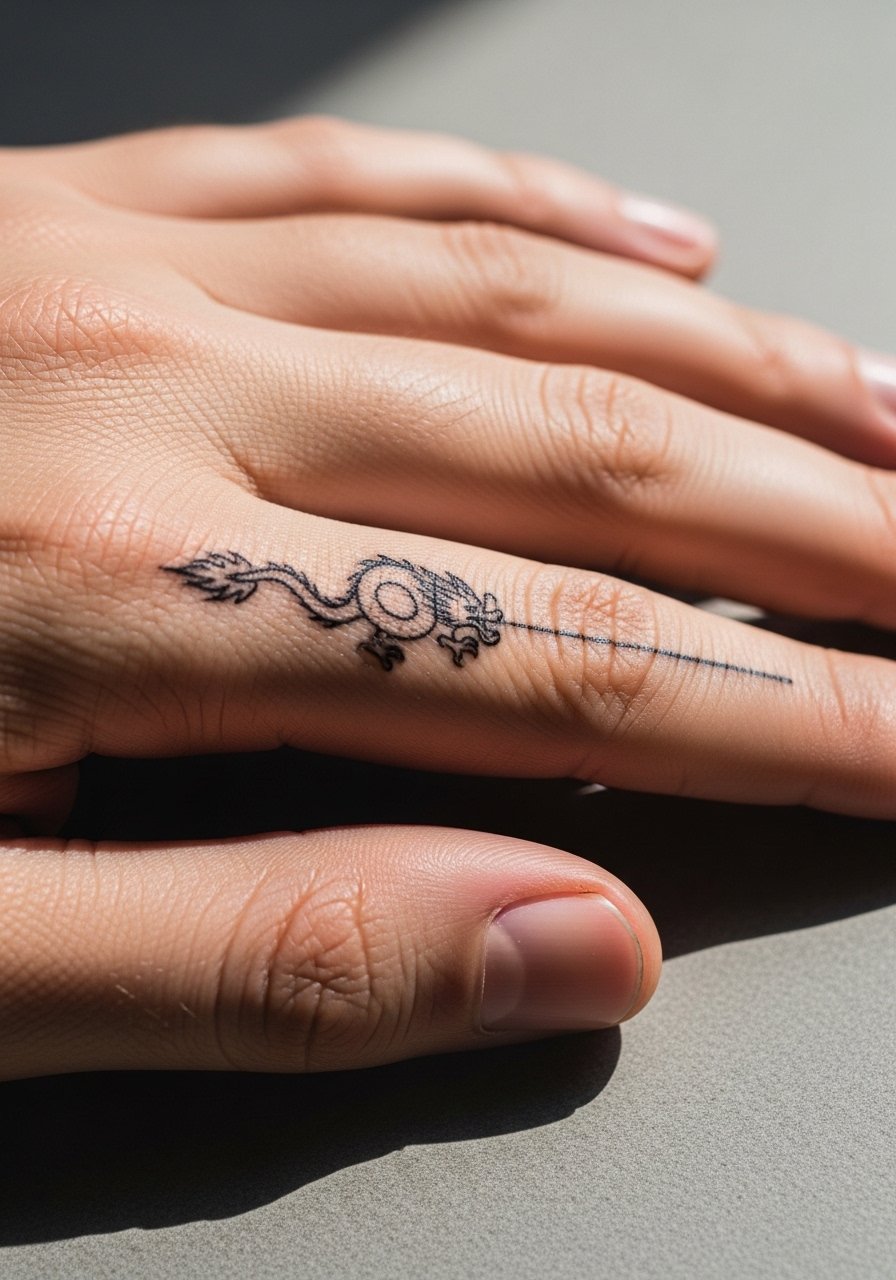
Hand and finger work ages differently because of constant use and washing. I recommend a simplified silhouette with minimal internal detail. Pain is sharp but brief. Expect accelerated fading compared with the forearm and plan for touch-ups in year one or two. The biggest mistake is asking for tiny scales or scripts on the finger, which rarely survive. For the session wear nails short and bring a pair of thin gloves for aftercare if your job requires frequent hand washing. To show it off wear stacked thin rings and a dainty ring set that frames the knuckle without covering the art.
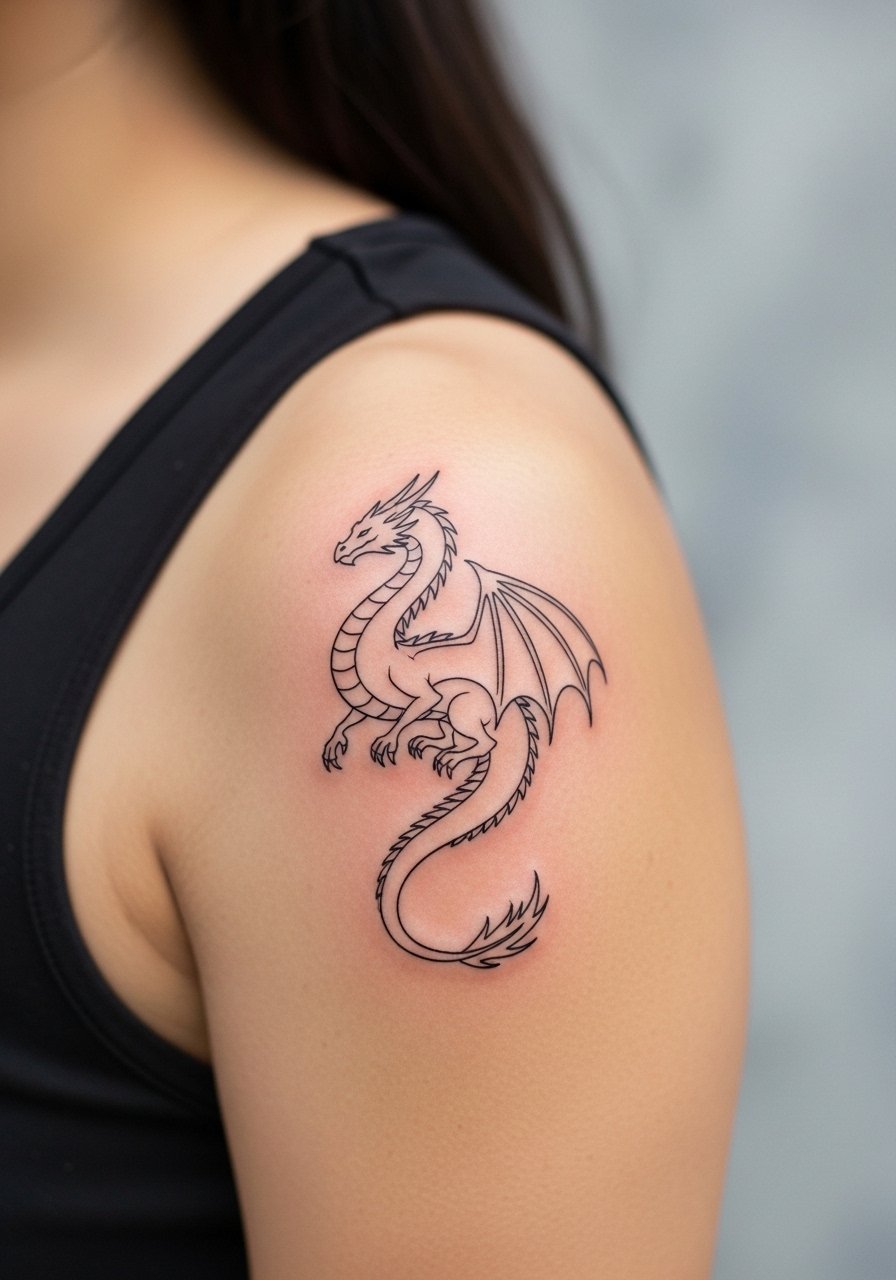
8. Small Shoulder Cap Dragon Nestled at the Edge
I prefer shoulder cap placements for small dragons when a client wants visibility without constant exposure. The area handles slightly heavier linework and stands up to sun better than the wrist. Sessions are low pain and often finish in one visit. At six months the dragon looks clean, and at two years it should need only minor touch-up if you avoid heavy sun. Common mistakes include cramming a long body onto the cap. For the appointment wear a loose tank top or a loose button-down shirt you can slide aside.
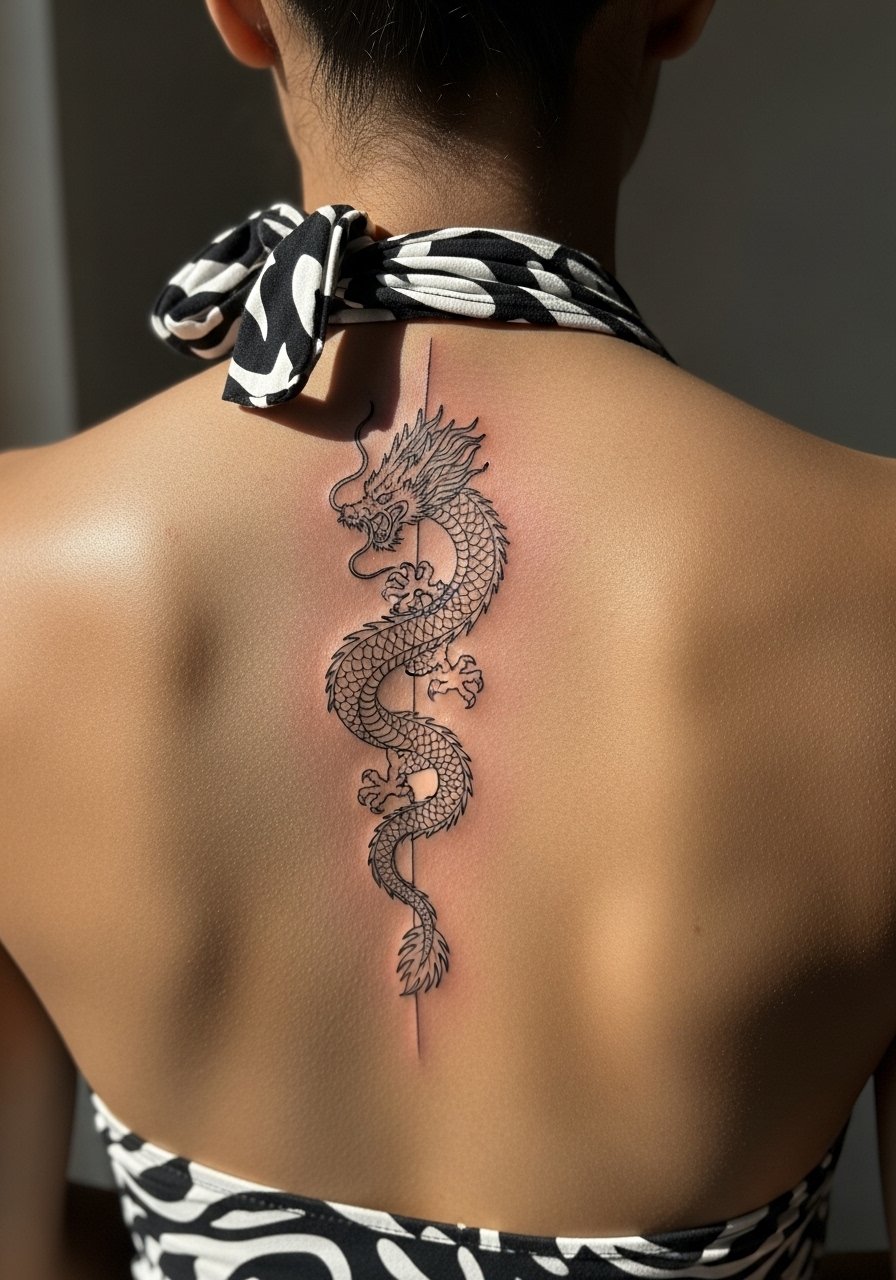
9. Spine-Parallel Dragon That Runs Between the Shoulder Blades
A thin dragon down the upper spine reads clean when the lines are given room to breathe. The tell is spacing. Ask your artist to keep scales minimal and to plan the composition with the spine as a guide. Sessions can be uncomfortable for some people since lying face down is required, but the skin there holds detail well. Expect slow, even aging with touch-ups likely after several years if you get frequent sun exposure. For showing it off choose open-back tops or a halter dress that highlights the center line.
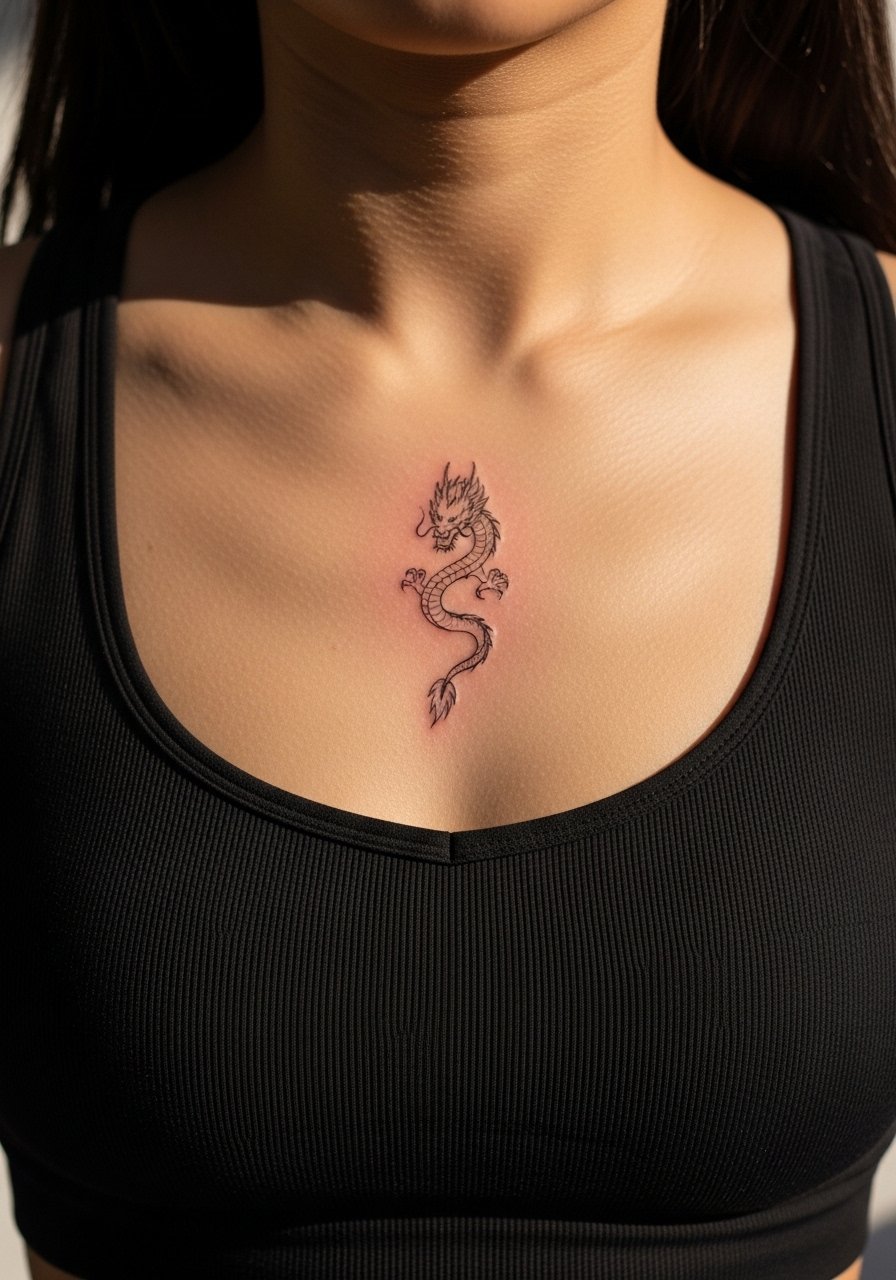
10. Micro Chest Dragon Nestled Over the Heart
When placed near the sternum the tiny dragon becomes a personal piece that can be shown selectively. For safety and modesty wear a fitted sports bra during the session. Expect the sternum area to be more sensitive and to hold fine lines differently than flatter chest areas. One common error is asking for extreme micro detail directly over the sternum bone where healing can be uneven. Plan for a touch-up by year three if you like crisp micro scales. Pair it with a thin chain pendant and a thin chain pendant necklace that sits above the design.
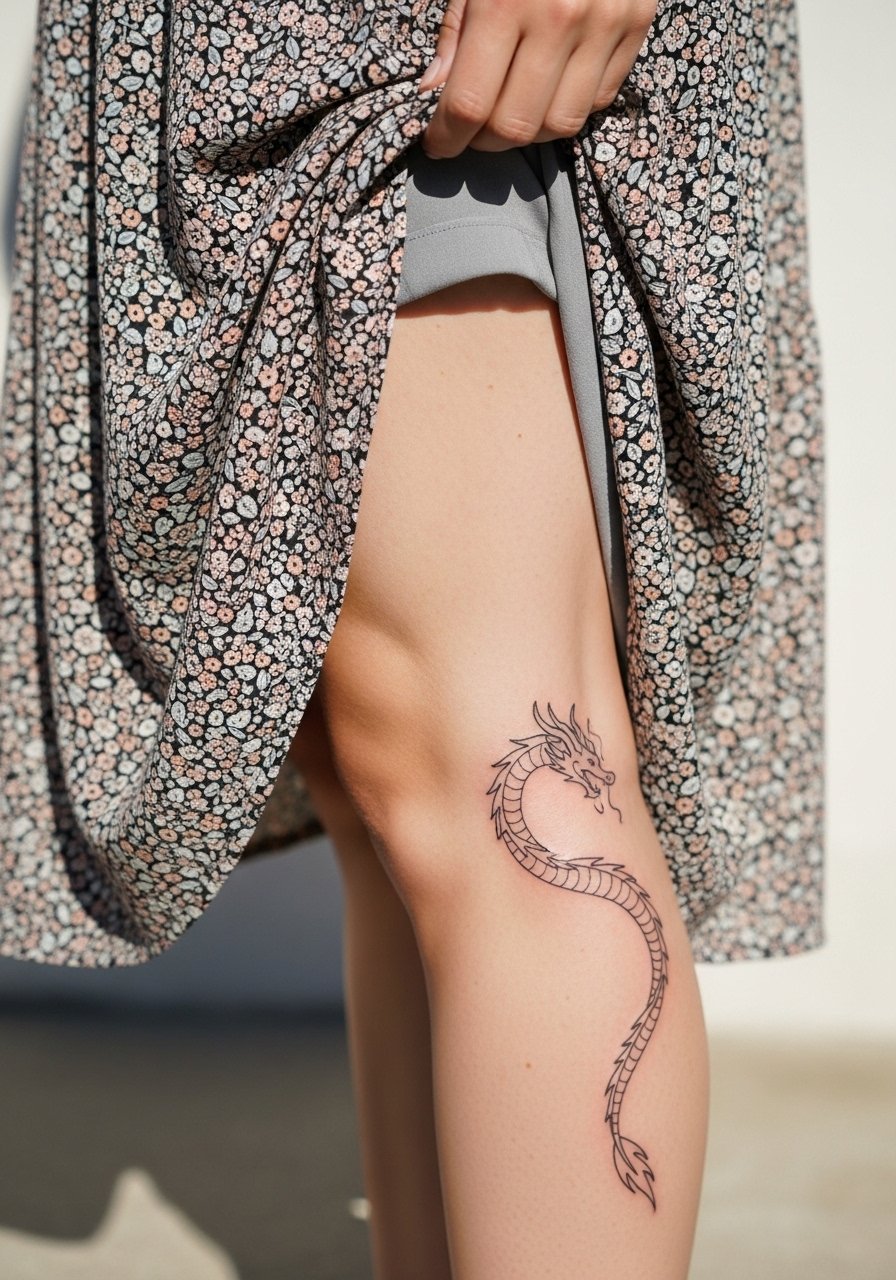
11. Calf Dragon Curving Around the Muscle
The calf is forgiving of slightly denser linework because skin there moves less and is less exposed to daily friction. Pain is moderate and sessions can be comfortable sitting. At six months expect a strong silhouette and at two to five years minimal softening if you avoid constant sun. The mistake is turning a long dragon into tiny micro detail that reads as noise from a distance. For the session pick shorts or a skirt and for showing off pair it with mid-calf boots or a flowy midi skirt.
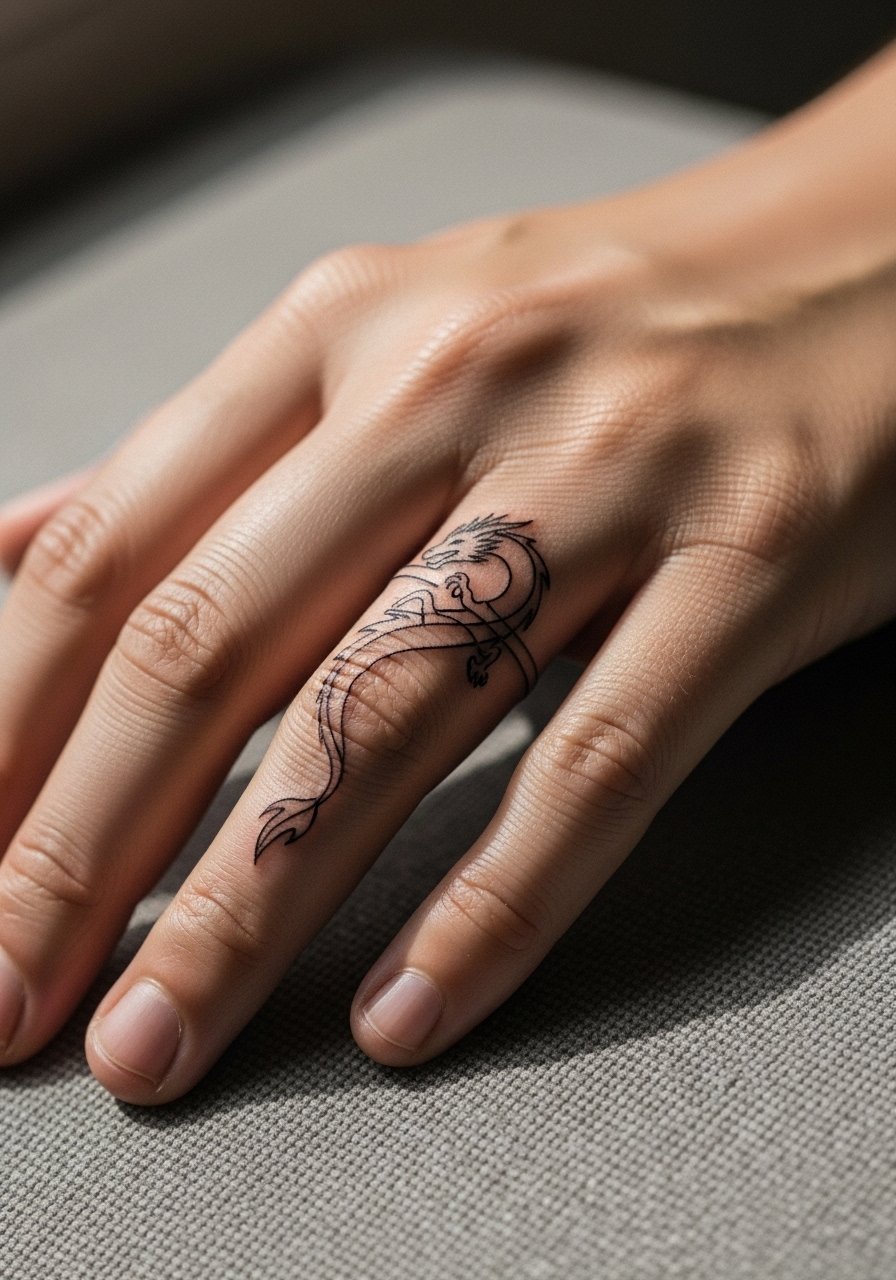
12. Minimal Dragon Finger Band Around the Base of a Finger
A band-style tiny dragon is essentially jewelry made of ink. I advise enlarged negative space between elements so washing and typing do not erase the design. Pain is brief and focused. Bands on fingers blur faster than on other areas so expect annual touch-ups if you want a sharp look. A common misstep is insisting on ultra-thin internal details. For showing it off pair with simple stackable rings and pick a stackable ring set that complements the band.
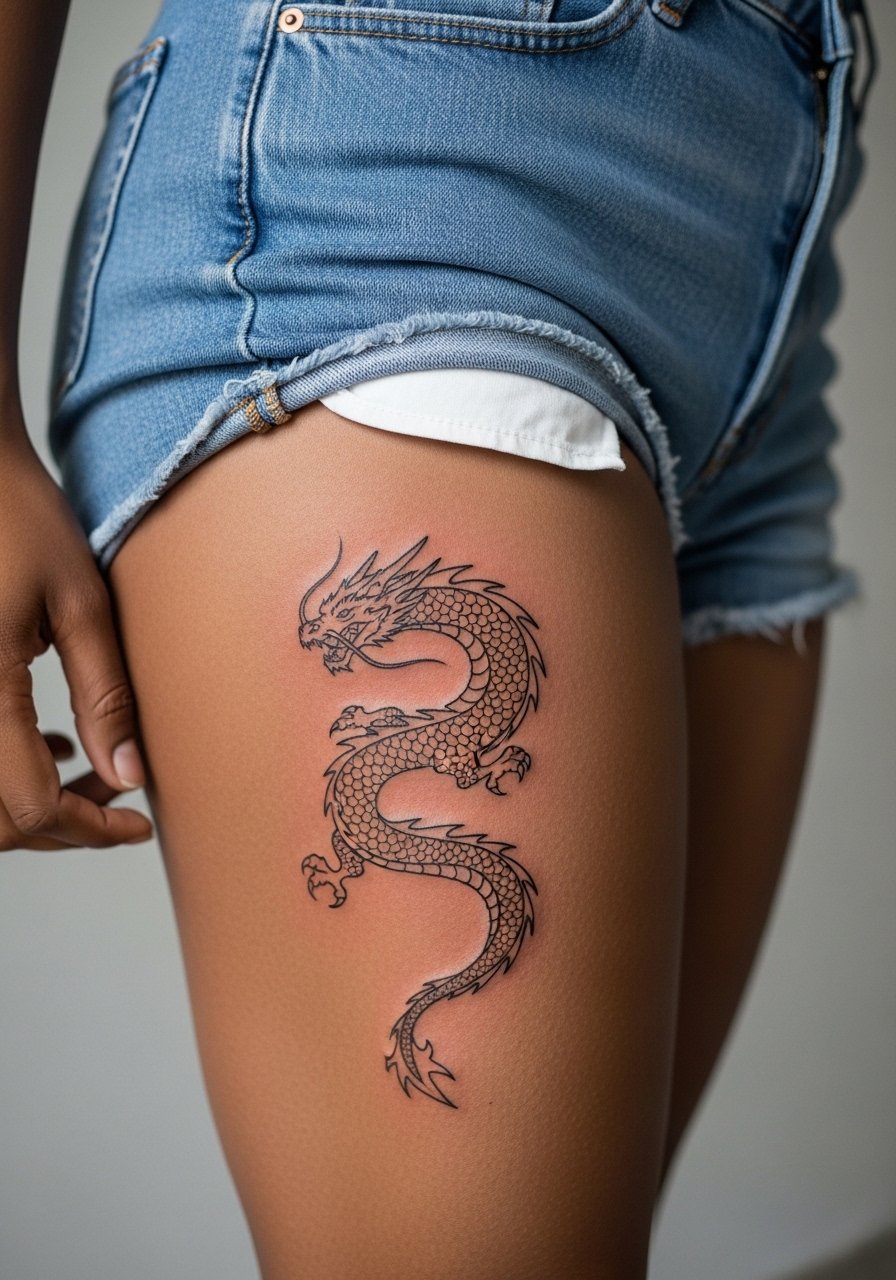
13. Outer Thigh Dragon That Peeks From Shorts
The outer thigh handles scale and spacing very well and is ideal for slightly longer compositions. Pain is low to moderate and sessions are forgiving. Over time thigh pieces maintain shape and rarely need frequent touch-ups compared with hand pieces. A mistake is packing too many tiny scales into a long curve. For the appointment wear loose shorts or high-waisted bottoms you can shift, and for showing it off choose cut-off shorts or a high-waisted denim short.
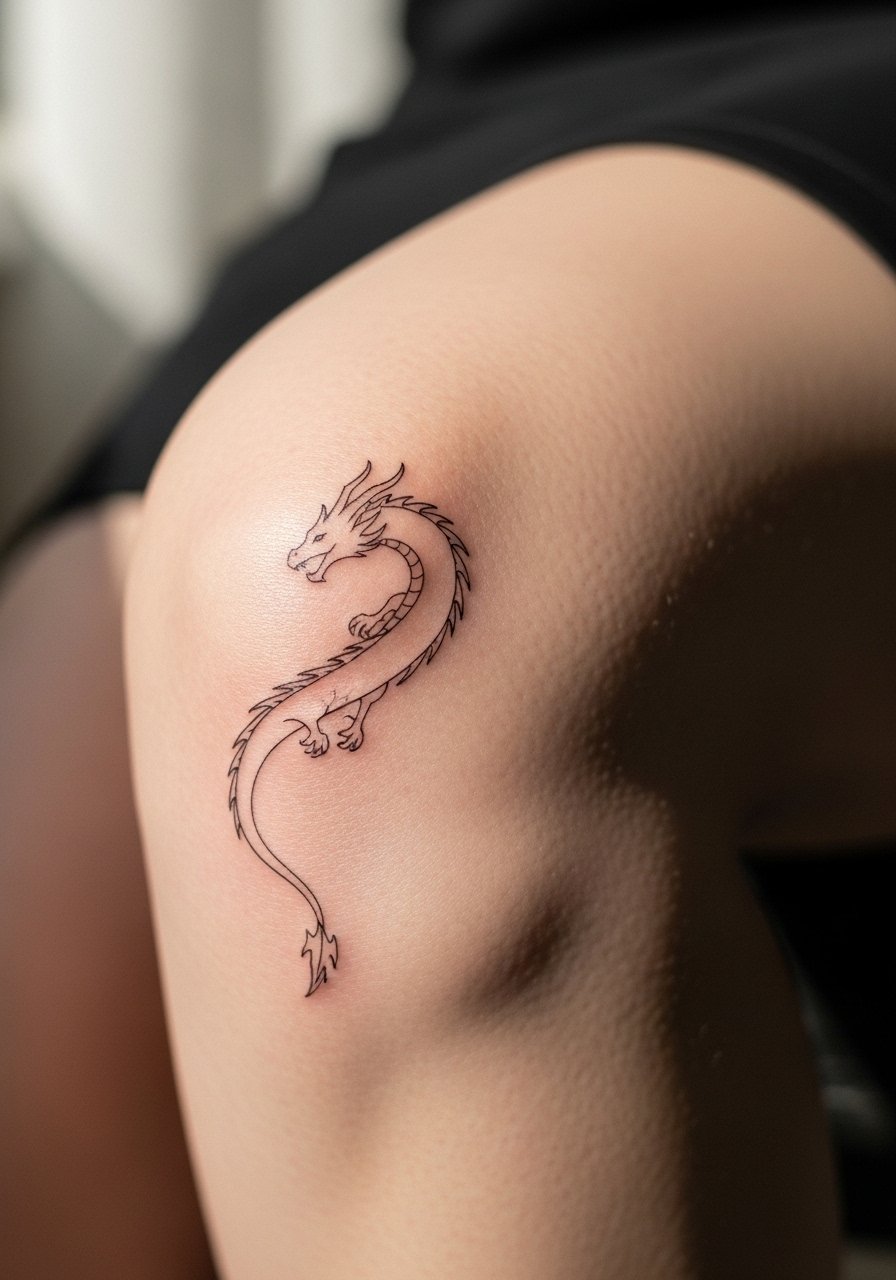
14. Minimal Dragon Behind the Knee That Flicks With Motion
A behind-the-knee placement is playful but the skin there folds and moves a lot, which affects fine lines. When you want that spot, ask for simplified linework and avoid tightly packed detail. Sessions require bending and can be odd to sit through but are short. Expect accelerated blurring from folding if you choose very thin lines. For showing it off wear skirts or cropped trousers and consider a pair of neutral sandals that draw attention down the leg.
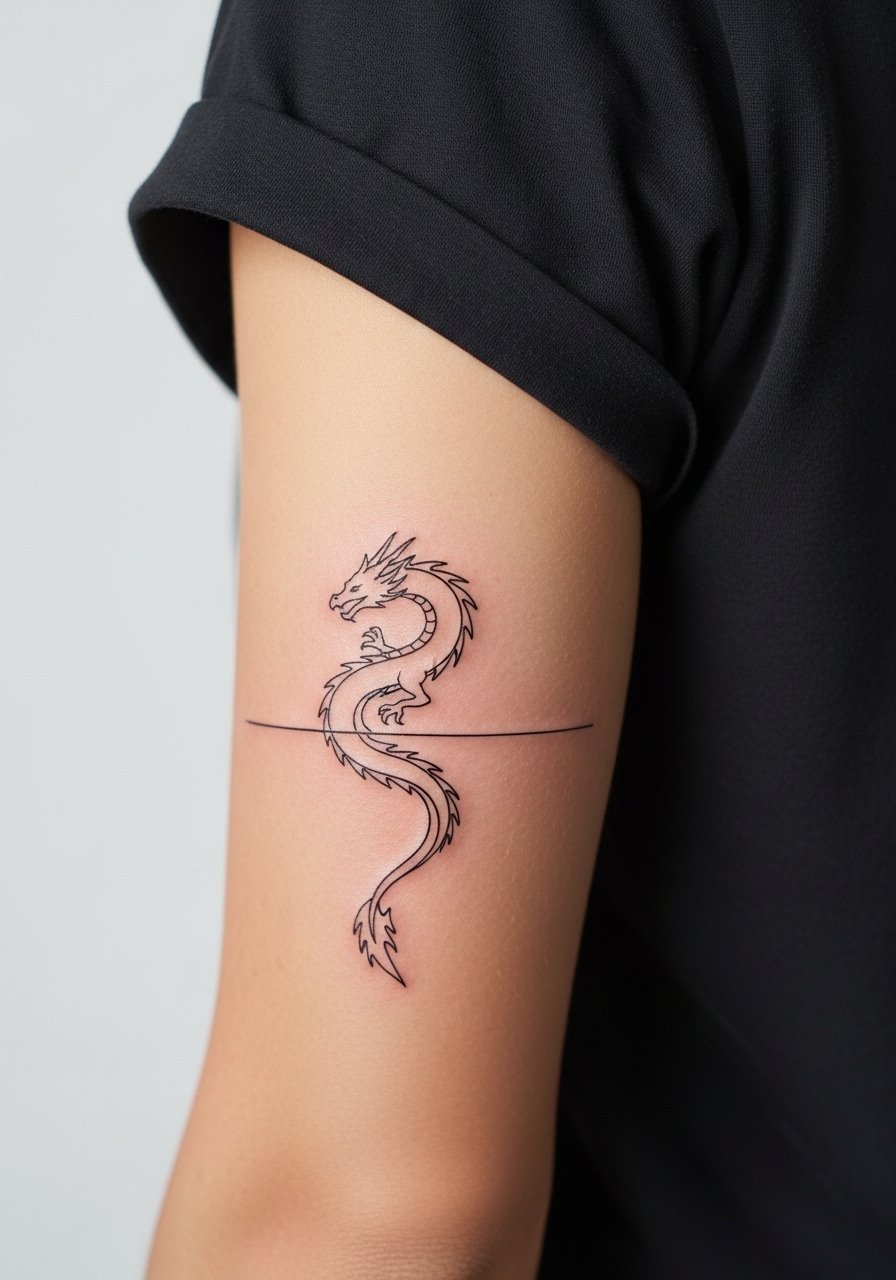
15. Minimal Back-of-Arm Dragon Along the Tricep
The back of the upper arm reads well for slightly elongated designs. Ask for medium line weight so the piece keeps its structure when the arm rests. Sessions are low to moderate pain and quick. Over time the area keeps detail relatively well compared with hands and fingers. A mistake is putting ultra-fine internal scales that merge with sweat and friction. Show it off with short-sleeve shirts or a rolled-up sleeve linen shirt.
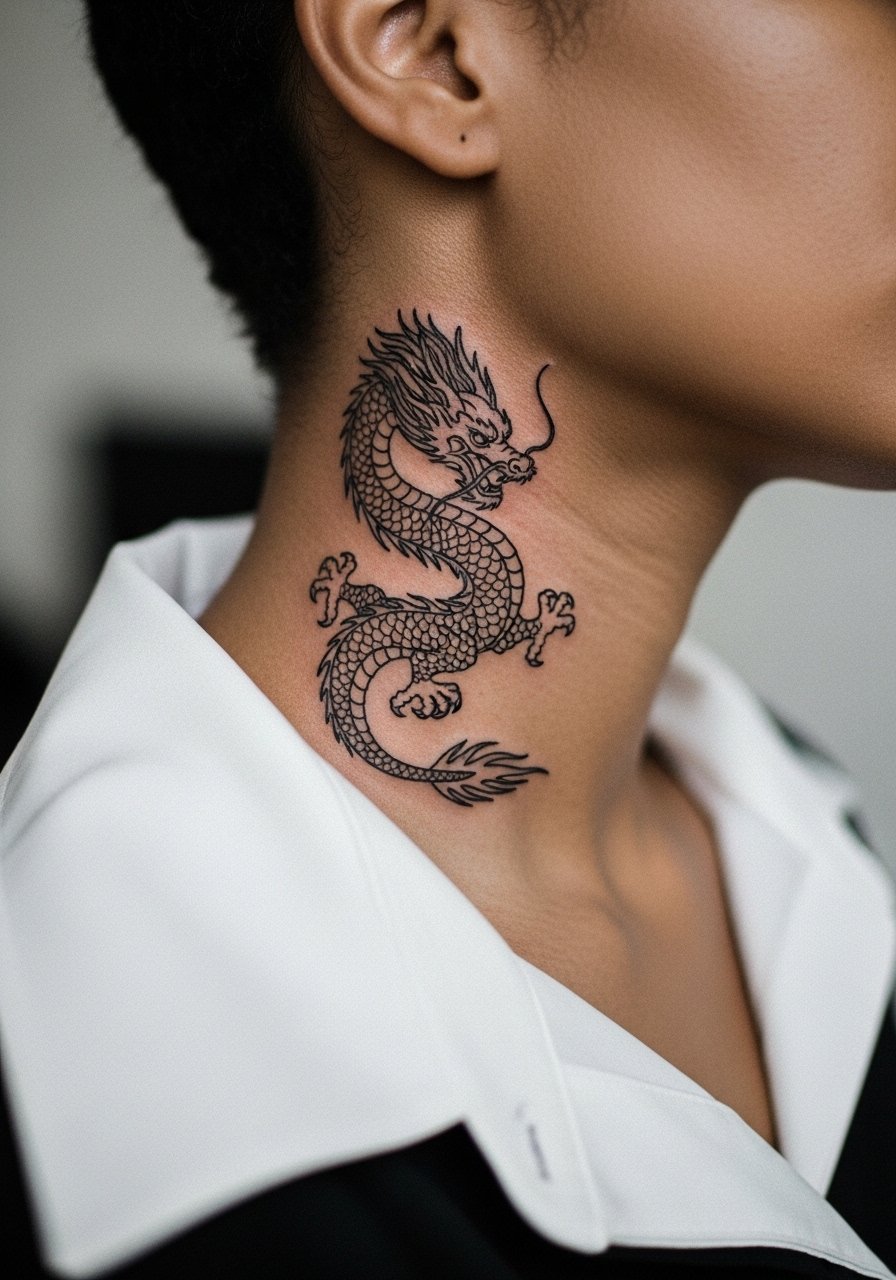
16. Micro Neck Dragon at the Side of the Neck
Neck tattoos have real career and social considerations, so think through visibility. When small and placed on the side of the neck you can hide it with collars most days. The skin there holds fine lines differently than the chest or forearm, so ask for slightly bolder outlines. Pain is moderate and proximity to bone matters. A common error is asking for extreme micro shading that can look patchy as it heals. For the appointment wear a wide-neck shirt you can pull aside for access.
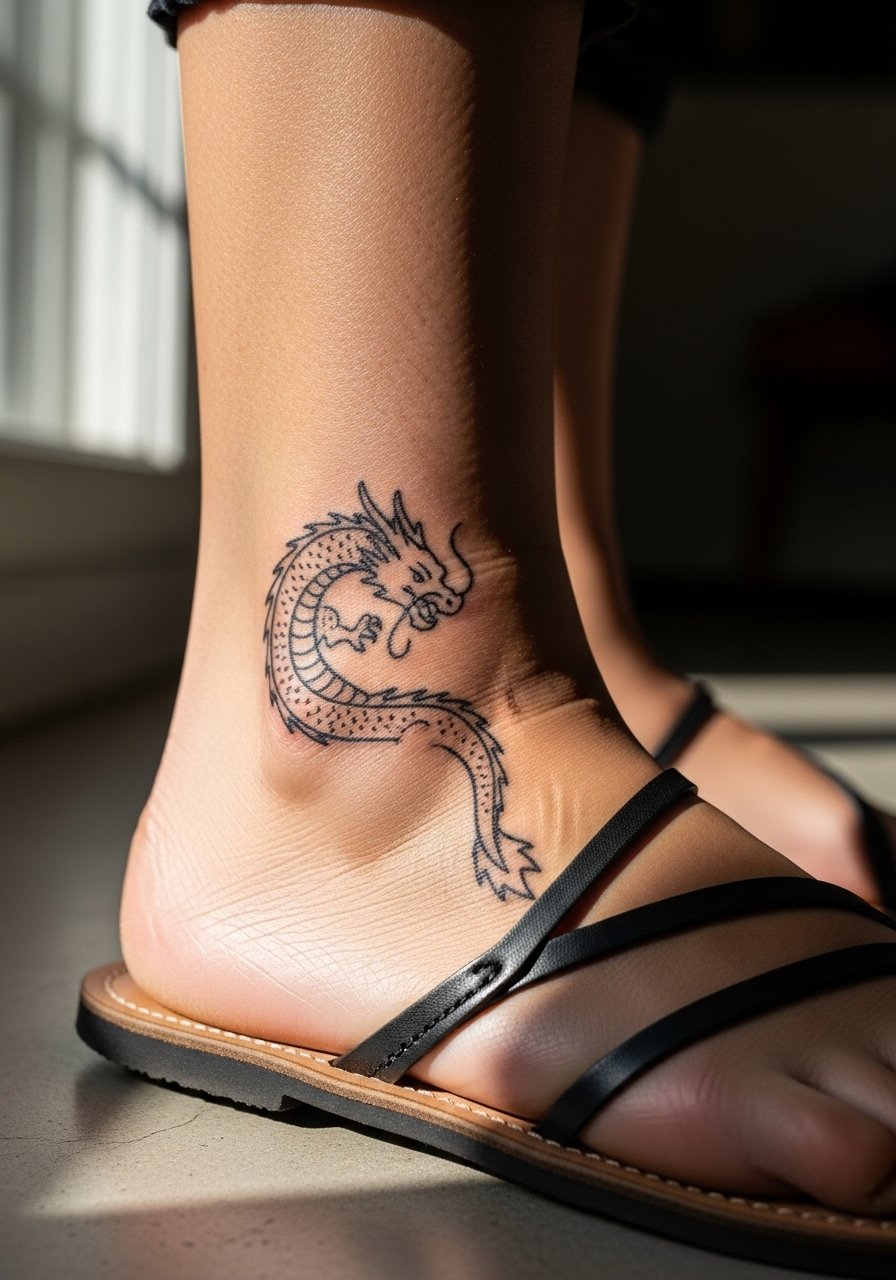
17. Ankle-Inside Dragon Curving Up Toward the Foot
Inside-ankle placements face constant movement and occasional shoe pressure. I recommend a design with a clean silhouette and minimal internal linework. Pain is moderate and the session is short. Most people see faster fading there from rubbing, especially if they favor closed shoes. The typical mistake is requesting dense detail that fades into an indistinct smudge within a year. For showing it off choose sandals or sneakers with low collars and a pair of thin strap sandals.
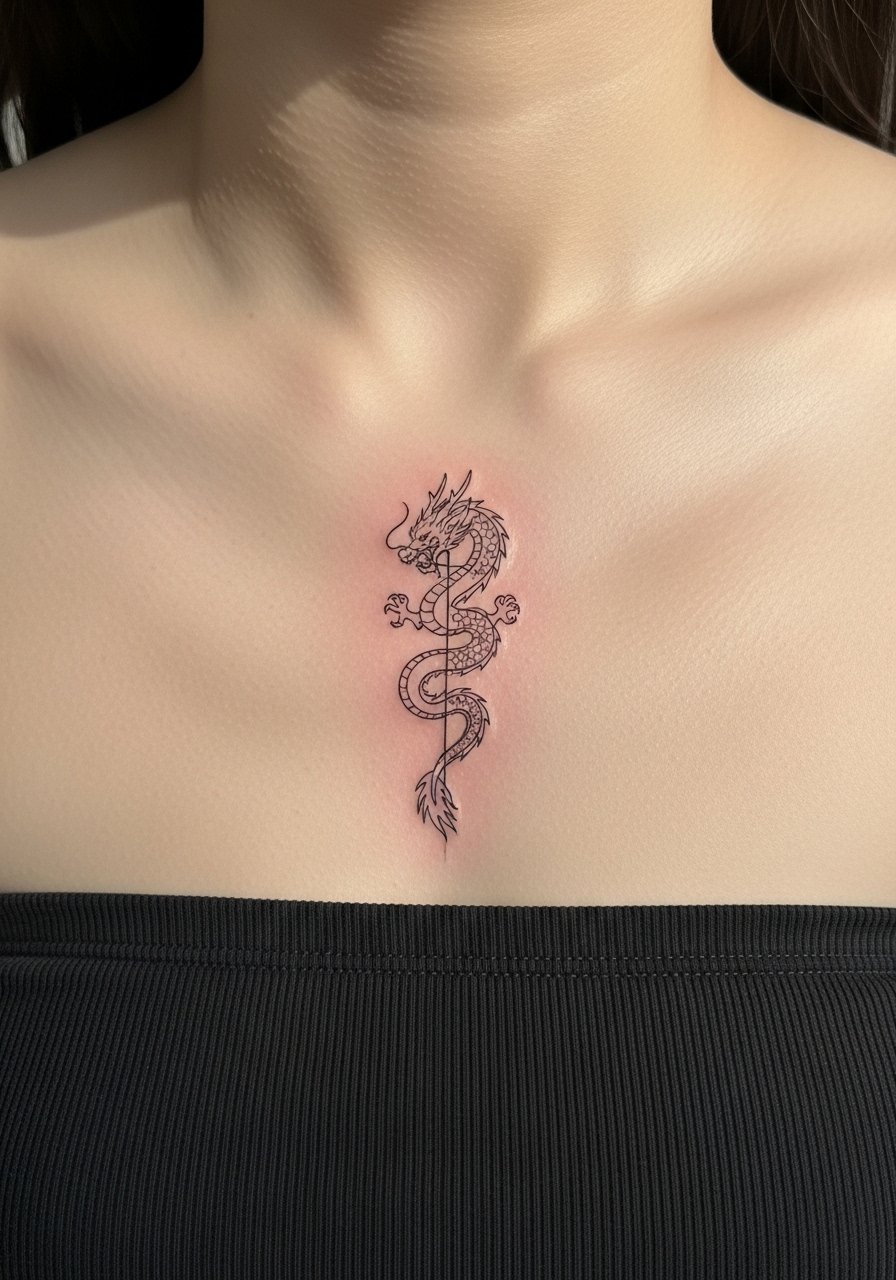
18. Sternum-Centered Dragon That Blossoms Downward
Sternum work needs someone who understands how curved anatomy affects line flow. If you pick this spot wear a fitted sports bra during the session so the artist has access while modesty is preserved. Pain ranges higher near the bone and lower in the soft tissue. The two camps here argue whether very fine line survives across the sternum. One camp says the central tension makes thin lines merge. The other says with adequate spacing it reads well. Ask your artist their experience and how they plan spacing. For evenings choose a strapless or bandeau top.
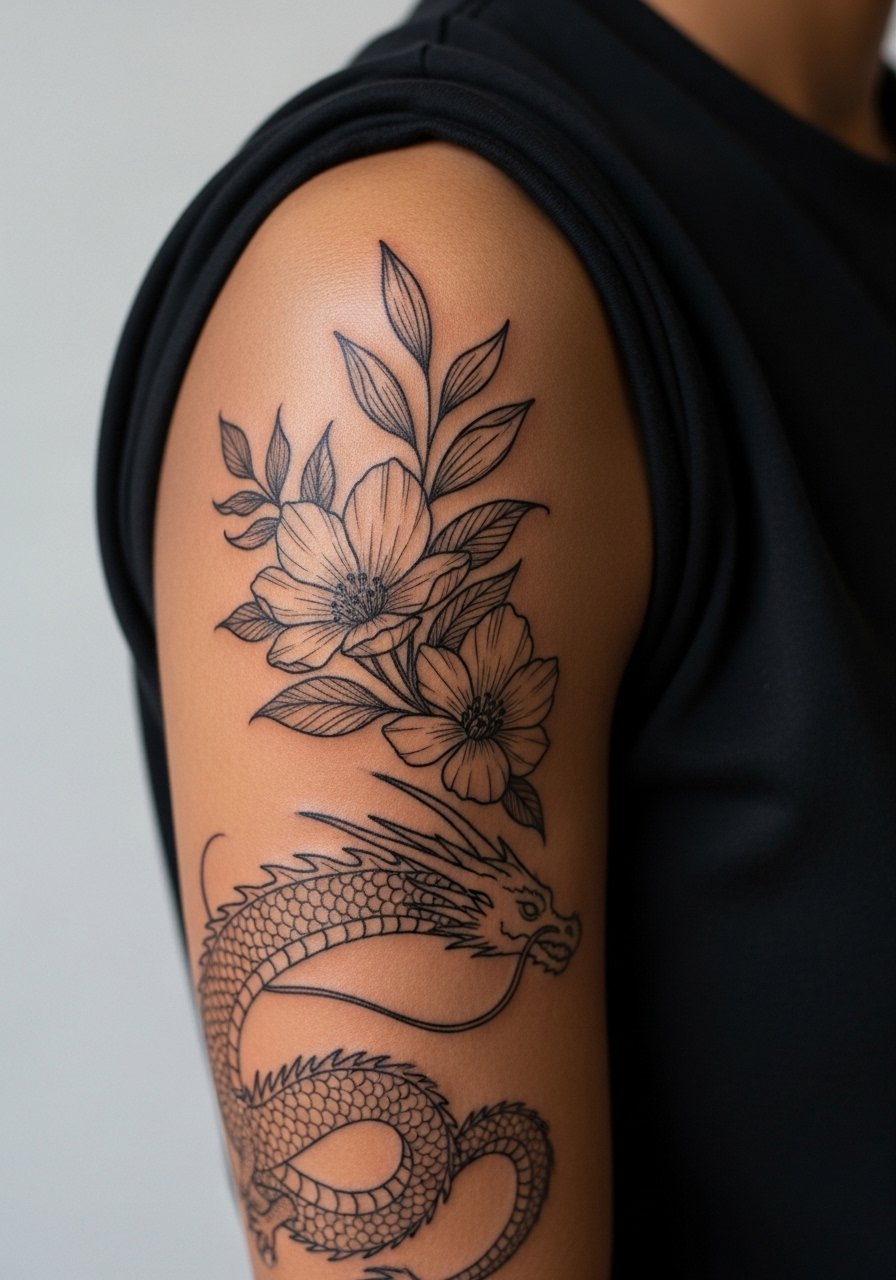
19. Minimal Dragon Sleeve Accent Behind a Botanical Motif
Pairing a minimal dragon as an accent within a larger botanical sleeve can give the design longevity because the surrounding negative space protects its lines. When you work this way ask the artist to plan negative space buffers around the dragon. Sessions vary by size but expect multiple visits. At six months the detail reads clean and at years three to five small touch-ups may keep edges crisp. A mistake is crowding the dragon with other tiny elements. For showing it off push up sleeves and choose a sleeveless linen top.
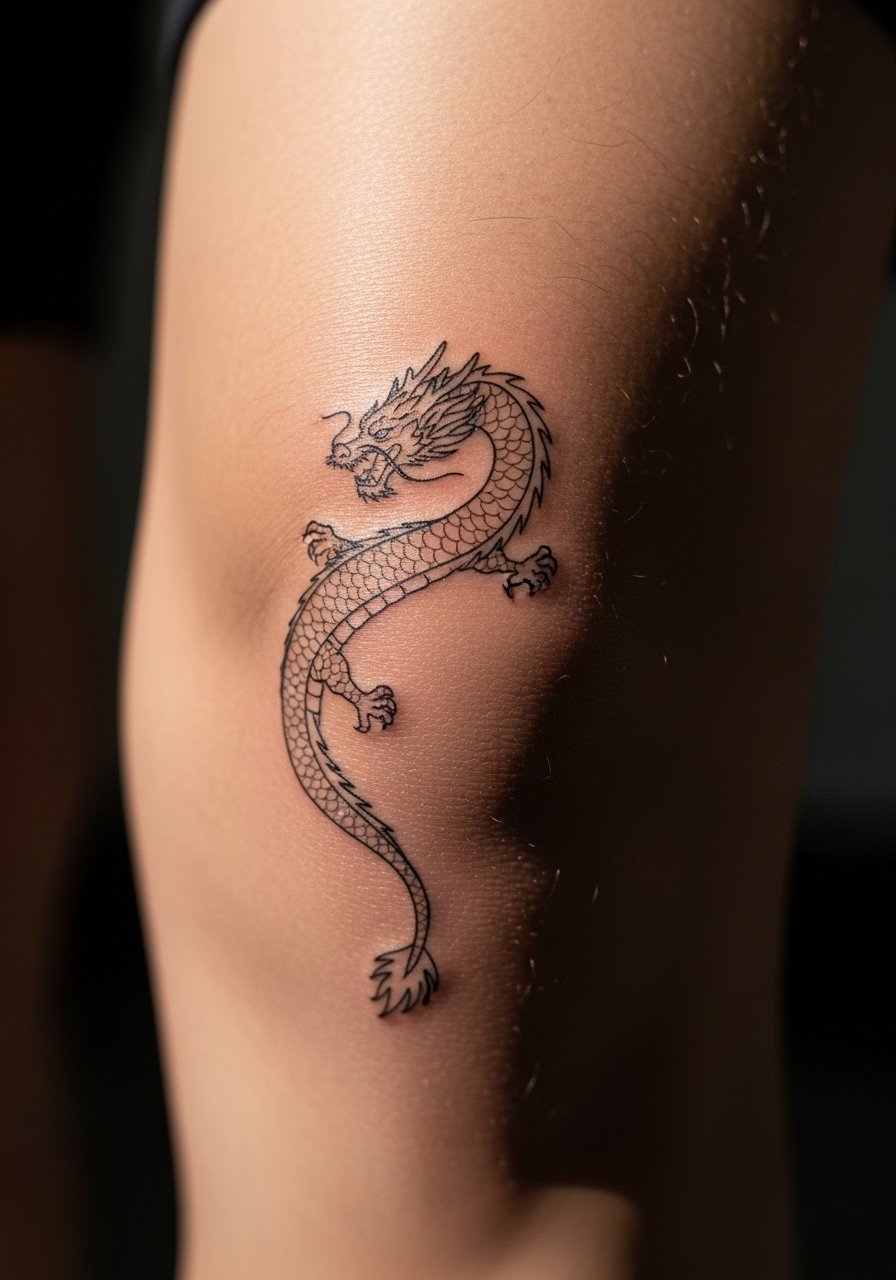
20. Tiny Behind-the-Knee Dragon That Moves With Walking
This placement is unusual and fun but the skin there folds frequently. I suggest a single flowing line and minimal internal definition. Pain is moderate and sessions are quick. Expect more rapid softening where skin flexes. A common mistake is demanding micro scales in a fold zone. For showing the placement wear skirts or shorts and pick a pair of casual slip-on sneakers to keep attention on the leg.
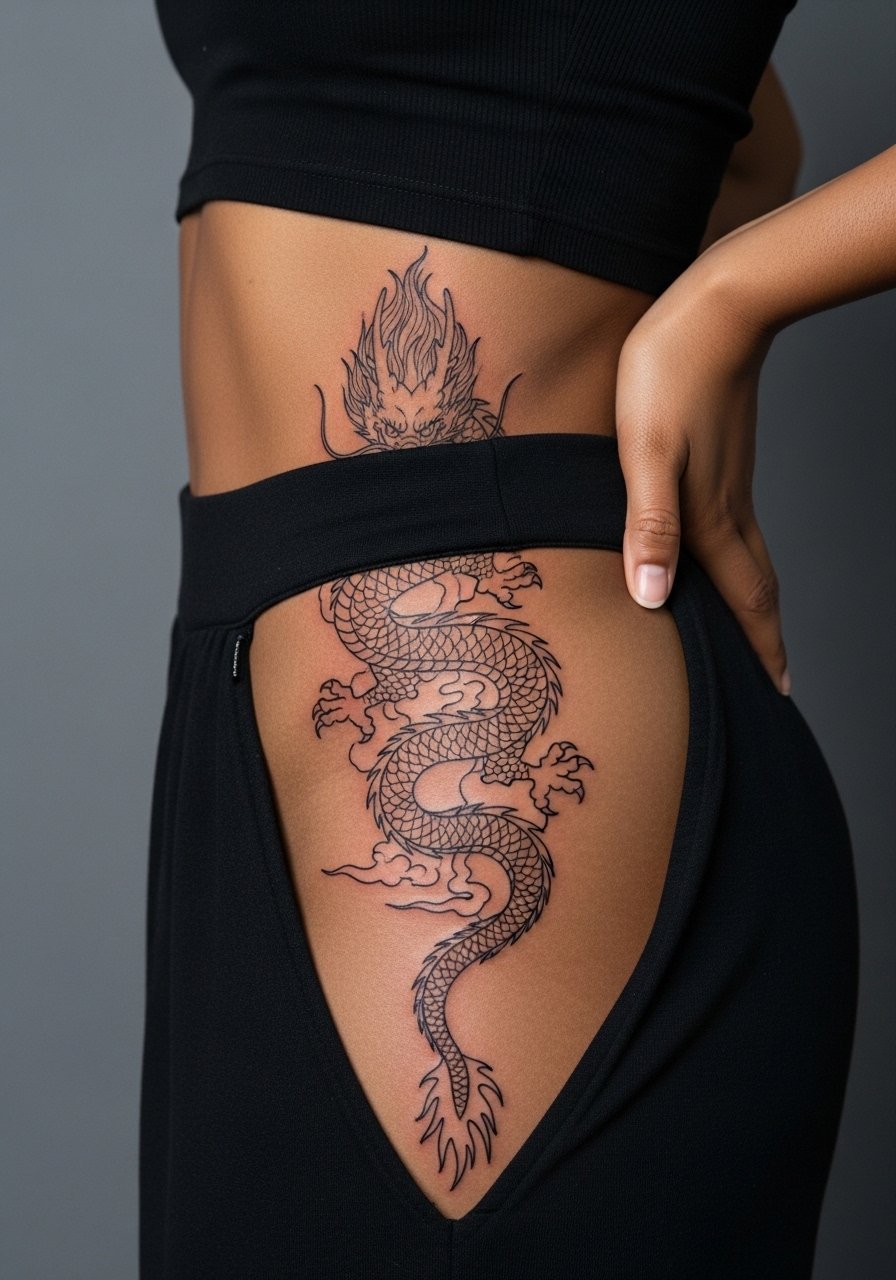
21. Rib-to-Hip Dragon That Follows the Side Curve
A longer dragon that flows from the rib to the hip needs breathing room between elements. The rib and hip both have different stretch properties so spacing is crucial. Sessions can be longer and more painful near the ribs. Expect varying aging across the composition, with hip areas holding a bit better. People often regret asking for dense micro work across both zones. For the appointment wear high-waisted bottoms you can shift and consider a high-waisted bikini bottom for easy access.
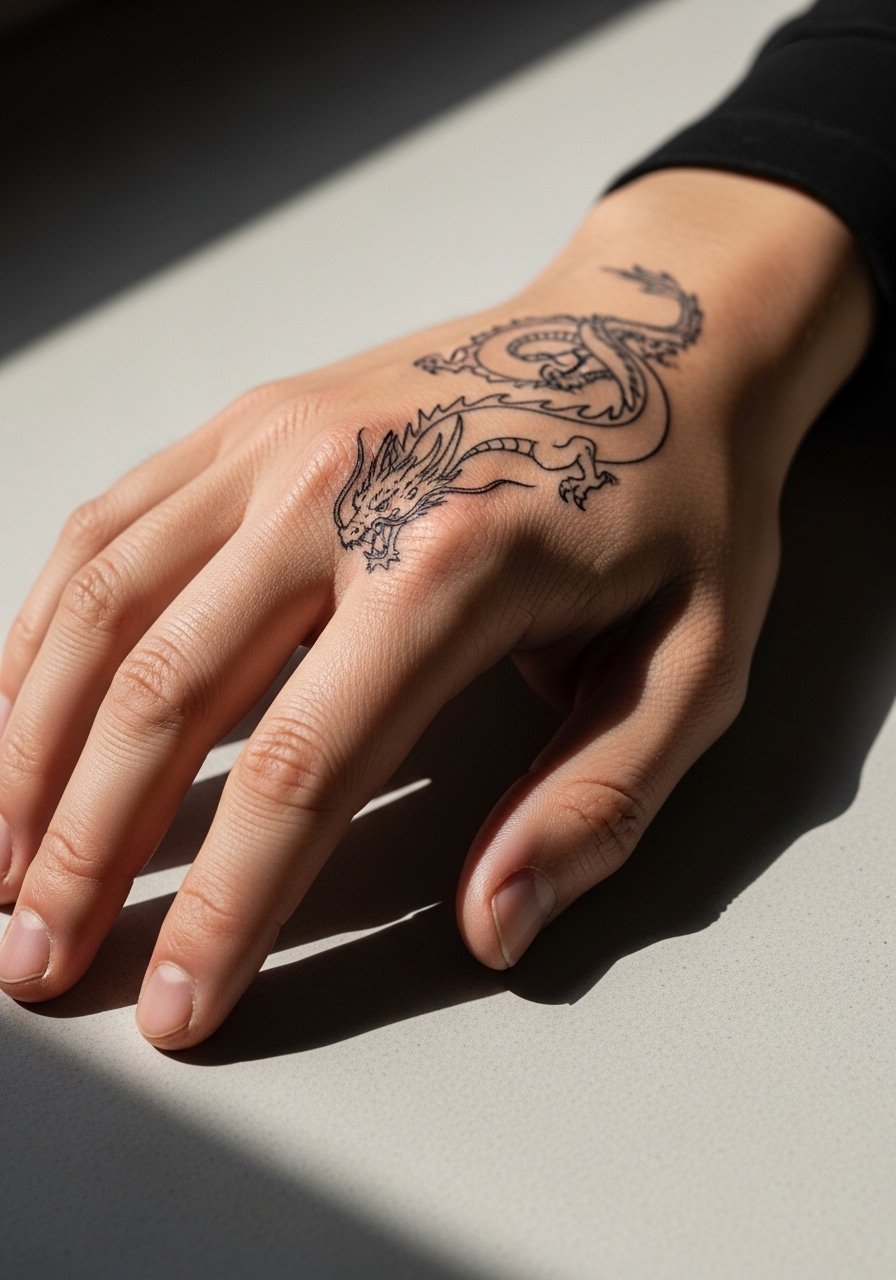
22. Micro Dragon on the Back of the Hand
Back-of-hand tattoos are highly visible and they fade faster. If you want this spot keep the design bold and minimal. Pain is sharp. Expect frequent touch-ups if you want a crisp look. The biggest mistake is requesting lots of fine shading that will not survive heavy use. For showing it off pair with minimalist rings and consider a delicate hand chain bracelet that frames the piece without covering it.
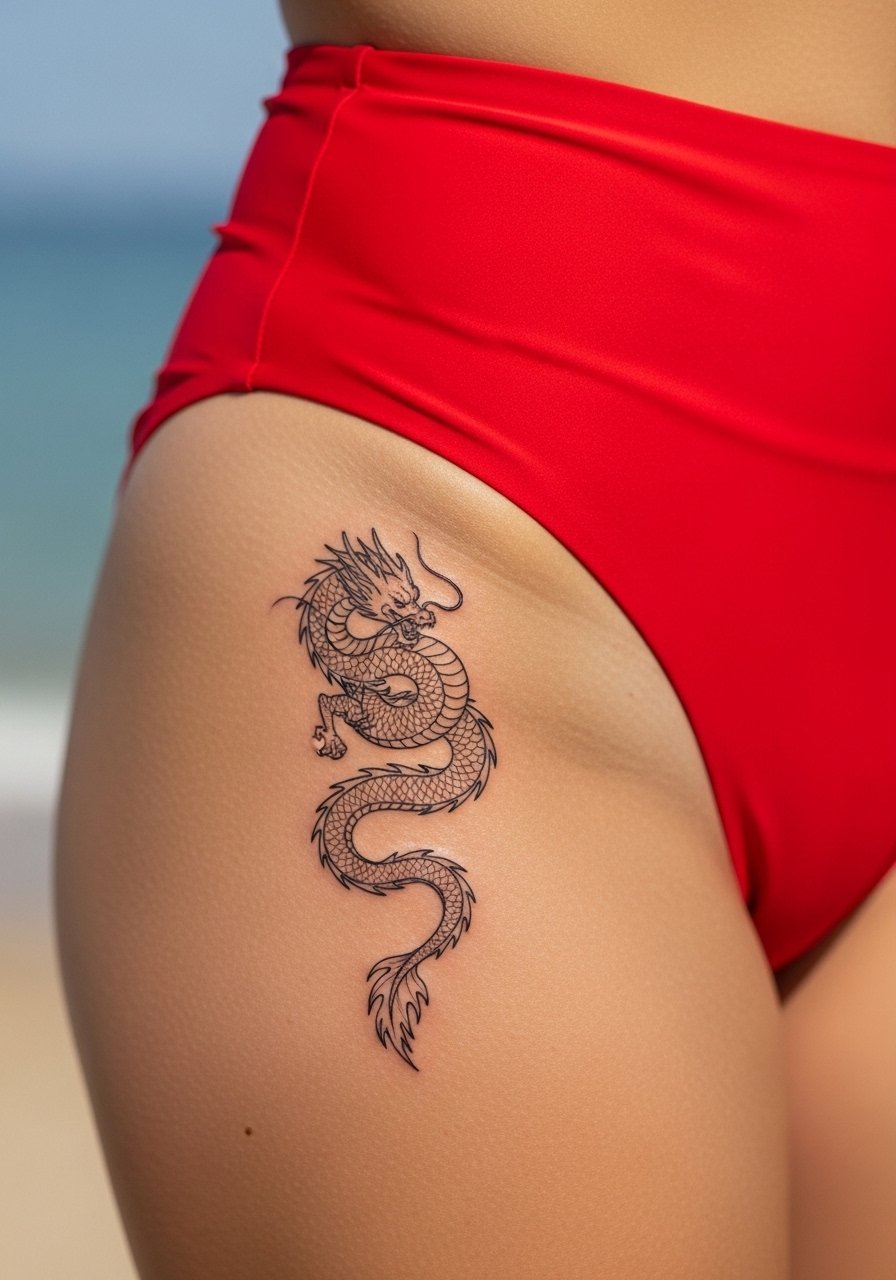
23. Minimal Dragon Over the Hip Bone
Hip placements handle larger pieces discreetly and age well if you keep linework spaced. The area tolerates slightly denser work than hands or fingers. Sessions are moderate and healing is usually uneventful. A common error is placing extreme micro detail right on top of the hip bone where the skin moves. For the appointment wear high-cut shorts or a swimsuit bottom and plan to show it in swimwear or low-rise jeans with a swimsuit bottom high cut style.
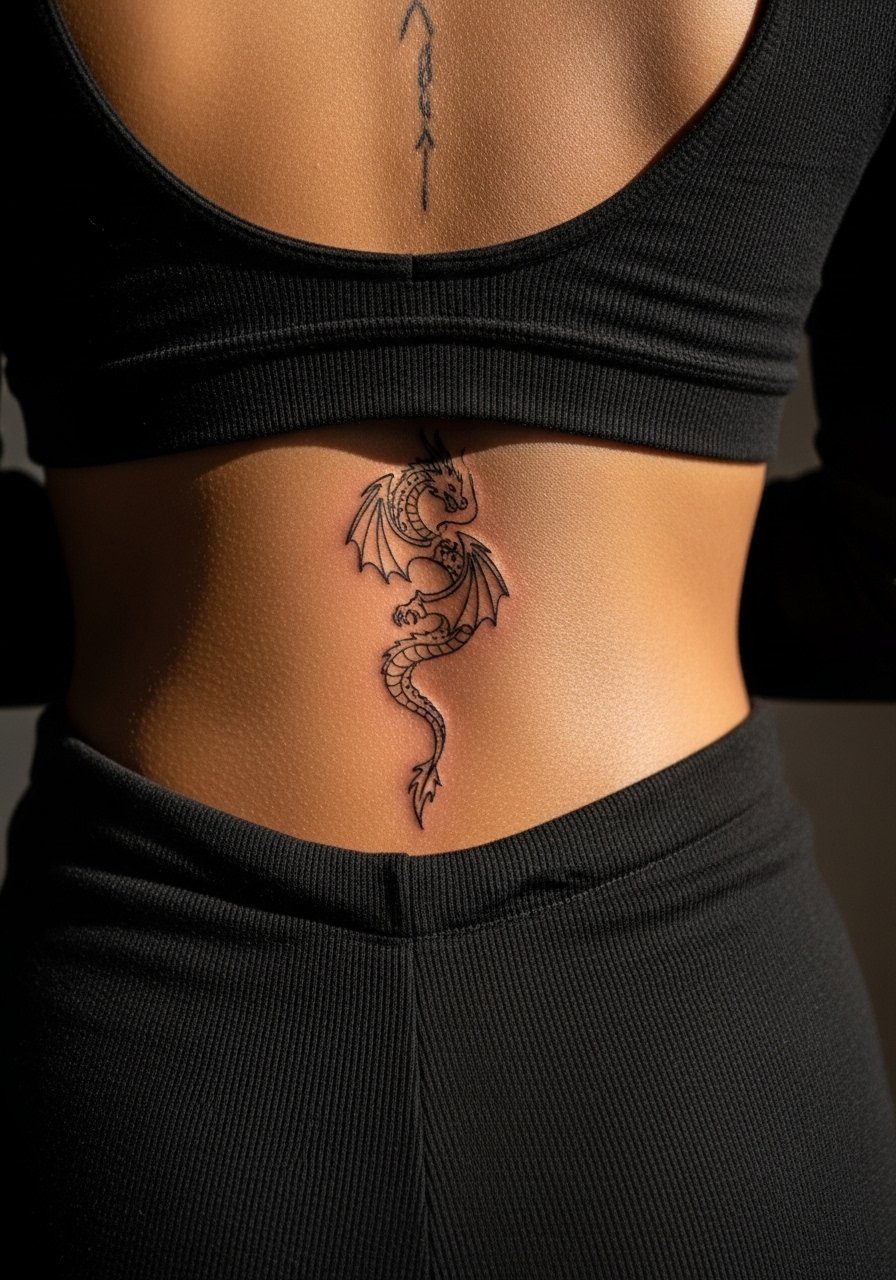
24. Minimal Dragon Along the Spine Lower Toward the Tailbone
A low-spine placement reads as a central anchor and works well with slightly amplified outer lines. Lying face down for the session is required and some people find that uncomfortable. The area holds detail well, and touch-ups are usually infrequent unless exposed to constant sun. The mistake people make is compressing too many tiny elements into a narrow vertical strip. For showing it off choose open-back or low-rise back clothing and a low back dress.
25. Minimal Dragon Neckline Accent Just Above the Collar
A tiny dragon that sits just above the collar works like a choker made of ink. The skin there sits between chest and neck tissue so ask for a slightly sturdier outline. Pain is moderate. Expect that very fine internal detail may blur faster than the outline. A common mistake is tiny script near the neckline competing with the dragon. For the appointment wear a wide-neck top and for evenings pair with a thin chain choker necklace.
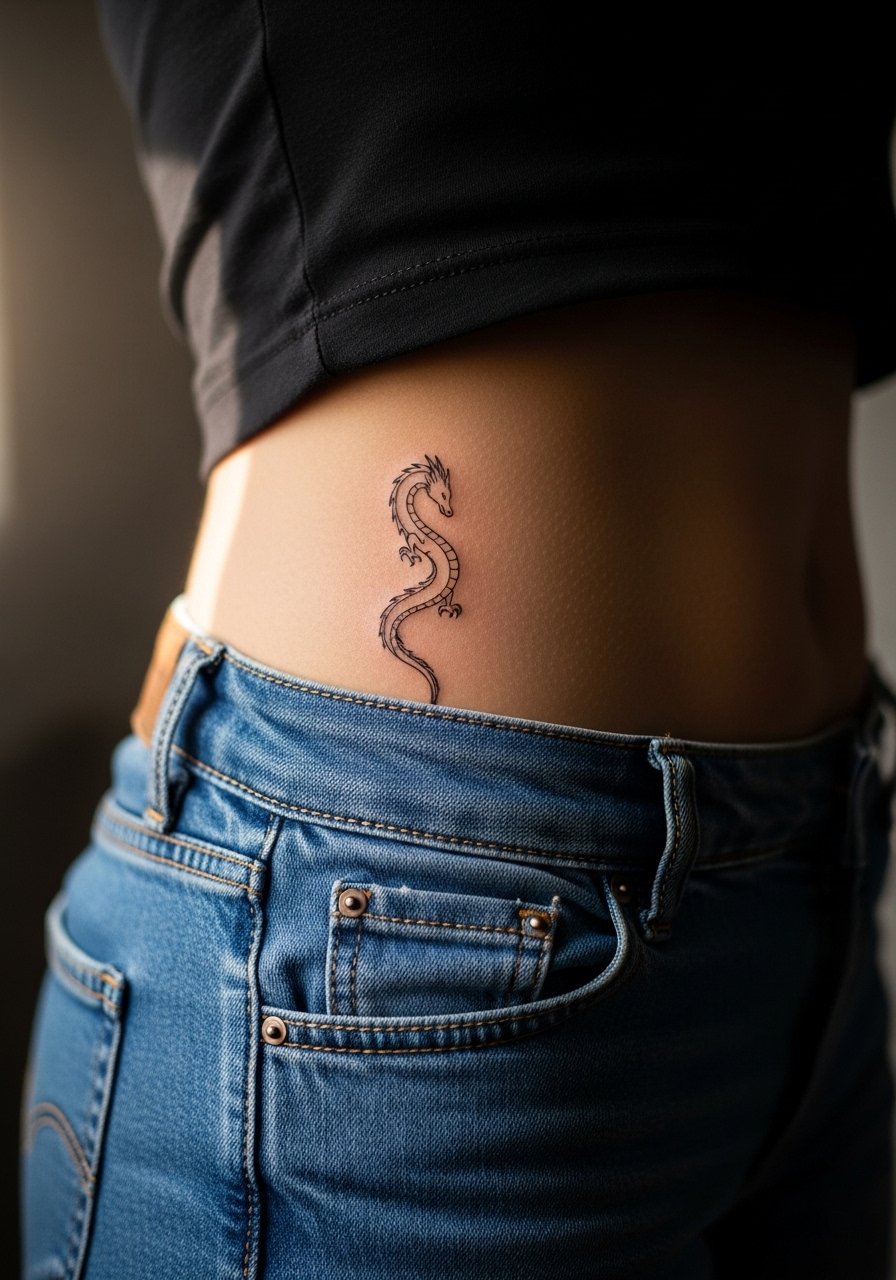
26. Tiny Micro Dragon Near the Hip Crease
The hip crease sees a lot of movement so keep this design simplified. Ask the artist to plan negative space and to avoid dense clusters. Pain is variable depending on closeness to bone and session time is short. Over time the crease can soften detail from friction against clothing. For the session wear adjustable waistbands and for showing it off pick low-rise cuts like a low rise jean style.
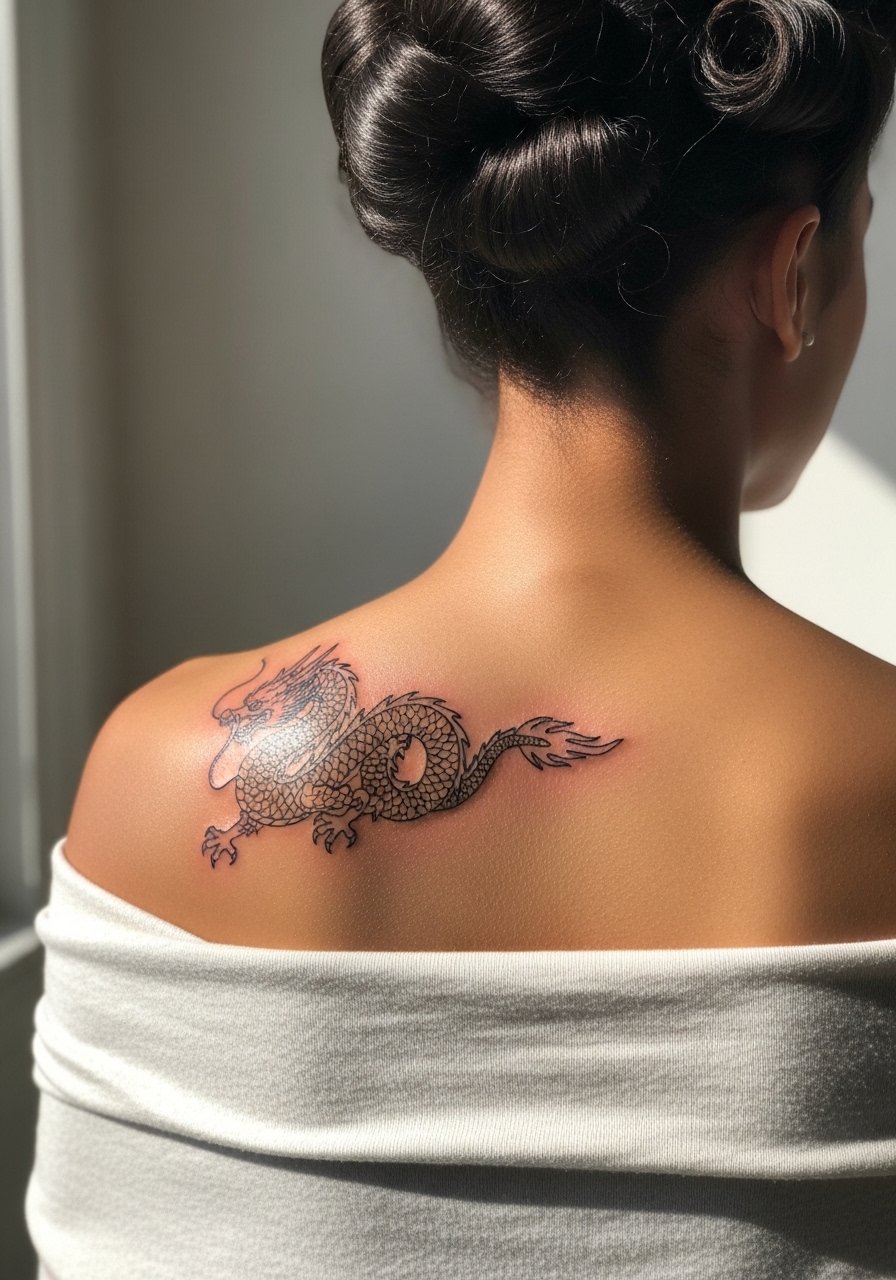
27. Micro Dragon Behind the Shoulder That Peeks From Hair
When placed behind the shoulder near the hairline this tattoo becomes a peekaboo element that suits many aesthetics. Ask for a single fluid line and a simple head detail to maintain longevity. Pain is mild and sessions are quick. Over time the area keeps shape well with minimal fading. A mistake is choosing very fine interior stippling that disappears. For the appointment pin your hair up and show it off with a wide-neck top that lets the piece peek out.
Frequently Asked Questions
Q: Will a minimal line Chinese dragon blur faster on the ribs than on the forearm?
A: In my experience ribs and forearms age differently. Ribs move more with breathing and can cause very fine internal detail to soften sooner, while a forearm placed with good line weight tends to stay legible longer. Ask an artist who regularly tattoos both areas how they adjust spacing and depth for the ribs.
Q: How often should I expect touch-ups for finger and wrist dragon pieces?
A: Finger and wrist pieces see the most use and washing, so plan on checking the lines at year one and year two. Many people book a small touch-up early rather than reworking an entire design. Keeping the design simplified from the start reduces frequency of touch-ups.
Q: Is fine line safe on the sternum and who says no?
A: Artists fall into two camps on sternum fine line. One camp avoids ultrafine detail there because of bone proximity and movement. The other will do it if they can space elements and control needle depth. The right call depends on your skin, the artist's portfolio, and honest consultation.
Q: What should I wear to a session for a hip to rib dragon so the artist has access?
A: Wear high-waisted bottoms that you can shift and a cropped top, or a zip hoodie you can pull aside. The goal is to expose only the tattoo area while staying comfortable. Loose fabrics that do not press on the area after the session work best.
Q: How do I find artists for minimal line Chinese dragon work without relying on social handles?
A: Start with local shop directories, tag-based boards on community forums, and recommendations from people in regional tattoo groups on Reddit. Seek portfolios with healed photos of fine line work similar in size and placement to what you want. Look for multiple healed shots rather than only fresh photos.