Fine line styles are trending across saved boards, but the reality is that the pieces that still read clean after a few years are usually the ones designed with spacing and deeper linework in mind. I keep seeing St. Michael references arrive as delicate silhouettes and full battle scenes, and the trick is matching style, placement, and wardrobe so the ink ages the way you expect. Below are 17 st michael tattoo ideas with real-world tips for consultation, healing, and how to show them off.
1. Fine-line St. Michael silhouette on the inner wrist
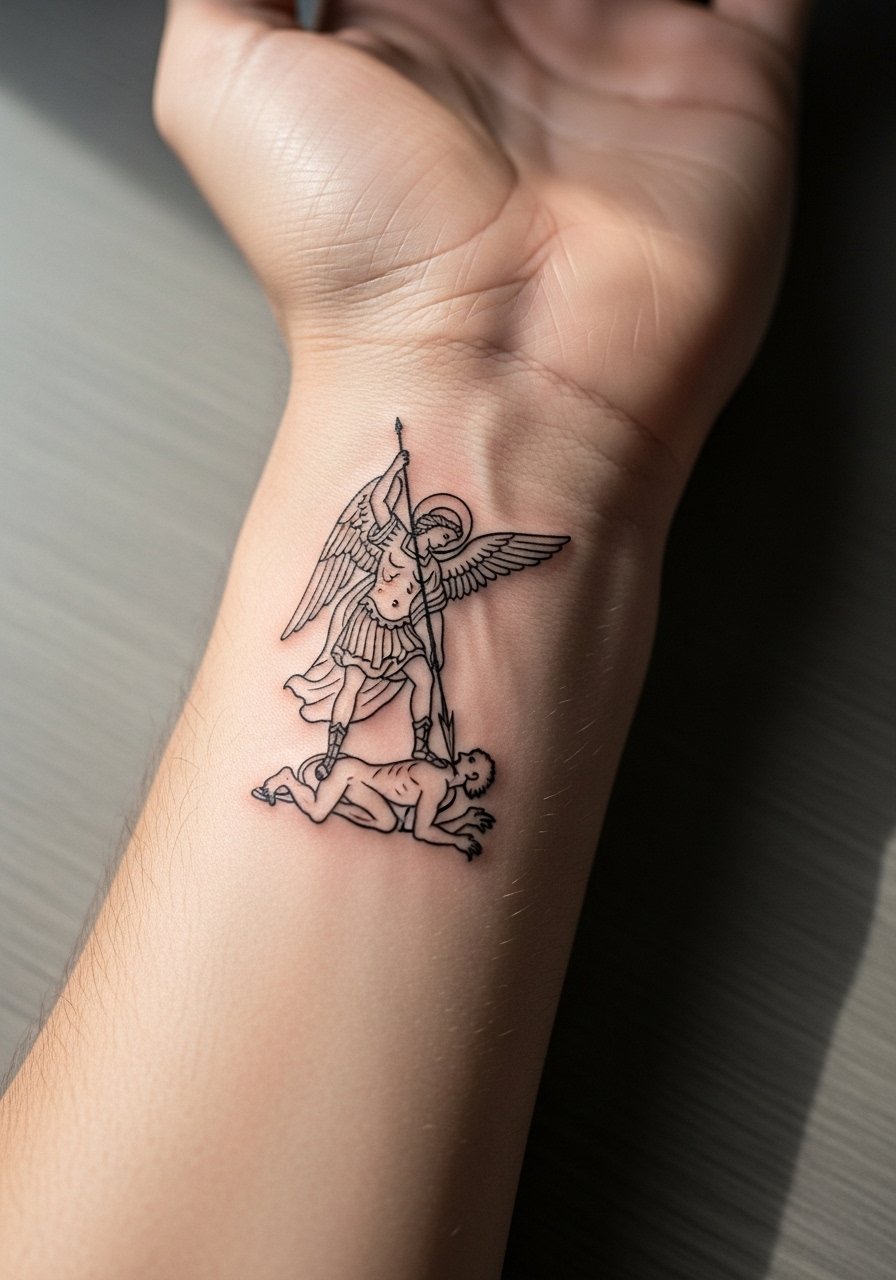
I recommend this if you want a subtle nod to the story without committing to a large scene. Fair warning, fine line on the wrist often softens faster than bolder work, so tell your artist you want slightly heavier lineweight at the outset and a single bold anchor line around the silhouette. Bring up touch-up expectations during the consult so price and timeline are clear. Blowout risk is moderate on the wrist because the skin is thin and mobile. For showing it off, pair the piece with thin gold bangle set on the opposite wrist, and wear short sleeves to frame the ink.
2. Neo-traditional St. Michael slaying a dragon on the upper arm
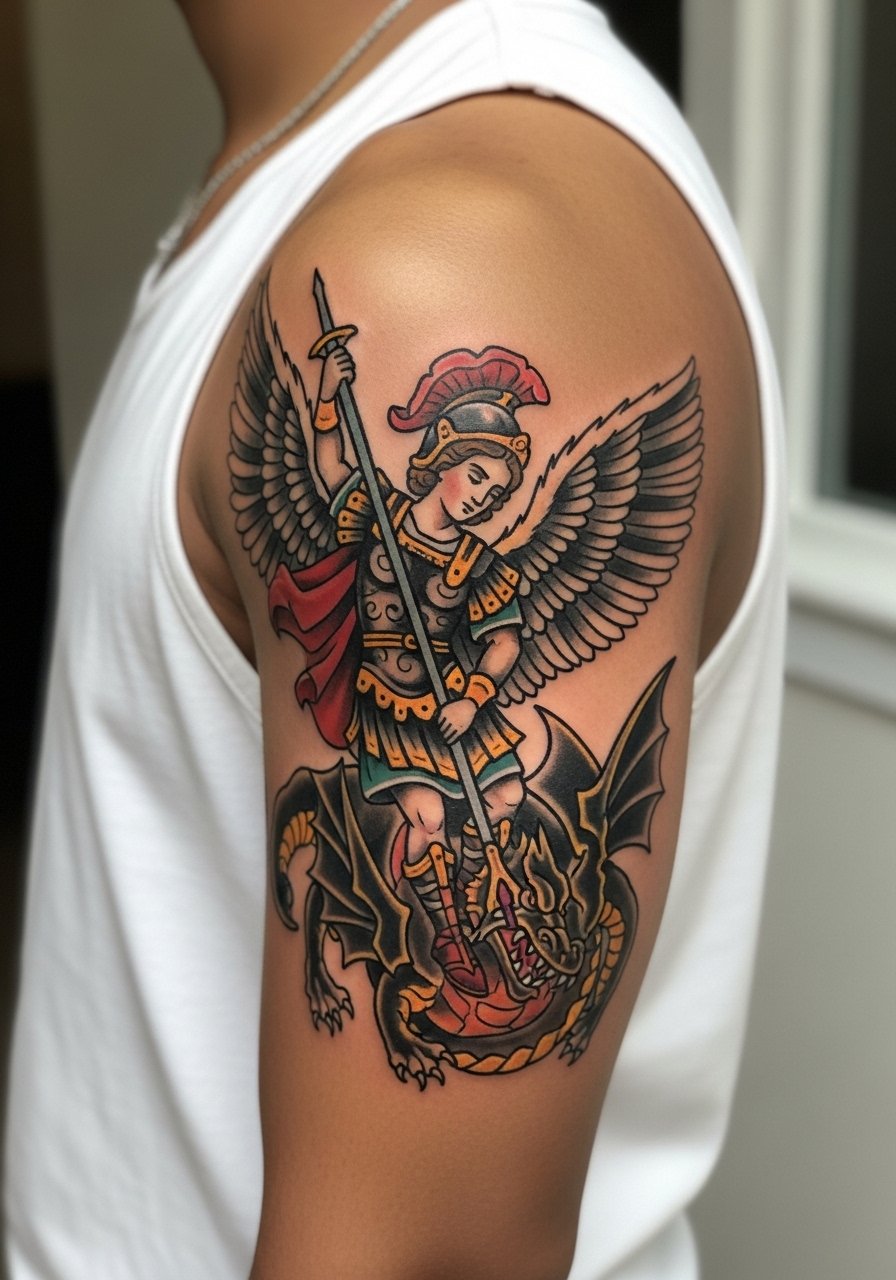
This is the classic go-big-but-not-full-back option. I’ve seen neo-traditional color retain saturation well when artists use solid saturation and proper layering. Tell your artist you want thick outlines and a palette that favors deep blues, golds, and muted reds so the contrast stays readable as it ages. Expect two to three sessions for a 10-inch composition and moderate pain on the outer arm. For session comfort, wear a sleeveless tank you can roll down without tugging, and after it heals the piece pairs with a fitted crewneck tee for casual show-off.
3. Black and gray realism Archangel Michael across the upper back
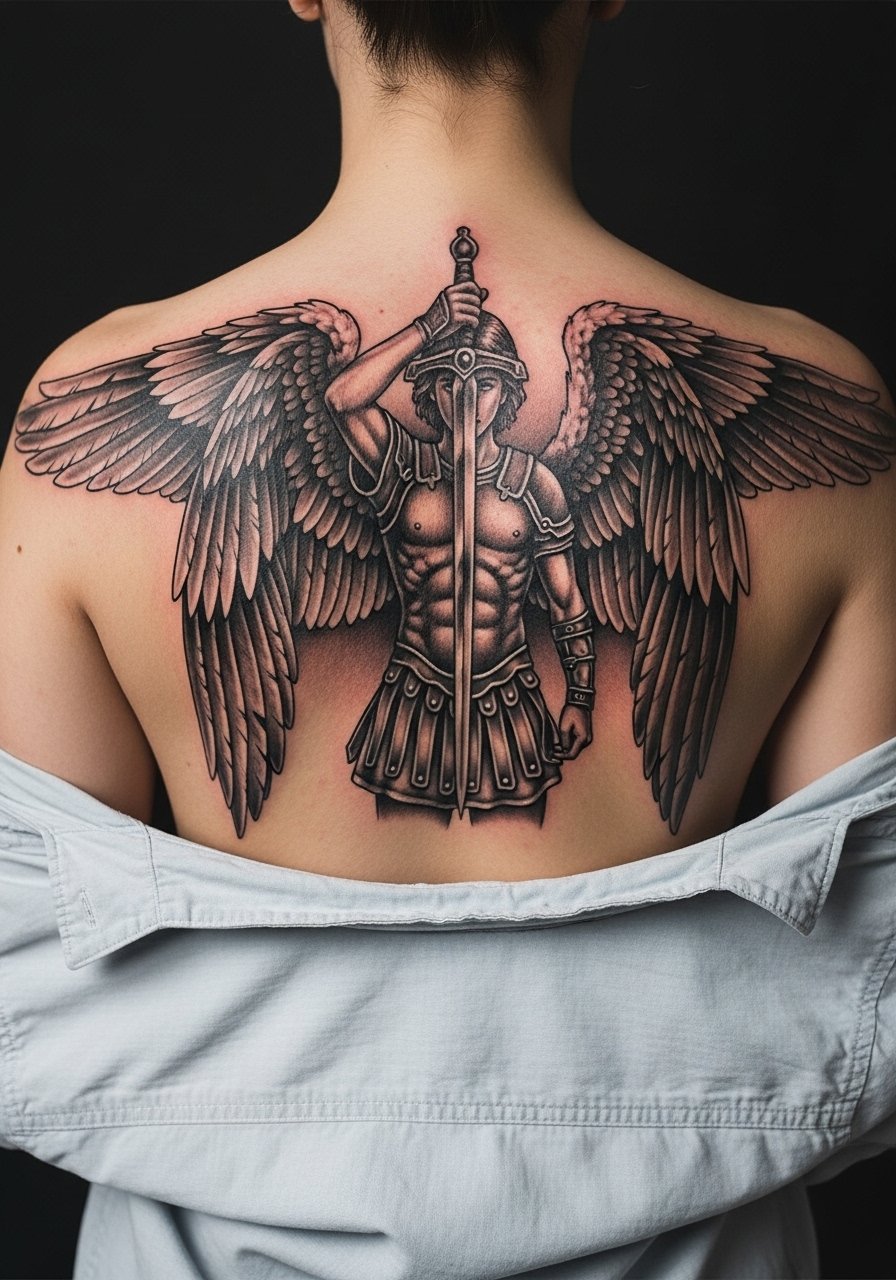
Full upper-back realism reads dramatically and works well for memorial pieces. The shading techniques like stipple shading and soft whip shading create depth without relying on color. This placement is high pain during sessions and will need three to five appointments for a large composition. Discuss how you want the wings positioned so they sit naturally with your shoulder blades and avoid distortion from weight changes. When you plan to show it, try a racerback tank or backless halter to expose the design cleanly.
4. Watercolor wings with divine light on the thigh
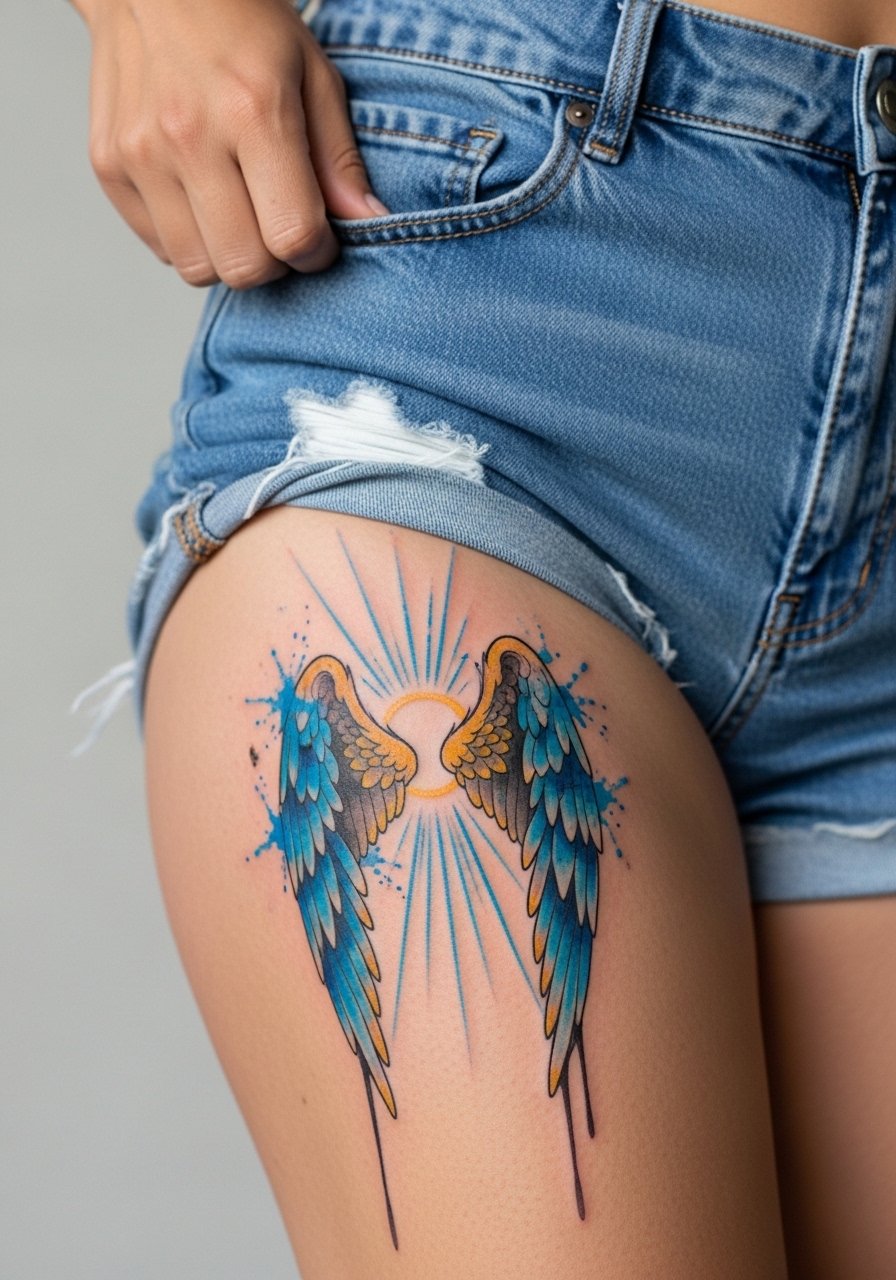
Watercolor St. Michael pieces can be ethereal, but they require planning for pigment bleeding and retention. If you love the watercolor aesthetic, ask your artist for concentrated color in key areas and softer washes elsewhere so the composition still reads if some edges soften. Thigh placement hides well and tolerates touch-ups easily. For the session, wear high waisted shorts so the artist can access the outer thigh without pressure. This style ages variably in humid summers, so pick pigments that artists you consult favor for longevity.
5. Micro-realism sword detail on the inner forearm
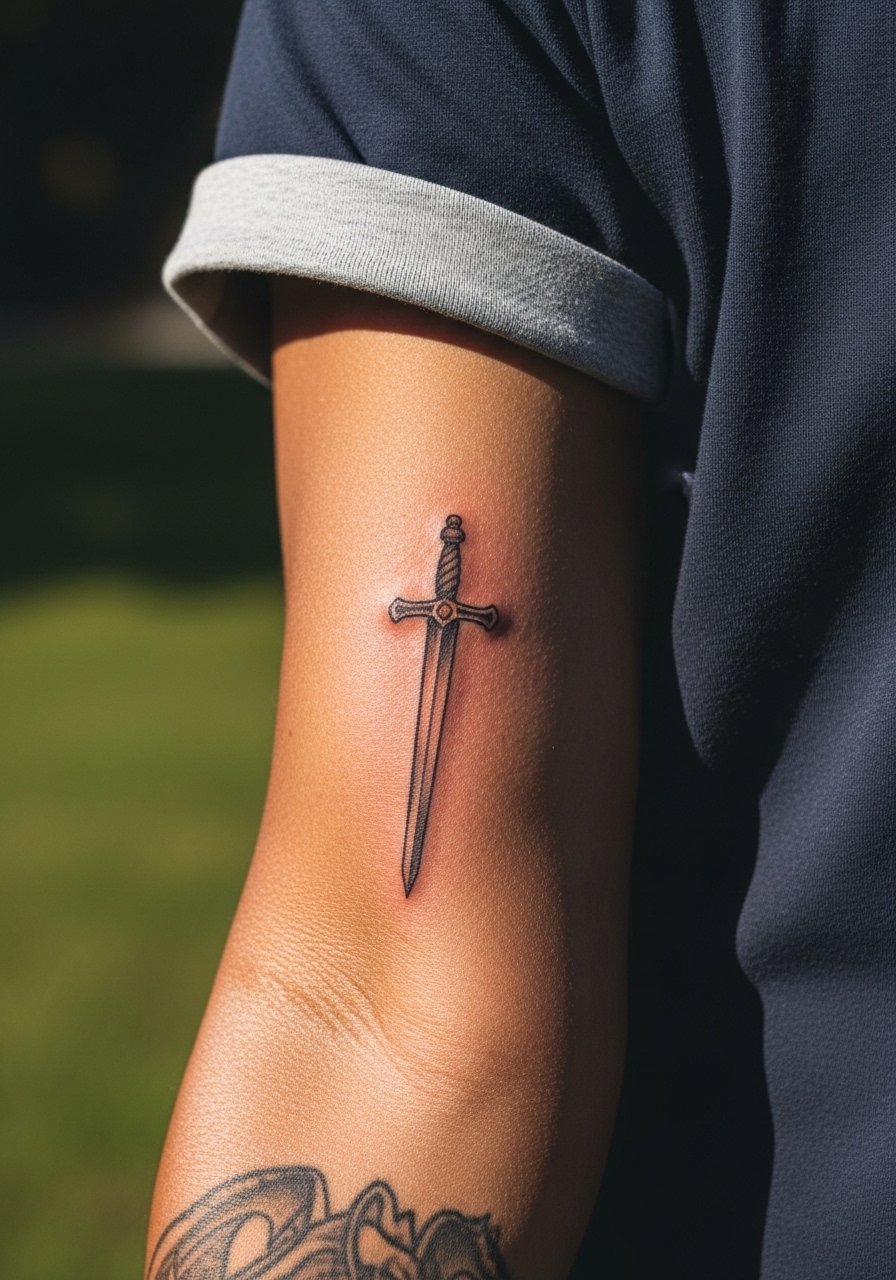
Micro-realism is great when you want a singular, highly detailed element rather than a full figure. The inner forearm is forgiving for fine detail but requires clean linework and careful saturation to avoid early fading. Tell your artist you want crisp edge work and realistic metal highlights, and plan for one to two sessions depending on size. Common mistakes include asking for too much contrast in a 3-inch piece, which forces tiny dots too close together and invites early merging. For the session, wear a loose button-down shirt you can pull aside so the artist has clear access.
6. Ornamental St. Michael with a vertical mandala on the ribcage
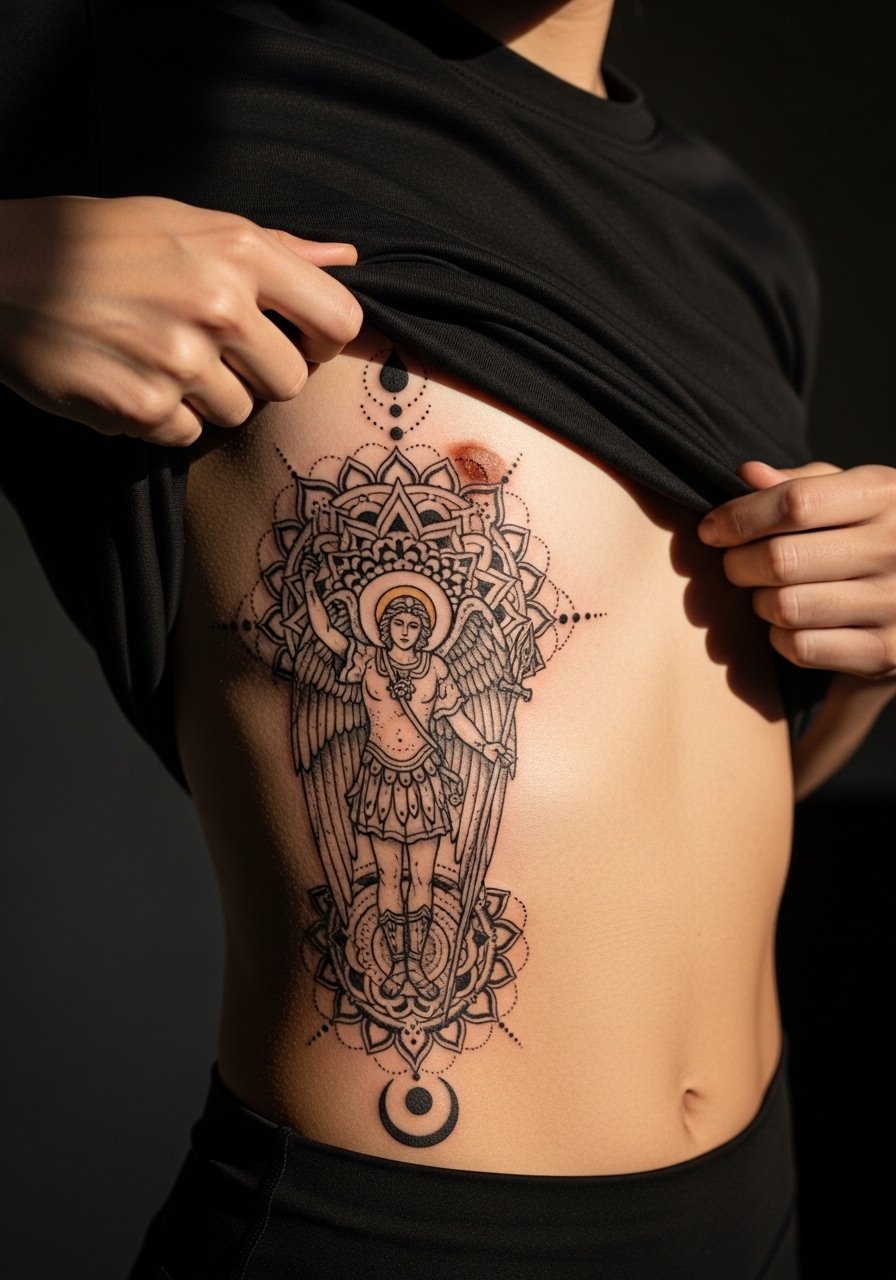
Ribcage work looks incredible when done large and vertical, but the area is famously painful and movement-prone. Artists are split on fine line here. One camp says the skin stretch blurs lines within two years. The other camp maintains that with correct needle depth and spacing, detailed ornamental work can settle fine. Ask your artist which side they sit on and request mockups with added breathing room between mandala layers. Expect three to four sessions and bring a sports bra or crop you can adjust for access during the appointment.
Studio Day Picks
The first six ideas above include wrists, forearms, and ribcage sessions that all place different demands on prep. A few targeted items smooth the first 72 hours and help preserve fine line detail.
-
Tea tree tattoo balm. Fans say it helps with oily skin without leaving a heavy residue, which is useful for forearm and wrist pieces prone to early scabbing.
-
Australian aftercare spray. Dries faster than lotions on humid days, which makes thigh and outer-leg watercolor work easier to manage during the first week.
-
Japanese rice bran oil balm. Lightweight and non-greasy, it keeps black and gray realism areas soft without clogging dot work channels.
-
Hustle Butter Deluxe. Thin texture makes it a common pick for large back or chest pieces during week one so shading retains crispness.
-
Fragrance-free gentle body wash. Cleanses healing areas without irritating the edges of fine line work, useful for any area that sees frequent water contact.
7. Traditional American St. Michael on the shoulder cap
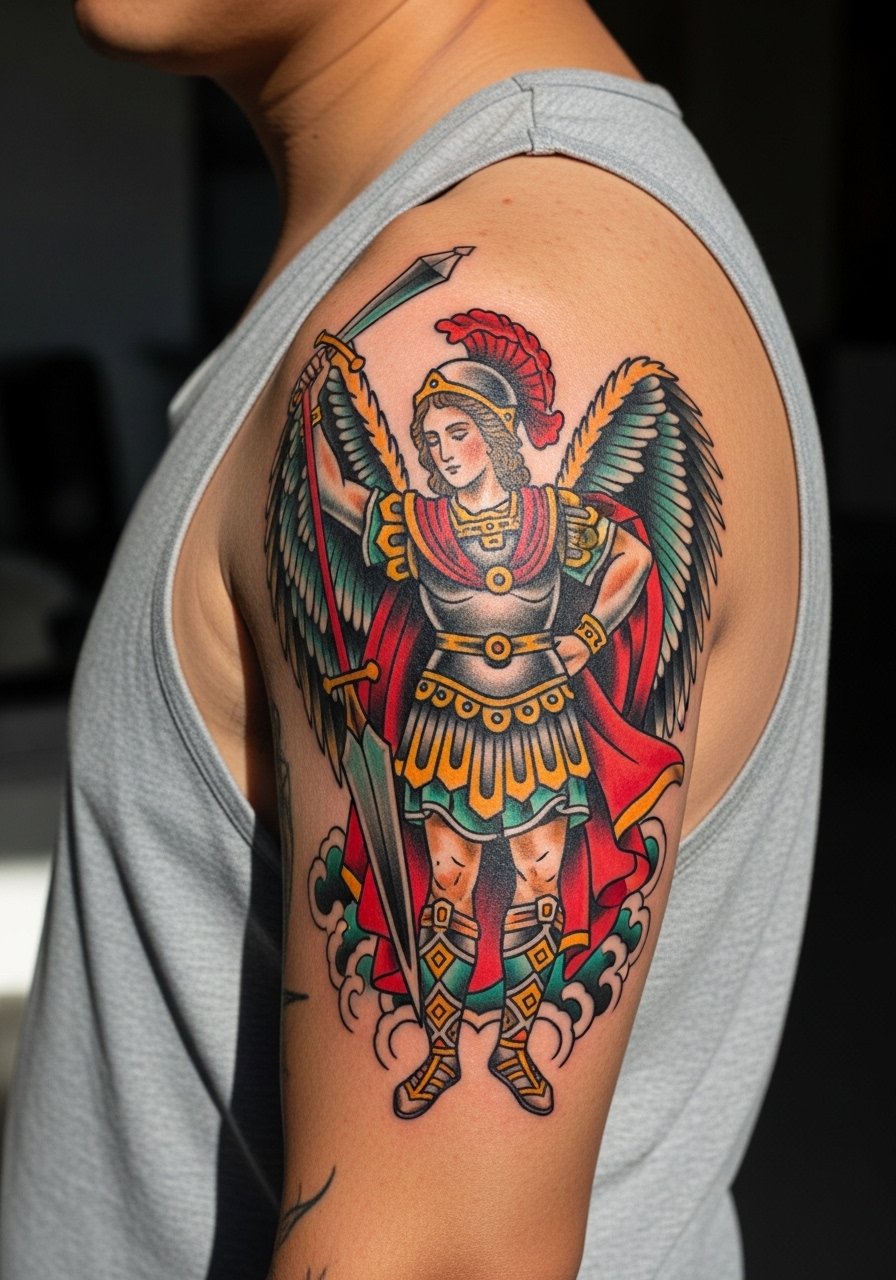
Traditional American linework holds better over time because of thick outlines and strong color blocks. I recommend this for first-timers who want a vivid St. Michael but also want lower maintenance. Ask your artist to keep outlines bold and shapes simple so saturation ages predictably. Sessions are typically one to two long appointments for a 6 to 10 inch piece. For showing it off, a v neck tee or off-shoulder blouse frames the shoulder cap without distracting from the armor details.
8. Blackwork full-back battle scene with solid silhouettes
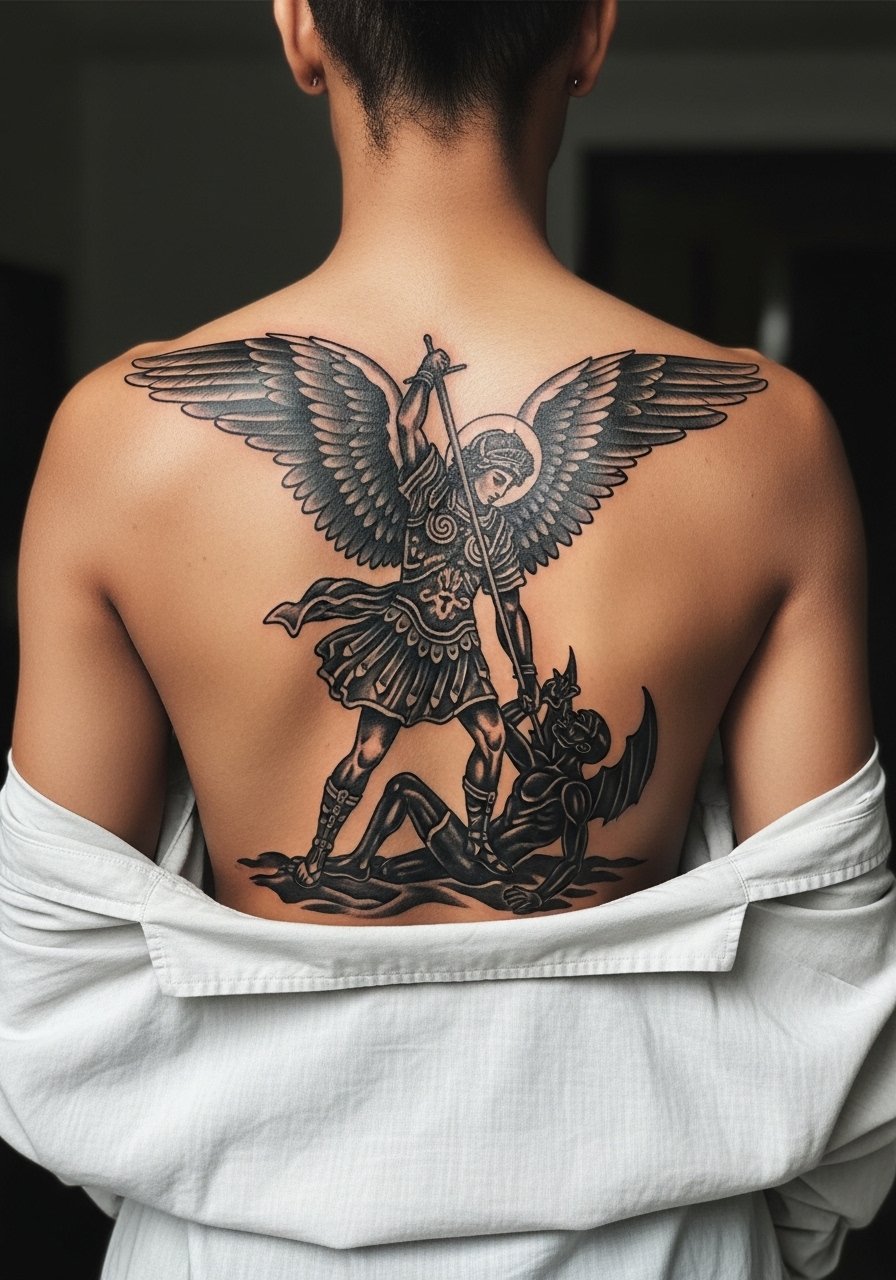
Solid-black scenes are longevity champions, especially on darker skin tones where saturation reads strongly. Expect four to six sessions for full-back work and a higher pain tolerance requirement. Plan the composition so negative-space wings separate from the demon to avoid heavy merging in dense areas. For discovery, look through hashtags like #BlackworkTattoo and guest spot announcements on TikTok to find artists who specialize in large blackwork scenes.
9. Neo-traditional St. Michael with armor and flames on the thigh
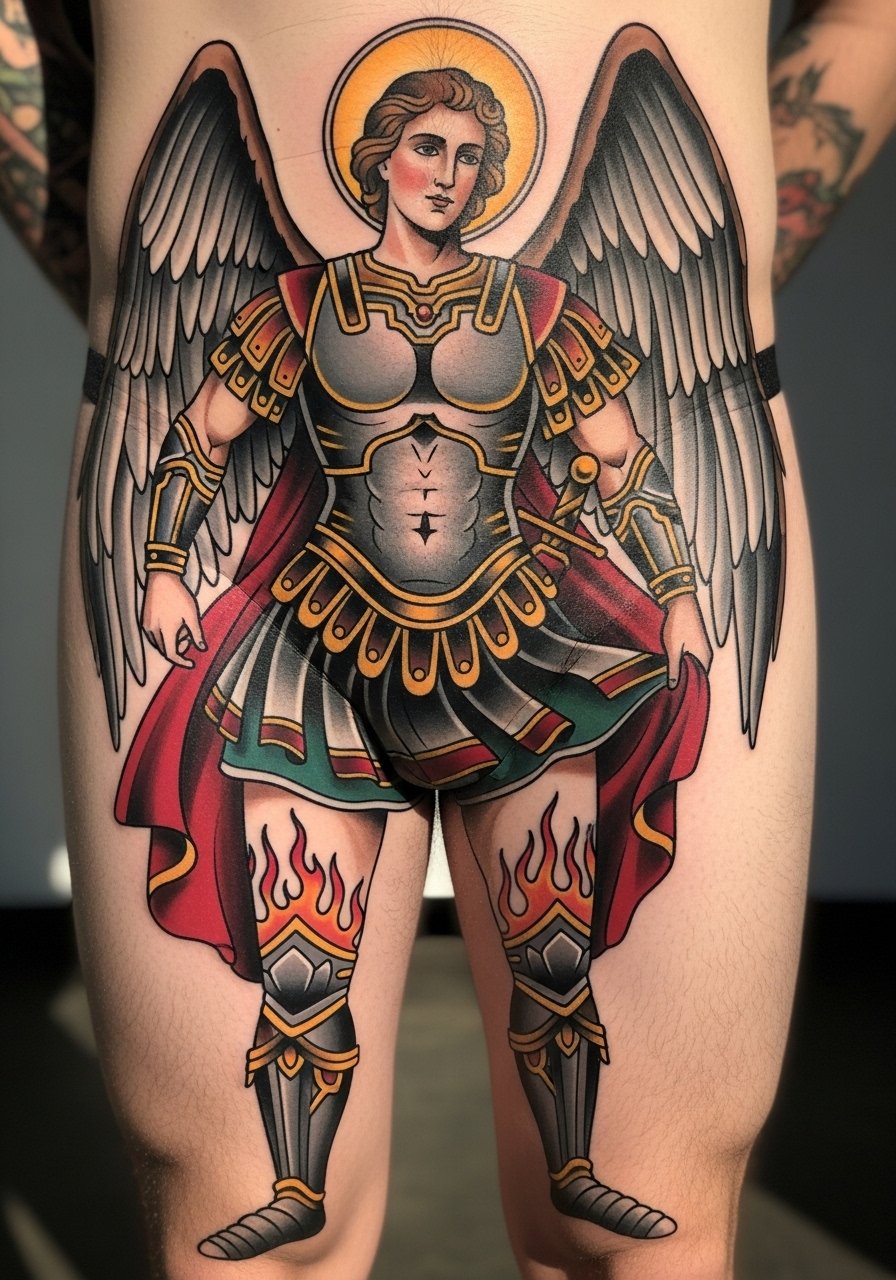
The outer thigh gives artists room to build dynamic compositions with movement and negative space. Pain is moderate and sessions are easier to schedule around because the area hides under clothing. Ask for reference photos that show exactly how much flame you want and where the armor plates cross the thigh musculature. After it heals, pair the piece with high-waisted shorts or a slit skirt so the vertical composition reads without interruption.
10. Small St. Michael collarbone mandala combo
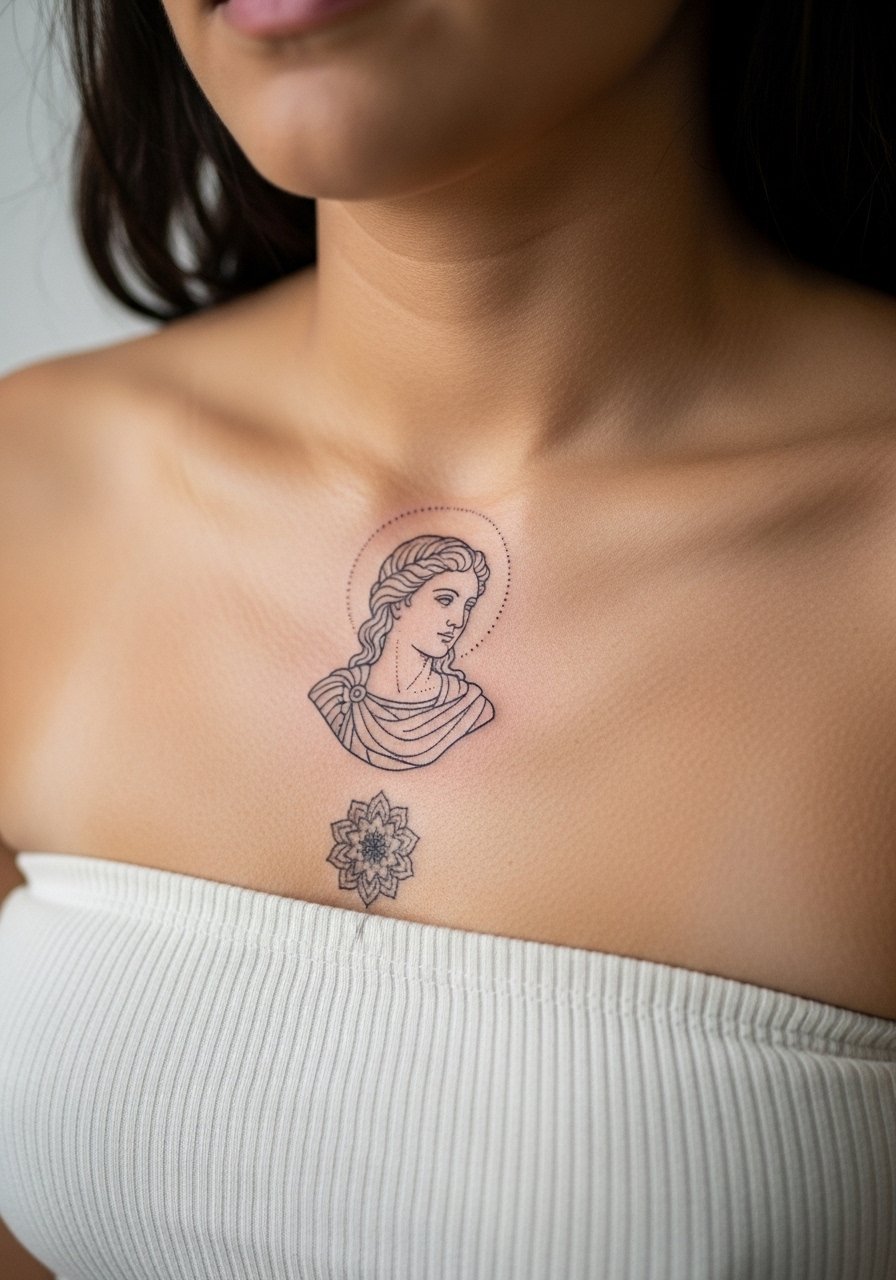
Collarbone and sternum-adjacent placements require wardrobe planning for both session and reveal. The area is thin and can be painful, but the result sits beautifully under necklaces. Keep the mandala scale slightly larger than you think to avoid merging in dense dot work. For the session, wear a strapless tube top so the artist can work without fabric tugging. Small collarbone pieces usually need only one session and a touch-up window at year one.
11. Calf vertical sword drop mimicking motion
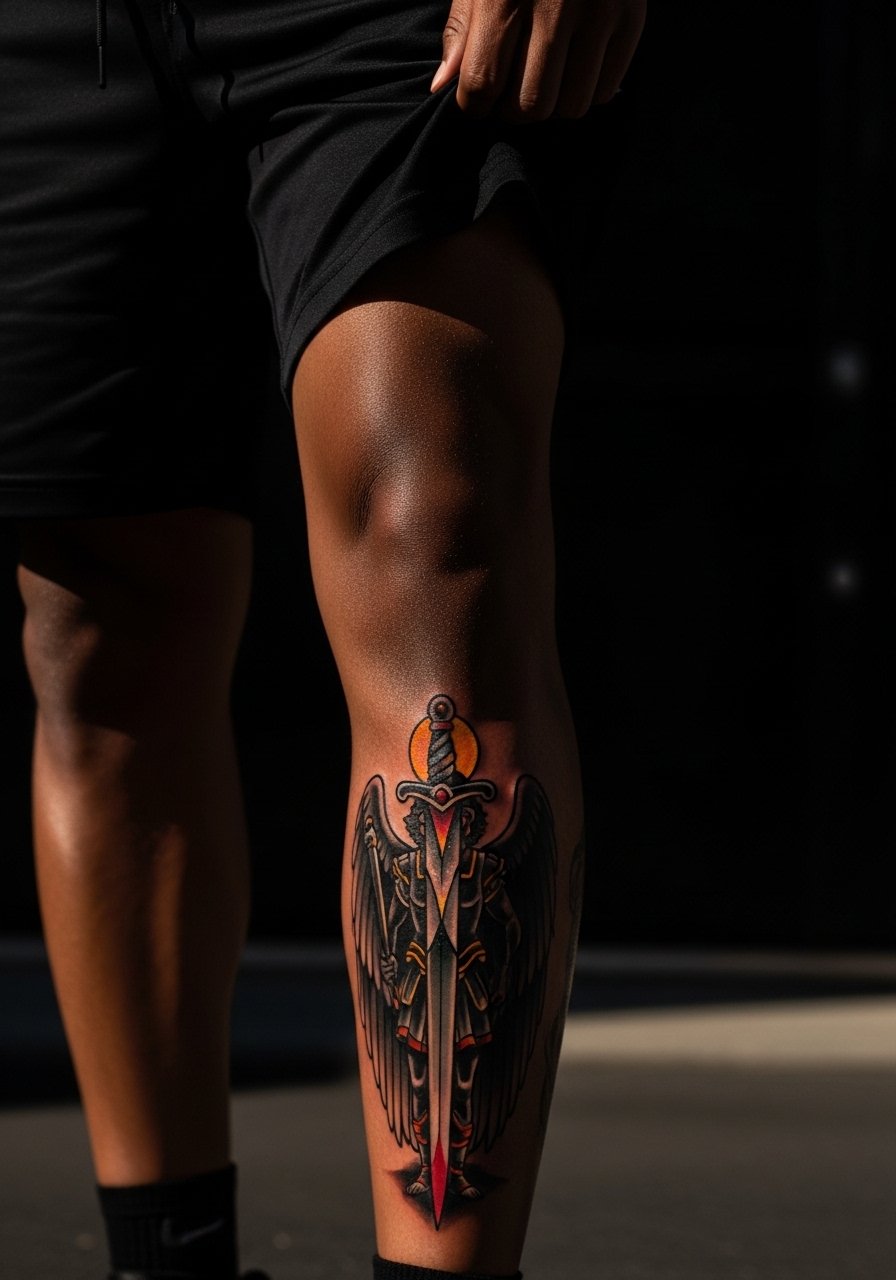
The calf is an underused vertical canvas that complements a sword falling downward, creating real motion when you walk. It tolerates longer sessions and the skin holds pigment reasonably well. Tell your artist you want the sword to read clearly at distance so the fine details are balanced with measurable lineweight. Session wear should be loose drawstring shorts or shorts you can hike up easily for access.
12. Elbow-area black and gray realism experiment
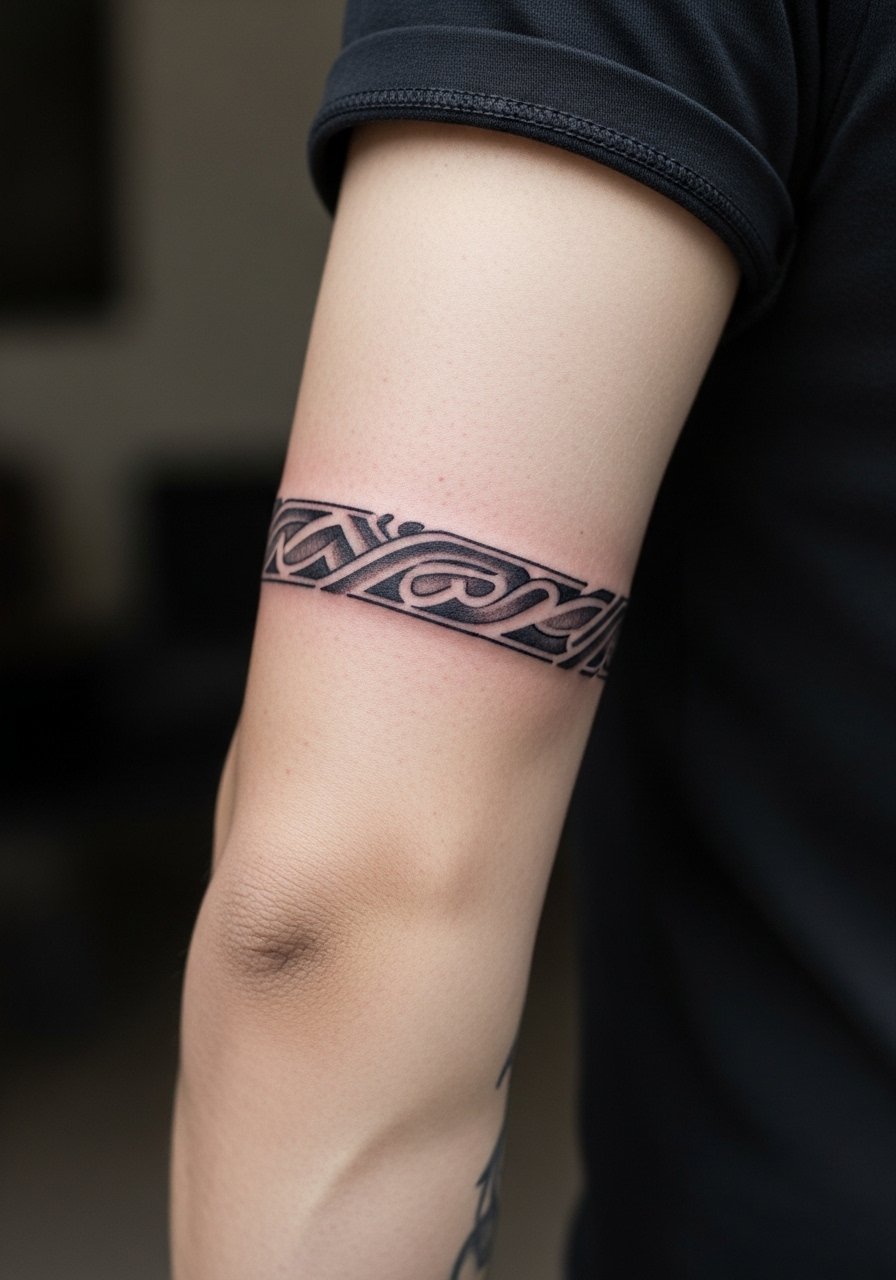
Elbow work can look incredible or become problematic as the joint moves and the skin stretches. This is an idea to consider only if your artist has experience with joint-area pieces. A common mistake is making dense shading cross the crease without breaks, which leads to rapid touch-ups. If you proceed, plan for small separate touch-up sessions and expect the area to require maintenance. Mention blowout risk and ask the artist to map out negative space where motion is highest.
13. Chest-centered black and gray Archangel Michael for memorial pieces
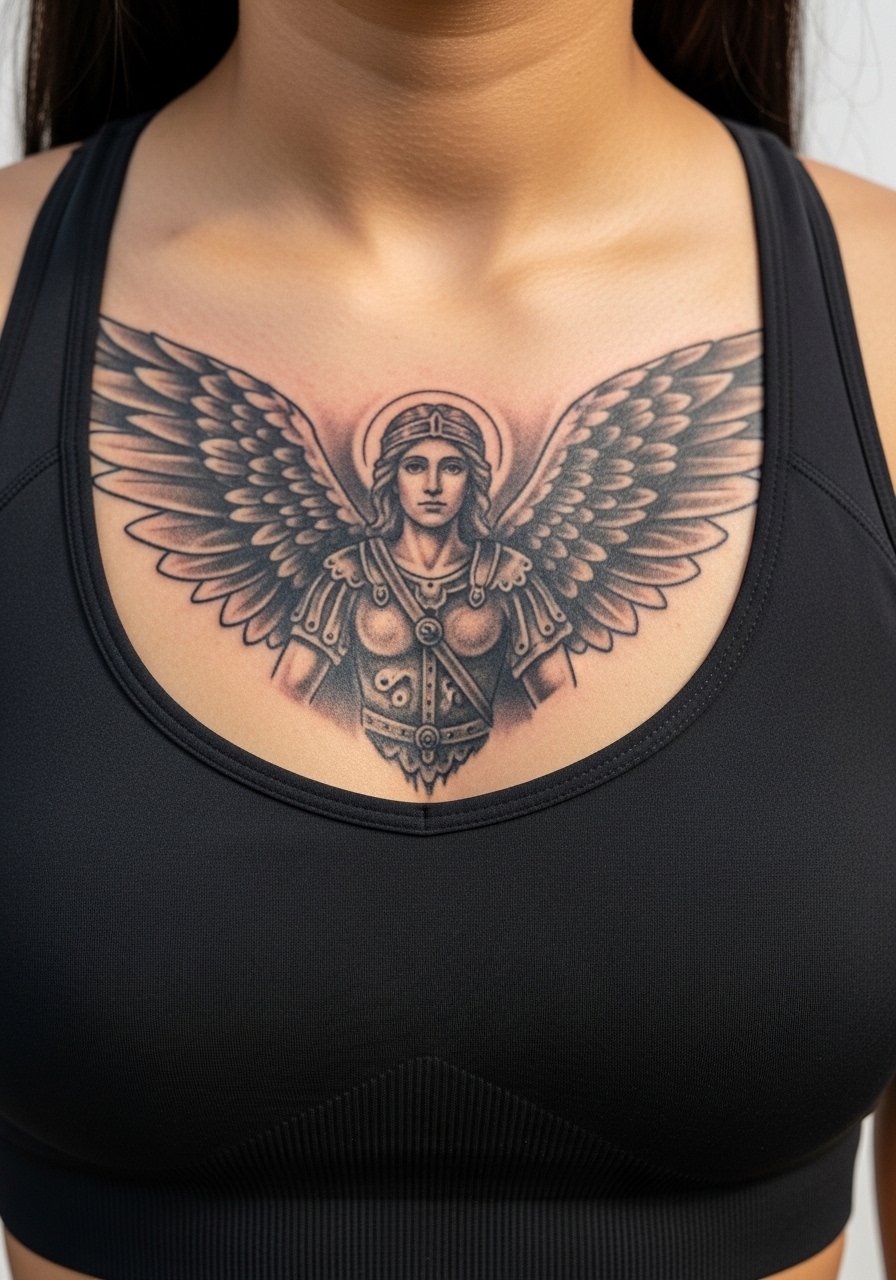
Chest-centered realism reads solemn and fits memorial commissions well. Sternum work is painful and requires careful planning around the clavicle and pectoral contours. Talk to your artist about how weight fluctuation might affect wing spread and ask for mockups at different sizes. Session wear should be a fitted sports bra so the area is accessible and supported during long sessions. Expect layered shading sessions with a realistic touch-up plan.
14. Minimalist sword motif for first-timers on the ankle
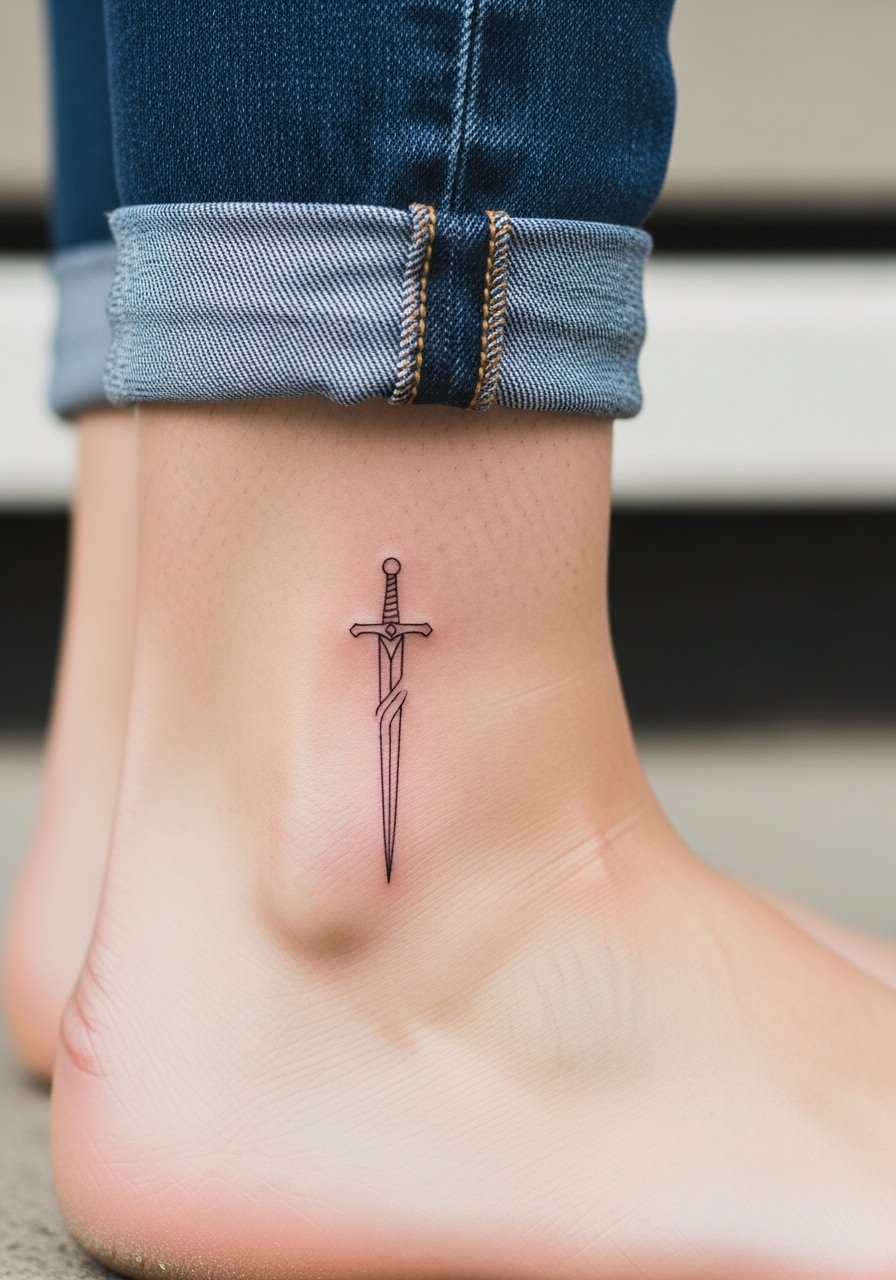
Ankle placements are beginner-friendly but see a lot of friction from socks and shoes while healing. I recommend a slightly thicker single line for durability and a narrow spacing between hilt and blade detailing to prevent early blurring. Wear rolled jeans or sandals the day of the session and choose shoes that leave the area open for the first few days. For showing off, cropped pants or sandals frame the ankle without crowding the design.
15. Thigh St. Michael with a shadow demon for 3D depth
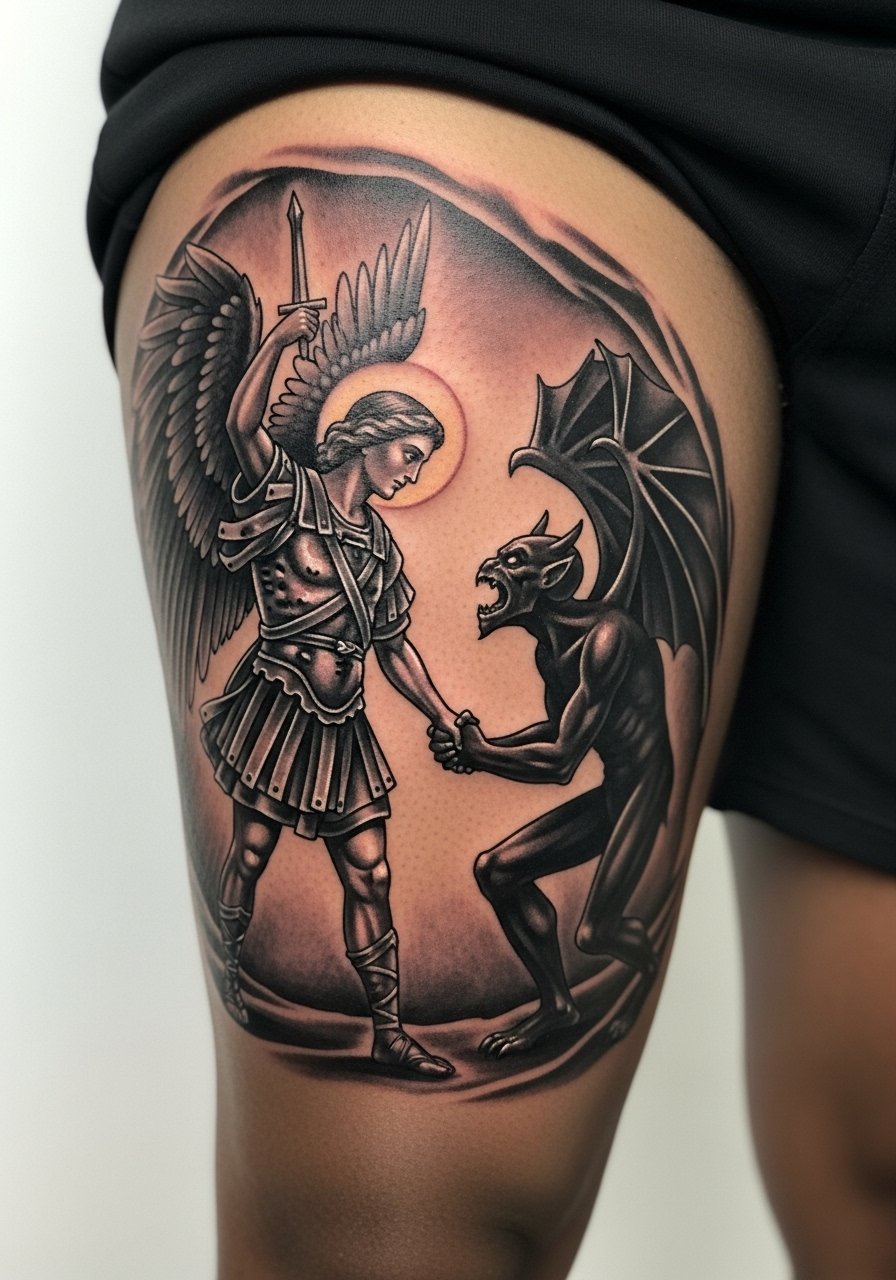
Building a shadow demon opposite the archangel creates depth and separates figure planes, which makes the composition readable even as it softens. Thigh tissue gives room for bold black fills and gradual stipple shading that ages gracefully. The main mistake is overcrowding the negative space so the two figures lose separation. Plan the contrast levels in your consult and wear loose shorts or a skirt for session access.
16. Ornamental collarbone wrap with metallic accent hints
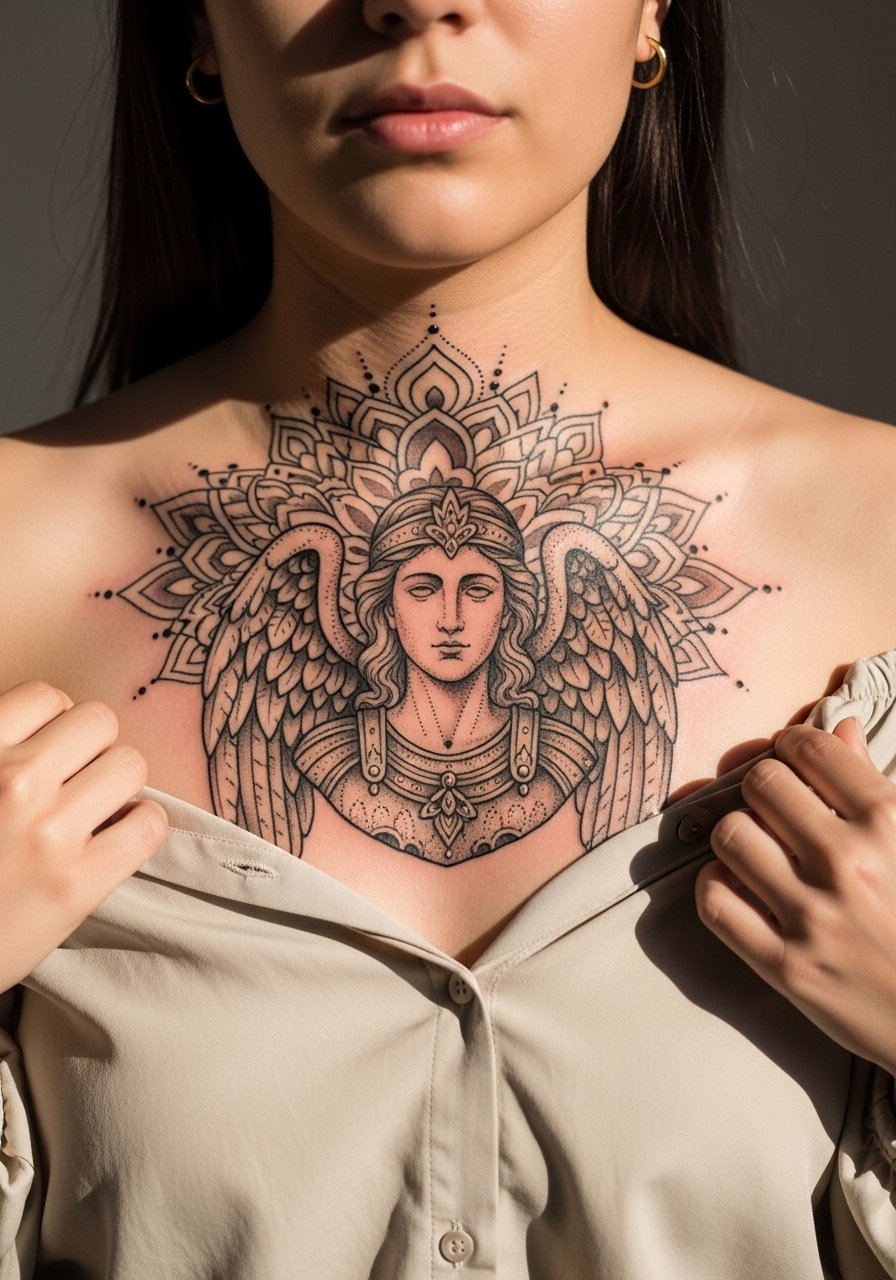
Ornamental pieces with tiny metallic accents can look like jewelry on the body, but metallic inks behave differently and may oxidize or require specific pigment knowledge. If you want metallic touches, ask how the artist sources them and whether they have healed examples. Keep linework open enough around metallic dots so they do not smudge into adjacent stipple. For showcasing, an off shoulder blouse frames the work like a necklace.
17. Micro-realism sword hilt behind the ear with subtle script
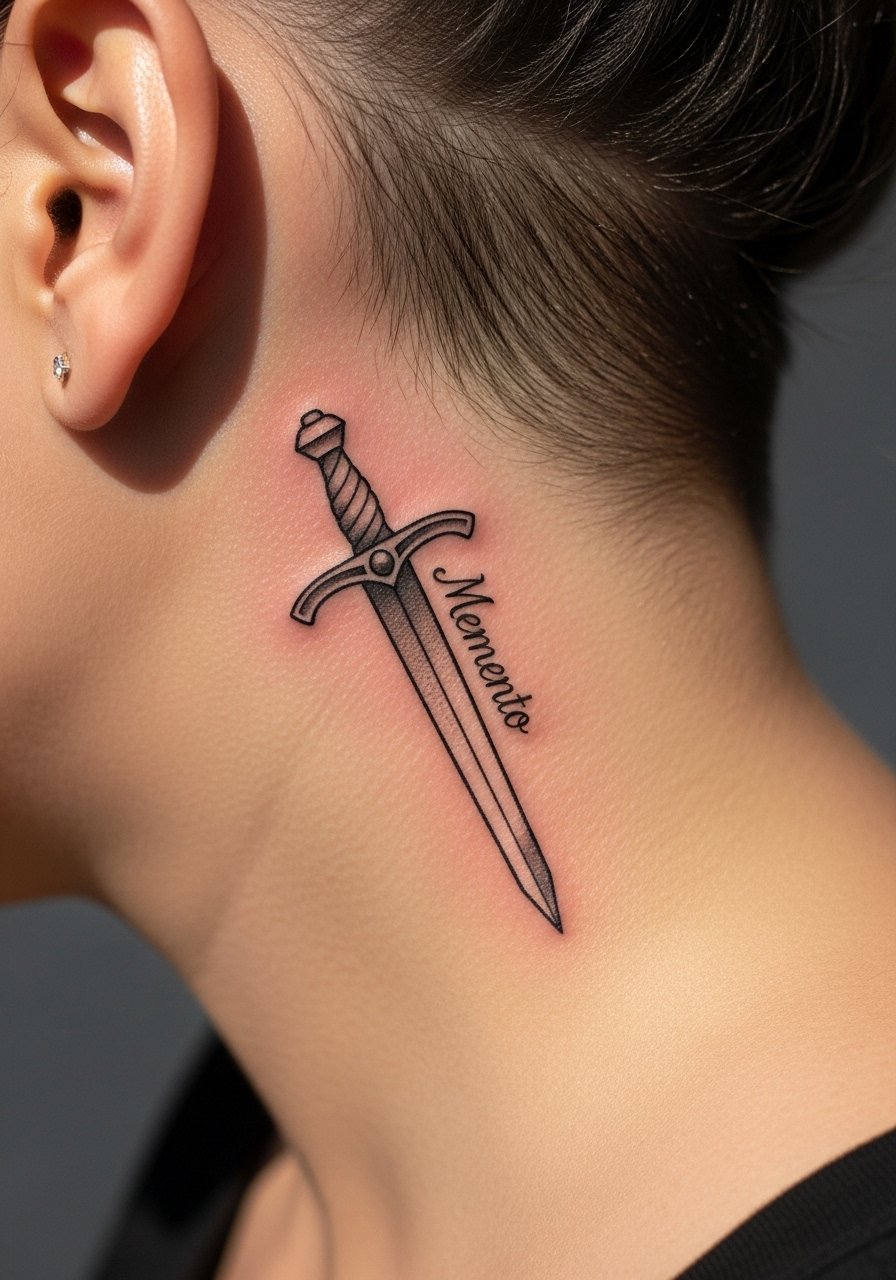
Behind-the-ear placements give a whisper of ink that is intimate and easy to conceal under hair. Because of the location, the image prompt and photo framing must show only the skin just behind the ear below the hairline. Small script and micro detail can blur if too tiny, so request the exact lettering size in your stencil preview. Mention any career considerations because even subtle ear placements can come up in formal settings. Expect a quick session and a potential touch-up at year two for script clarity.
Frequently Asked Questions
Q: Will a fine line St. Michael on my wrist need a touch-up sooner than a neo-traditional forearm piece?
A: Yes, in my experience fine line tattoos on wrists generally need touch-ups sooner than neo-traditional pieces. The wrist sees constant movement, thin skin, and frequent washing. Ask your artist about slightly heavier lineweight up front and book a touch-up window at around year two so you are not surprised.
Q: How do blackwork full-back scenes hold up on darker skin tones compared with color work?
A: Solid blackwork tends to read more consistently across skin tones because it relies on negative space and saturated black rather than subtle color shifts. For deep contrast on darker skin, request bold silhouettes and test mockups under real lighting to confirm visibility before booking.
Q: Should I pick Saniderm or dry healing for a large St. Michael back piece?
A: Artists and clients split into two camps on this. One group prefers Saniderm for cleaner early healing and fewer scabs. The other group likes dry healing and warns that any wrap can trap moisture if not applied correctly. Have the conversation with your artist and follow the method they use in the shop, because consistent application beats guessing after the fact.
Q: Where should I look to find an artist who does neo-traditional St. Michael scenes and guest spots?
A: Search hashtags like #StMichaelTattoo and #NeoTraditionalGuestSpot on Instagram and TikTok, and use directories on the Tattoodo or Booksy apps to filter by style and city. Reddit r/tattoos weekly threads also surface guest spots if you are open to travel.
Q: Can I get metallic ink accents in ornamental St. Michael pieces and expect them to last?
A: Metallic inks can add a jewelry-like flash, but they require an artist familiar with their behavior. Ask to see healed photos of metallic work from the artist and be prepared for the possibility of slightly different aging compared with black or standard color inks. If longevity is critical, ask your artist for alternatives that mimic metallic shine using contrast and tiny white highlights.
Q: What should I wear to a ribcage or sternum session so the artist can work comfortably?
A: Wear a cropped athletic top or a sports bra you can shift so only the tattoo area is exposed. That keeps fabric from tugging and helps you stay covered for the rest of the day. Bring a loose button-down to pull over afterward for warmth and comfort during travel.
Q: How can I make a small St. Michael ankle piece look intentional when I wear it out?
A: Choose footwear and cropped pants that leave the ankle visible, and consider minimal accessories so the eye focuses on the line. A rolled cuff jean or a simple sandal highlights a vertical sword or minimalist motif without crowding the area.