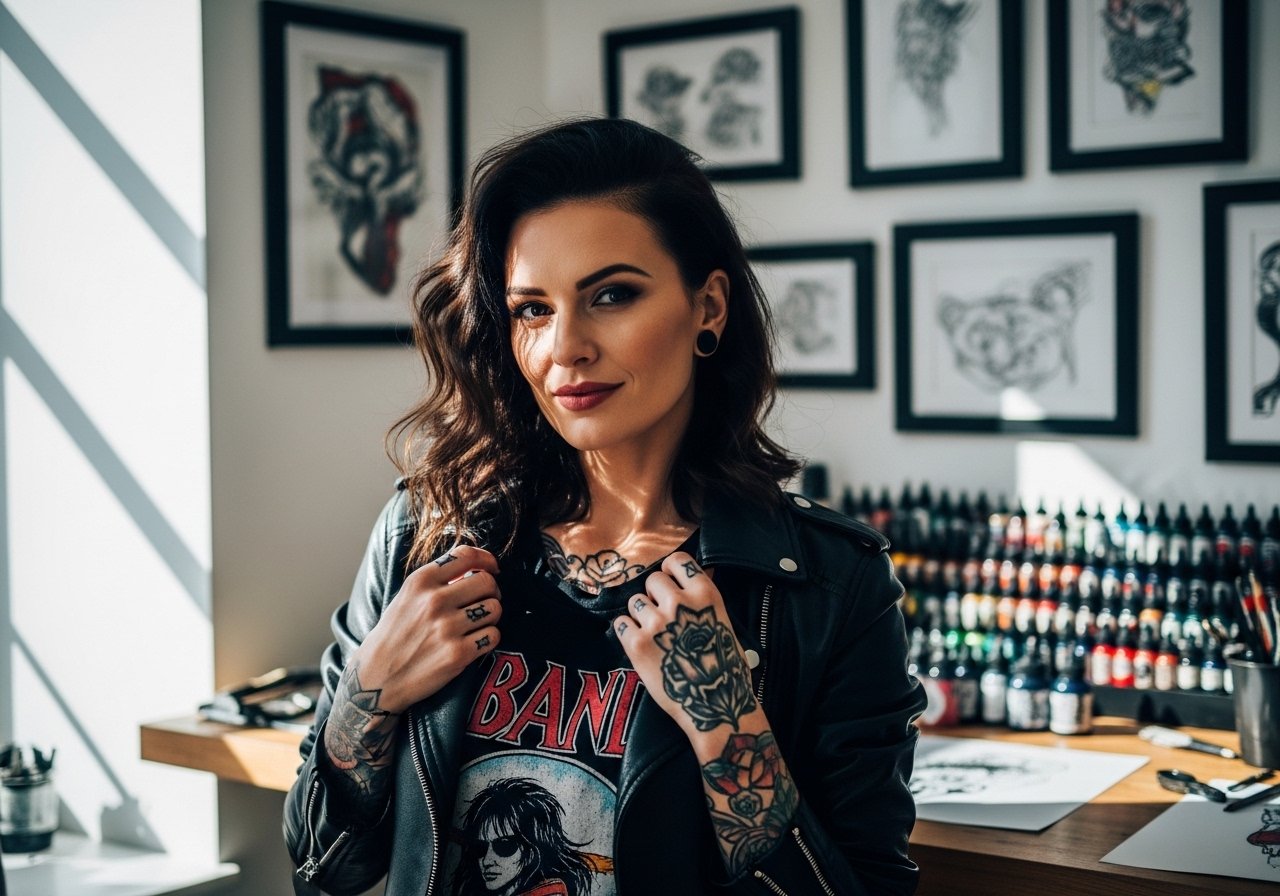
Fine line florals are trending hard, but they do not always behave the same on every shoulder. Gym sweat, oily skin, and repeated deltoid flexing are the top three reasons some shoulder flowers ghost faster than expected. I talk to artists in five shops across Brooklyn and to people in forum threads who point to cancellations, surprise touch-up fees, and poor photo results on darker skin as real headaches. Read on for 27 shoulder-friendly flower ideas and practical notes that dodge the usual pitfalls.
1. Fine Line Daisy Cluster on the Upper Shoulder
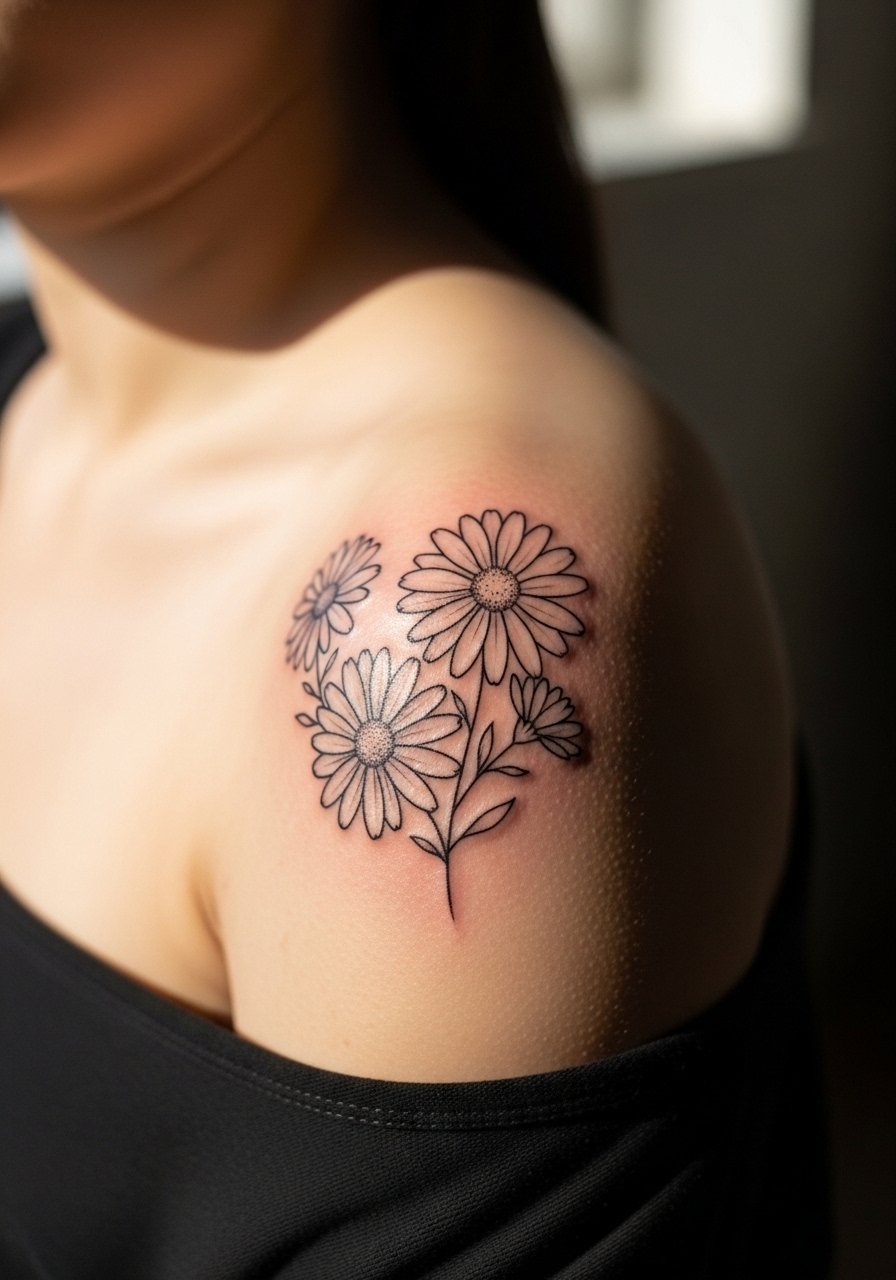
Personal observation: the daisy cluster reads best when the stems follow the shoulder curve, not when the artist forces a straight stem across the muscle. Fair warning, fine line on active shoulders tends to soften faster if you sweat a lot. Ask your artist to space the daisies slightly and to use slightly heavier single-needle linework where the skin moves the most. Session time is short and mostly comfortable. For showing it off, a strapless linen crop top in a neutral tone keeps the linework visible without adding glare.
2. Neo-Traditional Peony Bloom with Leaves on the Outer Cap
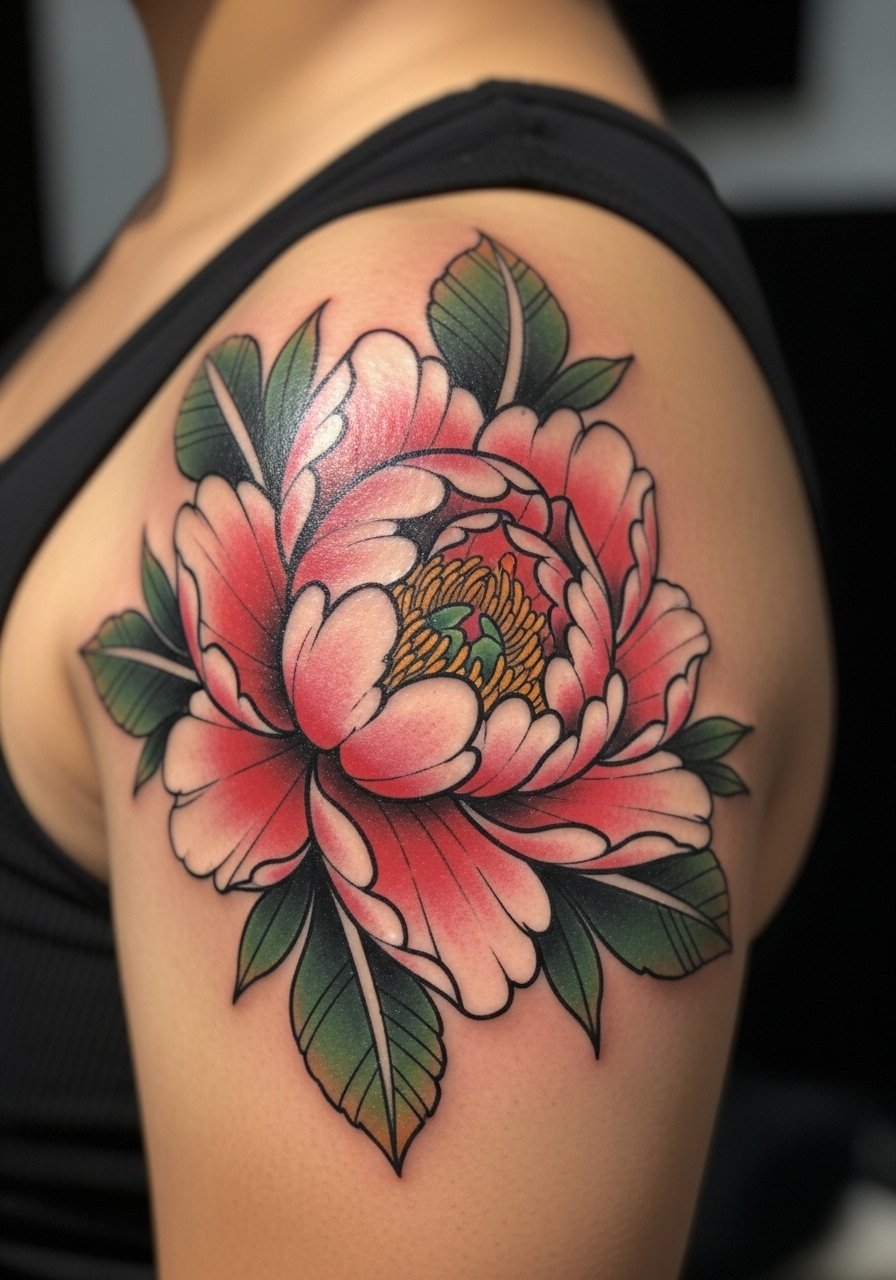
Visual impact lead: saturated peony color pops against curved shoulder muscle and ages into a lush patch if the saturation is strong. The session feels longer because of fill work, expect two sittings. A common mistake is asking for tiny petals with tiny gaps. That often leads to early muddiness. Tell the artist you want 4-6 inch scale and strong outlines so the reds and greens settle well. For evenings out, pair this with a vintage leather jacket draped off one shoulder to create contrast.
3. Watercolor Lotus at the Shoulder Cap
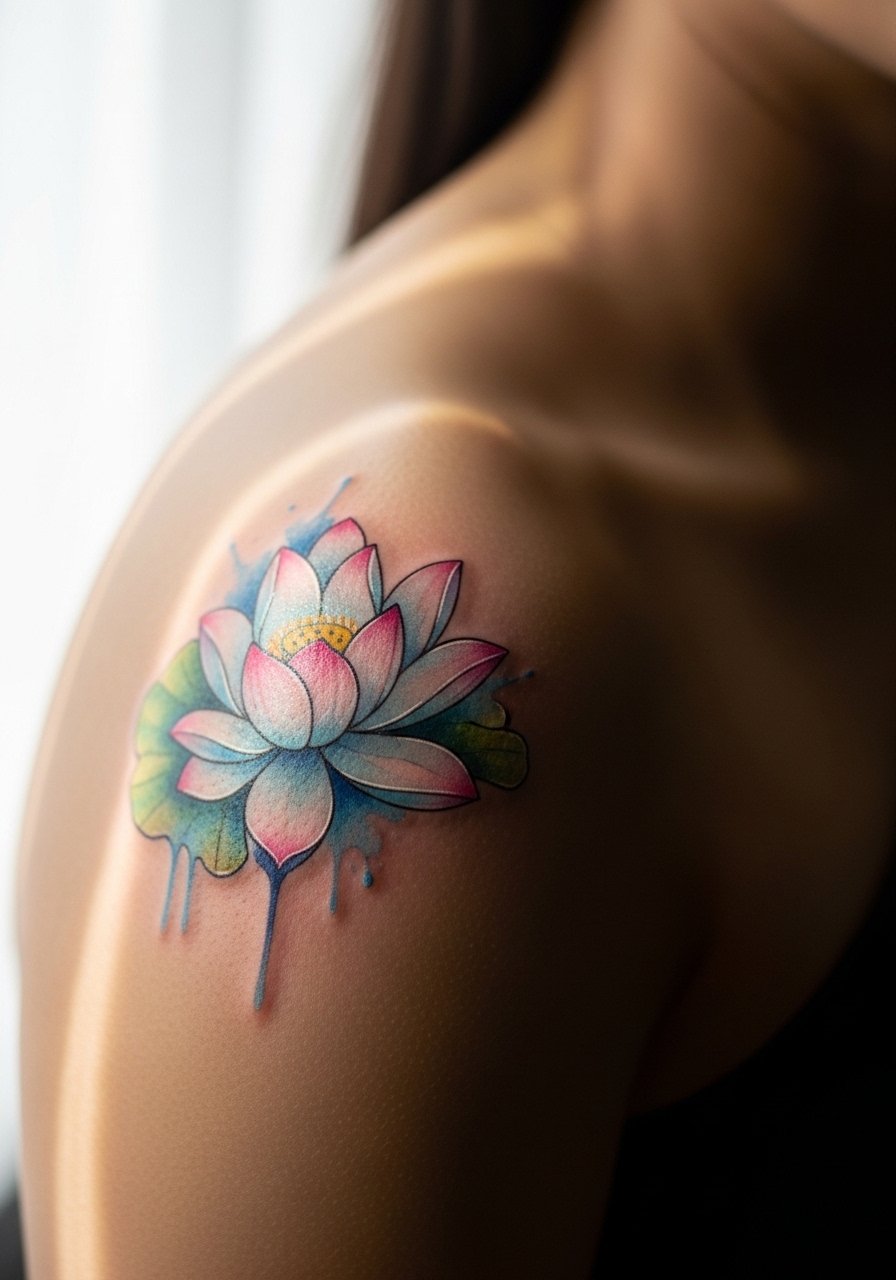
Aging and healing lead: watercolor looks ethereal fresh but can fade unevenly after sun exposure. If you want this painterly look, ask for slightly denser outlines under the watercolor washes so the form remains readable at two years. This style is ideal for someone who rotates tops seasonally and uses SPF. Session feels breezy because shading is layered not deeply saturated. Wear a loose tank top to the appointment so the artist can access the cap without straps interfering.
4. Blackwork Rose Vine Wrapping the Deltoid
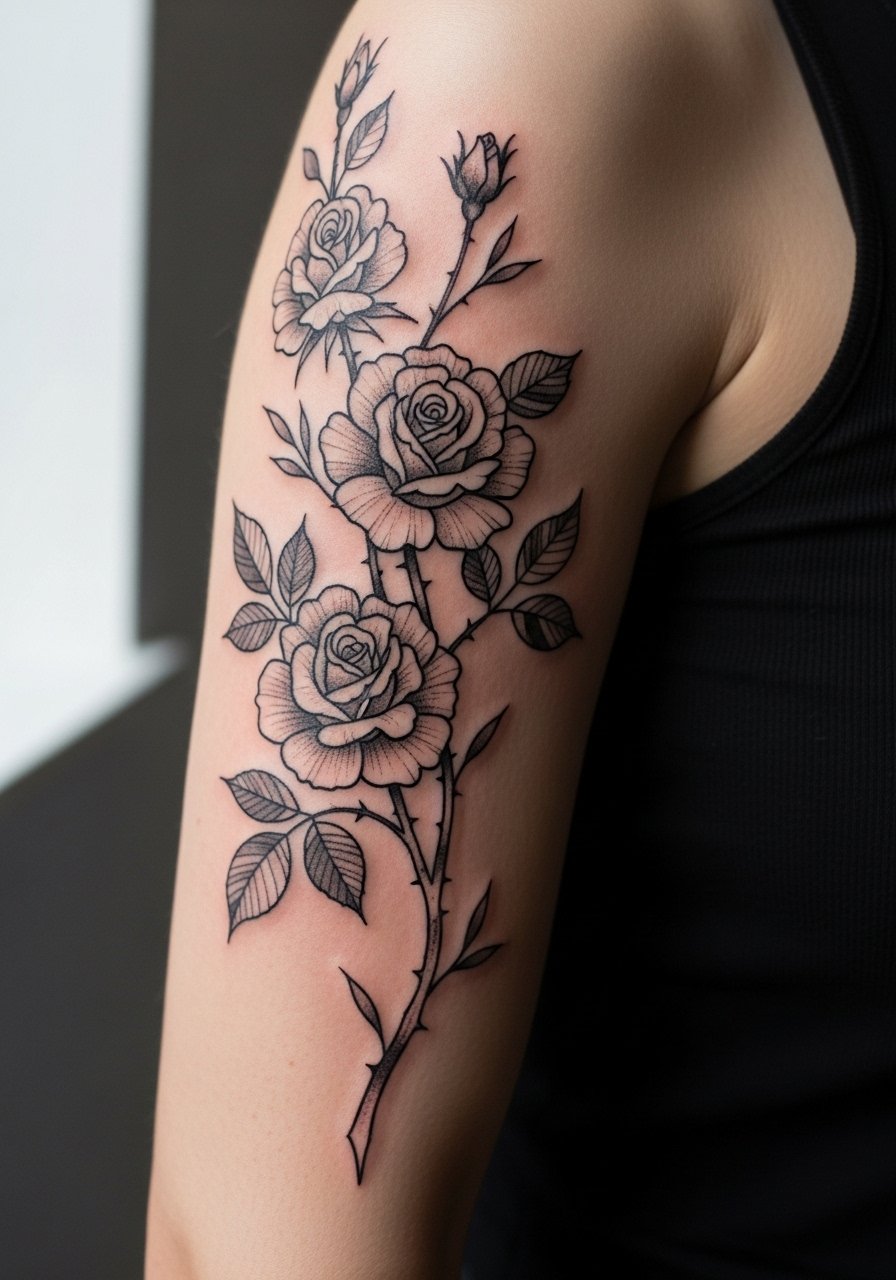
Visual impact lead: solid blackwork reads from across a room and hides scars well. The blowout risk is lower with bold fills, but the session can be long and physically demanding. A mistake is asking for tiny fills that require small needles; that reduces the longevity advantage of blackwork. This style suits someone who wants a muscle-hugging piece that ages into a strong silhouette. For casual wear, a racerback tank keeps the wrap visible and frames the vine.
5. Minimalist Single Sunflower Outline on the Inner Shoulder Blade
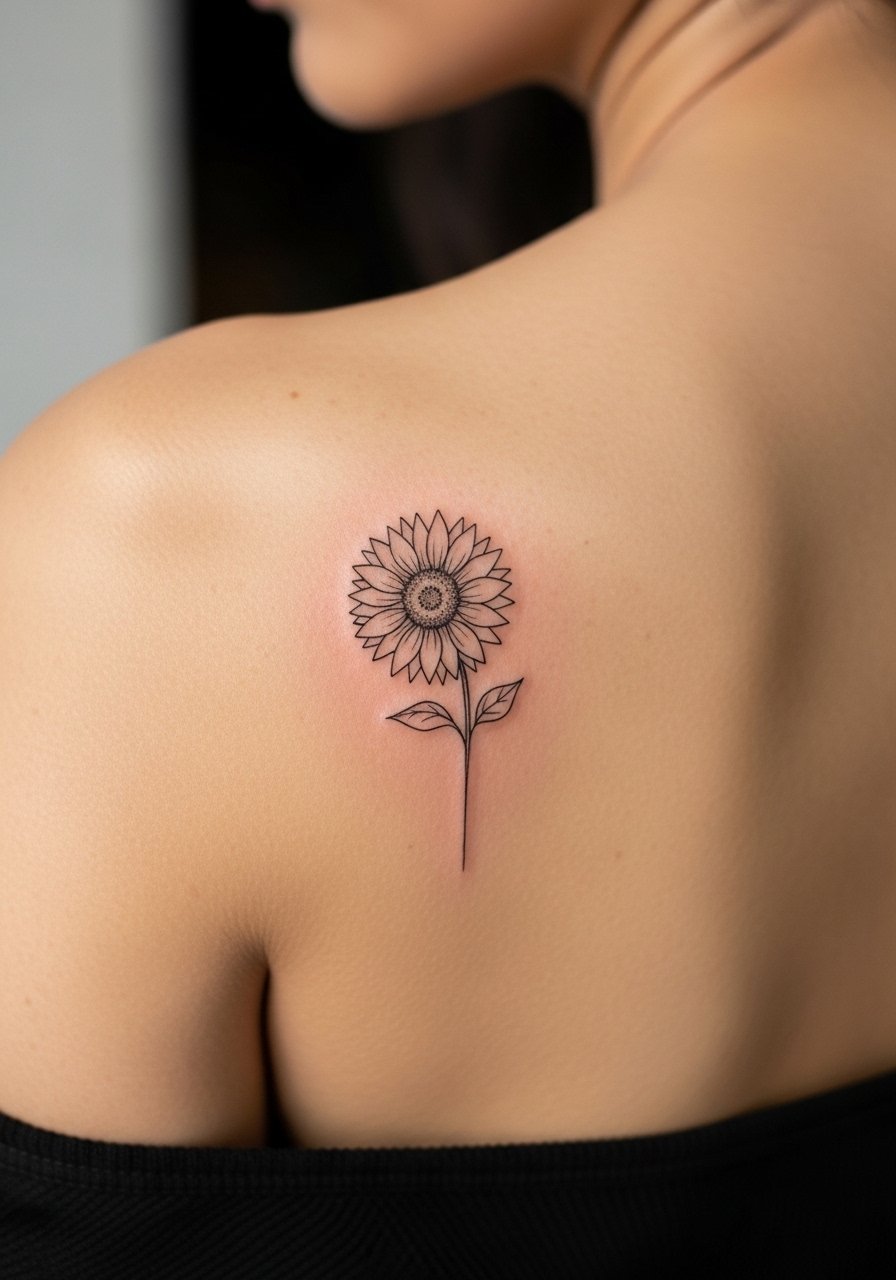
Mistake lead: people often ask for the sunflower too small near the spine. The result looks lost after a year. Make it 2-3 inches and request slightly thicker outline so the center holds. Pain is low on the shoulder blade edge but expect some prickly vibration near the spine. Best for first-timers who want subtle positivity without commitment. For show-off moments, an off-shoulder sweater in cream keeps the bloom in view.
6. Ornamental Cherry Blossom Mandala Centered on the Acromion
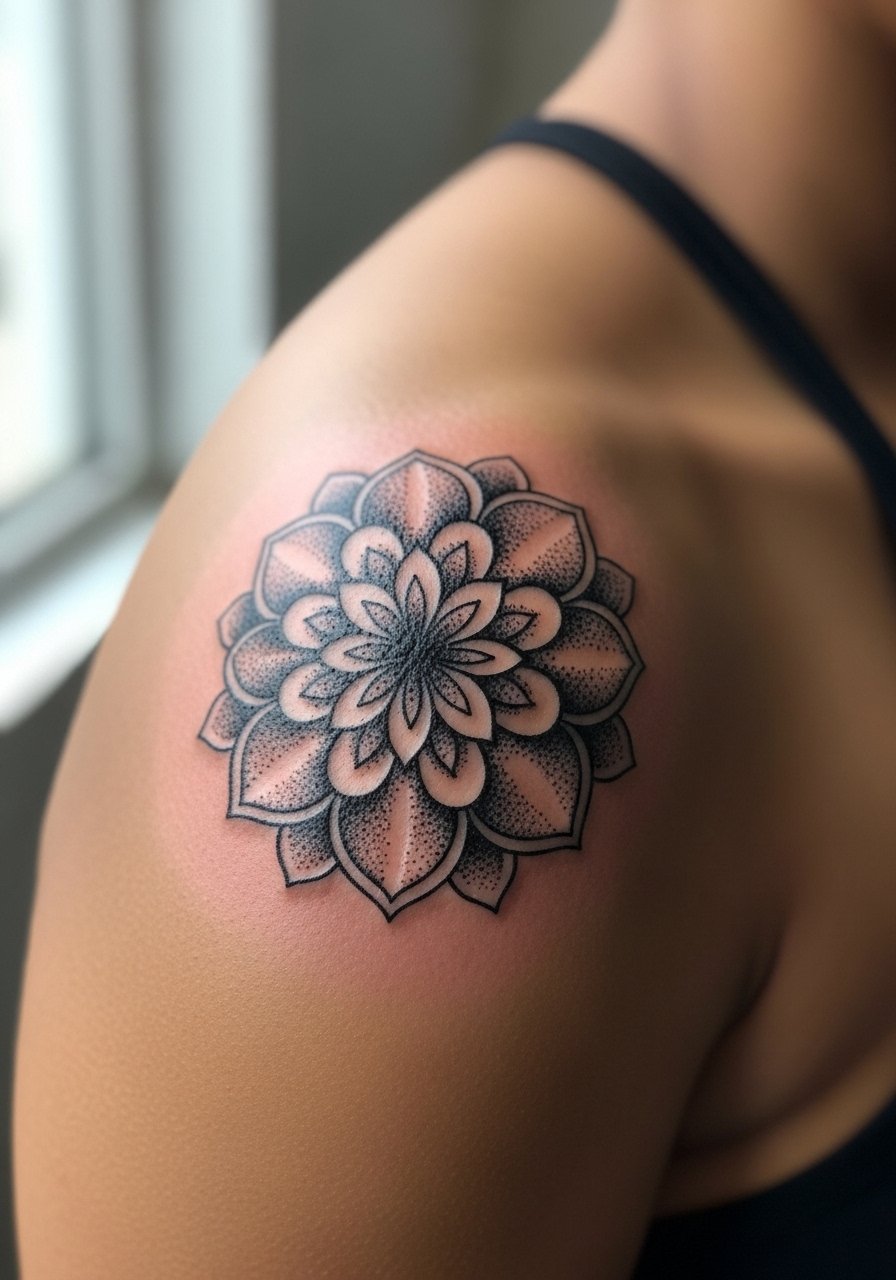
Consultation lead: this one requires precise mapping so the symmetry follows the shoulder bone. Artists split on size. One camp says it needs room to breathe to avoid merging lines, the other says denser work looks more ornate. Tell your artist you want 6-inch diameter with dot shading rather than tight line clusters. Expect multiple sessions and touch-ups within two years to keep the mandala crisp. This pairs well with high-neck tops pulled down slightly for a subtle reveal.
Studio Day Picks
These are small practical items that smooth the first 72 hours after the shoulder sessions above and help with gym and sweat issues some people report.
-
Tea tree balm, thin balm alternative. Lighter than heavy ointments, it helps shoulders that sweat a lot without feeling greasy and can reduce itchy buildup.
-
Japanese rice bran salve. Absorbs quickly on active areas so fine line work on the shoulder cap stays smooth during healing.
-
Hemp seed oil serum, non-comedogenic. Good for oily skin types that report bumpy heals after fine line sessions, it moisturizes without clogging.
-
Beeswax-free matte lotion. Reduces photo glare for darker skin tones when you want clean healed photos after a week.
-
Second Skin protective film. Useful for sweaty summer shoulders to keep friction down during the first five to seven days.
7. Micro-Realism Poppy Cluster at the Arm-Shoulder Junction
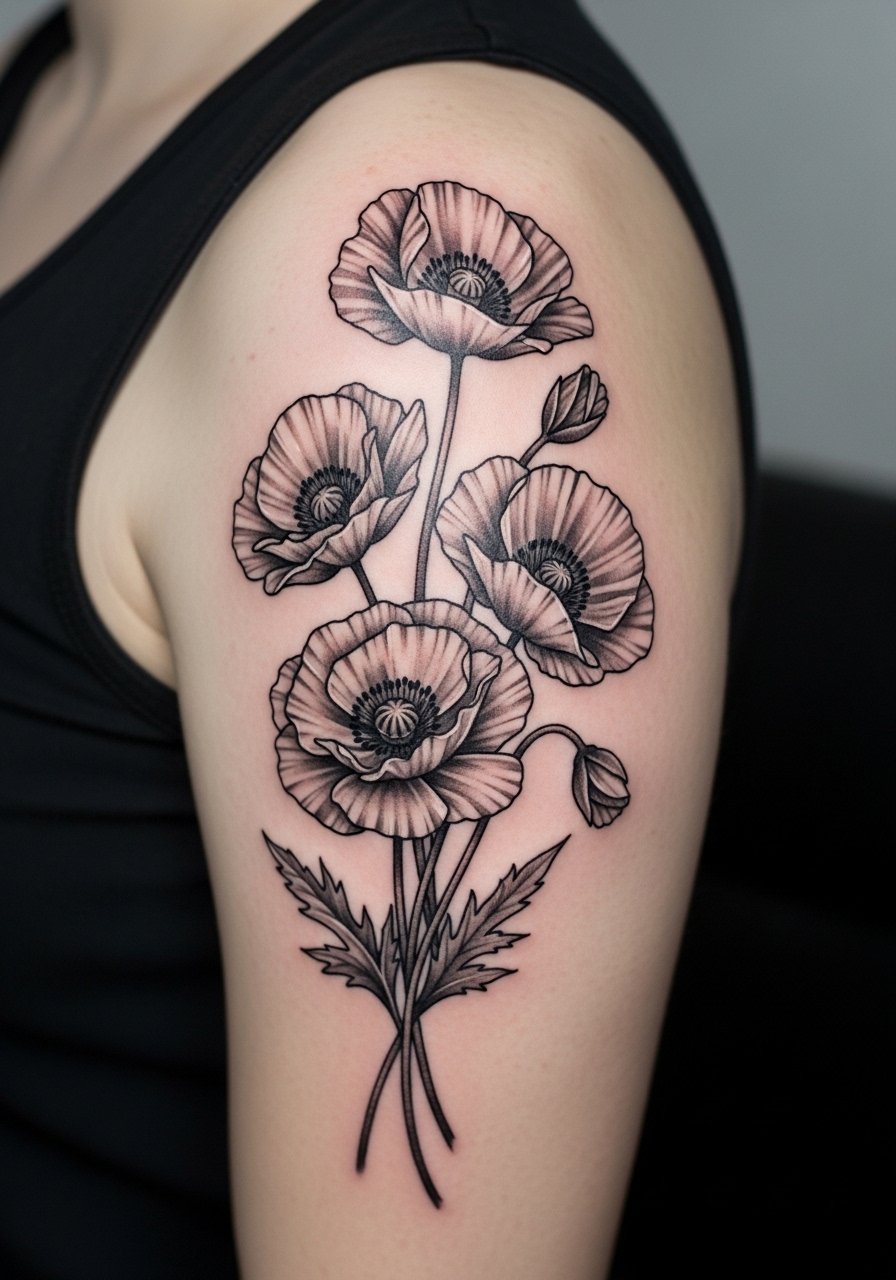
Mistake lead: micro-realism shrinks badly if crammed into tight spaces. For a three-inch poppy cluster, insist on mid-level scale so the petal textures have room. Expect one to two sessions and precise shading time. The deltoid movement can soften tiny highlights, so plan on a touch-up at one year if you train your shoulders heavily. For the appointment, wear a loose short-sleeve tee that can be pulled aside easily.
8. Traditional American Lily with Banner on the Outer Shoulder
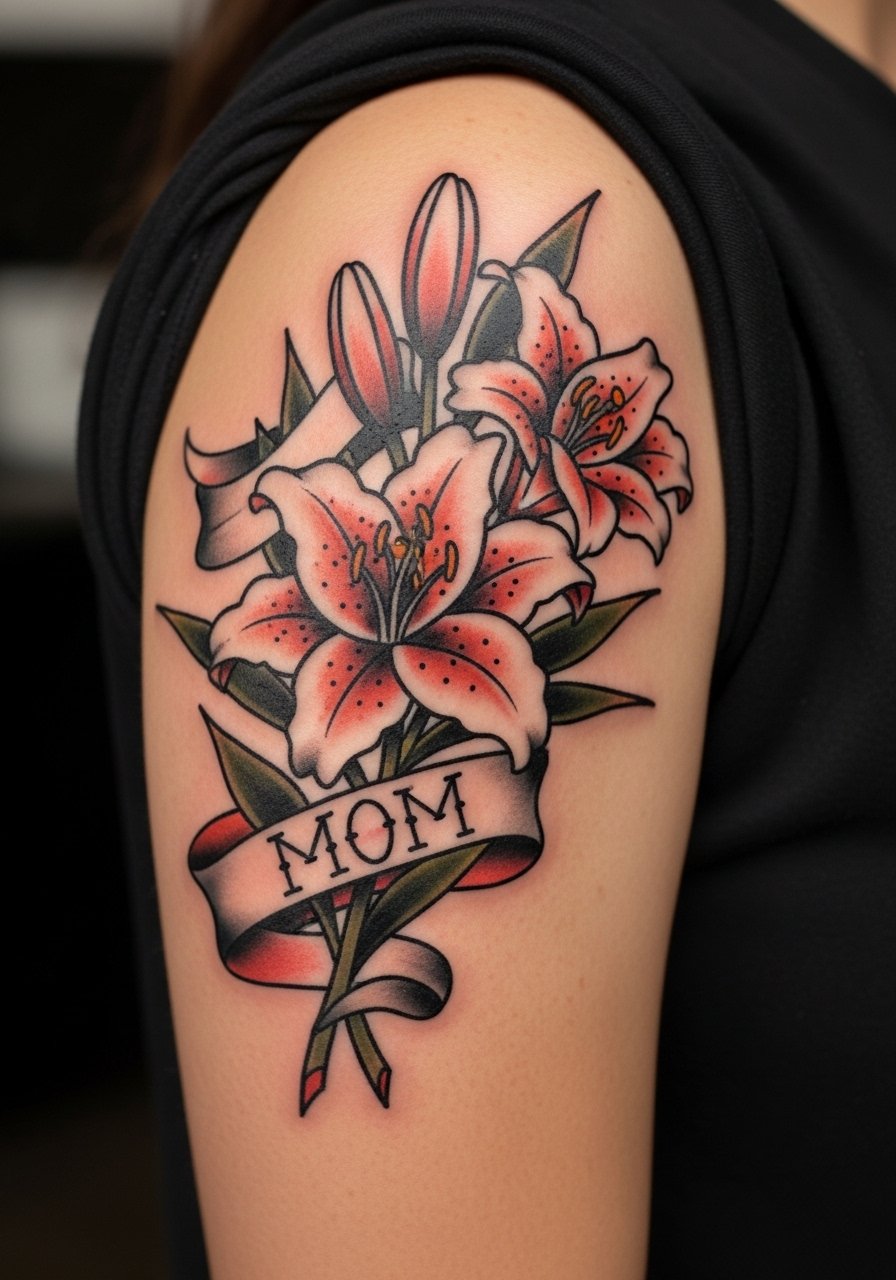
Visual impact lead: classic lines and saturation age into a readable shape if you avoid tiny script in the banner. The biggest mistake is asking for fine script under time-limited color fills. Ask for bold banner text or leave the banner empty for later lettering. This style holds up on chest-to-shoulder transitions and suits someone who likes nostalgia. Session time is moderate. Pair it with a muscle tank to show the lily when you want to.
9. Ignorant Style Abstract Floral Burst on the Deltoid Peak
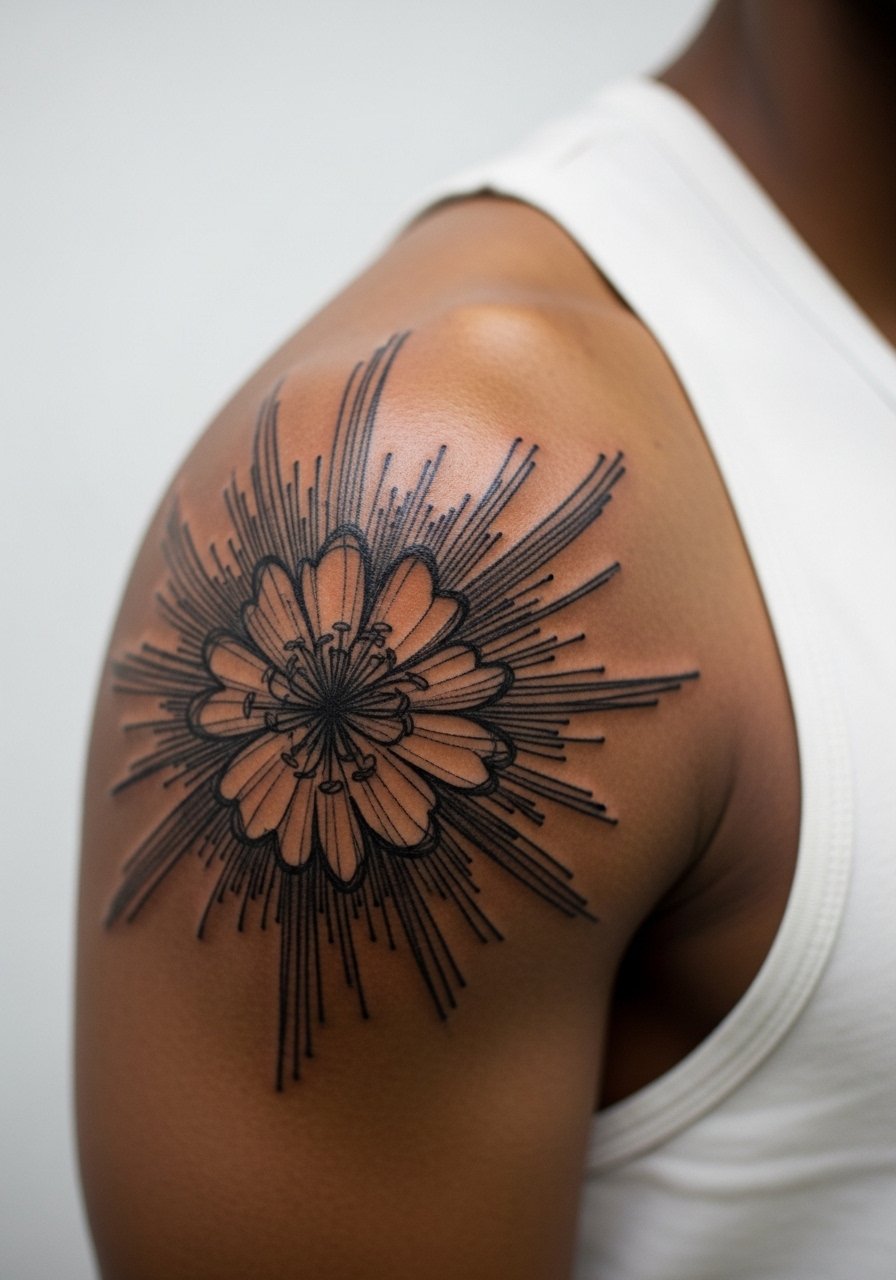
Mistake lead: people sometimes ask for slavish mimicry of online scribbles and end up with composition issues. Bring reference but let the artist adapt the burst to your muscle shape. This raw, sketchy energy hides early fading because its lines are meant to blur slightly. Session feels playful and fast. For the session, wear an open button-down so the shoulder is fully accessible.
10. Dotwork Lavender Sprig Curving the Trapezius
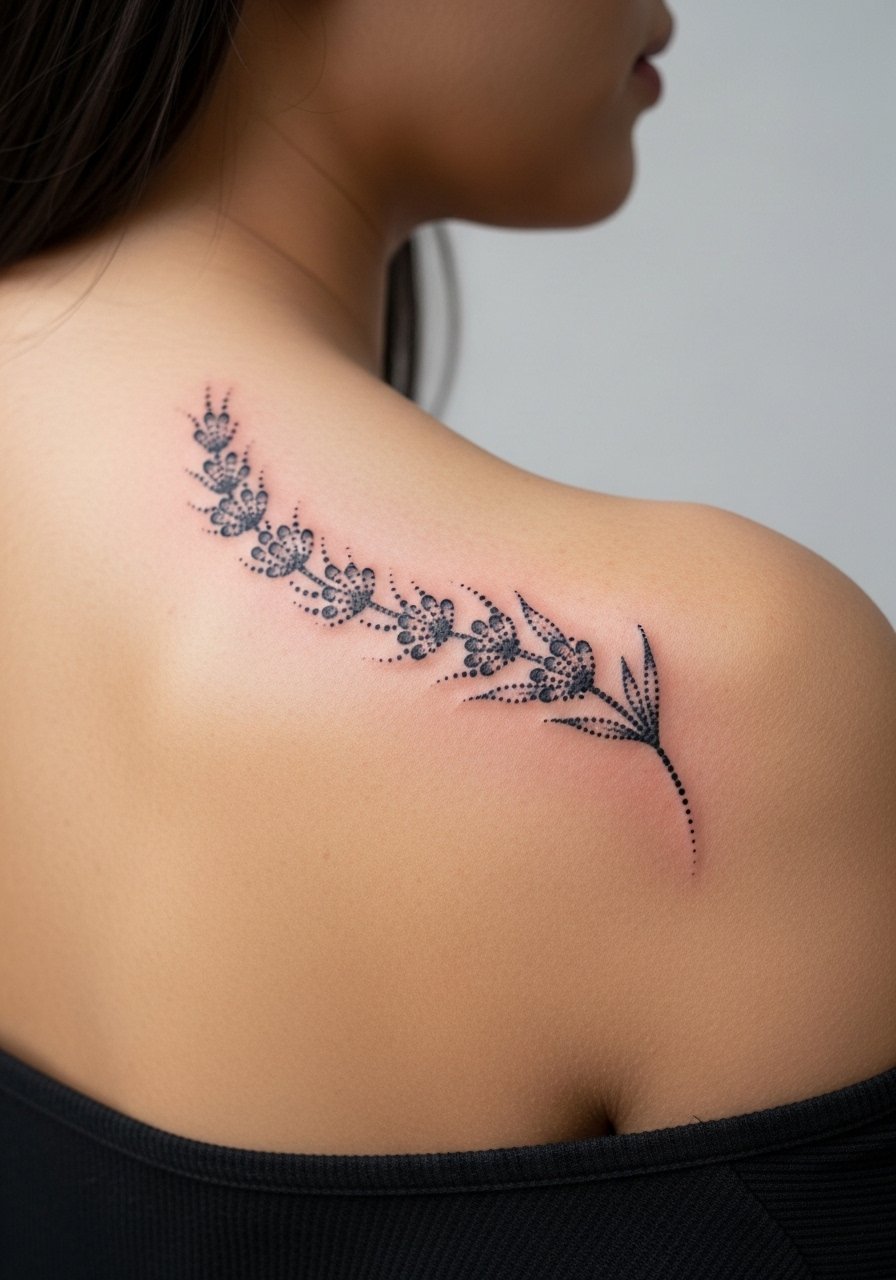
Aging lead: dotwork can hold detail well if dots are placed with spacing in mind. Dense stippling will blur over time. The common mistake is too many dots packed in a narrow curve. Tell your artist to leave breathing space between clusters so the pattern reads at two and five years. Pain is low to moderate on the trapezius. For show-off styling, a cowl neck hoodie pulled down slightly gives a casual peek.
11. Shoulder-to-Chest Vine Connector
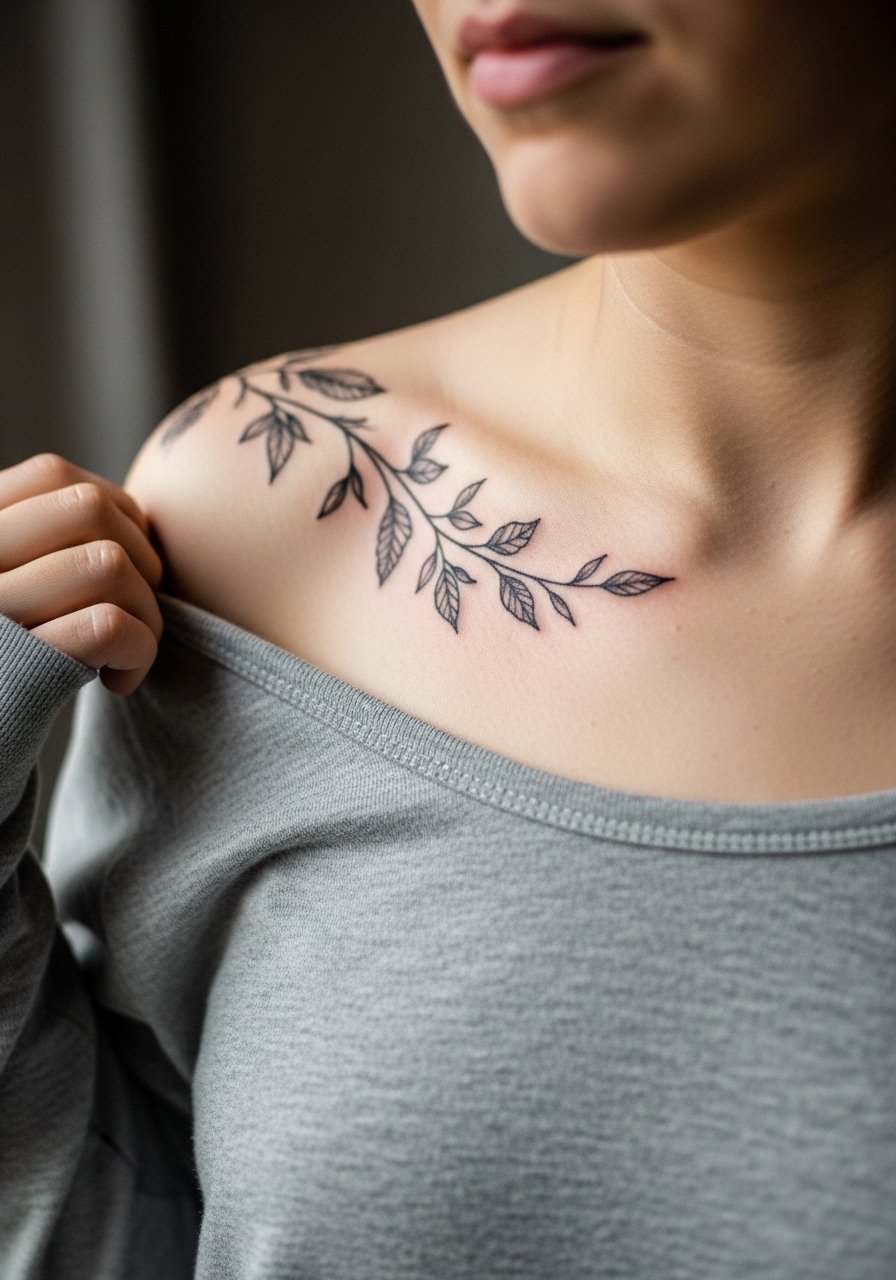
Consultation lead: connecting shoulder work to the chest requires a shared flow so the vine does not look like two separate pieces. The session feels longer if color is involved. A common error is stopping the vine abruptly at the collarbone. Ask your artist to plan the transition so it moves naturally across the muscle. This placement benefits from a thin chain pendant necklace that sits above the connecting line without competing.
12. Asymmetrical Vine with Negative Space Over the Deltoid
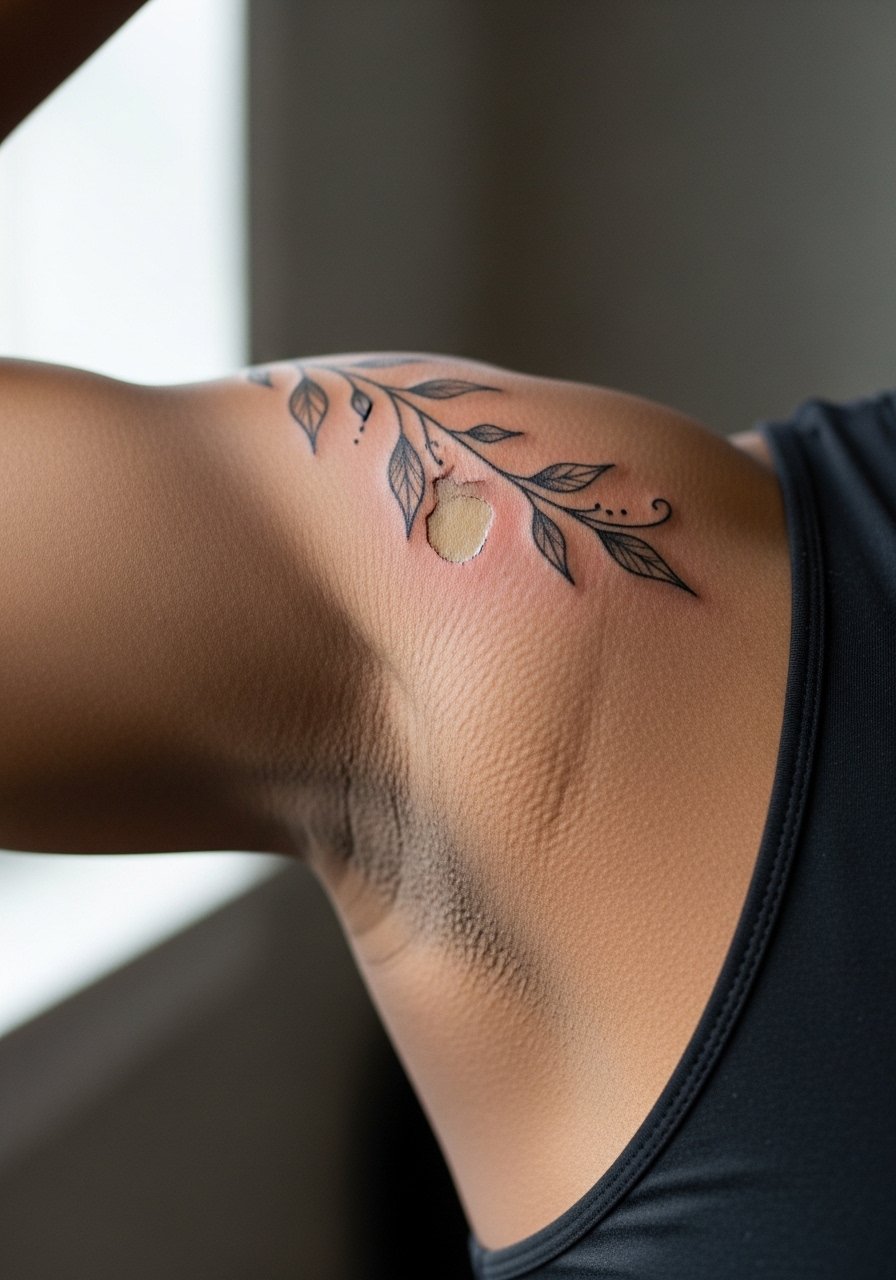
Mistake lead: negative space pieces require planning to avoid appearing unfinished. The error I see most is asking for too many tiny cutouts that read as gaps once healed. Tell the artist you want intentional empty zones and show examples of negative space balance. Pain is moderate at the deltoid peak. For casual wear, a racerback tank black frames the vine without distracting patterns.
13. Geometric Floral Mandala Hugging the Shoulder Cap
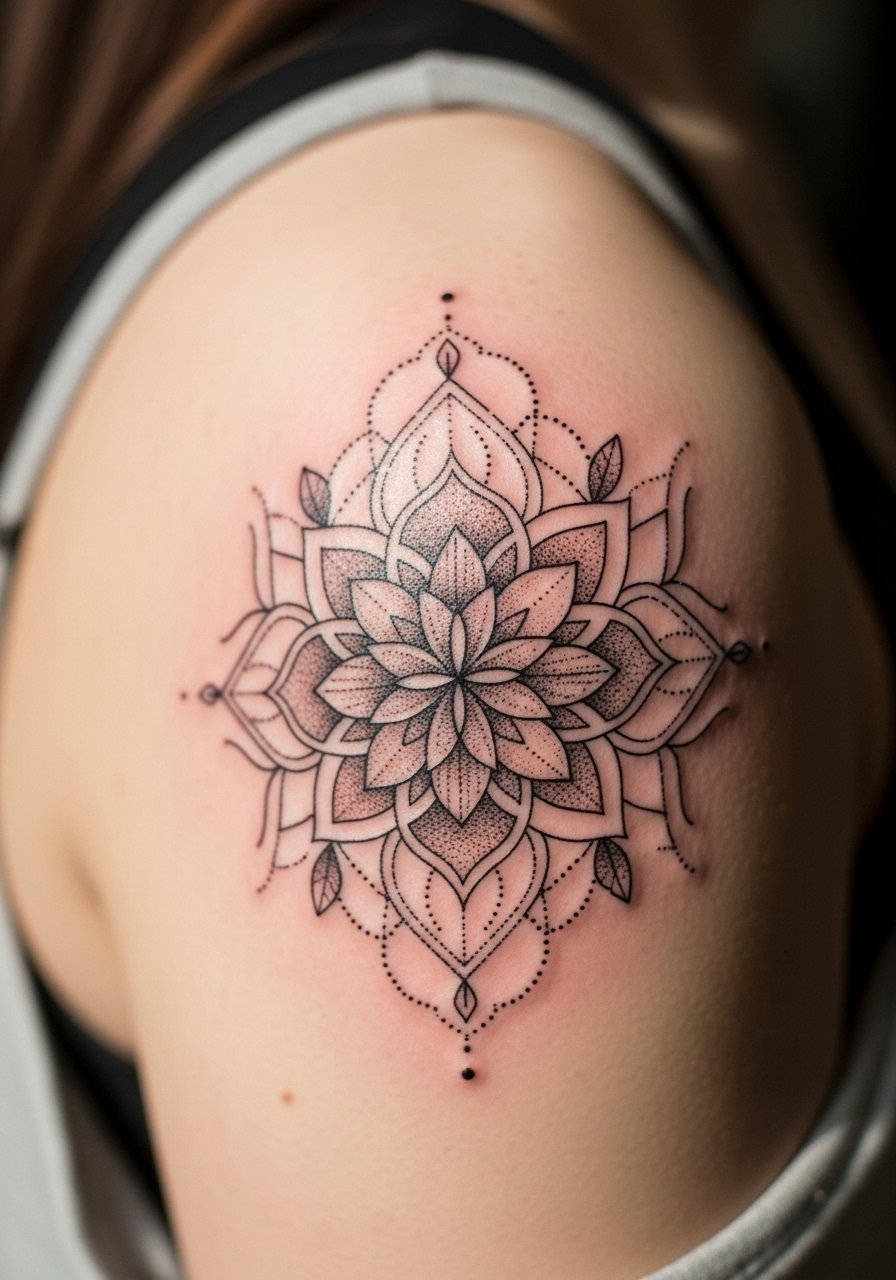
Consultation lead: geometry must match your shoulder circumference to avoid tilting when you raise your arm. The common mistake is scaling a mandala too small. Expect moderate pain and at least two sessions for crisp geometry. Artists split on needle spacing and placement. One group favors more spacing to avoid merging, the other uses denser lines for impact. Ask which camp your artist follows and why. Pair this piece with a thin gold chain necklace if the design spills toward the collarbone.
14. Compact Chrysanthemum with Stipple Shading on the Outer Shoulder
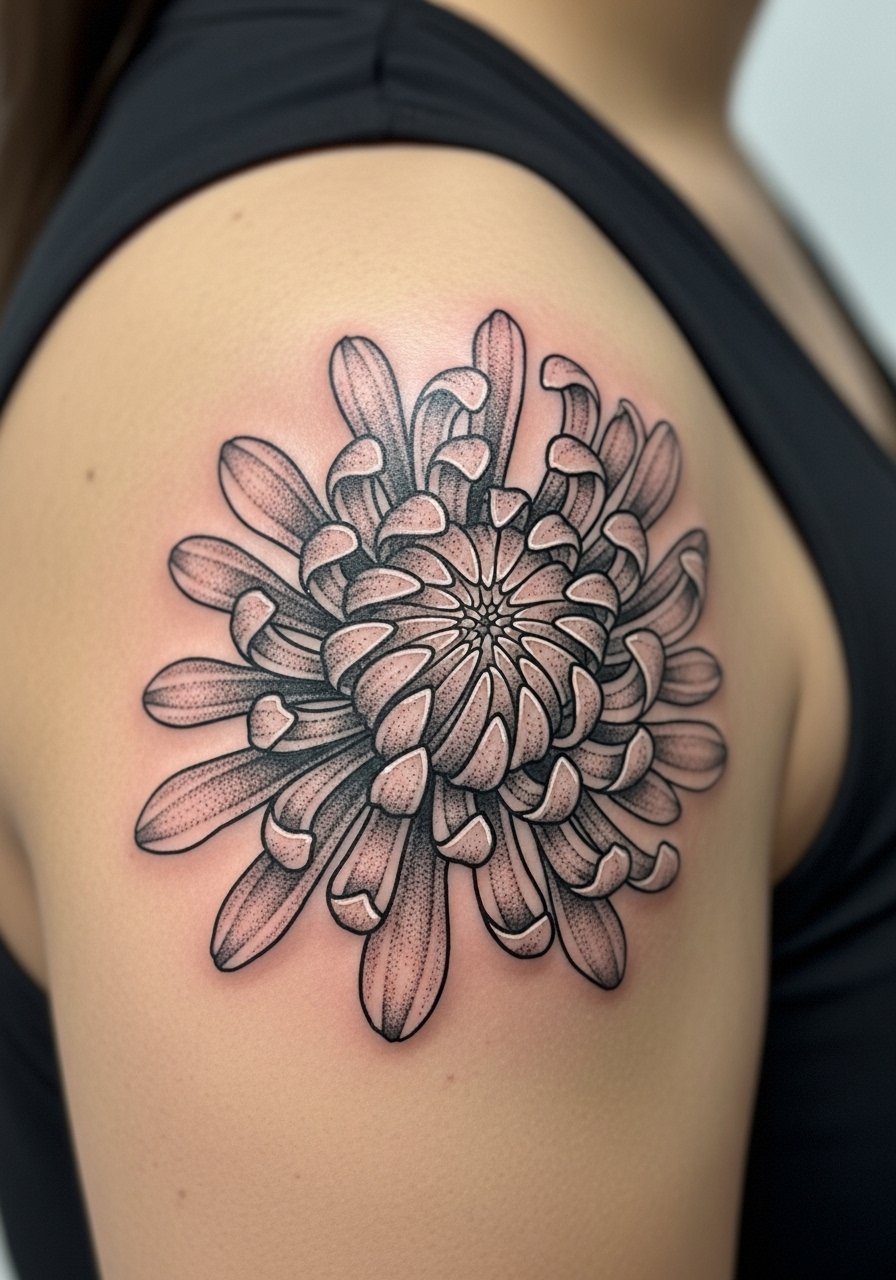
Pain warning lead: outer shoulder tolerates dense dots well but the session may include long stretches of stipple work, which feels different from linework. A typical mistake is asking for overly intricate inner petal detail in a small space. For longevity, keep the chrysanthemum at least three inches across and use stippling for texture rather than tight cross-hatching. For the session, choose a loose tank top so the artist can reach the area without fabric tension.
15. UV-Reactive Floral Ink Accent on a Shoulder Cap
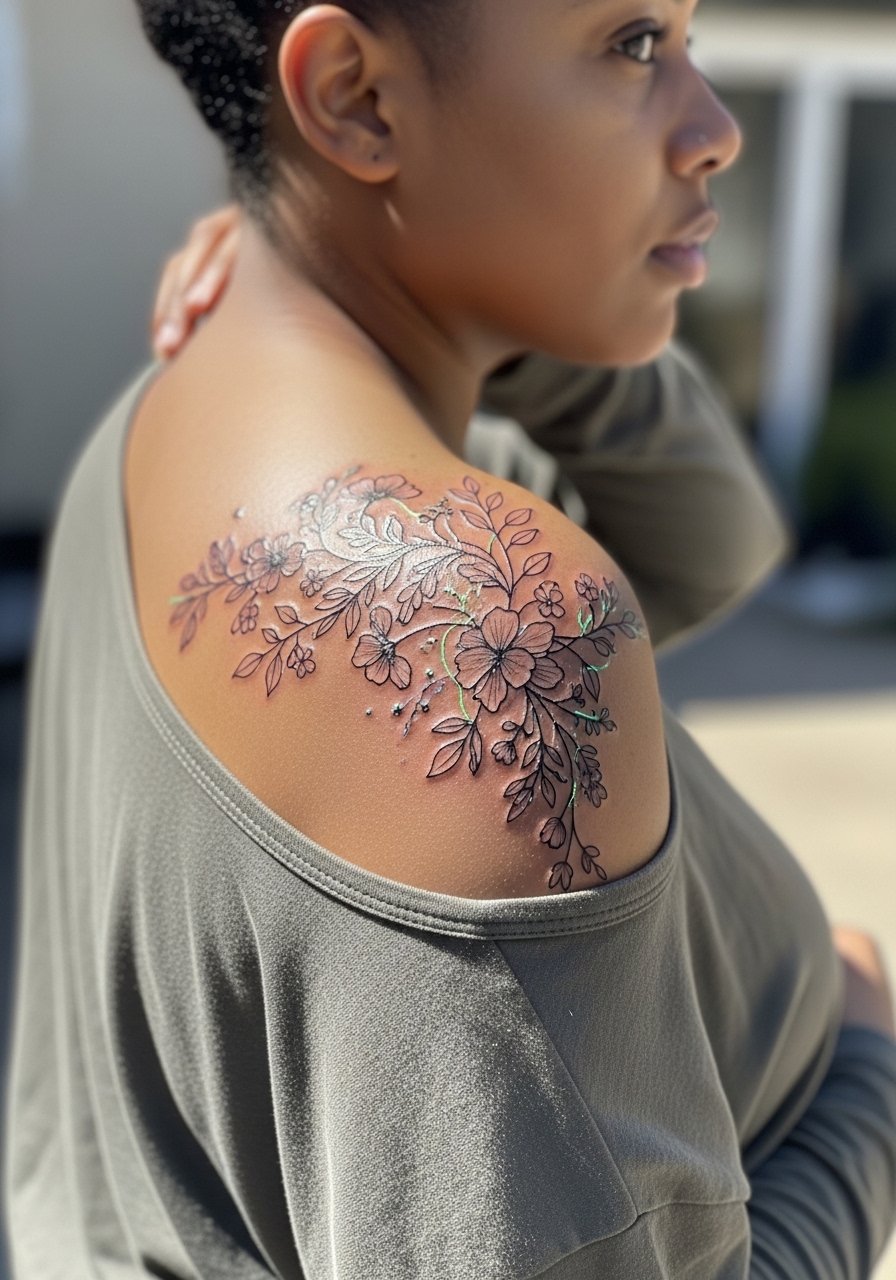
Unique idea lead: UV ink offers a daytime-stealth, nighttime-glow option. A common complaint is color instability in cheap UV pigments, so bring this up with the artist first. This is niche work that may not be available at every shop. Expect a short extra session for the UV highlights. Session discomfort is low. For showing it off in daylight, an off-shoulder sweater keeps the placement visible while the UV detail waits for the right light.
16. Tiny Bud Near the Clavicle Edge
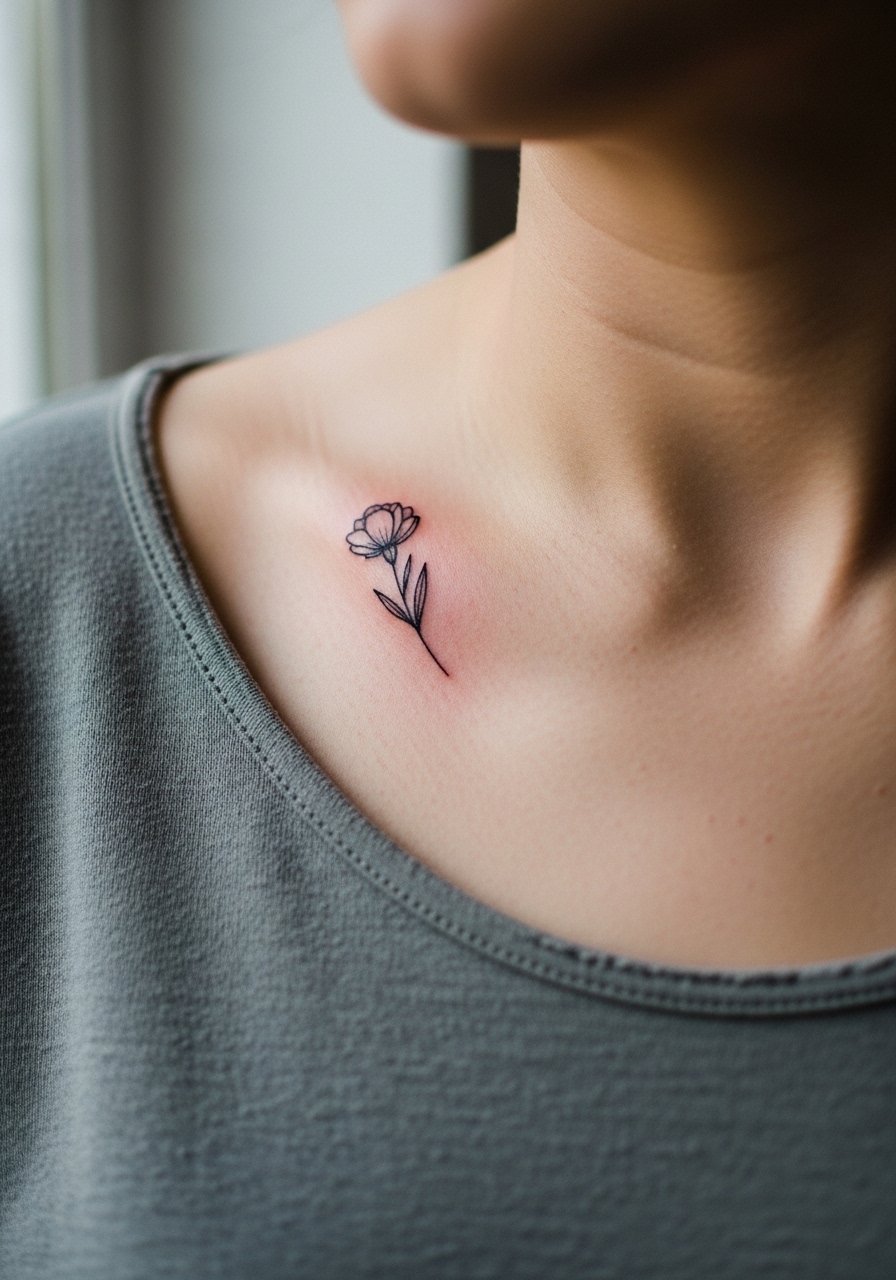
Mistake lead: tiny clavicle placements look fragile if the linework is too thin. For someone who prefers small scale, ask for slightly heavier outline and open spacing in the bud. This placement is visible in many outfits so consider career and exposure. Session time is very short and pain is mild. Pair it with a thin chain necklace that sits above without crowding the tiny bloom.
17. Full Deltoid Wrap with Blackwork Vines and Negative Space
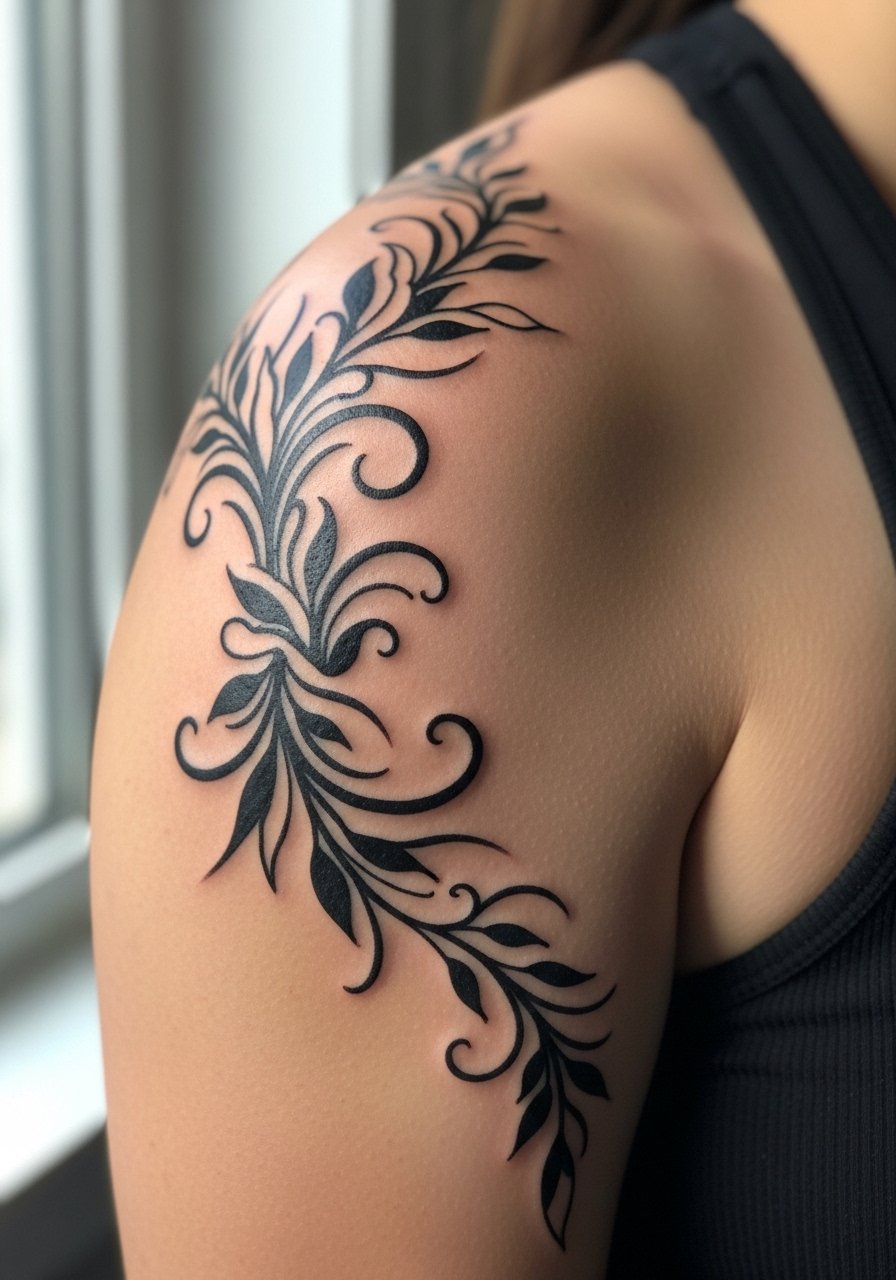
Visual impact lead: full wraps need strong composition to avoid distortion with shoulder movement. The session will be multi-hour and may span several appointments. A common mistake is underestimating how a wrap pulls with muscle changes. For gym-goers, ask the artist to plan around the deltoid peak so stretches do not thin the vine unexpectedly. For wardrobe, a racerback tank shows the wrap without visual clutter.
18. Minimalist Single Bloom on the Inner Shoulder Blade Edge
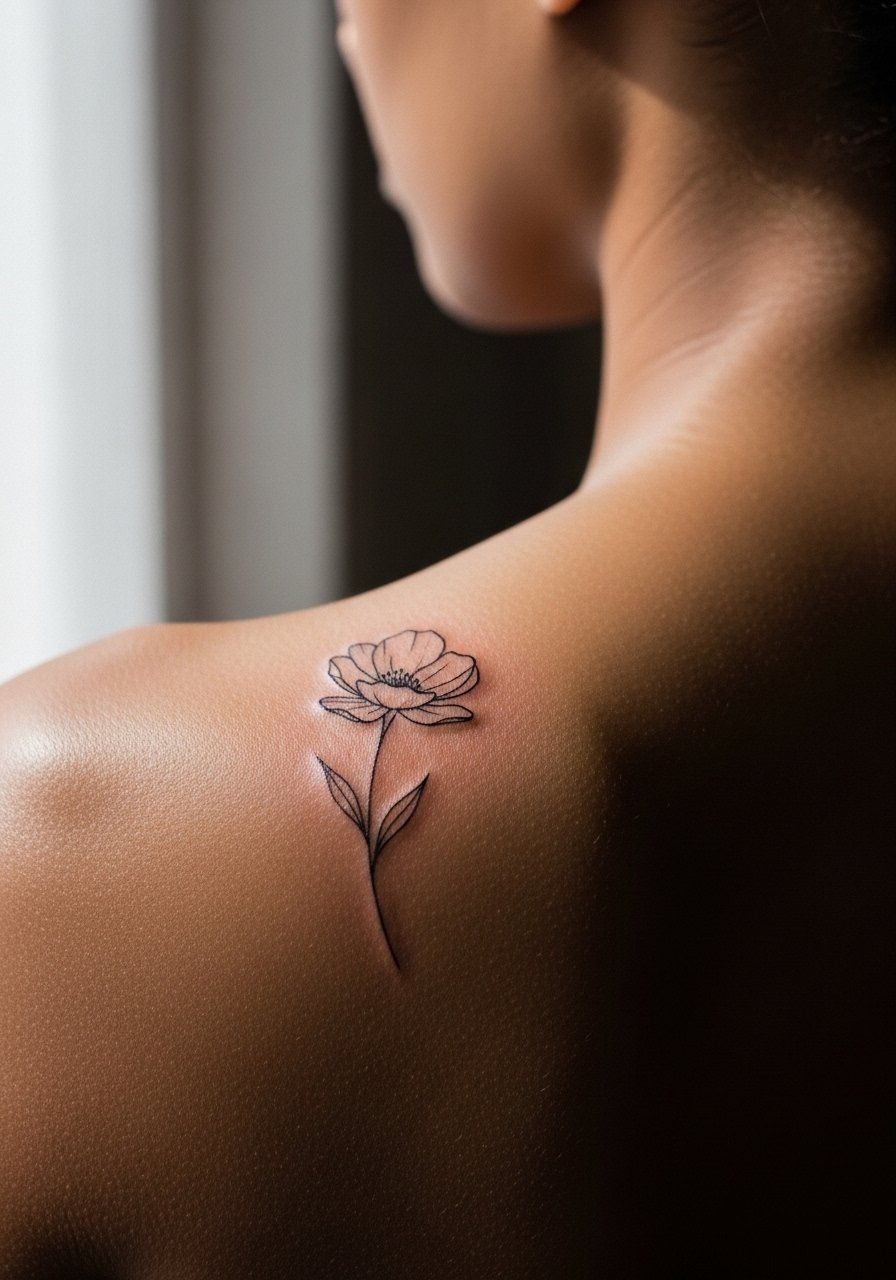
Mistake lead: minimal fine line here can ghost quickly on oily or active skin. If you have oily skin, ask for slightly heavier single-needle linework or tiny dot accents to keep form. Expect a painless short session. For the session, wear a backless halter top or wide-neck tee so the artist can access the inner blade without choking on straps.
19. Watercolor Hibiscus Blending into Ocean Motifs
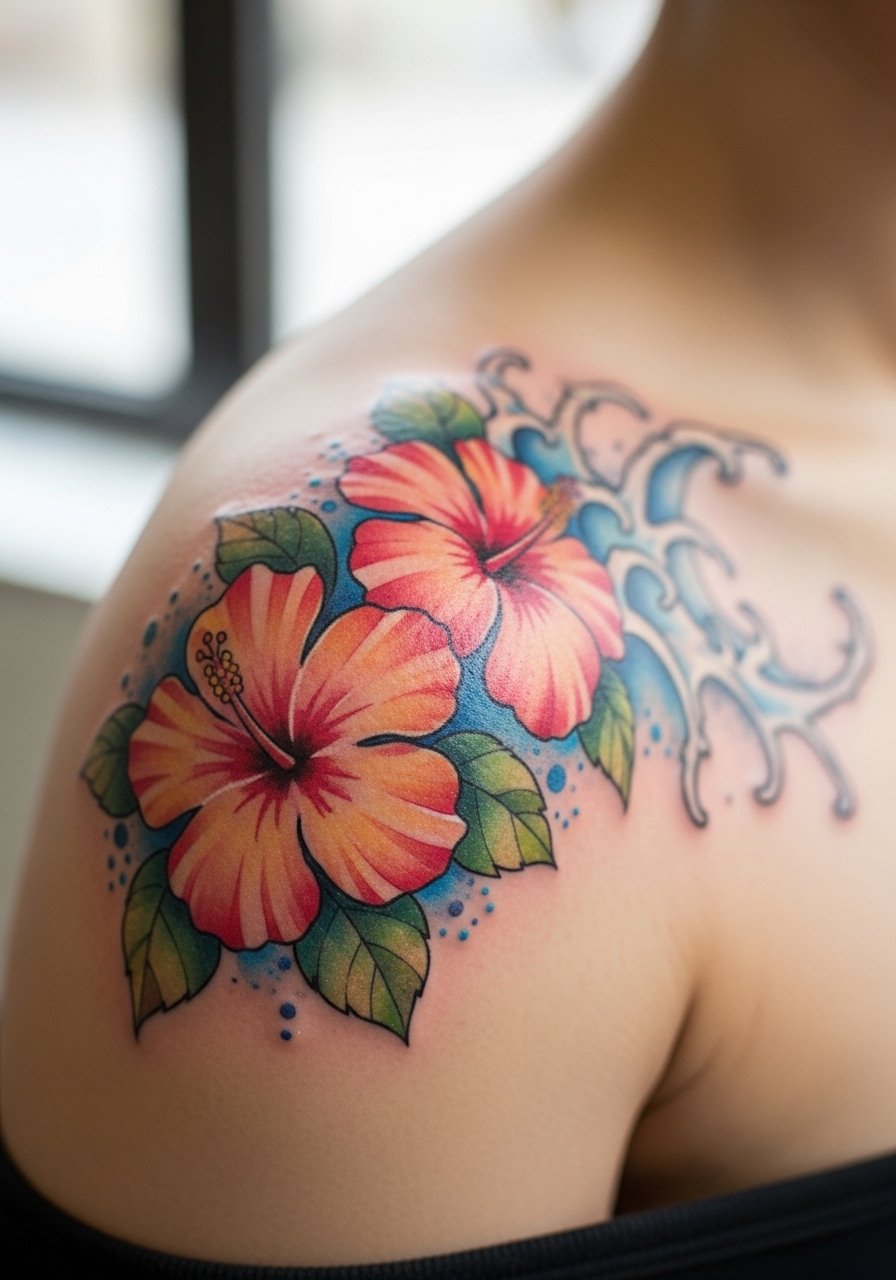
Visual impact lead: watercolor hibiscus pairs well with swimwear season aesthetics but color bleed from sun and chlorine is a real risk. A mistake is asking for extremely pale washes without built-in saturation points. Ask the artist to anchor the watercolor with light outlines under washes so shapes remain at six months. Session feels artistic and layered. For beach-ready looks, an open-back midi dress shows the motif without rubbing.
20. Black and Gray Magnolia Over the Shoulder Bone
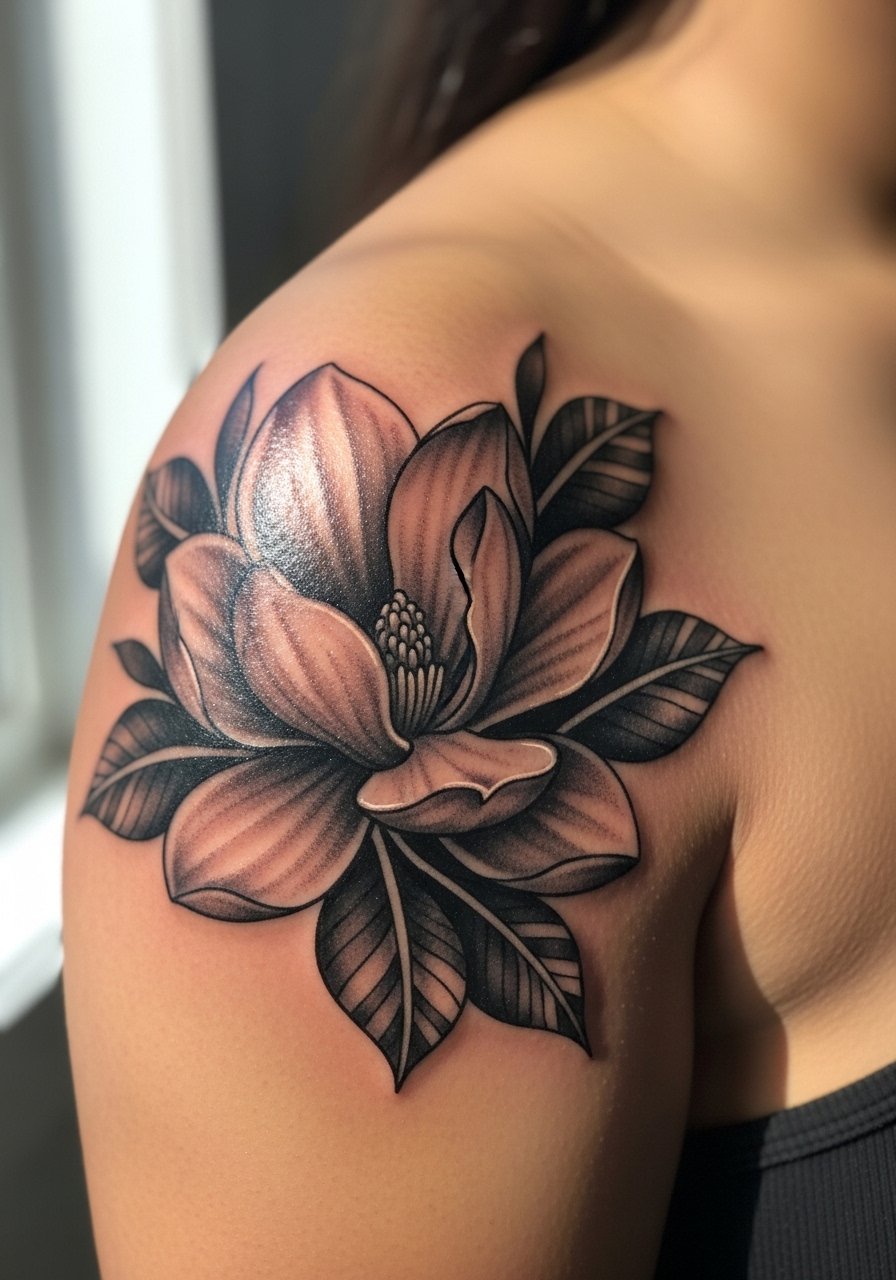
Aging lead: black and gray magnolia can read beautifully over time if the artist uses graduated shading rather than tight shading packs. The common mistake is over-shading the petals which leads to flattened form after two years. This placement tolerates heavier work than the inner blade. Sessions are moderate. For a polished look in photos, try a loose button-down shirt you can pull aside for close shots.
21. Neo-Trad Rose with Small Script Banner Near the Deltoid
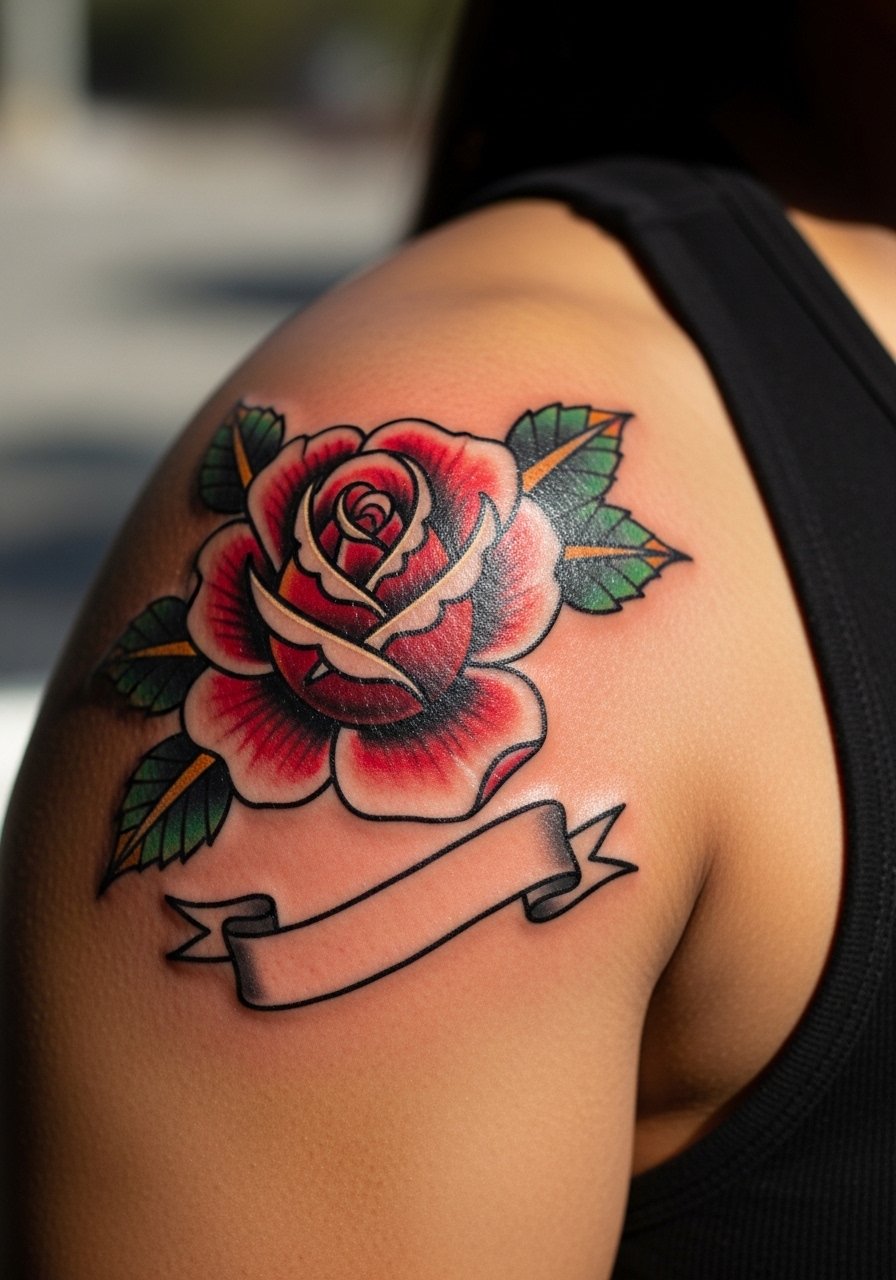
Mistake lead: tiny script in a curved banner tends to blur on moving shoulders. If you want wording, ask the artist for larger letterforms or wait to add script after the piece heals. The neo-trad palette holds well in summer tanks if the saturation is strong. Sessions are two parts: outline and fill. For show, a muscle tank women makes the rose pop.
22. UV-Accent Night-Blooming Floral That Reads Plain by Day
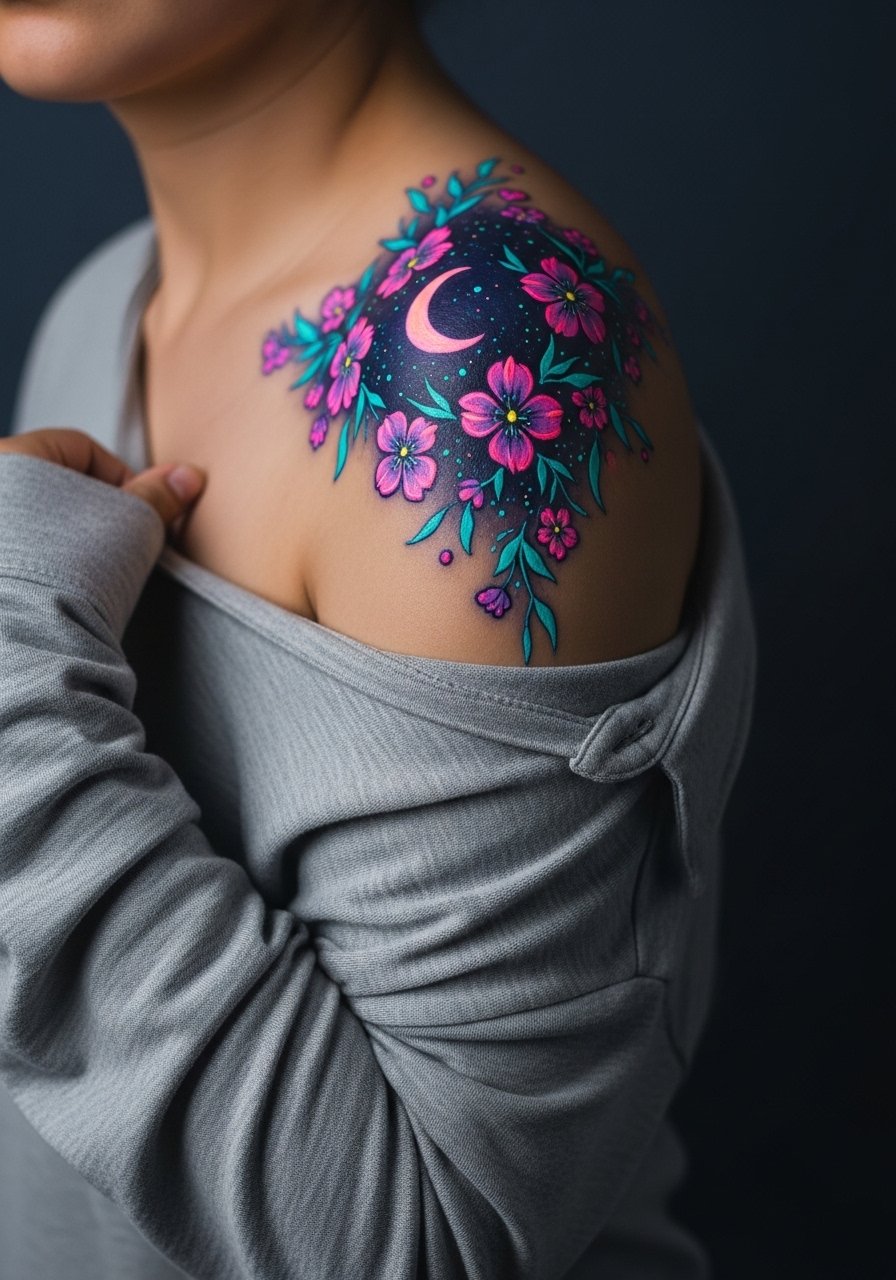
Unique idea lead: this variant keeps daytime subtle and glows under blacklight. Talk to your artist about pigment stability and test a small patch if possible. The work is mostly decorative and requires brief extra time for UV highlights. For sessions, wear a wide-neck shirt you can pull aside so only the tattoo area is exposed.
23. Stipple Micro-Realism Camellia on the Upper Shoulder
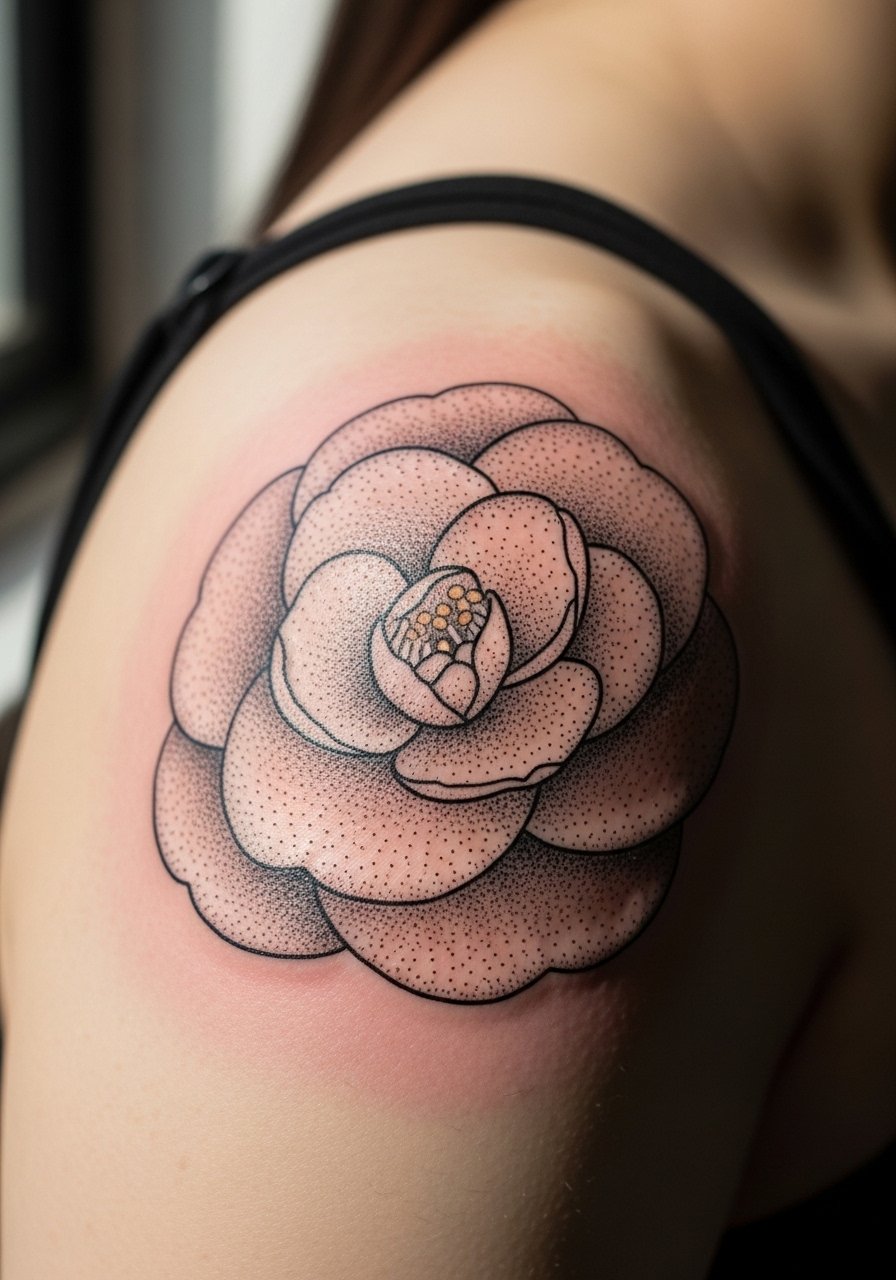
Personal observation lead: stipple micro-realism reads delicate and textured, but when done too tightly it can merge on active shoulders. Tell the artist to favor slightly larger dot spacing and to avoid tiny white highlights that will disappear. Session time moderate. For the appointment, choose a loose tank top to allow for arm movement and clean access.
24. Floral Script Integration Along the Shoulder Curve
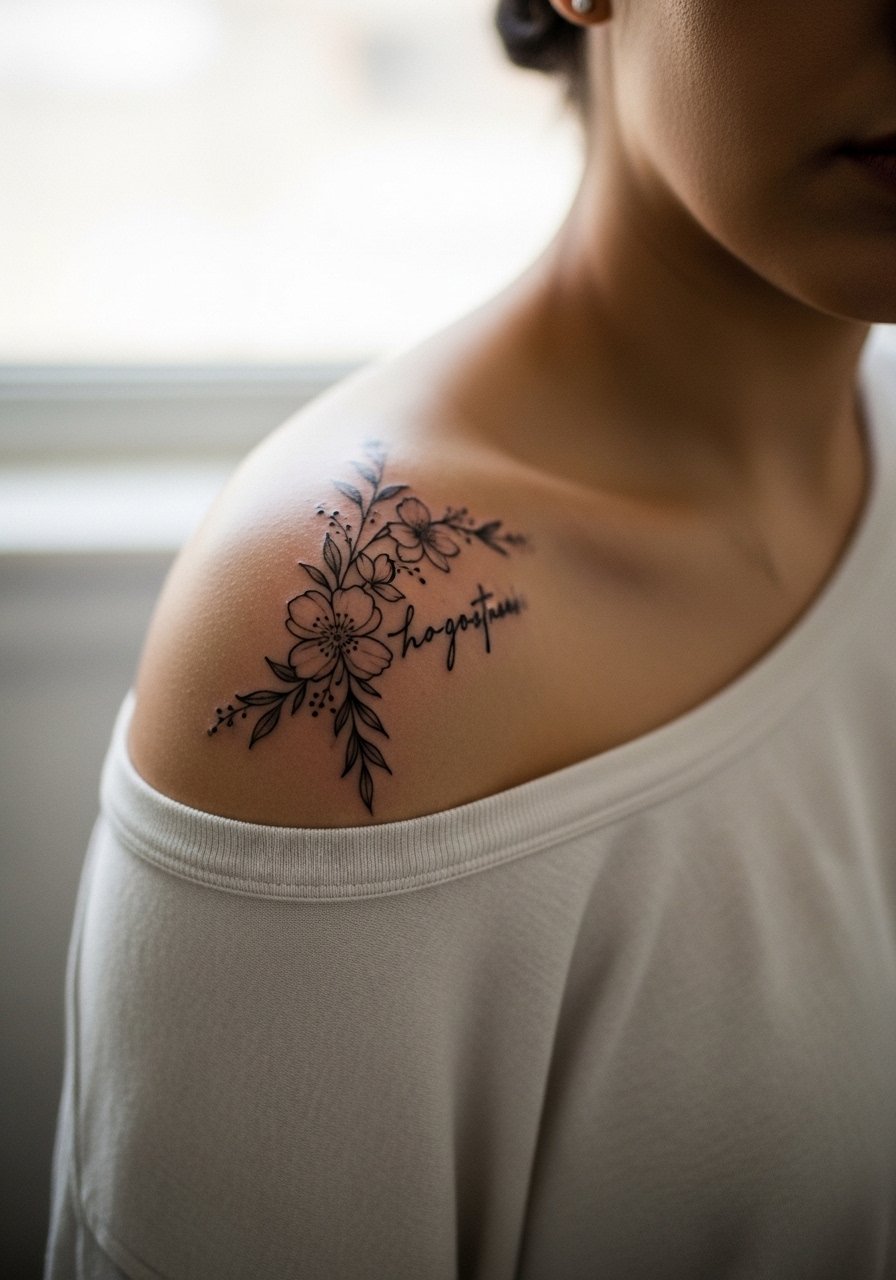
Consultation lead: combining script with florals on curved skin demands letterforms that read at an angle. The frequent error is tiny script that melts into shading. Ask to see mockups with the stencil applied in the exact curve so you can check legibility. Session time depends on script length. For showing it off, a thin chain pendant necklace keeps the collar area balanced.
25. Chainmail-Inspired Floral Overlay for a Medieval Aesthetic
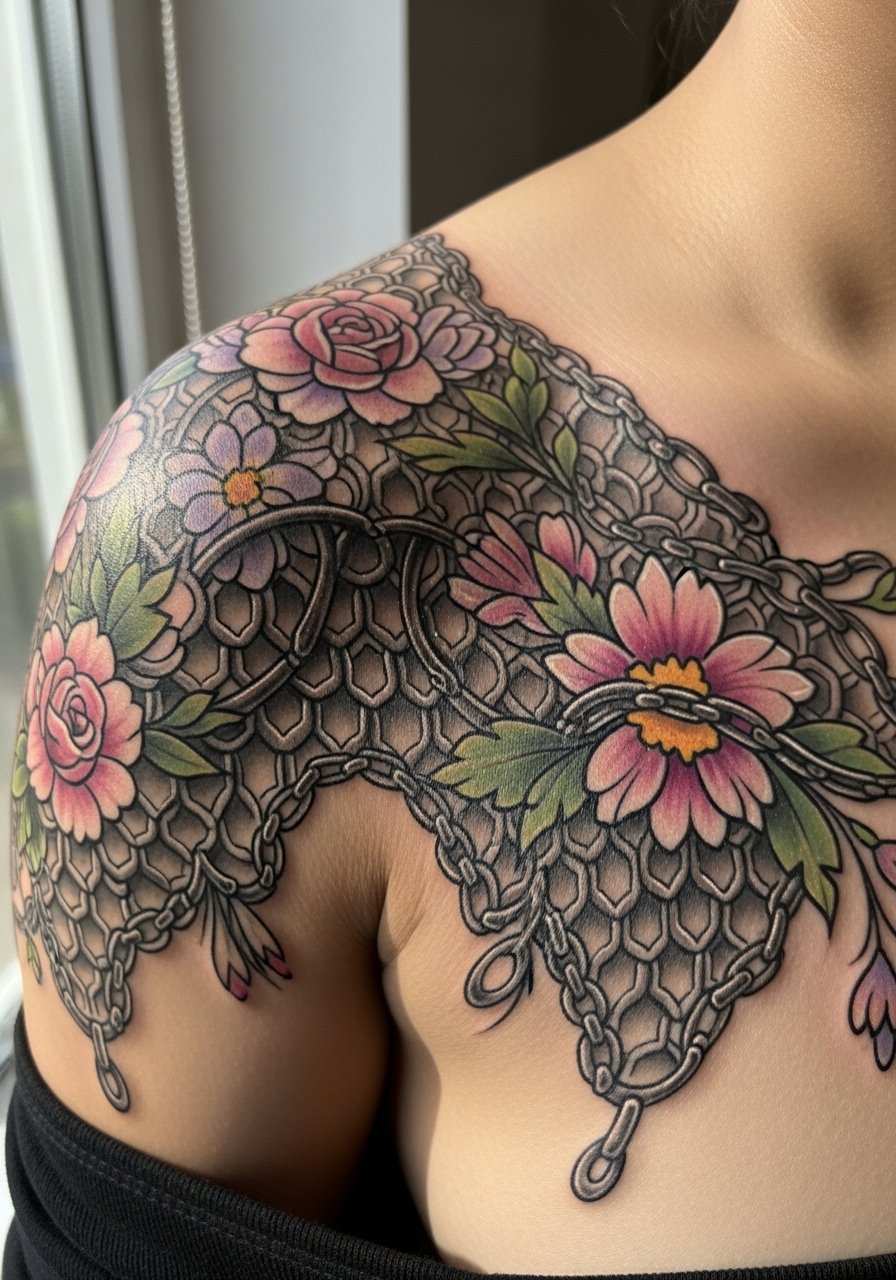
Unique idea lead: pairing florals with removable chainmail jewelry creates a medieval vibe. On skin, the pattern needs negative space so the chainmail reads without competing with petals. The mistake is overworking both textures so they fight each other. Expect a longer session to build layered contrast. For styling, a simple thin gold chain necklace or layered chains can sell the medieval aesthetic without heavy costume.
26. Memorial Lotus with Subtle Dot Accents
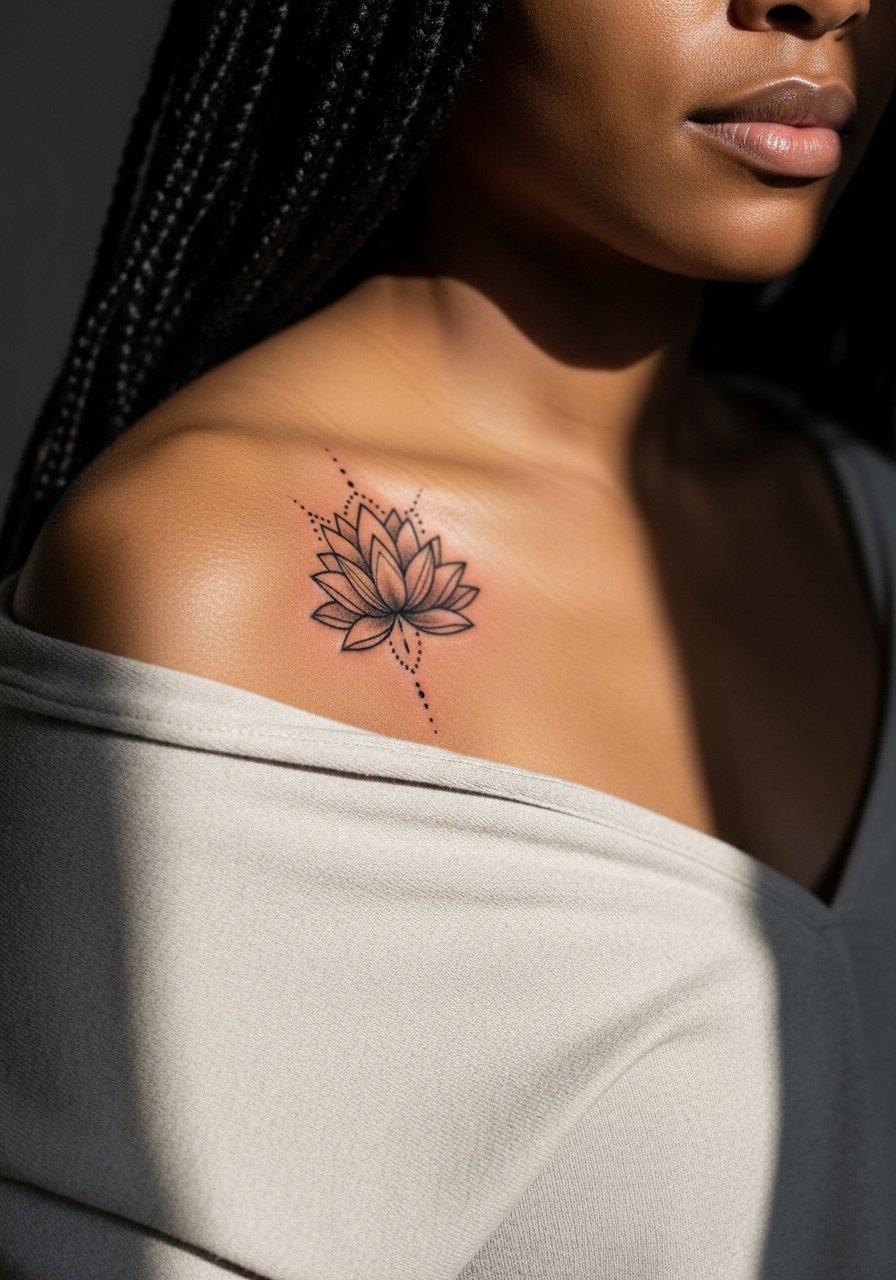
Aging reality lead: memorial pieces are popular after holiday grief spikes, and simple lotus forms hold sentiment without needing constant retouching. Artists are split about dot accents near the center. One camp says dots create long-term texture, the other warns they can merge. Ask your artist where they stand. Sessions are typically one to two sittings. For understated evenings, a backless halter top shows the piece in a controlled way.
27. Small Minimal Bloom Offset for Gym Shoulders
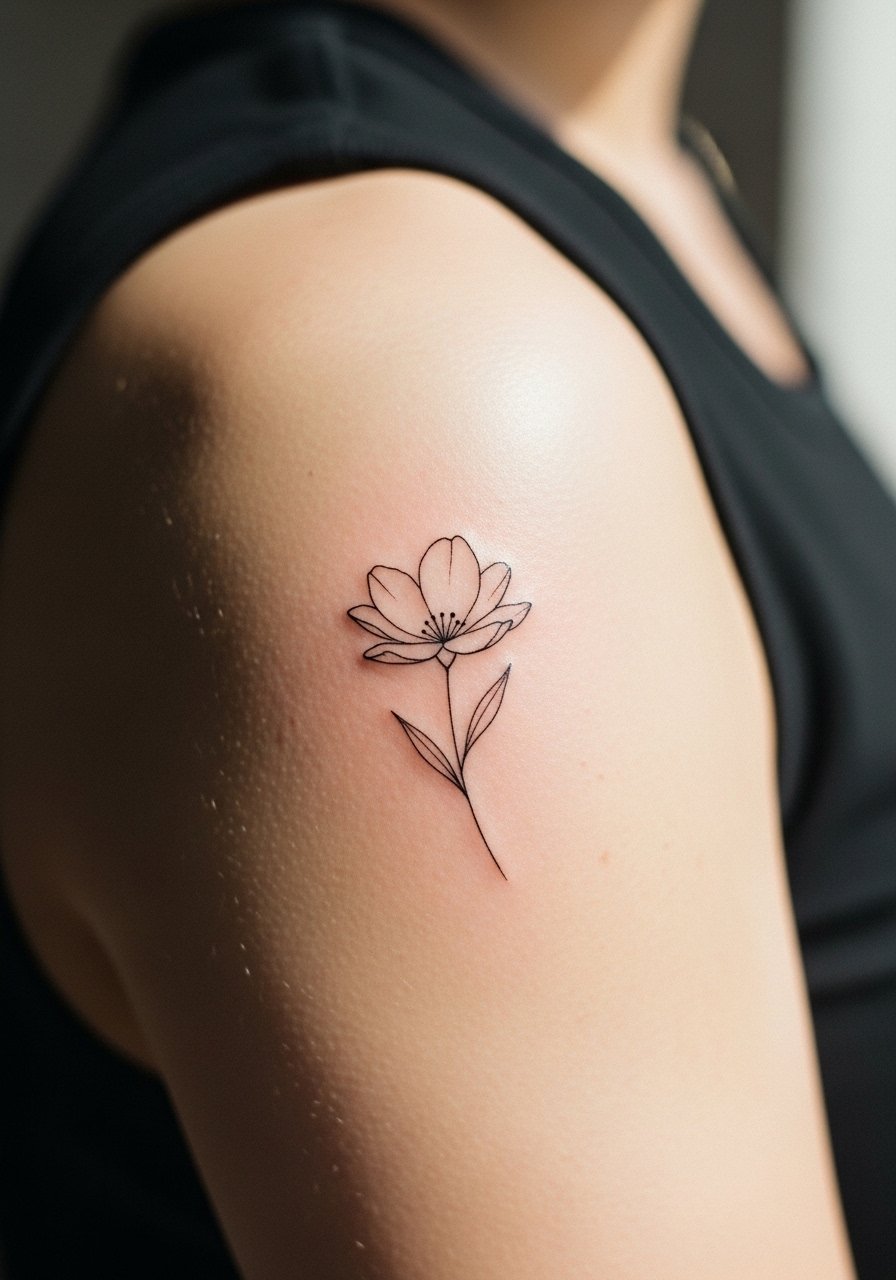
Decision-pressure lead: if you train shoulders, placing the bloom off the deltoid peak prevents the most common gym-related distortion. The big mistake is central placement that stretches every rep. Ask for an offset mockup and try temporary adhesive designs during workouts to see how it moves. Session time is short and pain low. For session wear, put on a sleeveless athletic shirt that you can pull aside without shifting the skin.
Frequently Asked Questions
Q: How much does a shoulder flower tattoo typically cost and what influences the range?
A: Expect a wide range depending on size and style. Small minimalist blooms often start in lower price tiers while full deltoid wraps or multi-session neo-traditional pieces sit in higher ranges. Factors that influence cost include the artist's hourly rate, color saturation needs, and the number of sessions required for touch-ups.
Q: Will fine line florals blur on active, gym-trained shoulders faster than bold work?
A: Fine line is more vulnerable to blurring if you have heavy shoulder use or oily skin. One camp argues fine line can hold with careful spacing and depth. The other camp prefers bolder outlines for longevity. The safest approach is to talk to an artist familiar with athletic skin and consider slightly heavier single-needle lines or strategic negative space.
Q: Are there wardrobe tips to make flower shoulder tattoos photograph well on darker skin tones?
A: Yes. Darker skin can produce unwanted glare in photos, so matte fabrics and matte-setting powder during shoots help. Solid monochrome tops create contrast, and a beeswax-free matte lotion during healing reduces shine. For show-off outfits, choose soft neutrals that do not compete with the tattoo.
Q: If an artist cancels or a session is delayed, how do I protect my booking window for seasonal plans?
A: Book guest spots via convention calendars and keep 2-3 backup shops in your city. Ask about rescheduling policies and get any deposit terms in writing. For time-sensitive plans like summer tanks, having a backup artist or a convention booking helps preserve your desired healing window.
Q: Do shoulder tattoos need different aftercare than forearm pieces?
A: The shoulder faces more friction from straps and sweat, so breathable protective film for the first days and lighter, fast-absorbing balms are helpful. If you sweat a lot, avoid heavy ointments that trap moisture. The Inline Product Block above lists options that suit sweaty shoulders.