Fine line and watercolor pieces are hot on boards, yet when you want a forearm foo dog that reads bold at year five, the safer bets are designs that respect arm anatomy and line spacing. Pick line weight, saturation, and placement with aging in mind, not just how flashy it looks fresh. Below are 21 forearm foo dog ideas that balance presence, longevity, and real wardrobe pairing so you know what to ask for at consultation.
1. Traditional Foo Dog with Bold Mane on Outer Forearm
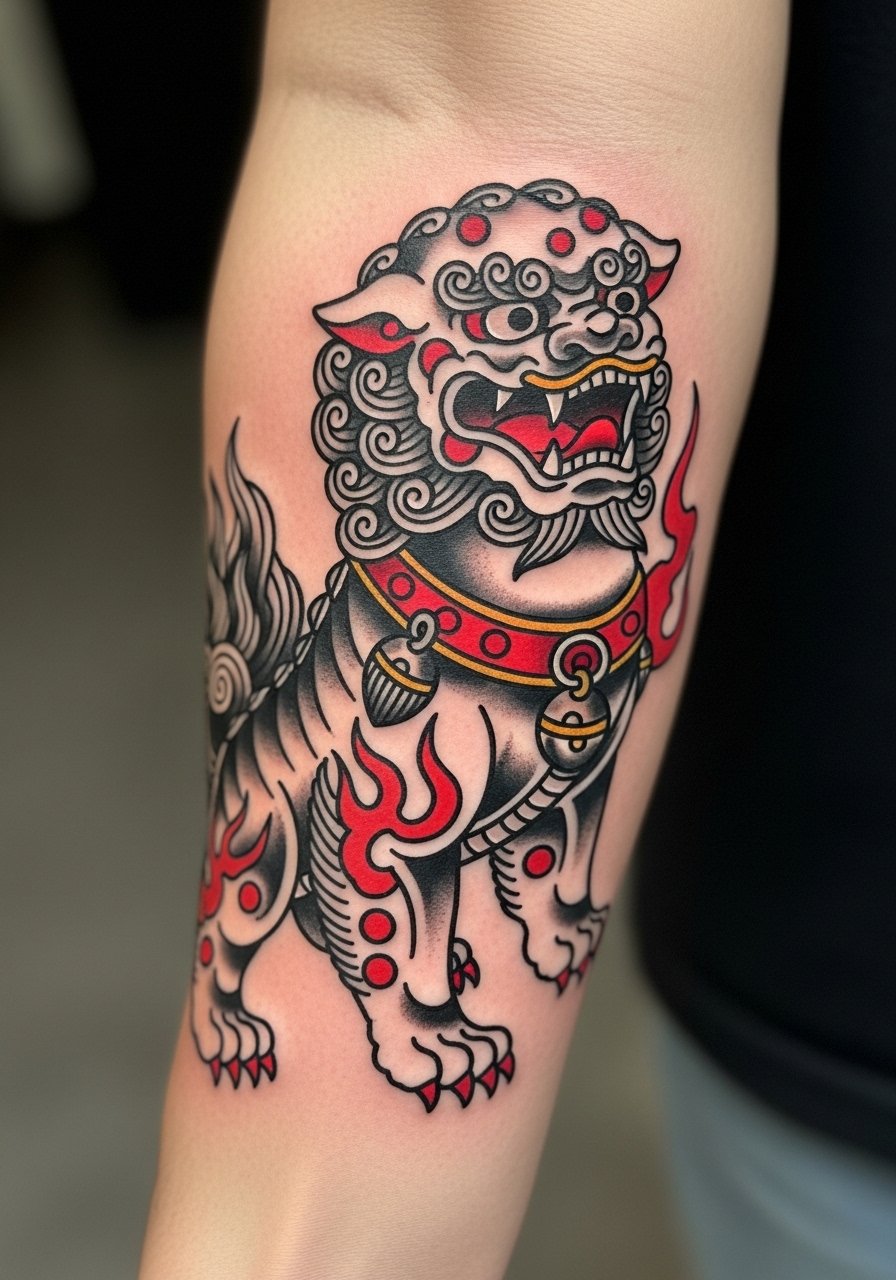
I've seen this classic hold up best when artists start with strong linework and leave breathing room around the mane. Pain is moderate on the outer forearm and a typical session runs 60 to 90 minutes for a 4 to 6 inch piece. Tell your artist you want thicker contour lines around major shapes and lighter internal texture so the mane does not fill in over time. A common mistake is packing the mane with tiny curls that blur at year three. For show-off outfits, pair it with a fitted short-sleeve henley so the sleeve frames the piece and the bold lines read from a distance.
2. Blackwork Pair Guarding a Vertical Forearm
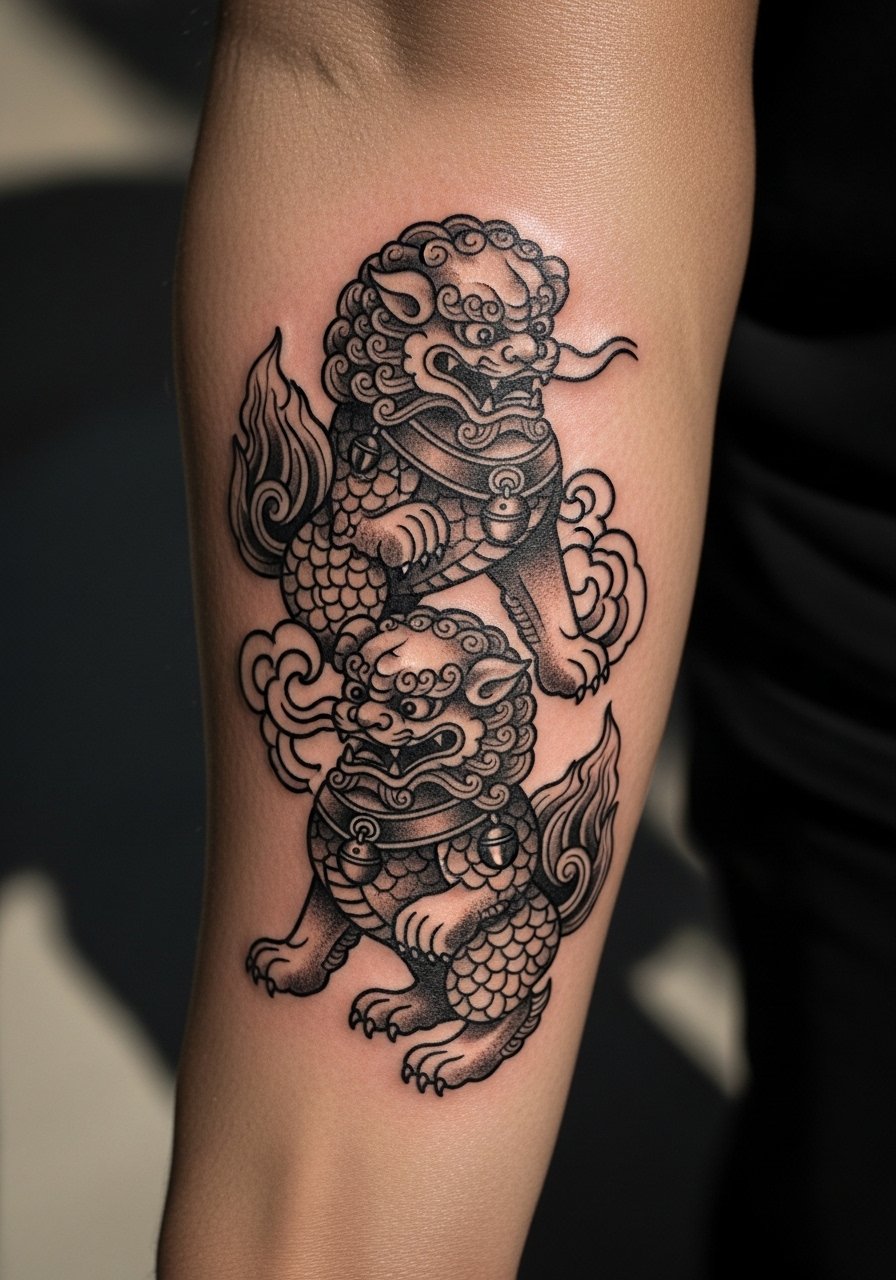
Fair warning: dense blackwork can feel like more minutes under the needle because of saturation work, but it ages very well on the inner forearm. Expect two sessions for a 5 to 8 inch vertical composition. When consulting, ask your artist about tapering fill edges instead of packing pigment right up to thin linework, that reduces later scabbing and uneven fade. Artists split on the balance between heavy saturation and skin trauma, so name your tolerance for touch-ups. For daily wear, a charcoal button-down shirt with cuffed sleeves gives a clean frame without competing with the silhouette.
3. Neo-Traditional Foo Dog Holding an Orb with Clouds
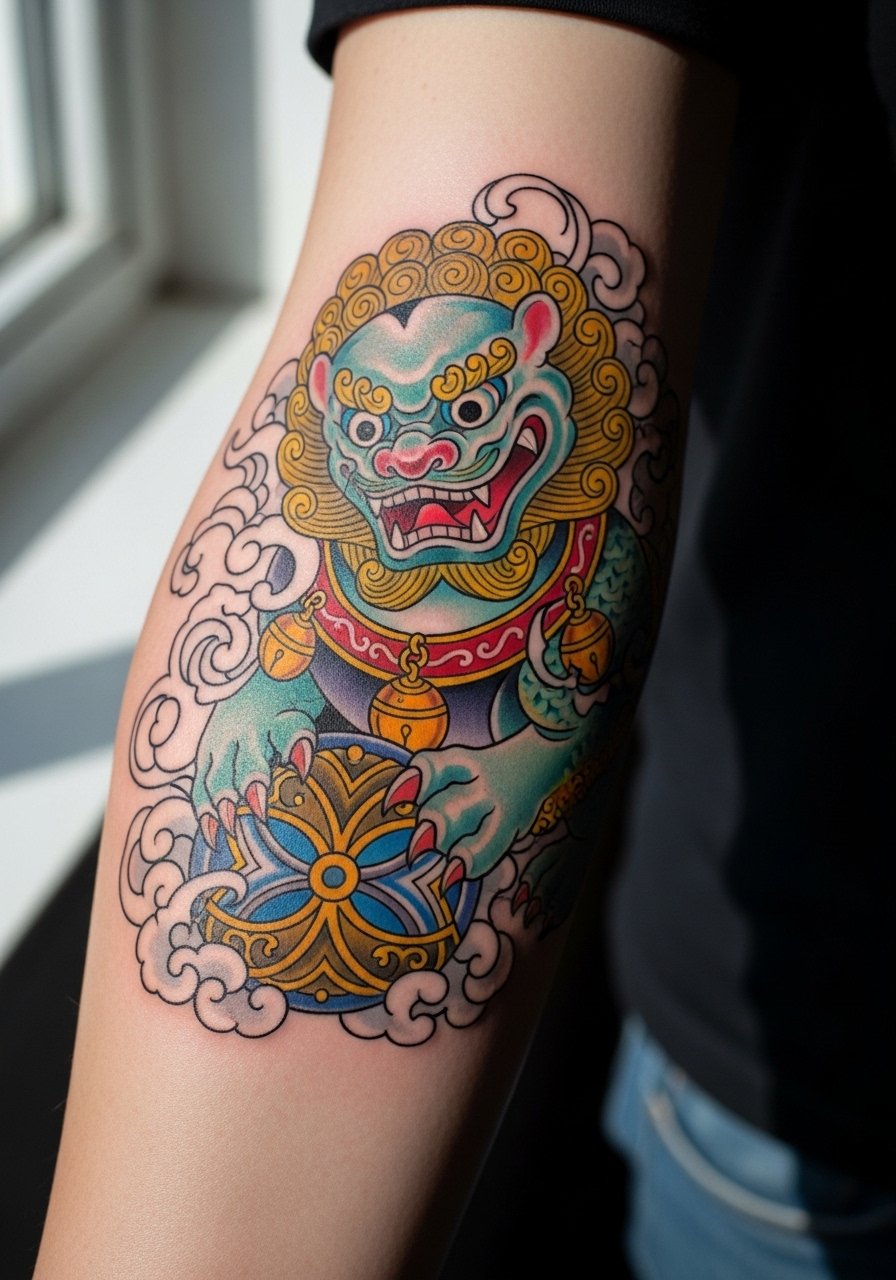
There's something about saturated neo-traditional color that reads as movement on the forearm. This design usually needs one to three sessions depending on size. Say explicitly you want the orb to stay a single focal point so the artist avoids too many interior details that will soften. A mistake I see is over-texturing the clouds, which turns into muddy shading after heavy sunlight exposure. For session comfort, wear a loose tank top or a button-up with rolled sleeves so the artist can access the outer arm easily.
4. Minimalist Foo Dog Silhouette on Inner Forearm
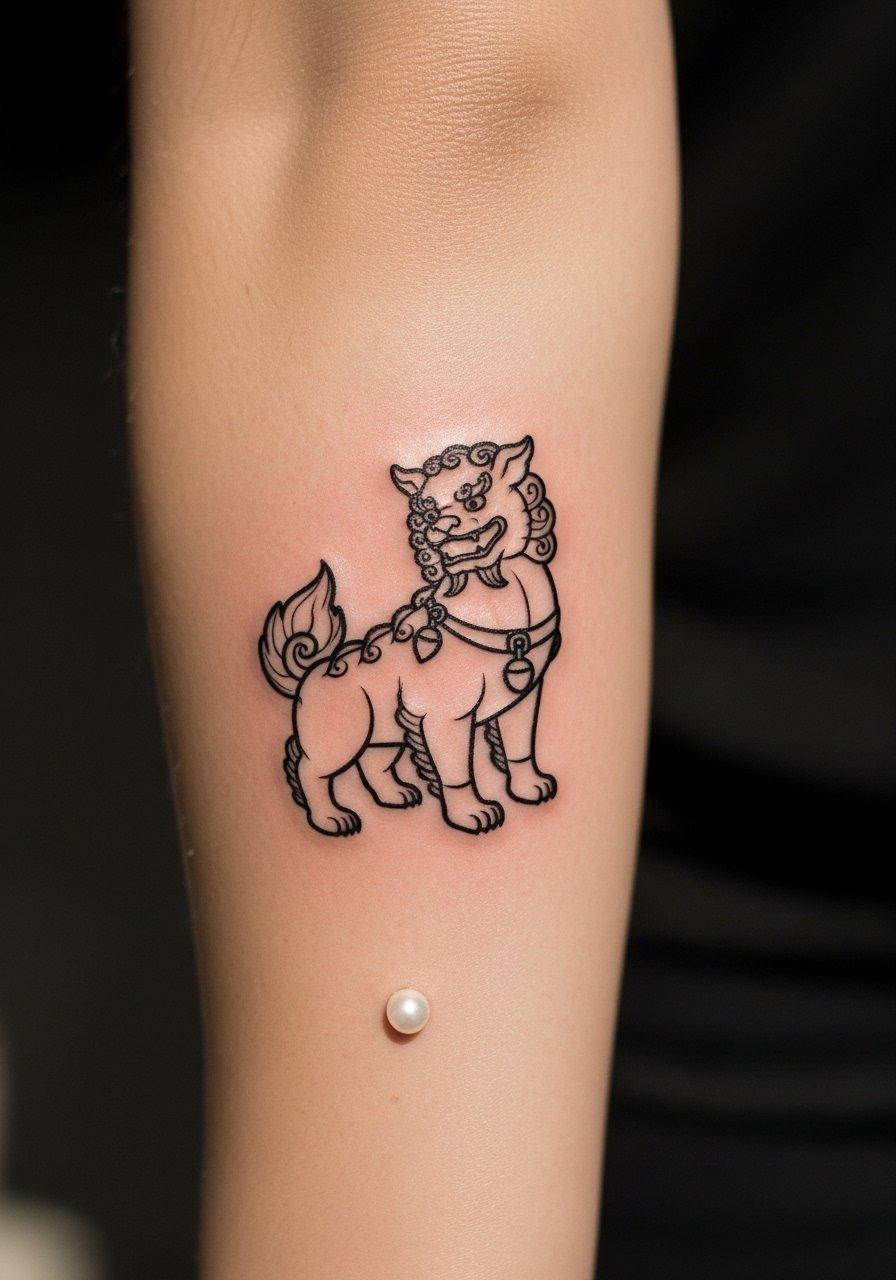
Most first-timers like this because session time is short and the result is subtle but intentional. Expect 30 to 60 minutes depending on size. The biggest pitfall is going too small. Fine silhouettes need scale to avoid edge softening at year two. For the appointment, throw on a chambray shirt you can roll at the cuff so the inner arm stays exposed without fabric rubbing the fresh ink. Healed, this type keeps crisp contrast but plan for a possible touch-up around year three.
5. Japanese Irezumi-Style Foo Dog with Bamboo Accents
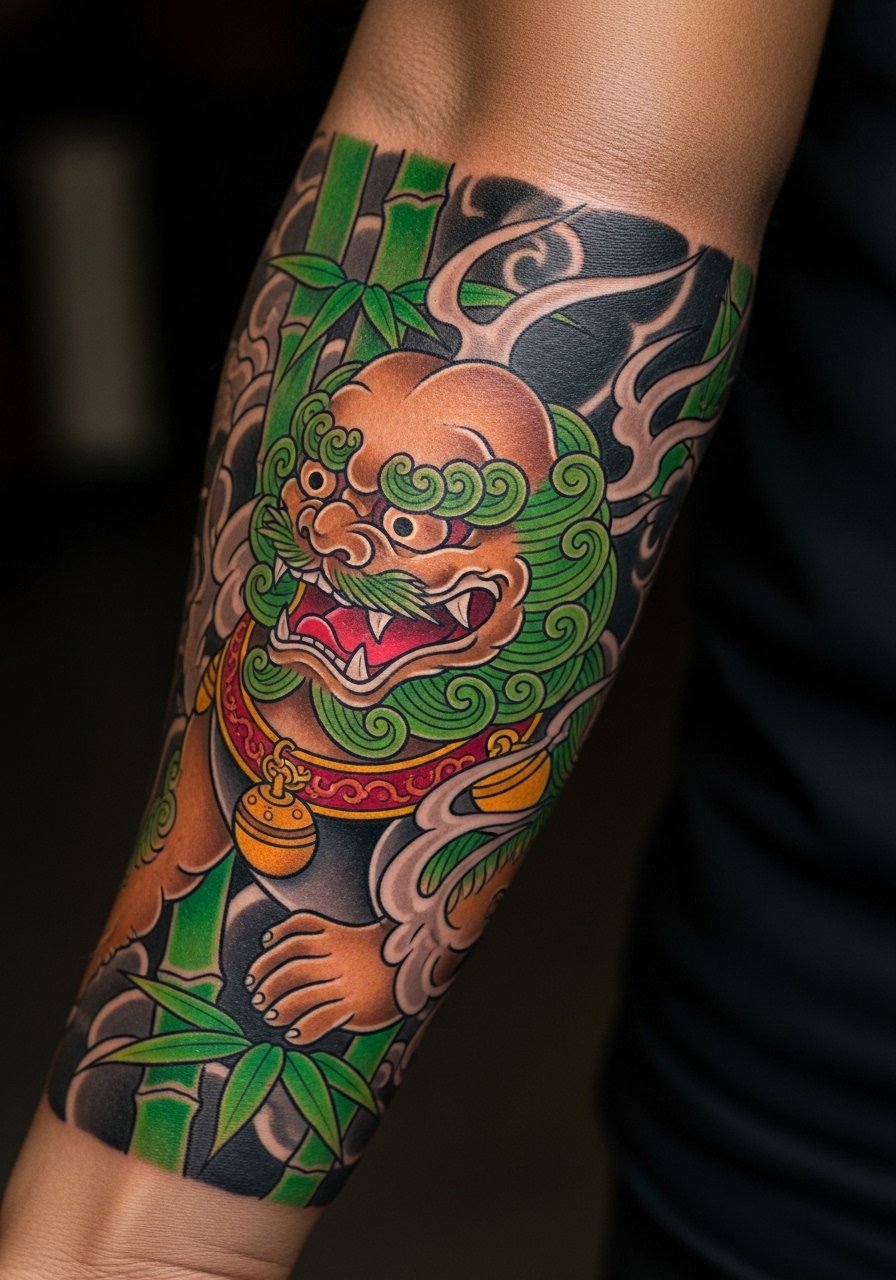
Artists and collectors debate cultural lines here. One camp says full Irezumi motifs carry cultural weight that needs deep study and sometimes permission in certain communities. The other camp argues respectful adaptation with proper references and acknowledgement is acceptable. If you choose this route, ask whether the design borrows directly from temple iconography or if it is an inspired reinterpretation. Sessions are lengthy, often three or more for large forearm-to-elbow pieces. For evenings out, a kimono-style jacket layered over a tee complements the irezumi palette while nodding to the visual roots.
6. New School Cartoon Foo Dog with Distorted Features
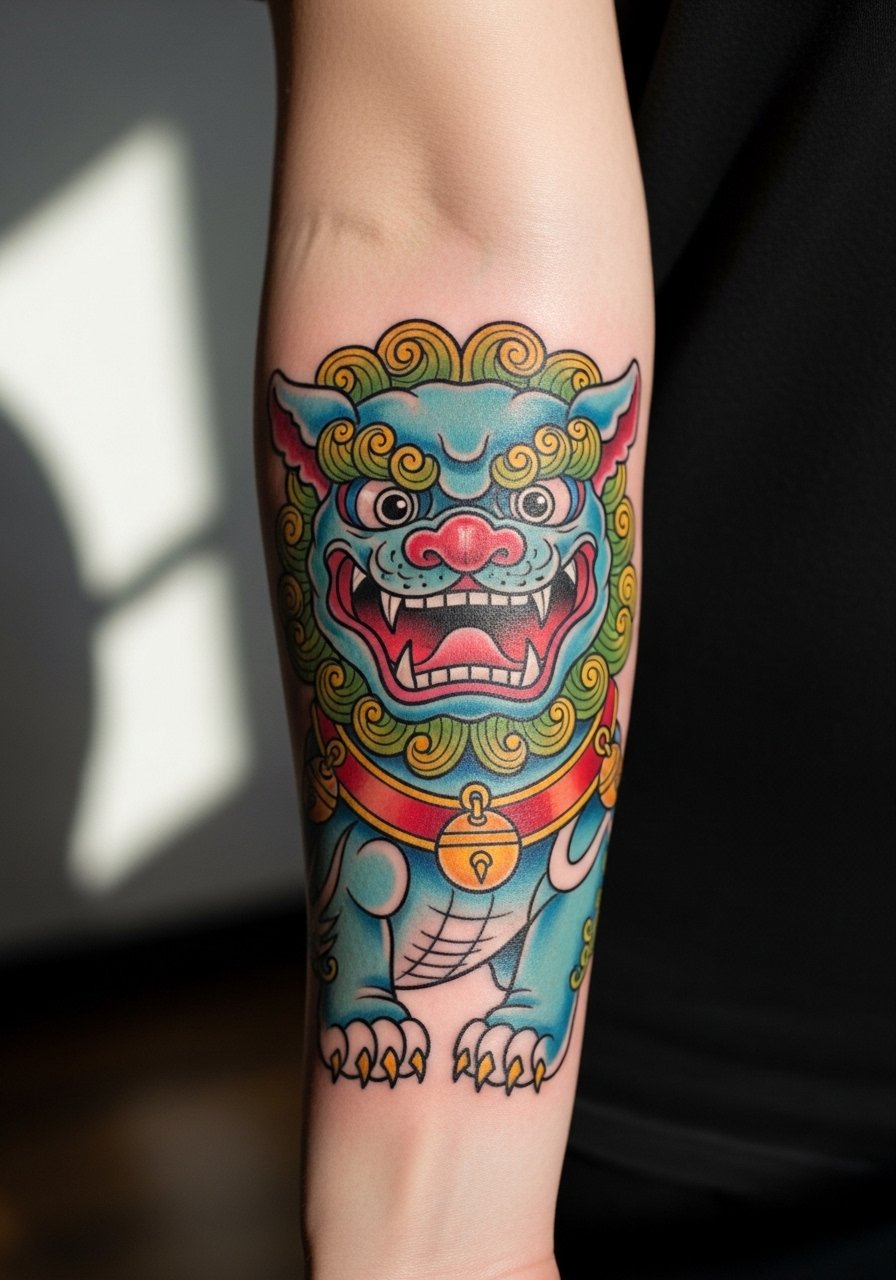
When you want personality and punch in a single session, new school is a solid pick. One session of about 60 to 90 minutes handles most 5-inch pieces. Tell your artist which facial expression sells the idea so they do not overwork small texture that later softens. A common mistake is asking for too many neon shades that fade unevenly. For the session, wear a loose tank top or short-sleeve button-up so the artist can work without fabric interference. Visually, this style keeps a fresh look longer because its contrast is in shape and color choice more than micro detail.
Studio Day Picks
The outer and inner forearm ideas above need different session prep than large sleeve starts, so a few targeted items smooth the appointment and early healing.
- Stencil transfer paper kit. Lets you test placement and scale on the skin for inner forearm and outer pieces before the needle hits.
- Topical numbing cream. Applied as directed before the session it can reduce the sting on sensitive inner forearm work.
- Thin protective film roll. Helpful for wrist-to-forearm extenders that brush against clothing during the first week.
- Fragrance free gentle body wash. Cleanses healing ink without irritating fine line areas or saturated color.
- Aquaphor healing ointment. A thin layer in the initial days locks in moisture for delicate linework while allowing the skin to breathe.
7. Ornamental Foo Dog Mandala Wrap on Inner Forearm
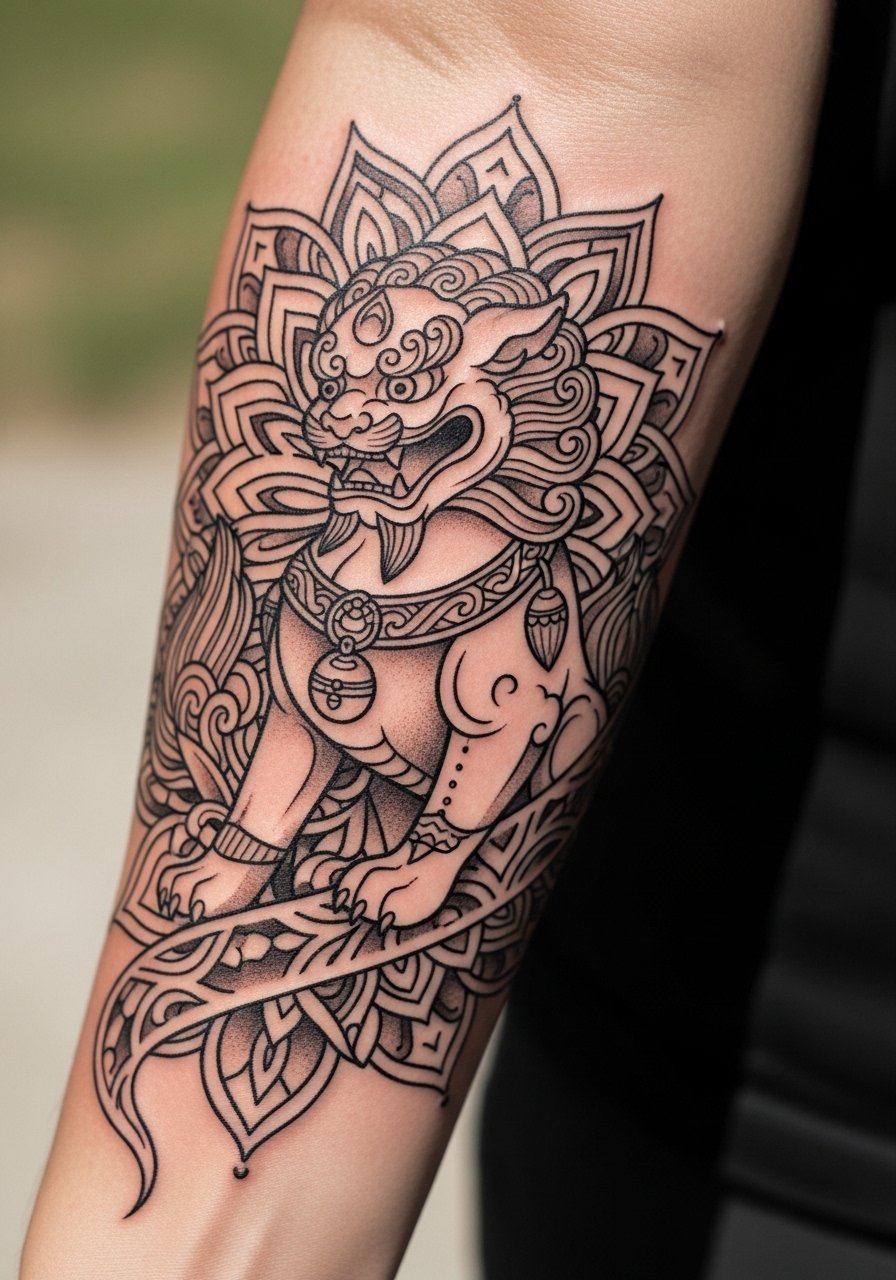
This ornamental approach blends dot work and stipple shading with the guard dog motif for a meditative feel. Expect two sessions for a snug 4 to 6 inch wrap. Tell your artist you want negative space between mandala rings so the dots remain distinct at two and five years. The mistake I see is packing rings too tightly, which turns into a gray block over time. For wardrobe, rolled cuff chambray shirts show off the inner forearm while keeping the look refined. Ask about blowout risk on people with softer skin and plan touch-ups at year three if dots begin to merge.
8. Micro-Realism Foo Dog Head Profile Near Elbow
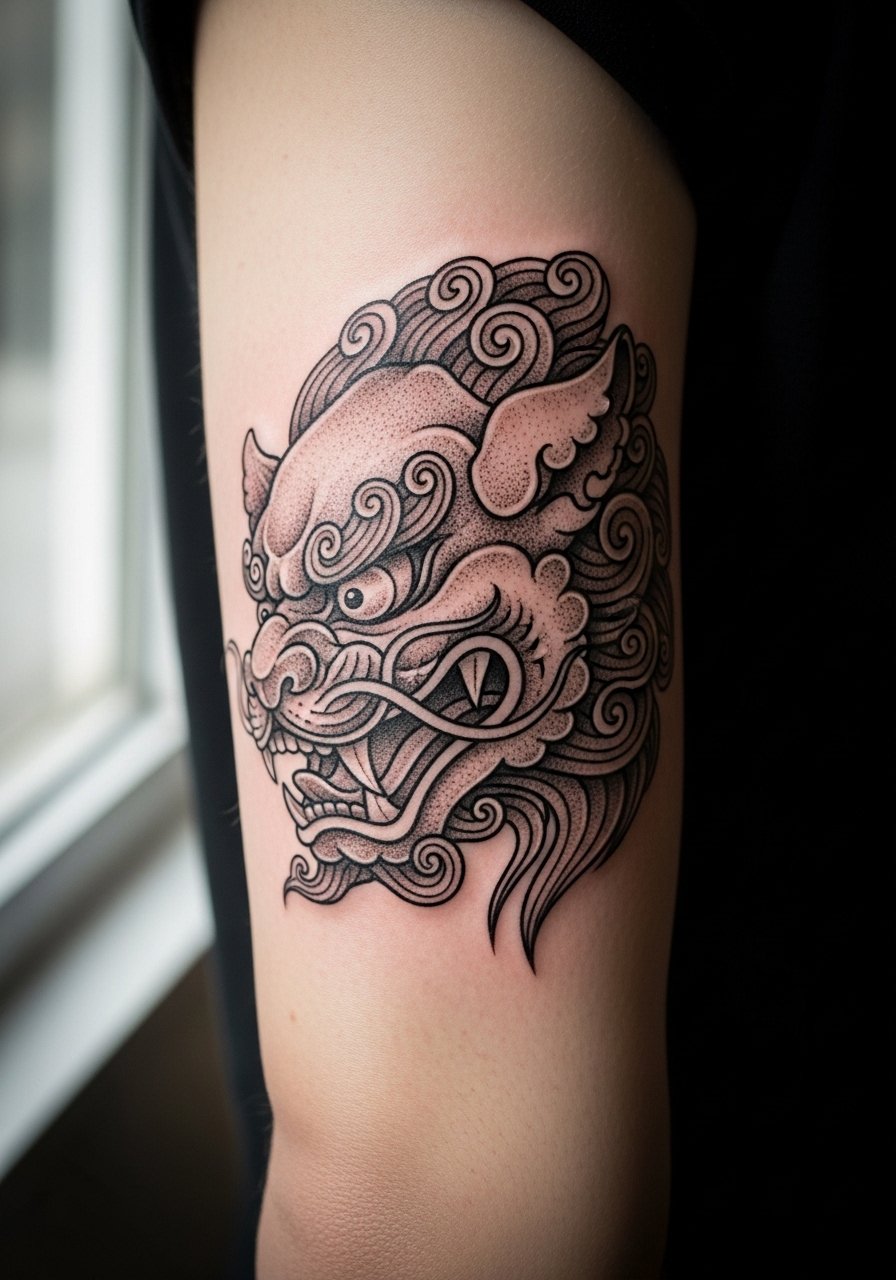
A micro-realism portrait reads fierce in a small space but requires a steady hand. Expect two sessions for intricate texture and shading. During the consult, bring close-up references and tell the artist to prioritize contrast over tiny surface hairs. The common error is cramming hyper-detail into too-small dimensions. Pain rises near the elbow bone, so brace for sharp moments there. Over five years, micro-real items need more frequent touch-ups than bold blackwork, so budget accordingly. For session comfort, a loose button-up shirt you can pull aside helps the artist reach the upper forearm without fabric drag.
9. Foo Dog with Koi Fish Vertical Stack
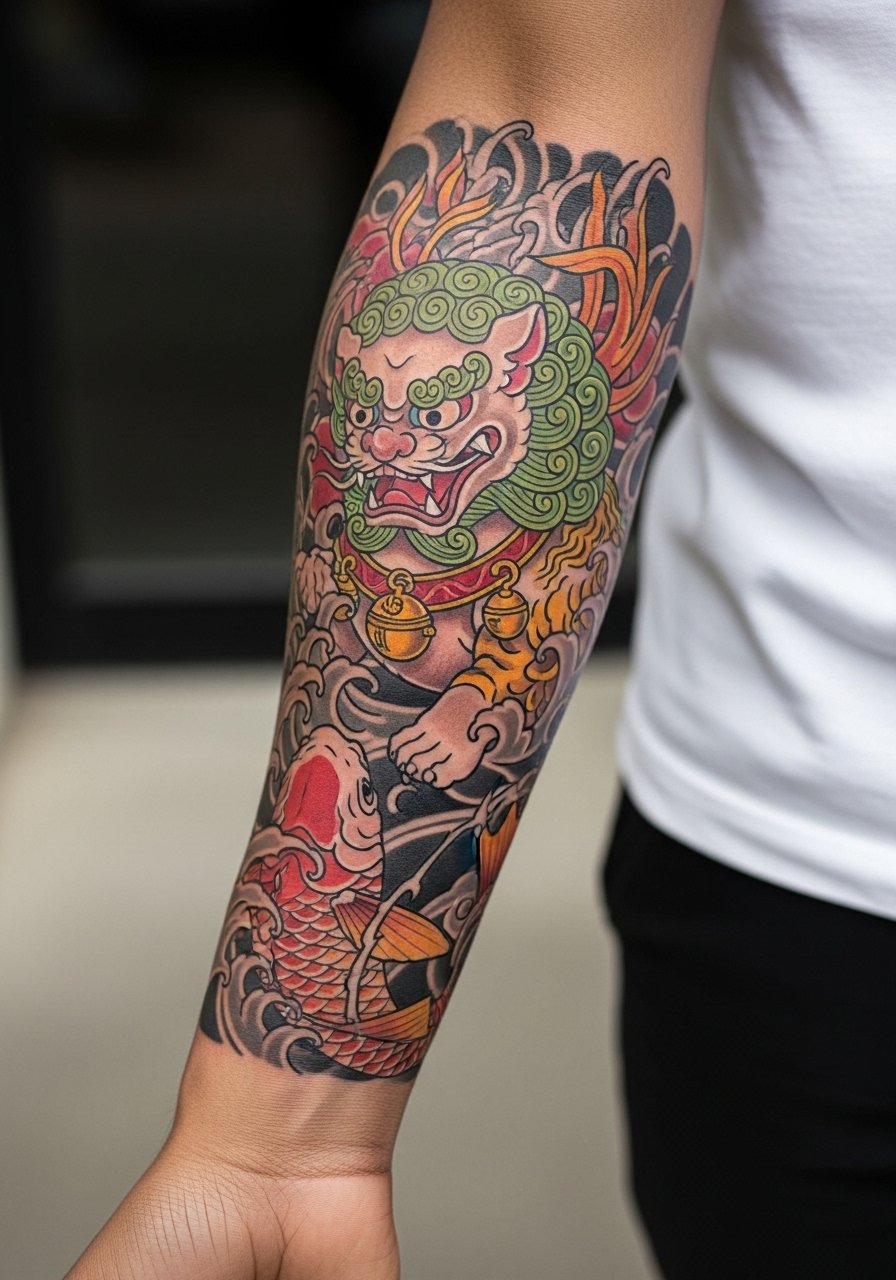
I've seen paired animal motifs create narrative pieces that wrap the forearm beautifully. This neo-traditional stacking needs two sessions and looks best when the artist plans negative space between the bodies. A mistake is overlapping scales and fur too closely, which reads muddy after repeated sun exposure. During the consult, flag which element you want to dominate so the composition can breathe. For show-off looks, a slim-fit polo shirt with elbow-length sleeves keeps the vertical composition visible while staying tidy.
10. Bold Line Foo Dog Pawing an Orb on Outer Forearm
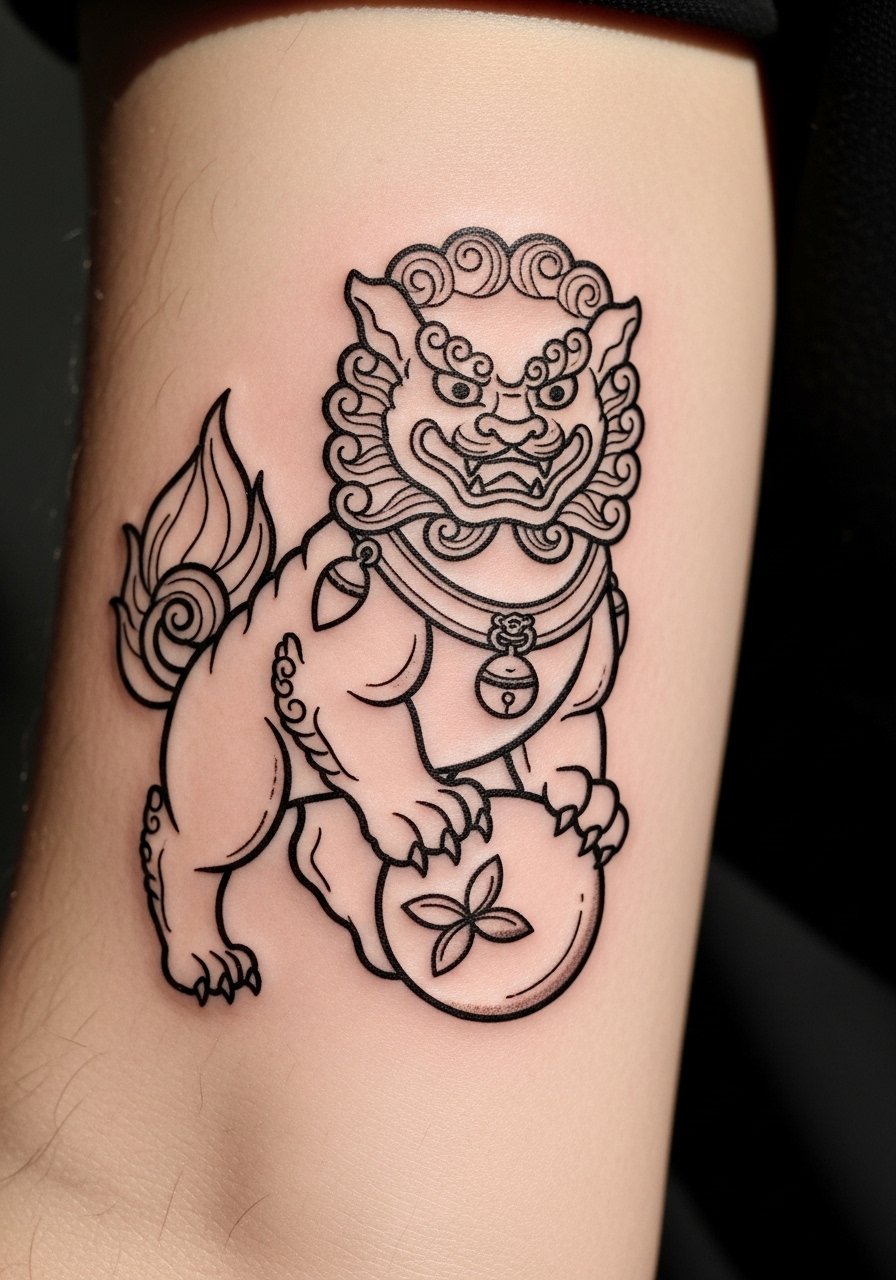
There is visual impact in simplicity. A single-session bold line piece around 5 inches reads from a distance and tends to age predictably. Tell your artist you want the paw and orb as separate readable elements with gap space so edges do not merge over time. Common mistakes include thin internal lines that disappear by year two. Pain is low to moderate. Expect a touch-up around year four if you spend a lot of time outdoors. For the appointment, wear a short-sleeve button-up you can roll or a loose tee so the artist has clean access.
11. Watercolor Foo Dog with Misty Cloud Washes
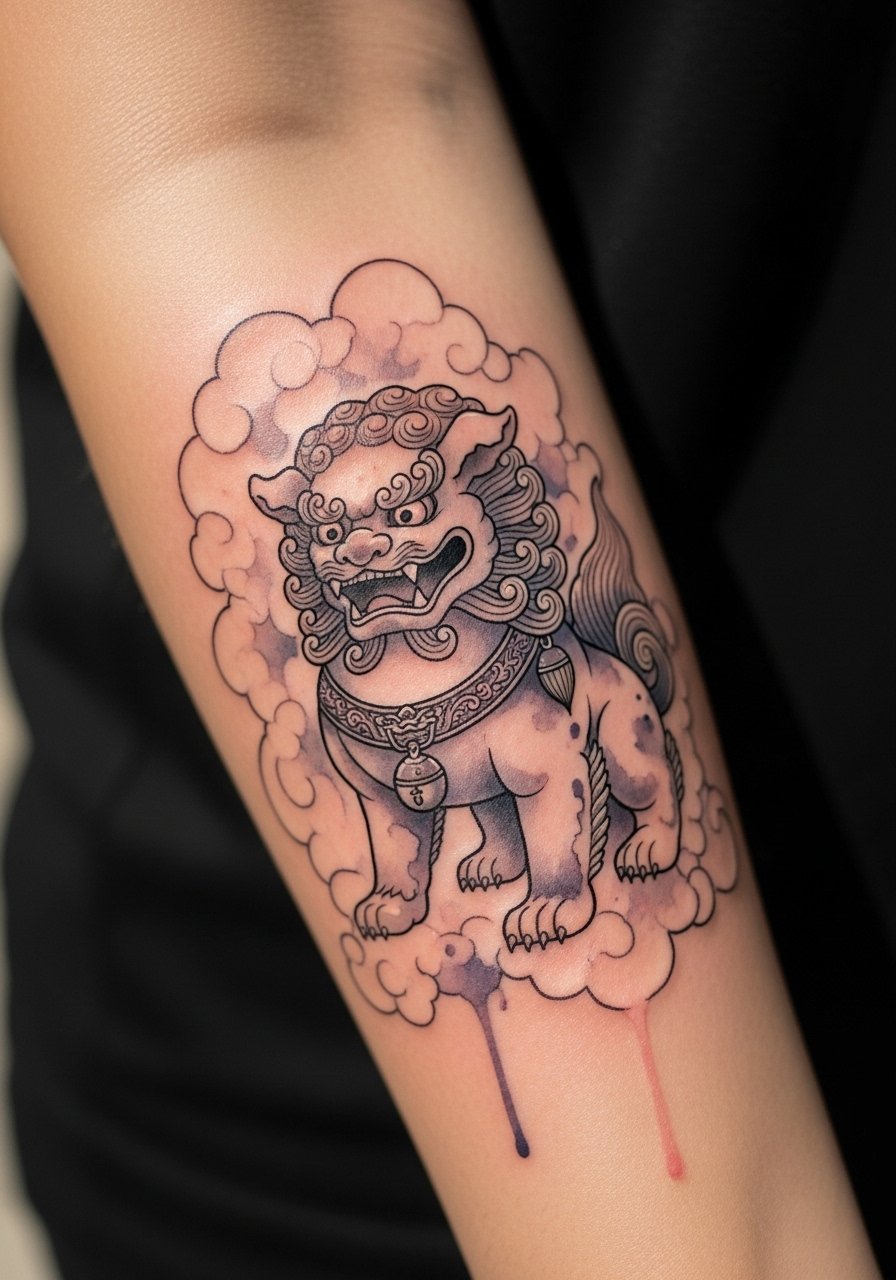
Watercolor pieces are gorgeous fresh but need area-appropriate expectations. Most watercolor forearm pieces run 60 to 90 minutes for a 4-inch patch. Ask your artist how they plan to anchor the color with minimal linework because that anchoring is what prevents the wash from becoming a bruise-like fade. There's a debate among artists about how to stabilize watercolor on arms. One side says layering subtle linework under pigments helps longevity. The other side prefers pure washes and regular touch-ups. If you want less maintenance, request slight black outlines around focal shapes. For showing off the flow, a rolled sleeve linen camp shirt in neutral tones complements the soft palette.
12. Ignorant-Style Simplified Foo Dog Band
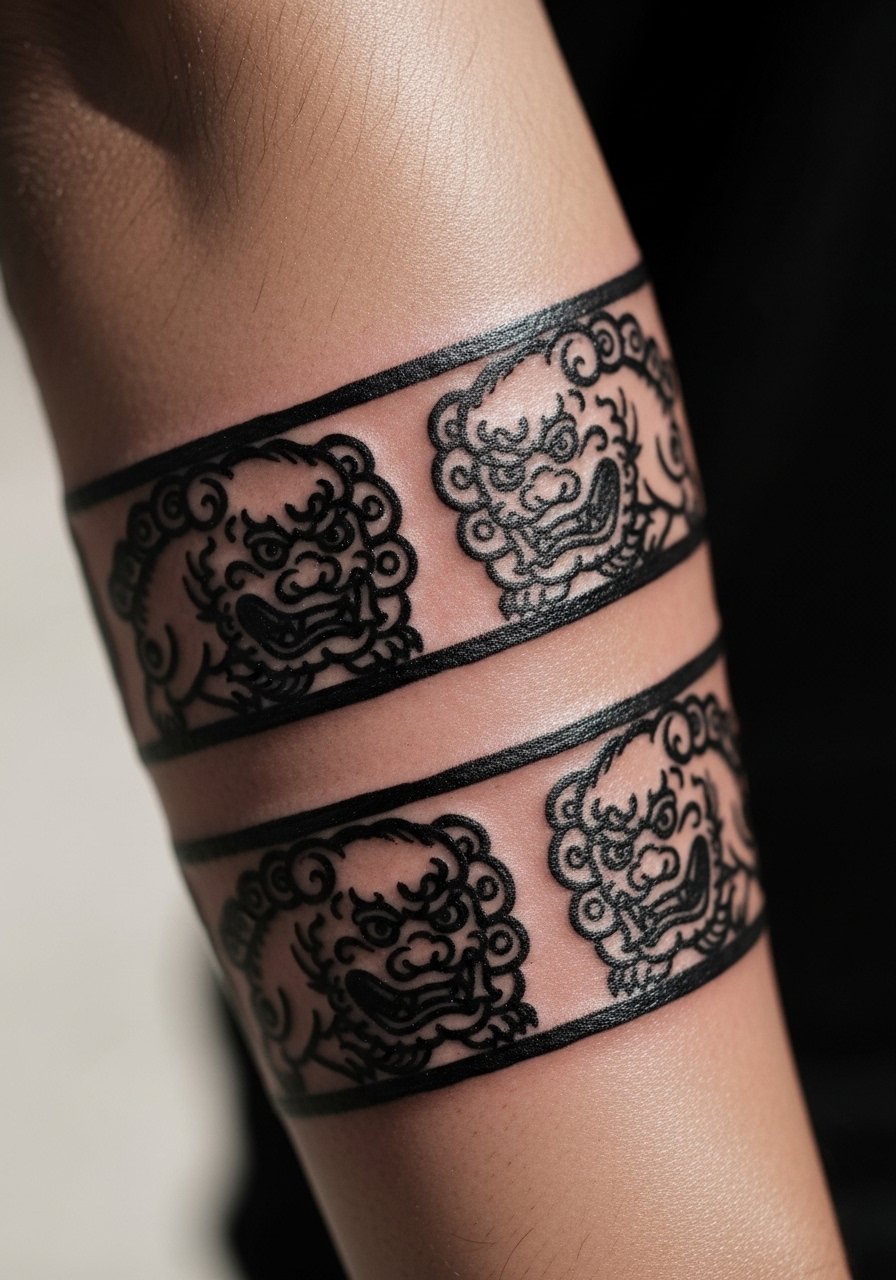
This stripped-down approach thrives on confident, raw strokes. One session usually suffices for a 4-inch band. Tell the artist you want intentional imperfections instead of shaky lines; the aesthetic is about bold simplicity, not sloppy execution. A common mistake is trying to miniaturize the style too much, which loses its character and ages oddly. At six months the piece looks bold, and at two years it tends to mellow into consistent black banding. For the session, a loose tank top keeps skin exposed while minimizing sweat build-up.
13. Foo Dog with Lotus and Mandala Frame
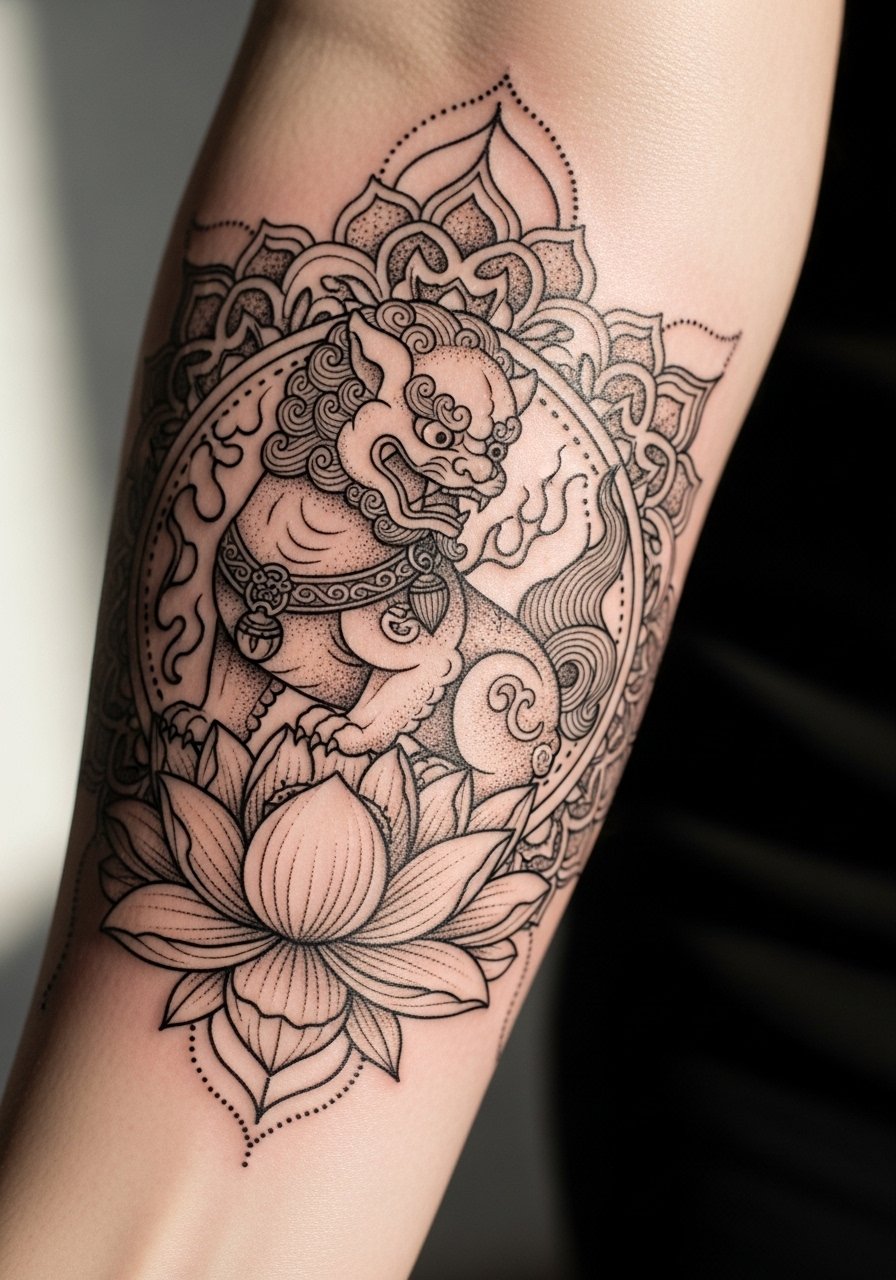
When you want symbolic layering, lotus elements add balance to a guardian motif. Plan on two sessions for layered mandala and focal figure. During consultation, request the mandala rings be spaced to avoid dense line clusters that can merge at year three. A mistake to avoid is insisting on tiny gaps between stipple shading rings. For style pairing, a linen camp shirt rolled high pairs well with the ornamental vibe and keeps the forearm visible on warm days. Expect touch-ups for the dot work around year four depending on how often the area sees sun.
14. Vertical Pair with Temple Background Element
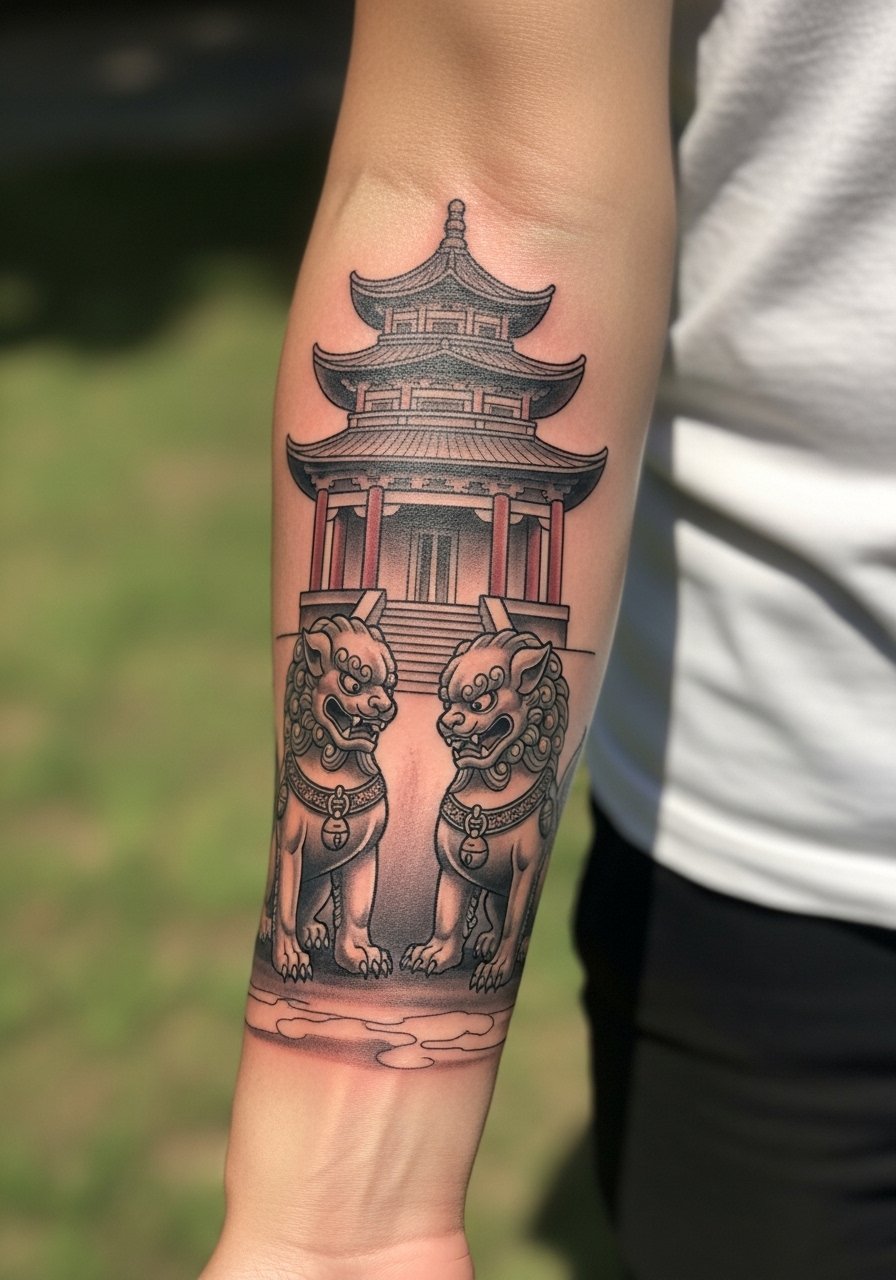
This layout uses the elongated forearm well and creates a scene that reads when the arm is extended. It usually needs two to three sessions. Tell your artist to plan the temple background with larger shapes rather than tiny bricks so the building remains legible over time. A common mistake is over-detailing backgrounds that eventually look like texture instead of structure. For session flow, wear a sleeved shirt you can pull aside easily and prepare for longer sit times. Healed, scene work softens evenly if exposure to UV is limited.
15. Foo Dog Pawing Koi with Flowing Negative Space
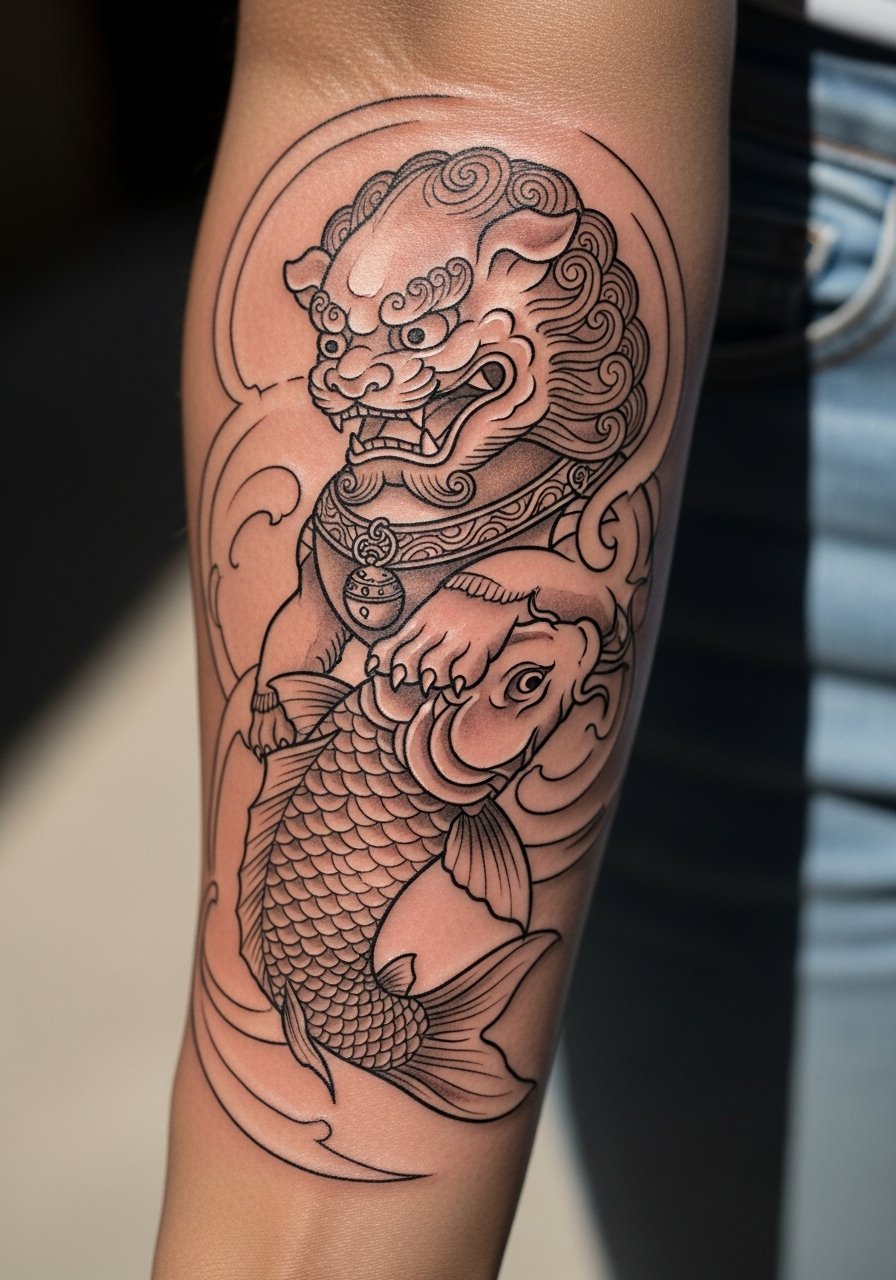
Negative space is a longevity trick I recommend. It preserves contrast as ink loses density, so the design keeps its readability. Two sessions are typical for this kind of stacked composition. The consultation note here is to identify primary focal contours so the artist avoids filler shading that competes. A mistake people make is insisting every corner be filled, which shortens the design's readable lifespan. For outfits that show the composition well, try a minimalist leather watch on the opposite wrist to balance attention.
16. Tiny Micro-Realism Foo Dog on Upper Forearm Edge
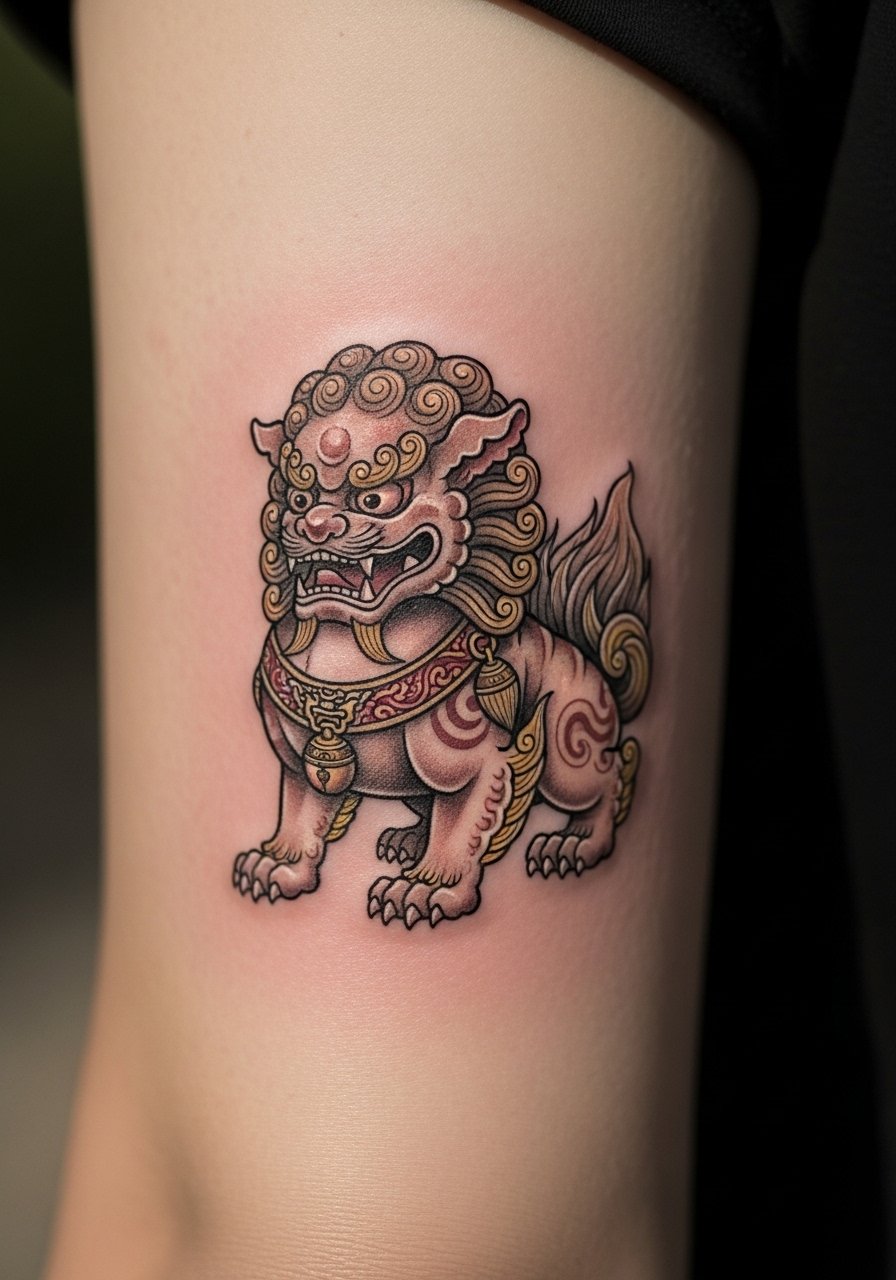
Small realism demands restraint. If you want tiny but detailed, pick a focal feature such as the eye or nose rather than full facial texture. Session time is often 45 to 90 minutes depending on contrast. A common error is requesting full portrait detail in a space too small for it, which leads to blurring. Pain is higher near the elbow edge. Plan for a touch-up within two to three years. For the session wear, keep a loose button-down that can be slid aside so the artist has clear access.
17. Foo Dog with Kintsugi-Inspired Gold Highlights
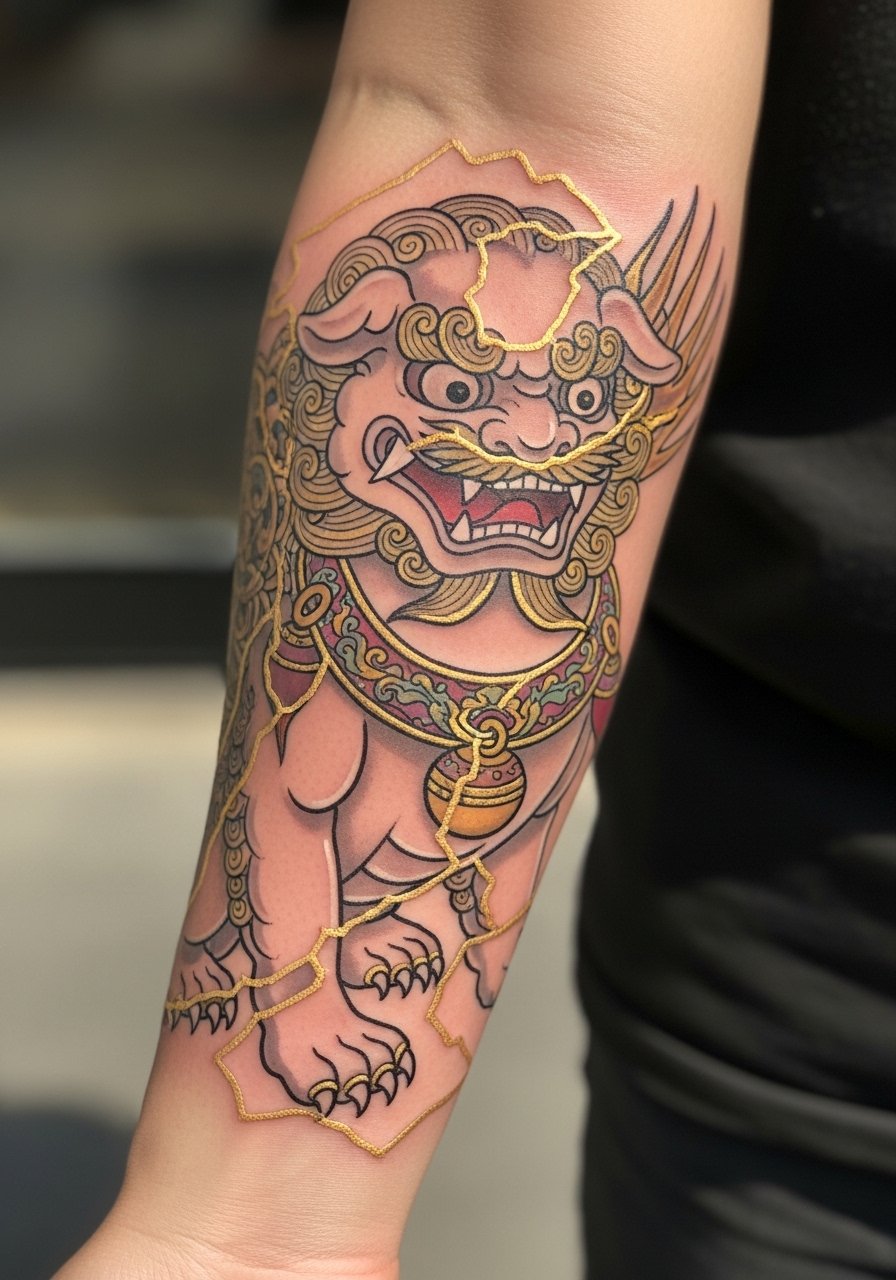
Using gold highlights that mimic repair lines creates visual rhythm without heavy detail. Tell your artist beforehand how much metallic effect you want so they plan color saturation accordingly. A mistake is overusing metallic pigments over delicate linework, which can require more touch-ups. This style tends to show subtle age differently, with highlights needing refreshes sooner. For evening wear, a wood bead bracelet on the opposite arm complements the warm tones.
18. Forearm Sleeve Start: Irezumi Foo Dog with Waves
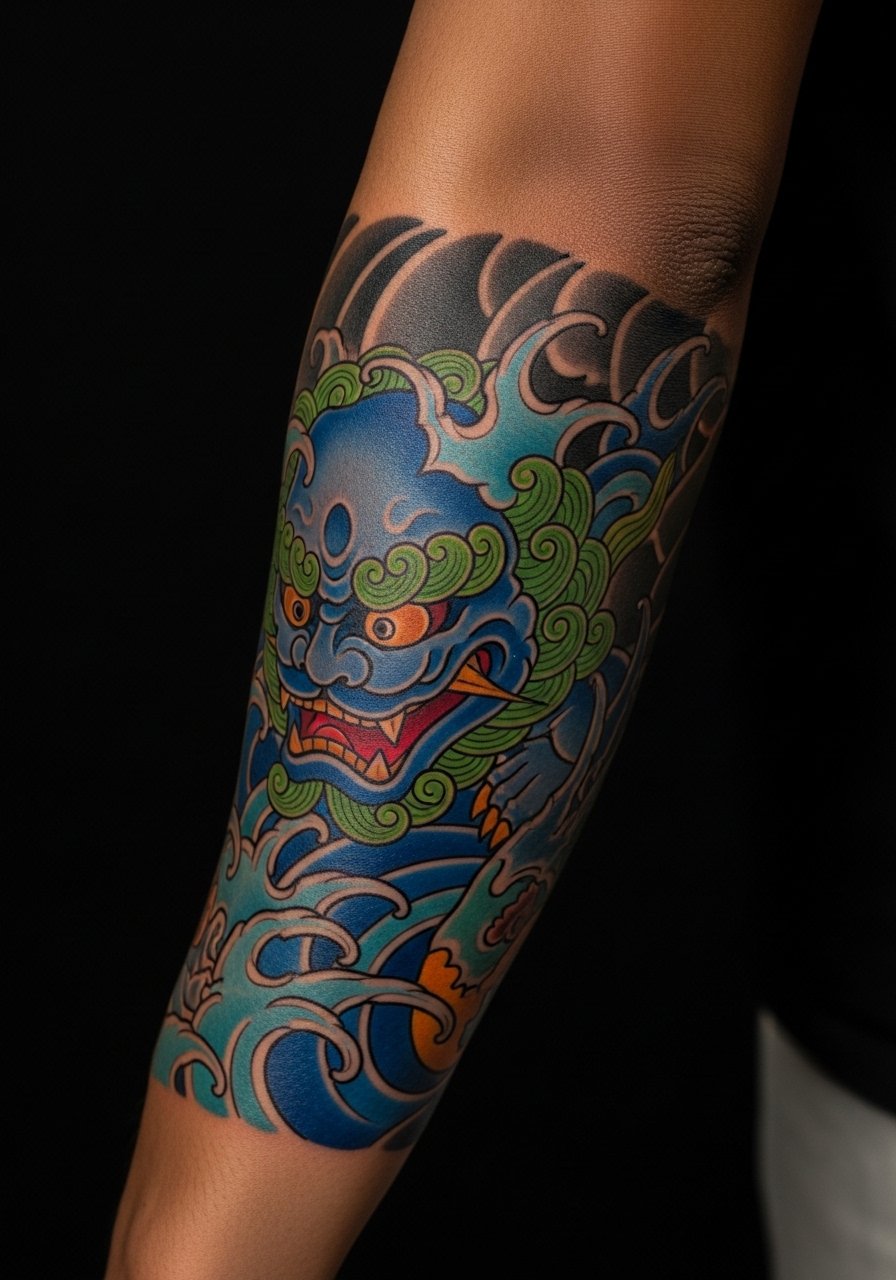
A sleeve-style start needs planning for negative space and future connections. This route is a commitment and typically three or more sessions will be required. There is a conversation in the community about direct cultural replication. One side urges caution and deep study when using traditional Irezumi motifs. The other side supports respectful, well-researched homage that credits its origins. Ask your artist if they can adapt motifs to your narrative while maintaining respectful sourcing. For the chair day, wear a loose tank top and expect longer sit times.
19. Stylized Linework Foo Dog Wrapping the Forearm
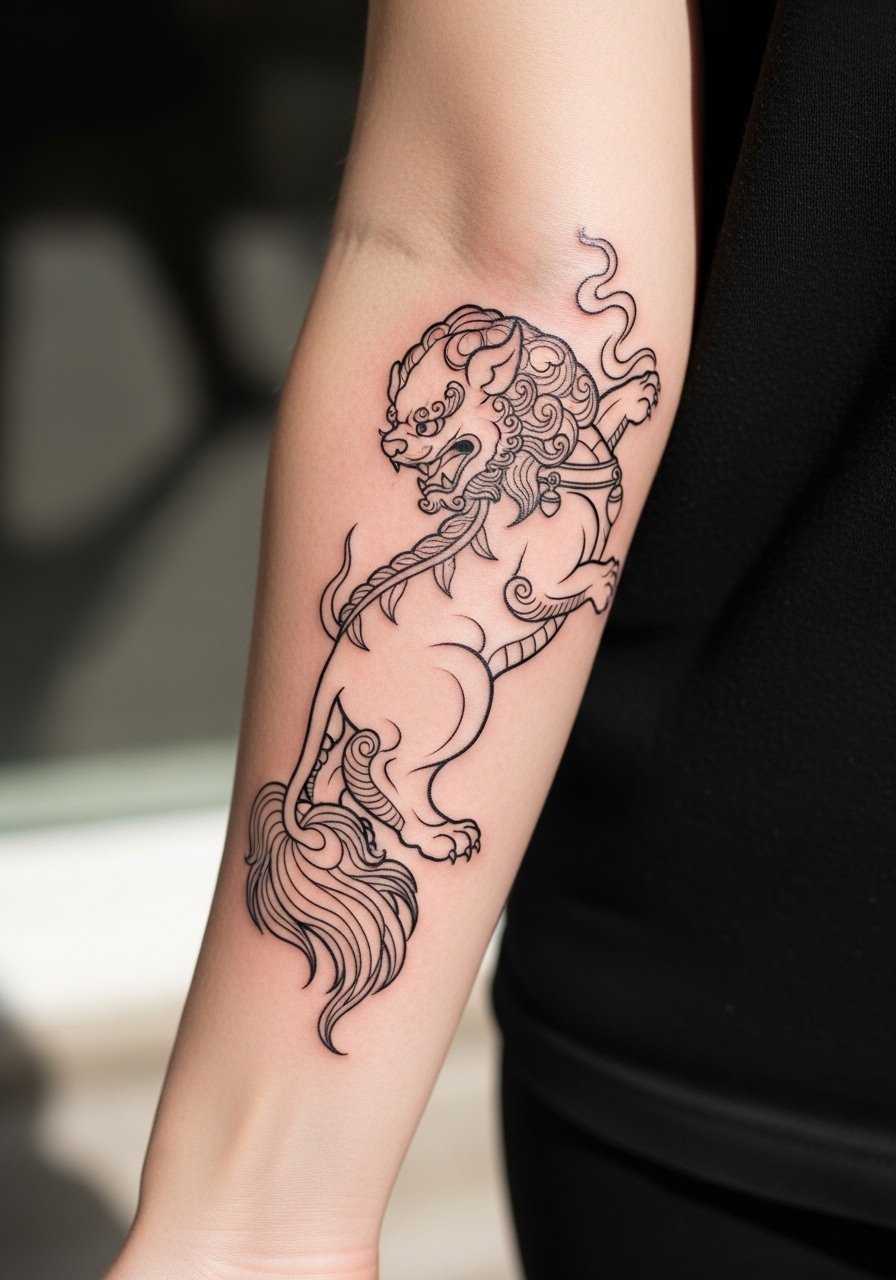
There is a visual trick to wrap pieces that keeps the design coherent from multiple angles. Ask your artist to map how the lines flow with arm movement so joints do not distort key features. The session is usually 90 minutes for a medium wrap. The mistake is forcing symmetry where the arm's shape disagrees. For showing off the wrap, a linen camp shirt with rolled sleeves or short-sleeve henley lets the flow be visible without excess fabric.
20. Watercolor Edge Foo Dog with Black Anchor Lines
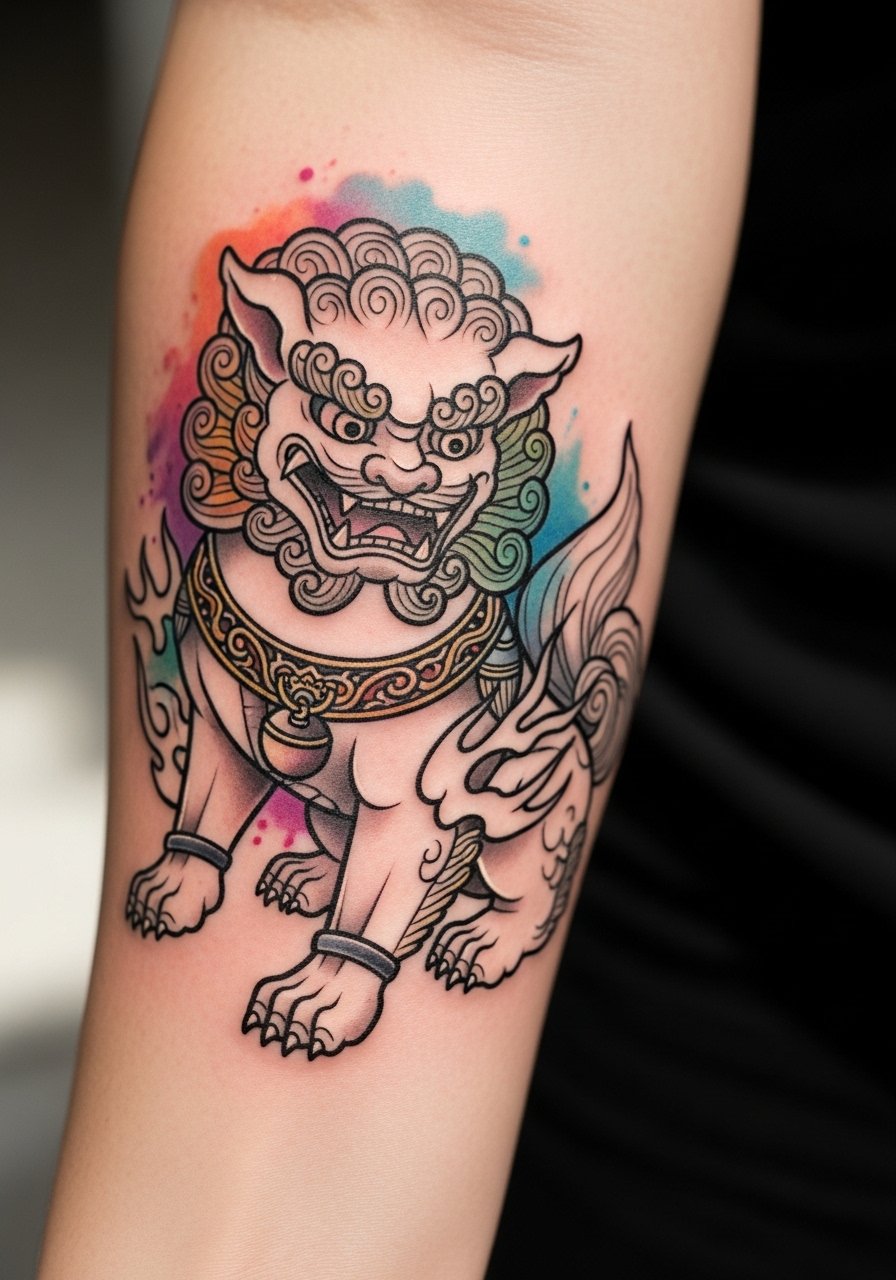
This hybrid gives the ethereal watercolor feel while keeping longevity via anchoring black lines. Most artists will split this across one to two sessions. During consult, specify how bold you want the anchor lines so the watercolor does not overpower them. A common issue is pale washes that disappear in a year. For outfits, neutral rolled cuffs or a slim-fit polo present a balanced look between casual and refined.
21. Bold Outline Foo Dog with Minimal Shading Near Wrist
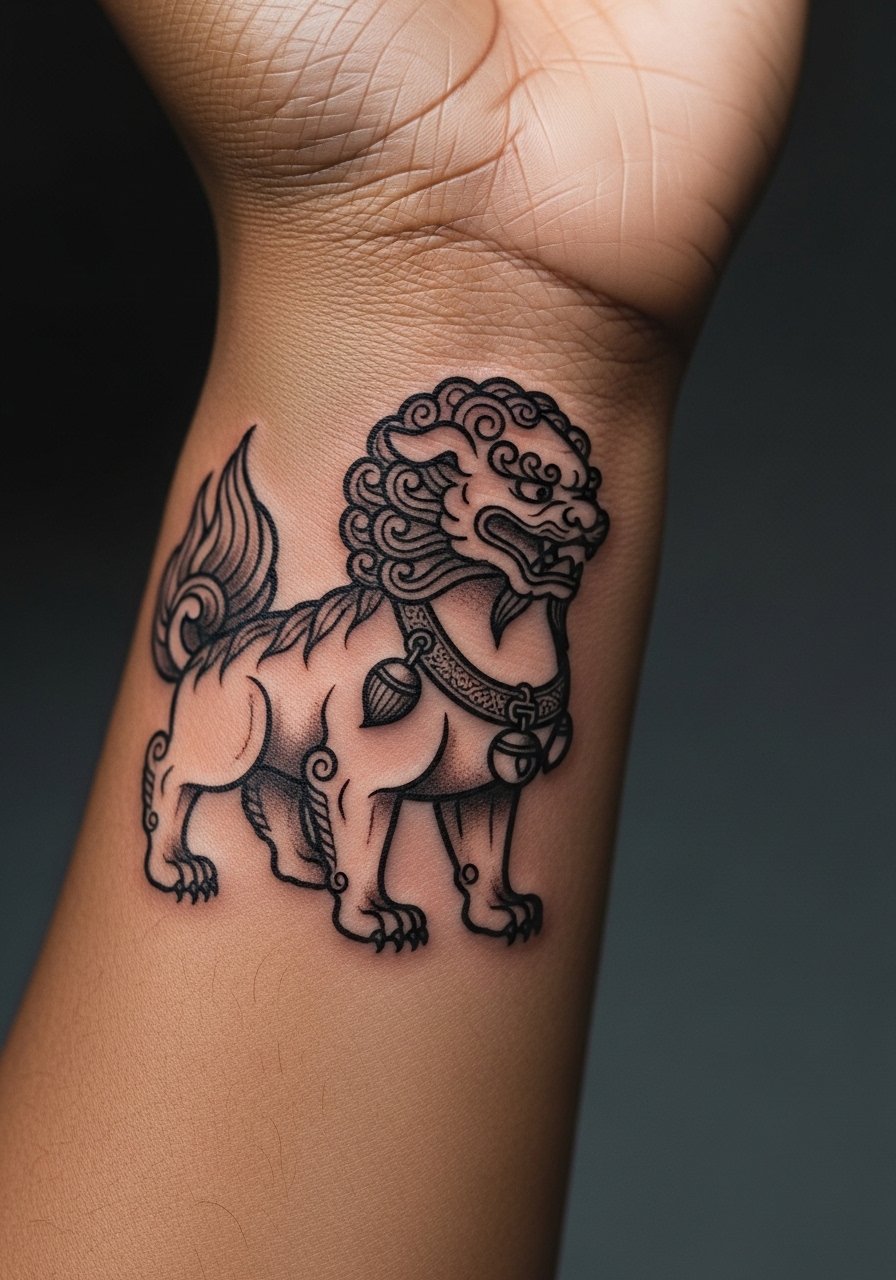
Wrist-adjacent placements read very boldly but face more friction. Expect a shorter session time, often under an hour for a 3 to 4 inch piece. Tell your artist to leave a little gap near the wrist where clothing and watches rub, that reduces premature fade. The mistake I see is cramming tiny details next to the wrist that disappear under daily wear. Plan for touch-ups earlier, often around year two if you wear watches or bracelets. For showing it off, consider a slim cuff on the opposite arm rather than stacking bracelets on the tattooed side.
Frequently Asked Questions
Q: How much will a forearm Foo Dog cost and how many sessions should I expect?
A: Costs vary widely by shop and artist skill, and session counts depend on size and saturation. Expect anything from a single quick session for a small silhouette up to multiple sessions for sleeve starts. In my experience, most medium forearm pieces land at one to three sessions.
Q: Will fine line Foo Dogs blur faster on the inner forearm than blackwork ones?
A: From what I've seen, fine line tends to require touch-ups sooner because the skin there moves and gets frequent friction. Blackwork and bold outlines usually age more predictably. Ask your artist about line weight plans so you know whether touch-ups are likely at year two or later.
Q: Is it cultural appropriation to get an Irezumi-style Foo Dog?
A: There are two sides to this. Some people advise avoiding direct copies of sacred temple imagery, while others accept respectful, well-researched reinterpretations. If you choose an Irezumi approach, discuss the origins and intent with your artist and consider adapting rather than replicating literal temple designs.
Q: What should I wear to my forearm appointment to make the session smoother?
A: Wear something that gives the artist clear access to the arm without fabric rubbing on fresh ink. For outer forearm pieces a loose tank or a button-up you can roll works well. For inner forearm, a sleeveless or easily adjustable top keeps the area accessible.
Q: How often will I need touch-ups for color-heavy neo-traditional Foo Dogs?
A: Color fade depends on exposure and initial saturation. From my observation, vibrant color pieces often benefit from a refresher around year three to five if they see a lot of sun. Proper SPF and avoiding midday sun reduce early touch-ups.
Q: Where can I find portfolios for forearm Foo Dog styles without naming specific artists?
A: Search style-specific hashtags like #foodogtattoo and #blackworkfoodog, check tattoo directories that let you filter by style and location, or browse city tag pages for studios that specialize in the look you want. Reddit forums also often have portfolio threads you can read through.