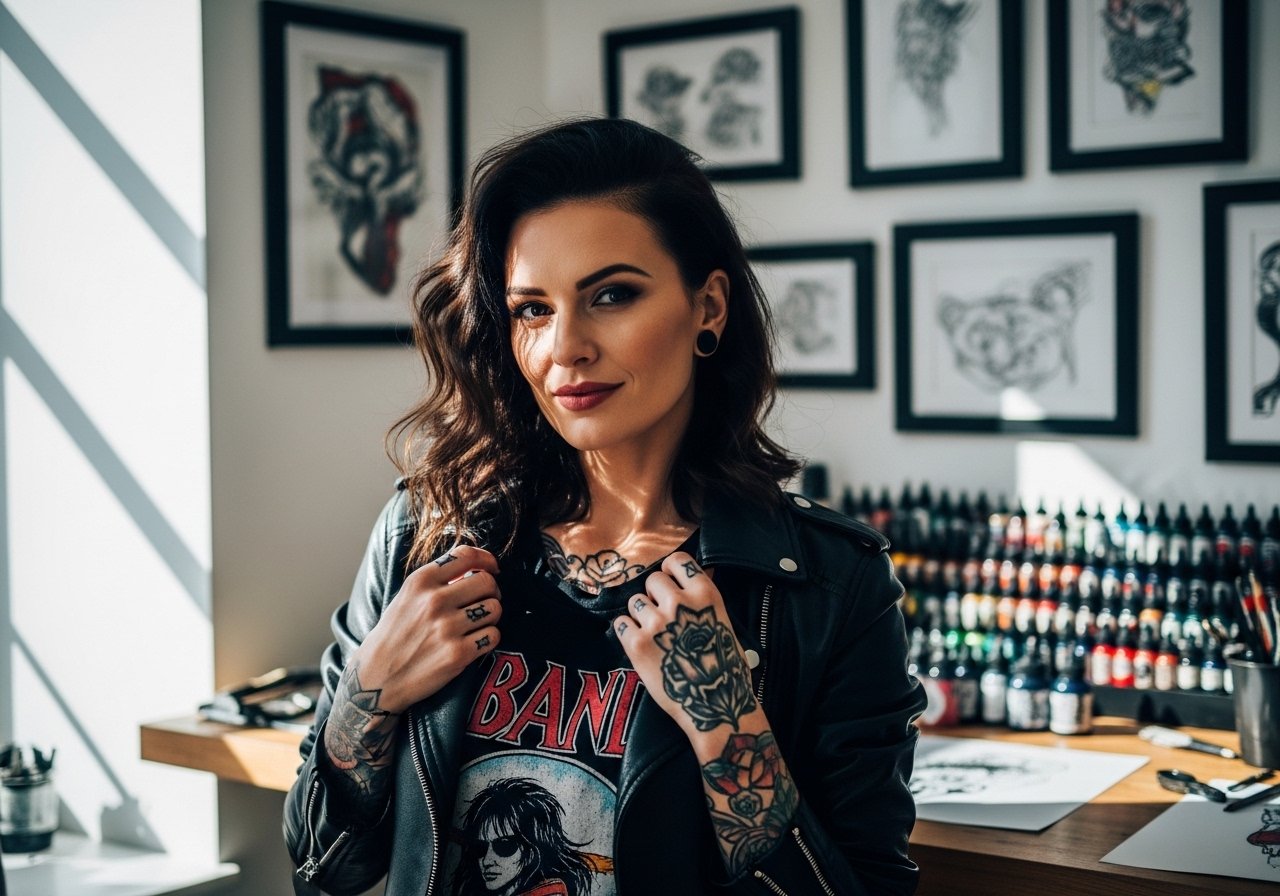
The fine line trend on social feeds looks irresistible right now, but the truth is that thighs behave differently than arms. Weight changes can soften a careful rose into a blob, inner-thigh work can spike pain where bone and nerves live, and watercolor pieces often lose their edge with sweat and friction. If you want designs that still read well after years, these 21 thigh ideas pair style thinking with practical notes on placement, pain, and what to ask your artist at consultation.
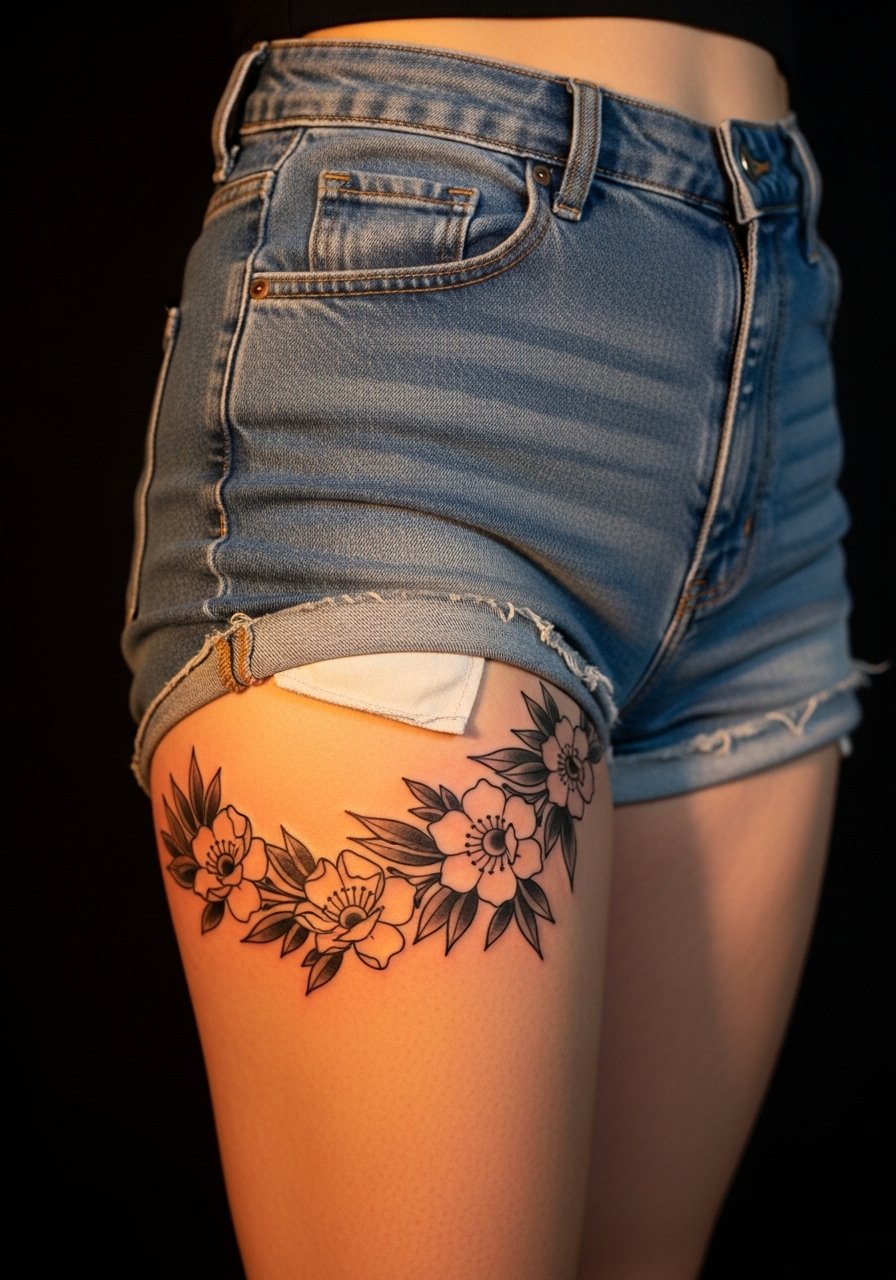
1. Neo-Traditional Floral Garland with Ribbon
This wraparound garland reads like motion on the outer thigh and flatters natural curves when scaled 8–15 centimeters. I recommend this over dense realism when you want color that ages predictably. Tell your artist to prioritize clear outlines and leave negative space around the ribbon so the piece breathes as the body shifts. Common mistake is packing too many tiny petals into the curve, which blurs with time and looks muddy after weight changes. Expect a medium pain level on the outer thigh and one to two sessions depending on saturation. For showing it off, pair it with high waisted denim shorts or a flowy mini skirt black that frames the garland edge.
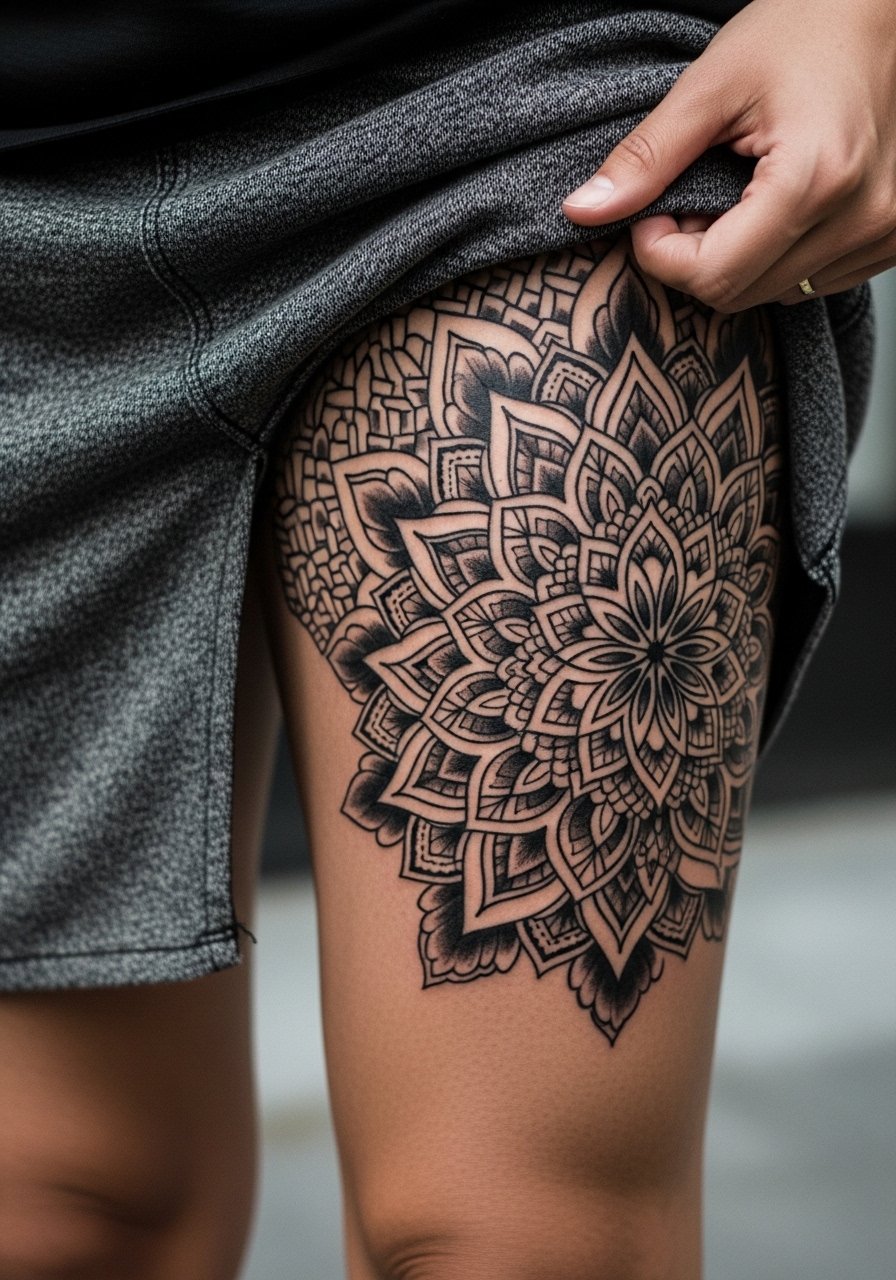
2. Blackwork Mandala with Geometric Extensions
A large black mandala on the side thigh works as optical shaping when scaled generously. I suggest this when you want a design that camouflages irregularities and reads from a distance. Tell the artist to keep spacing between concentric elements wider than a forearm mandala because dense lines on thigh can merge over time. This style is medium pain and usually needs two to three sessions for saturation. If you wear anything to show it off, a linen romper women or asymmetrical shorts create high-contrast frames for the geometry. Blowout risk drops when the artist spaces elements and avoids overly thin, tightly packed filigree.
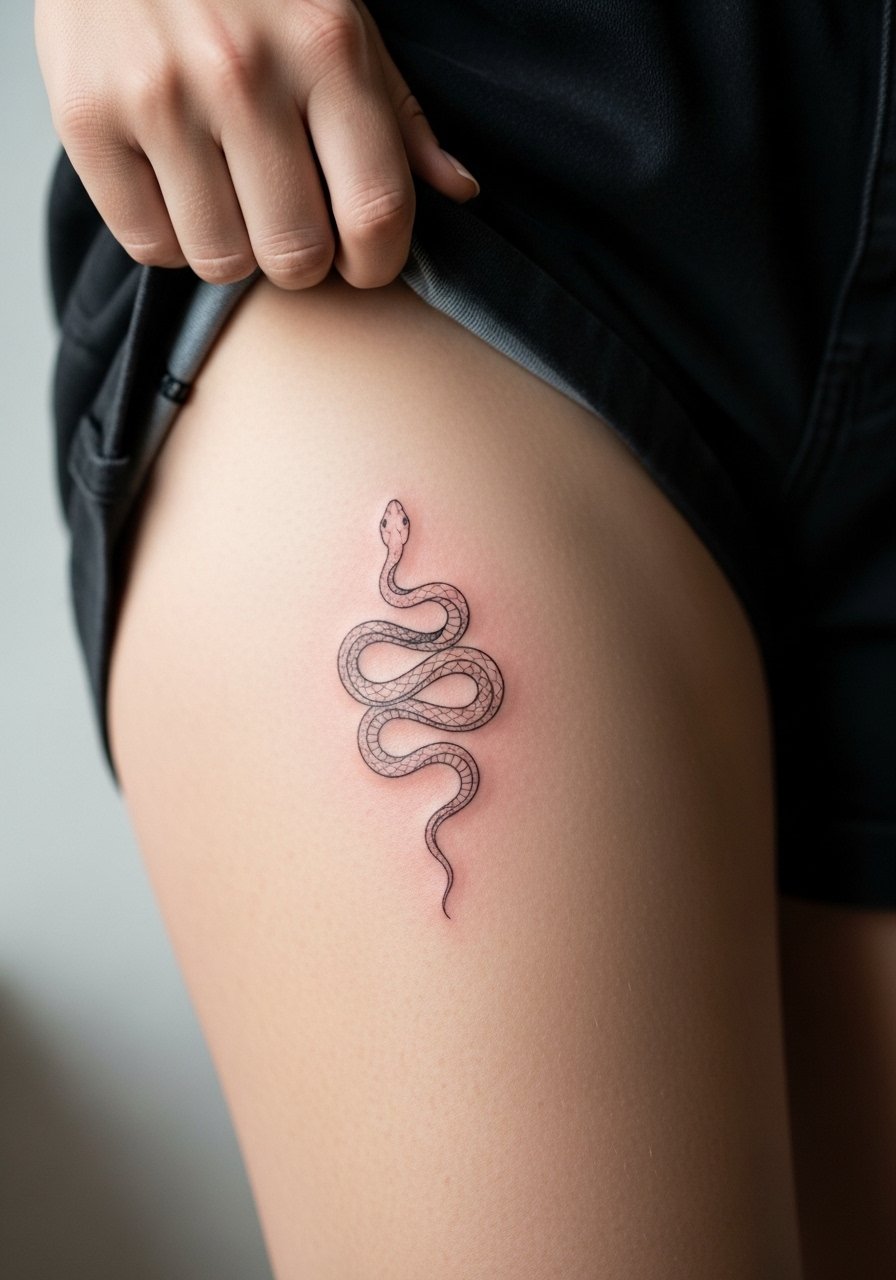
3. Fine Line Snake Coiling Upward
A coiling snake is an elegant pick for inner thigh work when you want symbolism without heavy commitment. Artists split on fine line retention on fleshy areas, and I name both camps here. One camp says fine line softens quickly on thighs and needs touch-ups at year two. The other camp believes correct needle depth and spacing keep lines readable longer. When you consult, ask where they stand and request slightly firmer line weight than a wrist piece. Plan for a single session and expect stronger pain on the inner thigh near sensitive zones. For subtle reveal, pair the healed piece with sheer thigh high stockings or bike shorts women gray. Common mistake is asking for micro hairline detail that disappears in months.
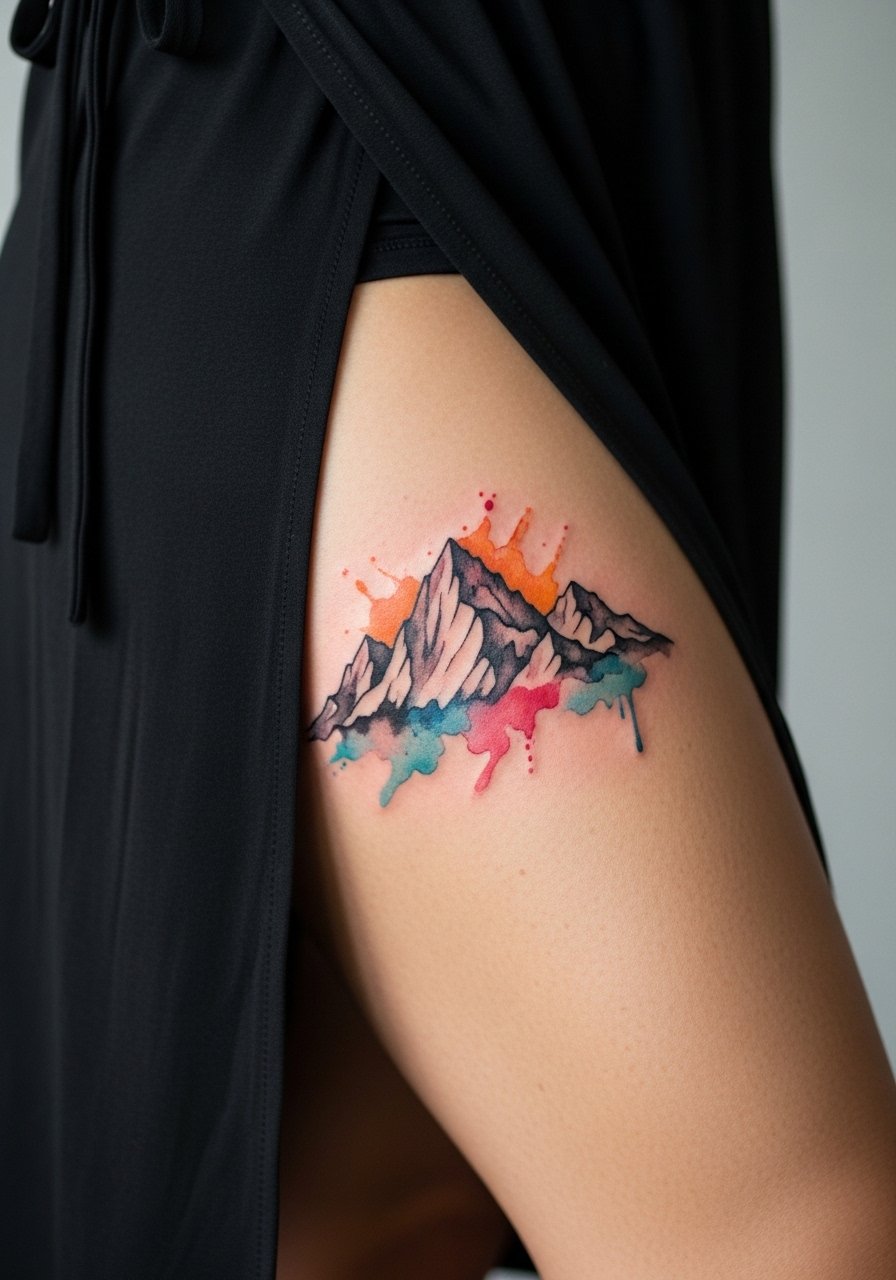
4. Watercolor Mountain Fading Into Clouds
This painterly upper-thigh landscape is great when you want a dreamy horizon that follows the leg. Watercolor fades faster in high-friction, sweat-prone zones, so favor this for upper thigh sections that wear loose fabrics. Ask the artist to anchor the piece with subtle black outline points so the scene keeps structure as pigments soften. The session usually runs two sittings for color layering. At six months it will still be vibrant, by two years expect muted tones, and by five years you may need a refresh to regain contrast. For evenings, a wrap dress earthy or side slit leggings highlights the fade effect intentionally.
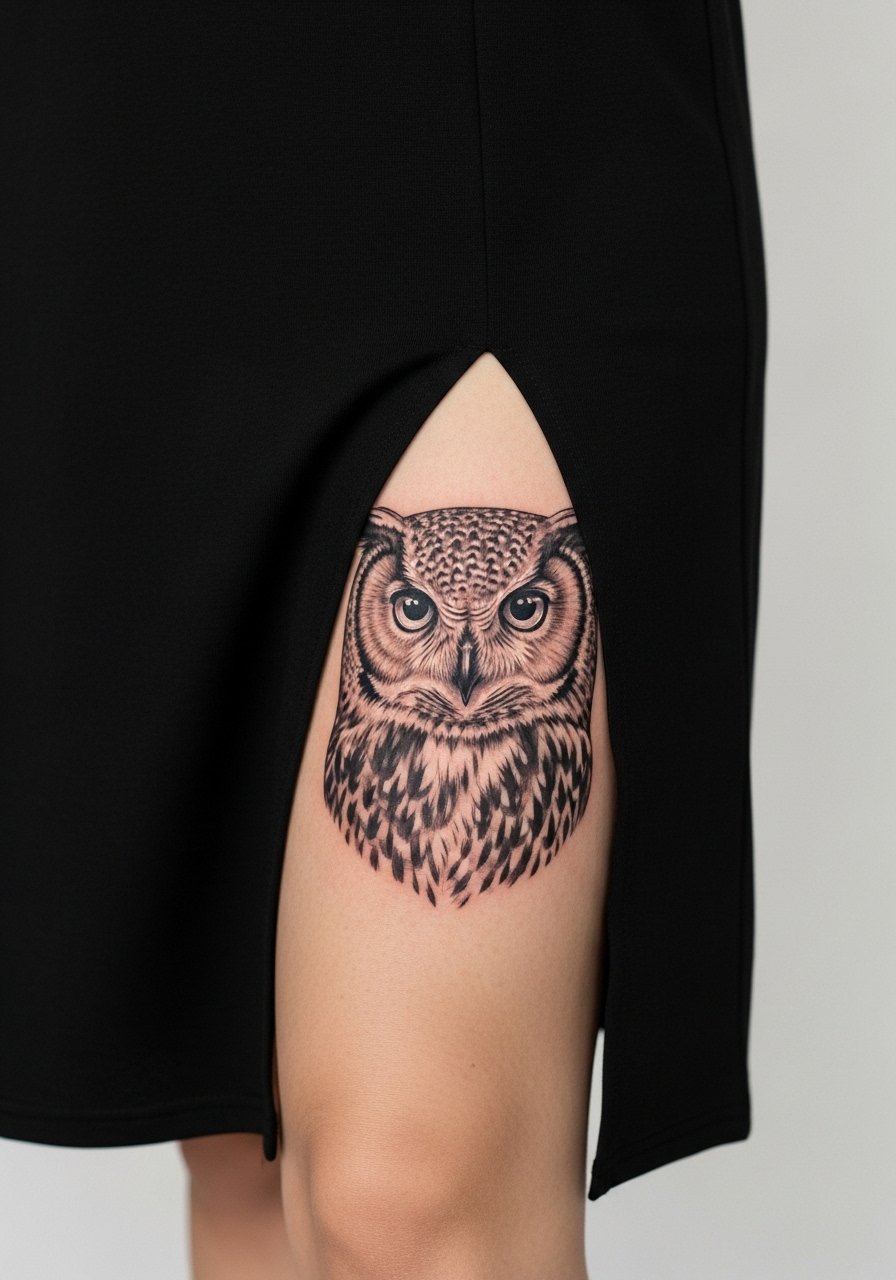
5. Micro-Realism Owl Portrait with Feather Details
A small owl on the front thigh is a strong choice for collectors who want realism without large commitment. Ask for denser black and gray shading instead of pale gray washes that lift under friction. Expect one session for a 2–8 centimeter piece and lower pain than inner thigh for front placements. Common mistake is requesting ultra-fine feather lines that blur in a year. At two years, feather texture holds if the artist used stipple shading and subtle saturation. Pair this with midi dress side slit looks that reveal the portrait in motion. Touch-ups may be needed around year three depending on activity levels.
6. Traditional Rose with Dagger Piercing
A back-thigh rose and dagger reads bold and classic, and it tends to hold up when artists use solid outlines and good saturation. Recommend this when you want a piece that survives gym gains and changes in muscle tone. Tell the artist to space the dagger detail and keep the rose petals simplified to prevent early blurring. Session time is generally one to two sessions. The back thigh is lower on the pain chart and sees less friction than inner placements. For show-off outfits, a backless sundress or low-rise pants let the piece peek when you move. A common error is asking for hyper-real shading that competes with the dagger lines.
Pack Smart
Those front and side thigh pieces above need different prep than inner-thigh work, and a few targeted items smooth the session and the first week.
-
Tatt2Away non-greasy balm. Lightweight texture avoids pore-clogging on sweat-prone thigh zones while keeping color supple during the scab fall period.
-
Green Sheep thin body lotion. Faster absorption helps humid-climate healers skip sticky residues that aggravate inner-thigh rubbing.
-
Rice-based gentle ointment alternative. Breathable formula reduces milia and keeps delicate front-thigh micro-realism clear during early healing.
-
Fragrance free body wash. Cleanses without irritating fresh linework, which is useful for large thigh pieces that meet sweat.
-
Saniderm tattoo film. For those who prefer a sealed healing window, this reduces mess and protects against friction from clothing.
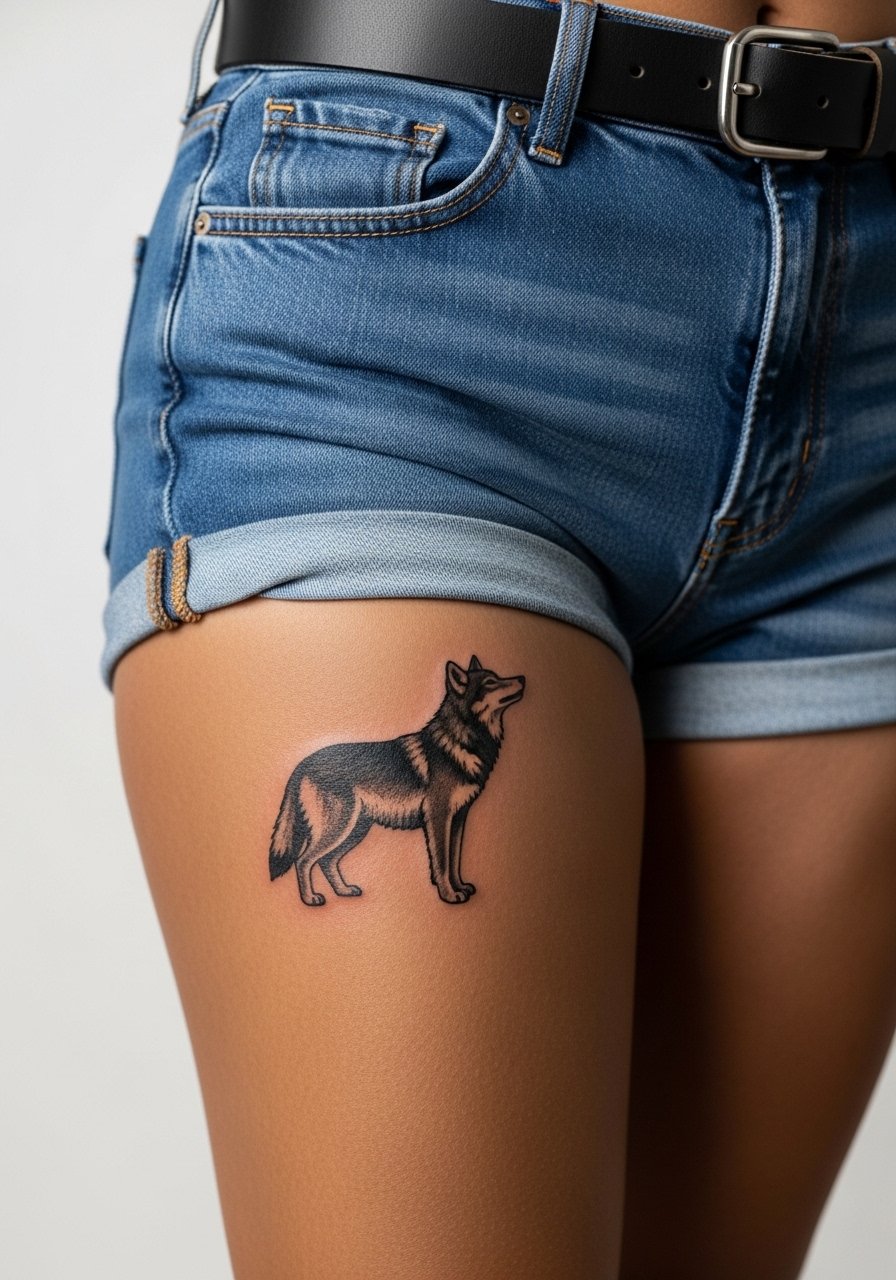
7. Ignorant-Style Wolf Silhouette with Jagged Lines
Raw silhouettes that embrace imperfect strokes give a street-art energy on large outer-thigh canvases. This style suits someone who wants bold impact and low-detail maintenance. Tell your artist to keep edges uneven by design and avoid tiny interior strokes that age into noise. Sessions can stretch across three sittings for large pieces and the outer thigh tolerates that well. For a gritty show-off pairing, try a leather belt slim with high-waisted shorts. A common mistake is shrinking the silhouette too small, which loses the jagged character and reads as blob after six months.
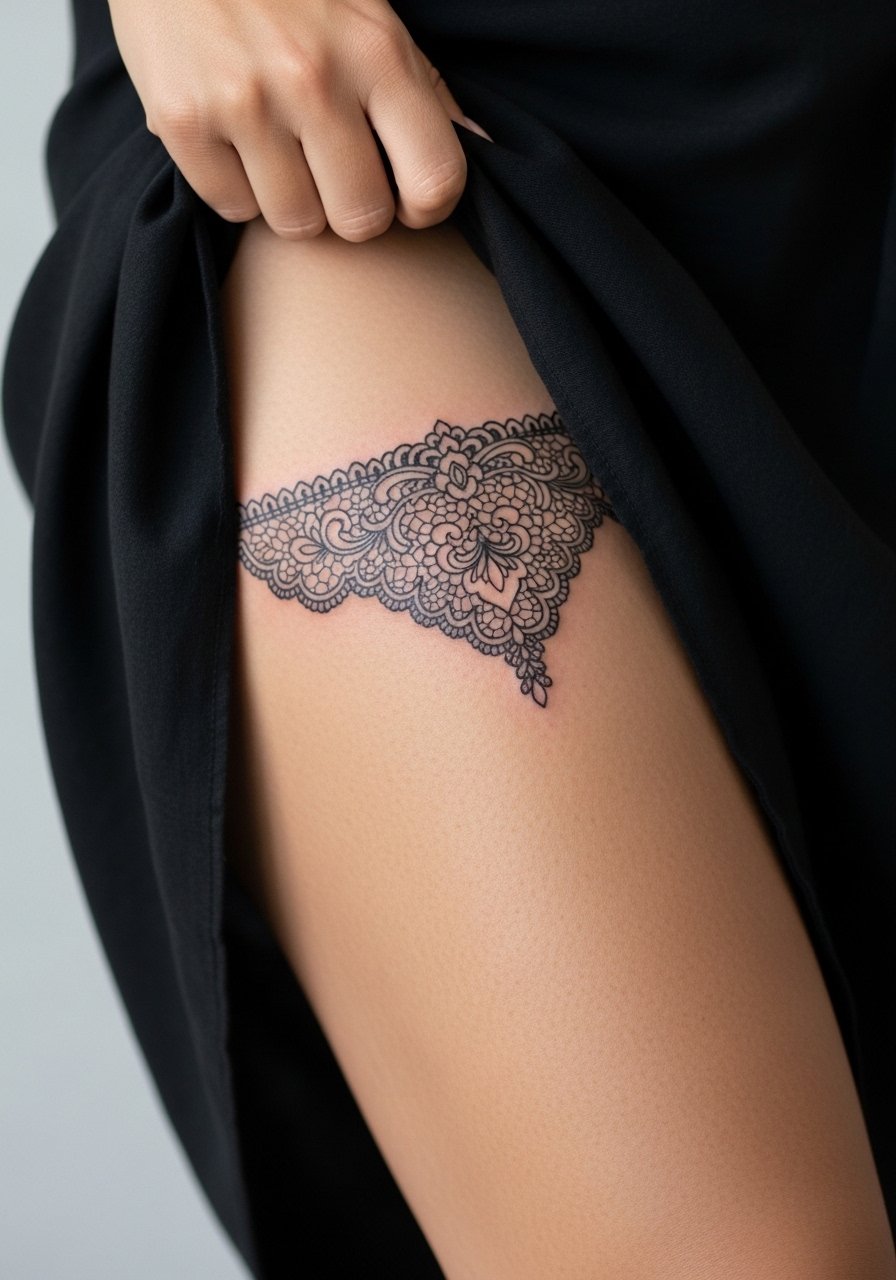
8. Ornamental Lace Choker Illusion Wrapping Thigh
This upper inner-thigh lace mimics stocking tops without the fabric. It works best when built as a band with openwork rather than dense solid black. Tell the artist to emphasize negative space and thin connections so the lace stays readable under skin movement. The inner thigh is sensitive and the session can be uncomfortable, so schedule short sittings if you are nervous. For appointment comfort, wear a loose wrap skirt you can shift for access. Some people regret asking for ultra-fine lace because inner-thigh rubbing softens detail in months.
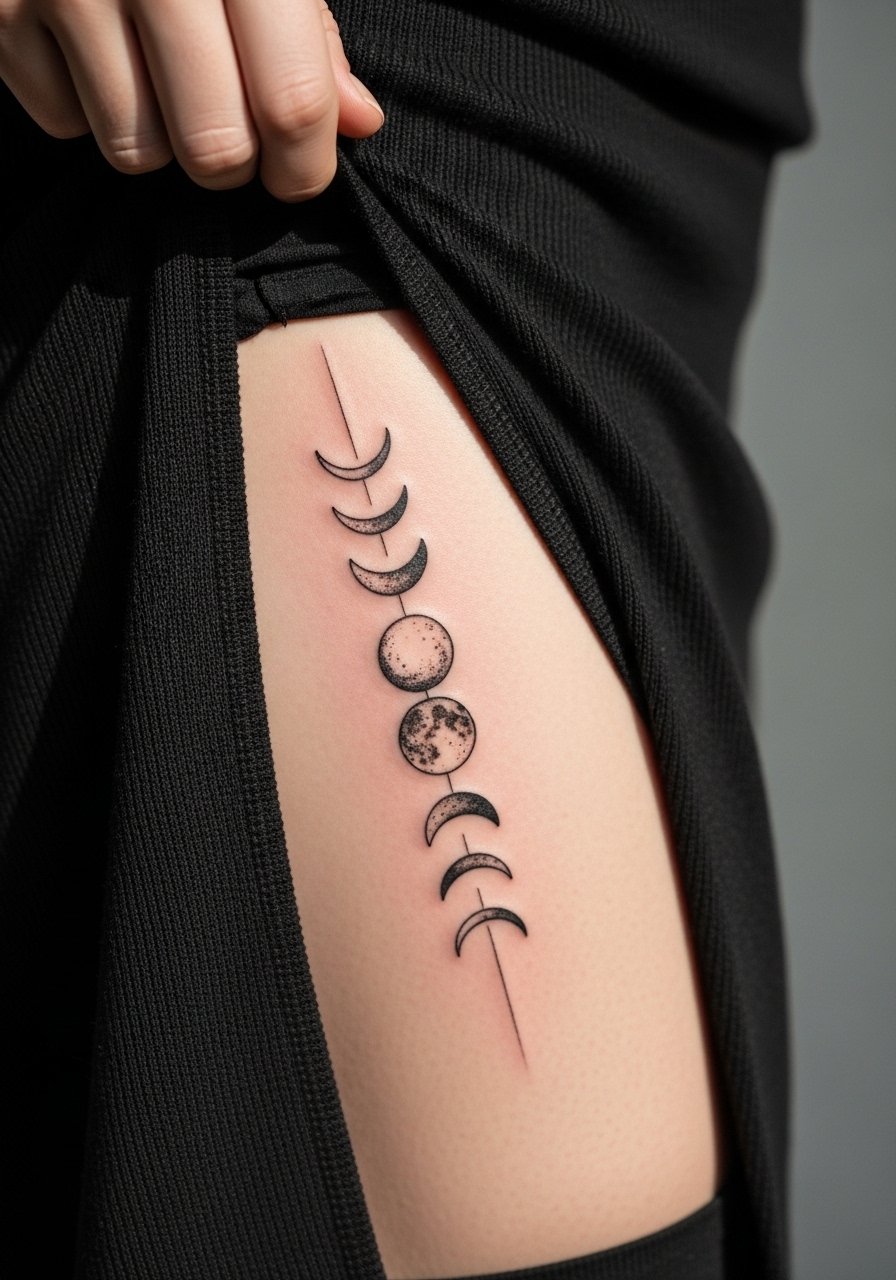
9. Minimalist Moon Phases in a Vertical Stack
A slim vertical sequence of moon phases works well on the thigh side for concealability and easy hiding under clothing. Keep the circles spaced so the tiny crescents do not merge as the skin ages. This is a low-session, low-pain pick, often one sitting for small sizes. For discrete nights out, pair with side slit leggings or shorts that let one phase peek. A common error is compressing too many phases into a tiny height which requires touch-up faster than a spaced stack.
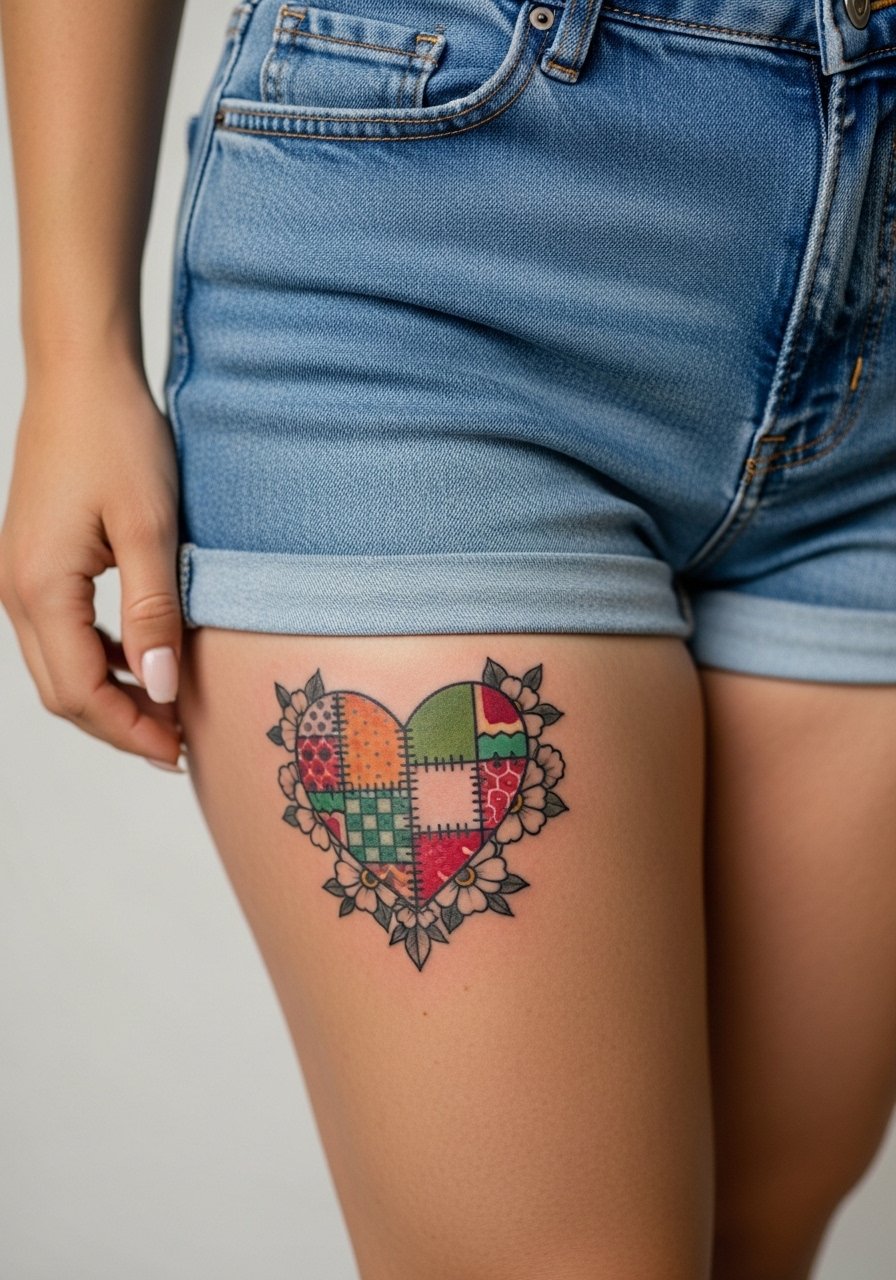
10. Patchwork Heart with Floral Fillers
This evolving front-thigh collector piece starts with a central heart and accumulates floral and blackwork fillers over time. Recommend this to people who plan to build slowly and want symbolism to grow with them. Ask the artist to leave visible margins to add future elements without crowding current pieces. Expect multiple sessions across months and variable pain depending on placement. The front thigh holds detail well but friction from shorts can dull color, so plan wardrobe during healing. Avoid asking for a fully-complete sleeve-style patchwork in one sitting, which often looks overcrowded after a year.
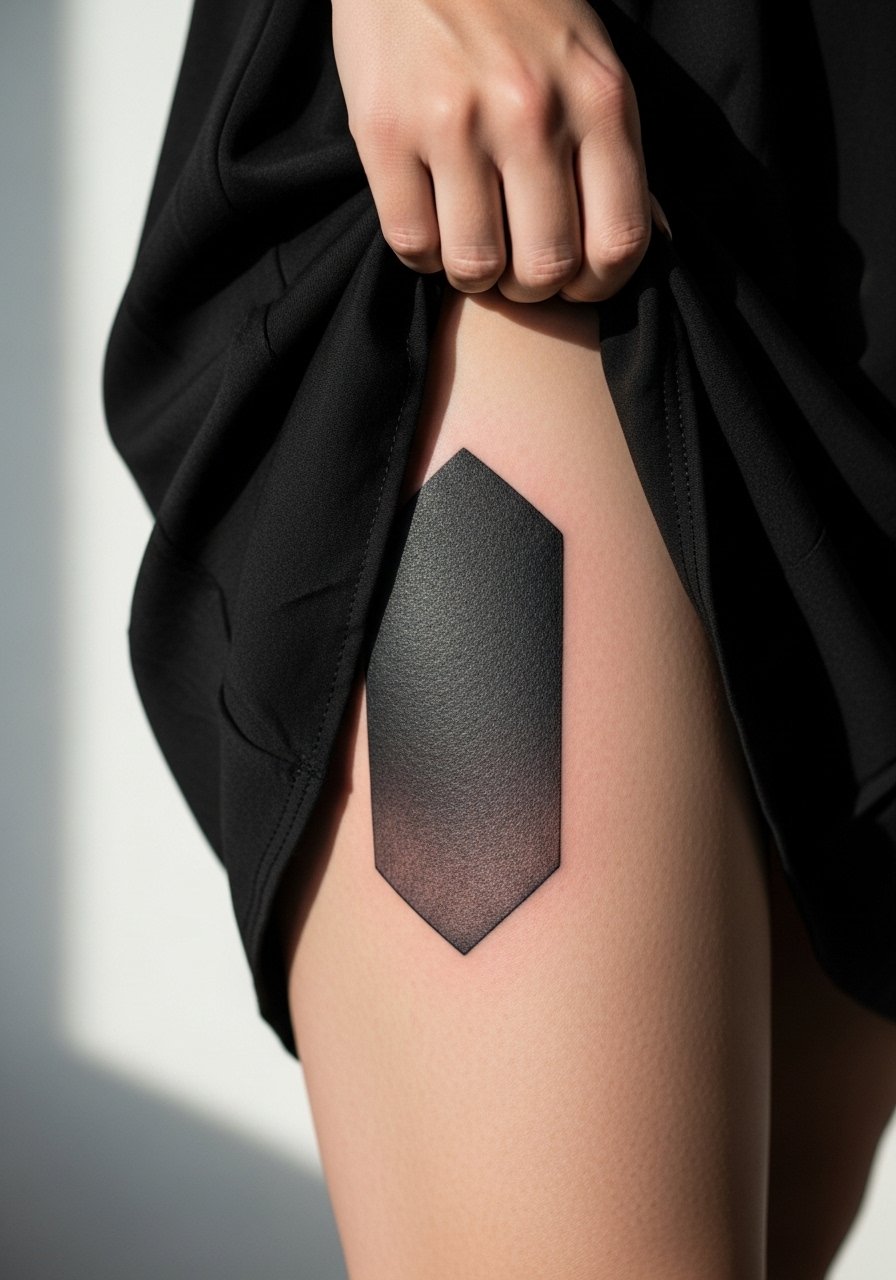
11. Volumetric Dark Shading to Slim the Thigh
This under-covered idea uses deep black volumes and gradient shading to create an optical slimming effect. The technique relies on saturation depth and careful gradation so the shadow reads like a natural contour. It is best for outer thigh areas where the artist can layer black in 2–3 sessions. Tell the artist to avoid blocky fills that meet at hard edges, and to use subtle transitions that mimic shadow. Pain is medium and touch-ups may be needed for saturation. Pair it with high waisted denim or darker skirts to let the illusion work visually. A common pitfall is overdoing hard edges which read flat instead of sculpted.
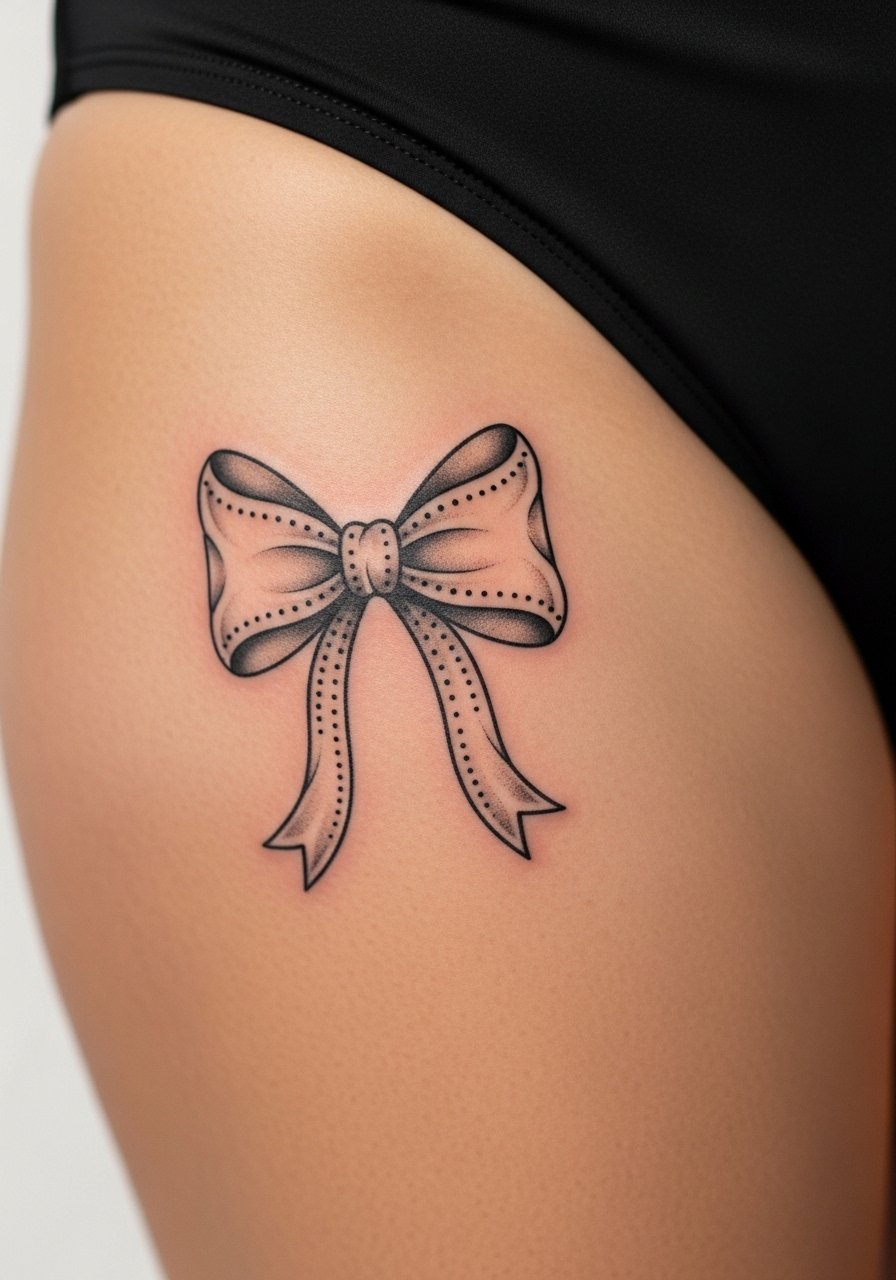
12. Thigh Bow That Doubles as a Removable Garter Illusion
A bow placed near the hip or upper thigh reads like a garter when paired with real thigh-highs. This playful idea works when you want a seasonal reveal. Request the artist to keep the knot slightly loose and the ribbon tails long enough to sit under swimwear lines. Sessions are short and pain is low on the upper thigh. For session wear, choose a swimsuit bottom or high-cut short to give the artist access without awkward shifting. Avoid tiny, fussy bow lines that vanish after scab fall.
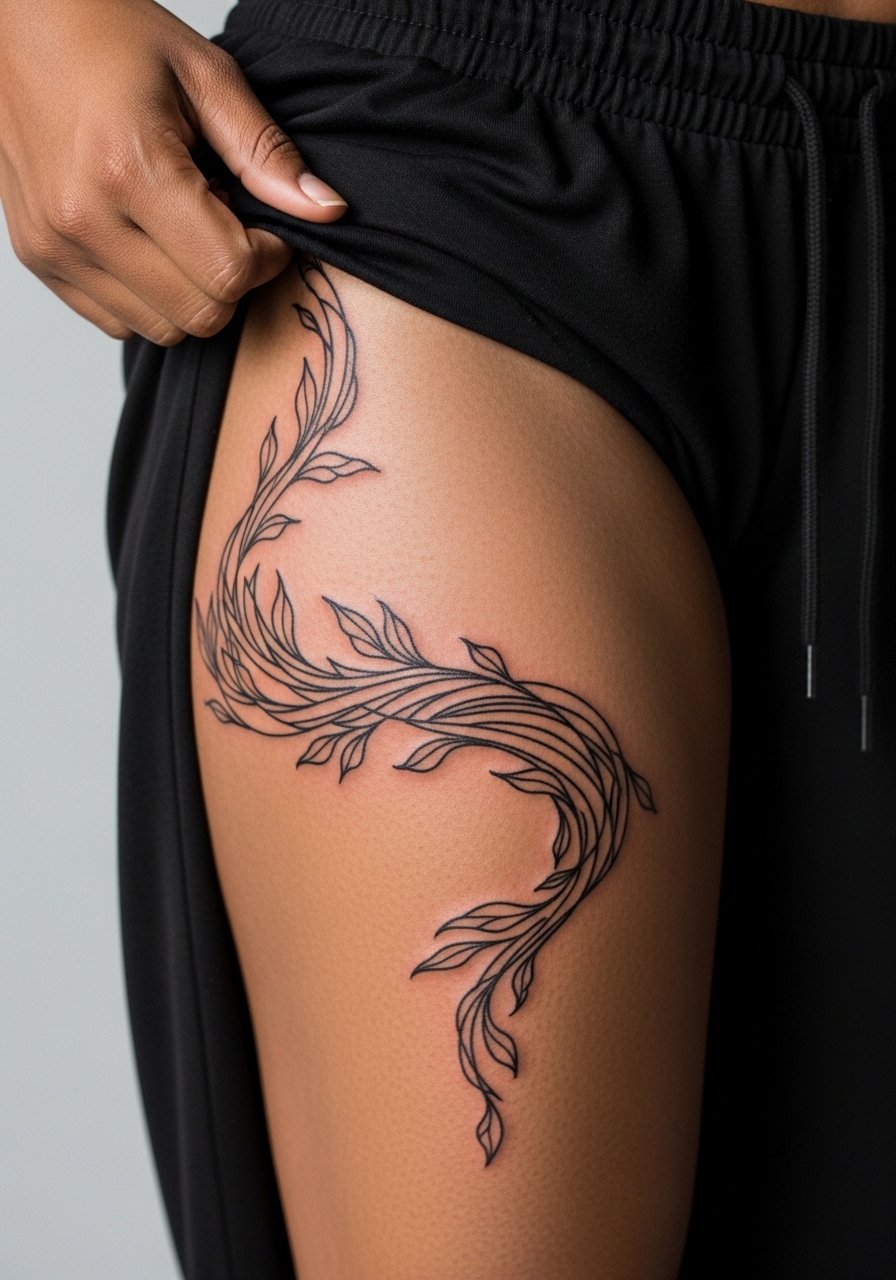
13. Weight-Fluctuation-Friendly Vine Panel
If you know your weight changes over time, ask for a flowing vine panel rather than a rigid portrait. Vines can stretch and still read as intentional movement. Tell the artist to use slightly thicker linework and avoid ultra-fine details that compress when skin contracts. The outer thigh tolerates this style well and sessions are comfortable. At two years the vine still reads if spacing and line weight are considered in consultation. For the studio day wear, pants with an elastic waist that can be pulled down easily work best. The common mistake is requesting a tightly detailed botanical that loses shape after a few pounds of fluctuation.
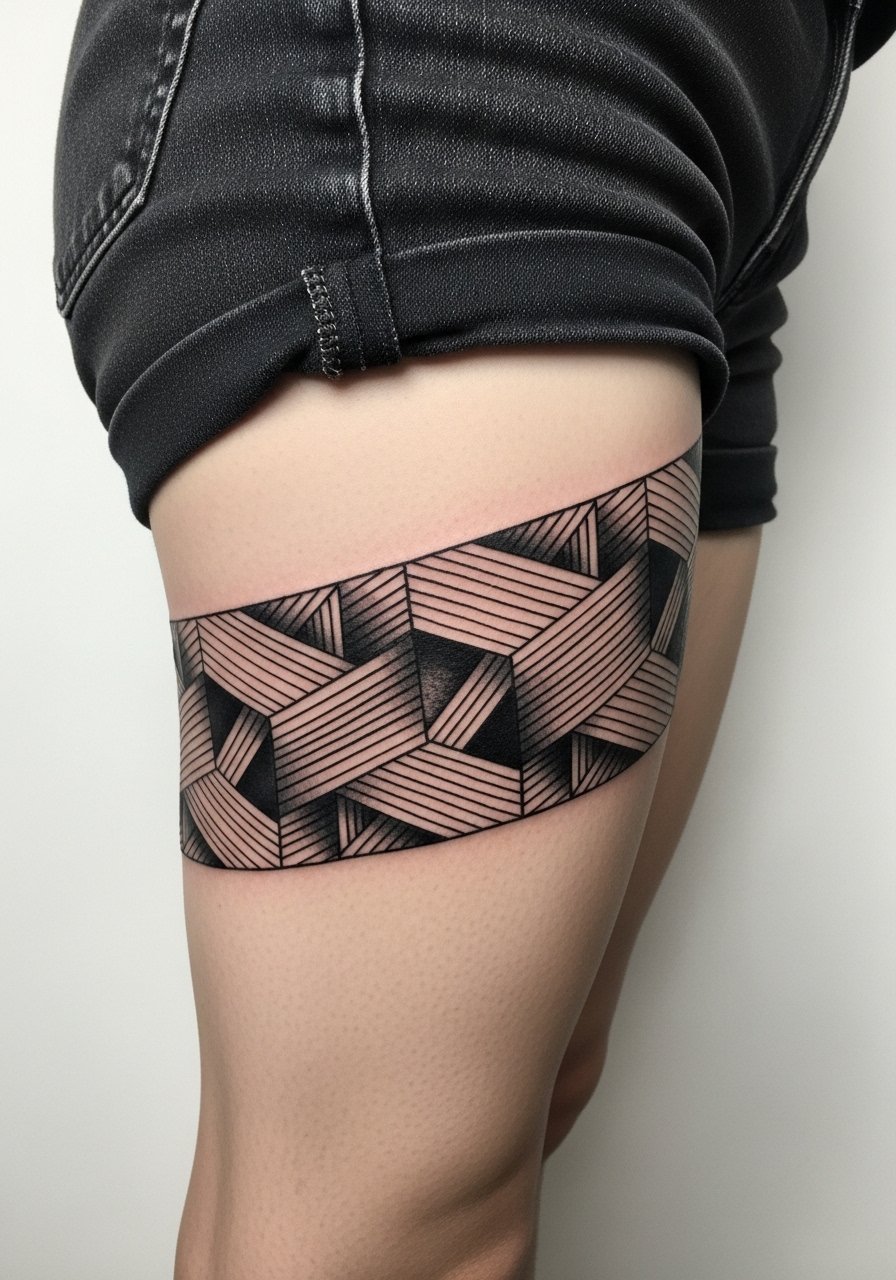
14. Geometric Optical Illusion Band
A band of repeated geometry across the thigh can accent muscle curves and creates a striking look from a distance. Ask the artist to scale the repeat pattern to the thigh's width so negative space prevents the lines from merging over time. This is ideal for side thigh placement and usually needs two sessions to refine alignment. For showing off, asymmetrical shorts or a linen romper women with a high leg cut frames the band. The biggest mistake is going too small with repeating motifs, which need breathing room to age well.
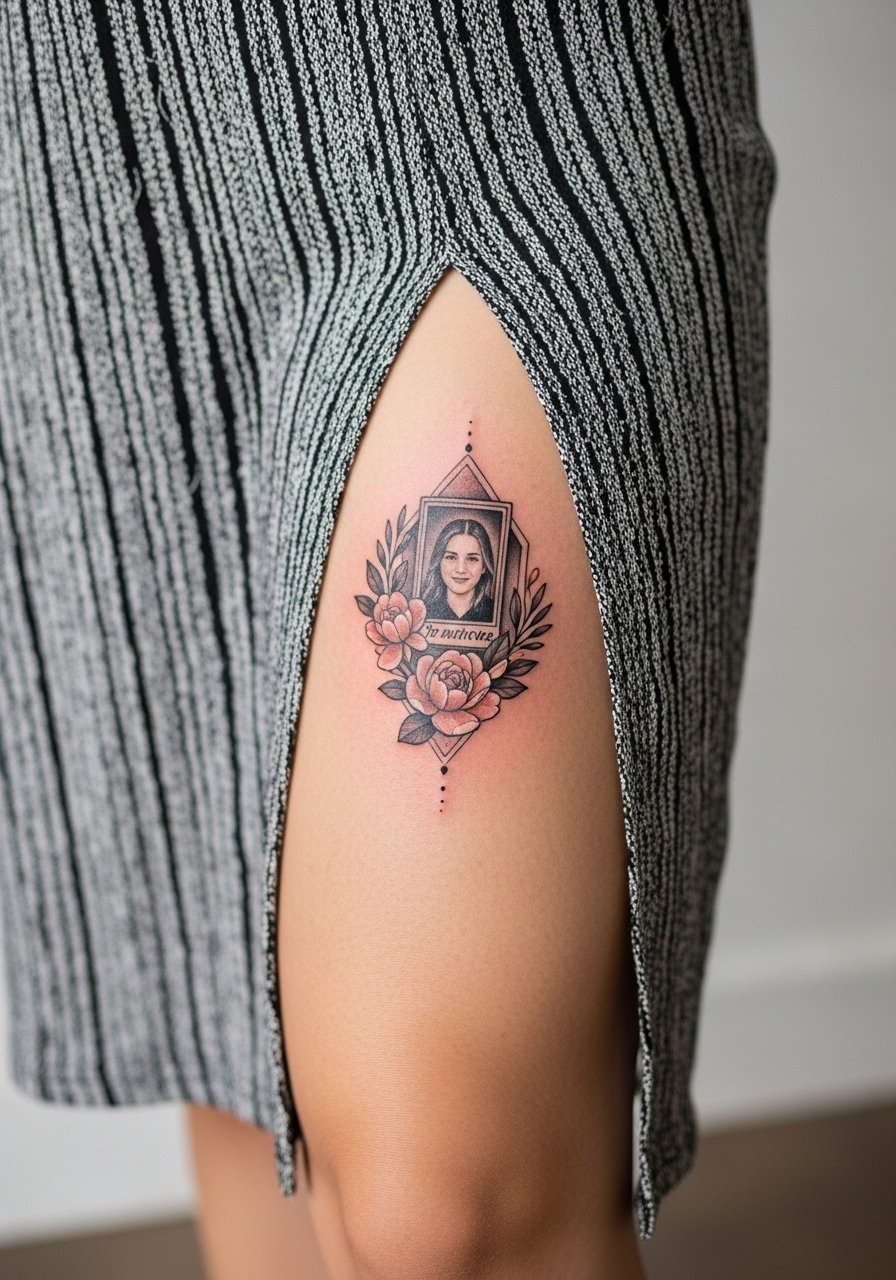
15. Memorial Micro-Portrait Hidden in Florals
For discreet memorial work, tuck a small micro-portrait into a larger floral layout on the thigh front. This hides the image until you want to reveal it and reduces pressure to make a single hyper-visible portrait. Request the artist to keep contrast high around the portrait and surround it with looser floral elements that do not compete. Expect one to two sessions and moderate pain on the front thigh. Over time the portrait holds if shading is slightly bolder than usual for micro work. Avoid tiny portrait sizes that lose recognition after a year. Consider pairing the reveal with a midi dress side slit for special occasions.
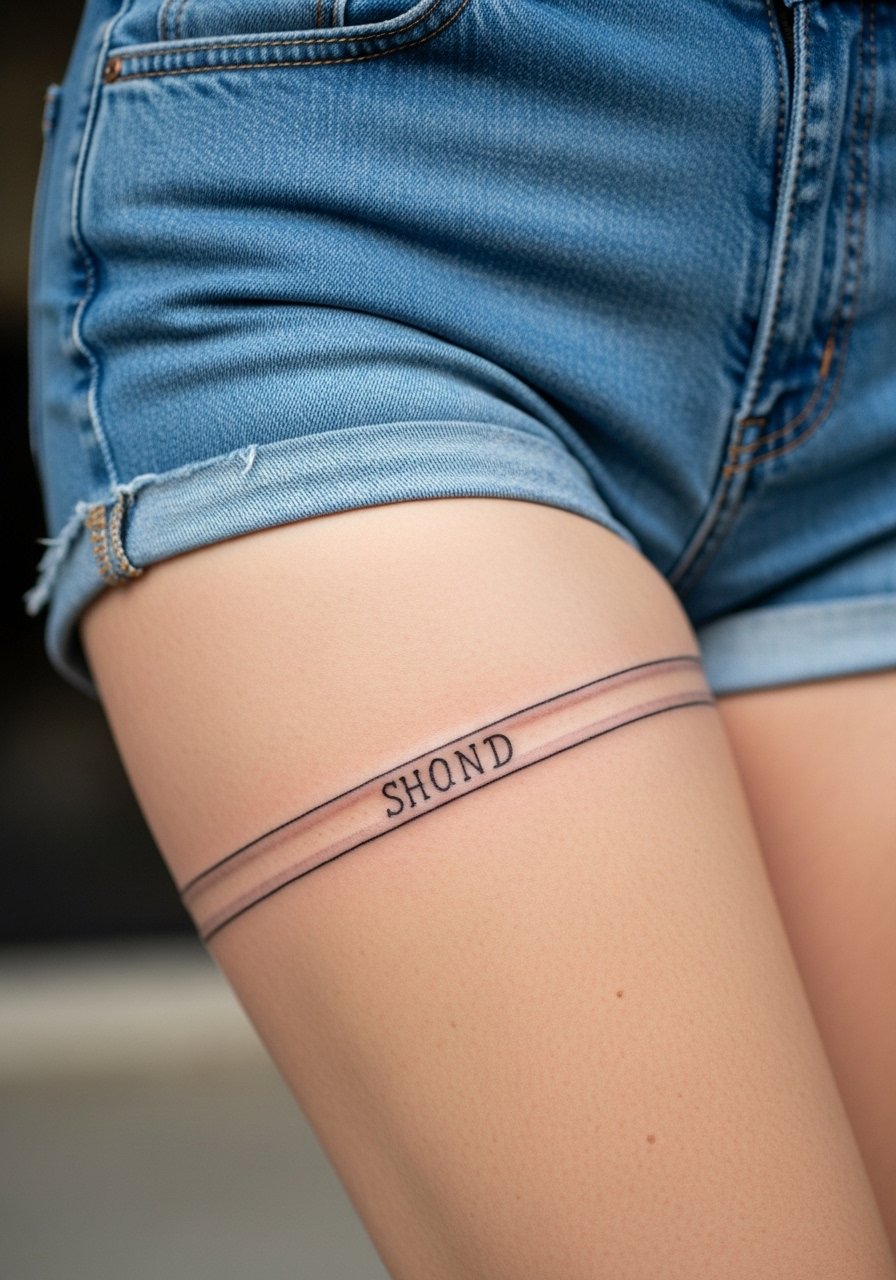
16. Script Band Around Upper Thigh
A clean script band works as a private line of text visible only when you choose. When including text, specify the exact phrase and font, and ask for slightly increased letter spacing so characters do not merge over time. The upper thigh is a forgiving area for script and pain is typically low. One session is common for short phrases. For showing or concealing, pair with a high waisted denim shorts or a wrap skirt. Real mistake is requesting tight, condensed script that needs touch-up sooner than spaced lettering.
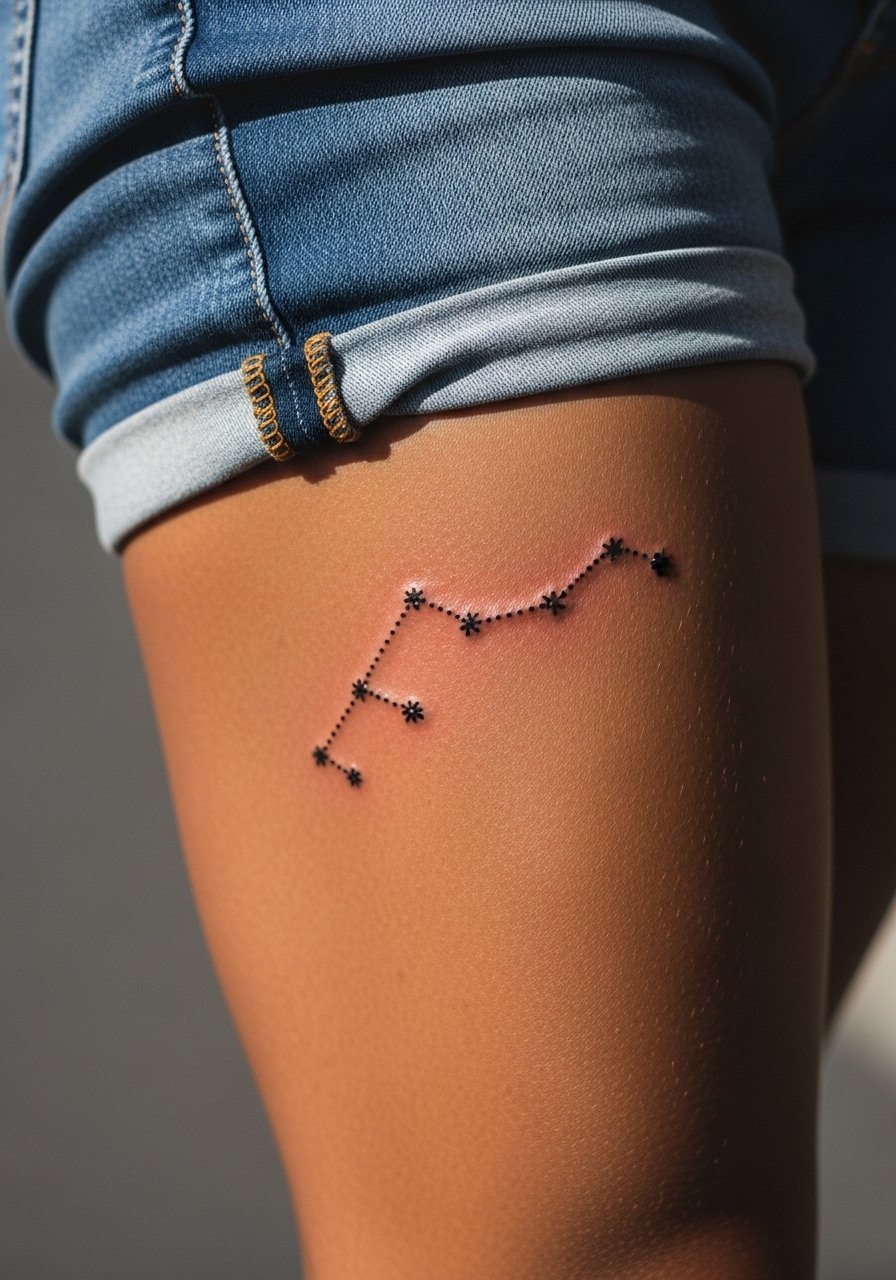
17. Constellation Trail That Follows Muscle Lines
A scattering of tiny dots and small glyphs that tracks the thigh muscle creates a subtle celestial trail. For darker skin tones, favor bolder black dots so the pattern reads in photos. Tell your artist exactly which stars or arrangement you want and request slight spacing increments along the muscle line to prevent merging. Pain is low to medium and one session usually covers a trail. This style ages into soft dots by year three, which some people prefer. Avoid clustering points too tightly. No heavy wardrobe needed, but short hems reveal the trail nicely.
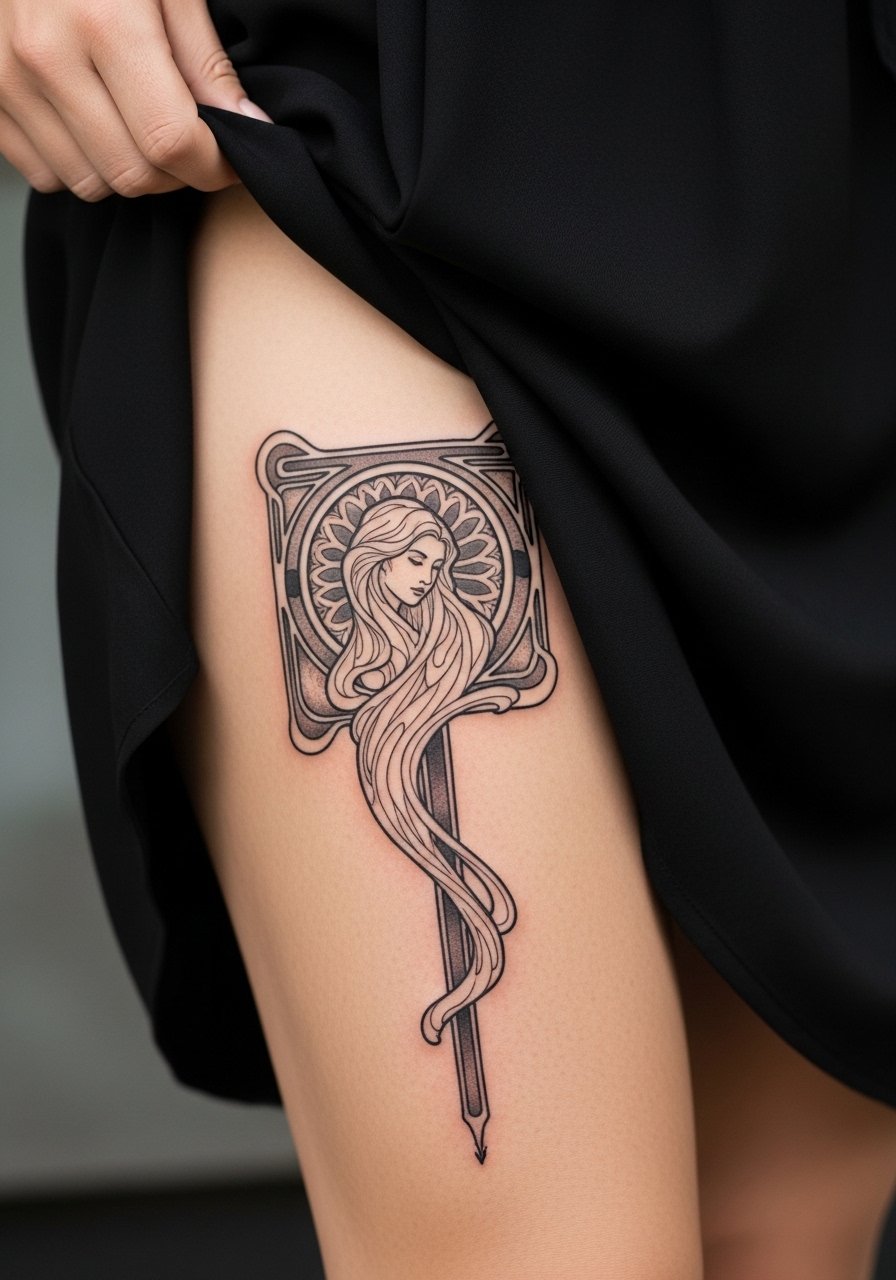
18. Art Nouveau Panel with Flowing Lines
Long, flowing Art Nouveau panels with organic whiplash lines complement the thigh curve. This works best when the artist composes the panel to interact with natural leg contours. Request broader lineweight transitions so delicate whiplash details do not vanish with motion. Sessions can be two sittings for larger panels and pain is moderate on the outer thigh. For show-off styling, try a wrap dress earthy that lets the panel flow with fabric. The mistake is squeezing ornate filigree into a narrow band which blurs in months.
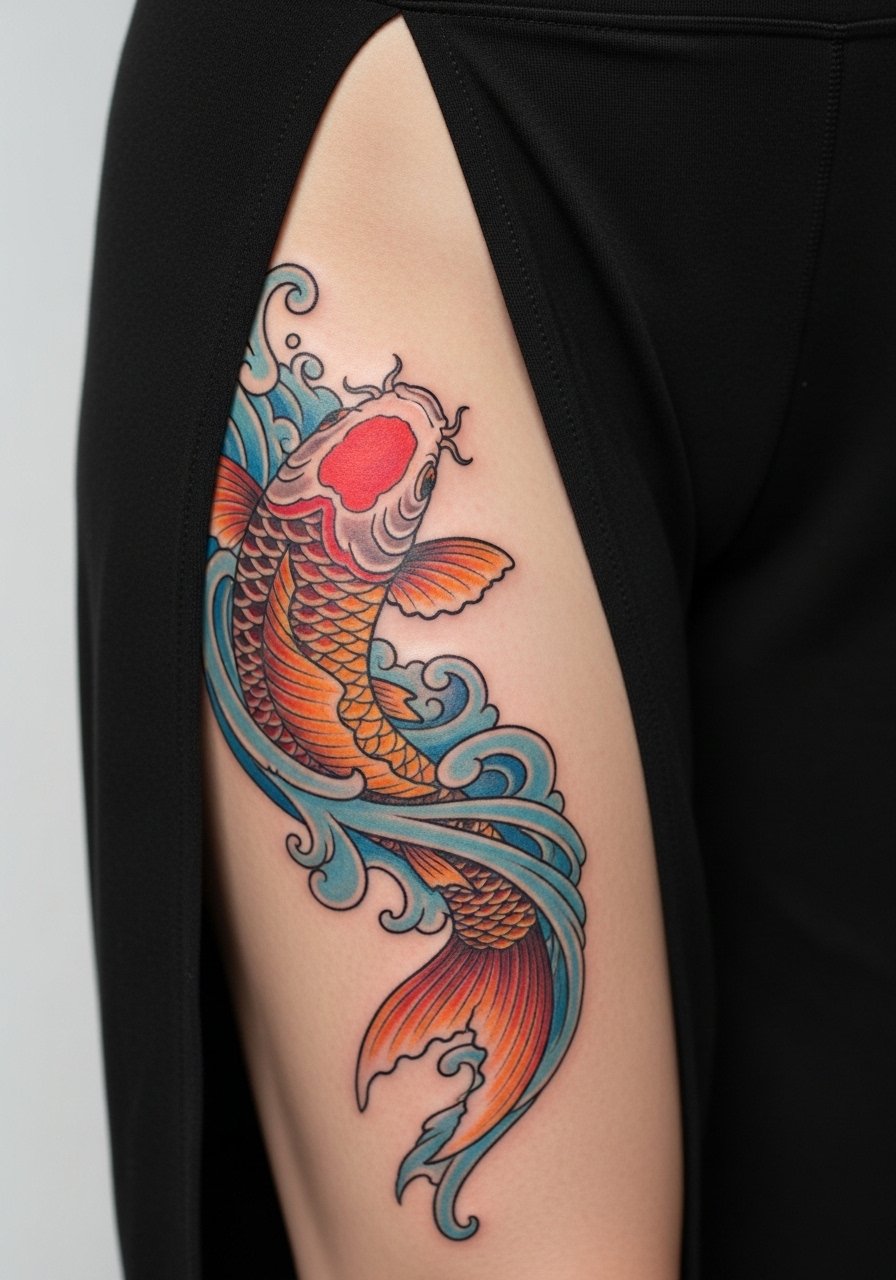
19. Koi Fish Flowing Down the Thigh
A vertical koi with water shading looks dynamic on the outer or front thigh. Ask for simplified scales and stronger contrast in the head and tail to keep the fish readable as color softens. Sessions can be multi-hour depending on color needs and pain is moderate. At two years you will see softened color but preserved silhouette if saturation was strong. Avoid intricate scale work that becomes muddled under friction. For a casual reveal, pair with side slit leggings.
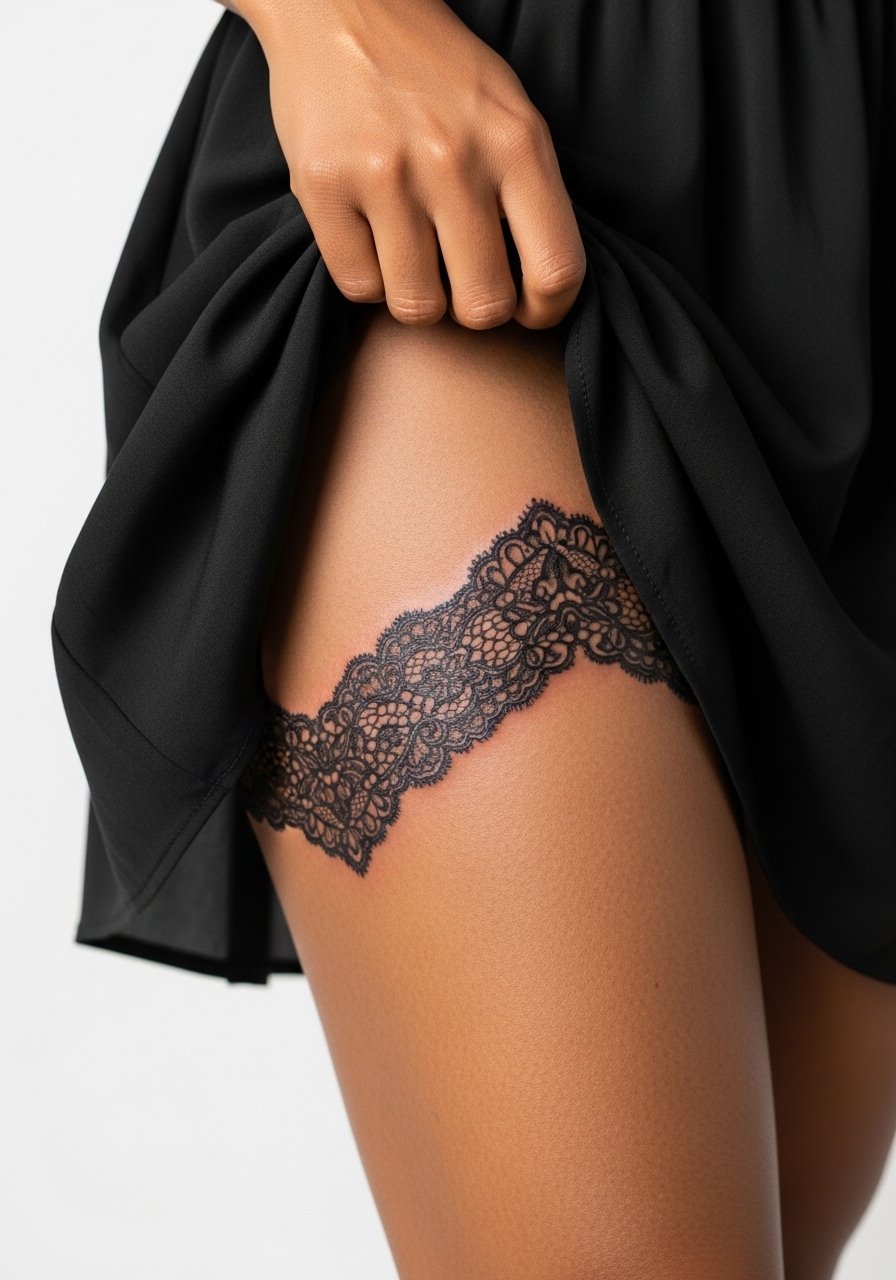
20. Negative Space Lace Panel
A negative-space lace panel plays with skin tone and leaves parts of the thigh uninked as part of the design. This technique ages well when the artist balances filled segments with open areas. Request a mockup that tests the negative shapes on your body before committing. Sessions are often two sittings for crisp edges. Pain is similar to other outer thigh work. For evenings, a flowy mini skirt black or high-waisted bottoms frame the lace. The common mistake is too much tiny dotting inside the open areas which becomes grainy with time.
21. Stipple-Shaded Portrait Fragment
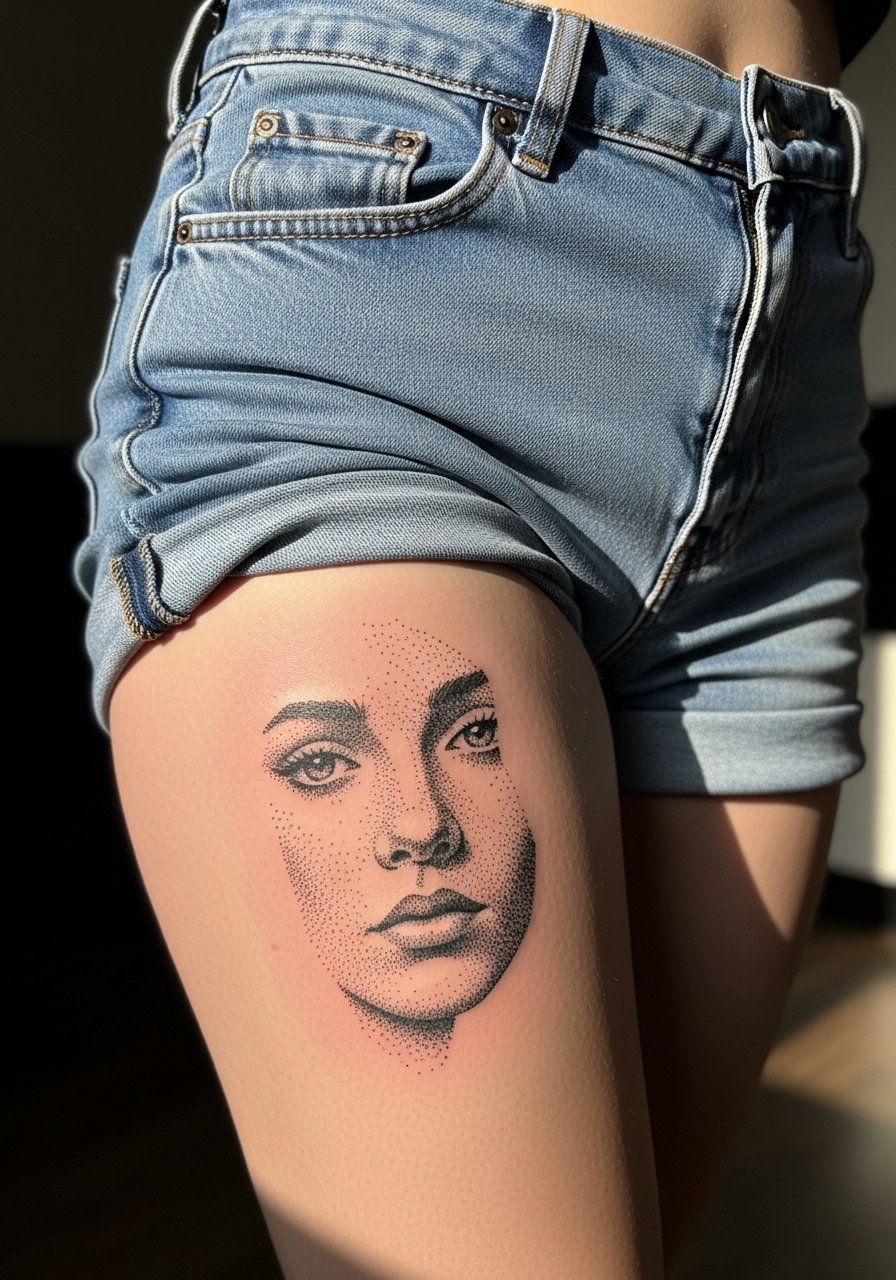
A small portrait fragment using stipple shading gives a textural look that holds differently than smooth gradients. This fragment approach is smart when you want portrait energy without committing to a full face. Ask for higher contrast around the fragment edge and for the stipple density to be tested on your skin tone. Sessions are shorter and pain is manageable on the front thigh. At five years the stipple still reads as texture if density was sufficient. Avoid asking for micro tonal blending that relies on low-contrast shades which vanish quickly.
Frequently Asked Questions
Q: Will fine line snake work on the inner thigh blur quickly?
A: It depends on spacing and the artist's approach. Fine line on inner thigh carries higher risk because of rubbing and sensitive skin. Ask for slightly stronger line weight and spacing during consultation and expect a touch-up around year two if you like the ultra-delicate look.
Q: How should I plan for weight changes if I want a floral outer-thigh piece?
A: Choose flowy elements, not tight portraiture. Vines, garlands, and neo-traditional florals tolerate stretching better than dense realism. Tell your artist you want margins for future additions and avoid tiny detail that compresses when skin shifts.
Q: Saniderm versus dry healing, which is better for thigh tattoos?
A: There are two clear camps. One camp prefers Saniderm for a sealed, low-mess window that reduces early infection risk. The other camp favours dry healing, saying natural scab formation can prevent milia and other issues. My advice is to ask the studio which method they trust and follow whichever they recommend for thigh-specific factors like sweat and friction.
Q: My skin is dark and I worry my thigh tattoo won't show in photos. What helps?
A: High-contrast blackwork and slightly bolder linework translate better in photos and in low light. Request stronger saturation and test a small patch if possible. Studio lighting also makes a difference when documenting healing progress.
Q: How painful is an inner-thigh session and what helps during longer sittings?
A: Inner-thigh sessions can spike into high pain near sensitive zones and bone proximity. Schedule shorter sittings, consider a topical numbing cream if the artist allows it, and hydrate and rest well beforehand.
Q: Do watercolor thigh pieces need different aftercare than traditional ones?
A: Watercolor styles often depend on lighter pigment layers, so preventing excess rubbing and sun exposure early is crucial. Follow the studio's guidance closely and avoid tight fabrics during the first two weeks to reduce pigment migration.
Q: Where can I find reliable artists who specialize in thigh work?
A: Search style-specific tags like #FineLineThigh and #BlackworkLegs, filter on artist directories by "thigh" + style, and check community threads on forums for recent guest spot recommendations.