Fine line cat outlines dominate feeds, but many people find them faded or too thin after a year, small session prices keep creeping up, and stencil misplacement or artist cancellations add real anxiety before the needle ever touches skin. This list balances current trends with practical picks and session tips that improve longevity, work across skin tones, and help you leave the chair confident about placement and line weight.
1. Minimalist single line cat silhouette on the wrist
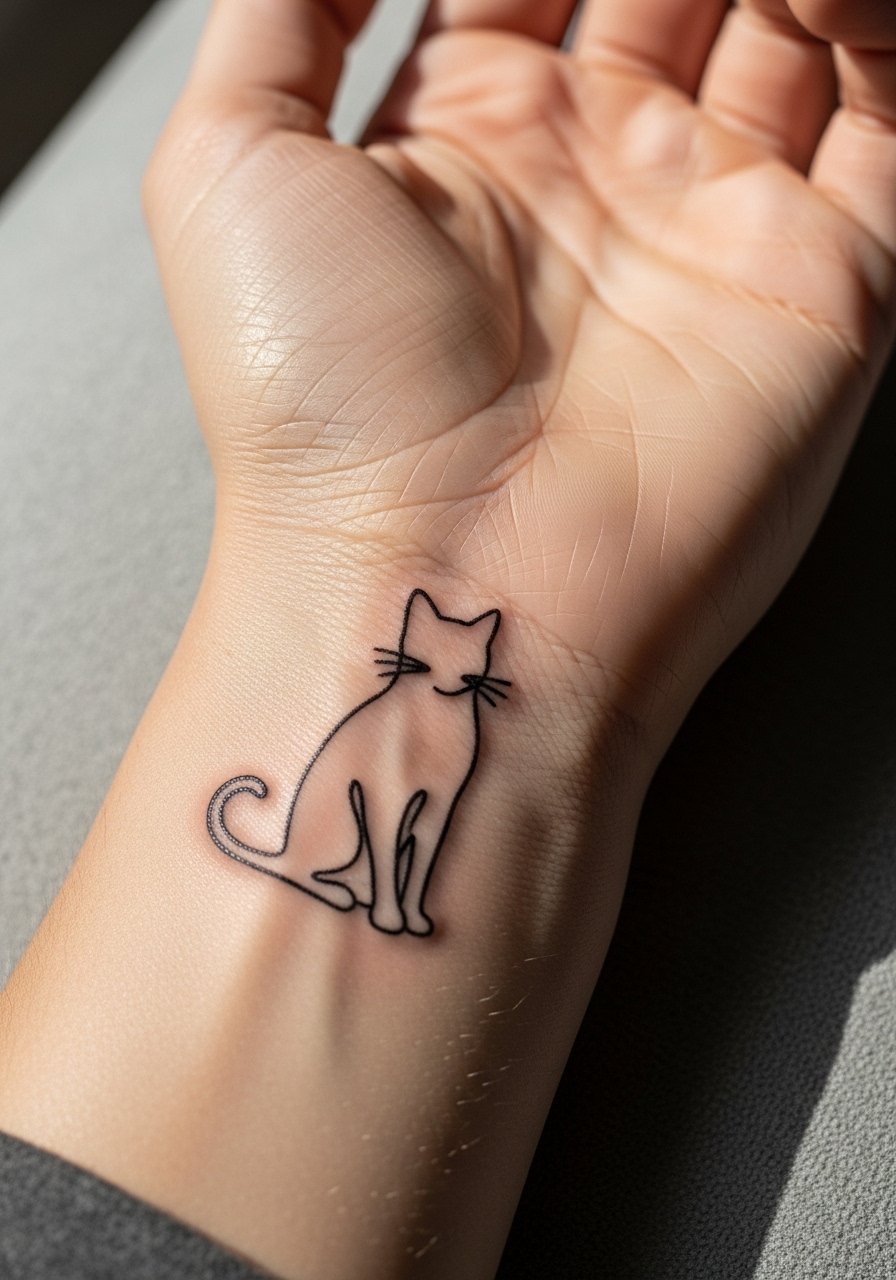
I recommend this when you want a tiny mark that reads as an everyday accent. Fair warning, wrists are high-friction and fine single needles can blur there, so ask your artist for a slightly thicker one- or two-point line to preserve the shape. The session is quick, often under 30 minutes, and pain sits low to medium. The common mistake is asking for the thinnest possible line without noting placement, which can end up smudged at year two. For the appointment wear a sleeveless linen tank so the artist can access the wrist easily, and show how you want the chain of the cat to sit against your bracelet line.
2. Fine line cat face profile with whiskers on the inner forearm
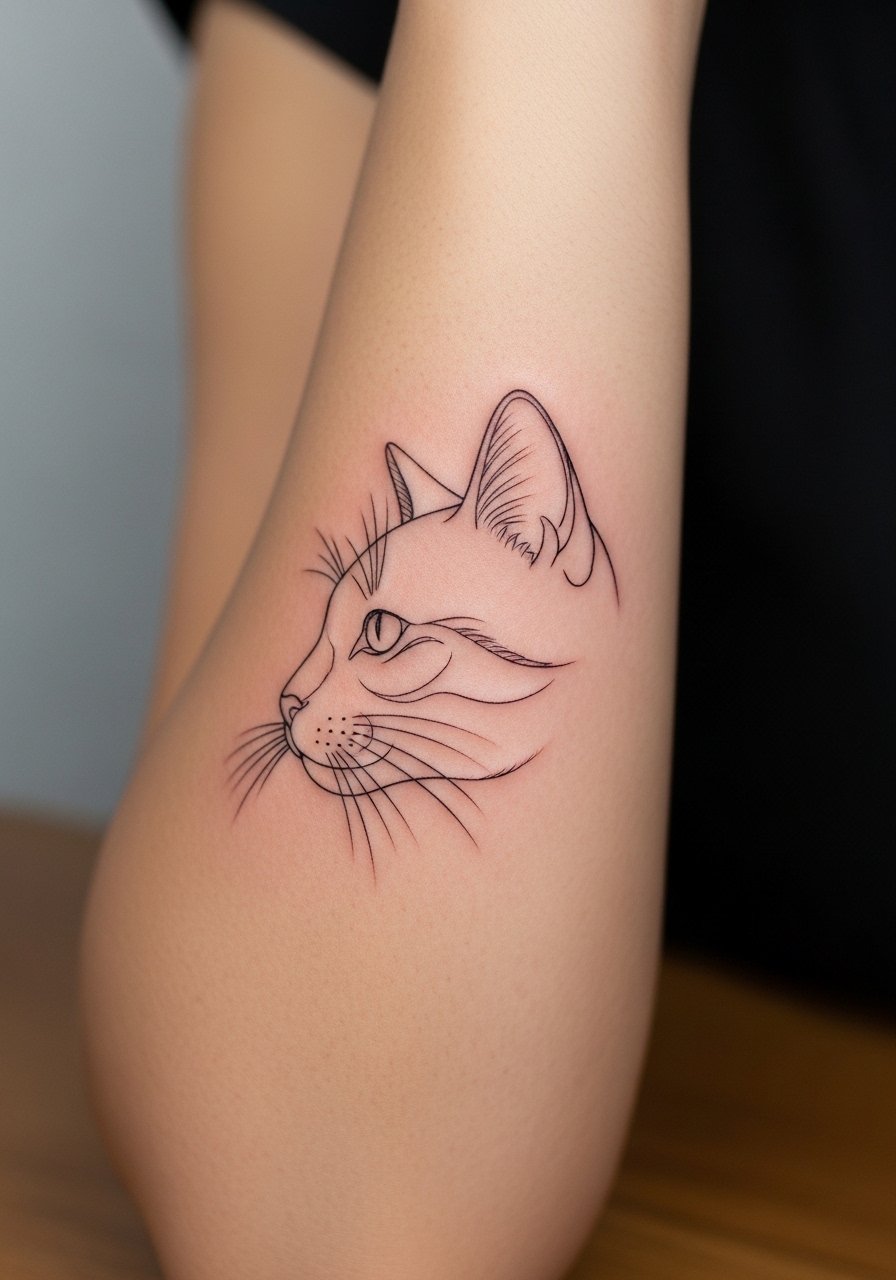
This one reads as personal and slightly architectural. The inner forearm gives room for whisker detail without crowding, but people often request single-needle hairlines too small for that spot. Tell the artist you want visible whiskers at six months and ask for reference photos scaled to two to three inches. Pain is mild and sessions usually take 30 to 60 minutes. Expect touch-up possibilities around year two for fine lines. For showing it off, roll up a linen button down shirt and wear stacked dainty rings to draw the eye without covering the piece.
3. Geometric cat outline in a triangle frame on the shoulder
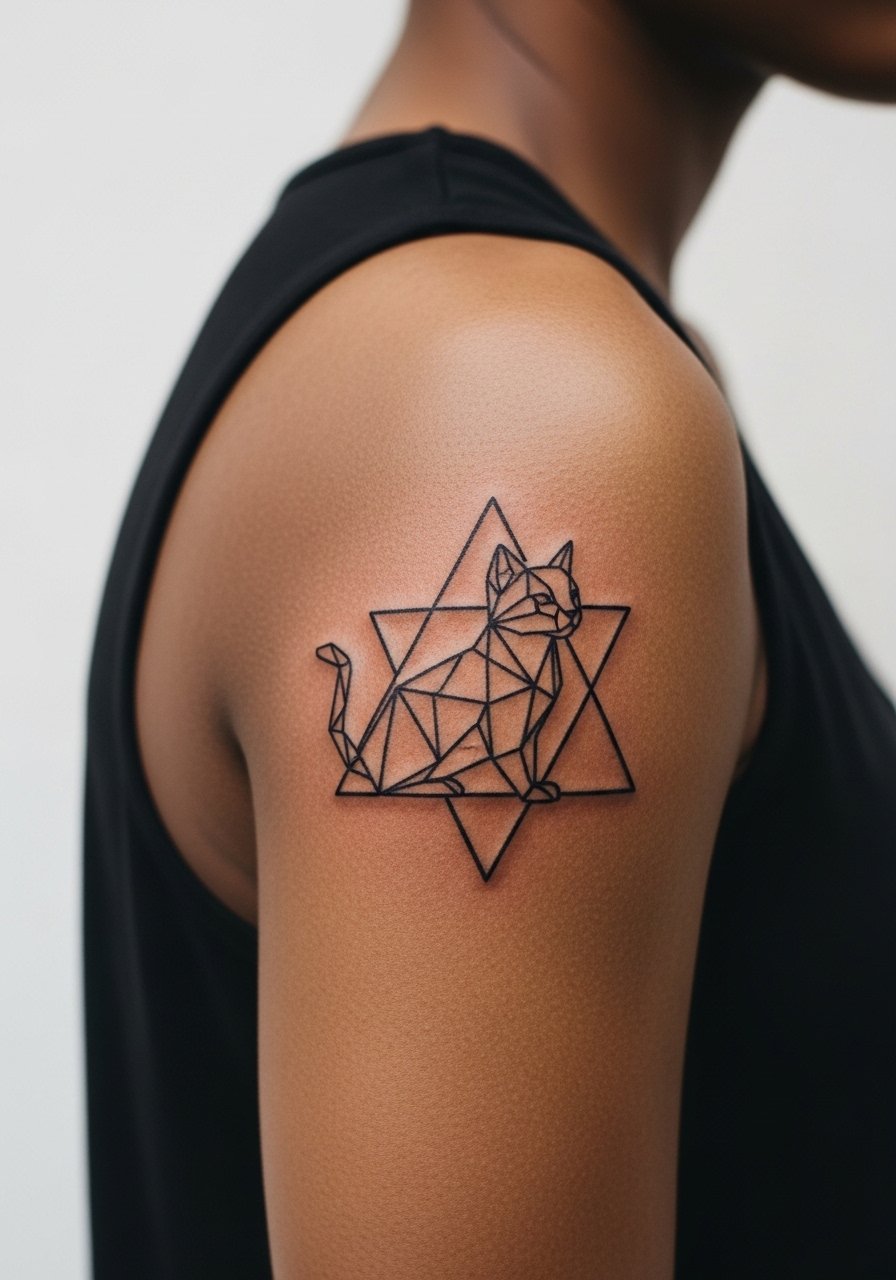
This design benefits from the shoulder's flat canvas and seasonal visibility. The biggest mistake is scaling the triangle too small. Geometric lines need breathing room so tight intersections do not merge as they age. On the shoulder the session feels breezy and usually finishes in about an hour. For longevity, request slightly increased spacing at intersections and ask how the artist staggers adjacent lines for contrast. Pair this placement with a sleeveless halter top to frame the angle when you want to show it off, and bring a loose button-down for the ride home.
4. Watercolor splash cat silhouette on the upper arm
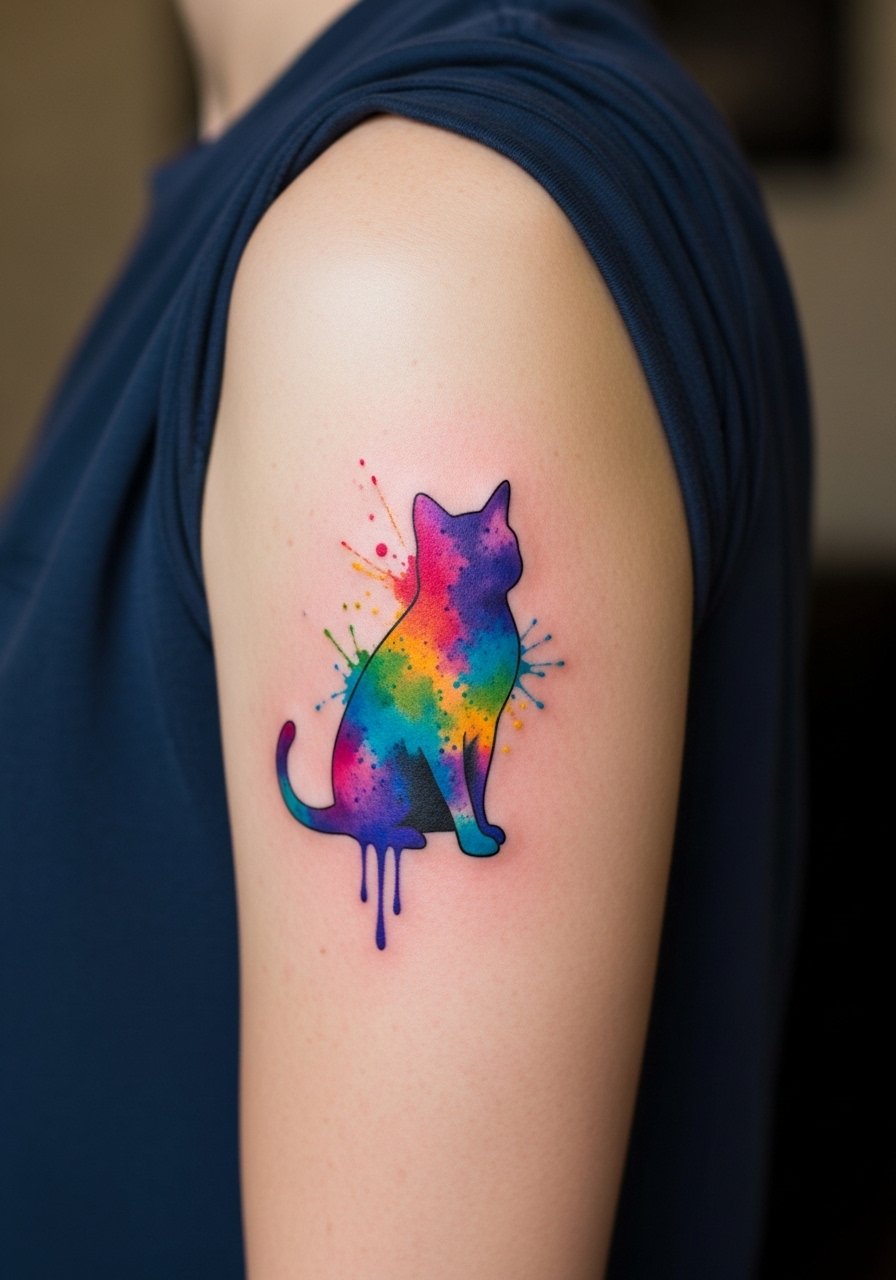
Watercolor accents give a dreamy quality, but they need more sessions and touch-ups than plain black outlines. The upper arm tolerates color well and heals with lower blowout risk than inner forearm. If longevity matters, ask for color placed as accents outside the main outline so touch-ups can be isolated. Sessions for this size usually run longer, often 60 to 90 minutes, and numb cream is common for color sessions. A common regret is asking for overly soft washes that vanish on darker skin tones, so specify pigment placement well. Expect to schedule color refresh at year two to three if you want saturation maintained.
5. Neo-traditional arched cat on the calf
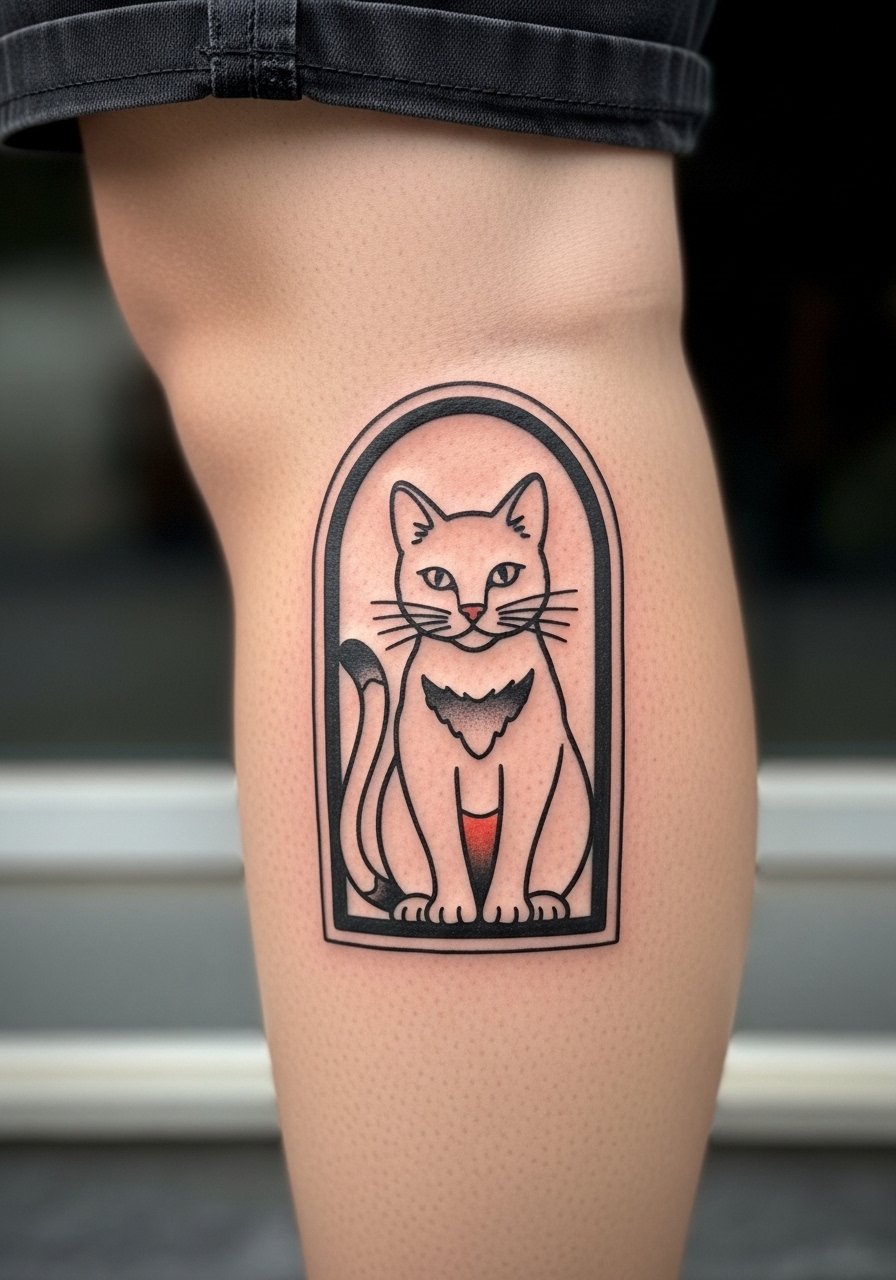
Calf pieces allow larger scale, which suits neo-traditional line weight and bold shapes. Pain is low to medium and sessions are comfortable for multi-session color work. Tell your artist you want exaggerated features and bold contour lines so the silhouette holds up as flesh shifts. A frequent mistake is packing too much small detail into a calf piece meant to read from a distance. For show-off pairing roll jeans and wear leather ankle boots or midi skirts that expose the curve of the calf. Expect touch-ups after a year if the design has fine interior details.
6. Micro cat outline paw print trail along the ankle
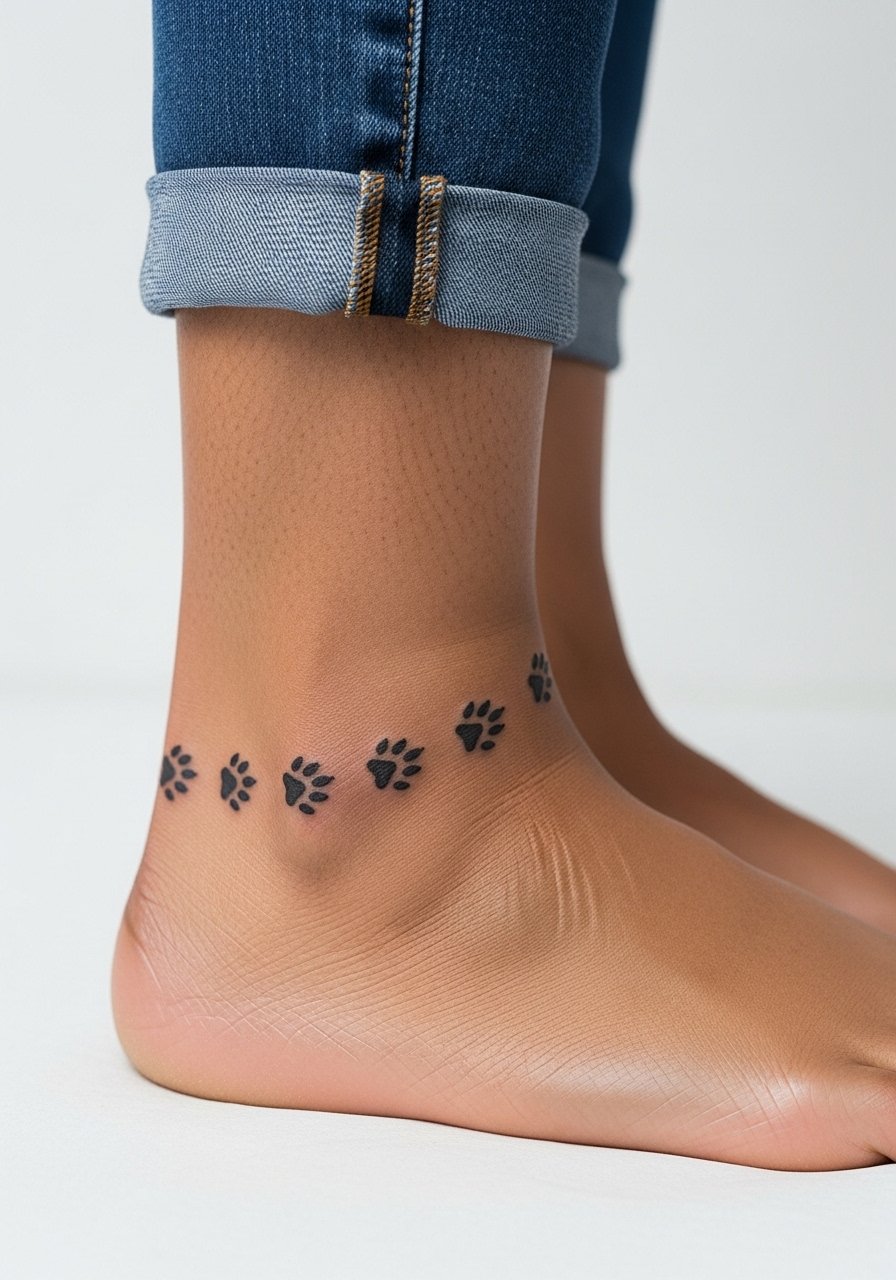
Micro paw trails are popular for first-timers who want discreet storytelling. The ankle endures a lot of friction, and tiny dots can fade quickly if placed on the outer ankle. Ask for consistent dot size and slightly bolder spacing to keep the trail readable. Sessions are very short, often under 20 minutes, but expect frequent touch-ups if wear is heavy. For the appointment wear loose pants you can roll up or throw on strappy sandals, and for showing it off pair the tattoo with a thin gold ankle chain so the trail sits in visual conversation with jewelry.
Pre-Session Essentials
The wrist and ankle pieces above heal differently from larger work, so a few small items smooth the session and the first week.
- Lush Tattoo Balm. A lighter balm some people prefer for outlines that helps avoid heavy white residue while keeping lines moisturized for the first nights.
- Manuka honey salve. Natural antibacterial properties make this a gentle option for delicate fine line zones like the wrist and ankle.
- Indie Ink Fix balm. Thinner formula that artists mention when discussing small touch-ups and helping faded lines settle after a year.
- Tea tree tattoo aftercare spray. Useful for cleansing high-friction spots such as the ankle trail where buildup can affect small lines.
- Fragrance free CeraVe healing ointment. A mainstream, thinner alternative to heavy greases that many recommend for initial moisture on outline work.
7. Ornamental cat mandala outline on the back
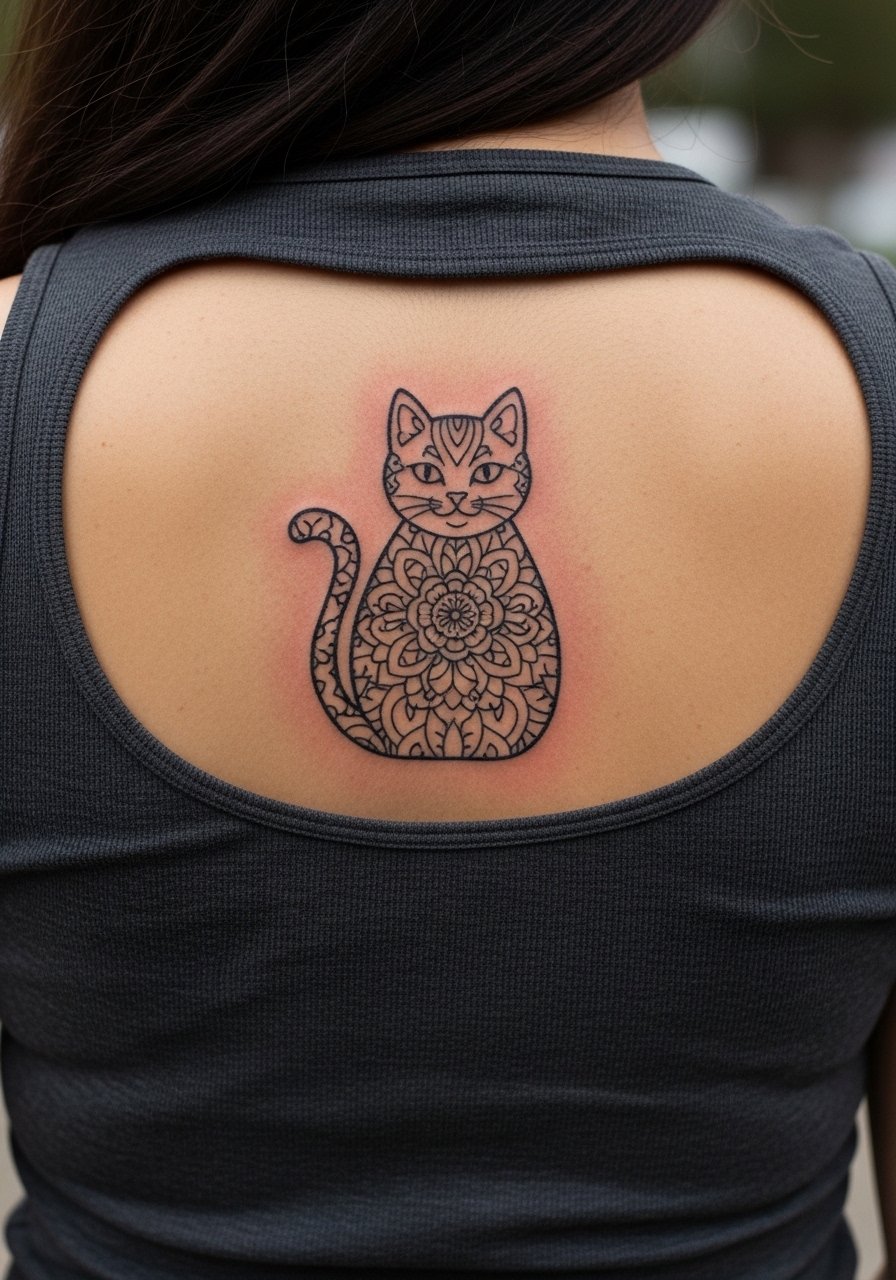
Large ornamental cats with mandala fills look meditative on the back but require careful spacing. The common error is cramming too many fine petals into a small area, which leads to softening after a couple of years. On the back you can scale up to let stipple and dot work breathe, and sessions will likely be multiple sittings. Pain varies but is generally tolerable since the back has thicker skin away from the spine. Ask for clear map lines and approve the stencil twice before inking. If the design draws from cultural patterns, mention you want respectful variations rather than direct replicas.
8. Ignorant style chunky cat outline on the thigh
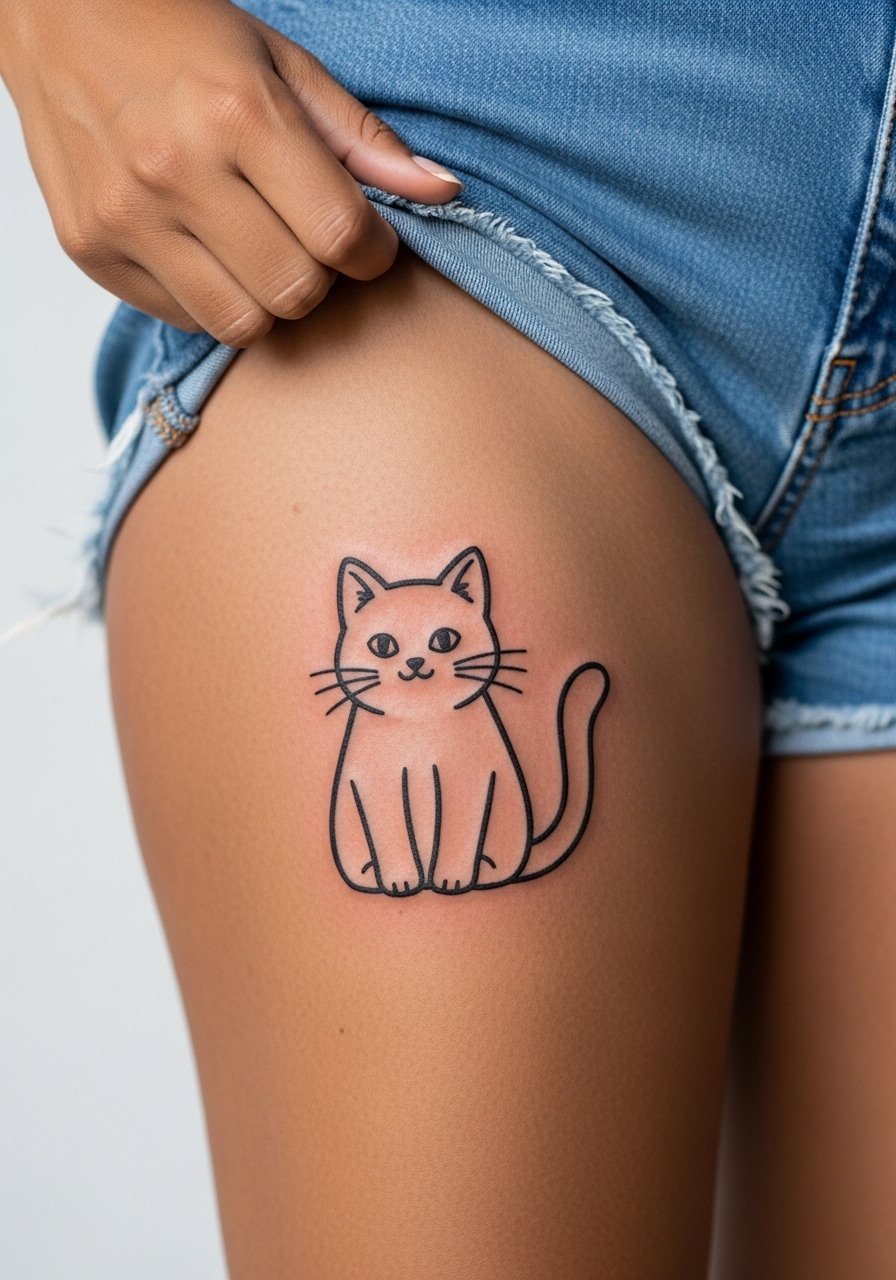
Ignorant style fixes a big complaint about fine lines on darker skin by using thick, punchy strokes that age with less fuss. The thigh tolerates heavier linework with minimal blowout and low pain compared with bony areas. If you want the cartoonish charm, ask for uniform line weight and solid inky edges so the silhouette reads well after years. These sessions are short but can be paired with a larger piece in one sitting. For wearing and showing it off, high-waisted shorts or a belt chain accessory give the placement a modern edge.
9. Blackwork cat in negative space on the collarbone
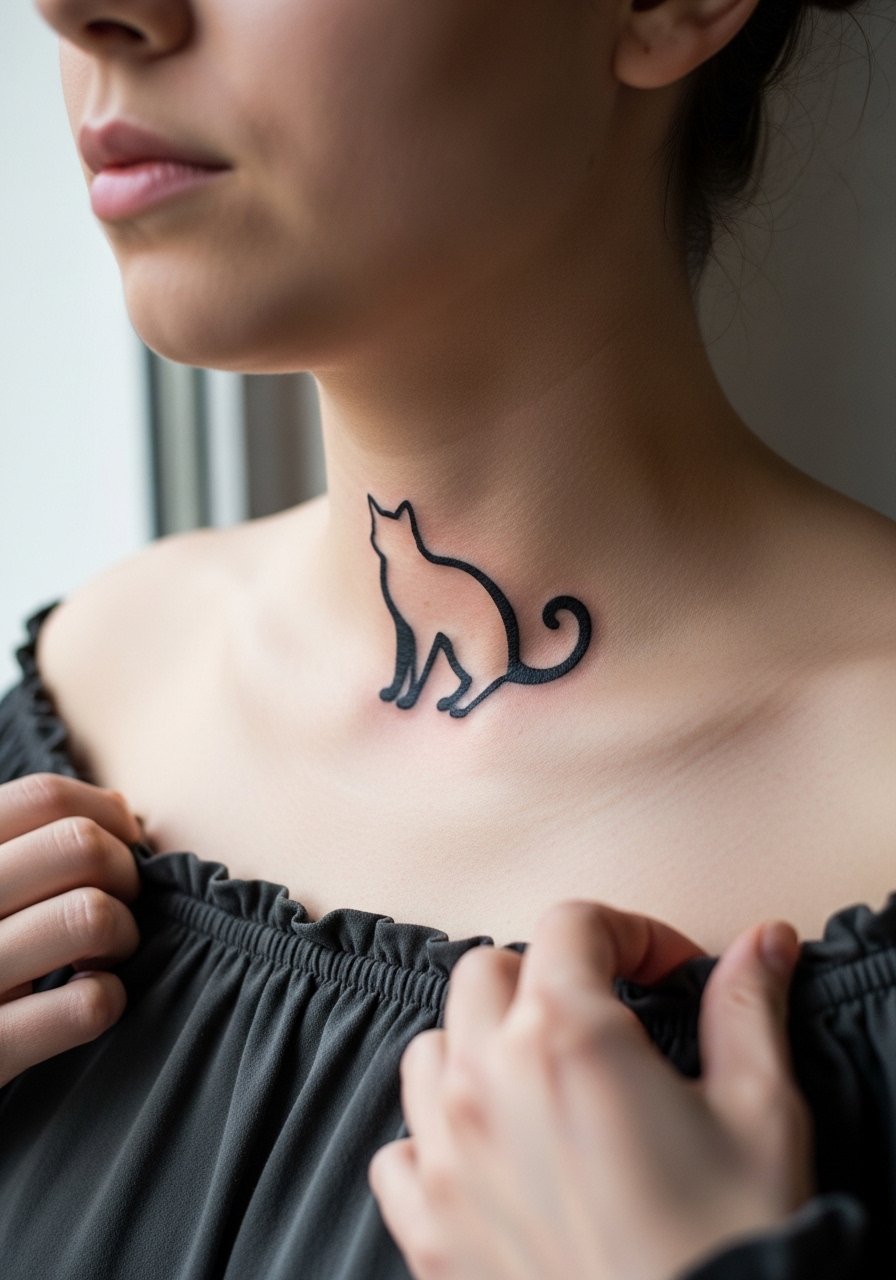
Negative space blackwork gives dramatic contrast and generally ages well because the solid fill resists fading more than fine whiskers. Collarbone placements risk distortion with frequent sun exposure, so plan for strong SPF protection early on. The session usually takes an hour or two because of solid fills. The mistake is asking for tiny negative shapes within a high-motion zone, which can bleed together as skin stretches. For style pairing, an off shoulder blouse frames the negative silhouette and a long pendant necklace balances the visual line.
10. Traditional American cat sailor outline on the outer forearm
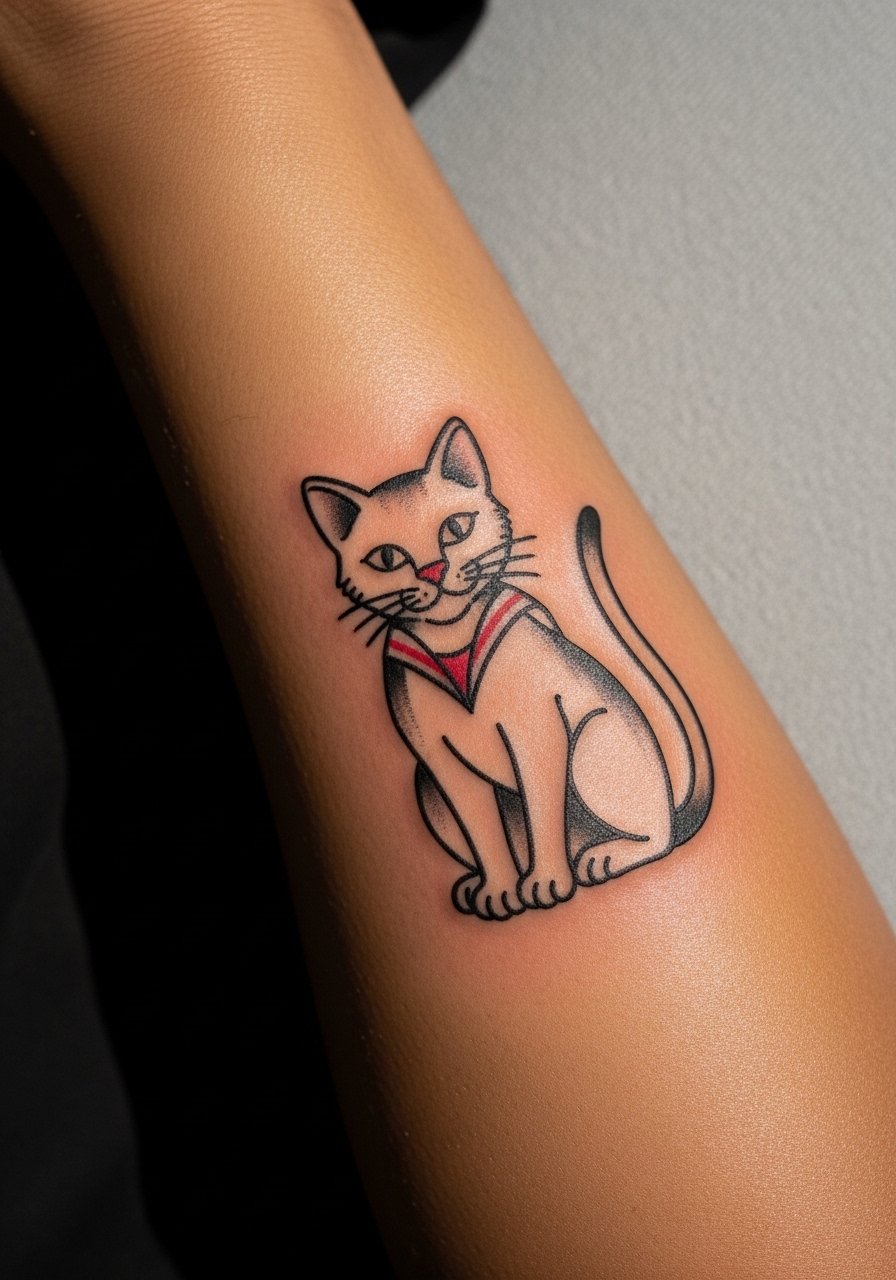
Classic sailor flash columns tend to age with character because of saturated black outlines and controlled color. Outer forearm is forgiving and lets the design read across shirtsleeves. The session usually spans one to two hours for line and color. The common misstep is shrinking traditional motifs too small; that reduces bold contrast and invites early fading. If you want longevity ask for slightly heavier outer linework and clear color blocking. Expect a touch-up window around year two if you live in sunny climates.
11. Dotwork cat outline with starry eyes on the side neck
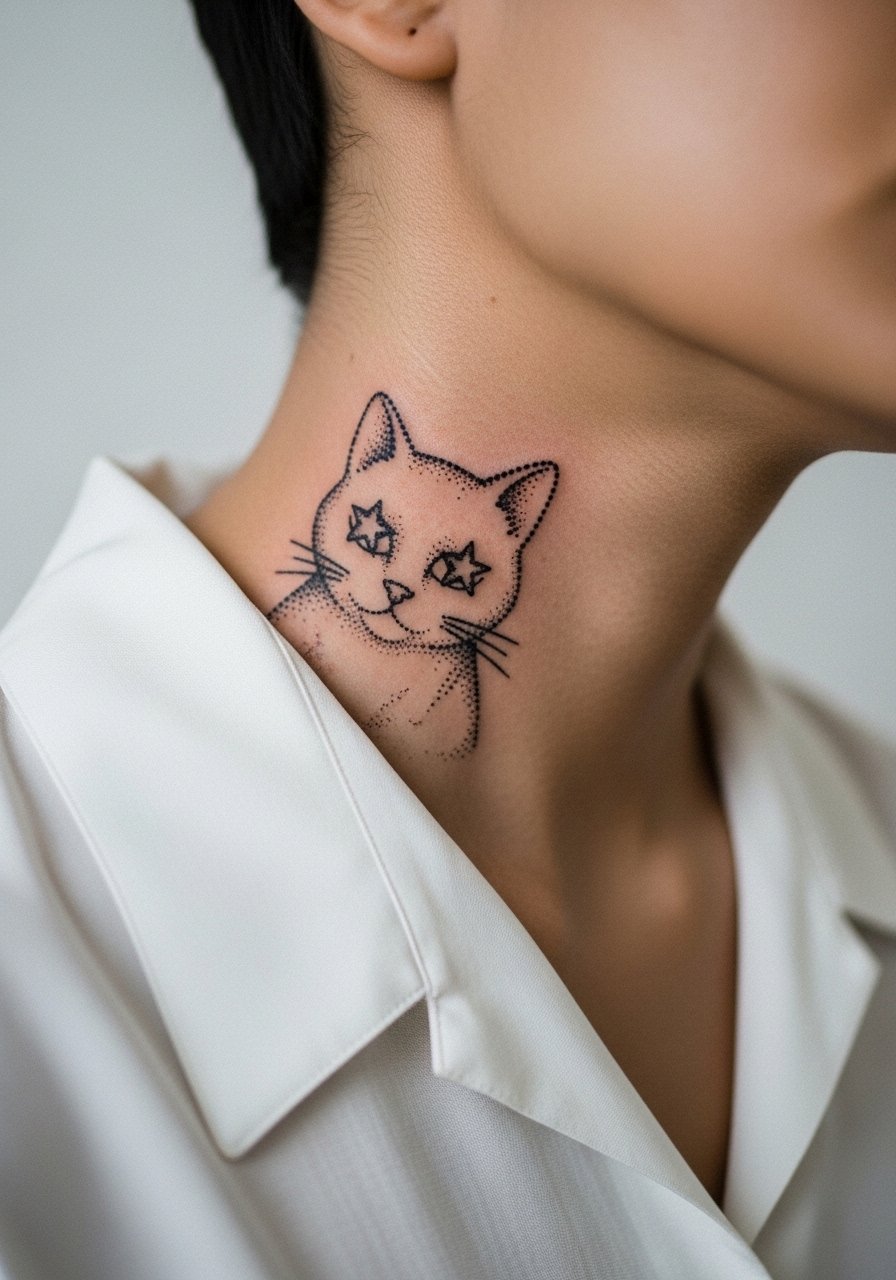
Neck placements demand caution because they are exposed and can affect professional settings. Dotwork yields hypnotic texture but needs careful spacing so dots do not merge over time. This design typically takes longer for shading and sits in the medium pain range for that location. Artists debate small dot density on thin neck skin, with some preferring lighter stipple and others packing more contrast. Mention how visible you want it at six months and discuss workplace considerations before booking.
12. Line art cat curled in a circle at the ankle
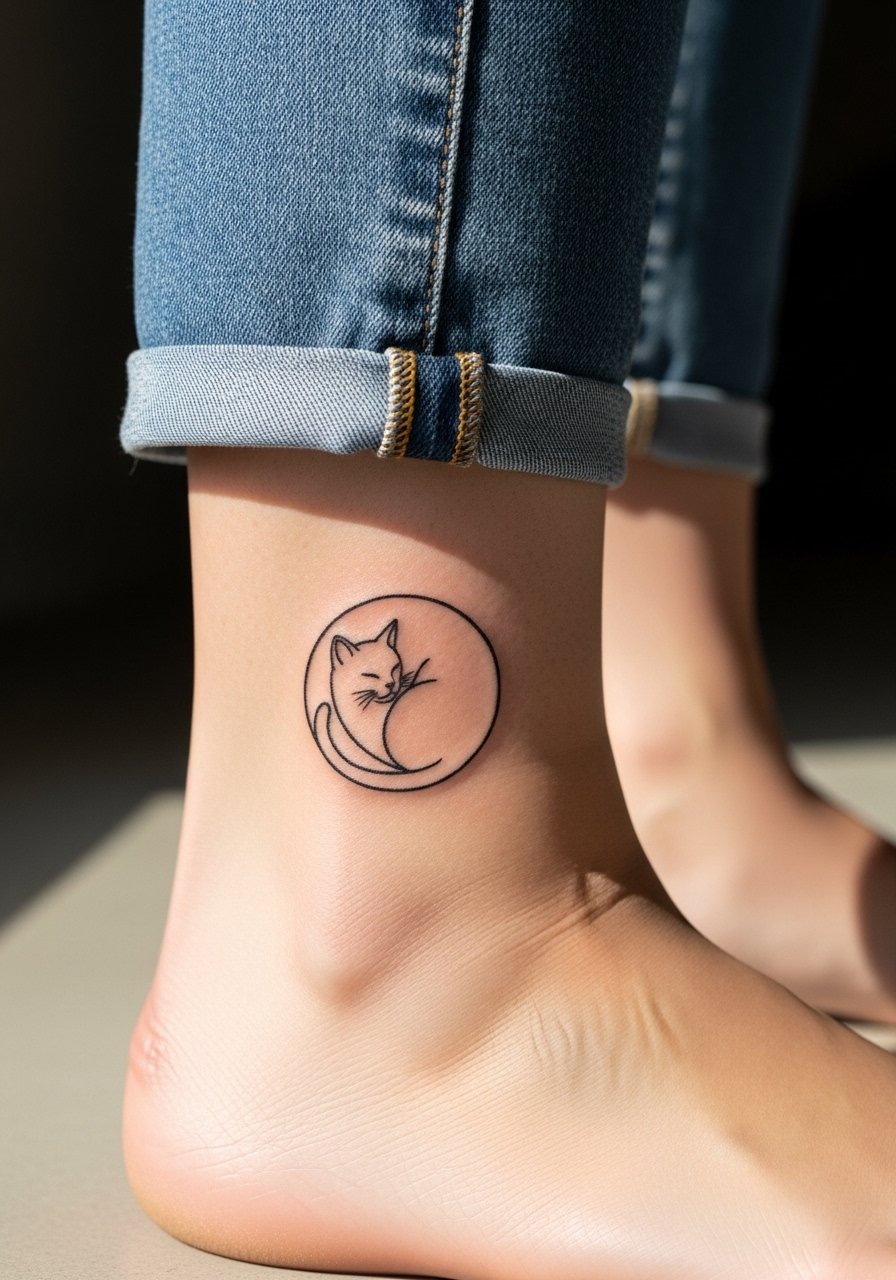
A circular curled cat reads as a compact emblem and the ankle is perfect for a small loop that sits with your shoes. Because the ankle gets lots of washing and rubbing, avoid ultra-thin single-needle work there. Ask the artist to balance line thickness for longevity and expect a quick 20 to 40 minute session. For showing it off pair with strappy flat sandals or cropped jeans so the circle sits in the negative space the footwear creates.
13. Asymmetrical floppy-ear cat outline behind the ear
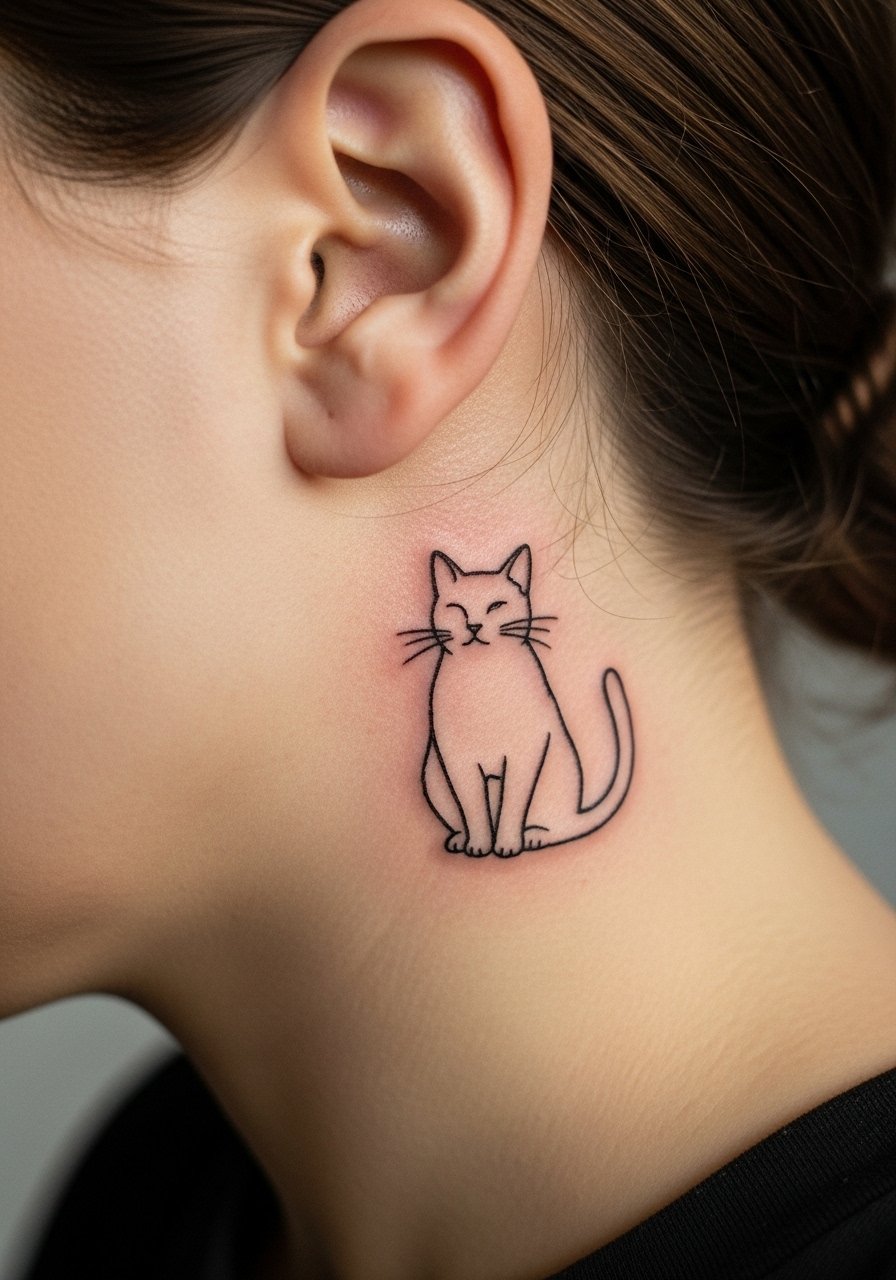
Tiny quirks like a single floppy ear give personality in a compact spot. Behind-the-ear placement is discreet and heals quickly but requires the hairline to be managed during the session. Because the area is small, ask for a confident single-contour line so the outline keeps character as it settles. This is a soft-pain zone and a short session. Remember the hair will cover it often, so consider visibility before committing.
14. Birthstone dot accent on a minimal wrist outline
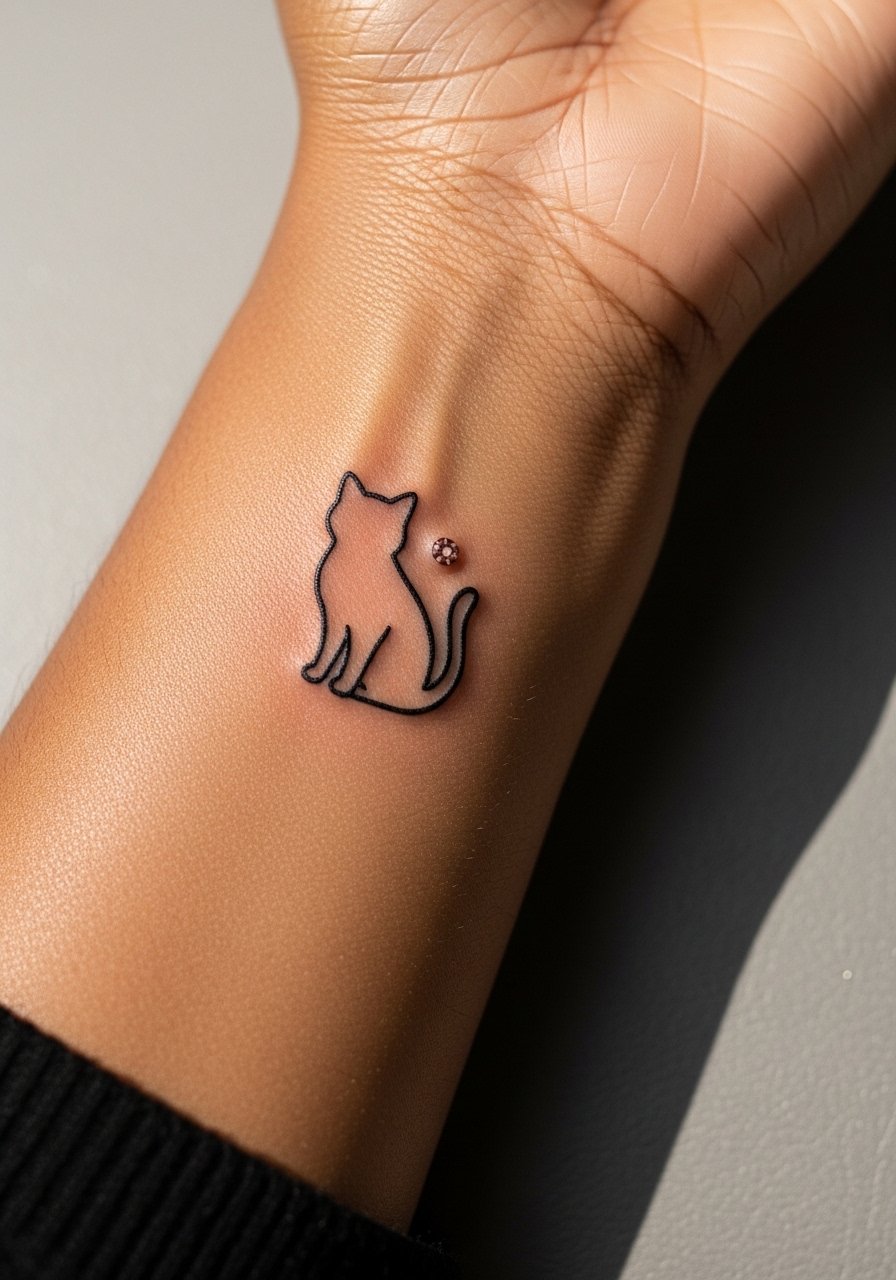
A single birthstone dot adds color without committing to full watercolor, and it helps certain skin tones by creating a focal point. For wrists choose pigment placed just off the main outline so touch-ups can target the color independently. Keep needle paths simple and request a small but saturated dot so the color reads over time. The session is short and comfort is mild. For showing, stack with a thin silver chain bracelet to echo the tiny dot without crowding the design.
15. Negative space cat with moon phases on the ribcage
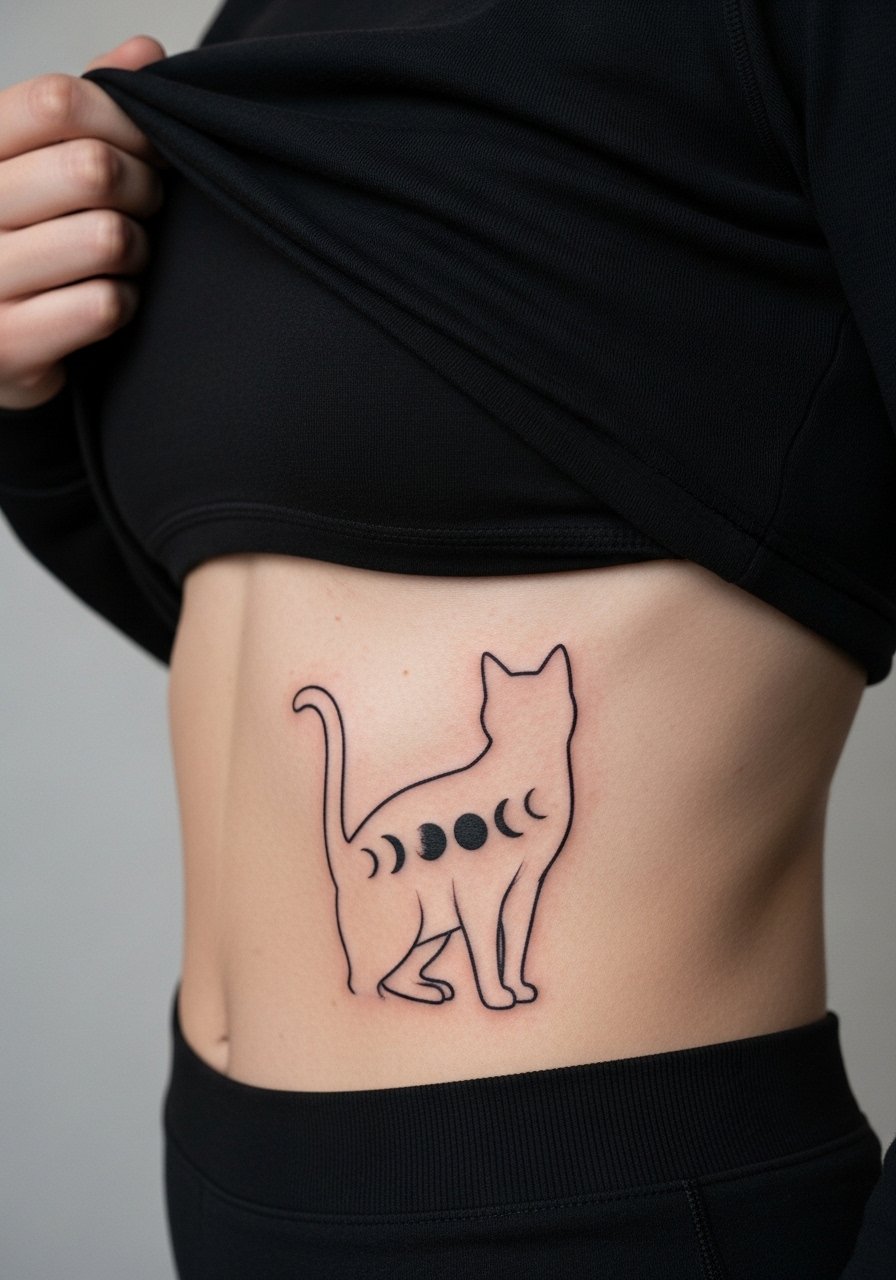
Ribcage placements give dramatic canvas for negative space elements but they come with higher pain and stretch concerns. Artists split on fine line on ribs. One camp says the skin there moves and blurs delicate lines within two years. The other camp argues that with precise depth and spacing fine line settles fine. Ask the artist which camp they sit with and request spacing that accounts for breathing and movement. This piece often needs a longer session and a possible touch-up after major weight or body changes.
16. Scalable cat outline for patchwork sleeves on the upper arm
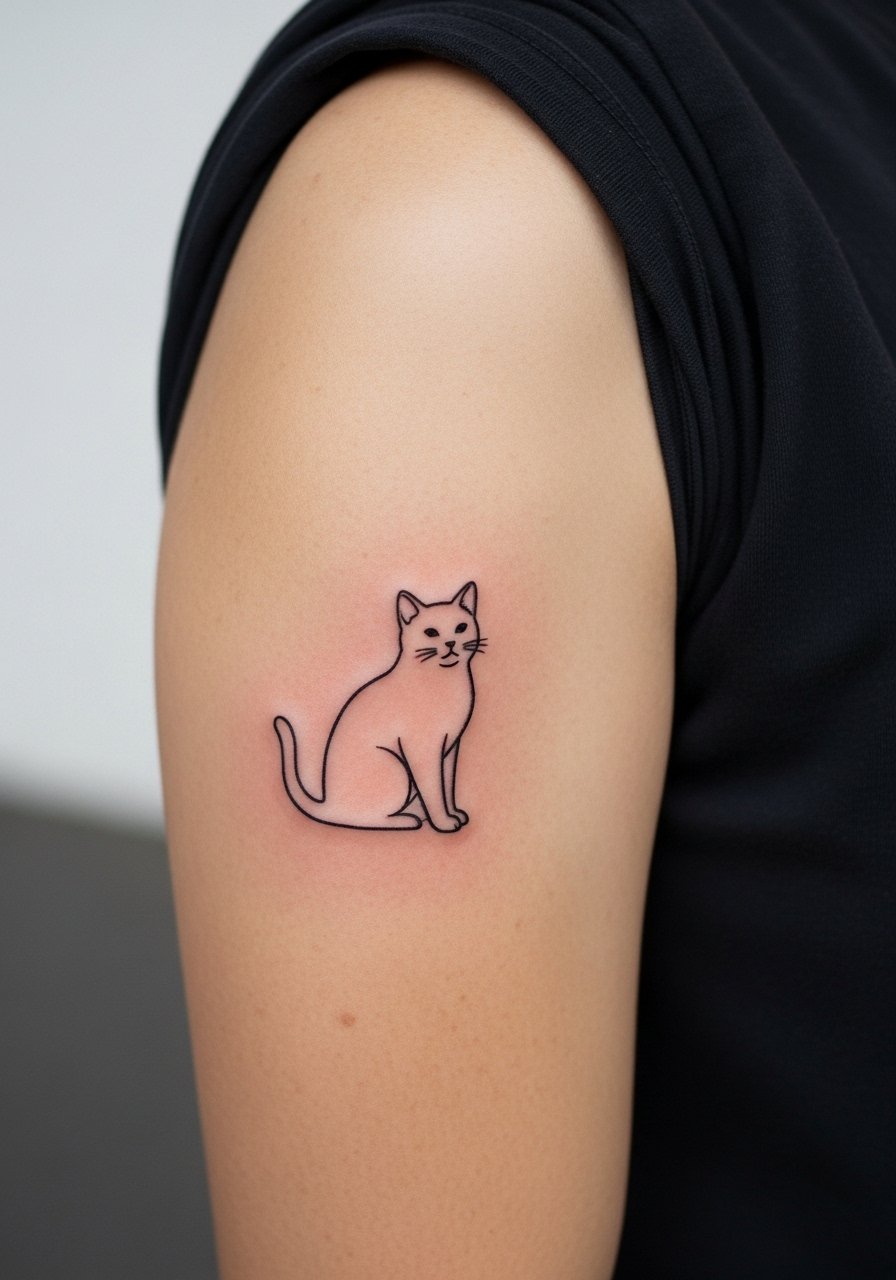
Designed to grow, these small outlines act as starter flash for a sleeve. The key is consistent scale and confident line weight so later pieces can match. Avoid asking for ultra-fine lines if you plan to add bold elements later. Sessions are quick and healing tends to be straightforward. Tell your artist you want alignment points for future pieces and get the stencil placed exactly where arm movement looks natural. Expect touch-ups as new surrounding work settles into the sleeve.
17. Micro paw constellation along the spine
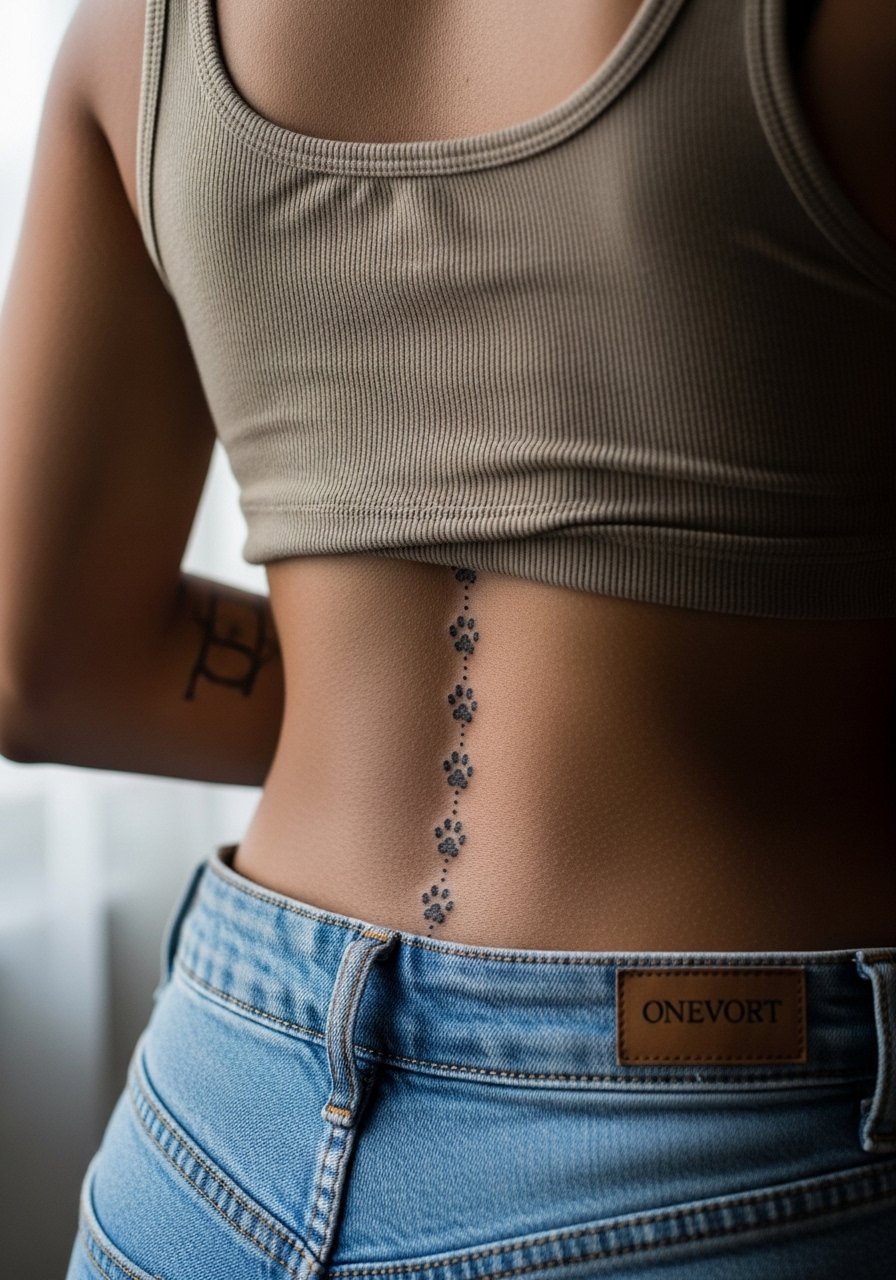
Placing micro paw constellations along the lower spine creates a vertical travel of tiny marks. The lower back tolerates small clusters but friction from waistbands can wear dots faster. Ask for dot spacing that accounts for daily movement and avoid placing the densest dots where belts or waistbands will rub. Sessions are short but expect periodic touch-ups if clothing sits directly over the area. If career considerations matter, know this placement is easily hidden under clothing.
Frequently Asked Questions
Q: Will a fine line cat outline show up well on darker skin tones?
A: Fine line can read beautifully on darker skin, but in my experience you may need slightly bolder line weight or strategically placed color accents to maintain contrast over time. If longevity is important, discuss thicker single-pass lines or a small negative space element with your artist.
Q: How often do these small cat outlines need touch-ups?
A: For most small outlines expect a possible touch-up around year one to three depending on placement, sun exposure, and skin type. High-friction areas like wrists and ankles usually need attention sooner, while blackwork negatives and thigh pieces often hold longer.
Q: Do artists prefer Saniderm or dry healing for outline tattoos?
A: Artists split into two camps. One favors Saniderm for moist coverage and a faster initial heal, the other prefers dry healing to avoid maceration. Ask your artist which method they use and why, then follow their protocol for the cleanest line retention.
Q: What should I wear to a collarbone or upper chest session?
A: For collarbone work wear an off shoulder blouse or a wide-neck top you can easily pull aside so the artist has clear access without you getting chilled. Comfort during the session keeps your body relaxed and the stencil stable.
Q: Are tiny paw print trails harder to keep sharp than single silhouette cats?
A: Tiny paw prints live in high-wear zones and require disciplined spacing and slightly bolder dots to remain distinct. Single silhouettes with clean contour lines usually age more predictably, but both can be made to last with proper placement and occasional touch-ups.