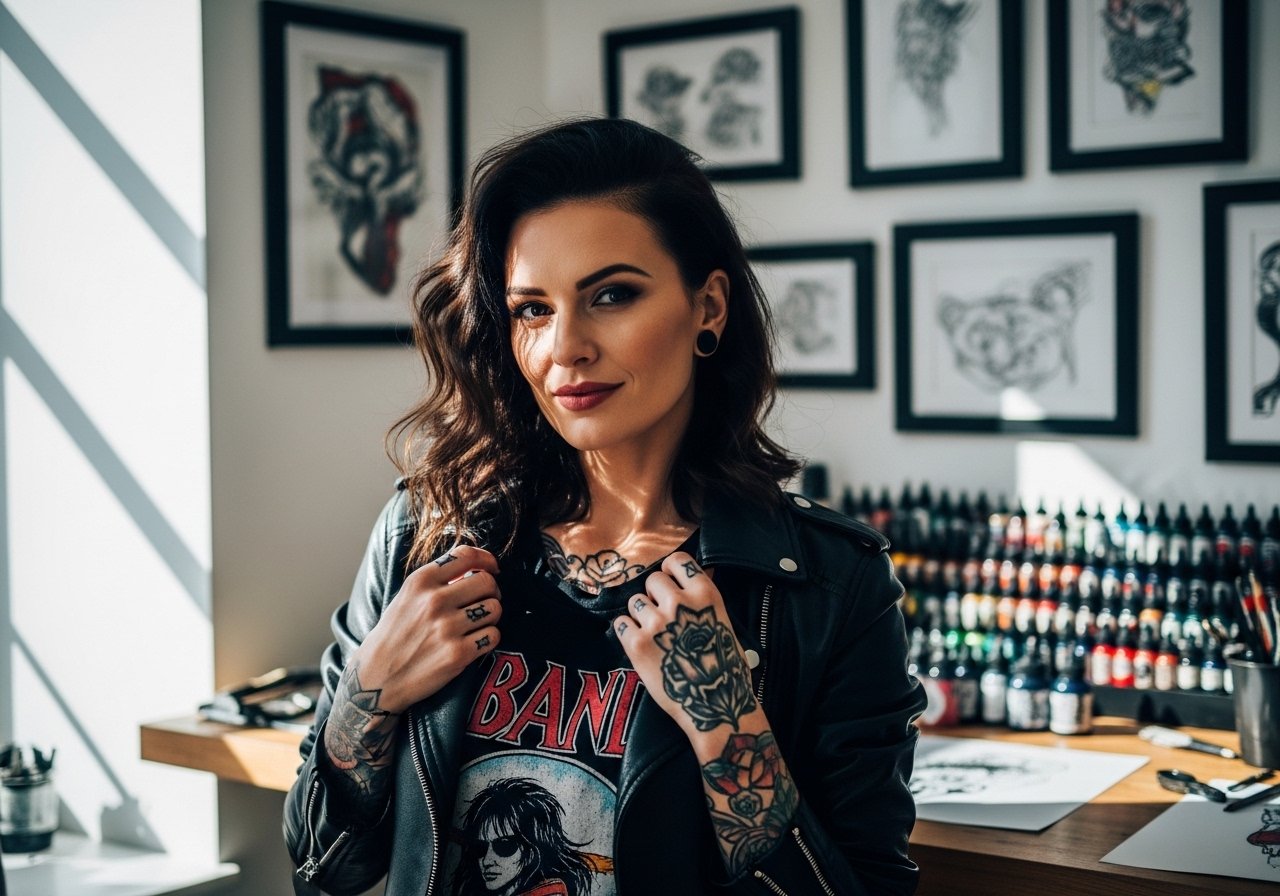
Fine line wings dominate saved Pinterest boards, while a lot of what trends online does not hold up on fingers. Tiny tattoos on knuckles and sides rub against rings, soap, and keyboards every day, and that reality changes how a wing should be drawn. Read these specific finger-friendly wing ideas, what to ask your artist, and which styling choices actually help the design age clean.
1. Minimalist single angel wing outline on side finger
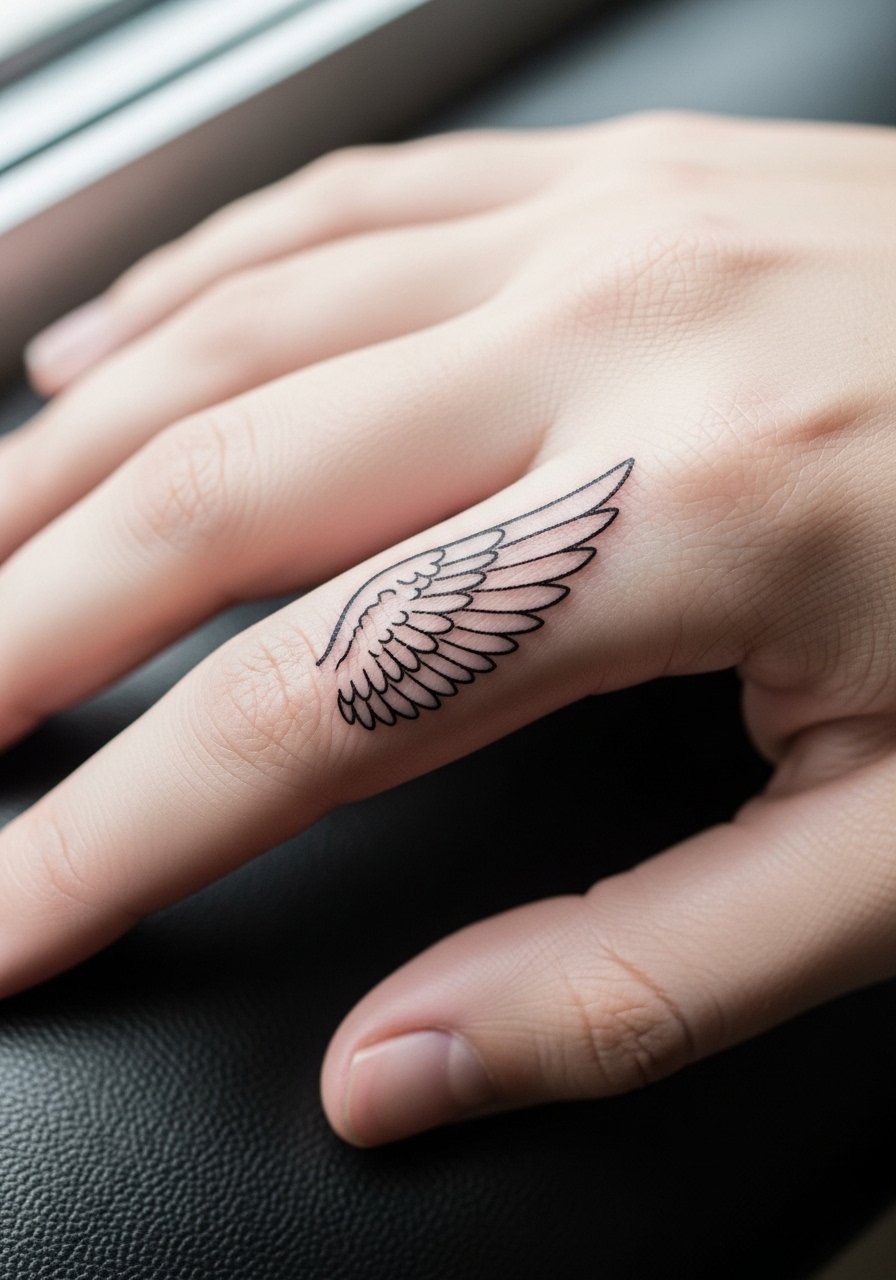
I see this exact tiny side-finger wing in consultations all the time because it reads private but visible when you want it to. Tell your artist you want a single continuous 0.8–1.2 mm line weight so the outline retains contrast without losing the feather suggestion. Fair warning about aging. Fine line fans say careful depth and spacing keeps these readable for up to two years. Other artists argue the fingers wear them down faster and recommend a slightly thicker outline that still looks neat. Ask about touch-up timelines and plan for one at year two. For the session, expect a short 20–30 minute appointment and a sharp 6 out of 10 pain over bone. For showing it off, pair with a thin silver ring stack on the adjacent finger to frame the wing.
2. Fine line paired angel wings on ring finger
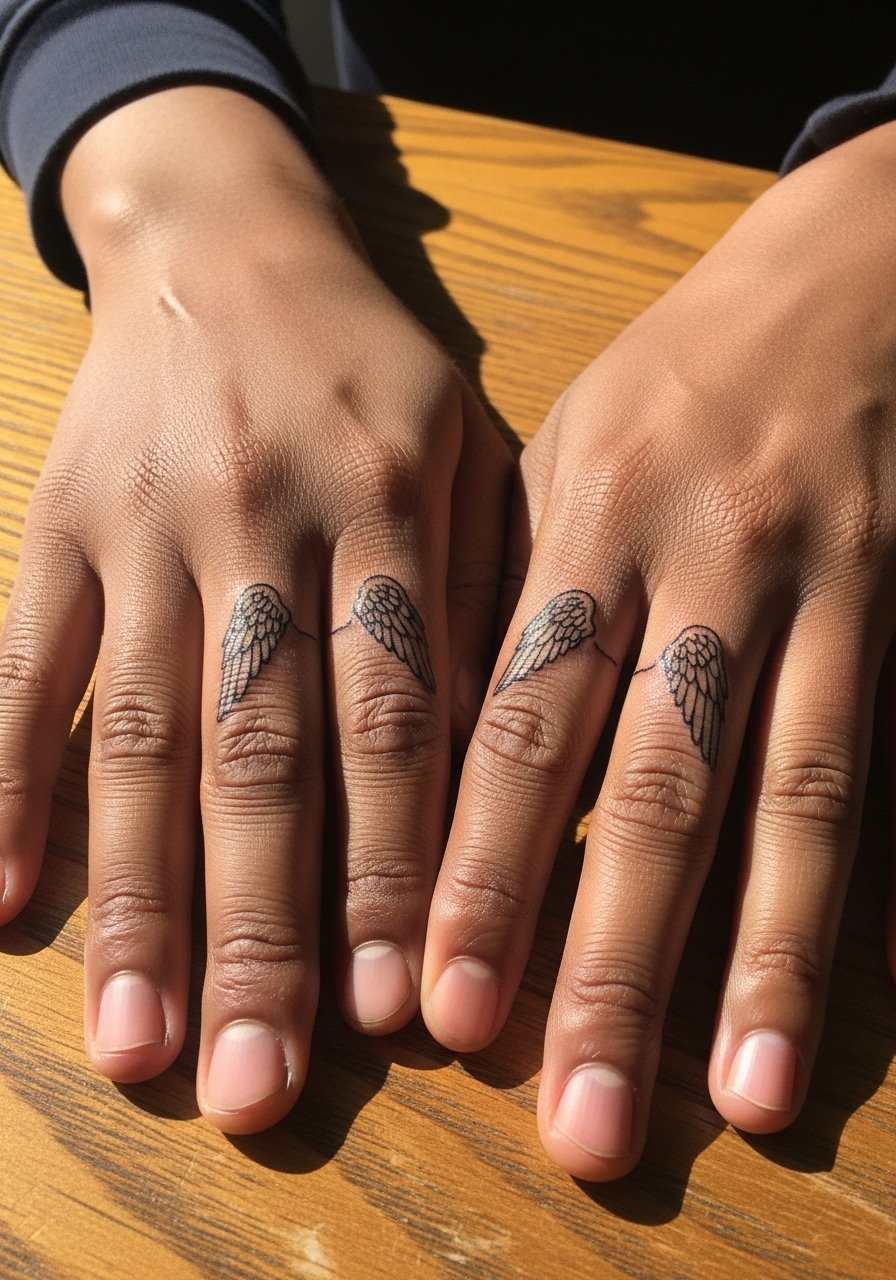
When people want symmetry for couples or matching pieces, the ring finger gives a centered placement that reads like a deliberate pair. In consultation, bring mirror photos showing exact spacing so the wings sit opposite each other when hands are relaxed. The common mistake is going too tall, which crowds knuckle creases and accelerates blur. I recommend 1.2–1.6 cm height and ask the artist to keep feather gaps open instead of packed stippling. Pain is moderate since the ring finger is bony. Expect a touch-up sooner than on the forearm. For booking, search local guest-spot calendars and hashtags like #FingerWingTattoo to find portfolios that show healed ring-finger results. Note that artists split on fine line here. One camp says careful depth keeps lines intact for one to two years. The other camp prefers stronger outlines from the start to avoid early touch-ups.
3. Micro-realism feather wing at the thumb base
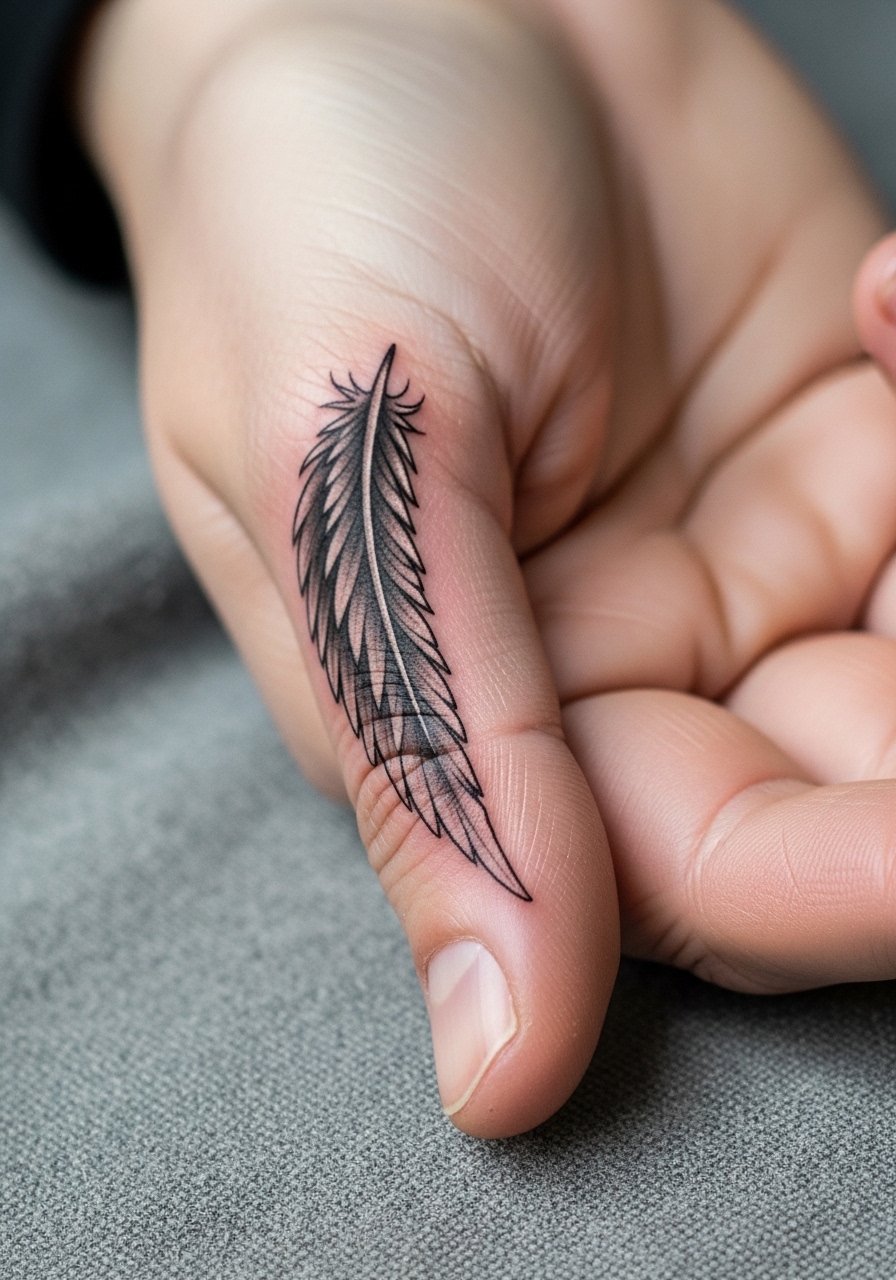
Fair warning, the thumb base gives more real estate but also more friction from gripping. I recommend micro-realism only if your artist has small-scale feather references in their healed portfolio. Ask for black and gray shading with stipple transitions rather than wet gradients, because stipple ages cleaner on fingers. The session usually runs 30–45 minutes and the pain sits around 6 of 10. Common mistakes include asking for too much contrast that ends up scabbing heavy and losing detail. For longevity, expect the delicate barbs to soften by year two and require a targeted touch-up. For evening outfits, leather cuff bracelets draw the eye up from the wrist to the thumb base. Try pairing the piece with a leather cuff bracelet when you want it noticed.
4. Blackwork geometric wing on index finger
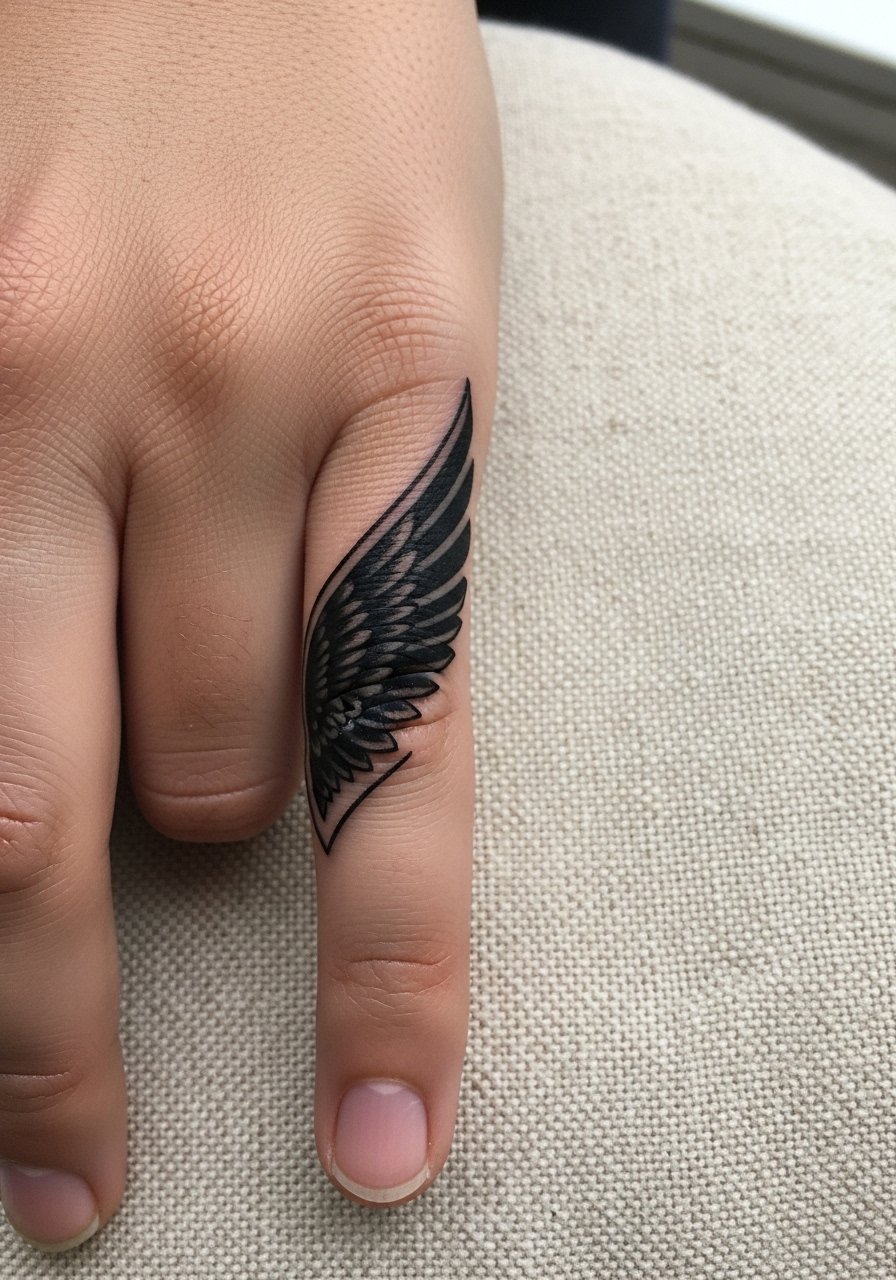
There's a good reason people pick blackwork for fingers. Solid saturation survives abrasion better than hairline shading. If you like the geometric edge, tell your artist you want clear negative space between shapes so the design keeps its geometry as it heals. The biggest aging issue is fill density. Too much packed black in tiny blocks can migrate, while too little creates patchy wear. Pain is sharp but short for index work, and sessions tend to be under 40 minutes. For outfits, chunky neck jewelry and linen shirts in neutral tones pair well, so try a linen camp shirt with warm metals for balance. Note the debate about fine line versus blackwork on fingers. Some artists will always steer clients to saturated black for longevity. Others will do fine line if spacing and needle depth are dialed in.
5. Dotwork angel wing on pinky finger
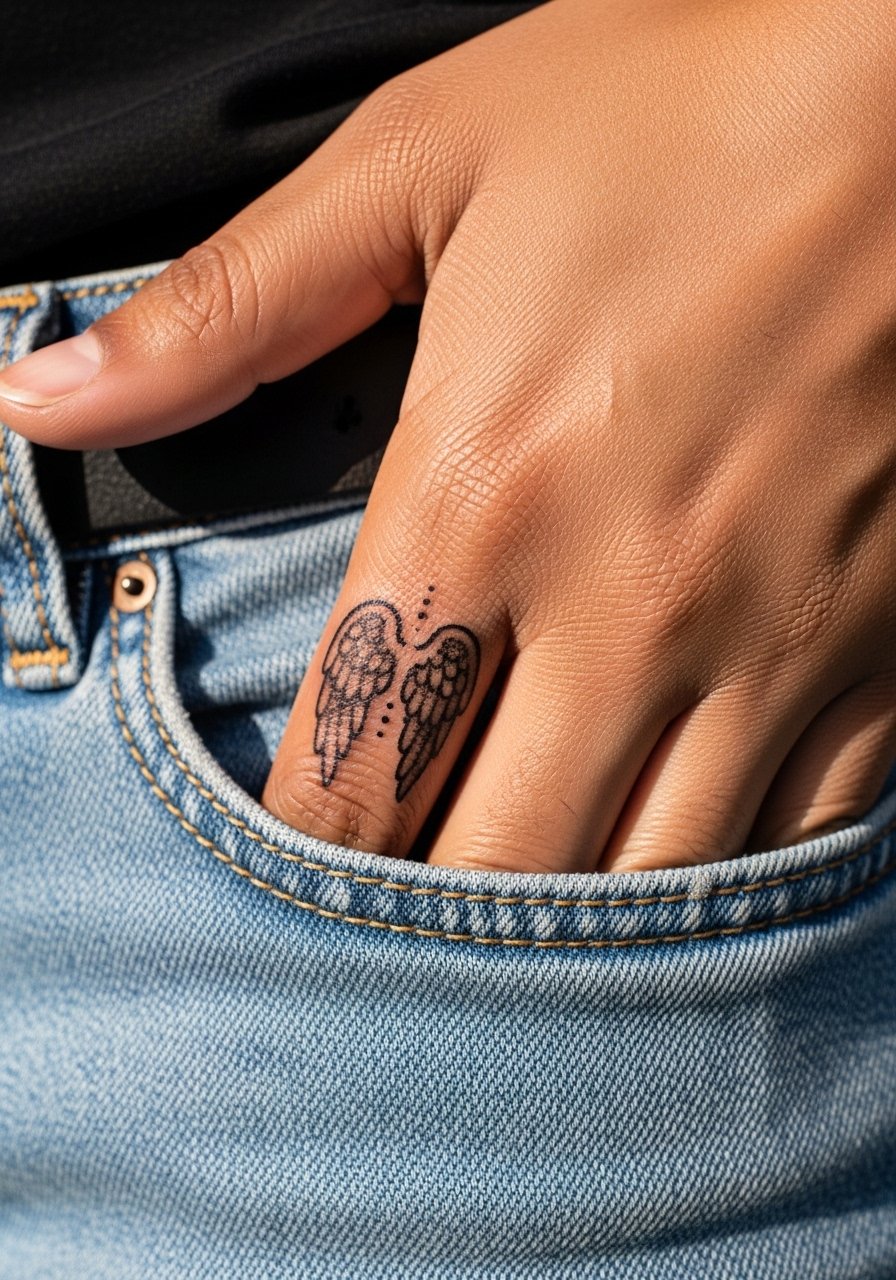
The pinky is surprisingly resilient when done with dotwork because the stippling breathes and spreads less than long strokes. The session is quick and the pain is moderate. Tell your artist to use scattered dot density rather than continuous gray wash so the wing keeps its meditative texture at six months and beyond. A common mistake is trying to compress too many feather details into a 1 cm space. Expect the soft stipple to fade subtly by year two and need a light touch-up. For casual wear, a hand-in-pocket reveal is perfect, and pairing with black skinny jeans and a white tee keeps attention on that pinky edge. Slip on a white crewneck tee for the same understated effect.
6. Neo-traditional wing with scrollwork on middle finger
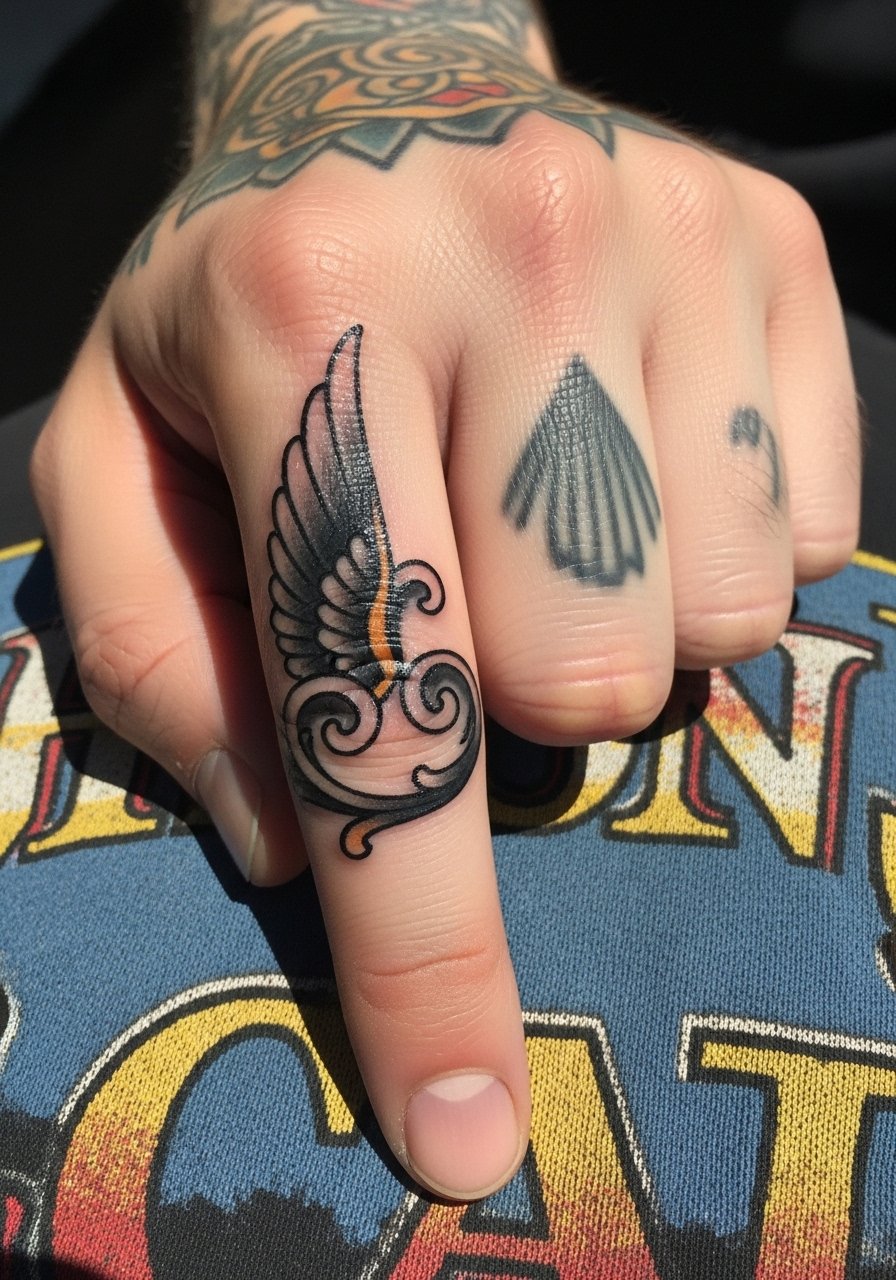
This one leans into ornament and tiny color accents, which adds personality but also more variables for aging. In the consult, specify that color be used as accents only and that linework carries the shape. The frequent mistake is over-coloring in a tiny field, which can patch out unevenly as the skin moves. Sessions can run 30–50 minutes because of the scroll detail. Pain on the middle finger is often reported as a solid 7 out of 10 by people who have that exact placement. For showing it off, a vintage band tee and solid black pants create a gesture-heavy outfit that frames the middle finger when you point or gesture. Consider a vintage band tshirt for nights out.
Before You Book
The finger-focused wings above ask for different prep than larger limb work, so a few small items smooth the session and the first week.
-
Coco Balma tattoo balm. A thinner, non-greasy balm option people mention for winter hands that avoids the buildup that clogs fine channels on tiny finger lines.
-
Recovery Ink Pen. Handy for targeted spot-touching later if a single feather barb softens, which keeps you from booking a full redo.
-
Tattoo Tastic Balm. Users praise the matte finish for hand pieces because it does not leave a glossy film that attracts dust during the first few days.
-
H2Ocean Spray. A light salt-based rinse can help with daily cleansing of finger work, especially for people who wash hands frequently.
-
Second Skin Saniderm. Protective film that stays on fingers for several days and reduces friction during early healing, useful for the side and knuckle placements listed above.
7. Watercolor small wing silhouette on pointer finger top
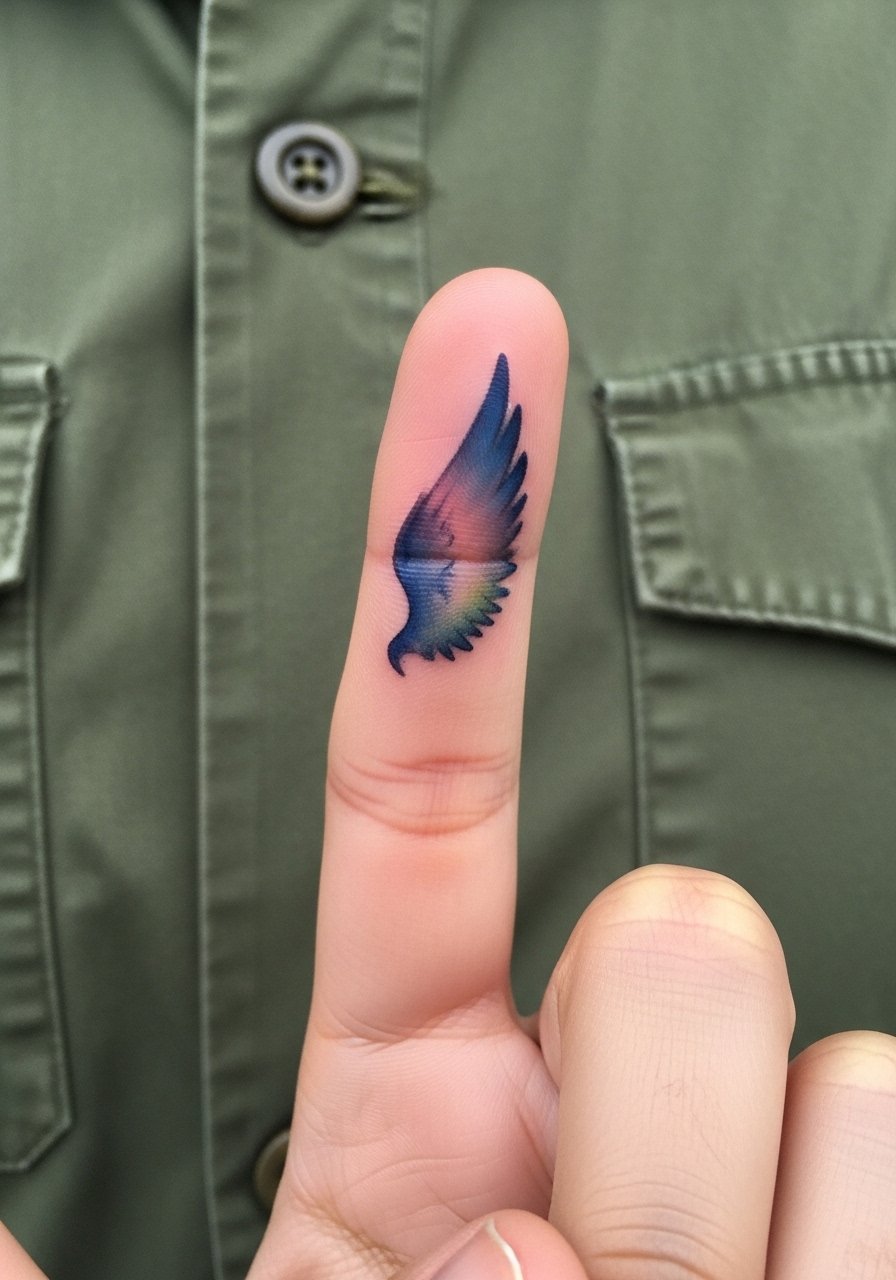
When people want a soft painterly look on a finger they often do not realize how fragile it will be. The watercolor approach is beautiful fresh but fades faster on hands than on shoulders. Artists and collectors argue about adhesives and covering methods. One camp uses protective film like Saniderm during the first week to lock pigment and prevent scabbing. The other prefers dry healing advocates who say breathing scabs reduces pigment lifting. If you favor color, accept that touch-ups are likely at year one. For the session wear a rolled sleeve or button-down you can move aside so the artist has unobstructed access. An olive or sand palette works with warm metals and a olive button down shirt pairs well for photos.
8. Ornamental mandala wing hybrid on knuckle
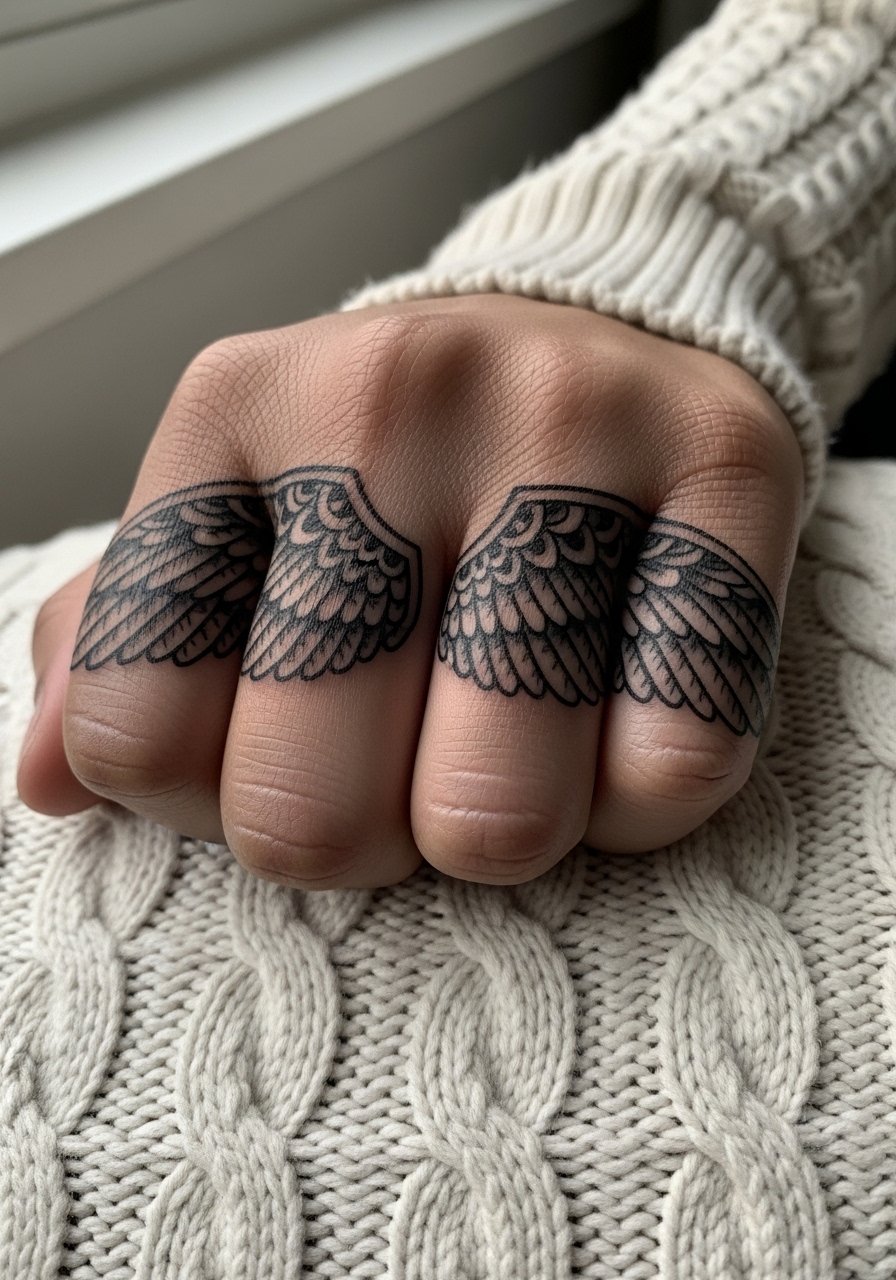
Knuckle work is its own animal because the skin moves and your rings live there. The knuckle hybrid uses symmetry to disguise small shifts. The main consultation point is placement relative to where you wear rings so the design hides under bands when needed. The mistake is packing too many concentric lines into a 2 cm width. Give the pattern breathing room and plan a touch-up at year one. Many clients choose knuckle wings because they hide under daily rings and flash when fingers are bare. For session comfort, a long sleeve you can roll to the elbow helps, and cuffing a sweater offers a framed reveal when you want to show off.
9. Ignorant-style abstract wing on ring finger side
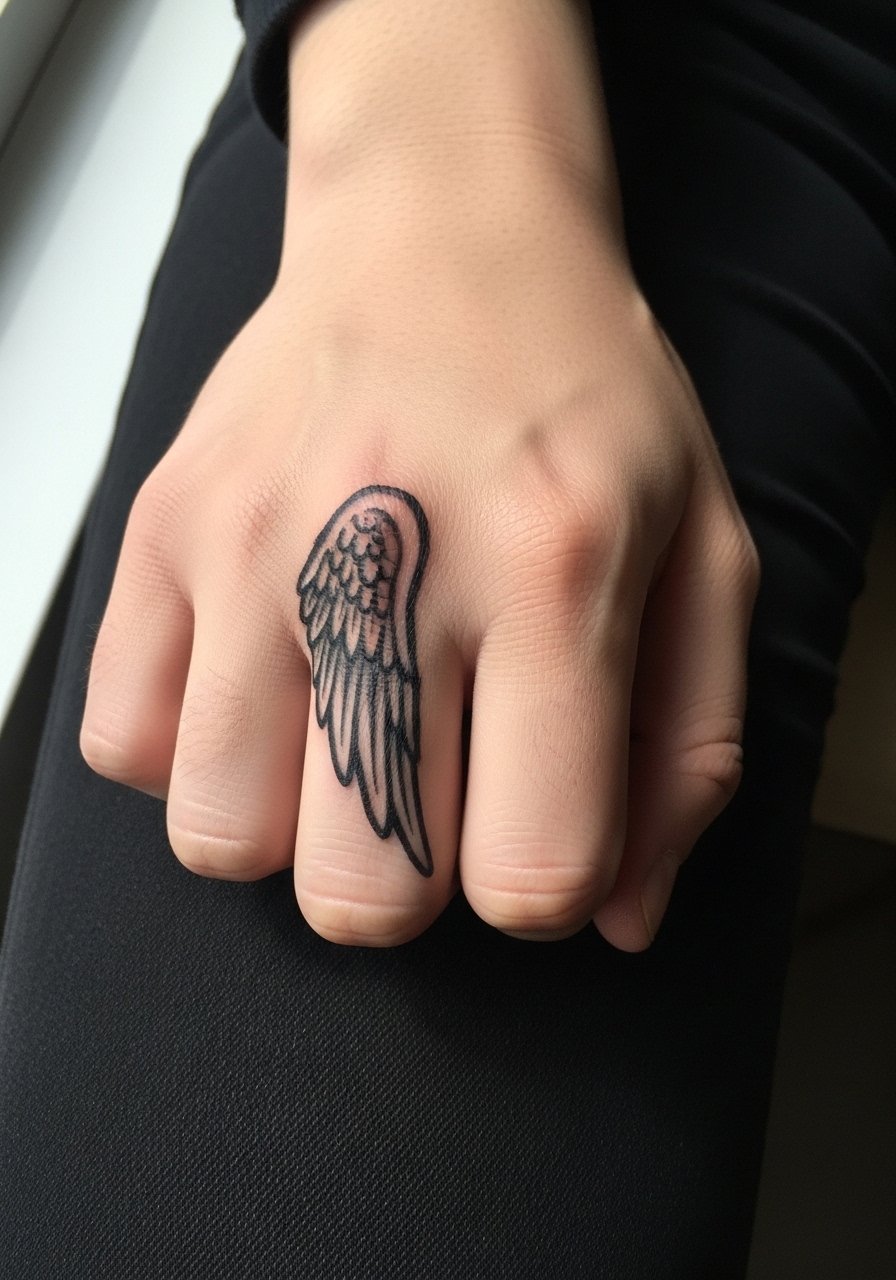
If you want a raw, hand-drawn vibe, ignorant style is a smart pick. It is forgiving when it ages because its charm is that roughness. During the consult, specify you want thicker line weight and irregular strokes so touch-ups read like part of the piece. The usual mistake is asking for micro detail inside an ignorant sketch. That defeats the aesthetic and increases the chance of blurring that looks accidental. Pain and session time are low. For casual pairings, leave the ring off that finger and wear a cream cable knit sweater cuffed at the wrist to show the asymmetry. A minimalist ring holder on the dresser keeps the ring safe during healing.
10. Traditional flash wing outline on thumb side
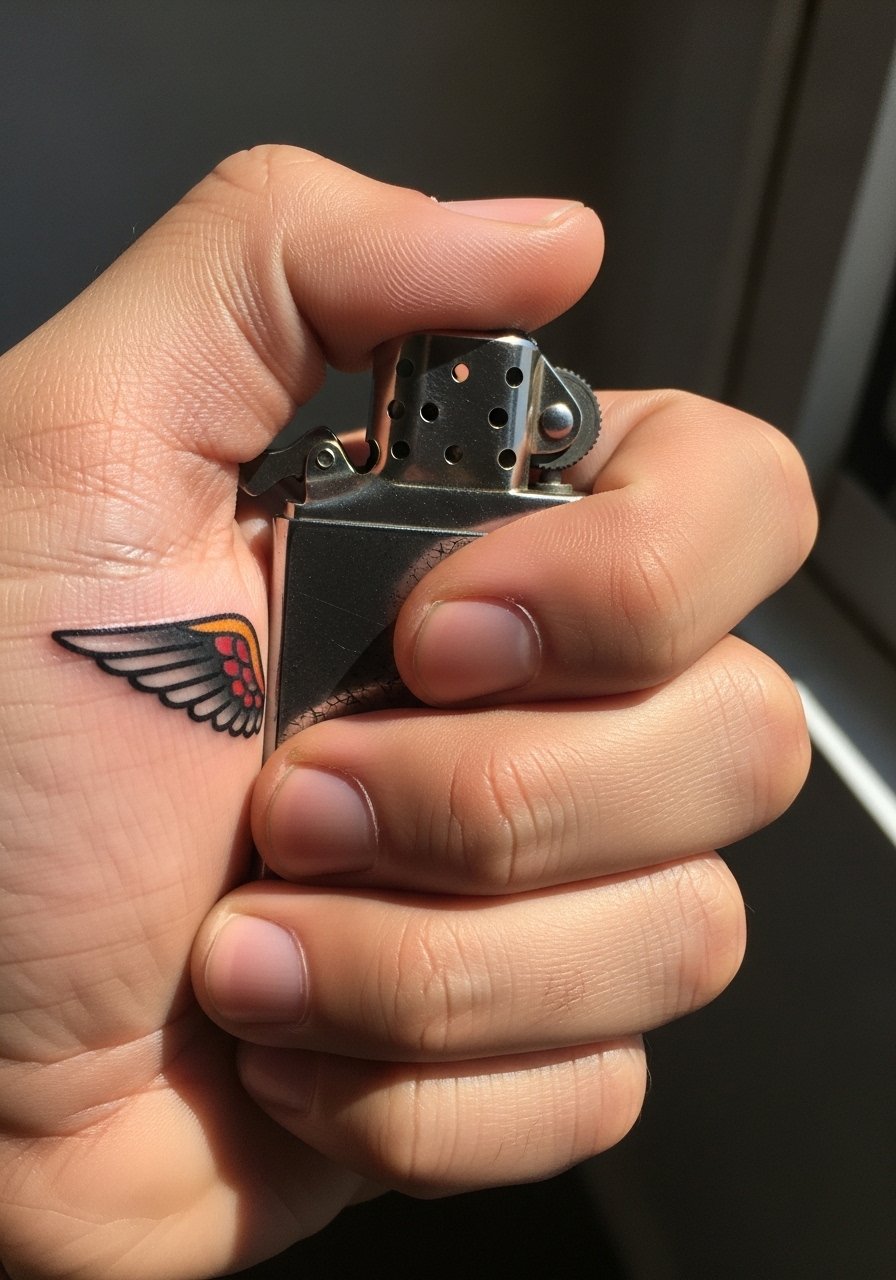
Traditional flash translates well to small thumbs because strong contours and single-color fills withstand wear. The session is brief and the pain is sharp over the thumb joint. Tell your artist you want the classic thick outline and minimal fill so it reads like traditional flash even as the days wear it. A common misstep is asking for washed-out color inside a tiny shape. That tends to look patchy after a year. For session clothing, a tank top or short sleeve makes access easy. If you want a rockabilly vibe, pair the thumbnail reveal with a rolled sleeve blouse or similar textures.
11. Fine line demon wing on pinky knuckle
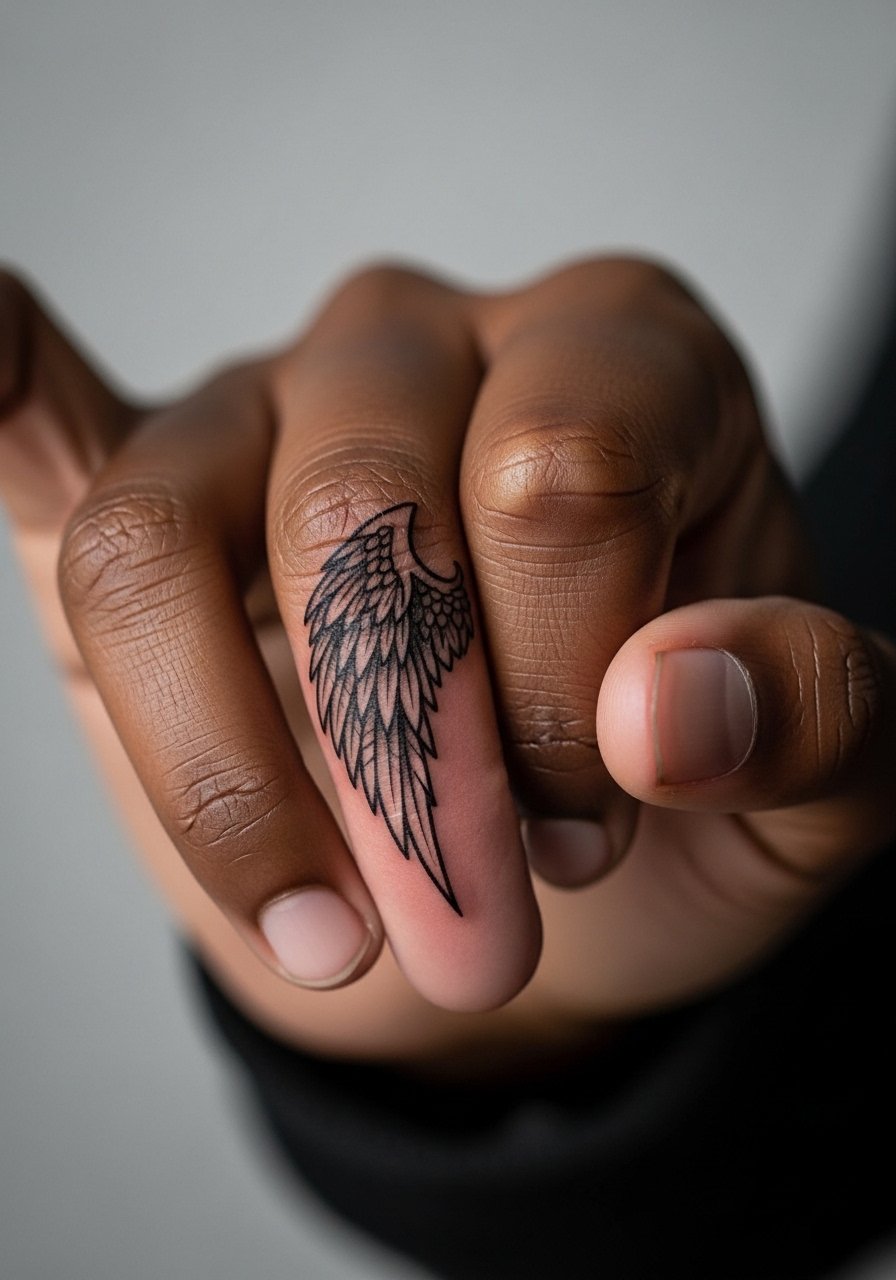
The pinky knuckle gives an edgy placement for a demon wing that reads small and rebellious. Fair warning on pain. Knuckle tattooing tends to sting more because of thin skin and proximity to bone. I advise a 20–30 minute session and a line weight that is slightly heavier than headshot fine line so the wing maintains shape. A common error is requesting tiny internal hatching. That detail gets lost as skin moves and will need touch-ups. Knuckle pieces can also be hidden under thin bands, which makes them practical for workplaces that frown on visible hand tattoos. For seasonal styling try black skinny jeans and a white tee to offset the raw edge and show the knuckle peek. Consider a black skinny jeans outfit for casual days.
12. Black and gray realistic eagle wing on index side
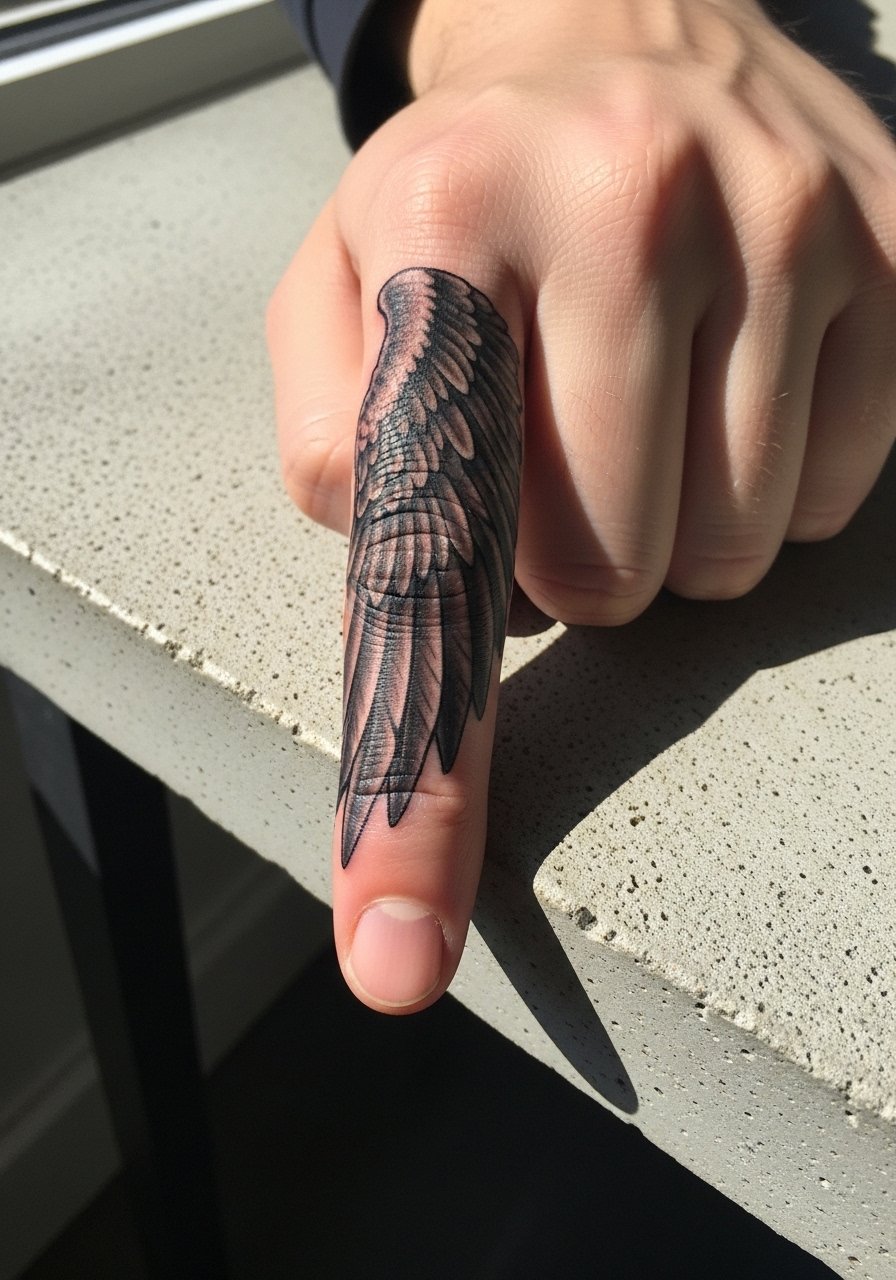
There is a real trade-off with micro-realism on fingers. Hyper-detailed feather lines look incredible fresh but will soften as the skin moves. If you want realism, ask for slightly larger feather elements and stipple transitions rather than razor-thin contour strokes. The session can be longer than most finger pieces, sometimes up to an hour. Pain is a steady 6 to 7 out of 10. Plan for a realistic touch-up at the one-year mark, targeted to feather barbs rather than an entire rework. For a rugged, elevated look, pair the index-side eagle motif with a chunky gold chain and a sand-toned linen shirt. Try a chunky gold chain necklace to balance the mood.
13. Minimalist heart-shaped wing on middle finger top
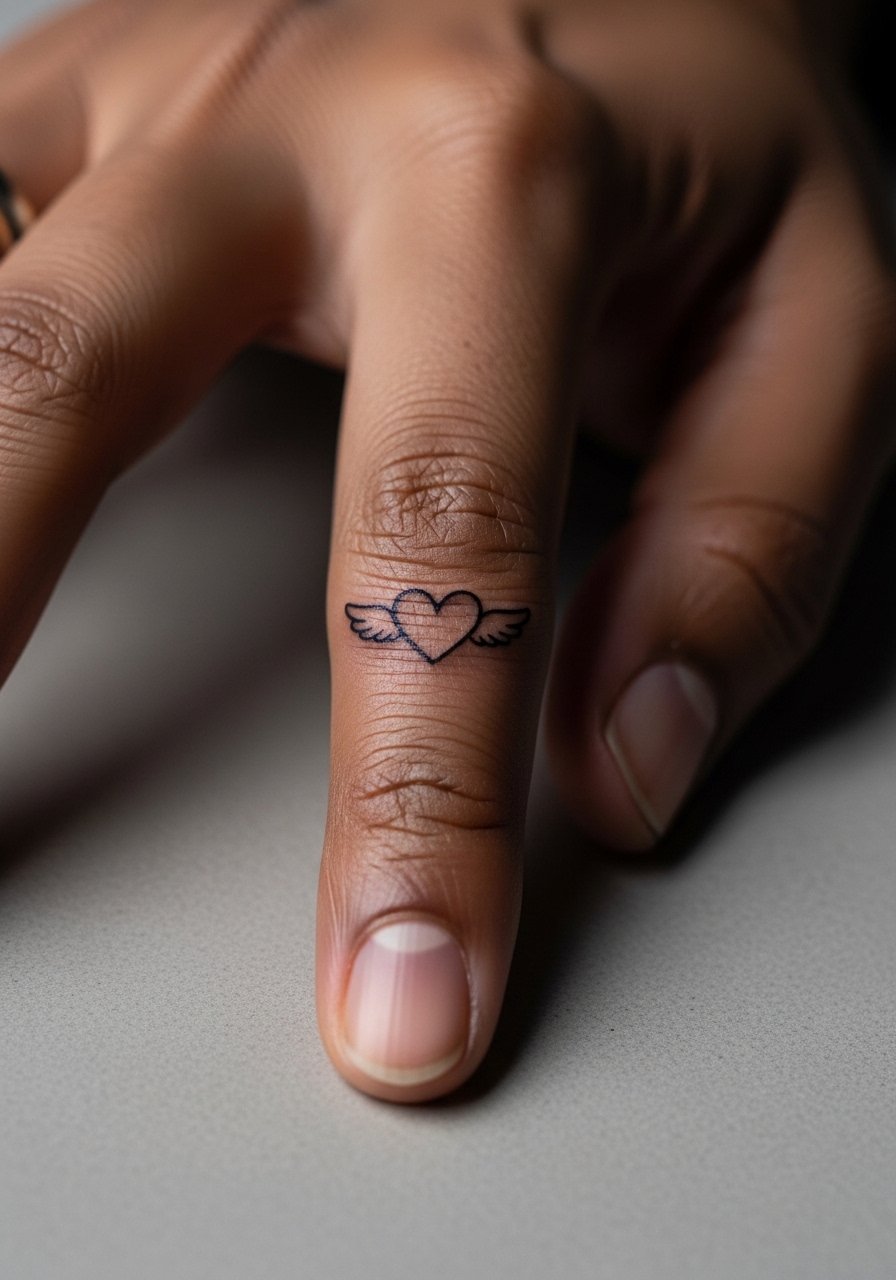
I've seen these heart-wing hybrids kept small and meaningful for partnerships or memorials. Ask your artist to map the heart shape in the exact millimeter height you want so it sits centered on the fingertip without wrapping into creases. The biggest mistake is making the heart too tiny. A 1.2 cm top height gives shape while resisting immediate blur. Expect a short session and moderate pain. For a polished reveal, try stacking dainty rings on neighboring fingers or go minimal with a nude manicure. A dainty finger rings set makes photos read cohesive and keeps the focus where you want it.
14. UV-reactive wing ink for finger party trick
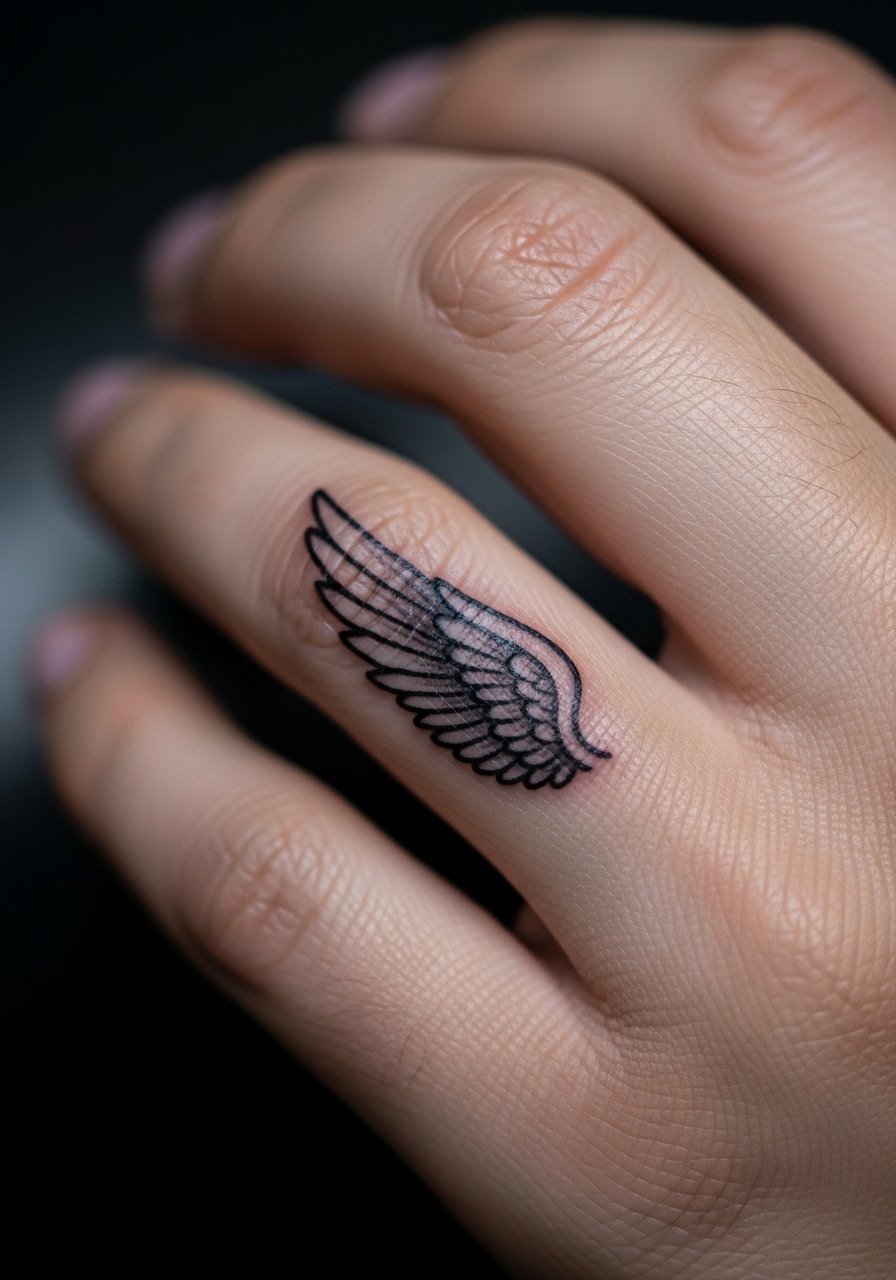
UV-reactive ink is niche and worth mentioning for people who want a hidden glow. The consult should include a long conversation about safety and visibility. Not all studios do UV work and some artists avoid it because it can migrate differently under the skin. The practical detail is that the UV effect shows under blacklight and often requires a stronger base outline in black to read in daylight. Expect the same pain and session length as a comparable-sized black outline. If you choose UV, plan an annual check since those pigments can need refreshes. For night events, simple outfits that expose hands make the hidden glow feel deliberate.
15. Asymmetrical demon and angel wing pair across two fingers
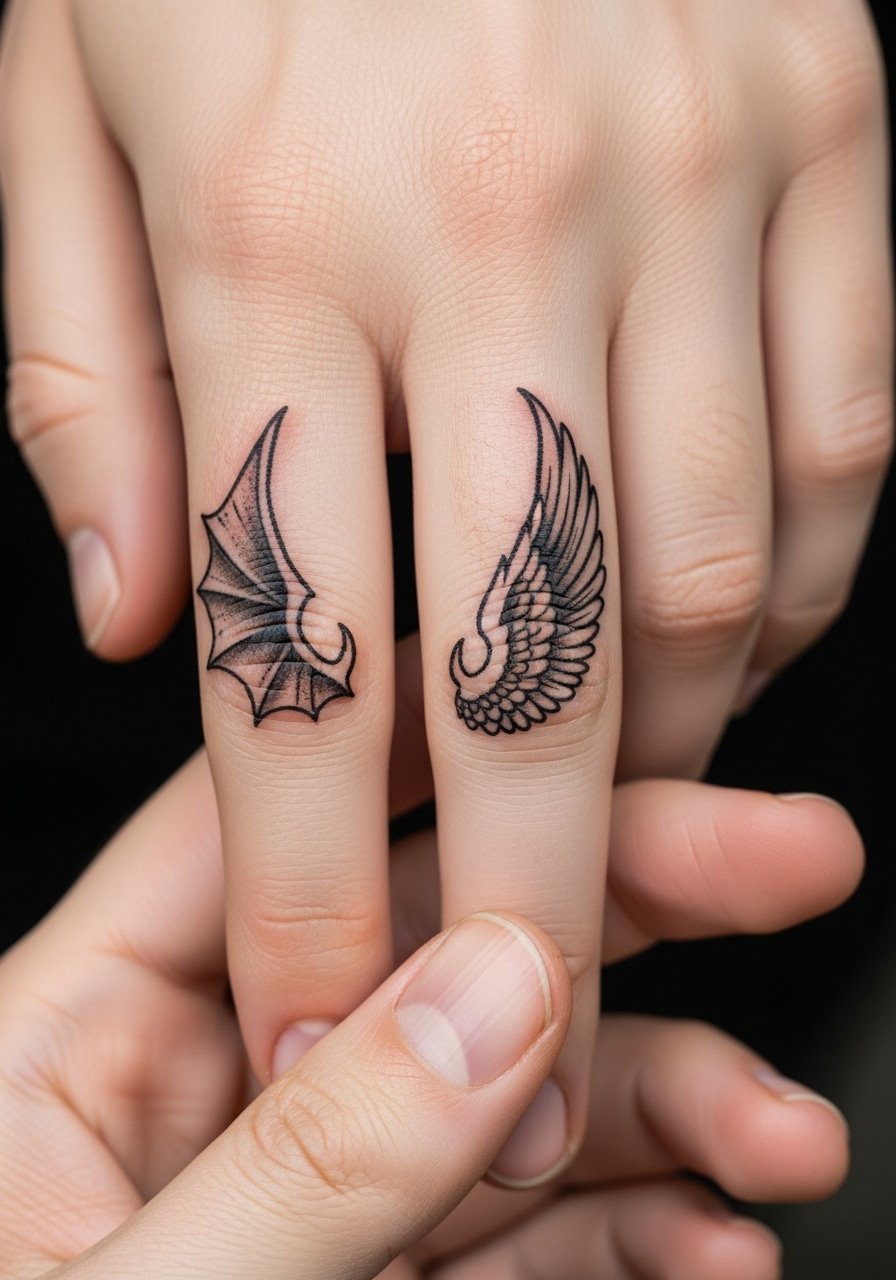
This storytelling trick works well when each finger hosts a contrasting mood. In the consultation, explain you want the pair to read as a deliberate mismatch so the two designs age on their own terms. The mistake is matching line weights exactly for both styles. Instead, ask for slightly different line weights so each wing keeps its identity as one softens. Target one finger for finer detail and the other for stronger blackwork to balance touch-up needs. For jewelry pairings, dainty rings or a thin silver stack keep the attention on the twin motif without crowding. A dainty finger rings set complements an asymmetrical pairing.
16. Memorial finger wing with watercolor birthstone accent
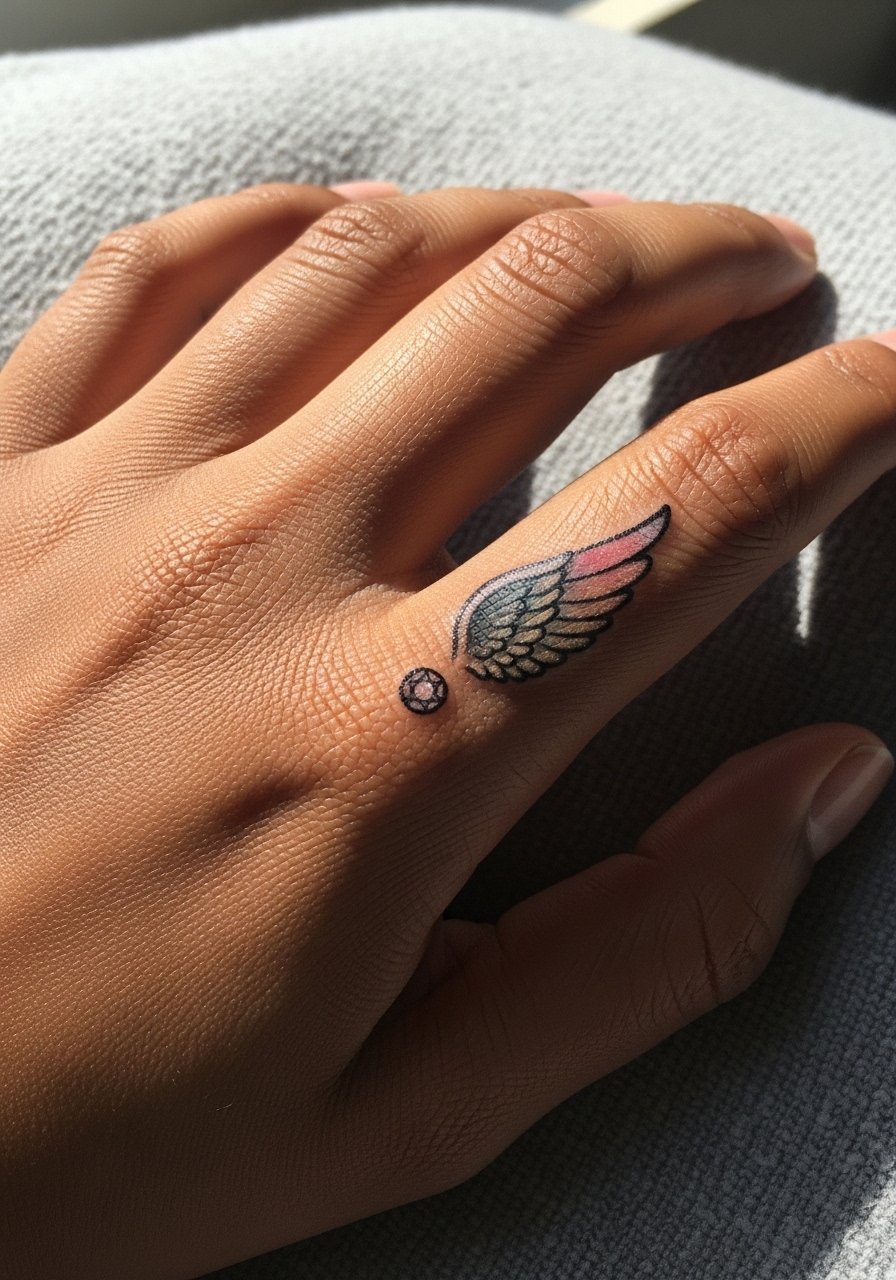
Memorial wings are hugely personal and the tiny birthstone accent can make a big difference visually. During the consult, be specific about the color and exact millimeter location for the birthstone dot so it does not sit on a crease. The common mistake is asking for too many personalized elements in a 1 cm area. Keep it to one accent color and a single initial or date if needed. Watercolor pigments can fade faster on hands, so expect a color touch-up at year one. For the session wear a short sleeve and remove any rings beforehand. A minimalist cream sweater or a neutral manicure keeps the tribute discreet and tasteful.
17. Knuckle stealth wing that hides under a ring
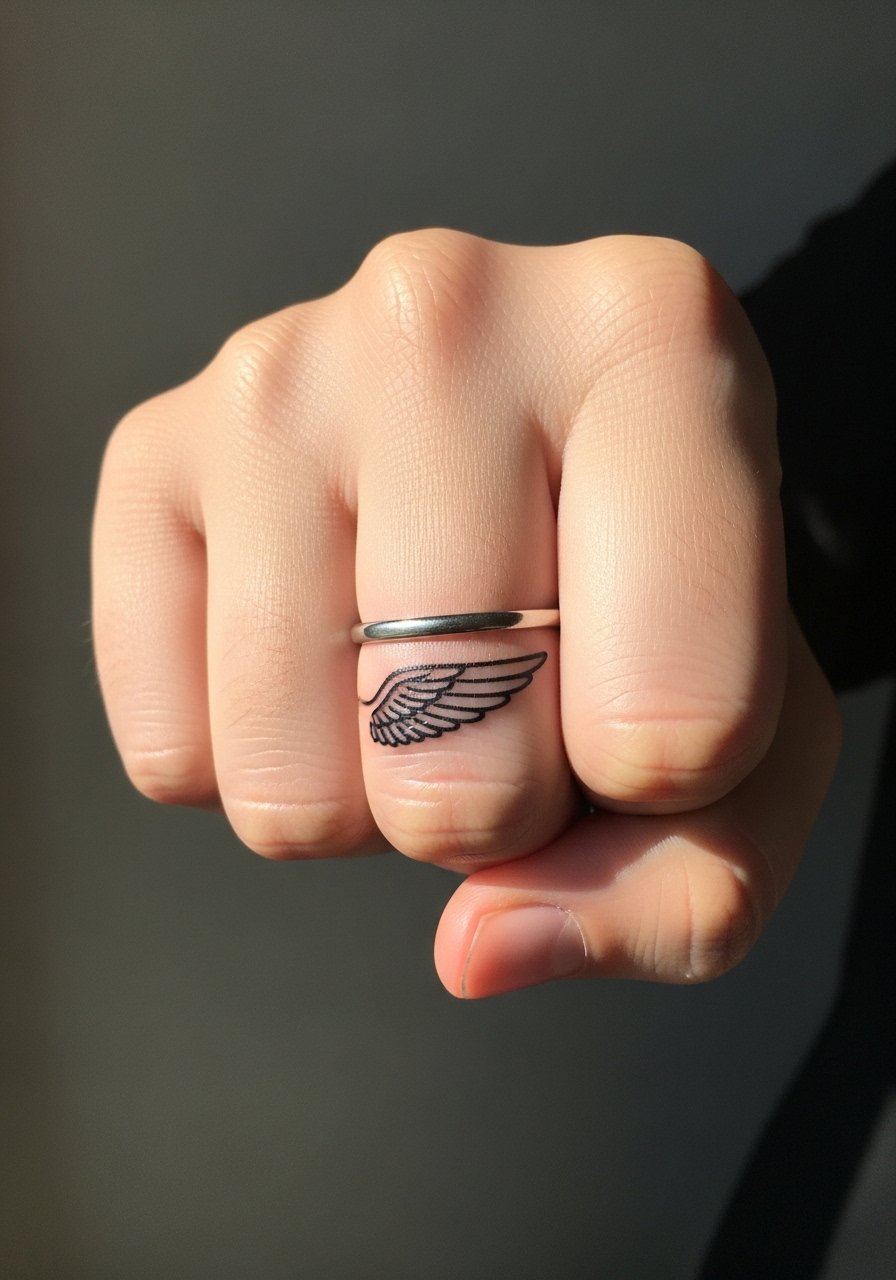
Artists rarely mention knuckle stealth options in gallery spreads, but the trick is mapping the design so it slips under a band. When you book, ask to place the wing just below the band line so it stays hidden when you wear your ring and flashes when you show your bare hand. The error people make is letting a band sit over fresh ink during healing. Keep the ring off for the first two weeks and plan a touch-up if the constant rubbing from jewelry softens the edge. Knuckle stealth is great for people who want private symbolism with the occasional reveal. For practical wear, use a minimalist ring holder at home and rotate your rings during the first month to reduce constant pressure.
Frequently Asked Questions
Q: How long will a tiny wing on my finger stay crisp before I need a touch-up?
A: It depends on placement, ink saturation, and daily friction. From what I have seen, lighter fine line wings often need a touch-up within 12 to 24 months. Saturated blackwork or dotwork can stretch that timeline. Plan for a targeted touch-up rather than a full redo.
Q: Is fine line or blackwork better for dark skin tones on fingers?
A: In practice, bold outlines and higher contrast generally read cleaner on darker skin tones over time. Fine line can work, but you should ask to see healed photos on similar skin before booking. If in doubt, opt for slightly thicker linework.
Q: Should I use Saniderm or dry healing for a finger wing?
A: Both camps have strong opinions. One group favors Saniderm and other protective films because they reduce friction and keep contaminants off the area for several days. The other group prefers dry healing, arguing that scabs that breathe reattach pigment more naturally. Ask your artist which method they use for fingers and follow their approach for best results.
Q: Where can I find artists who post healed finger wing photos?
A: Look on platforms with location filters and hashtags like #FingerWingTattoo and #FineLineWings. Apps that list guest spots also help. Reddit threads asking for city recommendations are useful if you want peer feedback on local portfolios.
Q: What should I wear to my appointment for a finger wing?
A: Wear something that gives the artist unobstructed access to your arm and hands. For finger work that usually means short sleeves or a button-down you can roll. For showing the healed piece, simple accessories like thin rings or a dainty pendant help photos without competing with the tattoo.
Q: Do numbing creams interfere with finger tattoos?
A: Artists are split. Many accept topical numbing applied properly ahead of time because it reduces wincing and keeps sessions short. Others avoid it. Tell your artist in advance if you plan to use numbing so they can advise on timing and application.