Fine line compasses are everywhere on feeds right now, and the pieces that still look crisp after two years are often the ones that looked quieter fresh. I have seen geometric blackwork and deliberate spacing hold up better on forearms than the dainty wrist compasses that need touch-ups. Below are 27 curated compass ideas for men, from small wrists to chest pieces, with what to ask your artist and how each design ages.
1. Geometric Compass Forearm Piece
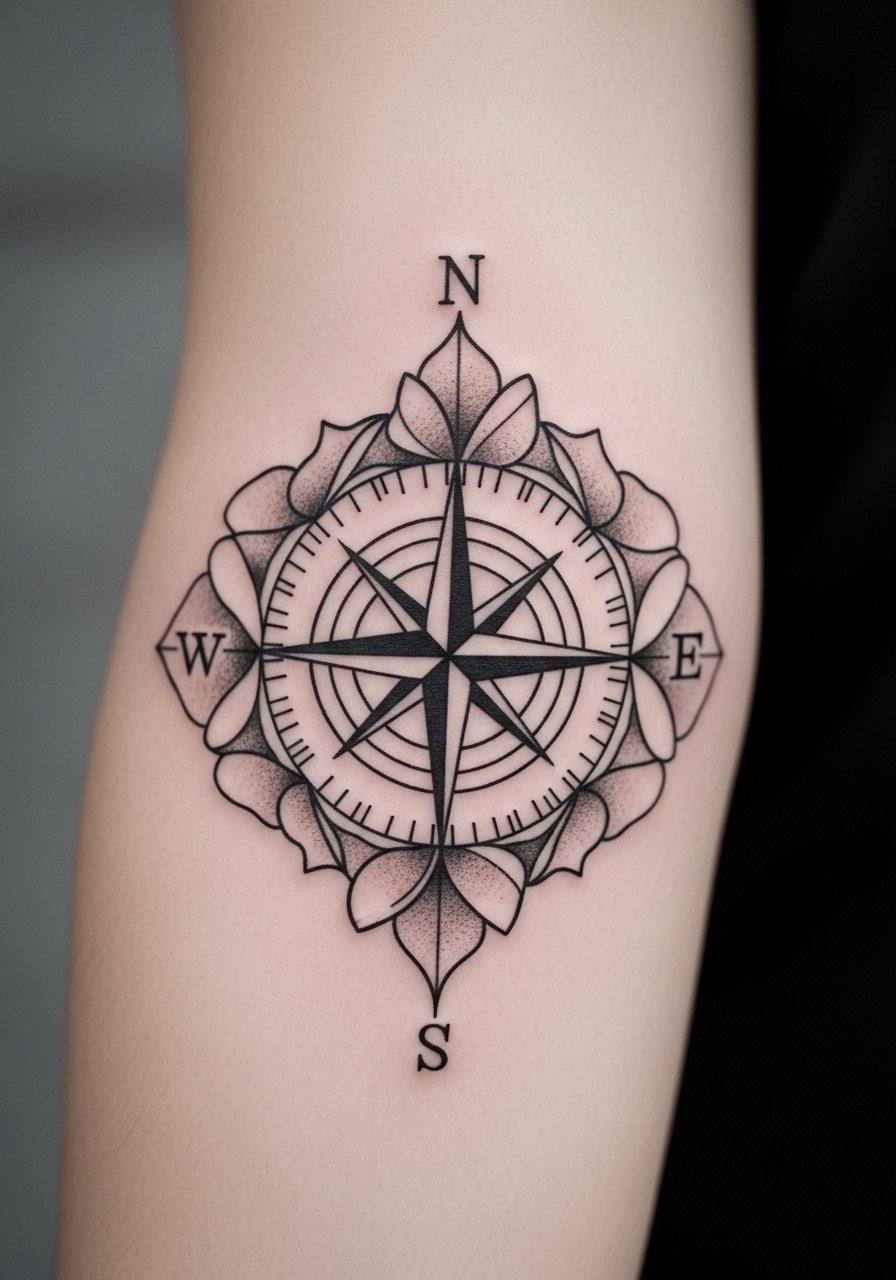
I recommend this version when you want structure that tolerates movement. Ask your artist for slightly heavier linework in the outer points and clear spacing between spokes so the pattern does not blur after stacking sessions. Pain is low on the outer forearm and most sessions finish in one to two hours for a 3-5 inch piece. Common mistakes are going too small or packing detail into tight rings, which causes merging in year two. Pair with a rolled sleeve crewneck tee to show it off, and wear a loose tank to the session so the artist can work freely, for example rolled sleeve crewneck tee.
2. Fine Line Compass Inner Forearm with Rose Sleeve Starter

This one reads delicate on the inner forearm and suits anyone easing into visible ink. Tell your artist you want single-needle outlines but ask for slightly bolder anchor points to avoid early fade. Expect more wear on the inner arm where friction happens when you sleep or wear tight sleeves. A common aging pattern is softening at 12 to 18 months, so plan a touch-up then. For showing it off, linen short-sleeve shirts in olive or white frame the inner forearm nicely. Bring a sleeveless session shirt so the artist can work without fabric snagging, for example linen short sleeve shirt men.
3. Minimalist Single-Needle Compass Wrist
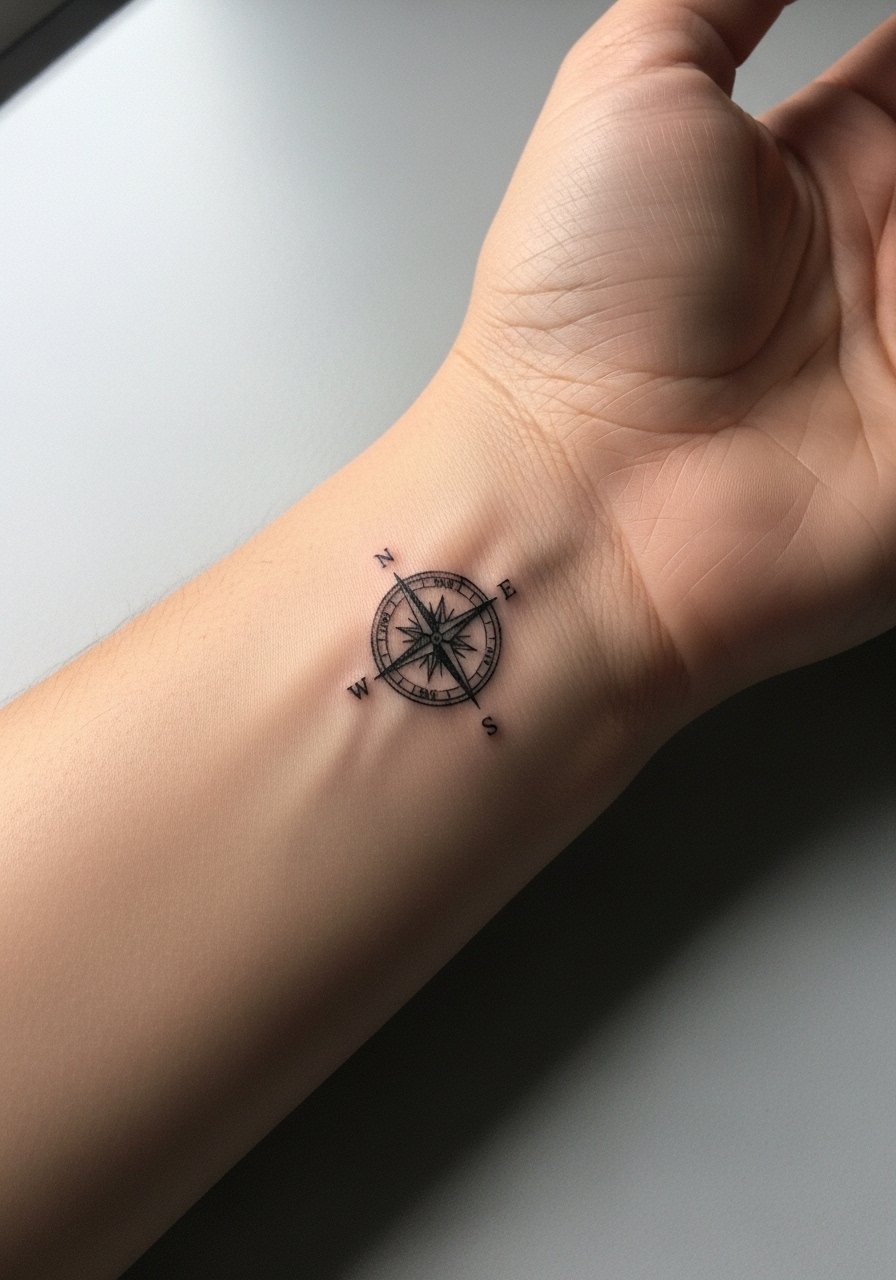
Wrist compasses look neat but are high movement and high touch. Pain is higher here because the skin sits over bone. For longevity, ask for a slightly larger diameter than what looks perfect on screen so the needle channels have room to sit without merging. Typical session time is under an hour for a one to two inch piece. Expect a touch-up around year one for single-needle work. Pair the wrist with a slim leather watch on the opposite arm and keep cuffs rolled once to show the piece, for example slim leather watch men.
4. Traditional Compass with Anchor Forearm
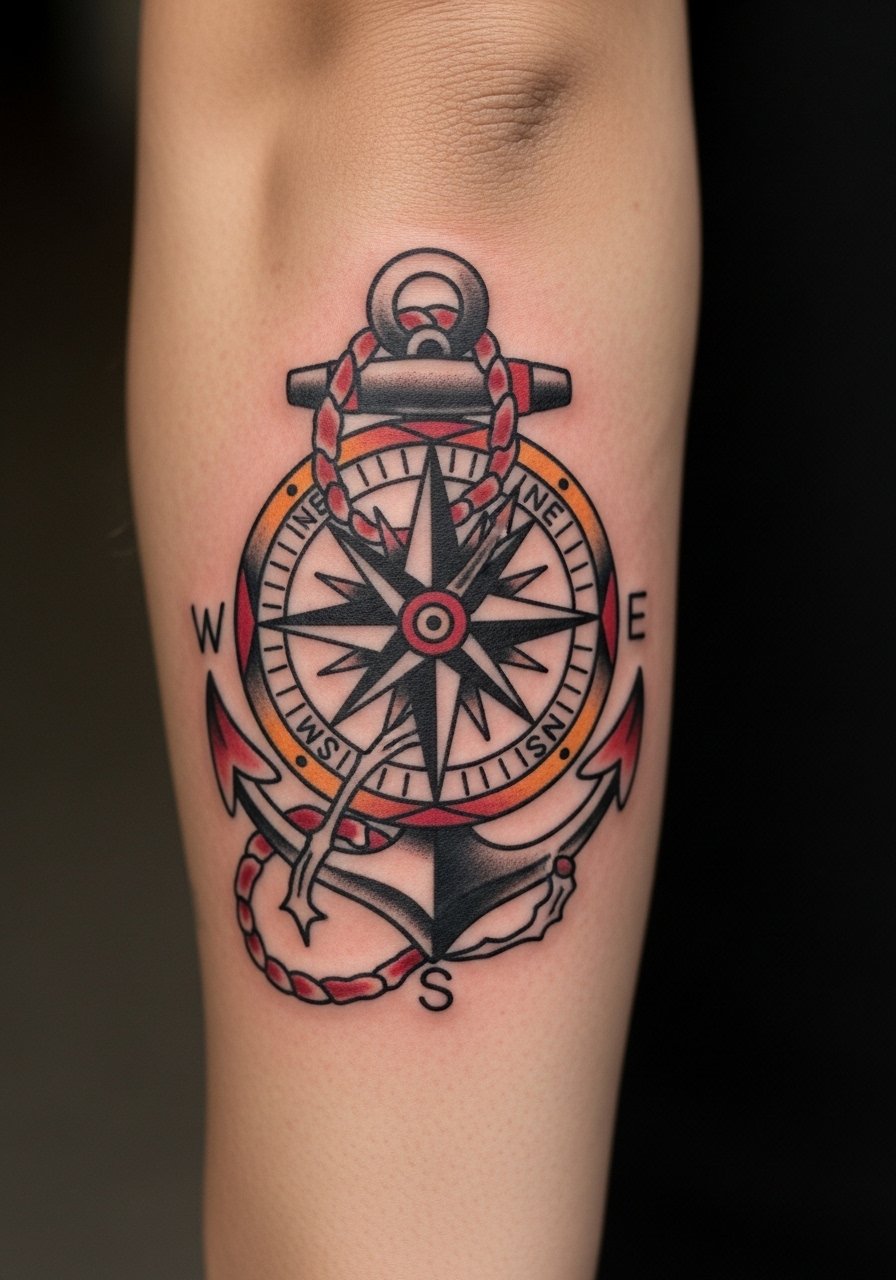
This is the choice if you want saturation that ages into a solid visual. The bold outline approach resists blowout better than ultra-fine work on the forearm. Sessions for a five inch version usually finish in one sitting. A typical mistake is asking for too much tiny color inside small compartments, which can muddy with time. For the session wear, use a short-sleeve button-up you can roll to the elbow, and when you wear it out, a leather cuff bracelet helps frame the piece, for example leather cuff bracelet men.
5. Black and Gray Realism Compass on Chest

Chest compasses let you add micro-realistic texture that reads personal. Be aware of sweat and movement during summer sessions, which can complicate healing. Pain varies because chest areas curve, and shading sessions are longer, often two sessions for a 4-6 inch piece. A common error is compressing too many tiny gradients into a small chest piece, which can bleed into a muddy look as it heals. For showing it off, V-neck tees in black or gray reveal the top of the piece without overexposing the area. Wear a loose zip hoodie to the appointment so you can open it without pulling on the chest.
6. Dotwork Compass Shoulder Cap
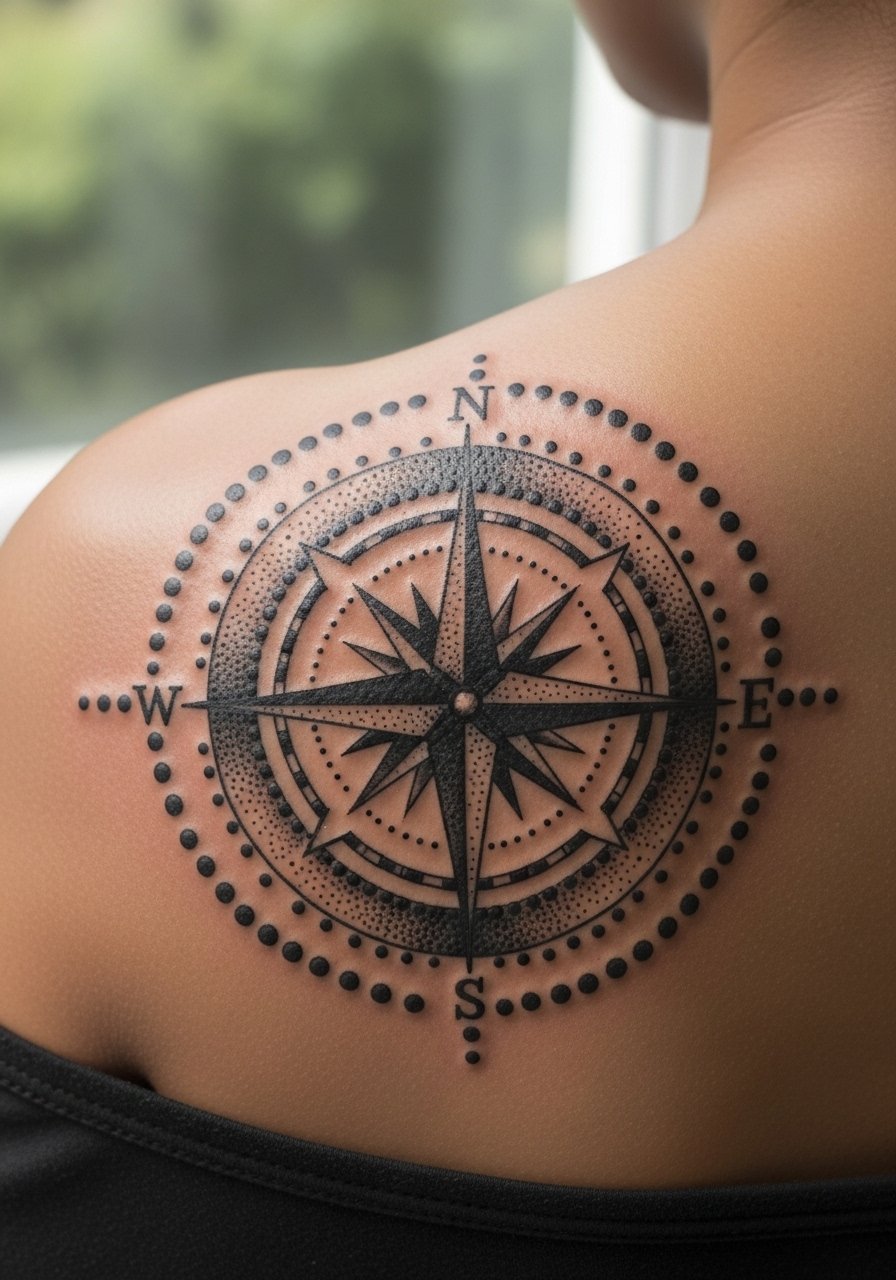
Dotwork on the shoulder cap offers texture that reads best at medium size. Sessions can be long because stipple shading moves slowly, and this often takes two sessions to complete. The shoulder is forgiving for dot density but avoid packing dots too tight, because the difference between tight and breathable stippling is what keeps the pattern readable after years. A frequent mistake is expecting a single session finish. For wearing during the session, choose a button-down you can unbutton and pull aside so the artist has unobstructed access, and for showing it off try an off-shoulder henley in earth tones, for example off shoulder henley.
Studio Day Picks
Those forearm and chest pieces above benefit from small prep items that smooth the session and protect the first week of healing.
-
Tea tree aftercare salve. A light salve helps prevent clogged layers on chest or forearm shading without feeling greasy, useful when a piece sits near sweat zones.
-
Manuka honey tattoo balm. Applied after scabs form on lower leg or calf work, it can reduce itch and help scab drop without excessive residue.
-
Rice bran oil moisturizer. Non-comedogenic hydration that works well on thigh pieces after day four when heavier ointments feel too thick.
-
Centella asiatica calming gel. A thin gel for fine line wrist areas to soothe itching without smothering delicate linework.
-
H2Ocean aftercare spray. A no-touch spray option for forearm and shoulder zones that fends off fabric sticking during the first two days.
7. Neo-Traditional Compass with Waves Calf
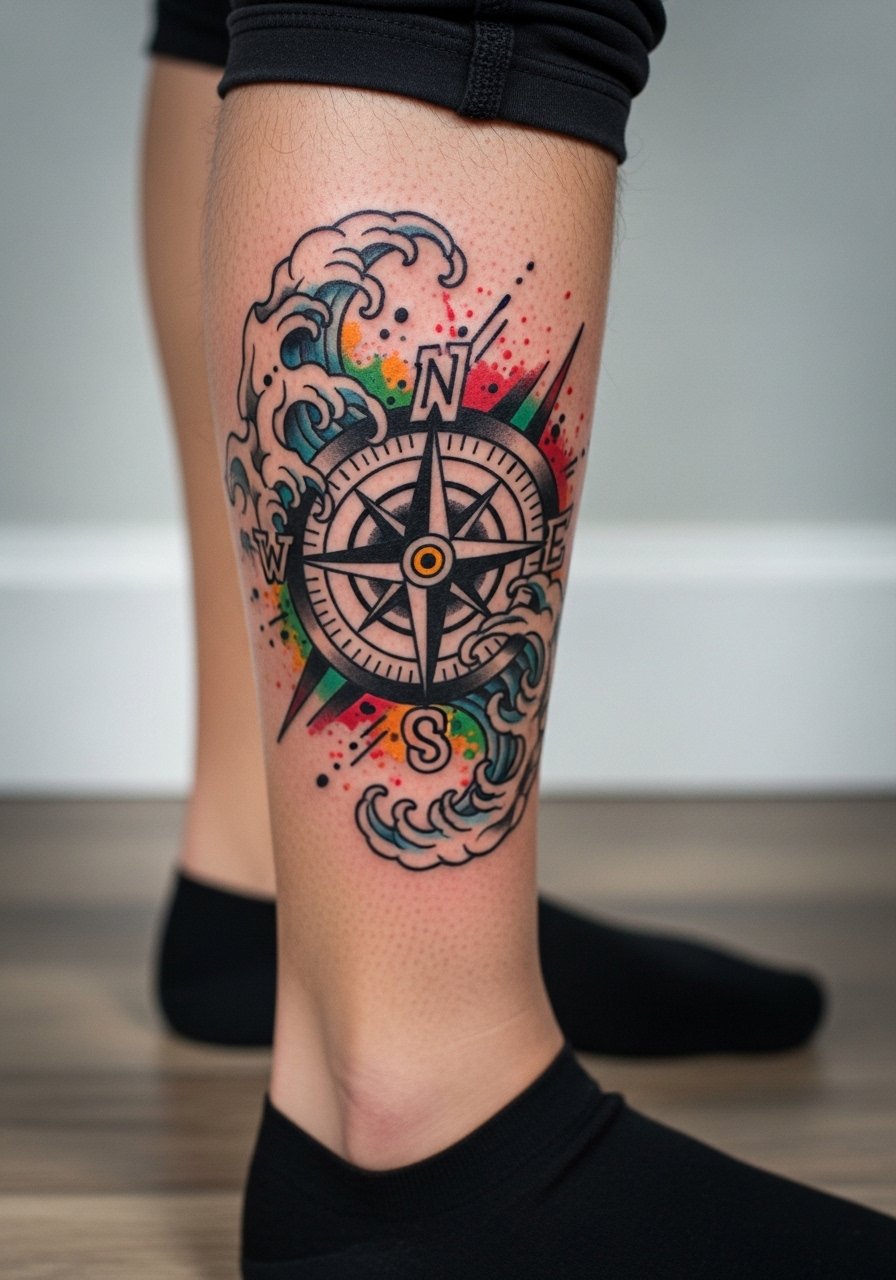
Calf placements let color and motion breathe, and runners like them because they can be sized to match calf curves. Sessions usually run two shorter sittings for a 6-8 inch piece. Expect more sun exposure in summer, which can make watercolor-style elements fade faster unless saturation is strong. The common mistake is asking for painterly washes in a tiny envelope, which fade into muddy colors. For show, cuffed joggers or tailored swim trunks make the calf pop. For the session, wear loose athletic shorts so the artist can elevate your leg, for example cuffed joggers men.
8. Ornamental Mandala Compass Bicep
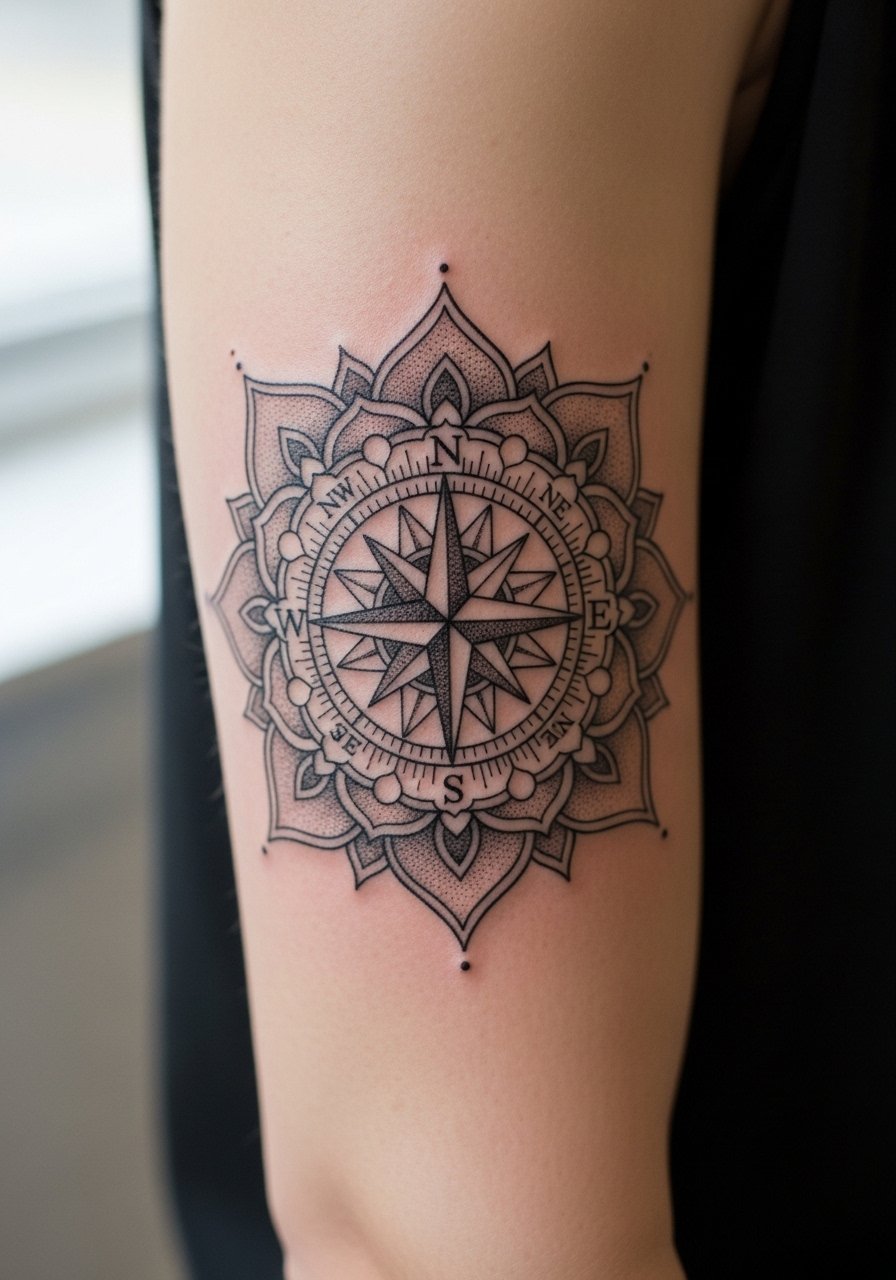
A mandala wrap balances symmetry with the bicep's round shape. Ask for spacing between rings so the piece does not compress when you flex. Pain is moderate and sessions are typically split if you want a full six inch diameter. One error is trying to wrap too tightly around the arm without allowing breathing room, which can distort with muscle growth. For showing it off, a fitted black muscle tee or rolled flannel pairs well. Wear a tank to the session so the artist has full, unobstructed access, for example muscle tank top men.
9. Watercolor Compass Thigh Piece
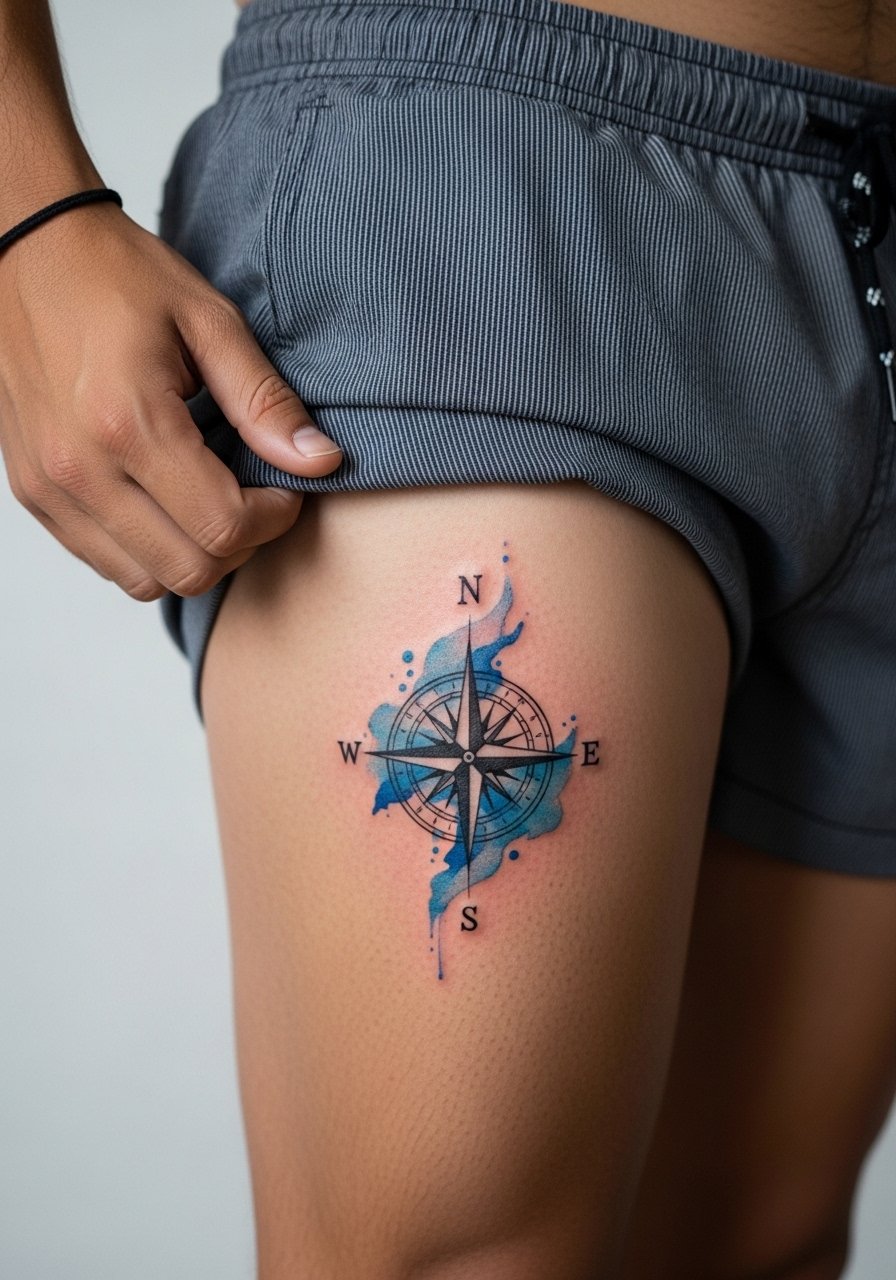
Watercolor compasses on the thigh can be visually bold at first but they demand maintenance. Friction from clothing and tight briefs speeds fading, and many people report muddy greens within a year if saturation was too light. Sessions are usually two parts, with the color layer following the outline session. To help longevity, ask for stronger black anchors to frame the color. For showing it off, tailored swim trunks or athletic shorts work best, and wear loose board shorts to the session so the artist can access the area easily, for example tailored swim trunks.
10. Ignorant Style Compass with Skull Forearm
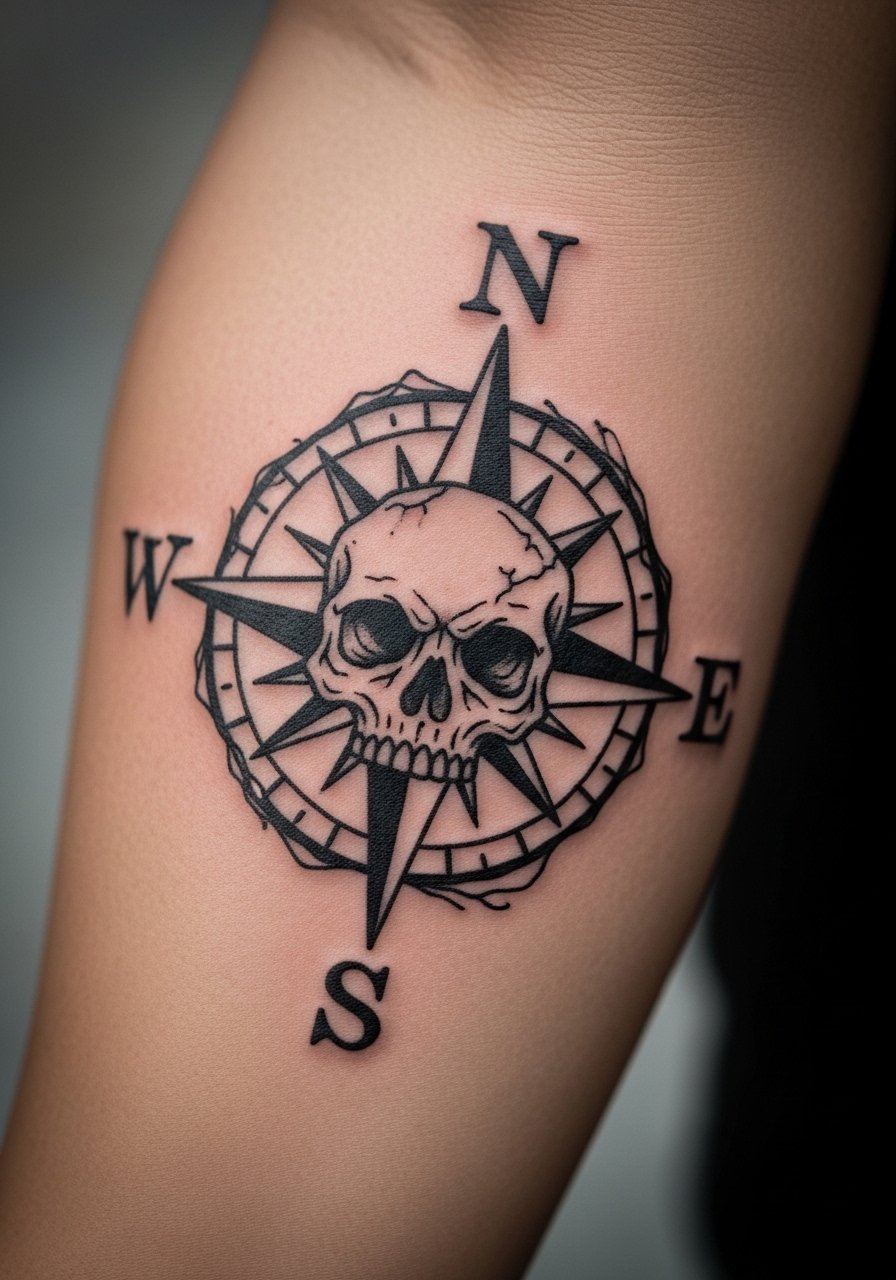
If you want an in-your-face, hand-drawn look, ignorant style uses uneven weights and rough fills. It ages into character because it is meant to look raw, but avoid tiny negative spaces that will disappear. This is a single session candidate for a four inch piece and pain is low on the forearm. A frequent mistake is asking for micro detail inside the skull on a small scale. For the appointment, wear a short-sleeve shirt you can roll to the elbow and keep the area dry before the session.
11. Compass Rose with Hidden Coordinates Inner Forearm
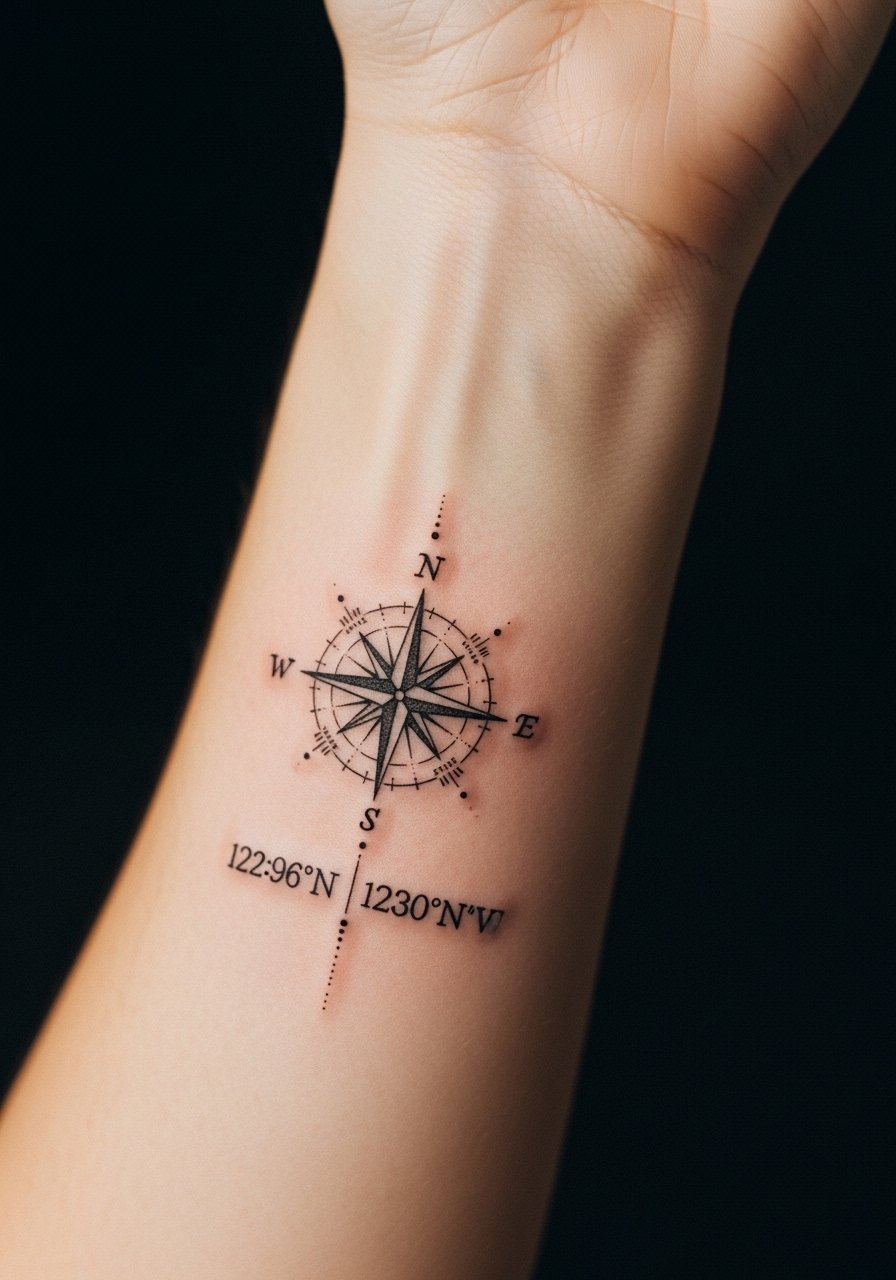
Pairing a compass with hidden coordinates adds personal context without large visual change. Tell your artist you want the coordinates in monospace and the compass slightly larger than the script so both read clearly at arm's natural fold. The inner forearm is forgiving but expect softening in a year for very fine script. A common mistake is cramming six sets of numbers into a narrow band. For showing off the piece, an unbuttoned linen short sleeve keeps attention where you want it. For the session, wear a sleeveless athletic shirt so bending does not tug the stencil, for example olive linen button up.
12. Micro-Realism Compass Chest Memorial
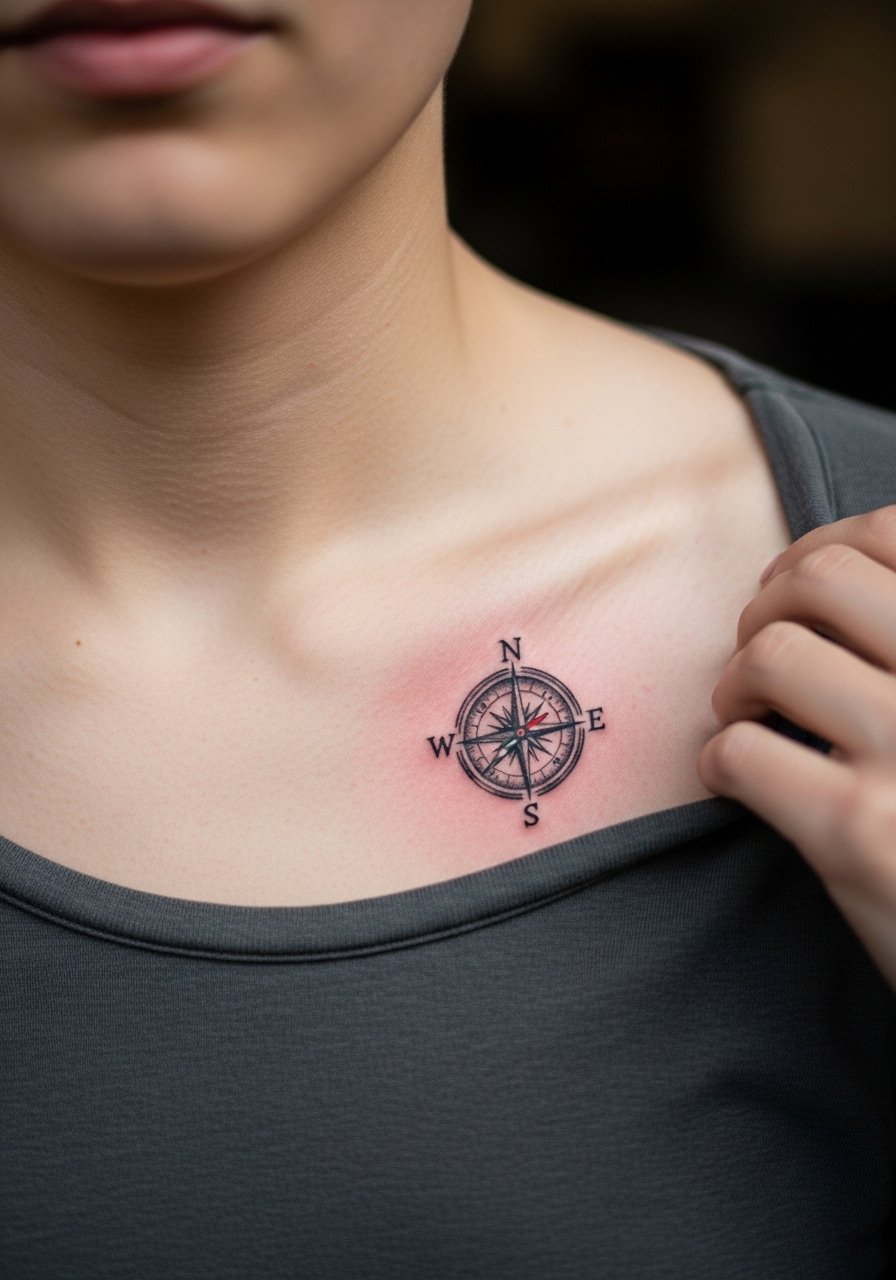
Micro-realism compasses on the chest carry a personal memorial weight for many. Expect two sessions for detailed shading and to avoid overworking the area. The chest sweats and moves, so early healing can be fussy during warm months. A common error is compressing gradients too tightly on curved skin. For session wear, a loose zip hoodie that opens front makes access easy without exposing more than the area needed.
13. Tiny Compass Behind the Ear
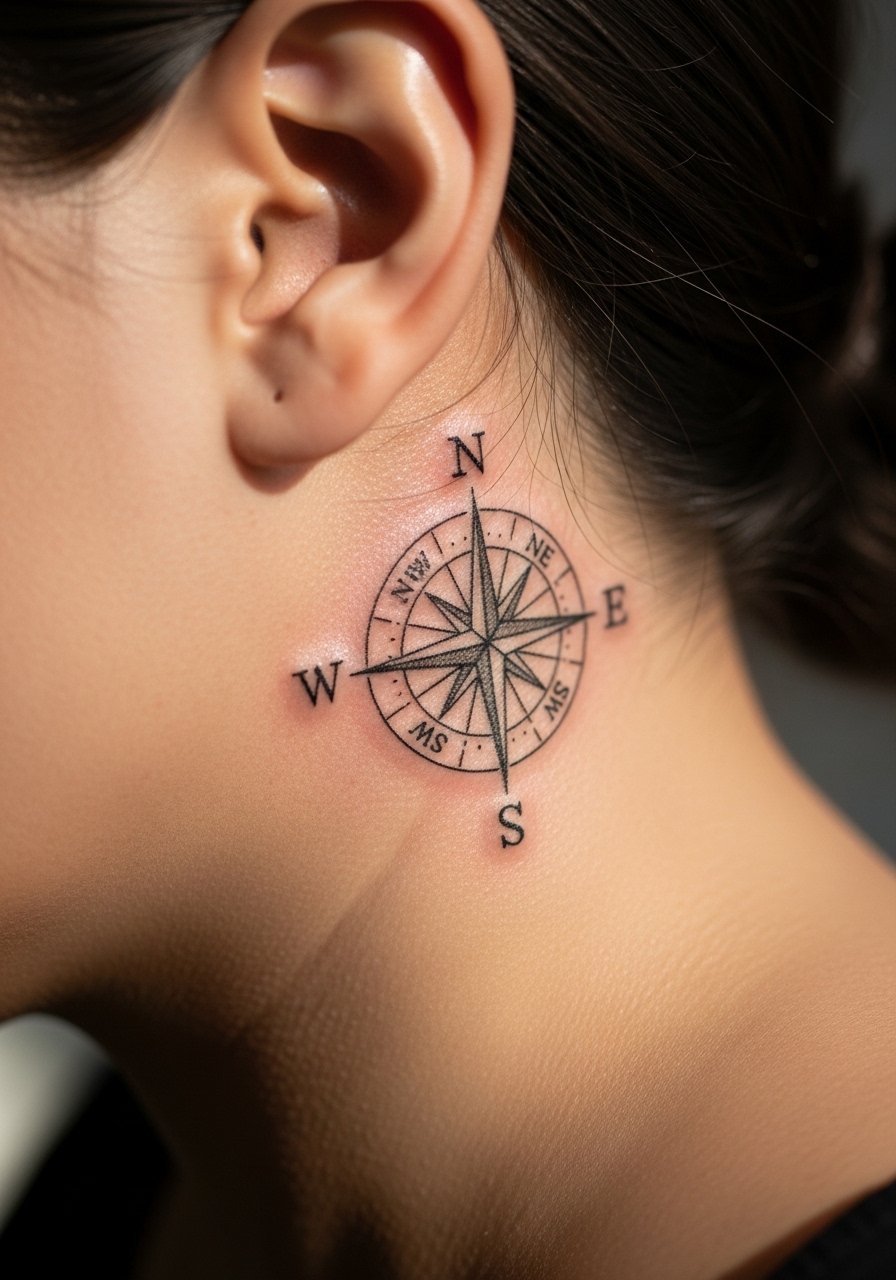
Behind-the-ear compasses are discreet and intimate. The area is sensitive and healing benefits from avoiding headwear for a week. Keep in mind this placement needs a clean stencil transfer because hairline movement can shift positioning. Sessions are very short, under thirty minutes for tiny work. If you want to show it slightly, style your hair up for photos. Note that this area requires a steady hand from an artist familiar with neck placements.
14. Calf Runner's Mileage Compass
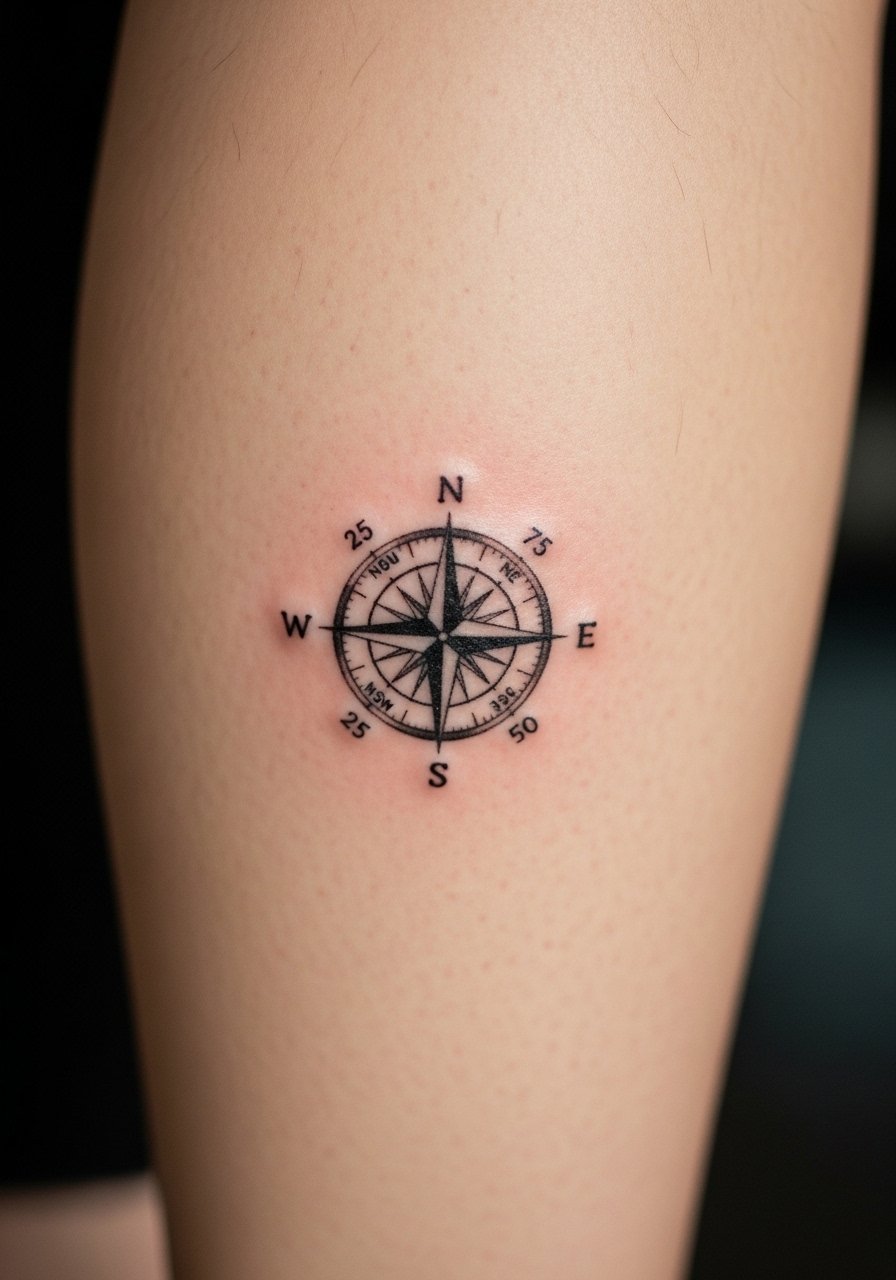
Runners like calibrating a compass piece to a mileage mark or race date. The calf tolerates linework and color well, and sessions are comfortable because you can sit and relax. A typical mistake is adding tiny text that rubs against socks and fades quickly. For showing it off, slim joggers cuffed high or boat shoes with rolled socks work well. Wear loose athletic shorts to the session so the artist can access and elevate your leg, for example slim fit athletic shorts.
15. Compass Band Around the Wrist
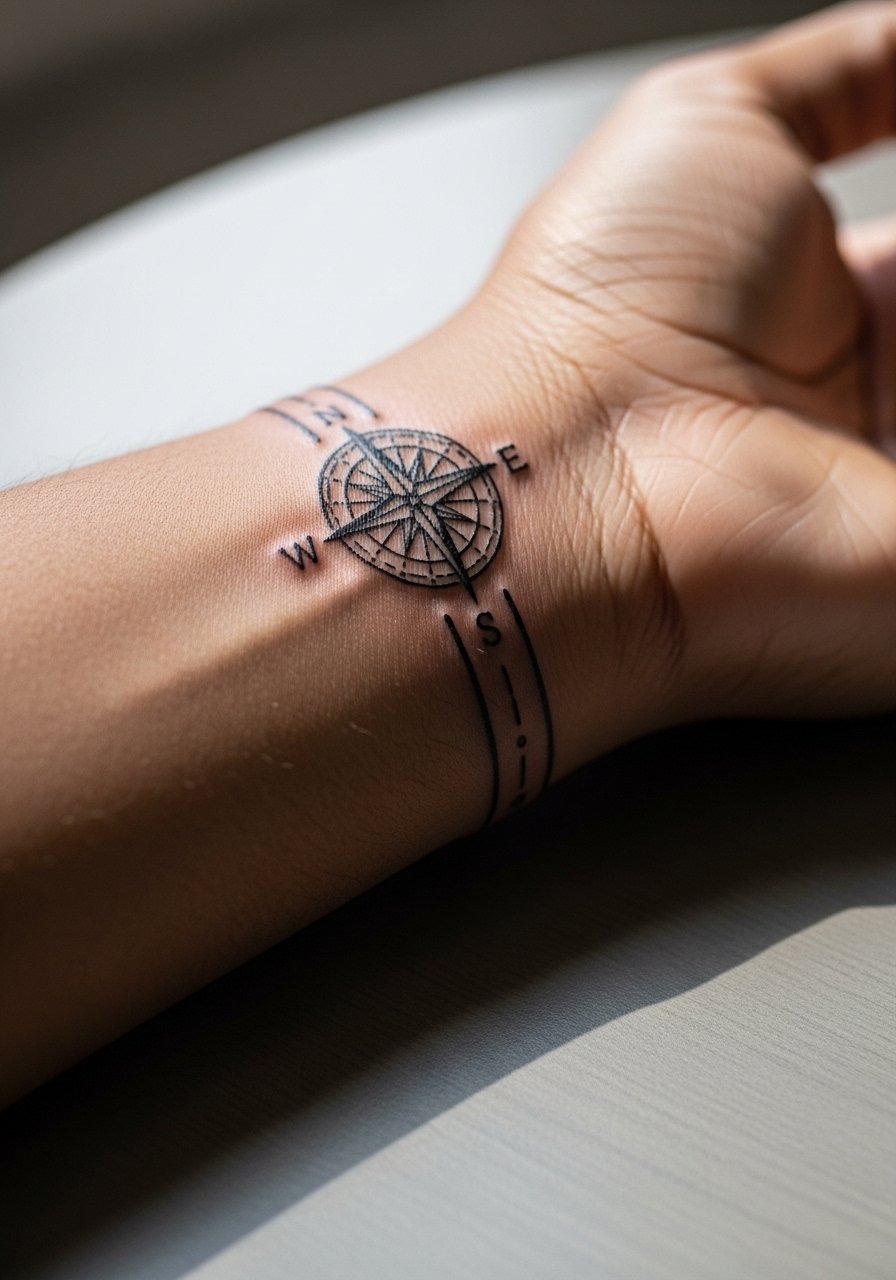
A banded compass around the wrist reads like a ring and is visible daily. The wrist is a high-motion area and the band needs slightly thicker linework than you might expect to avoid blurring. Sessions are short but plan for a touch-up within a year. A common mistake is placing text too close to the band edge. For styling, a minimalist leather strap watch on the opposite wrist balances the look during daily wear.
16. Compass Mandala Half-Sleeve Transition
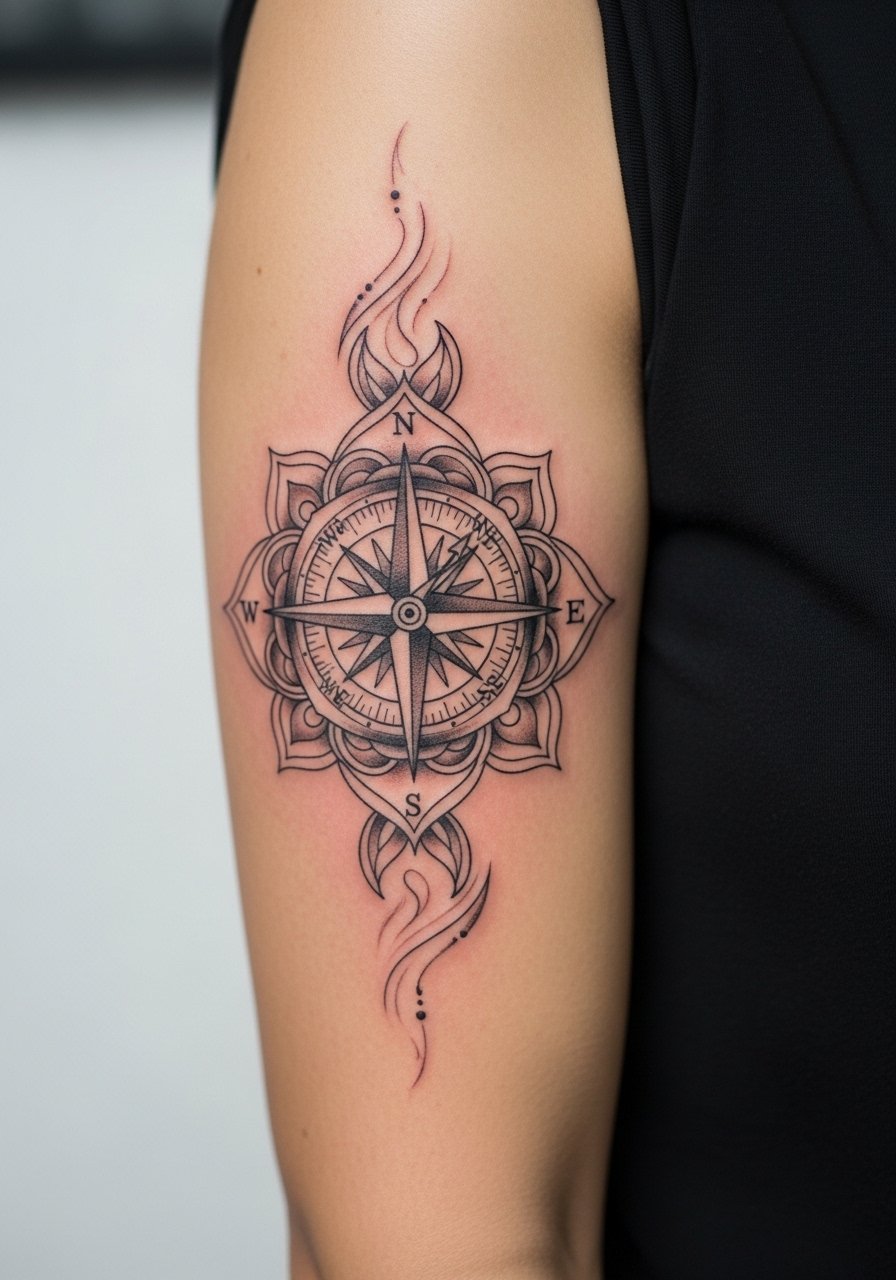
This transitional half-sleeve uses the compass as the anchor and mandala geometry to flow into the forearm. Sessions are multiple and pacing is key to saturation and skin recovery. Tell your artist you want clear negative space lanes so the geometry does not collapse into a single mass after a year. A mistake is attempting to compress mandala rings in too small an area. For showing it off, layer with a rolled flannel or a fitted black tank, and wear a tank to the session for easy arm mobility, for example rolled flannel shirt.
17. Blackwork Compass for Darker Skin
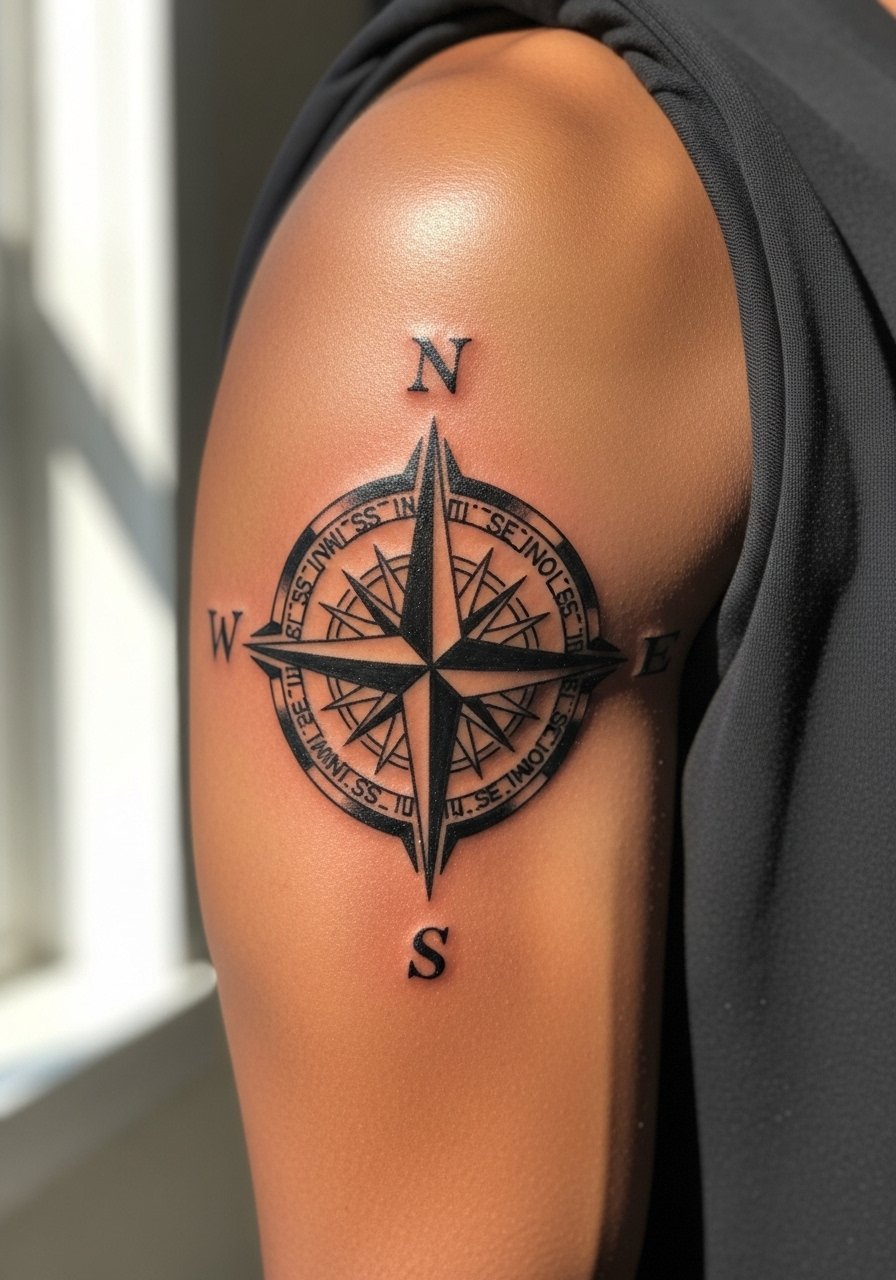
Darker skin tones get the best uptime from heavier blackwork and dotwork contrast. Fine single-needle approaches can vanish in photos on melanin rich skin, so request thicker outlines and dense stipple where contrast matters. Sessions are straightforward for biceps and healing is predictable. The main mistake is reproducing faint line templates intended for lighter skin. For the session, a tank top gives clean access and avoids fabric rubbing.
18. Tiny Compass on the Ankle

Ankle compasses are discreet and easy to hide. Expect moderate pain from proximity to bone and a short session under an hour. Friction from shoe collars and socks can cause scabbing that pulls on tiny lines, so plan for protective socks and low-cut shoes in the first week. For show, sandals or rolled jeans work best. Wear pants you can roll easily so the artist can expose only the ankle without hassle, for example jeans rolled up.
19. Stipple Shaded Compass Shoulder Blade
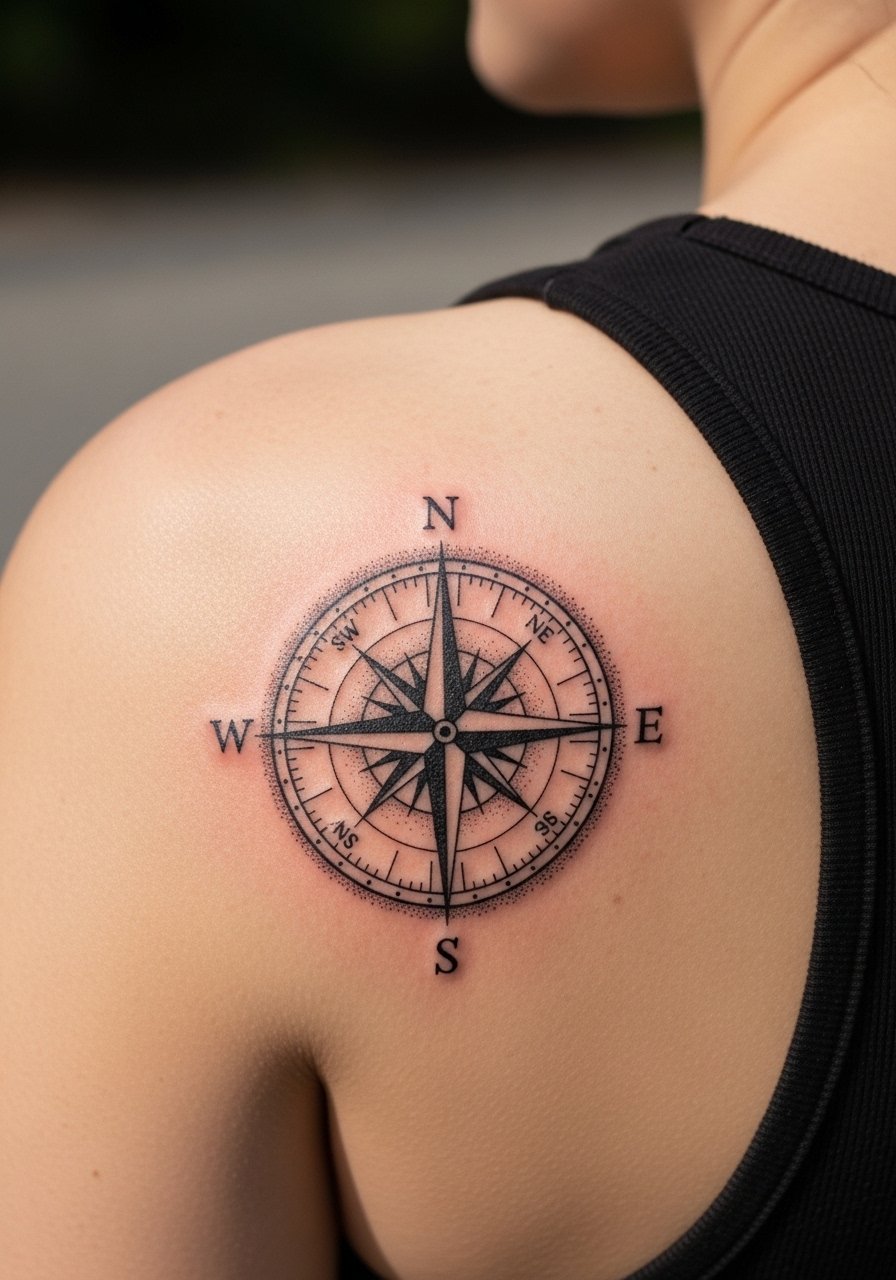
Shoulder blade placement gives a large flat canvas for stipple shading and halo effects. Sessions can be split because stippling is slow. A common error is overcrowding dots too close together, which loses the airy effect. Healing is easy if you avoid tight straps and heavy backpacks during the first two weeks. For session wear, button-down shirts you can pull aside are the simplest option.
20. Neo-Traditional Compass Sleeve Starter Forearm to Elbow
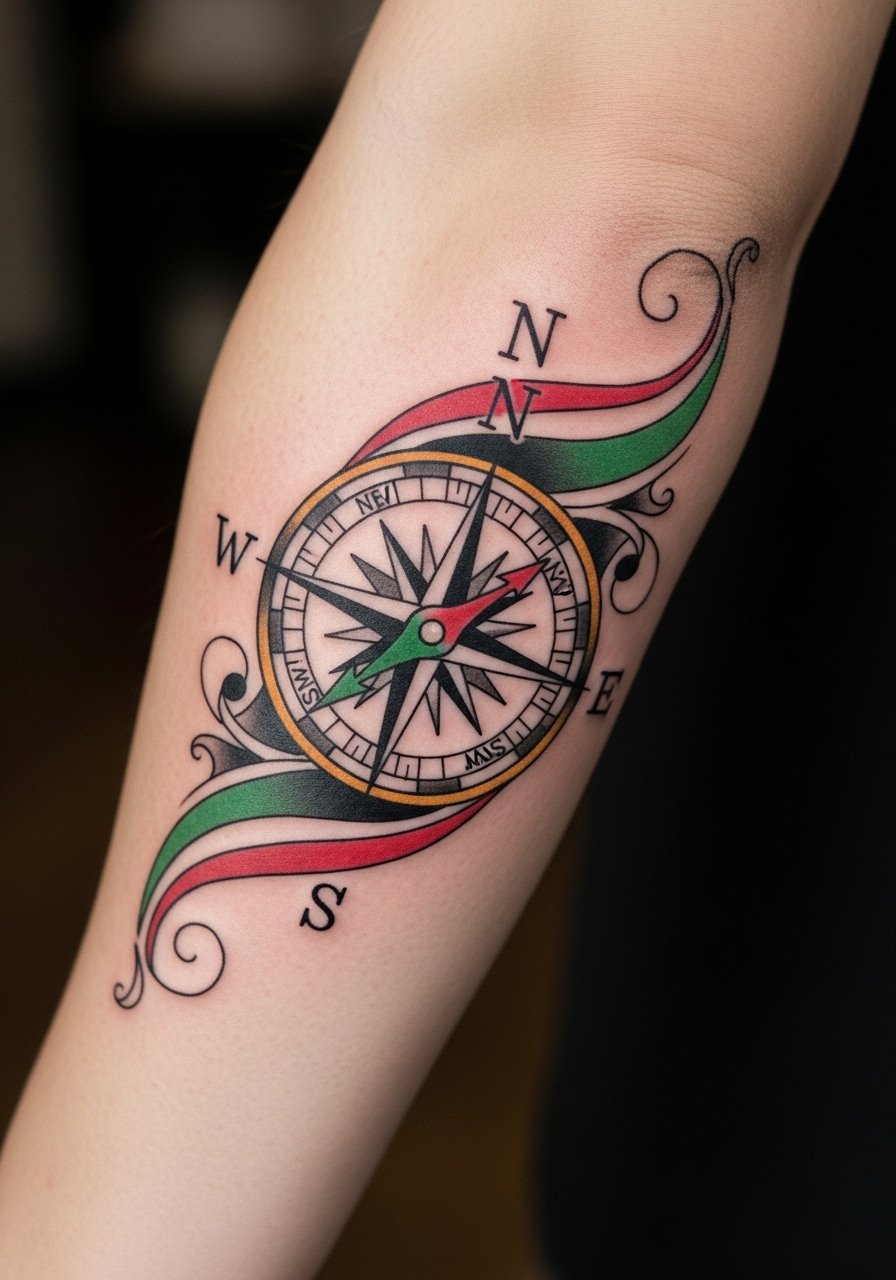
A sleeve starter uses a compass as the focal point then builds outward with complementary motifs. Expect several sessions for smooth transitions and to lock in saturation. Planning is key so the compass ring remains a readable anchor years later. A frequent mistake is starting with colors that clash with planned future work. For the session, wear a short-sleeve button-up and for showing it off, cuffed sleeves or a fitted crewneck tee look right, for example charcoal fitted t shirt.
21. Inverted Chest Compass for Inner Guidance on Dark Skin
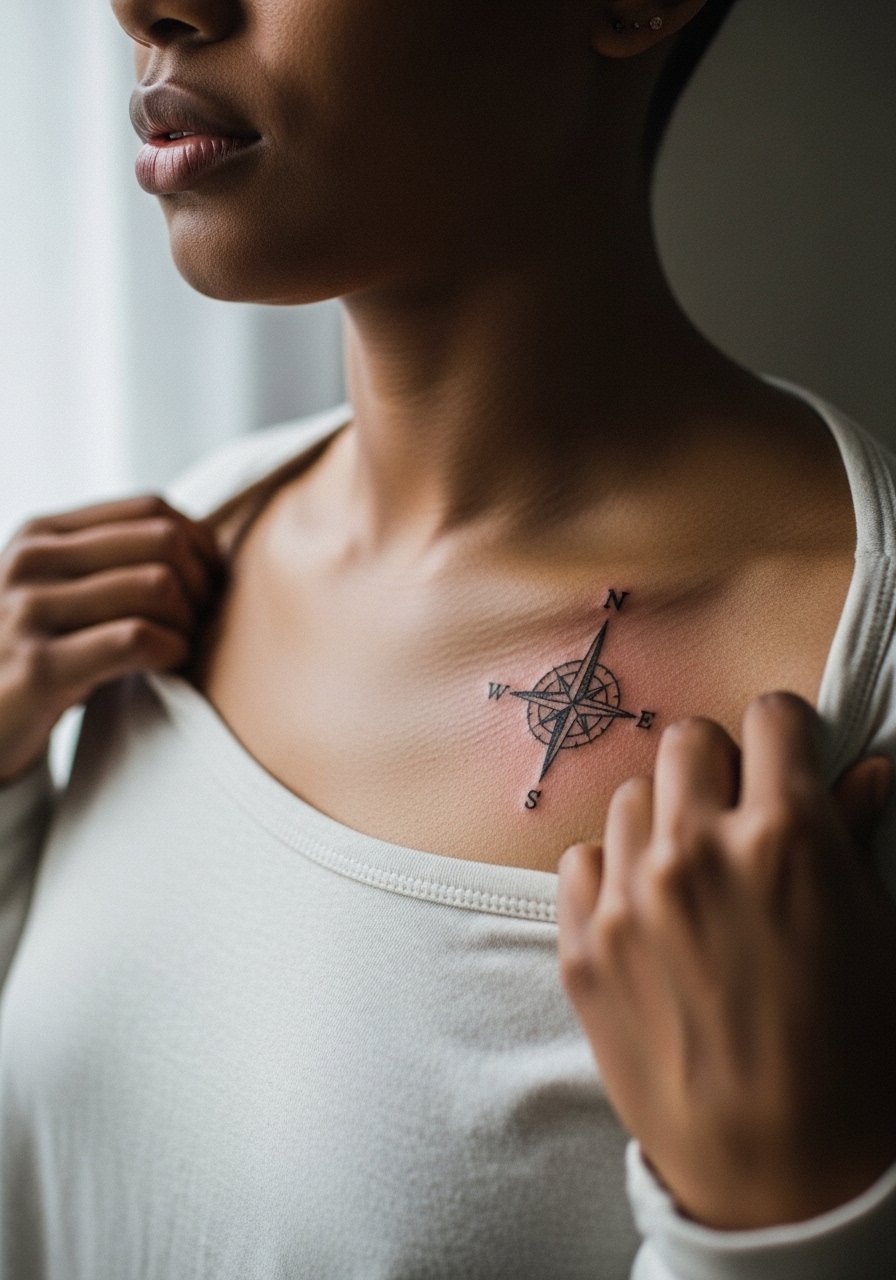
Flipping a chest compass creates an inward visual that sits close to the heart line. On darker skin tones, bold black anchors and selective graywash read more clearly than pastel color work. Sessions can take longer with careful shading across curved muscles. The risk is distortion with weight change. Wear a loose hoodie to the appointment and consider chest-friendly aftercare during hot months.
22. Compass with Moon Phases on the Thigh
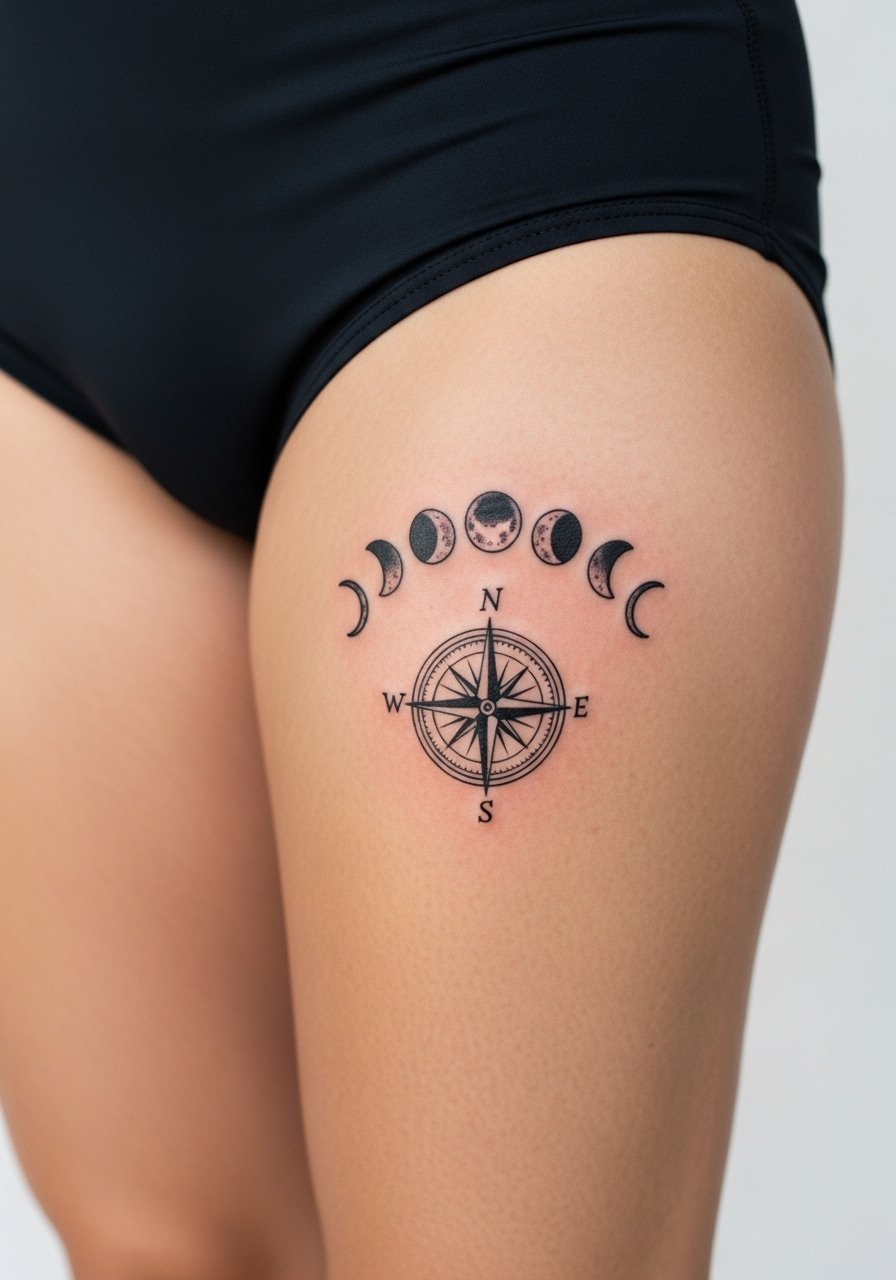
Adding moon phases gives cyclical context without heavy symbolism language. Thigh placements handle both size and color well and the area is easy to conceal while healing. A common mistake is placing delicate moons too close to heavy color patches, which hides them over time. For show, tailored swim trunks or athletic shorts are ideal, and wear loose board shorts to the session so the artist can access the skin without pressure, for example fitted board shorts men.
23. Micro Compass on the Fingers
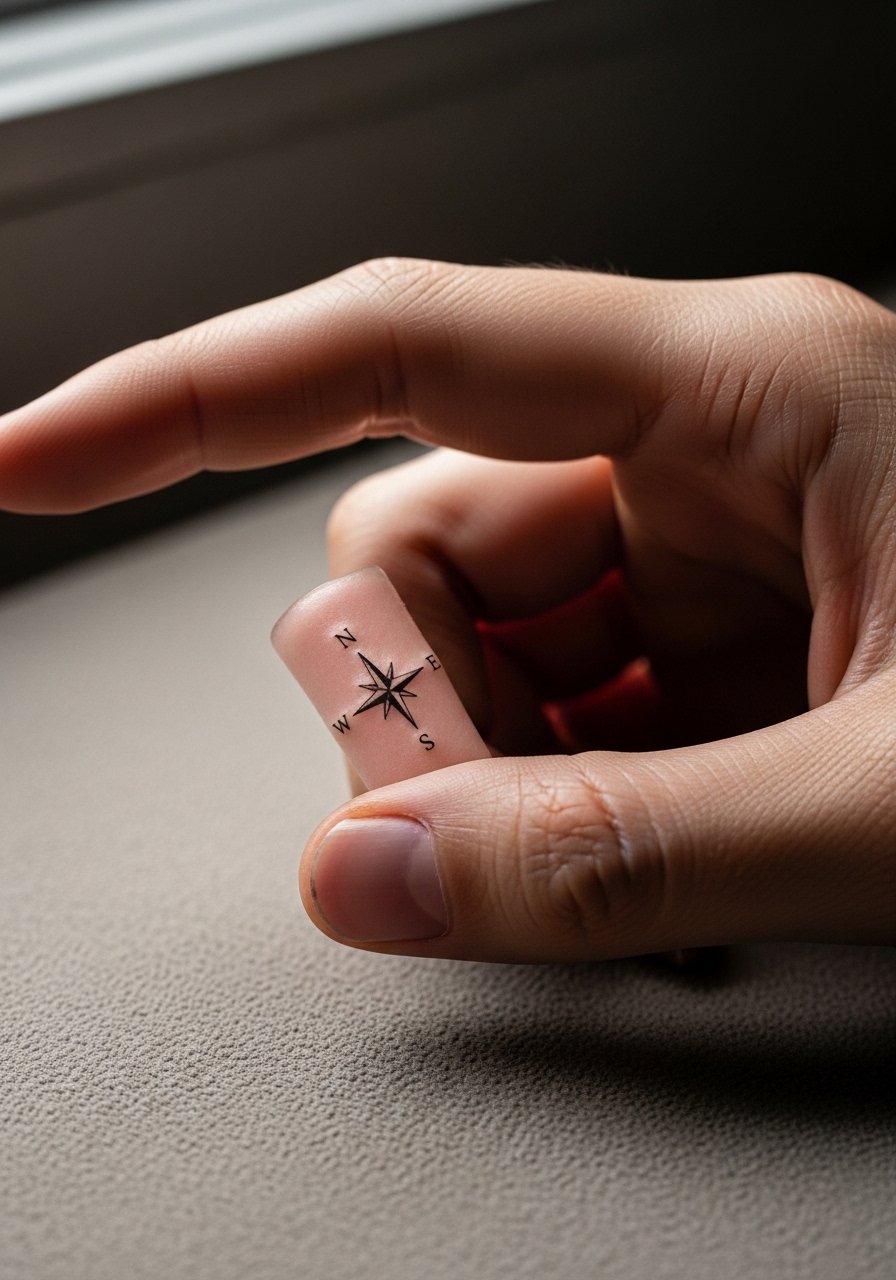
Finger tattoos are high risk for early fading and blowout because the skin regenerates quickly and is exposed to constant washing. If you choose a finger compass, make it slightly larger than you think and accept that touch-ups are likely every 12 to 24 months. The common mistake is expecting a tattoo to remain crisp without maintenance. For sessions, expect a quick but sensitive appointment and plan for careful daily protection while healed.
24. Geometric Compass with Negative Space Forearm

Negative space is an easy way to add modern contrast that improves longevity. Tell your artist you want solid black fills balanced by clean skin channels so the compass reads from a distance. Pain is low and sessions for a medium-sized piece are usually quick. Avoid requesting micro-dot fills too close to negative space edges. For showing it off, a charcoal fitted tee with sleeves rolled shows the design without distraction, for example charcoal fitted t shirt.
25. Compass and Anchor Calf Wrap
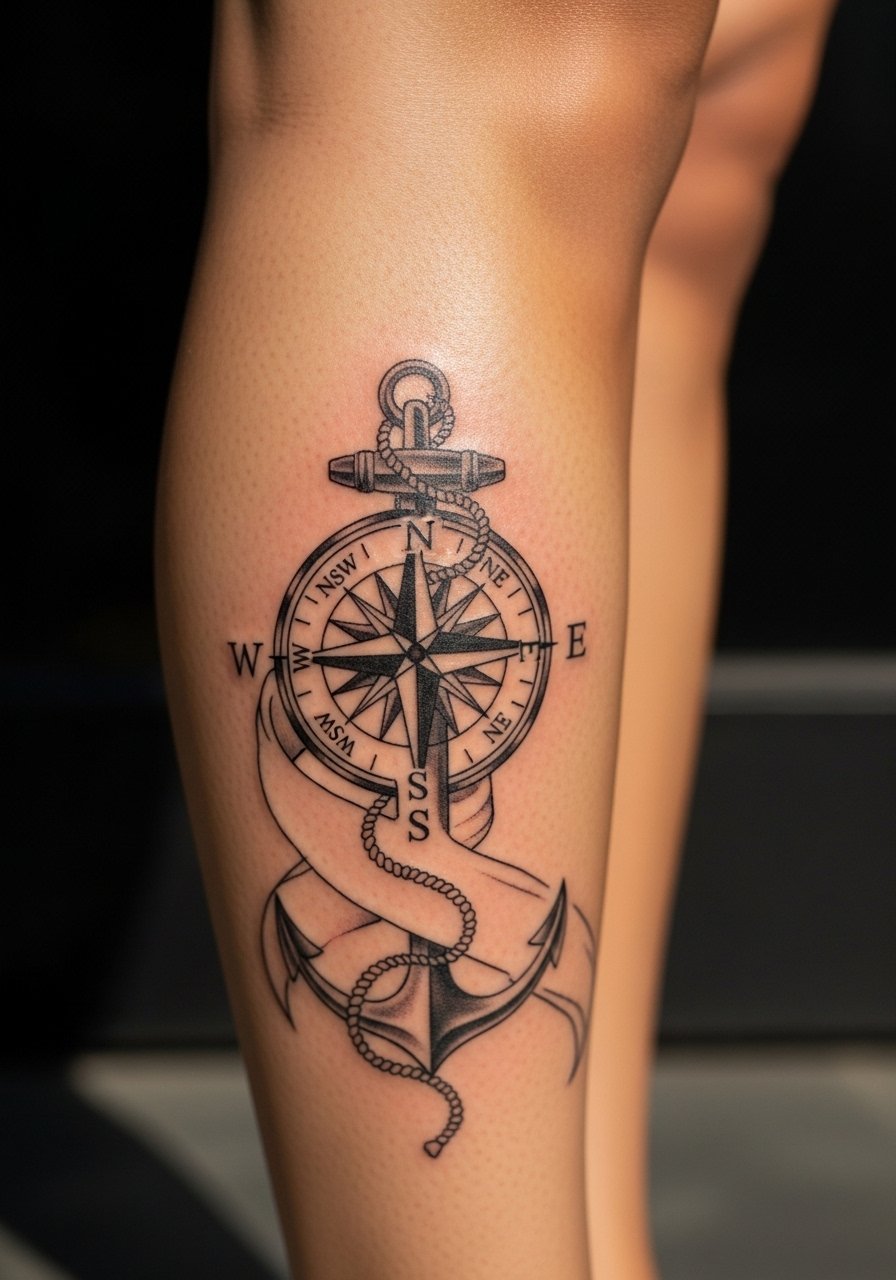
A wrap design around the calf gives movement when you walk. Ask your artist to map the wrap while you stand, not while lying down, because calf curvature changes with posture. A common misstep is not checking how the wrap looks in motion. Sessions are moderate in length and healing is usually straightforward. For showing it off in summer, cuffed shorts help.
26. Minimalist North Star Collarbone
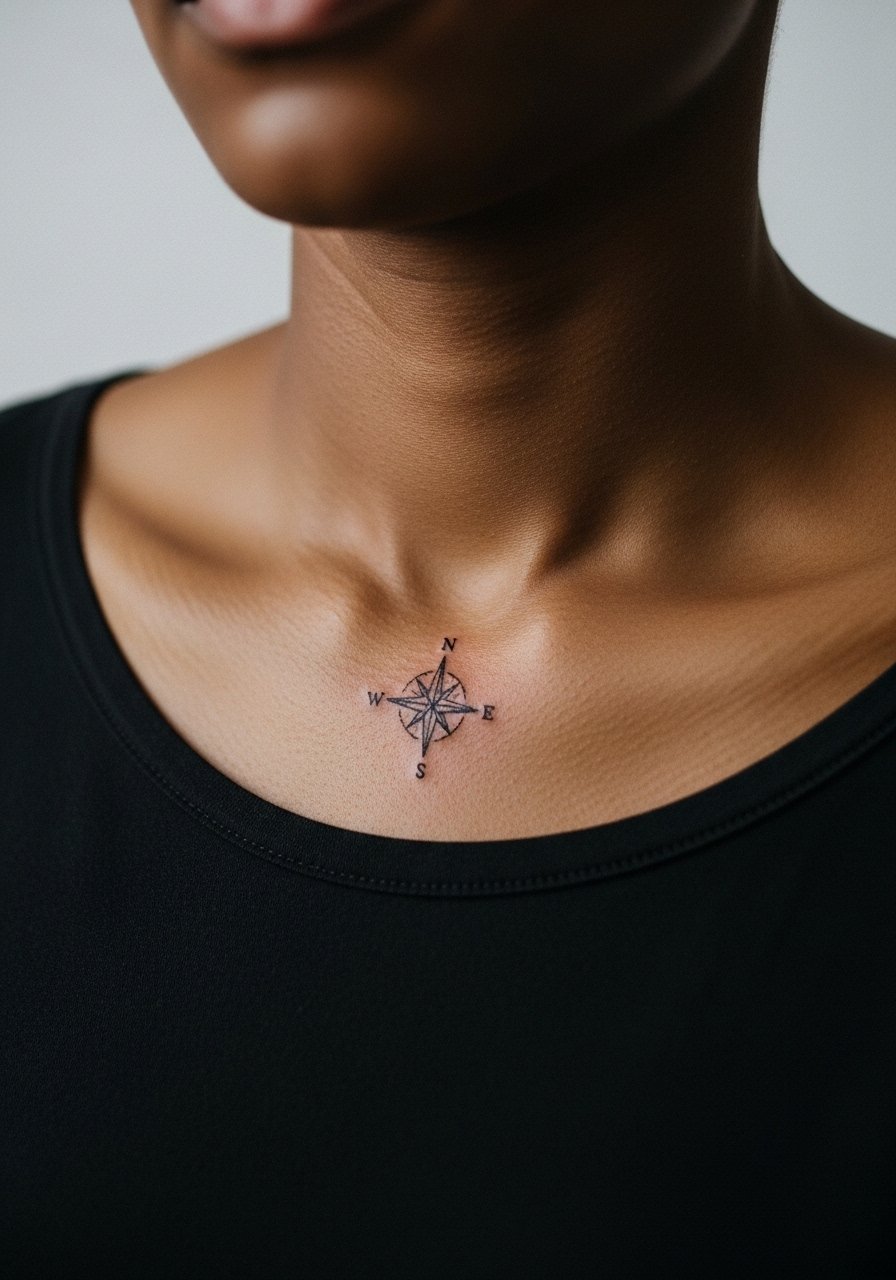
Collarbone placements are visible and delicate. Because the area sits near clothing seams, ask for slightly bolder anchors so the star keeps its shape through shirts and necklaces. Pain can be sharp due to proximity to bone. For showing it off, V-neck or wide-neck shirts are ideal. For the session, a wide-neck top that you can pull slightly aside helps the artist access the area without exposing more than needed, for example v neck t shirt men.
27. Forearm Compass with Hidden Sobriety Star
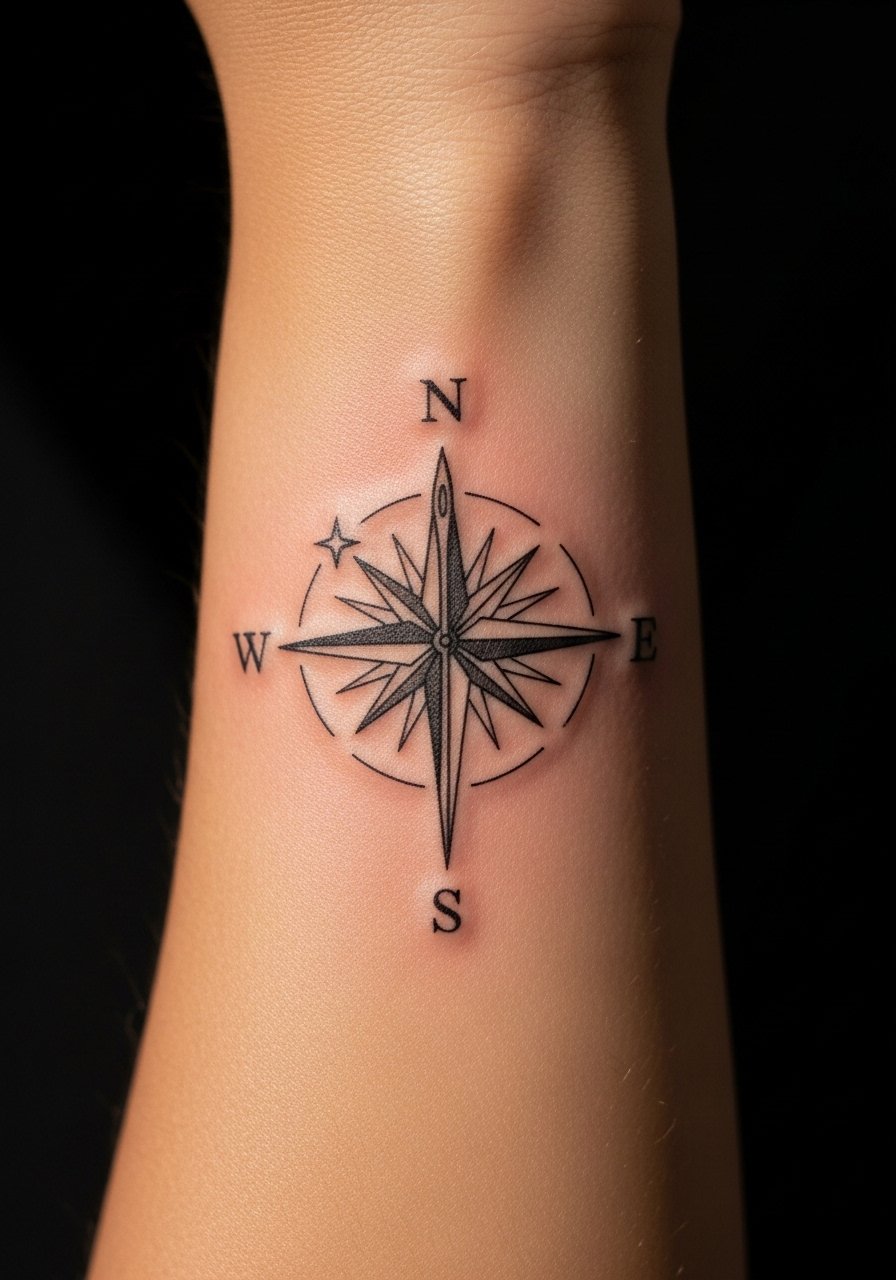
This subtle sobriety marker places a small star near a compass point as a personal milestone without overt text. Ask for the star in a slightly heavier dot so it remains visible in photos and over time. The outer forearm tolerates this well and the session is short. A mistake is making the star so tiny it disappears into the main compass field. For the appointment, a loose tank or short-sleeve button-down works best so the artist can reach the area easily.
Frequently Asked Questions
Q: How do fine line compasses hold up on forearms over time?
A: Fine line compasses can look great at first but often soften quicker on exposed forearms. I advise slightly larger spacing and modestly heavier anchor points so the linework has room to settle. Expect a possible touch-up around year one to two depending on sun exposure and skin type.
Q: Is watercolor a bad choice for thigh compass pieces because of fading?
A: Watercolor can be striking on the thigh, but it needs strong black anchors to protect the washes. Friction from clothing matters, so keep fabrics loose while healing and consider denser saturation if you plan on heavy summer activity.
Q: For dark skin tones, what compass styles pop best in photos?
A: Heavier blackwork and dotwork read better on melanin rich skin than ultra-fine single-needle work. Ask for denser black anchors, and view healed photos from an artist who works with similar skin tone before booking.
Q: Do wrist and finger compasses need different aftercare than chest or calf pieces?
A: They do heal differently because of movement and washing. Wrist and finger areas need more gentle protection from daily friction and are more likely to require touch-ups within a year. For chest and calf work, sweat management and clothing choice in the first two weeks are the main concerns.
Q: Artists disagree on Saniderm and dry healing. How should I decide?
A: There are two camps. One prefers protective film for the first 24 to 72 hours to reduce mess. The other lets scabs form naturally to encourage a full dry heal. It depends on your activity level, the placement, and the artist's comfort with the method, so ask them why they choose one over the other before the session.