Bold fine line tiger eyes look unforgettable the day you get them, and then the worry starts about fading, an artist ghosting your booking, or whether the wrist will hurt more than the forearm. I have seen clients swap tiny wrist stencils for a bolder forearm piece after one touch-up, and I have watched booked guest spots rescue waitlisted clients at conventions. Below are 21 aesthetic tiger eyes tattoo ideas that balance how they age, where they sit, and what to wear the day of the session.
1. Micro-Realism Tiger Eye on the Forearm
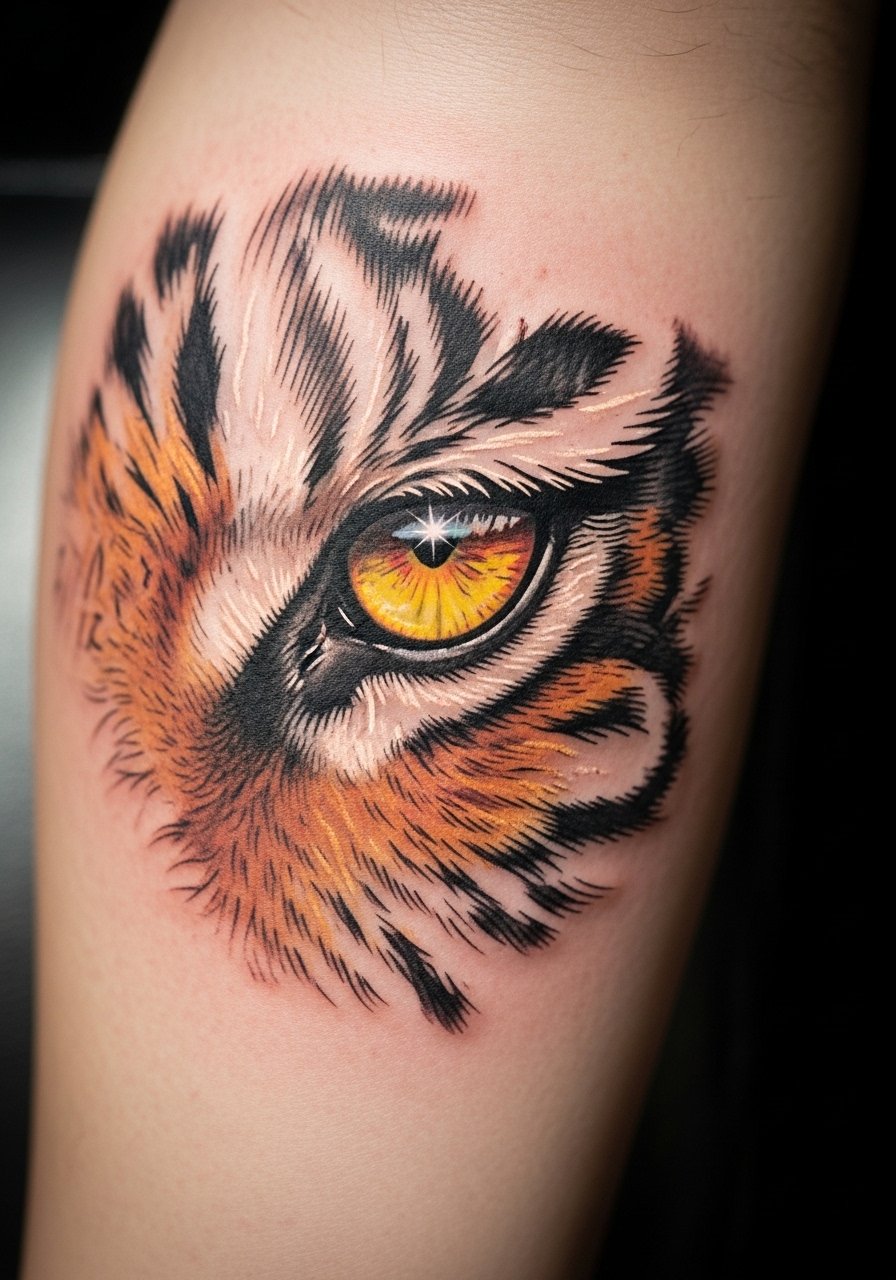
I recommend micro-realism on the forearm when you want eye detail at arm-length viewing distance. Fair warning, tiny details in micro-realism need room to breathe or they soften into blur after a couple of years. Tell your artist you want slightly increased line weight around the iris and a hair of negative space in the fur so touch-ups read like retouches, not repairs. Pain is moderate, usually a 4 out of 10. Expect a single session for a 2 to 3 inch piece and plan for a touch-up at 18 to 30 months. For showing it off, roll sleeves with a charcoal henley shirt men to frame the forearm without stealing attention.
2. Neo-Traditional Tiger Eyes on the Upper Arm
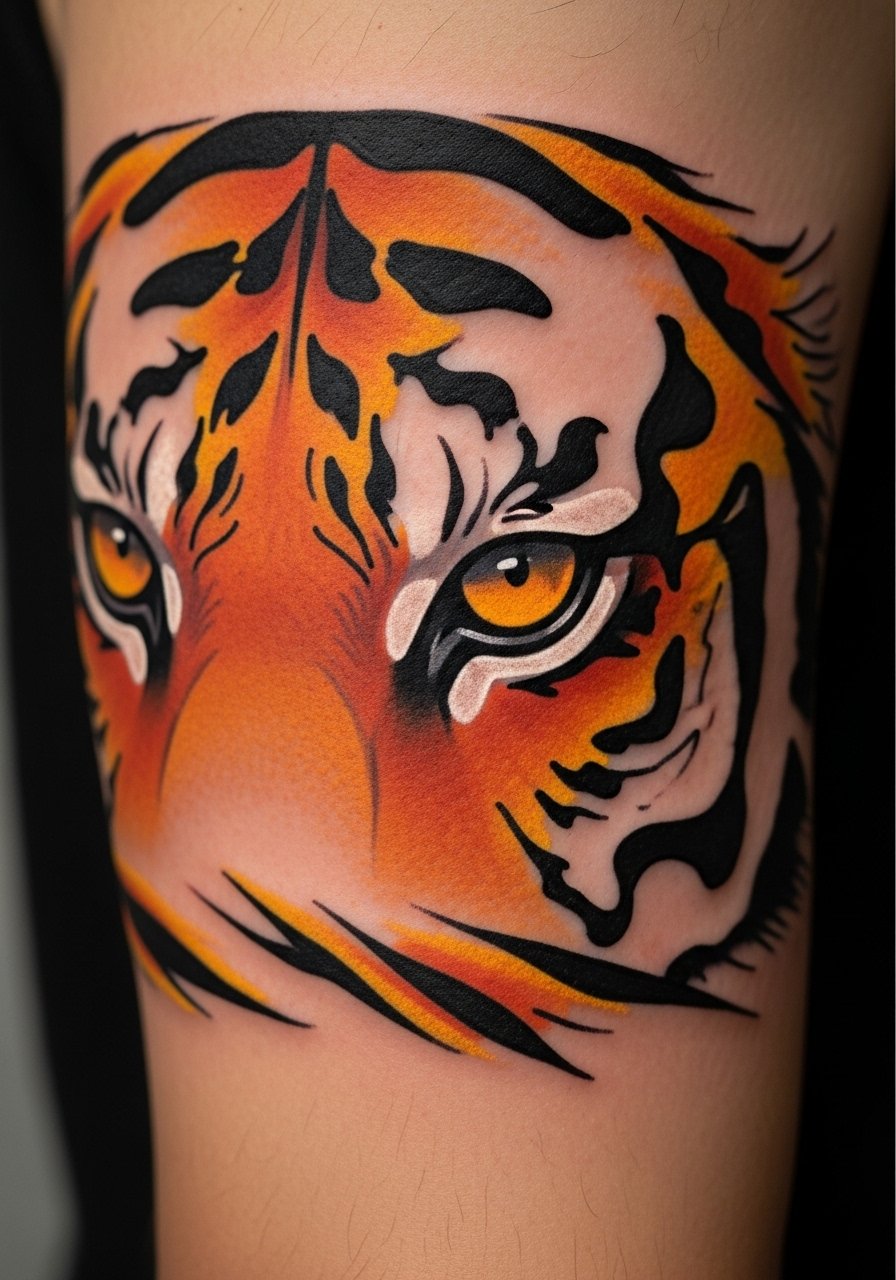
Upper-arm neo-traditional pieces age well because the skin moves less and the bold outlines hold. Bring references that show exactly how thick you want the black outlines and ask for stripe placement that follows muscle curves. The common mistake is asking for too many small highlights that wash out when photographed. Sessions are usually two hours or split over two visits for larger 4 to 6 inch designs. For easy access at the session, wear a fitted muscle tee you can pull aside, and later pair the finished piece with a simple white tee that keeps focus on the saturated colors.
3. Fine Line Tiger Eye on the Wrist

Wrist placement reads delicate but it is harder to keep detail over time. Expect higher sensitivity at the wrist, often a 6 out of 10 on pain scales. Fine line here works for 2 inch designs only when the line weight is planned to allow a touch-up at year two. Artists split on fine line longevity. One camp warns that wrists blur fast, the other says precise depth and spacing make fine line settle. Ask where your booked artist stands and request mockups at stencil scale. Common mistakes are going too small and underestimating daily friction from watches and sleeves. Pair the finished piece with a silver cuff bracelet on the opposite wrist for an understated frame.
4. Ornamental Tiger Eye with Mandala Border on the Collarbone
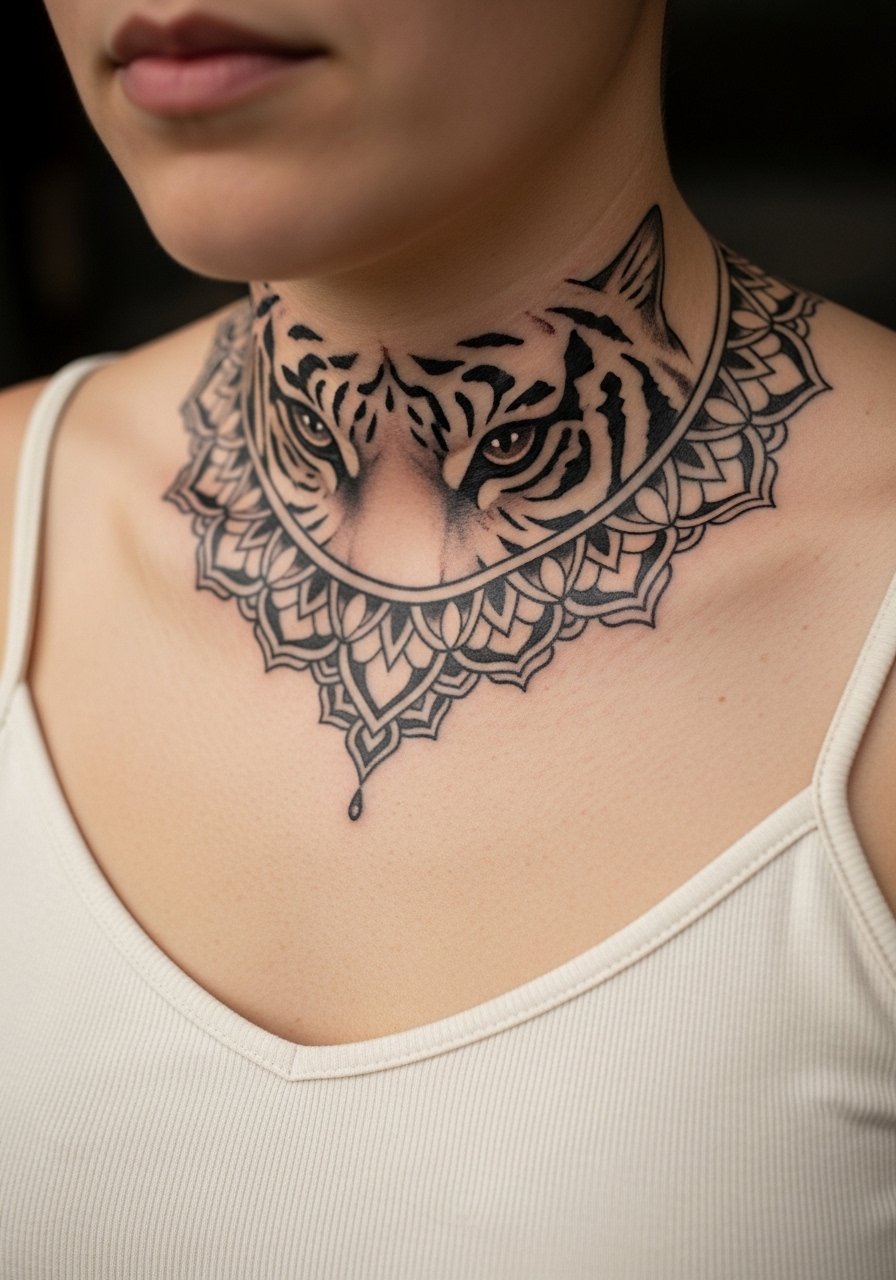
Collarbone placements allow symmetry and a sculptural mandala border, but the skin there is thin. During consultation ask for spacing in the mandala so dense dot work does not merge with movement from arms. The rib of the collarbone can make linework feel slightly stiffer when the client moves, so tell the artist you want stipple shading rather than packed black in the border. Sessions are typically two to three sittings for 3 to 4 inch work. For evenings out, pair this style with a v neck tank top or strapless bralette in cream so the mandala reads like jewelry and not a crowd of competing textures.
5. Neo-Traditional Tiger Eyes with Tropical Motifs on the Thigh
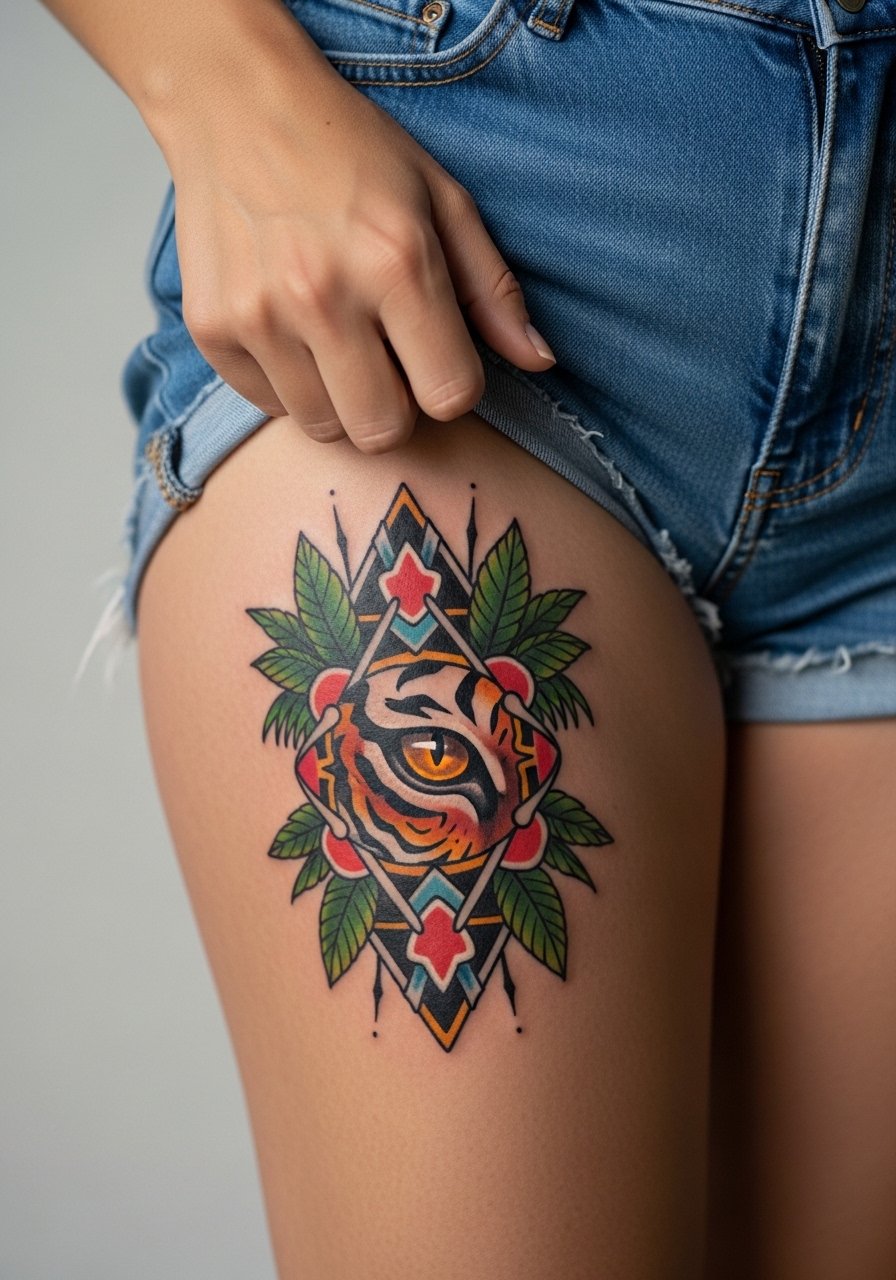
Thigh pieces let you go larger and more colorful, but they stretch where bulk changes occur. If you plan to gain sizable muscle or weight, discuss longevity with the artist. The session can be three hours or more for 5 to 7 inch pieces, often split across visits. A common mistake is placing the eye too close to the crease where pants sit, which leads to friction and extra fading. For showing it off in summer, try high cut denim shorts. For the appointment wear loose drawstring shorts so you can position your leg without constriction.
6. Watercolor Tiger Eye on the Ribcage
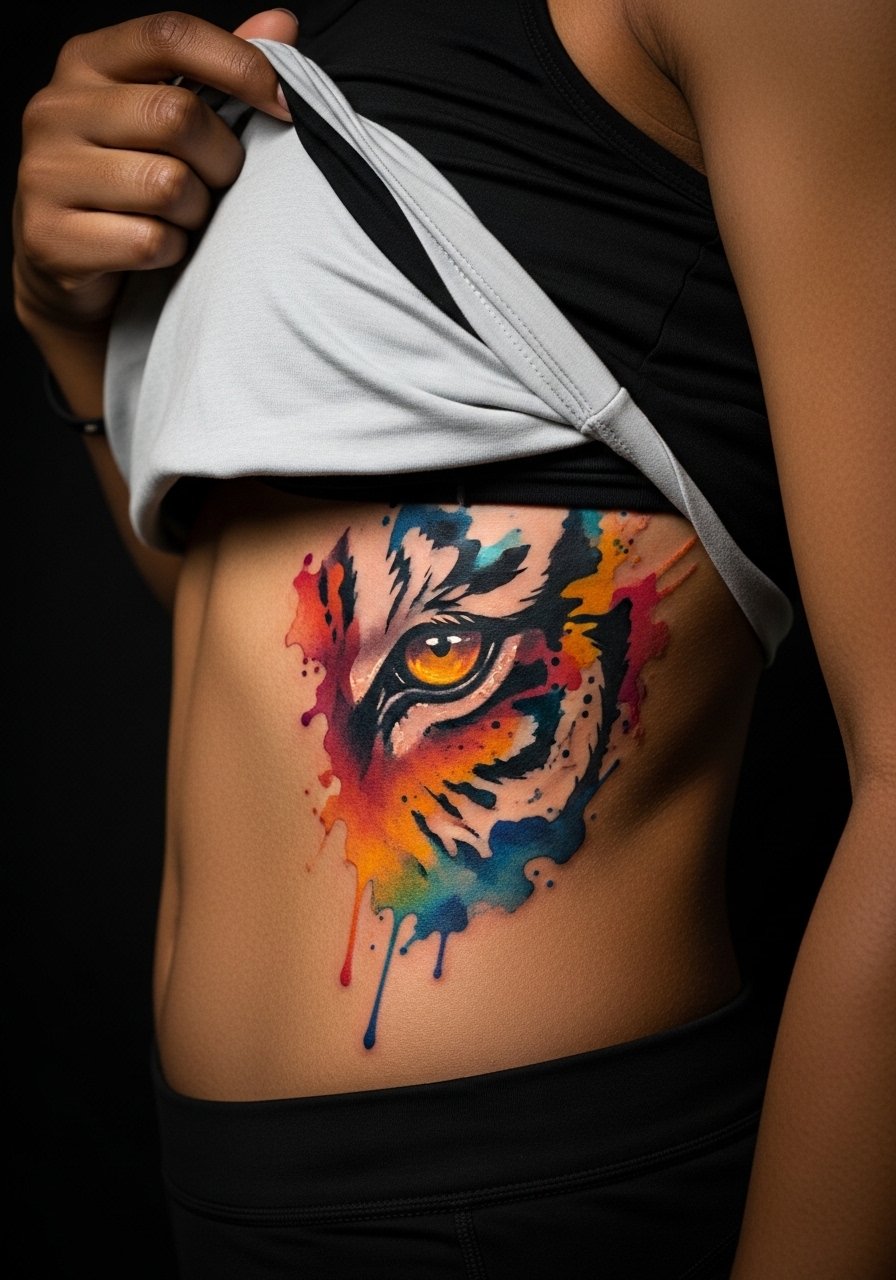
Ribcage sessions are high on the pain chart, often a 7 out of 10, but the vertical canvas suits sweeping watercolor accents. The main downside to watercolor here is color fade if the piece sits near friction zones or under clothing seams. Ask for more saturated base layers and consider placing bright splashes slightly away from the crease to reduce abrasion. Artists disagree on whether Saniderm speeds healing or masks scab inspection. Name the camp you prefer during booking so expectations line up. Session time varies from one long appointment to two medium ones. Plan for a humid month or cooler season to reduce sweat related irritation while the area heals.
Studio Day Picks
The rib, thigh, wrist, upper arm, and collarbone pieces above each have different session needs. Pack smart for the chain of appointments and the first-week healing window.
-
Tea tree balm stick. A thin, non-greasy balm can reduce itch on oily skin types, which helps the wrist and forearm pieces that see frequent washing.
-
Aftercare spray, fast dry formulation. Lightweight sprays can work well for rib and thigh areas where creams feel occlusive under clothing.
-
Rice bran oil moisturizer. A light oil maintains sheen on blackwork back pieces without the thick residue that clogs pores on warmer days.
-
Kanji salve alternative balm. Handy for neck and sternum irritation when a low-odor, low-grease option is preferred.
-
Hustle Butter original. A thinner option than ointments for forearm saturation and color longevity, especially in humid climates where heavy balms trap sweat.
7. Black and Gray Tiger Eyes on the Upper Back
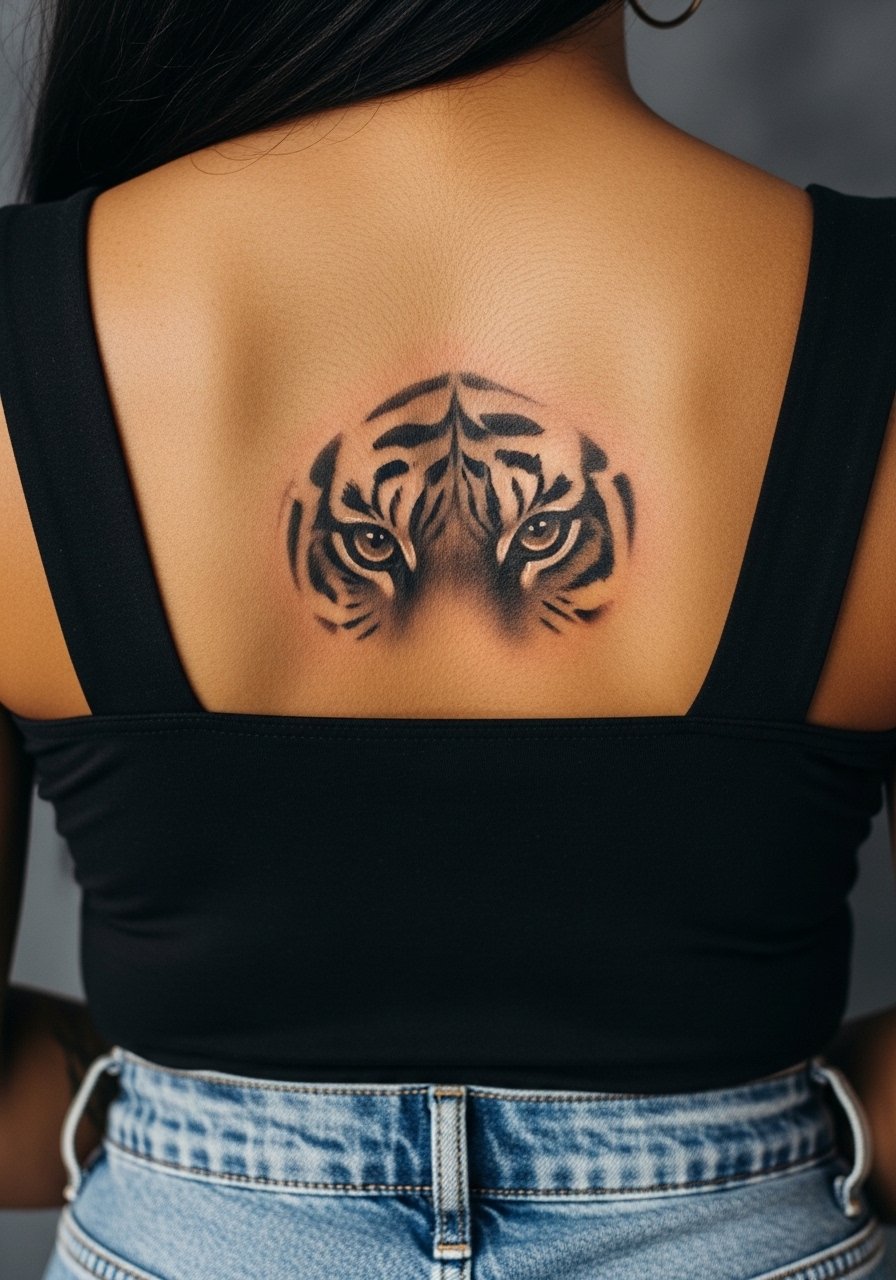
Back pieces hold their tonal gradients longer because the area receives less sun and friction. Black and gray shading translates into a somber depth that reads well in photos for years. Biggest errors come from packing too much tiny texture near the spine where blowout risk increases. Tell your artist to space stipple shading and avoid ultra-fine crosshatching in tight zones. Session length varies from one long session to two medium ones for a 3 to 5 inch piece. Show-off pairing for summer includes a backless crop top when you want the piece visible without competing jewelry.
8. Realistic Tiger Eye with Fur Texture on the Chest
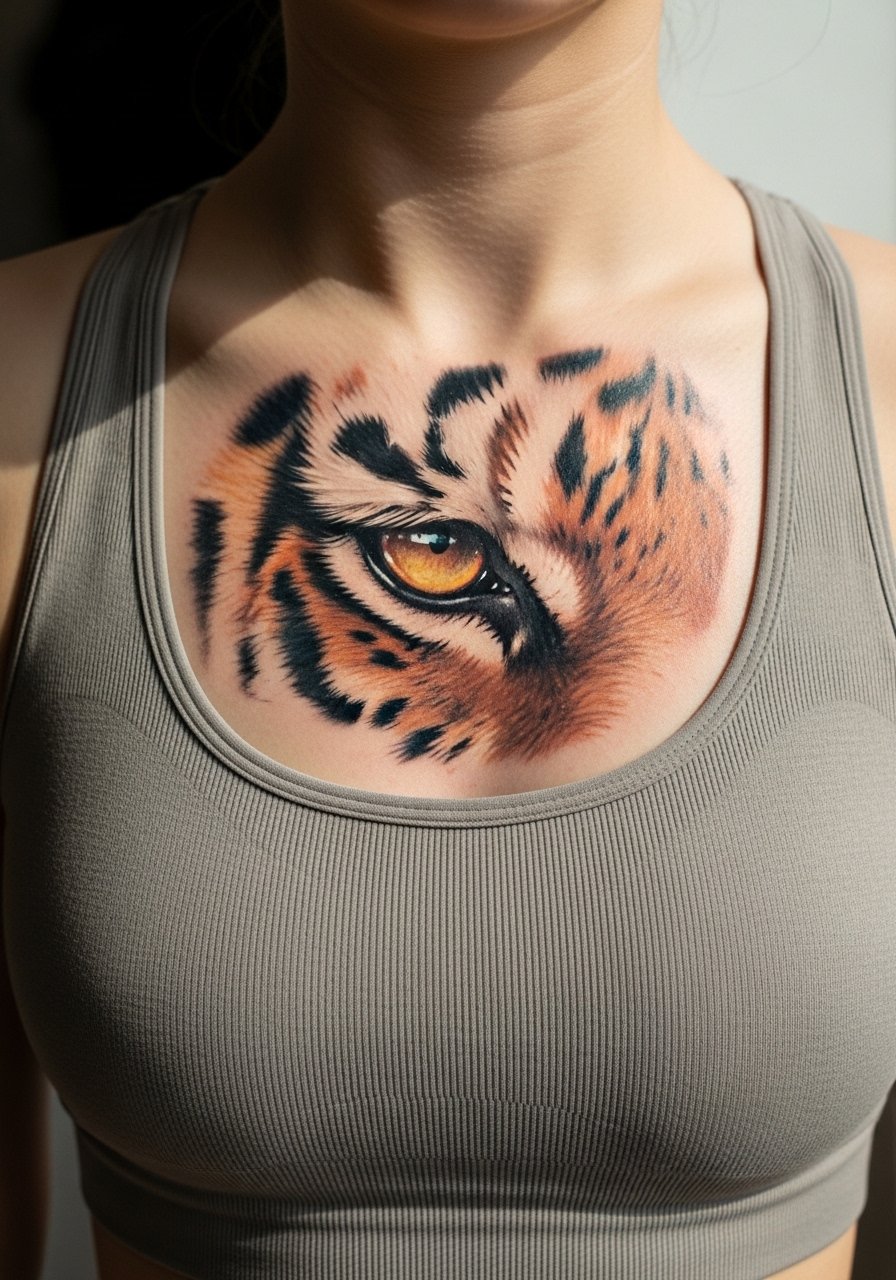
Chest placements take multiple sessions for textured fur detail, often three to five sittings for larger 6 inch compositions. The skin here can be forgiving for saturation and blends, but chest hair and movement affect how detail heals. A frequent mistake is asking for extremely thin fur lines that soften under normal motion. Ask your artist for layered stipple shading in the fur and plan touch-ups at year two to restore crisp highlights. For showing it off, layer a thin gold chain necklace that sits above the eye and keeps attention on the chest composition.
9. Geometric Tiger Eye with Abstract Patterns on the Forearm

Geometric framing adds a modern edge and helps the eye sit inside a clear negative space. The biggest mistake is scaling geometry too small. Lines need breathing room or the angles start to bleed into each other at the one to two year mark. Forearm is a reliable placement for geometric blackwork because it offers visibility and lower stretch risk. Ask for thicker primary outlines and finer secondary lines so the composition keeps structure through slight aging. Sessions are typically one to two sittings for a 3 inch piece. For daytime looks try a charcoal henley shirt men rolled at the cuff to show the geometric frame.
10. Minimalist Single-Gaze Silhouette on the Inner Bicep

Inner bicep work sits hidden unless you lift your arm, which makes it a great option for discreet collectors. Goal setting in the consult matters. Tell the artist the exact size and distance you want it to read from so the silhouette still appears intentional after swelling subsides. The inner bicep can bruise and itch during healing, so plan lighter activity. Session time is usually short, a single appointment for a 1.5 to 2 inch piece. Avoid requesting ultra-fine internal details because they can wash out when the arm returns to rest. For the appointment wear a loose tank top that gives clear access without forcing shoulder movement.
11. Blackwork Bold Solid-Fill Tiger Eye on the Calf
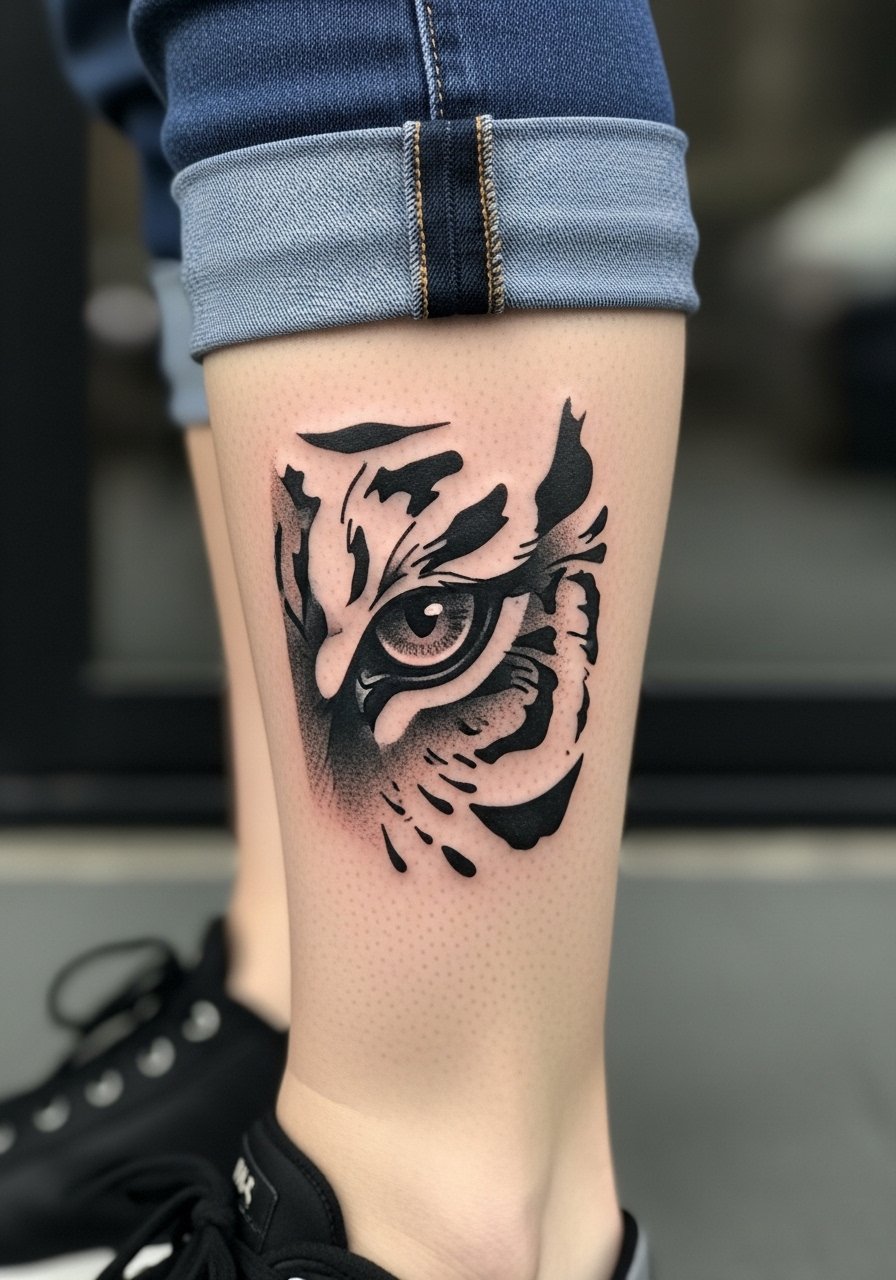
Calf placements are durable and show strong contrast for solid blackwork. Saturation holds well with less touch-up needed than delicate areas. A common error is squeezing too much curvature near the Achilles zone which causes rubbing and premature softening. Ask for negative-space stripes to create optical depth instead of relying solely on large packed blacks. Sessions are typically two sittings for a 4 inch piece. Show this design with cuffed jogger pants or rolled jeans so the calf stands out without a full-on display.
12. Ignorant-Style Tiger Eye on the Side Neck
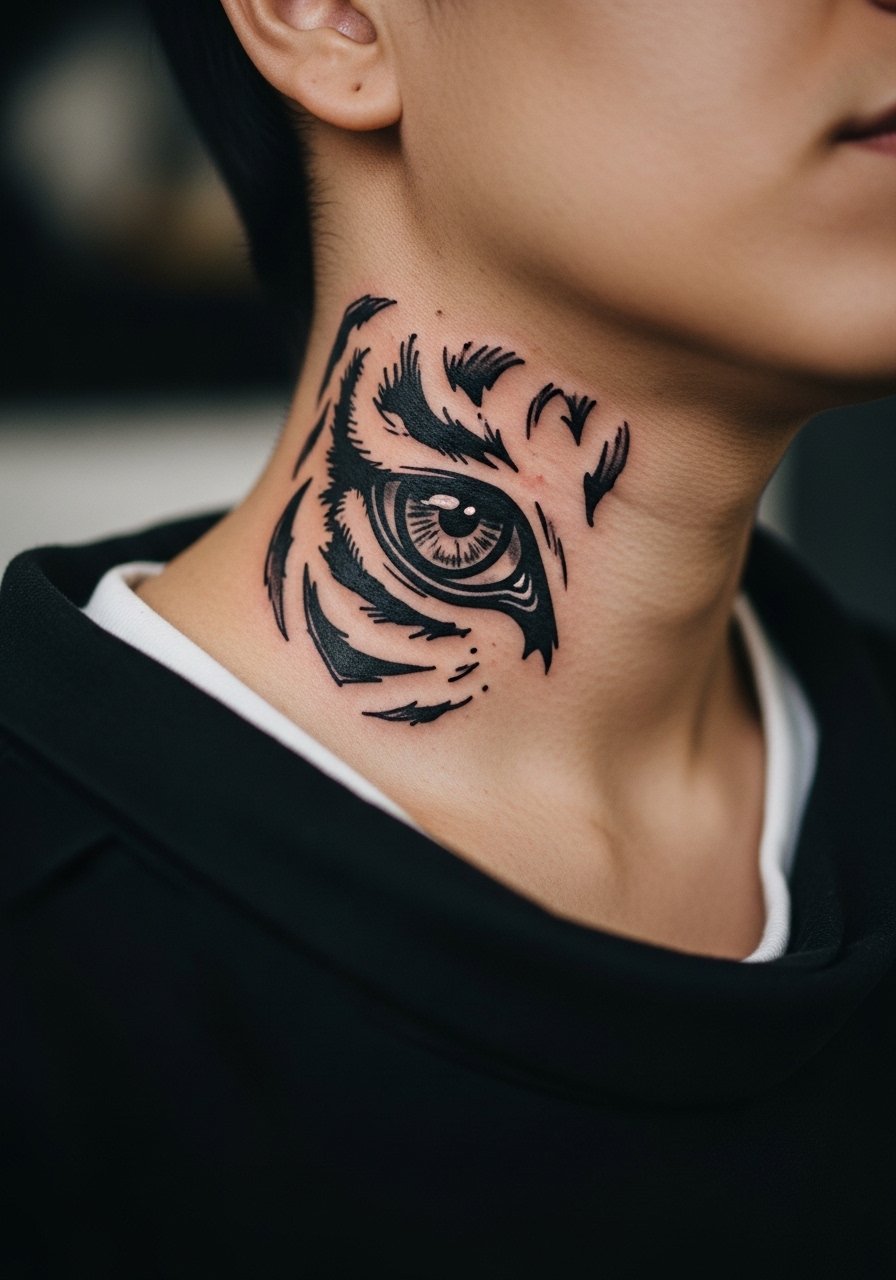
Neck placements carry social and professional considerations, so think about visibility before booking. The ignorant style embraces raw, rough shading, which can be a deliberate look if you want a gritty aesthetic. The side neck sees movement and friction from collars, which can speed early fading. Artists differ on complexity here, so ask for a bold outline that matches the rough shading to keep the shape readable over time. Sessions are usually one to two sittings for a 3 inch piece. Expect higher touch-up needs and plan accordingly.
13. Micro Tiger Eye Behind the Ear
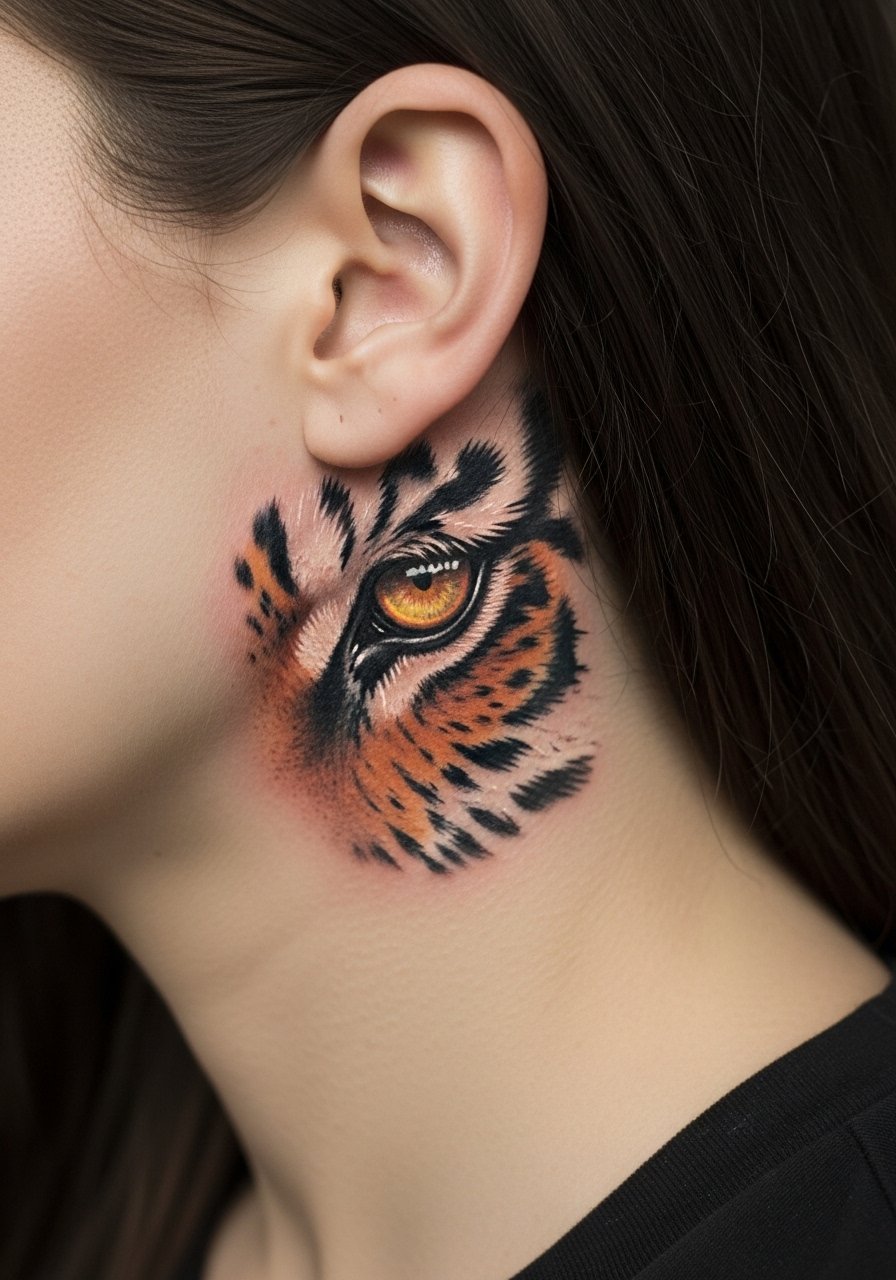
Behind-the-ear placements are subtle and ideal when you want a hidden detail that peeks out with hair tucked. Healing can be slower because of hair trapping moisture and sweat. The main mistake is asking for too much color saturation in a tiny zone. Keep the iris suggestion minimal and focus on a high-contrast pupil mark so the eye reads at a glance. Session time is short but expect careful aftercare. Communicate that you plan to sleep on your side and ask for tailored aftercare advice from the artist.
14. Asymmetric Collarbone Pair with Ornamental Frames
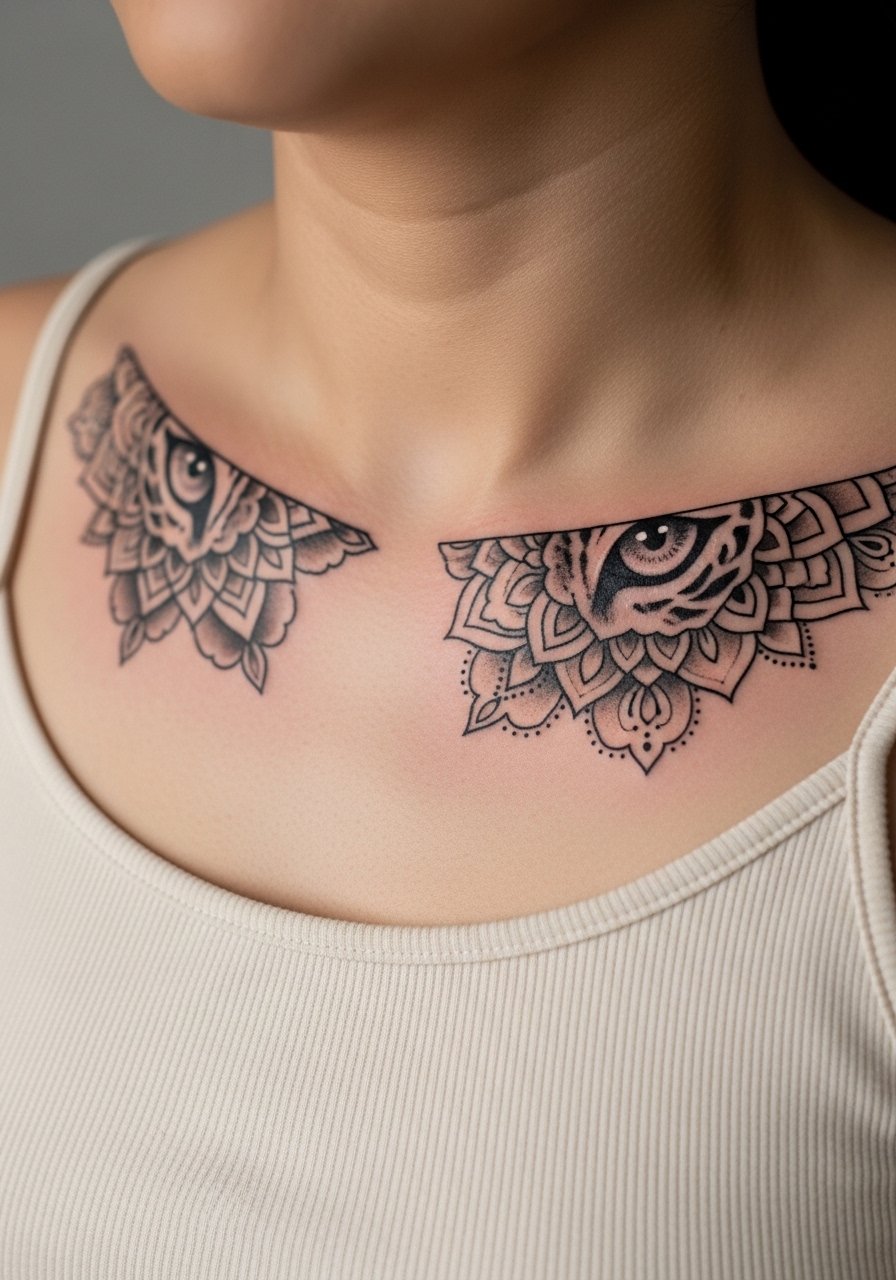
An asymmetric pair across the collarbones creates balance without mirror symmetry. This placement helps when you want dual motifs that read like matching jewelry. The common mistake is making the pair identical when one side should be slightly smaller to follow bone curvature. Ask the artist for one side to be a touch higher or smaller so the composition complements movement when you tilt your head. Sessions are typically two sittings to get symmetry without overworking thin skin. Show it with a v neck tank top in cream to enhance the ornamental border.
15. Geometric Negative-Space Tiger Eye for Upper Arm Curves
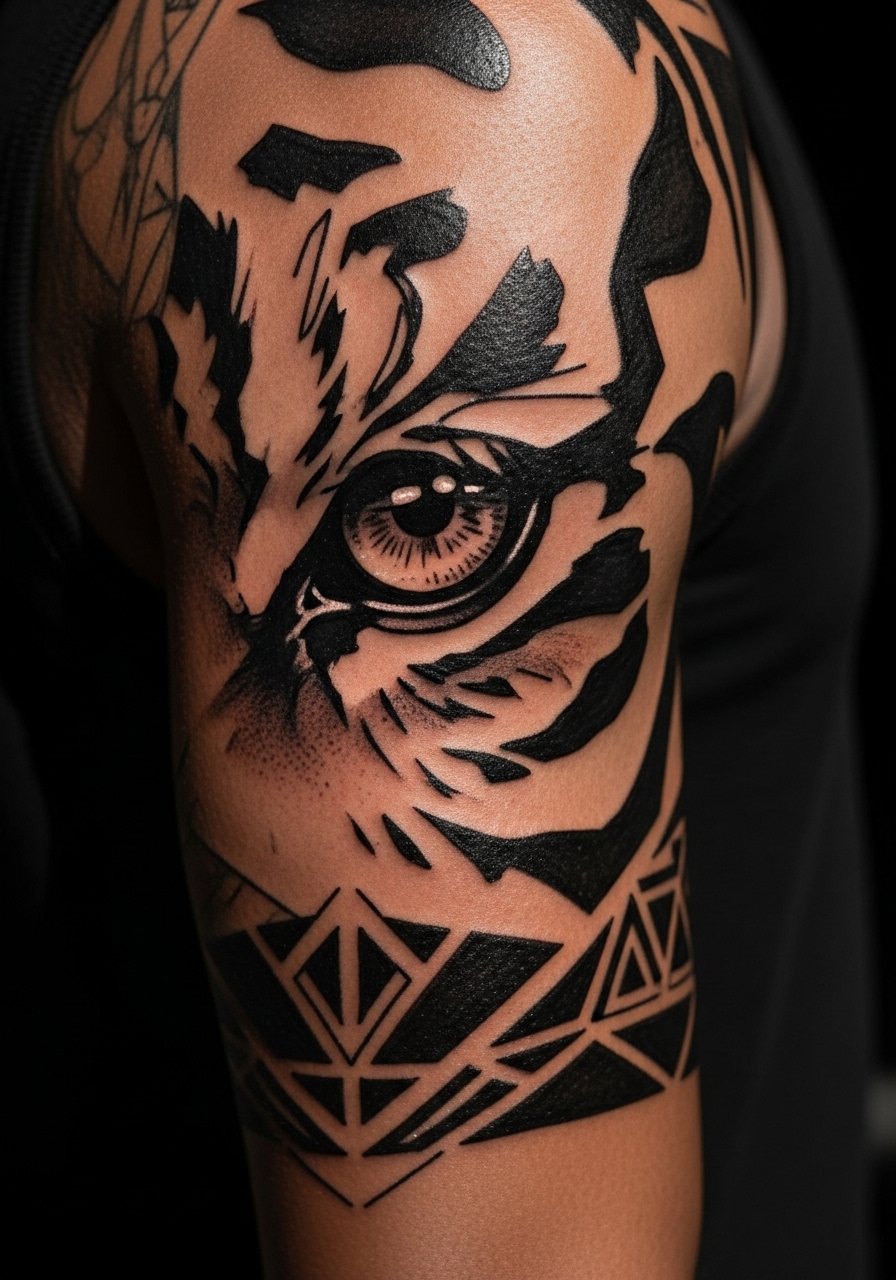
Negative-space stripes give the illusion of fur without packed shading and they can be a smart option for darker skin tones. The key consultation item is how much skin you want left as negative space so the pattern does not close up. Overly dense negative work on curved areas can collapse visually after swelling. Sessions usually fit into one or two appointments for a 3 to 4 inch piece. Ask for mockups on the arm in different positions so you can see how curves change perceived stripe width.
16. UV-Reactive Scaled Tiger Eyes for Finger Placement
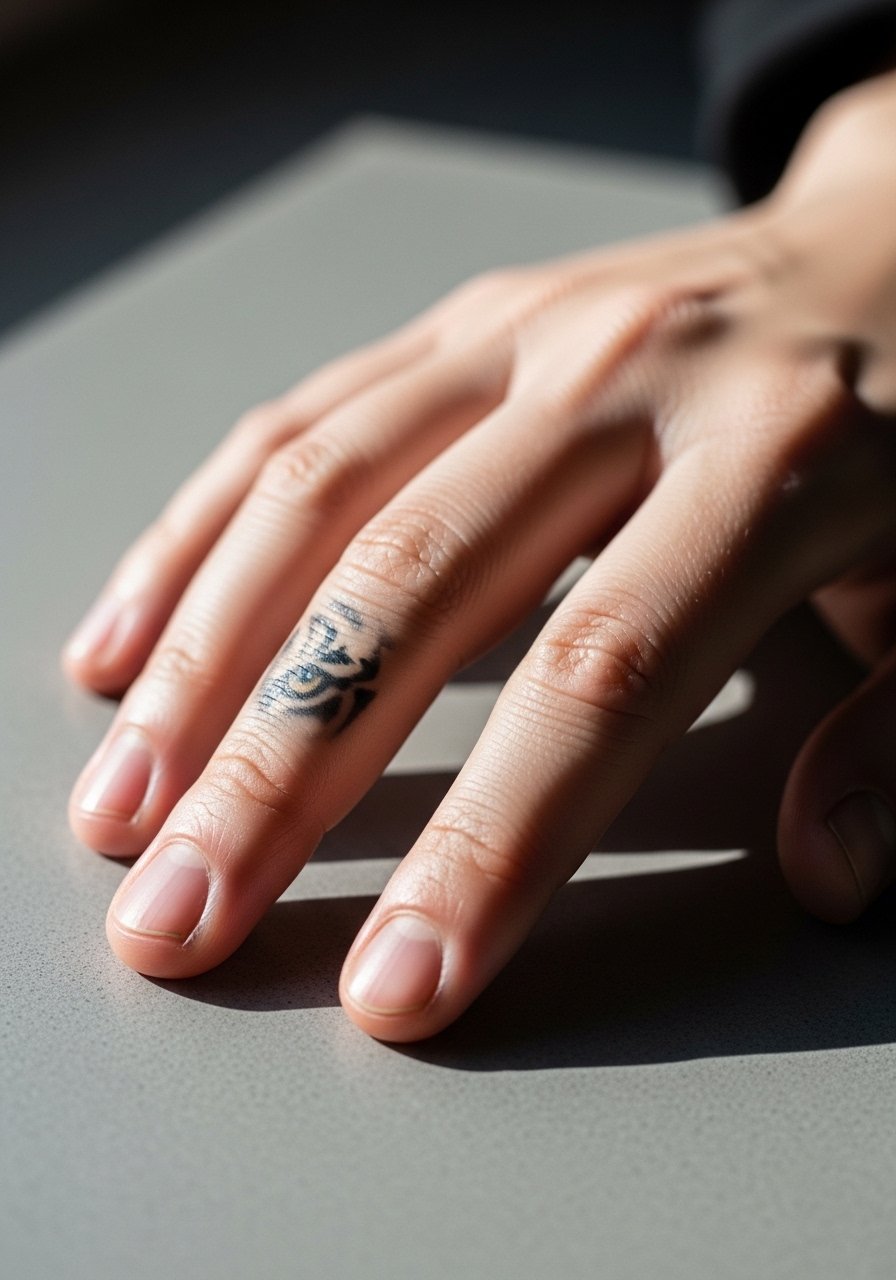
Finger placements are high friction and exposed to constant washing, which accelerates fading. UV-reactive ink is a niche option for nightlife visibility, but it is not a longevity solution under normal light. If you go this route, expect regular touch-ups and a willingness to refresh the piece. The session is short but healing needs protection from constant hand movement. A common mistake is underestimating how quickly fingers soften lines. Ask your artist about solid anchoring lines and plan for annual touch-ups if you value the glow effect.
17. Jungle-Framed Realism Tiger Eye on the Shoulder
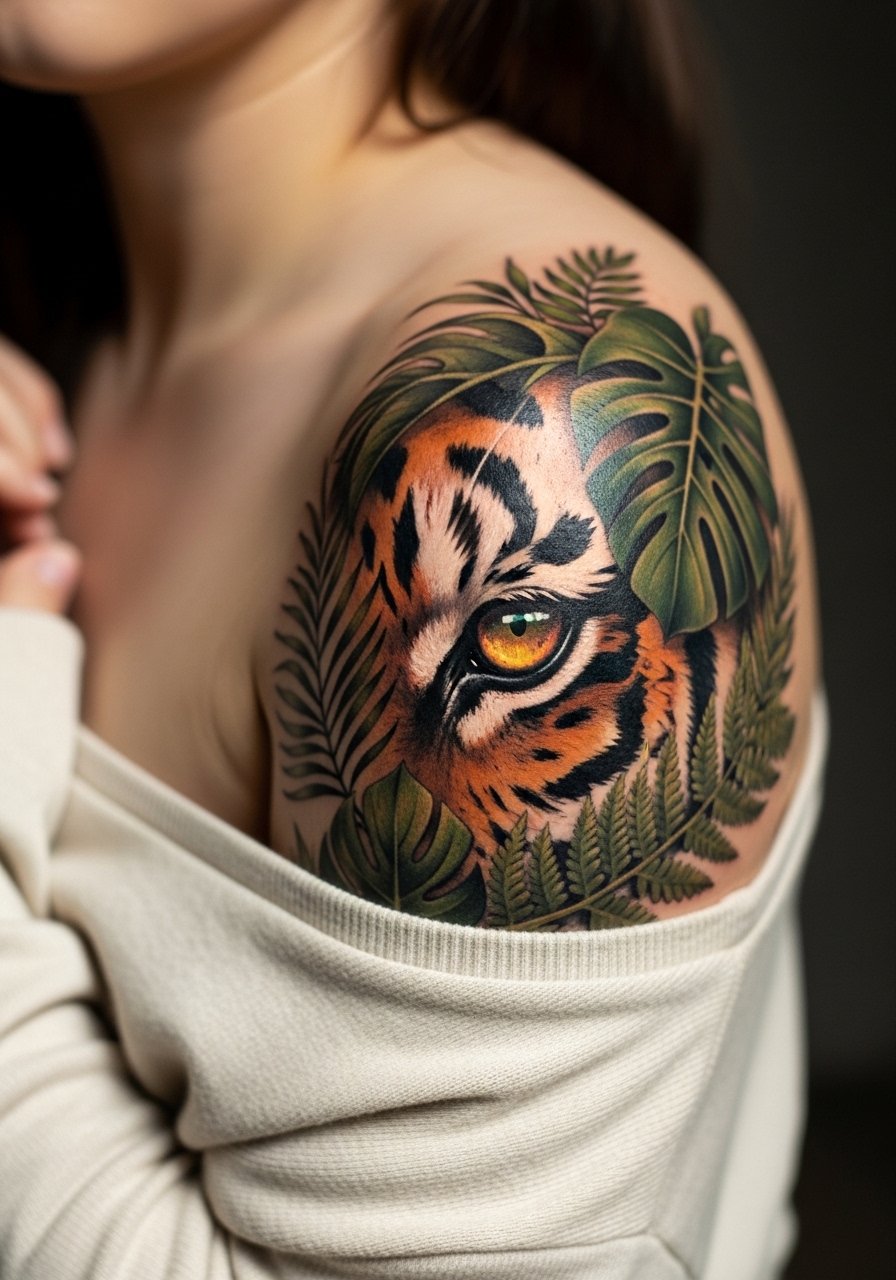
Shoulder pieces sit on a curved plane that flatters realism when the foliage wraps around muscle contours. Realism requires texture and contrast, so request layered foliage that uses gray washes rather than dense black fills. The usual mistake is placing heavy contrast lines that fight the shoulder curve. Sessions are normally two to four sittings depending on size and detail. Pair the healed work with an off shoulder top to reveal the wrap of foliage without sacrificing movement.
18. Watercolor Splash Tiger Eye on the Side Torso

Side torso watercolor pieces can be highly expressive, but the skin type and friction from clothing determine color resilience. The mistake is relying on pastel washes that fade to suspicious bruising under heavy sun exposure. Ask for deeper underlayers and discrete saturations so the washes keep life after a year. Pain is moderate to high depending on depth, and the session usually runs one to two appointments for a 4 inch piece. For beach season choose clothing with minimal waist seam contact to reduce abrasion during healing.
19. Stipple-Shaded Tiger Eye with Dot Work Halo on the Upper Arm

Dot work and stipple shading create a skin-friendly texture that ages into soft gradients. The technique is forgiving because it uses spaced dots rather than dense packing, which reduces blowout risk on moving skin. The usual mistake is compressing dots too tightly, which imitates solid shading and loses the airy halo effect over time. Sessions are often multiple short sittings so the artist can layer dots without overworking tissue. This approach suits those who want texture without heavy saturation.
20. Tiny Minimalist Wrist Silhouette for First-Timers
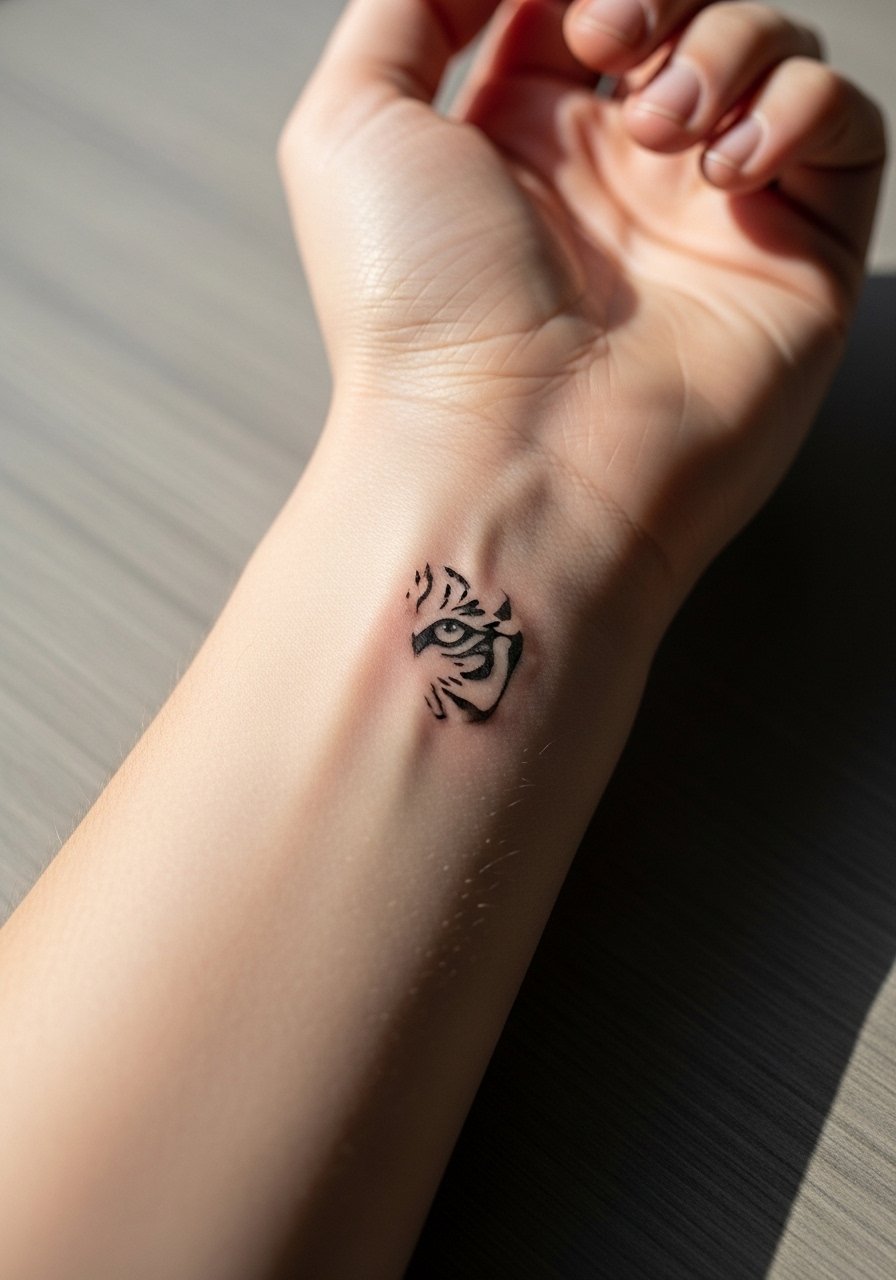
For first-timers who want a discreet hint of fierceness, a tiny wrist silhouette can be a gateway piece. The pitfall is choosing a size so small that details vanish after the first year. Size up just enough for a clear pupil and a small defining lash line. Wrist pain is moderate, and the session will be brief, often a half hour. Expect touch-ups at 12 to 24 months. For the appointment wear a loose button-down shirt you can pull aside so the artist has perfect access without fabric rubbing the fresh ink.
21. Cover-Up-Friendly Blackwork Tiger Eye for Faded Pieces

If you are dealing with a faded fine line tiger eye, blackwork cover-ups are one of the most reliable fixes. The plan here is to design a composition that uses negative space and bold fills to mask old halos without making the piece feel like a patch. The common mistake is trying to hide too much with thin lines which re-expose the old ink. Expect at least two sessions and a realistic discussion about what portions can be fully obscured. Bring clear photos of the faded piece and seek portfolio examples by style through tags like #TigerEyesTattoo and by searching local guest lists at conventions.
Frequently Asked Questions
Q: Will a fine line wrist tiger eye blur faster than one on the forearm?
A: In practice, fine line on the wrist tends to need touch-ups sooner because wrists face constant washing and friction from watches and sleeves. Forearms usually hold detail longer, so if longevity is your priority choose a slightly bolder line weight for the wrist or move the design an inch up to the forearm.
Q: Does Saniderm really heal watercolor or does dry healing work better?
A: Artists and collectors divide into two camps. One group prefers Saniderm because it reduces mess and protects splashes of color during the initial days. The other group favors dry healing so you can monitor scab formation and avoid trapping moisture. Be explicit about which method your booked artist prefers and follow their process for the best result.
Q: How should I prepare clothing and packing for a thigh or ribcage session?
A: Wear loose, accessible clothing that exposes only the tattoo zone. For thighs bring loose drawstring shorts. For ribcage bring a cropped top you can lift. These choices reduce pressure on the area during application and make aftercare less awkward immediately after the session.
Q: If my tattoo faded on darker skin, should I rework it as blackwork?
A: Many people with medium to dark skin find that high-contrast blackwork reads better in photos and holds up longer. Talk to artists who have experience with blackwork on darker skin and ask for healed examples in similar tones before booking.
Q: How do I recover if my artist canceled multiple times and I am waitlisted?
A: Look for guest spots at conventions and filter portfolios via tags like #MicroRealismTiger or search the Tattoodo app by style and city. Book services with explicit cancellation policies when you can so guest spots and smaller shops with confirmed schedules become practical alternatives.
Q: Do watercolor tiger eyes require different aftercare than black and gray pieces?
A: Watercolor pieces often benefit from slightly shorter occlusive periods and careful sun avoidance to protect dyes. Black and gray pieces can sometimes tolerate early thin moisturizing better. Follow your artist's preferred method and mention if you plan to use film or dry healing so they can set expectations.
Q: Can I get a UV-reactive finger tiger eye and still expect it to last?
A: UV-reactive finger tattoos will glow under certain lights but fingers are a high-fade area. Expect frequent touch-ups and accept that the glow is a novelty that will require maintenance. If you want nightlife visibility, plan for an annual refresh schedule.