Bold black fills and heavy linework read like punctuation on the body, but they also age differently than color or delicate line pieces. What looks razor-sharp at the stencil stage can pack into a beautiful silhouette or mush into a blob depending on placement, spacing, and needle depth. Below are 27 blackwork full body ideas that aim for longevity, give clear consultation notes, and show how to style the results so the work reads like part of your wardrobe.
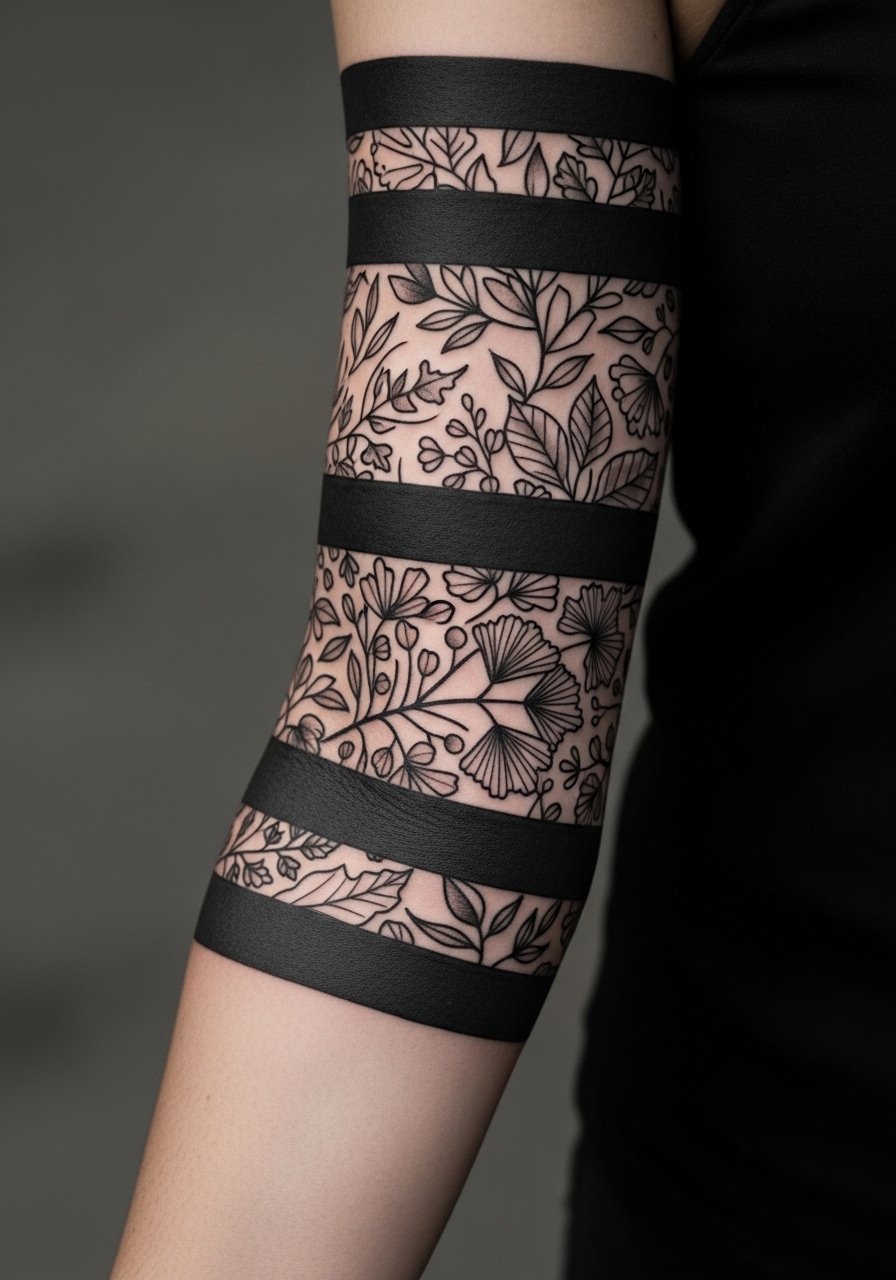
1. Full-Arm Negative Space Banding with Botanical Insets
I've seen bold black bands across the arm hold up best when artists leave deliberate negative space for breathability. Ask your artist to plan the bands with 6 to 8 millimeters between the heaviest fills so the negative areas retain contrast as the skin ages. Fair warning, the inner elbow and crook bring more sting than the outer arm, but session segments of 90 to 120 minutes make it manageable. The common mistake is packing too many thin bands close together, which merges over a few years. For showing it off, rolled sleeves and a loose linen button-down frame the forearm without crowding the silhouette.
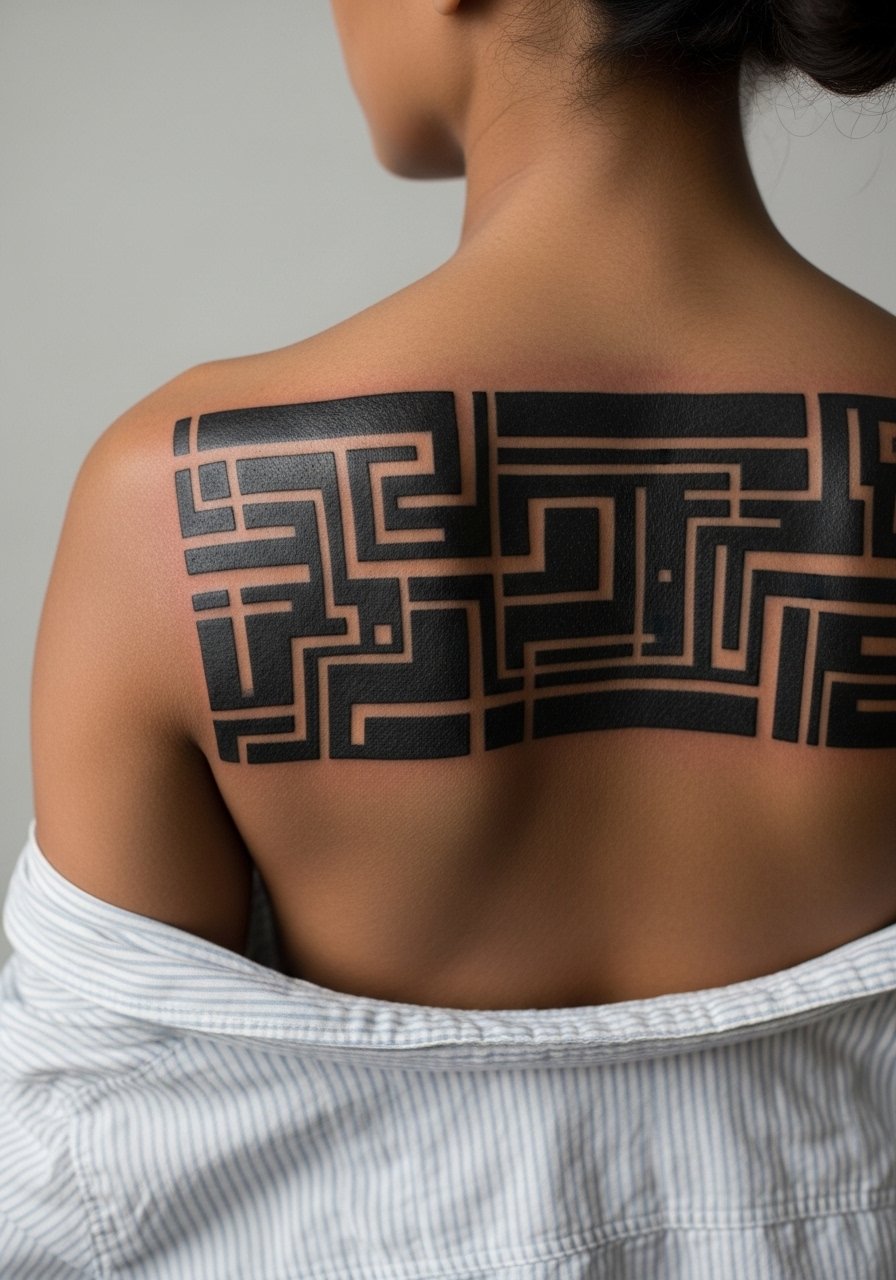
2. Full Back Panel of Abstract Blackwork Shapes
Most clients want something dramatic across their back and the trick is composition that breathes. When you consult, bring multiple reference images and point out which edges you want crisp and which can read softer. Back panels feel longer sessions but they allow larger needle groupings that saturate evenly. A frequent mistake is asking for overly tiny details that vanish at distance. For session wear, bring a loose button-down shirt you can remove easily so the artist has full access. The healing timeline usually shows the richest saturation at six months, then slight softening by year two.
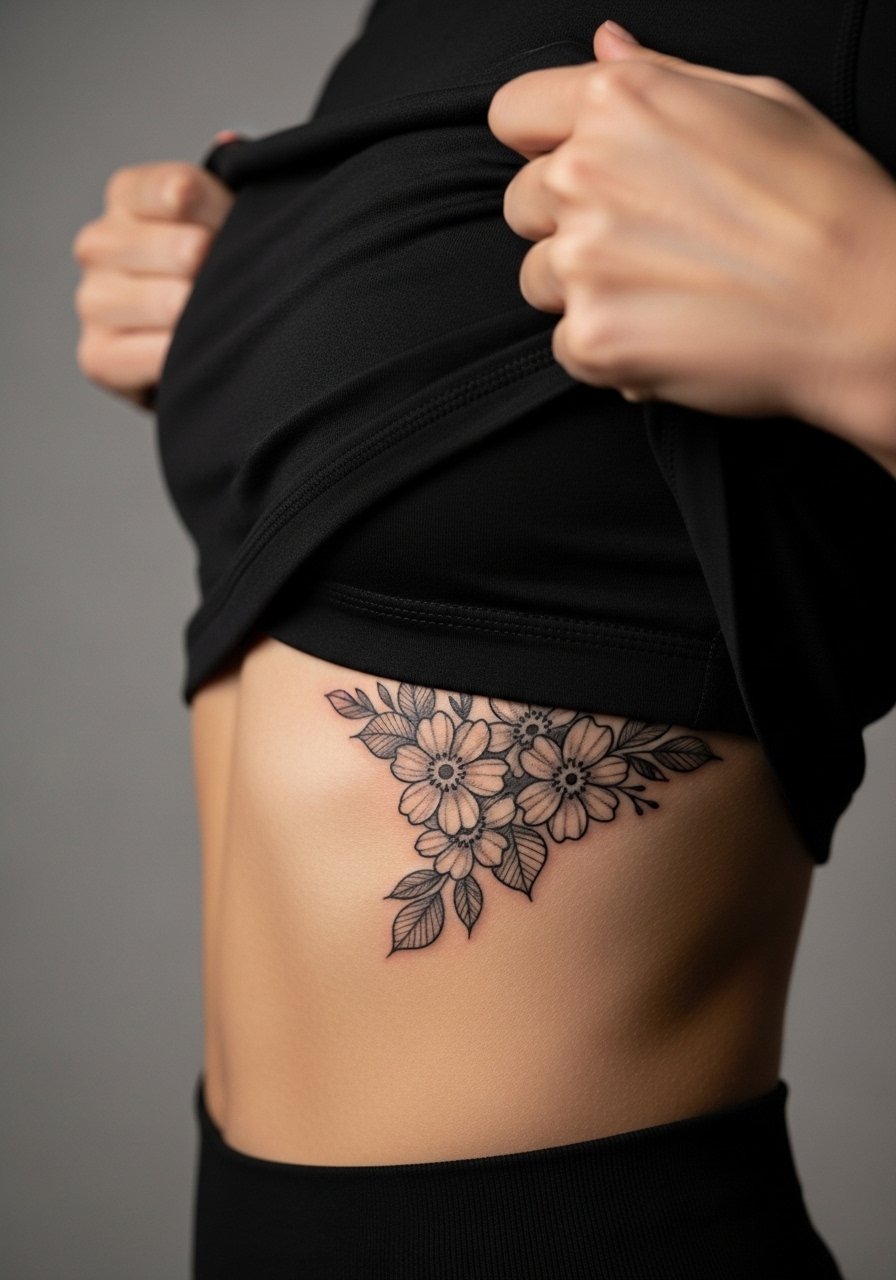
3. Ribcage Blackwork Floral with Bold Outlines
Fair warning, ribs carry a reputation for being painful, and the aging debate here is active. One camp says dense black outlines on ribs spread faster because the skin flexes a lot. The other camp argues that with deeper, even saturation and proper spacing, blackwork holds. When booking, ask which approach your artist uses and request a test patch if they offer it. The common mistake is asking for tiny stippled details inside the petal shapes. Those can wash out. Wear a cropped top or zip hoodie to the appointment so the artist can access the side torso easily and you stay comfortable.
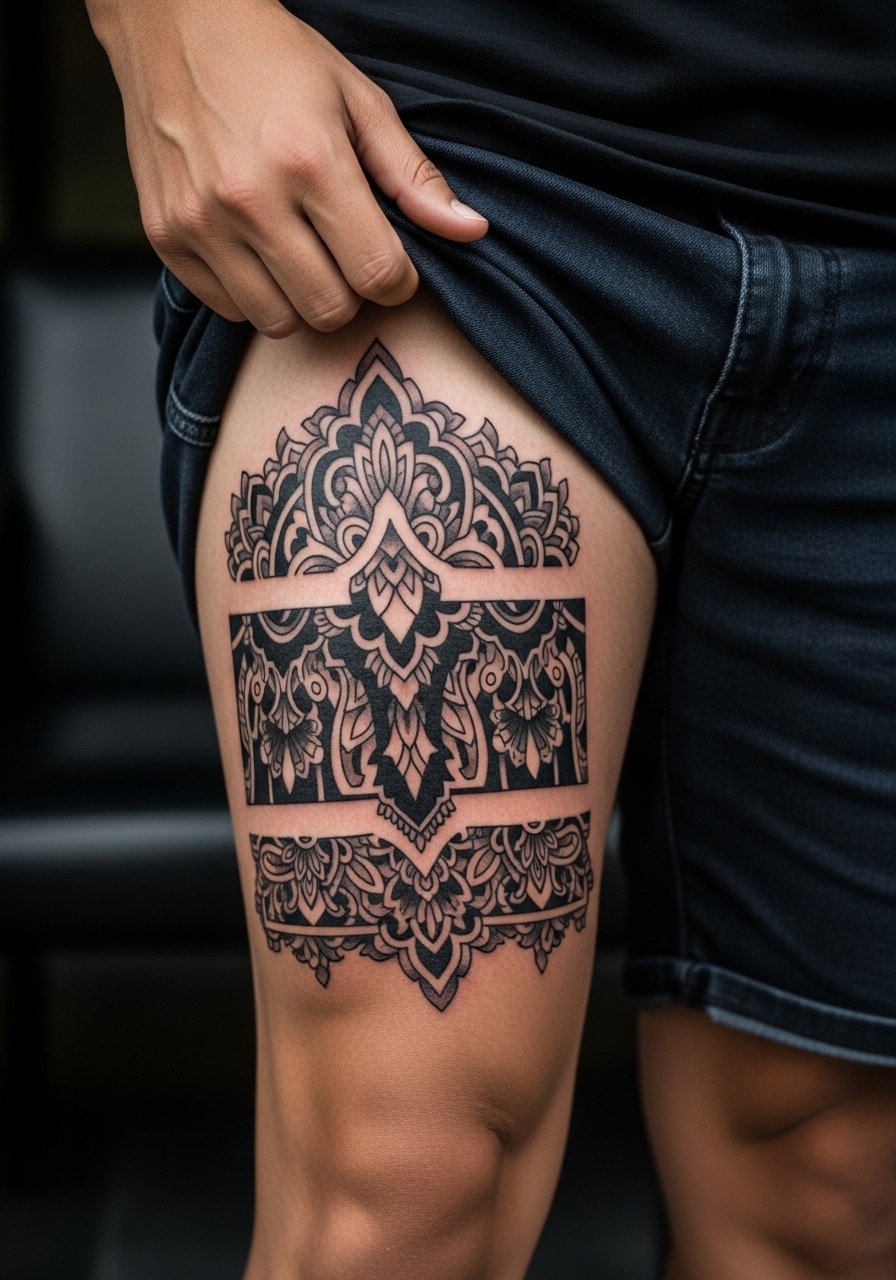
4. Full-Thigh Solid Panels with Ornamental Cutouts
There is something architectural about a thigh piece that reads as both garment and decoration. For large black fills, the thigh is forgiving because the skin sits relatively flat and swelling is manageable. Tell your artist you want open cutouts rather than tiny interior linework so the design survives weight and muscle changes. A mistake I see is using tiny negative dots to define shape. Over time those fill in. For the session, wear loose drawstring linen pants or shorts so you can roll the leg up without pinching the area.
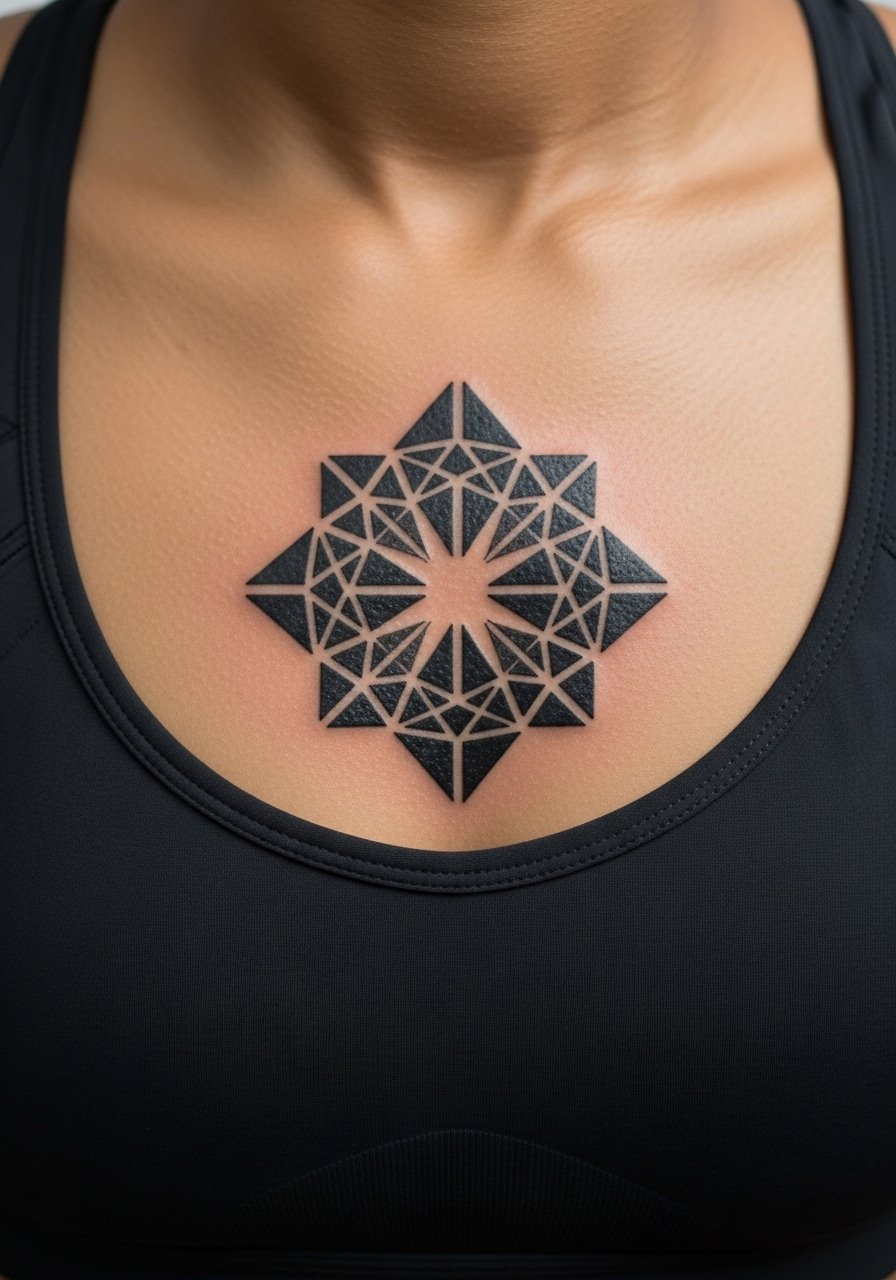
5. Full Chest Rib Cage Combine: Geometric Sternum Anchor
When geometry meets sternum saturation, spacing is everything. Most artists recommend a bolder outline across the sternum and slightly lighter interior fills to avoid a heavy central block that looks flat on healed skin. If you want the piece symmetrical, bring precise reference photos and ask for the stencil to be mirrored on both sides. Sternum sessions can be sensitive. Wear a fitted sports bra or bandeau so the artist can check the center without excess exposure. For evenings out, an open-back midi dress shows the sternum and surrounding panels cleanly.
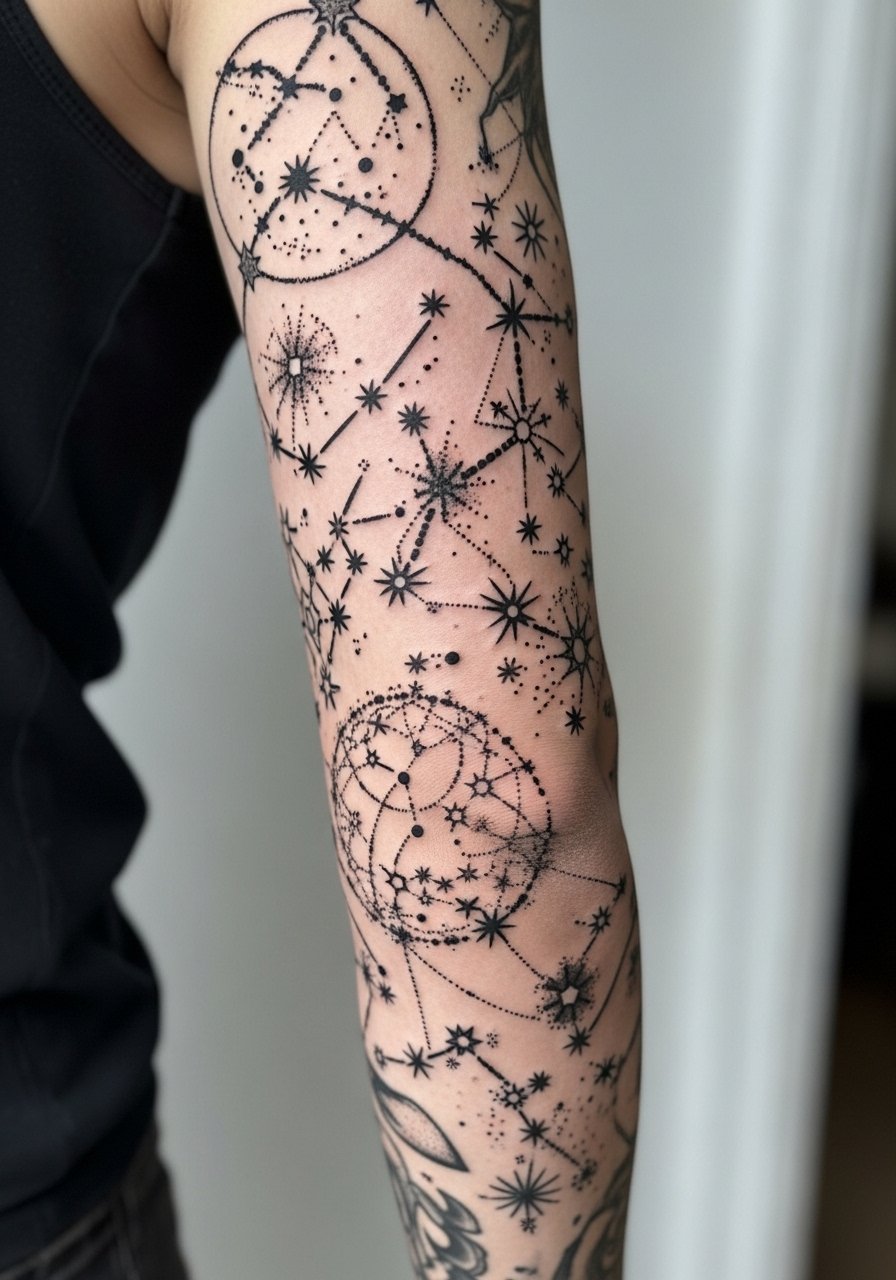
6. Full Sleeve Cosmic Blackwork with Constellation Negative Space
When black fields frame tiny uninked stars, the constellations keep their crispness if the background fill sits at a consistent saturation. Tell your artist to use larger groupings for the background so the thin star lines are created by untouched skin rather than inked outlines. The arm's outer area tolerates saturation better than the inner wrist. Avoid asking for micro-dots inside the filled areas because blowout risk increases with dense dot work near joints. Pair this sleeve with rolled-up sleeves or a racerback tank when you want to show it off.
Studio Day Picks
The first six ideas cover wrists, chest, ribs, thigh, and full sleeves, so a few studio-day items smooth the session and the initial healing window.
- Stencil transfer paper kit. Lets you preview line weight and placement on the skin before the needle hits, especially useful for the geometric and symmetrical pieces above.
- Topical numbing cream. Applied per instructions about 45 minutes before the session it eases the edge on sensitive spots like the ribs and sternum.
- Thin protective film roll. Keeps high-friction zones like wrists and ankles clean during the first week.
- Fragrance-free gentle body wash. Cleans the area after initial scabbing without stripping saturation from black fills.
- Aquaphor healing ointment. A thin layer during the first few days helps lock moisture into dense blackwork while allowing the skin to breathe.
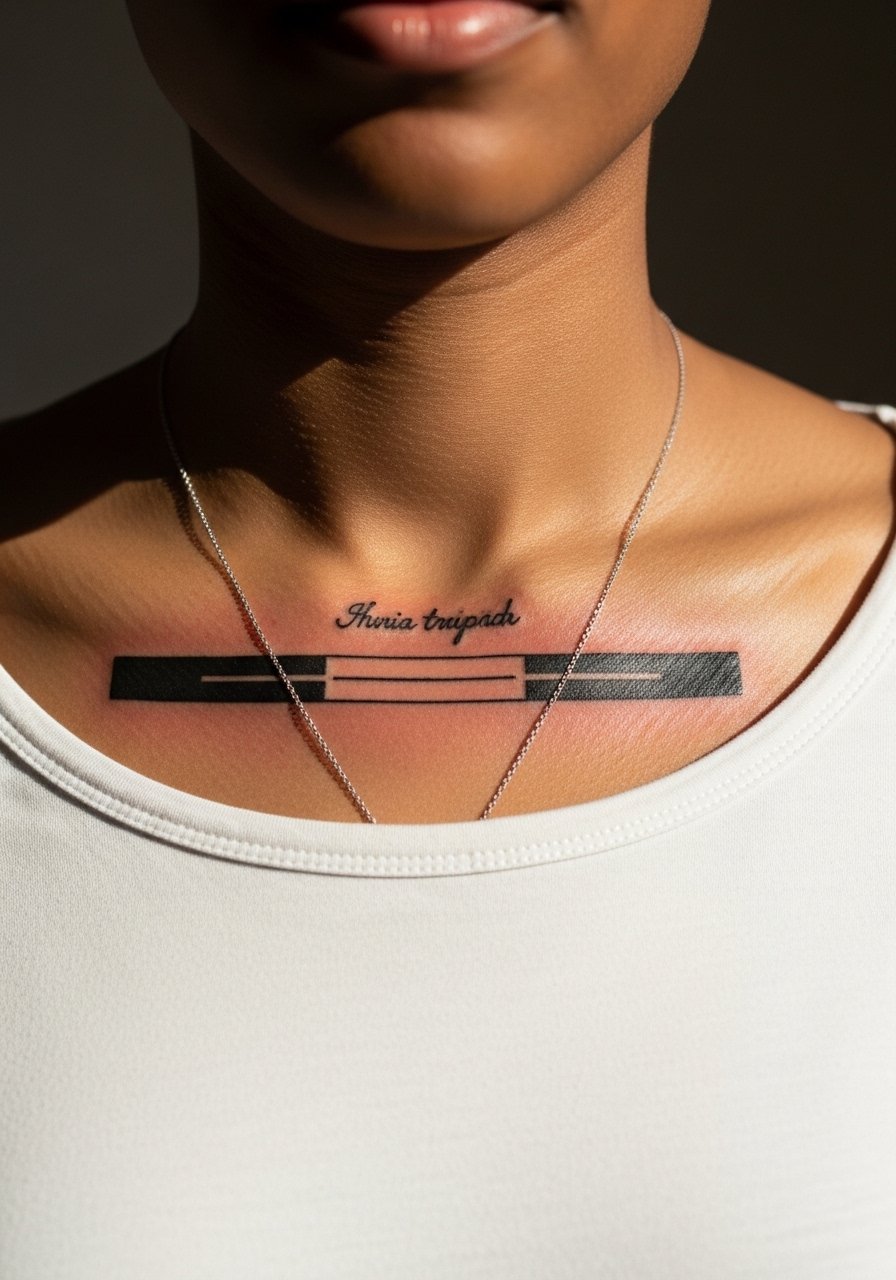
7. Full-Collarbone Blackwork Bar with Script Negative
Personal observation tells me collarbone pieces read like jewelry when the blackwork is framed by negative space. Request that the artist keeps the bar no narrower than one centimeter so it keeps its silhouette over time. A common mistake is placing script too close to heavy black, which causes the letters to vanish into the fill after a couple of years. For showing it off, a thin chain pendant necklace sits above the bar without crowding the linework. Collarbone skin is thin so the session may sting more than the shoulder.
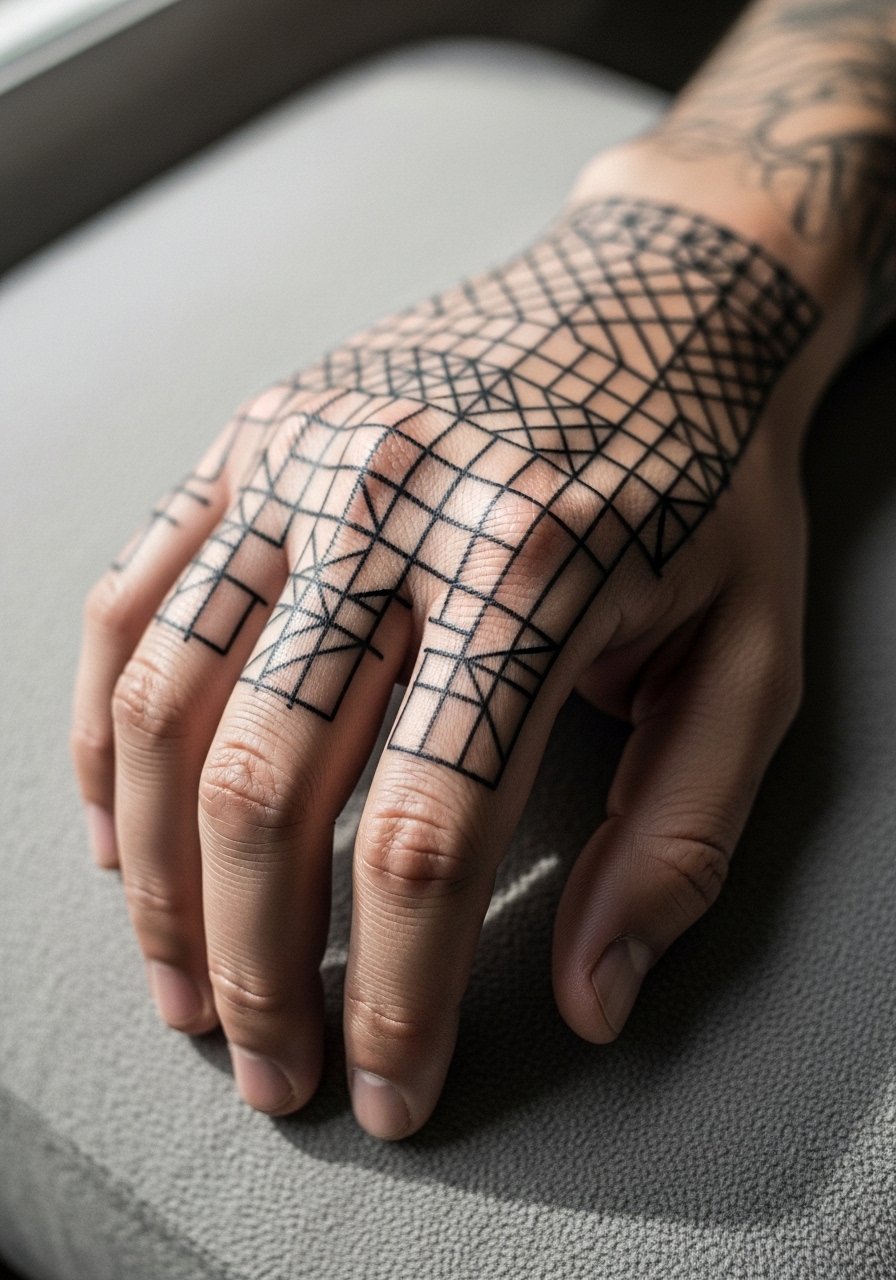
8. Full Hand and Finger Blackwork Grid
Artists split on hand tattoo durability. One camp notes that constant washing and thin skin speed fading. The other camp says a heavy compact blackwork grid, done boldly, can still read for years if the saturation is strong and touch-ups are planned. Name both views in your consultation and ask about realistic touch-up timelines. Hand pieces are visible and may affect some workplaces, so think career fit before committing. For the session, keep hands clean and avoid lotions that could interfere with stencil adhesion.
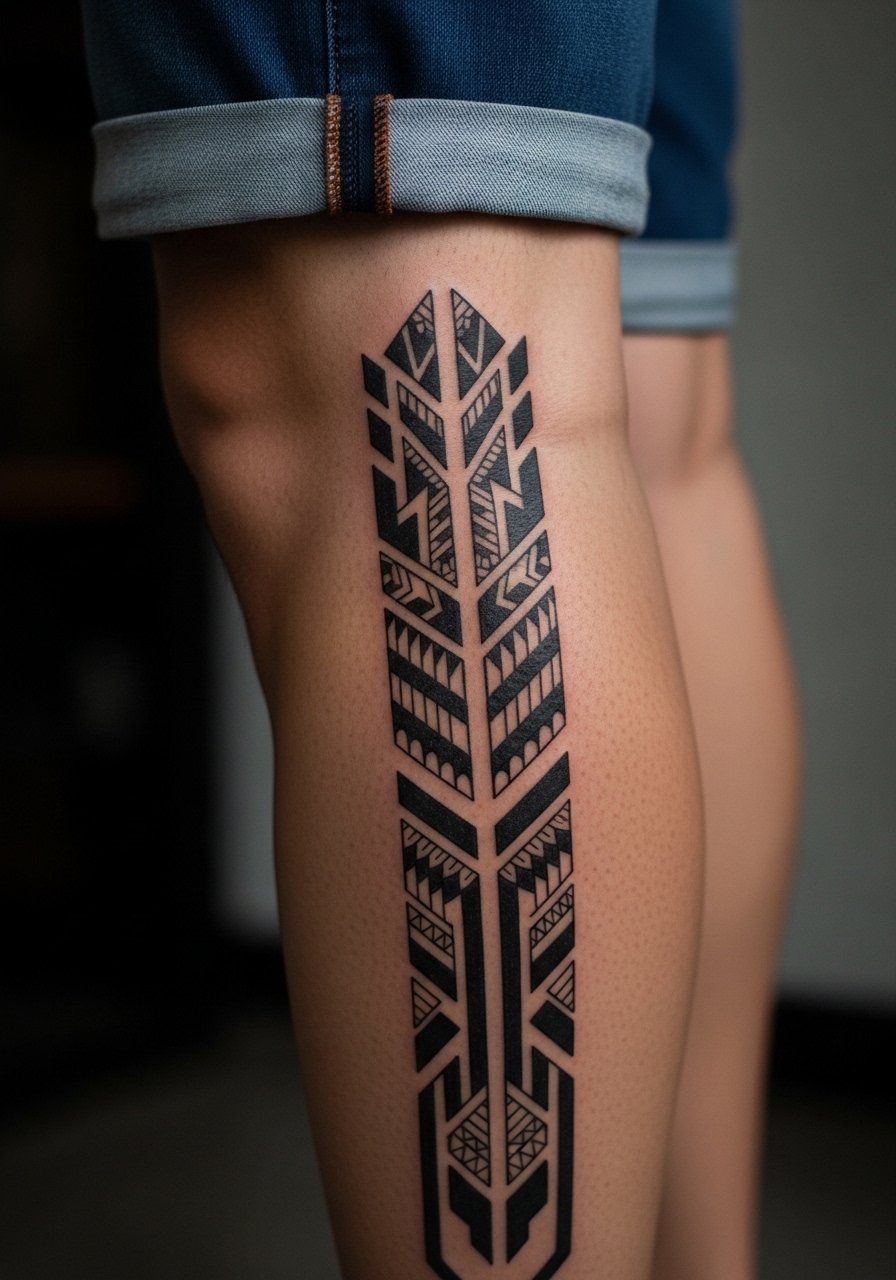
9. Full-Calf Tribal Blackwork Panel
When placing heavy blackwork on the calf, the muscle gives the fill a consistent canvas and touch-ups are usually straightforward. Tell your artist to map the design with the calf muscles in mind so the panel reads straight whether you stand or sit. The common mistake is adding excessive tiny interior lines that blur when the skin stretches. For session wear, slip on loose drawstring shorts so you can pull down just a bit without friction. Calf sessions are moderate in pain and often done in a single long sitting.
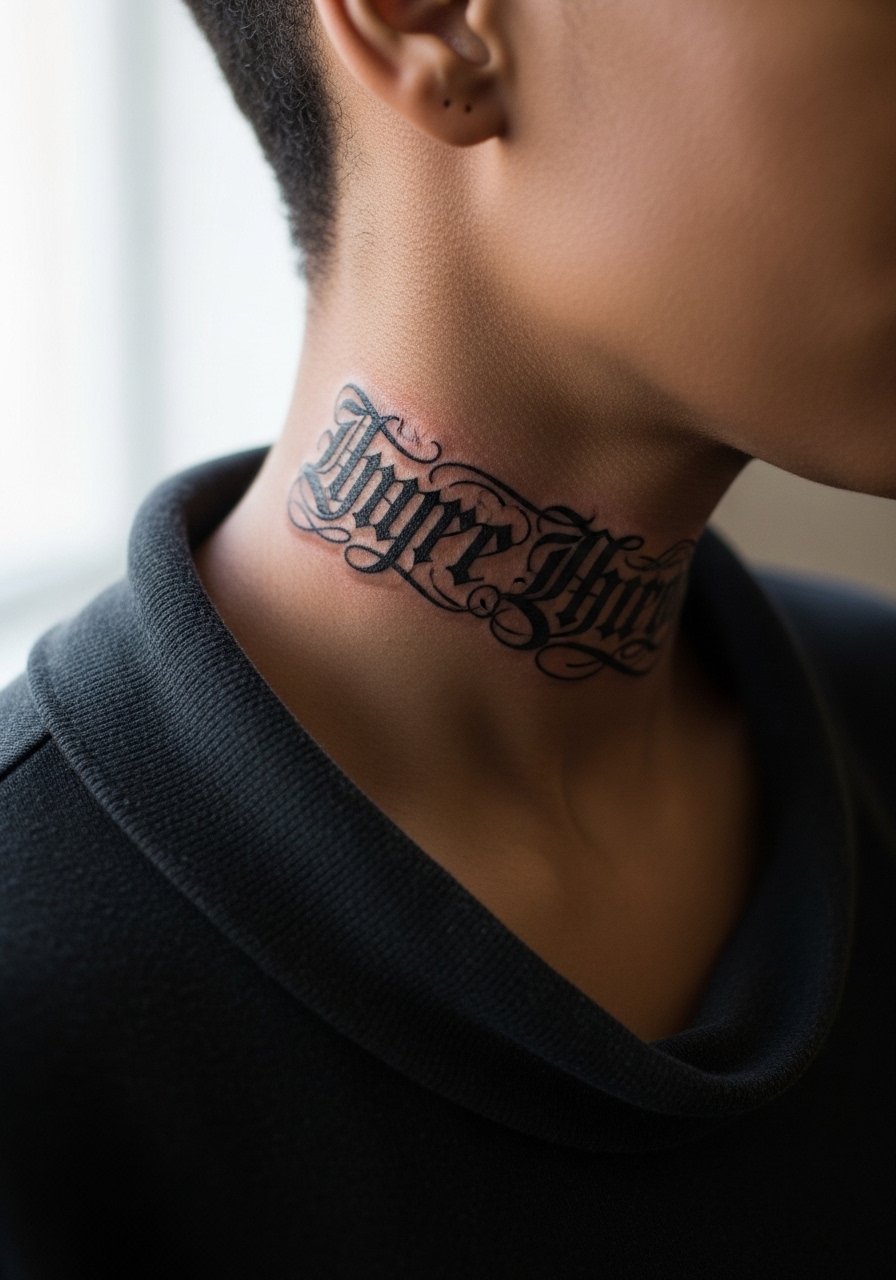
10. Full-Neck Side Blackwork Script Band
Consultation lead: when you sit down for a blackwork neck band, ask the artist to demonstrate how the stencil will move when you slightly tilt your head. Neck skin stretches and shifts, so the ink needs room to breathe. A common mistake is cramming complex lettering into the space. Keep the script bold and simple and budget for a touch-up at year two. For showing, a wide-neck shirt with the collar pulled to one side frames the band nicely.
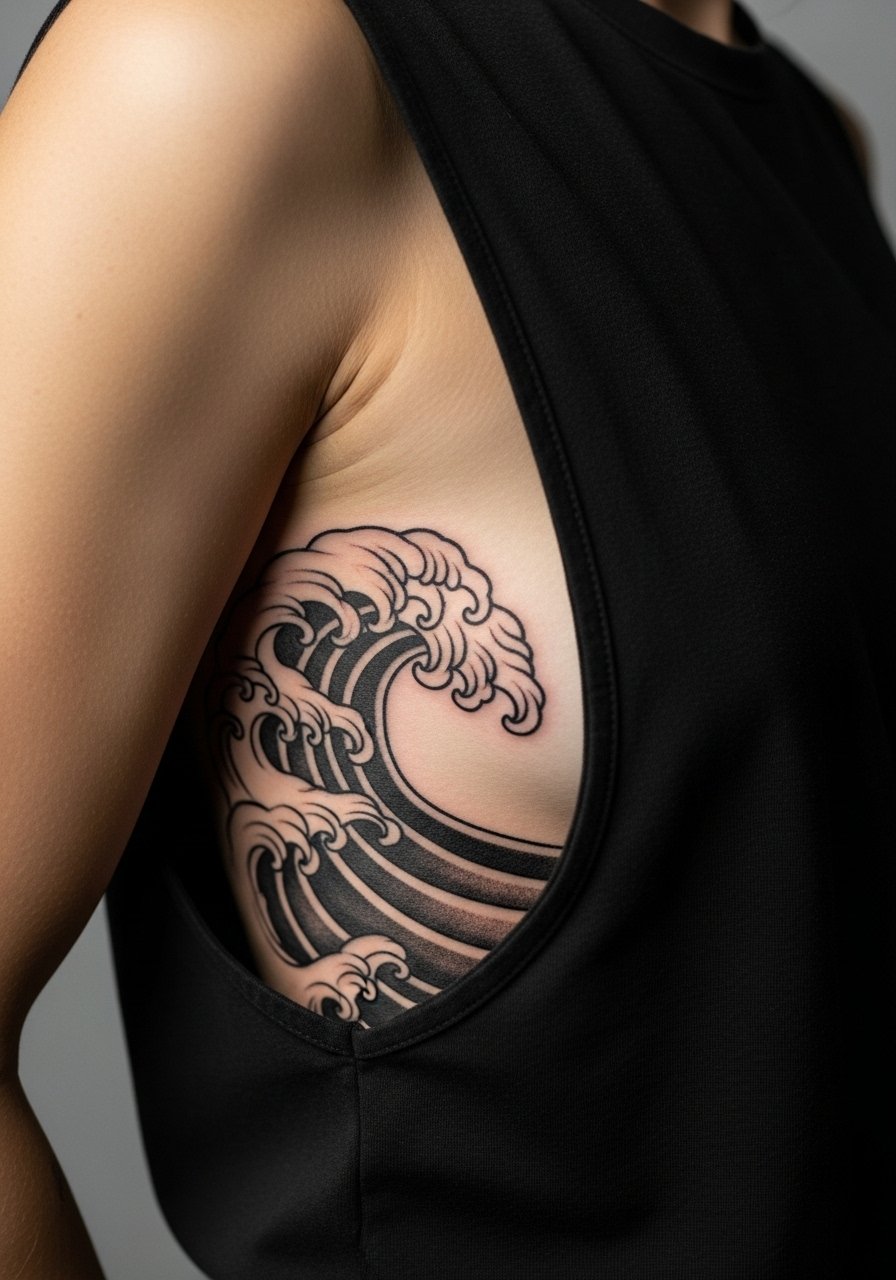
11. Full-Side Torso Blackwork Wave Panel
Visual impact lead: a sweeping black wave along the side torso plays well with clothing that reveals slivers of skin. For ribs and side torso work, the artist should stagger heavy fills with thin field lines so the panel keeps depth without becoming a flat black block. Mistakes happen when clients demand too much micro-detail in the shaded transitions. Wear a cropped top or loose tank to the appointment so the artist can access the side easily. Pair this with an open-back midi dress for evenings.
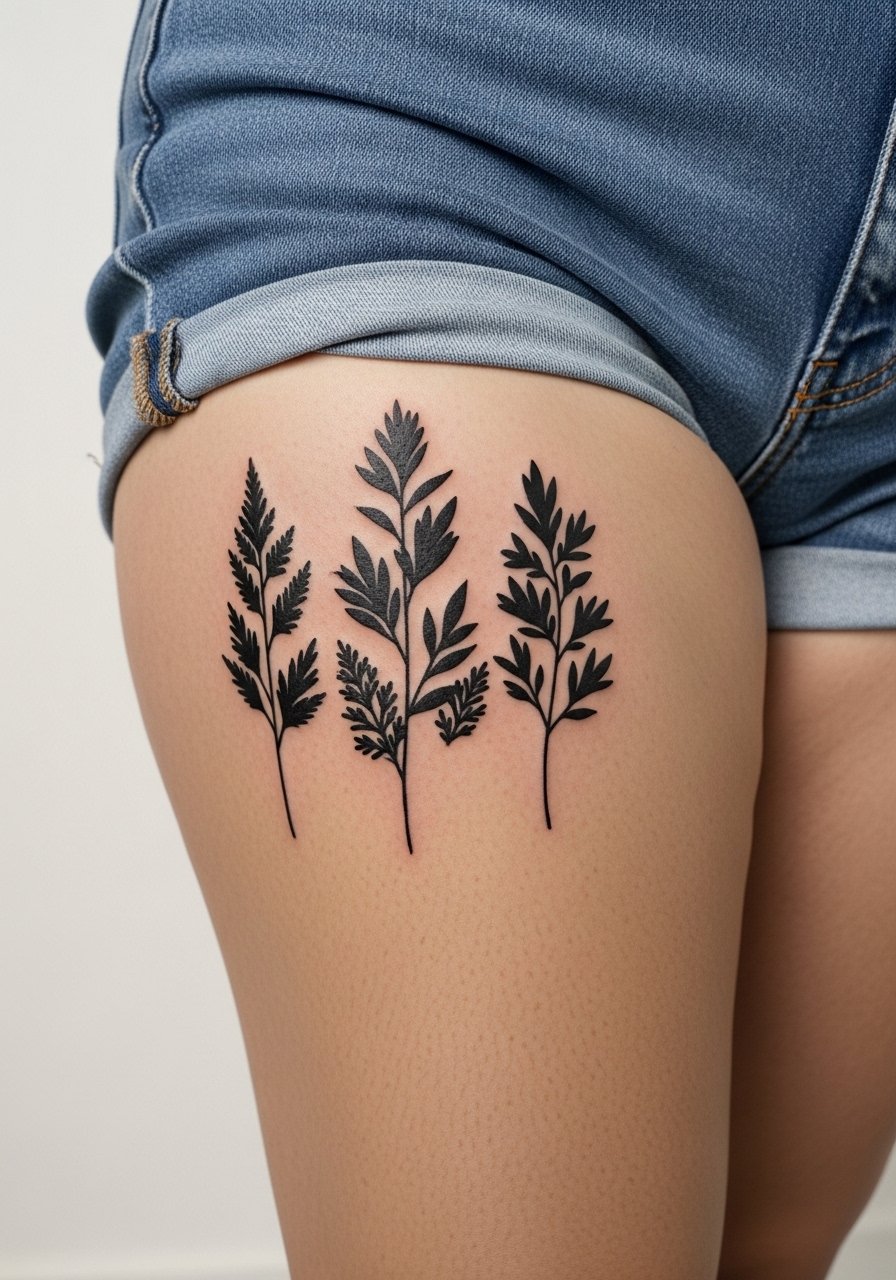
12. Full-Front Thigh Botanical Silhouette
Most people underestimate how clothing choices interact with thigh panels. Tell your artist whether you intend the piece to peek from swimwear or to stay private under jeans. The mistake I see is adding tiny stipple shading inside petal silhouettes. Those dots can fill in and soften quickly. For session comfort, wear high-waisted shorts that can be shifted without pinching skin. Large thigh fills usually take multiple sittings but the heals are steady.
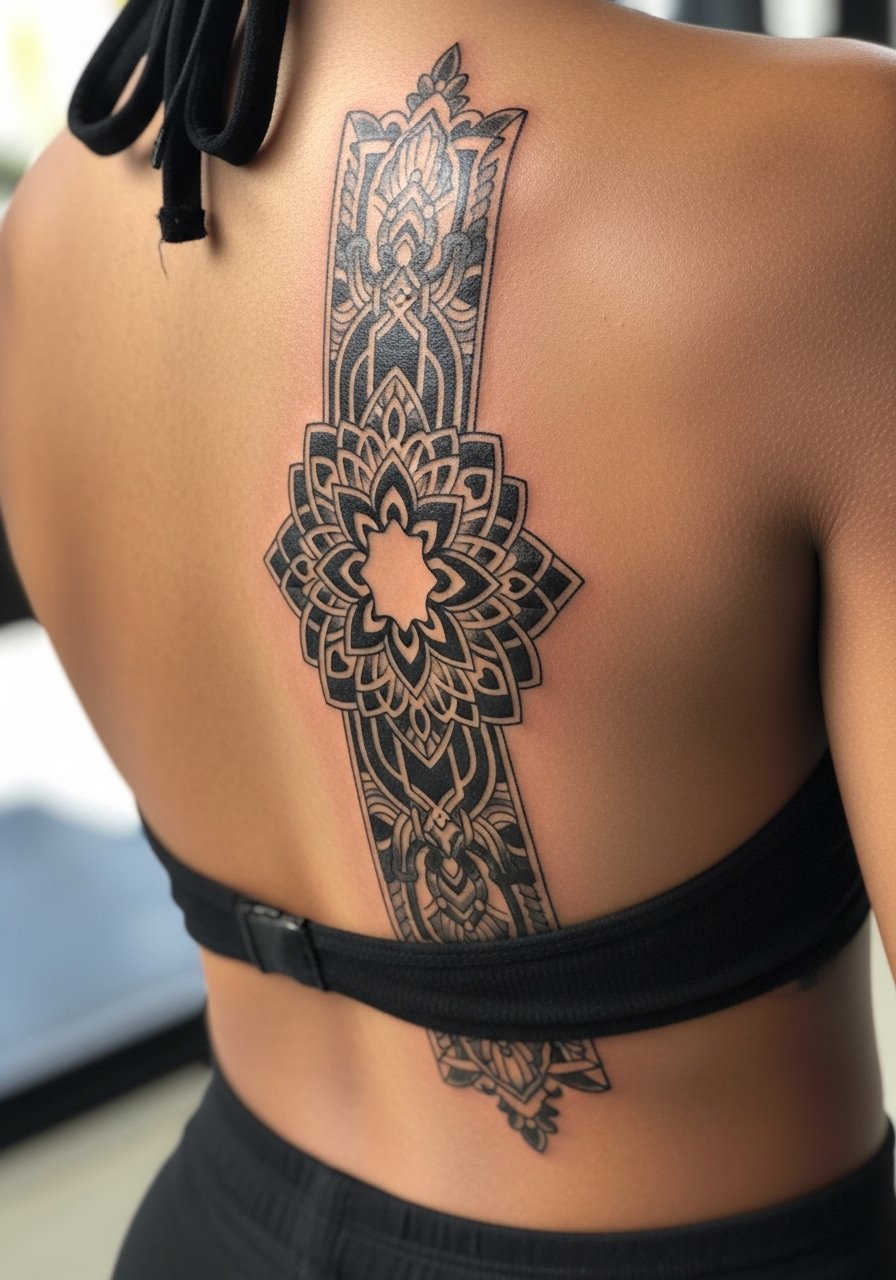
13. Full-Side Back Blackwork Column with Negative Mandala
Consultation lead: request that the artist block out the negative mandala center as untouched skin rather than tiny white ink details. That approach preserves the contrast longer on the side of the back where sun exposure can be uneven. The mistake is adding micro-line mandalas into a blackfield. Those lines narrow and disappear. For showing, an open-back dress or a halter top frames the column and keeps the rest of the back covered.
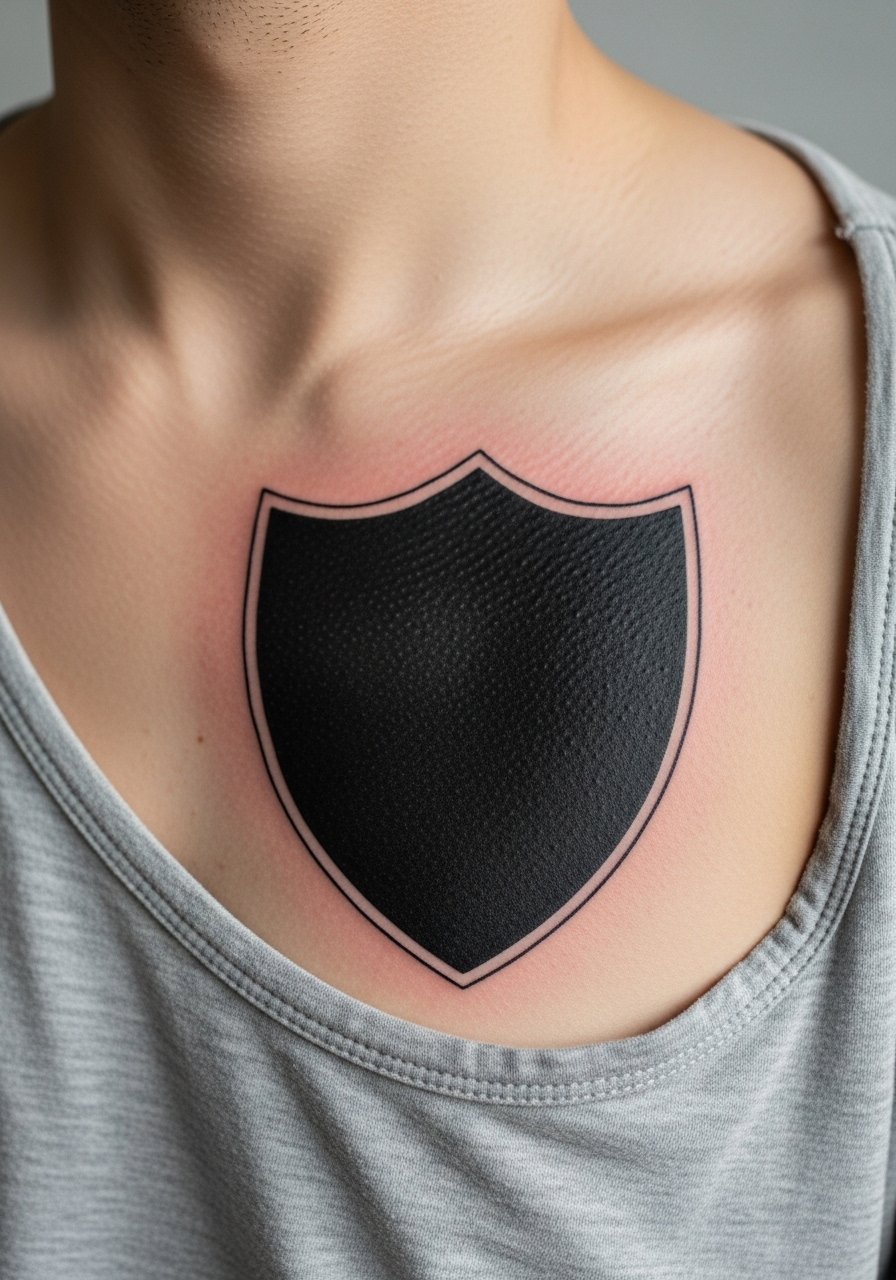
14. Full-Pectoral Bold Blackwork Shield
Visual impact lead: pectoral shields read powerful when the edges are crisp and the interior is slightly textured rather than a flat block. Ask the artist for subtle whip shading inside the fill to keep depth. A common mistake is requesting a perfect solid black without any variance. That can heal flat and lifeless. For the appointment wear a wide-neck shirt you can pull aside so the artist has access without exposing more than the necessary area.
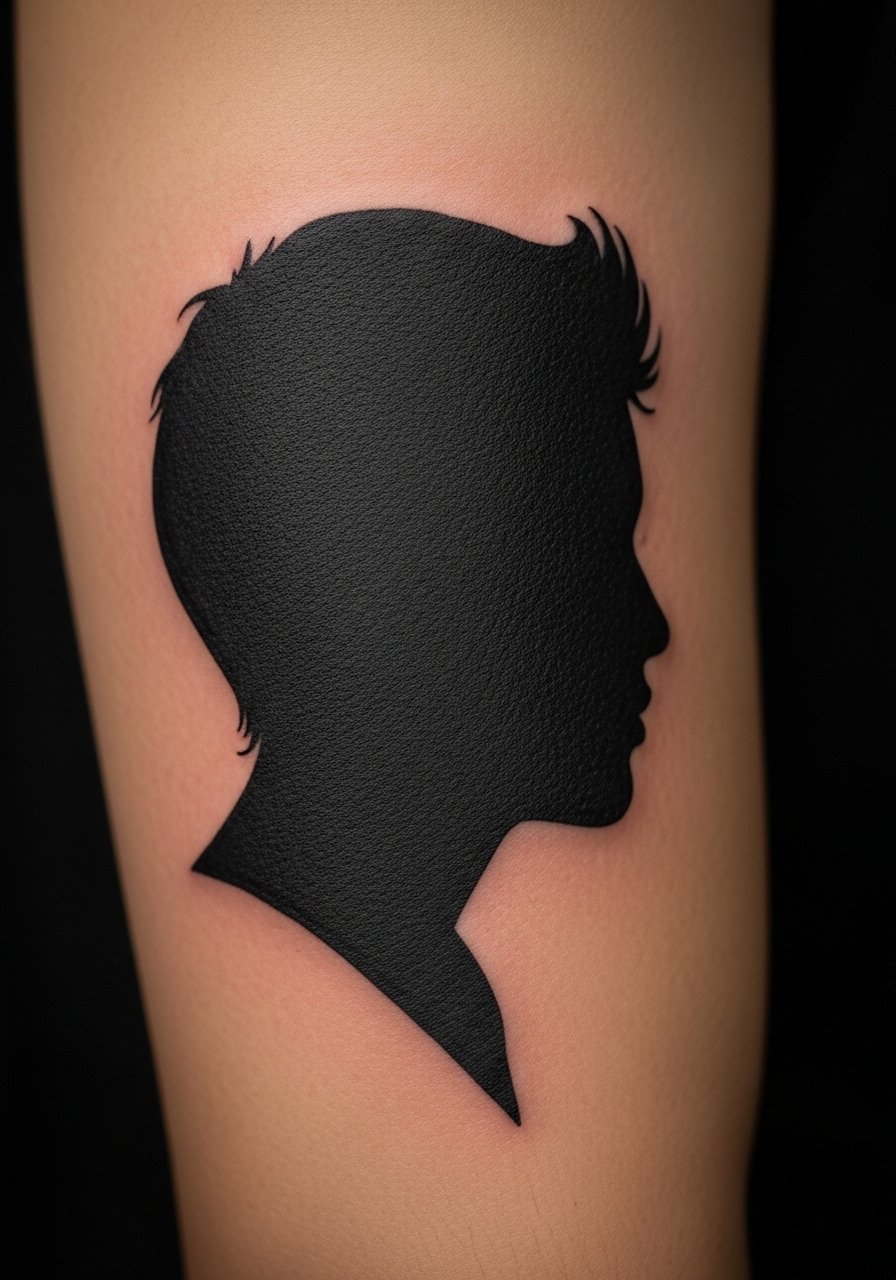
15. Full-Upper Arm Blackwork Portrait Silhouette
Personal observation: portrait silhouettes in blackwork depend on crisp contours and negative space for facial cues. When requesting one, bring photo references that show the exact side profile you want and ask your artist to simplify fine facial details into bold shapes. The mistake is over-detailing tiny facial features into the black field. For showing it off, rolled sleeves and a casual short-sleeve shirt keep attention on the silhouette without competing.
16. Full-Leg Calf-to-Ankle Gradient Blackwork
Aging/healing lead: gradients in heavy blackwork must be planned so the darkest areas are a little less packed than they look fresh. That prevents the darkest zones from blurring together over time. Ask your artist to preview the healed contrast in their portfolio. The common mistake is asking for extreme micro-gradients that vanish at distance. For session wear, slip into pants you can roll up easily or a loose linen drawstring pant for comfort.
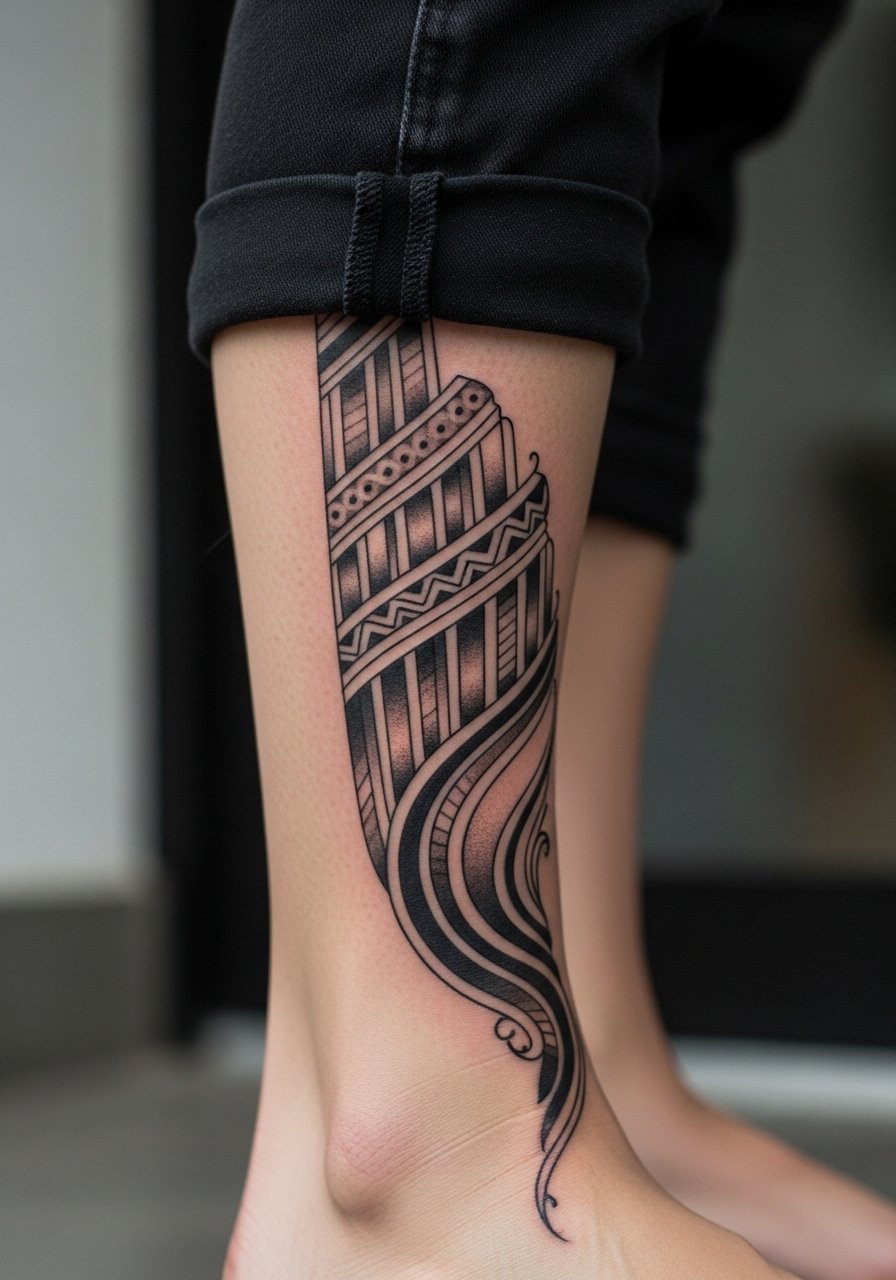
17. Full-Side Hip Blackwork Crescent Panels
Mistake lead: one common error on hip work is trying to cram the design into the small visible window that swimwear creates. The hip needs room to breathe and the crescent panels should hug the hip bone with negative margins. For the appointment wear high-cut shorts or swim bottoms so the artist can expose only the area needed. Keep in mind that hip skin flexes with movement and weight changes, so deliberate spacing matters.
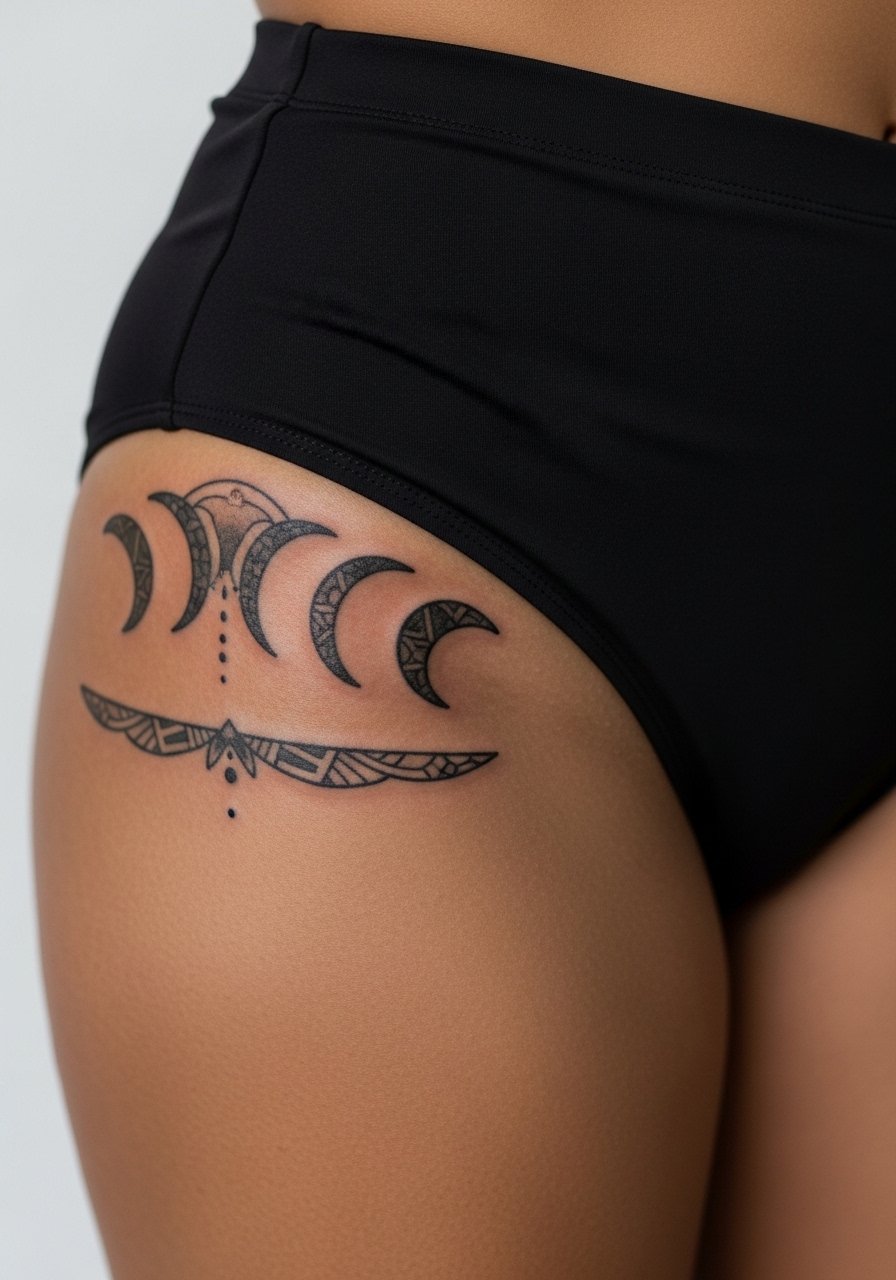
18. Full-Ribcage Mandala with Heavy Outer Ring
Controversy lead: mandala on ribs splits artists into two camps. One camp argues that tight, detailed mandalas on ribs blur within two years because of skin stretch. The other camp says that a bold outer ring with simplified inner geometry keeps the design readable for much longer. State both viewpoints in your consultation and ask which approach your artist prefers. The session will be tetchy but the result can be dramatic if spaced correctly.
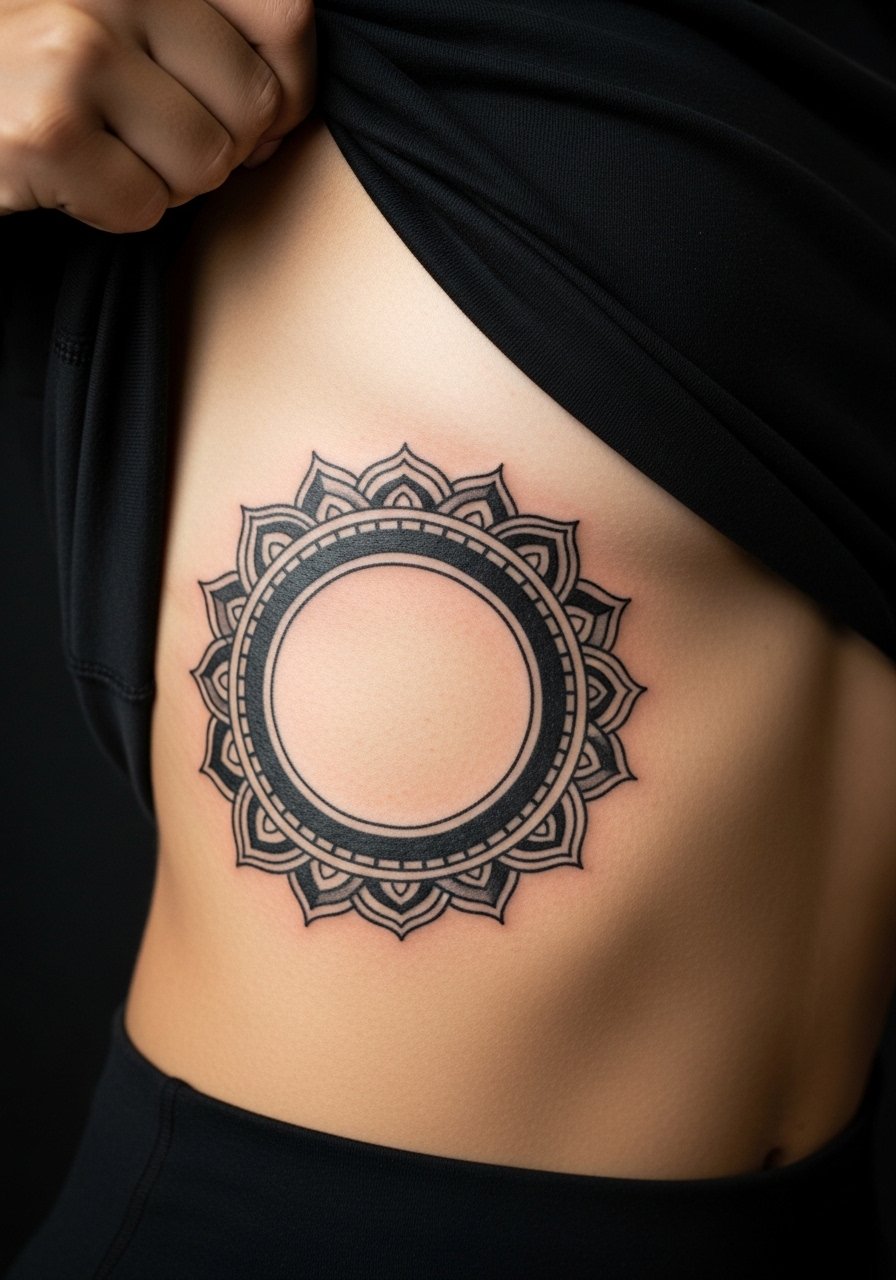
19. Full-Shoulder-to-Chest Asymmetric Blackwork Burst
Visual impact lead: asymmetric bursts that travel from shoulder into chest work well when the shoulder stop is softer and the chest line is crisp. Tell your artist where you want the highest contrast and which edges can be feathered. A mistake I see is making everything uniformly dense which flattens the composition. For the session wear a loose tank or a button-down you can shift shoulder-wise and consider pairing the healed look with a wide-neck sweater to reveal the transition.
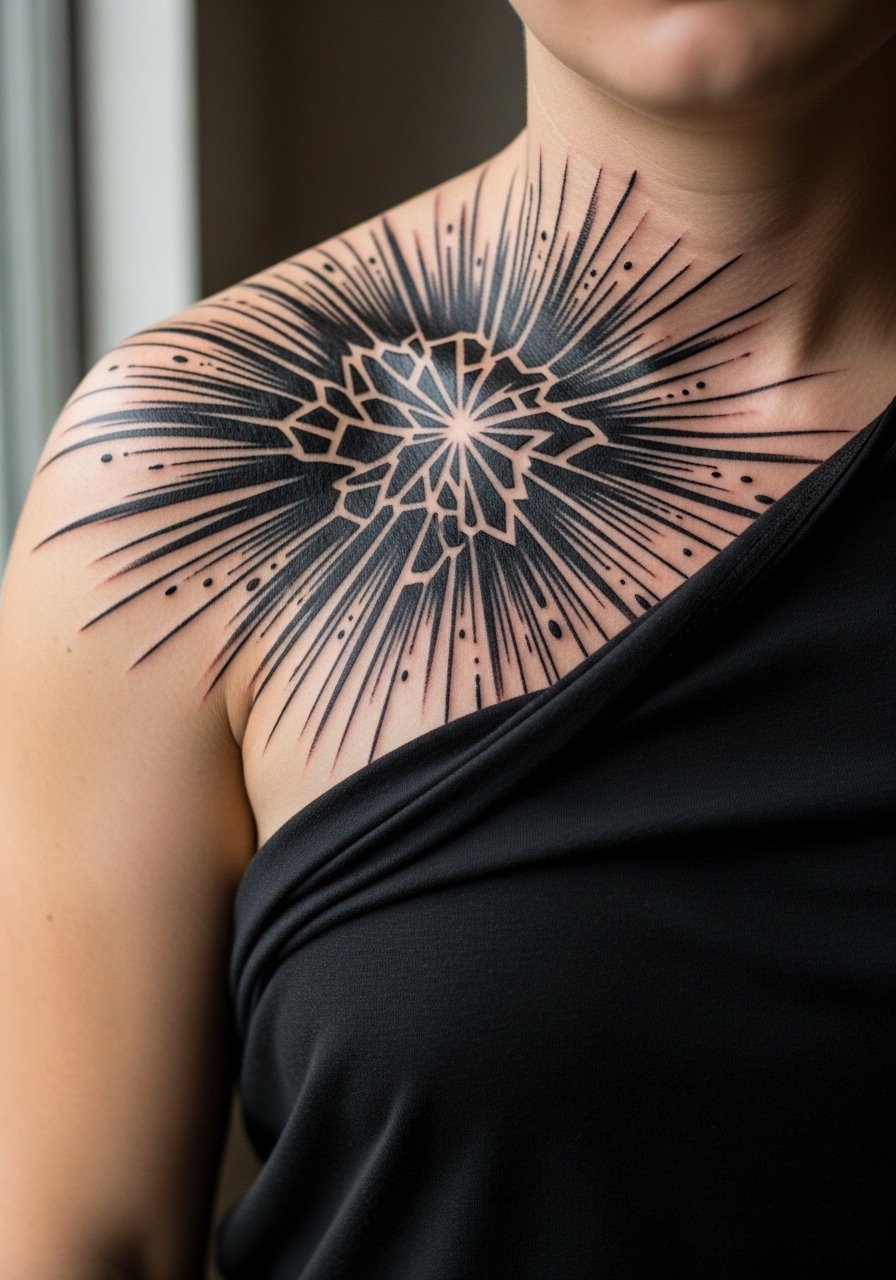
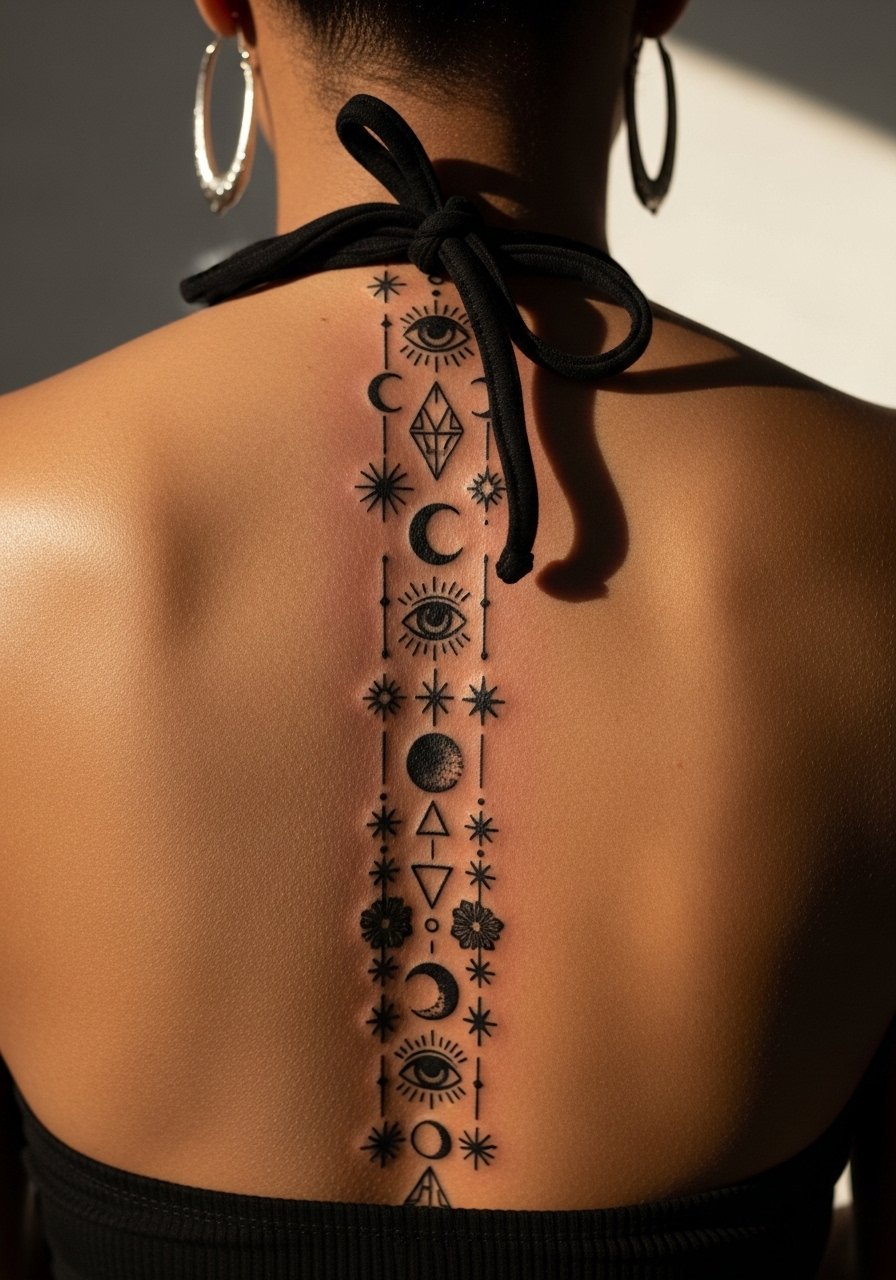
20. Full-Spine Column of Blackwork Icons
Mistake lead: stacking many small motifs along the spine feels elegant but the distance between icons must be deliberate so they remain distinct as the skin shifts. Ask for at least a fingertip gap between each icon. For showing, open-back tops and halter dresses display the line without competing for attention. Spine pieces can sting, especially near the vertebrae, so expect shorter passes and a calm breathing plan.
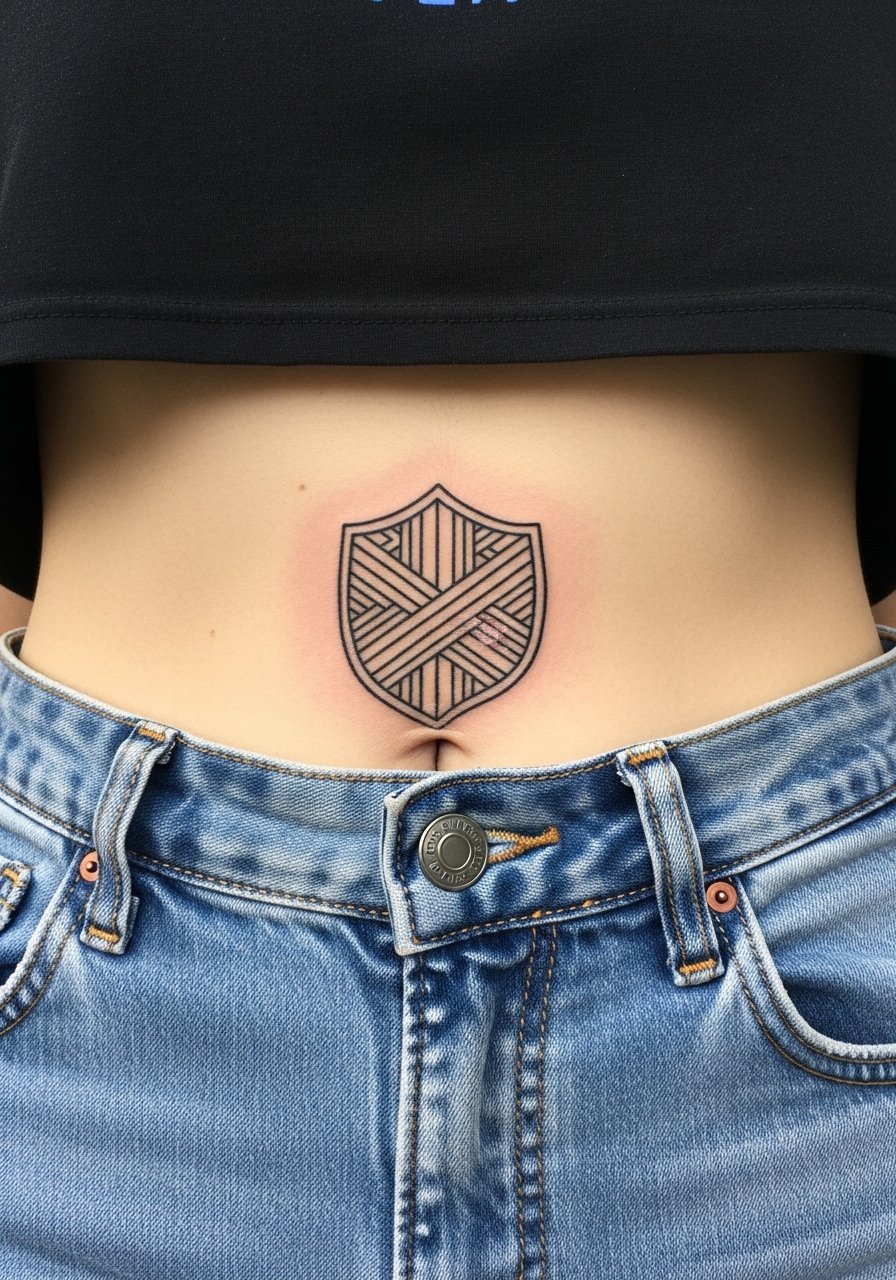
21. Full-Lower Abdomen Blackwork Shield Underwear-Friendly
Personal observation lead: lower abdomen fills fare better when the top edge aligns just above the waistband so the piece reads with your clothing. Tell your artist if you want the work to peek above low-rise or stay hidden under high-waisted garments. The mistake I see is placing a heavy top edge that interferes with waistbands and causes rubbing during healing. For the appointment wear a cropped tee and high-waisted bottoms that can be shifted with minimal friction.
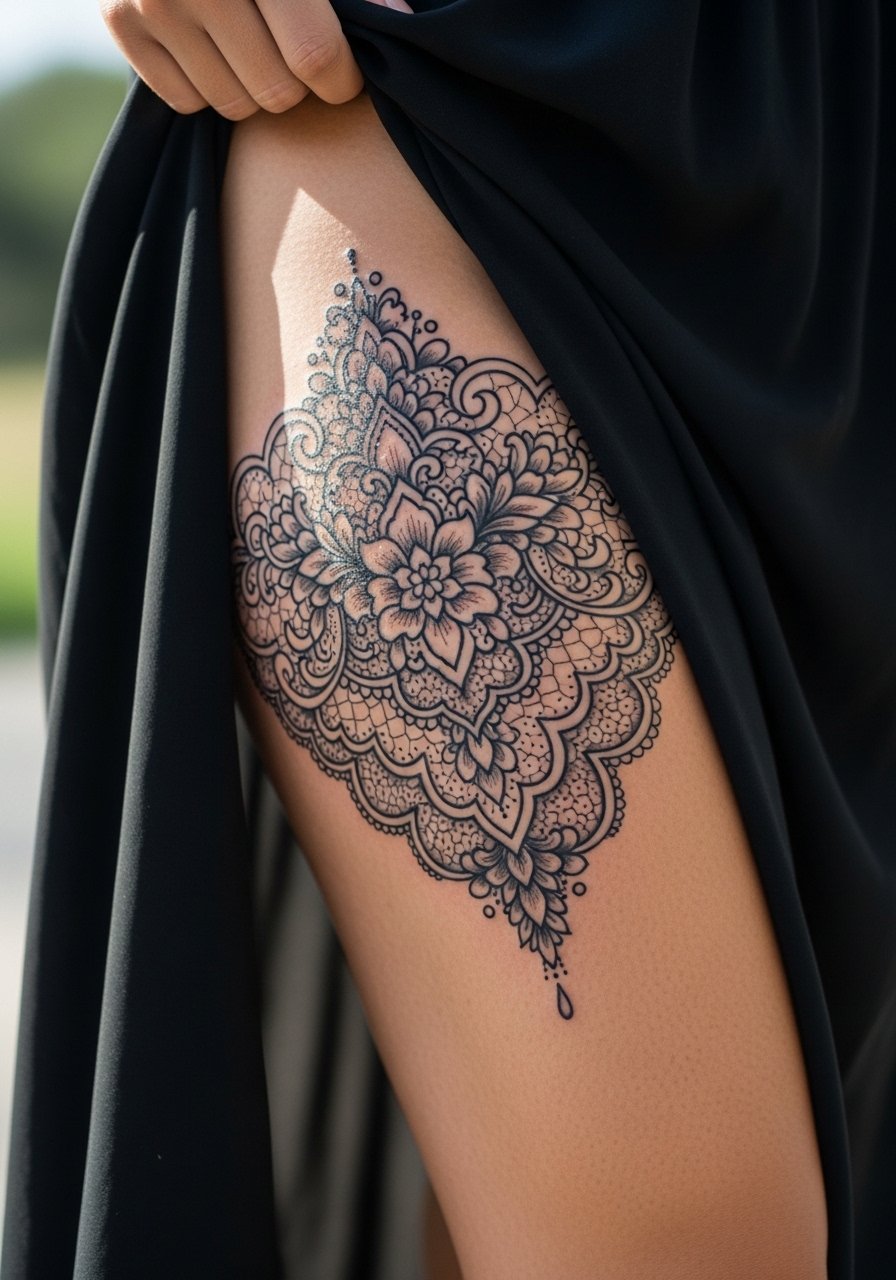
22. Full-Outer Thigh Lace Blackwork with Negative Filigree
Consultation lead: lace-like filigree works if the negative channels are broad enough to remain visible when the skin settles. Ask your artist to treat the filigree as shapes rather than micro-lines. The common mistake is expecting fine lace detail to last without frequent touch-ups. For showing, skirts with high slits or wrap dresses highlight the pattern without covering the main shapes.
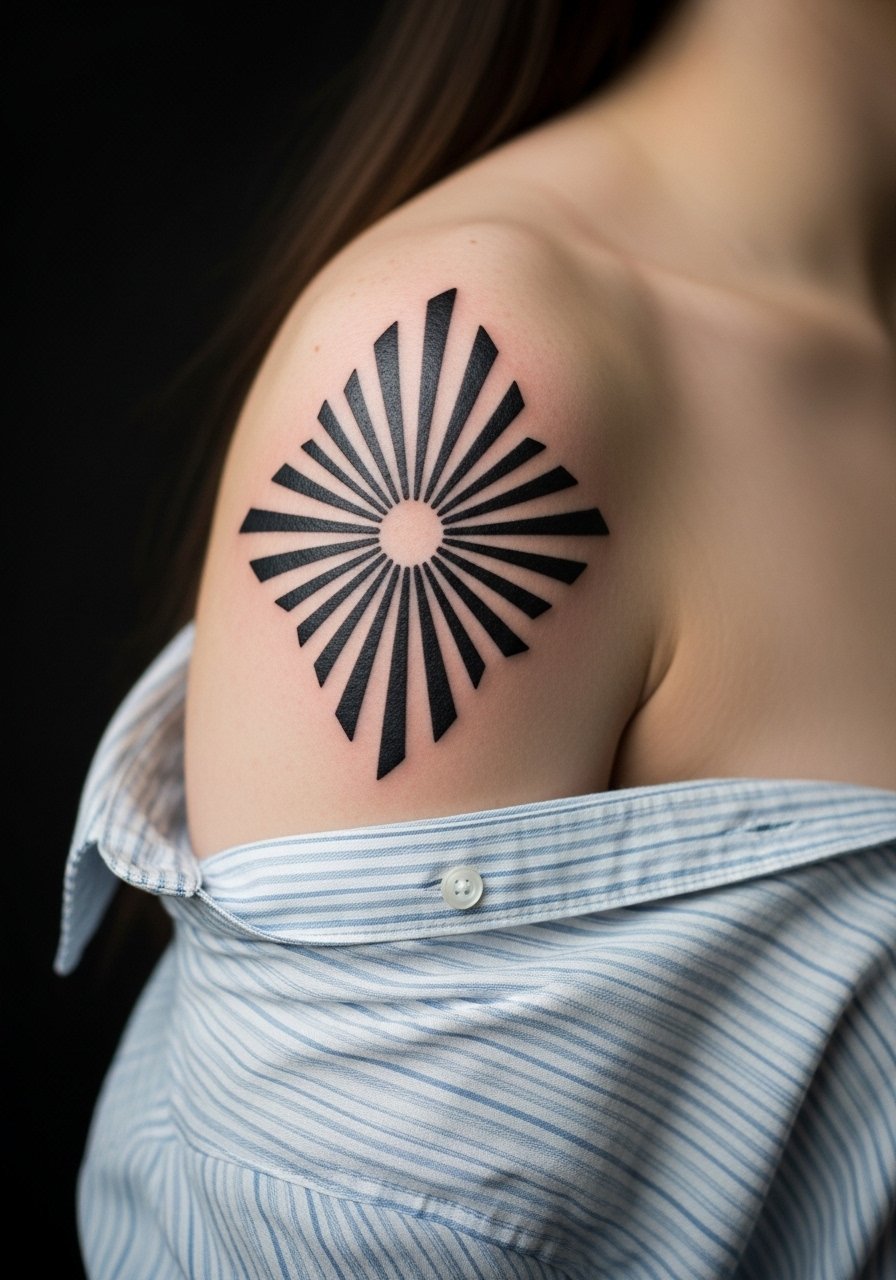
23. Full-Deltoid Blackwork Emblem with Radiating Bars
Visual impact lead: deltoid emblems are great for visibility because the round muscle holds saturation well. Tell your artist how you want the radiating bars to read when the arm is relaxed versus flexed. A mistake is meandering the bars into too-narrow spacing which can blur on healed skin. For the session, wear a loose button-down shirt you can slide off the shoulder for access.
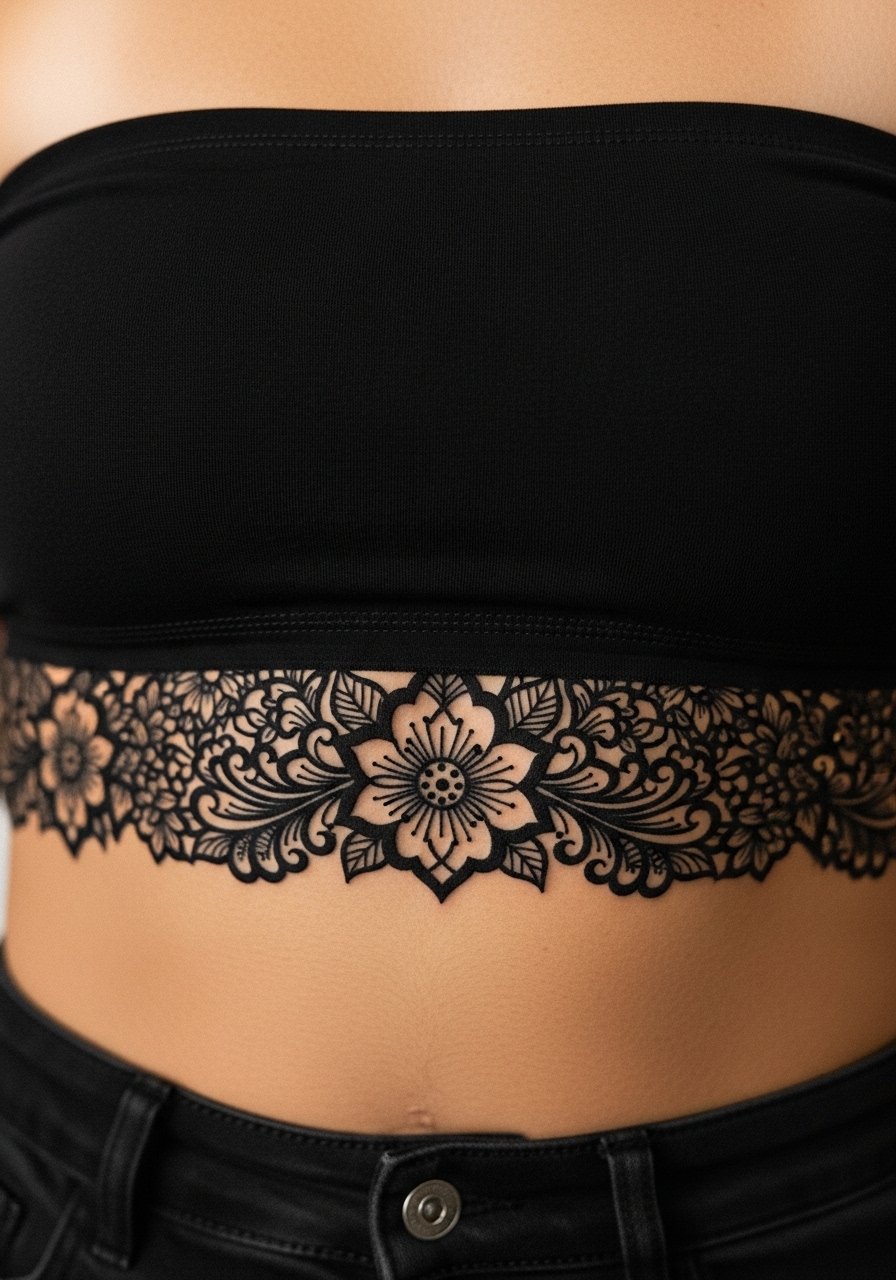
24. Full-Underbust Blackwork Band with Floral Cutouts
Aging/healing lead: underbust bands need a stable anchor so the top and bottom edges do not soften into one another over time. Ask for a slightly thicker top edge and airy negative florals beneath. A common mistake is filling the inside with tiny shading that disappears. For the session wear a fitted bandeau or sports bra so the artist can see the placement clearly and you stay modest. Healed pieces look great with low-cut or strapless tops.
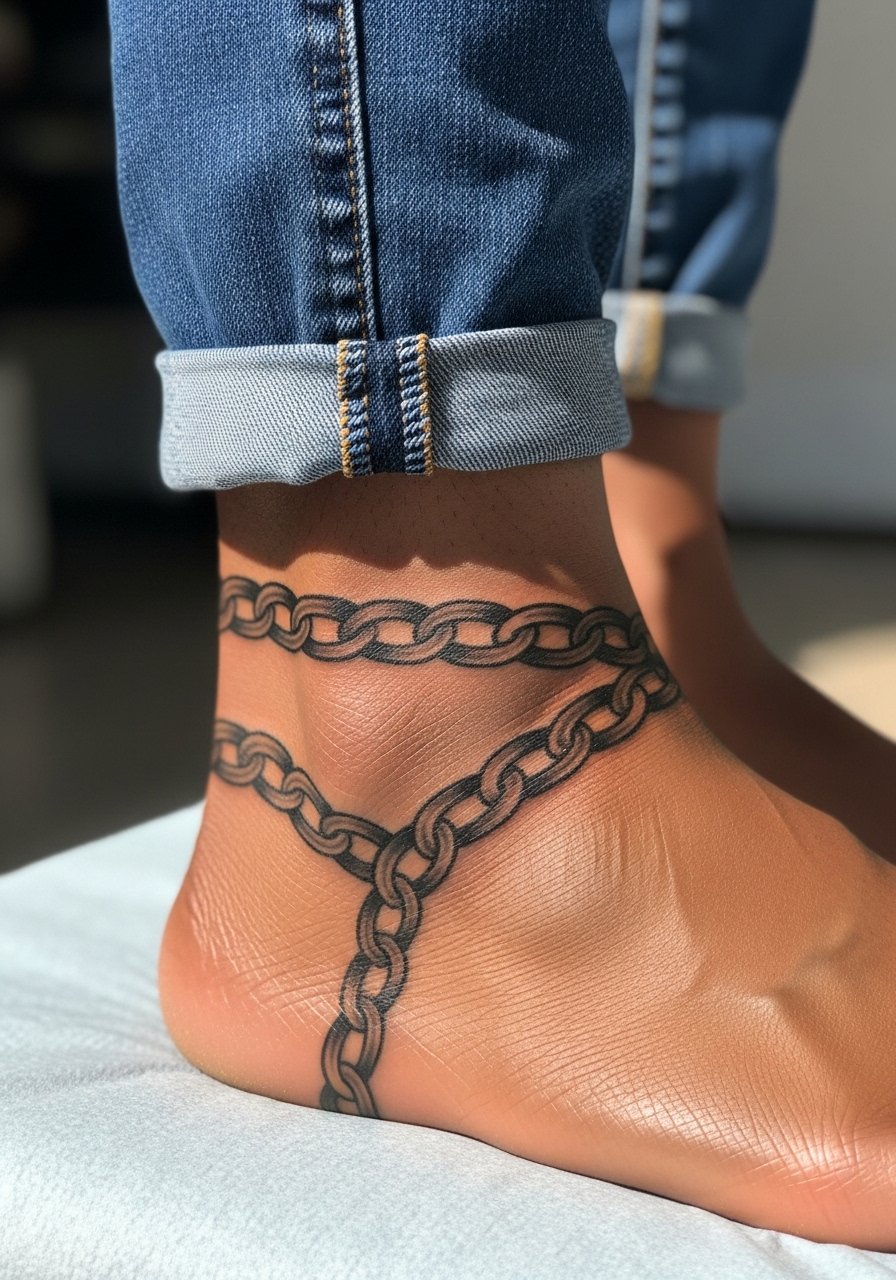
25. Full-Ankle Wrap Blackwork Chain
Pain warning lead: the ankle is sensitive because of thin skin and proximity to bone, but an ankle wrap that uses negative space wears well if the links are bold. Tell your artist to avoid micro-chains and to favor thicker link shapes. The common mistake is requesting tiny delicate chain links that blur with normal wear. For the session wear pants you can roll up or sandals so the area remains friction-free while healing.
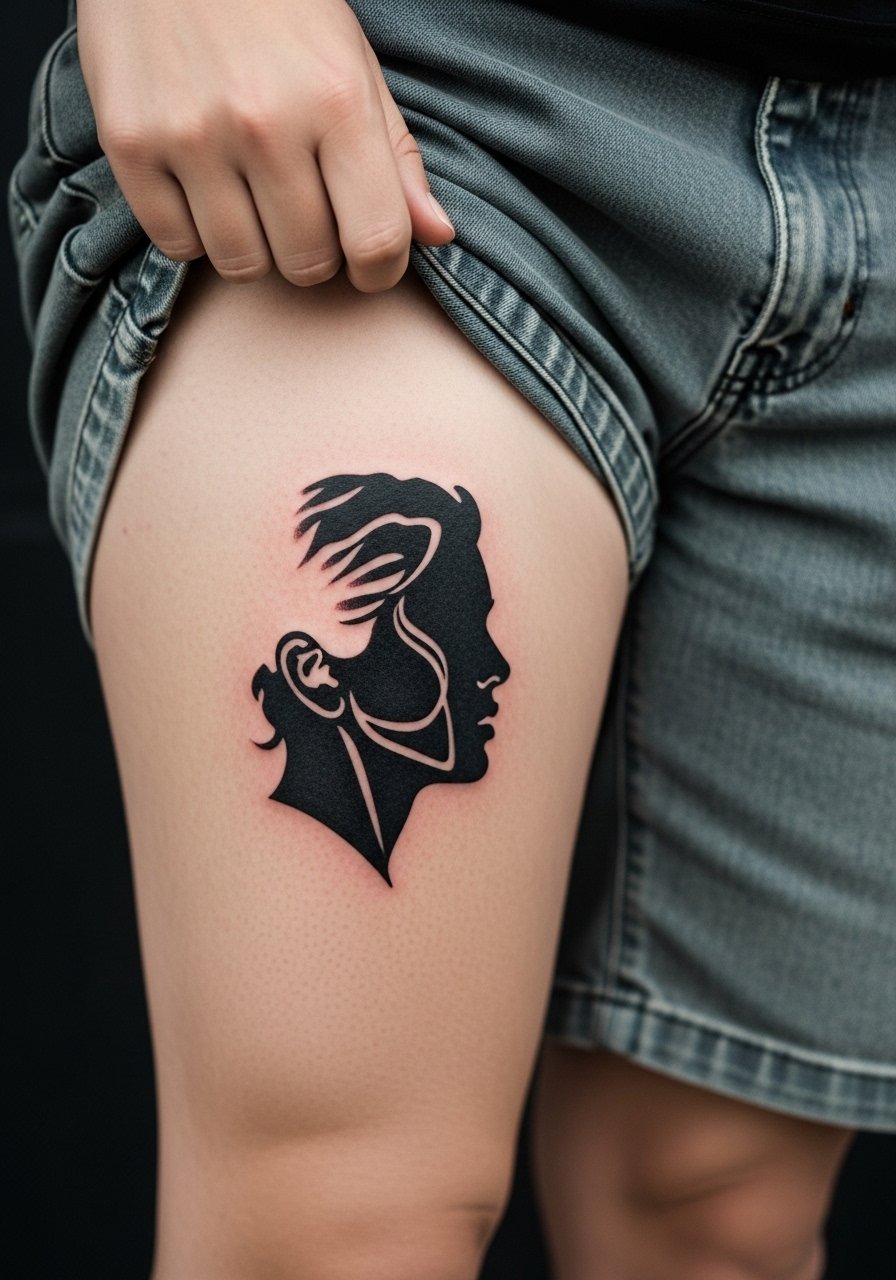
26. Full-Upper Thigh Panel with Bold Negative Portrait
Mistake lead: negative portraits carved out of a dark panel need clear silhouette lines to read as faces. Ask your artist to simplify facial cues into strong shapes rather than delicate features. The error I see is too much internal detail which becomes noise once healed. For session comfort, loose shorts or a skirt that can shift are ideal and keep the work private during healing.
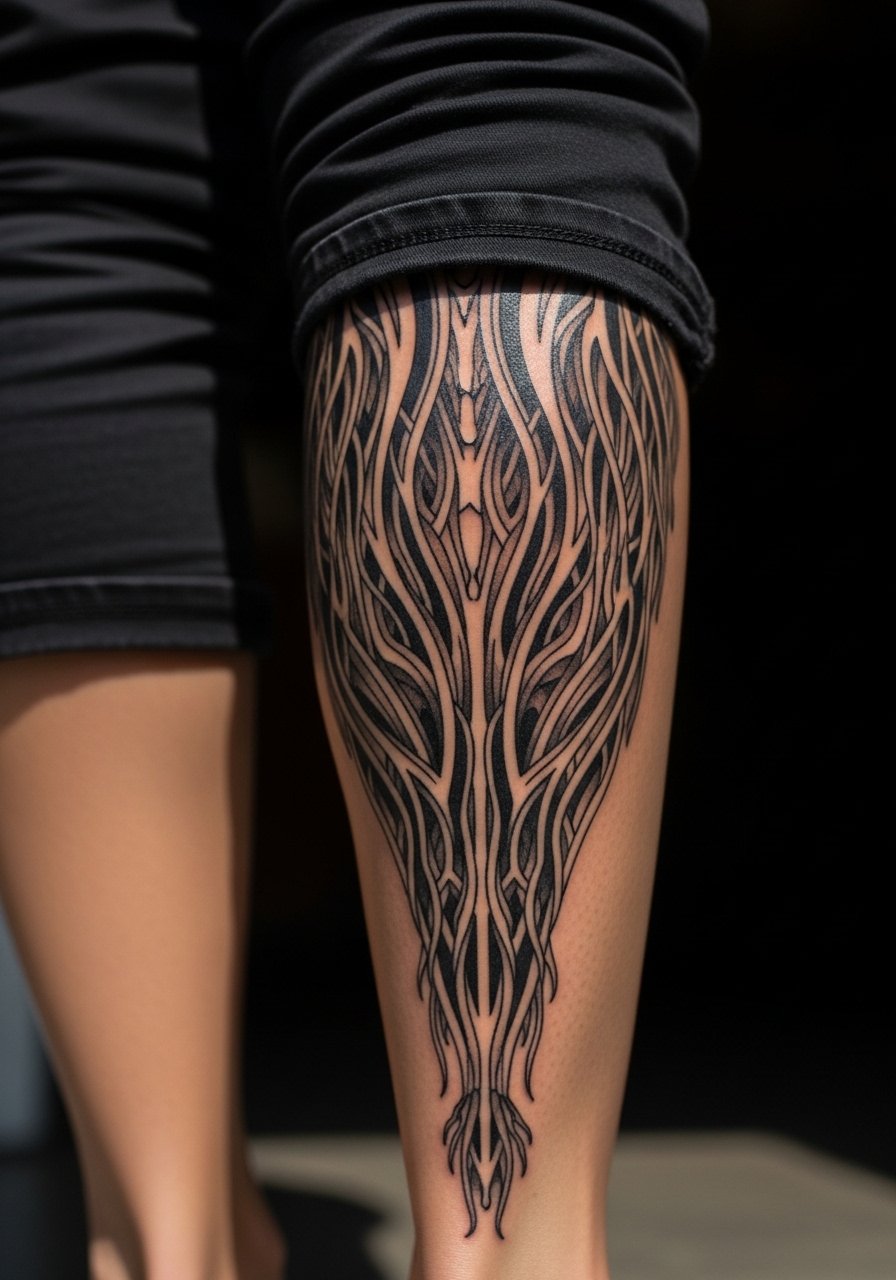
27. Full-Back-of-Leg Bold Tendon-Like Blackwork Striations
Visual impact lead: panels that follow tendon lines down the back of the leg look dynamic and move with the body. Ask your artist to map the striations on your standing leg so the flow reads natural. The common mistake is forcing perfectly straight lines down a curved canvas. For showing, cropped pant hems or high slits let the pattern appear when you walk. This area tolerates saturation well but scheduling multiple short passes gives the cleanest edges.
Frequently Asked Questions
Q: Will heavy blackwork on ribs or sternum require touch-ups more often than on arms?
A: It depends on placement and your skin behavior. Ribs and sternum move and stretch more than the forearm, so many artists recommend a touch-up window around year two to three. If you want longer intervals between touch-ups, ask for slightly broader shapes and more spacing in the design.
Q: Do hand and finger blackwork pieces last, and what are the career implications?
A: Hand and finger blackwork can last if the saturation is bold and you plan on touch-ups. The downside is frequent washing and friction accelerate fading. Hand tattoos remain visible to potential employers in some industries, so consider how visible ink affects opportunities before committing.
Q: How should I brief my artist for a large blackwork back or chest panel?
A: Bring several reference images that show the exact edge treatment and density you prefer, and explain which areas you want crisp versus soft. Ask the artist to map the stencil with your posture in mind and to show a mirrored preview if the design needs symmetry.
Q: Can I wear regular clothes the day after a big session like a thigh or calf panel?
A: Yes, but choose loose, breathable fabrics that avoid rubbing the tattoo zone. For thighs and calves pick shorts or wide-legged pants that can roll up without pressure. Avoid tight seams or waistbands that sit directly on fresh ink.
Q: How do I find an artist who specializes in dense blackwork without naming anyone?
A: Search hashtags like #blackwork and #solidblack on image platforms, check shop portfolios in local directories, and browse threads in tattoo communities on Reddit or convention lineups. Look for healed photos in their feed and ask to see close-up healed work during consultation.