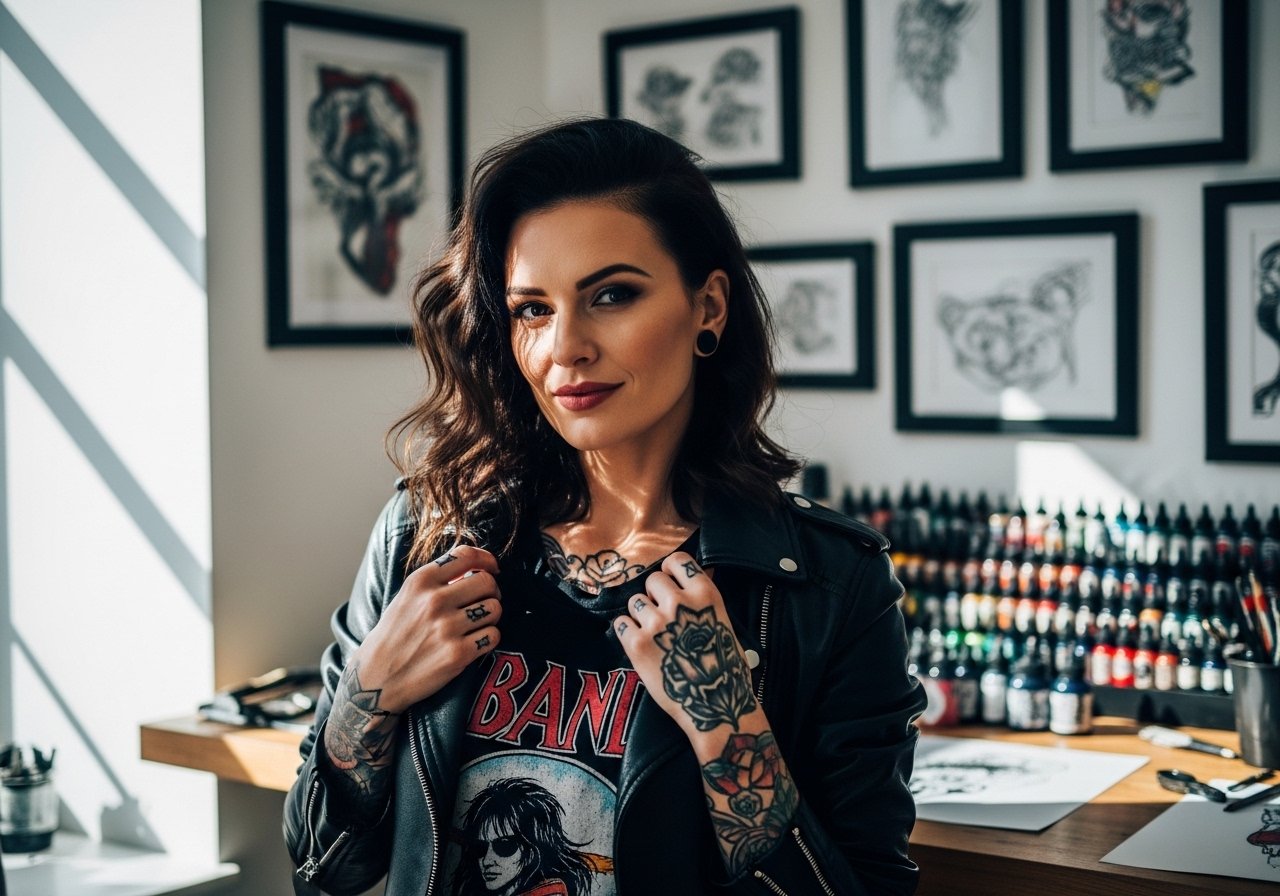
Bold lower back work is trending hard right now, and the pieces that actually age well are not always the ones that look daintiest fresh. Heavier blackwork, well-spaced symmetry, and designs that respect the dimples and hip line tend to hold detail longer. Below are 21 bold lower back tattoo designs that consider how the area moves, how clothing rubs, and what to ask your artist before the stencil goes on.
1. Tribal Heart with Flames Centered Over Dimples
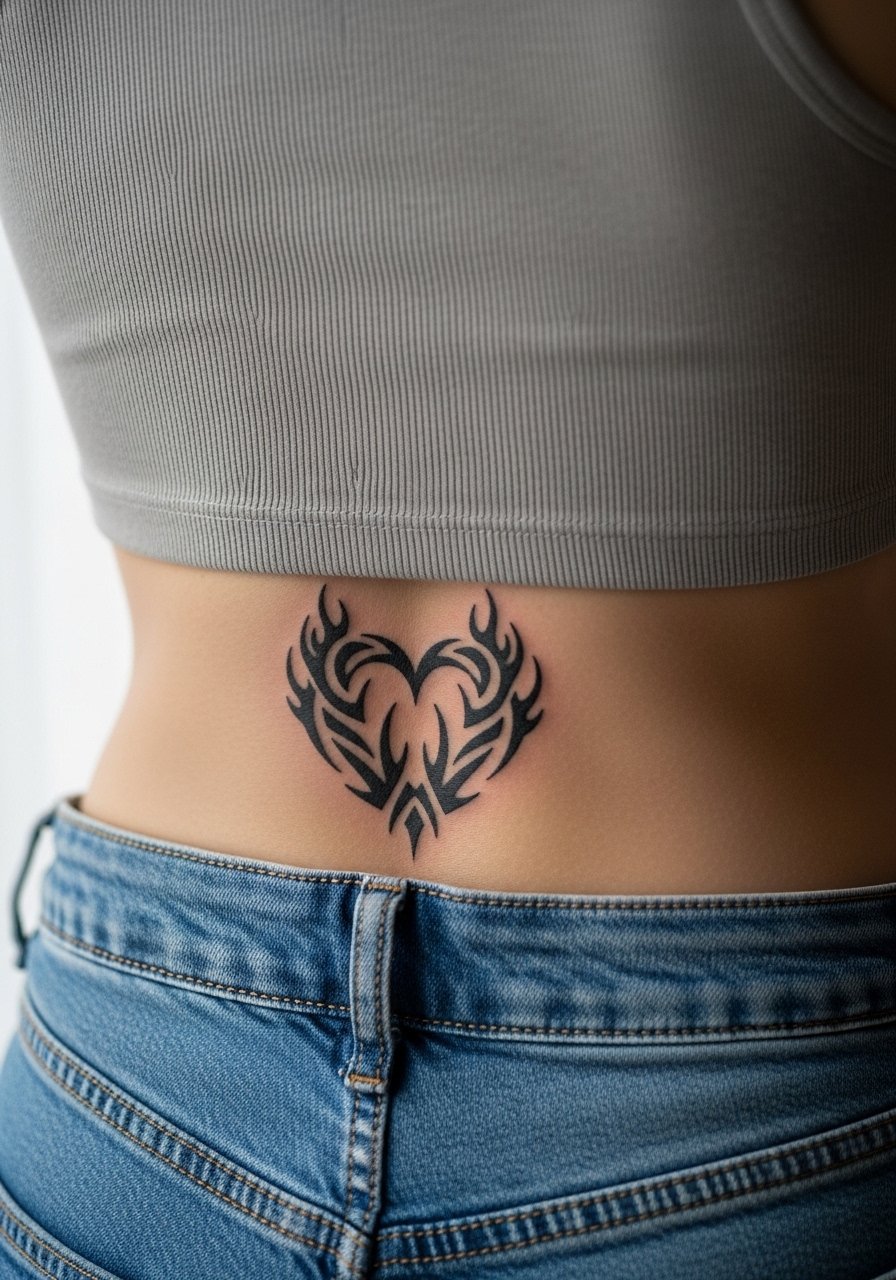
This is a classic revival that works when the heart sits precisely over the lower-back dimples. Tell your artist to center the design on the dimple axis and to use thicker outlines at the outer edges so the piece reads from a distance. Expect moderate pain for this area and a one to two hour session depending on size. A common mistake is crowding tiny interior details into the heart; those will blur with movement. For the session, wear low rise jeans women so you can expose just the lower back without fuss.
2. Symmetrical Ornamental Panel Spanning the Back
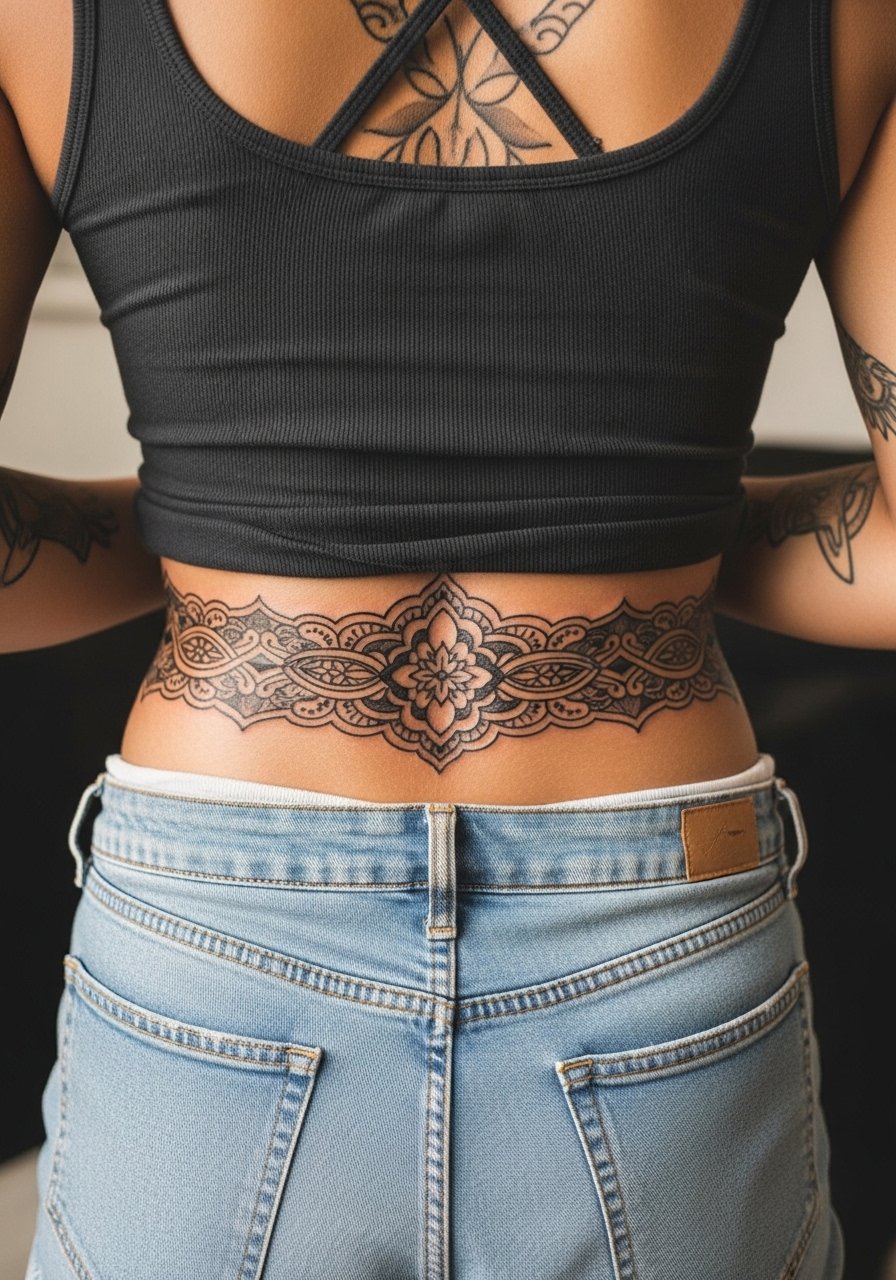
Full-width ornamental pieces frame the spine and look intentional rather than like a small sticker. Ask for slightly increased spacing in dense sections so stipple shading does not merge over time. Pain is manageable but expect longer sessions across two visits for full saturation. The aging advantage is that bold black fills plus open negative space retain shape even with weight fluctuation. A mistake is choosing ultra-fine filigree without spacing. To show this off, try a sheer mesh top over swimwear so the pattern reads without full exposure.
3. Neo-Tribal Wings Flanking the Spine
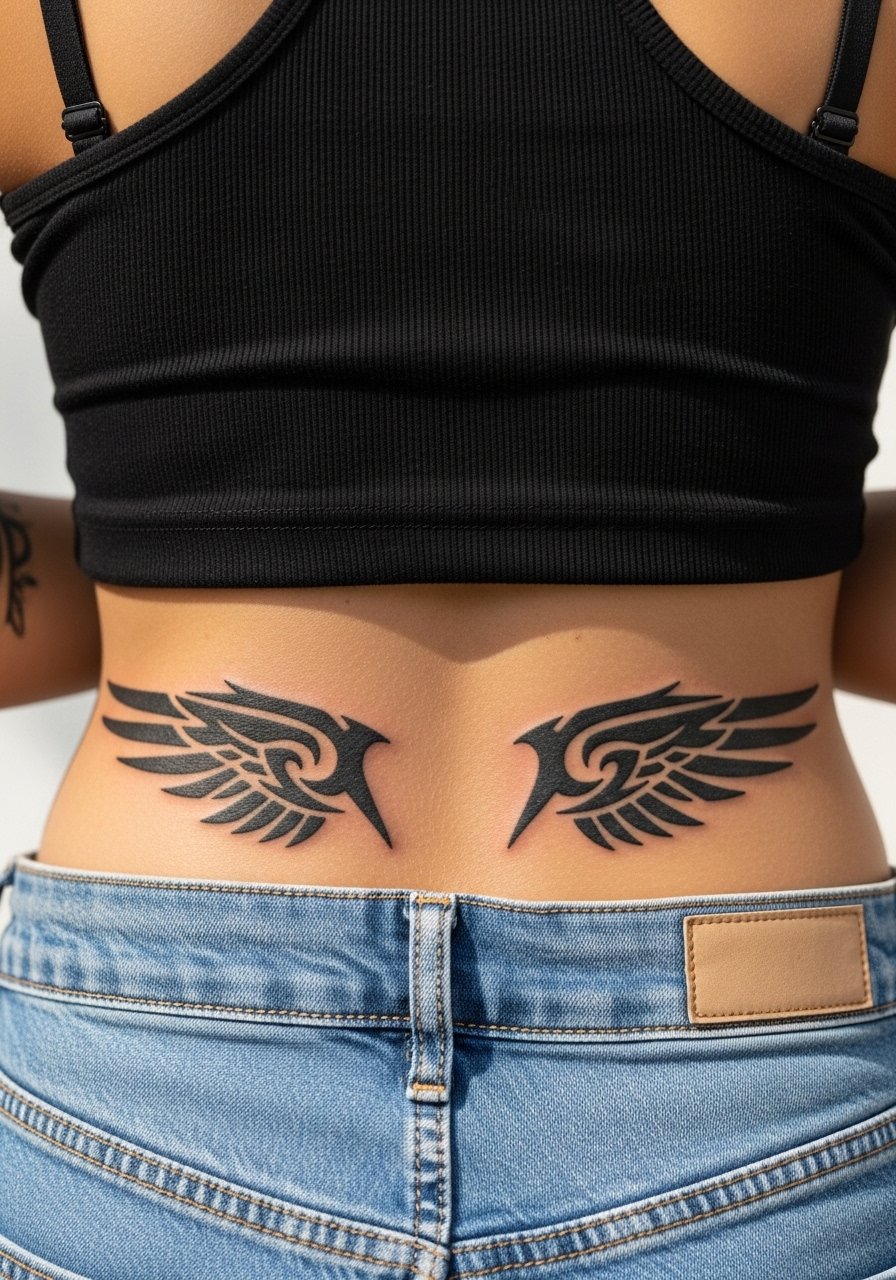
Wings that spread from a subtle central motif create movement when you arch or walk. Tell your artist to mirror the curves to the hip bones so the wings hug the natural silhouette. Expect moderate discomfort along the iliac crest area where the bone is shallow. Longevity is good with thick outlines and solid saturation, but watch out for blowout if lines are shoved too deep. For nights out pair the piece with a backless dress black that keeps the focus on the wings.
4. Dimple-Centered Heart with Stars Accent

Smaller centerpieces that respect the dimple axis make the lower back read intentional. During consultation specify star size and spacing so the tiny points do not bleed together. This is a shorter session and a lower pain window, but fine points may need touch-up by year two or three. A mistake is asking for hairline stars with zero negative space. For casual reveal try a cropped tank top black to keep attention on the central motif.
5. Flame Motif Extending to Hip Flanks
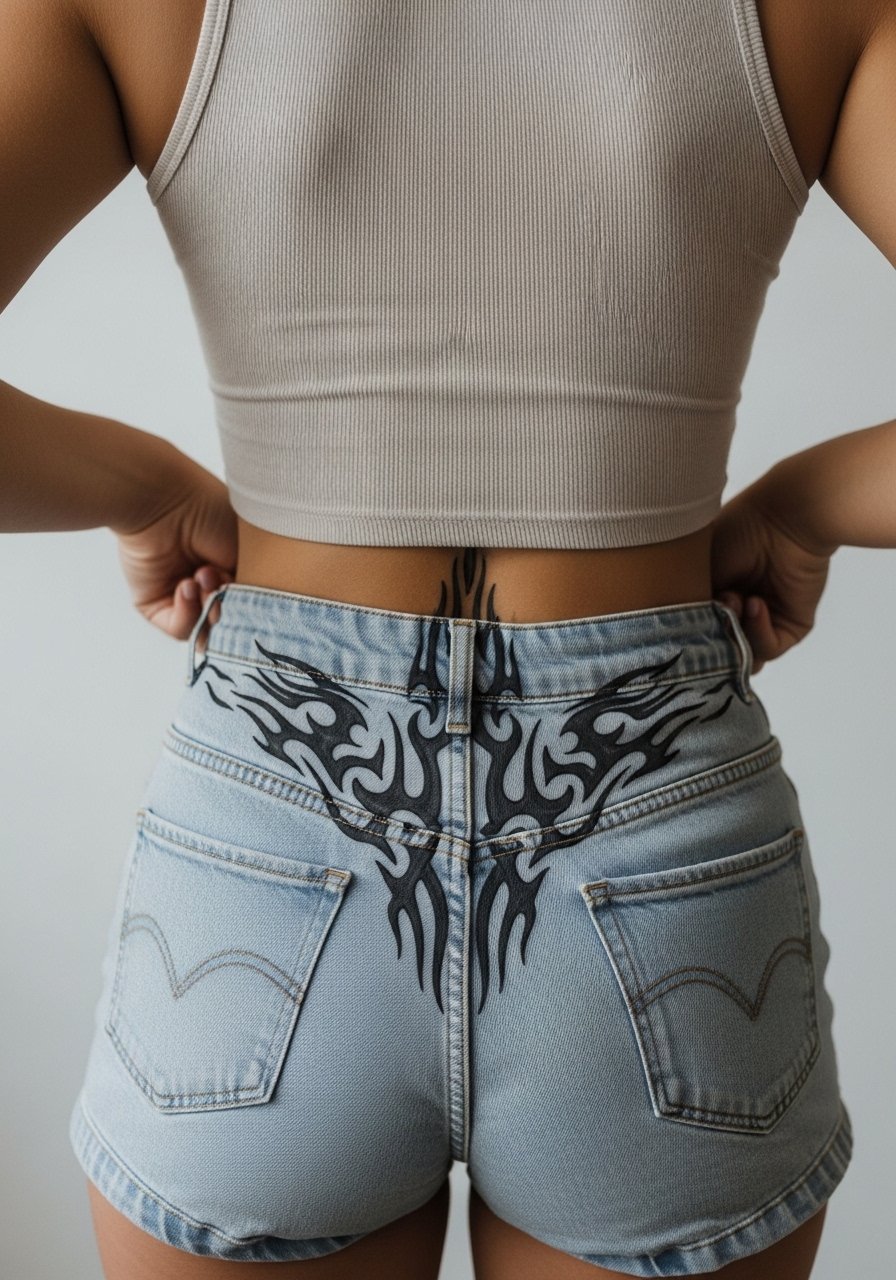
Flames that extend toward the hips emphasize motion and pair well with low-rise bottoms. Ask for tapered line thickness so the flames read both up close and from a distance. This design spans into higher-friction zones near waistbands, so discuss how a belt or waistband will sit during healing. Expect 1-2 sessions and a reasonable touch-up window at year three for high-movement edges. To wear it out, a leather belt wide can complement the flank extensions without covering the central area.
6. Bold Blackwork Sunburst Panel
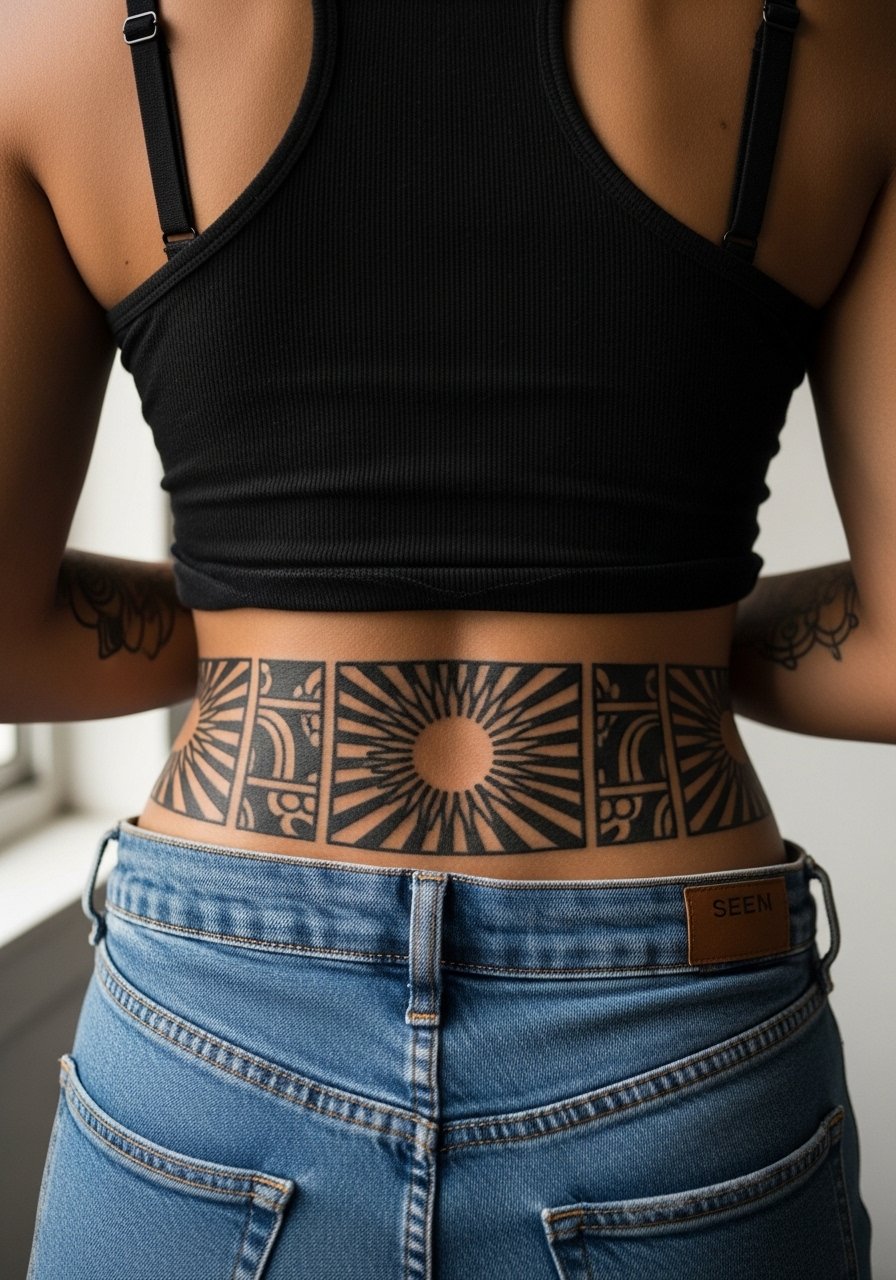
A sunburst uses thick rays and negative space to read cleanly over time. Tell your artist to keep rays wide at the base so they do not thin out into fragile lines. Sessions are usually two depending on coverage. This style ages well because saturation carries through years, yet tight thin rays risk softening. For station day comfort bring a baggy sweatpants women you can lower slightly without tugging the skin.
Chair Day Prep
The center and flank pieces above include both dimple-centered panels and hip-extension work, so a few prep items smooth the session and the first week.
-
Stencil transfer paper kit. Lets you preview how the linework sits on your lower-back contours before the artist inks, which is useful for dimple-centered designs.
-
Thin disposable seat cushion. Low-back sessions can strain the tailbone if you are seated, so a cushion helps you stay comfortable during longer fills.
-
Thin protective film roll. Covers the area after the initial dressing and reduces friction from waistbands during the first 24 to 48 hours.
-
Fragrance free gentle body wash. A mild wash keeps the area clean without irritating fresh blackwork edges during showers.
-
Aquaphor healing ointment. A thin layer in the first days helps prevent drying cracks on heavy black fills while you rotate clothing and bedding.
7. Neo-Ornamental Knotwork Belt
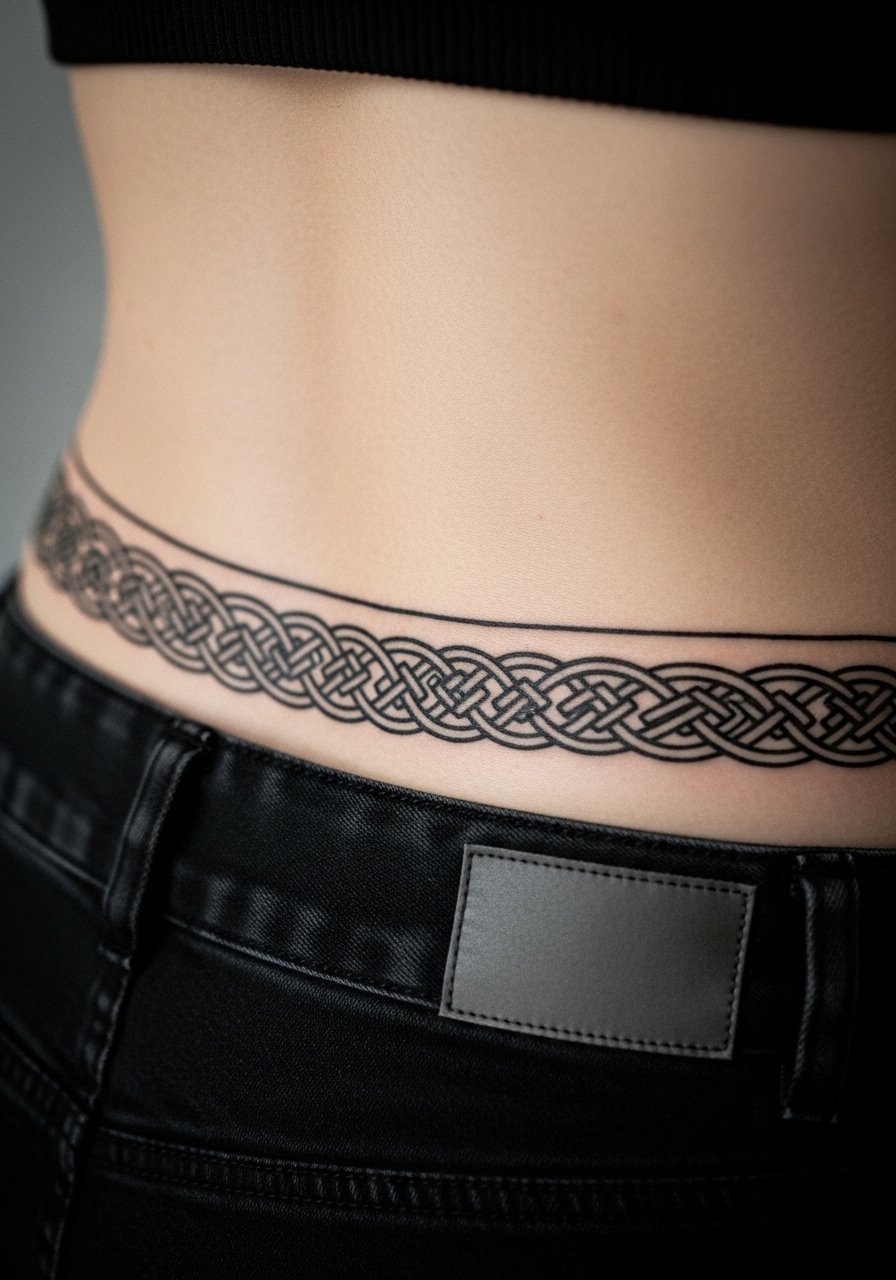
Knotwork that reads like a belt is a graphic alternative to a full panel. Specify open loops and avoid micro-tangles so the interlace does not merge in five years. This placement is moderately painful along the top of the pelvis. The session can be split to keep the artist precise. People often ask for ultra-tight knots that end up smudging, so insist on slightly larger loops. Pair the look with low-rise bottoms for evenings out.
8. Baroque Ornamental Strip with Dot Work
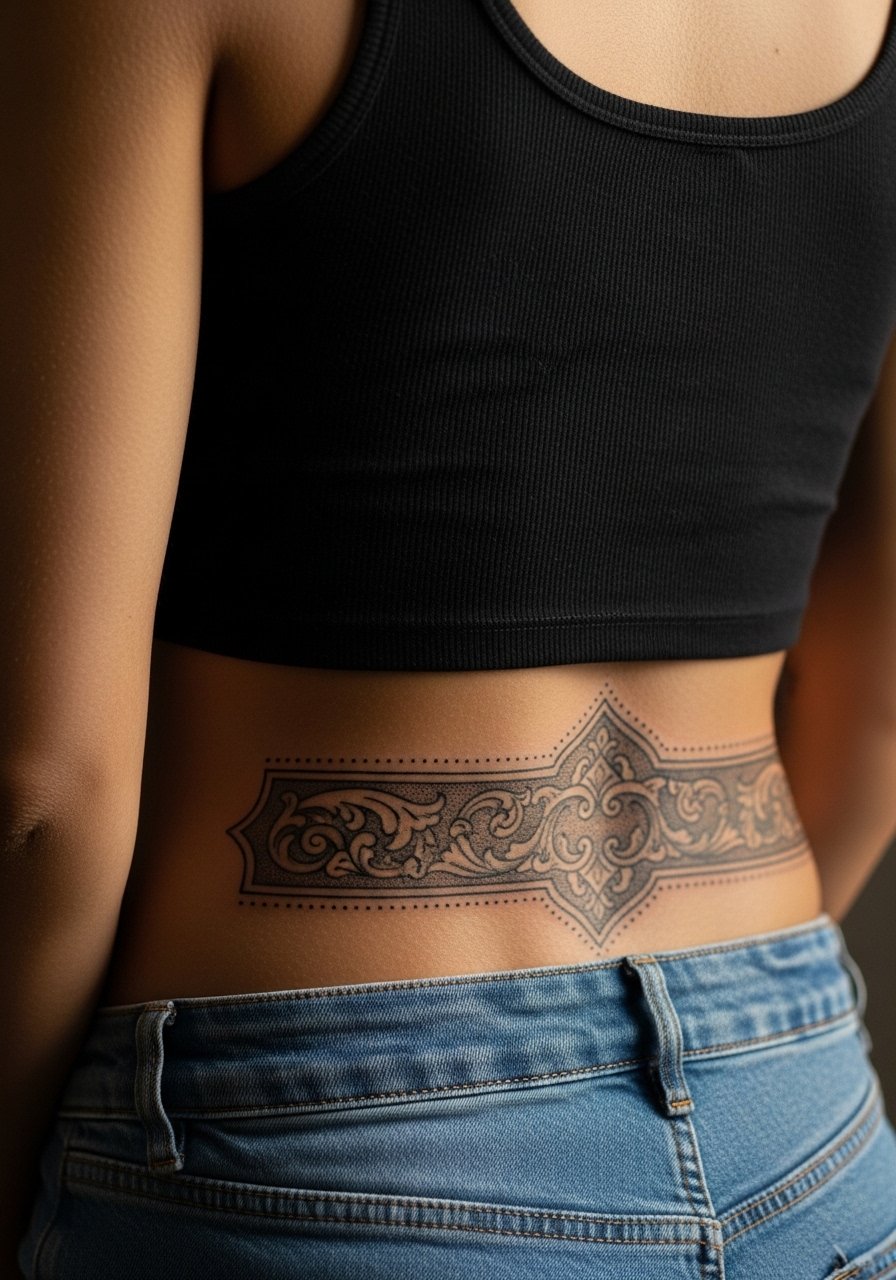
A baroque strip mixes solid black panels with stipple shading to create depth without color. Tell the artist you want expanded dot spacing in shaded areas to preserve the texture after healing. Pain is moderate and the dot work can extend session time. A common error is compressing stipple into a narrow band; that creates a muddy look over time. Style it with a bikini string bottom at the beach so the strip peeks above the line.
9. Crescent Moon and Starfield Accent
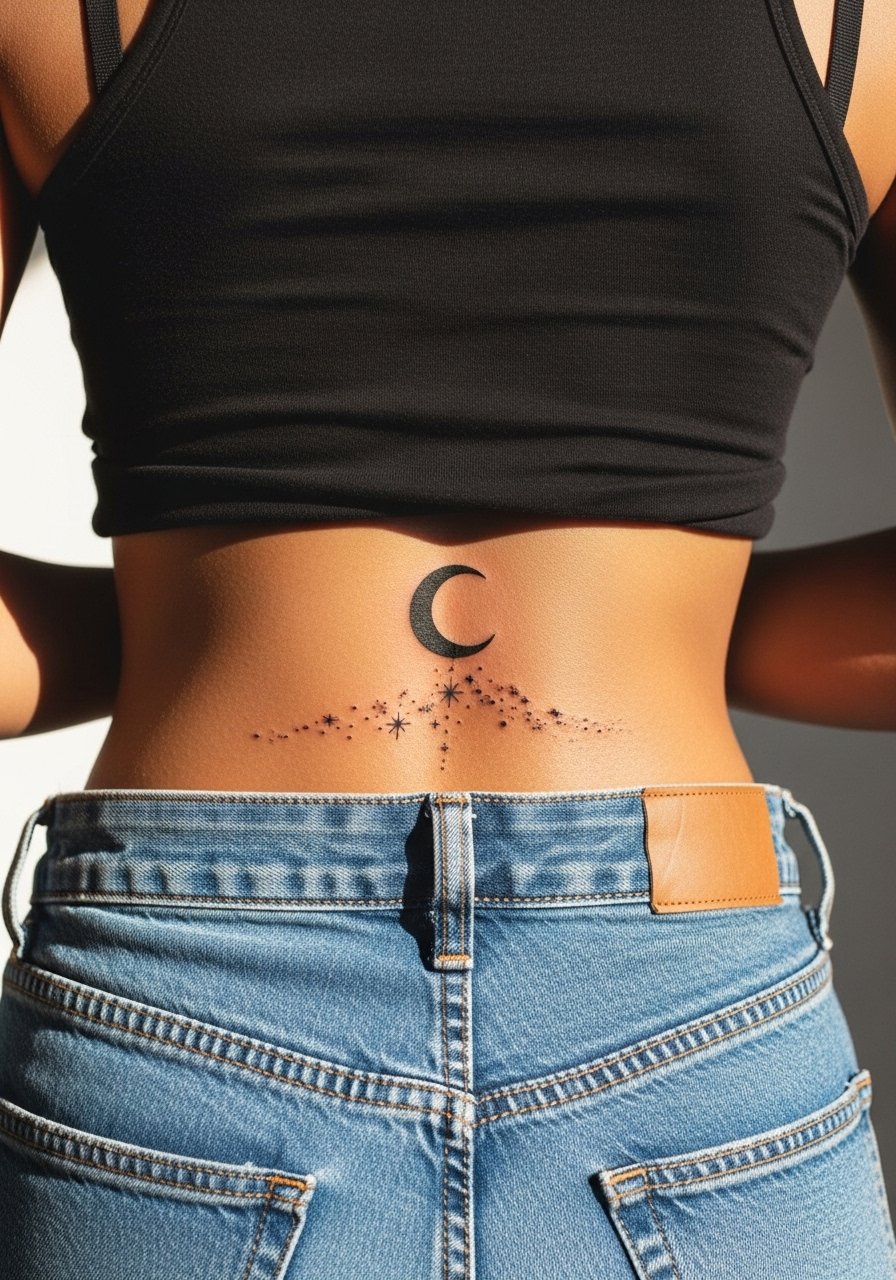
This tasteful celestial motif reads small while still making a statement when placed on the dimple axis. Ask for a slightly heavier crescent outline to anchor the tiny stars so they do not lose shape. Sessions are short and pain low, but the tiny stars may need touch-up sooner than thick outlines. Avoid asking for micro dots with no space between them. A cropped tank top black shows the composition without full exposure.
10. Abstract Blackwork Wings with Hip Trails

When wings are abstract silhouette shapes rather than filigree, they maintain clarity through stretch and weight changes. Tell the artist to favor solid negative shapes over tiny interior lines. Pain varies, with flank sections harsher near the iliac crest. Expect large areas to take two sessions for full saturation. Common mistakes include adding fragile feather details that age into smudges. A gold chain belt layered over low-rise waistlines can highlight the wing arcs.
11. Central Sigil or Geometric Mandala
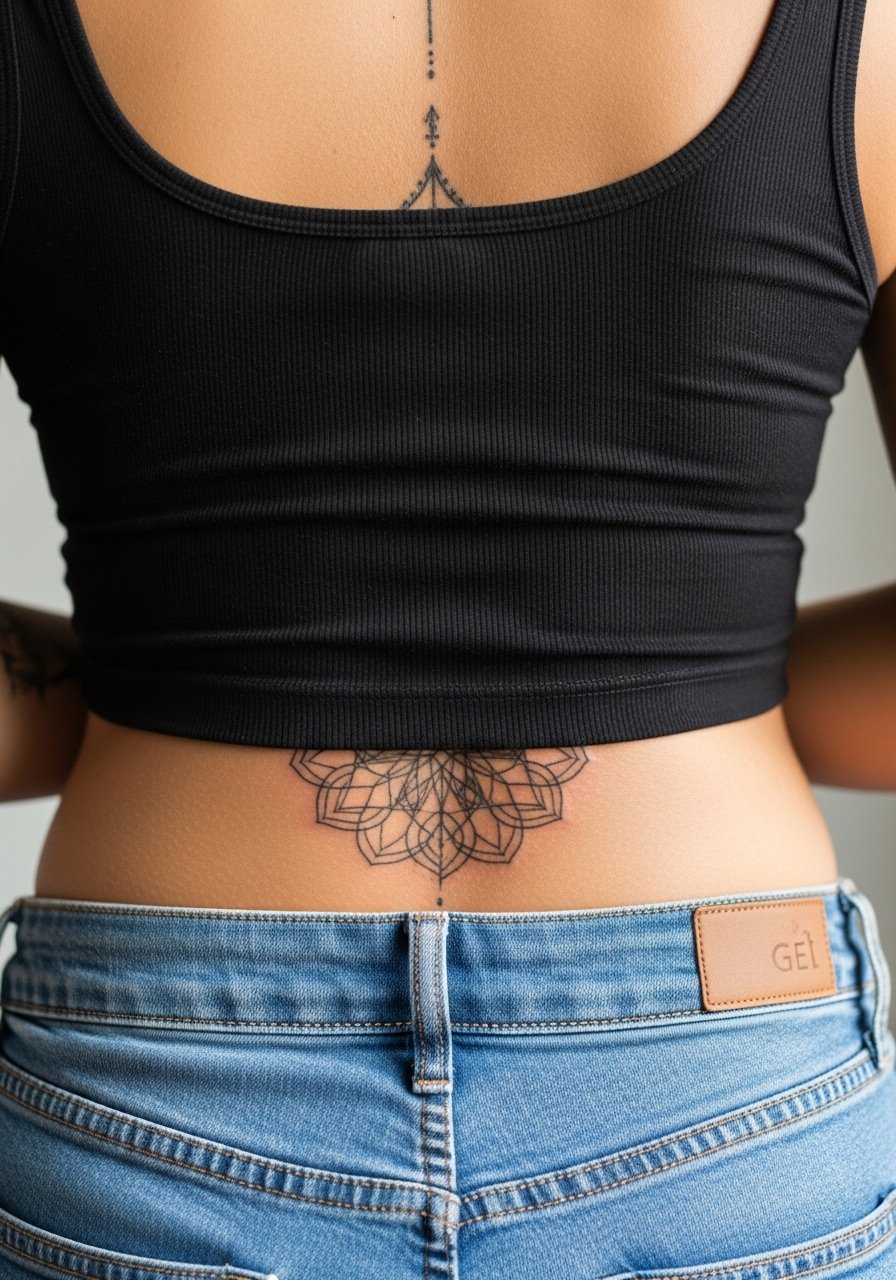
A mandala that spans 6 to 8 inches can sit cleanly on the lower back when you ask for spacing between rings. Tell the artist to increase negative space in dense zones so the rings do not merge at year two. Pain is moderate and sessions vary by diameter. The controversy around fine line versus bold line is relevant here. One camp argues fine line mandates for mandalas preserve detail when executed by a specialist. The other camp says bold ring spacing wins for longevity on curved lower back skin. Ask your artist which approach they favor and look for healed photos on similar placements.
12. Tribal Motif with Thick Anchor Lines
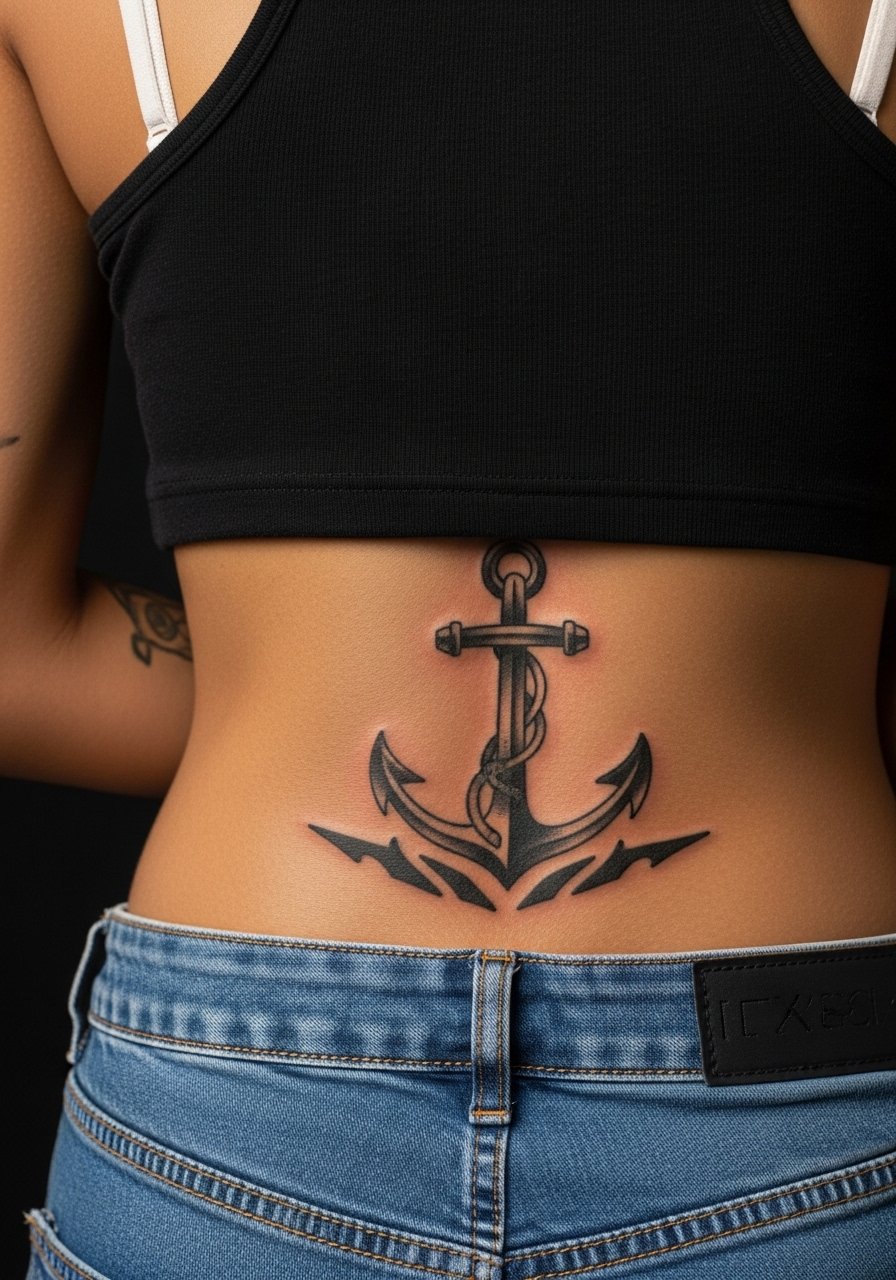
Traditional tribal motifs benefit from bold anchor lines that resist blur. In consultation request slightly rounded terminals on the ends of sharp points so they do not create pressure points under clothing. This style is less likely to need touch-ups in the first five years thanks to saturation. A mistake is asking for hairline negative cuts inside heavy shapes. For daily looks try a halter top solid so flanking patterns peek without full exposure.
13. Script Ribbon that Follows the Spine Curve

Script that hugs the spine can be elegant if the lettering is scaled for distance. Ask for a thicker base stroke and open counters so letters do not fill in as the skin shifts. This placement feels more sensitive near the tailbone. People often request tiny script which becomes illegible after a few years. For the session, wear loose drawstring pants so you can lower the waist without tugging the inked skin.
14. Barbed-Line Chain Across the Lower Back
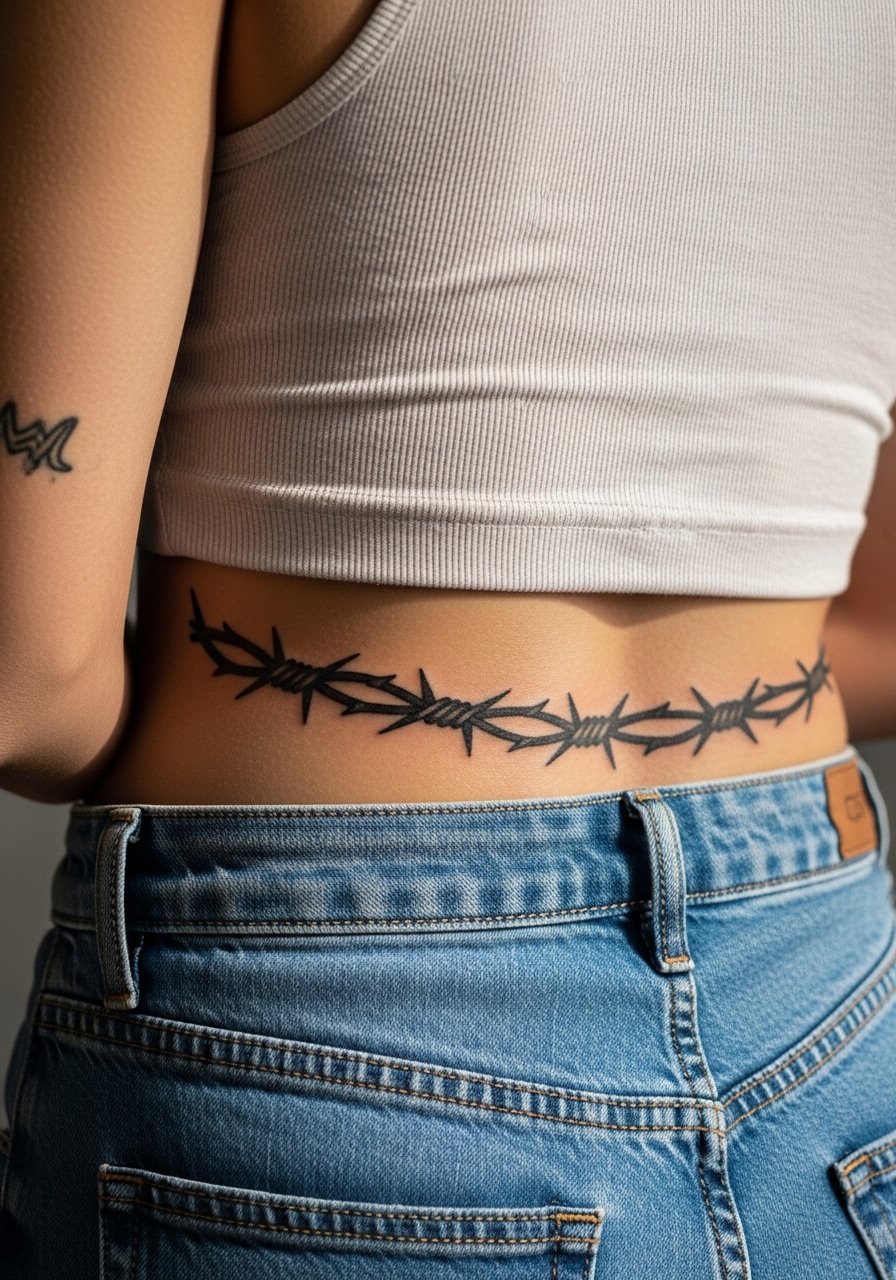
A graphic chain looks modern when built from thick links and negative space. Tell the artist you want the barbs rounded enough to avoid hard points that drag during healing. Pain is moderate along the spine line and session time is short if kept narrow. A common error is wanting micro detailing on the barbs which will soften. For nights out consider low-rise denim or a leather belt wide to echo the chain motif.
15. Phoenix Silhouette Rising from the Spine
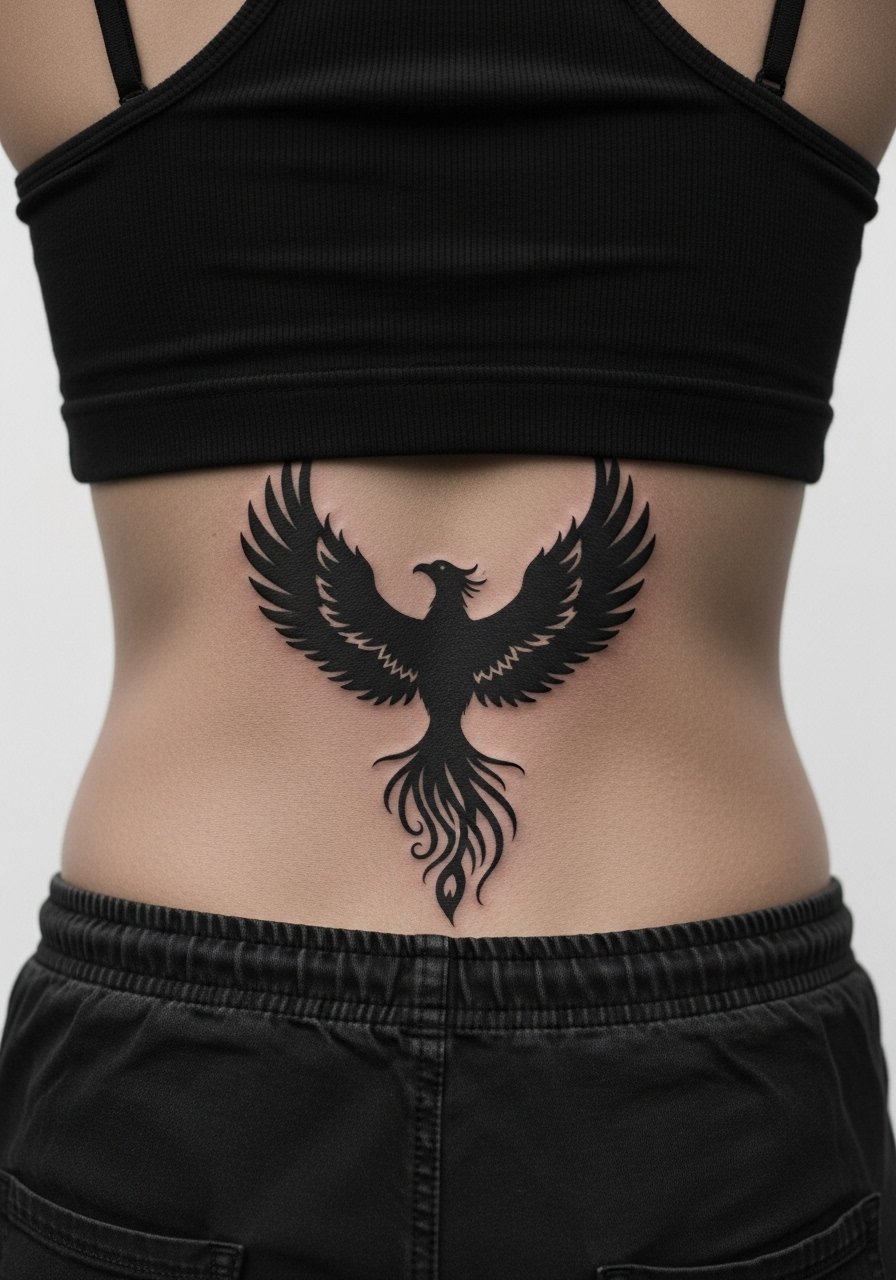
A phoenix silhouette gives an iconic shape while avoiding fragile inner detail. Ask for bold negative shapes and minimal inner lines to prevent muddiness over time. These pieces take longer to fill and often need two sessions for consistent saturation. People who ask for tiny feather lines regret it when those lines smoke out. To show movement, pair with a backless dress black or halter styles.
16. Celtic Knot Panel with Open Fields
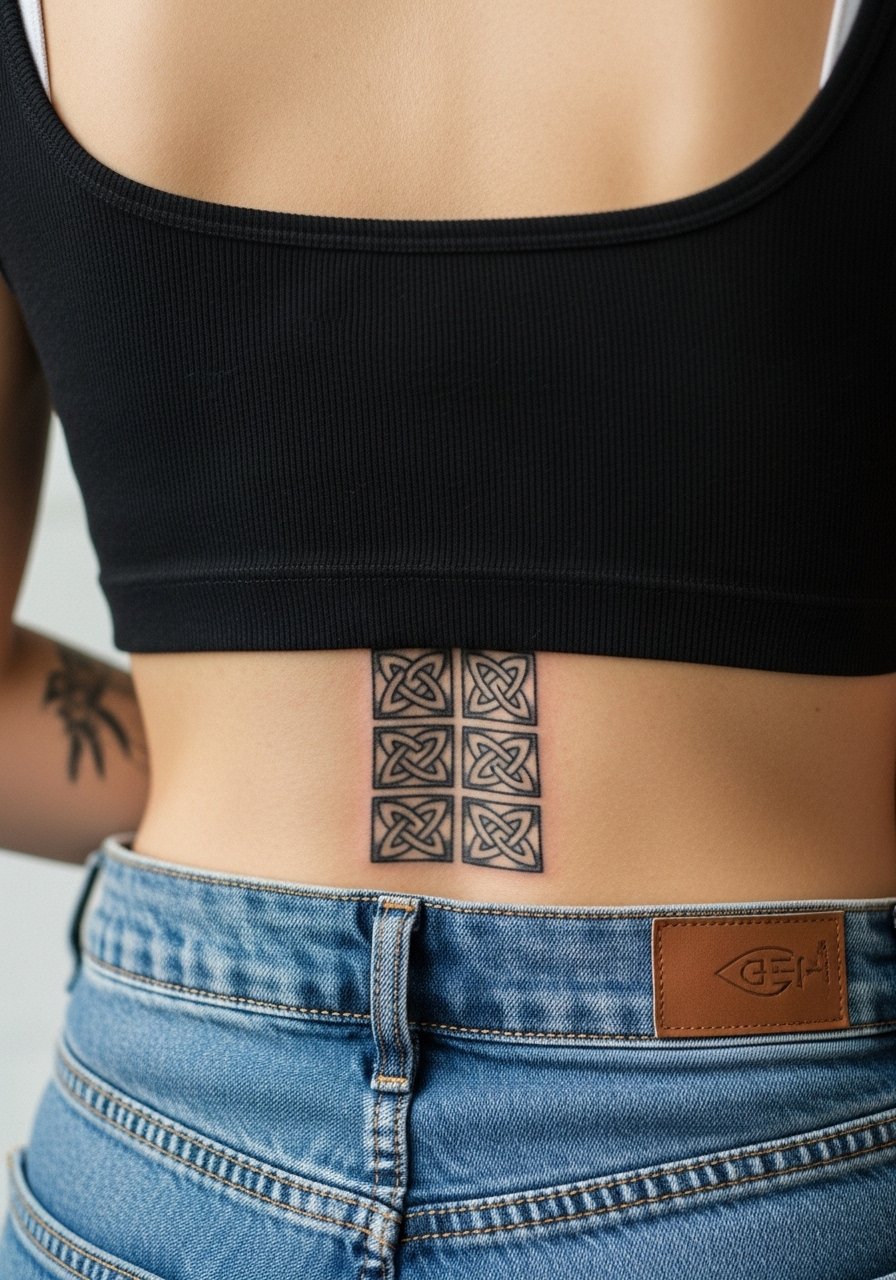
Celtic knots can hold up when the loops are enlarged and the negative spaces are explicit. Ask for wider braids so the knots do not collapse into one dark mass with age. Pain is moderate and the knotwork can be completed in one extended session if size is kept reasonable. The mistake is copying dense knot flash without scale adjustments. Pair with a cropped tank top black to reveal the continuous band.
17. Horizontal Floral Vine with Bold Outlines
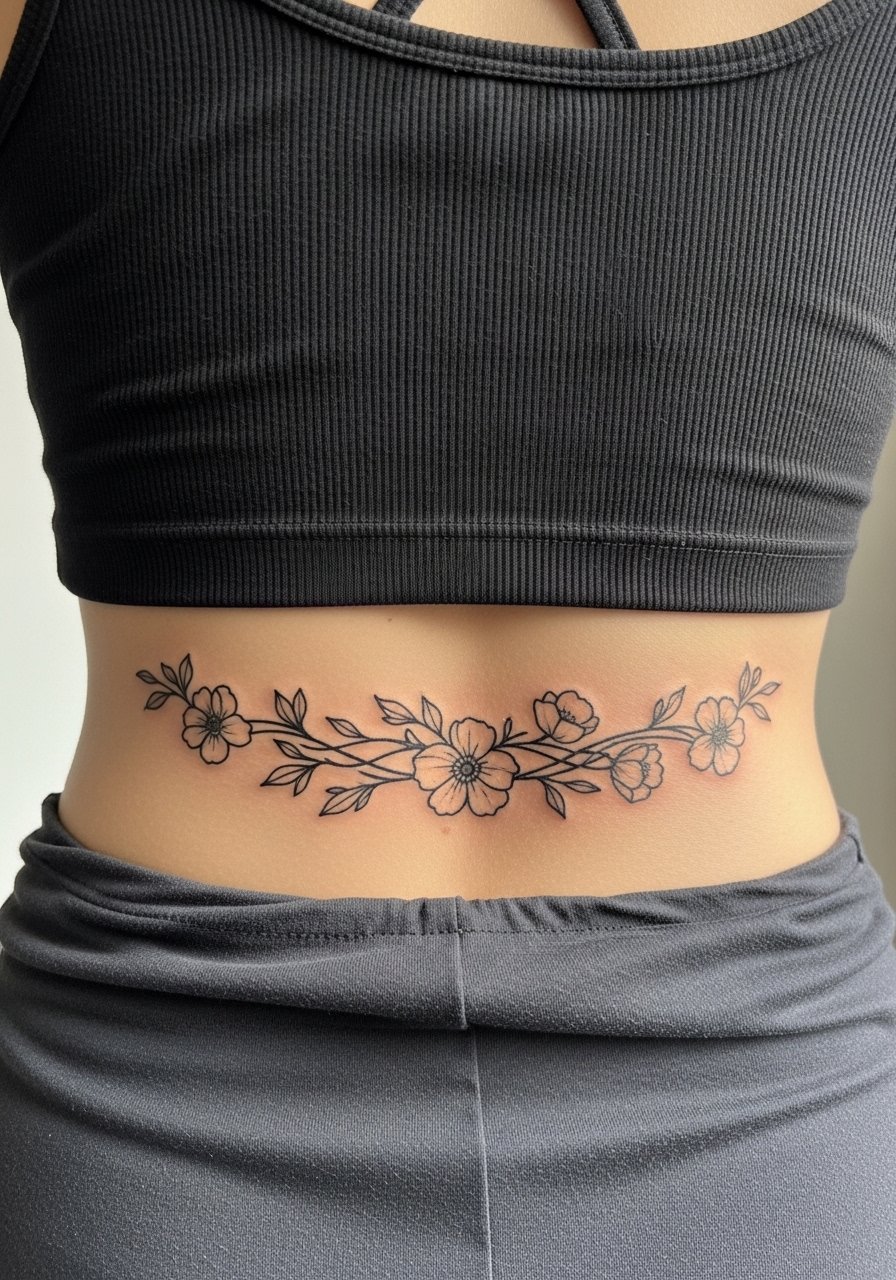
Plants and florals need bold anchor outlines if you want them to last on the lower back. Tell the artist to simplify petal interiors and keep heavier outlines where clothing might rub. Sessions are straightforward and healing is usually uneventful, unless the waistband hits the area each day. A common error is over-detailing petals which fades into a textured blur. A sheer mesh top over neutral swimwear highlights the vine without exposing the whole back.
18. Geometric Bar Panel with Negative Space
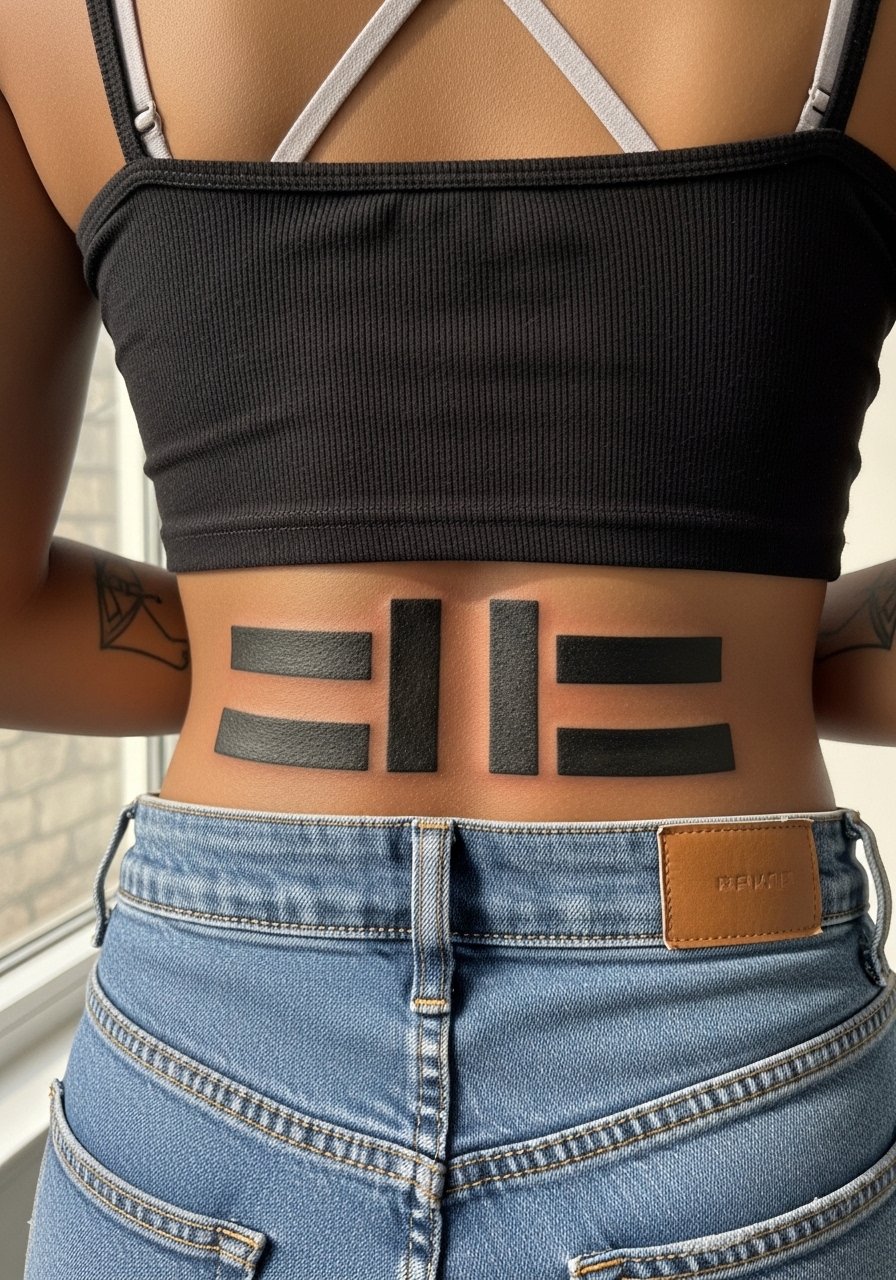
Geometry that relies on large negative fields reads clearly over time. During consult ask for increased spacing between bars so optical merging does not occur. The area is moderately sensitive and session time depends on how many bars require saturation. A common error is packing too many narrow bars which create optical noise later. Pair this with low-rise jeans or a leather belt wide for a modern street look.
19. Minimalist Dot-Work Spine Accent

Dot-work down the spine reads subtle but bold when scaled correctly. Ask your artist for wider spacing between dots in the denser sections, so the stipple does not fill in. Pain can spike near the tailbone depending on how low the piece goes. Expect longer sessions since stippling is time intensive. A mistake is requesting extremely tight dot density that heals into a shaded patch. Wear loose drawstring pants for the session and low-rise pieces afterward.
20. Bold Sun and Moon Mirror Panels

Mirrored celestial panels play off hips and can accentuate movement. Tell your artist to balance the two panels in width and negative space so one does not overpower the other when you stand. Pain varies across flanks and the session often runs two hours. Avoid asking for heavy interior filigree in both panels which tends to age poorly. For styling choose a backless dress black or halter top to display symmetry.
21. Scripted Phrase with Bold Baseline
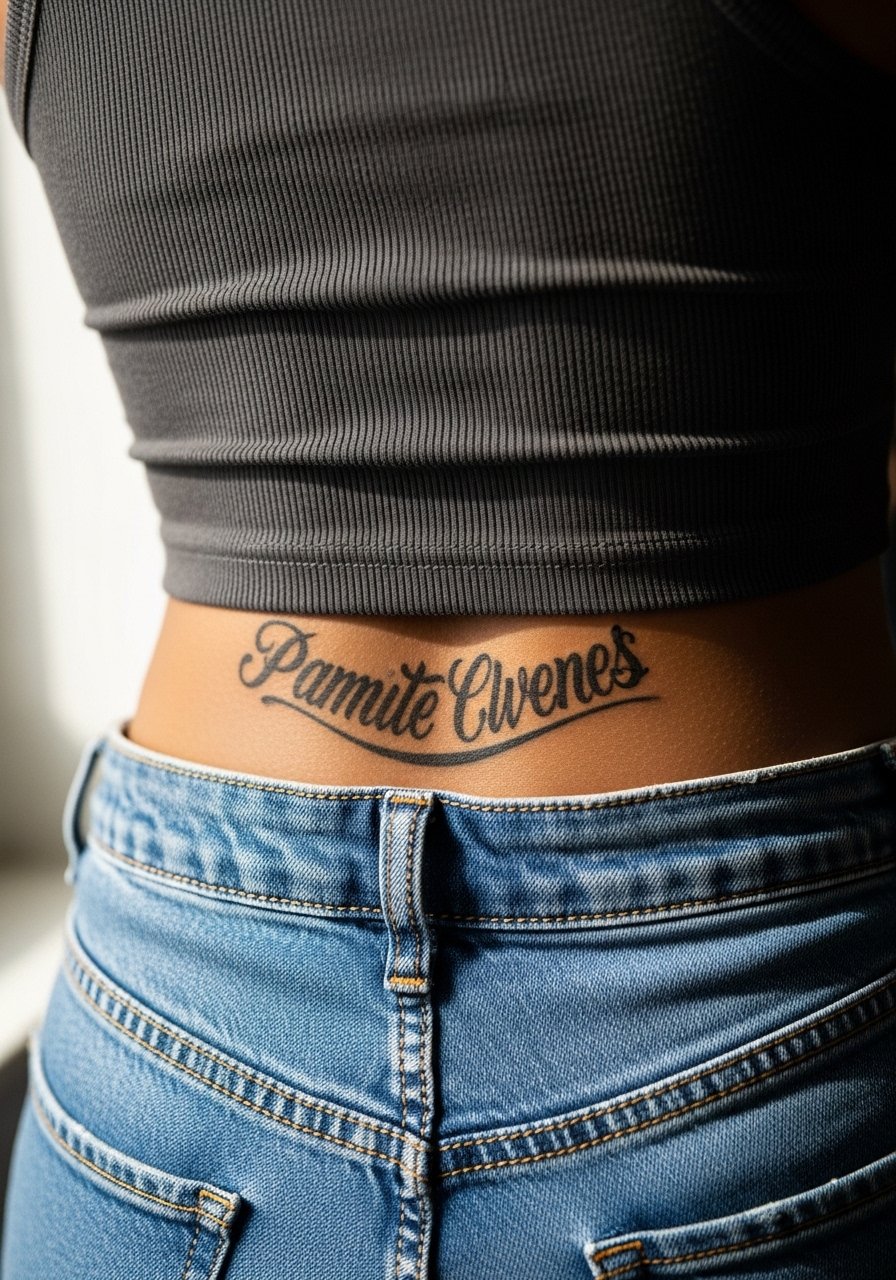
A short phrase along the lower back reads best when letters are scaled so counters stay open. Ask the artist to thicken baseline strokes and to mockup the phrase on skin at real size before inking. Pain is mild to moderate and session time is generally short. The common mistake is choosing overly ornate lettering that clogs as it heals. For casual display try a cropped tank top black that keeps the phrase visible at the waist.
Frequently Asked Questions
Q: Will a bold blackwork lower back tattoo hold up better than a fine-line mandala?
A: In many cases bold blackwork retains clarity longer on the lower back, especially across hips and dimple zones. Fine-line mandalas can look incredible fresh, but they require larger spacing and an artist experienced with fine detail on curved skin. When choosing, ask to see healed photos of similar placements from the artist so you can compare results.
Q: How should I prepare clothing-wise for a multi-hour lower back session?
A: Wear a loose tank or a button-down you can pull aside and baggy sweatpants women with an elastic waist. That lets the artist access the lower back without you having to shimmy out of tight fabrics. Bring a disposable cushion if you think sitting will be uncomfortable.
Q: Does the Saniderm versus dry healing debate matter for lower back tattoos?
A: Yes, it matters and artists are split into two camps. One camp favors Saniderm because it protects the area from sweat and friction, which is common at the waist. The other camp prefers dry healing, arguing it encourages cleaner scab formation for bold lines. Both approaches have defenders, so ask your artist which method they use and why, and follow their protocol for the best result.
Q: How often do lower back pieces need touch-ups compared to other placements?
A: Touch-up frequency depends on line weight and placement. Heavier black fills and thicker outlines often need fewer early touch-ups, while fine stars, tiny script, and tight stipple can require touch-ups by year two or three. Expect a realistic touch-up window and budget time for one if your piece has a lot of small detail.
Q: Can weight fluctuation or pregnancy ruin a lower back tattoo?
A: Tattoos will stretch with significant changes to the hips and abdomen, and very tight detail can warp. Choosing designs with open negative space, bold outlines, or patterns that follow the dimple axis reduces visible distortion. Talk to your artist about how the piece will move on your specific body so they can advise on scale and placement.
Q: Where can I find artists who specialize in bold lower back blackwork and ornamental pieces?
A: Look through style-tag searches and local booking platforms rather than single profiles. Search hashtags like #LowerBackTattoo and #BoldBlackwork on image apps, use the Tattoodo app to filter by "lower back ornamental," and check city guest-spot videos on video platforms to find artists who specialize in the specific look you want.