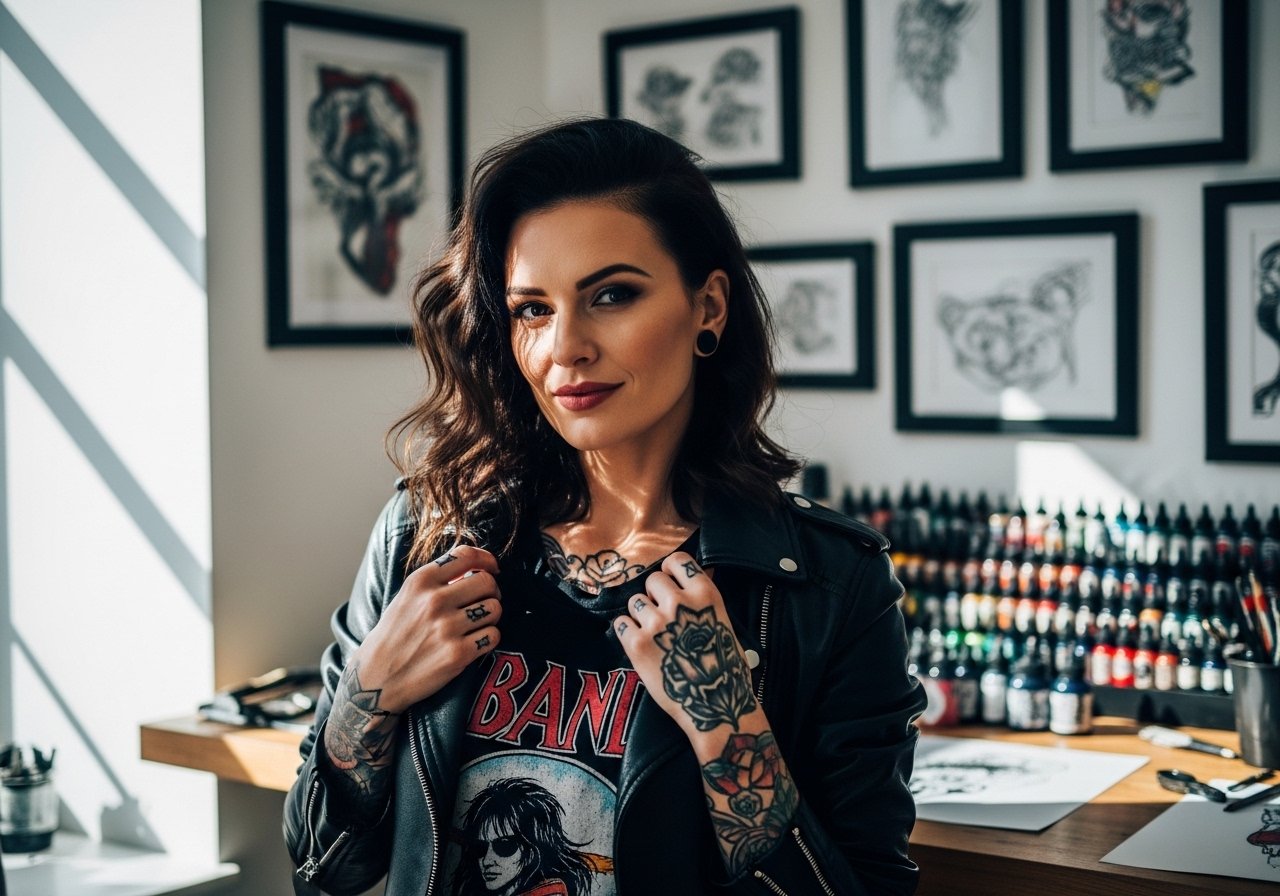
The tattoos that still read clean at year ten are not usually the ones that looked best fresh. High saturation, bold linework, and smart spacing age into a consistent look. Hyper-detailed micro work often shines on day one and softens too quickly if the canvas or placement was wrong. Read the ideas below with that lens and use the consultation tips to push any bold design toward longevity and clarity.
1. Full-Sleeve Tribal With Alpha Animal Focus
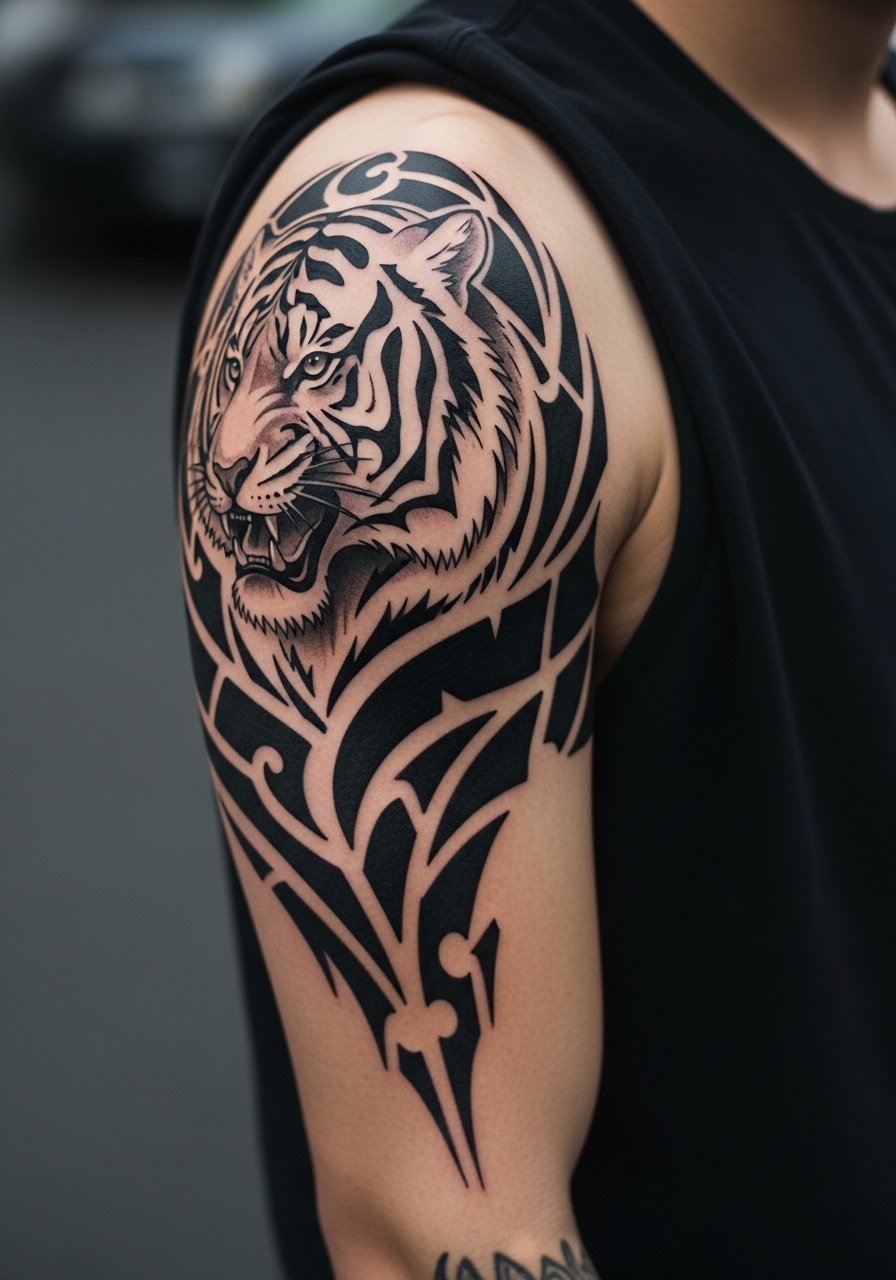
A full sleeve built around a single animal focal point reads strongest over time when the silhouette is clear and the negative space is intentional. Tell your artist you want a dominant focal piece on the shoulder cap and gradual transitions toward the forearm, not five competing motifs. The sleeve session plan matters. Expect four to six sessions for heavy black saturation and layering of shading. Common mistake is packing too many tiny motifs into the wrist area so the design fights for attention. For the session wear, pull on a loose button-down shirt you can slide off the shoulder without rubbing the fresh ink. Over time, bold blackwork needs less frequent touch-up than ultra-fine detail.
2. Micro-Realism Lion Portrait on the Deltoid

A deltoid portrait reads like a small mural when the artist places the focal point slightly off-center and uses micro-contrast rather than tiny busy lines. Tell your artist to prioritize contrast in the eye area and to avoid hair-fine lines that only show for a few months. Pain is moderate and sessions tend to be one to two hours for a portrait this size. Blowout risk is low on the deltoid when lineweight is intentional. For showing it off on casual days, a muscle tank frames the shoulder without covering the piece. Expect to ask for a touch-up around year three depending on sun exposure.
3. Blackwork Skull and Roses on the Upper Arm
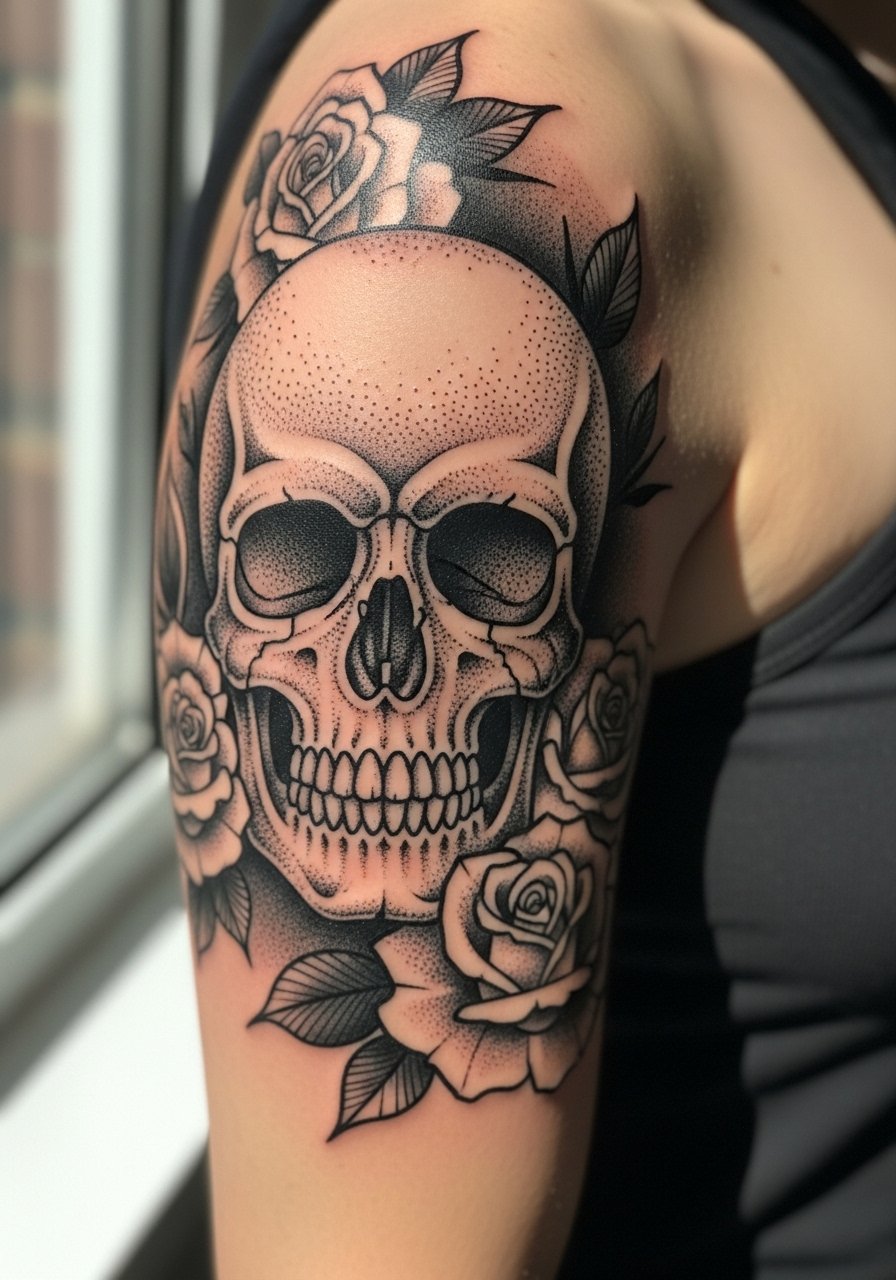
Skull-and-rose pairings work when the skull is a clear silhouette and the roses provide composition and scale. Ask for bold outlines around the skull and stipple shading in the petals so the piece keeps depth as color softens. A common version that ages poorly uses thin, crowded petals that merge over time. The session feels brisk but repetitive as the artist builds saturation in layers. For the day of your appointment, wear a loose button-down shirt you can pull aside so the arm is free. Expect touch-ups at two to five years if you spend a lot of time outdoors.
4. Polynesian-Style Chest Panel
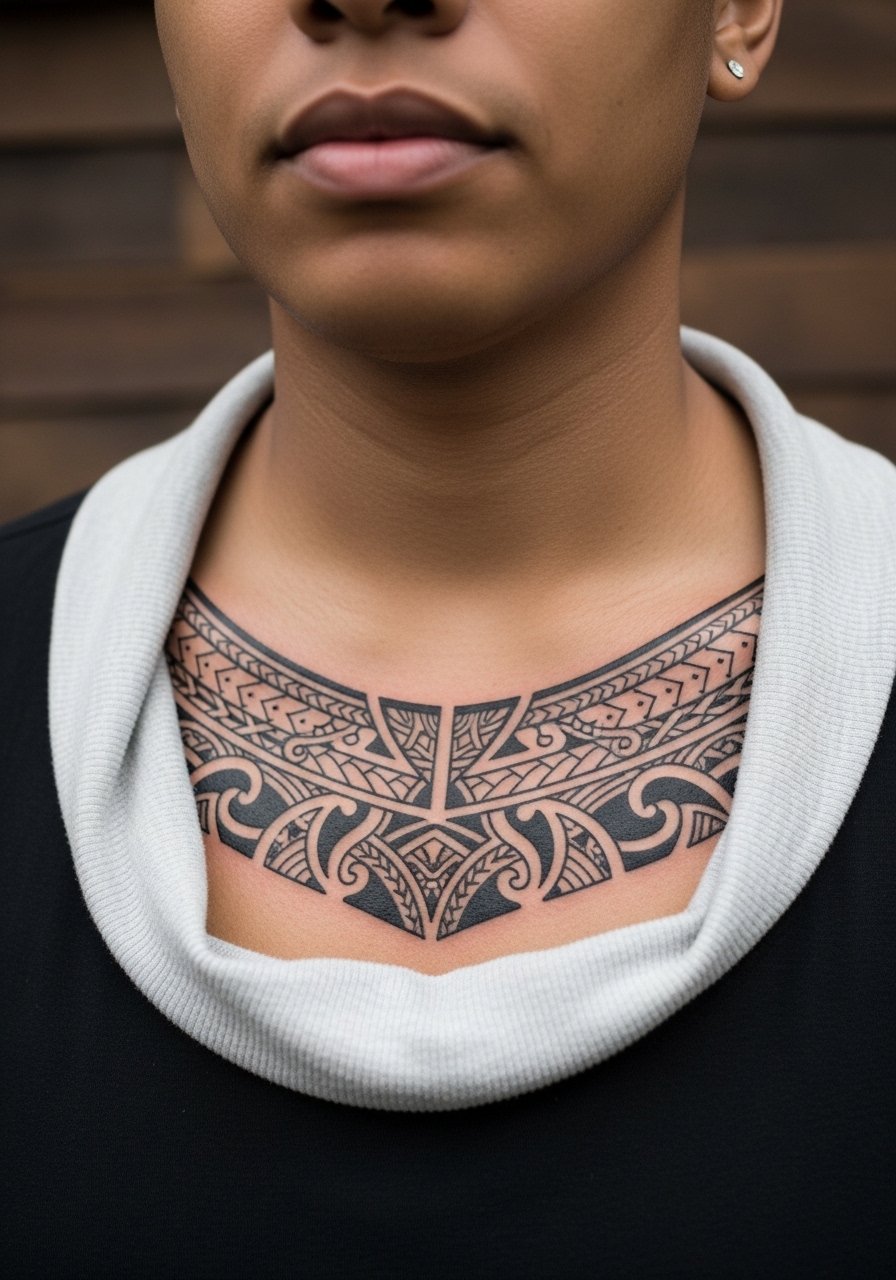
A chest panel built from traditional geometric elements reads as authority when the patterns respect spacing and flow with the muscle. Tell your artist you want breaks of empty skin to let the motifs breathe and to align the pattern with the clavicle. Pain ranges from moderate to high depending on sternum proximity. The biggest mistake is copying complex motifs too small which causes them to blur. For sessions, a wide-neck shirt you can pull aside keeps coverage minimal and access simple. Pair the final piece with open-collar shirts when you want it visible and avoid tight high-neck shirts that hide the composition.
5. Forearm Wolf Head With Stipple Shading
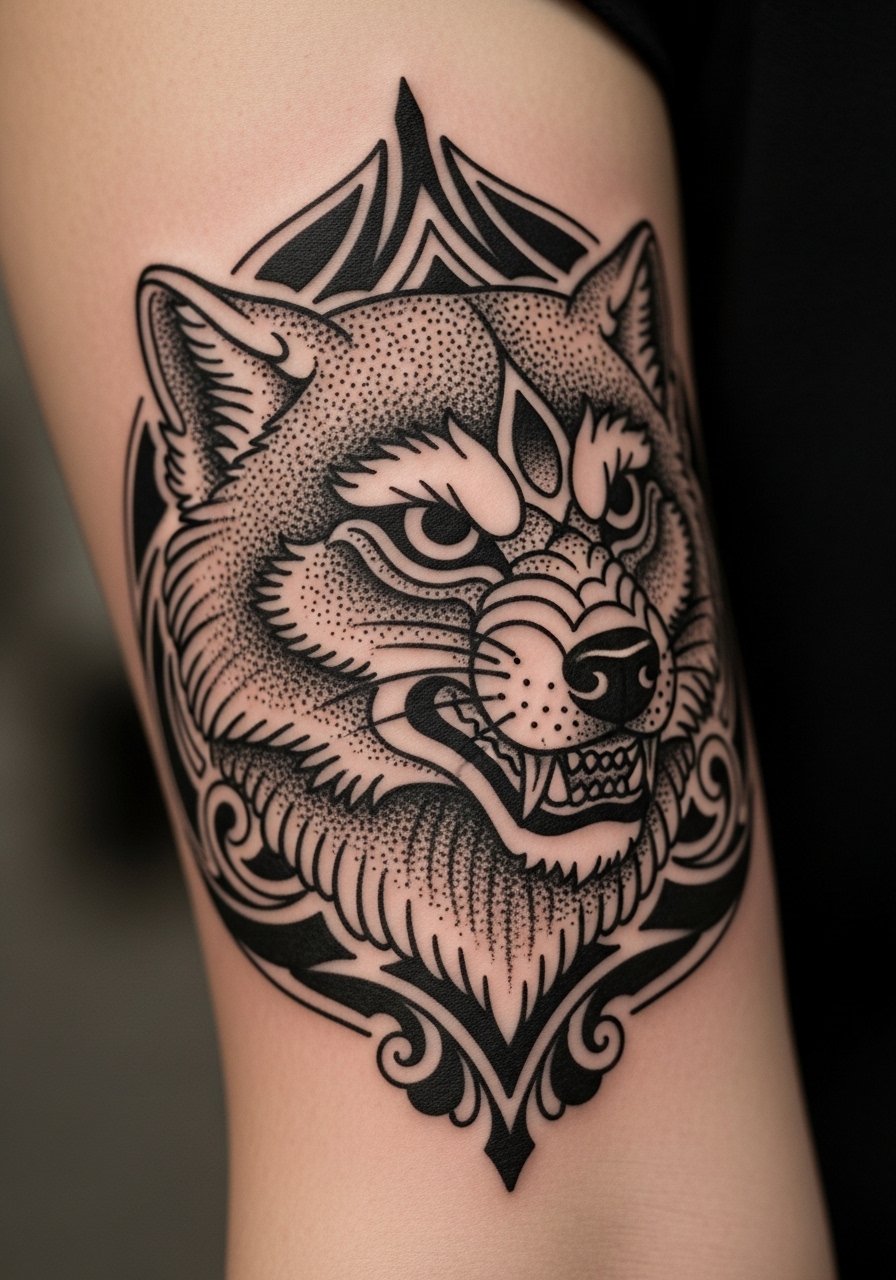
Forearm placement lets a wolf head read from a distance when the outline is bold and the shading uses negative space. Ask for stipple shading around the jaw and a defined gap between ear and shoulder so the image keeps its edge as it ages. The forearm healing window benefits from straightforward aftercare and minimal friction from sleeves. Session time is usually one long sitting for saturation and detail. For showing it off, roll up a sleeve or wear a short-sleeve linen shirt so the piece sits cleanly on warm days. Watch for blowout near inner forearm creases if the linework is too shallow.
6. Minimalist Mountain Silhouette on the Calf
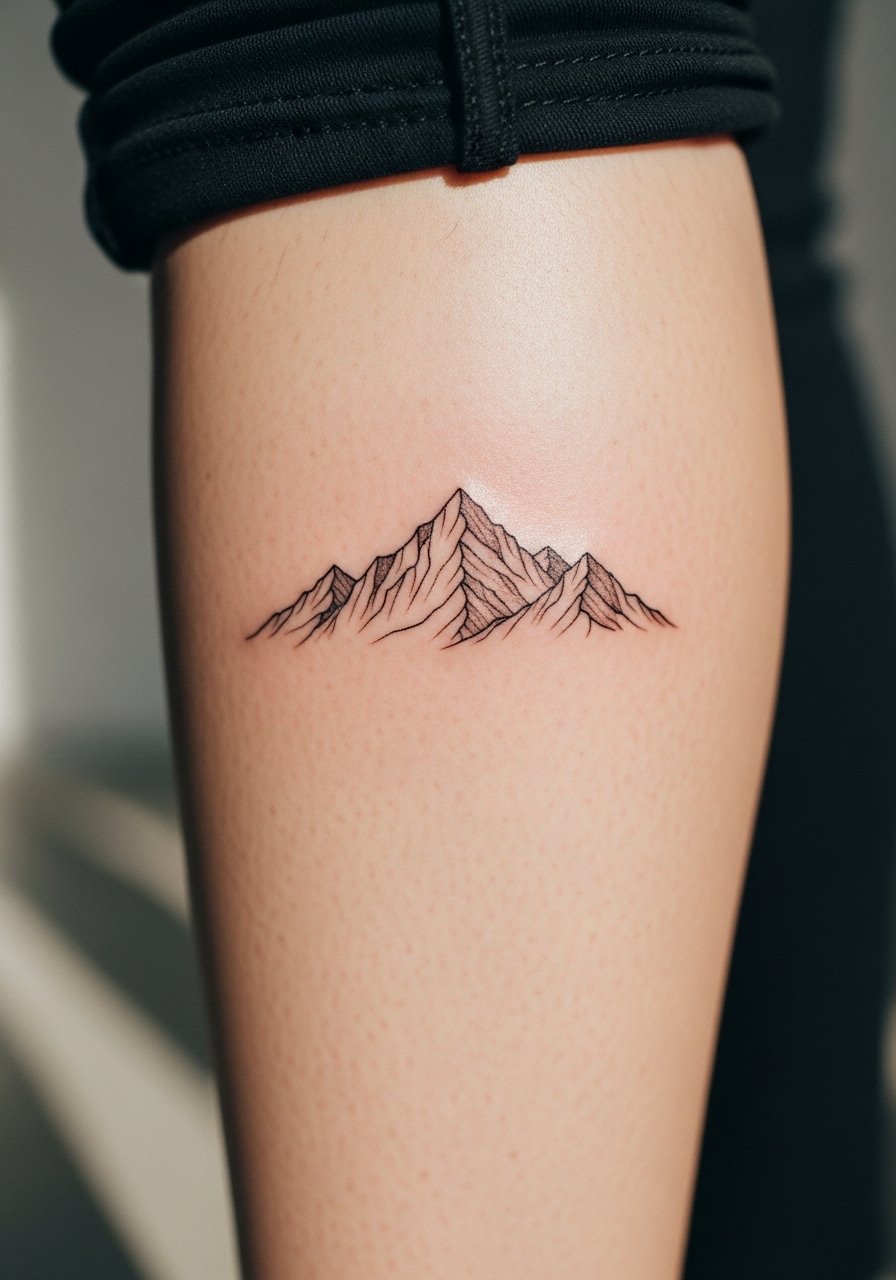
A calf silhouette stays graphic when it uses bold edges and avoids tiny internal detail that can blur into shading. Tell your artist you prefer slightly heavier lineweight than a delicate fine-line to protect against muscle movement and friction from socks. Most clients sit for a single shorter session for a piece this size. The common mistake is compressing multiple peaks into a narrow band, which looks clogged after a year. For the session, slip into loose drawstring linen shorts so the artist can access the calf without rubbing. Expect minimal touch-ups if you cover the area from sun in summer.
Studio Day Picks
The wrist, forearm, and chest pieces above all ask for slightly different prep. A few small items smooth the session and the first week so bold linework settles cleanly.
- Stencil transfer paper kit. Lets you preview placement on skin, which is useful for the forearm wolf and chest panel above.
- Thin protective film roll. Keeps small wrist and calf tattoos clean during the first week of showers and movement.
- Fragrance-free cleansing wash. Gentle cleaning reduces irritation around detailed blackwork without stripping the area.
- Soft disposable arm sleeve covers. Useful for travel and tattoo care in tight climates where rubbing and dust are concerns.
- Aquaphor healing ointment. A thin layer during the first few days helps keep tight linework from drying into flaky scabs.
7. Traditional American Eagle Across the Back Shoulder
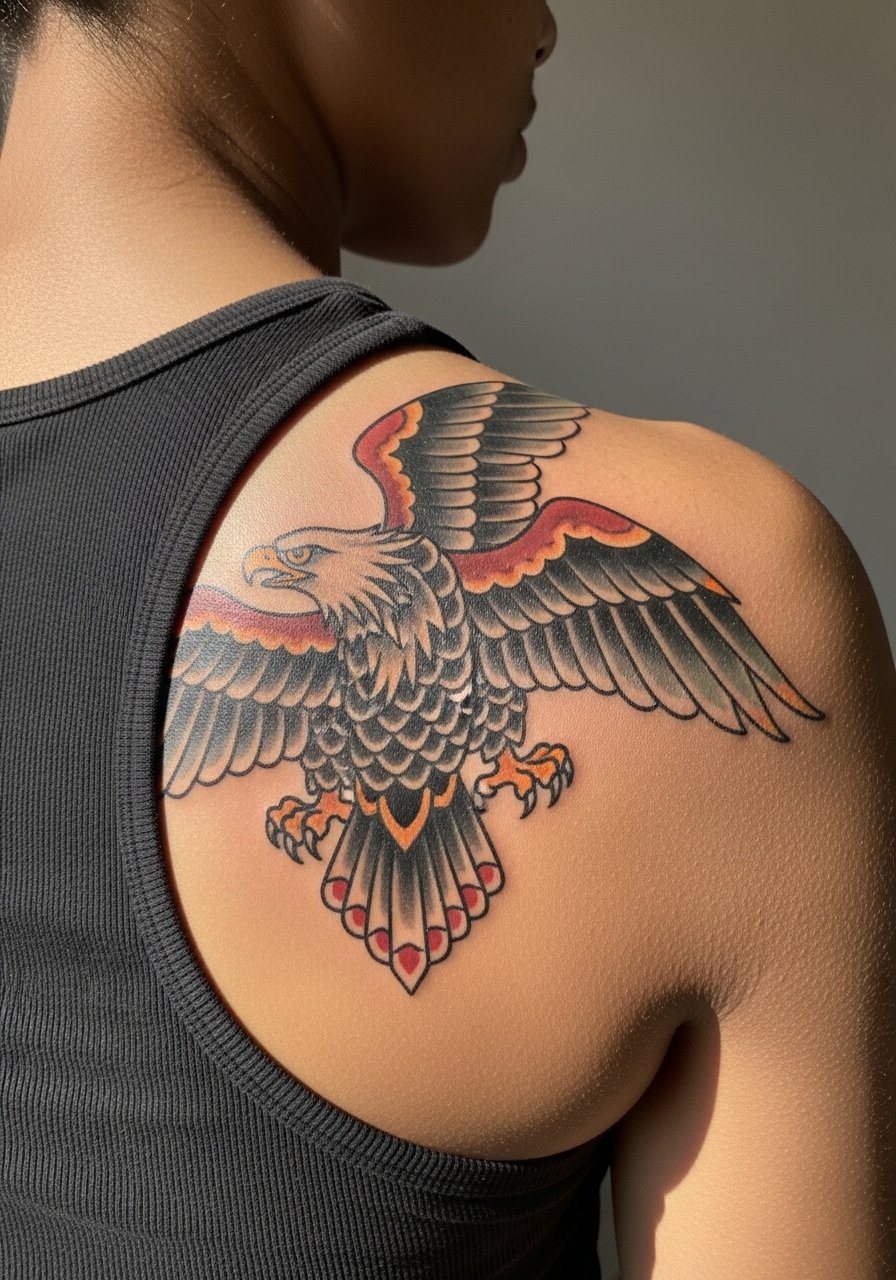
A large eagle on the shoulder blade reads as statement work when the wings follow the scapular curve. Ask your artist to make the beak, eye, and talons the focal points and to use heavy borders so the silhouette stays legible from multiple angles. Back pieces take longer to heal in hard-to-reach spots, so bring a friend to help dressing after the session. The session feels like intermittent pressure as the artist layers color and outlines. For reveal days, an open-back or tank top frames the wings and keeps attention where you want it. Expect touch-ups on color fields after the initial year if you spend time in strong sun.
8. Viking Ship Forearm Band
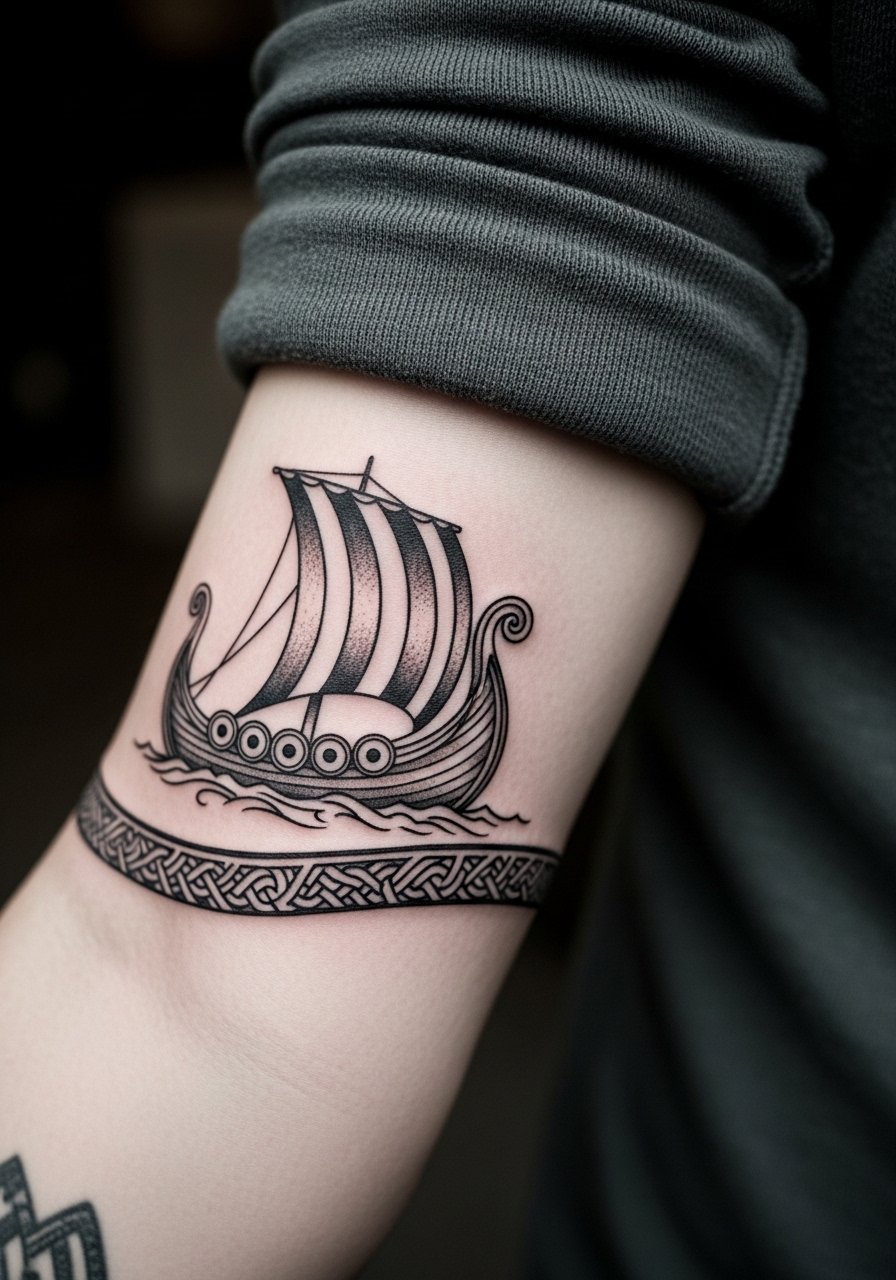
A forearm band with a Viking ship benefits from simple silhouettes and rhythmic linework so the scene does not dissolve over time. Tell your artist you want clean negative space under the hull and intentional spacing between the oars. This piece is visible daily, so the session is social and ends with immediate gratification. The main mistake is cramming too many tiny shields or runes that blend into a dark mass. For casual outfits, roll sleeves or wear a short-sleeve chambray shirt so the band remains in view. Expect a simple touch-up at the two to four year mark depending on exposure.
9. Geometric Mandala on the Sternum
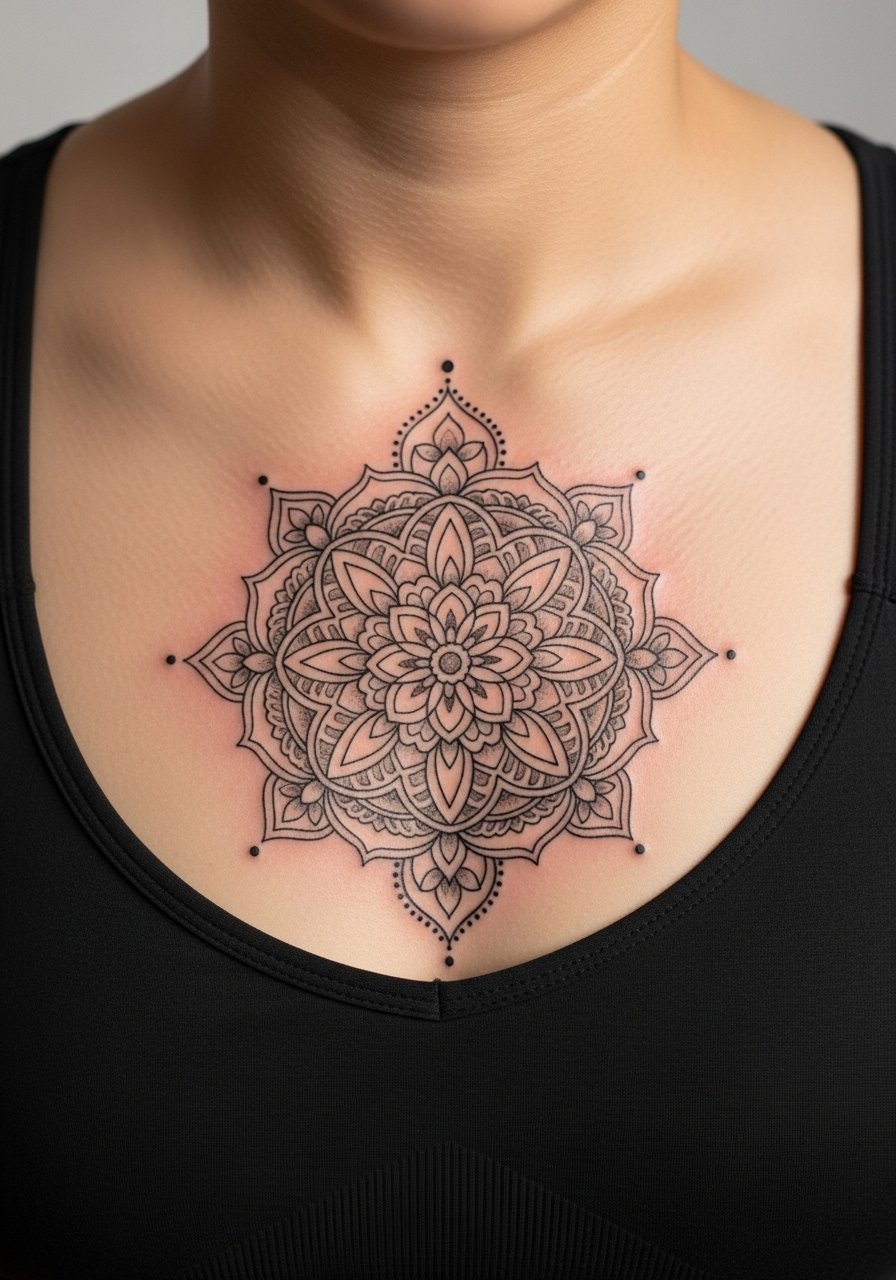
Sternum mandalas need breathing room. Ask for larger line spacing and at least one band of empty skin near the center to prevent inner lines from merging as the chest expands and contracts. Artists debate fine lines on the sternum. One group says dense geometry blurs in two to three years due to movement. The other group says careful depth and spacing makes it last. Ask the artist which camp they fall into and request to see five-year-old examples from them. Sessions are higher on pain and usually done in stages. For the appointment, wear a fitted sports bra you can remove or slide for access.
10. Small Arrow Cluster on the Inner Wrist
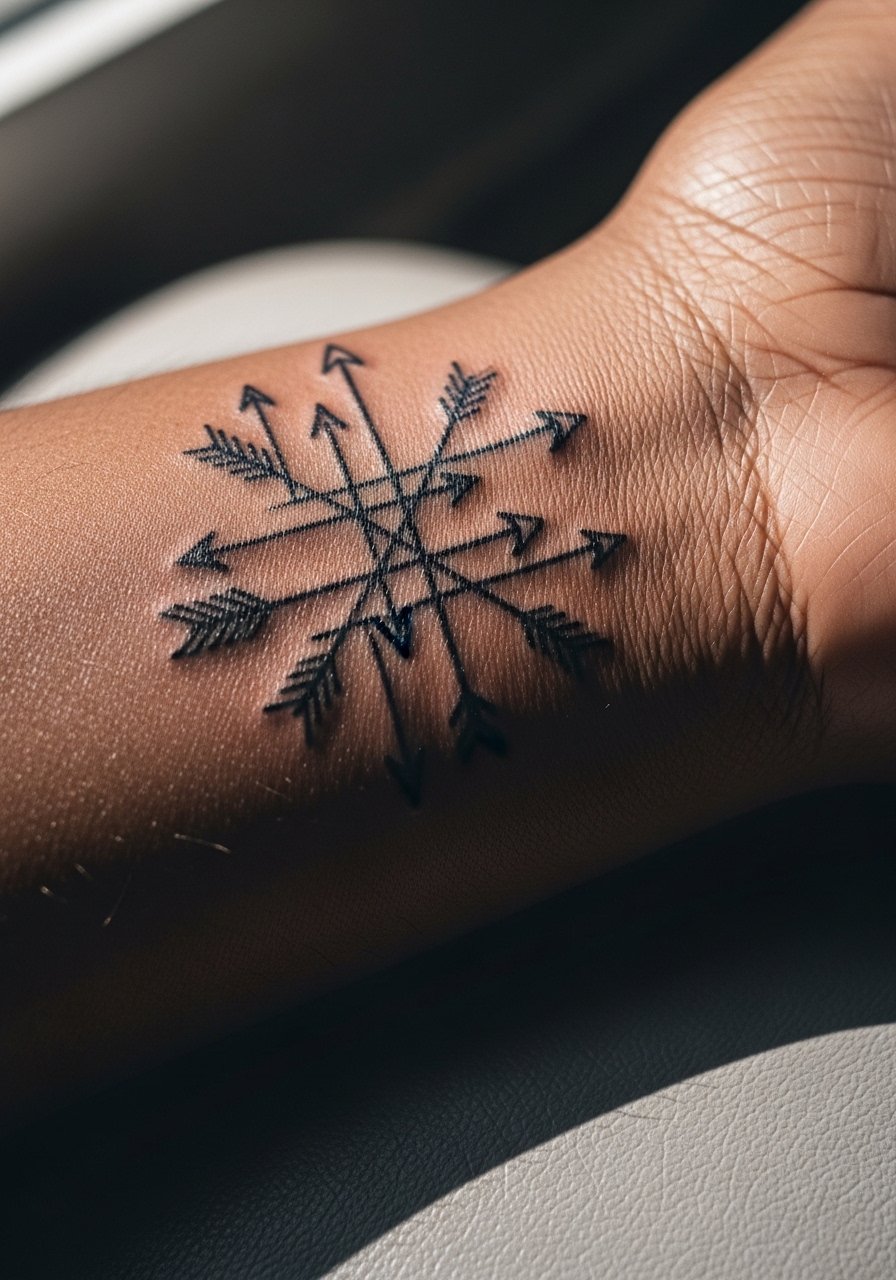
Wrist clusters read best when the arrows have varied lineweight and intentional gaps between points. Tell your artist you want slightly heavier stems than micro-fine for longevity. The wrist is high-movement and high-wash, so the session feels quick and the first week requires care to avoid snagging. The common mistake is asking for extremely thin arrows that disappear by year two. For showing it off, a minimalist chain bracelet complements without crowding the linework. Expect touch-ups sooner than on the upper arm if you work with your hands a lot.
11. Bear With Mountain Chest Panel
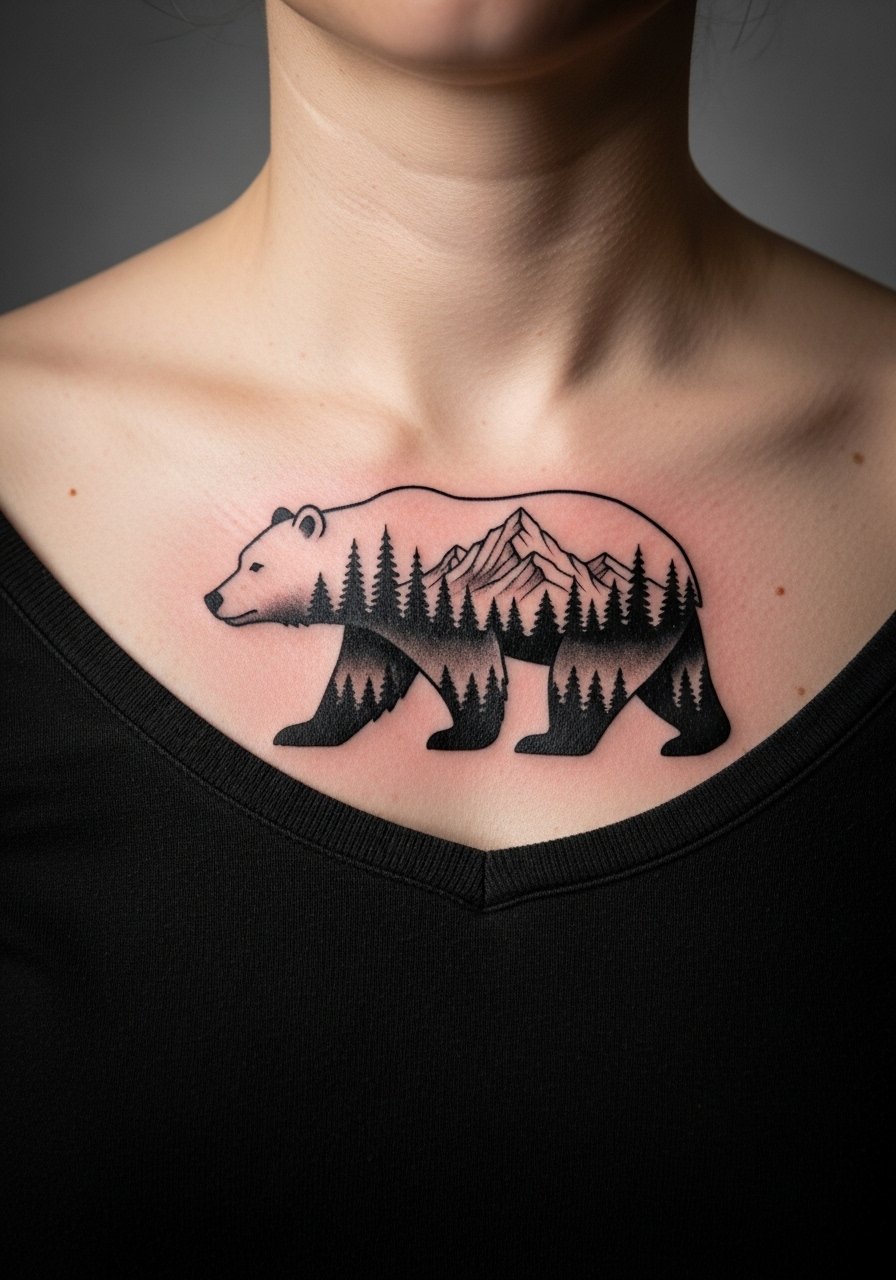
A chest bear that contains a mountain scene reads layered and deliberate when the mountain uses negative space and the bear keeps bold outlines. During consultation, specify the visual hierarchy so the mountain does not overpower facial features. Chest sessions can be patchy for comfort reasons, so plan multiple sittings. The common mistake is trying to add too much tiny environmental detail into the bear that blurs after movement. For reveal outfits, open-collar shirts or a slightly unbuttoned tee keep focus on the art. Expect color touch-ups around shaded areas in a few years depending on sun and friction.
12. Viking Rune Band on the Bicep
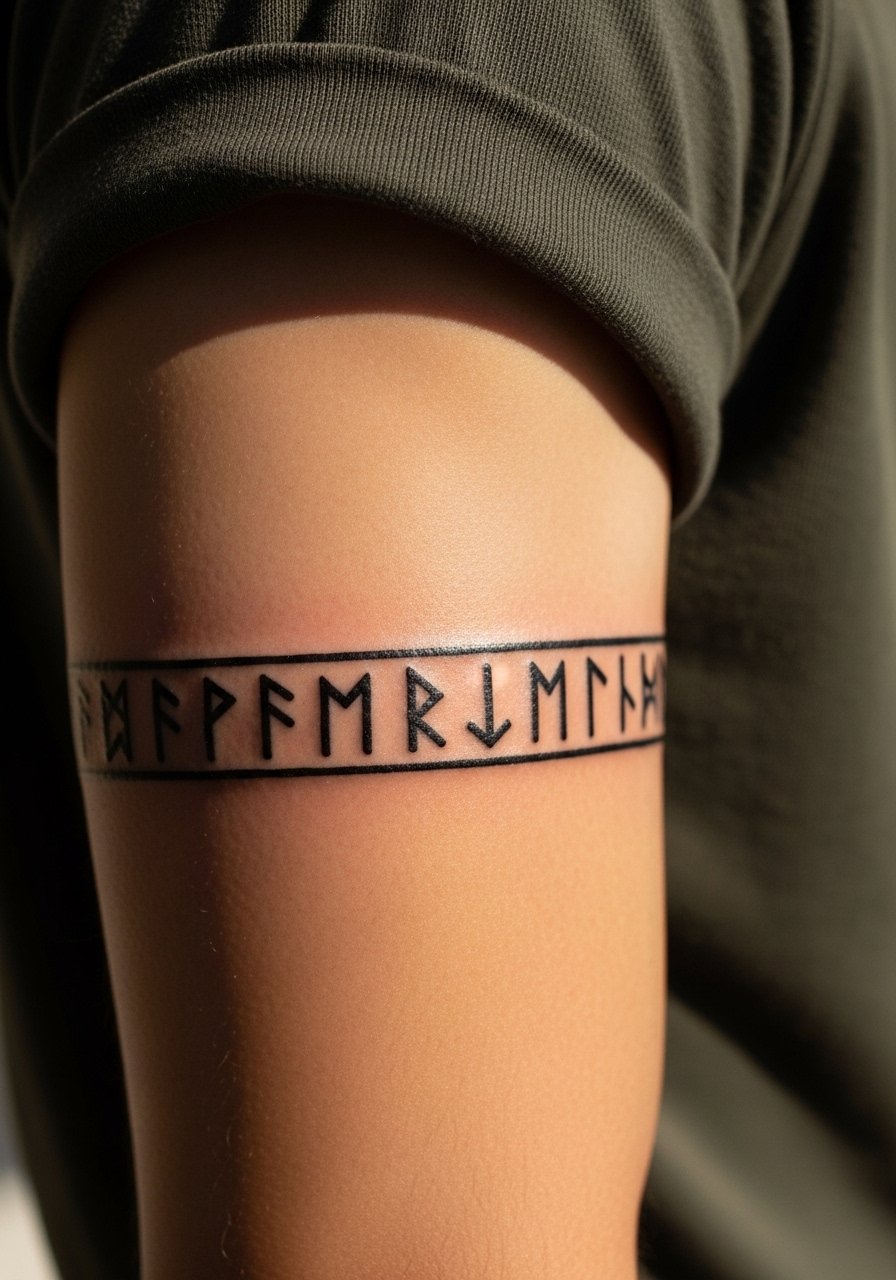
A rune band works when glyphs are spaced and each glyph is given its own negative space. Tell the artist you want proportion that follows the arm's taper and to avoid tiny runes that merge. Bicep skin is sturdy and sessions are usually fast with low pain. A frequent error is choosing script too small for the band width which makes characters unreadable after a year. If you wear fitted short sleeves, the band will peek out and look intentional. For the session, a rolled short-sleeve shirt gives quick access. Expect low-maintenance when the lines are bold.
13. Eagle in Flight Across the Back
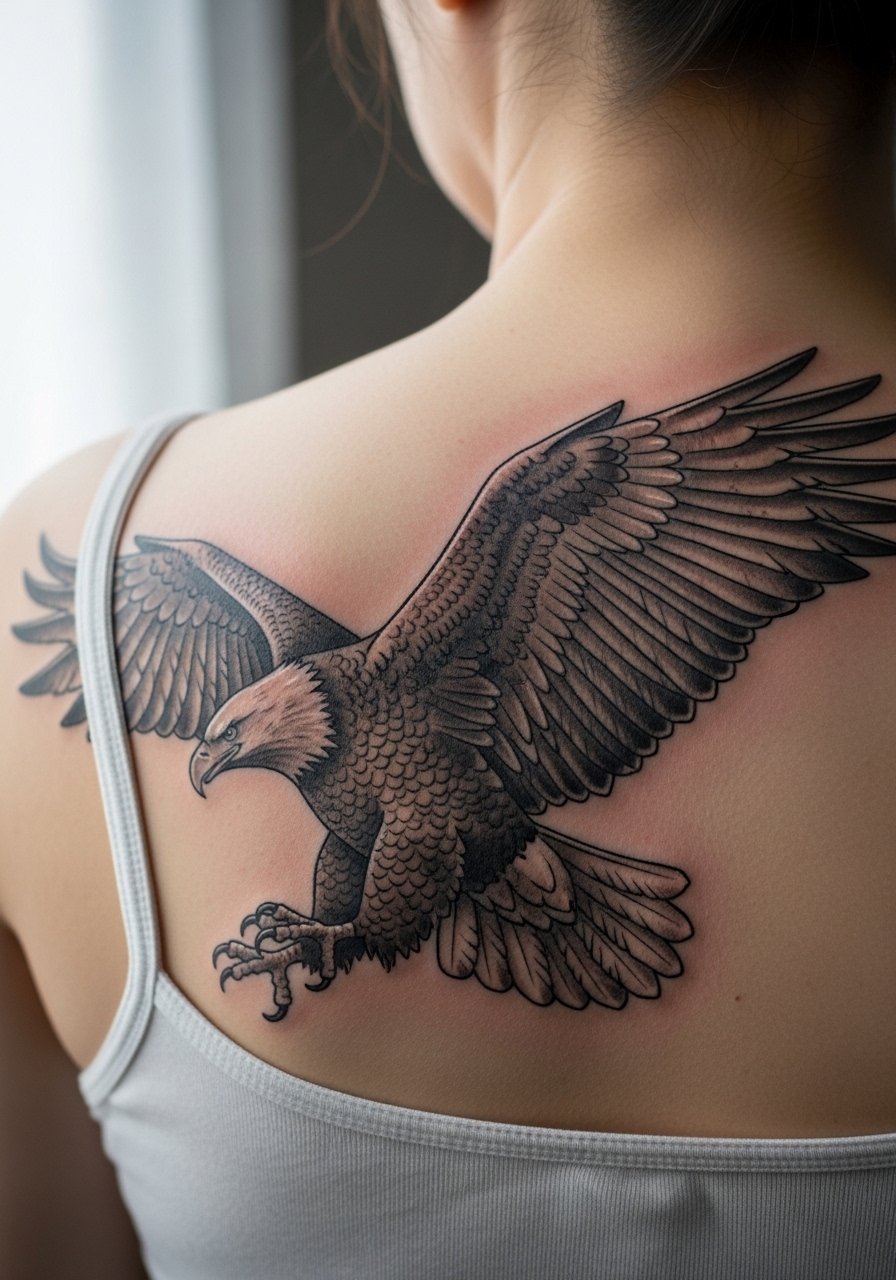
A back-spanning eagle needs compositional breathing room so the wings do not collide with other elements. Request an eye-catching head focal point and layered feather shading that reads at a distance. Sessions can be long and require patience as the artist alternates outlines and shading. The mistake is adding small background motifs that compete with the wings. For show-off days, an open-back shirt or tank frames the wings and keeps attention on the center. Plan for a touch-up to reinforce wing saturation after the first year if you wear backpacks regularly.
14. Skull and Roses Sleeve Accent on the Forearm
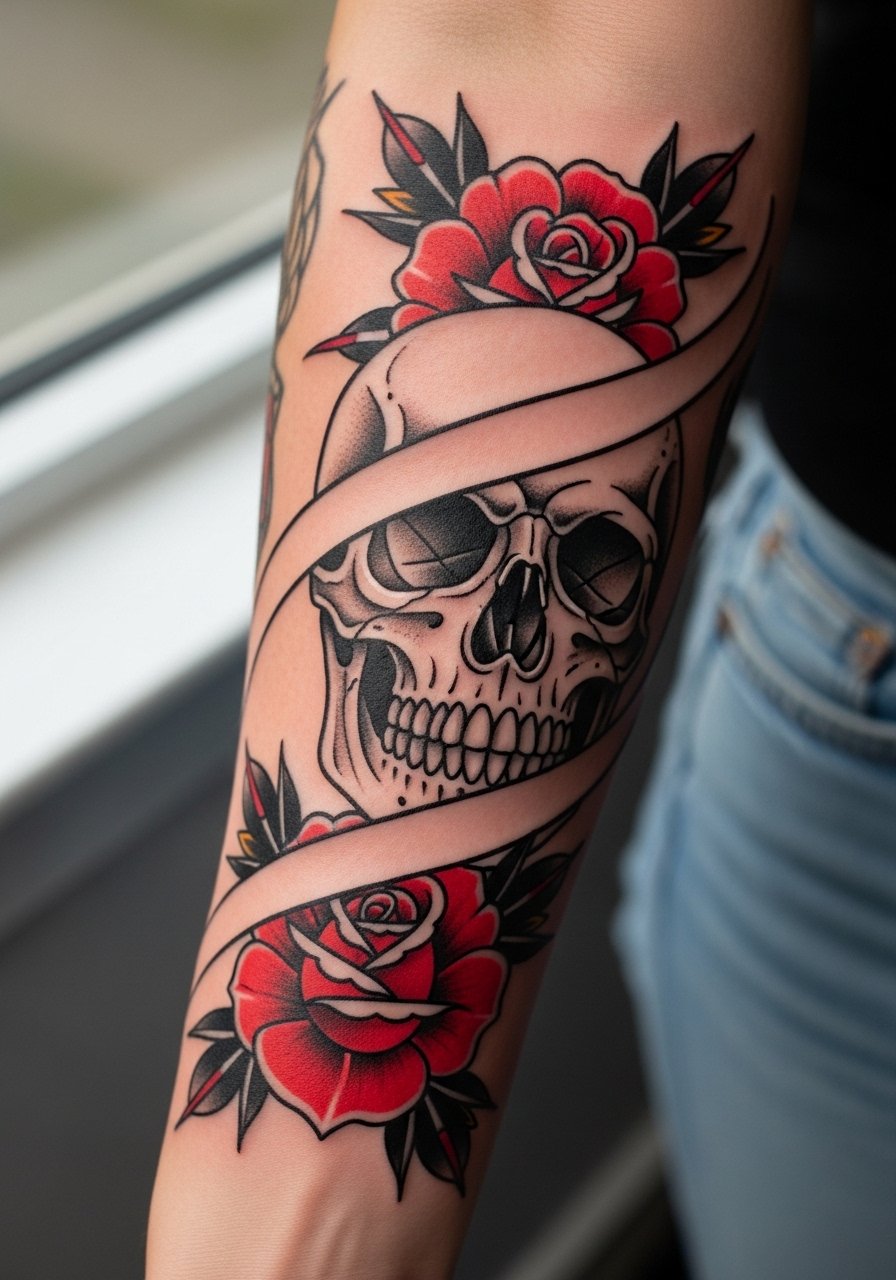
Adding a skull-and-roses accent to a sleeve section works when you use bold borders and color blocks instead of micro-detail inside the roses. Ask the artist to prioritize saturation in the petals and to leave clean gaps around the skull for contrast. This session will be pigment-heavy in color areas and feel warm as saturation builds. The common mistake is over-detailing petal veins with thin lines that vanish. Pair this piece with rolled sleeves or a short-sleeve textured shirt to keep the art visible and avoid tight cuffs that rub fresh ink.
15. Graphic-Style Sleeve With Negative Space
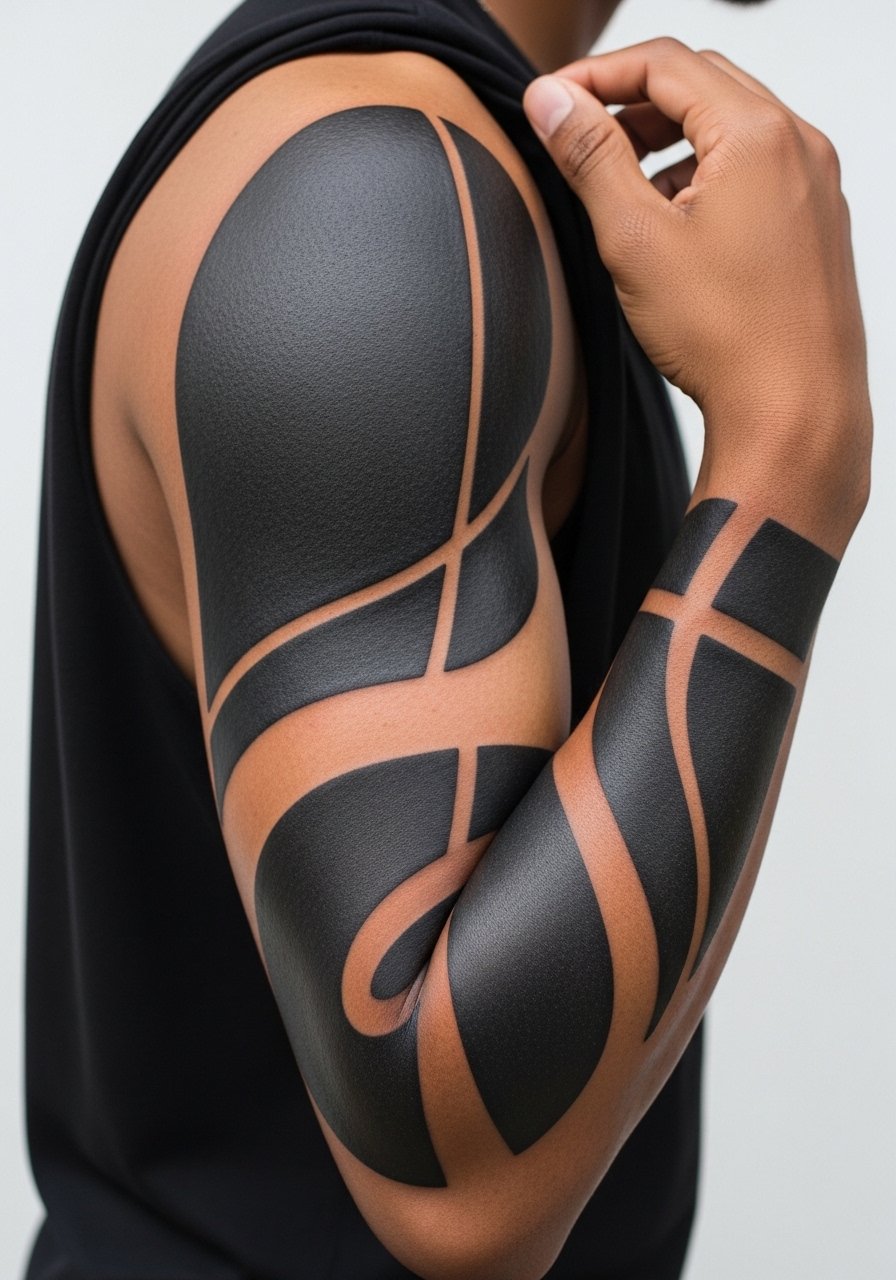
Graphic sleeves age well when the shapes are large and the black saturation is consistent. Tell your artist you want distinct negative-space channels that separate boxed elements so the sleeve does not blend into one mass. These sessions are marathon work and often require staged appointments to manage swelling. The mistake is filling every gap with micro-ornamentation, which clogs the composition. For wardrobe, a loose hoodie with sleeves you can roll or pull aside is practical for transit and keeps the piece protected until healed. Touch-ups relate mostly to saturation refresh rather than line fixes.
16. Minimalist Cosmic Wrist Wrap
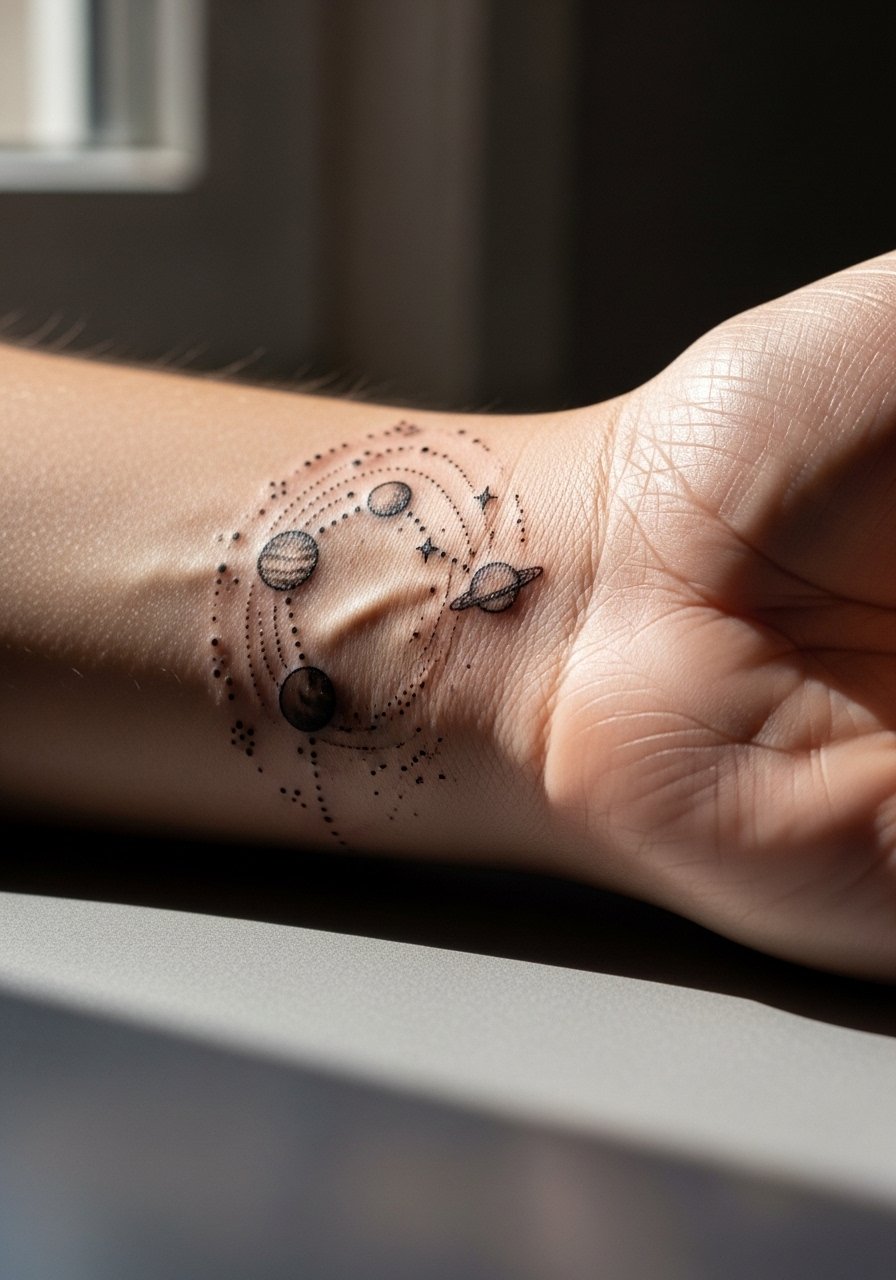
A small cosmic wrap reads as design when the planets are spaced and the connecting lines are slightly weightier than a hairline. Ask for dot work sizes that will not vanish when the skin creases. The wrist heals fast but faces constant motion and water exposure so expect the first week to need extra care. The main mistake is squeezing too many tiny planets into a narrow band. For showing off, a thin bracelet layered beside the tattoo pairs well and does not crowd the piece. A minimalist leather bracelet keeps attention on the wrist without competing.
17. Viking Ship Thigh Panel
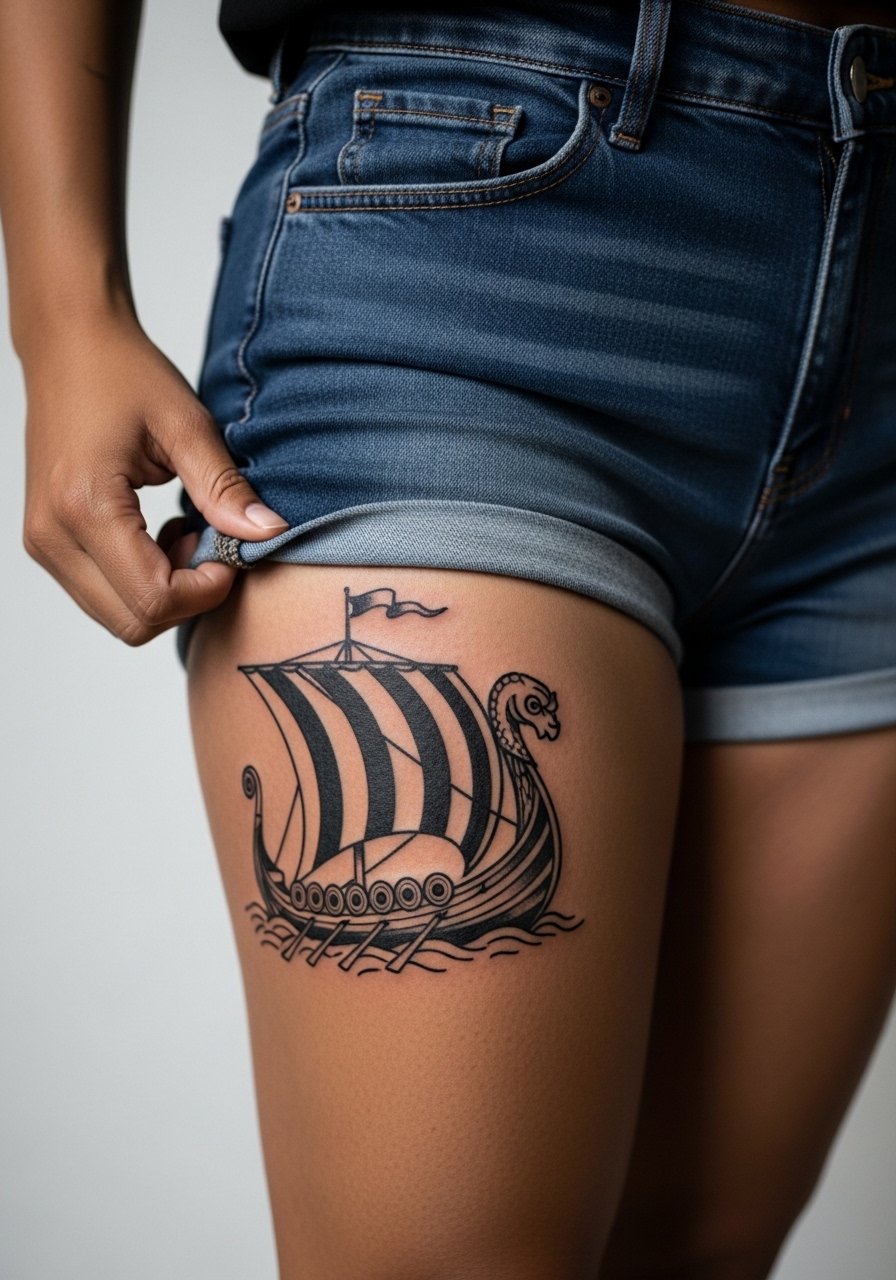
Thigh panels allow scale and narrative, and a Viking ship benefits from strong hull lines and negative water space. Tell your artist you want the mast and sail as the primary visual anchors and to avoid tiny deck details. Pain is lower on the fleshy thigh but sessions can be long for large pieces. A common mistake is compressing tiny shields along the rail which become indistinct over time. For session comfort, wear high-waisted shorts that can shift and remain modest. Expect low visible fading if you avoid constant friction from tight pants.
Frequently Asked Questions
Q: How long before a bold blackwork sleeve needs a touch-up?
A: It depends on sun exposure and skin motion. In my experience, heavy blackwork usually stays solid for three to five years before a color refresh helps bring back saturation. If the sleeve sits on high-friction areas or you work outside, expect touch-ups earlier.
Q: Will fine-line designs on the sternum or ribs last?
A: Artists split into two camps. One camp says fine lines blur quickly on the ribs because of movement and stretch. The other camp says careful depth and spacing make fine line survive well. Ask to see same-style, older healed pieces from the artist so you can judge their approach.
Q: What should I wear to a chest or sternum session?
A: Wear a wide-neck or zip-up top you can pull aside without rubbing the fresh area. For sternum work, a fitted sports bra or bandeau you can move works well. Comfort during the session helps the artist maintain steady linework.
Q: Do animal portraits need special aftercare compared with geometric pieces?
A: The aftercare itself is similar, but portraits rely more on contrast and fine shading so early scab care and sun protection matter more. Keep the area clean and out of direct sun while it heals so the subtle tonal work settles well.
Q: Can I still get a bold forearm piece if I type or wash hands a lot?
A: Yes, but ask the artist for slightly heavier lineweight and plan for a touch-up window around year two to three. Wear protective coverings when possible during the first week and avoid excessive scrubbing while the skin is sealing.