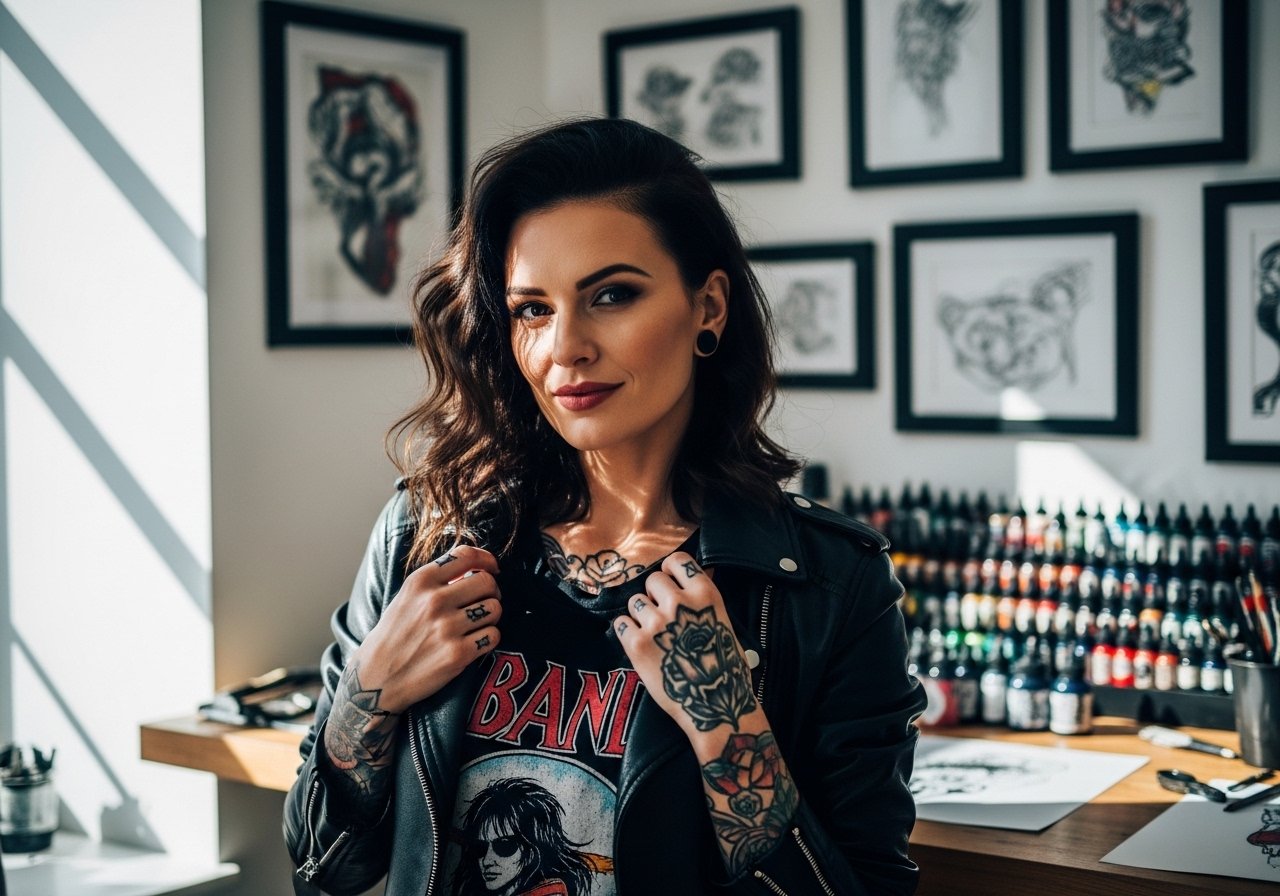
The bold "World Is Yours" looks different on day one than at year three, and the surprising truth is that the pieces that age best are often the ones with the thickest black linework, not the ultra-fine scripts that flood feeds. Plenty of folks complain about guest artists who ghost after a deposit and about dark skin needing extra contrast. Read on for 21 bold takes, how each holds up, and what to ask in the chair.
1. Bold Script "The World Is Yours" on the Back of the Hand

I’ve seen this one pop the most for people chasing a Scarface vibe, and it works when the script sits at 1 to 2 inches tall with heavy lineweight. Fair warning, hands are a high friction zone so expect more early scabbing and a likely touch-up at six months. Tell your artist you want bold line confirmation and no thin hairlines under the heavy outline. The session is short, often a single appointment, but the pain reads sharp because the skin is thin. For showing it off, pair with a fitted leather cuff bracelet or a plain black tee rolled to the elbow. A common mistake is asking for script that is too thin, which blurs quickly on this surface.
2. Neo-Traditional Globe with "The World Is Yours" Banner on the Outer Forearm

I recommend this when you want a travel-forward aesthetic that scales well. Ask for a 4 to 6 inch globe and a banner with solid fill so the lettering stays legible as the skin ages. The outer forearm handles neo-traditional saturation, and blowout risk is low if the artist spaces the ribbon from the globe edges. Sessions usually need two visits if you want color saturation. For a casual photo-ready look, roll up a henley shirt in olive to frame the piece. Watch out for placement too close to a muscle crease, which can warp the globe with weight fluctuation.
3. Spinning Globe Wrist Tattoo, Compact and Bold
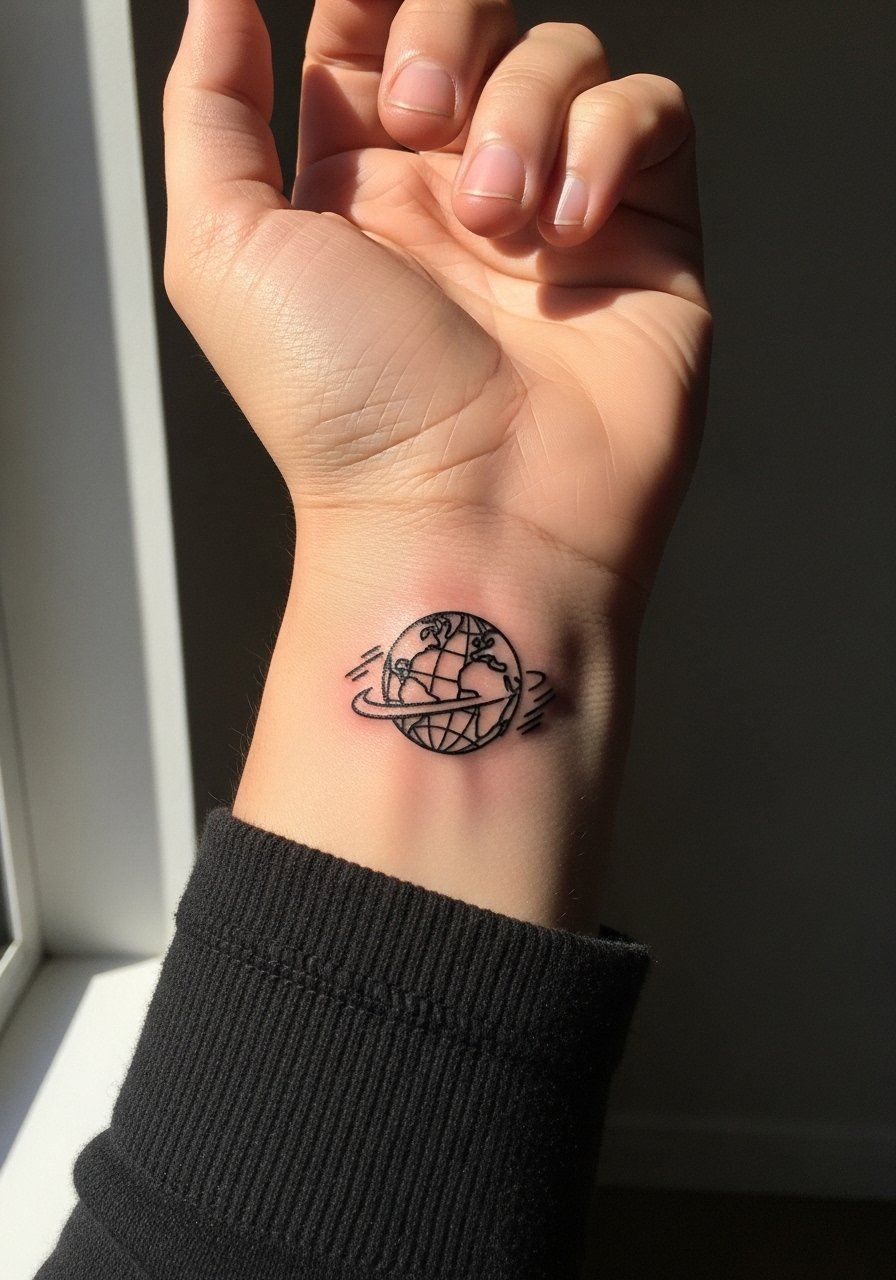
This compact choice is great if you want a daily-visible reminder without a big commitment. Inner wrist is thin skinned and sensitive, so the session feels like a steady sting for 20 to 40 minutes. Ask for a 1.5 inch diameter and a solid outer ring so the globe keeps its shape under frequent washing. Expect touch-up within a year on heavy-hand users. For showing it off, stack a chunky chain bracelet on the opposite wrist so the globe still reads clean and uncluttered. A common mistake is going too tiny; anything under half an inch tends to blur when you make a fist.
4. Scarface-Inspired Thick Globe on the Top of the Hand
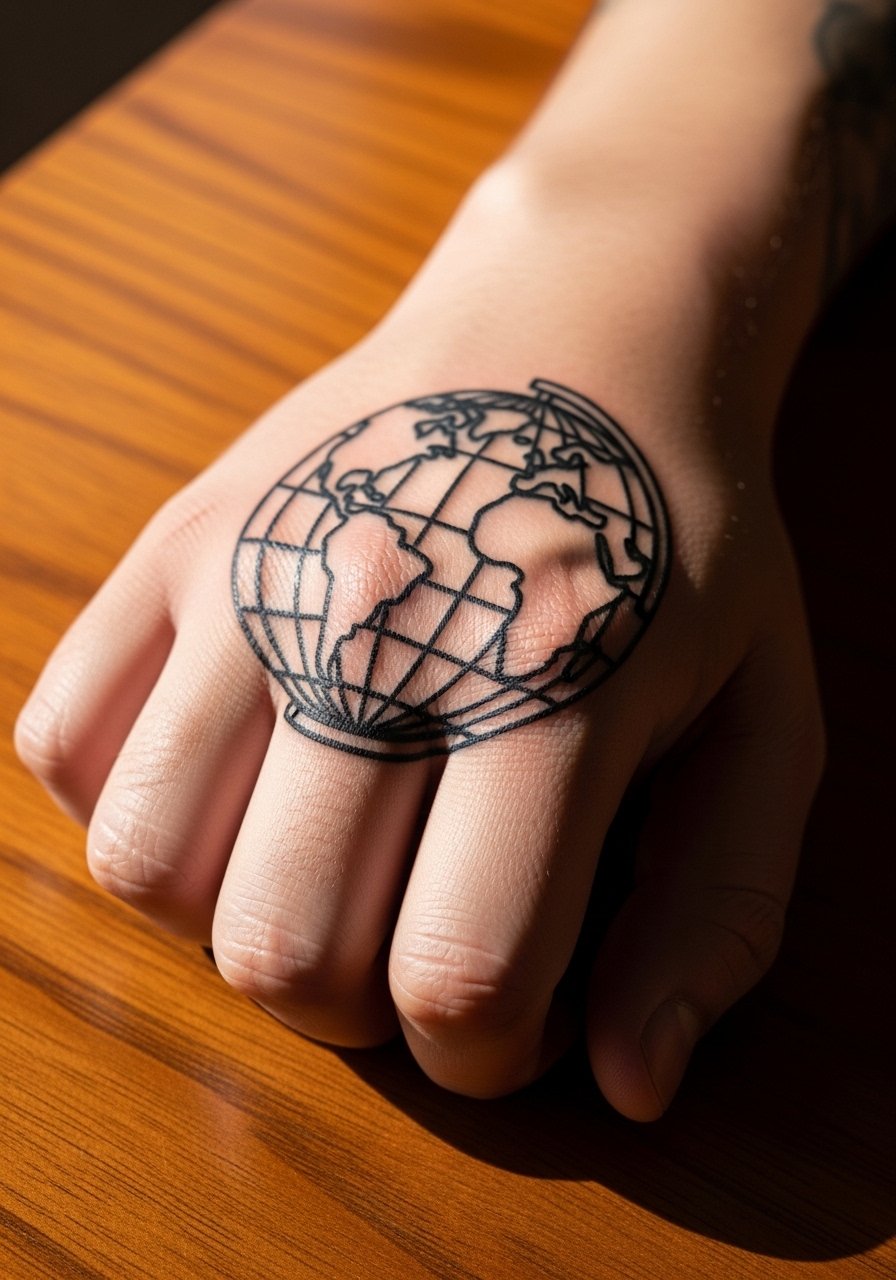
Visual impact is immediate with thick traditional outlines and minimal shading. People chasing the Scarface energy ask for bold dominance aesthetics, but be explicit that you want no fine-line filler under the outline. Hands age and get sun, so the big upside is longevity of the bold stroke and the downside is visibility for work. Session time is short to moderate. For session wear, remove rings and keep hands bare so the artist has full access. Expect at least one touch-up within six to twelve months. A mistake I see often is accepting thin internal details that soften into gray smudges in a few years.
5. Curved "The World Is Yours" Chest Banner, Upper Chest Arc
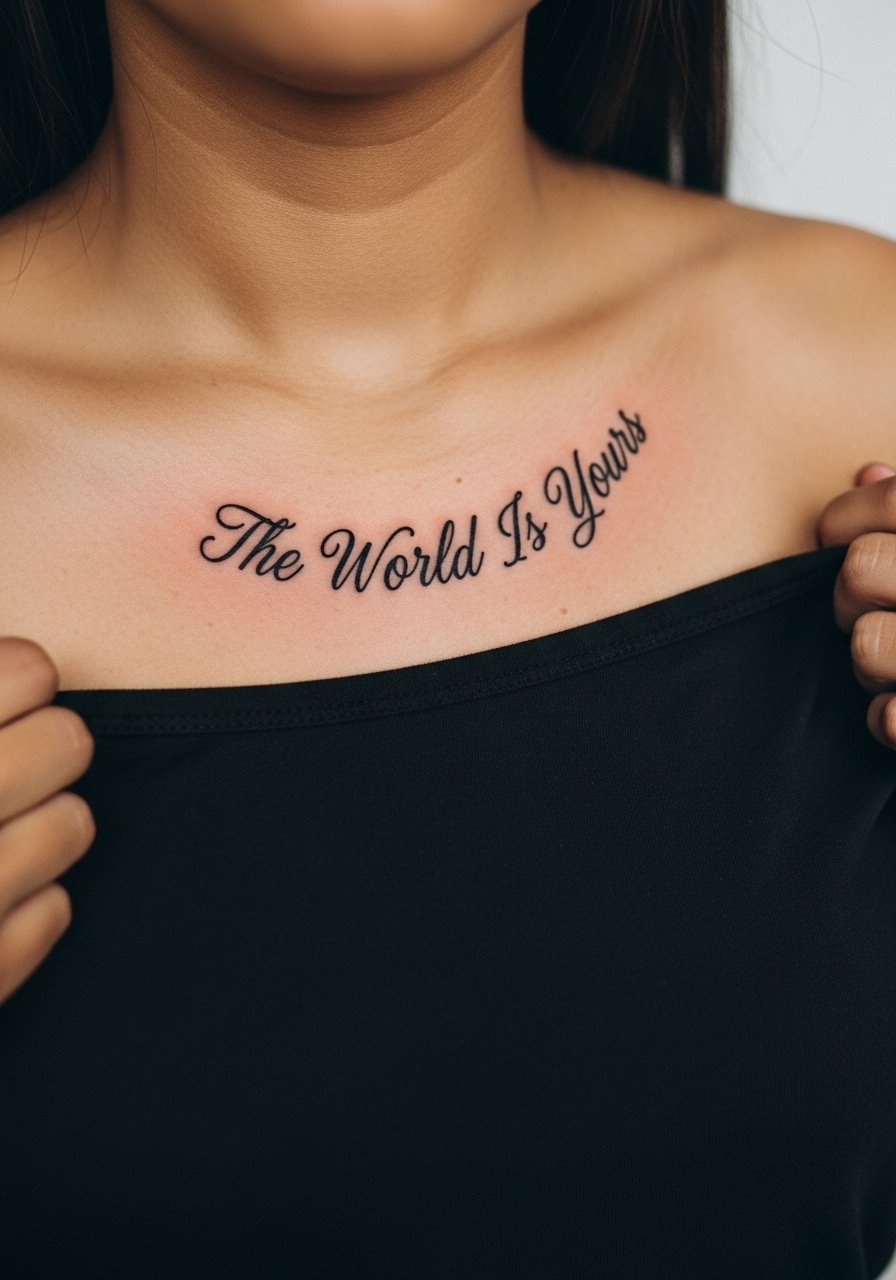
Most clients pick this for a hidden-yet-bold placement that reads large when revealed. The upper chest tolerates a six inch arc well, and the skin is stable compared with ribs. Pain is moderate and the session is usually one visit. When consulting, ask for slightly heavier stroke than you might want visually at first, because chest skin can cause subtle softening as it heals. For showing it off, a v-neck polo shirt in black or a wide-neck top frames the arc without exposing too much. The frequent error is asking for script that mimics fine line wrist lettering, which loses presence on the chest.
6. 3D Globe Bicep Wrap That Pops on Muscle
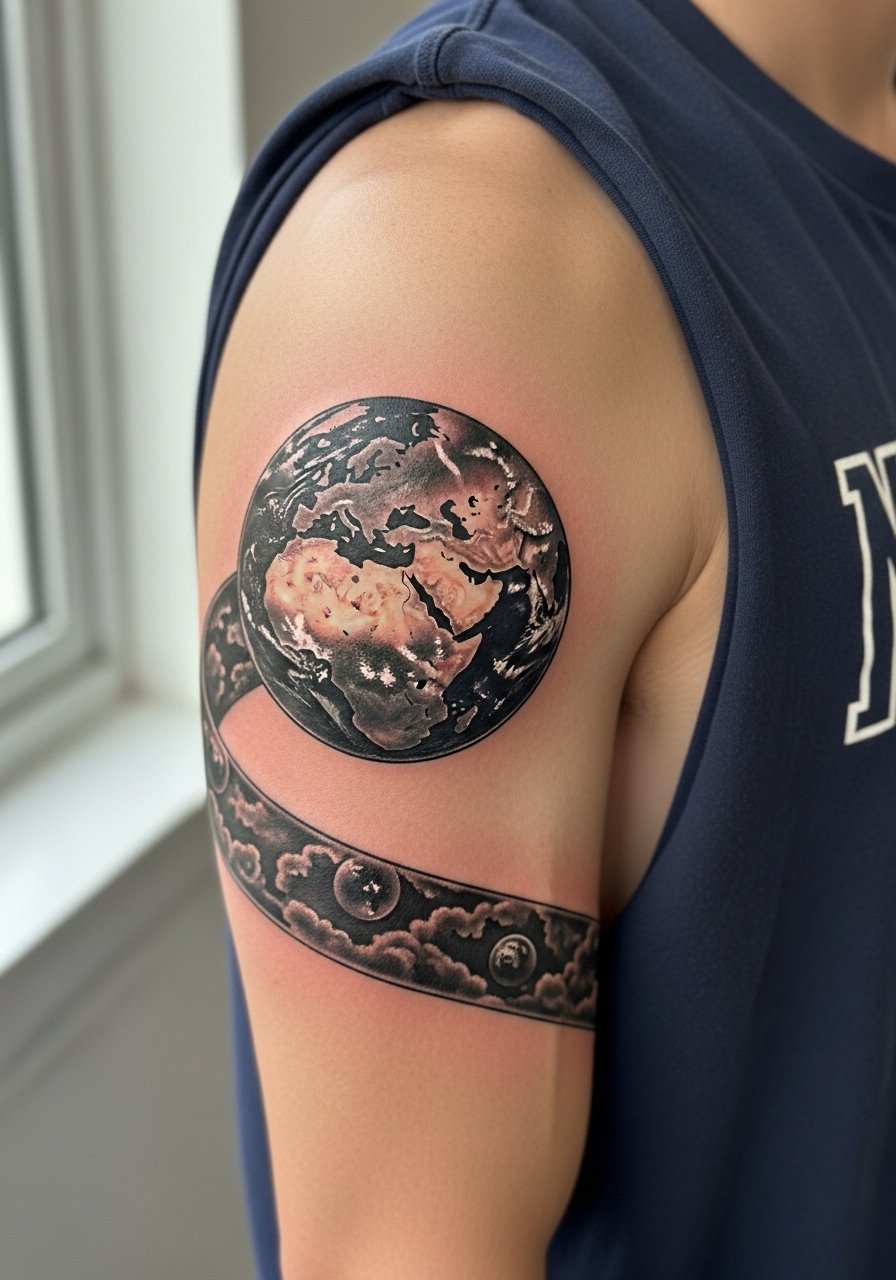
There is something about a wrap that moves with the muscle that catches the eye. The bicep is forgiving for 3D shading and highlights, and the sessions often span two to three appointments for depth and healing checks. Tell your artist you want highlight contrast to maintain spherical depth as the arm relaxes. Expect lower blowout risk than hands or wrists. For session day, wear a sleeveless muscle tee that lets the artist rotate the arm easily. The common mistake is packing too much tiny detail into a small radius, which flattens in six months.
Studio Day Picks
The first six ideas above include hands, wrists, chest, and biceps, which all have different session needs and early healing quirks. Pack smart for those specific placements.
- Tea tree salve tattoo aftercare alternative. A breathable salve some people prefer for hand pieces that sweat, reduces greasiness compared with thicker balms.
- Cetraben cream emollient. Good for dry winter healing on bold lines without leaving a sticky residue.
- Rice bran balm for tattoos. Locks in moisture for saturated blackwork and can help avoid milia around dense shading.
- Tattoo Goo Thin alternative. Absorbs faster for sweaty placements like calves and helps avoid clogged pores.
- Framykcin ointment. Used by some to avoid bumps when a heavier ointment caused irritation in the first few days, especially on hand work.
7. Minimal Bold Globe on the Finger
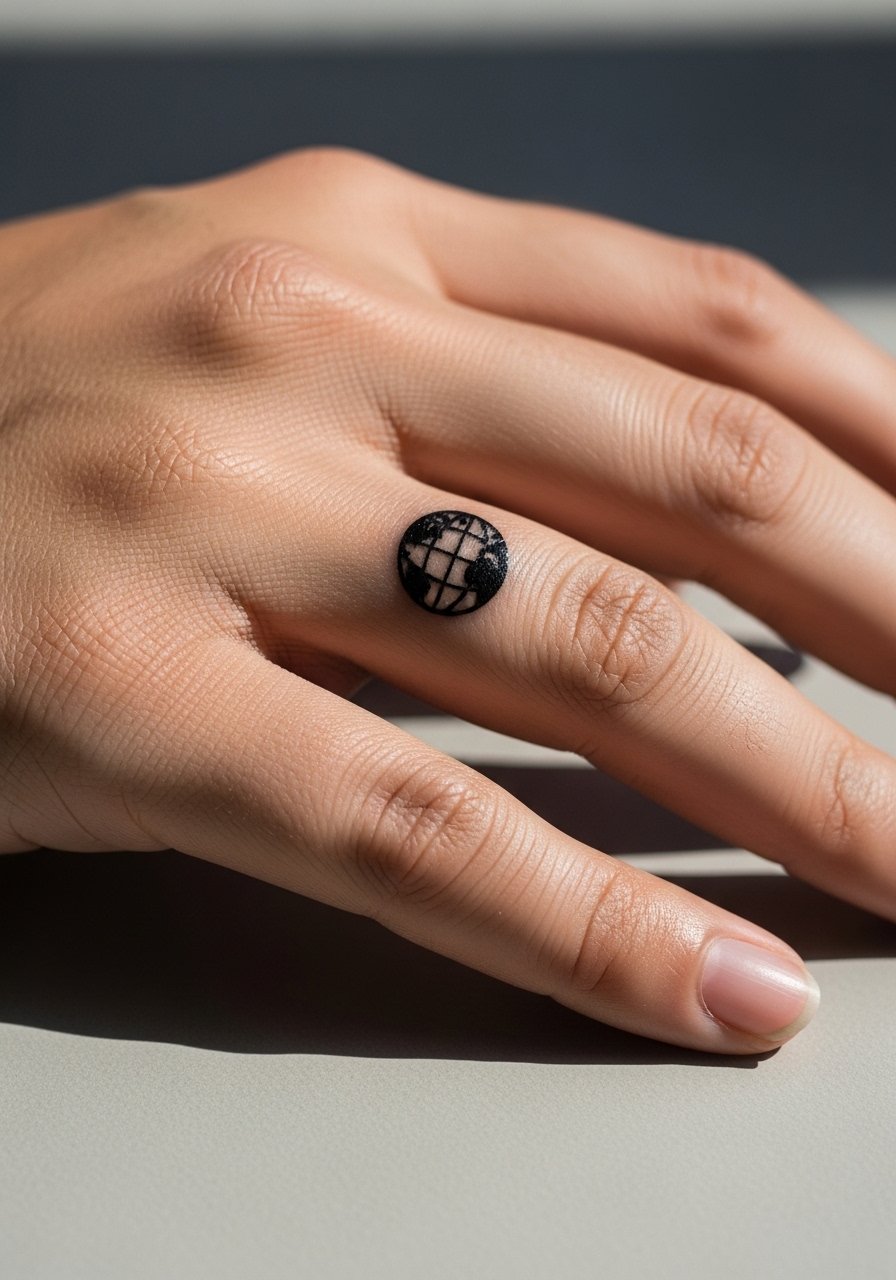
Mistake lead here. The biggest mistake with finger globes is underestimating motion and friction from rings and daily use. A 0.5 inch globe with a strong outline works best for longevity. Pain is high for short bursts and touch-ups are more likely because finger skin sheds and traffics oil. Ask for solid black fill and accept the possibility of a touch-up at six to twelve months. For session day, keep hands free of jewelry. To highlight the tiny globe, a set of minimal stackable rings opposite the tattoo looks modern, but avoid heavy rings that press into the healing skin.
8. Traditional Globe with Ribbon on the Inner Forearm

Consultation lead. When you sit down for this, bring reference images that show the exact ribbon width and lettering style you want. The inner forearm is a forgiving canvas and holds color well, but gym gains can stretch the image over time. Ask for slightly bolder outlines around the ribbon to prevent color bleed. Sessions are often split into two, one for linework and one for color packing. For showing it off, roll a chambray shirt sleeve to the elbow. The common aging issue is tight script on the ribbon that softens, so pick readable type.
9. Blackwork "The World Is Yours" Neck Piece, Side Neck
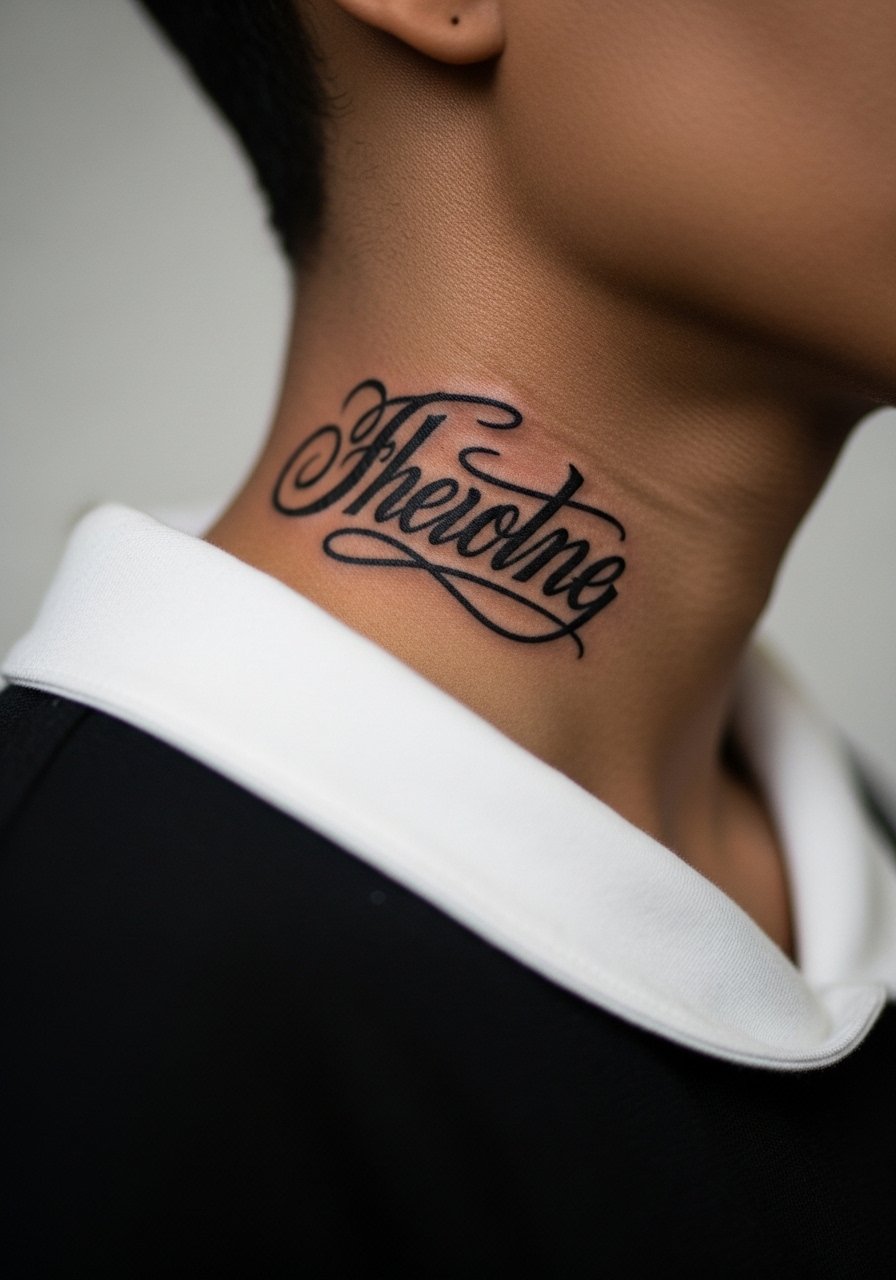
Pain warning lead. Neck pieces bite in the moment because the skin is thin and sensitive, but the visual impact is high. If you want this, ask for thicker strokes rather than hairline script so the text keeps contrast in photos and daily wear. Expect a single session for a compact neck script, and consider whether your work environment tolerates visible neck ink. For showing it off, a small silver hoop earring on the same side can draw the eye in a styled way. Artists are split on healing methods for the neck, so ask where they stand on film versus dry heal.
10. Globe and Plane Shoulder Cap for Nomads
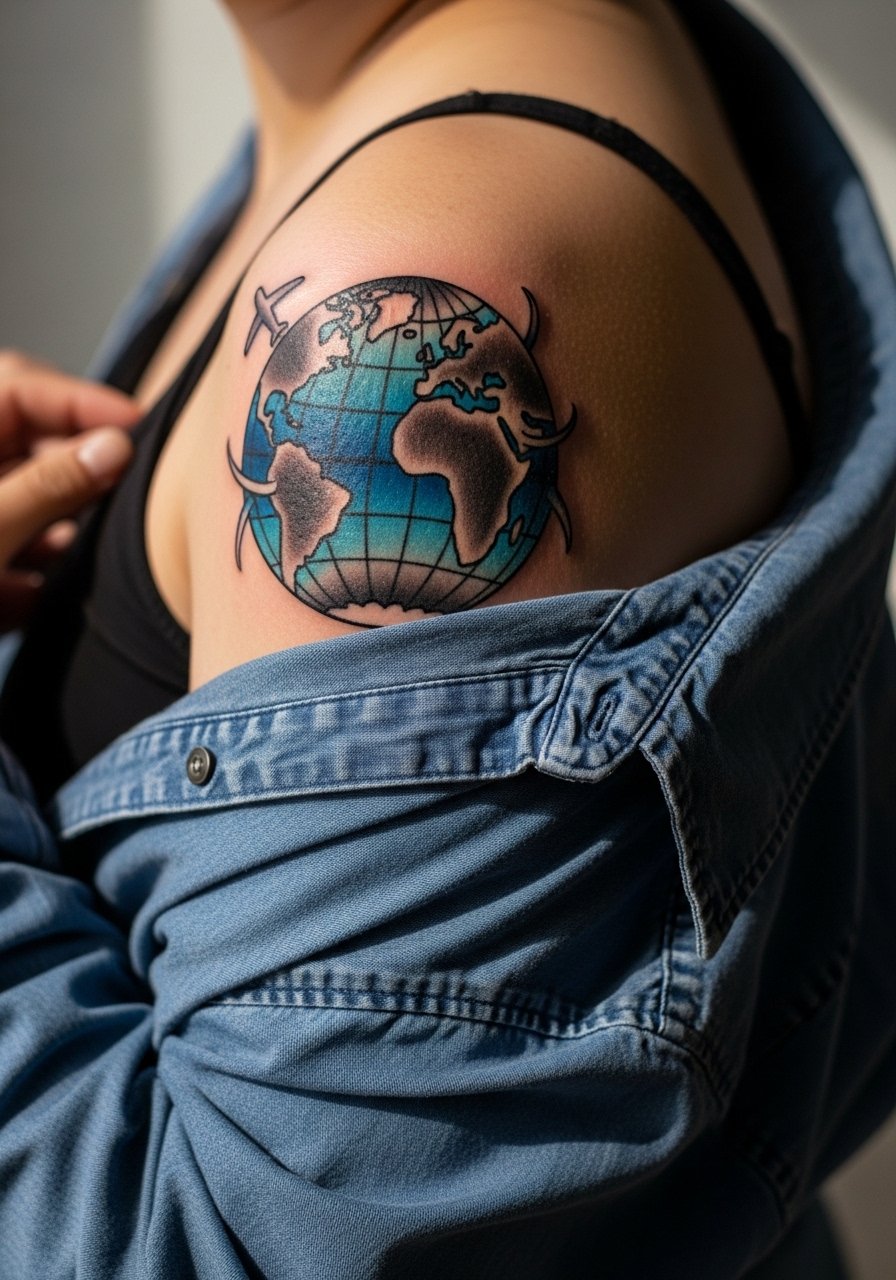
Visual impact lead. The shoulder cap is ideal for aviation twists and it moves nicely with t-shirt sleeves. Sessions are usually one to two appointments depending on color. Tell your artist you want the plane to be a small icon so it reads as an accent, not a competing element. For session comfort, wear a loose fit button down you can pull aside. The frequent error is crowding the cap with too many tiny elements that won't hold up when photographed from a distance.
11. Thick Outline Script on the Calf for Active Lifestyles
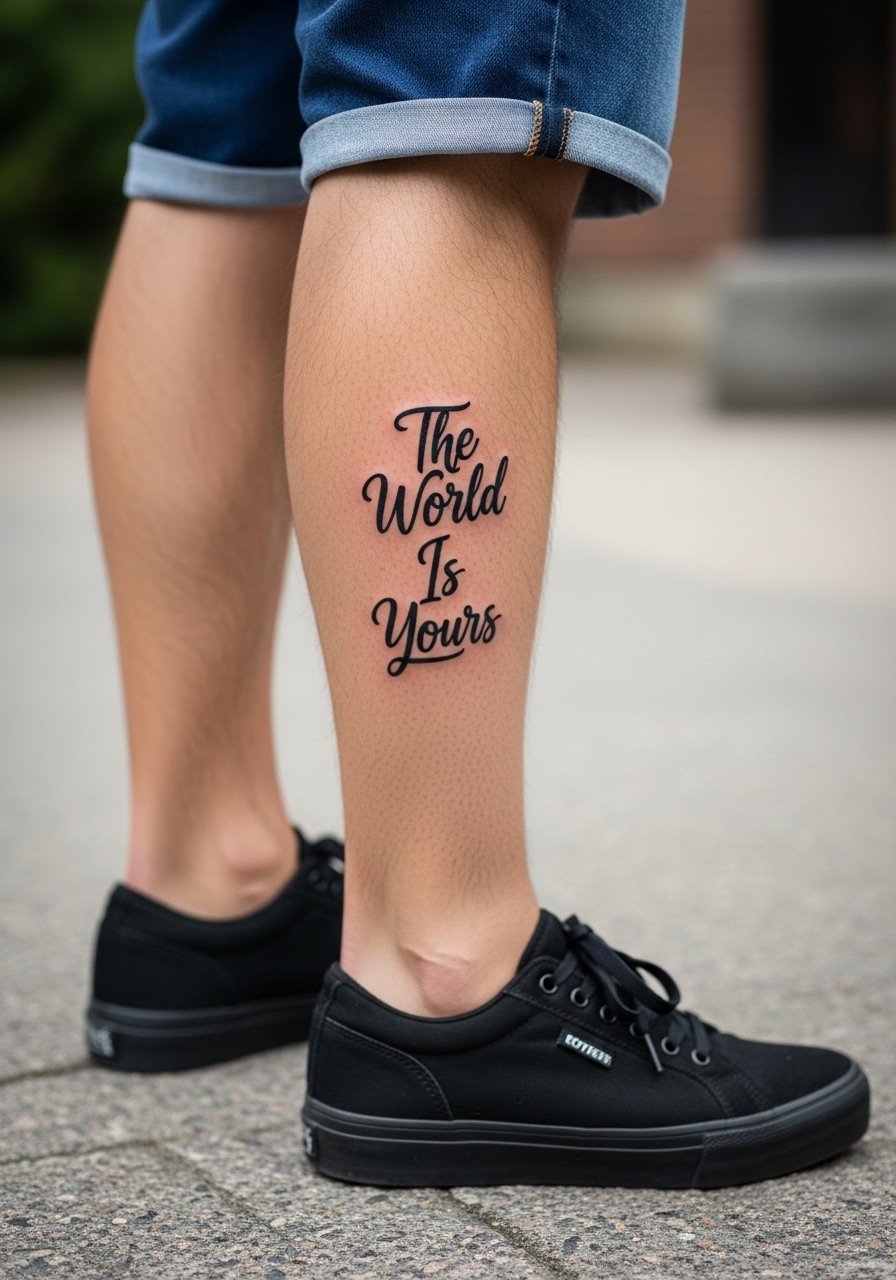
Aging lead. Runners and gym regulars like calf placement because sweat and movement are constant but the skin is thicker so bold outlines hold up. Expect one session for a 4 inch script and modest pain that most people rate as manageable. Ask for bold outlines and slightly more spacing between letters to reduce stretch effects. For showing off after it heals, roll slim joggers or wear athletic shorts to mid-calf so the script sits visible without rubbing. A common mistake is squeezing long script into a narrow calf space which becomes unreadable after muscle gains.
12. Ornamental Globe Frame on the Rib, Feminine Blackwork Twist
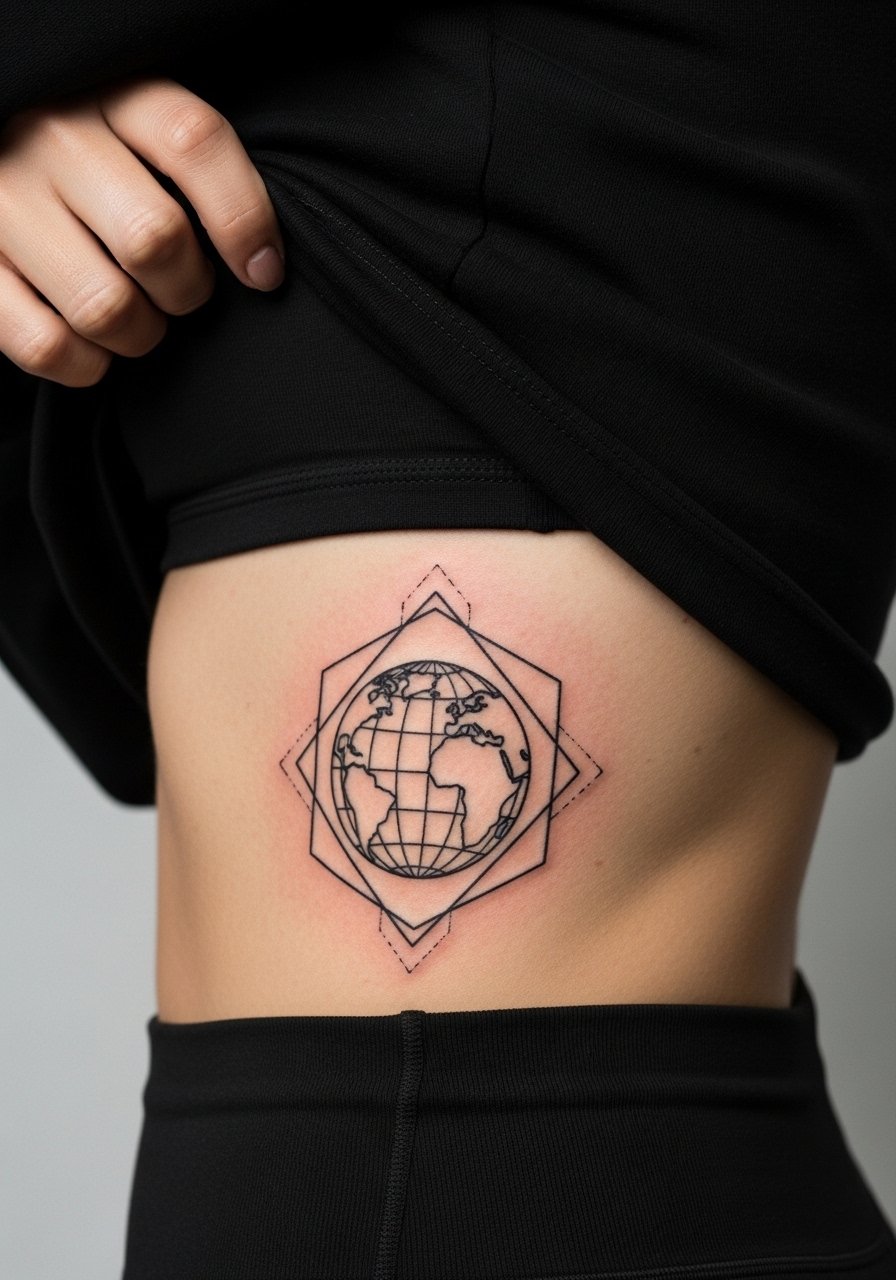
Pain warning lead. Rib sessions are a commitment and many people describe them as high on the pain charts, but the canvas lets you place ornate frames that look stunning peeking from clothing. Artists divide over fine detail on ribs. One camp says thin lines blur with breathing and movement. The other camp says careful needle depth and spacing keep detail crisp. Ask the artist which camp they fall into and adjust size accordingly. Sessions often need two visits for complex frames. For modest showing, use a cropped top. The main error is asking for too much micro-detail in a small rib zone.
13. Handpoked Bold Globe Variation for DIY Authenticity
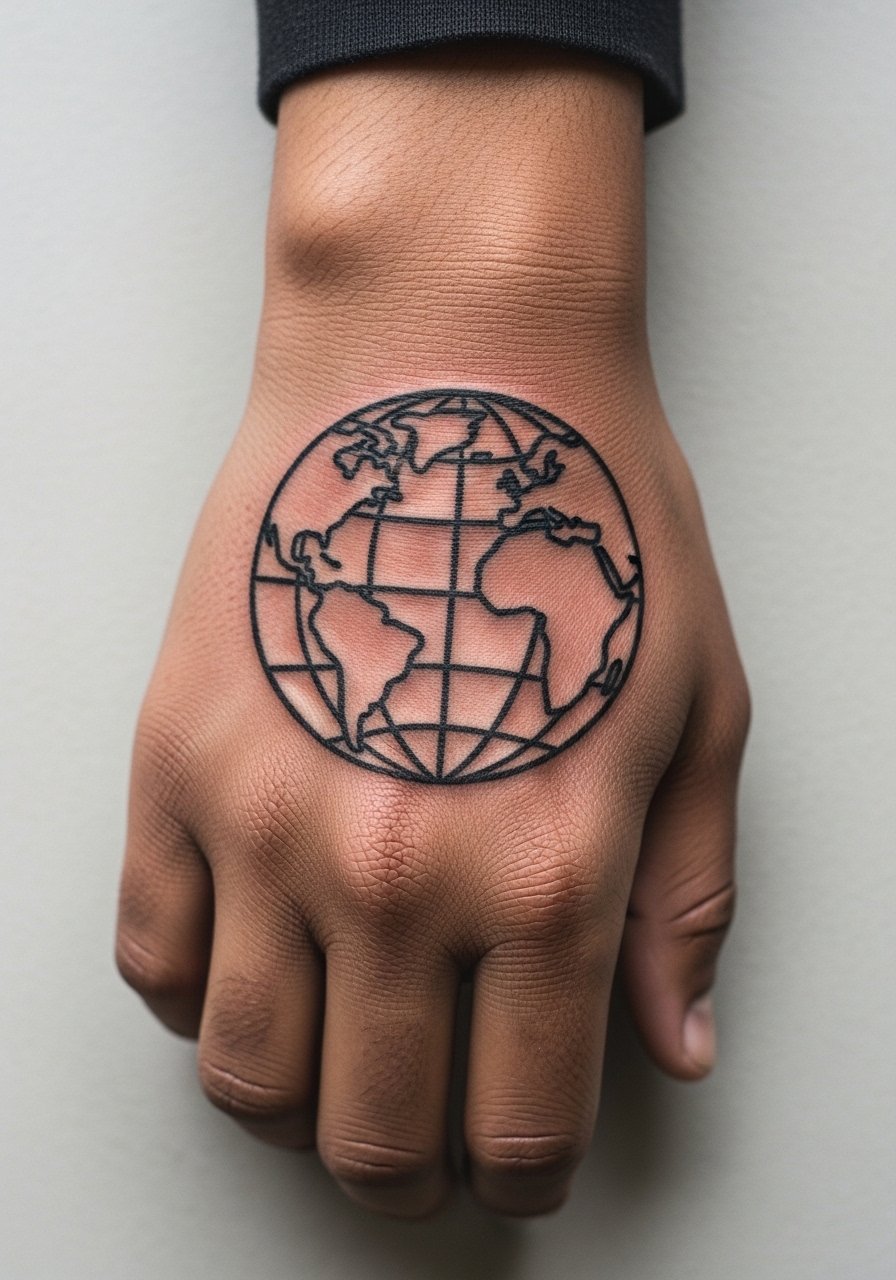
Consultation lead. Handpoked ignorant style gives uneven, rustic lines that some people want for the aesthetic. The trade-off is slightly higher risk of inconsistent saturation and a quirky healed look. If you choose handpoked, discuss touch-up expectations up front and verify the artist's handpoked portfolio or healed photos. Session time is often one appointment but expect longer than a machine for the same area. For session wear, keep hands accessible and jewelry-free. The common mistake is assuming every handpoked artist treats saturation like a machine pro.
14. Compass-Integrated Hand Globe for Directional Meaning

Personal observation lead. Adding a compass ties the ownership motif to direction and decision-making. Recommend a bold compass outline not filled with tiny directional ticks. Tell your artist to separate the compass edge from the globe by a clear ring so both elements remain distinct as the skin ages. The hand placement means you should expect a touch-up at some point. For showing it off, layer a fingerless leather glove in photos without covering the design. The mistake I see is asking for tiny compass details that disappear under wear.
15. Calf Globe Built for Runners, Sweat-Proof Bold Lines
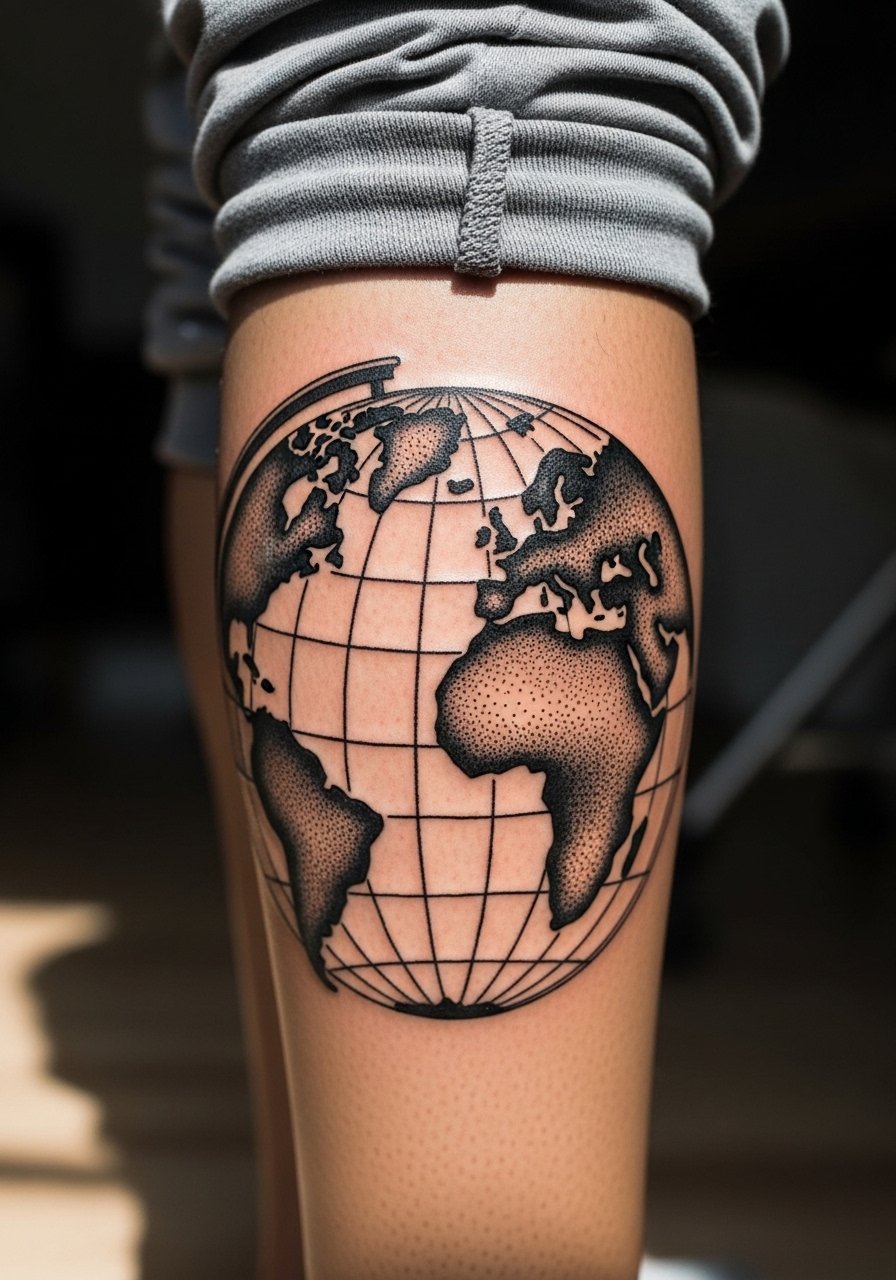
Styling lead. Runners need designs that tolerate sweat and frequent laundering of athletic shorts. The outer calf takes bold outlines and avoids constant UV exposure. Request solid black outlines and a touch-up clause in case you ramp up training. Sessions are usually a single appointment. For showing the design while keeping comfort, wear slim joggers rolled cuff or shorts. A common misstep is choosing thin script on the calf, which can warp with muscle changes.
16. Pairing "The World Is Yours" with a Constellation Map on Forearm
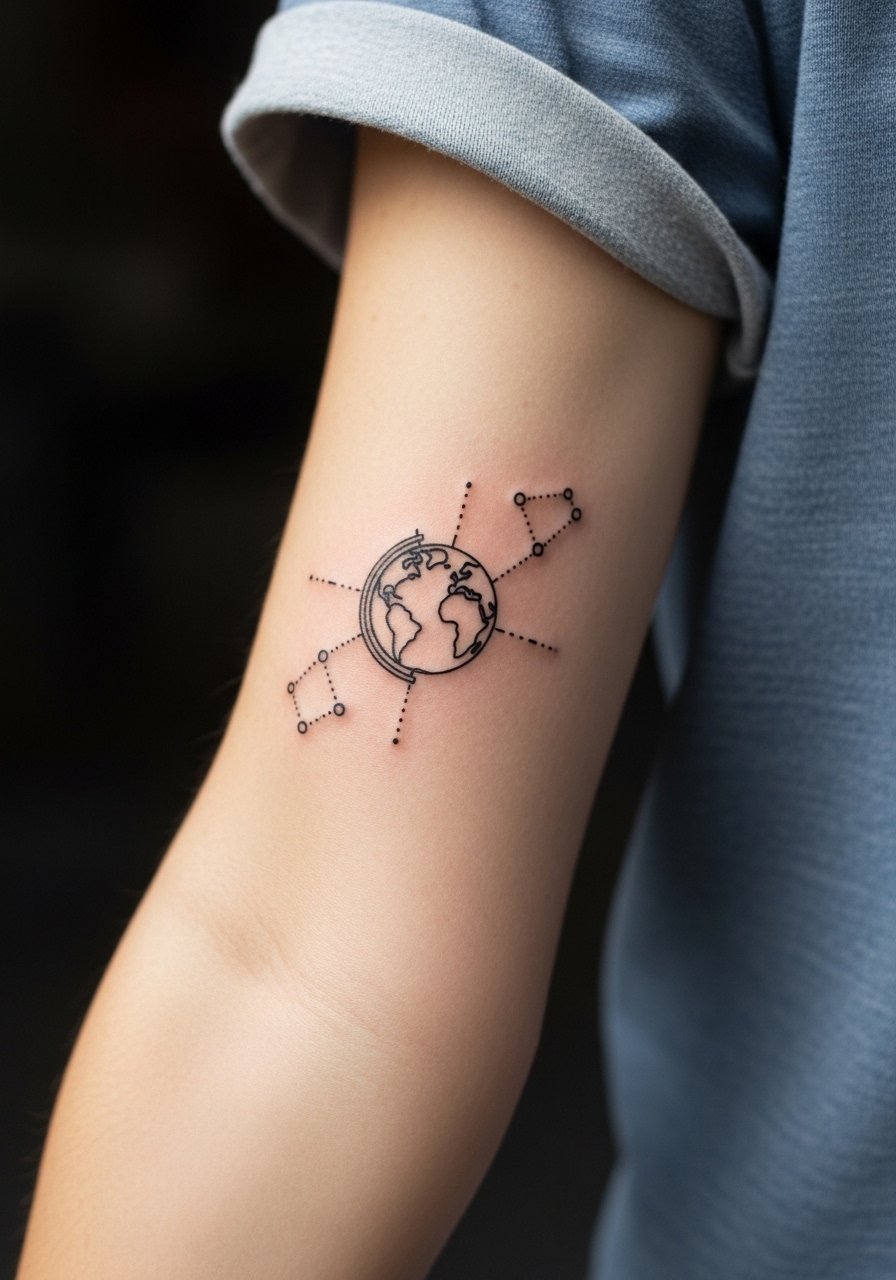
Mistake lead. Combining a globe with constellations creates a layered meaning but the mistake is packing the stars too close to the globe. Leave breathing room and ask for dot work spacing that respects stipple shading. The forearm shows detail well, but dense dot work can merge if too compressed. Sessions often split into linework and shading. For photos, a canvas snapback hat and rolled sleeves give a casual frame. Expect a minor touch-up around year two if you like heavy stipple.
17. Plus-Size Arm Globe Scaled with Stretch-Proof Outlines
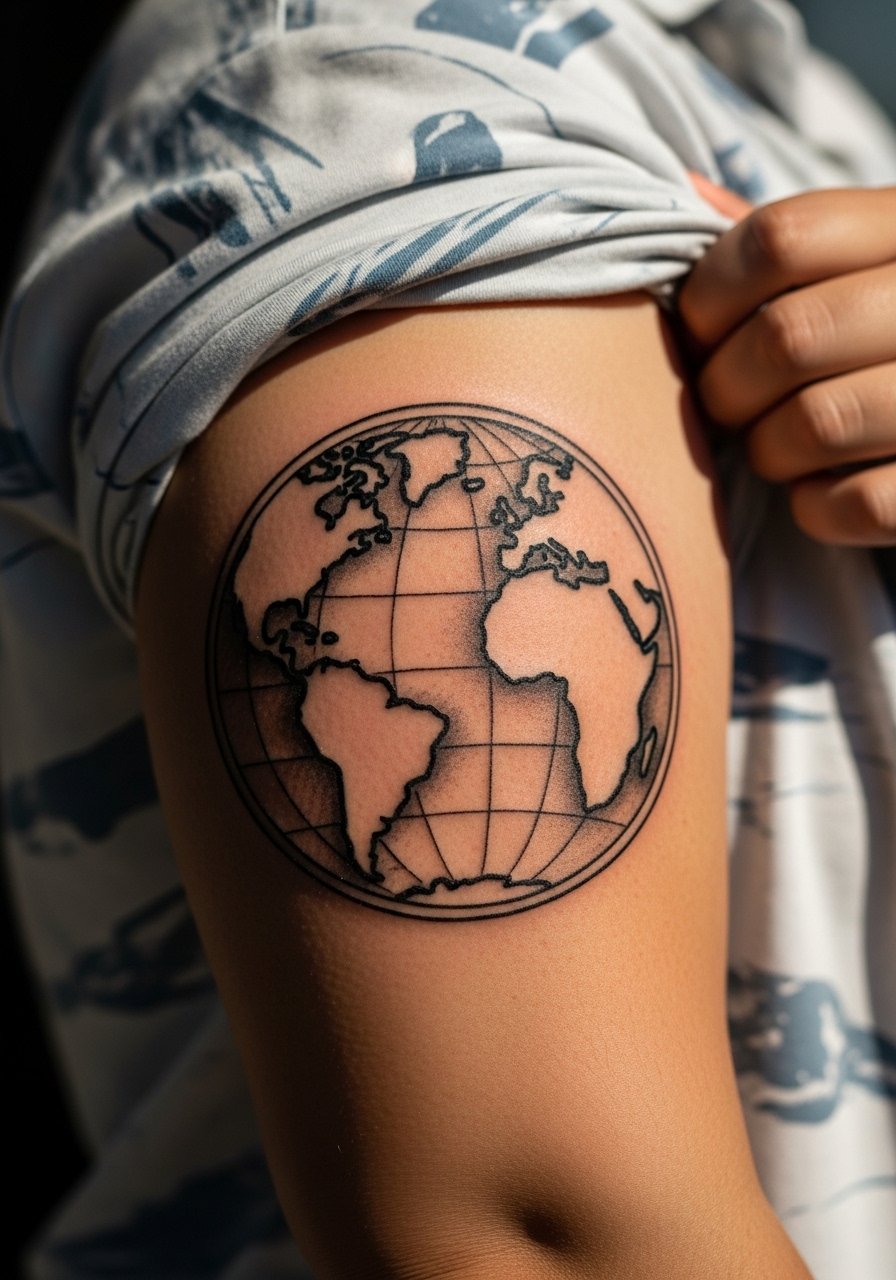
Personal observation lead. For plus-size arms, scaling matters more than detail. Ask for thicker outlines and larger negative space so the globe reads from a distance and resists stretching. The session feels similar to a bicep piece and blowout risk drops with heavier lines. Discuss body change plans with the artist to decide ideal placement. Many people report the best healed look comes from fewer micro details and more graphic forms. Wear loose sleeves on session day for access. The common error is copying a tiny forearm design and expecting it to hold up on broader surfaces.
18. UV-Reactive Accent Ink on an Inner Wrist Globe
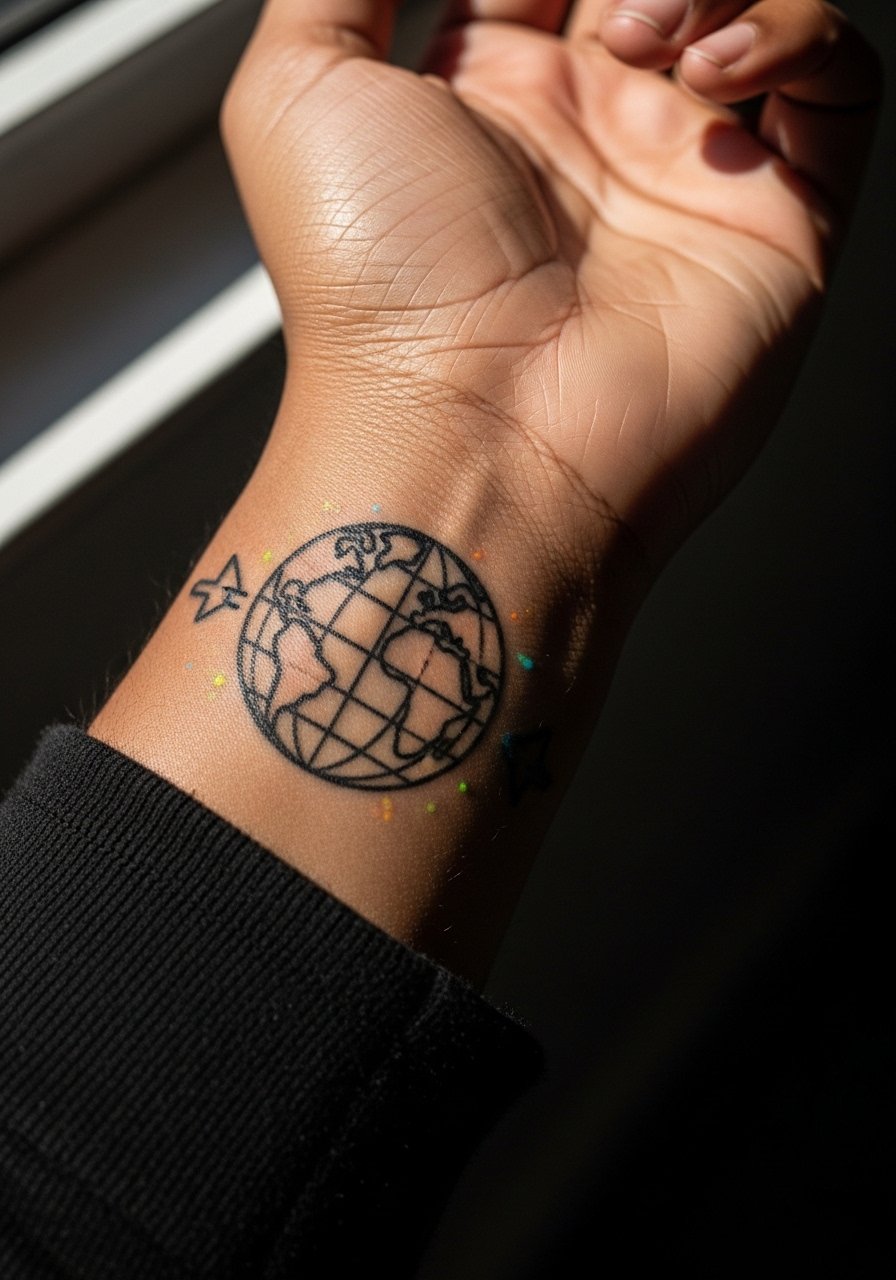
Controversy lead. UV accents look cool but they raise questions. One camp embraces subtle UV highlights for nightlife visibility. The other camp warns the inks behave differently and may fade or react on darker skin tones. If you want UV touches, ask your artist about pigment testing on a discrete area and about their experience with melanated skin. The inner wrist is sensitive so expect a short, sharp session. For showing it off in daywear, keep the design bold in black and let the UV be a nightlife secret. A common mistake is relying on UV alone for contrast on dark skin.
19. Minimal Ankle Globe for Subtle Daywear
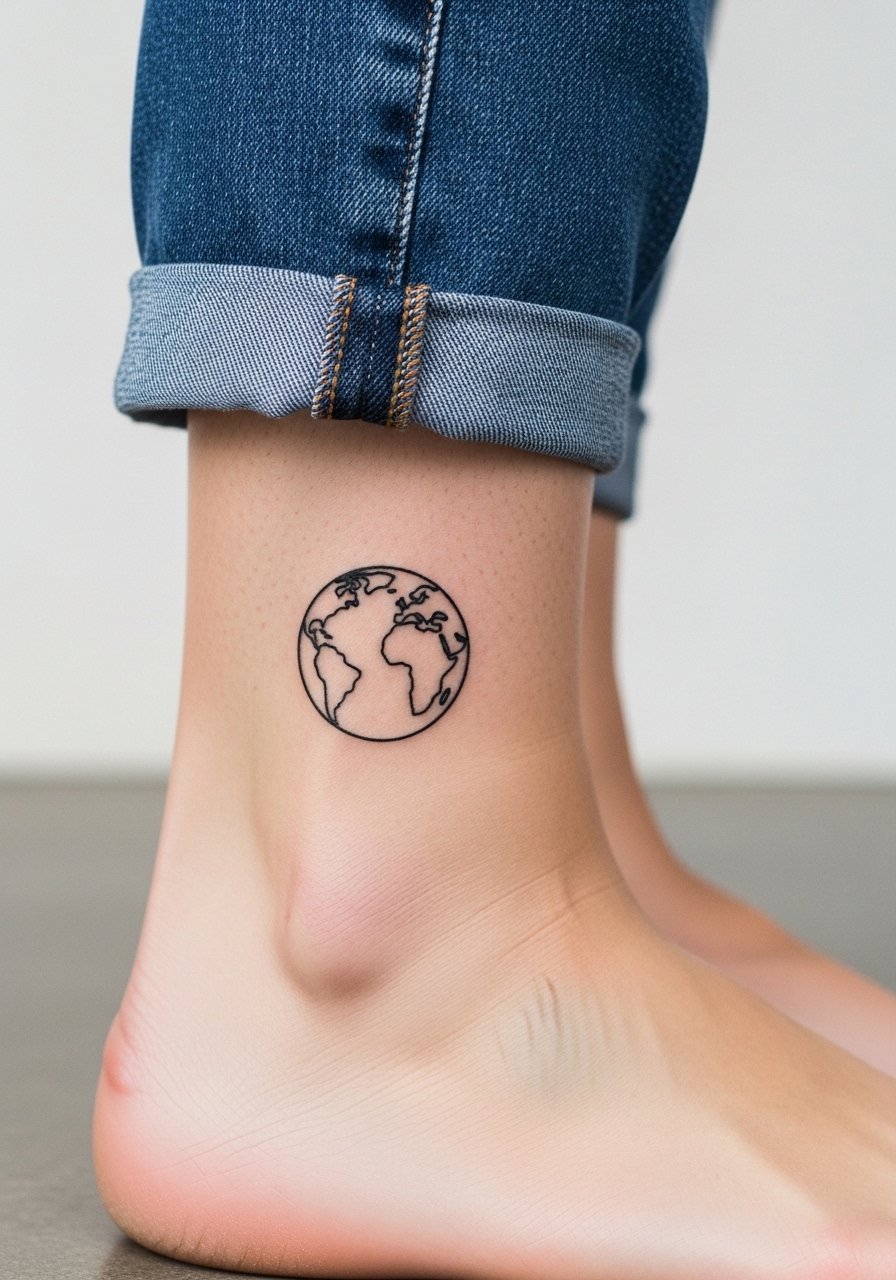
Aging lead. Ankles see friction from socks and shoes, so small designs there need sturdy outlines to last. Keep the globe slightly larger than you think, because tiny ankle work migrates faster. Sessions are short and pain is moderate. For showing the piece, roll jeans or wear sandals and frame it with a thin anklet. Use a canvas high top sneaker for casual photos without obscuring the work. The common mistake is going under a half inch in diameter, which almost always needs touch-up.
20. Bold Globe Wristband Wrap, Graphic and Clean
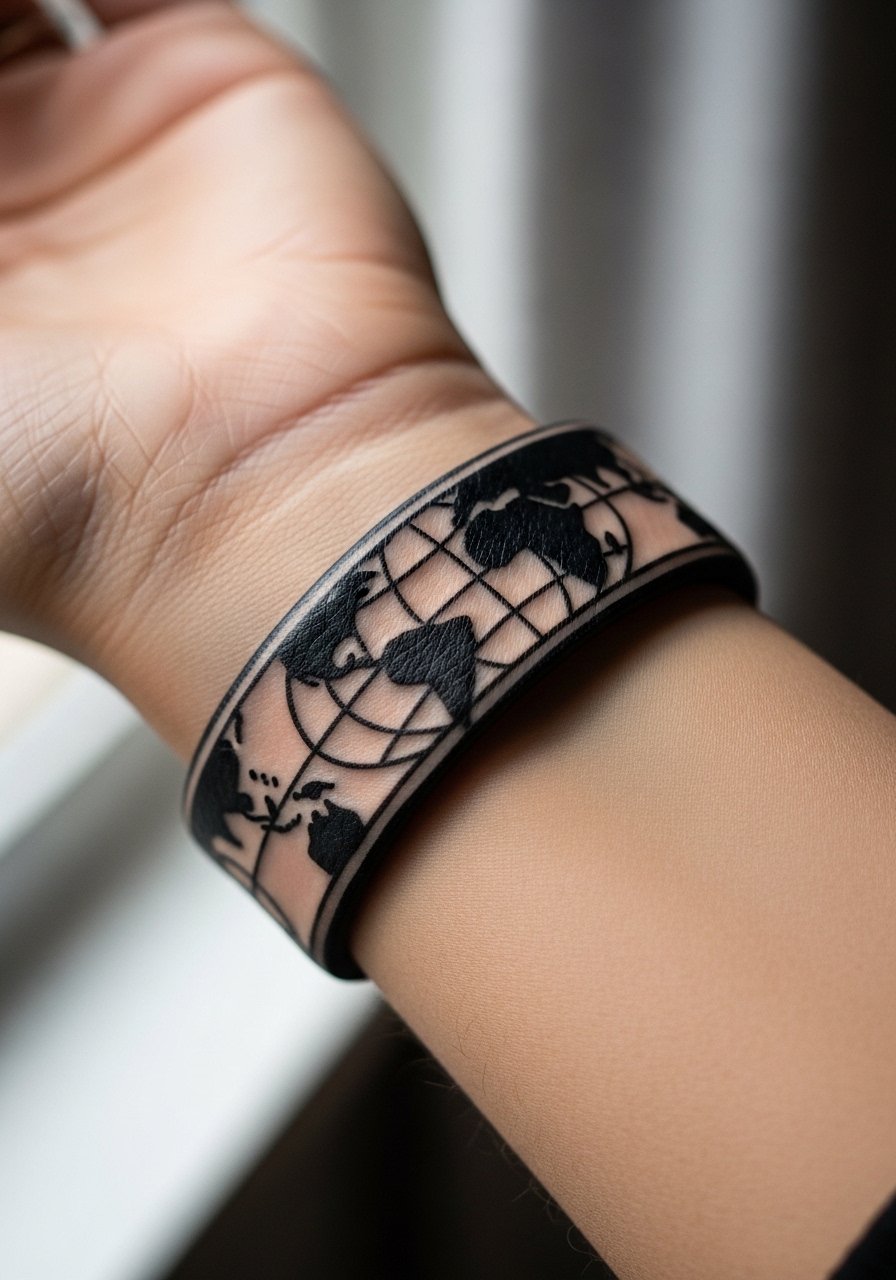
Visual impact lead. A wristband wrap reads like jewelry and works well for those who want a decorative approach rather than script. Ask for continuous negative space between globe elements so the band breathes. Sessions are moderate in length. For styling, a slim leather watch on the opposite wrist keeps the look balanced. Try a slim leather watch if you want contrast without crowding. The error is overcomplicating the band with tiny motifs that make it look busy when viewed from a distance.
21. Starter Forearm Sleeve: Ornamental Globe as Anchor
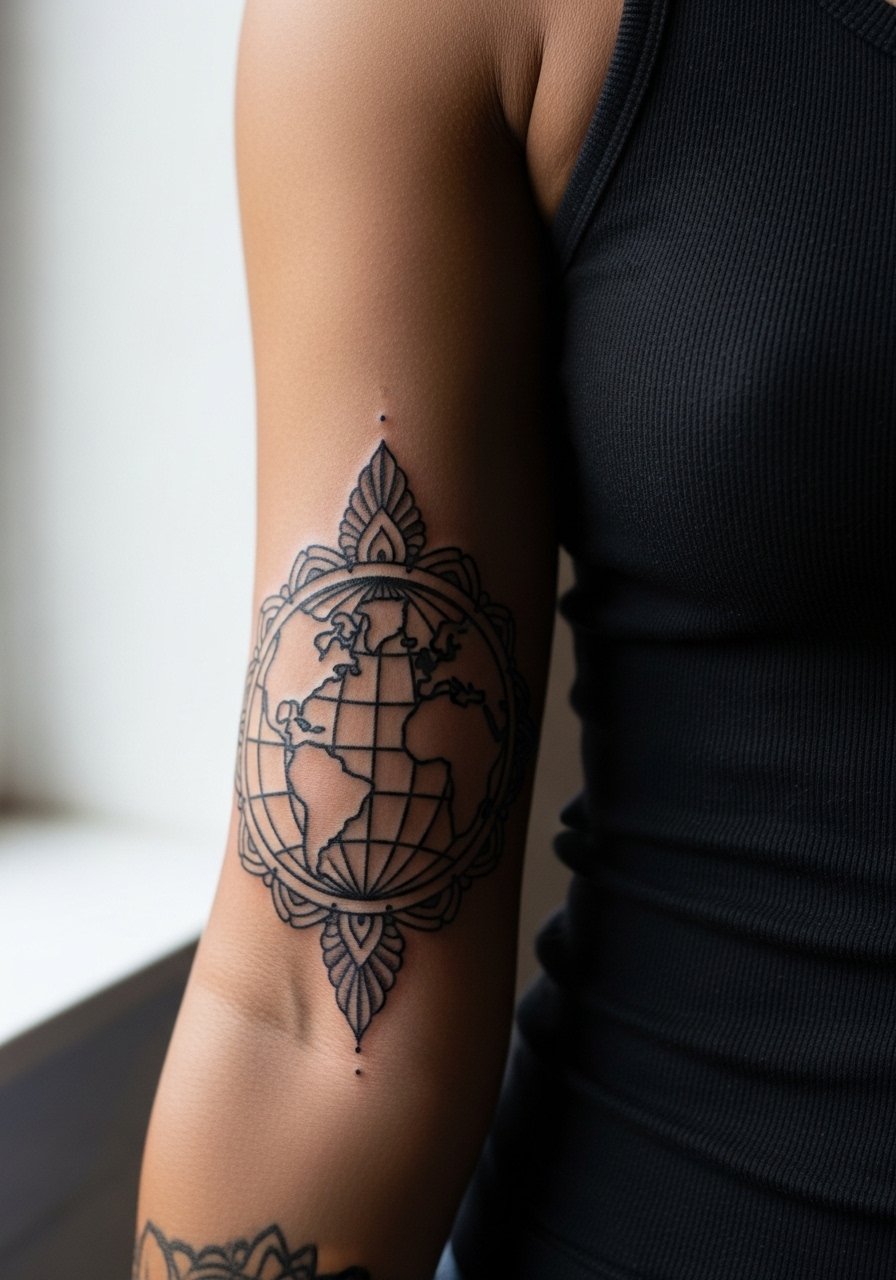
Consultation lead. If you plan a sleeve, use an ornamental globe as the anchor piece and design outward with planned negative space. Tell your artist this is the anchor and ask them to create flow lines that let future elements slot in without reworking the globe. Sessions for anchor pieces are usually longer and may include a design consult. For session comfort, wear a fitted tank top so the artist can comfortably rotate the arm. Avoid asking for a tiny anchor that forces awkward expansions later.
Frequently Asked Questions
Q: How do bold lines compare to fine line for longevity on hands and wrists?
A: Bold lines usually hold up better on high-use areas because they resist softening and blowout. Fine line fans point to the aesthetic and accept more frequent touch-ups. The middle path is to ask for slightly heavier lineweight than your reference so the piece keeps definition at year two.
Q: If a guest artist cancels after I paid a deposit, what can I do to protect myself?
A: From what I've seen, booking through verified platforms and limiting deposits to 50 percent reduces risk. Use directories like Booksy and request a written cancellation policy. If a guest spot cancels, ask for a written refund or a credit and keep screenshots of messages.
Q: What should I wear to a chest or rib session to make access easy and keep modesty?
A: Wear a wide-neck shirt or a fitted sports bra you can pull down just enough to expose the tattoo zone. A wide-neck shirt avoids full exposure while giving artists clear access for upper chest work.
Q: Are there special considerations for getting bold globes on darker skin tones?
A: Yes. Darker skin benefits from high-contrast blackwork and slightly thicker outlines. Ask the artist for healed mockups on similar skin tones and request pigment tests if the design uses subtle shading. Many people with melanated skin report excellent retention with properly saturated blackwork.
Q: How often should I realistically expect to touch up a bold hand tattoo versus a forearm piece?
A: Hands typically need touch-ups within six to twelve months more often than forearms because of sun and friction. Forearms with good saturation and bold outlines can go several years before a minor touch-up. Expect touch-ups as part of ownership, not a failure.
Q: Saniderm or dry healing for bold hand work, which camp should I follow?
A: Both camps have defenders. Saniderm users like controlled, low-scar healing and fewer scabs. Dry heal advocates say it helps saturation settle better for bold lines. Ask the artist which method they prefer and why, then follow their aftercare for consistency.