Fine line dragon sketches dominate feeds, yet the ones that still read crisp after five years are rarely the most intricate. Longevity, blowout risk, placement pain, and cultural sensitivity matter as much as the initial wow. Some people treat the Chinese dragon as purely aesthetic, while others insist on honoring its cultural roots and symbolism. The first six sketches focus on line weight, spacing, and placement choices that protect detail and respect origin.
1. Fine Line Coil on Inner Forearm
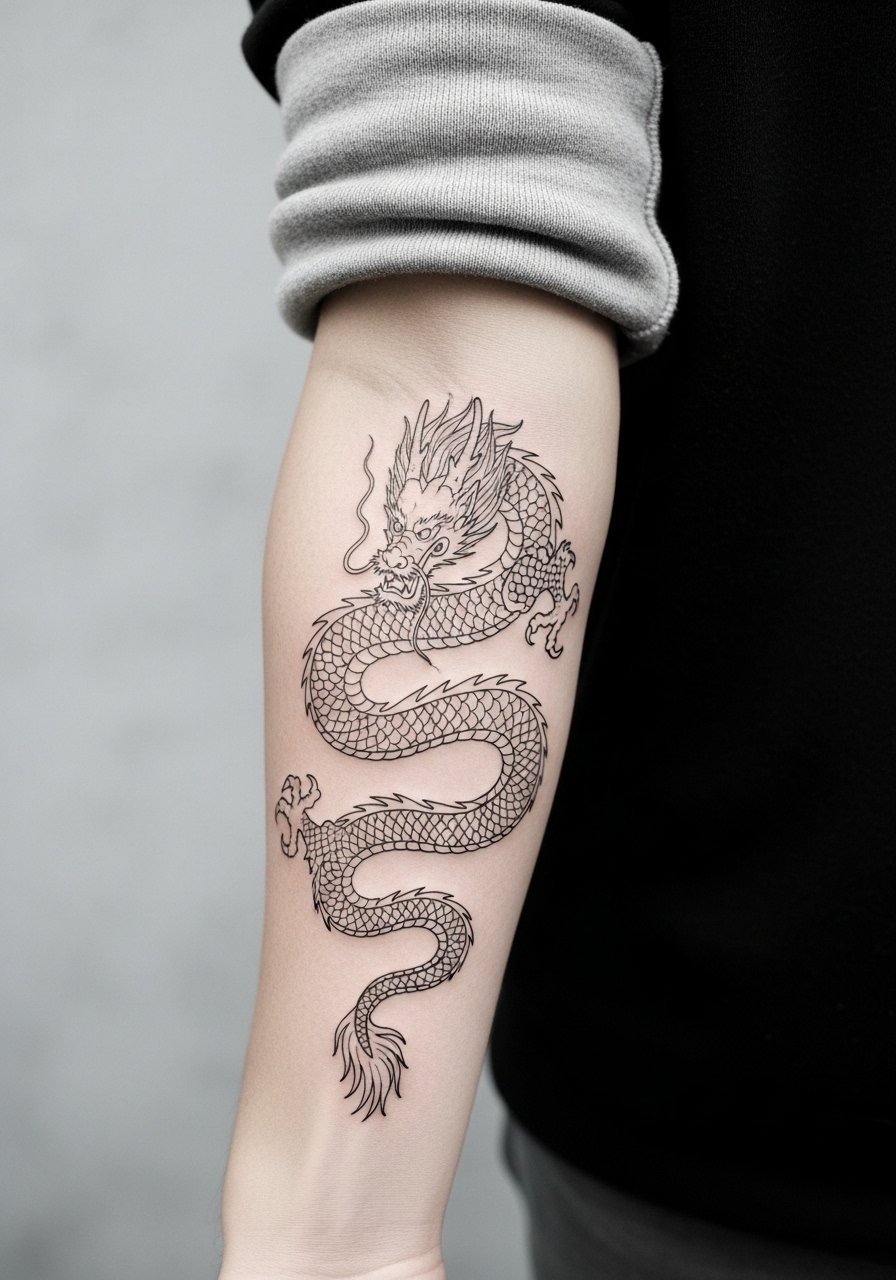
I’ve seen this coil on forearms last clean when the artist left breathing room between scales. Tell your artist to prioritize slightly heavier single-pass contours near joints so linework does not blur at year two. Fair warning, inner forearm sensitivity is low to moderate, but the skin sees a lot of sun, so expect some softening by year five and a likely touch-up at year three. The common mistake is packing micro-detail into a narrow band, which invites blowout. For showing it off, rolled-up sleeves and a linen button-down frame the piece without stealing focus.
2. Minimal Silhouette Behind the Ear
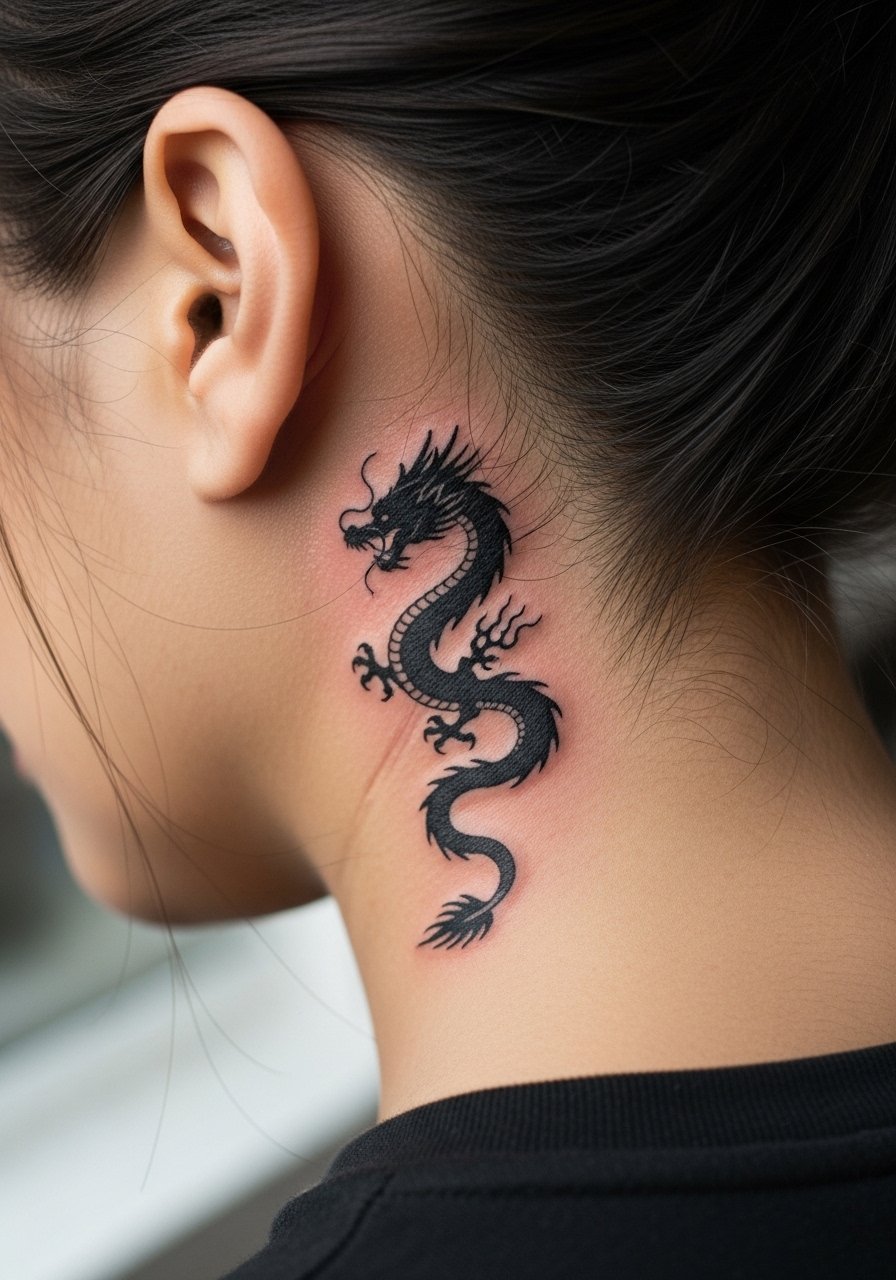
Artists split on visibility with behind-the-ear placements. One camp treats small motifs as discreet aesthetic choices, the other argues the placement carries social and cultural signals that deserve intentionality. If you favor subtlety, request a single continuous line with space between coils so the silhouette keeps its shape as the area ages. The area heals quickly but needs careful stencil placement. In the chair it feels like a pinching vibration rather than deep pressure. Consider tucking hair or wearing a wide cotton headband during the session for clean access.
3. Blackwork Shoulder Blade Dragon
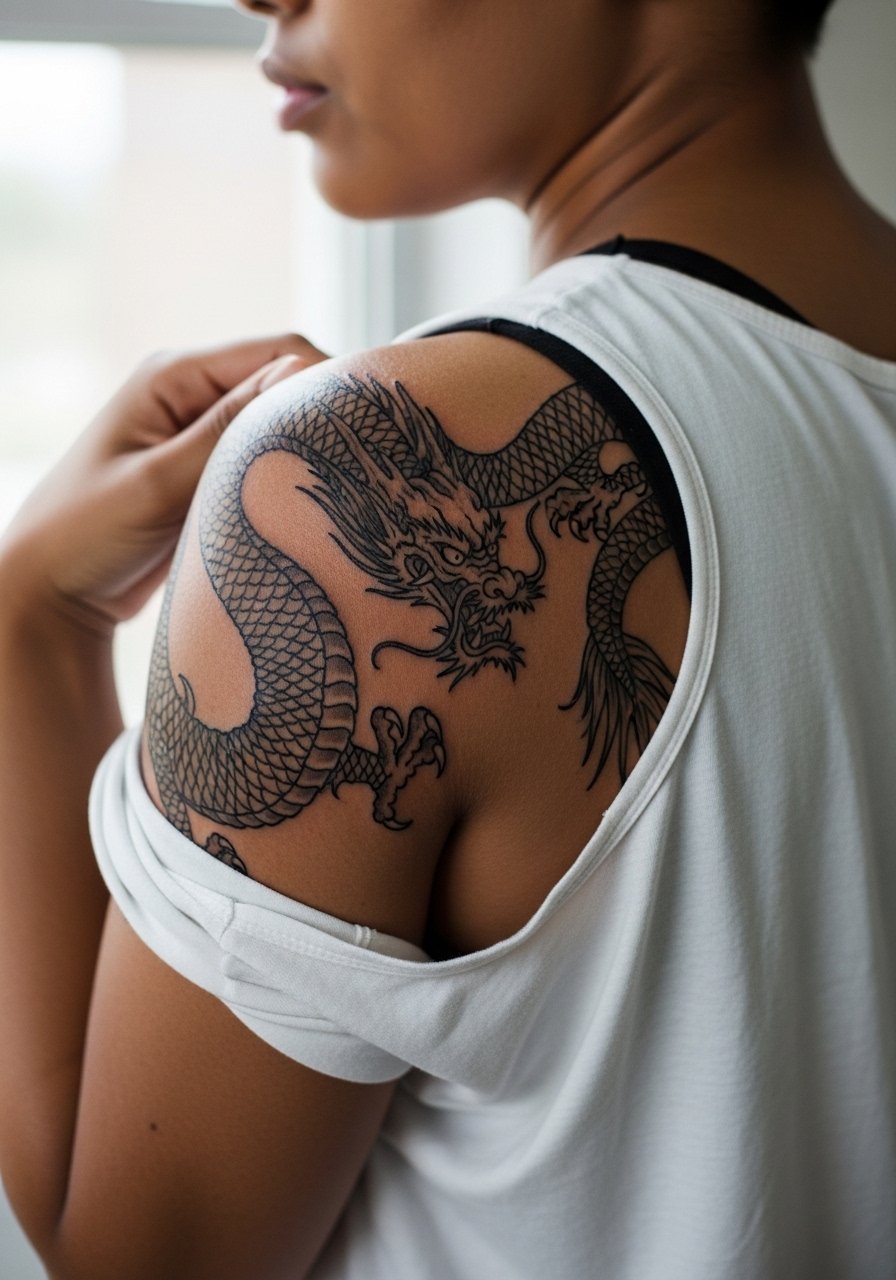
There is something about strong black saturation on the shoulder blade that reads from across a room and holds up through sweat and sun. This placement tolerates heavy work because the skin is thick and the area sees less friction. During consultation, explain you want dense black fills rather than micro-detail, and bring references showing scale weight. The main mistake is overly tight small dots inside the fill, which can muddy. Session time is longer for dense blackwork, expect multiple hours. For after-session wear, a loose tank top makes access easy without rubbing.
4. Ribcage Flowing Classic Line
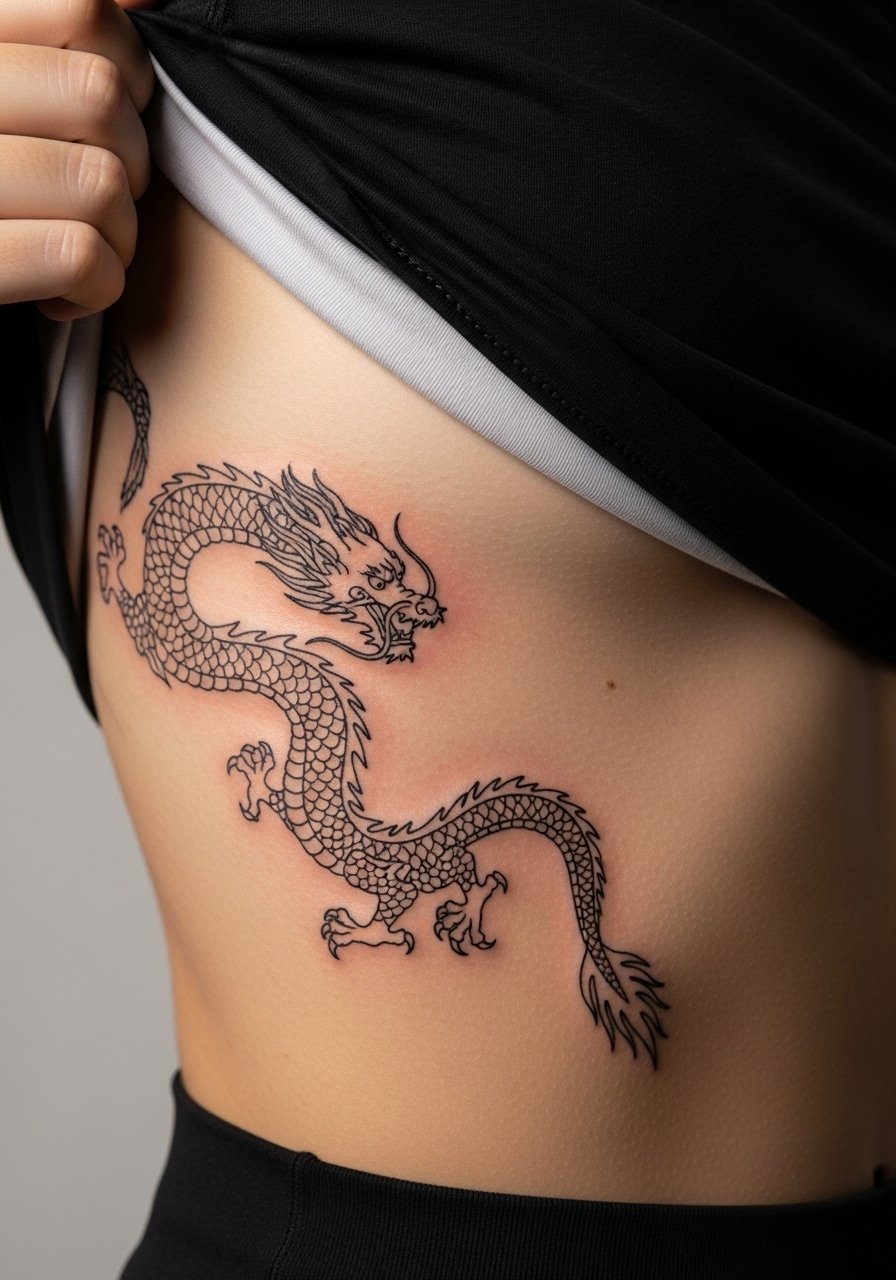
Fair warning, ribcage is often an 8 out of 10 on pain scales, but the sweep of the contour lets a dragon look cinematic there. Ask for slightly increased spacing between parallel lines so dense areas do not merge as the skin shifts. The common aging issue is tight, small hatch shading placed too close to the sternum. That blurs first. If you want long-term clarity, favor larger, flatter scales and stipple shading kept sparse. Plan for longer sessions and take a friend for the trip home. Wear a cropped athletic top on session day for easy access and modesty.
5. Wrist Band Micro Dragon
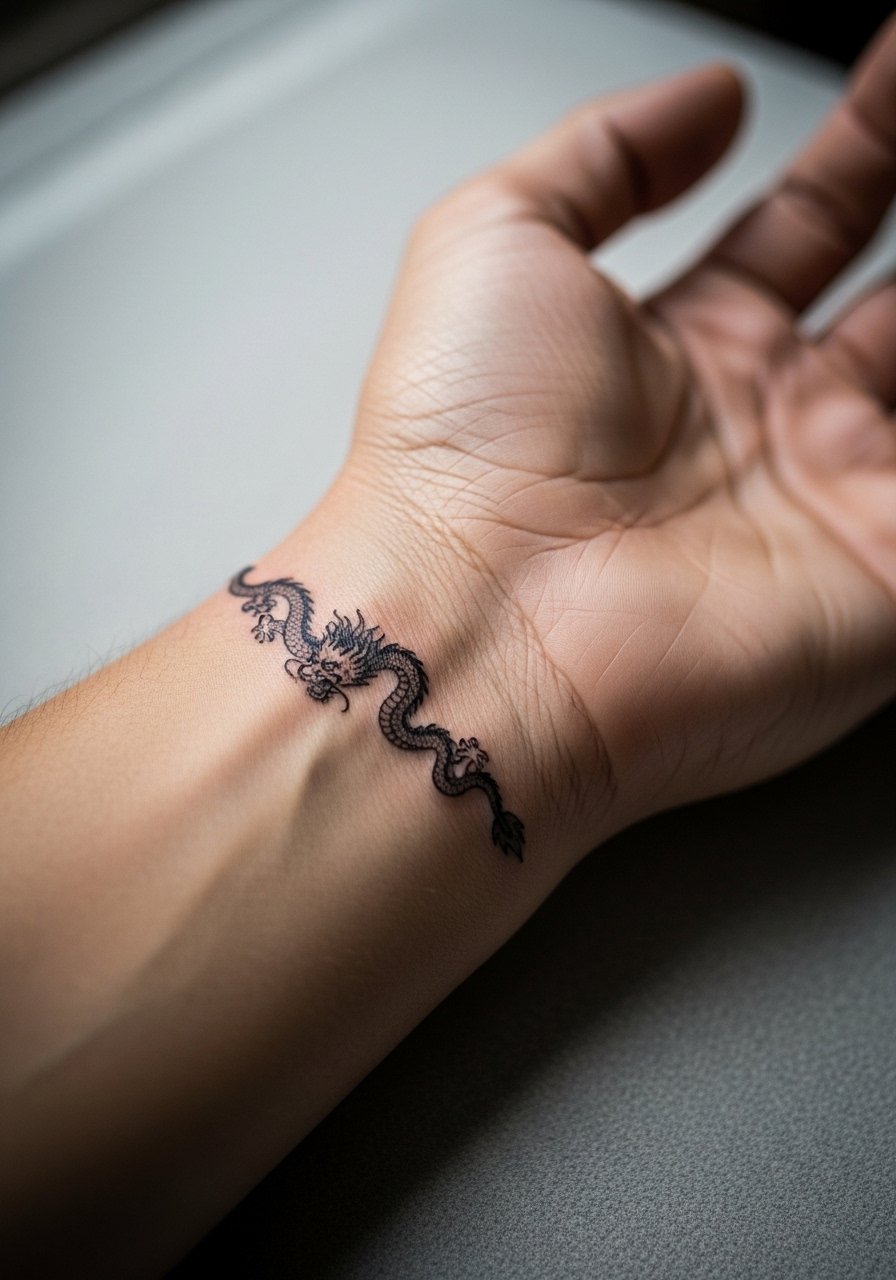
When you want a tiny dragon that reads like jewelry, size matters more than detail. Tell your artist to outline with a slightly heavier single pass and keep internal detail airy. The worst mistake is asking for too many scales in a one-inch band. Expect touch-ups sooner on the wrist because of constant washing and friction from bracelets. Session time is short, but healing needs attention. Pair this piece with a thin chain bracelet to integrate the tattoo into daily wear while minimizing rubbing.
6. Calf Wrap with Motion Lines
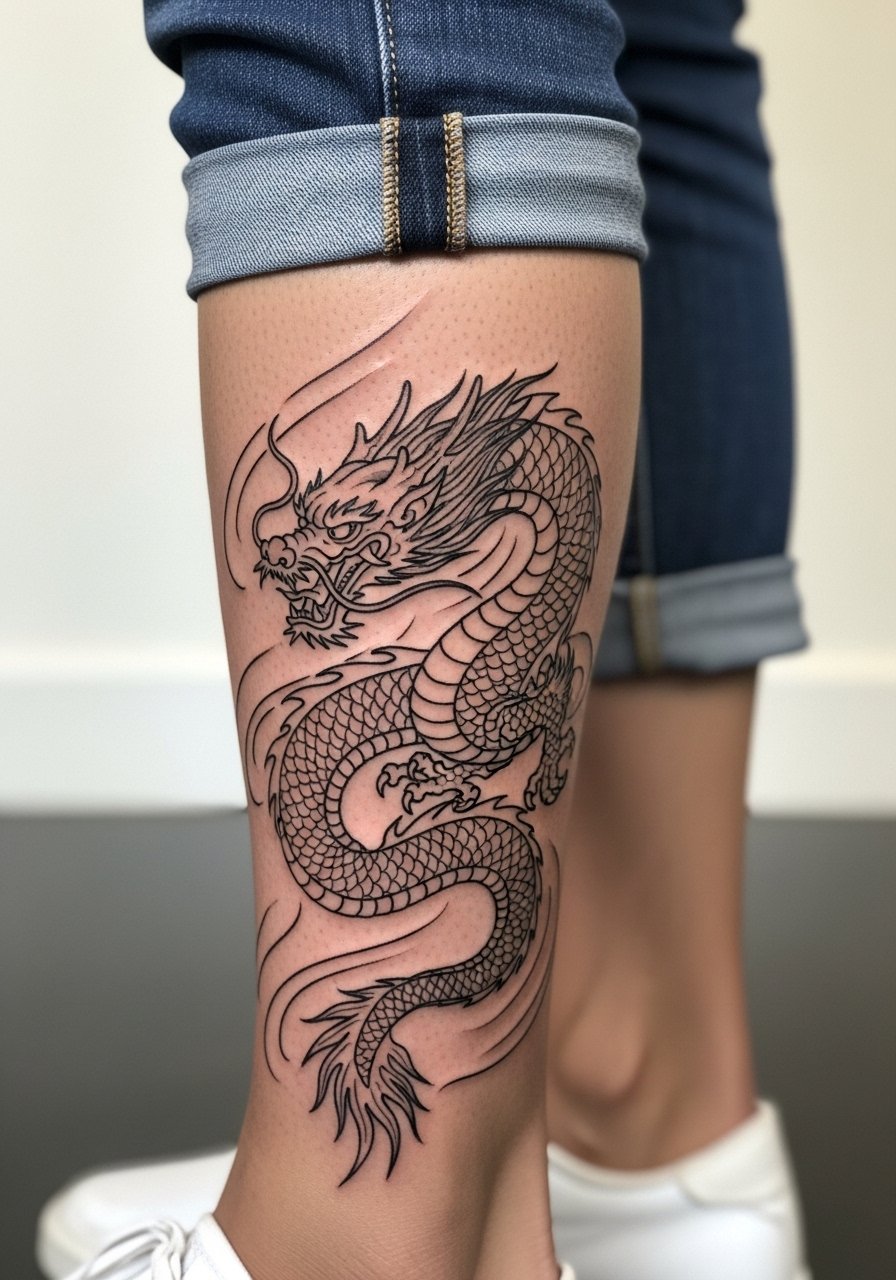
Most calf wraps age well because the area is less sun-exposed and skin movement helps the design read. For motion, ask for alternating thick and thin linework to suggest scales without heavy fill. A common mistake is crowding motion lines into the bend of the ankle where blurring is more likely. Expect a medium pain level and a two-to-four-hour session depending on wrap length. For session comfort, wear loose pants you can roll up and a drawstring linen pant so the artist can adjust exposure without tugging.
7. Micro-Realism Dragon Head on Chest
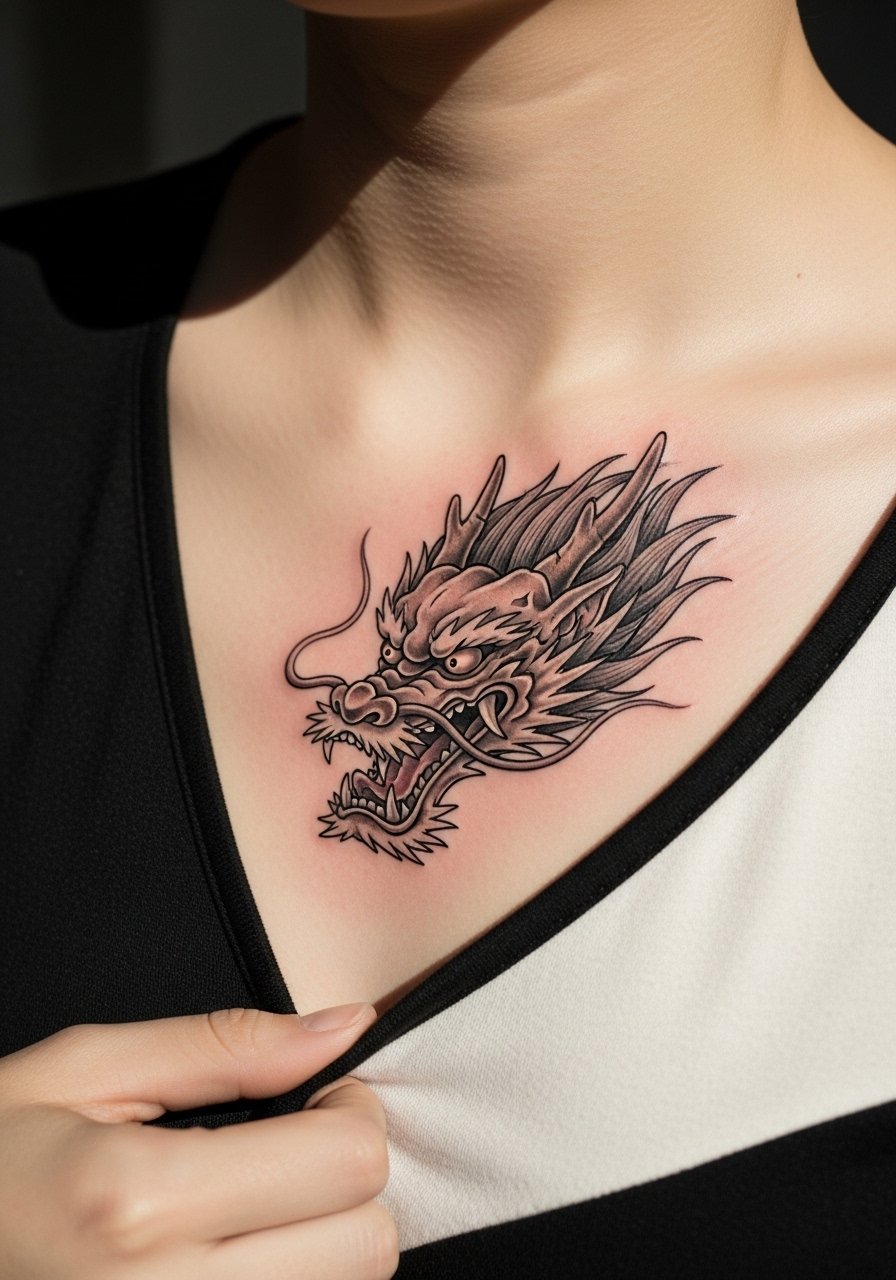
The biggest mistake with micro-realism on the chest is asking for ultra-tiny strokes without giving the artist license to enlarge the reference. For a head that keeps form, request predictable value hierarchy so highlights remain bright as saturation settles. Chest skin can soften fine detail over a few years, so expect touch-ups for tiny highlights. If the placement touches culturally meaningful iconography, have a short conversation about intent. During the session you will feel intermittent soreness under the collarbone, so bring deep-breathing plans and wear a wide-neck shirt you can pull aside.
8. Traditional Coil Over the Scapula
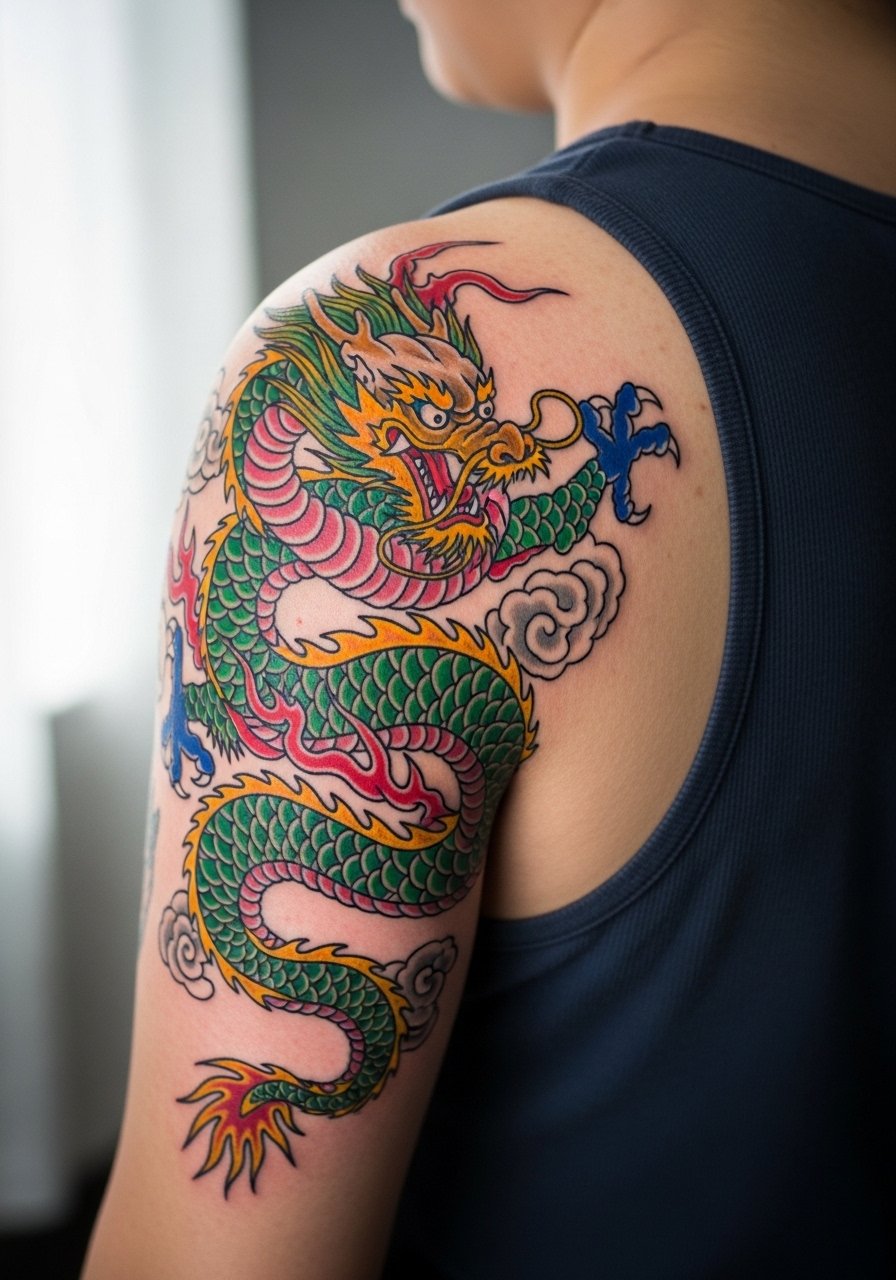
This placement pairs with open-back tops and dresses that show the coil without crowding. Ask for bolder outlines with saturated fills in specific areas rather than edge-to-edge color. The mistake is all-over micro-shading that softens into a gray block after sun exposure. For session day, wear a low-back tank so the artist can reach the scapula without you being uncomfortable. Expect moderate pain and a multi-hour session. Scapula pieces often need only one touch-up at year two if ink placement was deliberate.
9. Collarbone Crest Linework
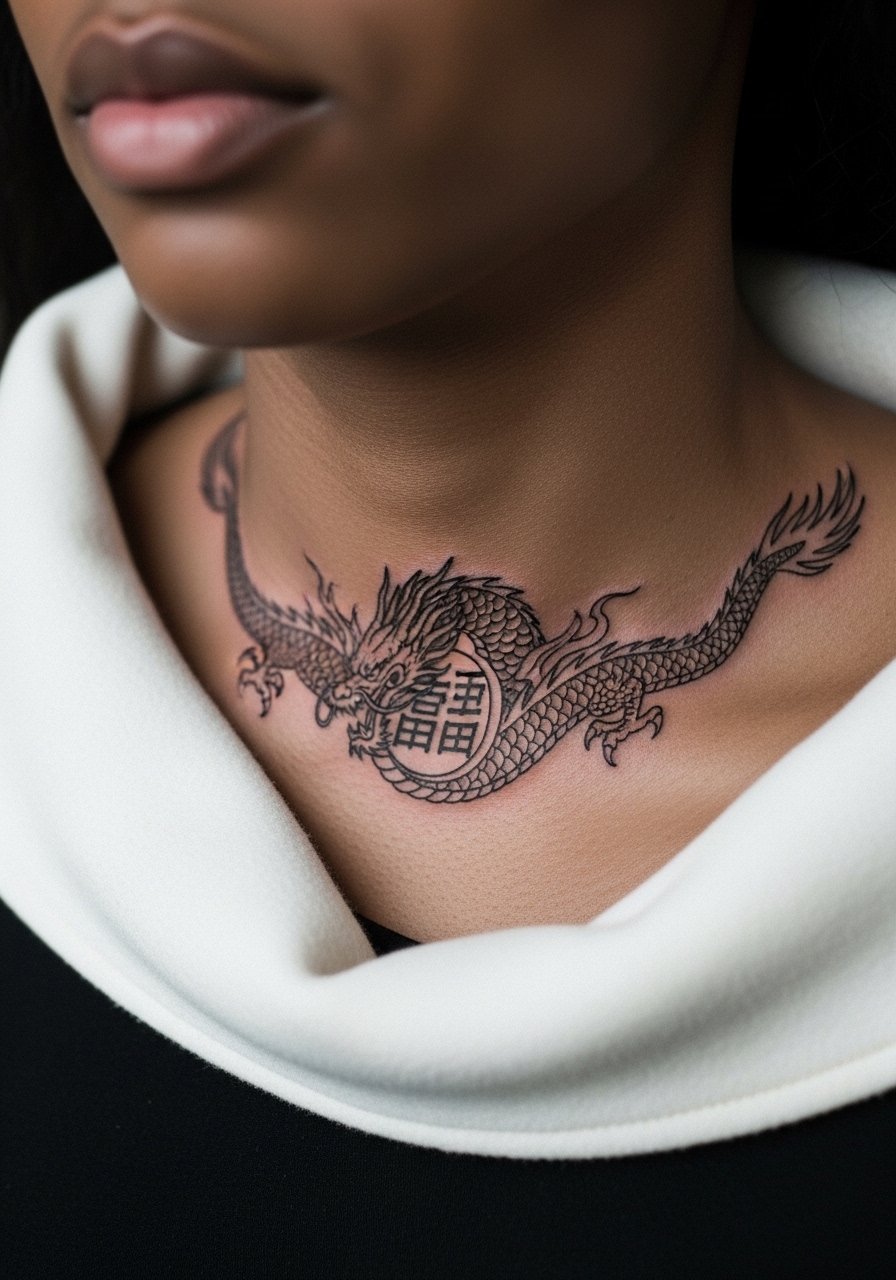
I’ve seen collarbone lines blur when artists use too light a touch in high-movement spots. For clearer long-term results, ask for slightly denser exterior lines with lighter internal detail. The area shows immediately and fades with sun, so plan on a tighter sunscreen routine after healing. A common user mistake is expecting very fine script-level detail to survive chest movement. In the chair it feels like gentle scraping more than deep pressure. Pair this with layered necklaces or a thin chain pendant to balance attention.
10. Sleeve Starter: Upper Arm Coil
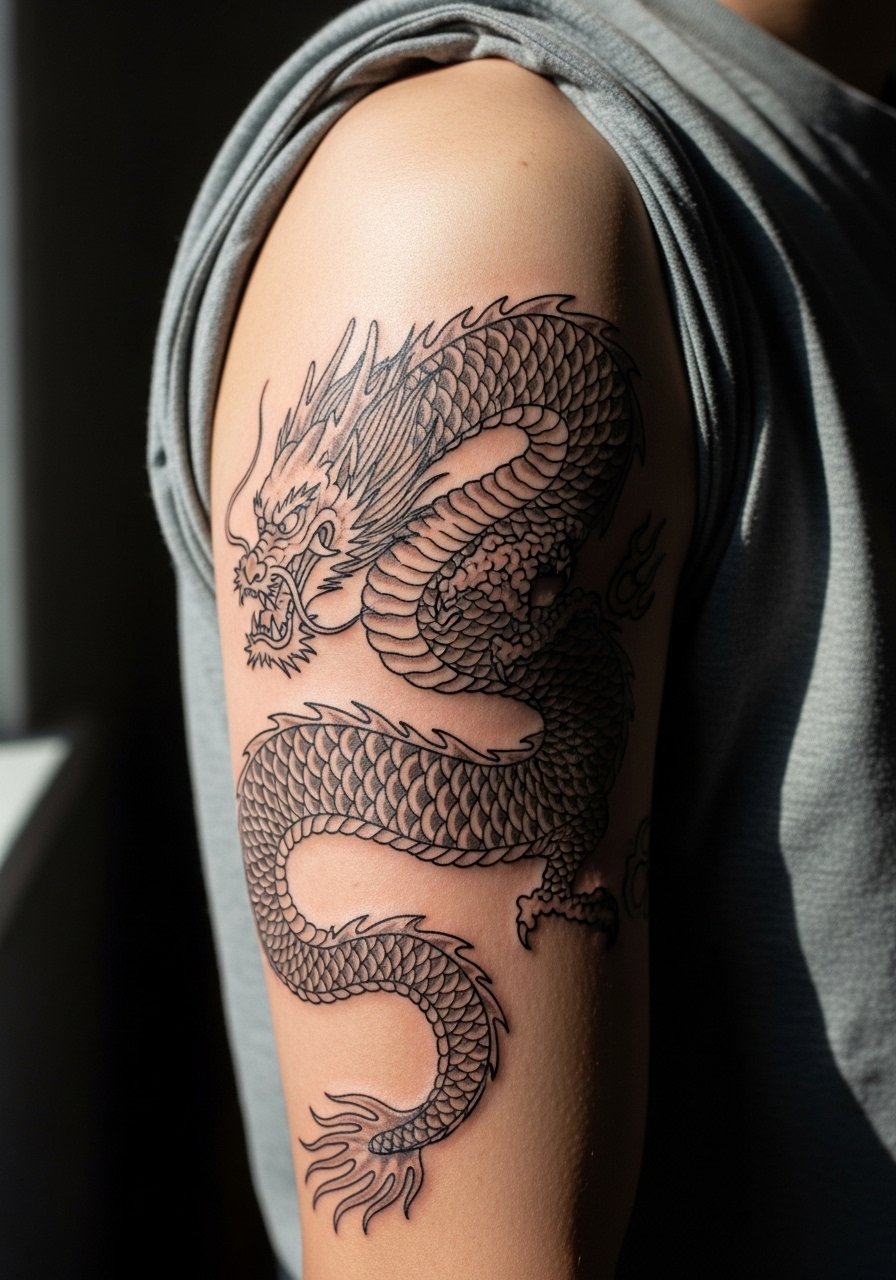
Fair warning, starting a sleeve with a highly dense filler dragon can box you into scale choices later. Begin with a compositional sketch that leaves negative space for future elements. Tell your artist you want visible skin breaks between scales, which reduces the risk of a muddy block in five years. Upper arm sessions are moderate pain and often booked in multiple blocks. For the day wear a short-sleeve button-down you can roll up without wrinkling the stencil.
11. Foot and Ankle Tiny Dragon
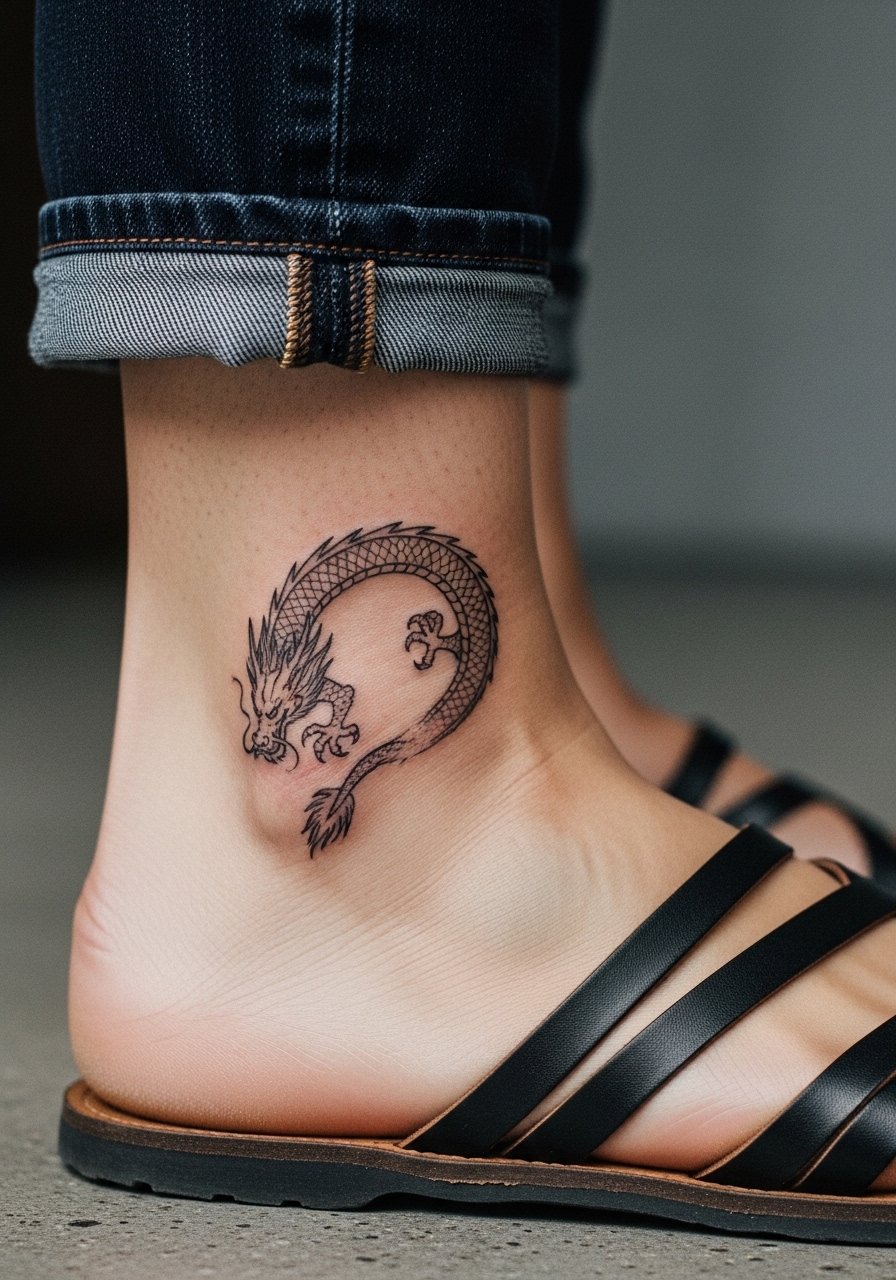
When placed on the ankle and foot, expect faster wear because of rubbing from socks and shoes. During consultation, ask for heavier outer contours and avoid tiny internal dots that will fade first. The session feels sharp and localized, so short appointments are common. A typical mistake is ignoring aftercare handling for footwear. For showing it off on warm days, sandals and a linen ankle-length pant keep the area visible without constant friction.
12. Sternum Dragon with Floral Frame
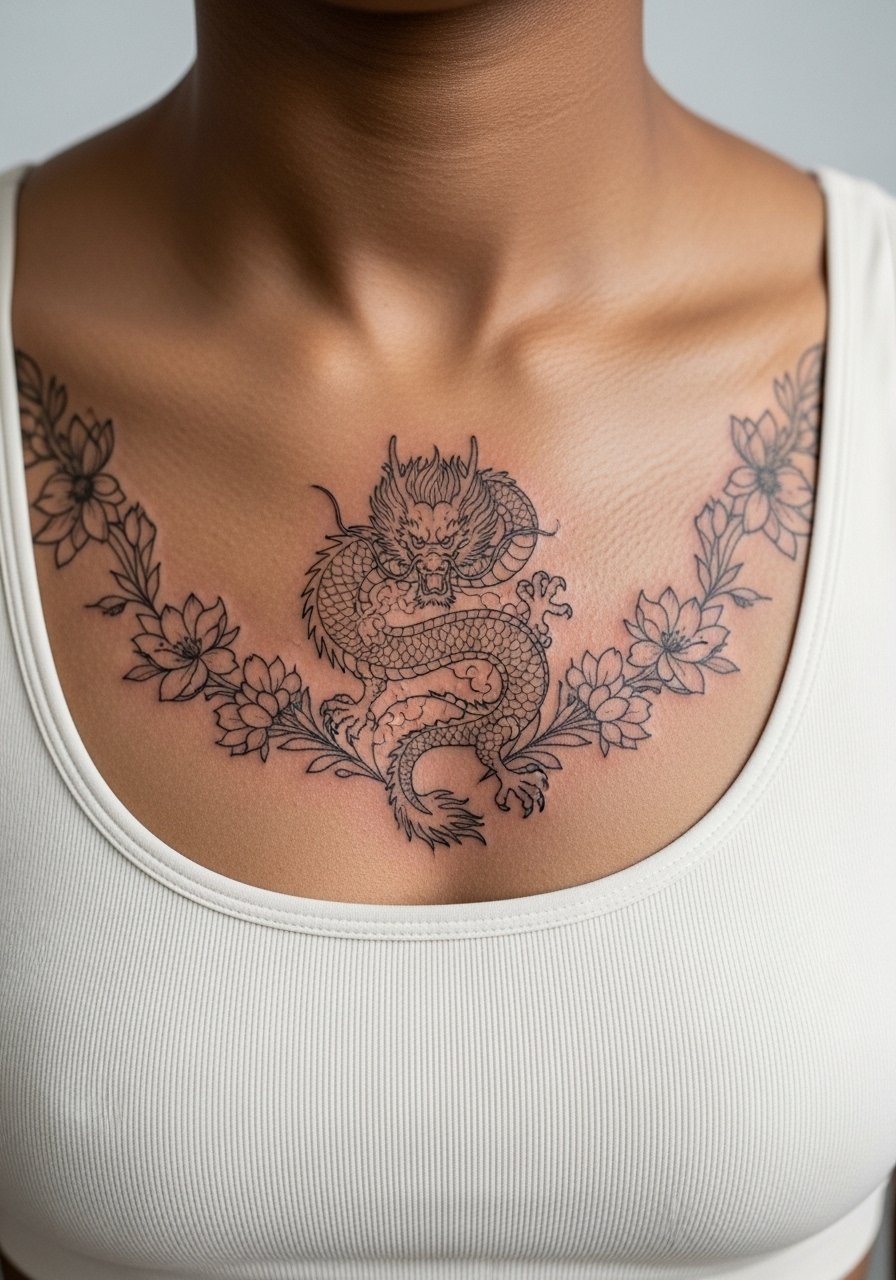
Fine line on the sternum splits artists into two camps. One group says dense detail never holds because the skin stretches and moves while breathing. The other group argues that with controlled needle depth and spacing, the work can settle crisp. Name both views out loud in your consultation and ask how the artist manages breathing and placement. Sternum sessions are painful for many, and the floral frame helps distribute visual weight so touch-ups are less obvious if needed. Wear a fitted sports bra on session day for modest but clear access.
13. Back-of-Neck Tiny Coil
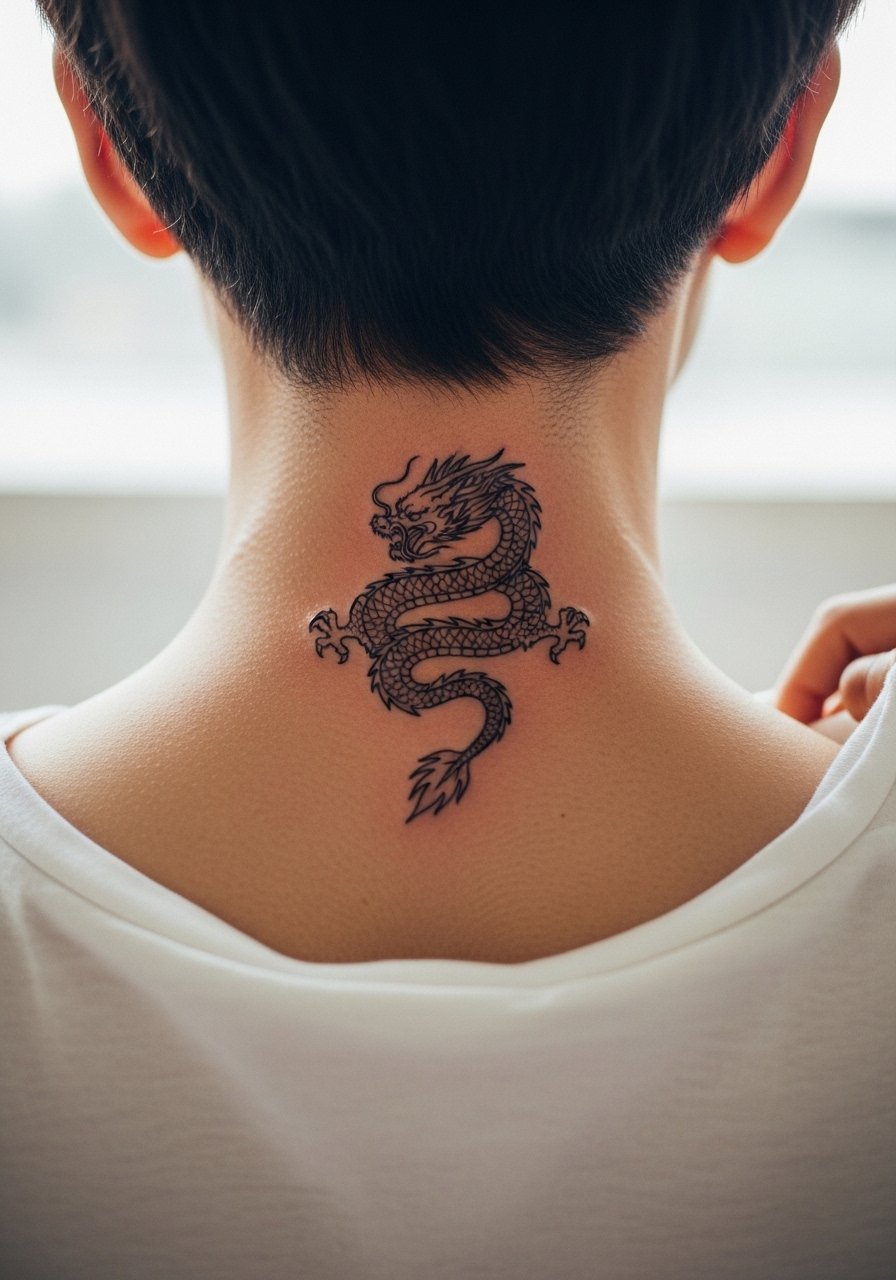
There is strong visual impact in a tiny coil at the nape because movement and hair create subtle reveal. The main consultation note is to request slightly thicker anchor lines where hair will brush so the motif stays defined. Healing is fast but the area is prone to shampoo abrasion, so expect a touch-up window sooner than torso pieces. Session feeling is sharp but over quickly. For easy access bring a wide-neck tee you can pull aside without muss.
14. Hip-to-Upper-Thigh Flowing Dragon
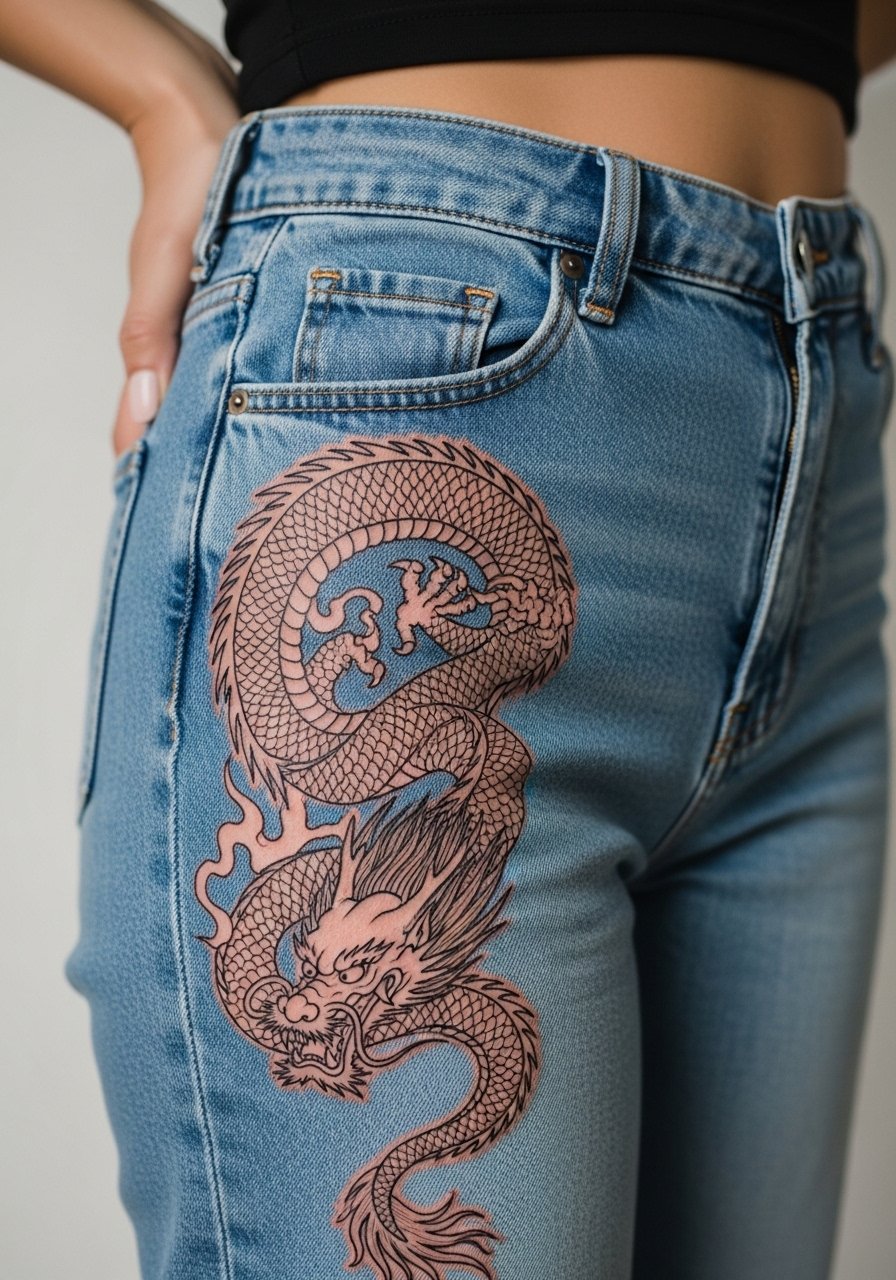
Most thigh and hip pieces age gracefully because the area sees less constant abrasion. For this flow, tell your artist you want negative space between waves of scales so the dragon reads at a distance and up close. A mistake is compressing too much detail near the pelvis crease where stretching blurs texture. Sessions are moderate in time and pain, and wearing high-waisted bottoms that you can shift simplifies access. A high-waisted denim short is ideal for the appointment.
15. Finger Micro Dragon Accent
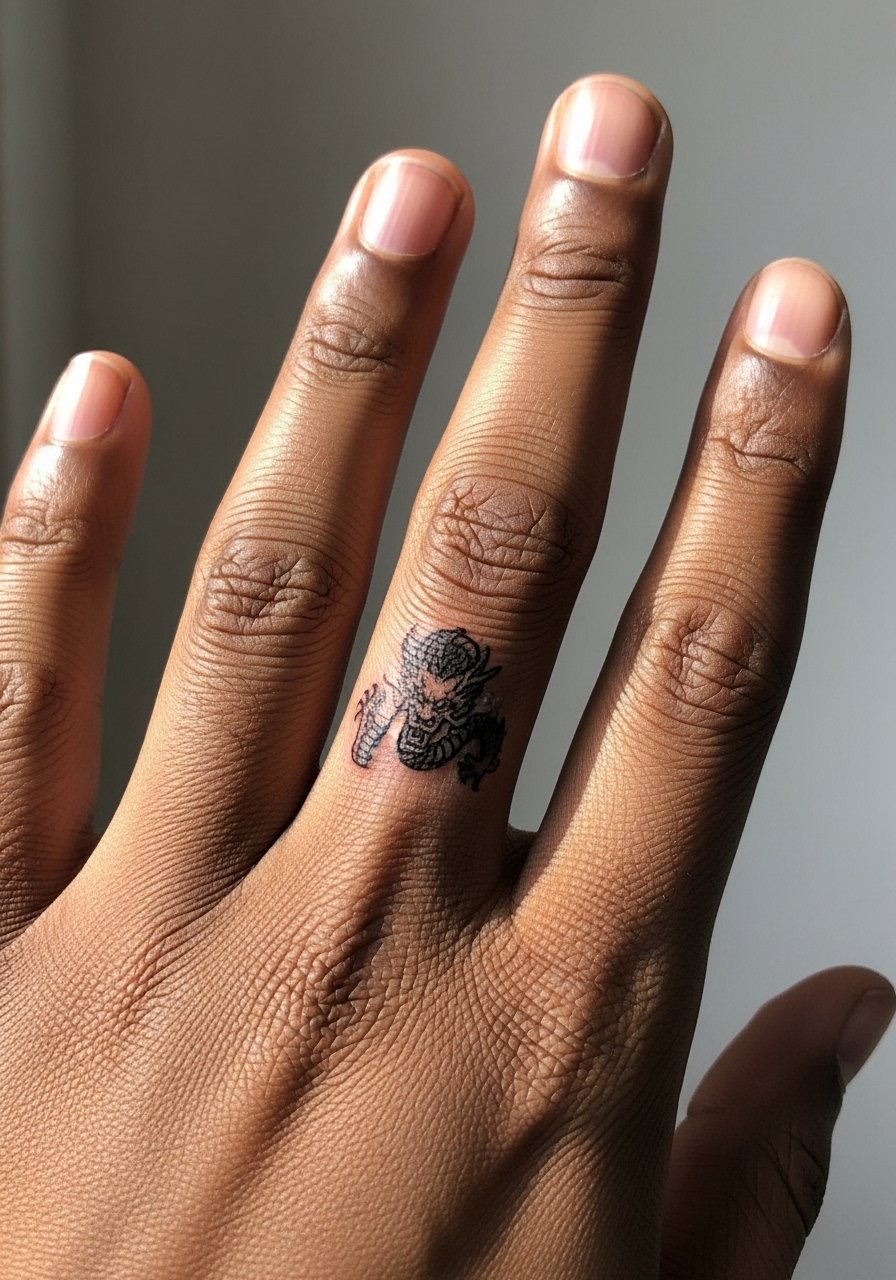
The mistake with finger tattoos is expecting permanence. Skin there sheds and rubs, so fine strokes disappear faster than on the arm. If you want the look, ask for slightly bolder lineweight and plan for regular touch-ups. The session is quick but healing interferes with hand use for daily tasks. Consider how your job and hobbies affect the outcome. For subtle show-off wear a thin ring or a minimal band ring that complements the tiny dragon without causing constant rubbing.
16. Spine Linework from Nape to Mid-Back
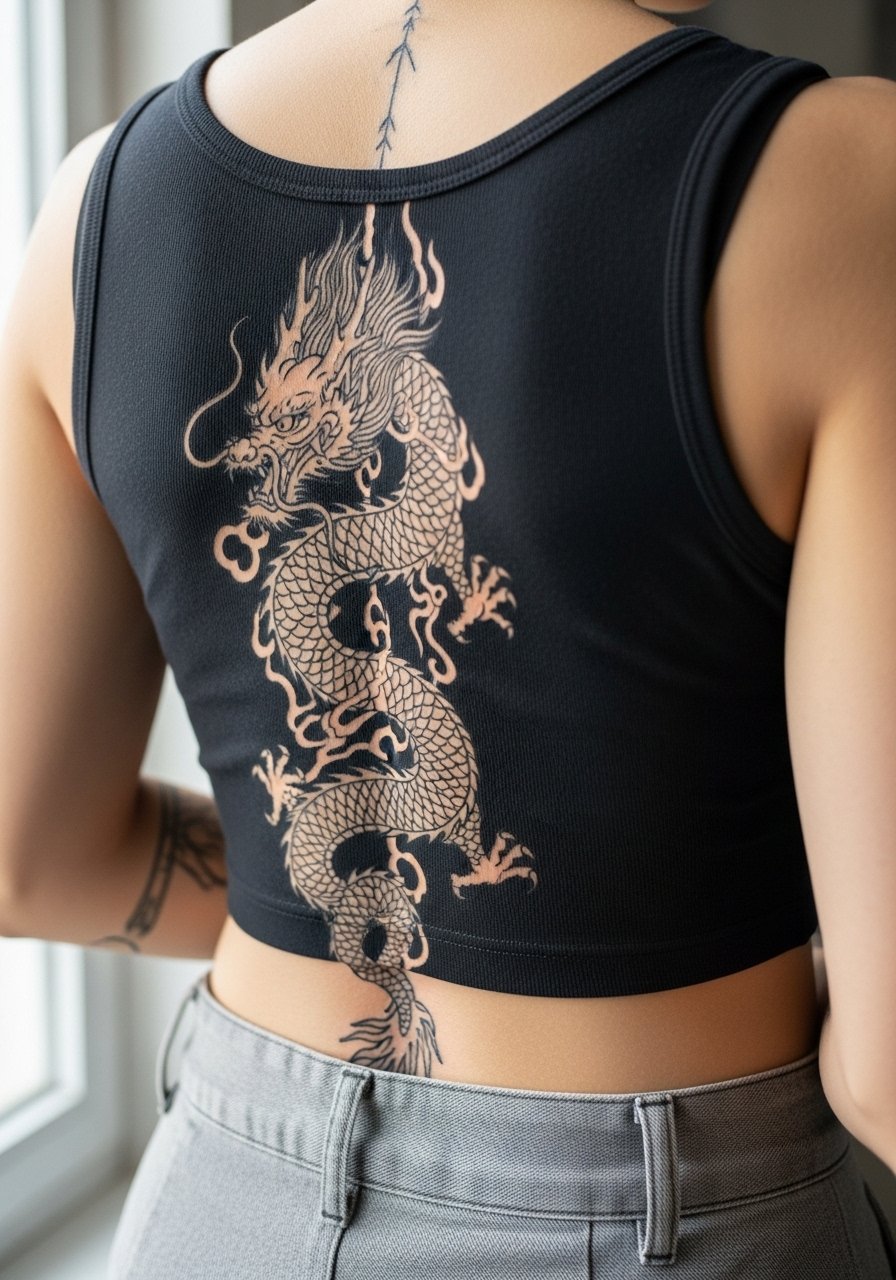
I’ve seen spine runs last if the artist designs with vertebrae gaps in mind. For this, request spacing that follows the natural column of the back and avoid dense stipple over bone. The pain can spike when needles cross near the vertebrae, so split the work into sessions. The common mistake is packing too much micro-shading over the midline which blurs first. For showing the vertical line, open-back dresses and halter tops work well. Wear a tank top you can pull aside for the artist on session day.
17. Thigh Inner Panel Script Dragon
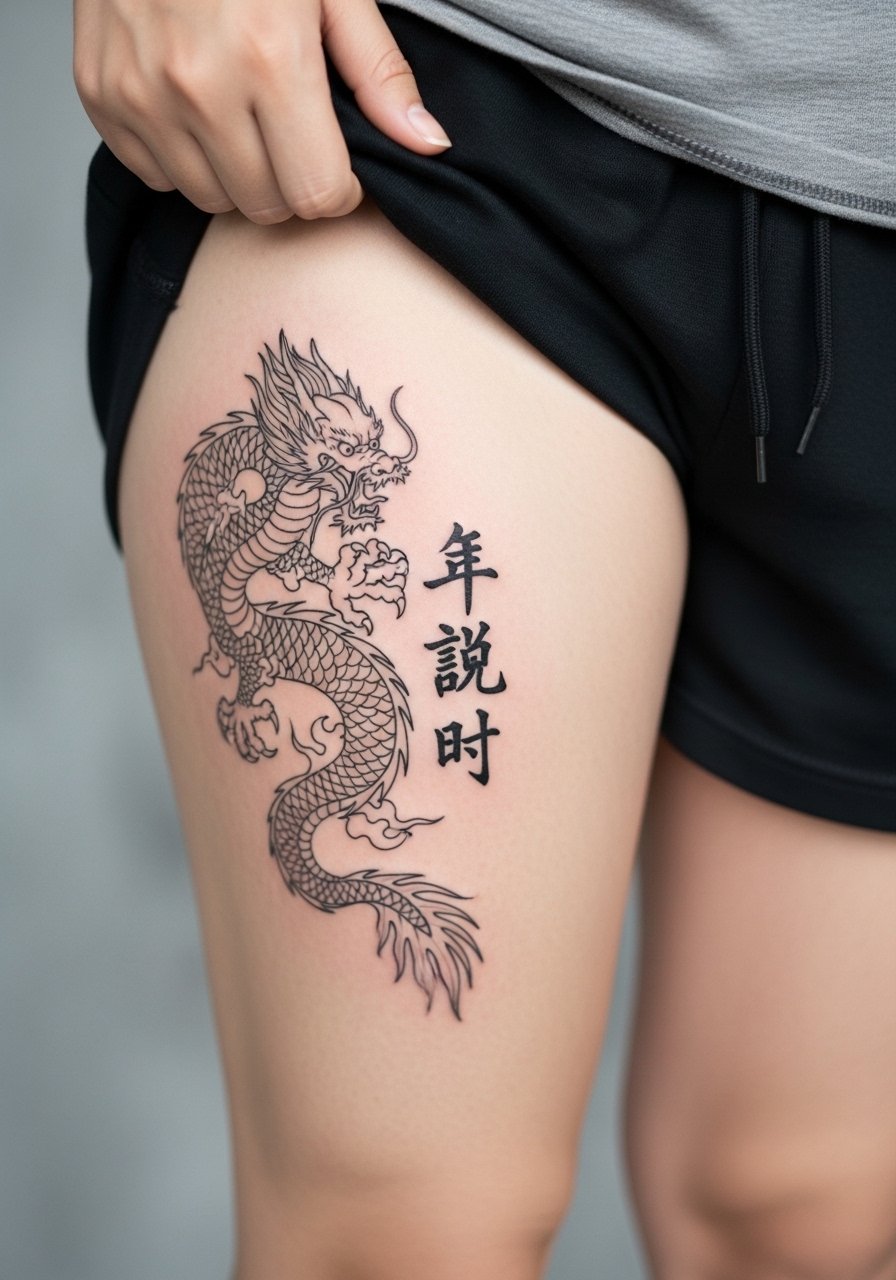
For inner thigh placements pick slightly larger scale elements because the skin there can soften and obscure micro details. The mistake is requesting tiny script or delicate filigree that disappears. During consultation, ask how the artist handles stretch and consider a brief test stencil in motion. Sessions here are private and usually more painful than on the outer thigh. For session comfort bring a long soft robe to keep warm and allow easy access without full undressing.
18. Full Back East-Asian Inspired Composition
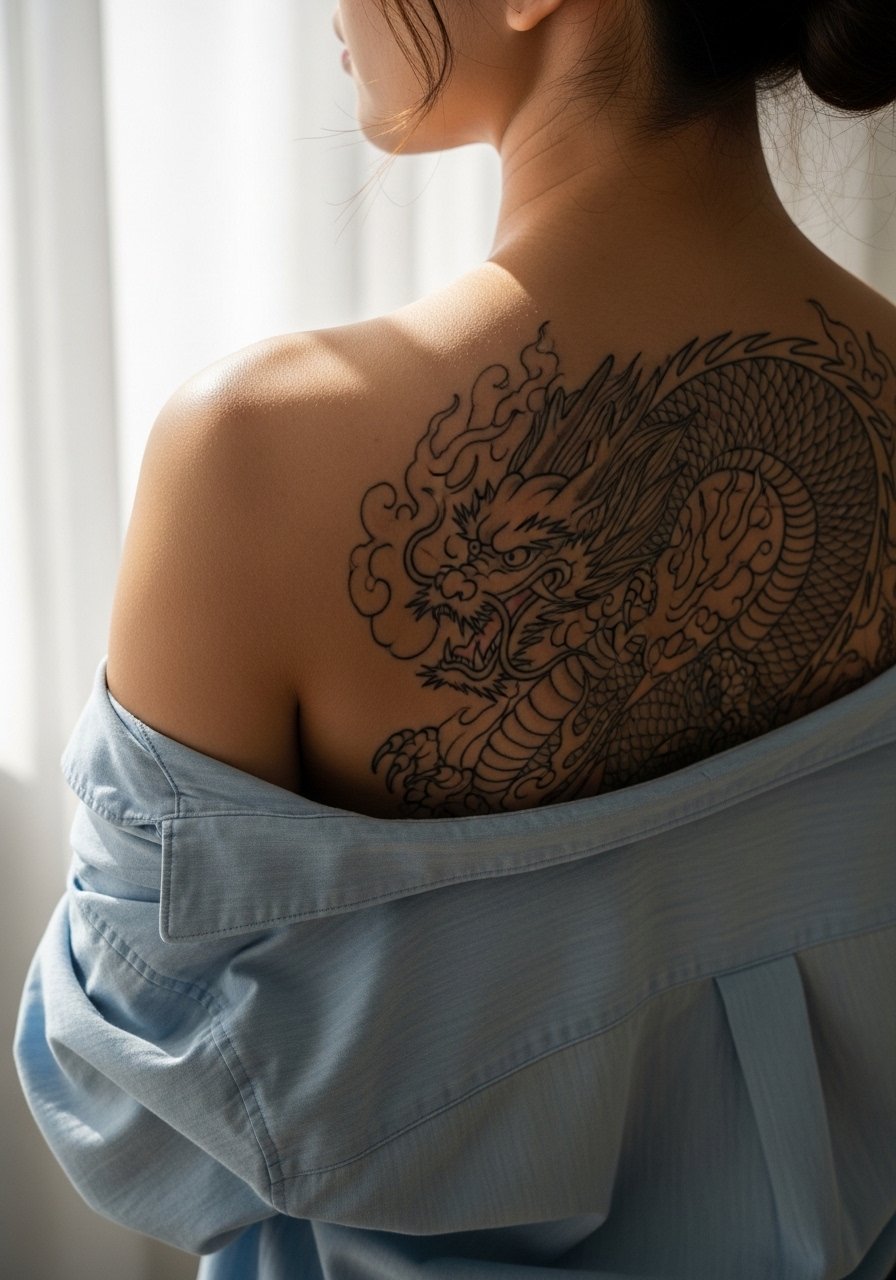
When aiming for an East-Asian inspired full back piece, be explicit about symbolic choices so you do not inadvertently borrow sacred motifs without respect. Some clients want a stylized motif for aesthetic reasons, while others want authentic cultural context. Name both intentions when you book. The session will span multiple long appointments and you will feel cumulative soreness across the back. Ask for staged sessions that let you assess how saturation rests before continuing. For session day, a loose button-down makes artist access simple.
19. Ankle Chain Dragon with Bead Accents
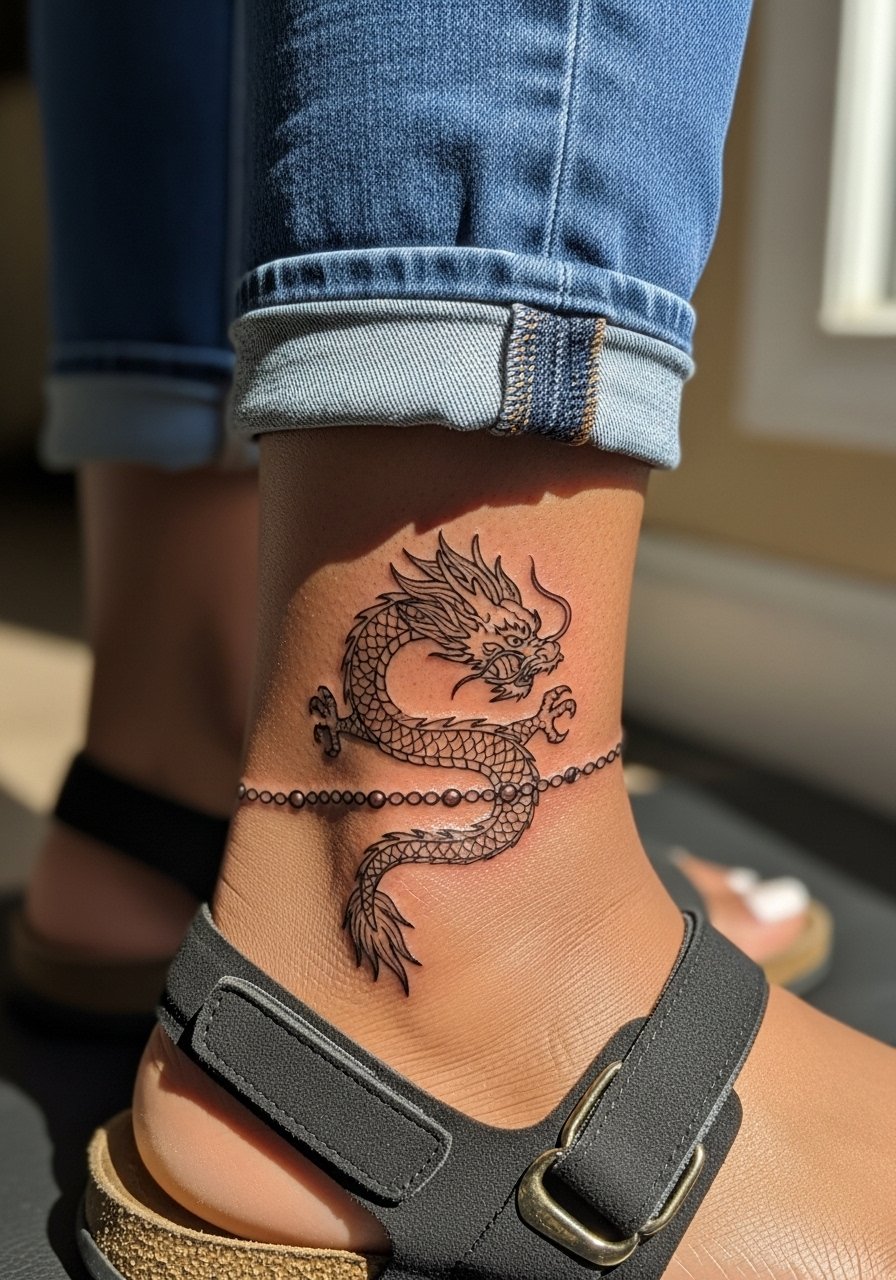
Ankle designs live in a high-friction zone, so the wise move is to ask for slightly heavier connecting lines and sparse internal dots. The most common error is overly delicate bead shading that fades inside six months. Sessions are quick but healing needs care around socks. For showing the piece off, sandals and cropped pants frame the creature without rubbing. Consider a delicate anklet for evenings when you want the tattoo to feel like jewelry.
20. Hand-Side Dragon Accent
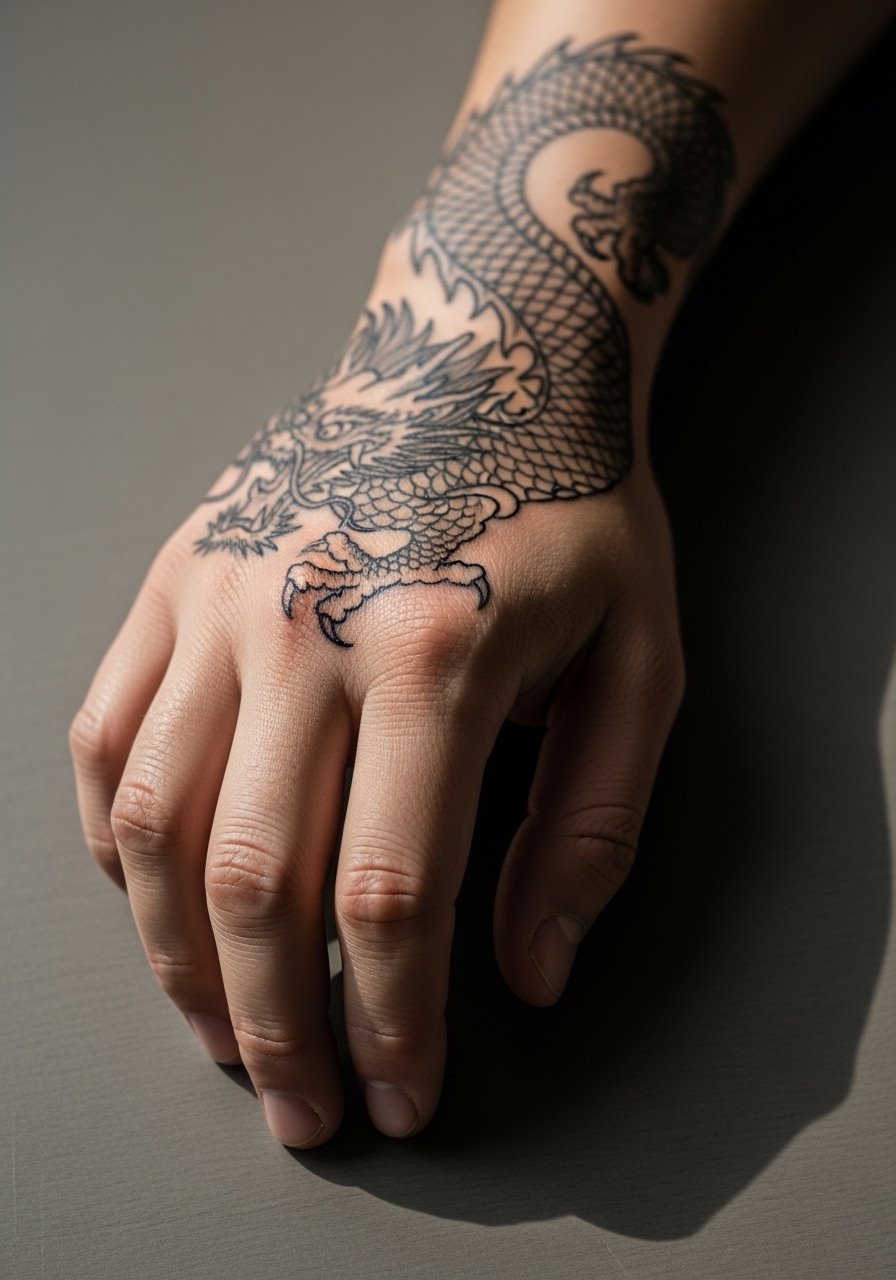
There is a career conversation to have with hand tattoos because some industries remain conservative. If you are comfortable, ask your artist for a slender design that fits the hand contours and uses bolder outer lines to reduce flaking visibility. The biggest mistake is starting with micro-detail there; the hand loses fine points rapidly. Expect more frequent touch-ups and a stiffer aftercare routine. The session itself feels localized and quick. For a subdued look, pair with a simple minimal band ring rather than heavy jewelry that could rub the area.
21. Knee Cap Crest Dragon
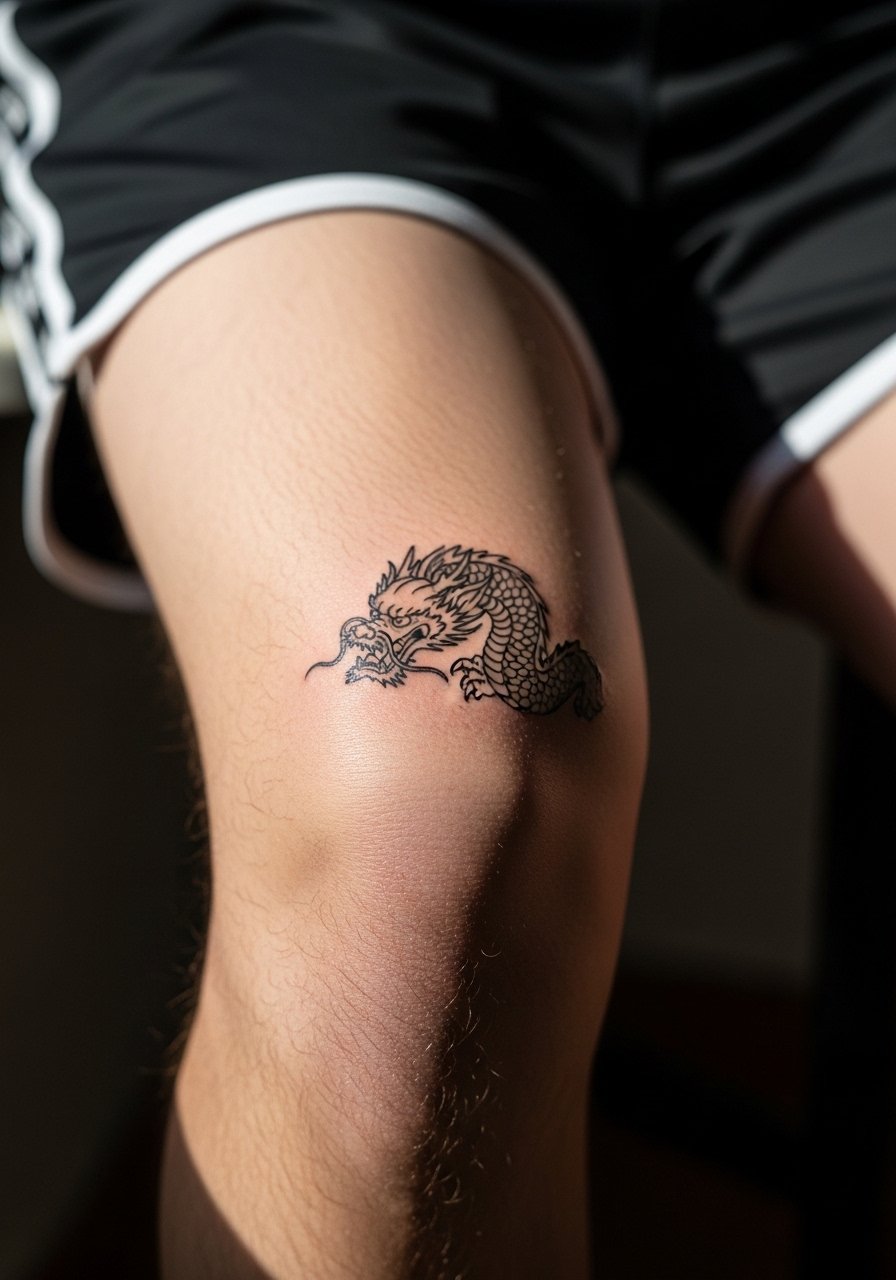
The knee is a high-movement zone and the skin shifts constantly during daily life. The common mistake is expecting crisp micro-detail to last across the patella. For longer-lived results, ask for simplified shapes that follow joint lines and thicker anchors where bending occurs. Session pain can spike when the needle crosses bony areas, so split the session if needed. Expect yearly touch-ups more often than on the torso. Wear loose athletic shorts on the day so the artist can access the knee without pulling fabric taut.
Studio Day Picks
The first six sketches above include forearm, ear, shoulder blade, ribcage, wrist, and calf placements. These picks help with access, sensitivity, and early healing needs for those areas.
-
Stencil transfer paper kit. Lets you preview how a dragon's curve will sit on curved anatomy like the forearm and calf before the session starts.
-
Topical numbing cream. Applied per instructions around 40 to 60 minutes before helps with sensitive spots such as the ribs and inner ear without affecting linework.
-
Thin protective film roll. Useful for wrist and ankle pieces that face constant friction, it shields delicate linework during the first days.
-
Fragrance-free gentle body wash. Cleanses healing skin on exposed placements like forearms and calves without stripping pigment.
-
Aquaphor healing ointment. A thin layer in the initial days helps maintain moisture for fine line areas such as the wrist and collarbone.
Frequently Asked Questions
Q: Will a fine line Chinese dragon on my ribs blur faster than a blackwork dragon on the shoulder?
A: Yes, fine line on ribs tends to soften sooner because the skin stretches and breathes with motion. Dense blackwork on the shoulder often holds shape longer because of thicker skin and less direct sun. Discuss spacing and lineweight with your artist, and plan a realistic touch-up timeline.
Q: How should I approach cultural sensitivity when getting a Chinese dragon design?
A: There are two reasonable views. Some people wear the imagery as stylistic expression, others expect cultural context and respectful symbolism. Be transparent about your intent in the consultation and ask the artist about their approach to culturally rooted imagery.
Q: What should I wear to a session for a sternum or ribcage dragon?
A: Wear something that gives the artist clear access while keeping you comfortable, such as a fitted sports bra or a cropped athletic top. These let the artist work without you feeling exposed and make post-session dressing easier.
Q: How often do hand and finger dragon tattoos need touch-ups compared with forearm pieces?
A: Hand and finger pieces usually need touch-ups more frequently because of constant washing and friction. Forearm pieces see fewer touch-ups generally. Expect maintenance for hand work at shorter intervals and plan accordingly.
Q: Can I get a detailed head of a dragon as a small tattoo and expect it to remain sharp?
A: Small, highly detailed heads are the most at-risk for losing definition. If you want a small head, ask your artist to scale up the major shapes and reduce micro strokes. That preserves the motif while keeping a crisp long-term read.