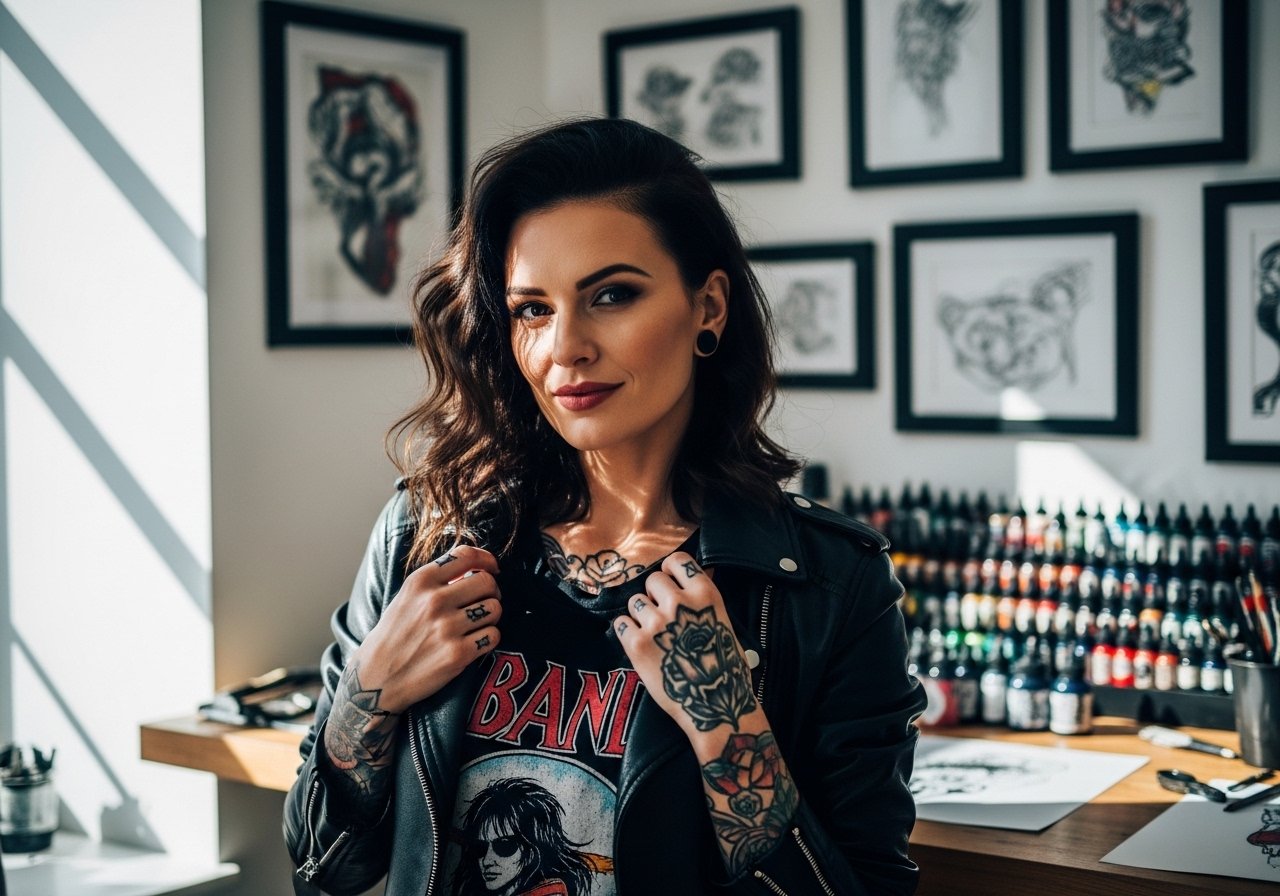
The tattoos that age best are not always the flashiest on day one. Bright color can hold for a decade when saturation, spacing, and placement work together, and the same saturated palette can blur into a muddy patch if it sits on high-friction skin or too-fine linework. Below are 21 colorful Saint Michael tattoo designs that consider aging, placement, and how to show them off.
1. Mini Saint Michael on Inner Forearm, Micro-Realism
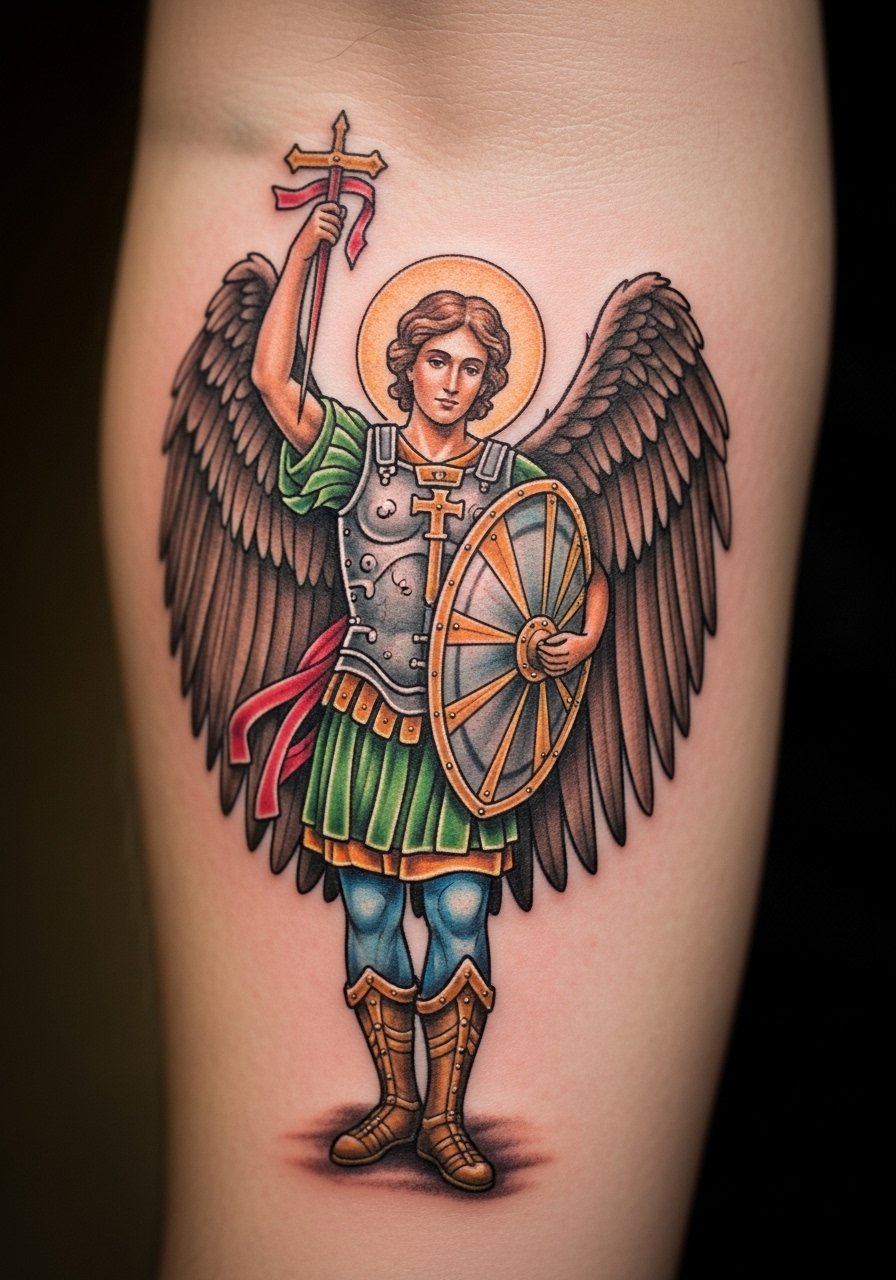
A compact micro-realism Saint Michael on the inner forearm reads intimate and personal. I recommend keeping it roughly palm-sized so the facial detail holds without overcrowding the linework. During consultation, ask your artist for slightly heavier linework around the silhouette and saturated blocks of color in the wings rather than tiny isolated strokes. Fair warning about blowout risk on very thin forearm skin. Expect the colors to read bright at six months, then soften a touch by year two. For the session, wear a loose button-down shirt so the sleeve can be rolled without tugging.
2. Traditional Saint Michael on Outer Bicep, Bold Colorwork
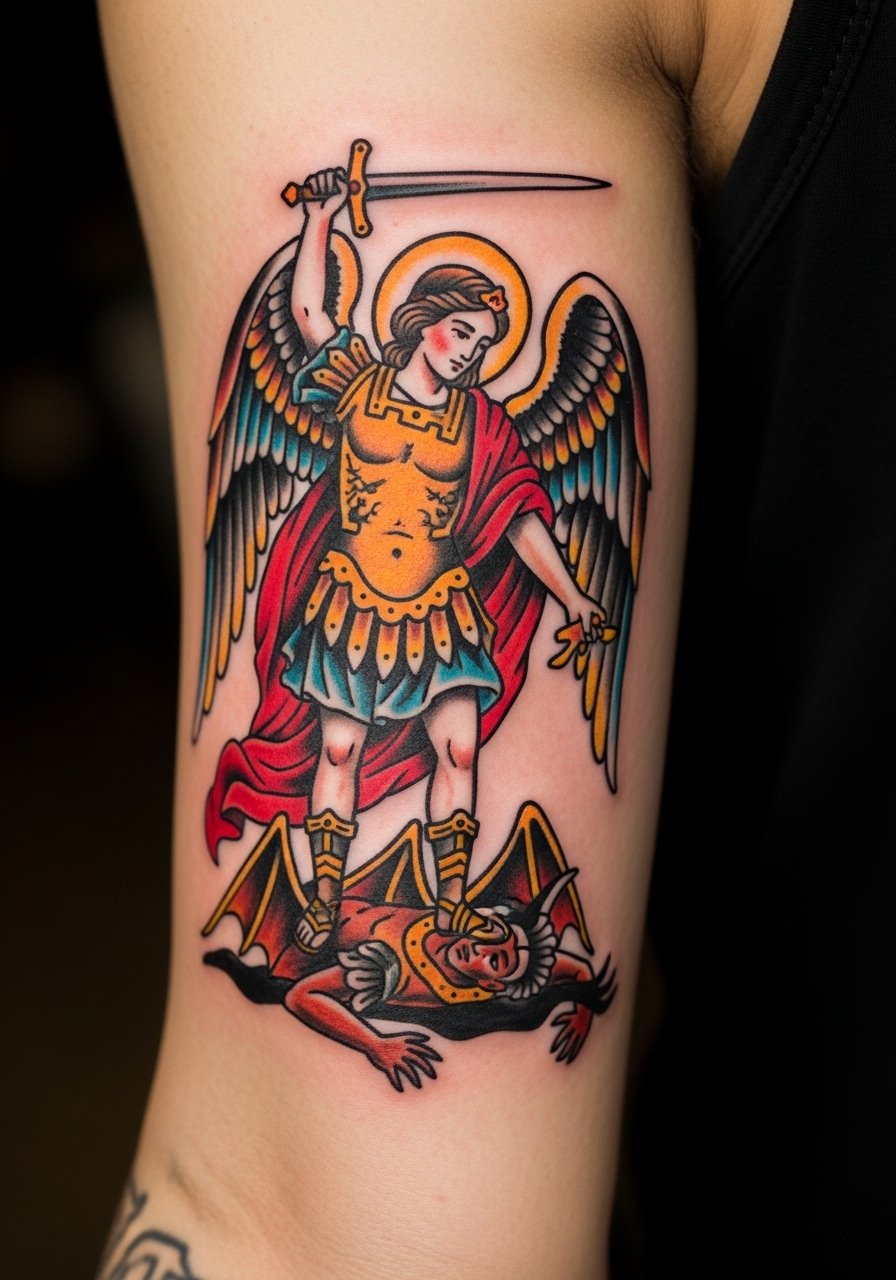
Traditional lineweight and saturated fills suit the outer bicep because the skin tolerates bolder needle depth there. Tell your artist you want strong black outlines with full saturation in primary colors to keep the imagery clear as it ages. The mistake I see most often is asking for tiny traditional elements that rival old-school size, which leads to crowding. Pain is moderate and sessions usually finish in a single two-hour block. Pair the look with rolled sleeves or a crewneck tee when you want to show off the figure and color.
3. Saint Michael over Collarbone, Colorwashed Contour

A collarbone placement lets the wings breathe along the bone line and looks intentional with a soft watercolor wash behind the figure. During consultation, ask for feathered color transitions instead of tiny stipple gradients. The controversy around color treatment on religious icons appears here. One camp prefers reverent, faithful portraiture with traditional shading. The other embraces stylized washes and experimental palettes for expression. Ask your artist where they land before booking. For sessions, a wide-neck shirt you can pull aside makes access easy, and a thin chain pendant necklace frames the collarbone without competing.
4. Small Saint Michael on Ribcage, Watercolor Accents
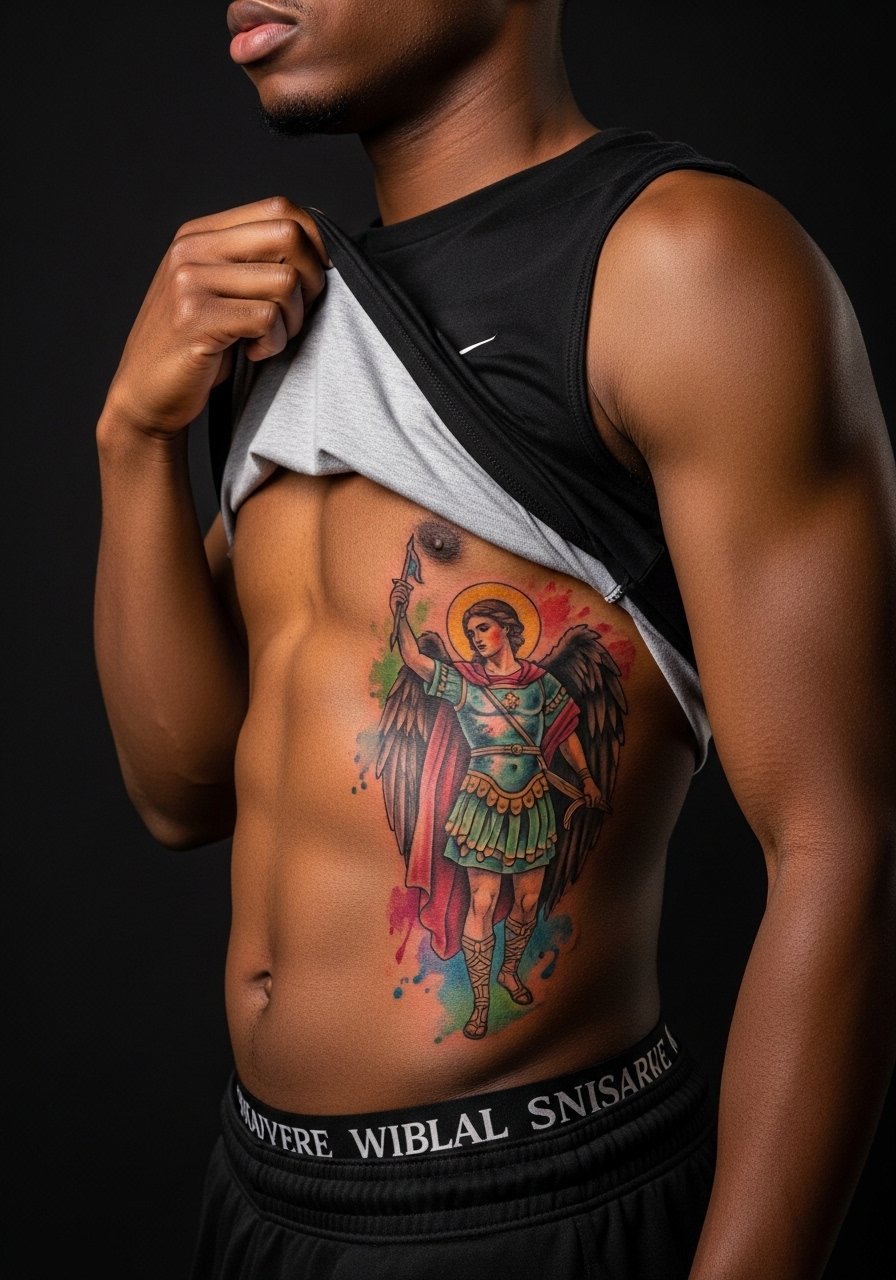
Ribcage work is memorable and painful, so come ready. The biggest mistake with ribs is requesting extremely fine detail too close to the sternum where movement blurs lines during healing. For this design, keep the main figure slightly larger than you think. The watercolor accents can be airy and still age better if they sit over broad color fields rather than micro-stippling. Expect touch-ups at year three if you spend lots of time in sun. Wear a cropped top for the session and plan a two-hour block with breaks.
5. Ankle Saint Michael, Minimalist Color Pop

An ankle placement reads delicate and can look great with a bold color pop behind simplified linework. The common version that ages poorly is tiny tonal detail around the ankle, which gets rubbed by socks and shoes. Ask your artist to push color saturation into a small background shape so the figure remains legible. Sessions are short and tolerable for most. Pair this tattoo with sandals or rolled trousers for showing it off and try an ankle bracelet for a complementary accent.
6. Saint Michael on Back of Hand, Miniature Icon
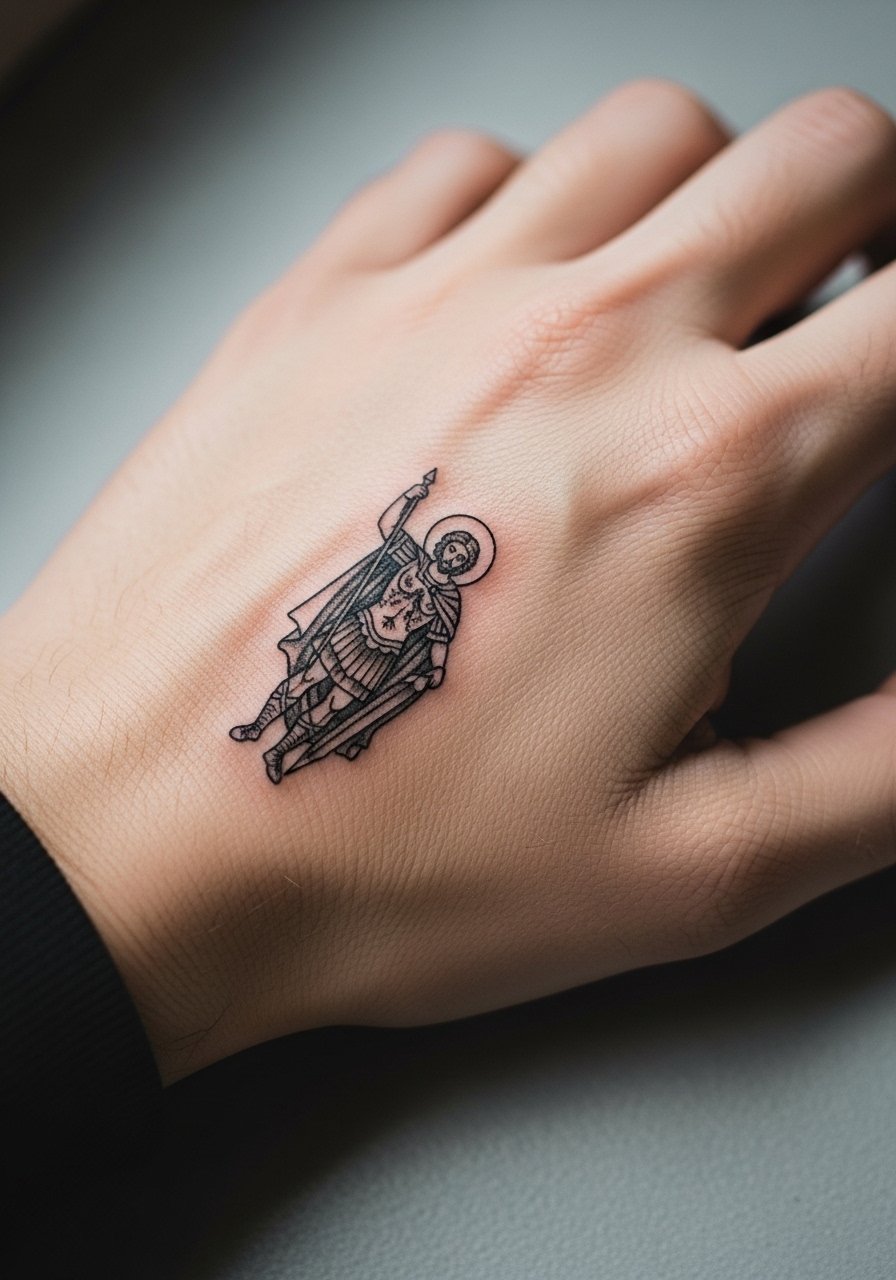
Hand tattoos are high-visibility and high-wear. One camp accepts that hands need frequent touch-ups and treats them like temporary commitments. The other warns about workplace implications and fading from constant washing. Name both lines of thinking with your artist and be explicit about longevity. For this piece, keep scale small but bold and avoid micro-shading that will blur into daily use. Pain is sharp but quick. For the session, wear sleeves you can pull back without friction and expect touch-ups sooner than for arm work.
Studio Day Picks
These first six small and visible placements share similar needs for access and early protection, so a few focused items smooth the session and the first week.
-
Stencil transfer paper kit. Helps the artist preview placement on thin-skin areas like the hand or ankle before the needle meets skin.
-
Organic topical numbing gel. Applied per directions it eases sharp zones like the ribcage without masking the artist's feedback.
-
Thin protective film roll. Keeps wrist and finger tattoos cleaner through frequent hand washing during the first days.
-
Fragrance-free gentle body wash. Gentle cleansing is important for fresh color on the forearm and collarbone without stripping pigment.
-
Aquaphor healing ointment. Thin layers in the opening days protect saturated color fields and help reduce scabbing that can pull color unevenly.
7. Full Chest Saint Michael, Neo-Traditional Palette
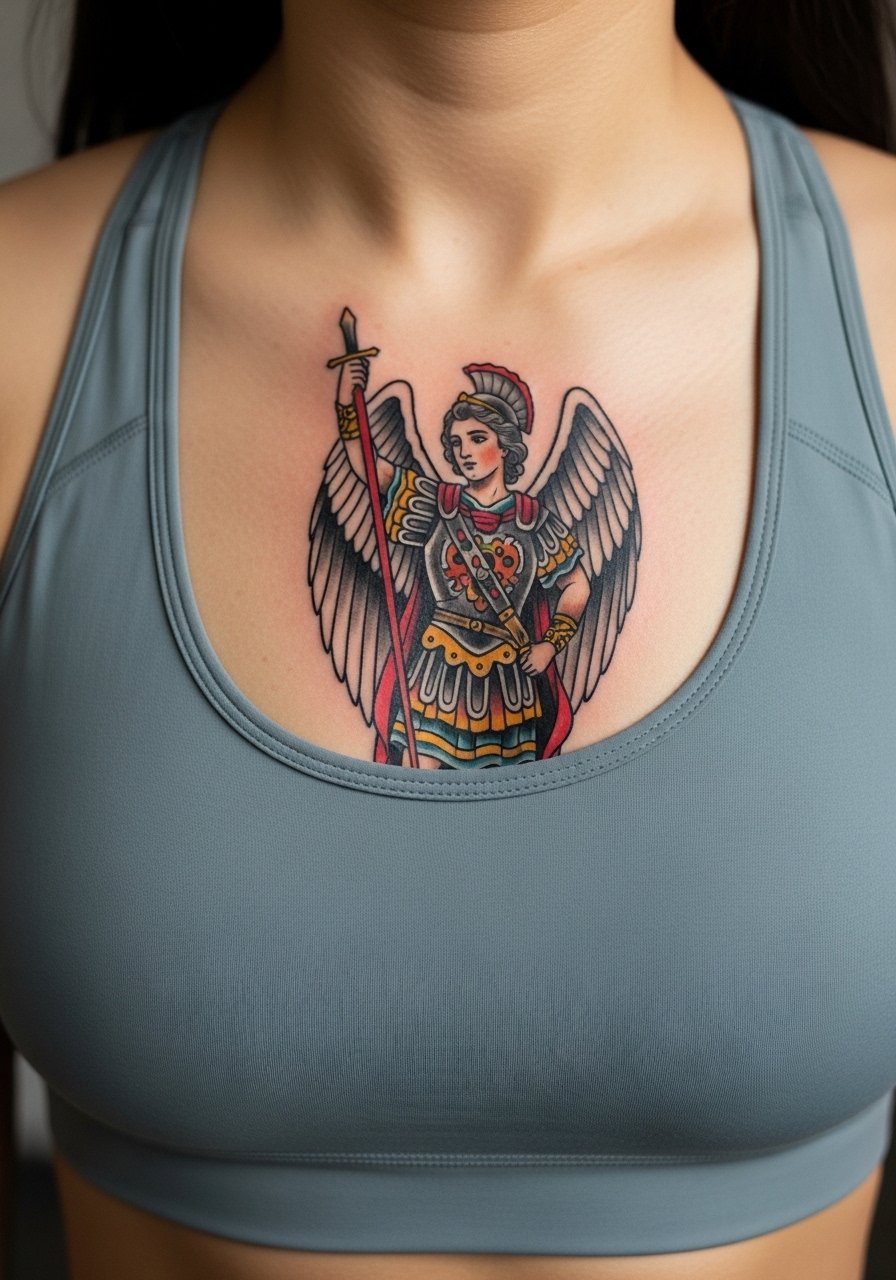
A full chest piece gives space for dramatic wings and a layered color palette. For sternum-adjacent work, avoid very fine facial detail near the center line where stretch can soften edges. The session can be long and intense, so plan a split appointment if you want depth in one sitting. Many clients ask for rich jewel tones that hold well, but the mistake is over-detailing tiny elements that will need touch-up. For showing it off, open-neck tops frame the work. During the consult, ask about layering color versus glazing in separate sessions to preserve saturation.
8. Half-Sleeve Saint Michael, Color Gradient Wings

A half-sleeve allows gradients that flow with muscle contours. Tell your artist how much negative space you want so the wings do not become a single mass of color as it heals. The common mistake is packing too many small motifs into the sleeve, which flattens the silhouette over time. The session time can be several hours across multiple visits. Expect color to maintain its pop if you limit heavy sun exposure. Pair with short-sleeve shirts or rolled linens when you want the piece to read in daylight.
9. Saint Michael Sternum Piece, Delicate Color Filigree

Sternum work needs an artist comfortable with the curve and movement of the chest. One camp says delicate detail here ages poorly because stretching pulls lines. The other camp argues that deliberate spacing and slightly heavier contour lines solve that. State your preference in consultation. Keep the design balanced so breath and torso motion do not distort focal elements. Expect higher pain and a careful two-hour session at minimum. For the appointment, wear a sports bra you can lower slightly so only the tattooed zone shows.
10. Shoulder Blade Saint Michael, Painterly Color Fields

The shoulder blade gives a flat canvas for painterly color that sits nicely under sleeves when desired. The mistake is crowding the area with thin line detail that will blur with motion. Ask for broader color blocks and defined contour lines for the figure. Sessions are comfortable for most and often finish in one block. For showing it off, tank tops are ideal and a loose tank top is a good choice for the first few weeks of healing.
11. Thigh Saint Michael, Bold Color and Negative Space
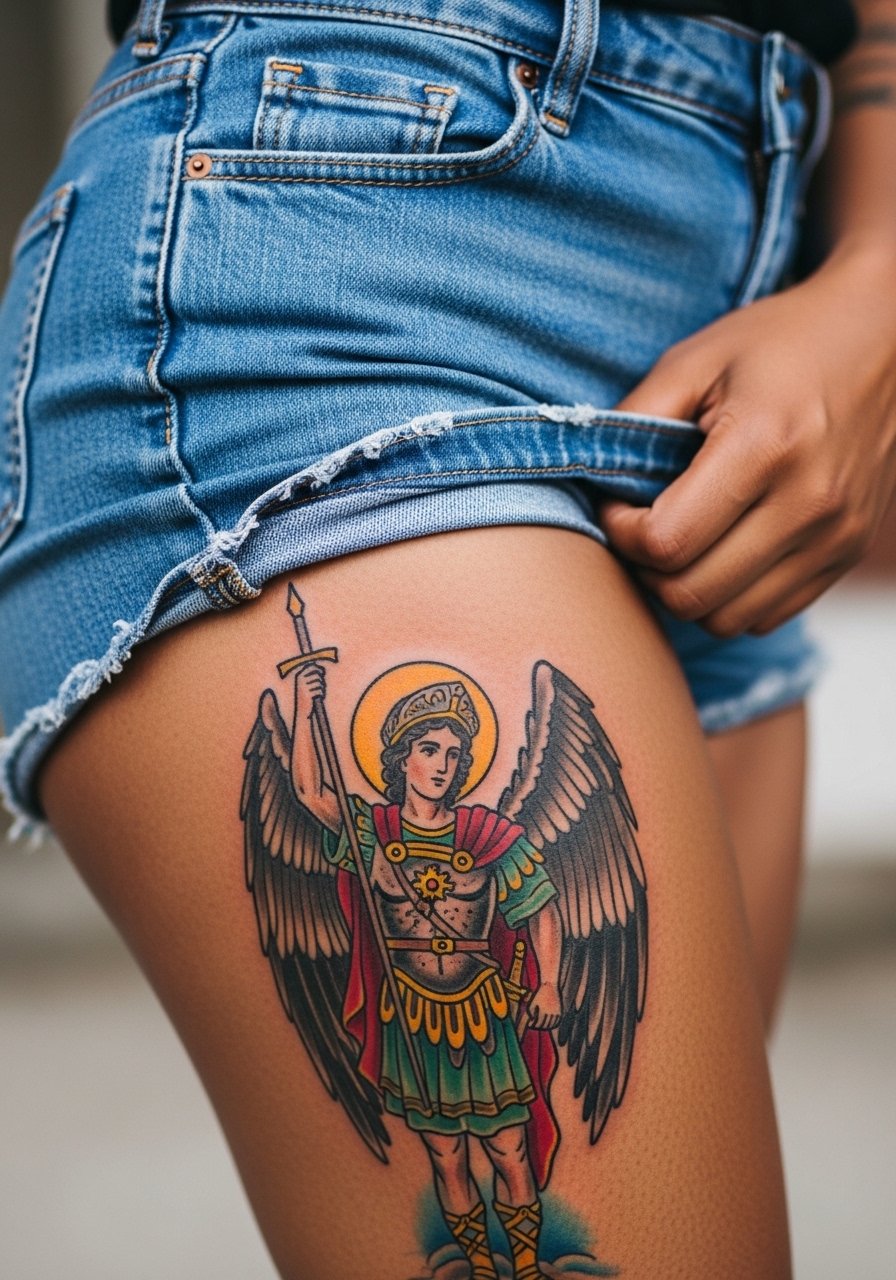
Upper thigh pieces let you go large and bold with color placements that will be protected from sun and friction. Tell your artist where clothing seams sit so major color fields avoid constant rubbing. A frequent error is placing the figure too close to the groin or waist seam where friction and movement cause fading. The session is moderate pain and usually long, so bring snacks and a loose skirt or shorts for easy access. This placement ages well and often needs fewer touch-ups than hands or ankles.
12. Small Saint Michael on Calf, High-Saturation Mini
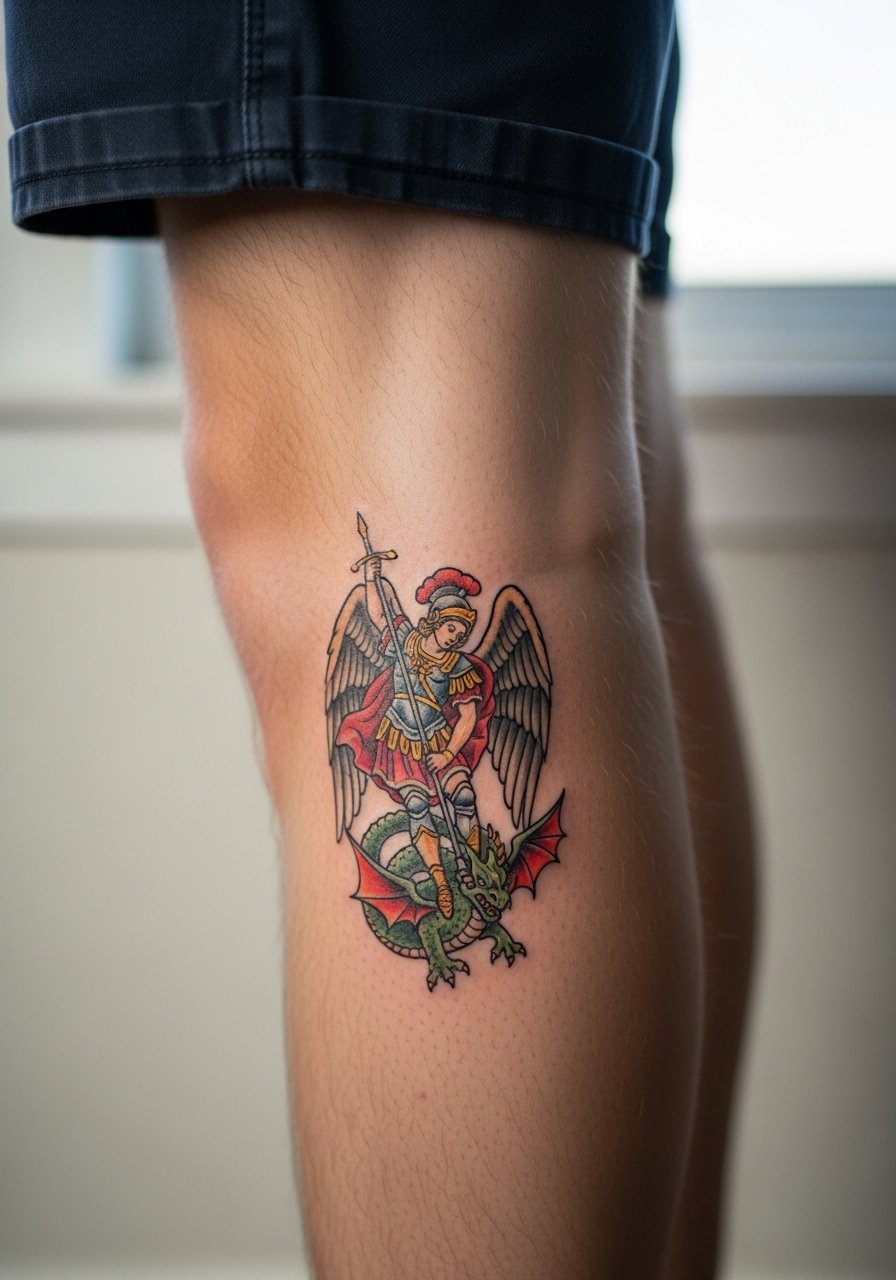
A calf placement tolerates bold saturation and looks great with a compact silhouette. The common mistake is relying on thin shading around the calf where repeated movement from walking softens the edges. Ask for solid color fills for the wings and a slightly thicker outline to preserve silhouette. Sessions tend to be quick and tolerable. Pair with shorts or cropped trousers to show the piece and consider a pair of mid-height socks if you want a curated reveal.
13. Back-Center Saint Michael, Large-Scale Color Narrative
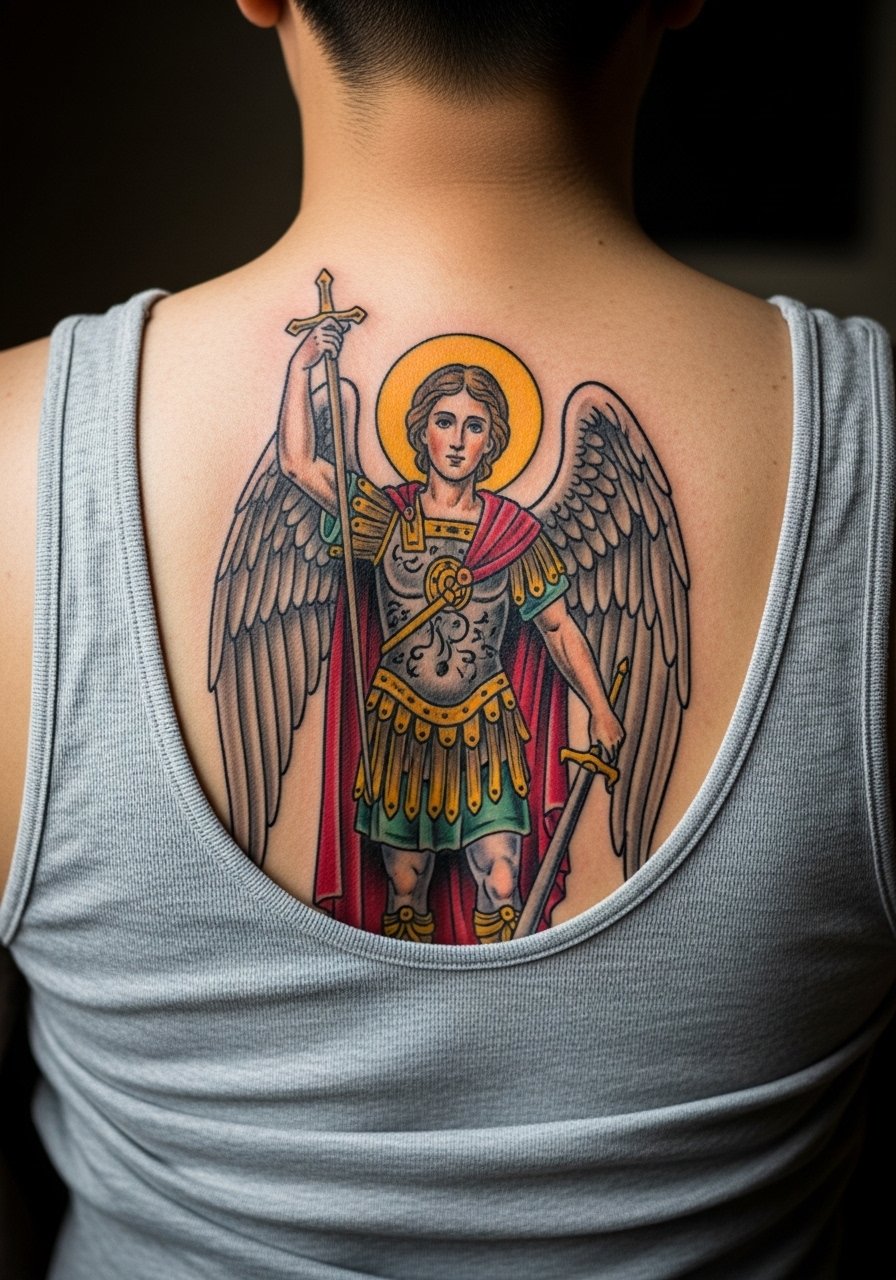
A full back composition lets color tell a narrative around Saint Michael. The risk is adding too many tiny motifs which, when scaled, compete with the central figure. In consultation, prioritize the figure and use background color as framing rather than detail. Sessions can span multiple days and require planning. Back pieces usually age well if you limit sun exposure. For the session, a button-down you can pull aside or a tank works best so the artist can reach the area without skin stretching.
14. Neck-Adjacent Saint Michael, Compact and Colorful
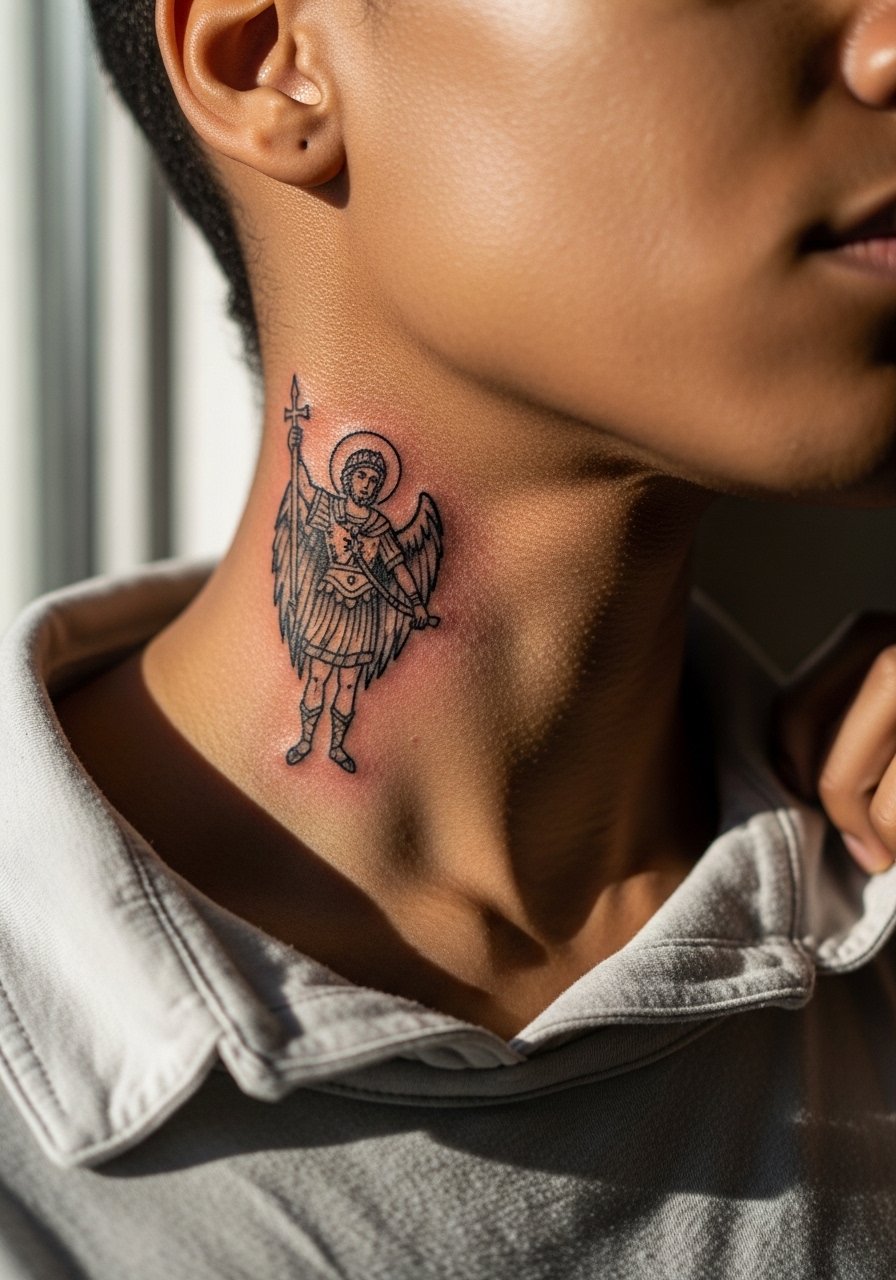
Neck placements are bold and visible. Discuss career implications and touch-up expectations with your artist. Some people accept the visibility and plan for maintenance. Others prefer placements that can be hidden. For this compact neck piece, avoid micro-shading and ask for a simple color block behind the figure so the silhouette reads from a distance. The session is sharp but short. Wear a loose wide-neck shirt that you can shift for access.
15. Forearm Wrap Saint Michael, Mixed Techniques

A forearm wrap lets the figure curve with the arm and creates movement in the wings. The mistake I see is over-detailing the area with tiny dots and micro-lines that blur over time. For longevity, ask for deliberate negative space and slightly heavier contour near high-motion zones. Expect moderate pain and a single multi-hour session for a medium wrap. This placement looks great with rolled sleeves and a rolled-up linen shirt to keep attention on the artwork.
16. Throat Emblem Saint Michael, Small and Iconic
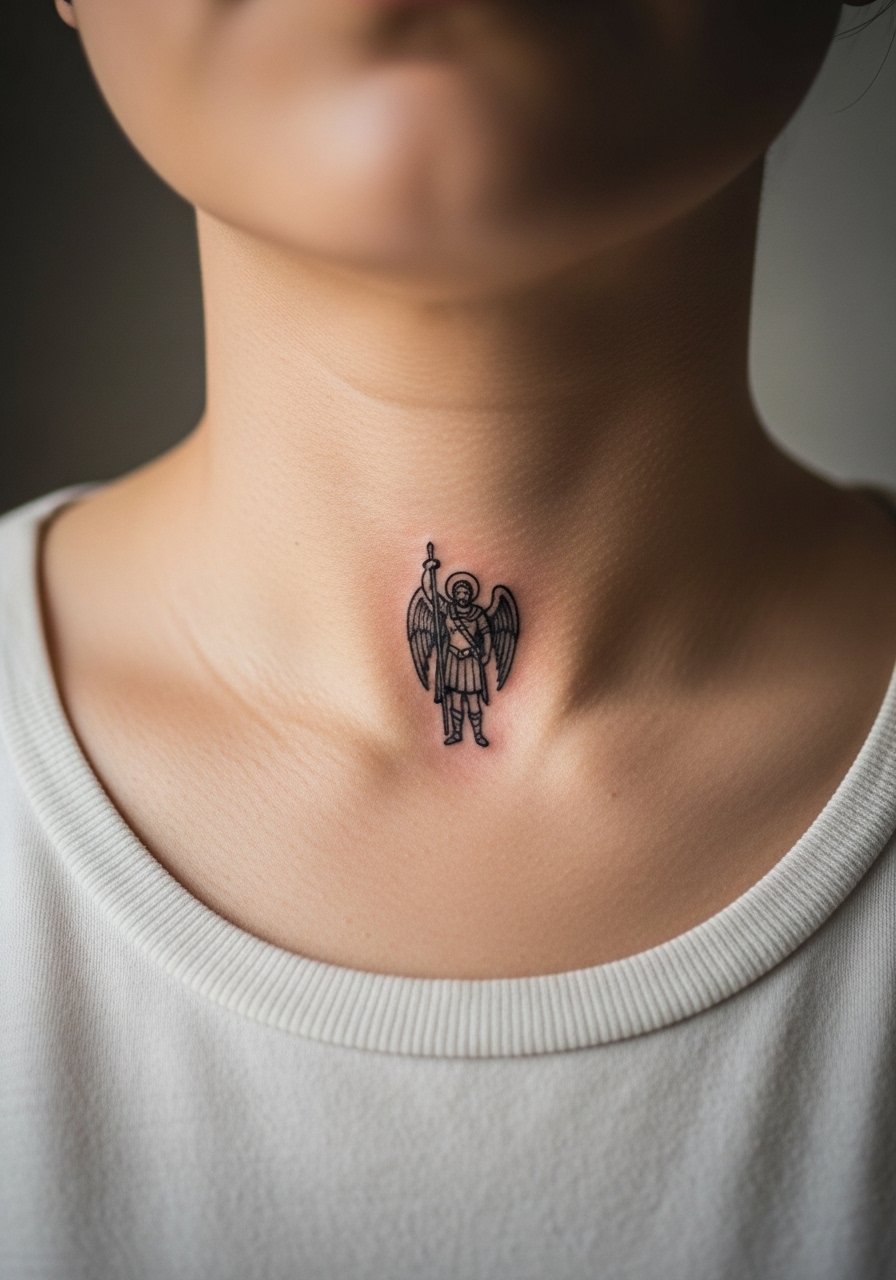
Throat work is visible and invites strong opinion. Be clear with your artist how visible you want the piece to be. The common version that ages poorly is too much small text or tiny halftone that the neck motion turns into muddied texture. Keep anatomy in mind and negotiate slightly thicker contour lines. Session pain is high for many clients. For the appointment, wear a shirt that you can shift without tugging the skin.
17. Victorian-Style Saint Michael on Hip, Delicate Color Lace
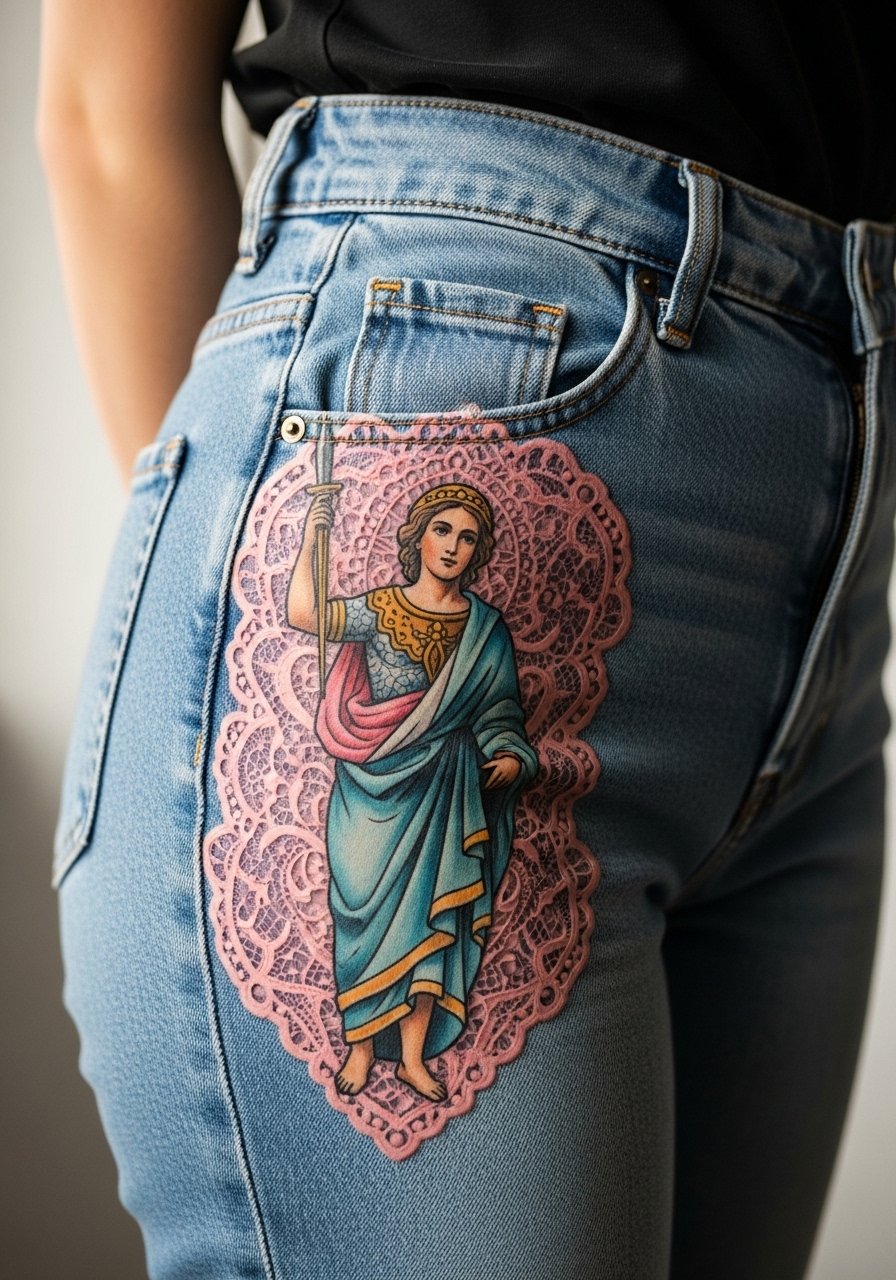
Hip placements combine intimacy with the ability to hide the work easily. The error is tiny filigree that sits under waistbands and rubs during healing. Ask for placement a few centimeters away from any tight seams and request that the artist maps the exact fabric lines on you. Sessions are moderate and often split. For ease during the session, wear high-waisted bottoms that you can adjust, and consider a wrap skirt afterwards for comfortable coverage.
18. Gothic Linework Saint Michael on Inner Bicep
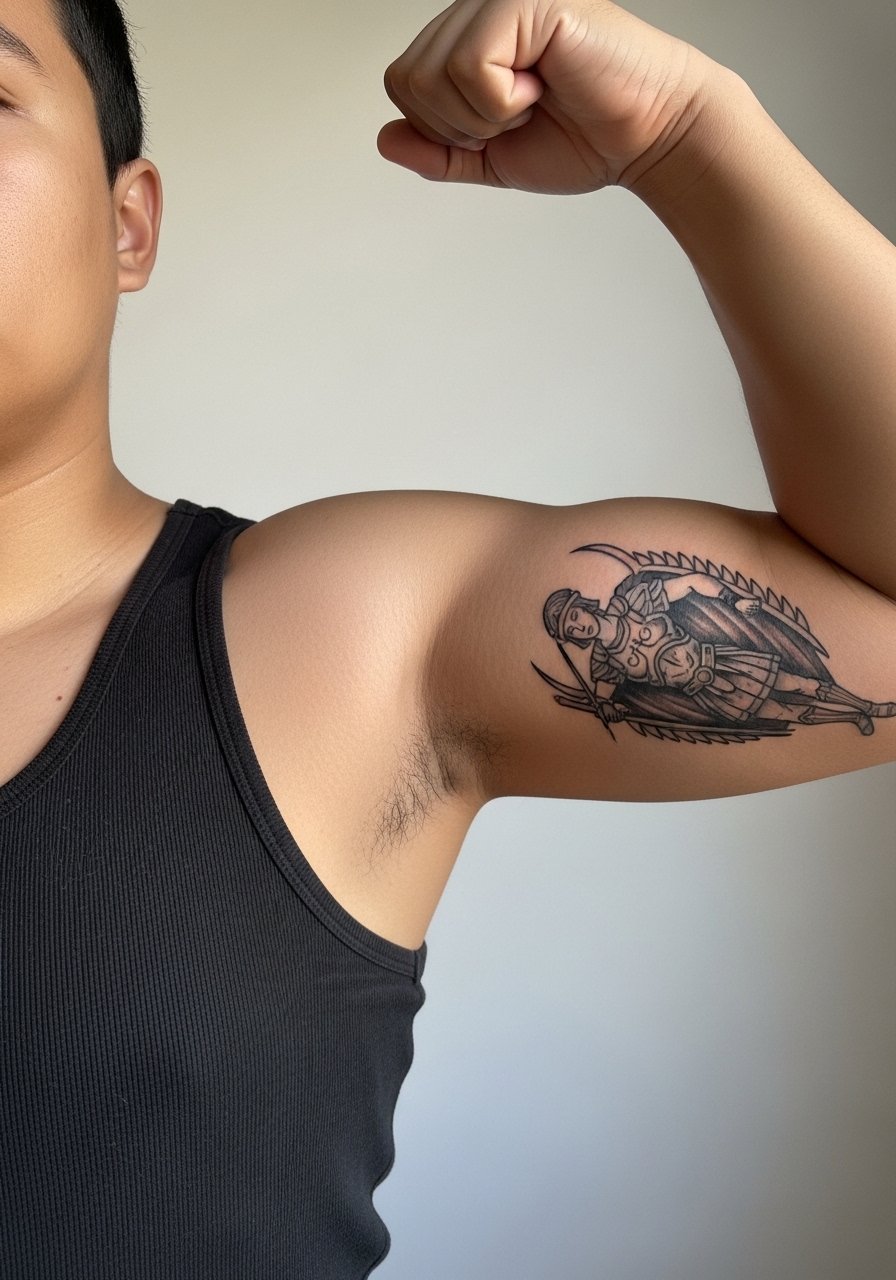
Inner bicep work sits on skin that flexes and stretches. Artists divide on whether very fine gothic detail holds here long term. One side says the skin moves too much and blurs small lines. The other side contends that correct depth and spacing keep detail. Ask which approach your artist uses. The session can be sensitive but is usually short. Avoid asking for dense black fills hugging tiny lines in this zone. A tank top for the appointment gives the artist clear access without a full sleeve.
19. Saint Michael Sleeve Accent Behind the Ear, Tiny and Bold

A tiny icon behind the ear reads like a deliberate secret. Follow placement safety guidance by framing it below the hairline. The common mistake is asking for intricate facial detail in a space too small for fidelity. For this zone, simplify the face and emphasize halo and wings with a small color wash. Sessions are quick and usually tolerable. Consider a hairstyle that can reveal or hide the area and discuss visibility with your artist beforehand.
20. Retro Poster Saint Michael on Thigh, Saturated Blocks
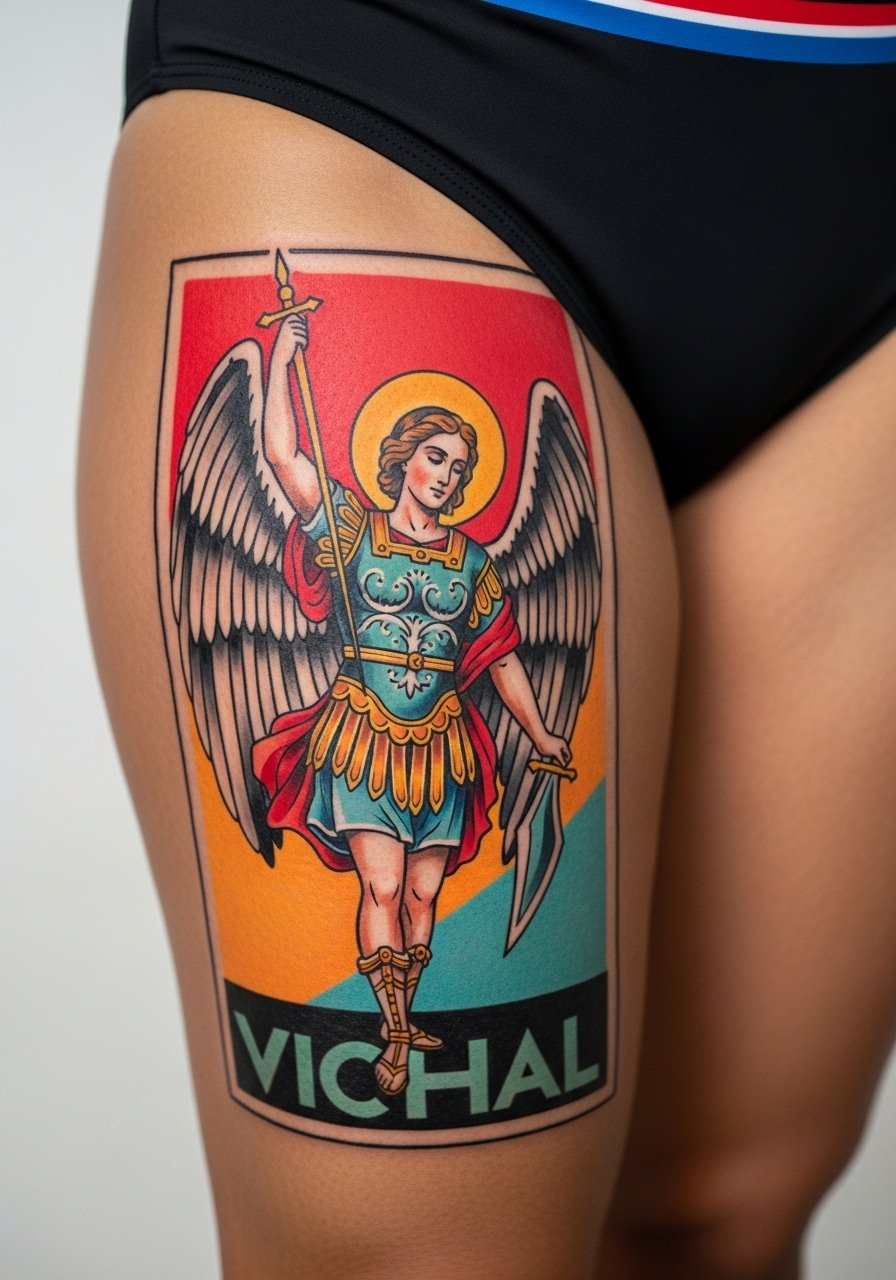
A poster-inspired composition benefits from strong shapes and limited palette so the figure reads at a distance. Avoid packing too many small decorative elements which will compete with the primary silhouette. Talk to your artist about which colors work best on your skin tone because saturation behaves differently across tones. The thigh protects pigment from daily friction, so this placement often needs fewer touch-ups. For the session, a swimsuit bottom or shorts that you can shift will keep access simple.
21. Byzantine Icon Saint Michael on Back of Shoulder, Jewel Tones
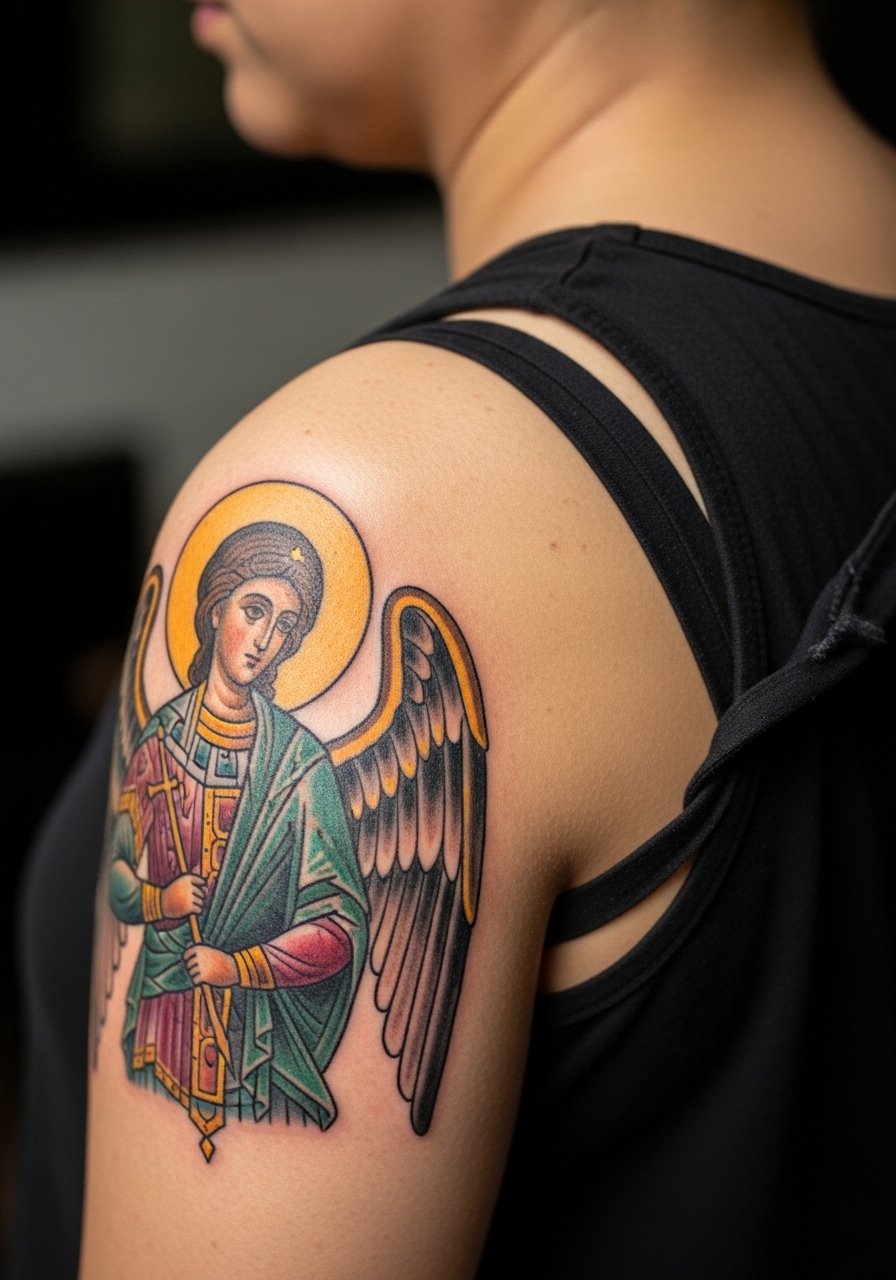
A back-of-shoulder placement reads ceremonial and pairs well with deep jewel tones. The mistake is layering tiny metallic-looking dots that do not translate well when scaled down. Ask for color blocks with strategic highlights that imitate shimmer without micro-detail. Sessions are comfortable and often done in a single 2-3 hour sitting depending on size. Show-off pairing with tank tops or a dropped-shoulder knit keeps the focus on the shoulder placement.
Frequently Asked Questions
Q: How does color longevity vary between forearm Saint Michael pieces and ribcage pieces?
A: From what I have seen, forearm pieces live in a medium-exposure zone and can keep vibrant color for several years with sun care. Ribcage pieces avoid daily abrasion but suffer more from stretching and breathing motion that can soften very fine detail. For both, prioritizing saturation in large color fields and planning touch-ups at year three gives the best outcome.
Q: If I want a watercolor Saint Michael, will that be disrespectful to religious traditions?
A: People in the community split on this. One group prefers faithful, traditional portraiture for devotional reasons. The other group embraces reinterpretation through modern palettes. A respectful middle ground is to discuss symbolism with your artist and avoid direct replicas of sacred images used in liturgical contexts, opting instead for original compositions that honor the iconography.
Q: How often should I expect touch-ups for hand or finger Saint Michael tattoos?
A: Hands and fingers face constant washing and friction, so plan for touch-ups more frequently than for arm or back work. Many clients schedule a small touch-up within 12 to 24 months. If you work in a high-wear environment expect earlier maintenance. The exact timeline depends on exposure and your skin.
Q: What should I wear to a sternum or chest session for a Saint Michael tattoo?
A: Wear a fitted sports bra or a wide-neck shirt you can pull slightly aside so only the tattoo area is exposed. That keeps the rest of your torso covered and gives the artist clean access. For comfort afterward choose soft, non-restrictive fabrics.
Q: Are there color choices that show up better on darker skin tones for Saint Michael designs?
A: Bold jewel tones and strong contrast lines often translate best across darker tones. Discuss which hues hold saturation on your skin with the artist during consultation. Swatches and healed samples in the artist's portfolio on similar skin tones are the best guide.
Q: Can I get a Saint Michael tattoo that hides well for work but still looks colorful when shown?
A: Yes. Shoulder blades, upper thighs, and chest under a shirt are places that stay hidden in professional settings but display well when you want them visible. Plan placement with clothing in mind and ask your artist to map the design relative to your daily wardrobe.