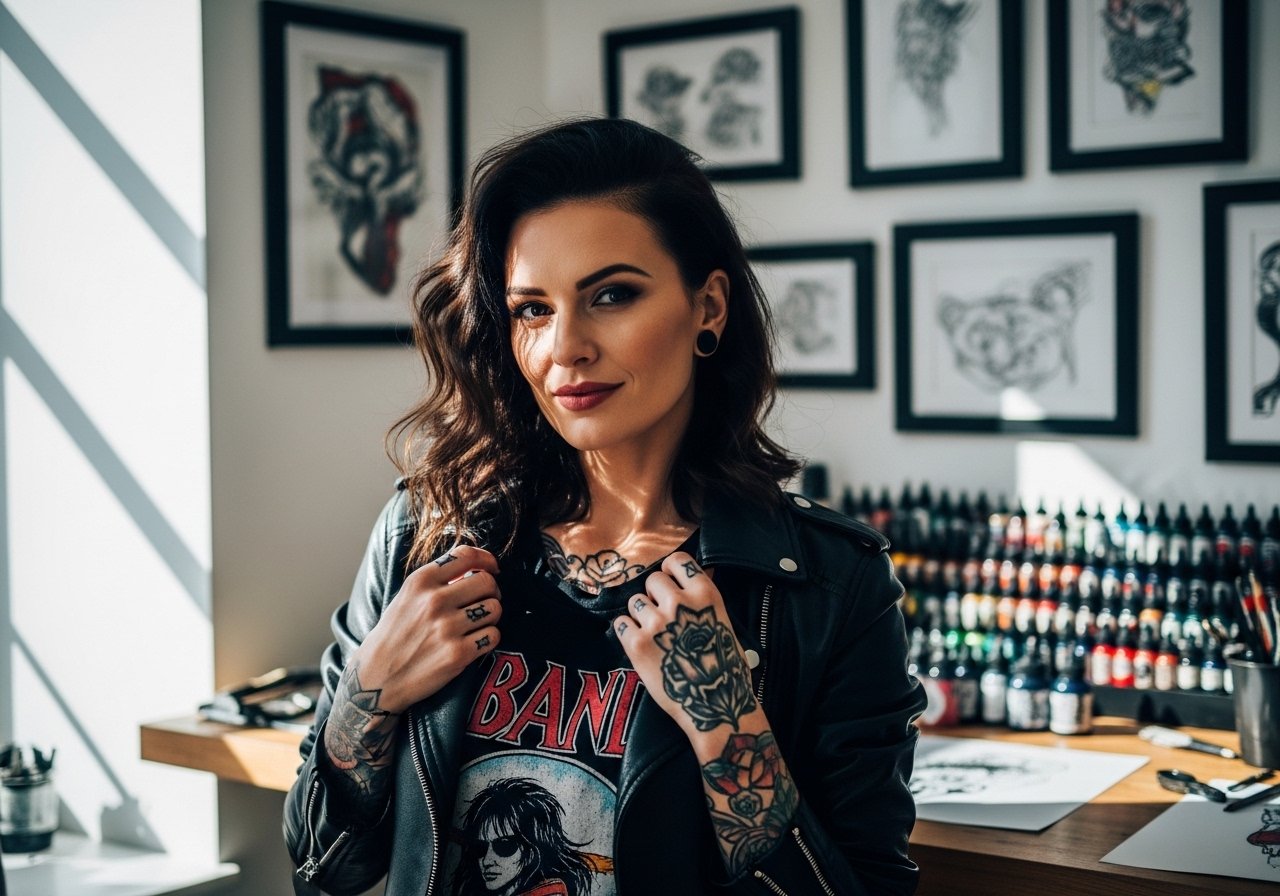
Fine line roses are everywhere on saved boards, but the pieces that still look crisp in five years are often the ones that started with stronger lineweight and smart placement. Black ink on darker skin needs bolder contrast, small wrist florals sometimes carry higher shop minimums, and hand or rib placements bring real pain trade-offs. Read on for cute black rose approaches that balance trend and longevity, starting with a tiny wrist outline you can live with.
1. Fine Line Single Black Rose Outline on the Wrist
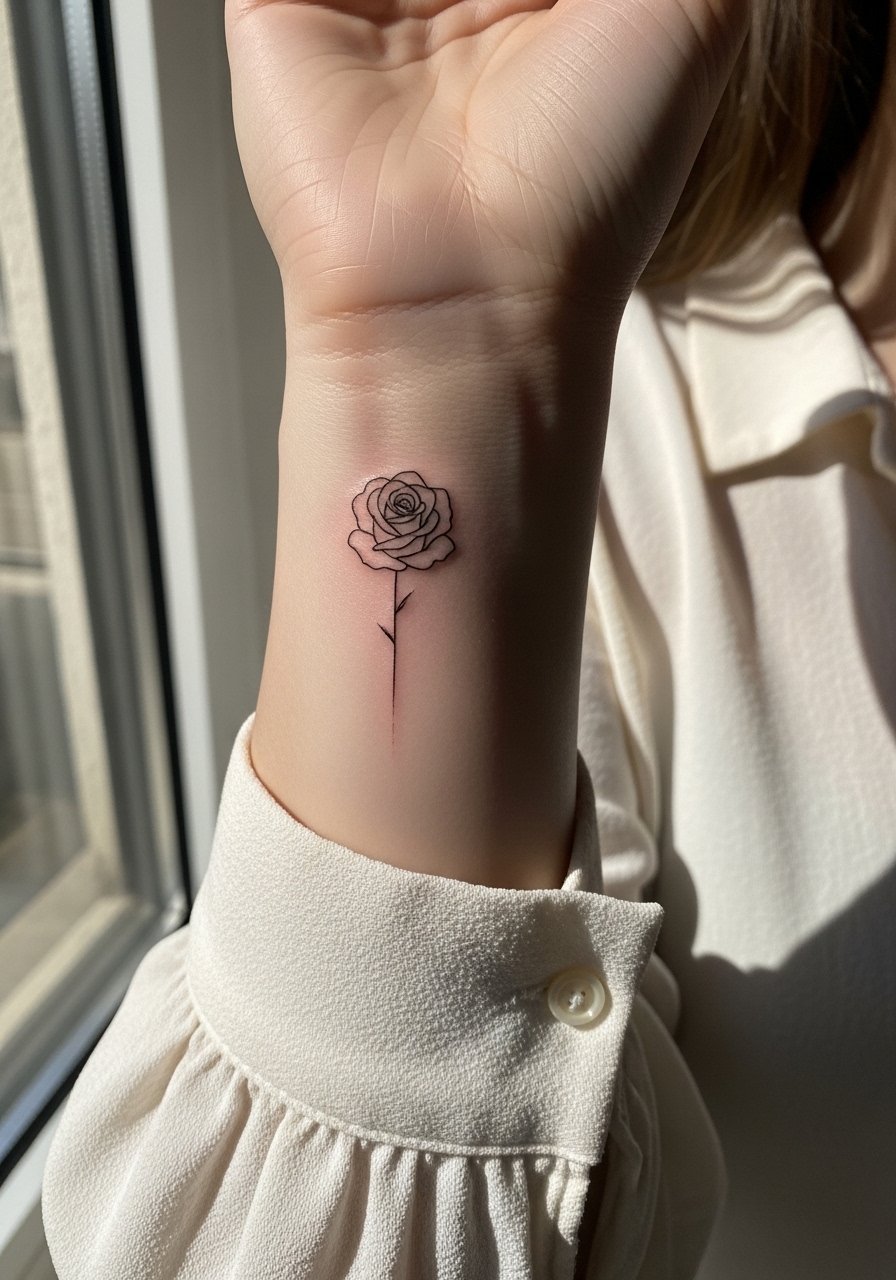
I often recommend this as a first tattoo for people who want a discreet, cute black rose. For wrists expect a short 30 to 60 minute session and a higher chance of touch-up by year two if the lines are very thin. Tell your artist you want slightly stronger contour lines than on Pinterest so the piece keeps contrast on frequent-wash areas. A common mistake is pushing the rose smaller than two-thirds of an inch. For showing it off, pair with a thin silver chain bracelet on the opposite wrist during outings, and wear a sleeveless top for the session to give the artist clear access.
2. Bold Patterned Black Rose Cluster on Outer Forearm
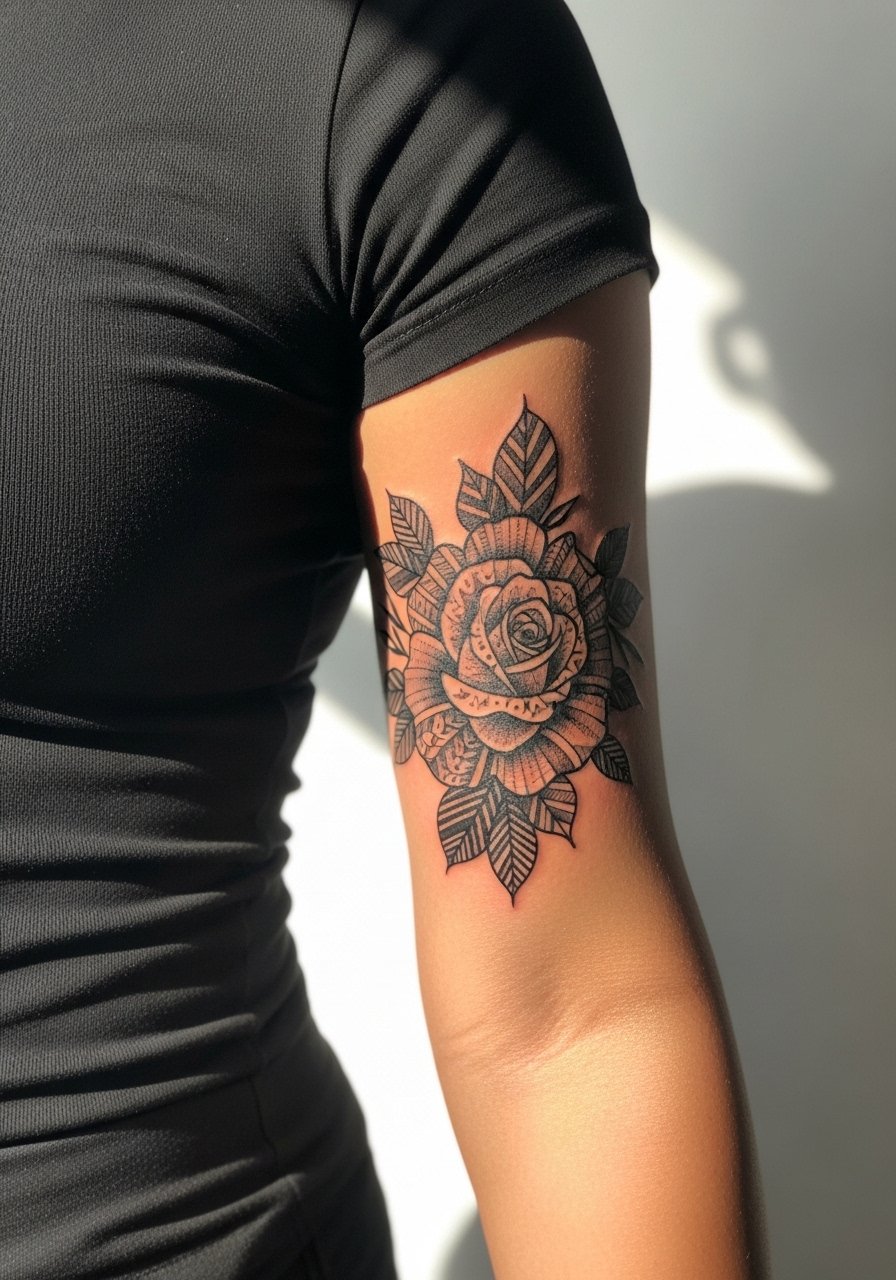
If you want a statement that reads from across a room, this cluster beats delicate linework for longevity. Expect a two-session build with heavy saturation and areas that resist fading. Ask for solid saturation rather than hairline textures so the work does not fade into mud on darker skin. The mistake I see is asking for tiny details in a 3-inch cluster, which softens badly at year three. Wear a black fitted tee that rolls easily during the session and complements the bold aesthetic afterwards.
3. Watercolor Black Rose with Gray Washes on the Collarbone
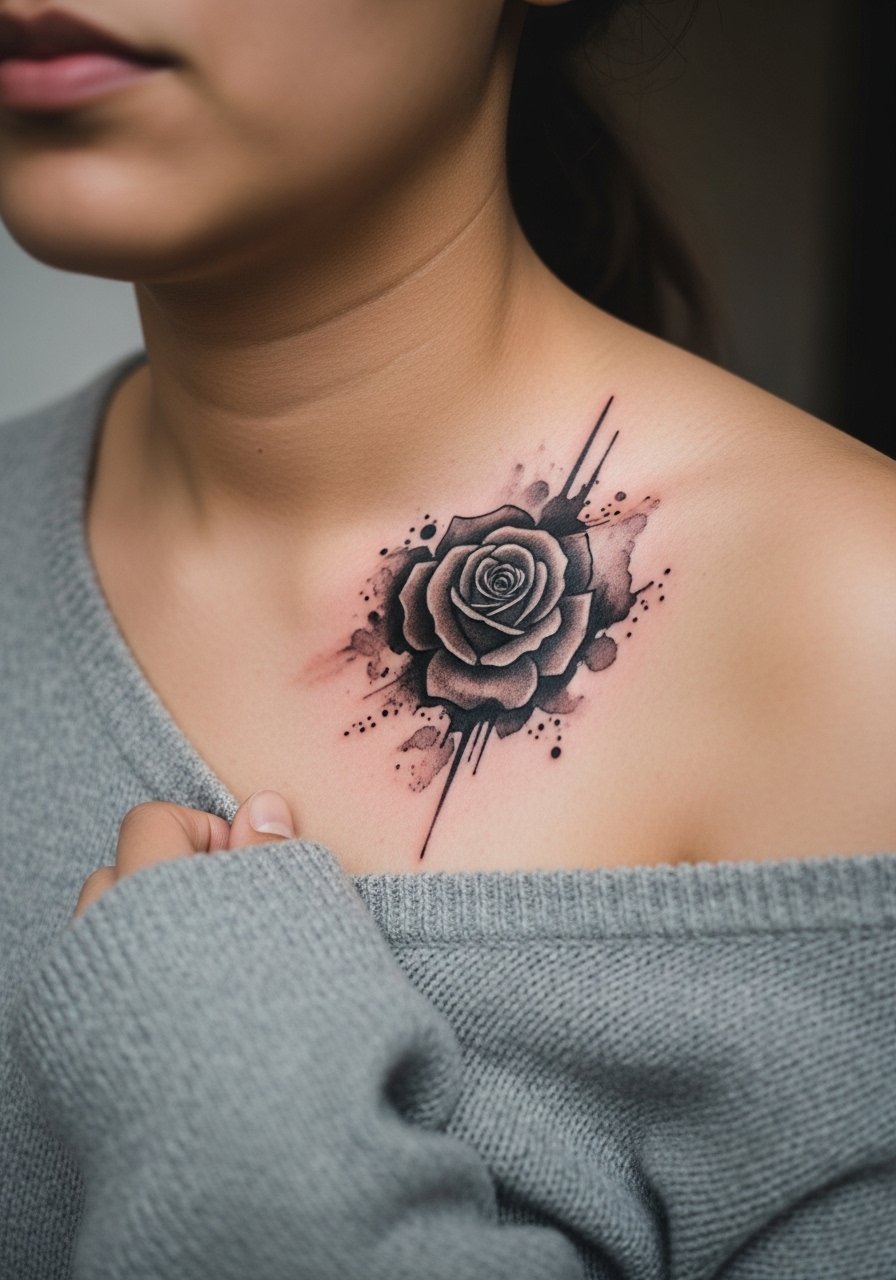
Watercolor washes soften the rose silhouette and give mood without relying on color. Collarbone placement looks delicate but note the area moves with breath, which can blur very fine strokes over time. Ask for gray washes anchored by a clear black base so the shape remains legible as the pigments soften. The common aging issue is too little contrast between wash and base. For sessions bring a strapless or wide-neck top and plan to show the piece with an off-shoulder sweater when you want a low-key reveal.
4. Neo-Traditional Black Rose with Thorns on the Thigh

Thighs are forgiving for detail and body changes, so neo-traditional roses with thick shading and thorn work hold up well. Sessions run an hour or two and often finish in two sittings for a 5-inch piece. During the consultation say you want clear petal separations and strong thorn contrast so the silhouette keeps reading even if you gain or lose weight. A typical error is packing tiny petal detail too close to the edge, which stretches oddly. Show it off with high-waisted shorts and expect modest soreness during the first 48 hours.
5. Micro-Realism Black Rose Bud on the Upper Arm
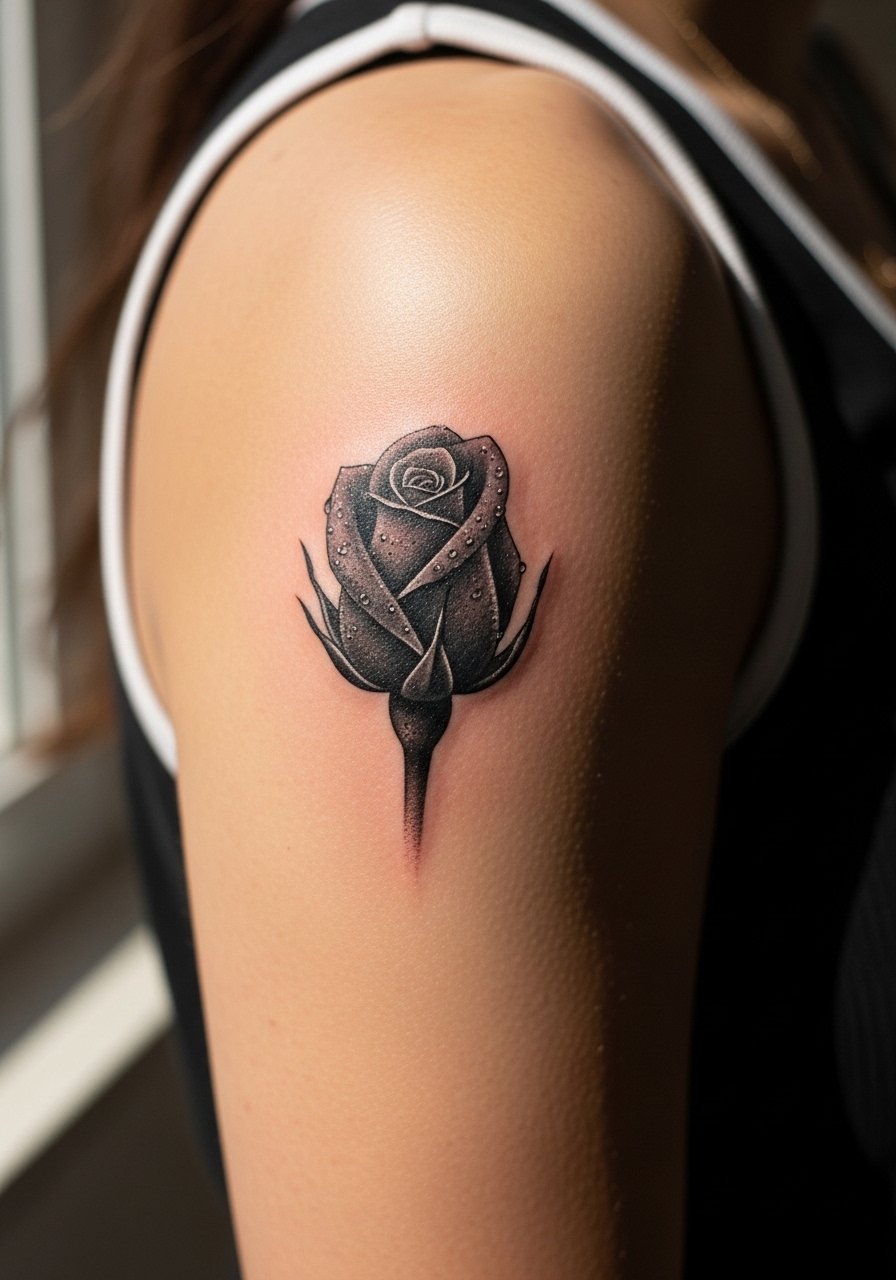
Collectors love this for texture that reads like velvet at arm distance. Micro-realism requires patient shading and a steady hand, so book a three-hour session if the bud is 3 to 4 inches. Tell your artist you want soft gray gradients and avoid stippling that competes with the realism. A common mistake is asking for micro detail in a 1-inch size, which loses clarity. For session comfort wear a sleeveless tank so the artist has room to move and you remain comfortable.
6. Dotwork Black Rose Mandala on the Shoulder Blade
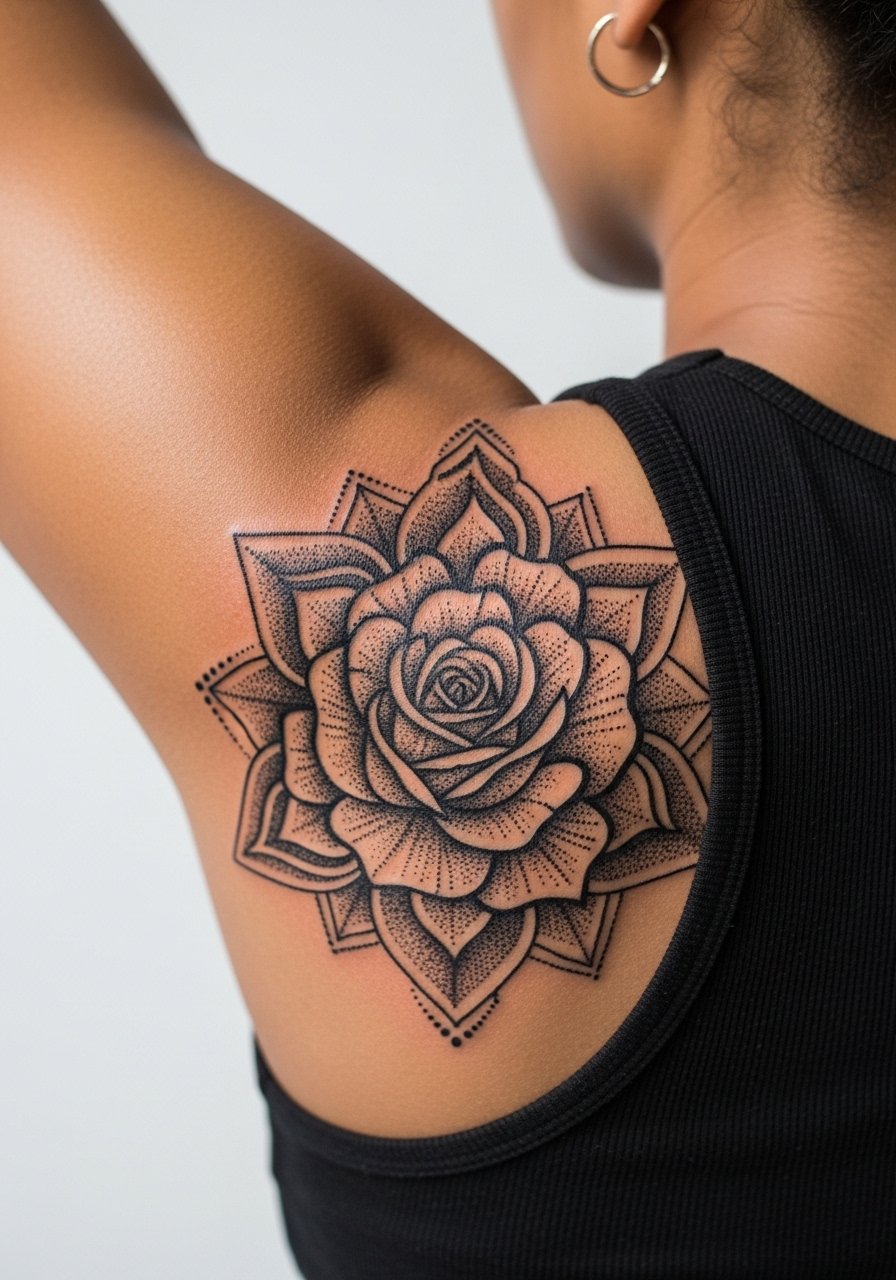
Dotwork gives a meditative texture that ages into an elegant grain rather than a smear. Shoulder blades are a great canvas because the skin there holds detail and the piece avoids constant friction. Ask for slightly looser dot spacing in the densest areas so points do not merge after healing. One mistake is compressing dots into tight clusters at small scale. Sessions usually span two sittings for 3 to 5 inches. For showing it off pick a loose tank top you can shift for photos and events.
Studio Day Picks
Those first six ideas cover wrists, forearms, collarbones, thighs, upper arms, and shoulder blades, and each area benefits from different prep and post-session small items.
-
Stencil transfer paper kit. Lets you preview exact line placement on skin before needles touch down, which matters for small wrist and collarbone roses.
-
Topical numbing cream. Useful for sensitive collarbone or rib sessions to ease the first 30 to 60 minutes without altering the artist's work.
-
Thin protective film roll. Keeps finger and wrist tattoos clean during the busiest first week when soap and friction threaten fine line clarity.
-
Fragrance-free gentle body wash. Gentle cleansers reduce irritation during showers for delicate shoulder blade and thigh heals.
-
Aquaphor healing ointment. A thin layer in the early window protects saturated blackwork while still allowing the skin to breathe.
7. Minimalist Black Rose Stem with Leaf on the Ankle
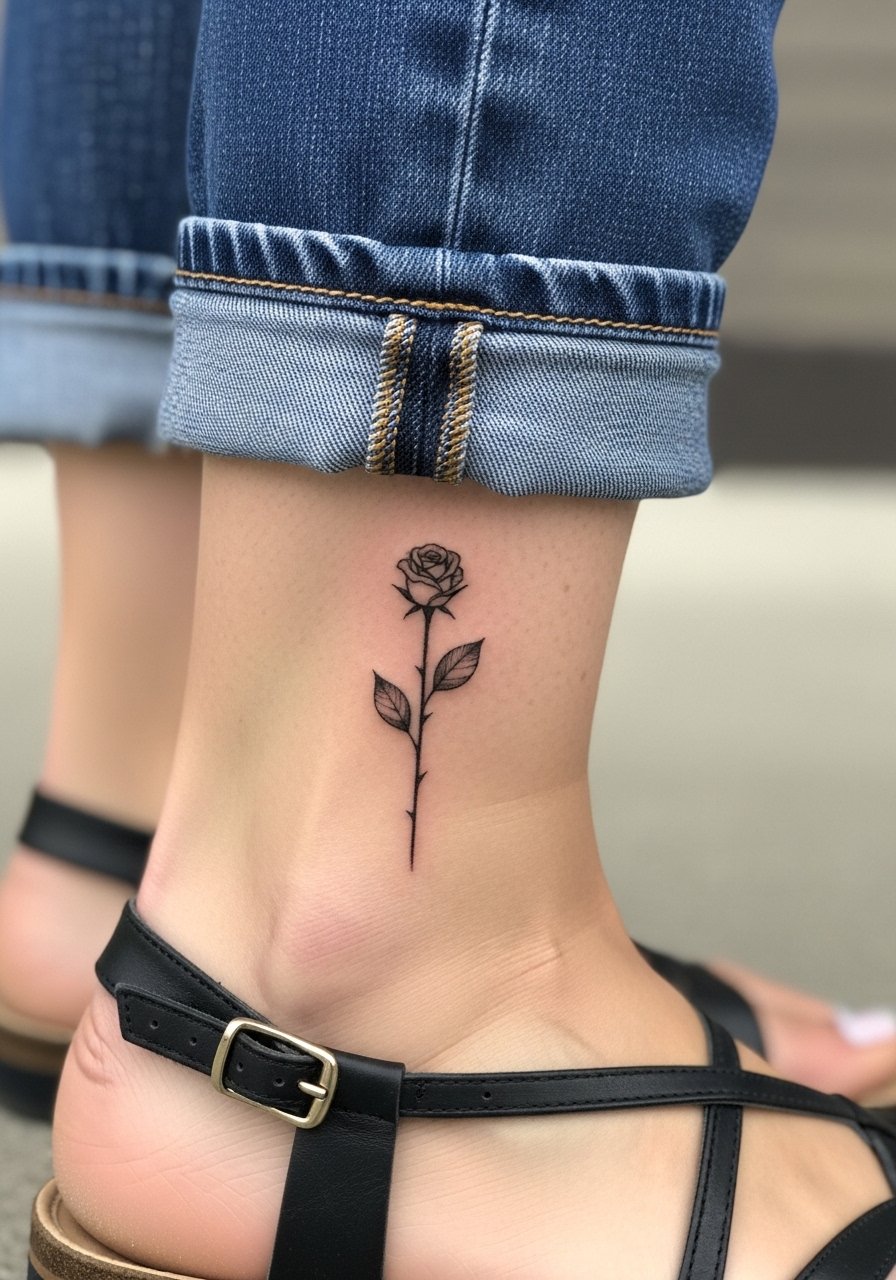
Ankle placements read cute and discreet, but the area sees friction and shoes rubbing. I recommend slightly bolder stem lines rather than fragile single hairlines so the silhouette holds through boots and sandals. During consultation ask the artist to leave a tiny space between leaf veins so they do not blur into each other after a year. The session is quick, under an hour, and the common mistake is sizing the design too close to the joint where movement adds stress. Pair it with strappy sandal flats when you want the tattoo visible.
8. Black and Gray Rose Bouquet on the Inner Bicep
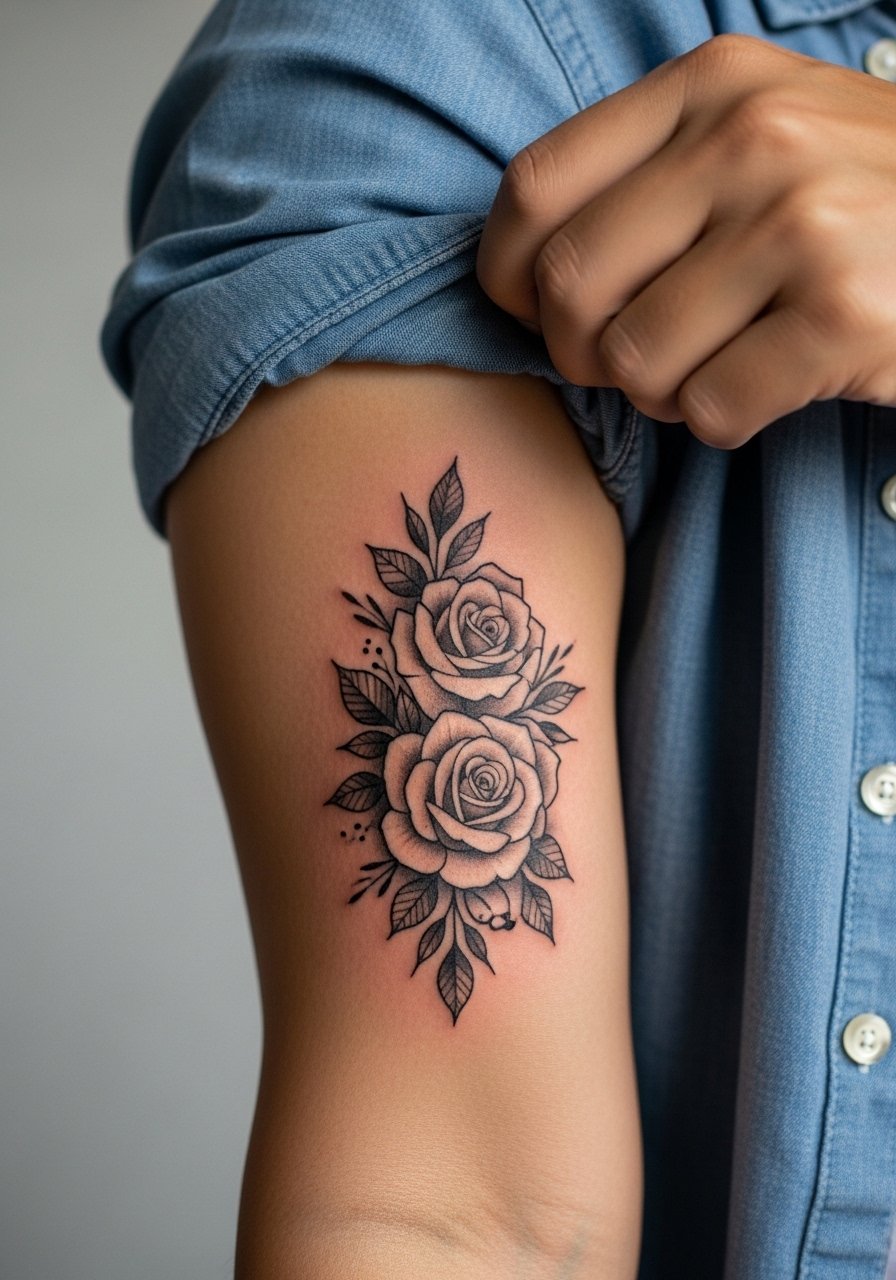
Inner biceps are forgiving for soft shading and memorial bouquets because the area avoids sunlight and daily abrasion. Expect two to three sessions for a 6-inch composition. Tell your artist you want gradated gray washes and clear petal overlap so the bouquet does not flatten as it heals. A mistake is placing the entire bouquet too close to the armpit crease, which can distort with arm movement. For session comfort wear a loose button-down you can pull to the side, and later show the piece with rolled cuffs and stacked rings.
9. Ignorant Style Blocky Black Rose on the Forearm
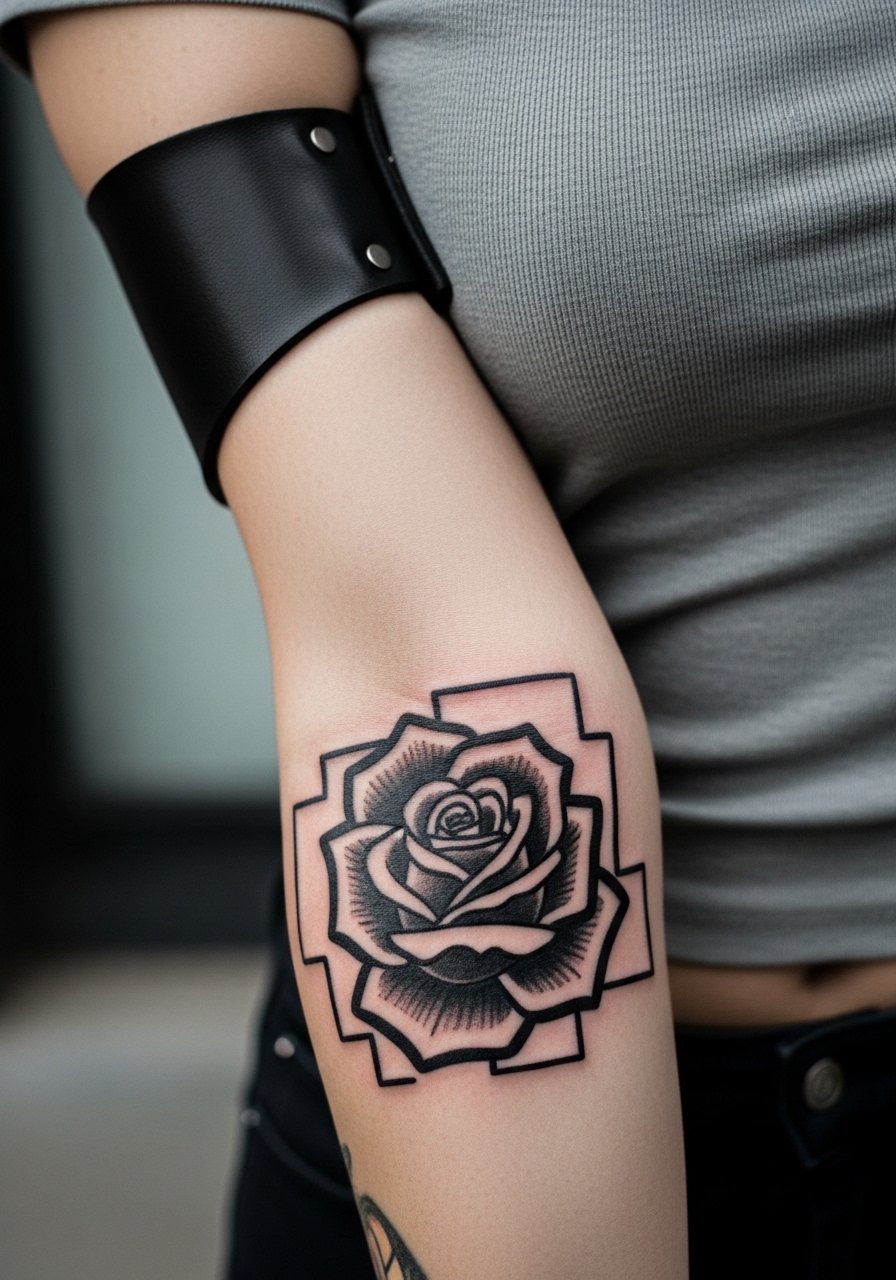
This raw, imperfect look is intentionally chunky, so it resists early blurring and looks bold on most skin tones. The session often finishes in one sitting for a 3-inch bold piece. Ask your artist to use strong outlines and avoid tiny internal detail that fights the aesthetic. People sometimes ask to shrink this too small which kills the deliberate imperfect charm. If you want an outfit pairing, a leather cuff or a fitted black tee communicates the same rough edge in real life.
10. Fine Line Black Rose with Dripping Petals on the Collarbone
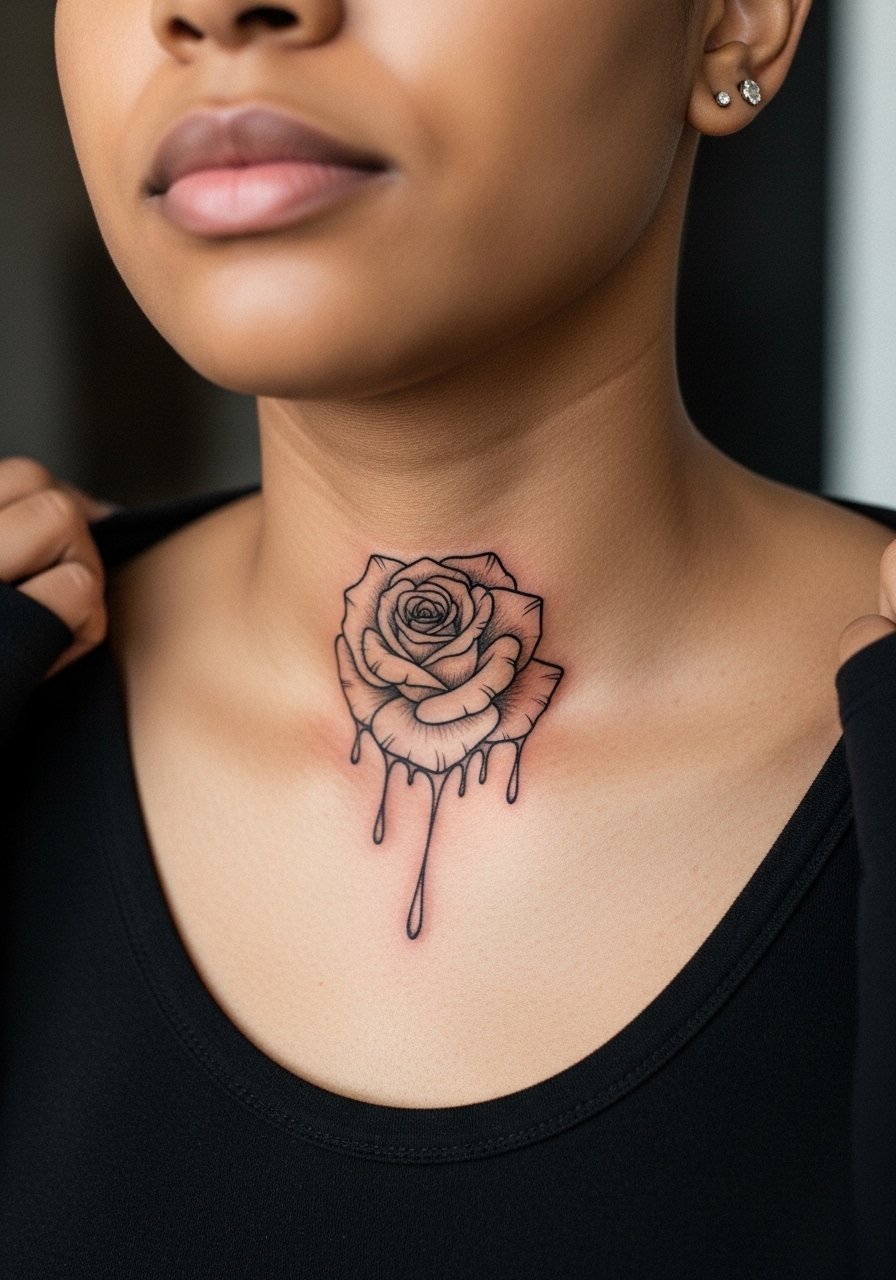
The drip motif gives a melancholic edge that photographs well, but collarbone skin can shift and soften fine drips over time. For longevity ask for drips that fade into a subtle gray wash instead of ultra-thin hairlines. Common errors include making the drips tiny and shallow, which vanish after six months. Sessions are usually single sittings but expect spot touch-ups at year two. Plan to wear a wide-neck shirt to show the piece without tugging the area.
11. Blackwork Thorny Rose Vine Sleeve Starter on the Forearm
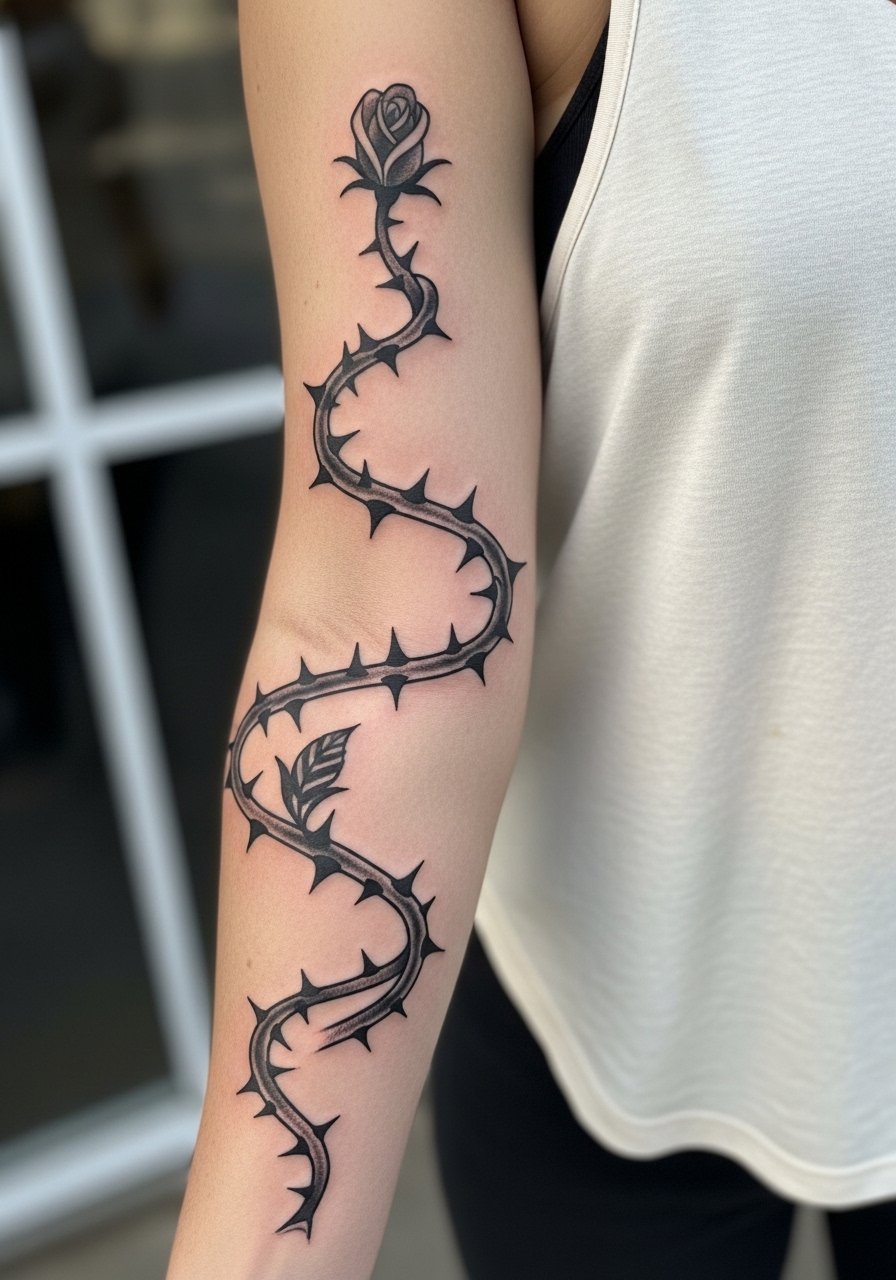
This is a smart first session for people building toward a sleeve because the bold shapes age cleanly and tolerate reworking. Expect a multi-session plan and map out negative space to allow future additions. Tell your artist you want heavy saturation at the base for durability. A mistake is overloading the first session with tiny filler that makes later layering awkward. For the appointment wear a loose tank so the artist can reach across the arm without strain.
12. Micro Black Rose with Dew Drops Behind the Ear
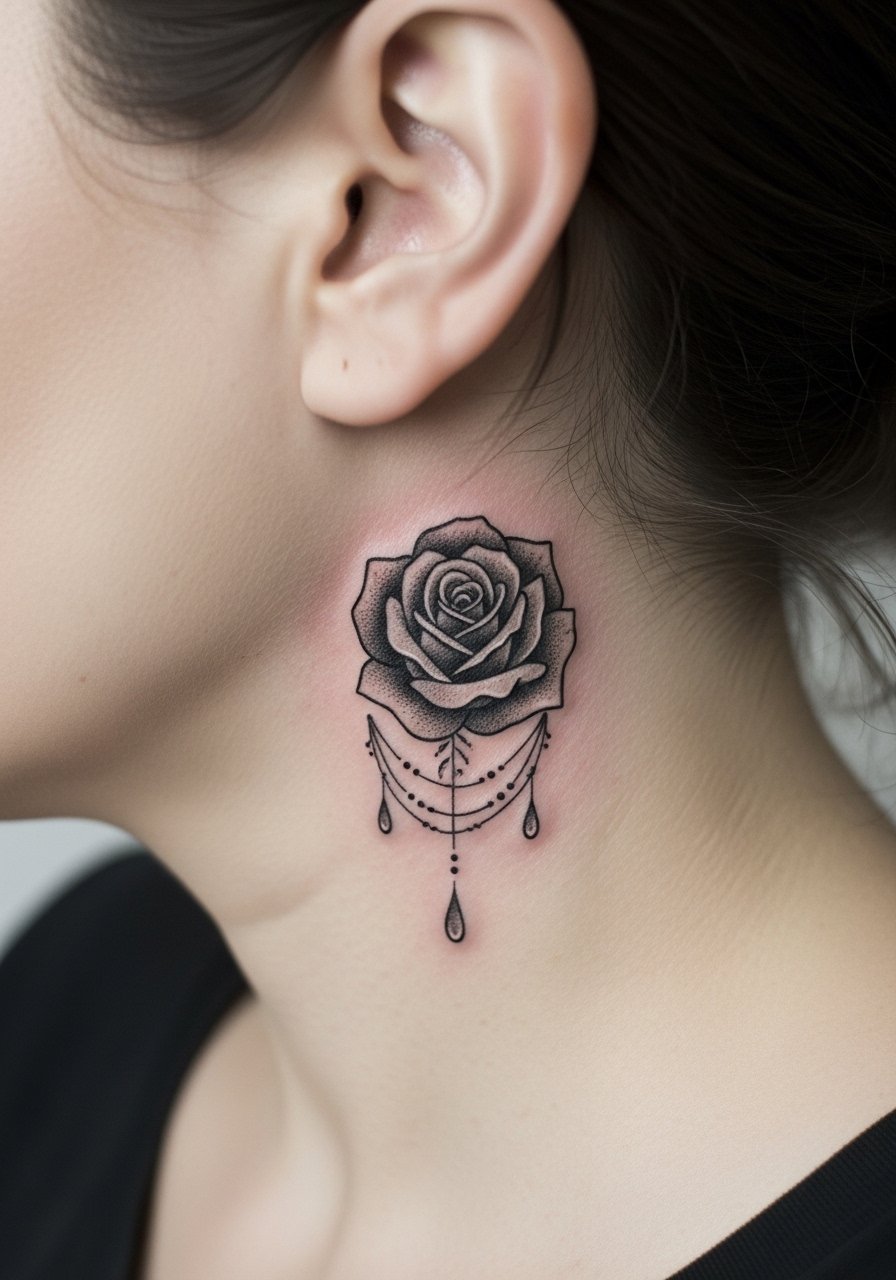
Behind-ear placements are tiny and intimate, and even micro realism needs enough contrast to avoid becoming a smudge. Ask for slightly bolder micro contours with tiny gray highlights for dew effect. The area is sensitive but quick, often 20 to 30 minutes. A common misstep is requesting dense shading on such a small spot. If you want to hide or reveal it easily plan hair and neckline choices.
13. Black Rose with Color Drops for Subtle Contrast on the Ribcage

This blends a black base with one or two tiny color accents for contrast, which keeps the overall look dark while adding visual pop. Ribcage work is painful but offers a sweeping canvas for placement. Tell your artist you want reserved color only as accent points so the piece reads as black at a distance. A misstep is heavy color that competes with the black base, which ages differently. Sessions take one to two sittings depending on size, and wear a cropped top you can lift for access.
14. Historical Mythology Black Rose on the Sternum
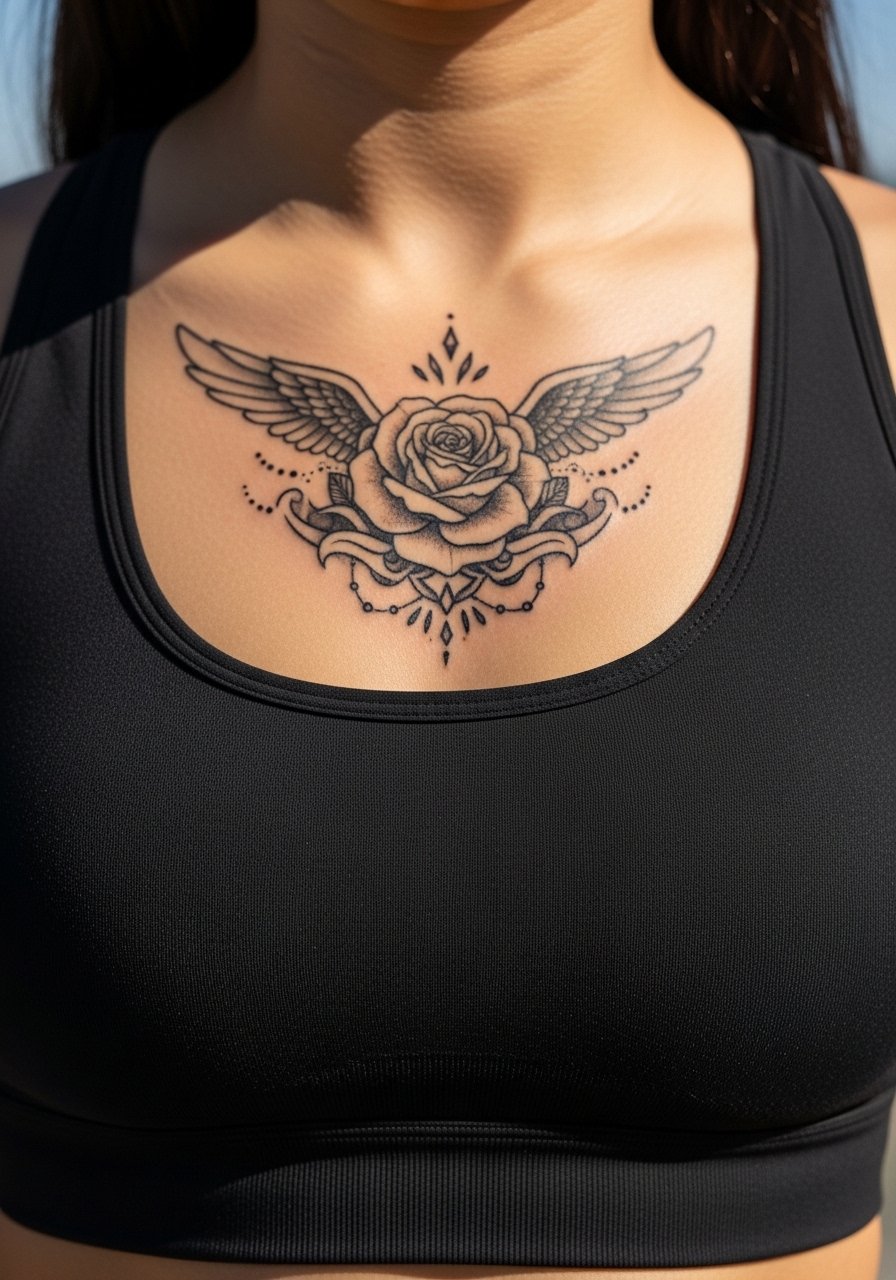
A design that nods to mythic symbolism can feel grounded without being literal. Sternum placement needs an experienced hand and often a proofed stencil so central symmetry stays intact. Artists split on fine line here. One camp warns of stretch and blurred lines over years, the other says careful depth and spacing settle fine. Ask where your artist stands before booking and plan for touch-ups if you want extremely thin lines. The session is intense but relatively short for small central pieces.
15. Ethereal Watercolor Black Rose on the Ribs
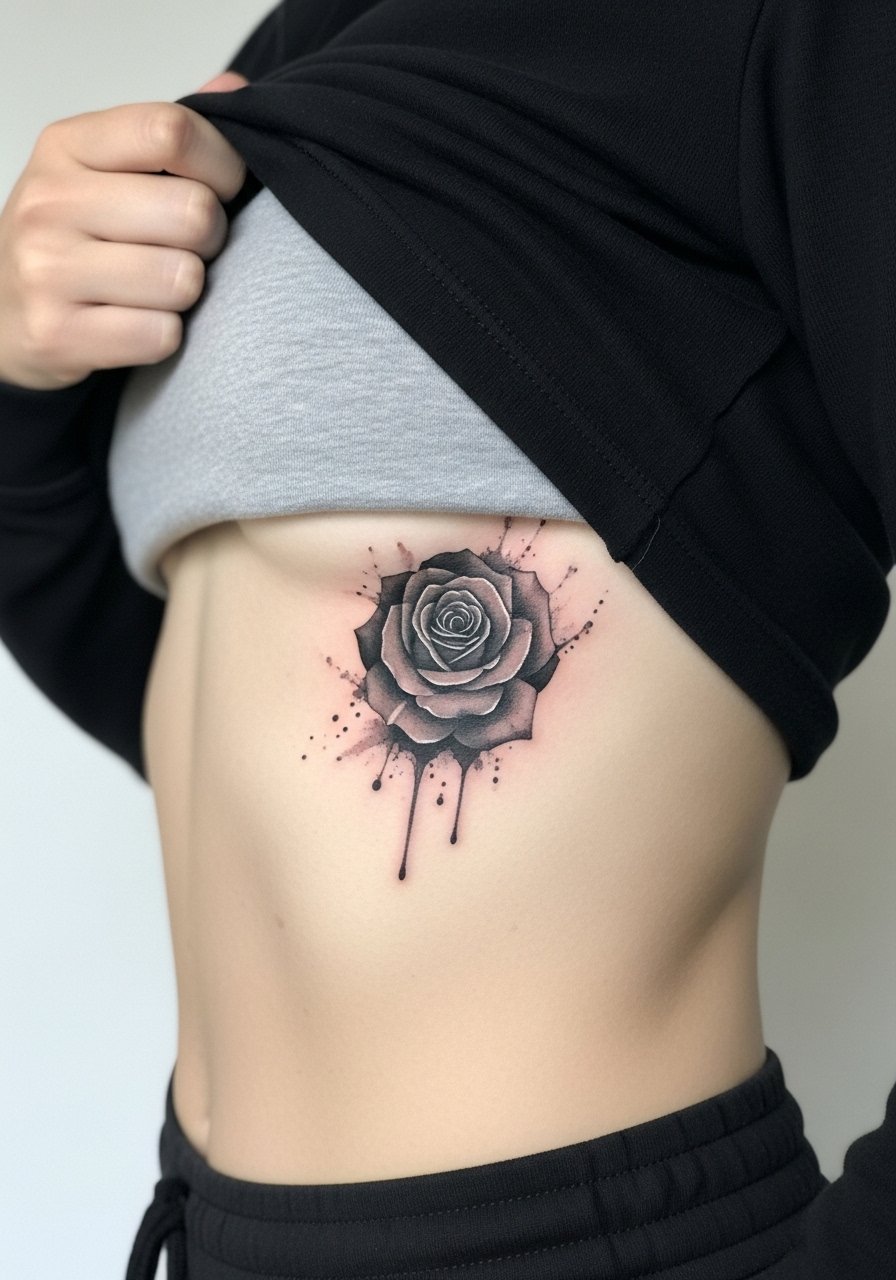
Rib cages are ideal for pieces that sweep with the torso, but breath and movement shift pigment during healing. For lasting shape ask for a clear black outline under the washes so the silhouette holds as the watercolor softens. The big mistake is asking only for wash with no anchor points, which loses form. Sessions are usually one to two sittings and require comfortable reclining clothes for the appointment.
16. Stipple Shading Tiny Bud on the Finger

Finger tattoos face serious wear, so stipple shading must be coarse and the design slightly larger than expected for longevity. Expect yearly touch-ups for most finger placements and plan for fading. Tell your artist you accept the maintenance trade-off and want bolder dot clusters rather than micro stippling. A common error is choosing ultra-fine detail for a constantly rubbed zone. For the session keep your hand rested on a neutral surface to minimize movement.
17. Bold Solid Silhouette Small Rose on the Wrist
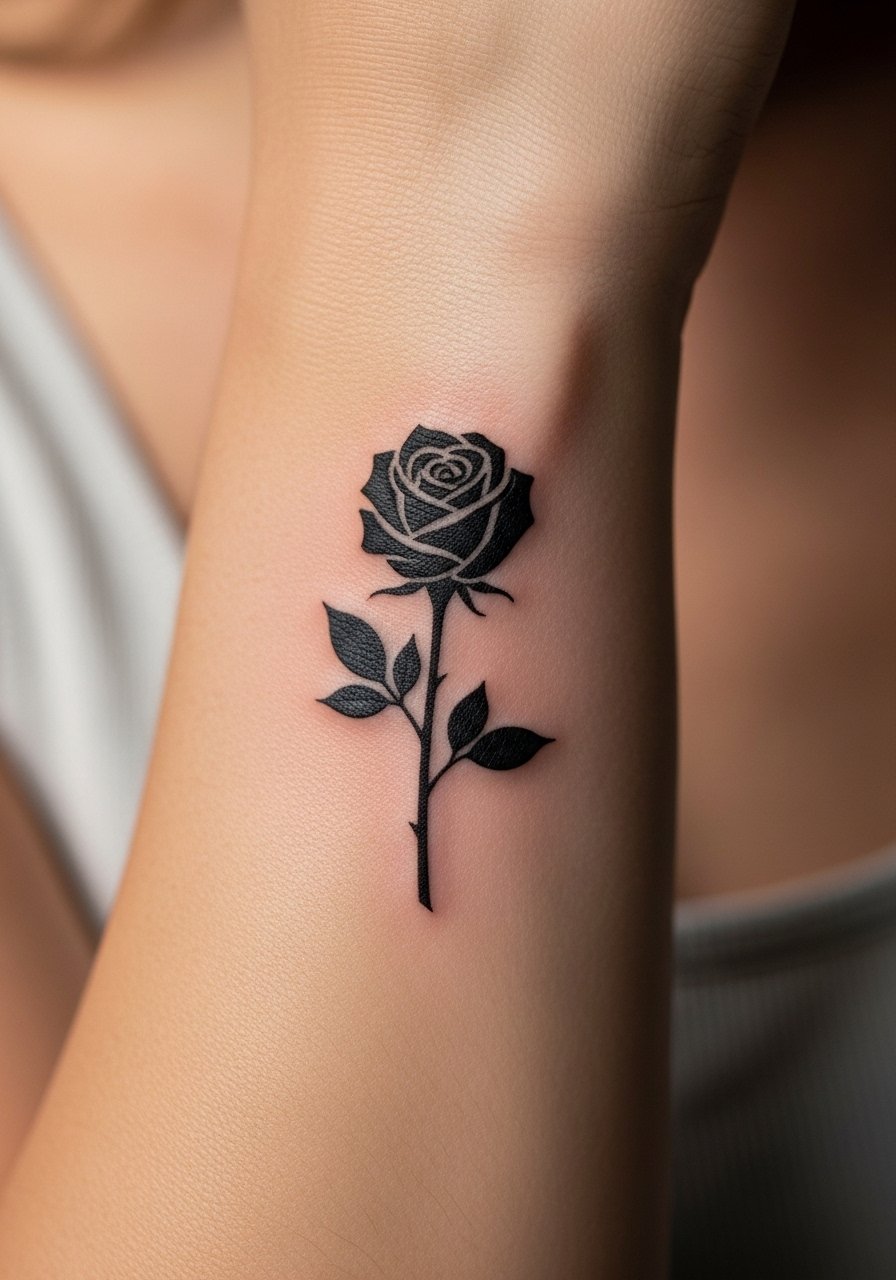
Solid silhouettes are among the most durable choices for wrists. They tolerate sunlight and frequent washing better than hairline pieces. The session is brief and tends to settle with minimal touch-up. Ask for crisp edges and avoid interior micro detail that will soften. A misstep is asking for internal shading inside a one-inch silhouette. For the appointment wear a loose tee or sleeveless top for easy access.
18. Geometric Rose Mandala on the Upper Back
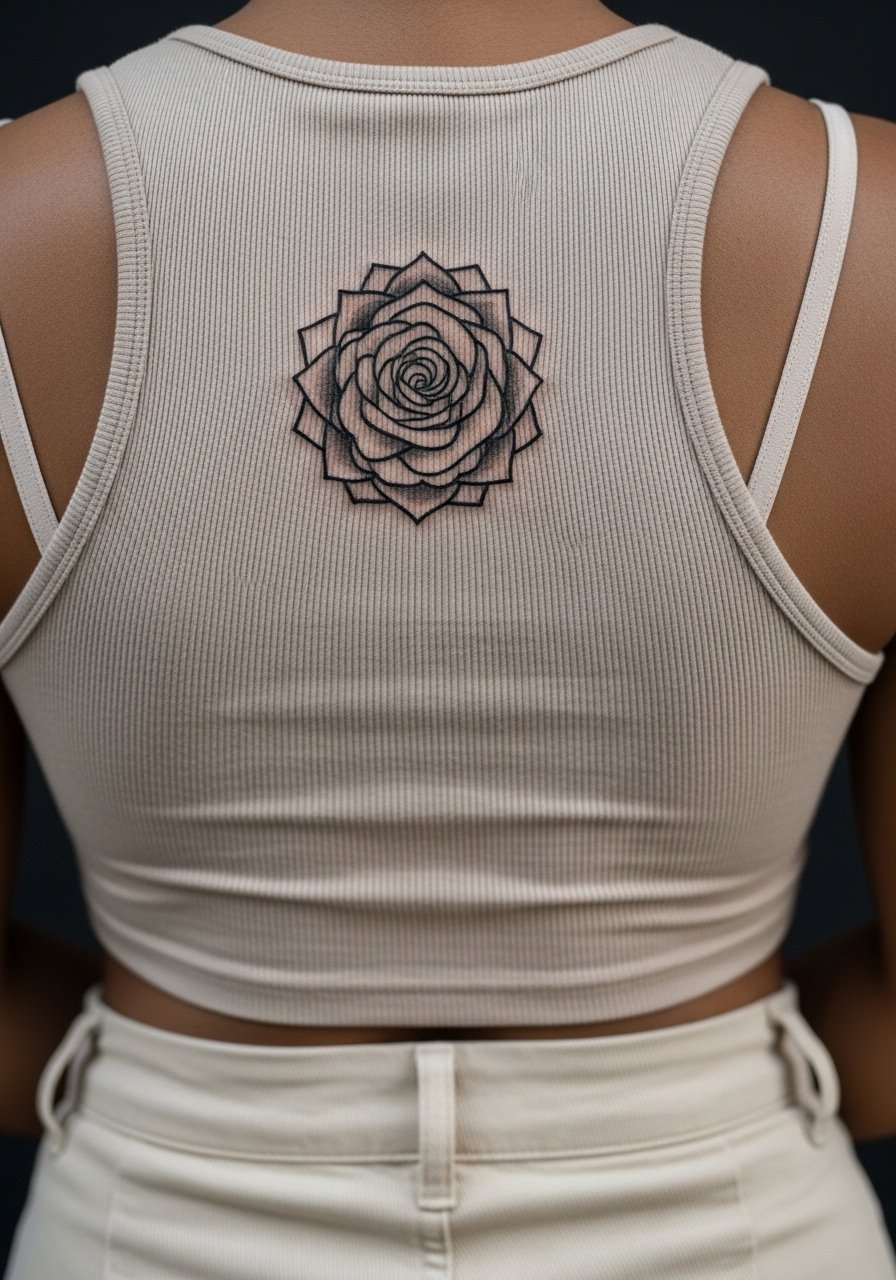
Upper back offers a broad canvas for symmetry and geometric interplay with rose forms. This placement avoids daily friction and gives dotwork and fine geometry room to breathe. When consulting ask for spacing that anticipates future layering so lines do not crowd each other. One mistake is shrinking a mandala too small, which destroys the intended geometry. For sessions wear a button-down or tank you can move aside without exposing more than the tattoo zone.
19. Rose Bouquet with Script Above the Collarbone

Combining roses with small text adds a memorial or marker element to the piece. Keep script short and bold enough to survive healing. Tell your artist the exact phrase and request slightly heavier lineweight for letters so they remain legible after a year. A typical error is choosing long phrases that shrink and blur. For showing it off a delicate drop necklace or a thin chain pendant necklace sits nicely above the script.
20. Single Petal Realism on the Calf

A solitary petal can feel like a whisper of a larger piece while staying easy to cover. Calves tolerate heavier saturation and fine gradient work because they see less sun daily. Expect a two-hour session for detailed micro gradients. Ask for slightly more contrast near the petal edge so it does not blend into skin tone over time. A mistake is placing it on the inner calf where friction from pants can dull the work quickly.
21. Rose and Moth Combo on the Sternum
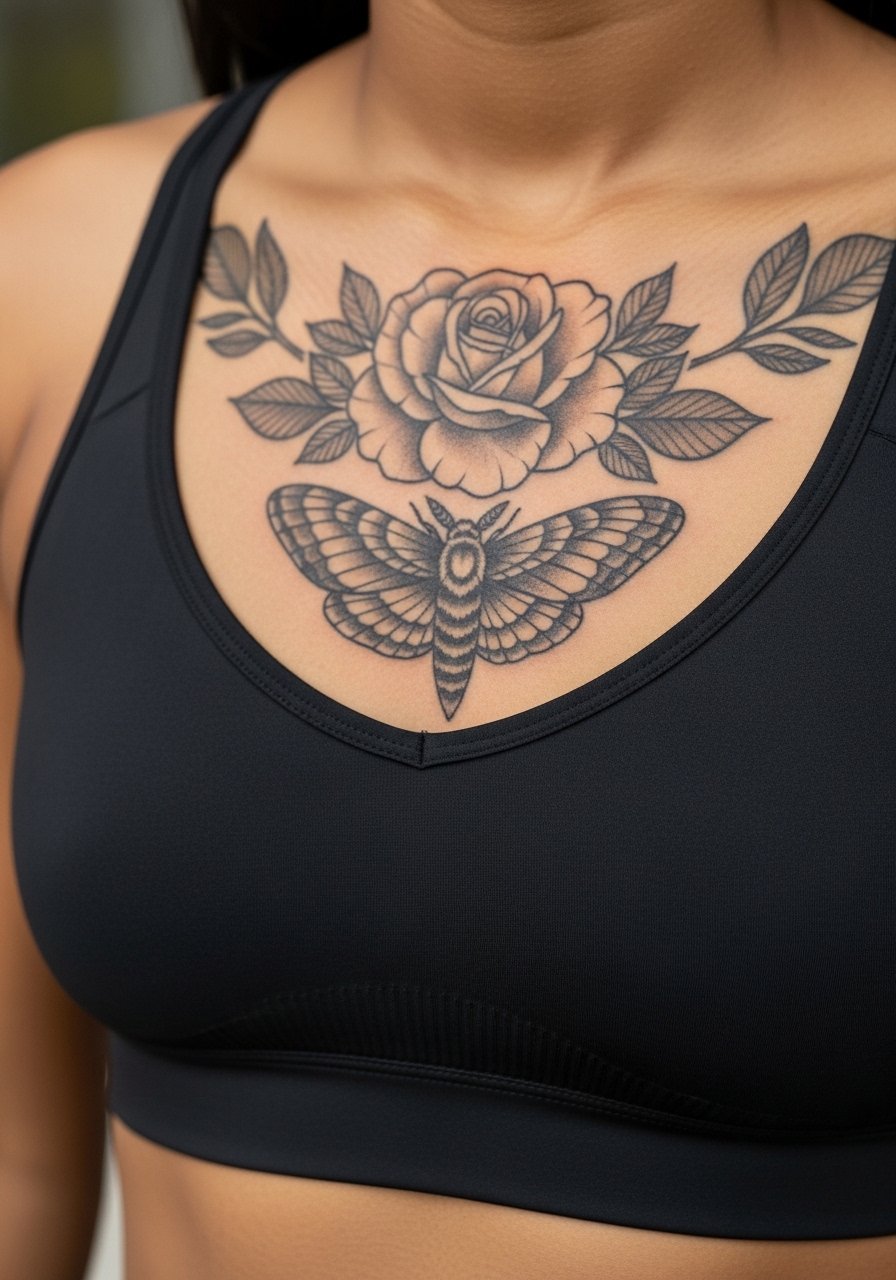
Pairing a moth with a rose creates nocturnal symbolism without explicit phrasing. Sternum pieces demand precise centering and an artist comfortable with chest contours. There is debate about fine line on sternums. One group warns of movement causing early blur, the other says careful depth and spacing settle fine. Ask about their touch-up policy and plan for a short follow-up. Wear a fitted sports bra on session day to keep the area supported.
22. Rose Wrapped in Barbed Wire on the Wrist
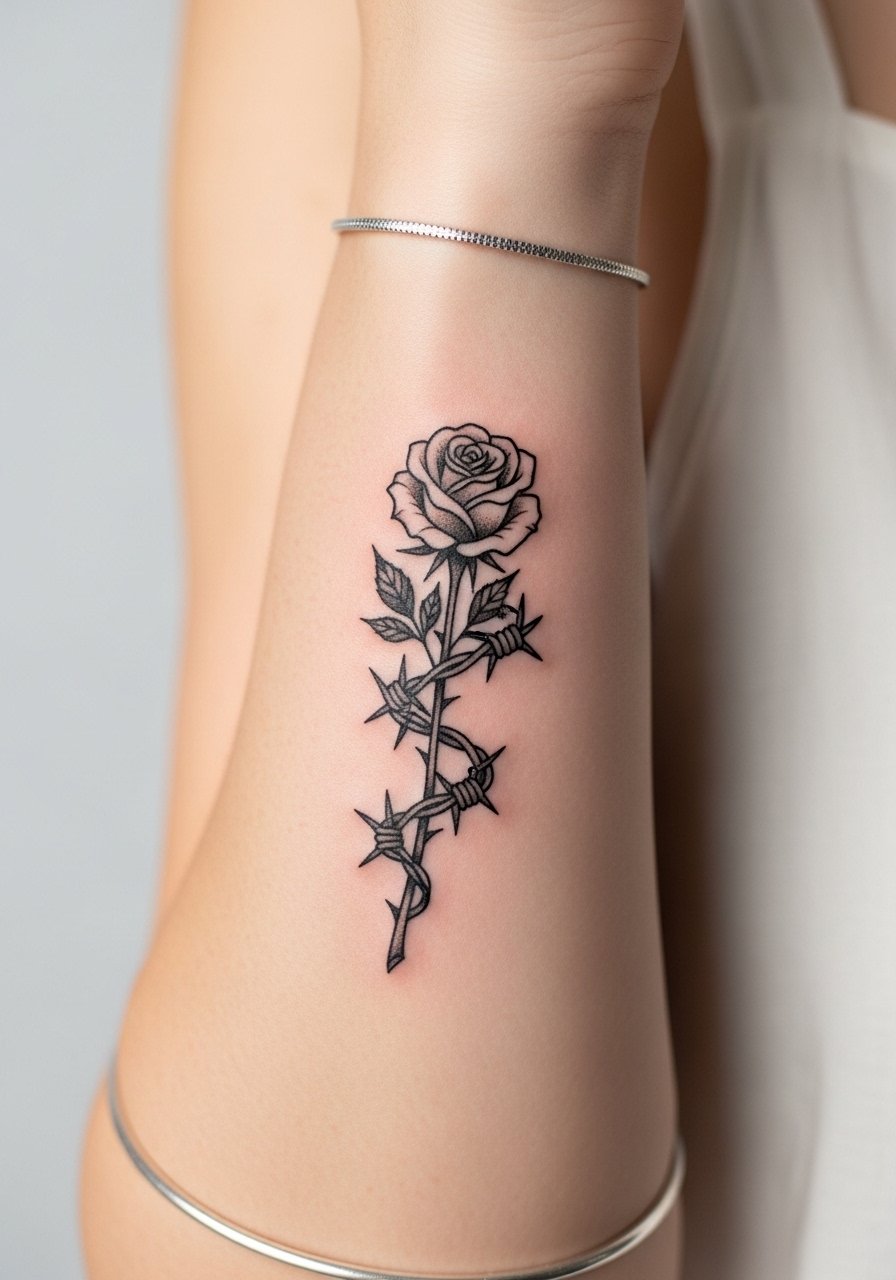
This symbolic pairing reads well small and holds strong because the barbs and stem create unmistakable edges. Expect a 45 to 90 minute session. Ask for clear spacing between thorns and petals to avoid merge points during healing. The common mistake is compressing too much detail into a tiny band, which loses separation. For photos wear stacked simple bracelets on the other wrist to balance the look.
23. Minimal Geometric Stem on the Inner Forearm
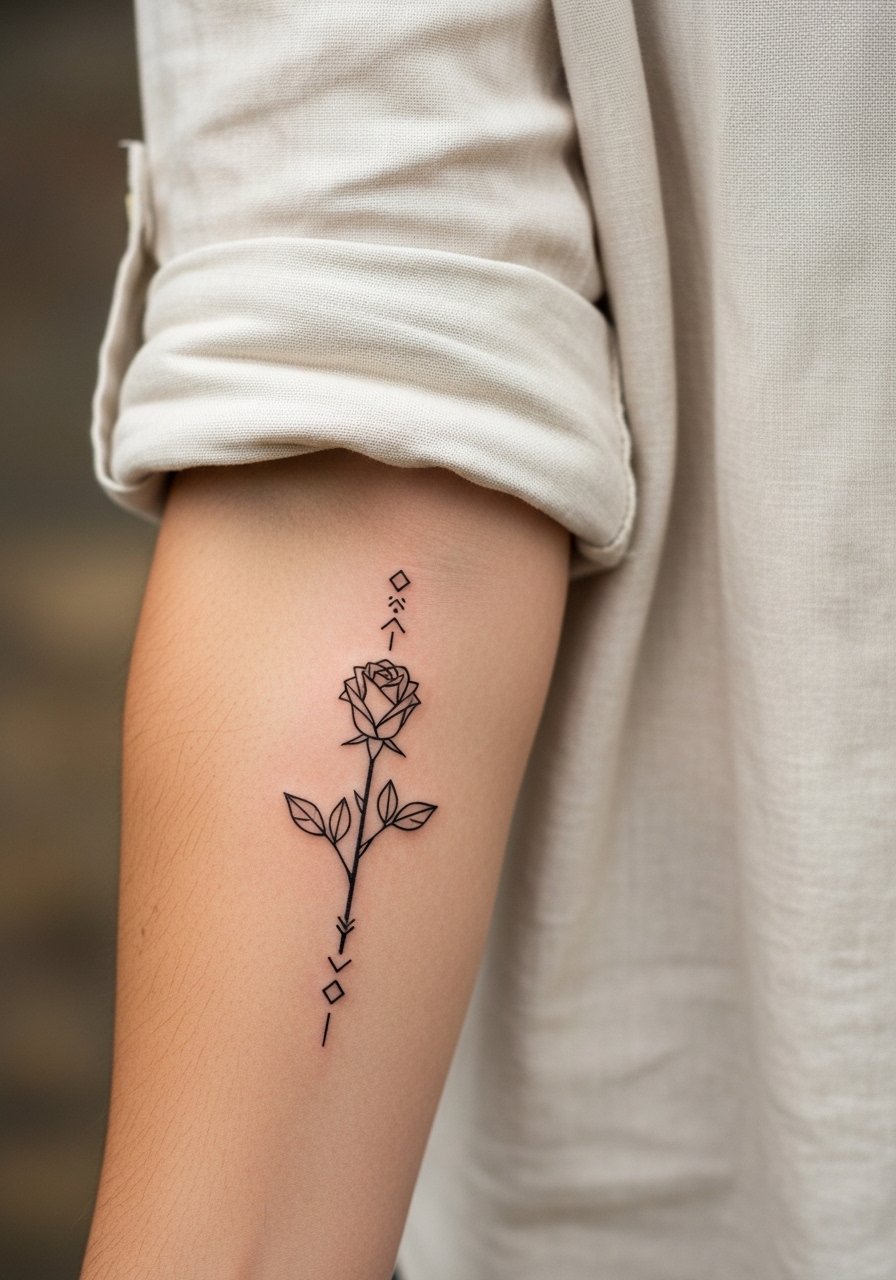
Inner forearms are ideal for minimalist stems since the area is relatively protected and easy to show. I advise slightly stronger linework than typical minimalist pieces to avoid early fading. During consultation say you want a clear negative space around geometric accents so they remain crisp at year three. A frequent error is too-closely spaced geometry. For show-off styling try a cream linen button-down with the sleeves rolled.
24. Black Rose with Moon Phases on the Outer Forearm
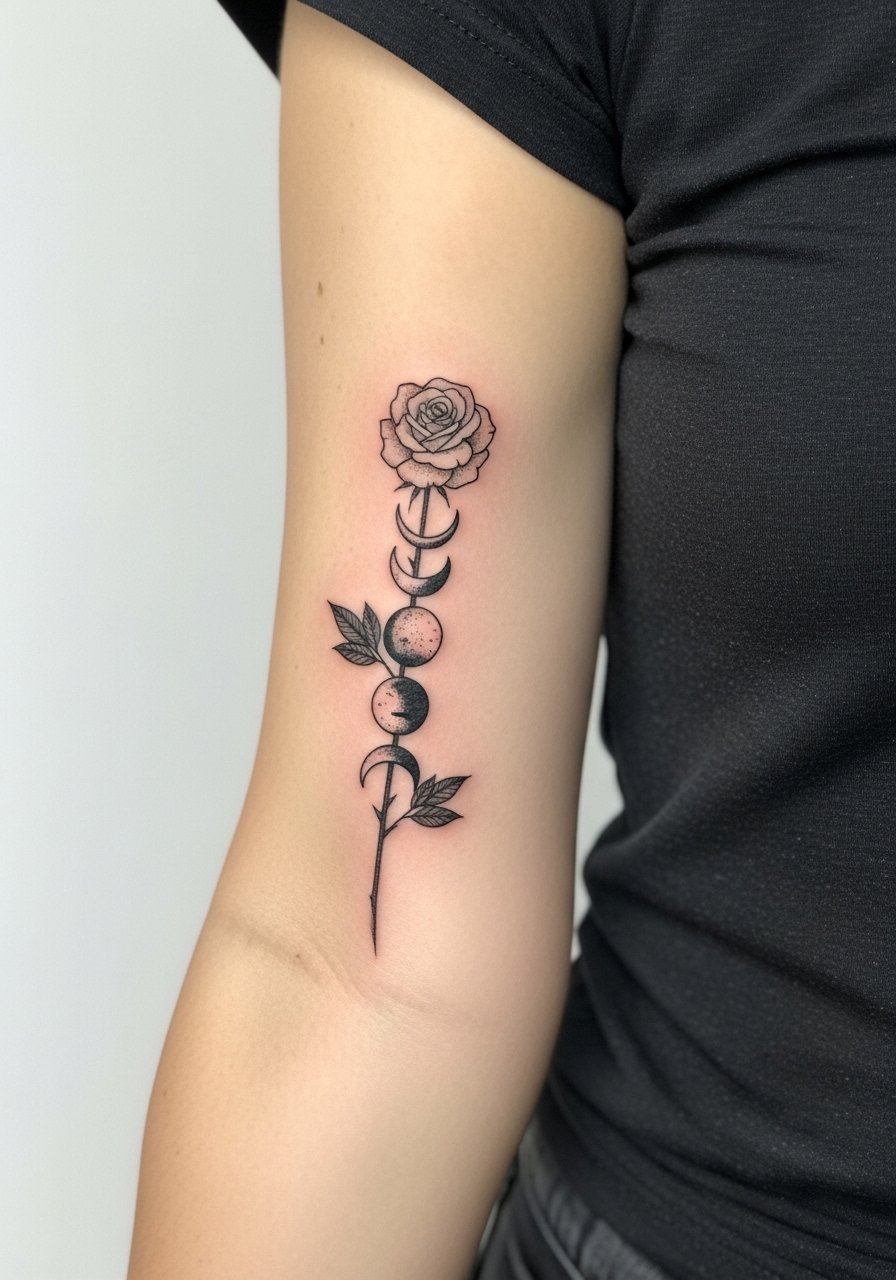
Adding moon phases creates narrative rhythm without color. This placement reads well and resists daily friction better than hands or fingers. Ask for slightly exaggerated moon glyphs so they stay legible as fine detail softens. A mistake is crowding the stem with too many tiny icons. Sessions are usually single sittings for medium-length stems and pair nicely with a fitted tee during the reveal.
25. Micro-Realism Bud on the Ankle
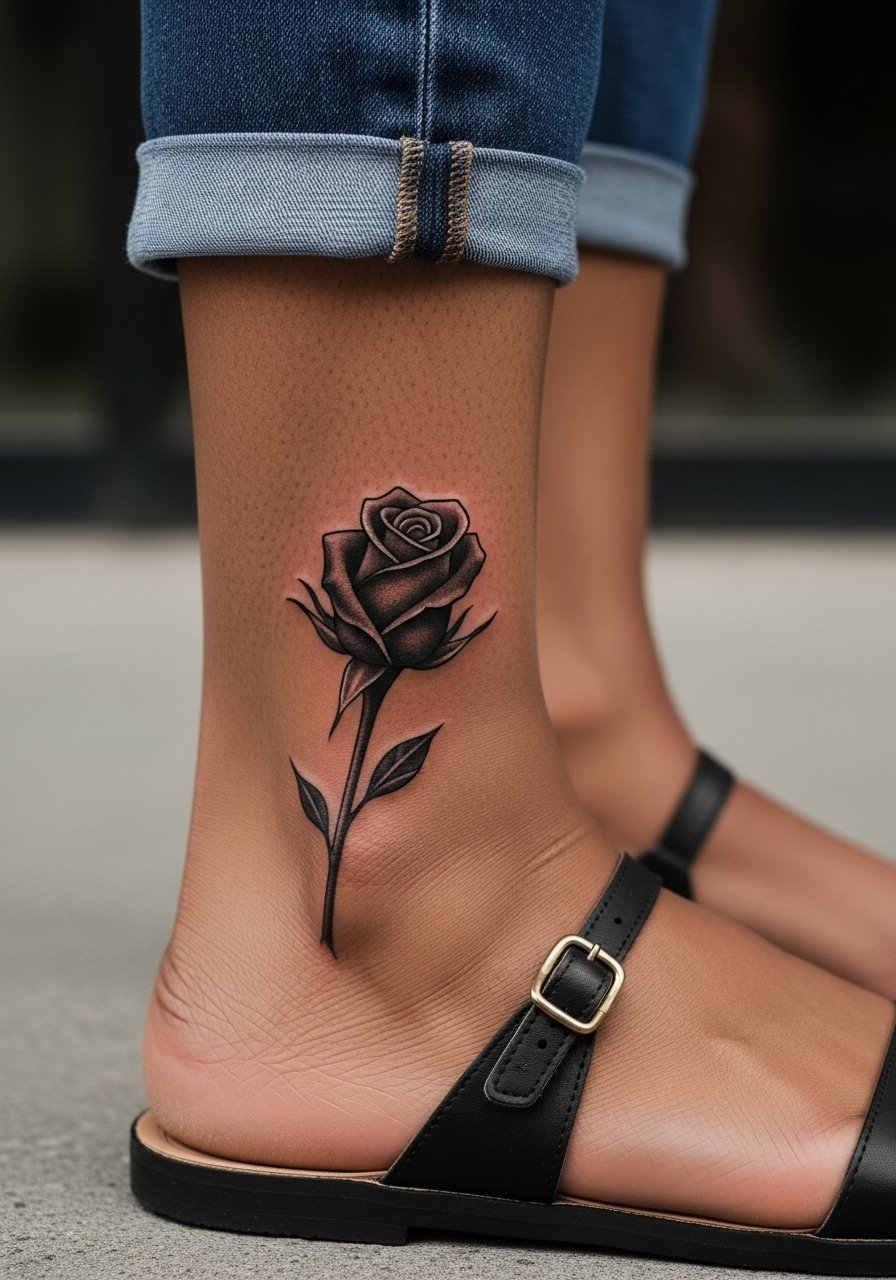
Ankle micro realism needs contrast to survive boot seasons and sweaty summers. I encourage slightly bolder shadowing close to the bud so highlights continue to pop. Plan for touch-ups by year two in many cases. A typical misstep is overly delicate highlights that disappear quickly. Wear cropped jeans or a skirt to show the piece and slip into sandals for early visibility.
26. Neo-Traditional Half-Thigh Cluster with Dark Accents

Big thigh clusters are forgiving for body changes and let artists build rich textures. Two to three sessions are common for a detailed 6-inch arrangement. Tell the artist you want room for later additions and strong contrast so the cluster reads black from a distance. A common error is centering everything too high where clothing rubs. For show-off pairing think slit skirts or high-waisted shorts.
27. Oversized Shoulder Black Rose with Heavy Saturation

Shoulder work with solid black saturations ages predictably and photographs well in direct light. Plan multiple sessions for large saturation and ask the artist to map negative space for future sleeve continuity. A mistake is trying to cram micro realism into a large saturated field, which creates visual ping-pong. For appointment wear a loose button-down you can slide aside and later pair with sleeveless tanks to show off the silhouette.
Frequently Asked Questions
Q: Will a fine line black rose on my wrist need touch-ups sooner than a bold silhouette?
A: Yes, fine line on wrists faces more washing and sun exposure so expect touch-ups sooner than solid silhouettes. If you want minimal maintenance, ask your artist for slightly heavier outline weight and avoid ultra-micro details. Placement and daily friction play the largest roles in how frequently ink needs refresh.
Q: How should I dress for a collarbone or sternum black rose session to keep the area covered yet accessible?
A: Wear a wide-neck shirt or a fitted sports bra you can shift to show only the tattoo area, which keeps exposure minimal while giving the artist access. A lightweight off-shoulder sweater or a button-down you can open works well for aftercare transit without rubbing the fresh ink.
Q: Which black rose styles hold up best on medium and dark skin tones?
A: Bold blackwork and solid silhouettes read best because they provide strong contrast. If you love fine line, ask for slightly heavier lineweight or clear negative space so details do not merge on darker tones. Talk to artists with portfolios showing healed work on similar skin tones.
Q: I want a tiny ribcage rose but I worry about stretch from weight change. What should I consider?
A: Ribs show breathing and weight fluctuation, so choose slightly larger petal separations and avoid placing tiny internal detail near natural stretch lines. Thighs or upper arms are safer for future body changes if you want to minimize distortion.
Q: Are behind-ear and finger roses worth the upkeep for a first-timer?
A: These spots are quick sessions but demand maintenance. Fingers typically need yearly touch-ups and behind-ear micro work can fade into faint marks depending on hair and washing. If you do choose them, accept the likely touch-up timeline and request bolder micro contours rather than ultra-fine detail.