Fine line tattoos are trending on mood boards, but they come with three real headaches I keep hearing about: fine line pieces fading faster than expected, small wrist designs costing more than wallets expect, and forearm trees stretching after body changes. If you want a cute poison tree that actually ages well, this list balances fresh looks with practical choices so you can pick a style, placement, and session plan that won’t force a touch-up within a year.
1. Neo-Traditional Poison Tree on the Forearm
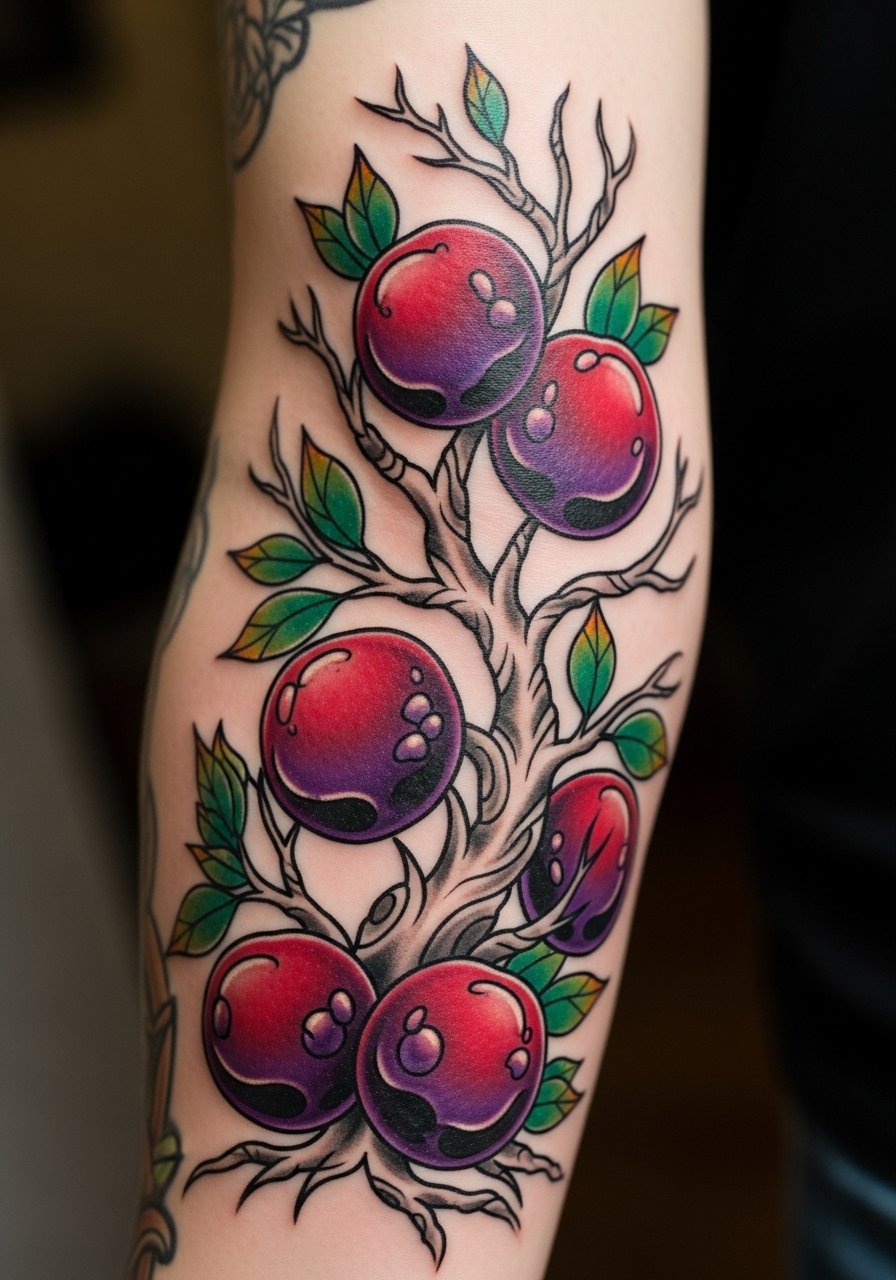
I’ve seen plenty of forearm neo-traditional trees keep their pop because the artist uses bold outlines and good saturation. Tell your artist you want four to six inches with clear negative space around the fruits so color isn’t competing with skin texture. Expect moderate pain for the forearm and one to two sessions depending on saturation. A common mistake is asking for tiny, jewel-like fruits that force thin shading. That fades faster than bold fills. For session wear, roll up a navy chambray button up so the artist has clear access.
2. Blackwork Twisted Roots on the Upper Arm
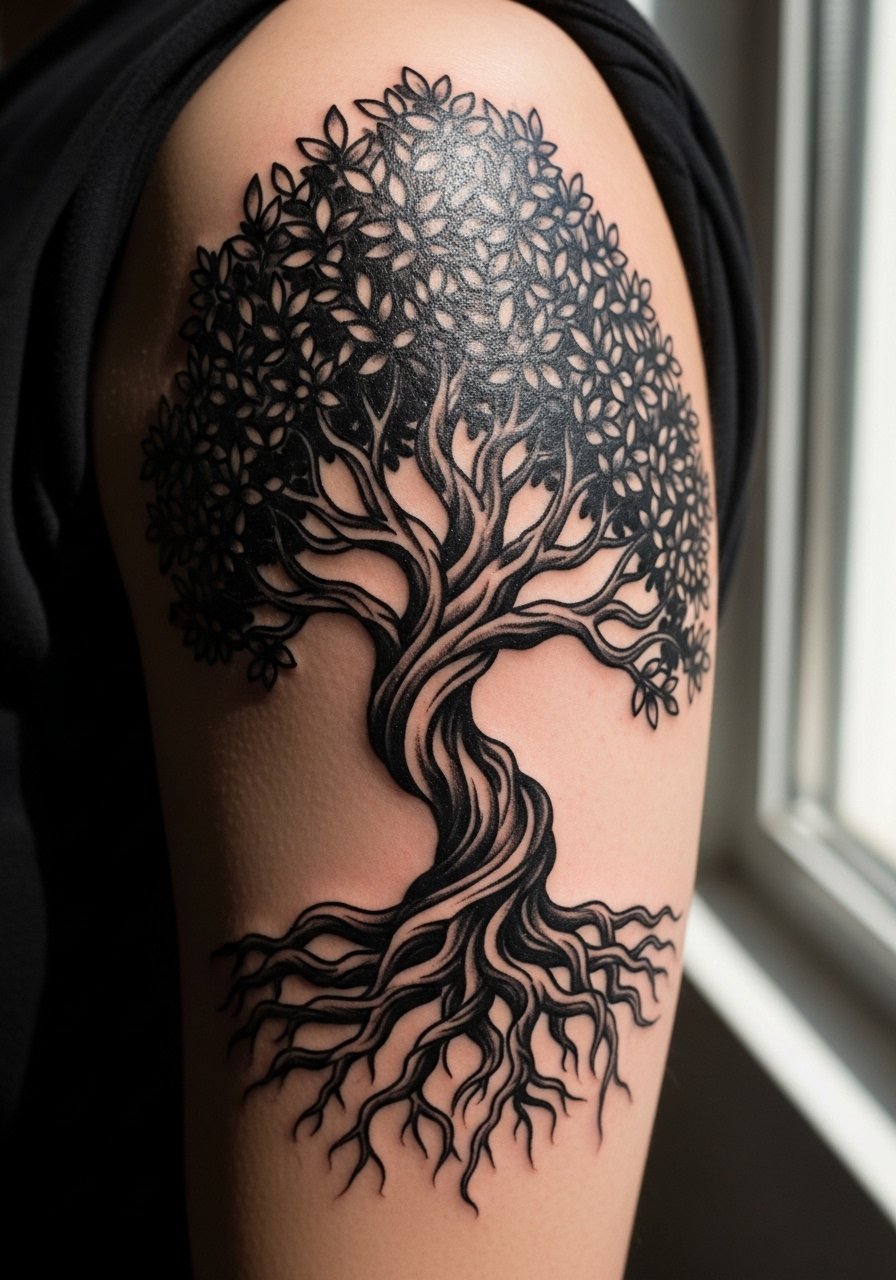
Upper arm blackwork reads for years because heavy saturation resists blowout and fading. Pain is usually low to moderate and most artists can finish a medium piece in one to two sessions. During consultation, ask whether the artist favors solid fills or stipple shading in densely rooted areas, and bring a mid-distance photo to show scale. There’s a debate in the community about fine line versus bold fill on arms. One camp favors bold blackwork for longevity. The other camp argues that precise fine line can hold if the artist spaces lines properly. Ask your artist which camp they sit with. Pair this placement with a sleeveless muscle tank the day of your appointment to keep the shoulder free.
3. Black and Grey Realism on the Shoulder Blade
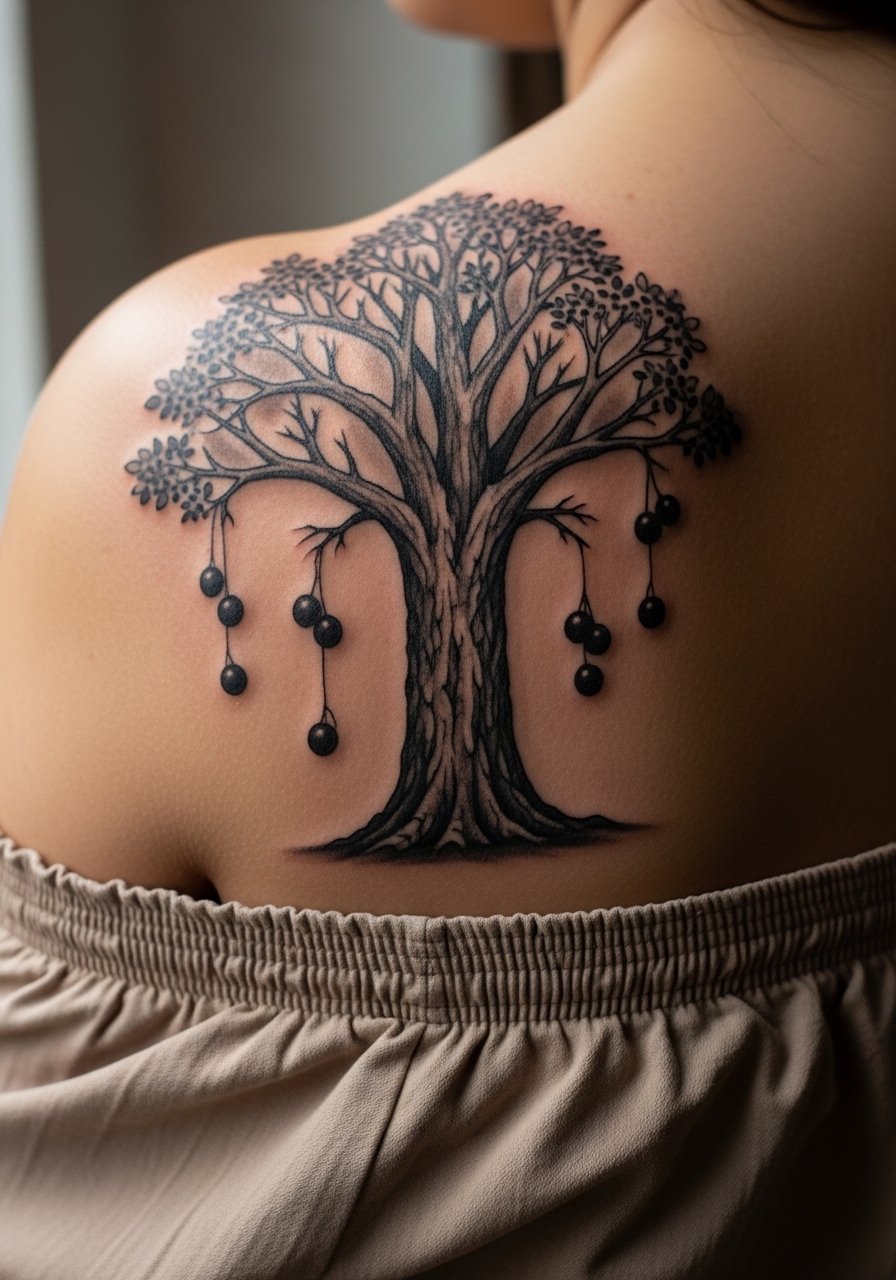
Realism on the shoulder blade gives space for lifelike bark and shadow. Expect higher pain when the needle gets closer to the spine or ribs, but the shoulder blade itself is moderate. This style often needs multiple sessions to build gradients. A mistake is asking for photo-level detail in a too-small area. For five to eight inches, the shading holds beautifully at the two-year mark. For showing it off, an off shoulder blouse frames the work without hiding the subtle greys.
4. Minimalist Roots with Single Fruit on the Wrist
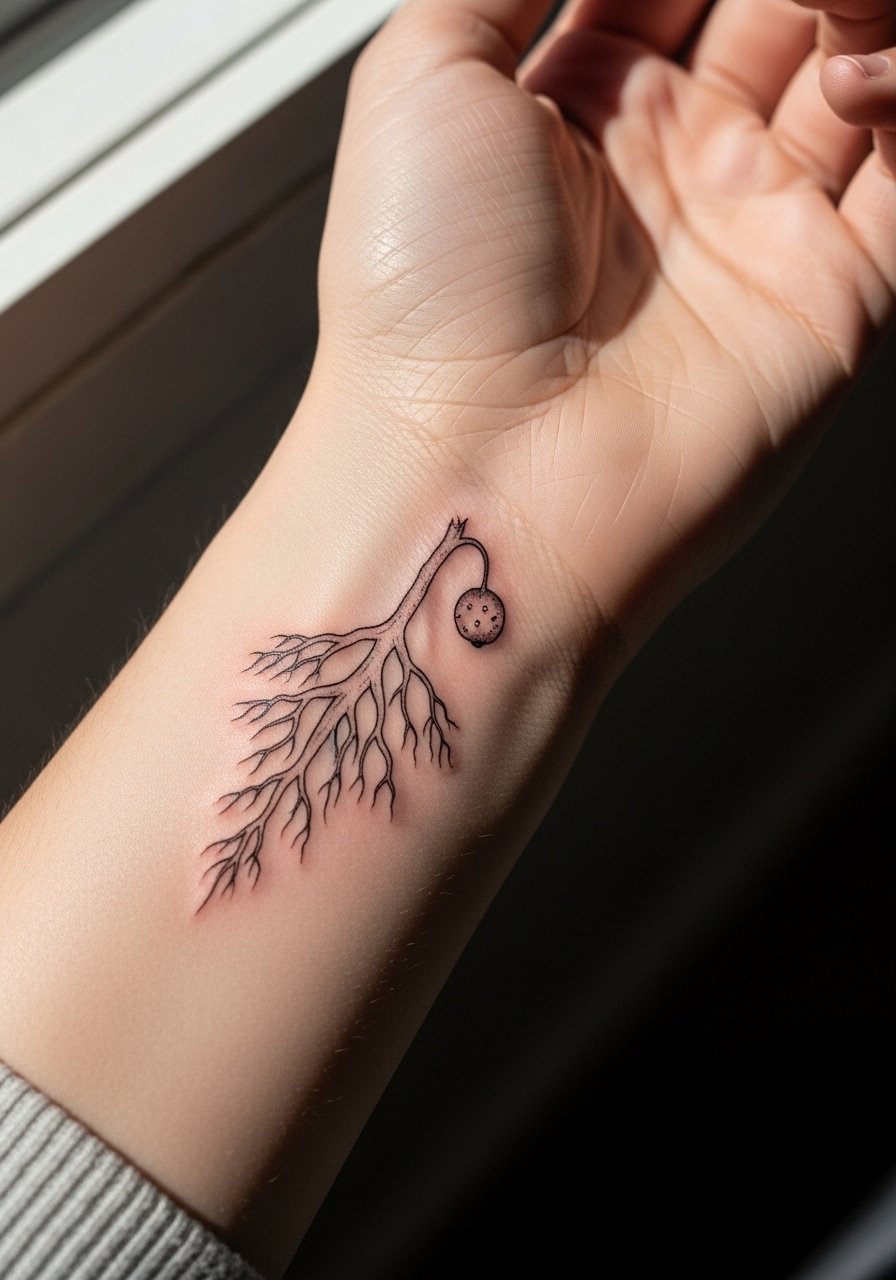
Wrist placements are painless for some and sharp for others. Minimalist roots with a single fruit make a discreet statement, but small scale increases blur risk. Expect a one-session piece, yet plan for touch-up around year two because fine lines on wrists face friction. Tell your artist you want slightly thicker linework where the roots cross to avoid early merging. The common cost complaint for wrist pieces comes from hourly minimums, not necessarily size. For wearing after the session, a thin leather cuff bracelet on the opposite wrist keeps attention balanced.
5. Neo-Traditional Tree Wrapped by a Snake on the Inner Bicep
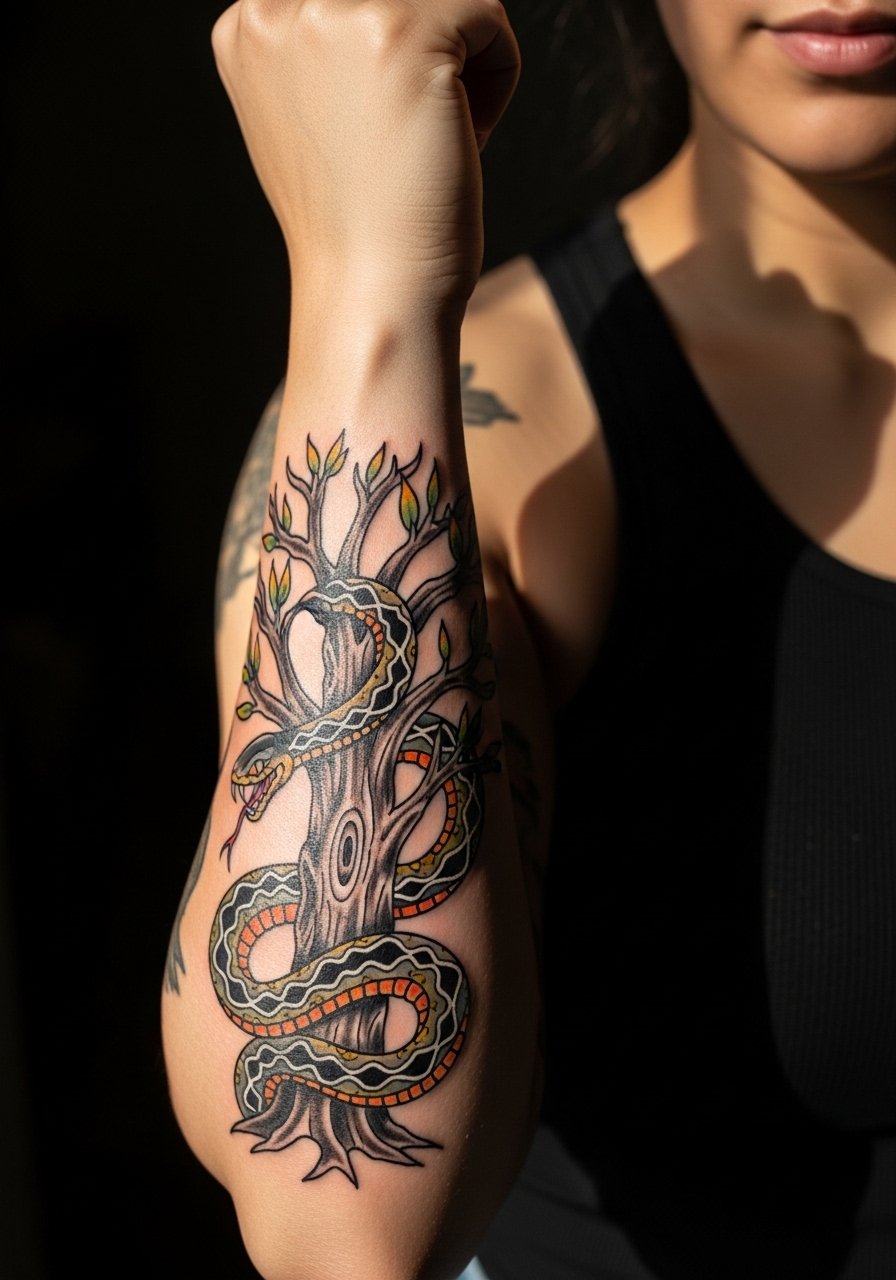
Inner bicep pieces feel intimate and can sting more during session because of thinner skin. This neo-traditional layout lets the snake add rebirth symbolism while giving the trunk vertical flow. Ask your artist for vertical orientation and allow two sessions if you want saturated color on the snake. A common mistake is forcing too much color into the inner arm where movement can break saturation. For the appointment, wear a tank top so the artist can access the area without tugging at fabric. Hand tattoos and industries aside, the inner bicep is easier to conceal for work if needed.
6. Blackwork Abstract Tree with Geometric Fruits on the Calf
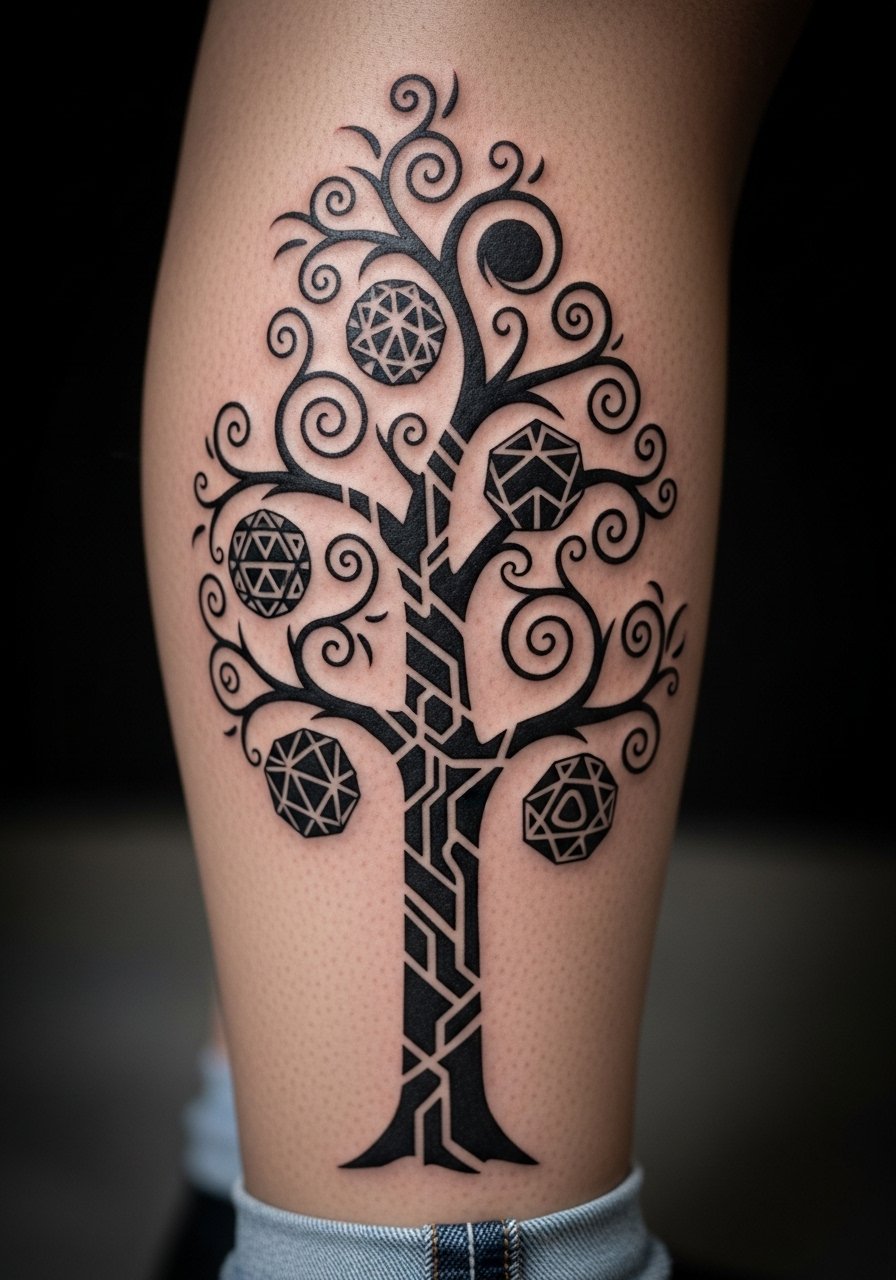
Calf placements suit bold blackwork because the skin there holds saturation well and blowout risk is lower. One to two sessions usually do the trick. Tell the artist you want solid black fruits with negative space separators so the geometry reads from a distance. A common mistake is scaling the geometric elements too tightly, which causes shapes to merge. For showing it off, roll your jeans and pair with bootcut jeans rolled cuff so the clean fills pop.
Studio Day Picks
Those first six ideas mix small visible work with medium saturated pieces, so a few focused items smooth the session and the first week.
-
Stencil transfer paper kit. Lets you preview and reposition linework on skin, which helps avoid the common scaling mistakes on wrists and forearms.
-
Topical numbing cream. Applied before the appointment eases rib and inner bicep sensitivity without changing the artist’s shading plan.
-
Thin protective film roll. Covers small areas like wrists and fingers during the first week to reduce friction that blurs fine lines.
-
Fragrance free gentle body wash. Mild cleansers keep healing skin from irritation on flushed ribcage or collarbone pieces.
-
Aquaphor healing ointment. Thin layers in the first days lock in moisture for crisp linework without clogging needle channels.
7. Watercolor Poison Tree on the Ribcage
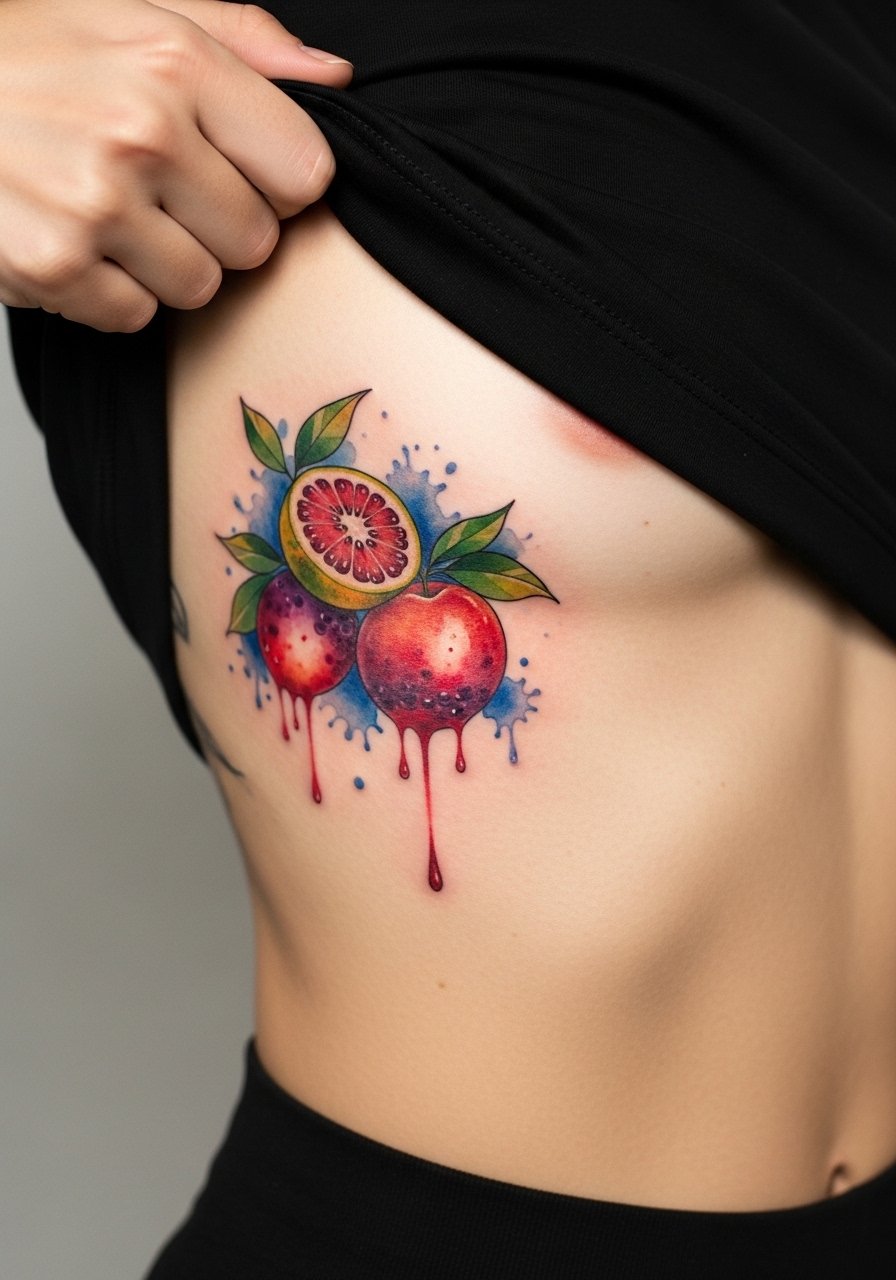
Fair warning, ribcage sessions rank high on most pain scales, but they offer a dramatic canvas. Watercolor shading needs room to breathe and usually two sessions for color layering. The aging reality is mixed; some watercolor washes soften into a bruise-like patina by year three. One camp favors blackwork for longevity. The other says watercolor can hold when artists use micro-saturation and lighter touch. If you choose watercolor, ask about a touch-up schedule and wear a cropped athletic top for easy access during the session.
8. Fine Line Silhouette on the Collarbone
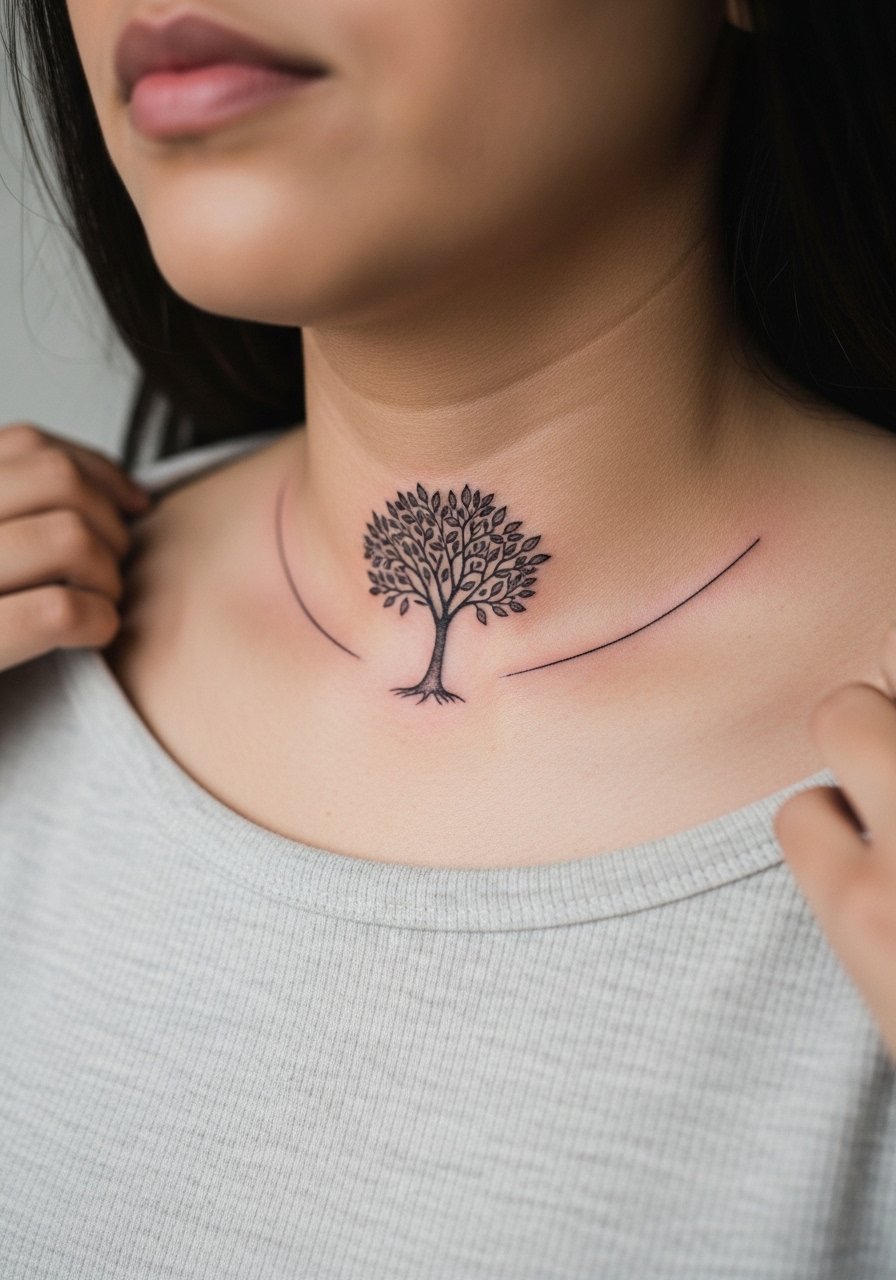
Collarbones give a visible, elegant spot for a small silhouette. Fine line here is delicate and heals beautifully if the design has breathing room. Pain is mild to moderate and a one-session piece usually suffices. The common error is forcing dense detail into a shallow three-inch area. That invites early blurring. For showing the piece, a v neck tee or wrap top in soft pastels complements the subtle washes without competing.
9. Ornamental Tree with Mandala Fruits on the Upper Back
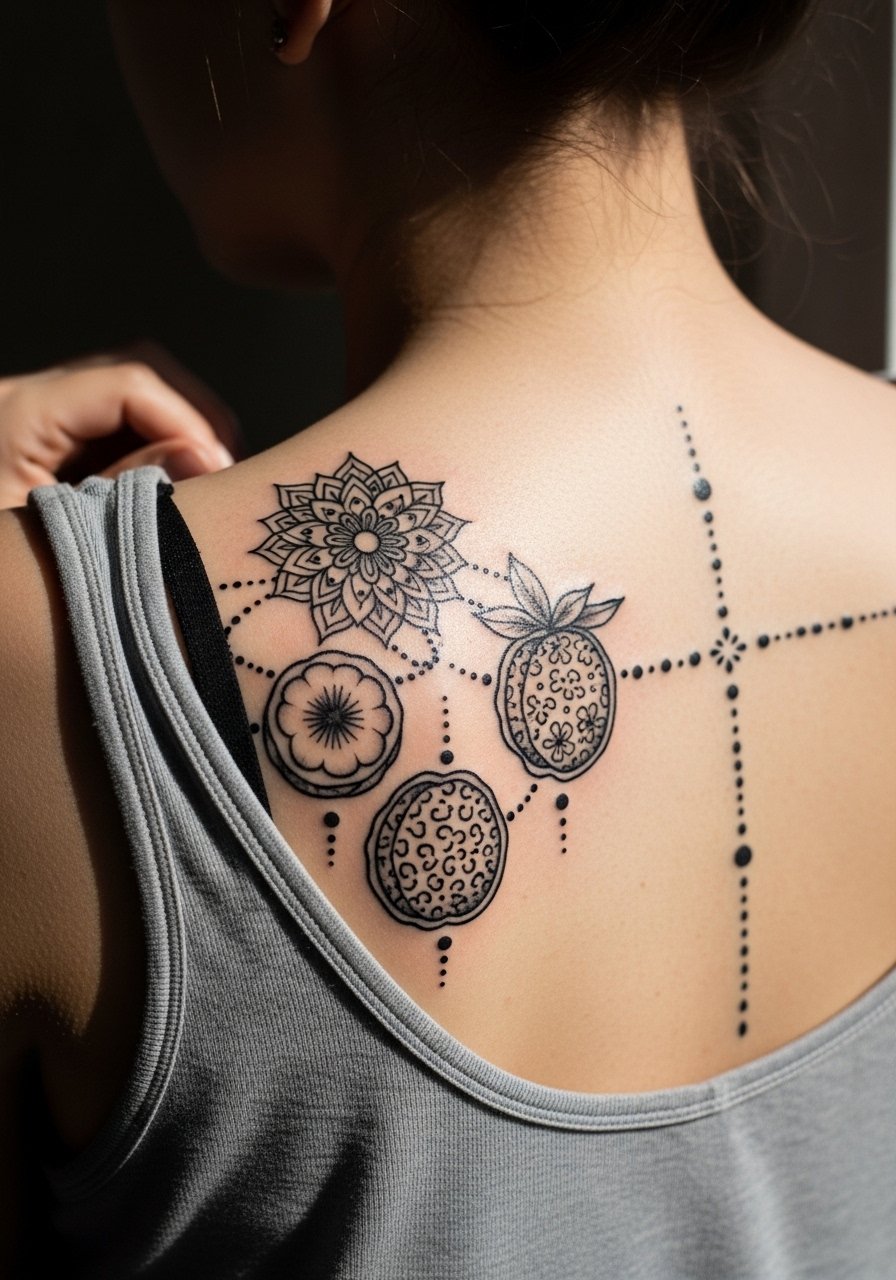
Upper back pieces handle scale and complexity, so ornamental patterns and mandala fruits come out crisp when done at medium size. Expect two to three sessions for full detail and stipple shading. Be mindful that mandala motifs have cultural origins, so many clients choose variations to respect tradition. A mistake is requesting too-small mandala detail on a compact spine area, which loses definition over time. For session day, a loose tank top makes access easy and keeps fabric from smudging fresh ink.
10. Micro-Realism Branch with Poison Drops on the Inner Wrist
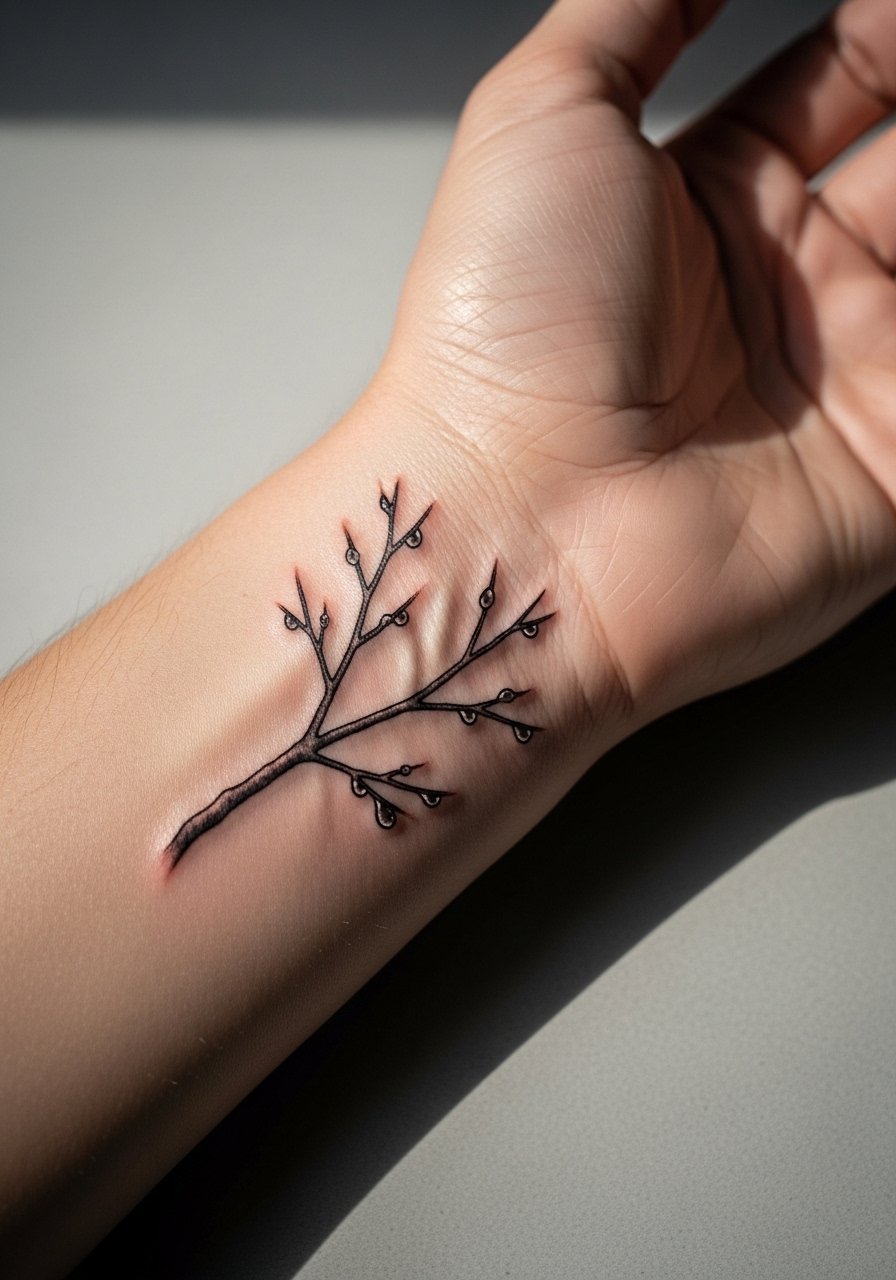
Micro-realism demands a steady hand and the right scale. Inner wrist is sensitive, so sessions can feel sharp in focused bursts. A common mistake is requesting photo-realism at too-small a scale. Expect touch-up at year two for tiny highlights. If you like realism but worry about longevity, ask the artist to thicken key anchor lines slightly so the drops remain distinct. For showing it off, a dainty cuff bracelet keeps attention on the wrist without crowding the detail. Trust your artist on needle selection and spacing for micro work.
11. Ignorant Style Chunky Fruit on the Ankle
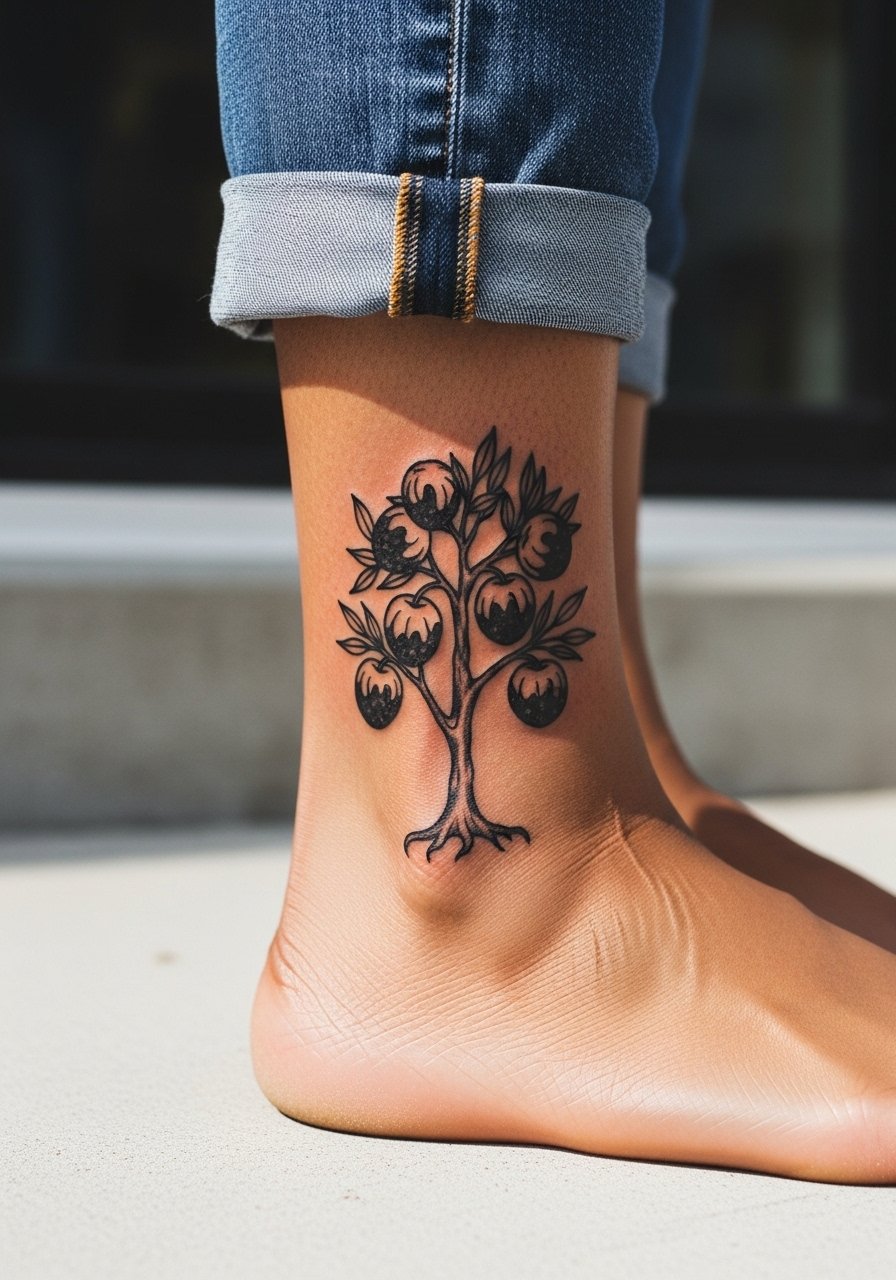
Ankle tattoos are sensitive and tend to fade faster due to shoe friction and socks. The ignorant style’s chunky shapes and bold outlines are forgiving on this placement. One session can usually complete a small ankle piece. The mistake people make is choosing intricate detail for an area that gets rubbed by footwear. For visibility in summer, cuff your slim jeans or choose cuffed ankle jeans so the bold fruits read clean.
12. Neo-Traditional Thigh Tree with Butterfly Accents
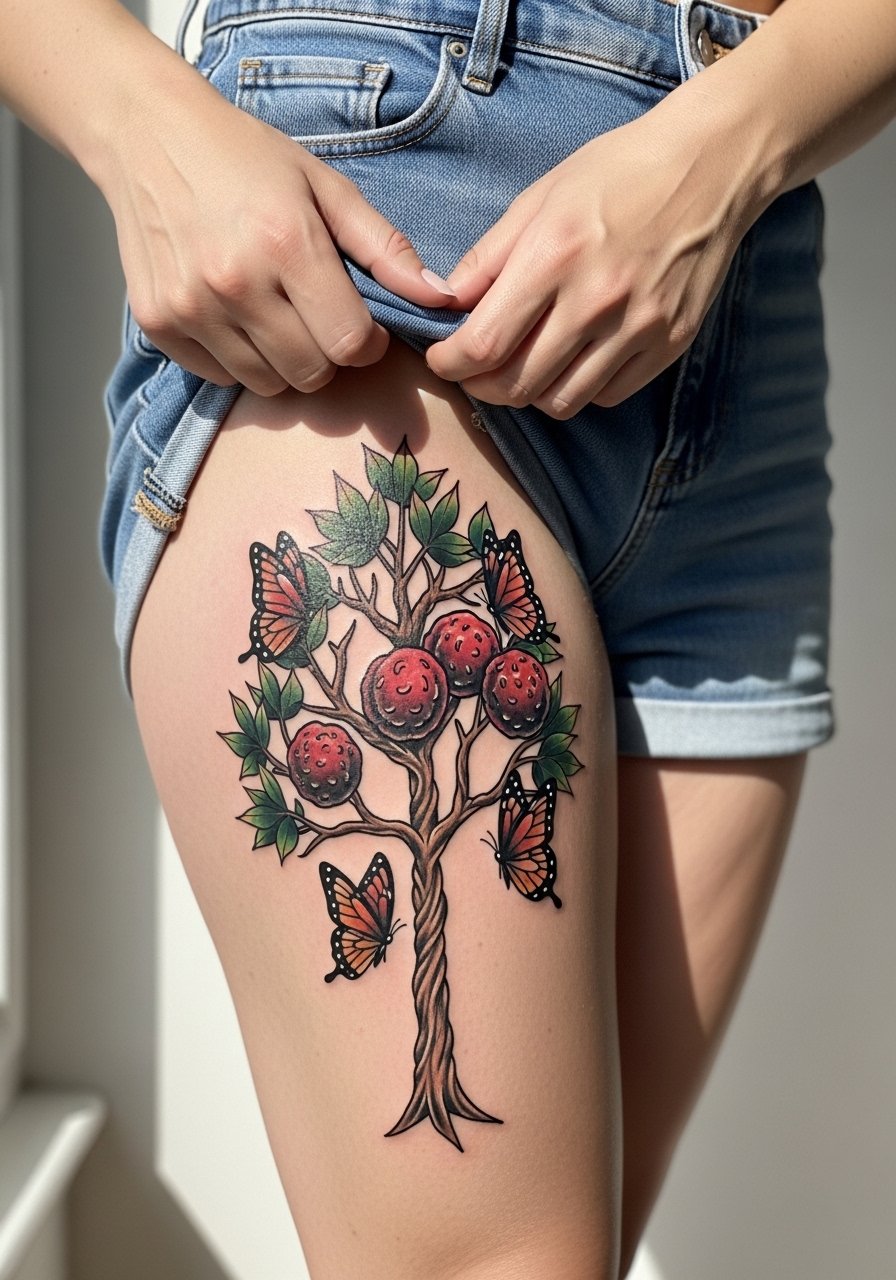
Thighs are forgiving for saturation and complexity and often hide well for touch-ups. Expect two sessions for a thigh piece with color and accents. Butterflies add transformation symbolism and create movement around the trunk. The common error is compressing too many elements into a narrow band of skin. For showing it off, high-waisted shorts or a skirt with a slit works beautifully, and you can wear high waisted denim shorts to reveal the placement.
13. Geometric Fruits in an Abstract Poison Tree on the Calf Side

Geometric elements need scale to stay sharp, which the calf provides. Solid black shapes and clear separations avoid the early softening that small geometry suffers. One to two sessions typical. A mistake is shrinking the geometry for a 'subtle' effect that actually becomes smudge. For the appointment, shorts or capris let the artist work without fabric tugging. Pair the piece with capri leggings for casual reveal.
14. Fine Line Tree Silhouette Behind the Ear
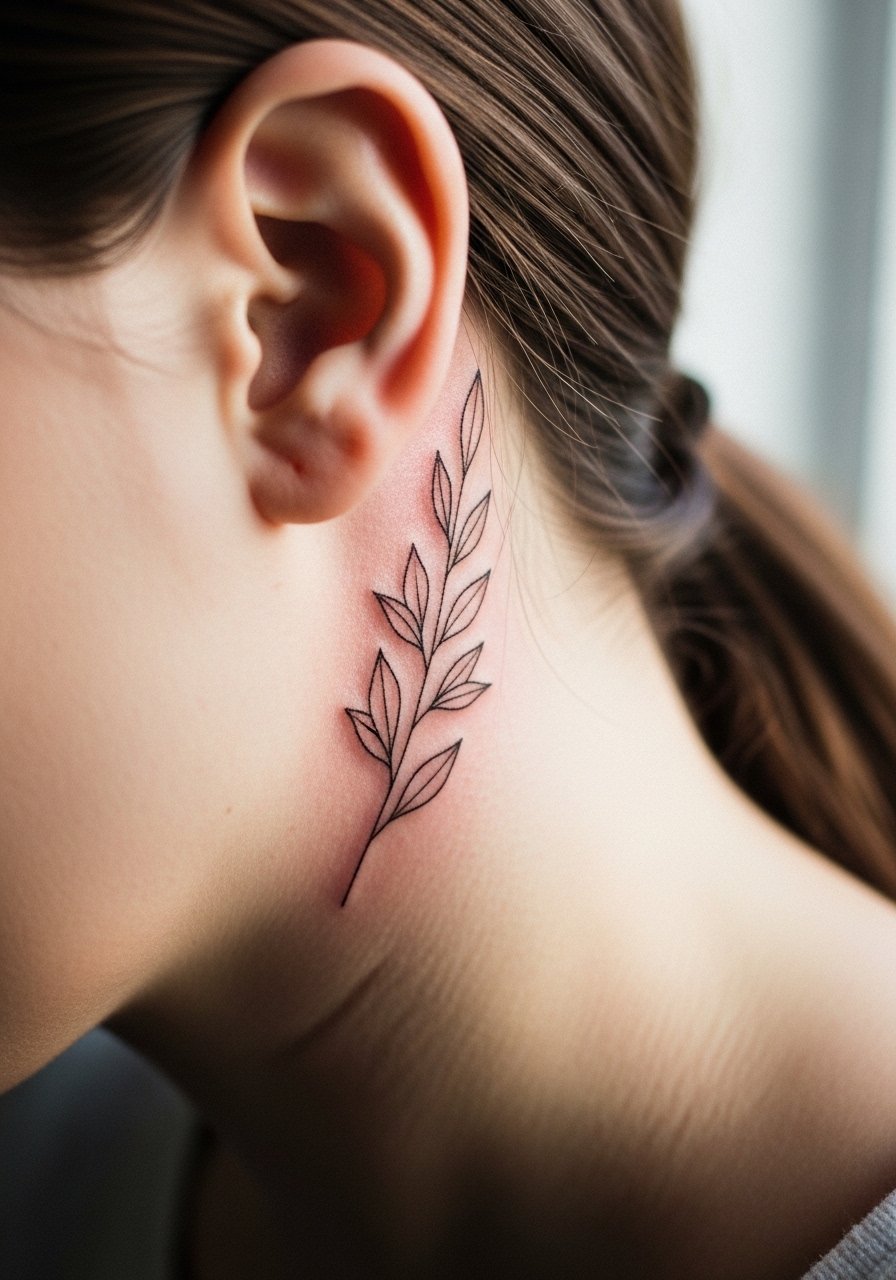
Behind-the-ear work is tiny and personal. The area needs careful framing and expert needle control because skin there is thin. Session discomfort is low but proximity to bone can feel sharp. Artists debate whether tiny fine lines hold there long term. One camp says skin movement and hair friction make it fade quickly. The other camp says proper spacing and conservative sizing can last several years. If you pick this spot, keep design minimal and expect touch-ups sooner than larger placements.
15. Black and Grey Tree Sleeve Accent on the Forearm
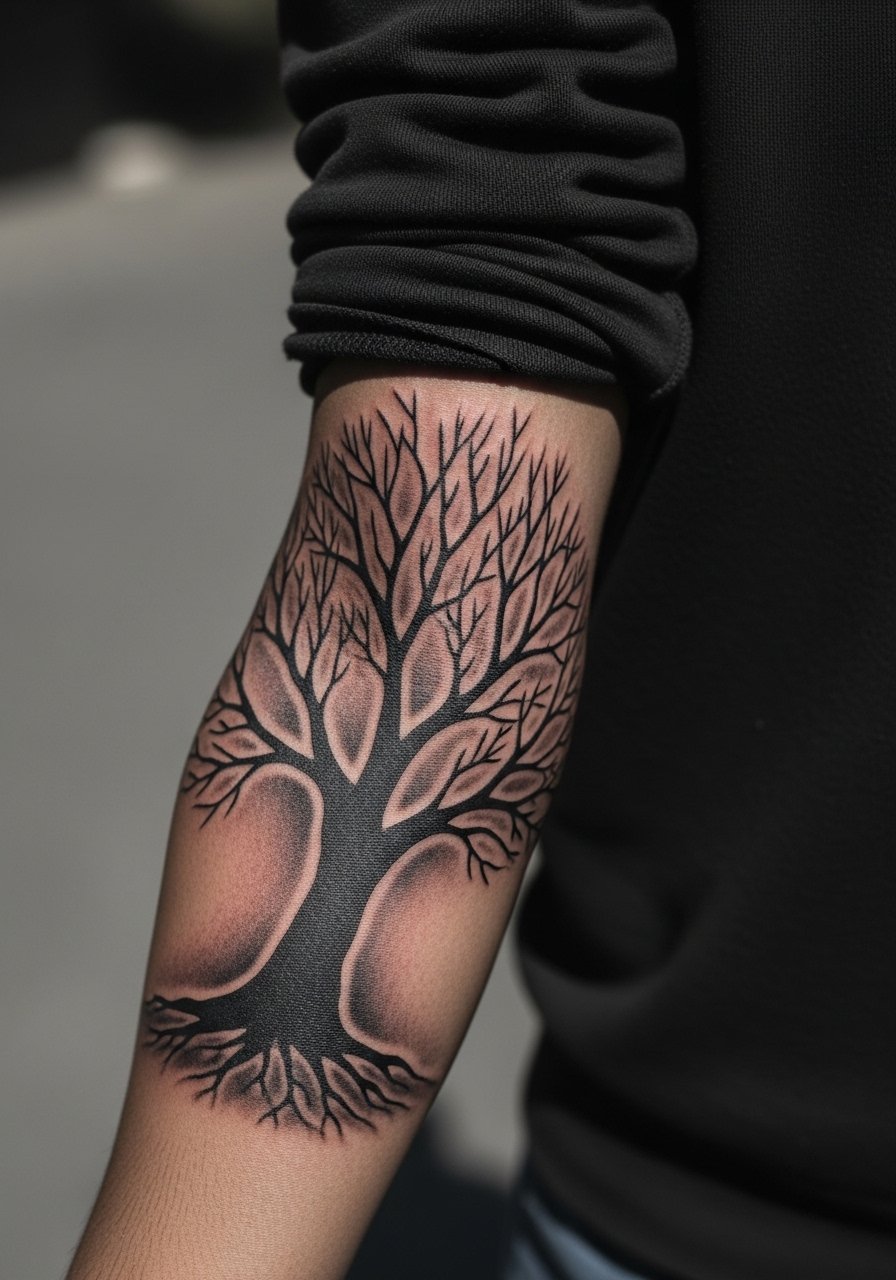
Forearm sleeve work gives artists room for branching flow and layered shading. Expect multiple sessions for a coherent sleeve accent. The main mistake is trying to cram unrelated styles in the same sleeve. For longevity, black and grey with heavy anchoring lines avoids the fine-line fade issues. For session wear, choose a loose short sleeve tee you can roll up without stretching the fabric.
16. Ornamental Mini Tree with Initial Fruits on the Sternum

Sternum pieces feel dramatic but come with higher pain and movement considerations. Adding tiny initials inside fruits personalizes the tattoo and helps map emotional meaning. Expect a one to two session plan with careful placement. The sternum shifts with breathing, so ask your artist to test the stencil while you breathe to find the best anchor points. Many artists recommend experienced hands for chest work. Wear a fitted sports bra on session day for access.
17. Micro-Realism Poison Drops on a Finger

Finger tattoos face heavy wear and frequent touch-ups because of constant washing and friction. Micro realism here is high risk for early fading. Expect a couple of short sessions and plan for touch-ups in year one or two. The frequent mistake is underestimating how much a finger sees daily. If you want longevity, keep lines bold and accept maintenance. For a neat display pair, consider minimal jewelry rather than heavy rings.
18. Abstract Negative Space Tree on the Lower Back

Lower back pieces are shielded from sun and clothing abrasion when covered, which helps saturation. Abstract negative space can look modern and ages better than minute detail. Expect a one to two session piece depending on size. The mistake is packing too much tiny ornamentation into a low-visibility area. For session wear, a tank top with adjustable waistline keeps the lower back accessible.
19. Neo-Traditional Tree with Scripted Dates on the Rib Side
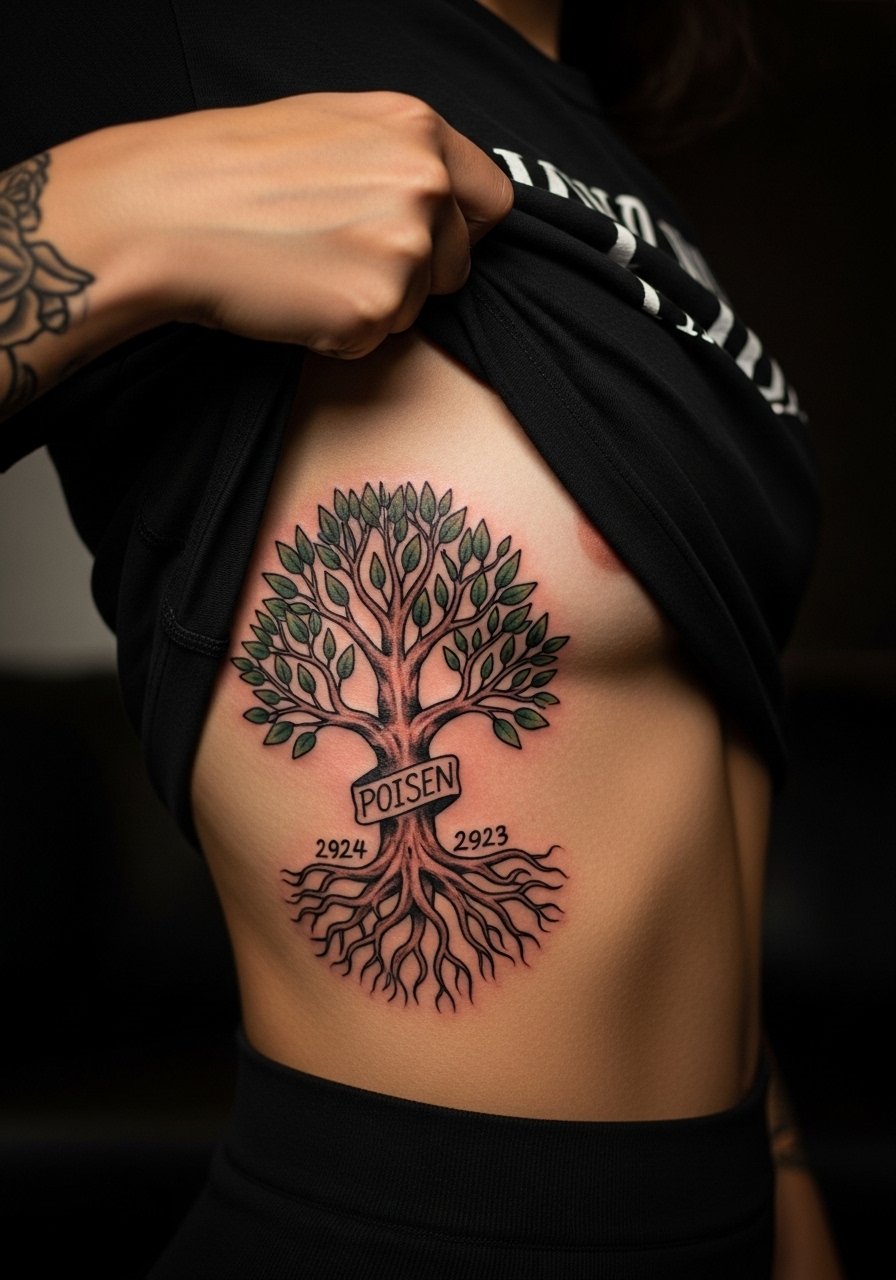
Rib-side neo-traditional layouts allow you to tuck in dates or initials within roots for personal mapping. Expect more pain and multiple sessions for saturated color. The risky move is adding fine script too close to dense shading. Ask for slightly larger numerals so the script remains legible as lines soften. For the session, choose a cropped athletic top that you can lift without stretching.
20. Blackwork Tree with Dot Work Roots on the Thigh
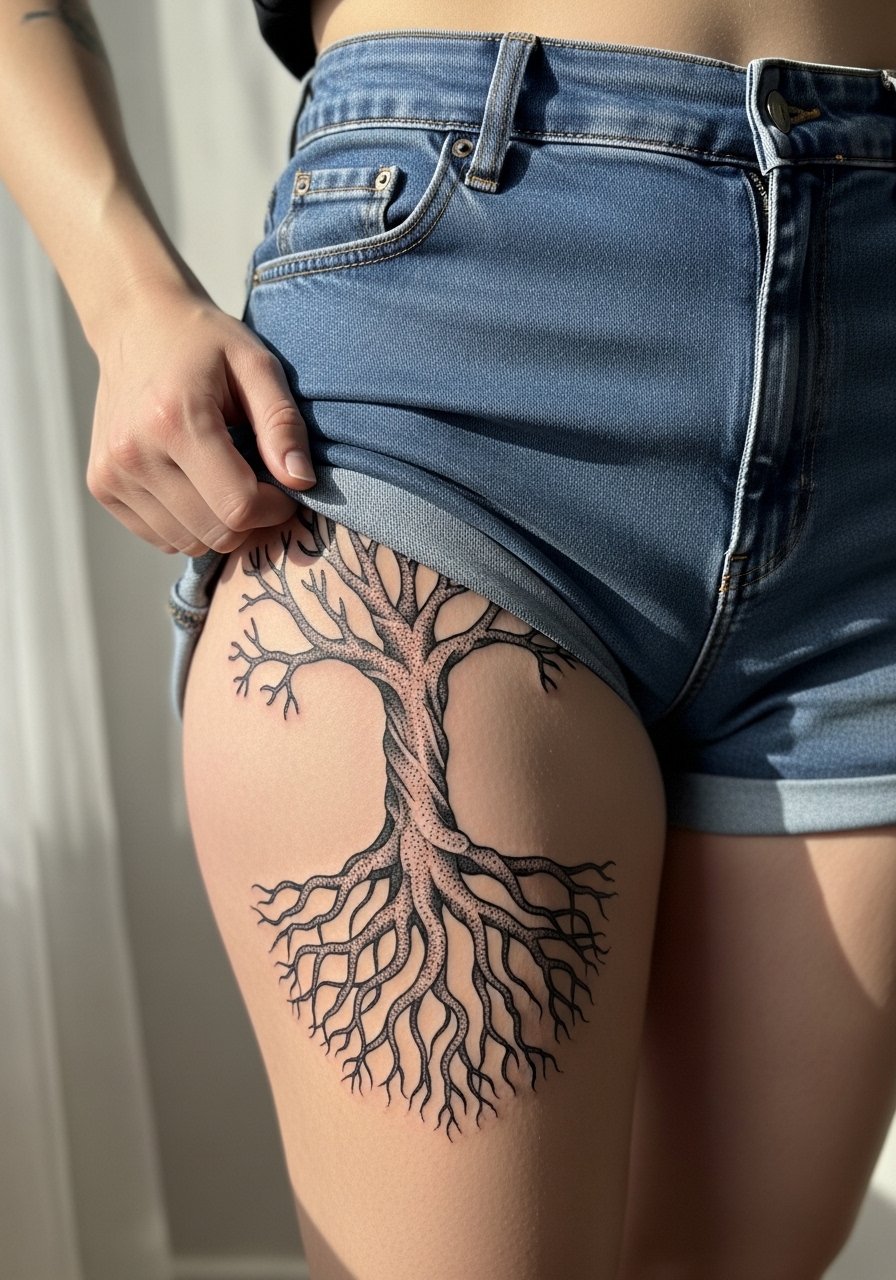
Thighs are excellent for dot work and stippling because the skin takes fine shading well. Pain is generally low to moderate and sessions can be longer. A common mistake is attempting ultra-fine stipple at too-small a scale which fills in over time. For showing it off, a slit midi skirt or high-waisted shorts will reveal the detail without distortion.
21. Minimalist Root Band Around the Wrist
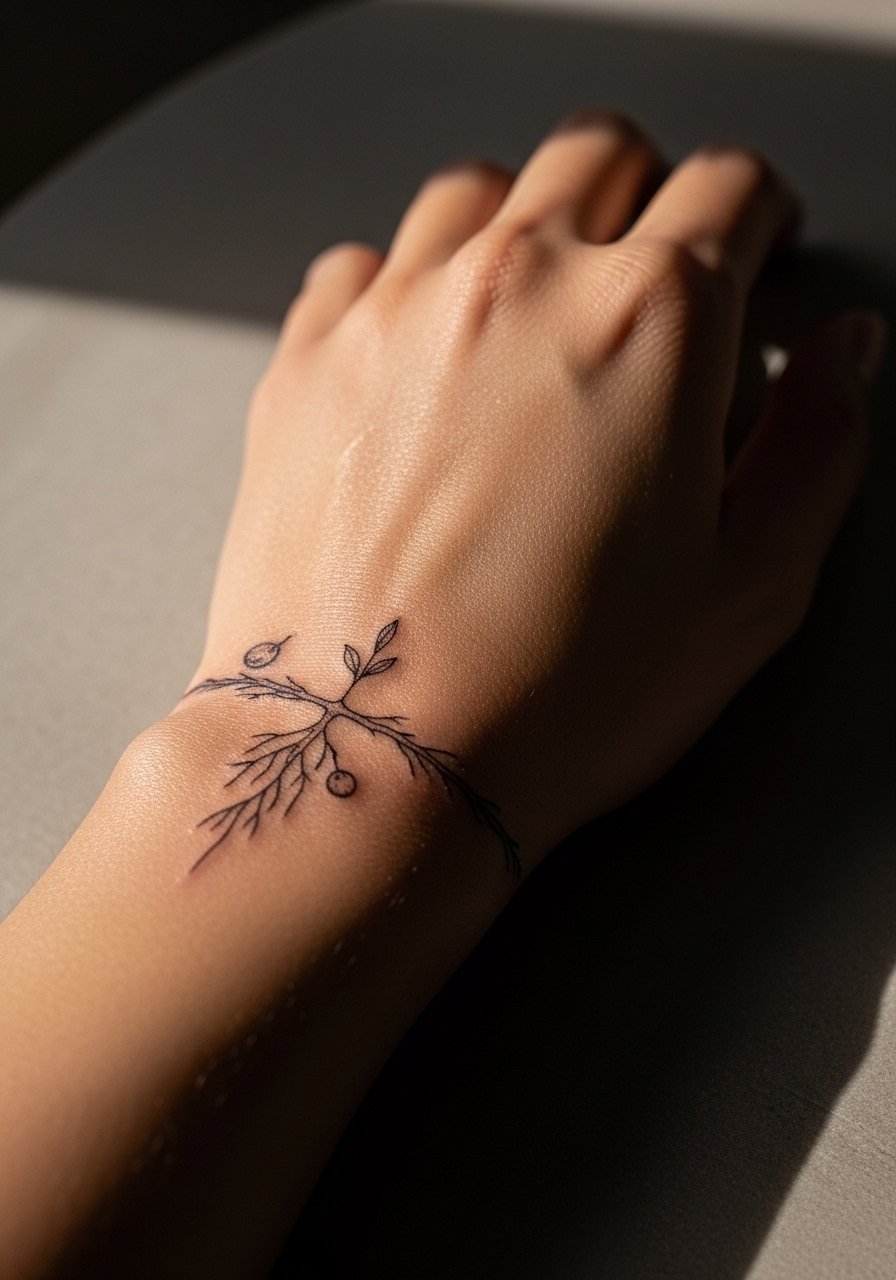
Band-style wrist work reads as jewelry and is great when kept simple. Pain can be sharp because the wrist has little padding. The usual mistake is overly tight detail that blurs when the skin moves. For a durable band, ask for slightly heavier anchor lines and plan to touch up at year two. For session day, wear a loose button down shirt you can pull aside without smudging the fresh ink.
22. Watercolor Collarbone Accent with Soft Fruit Washes

Watercolor on the collarbone looks painterly but is vulnerable to washout in sun-exposed areas. Expect one to two sessions with a lighter touch. The mistake is choosing saturated watercolor without planning for touch-ups and sun protection. For showing the piece, a pastel v-neck blouse complements the soft palette while leaving the area visible.
23. Black and Grey Tree Fragment on the Shoulder Cap
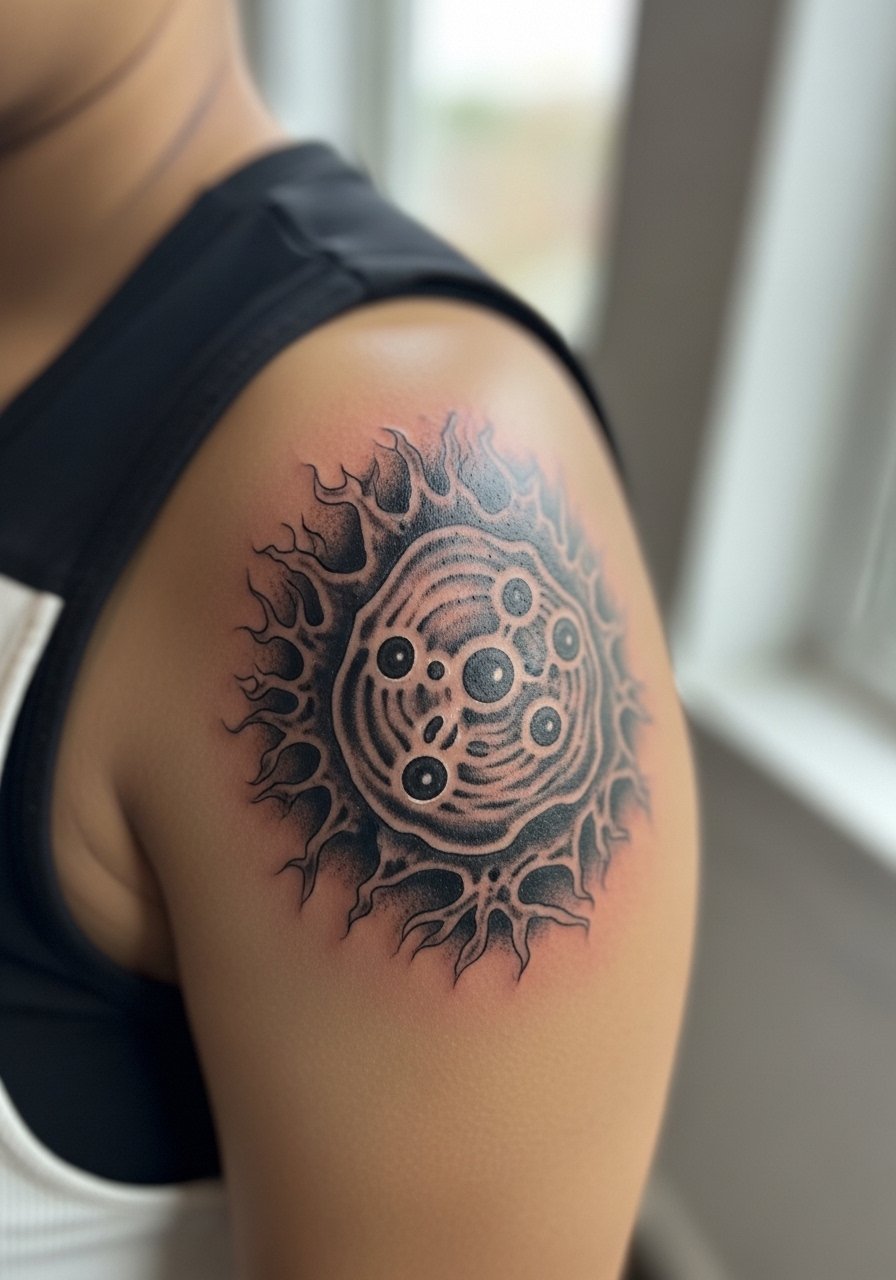
Shoulder cap tattoos move with clothing and sun exposure, but black and grey fragments age predictably when anchored with darker cores. Expect a single longer session for a medium fragment. The common error is asking for thin shading without darker anchors, which vanishes over time. For session access, wear a sleeveless top to keep the area free without tugging.
24. Decorative Hip Tree with Floral Fruits
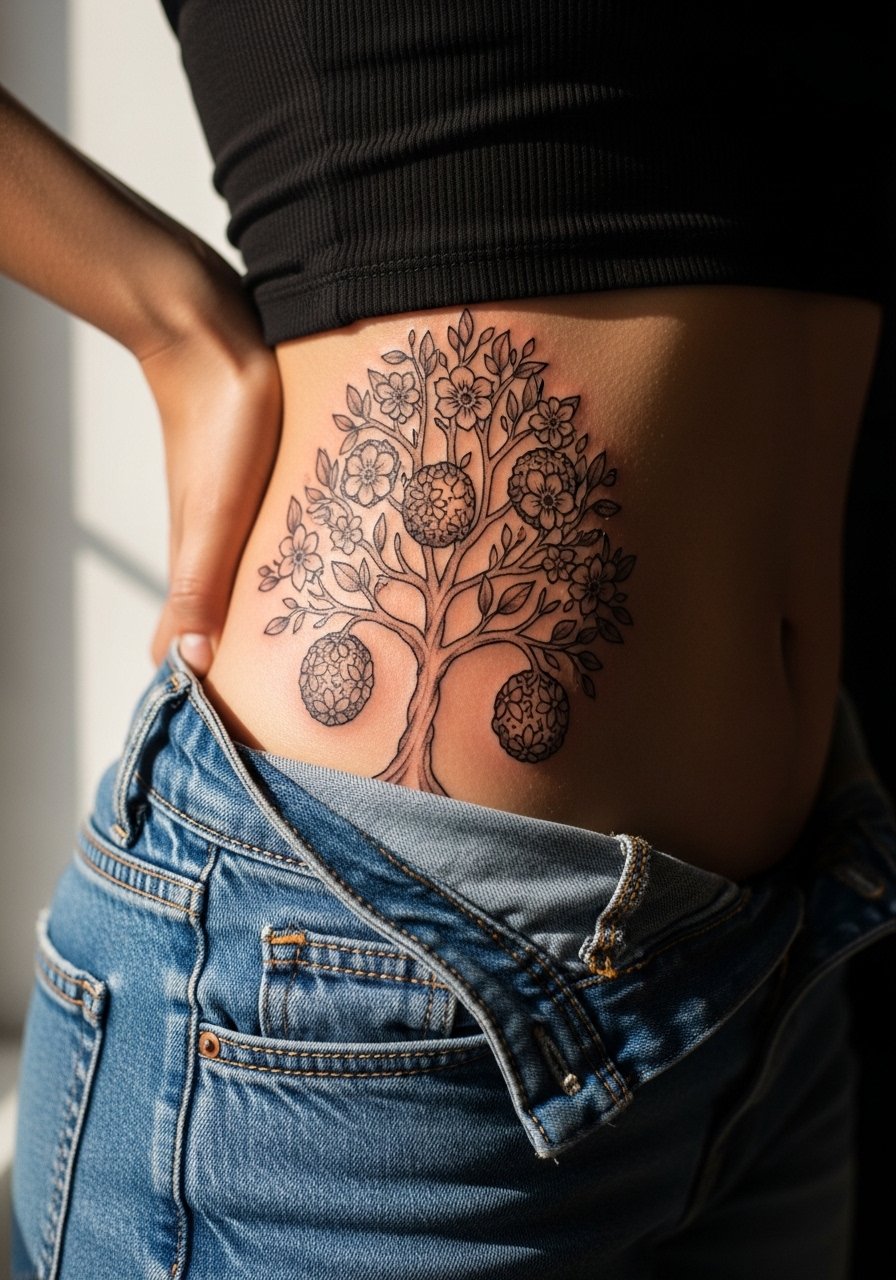
Hip placements let you create decorative forms that peek out from swimsuit bottoms or high-rise pants. Pain varies but is often tolerable. A typical mistake is crowding the hip band where clothing rubs. If you plan to show it seasonally, choose high-waisted cuts for reveal. For session wear, a high waisted denim shorts option keeps access easy without full exposure.
25. Stipple Shaded Mini Tree on the Inner Thigh

Inner thigh work can be private and sensual. The area tolerates shading nicely but sits near friction zones if clothing rubs. A mistake is choosing ultra-fine detail that blurs from movement. Stipple shading at medium scale holds better and usually finishes in one session. For the appointment, wear shorts you can shift slightly to expose just the area.
26. Small Poison Tree on the Side of the Neck
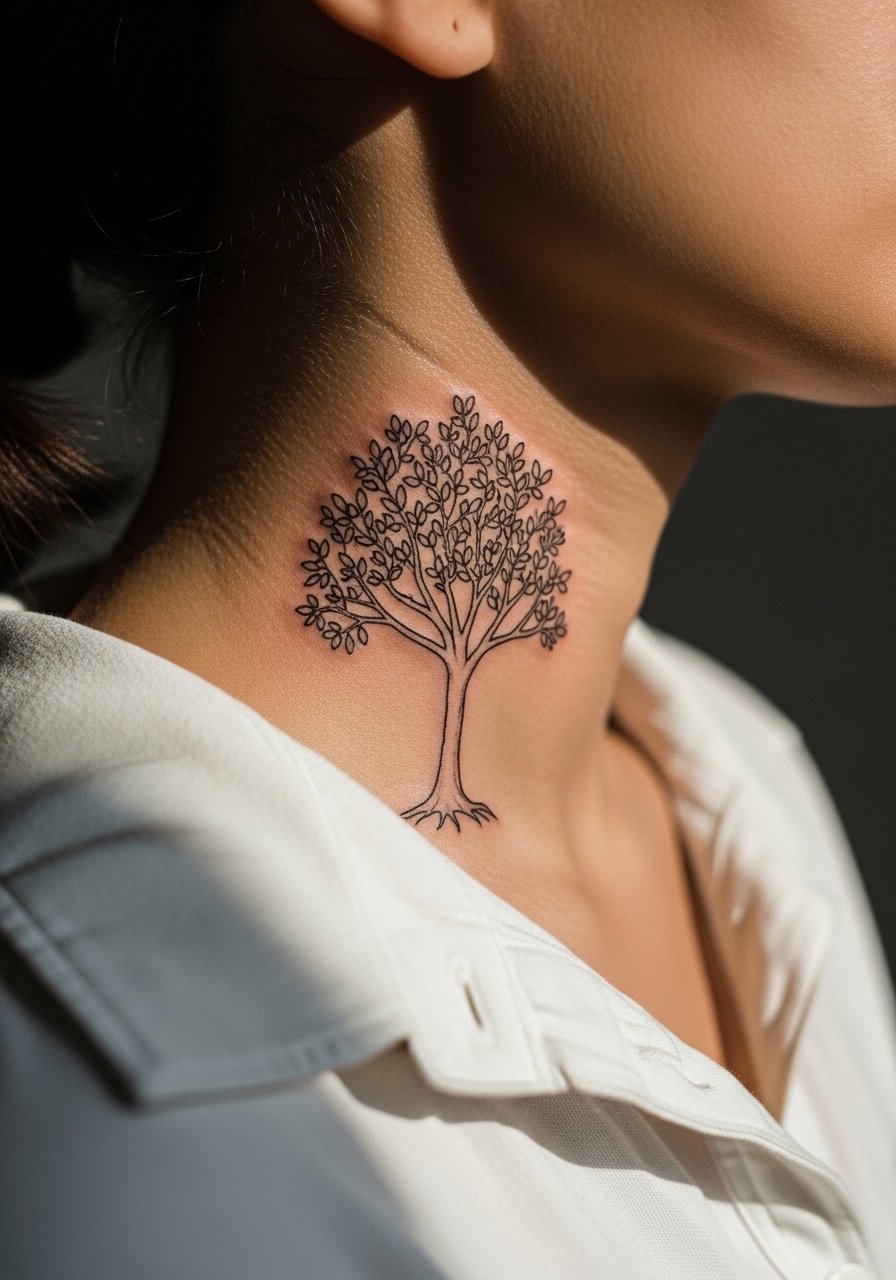
Neck tattoos are visible and can impact perceptions in some workplaces. The skin is thin and the area is sensitive during the session. The common mistake is asking for too much tiny detail in a small neck area. If you pick this spot, ask about longevity and keep scale conservative. For session day, a wide-neck shirt that you can pull aside makes access easier.
27. Tiny Poison Tree Ankle Band with Geometric Accents
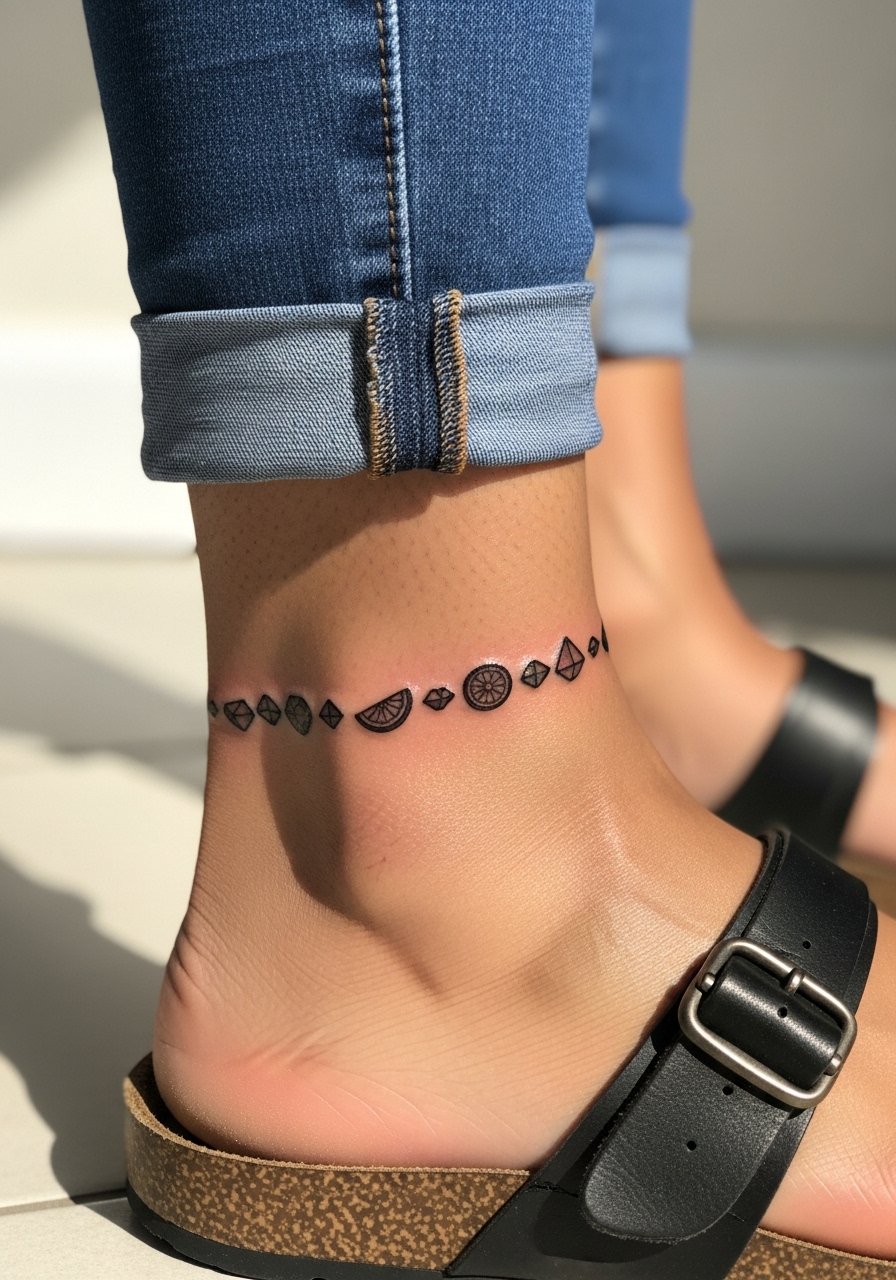
An ankle band reads like accessory and is fun for seasonal visibility. Expect sensitivity during the session and plan for periodic touch-ups if you wear shoes that rub the area. A frequent mistake is overcomplicating the band with tiny geometry that blurs. Keep negative space and contrast clear so the band remains readable. For summer reveal, sandals and rolled jeans work, consider cropped straight leg pants to show it off.
Frequently Asked Questions
Q: Will fine line poison tree tattoos fade faster than bold blackwork on forearms and wrists?
A: From what I have seen, fine line pieces on high-friction areas like wrists tend to soften sooner than bold blackwork. Bold fills resist blowout longer, while fine line often needs touch-ups around year two. Placement and how much sun the tattoo sees matter more than the aesthetic alone.
Q: How should I prepare for a ribcage watercolor session that may take two appointments?
A: Hydrate well, eat a solid meal before you arrive, and wear a cropped athletic top you can lift easily. Expect that rib shots will feel intense in bursts and bring plans for small breaks between color passes.
Q: Is Saniderm or dry healing better for blackwork pieces that need heavy saturation?
A: Artists split into two camps. One group prefers occlusive films like Saniderm for the first 24 to 48 hours, claiming it protects saturated fills. The other group favors dry healing after the initial window, saying occlusion can trap fluid in dense black areas. Ask your artist where they stand and follow their timeline for the best result.
Q: How do body changes, like weight gain, affect forearm or inner bicep tree tattoos?
A: Forearm and inner bicep lines can stretch if you gain substantial weight or muscle. Rib and collarbone placements move differently. If you expect body changes, choose a placement with more surface area like the thigh or upper back, and discuss spacing with your artist so elements do not warp.
Q: Where can I find artists who do neo-traditional poison tree work without generic floral templates?
A: Search tags like #poisontreetattoo and #neotraditionaltattoo on Instagram and filter recent posts. Use Tattoodo or Booksy to compare portfolios and request custom sketches rather than flash. Look for portfolios showing consistent saturation and distinct fruit treatments.
Q: Should I expect price differences for small wrist pieces compared to a few years ago?
A: Yes, smaller pieces still hit shop minimums that reflect artist time, not just size. If budget is a concern, ask about guest spots or apprentices who work under senior artists, or plan for having the piece done at a convention when rates can vary.
Q: How often will I need touch-ups for a tiny micro-realism wrist drop versus a blackwork calf tree?
A: Micro-realism on wrists often needs a touch-up within one to three years because of wash and friction. A saturated blackwork calf piece can hold longer and may need touch-ups later, often after several years, depending on sun exposure and skin type.