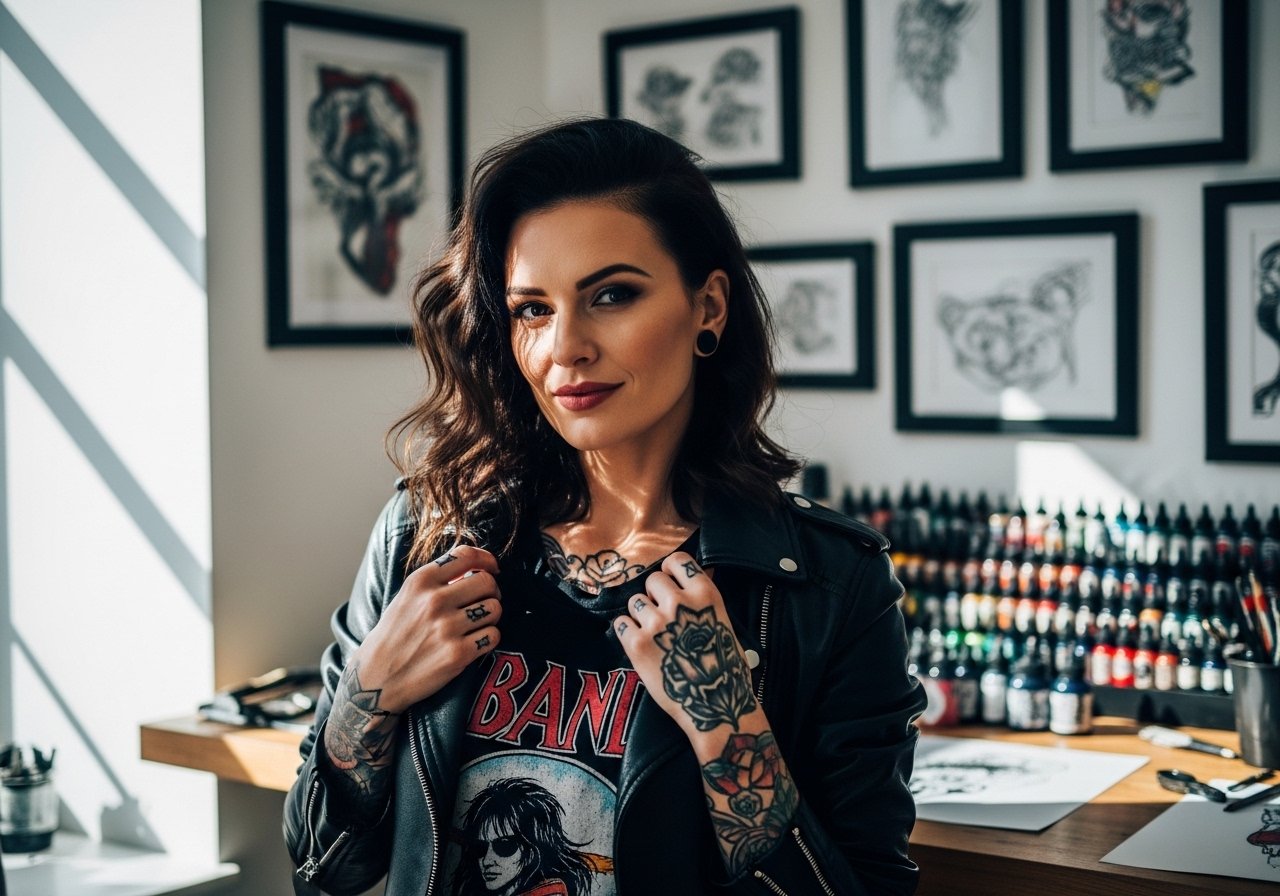
Fine line florals are everywhere on saved boards, but they come with tradeoffs most people notice only after the stencil is off. Lines fade faster on high-friction spots, tiny pieces cost more than they used to, and contrast can vanish on darker skin if negative space is not planned. Read through these ideas with placement and aftercare in mind so your next petite bloom still reads clean years from now.
1. Single-Stem Rose on the Inner Forearm
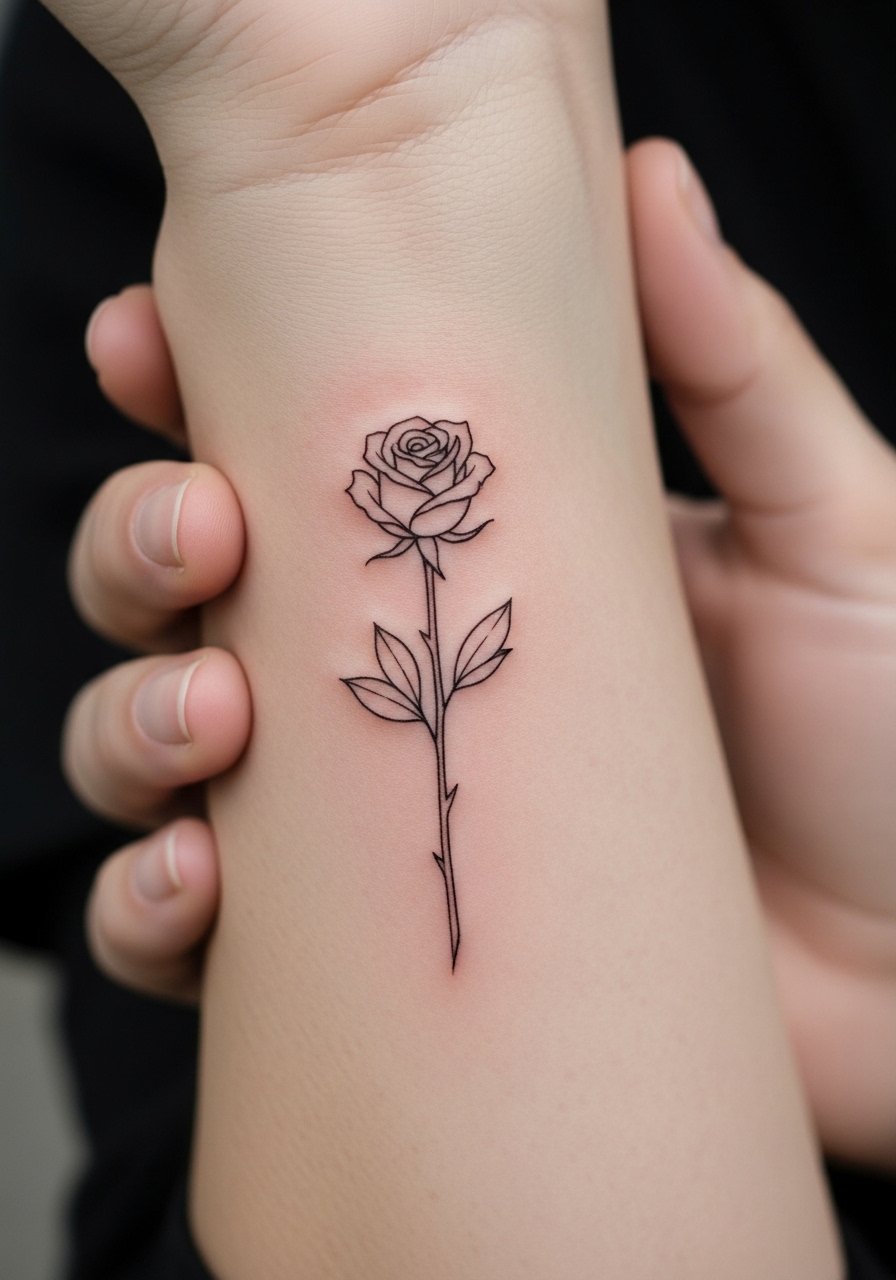
A single-stem rose on the inner forearm reads like a small statement that still moves with the arm. Expect moderate discomfort for this placement and a typical session time under an hour for a one- to two-inch piece. Tell your artist you want slightly more spacing between petals and a single-needle outline so the petals do not merge into a blur over time. A common mistake is requesting ultra-tight petals that look amazing fresh but soften into smudges by year three. For showing it off, roll up a chambray shirt cuff and add a thin silver cuff on the opposite arm for balance.
2. Tiny Daisy Behind the Ear

Behind-the-ear daisies are nearly invisible in a casual updo and peek out when you tuck hair behind the ear. Pain is low compared with ribs, but healing can be awkward because hair and sweat disturb scabs. Ask for a simple outline with negative space between petals to improve contrast on darker tones and request an aftercare plan for hairline areas. The typical session takes 20 to 30 minutes. People often forget to tell their artist about daily hair products, which can irritate healing skin and blur fine linework. For appointments, wear hair tied up and slip on a pair of pearl stud earrings so nothing dangles over the spot while it settles.
3. Lotus on the Inner Wrist

A wrist lotus is compact and symbolic. Expect the session to be quick, often 30 to 45 minutes, but plan for touch-ups earlier than for forearm work because wrist skin takes more wear from washing and sun. During consultation, ask the artist to test line thickness on similar skin tones in their portfolio to ensure the negative spaces remain visible. The mistake I see most is packing too many tiny petals into a small wrist piece, which speeds up blurring. Touch-up timelines vary, but many fine line wrist pieces benefit from a refresh around year two to three. Keep sunscreen on the wrist after healing to slow fading.
4. Wildflower Cluster on the Ankle
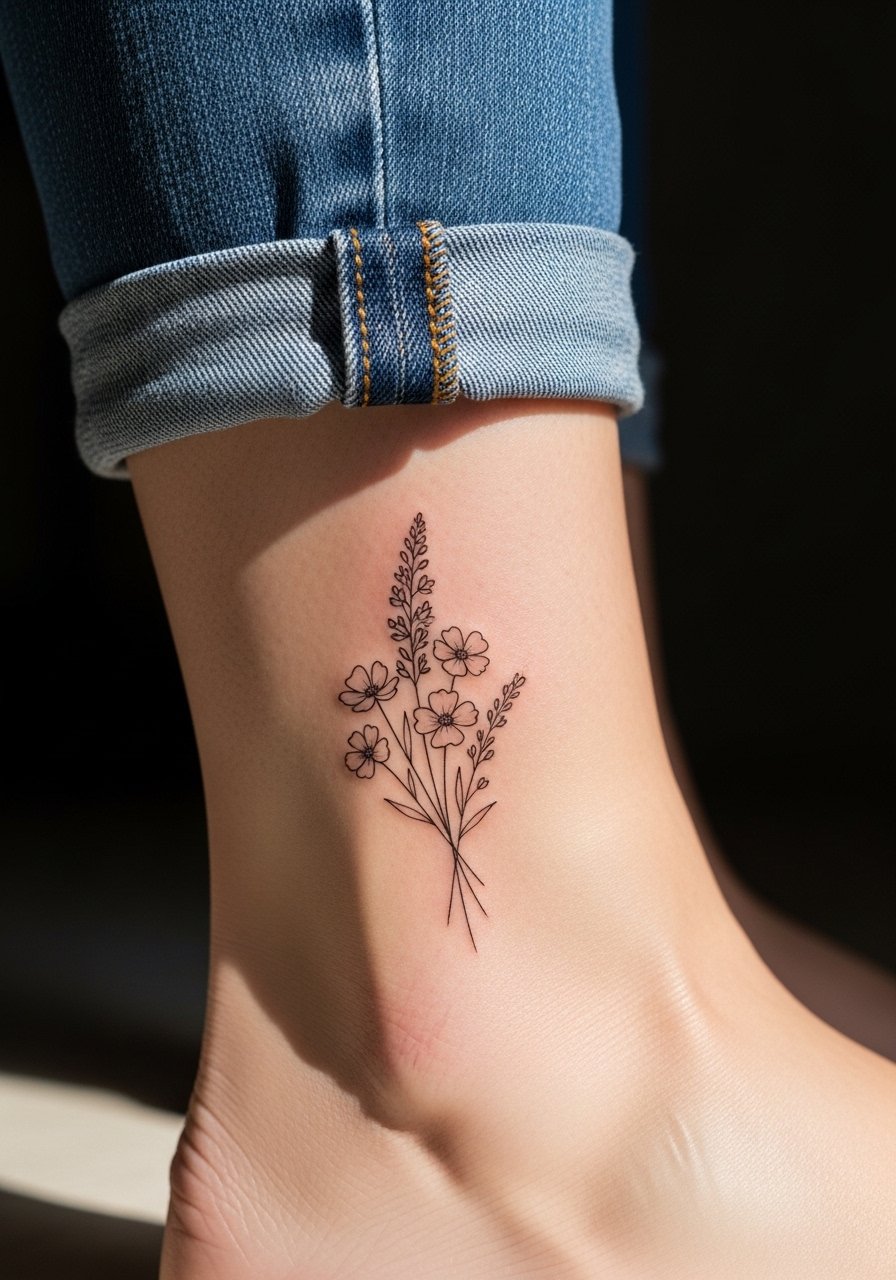
Wildflower clusters make ankles feel seasonal and lively. The ankle has higher friction from shoes and socks, so expect faster fading. Most small clusters take a single session under an hour. Tell your artist you want the stems arranged horizontally so the cluster reads at a glance, and avoid cramming the design into a 1-inch square. A frequent regret is placing a detailed cluster too low on the ankle where sneakers rub every day. For showing it off in summer, cuffed straight-leg jeans or a linen midi skirt pair well and let the piece peek out without competing with footwear.
5. Elongated Botanical Stem Along the Ribcage
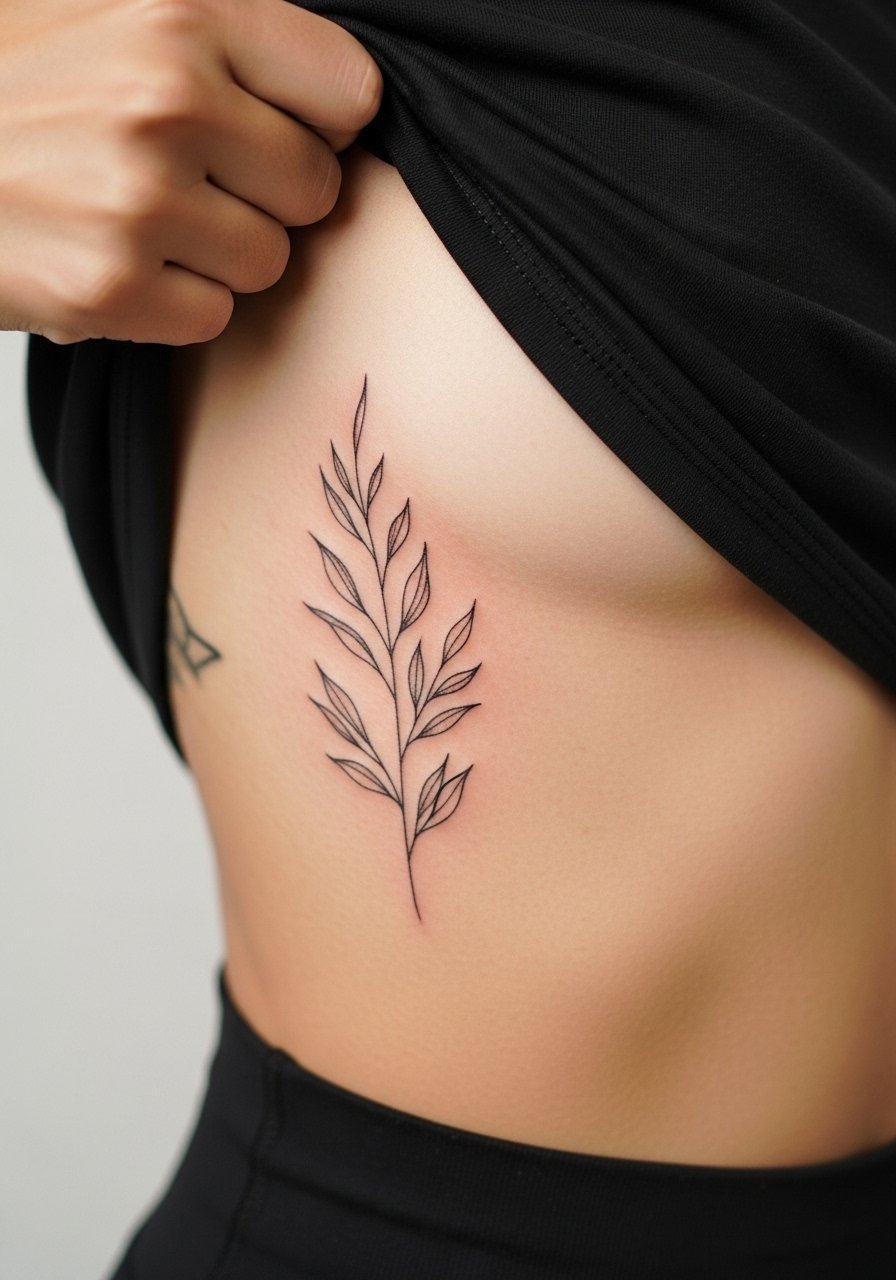
Fair warning, the ribcage ranks high on most pain charts, often a seven out of ten. But a long botanical stem there creates a graceful reveal under low-cut tops or swimwear. This style benefits from spacing between leaves to prevent dense linework from merging as the skin stretches. The session can run longer, sometimes split into two appointments for a four-to-six inch piece. Artists split on whether fine line holds on ribs; one camp says stretch and movement blur lines quickly, the other camp says correct depth and spacing make it last. Ask the artist where they land and request portfolio examples on similar placements. For the appointment, bring a crop tank you can lift easily.
6. Stem-Only Finger Wrap
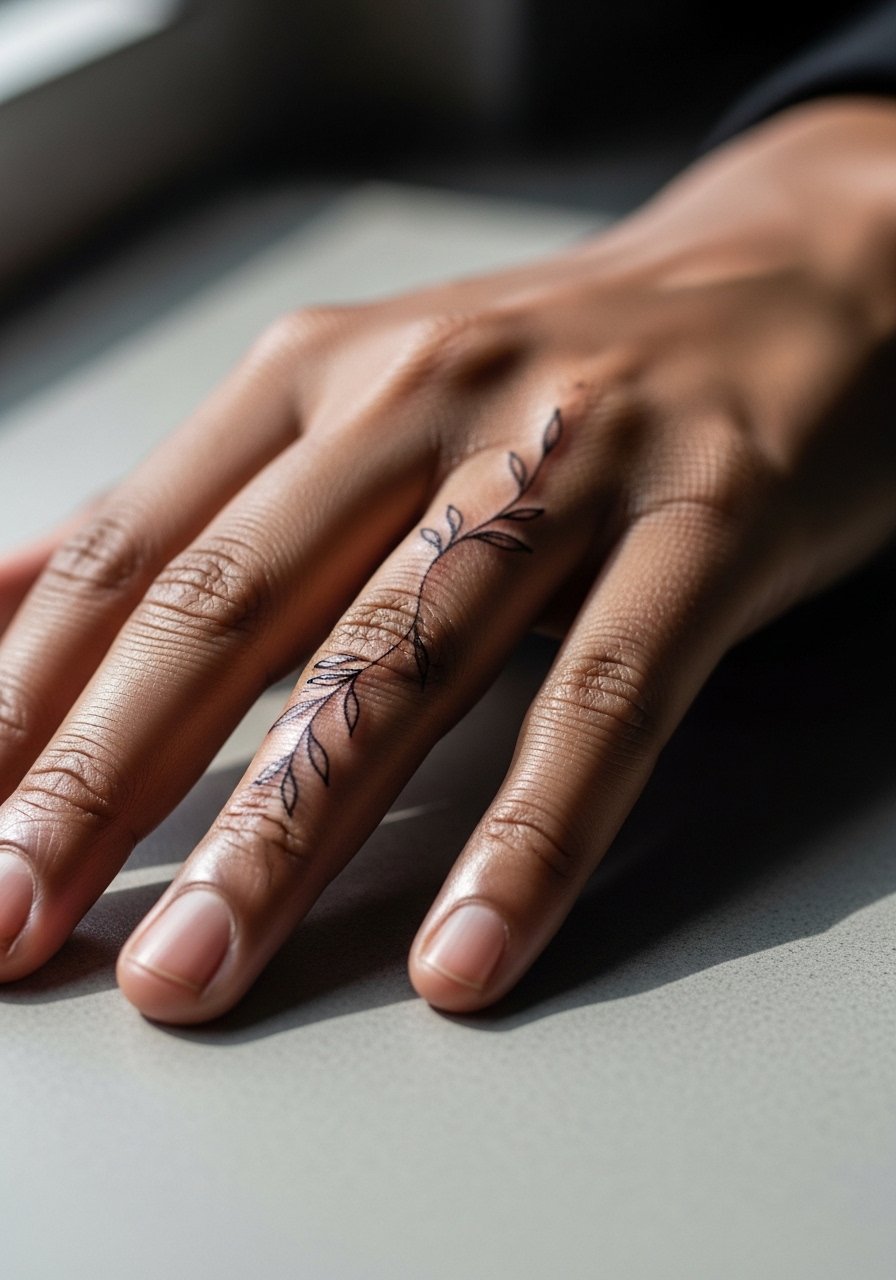
Finger wraps are discreet and playful, but they are a commitment to frequent touch-ups since hands see constant washing and friction. Sessions are short but the healing window is rougher. When you consult, request slightly thicker primary lines with intentional negative space so the design stays legible on dark or medium tones. The most common mistake is going ultra-thin for a ring effect; those often need a touch-up within a year. Expect touch-ups every one to two years depending on lifestyle. If you want the finger piece to last, consider placing the stem across the side of the finger where rubbing is less.
Studio Day Picks
The forearm, wrist, and ankle pieces above all ask for small tools that protect delicate linework during the first week.
-
Soy Butter tattoo balm. A thinner balm texture helps fine line work stay moist without clogging tight needle channels, useful for small wrist and finger pieces.
-
Tea Tree tattoo balm. Lightweight and less shiny, it is handy during warm months for ankle or collarbone tattoos that rub against clothing.
-
After Inked tattoo balm. Good for maintaining moisture without greasiness, which helps preserve crisp linework on forearm stems.
-
Thin protective film roll. Useful to cover finger and wrist tattoos while showering or during heavy activity in the first few days.
-
Aquaphor healing ointment. A thin layer in the first 48 hours helps protect very small linework before switching to a lighter balm.
7. Micro Dot Wildflower on the Collarbone
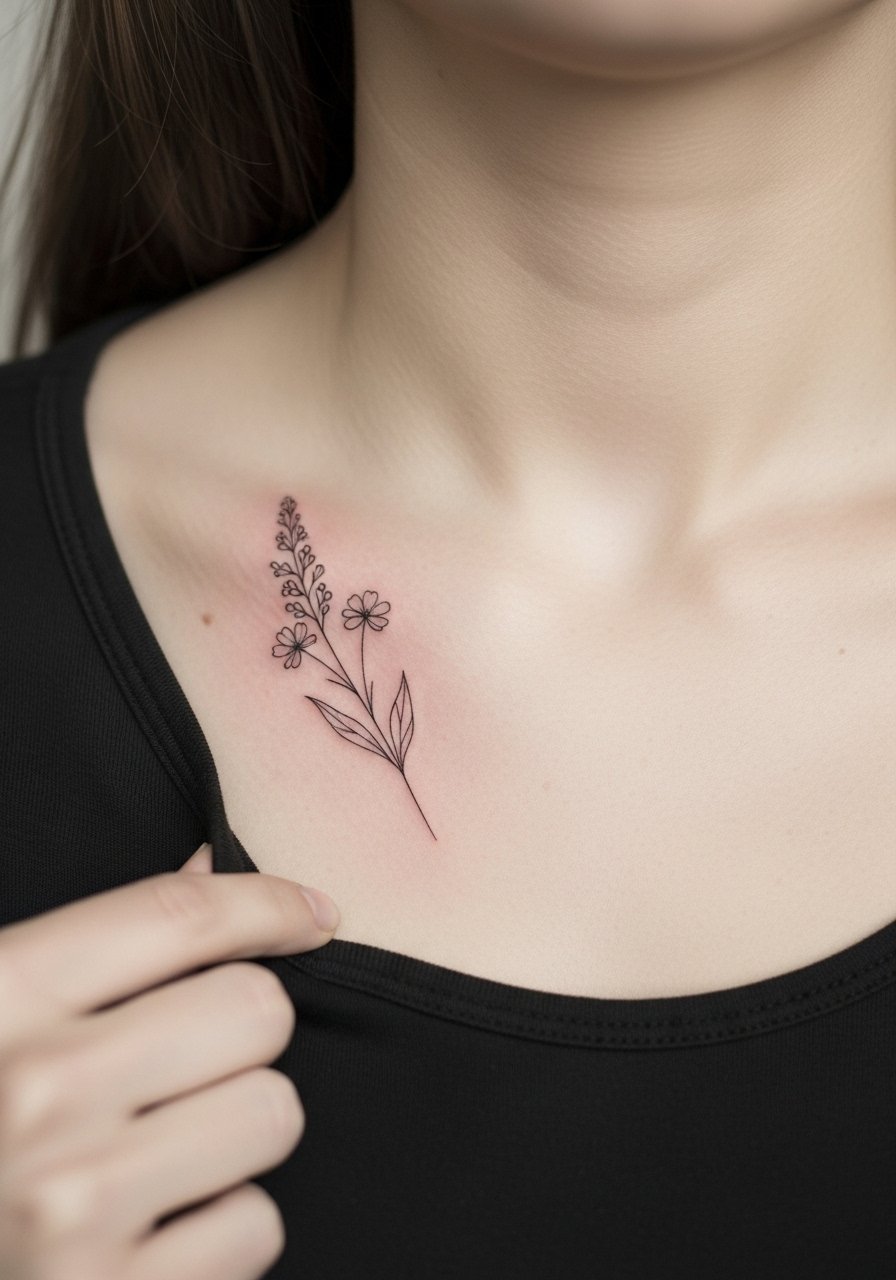
Collarbone pieces sit near clothing edges and show beautifully with off-shoulder tops. Pain is moderate and healing is generally straightforward when the artist keeps lines open rather than densely packed. Ask for micro-dot shading mixed with fine lines to add depth without weight, which holds better over time than flat black fills. A mistake I see is making clusters too close together on the collarbone where muscle movement can distort tight detail. Session time for a two- to three-inch sprig is usually under an hour. For showing it off, an off shoulder blouse frames the area and draws attention without competing.
8. Negative-Space Florals for Darker Skin
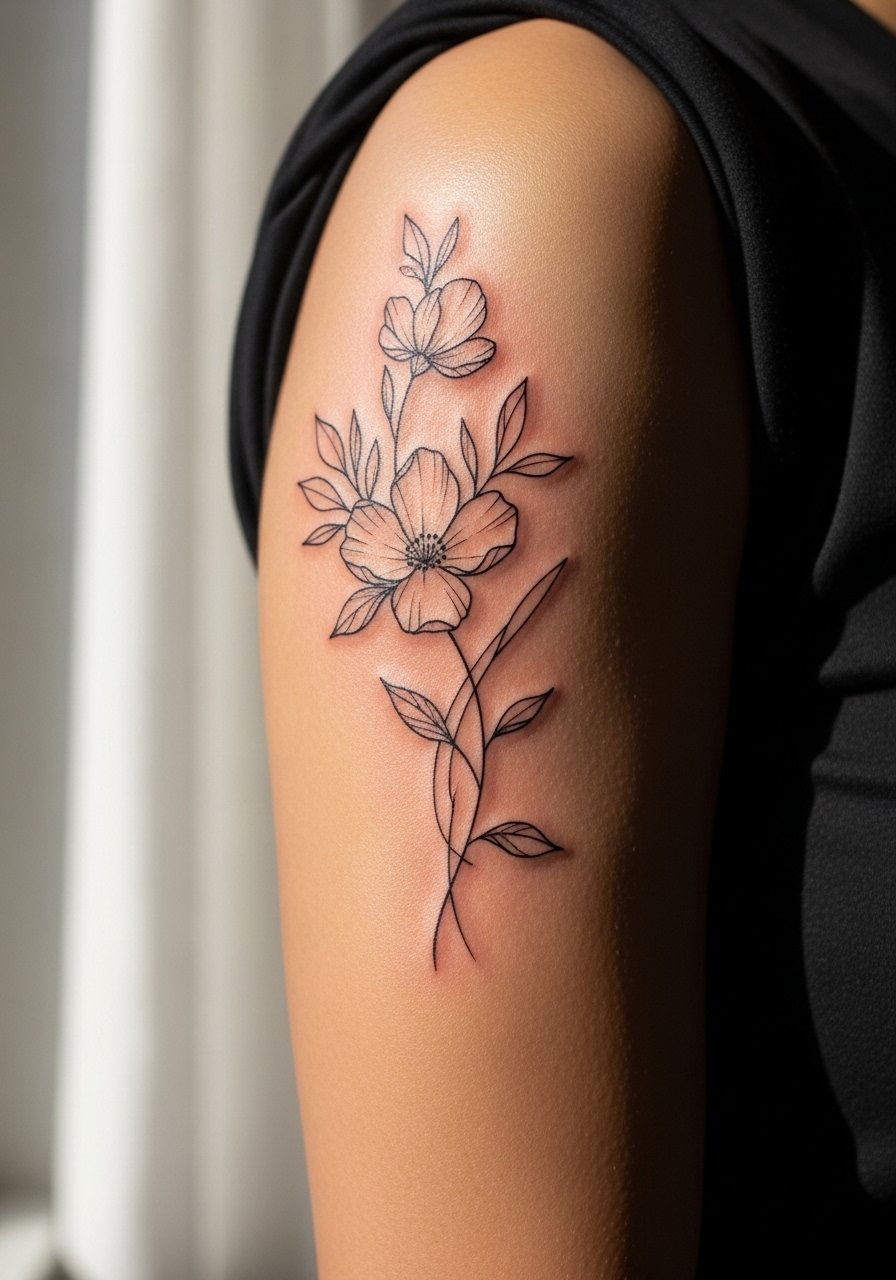
On medium and dark skin tones, negative space lets a dainty floral read as contrast instead of relying solely on thin black lines. For this approach, tell the artist you want deliberate skin islands inside petals rather than tiny black fills. That prevents the piece from softening into a gray blur as it ages. Sessions vary with size, but the technique often adds a small amount of session time for careful spacing. A common error is shrinking the negative areas too small, which defeats the point. Ask to see healed examples on similar skin tones before booking. Expect touch-ups earlier if the flowers sit on high-friction zones.
9. Tiny Peony on the Shoulder Blade
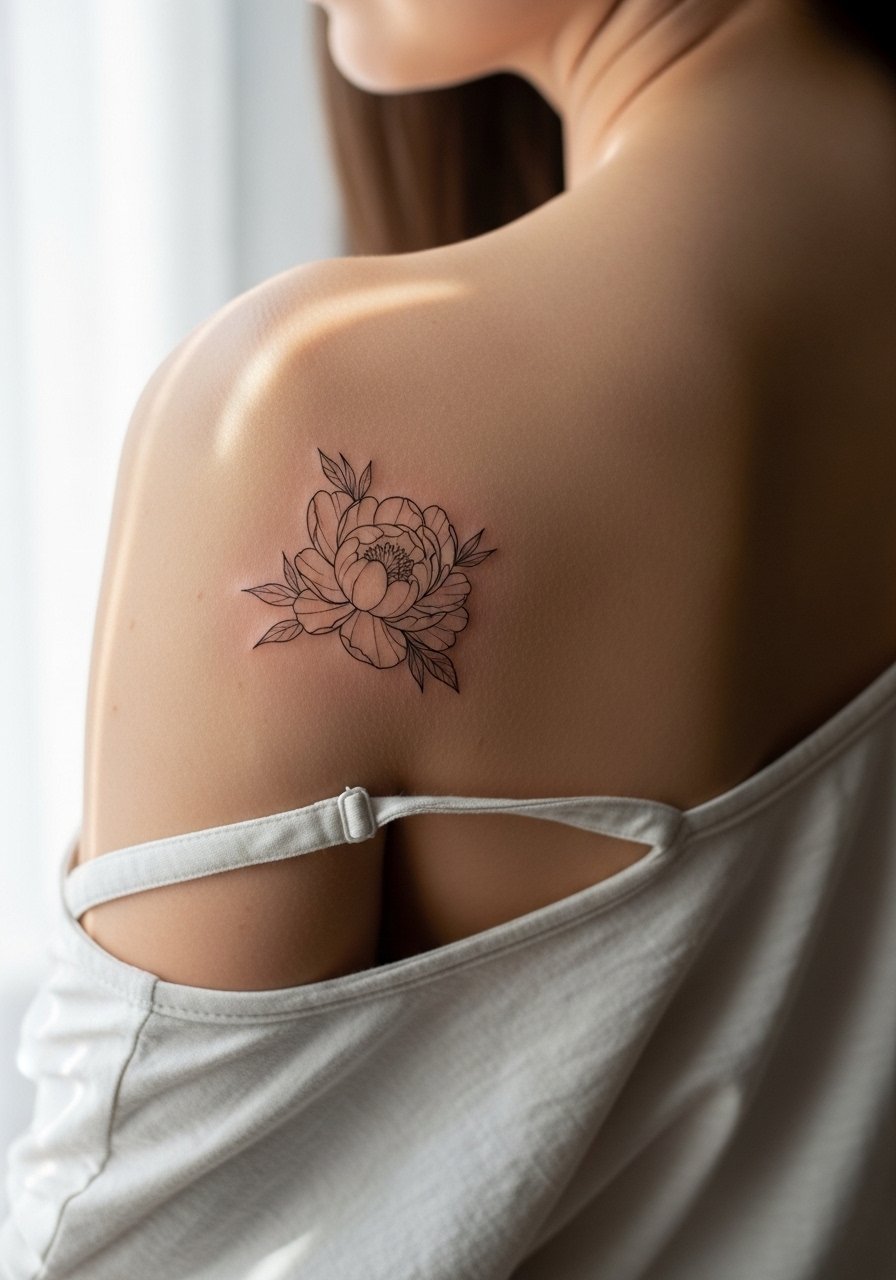
Shoulder blade pieces are a great canvas for slightly larger fine line blooms because they avoid constant rubbing. Pain is lower than ribs, and sessions of 45 to 90 minutes are common for a detailed one- to two-inch peony. Request a single-needle outline with micro-dot shadowing to keep volume without heavy saturation. A mistake is asking for too many tiny internal details that merge as skin moves. In two years a properly spaced peony will hold shape well, though fine dot shading may soften. For the appointment, wear a loose tank top you can pull aside for easy access.
10. Little Sunflower on the Back of the Arm

The back of the upper arm is forgiving for small circular motifs like a mini sunflower. Pain is moderate and the area sees less daily friction than hands or ankles. Ask your artist for slightly strengthened outer petals and lighter inner lines to keep the central seed area from becoming a dark blob over time. The session is usually under an hour. A common mistake is centering too many tight dots in the seed area. Expect a touch-up around year three if you spend a lot of time in the sun. Pair this with sleeveless dresses for easy show-off moments.
11. Petite Laurel Wreath on the Collar

A tiny laurel wreath above the collarbone sits elegantly and works well for people looking for a discrete neck-adjacent piece. Healing is usually smooth, but sun exposure can dim line contrast quickly. Ask your artist to curve the stems with slight breaks so the wreath reads even if a couple of lines fade. The session often takes 30 minutes. People sometimes ask for too many leaves in a small wreath which leads to merging lines. For nights out, a thin chain pendant necklace sits nicely below the wreath without crowding the area.
12. Micro Tulip on the Inner Bicep
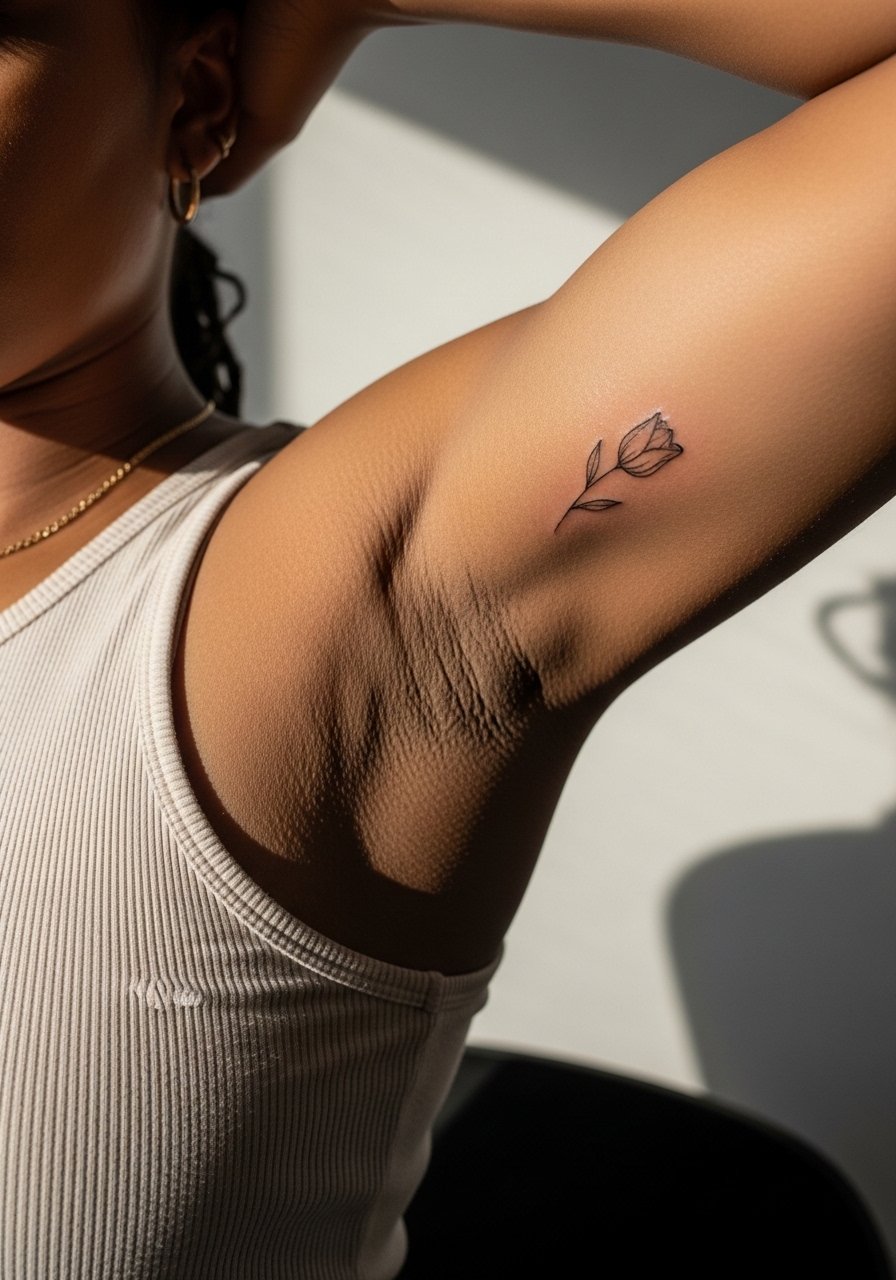
Inner bicep pieces can be sensitive because the area rubs against clothing and moves with the arm. Pain varies but many report a sharp tickle. This spot is great for a micro tulip if you want a hidden reveal for special occasions. Tell the artist you want the stem slightly angled to avoid distortion when the arm bends. A common error is making the tulip too detailed for the small canvas. Expect the piece to soften by year three, especially if you do not protect it from sun. Book a session time of 30 to 45 minutes and wear a sleeveless top for access.
13. Wildflower Ear-to-Neck Extension
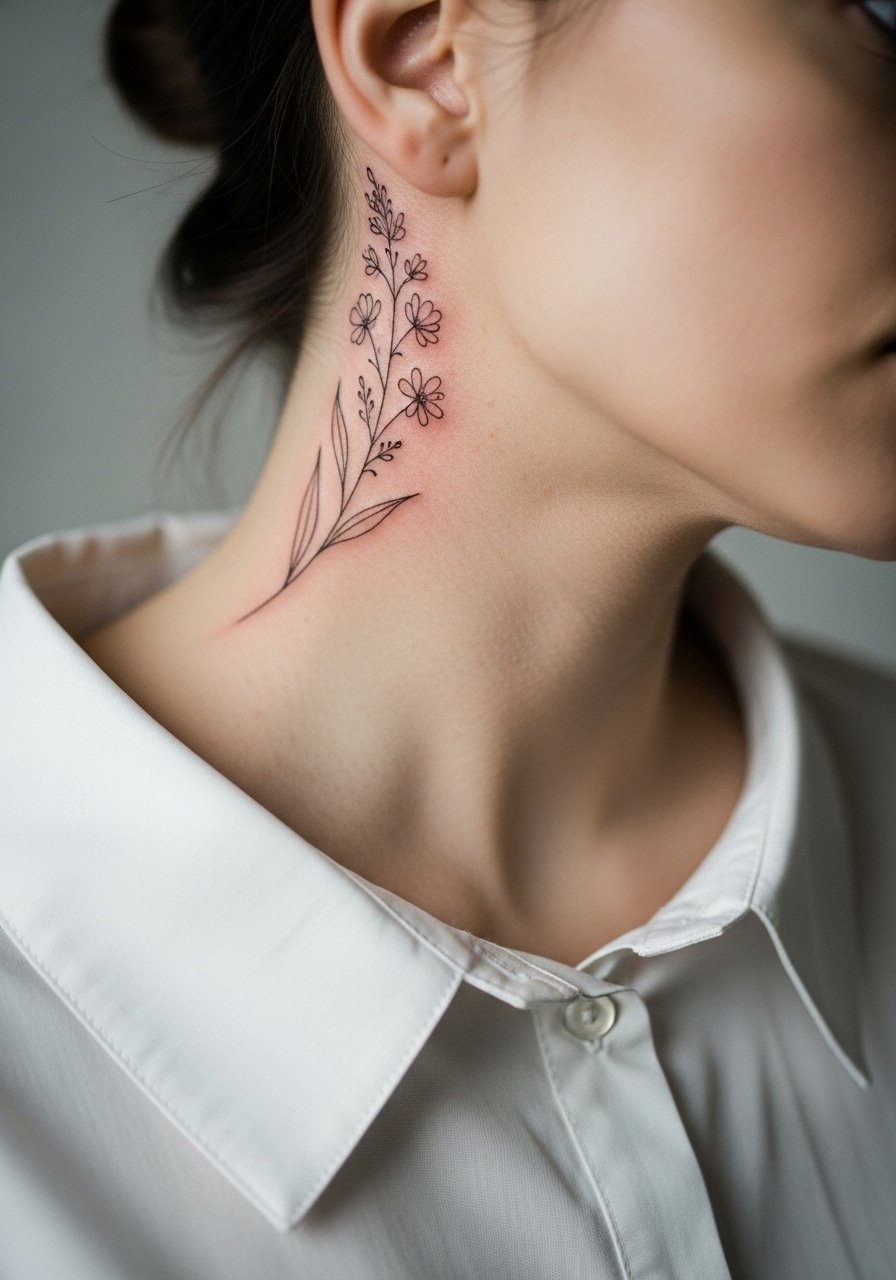
An ear-to-neck sprig plays with conceal-and-reveal and looks deliberate when partially covered by hair. Pain is lower on the upper neck but expect sensitivity near the mastoid area. During consultation, ask the artist to plan the sprig so it flows with gravity rather than up into the hairline, which keeps scabbing out of strands. Many people forget to consider hair products in the healing window and end up with irritated scabs. For show-off looks, loose waves or an updo work well and a pearl stud earring keeps attention on the area without tugging.
14. Micro Peony on the Sternum
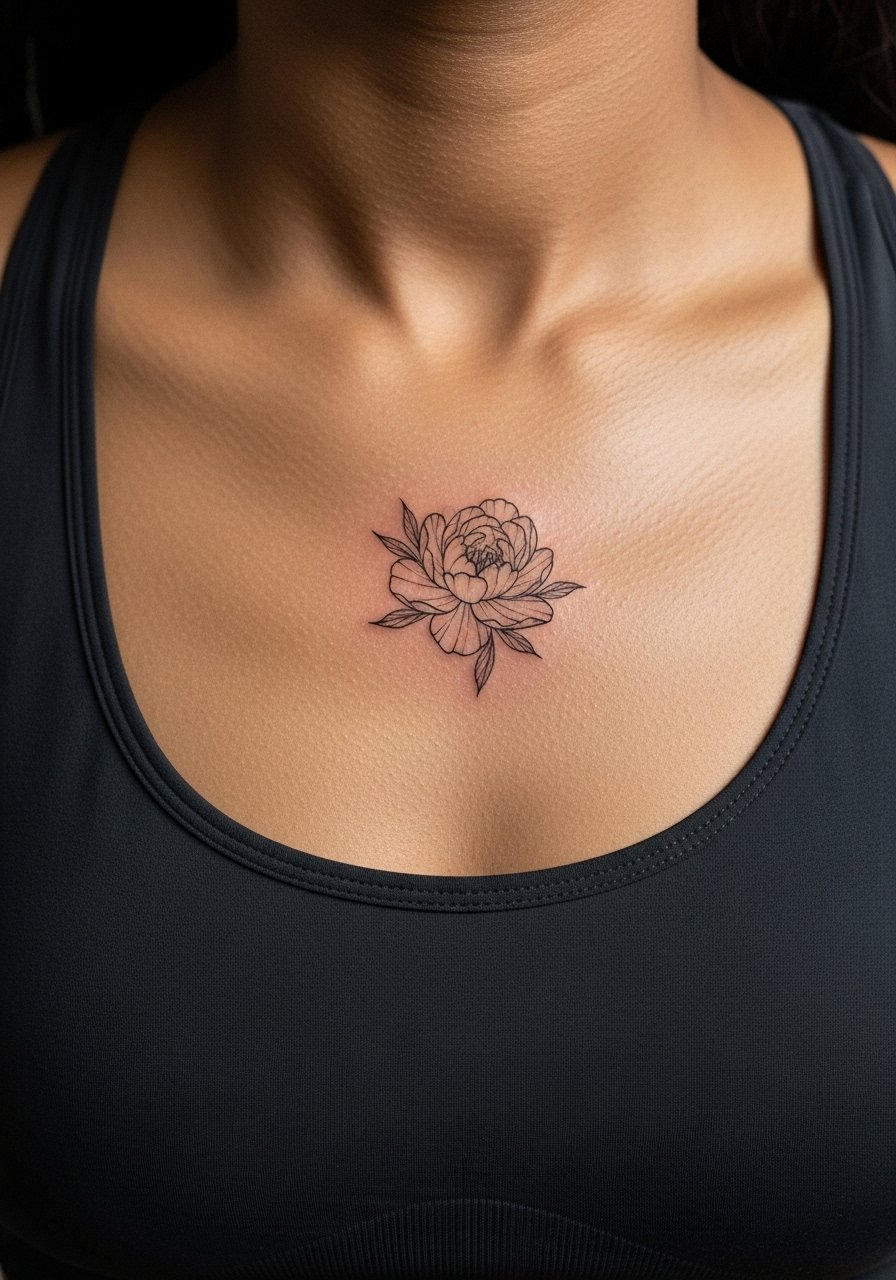
Sternum tattoos require special consideration because of proximity to the chest and sensitivity of the area. Sessions can be brief for a tiny peony but discomfort may be higher than for arms. Artists vary on technique here, so ask for portfolio examples of healed sternum work on similar skin tones. A frequent issue is asking for too much internal detail given the skin movement across the sternum. Healed contrast can last well if negative space is used thoughtfully. For the session, wear a fitted sports bra you can easily shift so the artist only exposes the work zone.
15. Mini Rose on the Inner Wrist

The inner wrist is a classic spot but it sees frequent sun and washing that dulls fine lines. Sessions are short, often under 30 minutes, but anticipate touch-ups earlier than on the forearm. Tell the artist to keep the main contour lines a touch bolder and the internal details spare so the shape remains clear as it softens. Common mistakes include packing in tiny dot shading that disappears in the first two years. For casual wear, a thin bangle bracelet set on the opposite wrist balances attention.
16. Petite Sprig on the Ankle Side
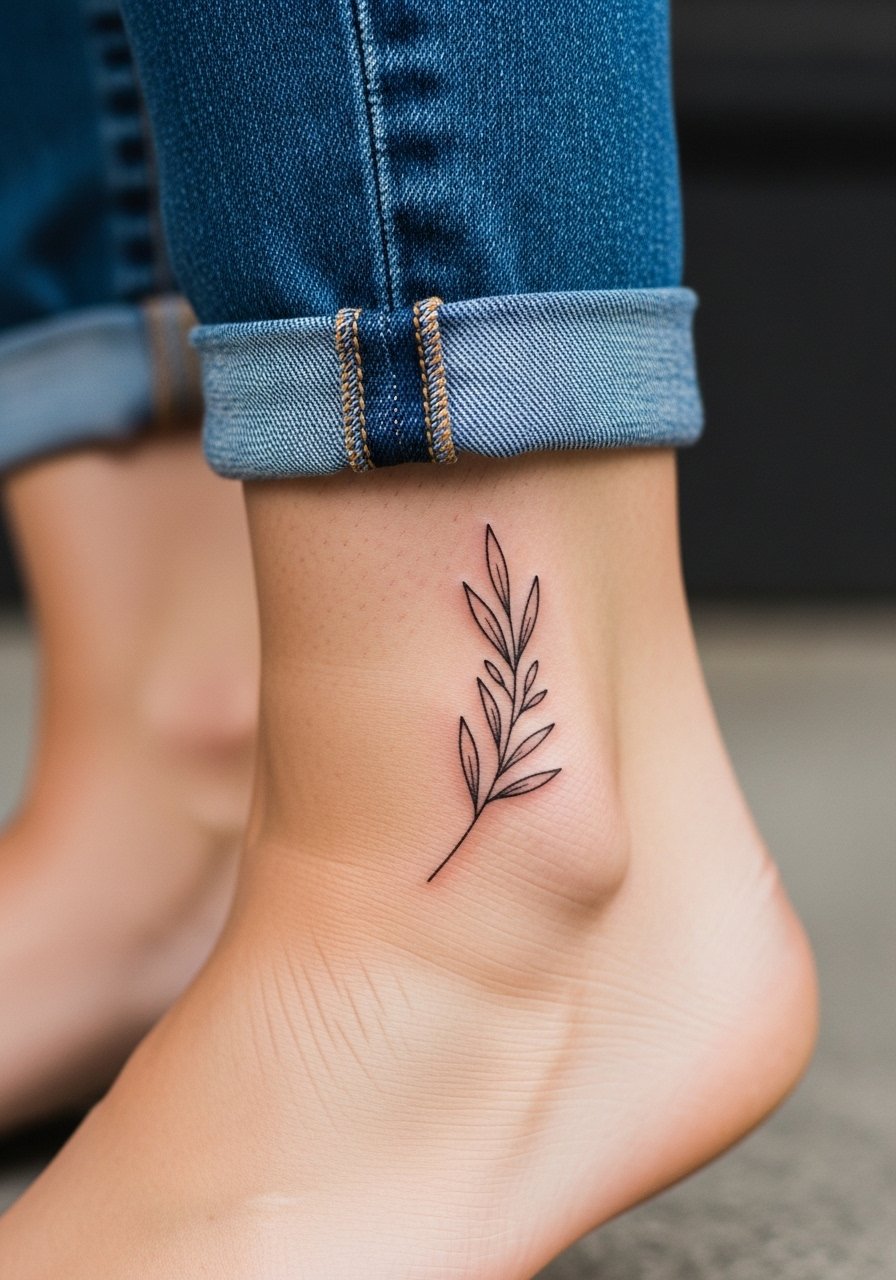
A sprig placed on the side of the ankle avoids some sneaker friction and still shows in sandals. The ankle heals unpredictably for people who wear shoes often, so expect more touch-ups compared with upper-arm placements. Ask your artist to angle the sprig to follow the ankle bone so footwear does not press directly on the art. The usual session time is 20 to 40 minutes for a small sprig. One common misstep is choosing a design with high internal detail for an area that will be rubbed. In summer a minimal sandal and cuffed jeans let the sprig stand out.
17. Micro Botanical on the Calf
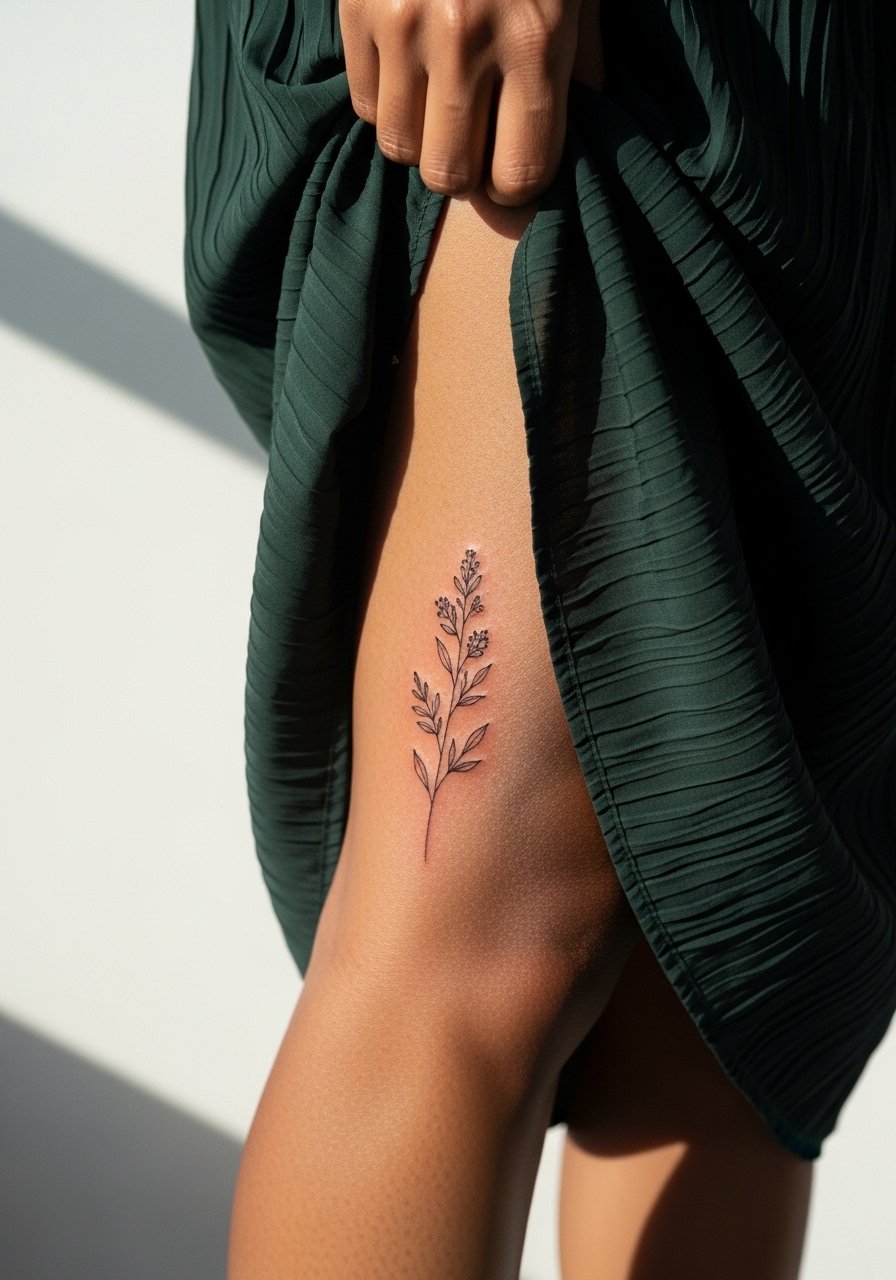
Calf pieces are visible but protected from most daily friction, which helps fine line work last longer. Sessions for a small botanical usually take 30 to 45 minutes. Tell your artist you prefer a slightly spaced leaf pattern to reduce the chance of lines merging if you gain or lose volume in the area. A mistake I see is compressing the design into too small a height when the calf has room to breathe. Expect the piece to hold its shape well for several years, with touch-ups only if you do a lot of outdoor activity without sunscreen.
Frequently Asked Questions
Q: Do fine line tattoos fade faster on hands and feet than on the collarbone or forearm?
A: Yes, hands and feet see much more friction and washing, so fine line work there often needs touch-ups sooner. Some artists say proper depth and spacing can extend life by several years, while others warn that those spots will soften quickly no matter what. Plan for a refresh timeline of one to three years on high-wear areas and longer on low-friction placements.
Q: What should I ask my artist about negative space for darker skin tones?
A: Ask to see healed examples on skin tones like yours and request intentional negative space inside petals so the design reads as contrast rather than tiny black marks. Tell the artist you want wider gaps between lines and fewer internal dots. If they cannot show similar healed work, consider consulting another artist or booking a small test area first.
Q: How often do fine line floral tattoos usually need touch-ups?
A: It depends on placement and lifestyle. Low-friction spots like the shoulder blade or calf often go three to five years before needing a touch-up. Wrists, fingers, and ankles commonly need a refresh around year one to three. Wearing sunscreen and avoiding persistent rubbing slows fading.
Q: Should I worry about artist cancellations or session timing for ribcage or sternum work?
A: Yes, some artists run guest spots and cancelations happen more in peak seasons. Book with a deposit and schedule sessions outside the hottest months if you worry about sweating during healing. A clear deposit policy and a backup plan for rescheduling make a big difference for larger placements.
Q: Is Saniderm better than dry healing for fine line tattoos?
A: Artists and clients are split. One camp prefers protective film for a scab-free first few days, while the other prefers minimal coverage to avoid trapped moisture. Ask your artist which method they use and why, and follow the exact aftercare they recommend for fine line pieces.
Q: Can I wear jewelry during the session for an ankle or wrist piece?
A: Avoid wearing anything that could press on the tattoo during the appointment. For showing the healed piece, small chains or thin bangles work, but skip them during the session so the artist has unobstructed access. For wrist sessions, a loose sleeve or short-sleeve shirt is easiest to work with.