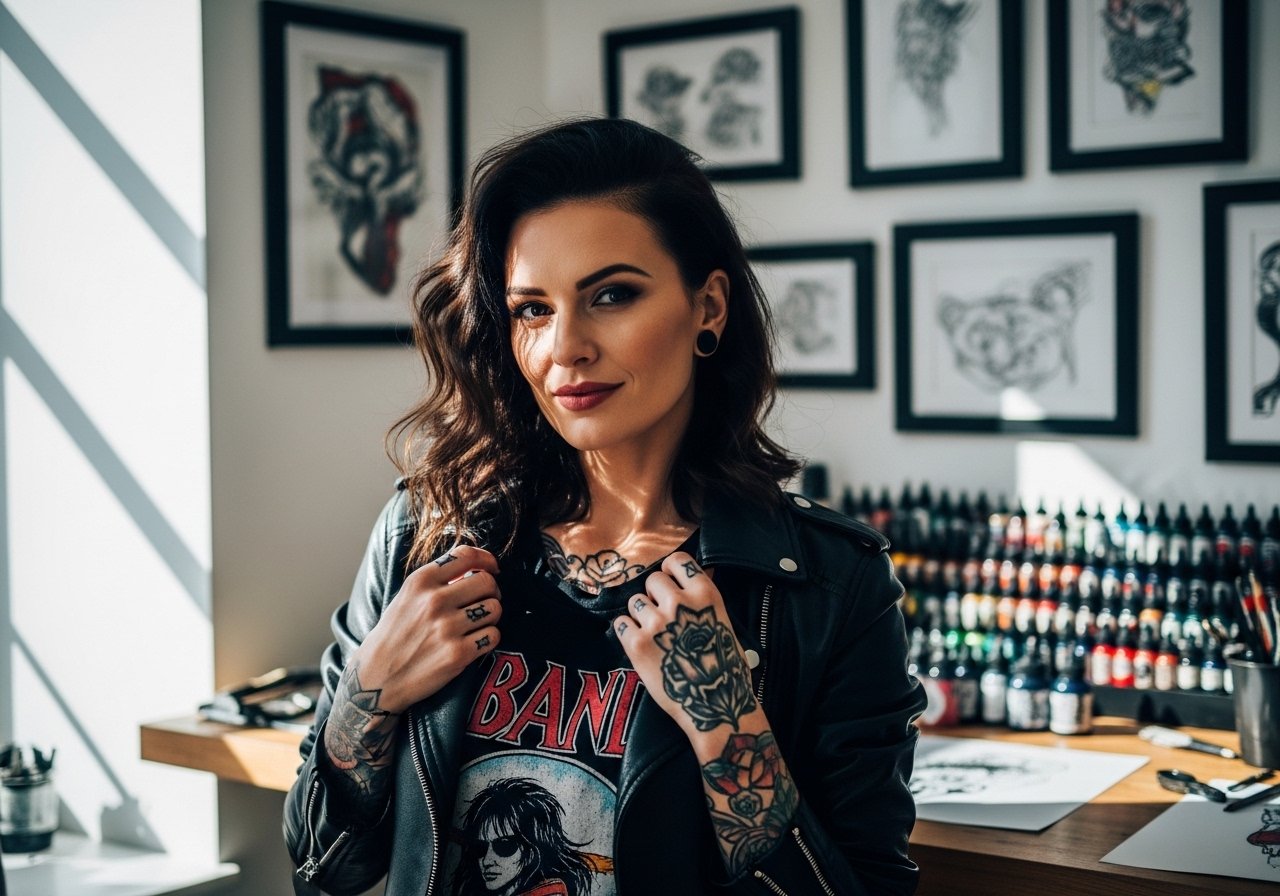
Bold trends and practical reality collide with back dragons more than with almost any other tattoo. Fresh color washes and whisper-thin outlines look incredible at the appointment, but the pieces that keep their attitude for years usually lean into strong linework and smart placement. Below are 21 fierce dragon back designs that balance fresh looks with how they heal, what to ask your artist, and how to wear them while they settle.
1. Neo-traditional Japanese Dragon Coiling Across Upper Back
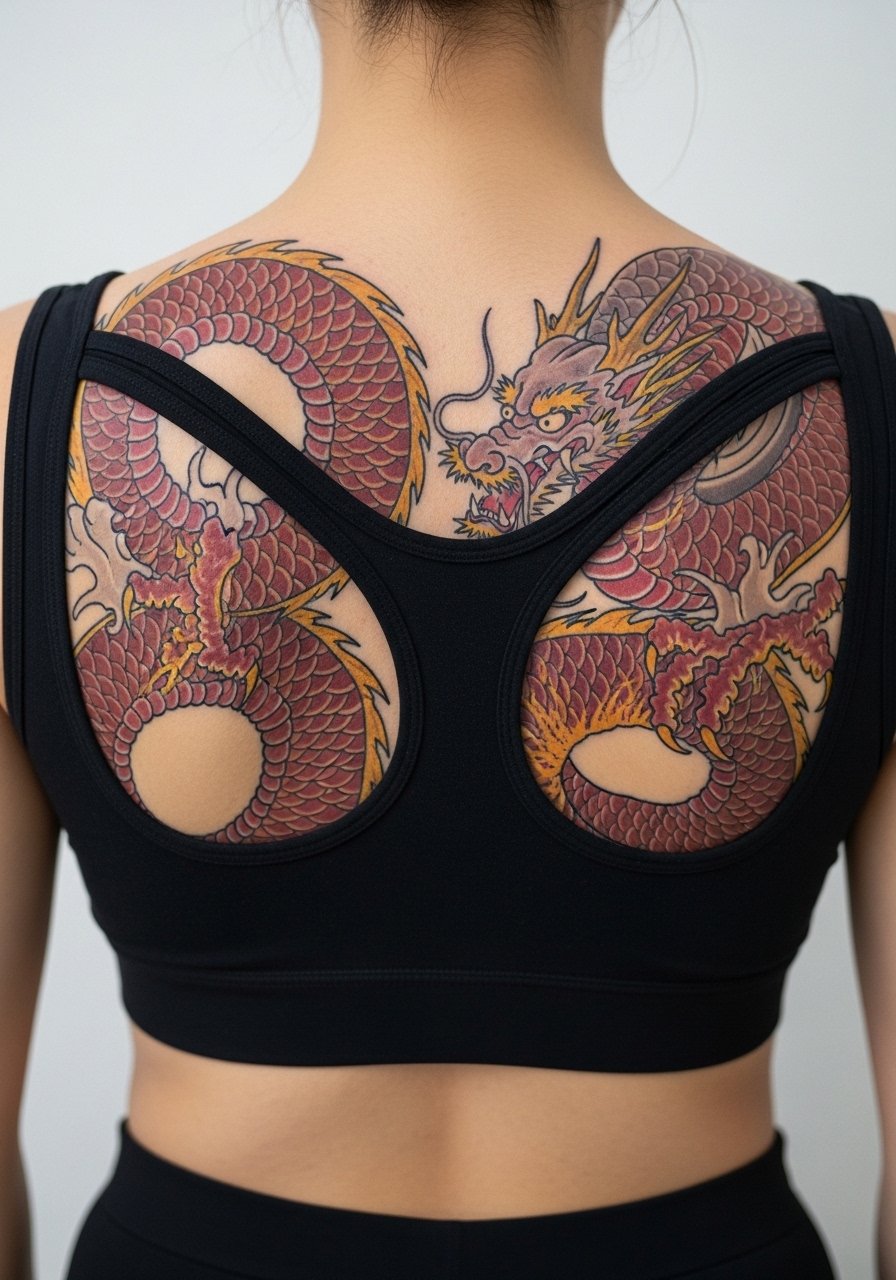
There is a reason this approach shows up in portfolios often. The broad upper back gives room for bold outlines and cloud motifs so the dragon reads from a distance and keeps detail close up. Tell your artist you want a heavier outline around the coil and slightly simplified cloud shapes so the composition does not blur into one mass after a few years. Common mistake is packing too many tiny scales into narrow areas. Expect 3 to 5 sessions, medium pain across the shoulder blade, and a touch-up at 12 to 18 months for saturation. For showing it off, try a backless halter top women that echoes the dragon hues and a gold+chain+necklace+long to draw the eye down the spine.
2. Realistic Western Dragon Wings Spanning Full Back
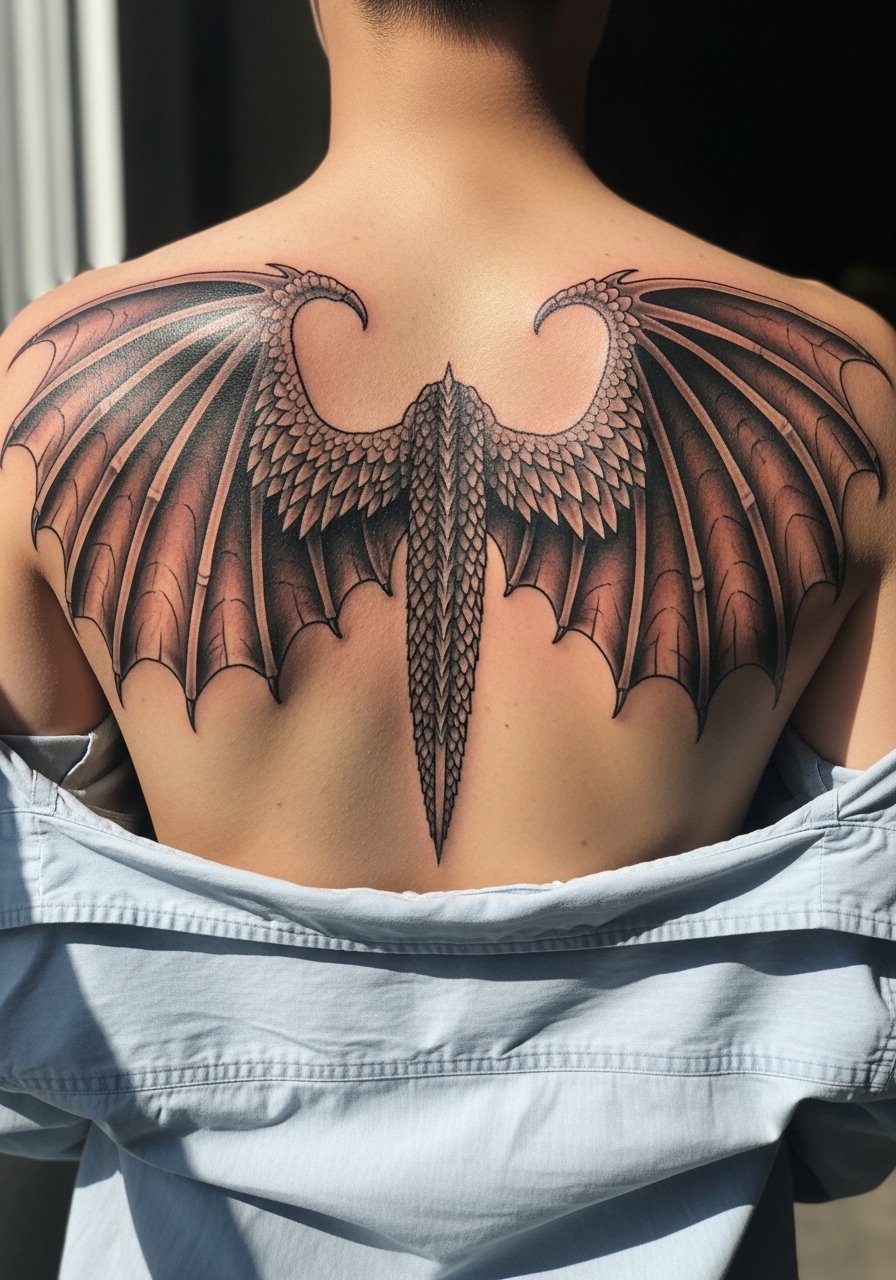
Fair warning, full-back realism is a big commitment in chair time and budget. The session feels long and steady, with several 4 to 6 hour sittings typical. Ask your artist to stagger sessions by area so you can evaluate how shading reads on healed skin before continuing. A frequent error is overworking highlights early in the process, which can create patchy healing. Expect slower visible aging when black and gray dominate, but plan for color boosts if you want subtle highlights to remain vivid. For wardrobe, an off+shoulder+blouse looks cinematic when the wings are revealed and a leather+jacket+cropped gives attitude without hiding the detail.
3. Tribal Dragon Outline on Lower Back
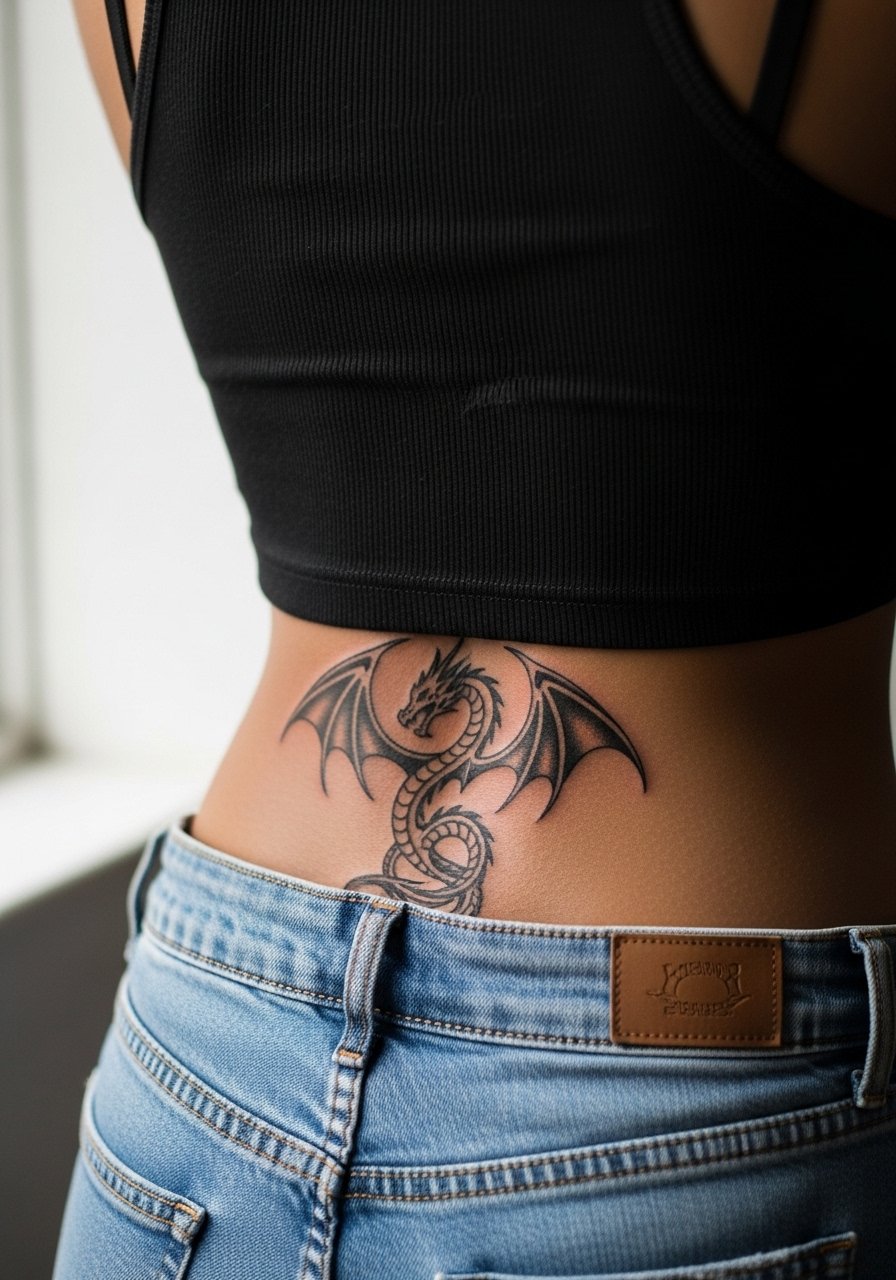
If you want graphic impact with minimal sessions, tribal outlines deliver. The lower back tolerates strong blackwork well, which helps the piece age boldly. Tell your artist you want thicker primary strokes and breathing room between decorative elements so the design will not merge. Pain around the lower back is moderate and prone to movement discomfort during long sessions. A common mistake is requesting too many thin curls in the design. For outfits, pair it with high+waisted+jeans+women and a cropped tee to frame the silhouette without covering the work.
4. Watercolor Dragon Head Emerging from Shoulder Blades
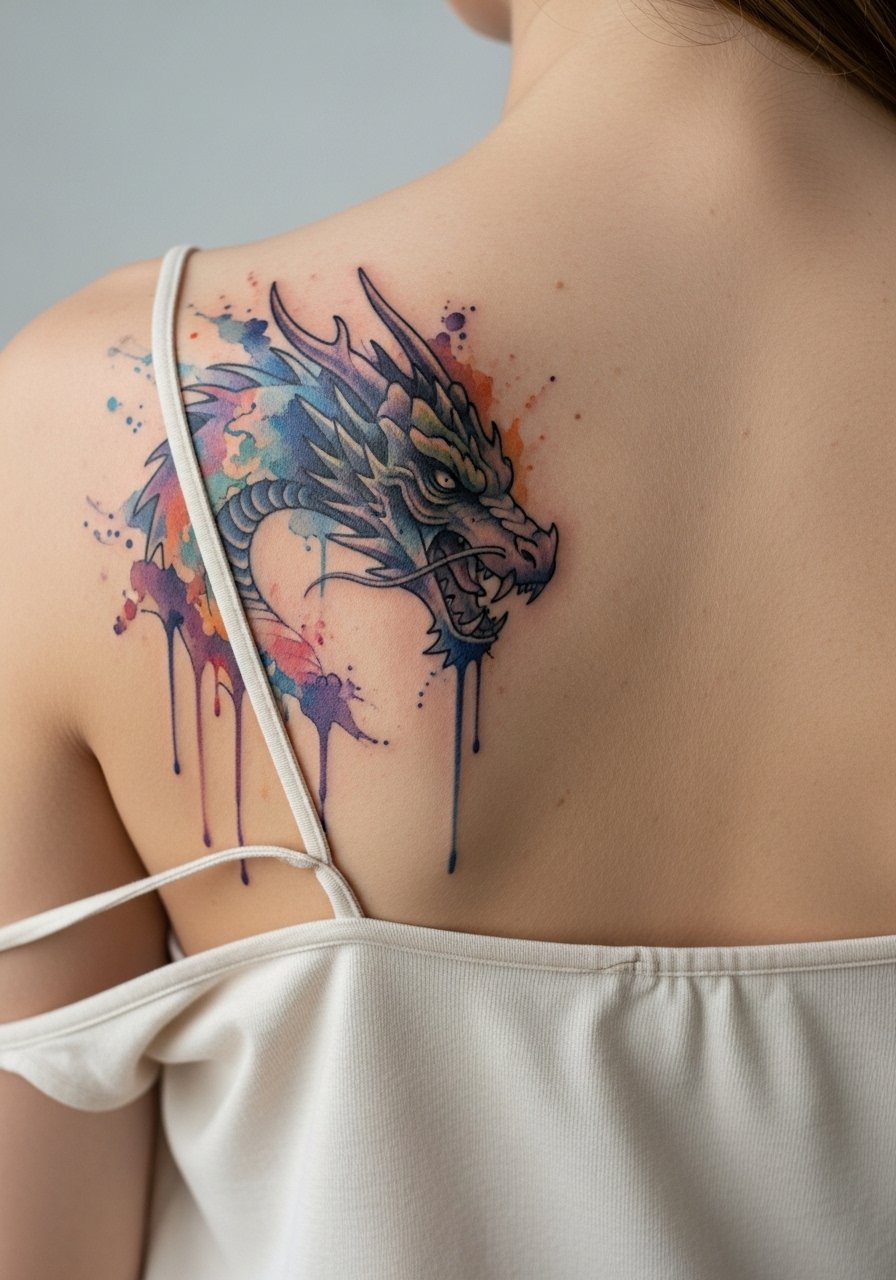
Most watercolor variants look painterly fresh, but they can fade to muted washes if placed over high-friction zones. I recommend asking the artist to anchor the watercolor with a subtle thin line or stipple shading so the form stays legible as pigments soften. A mistake people make is expecting vibrant gradients to last without touch-ups. Session pain is mild to moderate at the shoulder blade. For showing it off, a spaghetti+strap+cami keeps the color visible without busy patterns that compete with the wash.
5. Blackwork Dragon Silhouette Covering Mid-Back
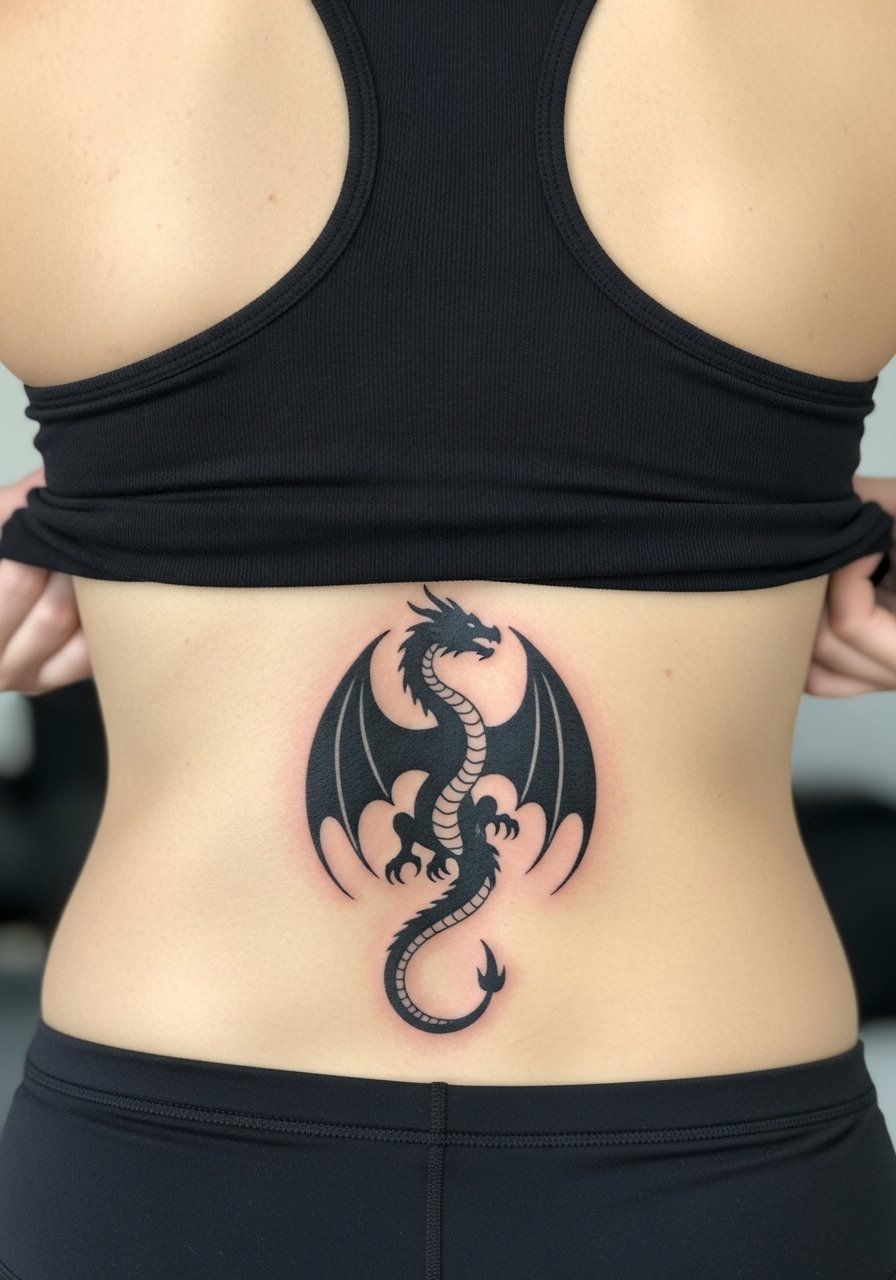
There is something about dense black silhouettes that holds up under sun and friction better than thin color fills. For mid-back placement, ask for dense saturation and a clean outer edge so the silhouette reads even as edges soften over time. A common version that ages poorly is one with accidental negative gaps inside the silhouette. Sessions are straightforward and often completed in fewer sittings. Expect the session to feel less abrasive than heavy color work because shading is replaced by consistent packing. Style it with a racerback+tank+black or a fitted crop to frame the shape.
6. Eastern Style Dragon with Cloud Elements Full Back Piece
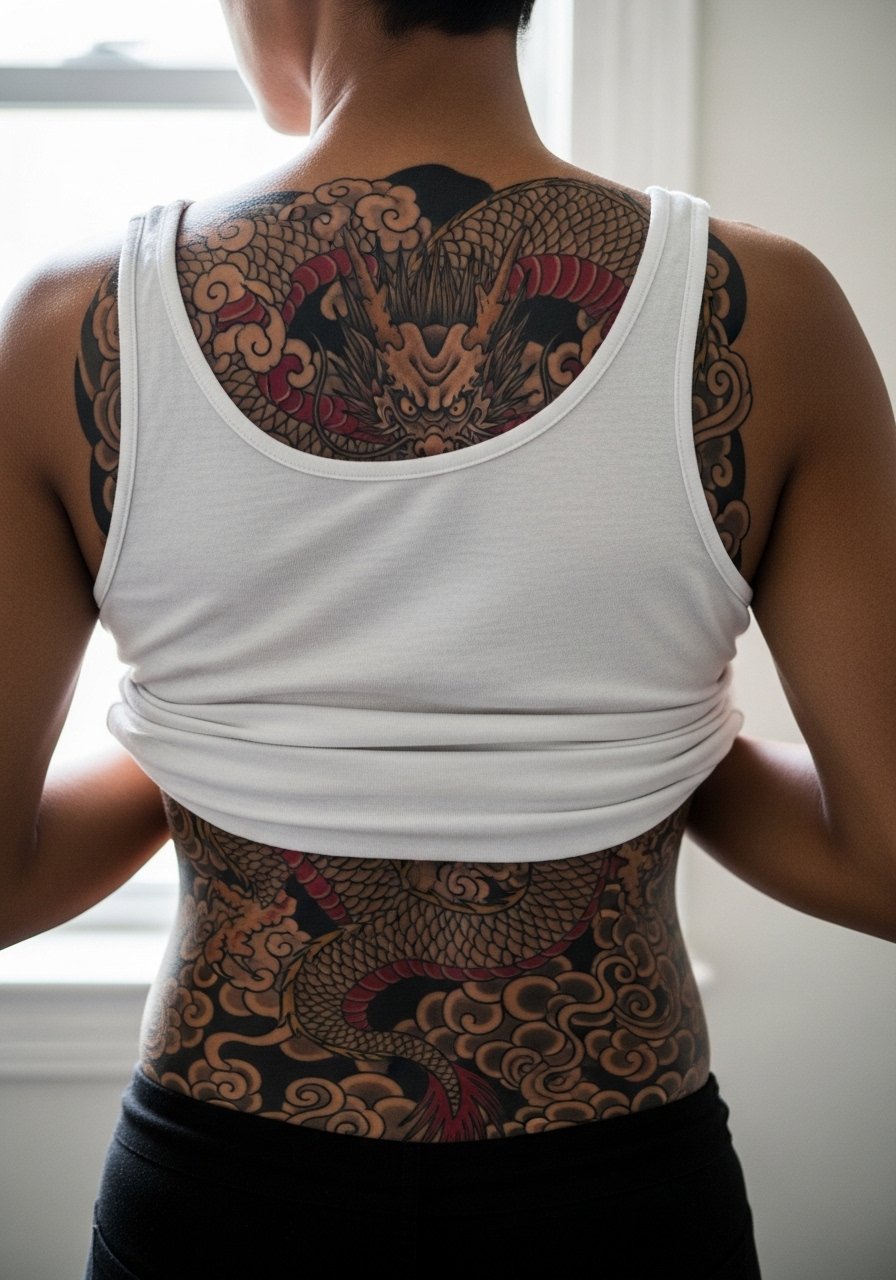
Full-back Irezumi-inspired compositions are workshop staples because the motifs scale beautifully. When you consult, specify the cloud placement and ask for negative space cages. The biggest mistake is trying to force a Western pose into traditional Eastern flow. Expect multiple sessions across months, and understand that full pieces often require touch-ups as the body settles. Artists split on healing approaches for large areas. One camp favors protective film like Saniderm for coverage, arguing it speeds initial healing. The other camp prefers dry healing to avoid trapped moisture on massive surfaces. Ask studios how they handle large full-back aftercare before booking. For session comfort bring a loose+tank+top+men or button-down you can easily adjust.
Studio Day Picks
The first six back designs above cover a range of sizes and friction zones, so these prep items keep sessions more comfortable and the first healing window manageable.
-
Stencil transfer paper kit. Lets you preview line placement on skin before long sessions, which matters when a dragon coil needs precise alignment across shoulders.
-
Topical numbing cream. Useful for long back sittings when your tolerance drops in later hours, apply as directed and discuss it with your artist first.
-
Thin protective film roll. Covers awkward zones like lower back during the first nights when sheets and clothing can rub.
-
Fragrance free gentle body wash. Cleanses without irritating fresh ink or stripping color, especially important when large areas are washing daily.
-
Aquaphor healing ointment. Thin layer for initial days keeps areas from drying and cracking while you follow the studio's specific aftercare steps.
7. Minimalist Dragon Tail Along Spine
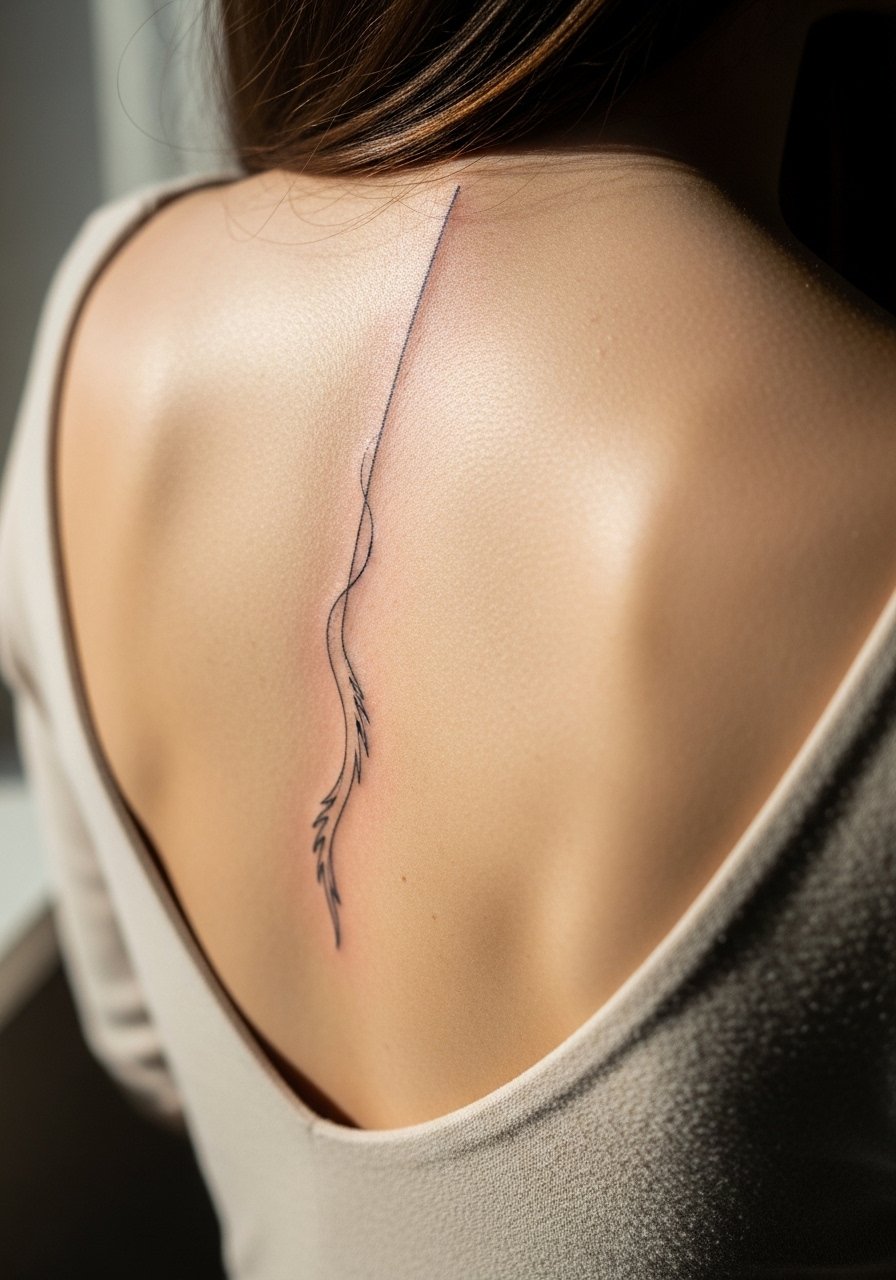
Most people choose this when they want symbolism with low commitment. The tail that follows spinal curvature creates subtle movement and optical flow as the body shifts. Tell your artist you want clear spacing between turns so the linework does not merge over years. A common mistake is making the line too thin on uneven skin. Pain along the spine varies from moderate to high, and sessions are short so you can stop and restart comfortably. Expect a touch-up at year two for fine line reinforcement. For evening wear, a low+back+dress keeps the spine line visible without exposing other areas.
8. Ornamental Dragon with Geometric Patterns on Upper Back
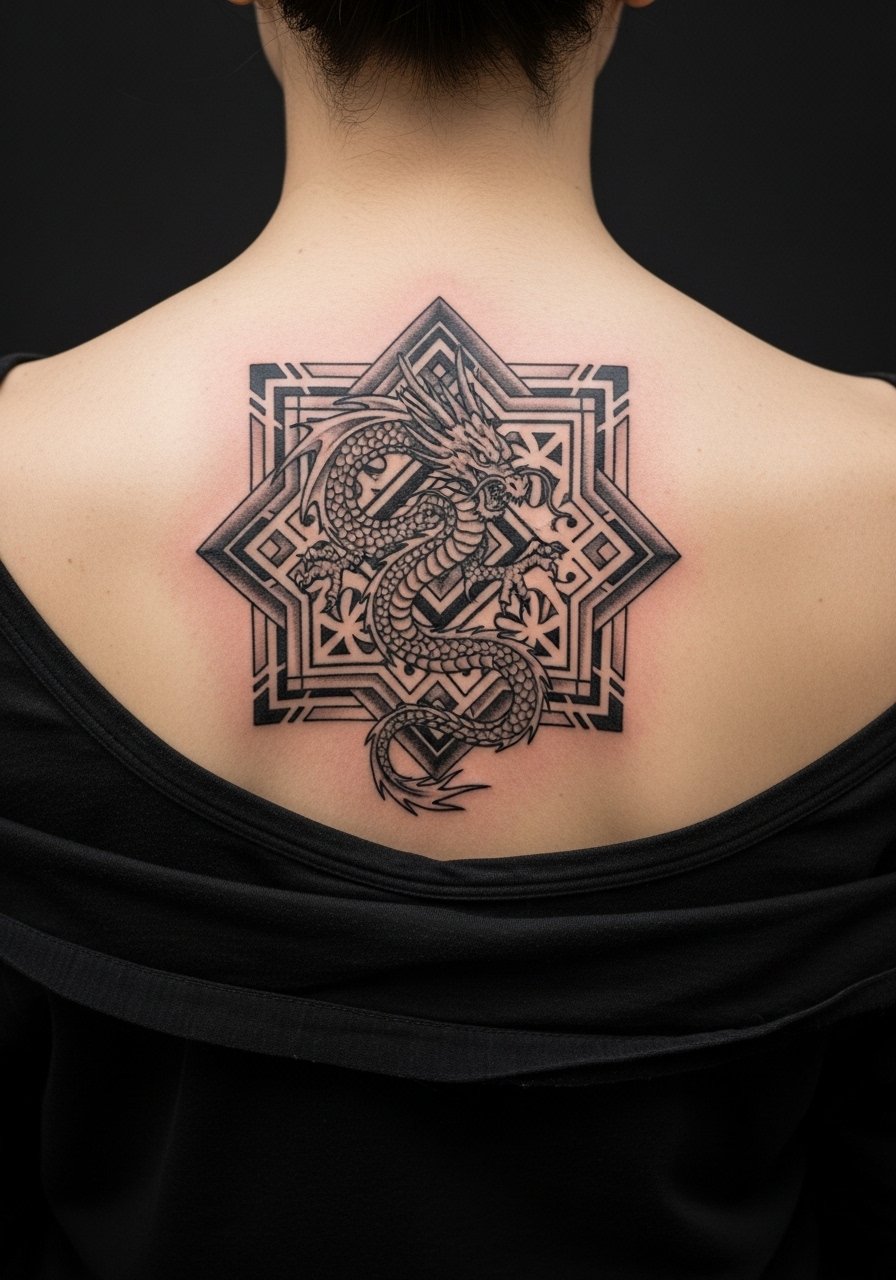
Ornamental work blends mythology with symmetry. The trick is to keep geometric elements large enough for spacing and to match the dragon's flow to the trapezius for a cohesive read. Ask for a mockup showing how the geometry sits when you move your shoulders. The mistake is over-detailing small cells that merge in two years. Sessions are medium length and the piece handles touch-ups well because of the higher contrast. For a reveal, an off+shoulder+blouse frames the geometry without visual clutter.
9. Ignorant Style Abstract Dragon Claws Across Lower Back
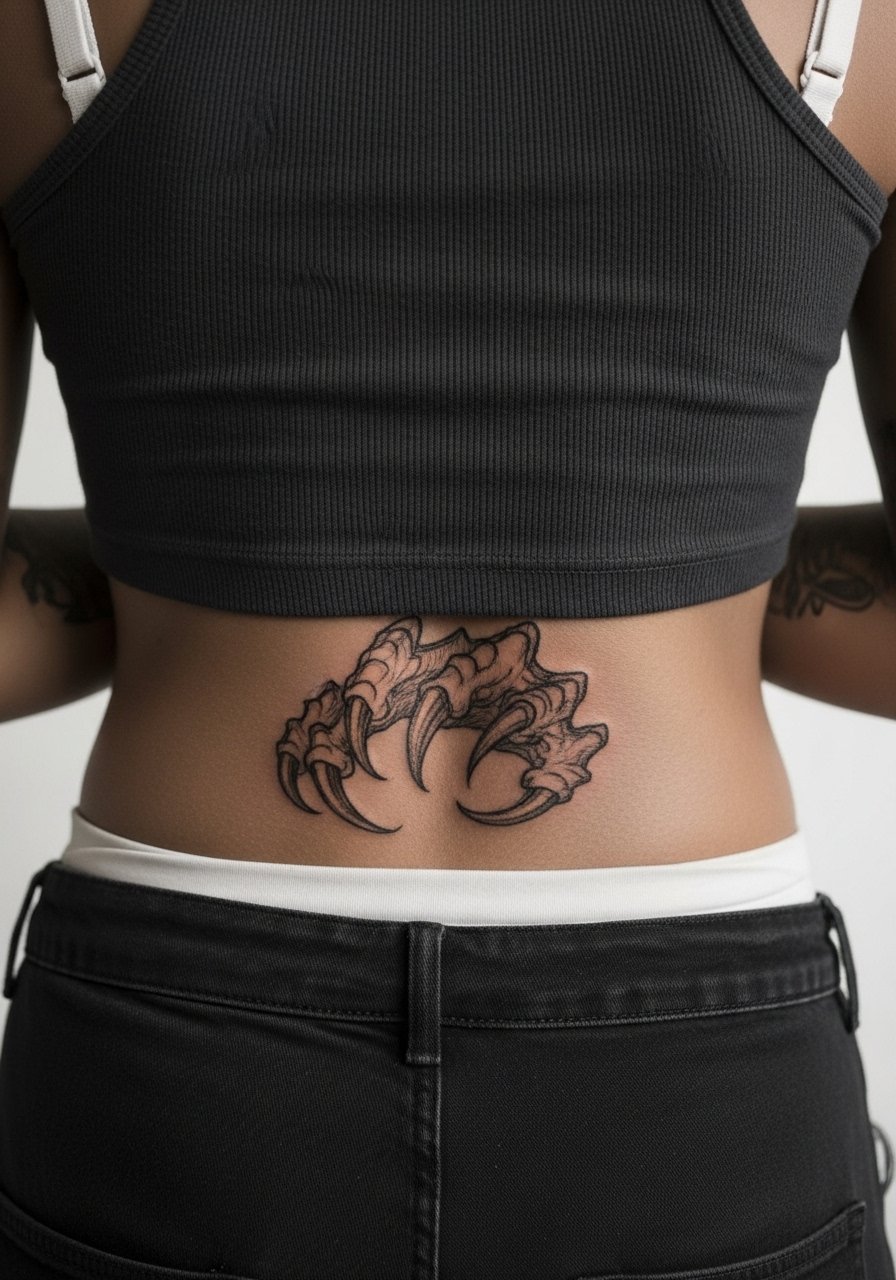
Ignorant style feels raw because it embraces uneven strokes and sketch marks. Use this if you want an anti-polished statement rather than photorealism. Tell your artist to keep sketch marks intentionally bold and to avoid tiny hatch lines that will disappear. The common error is asking for too many micro-splatters which can blur into an indistinct patch. Sessions are quick and forgiving, but expect a small touch-up to rebalance heavy spots. Style it with high+waisted+jeans+women and a body chain for nights out.
10. Fine Line Dragon in Flight Over Shoulder to Mid-Back
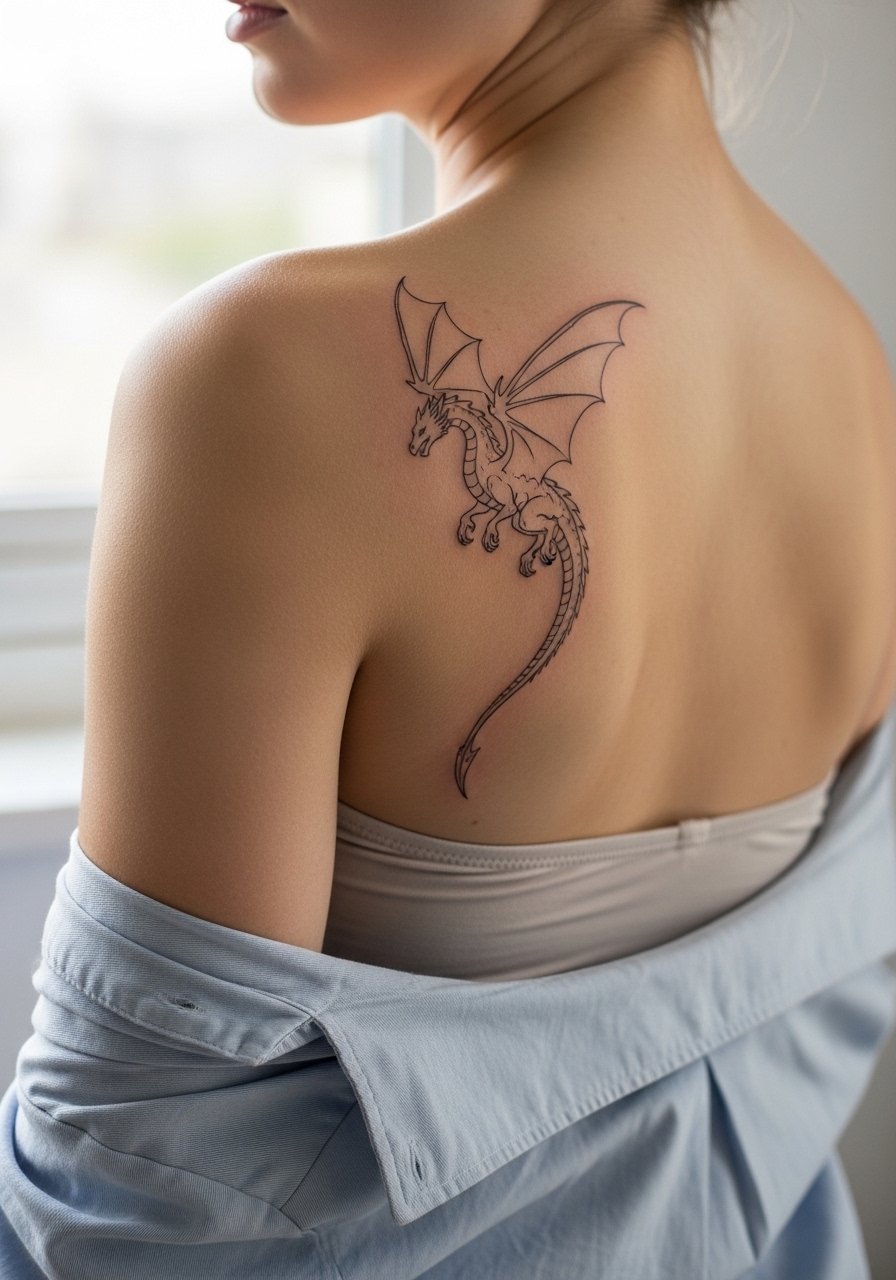
Fine line is gorgeous on curved surfaces but artists remain divided on longevity. One camp argues ribs and mobile areas blur quickly and fine line should be avoided there. The other camp says with correct needle depth and spacing it can settle well. That debate matters here because shoulder-to-mid-back movement affects single-needle work. In consultation ask your artist about their touch-up history for similar placements. Sessions are moderate and often split to maintain steady line quality. If you want a wearable reveal, a strapless+bra+supportive under a loose button-down makes setup easy.
11. Patchwork Dragon Elements Connecting Multiple Back Sessions
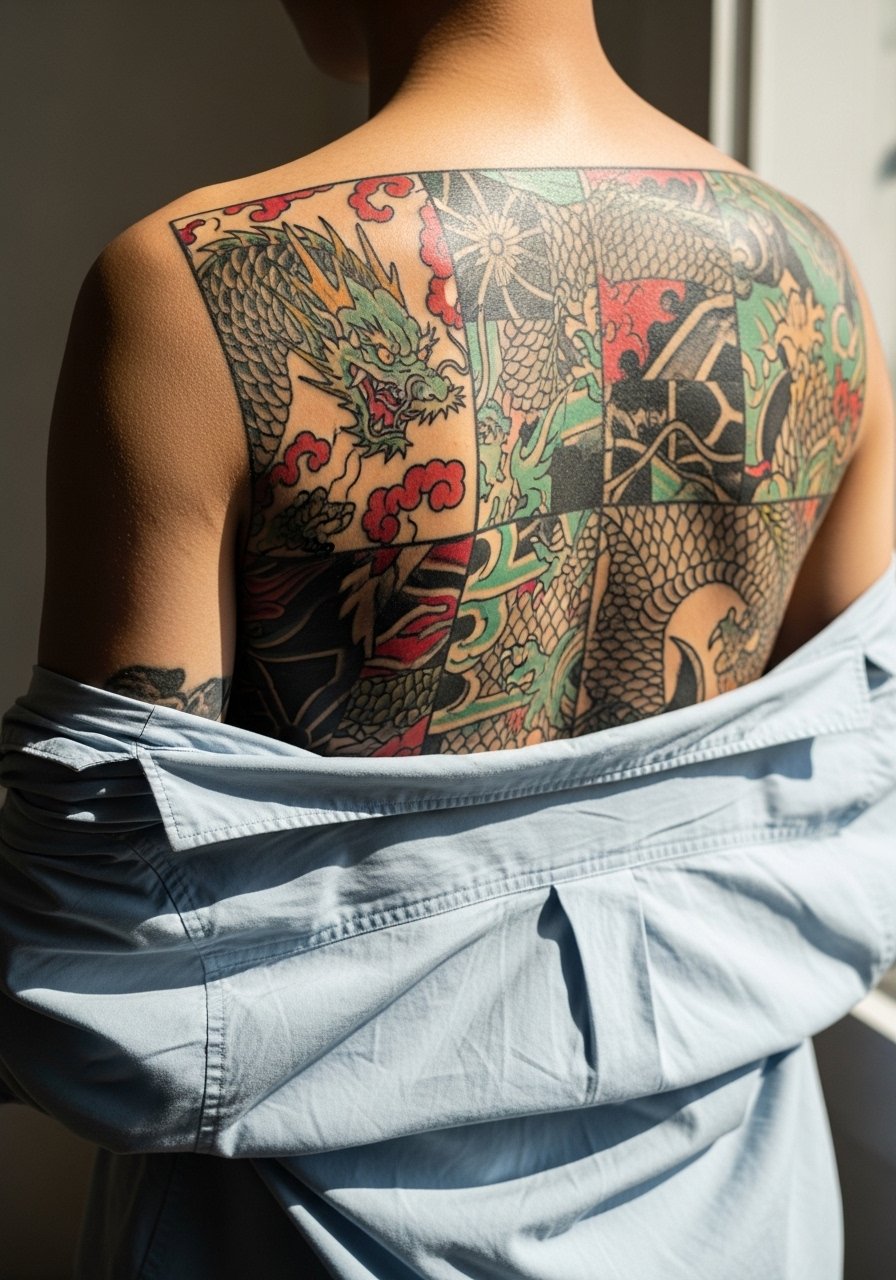
Patchwork builds over years and is ideal for collectors who want a narrative without a single marathon booking. Describe which motif you want first and agree on scale so future patches align. The biggest mistake is inconsistent scale between sessions which makes the pieces look disjointed. Expect staggered sessions and an evolving touch-up plan as new fills interact with old ink. For session comfort, a loose+button+down+shirt+mens is easy to roll aside as the artist works different zones.
12. Curved Dragon Tail That Follows the Spine Contour
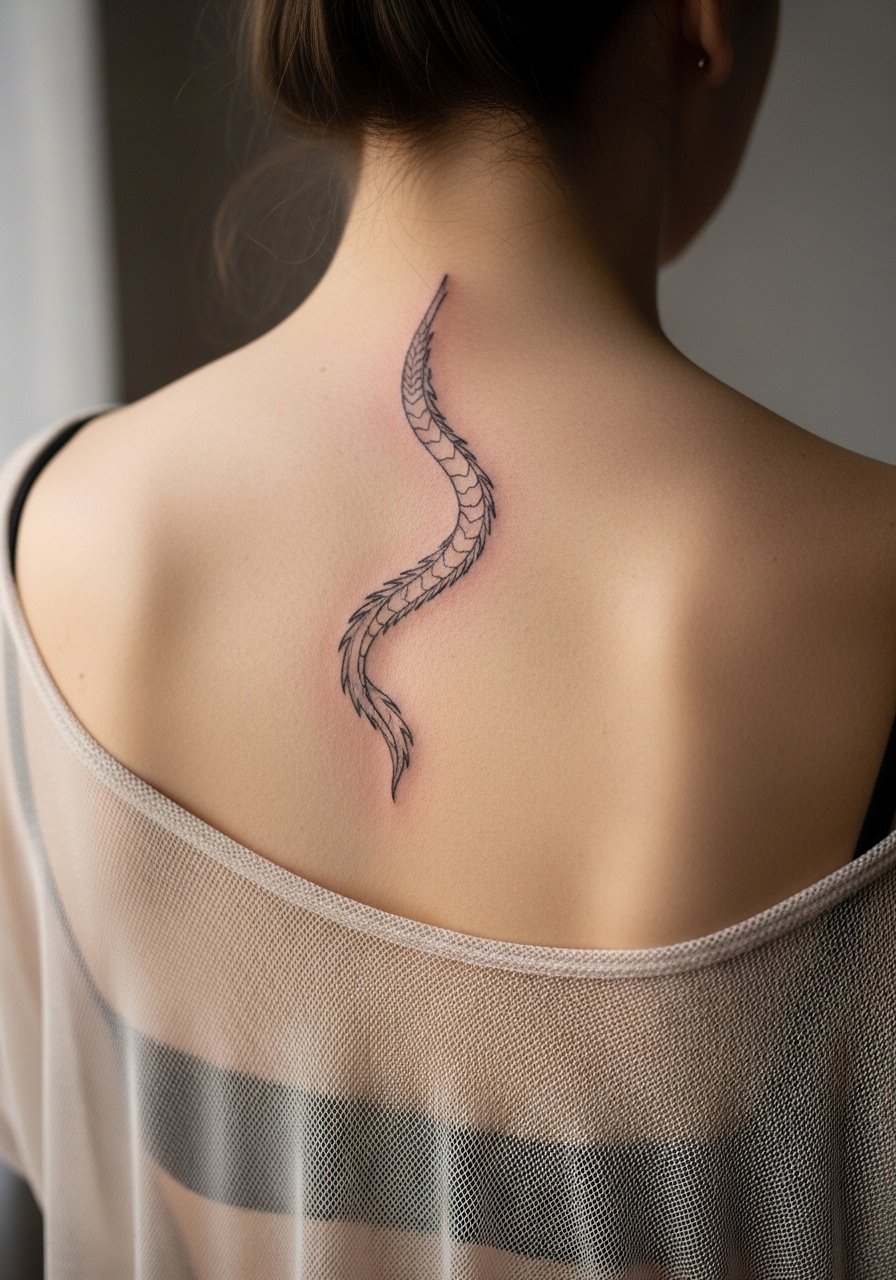
This is one of the underused optical tricks that gives motion to a static design. The curve can be planned to exaggerate movement when you bend, creating an illusion that the dragon is slipping along your spine. Explain you want the tail to taper at intervals so sections read independently as the body ages. A common misstep is making the curvature too tight near joints. Expect low session pain but a need for careful touch-ups where skin flexes. For evening wear, a sheer+mesh+top lets the line read through lightweight fabric.
13. Birth Year Hidden in Cloud Scales
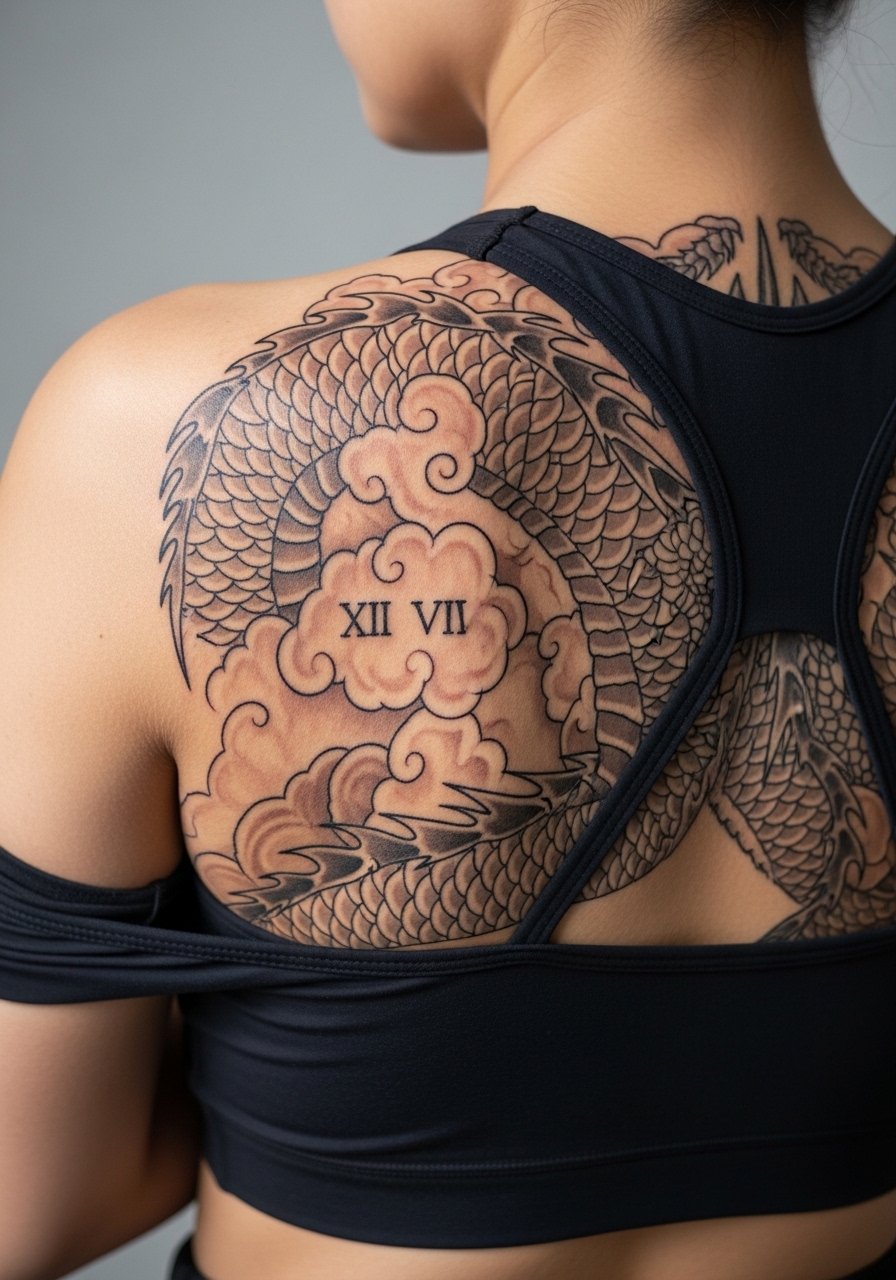
This idea layers personal detail without overt script. Ask your artist to design the numeral so it reads as pattern at a glance and as numbers up close. The mistake is placing numerals in overly tight scales which makes the numbers illegible after healing. Session length depends on how much patterning you want. For a clean reveal consider simple tops that do not cut the design awkwardly. Respect cultural motifs if cloud elements reference a specific tradition and opt for subtle variation rather than replication.
14. Metallic Accent Scales for Darker Skin
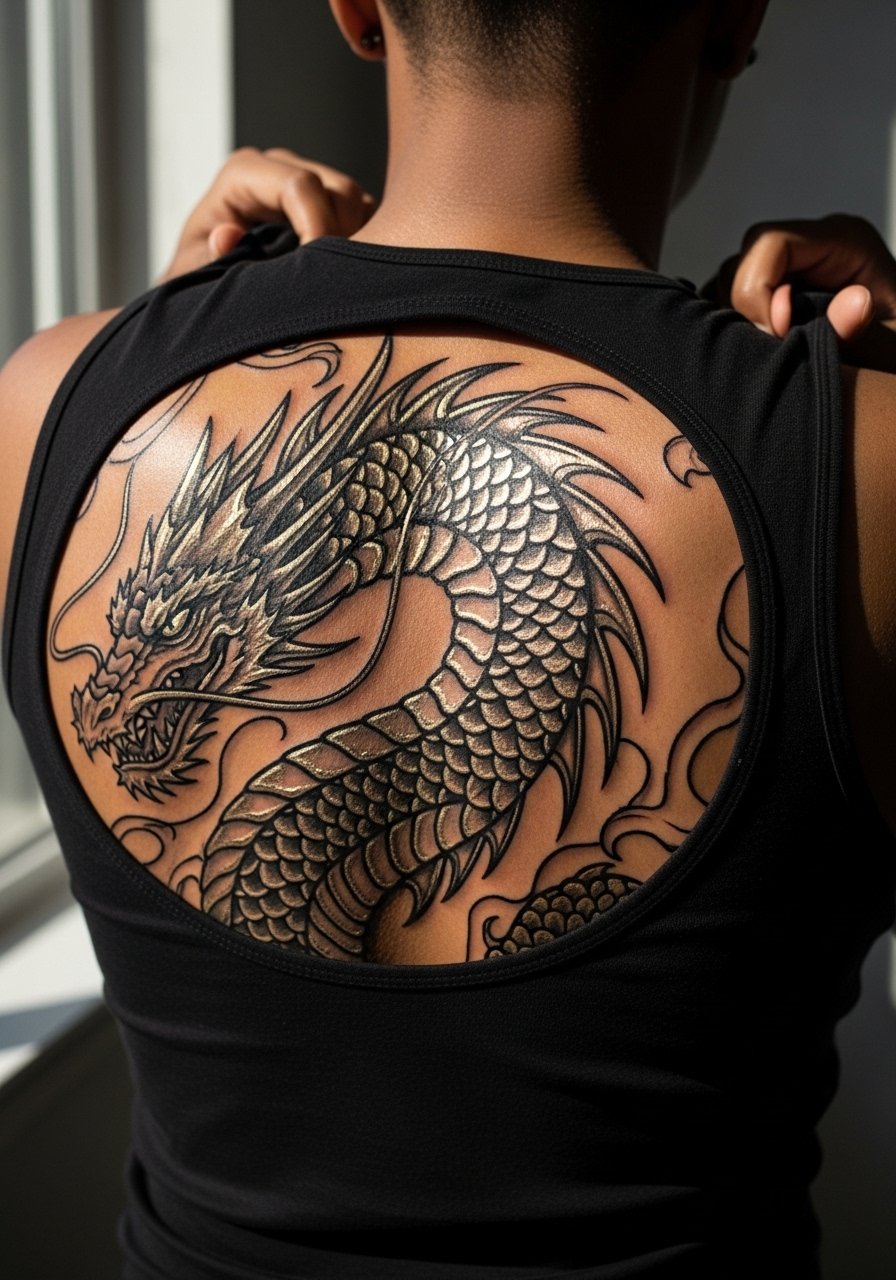
On darker skin tones, metallic or white-reflective accents can help color pop when standard pigment might read muted. Be upfront with your artist about expectations because metallic inks behave differently and sometimes need layering. A mistake is expecting the same sheen as in a photo without considering light and pigment chemistry. Sessions usually include test patches. For showing off, contrast this work with a backless+halter+top+women in deep hues to make metallics shimmer.
15. Half-Back Rising Dragon That Ends at the Hip
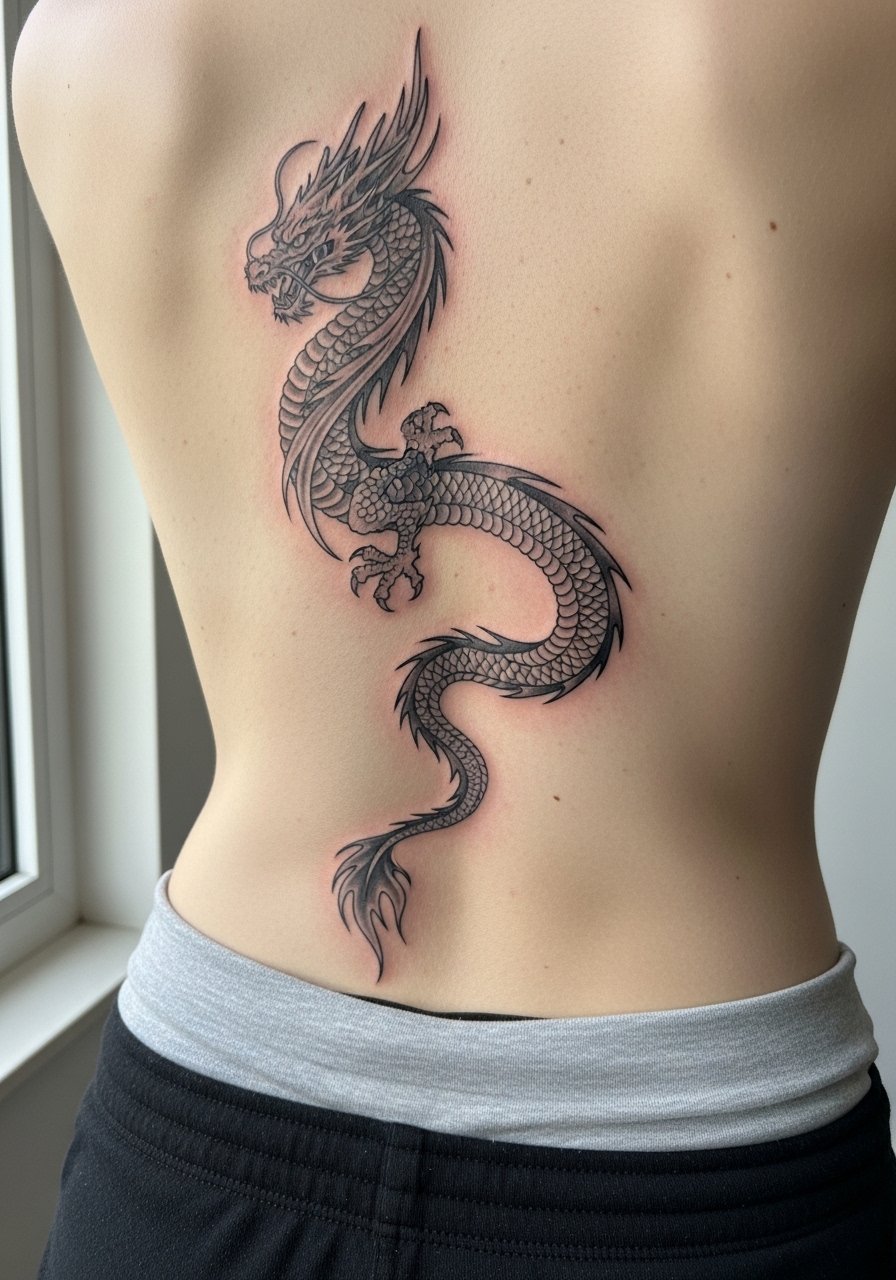
Diagonal compositions that start on the torso and finish at the hip work well to emphasize motion. Ask for a mock-up in different body positions so you can see how the piece interacts with clothing lines. The common mistake is aligning important elements right on a hip crease where stretching can distort them. Sessions are split to manage both back and hip sensitivity. For practical session wear bring drawstring+pants+loose so the artist can access the hip without pressure from waistbands.
16. Negative Space Dragon with Geometric Web
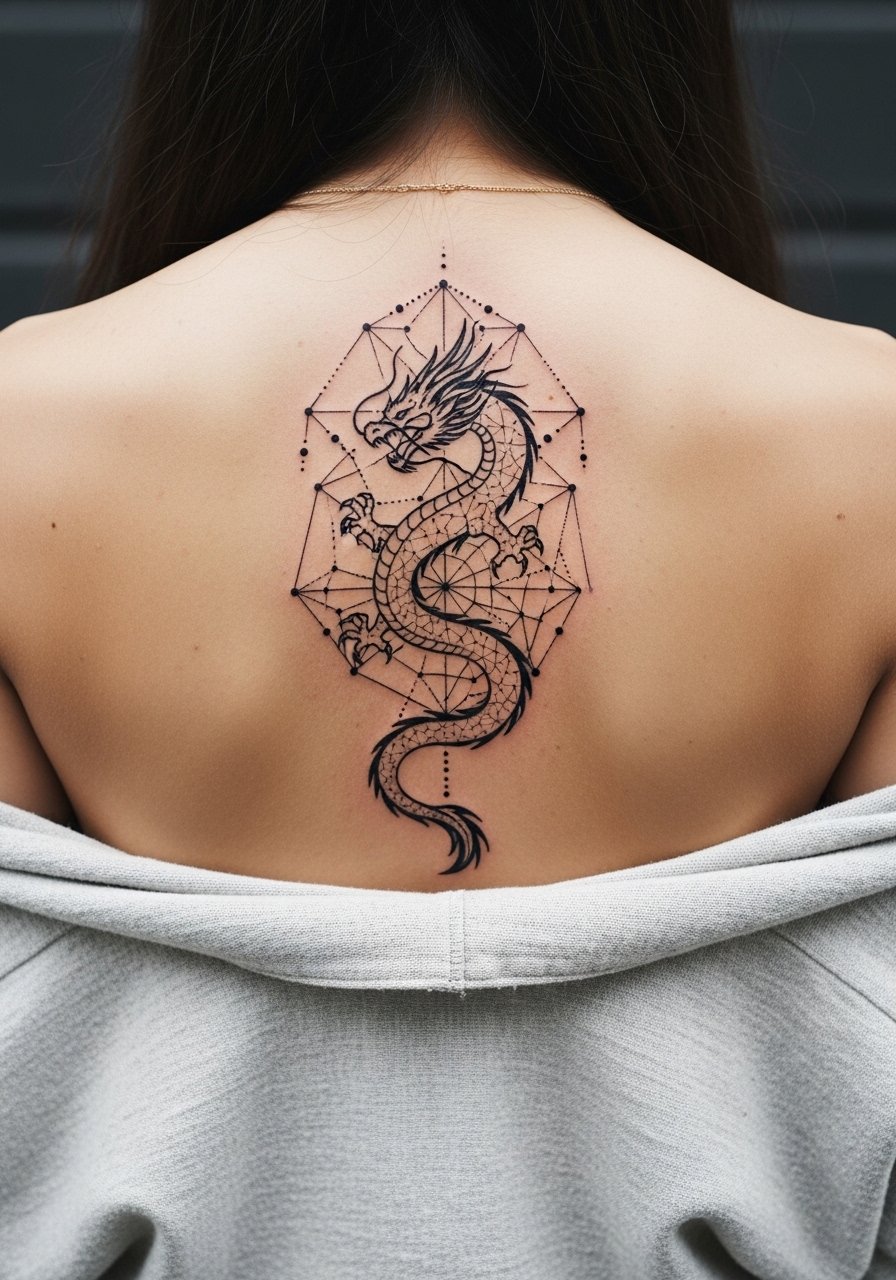
Negative space designs age differently than filled pieces because the skin itself forms the highlight. Ask your artist to plan bold framing so the negative silhouette stays defined as dots and lines spread subtly. A common error is using dots that are too close together. Sessions include careful placement checks and a touch-up at year two is normal. Pair this with clean wardrobe lines, like an open+back+top that shows the outline without visual noise.
17. Dragon Scales as Armor Across the Upper Back
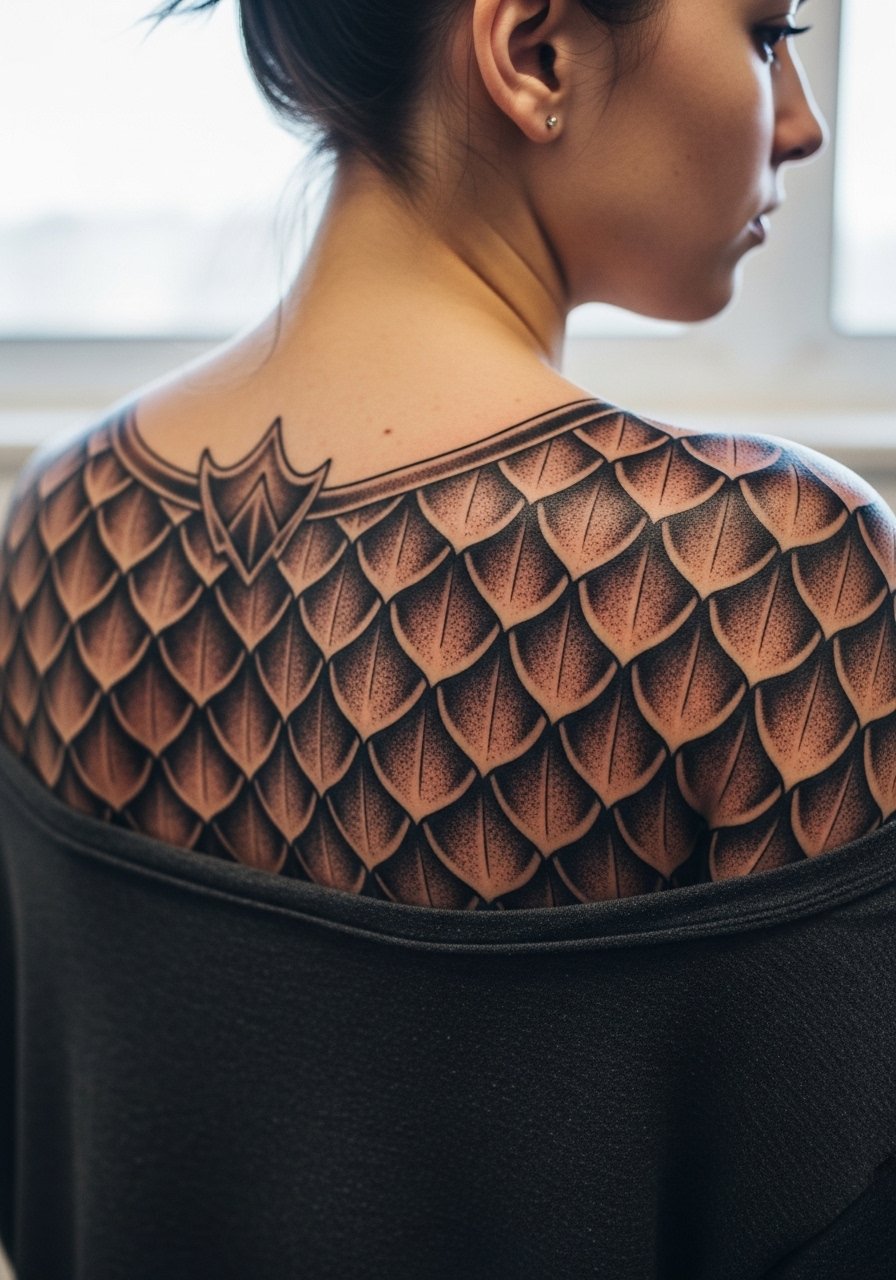
Scale armor makes for a graphic statement and offers a lot of room for texture play. For longevity, ask the artist to vary scale size so the pattern breathes and does not merge. The biggest mistake is using identical tiny scales across a large patch. Sessions are methodical and you may want to split into quadrant appointments. This approach handles touch-ups well because the pattern is forgiving.
18. Dragon and Phoenix Opposing Halves on Left and Right Back
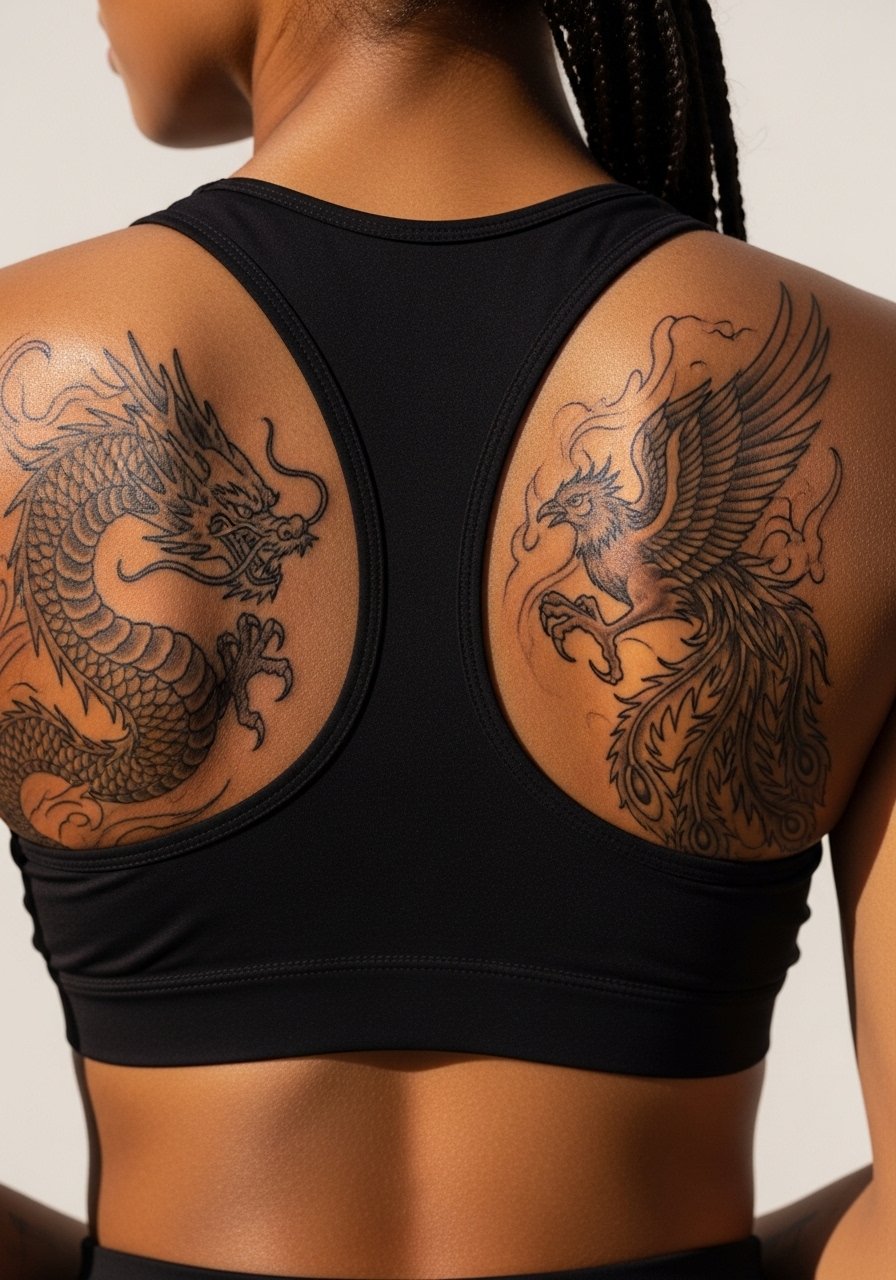
Opposing halves make a dramatic narrative piece. Be explicit in consultation about scale balance so one side does not overpower the other. A frequent mistake is mismatched detail levels between artists if guest spots were used. Plan for coordinated sessions or a single artist to ensure cohesion. For wear, off-shoulder tops or cropped jackets give an intentional reveal.
19. Abstract Sketch Dragon with Brushstroke Texture
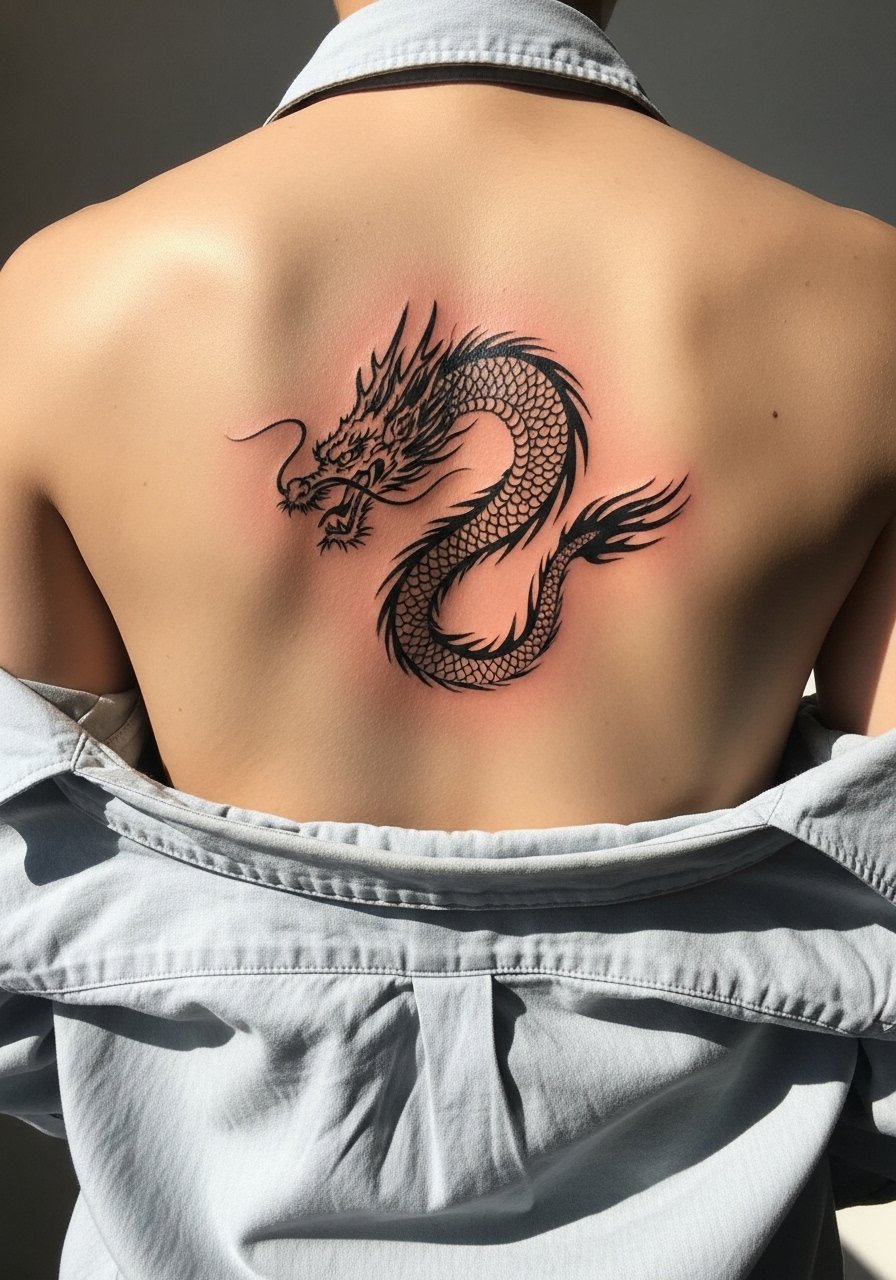
This one reads like a movement study more than a literal creature. Ask for deliberate directional strokes so motion reads coherently when healed. The mistake is using random smudges that become indistinct. Sessions are shorter and focus on confident mark-making. The piece pairs well with minimalist clothing to let the brushstrokes be the focal point.
20. Dragon Claw Scar Lines and Script Integration
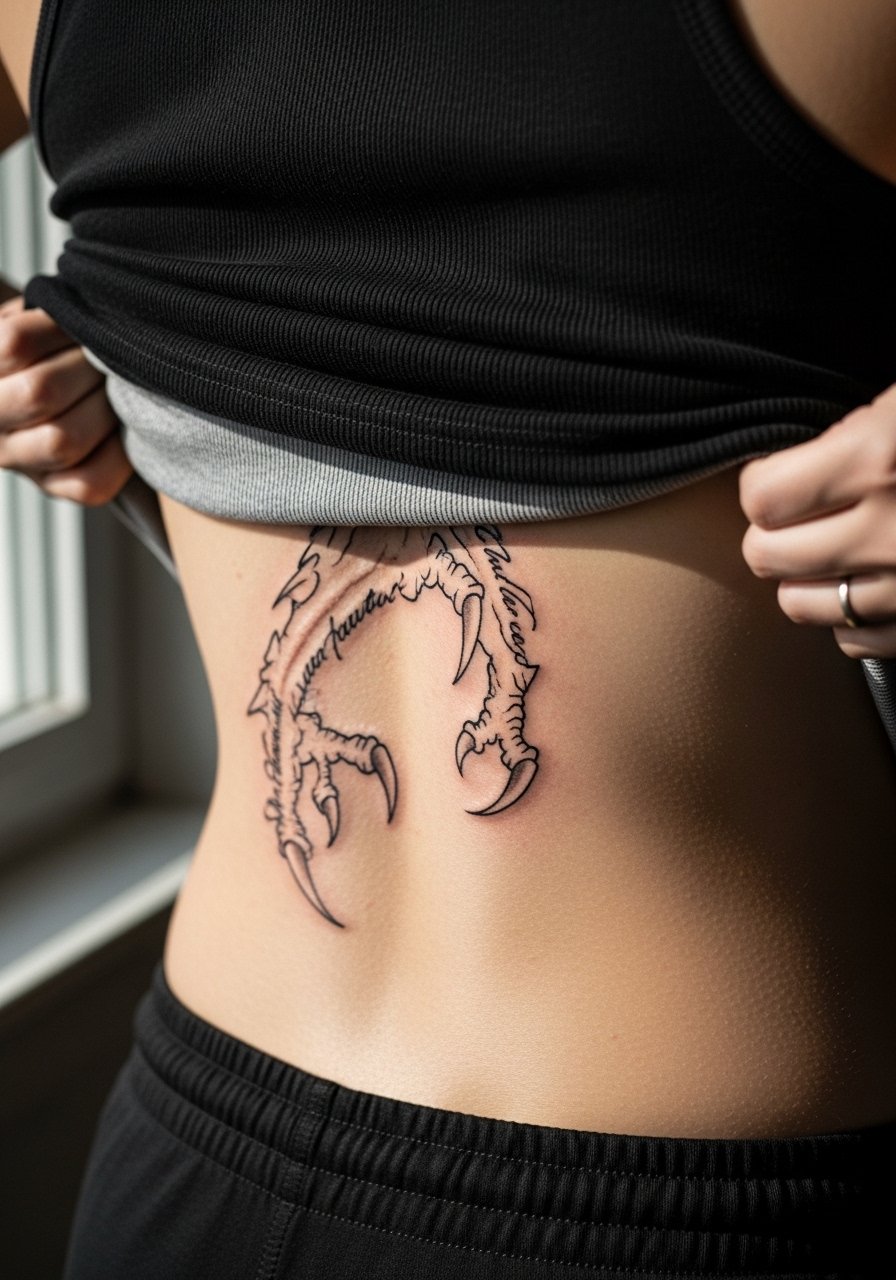
Scar-like claw marks can be graphic and personal when paired with a short phrase or date hidden inside a mark. Be clear with your artist about how literal you want the scars to appear and whether you want raised or flat-looking texture. A classic mistake is putting script too small inside a textured area. Sessions are brief and the healed look is subtle. Consider showing it with a crop+top+fitted to let the marks read without distraction.
21. Phased Build: Small Shoulder Dragon That Grows Into Full Back
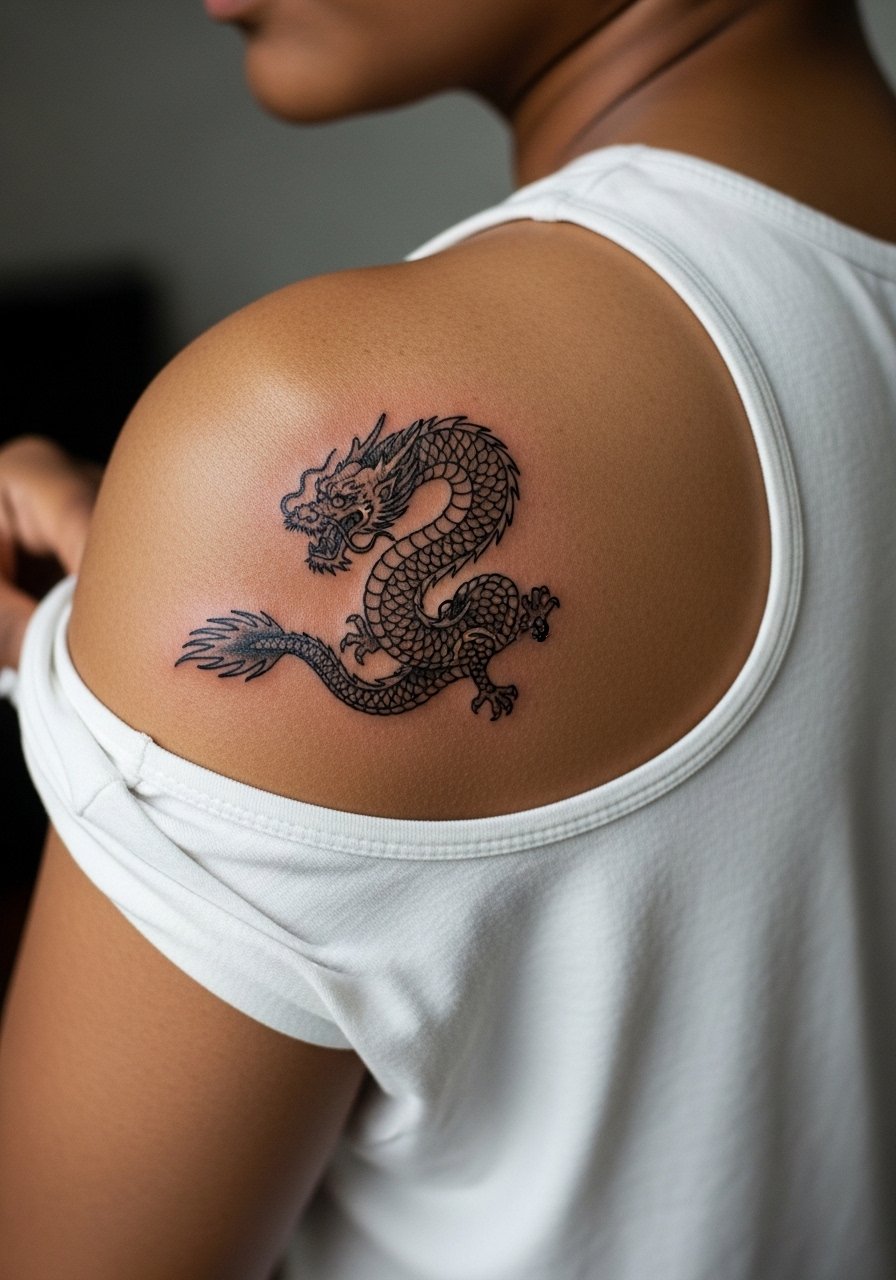
This phased approach answers the budget and timing pain point many people face. Start with a balanced shoulder element designed to expand into clouds, scales, or wings later. Tell your artist you plan to add yearly so they can leave connective negative space in the drawing. A mistake is committing the first piece to a dense style that resists future integration. Sessions are short and manageable for first-timers. For the session wear a loose+button+down+shirt+mens so the artist can access shoulder and upper back without rubbing.
Frequently Asked Questions
Q: Will watercolor-style dragons fade faster on back pieces than blackwork?
A: Watercolor pigments typically sit more on the surface and are prone to fade and softening, especially where friction or sweat is common. Blackwork keeps its silhouette longer because of saturation and contrast. If you love watercolor, plan for touch-ups at year two to three and anchor the form with some line or stipple to preserve shape.
Q: How do I choose between a full-back realistic dragon and a patchwork build over years?
A: Decide if you want a one-time narrative or an evolving story. Full backs demand larger budgets and longer sessions up front. Patchwork is budget-friendly in the short term but needs planning so scale and flow match over years. Bring reference photos and a plan for at least how the first two patches will align.
Q: Are there special considerations for dark skin when getting colorful dragon back tattoos?
A: Yes. Darker tones can make some colors read differently after healing, so discuss contrast with your artist and consider metallic or high-contrast blackwork accents to keep details legible. Test patches and phased color work are useful strategies.
Q: Do artists agree on using protective film like Saniderm for full-back sessions?
A: No, artists split into two camps. One group prefers protective film for large areas to control exposure and initial moisture. The other prefers dry healing to avoid trapping moisture under a large sheet. Ask the studio how they handle large-area aftercare and what they have seen work with their specific inks and techniques.
Q: How often do fine line dragon details need touch-ups on the back?
A: It depends on placement and skin movement. In stable areas you might see minimal fading for two to three years. In mobile zones expect touch-ups around year two. Discuss needle depth and spacing in your consultation to gauge the artist's touch-up track record.
Q: What should I wear to a full-back dragon session to make the day easier?
A: Bring loose tops you can pull aside, like a loose+button+down+shirt+mens or a simple tank you can roll. The goal is easy access without fabric rubbing the fresh ink during transit home.
Q: Is it better to book a single artist for a large themed back piece or use guest spots?
A: For cohesion, a single artist or a coordinated team who share a clear plan will avoid mismatched scale and style. Guest spots work if the artists communicate and you have a master plan. Either way, ask to see healed photos of similar collaborative projects.