Fine line tattoos are gorgeous when fresh, but ribs are a unique test for any delicate work. The skin stretches when you breathe, clothing rubs at the waist, and sun exposure varies by season. Pick a size and line weight that account for motion and friction, and you will get a piece that stays crisp longer. Start with the minimalist options below and then move toward wrapping, color, and bold blackwork.
1. Minimalist Single-Line Dragonfly on Upper Ribs

The ribcage is a seven out of ten on most pain charts. This tiny single-line dragonfly is worth the tingle because it heals fast and reads delicate under a tank or cropped top. Tell your artist you want a single continuous stroke with slightly thicker anchor points where the wings meet the body to prevent early blur. A common mistake is asking for ultra-thin lines without spacing, which tend to merge by year two. For the session, wear a loose tank top so the artist can shift fabric and keep the stencil flat.
2. Fine Line Dragonfly with Trailing Wings Along Side Ribs

Artists split on whether ribs are ideal for ultra-fine work. One camp says the breathing motion and thin skin make fine line blur faster. The other camp argues that with correct needle depth and slight line weight variation it holds up well. If you want this look, tell your artist to add tiny spacing between the trailing wing lines and to avoid hairline script-level lines. Expect a single session under two hours and a likely touch-up window around year two for the faintest strokes. For showing it off, a cropped tank top frames the wings cleanly while keeping the look subtle.
3. Watercolor Dragonfly Splash on Lower Ribs

Watercolor ink reads like a painted wing when healed, but saturation and placement matter. Lower ribs see waistband friction, which can dull bright pigments faster. Ask your artist to anchor color with subtle black outlines or a soft gray wash so the wings retain shape as colors fade. Sessions usually run longer for layering color, often two visits. A mistake people make is requesting an all-wash piece with no definition. During summer, wear a high-waisted bikini bottom to show the piece without rubbing the ink against waistbands.
4. Blackwork Geometric Dragonfly on Mid-Ribs
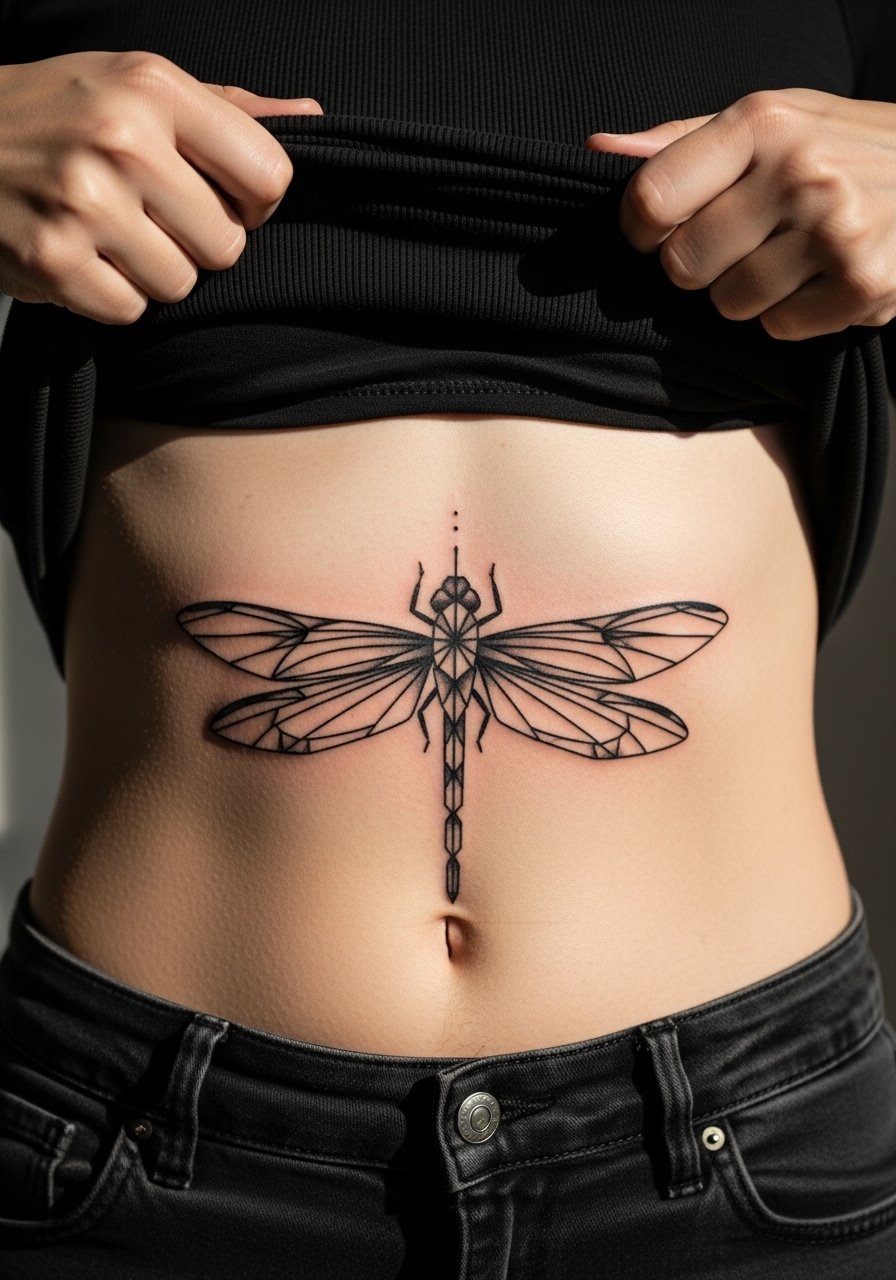
Bold blackwork plays with the curve of the ribs and ages like a charm because saturation resists sun loss. Expect two to three sessions for larger geometry and solid fills. Tell the artist you want slightly wider spacing between parallel lines to avoid dense blocks that can compact into gray over time. One visual risk is a blowout where ink spreads under the skin on thin rib tissue. Artists usually test depth on the first pass to avoid this. For nights out, a side-slit maxi skirt or matte bodycon dress keeps attention on the stark lines without the pattern competing.
5. Neo-Traditional Dragonfly with Floral Accents on Full Rib Side

Neo-traditional gives the freedom to add color depth and classic outlines without losing the dragonfly silhouette. The full-side placement reads dramatic when paired with color-saturated flowers. During consultation, bring photos that show how you want the floral scale to sit against your natural curves. Avoid cramming too many small flowers into the wrap because they can blur into a texture over the years. Sessions often split into two visits to let the skin settle between color layers. If you prefer quick reveals, low-rise jeans and a cropped hoodie show the lower edge cleanly.
6. Micro-Realism Dragonfly Silhouette on Upper Ribs
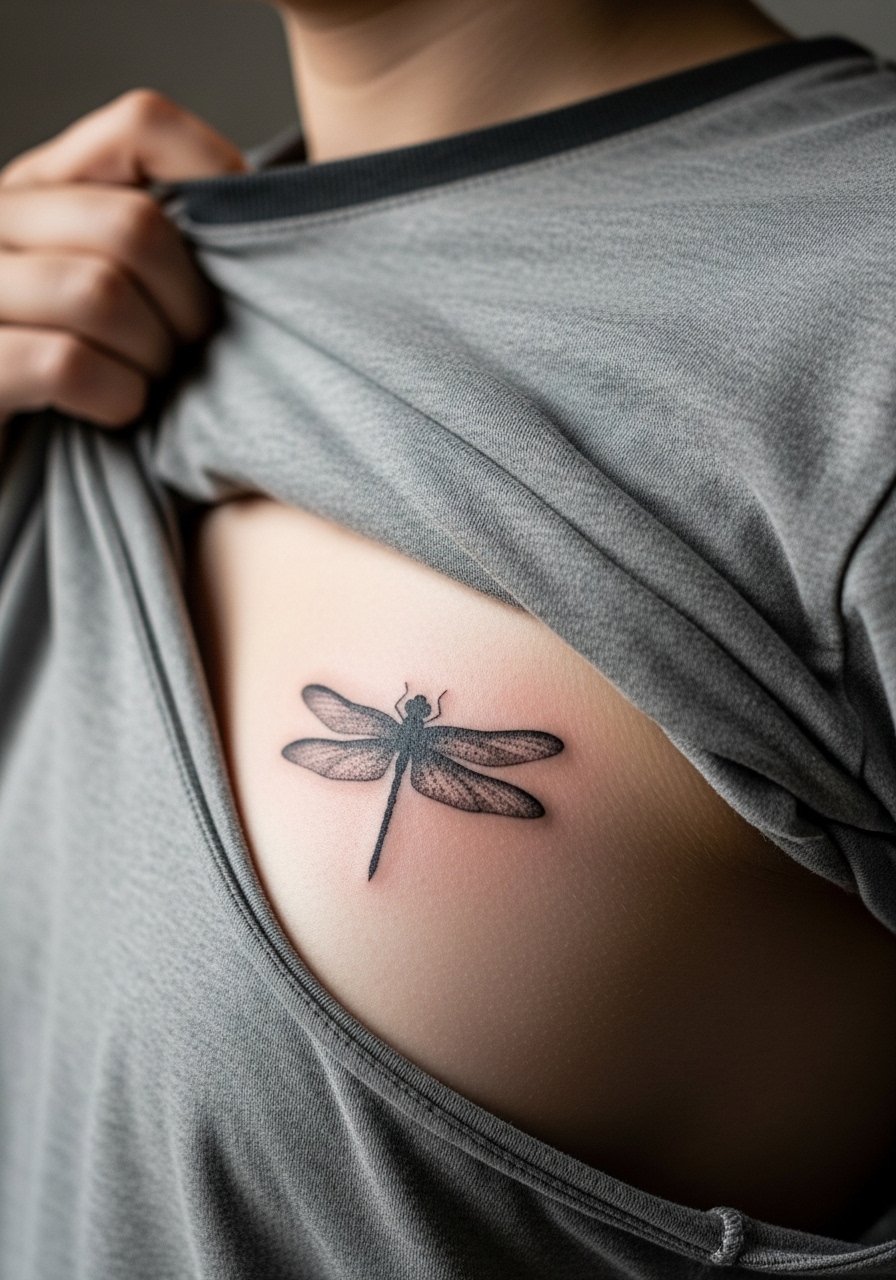
Micro-realism needs crisp gray washes to read as iridescent wings without heavy color. On upper ribs the skin is thinner and breathes with the chest, so short sessions of one to one and a half hours are easier. Ask for a photo of healed reference work, not just fresh images. A common error is over-detailing the wings at tiny scales, which disappears in two to three years. Expect touch-up candidacy around year three depending on sun exposure. For the actual appointment, wear a wide-neck shirt you can pull aside so the artist has clean access and you stay comfortable.
Studio Day Picks
The first six ribs-focused pieces above vary from minimalist upper ribs to full-side neo-traditional wraps, and the right small items smooth the studio visit and the first week of healing.
-
Stencil transfer paper kit. Lets you preview how a delicate outline will sit on the rib curve before the needle touches skin, which is useful for the single-line and fine line styles above.
-
Topical numbing cream. Applied as directed before the session eases the edge on sensitive rib areas without obscuring the artist's feedback.
-
Thin protective film roll. Keeps the lower rib and waistline pieces clean during the first days when clothing friction is highest.
-
Fragrance-free body wash. Gentle cleansing helps preserve fine line edges and soft gray washes without introducing irritants.
-
Aquaphor healing ointment. A thin layer for the initial days locks moisture into delicate needle channels on fine line and micro-realism pieces without clogging them.
7. Ornamental Dragonfly Mandala Along the Ribcage Curve
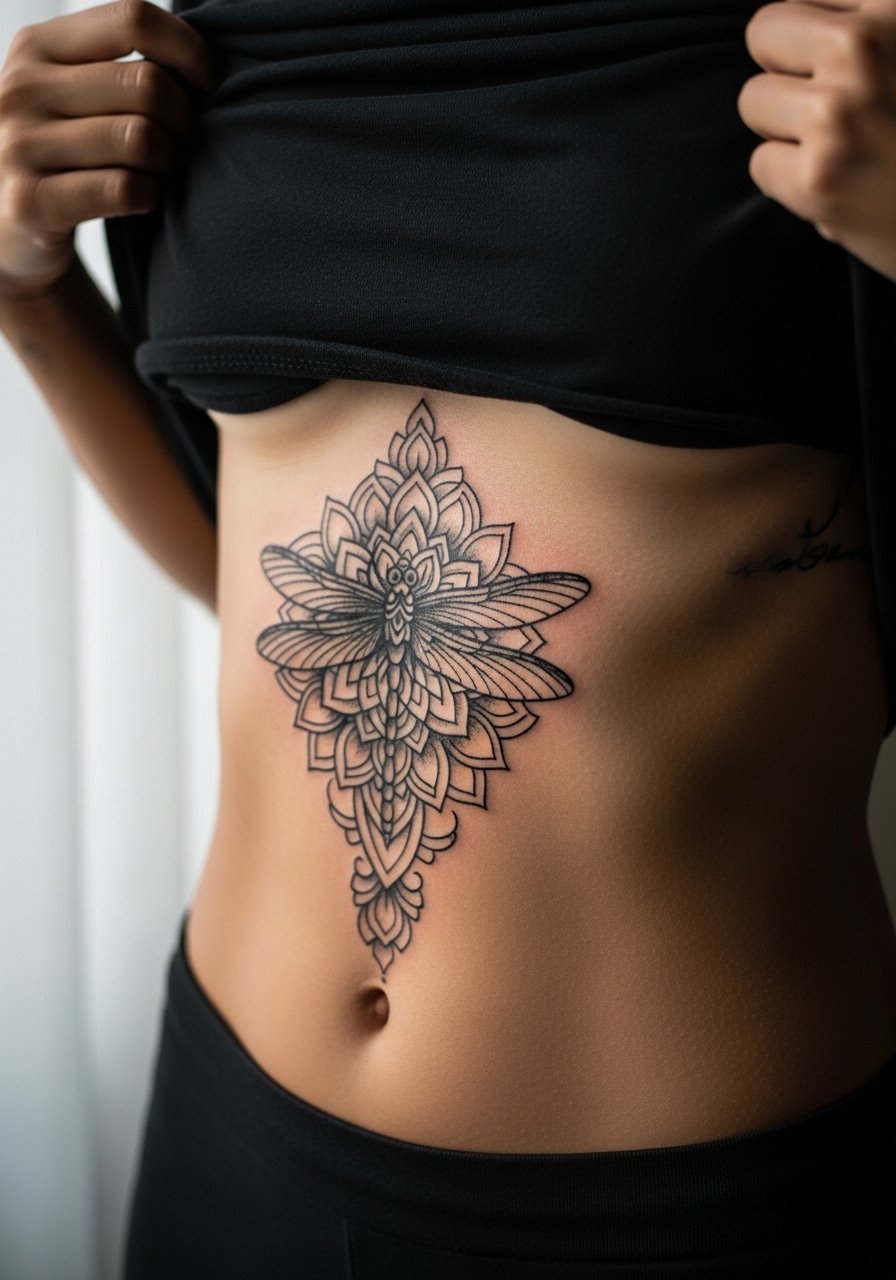
Mandala layouts rely on symmetry, and the rib curve offers a natural sweep for a circular motif. For this ornamental option tell the artist where the central axis should sit relative to your sternum so the mandala does not read lopsided with breathing. A frequent mistake is compressing too many radial lines into a small diameter, which ages into muddled shading. Expect longer sessions and a staged approach so the skin recovers between layers. For evenings when you want to show the mandala pair it with a bodycon dress or a side-slit skirt to reveal the curve without distraction.
8. Illustrative Dragonfly in Flight Over the Ribs
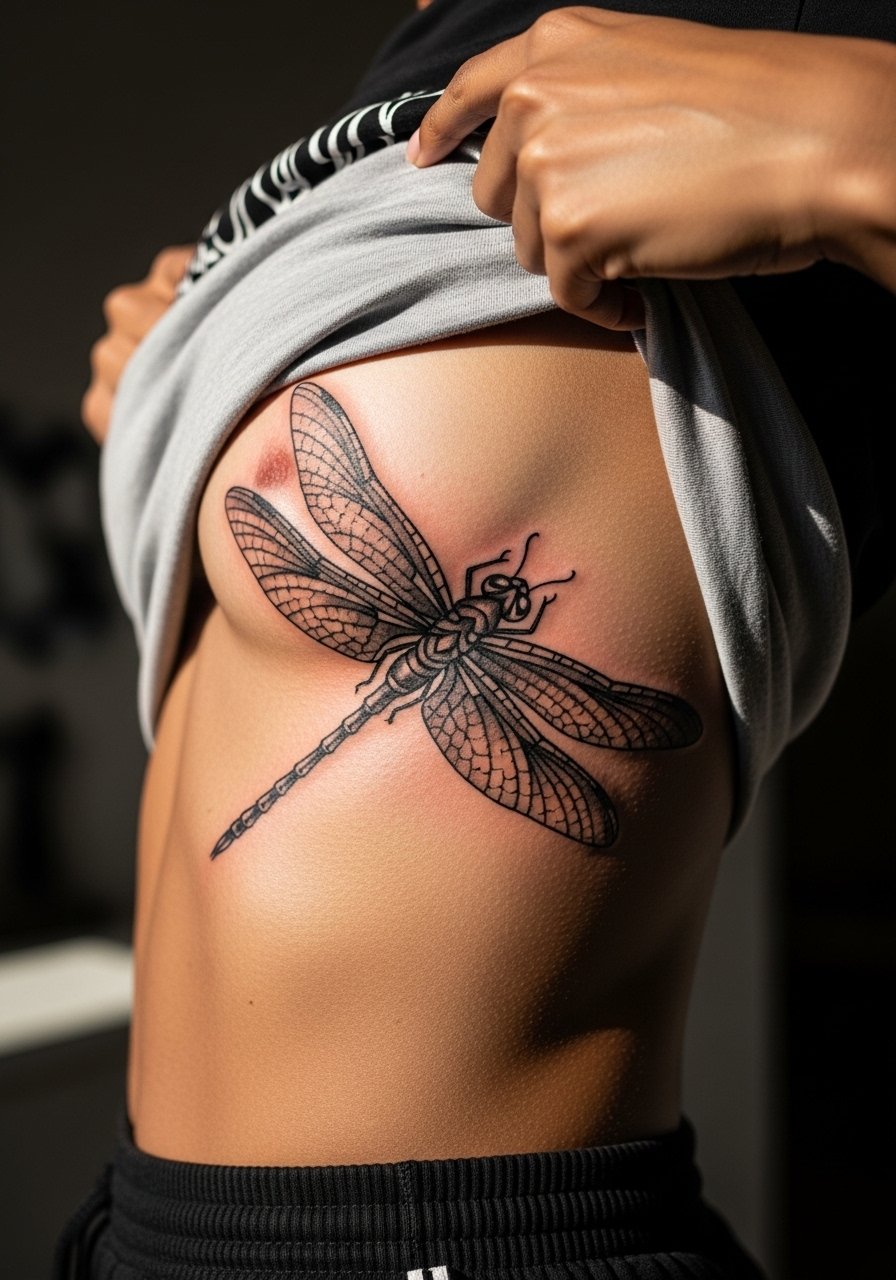
An illustrative dragonfly tells a small story across the ribs when wing motion and body tilt convey movement. Tell your artist the direction of flight you want relative to your torso so it complements body lines rather than fighting them. Most of these designs sit in a two-session window to allow shading to settle. A common mistake is forcing too much tiny detail into the wing veins. Keep vein work slightly bolder than you think you need and it will still read as delicate at six months and beyond. For career-sensitive contexts note that large visible side pieces may show in swimwear and low tops.
9. Traditional Bold-Line Dragonfly on Lower Ribs
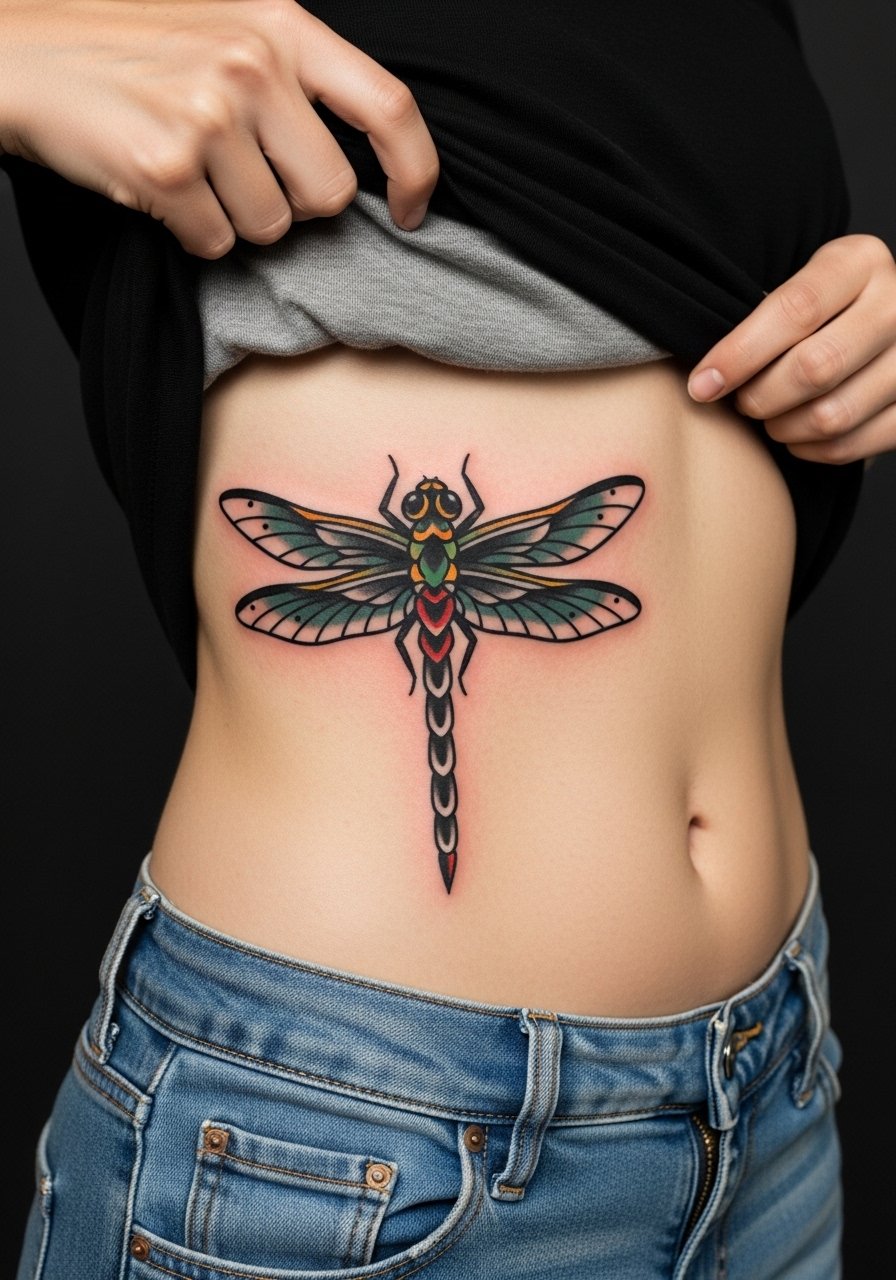
Traditional work is forgiving for long-term wear because strong outlines and saturated color age predictably. Lower ribs endure waist friction so ask for clean, well-saturated fills and a slightly bolder outline than a forearm flash. Session time is short for this size, often one or two sessions. People sometimes pick a design based on a tiny flash photo and then regret scale choices when healed. Tell your artist you want the same shape proportionally but slightly larger so the wings sit clear of the waistband. When showing this piece off in summer, a low-rise jean and cropped tee combo keeps the lower wing visible without constant rubbing.
10. Dotwork Dragonfly with Negative Space on Ribs
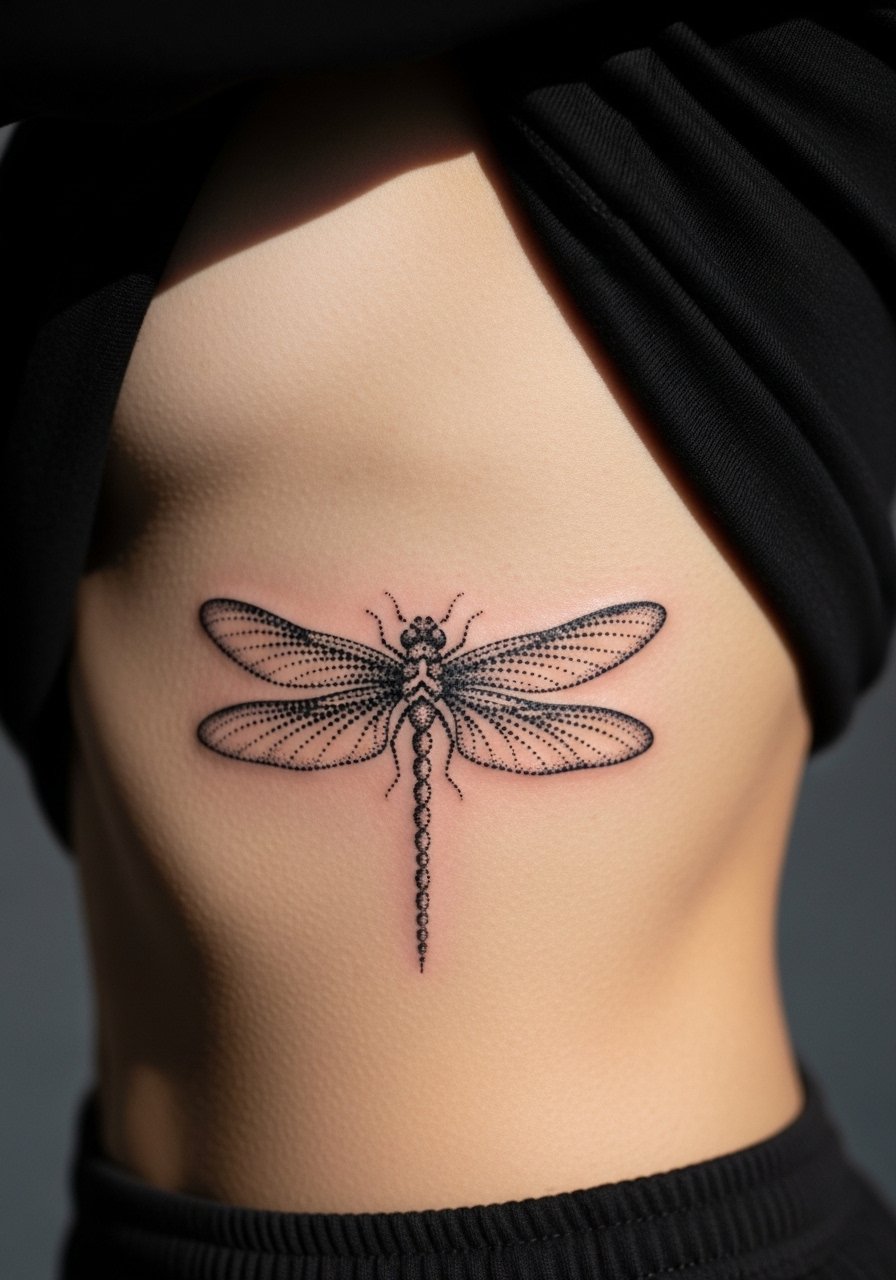
Dotwork creates texture using many small points rather than continuous shading. On ribs this technique plays well with curved skin, but too-dense stippling can compact into a gray tone over time. Ask for gradation of dot size so the negative space remains crisp at six months and at two years. Sessions take patience, often two to three sittings for a large panel. Blowout risk exists if the artist presses too deep on thin rib tissue while stippling. If you want to reveal it softly, try an open cardigan over a breathable cotton crop top so the negative space reads against a neutral backdrop.
11. Ornamental Linework with Iridescent Wing Hints
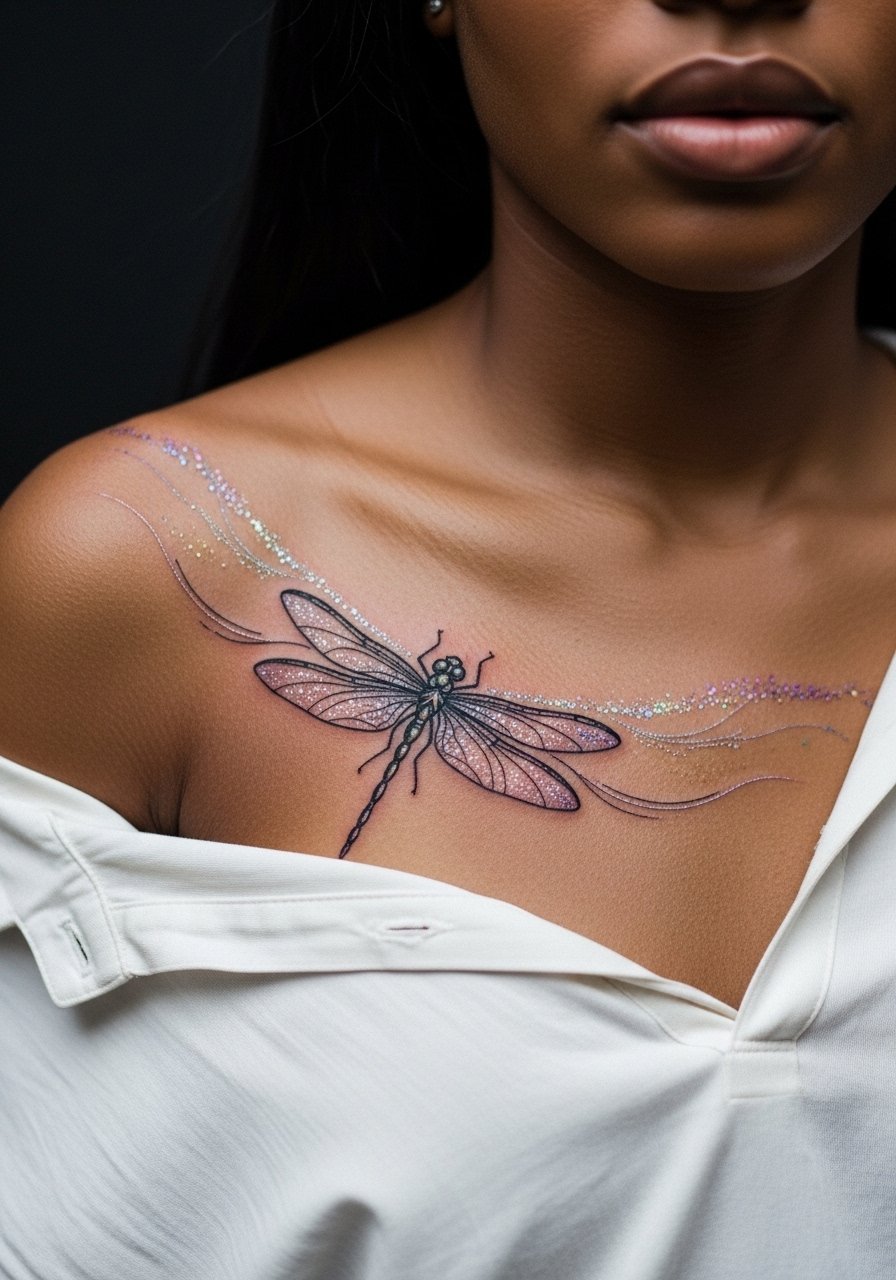
Adding tiny iridescent color notes can mimic real wings without committing to a full watercolor piece. On upper ribs the color needs to be applied sparingly to avoid patchy fade. I suggest telling the artist which tones you want visible in low light so they can layer glints over stable black linework. A mistake is loading large swaths of pastel that fade into bruising tones. Expect one session for linework then a short follow-up color pass. For a casual reveal, a wide-neck shirt pulled aside shows the hints without full exposure.
12. Geometric Fragment Dragonfly Along Rib Panels

Fragmented geometry breaks the dragonfly into shapes that follow rib contours and give a modern edge. Tell your artist where to place major chords so the pieces line up when you stand and when you breathe. A common misstep is putting too many tiny triangles close to the bone, which can read blurry later. Sessions vary depending on fill needs, but many artists split this into two shorter visits. If you plan long-term, ask about future expansion so the geometry can integrate with other work without awkward joins.
13. Stippling and Whip Shaded Dragonfly on Mid-Ribs

Stipple shading in the wings with whip-shaded edges gives a tactile look that ages with nuance. On mid-ribs, shading needs breathing space to avoid merging. During consultation say you want clear gradation from dense stipple near the body to airy whip shading at the wing tips. People often over-commit to dense textures that compress after healing. Sessions are steady and patient work, usually two sittings for larger wings. For showing off, a rolled-up sleeve or side-slit top keeps the shading visible without competing patterns. Consider pairing it mentally with a side-slit maxi skirt for evening wear.
14. Minimal Silhouette with Botanical Accent on Ribs
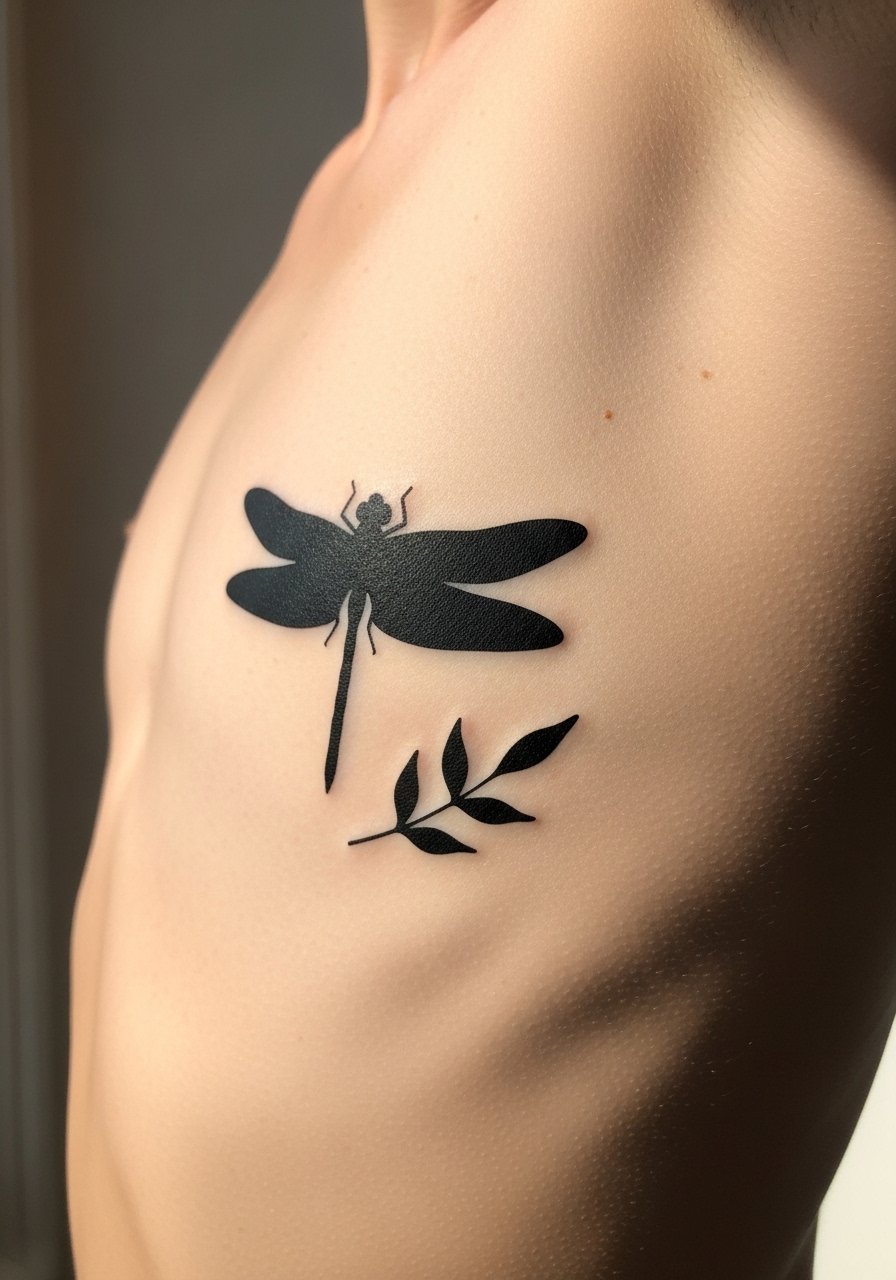
A silhouette simplifies detail while giving room for a single botanical accent to ground the piece. On ribs this reads elegantly if scaled to sit between two ribs rather than across many. Tell your artist to keep the silhouette slightly larger than you think so the wing shapes remain recognizable with time. A frequent error is choosing a silhouette too small, which becomes a blot at year three. Single-session times are short and healing tends to be straightforward. For a casual look pair it with an open cardigan and a cropped tank top to reveal just the accent.
15. Two-Tone Ink Dragonfly for Subtle Contrast
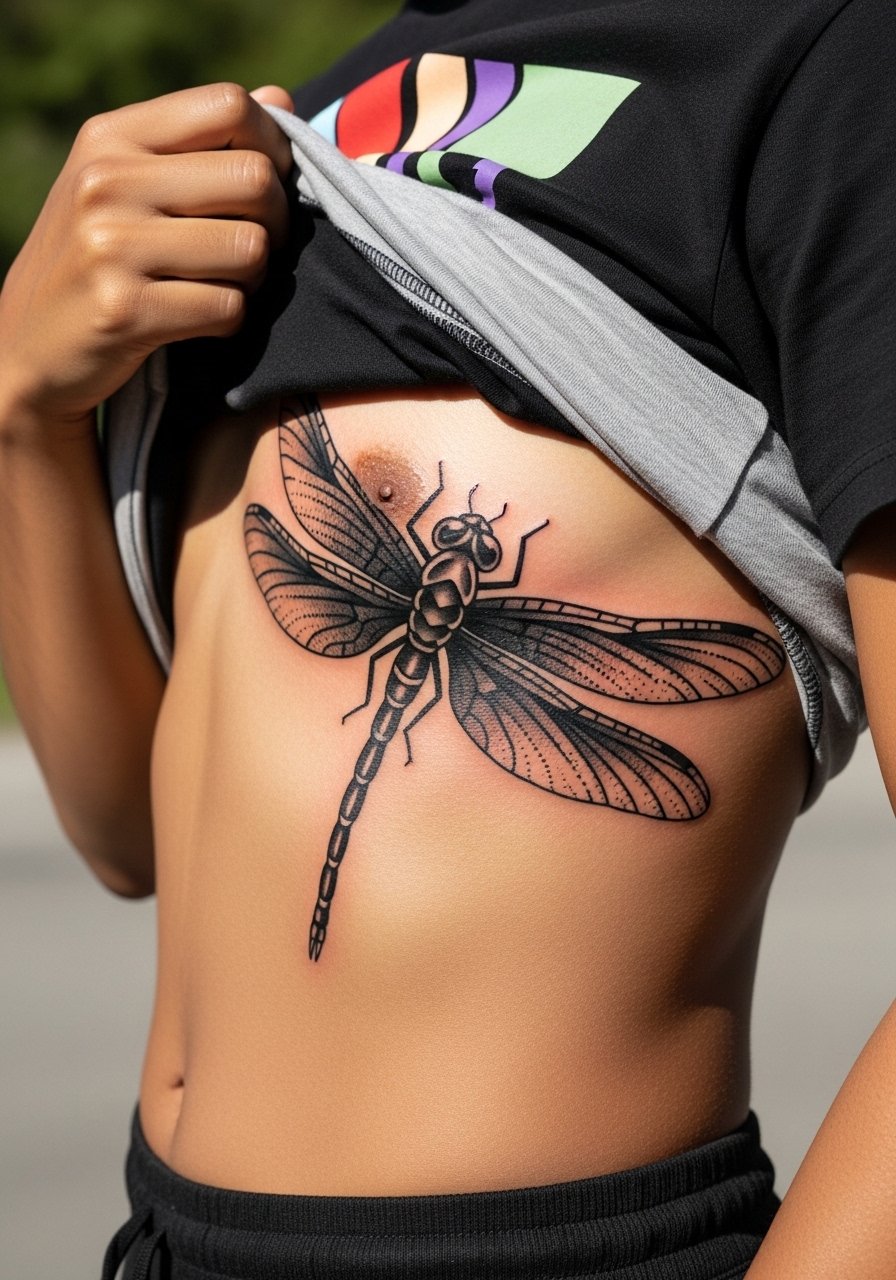
Two-tone pieces use a stable black outline with a single muted color to accent facets of the wing. This balances longevity and visual interest because black maintains shape while color provides personality. Ask for a muted tone like slate blue or olive rather than neon so it fades gracefully. A common mistake is choosing multiple bright colors that fade at different rates and create an unbalanced look. Sessions usually split for outline then color. For summertime visibility a high-waisted bikini bottom lets the tone peek above the fabric line.
16. Microdot Realism Dragonfly Near the Rib Edge
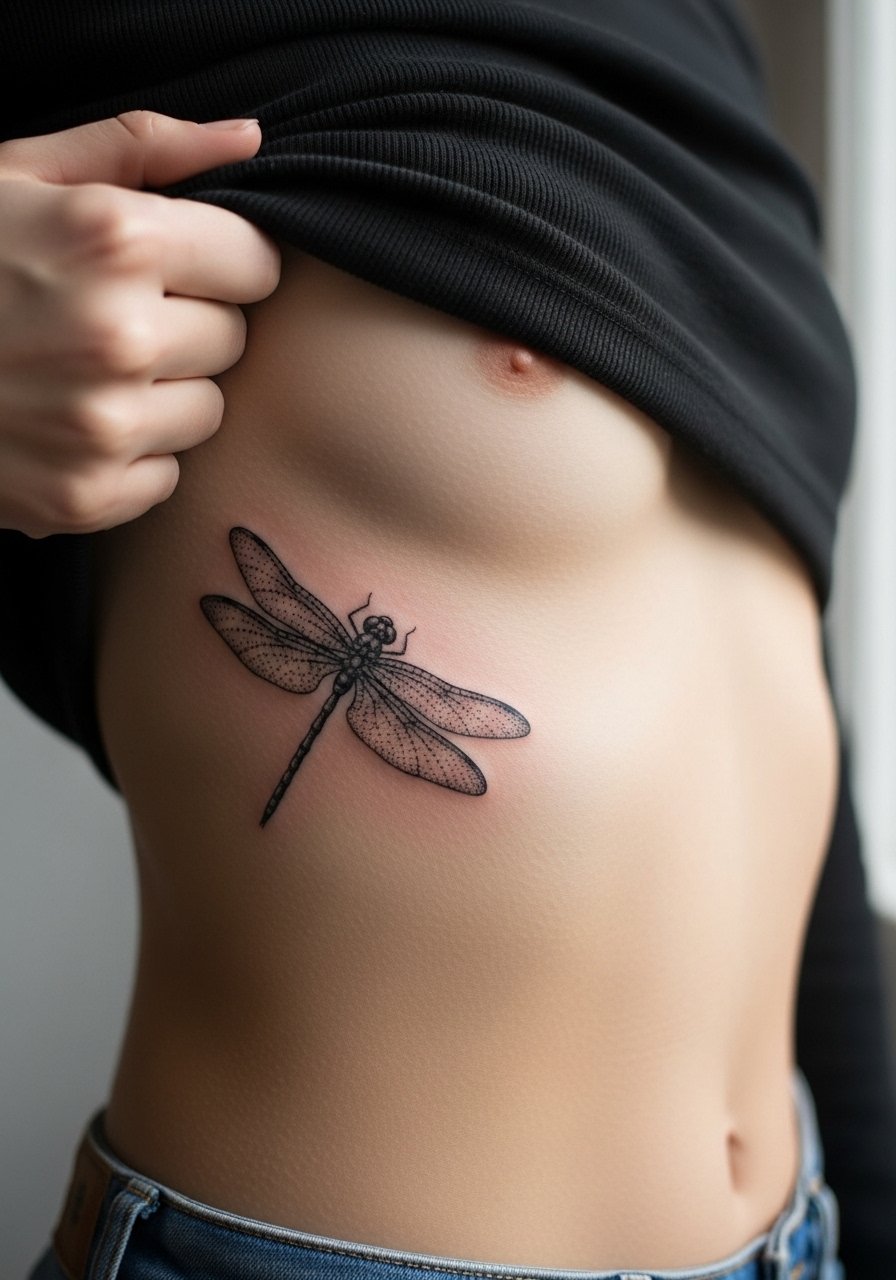
Microdot realism packs tiny dots to suggest texture without continuous shading. Near the rib edge consider spacing and where the pattern meets the bone so it does not compact into a gray patch. Ask your artist for a healed reference of microdot work on similar skin to set expectations. Expect one to two sessions and a realistic touch-up window around year three. If you have sensitive skin, mention it during the consult because dotwork can feel like repetitive pressure. This placement is subtle in daily wear and often hidden under normal tops.
17. Flowing Wing Composition That Follows Rib Curvature

Using the natural curve of the ribs to shape the wing sweep creates a design that reads as part of the body. This style needs careful stencil placement during the consultation so the wings align with the highest arc of your ribs. The mistake is treating the rib as a flat canvas and centering the design without checking movement. Sessions may run longer to refine placement and line weight. For revealing the curve pick tops with asymmetric cuts rather than straight hems so the wings peek out intentionally. A loose button-up shirt you can pull aside works well for the session and for casual reveals.
18. Negative Space Wing Anatomy on Mid to Lower Ribs

Negative space can define wing veins without relying on color, and ribs offer a wide strip to play with light and shadow. Ask your artist to map out where the skin will show as part of the design rather than just filling everything in. Too much black with thin negative cuts often closes up after healing, so maintain broad negative corridors. Sessions are measured and usually two visits for larger areas. This layout pairs well with simple, monochrome clothing choices that let the negative shapes pop.
19. Foil-Like Metallic Accent Dragonfly on Ribs
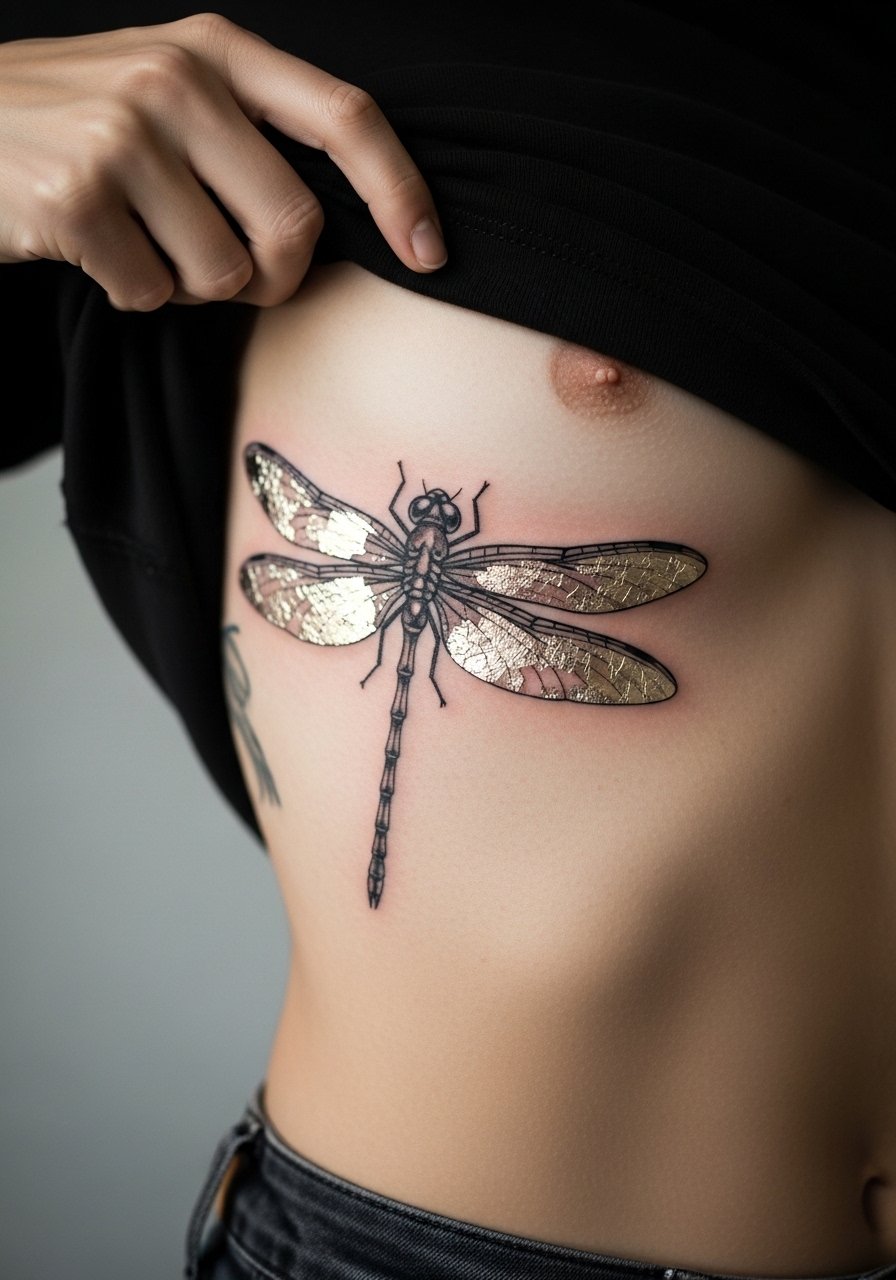
Metallic-look tattoos use ink choices and subtle shading to imitate shimmer without real metal. On ribs, keep metallic accents minimal because reflective tones can appear patchy as they fade. Tell your artist you want only small metallic flecks on the wing tips and to blend them into stable black anchors. A frequent misstep is overusing metallic effects across a large area, which can leave uneven spots with time. Sessions are similar to color work and may need two passes. For discreet shine, pair with neutral tops that catch light at certain angles.
20. Small Dragonfly Cluster Along the Lower Ribline

Clusters let you tell a motion story without committing to one large panel. On the lower ribline they flirt with waistband exposure, so keep the cluster slightly higher than the natural waist to avoid constant fabric contact. During the consult ask for staggered sizes so each tiny dragonfly holds when healed. Tiny pieces often need touch-ups sooner than medium ones, so plan a follow-up at year one. For shows and swims, a low-rise jean with a cropped tee reveals the cluster without constant rubbing.
21. Bold Outline Dragonfly with Filigree Fill on Full Rib Side

A bold outline with filigree interior mixes long-term readability with decorative detail. The strong outer lines protect the shape as inner filigree softens over time. Tell your artist you want the filigree more suggestive than dense so it becomes texture rather than a block. This style often takes two to three sessions for comfortable layering. A common regret is asking for ultra-dense filigree that reads as static gray after five years. For dramatic effect choose outfits with open sides or a cropped silhouette so the wrap reveals along body lines.
Frequently Asked Questions
Q: Will fine line dragonflies on ribs blur faster than bold blackwork?
A: From what I've seen, fine line tends to soften sooner because the rib skin moves more and the lines are thinner to begin with. Bold blackwork retains shape longer because the saturation resists sun loss. If you want a fine line look that lasts, ask for slightly heavier anchor strokes and a touch-up plan at year two.
Q: How should I dress for a ribcage session to give my artist the best access?
A: Wear a top you can shift or a loose tank top that the artist can pull aside so only the tattoo zone is exposed. For lower ribs choose elastic-waist bottoms you can wear low temporarily. Comfort and easy access make the session smoother and reduce fidgeting.
Q: Do watercolor dragonflies need different care than traditional color pieces?
A: Care is similar but watercolor relies on lighter saturation and layered color, so sun protection and avoiding friction are even more important. Expect the color to mellow and plan to discuss future touch-ups with your artist if you want to keep vibrancy.
Q: If I want a rib-wrapping design, what should I ask in the consultation?
A: Ask the artist to place a stencil and move while you breathe so you see how the wrap shifts. Request staged sessions rather than one long sit so the skin has time to settle between passes. Also ask about their touch-up policy for wraps because edges often need refinement after healing.
Q: How soon can I swim or work out after a rib tattoo?
A: Most artists I know recommend avoiding swimming and intense friction from workouts for at least two weeks to prevent infection and pigment loss. Light movement without heavy sweat is usually okay after a few days if the tattoo is not weeping and the artist gave a green light.
Q: Are there style combinations that tend to age poorly on ribs and should be avoided?
A: Tiny, ultra-dense detail mixed with pastel washes often ages unevenly on ribs because the pastels fade faster and the dense detail compacts. If you like ornament and color, lean into bolder outlines with selective color accents so the silhouette reads even as pigments soften.