Fine line dragonflies are everywhere right now, but they do not all age the same. I still see fresh reels where the linework reads crisp and next-year photos where the same pieces have bled into soft smudges. Pick placement and line weight with longevity in mind, plan what to ask at consult, and you will end up with a dragonfly you actually wear proudly for years. First up, a classic wrist pick and the tweaks that keep it from fading fast.
1. Fine Line Dragonfly on the Inner Wrist
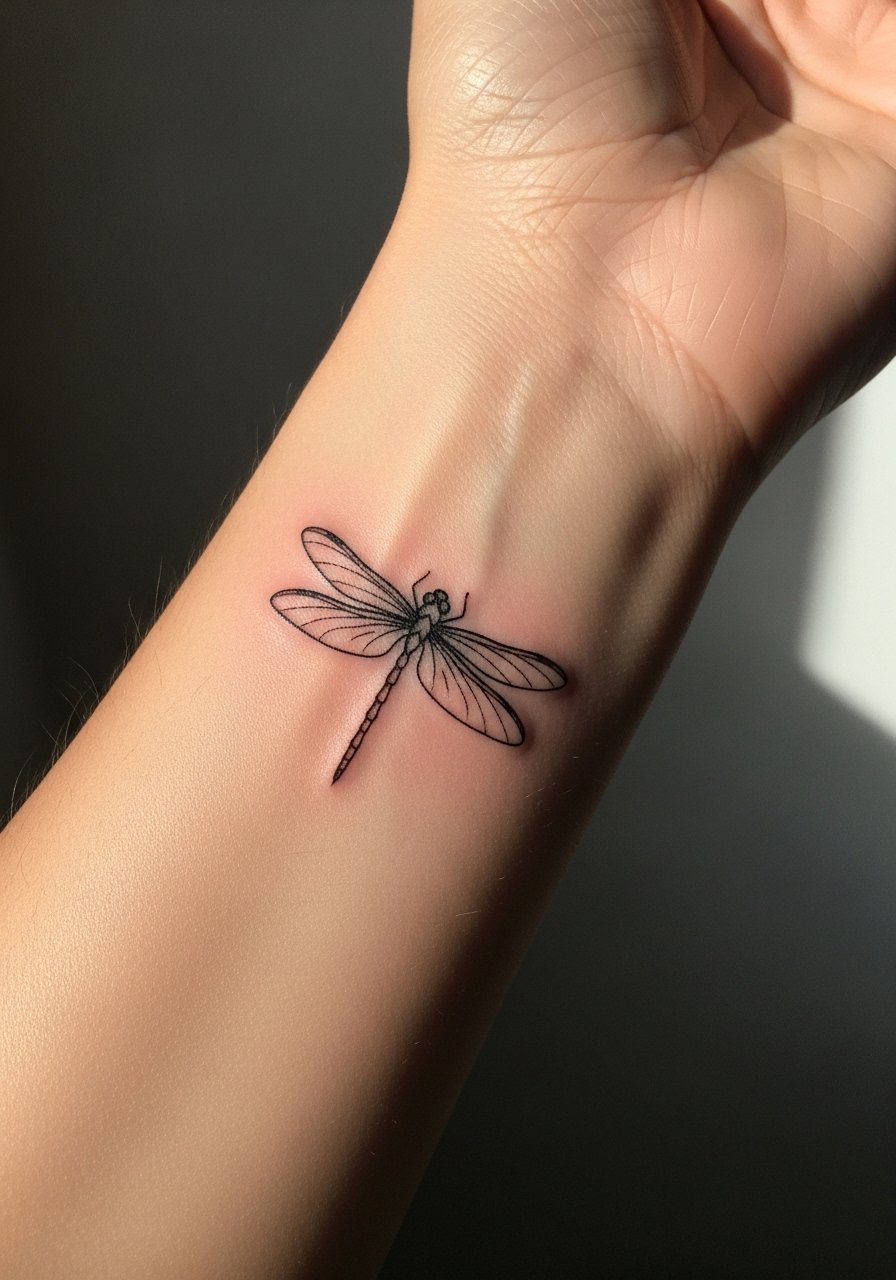
I've seen fine line wrist pieces look gorgeous for months and then need touch-ups by the one-year mark. For wrists pick slightly bolder primary contours while keeping internal wing details light so the design reads from a hand-shake distance and holds up under frequent motion. Tell your artist you want a single-needle look but with a 0.5 mm outer line for longevity, and ask for a mockup flattened against your wrist so the wings do not compress with movement. Fair warning, the inner wrist can be more sensitive than the forearm, so expect a shorter single session and a stinging stretch on bone. If you want to show it off, try a rolled cuff blouse in ivory and a thin silver bangle stack that sits opposite the tattoo without crowding it.
2. Tiny Minimalist Dragonfly on the Ankle
Personal observation, tiny ankle dragonflies look effortless at music festivals but months later some of them migrate into blurred shapes because of friction from shoes and socks. For festival-friendly ink, ask for slightly thicker legs and a compact wing with more spacing between veins to fight blowout. The ankle is a low-to-moderate pain area if the artist asks you to prop your foot, and session time is usually under an hour for under one-inch work. Wear shorts or cropped straight jeans to the appointment so the artist can roll the pant leg without pressure on the area.

3. Micro Dragonfly Behind the Ear
Consultation lead, when you book behind-ear micro work bring a photo of your hairline and ear shape so the artist can scale the design under the hair. This is a discreet placement that suits people wanting subtle visibility, but it needs very precise linework because the skin there can make single-needle work vanish on darker tones. If you have darker skin, ask for a slightly bolder outline or a negative-space wing to read in photos. Expect a quick sitting and surprisingly sharp pain in a tiny concentrated area. Behind-ear tattoos require the artist to work under a hairline, so plan for a short session and an aftercare plan that avoids hair oils.

4. Watercolor Splash Dragonfly on the Thigh
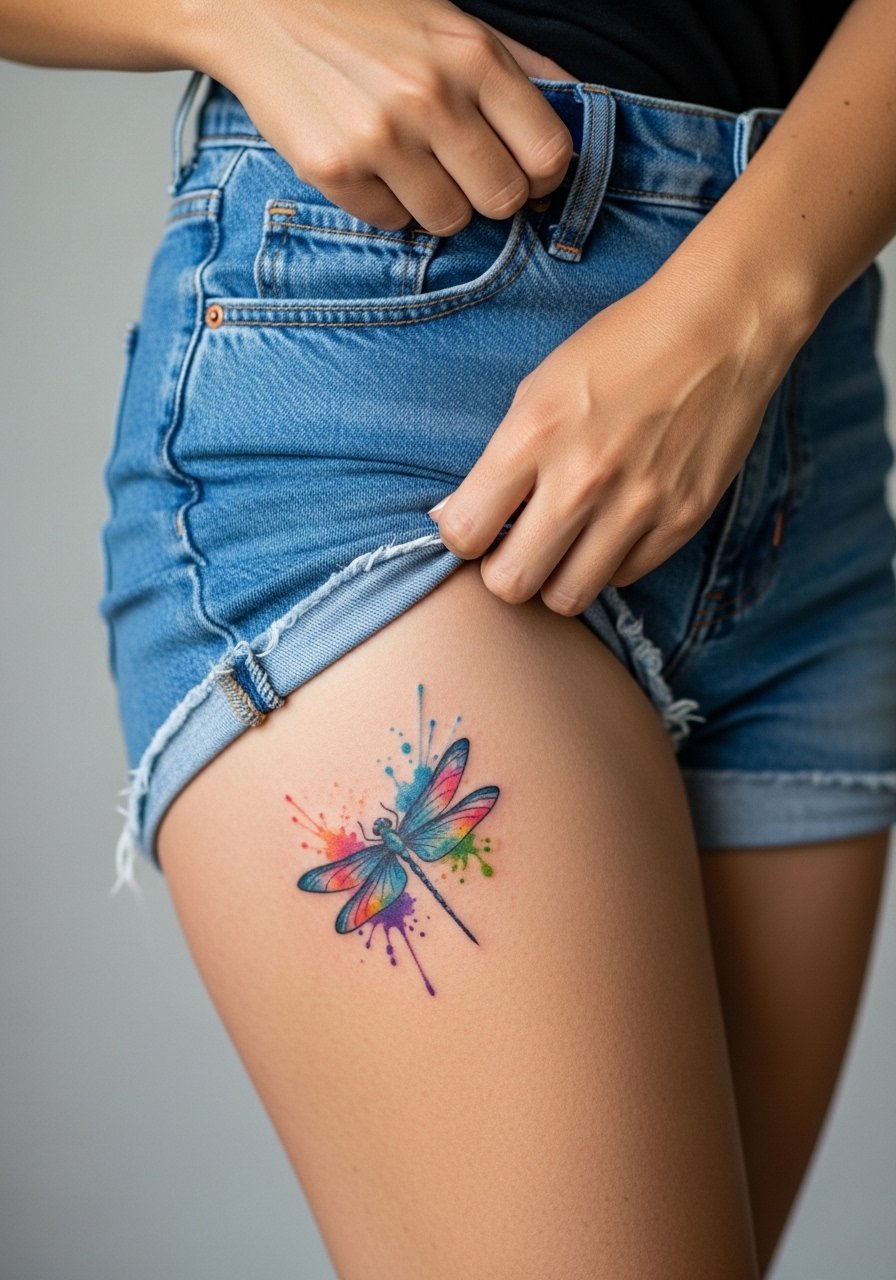
Aging and healing lead, watercolor on the thigh can look painterly for years if placed and saturated correctly. Thigh skin holds color better than ankles, and the extra flesh allows for softer gradients without pushing ink too deep. Tell your artist you want spot absorption rather than full saturation across the wing so it heals with smooth edges. This one takes longer than a wrist piece, often one to two sessions depending on size, and it favors people who sit comfortably through longer work. For showing it off in summer, pair the design with high waist denim shorts or a side-slit skirt that frames the wrap without crowding the art.
5. Botanical Fusion Dragonfly Along the Spine
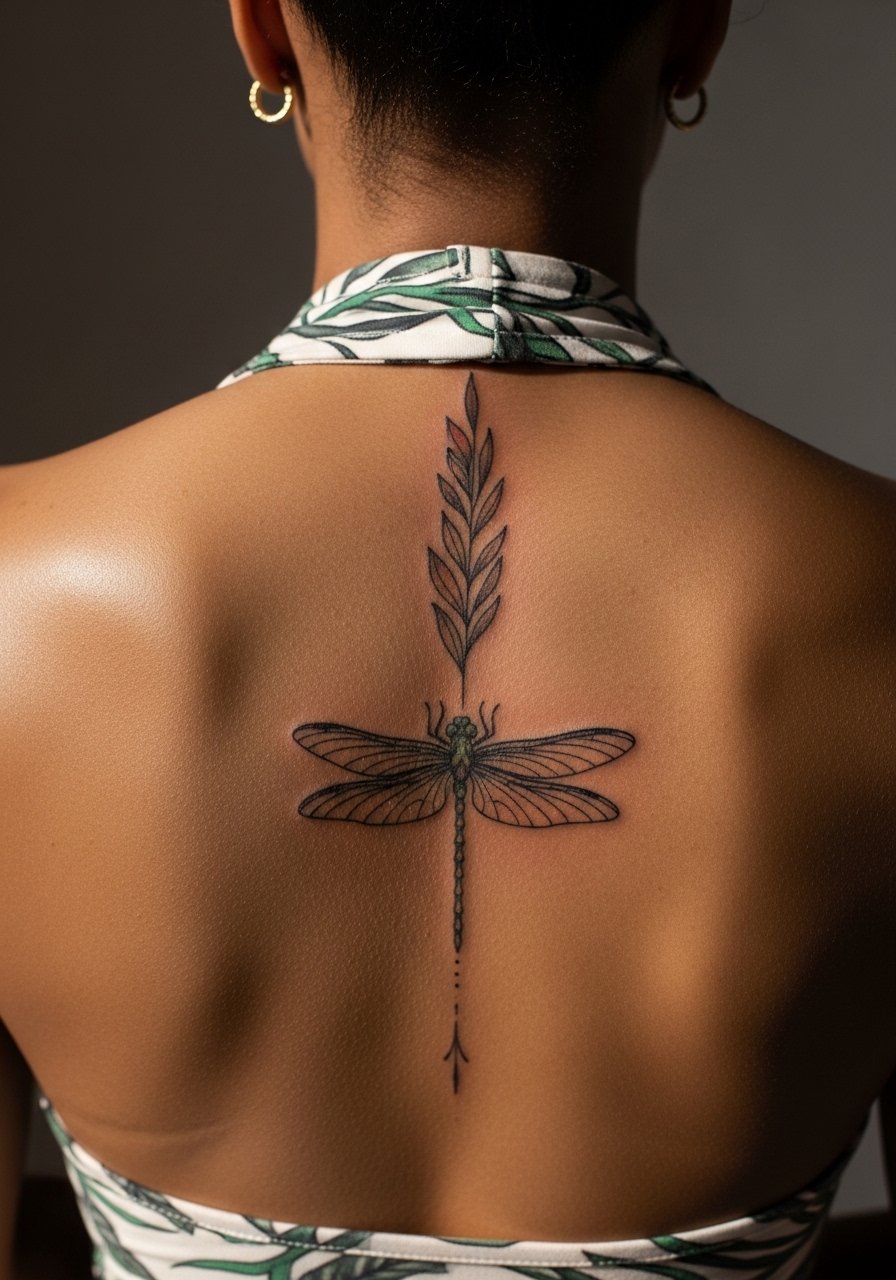
Visual impact lead, a botanical wrap down the spine reads like a living column and it moves with your posture. Spine wrap pieces are great for elongating the back but they need spacing between leaves and wing veins so the lines do not merge as skin stretches. During consult say you want black and gray with subtle color pops rather than full watercolor saturation because that ages cleaner on spinal skin. Sessions often require multiple passes over two appointments, and the spine can be tender, especially over vertebrae. For outfits that highlight the work, a low-back halter or sheer chiffon blouse makes the vertical composition sing.
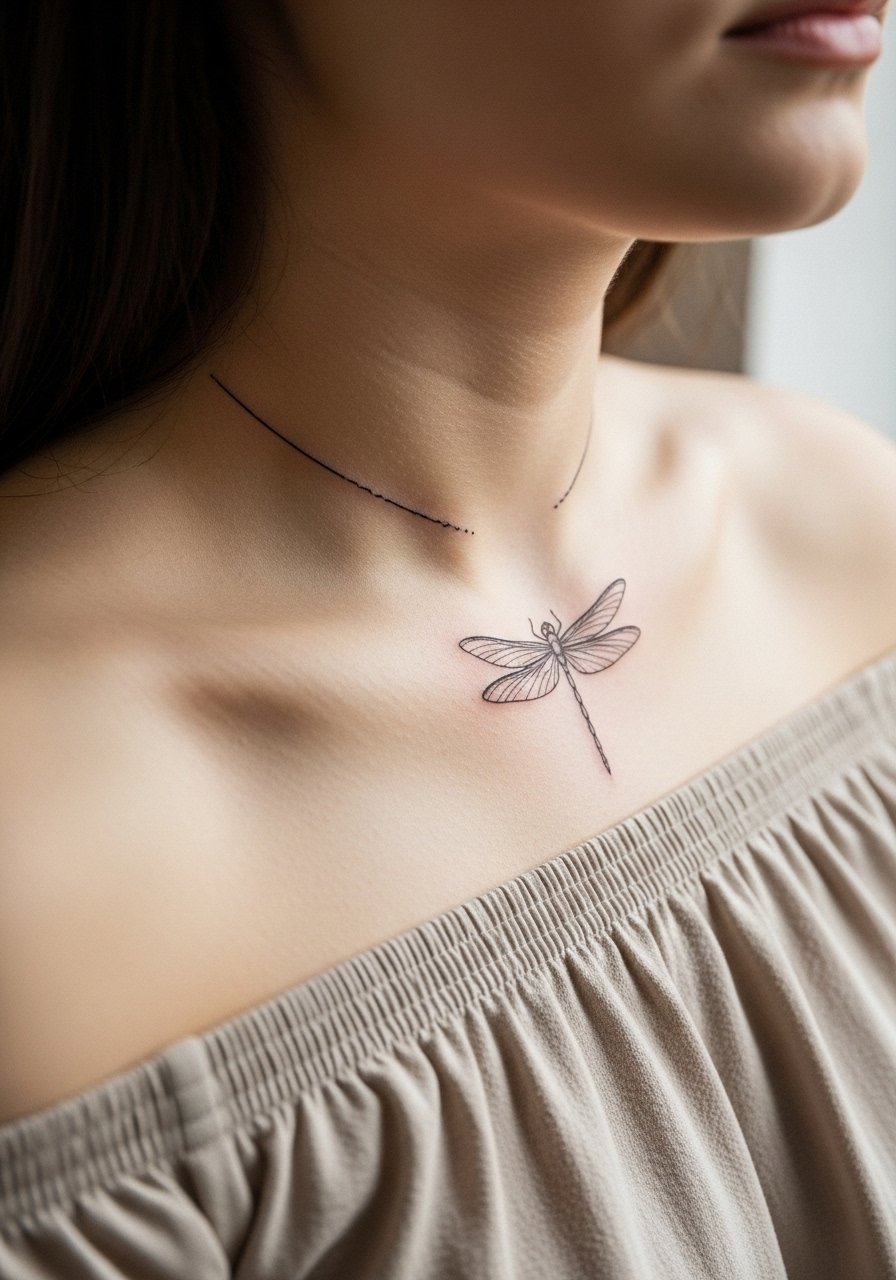
6. Medium Fine Line Dragonfly on the Collarbone
Mistake lead, the most common error with collarbone pieces is sizing them too small. The collarbone is curved and the linework needs room to breathe so wing tips do not fall onto the shoulder or sternum awkwardly. Ask for a 3 to 4 inch mockup that sits comfortably in the collarbone hollows and request slightly thicker outer lines to keep the silhouette legible in photos. Pain is moderate because you are working over bone, but single session work finishes quickly for medium-sized pieces. For show-off outfits consider an off shoulder blouse or layered delicate necklaces that drop below the design to frame it without covering.
Studio Day Picks
Those wrist, thigh, and spine pieces above ask for different prep. A few focused items make the session and the first week of healing smoother.
-
Tattoo Goo balm. Lightweight and non-greasy, it is a common forum pick for fine line pieces that need moisture without clogging the channels on ankles or wrists.
-
Unspoken Elements Balm. Favored for watercolor and softer shading because it absorbs quickly and keeps color transitions clearer during the first week.
-
Revive Lotion. Thinner than many winter balms, it helps thigh or lower-back pieces heal in cold months without forming a heavy film.
-
Green Sheep Balm. Community-recommended for darker skin tones because it absorbs fast and avoids the glossy residue that hides fine line contrast.
-
Framyderma protective film. A thinner protective option than heavier films, useful on curved placements like wrists where edge lift is common.
7. Large Intricate Dragonfly Across the Shoulder Blade
Visual impact lead, shoulder blade canvases allow for wing detail that reads at a distance and up close. If you want realism with fine line detailing ask for layered stipple shading and subtle color gradients, and expect two to three sessions for a six-inch-plus piece. Shoulder blades are forgiving on blowout risk because the skin is stable, but check how the design sits with your bra strap and clothing straps in mockups so lines do not sit under constant friction. For show-off dressing a strapless midi dress or a racerback tank keeps the wings visible and avoids straps cutting through the composition.

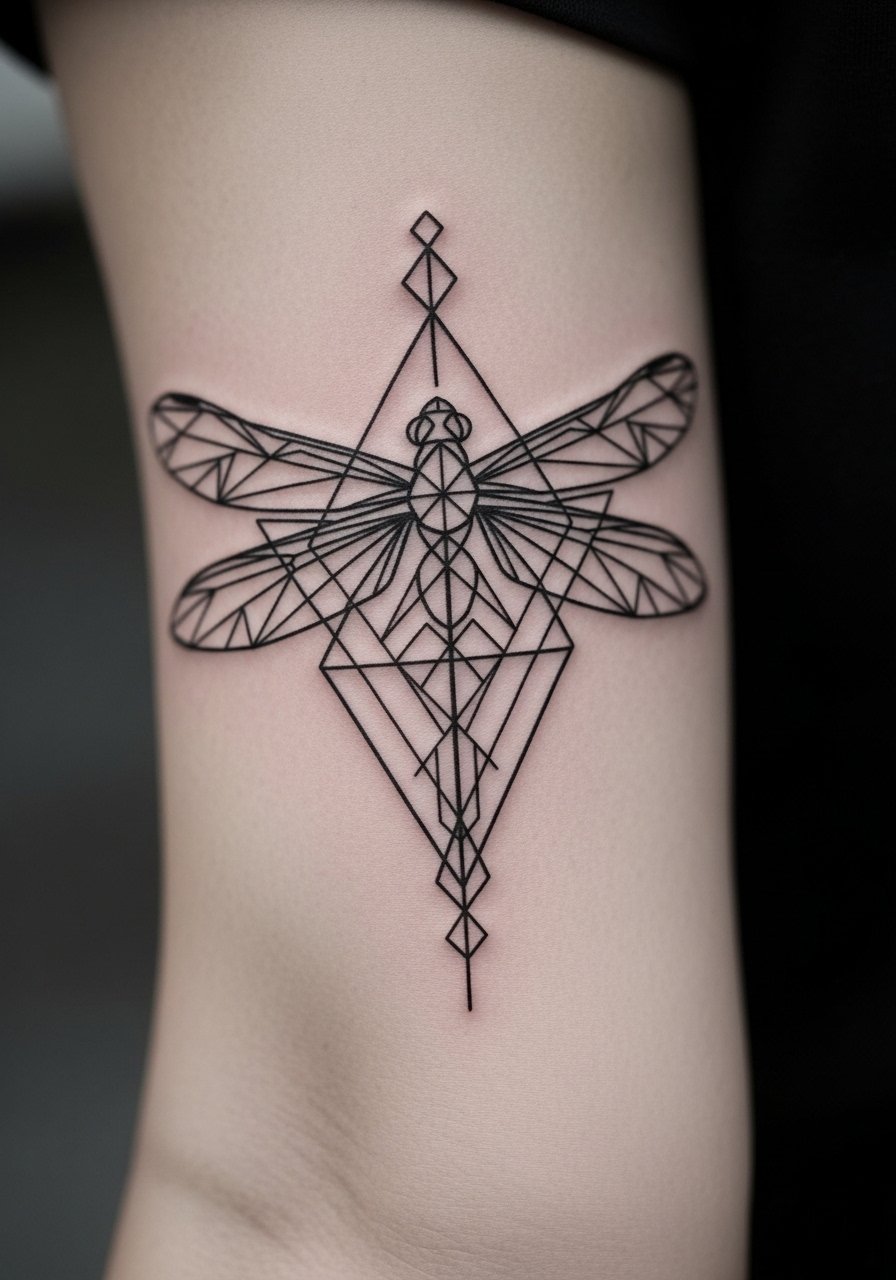
8. Geometric Abstract Dragonfly on the Outer Forearm
Mistake lead, the biggest error with geometric hybrids is going too small. Triangles and hex forms need breathing room otherwise the negative space that makes the pattern readable disappears. For forearm placements ask your artist to map the shapes to the muscle flow so the symmetry looks intentional when your arm is relaxed and when flexed. This style usually takes a single longer session and the forearm is moderate pain with good surface for linework. Pair it with a flowy kimono sleeve top when you want the forearm to peek out without competing details.
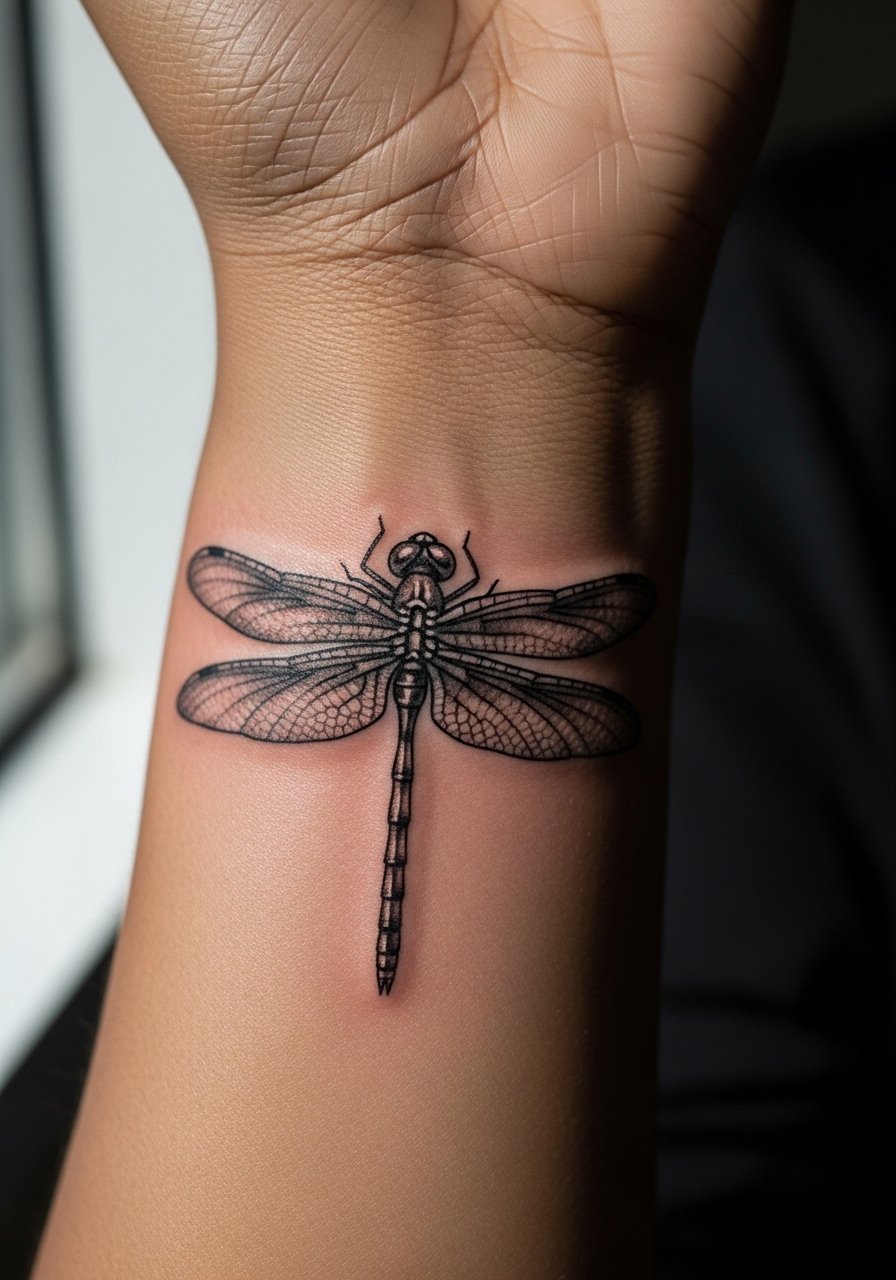
9. Micro-Realism Dragonfly on the Inner Wrist
Consultation lead, micro-realism asks for high-contrast gray wash and precise dot work. The inner wrist is a spot where tiny realism can vanish if the shading is too soft, so specify that you want crisp contrast and a suggested touch-up at 6 to 12 months. Expect a concentrated session under an hour and a bit of soreness over tendons. If your goal is discreet wear for work, this placement reads quietly under bracelets. For gentle framing wear a thin chain pendant necklace that sits above the wrist area without rubbing the ink.
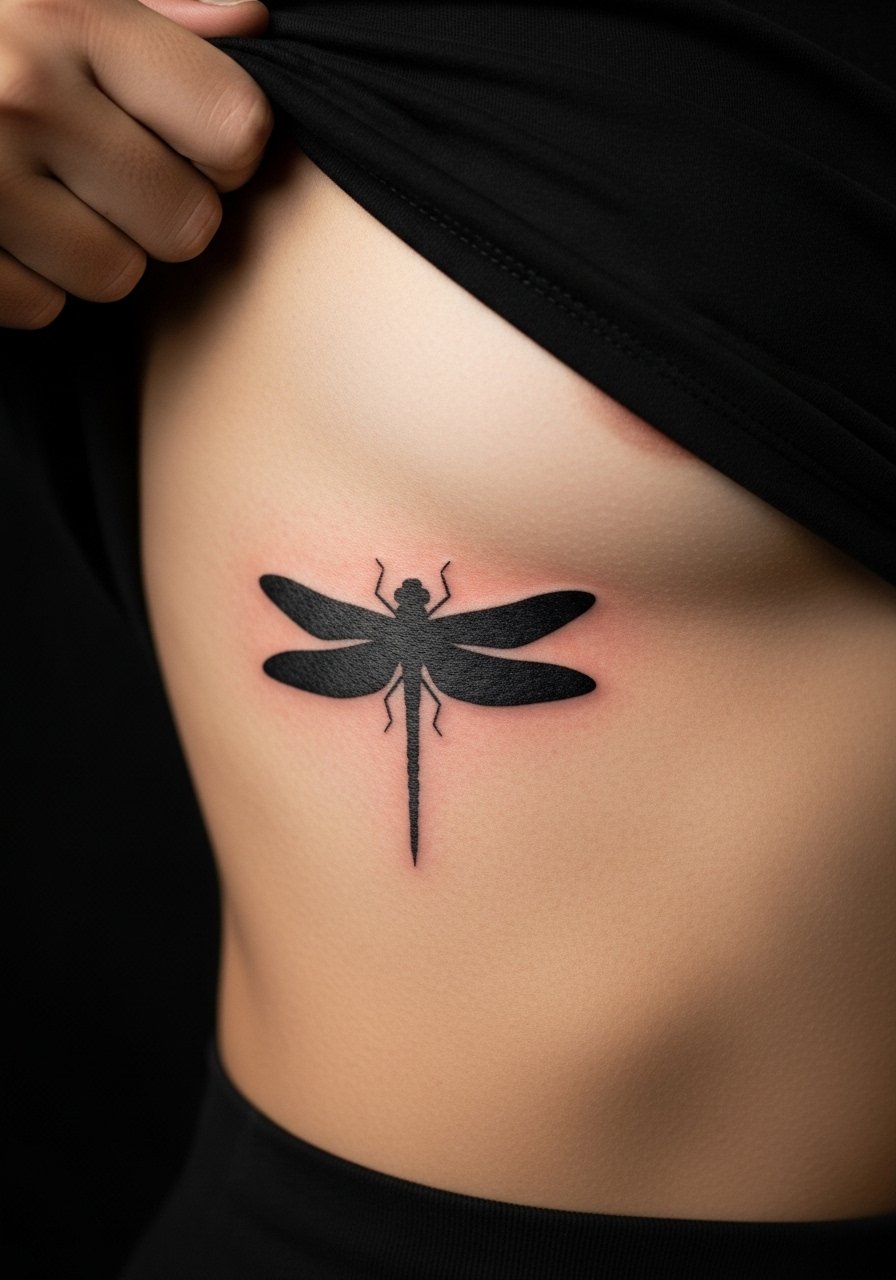
10. Blackwork Dragonfly Silhouette on the Upper Rib
Controversy lead, artists split on heavy blackwork on ribcages. One camp prefers solid silhouettes because they age into a confident block of negative space. The other camp worries about saturation in a flexible area where touch-ups are more likely. If you choose blackwork for ribs, ask for slightly larger negative spaces inside the wings to prevent the piece from becoming a single dark mass as it heals and shifts. Rib sessions are painful for many people, expect slower breathing and short breaks. For the appointment wear a cropped top or a shirt you can lift so only the rib area is exposed.
11. Neo-Traditional Dragonfly with Flowers on the Thigh
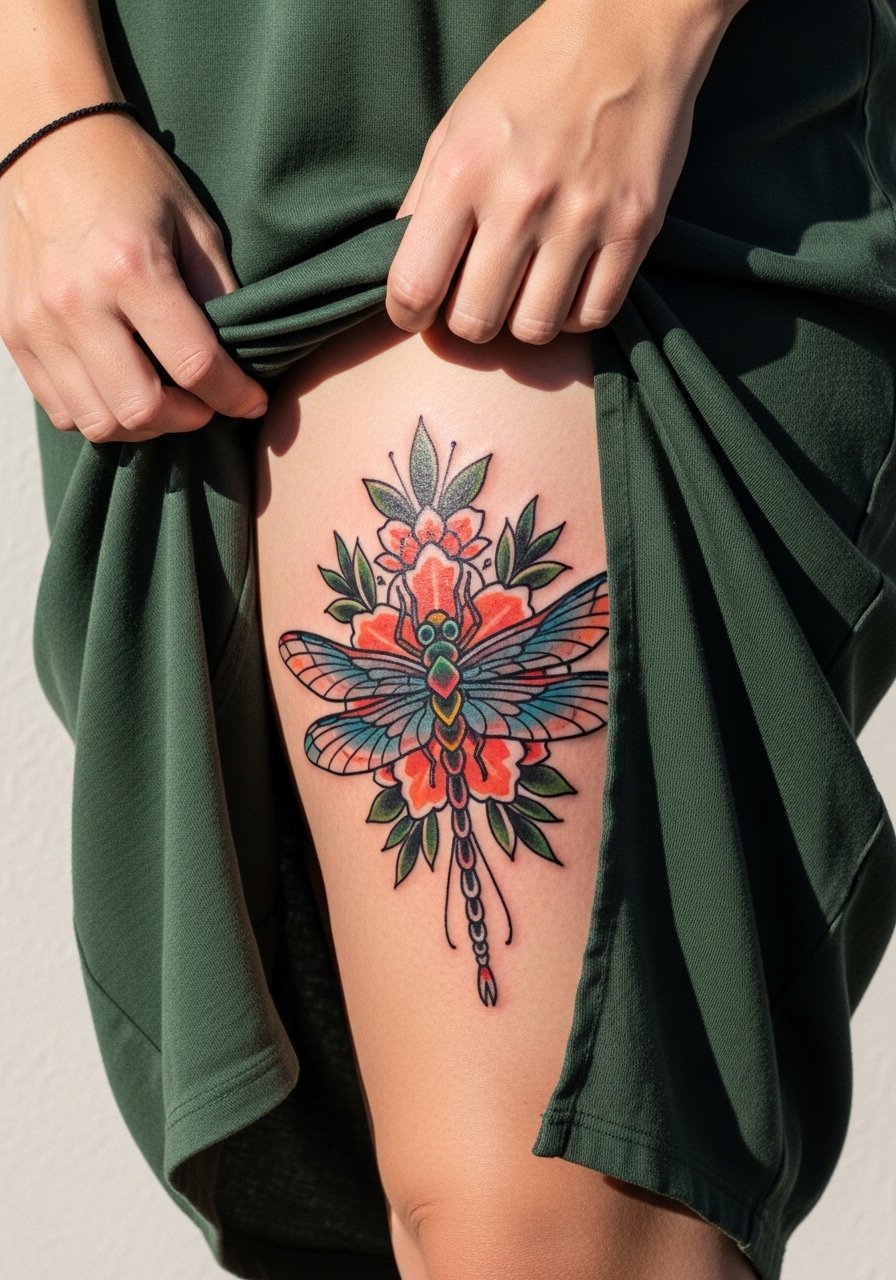
Personal observation, neo-traditional blends bold outlines with saturated color and it holds up well on thigh skin. The volume of flesh lets artists layer color without overworking the dermis, which keeps saturation stable across sessions. This design usually needs two appointments for full color and shading and it can be a comfortable multi-hour sitting if you plan breaks. For summer show-offs, high-waisted shorts or a side slit midi skirt reveal the upper thigh art without crowding the image.
12. Ornamental Dragonfly Mandala on the Upper Back
Visual impact lead, ornamental mandalas around a dragonfly make a meditative center piece and they need spacing so dot work and stipple shading stay crisp. On the upper back, the skin is stable and the detail survives longer than on high-movement areas, but any dense dot work still needs intentional negative space. This style often takes two sessions and benefits from a pre-session mockup flattened over the shoulder blades. For wardrobe choose a strapless dress or a loose open button shirt that can be styled to highlight the mandala without rubbing.

13. Ignorant Style Sketch Dragonfly on the Forearm
Mistake lead, the raw, hand-sketch vibe of ignorant style works best when the client wants expressive, imperfect linework. The common mistake is asking for a celebrity's exact sketch without adapting scale, which often reads cramped or lost. Forearm placement suits this because the length lets the sketch breathe. Expect a single session with bold linework and visible hand strokes, and ask your artist to keep the direction of lines with the arm's natural grain. No additional clothing advice needed here since the forearm is easy to show.

14. Tiny Finger Dragonfly Ring
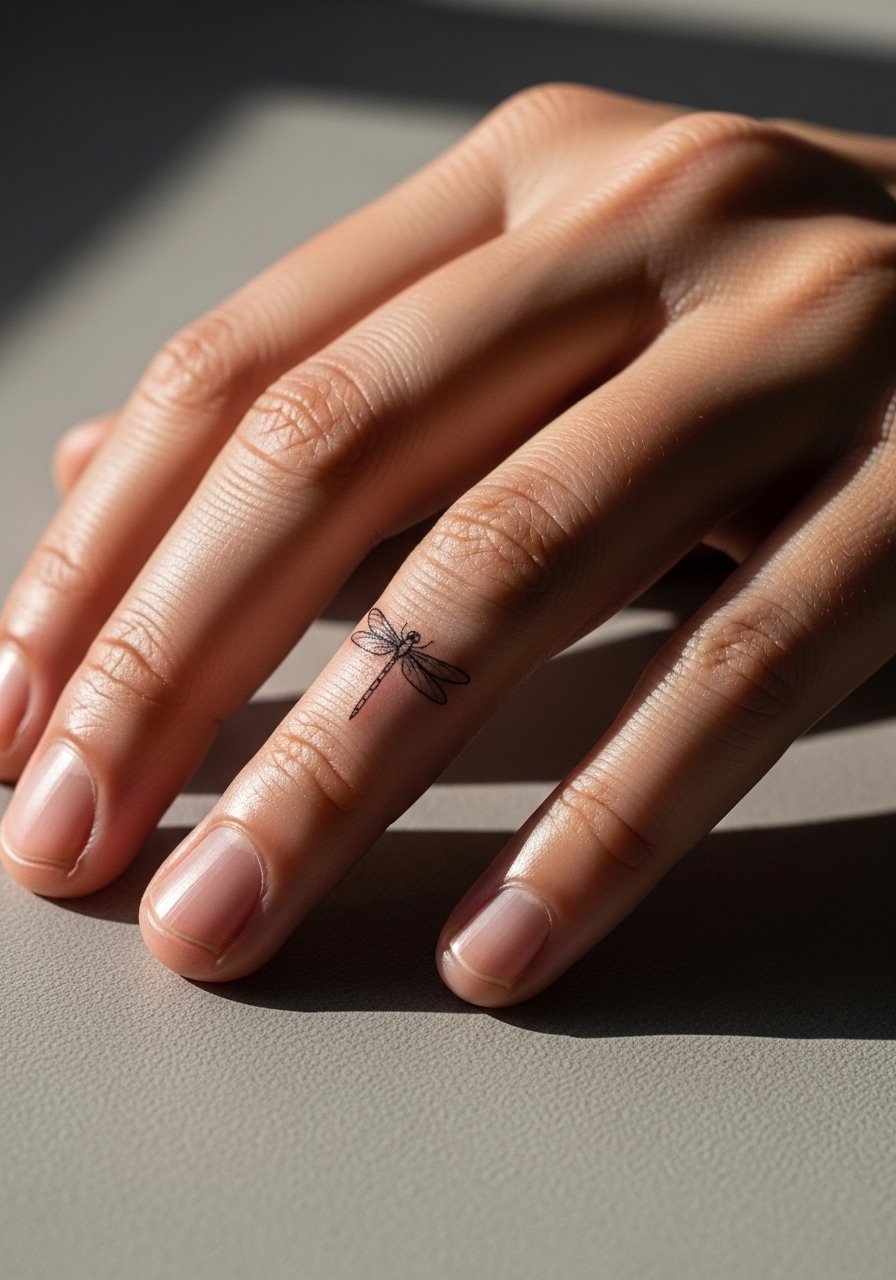
Pain warning lead, finger tattoos heal in a high-friction environment because of washing and rings, so tiny designs need heavier outlines than you might assume. If you want a ring-style dragonfly across fingers, ask for small but dense linework and plan a realistic touch-up at 6 to 12 months. Sessions are short but expect initial fading and possible migration. For the appointment keep hands clean and free of jewelry so the artist can work without obstructions. Avoid putting a styling link here since finger accessories were not listed in the show's pairing notes.
15. Negative Space Dragonfly Wings on the Collarbone
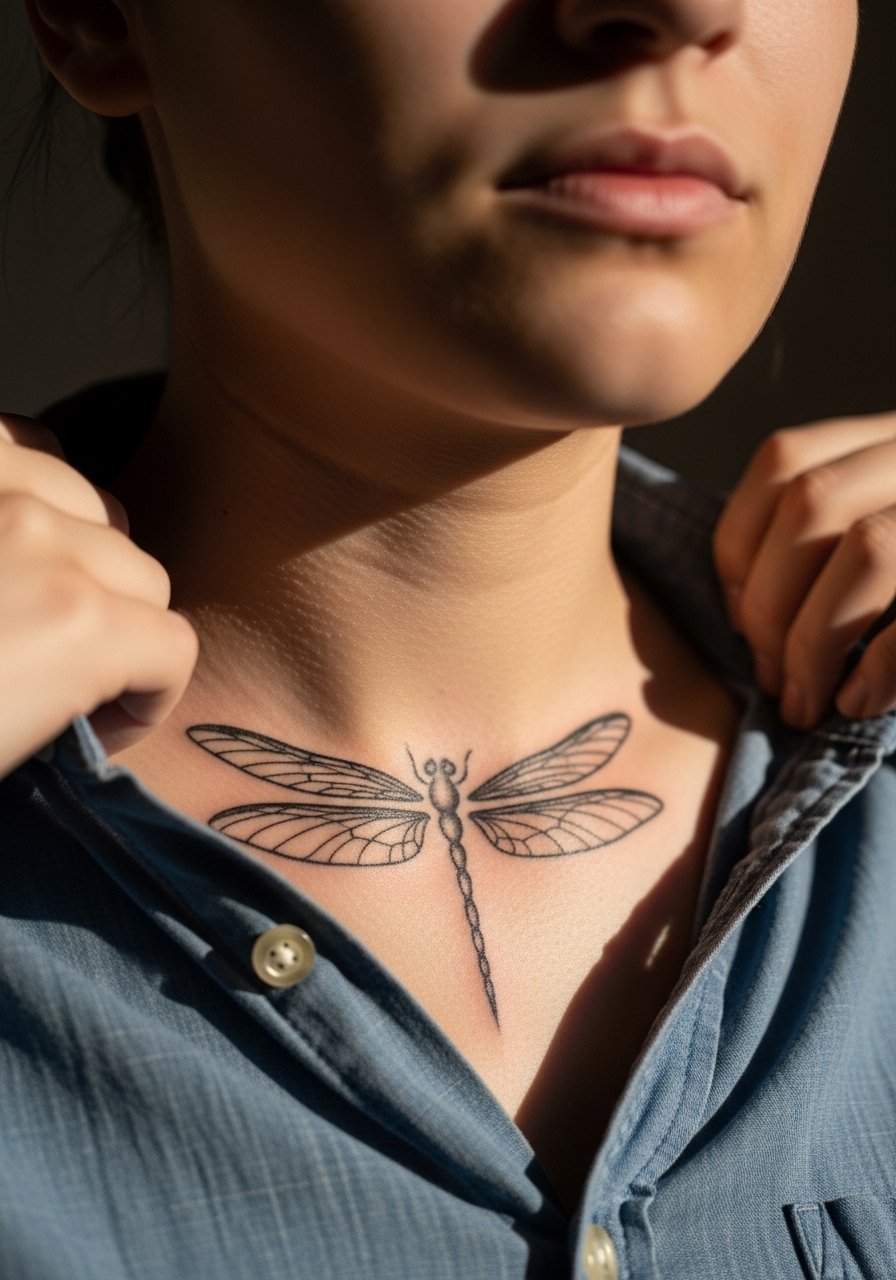
Consultation lead, negative space wings on the collarbone use skin as part of the design and they need careful placement to read across the bone curve. The main mistake is compressing negative space too close to the clavicle where shadows and strap friction can mask the effect. Ask for a stencil that sits visible at rest and moves with the collarbone when you raise your shoulders. Pain is moderate because bone is near the surface, and bring a button-front shirt for the session so you can avoid pulling fabric over your head. For showing the piece off, an off shoulder blouse frames the negative space elegantly.
16. Dragonfly with Lotus on the Sternum
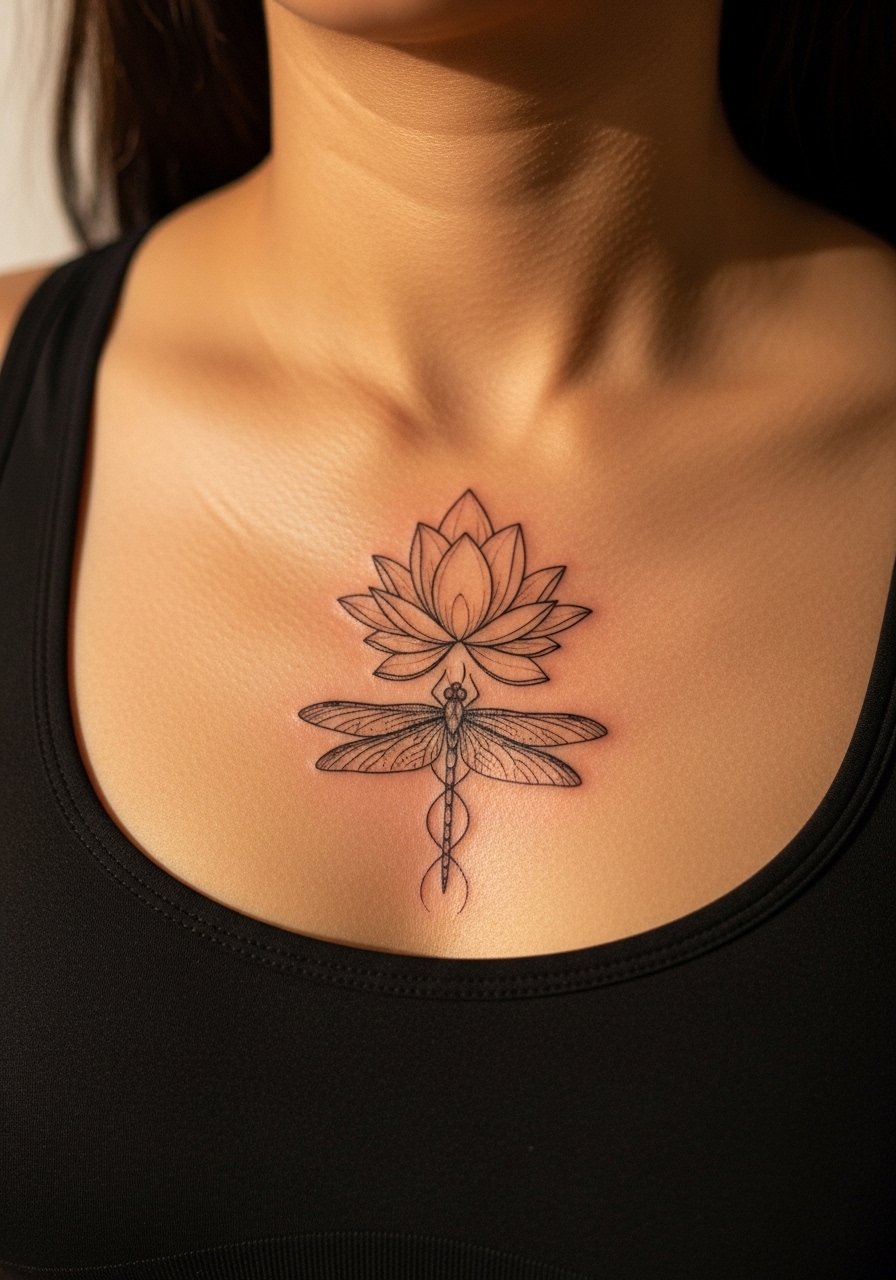
Controversy lead, people debate the use of freshwater religious motifs in chest pieces, and some clients prefer altered lotus forms to avoid literal cultural replication. If you want a lotus paired with your dragonfly for a mental health or rebirth narrative, ask for a stylized lotus rather than an exact religious copy to avoid appropriation concerns. Sternum placements require a fitted sports bra or bandeau at the session so only the target area is exposed. Be ready for sensitivity in a sternum sitting and discuss breathing breaks with your artist.
17. Birth Flower Paired Dragonfly on the Inner Forearm
Consultation lead, pairing personal birth flowers with a dragonfly makes the design specific and helps avoid generic symbolism. Bring reference photos of the exact flower and ask your artist to arrange stems so the forearm's natural curve highlights the flight line. Inner forearm work is moderate pain and sits flat for precise linework and stipple shading. Sessions are usually single visits for a medium design. To show the art without covering it wear a flowy kimono sleeve top and roll the sleeves back for casual reveal.

18. Thigh Wrap Dragonfly That Moves With You
Visual impact lead, wrap pieces on the thigh can be designed to adapt as your body moves so the wings appear dynamic and not distorted after weight changes. The trick is to build the wrap with arcs that follow muscular lines and to avoid hard edges that cross seams of tight clothing. Thigh skin tolerates color well and sessions can be longer, so plan hydration and breaks. For visibility pick high-waisted shorts or a loose cotton short when you want to show off the curve of the art.

19. Micro Dragonfly Ankle for Festival Seasons
Trend lead, micro dragonflies on ankles surge each summer because they pair well with sandals and cropped jeans. These are small, low-cost sessions that can be done quickly, but they fade faster from sun and friction. Ask for slightly denser wing veins than you would for a larger piece to help with retention, and plan on touch-ups after a summer or two. For festival wear consider strappy sandals or a dainty ankle chain to highlight the spot and avoid tight shoes for the first two weeks. Pick strappy heeled sandals that do not rub the ink area directly.

20. Geometric Calf Dragonfly with Negative Space
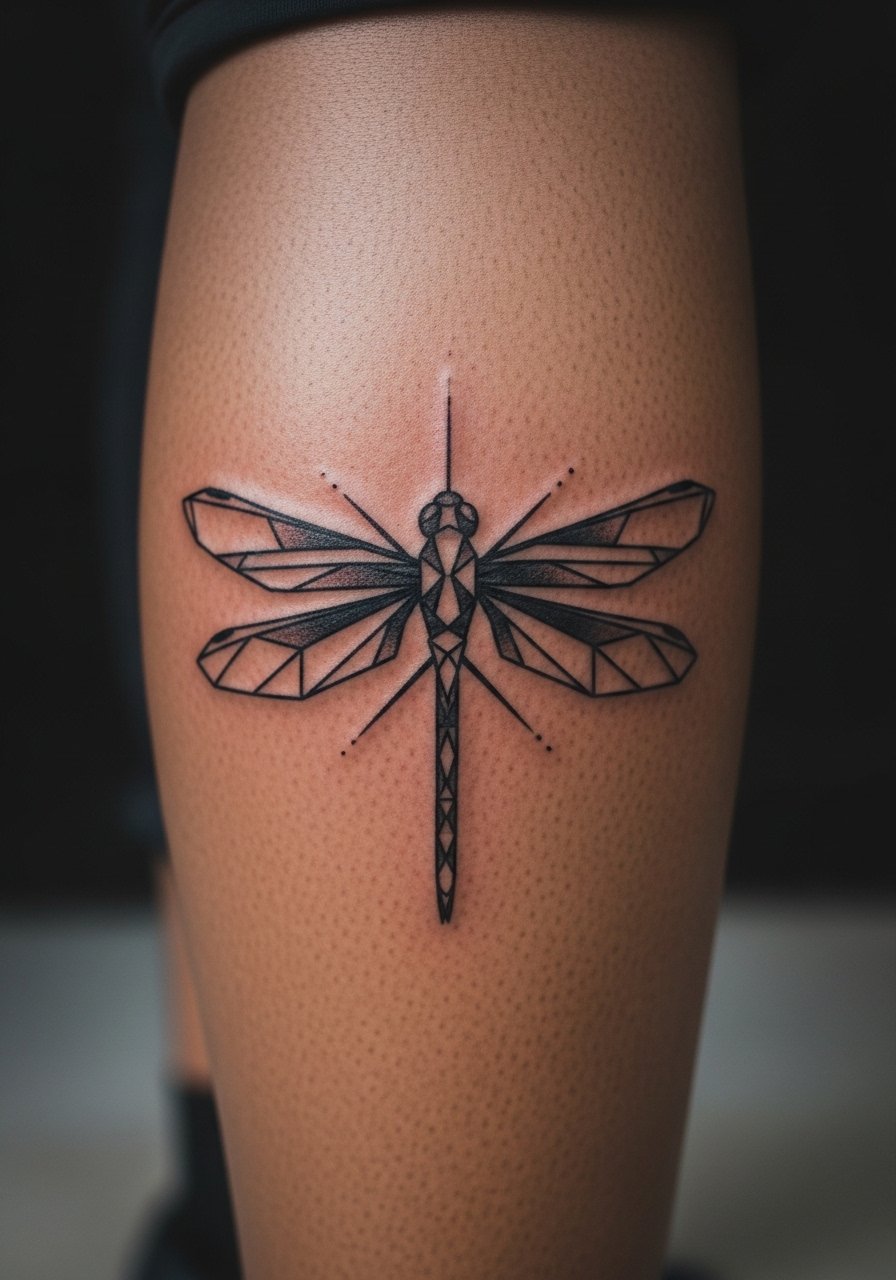
Mistake lead, geometric designs on a curved calf need an artist who understands foreshortening. Small repeating shapes that look fine on a flat image often warp once wrapped around a leg. For calf pieces ask for a printed mockup taped to the curve to check proportions. The calf is forgiving on pain and the canvas lends itself to longer runs of linework. Skip styling advice here since Research Section 9c did not provide explicit calf show-off pairings for affiliate linking.
21. Single Wing Scapula Accent
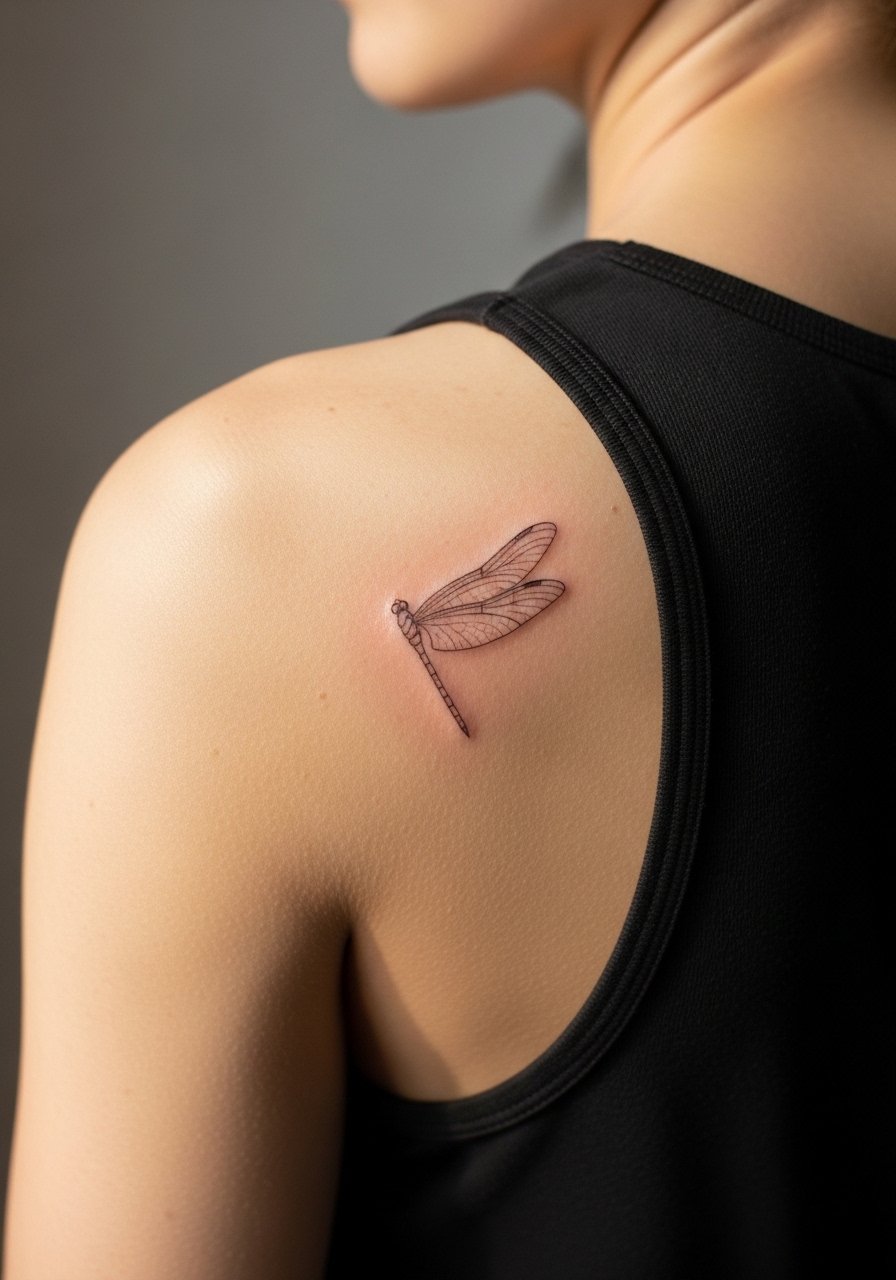
Personal observation, a single wing placed on the scapula reads like an accent rather than a full creature and it is a good option for first large pieces that still want subtlety. Scapula areas handle detail nicely and the session can be done in one to two sittings. The mistake is placing the tip too close to strap lines which causes unnecessary friction. For the appointment wear a back-accessible top so the artist can reach the area without you being uncomfortable.
22. Dragonfly and Moon Phases on the Outer Forearm
Consultation lead, pairing phases of the moon along a flight path adds narrative and motion to an outer forearm piece. Ask your artist to use consistent line weight across the moons and the dragonfly so the composition reads as a single band. Forearm work is one of the easier placements for touch-ups, and it tolerates both linework and small-scale stipple shading. For showing the band without over-accessorizing wear a cuff bracelet on the opposite arm to balance the look.

23. Ribcage Micro-Realism Dragonfly
Pain warning lead, ribs are a sensitive spot and micro-realism there demands an honest conversation about tolerance for long, painful passes. The upside is the area holds detail when healed if the artist spaces shading and avoids overworking the dermis. A common mistake is asking for very dense gray wash in a thin area, which can cause prolonged redness and scabbing. For the session wear a shirt you can lift or a front-opening robe to give the artist clean access without pulling fabric over your head.

24. Chain Bracelet Dragonfly Around the Wrist
Styling lead, a ring of tiny dragonflies encircling the wrist reads like jewelry and it benefits from uniform spacing and consistent linework. When planning this ask for a mockup wrapped around your wrist to check how the pattern breaks at the seam near the hand. Sessions are short if the motif is small and expect regular use to reduce contrast over time so a yearly touch-up is common. For immediate styling choose a thin silver bangle stack to sit opposite the tattoo without rubbing the new ink.

25. Dragonfly on the Lower Back Near the Hip
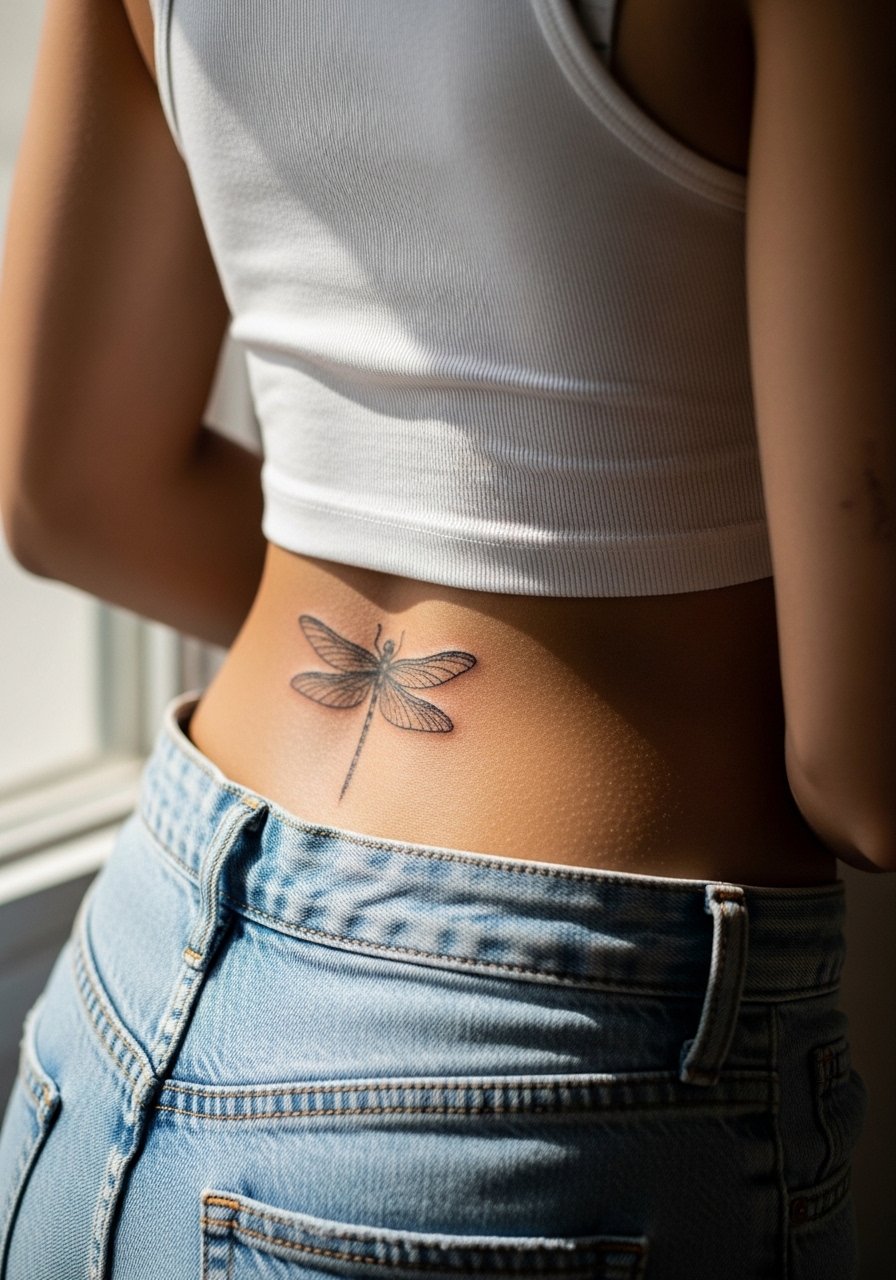
Consultation lead, lower-back placements are tricky because of clothing lines and sit-down friction. If you want a hip-adjacent dragonfly ask your artist to place the lowest wing tip above common waistband lines so it does not catch on belts or low-rise tops. Lower-back skin is stable and holds detail, but avoid extremely low placement if you sit for long periods. For showing off choose a tank top with high-waisted pants or a high waist denim short that frames the hip without cutting the design.
26. Stipple-Shaded Dragonfly Across the Outer Thigh
Aging and healing lead, stipple shading gives a soft textured look that ages differently than solid color. On the outer thigh stipple holds especially well because the area sees less sun and friction. Tell your artist you want dot work density that fades outward rather than a single heavy block, so the piece keeps depth without flattening. Sessions can be longer, so bring snacks and hydration. For summertime showing pick a side slit midi skirt to frame the outer thigh without covering the texture.

27. Dragonfly Cluster Along the Collarbone Line
Personal observation, a small cluster of dragonflies along the collarbone can feel like movement caught in fabric and it works best when the sizes vary slightly to suggest depth. The main mistake is aligning identical repeats which flattens the composition. For this run ask for a staggered layout in the stencil stage and request slightly thicker bodies so photography keeps the shapes visible across skin tones. Pain is moderate and a single session will usually do. To style the cluster, try a layered delicate necklace that sits below the line so the jewelry frames rather than competes.

Frequently Asked Questions
Q: How long before a fine line wrist dragonfly needs a touch-up?
A: From what I have seen, fine line wrists often need a touch-up between six months and two years depending on sun exposure and how much friction the area gets. If you plan for a minor touch-up at the one-year mark you will be less surprised. Opting for slightly bolder outer lines also stretches that timeline.
Q: Should I pick watercolor or botanical fusion for a thigh piece if I want longevity?
A: Thighs handle color better than high-movement zones, so watercolor can look great longer there, but a botanical fusion with crisp outlines and subtle color accents often ages more predictably. Ask your artist to discuss saturation and layering during consult so the piece heals without muddying.
Q: Are fine line dragonflies visible on darker skin tones?
A: Visibility depends on contrast and spacing. Many people with darker skin find fine single-needle work can fade in photos, so test a bolder outline or negative-space wings with a mockup on your tone before booking. Artists who work with dark skin will recommend the best balance of line weight.
Q: Is Saniderm better than dry healing for small wrist tattoos?
A: Healers split into two camps. One camp likes Saniderm for keeping the area clean and mess-free. The other camp prefers dry healing because it lets scabs form naturally. For very fine lines some artists lean toward dry to avoid film edge lift, but others use thin films successfully. Discuss preferences with your artist and follow their protocol.
Q: How should I dress for a spine or sternum dragonfly session?
A: For spine work wear a front-open robe or low-back halter so the artist can access the area without you being uncomfortable. For sternum plan a fitted sports bra or bandeau that shows only the targeted strip. Comfortable, loose clothing will make longer sessions easier.
Q: Can I get a tiny ankle dragonfly before festival season and expect it to last through summer?
A: You can, but expect some fading from sun and sandal friction. If you schedule the tattoo a few months before your first festival you can assess whether a light touch-up will be needed after peak summer. Protect it from direct sun as it heals to prolong the first season.