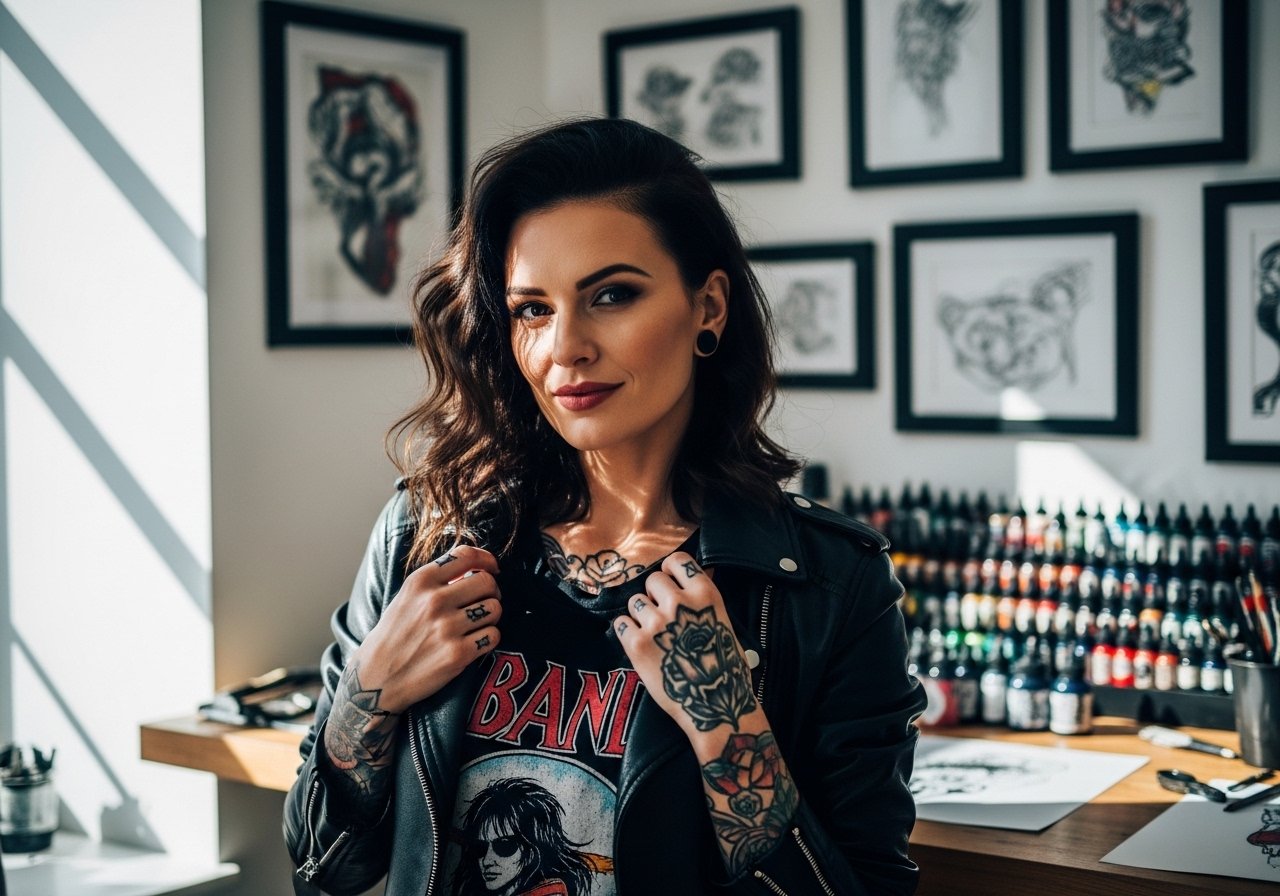
Fine line moon phases and tiny goddess silhouettes are everywhere right now, but the pieces that actually still look intentional years later are the ones planned around placement, skin tone, and how you live. Expect a mix of small wrist moons, bold blackwork silhouettes, and dotwork spirals that hide better under clothing when needed. Read the first idea to see why a tiny outline can be brilliant or a regret depending on where you place it.
1. Triple Moon Phase Outline on the Inner Wrist
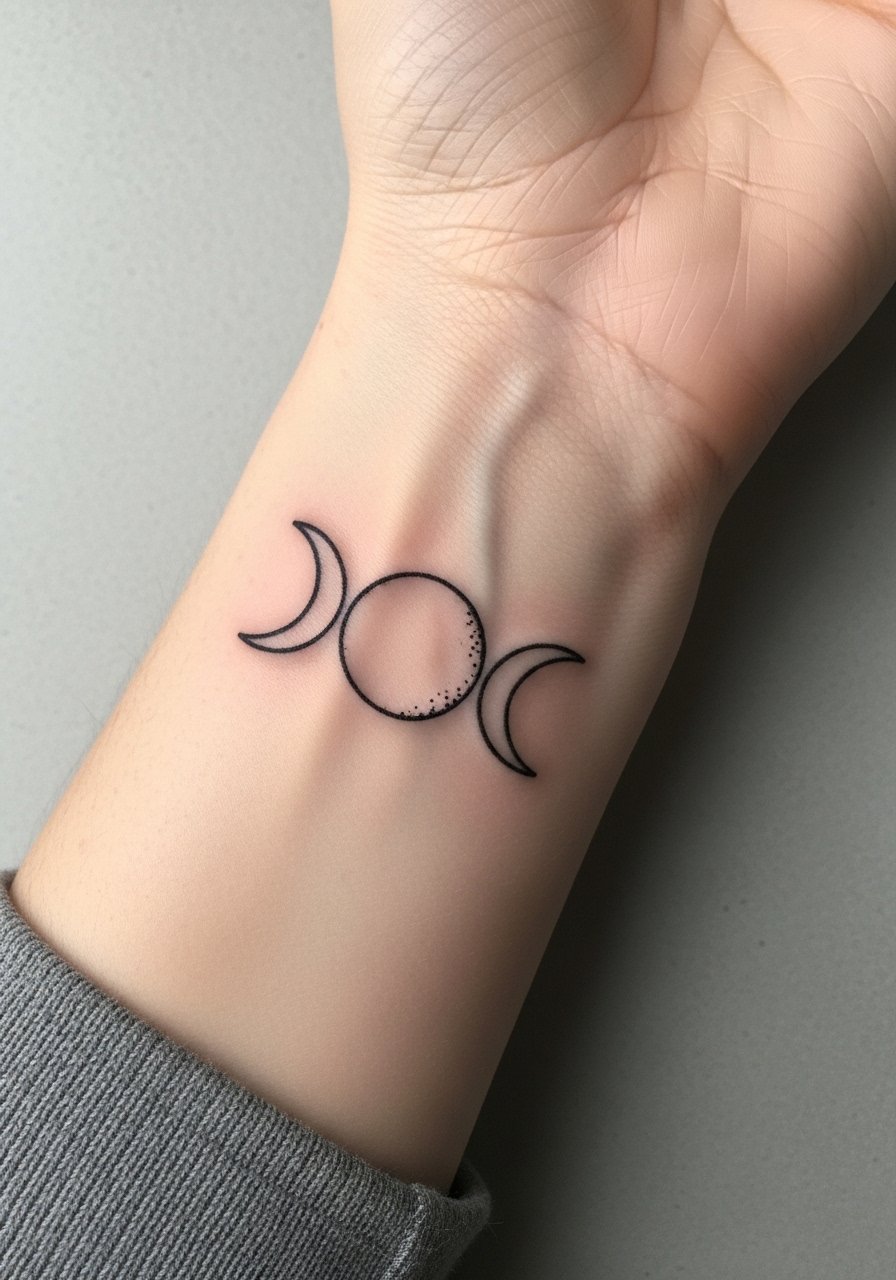
The triple moon is a classic for marking cyclical stages, and the wrist is the go-to spot for visibility. I recommend a slightly heavier outline than the ultra single-needle variants people pin online. Heavier linework holds better on the wrist because constant washing and sun exposure fade single-needle lines faster. When you consult, say you want clear spacing between each lunar arc so the moons do not merge as the years pass. Expect low pain and a quick session. For showing it off, wear a thin silver chain bracelet on the opposite wrist and a dainty bracelet stack when you head out.
2. Lotus Flower in Bloom on the Collarbone

A fine line lotus reads delicate and is perfect for the collarbone if you want an elegant reveal. The collarbone is higher on the pain chart than the wrist, so plan for a slightly longer session and short breaks. The common mistake is going too tiny with layered petals, which compress into a smudge after sun exposure. Ask for clear negative space between petal tips and consider a subtle single-color wash instead of heavy watercolor. For evening looks pair the piece with an off shoulder sweater or a gold choker necklace to frame the geometry. During the appointment, wear a strapless or wide-neck top so the artist can work without strap marks.
3. Spiral Mandala Ornamental on the Upper Back
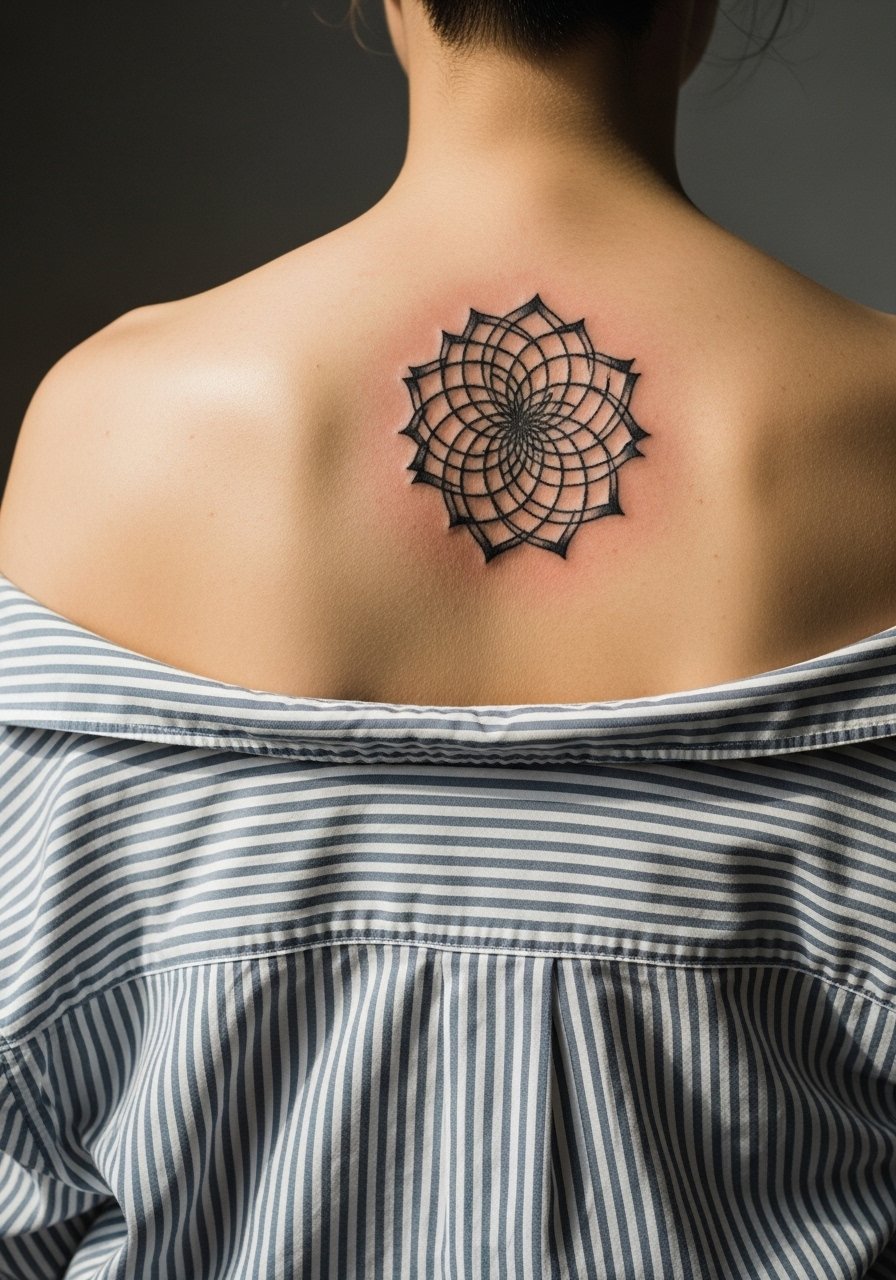
A spiral mandala gives you a dense visual that works when sized properly. The biggest mistake is scaling it down too much, which creates tight line crossings that blur over time. For upper back placement, spacing the rings slightly wider helps the geometry hold for longer. If you want a subtle twist, ask your artist to incorporate slight stipple shading rather than heavy tones, which ages more gracefully. Upper back sessions are comfortable because you can lie face down and relax, but expect two appointments if you want crisp geometry. Consider touch-ups at the one-year mark for the fine intersections.
4. Venus of Willendorf Micro-Realism on the Inner Thigh
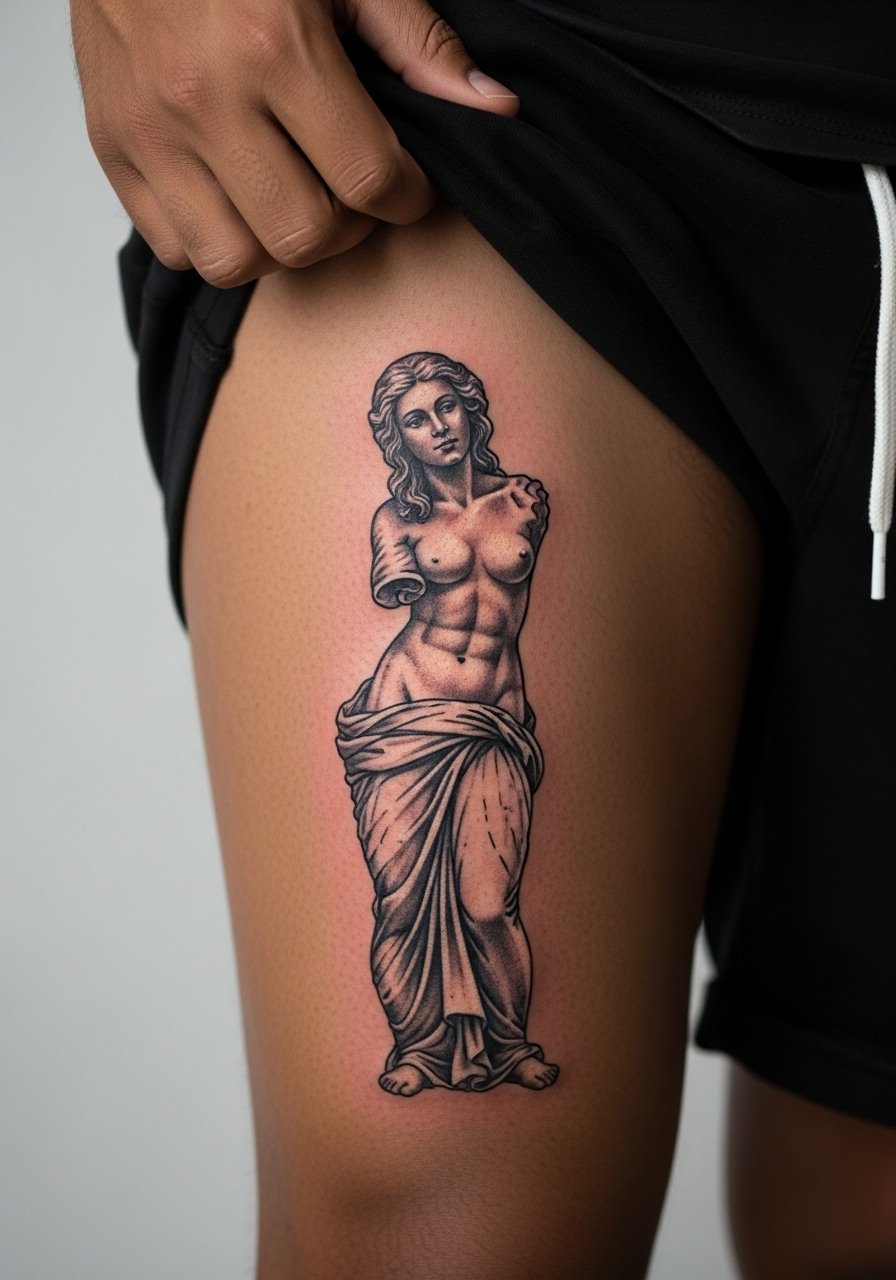
The Venus figurine scaled to the inner thigh looks intimate and sculptural because of the body curve. Inner thigh sessions need planning for session wear, so bring loose shorts you can shift. The common error is trying to cram too much tiny detail into a small space, which loses definition after healing. Ask for bold core shapes and softer micro-shading to keep the silhouette readable. Healing is usually steady because clothing protects the area, but friction can rub at the edges so avoid tight jeans for two weeks. For career-sensitive visibility, the inner thigh is discreet when you need it to be.
5. Gaia Earth Goddess Silhouette on the Calf
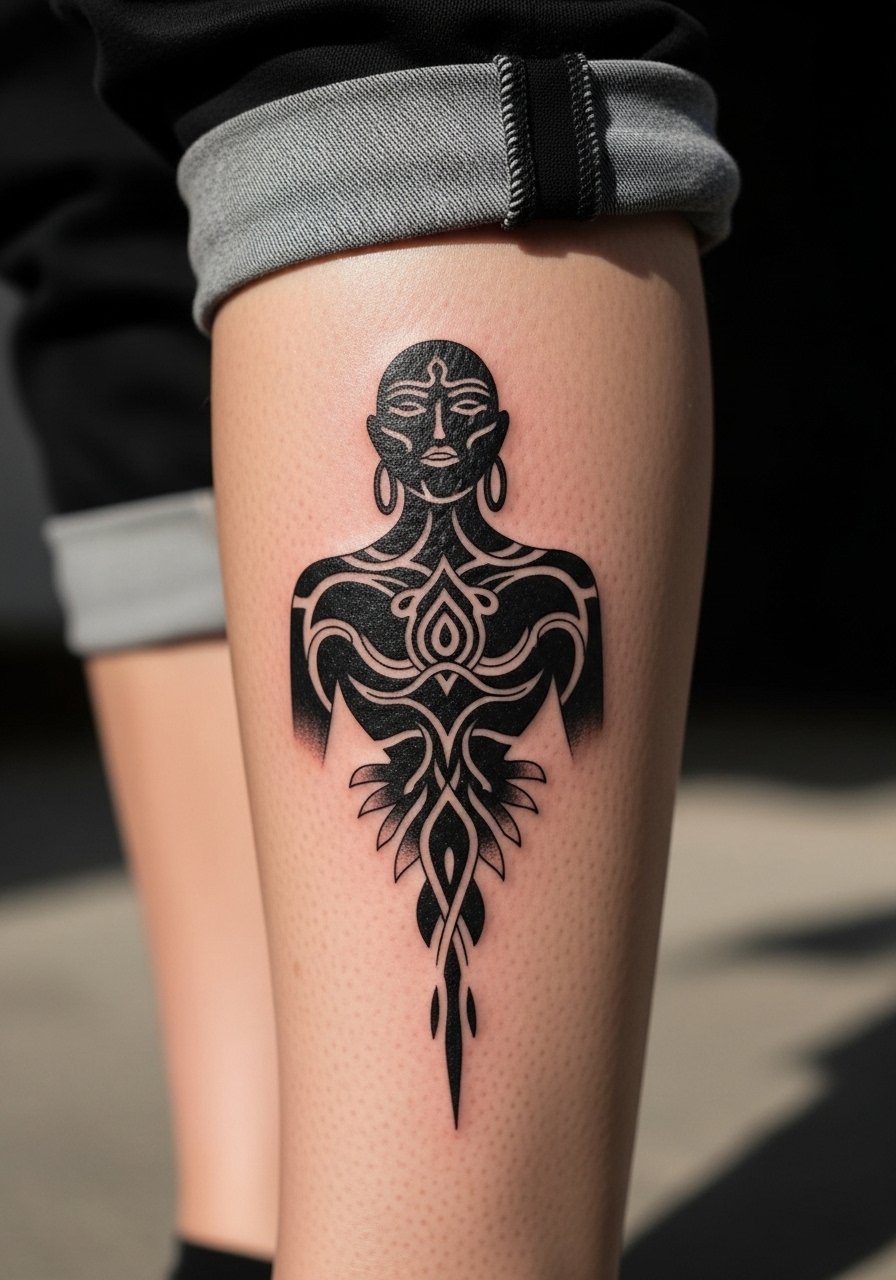
Bold black silhouettes like a Gaia figure hold up far better than light watercolor fills on moving skin. The calf is a forgiving placement because it sees less friction than ankles and less sun than forearms. Ask for saturated black and confident edge work so the shape reads at distance. Sessions are comfortable since you can sit with the leg extended, and most single-session calfs finish quickly. Style it with ankle booties or roll up cropped pants for easy showing when you want to.
6. Sacred Yoni Geometry on the Sternum

Sternum geometry can be beautiful and private, but it comes with honest trade-offs. Expect a higher pain level than forearm work because the area sits over bone. Artists argue about fine line on torso. One camp says thin lines on sternum blur with movement and chest expansion. The other camp says properly spaced single liners can settle well. Your conversation in consultation should center on spacing, depth, and a clear touch-up plan. For session comfort wear a sports bra and loose joggers so the artist can access the area without your clothing getting in the way.
Studio Day Picks
The small wrist and collarbone pieces above heal differently from larger blackwork silhouettes, so a short kit that covers transfer, comfort, and protection helps the session and the first week.
- Frida Repieva Aftercare Spray. Alcohol-free mist that soothes sensitive wrist and ankle areas without leaving a greasy film, useful when fine lines are involved.
- Australian Tattoo Goo. Lighter than petroleum-based options for winter ankle work that needs moisture without shine.
- UK Ink Fix Balm. Good for low-grease daily application during touch-up months on spirals and delicate geometry.
- Japanese Hada Labo Lotion. Fast-absorbing hydration for darker skin tones where light moisturizers avoid clogging fine channel depth.
- Hustle Butter Deluxe. Artist-favored balm that is thinner than heavy ointments and helps keep the first few days breathable on sensitive collarbone and sternum work.
7. Moon Goddess Profile Neo-Traditional on the Outer Forearm
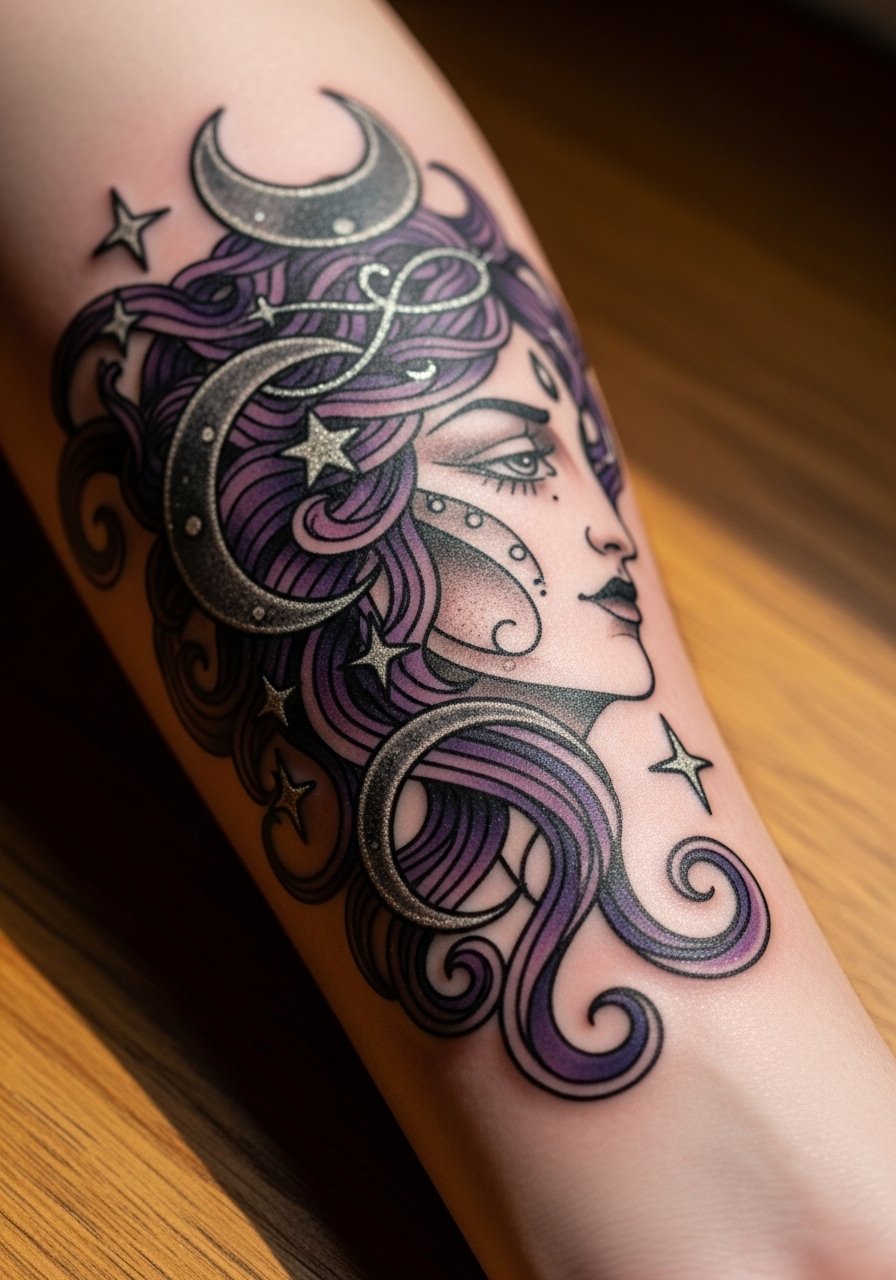
Neo-traditional portraits with moon motifs read strong on the forearm because the area lets you show scale and color. The common mistake is oversaturating small face details, which blur faster than bold outlines. Request stylized features with heavier contours around the profile and restrained color fills so saturation ages well. Forearm sessions are moderate in pain and usually finish in a few hours. For everyday wear, roll cuffed linen shirts so the piece shows without vying with other layers and bring a linen short sleeve shirt for cooler studio waits.
8. Floral Ankh Hybrid Around the Ankle
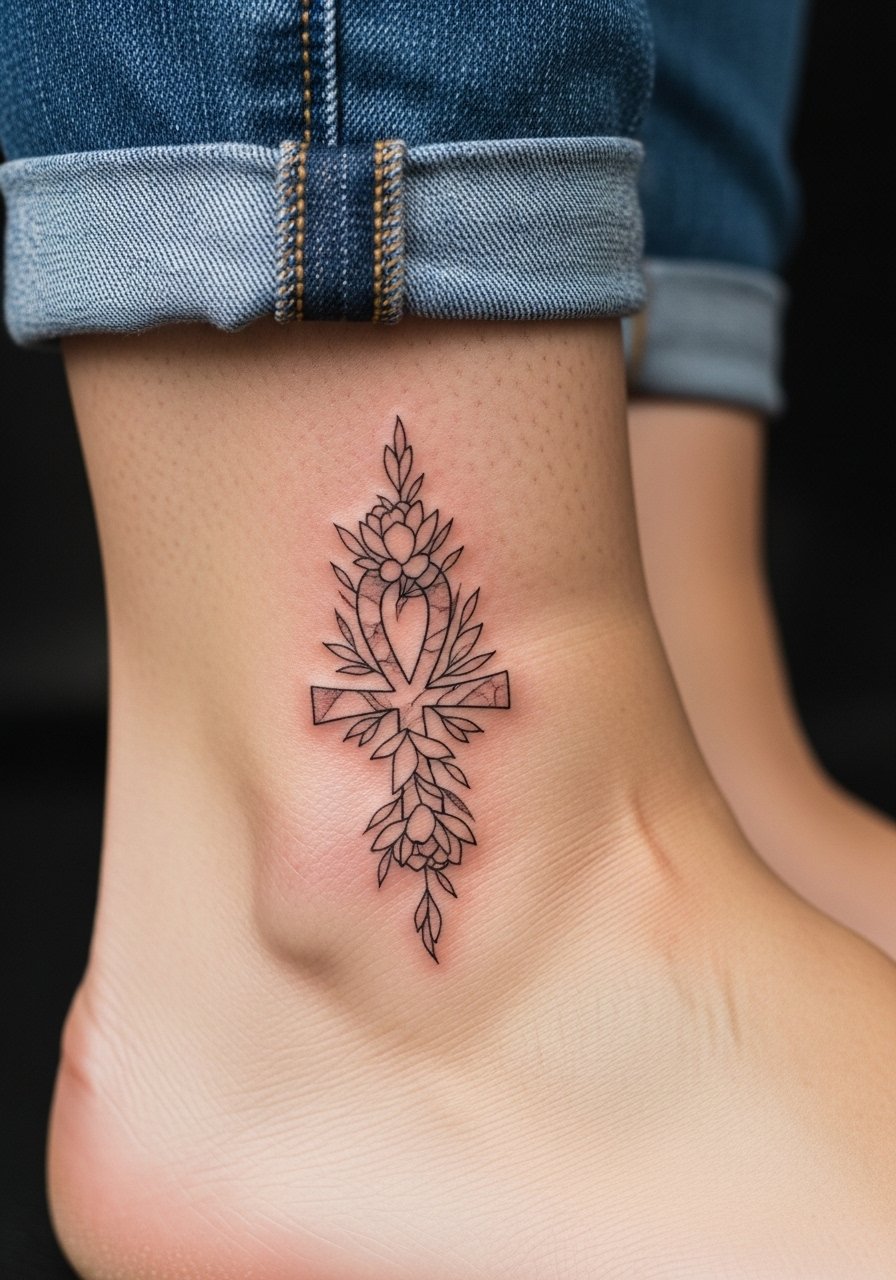
Ankles are charming but prone to friction from socks and footwear. The floral ankh looks delicate there, but the mistake is asking for pale watercolor edges that disappear after a few months. Opt for a solid black ankh with softened floral accents to keep the symbol readable. Ankle sessions are brief but protect the area during healing by avoiding closed shoes for a few days. Show it off with strappy flat sandals in summer and roll your jeans in cooler months.
9. Triple Spiral Celtic Knot on the Inner Bicep

Inner bicep work sits in an area that sees less sun and therefore preserves contrast well. The trap is compressing knotwork, which leads to merging lines with age. Ask for pronounced line weight in the main arcs and open negative space in the secondary loops. Sessions feel odd because you often need to keep the arm raised, but pain is usually tolerable. Inner biceps hide well under sleeves for professional settings, which makes them a good choice if you want a meaningful design you can conceal.
10. Snake and Rose Entwined on the Thigh

Large thigh pieces let you play with scale, and a snake entwined with a rose reads like a rebirth motif. Thigh skin tolerates bold black lines and heavy shapes well, so go big if you want longevity. Common mistakes include too much fine detail in the scales, which can lose crispness. The session may require multiple positions and longer sittings, so bring comfortable clothing and plan rest intervals. For revealing looks, a flowy maxi dress with a thigh-high slit shows the work without constantly exposing it.
11. Lunar Eclipse Mandala Watercolor on the Collarbone
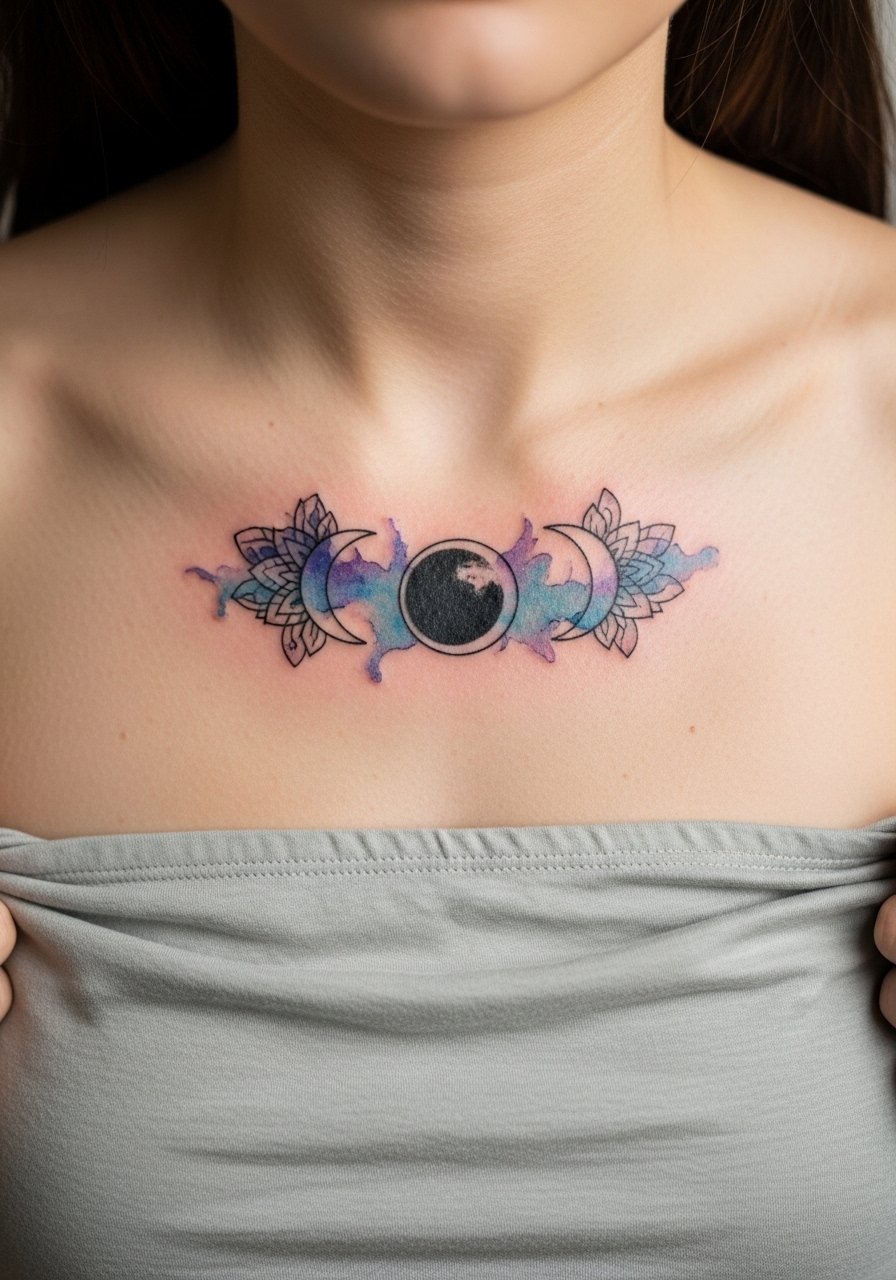
Watercolor washes can be beautiful across the collarbone but they age faster than bold black lines. If you want the painterly effect, ask for a strong black anchor outline so the core geometry endures even as pigments soften. Controversy exists around watercolor longevity. One camp favors the look for freshness, the other recommends blackwork for longevity. If you prefer watercolor, plan for touch-ups and sun protection. Pair this placement with a strapless midi dress or an off-shoulder top for nights out.
12. Goddess Eye Ornamental Dotwork Behind the Ear

Behind-the-ear placements are tiny and intimate, which makes dotwork a smart choice because dots translate well across skin tones. Be specific that the work sits on the skin below the hairline rather than on the ear. The small scale limits how much detail you can have, so favor a focused eye with graduated dots rather than decorative filigree. This area heals quickly but can be sensitive to hair oils and product contact. If you work in conservative environments, remember this placement is easy to hide under hair.
13. Micro Moon Phases Anklet Style
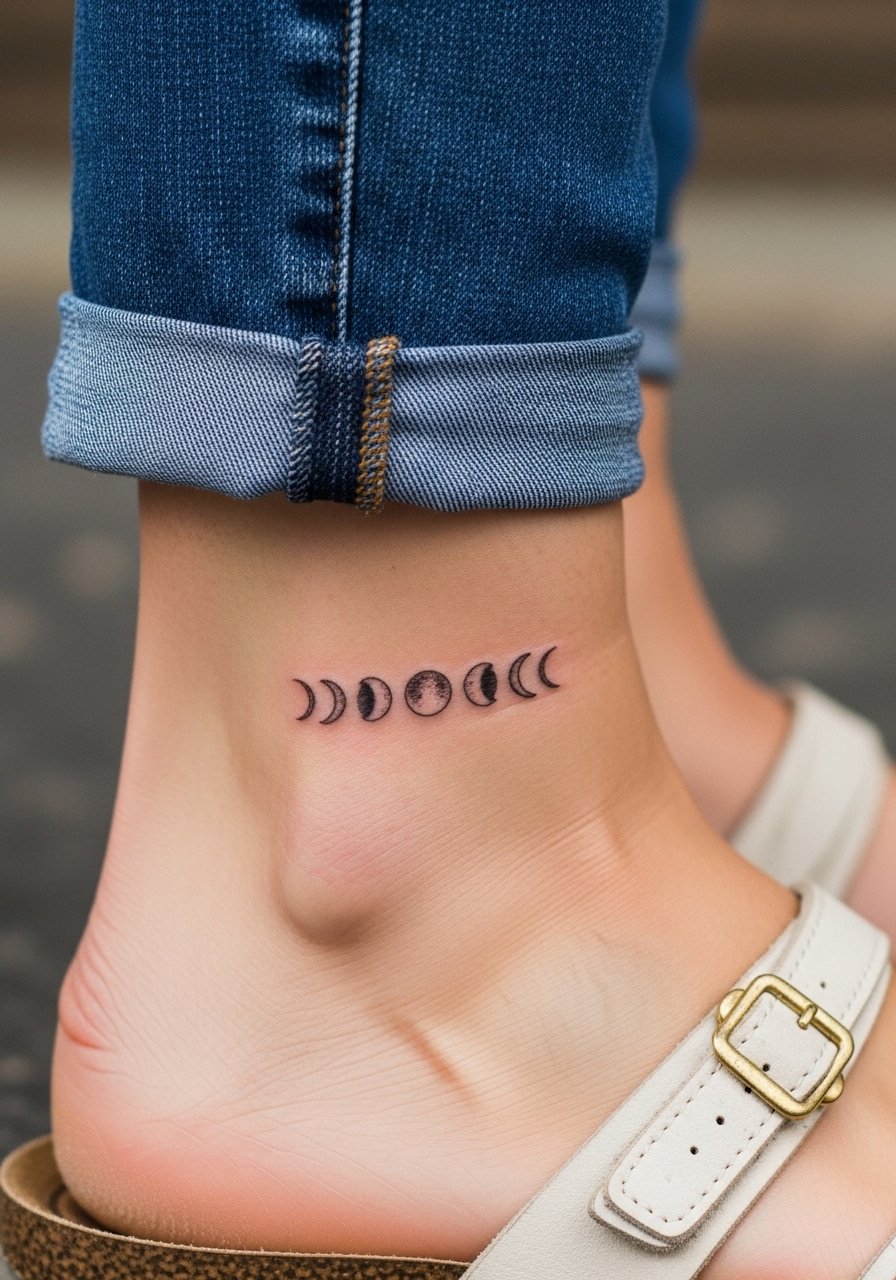
Micro moons arranged like an anklet look seasonal and subtle, and the ankle has a unique wear pattern from footwear. The common mistake is asking for ultra-light single-needle arcs that fade into a grey line. Ask for slightly thicker outlines and a touch-up at six months if you want them to read crisp after a year. Sessions are quick and low pain. Style with high waist shorts and strappy sandals so the piece peeks out naturally.
14. Minimalist Horned Moon on the Ribcage
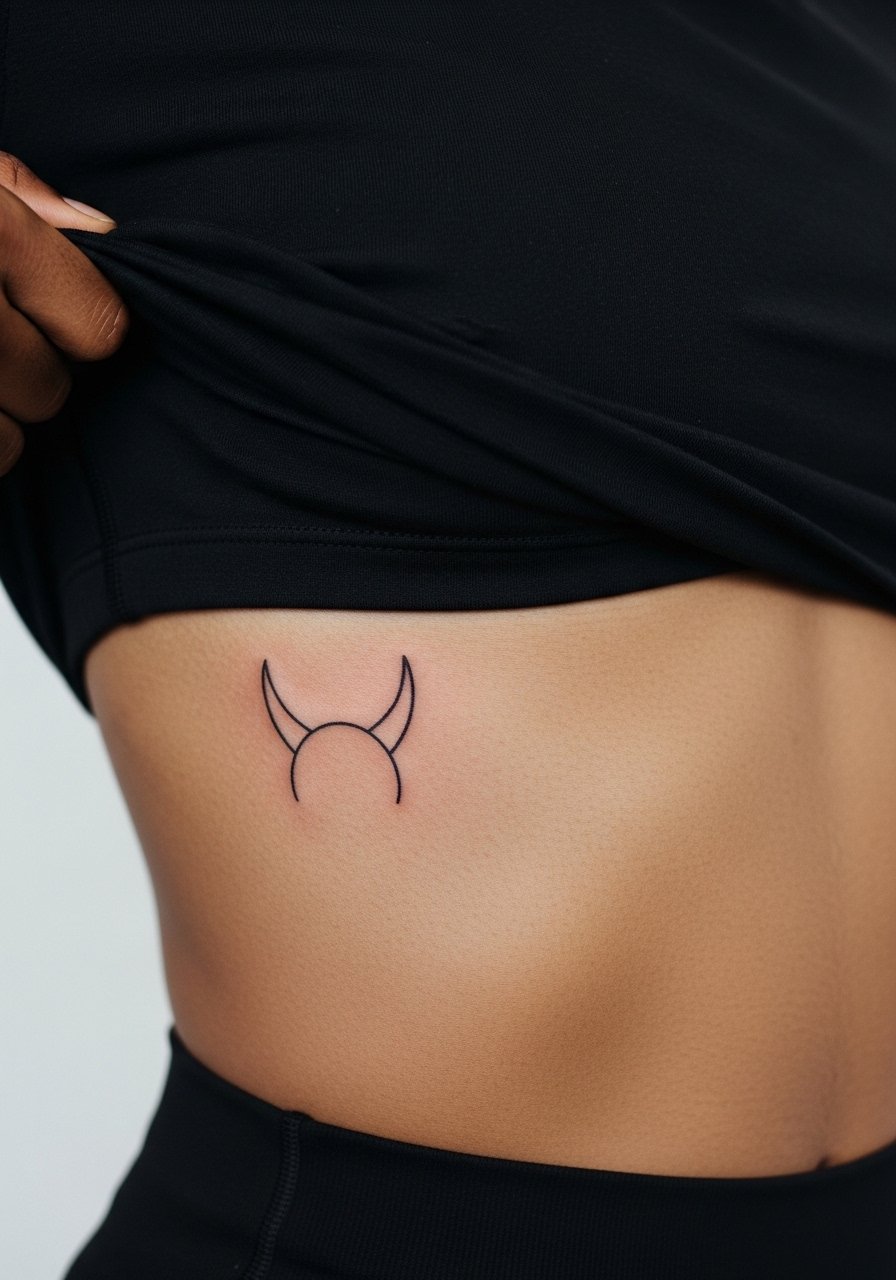
Ribcage tattoos are known for higher pain and movement during breathing. Fine line here is controversial because stretching and movement can blur thin lines sooner. If you want minimalism, request open spacing and slightly bolder lines than the absolute thinnest needle. The piece will read subtly under clothing but looks striking in a cropped top. For the session wear a sports bra and loose pants so you stay comfortable and the artist has good access.
15. Stipple Yoni Spiral on the Lower Back
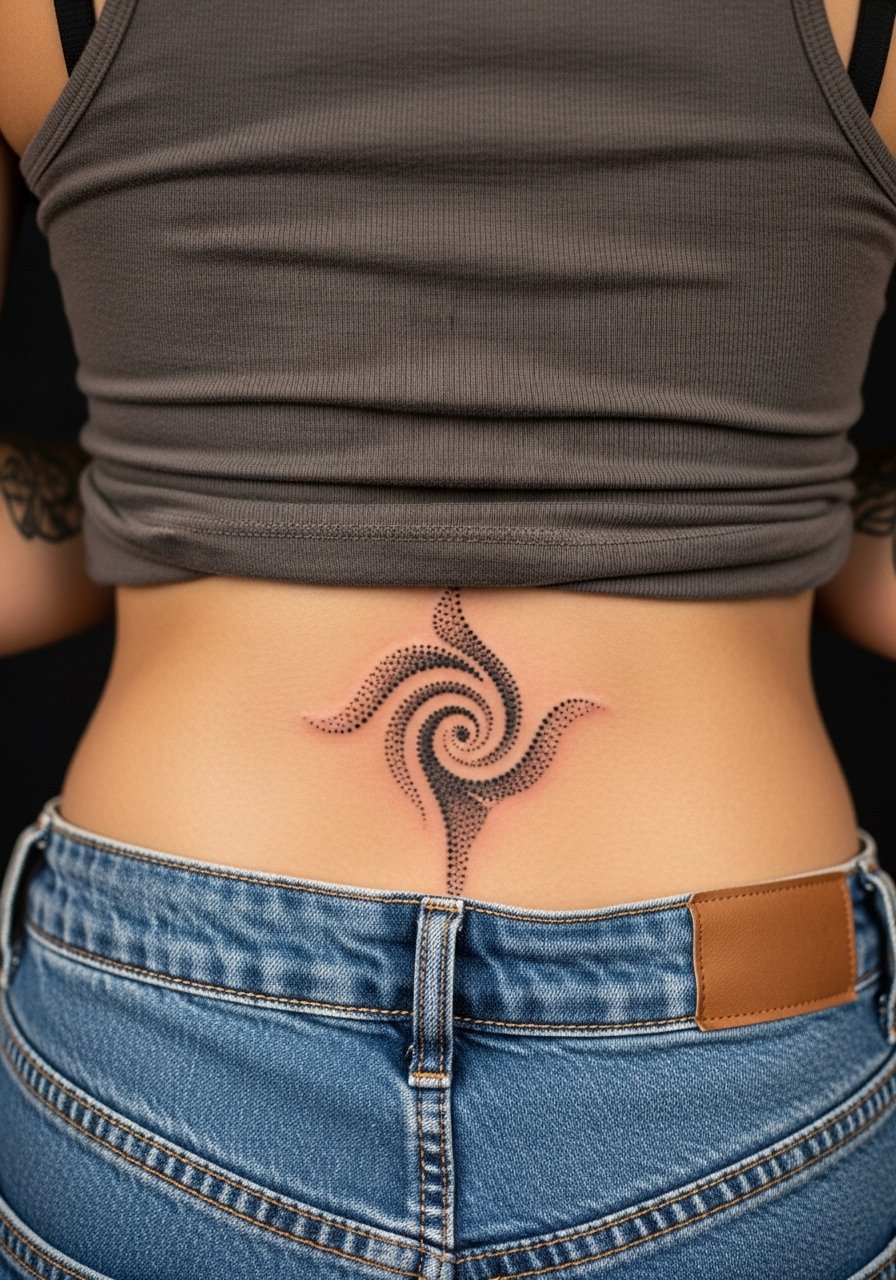
Lower back geometry benefits from stipple and dotwork because the texture reads on different skin tones and resists obvious blurring. A common mistake is trying to apply extremely tight dots without spacing, which can densify into a blotch. Ask for a graded stipple that eases outward so the spiral breathes visually. Sessions here are comfortable and discreet. The lower back also offers concealment when needed for workplace settings.
16. Neo-Traditional Snake-Lotus Hybrid on the Thigh
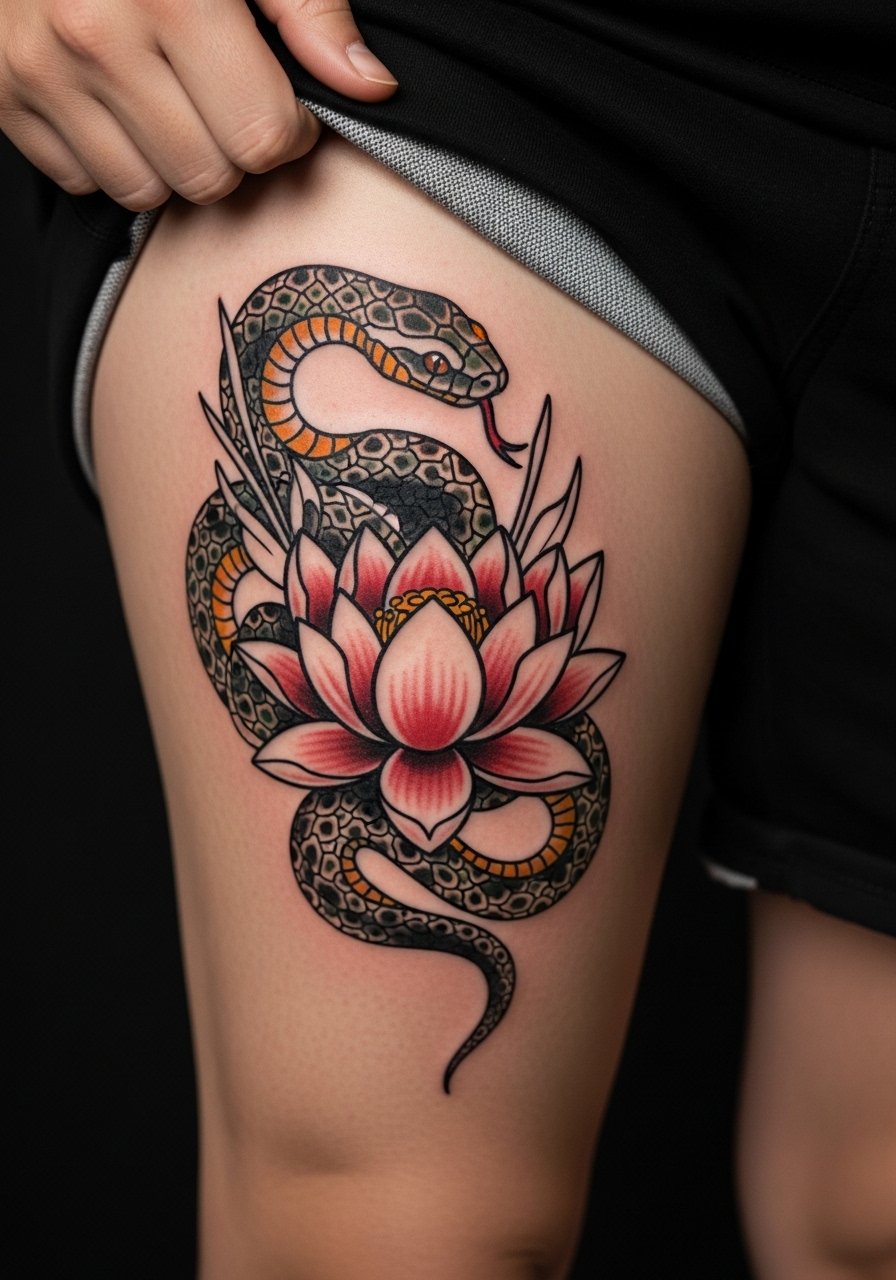
Neo-traditional hybrids give you bold outlines and color that age into a satisfying patina on the thigh. Inner-thigh placements are protected from sun but see friction from clothing, so the fix is to keep lines strong and color blocks simple. Sessions can be long and require breaks, so bring comfortable undergarments and loose bottoms. For post-session reveals, a thigh high slit skirt or flowy maxi gives the perfect peek without constant exposure.
17. Floral Ankh Wrist Band

A banded ankh around the wrist is great for a repeat-visible symbol, but wrists take constant wear. Avoid fragile watercolor edges here. State in consultation that you want the structural ankh to remain the visual anchor and keep floral elements secondary. Expect lighter touch-ups at the one-year mark for tight details. During the session leave jewelry off and wear a sleeveless tank so the artist has clear access.
18. Celestial Constellation Across the Collarbone
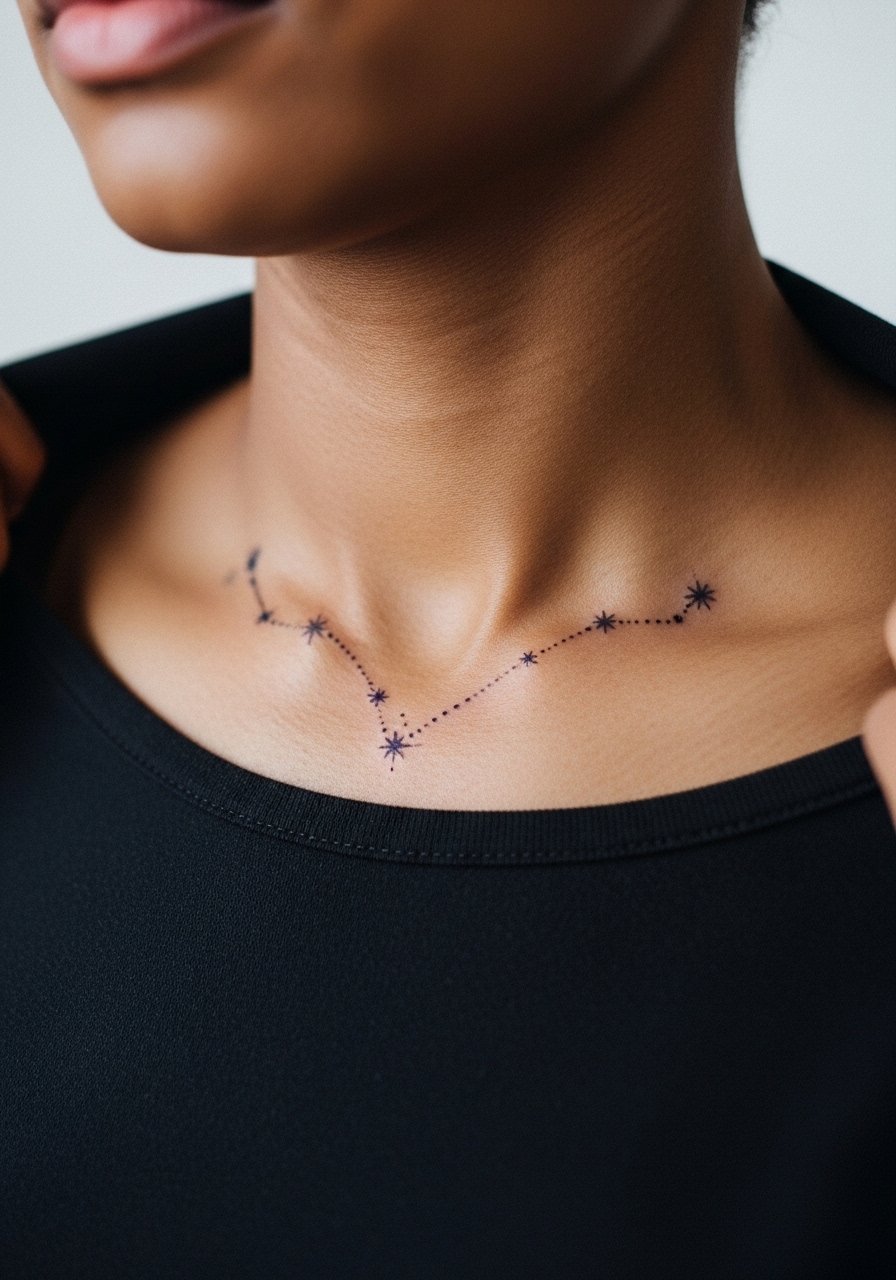
Constellations look delicate across the collarbone and are low pain, but thin connector lines can blur on certain skin tones. For longevity, ask for slightly thicker connectors and spaced stars with small dot gradients. A common mistake is over-clustering stars, which becomes an indistinct smudge from a distance. Pair with a gold choker necklace or off-shoulder tops for a balanced reveal.
19. Ornamental Mandala Throat Accent
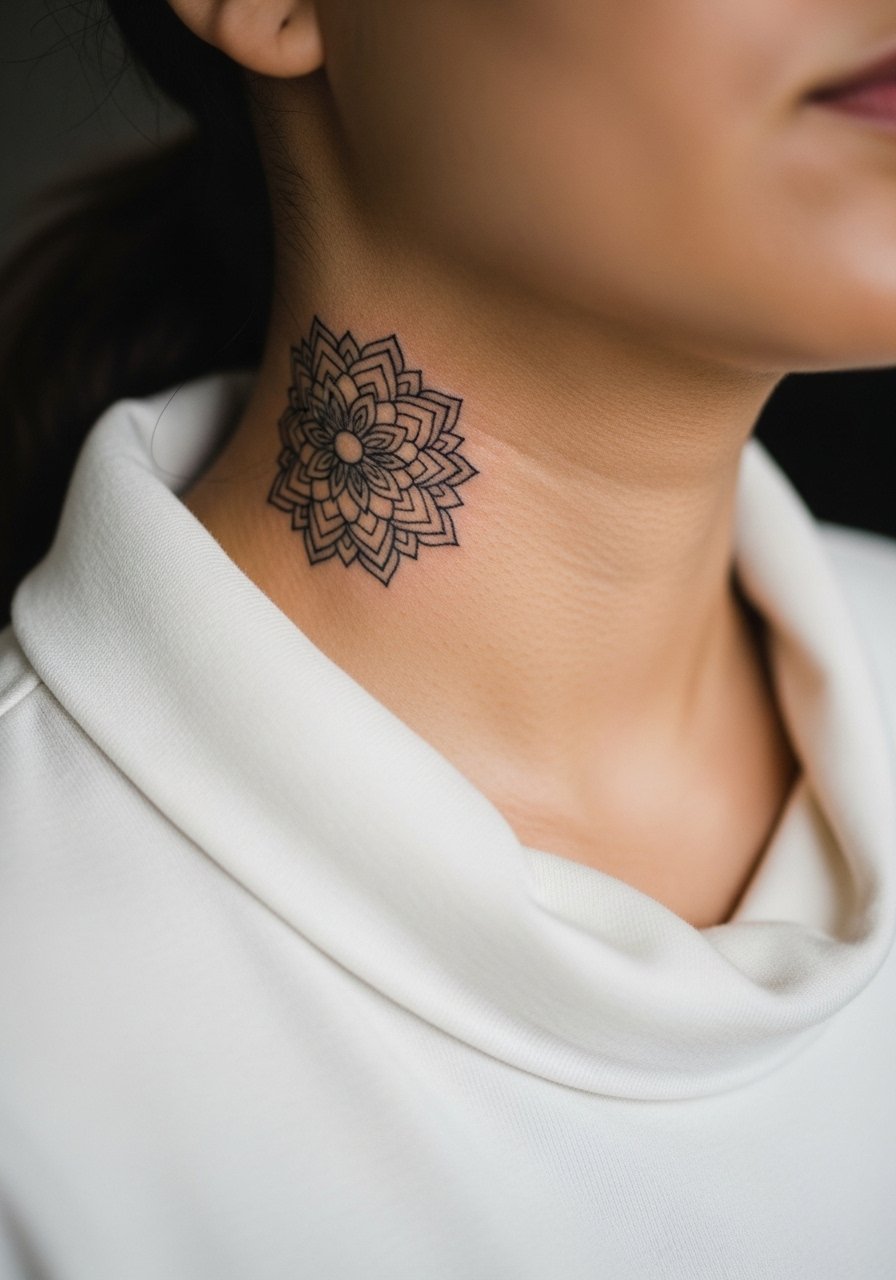
Neck accents can be visible statements so think about future career and lifestyle implications. The mandala here needs slightly bolded outer rings to maintain shape as skin moves. Artists disagree on neck placements because exposure to sun and elements accelerates fading. If you choose this spot, plan for sunscreen use and possible touch-ups. During the appointment wear a wide-neck shirt you can shift easily.
20. Micro-Realism Venus Curve on the Ribcage

Curving a Venus figure to match rib contours pays off visually but introduces movement-related risks. The ribcage stretches with breathing and body changes, so request simplified shading and strong silhouette lines rather than intricate facial details. Sessions will be more uncomfortable than forearm work, and you should budget for short breaks. If you plan weight shifts, discuss that with the artist so they can adapt scale and placement for longevity.
21. Gaia Silhouette as a Calf Wrap
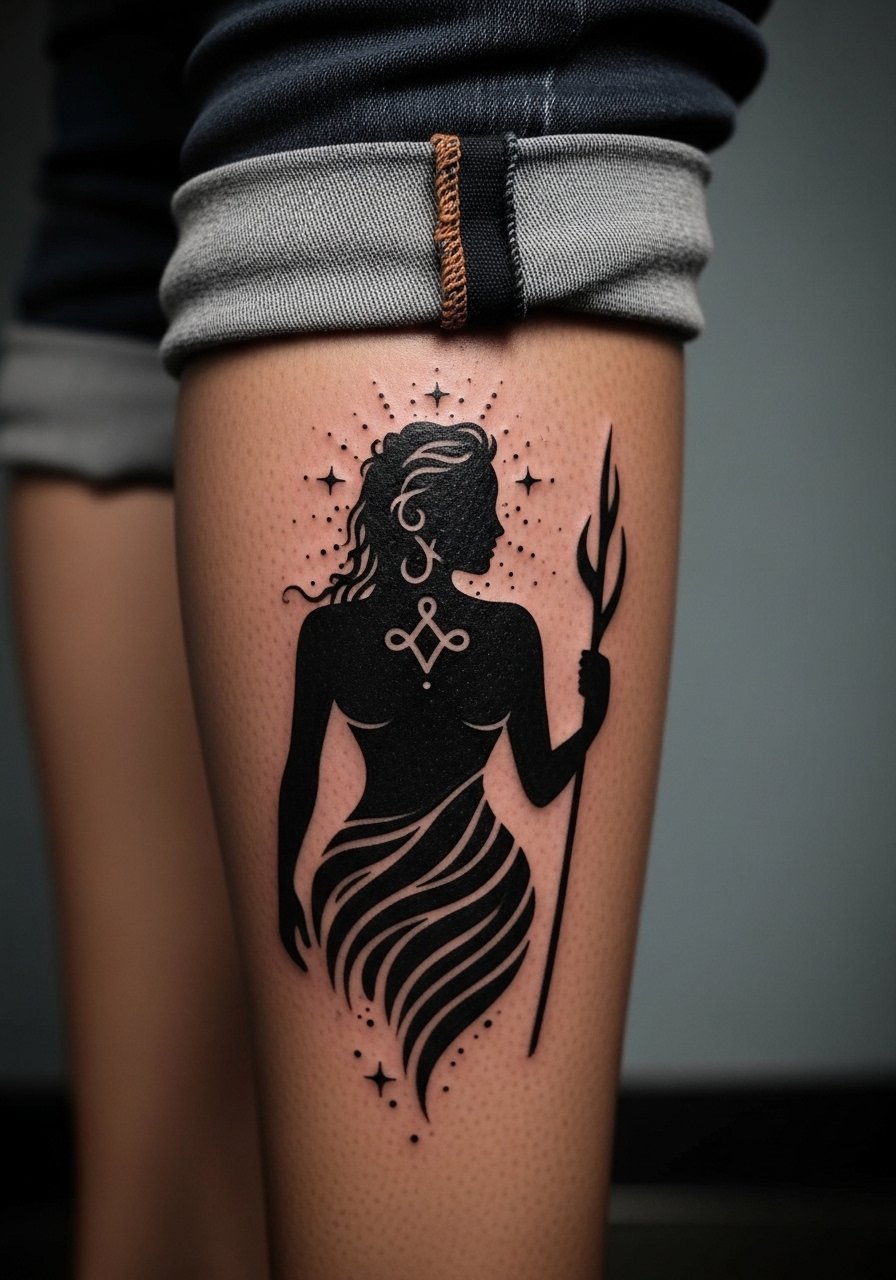
A wraparound silhouette on the calf reads like a statement and ages well because of low sun exposure. The common error is creating thin negative space bridges that disappear after a few years, so ask for confident black blocks with spare details. Calf sessions are comfortable and often finish in one visit. Pair with sleeveless halter tops when dressing to contrast the bold blackwork.
22. Fine Line Script with a Small Moon on the Side Neck
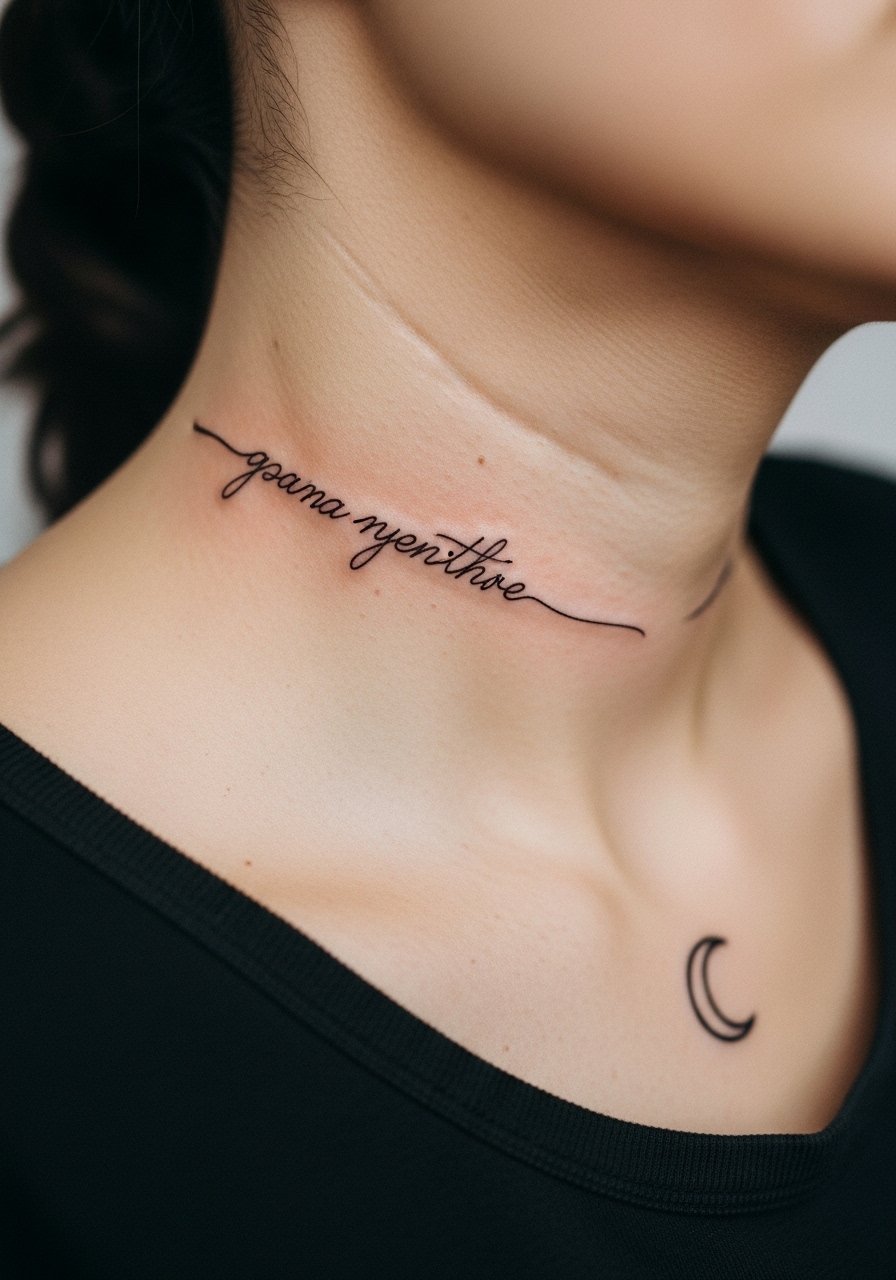
Side neck script must be kept large enough to avoid blurring into an unreadable smudge. The small moon should act as punctuation rather than detail work. One error is asking for tiny cursive lettering that fades into a grey line. Ask for slightly bolder letters and spacing that reads across time. Keep the shot and consultation focused on exact font and size. For the session, a wide-neck top helps with access.
23. Dotwork Protective Eye Behind the Ear
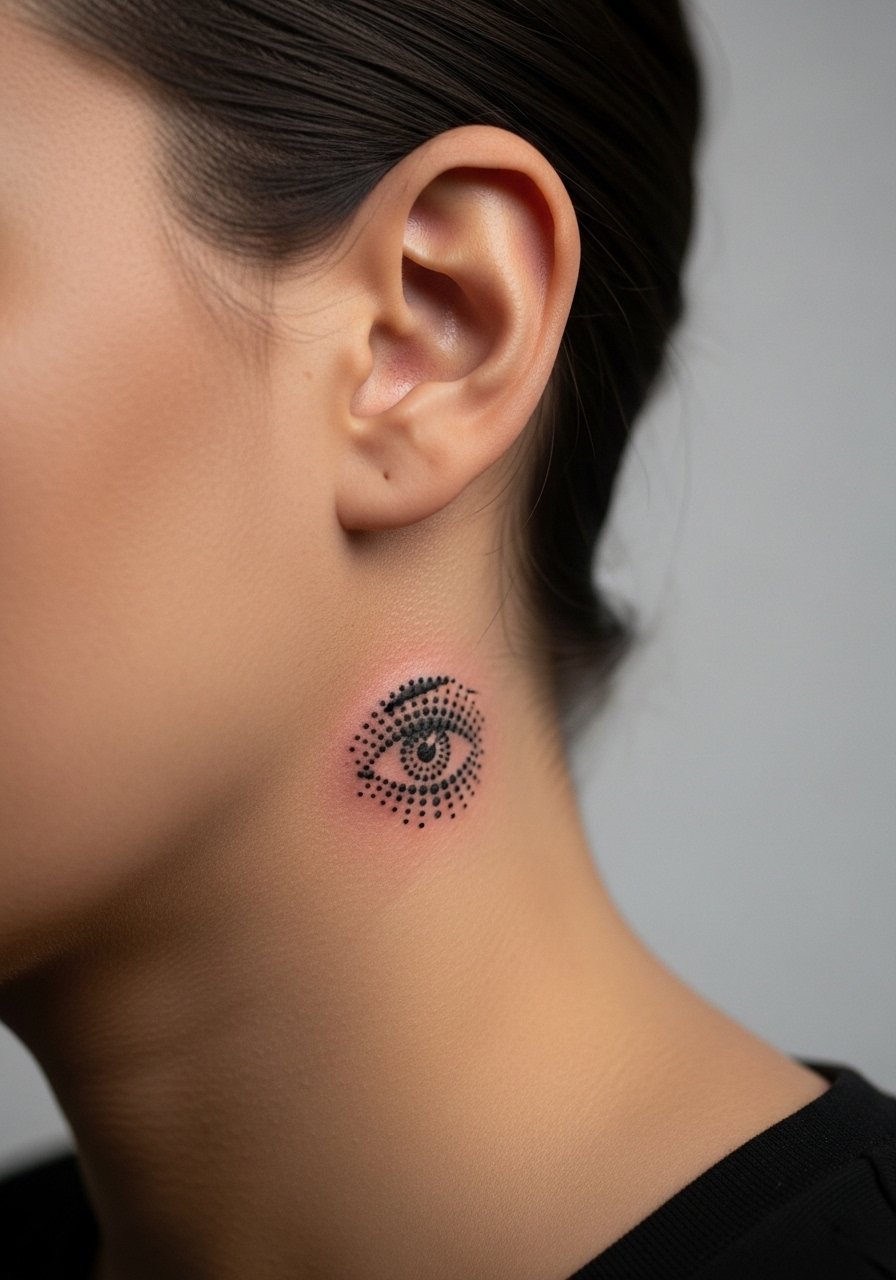
The behind-the-ear zone suits dot gradients because hair provides partial cover during healing and daily life. Ensure the placement is on the skin below the hairline so you do not end up with awkward placement on the ear itself. Ask for a compact gradient rather than filigree. This area tolerates single sessions and hides easily when you pull hair down.
24. Spiral Cluster on the Upper Thigh

Upper thigh spiral clusters can be bold and readable because the canvas is large and protected from constant sun. A mistake is packing too many tight spirals into a small area. Space them so each spiral maintains its own negative breathing room. Sessions are easy to manage with the client reclining or sitting. Consider a loose cotton shorts option to wear afterward so there is minimal friction while healing.
25. Small Crescent and Dots on the Ankle
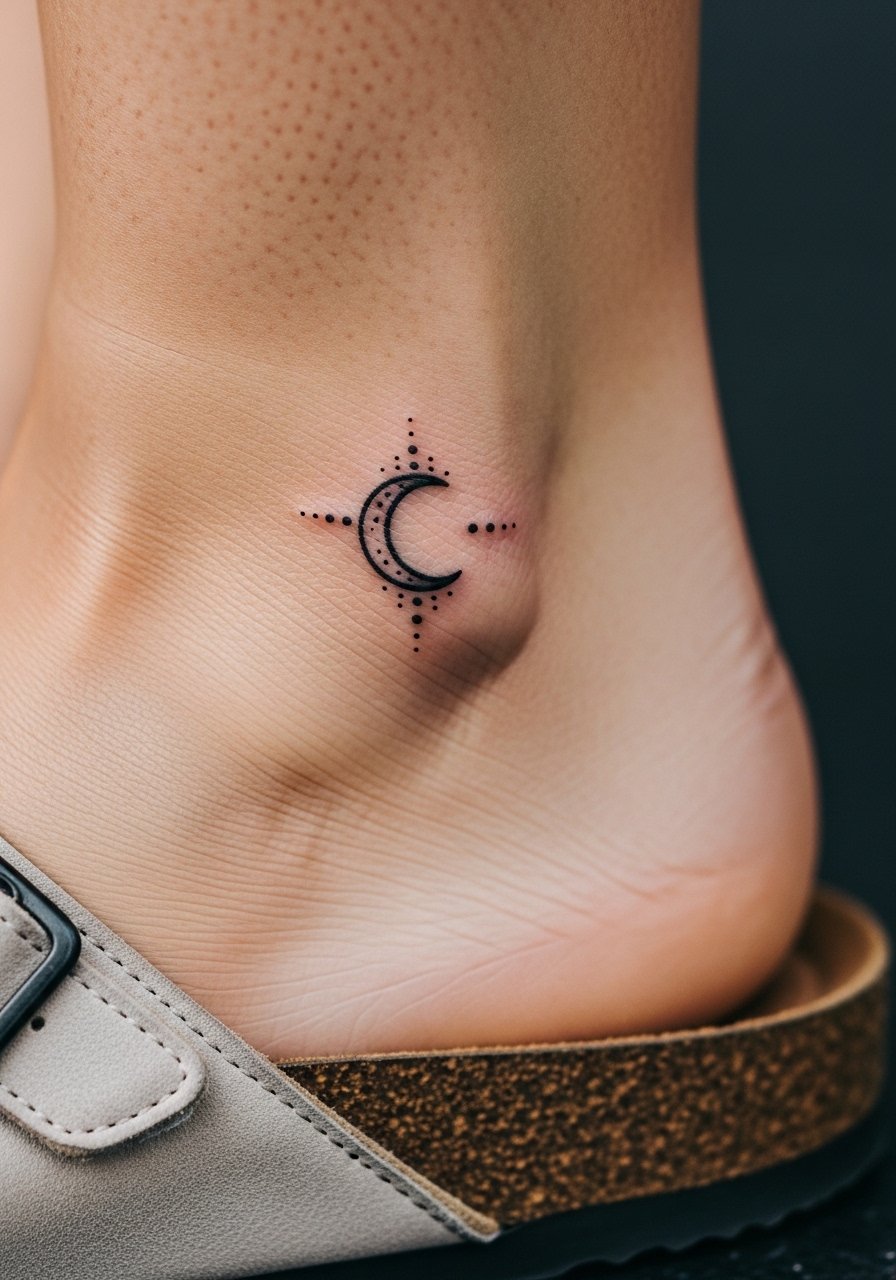
Tiny crescents and dots are staple ankle pieces but they require slightly bolder dot sizes to survive regular shoe friction. The mistake is asking for pinprick dots which simply disappear. Ask for solid dot anchors and a crescent with deliberate line weight. Recovery is quick but keep socks off for the first few nights. For casual looks pair with strappy flat sandals that let the work show without rubbing.
26. Sacred Geometry Sternum Accent
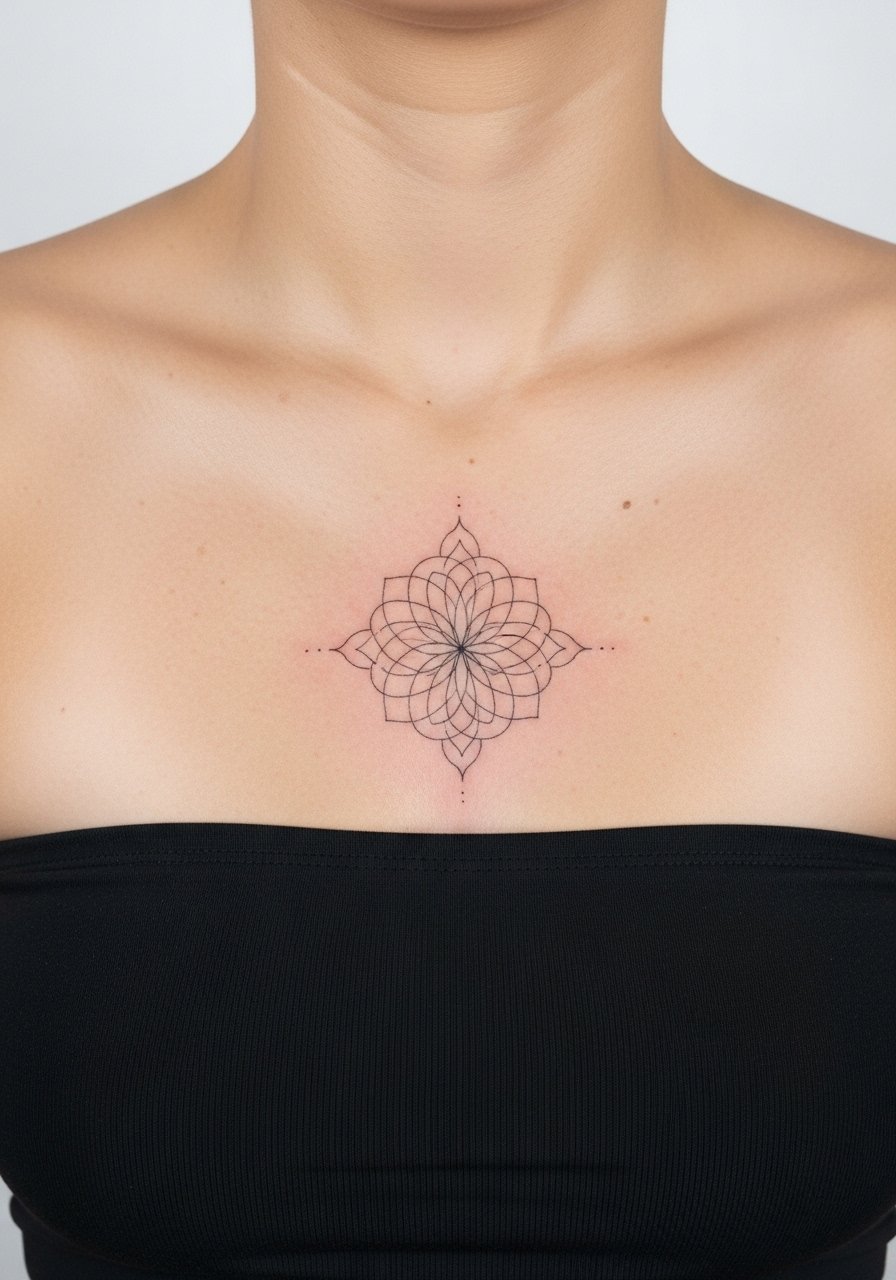
Sternum accents are intimate and require careful spacing to avoid line collapse with movement. The key is to build small geometric units with breathing room between them so the pattern does not densify as the skin shifts. There is debate among artists on single-needle use here. Some accept it with spacing, others avoid it entirely. If you proceed, have a touch-up plan and wear a fitted top to the session for ease of access.
27. Small Solar System Band on the Outer Forearm

A solar system band gives you narrative across the forearm that reads from different angles. The common error is putting planets too close together, which creates a muddle. Ask for clear spacing and slightly heavier planet dots so they retain contrast. Forearm work is moderate in pain and often completes in one go. For studio waits wear a rolled cuff blouse or a short sleeve so the artist can work without fabric bunching.
Frequently Asked Questions
Q: Will fine line moon phases on a darker skin tone fade into a smudge quickly?
A: Fine line can fade faster on darker tones if the line weight is too thin. I suggest asking for slightly thicker outlines and dotwork or blackwork fills where possible, and booking a six-month touch-up to restore crispness if needed.
Q: Do watercolor collarbone pieces need different aftercare than blackwork mandalas?
A: Watercolor washes are more susceptible to sun and therefore need diligent SPF after healing and lighter moisturizers. Blackwork mandalas rely on saturation and often tolerate basic gentle cleansing followed by light hydration.
Q: If an artist recommends Saniderm but I prefer dry healing, what should I know?
A: Artists and peer groups split on this. One camp says clear film speeds clean healing in humid conditions. The other camp warns that trapping moisture can cause issues on small single-needle work. Tell your artist your preference and follow their protocol for that specific style.
Q: How soon should I schedule a touch-up for fine line work like triple moons or constellation pieces?
A: Expect to check in around six to twelve months for fine line pieces. Many people need a light touch-up by the one-year mark, especially on high-friction spots like wrists and ankles.
Q: For a ribcage Venus or sternum geometry, what should I wear to the session?
A: Wear a fitted sports bra or a cropped top you can lift slightly so the artist has clean access without full exposure. Loose joggers or shorts are ideal so you stay comfortable during breaks.
Q: Are there placements that handle color better than others for longevity?
A: Areas with less sun exposure and less friction, like the upper thigh and upper back, usually keep color better. Forearms and collarbones can fade faster if you spend a lot of time in sun without protection.
Q: How do I find an artist who shows healed photos on my skin tone without naming specific accounts?
A: Search hashtags like #FineLineMoon plus your city, check tattoo app filters for style and healed photos, and ask within community forums for portfolios that include varied skin tones before booking.