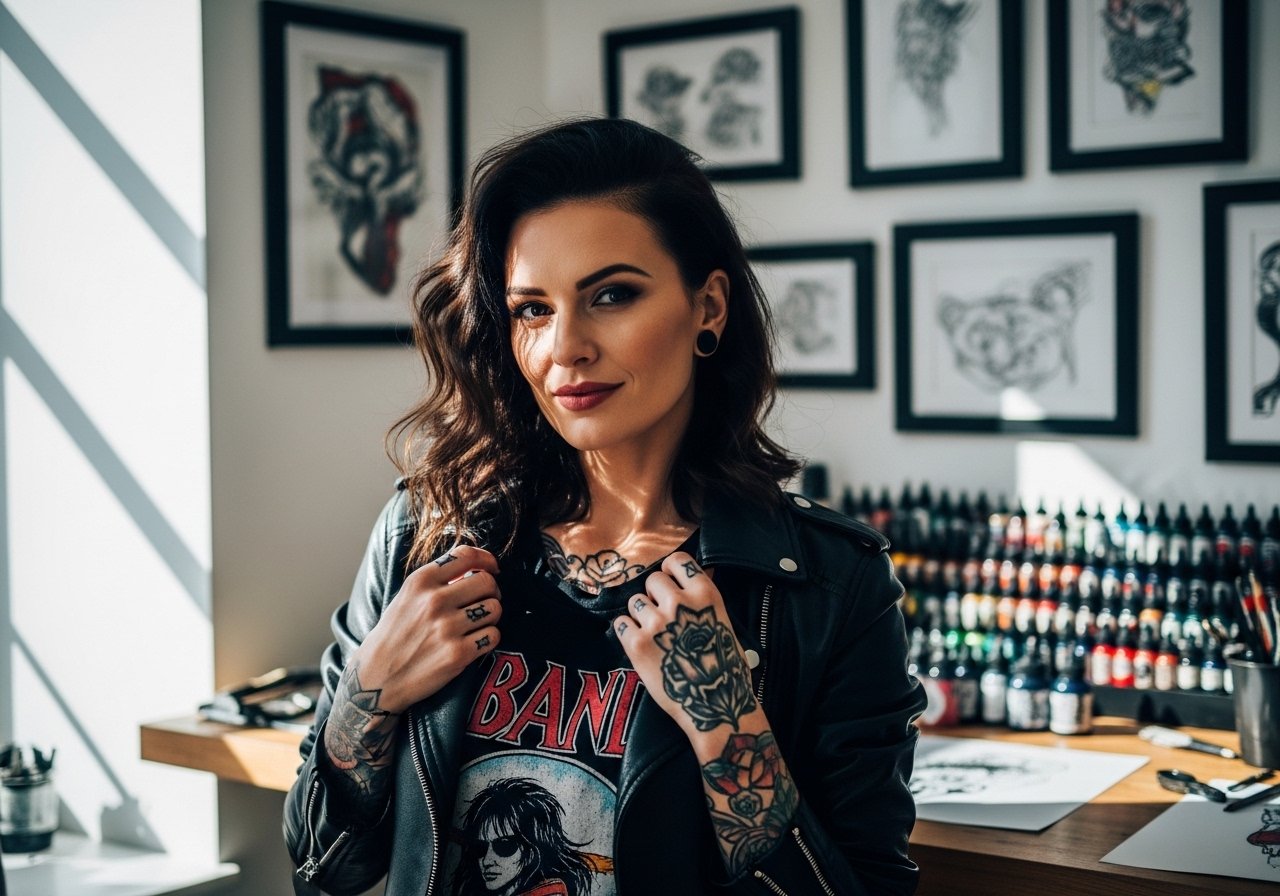
Fine line trends and bold blackwork are both dominating feeds, yet what actually holds up on a back piece depends on placement, skin type, and how the art moves with your body. I have seen mandalas flatten where the spine curves and watercolor blooms blur on lumbar zones. Read through these 17 full back options with real tradeoffs, what to ask your artist, and wardrobe ideas that make the reveal worth the sessions ahead.
1. Full Spine Mandala with Lotus Extensions

A spine mandala reads architectural on the body, and I recommend it when you want vertical balance rather than side-to-side drama. Tell your artist to scale gaps between petal motifs so the pattern breathes with the back arch. A common mistake is packing the center too tightly, which makes dense areas merge after a few years. Expect long sessions and repeated shading passes around the ribs and lower dimples, so plan for breaks every 90 minutes. For showing it off, pair this sheet with open-back midi dresses in solid tones so the pattern reads cleanly.
2. Neo-Traditional Phoenix Rising
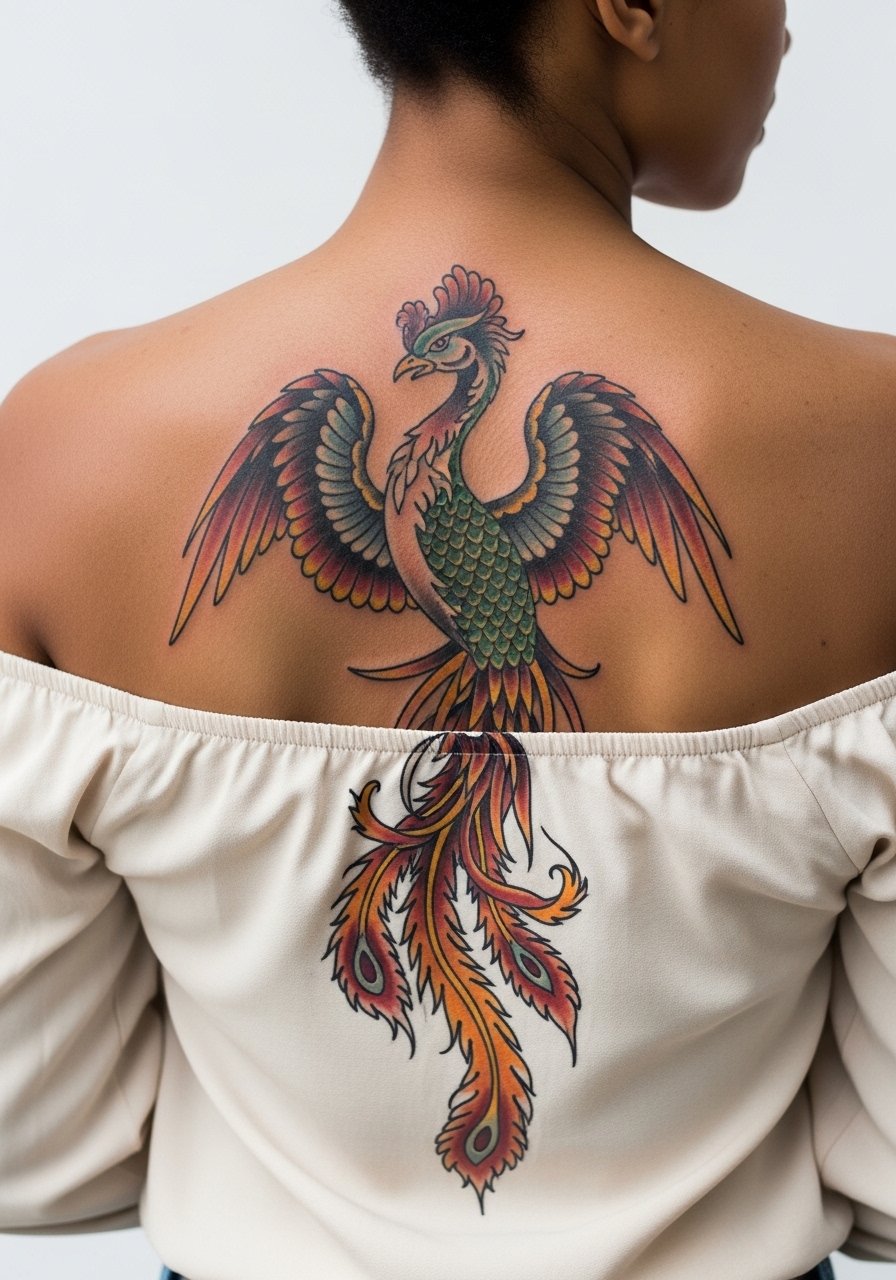
The phoenix works if you want a dramatic reveal when hair is lifted. Ask your artist for bold outlines around feathers and saturated fill to avoid color muddle later. Session time runs long because of color layering and shading across shoulder blades. The skin around the shoulders tolerates saturation well so this style ages into strong color instead of dull washes. For sessions wear a strapless top you can remove without tugging hair. For nights out, an off shoulder blouse in deep red echoes the palette without competing.
3. Realistic Koi Swimming Across the Upper Back

Koi require careful flow so the fish read as motion across the shoulder blades. In consultation, show photos of koi in motion and specify scale placement so one fish sits near the scapula and another arcs toward the center. Pain is moderate near the blades, and lower dimples can amplify discomfort during long fills. Realistic color needs touch-ups at 12 to 18 months to refresh saturation. Pair the healed piece with a racerback tank to let the movement show without a lot of skin on display.
4. Fine Line Floral Vine Wrapping the Spine

Fine single-needle vine work reads delicate and elongates the back panel, but artists split on longevity. One camp insists fine line holds if the needle depth is consistent and spacing is generous. The other camp warns friction from straps and body changes blurs the work within two years. Tell your artist you want slightly wider spacing and subtle negative space between blooms to reduce future merging. This placement is a steady pain around the lower spine dimples but sits well visually under low-back dresses. For session ease, wear a low back sundress or a front-open robe you can lie in comfortably.
5. Full Back Geometric Blackwork Mandala Sheet
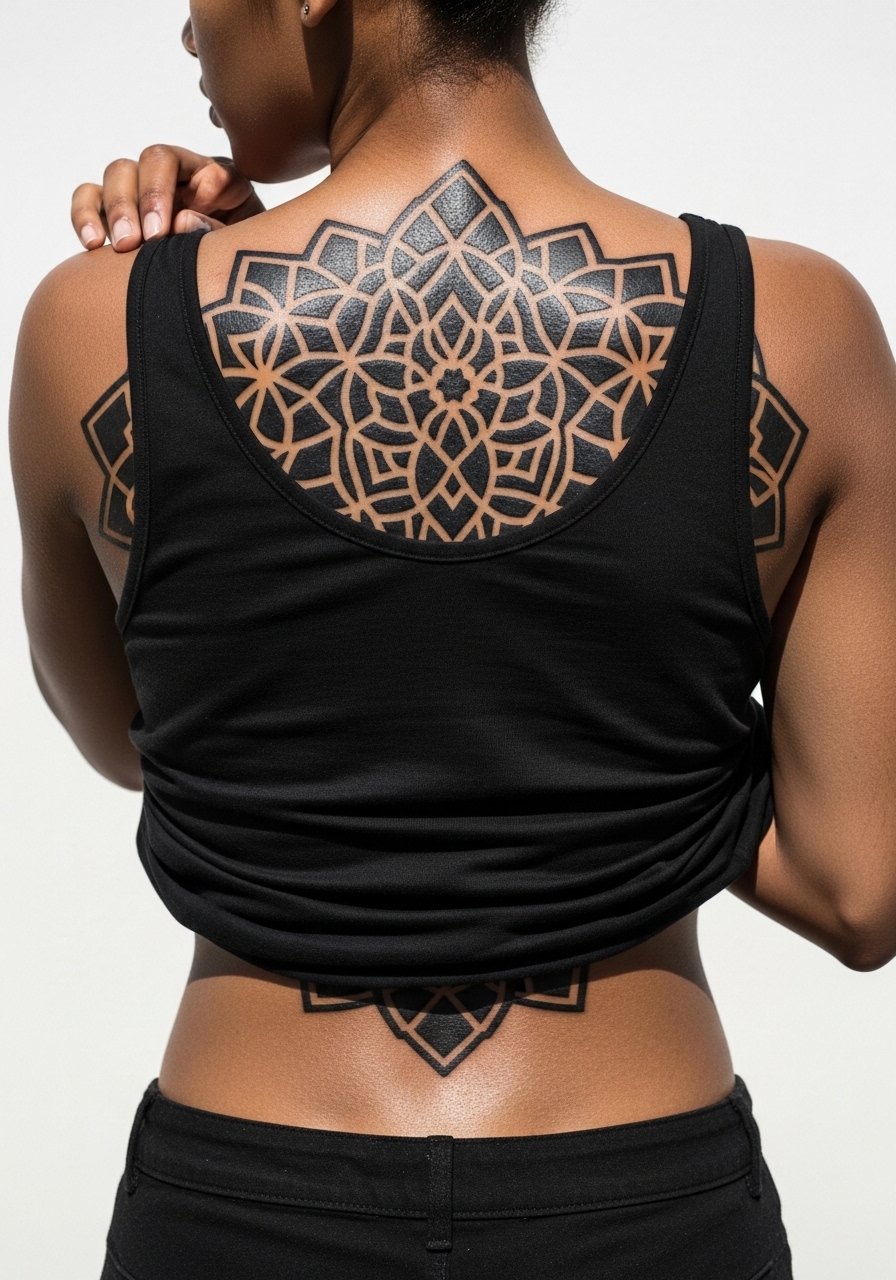
This sheet is about symmetry and saturation. Blackwork ages predictably because large fills hide minor stretching and friction. Do not ask for ultra-fine filigree inside packed black blocks, or the tiny details will vanish as the skin settles. For consultations, request mockups that show how motifs align with the spine and shoulder blades, and insist on seeing healed examples on similar skin tones. Sessions are long and often split into heavy fill days and detailing days. For festival season, wear a sheer mesh top layered over a bralette to highlight the sheet without exposing everything.
6. Watercolor Cherry Blossoms on the Lower Back

Watercolor on the lumbar zone looks poetic when fresh, but it is vulnerable to friction from waistbands and to humidity during summer healing. The big debate here is simple. Some people wrap with protective film for the first days to keep pigments stable. Other veterans prefer dry healing and powder to avoid trapping sweat. Name both camps and ask your artist which method they see working on lumbar pieces in humid months. If you want less maintenance over years, discuss adding subtle outlines to anchor the petals. Session wear should be loose drawstring pants so the artist can access the hips without pressure on the area.
Studio Day Picks
These first six back ideas span spine, upper shoulder, and lumbar zones, so a few specific items smooth long sessions and the first week of healing.
-
Tea tree balm for tattoo aftercare. Lightweight balms with tea tree are praised for reducing sweat irritation on large back sheets without the greasiness newer alternatives can bring.
-
Manuka aftercare gel. A gel formula that some artists and forum users report helps scabs form minimally on broad shaded areas, useful on saturated upper-back color.
-
Japanese rice powder alternative. Powdered dry-heal products can help with humid climates where film traps moisture, especially for lower back and lumbar sessions.
-
Thin Hustle Butter dupe balm. A thinner, less pore-clogging balm is handy for large sheets when you need moisture without heavy residue.
-
Saniderm protective film. A popular protective film that some people use for the first 3 to 5 days on full-back pieces to reduce initial mess and risk from clothing friction.
7. Traditional Irezumi Dragon Coiling the Back

Irezumi demands scale and storytelling across panels, and it is a commitment of sessions over months. Ask for a full-panel mock that shows how the dragon interacts with shoulder muscles so the flow reads natural when you move. Expect heavier pain where the dragon crosses the spine and gentler shading on the flanks. This style benefits from bold outlines and saturated fills to preserve imagery after years of movement. For showing it off, an open-back halter top in a deep color will frame the dragon without busy patterns.
8. Ornamental Henna-Inspired Upper Back
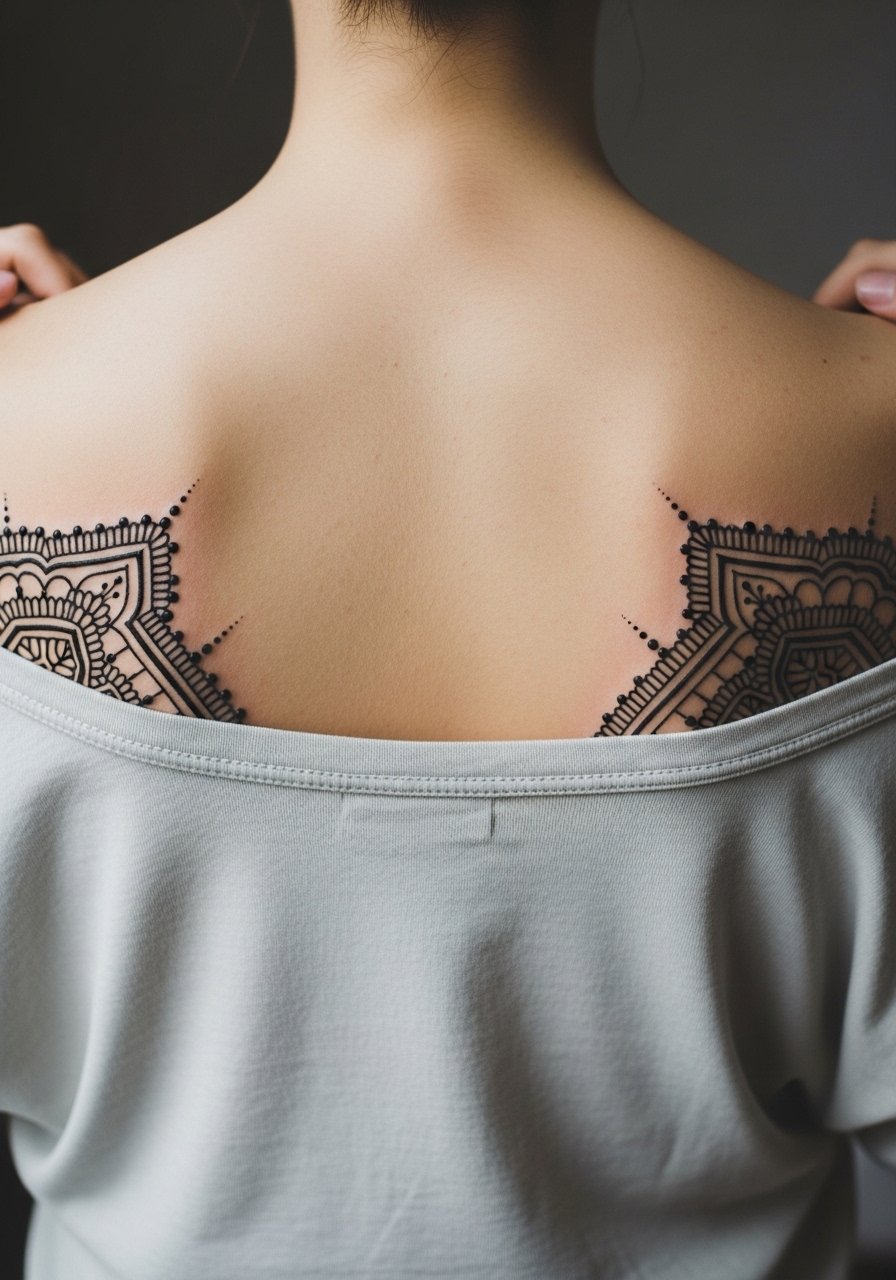
Ornamental patterns translate henna motifs into permanent linework that sits nicely under tank tops and kimonos. When requesting this, tell the artist you want negative space to breathe so small loops do not blur into one another. The upper back tolerates single-needle detail fairly well, but heavy straps can rub during healing so avoid tight bras for a week. This pattern plays well with a sheer kimono jacket layered over a solid tank to let the pattern peek through fabric.
9. Micro-Realism Angel Wings Spanning Shoulders

Angel wings in micro-realism rely on feather edge detail and layered stipple shading, so request high-resolution healed photos from the artist showing past wing work on similar skin tones. The scapula area is moderate on the pain chart but offers flat planes for precise shading. Expect multiple sessions to build feather depth and then a touch-up around month six for any softened tips. Pair this with a strappy bralette to reveal the upper spread at the gym or a racerback for casual days.
10. Ignorant Style Abstract Waves on the Lower Back

The ignorant aesthetic celebrates imperfect edges and raw texture, which makes it forgiving when body contour shifts occur. This works for collectors who plan patchwork over time. Be explicit about scale and ask the artist to show how rough edges will simplify when healed. Lower back motion and clothing can distort tiny curves so keep the composition bold. For session comfort, wear loose drawstring shorts or a low tie sarong so access is easy and the waistband does not press on fresh ink.
11. Patchwork Blackwork Animals Across the Mid-Back

Patchwork builds over years, and the benefit is budget pacing and compositional control. Tell your artist you want modular spacing so new panels can sit beside old ones without overlap. Each animal can be a separate session which helps with healing management and travel planning. Expect solid fills to be less affected by stretch or weight changes than fine line work. For festival-ready layering, try a mesh long-sleeve top over a bralette to showcase the assembled theme.
12. Fine Line Celestial Map from Neck to Tailbone
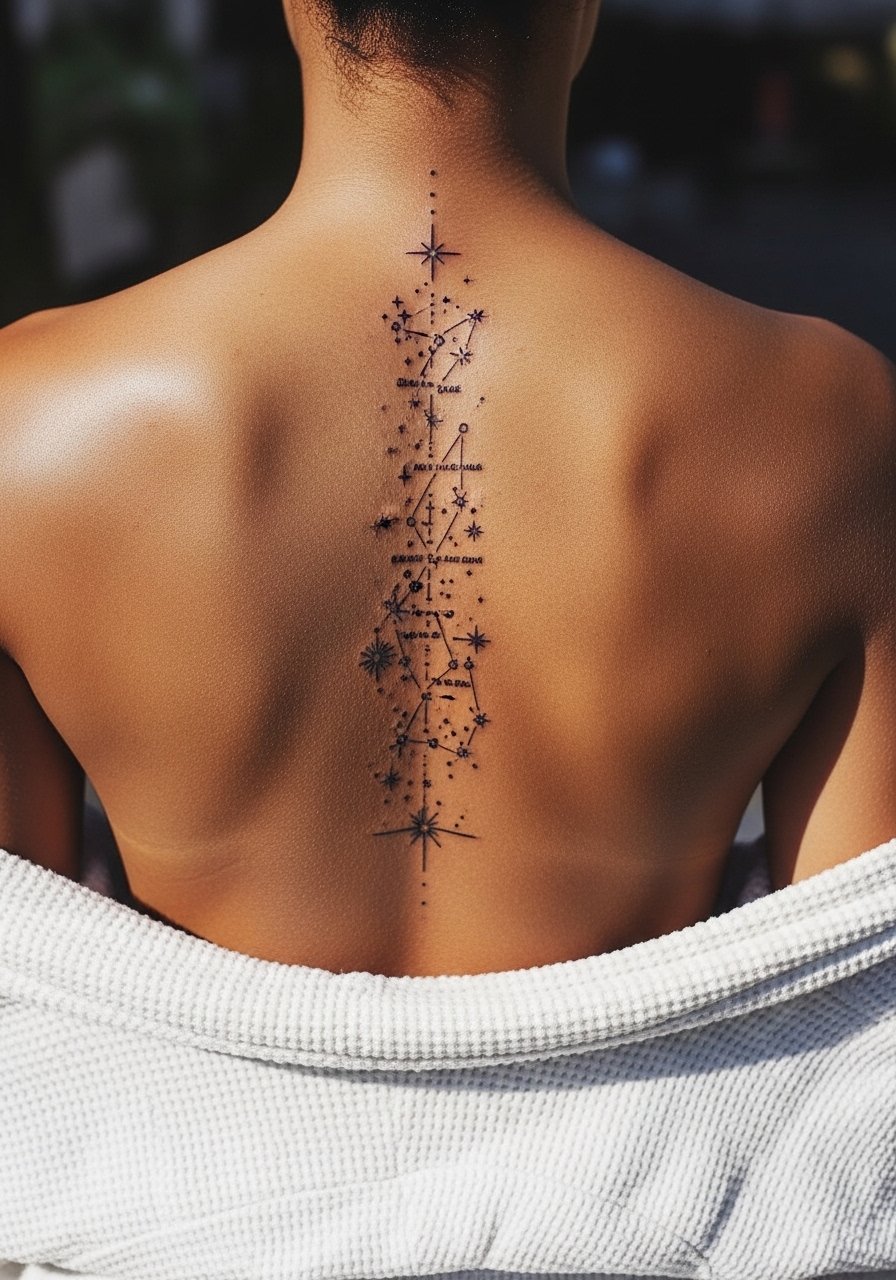
A spine-to-tailbone celestial trail looks remarkable when spacing is generous and dots are crisp. The trick is to avoid crowding lines near the lower back where skin folds and stretching are more likely. Artists debate fine line durability here, and the practical take is to ask for slightly bolder dots and spaced connectors that mimic stars without relying on ultra-thin single-needle bridges. Session pain varies but long sessions near the tailbone are more intense. A front-open robe or sports bra you can unzip makes prone positioning easier for both you and the artist.
13. Lower Back Watercolor Blossoms That Peek

This approach leans into partial reveal, so the art is designed to peek above waistlines. If you plan to show blossoms periodically, ask for faint anchoring outlines so petals keep their shape as pigments soften. Healing in summer needs special attention because sweat can blur painterly edges early on. For outfits, high-waist jeans and a crop top set let the piece sparkle without full exposure. Remember to plan for touch-ups after significant weight change.
14. Geometric Mid-Back Panel with Stipple Shading

Geometric placements on the mid-back excel when given negative space to separate dense areas. The biggest mistake is scaling motifs too small. Ask for spacing mockups and request practice stencils on a similar curvature. Stipple shading softens over time but maintains texture better than thin lines. Mid-back is lower on the pain scale and a good place for experimental patchwork. For session ease, wear an oversized button-down shirt so the artist can unbutton and access the area without tightness.
15. Mythic Scene in Neo-Traditional Palette Across the Back Panel

A narrative back panel tells a story across shoulders, spine, and flank. For this type of work, bring scene references and discuss focal points so the eye has resting places across the sheet. Sessions alternate line days with multiple color passes which is taxing physically. If you travel for an artist, get clear deposit and cancellation terms to avoid guest-spot heartbreak. For showing the scene, off-shoulder tops in muted tones let the tableau read without visual noise.
16. Abstract Blackwork Flow That Adapts to Stretching

Designs that account for natural stretch and weight change last best. Ask the artist to map motifs around muscle insertion points and dimples so key lines avoid hinge zones that warp with motion. This is a deliberate strategy for people worried about body fluctuation. Bold bands and negative space keep the composition coherent even when the skin shifts. For session wear, choose a loose tank or a button shirt you can untuck so access is unobstructed.
17. Posture-Improving Script Aligned to the Spine

A vertical script can be designed as a posture cue, placed so it visually encourages a straighter stance when you see it. Keep lettering bold enough to avoid crisp edges softening with time. The lower spine placement can be sensitive, so numbing and breaks are reasonable. This idea doubles as a subtle motivator and an anchor for future additions along the spine. For sessions, a linen maxi with side slits or a front-open robe helps you lie prone without fabric rubbing the fresh work.
Frequently Asked Questions
Q: How many sessions should I expect for a true full back sheet like a geometric mandala or an irezumi dragon?
A: Full back pieces usually span multiple sessions, often between four and ten depending on detail and saturation, and that estimate can change after the first pass. Plan for at least one long fill day plus separate detail and color passes, and build in time for a touch-up six to twelve months after the last session to lock in saturation.
Q: Do fine line spine tattoos fade faster than bold blackwork on the back, and what can I do about it?
A: Fine line is prone to softening where skin moves and where straps rub, so ask for slightly bolder line weight and more spacing between elements to improve longevity. If you are concerned, choose a design with intermittent bolder anchors so the piece still reads even as the ultra-fine bridges soften.
Q: Saniderm or dry healing after a full back session, which camp is right for me?
A: People split into two camps. One group prefers protective film for the messy initial days, especially on large shaded sheets, because it keeps clothing from sticking. The other group worries film traps sweat and opts for dry healing and lightweight powders in humid weather. Your artist's experience with back pieces and your local climate should guide the choice.
Q: How should I plan travel and deposits if I am booking a guest artist for a multi-session back piece?
A: Insist on a written session breakdown, a clear deposit refund policy, and a 48-hour confirmation window before you travel so you do not lose nonrefundable travel costs if plans change. If the artist runs a guest spot schedule, ask for a backup contact and consider booking travel with flexible tickets.
Q: What clothing should I bring for the appointment and what should I wear to show the healed back tattoos?
A: For sessions bring loose, front-open clothing or garments that can be pulled aside without pressure on the area, like a loose button-down or a front-zip sports bra. To show healed back pieces, open-back halters, sheer kimonos, and low-back sundresses frame different styles without competing with the ink.