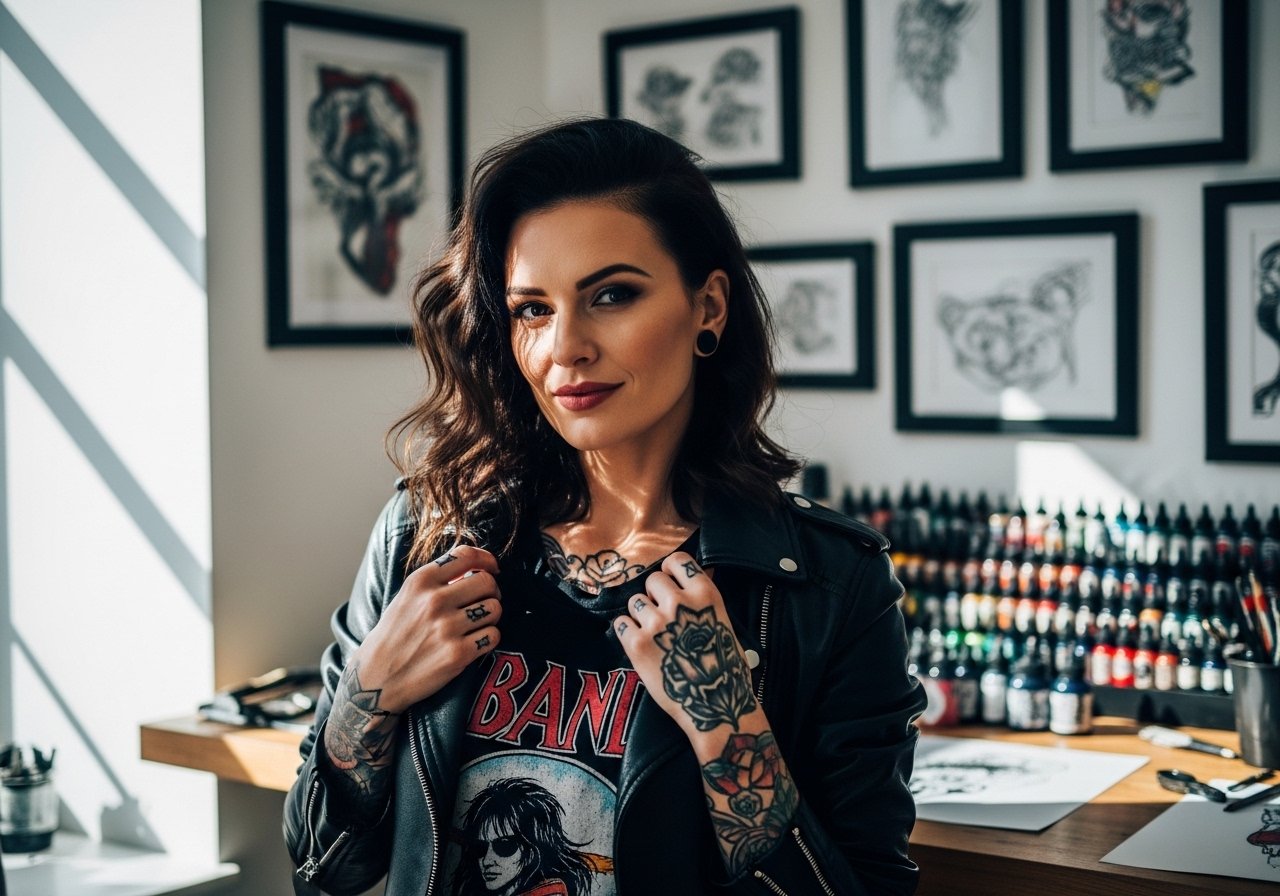
Fine line styles dominate saved boards right now, but the tattoos that still look clean after years are usually the ones that stop pleasing algorithms and start working with skin. Pick a design that respects the arm's curves, gives lines room, and matches how much you actually plan to show. Below are 21 geometric arm tattoos for men that read crisp on the skin and play well with sleeves, muscles, and day-to-day wear.
1. Sacred Geometry Mandala on Outer Forearm
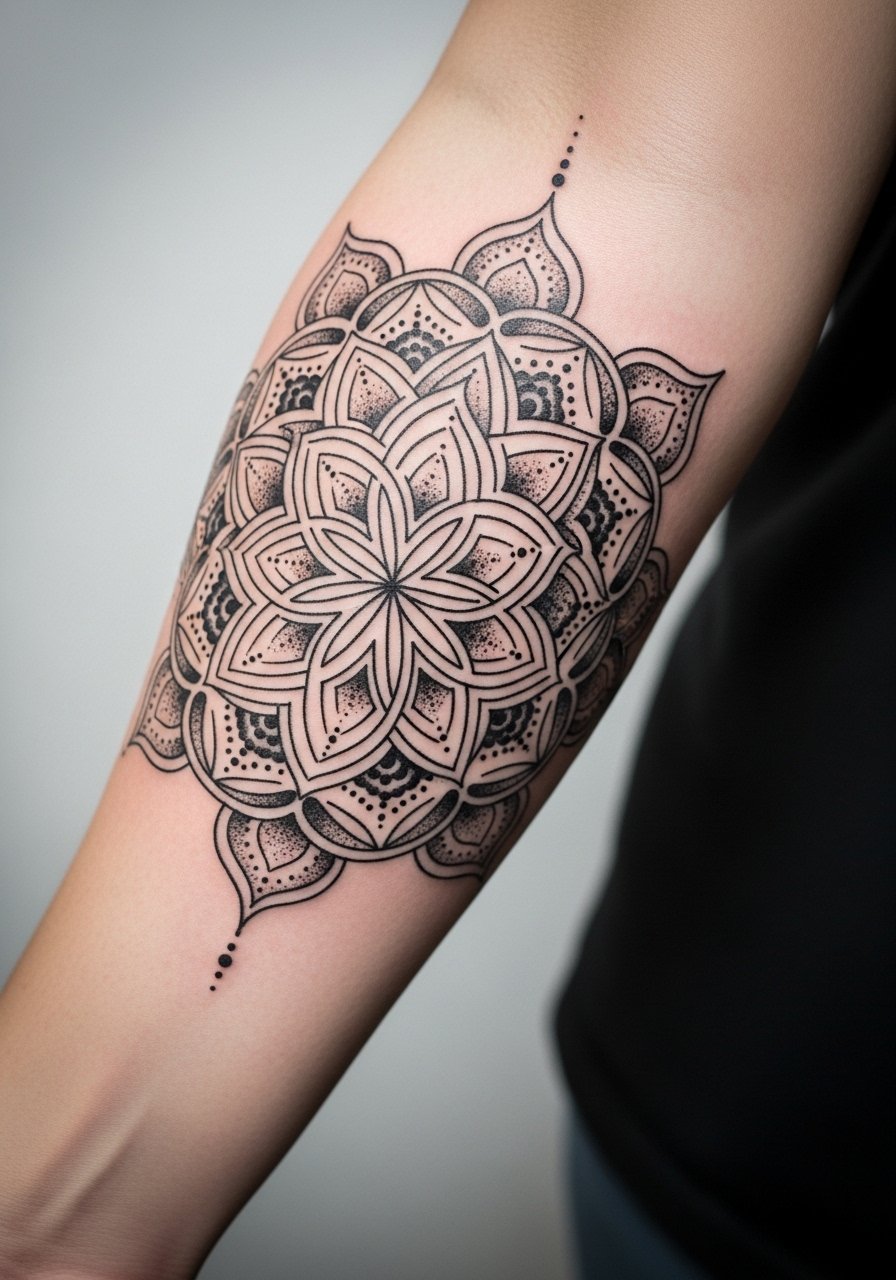
I recommend this when you want symmetry that reads from a distance and still holds detail close up. Tell your artist you want a 4 to 6 inch diameter, clean radial linework, and spacing that avoids overly dense inner circles. Common mistake is shrinking the mandala to wrist size, which causes lines to merge after a year for many skin types. Expect one to two sessions and moderate forearm pain. At six months the dot work softens slightly, at two years the radial lines remain the readiest feature. For showing it off, pair with a fitted black crewneck tee so the outer forearm is framed without distraction.
2. Tribal Geometric Wrap Around the Forearm
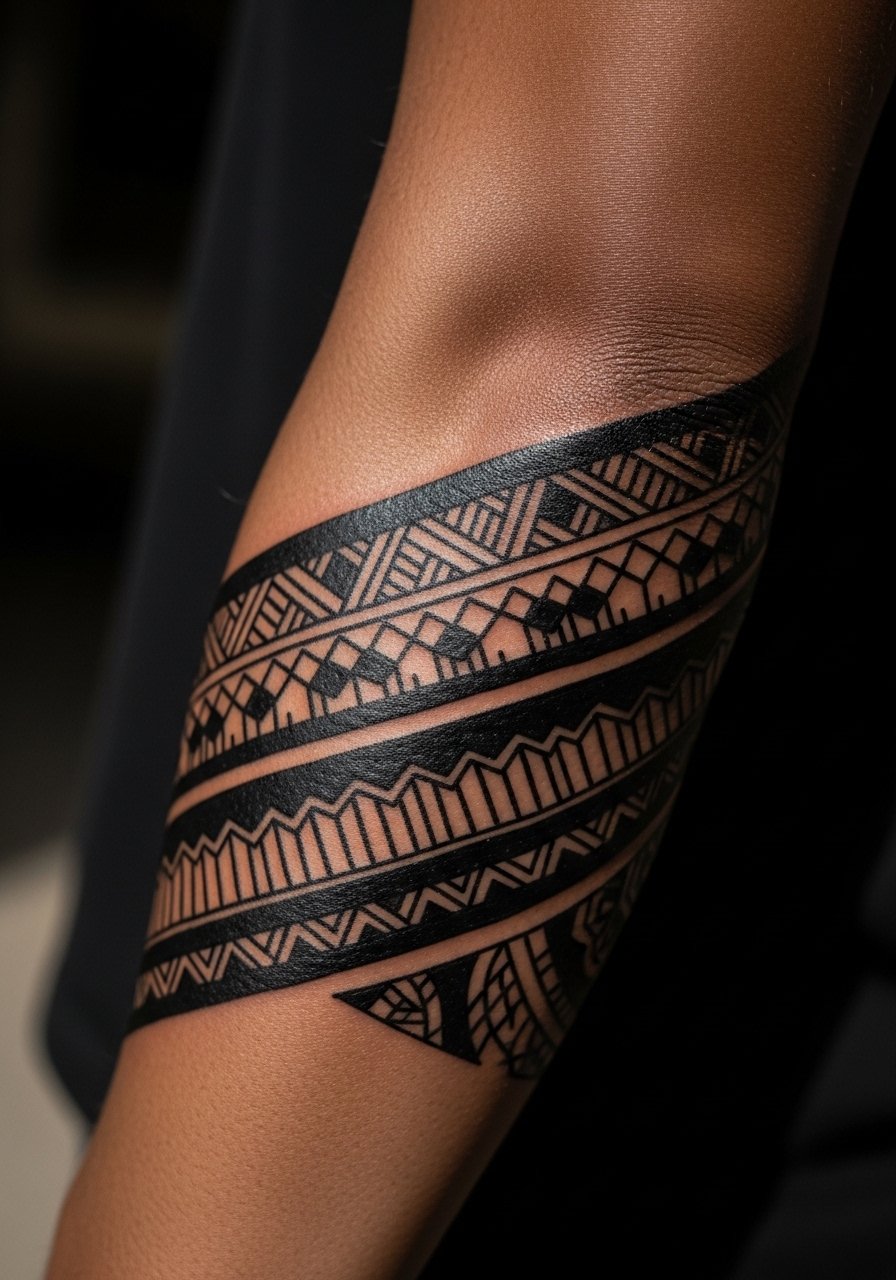
This style is for someone who wants bold contrast that ages predictably. Ask for thicker line weights and clear negative space between repeating motifs. The biggest error is asking for tiny interlocking elements that look crisp at first and then bleed together. Two sessions usually does the trick for a full wrap. Pain is steady but manageable since the forearm is not overly sensitive. Over the years the solid black holds better than intricate fine lines on active arms. For day-to-day wear, match the wrap with a leather cuff bracelet men on the opposite wrist to balance the silhouette.
3. Abstract Geometry Transitioning Into Realism
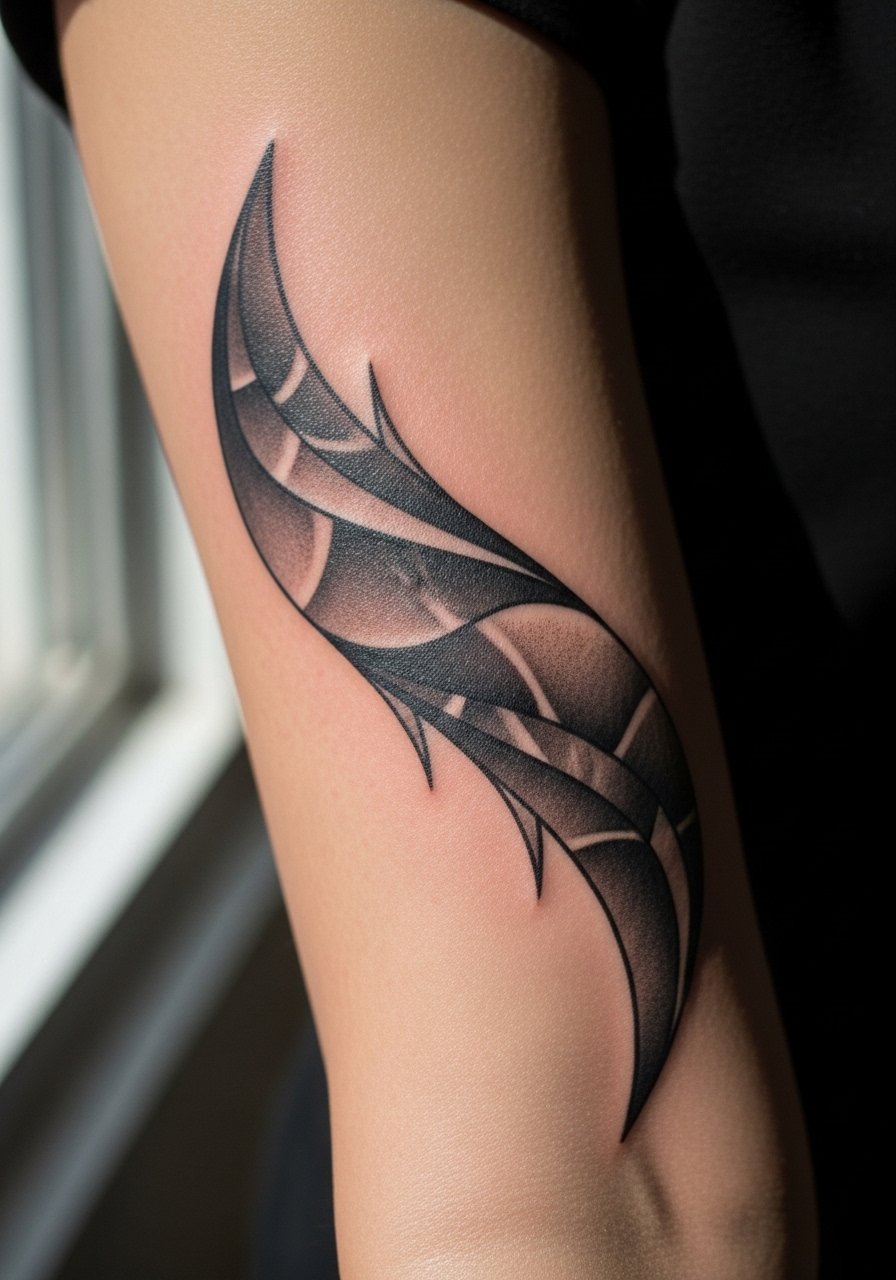
This hybrid solves the flat reference problem by letting geometric forms break into shaded realism along the arm contour. In consultation, bring both geometric references and a realism palate so the artist can plan a smooth transition. A common version that ages poorly pins too much micro detailing near joints. I suggest medium scale and soft whip shading to let the shapes breathe. Expect about three sessions and higher inner forearm sensitivity. At two years the shaded realism will mellow while the geometric skeleton keeps the composition readable. For showing the piece, roll up a men's rolled sleeve shirt so the inner forearm sits cleanly exposed without stretching.
4. Full Arm Sleeve of Repeating Geometric Motifs
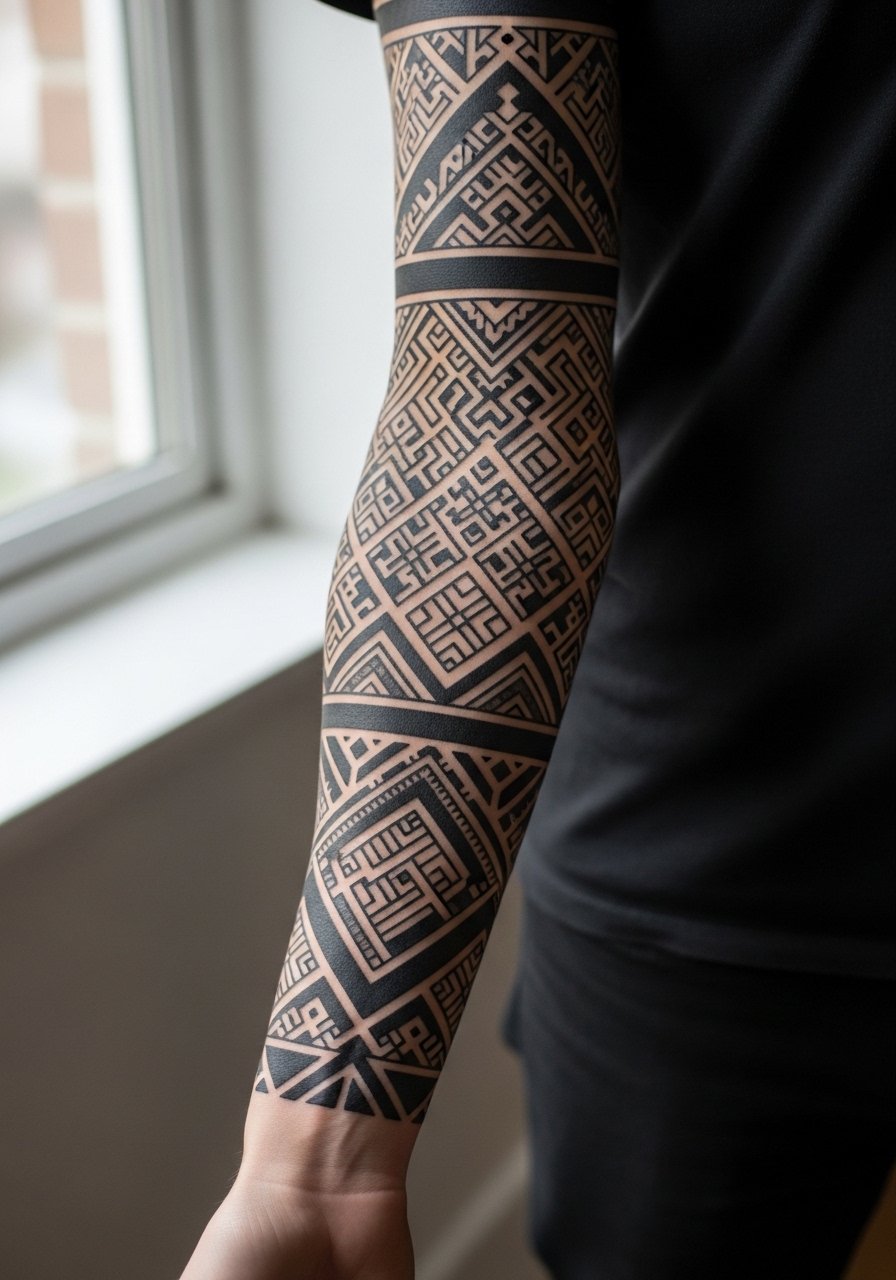
This is for collectors who want cohesion across the entire arm. Plan for five or more sessions and discuss session order so primary motifs anchor the shoulder and the wrist. The mistake I see most is treating each session like a standalone flash piece, which fragments the sleeve. Ask your artist for a roadmap and how motifs will scale when the arm bends. Expect higher sitting times and intermittent soreness. Over five years the large saturated fields remain the strongest elements. For layering with clothes, an open flannel shirt worn over a white tee gives a preview without fully revealing the sleeve.
5. Minimalist Single-Line Symbol on the Wrist

If this is your first geometric tattoo, the wrist is subtle but unforgiving. Ask for slightly heavier line weight than the reference and at least 1.5 to 2 inches of space so the symbol does not blur quickly. One session, low sitting time, and higher touch-up likelihood at year three are realistic expectations. Common mistake is insisting on ultra-fine lines that disappear against everyday friction from watches and washing. For the session, wear a sleeveless top or rolled cuffs so the artist has clean access to the inner wrist without fabric stretching the skin.
6. Dotwork Polyhedron on the Upper Arm
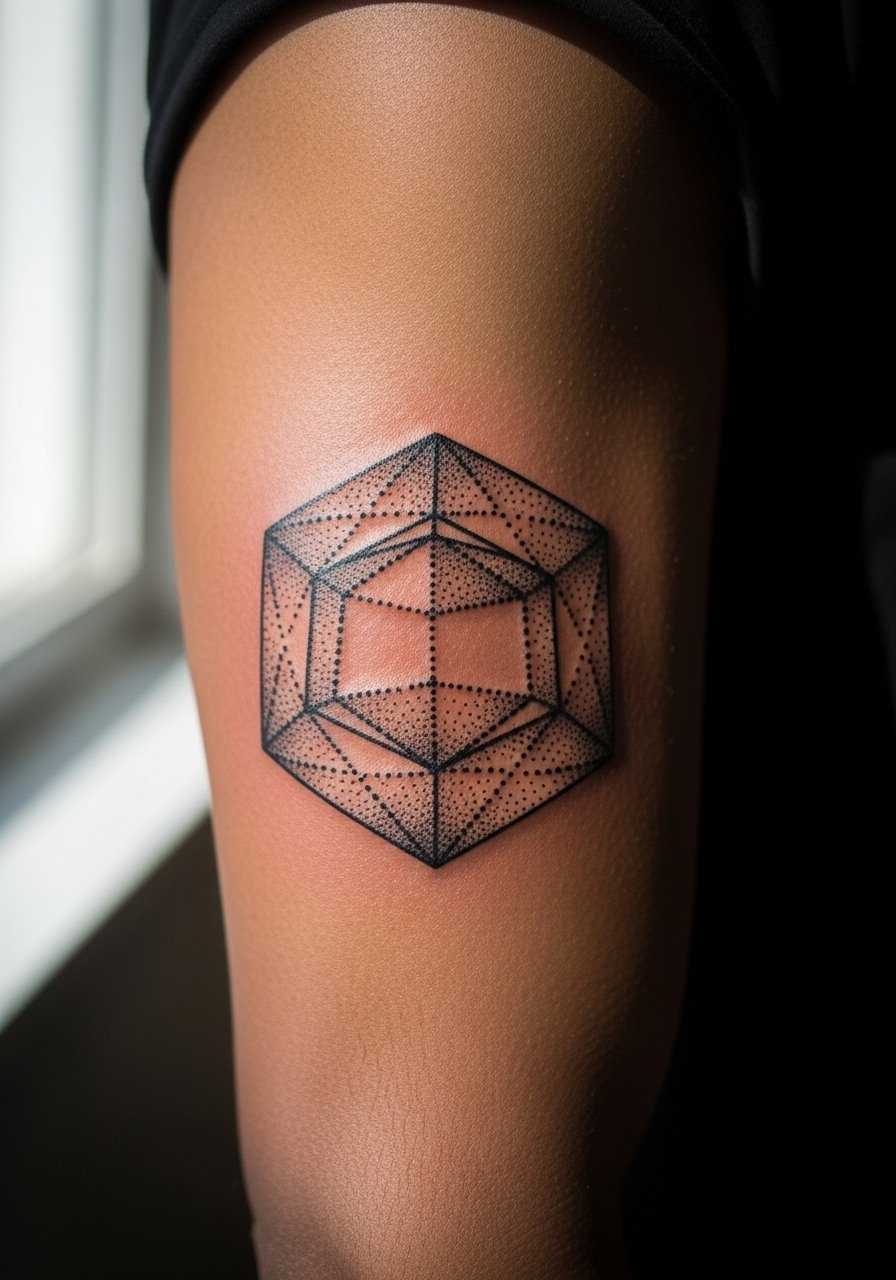
This 3D-looking polyhedron stands out on the bicep and uses dot work to build volume without heavy black fields. Tell your artist you want pointillism that follows muscle contours and ask for a size around five inches for depth. People often shrink this design and then lose the optical 3D effect. Two to four sessions depending on density are typical and the bicep tolerates longer sits. At two years the stipple keeps its texture, and touch-ups are occasional. Pair the finished piece with a men's muscle tee olive to frame the bicep in casual looks.
Pack Smart
The first six ideas above include wrist, forearm, and upper arm pieces that need different prep than chest work, so a few targeted items smooth the session and the first week.
- Stencil transfer paper kit. Lets you preview how a mandala or wrap will sit on the forearm before the needles hit, which helps avoid last-minute resizing.
- Topical numbing cream. Useful for longer sleeve sits or sensitive inner forearm work when you need the session to stay manageable.
- Thin protective film roll. Keeps wrist and hand pieces cleaner during the first week of frequent washing and friction.
- Fragrance-free gentle body wash. Cleanses healing skin without irritating the fine-line and dotwork designs most of these ideas depend on.
- Aquaphor healing ointment. Thin layers in the initial days help fine line and stipple areas maintain moisture without clogging.
7. Flower of Life on the Inner Forearm
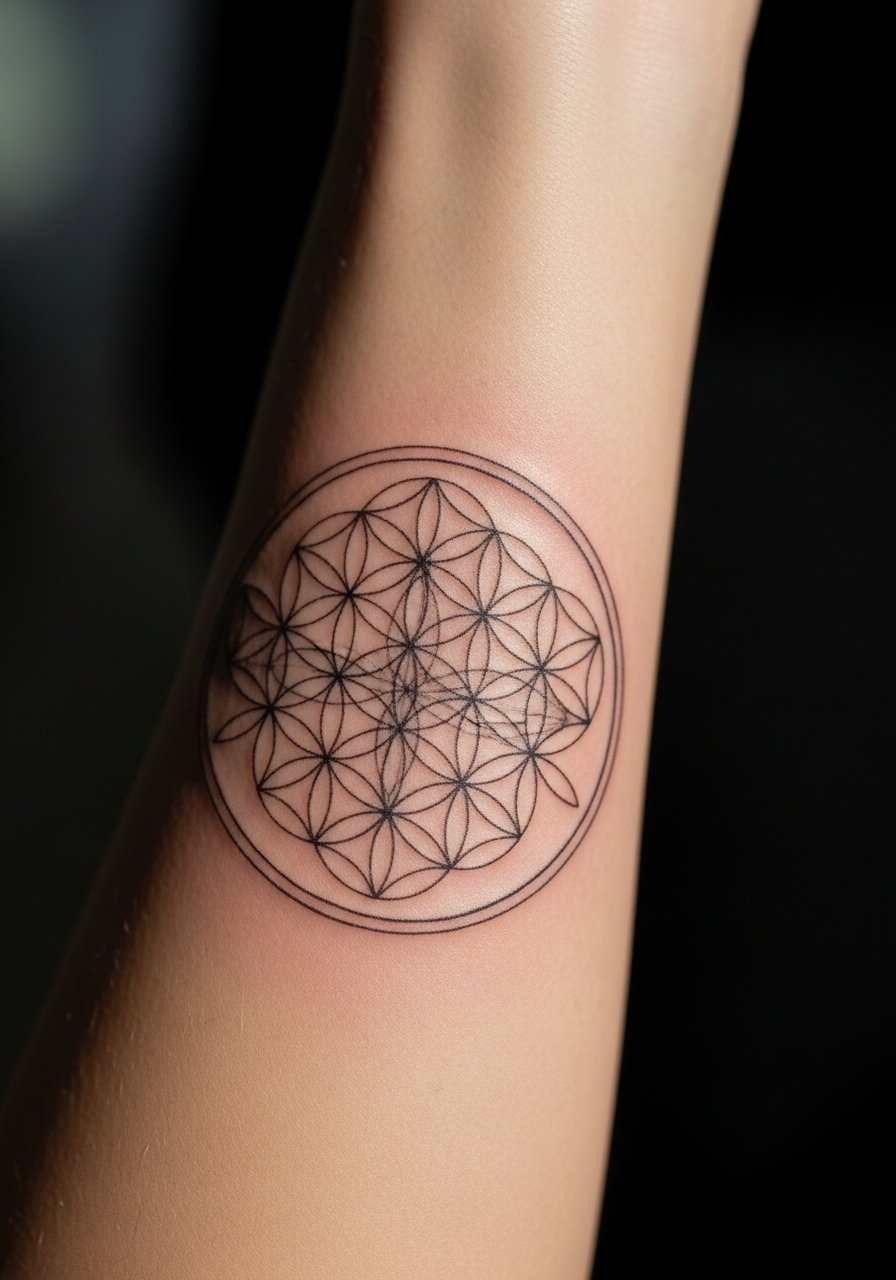
The Flower of Life reads meditative when placed on the inner forearm and benefits from vertical orientation that follows the arm. Ask for slightly increased spacing between intersecting lines so the pattern does not fill in. Common mistake is compressing the grid into a small patch. Expect two sessions for crisp intersections and a noticeable sensitivity during the sit. At six months the clear intersections still define the motif, at two years the interior lines may need a touch-up depending on sun exposure. For showing it off, roll sleeves up and wear a thin silver chain bracelet on the opposite arm to keep attention balanced.
8. Geometric Animal Silhouette with Tribal Accents

This hybrid gives symbolic heft while keeping the overall shape masculine. Bring animal silhouette references and tribal pattern samples so your artist can merge scales and line weights. A frequent error is cramming tribal blocks into the silhouette which obscures the animal shape after healing. Two to three sessions are common, and the outer forearm tolerates bold mark-making. Over time the silhouette will remain legible if the artist leaves breathing room around the tribal accents. Wear a slim leather watch men on the opposite wrist when you want to frame the piece without crowding the forearm.
9. Layered Triangle Optical Illusion Half-Sleeve

Optical illusion sleeves read architectural and dramatic, and they need scale to avoid collapsing into visual noise. In consultation, insist on test-scale mockups because small triangles will blur into a patternless field. Expect about four sessions for a strong half-sleeve and longer sits during each booking. Artists split on whether ultra-fine triangles are worth the risk, and you should discuss longevity openly. For daily looks, an elbow-length henley with sleeves rolled to mid-forearm gives a controlled reveal that complements the geometry.
10. Micro Cube Stack on the Elbow

Elbow tattoos live where the skin flexes most, so scale matters. Micro cubes can look clever at first and then blur if the artist packs too many close lines across the joint. Ask for a design that complements joint movement and for needle depth that accounts for thin skin. One short session often suffices, but touch-up rates are higher. Expect sharpness to hold for a year before softening. For the session, wear a sleeveless hoodie men so you can bend without fabric compressing the area.
11. Ornamental Geometric Bicep Band

A band is versatile and easy to expand into a sleeve later. Request a circumference mockup so the pattern reads even around the muscle at rest and while flexed. The common mistake is uneven spacing that becomes obvious when the arm tenses. One to two sessions typically do the job, and the bicep tolerates saturated black well. Over five years the band stays consistent if you protect it from chronic sun. Pair with a henley shirt short sleeve rolled to mid-bicep for a casual frame.
12. Hexagon Grid with Negative Space
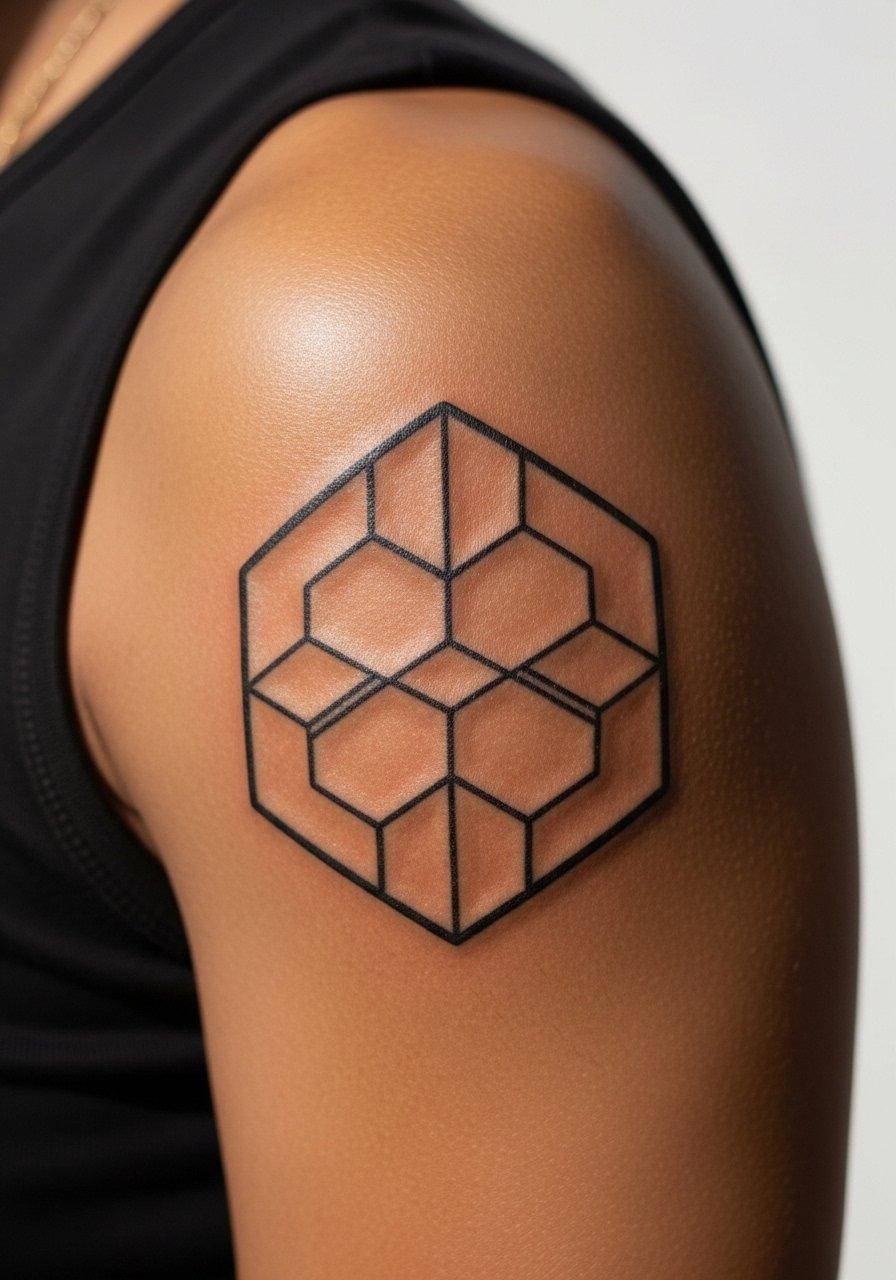
Negative space designs age well on active arms because they rely on contrast rather than tiny interior lines. Tell your artist you want bold outlines and generous gaps so the skin texture remains part of the composition. A common error is overcomplicating inner fills which reduces the grid's lifespan. Two sessions usually suffice. At two years the skin contrast remains the focal point and touch-ups are rarely needed unless there's heavy sun exposure. No extra clothing notes here since the outer arm shows naturally.
13. Metatron's Cube Half-Sleeve
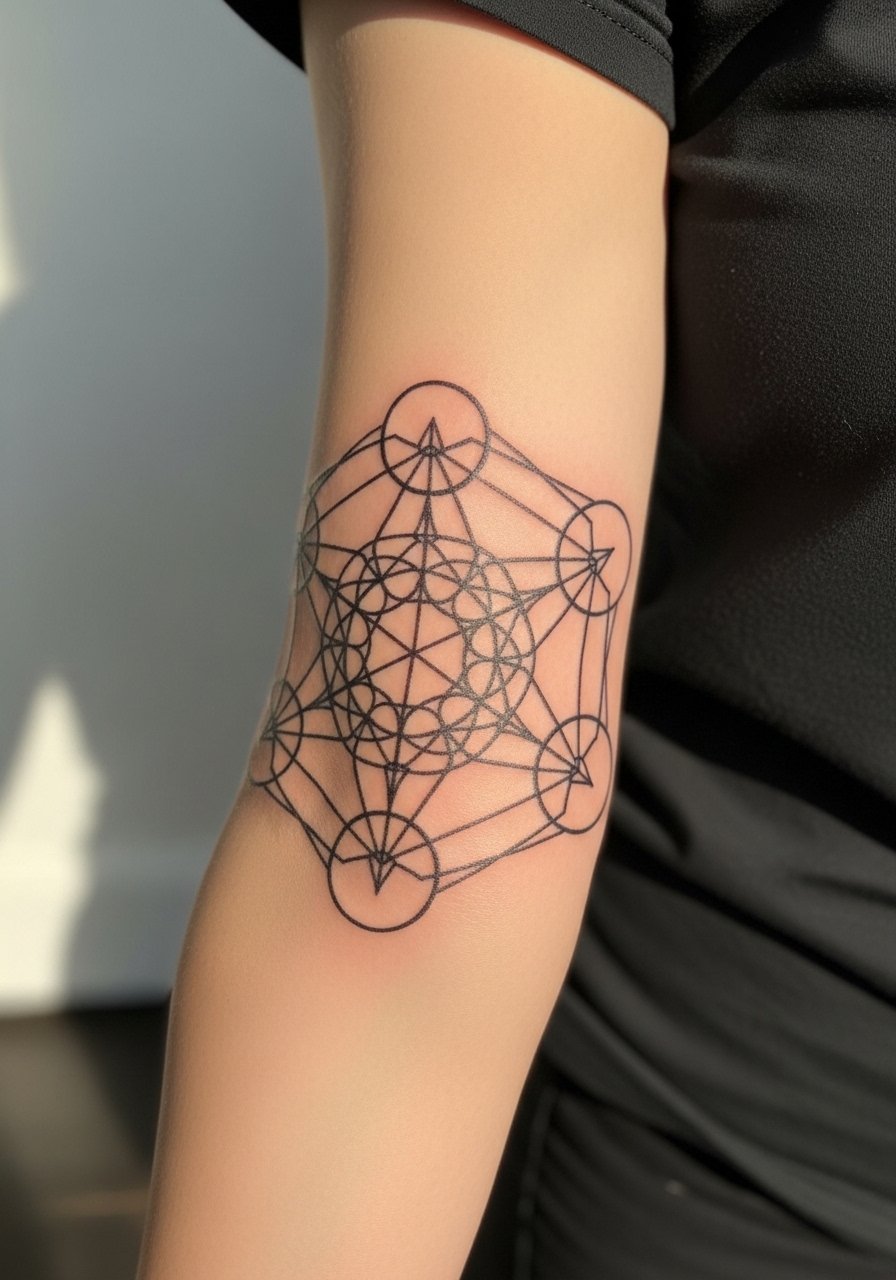
This one reads spiritual and structural but requires a disciplined layout. Artists and clients sometimes clash on how dense to make it. The mistake I see is pushing for too many intersecting lines in a tight area. Ask for staged sessions that build complexity outward from a central grid and for spacing adjusted to your skin type. Three to four sessions are common and inner forearm sensitivity can be higher. Over time the central axes remain most legible. For showing it off, roll a sleeve and wear a loose long sleeve tee pulled to mid-forearm so the half-sleeve reads without fully exposing the arm.
14. Muscle-Contour Geometric Flow
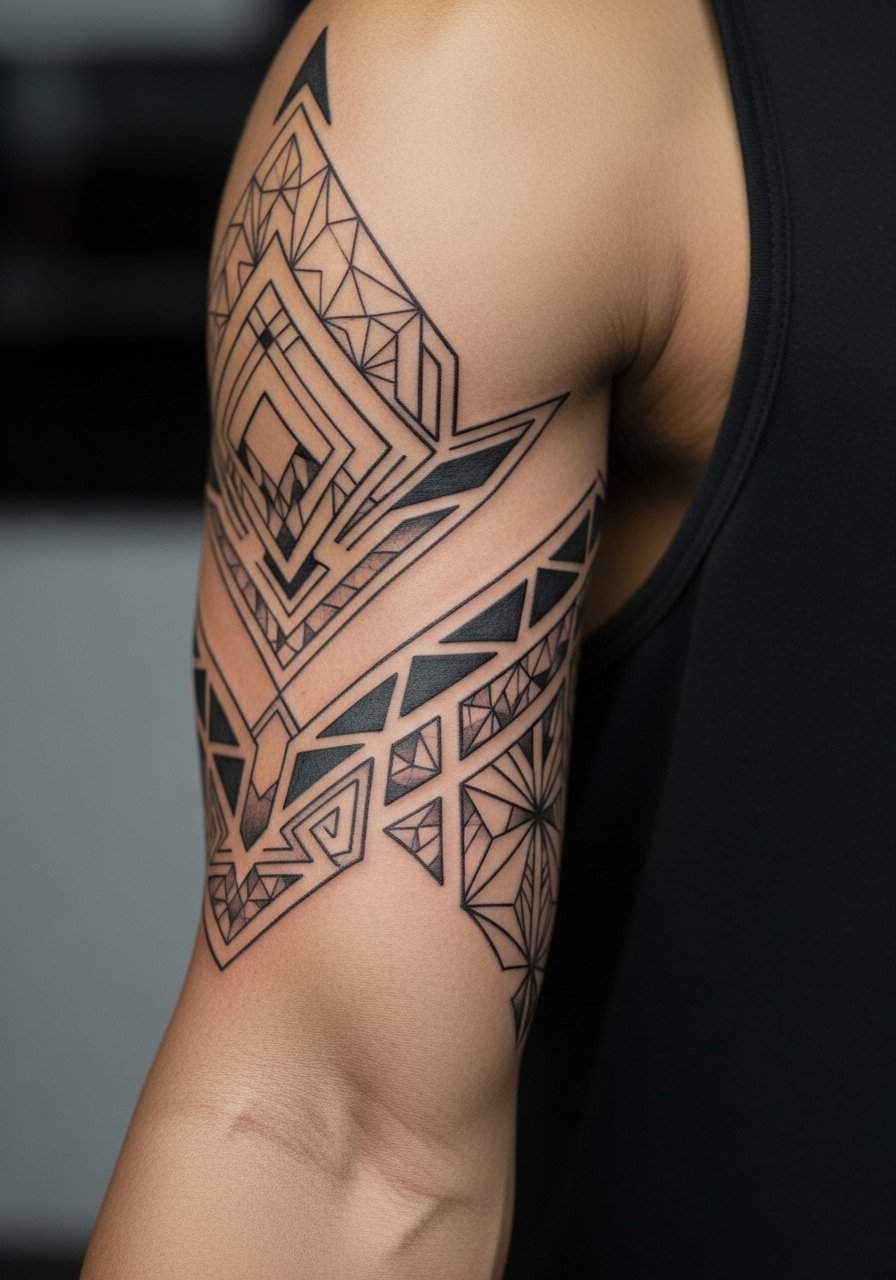
This is one of the under-covered approaches that uses anatomy to make static geometry feel kinetic. When you consult, ask the artist to map motifs to peaks and valleys of the muscle so the shapes expand and contract with flex. A frequent misstep is using a flat stencil that ignores curvature. Expect multiple staged sessions and longer chair times depending on complexity. When done right the design keeps visual coherence at six months and still reads structured at five years. No clothing link here because the fit is about natural movement rather than framing.
15. Negative Space Chevron Across the Forearm

Chevron bands look modern and require clear separation between inked and uninked skin. Tell your artist you want crisp edges and a 10 to 15 percent margin between adjacent chevrons to avoid merging. A common aging mistake is tight stacking that fades into a textured blur. One to two sessions suffice and the forearm handles bold black well. Over time the negative space stays readable if you avoid high sun exposure. Pair with a fitted black crewneck tee when you want the pattern to sit front and center.
16. Japanese Hybrid Geometric Forearm Flow
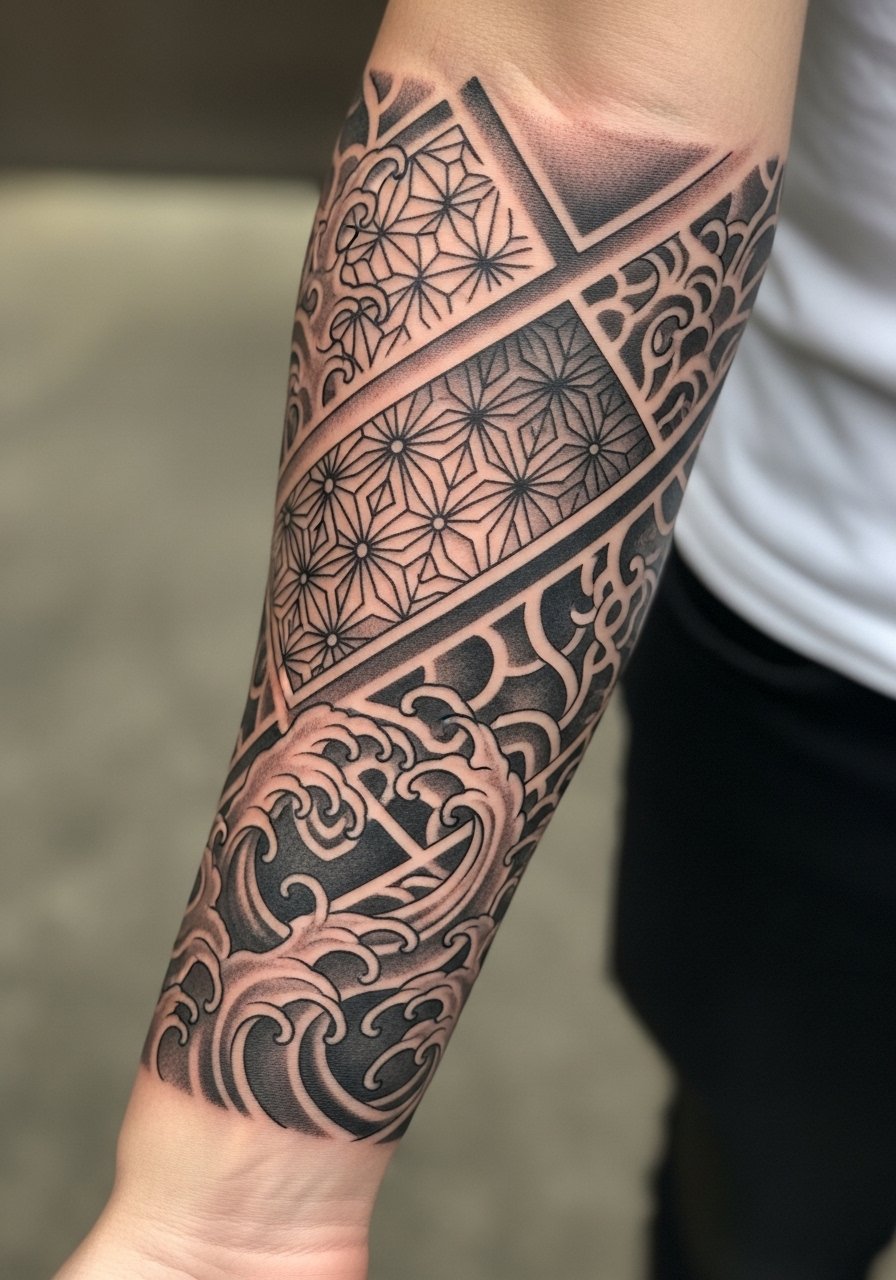
Blending Japanese elements with geometry helps the piece follow the forearm curve and move with the limb. Bring both geometric and Japanese references so your artist can fuse rhythm and negative space. The mistake is pasting a Japanese piece and then overlaying rigid geometry without planning how both will flex. Expect three sessions and a mix of shading techniques. Over time the wave flow softens but the geometric anchor keeps the composition readable. For session day, wear a loose button-down shirt you can pull aside for clear access.
17. Elbow-Focused Polyhedron That Accents Movement
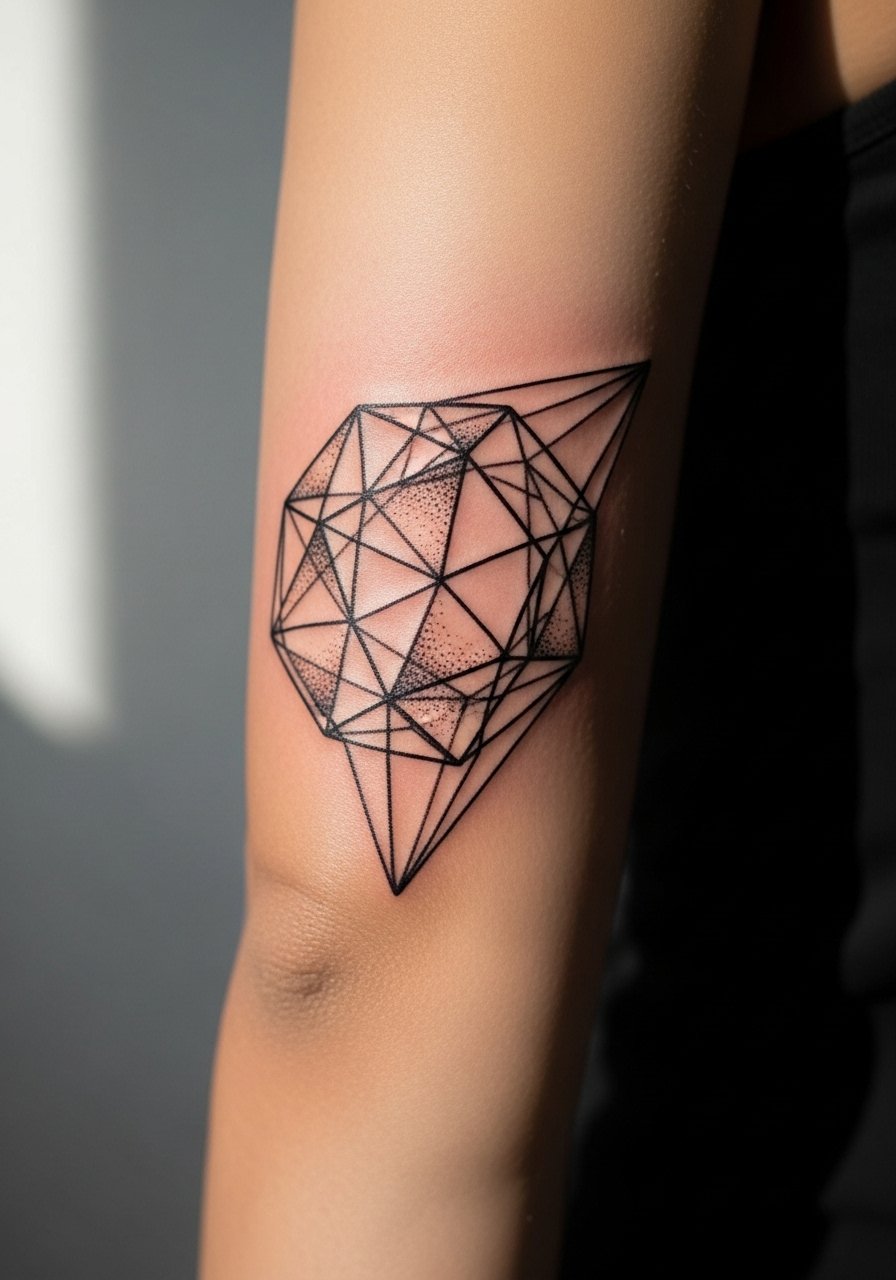
An elbow-centric illusion is a smart play on motion but it demands planning. Have the artist show how facets will read when the arm is bent and when it is straight. The biggest error is running too many lines directly over the joint where skin stretches most. One short session might cover it, but expect touch-ups because elbow skin is volatile. Artists disagree on fine line here, with one camp saying the joint makes lines blur within two years and the other camp arguing that careful depth and spacing make it last. Name both camps during consultation and ask where the artist stands.
18. Stippled Constellation Band Near the Wrist

Wrist bands need a strategy for friction and washing. Ask for dot sizes that are slightly larger than reference and for connector lines that are not hairline thin. The common mistake is tiny details that vanish with daily hand use. One short session usually handles a band, but touch-ups at year two are common. For the session, wear a sleeveless top or roll up cuffs so the artist has unobstructed access and you avoid fabric rubbing.
19. Micro-Geometric Stacks Above the Elbow

Tiny stacks read neat when kept sparse and sized for the skin. Ask for single-line spacing and avoid clustering too many pieces into a small patch. The common mistake is treating micro geometry like jewelry that needs dense detail. One short session, with higher touch-up likelihood. At two years expect some softening. For showing the area, wear a men's open flannel shirt with sleeves rolled so the micro work peeks out without full exposure.
20. Checkerboard Negative Space Forearm Panel

Checkerboard panels rely on contrast rather than micro detail, which helps aging. Tell your artist you want solid fills with edge buffers so squares do not bleed into each other. The error I see is attempting gradients inside each cell which complicates long-term clarity. One to two sessions will handle a mid-forearm panel. Over years the bold squares remain legible if UV exposure is limited. No specific clothing note here because a simple rolled sleeve showcases the panel.
21. Geometric Patchwork Sleeve for Collectors

This is the last stop for someone building a cohesive collection over multiple sessions. The conversation with the artist should include how each patch will age and which motifs should anchor the upper arm versus the wrist. A common mistake is writing checks with too many styles and no unifying elements, which fragments the sleeve. Plan for five or more sessions and discuss touch-up cadence early. Over time the larger blocks hold best, and smaller details may need selective refreshes. For showing a finished sleeve, roll an open flannel shirt or wear henleys that reveal the arm in stages.
Frequently Asked Questions
Q: Will fine line geometric tattoos blur faster on the forearm than bold blackwork?
A: From what I've seen, fine line pieces on high-friction areas like the wrist and outer forearm tend to soften sooner than bold blackwork. The trade-off is that fine line reads very refined at first. If longevity matters more than immediate finesse, ask for slightly heavier line weight and more spacing so the geometry keeps breathing.
Q: How should I prepare clothing-wise for a long half-sleeve session that includes inner and outer forearm work?
A: Wear a loose long sleeve tee that you can pull up without stretching the skin, or a button-down you can unbutton and slide aside. Bring a sleeveless layer to change into mid-session if the studio is warm. That minimizes fabric contact and keeps the artist's access consistent.
Q: Are negative space geometric designs better for active people who work outdoors?
A: Negative space can age more favorably because it uses skin contrast rather than tiny interior lines that blur under sun and abrasion. Still, UV exposure is the main enemy, so daily SPF and occasional touch-ups make the difference between readable design and a worn patch.
Q: How often should I expect touch-ups for a geometric sleeve versus a micro geometric wrist piece?
A: Sleeves with large black fields commonly need touch-ups less frequently, maybe every five years, while micro wrist pieces often need a touch-up around year two or three. That depends on sun exposure, skin type, and how tight the original linework was.
Q: Where do I find artists who specialize in sacred geometry or dot work without copying stock flash?
A: Search hashtags like #geometrictattoo and #sacredgeometrytattoo to match styles, or use apps that list portfolios by specialty. Look for consistent healed photos in portfolios and ask for consultation images that show the artist's understanding of spacing and skin behavior.
Q: Should I use second-skin or dry healing for detailed geometric work?
A: Artists split into two camps here. One group uses second-skin to protect lines during the first days and preserve crisp detail. The other prefers dry healing to reduce trapped moisture and bacterial risk. Ask your artist which method they use and why, since the right choice depends on shop protocol and the design's density.