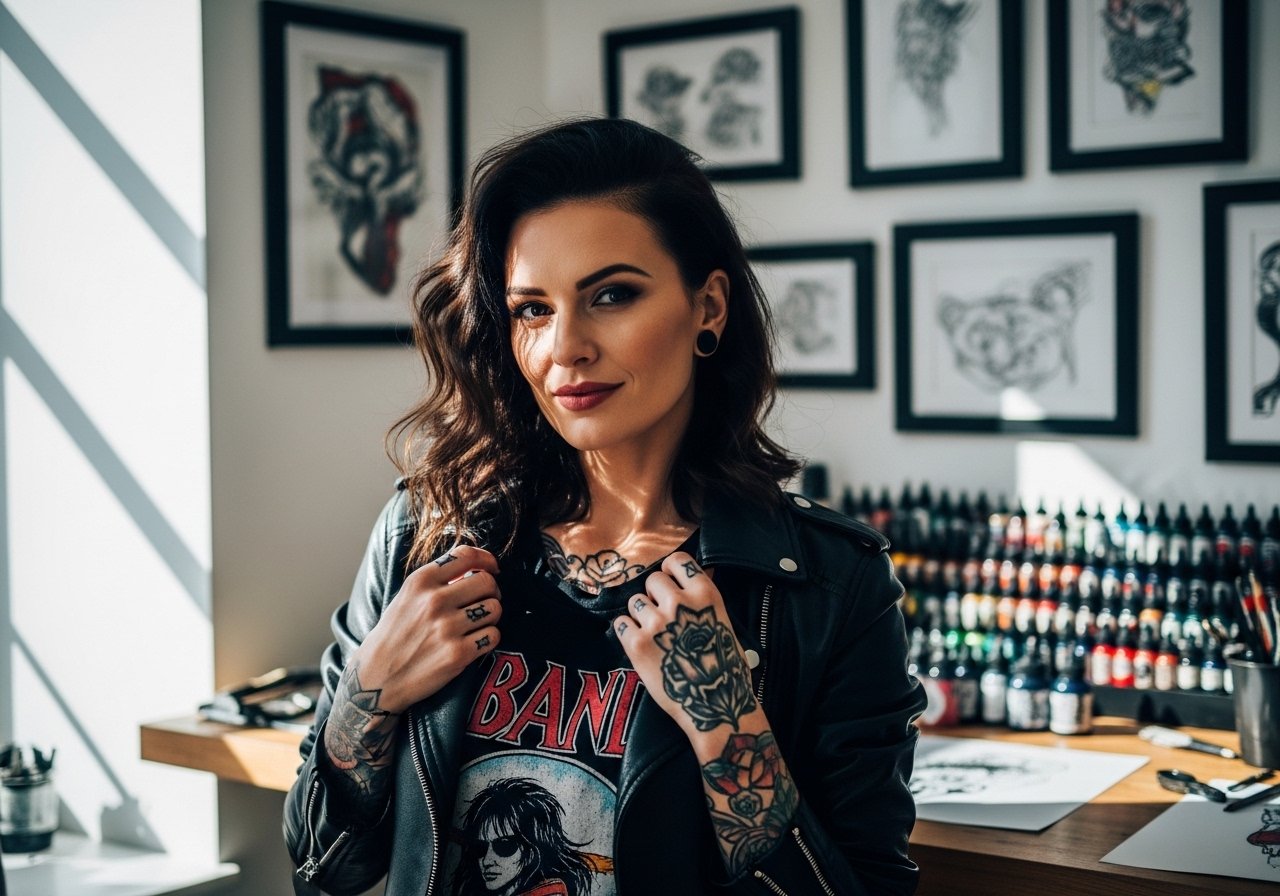
Fine line butterflies dominate feeds right now, but the geometric ones that still read crisp two years from now usually started with room on the stencil, bolder linework, and a placement that avoids constant rubbing. Expect honest trade offs between crisp detail and longevity. The ideas that follow focus on stencil choices you can ask for in consultation and the wardrobe moves that put your new wings on display the right way.
1. Fine Line Geometric Butterfly on Inner Forearm
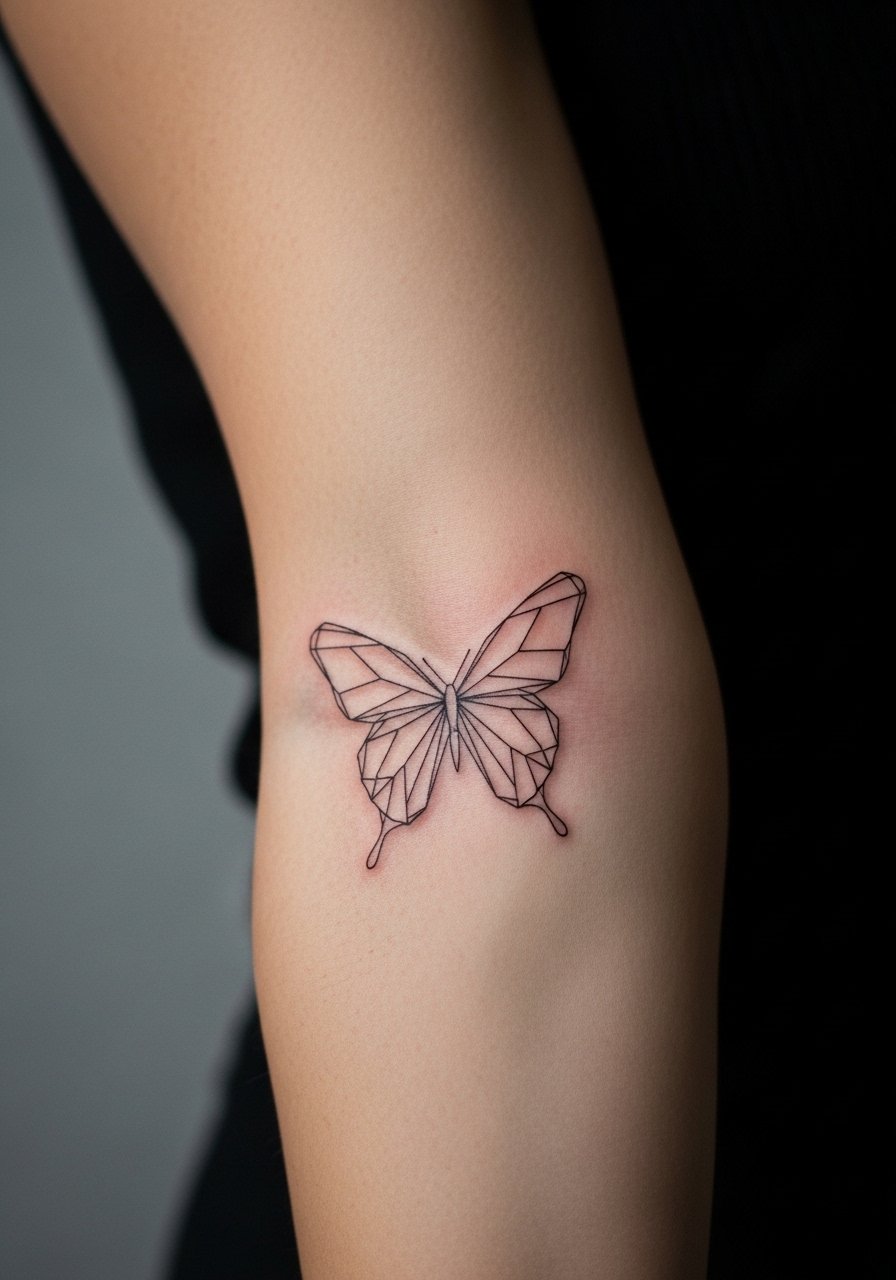
I recommend this when you want a design that reads delicate but still lasts. Pain is mild on the inner forearm and a typical session runs 45 to 90 minutes depending on size. Tell your artist to scale the shapes so each wing cell has breathing room. The common mistake is squeezing too many lines into a small stencil, which leads to merging and early touch-ups. Expect crisp linework at six months, slight softening by year two, and a likely touch-up around year three for tight dot work. For showing it off, roll sleeves and pair with a loose button-down shirt so the forearm sits in natural light during social settings.
2. Geometric Butterfly Wrist Band
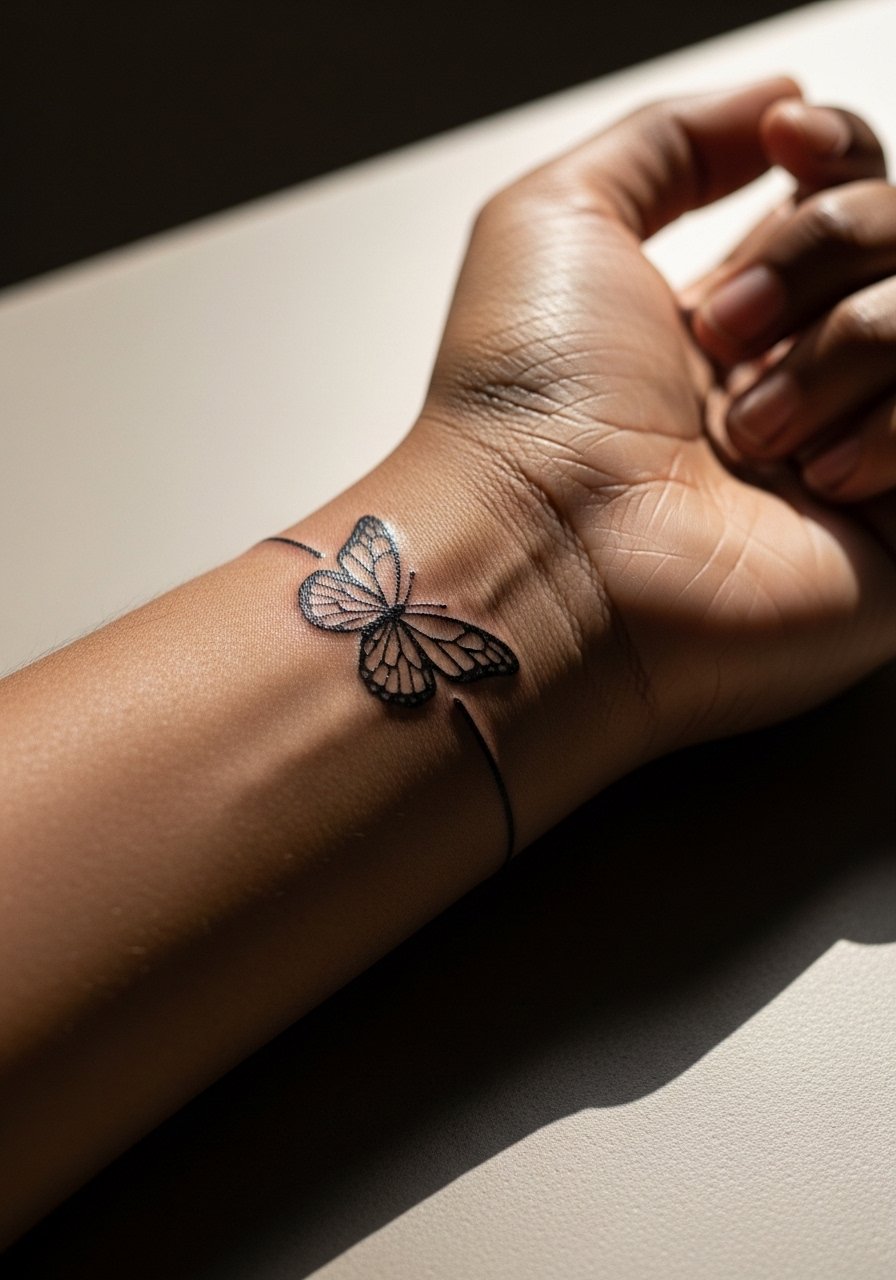
This small band looks modern when the stencil wraps slightly around the wrist. Fair warning, wrist skin takes a lot of friction from watches and sleeves so expect a more fussy healing window. Session time is brief, usually under an hour, though touch-ups are common because of constant washing. During consultation, ask for slightly thicker outer lines and lighter internal geometry to reduce blowout risk. A frequent mistake is insisting on ultra-thin lines that vanish within a year. Wear a minimalist watch or thin stacked bracelets to frame the band without rubbing the ink.
3. Single-Wing Geometric Butterfly on the Collarbone
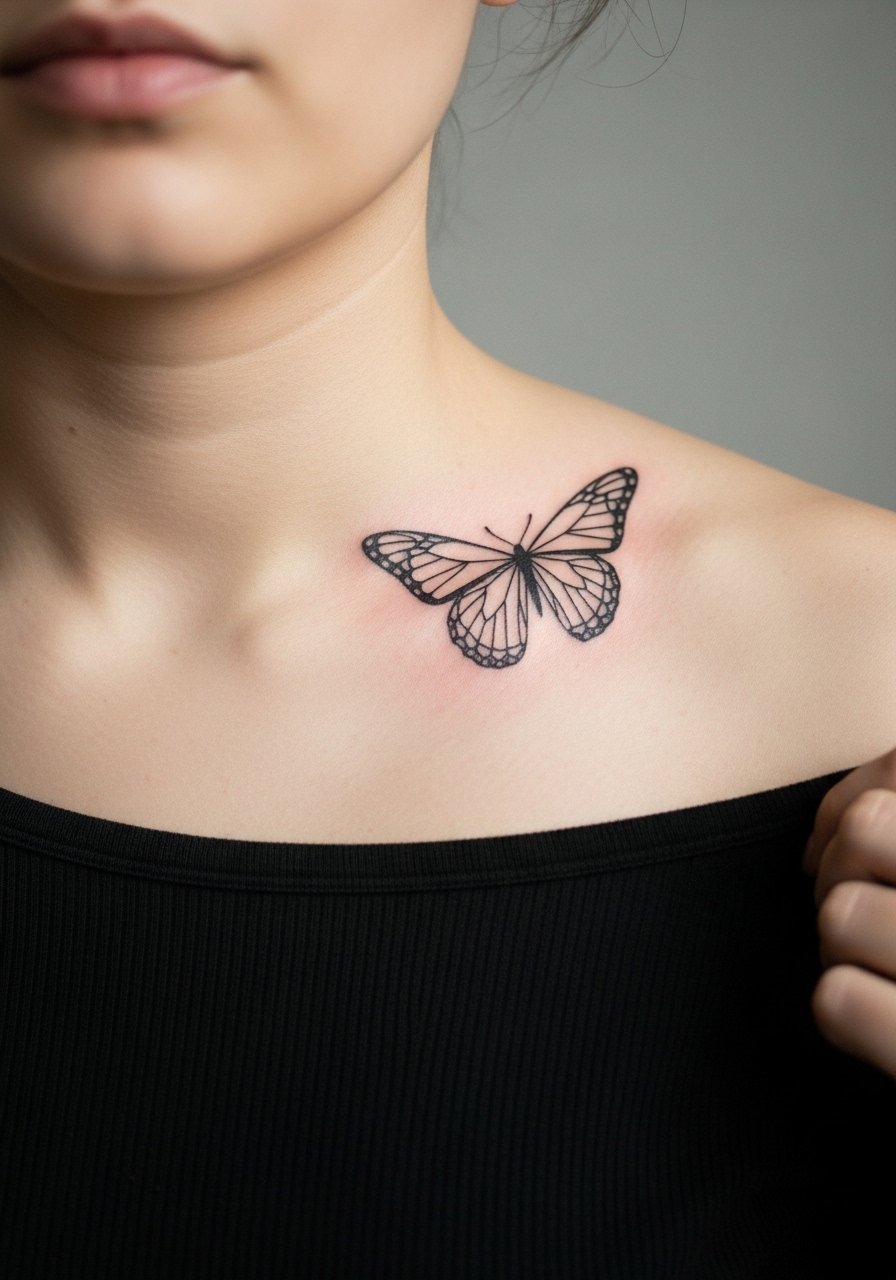
This placement is great if you want an asymmetric look that pairs with jewelry. Pain is moderate at the collarbone because the skin rests over bone, so expect sensitivity and a shorter session around 30 to 60 minutes. Tell your artist to keep internal geometry airy rather than dense so the wing ages without merging. One mistake is asking for heavy saturation near the bone, which can scar more easily. For evening wear, a thin chain pendant necklace sits above the wing and complements the stencil without competing for attention.
4. Dot-Work Geometric Butterfly on Upper Arm
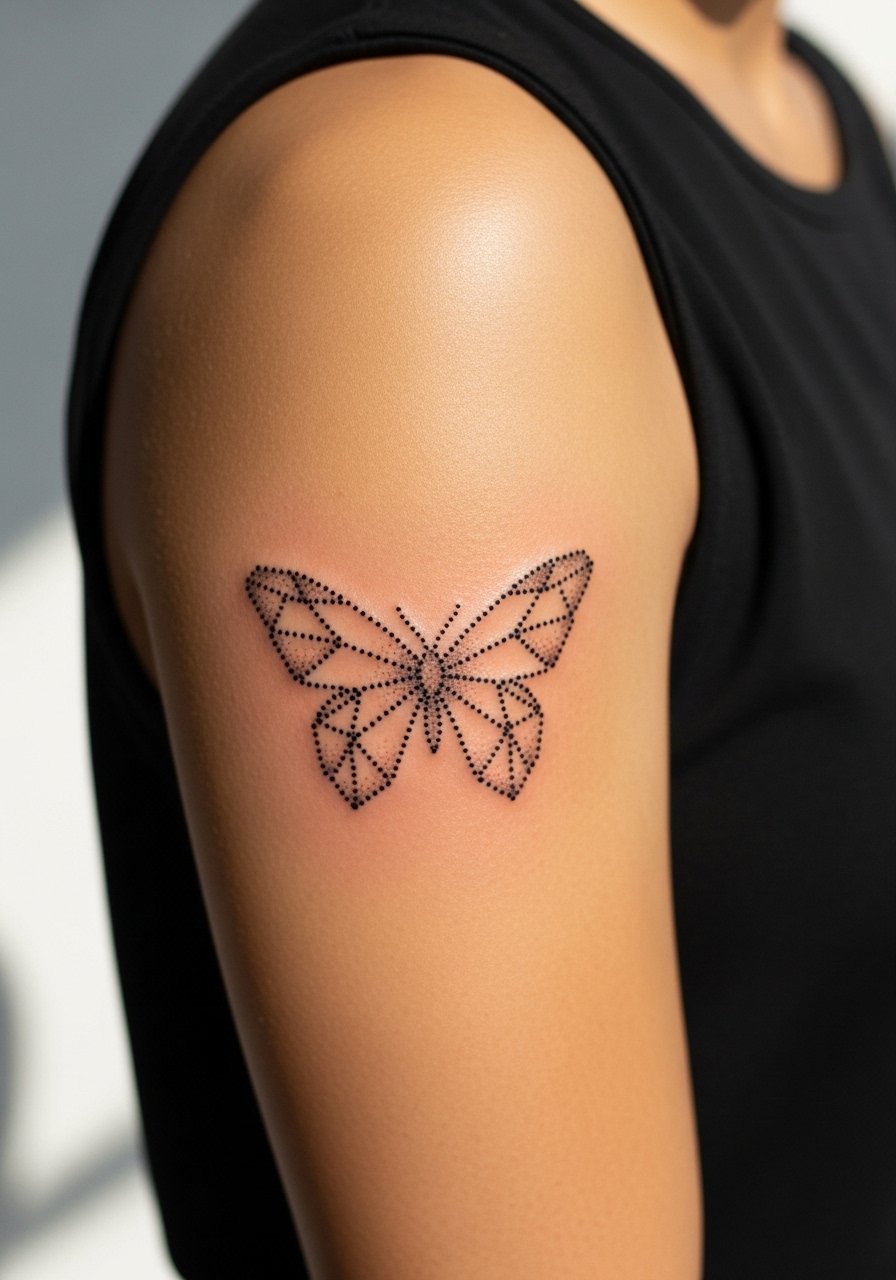
Dot work and stipple shading give geometric butterflies a textured look that holds up better than ultra-fine continuous lines. Pain is low on the outer arm and sessions are moderate, often 60 to 120 minutes for a mid-sized stencil. During consultation, ask for a mix of stippling and slightly bolder outline to keep the form visible at a distance. A common version that ages poorly uses only tiny dots with no outline, which can fade into an indistinct patch. For casual show-off, pair with a sleeveless linen top that frames the outer arm and lets the stipple texture read well.
5. Geometric Butterfly Over the Shoulder Blade
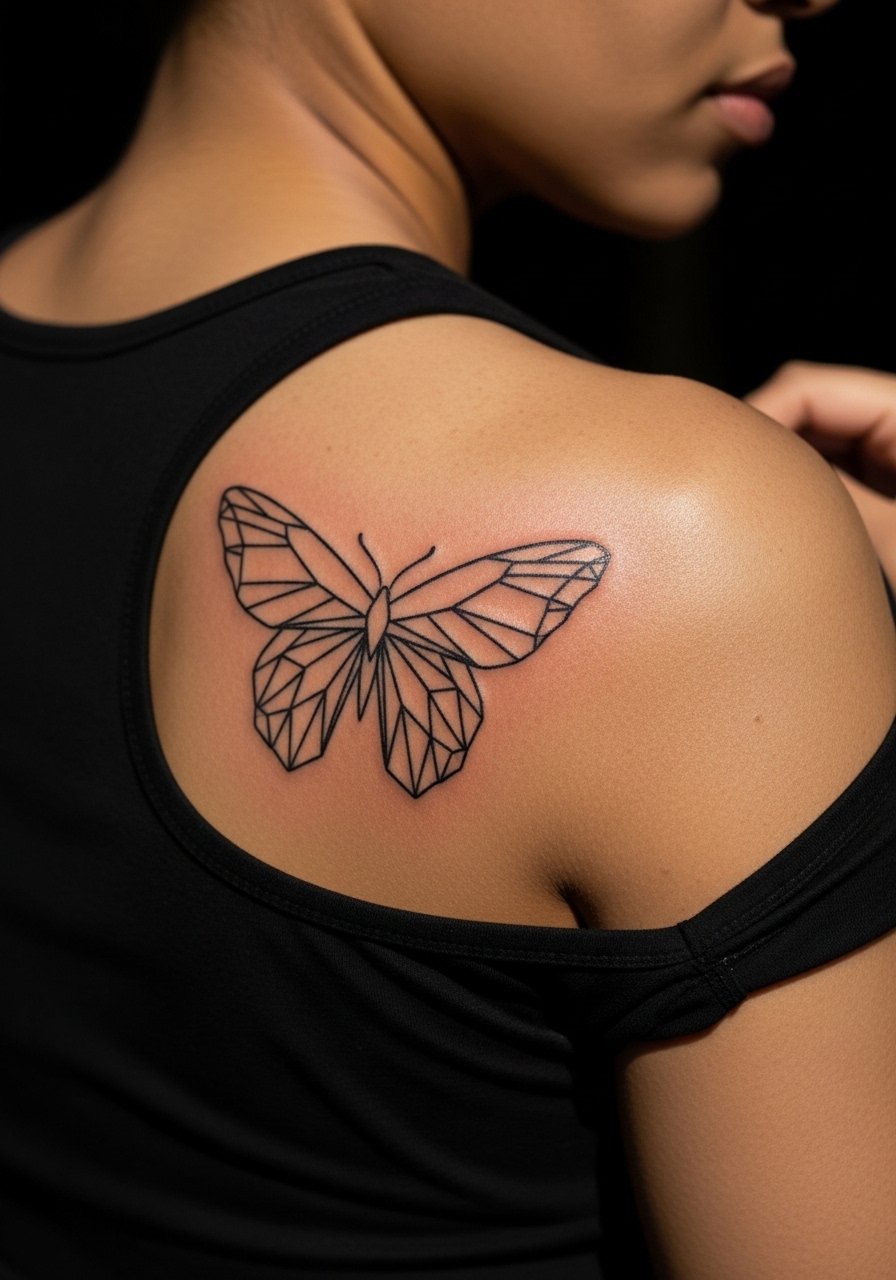
The shoulder blade gives space for larger geometry and allows symmetry without crowding. Expect a moderate pain level and longer sessions if you go big, often two to three hours split into parts. I tell people to use the stencil to check symmetry with multiple movement poses so the wings sit right when you move. A mistake is placing too small a stencil on this canvas, losing impact over time. For nights out, an open-back dress showcases the wings and keeps fabric off the healing skin.
6. Minimal Geometric Butterfly Behind the Ear
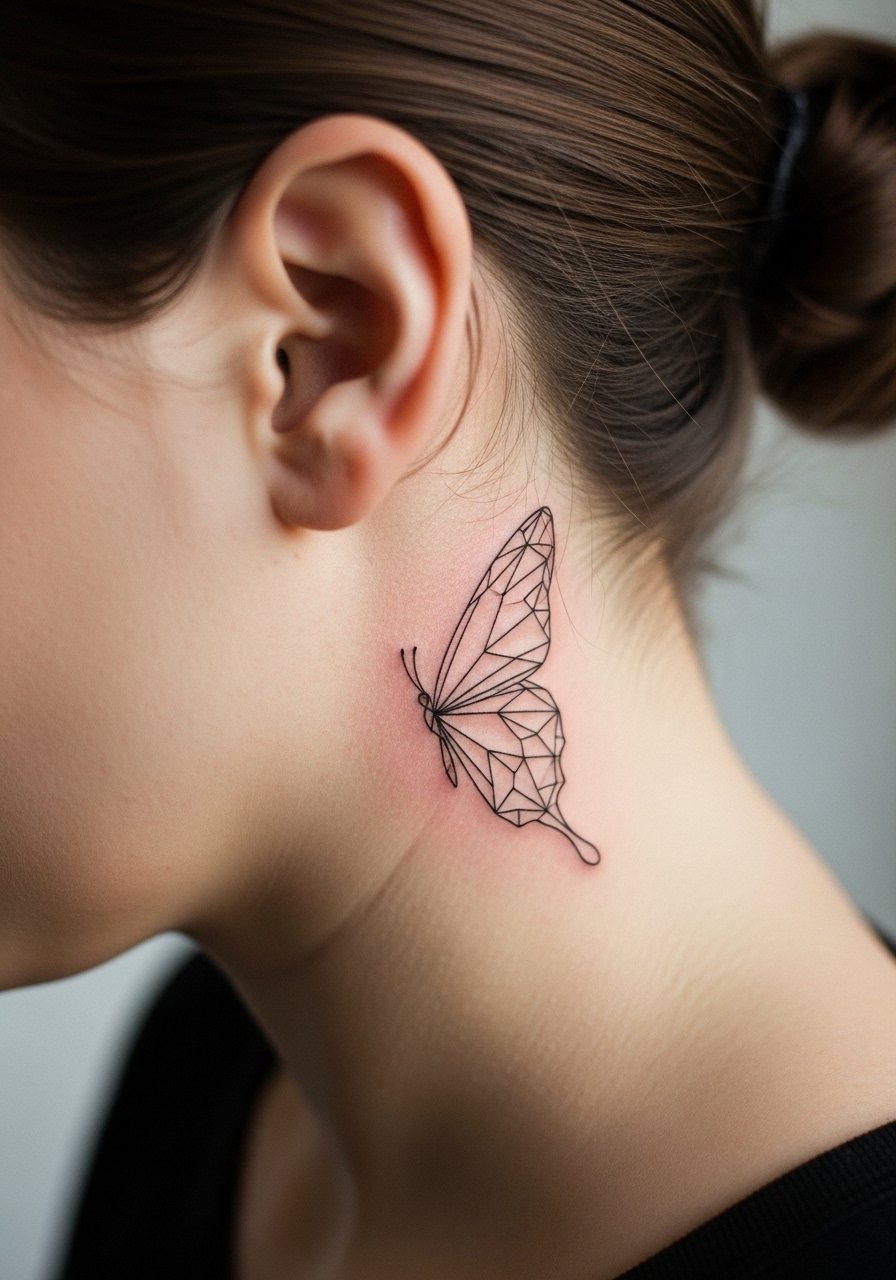
Behind-the-ear pieces read intimate and minimal. Pain is low but the area is sensitive, and session time is short, often under 30 minutes. Make sure the stencil is placed below the hairline so the wing sits on flat skin. Artists split into two camps on tiny detail here. One camp says the area blurs fast because of thin skin and hair movement. The other camp says careful depth and spacing keep lines intact. Ask your artist where they stand. For the session, tuck hair back and wear a wide-neck shirt so the artist has clear access and you stay comfortable.
Studio Day Picks
The small wrist and behind-the-ear pieces above require different prep from larger shoulder and upper-arm work, and a few specific items make the session and first week smoother.
-
Stencil transfer paper kit. Lets you preview placement on skin, which is essential for the tiny wing behind the ear and for a wrist band that must wrap evenly.
-
Topical numbing cream. Applied before the appointment eases sensitivity on bony collarbone work so the session stays steady.
-
Thin protective film roll. Useful for hand and wrist pieces where friction from daily tasks can irritate healing lines.
-
Fragrance-free gentle body wash. Cleanses delicate areas like inner forearm and shoulder blade without stripping pigment.
-
Aquaphor healing ointment. A thin layer in the first days helps fine line work keep moisture while preventing crusting that can pull at tiny geometric shapes.
7. Negative Space Geometric Butterfly on Sternum
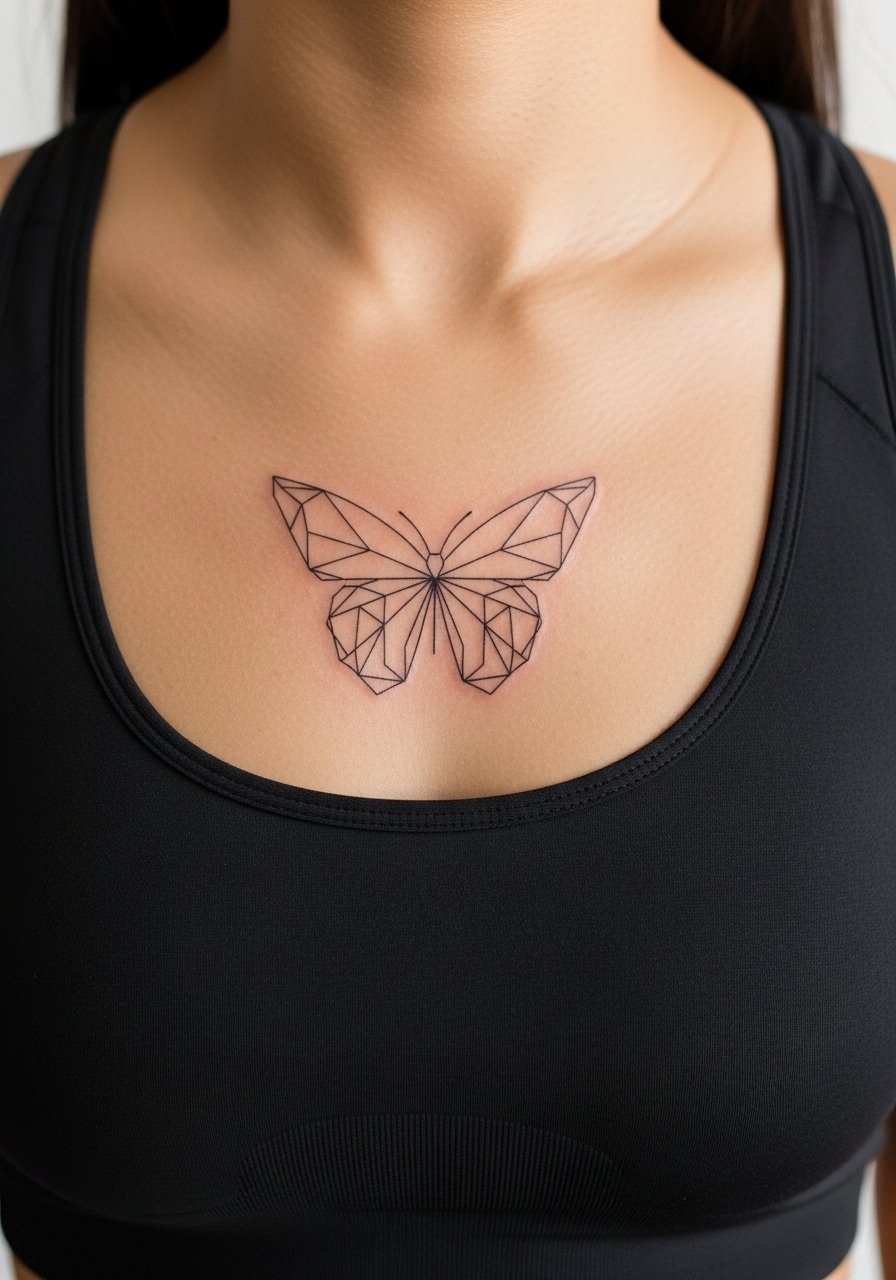
Sternum placement creates a central focal point but comes with more pain because it sits near bone and thin tissue. Sessions for detailed negative space stencils can be two hours or more and often split into sittings. The common mistake is pushing too dense a geometric fill, which tends to scar and blur. Expect the design to read strong at six months and require careful sunscreen at year two to prevent fading. For modesty and access on the day, bring a strapless or fitted sports bra so the artist can work cleanly. This placement sometimes raises questions about longevity from artists who split into camps over fine line on torso areas, so ask about their experience with sternum geometry.
8. Watercolor Wash Behind Geometric Wings on the Ribcage
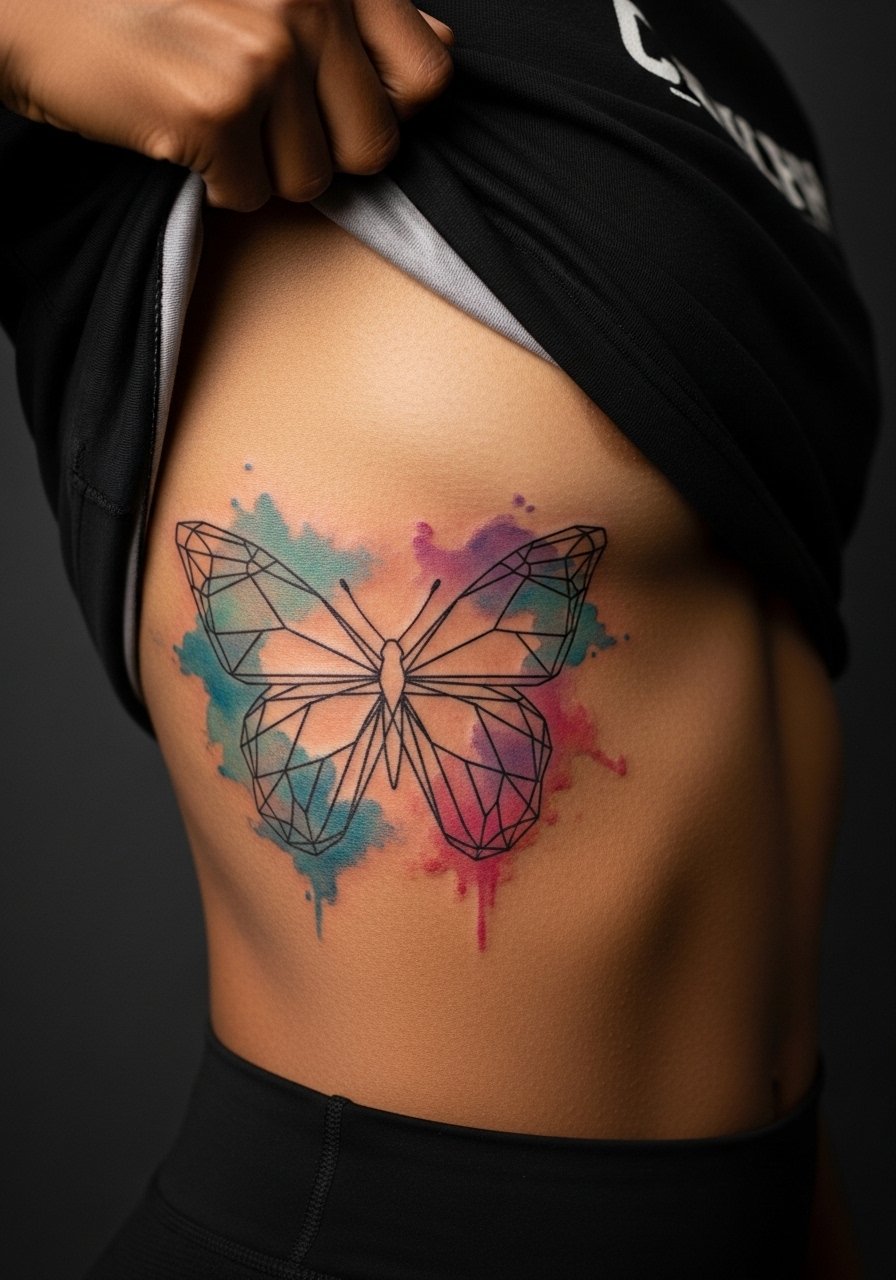
Combining geometric linework with a watercolor wash gives contrast but costs you in longevity on the ribs. The ribcage is a high-pain area and skin stretches with breath, so sessions are interrupted more often. A common aging problem is the wash bleeding into the lines if the stencil sits too close to color fields. Ask for a buffer between color and geometry. Healing at six months shows the color soft but the geometry holds if outlines were slightly bolder. Wear a loose crop top the day of the session so the artist can access the area without pressure.
9. Blackwork Geometric Butterfly on Full Back
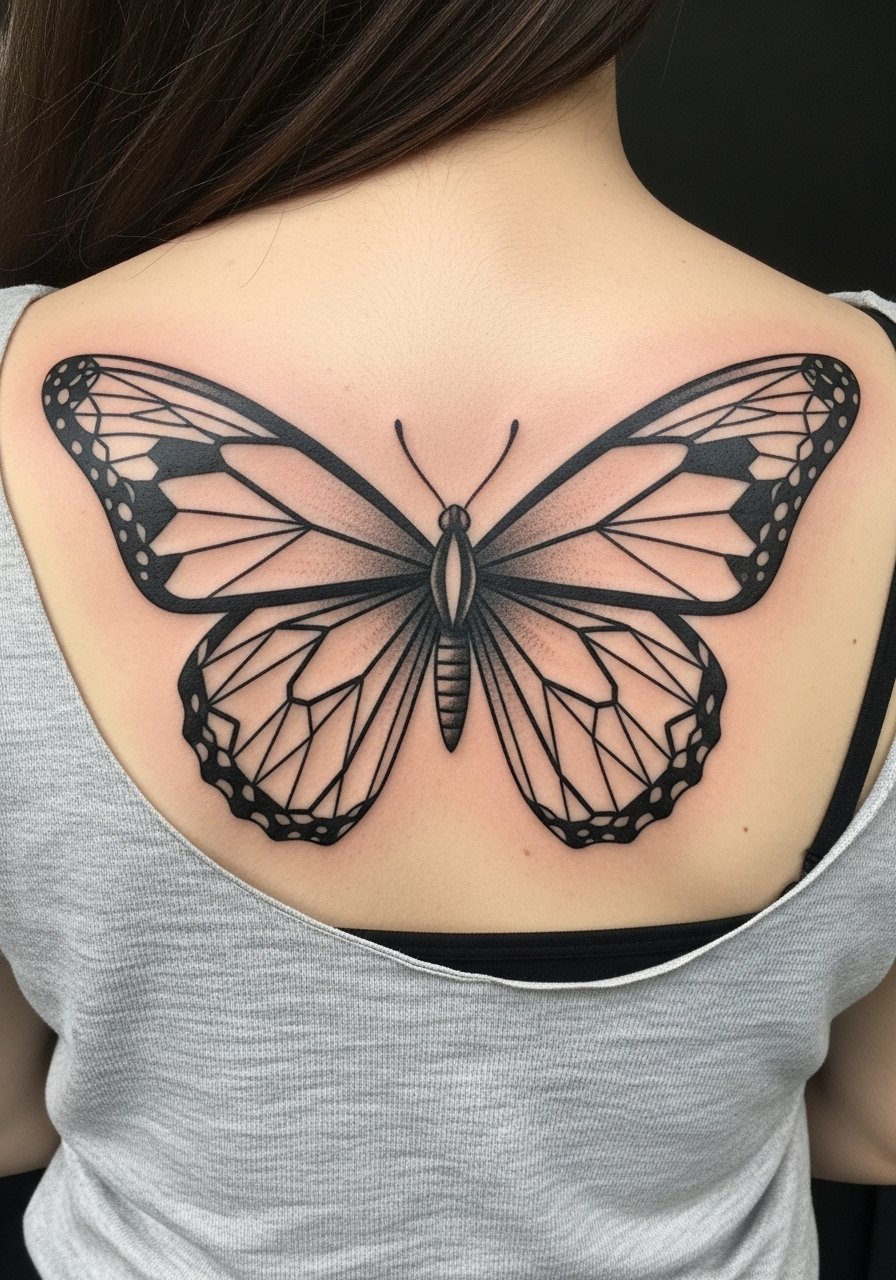
Blackwork scales well on the back because saturation survives years of washing and sun exposure. Pain is moderate over muscle, and sessions are long so expect multiple appointments. A key consultation line is to ask for block shapes interspersed with negative space so the wing keeps a silhouette at a distance. A mistake is over-detailing on a huge canvas, which makes the composition read busy. Touch-ups are less frequent than fine line work, often after five years. For post-session comfort, bring a loose button-down shirt you can slip on without rubbing the freshly inked area.
10. Micro-Geometric Butterfly on Finger
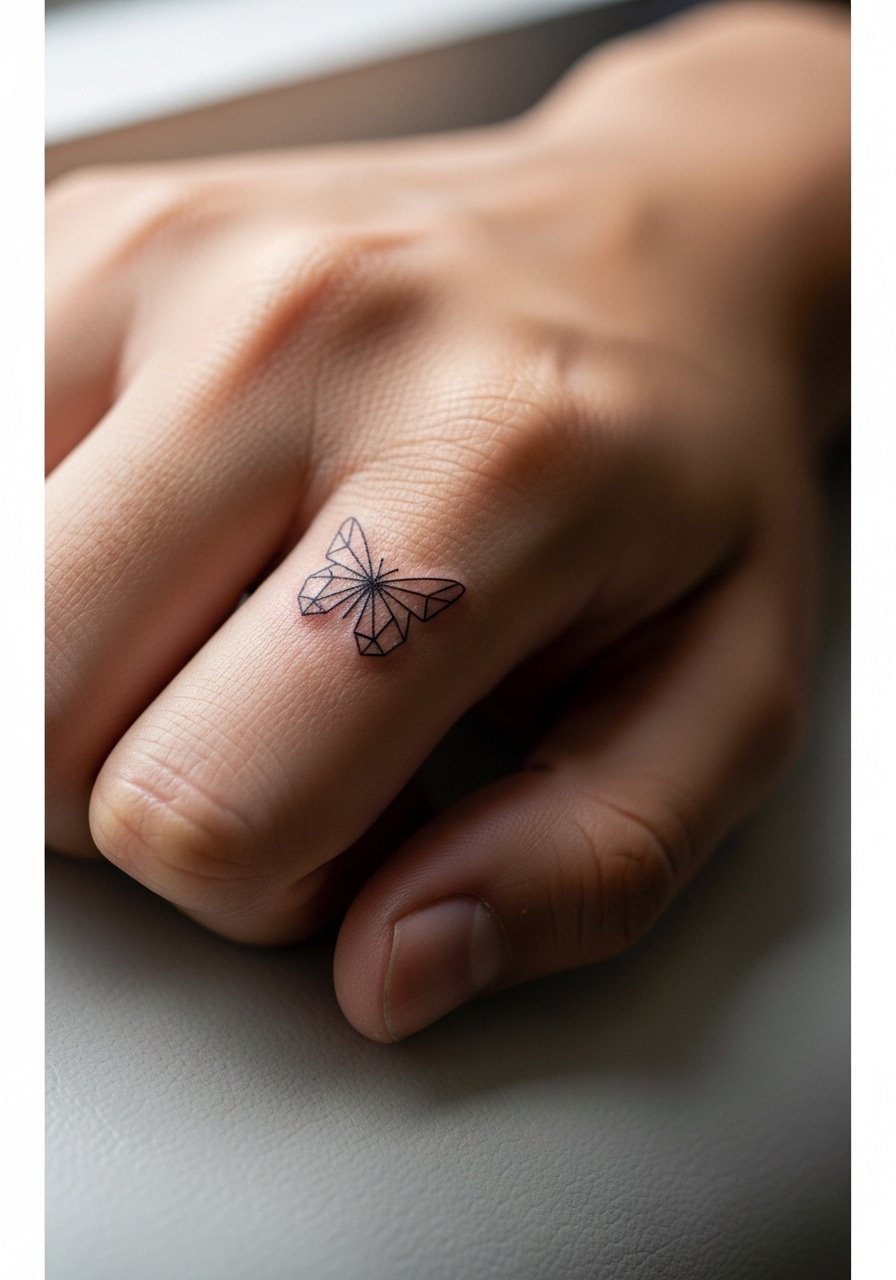
Finger tattoos face constant washing and friction so expect a high touch-up rate. Pain is brief but sharp and sessions are short. The usual mistake is asking for too many small internal elements on a narrow canvas. Tell your artist to simplify the stencil into bold micro shapes and to avoid extremely fine dots. At six months you might see slight softening and by two years the edges often need reinforcement. Pair this with simple rings that do not sit directly over the ink and consider a thin band ring for nights out to keep attention near the finger without constant pressure.
11. Symmetrical Mandala-Geometric Butterfly at the Nape
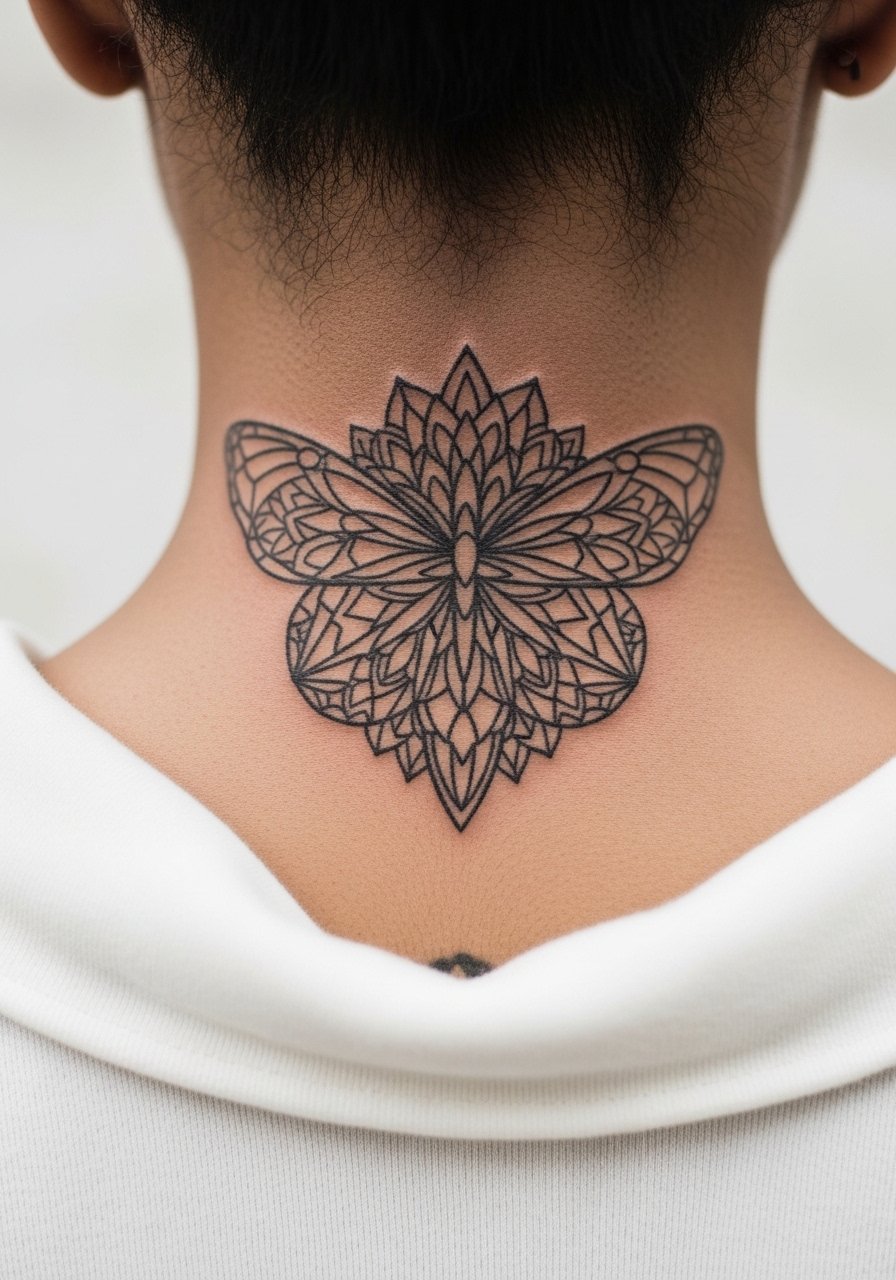
The nape is visible with hair up and makes for an elegant central stencil. Pain is moderate because of thin skin but sessions are manageable. For longevity, ask your artist for slightly heavier outer lines and spaced dot work in the interior mandala so the pattern keeps its shape. A common error is cramming mandala detail into a small nape stencil, which blurs as hair and movement disturb the area. For styling, an updo clip or high collar shows the design selectively and reduces rubbing during healing.
12. Geometric Butterfly Ankle Accent
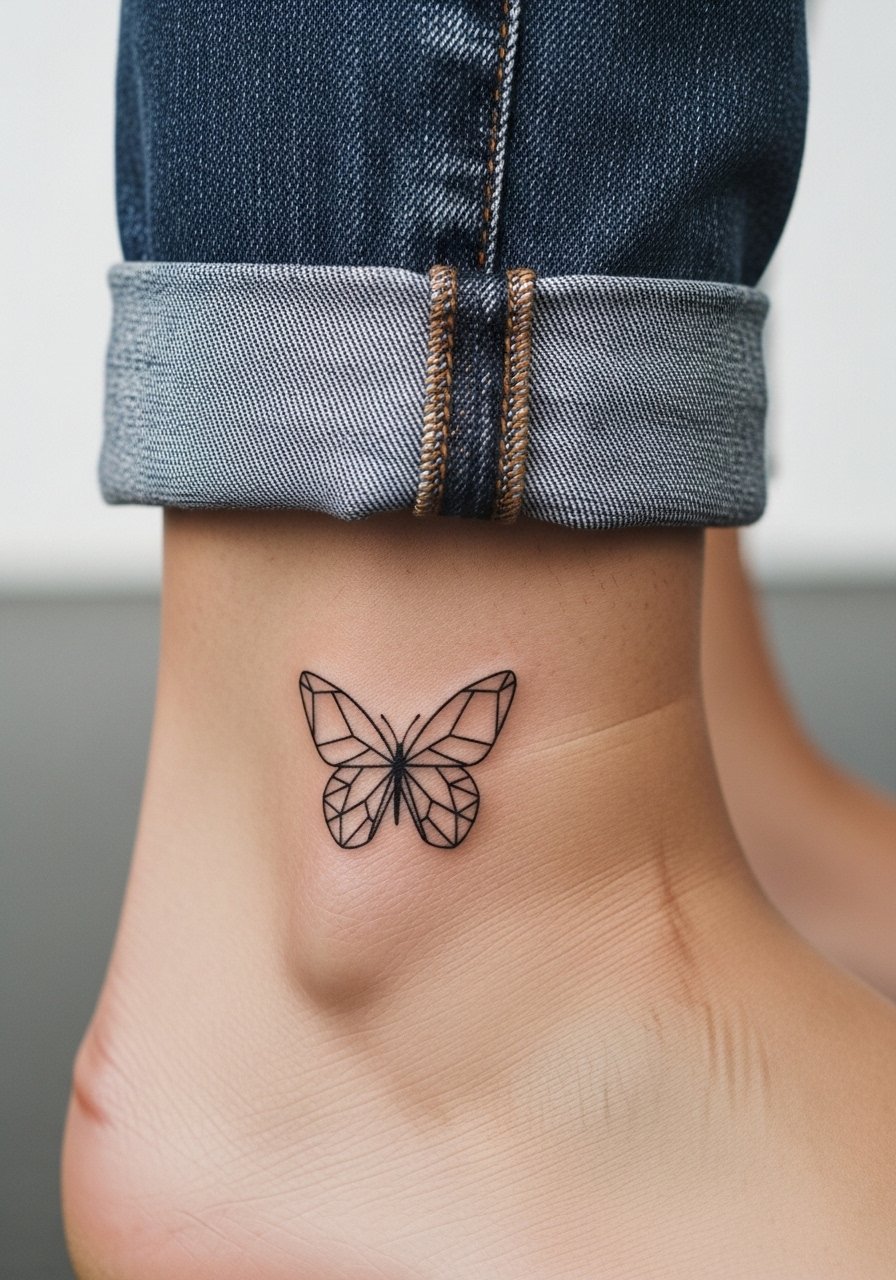
Ankle pieces face constant contact with socks and shoes. Pain is moderate to high depending on proximity to bone and sessions are short. The typical mistake is underestimating friction during the first two weeks which can dull lines. Tell your artist to place the stencil slightly higher on the ankle bone to avoid shoe rubbing. Expect a touch-up within the first year if you are active. For showing off, roll pants or wear low-profile sandals and consider a lace-up sandal that draws attention without rubbing the area.
13. Overlapping Geometric Butterflies on the Thigh
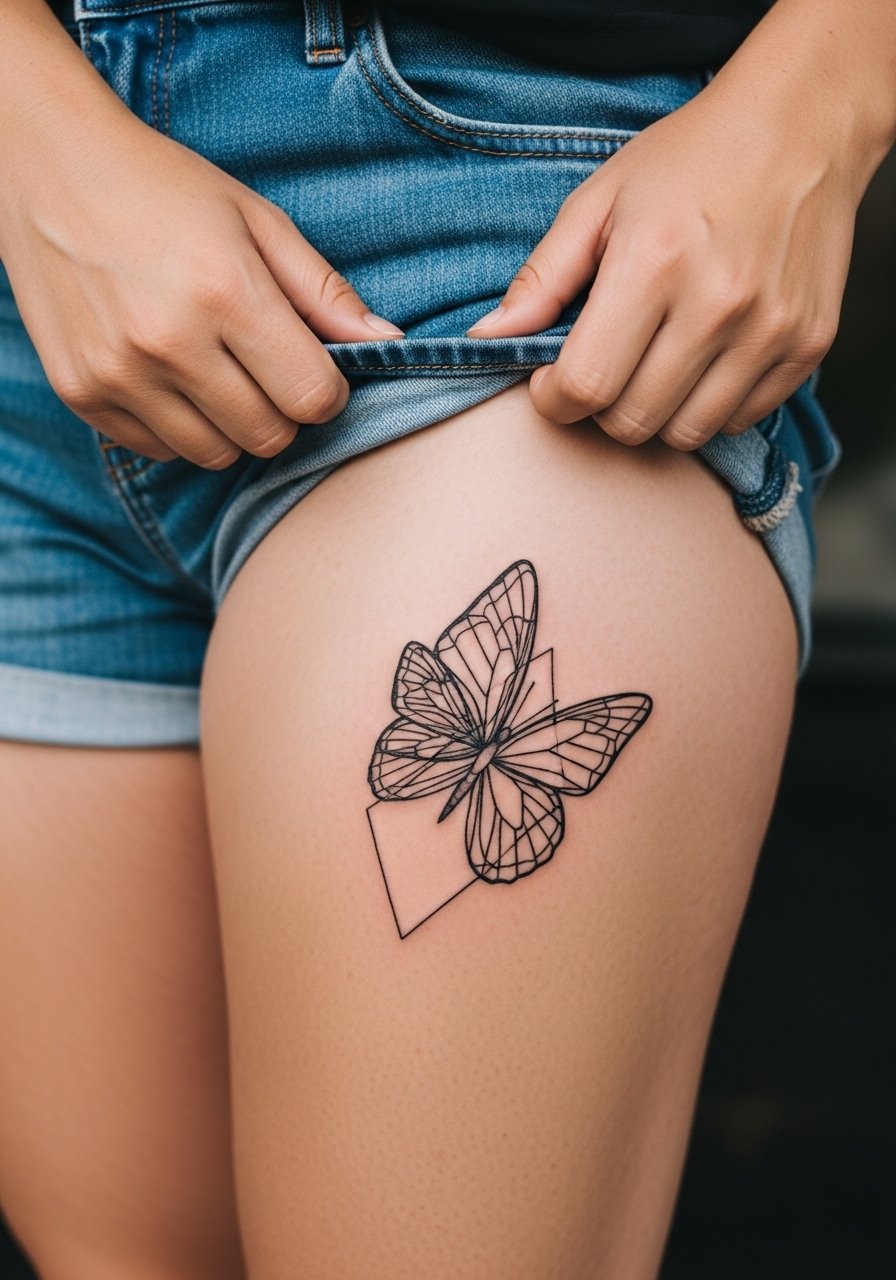
Thigh canvases allow layered geometry and movement inside the stencil. Pain is low to moderate and sessions can be longer, often over multiple sittings for complex overlap. During consultation, ask your artist to plan negative space that will stay distinct during healing. A common mistake is overlapping too many thin elements which blend into a single gray mass over time. Touch-ups are usually at year two to maintain separation. For the appointment, wear high-waisted shorts so the artist can access the outer thigh without contorting.
14. Geometric Butterfly Calf Portrait
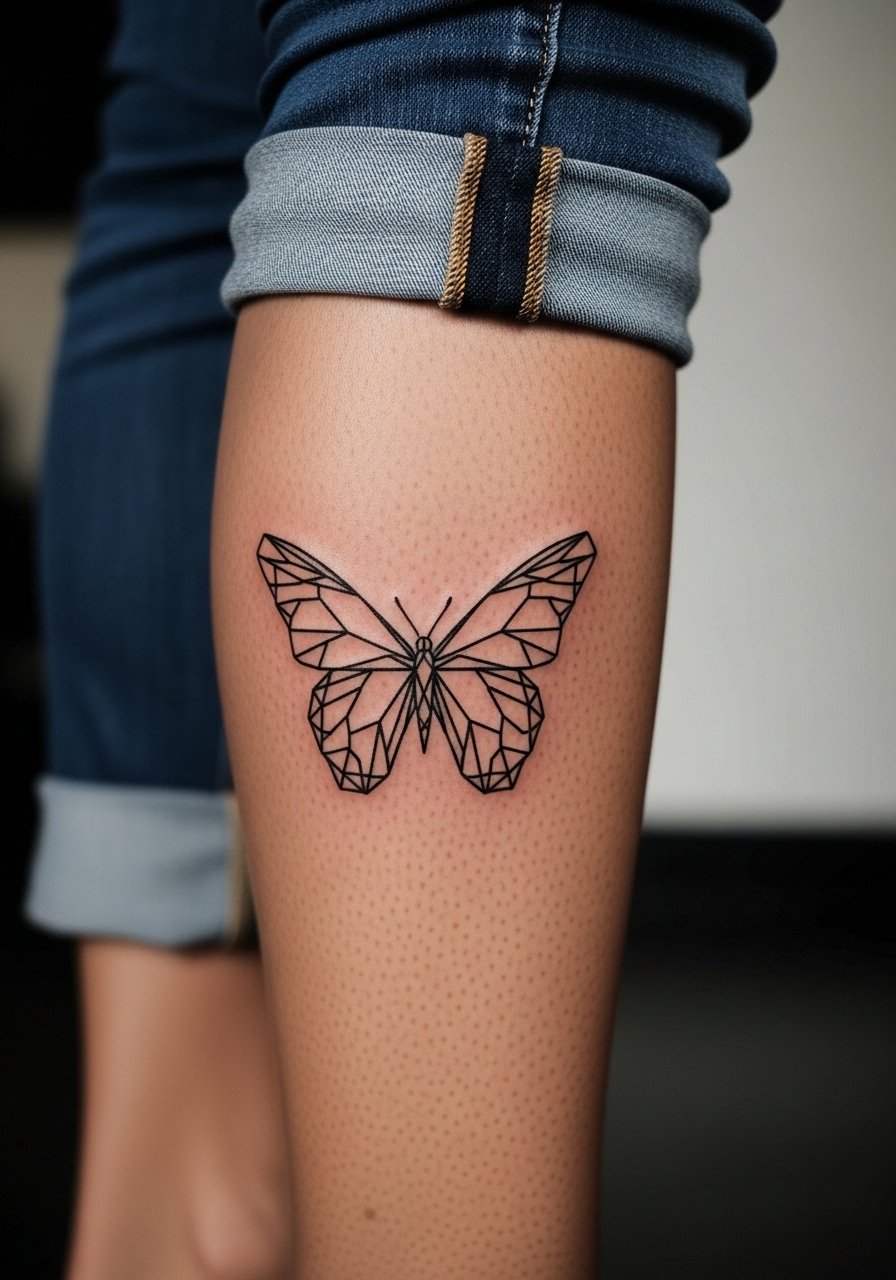
Calf pieces balance visibility and protection because they often sit under clothing. Pain is moderate and sessions are often one to two hours. I advise requesting a stencil orientation check while standing since calf muscles change the way wings sit when you move. A common mistake is mirroring a stencil from a flat image without testing how it wraps the muscle. At two years you should see good retention if saturation and spacing were handled well. For casual display, roll pants or choose cropped trousers and pair with a mid-calf boot to frame the artwork.
15. Single-Line Continuous Geometric Butterfly on Ribcage
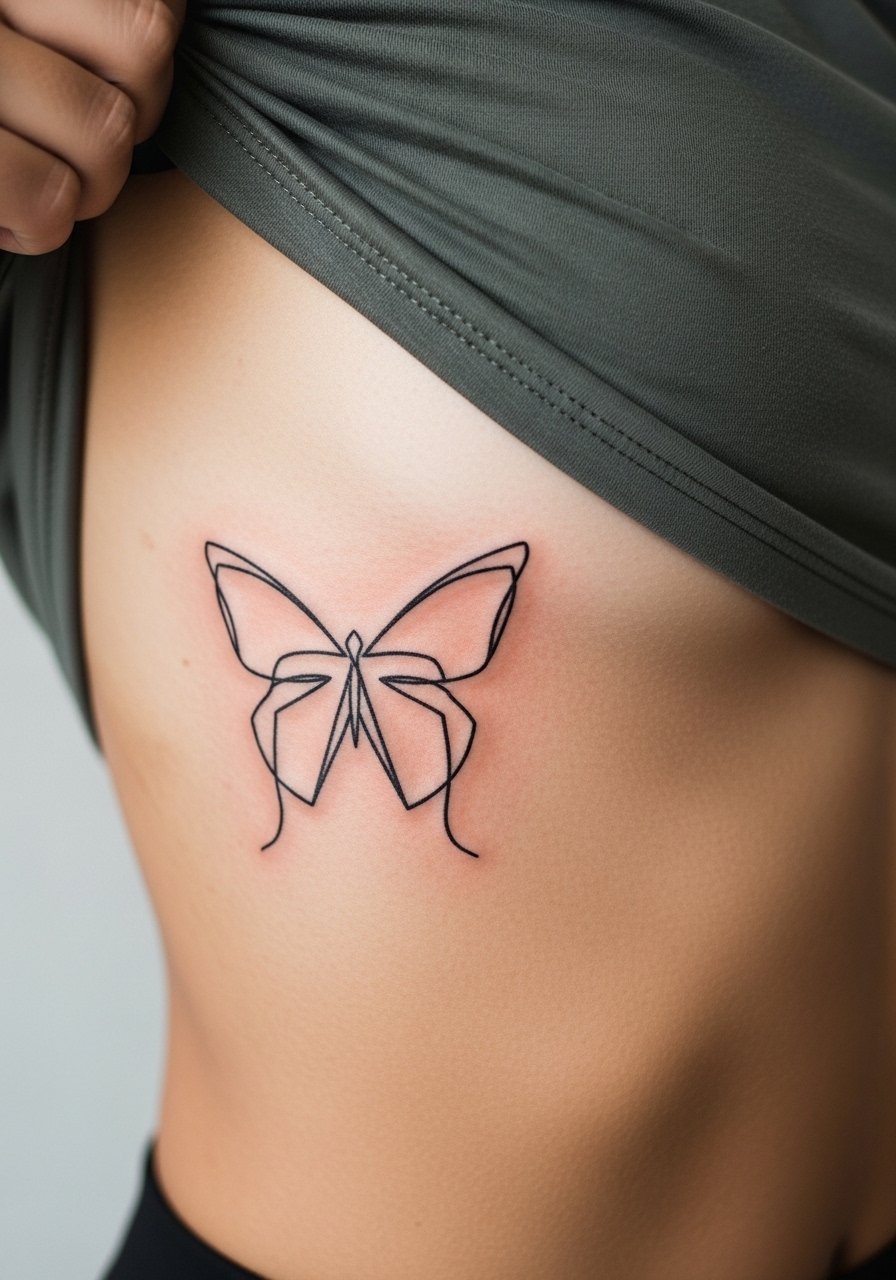
Continuous single-line stencils read elegant but they stress the ribcage area because of breathing movement. Pain is high and sessions usually break into shorter runs. The controversy here is clear. One camp warns that the ribs stretch with breath and the thin single line blurs quickly. The other camp says strategic depth and spacing preserve it. Ask the artist about their ribcage single-line experience and plan for a touch-up at year two if lines soften. For session comfort, wear a fitted crop top so the artist can access the area without creating excess movement.
16. Geometric Butterfly Sleeve Cap on the Shoulder

Using a butterfly motif as the sleeve cap anchors a larger arm piece. Pain is low on shoulder muscle and sessions for a cap are typically 60 to 120 minutes. Tell your artist to plan the stencil so the wings flow into sleeve elements rather than cutting off abruptly. A mistake is starting with a butterfly too high, which can make future sleeve stitching awkward. Expect strong retention because shoulder skin sees less daily abrasion. For the session and showcase, wear a tank top so the artist has clear access and the design catches light on the shoulder.
17. Geometric Butterfly with Metallic Ink Accent on the Hand
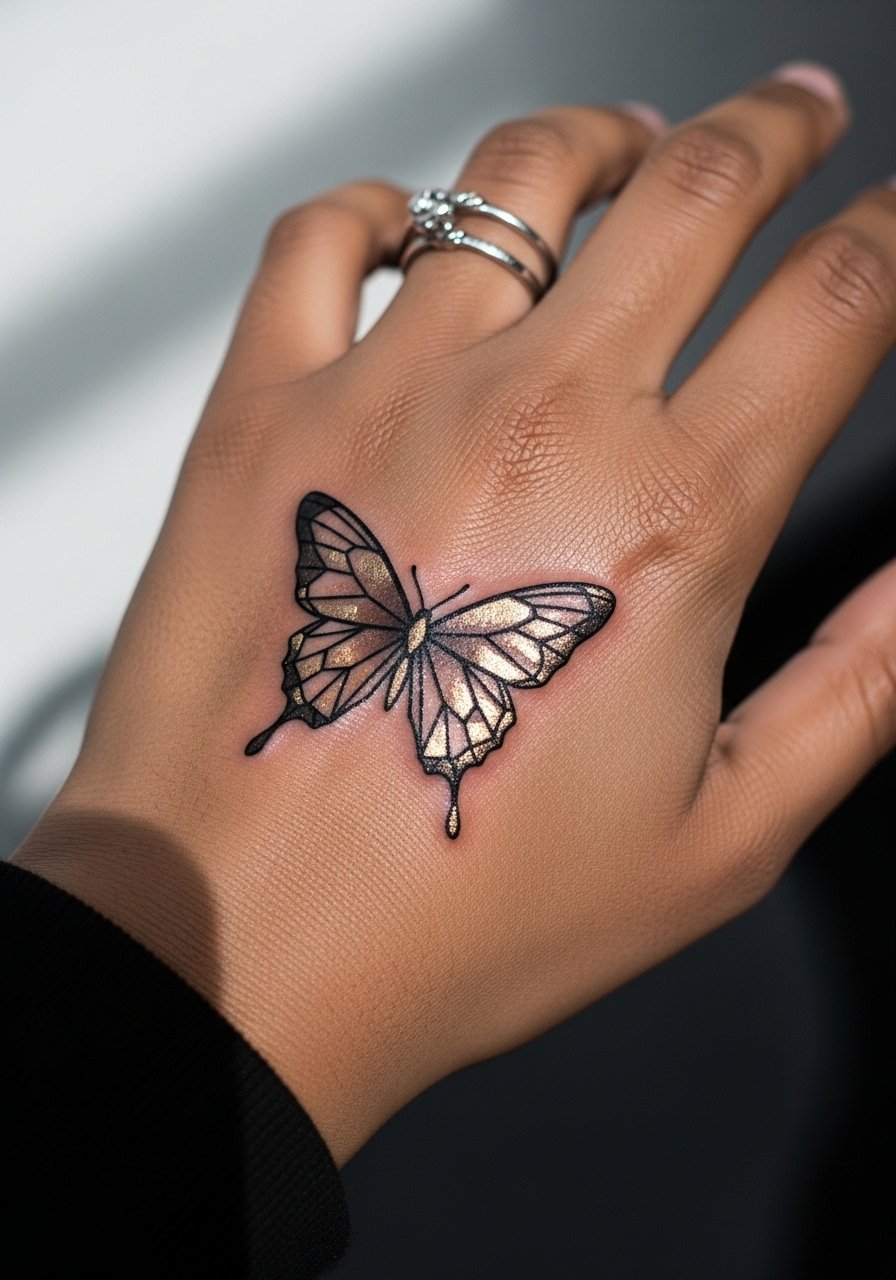
Hand tattoos come with fast fade and high touch-up probability because of constant use and washing. Pain is sharp and sessions are short but the healing is fussy. If you want metallic accents, ask for them sparingly and as small dots to avoid rapid dilution into surrounding lines. The mistake is heavy color on the hand which fades unevenly. Expect a reinforcement session at year one. For style, choose rings and a thin bracelet that do not press on the tattoo during the first week.
18. Geometric Butterfly on the Lower Back
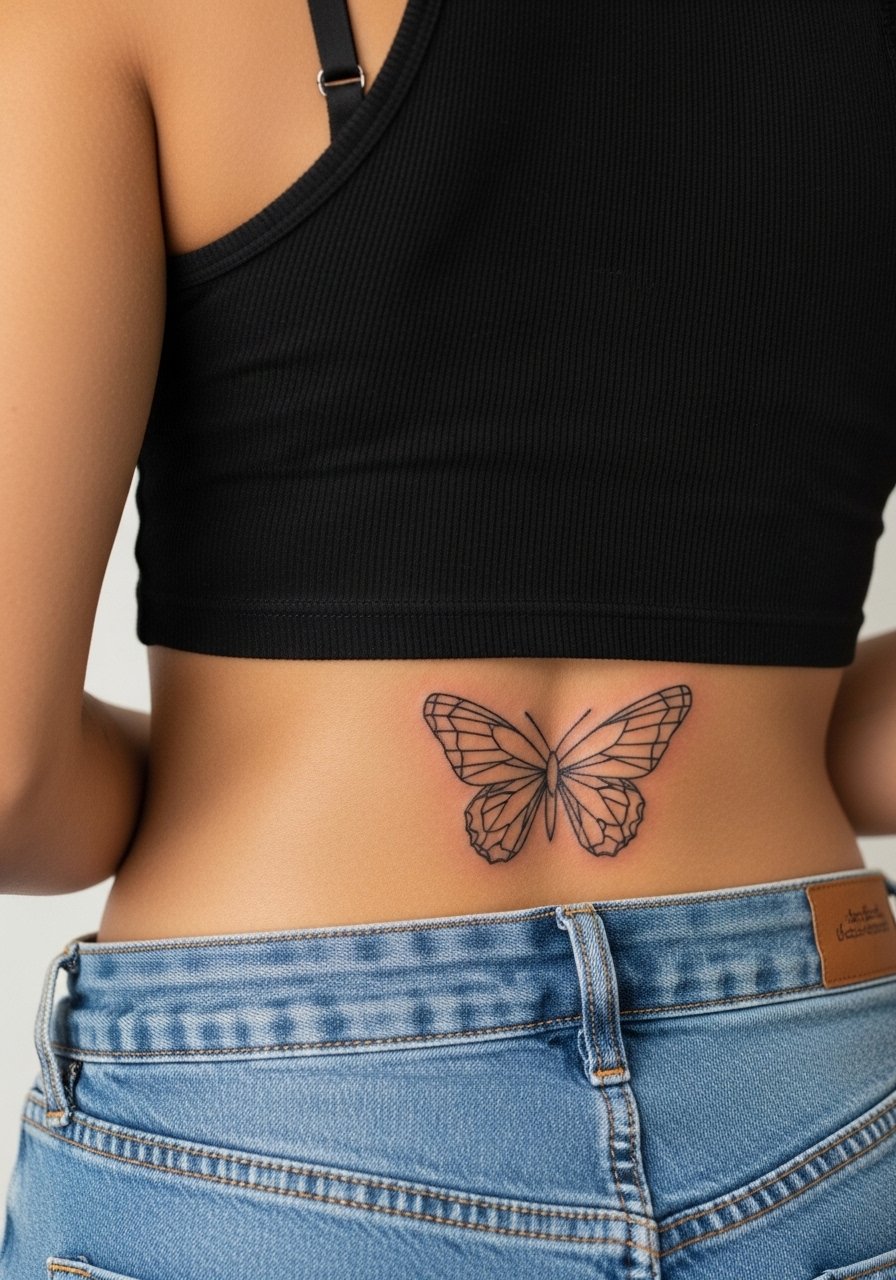
Lower back placements allow horizontal wingscapes and bold geometry. Pain is moderate and a sizeable stencil can take two sessions. The common mistake is overly intricate inner detail that flattens when the area moves and sits under clothing. Ask for negative space lanes and bolder outlines near areas that will see waistbands. Touch-ups are usually needed at year three if friction from clothing is constant. For evenings out, low-rise skirts or a cropped top emphasize the tattoo and reduce fabric contact.
19. Geometric Butterfly Thigh Band
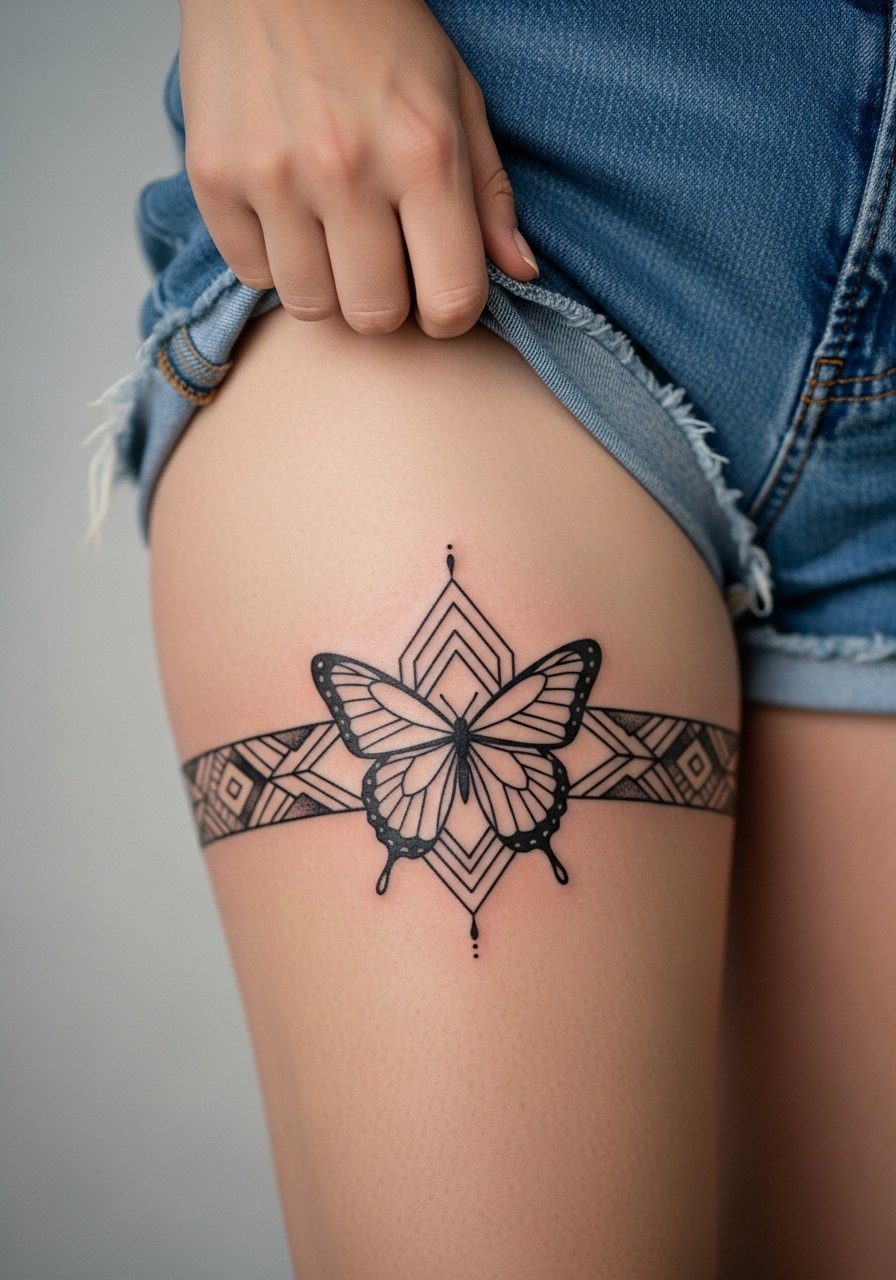
A banded composition around the thigh is flattering and tends to age well because it sits under clothing much of the time. Pain is low to moderate and sessions can run long for a full wrap. In consultation, plan negative space so the band breathes and does not look like a solid strip at a glance. A mistake is compressing too many micro-elements into a band which makes it read muddy in a year. For the appointment, bring loose shorts so the artist can easily expose and cover the site.
20. Fragmented Geometric Butterfly on the Calf Inner Side
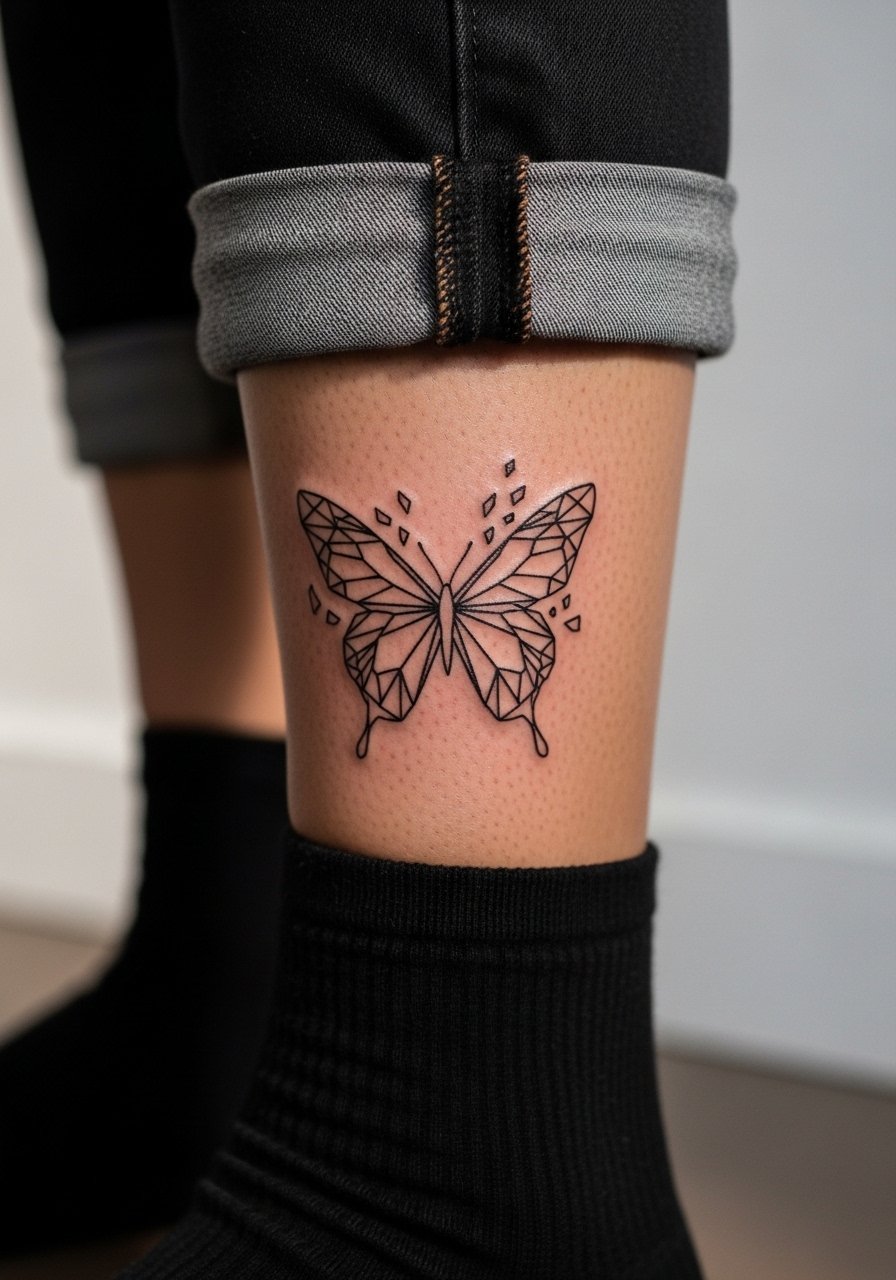
Inner calf placements are less exposed and often preserve detail better than outer surfaces. Pain is moderate and sessions are steady. The advantage here is you can use fragmentation to suggest motion, keeping shapes bold enough to avoid merging. A common mistake is using too many fine, parallel lines that create a gray wash after healing. Expect solid retention and plan for a single touch-up after the initial healing if needed. Pair with cropped pants or a loose skirt to show the inner calf art without constant fabric pressure.
21. Geometric Butterfly on the Side of the Neck
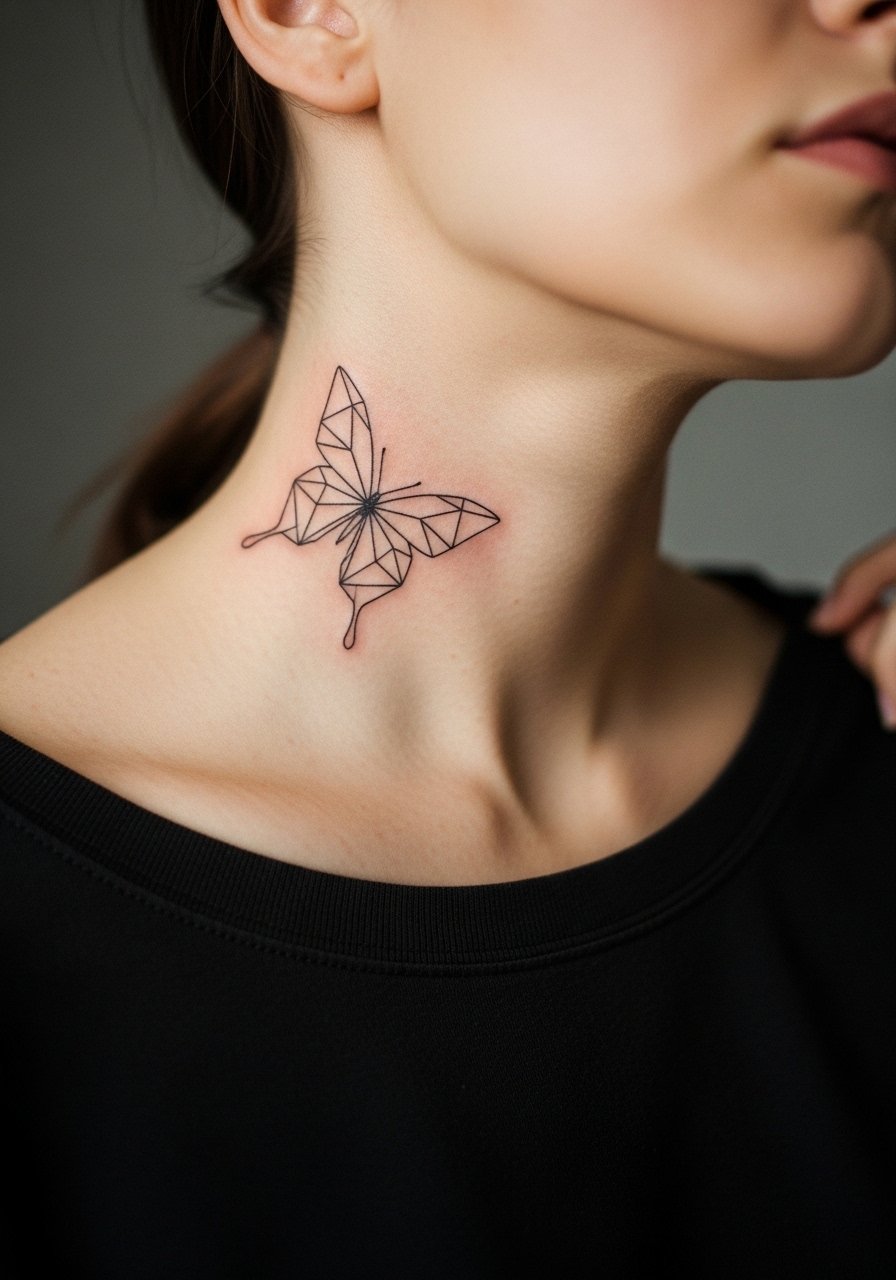
Neck placements are visible and require careful career consideration. Pain is moderate and sessions are short. The biggest error is over-detailing small shapes where the skin moves frequently, which causes blurring. Ask for clear outer contours and moderate interior geometry. Expect touch-ups at year two, especially with sun exposure. An easy styling move is a thin chain necklace that sits just above the design on days you want to frame it.
22. Geometric Butterfly Collarbone Chain Link

Chain-link integrations along the collarbone create continuity with jewelry and balance the area. Pain is higher near bone and sessions last around an hour or more depending on how long you want the chain to run. Tell your artist to test the stencil with movement so links do not sit distorted when you raise your arms. A typical mistake is using tiny chain links that fill in rather than read. For show-off, pair with a delicate choker that echoes the chain motif without covering the ink.
23. Mirror-Image Geometric Butterflies on the Upper Chest
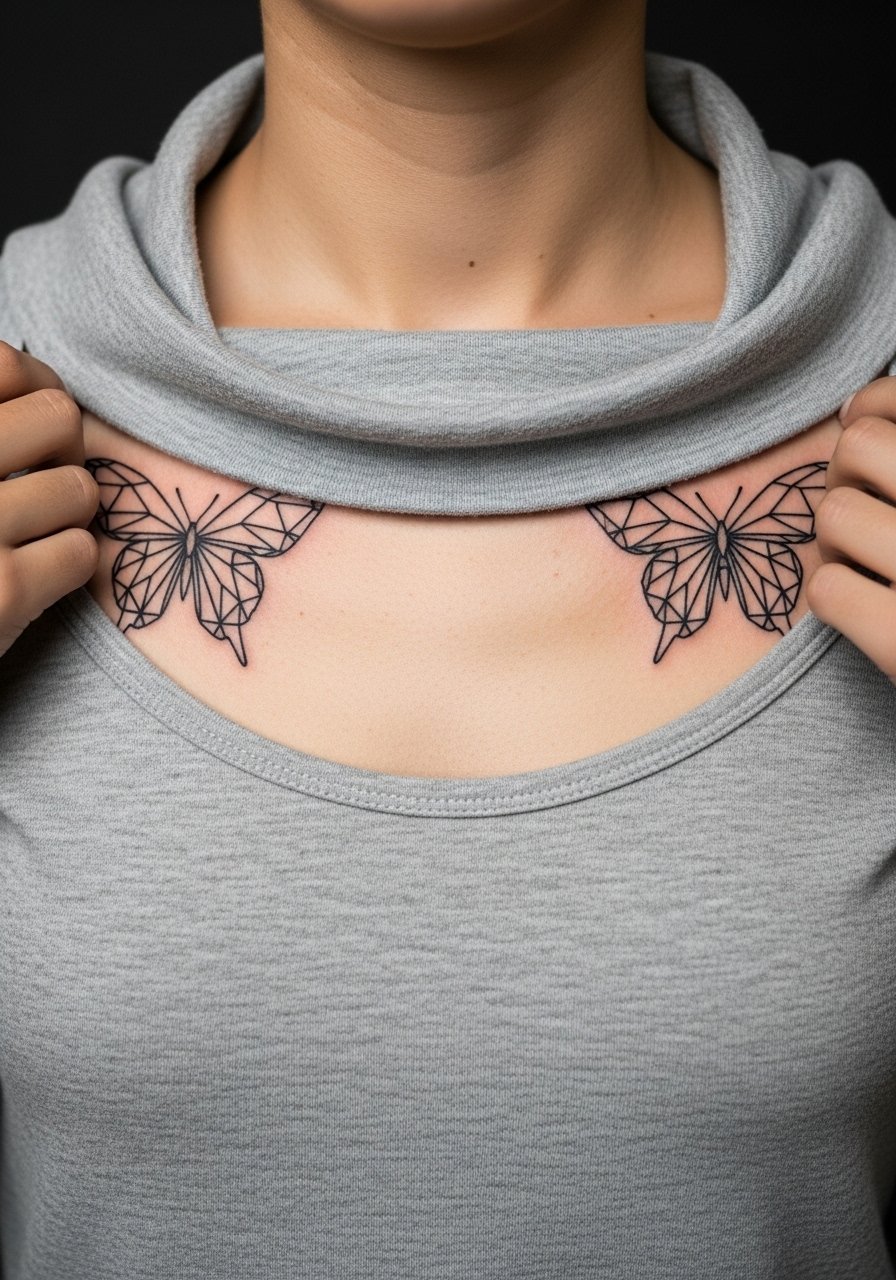
Symmetrical chest pieces make a strong statement when scaled correctly. Pain is moderate near the sternum, and sessions for twin stencils often split into two shorter sittings. The key is matching scale on both sides during stencil placement so the wings mirror perfectly when you move. A mistake is starting with mismatched stencils that require correction later. For wardrobe, open-neck blouses and a v-neck top present the symmetry and keep fabric off the area while healing.
24. Geometric Butterfly Ankle Chain
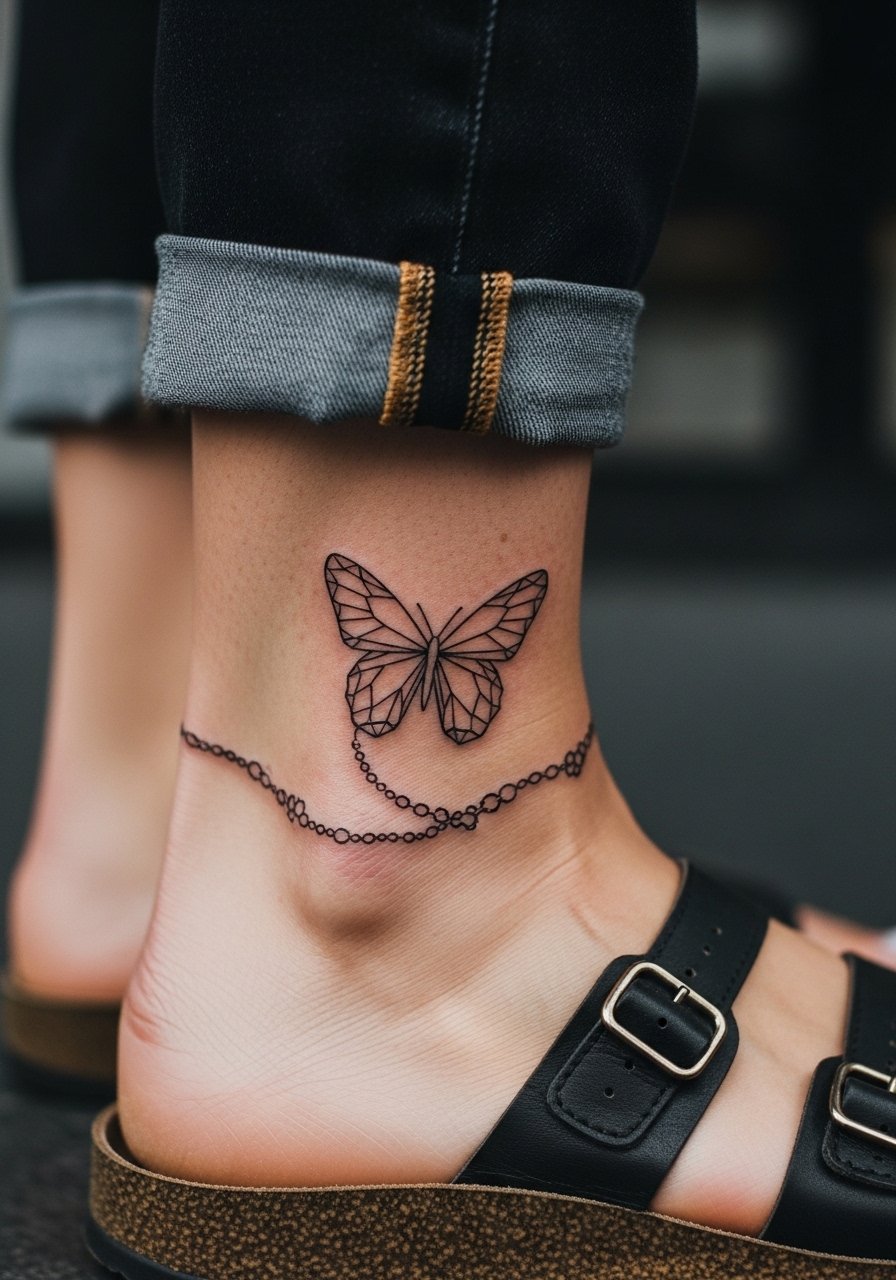
Combining a butterfly with a chain around the ankle reads like jewelry and is easy to style. Pain is localized and sessions are brief, but the ankle sees a lot of friction. The common error is placing the chain too low where shoes bite; ask the artist to place it slightly higher. Expect touch-ups in the first year if you run often or wear tight footwear. For shoes, choose low-profile sandals and consider a simple ankle chain worn on the opposite foot to balance the look.
25. Geometric Butterfly on the Hip Curve
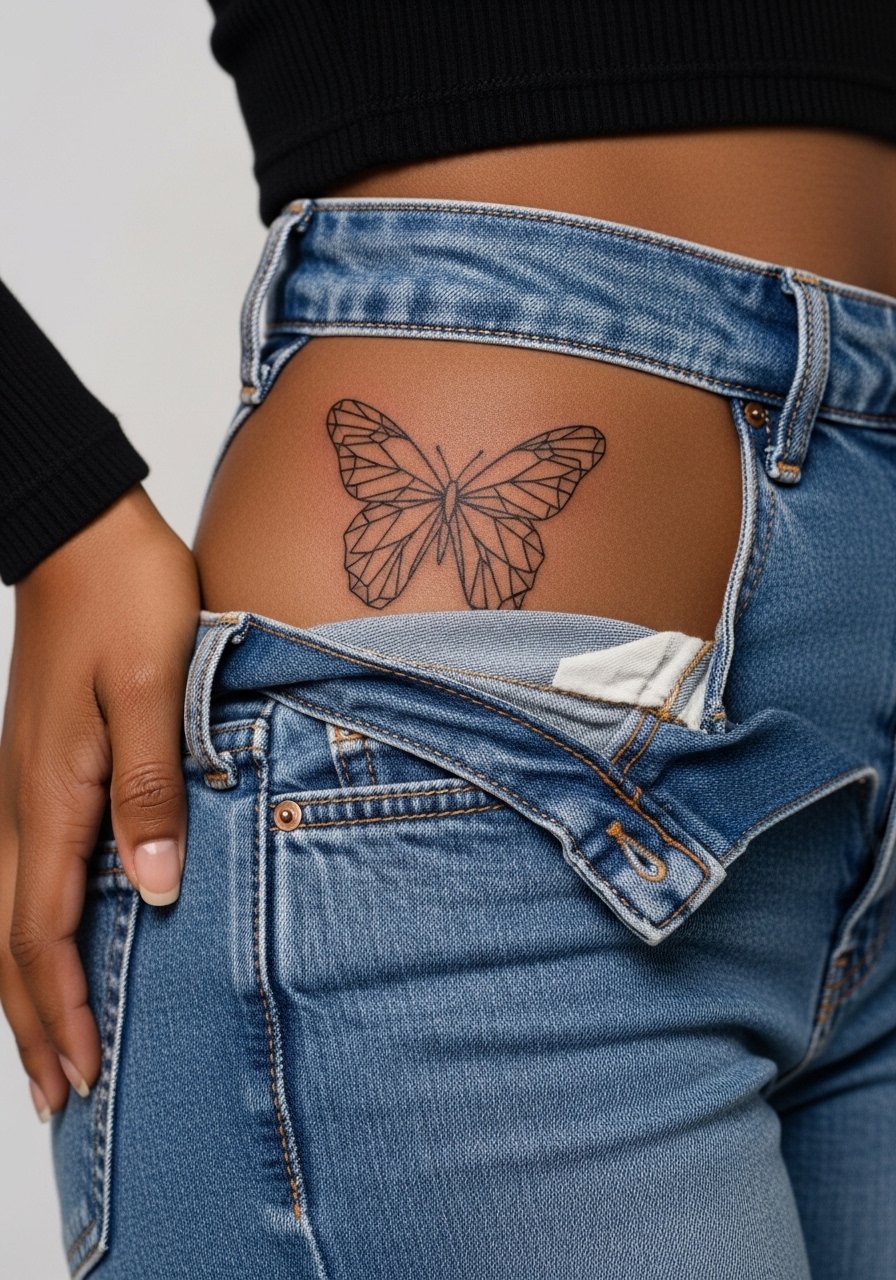
Hip placements let you play with curvature and negative space. Pain is moderate and sessions are variable depending on size. The frequent mistake is placing the stencil too close to the waistband which causes rubbing during healing. Ask the artist to preview the stencil with high-waisted bottoms on so placement matches your typical clothing. Touch-ups are less frequent because the hip sees less abrasion. For showing off, high-waisted cuts and a bikini bottom reveal the curve and keep fabric off the immediate area.
26. Geometric Butterfly Over a Scarred Area
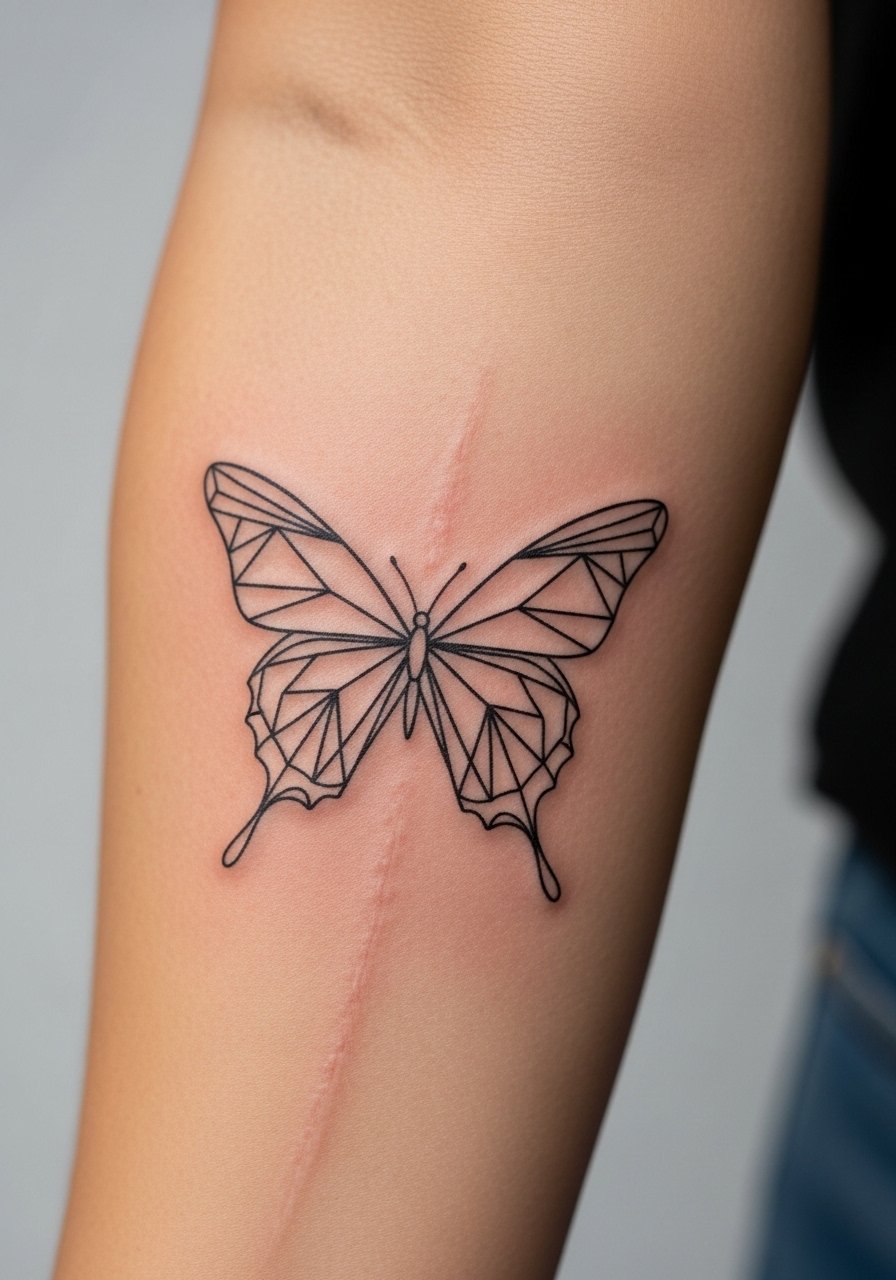
Covering or working with scar tissue needs a frank conversation in the consult. Scarred skin takes ink differently and pain can be variable. The most important step is asking the artist about prior experience and testing a small patch when possible. A common mistake is insisting on perfect symmetry over uneven scar tissue. Results vary and touch-ups are more likely. For the session, bring loose clothing that does not rub the forearm, like a soft cotton tee you can roll without stretching the scar.
27. Tiny Geometric Butterfly Behind the Knee

Behind-the-knee tattoos are uncommon and require careful stencil placement because the skin creases. Pain ranges moderate to high and sessions are short but fidgety. The usual mistake is ignoring how the design folds when you sit. Ask the artist to check placement with you seated and standing so the butterfly reads in both positions. Expect some softening where the crease moves most often and plan for a touch-up in the first two years. For comfort on session day, bring stretchy shorts so the artist can access the area without binding.
Frequently Asked Questions
Q: How small can a geometric butterfly stencil be before details start to merge?
A: In my experience, once the wing cells are under 2 to 3 millimeters across they start to run together after healing. Ask your artist to print a life-size stencil and check it on your skin before the appointment. If you want fine internal shapes, scale up the whole design or simplify internal geometry so touch-ups are less likely.
Q: Do geometric butterflies need different ink saturation than traditional butterflies?
A: Yes. Geometric pieces with lots of negative space benefit from slightly stronger outer line saturation so the silhouette holds up. Too light a line will soften faster under sun and abrasion. Discuss saturation preferences during consultation and ask for a realistic healed photo from the artist's previous work so you know what to expect.
Q: Will a geometric butterfly on the ribs blend into the watercolor wash I want?
A: It can if the color sits too close to the linework. The safer approach is to leave a clear buffer between the geometric stencil and the wash, which artists use to prevent bleeding during healing. During consultation, ask for color placement mock-ups on the stencil and bring examples that show the exact balance you like.
Q: What should I wear to a shoulder or back session so the artist can work without fuss?
A: I tell people to bring a loose button-down or a tank top you can slide on and off without pulling over the head. A loose button-down shirt works well because you can keep it on and move a sleeve or side for access while staying warm in the chair.
Q: If I want the behind-the-ear or nape piece, do I need to worry about my hairstyle during healing?
A: Yes. Keep hair tucked away from the tattoo and avoid heavy hair products that can irritate healing lines. You might sleep with hair up for the first week and avoid tight headbands. Ask your stylist for an updo that does not press directly on the ink.
Q: How often will geometric butterfly finger and hand tattoos need touch-ups?
A: From what I have seen, finger and hand pieces commonly need reinforcement within 12 to 18 months because of washing, wear, and sun. Plan for at least one touch-up and budget time according to how much you use your hands daily.