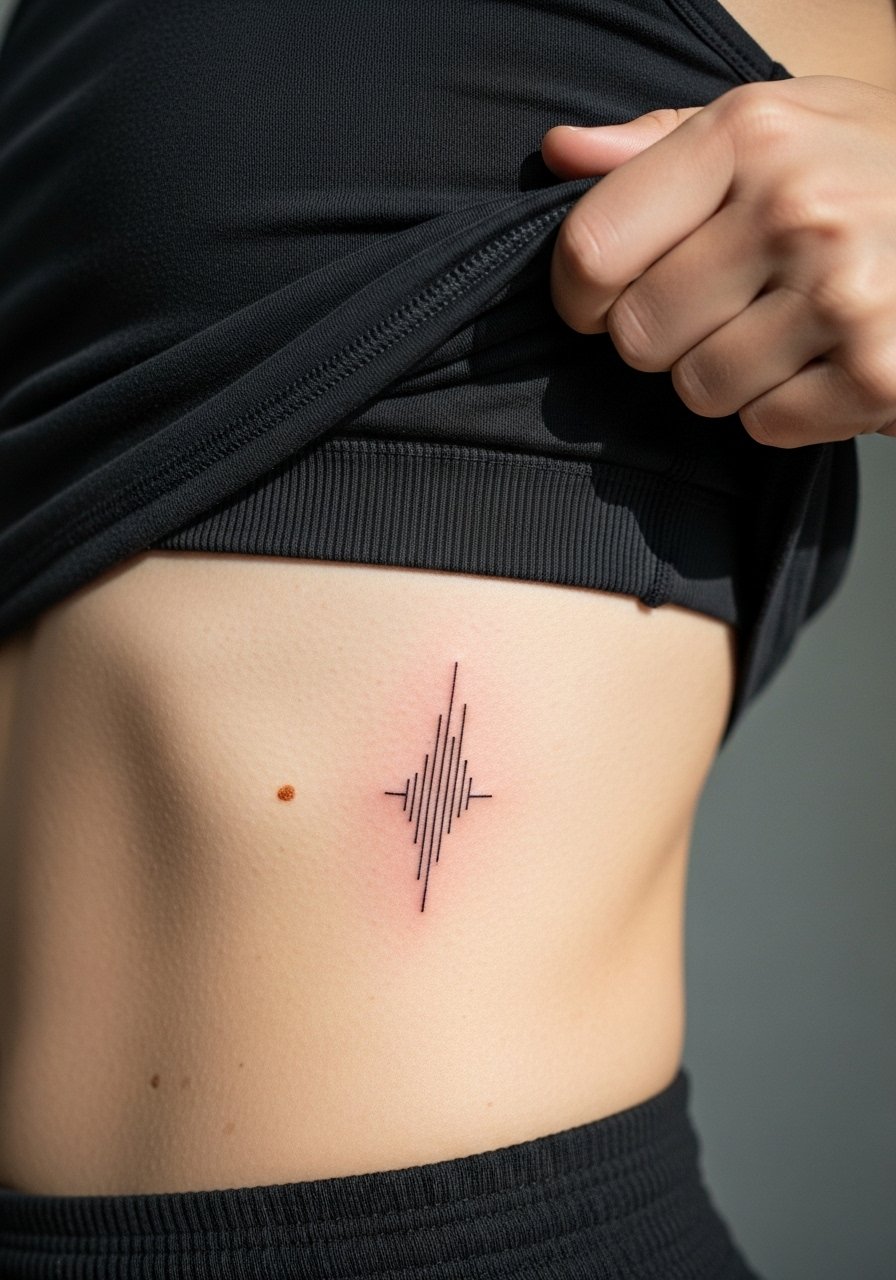
A tight geometric piece on the ribs can look surgical and clean, or it can blur into an indistinct patch within a few years. Heat, stretch, and repeated movement across the torso change how closely spaced lines age. Pick the right scale, spacing, and line weight up front and the design will stay readable. Below are 21 rib-focused geometric directions that balance aesthetics with longevity, and what to say in the consultation so your piece reads clean for years.
1. Minimal Geometric Line Cluster on Lower Ribs
I've seen this one hold up when artists give lines room to breathe. The look is several parallel and angled line segments that echo the rib curve, kept at a medium line weight so they do not merge as the skin moves. Fair warning, the ribcage rates high on pain, often an eight out of ten, but sessions are quick if you keep it to a compact cluster. Tell your artist you want deliberate negative space between lines and a slightly bolder edge than a delicate single-needle line, so the piece stays crisp at two and five years. A common mistake is asking for ultra-fine hairlines too close together, which invites blowout as the skin settles. For the session, wear a cropped athletic top you can lift slightly so the artist has unobstructed access and you stay covered otherwise.
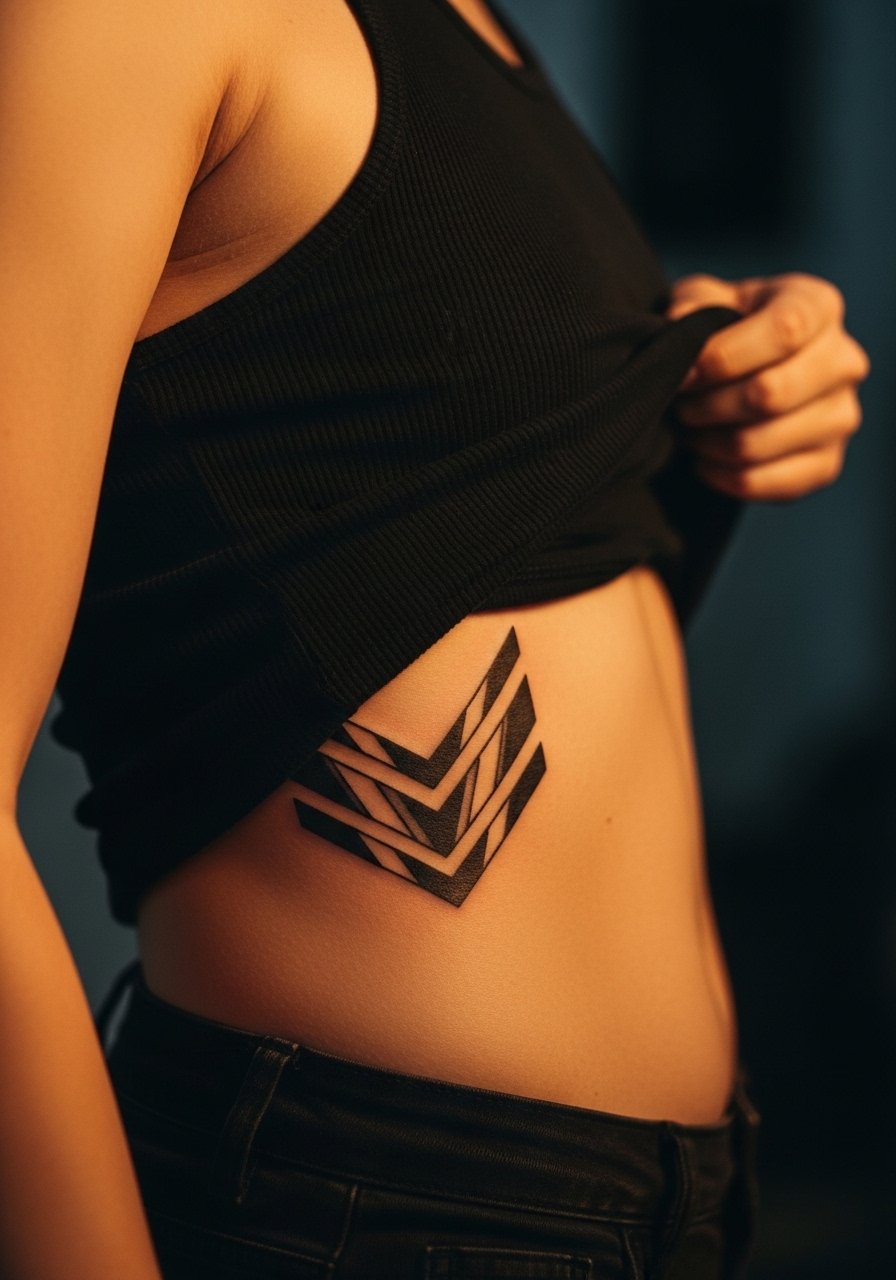
2. Negative Space Chevron Band That Follows the Ribs
Personal observation: chevron bands that follow the rib arc read cleaner over time when spaced for movement. Instead of a single continuous dense band, ask for alternating filled triangles and negative-space gaps so the eye reads pattern, not a solid smear. Expect a mid-length session, probably under two hours for a modest wrap, and moderate pain between ribs. The key consultation note is to request consistent line spacing and slightly thicker outer lines for structure. One mistake people make is asking for a perfectly symmetrical band when their torso asymmetry will change the visual flow. Pair this with an open-back tank for showing it off without risking friction from tight waistbands.
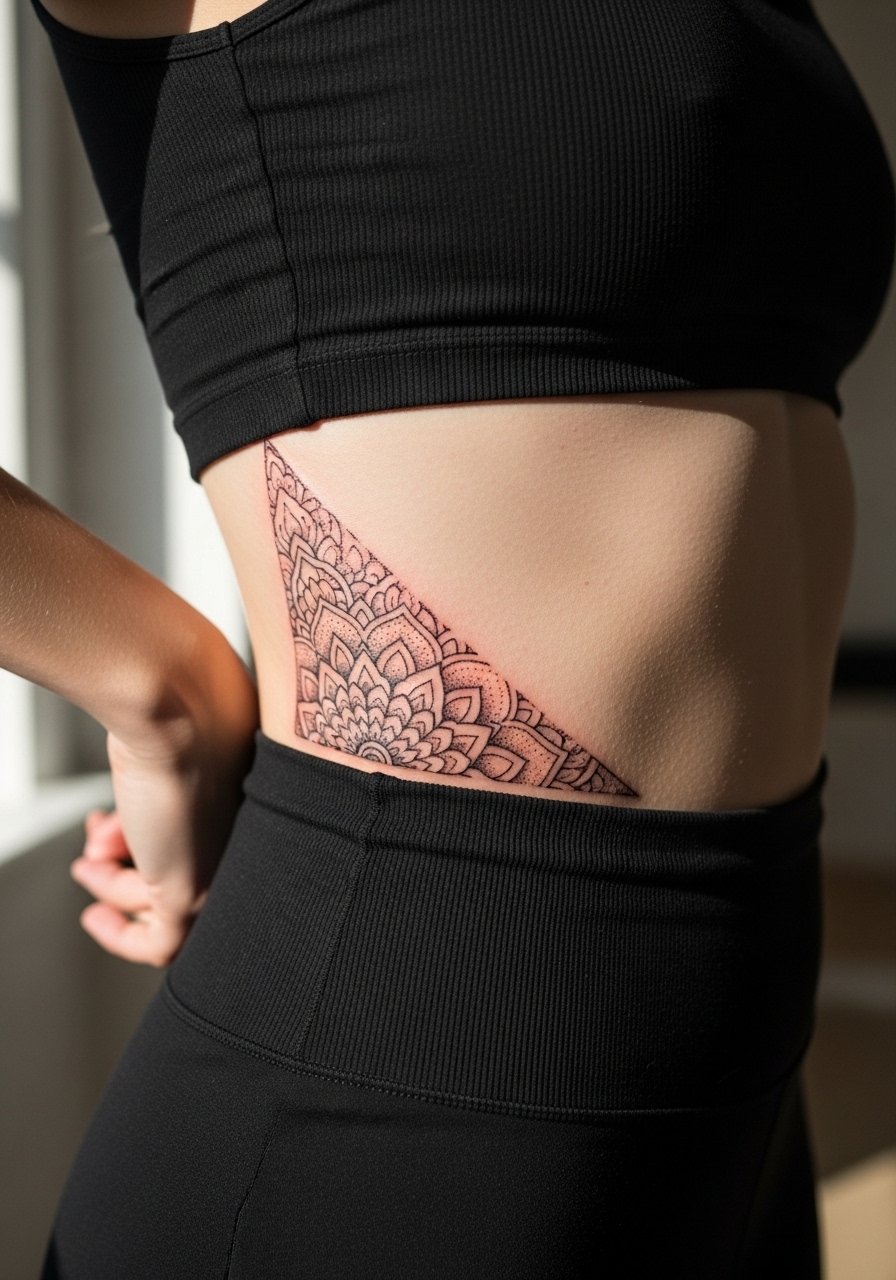
3. Mandala Wedge Sitting Between Ribs and Waistline
Aging lead: dense mandala centers can soften if placed directly over the most curved rib areas, so I recommend a wedge-shaped mandala that tapers toward the waist. That gives the dense work room to settle without collapsing into the tightest stretch zones. Expect a longer session, likely two to three hours, with periodic breaks because the ribs are sensitive. During consultation, specify that the artist should stagger dot and stipple work to avoid too much saturation in one ring. The common misstep is compressing rings into a tiny footprint. For the appointment, choose high-waisted bottoms or high-waisted leggings so you can reveal only the tattoo zone comfortably and avoid fabric rubbing afterward.
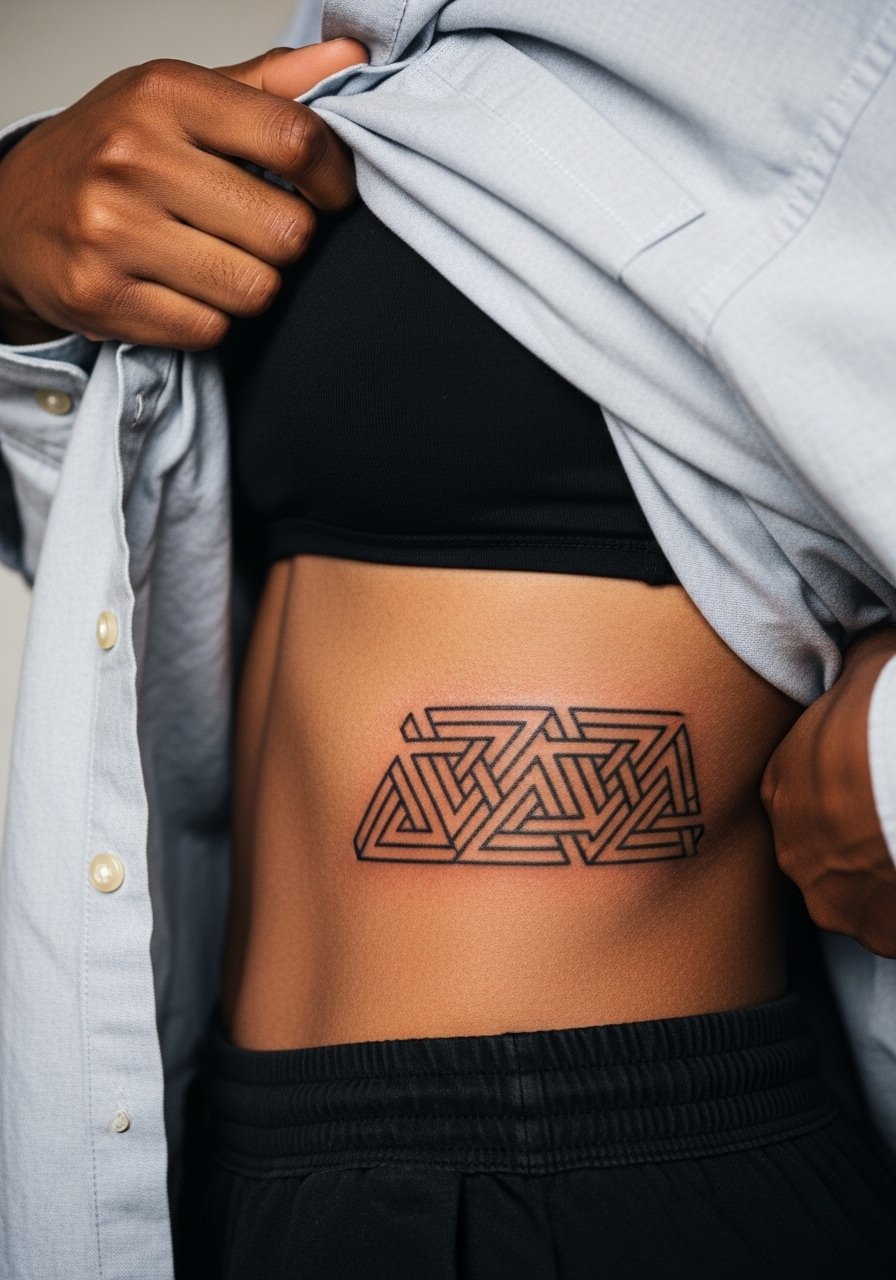
4. Interlocking Triangles That Curve With Breath
Controversy lead: artists split on how tight intersecting geometry should be on ribs. One camp argues that highly detailed interlocks will blur as the skin expands and contracts. The other camp says with precise depth and spacing it stays sharp. I name both camps so you can ask an artist where they stand. My take is to choose slightly larger intersections than you think you need. Practically, ask for a small mock stencil and test it through a full breath cycle during consultation so you can see how the lines distort. Touch-up is common at year two for very fine intersections. For showing it off, a loose button-down shirt you can pull aside frames the pattern without compressing it.
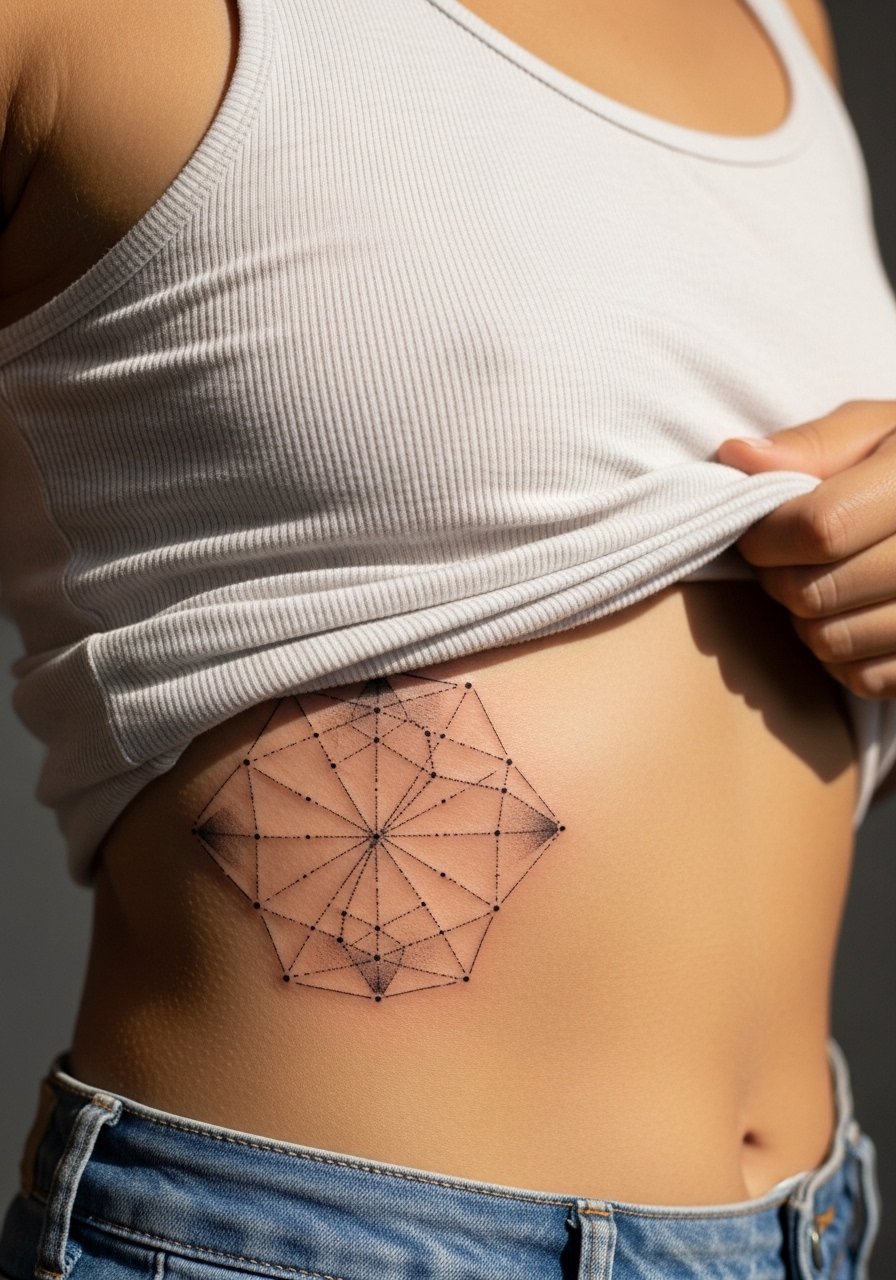
5. Constellation Grid With Dot Work Anchors
Mistake lead: the biggest error with a rib constellation grid is packing the dots too closely. Dots and stippling are forgiving when spaced, and they create airy negative space that ages nicely. This design reads as thin lines connecting tiny dot anchors, and it usually fits in a one to two hour session depending on size. Mention to your artist you want the dot work to start slightly heavier and fade out toward the edges so the center keeps structure. Blowout risk on the ribs is real when dots are overloaded. For the appointment, wear a loose tank top you can lift to expose the side without rubbing.
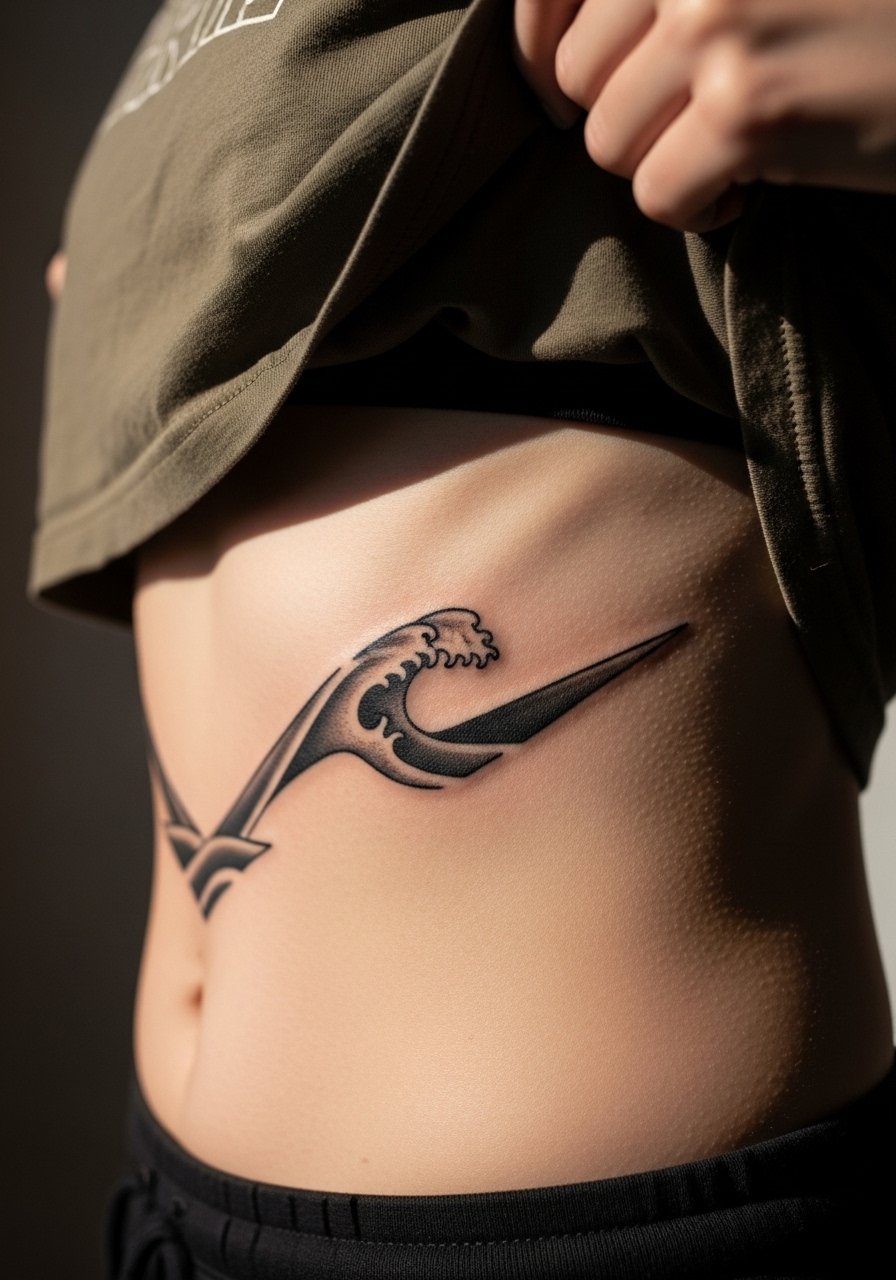
6. Angular Wave Motif That Rides the Lower Ribs
Visual impact lead: these angular waves read like architecture on the torso and look especially clean if the artist respects the rib curve. Expect a moderate session time, often under two hours, with a sharp sting over bone. Tell the artist you want linework that alternates between bold anchor strokes and thinner connector lines so the piece keeps depth as it heals. A common aging issue is letting connector lines be too thin relative to anchors. For showing it off, a cropped tee or a high-slit top draws eyes horizontally across the motif. Avoid tight waistbands that sit directly on the design during healing.
Chair Day Prep
The chest and ribcage sessions above demand different prep than smaller arm pieces, and a few specific items smooth the session and early healing.
-
Breathable compression wrap. Keeps the tattooed ribs supported after a long session where swelling can be noticeable.
-
Fragrance-free gentle body wash. Cleans the area without stripping inks that rely on thin negative-space lines.
-
Silicone scar sheets. Light pressure over healed areas can help even texture after heavy stippling or dense blackwork.
-
Thin medical adhesive film roll. Protects rib tattoos from clothing friction during the first 48 hours.
-
Aquaphor healing ointment. A thin layer for the first few days helps maintain moisture for linework without clogging the skin.
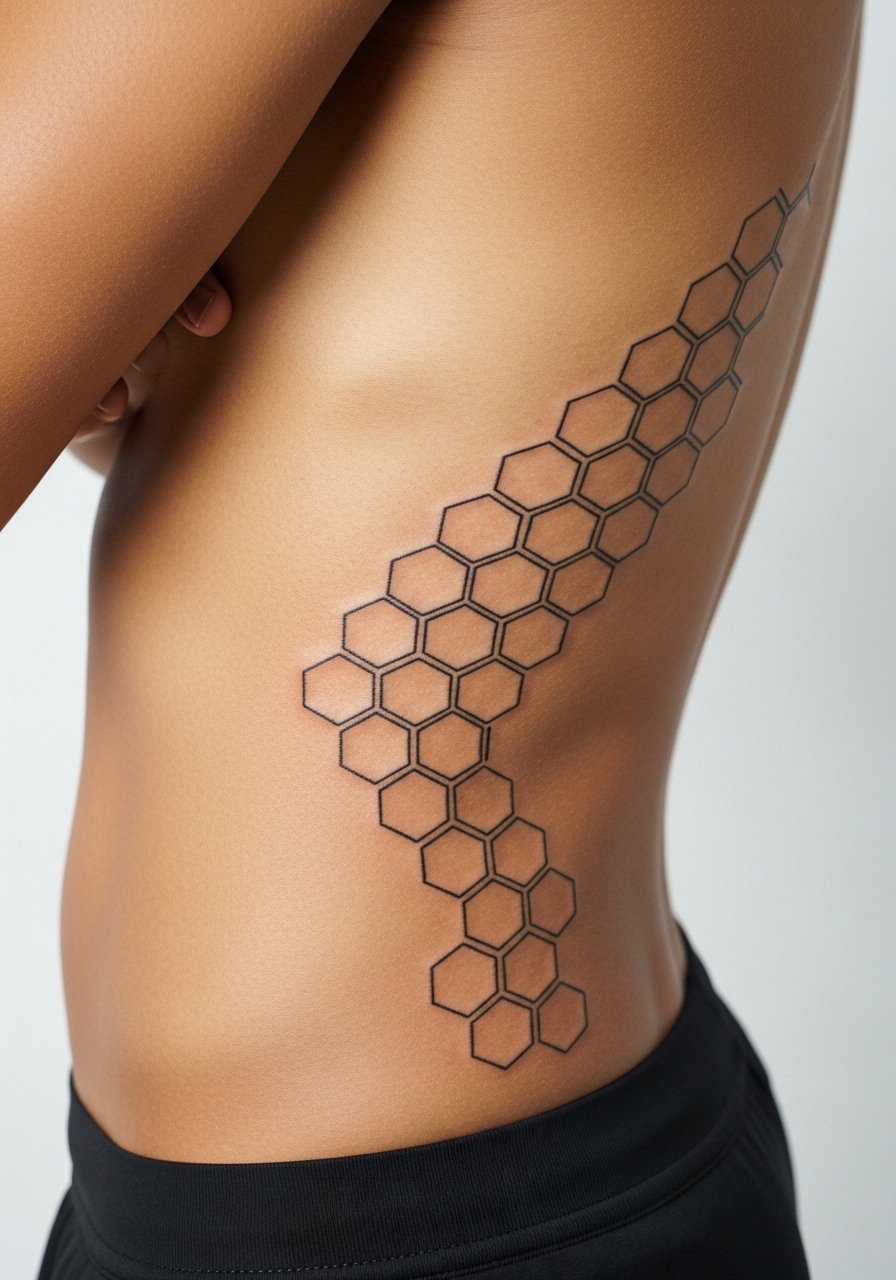
7. Staggered Hex Grid That Fans Toward the Back
Pain warning lead: the upper ribs near the back are a tender zone and sessions can feel sharp when the needle crosses the bone. A staggered hex grid that fans toward the back reduces continuous dense work on the most sensitive spots. The design usually runs one to two hours with planned pauses. When you consult, ask the artist to space hex edges wider at the point where ribs meet the back to prevent merging. Expect a touch-up window around year three for any tight internal edges. For career-conscious folks, this placement is easy to hide under shirts, so think about how low the fan extends before committing.
8. Offset Diamond Chain Running Along the Rib Line
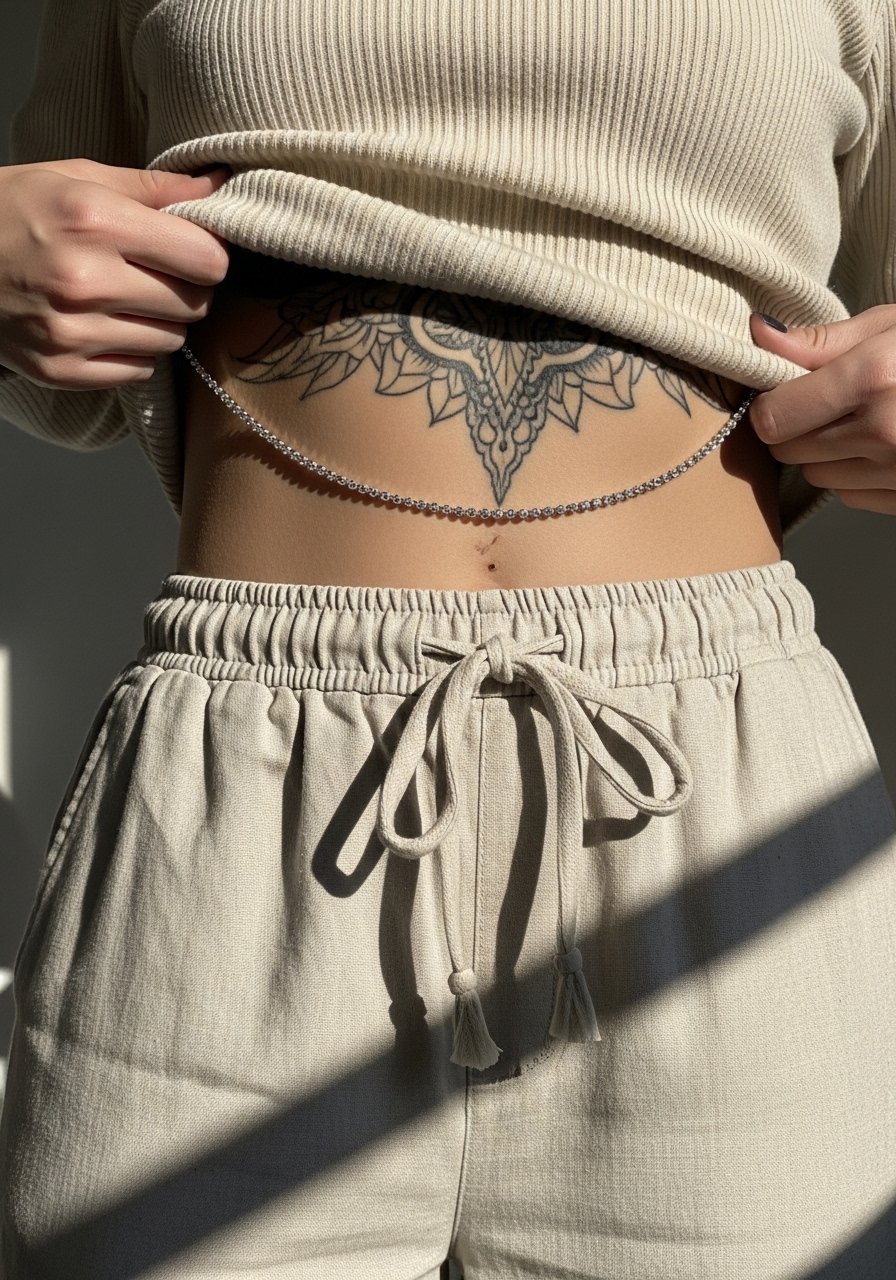
Consultation lead: bring reference photos that show exact line weight when booking this one. Offset diamonds create rhythm across the ribs if the artist matches the torso angle. Most small chain pieces complete in under two hours. A typical error is insisting on perfectly mirrored diamonds left to right on an asymmetrical torso. Ask for a hand-drawn stencil on your body so you can check how the chain looks while standing and breathing. For showing it off, a loose drawstring linen pant and a cropped top keep attention on the chain without compressing the skin.
9. Concentric Arc Bands That Respect Natural Ridges
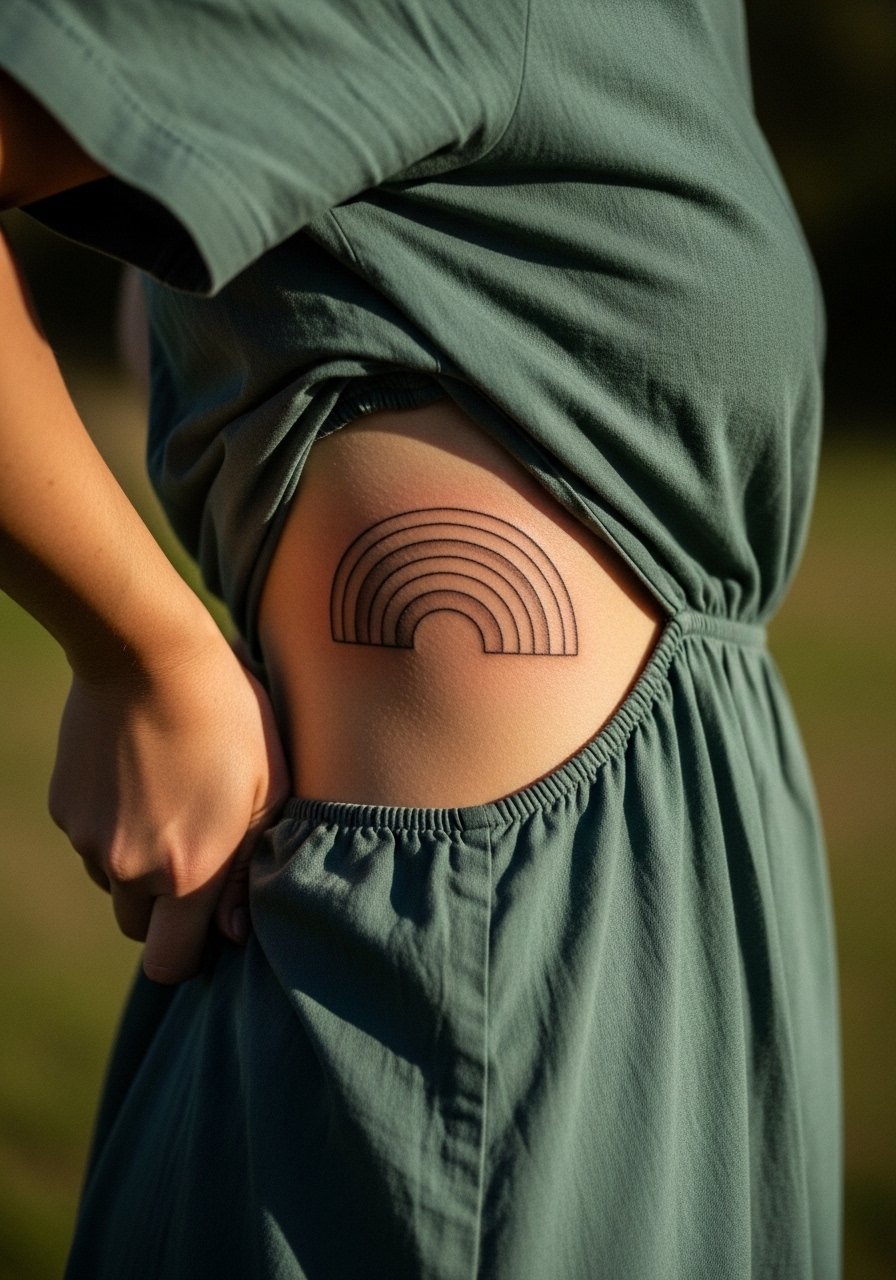
Visual impact lead: concentric arcs that mirror the ribs can be bold without dense filling. The trick is to alternate arc thickness so the eye perceives depth rather than a solid black band. These sit well as a half-wrap starting under the arm. Sessions vary from one to three hours depending on band count. Tell your artist you want measured negative space between arcs that accounts for skin shift when you breathe. Common mistake is doing too many thin arcs that coalesce over time. If you want to flaunt the curve, an open-back midi dress frames the arcs elegantly.
10. Radial Sunburst That Sits Just Under the Rib Edge
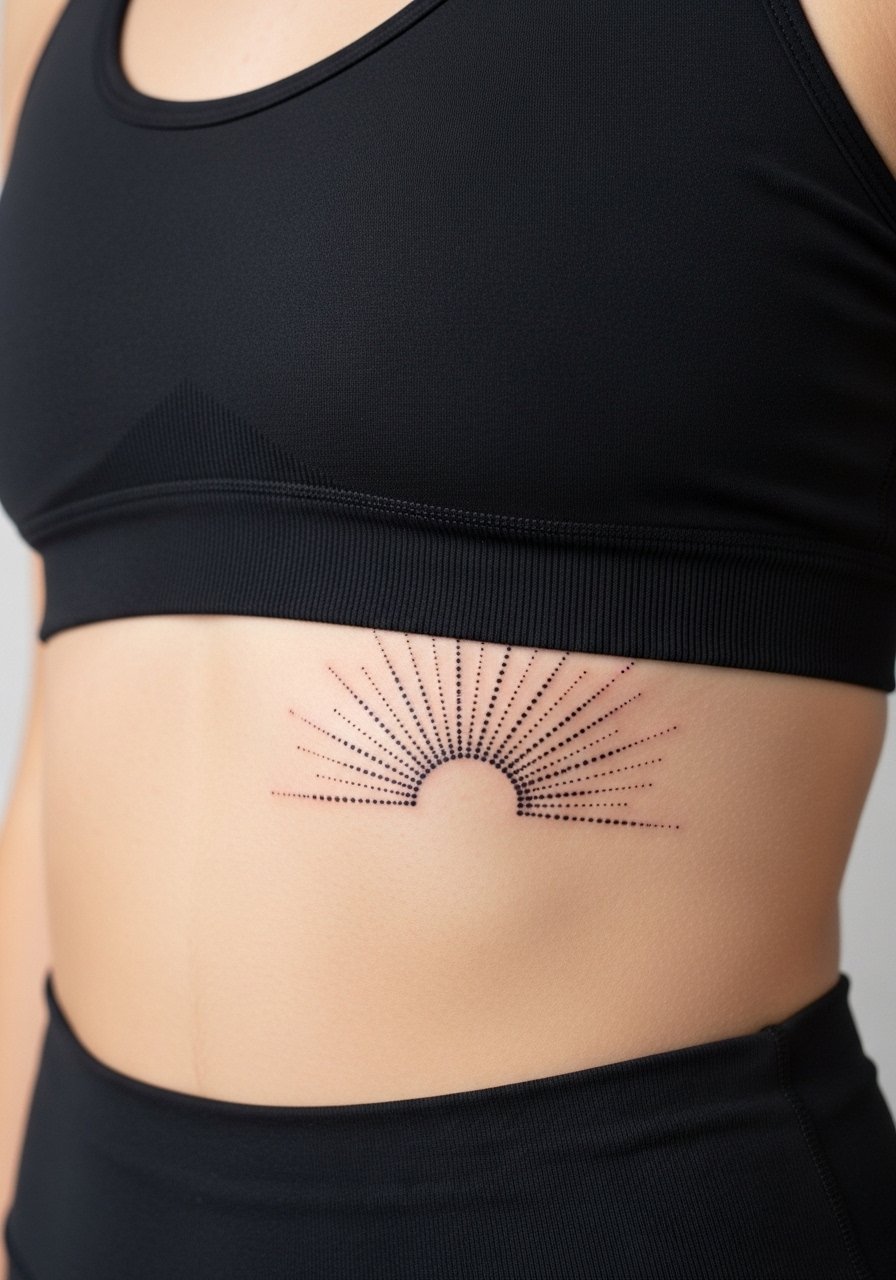
Mistake lead: placing a radial sunburst too close to the floating ribs invites distortion as that skin moves with breath and posture. I usually recommend starting the burst just under the rib edge so the center avoids the most mobile zone. Expect a mid-length session with some shading and dot work to build gradient. For consultation, ask for a higher center and graduated line tapering outward. Many people underestimate how visible this is when they lean forward, so plan placement with a mock stencil. Wear a sports bra to the session that you can adjust to expose the area while staying supported.
11. Layered Polygon Cluster With Open Centers
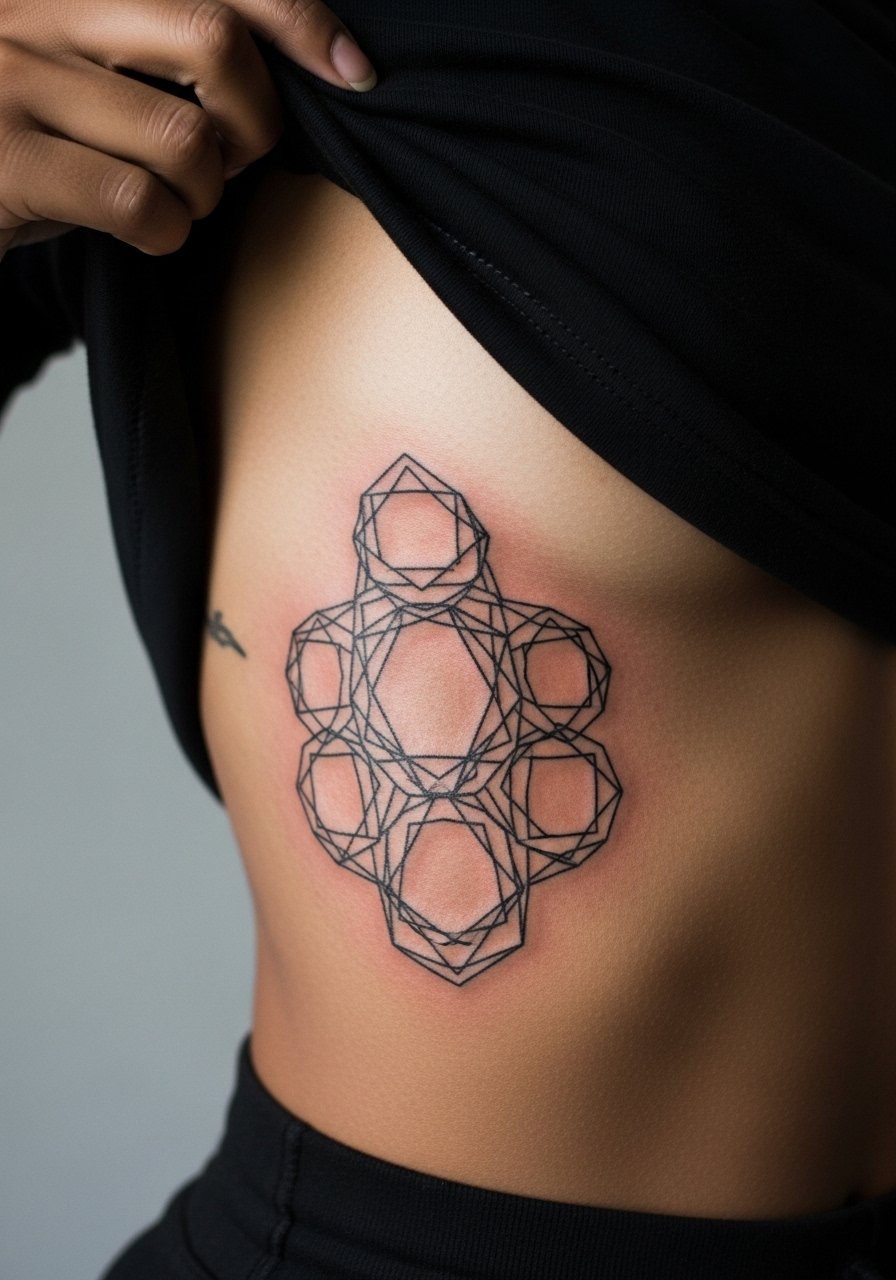
Controversy lead: polygons layered tightly spark debate in the community. One side says tightly packed polygons with minimal negative space make for dramatic photos but age poorly on torsos. The other side maintains that if spacing and depth are calibrated, polygons can remain distinct for many years. I recommend a tested middle ground with open centers and alternating fill depths. That reduces the chance of inner edges blurring into one another. In practice, ask your artist to leave the innermost polygons open and focus saturation on outer lines. Session time is moderate and touch-ups at year two are not uncommon for high-density pieces.
12. Mirror-Image Geometric Panels Flanking the Torso
Personal observation lead: mirror-image panels are visually satisfying when they balance with torso asymmetry. Instead of insisting on perfect symmetry, ask the artist to mirror the visual weight rather than exact coordinates. These panels often take two sessions if you want precision on both sides. Pain is variable because the panel crosses multiple ribs. Tell your artist during consultation you prefer one side slightly larger if your waist sits asymmetrically. For showing the pairs, a wide-neck shirt pulled slightly aside on both sides frames the panels without compressing them.
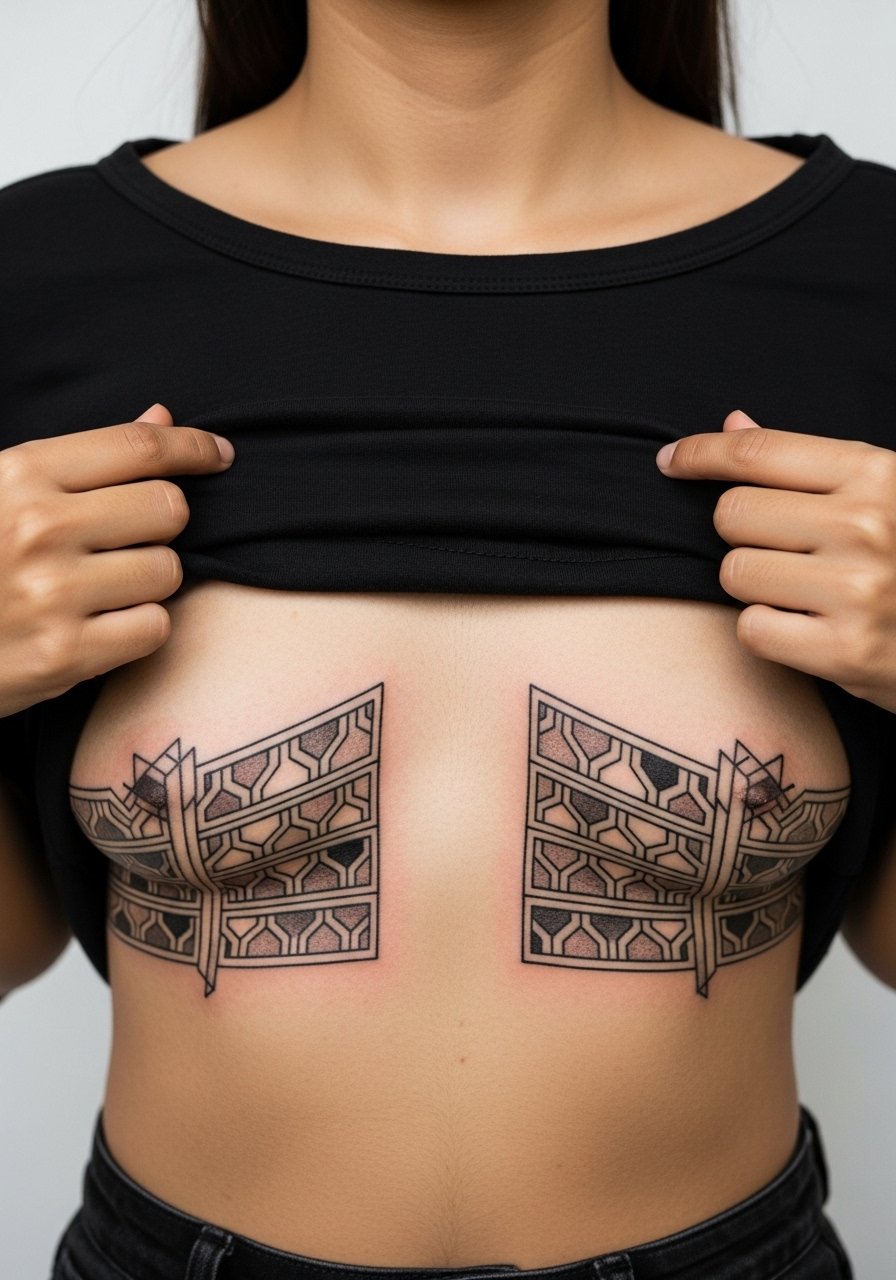
13. Linear Lattice With Graduated Dot Shading
Aging lead: lattices that use dot shading to suggest depth last longer than lattices filled with solid black. The dot work creates texture and leaves micro gaps that resist merging. This design can be longer to complete, often two to three hours, depending on the lattice size. In consultation, ask for heavier dots near intersection points and lighter work toward the margins. A mistake is requesting solid fills in the lattice center, which ages into a blob. Expect a small touch-up window at year three if you choose tighter spacing. The session feels like repeated pinpricks, so bring a friend to sit with you afterward if you want company.
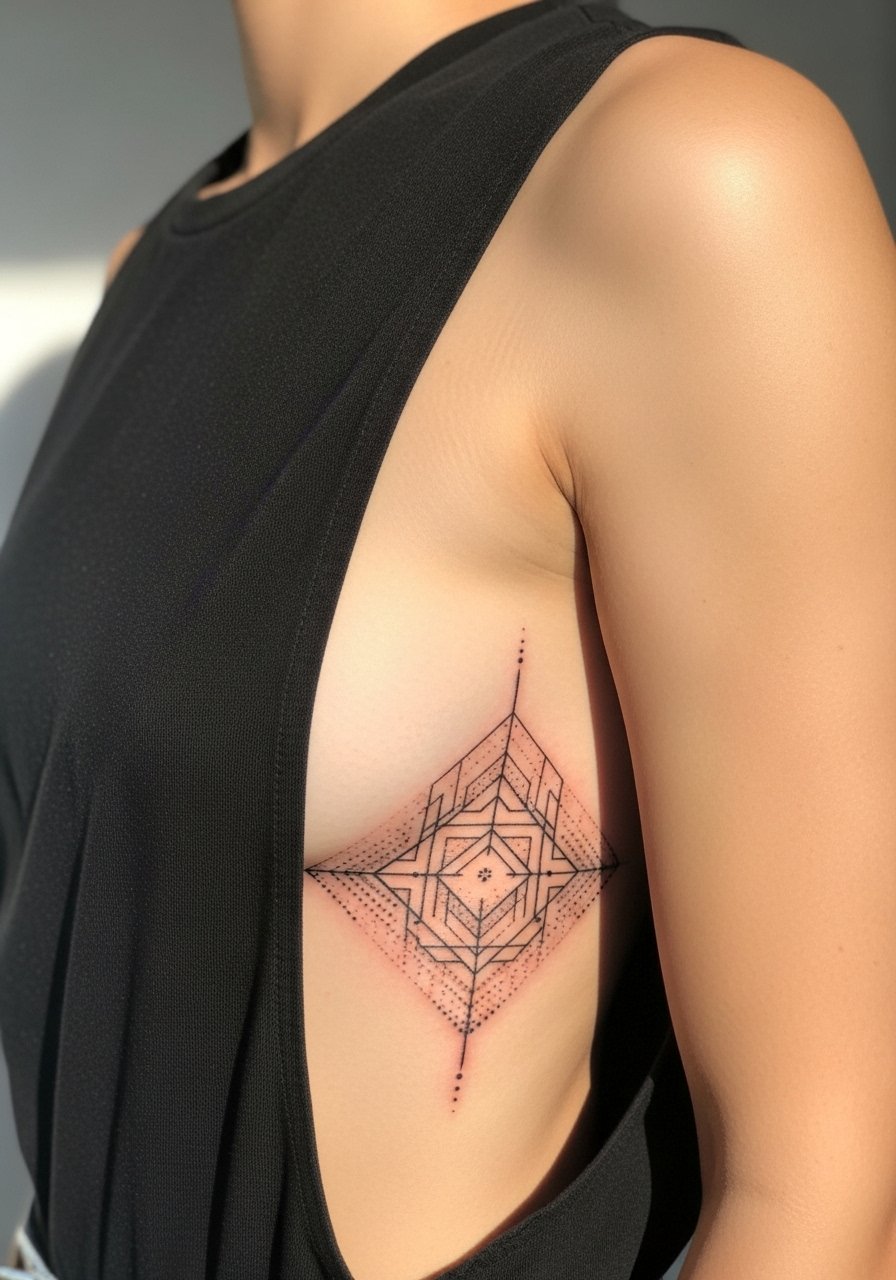
14. Offset Spiral Lines That Follow Breath Motion
Mistake lead: spirals can read messy if their offset spacing does not account for expansion and contraction. This design benefits from testing the stencil while you breathe so the artist can space the offsets for your unique torso motion. Sessions for small spirals are short, under ninety minutes. Tell your artist to avoid micro-spacing in the tightest curve because that is where blowout first appears. For the session wear a loose tank top you can lift and a soft fabric robe to stay warm during breaks.
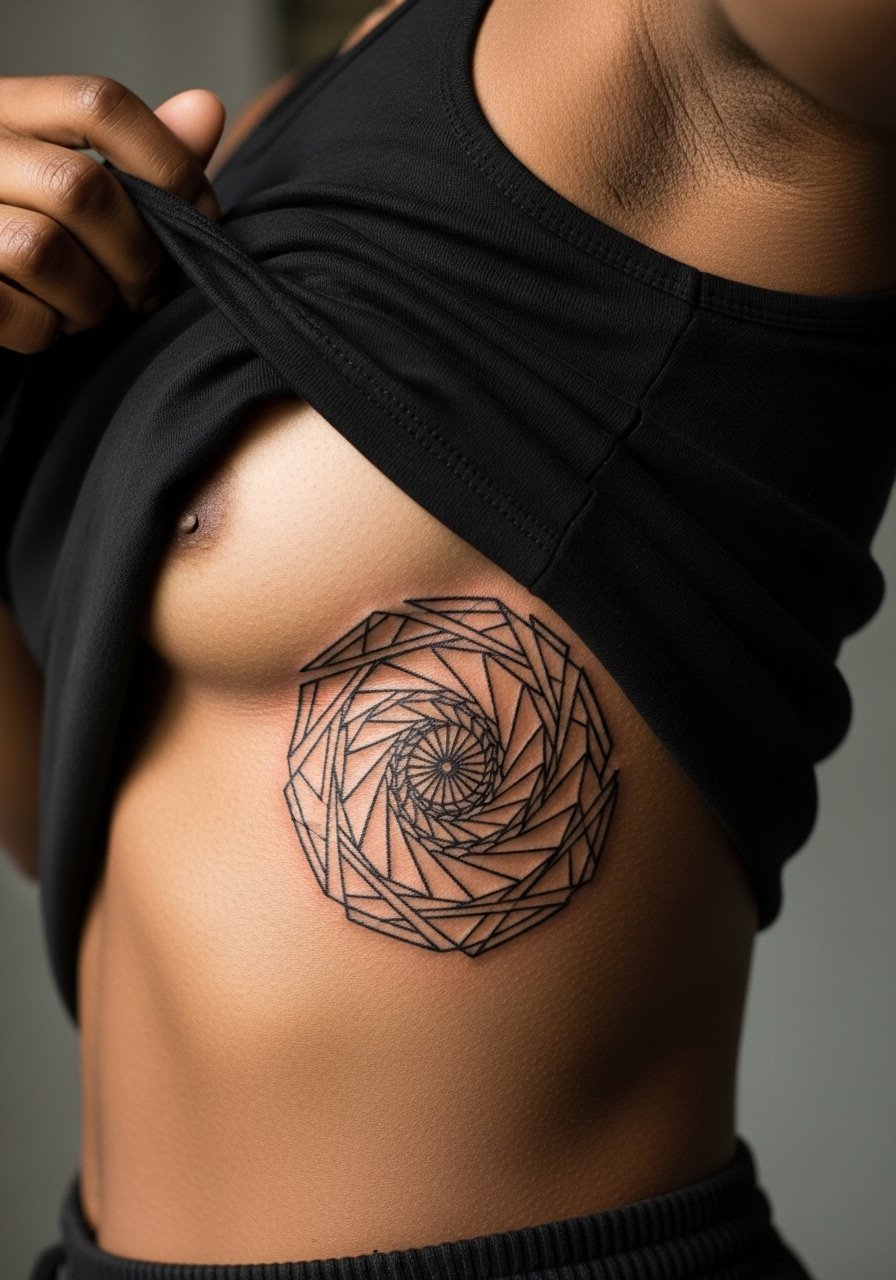
15. Fragmented Polygon Sleeve That Tucks Under the Ribs
Visual impact lead: a fragmented polygon sleeve that tucks under the ribs plays well with clothing and can be hidden when you need it concealed. Expect multi-hour work split across sessions because you are effectively doing a wrap. During consultation, map the areas you want visible when wearing a swimsuit versus hidden when dressed. Common mistake is trying to cram full sleeve density into the rib tuck, which invites distortion. For comfort on chair day wear a zip-up hoodie you can loosen without shifting the torso band.
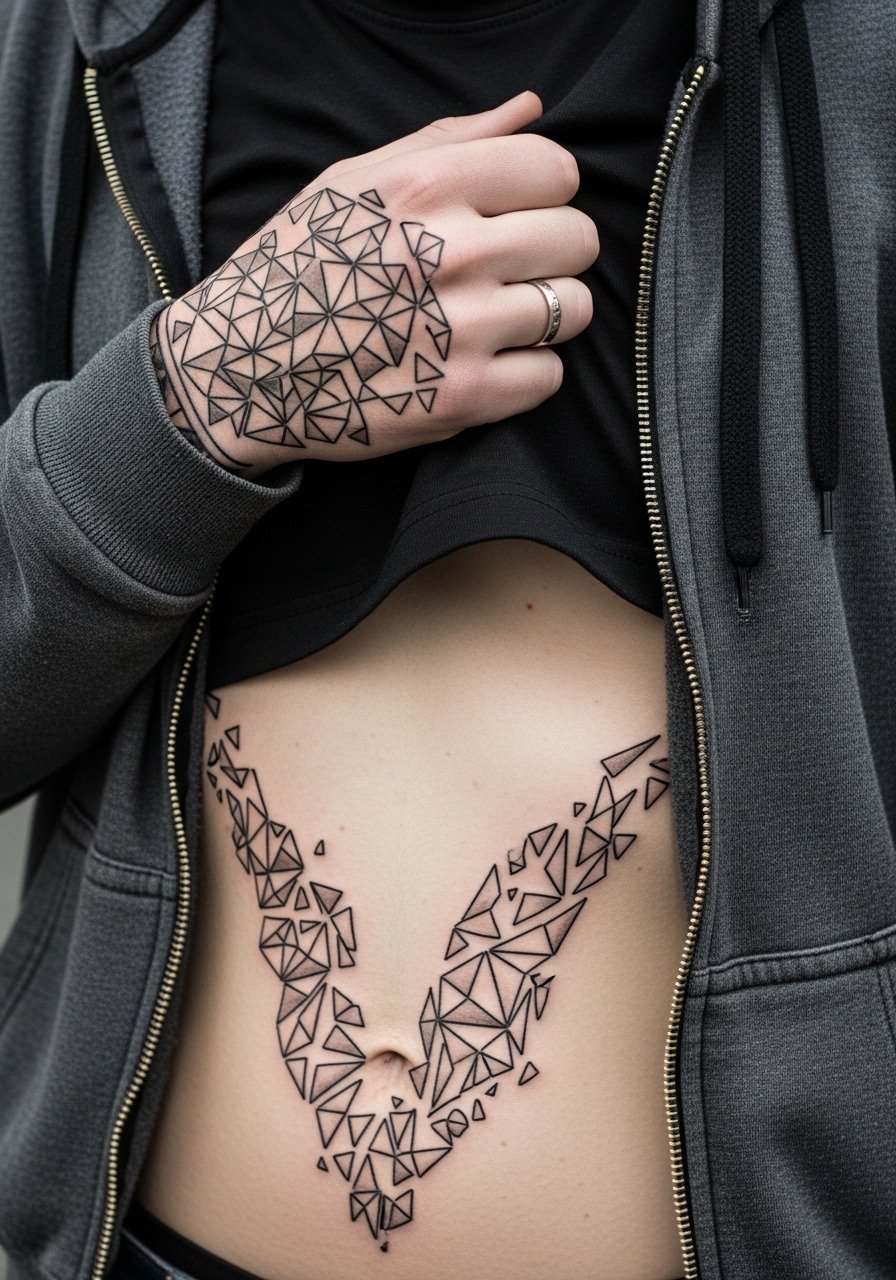
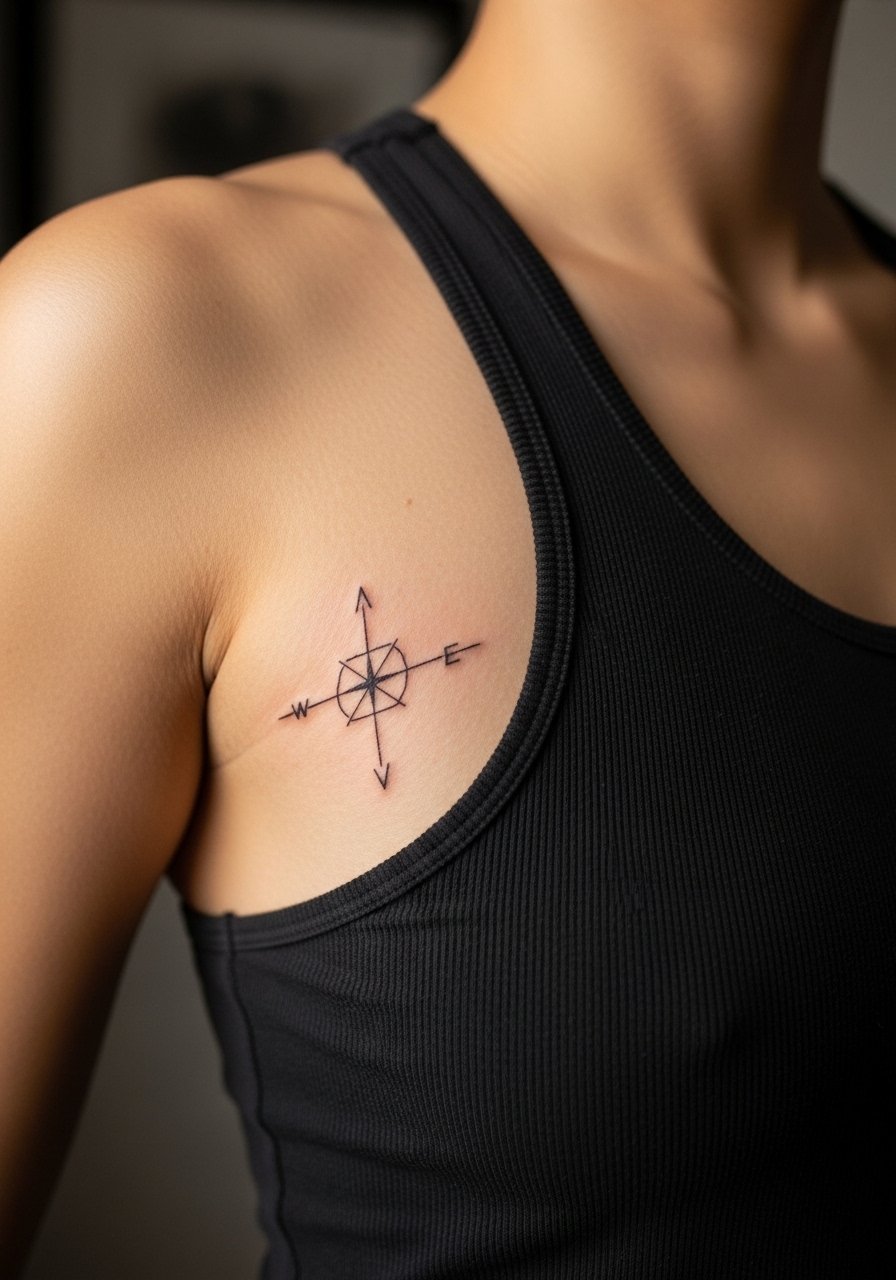
16. Minimal Compass Points Along the Rib Arc
Consultation lead: compass points are deceptively simple but demand precise placement to read directional on the curved rib surface. These small marks are quick, often single-needle, but they need slightly more space than a tiny dot to avoid fading. Tell the artist you want firm, consistent outer points with slight negative breathing room. A common mistake is making the points too small and clustered. For showing off a neat compass, a racerback tank or scoop-neck dress keeps the neckline clean and the rib area visible without friction.
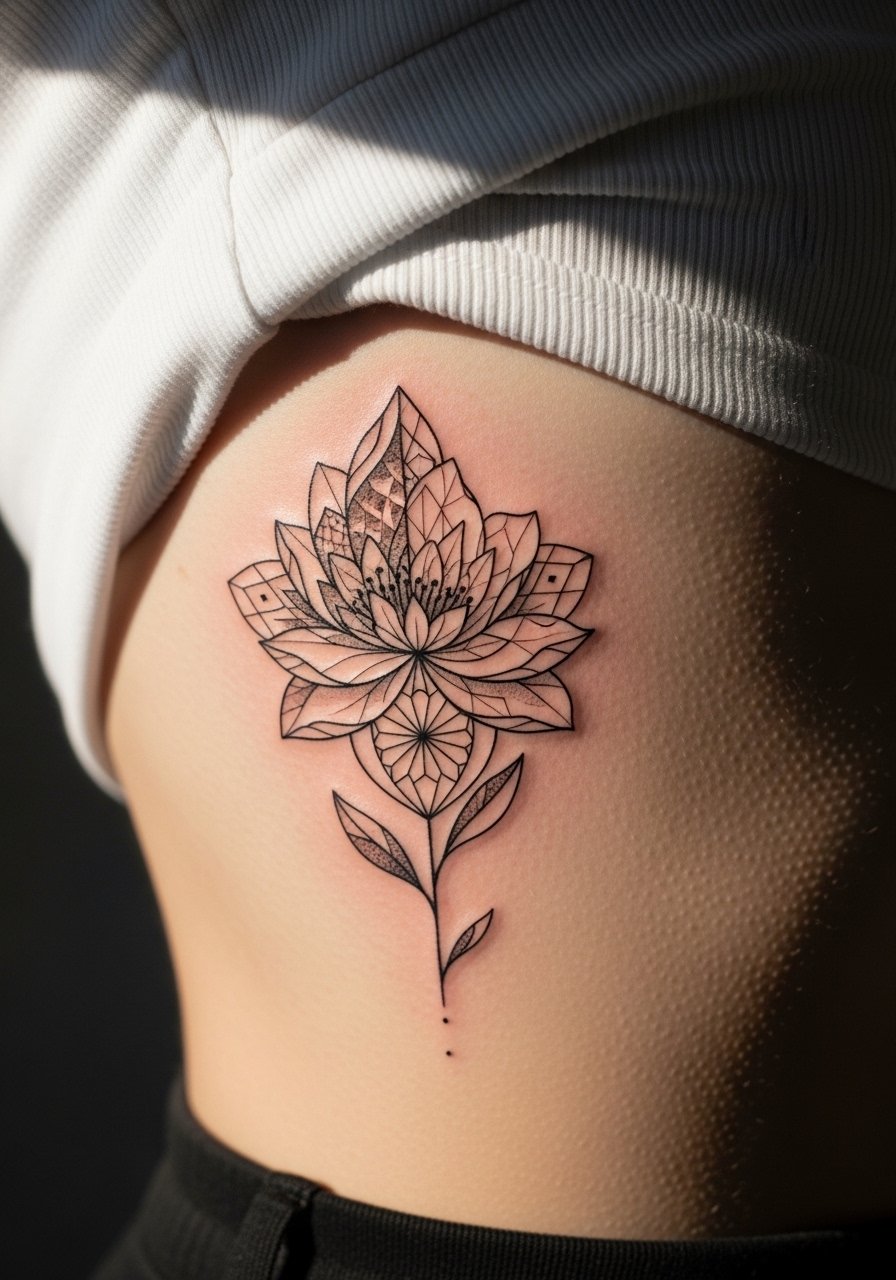
17. Geometric Floral Hybrid That Uses Negative Petals
Personal observation lead: hybrids that blend geometry and floral motifs age better when petals are rendered as negative space cutouts rather than filled forms. That keeps the piece light and prevents dense patches on moving skin. These designs can be modestly sized and finished in under two hours. During consultation, say you want the floral elements suggested by negative shapes and the geometric structure to carry the weight. The common mistake is overfilling petals that then merge with surrounding geometry. If the design references a cultural motif, consider slight adaptation to respect origin instead of direct replication.
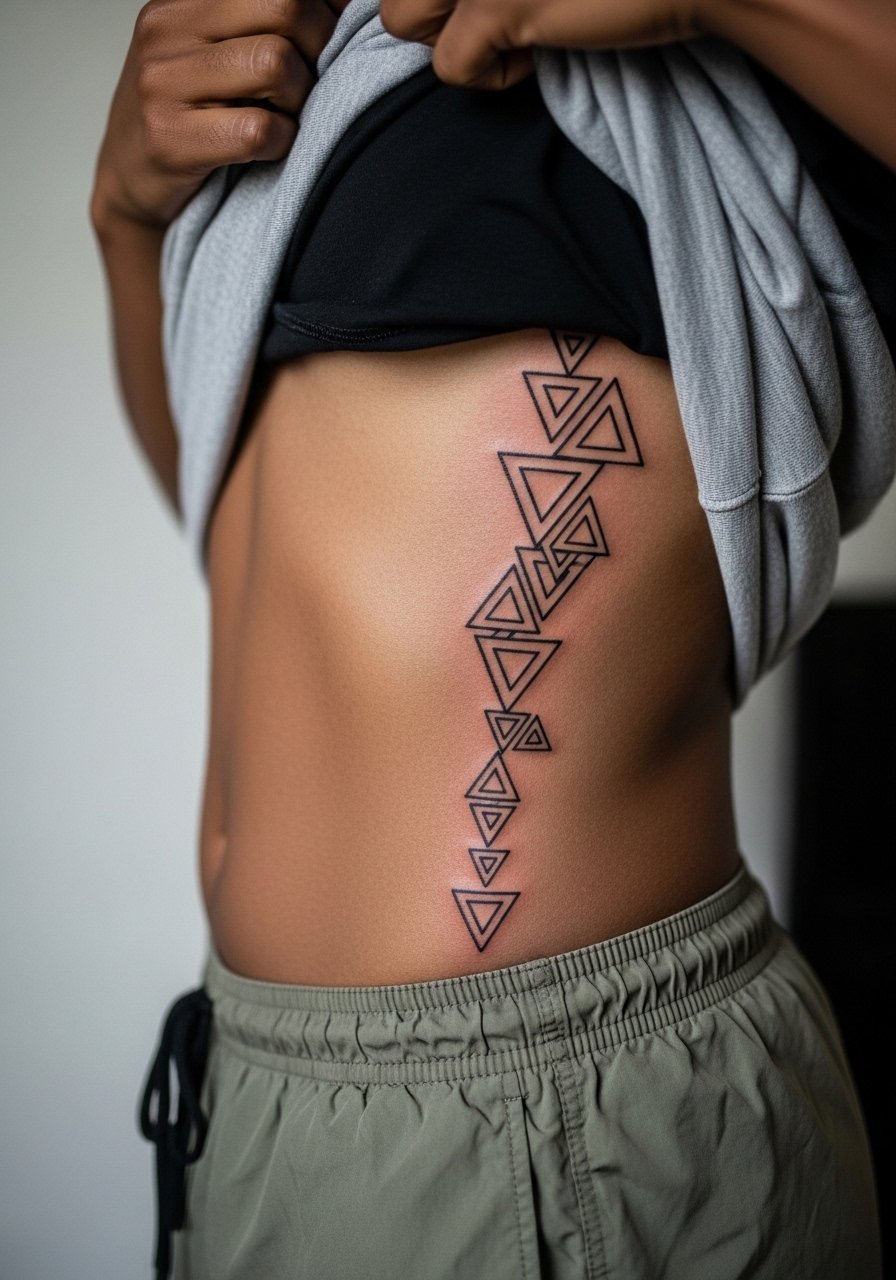
18. Cascading Isosceles Motif That Tracks the Rib Line
Pain warning lead: cascading isosceles shapes that run vertically can cross both sensitive and less sensitive rib zones in one pass, so plan breaks. A staggered cascade reads like a rhythm down the torso and looks clean if each triangle maintains slightly more space at hinge points. The session runs one to two hours depending on cascade length. In consultation, request that the artist check the cascade while you stand, sit, and inhale so the flow feels natural. For the session wear loose shorts you can lower slightly and a soft shirt to keep warm between passes.
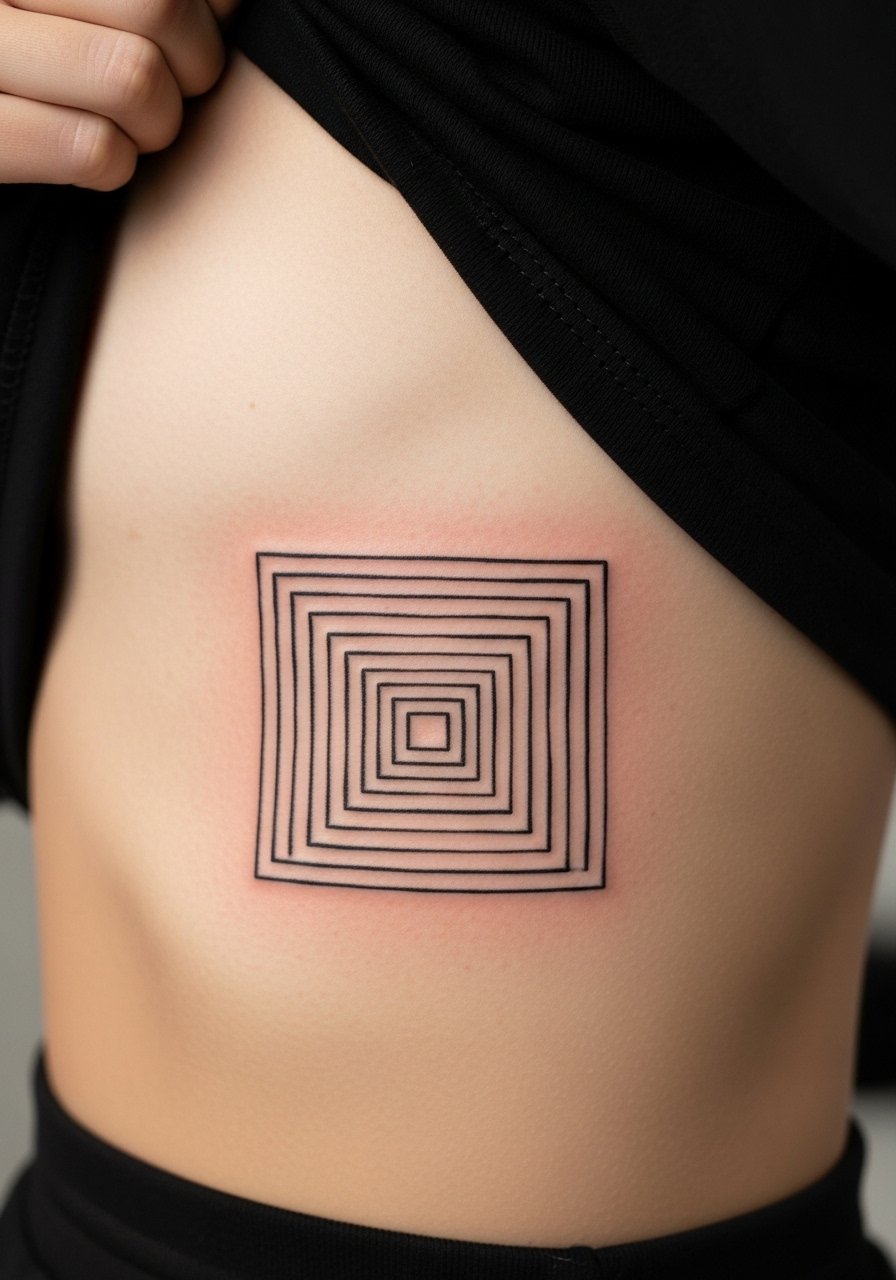
19. Nested Squares That Step Away From the Bone
Mistake lead: nested squares that begin directly over bone suffer first-line softening because the skin there moves differently. Start the inner square slightly away from the rib edge to let the outer squares frame without distortion. Sessions vary from one to two hours. For the consultation, have the artist mark the rib edge and the intended inner square so you can see the buffer zone in real time. Expect a touch-up at year two if you insist on very tight inner squares. For showing off, a thin chain pendant necklace sits above the design without competing for attention.
20. Micro-Geometry Panel With Stippled Borders
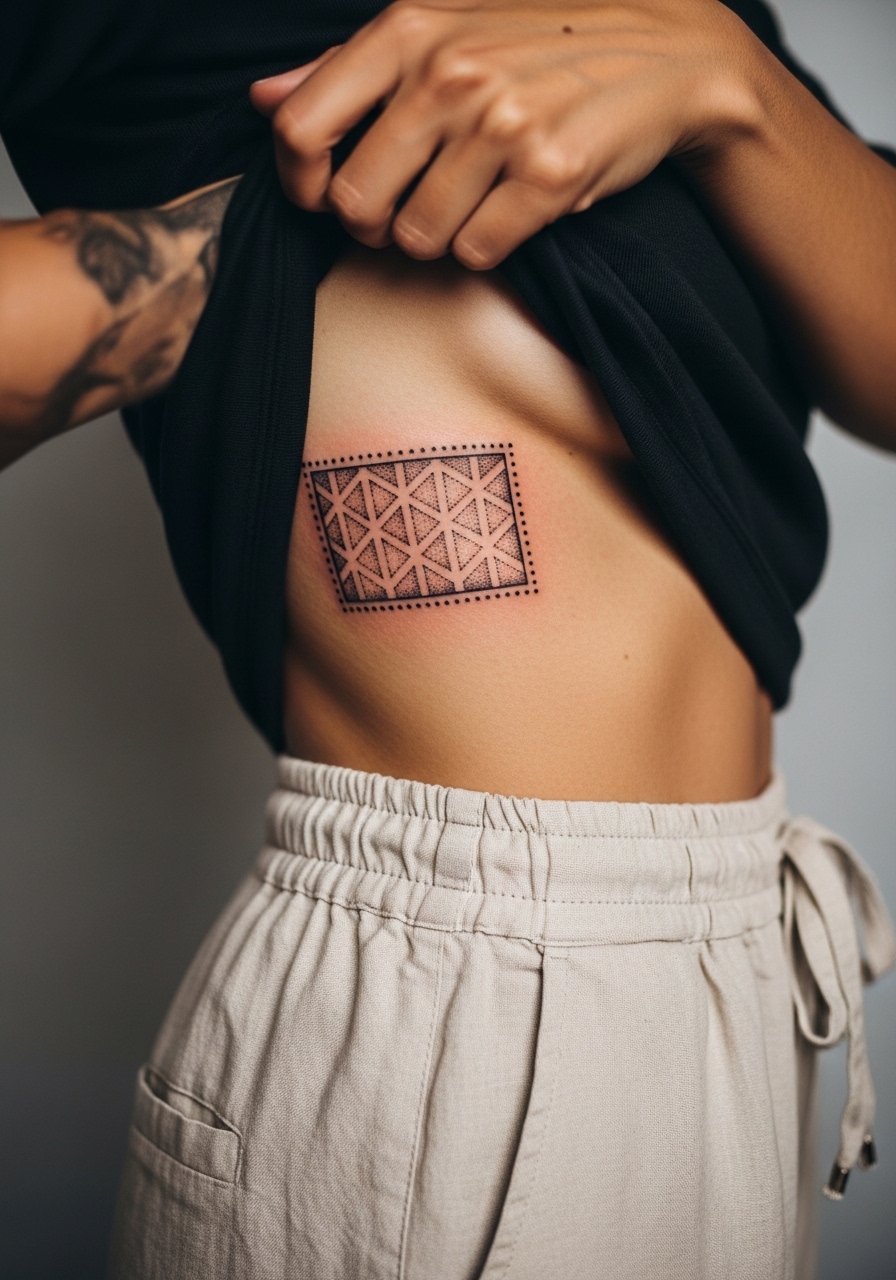
Visual impact lead: micro-geometry panels framed by stippled borders look like tiny tapestries against the ribs. The stippling gives a soft halo, so the hard edges inside stay readable longer. This is a session that rewards patience, often two hours for a modest panel. Tell your artist you want the stippling to be gradual and not overwhelm the interior geometry. A common error is stippling that is too dense and eats into the central forms. For the session, wear a loose drawstring linen pant so you can adjust the waistband without pressing on the panel.
21. Single Bold Geometric Anchor Near the Lower Rib
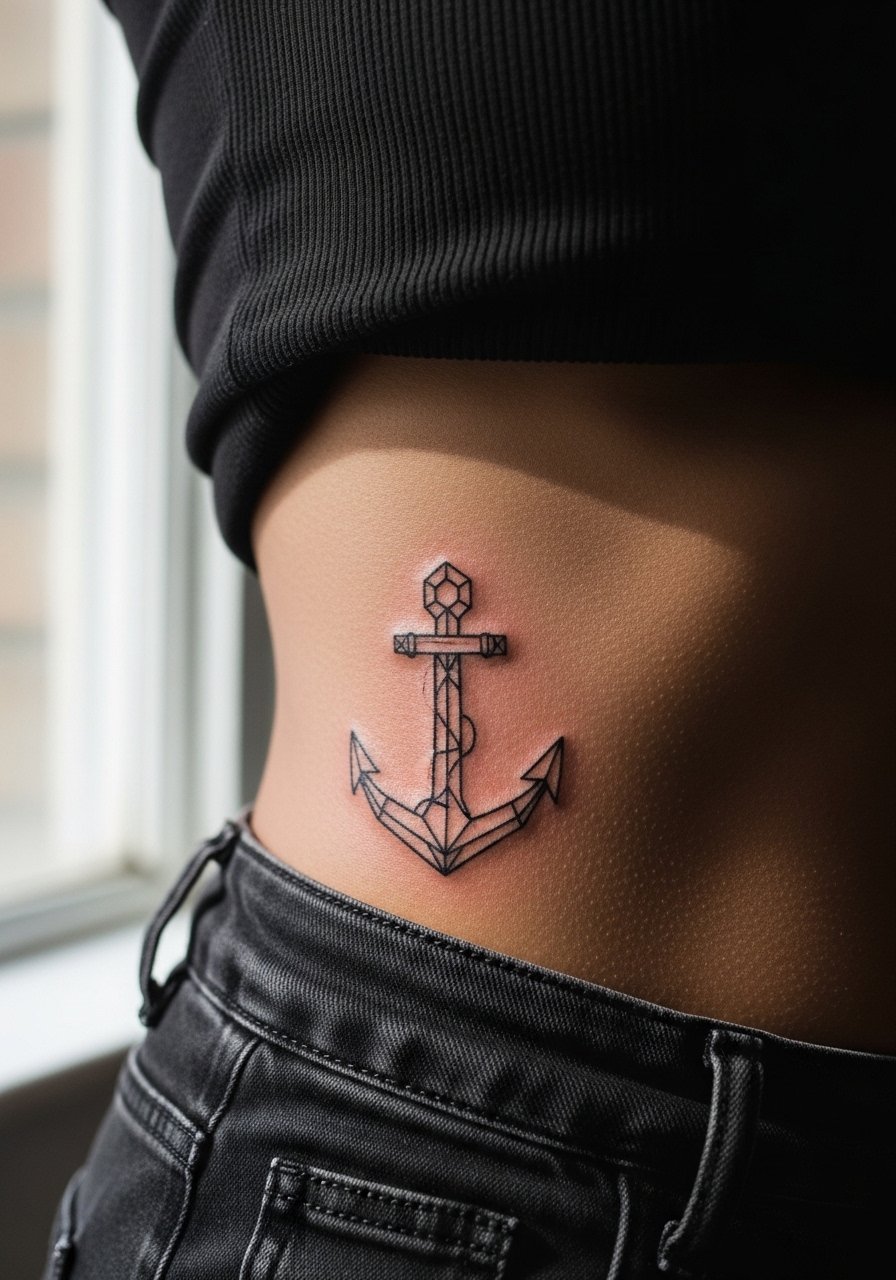
Mistake lead: going too bold and dense in a single anchor near the lower rib invites friction from waistlines and bands during healing. A single strong geometric anchor can look striking if placed where clothing normally avoids pressure. These are quick sessions, often under an hour for a well-executed anchor. In the consult, specify a small safety margin from elastic waistbands and consider a slightly higher placement. Overly large anchors tend to gather scabs and take longer to heal. If you prefer larger work later, plan out where future pieces will attach so the anchor becomes a true focal node.
Frequently Asked Questions
Q: Do fine line geometric ribs blur faster than bold blackwork?
A: From what I have seen, ultra fine single-needle geometry tends to need touch-ups sooner on the ribs. Bold blackwork can hold its shape better because saturation withstands minor spreading. The middle path is moderately weighted lines with deliberate negative space so the design remains legible without frequent touch-ups.
Q: How should I prepare clothing-wise for a rib session to minimize irritation afterward?
A: Wear loose, high-waisted bottoms and a top you can lift easily without shifting the waistband. Options like a cropped athletic top or a zip-up hoodie make access and comfort simpler. Avoid tight elastic directly on the fresh tattoo for the first week.
Q: If a geometric mandala on the ribs starts to blur, what are realistic options?
A: Small touch-ups to reinforce critical lines are common and effective. If the blur is widespread, a strategic redesign that adds negative-space framing or dot texture can restore definition. Full cover-ups on ribs are doable but require planning for curvature and movement.
Q: Will my skin type affect which geometric designs I should pick for ribs?
A: Yes, skin thickness and elasticity change how ink settles. Medium-thicker skin can sometimes hide fine detail better, while very thin skin over bone may show blowout sooner. Discuss your skin type with the artist and ask for stencil tests to preview how spacing looks on your unique torso.
Q: Are there geometric designs that are low maintenance for people who travel often or sweat a lot?
A: Simpler motifs with slightly bolder lines and fewer tiny dots handle friction and frequent washing better. Designs that avoid tight internal fills reduce scab formation and are easier to care for on the road. Ask the artist for spacing that tolerates movement and friction.
Q: How do I find a tattooist who understands geometric spacing on ribs without naming specific artists?
A: Use discovery pathways like specialized geometry hashtags, directory filters for artists who list "geometric" or "dot work" in their portfolios, and community threads where people share healed rib photos. During consultation, request healed photos of rib work and a breathing test with the stencil to confirm they plan for your torso motion.