
A geometric hammerhead can read like a symbol, a pattern, or an architectural study of motion. You can go tiny and precise or blow it out into a sleeve that reads like a map of currents. Pick a direction before you book and tell the artist which lines must stay, which can blur, and where you want negative space to breathe. The examples below start with compact forearm pieces and move into large-format geometric concepts that hold up over time.
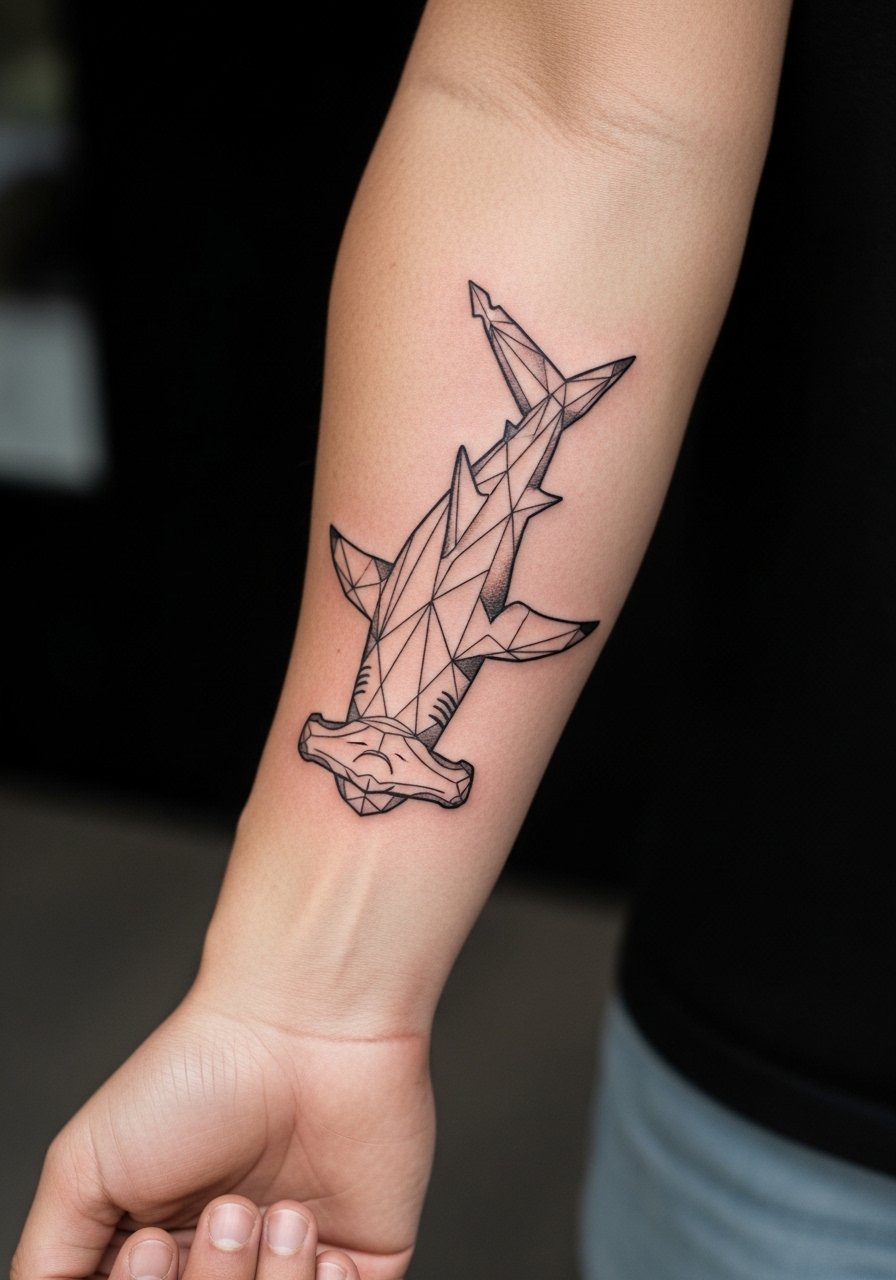
1. Fine Line Hammerhead on Inner Forearm
I've seen this exact placement last the cleanest when artists leave breathing room between repeating angles. Ask for single-needle linework with a slightly heavier anchor line for the silhouette so the shape keeps reading as it softens. Fair warning, the inner forearm gets sun and friction from watches, so expect touch-ups around year three for crispness. For the session wear something with short sleeves you can roll up easily. Pair the finished piece with a minimalist leather cuff bracelet when you want the silhouette to pop.
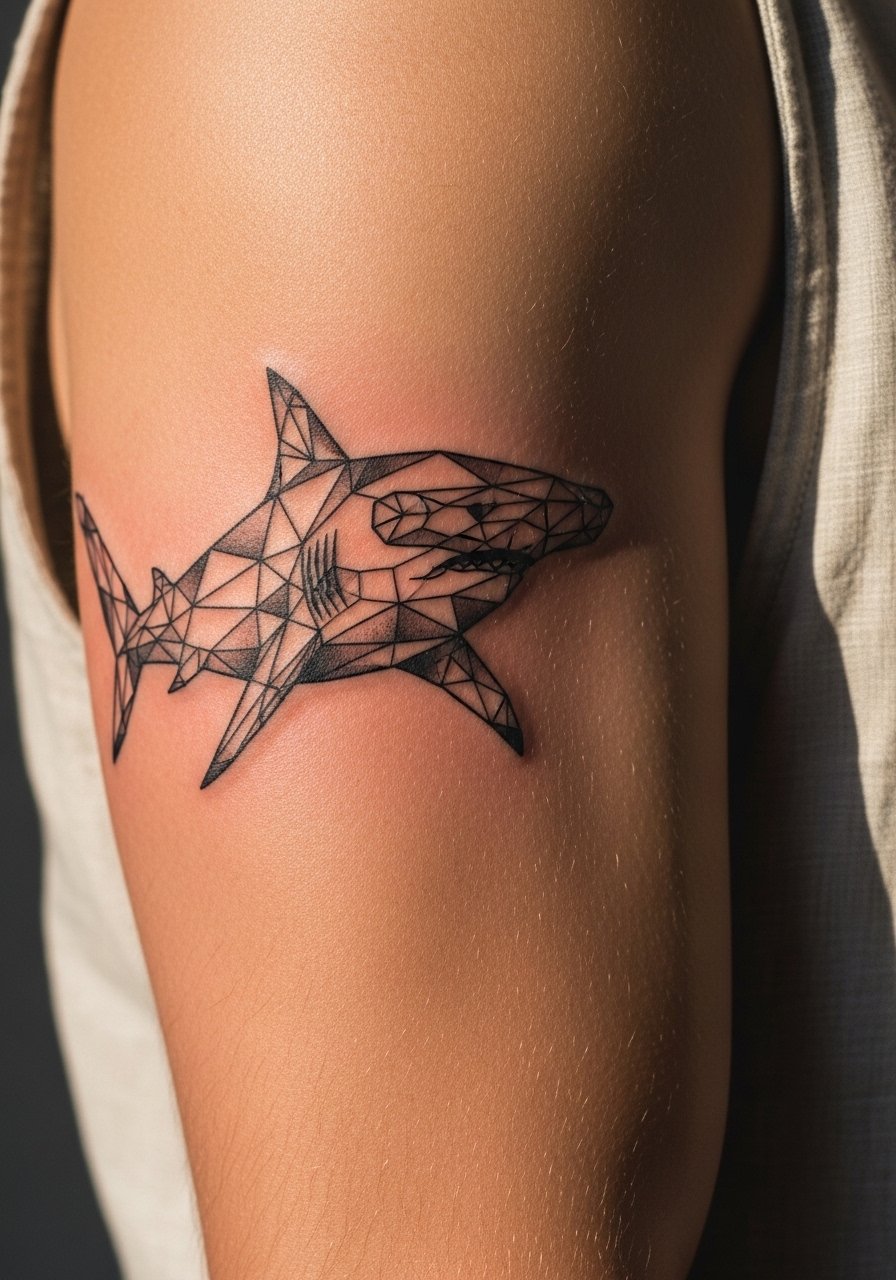
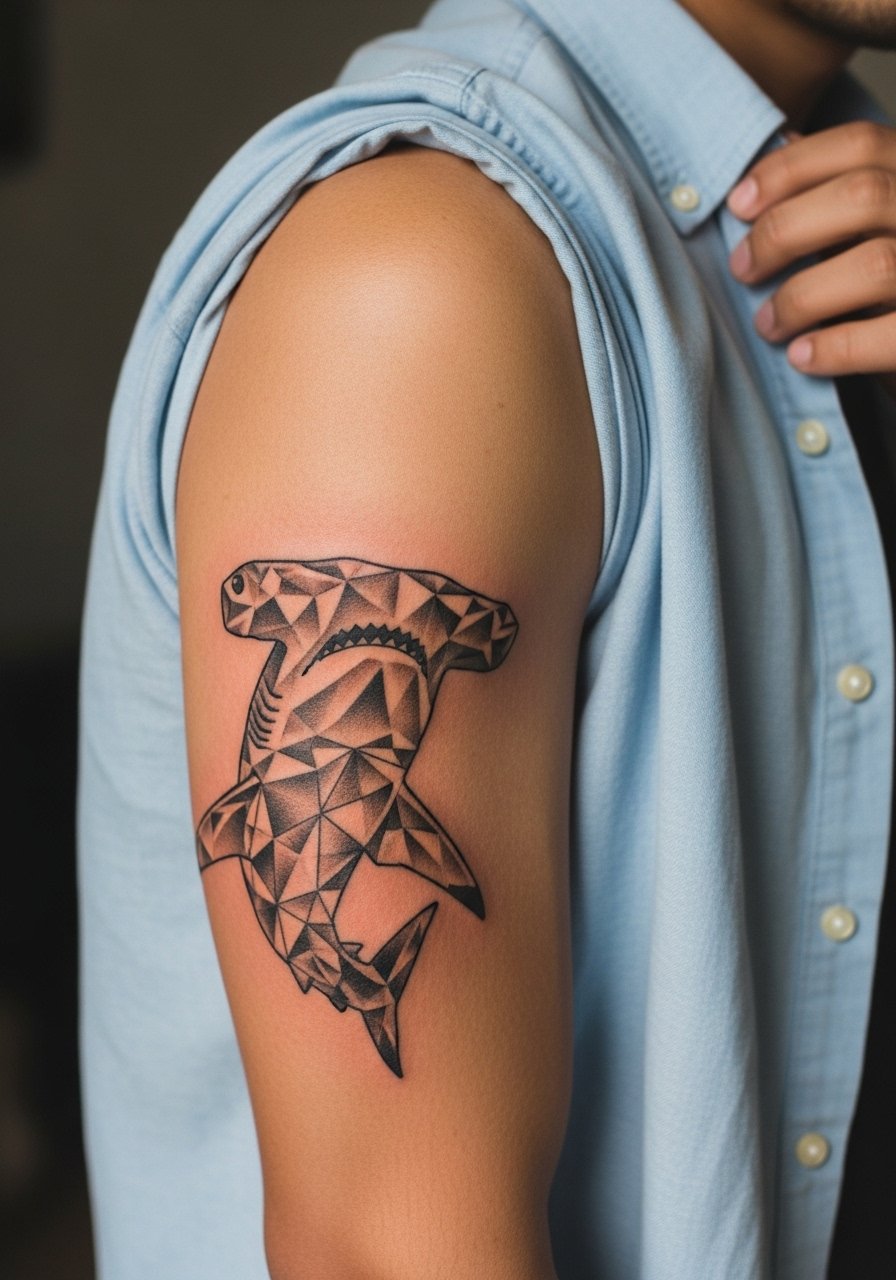
2. Low-Poly Hammerhead on Outer Bicep
Most clients choose the outer bicep for visibility without daily exposure. Low-poly facets look dynamic here because the muscle makes the planes shift as you move. Tell your artist to treat each polygon as its own mini-shade block, not just a thin outline, so the angles keep their contrast after healing. The session feels like a medium-length block of work with breaks for stretching. Show-off pairing includes a sleeveless linen shirt that frames the bicep without hiding the geometry.
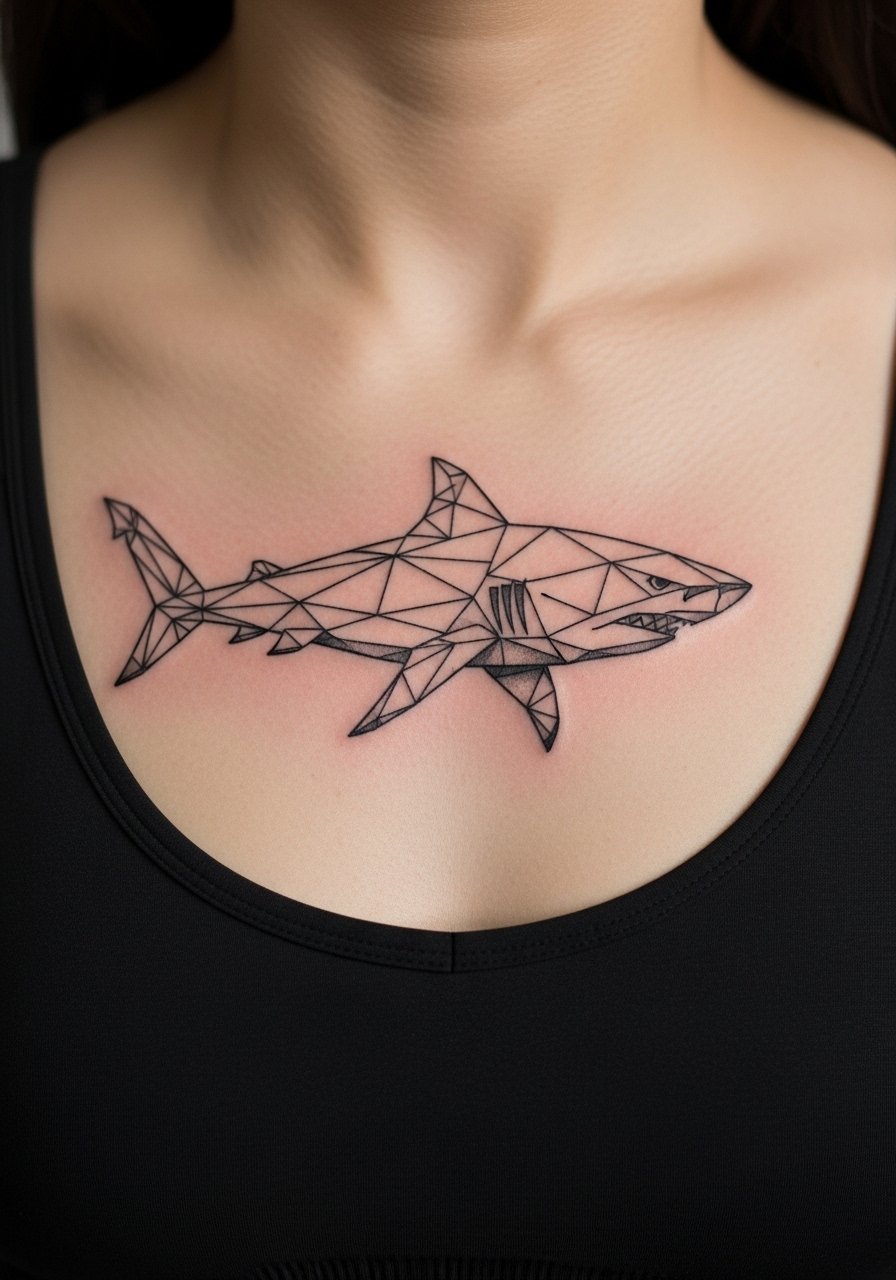
3. Negative-Space Hammerhead Across Sternum
A sternum placement asks more planning than it looks. The best negative-space compositions use deep black triangles and thin open corridors to reveal skin as part of the image. When you consult, say you want "skin islands" inside the helmet rather than full fill so the piece breathes. The session requires a fitted sports bra or bandeau top to keep exposure minimal. Expect sharp contrast right after healing and gentle softening by year two. For nights out, pair this with an open-front blazer that lets the central geometry read without revealing too much.
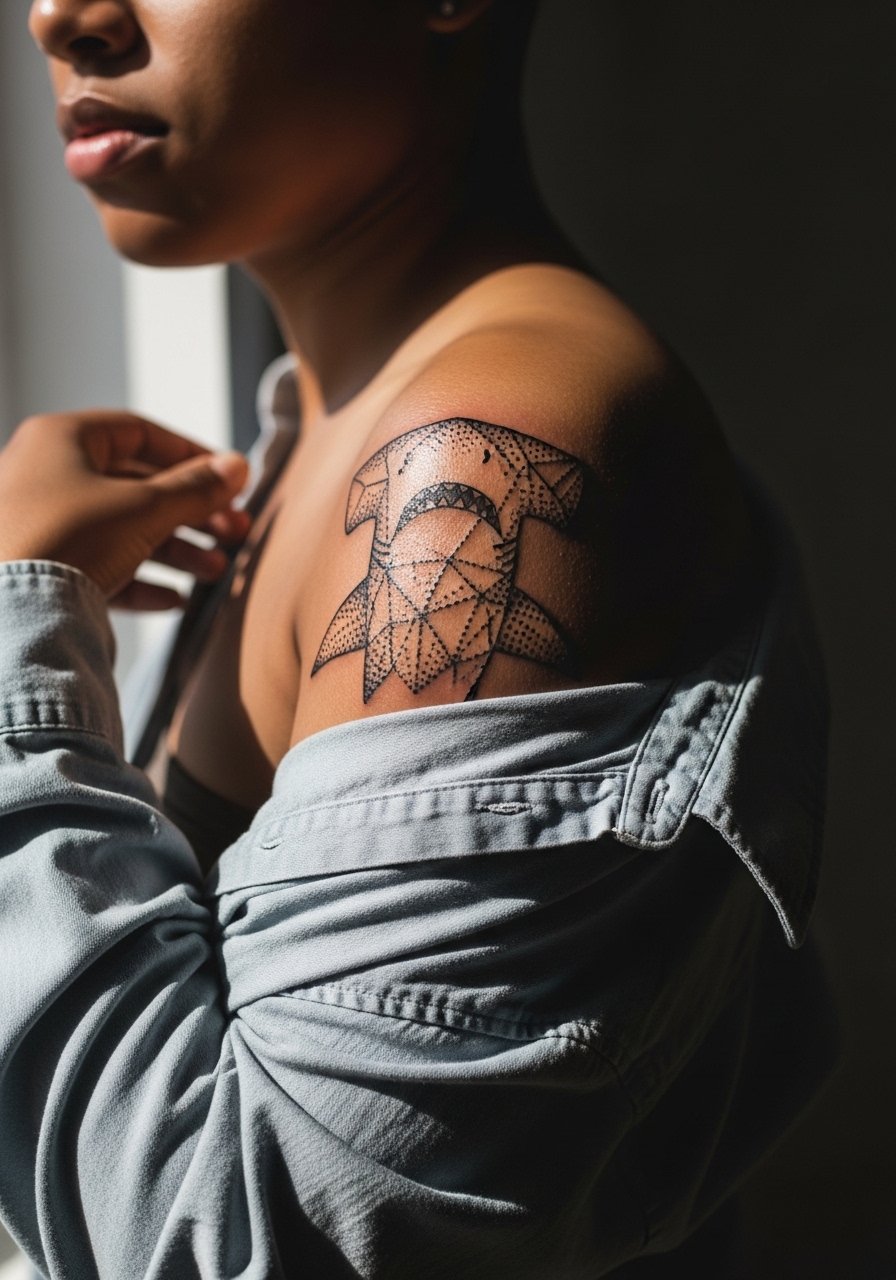
4. Dotwork Hammerhead Shoulder Cap
There's something about stippling that makes a shark look sculpted rather than flat. Dotwork on the shoulder cap gives volume through density shifts without heavy outlines. Ask for denser stipple near the eye and sparser dots toward the fin tips so the form reads three-dimensionally. Pain is usually moderate because of muscle padding. Over five years the dotwork can fade unevenly if exposed to sun a lot, so plan for sunscreen. For showing it off, wear a loose button-down shirt you can pull slightly aside when you want the shoulder to show.
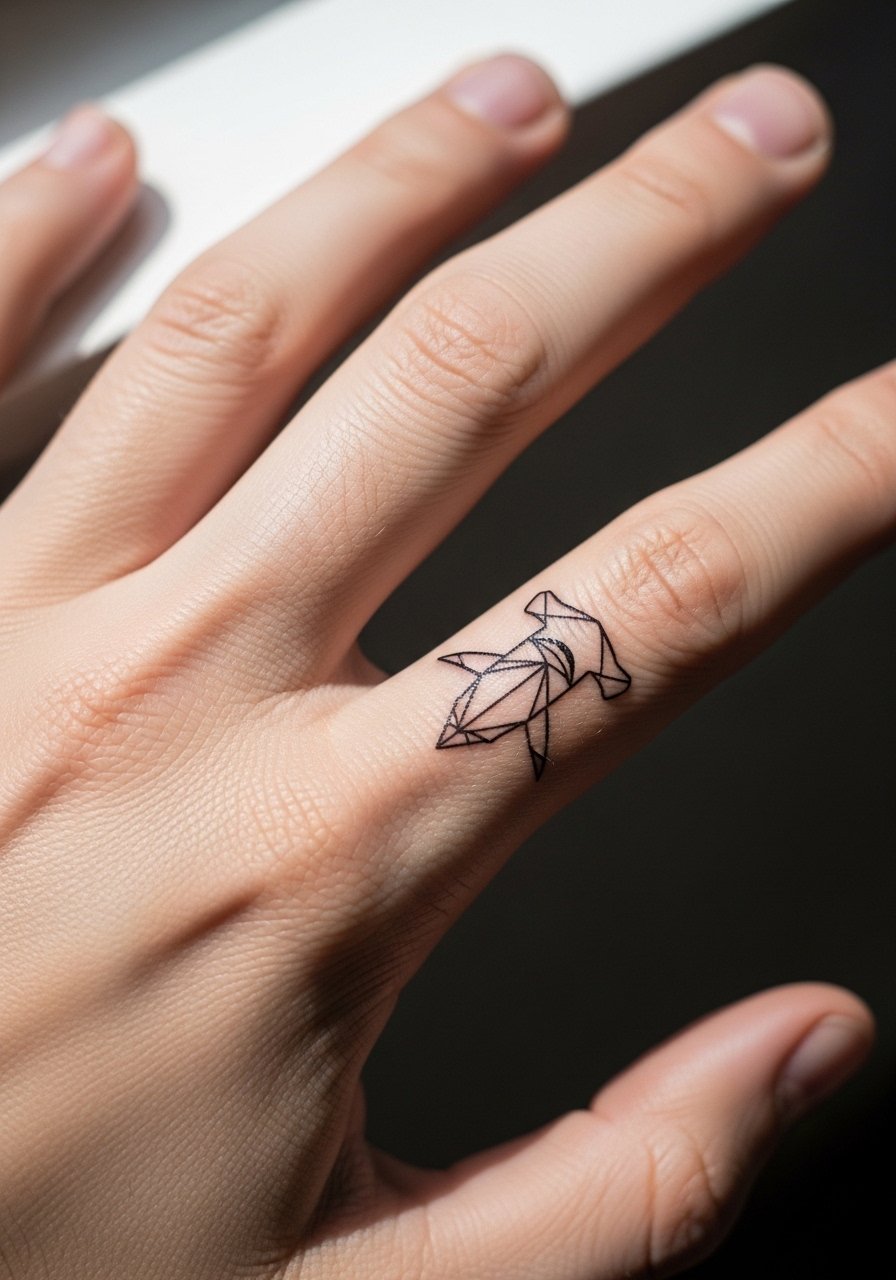
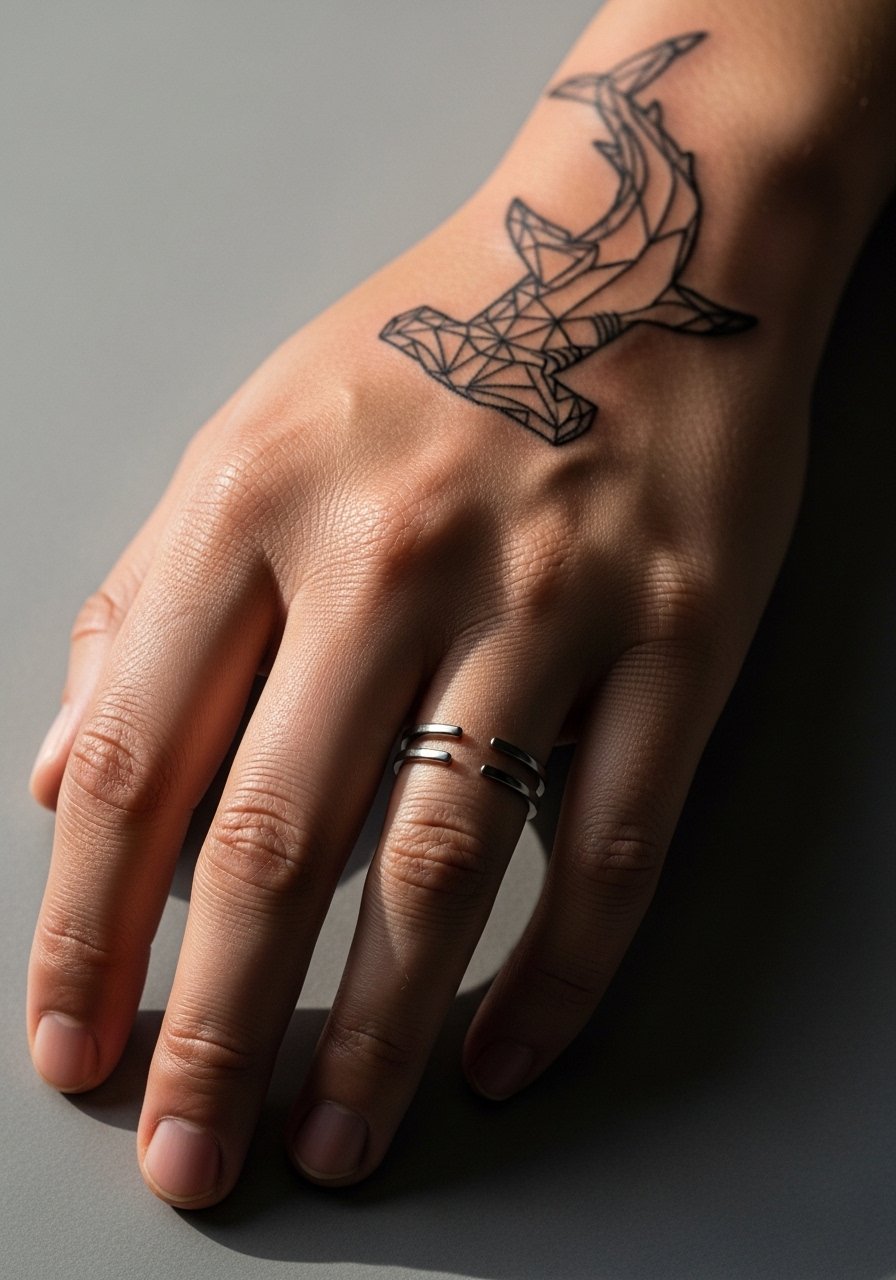
5. Minimalist Finger Hammerhead Accent
The biggest mistake with finger geometrics is going too detailed for the canvas. Keep it as an outline of the hammerhead with one or two negative-space polygons inside. Tell the artist you want solid anchor lines and avoid micro-shading. Fingers move and wash constantly, so thin work often needs a touch-up within a year. For session prep wear short sleeves and avoid rings that crowd the workspace. When you want to accessorize, try a thin stacking ring set that frames the finger without covering the tattoo.
6. Geometric Hammerhead Sleeve Starter Panel
When you sit down with an artist for a sleeve, bring clear notes about which panels should be bold and which should be airy. A hammerhead as a panel works as a transitional motif to connect currents, coral, or compass elements. The session will likely split into two to three blocks depending on saturation. Expect heavier saturation in the first year and gradual softening; plan touch-ups after the sleeve settles. For the studio day wear a loose button-down shirt you can pull aside so the artist has full arm access.
Studio Day Picks
The chest, finger, and forearm pieces above create different session needs, and a small kit smooths the appointment and first week.
-
Stencil transfer paper kit. Lets you preview line placement on skin for the fine line and finger concepts above.
-
Topical numbing cream. Lightly applied before a sensitive finger or sternum session can ease the first hour.
-
Thin protective film roll. Useful for small placements that face friction, like the wrist and fingers.
-
Fragrance-free gentle body wash. Cleans the area during early healing without irritating fine line work.
-
Aquaphor healing ointment. Thin layers during the first few days help keep the ink moist without clogging delicate channels.
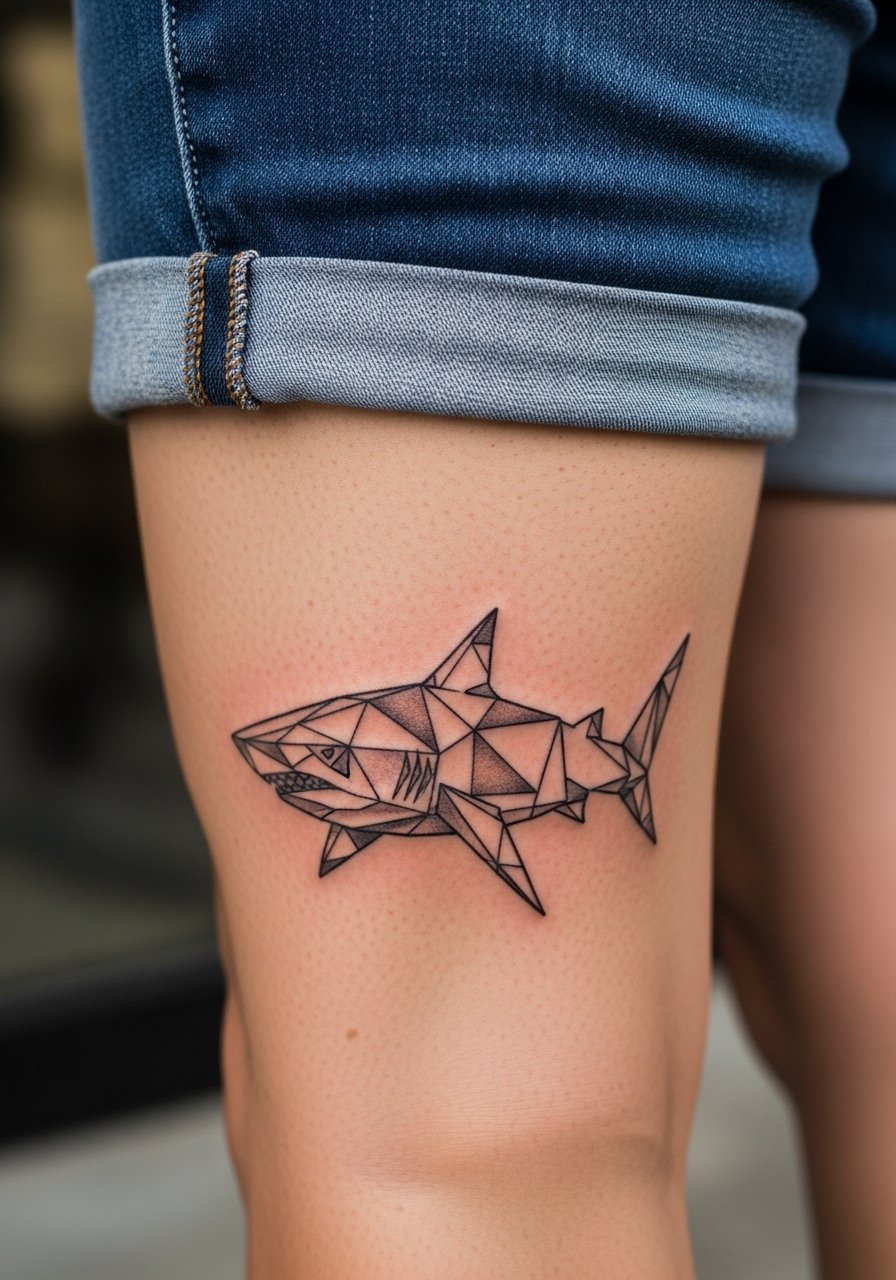
7. Origami-Style Hammerhead on Calf
Personal observation: the calf lets complex angular folds read like paper planes when done as origami geometry. Ask for crisp edge lines and slightly varied polygon sizes so the facets avoid looking repetitive. The session is tolerable, often done in one to two blocks. Calf skin holds saturation well, and the piece ages steadily with minimal ink spread. For showing off wear rolled-up denim shorts or ankle boots that stop above the design.
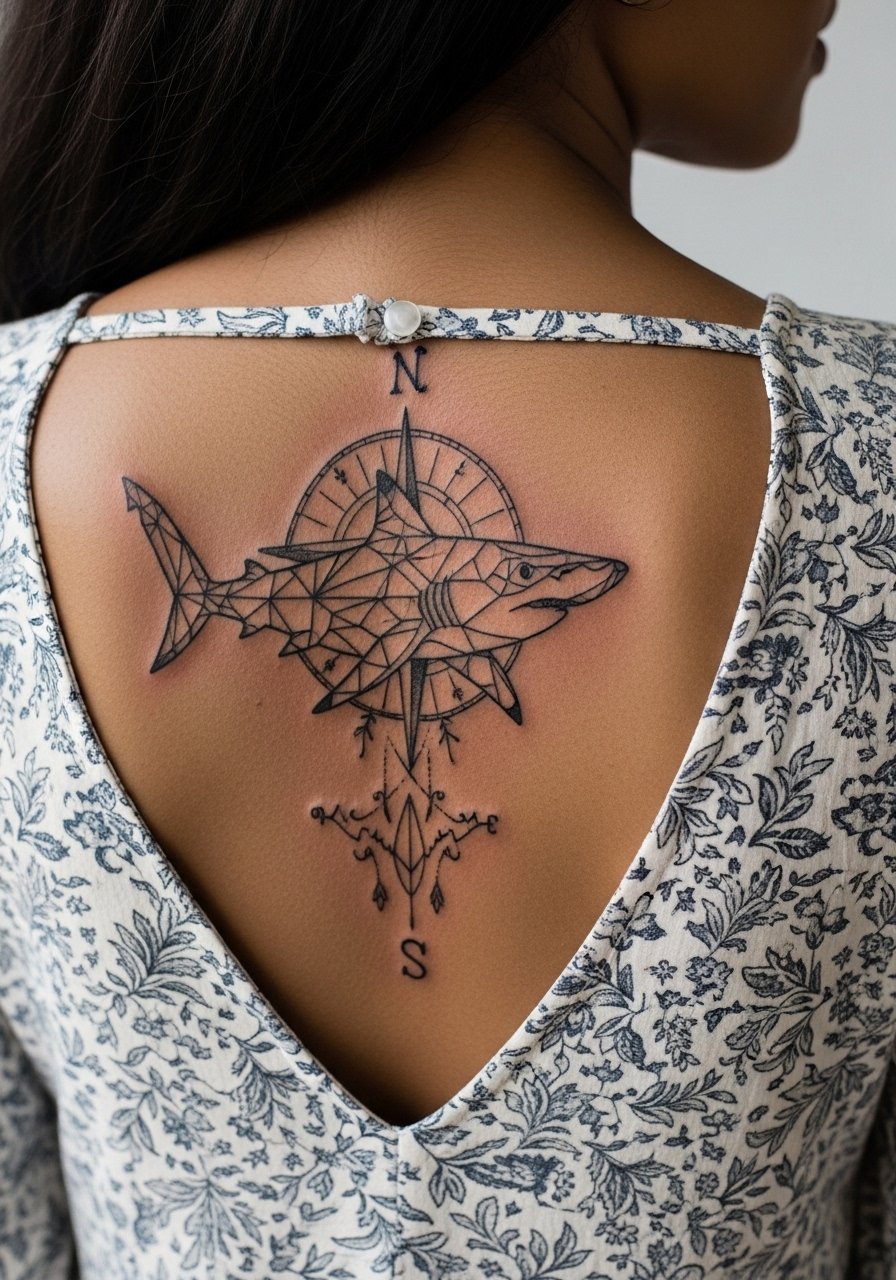
8. Compass-Integrated Hammerhead on Upper Back
Consultation lead: bring references that show how you want the shark to relate to compass points, not separate elements layered on top of each other. The upper back offers a wide canvas to center the hammerhead heading north with geometric compass rays. Sessions usually require back-lying position breaks. Expect even wear unless you frequently nap on heavy backpacks. For framing try an open-back dress that reveals the central motif while keeping the rest covered.
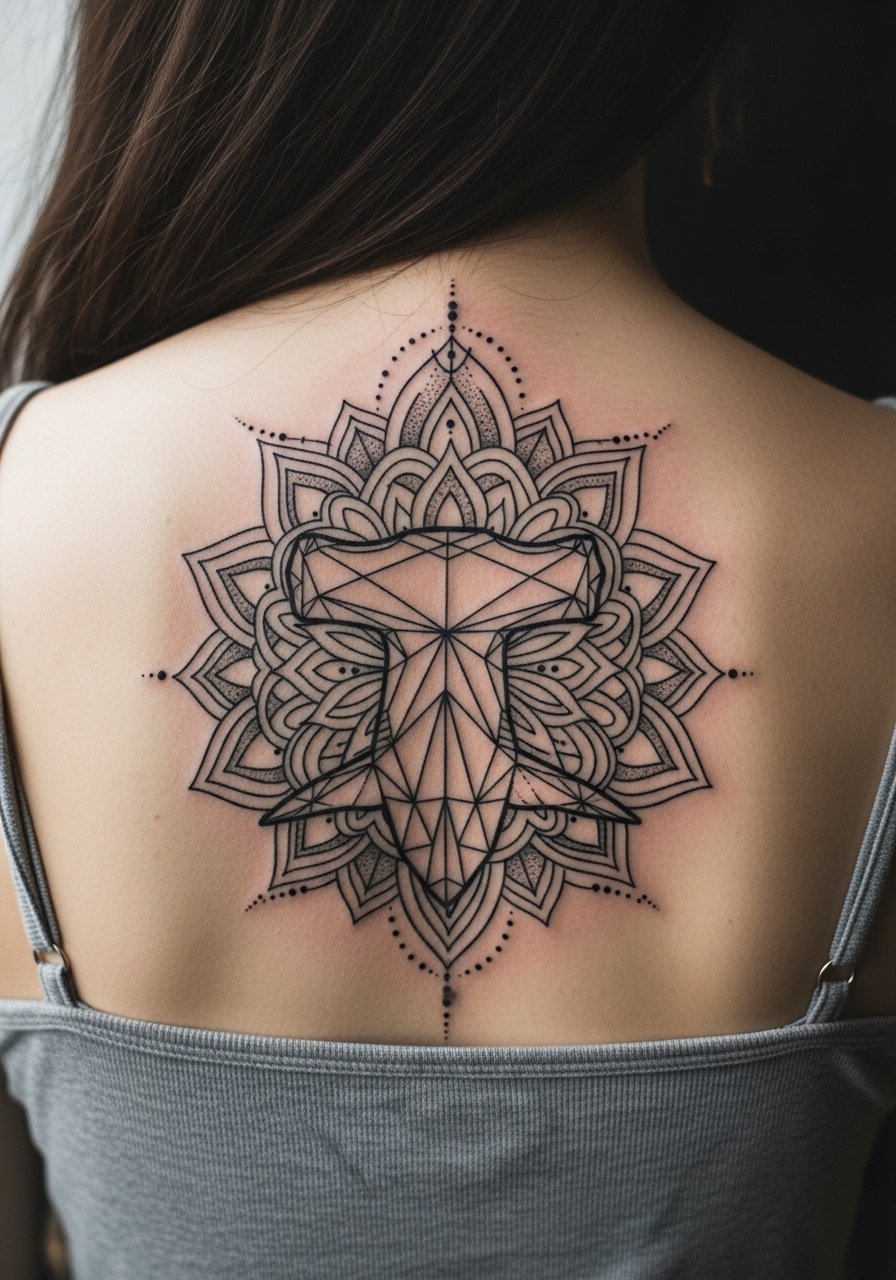
9. Halo Mandala Hammerhead Between Shoulder Blades
Visual impact lead: the symmetry of a mandala halo suits the hammerhead head shape perfectly when the central eye becomes the mandala center. Tell your artist to keep line weight varied between the shark silhouette and the halo so the figure stays dominant. The session is often split into two because of the density of the halo. Sensitive note, this area can be hard to reach for aftercare, so plan accordingly. Pair with a strappy top when you want the halo visible.
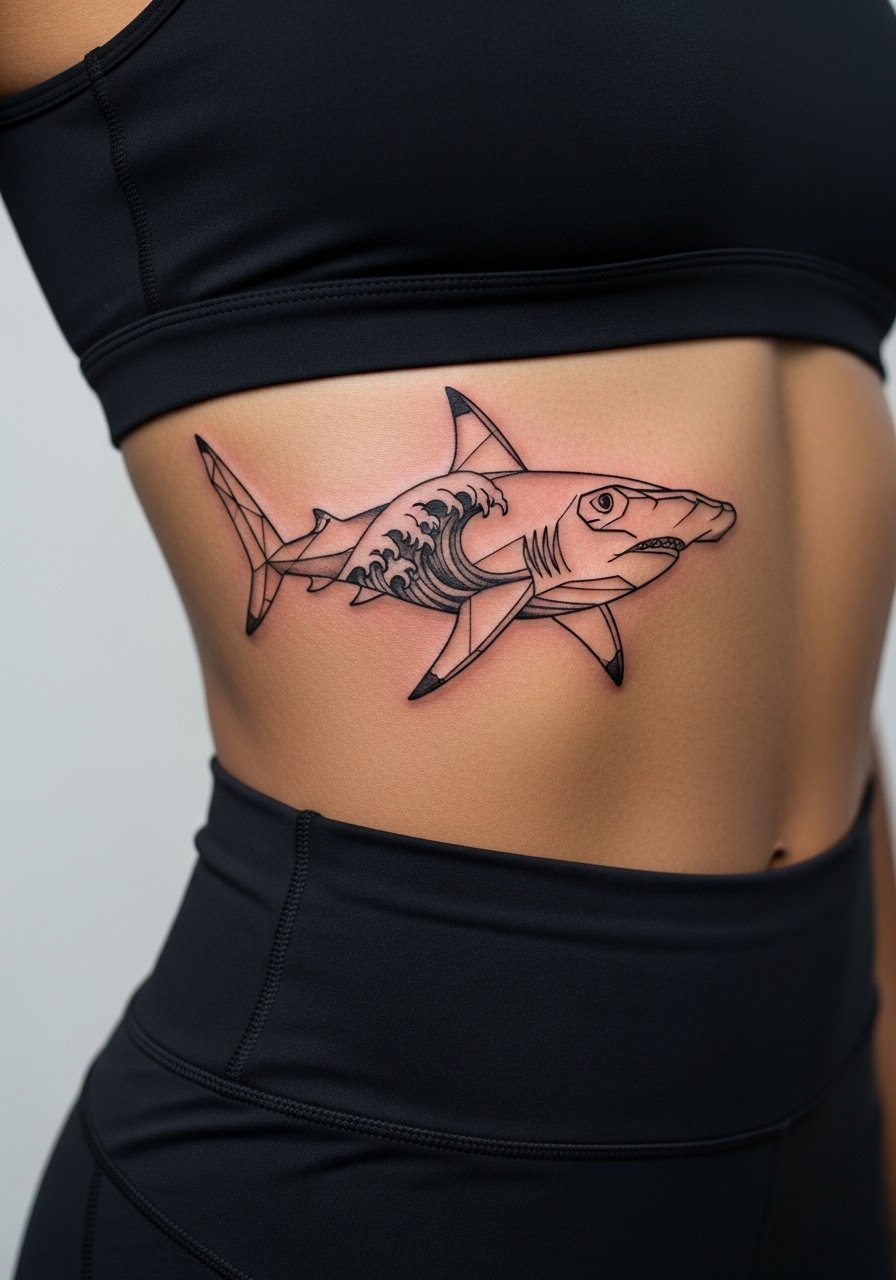
10. Waterline Hammerhead on Ribcage with Wave Geometry
Controversy lead: fine-line on the ribs divides artists into two camps. One camp says thin work blurs quickly because of the stretching and movement. The other camp says with deeper, consistent depth and spacing it can hold its edge. Where I stand depends on scale. For this ribcage wave-hammer setup, scale up the facets and keep spacing to avoid early merging. Wear a cropped top for the session so only the rib area is exposed. Expect a bit more discomfort and plan for a touch-up if you want very tight linework.
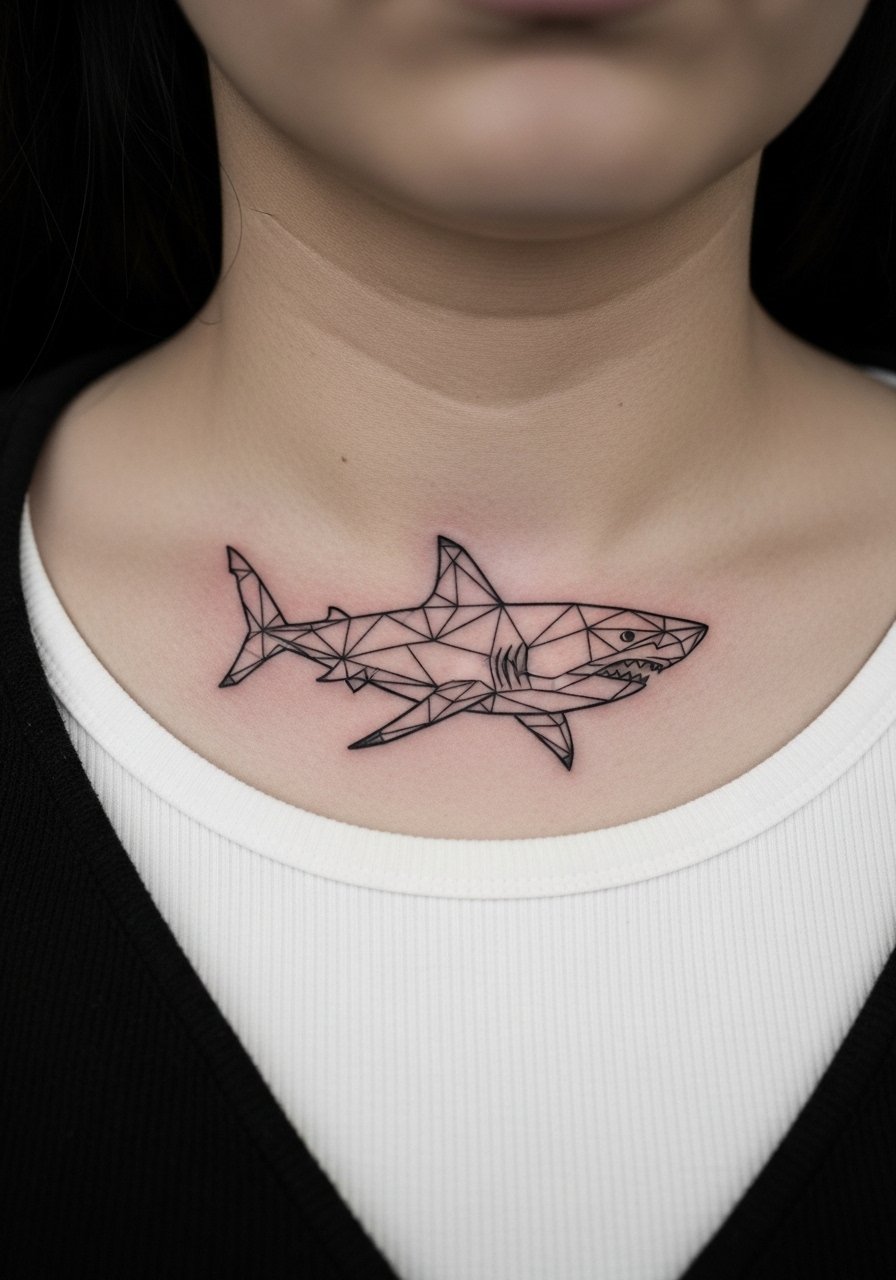
11. Folded Negative Space Hammerhead on Collarbone
Personal observation: collarbone placements read like jewelry when negative space is used smartly. Keep the central bar of the hammerhead as an open corridor and let small triangles define the outer shape. Tell your artist you want skin gaps preserved inside the form so it reads as delicate armor. For session comfort wear a wide-neck shirt you can pull aside. Pair with a thin chain pendant necklace that sits above the piece without crowding.
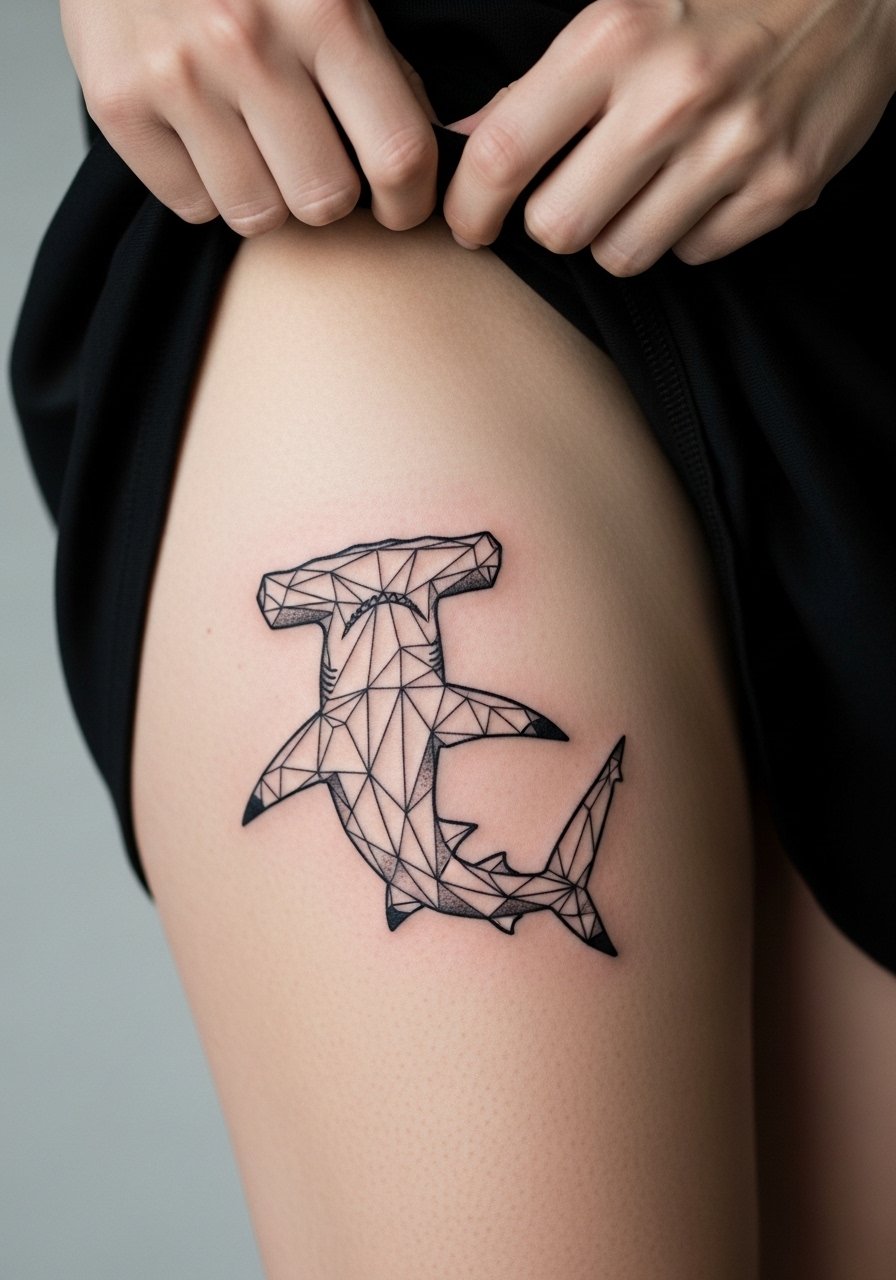
12. Blackwork Hammerhead Thigh Panel
Pain warning lead: the outer thigh is forgiving and welcomes saturated blackwork. A geometric black fill that uses triangular tessellation can create a bold silhouette that stays legible even years later. For consultation, request blocky geometry with thin channels of skin showing through to avoid a single flat black mass. Session length varies with size but often fits a single long appointment. For display, a high-waisted skirt lifts to reveal the panel as desired.
13. Interlocking Geometric Hammerheads for Chest Panel
Visual impact lead: two hammerheads mirrored across the sternum or upper chest can create a mirrored tessellation that reads like armor. Make sure you and the artist agree on the negative space between forms so the mirror reads as intentional. This placement needs planning for symmetry and will usually require precise stencil alignment. For the session wear a wide-neck shirt you can move aside. Pair with an open-front cardigan that suggests symmetry without revealing too much.
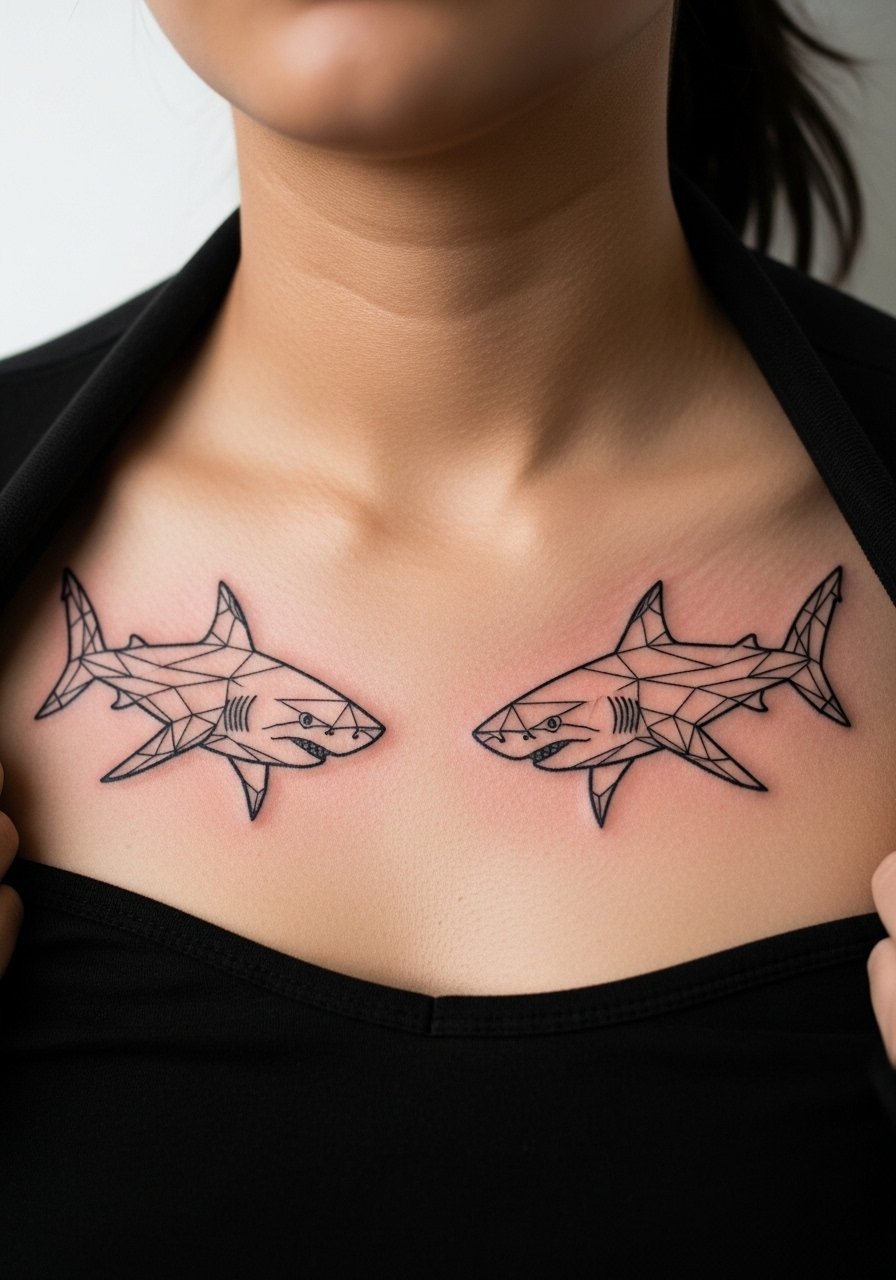
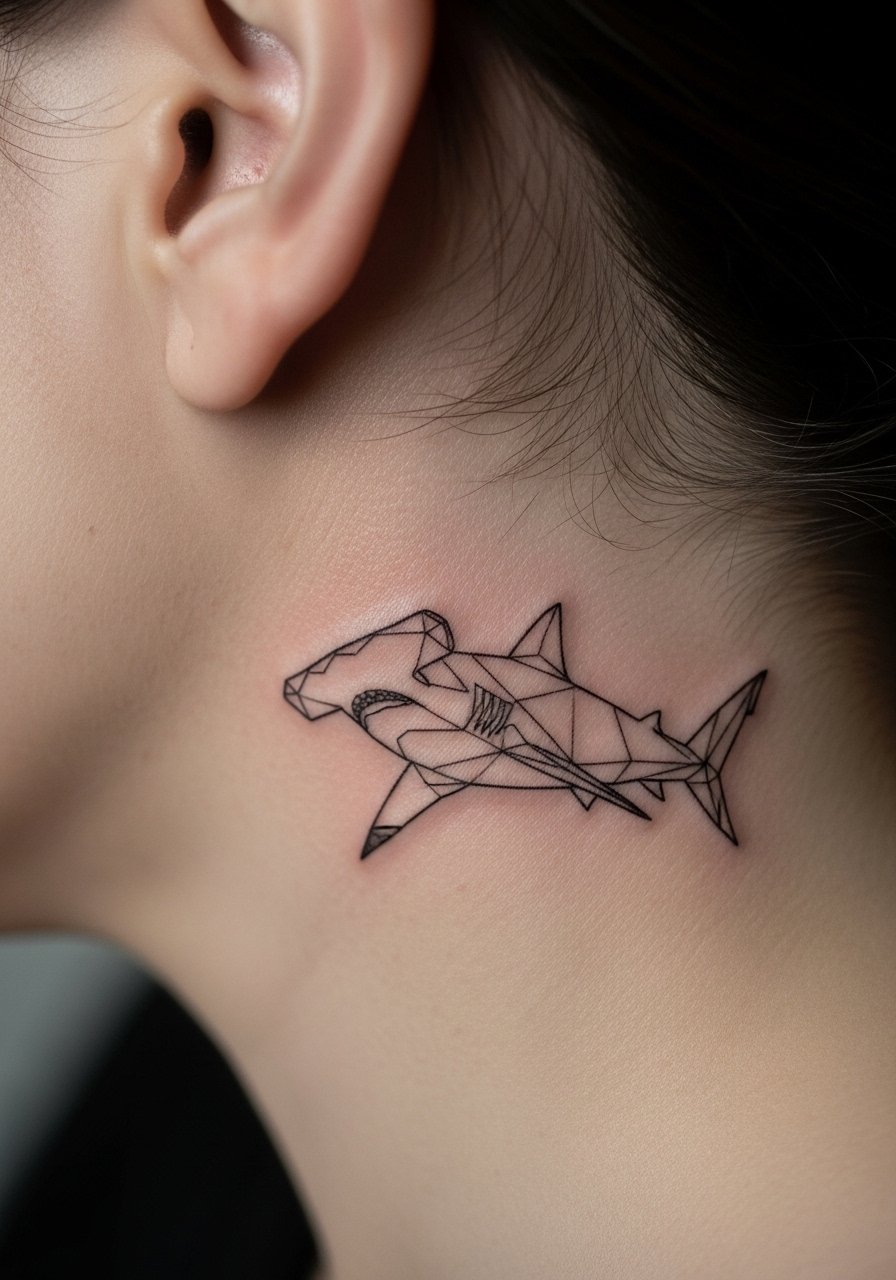
14. Micro-Geometric Hammerhead Behind the Ear Area
Styling lead: a tiny geometric hammerhead just behind the ear needs to be described as "on the skin behind the ear, below the hairline on the neck" so the artist frames the spot correctly. Keep the design large enough to avoid blowout. Expect quick sessions and the need to keep hair and sweat away while healing. For subtle reveals, wear a low bun hair clip that lifts hair and shows the small motif.
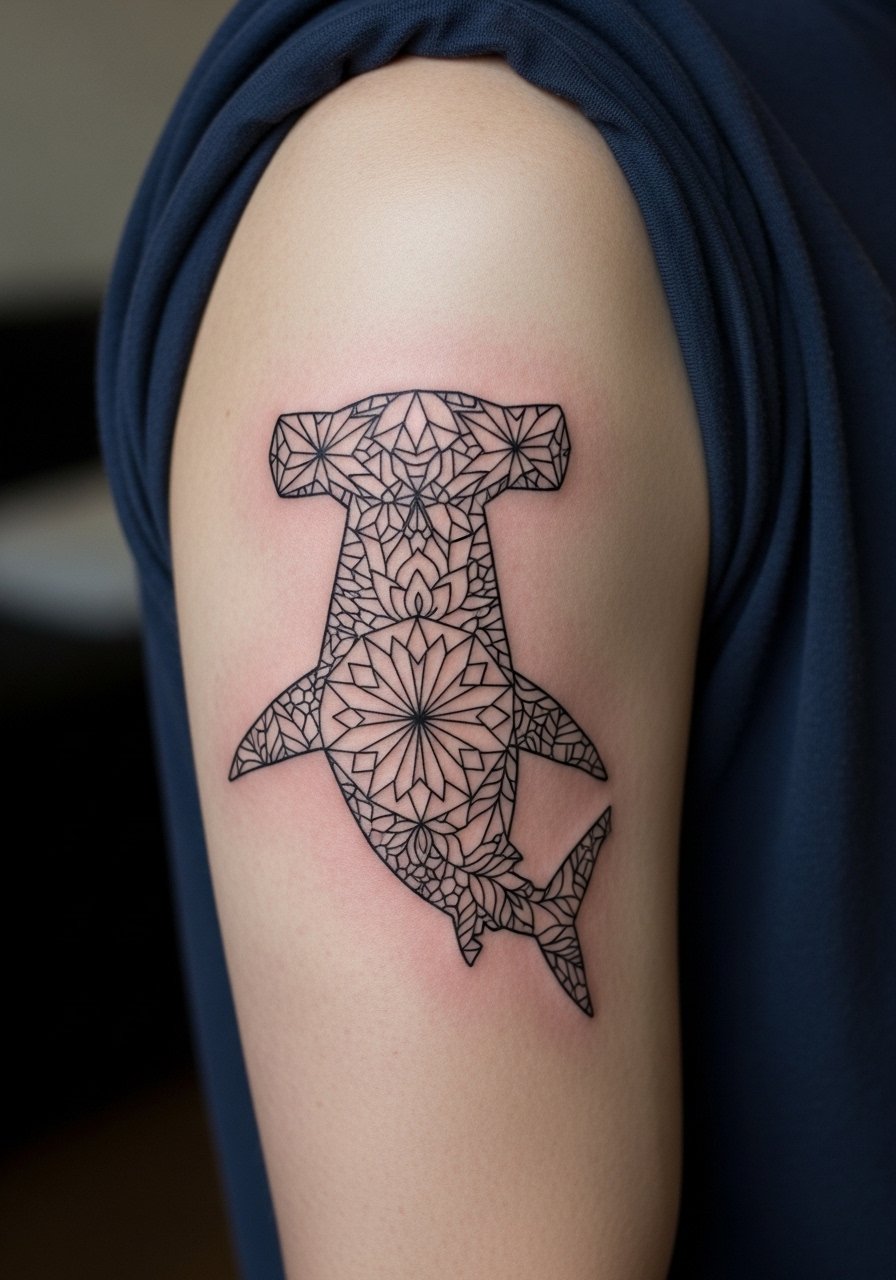
15. Geometric Hammerhead with Floral Fill on Upper Arm
Mistake lead: too many competing details can make geometric and floral elements fight. For this upper arm piece, keep the hammerhead geometric and use stylized geometric blooms as fillers, not photorealistic flowers. Tell the artist you want contrast between hard angles and soft petal shapes. The arm tolerates saturation well and this hybrid usually ages predictably. For showing it off try a rolled-up sleeve shirt that frames the piece.
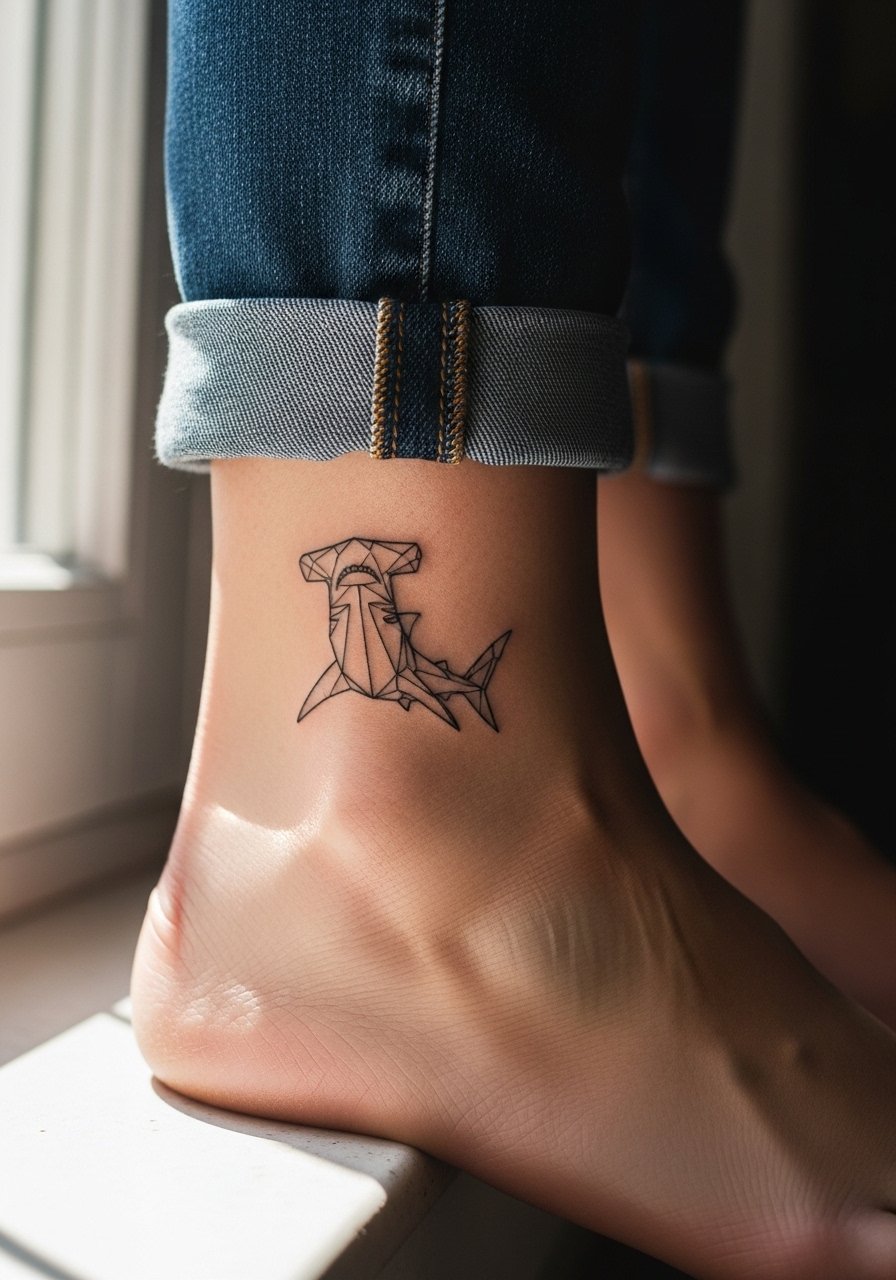
16. Constellation-Linked Mini Hammerhead Ankle
Aging/healing lead: small ankle geometrics must account for footwear friction. Anchor the composition with a solid outline and keep inner detail minimal. During consultation ask to avoid ultra-fine dot grids near the ankle bone. Session is brief but the piece sees a lot of washing, so thin details can fade fast. For showing with sandals, wear slide sandals that leave the ankle visible and help the motif read cleanly.
17. Fragmented Geometric Hammerhead on Side Torso
Pain warning lead: the side torso can be a 7 out of 10 on pain scales, but its elongation helps fragmented geometry read like motion. Ask for staggered facets that suggest a shark slicing through water. The session will include position shifts and breaks. For after sessions plan comfortable clothing, like high-waisted sweatpants that do not rub the area. Expect a touch-up if you want very crisp inner polygons later.
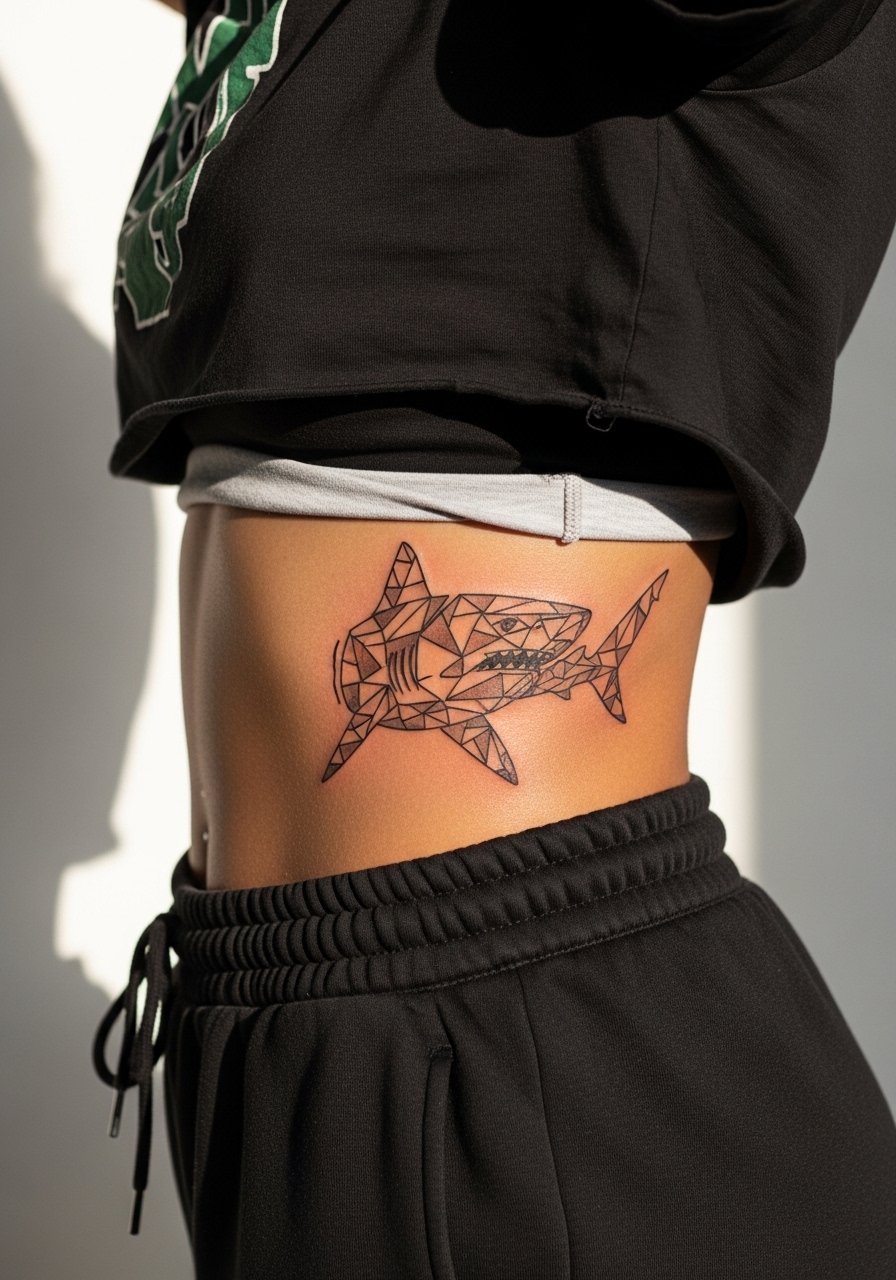
18. Geometric Hammerhead Wristband Wrap
Visual impact lead: a repeated geometric hammerhead that wraps the wrist works like a cuff. Keep individual motifs bold and avoid tiny internal lines that will blur from constant motion and washing. The session is short, but the wrist is a friction zone so expect some early softening. For everyday styling use a thin leather wrap bracelet worn opposite the tattoo so the design remains visible.
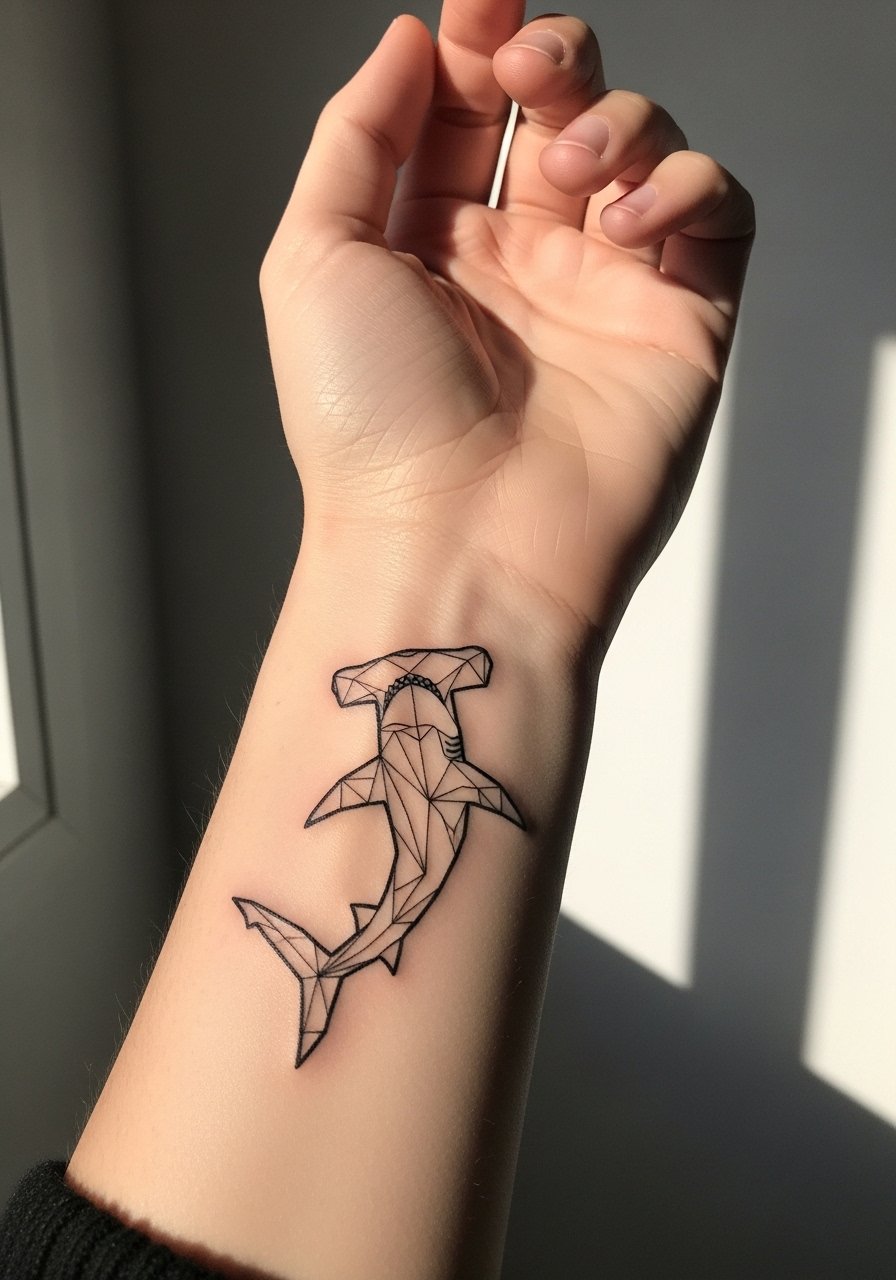
19. Tessellated Hammerhead Half-Sleeve
Consultation lead: tessellation requires a clear rule set so the pattern repeats without randomness. Decide if facets will rotate or mirror and mark a flow that follows the arm's curve. Sessions for a half-sleeve are multiple and heavy in saturation. Over time the repeated geometry keeps reading because the pattern's rhythm disguises minor spreading. For the chair day wear a loose tank top so the artist can access the entire upper arm.
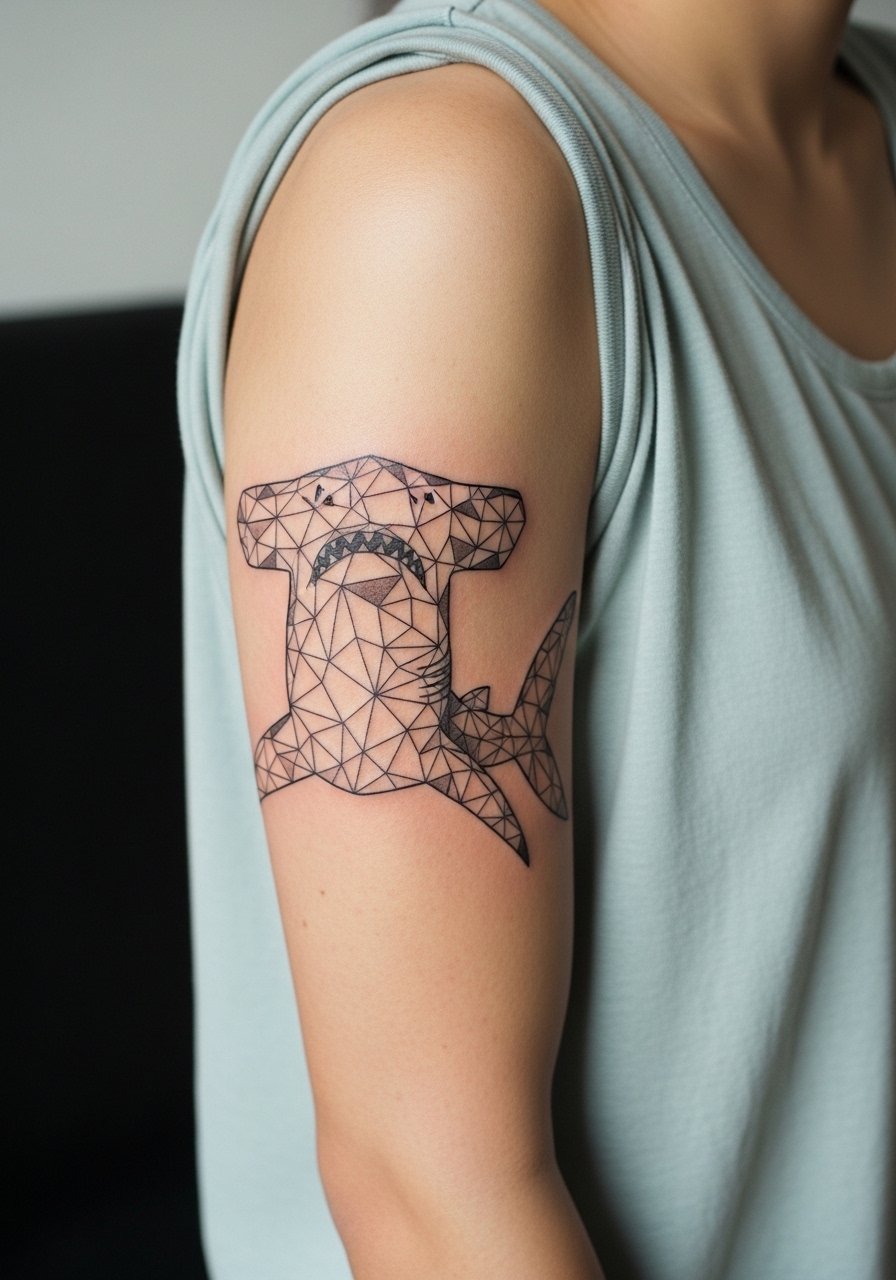
20. Linear Blueprint Hammerhead on Forearm Inner Side
Mistake lead: blueprints fail when artists try to cram blue ink labels and tiny ticks. For a blueprint aesthetic ask for navy linework and larger negative-space panels so the grid reads intentionally. Forearm inner placements age well with moderate sun protection. The session is comfortable and quick. Pair with a thin metal watch that sits below the piece and draws the eye.
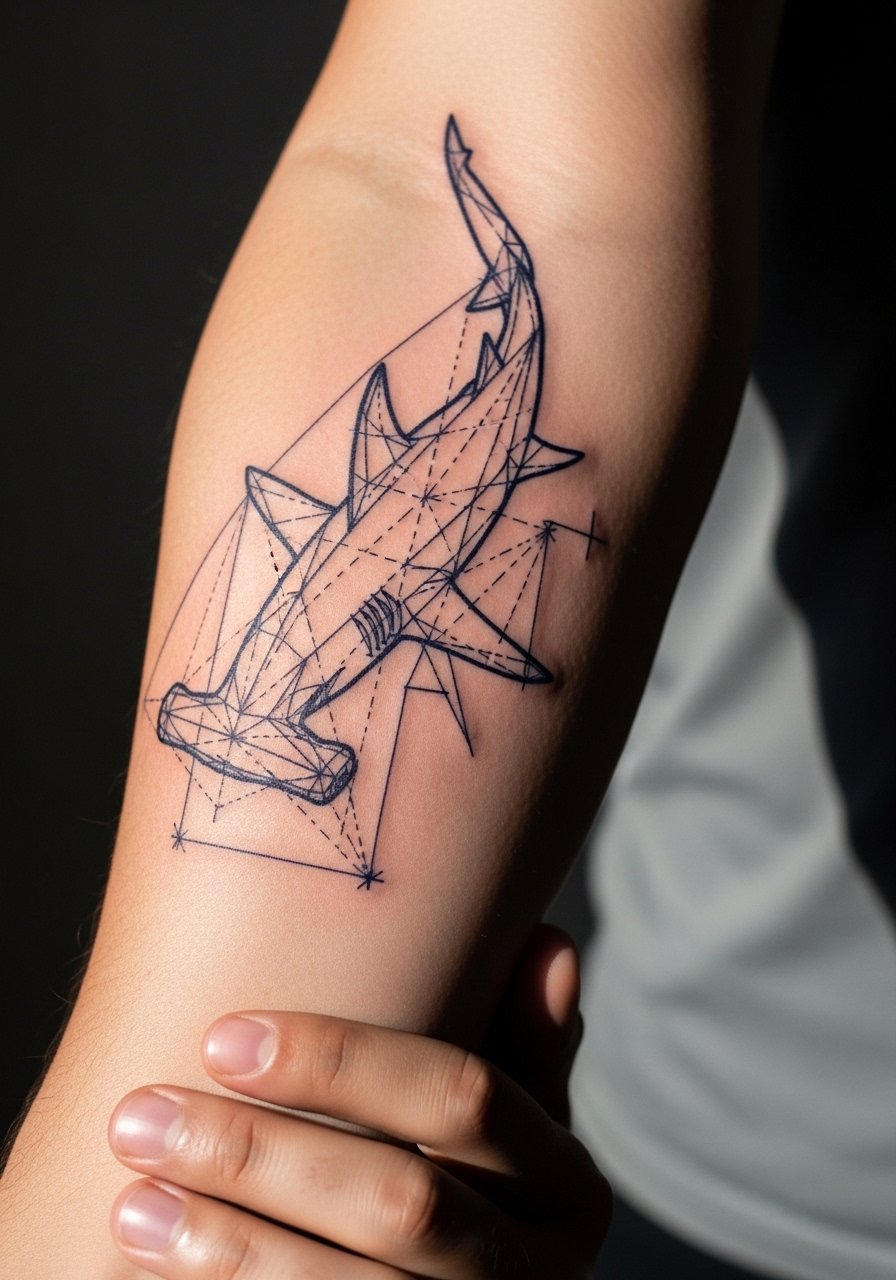
21. Geometric Hammerhead with Wave Bands on Calf Inner Side
Aging lead: inner calf placements see less sun and therefore retain saturation longer. Banding wave geometry that wraps the hammerhead can create a sense of motion and keeps contrast between black bands and open skin. Tell your artist to keep the bands consistent in width to avoid optical wobble. For session comfort wear loose shorts or a skirt. For display try ankle booties that stop below the design.
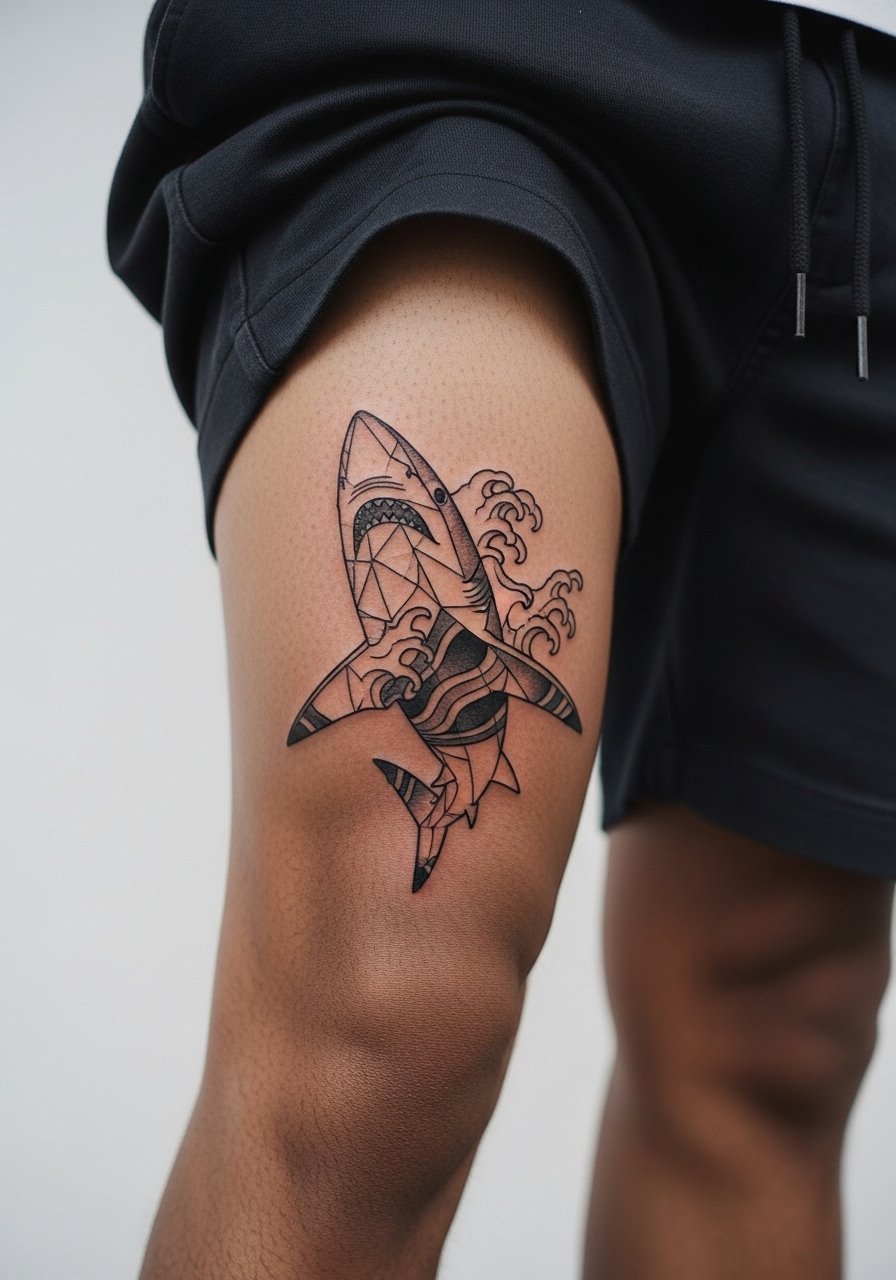
22. Origami Negative Space Tiny Sternum Accent
Consultation lead: tiny sternum accents should sit just above or below the sports bra line so they are easy to reveal. Negative-space origami facets can keep the tiny motif readable. The session is short but placement can be tender. Wear a fitted sports bra for the appointment. For delicate evenings try layering with a thin chain pendant that complements without covering the piece.
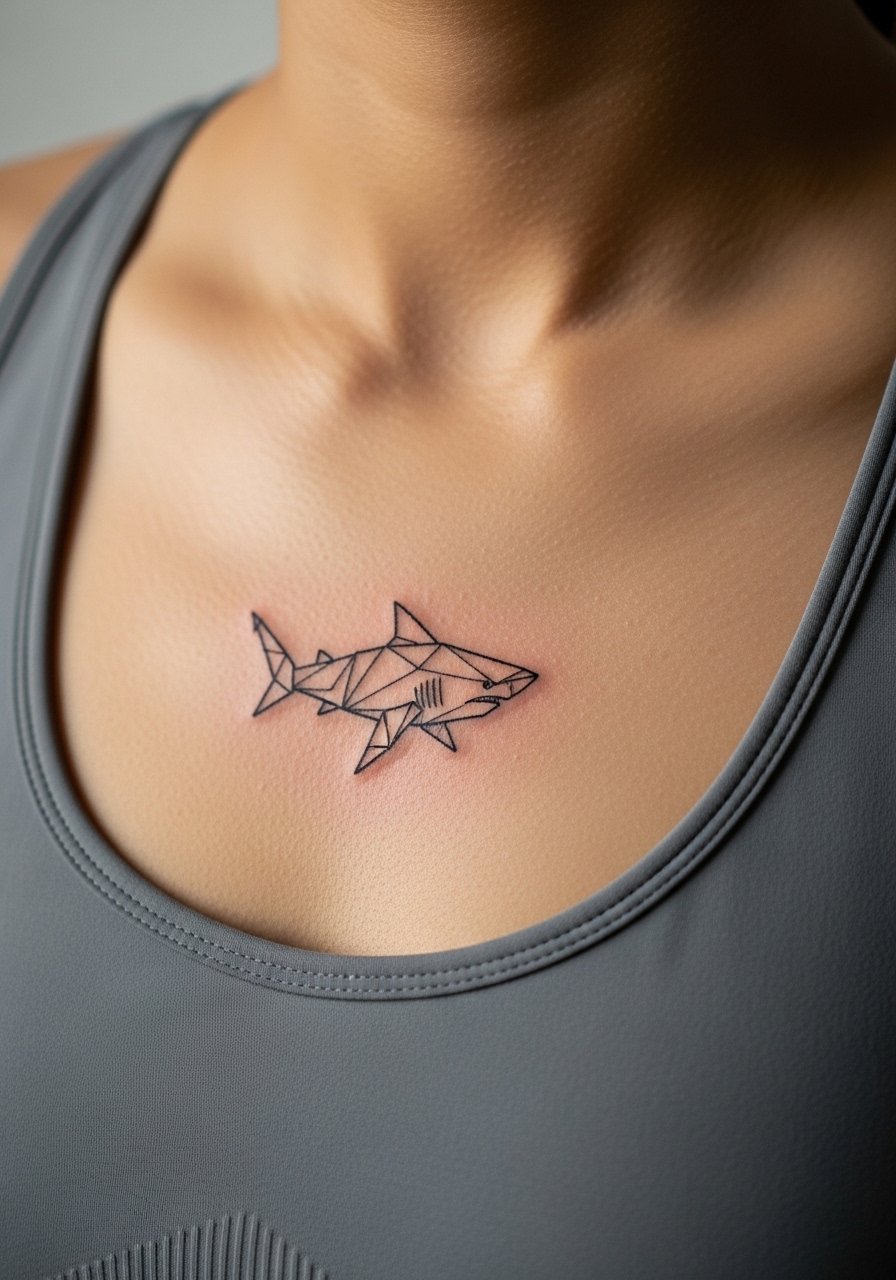
23. Asymmetrical Geometric Hammerhead Across Rib and Hip
Controversy lead: asymmetrical wrap pieces force a choice between a flowing shape and mirrored balance. One camp values flow and accepts asymmetry for organic motion. The other favors symmetry because workplaces and wardrobe read symmetry as intentional. If you want motion, design the hammerhead to trail off into polygons toward the hip. The session will be longer because of the area. Wear high-waisted bottoms you can slide slightly down to reveal only the hip stripe during the session.
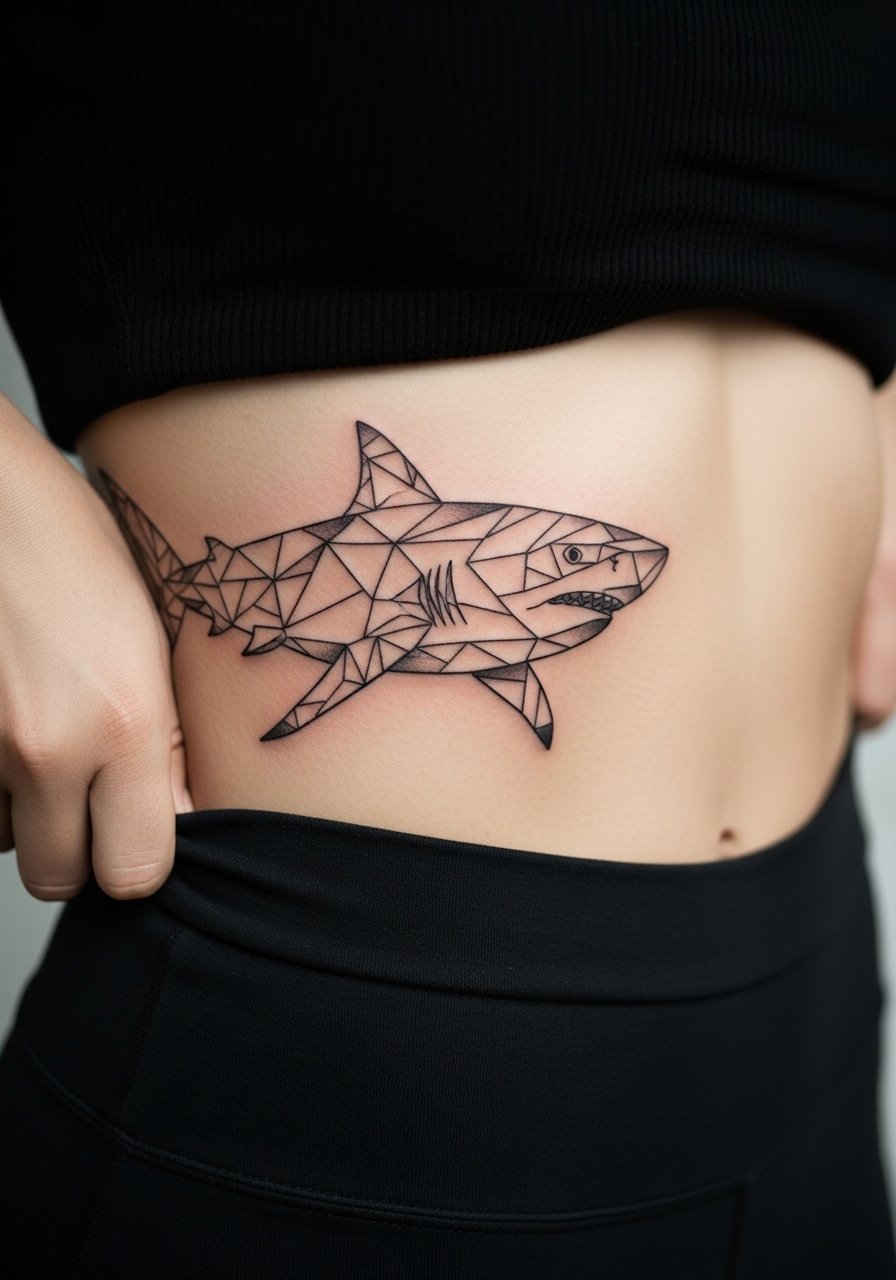
24. Fragmented Linework Hammerhead on Neck Side
Styling lead: neck placements require a wide-neck shirt or collar pulled aside to keep exposure minimal. For a side-neck geometric hammerhead, keep the design compact and avoid extra fill that might migrate. The session can be quick but visible, so think through career implications. For subtle display pair with a wide-neck shirt that reveals the piece only when you want it seen.
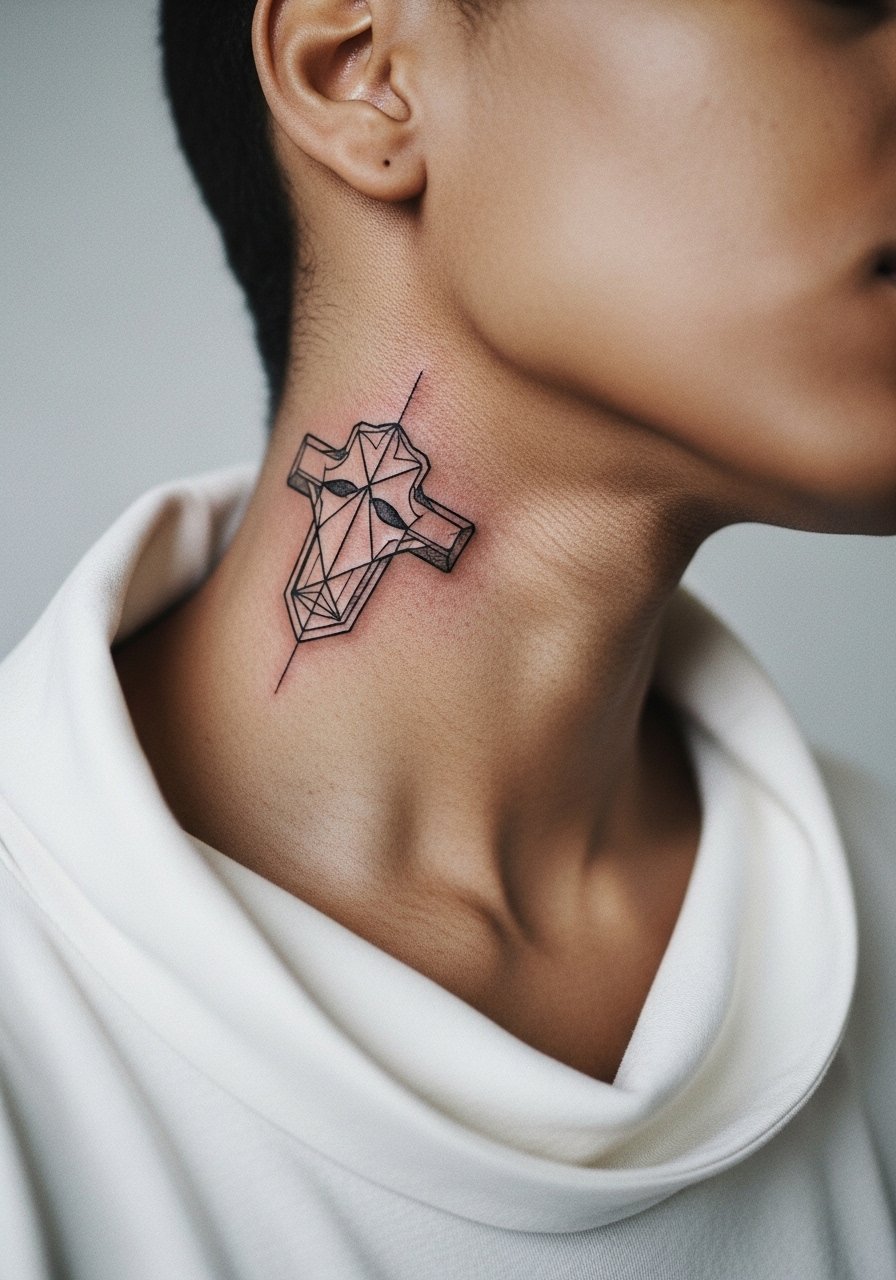
25. Geometric Hammerhead Wrist Accent with Bracelet Negative Space
Personal observation: integrating jewelry negative space into a wrist accent creates the illusion of a cuff tattoo. Ask the artist to leave a narrow skin ring where a bracelet would sit so the piece reads both tattoo and accessory. The wrist is a high-wear zone, so thicker anchor lines help longevity. For daily style use a thin bangle set worn on the opposite wrist to keep attention on the tattooed side.
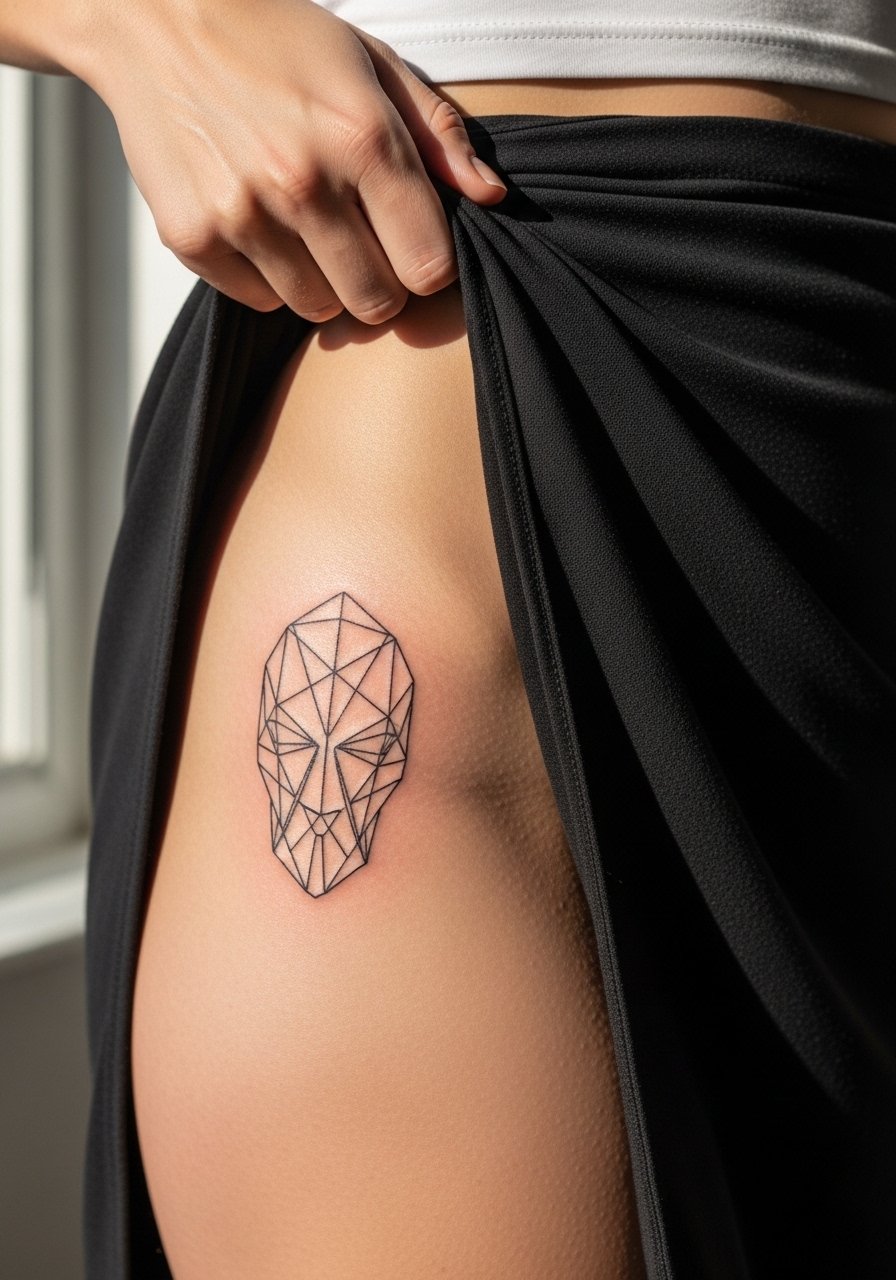
26. Geometric Hammerhead Hip Curve Outline
Visual impact lead: the hip curve compliments the hammerhead silhouette when the design follows the body's natural sweep. Keep the outline bold and internal facets minimal so the curve remains the focal point. The session requires clothing that exposes only the hip strip. For session comfort wear high-cut shorts you can pull slightly to the side. When you want a subtle reveal try a wrap skirt that lifts to show the curve.
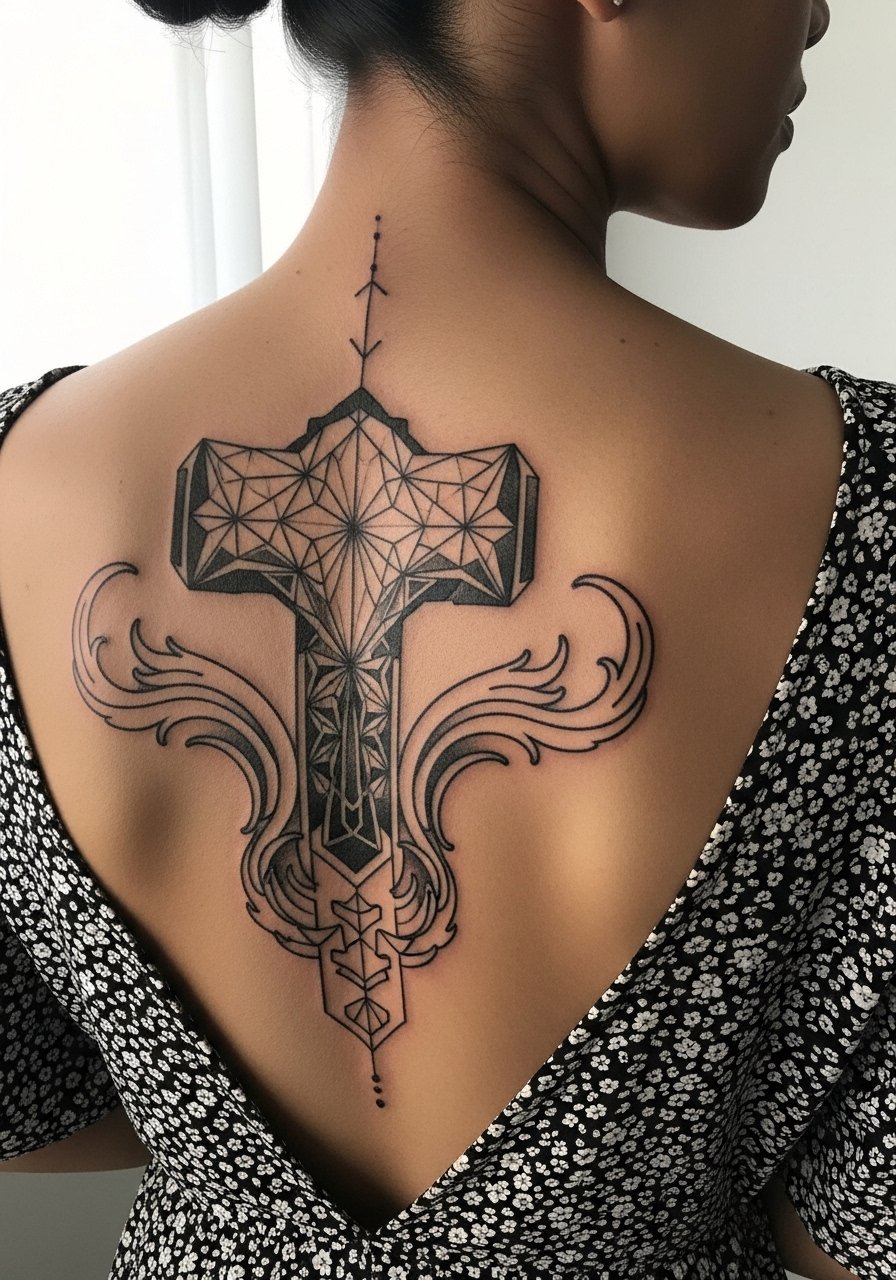
27. Large-Scale Geometric Hammerhead Backpiece with Flowing Currents
Consultation lead: large backpieces demand a mapped flow so the hammerhead, fins, and current tessellations read from multiple angles. Use a mix of blackwork anchors and negative-space currents to avoid a single flat plane. Sessions will span several appointments and require planning for sleep posture and back care during healing. For showing off use an open-back dress when you want the full composition visible.
Frequently Asked Questions
Q: Will fine line geometric hammerheads blur faster on the ribs than on the forearm?
A: It depends on scale and spacing. Ribs move more and the skin stretches, so very fine, tightly packed work is at higher risk of merging. Upsize the geometry and preserve negative space to improve longevity. Ask your artist where they prefer to place denser areas before booking.
Q: Are blackwork geometric hammerheads better for dark skin tones?
A: Blackwork holds well across skin tones because saturation gives contrast. On darker skin tones, ask for bold anchor lines and larger negative pockets so the form reads from a distance. Photographs of healed examples on similar skin tones during consultation help set expectations.
Q: How do I dress for a sternum or chest geometric session?
A: Wear a fitted sports bra or a wide-neck shirt that you can move aside so only the area is exposed. That keeps you comfortable and the rest of your torso covered. If you want a specific reveal look afterward, bring the garment you plan to wear so you can test placement.
Q: Will a wrist or finger geometric hammerhead require touch-ups sooner than an upper-arm piece?
A: Yes, friction and washing make wrist and finger placements more likely to need early touch-ups. Expect a possible touch-up at year one to two for tiny details. Choosing slightly bolder lines can delay that need.
Q: How should I discuss symmetry concerns for mirrored chest hammerheads with my artist?
A: Bring clear stencils or reference photos and ask for a mirrored mock-up before needle down. Request that the artist mark key anatomical points on your chest during the consultation so symmetry lines up with bone landmarks. This reduces surprises once the piece is started.