Fine line heart lockets are all over saved boards right now, but what looks delicate on a phone often needs touch-ups sooner than expected, fades under sun, or gets smudged by poor aftercare. Pick a sketch that fits how you live, not just what you pin, and I’ll walk through 21 locket sketches with placement, aging notes, and what to tell your artist at consultation.
1. Realistic Copper Heart Locket with Roses on the Forearm
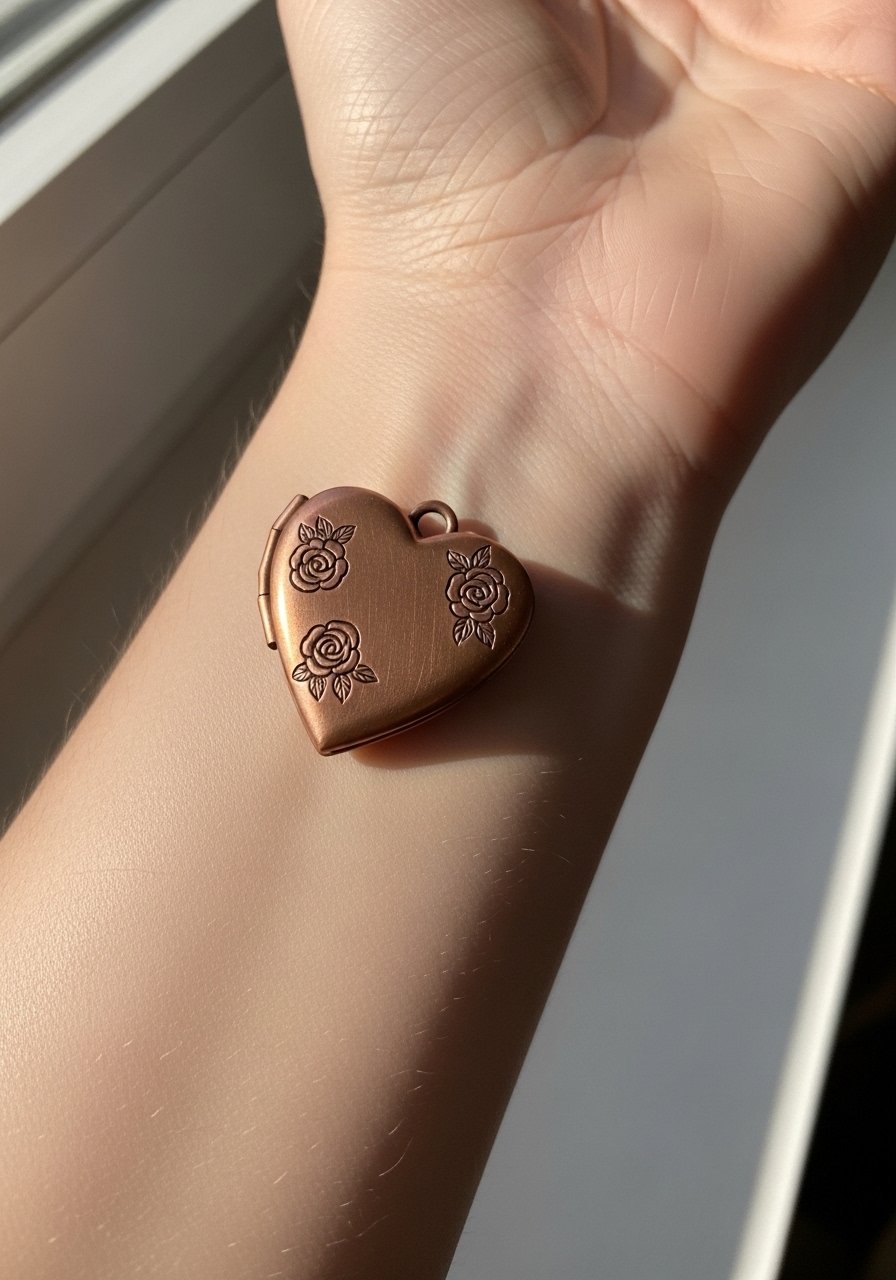
I've seen this forearm placement hold detail well when size is small to medium and the artist lays down burnished color with solid saturation. Tell your artist you want visible metal reflections, not pure flat color, and ask for stipple shading to sell the aged copper without overworking the skin. Common mistake is going micro with realism, which blurs as saturation settles. Expect a one-session piece that reads clearly at six months, then softens at year two and will likely need a touch-up around year three. For show-off outfits roll sleeves up with a rolled sleeve tee and pair with a slim gold chain necklace so the forearm remains the focal point during casual looks.
2. Traditional Heart Locket with Keyhole and Floral Outlines on the Lower Leg
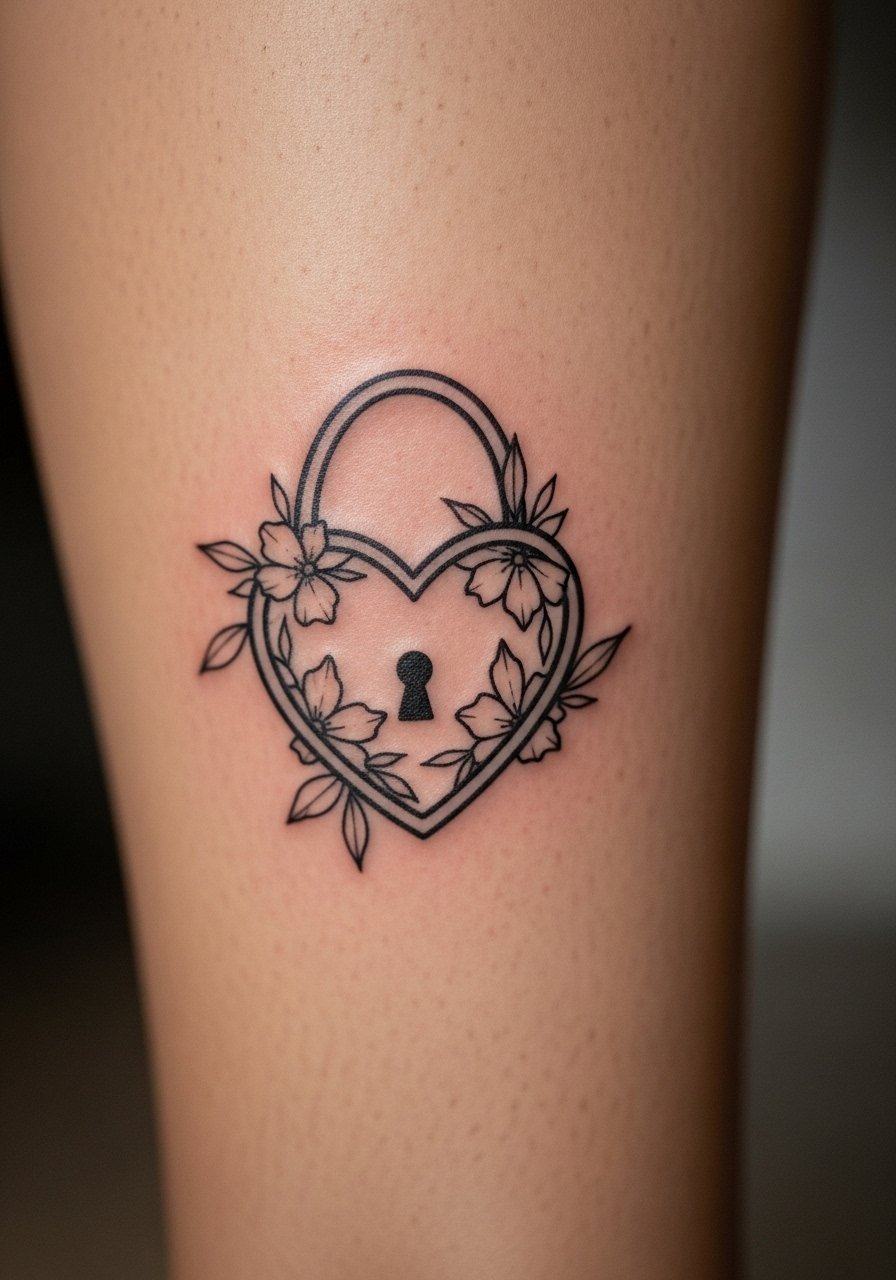
Lower-leg traditional locket ages predictably because bold linework and limited shading resist blowout better than tiny detail. This is a one-session option that suits people who want a clear, graphic piece. In consultation, ask for slightly heavier lineweight than your reference so the keyhole still reads at year five. A typical mistake is packing florals into the tiny locket frame; keep petals loose around the lock to avoid crowding. Session feels like standard leg work, moderate pain with long stretches. Show it off with cuffed pants and boots, try cuffed chino pants when you want the piece visible without wearing shorts.
3. Black Lined Neo-Traditional Heart Locket with Clasp and Flowers on the Upper Arm
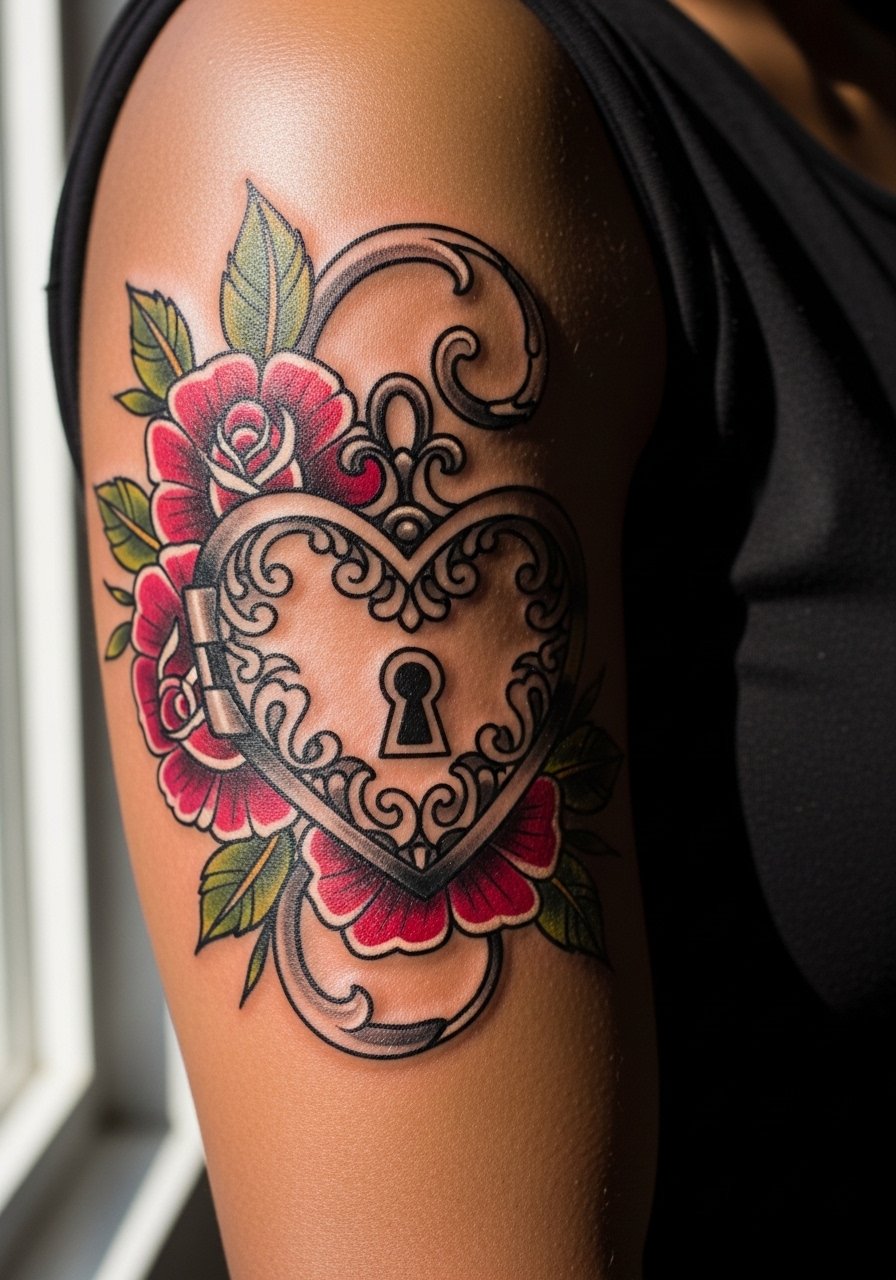
The upper arm takes saturation well, so neo-traditional lockets with bold black linework and color highlights stay readable for years. Bring reference that shows the exact clasp you want and specify whip shading or dot work for the flowers so they age into texture rather than blotch. The common error is asking for too many tiny ornaments inside the locket. Pain is lower here, session time is moderate, and touch-ups are usually at year four depending on sun exposure. For sessions wear a sleeveless tank top so the artist has clear access to the shoulder.
4. Victorian Ornate Heart Locket near the Collarbone
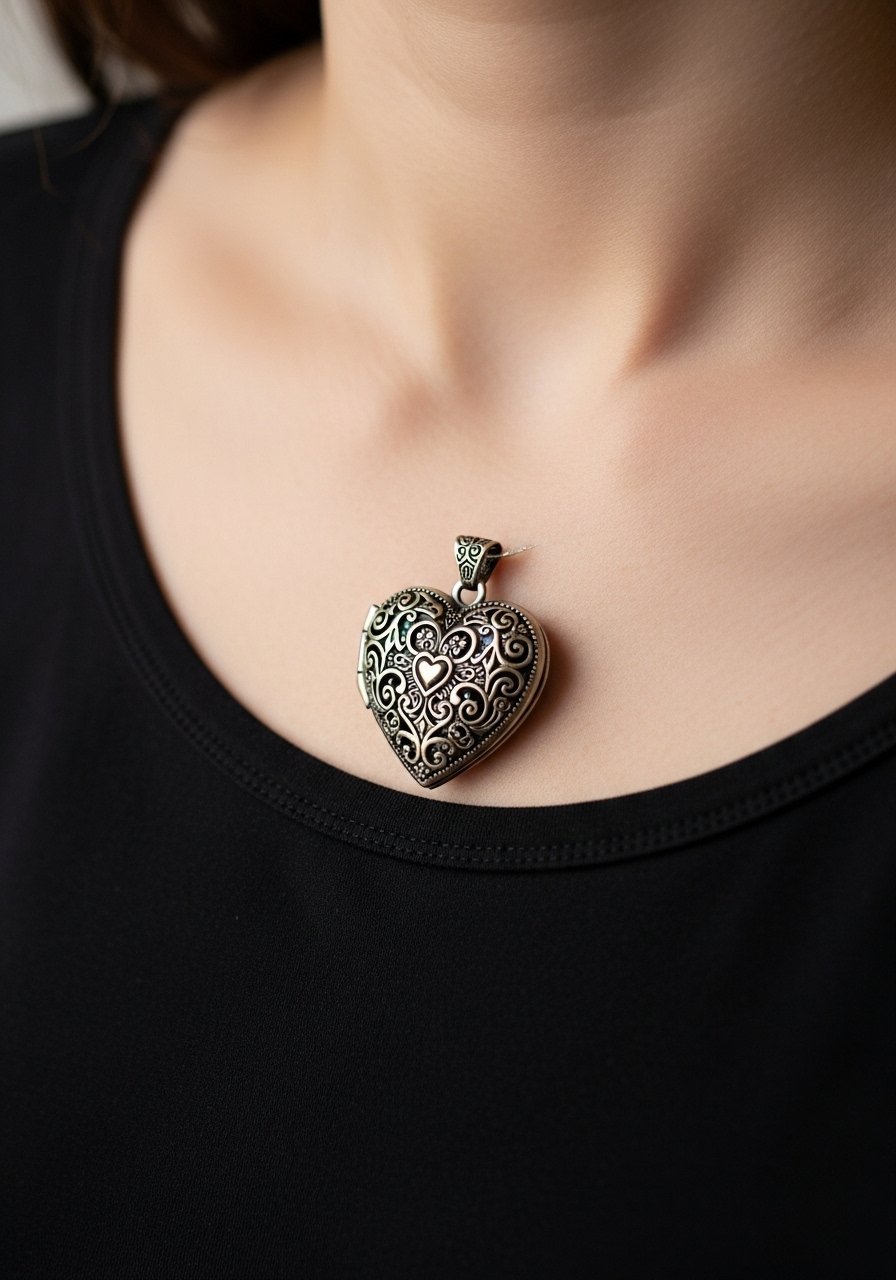
Collarbone pieces read as jewelry, so ornate Victorian lockets with filigree and subtle black and gray shading work beautifully here. Be blunt in the consult about scale; if you go too small the filigree merges in a year or two. The session involves tight needlework over bone, which can be more uncomfortable than soft tissue zones. A frequent mistake is heavy shading layered into filigree, which clouds the pattern as it heals. For nights out an off shoulder sweater frames the locket without covering the design. If you plan to show this placement, wear sun protection long term.
5. Matched Heart Locket and Skeleton Key Pair for Wrists
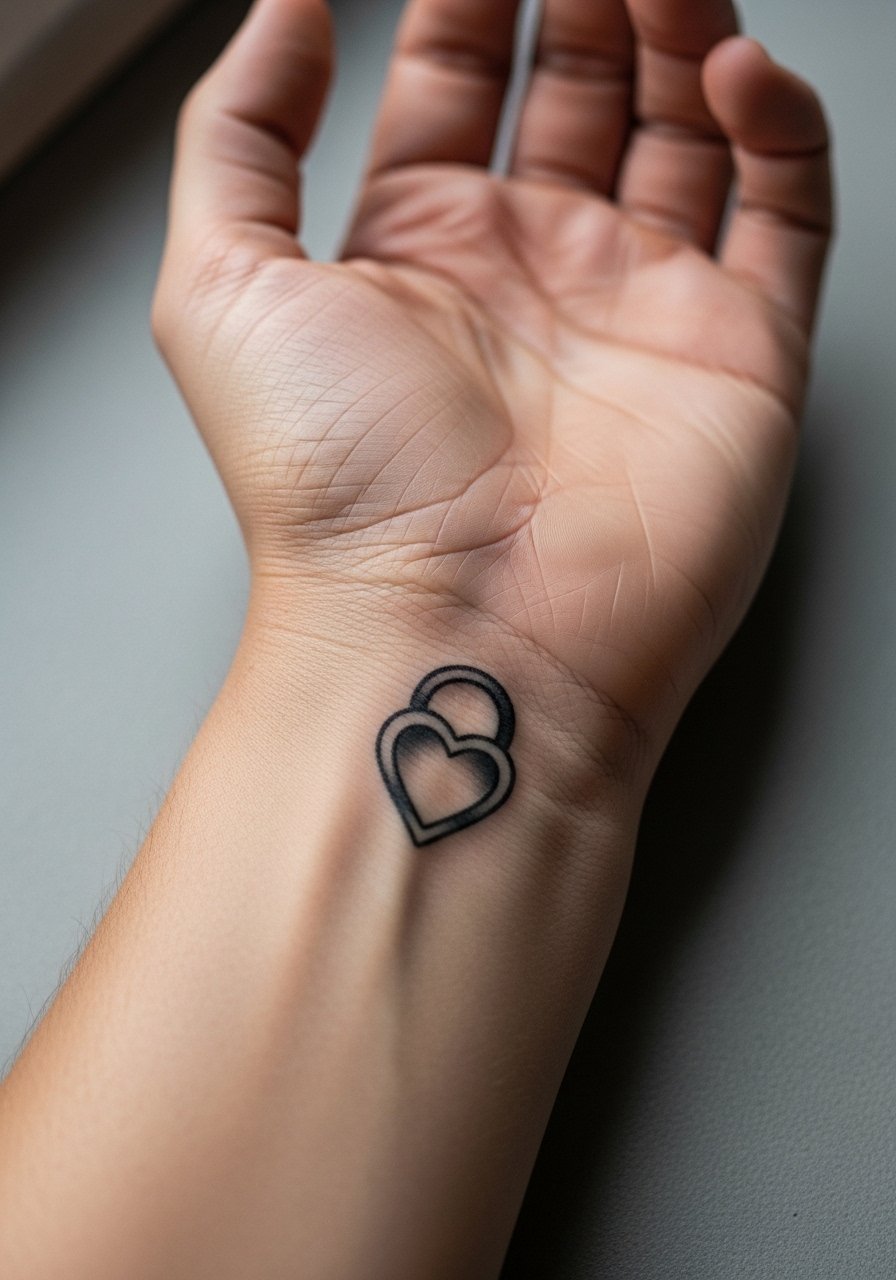
Wrist lockets are micro and personal. Couples or friends often split the set between a locket and a skeleton key. Tell your artist how the pieces will pair across wrists so scale and line weight match. The wrist is high-friction, so expect faster fading and plan touch-ups at year two to three. A common mistake is asking for ultra-thin linework on the wrist without accounting for rubbing from clothing and watches. For styling wear a thin bangle stack on the opposite wrist and avoid bracelets on the tattooed side during the first week. Try a thin gold bangle set to keep attention balanced.
6. Realistic Aged Iron Heart Locket with Keyhole on the Inner Arm
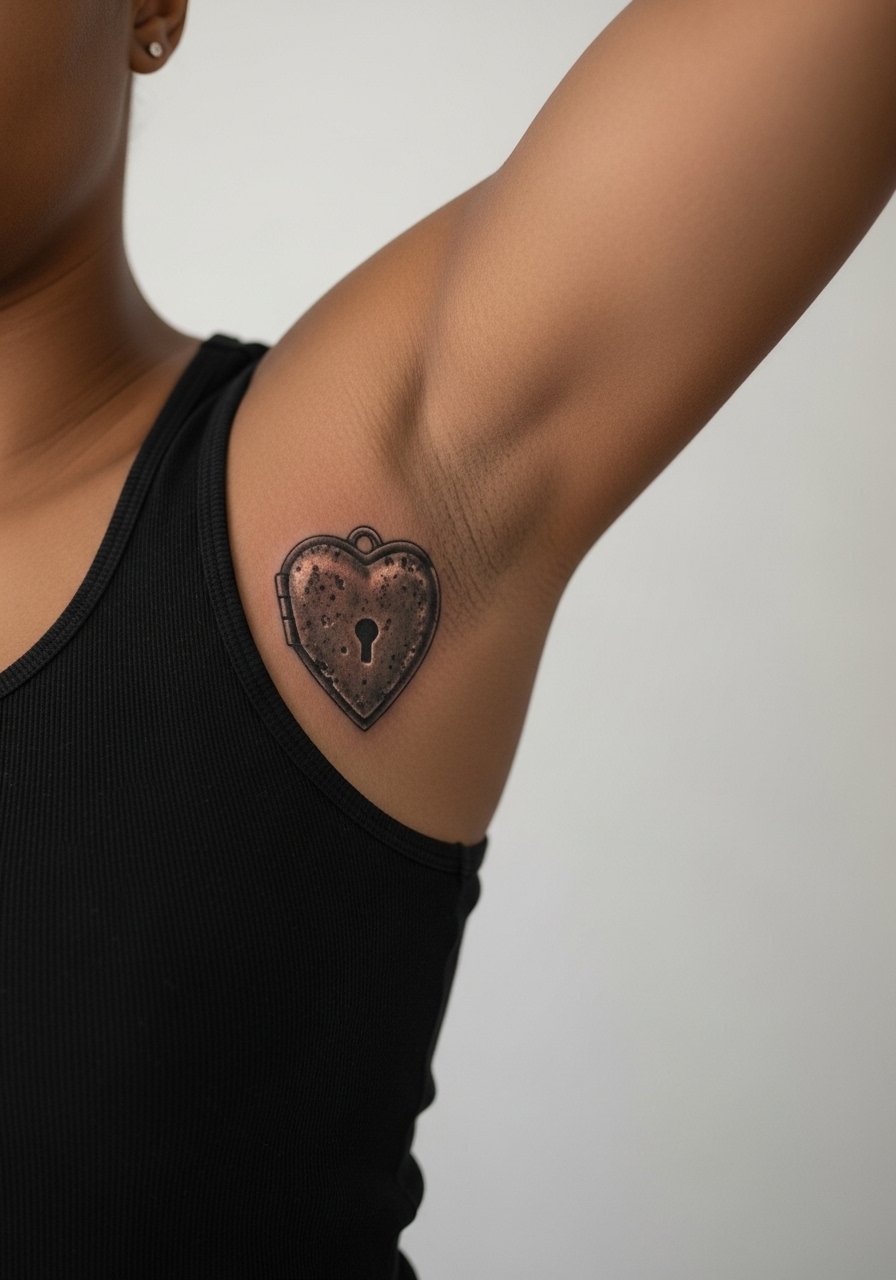
Inner-arm placements let realism breathe while avoiding direct sun. For an aged iron finish ask for subtle black and gray gradients and light stipple shading to mimic pitting. Many people underestimate how thin the skin reads here, which can cause minor blowout if the artist goes too deep. Pain is moderate and the session is comfortable if you can keep the arm relaxed. The piece will look great at six months but expect the fine texture to need a light touch-up at year three if you want the metallic grain to stay crisp. During the appointment wear a loose tank top so the artist can work without fabric interference.
Pre-Session Essentials
The wrist, inner arm, and collarbone pieces above demand different prep from larger leg or back work. A few targeted items smooth the appointment and the first week of healing.
-
Stencil transfer paper kit. Lets you preview the exact linework placement, which matters for tiny keyholes and clasp details in the locket sketches above.
-
Topical numbing cream. Applied before the session can reduce wrist and collarbone sensitivity without changing the artist's work when used responsibly.
-
Thin protective film roll. Protects wrist and forearm tattoos from friction and water exposure during the first few days.
-
Fragrance-free body wash. Gentle cleansing for chest and collarbone areas keeps delicate filigree from irritation while it seals.
-
Aquaphor healing ointment. A thin layer during the first days helps keep micro linework moist without clogging pores.
7. Neo-Traditional Heart Locket Framed by Vines on the Shoulder
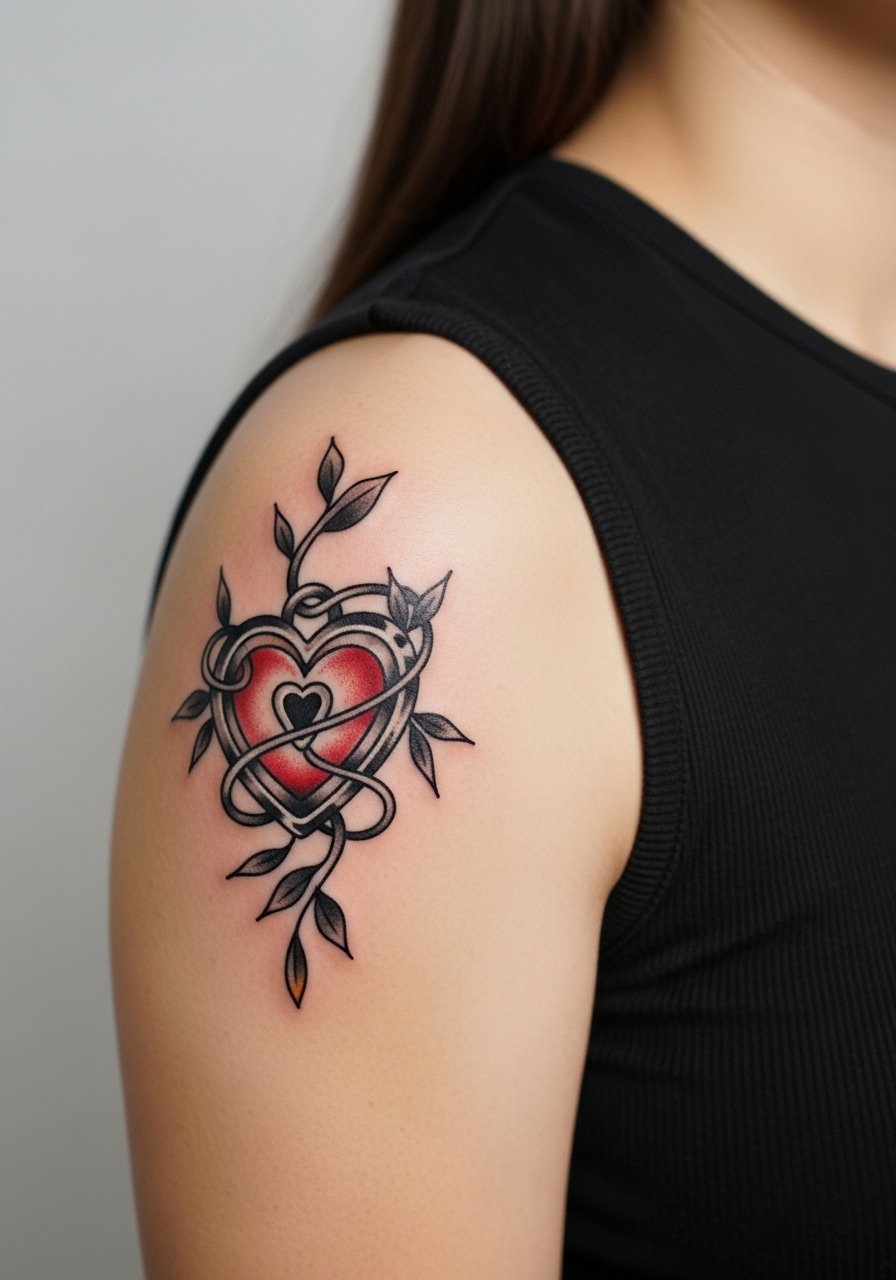
Shoulder placement gives neo-traditional lockets room to breathe and keeps the piece out of constant sun. Ask for vine spacing that steps away from the locket rim so the negative space ages cleanly. A common mistake is packing small dots and leaves into the rim, which turns into a blur after a few years. Session pain is low and saturation takes well here, so color highlights will last if you limit daily UV exposure. For showing it off, a sleeveless tank top plus a layered leather cuff on the opposite arm balances the aesthetic.
8. Watercolor Heart Locket Sketch with Chain over the Collarbone
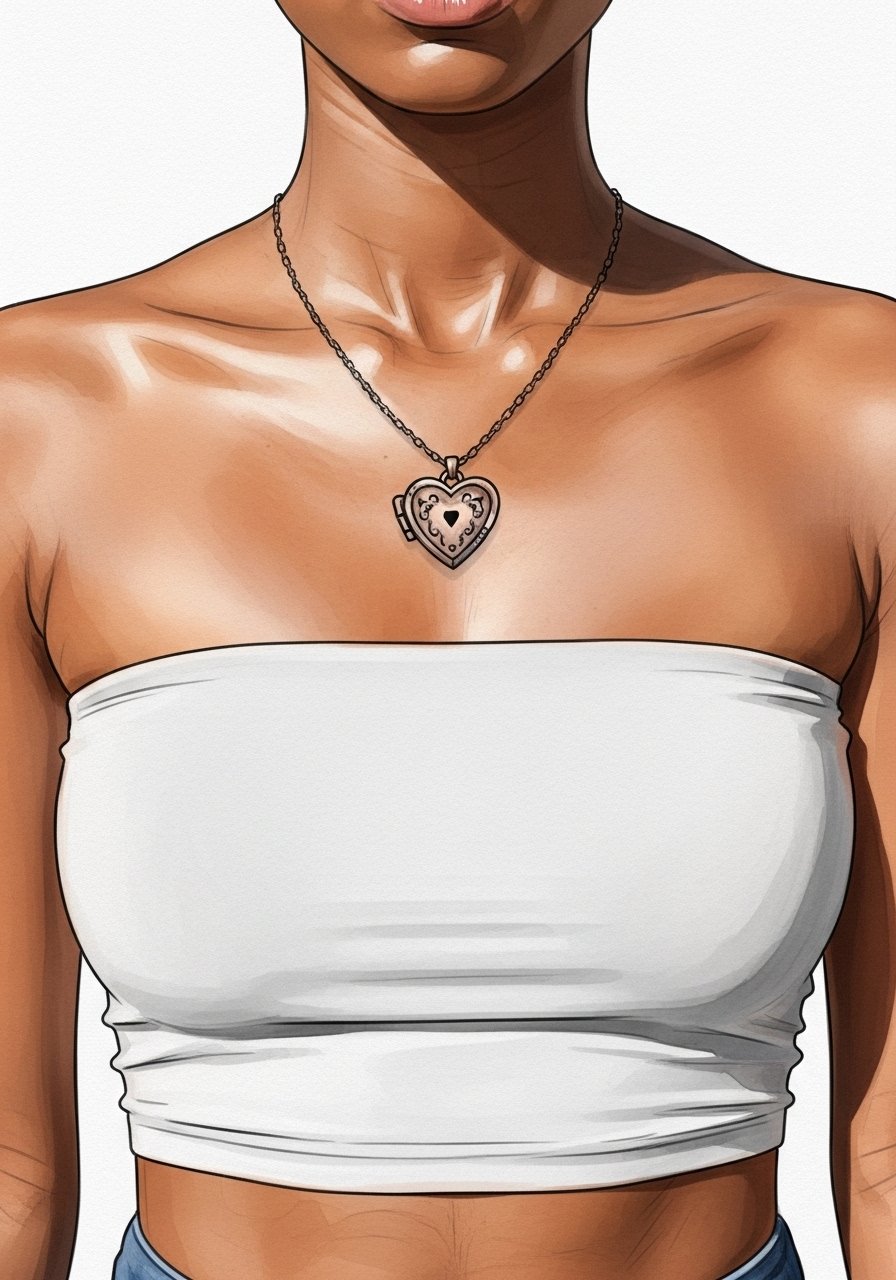
Watercolor lockets lean soft and airy, which is why placement with minimal abrasion like the collarbone works best. One camp argues watercolor never holds color the way saturated realism does, and another camp says careful placement and good saturation make watercolor last. The truth depends on placement and aftercare choices. Tell your artist you want soft washes that avoid dense stippling, and expect fade earlier than strong blackwork. The chest area feels more sensitive over bone, so plan short sessions or split into two appointments if you want stronger saturation. For an outfit, an off shoulder sweater shows the chain-draped composition neatly.
9. Blackwork Heart Locket with Intricate Detailing on the Forearm
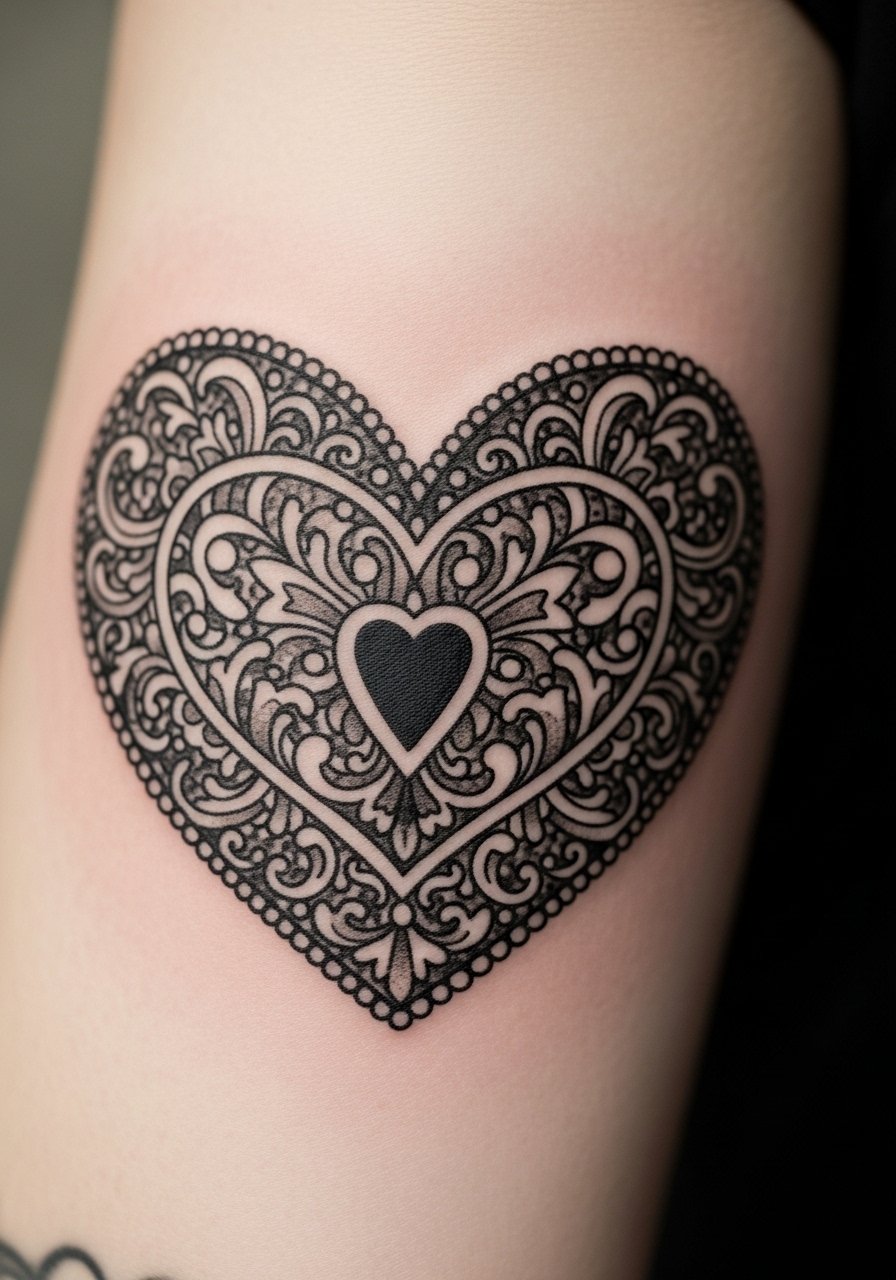
Blackwork is forgiving for longevity because solid fills resist UV fade better than pigment washes. For forearm blackwork specify contrast points so the locket reads from a distance. The big mistake is too-fine internal ornamentation inside solid fields, which can create a muddy healed texture. Expect one to two sessions depending on size, and a touch-up at year three usually keeps saturation even. If you want to wear jewelry with it, lean into minimal metals like a thin chain pendant necklace that sits above the forearm when you cross your arms, not competing with the locket.
10. Minimalist Outline Heart Locket on the Wrist
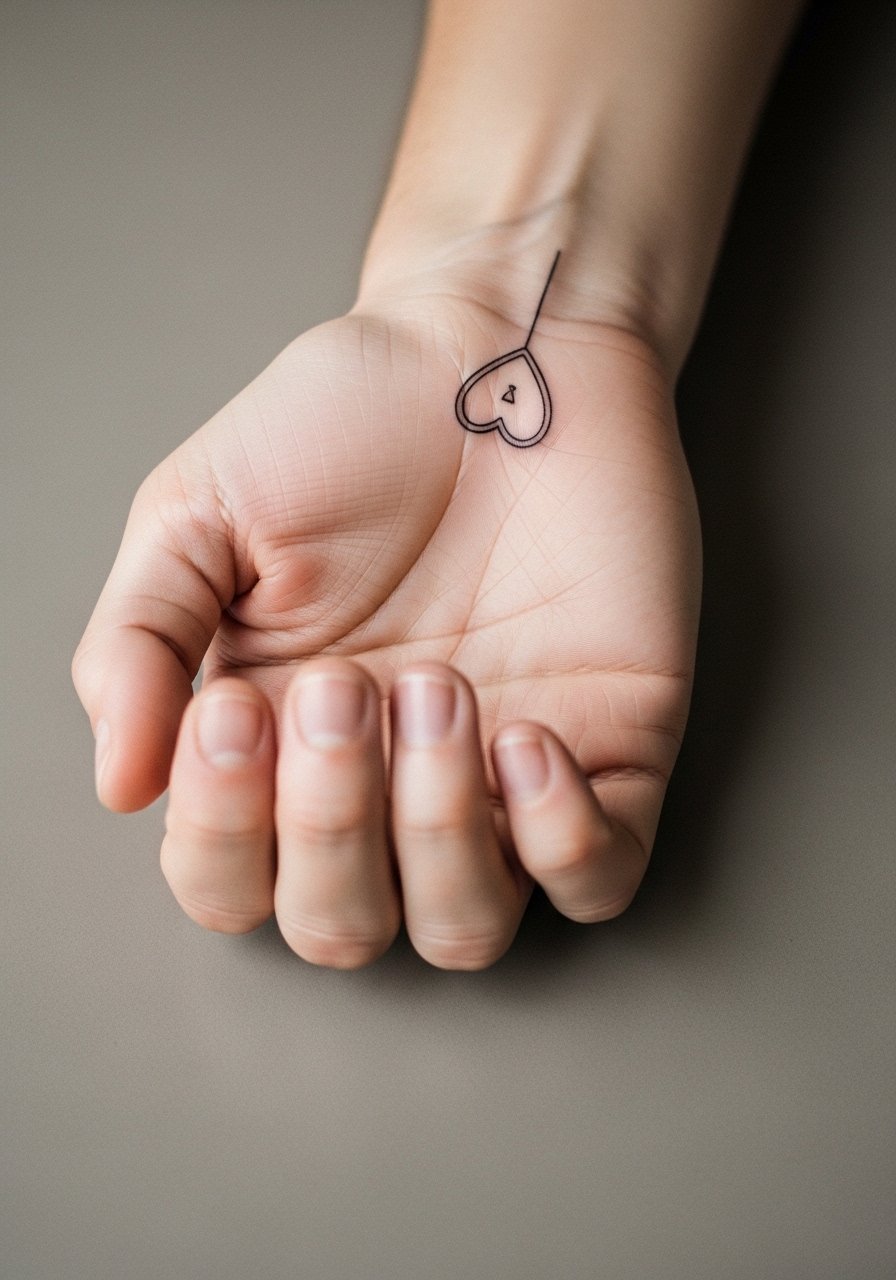
Wrist micro lockets are low-commitment and best for first-timers, but tiny single-line work needs breathing room. In the consult, ask your artist for slightly heavier single-line weight than the reference so it survives washes and bracelets. The usual mistake is requesting ultra-micro loops that blur inside six to twelve months. Pain is sharp but brief. Expect a touch-up maybe at year two for crisp contour. For session day wear choose a sleeveless top and remove any wrist jewelry. To show it off, a dainty bracelet stack on the opposite wrist keeps balance without covering the tattoo.
11. Full-Color Heart Locket with Birth Flowers on the Ankle
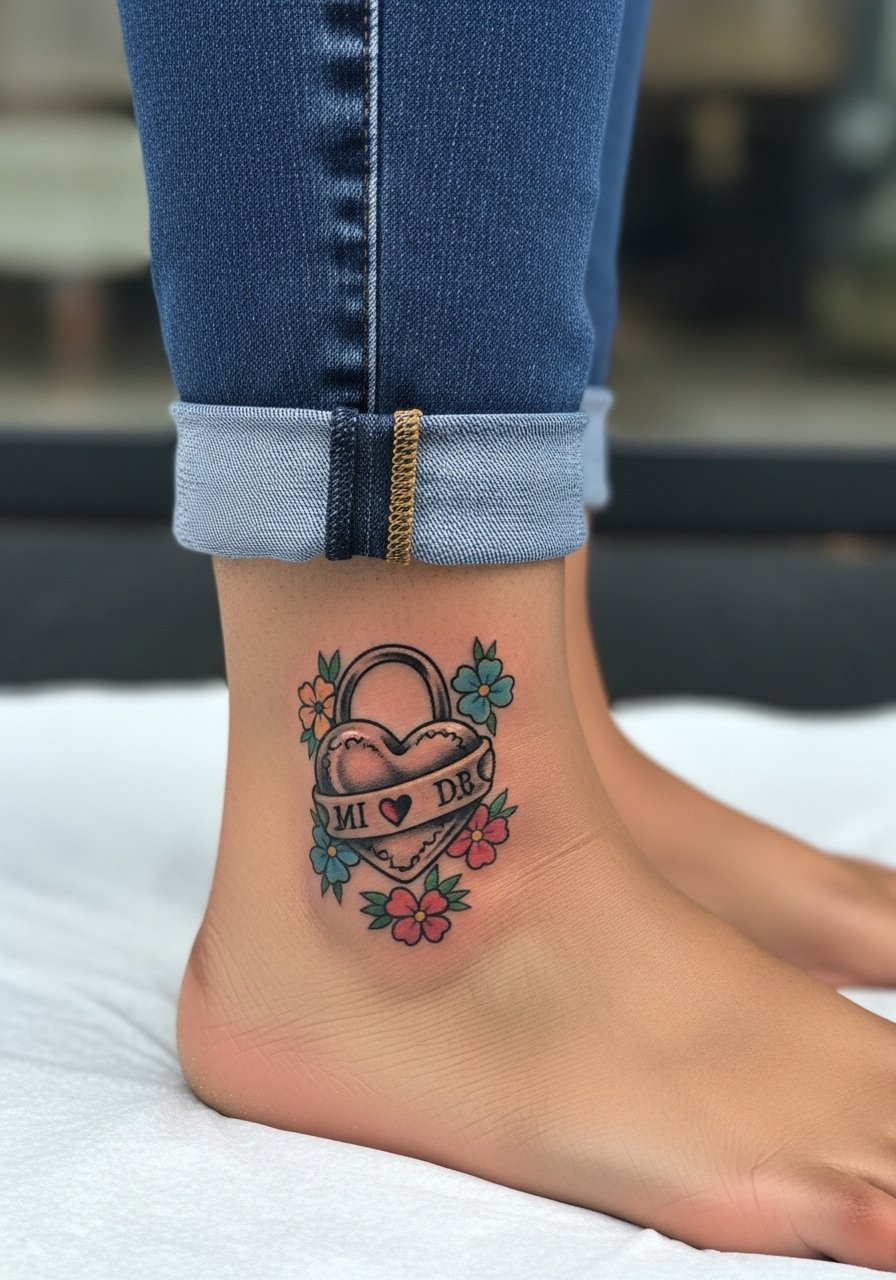
Ankle pieces are intimate and take color differently because of frictions from shoes and socks. Ask your artist to place blooms slightly above the locket rim so straps and socks do not abrade color as it heals. The common error is expecting ankle pieces to behave like flat skin areas. Sessions can be uncomfortable near bone, and color tends to fade faster, so a follow-up touch-up is often needed at year two to three. For summer looks cuff wide-leg pants or wear strappy ankle sandals to keep the tattoo visible without rubbing it.
12. Sketch-Style Open Heart Locket Revealing Charms on the Ribcage
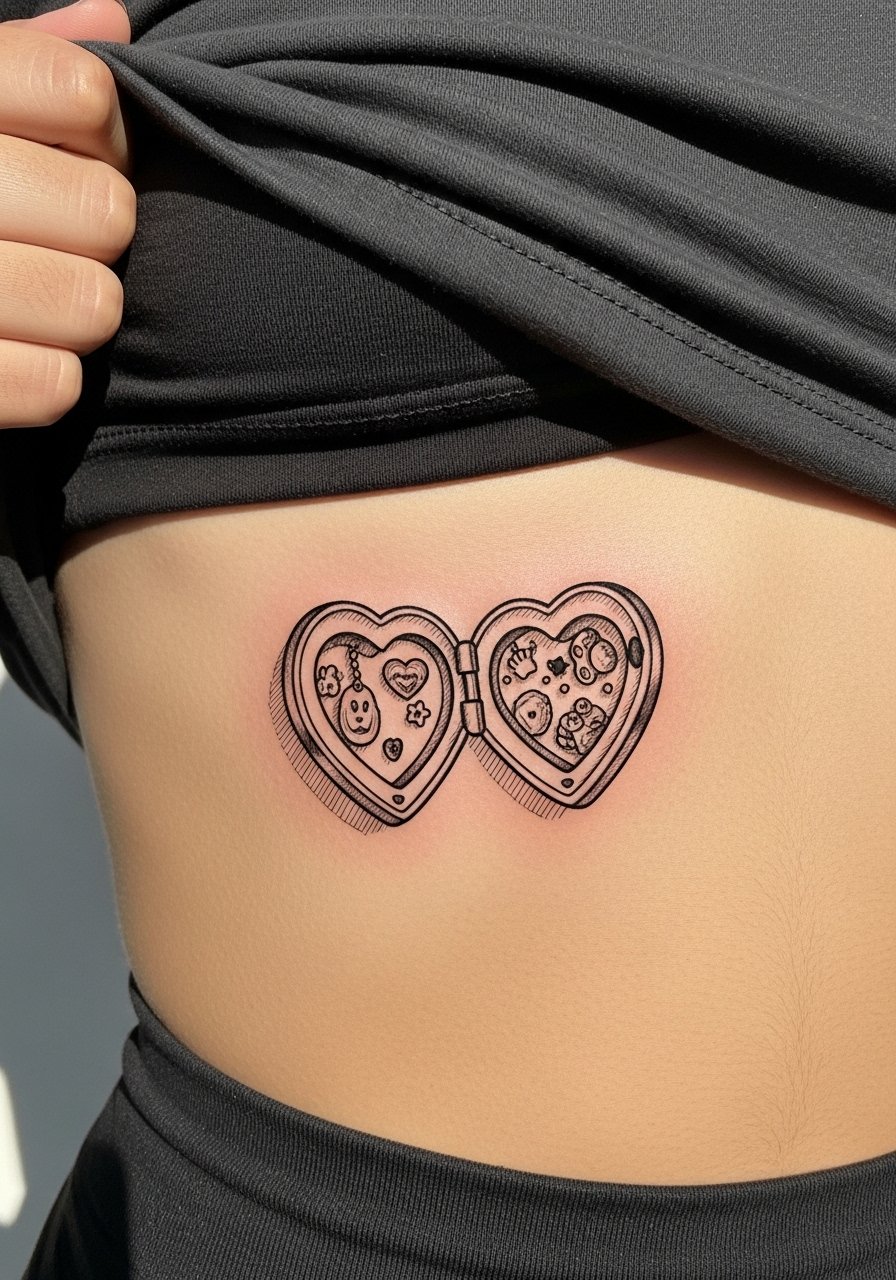
Ribcage sketches let you tell a small story inside the locket by showing charms, tiny photos, or initials. Fair warning, ribs are a higher pain area and artists split on whether fine line holds up there. One camp says skin stretch and motion blur fine lines within two years. The other camp argues that with correct needle depth and spacing, fine line settles fine. Ask your artist which approach they favor before booking. Common mistakes include cramming many tiny elements into the locket. Because this placement moves a lot, expect touch-ups at year two if you want the internal charms to remain legible.
13. Half-Open Locket with Hidden Charms on the Inner Wrist
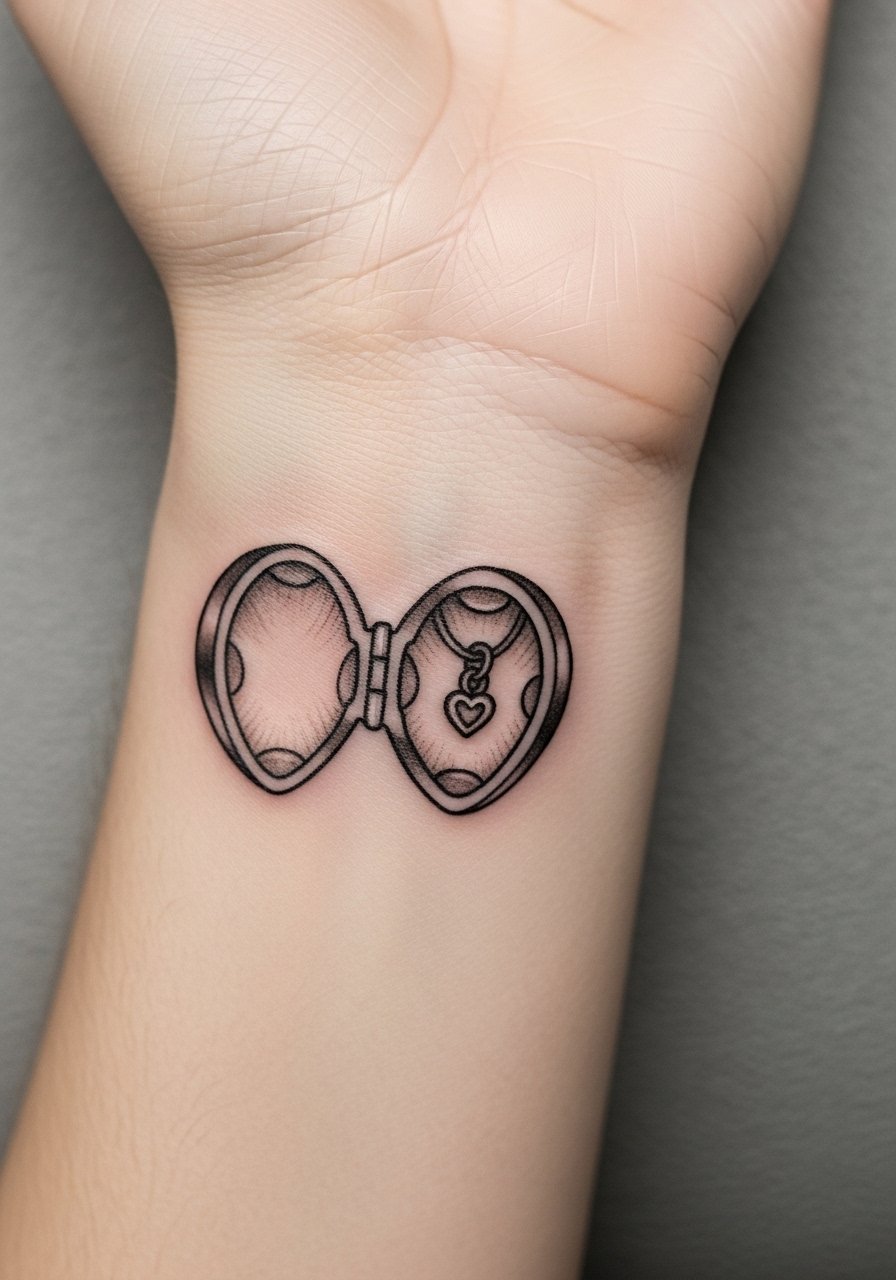
A half-open locket adds narrative while staying compact. On the inner wrist this reads as a secret piece, and I usually recommend a single clear charm rather than multiple symbols to avoid blurring. Tell your artist you want the hinge detail bold enough to read at arm's length. The wrist friction shortens crispness, so expect a touch-up sooner than for forearm pieces. Session discomfort is brief, and the piece makes for a subtle daily reminder without crowding the body's larger canvases. Pair with minimal jewelry on the opposite wrist to keep attention balanced.
14. Black Lined Ornamental Heart with Lace Filigree on the Thigh
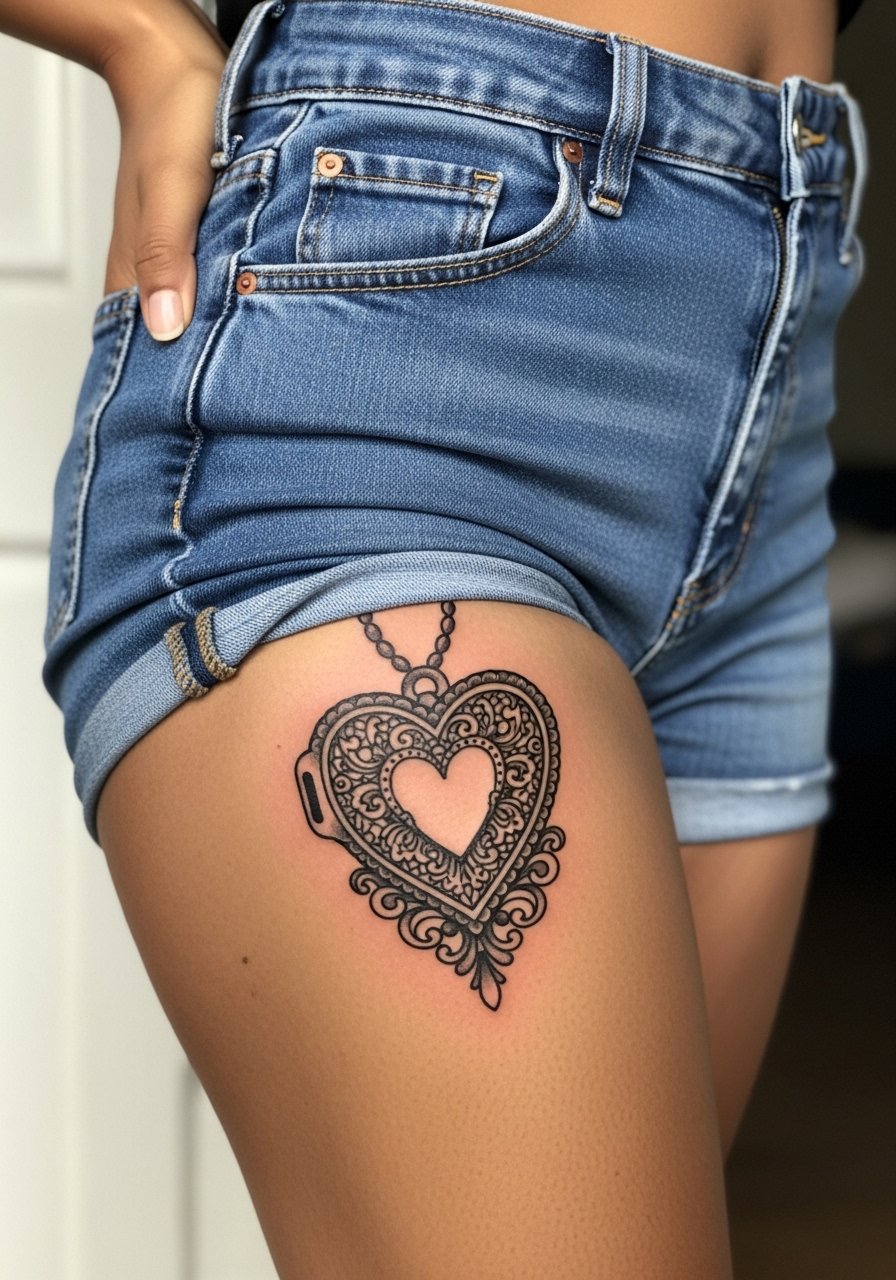
Thigh placements offer protection from constant sun and friction, which helps preserve delicate filigree. In consultation specify spacing between filigree loops and the locket border so the lace effect ages into readable texture. The usual mistake is too-tight filigree density, which can merge into a grey mass as it heals. Session feels moderate and is easier if you wear loose shorts the day of. For wardrobe pairing try wide leg linen pants cuffed high to reveal the top of the thigh in warm months.
15. Realistic Photo-Style Heart Locket with Tiny Portrait on the Rib Side
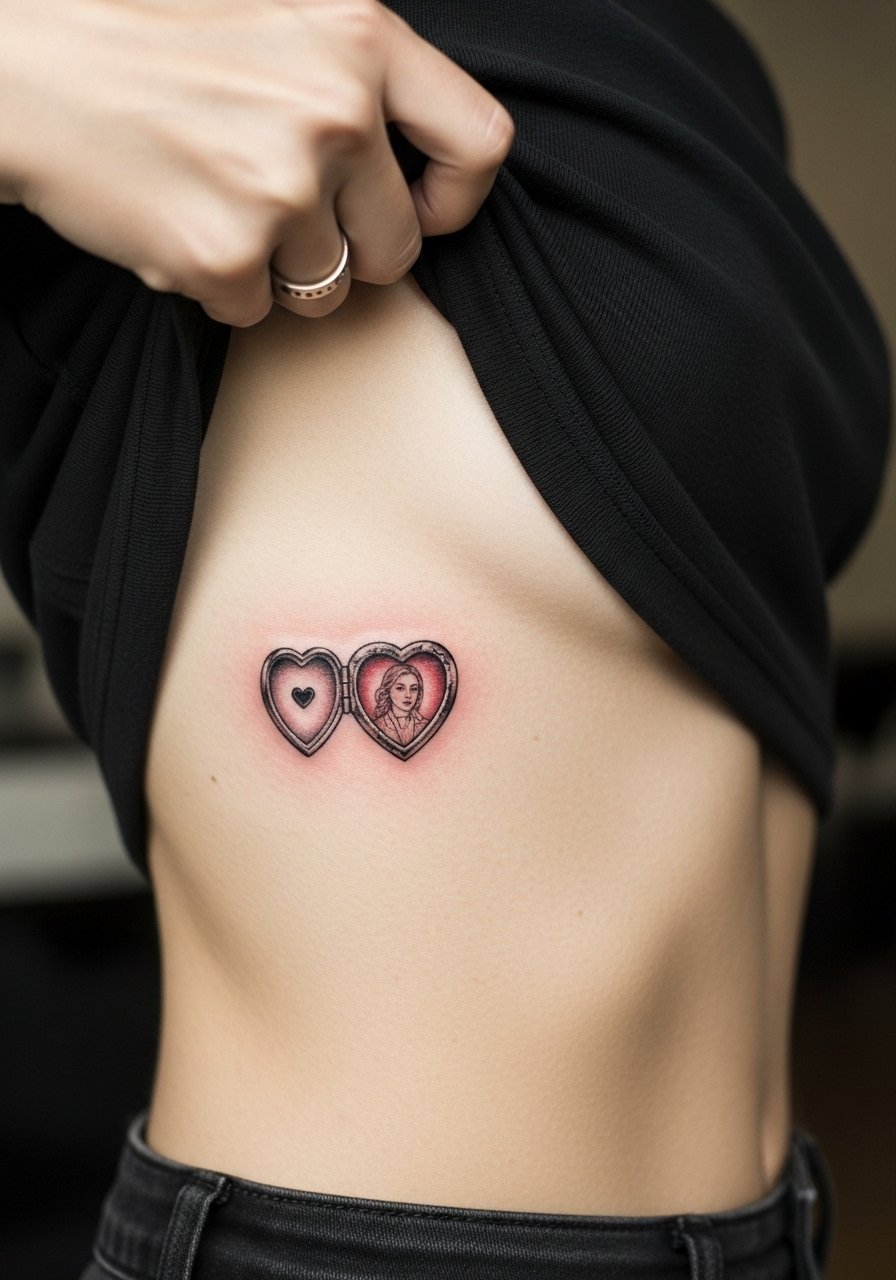
Micro-realistic portrait lockets demand deliberate sizing because skin texture on the ribs can distort tiny facial features over time. Ask for a simplified portrait and high-contrast shading so the face holds up. Artists sometimes try to cram too much detail into a small oval; resist that. Pain is high on the ribs, so split the session if you want accuracy. Healed at six months the portrait will be readable, but expect a touch-up earlier than larger realism pieces if you want crispness preserved.
16. Chain-Draped Locket Design Mimicking Jewelry Wear on the Collarbone
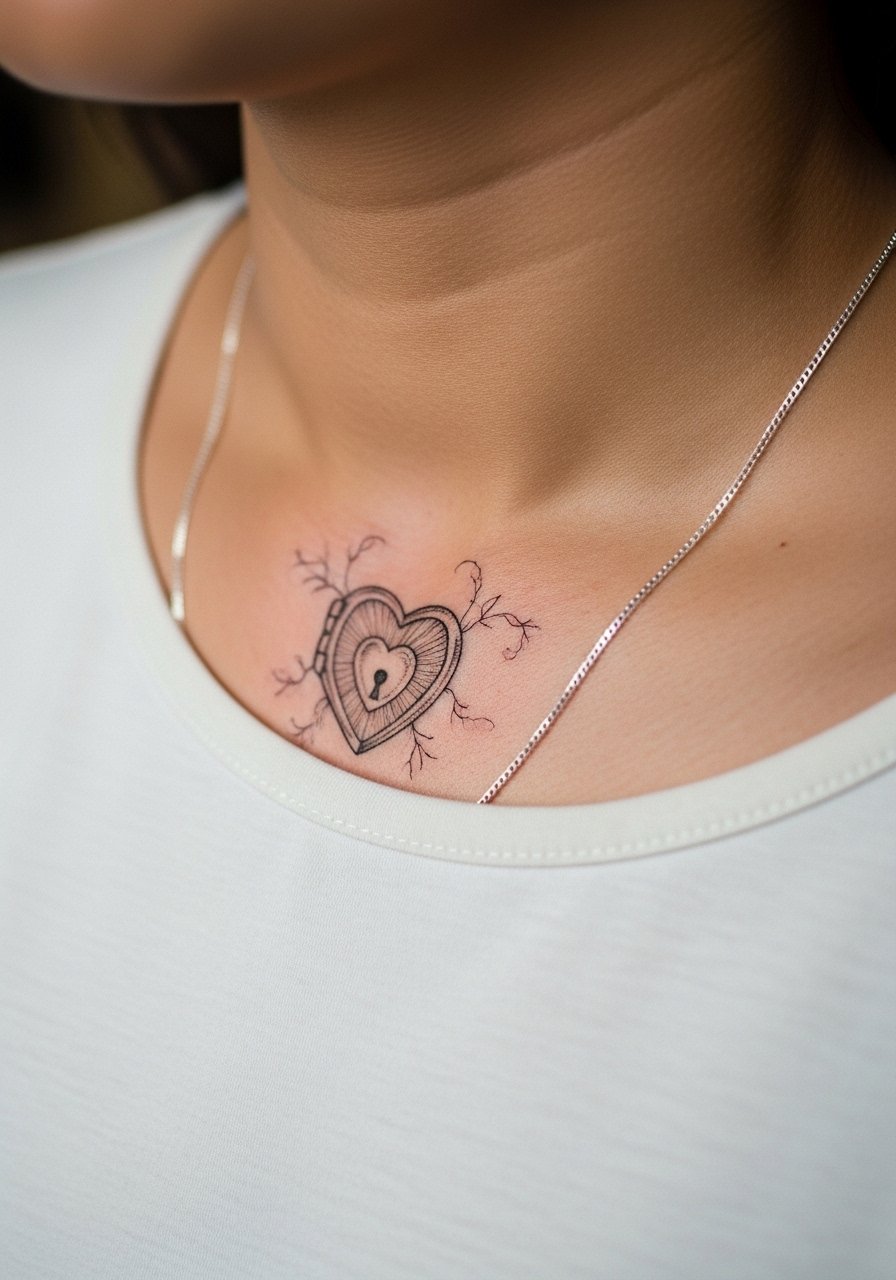
A chain-draped composition mimics how a necklace sits and reads well on the collarbone or upper chest. Tell the artist whether you want the chain to loop into negative space or to overlap the locket. The main mistake is drawing the chain too thin; tiny chain links blur quickly. Because this area sees clothes rubbing, expect lighter touch-ups at year three. For show-off outfits choose a delicate choker necklace that sits above the locket but does not sit on the ink while healing.
17. Neo-Victorian Heart Locket with Stippling and Dot Work on the Calf
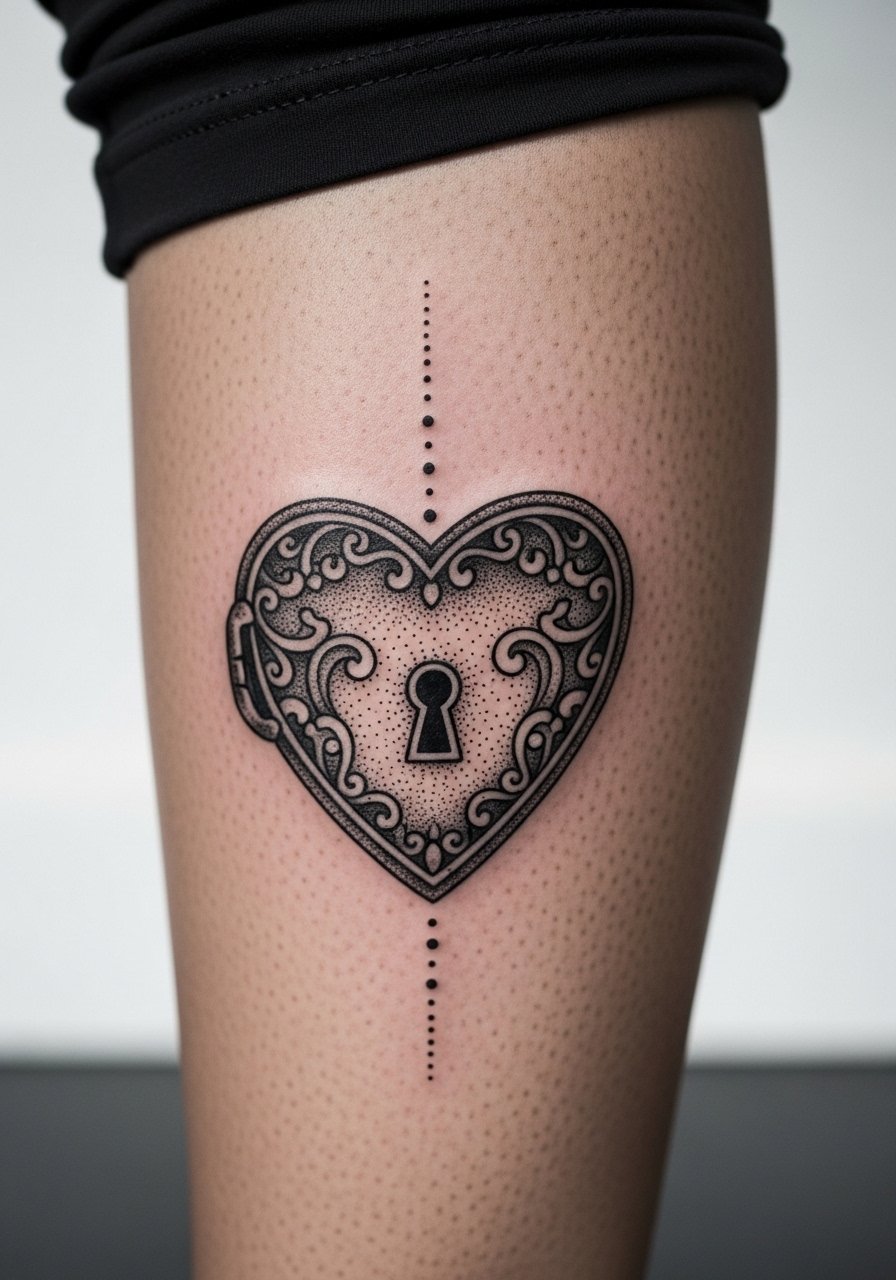
Calf placements offer a canvas for stipple shading and dot work that ages into texture. When you ask for stippling, clarify dot size and spacing so the tonal fields hold up rather than filling into a grey patch. A common mistake is dense stippling too close to the locket edge. Sessions are straightforward, and touch-ups depend on footwear friction and sun exposure. For sessions wear loose shorts or joggers so the artist can access the area cleanly.
18. Illustrative Heart Locket with Birth Flowers on the Ankle Wrap
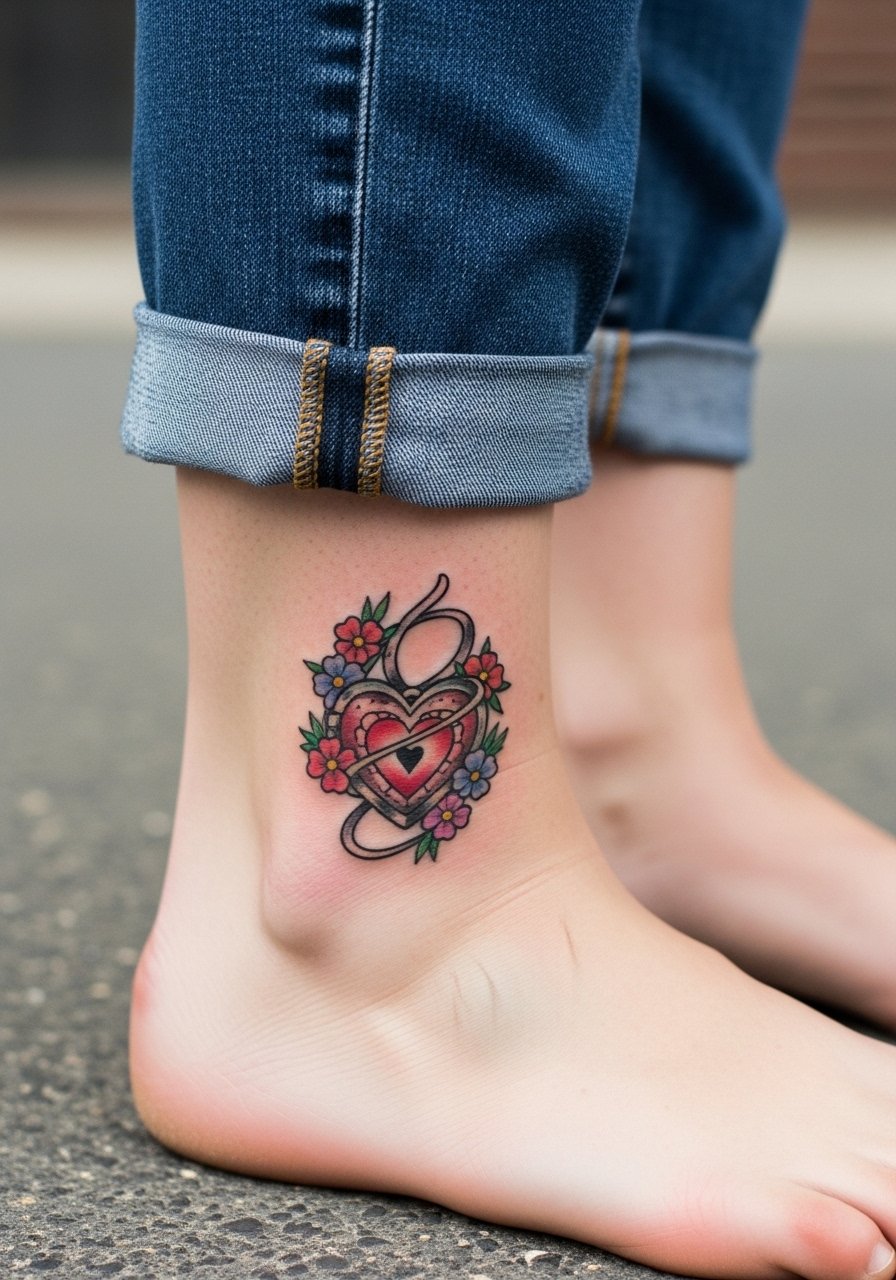
An ankle wrap that curves around the bone makes an elegant band-style locket. Because ankle skin is prone to rubbing from shoes, ask for slightly elevated color saturation and spaced flowers to avoid chafe during healing. Many people forget how often socks touch this area, which speeds fading. Expect a modest session time and plan for a touch-up at year two if you wear closed shoes often. For summer footwear choose barefoot sandal or strappy sandals to keep the area visible without constant rubbing.
19. Blackwork Filigree Heart with Keyhole on the Back of the Hand
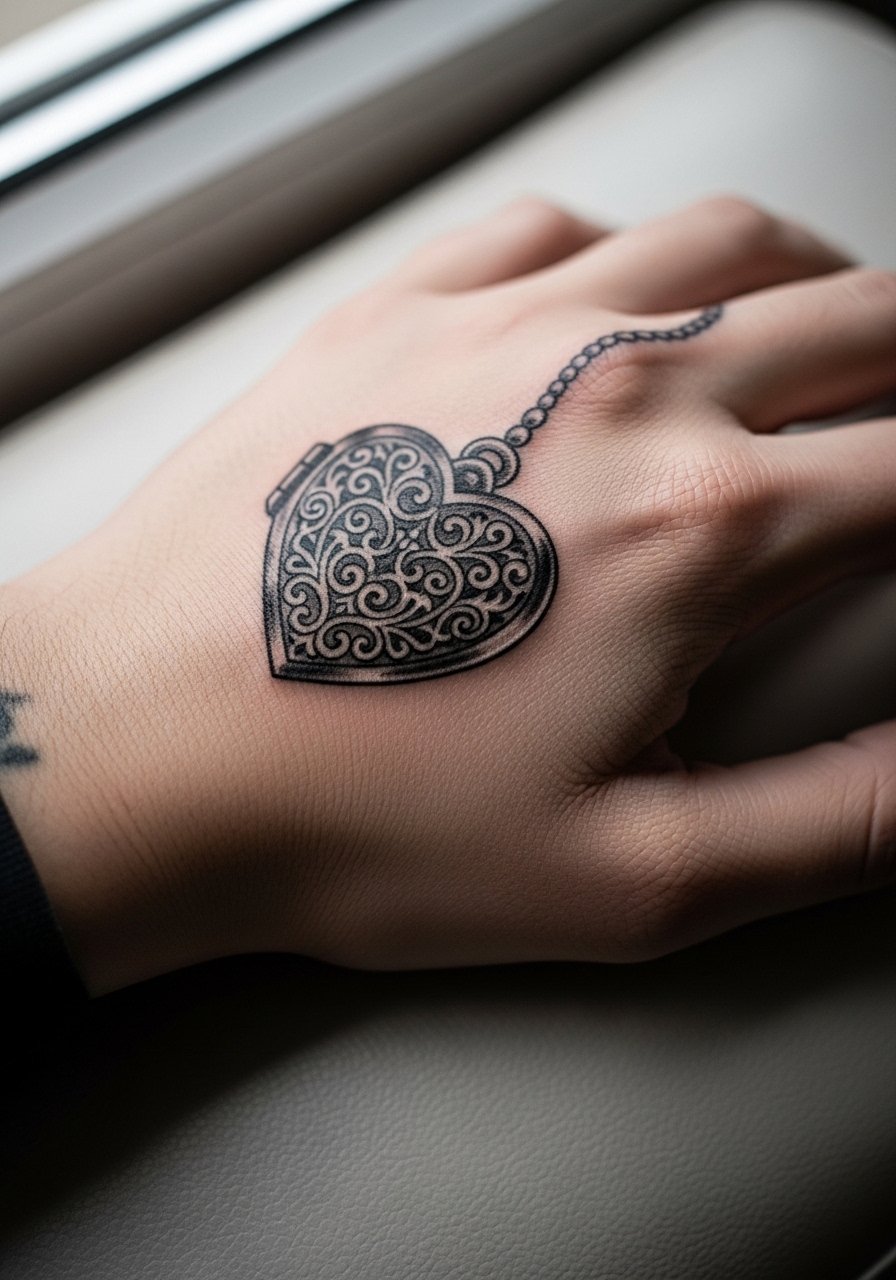
Hand tattoos sit in one of the highest-friction zones, so expect faster fading and more frequent touch-ups than other placements. Choose bold blackwork and avoid tiny filigree that will soften into indistinct grey in months. The main mistake is treating the hand like forearm skin when it is far thinner and experiences constant washing. Sessions feel more painful and require careful aftercare. If you plan to display your hand work, keep accessories minimal and accept that touch-ups are part of the ownership cost.
20. Sketch-Style Broken-Locket Motif on the Sternum
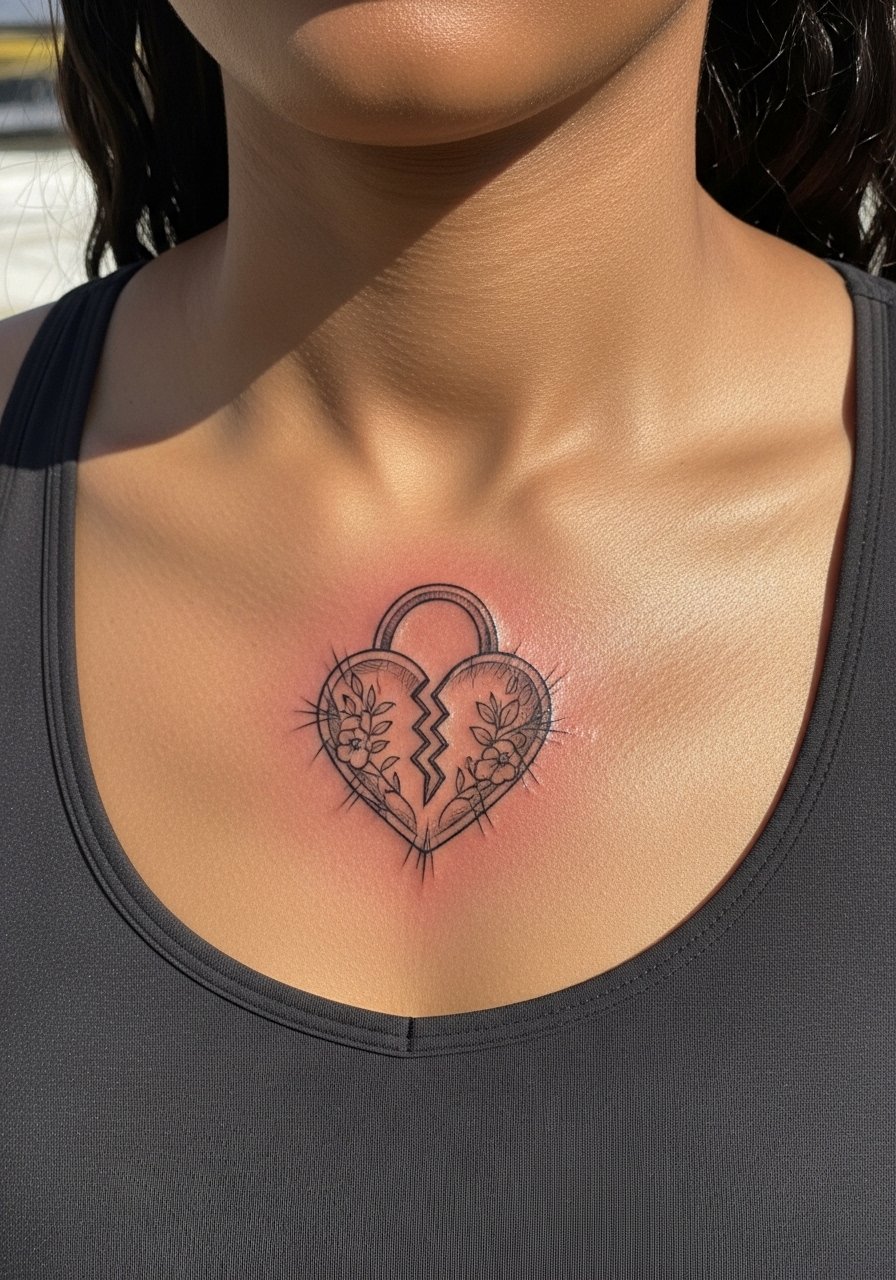
Sternum placements read visceral and intimate, but are near bone and can be more painful to tattoo. A sketchy broken-locket motif benefits from slightly bolder contour lines so the break reads over time. A mistake is keeping the break too fine, which may fade into an ambiguous smudge. Artists differ on needle depth in this zone, so ask about their approach in consultation. For session wear use a fitted sports bra you can pull slightly aside so the artist has clean access.
21. Sketch-Style Open Locket Revealing Personal Charms on the Ribcage (Cultural Variation Option)
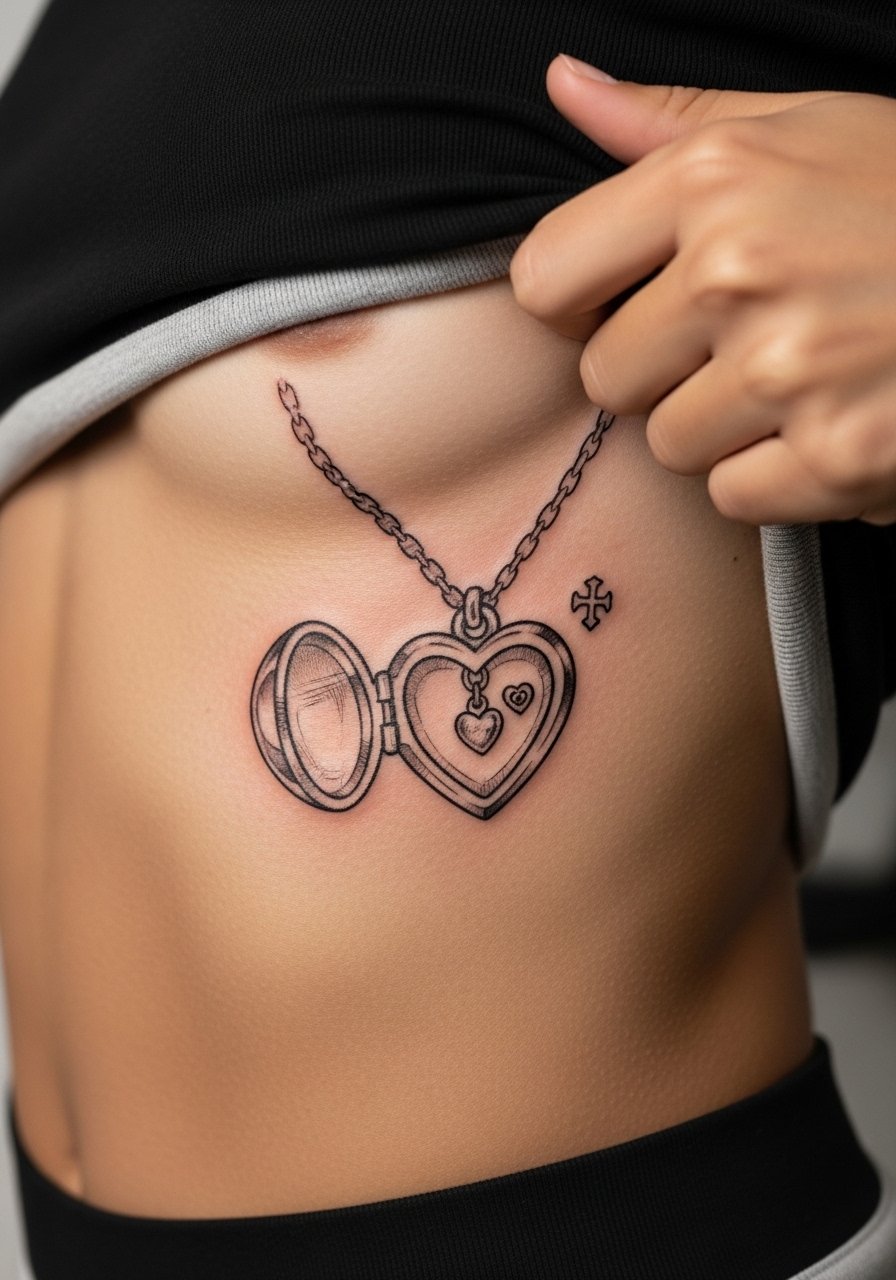
Open ribcage lockets offer the most narrative space for small symbolic charms, which is ideal for people who want a mini-trove of imagery. If you want a charm with cultural origin, mention the origin respectfully and discuss slight adaptations rather than copying sacred patterns directly. The ribcage moves and breathes, so plan for a sharper consult about spacing and ask the artist to avoid micro-detail inside tiny charms. Expect higher pain, potential swelling, and a likely touch-up at year two to keep the charms legible.
Frequently Asked Questions
Q: How much will a heart locket tattoo cost, roughly, for small to medium pieces?
A: Prices vary by studio, city, and artist skill, but small to medium lockets usually book as single sessions. Expect range-based consultations at the shop level rather than a fixed online price. Ask for an estimate for your exact size and placement during the pre-booking consult.
Q: Do watercolor style lockets need different aftercare than blackwork ones?
A: The early-care window is the same for all tattoos, but watercolor pieces benefit from strict sun avoidance and gentle washing because they use softer saturation. Keep the area covered and use sunscreen on healed ink to slow fade. For showing watercolor collarbone pieces later, a light off shoulder top frames the art without rubbing it.
Q: Will fine line lockets blur on the ribs or sternum faster than on the forearm?
A: Rib and sternum skin move more and can cause fine lines to soften sooner than stable forearm skin. Artists disagree on whether fine line should be avoided there. One camp says motion causes blurring within a couple of years. The other camp says with correct depth and spacing fine line can hold. The safe move is to discuss spacing and needle depth in consultation and accept a likely touch-up schedule.
Q: How often should I expect touch-ups for a small wrist locket?
A: Wrists get friction and frequent washing, so plan for a light touch-up around year two to three if you want the contour to stay crisp. Good initial line weight and protective measures during the first week reduce how soon you need work.
Q: I want a matching key and locket with a partner. Any placement advice?
A: Keep scale identical and agree on the same line weight. Wrists and hands are popular match spots but expect differing healing based on daily use. Consider one person taking the locket and the other the key on opposite hands to balance visibility and wear.
Q: Are there discovery paths to find fitting references or artists without naming people?
A: Use style-specific hashtags like #heartlockettattoo or #realisticlocket to gather sketches, and search local studio tags or directories to filter shops by specialty. Reddit threads and Pinterest boards are good places for before-and-after examples to show in consultation.