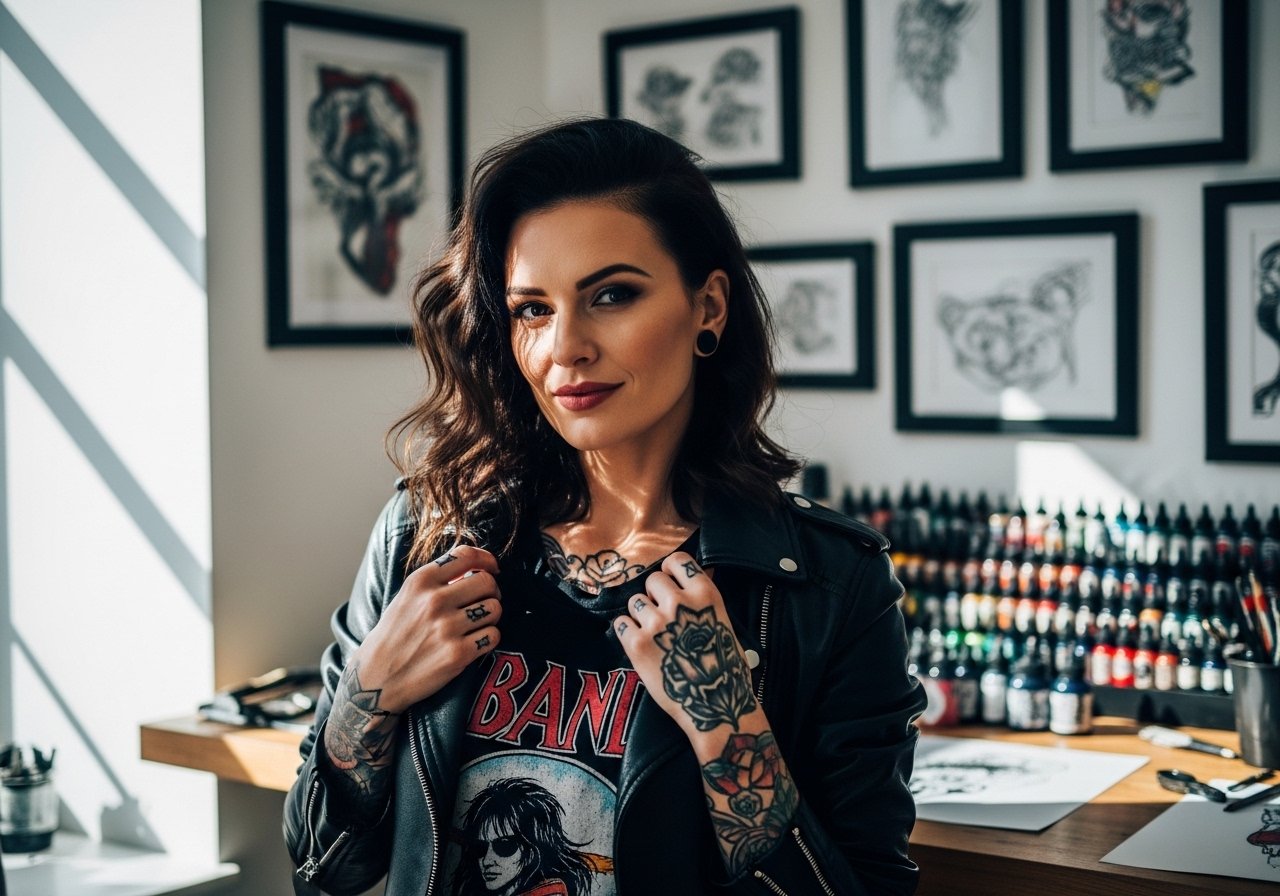
Fine line horseshoe sketches are everywhere on saved boards right now, but the trend-vs-reality gap matters. Pain varies by placement, tiny linework fades faster than bold saturation, and placement can change weekly comfort and future touch-up needs. These 17 sketches focus on small, wearable horseshoes you can actually live with, and each section shows what to ask for at the consult.
1. Tiny Upward Horseshoe on the Inner Wrist
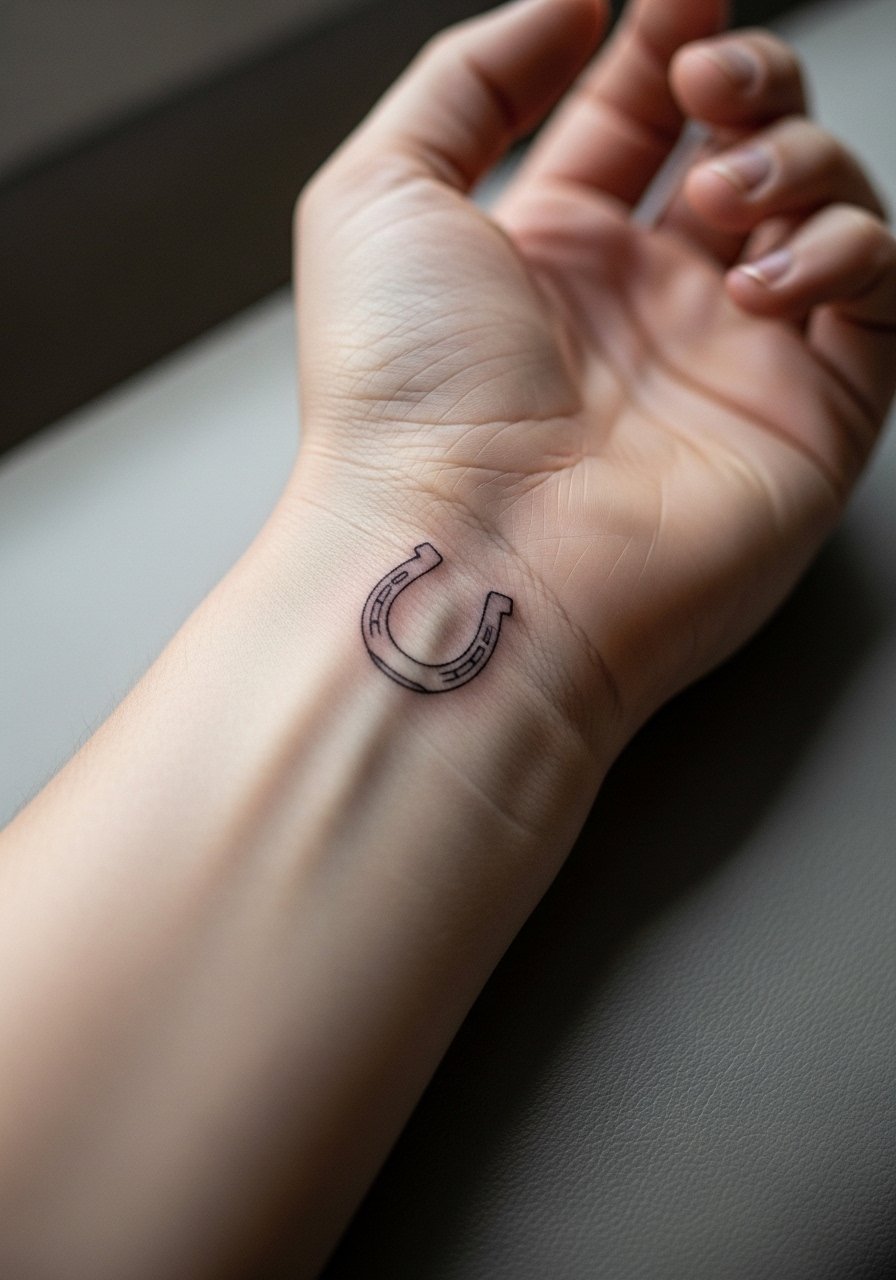
I've seen this one hold up when artists keep the lines slightly bolder than the reference photo. Say during the consultation you want a clear gap between the horseshoe ends and ask for slightly heavier linework so the piece survives daily washing and friction. Fair warning, the wrist is a high-motion zone and touch-ups at year two are common for ultra-fine lines. For showing it off, roll up sleeves and try a minimalist watch that frames the tattoo without covering it.
2. Micro Horseshoe on the Side of a Finger
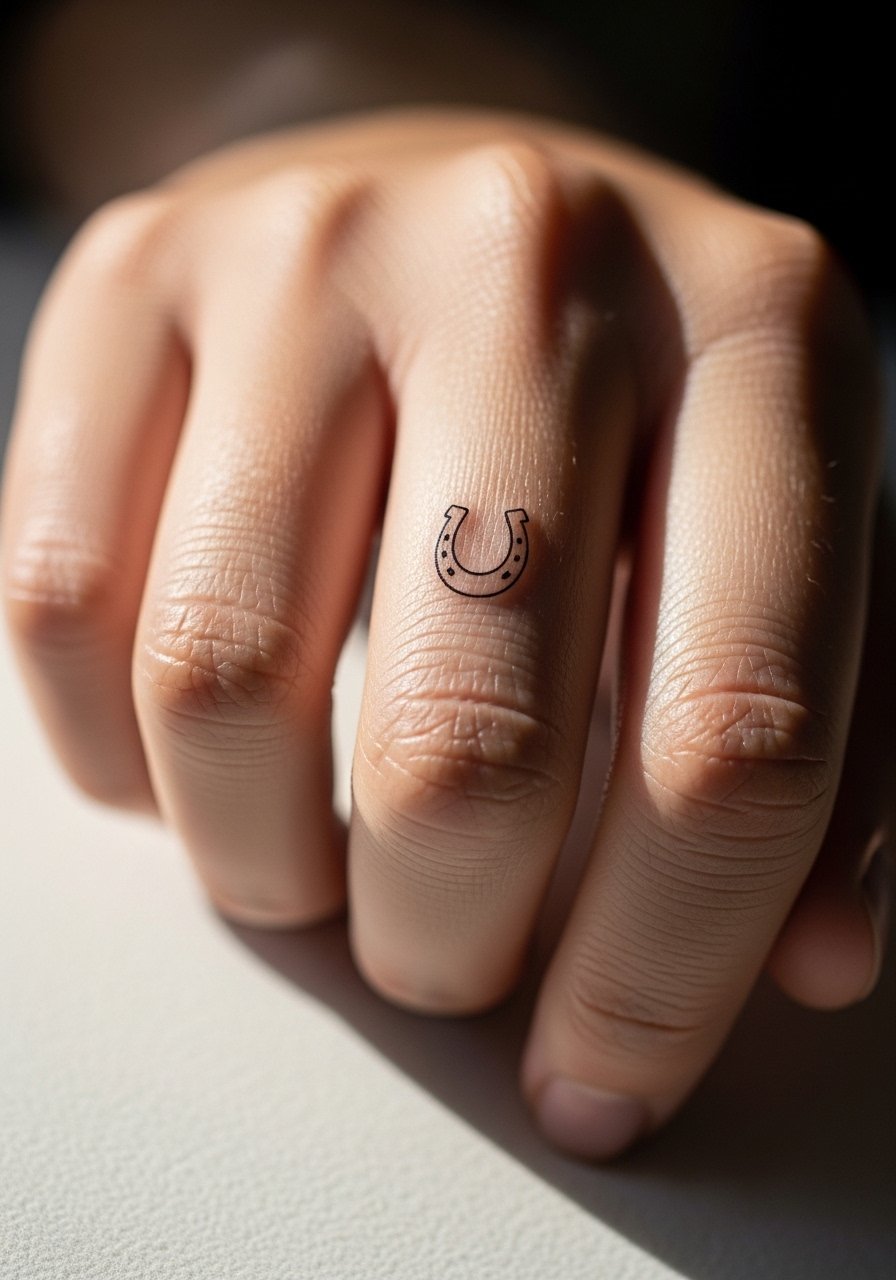
Finger skin moves and sheds differently, so this is a commitment. In the consult, ask for single-pass linework and plan on a touch-up sooner than you would for the forearm. Some people choose the side of the finger because it avoids constant pressure from rings. There is debate about visibility and employment impact. One camp says hand and finger tattoos still affect hiring in some fields. The other camp points to shifting norms and portfolio-based hiring. Think about your work environment before booking and ask your artist about their finger-healing examples.
3. Wildflower-Wrapped Horseshoe on the Ankle
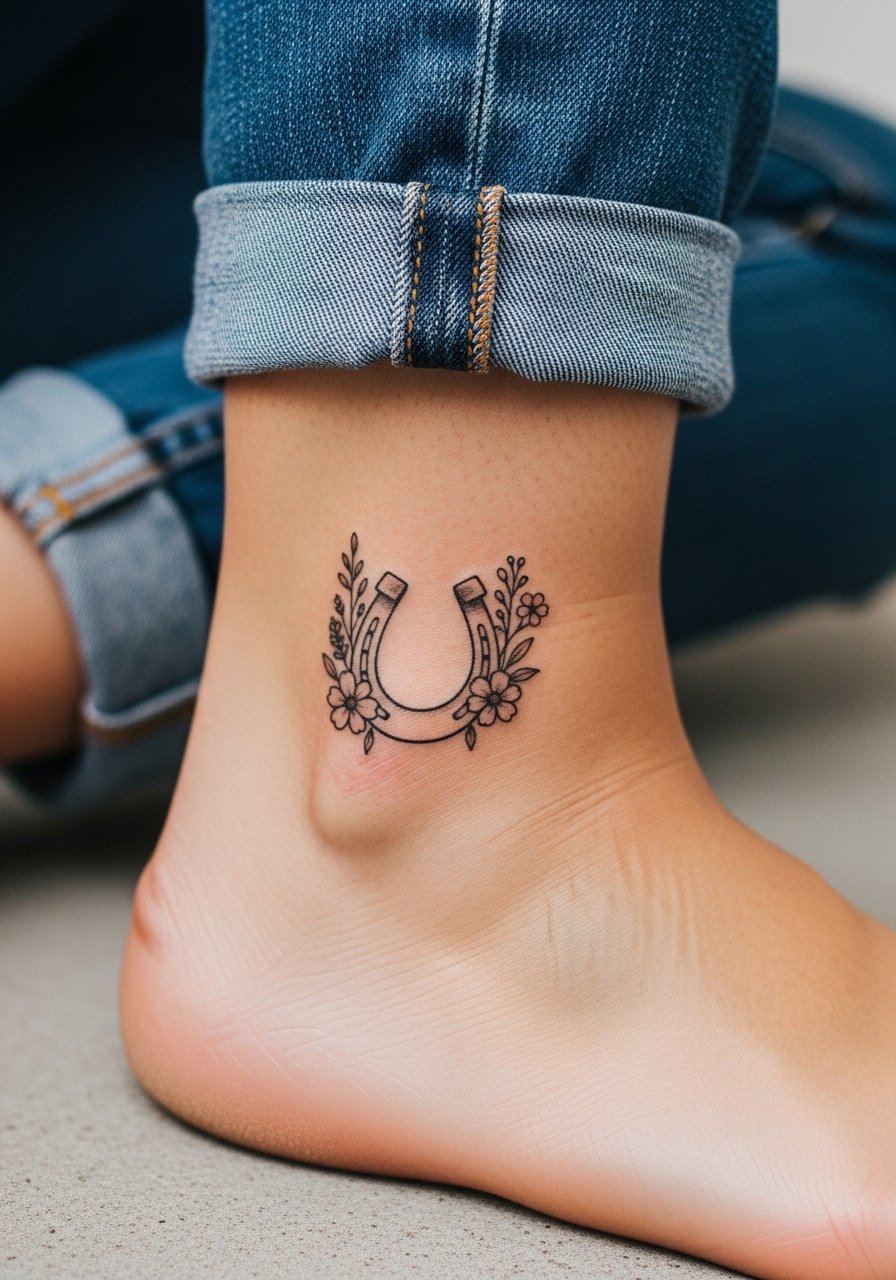
Ankle pieces sit in a friction zone from shoes and socks. I recommend asking for slightly higher saturation inside the horseshoe and sparse stipple shading for the flowers so they keep texture as they fade. During the session wear slip-on shoes or sandals that let the artist access the ankle without needing to remove footwear. For outfits, a linen midi skirt that hits above the ankle puts the design on display for summer months.
4. Subtle Horseshoe Behind the Ear, Below the Hairline
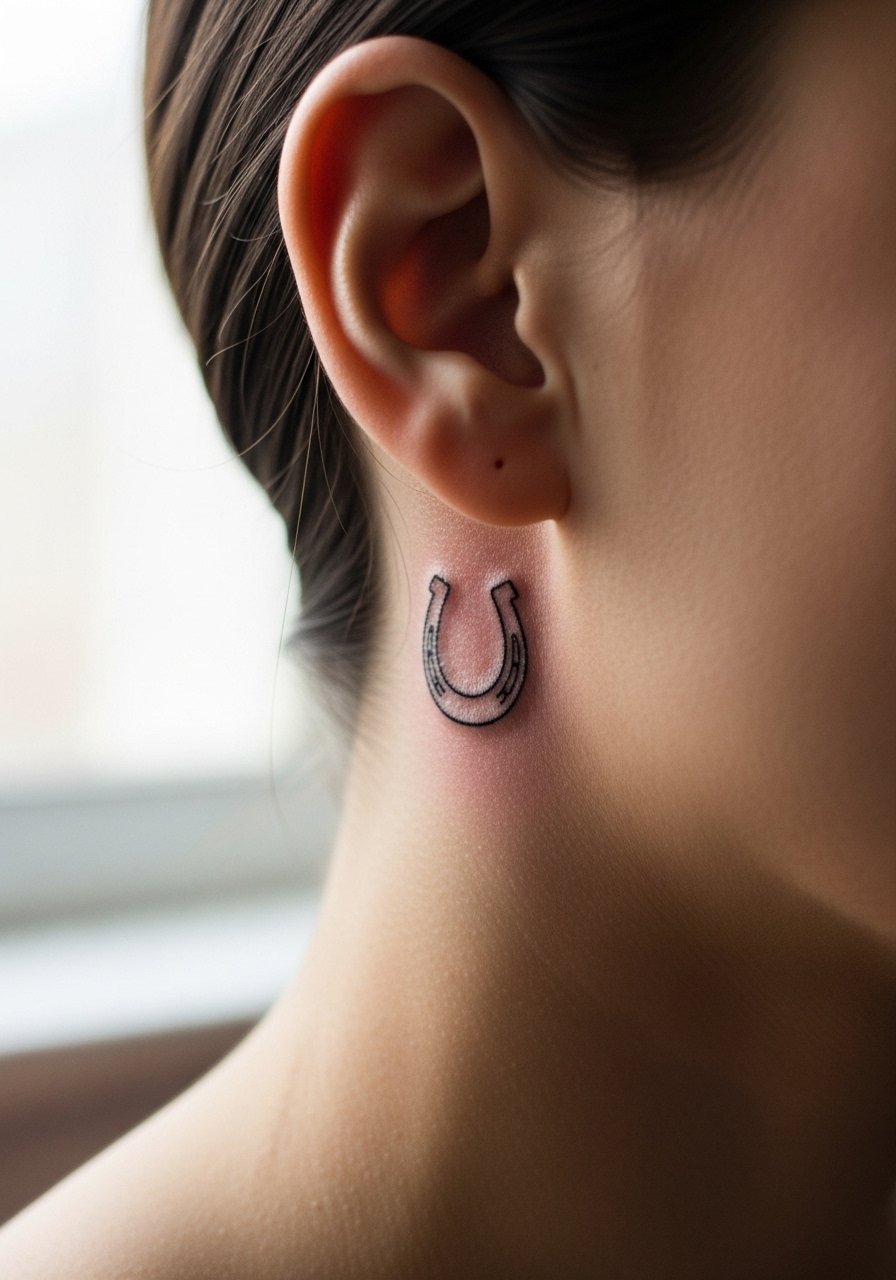
This placement is discreet and ages well because it avoids constant sun. Ask the artist to place the curve so hair growth frames the shape. Session sensation is mild but the spot is hard to dress for healing, so plan comfortable shirts with wide collars. Since this is near the hairline, bring a zip-up hoodie or button-down so you can avoid pulling anything over your head immediately after the session.
5. Crescent Moon and Horseshoe at the Collarbone
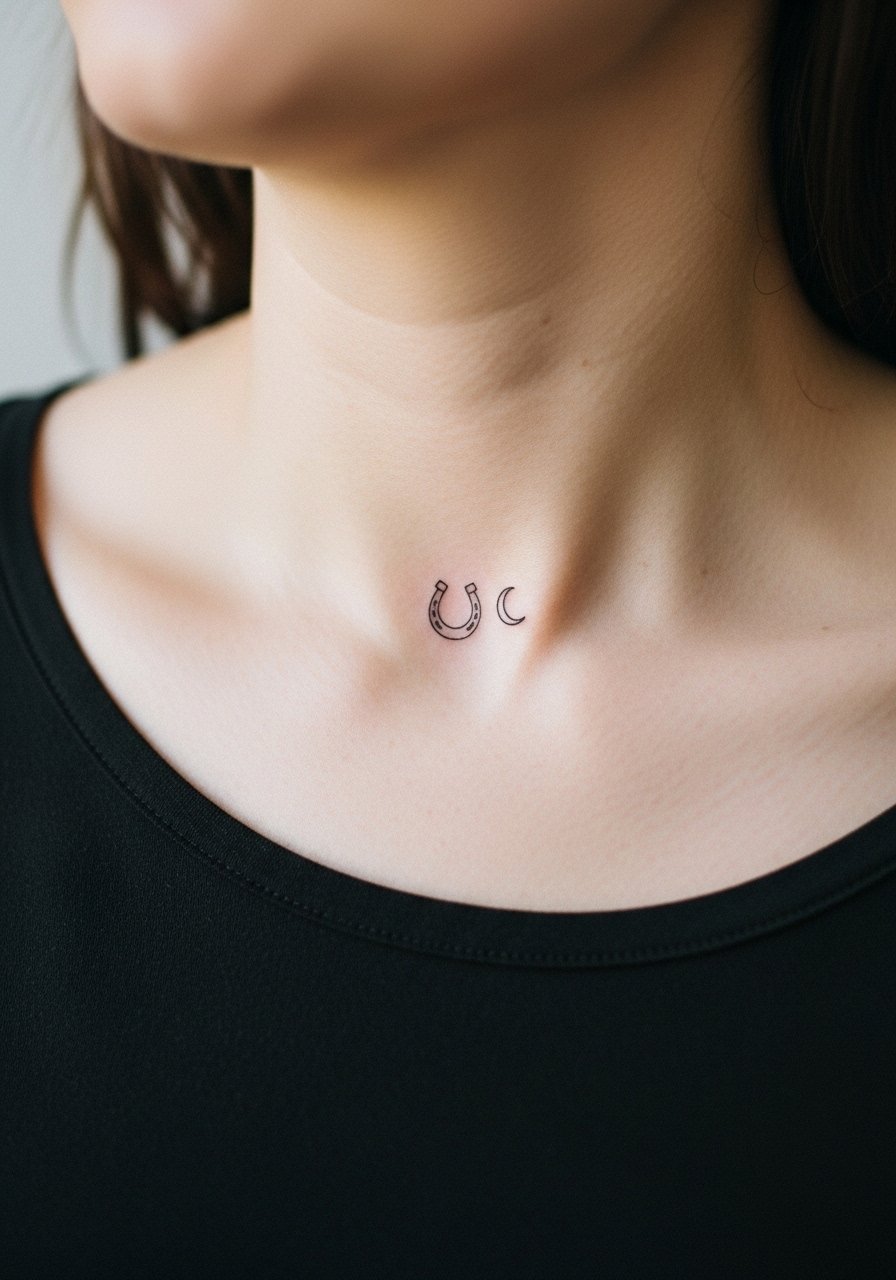
Collarbone linework shows beautifully with the right spacing. Tell your artist you want the horseshoe to sit just above the clavicle so necklaces sit below it. The collarbone can be bony and the session feels like tight tapping for a short time. For showing it off, pair with an open-neck blouse that highlights the tattoo without pressing on the area.
6. Bold Blackwork Horseshoe on the Shoulder Blade
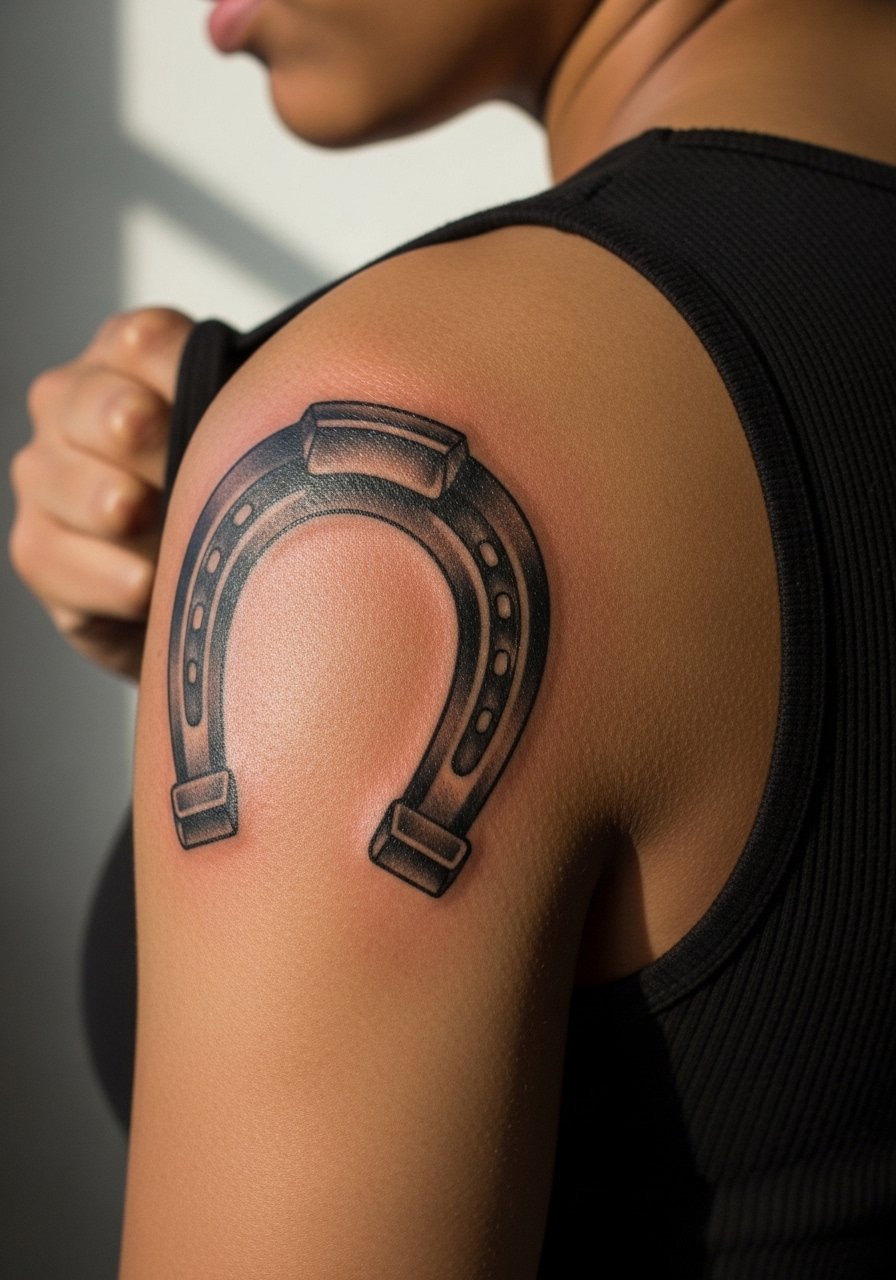
This one ages well because shoulder skin is stable and it can take saturation. I advise a single-session block for saturation so the artist can pack color consistently instead of stretching multiple short visits. The feel is brisk with occasional heavier pressure, but most people tolerate it. A tank top you can pull aside for the appointment is the best session wear.
Studio Day Picks
The collarbone, wrist, and ankle pieces above all need different prep and minor gear to keep the session smooth.
-
Stencil transfer paper kit. Lets you test placement on the skin and confirm size before the needle goes down, which matters for wrists and collarbones.
-
Topical numbing cream. Applied per instructions about 45 minutes before helps take the edge off for sensitive spots like behind the ear or the ankle.
-
Thin protective film roll. Useful for small high-friction spots so socks and sleeves do not rub away scabs during the first few days.
-
Fragrance-free gentle body wash. Cleans the area without stripping ink, especially important for fine line wrist and finger pieces that need gentle care.
-
Aquaphor healing ointment. A thin layer during the first 48 hours helps keep delicate linework moist while the skin forms a protective layer.
7. Script-Ribbon Horseshoe on the Sternum
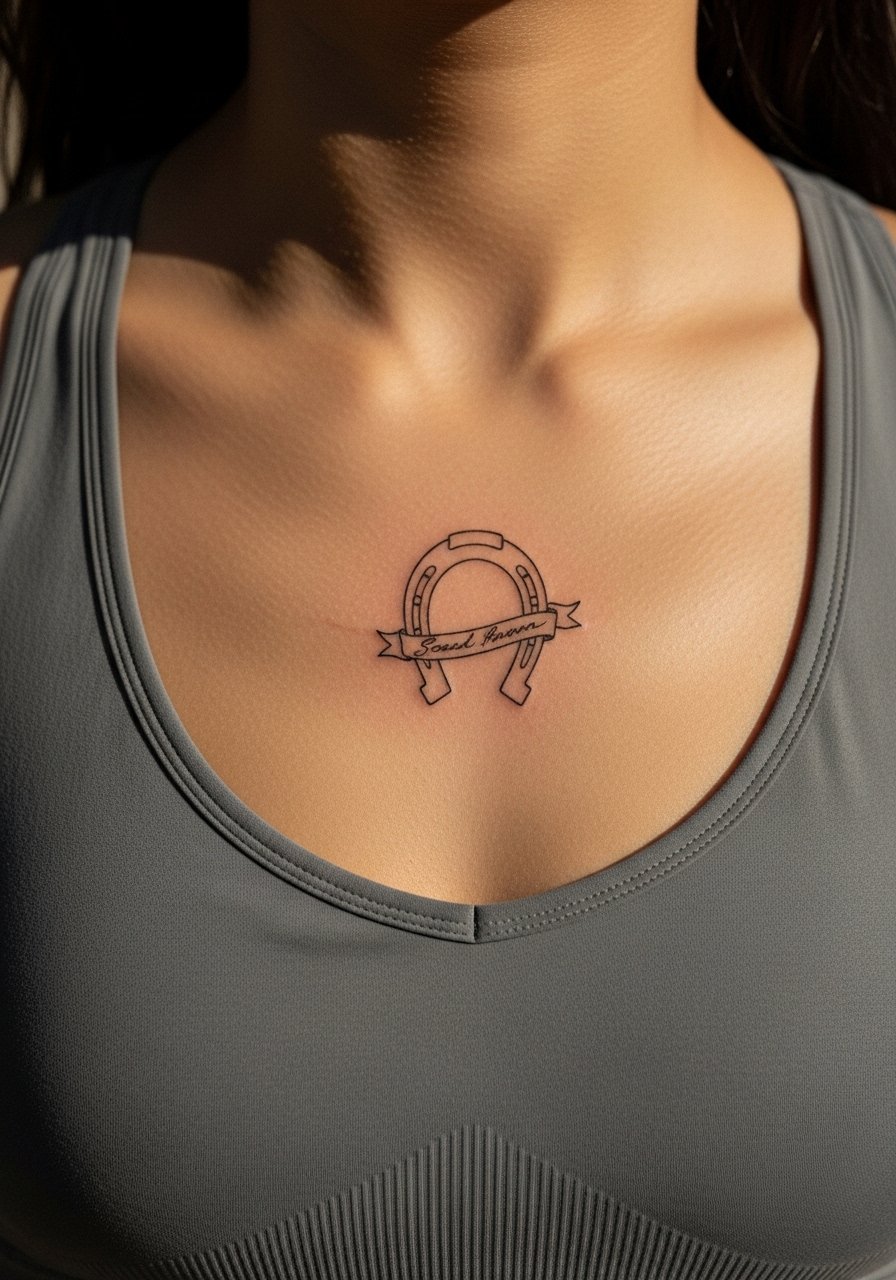
Sternum sessions feel intense because the bone sits close to the skin. If you want a name in the ribbon, provide exact lettering in the consult and ask for slightly larger lettering than your reference so it survives fading. This area is intimate and needs a specialized hand that has healed sternum examples. For the appointment, plan a zip-front top or a button-down so you do not pull clothing over your head after the session.
8. Compass-Linked Horseshoe on the Outer Calf
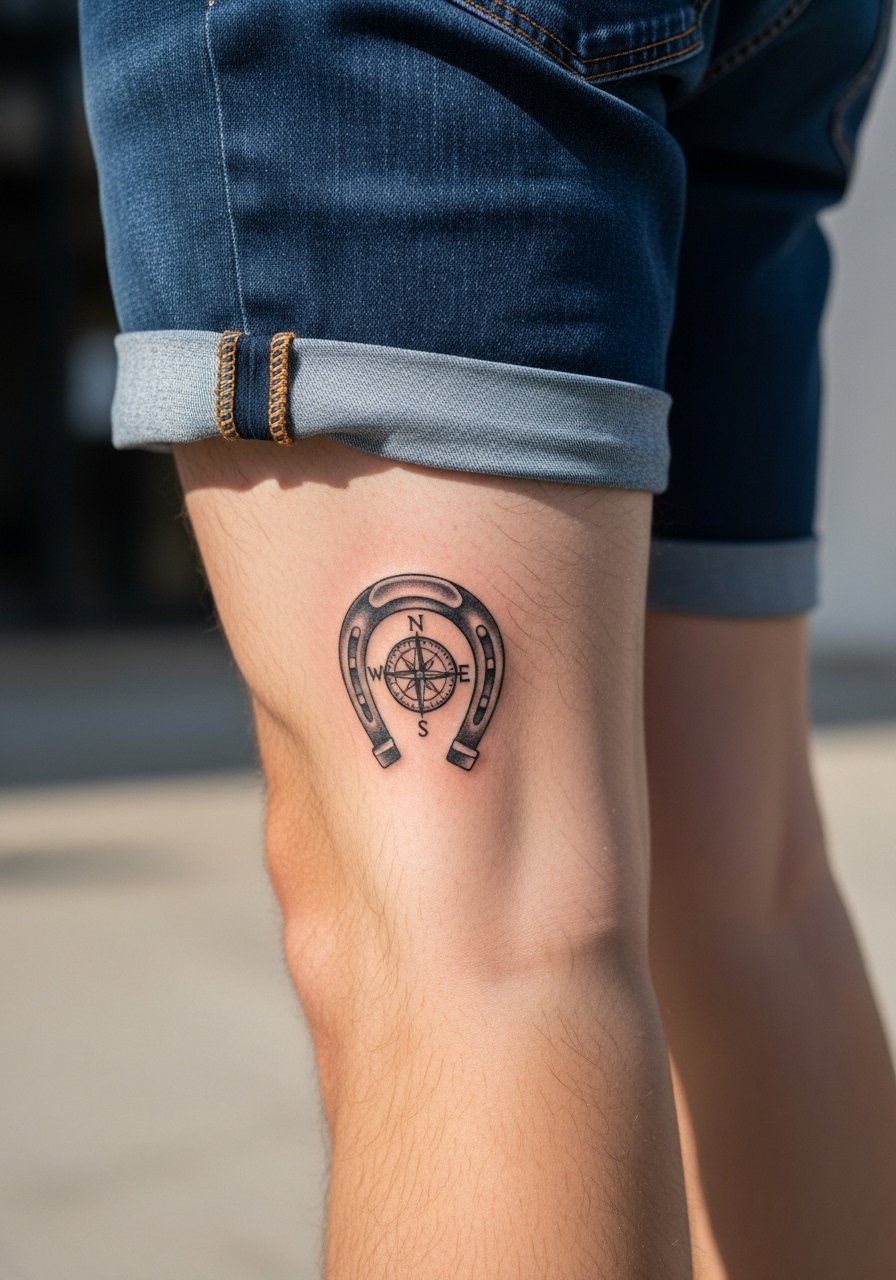
Calf skin tolerates shading nicely and carries saturation over years. I recommend discussing whether you want whip shading or stipple shading inside the horseshoe to control texture as it fades. Session wear is loose shorts you can roll up. For outfits, mid-calf boots or a cropped denim skirt looks sharp when the piece is exposed.
9. Tiny Horseshoe as a Ring on the Finger Band
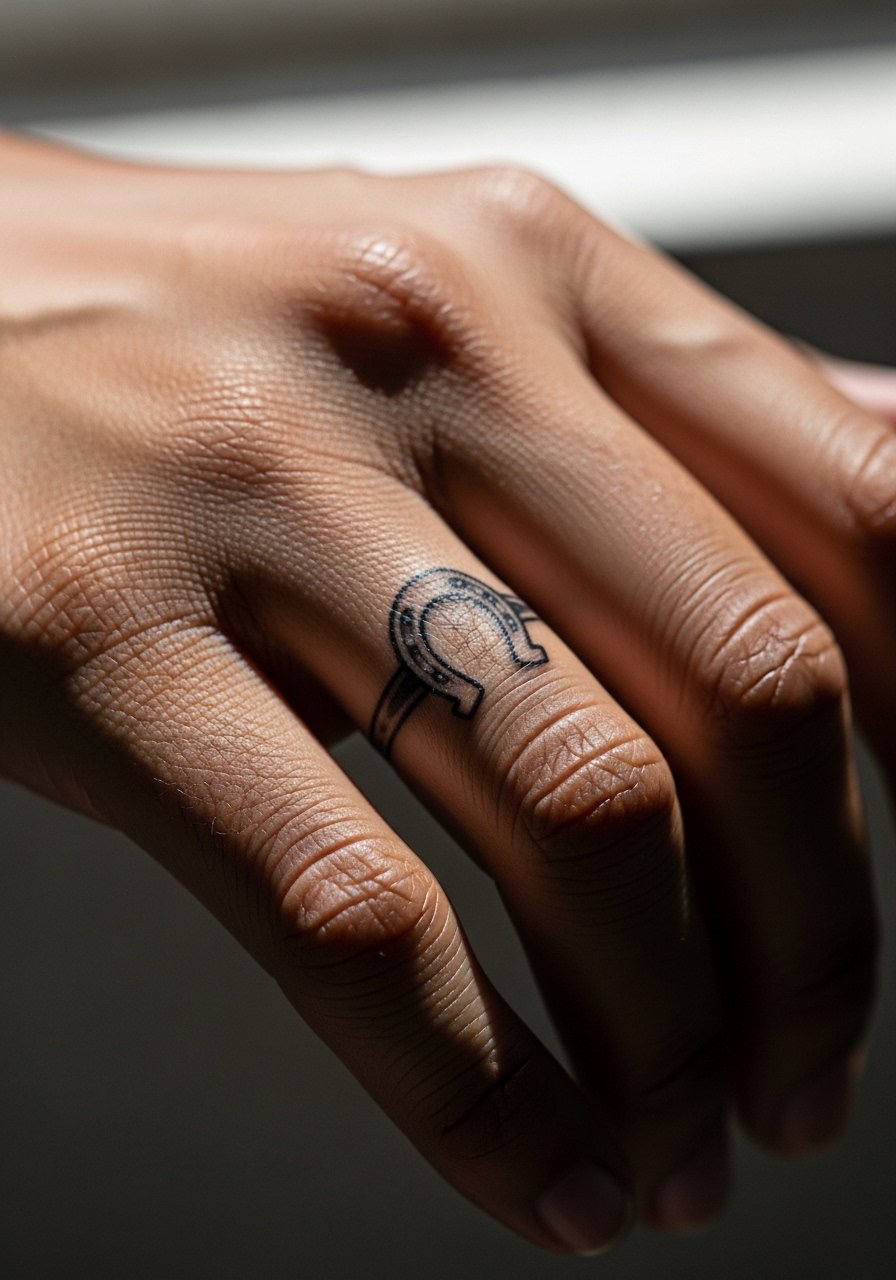
This band-style horseshoe is clever and discreet. Ask for a continuous thin line with slightly more spacing between strokes to avoid future blurring. Expect faster fading because the ring zone gets frequent friction from washing and jewelry. One common mistake is asking for the design too thin. A small increase in line weight now saves a touch-up later.
10. Constellation-Style Horseshoe on the Inner Forearm
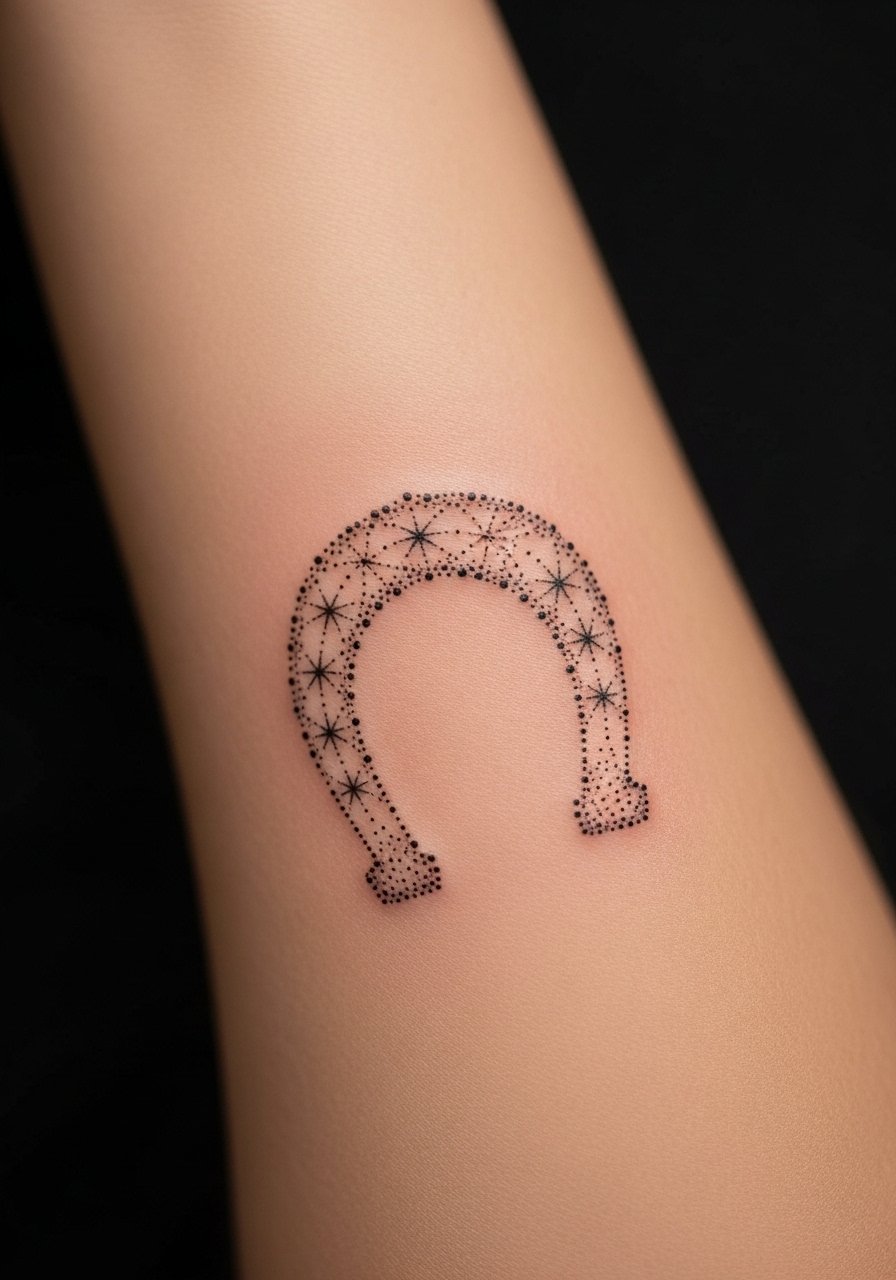
The inner forearm offers a balanced canvas that is friendly to fine detail. Tell your artist you want the constellation effect to rely on dot work and micro-line spacing so the stars do not merge over time. Expect low pain and straightforward healing. Pair this piece with rolled sleeves or a linen button-down that frames the forearm without covering the tattoo.
11. Horseshoe with Dot Work Mandala on the Outer Upper Arm
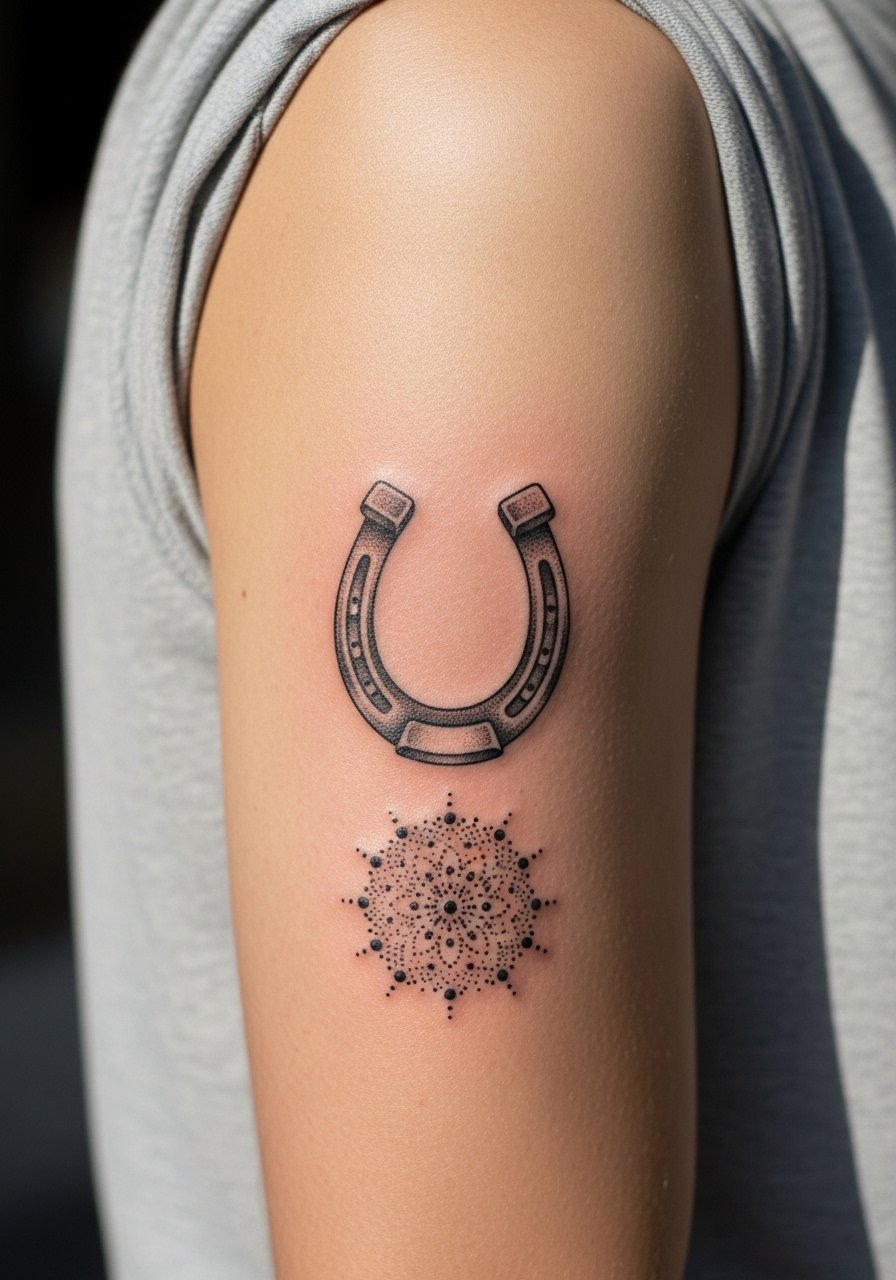
Outer upper arm skin ages kindly and the extra muscle gives the piece room to breathe. Ask for stipple shading rather than dense solid shading inside the mandala to retain texture at two to five years healed. The session is moderate in length and tolerable for most. For show, a short-sleeve tee that hits mid-bicep shows the artwork without compression.
12. Hip Horseshoe with Petite Florals
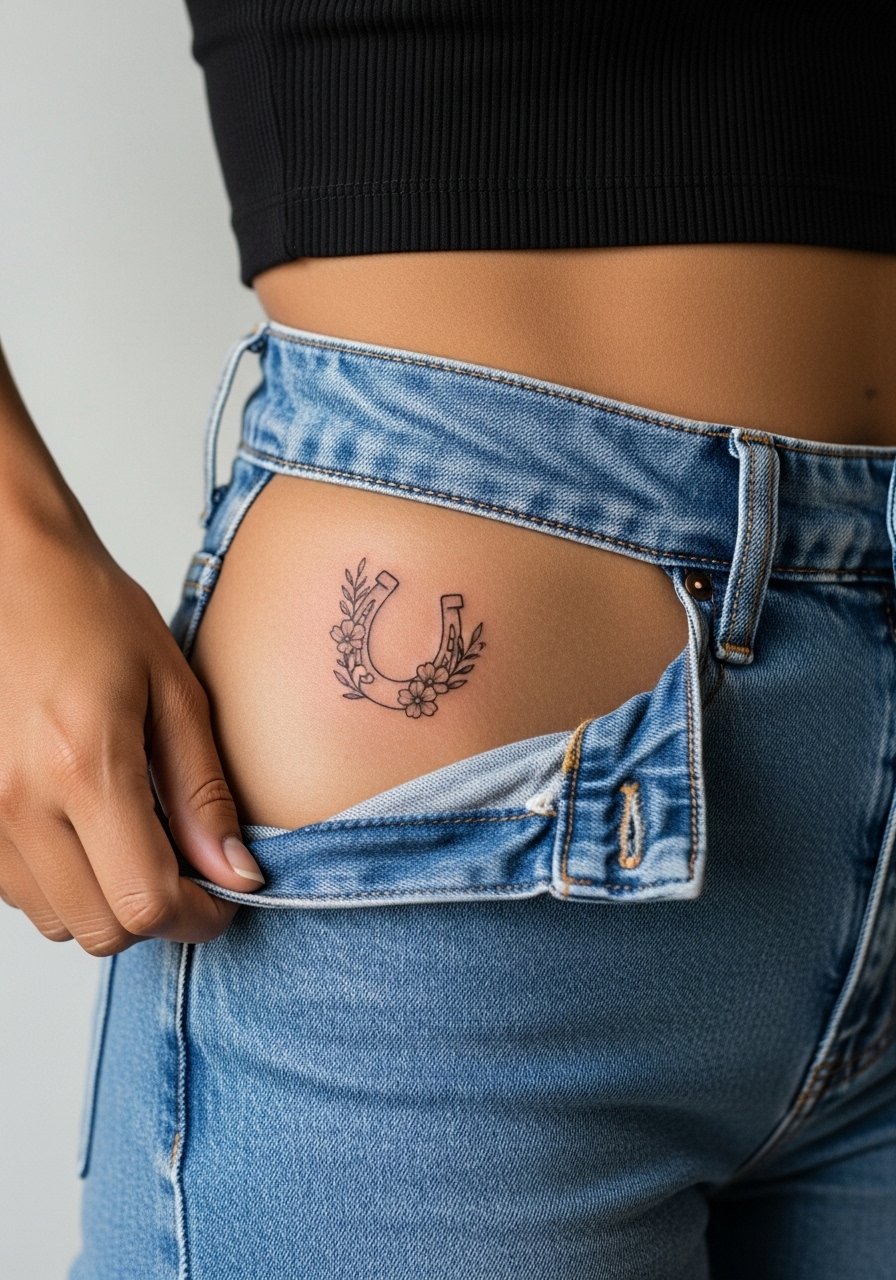
Hip placements are flattering and private for many. The skin there can stretch with weight changes, so ask the artist to avoid placing heavy detail across a common stretch line. For the session wear high-cut shorts you can shift down without discomfort. For nights out, a high-waisted skirt pairs well with the piece when you want to flash it.
13. Horseshoe Necklace on the Back of the Neck
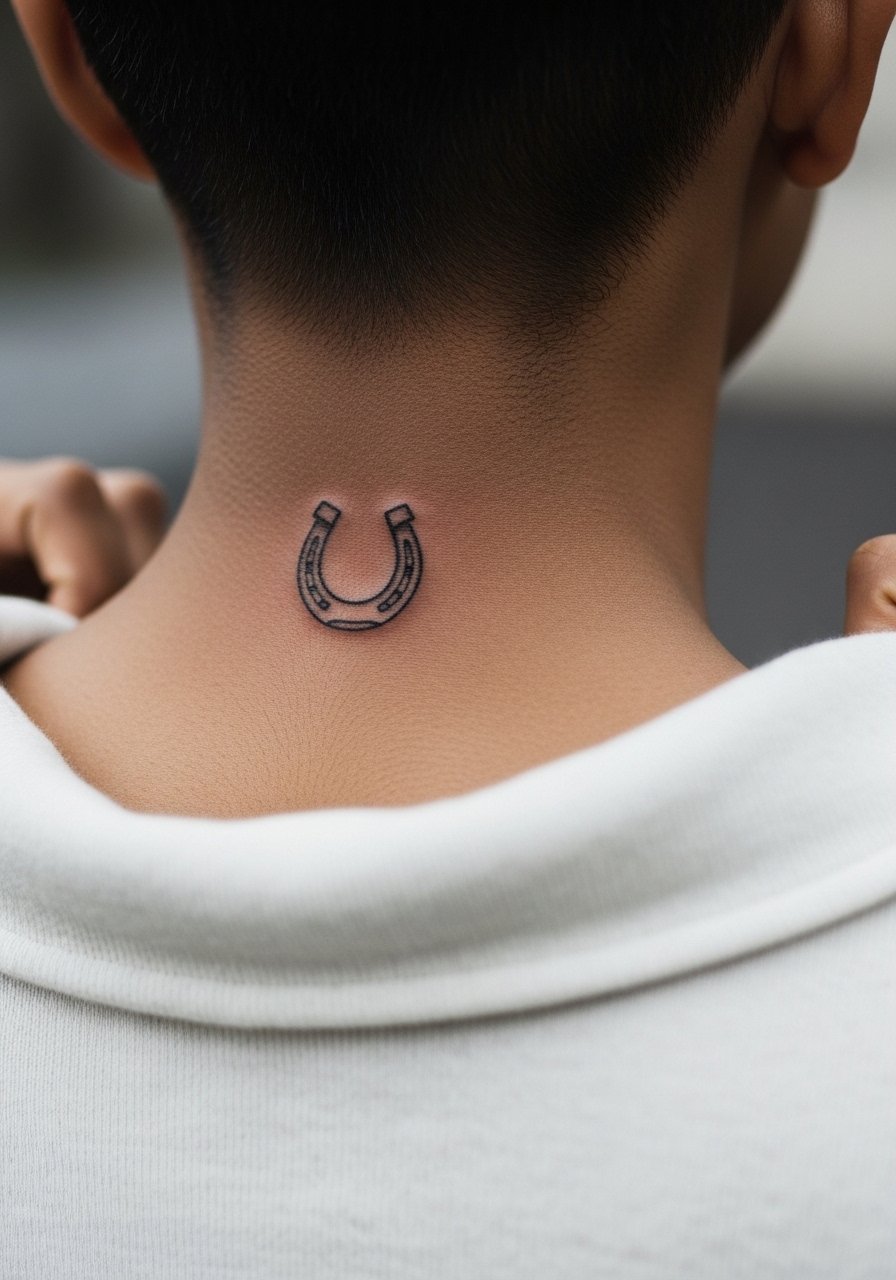
This spot is great for a tiny symbolic horseshoe that peeks out under hair. Ask the artist to map the curve to the natural fall of the neckline so hair and clothing frame it rather than fight it. Session sensation is brief and sharp. A wide-neck shirt for the appointment avoids pulling anything over your head.
14. Inner Thigh Horseshoe with Lace Accents
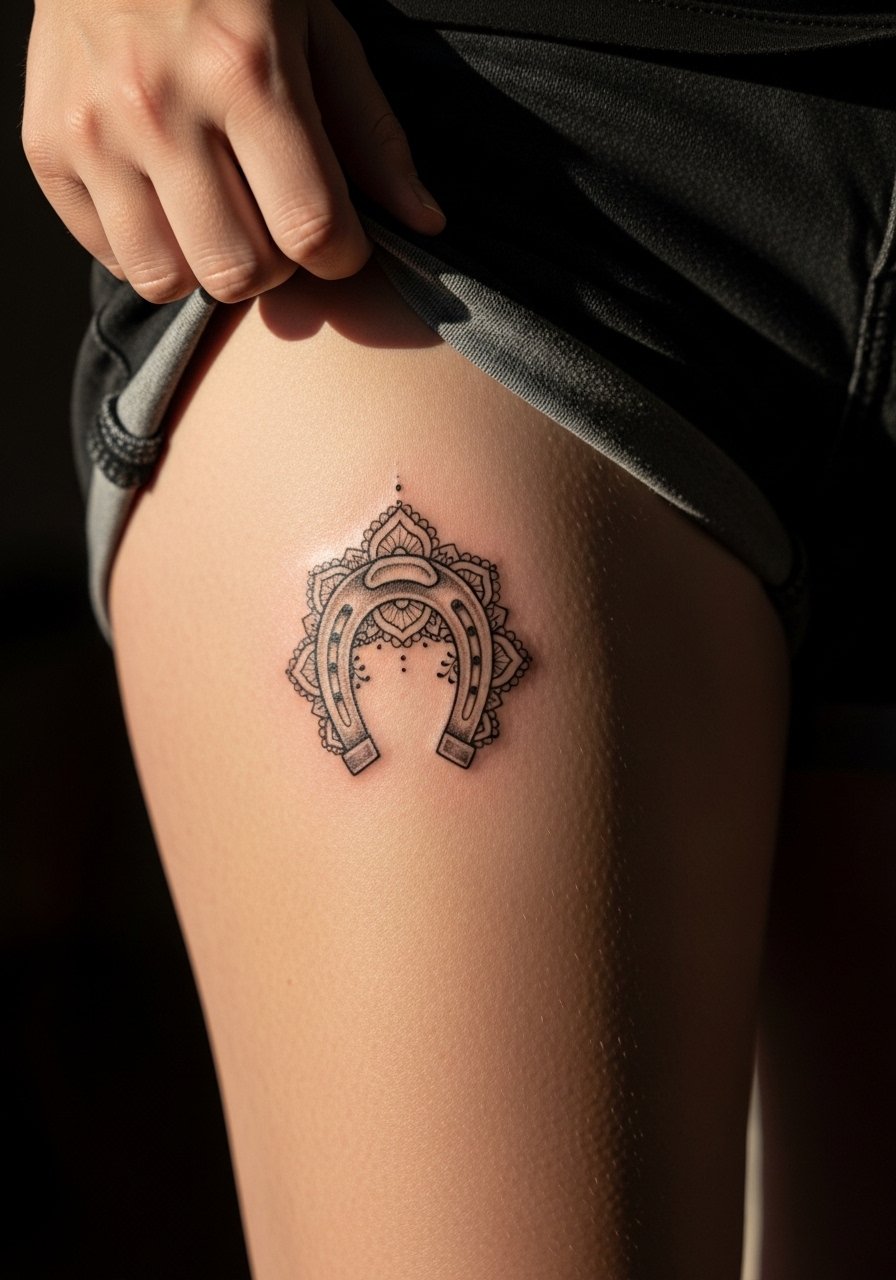
Inner thigh heals differently because of friction and moisture. When you consult, request spaced linework and minimal solid fills so the piece breathes while healing. The session can be tender depending on sensitivity and leg position. For the appointment, wear loose shorts you can adjust easily. This placement is intimate so consider comfort and who you want to see it.
15. Traditional Horseshoe Low on the Lower Back
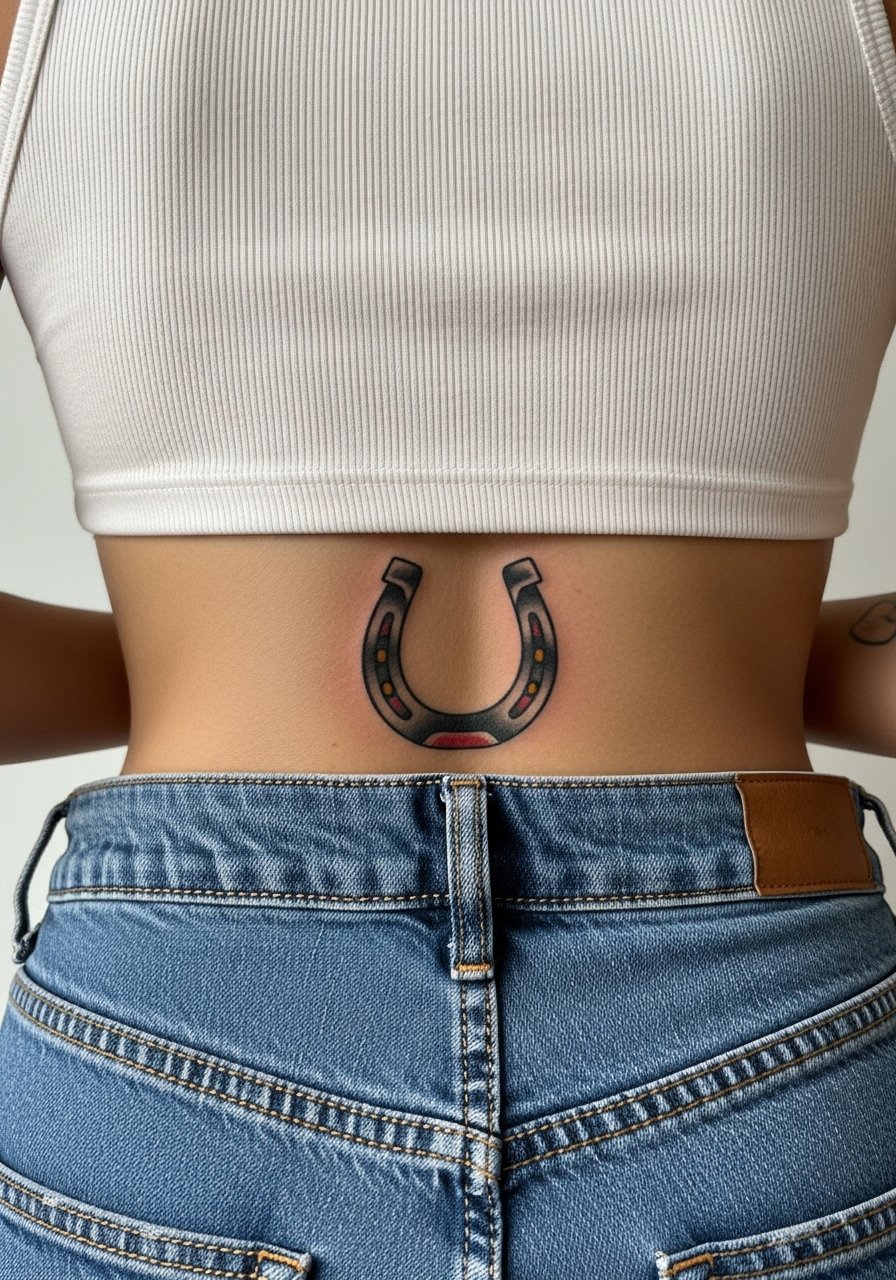
Lower back skin accepts saturation well but friction from waistbands can dull edges if the placement sits directly under tight belts. Ask for the top of the horseshoe to sit above your natural waistline so it avoids direct pressure. For displaying the tattoo, low-back dresses and crop tops work nicely and a low-back dress highlights the area without rubbing.
16. Fine Line Horseshoe on the Ribcage with Small Blossoms
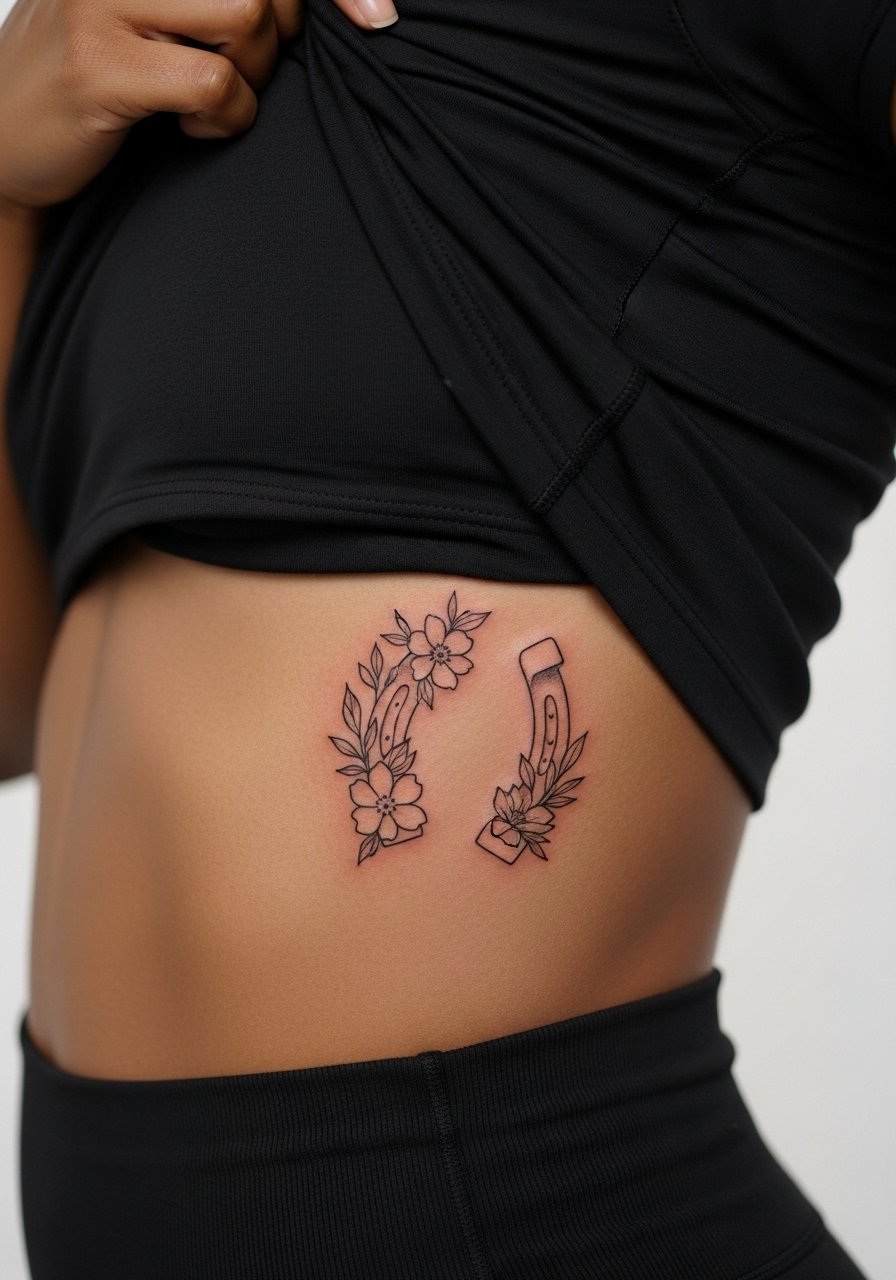
Fine line on ribs is divisive in the community. One camp argues that rib skin stretches and the lines blur within two years. The other camp says that with correct needle depth and spacing, fine line can settle well on the ribs. I recommend discussing both views with your artist and asking to see healed rib examples from their portfolio. Expect the session to be more painful than arm work and plan for a longer single session window.
17. Minimal Horseshoe on the Top of the Foot
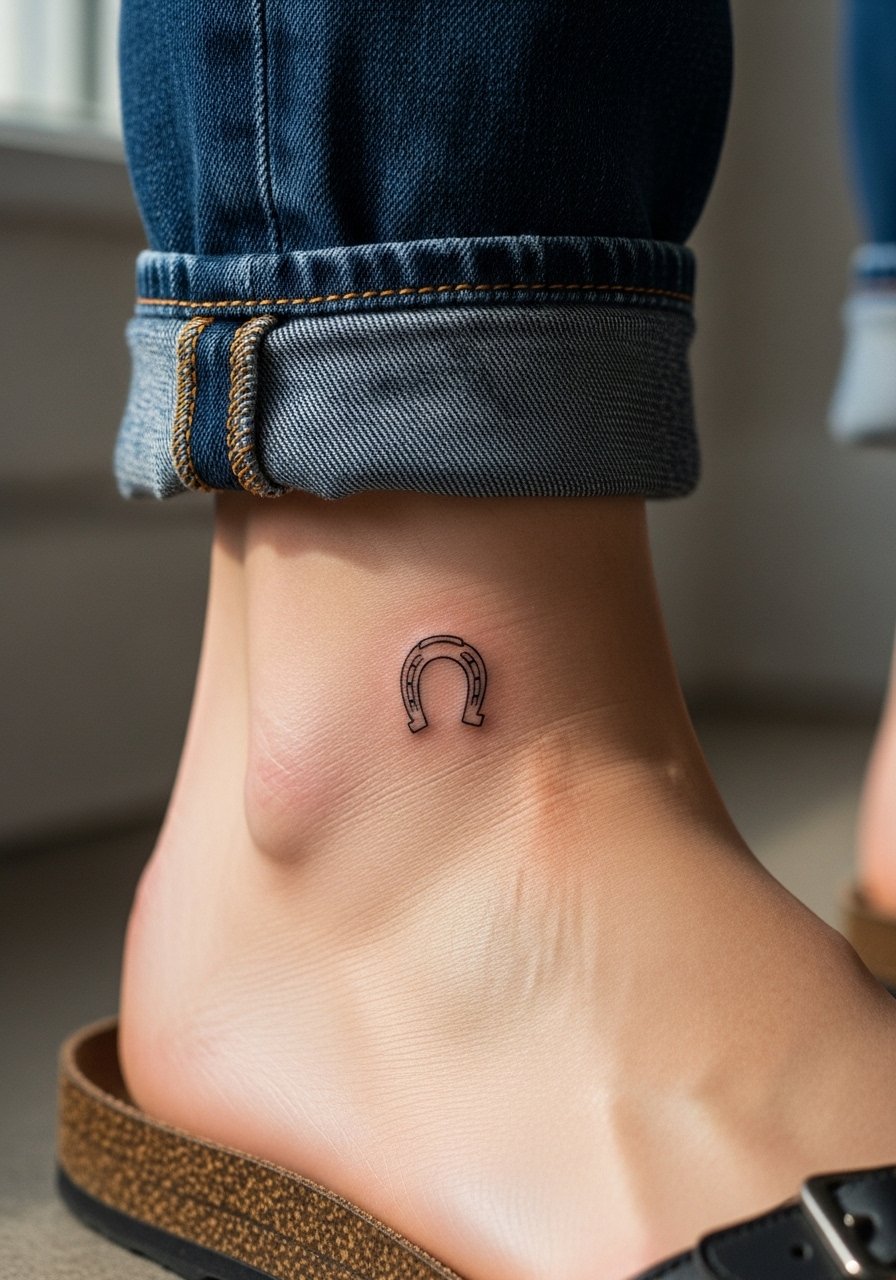
Top-of-foot pieces are visible but subject to rapid fading from shoes. Request slightly thicker linework and plan on avoiding closed-toe shoes for the first week. The session tingles and can be sharp because of thin skin. For summer wear, sandals or slides and cropped pants show the tattoo off and a pair of simple sandals keeps the area unobstructed.
Frequently Asked Questions
Q: Will a tiny horseshoe on my finger completely blur after a year?
A: It depends on placement and daily habits. Fingers see a lot of handwashing and friction, so expect faster fading than forearm work. Choosing slightly heavier line weight and accepting a likely touch-up at year one or two makes the outcome realistic.
Q: Which horseshoe styles hold up best on ribs and why?
A: Simpler, bolder horseshoes with fewer tiny internal details tend to hold up better on ribs because the skin there moves with breathing. Fine line can look beautiful but may need a touch-up if the artist uses ultra-thin lines. Ask to see healed rib examples before booking.
Q: How should I dress to a session for a sternum or collarbone horseshoe?
A: Wear something that either zips or buttons so you avoid pulling garments over your head. For collarbone work a wide-neck shirt works. For sternum pick a fitted sports bra or zip-front top to give the artist access while keeping you comfortable. A zip-up hoodie is a simple option to bring along.
Q: Are hand and neck horseshoes still risky for careers?
A: Opinions split. Some industries remain conservative and may view hand or neck tattoos negatively. Other workplaces are more relaxed. Consider your career trajectory and how visible you want the piece to be. If uncertain, place a horseshoe where you can easily cover it.
Q: How often should I plan for touch-ups on fine line horseshoes?
A: Expect a touch-up timeline around year two to three for delicate placements like the wrist or finger, and possibly longer for shoulder or calf pieces. How you care for the tattoo and sun exposure patterns matter more than the style alone.
Q: Can I get a horseshoe combined with other symbols without losing clarity?
A: Yes, but keep spacing and scale in mind. Combining a horseshoe with tiny flowers, moons, or stars works if the artist balances negative space. Ask for the combined reference to be scaled up slightly during the stencil stage so details do not compact as the piece heals.
Q: How do I find artists who specialize in small horseshoe work without naming anyone?
A: Use focused discovery paths like local shop directories, convention guest lists, niche hashtag searches, and community forums to find artists who show healed small-scale portfolios. Look for multiple healed photos and ask the artist about their touch-up policy during consultation.