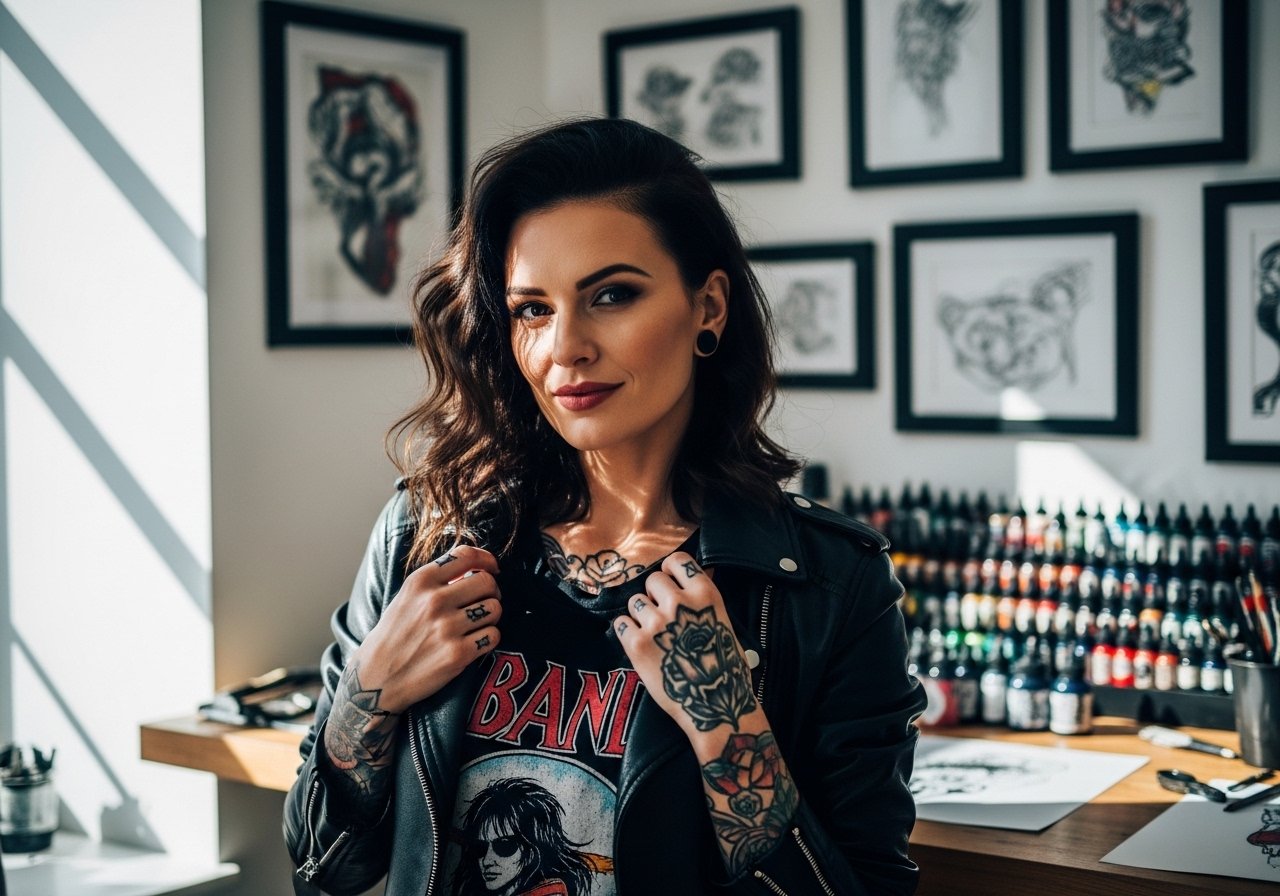
The skin you pick and the line weight you ask for determine how a Japanese mask tattoo looks five years from now, not just the day you walk out of the shop. Fine detail is gorgeous when fresh, and heavy saturation keeps its shape over time. Read these ideas with the aging reality in mind and the first section will help you choose a mask and placement that still reads fierce after a few summers.
1. Hannya Forearm Sleeve, Neo-Traditional Edge
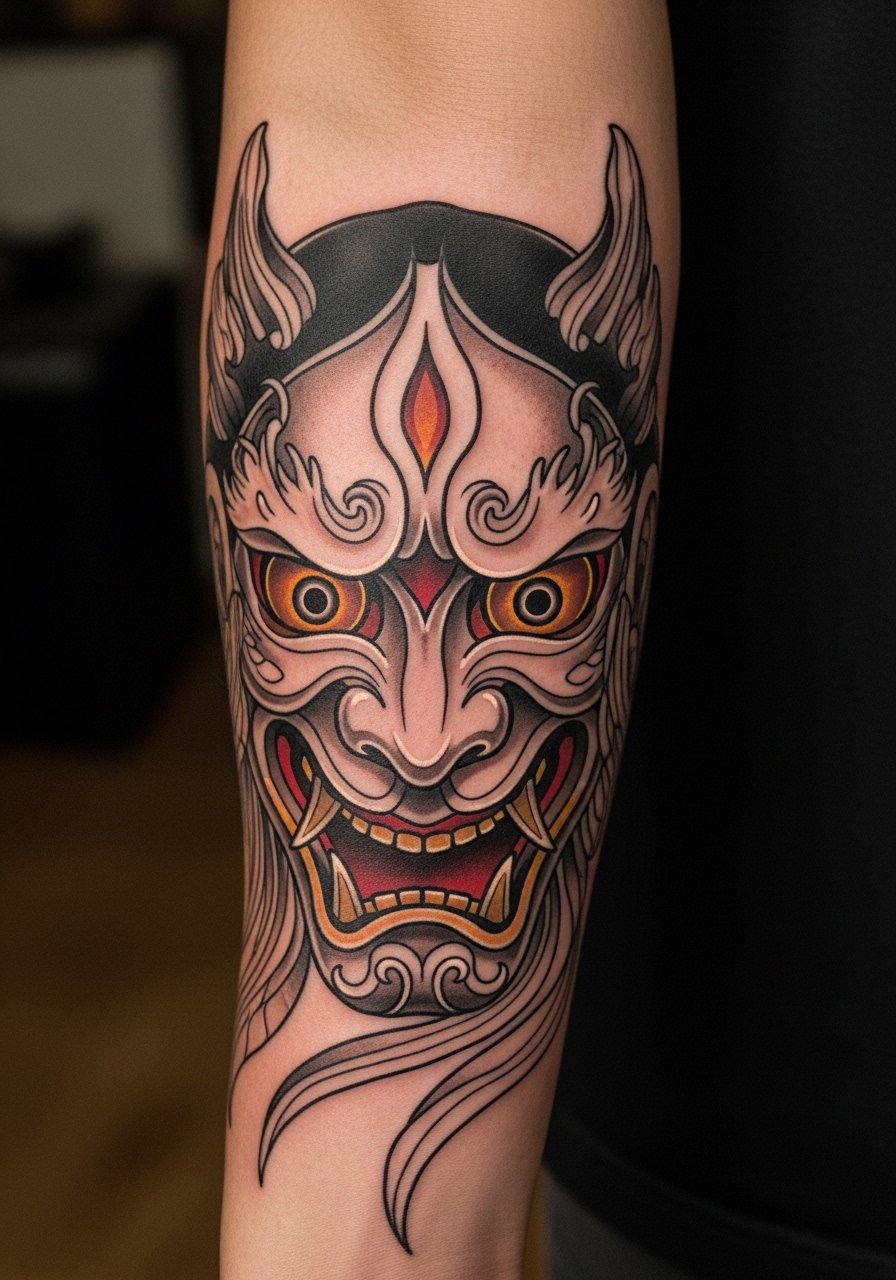
The forearm holds ink well and reads across rooms, which is why a Hannya forearm sleeve is so common. For longevity, tell your artist you want strong linework and saturated black shadows around the eyes and mouth, not micro-detail packed into tiny spaces. A common mistake is asking for ultra-fine teeth and filigree that later becomes visual noise when photographed at arm's length. Pain is moderate and sessions run two to three hours per pass, with a touch-up often at year two for saturation. Artists split on fine line Hannya. One camp warns fine lines on active skin blur in two years. The other says proper depth and spacing keep details crisp. Ask where your artist stands during consultation.
2. Kitsune Fox Mask on the Thigh, Traditional Irezumi Color
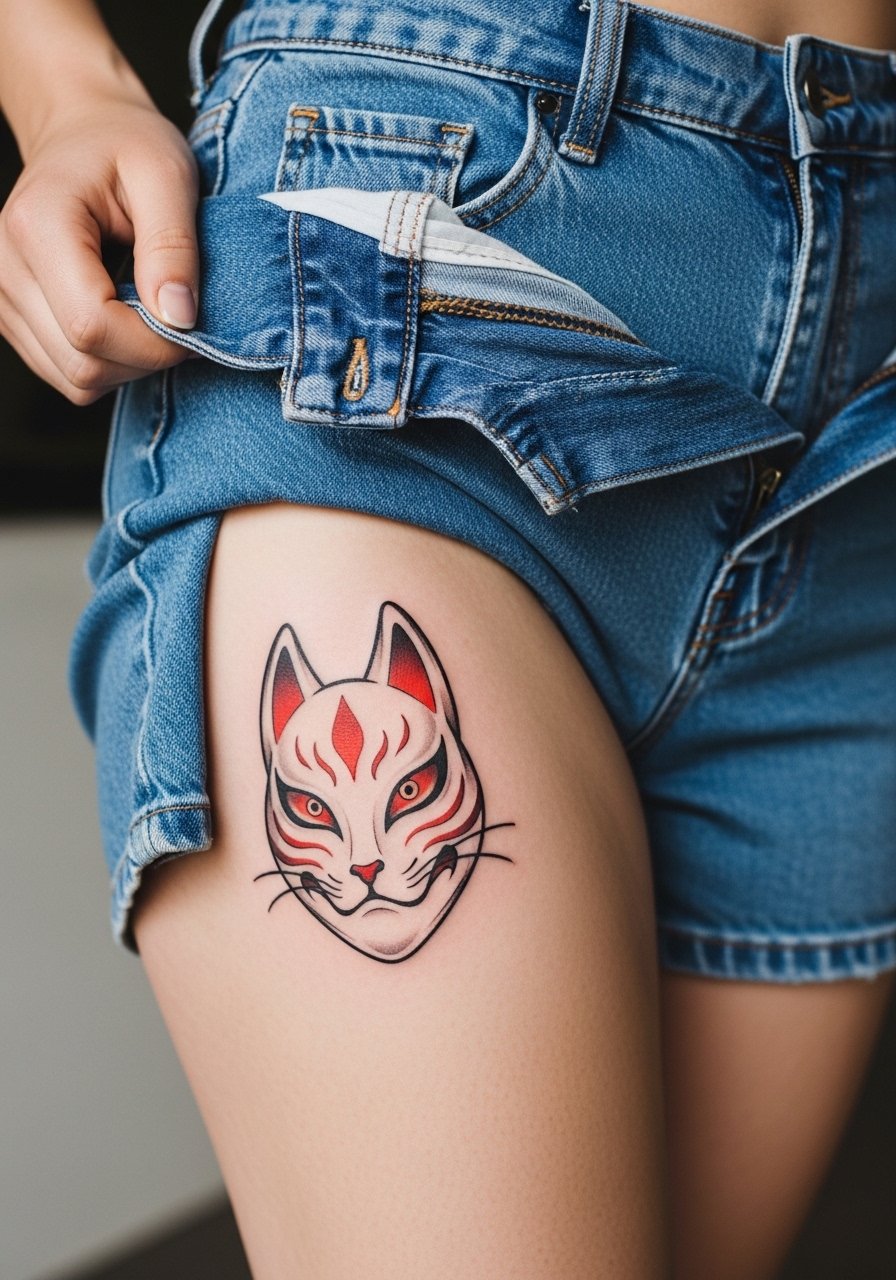
Thigh placements like this are forgiving with size changes and drape, which makes them ideal for colorful Kitsune masks. During the consult, request bold color fields and gold accents with clear black outlines so the warmth of the reds and oranges stays readable. The debate for Kitsune is loud. One side prefers bright color because it pops initially and reads as playful mischief. The other side prefers black-and-gray because it ages more predictably. If you love color, plan for a refresh after a few years and avoid tiny gradients that will blur. Session wear is simple, bring loose joggers you can pull down slightly for access. Pair the result with high waisted skirt black for summer show-offs.
3. Oni Demon Shoulder Cap, Blackwork Impact
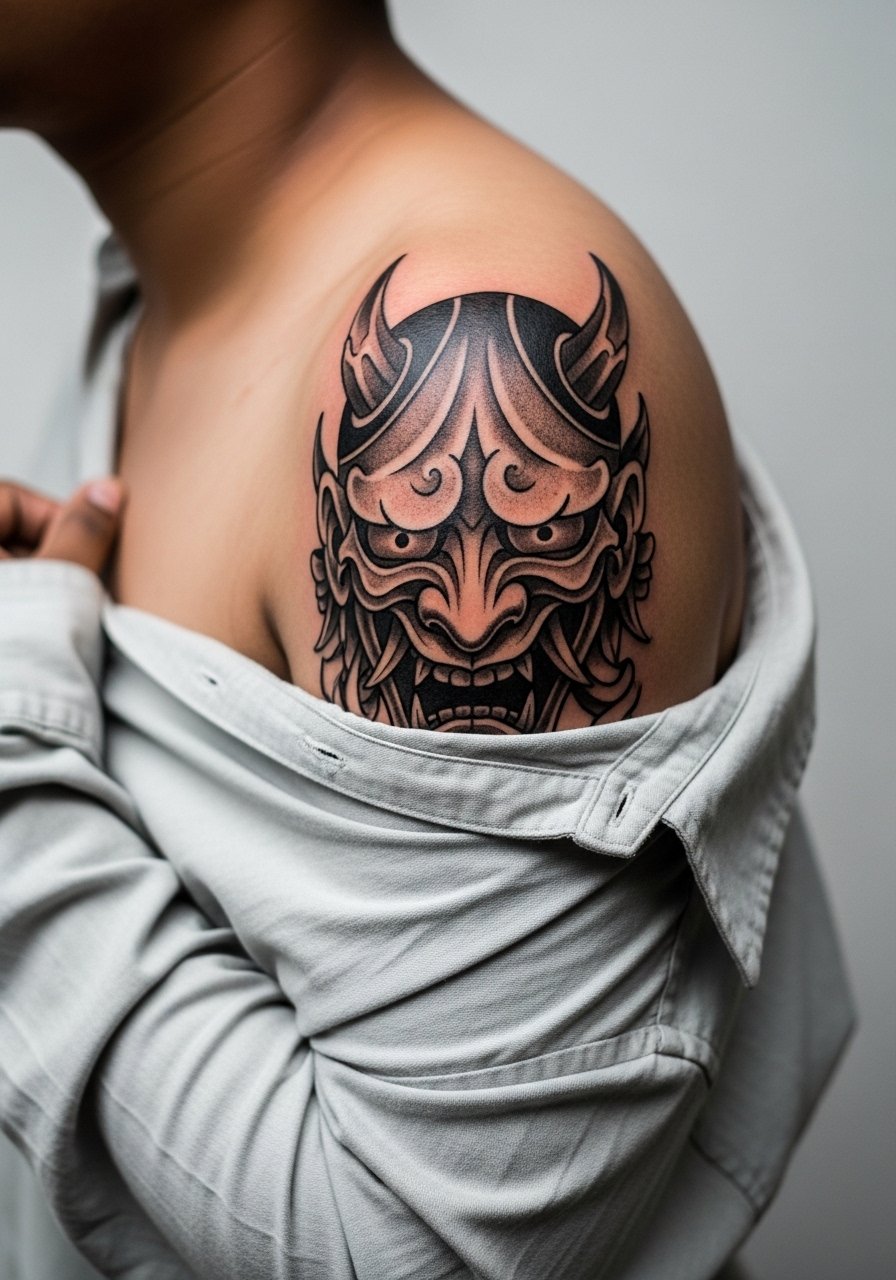
A shoulder cap handles bold blackwork nicely and the rounded surface gives an Oni mask an intimidating silhouette. Tell your artist to prioritize thick outer linework and layered whip shading so the mask keeps contrast under clothing friction. The shoulder is low on blowout risk compared with hands and feet, but expect a single long session of two to four hours. Common mistake is overloading delicate dot shading near the edge, which can fade unevenly. For the session wear, a loose button-down shirt you can pull aside keeps the area accessible and comfortable. This placement pairs with sleeveless muscle tanks for everyday visibility.
4. Noh Ghost Mask on the Ribcage, Fine-Line Mystery
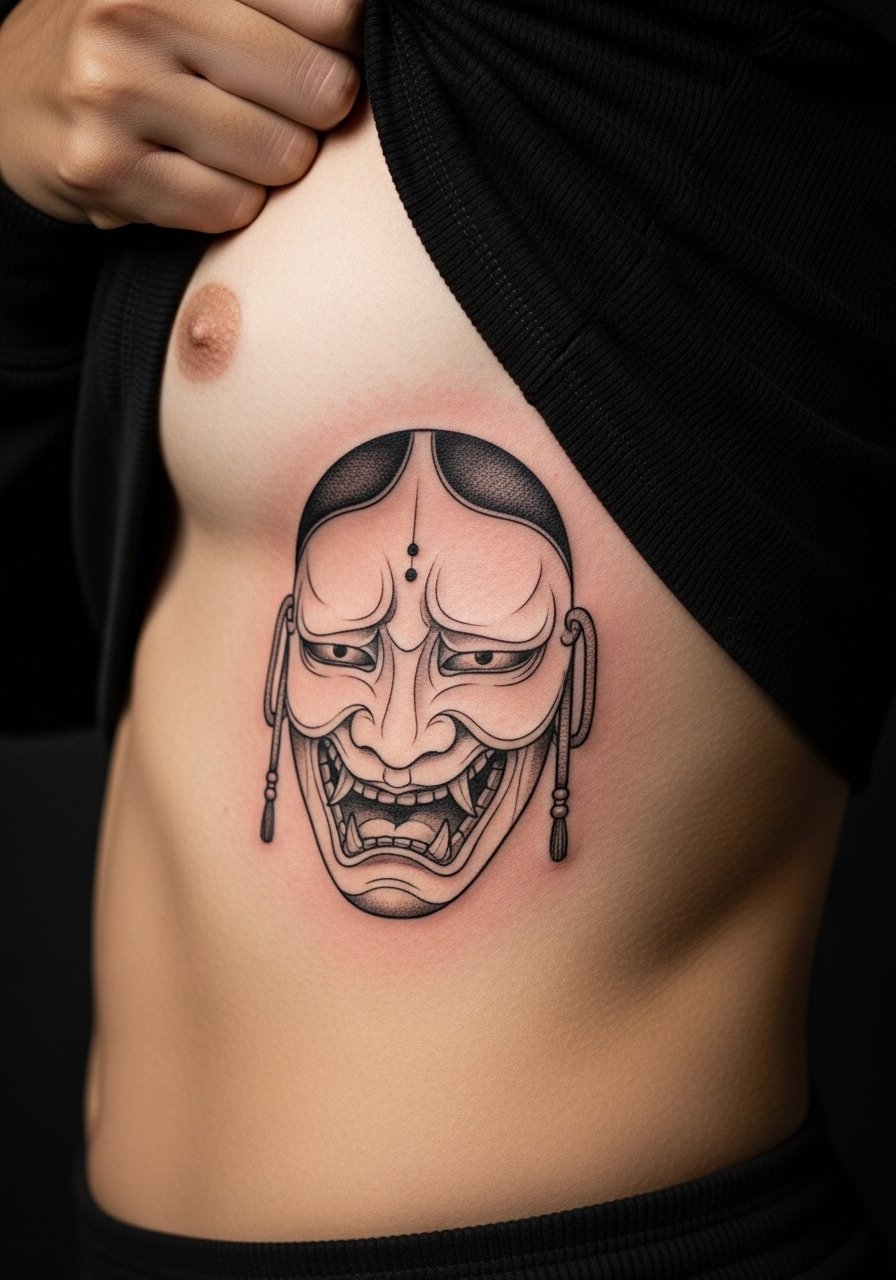
Fair warning, the ribcage is a high-pain placement for many, but it rewards commitment with an intimate, theatrical piece. For a Noh mask, ask for slightly increased spacing between delicate lines to avoid merging as the skin moves. Most watercolor or ultra-fine work on the ribs blurs faster because of stretching during breathing and weight fluctuation. One real mistake is shrinking a big theatrical mask into a small ribbony sketch. Size matters here. Expect one to two sessions around two hours each and plan on a touch-up if you want crisp contouring after year two. Wear a loose tank or sports bra for easy access.
5. Kabuki Dramatic Mask Calf Wrap, Moving Narrative
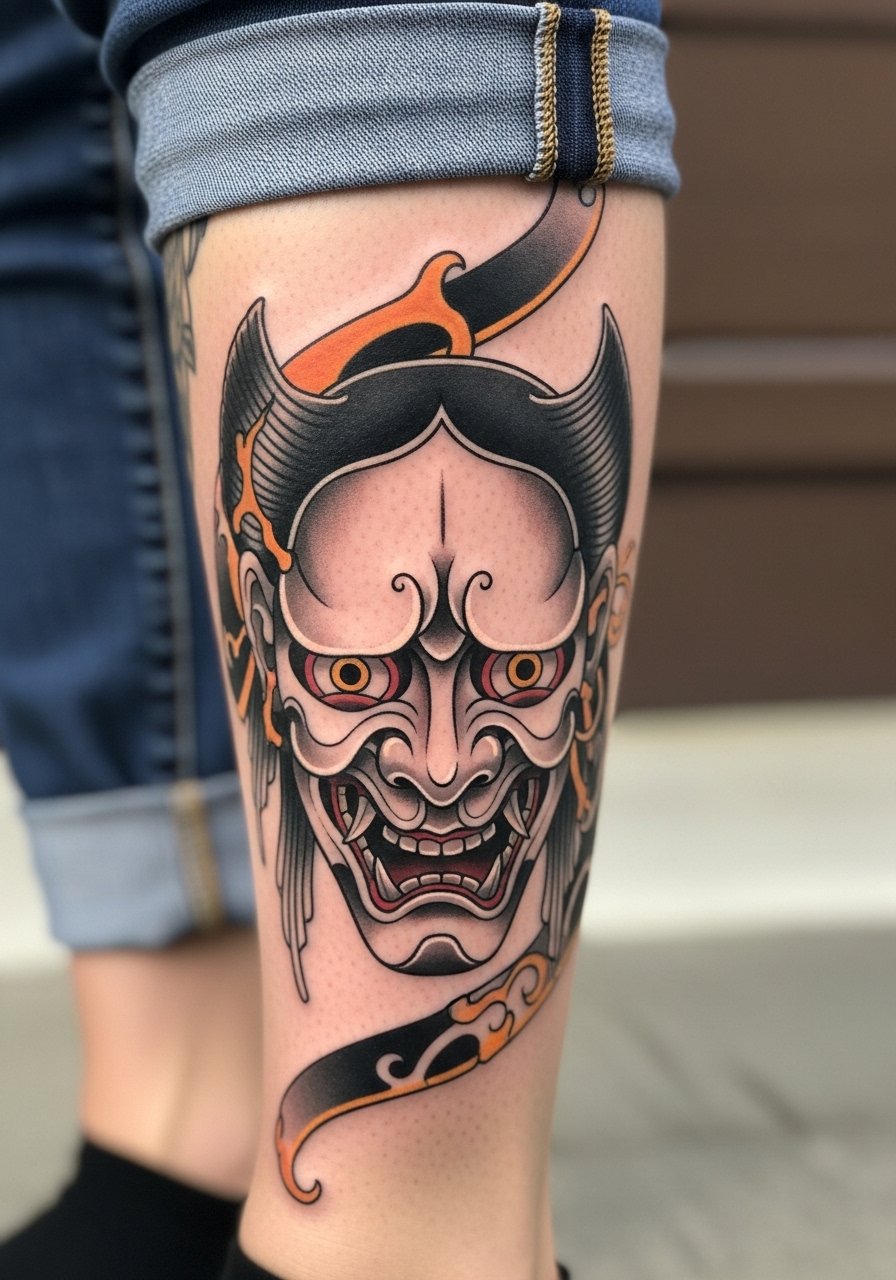
The calf gives long vertical real estate so a Kabuki mask can unfurl with wave motifs and elongated expressions. Ask the artist to design the mask to read both standing and walking, with heavier outlines on the outer edge so the image holds under socks and boots. Calf work hits a sweet spot for pain. It is usually easier than ribs, but expect two sessions if color and wrap are involved. A common aging issue is underestimating friction from boots. For showing it off, cropped pants or cuffed ankle pants make the wrap visible without rubbing it every day.
6. Samurai Menpo with Hachimaki on the Upper Arm, Mortality Motif
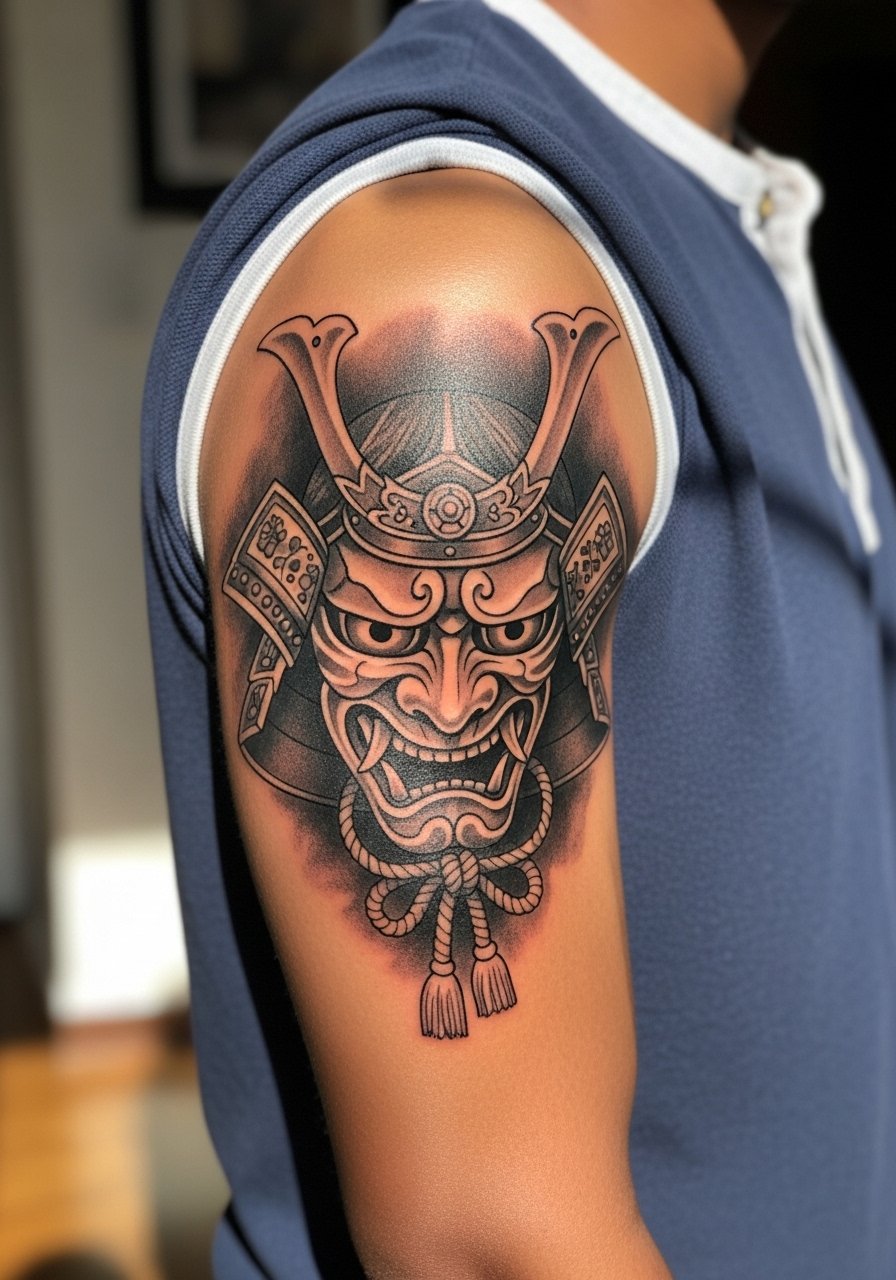
This one carries warrior energy and reads well on the outer upper arm, where broad musculature frames the menpo mask. During consultation, specify floral death motifs around the edges if you want explicit mortality symbolism. The upper arm tolerates heavy black-and-gray saturation, which makes this design age reliably. People sometimes request too many small petals and tiny kanji lines, which blur over time. Expect three shorter sessions for a large, multi-layered piece and plan a touch-up around year three if you like a crisp edge. For the session wear, throw on a short sleeve henley so the artist can work without tugging fabric.
Studio Day Picks
The shoulder and upper-arm pieces above need easy access and different prep than the thigh or ankle work, so pack a few items that smooth the session and the first week.
-
Stencil transfer paper kit. Lets you preview the line placement on skin before the needle hits, especially useful for the forearm Hannya and chest medallion shown above.
-
Topical numbing cream. Applied as directed before a sensitive ribcage or sternum session it can take the edge off without affecting the artist's line depth.
-
Thin protective film roll. Keeps ankle and foot pieces clean during the first days when shoes and socks rub the area.
-
Fragrance-free body wash. Gentle cleansers reduce irritation for fine-line pieces on the forearm and ribcage while the surface heals.
-
Aquaphor healing ointment. A thin layer in the first 48 hours helps lock moisture for dense blackwork and small-line masks without clogging.
7. Okame Hanaakago Ankle Accent, Minimal Ornament
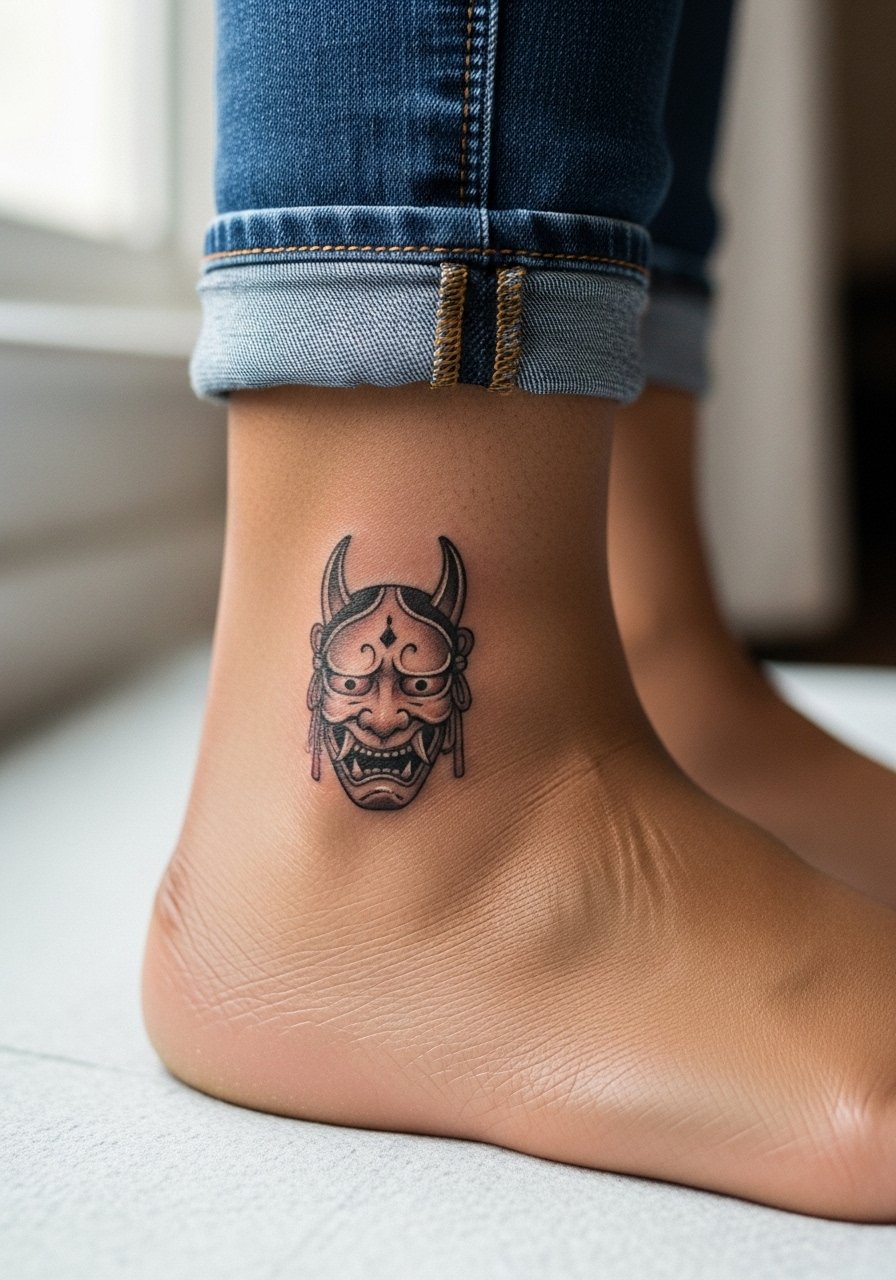
Ankle placements make for charming small mask accents and are a low-commitment spot when you want symbolism without a full panel. Okame works well as a three-inch piece with soft pastel fills and simple contouring. Watch out for tiny stipple or ultra-fine shading around the cheeks. The ankle sees friction from shoes and socks that can fade delicate shading first. For the session, wear pants you can roll up or bootcut jeans men or shorts so the artist can work cleanly. Expect a single short session and a touch-up at year two if you want the soft colors refreshed.
8. Hannya with Waves, Back Panel Irezumi Fusion
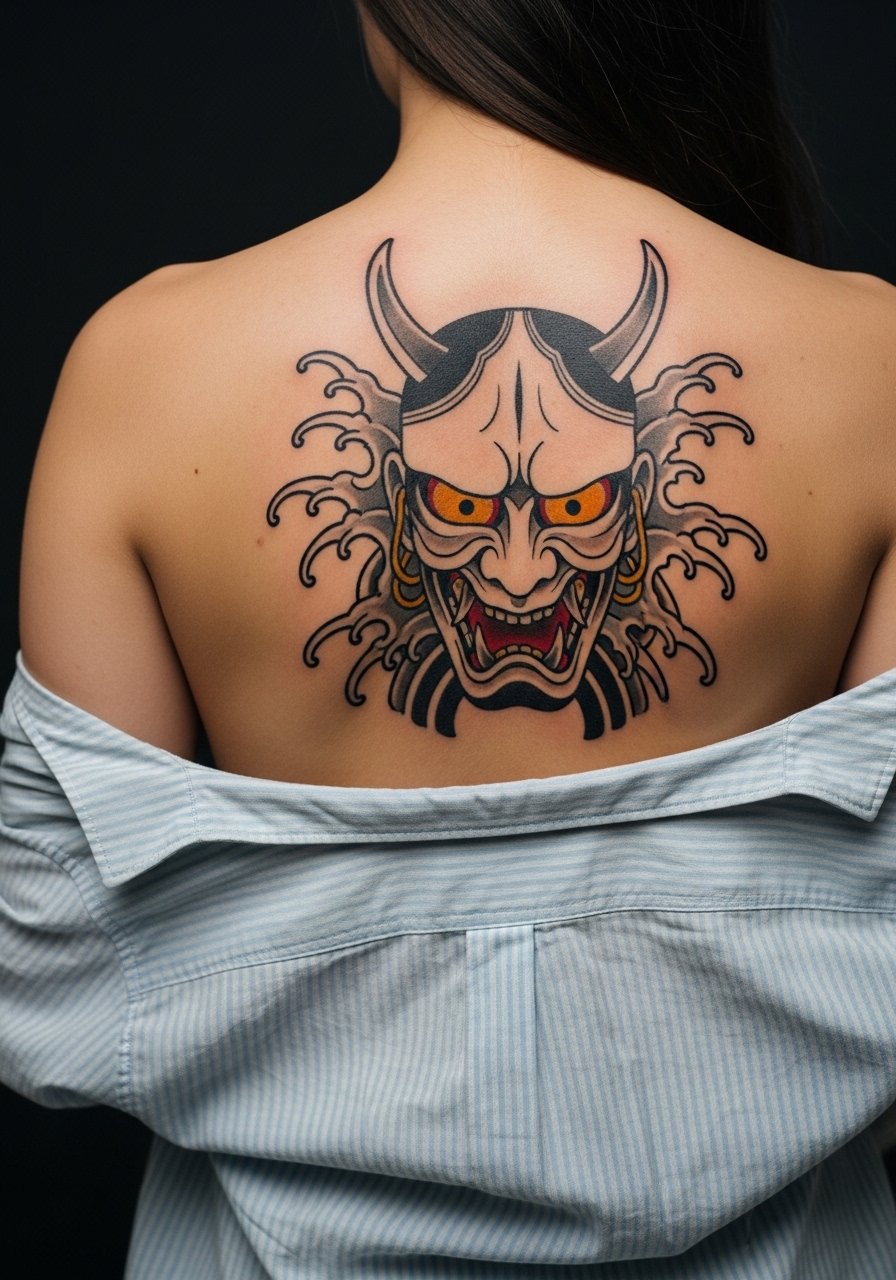
Large back panels let you fuse Hannya imagery with flowing waves for narrative motion. This is heavy-commitment work that rewards time in the chair, and it ages well when the artist prioritizes thick outlines and saturated midtones. Expect four or more sessions and a multi-year touch-up plan. A common mistake is trying to cram fine filigree into an area that benefits from big shapes. On the Hannya fine-line debate this placement favors the traditionalists who insist on bold lines because the back moves differently than the forearm. During consultation, ask how the value planes will read from across a room. For session comfort wear a loose button-down you can remove gently.
9. Full Hannya Neo-Trad Chest Panel, Dramatic Contour
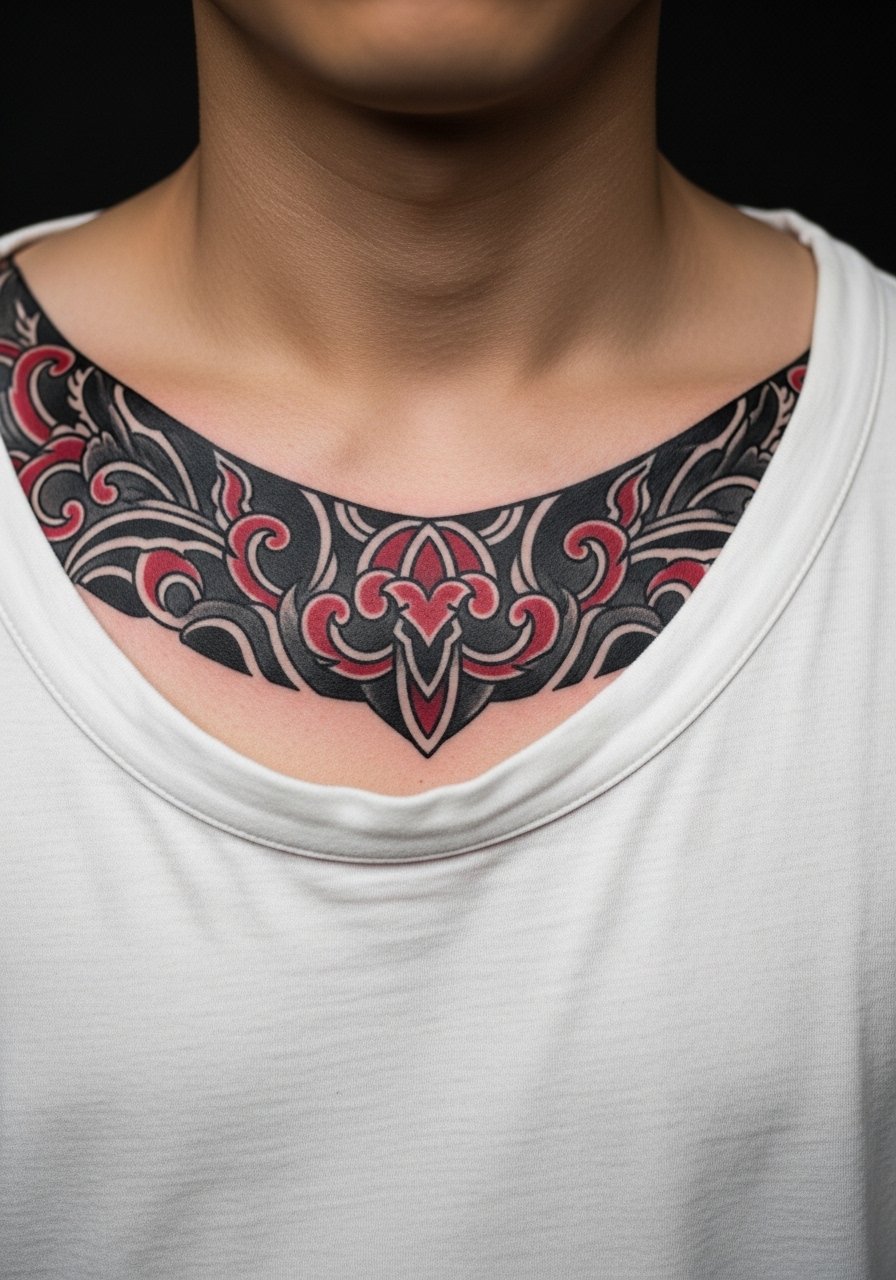
Chest pieces read as declarations, and a full Hannya chest panel delivers that drama. The sternum and upper chest handle saturated color well, but the area is sensitive. Expect two to three sessions with careful layering for color saturation. A pitfall is compressing too much detail into the center near the sternum where skin moves and breathes. If you want to show it off, wide-neck shirts or open-back midi dresses highlight the upper chest without overexposing the rest. Ask about spacing near the collarbone so the piece reads balanced while standing and sitting.
10. Kitsune Half-Sleeve on the Forearm, Watercolor Meets Irezumi
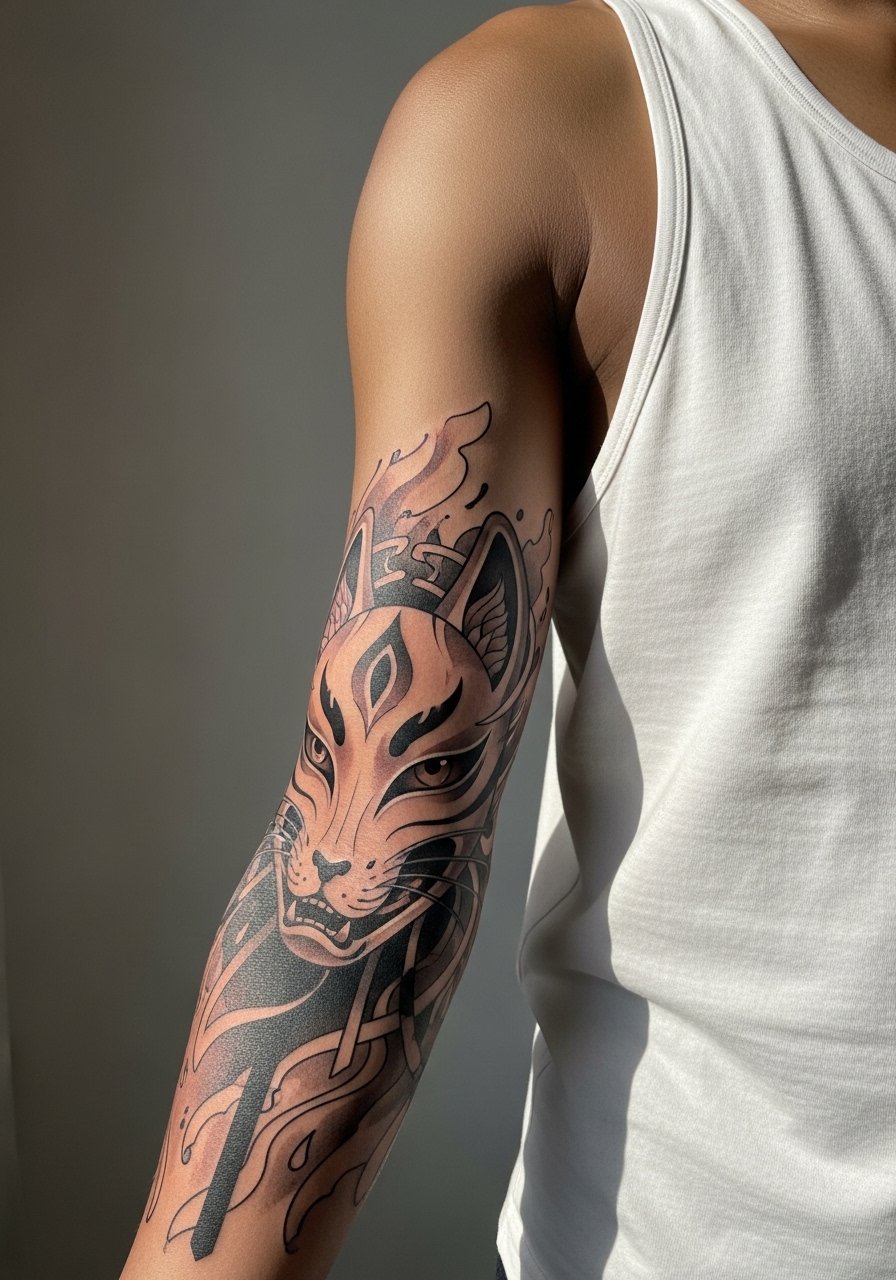
A Kitsune half-sleeve that blends watercolor washes into traditional black outlines gives a modern twist while preserving readability. If you prefer color, insist on blocky fills and clear black separators so the pigments age in layers instead of muddying. The color-versus-black-gray controversy matters here. Color lovers point to instant pop and playful character. Purists point out that black-and-gray often outlives bright palettes. Expect two sessions and plan touch-ups depending on how often you sun exposure the arm. For showing it off, roll sleeves or pick a loose fit tank top so the flow reads from wrist to elbow.
11. Samurai Menpo with Floral Mortality on the Arm, Concept Piece
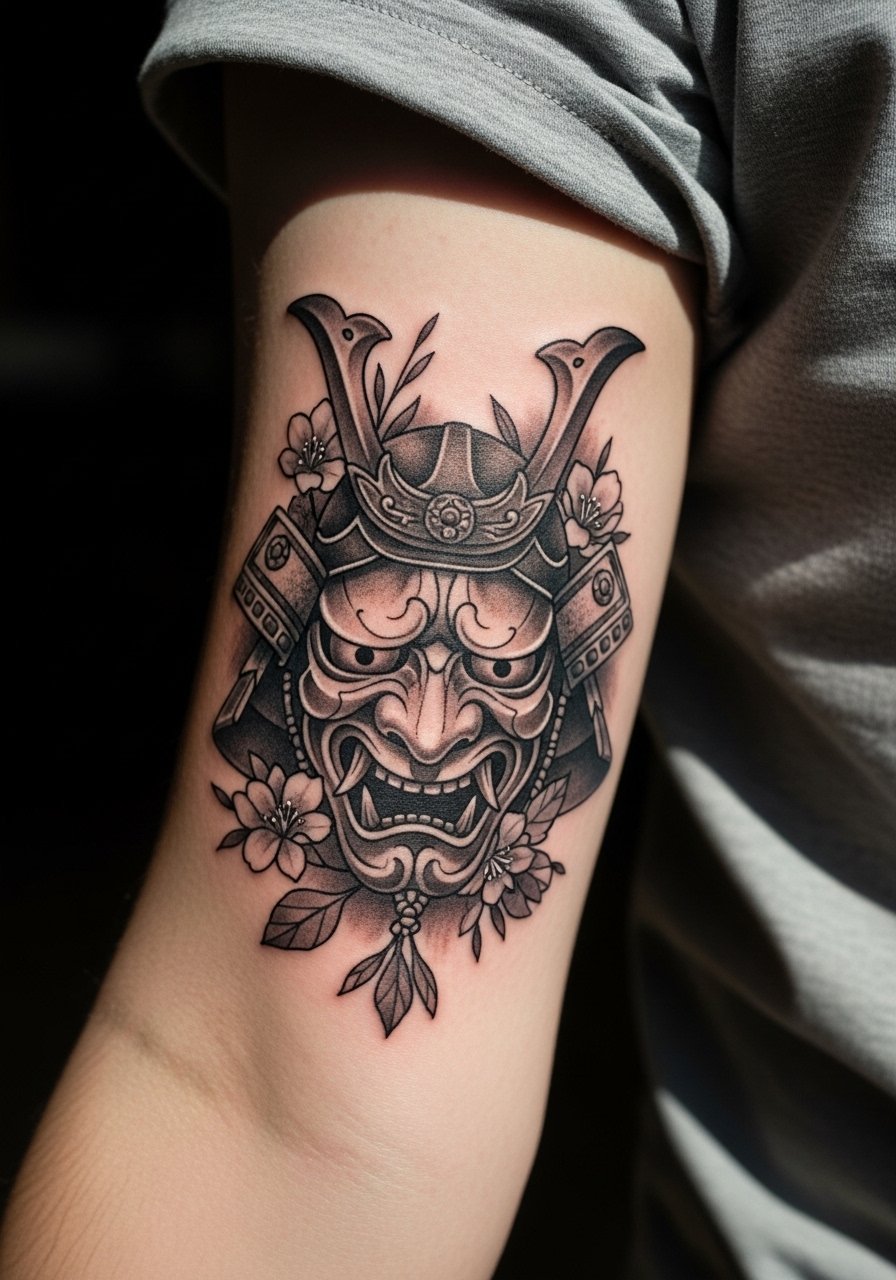
This design leans into symbolism with a samurai face and surrounding motifs about mortality. It suits someone who wants narrative heft rather than a single visual shock. Ask your artist to use stipple shading for petals and heavier black fields for the mask so the mortality elements remain legible as they age. The outer forearm is forgiving, but a mistake is crowding small text or micro-flourishes into shadowed areas. Sessions are medium length and a single touch-up at year two is common. For the session, wear a short sleeve or sleeveless tee men so the artist has unobstructed access.
12. Kyogen Hannya on the Inner Bicep, Lighter Jealousy Tones
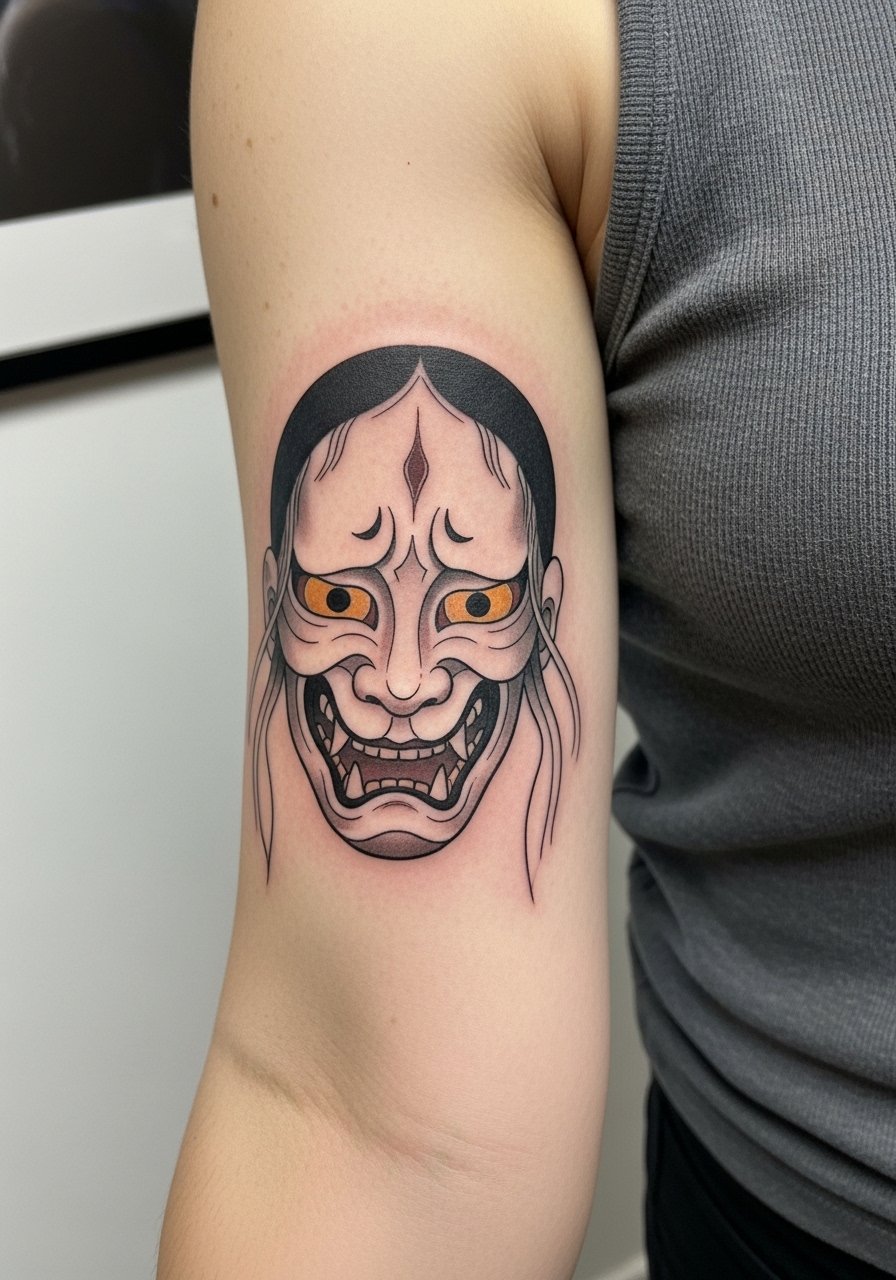
Kyogen variants of Hannya come from theater that trades full demonic rage for lighter, satirical versions. The inner bicep is sensitive but sheltered from sun and friction so fine details last longer than on outer limbs. During consultation emphasize moderate spacing between fine lines so the subtleties remain clear. One mistake is treating the inner bicep like a canvas for ultra-fine filigree without accounting for arm flex. Session time is moderate and a touch-up plan is wise around year three if you want crisp micro-contours. For access, a loose tank helps and a loose tank top works for most gender presentations.
13. Wrist Band of Mini Masks, Tiny Mask Stack
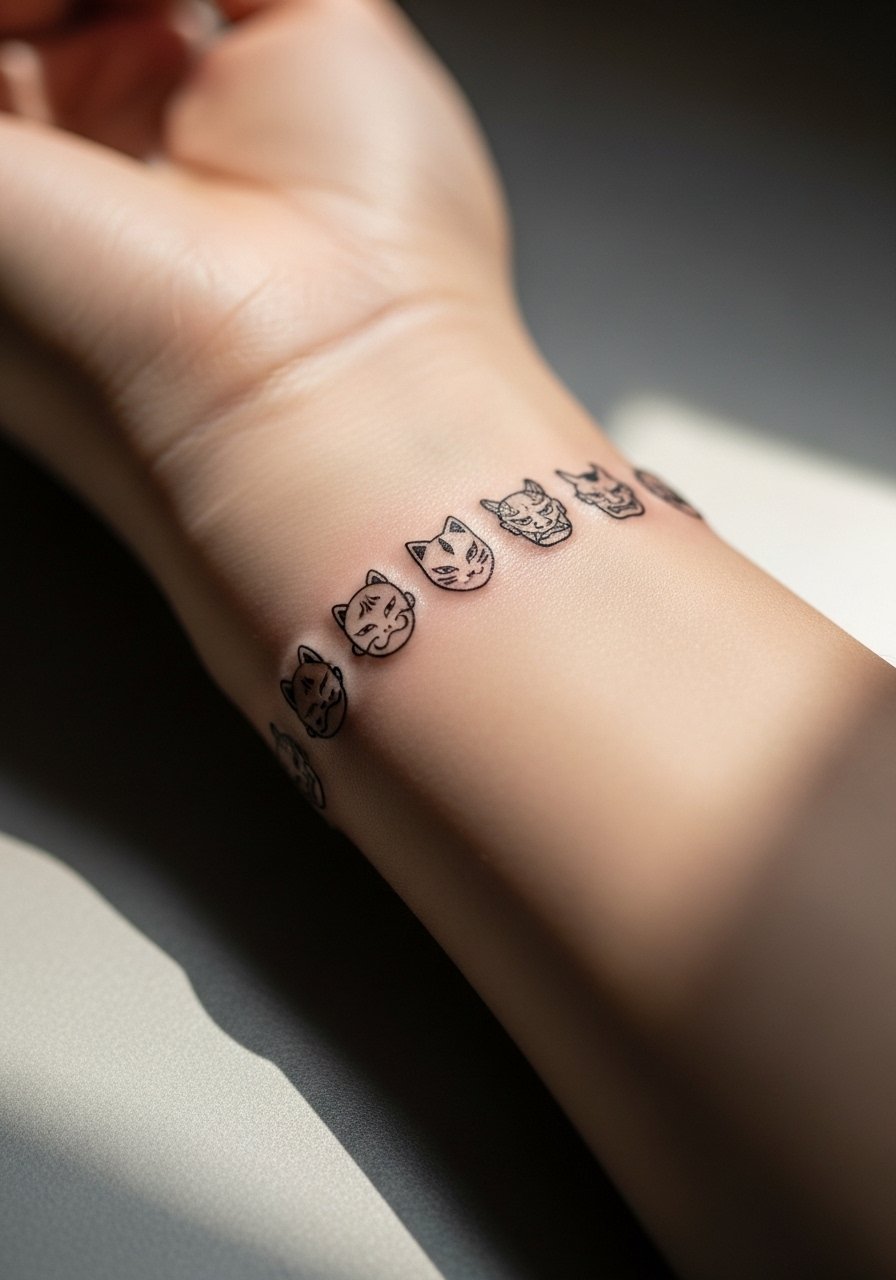
A stack of micro masks along the wrist is minimalist but packs personality. The wrist is high-friction so ask for reinforced outer outlines and avoid ultra-fine internal detail that will bleed. Expect more touch-ups for wrist work than for an upper arm piece. A real mistake is commissioning micro shading that reads as gray smudges after a year. Sessions are short but you might book two quick passes to ensure even saturation. For showing the piece, stacked dainty bracelets can complement without crowding the wrist. During the session wear a short sleeve you can roll up.
14. Masked Chest Medallion near the Sternum
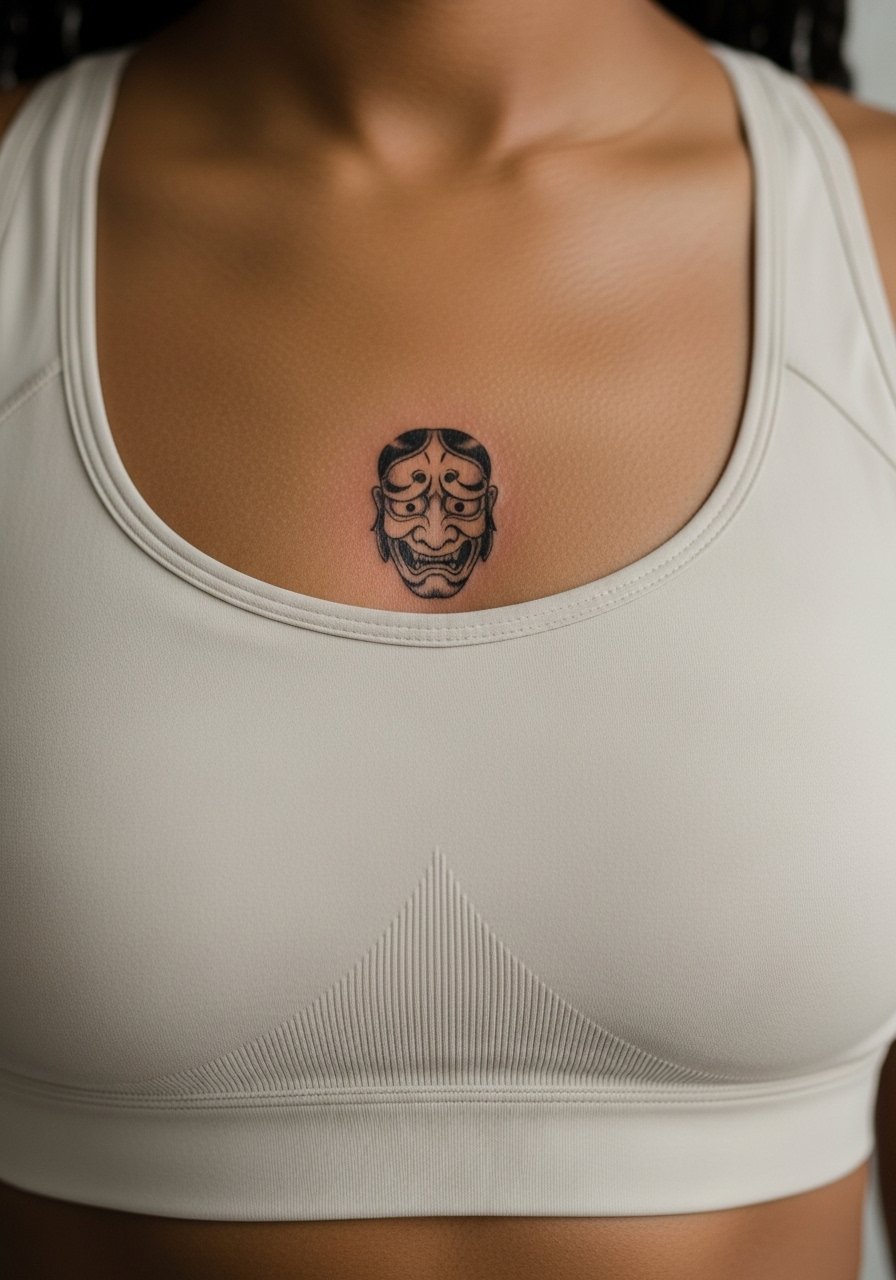
A medallion-sized mask near the sternum reads intimate and deliberate. The sternum area feels sharp to many, but a compact piece takes less time than a full chest panel. Tell your artist to keep ornament simple around the central mask and avoid tiny cross-hatching close to the midline, which can distort with breathing. Expect a single session around one to two hours and plan for a touch-up if you want the central contour darker after initial healing. This placement is sensitive so wearing a fitted sports bra to the session helps the artist get the line straight while keeping coverage.
15. Shoulder Blade Oni Accent, Subtle Back Drama
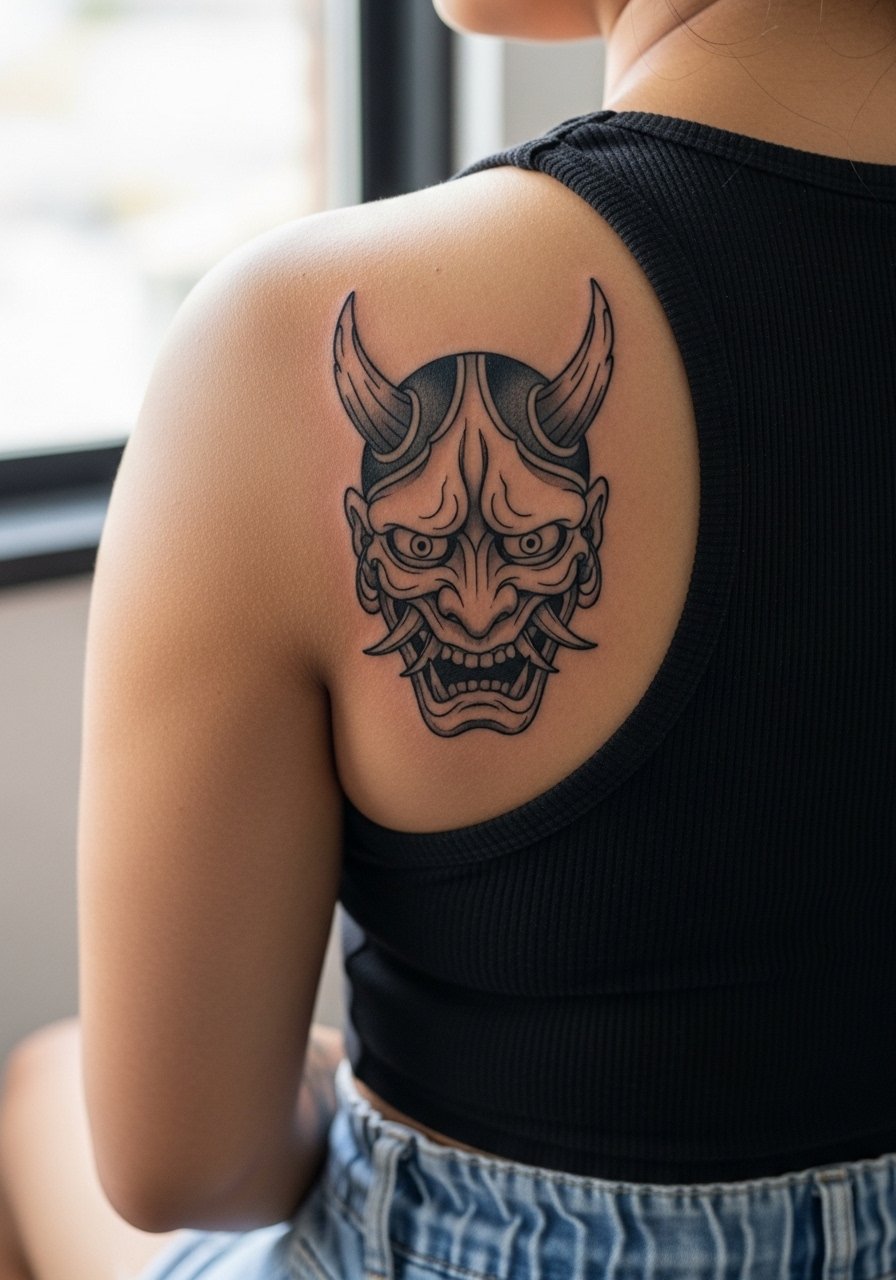
The shoulder blade is a great place for a single-mask accent that peeks from under clothing. It moves less than the ribcage and often retains contrast nicely. For an Oni accent, request a strong silhouette and avoid too many internal dots near the edge. The biggest mistake is making the face too small relative to the broad shoulder blade canvas. Sessions are short to medium. For the session, a tank top with an adjustable strap keeps the area accessible and the artist can work without contorting.
16. Full Sleeve of Mixed Masks, Narrative Arm Panel
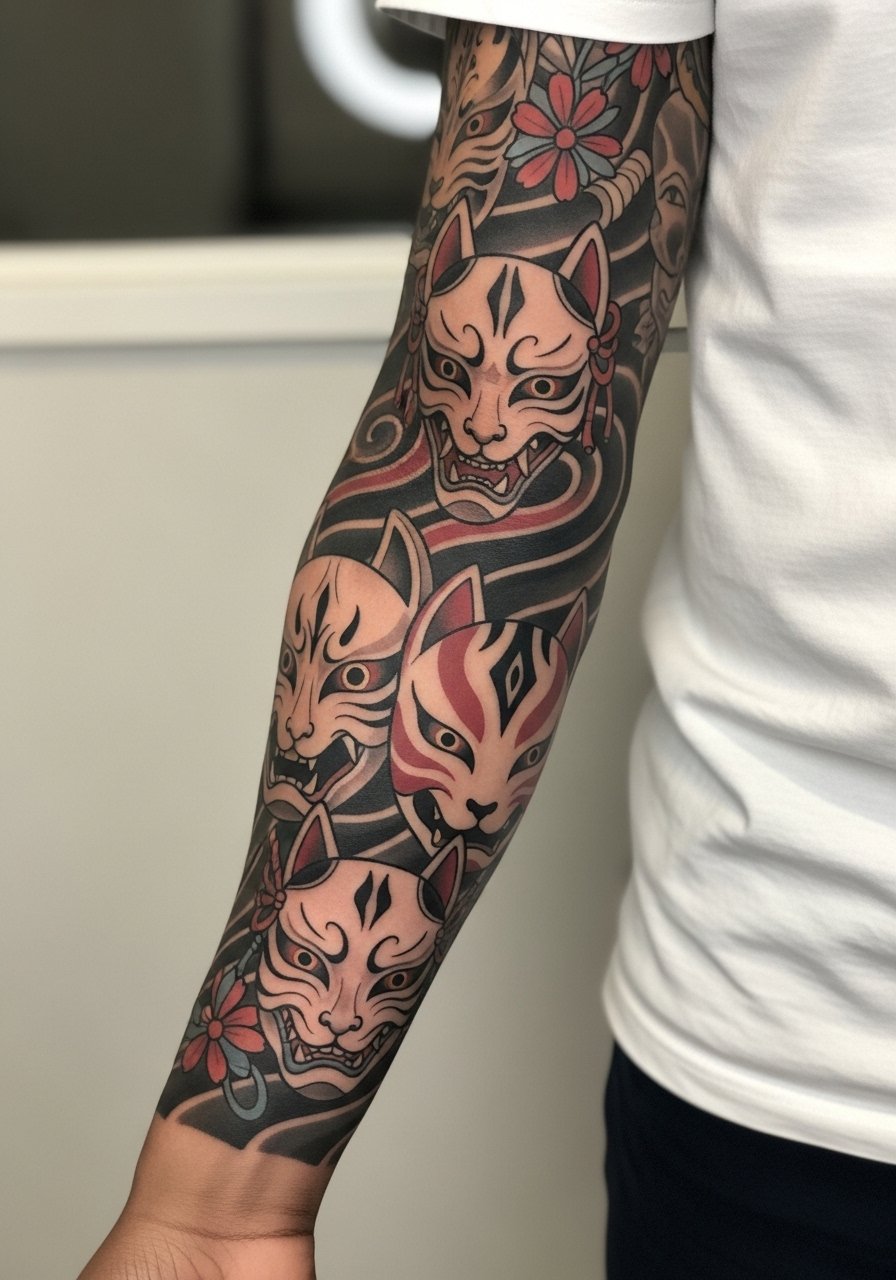
If you want a mask story rather than a single face, a custom sleeve lets you layer emotion across the arm. Start consultations with a mood board so your artist can map which mask sits where. A common error is trying to blend too many painting styles into one sleeve. Pick two dominant techniques, like neo-traditional and blackwork, and let the transitions be deliberate. Expect multiple long sessions and a multi-year touch-up plan for saturation. For showing it off, rolled sleeves or a kimono jacket men style layer works well when you want drama without full exposure.
17. Tengu Shin or Lower-Leg Mask, Mythic Profile
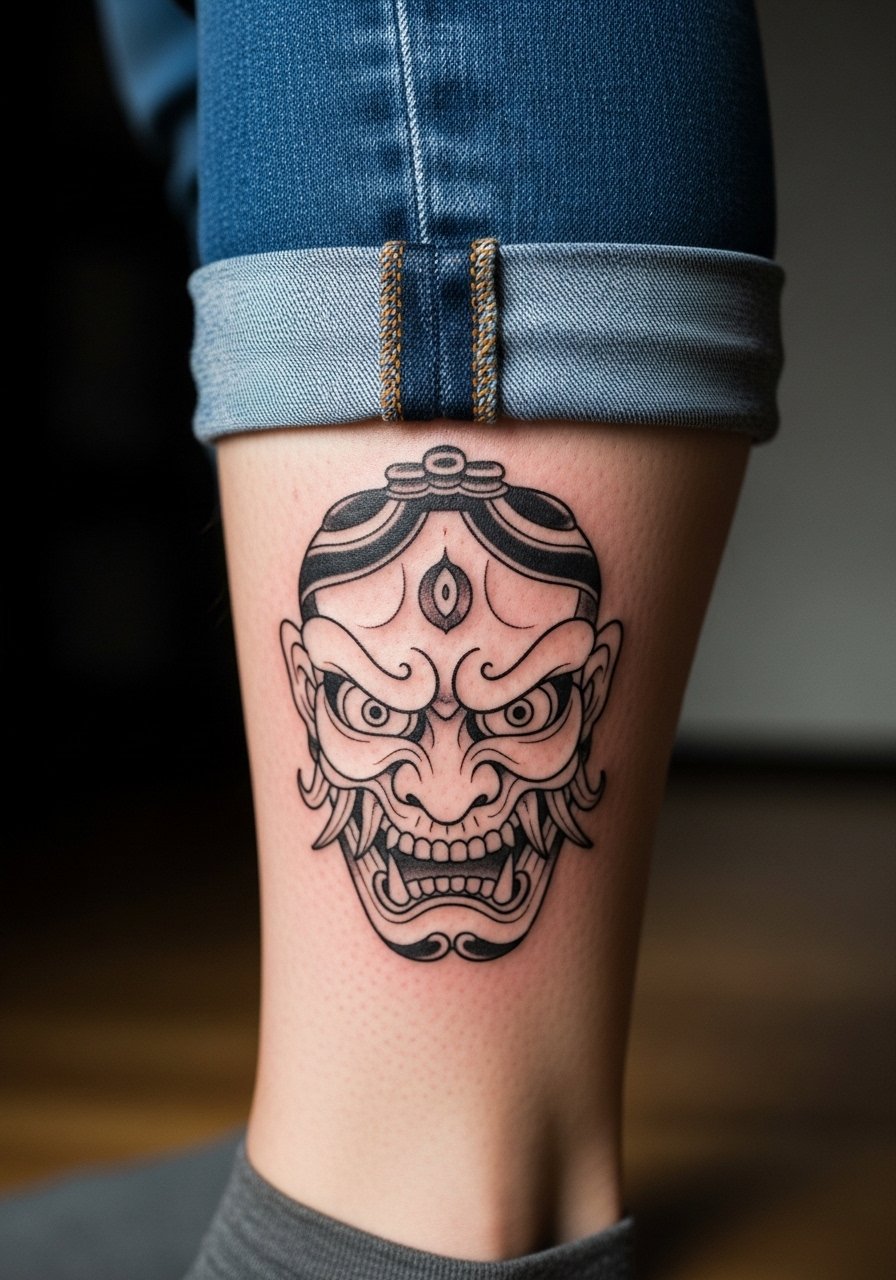
Tengu masks bring a birdlike, mythic profile that suits the shin or lower leg. The shin sees moderate friction and generally ages well if you prioritize clean outlines. Ask your artist to keep elongated noses and beaks simplified so they hold shape as the leg moves. The main mistake is over-detailing the beak for a small space. Sessions are medium-length and a single touch-up at year two is common for sustained crispness. For the session, wear pants you can roll up or shorts for comfort and access.
Frequently Asked Questions
Q: Will a Hannya forearm sleeve still read clearly after five years?
A: It depends on line weight and sun exposure. In my experience, forearm Hannya sleeves with strong outer linework and saturated black hold their silhouette best. Expect softer interior shading over time and plan a touch-up at year two or three if you want the red accents refreshed.
Q: Do colorful Kitsune masks need different maintenance than black-and-gray ones?
A: Yes, color tends to fade faster, especially from UV exposure. If you choose vibrant Kitsune hues, protect the area from sun and accept that a refresh may be needed sooner. Black-and-gray variants usually age more predictably, but both can look great for years with proper sunscreen and occasional touch-ups.
Q: Are ribcage Noh masks worth the pain for detail?
A: Ribcage pieces reward patient clients with intimate detail, but the area stretches with breathing and weight changes. Ask your artist to give fine lines extra spacing and be prepared for a touch-up if you want micro-contours restored after a season or two.
Q: How should I dress to sit for a thigh Kitsune versus a shoulder Oni session?
A: For a thigh Kitsune bring loose joggers or shorts you can pull down slightly, and for an Oni shoulder a loose button-down or tank lets the artist reach the cap without tugging. Packing comfortable, adjustable clothing is the easiest way to avoid awkward repositioning mid-session.
Q: I like fine-line masks but worry about longevity. What compromises work?
A: Ask for slightly heavier outer lines and simplified interior microwork. That keeps the airy fine-line look up close while giving the piece structure that resists early blurring. Also choose placements sheltered from constant friction and sun when possible.
Q: Where should I look for trustworthy references and guest spots without naming artists?
A: Search hashtags like #HannyaTattoo and #IrezumiMask on social platforms, use directories to find "Japanese tattoo studio [city]," and check recent guest-spot listings on booking apps. Reddit threads in communities about tattoos can surface critiques and photos from healed work.
Q: Can a small ankle Okame be expanded into a leg panel later?
A: Yes, the ankle piece can act as a seed for larger work. Plan with your artist so the initial composition leaves room for connecting elements above and behind. Keep in mind the ankle sees more wear, so heavier outlines make future blending easier.