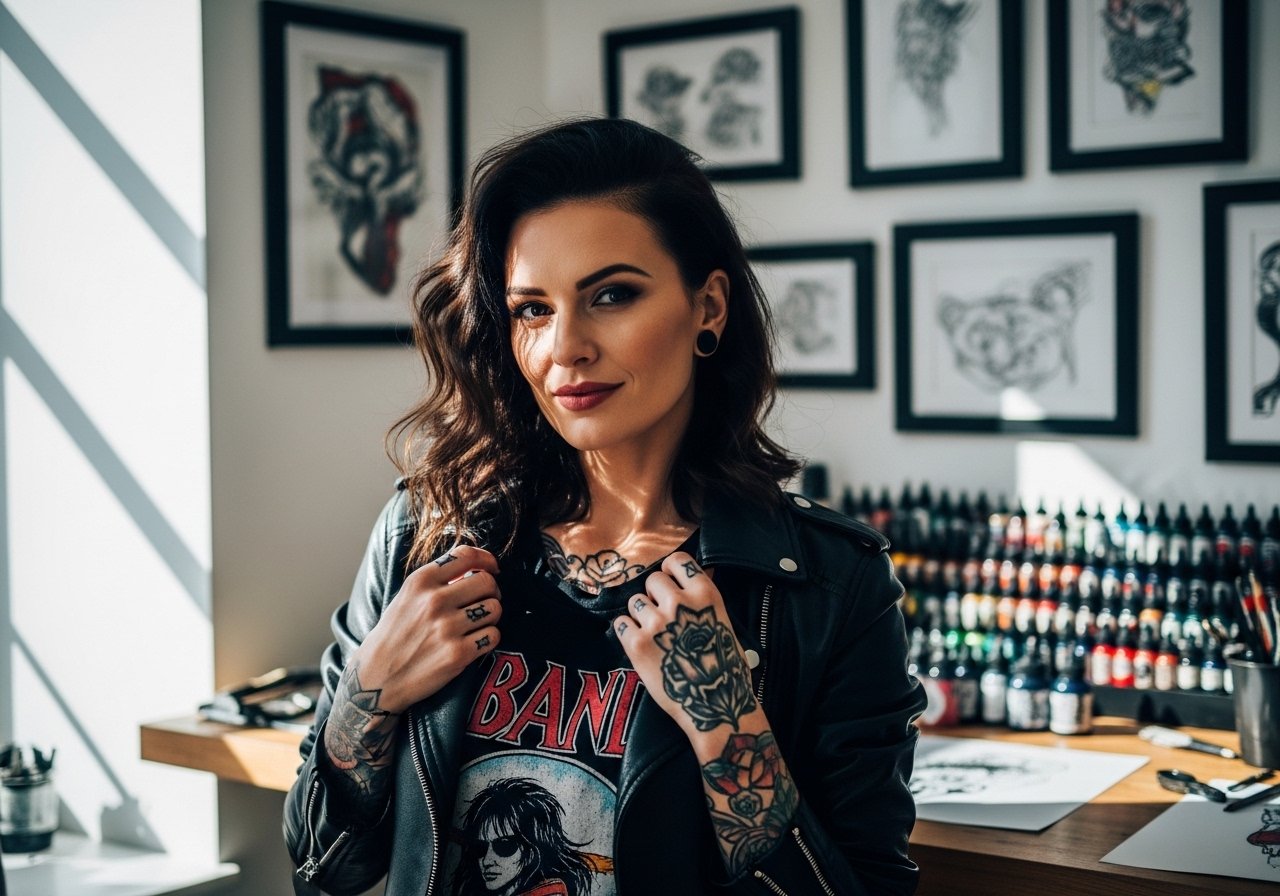
Fine line work and saturated blackwork both look incredible fresh, but what holds up is not always what trends. Lighter, delicate motifs often need careful placement to avoid early blurring, while bold tribal or geometric pieces survive constant friction better. If you are weighing style, placement, and long-term wear for a leg sleeve, these 17 ideas walk you through styles that age, how sessions feel, and what to tell your artist at booking.
1. Geometric Blackwork Calf Half Sleeve
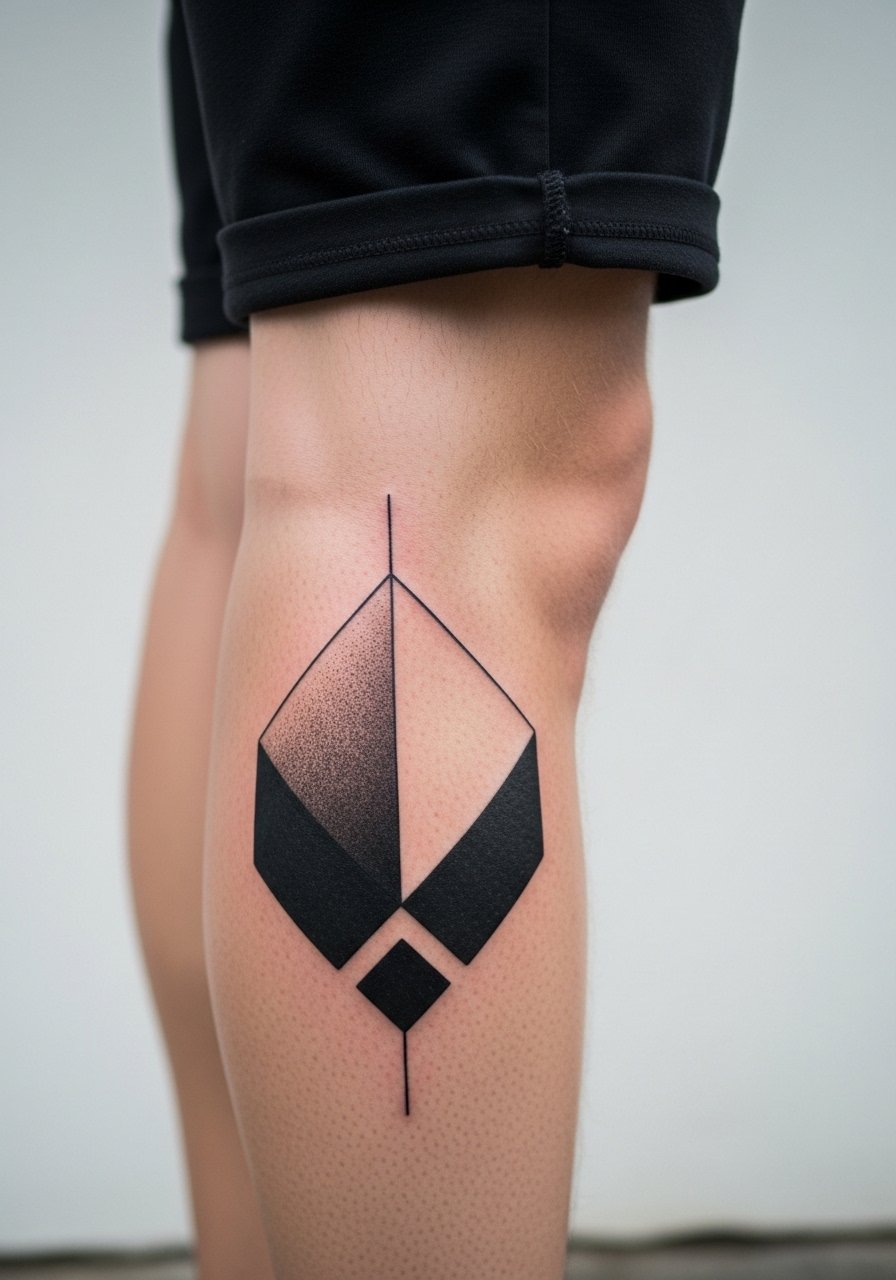
Most geometric blackwork reads cleaner on the calf than on the thigh because the muscle sits firmer there and keeps linework steady. Expect a 2 to 4 hour session for a lower-leg half sleeve, with the shin portions feeling sharper on pain charts than fleshy calves. Tell your artist you want bold separations and breathing room between dense motifs so future touch-ups are easier. Common mistakes are shrinking complex patterns too small which leads to early merging around year two. For the session wear, pull on athletic shorts loose so the artist has full access without sock friction.
2. Neo-Traditional Rainforest Full Leg Wrap
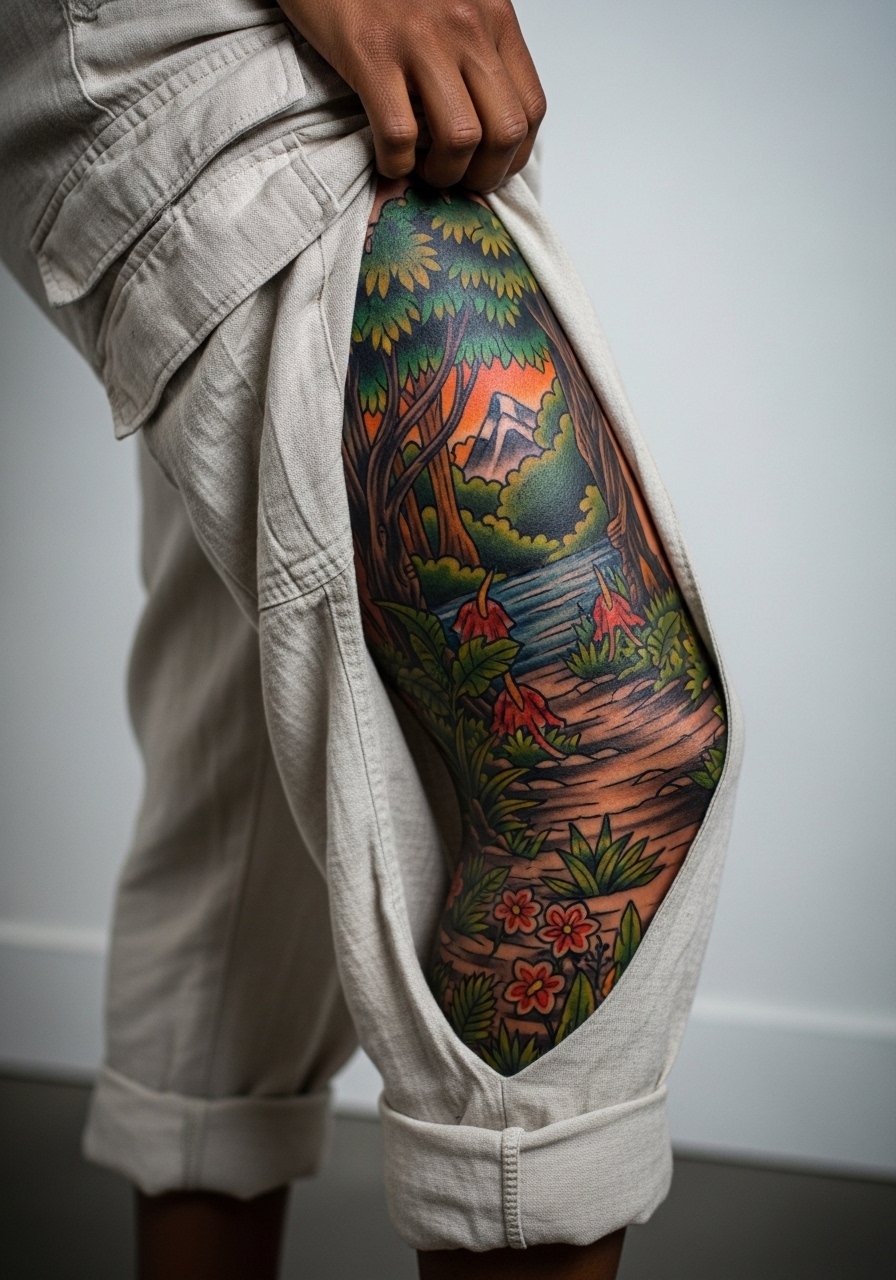
I've seen rainforest wraps become a favorite for people who want a cohesive narrative from hip to ankle. Expect multiple long sessions spaced months apart for saturation and background shading. During consultation, decide if you want flora as a repeating band or a full illustrative scene that flows with your leg contours. A common aging problem is overcrowding the design near the knee which makes touch-ups tricky; leaving negative space around the knee helps the whole sleeve settle. For summer show-off outfits, roll up linen cargo pants at the ankle, the neutral fabric keeps the color palette front and center.
3. Anime Calf-to-Thigh Character Half Sleeve
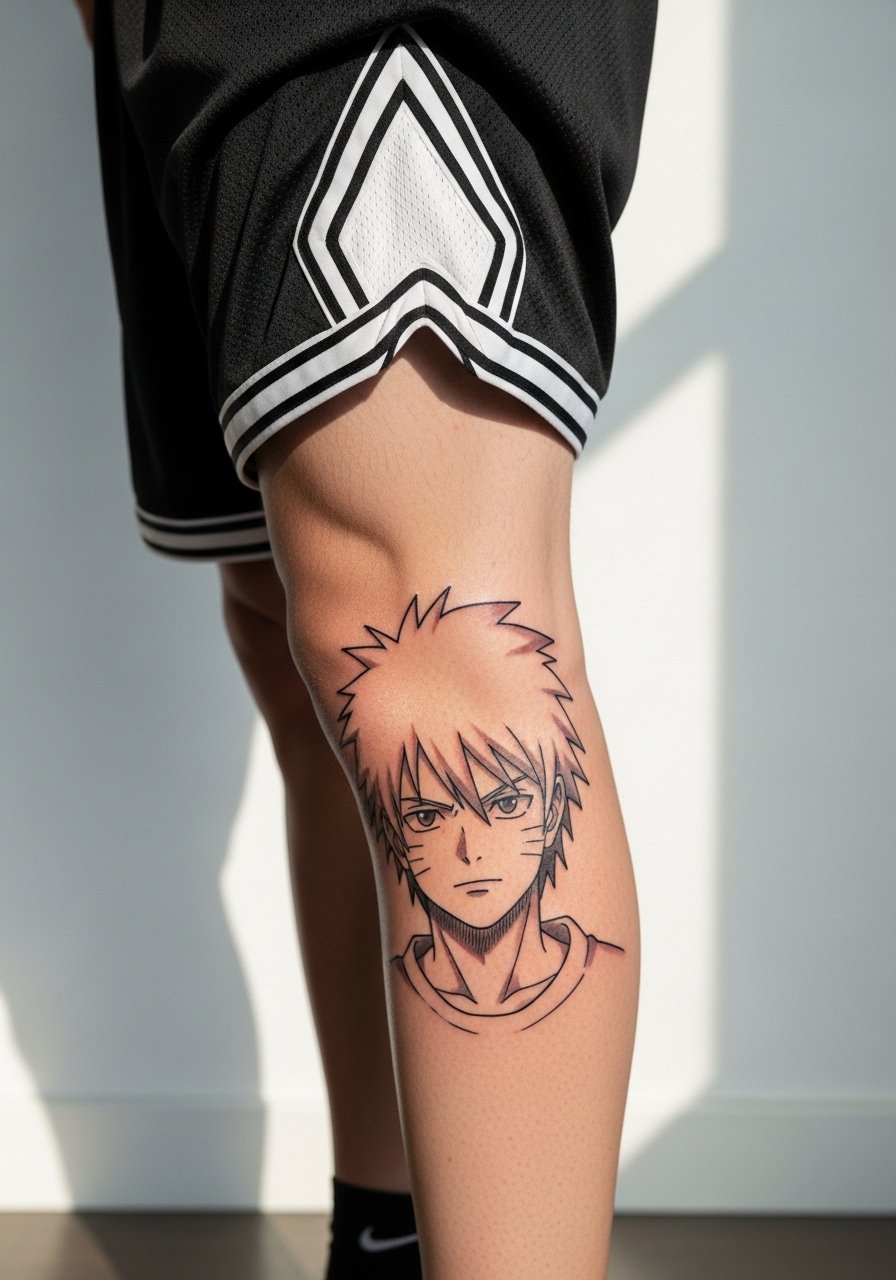
If you grew up with anime, a vertical character piece on the calf is a high-impact way to tell that story without committing to a full leg immediately. Plan three to four sessions for color fill and background energy lines. Say exactly which expressions and poses you want, and bring a sequence of reference images so the artist can compose the vertical flow. Mistakes happen when clients insist on tiny facial detail from a distance. At six months color pops, at two years softer edges appear, and at five years expect saturation to flatten without touch-ups. For the appointment wear, a pair of athletic shorts loose lets the artist roll the leg up without cutting circulation.
4. Coiling Serpent Full Leg Sleeve
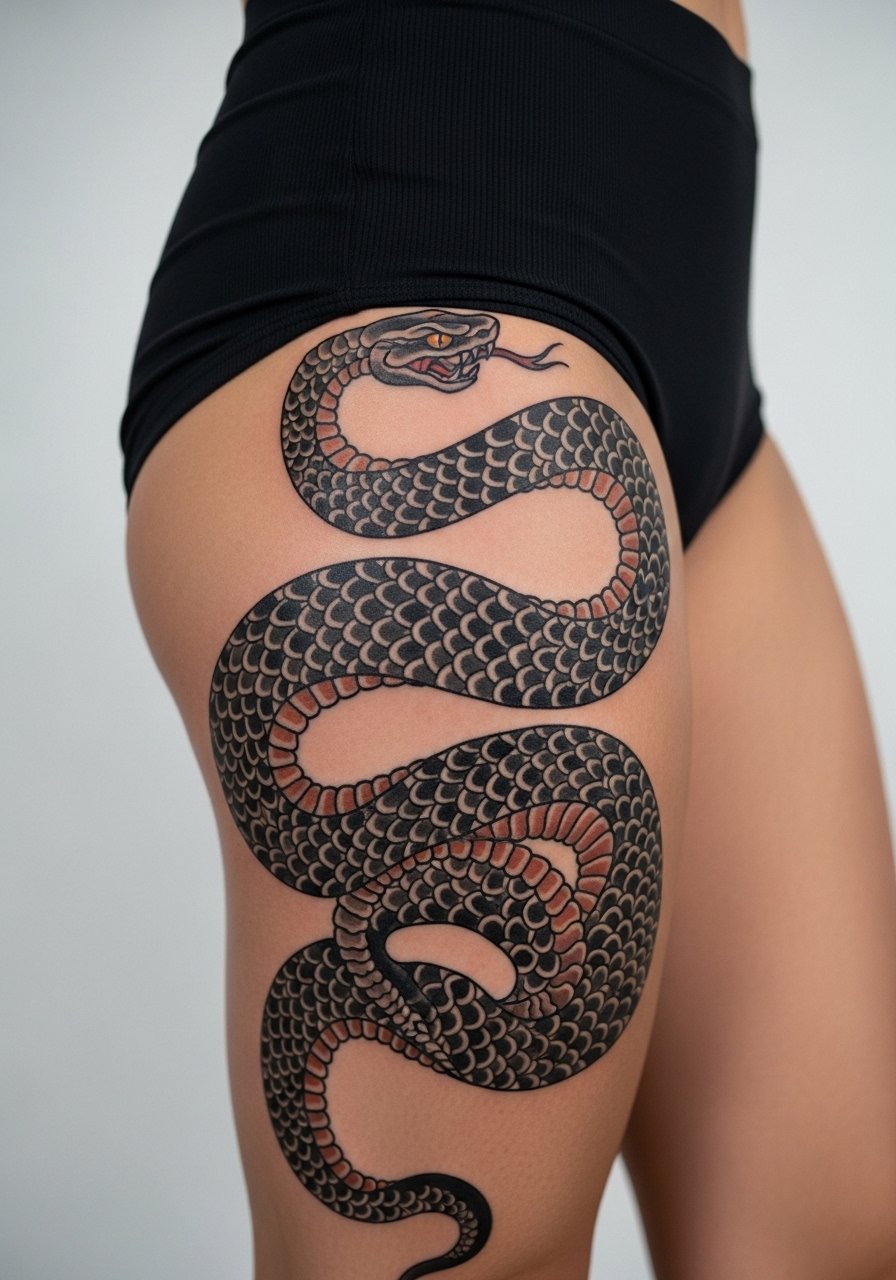
A serpent that coils around the leg reads mythic and moves well with gait and muscle. Expect five or more sessions for a full wrap that keeps scale texture and contrast. In consultation, ask your artist to plan where the head and tail meet so you have room for possible future elements. A frequent error is over-detailing scales in thin bands which fades into a gray blur by year three. The shin and knee areas will feel more painful in the chair compared with the fleshy thigh. For show-off styling, tailored shorts work best but during sessions opt for loose boxer briefs so the artist can access the hip without exposing more skin than needed.
5. Vertical Japanese Dragon on Calf or Thigh
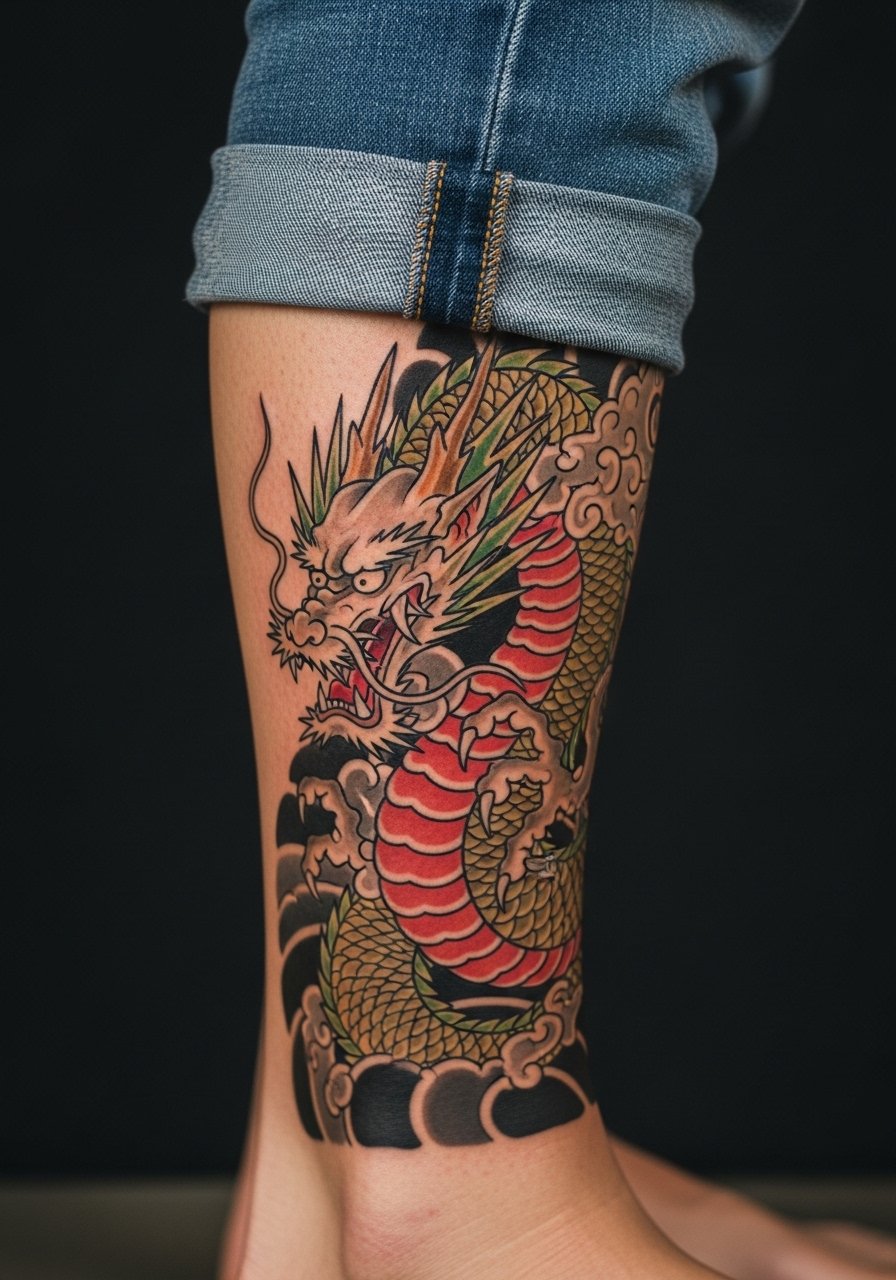
Japanese dragons read naturally on vertical canvases like calves because their bodies follow the leg’s line. Tell your artist whether you want background elements like waves or wind bars to anchor the dragon; those details influence session count. The main mistake is compressing a full back-style dragon into a calf without enough negative space. At six months the colors and outlines look strong, at two years background wash can soften, and by five years expect touch-ups on saturated reds. Pain is moderate on calf placements, and a clear conversation about knee wrap technique makes sessions smoother for both of you.
6. Polynesian Tribal Below-Knee Half Sleeve
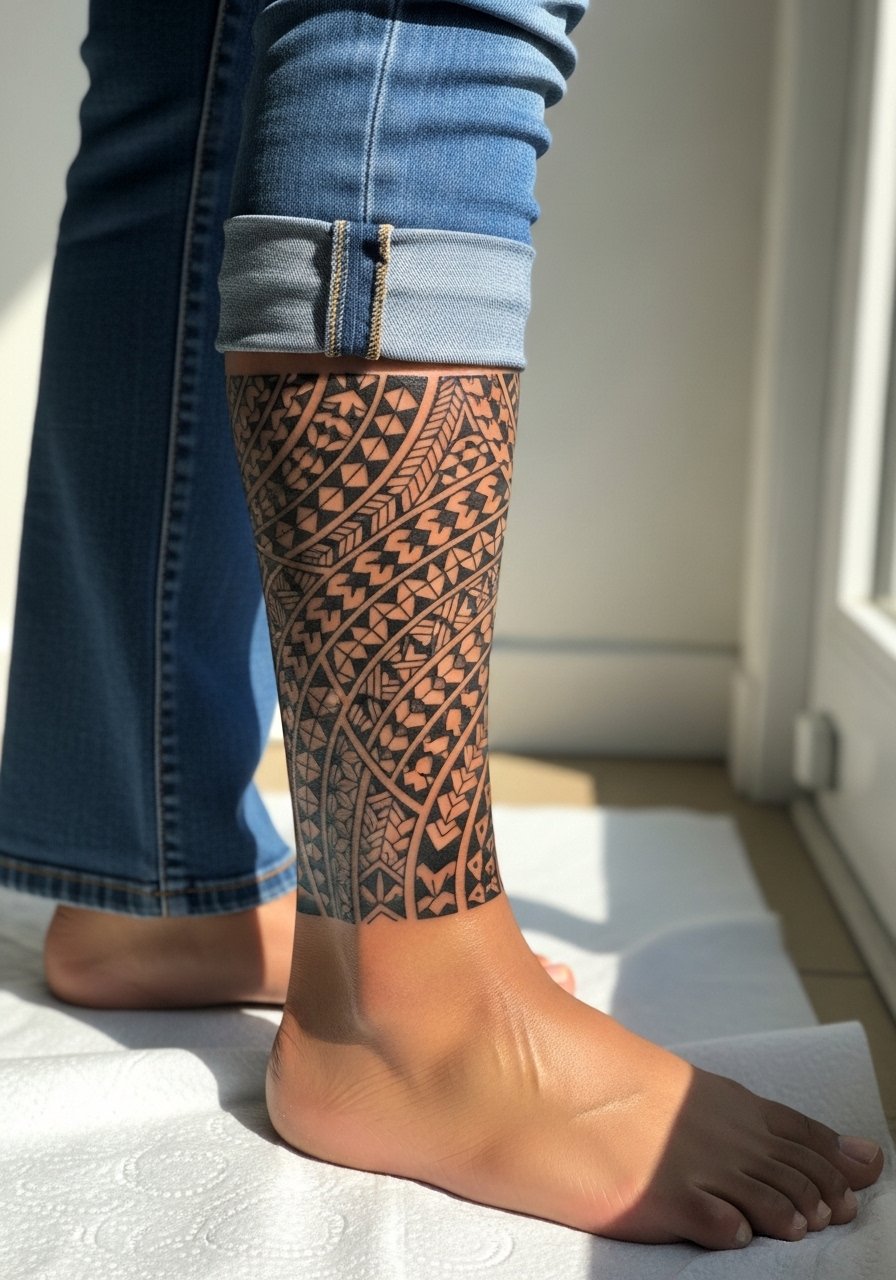
Tribal work that starts below the knee follows muscle and bone contours, giving a rhythmic pattern that reads for years when linework is bold. The session feels intense on the shin because of the bone proximity, so many artists break it into two appointments. During consultation discuss personal motifs and which areas you prefer left uncluttered for future additions. The debate over preservation shows up here too when fine line options get proposed for tribal motifs. One group favors bold lines for longevity, another favors delicate work for subtlety. Ask your artist which approach they use and why before booking. For wearing after sessions, cuffed bootcut slim jeans frame the pattern without rubbing the fresh ink.
Studio Day Picks
The lower leg and shin pieces above need different prep than thigh work, so a few targeted items make the session and first week easier.
- Stencil transfer paper kit. Lets you preview the composition on skin, especially helpful for the dragon and serpent wraps above.
- Topical numbing cream. Applied 45 minutes before reduces edge sensitivity for shin and ankle areas.
- Thin protective film roll. Useful for ankle and lower-leg pieces that face friction from socks and shoes.
- Fragrance-free body wash. Gentle cleansing keeps ink channels clear without irritating fresh linework on the calf.
- Aquaphor healing ointment. A thin layer in the first days helps the fine areas around the shin and ankle settle without over-saturating the skin.
7. Mandala Ornamental Upper Thigh Sleeve
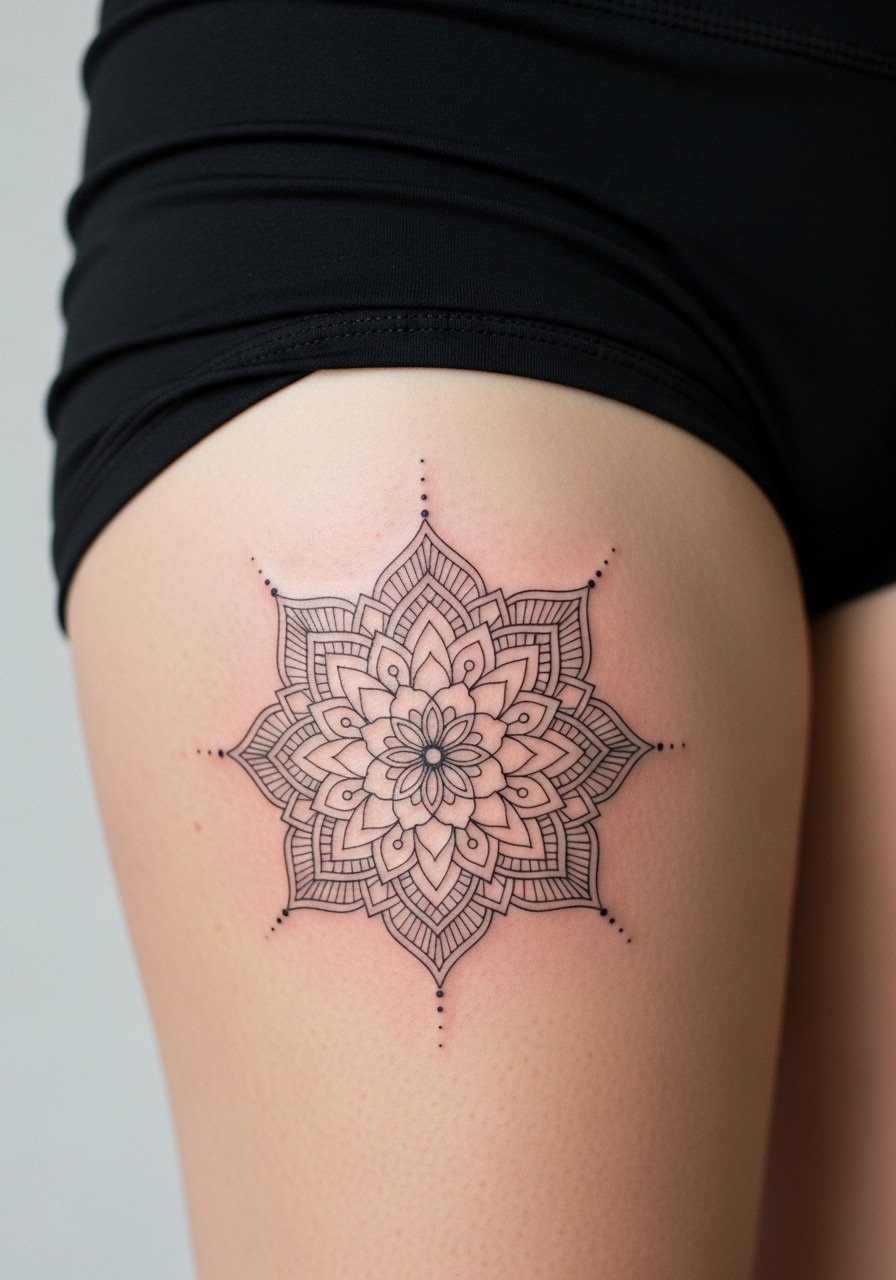
Mandala work on the upper thigh can be meditative and very symmetric when sized correctly for the curved surface. Most artists prefer slightly bolder line weight here than on the wrist so the pattern holds as flesh shifts. A common mistake is trying to compress highly detailed dot work into a tight circle which can merge into a gray patch after a few years. There is a debate in the community about fine line vs bold line for mandalas. Some artists say fine detail can hold on the thigh with careful spacing. Others warn that denser dot work needs larger scale to age well. When you consult, ask for mockups at life size and request spacing adjustments. For beach season, pair this placement with high waist swim trunks to frame the upper thigh design.
8. Realistic Snake Coil on Thigh or Lower Leg
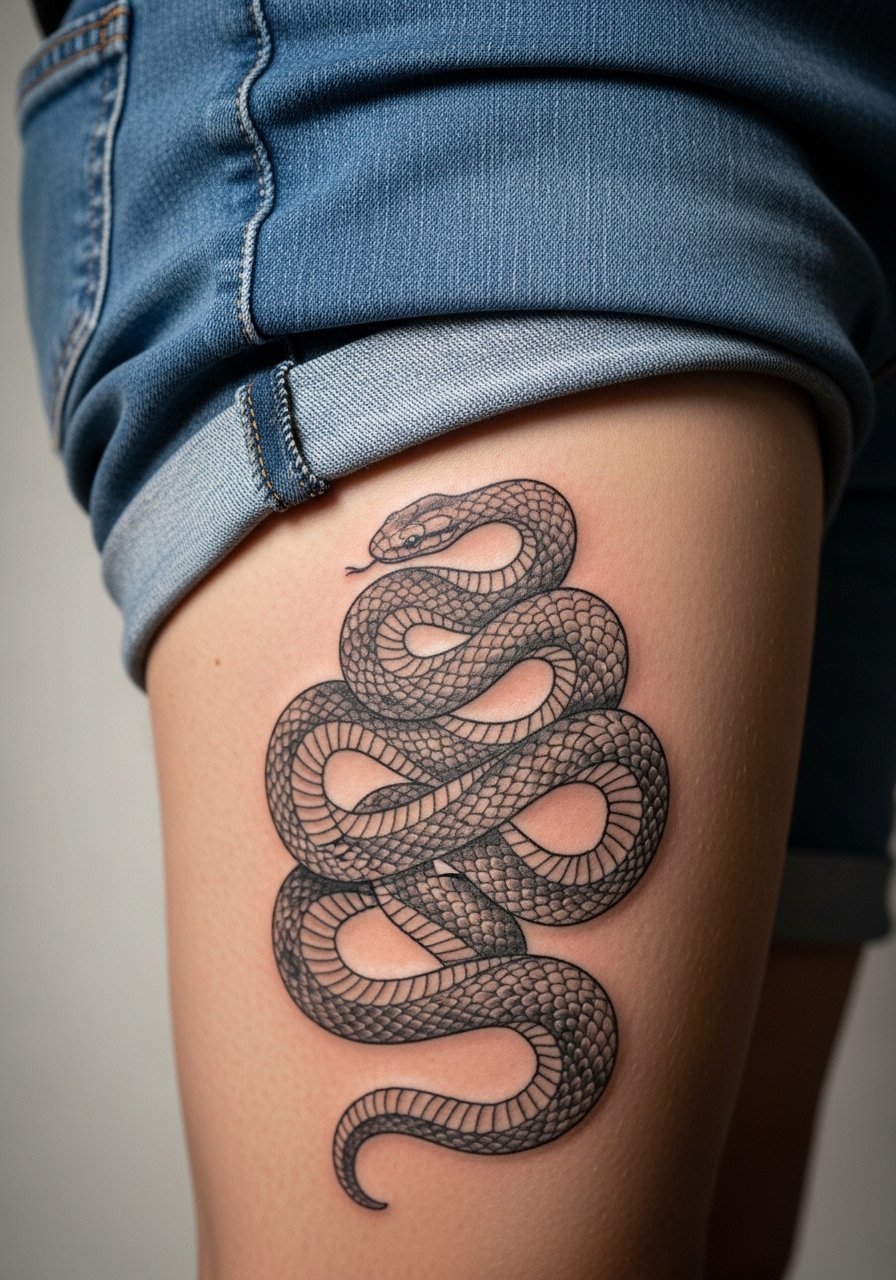
Realism relies on texture and contrast and looks particularly striking on the thigh where the canvas is broad. Sessions run about three hours per zone for fine shading and scale work. Tell your artist you want scale direction and light source defined in the references so the form reads in motion. A common error is asking for ultra-fine scales all the way around; that level of detail often needs touch-ups earlier than broader scale bands. Expect the piece to look crisp at six months, slightly softer at two years, and need a targeted touch-up around year three for high-contrast highlights. The thigh is forgiving for pain, but knee-adjacent wraps will be sharper.
9. Koi Fish Vertical Flow with Wave Background
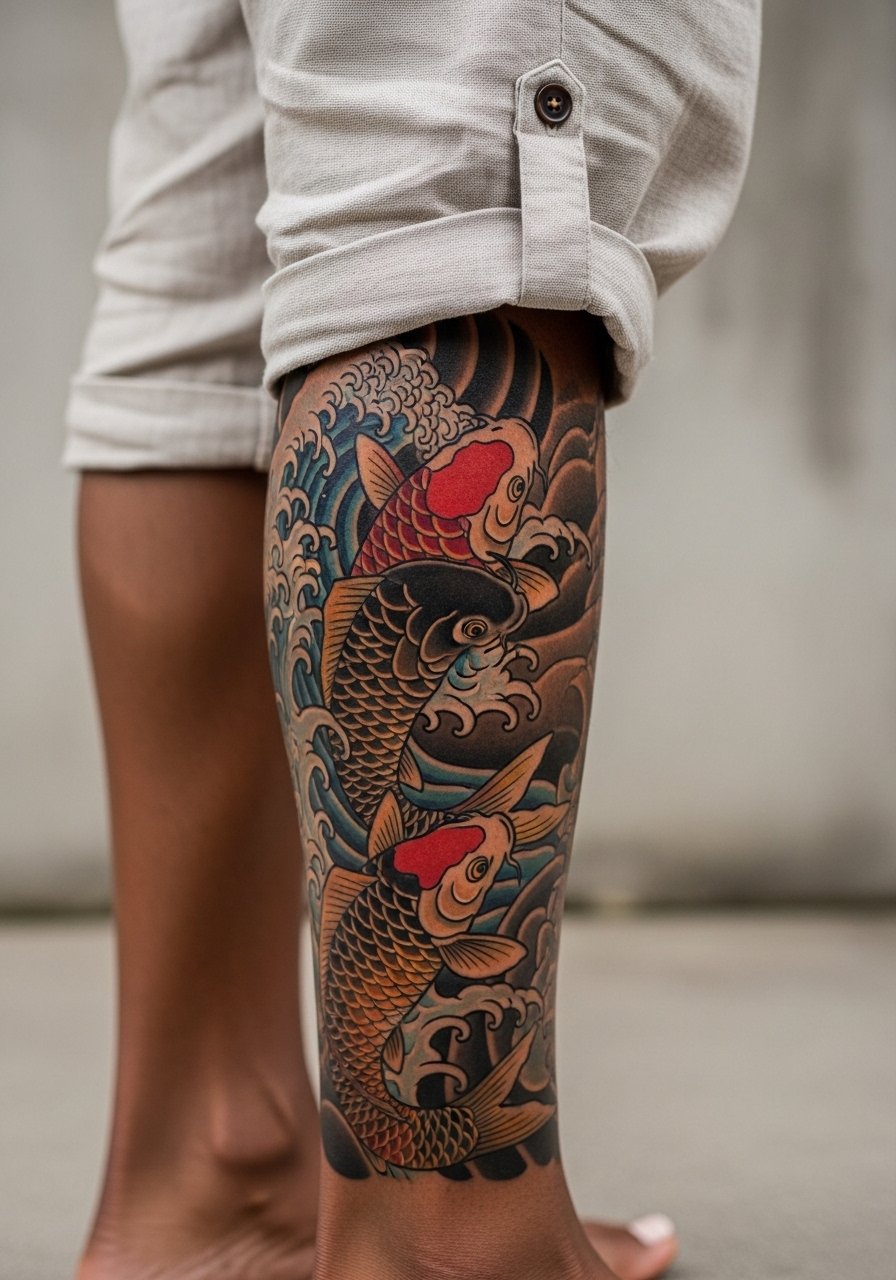
Koi designs work with gravity and leg movement making them natural for calf-to-thigh verticals. Ask the artist to plan the angle so the head reads upward when standing. The common mistake is stuffing too many elements into a narrow calf which makes the composition feel cramped. At six months colors are vibrant, at two years expect subtle softening in shaded water, and at five years the orange and red tones often need a refresh to maintain pop. The calf placement is moderate for pain and benefits from loose session clothing like slim fit joggers men you can roll above the calf during the appointment.
10. Floral Butterflies Outer Thigh Sleeve
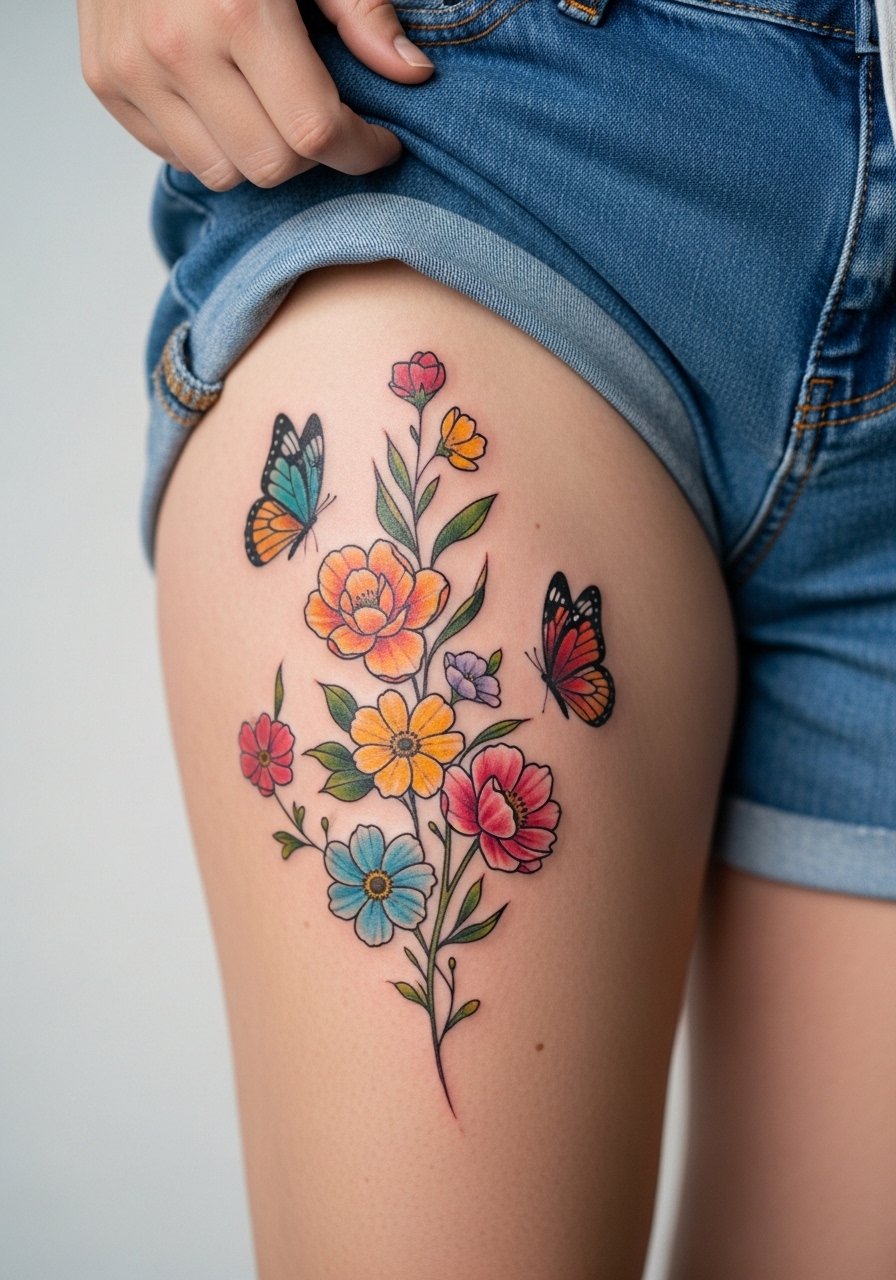
Outer thigh is a sweet spot for feminine palettes because it provides a smooth curved plane ideal for layered florals and small moving butterflies. Expect about three to four sessions for saturation and soft shading. Tell your artist if you want the butterflies to appear in flight or resting, that choice changes negative space planning. The typical mistake is too many tiny butterflies which can blur into an indistinct texture. For showing the piece off, tailored denim walking shorts keep the composition visible without overwhelming patterns. Healing on the outer thigh is usually easy as long as tight waistbands are avoided for two weeks.
11. Nature-Inspired Forest Full Leg Scene
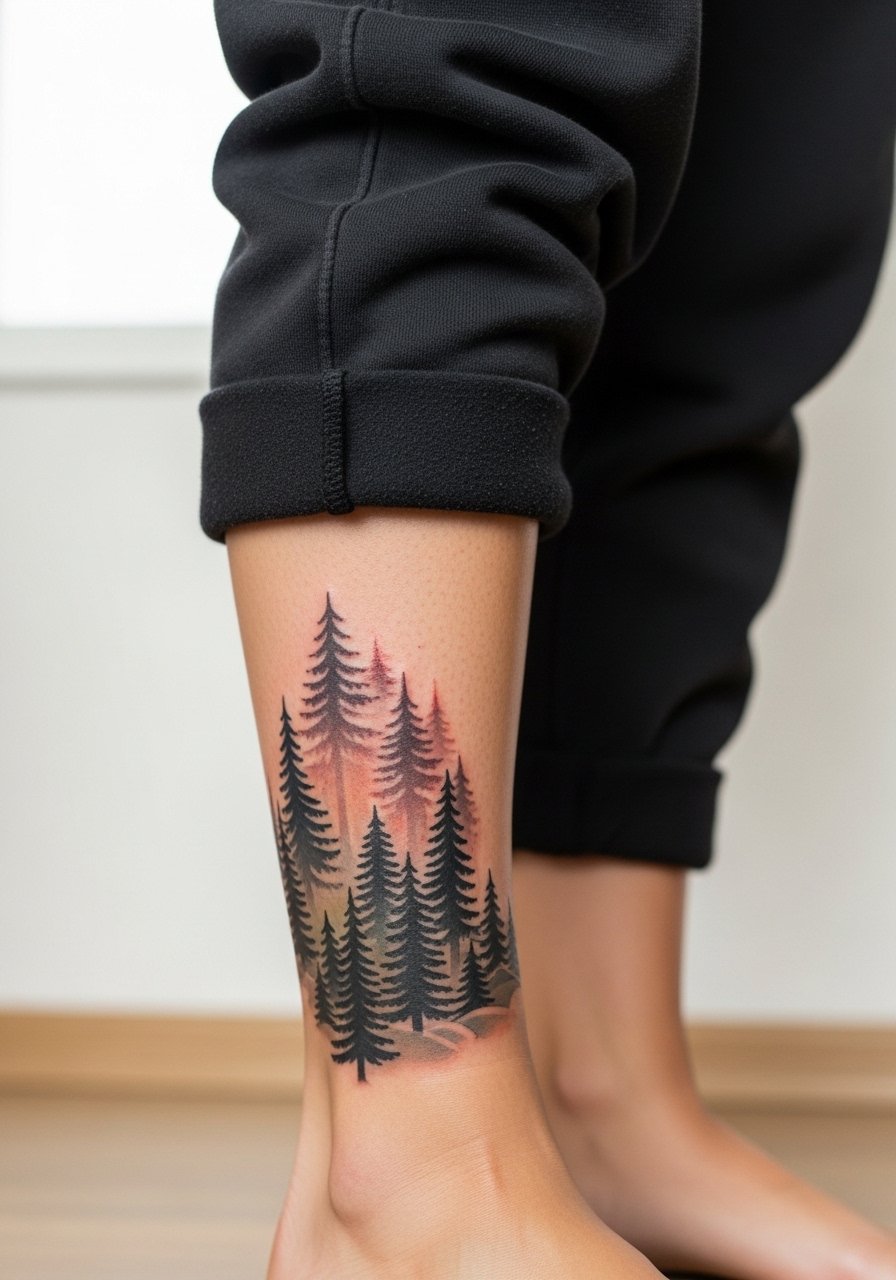
A layered forest composition can create a sense of depth that travels well around the leg. Plan several long sessions to build canopy depth and misty backgrounds. In consultation, define which elements are focal and which are atmospheric so the sleeve reads at different distances. A mistake is over-detailing distant trees which vanish when healed. At six months foreground trees hold crisp edges, at two years misty backgrounds will fade, and touch-ups for contrast may be needed by year three. For session comfort, wear loose fit sweatpants that can slide down without binding the fresh ink.
12. Geometric Tribal Full Leg Statement
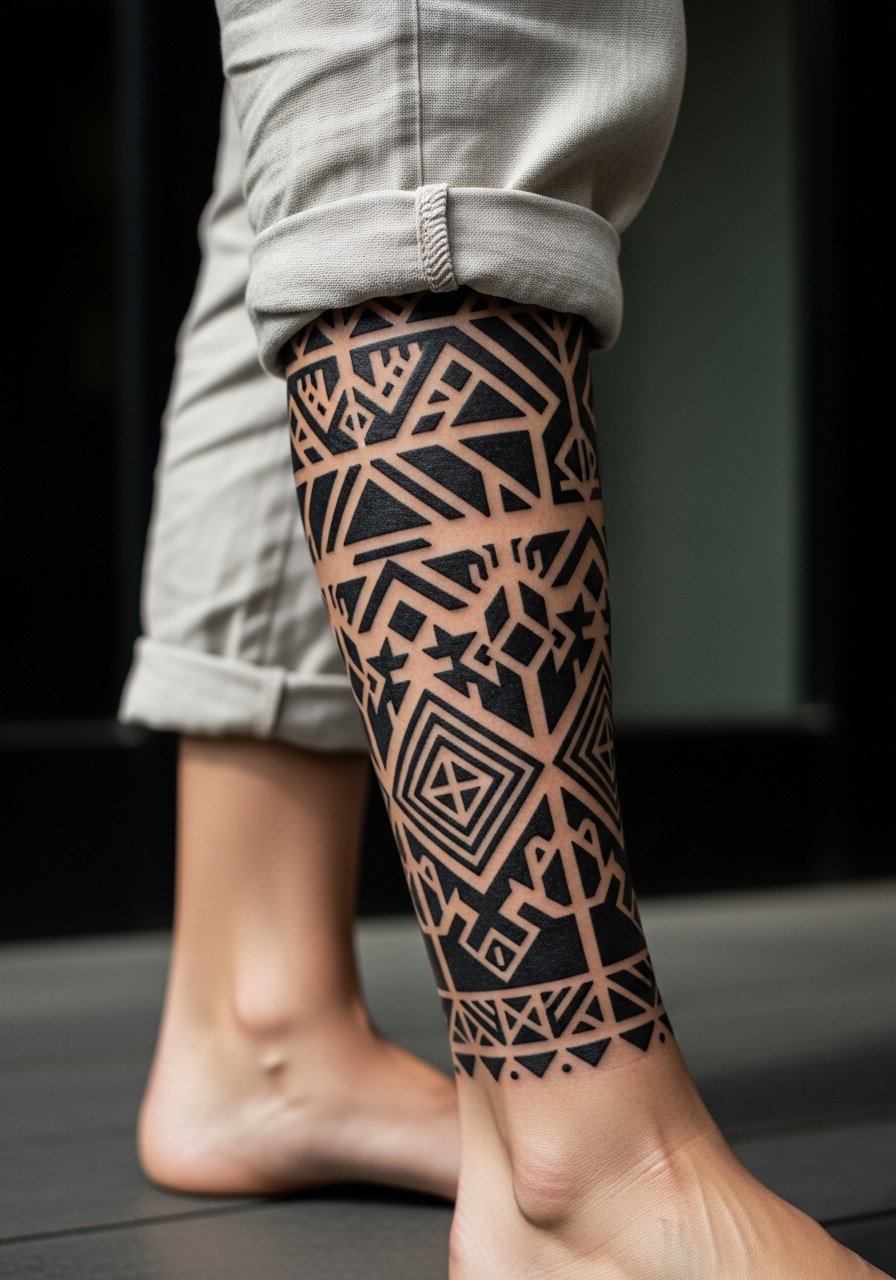
A full leg geometric tribal sleeve balances heritage motifs with contemporary spacing. This style benefits from large, bold sections because black holds against leg friction. When sitting with an artist, outline which cultural motifs matter to you and where you want heavier saturation versus breathing space. A mistake is mixing proportional scales of patterns from different traditions without a unifying rhythm which can look disjointed as it ages. Bold blackwork here tends to age better than fine line, though dense fills may need touch-ups around curved knee areas. Sessions are long but predictable because designers plan strong anchor bands.
13. Band Tattoos as a Minimalist Leg Sleeve Starter
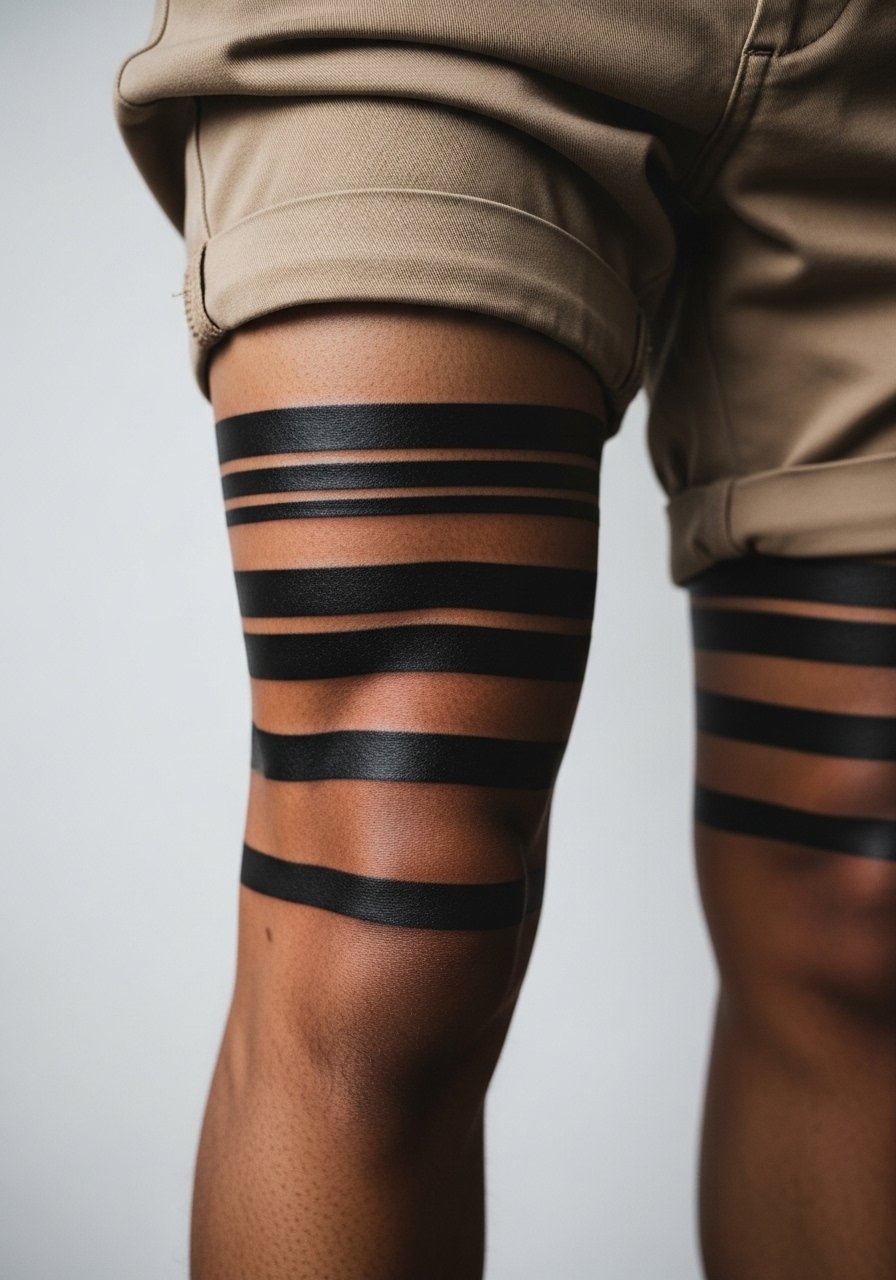
Band tattoos are a practical starter if you want sleeve momentum without committing to dense imagery. Each band can be a separate session so you can build look and budget over time. Tell your artist how wide you want each band and whether you prefer patterns between solids to avoid future merging. A common error is making adjacent bands too close which leads to gray pooling as the years pass. At six months bands read crisp, at two years thin negative space can narrow, and a planned touch-up at year three keeps separation clear. Pair with tailored shorts for showing them off, and during sessions wear comfortable bottoms that let the artist work without tugging.
14. Demonic Faces and Oni in Japanese Leg Work
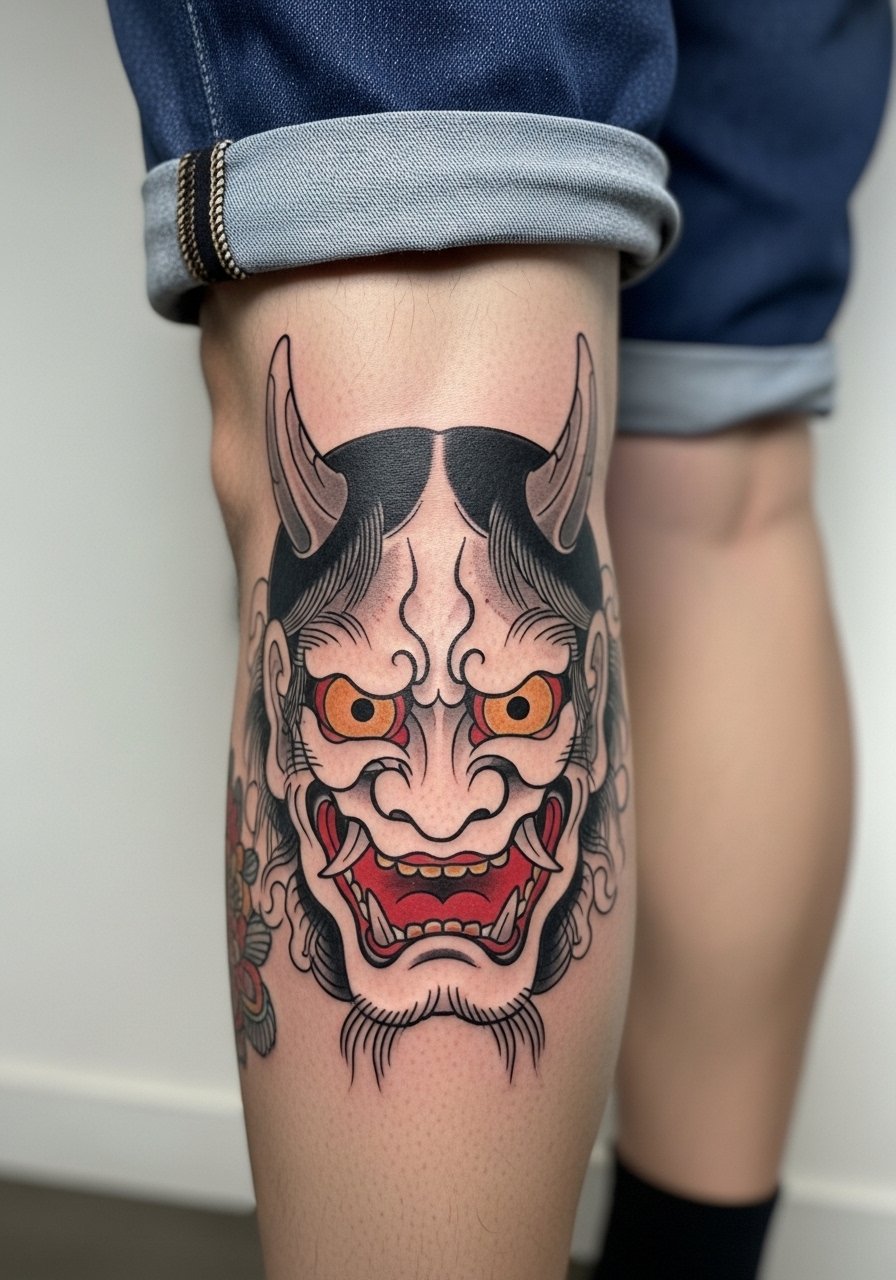
Demonic faces and Oni designs use dramatic expression and bold contouring which makes them ideal for curved leg areas. These pieces often focus on a single focal face with surrounding motifs that emphasize emotion. Specify facial expression, teeth and eye direction in your references so the composition matches the intent. The mistake is squeezing too much facial detail into a small calf area which can read muddy after healing. Bold line work helps maintain facial clarity at two and five years, while tiny shading details may soften earlier. This subject also ties into cultural origin sensitivity, so indicate respect for the source motifs and consider slight adaptations rather than direct replicas.
15. Ankle Minimalist Cluster That Extends Upward
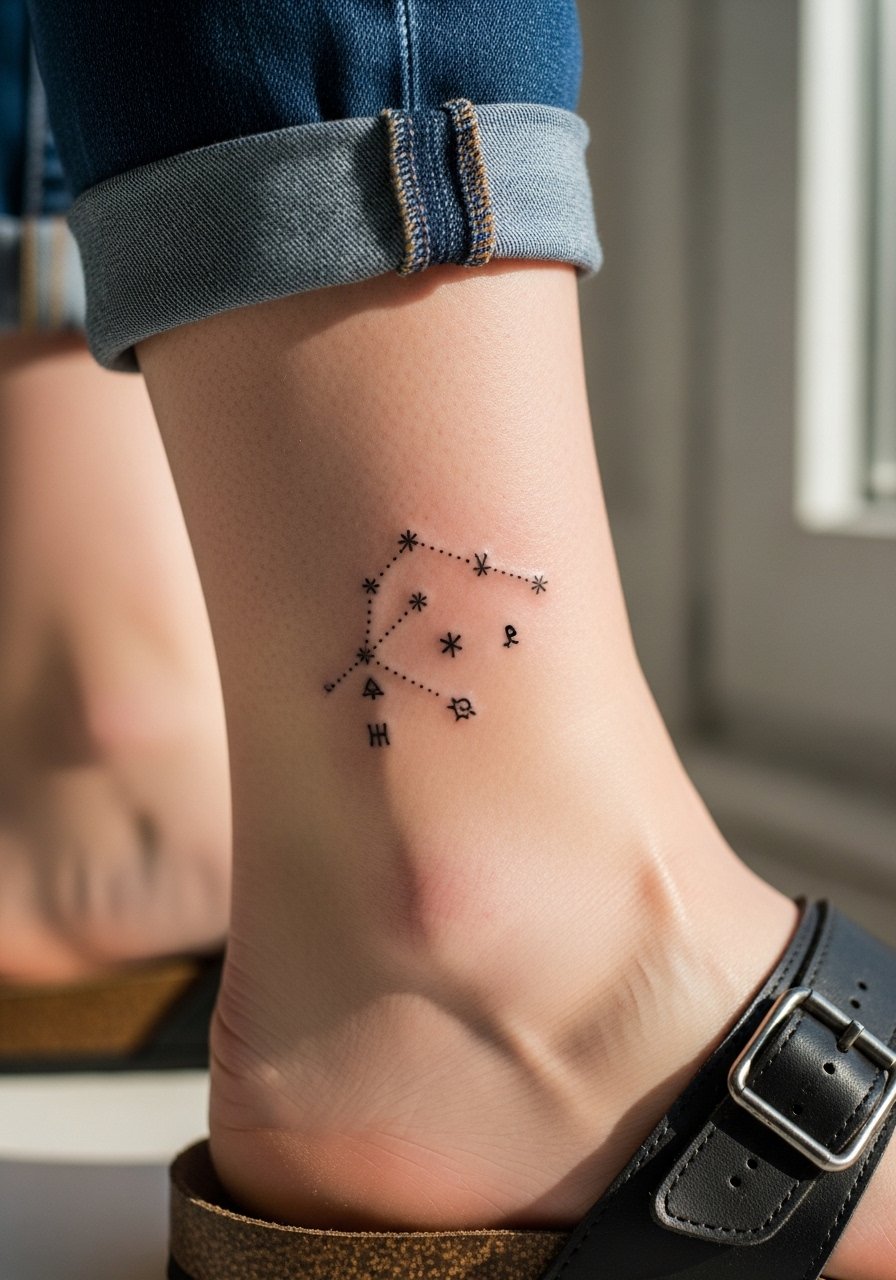
Ankle clusters are a low-commitment way to test sleeve expansion because they can be linked upward over time. Sessions are short but the area is bony and sharp for pain. Tell the artist which symbols you want clustered and where you imagine future extensions so they can leave anchor points. A common mistake is overconcentration of tiny motifs too close to the bone which tend to blur and need early touch-ups. At six months small symbols look crisp, at two years expect slight softening, and careful spacing helps them remain legible longer. For the appointment, wear sandals or rollable pants so the artist can access the ankle cleanly.
16. Kinetic Linework Knee Wraps for Motion
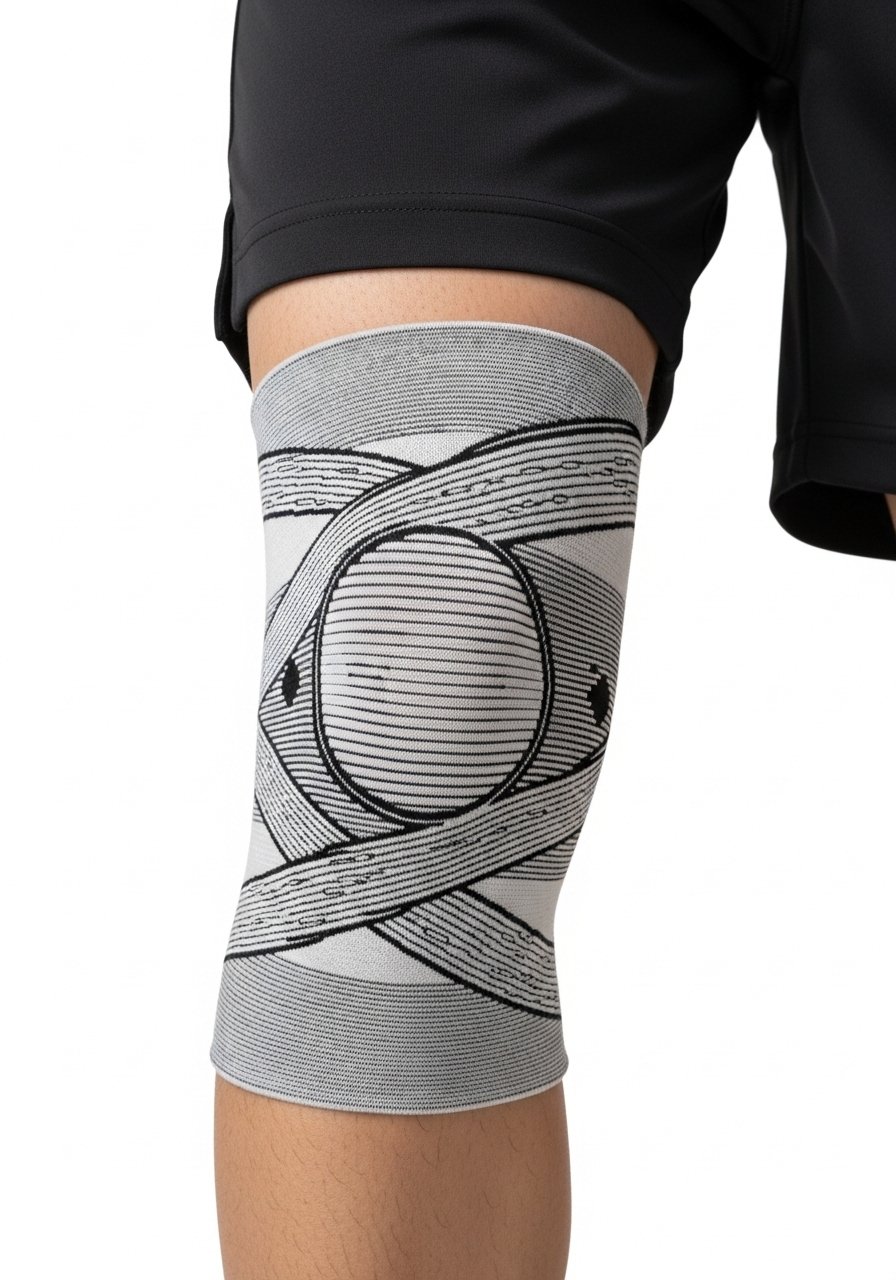
Knee wraps that celebrate motion use flow lines and segmented bands so the design reads with walking and bending. These pieces require careful planning because the knee creases move and stretch differently than the thigh. Ask your artist to test the stencil during flexing so they see how the design contorts. The biggest mistake is placing dense detail directly on the patella which creases and blurs faster. Expect higher pain on the kneecap and shorter session windows for area-specific work. For longevity, bold anchor lines around the knee help the motion elements keep shape through the healing phases.
17. Patchwork Leg Sleeve with Negative Space Planning
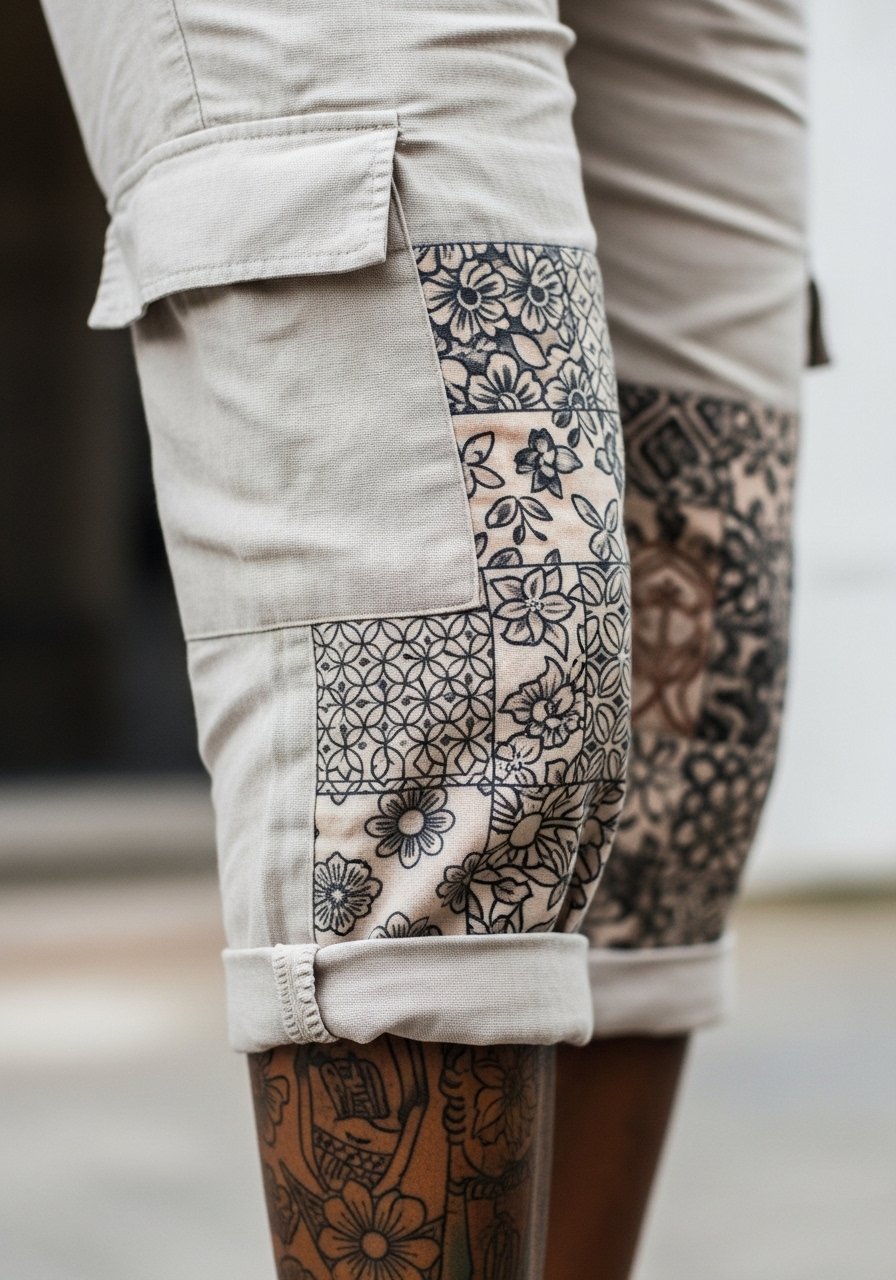
If you want a leg sleeve that grows over years, a patchwork approach with planned negative space gives flexibility for additions and travel pieces. Start sessions by blocking out anchor panels and leaving corridors of skin to add connectors later. A frequent error is filling every gap early which leaves no room for future storytelling. At six months each panel has its own texture, at two years individual styles age at different rates, and thoughtful connectors placed later solve visual cohesion. When you book, ask for a roadmap drawing that shows where future work would best attach so the final sleeve reads intentional rather than piecemeal.
Frequently Asked Questions
Q: How much does it usually take to finish a full leg neo-traditional or illustrative sleeve?
A: It depends on saturation and coverage, but expect multiple sessions over several months. From my experience full leg illustrative or neo-traditional sleeves often require four to six long appointments to build color, background, and highlights while allowing proper healing between sessions.
Q: Do fine line mandalas on the thigh need different care than bold tribal work?
A: Yes, fine line and ornamental work benefit from gentler early care because the lines are thinner. Bold tribal work tolerates friction more, while delicate mandalas can lose crispness if compressed or rubbed during the first two weeks. Discuss healing approach with your artist and follow the studio’s guidance for the first week.
Q: Is Saniderm better than dry healing for leg work like shin or calf pieces?
A: Artists split into two camps. One camp says protective film like Saniderm keeps the area clean and reduces scabbing, which is handy for lower-leg friction zones. The other camp prefers dry healing, arguing natural scab formation helps pigment settle. Ask your artist which method they use and why, then follow their protocol for best results.
Q: How do I find portfolios for leg-specific work without naming artists?
A: Search style-specific hashtags and location tags, browse tattoo directories for leg sleeve portfolios, and check convention line-ups for guest spots. Try hashtags like #legsleevetattoo and search "[city] neo-traditional leg tattoo" to see shop portfolios and travel specialists.
Q: Will a geometric blackwork half sleeve on the calf hold up better than a fine line floral on the thigh?
A: Generally bold blackwork holds up better in high-friction zones because thicker lines resist spreading. Fine line on a fleshy thigh can last nicely if scaled up a bit and spaced intentionally. The final call depends on your skin type, placement, and how the artist spaces the work.
Q: What should I wear to a full leg session to keep the tattoo safe and the artist comfortable?
A: Wear loose bottoms that can be rolled or pulled aside without tugging the area. I recommend items like loose fit sweatpants for multi-hour lower-leg sessions because they protect fresh ink without binding.
Q: How often do leg sleeves need touch-ups compared with arm sleeves?
A: Legs experience different friction and sun exposure patterns so touch-up timelines vary. From what I have seen, bold work can go longer between touch-ups, while detailed or fine line areas often need a refresh around year three to maintain crispness.