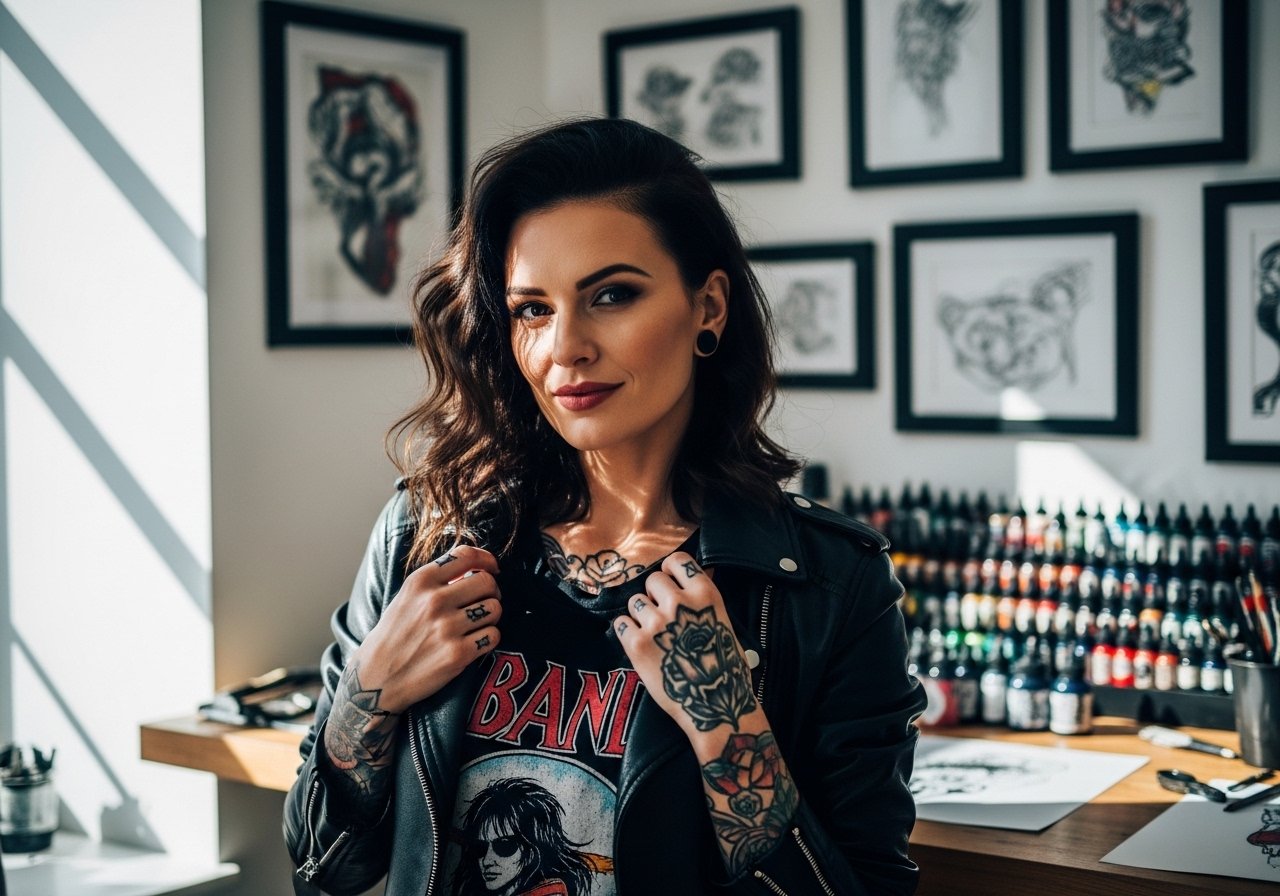
Fine line trends flood feeds, but the tattoos that age well usually follow quieter rules: room for linework, sensible placement, and realistic expectations about touch-ups. If you want a small stairway to heaven tattoo that still reads clean after summers of sun and years of sleeves, plan the scale, pick a technique that fits the skin, and think about how you will show it off. Below are 17 mini stairway to heaven tattoo ideas with styling notes, session tips, and what to expect as the ink settles.
1. Mini Stairway with Clouds and Stars on the Wrist
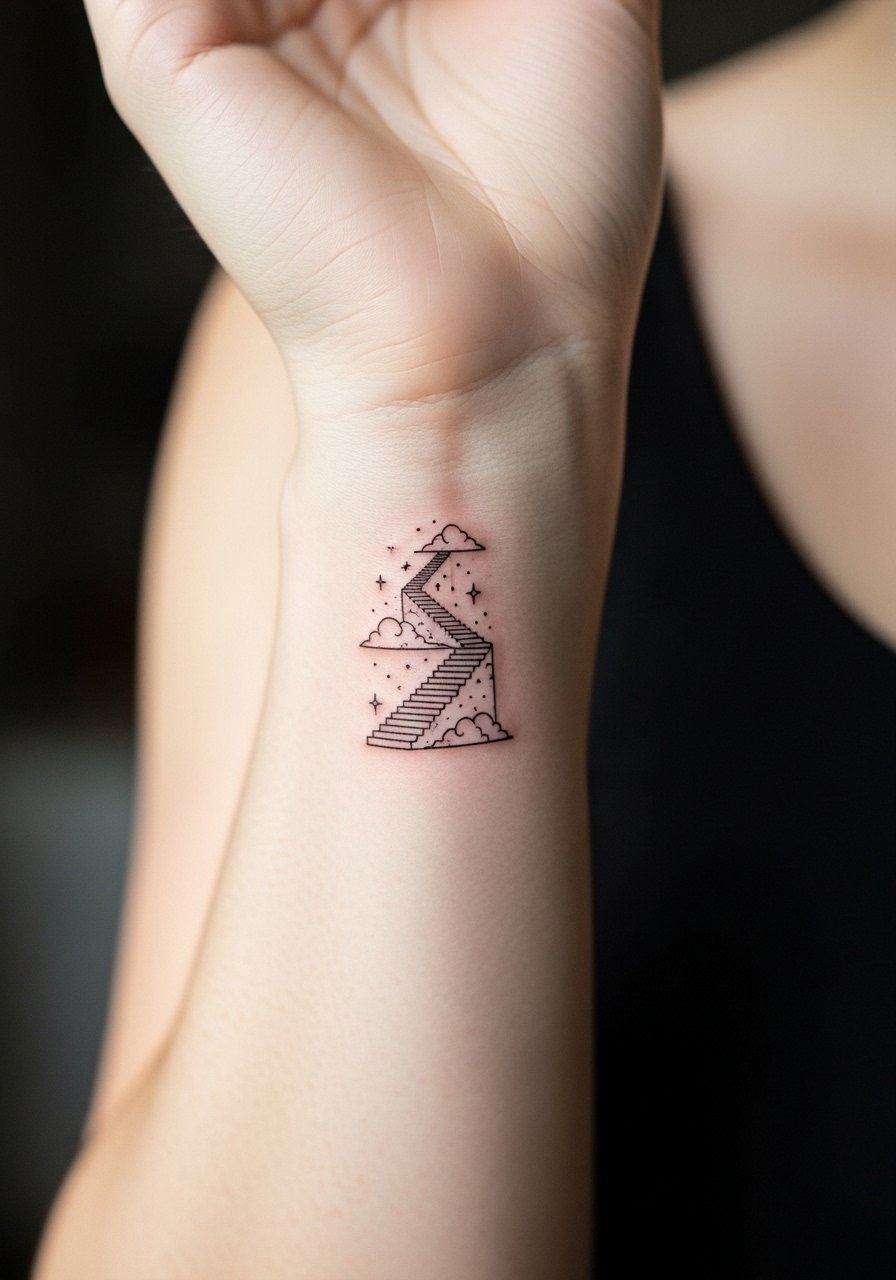
I’ve seen this small combination age well when the stairs are kept to one to two millimeter line weight and the clouds are rendered as open negative space. Tell your artist you want slightly bolder primary lines and airy dot work for the stars so the tiny elements do not blur together. A common mistake is packing too many stars into a one-inch area, which turns into a gray patch at year two. Expect a 45 to 75 minute session and a touch-up at year two if you work outdoors frequently. For showing it off, pair the wrist piece with a slim leather cuff bracelet on the opposite wrist so the tattoo reads as a simple accent.
2. Winding Staircase to Celestial Light on the Forearm

Fair warning, watercolor fades faster than saturated blackwork, so this one benefits from placement on the inner forearm where sun exposure is lower. Ask for a watercolor approach that uses muted blues with minimal heavy outlines, and request that the artist leave slightly more spacing between color blobs and linework. The session usually runs one to two hours depending on color layering. At six months the wash looks soft and dreamy. At two years the color will likely need a refresh if you get regular sun. For session comfort bring a rolled cuff chambray shirt you can roll easily to full access while keeping your arm relaxed.
3. Geometric Stairway Abstract on the Outer Forearm

The biggest mistake with geometric stairways is going too small. Compact acute angles merge over time, so ask your artist to increase spacing between parallel lines and use consistent lineweight. This version suits someone who wants a modern silhouette visible across sleeves. Expect a single-session piece of about an hour. Blowout risk is low on the forearm when done with steady hand speed and proper needle depth. Pair the look for show-off days with slim fit chinos rolled up at the ankle so the forearm reads against a clean outfit.
4. Simplified Mini Stairs with Gate Behind the Ear
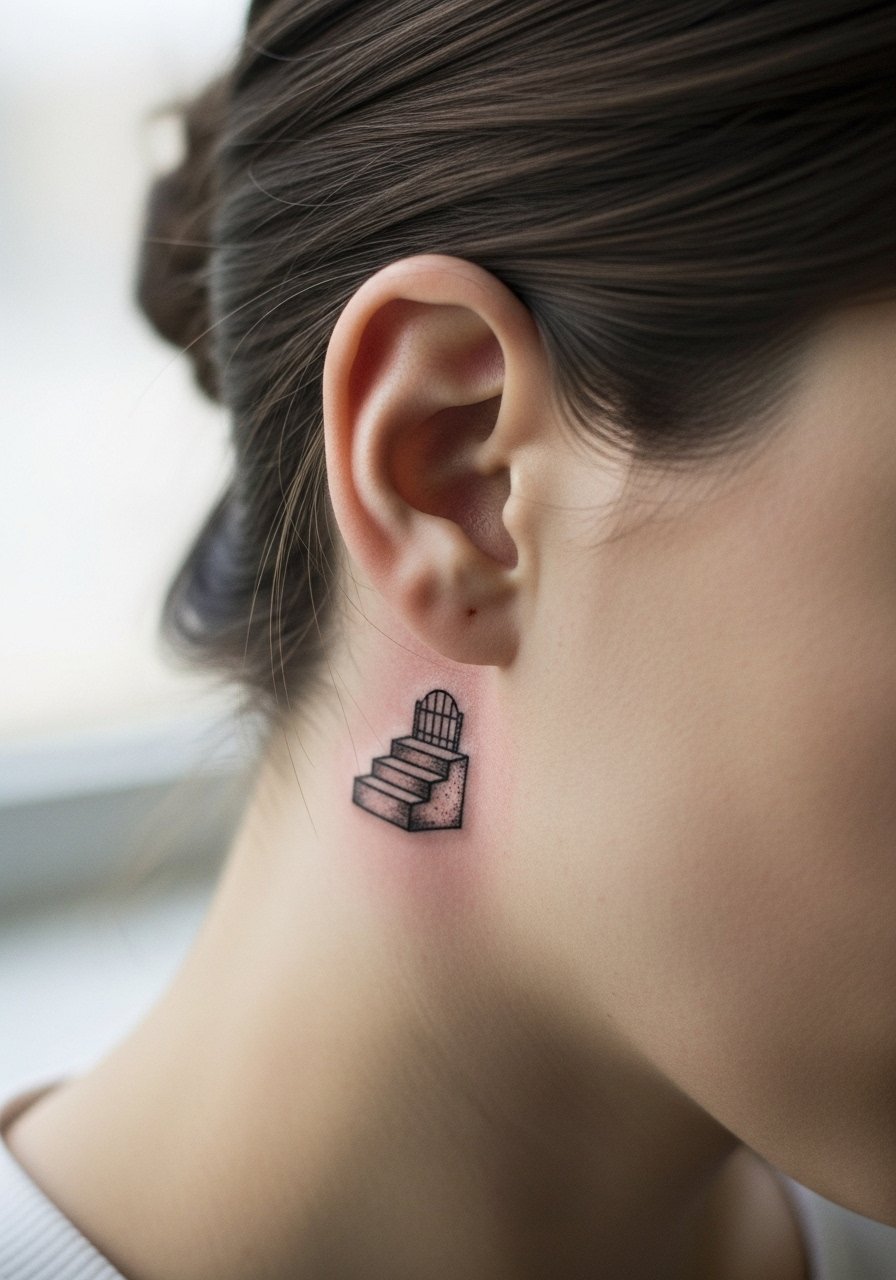
This two-by-three inch behind-the-ear size is discreet and ideal for a first mini tattoo. When you consult, explain you want a business-card scale layout so the gate does not become an indistinct blob. The most common version that ages poorly is one where the gate has tons of thin parallel lines. That detail blurs with time because the skin in that area moves a lot. The session is quick, about 30 to 45 minutes, but expect sensitivity near the skull. For the appointment wear your hair up and a top you can pull over the head easily so the artist can access the nape without tugging.
5. Stairs with Flowers on Steps, Inner Bicep
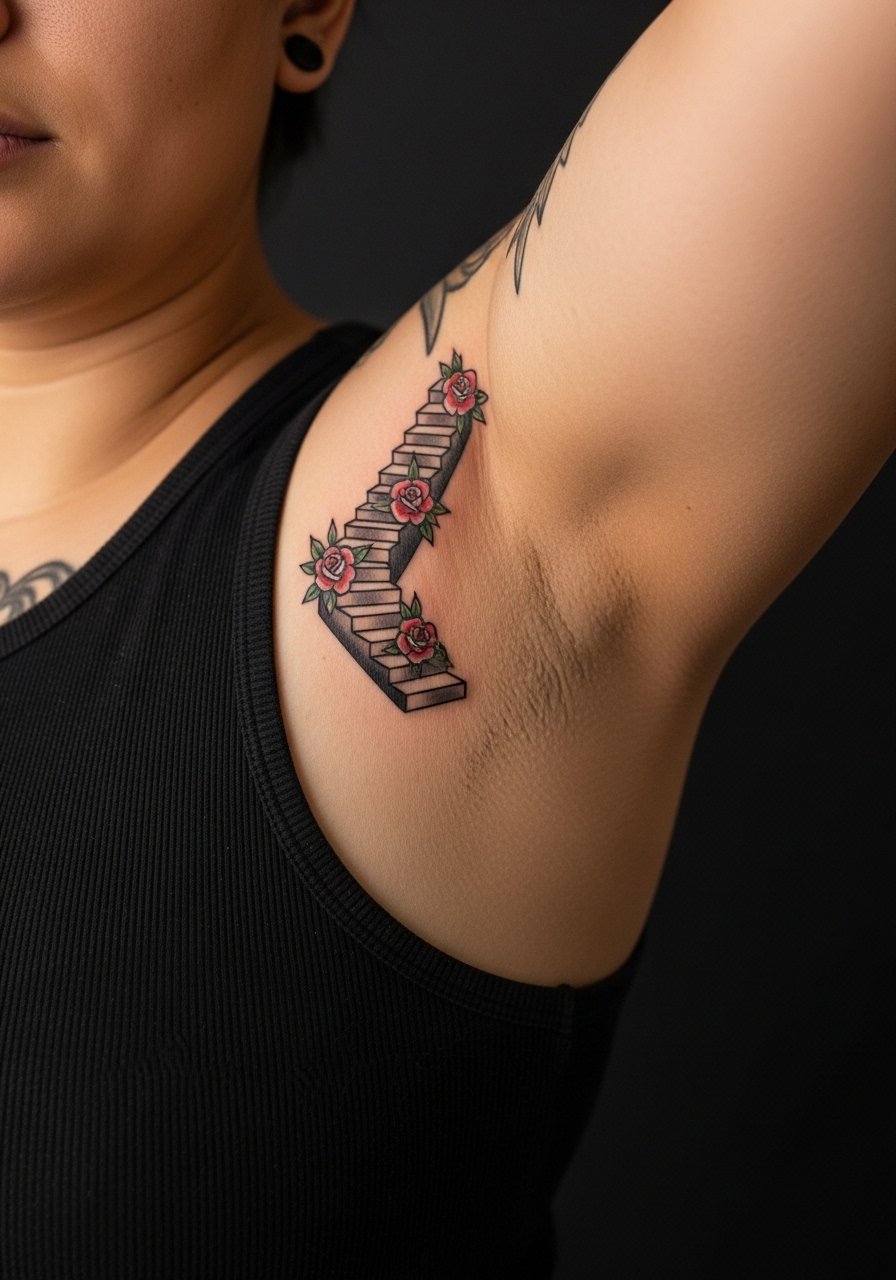
When floral elements ride the steps, prioritize contrast between the stair linework and the floral shading so one does not wash into the other. Tell your artist you want black and gray stair edges and color only on petal tips. A common mistake is over-saturating the flowers in a micro 1.5 inch composition, which creates muddy patches as it heals. The inner bicep is a moderate pain zone and often needs a two-session plan if you want solid color. For showing it off, layer a sleeveless muscle tee with an open denim jacket so the tattoo sits in the negative space of the outfit.
6. Ethereal Stairs with Moon and Stars on the Collarbone

When placing watercolor on the collarbone, ask for the pigment to be feathered lightly away from the sharpest lines to avoid early patchy fading. Artists split into two camps on collarbone watercolor. One camp prefers bold outlines under color for longevity. The other camp avoids harsh outlines to keep the wash airy. Ask your artist which approach they use and why. This placement is visible in off-shoulder tops. For show-off outfits consider an off shoulder blouse for evenings so the tattoo sits just above delicate jewelry.
Before You Book
Those first six ideas include wrists, forearms, inner biceps, and the collarbone, which all behave differently in healing. A few small items smooth the session and protect the fine line work in the first week.
-
Stencil transfer paper kit. Lets you preview the exact stair layout on skin before the needle hits, which helps with micro placements and behind-the-ear pieces.
-
Topical numbing cream. Applied 30 to 45 minutes before the session eases wrist and collarbone sensitivity without affecting outline clarity.
-
Thin protective film roll. Useful for ankle and finger pieces that experience daily friction from shoes and socks during the first week.
-
Fragrance-free body wash. Gentle cleansing reduces irritation for fine line stairways on the forearm and thigh.
-
Aquaphor healing ointment. A thin layer in the first 48 hours helps seal moisture for delicate linework while allowing proper scabbing and healing.
7. Micro Stairway Path Only on the Finger
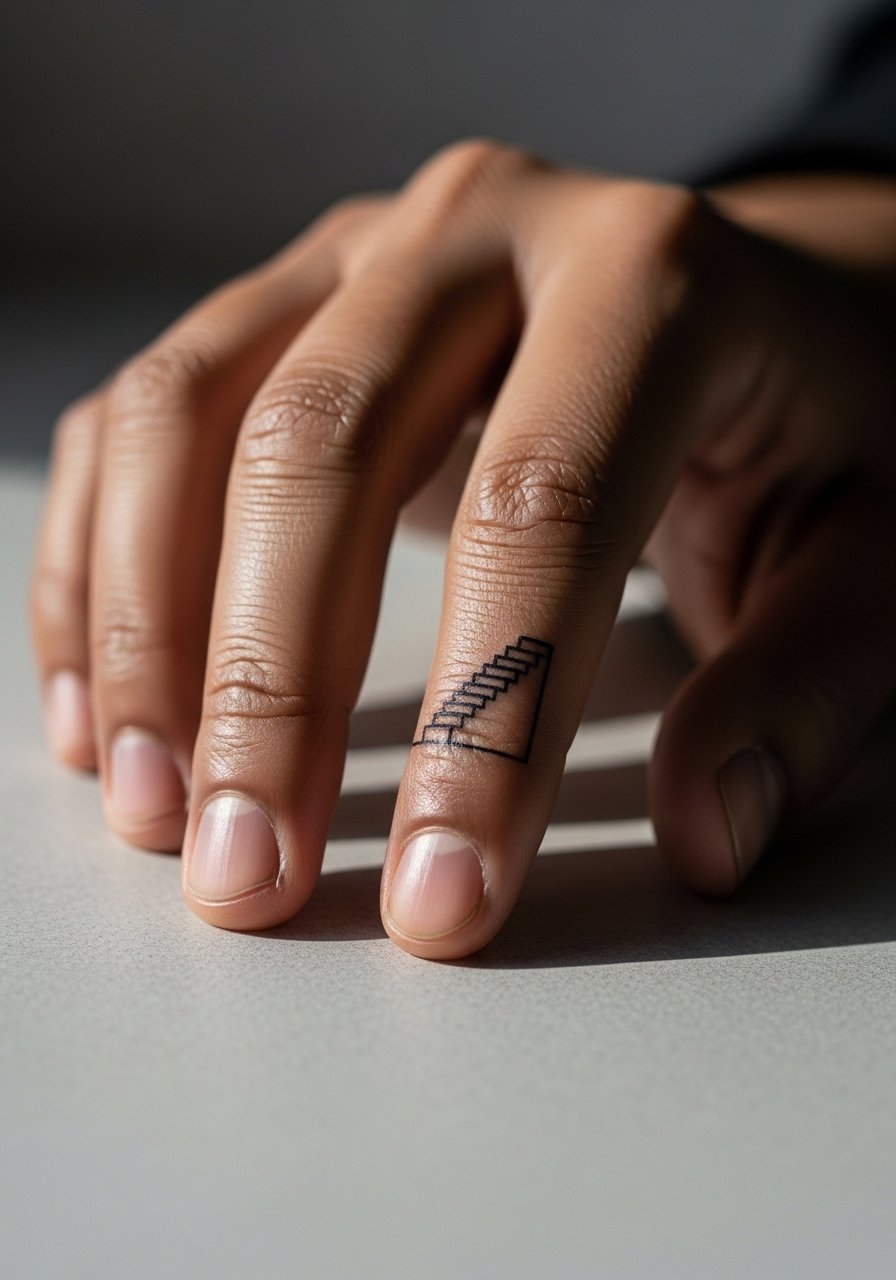
Finger tattoos are notorious for fast fading and accelerated wear. For a micro stairway, ask for slightly thicker primary lines and limit steps to three max so you do not end up with a gray blur. A common mistake is requesting a one-millimeter stroke across multiple knuckles. That detail disappears quickly because of constant washing and friction. Expect the session to be short but expect touch-ups more often, usually within 12 to 18 months. If you plan to keep the piece crisp, accept that fingertips require maintenance and wear a slim band on the opposite hand during the first month to reduce contact.
8. Ornamental Stairs with Vines on the Shoulder Blade
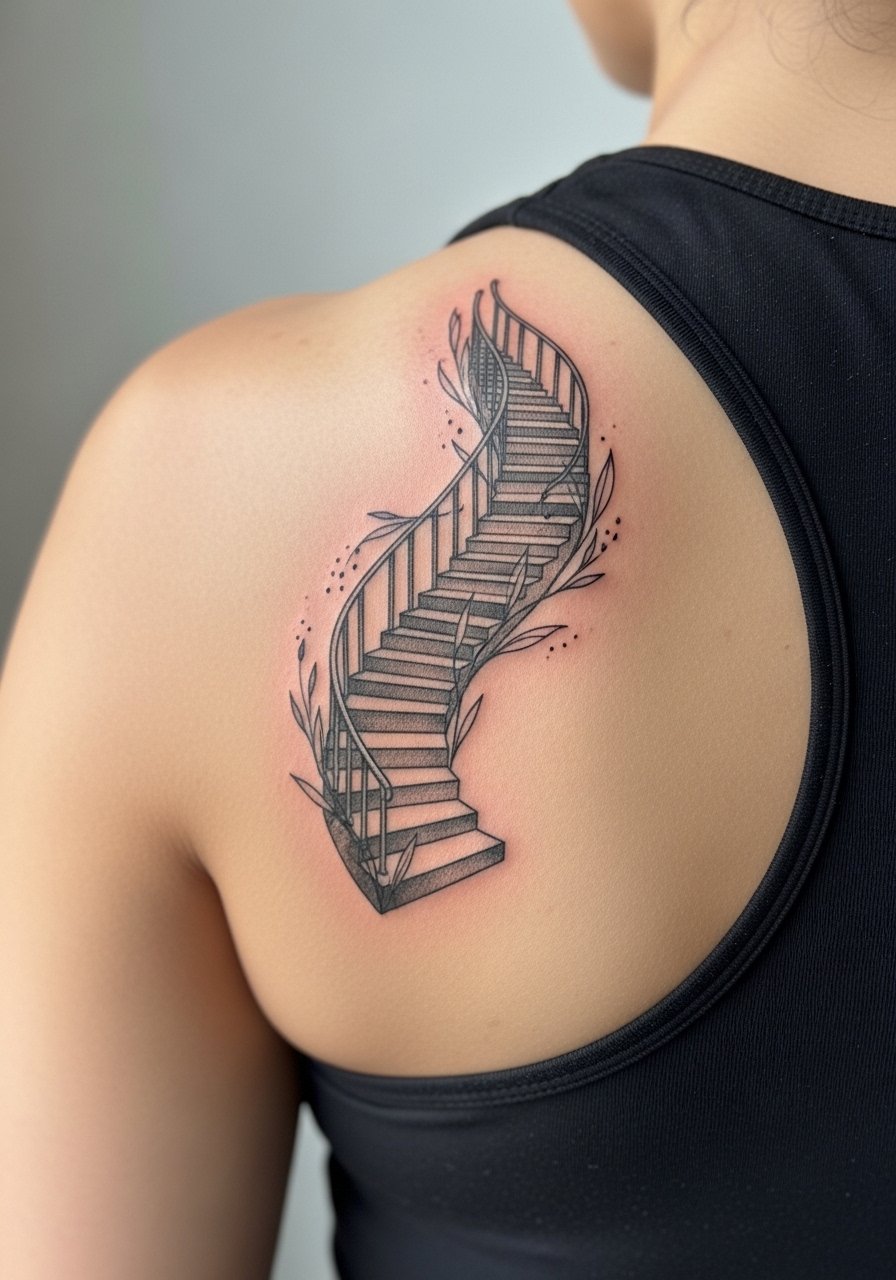
This is a good spot for slightly more intricate detail because the shoulder blade moves less with daily activities. When you describe the piece, say you want negative space between the steps and the vines so the pattern reads as layered rather than flat. A mistake artists see often is cramming ornamental filigree into a three-inch area, which can age into an indistinct mass. The session sits at about an hour. For show-off looks consider a racerback tank black that frames the design without covering it.
9. Blackwork Stairway Silhouette on the Calf
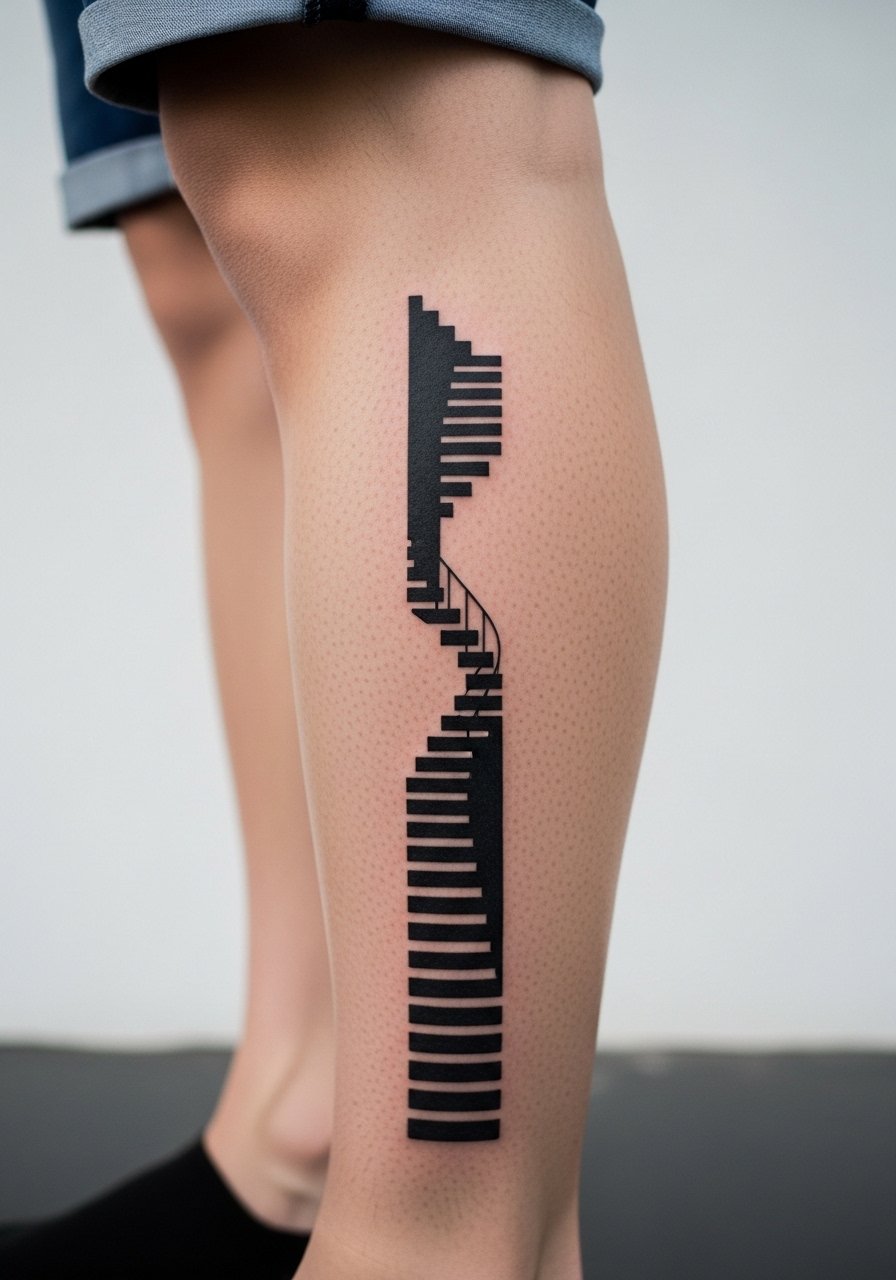
Bold blackwork fares best for long-term visibility because saturation resists fading compared with pale washes. Tell your artist you want consistent saturation, not patchy fill, and that you prefer broader steps rather than tight risers. A common error is tight micro-steps that end up looking like a single black bar after a few years. The calf handles solid black well and usually needs just one session for a mini silhouette. Pair it with canvas low top sneakers and cropped pants for casual show-off moments.
10. Fine Line Stairs with Tiny Angels on the Inner Arm
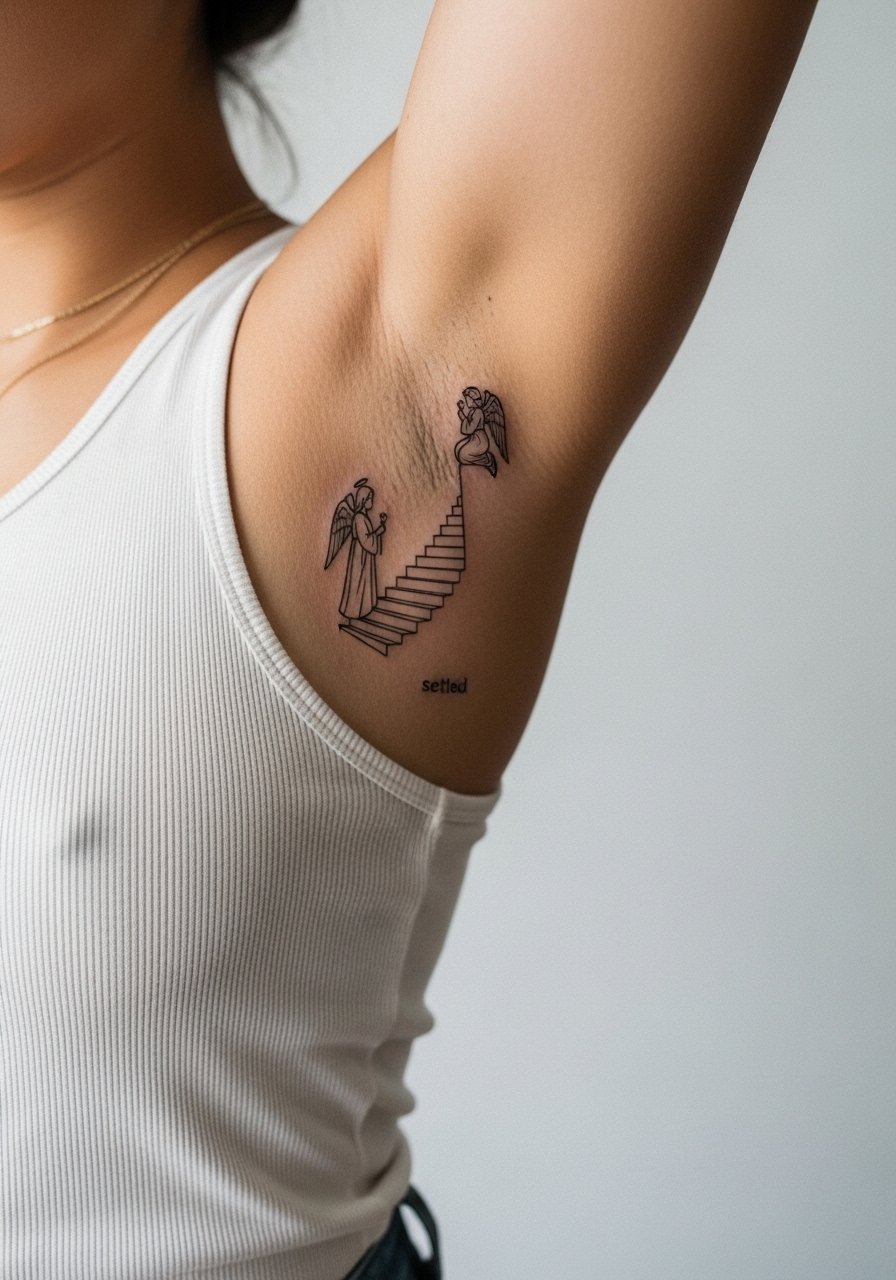
Most people want fine angels for memorial reasons, but too much figuration in a tiny area becomes muddy. Ask the artist for silhouette angels or minimal contour lines rather than full facial features. Artists split into two camps on adding human figures at micro scale. One camp favors clean silhouettes for clarity long term. The other camp will use micro shading and accept earlier softening. The inner arm is moderately sensitive, expect a one-hour session, and plan a touch-up around year two if you value crisp figures. For appointment ease wear a tank top you can pull aside without compressing the area.
11. Tiny Spiral Stairs to Clouds on the Ankle
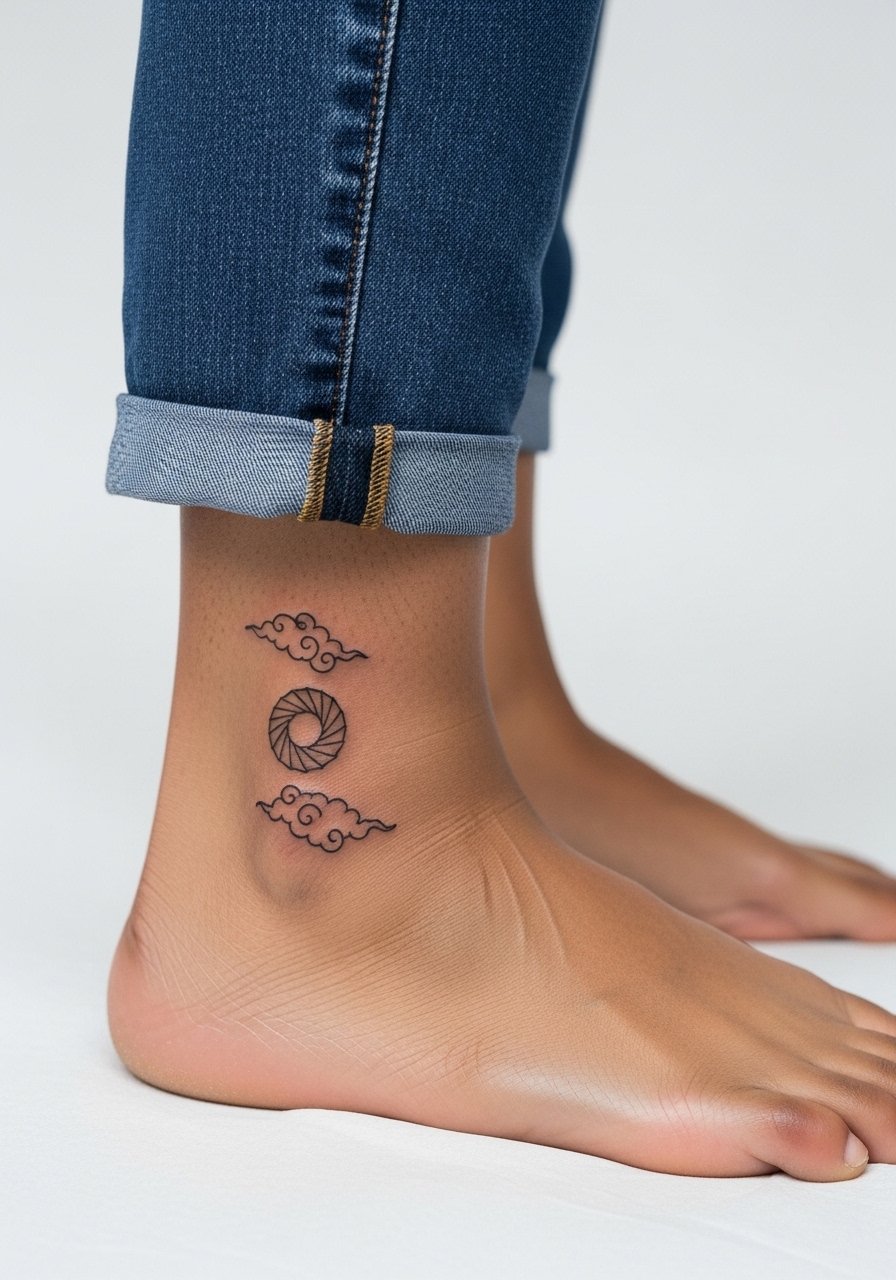
Ankle pieces face constant friction from socks and shoes, so the design needs to avoid many tiny cross-hatches. A good instruction to give is to keep the spiral open and limit shaded areas. The usual error is over-detailing the spiral in a one to two inch space, which blurs fast. Sessions are short and usually single-visit. For summer visibility pick strappy flat sandals so the ankle line reads clean against neutral footwear.
12. Neo-Trad Stairs with Celestial Symbols, Forearm Wrap

A forearm wrap gives room to execute neo-traditional proportions, but the trap is cramming too many motifs into the wrap. Ask the artist to map negative space on the first pass so each celestial symbol has breathing room. This style often takes two sessions because color pops need separate passes for saturation. At six months the piece looks vibrant. By year three expect slight softening of color edges depending on sun exposure. For sessions wear a light blue button up shirt you can roll cleanly so the artist can rotate the arm for placement checks.
13. Micro Spiral Staircase on the Thigh
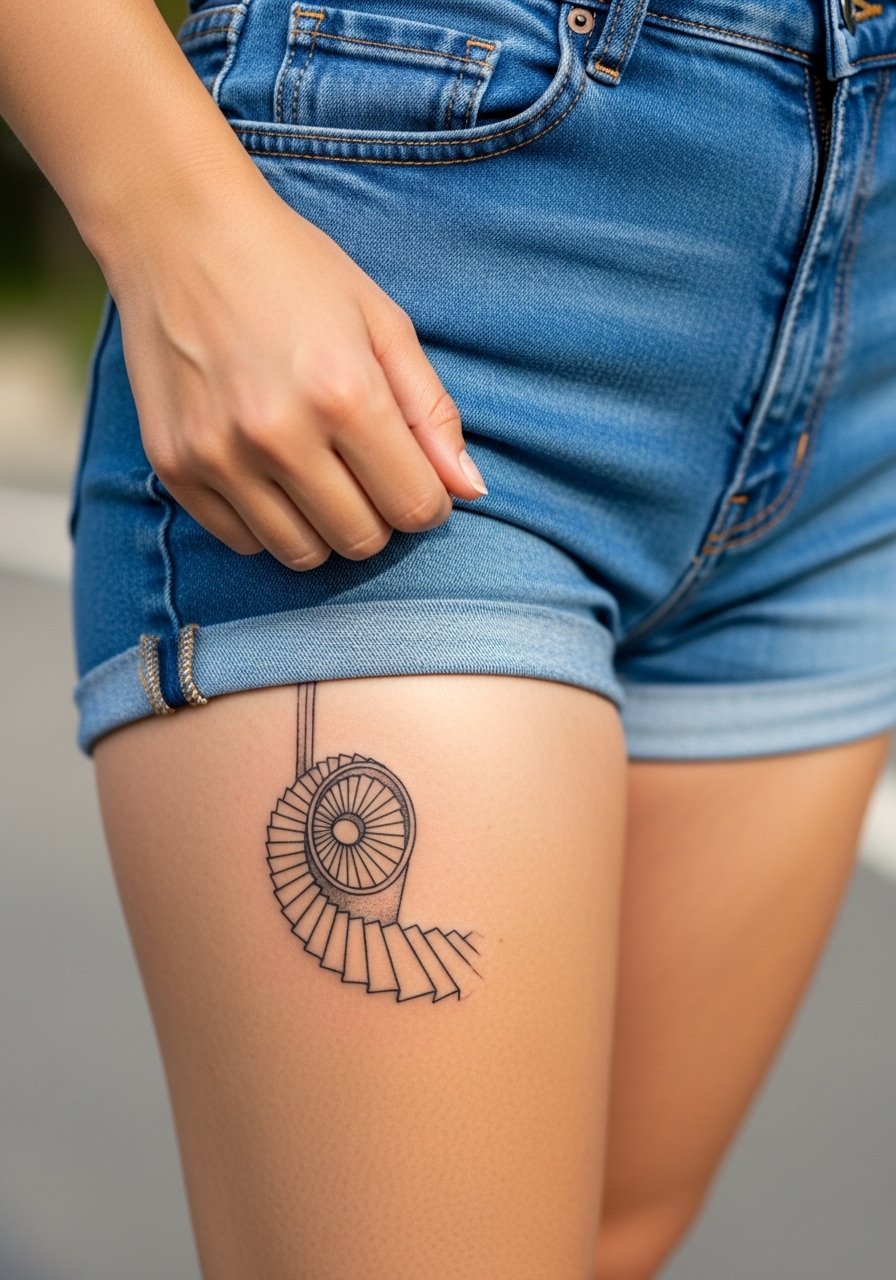
The thigh provides generous flat canvas, which lets you scale a spiral slightly larger than ankle options with lower blowout risk. Tell your artist you want the spiral to fade to thin dots as it rises so the top reads airy. A common mistake is trying to cram the same silhouette used on a wrist into a thigh scale without adjusting proportion. Sessions are comfortable when seated or lying down and take under an hour for a mini. For summer show-off choose high waist denim shorts that frame the area.
14. Geometric Abstract Staircase on the Back of the Neck
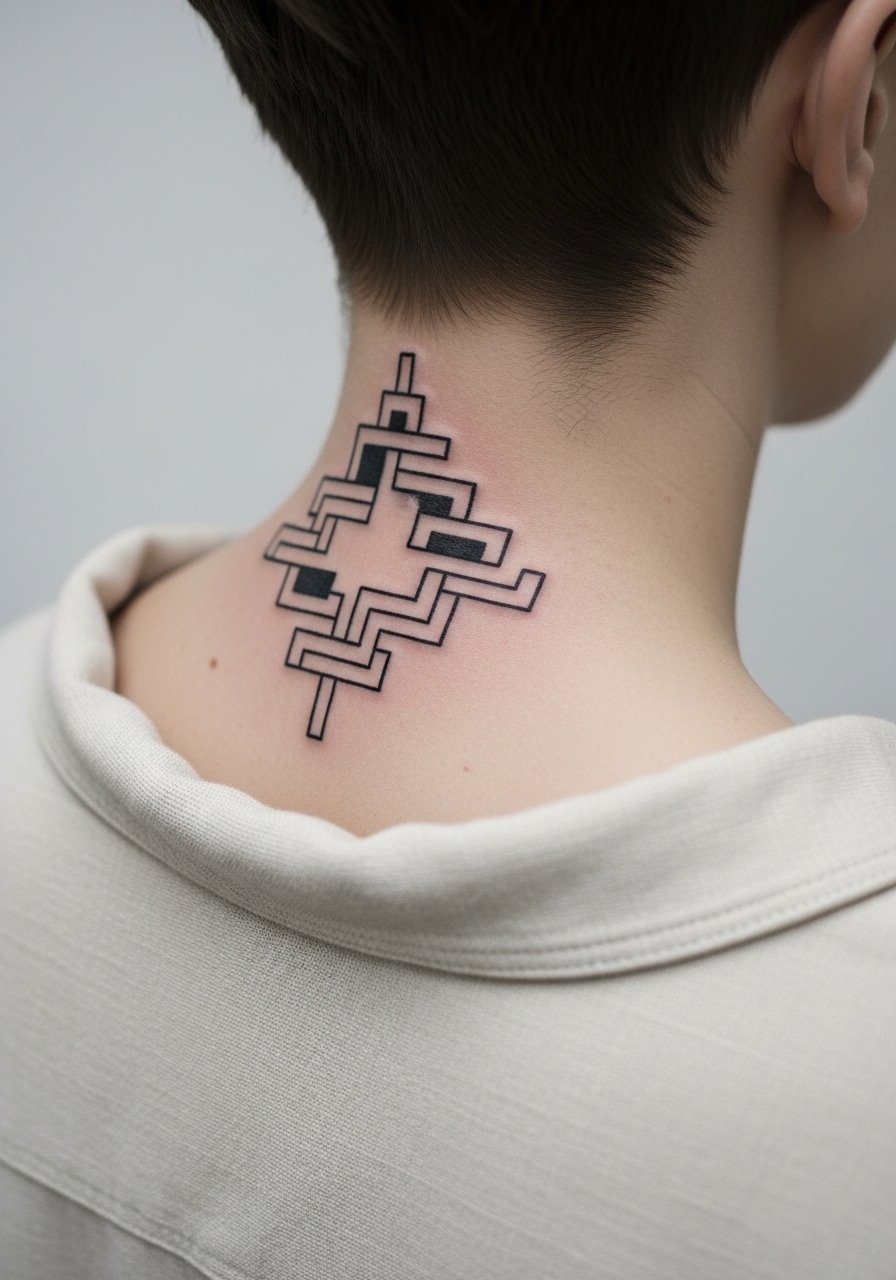
Neck anatomy moves and stretches more than the forearm, so small tight geometry can merge over time. When consulting, ask for simplified repeat units with intentional spacing and ask the artist how they handle needle depth on neck skin. The common mistake is applying wrist-scale geometry without extra spacing. Expect moderate sensitivity and plan a short session under an hour. For discreet showing pick hair styles that tuck away or collars that expose the area selectively.
15. Ornamental Dotwork Ascension on the Spine
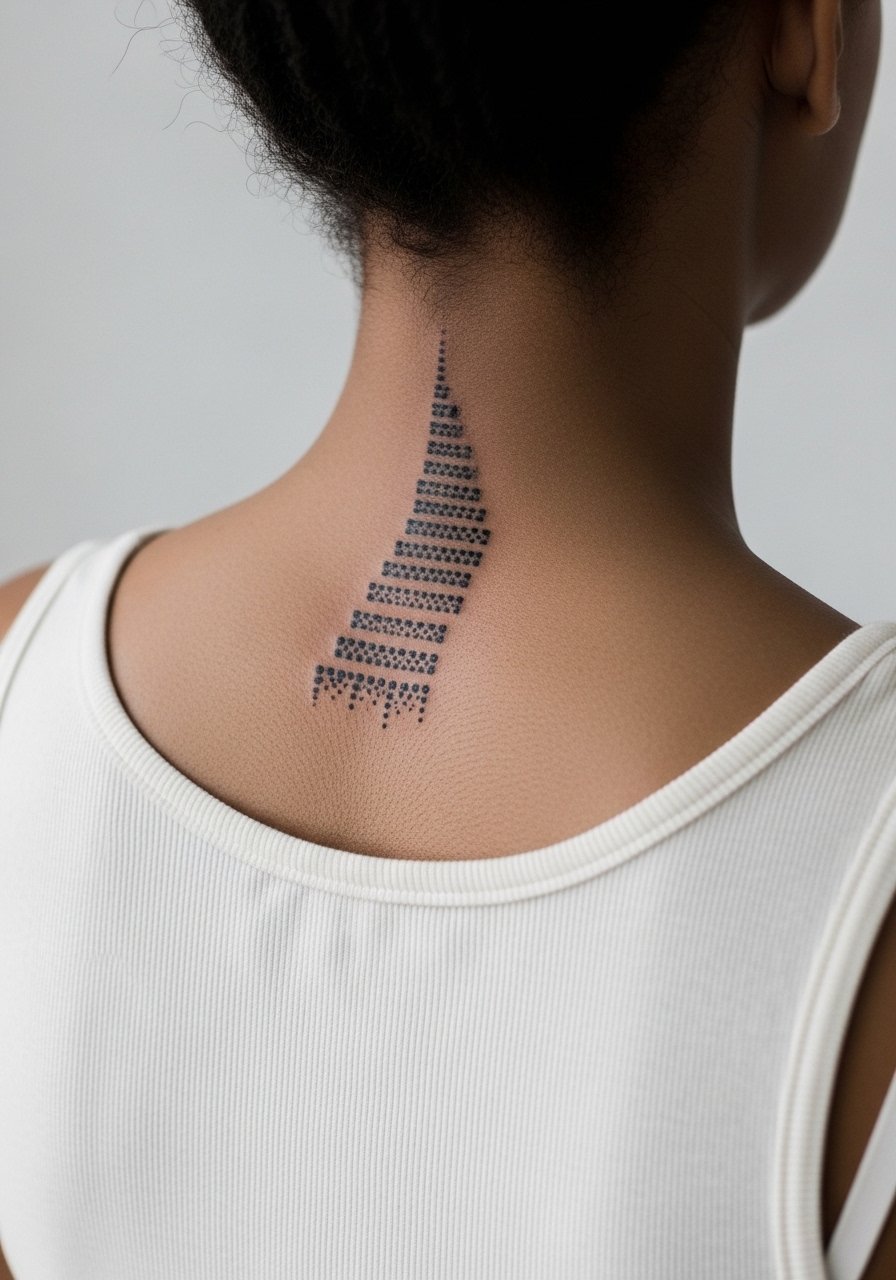
Dotwork thrives on the spine because the linear run lets stippling create depth without dense lines. Tell your artist you want dot gradients, not solid fill, so the piece breathes as it heals. A mistake is compressing stipple too tightly which becomes a gray block after a few years. Sessions can be a single pass of about 45 minutes. If career visibility is a concern, remember spine pieces show easily with low-back tops and swimwear. For session wear a backless halter top you can use to show placement then change into something less revealing for the trip home.
16. Tiny Spiral Stairs Scaled to Business-Card Size for Behind the Ear
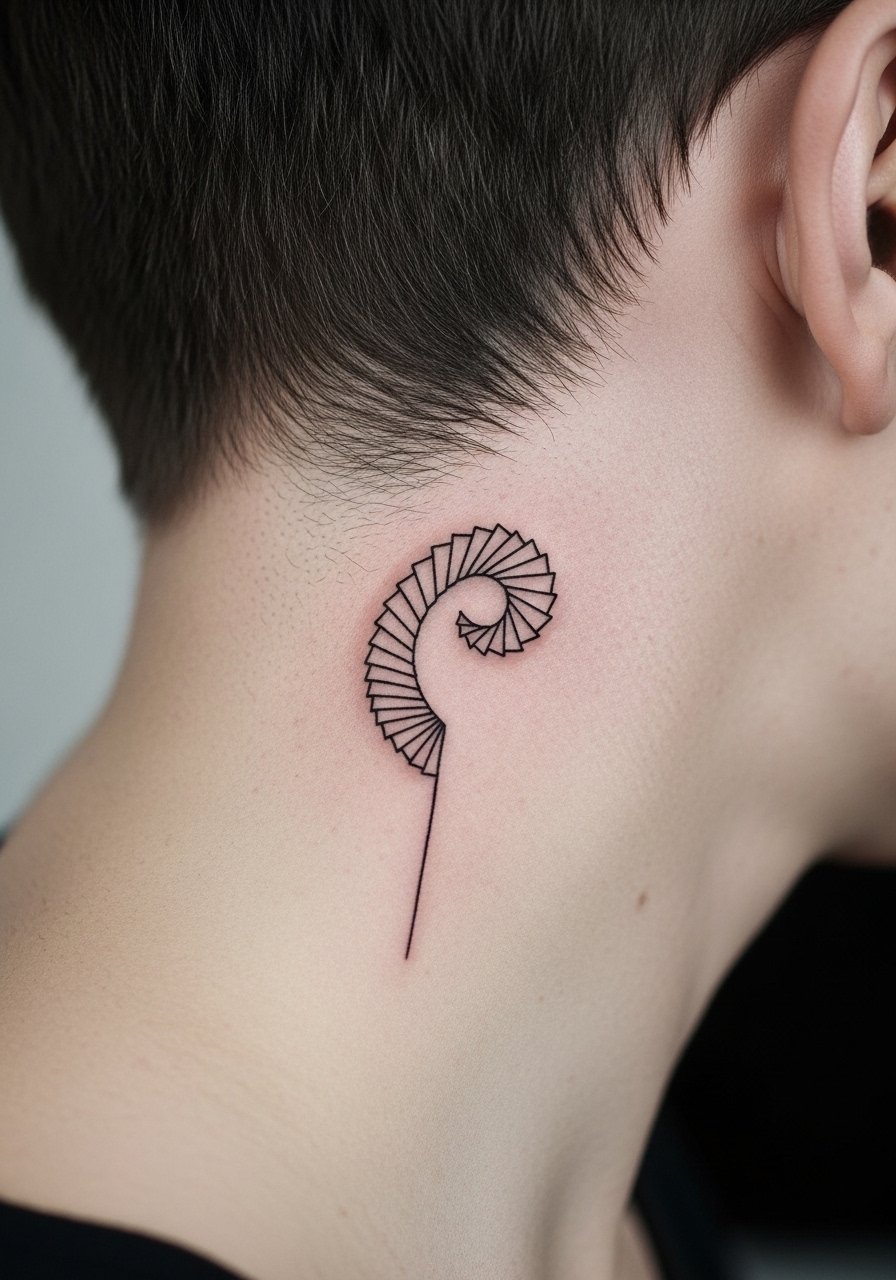
This is one of the under-covered ideas that works for people who want meaningful ink hidden in plain sight. Keep the spiral compact and avoid fine hatching inside the steps. A common error is treating the behind-the-ear skin like forearm skin. That area is thinner and moves with hair texture, so ask for a simplified contour-only approach. Sessions are fast and sensitive. For the appointment, wear your hair up or bring clips so the artist can see the placement without tugging.
17. Geometric Abstract Stairway with Personal Step Icons on the Calf Wrap

This version uses small personal icons on select steps, a customization angle rarely seen in mainstream lists. When you build this, pick icons that read at a small scale, like a tiny anchor or single initial, and ask the artist to place them on broader treads rather than risers. A real mistake people make is packing six icons into a two-inch vertical run, which reads cluttered and ages poorly. The calf tolerates moderate detail and usually holds up well. For session comfort wear shorts that you can adjust without compressing the area.
Frequently Asked Questions
Q: Will a fine line mini stairway tattoo blur faster on the ribcage than on the forearm?
A: Fine line on the ribcage is more likely to soften sooner because that skin stretches with breathing and weight changes. Artists split into two camps on this. One camp argues ribs blur within two years. The other camp says careful depth and spacing keeps lines readable longer. Ask your artist which camp their portfolio supports and expect occasional touch-ups if you choose ribs.
Q: How should I prepare clothing-wise for a collarbone watercolor session?
A: Wear a wide-neck or strapless top you can pull slightly aside so the artist has clean access without tugging. Bring a loose button-down as a cover on the way home. For show-off looks later, an off shoulder blouse frames collarbone work nicely.
Q: Are behind-the-ear mini stairway tattoos risky for blowout?
A: That area has thin skin and sits near hair follicles, so tiny, dense detail can migrate. The safer approach is simplified contour lines and slightly thicker strokes. Expect sensitivity and plan for touch-ups more often than forearm pieces.
Q: How often should I expect touch-ups for small blackwork stair silhouettes on the calf?
A: Solid black silhouettes usually hold longer than watercolor or ultra-fine line. Many people do fine-line touch-ups at year two or three, while bold blackwork may not need attention until year five or later depending on sun exposure and friction.
Q: Can I add personal symbols to staircase steps without overcrowding the design?
A: Yes if you limit icons to one or two and place them on wider steps. Discuss scale with your artist and request mockups at actual size. A single clear icon reads far better than several cramped marks.
Q: What are good discovery paths for finding artists who handle tiny stairway designs well?
A: Try targeted hashtag searches like #stairwaytoheaven and #finelinetattoos, or search directories for "stairway to heaven tattoo" plus your city name. Visiting portfolios for healed photos is the fastest way to see how small elements age.