Fine line foo dog pieces are everywhere online, and that visibility hides three common realities. Tiny linework often softens faster than people expect, many shops now charge higher minimums, and it can be hard to find artists who respect East Asian motifs without oversimplifying them. I visit five shops across Brooklyn and elsewhere, and these 27 minimalist foo dog options balance trend with what actually holds up on skin.
1. Minimalist Foo Dog Outline on Inner Forearm
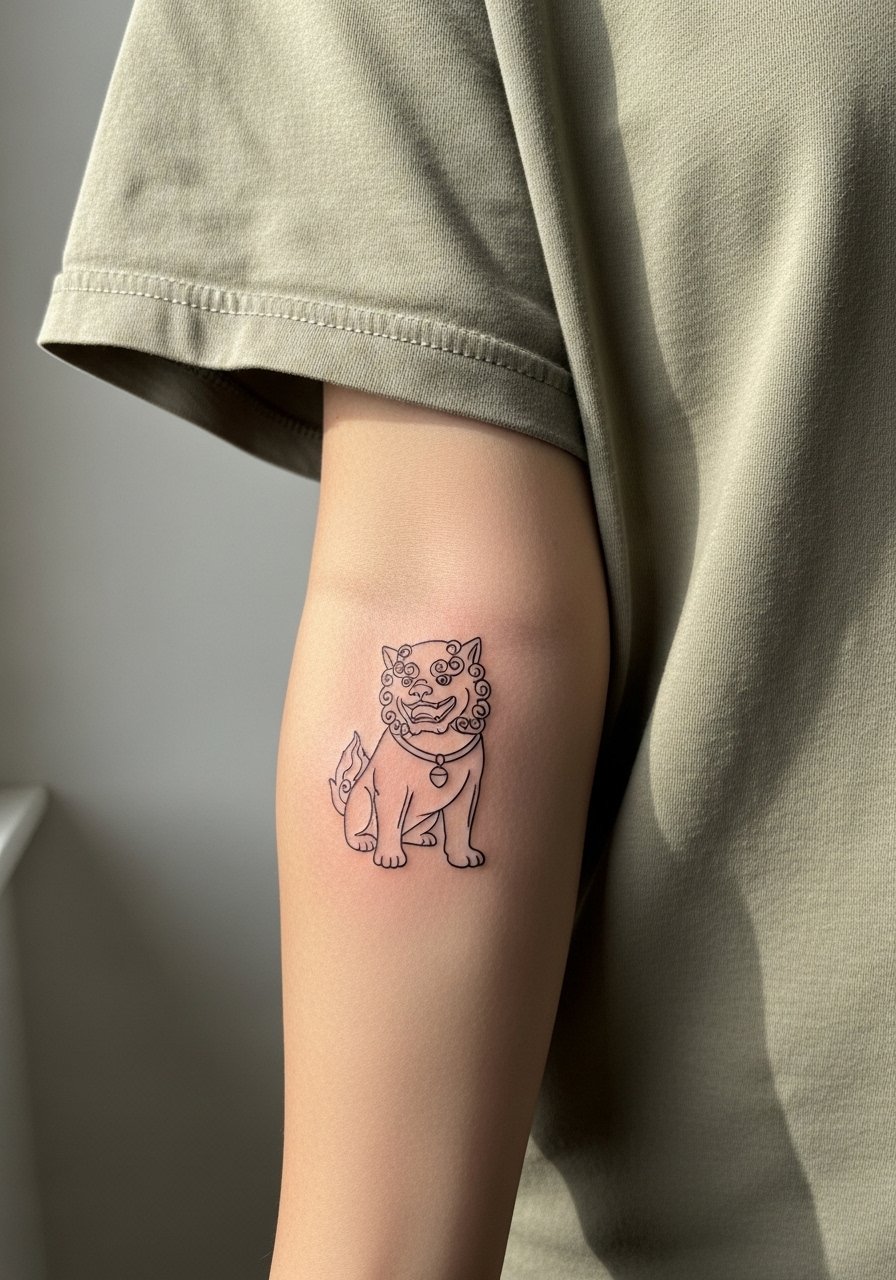
I see this forearm outline on clients who want a discreet emblem that reads clean while still fitting into sleeve work later. Tell your artist you want slightly thicker linework than a micro-line piece and consistent spacing between curls in the mane. The common mistake is asking for razor-thin lines on a high-movement area, which often leads to early softening. Expect a one-session visit and a touch-up option around year two if you do a lot of outdoor work. For showing it off, roll the cuffs of a rolled cuff chambray shirt and wear a thin silver cuff on the opposite wrist.
2. Fine Line Foo Dog with Peony Accent on the Wrist
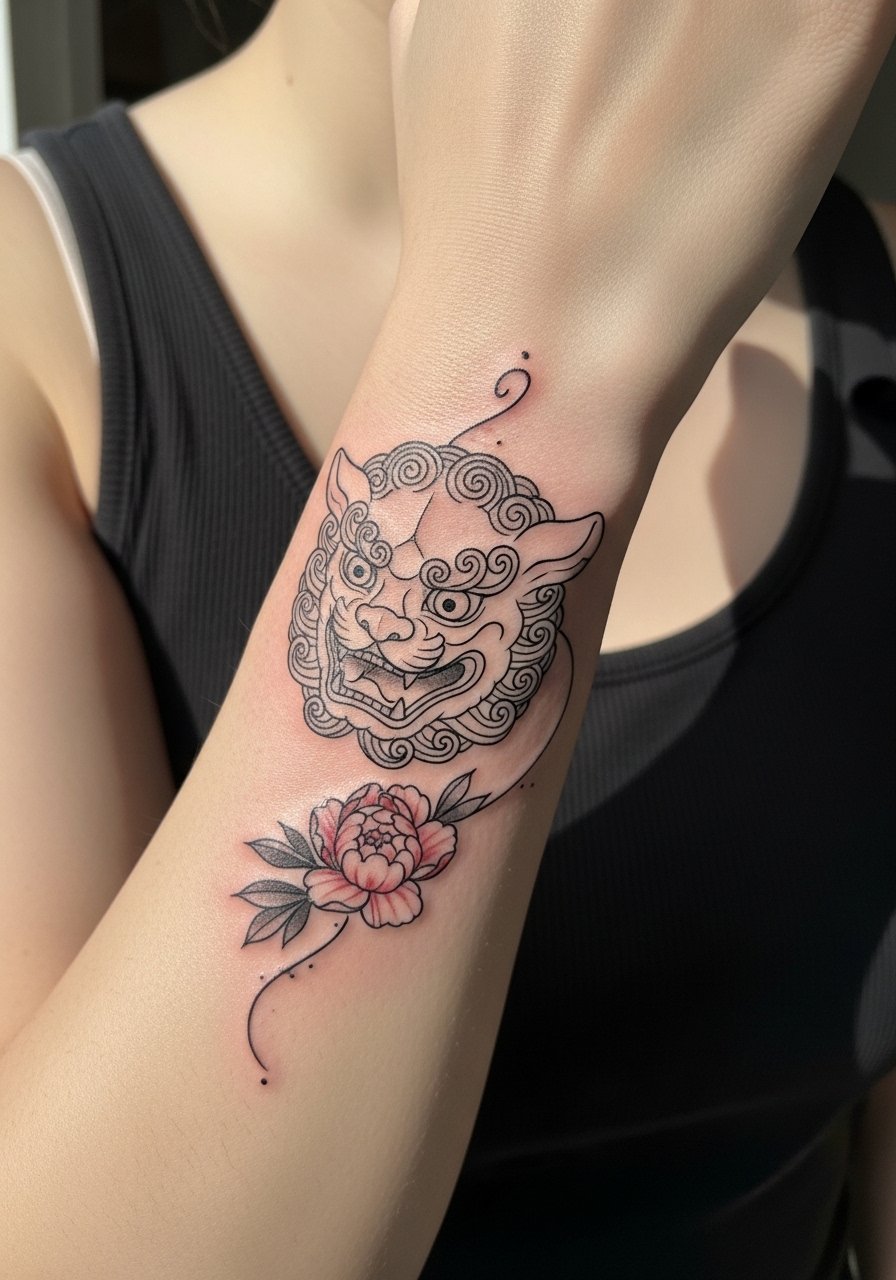
Wrist pieces age differently because of constant washing and motion. Ask for a three-inch layout that places the peony where it can sit on the outer wrist rather than wrapping under the arm. The peony gives a soft counterpoint to the foo dog's texture and masks tiny ink spread over time. A common error is overcrowding the wrist with details that merge after a year. Sessions are short and often a single visit. Pair this with stacked thin leather cord bracelet styling and remove jewelry during the appointment.
3. Blackwork Foo Dog Silhouette on the Shoulder
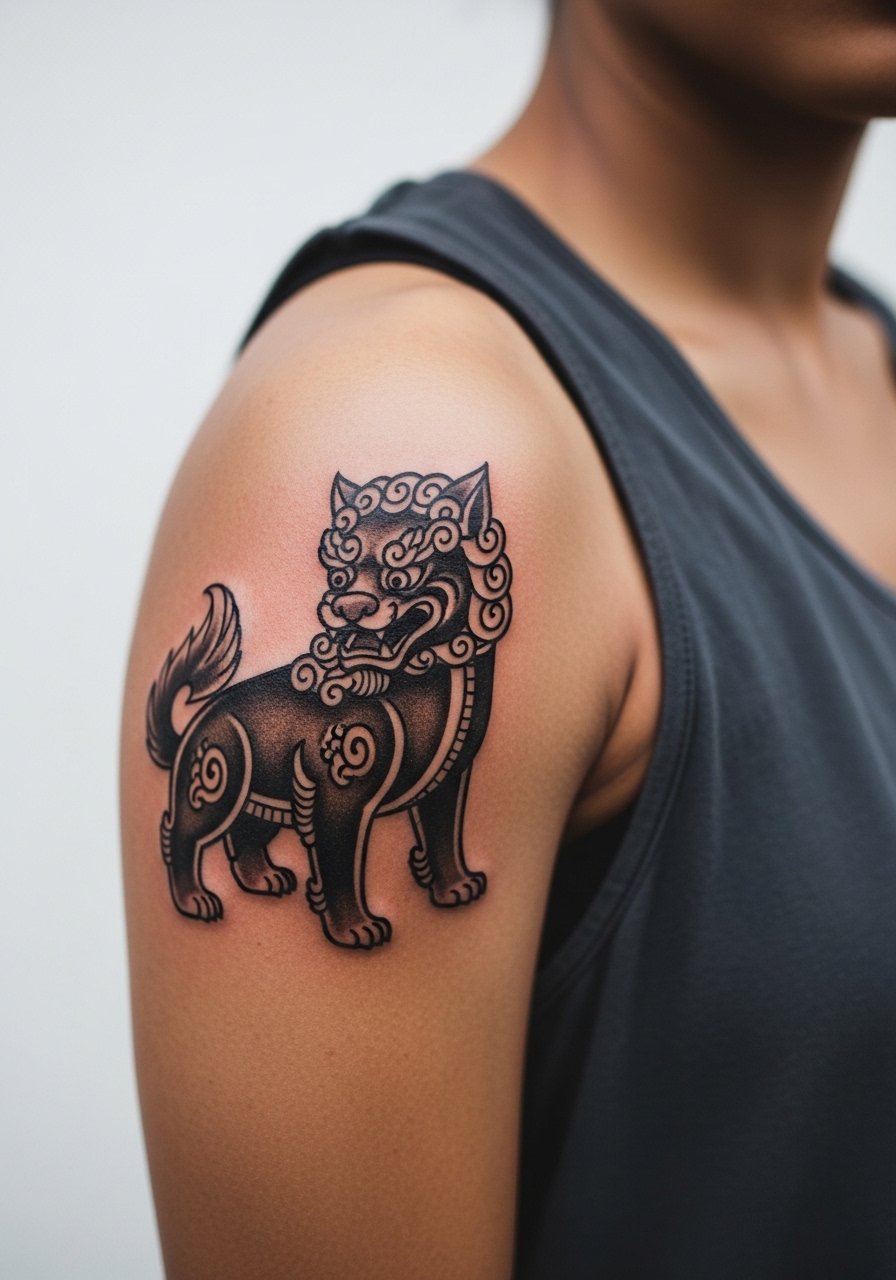
Solid black silhouettes are chosen for longevity on a range of skin tones because saturation holds up better than fine detail. Tell the artist you want bold contour with negative-space mane accents so it reads from a distance. The mistake is asking for tiny black fills without room for shading, which invites patchy fading. Shoulder sessions can be brisk and relatively low pain. For the session wear bring a sleeveless muscle tee so the artist has clear access, and for showing off you can sling a vintage leather jacket over the shoulder.
4. Micro Foo Dog Head Profile Behind the Ear
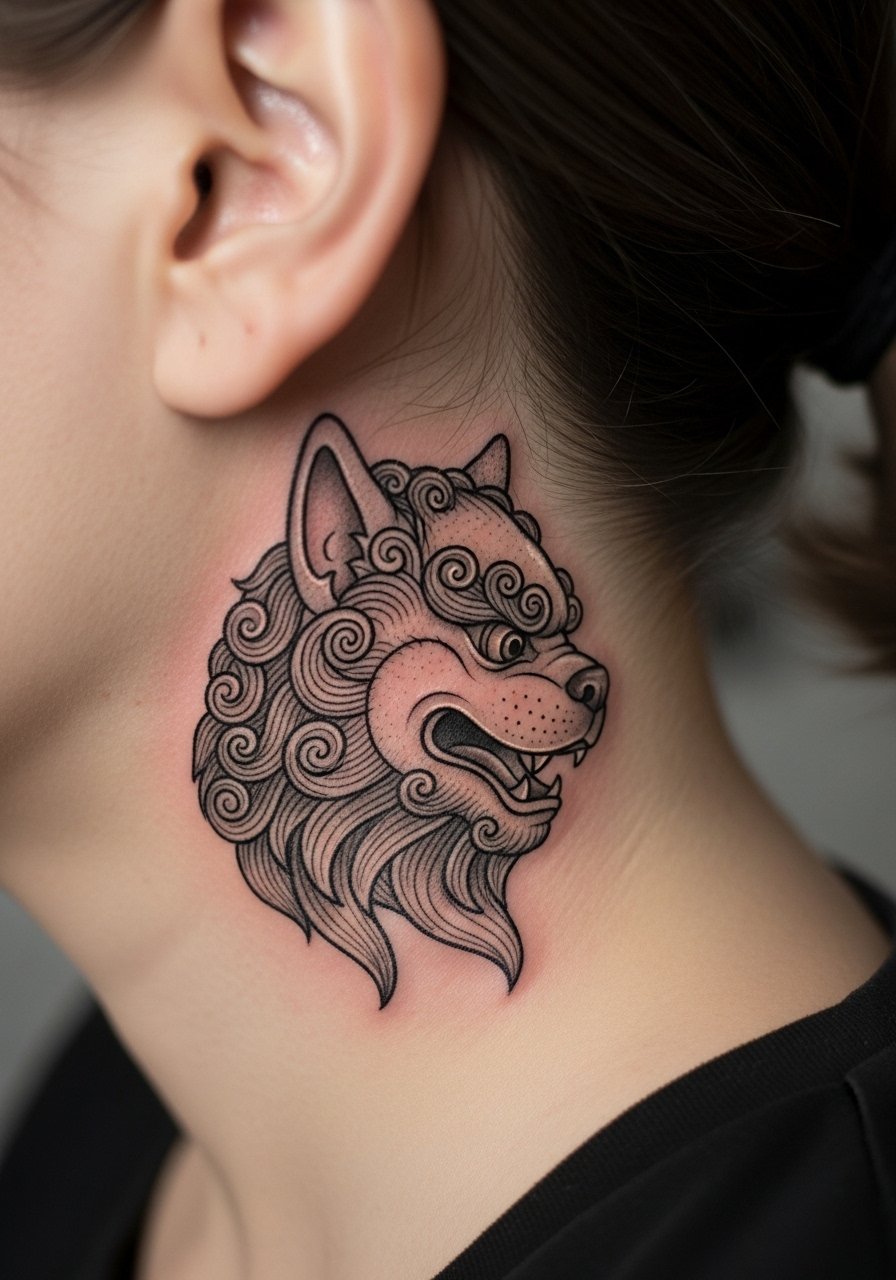
A tiny head behind the ear makes a private charm that stacks well with other micro pieces. When you consult, clarify exact texturing you want in the mane so the artist plans for hair growth and movement. The usual mistake is requesting hairlike detail too dense for a micro scale, which dissolves into a smudge. Pain is low but placement requires careful stencil alignment. For the appointment tie hair back and wear a low-collar top so the artist can see the area.
5. Minimalist Foo Dog with Orb on the Collarbone
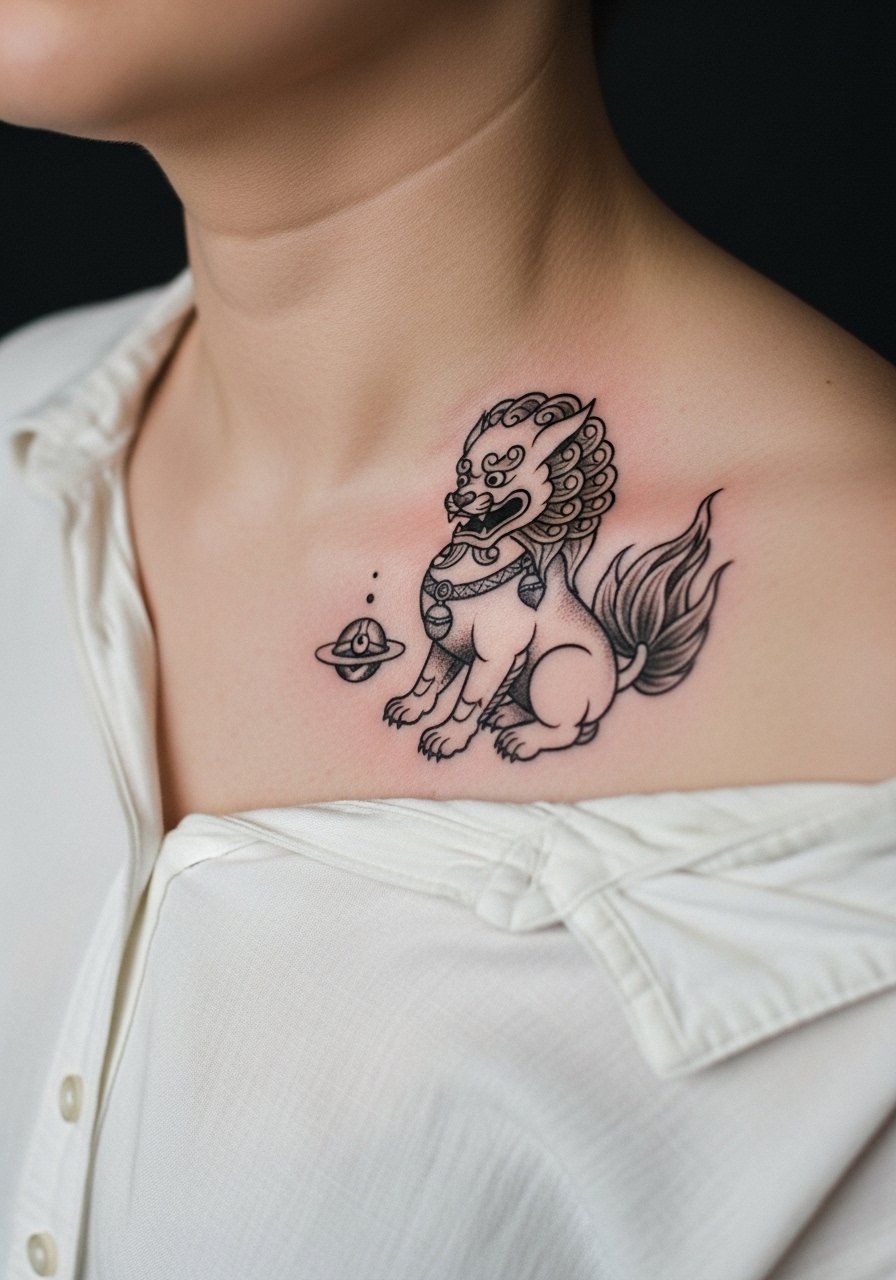
Collarbone pieces look delicate but need breathing room to avoid the clavicle turning detail into noise. Ask for the orb to be a simple circle with subtle internal negative space rather than extra shading. A frequent error is packing the collarbone with too many tiny curls, which age poorly. Sessions are quick and the area can be tender where bone is close to skin. Pair this with an off shoulder blouse when you want to frame the piece and wear a strapless bralette on session day.
6. Neo-Traditional Foo Dog Cub on Outer Thigh
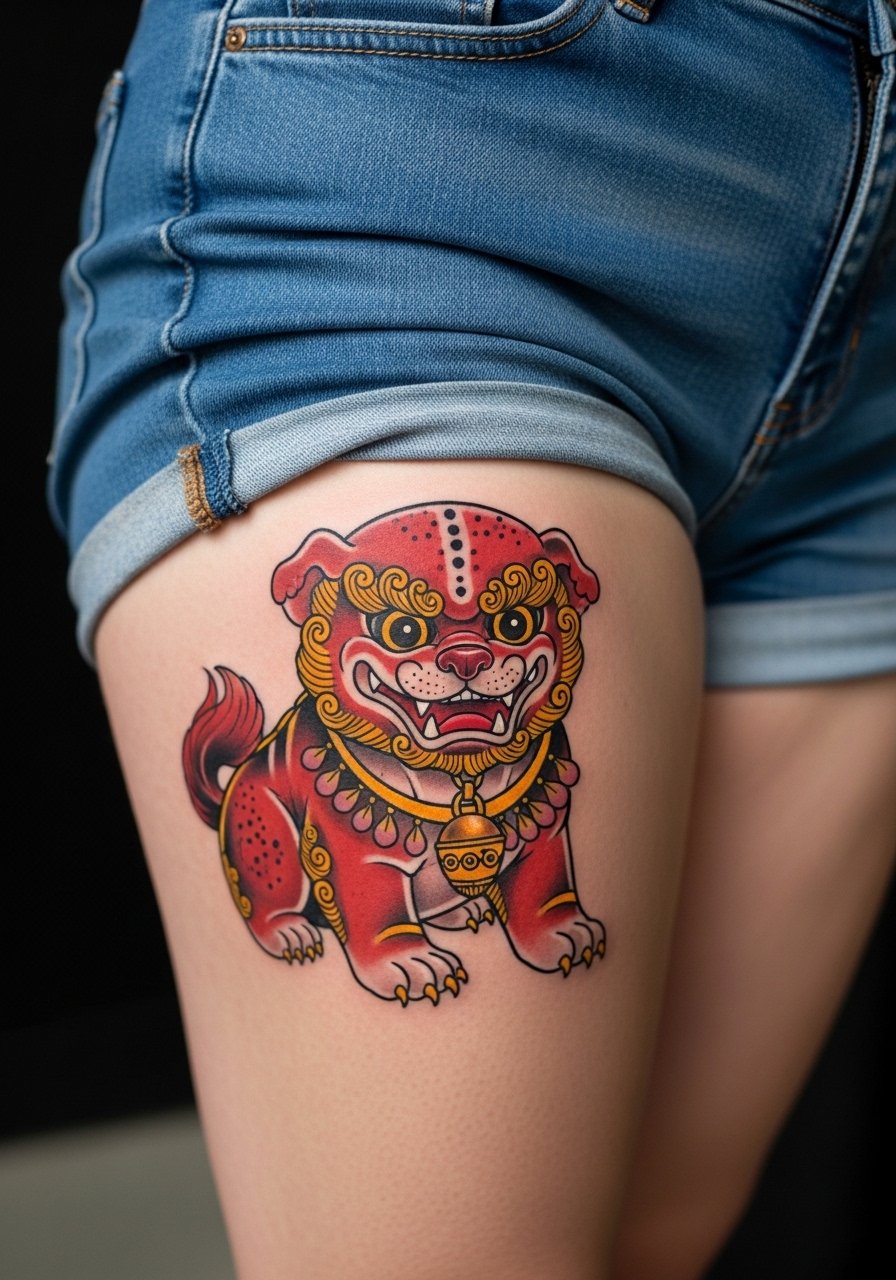
Thigh placements let artists work slightly larger which helps color and line last longer. For this neo-traditional cub ask for simplified color blocks and controlled saturation so the playful feel reads without muddying. A common mistake is asking for over-detailed color blends at micro scale. Sessions can be two short passes. Wear high waist athletic shorts to the session so the artist can roll the fabric down a little without discomfort.
Studio Day Picks
The inner forearm, wrist, collarbone, shoulder, thigh, and behind-ear pieces above need different prep, and a few targeted items smooth the session and the first week.
-
Tea tree balm. A thinner, anti-inflammatory balm some people use after the initial scab phase for non-clogging moisture on smaller fine line areas.
-
Australian beeswax salve. Preferred by some artists for winter blackwork pieces on thicker skin because it locks in moisture without overly greasy residue.
-
Rice bran oil. Lightweight oil used by a few practitioners for breathable hydration during the later healing window on collarbone and chest work.
-
Korean herbal paste. A niche option for inflamed spots after larger sessions when someone wants an alternative to standard balms.
-
Aquaphor healing ointment. Thin layer for the first couple of days helps small fine line areas stay supple while the skin starts to close.
7. Ornamental Foo Dog Mandala on Upper Back

Mandala compositions let the foo dog sit within symmetry that reads well at medium scale. For an upper-back mandala ask your artist to build radial spacing that prevents dense stipple from merging after two years. A common error is squeezing too many concentric details into a six-inch circle. Sessions will run longer and may need a follow-up pass for even saturation. If you plan to show it, a low-back tank or open-back dress works best for evening wear. Remember this pattern traces to temple art so consider slight stylistic variations rather than direct replicas.
8. Fine Line Paired Foo Dogs on Chest
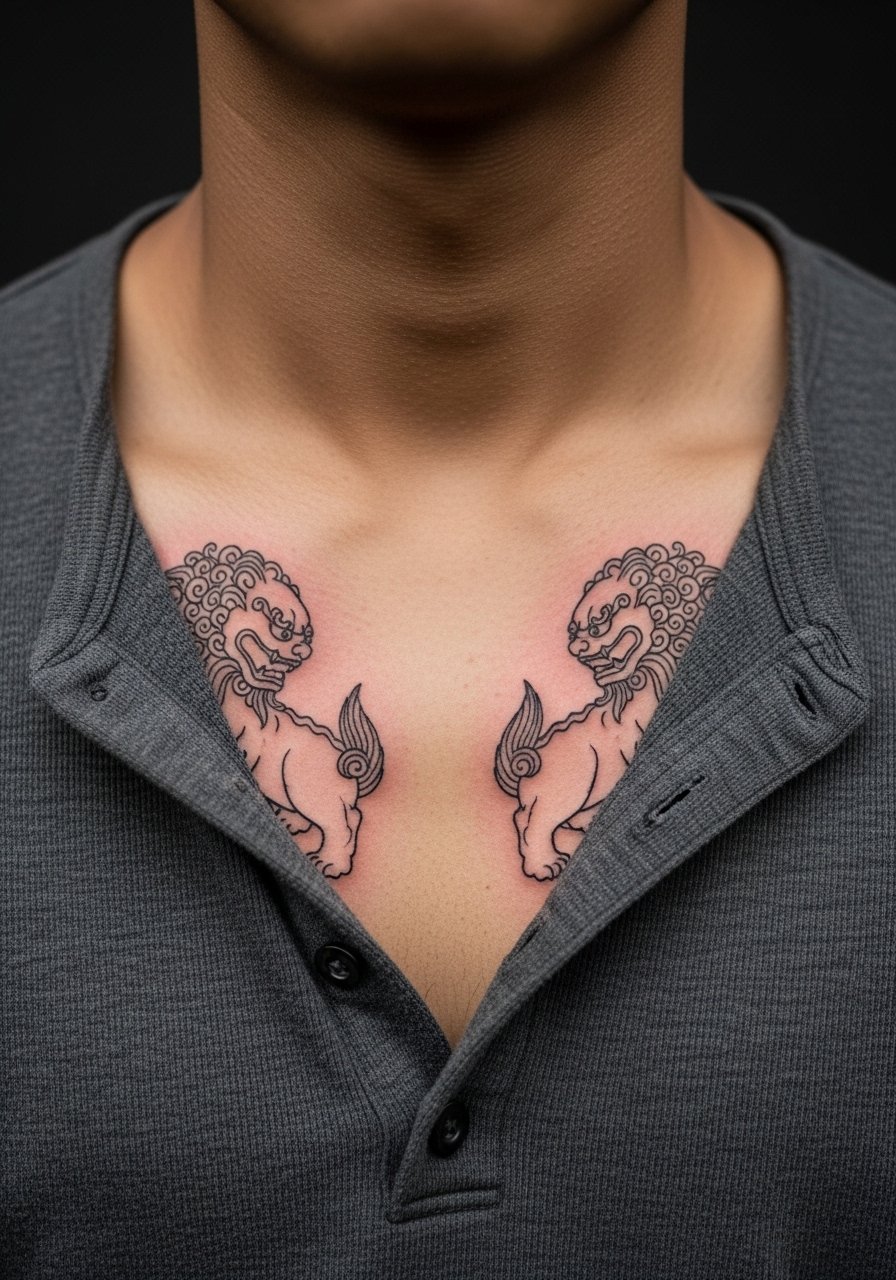
Paired chest pieces are a favorite for symmetry. Tell your artist which side you prefer the more open pose on and whether the pair should mirror exactly or have gendered cues. The mistake is compressing each design to be too small; they need spacing to age. Chest sessions can be more painful near the sternum and may require two appointments. Style with a deep v neck tee for casual reveal and wear an open button-down on session day.
9. Black and Gray Foo Dog with Bamboo on Calf
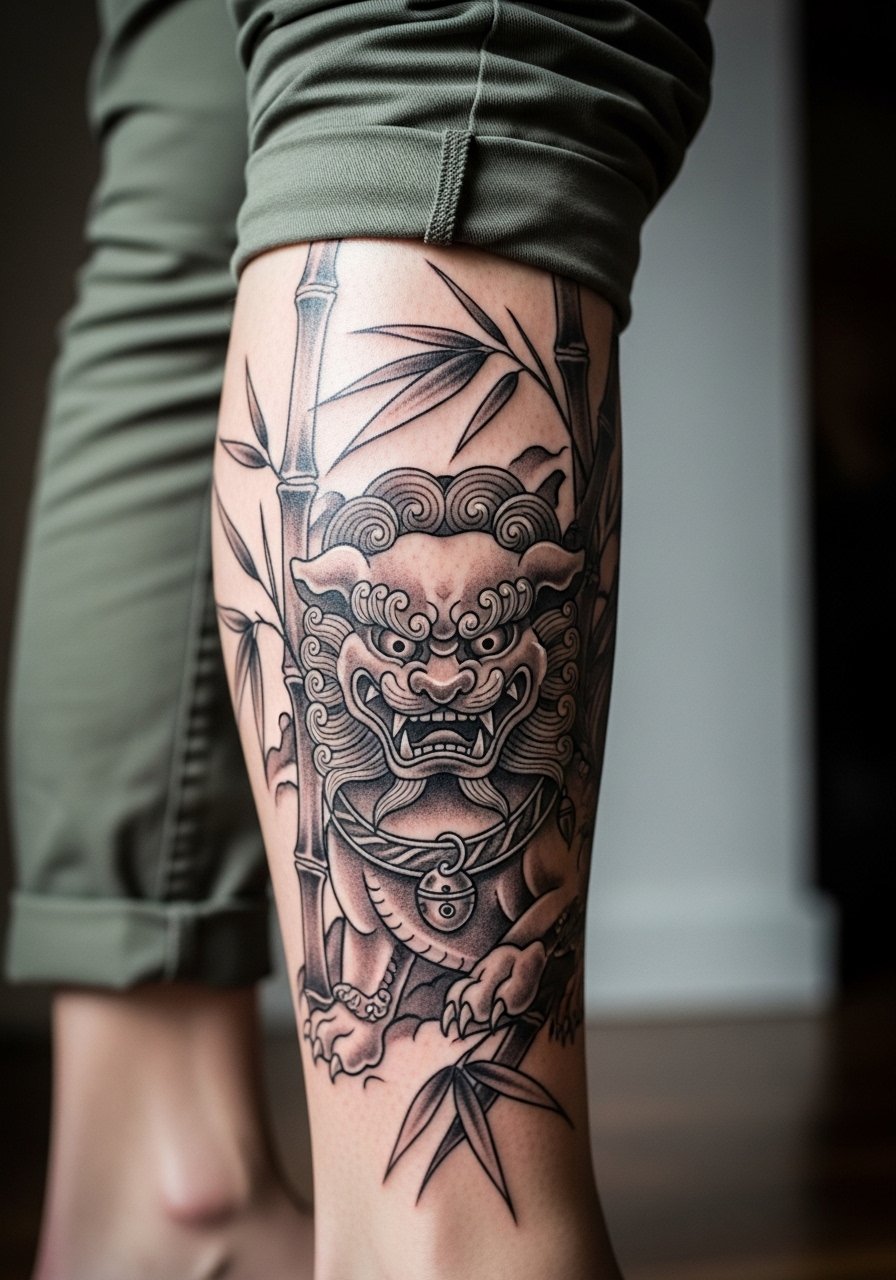
Calf work benefits from darker gray gradients to keep detail crisp through gym sessions and sun exposure. Ask for vertical bamboo elements to frame the foo dog and give the eye breathing room. People often make the error of adding too much fine stipple which softens after regular movement. Sessions are usually one to two passes with low to moderate pain. For show-off outfits roll up slim fit chinos or pick shorts that sit above the design.
10. Minimalist Foo Dog Roar Outline on Inner Bicep
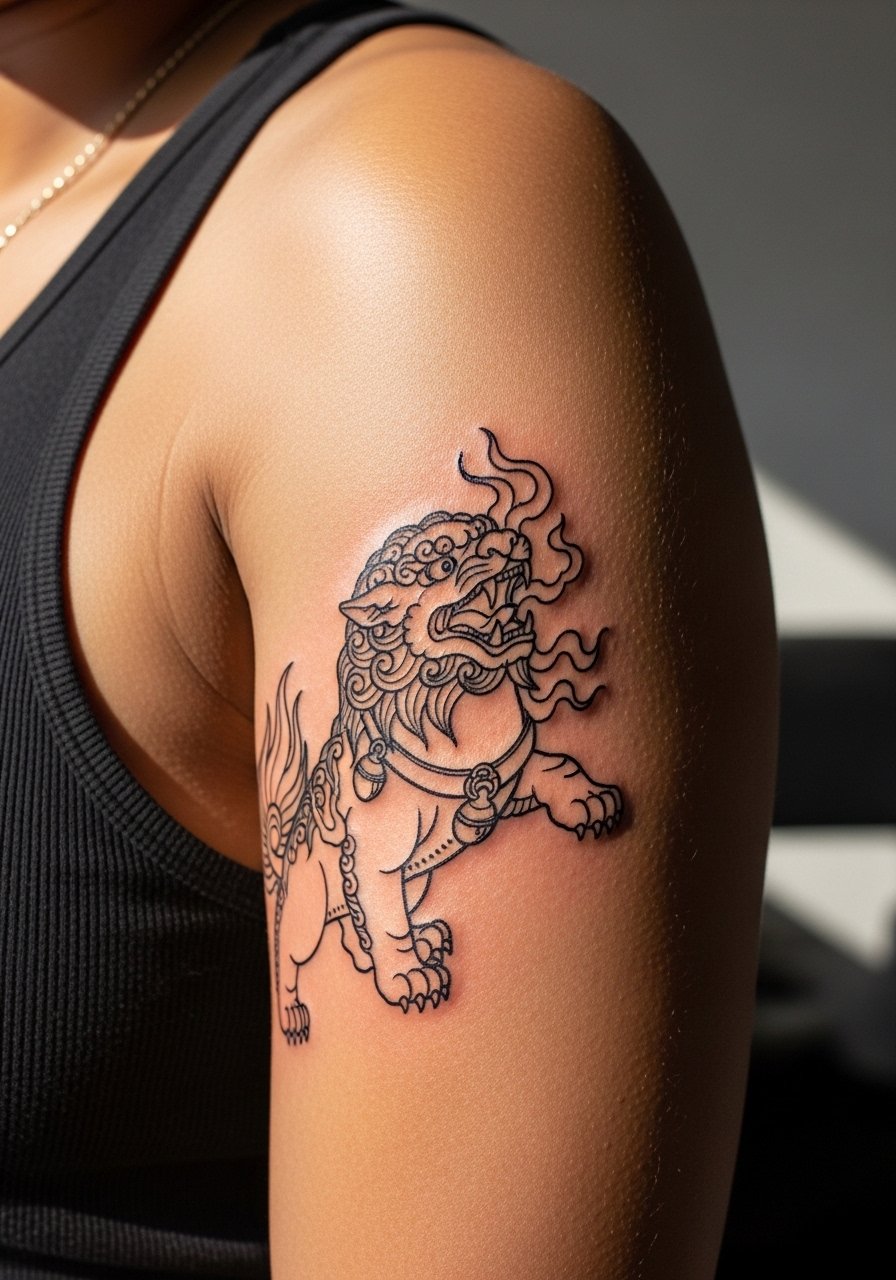
The inner bicep is forgiving of compact motifs and hides well under sleeves, but the skin moves a lot. Ask your artist to compensate with firmer line depth and slightly larger negative spaces in the mane. The frequent mistake is demanding tiny curls that blow out into shadow when the arm stretches. This location is moderately painful and responds best to a single focused session. For the appointment wear a loose tank top so the artist can have full access to the inner arm.
11. Micro Foo Dog on Ankle with Peony Accent
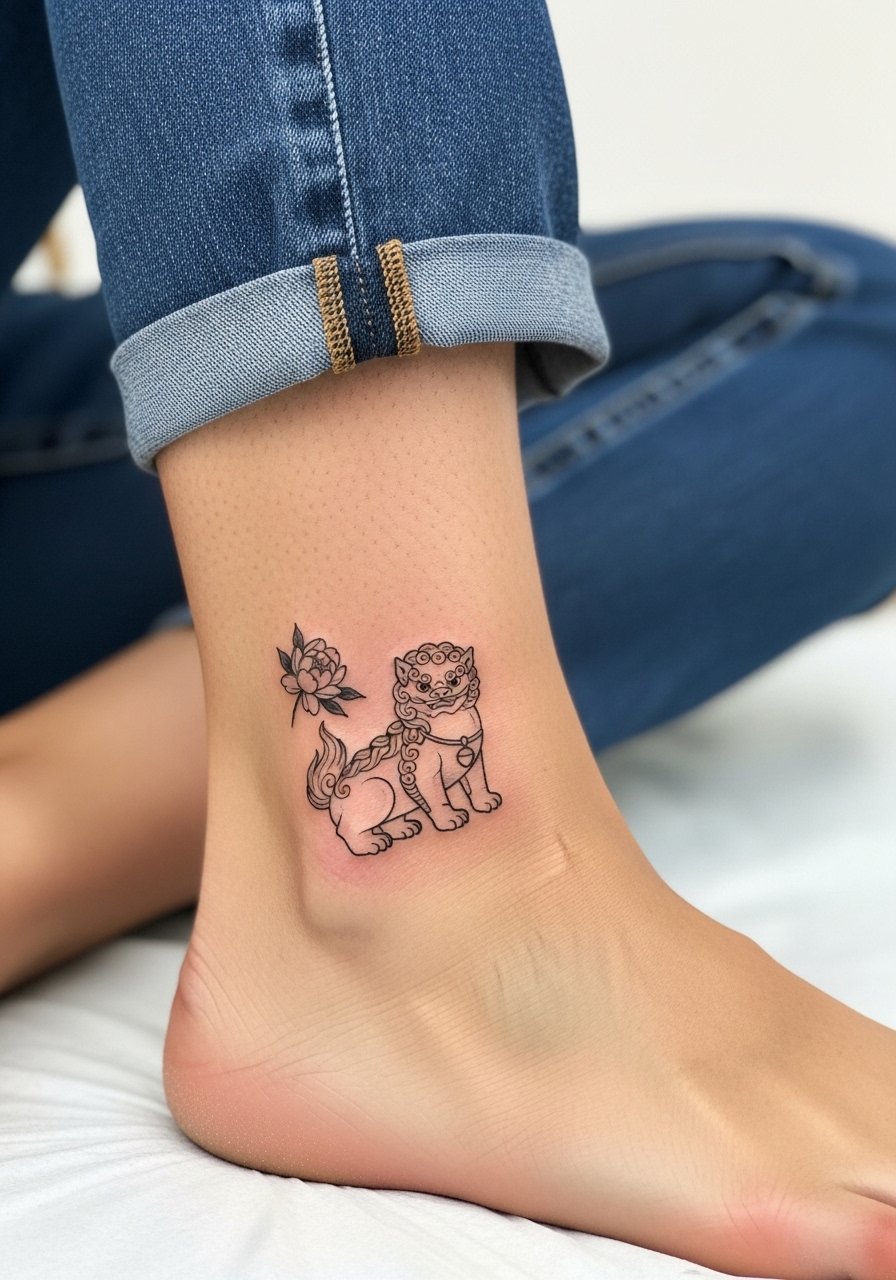
Ankle placements face friction from shoes and socks, so scale matters. Ask for the peony to sit outward where it avoids rubbing. A common mistake is picking ultra-fine detail that fades quickly under everyday movement. Sessions are short but healing can be awkward in summer. Wear cropped straight leg jeans after healing to frame the piece or slide into sandals to show it off.
12. Ignorant Style Foo Dog Sketch on the Ribcage
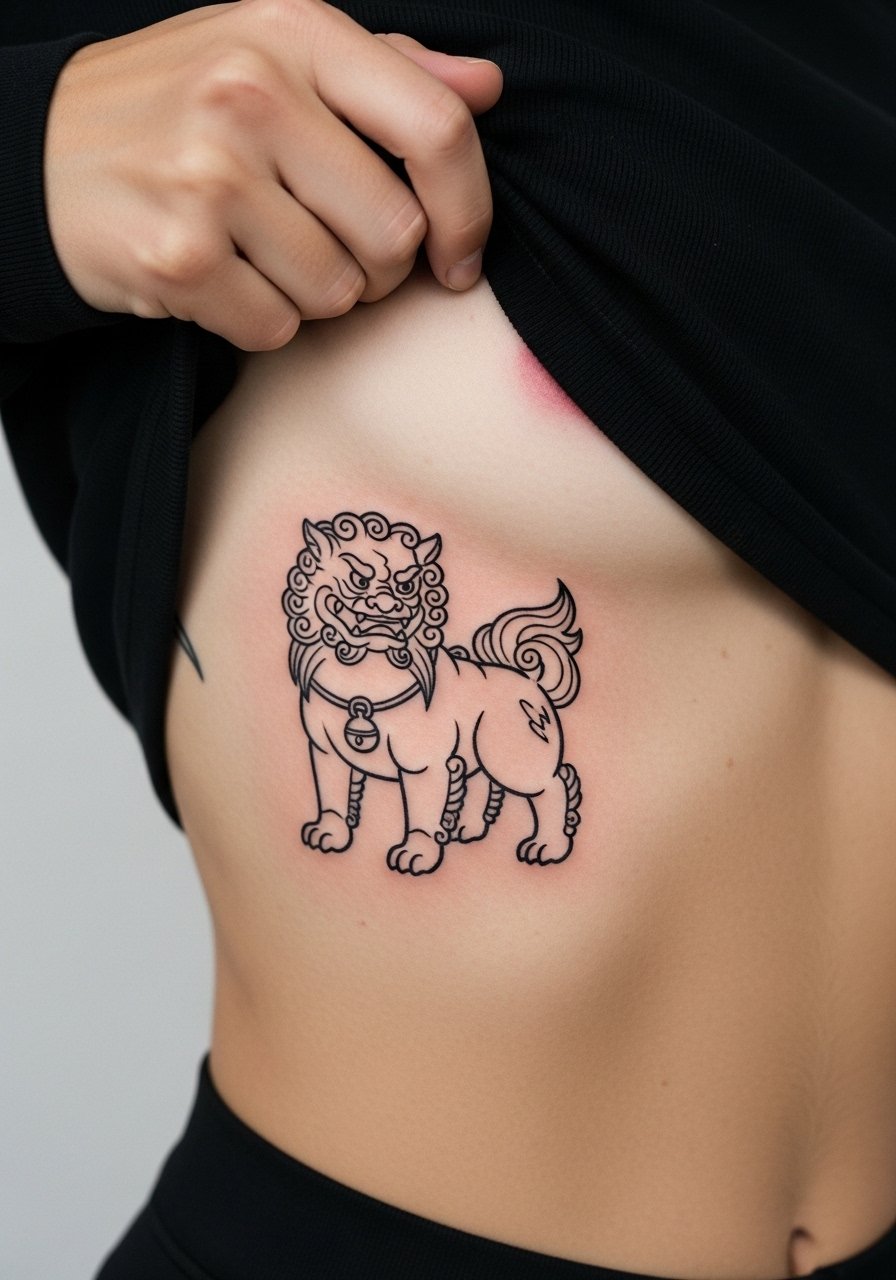
Ribcage work divides artists on whether fine line truly holds up there. One camp argues the skin stretch blurs lines within two years. The other contends that with proper needle depth and spacing fine line can settle well. State which camp you trust when booking and ask the artist to sketch the expected healed look. The rib is a higher pain area so plan for breaks. Avoid asking for dense cross-hatching at this scale. Consider minimal shading to keep the sketch energy while improving longevity.
13. Watercolor Foo Dog with Wave Hints on Shoulder Blade
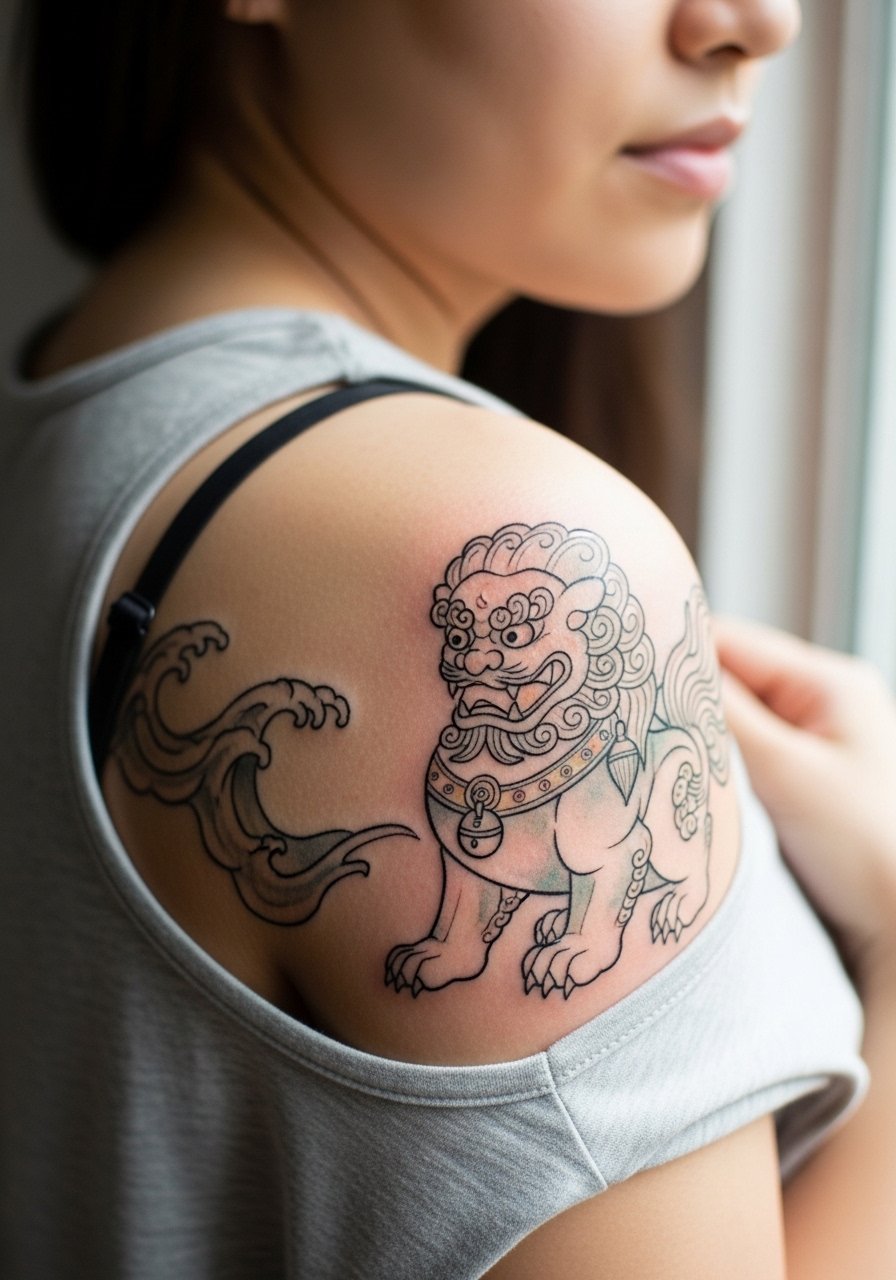
Watercolor effects read beautifully fresh but can lose pop faster than solid black on sun-exposed areas. If you want the ethereal wash, ask for color accents that sit over a clean outline so the design has structure once pigment fades. The common error is asking for broad washes without an anchor line, which then fades into indistinct color. Sessions often need a second pass to reinforce color. For showing it off a loose tank top with an open back complements the shoulder blade placement.
14. Minimalist Foo Dog Face on Finger
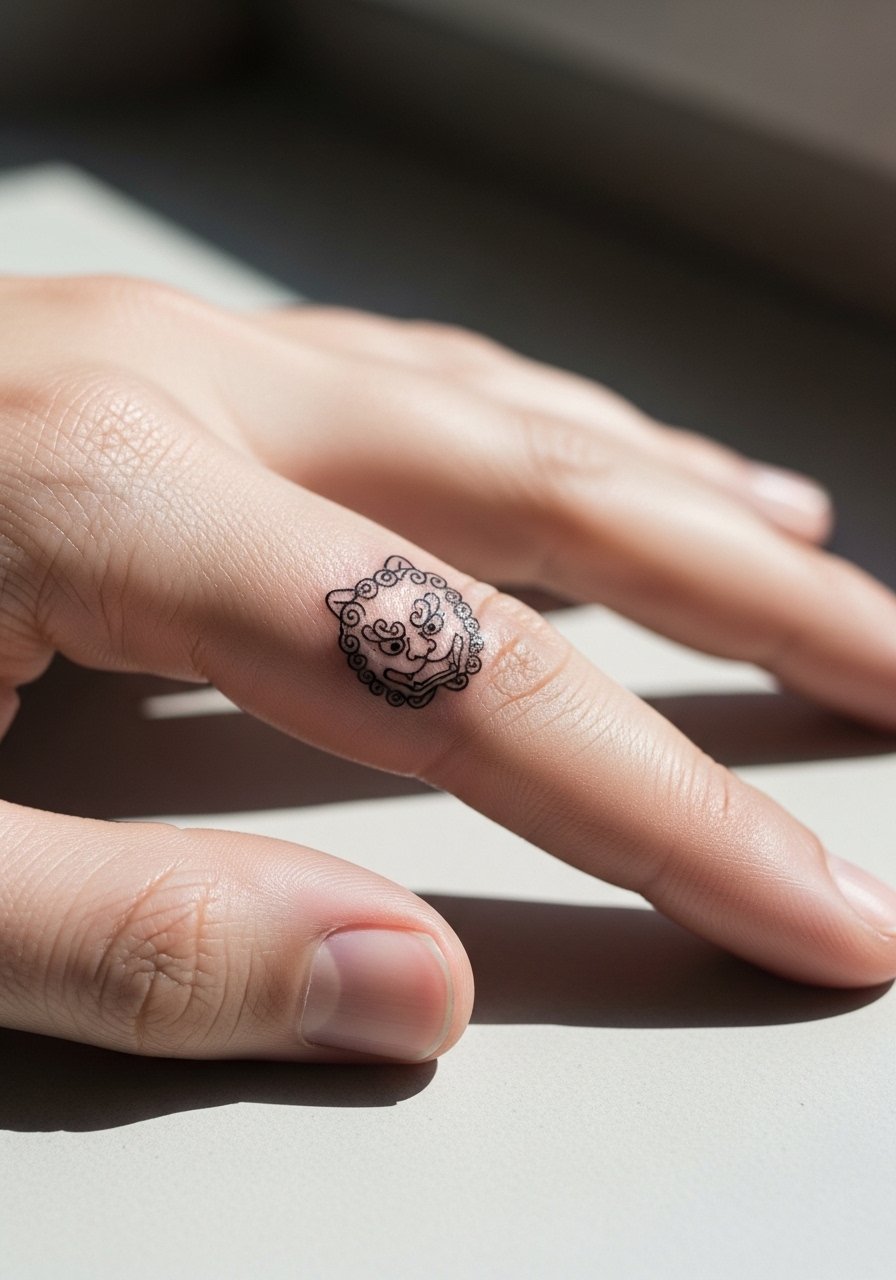
Finger tattoos are persistent troublemakers because of constant washing and friction. Scale up the line slightly and accept that touch-ups are part of owning finger work. The usual mistake is treating the finger like canvas for micro detail. Sessions are brief but comfort is minimal. Keep expectations for longevity realistic and plan for a touch-up within 12 to 18 months if you use your hands heavily.
15. Porcelain Multicolored Foo Dog on Upper Arm
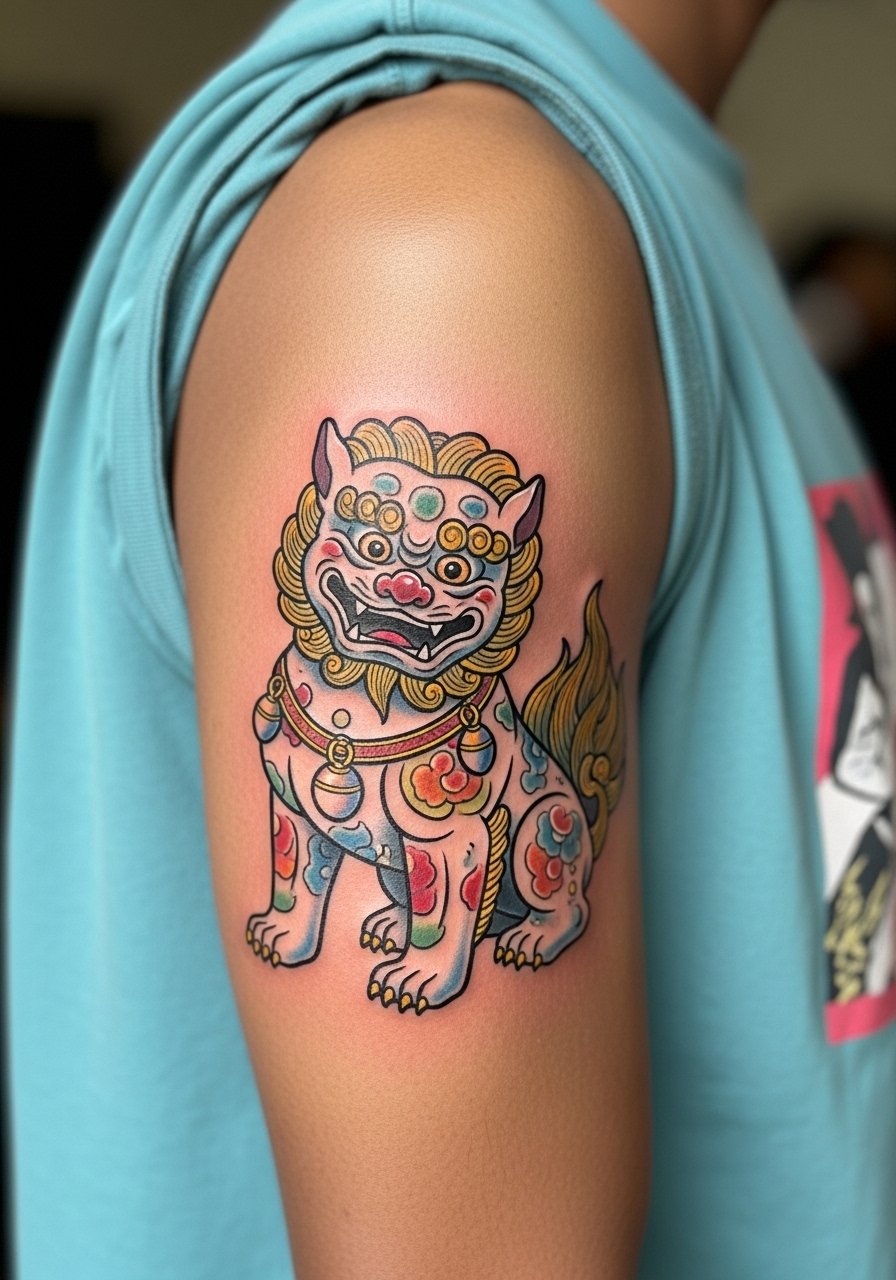
Porcelain palettes use controlled color points to hint at ceramic glazing while keeping most of the design monochrome. Ask for limited color nails or orb glints rather than full saturation so the piece avoids muddying on darker skin. A mistake is over-layering pastel blends that vanish against melanin. Upper arm sessions are comfortable and ideal for experimenting with subtle color. Wear a loose fit short sleeve tee for easy access on session day.
16. Tufted Mane Micro Detail on the Nape
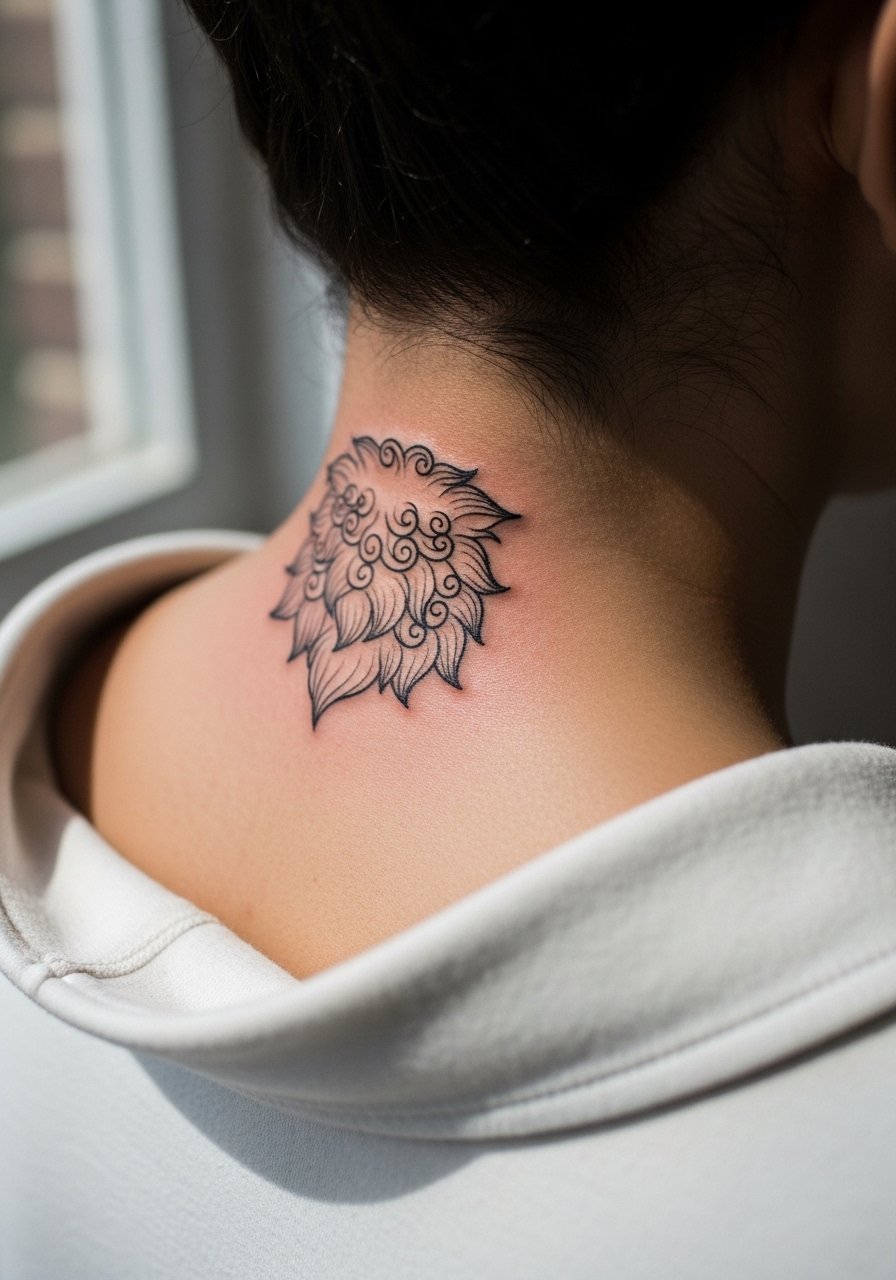
Small mane textures add personality when done with careful spacing. Since neck skin moves, ask for slightly bolder tufts instead of many hair-like strokes. The mistake is over-committing to ultra-fine texture that softens into one tone. This placement can affect job considerations for some people. If you plan to reveal it, pull a collar aside and use a wide-neck top for showing.
17. Serene Pose Foo Dog on the Sternum
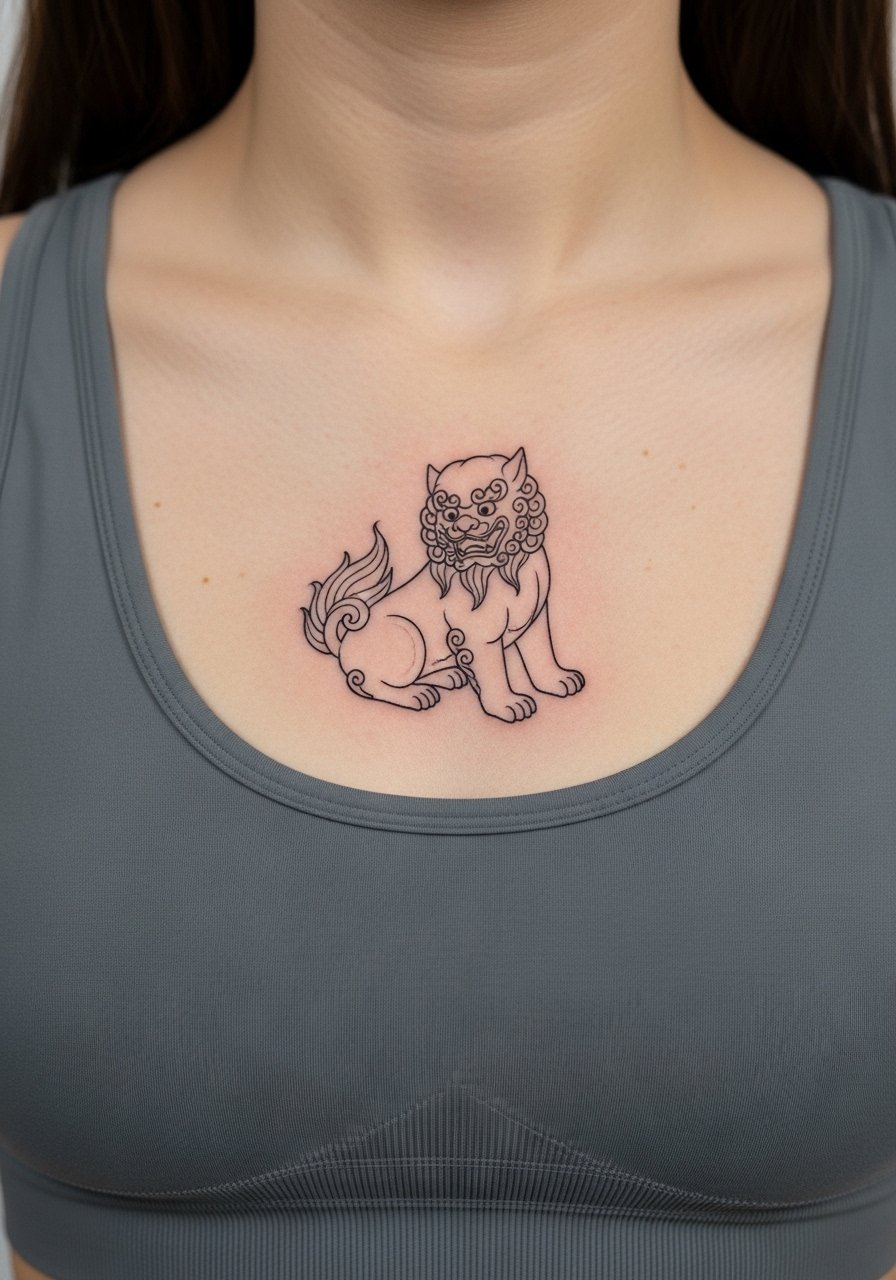
Sternum pieces are intimate and can be tender. A serene pose with a calm mouth and open orb lets the design sit without competing lines. The usual error is packing too much density into a small vertical space which can lead to patchy healing. Sessions may require staging around breathing comfort. Wear a fitted sports bra to the appointment so the artist can check placement without exposing more than the area needed.
18. Minimalist Foo Dog Silhouette on Lower Back
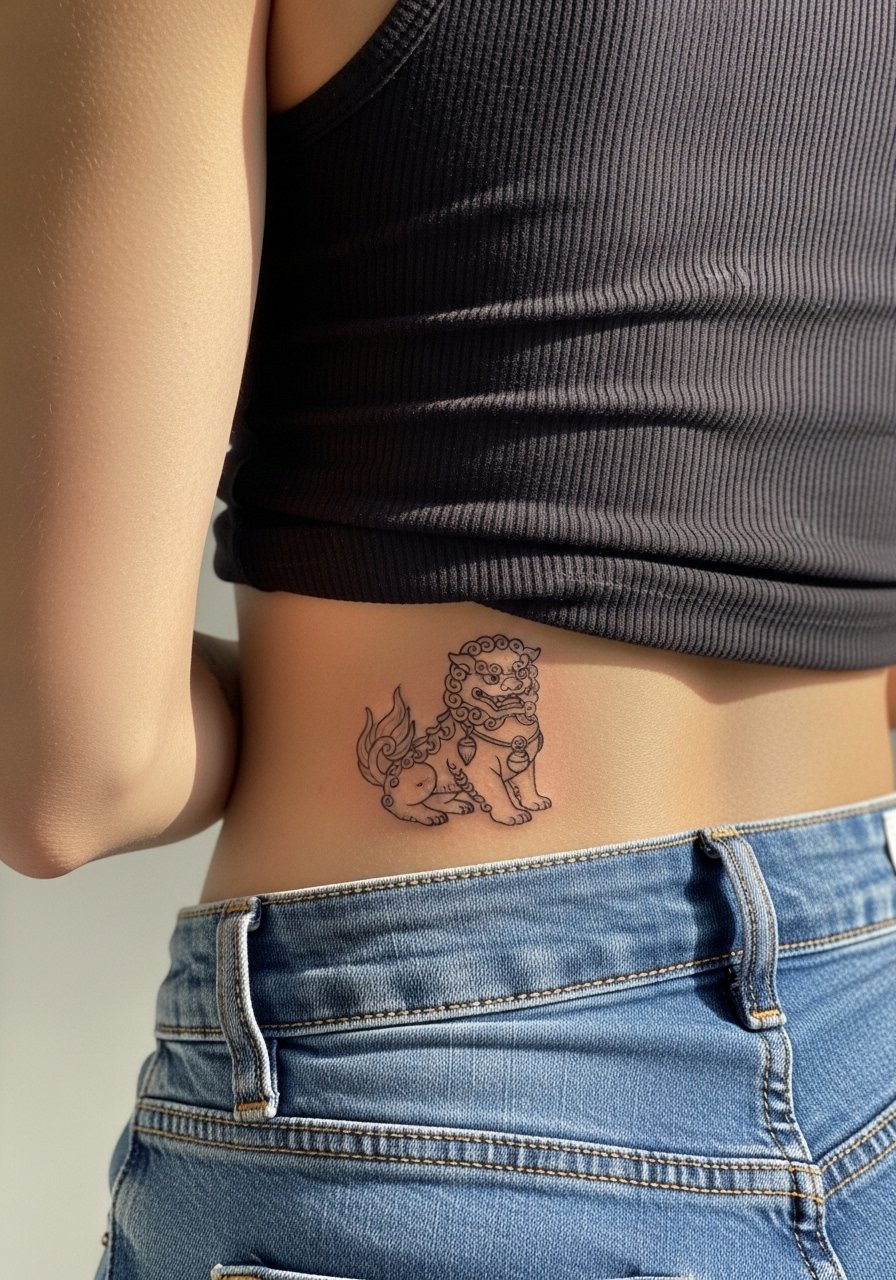
Lower back placements let you keep a design private or reveal it seasonally. Ask for a compact silhouette with a small negative-space mane to maintain clarity when clothing rubs the area. People often make the error of choosing very thin linework there, which can fade unevenly where fabric contacts skin. Healing is usually straightforward, but be mindful of tight waistbands during the first two weeks.
19. Foo Dog Orb with Birth Element on Collarbone
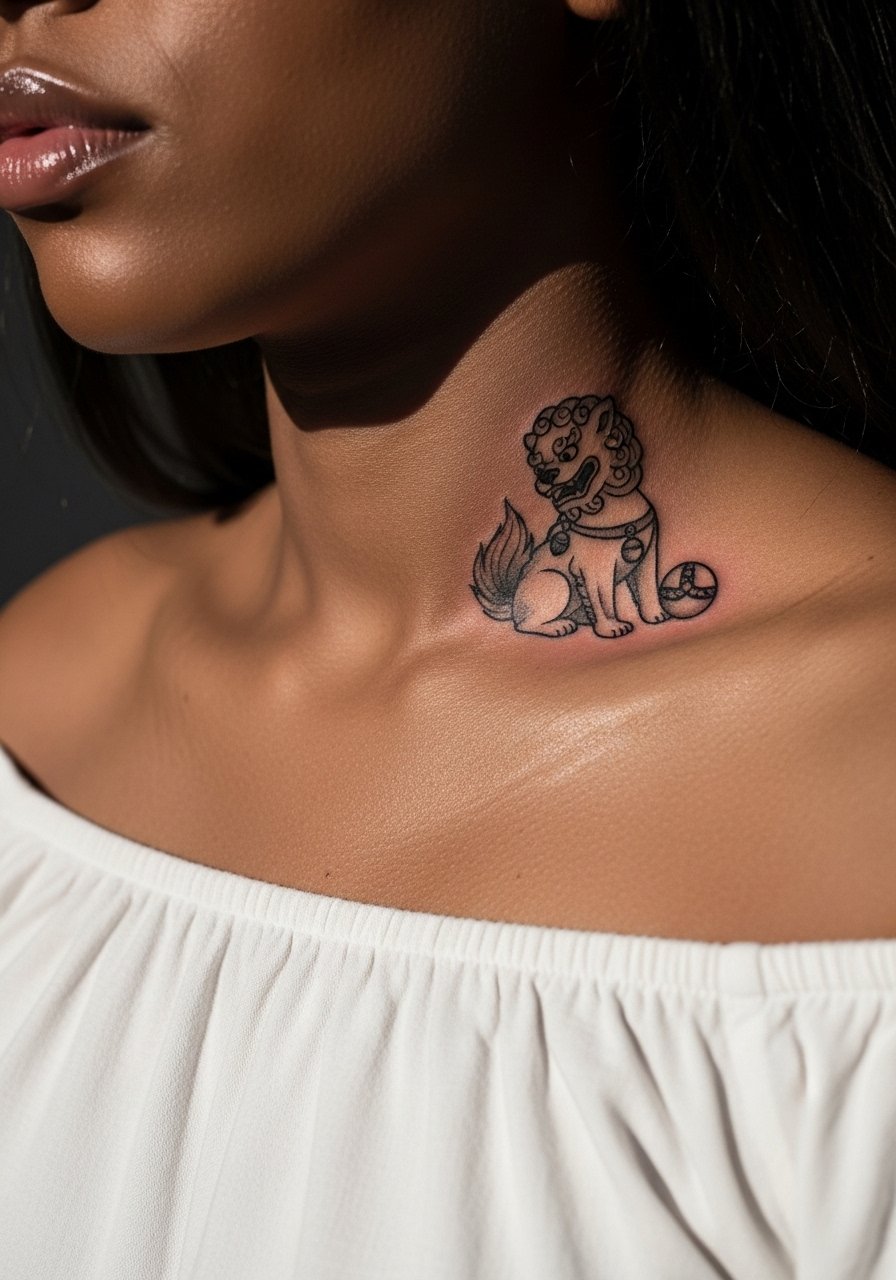
Customizing the orb with a birth element like a small flame glyph or tiny wave gives the piece personal resonance without clutter. Tell your artist the exact symbol and scale so it integrates with the orb, not sitting as a separate detail. A common mistake is asking for both an orb and dense background in a collarbone piece. Sessions are short but the area can be bony. Pair the finished piece with an off shoulder blouse to frame it.
20. Blackwork Half-Silhouette on the Side Torso
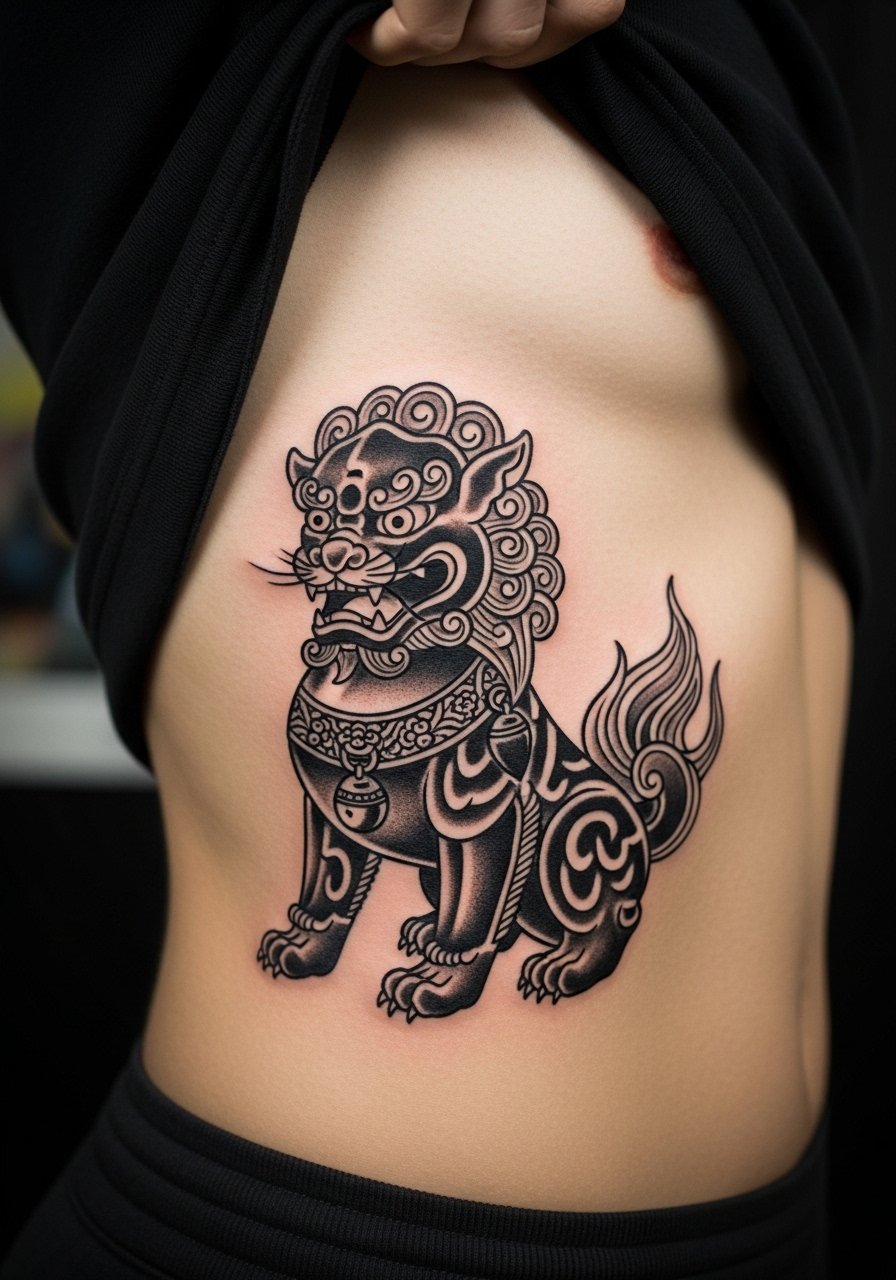
Side torso work gives artists room to play with negative shape and lets the piece age into a graphic element. Ask for clear edges and a defined margin between skin and saturation. The error is asking for tiny internal details that disappear as the skin stretches. Sessions may be longer and require twists in positioning. Choose session clothing that allows the artist to reveal only the side you are tattooing.
21. Fine Line Paired Mini Orbs Behind the Ears
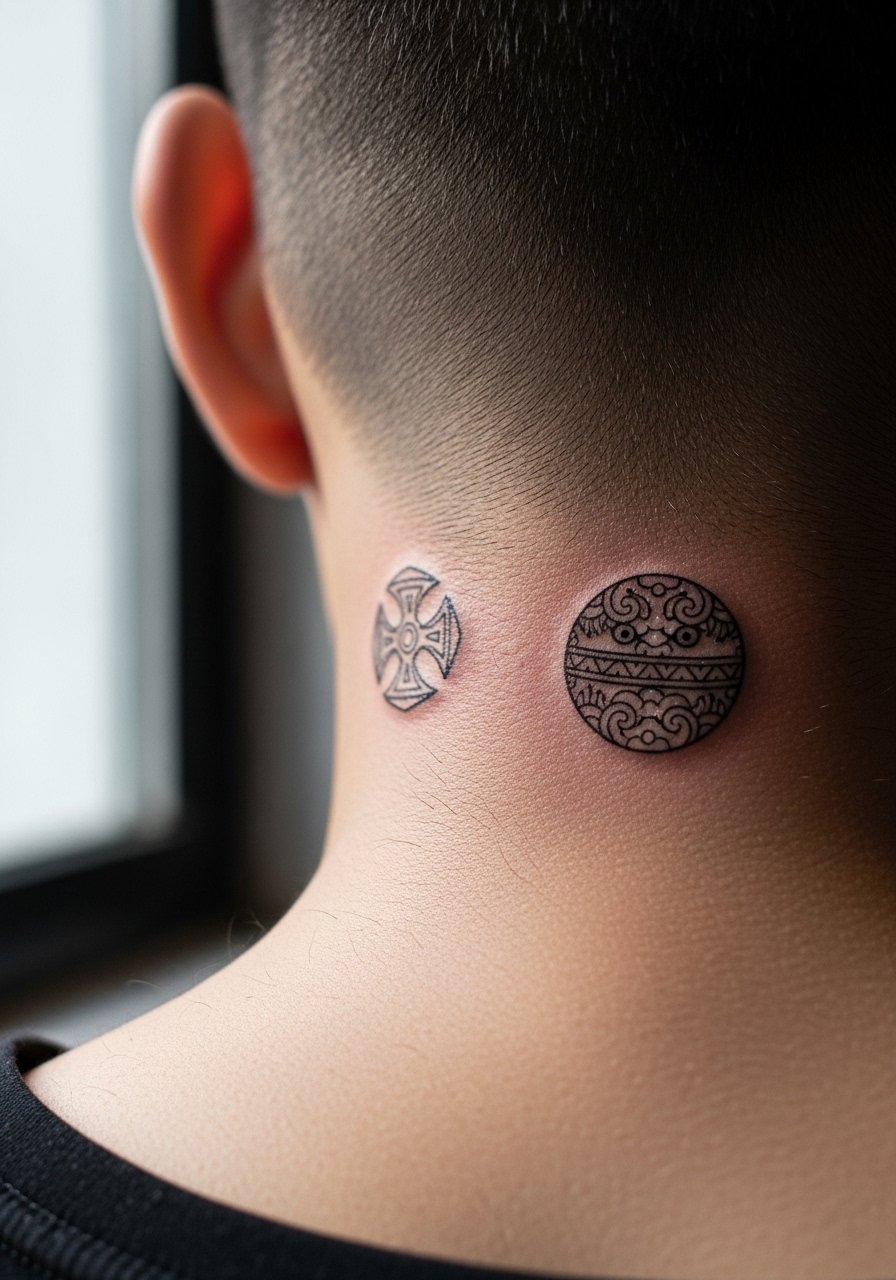
Matching micro orbs behind each ear create a subtle symmetry for those who want a secret match. Confirm that the artist will keep the orbs at least three millimeters apart from the hairline for future clarity. Mistakes come from packing micro detail too close to hair growth zones. Pain is low and sessions are very quick. Tie hair up for the appointment and wear a low-collar top for easy access.
22. Neo-Minimalist Foo Dog on the Hand Back
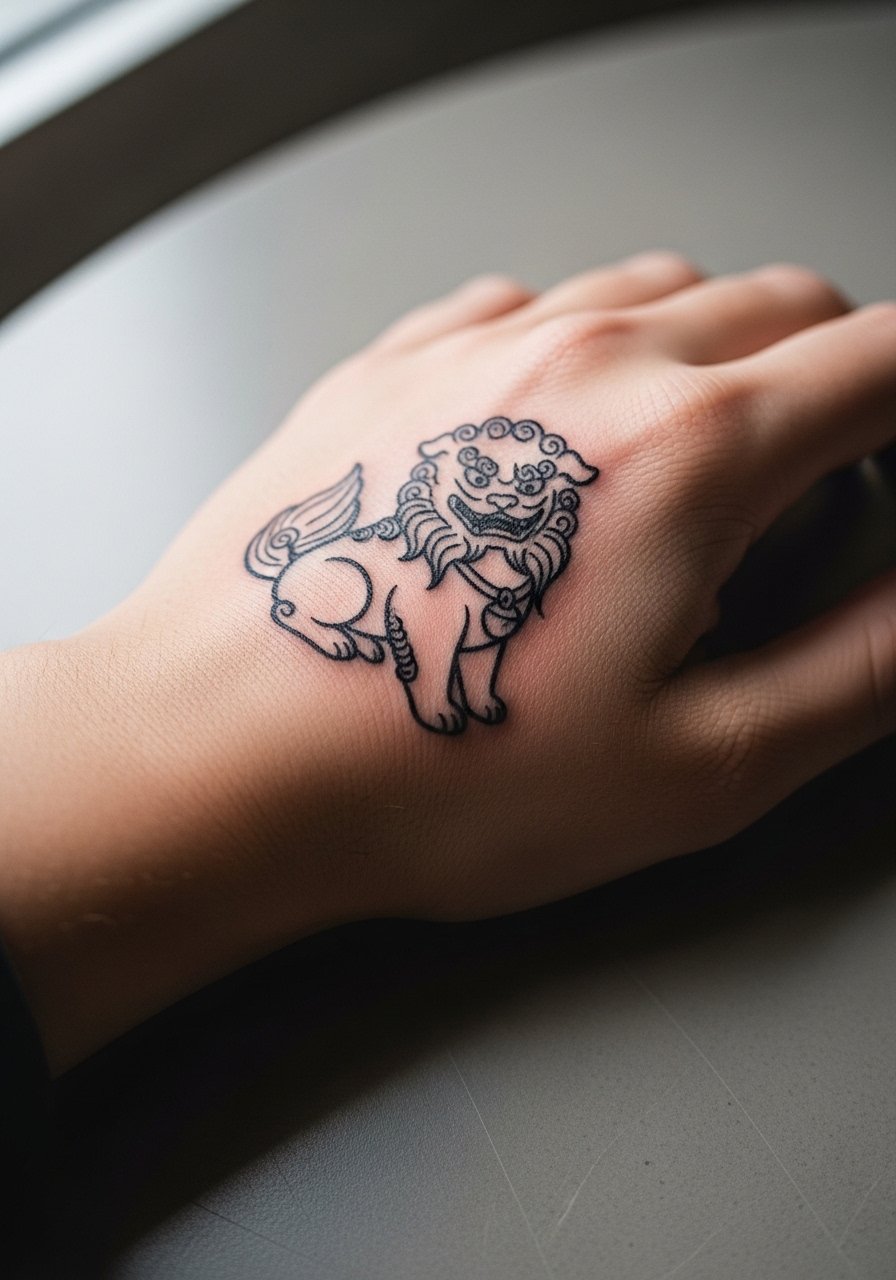
Hand tattoos are high maintenance because of frequent exposure and washing. Favor thicker contour and minimal interior detail to keep the image readable. A common mistake is trying to fit intricate face detail into a hand-sized piece. Expect touch-ups earlier than on the arm. Consider job implications and ask your artist about their hand-tattoo experience before booking.
23. Dot Work Foo Dog with Mandala Accent on Upper Arm

Stipple shading creates texture without heavy line density and it can age gracefully when the dots are spaced deliberately. Ask for slightly larger dot spacing than you see in dense mandalas so the design keeps definition. The error is overcompacting dots which flatten into gray patches. Sessions are comfortable and often done in one pass. A loose fit short sleeve tee is ideal for access.
24. Minimalist Orb Cursor on the Index Finger
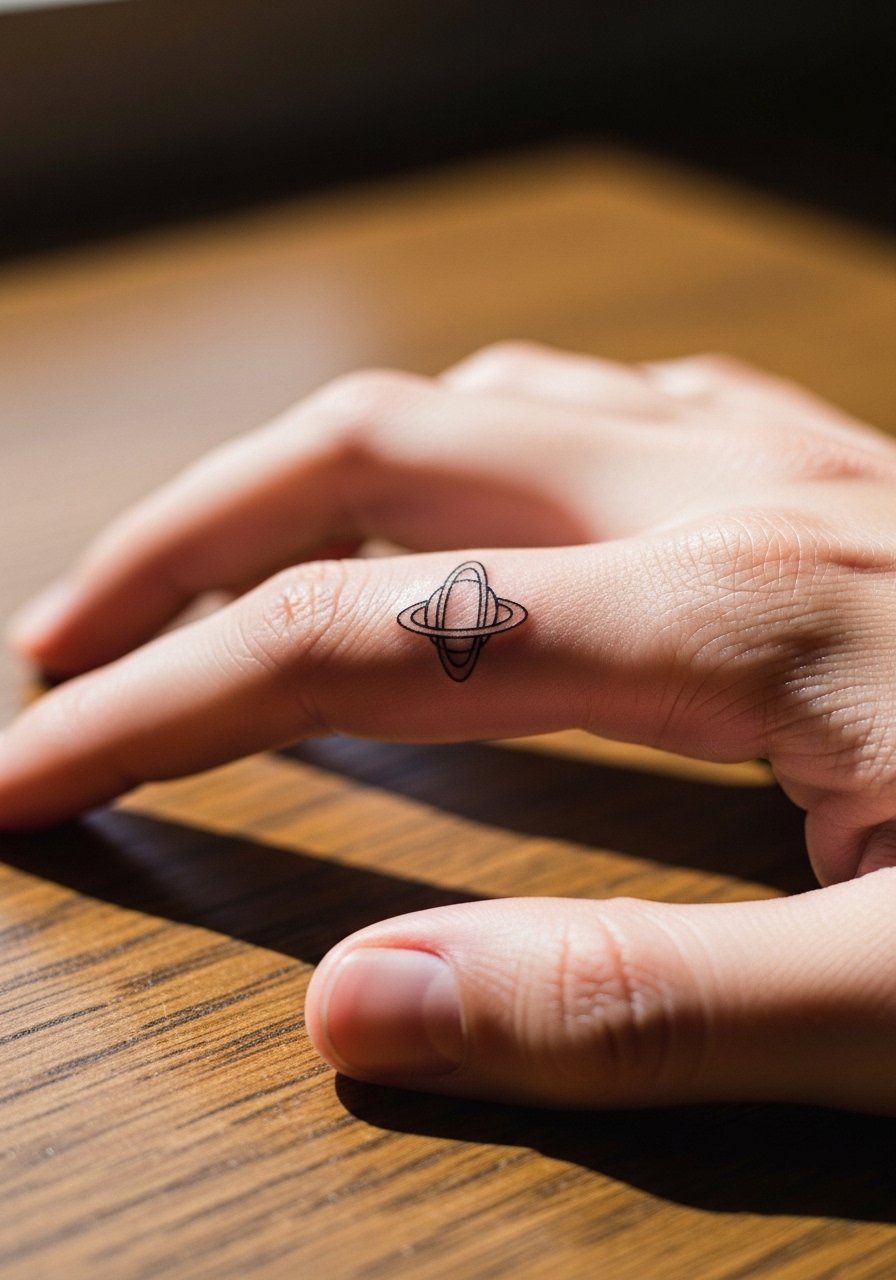
Index finger placements demand durability more than detail. Request a clean circular orb with no interior micro-snaps so everyday use does not erode the shape. Many people expect finger lines to act like skin and are surprised when a touch-up is needed within a year. Sessions are quick but expect a different healing path than other areas.
25. Fine Line Foo Dog with Bamboo Accent on the Calf Wrap
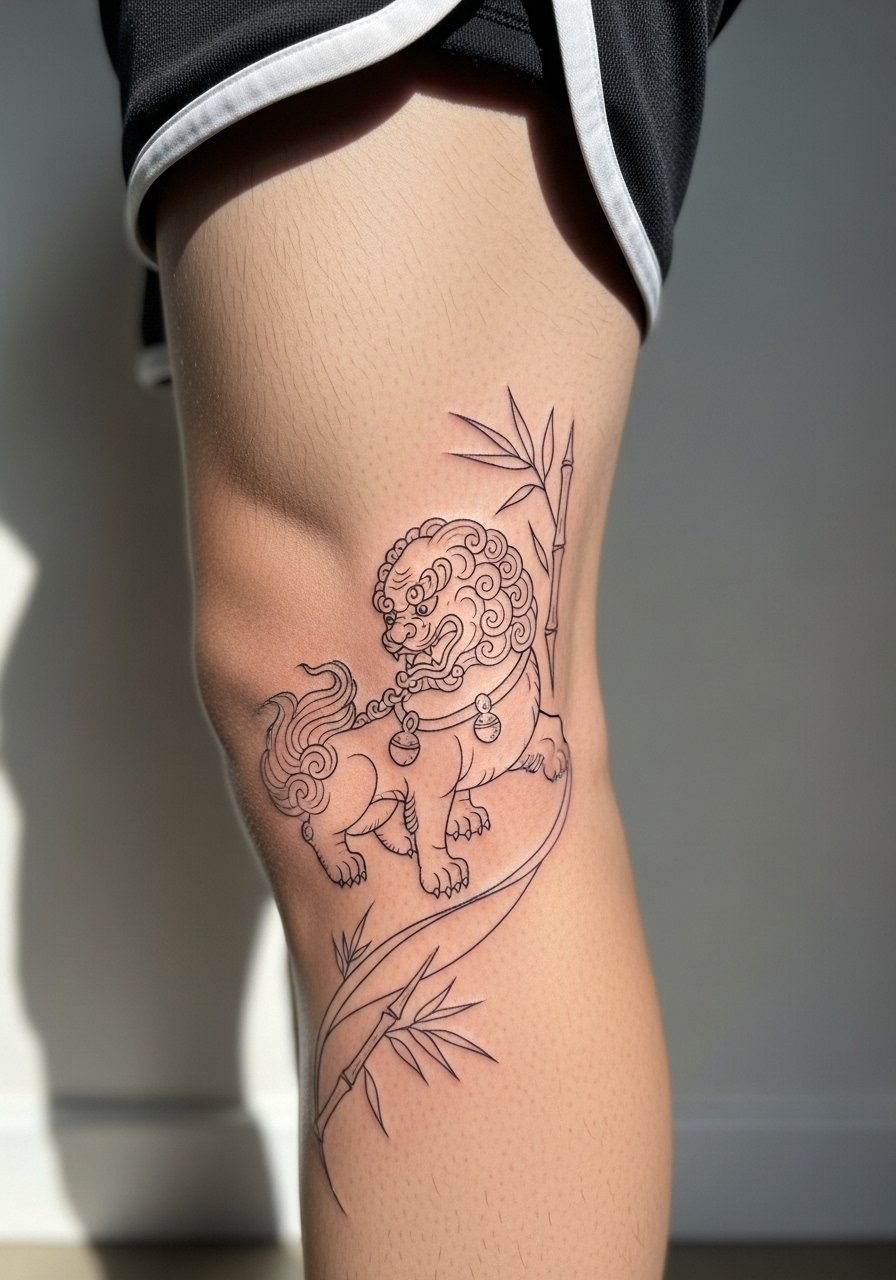
Wrapping elements on the calf should leave space at the seam to avoid compression when you walk or wear socks. Ask for the bamboo to be directional so the wrap reads naturally with leg movement. A typical mistake is overlapping too many fine stems that blend during daily activity. Sessions are low to moderate discomfort and heal neatly with sleeves of shorts that do not rub.
26. Minimalist Foo Dog Line Portrait on the Thigh
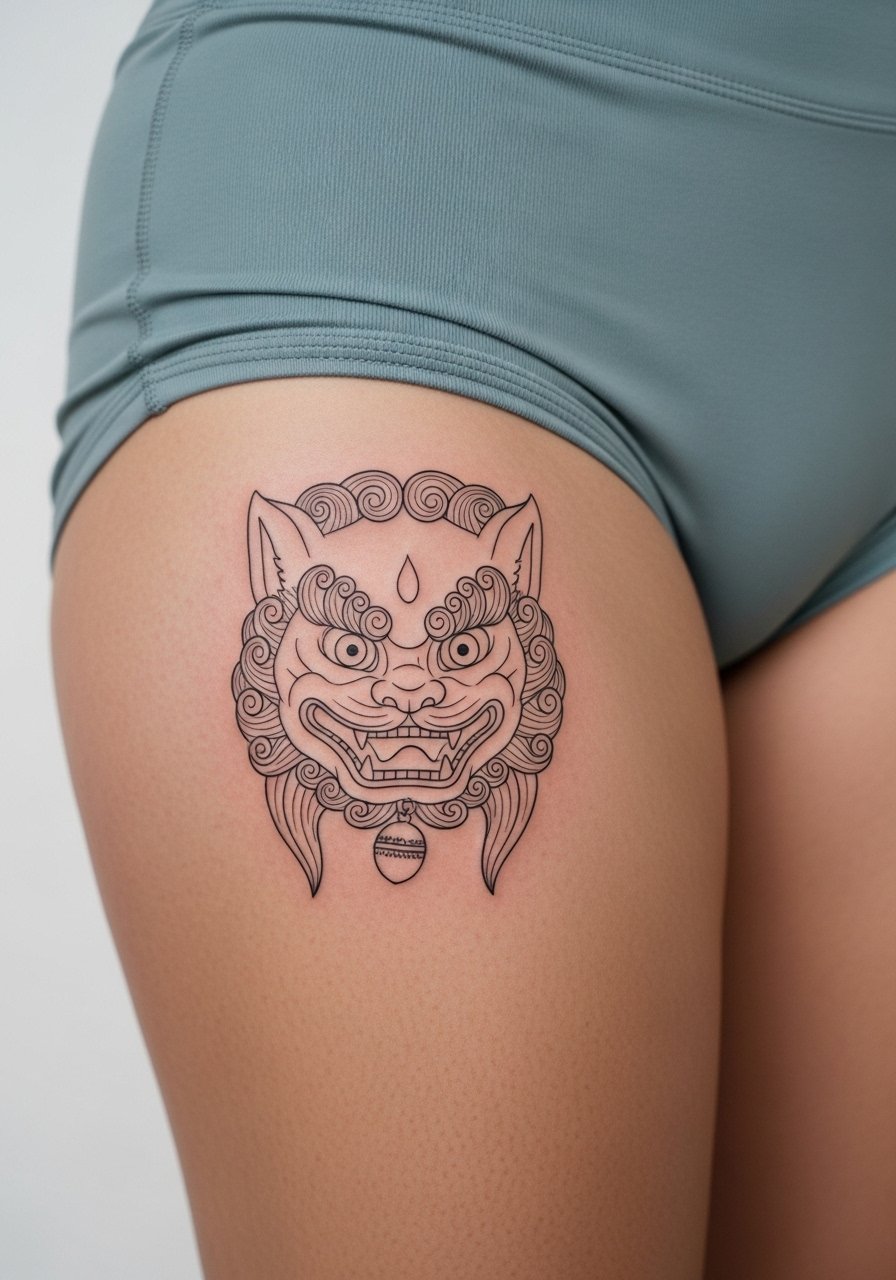
Outer thigh has forgiving surface area and is great for subtle portrait linework. Ask for clear negative space to keep facial features readable as the piece ages. The common error is adding too many tiny facial strokes which merge over time. Two short sessions are common for this placement. For revealing the piece, high-waisted swim shorts or high-waisted shorts work well.
27. Minimalist Foo Dog Crest Behind the Ear with Peony Trail
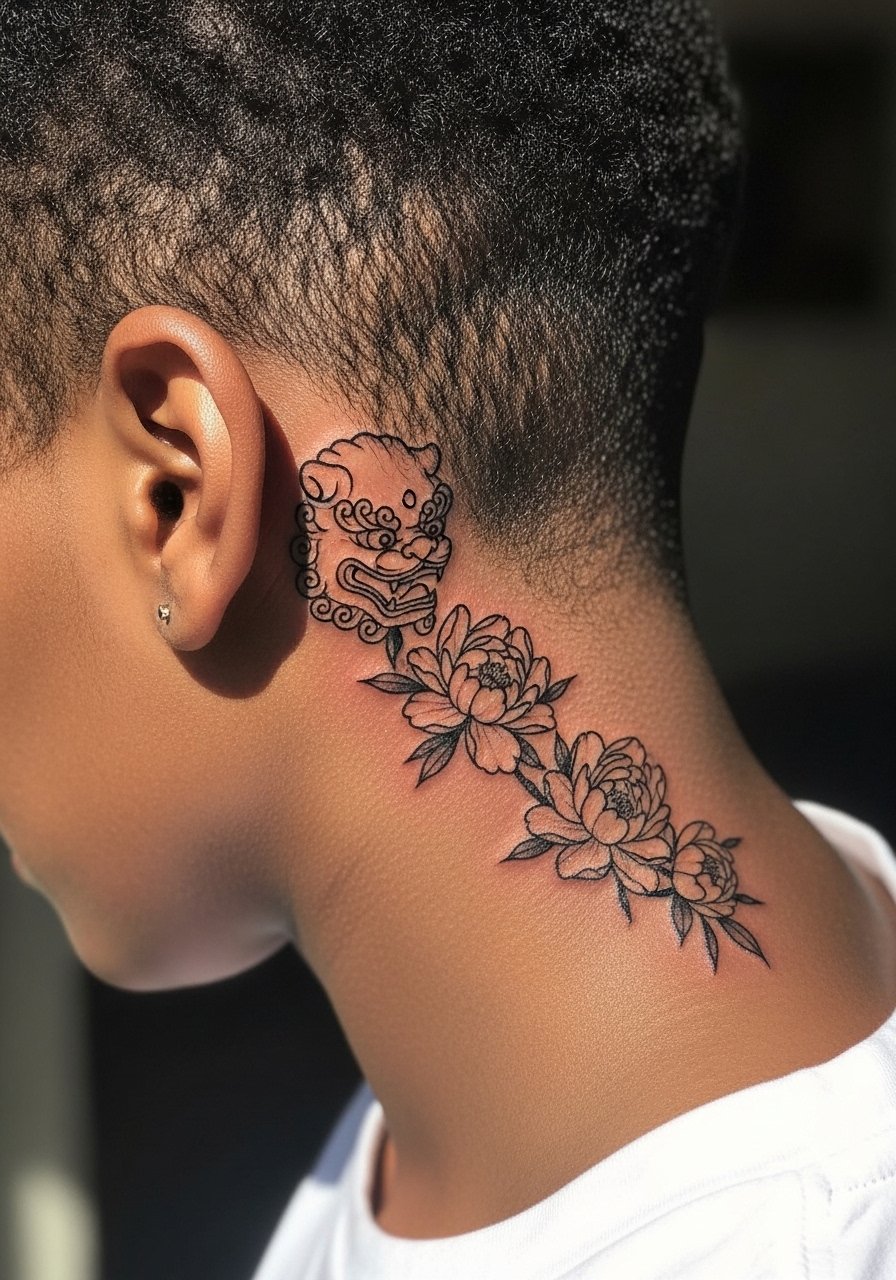
A crest behind the ear that flows into a short peony tail can be very discrete and poetic. Confirm precise placement because hair growth can affect visibility. The mistake is requesting long trailing detail that vanishes under hair. This area is low pain but requires steady stencil placement. Tie hair up for the session and wear a wide-neck shirt you can pull slightly aside.
Frequently Asked Questions
Q: Will fine line foo dog tattoos blur faster than bold blackwork, and how should that affect my choice?
A: From what I've seen, fine line pieces tend to soften sooner than solid blackwork on high-movement areas. If you want a minimalist look that lasts longer, opt for slightly thicker outlines and strategic negative space. If you love ultra-fine detail, accept a likely touch-up around year two or plan placement where skin moves less, like the upper arm or back.
Q: How do I find an artist who treats foo dog motifs respectfully without oversimplifying cultural elements?
A: Search style tags like #minimalistfoog and #finelineirezumi and check portfolios for designs that reference temple motifs rather than copying sacred panels. Use directory filters for "fine line" and "Asian traditional" and message artists about how they adapt historical patterns. I also scan convention listings and local studio guest spots to see who is doing thoughtful custom work.
Q: Do collarbone and sternum foo dog pieces need different session wear or prep?
A: Yes. For collarbone work wear a strapless bralette or an off-shoulder blouse so the artist can access the area without exposing more skin. For sternum pieces choose a fitted sports bra. Bringing the right top saves time and keeps you comfortable during the session. A simple loose button-down shirt also works for shoulder and upper chest access.
Q: Artists argue about Saniderm versus dry healing. What are the two camps and which should I pick?
A: The debate has two clear camps. One group uses protective film like Saniderm for infection control and less initial scabbing. The other group prefers air healing, arguing the skin breathes better and touch-ups are less necessary. The best choice depends on your climate, whether you sweat a lot, and your artist's technique. Ask the studio what they recommend for the placement you picked and what they have seen work for similar skin types.
Q: What realistic timeline should I expect for touch-ups on micro foo dog pieces versus medium-scale pieces?
A: Micro pieces on fingers, wrists, and hands often need touch-ups within 12 to 18 months. Medium-scale pieces on the forearm, calf, or thigh usually hold well for two to five years before a light refresh. Expect color accents to need reinforcing sooner than black linework. Your day-to-day exposure to sun and friction is the main factor.
Q: Does darker skin require different design choices for minimalist foo dog tattoos?
A: Darker skin benefits from higher saturation and slightly bolder linework so details remain legible. Ask for simplified mane textures and stronger negative space rather than micro stippling. A small test patch or a slightly larger scale is a good conversation to have in consultation.
Q: How should I plan for healing in humid summer months if I pick a small foo dog on the ankle or wrist?
A: Humidity and sweat increase the chance of ink softening and scab disruption for those placements. Consider timing sessions outside the hottest months, follow the studio's wound care advice carefully, and avoid tight socks or bracelets during the first week. If you must book in summer, ask your artist whether they recommend protective film for the first 24 to 48 hours based on your lifestyle.