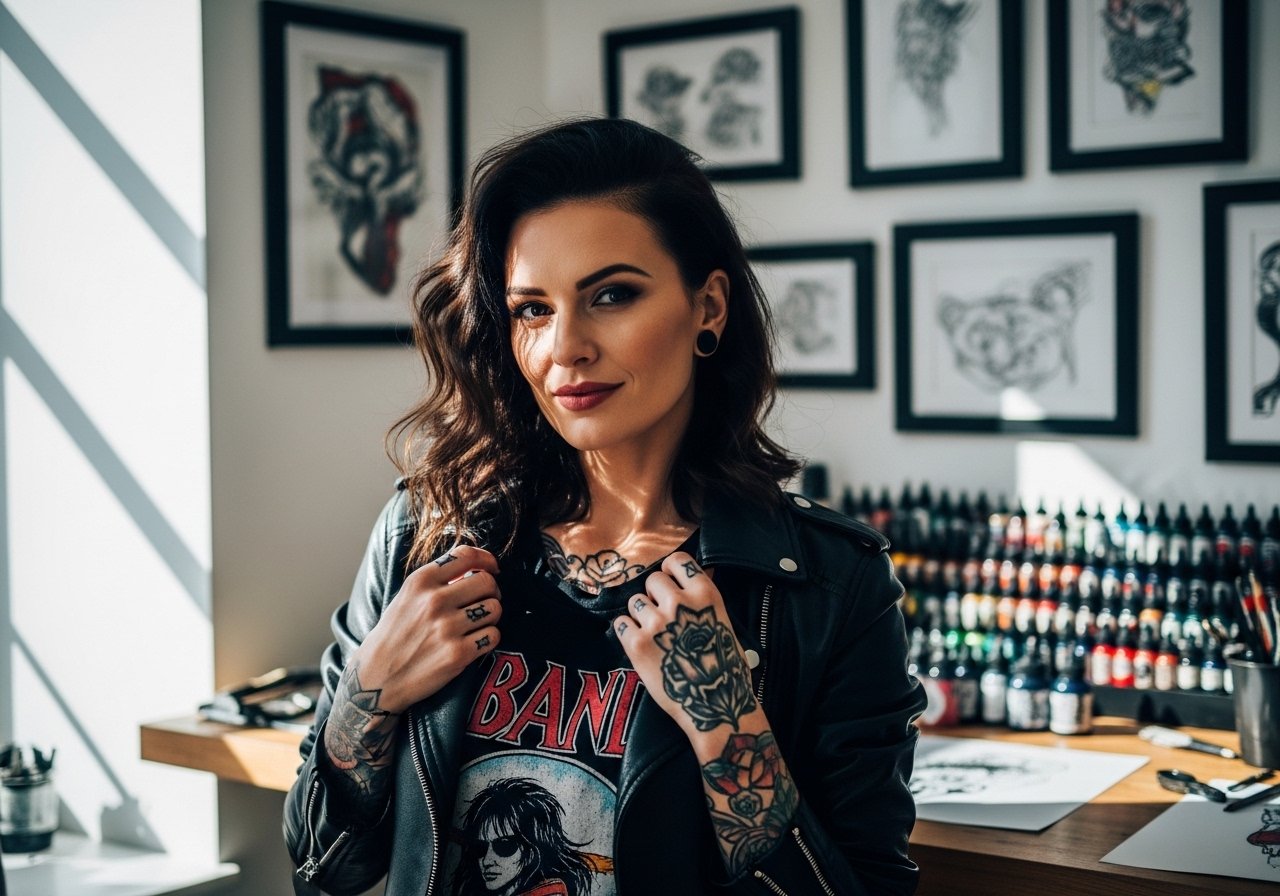
Fine line leopard spots read crisp on camera, but the quiet trick is how they behave when skin moves and sunlight hits them. People want that delicate, high-contrast look, and then they call about touch-ups two years later. The versions below focus on spacing, placement, and technique choices that keep the dots readable as years pass, plus outfit notes so you can show them off on day two without covering up.
1. Fine Line Leopard Trail on Inner Forearm

I recommend this when you want a subtle long-form element that reads at arm length. Ask your artist to space spots with negative gaps between them so the pattern does not merge as the arm ages. Common mistake is packing the spots too tightly which creates a blur after a few years. Expect light tenderness through a one-hour session and a likely touch-up at year three for thin linework. For the session wear something you can roll or pull up easily like a loose button-down shirt so the artist has clear access without stretching the skin.
2. Micro Leopard Cluster Across the Collarbone

This placement reads delicate and intentional. In my experience the collarbone gives enough flat space to keep tiny spots crisp, but pick slightly bolder outer edges so they read in photos. The session is quick and low to medium on the pain scale. A common error is asking for too many tiny spots in a tight group. If you want an evening look, pair it with a thin chain pendant necklace that sits just above the cluster to frame it, and tell your artist you prefer slightly open spacing to preserve longevity.
3. Tiny Leopard Spots on the Side of a Finger

Finger work ages differently because of constant washing and friction. Expect a stiffer session and a higher chance of early fading. The best approach is micro spots with slightly heavier outer dots and lighter inner detail so touch-ups read seamless. One real mistake is asking for hyper-fine dots that will nearly disappear within a year. Wear thin dainty rings or no ring the first week of healing, and plan for a possible touch-up at year two if you want the pattern to stay distinct.
4. Negative Space Leopard Ankle Band
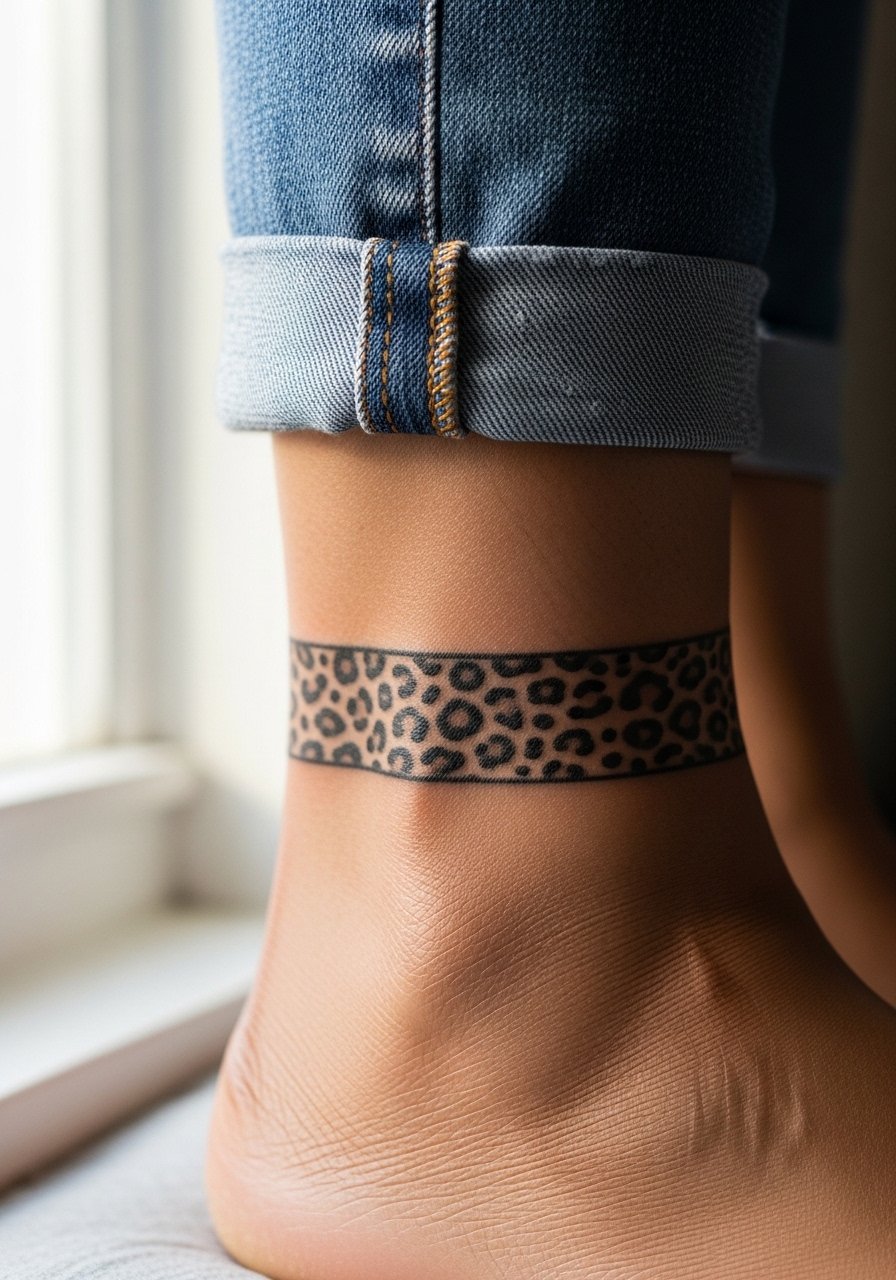
A band using negative space can feel fresh and modern. The trick is to rely on surrounding linework instead of tiny filled dots so the pattern keeps its edge. The ankle can be sensitive when the artist works over bone, so sessions are short but focused. Avoid asking for extremely thin outlines around each spot or they will blur under friction from socks and shoes. For showing the design, wear sandals or jeans rolled up so the band reads clean without competing footwear.
5. Leopard Print Heart on the Wrist
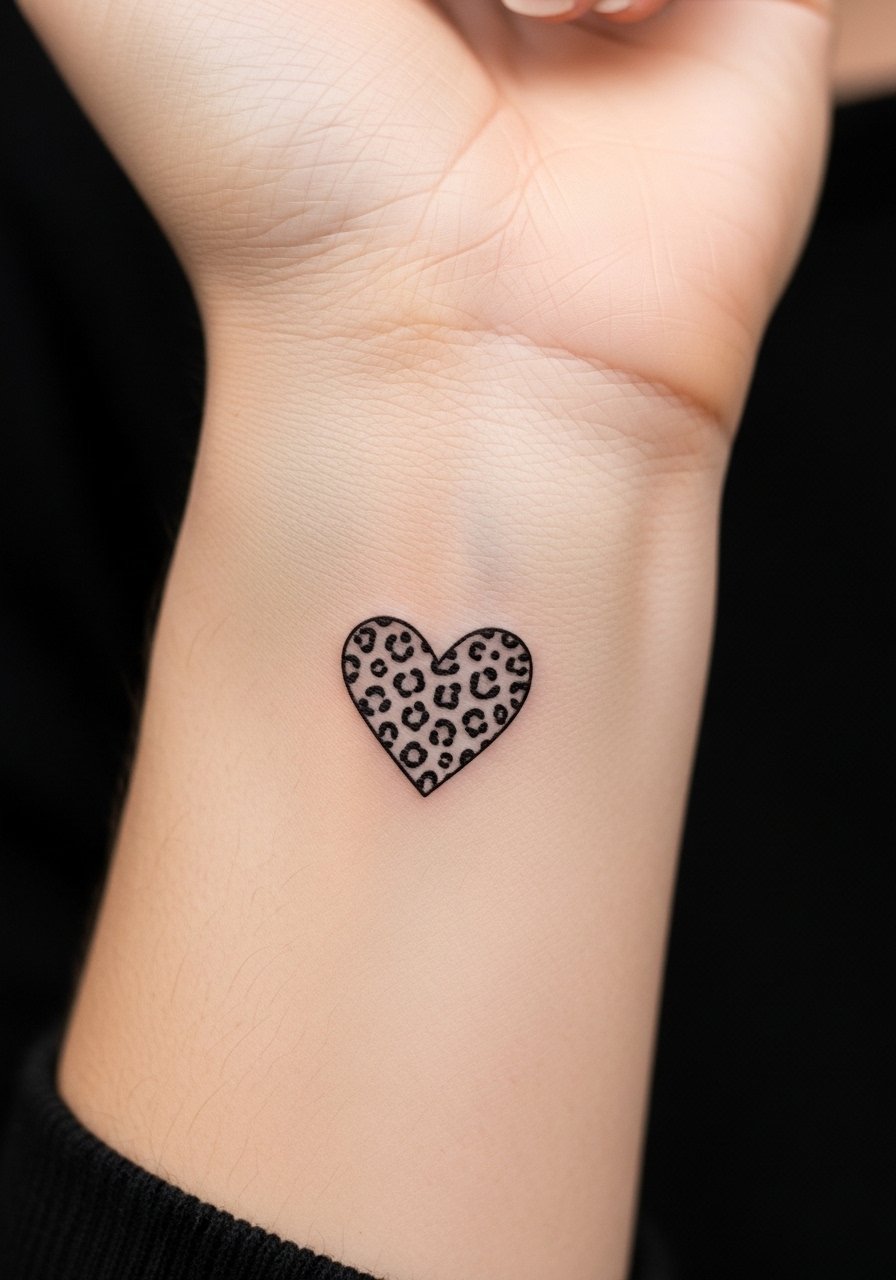
Wrist pieces are visible and demand thoughtful spacing. A heart-shaped cluster uses negative space to keep a small design from filling in. The biggest mistake is trying to cram micro detail inside a tiny heart. Expect a quick session, medium discomfort, and routine touch-ups for persistent high-contact areas. Access is easy so wear a racerback tank or a short-sleeve top on session day. A thin minimalist watch can sit opposite the heart for a balanced look.
6. Discreet Leopard Spot Behind the Ear
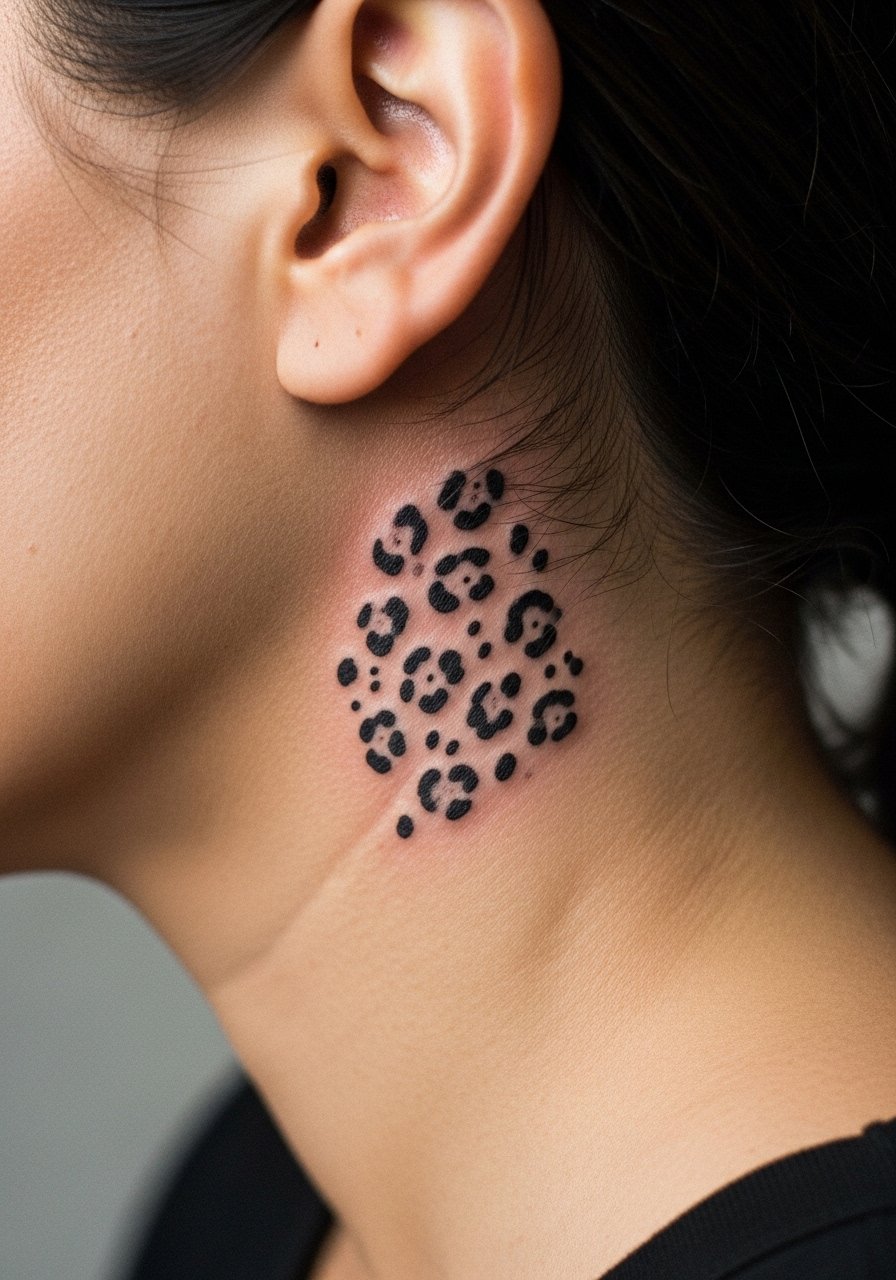
Behind-the-ear placements are subtle for people who keep hair down most days. The area takes fine line well but needs an artist comfortable with tight spots. One controversy here is whether such tiny work near hairlines stays crisp. One camp says it fades quickly because of hair oil and friction. The other camp says with proper depth and spacing it holds up fine. Ask the artist how they handle stencil placement and hairline testing during the consult. For the session wear your hair up loosely so the artist can access the area.
Pre-Session Essentials
The wrist and finger pieces above heal differently from larger work, so a few small things smooth out the session and the first week.
-
Stencil transfer paper kit. Lets you preview exactly where the micro spots and collarbone cluster will sit before the needle touches skin.
-
Topical numbing cream. Applied as directed before sessions on sensitive zones like the ankle and behind the ear eases discomfort without changing linework.
-
Thin protective film roll. Useful for tiny wrist and finger pieces that face friction from daily washing.
-
Fragrance-free gentle body wash. Keeps healing skin clean without stripping delicate linework.
-
Aquaphor healing ointment. A thin layer during the first few days helps keep fine spots from drying into scabs that pull at the ink.
7. Leopard Trail Along the Side Neck
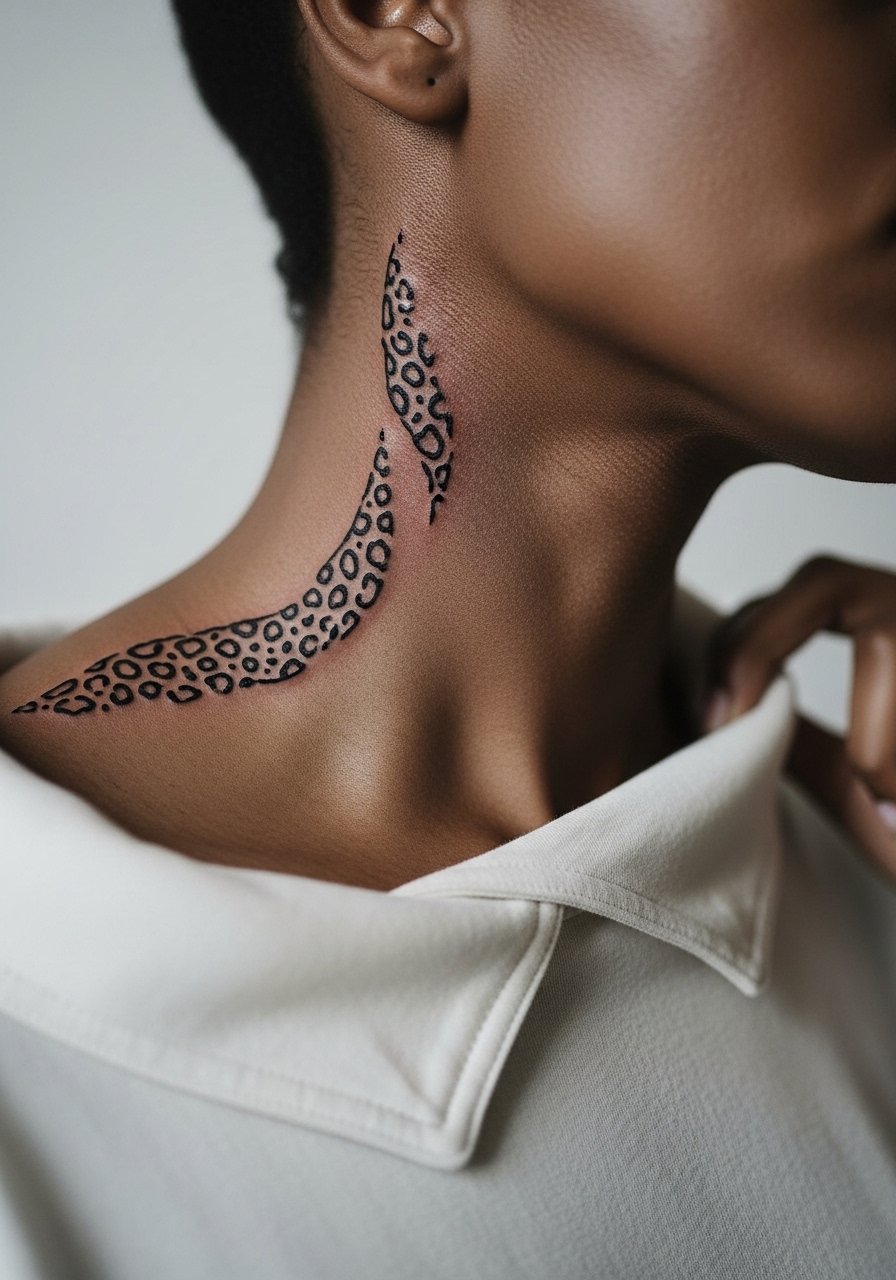
Neck placements are visible and demand career thinking. The side neck gives a sloped plane that helps tiny spots stay readable if they follow natural contours. Pain is higher than on limbs and sessions are short. A common mistake is asking for too many closely packed spots that distort when the neck turns. For a clean reveal, pair this with a wide-neck linen top so the pattern sits in the open while still feeling intentional.
8. Sternum Accent with Leopard Motif
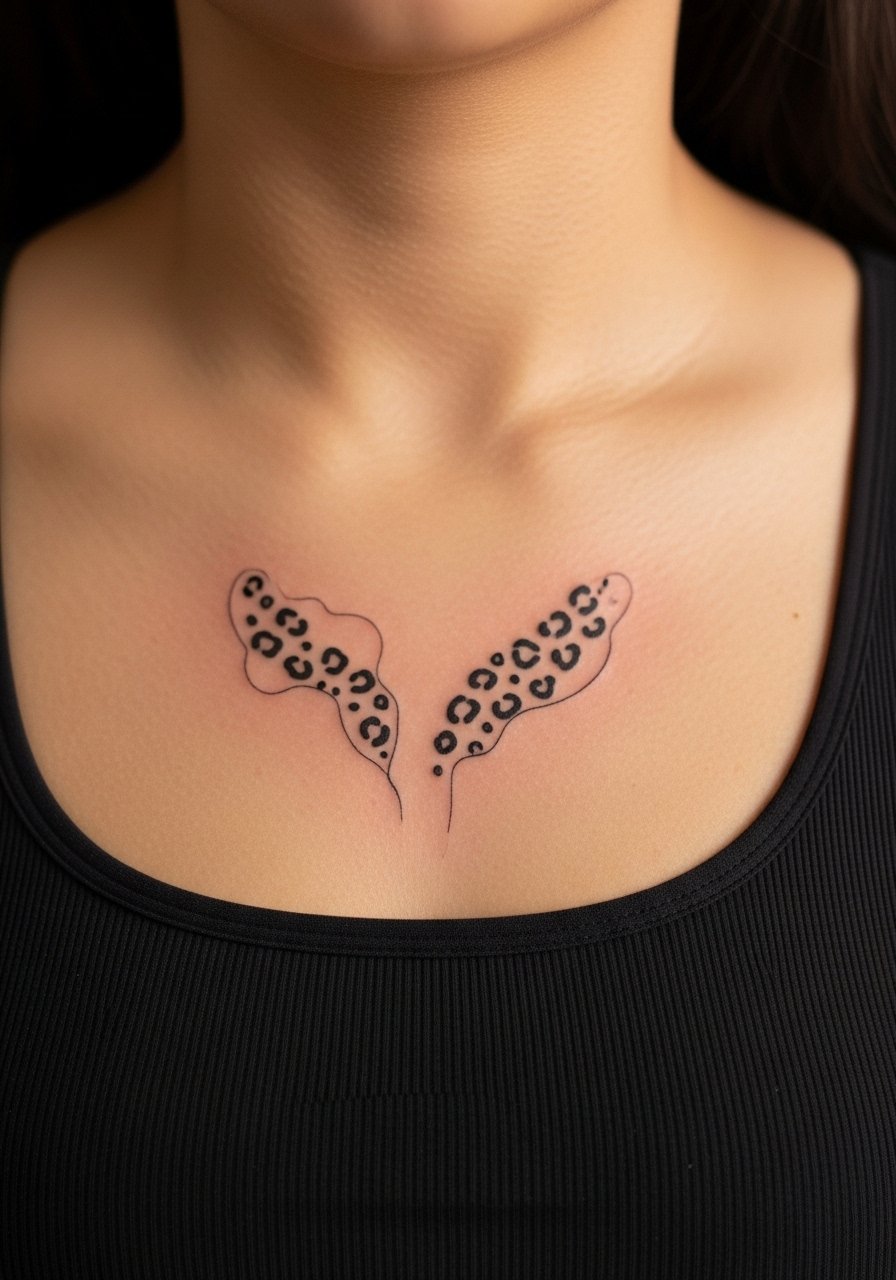
Sternum work splits artists into two camps. One group says the central chest skin moves too much and fine line blurs within a couple of years. The other group says careful needle depth and slightly bolder spots can settle fine. If you want a sternum accent, ask for slightly wider outer edges and plan for a conservative spacing plan. Session pain is higher here and healing involves avoiding tight bras. Wear a strapless or zip-front top to the appointment to make access easy.
9. Ribcage Leopard Scatter
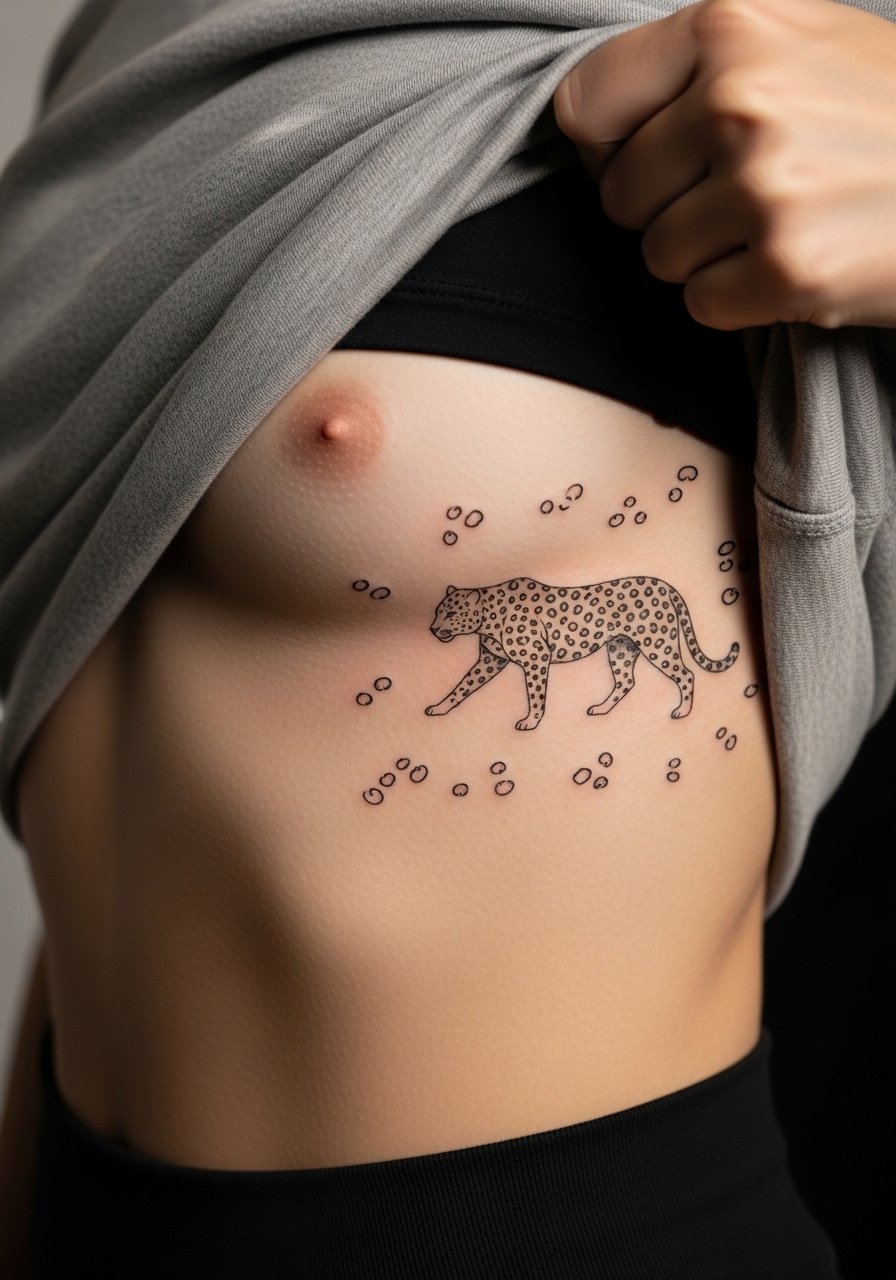
Ribs are notorious for movement and stretch. Artists often debate whether very fine line holds under constant breathing. One camp warns that tiny spots will merge over time. The opposite camp argues that with ample spacing and proper depth, the design holds. If you choose ribs, request spacing that anticipates skin shift and accept that touch-ups are common after a few years. The session feels intense but short. Bring a loose cropped top or zip hoodie so you can expose only the area that needs work.
10. Calf Runner Leopard Line

The calf handles slightly larger spots well because of thicker skin and less friction than ankles. This is a good spot for elongated clusters that read from a distance. A mistake is making the spots too small for visibility when wearing long pants. Sessions are comfortable and two-tone shading can add depth without heavy saturation. For casual showing, cropped jeans or a loose drawstring linen pant work well to reveal the run.
11. Tiny Leopard on the Shoulder Blade
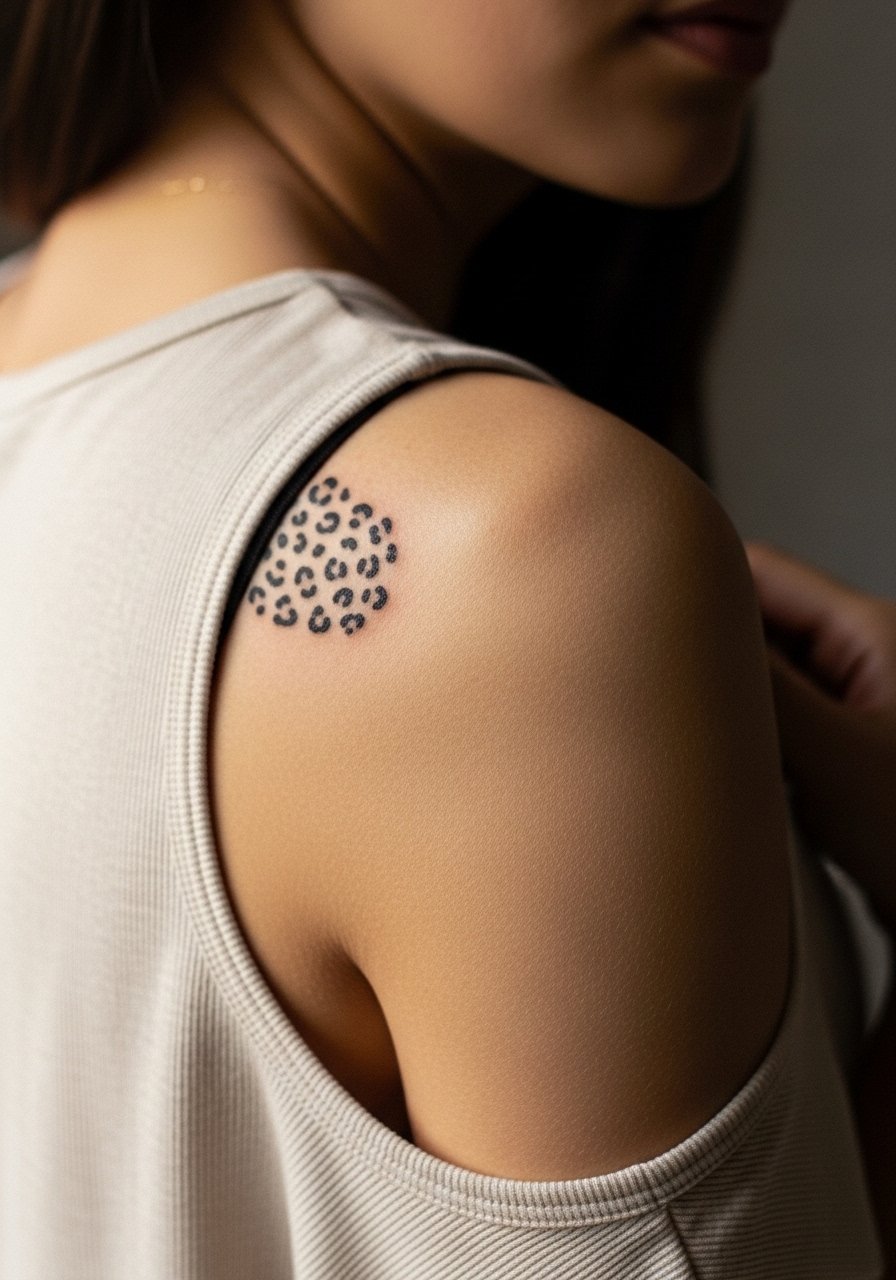
Shoulder blade spots sit flat and age gently if kept to mid-sized dots. The common mistake here is over-detailing tiny spots in a place that looks better with simple shapes. Sessions are moderate and access is easy with a loose tank top. For show-off looks, open-back dresses or a loose button-down shirt worn off one shoulder frame the area nicely.
12. Upper Arm Leopard Crescent

Outer upper arm has forgiving skin and is a reliable spot for minimalist motifs. The crescent layout helps the design read at a glance. A frequent mistake is requesting extremely tiny inner spots that disappear under fabric abrasion. Sessions are low to medium pain and usually take under an hour. Pair with rolled-up sleeves or a short-sleeve linen shirt to show the curve without crowding the area.
13. Hip-Side Leopard Accent
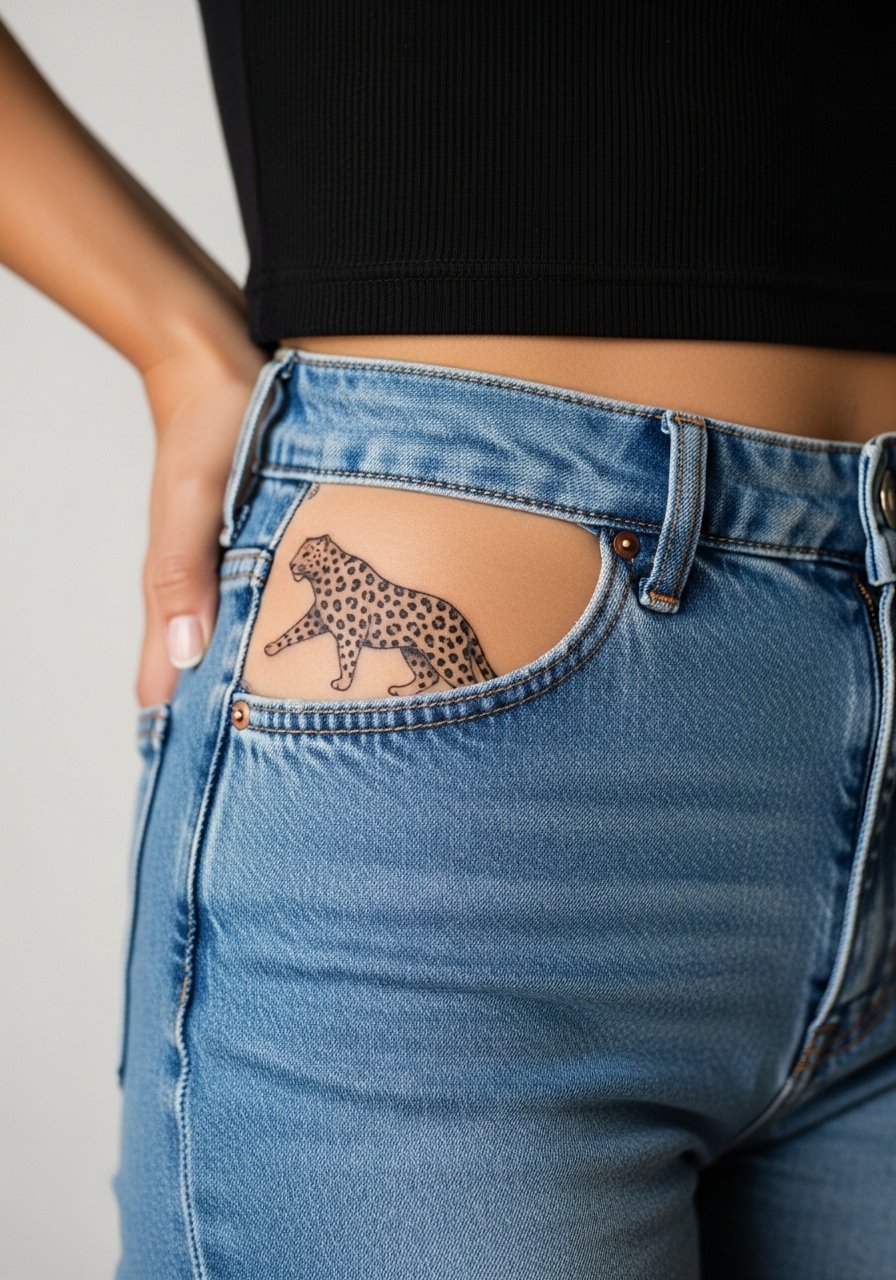
Hip accents are intimate and sit well with swimwear or low-rise jeans. The hip moves with body shape, so spacing is essential. Avoid tiny clustered spots near the hip bone where pressure from clothing causes irritation. Expect a short session and a moderate healing window. For appointment day wear high-waisted bottoms that you can lower slightly, like high-waisted denim, so the artist can access the area without full exposure.
14. Inner Thigh Leopard Bloom
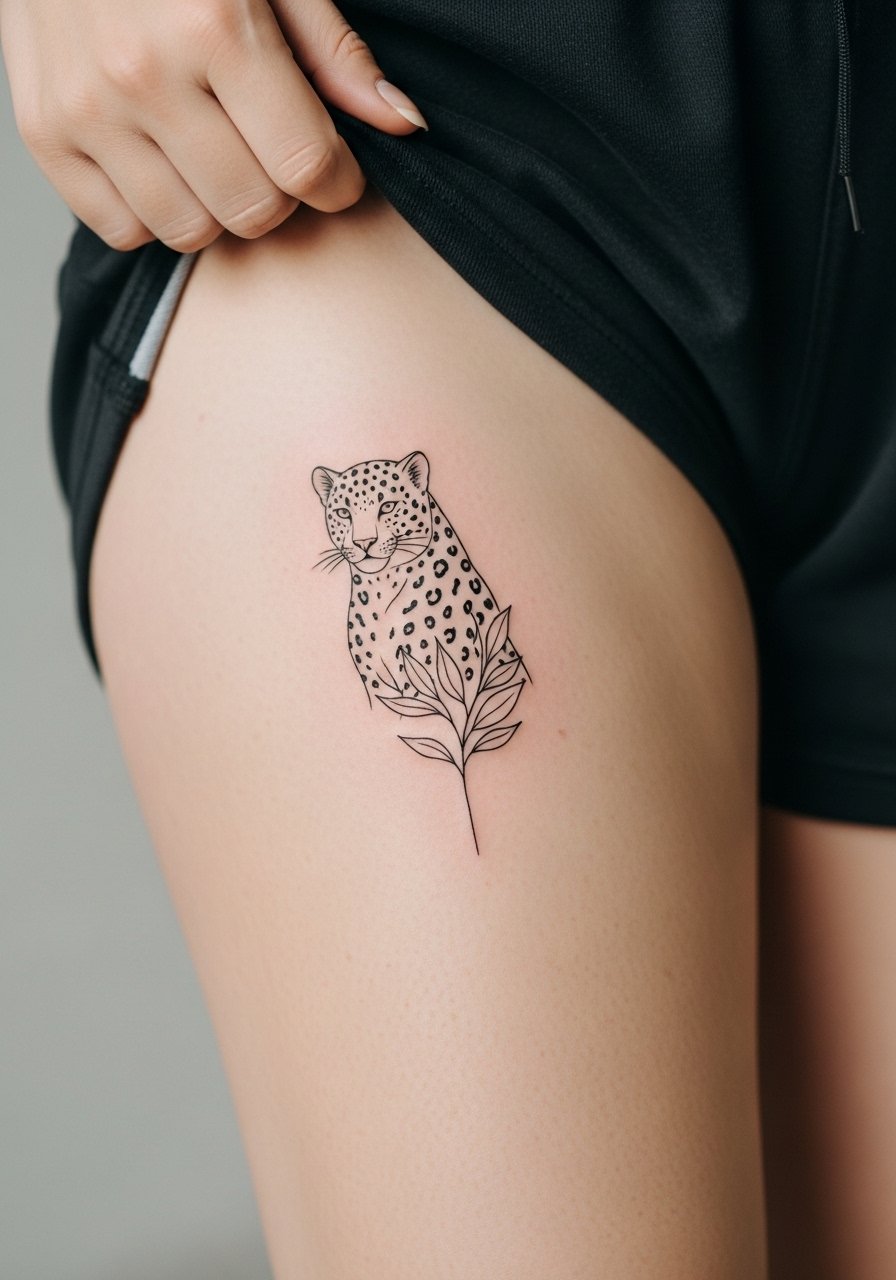
Inner thigh placements are sensual and private. Sessions can be tender and often require an artist who is comfortable with intimate zones. The mistake many make is asking for dense clusters that do not breathe with body movement. Spacing and a slightly bolder outer dot keep the look tidy. For the session wear loose shorts or a wrap so the leg can be exposed comfortably and privately.
15. Tiny Leopard on the Back of the Hand
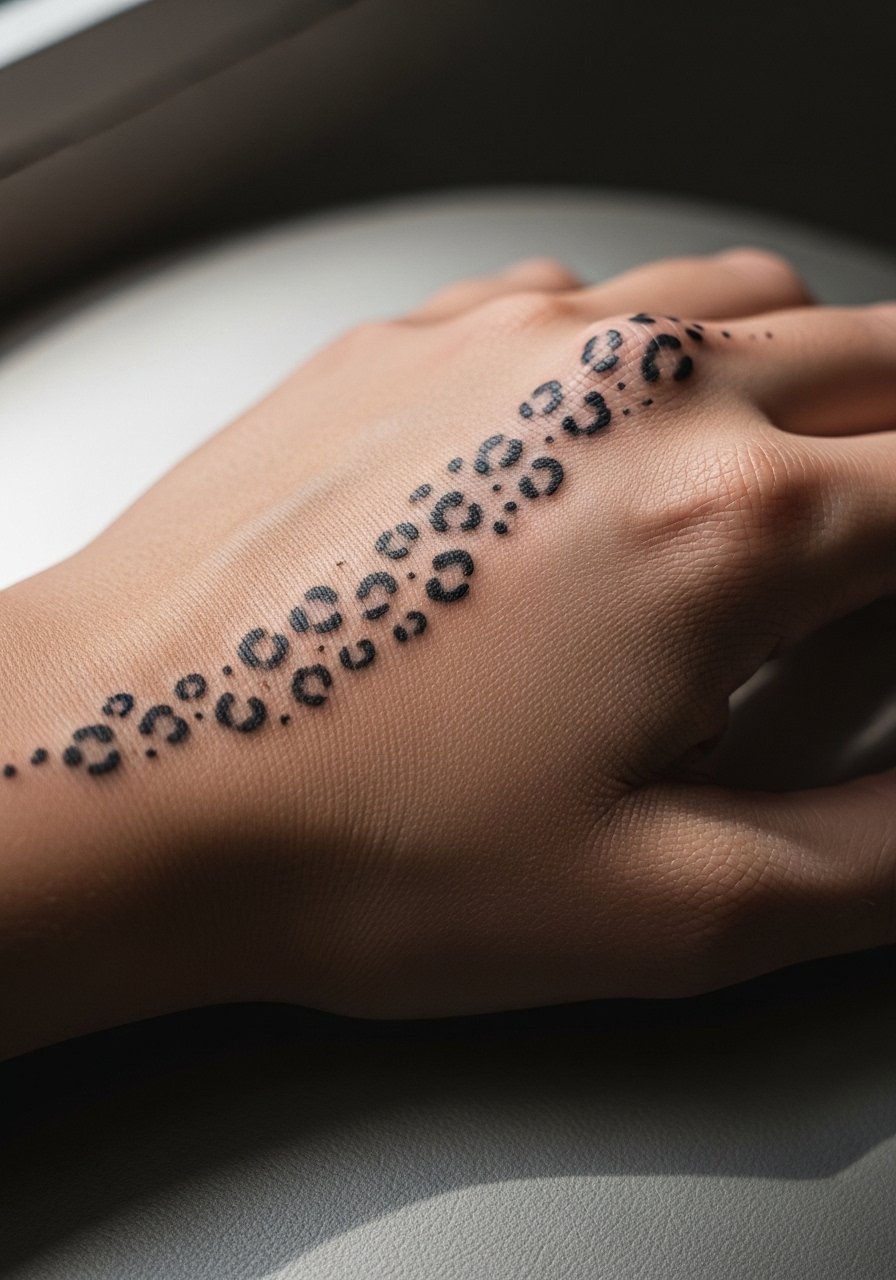
Hand tattoos face high wear from washing and daily use. Fine spots here will likely soften faster than on the forearm. The honest trade-off is visibility versus longevity. The best approach is slightly stronger outer edges with lighter interiors so the pattern ages into a readable texture. Expect a higher chance of touch-ups and avoid bulky jewelry directly over the new ink while it heals. A few stacked thin bracelets placed below the wrist can frame the hand without rubbing the design.
16. Minimal Leopard Along the Spine
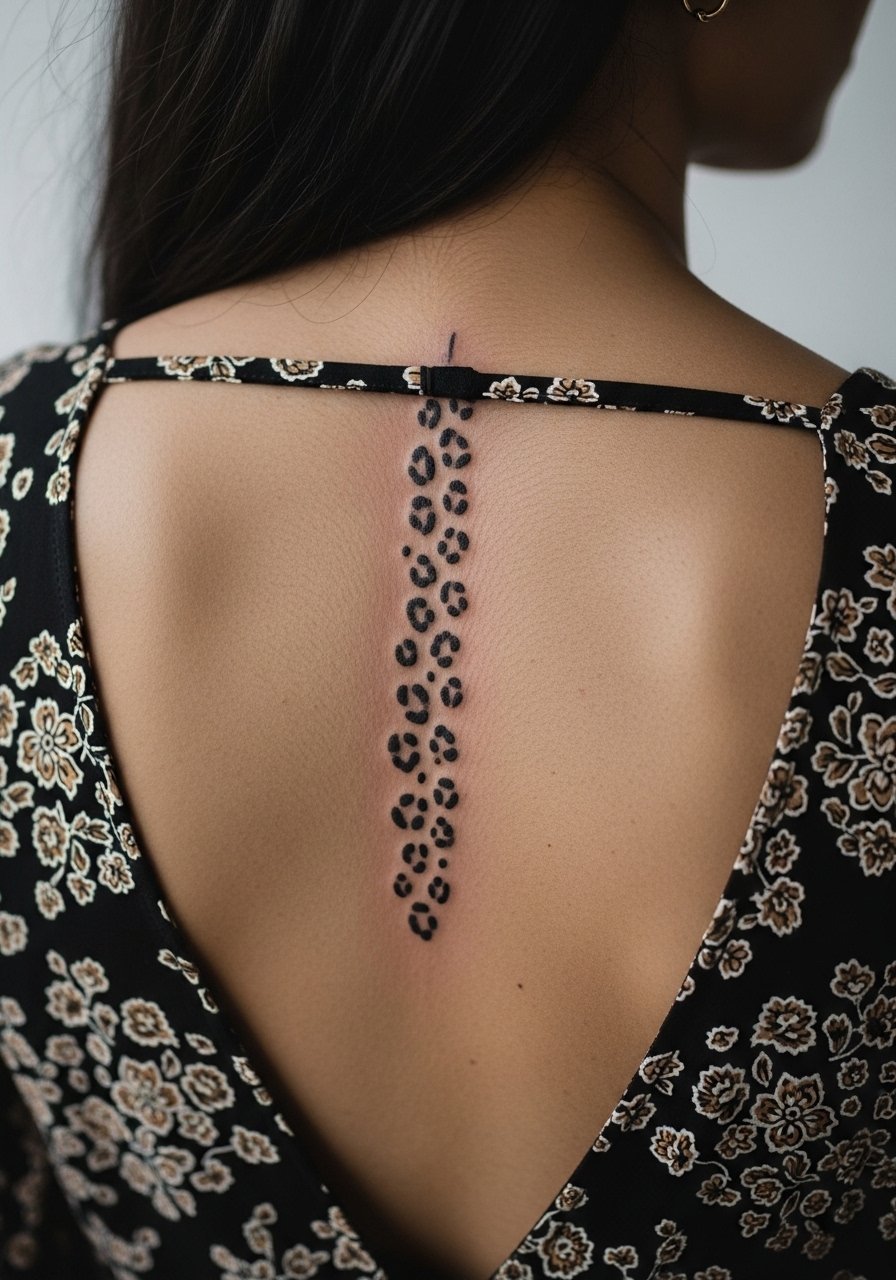
Spine placements give a vertical flow that complements clothing with open backs. The spine moves but has ample surface area to space spots. A common mistake is starting the pattern too low where movement and waistlines interfere. Sessions can be more uncomfortable near bone, but they are usually done in short passes. For evenings out pair with an open-back midi dress so the design reads without being overexposed.
17. Leopard Print with Tiny Stipple Shading on the Calf
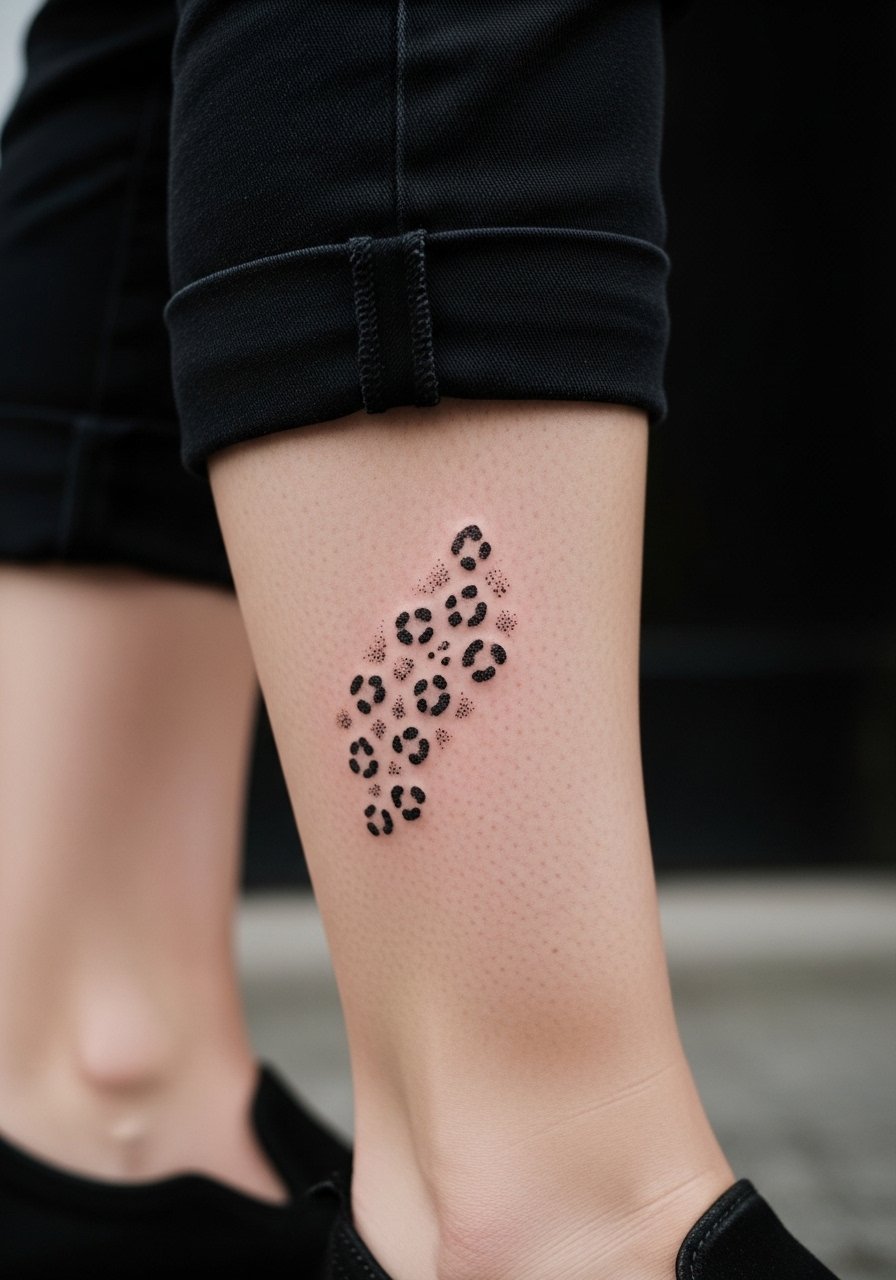
Adding stipple shading behind a few spots gives depth without heavy saturation. The calf is forgiving for dot work and holds stippling well. The typical error is over-shading which turns the minimalist piece into a small patch. Sessions take a bit longer when stippling is involved, but pain is moderate. Style it with cropped trousers or a racerback tank for a casual reveal.
18. Leopard Chain Across the Collar of a Shoe Area
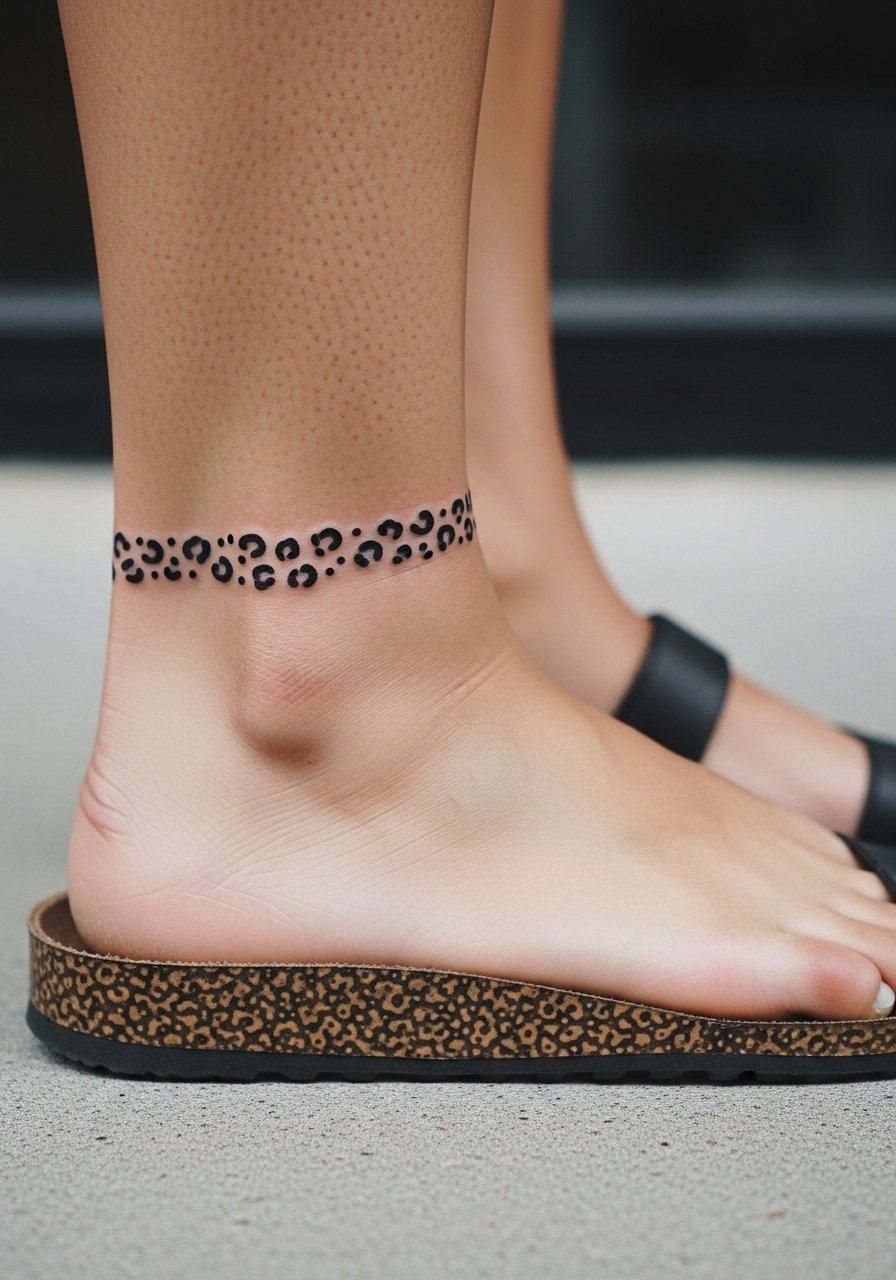
A chain-like arrangement just above the ankle reads like jewelry and avoids the wear zone of the top of the foot. The mistake is going too close to shoe straps where friction can erode detail. Sessions are short and discomfort is low. For footwear that highlights the piece, try simple sandals that leave the area exposed without rubbing.
19. Leopard Accent Paired with Tiny Script

Mixing a single leopard spot with a short word can create a meaningful anchor. Be explicit in the consult about font size and spacing so the script does not swallow the dotwork. A common error is choosing a script too delicate for the same touch that made the spots visible. Sessions are short and the forearm is forgiving. For an everyday look pair with a minimalist watch that sits opposite the motif.
20. Tiny Leopard Crescent Behind the Knee
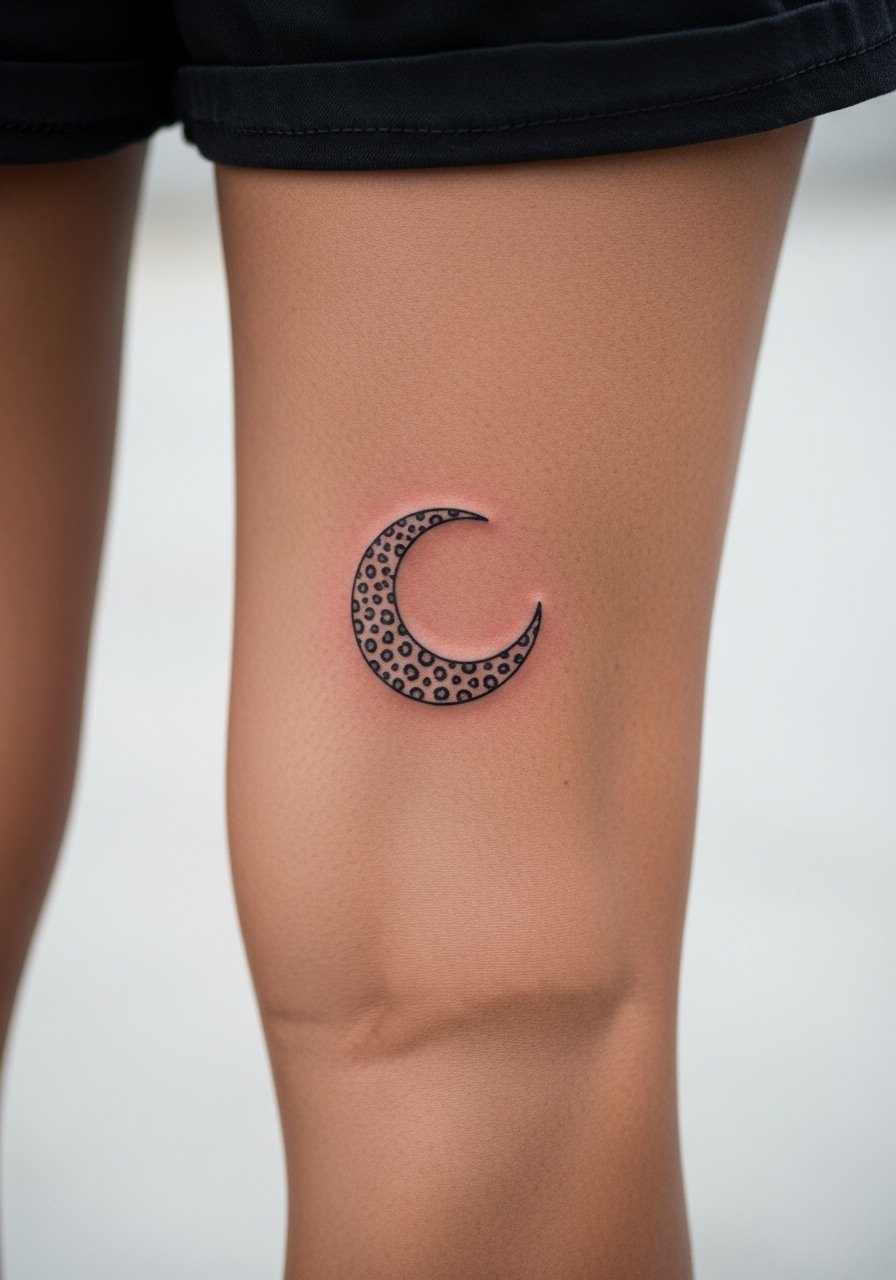
Behind-the-knee tattoos are unusual but can be hidden or revealed depending on clothing. The skin here is delicate and movement heavy, so space spots widely. The mistake is tight clusters that blur with frequent bending. Expect a slightly awkward position during the session and a moderate pain level. Wear shorts you can move comfortably in for the appointment and plan for a slow first week of mobility so the healing skin is not stressed.
21. Minimal Leopard Print Near the Lower Back

Lower back pieces sit across a broad, relatively stable plane and can age well if spots are spaced for curvature. A classic mistake is compressing the pattern into a tiny spot that loses definition under waistbands. Sessions are typically relaxed and access is easy with simple clothing. Pair with high-waisted pieces for a peek-a-boo effect, like high-waisted denim that reveals the top edge without riding into the tattoo during healing.
Frequently Asked Questions
Q: Will tiny leopard spots on fingers and wrists need touch-ups sooner than forearm pieces?
A: Yes, smaller high-contact placements face daily friction and frequent washing so they often require touch-ups earlier. Fingers and wrists move and scrub against surfaces. Plan for possible touch-ups around year one to three depending on how often the area is used and how the initial spacing was handled.
Q: If I want a sternum or ribcage leopard accent, how should I frame the consult with my artist?
A: Be explicit about spacing and ask the artist to show you how the stencil moves with breathing. Name your concern about skin stretch and request slightly wider outer edges so dots do not merge as the skin flexes. Ask about their long-term touch-up approach and book a follow-up in advance if you want maintenance.
Q: Are there clothing choices that help show small leopard tattoos without speeding up fading?
A: Yes. Lightweight fabrics that do not rub directly over the tattoo help in the first weeks. For collarbone or shoulder blade spots, try open-back tops or wide-neck shirts that reveal the area without tight straps. After healing, breathable linens and minimal layering reduce abrasion.
Q: How do I pick between fine line and slightly bolder spots for longevity?
A: Fine line looks delicate initially but can fade faster in high-movement zones. Slightly bolder outer edges with light interiors offer a compromise. If you want longevity with a minimalist feel, ask for conservative spacing and a hair more weight on the outer dot so the design retains contrast as it settles.
Q: Do I need a specialist for inner thigh, sternum, or behind-the-ear placements?
A: Yes. Those zones require an artist comfortable with intimate or awkward anatomy and experienced with small-scale work. Ask where they place similar micro pieces in portfolios and how they manage client comfort during sensitive sessions.